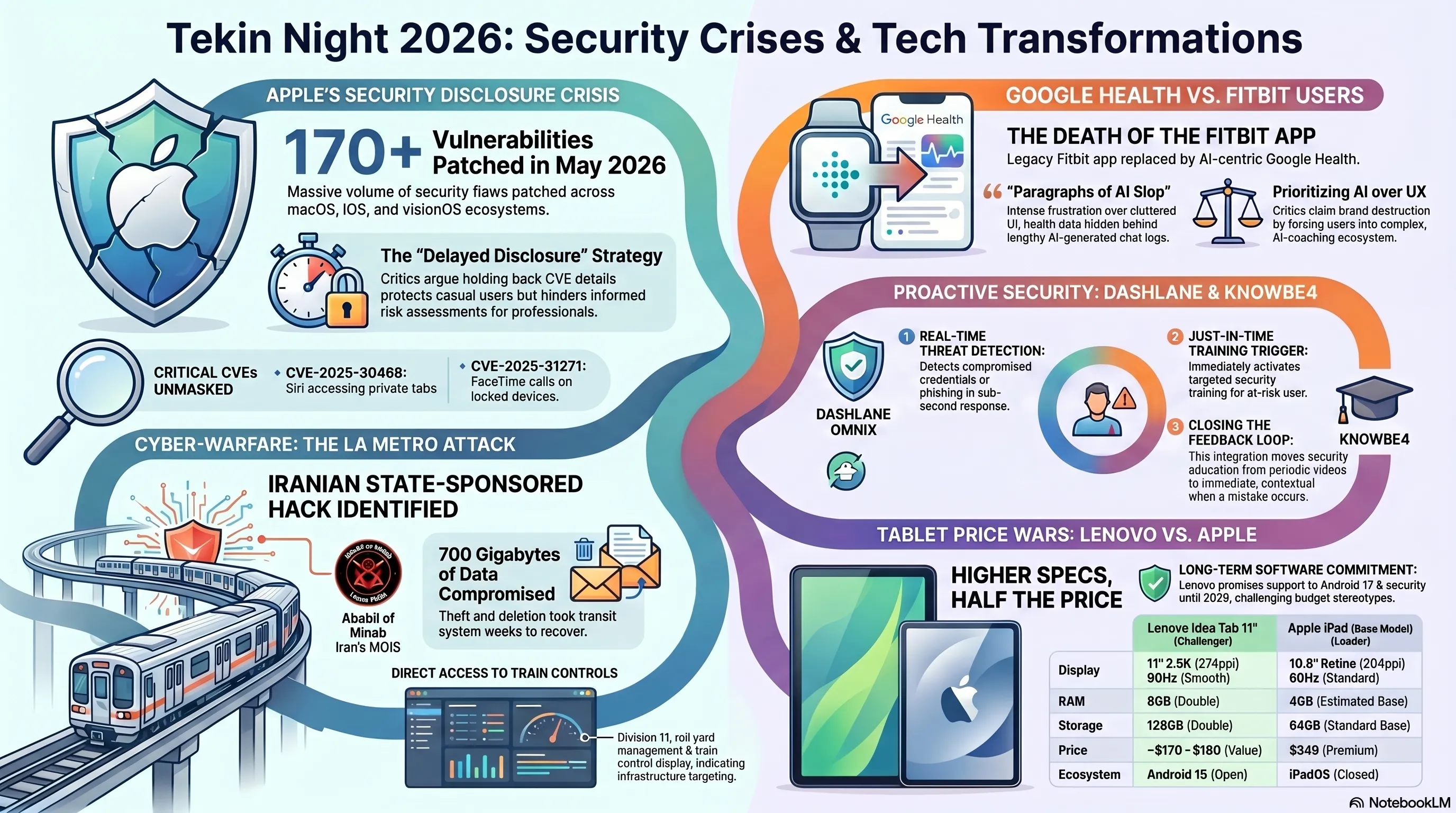
The May 27, 2026 Tekin Night briefing executes a deep-level technical autopsy on six industry-shaking developments. We investigate Apple's transparency breakdown surrounding the late disclosure of 170 patched vulnerabilities under intense architectural strain. We dissect Gambit Security's forensics report attributing the massive LA Metro transit cyberattack to Iranian state-sponsored actors linked to the MOIS. Furthermore, the report parses Google's forced sunsetting of the Fitbit app for Google Health resulting in massive consumer backlash, an
🌙 Welcome to Tekin Night May 27, 2026
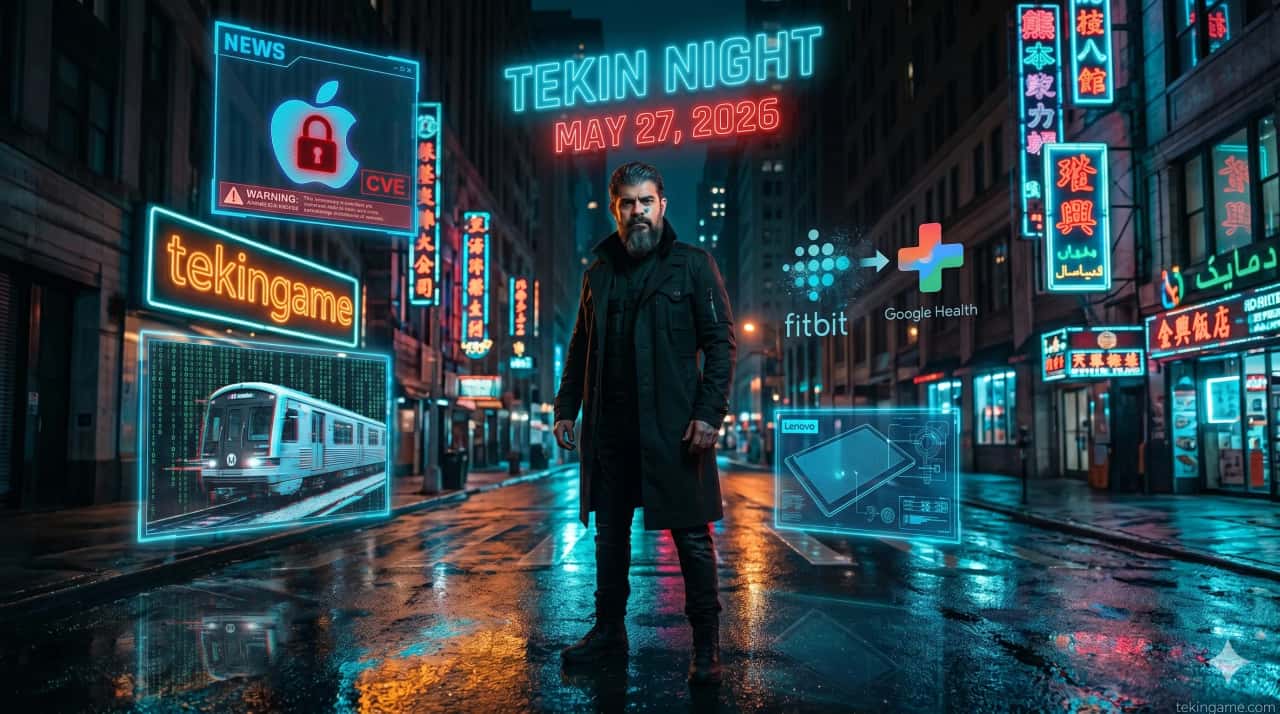
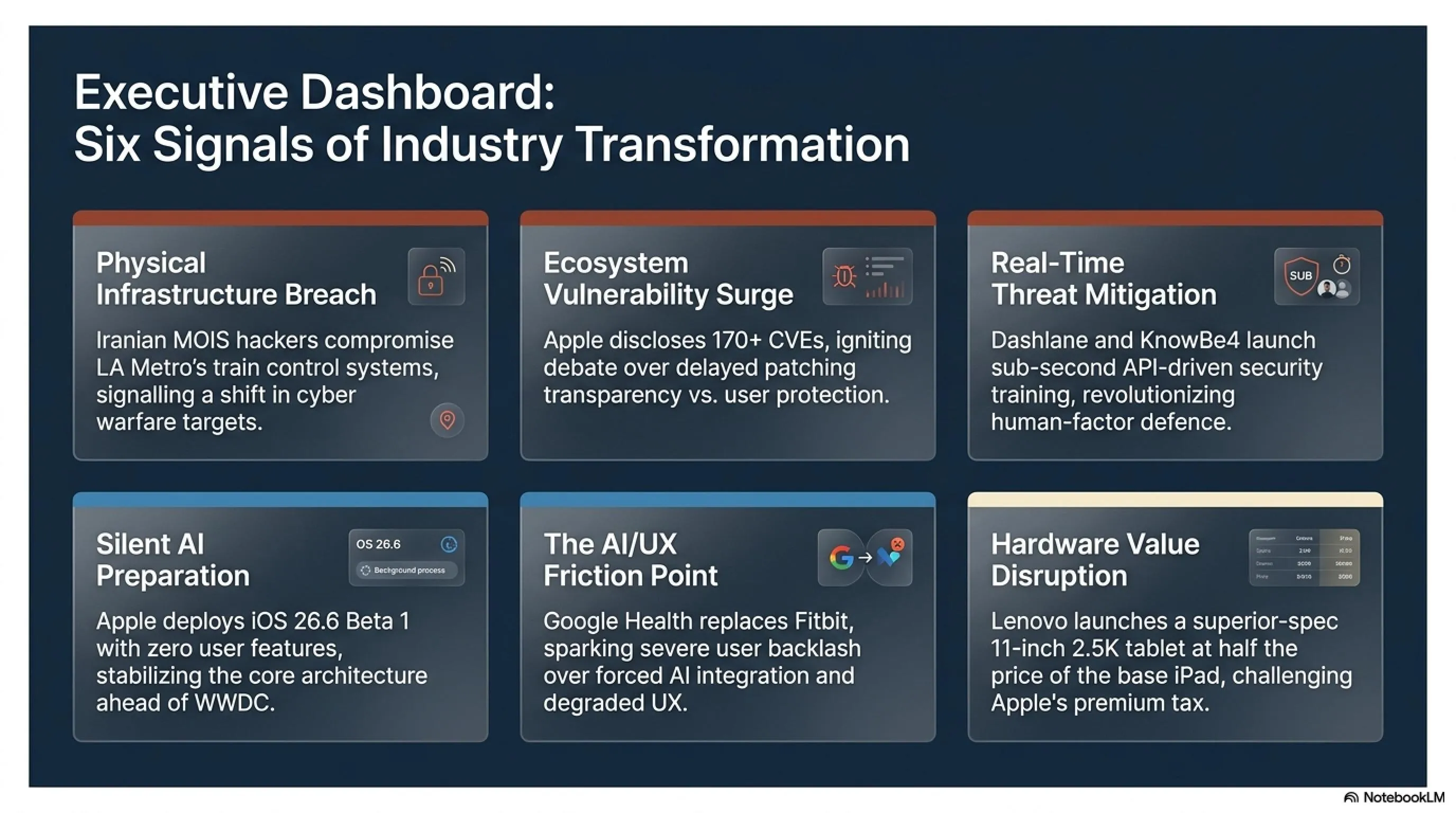
Good evening, tech enthusiasts! Tonight we bring you six critical and shocking stories from the tech world. From Apple's security crisis and the disclosure of new CVE details to the LA Metro hack by Iranian hackers, from the death of Fitbit and the birth of Google Health to Lenovo's budget tablet that wants to destroy the iPad. Tonight is a night of revelations, crises, and major transformations.
⚡ Tonight's Headlines:
🔒 Apple reveals new CVE security details
🇮🇷 Iranian hackers identified behind LA Metro attack
📱 iOS 26.6 beta 1 released with no new features
💔 Google kills Fitbit and users are furious
🛡️ Dashlane and KnowBe4 revolutionize security training
💰 Lenovo tablet enters battle at half iPad's price
☕ Grab your evening beverage and prepare for an exciting journey through the tech world!
🔒 Apple's Security Crisis: New CVE Details for macOS, iOS, and Other Operating Systems
In an unexpected move, Apple today (May 26, 2026) updated the security content pages for several versions of macOS, iOS, iPadOS, visionOS, and watchOS, adding new CVE details for vulnerabilities that were previously addressed in each update. This action reveals that some of the security vulnerabilities Apple patched in recent months were more serious and widespread than initially announced.
According to 9to5Mac's report, Apple published new security details for older versions like macOS Sonoma 14.8, iOS 18.7, and iPadOS 18.7, as well as newer versions like iOS 26, iPadOS 26, watchOS 26, and visionOS 26. These security updates include fixes for vulnerabilities in Siri, Calendar, Kernel, CoreServices, FaceTime, Phone, and SQLite.
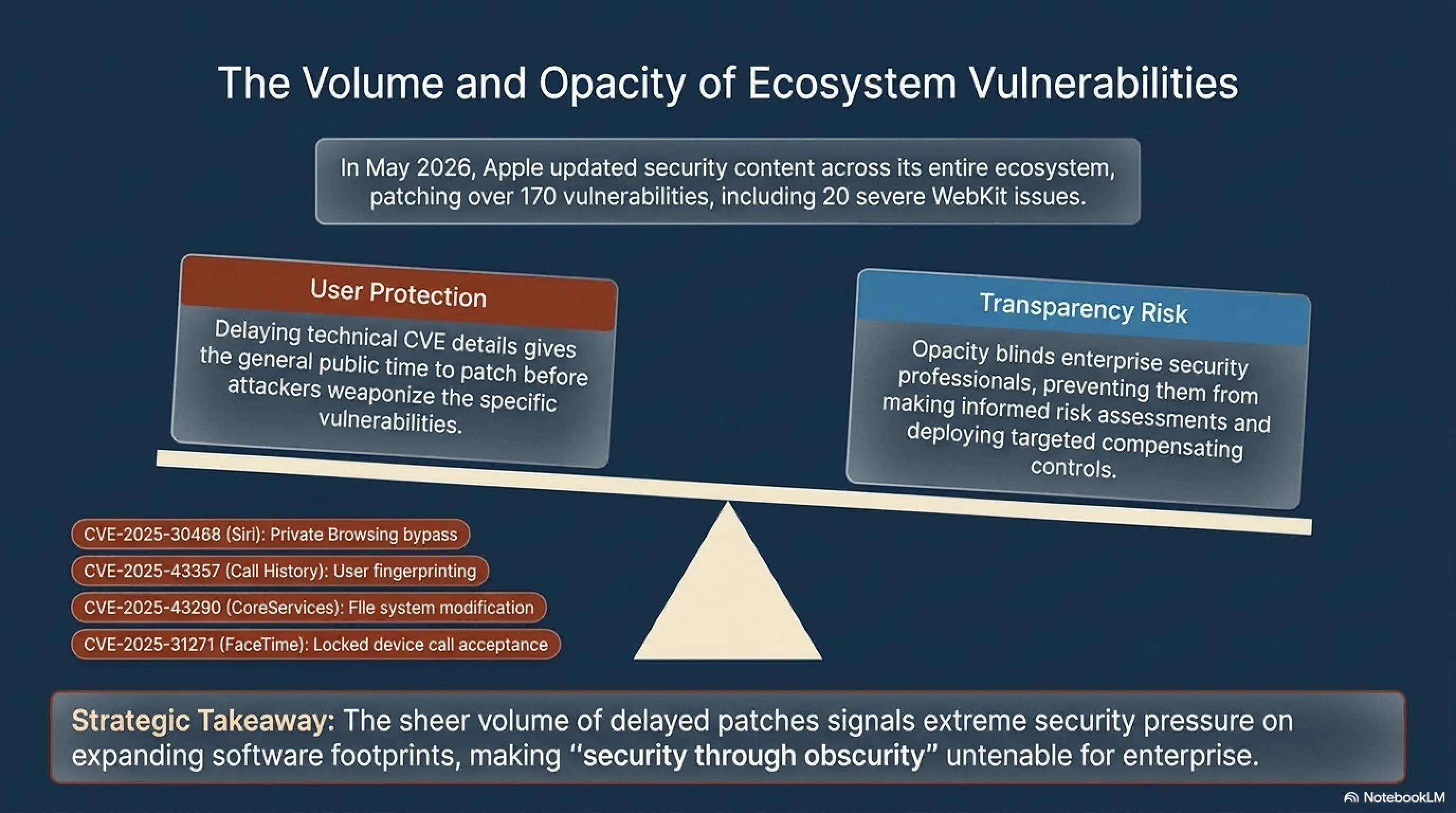
What makes this disclosure particularly significant is the timing and scope. Apple released macOS Sonoma 14.8 in September 2025, yet only today revealed the full extent of vulnerabilities patched in that release. This delayed disclosure strategy suggests Apple may prefer to withhold complete vulnerability details until it's confident most users have updated their systems, preventing hackers from exploiting detailed technical information about unpatched devices.
🔍 Key Vulnerabilities Disclosed
CVE-2025-30468 (Siri): Private Browsing tabs could be accessed without proper authentication. This issue was addressed through improved state management.
CVE-2025-43357 (Call History): An app could fingerprint the user. This issue was addressed with improved redaction of sensitive information.
CVE-2025-43290 (CoreServices): An app could modify protected parts of the file system. This issue was addressed with additional restrictions.
CVE-2025-31271 (FaceTime): Incoming FaceTime calls could appear or be accepted on a locked macOS device, even with notifications disabled on the lock screen.
The retrospective nature of these disclosures is particularly noteworthy. Apple's security documentation now reveals that iOS 26 and iPadOS 26 addressed over 60 CVEs, including 20 WebKit issues that could lead to crashes, exposure of sensitive user data, and security bypasses. The May 2026 security updates collectively patched over 170 vulnerabilities across Apple's entire ecosystem, from iOS 15.8.8 (supporting devices dating back to 2015 iPhones) to the latest macOS Tahoe 26.5.
Security researchers and enterprise IT administrators have long criticized Apple's delayed disclosure practices. While the company argues this approach protects users who haven't yet updated, critics contend it undermines trust and prevents security professionals from making fully informed risk assessments. The sheer volume of vulnerabilities—170+ in a single month—also raises questions about the security posture of Apple's increasingly complex software ecosystem.
💡 Tekin Analysis: Why Apple's Delayed Disclosure Strategy Is a Double-Edged Sword
Apple's gradual CVE disclosure strategy represents a calculated trade-off between user protection and transparency. On one hand, withholding technical details gives users time to patch their systems before attackers can weaponize vulnerability information. On the other hand, this opacity frustrates security professionals who need complete information to assess organizational risk and implement compensating controls.
The fact that Apple patched 170+ vulnerabilities in May 2026 alone signals that the company's ecosystem is under intense security pressure. As Apple expands into new product categories (Vision Pro, AI services) and integrates more cloud-dependent features, the attack surface grows exponentially. For enterprise customers, this volume of patches creates deployment challenges and raises questions about whether Apple's security engineering can keep pace with its product ambitions.
Looking forward, Apple may need to reconsider its disclosure timeline. The industry trend is toward faster, more transparent vulnerability disclosure (as exemplified by Google's Project Zero), and Apple's delayed approach increasingly looks like an outlier. For a company that positions security and privacy as core differentiators, maintaining user trust requires not just fixing vulnerabilities, but communicating about them in ways that respect the intelligence and needs of security-conscious customers.
🇮🇷 Iranian Hackers Behind LA Metro Attack: Gambit Security Report
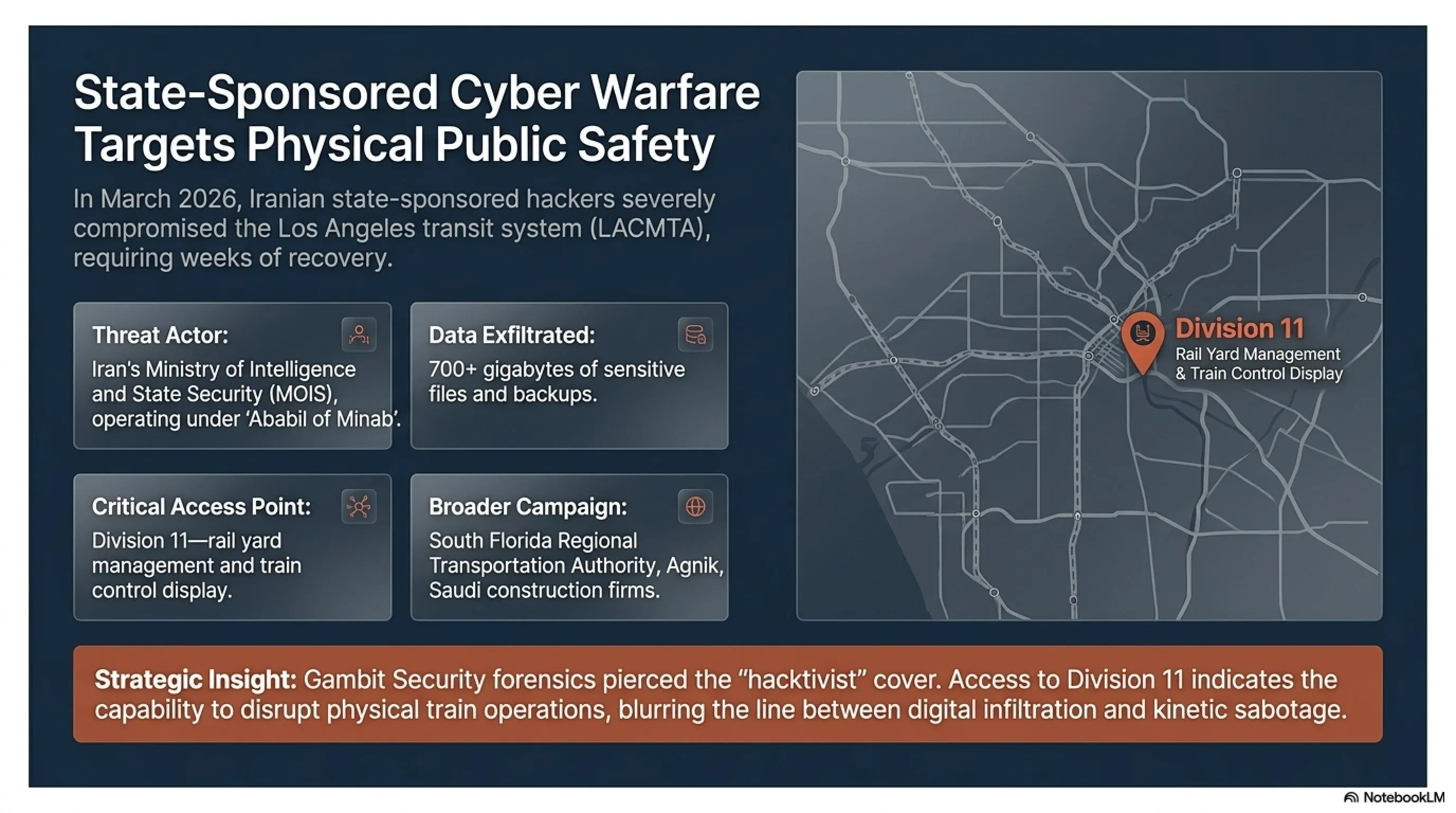
In a major revelation, Israeli security researchers from Gambit Security announced that the March 2026 cyberattack on the Los Angeles transit system (LACMTA) was the work of Iranian state-sponsored hackers. This attack, which took weeks to recover from, is considered one of the most serious cyberattacks on U.S. critical infrastructure in 2026.
According to reports from TechCrunch and Reuters, Gambit Security stated in its report that the hackers work for Iran's Ministry of Intelligence and State Security (MOIS). A hacktivist group calling itself "Ababil of Minab" claimed responsibility for the attack, saying they stole and then deleted data from LACMTA's systems. The group's name references a U.S. airstrike on an Iranian school in the city of Minab that killed more than 175 people, mostly children.
⚠️ Cyberattack Details
Stolen Data Volume: At least 700 gigabytes of emails, backups, and other files
Discovery Time: Around March 16, 2026
Hacker Access: Virtualization infrastructure, web servers, and Division 11 train control display
Other Targets: South Florida Regional Transportation Authority, Agnik company, and a Saudi Arabian construction company
Gambit Security stated: "They are not a new, standalone hacktivist crew as they claim." This assertion is based on forensic evidence linking the group to a previous Iran-linked campaign, as well as activity attributed to MOIS by Israel's National Cyber Directorate. Gambit also investigated other attacks against companies in Israel, Saudi Arabia, and Turkey.
The technical sophistication of the attack is particularly concerning. According to The Next Web, the hackers reached LA Metro's rail yard management and train control display system, known internally as Division 11. This level of access suggests the attackers could have potentially disrupted physical rail operations, not just stolen data. The fact that they accessed virtualization infrastructure and web servers indicates a multi-vector attack that exploited multiple entry points.
If Gambit's assessment is correct, Ababil of Minab would be the latest in a series of fake hacktivist groups working for the Iranian government. The most recent example is Handala, which earlier this year hacked U.S. medical tech giant Stryker, wiping thousands of company systems and employee devices. Following the Stryker breach, the FBI seized two Handala websites, and the U.S. Justice Department accused Iran's government of being behind the hacktivist group and its attacks.
The geopolitical context is crucial. Iranian-linked hackers have increased their activities and claimed hacks after the U.S. and Israel started bombing Iran earlier this year. In April, a coalition of U.S. agencies warned that Iranian hackers were targeting American critical infrastructure. This LA Metro attack fits into a broader pattern of Iranian cyber retaliation against U.S. targets, escalating from symbolic attacks to operations targeting critical infrastructure that millions of Americans depend on daily.
💡 Tekin Analysis: The Iran-U.S. Cyber War Enters a New Phase
The LA Metro attack demonstrates that the cyber war between Iran and the U.S. has escalated from symbolic attacks to targeting critical infrastructure. The use of fake hacktivist groups is a sophisticated tactic that provides Iran with plausible deniability. However, forensic investigations by firms like Gambit Security are increasingly effective at piercing this cover and revealing state sponsorship.
What's particularly concerning is the breadth of the campaign. Gambit identified attacks across four countries, suggesting Iran is conducting a coordinated global cyber offensive. The targeting of transportation infrastructure is especially troubling because these systems are often poorly secured and disruptions can have immediate physical consequences for public safety. The fact that hackers accessed train control systems means they could have potentially caused derailments or collisions, not just data theft.
For U.S. critical infrastructure operators, this attack is a wake-up call. Transportation, energy, water, and healthcare systems must assume they are targets and invest accordingly in cybersecurity. The weeks-long recovery time for LA Metro also highlights the need for robust backup and disaster recovery capabilities. As cyber warfare becomes increasingly intertwined with conventional geopolitical conflicts, the line between digital and physical attacks continues to blur.
📱 iOS 26.6 Beta 1: What Apple Did (Not) Bring
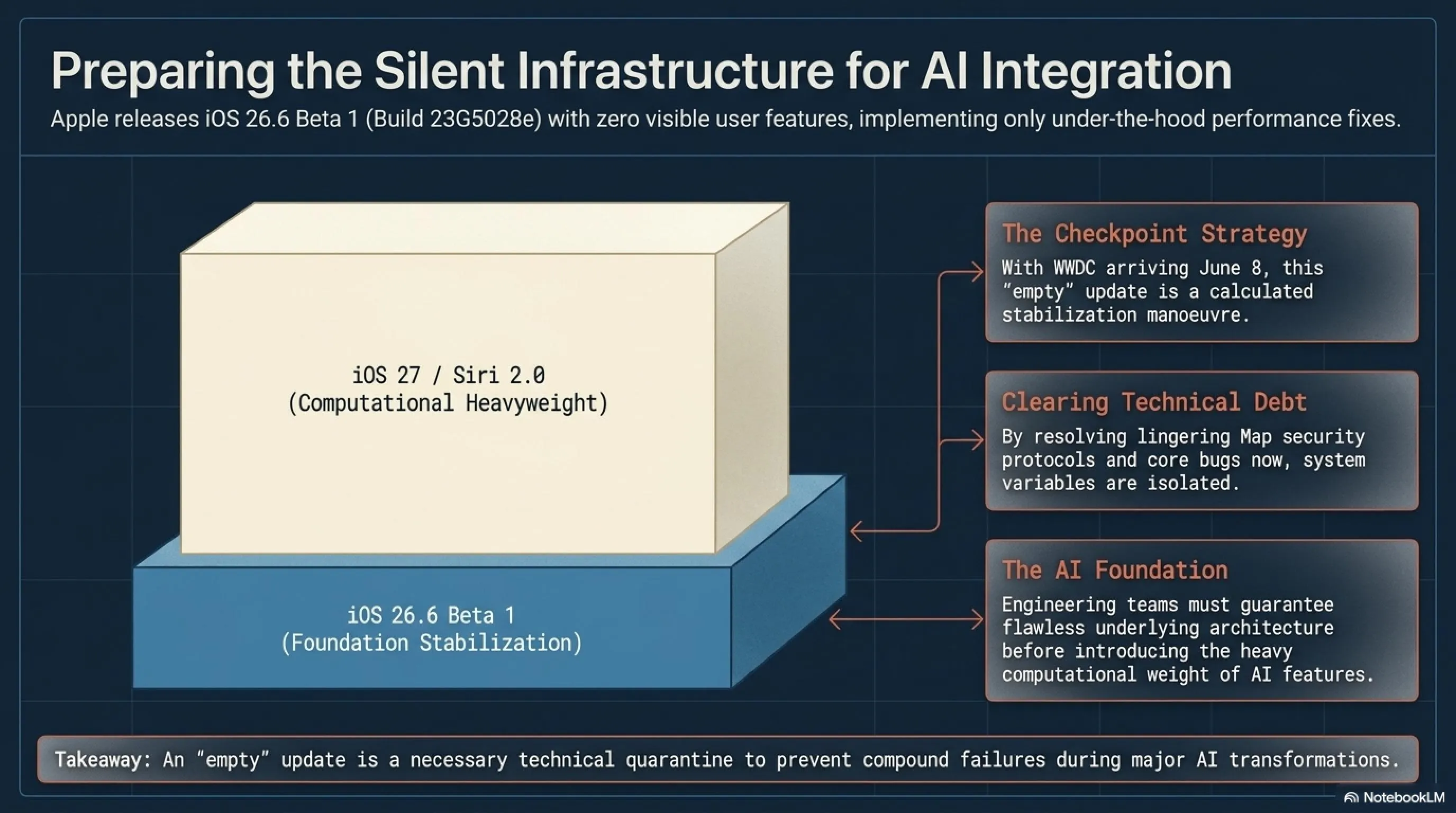
Apple today released the first beta of iOS 26.6 and iPadOS 26.6 for developers, but users are struggling to find anything new. This minor update arrived two weeks after the official release of iOS 26.5 and iPadOS 26.5, and appears to focus primarily on behind-the-scenes improvements rather than user-facing features that iPhone owners would immediately notice.
According to reports from 9to5Mac and MacRumors, Tuesday's software update increases the build number to 23G5028e, up from the 23F77 build number of iOS 26.5. Though the iOS 26.6 beta is a relatively light release feature-wise, it does include two significant changes: an Apple Maps security upgrade and a new Contacts feature that notifies users when they try to exceed the blocked contacts limit.
🆕 Key Changes in iOS 26.6 Beta 1
Apple Maps Security Upgrade: Security improvements to protect user location data
Blocked Contacts Alert: iOS 26.6 notifies users when they try to exceed the blocked contacts limit
Performance Improvements: Bug fixes and security enhancements without visible new features
Macworld reported that users may struggle to identify any notable new features or changes. This minor update appears to focus primarily on behind-the-scenes improvements rather than user-facing enhancements that iPhone owners would immediately notice. However, the reality is that iOS 26.6 is a bridge to iOS 27, which is expected to be unveiled at WWDC 2026 on June 8.
The timing of this release is strategic. With WWDC just two weeks away, Apple is ensuring iOS 26 is as stable and bug-free as possible before shifting focus to iOS 27. Phone Arena noted that iOS 26.6 beta could be the first opportunity for iPhone users to experience the eagerly awaited Siri 2.0 update, though that seems unlikely given the minimal changes in beta 1. More realistically, iOS 26.6 will be a maintenance release that sets the stage for the AI-powered features coming in iOS 27.
💡 Tekin Analysis: Why Apple Releases "Empty" Updates
Apple's strategy of releasing "empty" updates like iOS 26.6 beta 1 serves multiple purposes. First, these updates allow Apple to fix security and performance bugs without introducing new features that might create additional bugs. Second, they prepare the ground for the next major release (iOS 27). Third, they maintain Apple's regular update cadence, keeping developers and users engaged with the platform.
Given that iOS 27 is expected to ship with AI-powered Siri 2.0, Apple wants to ensure iOS 26 is as stable as possible. The company learned from past mistakes (remember iOS 11's buggy launch?) that rushing major features leads to user frustration. By releasing incremental updates like 26.6, Apple can address lingering issues while its engineering teams focus on the transformative AI features coming in iOS 27.
For developers, these minor betas also serve as checkpoints to ensure their apps remain compatible as Apple makes under-the-hood changes. The Apple Maps security upgrade, while not flashy, likely involves significant changes to how location data is handled—changes that could break poorly written apps if not tested thoroughly. In this sense, "empty" updates are actually full of important technical work that just isn't visible to end users.
💔 The Death of Fitbit: Google Health and User Revolt
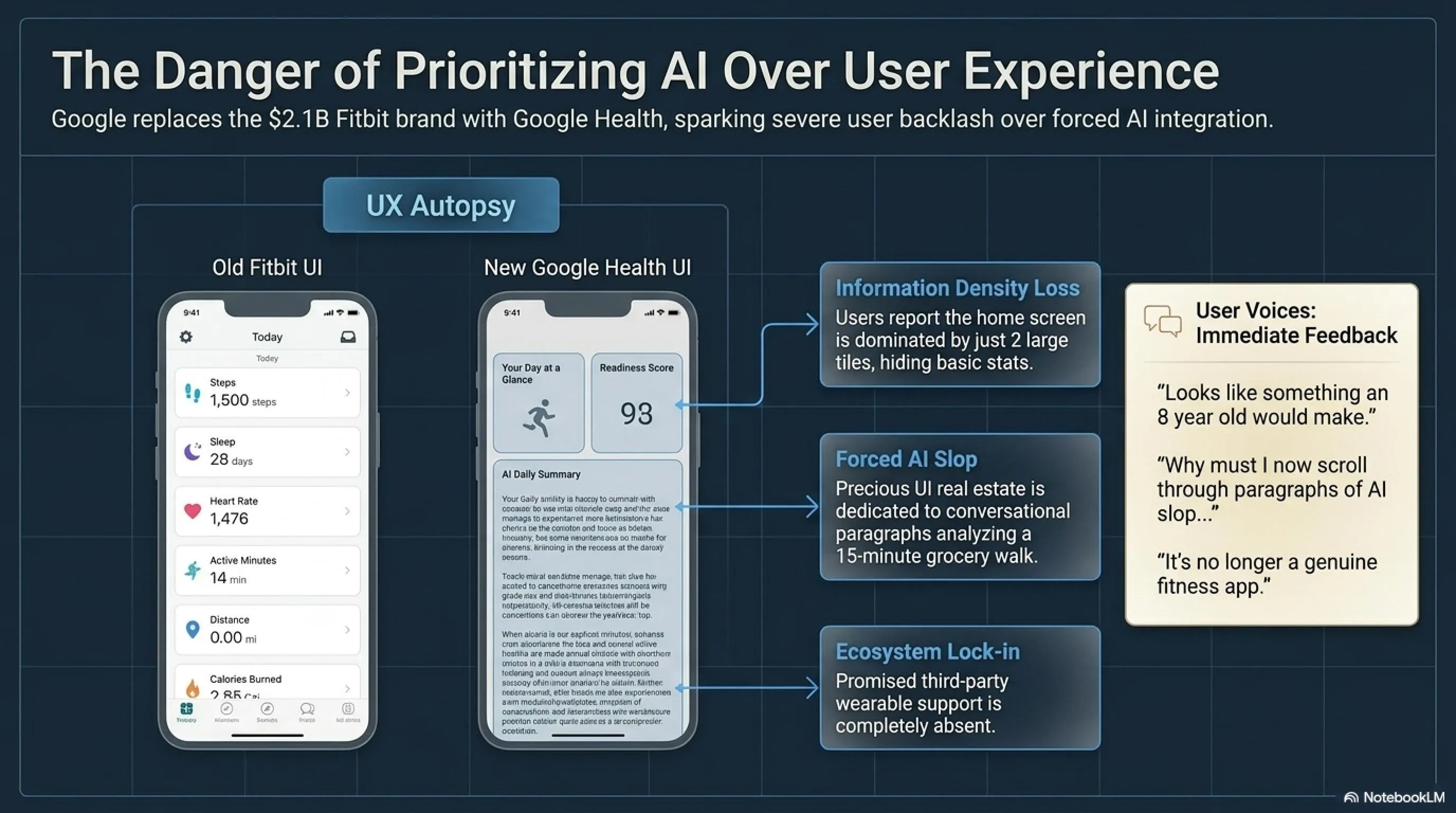
The Fitbit app is no more. Along with the launch of the new Fitbit Air (which you can expect a full review of once we've spent more time with it), Google has officially replaced it with Google Health, as previously announced, and many of the responses we've seen so far are full of confusion, frustration, and requests to get the old app back.
According to The Verge's report, one post on Reddit calls out a common issue, saying, "I can't even completely fill up my home screen. They only have 2 large tiles available and I can't just scroll down to see everything." The landing page has a small section up top showing steps and some other basic stats, but part of the app's main page is now reserved for recent activity updates and chatty notes from Google's AI health coach.
😤 Main User Complaints About Google Health
Cluttered UI: Much of the home screen is reserved for the AI coach that users don't want
Difficult Data Access: Stats that were previously visible with one scroll are now hidden in deep menus
AI Slop: Long paragraphs of AI text that users must scroll through
Loss of Simplicity: "It's no longer a genuine fitness app"
The AI didn't have much to say to some users, but for The Verge's senior editor Richard Lawler, it started a conversation about today's plans that he wasn't quite ready to have with a chatbot. Not everyone is annoyed by the AI bot, however, with one person commenting, "When I ask it to design a moderate workout using my office gym equipment, circuit style, I usually end up feeling great afterwards." Another person called it "quite a helpful feature," showing how they were able to update their sleep log with a missed session by chatting with the AI bot.
Another user said, "This graphic UI looks like something an 8 year old would make," while someone else complained, "Why must I now scroll through paragraphs of AI slop on every tab before I can actually see my activities and data? I don't want or need to read platitudes about my 15 minute walk to the grocery store. I want to see my stats from my morning run."
One post on Google's help center sums things up, saying, "This app is a huge disappointment and a total time drain to get minimal results. How can I get back to using what worked?!" Many others were in agreement, with one reply saying, "it's no longer a genuine fitness app." The frustration is palpable across Reddit, Google's support forums, and social media, with users feeling that Google prioritized AI integration over user experience.
According to a support page, if you have a supported wearable connected, Google Health shows two additional tabs for Fitness and Sleep that would make things easier. However, many users don't have compatible wearables or are using third-party devices. While Google's Rishi Chandra told The Verge earlier this month that Google Health will eventually support third-party wearables, that support isn't available yet, leaving many users frustrated with a degraded experience.
💡 Tekin Analysis: Why Google Destroyed Fitbit
Google's decision to replace Fitbit with Google Health is a classic case of "if it ain't broke, break it." Google wants to inject AI into every product, even if users don't want it. The problem is that Fitbit was a simple, functional app that users knew how to use. Google Health is a complex, AI-laden app that users must learn how to navigate.
This change also demonstrates that Google doesn't respect the Fitbit brand it acquired for $2.1 billion. Instead of preserving the beloved Fitbit brand, Google absorbed it into its Google Health brand. This is part of a broader pattern where Google acquires successful companies and then destroys what made them successful by forcing them into Google's ecosystem and design language.
The user backlash reveals a fundamental tension in modern tech: companies want to showcase their AI capabilities, but users often just want simple, reliable tools that do one thing well. Fitbit succeeded because it focused on fitness tracking without unnecessary complexity. Google Health fails because it tries to be everything—fitness tracker, health coach, AI assistant—and ends up being mediocre at all of them. For Google, this is a cautionary tale about the dangers of AI-first product design that ignores user needs.
🛡️ Dashlane and KnowBe4 Integration: The Future of Security Training
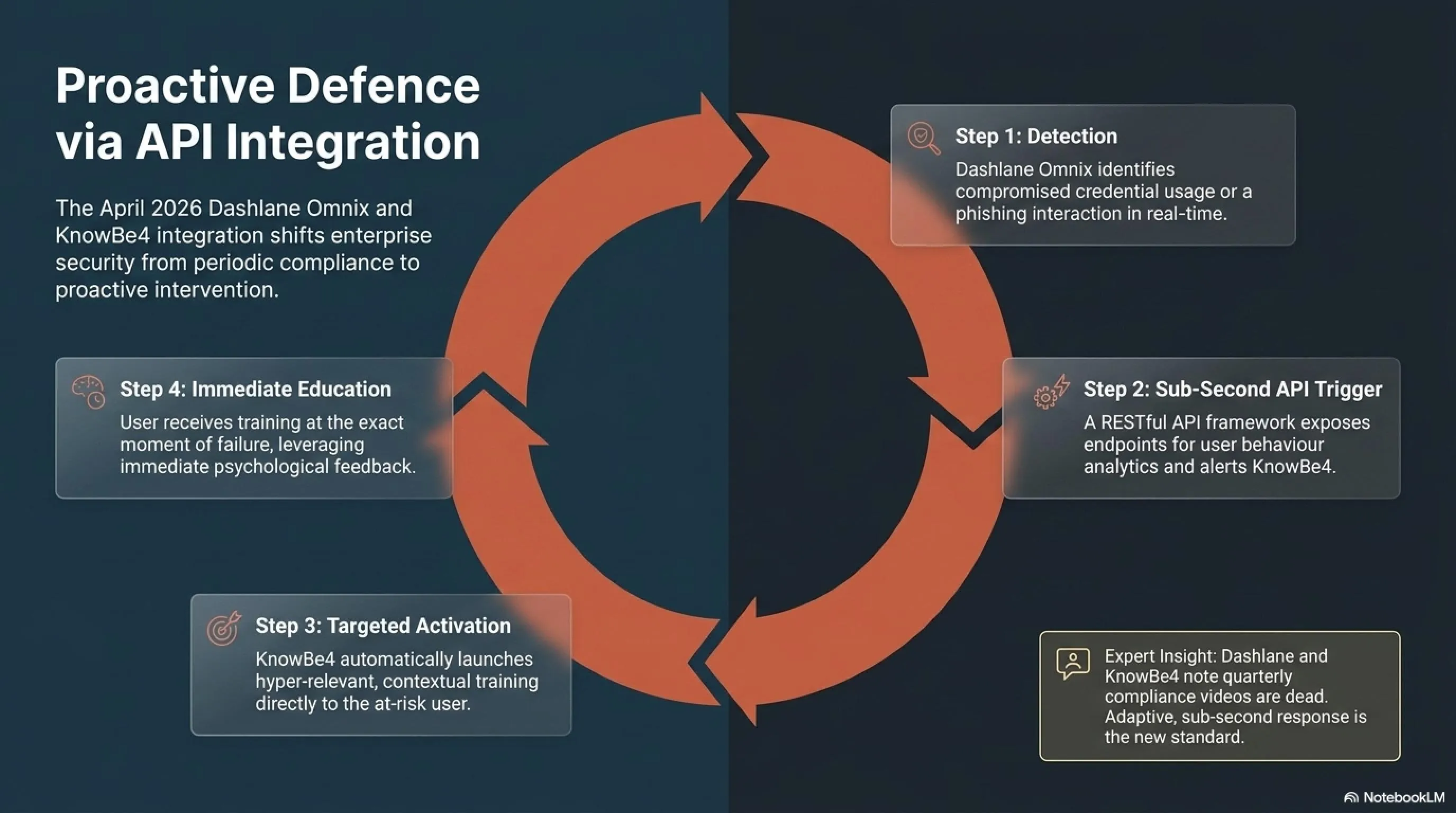
In a revolutionary move in the cybersecurity industry, Dashlane and KnowBe4 unveiled a first-of-its-kind integration that transforms security awareness into proactive defense. This integration, announced in April 2026, combines the Dashlane Omnix platform with KnowBe4 to create a closed-loop system that connects real-time credential threat detection with immediate, contextual security education.
According to Dashlane's report, this integration bridges the response gap by detecting compromised credential usage or phishing threats and immediately triggering relevant training for at-risk end users. In other words, when an employee makes a security mistake, the system immediately activates targeted training for that employee.
⚙️ How the Integration Works
Step 1: Dashlane Omnix detects compromised credential usage or phishing threat
Step 2: System immediately notifies KnowBe4
Step 3: KnowBe4 activates targeted security training for the at-risk user
Step 4: User receives training at the moment risk is detected
The integration hinges on a RESTful API framework, enabling real-time data exchange between password vaults and security awareness platforms. By exposing endpoints for credential breach alerts and user behavior analytics, the integration creates a feedback loop that refines training modules dynamically. This technical architecture allows for sub-second response times, ensuring that training is delivered while the security incident is still fresh in the user's mind.
Frederic Rivain from Dashlane and Erich Kron from KnowBe4 joined the Apple @ Work podcast to discuss this new integration and the future of security training. They emphasized that traditional security training is often conducted after an incident occurs, but this integration moves training to the moment risk is detected. This "just-in-time" approach is far more effective because it leverages the psychological principle of immediate feedback—people learn best when consequences are immediate and relevant.
The integration also addresses a critical gap in enterprise security: the disconnect between detection and education. Most organizations have tools to detect security threats and separate tools to train employees, but these systems don't communicate. An employee might click a phishing link on Monday, but not receive training about phishing until the quarterly security awareness session three months later. By that time, the lesson is abstract and disconnected from the employee's actual behavior. The Dashlane-KnowBe4 integration solves this by making training immediate, specific, and contextual.
💡 Tekin Analysis: The Revolution in Security Training
The Dashlane-KnowBe4 integration represents a paradigm shift in cybersecurity training from periodic, generic education to proactive, personalized intervention. This "just-in-time training" approach is far more effective than traditional methods because users learn at the moment they make mistakes, when they're most receptive to feedback.
What makes this integration particularly powerful is its ability to close the feedback loop. Traditional security training is a one-way broadcast: the security team delivers training, but has limited visibility into whether it changes behavior. This integration creates a continuous improvement cycle where training effectiveness can be measured by subsequent behavior changes, and training content can be refined based on what actually works.
Looking forward, this integration model will likely become the standard for enterprise security. The days of annual security training videos are numbered. The future is adaptive, personalized security education that responds to individual user behavior in real-time. For organizations serious about reducing human-factor security risks, integrations like this aren't optional—they're essential. The question isn't whether to adopt this approach, but how quickly you can implement it before your competitors do.
💰 Lenovo Idea Tab: Half the Price of iPad with Better Specs
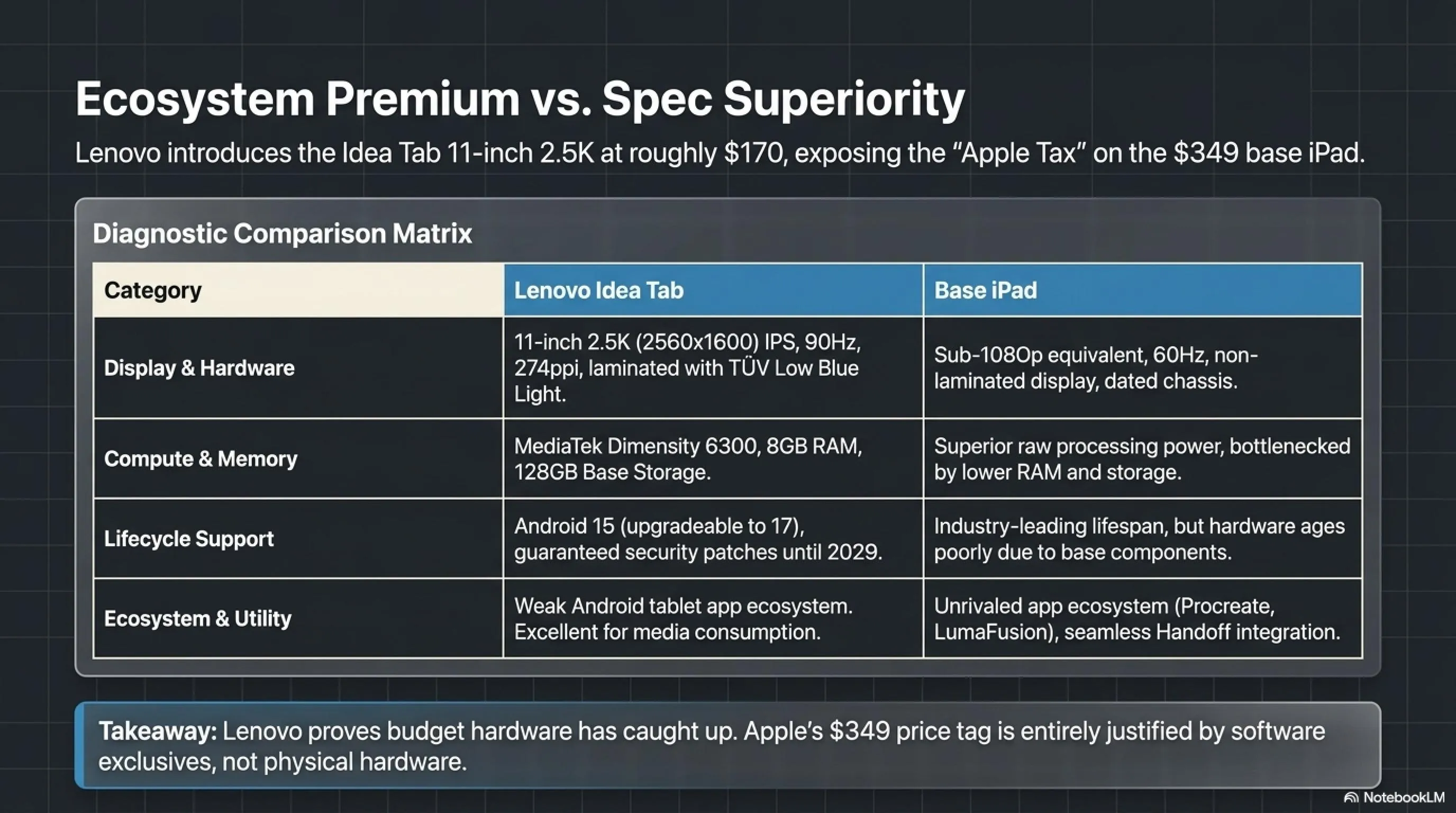
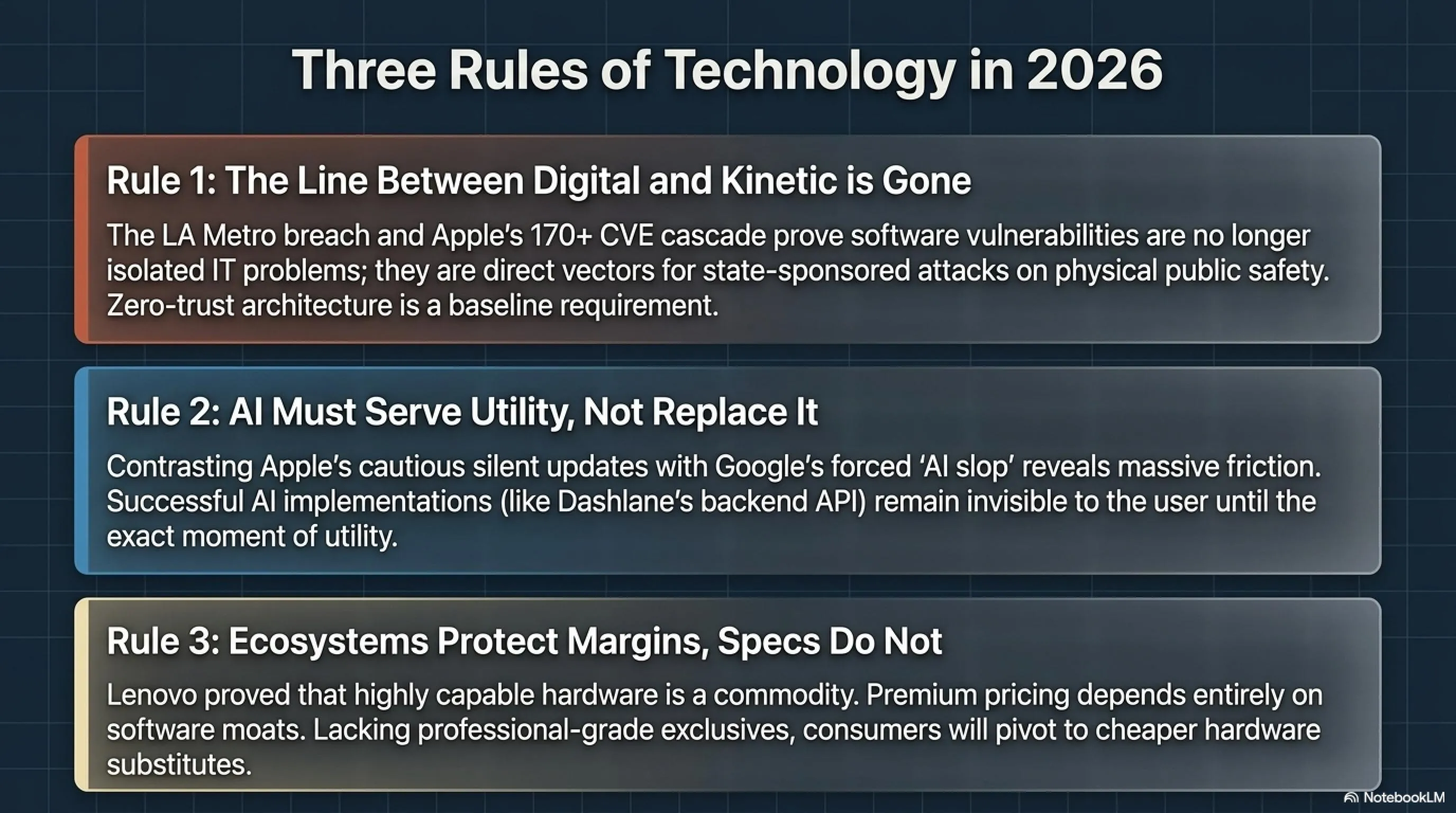
In a bold move to challenge Apple's dominance in the tablet market, Lenovo has released its Idea Tab 11" 2.5K at less than half the price of Apple's cheapest iPad. This Android tablet, featuring a 2.5K display, MediaTek Dimensity 6300 processor, 8GB RAM, and 128GB storage, presents a compelling option for those seeking a powerful tablet at an affordable price.
According to IGN's report, the spacious 11" screen features a 2.5K (2560x1600) resolution and a pixel density of 274ppi, which is technically sharper than the standard iPad's "Retina" display. The IPS panel offers wide viewing angles and accurate color reproduction, and the touchscreen interface boasts an anti-fingerprint coating to resist smudges.
📊 Lenovo Idea Tab 11" Technical Specifications
| Display | 11" 2.5K (2560x1600) IPS, 90Hz, 274ppi |
| Processor | MediaTek Dimensity 6300 |
| RAM | 8GB |
| Storage | 128GB |
| OS | Android 15 |
| Support | Futureproof to Android 17 + security patches until 2029 |
| Price | Less than half the price of base iPad |
The MediaTek Dimensity 6300 processor handles tasks smoothly, and 8GB of RAM ensures apps stay open without reloading. Android 15 keeps things up to date, and Lenovo has promised to support the tablet up to Android 17 and provide security patches until 2029. This level of long-term support is impressive for an Android tablet in this price range.
The display uses TÜV Rheinland Low Blue Light hardware which can help avoid eye strain and keep users from feeling fatigue set in after extended use. The 90Hz refresh rate provides a smoother scrolling and interaction experience compared to standard 60Hz tablets. For media consumption, the 11" screen size hits a sweet spot—large enough for comfortable video watching, but portable enough for one-handed use.
✅ Pros
- Extremely affordable price (half of iPad)
- 2.5K display with 90Hz refresh rate
- 8GB RAM for multitasking
- Support up to Android 17
- Security patches until 2029
- Low Blue Light technology
- Anti-fingerprint coating
❌ Cons
- Android ecosystem weaker than iOS
- No access to iPad-exclusive apps
- MediaTek processor weaker than Apple Silicon
- Likely lower build quality than iPad
- Lower resale value
- No Apple Pencil equivalent
However, the Lenovo Idea Tab faces significant challenges in competing with the iPad ecosystem. While the hardware specs are impressive for the price, the Android tablet ecosystem remains significantly weaker than iPadOS. Many popular apps either don't have Android tablet versions or offer inferior experiences compared to their iPad counterparts. Professional creative apps like Procreate, LumaFusion, and Affinity Designer are iPad-exclusive, limiting the Idea Tab's appeal to creative professionals.
The MediaTek Dimensity 6300, while capable for everyday tasks, can't match the raw performance of Apple's M-series chips or even the A-series chips in base iPads. For demanding tasks like video editing, 3D modeling, or high-end gaming, the iPad remains the superior choice. Additionally, Apple's ecosystem integration—seamless handoff between devices, AirDrop, iCloud sync—provides value that's difficult to quantify in a spec sheet but makes a real difference in daily use.
💡 Tekin Analysis: Can Lenovo Beat the iPad?
The Lenovo Idea Tab is an excellent option for those seeking an affordable tablet for media consumption, web browsing, and light tasks. However, it can't compete with Apple's integrated ecosystem, superior build quality, and powerful Apple Silicon processors. The iPad remains the better choice for professionals, creators, and those who need iPad-exclusive apps.
That said, Lenovo's aggressive pricing strategy highlights a critical weakness in Apple's tablet lineup: the base iPad is overpriced for what it offers. At $349, the base iPad provides a dated design, limited storage, and a non-laminated display. The Lenovo Idea Tab, at roughly $170-180, offers better specs in several areas (higher resolution display, more RAM, more storage) even if the overall experience isn't as polished.
The real winner here might be consumers. Lenovo's competitive pricing forces Apple to reconsider its tablet pricing strategy. If Android tablets continue to improve while undercutting iPad prices by 50% or more, Apple will need to either lower prices or significantly differentiate the iPad experience. For budget-conscious consumers, students, and casual users, the Lenovo Idea Tab proves you don't need to spend $350+ to get a capable tablet in 2026.
🎯 Final Thoughts: A Night of Major Transformations
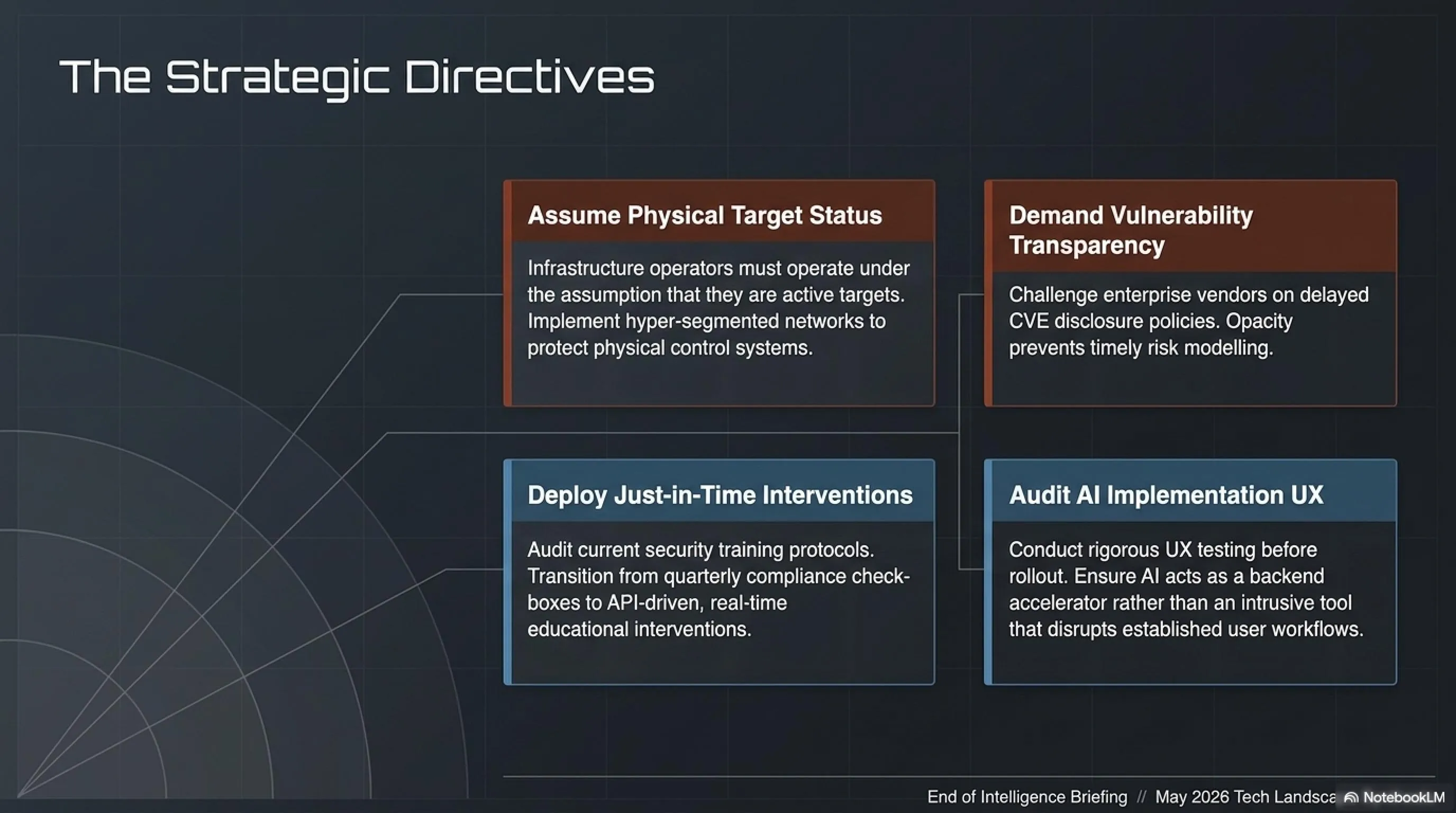
Wednesday night, May 27, 2026, witnessed six critical stories demonstrating that the tech industry is navigating important inflection points. From Apple's disclosure of CVE security details revealing that vulnerabilities were more serious than we thought, to the identification of Iranian hackers behind the LA Metro attack showing that cyber warfare has entered a new phase.
The release of iOS 26.6 beta 1 without new features shows Apple is preparing for iOS 27, while the death of Fitbit and birth of Google Health demonstrates Google's determination to inject AI into every product, even if users don't want it. The Dashlane-KnowBe4 integration shows that the future of cybersecurity lies in proactive, timed training, and Lenovo's Idea Tab proves that competition in the tablet market remains alive and well.
These stories collectively paint a picture of an industry in flux. Apple's security challenges reveal that even tech giants are vulnerable to sophisticated threats. The Iranian hacking campaign demonstrates that cyber warfare is increasingly targeting critical infrastructure with potentially devastating consequences. Google's Fitbit replacement shows how AI-first product design can alienate users when it prioritizes technology over user experience.
Looking forward, these trends will intensify. Security vulnerabilities will continue to proliferate as software complexity increases. State-sponsored cyber attacks will become more brazen and destructive. AI will be forced into more products, sometimes improving them, often degrading user experience. And budget competitors will continue to challenge premium brands by offering better specs at lower prices. The tech world never stands still, and tonight's stories are just the latest chapter in an ongoing transformation that affects billions of people worldwide.
❓ Why does Apple delay CVE disclosure?
Apple delays CVE disclosure to give users who haven't yet updated time to secure their systems without hackers learning precise vulnerability details. This "security through obscurity" approach is a double-edged sword as it can undermine trust among professional users but prevents hackers from exploiting detailed technical information about unpatched devices.
❓ Were Iranian hackers really behind the LA Metro attack?
According to Gambit Security's report, forensic evidence shows that the Ababil of Minab group that claimed responsibility actually works for Iran's Ministry of Intelligence and State Security (MOIS). This assessment is based on infrastructure analysis, tactics, and connections to previous Iran-linked campaigns. The FBI and U.S. Justice Department have also attributed similar groups like Handala to the Iranian government.
❓ Why are users unhappy with Google Health?
Users are unhappy with Google Health because the UI is cluttered, data access is more difficult, and much of the home screen is reserved for an AI coach that many don't want. Fitbit was a simple, functional app that users knew how to use, but Google Health is a complex app that users must learn to navigate. The forced AI integration feels like a solution in search of a problem.
❓ Is the Lenovo Idea Tab worth buying?
The Lenovo Idea Tab is an excellent option for those seeking an affordable tablet for media consumption, web browsing, and light tasks. With a 2.5K display, 8GB RAM, and support up to Android 17, this tablet offers good value for money. However, if you need Apple's integrated ecosystem, superior build quality, or iPad-exclusive apps, the iPad remains the better choice despite its higher price.
❓ How does the Dashlane-KnowBe4 integration work?
The Dashlane-KnowBe4 integration creates a closed-loop system where when Dashlane detects compromised credential usage or phishing threats, it immediately notifies KnowBe4, which activates targeted security training for the at-risk user. This "just-in-time training" approach is far more effective than traditional methods because users learn at the moment they make mistakes, when they're most receptive to feedback.
📚 Sources and References
Primary Sources: 9to5Mac, TechCrunch, The Verge, Reuters, NBC News, MacRumors, AppleInsider, IGN, Dashlane, KnowBe4, Gambit Security
Security Sources: Apple Security Updates, CVE Database, FBI Cyber Division, Israel National Cyber Directorate
Analysis and Research: Tekin Editorial Team
Publication Date: May 27, 2026
🌐 Stay Connected With Us 🎮✨
For the latest tech, gaming, and gadget news, follow us on our official social media channels:
Additional Gallery: 🌙 Tekin Night May 27: Apple's Security Crisis & LA Metro Hack