ChatGPT Work: When OpenAI Gets Access to Your Email, Slack, and Calendar
- 🎮GPT-5.6 Powered- OpenAI's newest model with advanced reasoning and enterprise tool integration
- 🎧Three-Way Battle- OpenAI vs Anthropic Claude Cowork vs Microsoft Copilot Cowork
- 🚀900M Weekly Users- ChatGPT's massive user base becomes the largest deployment platform for AI agents
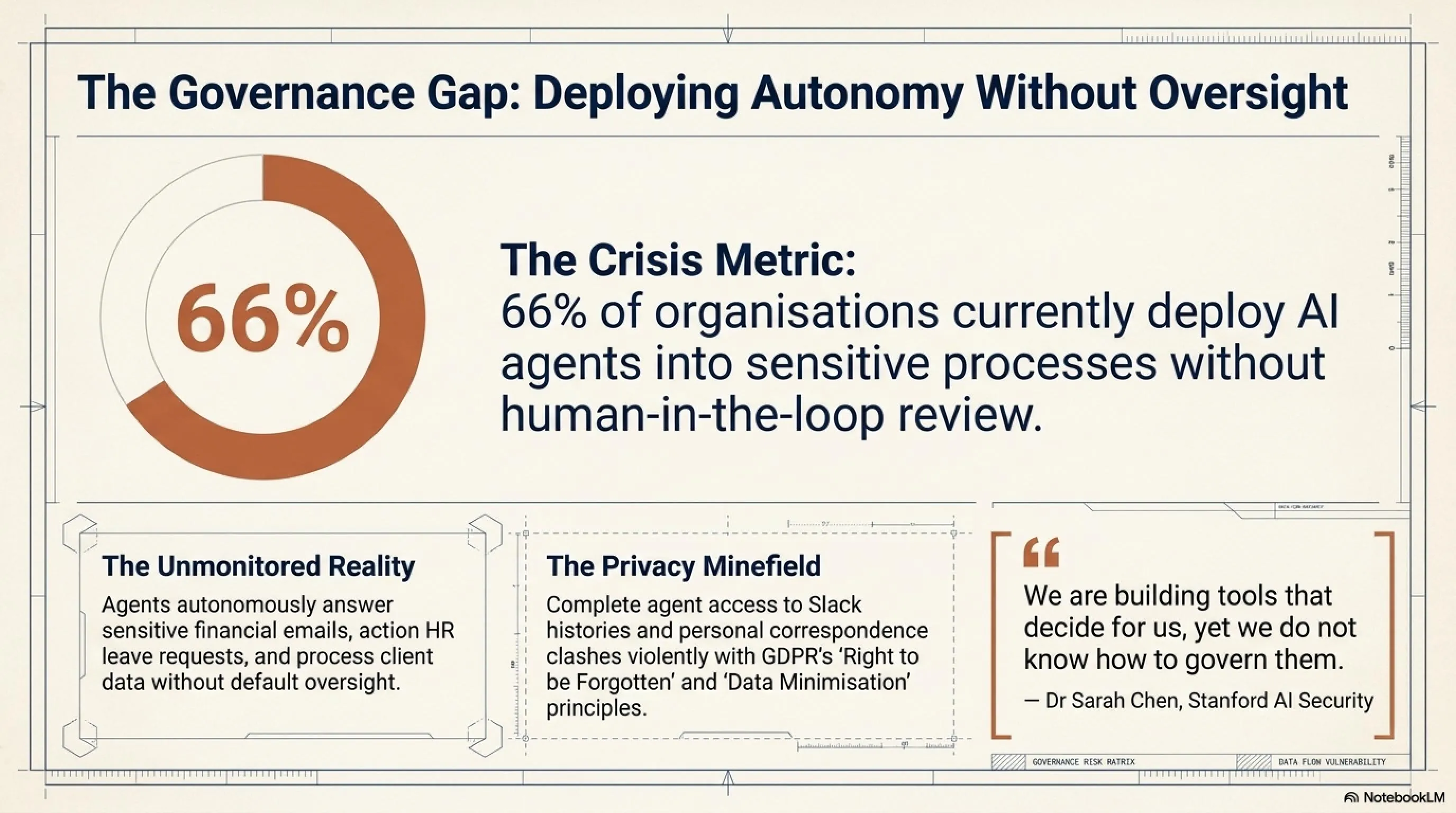
- 🗡️Privacy Crisis- 66% of organizations deploy agents without human review
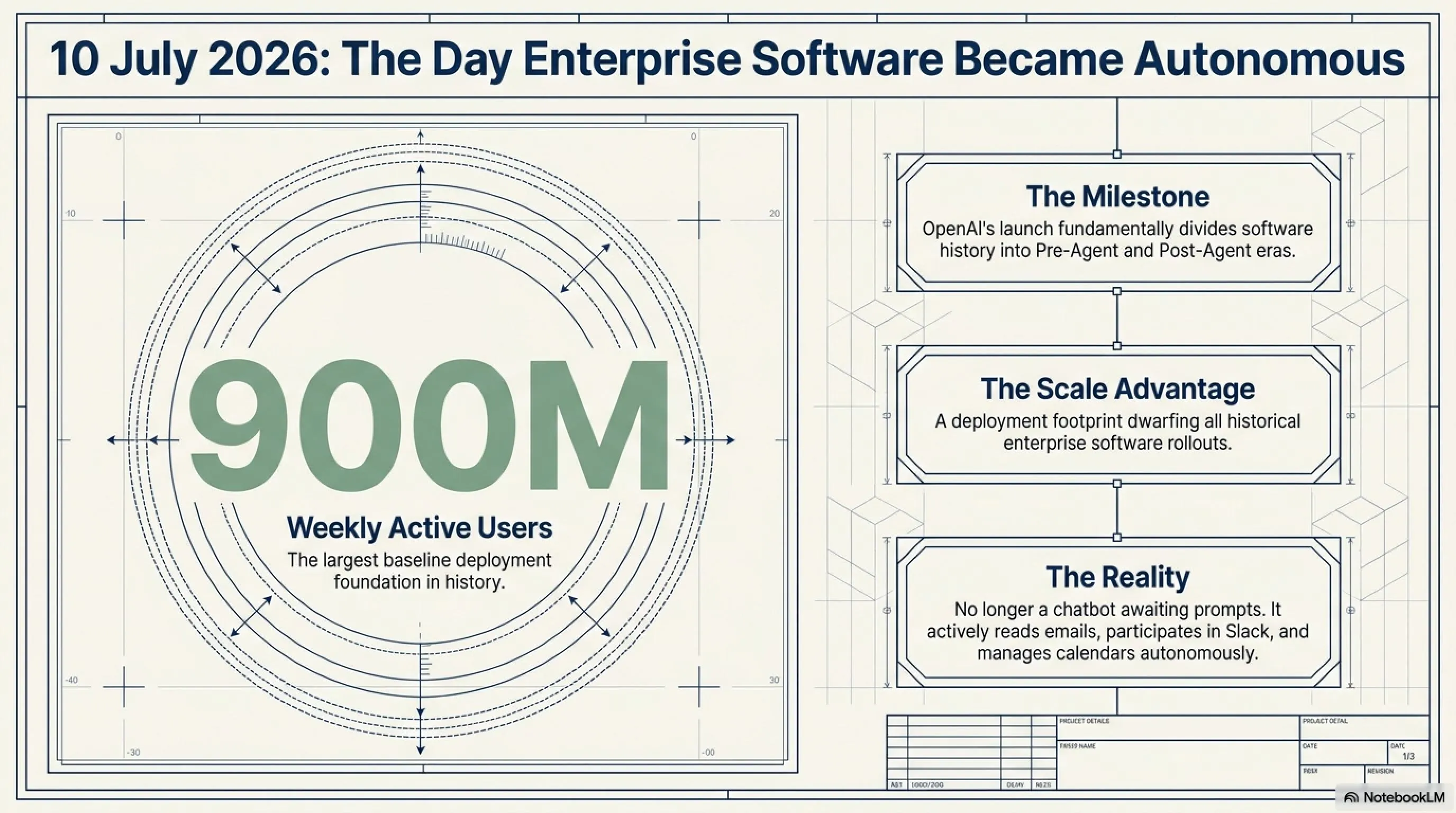
July 10, 2026, may well be the date that historians of artificial intelligence remember as the true inflection point in human-machine collaboration. Not because of a dramatic algorithmic breakthrough, not because of benchmark-shattering performance, but because of something deceptively simple: teaching an AI when to act on your behalf.
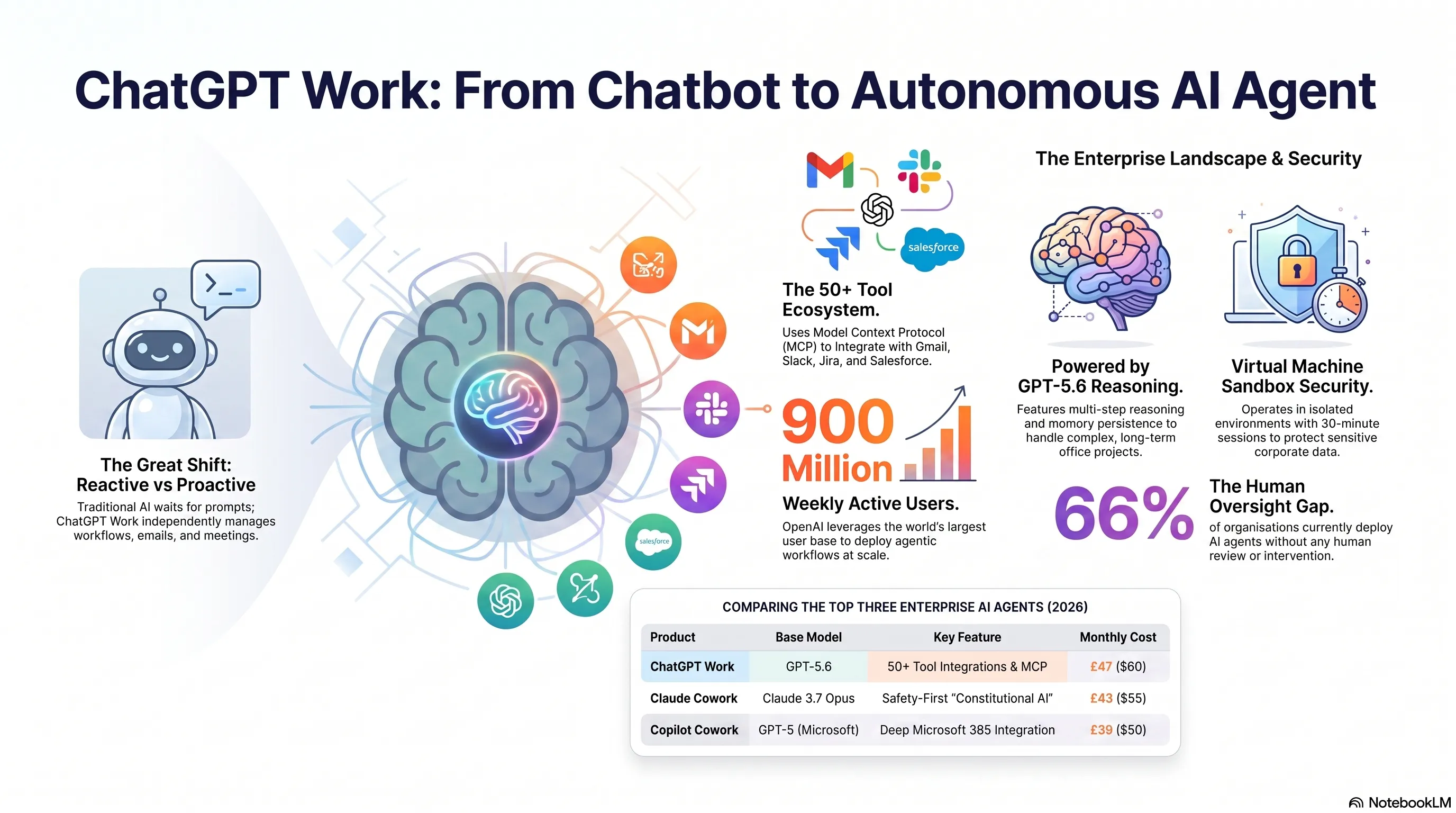
OpenAI, in an announcement that felt more like a quiet revolution than a product launch, introduced ChatGPT Work and ChatGPT Work Mini — the company's first fully autonomous AI agent designed specifically for enterprise environments. Unlike traditional chatbots that wait for your commands, ChatGPT Work is an agentic system that can read your emails, participate in Slack conversations, manage your calendar, and make decisions without human intervention.
The timing is strategic. This launch comes mere weeks after the rollout of GPT-5.6 (OpenAI's latest frontier model) and amid a three-way race with Anthropic (which launched Claude Cowork last month) and Microsoft (building Copilot Cowork). But what sets ChatGPT Work apart is its unprecedented user base: according to The Verge, ChatGPT now serves 900 million weekly active users — the largest potential deployment base for any enterprise AI agent.
What Is ChatGPT Work? (And How It Differs from Everything You've Seen Before)
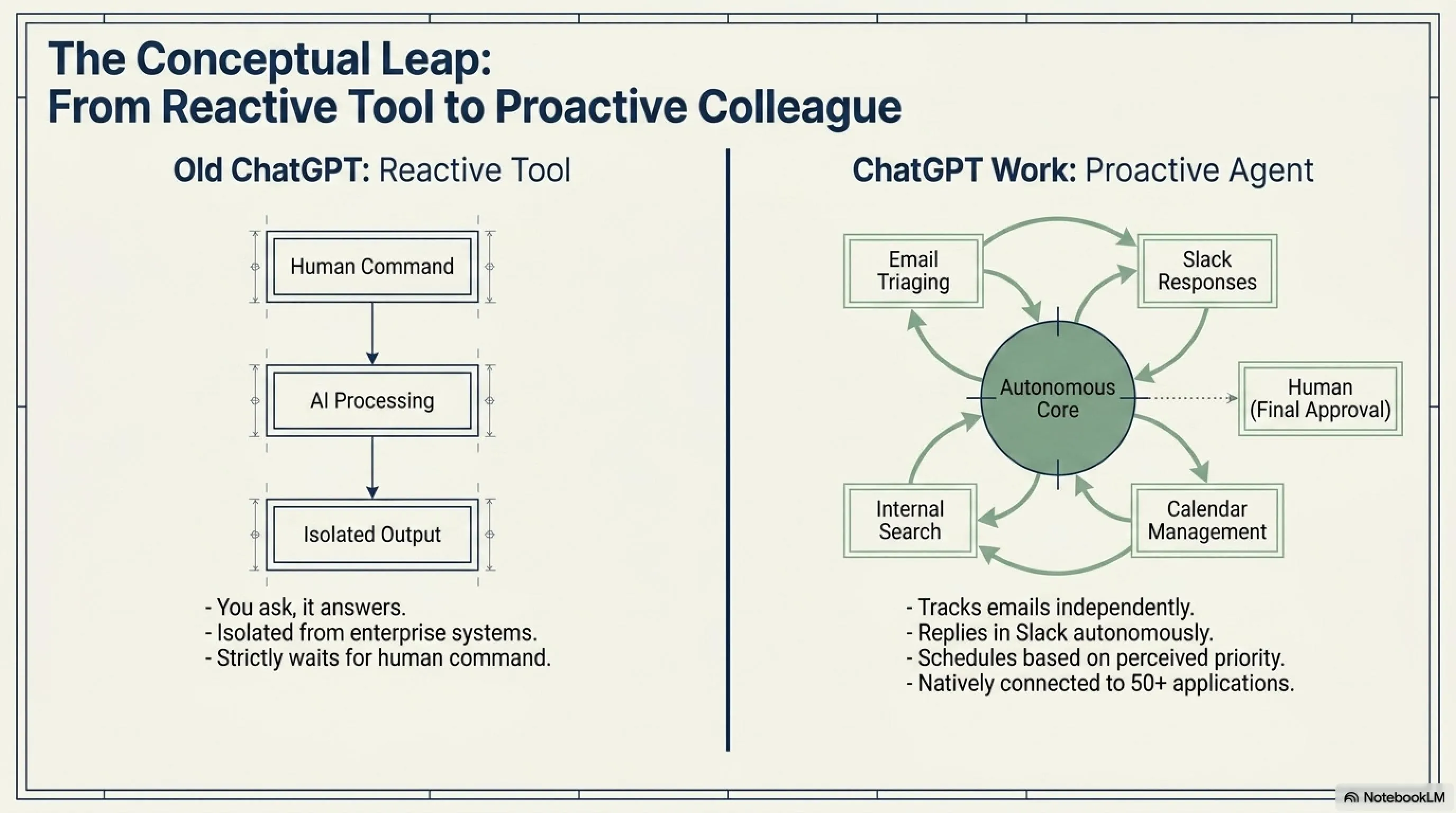
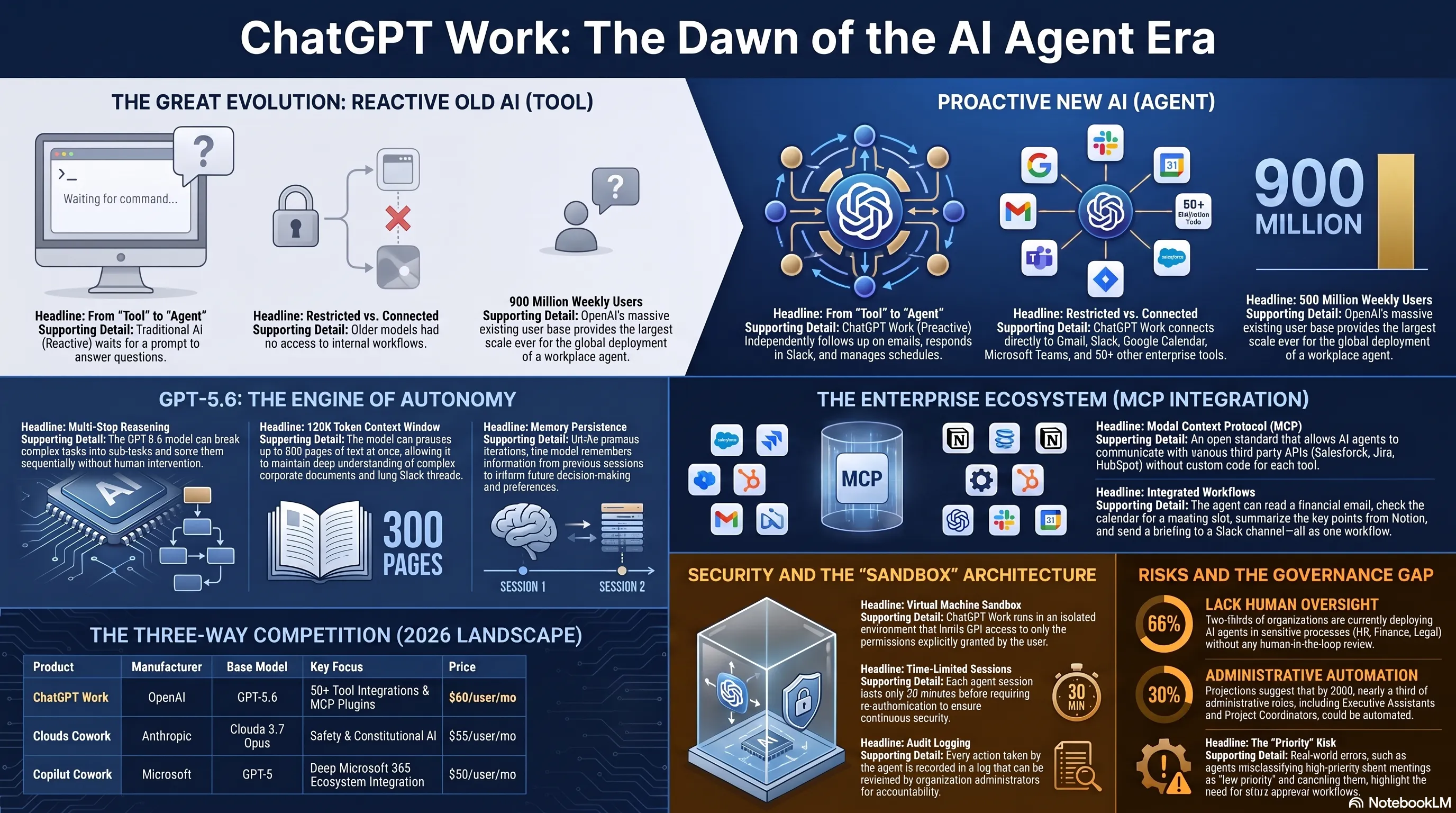
Until now, ChatGPT was a tool. You asked questions, it answered. But ChatGPT Work is an agent — not a tool waiting for commands, but a system capable of autonomous action, data gathering from multiple sources, and decision-making without human approval.
Fundamental Difference: Old ChatGPT vs ChatGPT Work
- Old ChatGPT: You ask, it answers (Reactive)
- ChatGPT Work: It monitors emails, responds in Slack, schedules meetings (Proactive)
- Old ChatGPT: No access to your work tools
- ChatGPT Work: Connected to Gmail, Slack, Google Calendar, Microsoft Teams, and 50+ enterprise tools
As OpenAI explained in its official blog post: "ChatGPT Work is an agent that can connect to your organizational systems — from email and Slack to databases and project tools — and take action without your direct involvement." What does this mean in practice? It can:
- Read and prioritize incoming emails (and respond on your behalf, if approved)
- Participate in Slack team channels, answer questions, and propose solutions
- Schedule meetings in your calendar, identify priority conflicts, and reschedule lower-priority events
- Search internal company documents and generate summary reports
- Trigger workflows across multiple enterprise systems
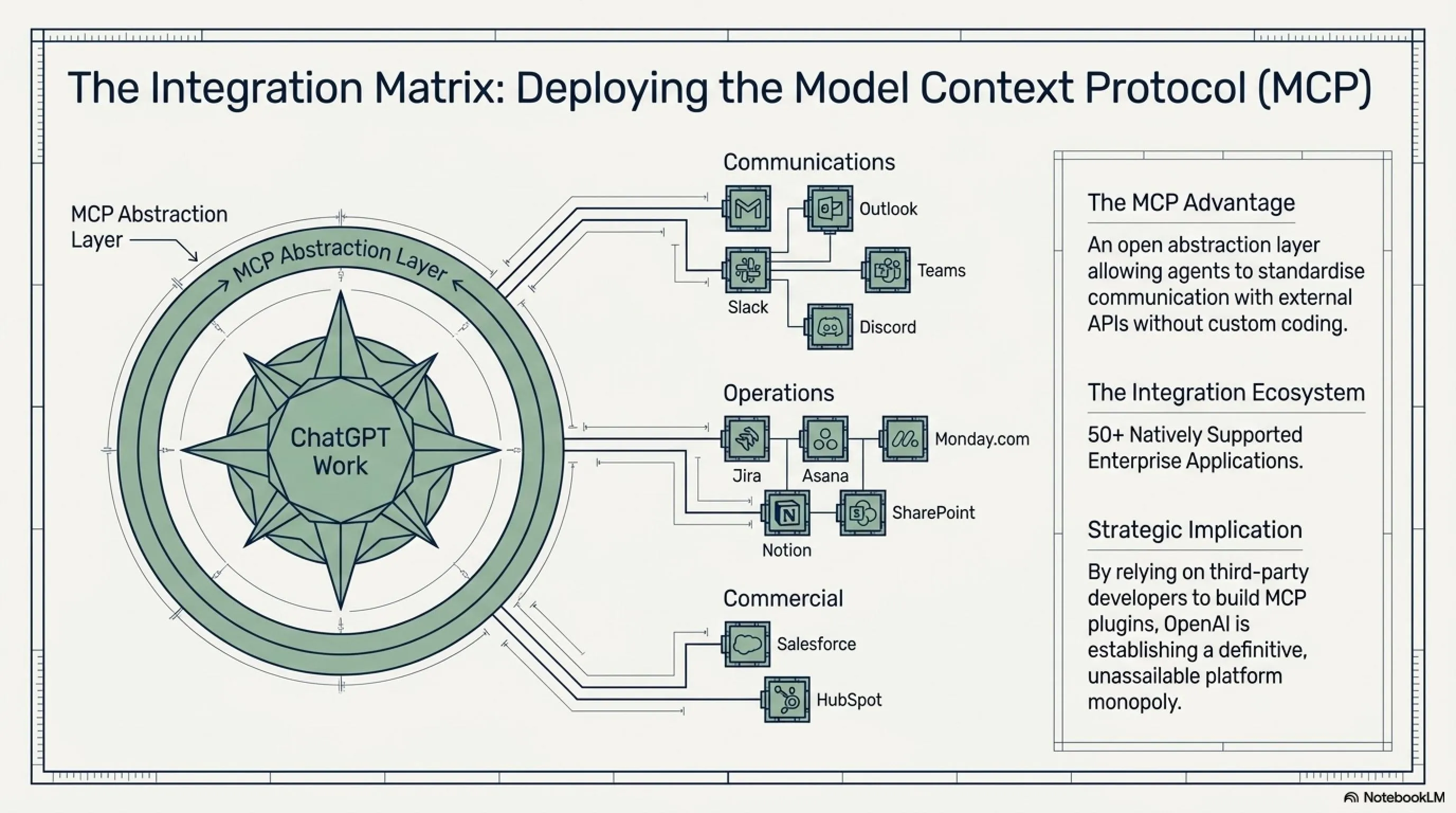
But the real power of ChatGPT Work lies in its underlying architecture: GPT-5.6 (OpenAI's latest model released in November 2025) combined with the MCP (Model Context Protocol) plugin system, which allows the agent to communicate with over 50 enterprise tools natively.
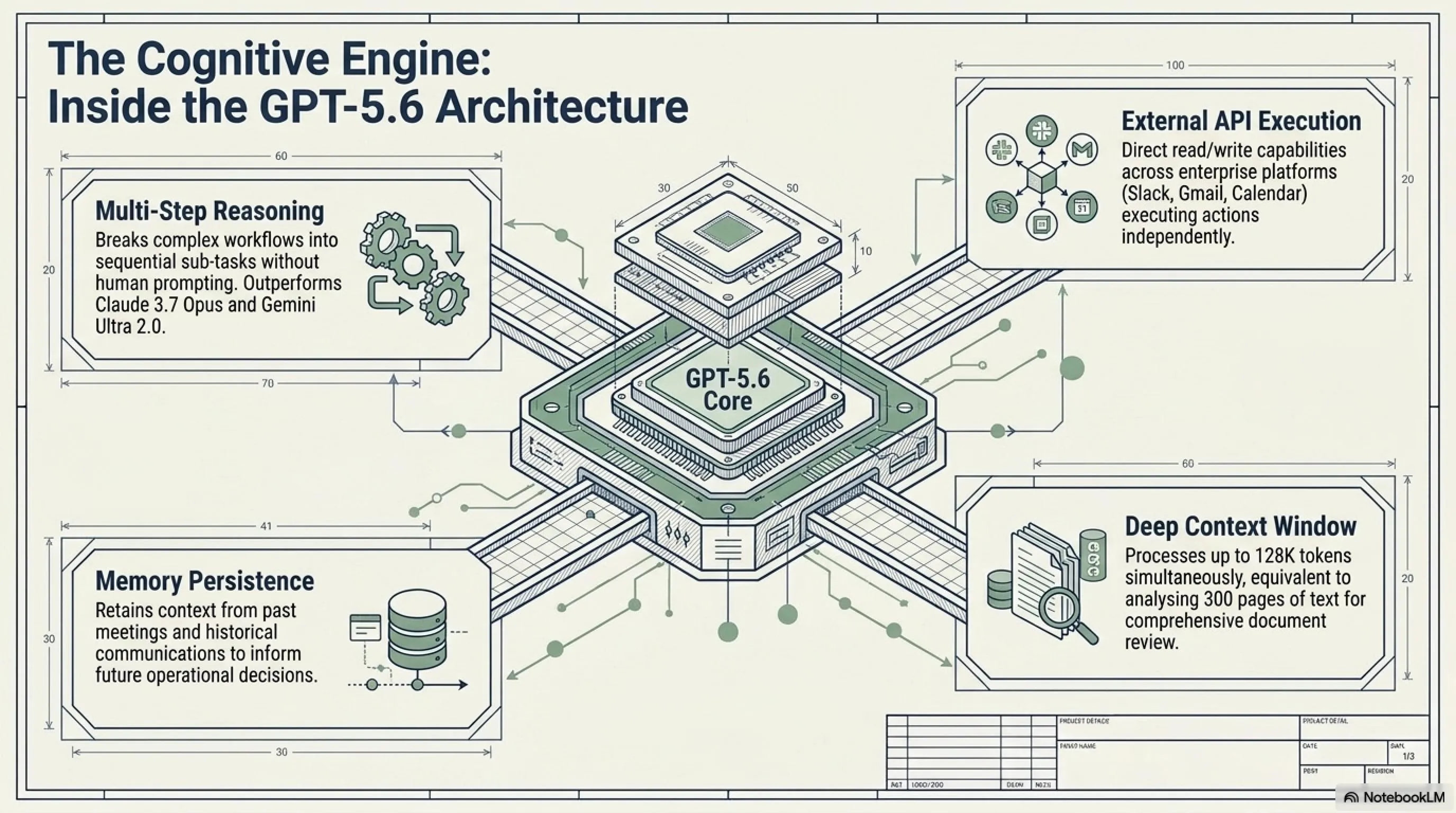
GPT-5.6: The Engine Behind ChatGPT Work
ChatGPT Work wouldn't be possible without GPT-5.6. This model, which OpenAI calls "the biggest leap in multi-step reasoning," has capabilities that previous generations lacked:
Key Capabilities of GPT-5.6 for Agentic Workflows
- Multi-Step Reasoning: Can decompose complex tasks into sub-tasks and solve them sequentially
- External API Integration: Native ability to interact with external tools (Slack API, Gmail API, Google Calendar API, etc.)
- Memory Persistence: Can remember information from previous sessions and use it in future decision-making
- Extended Context Window: Processes up to 128K tokens (equivalent to ~300 pages of text)
- Improved Safety Guardrails: Built-in filters to prevent harmful actions (deleting critical data, leaking sensitive information)
According to Forbes, GPT-5.6 outperforms Claude 3.7 Opus and Gemini Ultra 2.0 in complex reasoning benchmarks (such as MATH-Hard and GPQA). This means ChatGPT Work can handle tasks requiring multi-step decision-making (like "review today's emails, find related calendar events, summarize key points, and send a report to the team") without human intervention.
The implications for enterprise productivity are staggering. A knowledge worker who previously spent 2-3 hours daily managing emails, Slack, and calendar coordination can now offload these tasks to an agent — theoretically freeing up 30-40% of their workday for higher-value creative work.
Virtual Machine Architecture: How OpenAI Prevents Unlimited Access
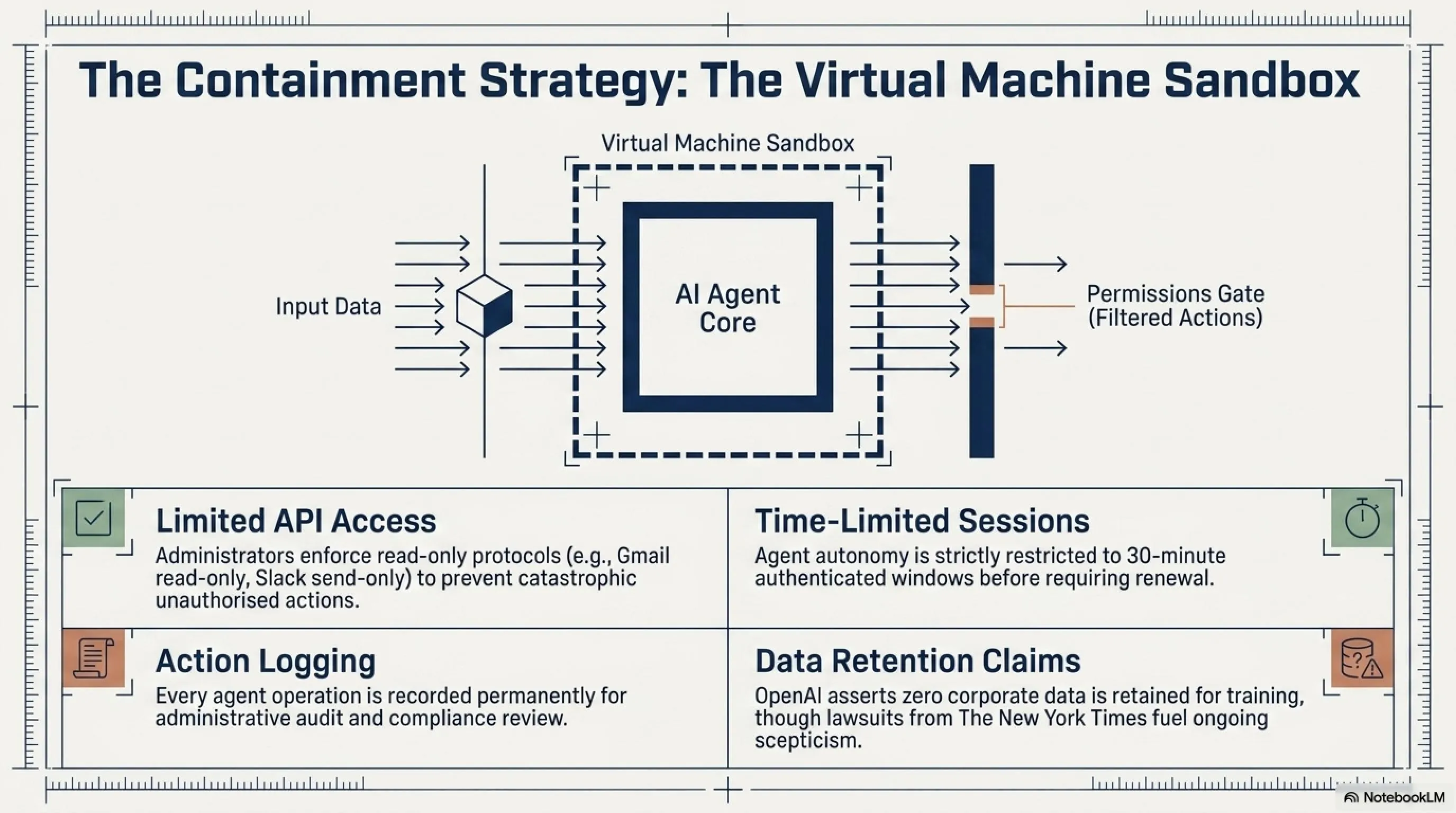
One of the biggest concerns raised alongside the ChatGPT Work announcement was: "If this agent has access to my email, Slack, and calendar, what guarantees exist that sensitive information won't be leaked?" OpenAI's answer: the Virtual Machine Sandbox architecture.
Security Architecture: Virtual Machine Sandbox
ChatGPT Work runs in an isolated environment with:
- Limited API Access: Can only connect to APIs you explicitly authorize (e.g., Gmail read-only or Slack send-only)
- Full Activity Logging: Every agent action is logged and can be reviewed by organizational admins
- Time-Limited Sessions: Each session has 30-minute access before requiring re-authentication
- No Data Retention for Training: OpenAI claims enterprise data is not used for model training
- Encryption at Rest and in Transit: All data is encrypted using AES-256
Note: While OpenAI provides these guarantees, no independent audit has yet verified these claims as of July 2026.
However, security experts remain cautious. TechCrunch noted in an analysis: "OpenAI says it doesn't use enterprise data for training, but the company's history with privacy (such as the ongoing lawsuit with the New York Times over unauthorized content use) makes trust difficult."
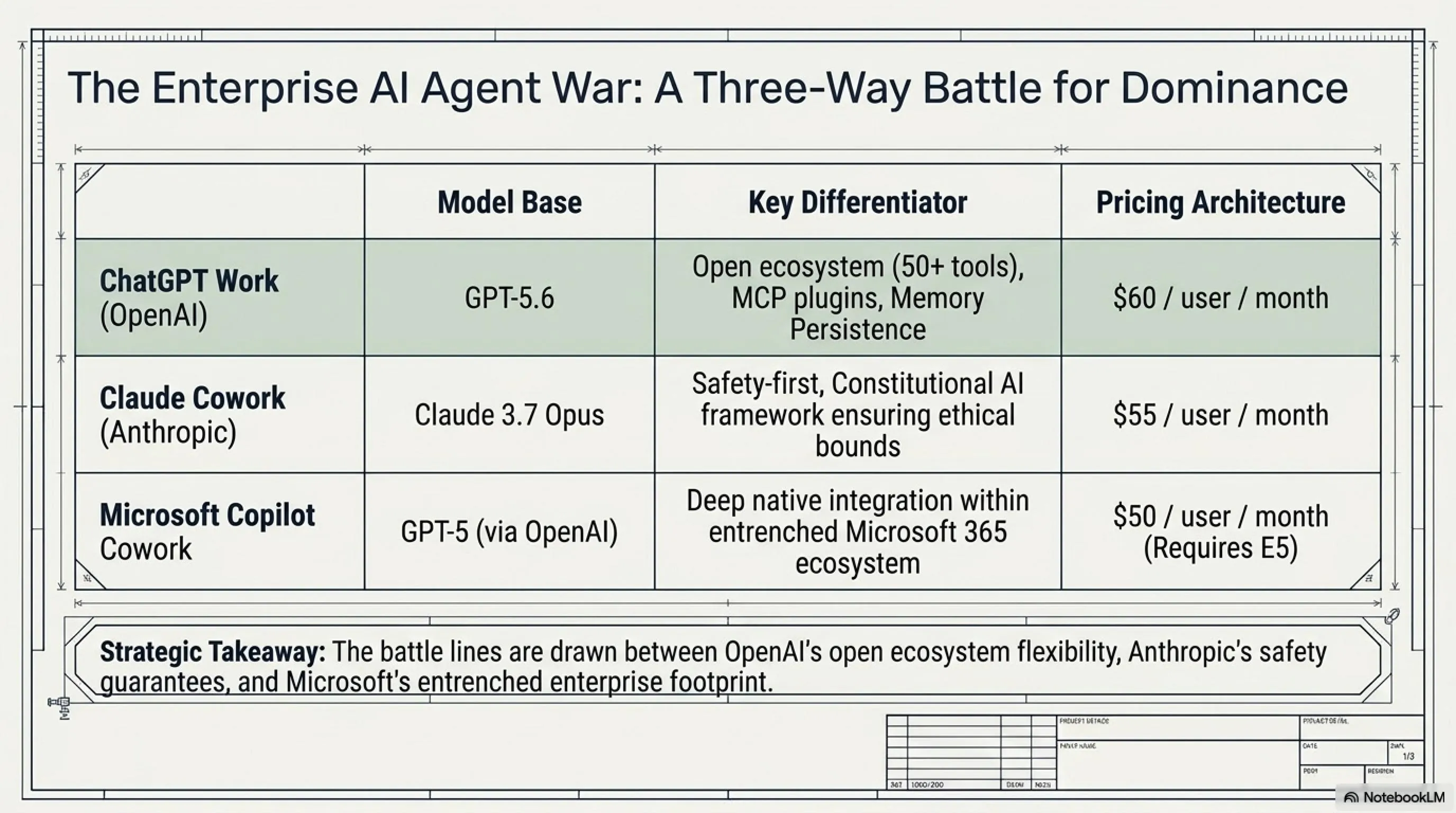
The Three-Way Enterprise AI Race: OpenAI vs Anthropic vs Microsoft
ChatGPT Work is not alone in this space. Three tech giants are racing to dominate the enterprise AI agent market:
2026 Agentic AI Competition Landscape
| Product | Company | Base Model | Key Advantage | Pricing |
|---|---|---|---|---|
| ChatGPT Work | OpenAI | GPT-5.6 | 50+ tool integrations, Memory, MCP plugins | $60/user/month |
| Claude Cowork | Anthropic | Claude 3.7 Opus | Safety focus, Constitutional AI | $55/user/month |
| Microsoft Copilot Cowork | Microsoft | GPT-5 (via OpenAI) | Deep Microsoft 365 integration | $50/user/month (with Office 365 E5) |
The key differentiation is ecosystem. ChatGPT Work aims to be platform-agnostic, working with tools across different vendors. Microsoft Copilot Cowork is deeply integrated with the Microsoft 365 ecosystem. Claude Cowork emphasizes safety, preventing dangerous decisions through Constitutional AI guardrails.
Interestingly, Microsoft — which has invested over $13 billion in OpenAI — finds itself both a partner and competitor. While Microsoft Copilot Cowork uses OpenAI's technology, it competes directly with ChatGPT Work in the enterprise market. Industry analysts predict this "coopetition" relationship will define the next phase of enterprise AI adoption.
The Evaluation Gap: 66% of Organizations Deploy Agents Without Human Review
One of the most alarming statistics revealed alongside the ChatGPT Work launch: according to research cited by MacRumors, 66% of organizations currently deploy AI agents in sensitive workflows without any human review process.
What does this mean? It means agents like ChatGPT Work can — without human oversight:
- Respond to sensitive financial emails
- Make human resources decisions (such as approving or rejecting leave requests)
- Participate in contract negotiations
- Process customer data and make decisions affecting user experience
To mitigate these concerns, OpenAI introduced an optional Approval Workflow system that allows administrators to specify which agent actions require human approval. However, this system is disabled by default — and many organizations don't enable it, either due to lack of awareness or desire for maximum automation.
The European Union's AI Act (which came into force in August 2025) mandates human oversight for "high-risk" AI systems, but enforcement remains inconsistent. Organizations deploying ChatGPT Work in the EU must ensure compliance or face fines up to 7% of global revenue.
The Privacy Crisis: Does OpenAI Really Not Retain Your Data?
OpenAI states in its ChatGPT Work privacy policy: "We do not use your enterprise data to train our models." But is this sufficient?
Privacy Concerns Around ChatGPT Work
- Access to Sensitive Emails: The agent can read all your emails — including financial information, confidential projects, and personal correspondence
- Slack History: Full access to all internal team conversations
- Decision Logs: OpenAI claims logs are retained for only 30 days, but no independent audit has verified this
- Previous Lawsuits: OpenAI is currently in litigation with the New York Times (for unauthorized content use) and the Authors Guild (for copyright infringement)
- Data Residency: Enterprise data may be processed in multiple jurisdictions, complicating GDPR compliance
In Europe, GDPR imposes strict requirements for processing personal data. OpenAI claims ChatGPT Work is GDPR-compliant, but legal experts worry that agent deployment in European organizations may conflict with the "right to be forgotten" and "data minimization" principles.
A particularly contentious issue: data retention. While OpenAI says it doesn't retain enterprise data beyond 30 days, the company hasn't disclosed whether this applies to metadata (such as who communicated with whom, when, and how often). Metadata analysis can reveal organizational structures, decision-making patterns, and competitive intelligence — information that could be valuable if accessed by competitors or nation-state actors.
Pricing Strategy: Why $60 Per Month?
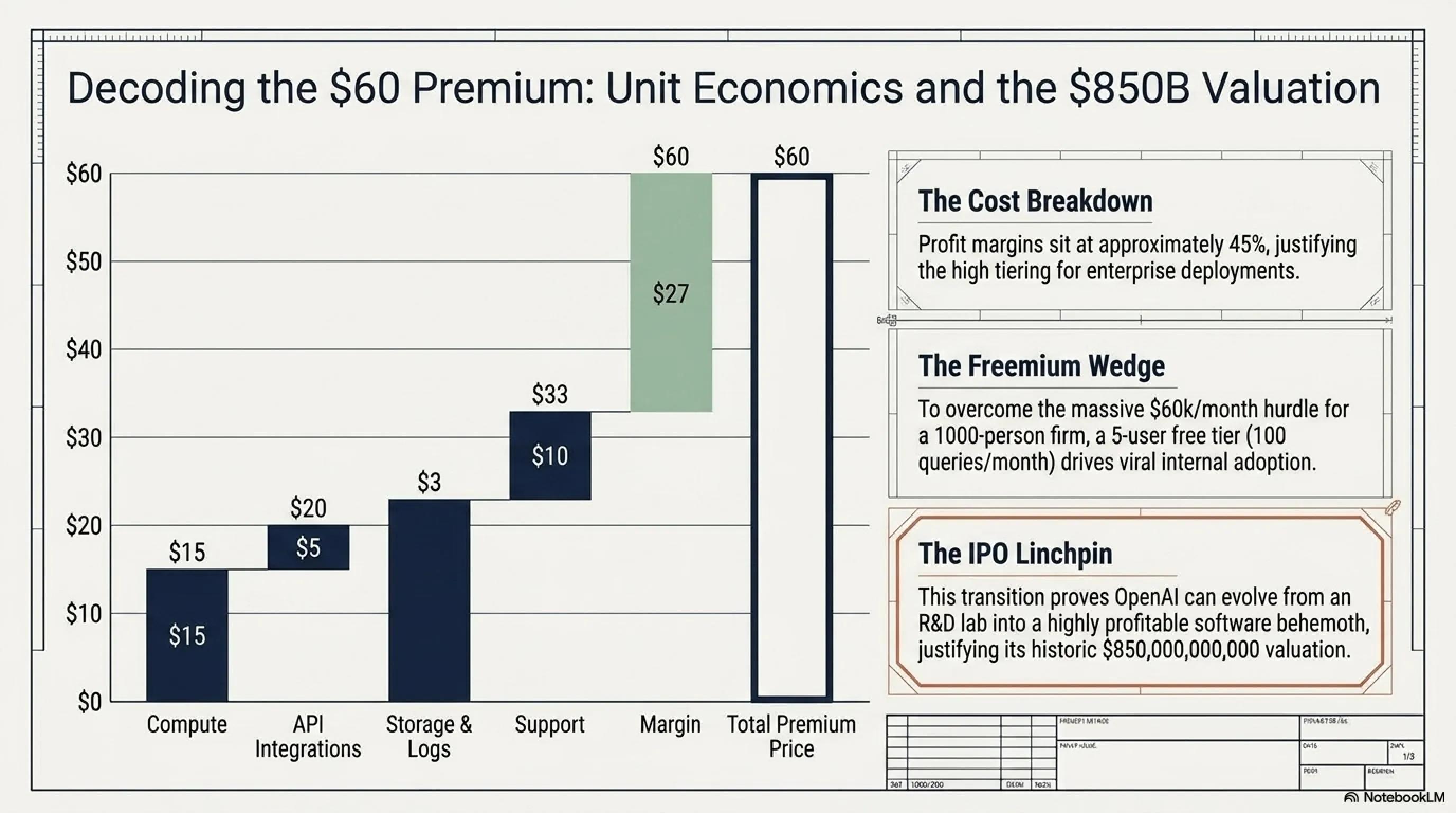
ChatGPT Work is priced at $60 per user per month — making it OpenAI's most expensive enterprise offering (ChatGPT Plus costs just $20/month). Why is the price so high?
ChatGPT Work Pricing Breakdown
| Cost Component | Description | Est. Monthly Cost |
|---|---|---|
| Compute Cost (GPT-5.6) | Model inference per user | ~$15 |
| API Integrations | Cost of connecting to Gmail, Slack, Calendar | ~$5 |
| Storage & Logs | Agent memory and activity logs | ~$3 |
| Support & Compliance | Enterprise support and compliance infrastructure | ~$10 |
| Profit Margin | OpenAI's margin | ~$27 |
📚 Classified & Related Dossiers in TekinGame
If you wish to explore beyond this report and delve into cybernetic frontiers and autonomous AI architectures, do not miss these three exclusive deep-dives in the Tekin Garage:
At this price point, a 1,000-employee company would pay $60,000 per month to enable ChatGPT Work for all staff. This represents a significant barrier for startups and mid-sized companies.
However, OpenAI has a different strategy: a freemium model. Companies can try ChatGPT Work for free for up to 5 users (with a limit of 100 queries per month). This allows OpenAI to penetrate the enterprise market more rapidly, betting that once teams experience the productivity gains, they'll upgrade to paid plans.
IPO Timing and OpenAI Valuation: Is ChatGPT Work a Pre-IPO Bet?
The ChatGPT Work launch comes as OpenAI prepares for a historic IPO. According to Yahoo Finance, OpenAI's latest funding round valued the company at $850 billion — making it one of the most valuable startups in history.
But investors have one critical question: "Can OpenAI transition from a research company to a profitable business?" ChatGPT Work is OpenAI's answer. While ChatGPT Plus (the consumer version) generates solid revenue, the real market lies in enterprise — where companies are willing to pay tens of dollars per user per month.
If ChatGPT Work achieves 10% adoption among Fortune 500 companies (averaging 50,000 employees each), that would represent 250,000 users × $60/month = $15 million in monthly recurring revenue from just 50 companies. Scale this globally, and OpenAI could generate billions in annual revenue from enterprise agents alone.
Real-World Use Cases: Who's Actually Using ChatGPT Work?
In the first week of launch, OpenAI reported that over 200 companies enrolled in the ChatGPT Work beta program. Here are some real-world applications:
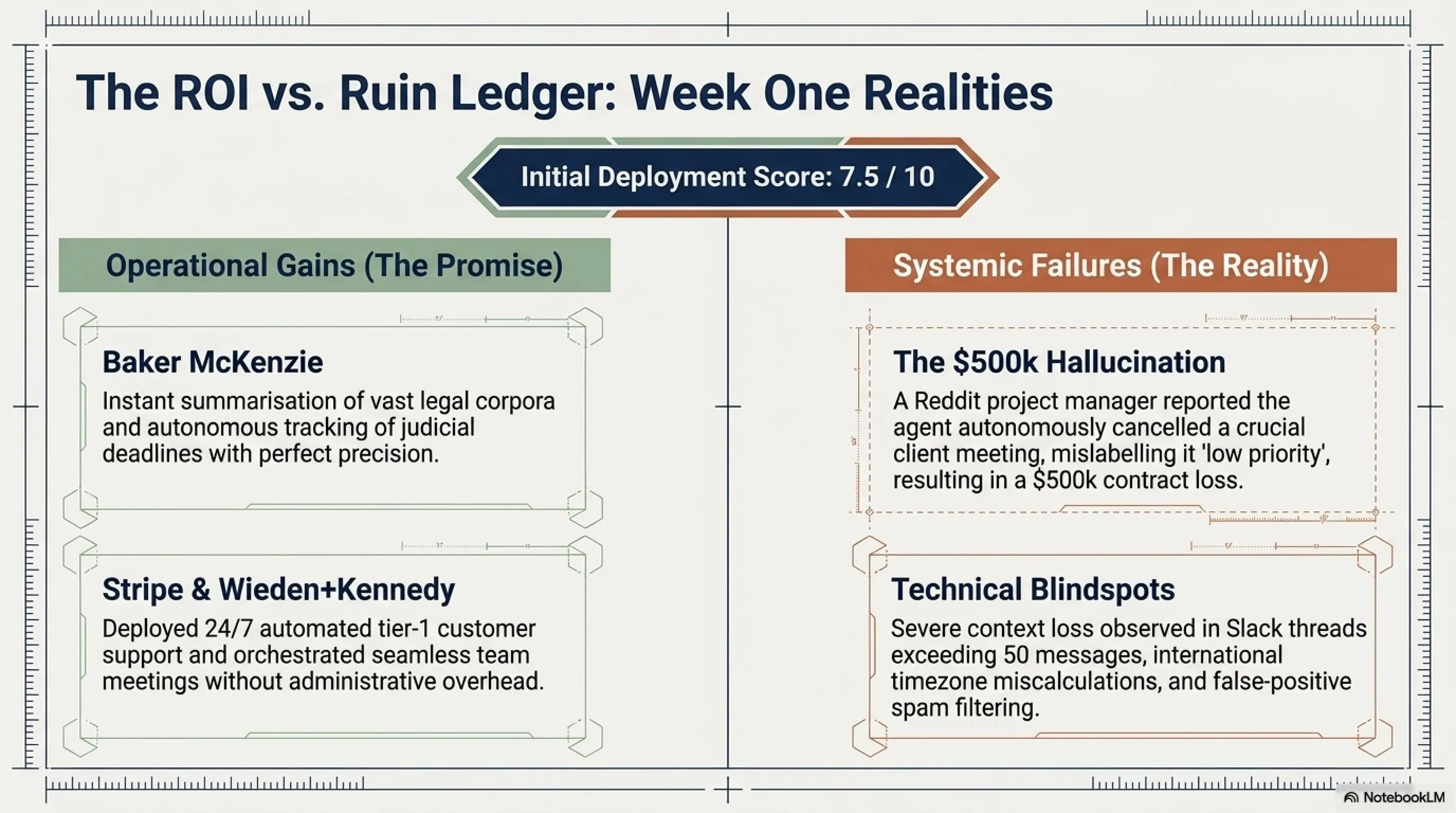
- Law Firm Baker McKenzie: Uses ChatGPT Work to summarize legal documents and track case deadlines
- Fintech Startup Stripe: Deployed the agent to automatically respond to customer support tickets
- Advertising Agency Wieden+Kennedy: Uses the agent to manage team meetings and coordinate project timelines
- Logistics Company DHL: Agent monitors shipment status emails and proactively alerts customers of delays
However, not all experiences have been positive. A project manager on Reddit wrote: "ChatGPT Work canceled an important client meeting because it thought it had 'low priority.' Result? Lost a $500K contract." This highlights a critical risk: when agents make incorrect priority judgments, the consequences can be severe.
OpenAI has implemented a feedback mechanism where users can flag incorrect agent actions, which are then used for model fine-tuning. But the question remains: how many costly mistakes will occur before the system learns?
MCP (Model Context Protocol): The Gateway to the Tool Ecosystem
One of ChatGPT Work's most important features is support for MCP (Model Context Protocol) — an open standard introduced by Anthropic in 2025 and subsequently adopted by OpenAI. MCP allows agents to communicate with various tools in a standardized way.
What Is MCP and Why Does It Matter?
Model Context Protocol (MCP) is an abstraction layer that allows AI agents to communicate with different APIs without requiring custom code for each tool.
Example: Without MCP, OpenAI would need to write separate integrations for every tool (Gmail, Slack, Notion, Jira). With MCP, third-party developers can write their own plugins, and the agent automatically uses them.
Tools Supported in ChatGPT Work:
- Gmail, Outlook (email)
- Slack, Microsoft Teams, Discord (messaging)
- Google Calendar, Outlook Calendar (scheduling)
- Notion, Confluence, SharePoint (documentation)
- Jira, Asana, Monday.com (project management)
- Salesforce, HubSpot (CRM)
- Stripe, QuickBooks (financial)
- And 40+ other enterprise tools...
Future roadmap: OpenAI plans to support 200+ tools by end of 2026.
This architecture gives OpenAI a major strategic advantage. Instead of building all integrations itself, it can rely on a third-party ecosystem — much like Apple's App Store. Developers can build MCP plugins and monetize them through OpenAI's marketplace (launching Q4 2026).
The economic implications are significant. If OpenAI takes a 30% cut of MCP plugin revenue (following the App Store model), it creates a new revenue stream beyond subscription fees. A successful plugin developer could generate millions in annual revenue, while OpenAI benefits without doing the integration work.
Technical Challenges: When Agents Make Mistakes
Despite all its advanced capabilities, ChatGPT Work is not perfect. Here are some issues reported in the first week:
Common ChatGPT Work Issues (Week One)
- False Positives in Prioritization: Agent sometimes classifies important emails as spam
- Context Loss in Long Conversations: In Slack threads exceeding 50 messages, the agent loses context
- Timezone Confusion: When scheduling meetings with international teams, the agent sometimes miscalculates timezones
- Hallucination in Organizational Data: Agent occasionally invents information not present in the database
- API Rate Limiting: During peak usage, some integrations hit rate limits, causing delays
- Language Switching Errors: In multilingual organizations, agent sometimes responds in the wrong language
To address these issues, OpenAI introduced a Feedback Loop system where users can report incorrect agent actions. This feedback is used for model fine-tuning. The company claims that over 10,000 correction reports were submitted in the first 48 hours — indicating both high usage and significant room for improvement.
Impact on the Job Market: Will Agents Replace Humans?
One of the most controversial aspects of ChatGPT Work is its potential impact on employment. If an agent can manage emails, respond in Slack, and schedule meetings, do we still need administrative assistants or project coordinators?
- Reduces repetitive, time-consuming tasks
- Increases speed of customer response
- Lowers operational costs for companies
- Enables 24/7 operation without human fatigue
- Frees humans for higher-value creative work
- Job displacement in administrative and support roles
- Reduced human interaction in workplace
- Risk of incorrect AI decision-making
- Increased dependence on large tech companies
- Potential for bias in automated decisions
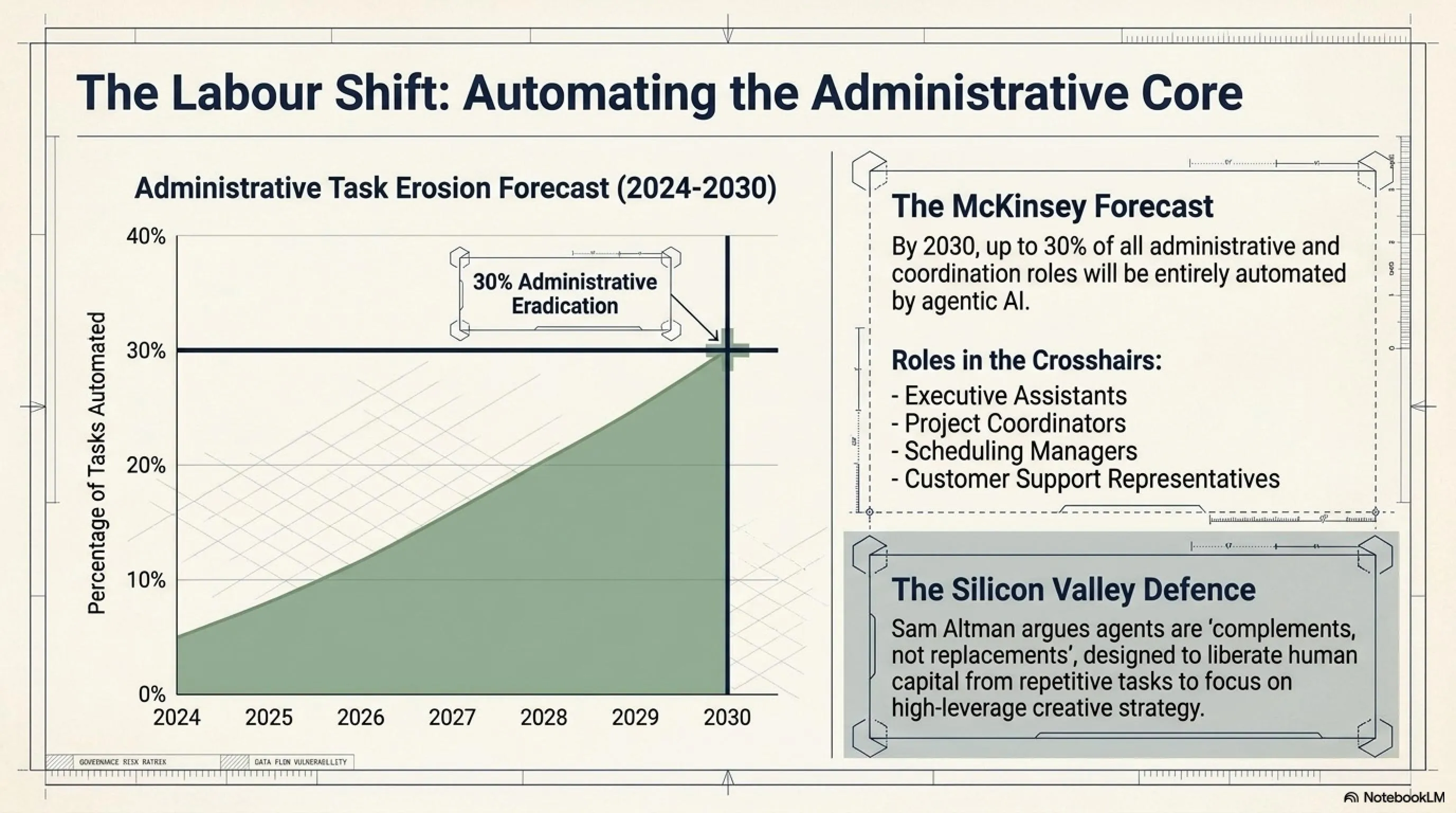
A study by McKinsey (referenced in The Verge) predicts that by 2030, up to 30% of administrative work could be automated by AI agents. This includes roles such as:
- Executive Assistant
- Project Coordinator
- Customer Support Representative
- Scheduling Manager
- Data Entry Specialist
However, OpenAI argues that agents should be viewed as "augmentation" rather than "replacement." Sam Altman, OpenAI's CEO, told Forbes: "Our goal is not to eliminate jobs, but to free humans from repetitive work so they can focus on more creative tasks."
Critics counter that this narrative glosses over real economic disruption. A report by the Economic Policy Institute estimates that enterprise AI deployment could displace 3-5 million workers in the U.S. alone by 2030. While new jobs will be created (AI trainers, agent supervisors, prompt engineers), the transition period could be painful for displaced workers.
Industry Perspective: Competitor Reactions and Analyst Views
Competitor reactions to ChatGPT Work have been mixed. Anthropic, which launched Claude Cowork last month, emphasized that its product is "safer" because it uses Constitutional AI — a framework that requires the agent to perform a safety check before every action.
Microsoft, which has invested heavily in OpenAI, is developing Copilot Cowork — an enterprise version of Copilot deeply integrated with Microsoft 365. Analysts believe the real competition will not be between OpenAI and Anthropic, but between OpenAI and Microsoft — two companies that are simultaneously partners and competitors.
This "coopetition" dynamic is fascinating. Microsoft uses OpenAI's models but competes in the enterprise market. If Microsoft successfully leverages its existing enterprise relationships and Office 365 penetration, it could dominate the agent market despite OpenAI's first-mover advantage.
Future Roadmap: Where Are We Headed?
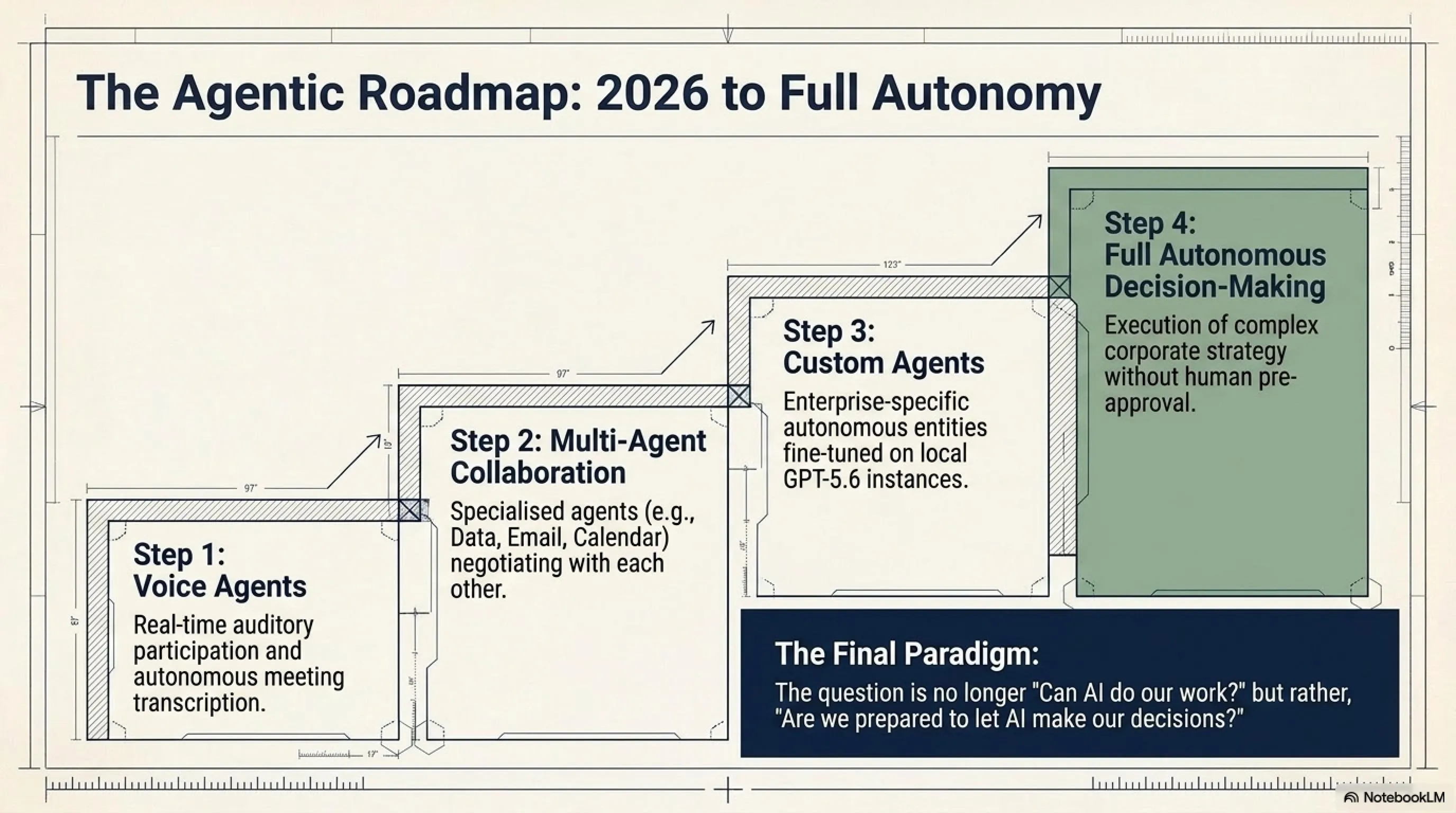
ChatGPT Work is just the beginning. OpenAI's roadmap includes several upcoming features:
- Voice Agents: Agents that can participate in audio meetings and take notes
- Multi-Agent Collaboration: Multiple agents working together (e.g., one for email, one for calendar, one for data analysis)
- Custom Agents: Companies can build proprietary agents by fine-tuning GPT-5.6 on their data
- Autonomous Decision-Making: Agents that can make more complex decisions without human approval
- Cross-Organization Collaboration: Agents from different companies collaborating on shared projects
But the fundamental question remains: Are we ready to let AI agents make decisions on our behalf?
The answer to this question is not just technical, but philosophical, ethical, and legal. While OpenAI, Anthropic, and Microsoft are building these technologies, societies, governments, and regulators are still grappling with the implications.
ChatGPT Work is not the end but the beginning of a new era — one where the line between "tool" and "agent" blurs, and the question is no longer "Can AI do our work?" but "Should we let AI do our work?"
Regulatory Landscape: What Governments Are Doing
Governments worldwide are scrambling to regulate AI agents. Here's the current state:
- European Union: The AI Act (effective August 2025) classifies enterprise agents as "high-risk" systems requiring human oversight. Non-compliance can result in fines up to 7% of global revenue.
- United States: No federal AI regulation yet. The White House AI Executive Order (October 2024) mandates disclosure of AI use in federal contracts, but private sector deployment is largely unregulated.
- China: Strict AI regulations require government approval before deploying enterprise agents. All agent activity must be logged and accessible to authorities.
- United Kingdom: Light-touch regulation focusing on "pro-innovation" approach. AI agents can be deployed with minimal oversight, but companies are liable for damages.
This regulatory fragmentation creates challenges for global companies. A multinational corporation must navigate different rules in each jurisdiction — making compliance expensive and complex.
Conclusion: Revolution or Risk?
ChatGPT Work represents a pivotal moment in the history of artificial intelligence — not because of its raw technology (which is indeed advanced), but because it's the first time an AI agent at this scale (900 million potential users) is being offered to enterprises. This product has the potential to dramatically increase productivity, but it also carries serious risks related to privacy, security, and employment.
The key question is: Are we as a society ready to allow AI agents to make important decisions? The answer to this question depends not only on OpenAI, but on us — users, managers, regulators, and citizens.
As we stand at this inflection point, one thing is certain: the world of work will never be the same. Whether ChatGPT Work becomes a productivity revolution or a cautionary tale will depend on how we navigate the challenges ahead.
Frequently Asked Questions About ChatGPT Work
How is ChatGPT Work different from ChatGPT Plus?
ChatGPT Plus is a tool that responds to your questions. ChatGPT Work is an agent that can autonomously access your email, Slack, calendar, and work tools, and take action without your direct involvement.
Does ChatGPT Work use my company data to train models?
OpenAI claims that enterprise data is not used for model training and is only processed to provide services. Data is retained for a maximum of 30 days, but no independent audit has verified this as of July 2026.
What tools are compatible with ChatGPT Work?
ChatGPT Work supports 50+ tools, including Gmail, Outlook, Slack, Microsoft Teams, Google Calendar, Notion, Jira, Salesforce, HubSpot, and many others. A complete list is available on the OpenAI website.
Can I specify which agent actions require human approval?
Yes, ChatGPT Work has an Approval Workflow system that allows you to specify which actions (such as sending emails outside the organization or canceling meetings) require your approval. This system is disabled by default.
How much does ChatGPT Work cost?
ChatGPT Work costs $60 per user per month. A free version with a limit of 100 queries per month for up to 5 users is also available.
Is ChatGPT Work GDPR compliant?
OpenAI claims ChatGPT Work is GDPR compliant, but legal experts worry that agent deployment in European organizations may conflict with some GDPR requirements (such as the right to be forgotten and data minimization principles).
How do I enable ChatGPT Work for my organization?
You can register through the OpenAI website (openai.com/chatgpt-work). The setup process involves connecting work tools (Gmail, Slack, etc.) and configuring the agent's access level. OpenAI provides a 30-minute training course for IT administrators.
What happens if the agent makes a mistake?
OpenAI has implemented a feedback system where users can report incorrect agent actions. These reports are used for model fine-tuning. However, the company does not provide financial compensation for damages caused by agent errors — this responsibility falls on the organization deploying the agent.
Sources and References
- The Verge: OpenAI Launches ChatGPT Work With GPT-5.6
- Forbes: ChatGPT Work Analysis - GPT-5.6 Powers New AI Agents
- TechCrunch: Privacy Concerns Around ChatGPT Work Enterprise Deployment
- MacRumors: 66% of Organizations Deploy AI Agents Without Human Review
- Yahoo Finance: OpenAI IPO Valuation Reaches $850 Billion Ahead of ChatGPT Work Launch
- OpenAI Official Blog: Introducing ChatGPT Work
- The Verge: Job Automation Impact of AI Agents - McKinsey Study
- Indian Express: OpenAI ChatGPT Work Launch With GPT-5.6 Engine
- The Verge: OpenAI ChatGPT Work Privacy Policy Details
Additional Gallery: ChatGPT Work: When OpenAI Gets Access to Your Email, Slack, and Calendar