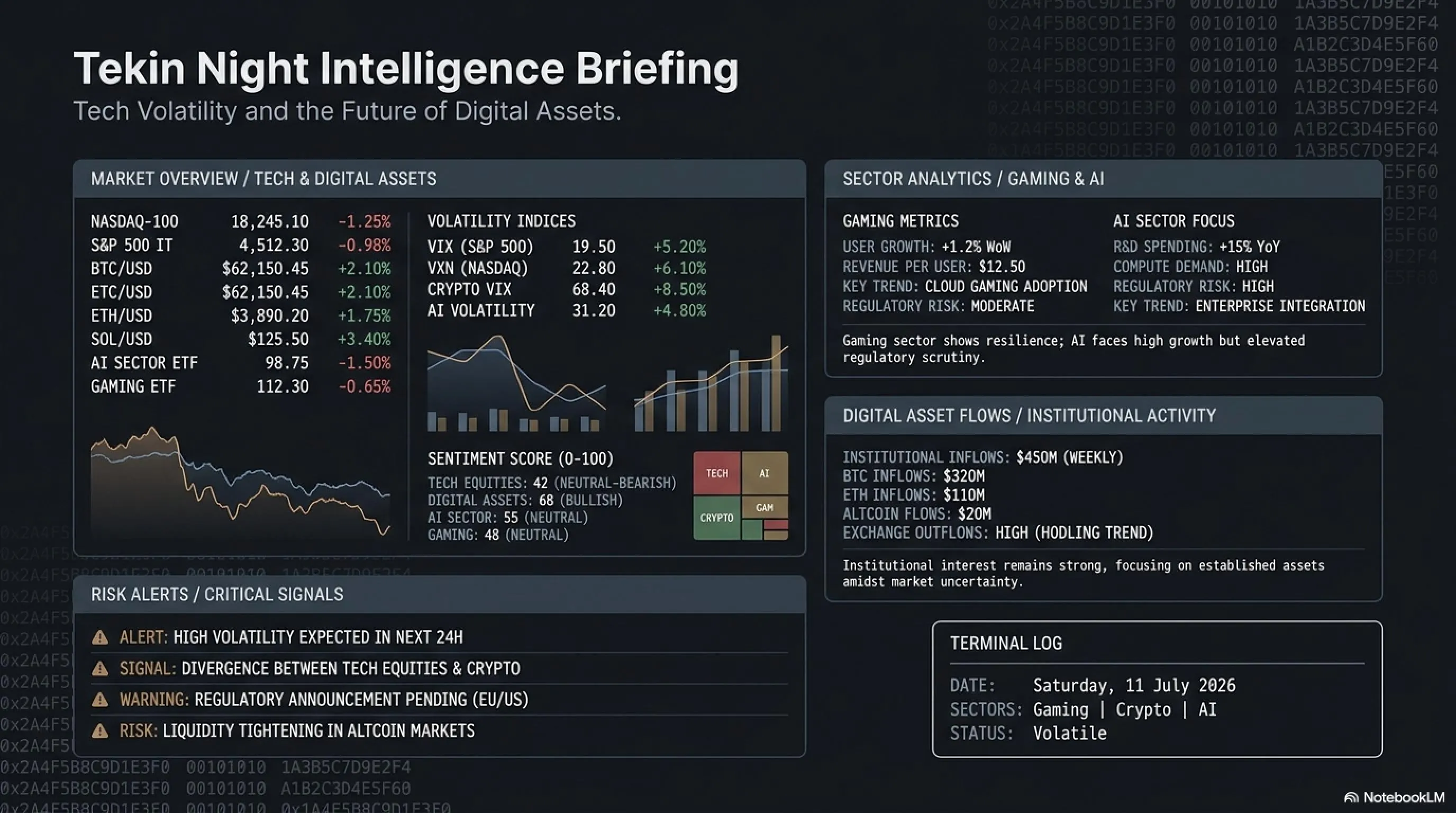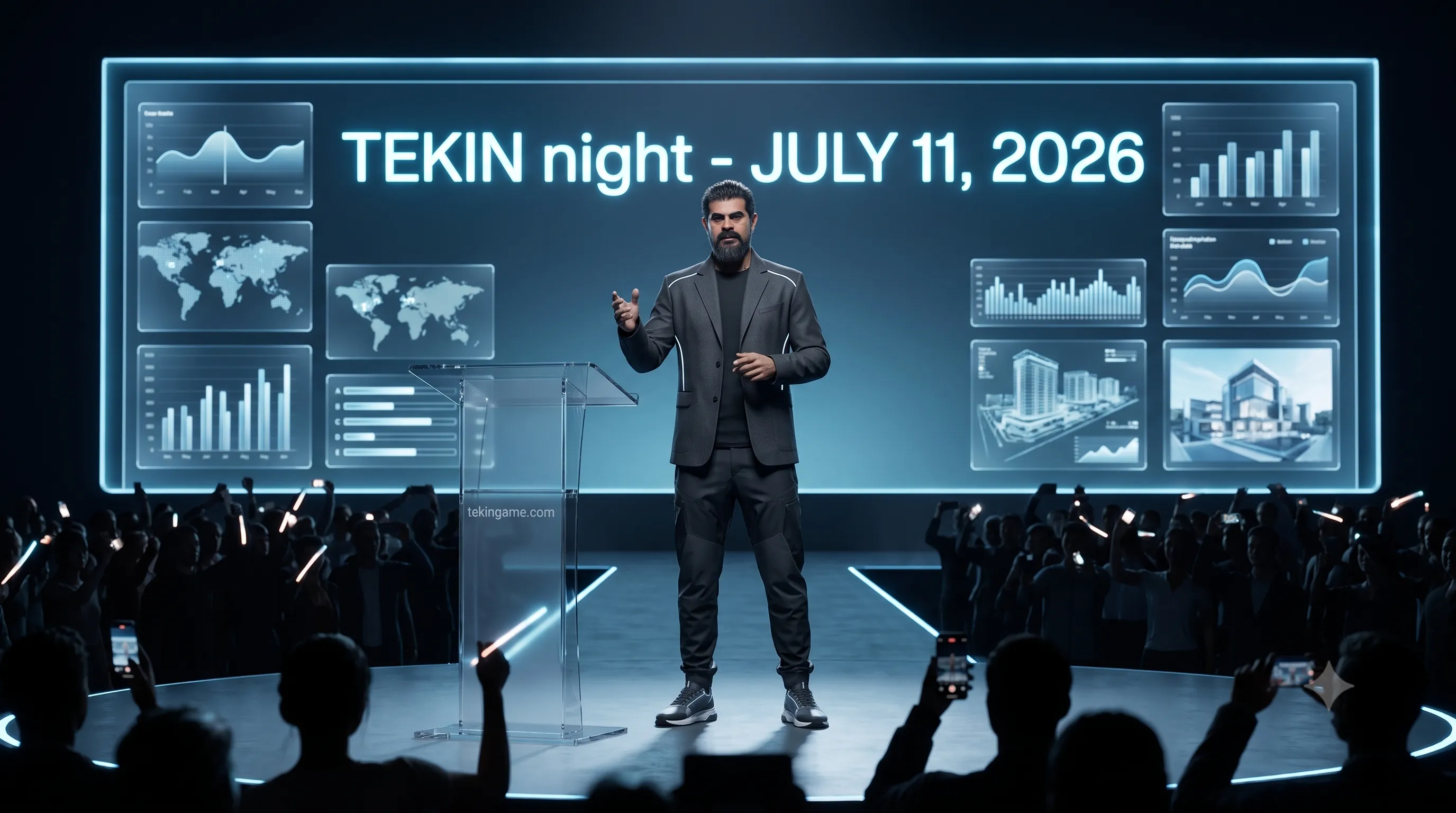
🌙 Tekin Night | Saturday Night, July 11, 2026 - Night of Layoffs, Dark History & Crypto Revolution
- 🎮Xbox Layoffs & Elder Scrolls 6- Bethesda under fire from Microsoft's tough decisions
- 🎧Dark History of PlayStation Online Pass- One of Sony's worst decisions in history
- 🚀Morgan Stanley & Crypto- Traditional banking enters the digital world
- 🗡️Robinhood AI Trader- A robot that buys crypto for you
Earthquake at Xbox: Massive Layoffs and the Uncertain Future of Elder Scrolls 6
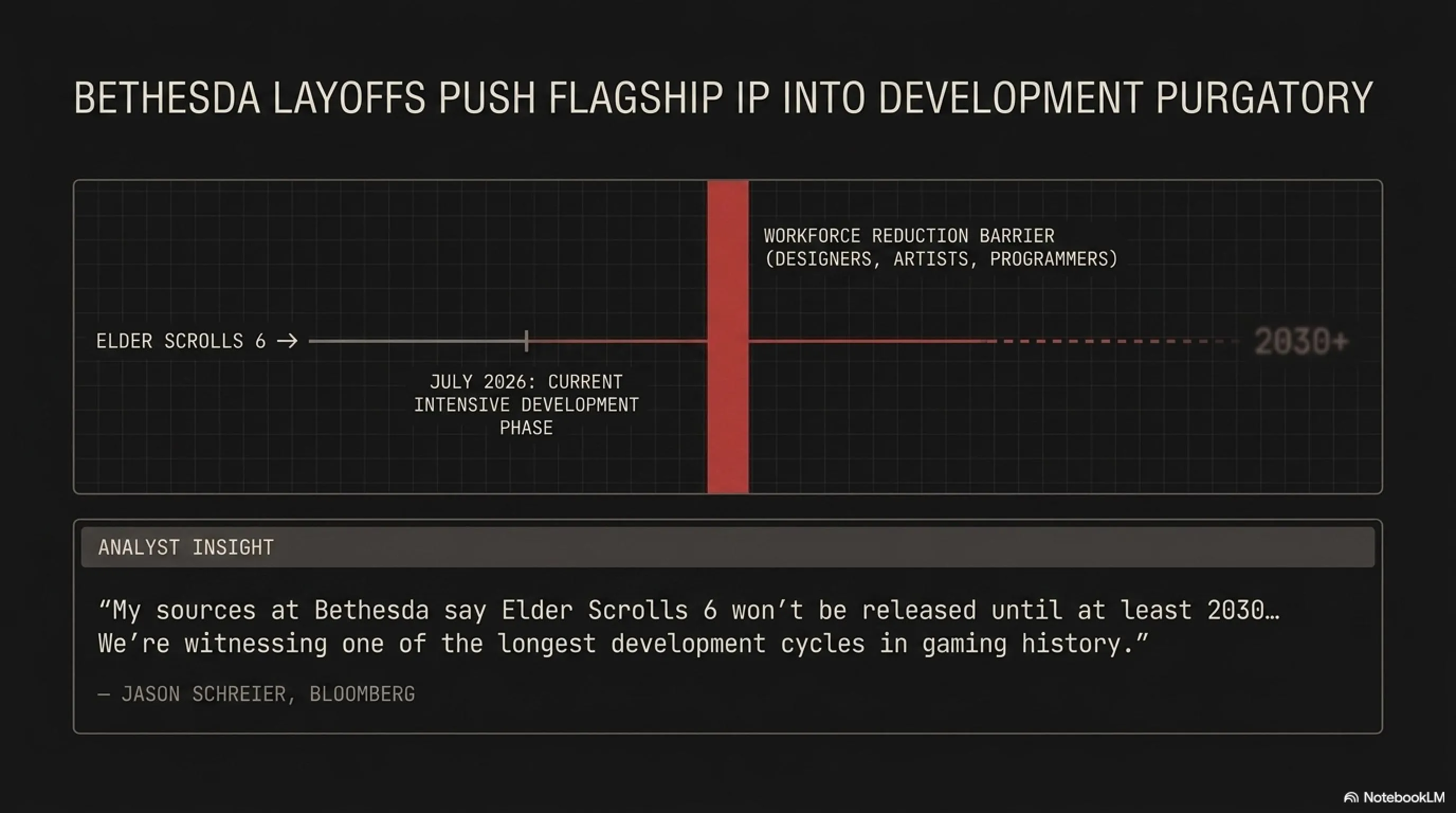
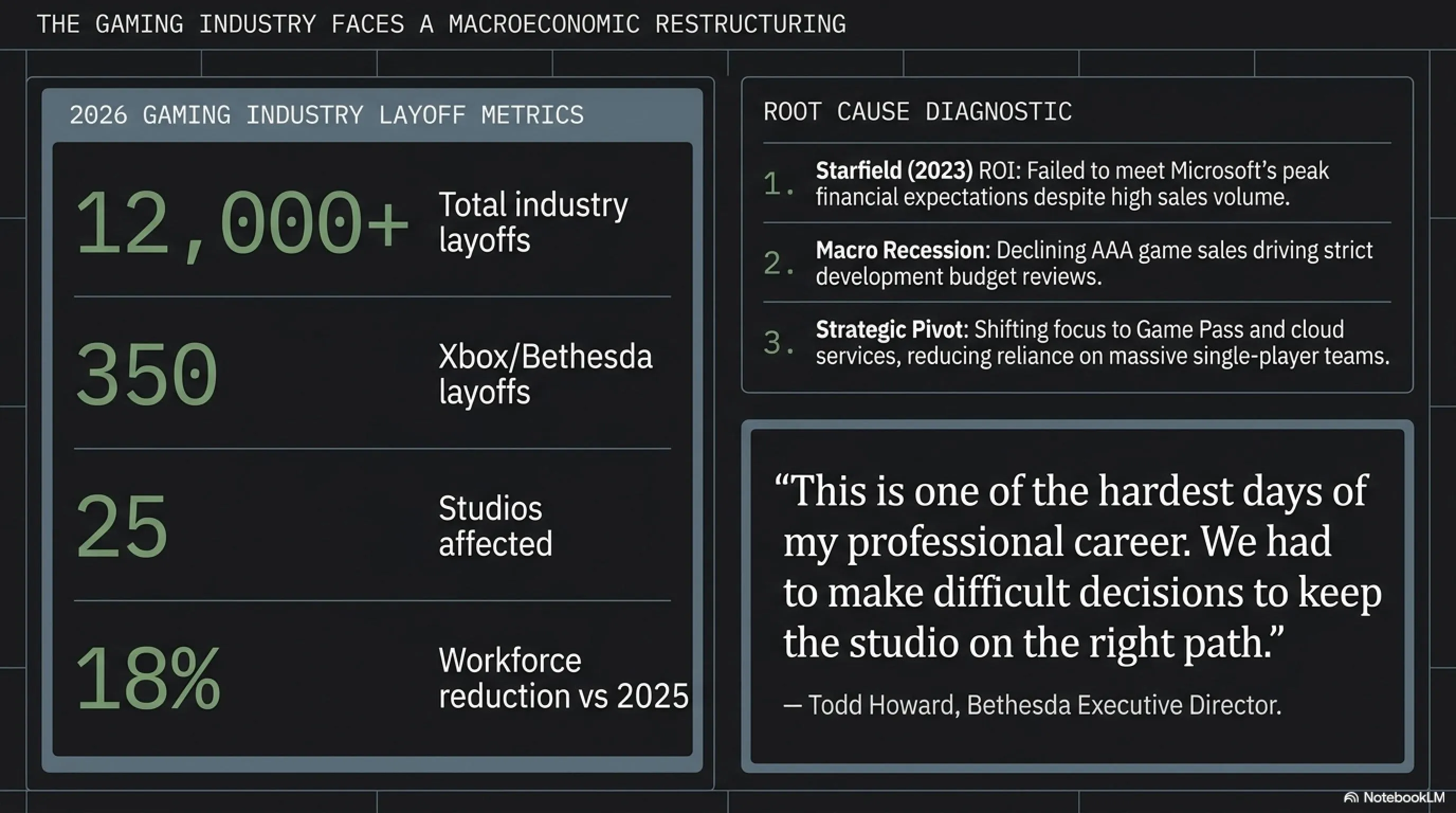
July 2026 became a dark month for Microsoft and its Xbox Game Studios subsidiaries. According to IGN reports, a wave of massive layoffs has hit various Xbox Game Studios, with Bethesda studio taking the biggest blow. These layoffs have raised serious concerns about the future of major games like Elder Scrolls 6.
Based on published information, approximately 350 employees from Bethesda and affiliated studios have been laid off. This workforce reduction includes programmers, designers, artists, and even parts of the marketing team. Interestingly, these layoffs occurred precisely when Elder Scrolls 6 was supposed to enter its intensive development phase.
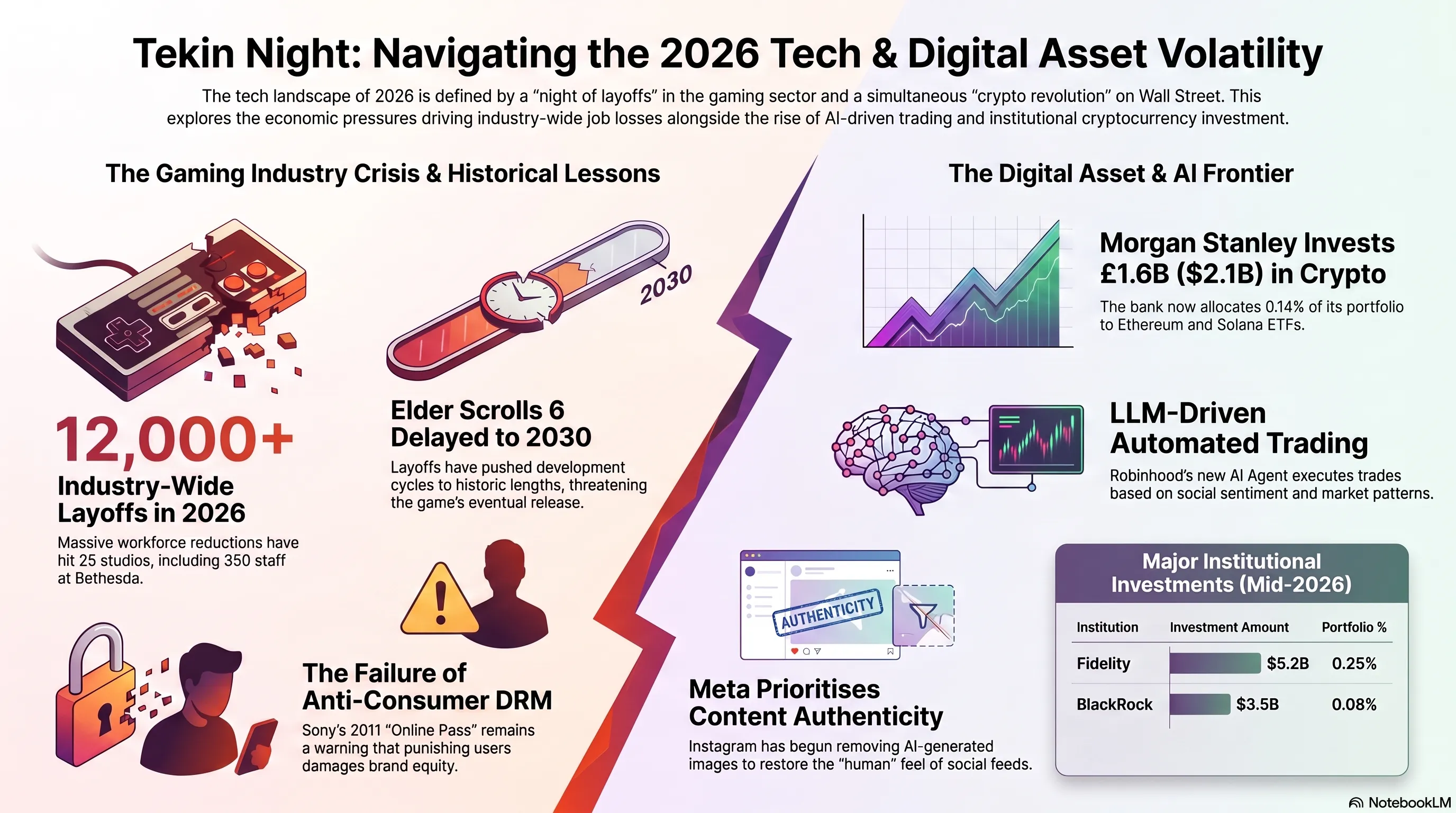
Todd Howard, Bethesda's executive director, wrote in an internal email that leaked: "This is one of the hardest days of my professional career. We had to make difficult decisions to keep the studio on the right path. Unfortunately, these decisions include parting with some of our excellent colleagues."
Why Did This Happen? Economic and Strategic Roots
The reasons for these layoffs are multiple. First, Starfield, released in 2023, despite massive hype, failed to meet Microsoft's financial expectations. The game had good sales but not to the extent Microsoft expected. Second, Microsoft itself is under pressure from shareholders to reduce costs and increase profitability.
Third, the gaming industry in 2026 is facing an economic recession. AAA game sales have declined, and companies are reviewing their development budgets. Fourth, Microsoft is shifting its strategy toward Game Pass and cloud services, which means less need for large teams to build single-player games.
Gaming Industry Layoffs Statistics in 2026
12,000+ people
Total layoffs in gaming industry
350 people
Xbox/Bethesda layoffs
25 studios
Studios affected
18% decrease
Workforce reduction vs 2025
Jason Schreier, renowned Bloomberg journalist, wrote in a series of tweets: "My sources at Bethesda say Elder Scrolls 6 won't be released until at least 2030. These layoffs could push that date even further back. We're witnessing one of the longest development cycles in gaming history."
A Look at Dark History: PlayStation Online Pass and Sony's Big Mistake
Sometimes it's good to look back and see how much the gaming industry has progressed. One of the worst ideas Sony ever implemented was the PlayStation Online Pass system, active between 2011 and 2013, considered one of the darkest periods in PlayStation history.
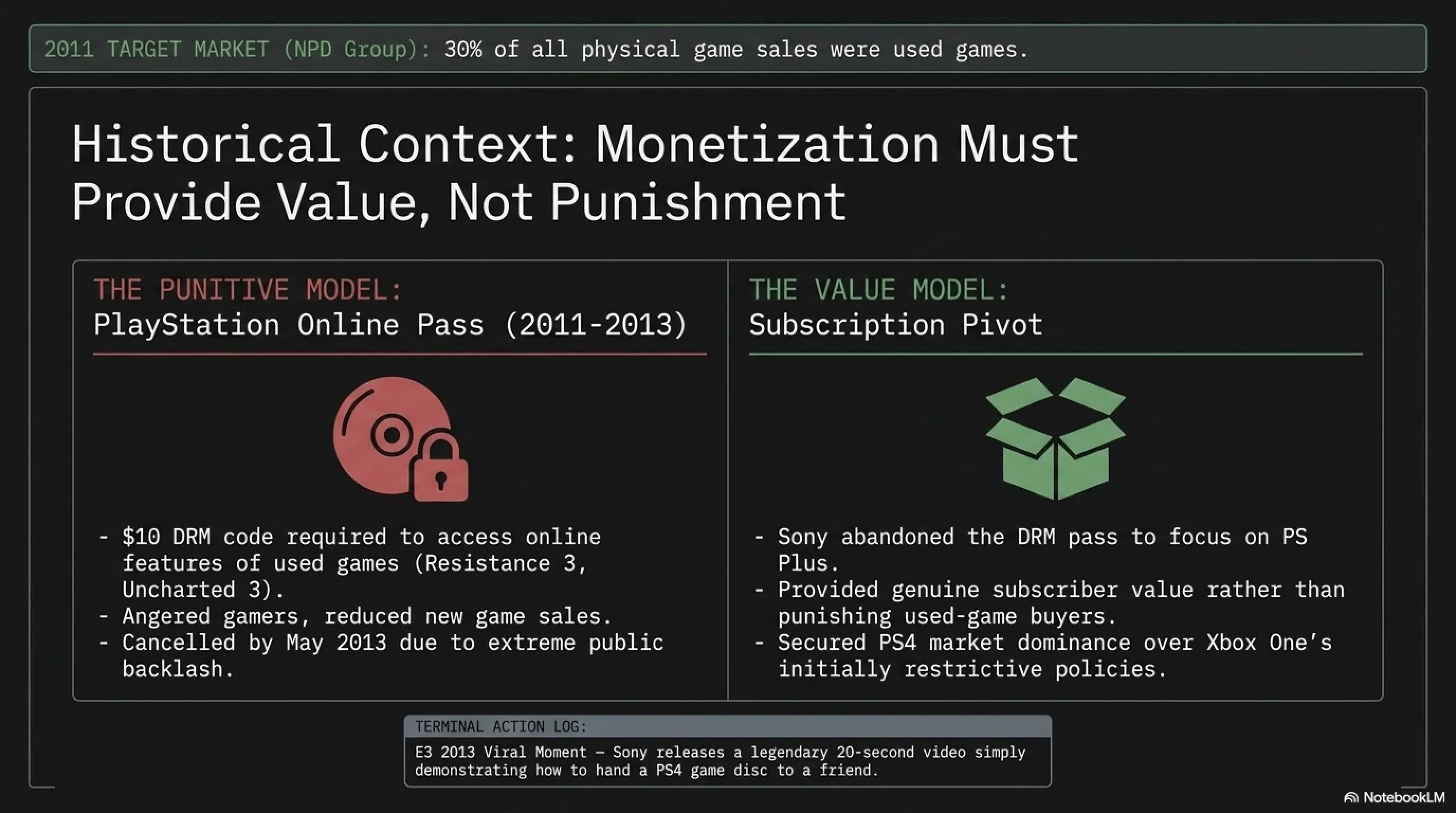
For those who don't remember or don't know, PlayStation Online Pass was a DRM system Sony designed to prevent used games. The concept was simple: if you bought a used PS3 game, you had to purchase an additional $10 code to access the online portion. This system was implemented in games like Uncharted 3, Resistance 3, SOCOM 4, and Twisted Metal.
Gamers' reaction to this system was very negative. Gaming forums like NeoGAF and Reddit were filled with complaints. People felt Sony was punishing them for buying used games, which is their legal right. Some even said this system was worse than EA's DRM.
PlayStation Online Pass Timeline
- August 2011: Official introduction of Online Pass system
- September 2011: Resistance 3 first game with Online Pass
- 2011-2012: Implementation in over 20 games
- May 2013: Official cancellation after public pressure
- 2013 onwards: Focus on PS Plus instead of Online Pass
Why Did Sony Do This? The Economics Behind the Decision
Sony's main reason was that the used game market (especially in stores like GameStop) was making significant profits from selling used games, but publishers and game developers got no share of this revenue. According to NPD Group reports, in 2011 about 30% of all physical game sales in America were used games.
Sony thought with this system it could recoup some of that revenue and also encourage people to buy new games. But in practice, this system only angered gamers and even reduced new game sales. Why? Because people knew they couldn't sell the game later, so they didn't buy it at all.
Lessons Learned and Long-Term Impacts
Fortunately, Sony canceled this system in 2013 and focused on PlayStation Plus, which was a subscription service that provided real value to gamers. This was one of the reasons PS4 was more successful than Xbox One, because Microsoft also intended to implement a similar system but backed down after the negative reaction to Sony's Online Pass.
But the story doesn't end here. At E3 2013, when Microsoft announced that Xbox One required constant internet connection and used games would have restrictions, Sony released a simple 20-second video showing how to lend a PS4 game to your friend: just hand over the disc. This video went viral and became one of the best marketing moments in gaming history.
Tekin Analysis | Why This Matters Today?
In today's world where the gaming industry has moved toward subscription services (Game Pass, PS Plus) and digital games, the concept of used games has almost disappeared. But the important lesson is: if companies want to make more profit, they must provide real value to users, not punish them. Online Pass is an excellent example of how a short-term decision can damage your brand for years.
Microsoft Responds: The H-1B Visa Controversy and Layoffs
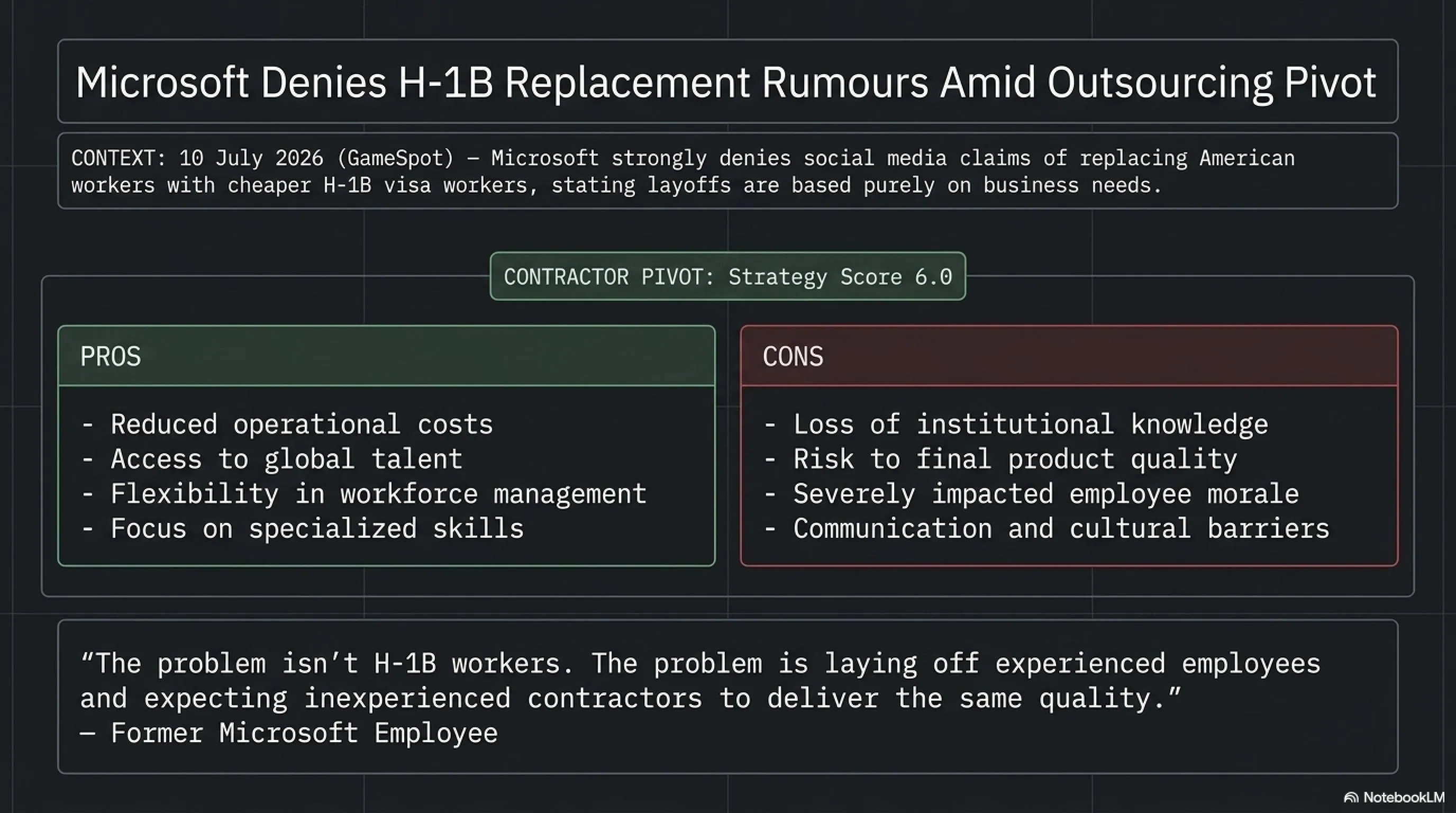
Meanwhile, as Xbox layoffs continued, a controversial rumor spread on social media: it was said that Microsoft was laying off American employees to replace them with cheaper H-1B visa workers. This rumor quickly spread on Twitter and Reddit, causing significant anger.
But according to GameSpot's report dated July 10, 2026, Microsoft strongly denied these claims. A Microsoft spokesperson said in a statement: "These allegations are completely false and insulting. Our layoffs are based on business needs and performance, not discrimination or replacement with cheaper workers."
However, some former Microsoft employees told GameSpot in anonymous interviews that the company is shifting its strategy toward outsourcing and using more contractors. One of them said: "The problem isn't that they use H-1B workers. The problem is they're laying off experienced employees and expecting inexperienced contractors to deliver the same quality."
- Reduced operational costs for Microsoft
- Ability to hire global talent
- More flexibility in workforce management
- Focus on specialized skills
- Loss of experience and institutional knowledge
- Reduced quality of final products
- Negative impact on employee morale
- Communication and cultural issues
Wall Street Enters Crypto: Morgan Stanley and Ethereum & Solana ETFs
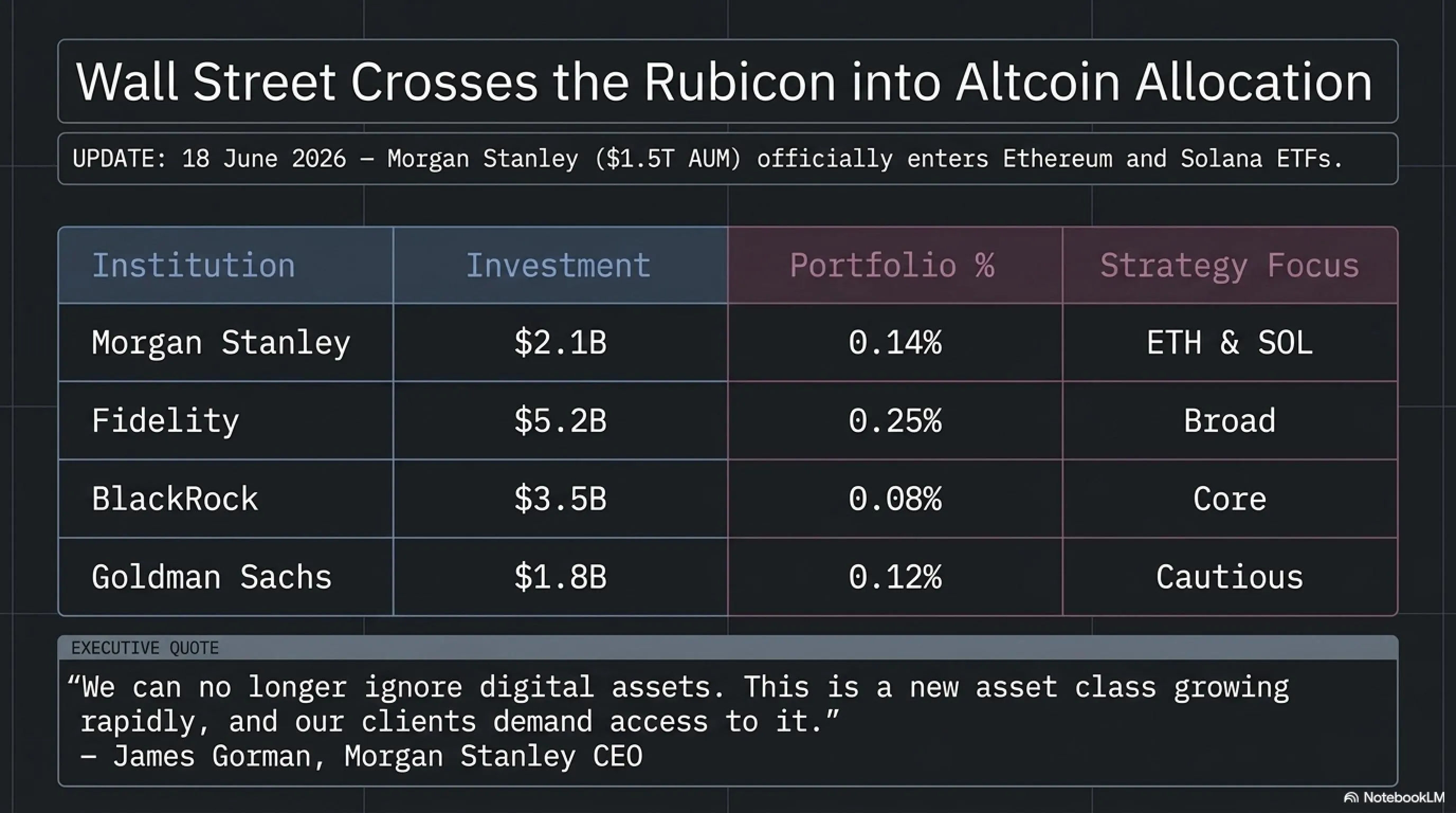
In one of the most important news from the crypto world, according to Bitcoin.com's report dated June 18, 2026 (reported in July), investment bank Morgan Stanley announced it allocated 0.14% of its portfolio to Ethereum and Solana ETFs. This is historic because it's the first time a major Wall Street bank has officially invested in altcoin ETFs.
0.14% might seem like a small number, but when we know Morgan Stanley has over $1.5 trillion in assets under management, this means approximately $2.1 billion investment in crypto. This amount alone is larger than the entire market cap of some crypto projects.
James Gorman, Morgan Stanley CEO, said at a press conference: "We can no longer ignore digital assets. This is a new asset class growing rapidly, and our clients demand access to it."
Why Ethereum and Solana? Strategy Behind the Choice
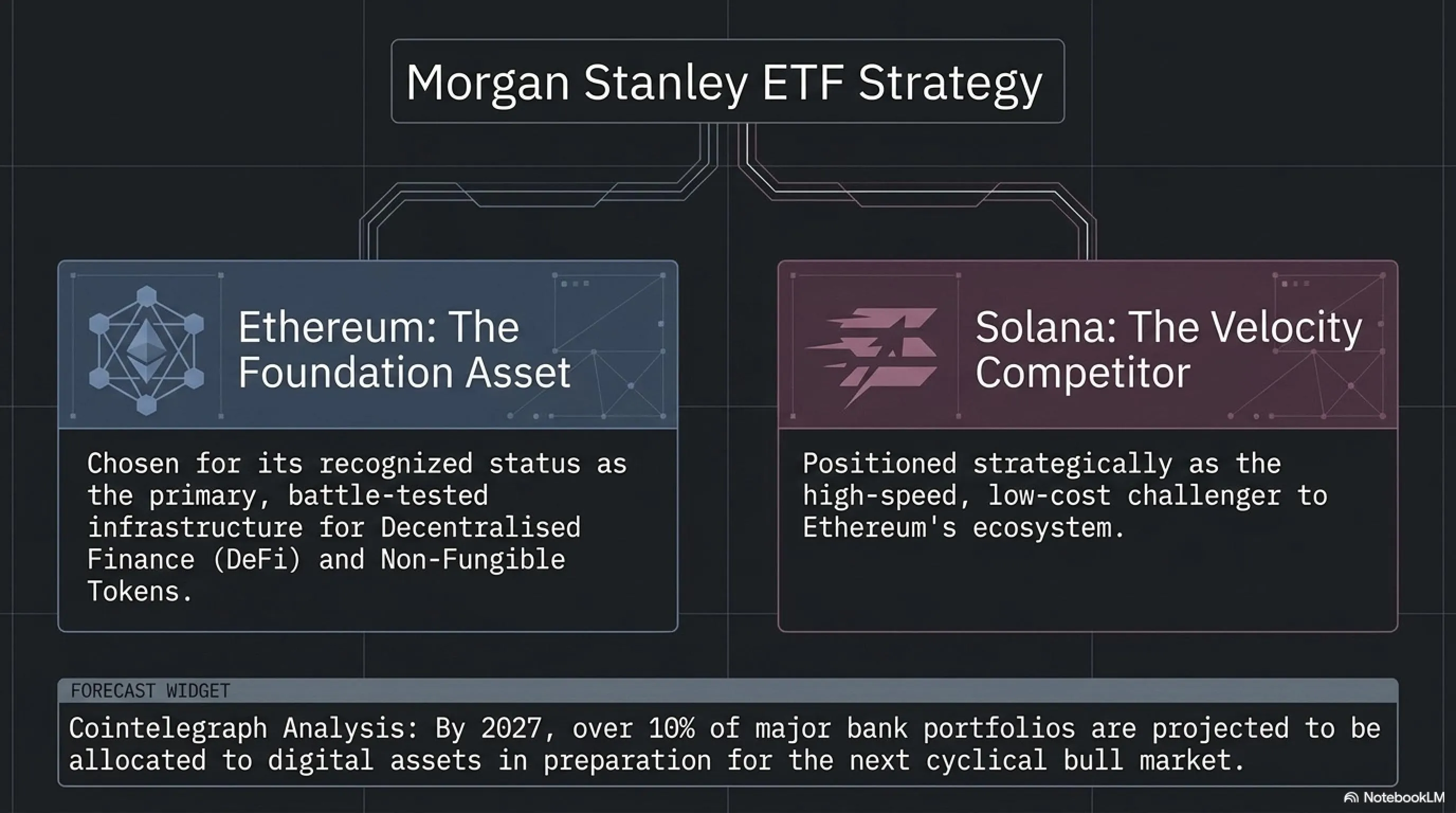
The important question is why Morgan Stanley chose Ethereum and Solana, not Bitcoin or other altcoins? The answer lies in the bank's long-term strategy. Ethereum is recognized as the main platform for DeFi and NFTs, and Solana is growing as a faster and cheaper competitor to Ethereum.
Cointelegraph analysts believe Morgan Stanley is positioning for the next crypto bull market wave. They predict that by 2027, over 10% of major bank portfolios will be allocated to digital assets.
📚 Classified & Related Dossiers in TekinGame
If you wish to explore beyond this report and delve into cybernetic frontiers and autonomous AI architectures, do not miss these three exclusive deep-dives in the Tekin Garage:
Institutional Crypto Investment Comparison
| Institution | Investment Amount | Portfolio Percentage |
|---|---|---|
| Morgan Stanley | $2.1B | 0.14% |
| BlackRock | $3.5B | 0.08% |
| Fidelity | $5.2B | 0.25% |
| Goldman Sachs | $1.8B | 0.12% |
Robinhood and the Future of Trading: When a Robot Buys Crypto for You
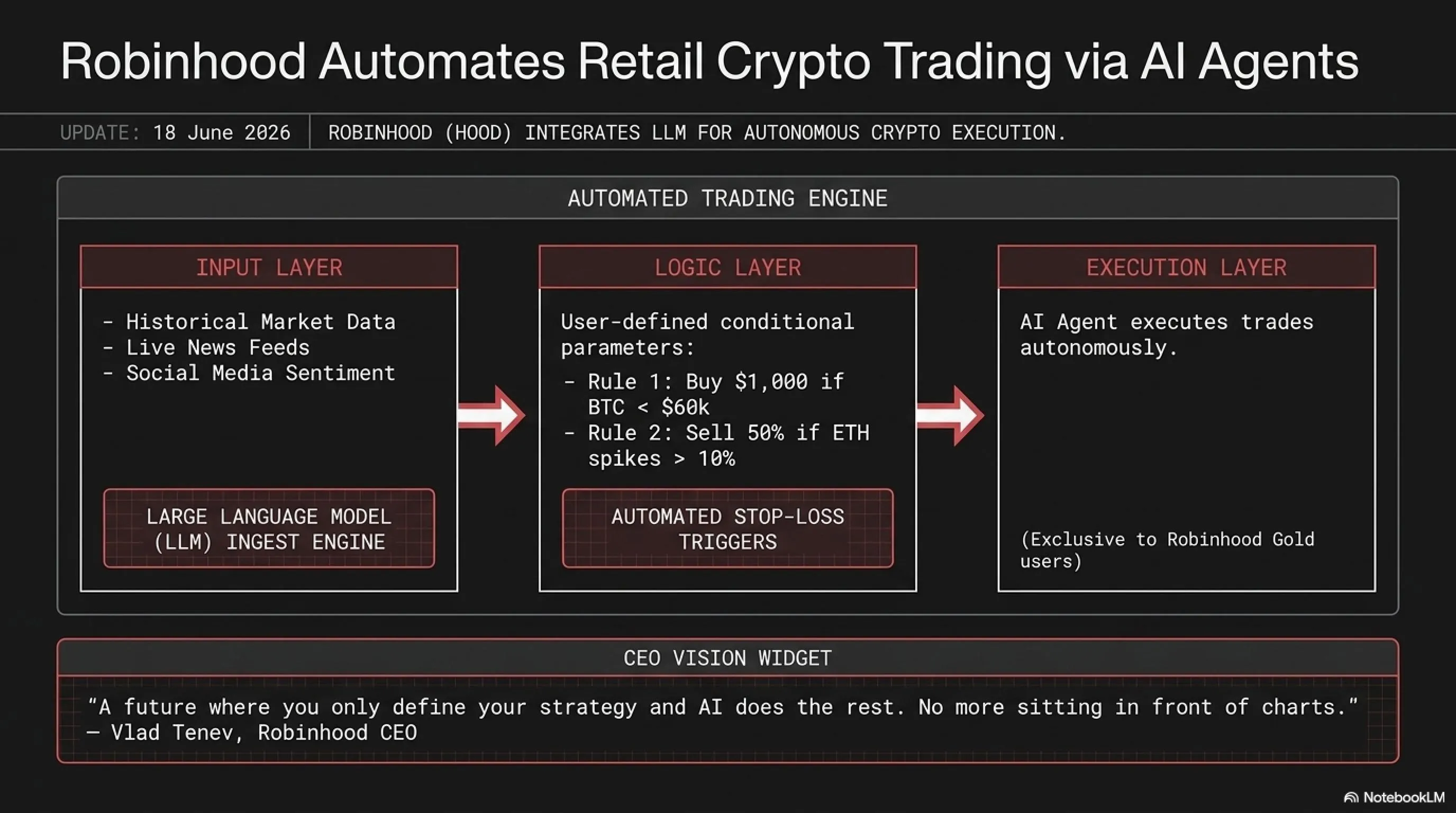
In tonight's final news, Robinhood announced it's testing an AI Agent for automated cryptocurrency trading. According to Cointelegraph's report between July 1-10, 2026, this robot can automatically buy and sell cryptocurrencies based on predefined strategies.
Vlad Tenev, Robinhood CEO, wrote in an X post: "We're building the future of trading. A future where you only define your strategy and AI does the rest. No more sitting in front of charts."
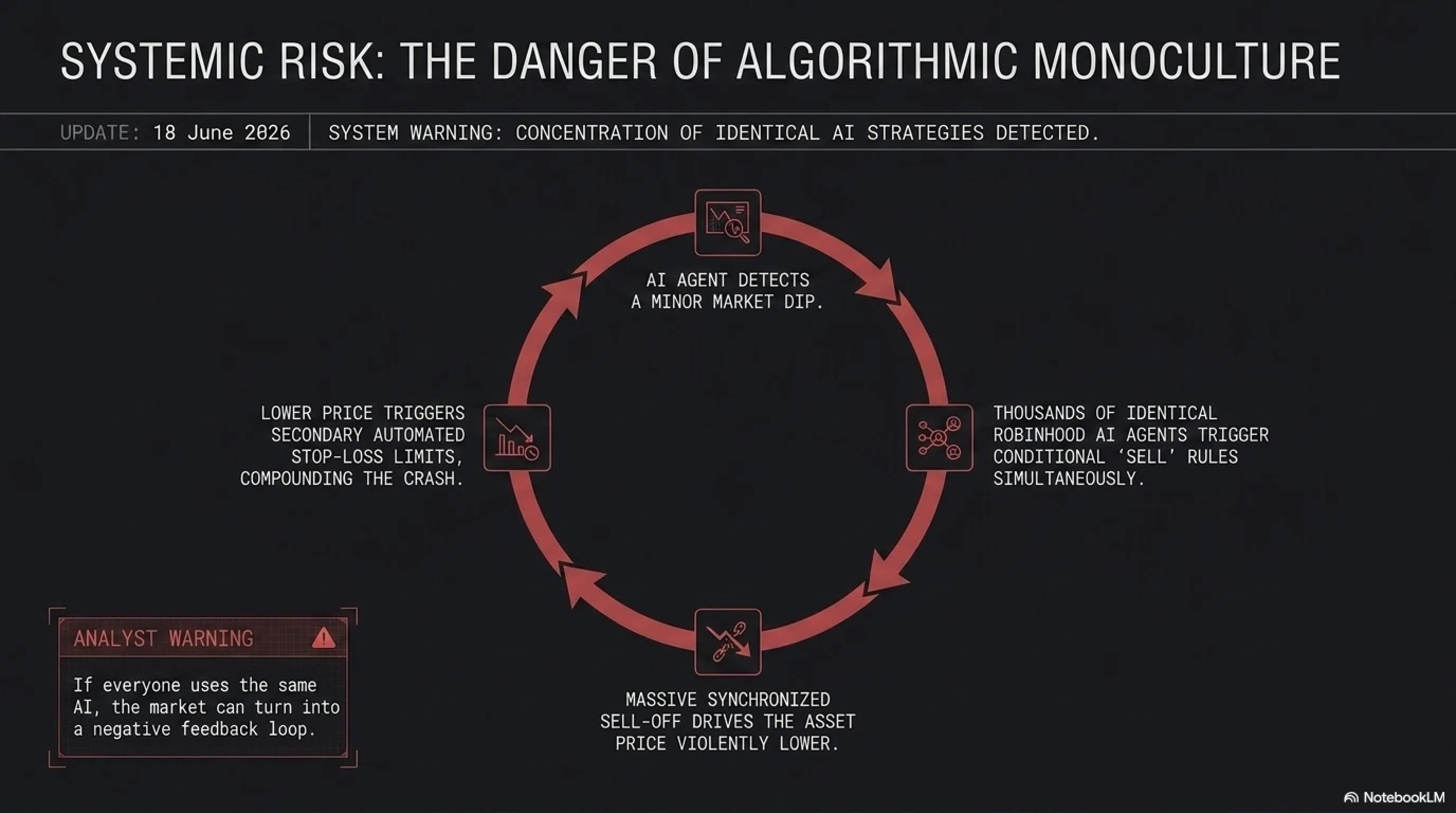
This idea sounds attractive but has serious risks. Several analysts have warned that automated trading can lead to heavy losses, especially in the volatile crypto market. One said: "If everyone uses the same AI, the market can turn into a negative feedback loop."
How Does It Work? Technology Behind AI Trading Agent
According to published information, Robinhood AI Agent uses a Large Language Model (LLM) trained on historical market data. This robot can recognize price patterns, analyze news, and even monitor market sentiment on social media.
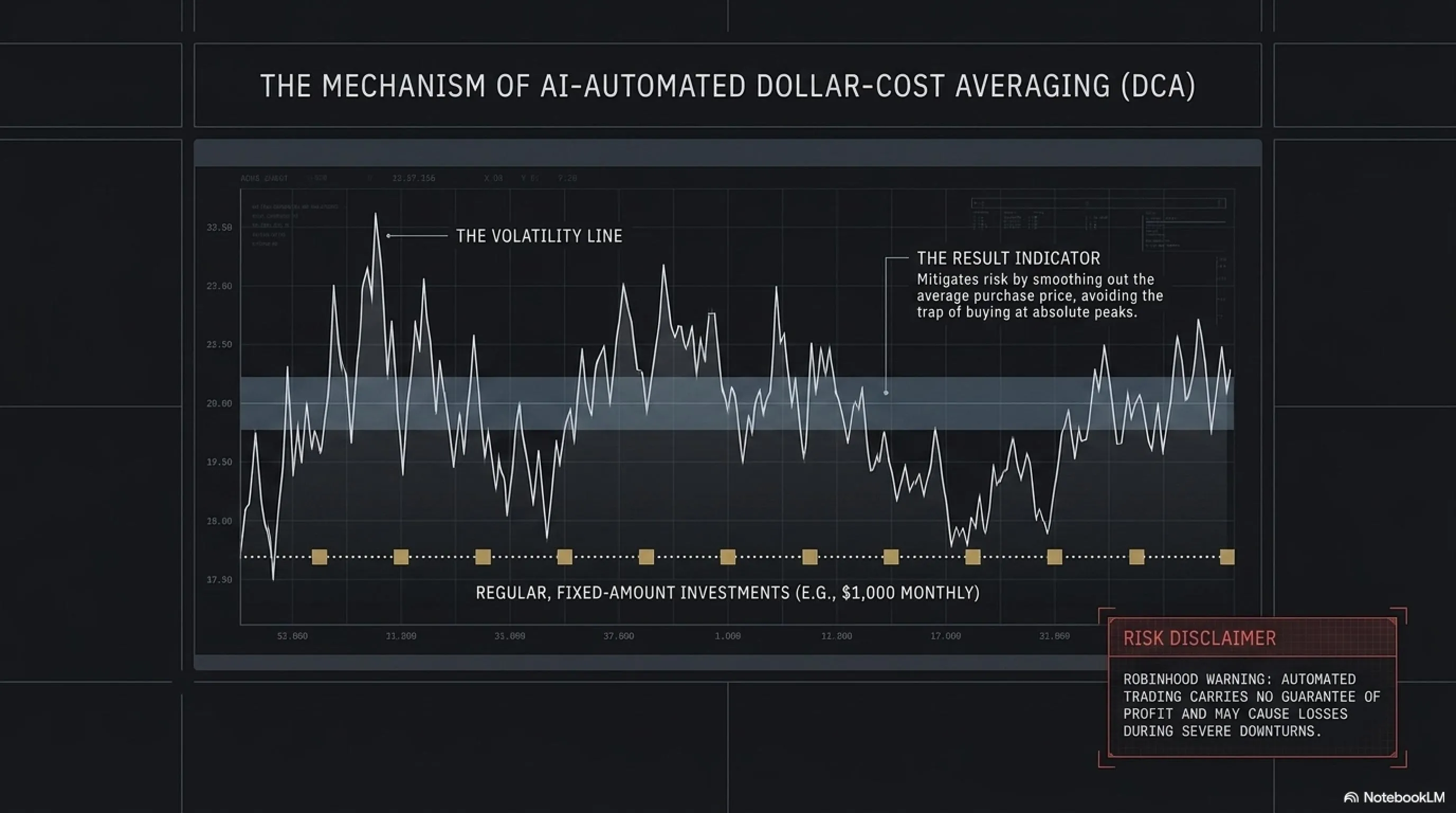
Users can set various strategies, such as "When Bitcoin drops below $60,000, buy $1000" or "If Ethereum increases more than 10% in one day, sell half the holdings." The robot can also use DCA (Dollar-Cost Averaging) techniques and automatic stop-loss.
Jargon Buster: What is DCA?
DCA or Dollar-Cost Averaging is an investment strategy where instead of buying all at once, you invest a fixed amount at regular intervals. For example, instead of buying $12,000 of Bitcoin at once, you buy $1,000 every month. This method reduces risk because you're buying at different prices.
But the important point is that Robinhood has warned users that this robot has no guarantee of profit and may cause losses in some situations. The company also announced that this service will initially only be available to Gold (paid) users.
Meta and the AI Content Crisis: Removing Instagram Photos
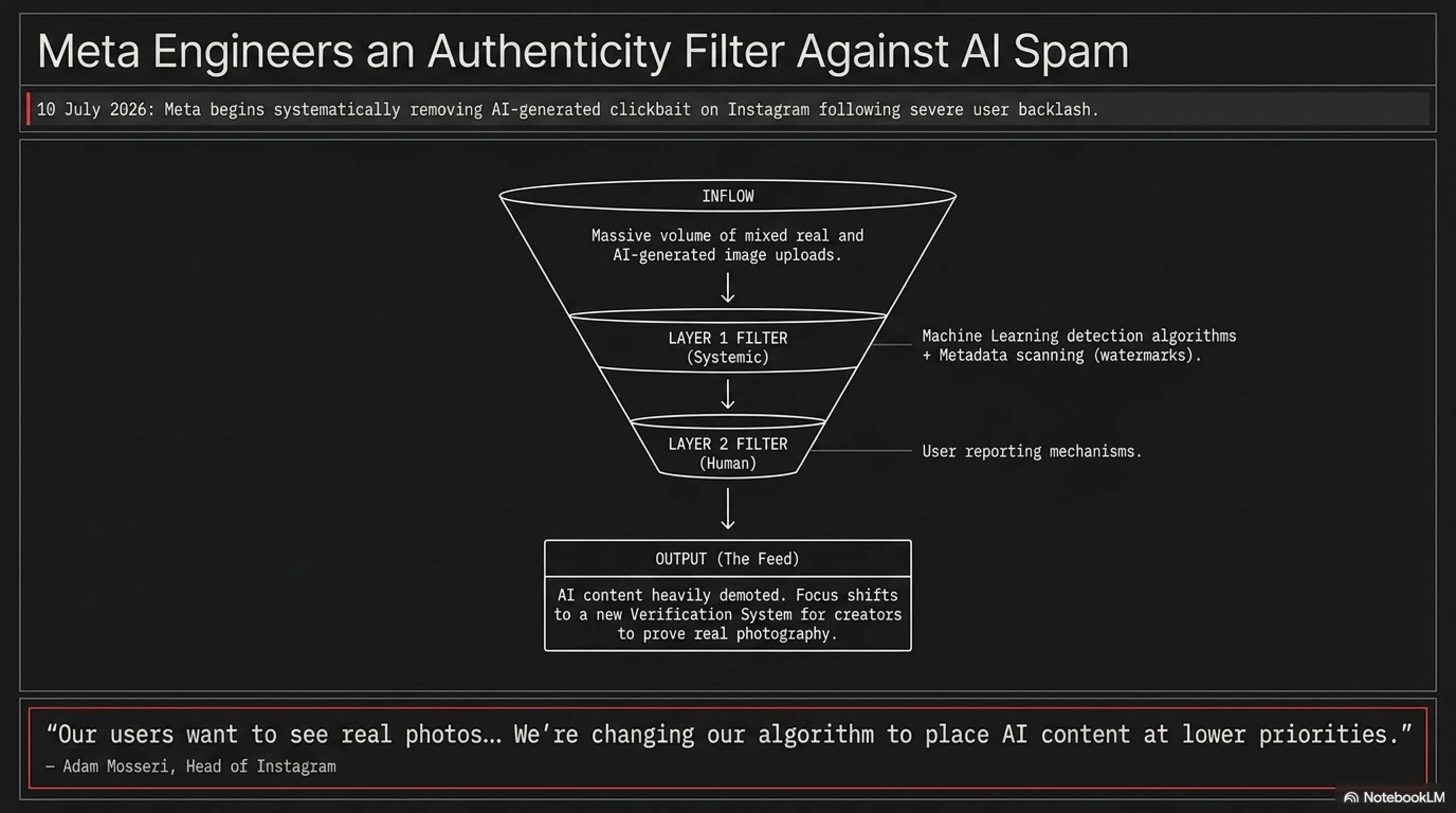
In tonight's final news, Meta announced that from July 10, 2026, it will remove AI-generated images from Instagram feed. According to TechCrunch report, this decision was made after widespread user complaints saying their feed was full of fake AI images and they could no longer find real content.
The problem started when in recent months, many bot accounts began publishing AI-generated images. These images were usually clickbait and designed to receive high engagement. Some of these images were even misleading or fake news.
Adam Mosseri, head of Instagram, announced in a post: "We've realized the importance of feeling content authenticity. Our users want to see real photos from friends and family, not AI-generated images. We're changing our algorithm to place AI content at lower priorities."
Detection Challenge: How to Distinguish AI from Reality?
But the problem is how do we know if an image is AI-generated or real? Meta announced it uses a combination of machine learning and metadata analysis. If an image has specific watermark or metadata indicating it was made with AI, it gets automatically flagged.
Also, Instagram asked users to Report suspicious images. The company is also developing a verification system where content creators can confirm their photos are real.
Tekin Analysis | Is This Enough?
To be honest, this is a very big challenge. With advancement of AI technologies like Midjourney and DALL-E 3, distinguishing fake images from real ones has become nearly impossible. Even experts sometimes get fooled. Perhaps the real solution is for platforms to restrict AI image uploads from the start, or encourage users to specify the source of their images. But this also has its own problems, as it limits freedom of expression.
Stats and Figures: A Look at Tonight's News
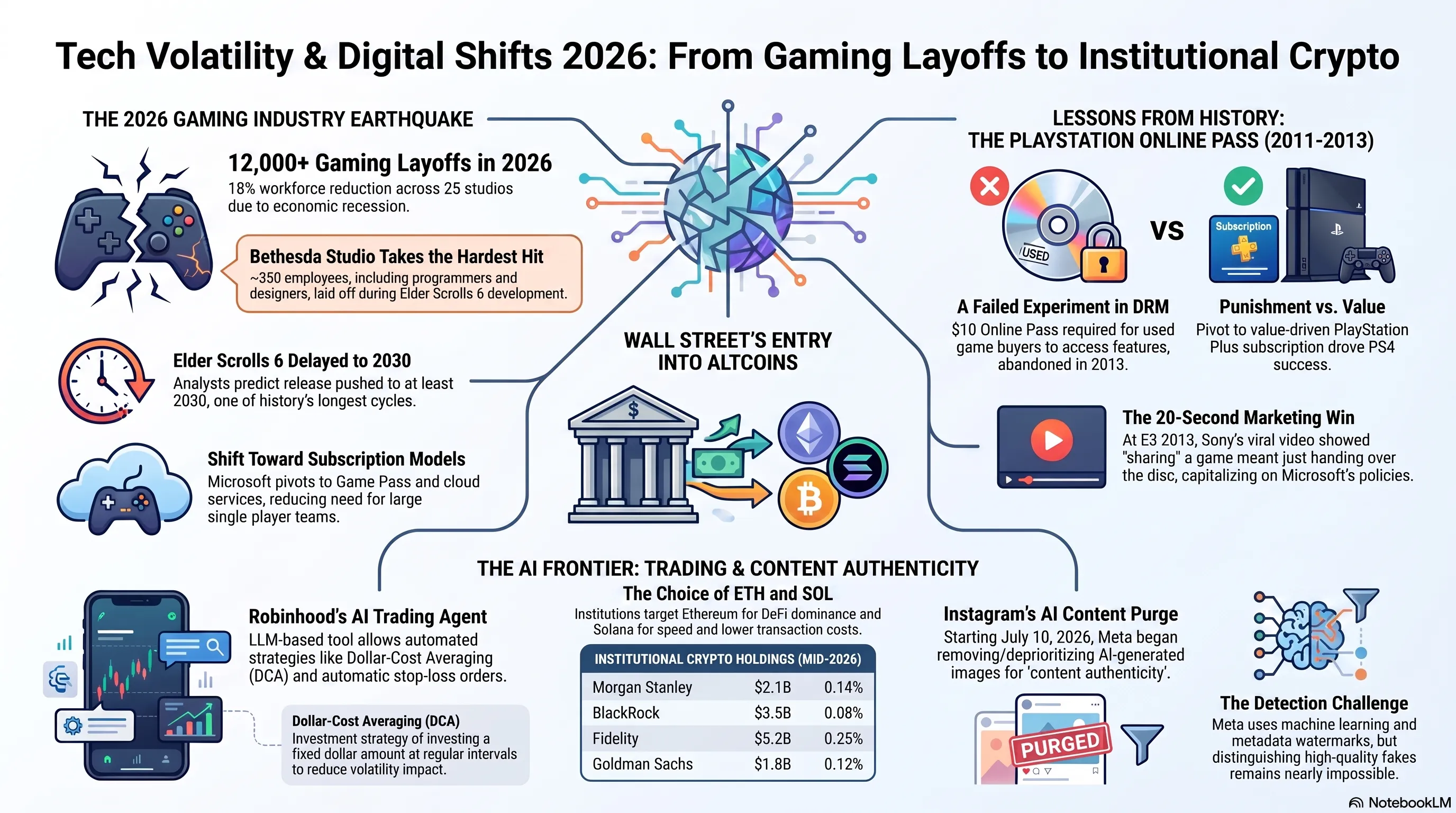
Let's get familiar with some interesting stats from tonight's news:
Today's Key Statistics
350 people
Xbox/Bethesda layoffs
2030
Possible Elder Scrolls 6 date
$2.1B
Morgan Stanley investment
0.14%
Portfolio percentage in crypto
2011-2013
Dark era of PlayStation Online Pass
AI Trading
Future of Robinhood trading
Final Perspective: What to Learn from Tonight?
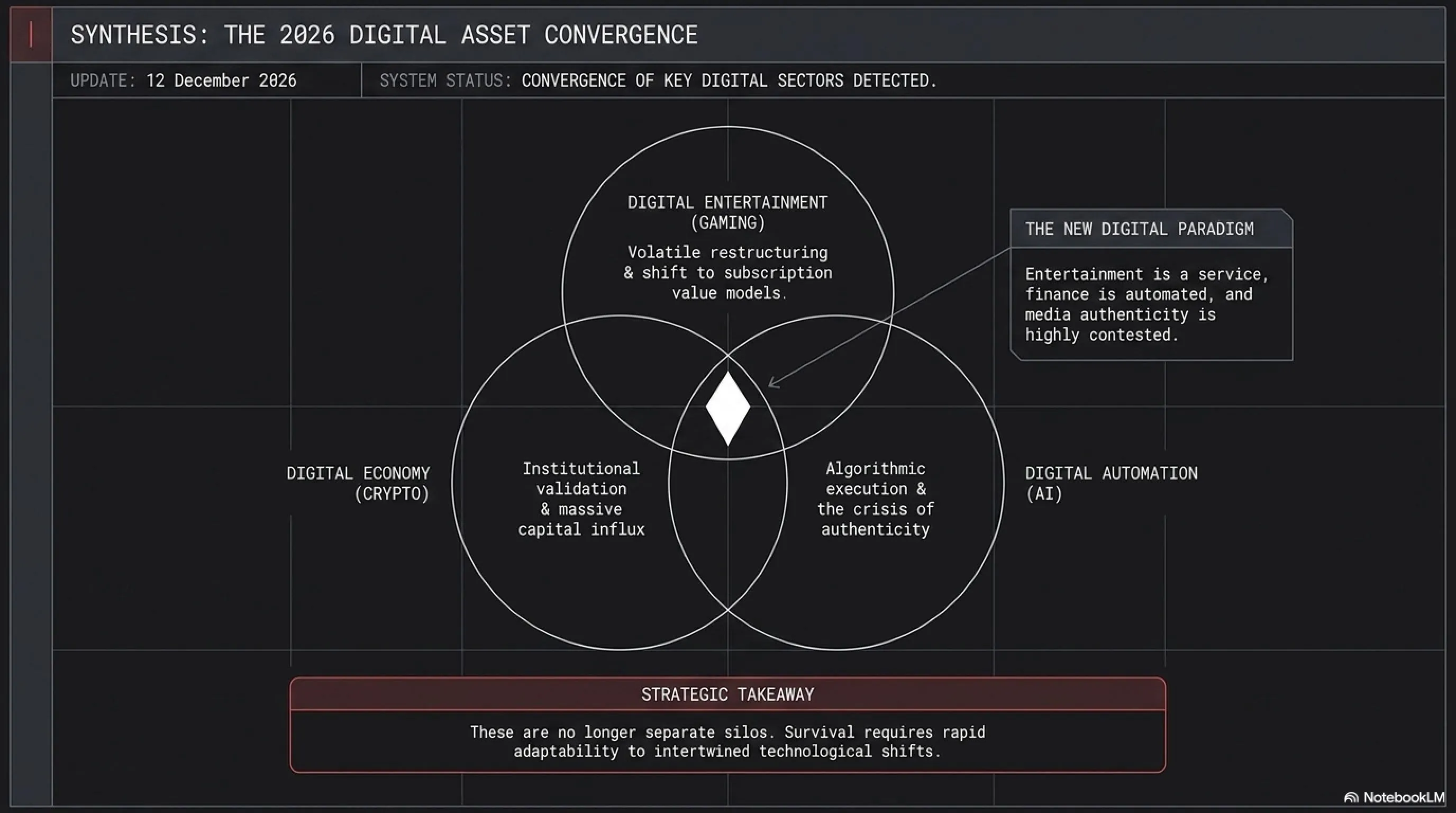
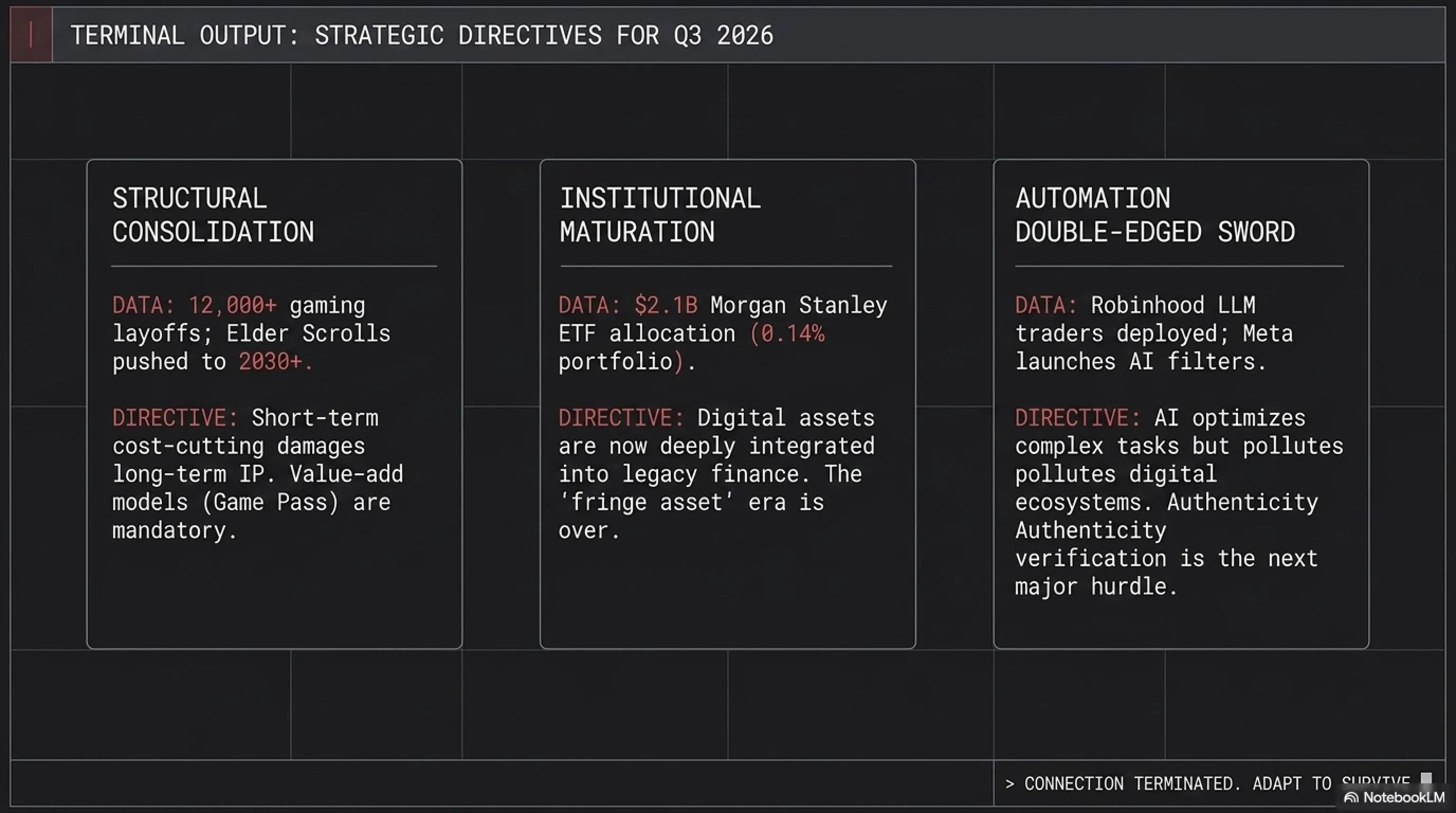
Tonight showed us that the technology, gaming, and crypto industry is changing rapidly. On one hand, we see tough decisions like Xbox layoffs that can affect the future of major games like Elder Scrolls 6. On the other hand, we see Wall Street entering the crypto world, meaning mainstream acceptance for digital assets.
We also saw how history repeats itself. PlayStation Online Pass is a reminder that short-term decisions can damage your brand for years. And finally, we saw that artificial intelligence is changing everything, from crypto trading to Instagram content.
The important point is that we must be smart. Whether about investing in crypto with AI help or identifying fake content on social media. The future belongs to those who can learn quickly and adapt to changes.
Final Conclusion
Tonight was full of diverse news. Xbox layoffs showed that the gaming industry is undergoing structural changes, PlayStation Online Pass history reminded us that bad decisions are exposed sooner or later, Morgan Stanley's entry into crypto showed that digital currencies are no longer a game, and Robinhood AI Agent proved that the future of trading is automated. This news is important not only for gamers and investors but will have a direct impact on all our futures.
Frequently Asked Questions
Will Elder Scrolls 6 be canceled due to layoffs?
No, the game won't be canceled but its development time may increase. According to internal sources, the game won't be released until at least 2030. Layoffs may push this date even further back.
Why did Sony cancel PlayStation Online Pass?
Due to severe negative reaction from gamers and negative impact on new game sales. The system not only didn't provide expected profit but damaged the PlayStation brand. Sony eventually realized that providing real value through PS Plus was better than punishing users.
Is Morgan Stanley's investment in crypto safe?
Morgan Stanley is a major investment bank and their investment is made through regulated ETFs, not direct cryptocurrency purchases. This is relatively safer, but market risk always exists. They've only allocated 0.14% of their portfolio, showing they're proceeding cautiously.
How does Robinhood AI Trading Agent work?
This robot uses a Large Language Model (LLM) trained on historical market data. Users can define their buy and sell strategies and the robot automatically executes trades. But note there's no guarantee of profit.
Why is Meta removing AI images from Instagram?
Due to widespread user complaints saying their feed was full of fake images. Also, some AI images were misleading or fake news. Meta wants to restore the feeling of content authenticity to the platform.
Should I use AI Trading?
It depends on your experience and knowledge. If you're a beginner, it's better to first learn how to trade yourself. AI Trading can be useful, but if you define the wrong strategy, it can lead to heavy losses. Always start with an amount you're willing to lose.
Why are massive layoffs happening in the gaming industry?
Several reasons: economic recession, declining AAA game sales, shareholder pressure for greater profitability, and companies shifting strategy toward subscription services. The gaming industry is undergoing fundamental transformation and unfortunately this transformation has costs.
Does the used game market no longer exist?
With the growth of digital games and subscription services, the used game market has shrunk but still exists. Some gamers still prefer to buy physical copies so they can sell later. But this market is no longer as strong as before.
Sources & References
- IGN - Xbox Layoffs and Bethesda Restructuring (July 2026)
- Bloomberg - Jason Schreier's Report on Elder Scrolls 6 Delays
- GameSpot - Microsoft Refutes H-1B Visa Claims (July 10, 2026)
- Bitcoin.com - Morgan Stanley Ethereum & Solana ETF Allocation (June 18, 2026)
- Cointelegraph - Robinhood AI Trading Agent Testing (July 1-10, 2026)
- TechCrunch - Meta Removes AI Images from Instagram (July 10, 2026)
- Wikipedia - PlayStation Online Pass Historical Documentation
- Eurogamer - Analysis of Gaming Industry Layoffs 2026
Additional Gallery: 🌙 Tekin Night | Saturday Night, July 11, 2026 - Night of Layoffs, Dark History & Crypto Revolution