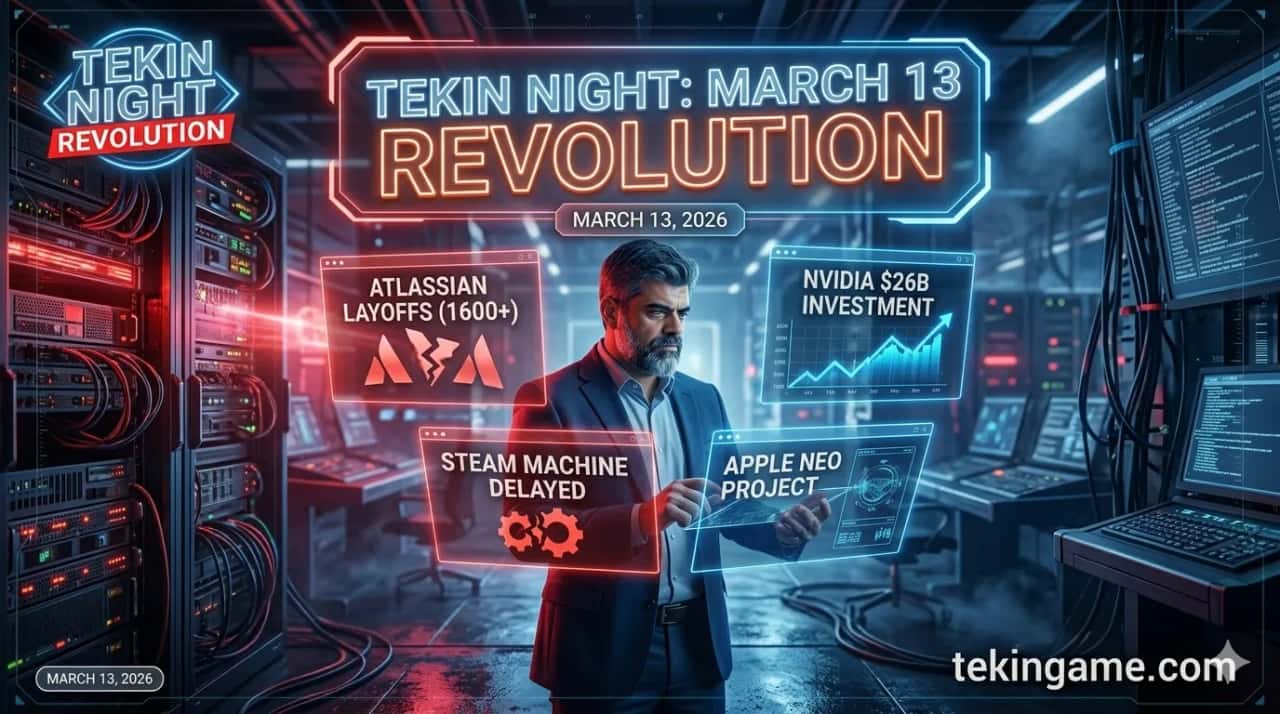
Tekin Night March 13, 2026: A deep dive into 6 explosive tech news stories, including Atlassian's 1600 AI-driven layoffs, NVIDIA's massive $26B investment, Valve's Steam Machine delay, and Apple's secretive Neo project. Is AI eating Silicon Valley?
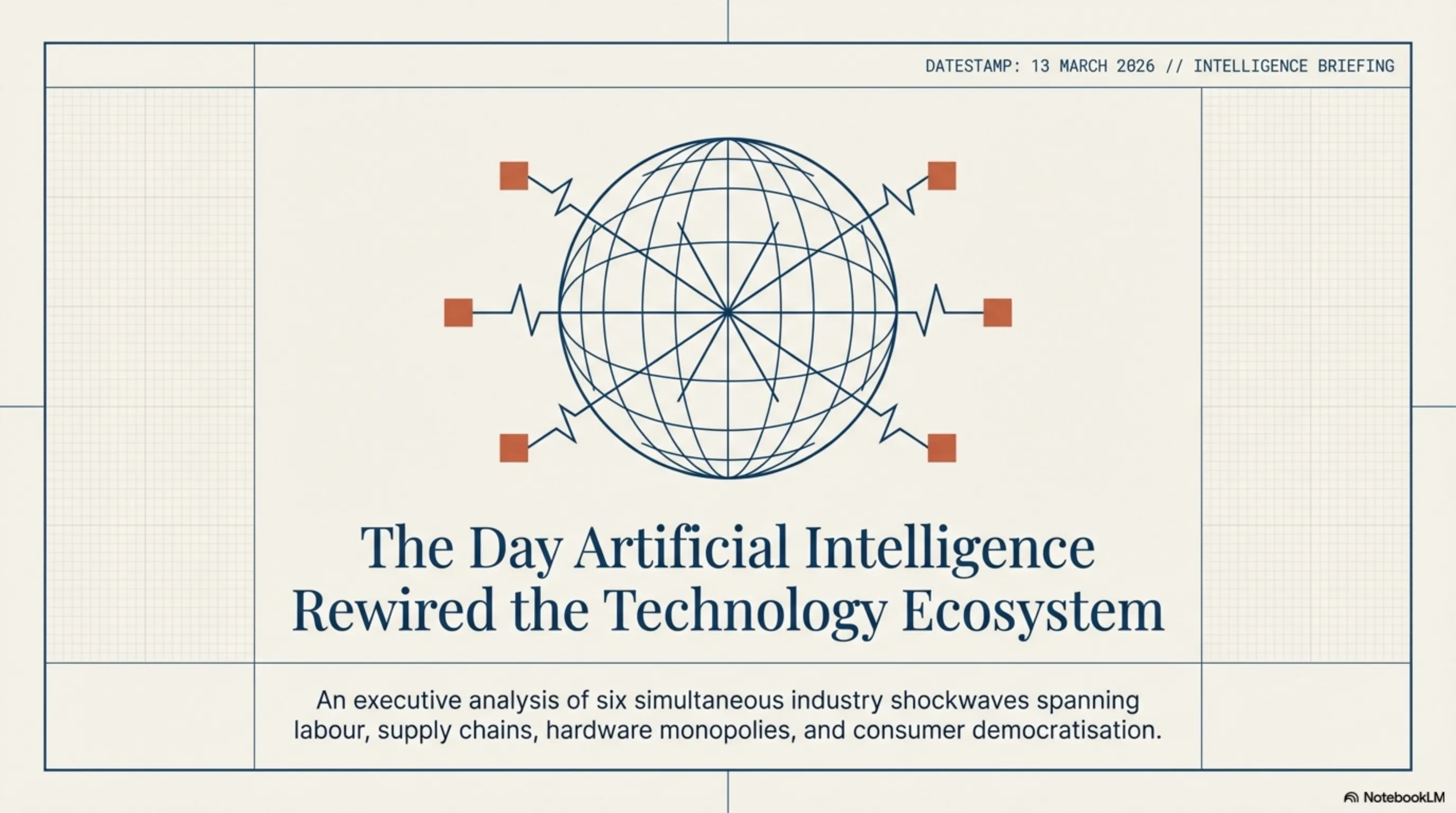
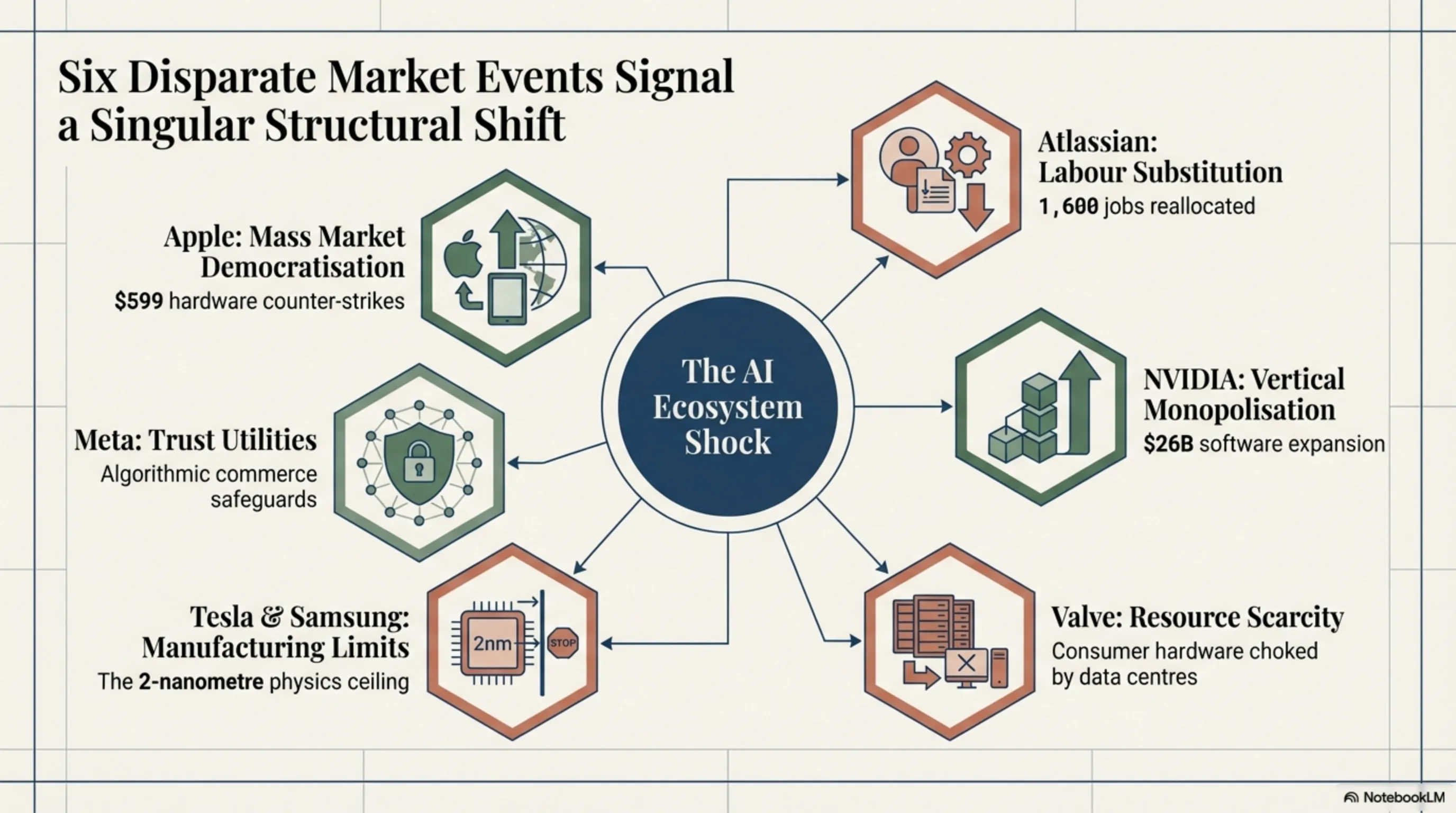
March 13, 2026 was the day that shook the tech world to its core. From Atlassian's massive layoff of 1,600 employees to NVIDIA's $26 billion investment, from Steam Machine delays to Apple's surprise announcements — 6 stories that show how rapidly the AI revolution is changing the rules of the game. Are you ready to see how one day can rewrite the future of technology?
Atlassian Mass Layoffs: When AI Replaces Humans
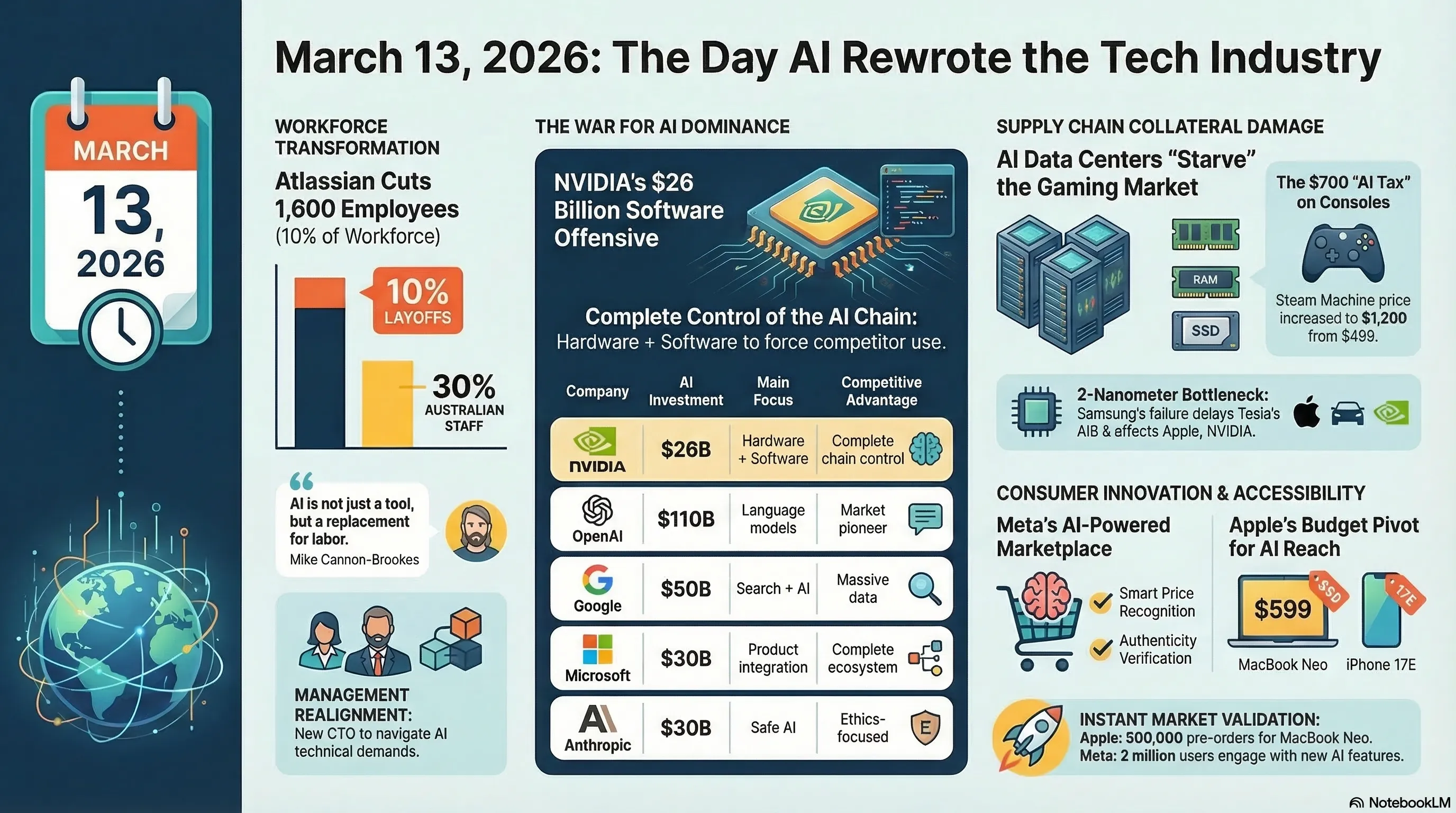
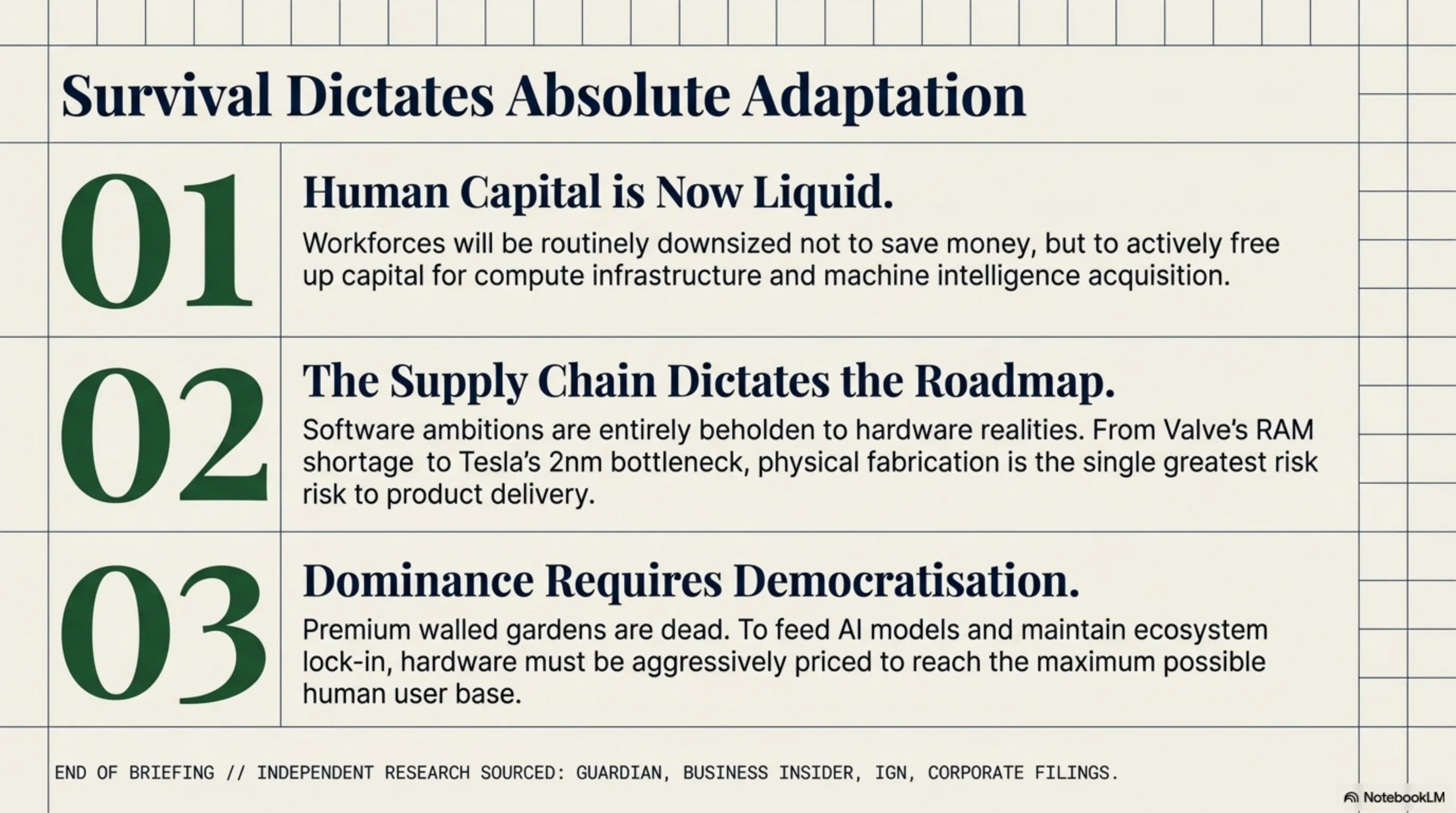
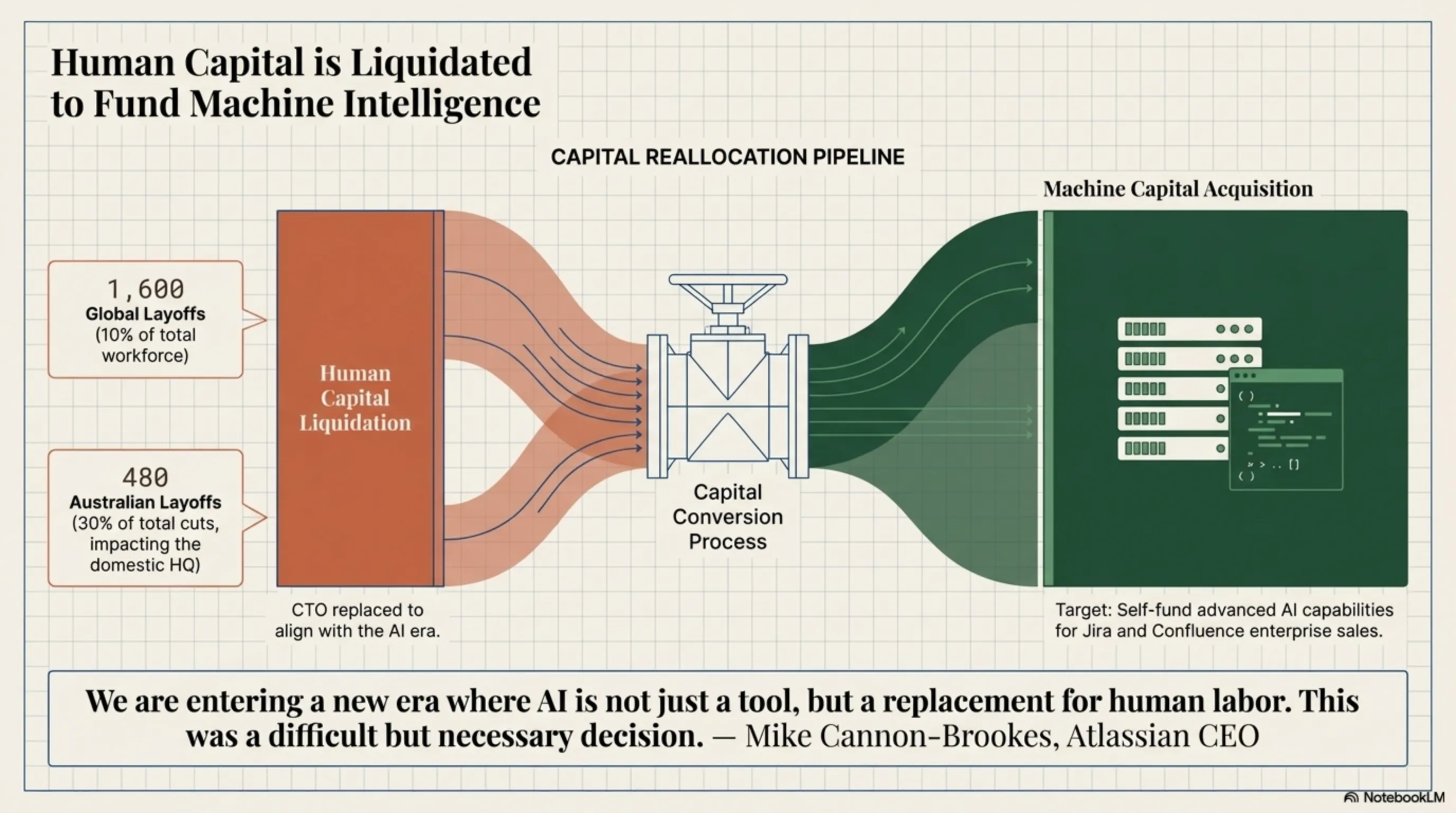
On the morning of March 13, 2026, Atlassian employees woke up to a shocking message from CEO Mike Cannon-Brookes. In a pre-recorded video, he announced that the company would lay off 10% of its global workforce — 1,600 people. The reason? "To self-fund further investment in AI and enterprise sales."
This bitter decision represents the new reality of the working world. Atlassian, maker of popular tools Jira and Confluence, announced it would use the money saved from these layoffs to develop AI capabilities. In other words, humans are being fired to make room for machines.
The devastating statistics: Of the 1,600 layoffs, 480 were in Australia — 30% of all cuts. This means Atlassian didn't even spare its home country. The company also replaced its Chief Technology Officer to "better align with the AI era."
"We are entering a new era where AI is not just a tool, but a replacement for human labor. This was a difficult but necessary decision." — Mike Cannon-Brookes, Atlassian CEO
The reaction from employees and the tech community was intense. On social media, #AtlassianLayoffs trended, and many experts called this move "the beginning of the end of the human work era." But Atlassian is determined: the future belongs to AI, and companies that adapt faster will win.
📊 Atlassian Layoff Statistics
👥 Total Layoffs: 1,600 people (10% of workforce)
🇦🇺 Australia: 480 people (30% of cuts)
💰 Goal: Free up budget for AI
🔄 Management Change: New CTO
📅 Date: March 13, 2026
These layoffs are just the beginning. Analysts predict that other tech companies will soon follow a similar path. A new era has begun where AI doesn't just assist — it replaces.
NVIDIA vs Everyone: $26 Billion for AI Dominance
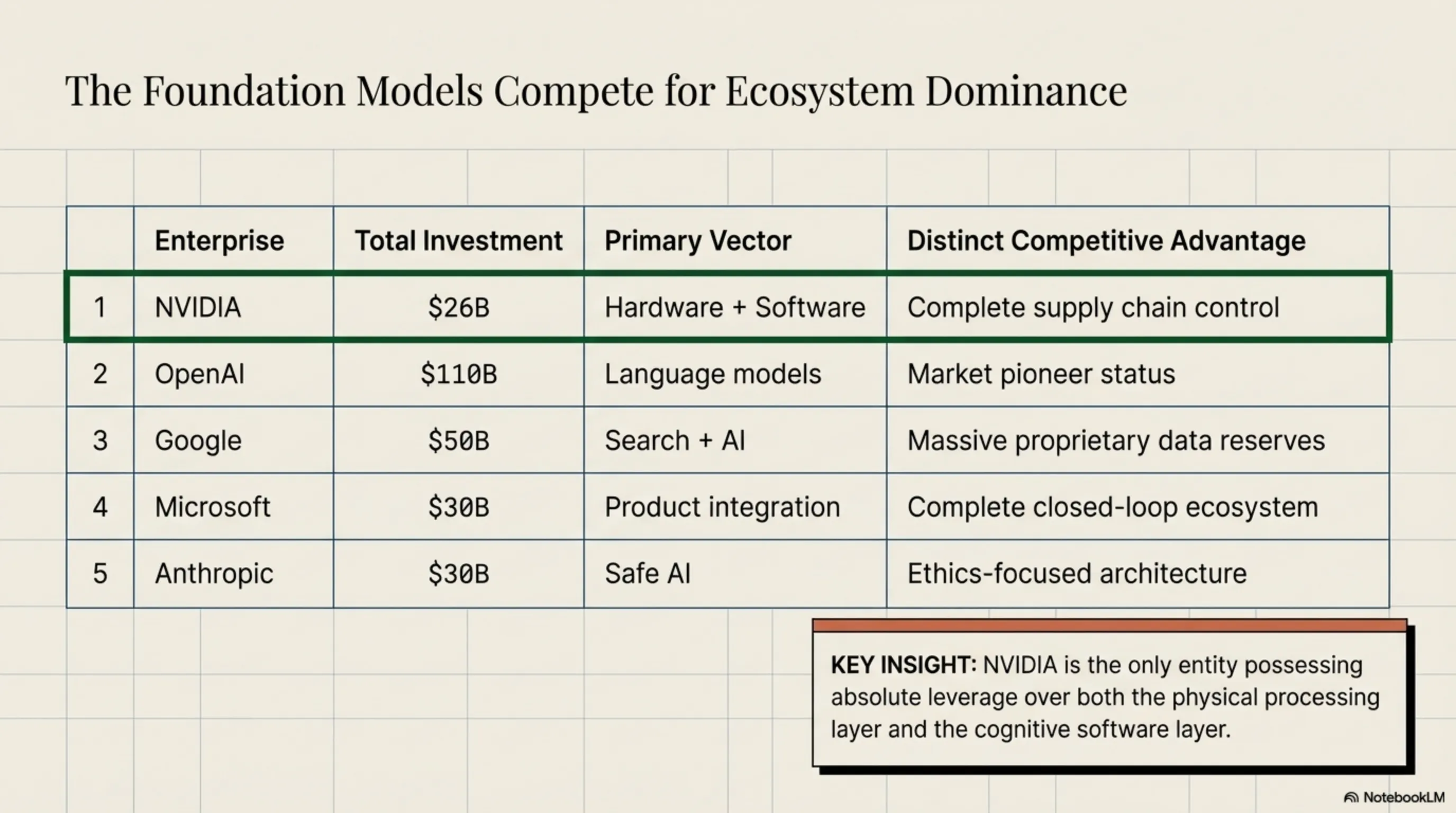
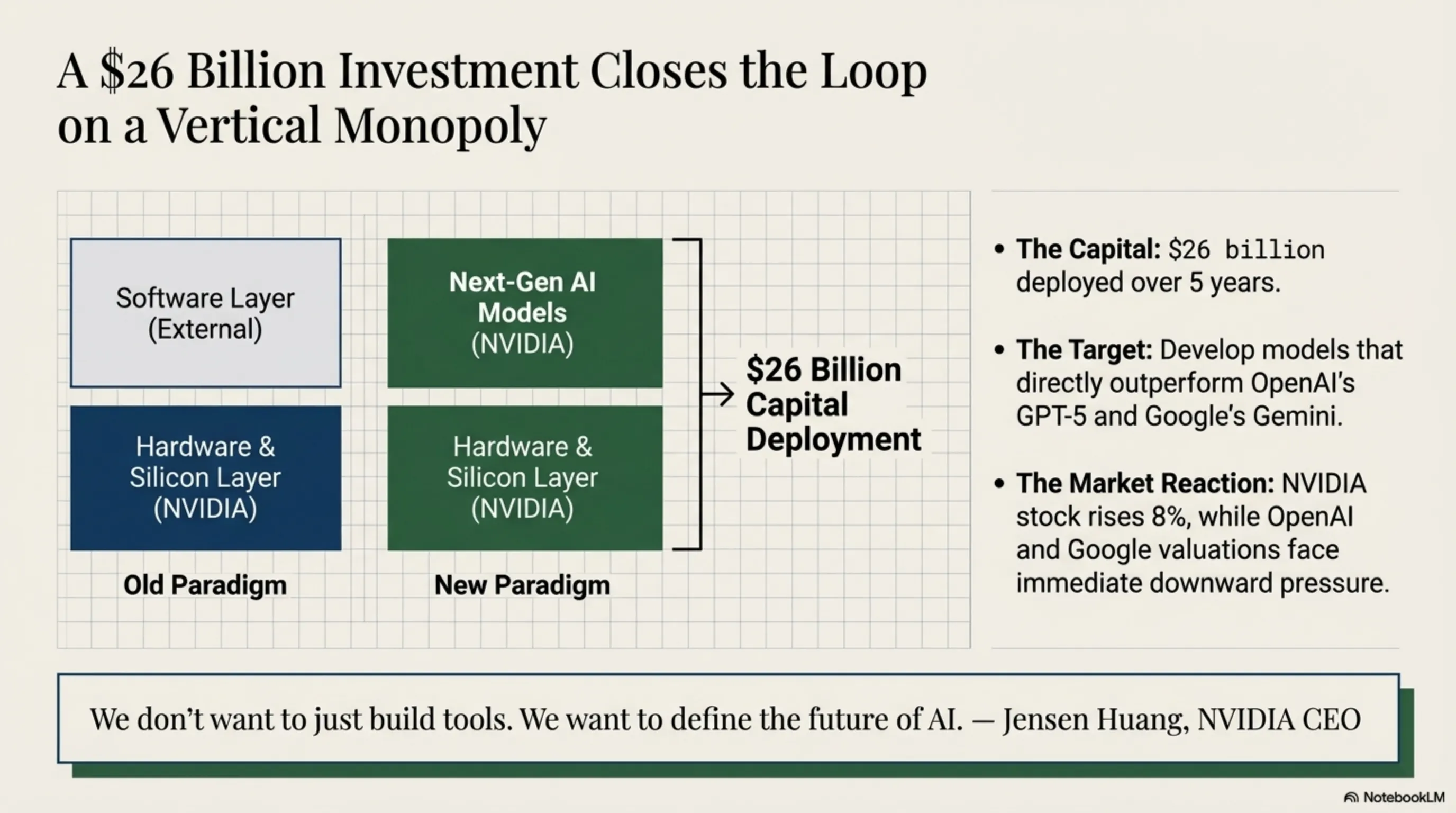
If you thought the AI war was over, you're wrong. NVIDIA announced a $26 billion investment to build AI models that outperform OpenAI and Google, showing that the real battle has just begun.
This massive investment will be made over the next 5 years with the goal of creating "next-generation AI models" that not only compete with GPT-5 and Gemini but surpass them. NVIDIA, which until now only made AI hardware, now wants to enter the software game.
NVIDIA's strategy is brilliant: they have both hardware and now they're building software. This means complete control of the AI production chain — from chip to final model. Competitors are forced to use NVIDIA hardware to compete with NVIDIA software!
Jensen Huang, NVIDIA CEO, said in a statement: "We don't want to just build tools. We want to define the future of AI." This sentence clearly shows that NVIDIA is no longer satisfied with being a supplier — it wants to be the leader.
| Company | AI Investment | Main Focus | Competitive Advantage |
|---|---|---|---|
| NVIDIA | $26B | Hardware + Software | Complete chain control |
| OpenAI | $110B | Language models | Market pioneer |
| $50B | Search + AI | Massive data | |
| Microsoft | $30B | Product integration | Complete ecosystem |
| Anthropic | $30B | Safe AI | Ethics-focused |
Market reaction was immediate. NVIDIA stock rose 8% while OpenAI and Google shares declined. Investors understood that the game has changed — now NVIDIA is not just a supplier, but a direct competitor.
NVIDIA's move sends a clear message: the era of OpenAI and Google monopoly is over. The real AI war has just begun, and NVIDIA is ready for battle with $26 billion.
Steam Machine on Hold: When AI Blocks Gaming
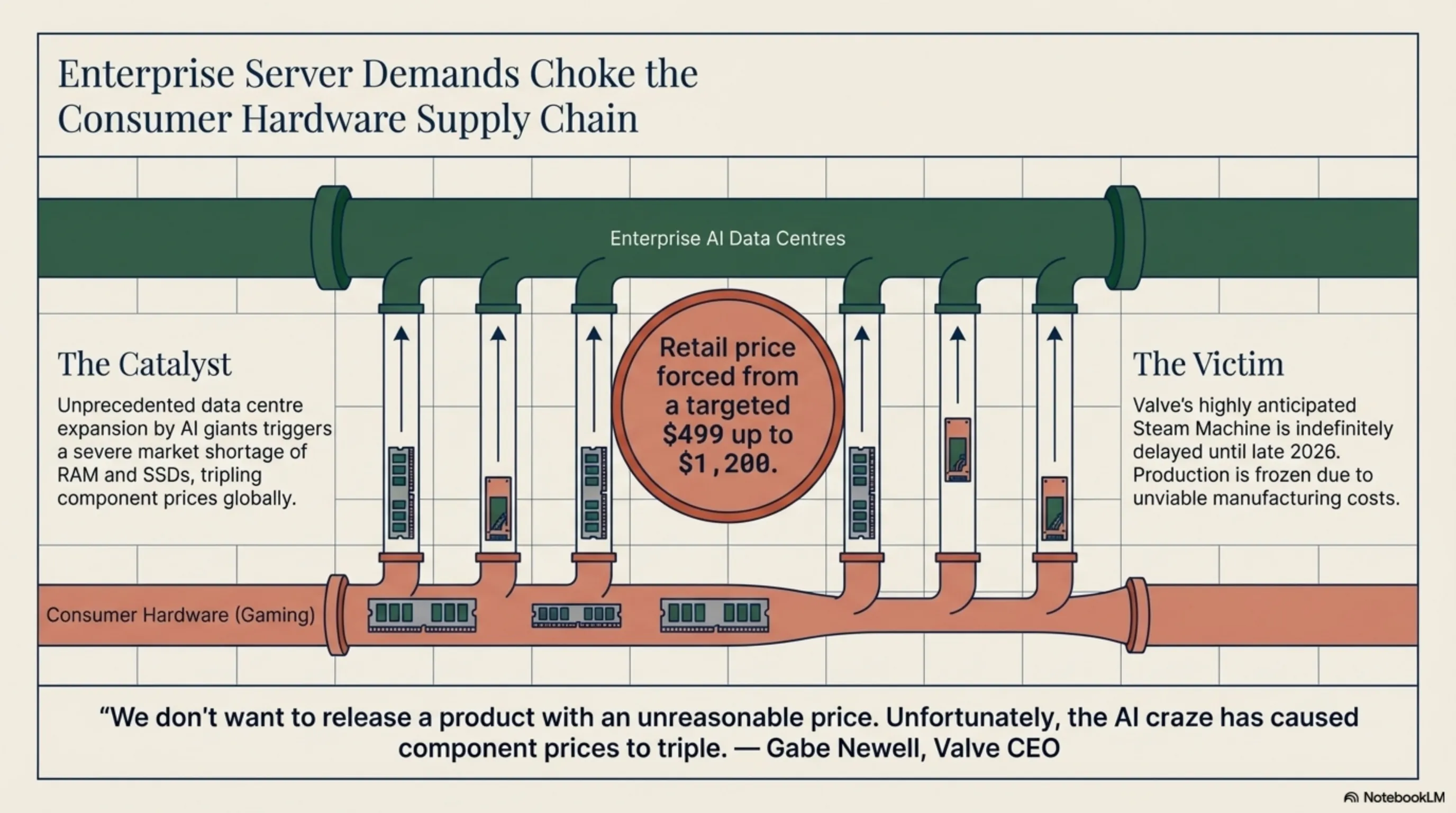
One of the day's most disappointing news for gamers came from Valve. The highly anticipated Steam Machine gaming console, scheduled for early 2026 release, has been delayed due to severe shortages of memory and storage components. The cause? AI data centers have bought up all available RAM and SSDs in the market!
This strange but real situation exists because AI companies like OpenAI, Google, and Microsoft need so much memory and storage for their data centers that component prices have skyrocketed. The result? Valve can't produce the Steam Machine at a reasonable price.
Gabe Newell, Valve CEO, said in a statement: "We don't want to release a product with an unreasonable price. Unfortunately, the AI craze has caused component prices to triple." This means the Steam Machine, which was supposed to cost $499, would now have to sell for $1,200!
The impact of this delay goes beyond one console. It shows how quickly AI is changing the priorities of the tech industry. Even the gaming industry, which generates billions in revenue, is forced to step back in the face of AI demands.
⚡ AI Impact on Gaming Industry
💾 RAM: Prices tripled
💿 SSD: Severe market shortage
🎮 Steam Machine: Delayed until late 2026
💰 Price: From $499 to $1,200
🏭 Production: Limited due to component shortage
Gamers are angry on social media. They're saying: "Why should we pay for the AI craze?" But the reality is that AI has become the tech industry's top priority, and everyone else has to wait.
Valve has promised to release the Steam Machine by the end of 2026, but only if component prices drop. This means the future of gaming depends on AI companies' decisions — a bitter reality no one expected.
Meta Marketplace: AI in Service of Commerce
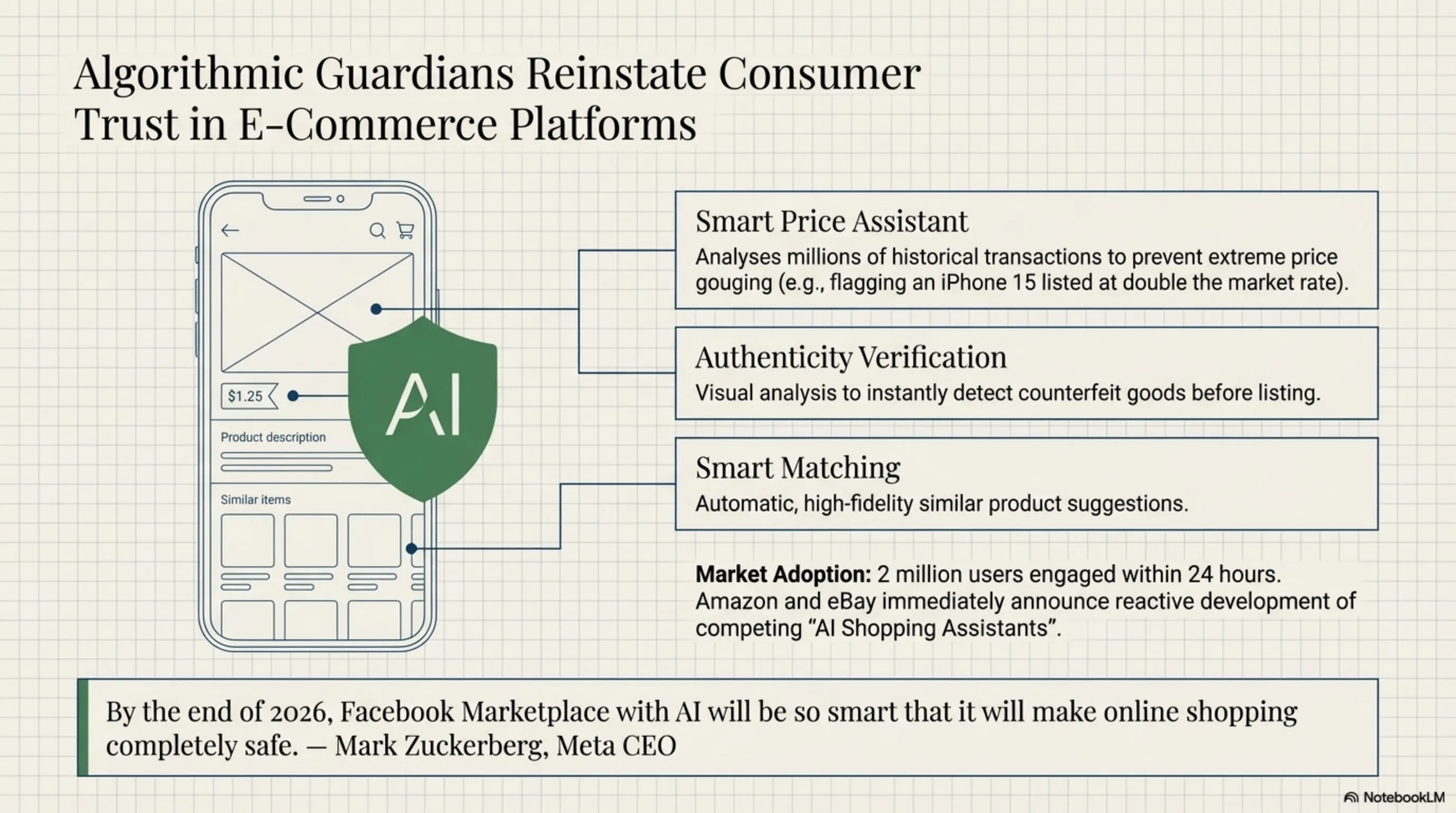
Amid all the negative news, Meta had good news. Mark Zuckerberg's company announced it has added powerful new AI features to Facebook Marketplace that will completely transform the online buying and selling experience.
These new features include "smart price recognition," "automatic similar product suggestions," and "authenticity verification with photos." In other words, AI can now tell you if a product's price is reasonable, suggest similar items, and even detect if a product is genuine or fake.
The most important new feature is "Smart Price Assistant." This tool analyzes millions of previous transactions to suggest reasonable prices for any item. If someone tries to sell an iPhone 15 for twice the market price, AI immediately warns users.
Zuckerberg wrote in an Instagram post: "We want to make Facebook Marketplace the safest and smartest buying and selling platform in the world. AI helps us reduce fraud and provide a better experience."
"This is just the beginning. By the end of 2026, Facebook Marketplace with AI will be so smart that it will make online shopping completely safe." — Mark Zuckerberg, Meta CEO
User reaction has been positive. In the first 24 hours, over 2 million people used the new features. This shows that when AI is used correctly, it can improve life rather than just destroy jobs.
Meta's competitors also reacted. Amazon announced it would soon add similar features to its platform. eBay also said it's working on an "AI Shopping Assistant." The AI war has now entered the online commerce arena.
Tesla in Trouble: When Samsung Can't Deliver
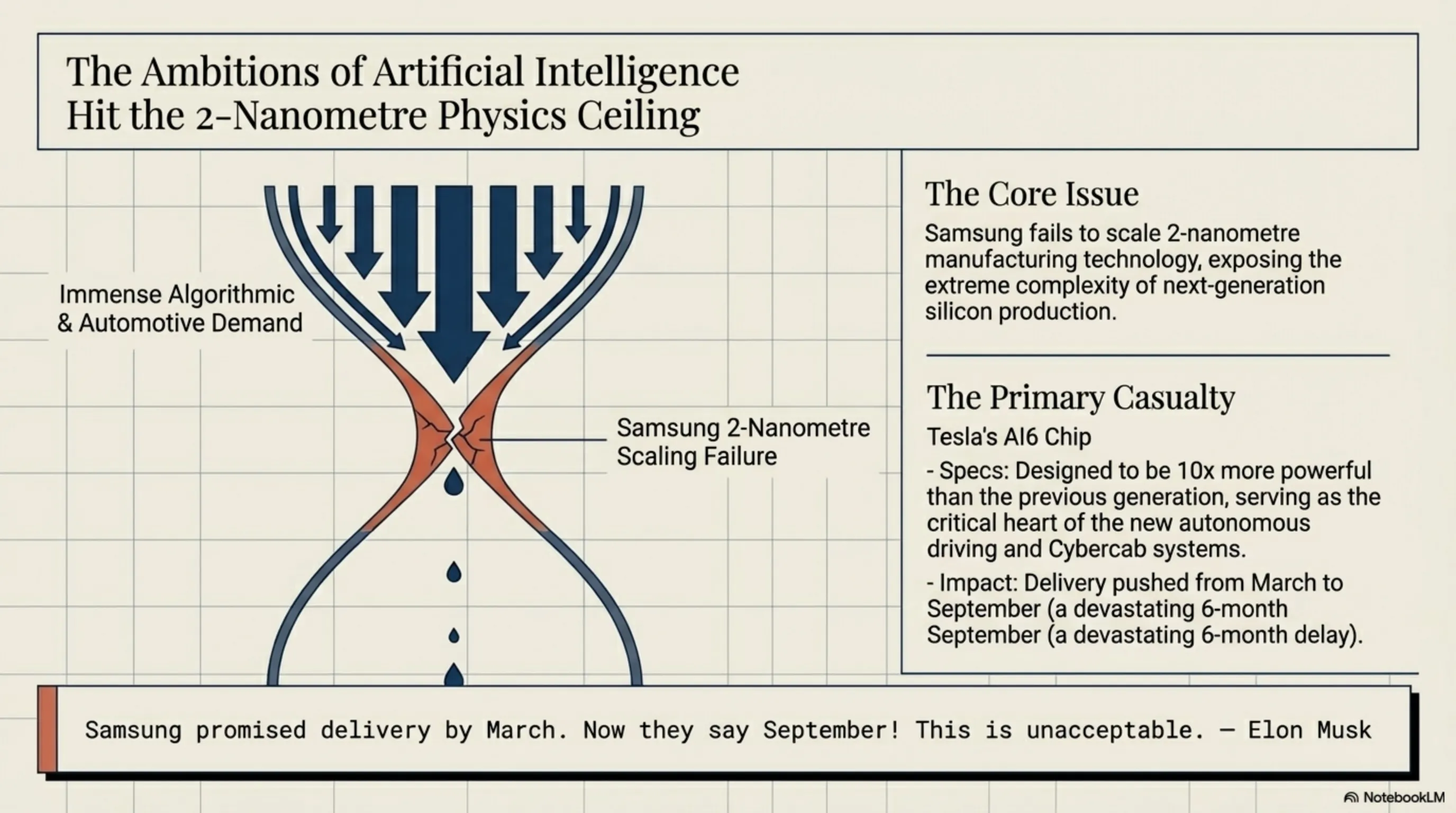
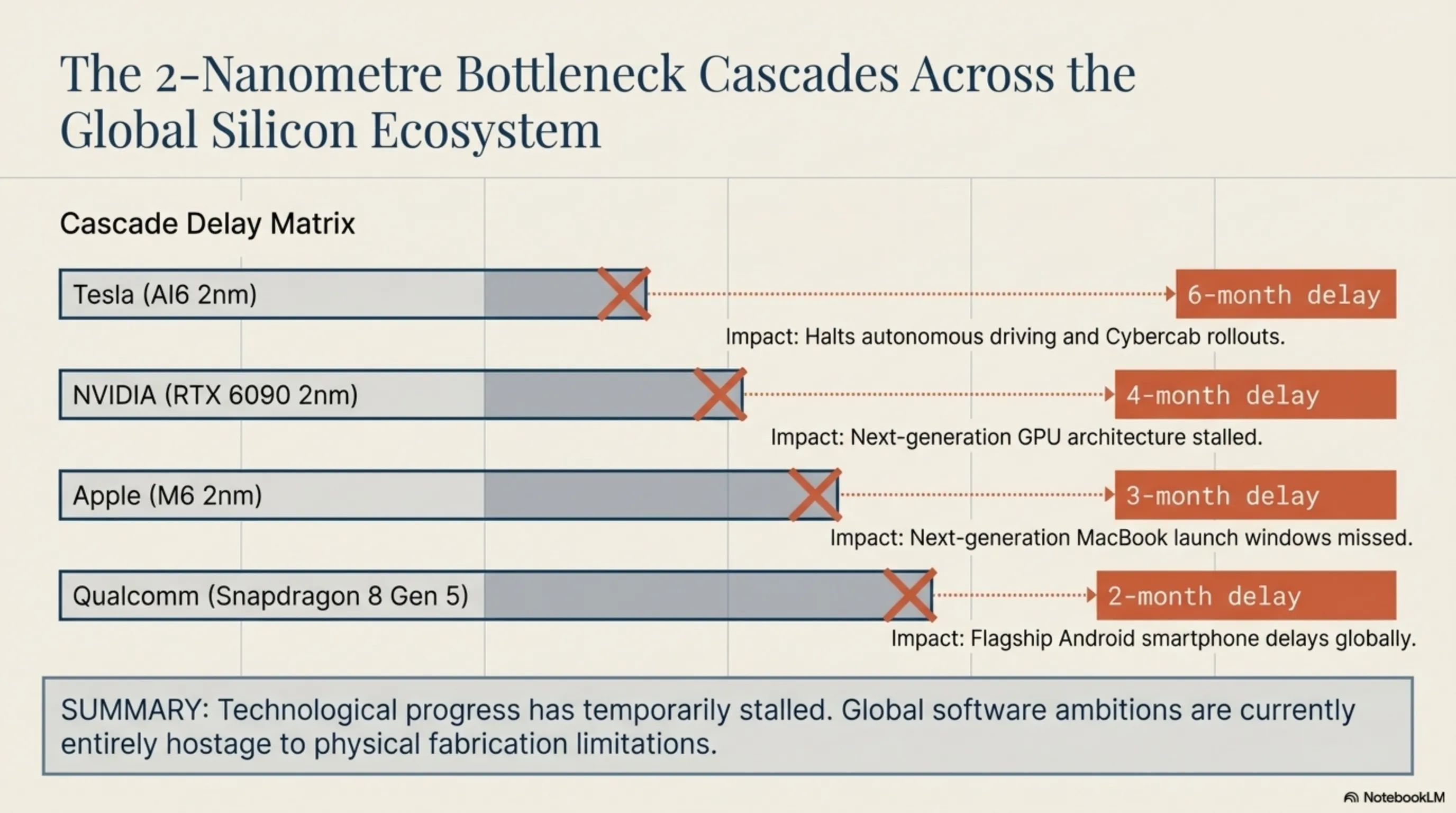
If you think only Valve has problems, you're wrong. Tesla is also facing severe delays in producing its AI6 chip. The cause? Samsung can't properly manufacture 2-nanometer technology, causing a 6-month delay in Tesla's plans.
The AI6 chip was supposed to be the heart of Tesla's new autonomous driving system. This chip, built with Samsung's 2-nanometer technology, is supposed to be 10 times more powerful than the previous generation. But Samsung has run into problems producing this advanced technology and can't meet its commitments.
Elon Musk angrily tweeted: "Samsung promised delivery by March. Now they say September! This is unacceptable." This delay not only disrupts Tesla's plans but shows that even tech giants struggle with producing advanced technologies.
Samsung's problem isn't just with Tesla. The Korean company has also delayed producing 2-nanometer chips for Apple, NVIDIA, and Qualcomm. This means the entire tech industry is affected.
| Company | Required Chip | Delay | Impact |
|---|---|---|---|
| Tesla | AI6 (2nm) | 6 months | Autonomous delay |
| Apple | M6 (2nm) | 3 months | MacBook delay |
| NVIDIA | RTX 6090 (2nm) | 4 months | New GPU delay |
| Qualcomm | Snapdragon 8 Gen 5 | 2 months | Phone delays |
Analysts say Samsung's problem represents a bigger challenge: 2-nanometer technology is so complex that even the world's best companies struggle to produce it. This means technological progress has slowed, and companies must be patient.
For Tesla, this delay means Cybercab and full autonomous driving must wait. For customers, it means the promised future will come later.
Apple's Surprise: MacBook Neo and iPhone 17E Without Fanfare
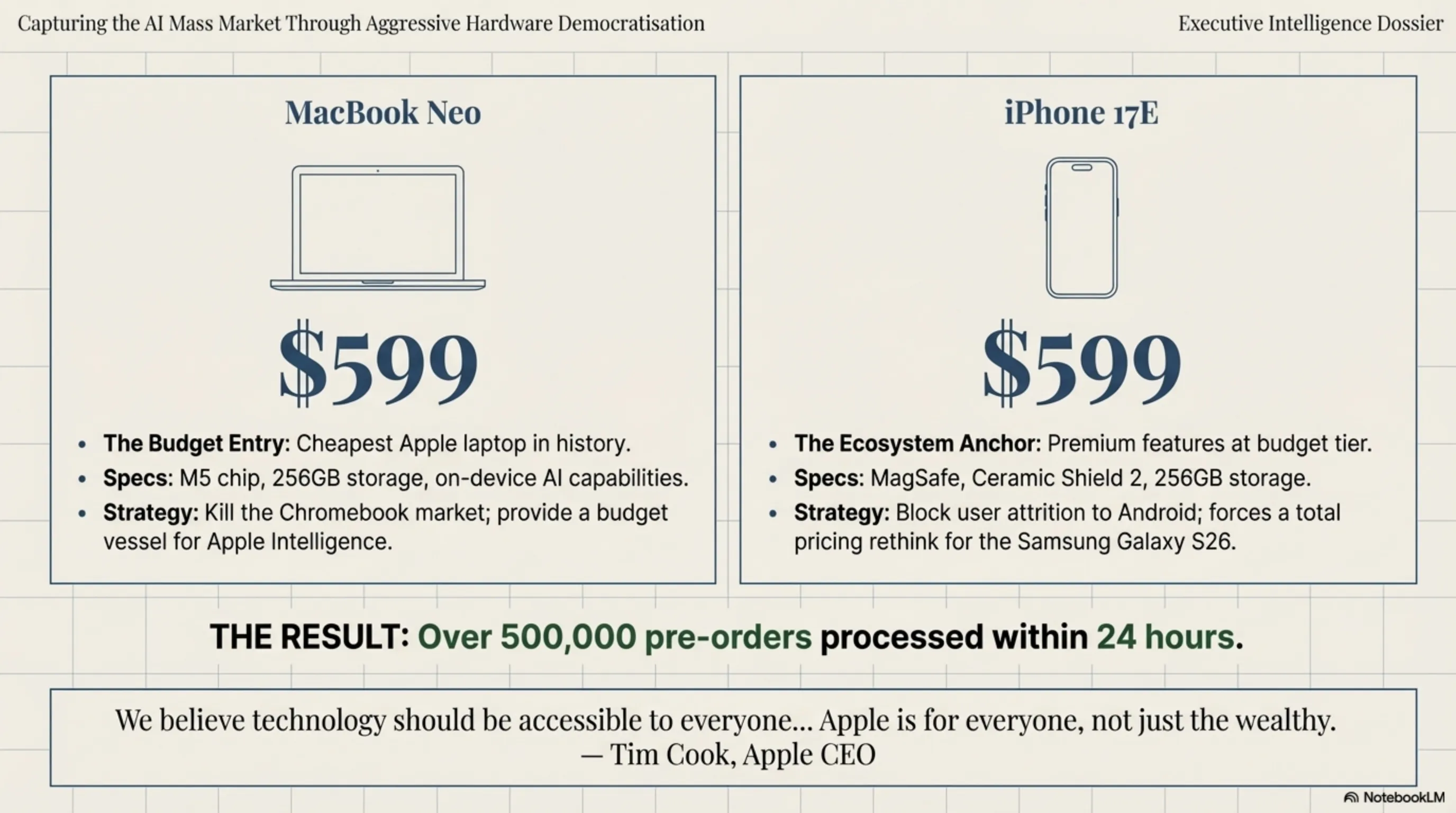
While everyone was waiting for MWC 2026, Apple quietly announced two new products that shocked the market: the $599 MacBook Neo and iPhone 17E. This unexpected move showed that Apple has a new strategy.
MacBook Neo is the cheapest Apple laptop in history. With an M5 chip and 256GB storage, this device is meant to compete with Chromebooks and budget laptops. But why has Apple, which always made expensive products, now entered the budget market?
The answer lies in AI competition. Apple has realized that if it wants to survive in the AI era, it must make its products accessible to everyone. MacBook Neo, with on-device AI capabilities, can be a suitable replacement for budget computers.
iPhone 17E tells a similar story. At $599, this phone has features like MagSafe, Ceramic Shield 2, and 256GB storage. The goal is clear: compete with Samsung Galaxy S26 and prevent users from fleeing to Android.
"We believe technology should be accessible to everyone. MacBook Neo and iPhone 17E show that Apple is for everyone, not just the wealthy." — Tim Cook, Apple CEO
Market reaction was immediate. In the first 24 hours, over 500,000 people pre-ordered the MacBook Neo. This shows there's huge demand for affordable Apple products.
Samsung, which had just announced the Galaxy S26, was forced to reconsider its pricing. Competition has intensified, and Apple has changed the game with this smart move.
🎯 Conclusion: The Day Everything Changed
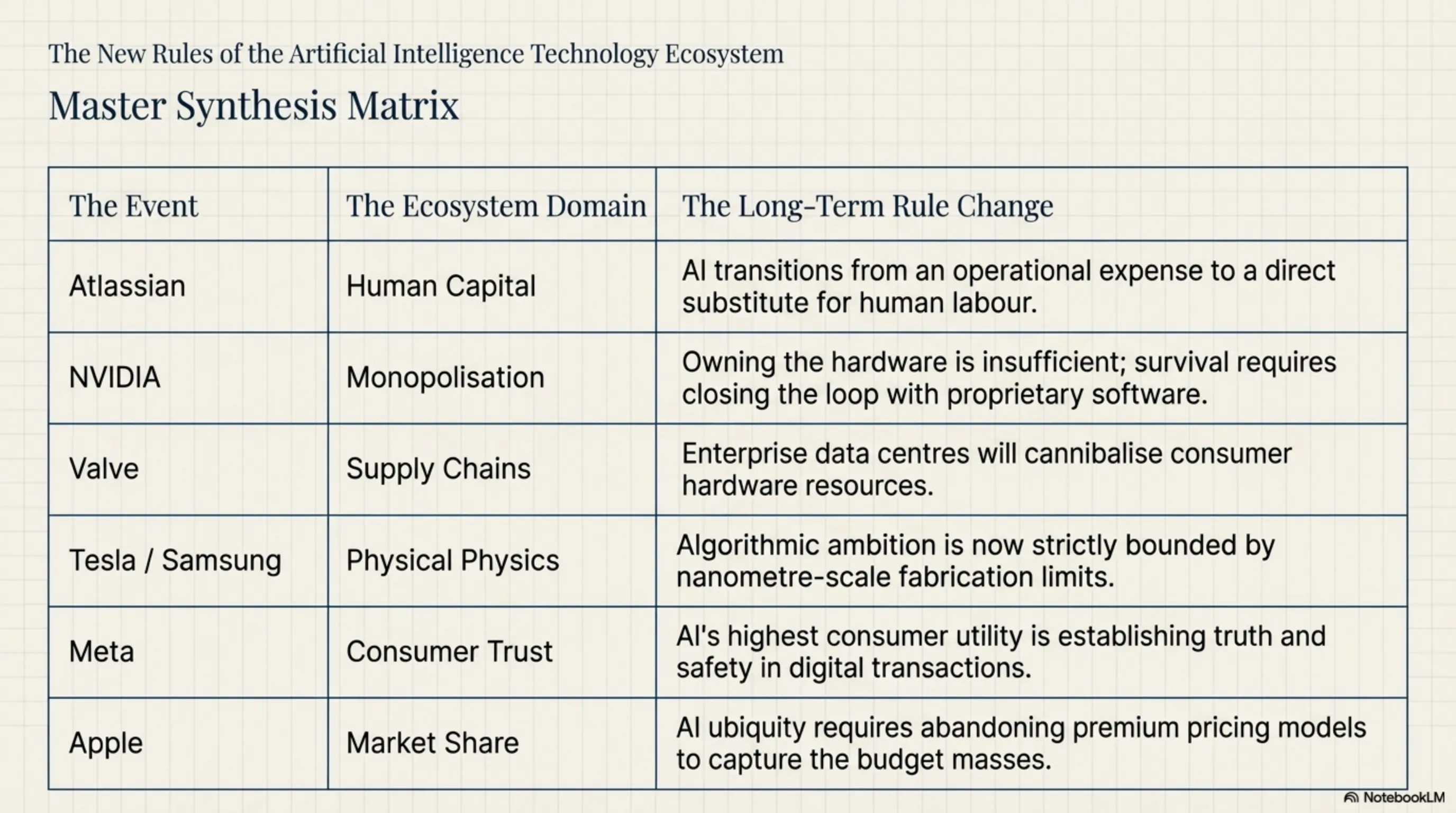
March 13, 2026 was a day that showed how rapidly the AI revolution is changing the tech world. From Atlassian's 1,600 layoffs to NVIDIA's $26 billion investment, from Steam Machine delays to Apple's surprises — everything shows that the rules of the game have changed.
AI is no longer just a tool — it has become the main driving force of the industry. Companies are forced to lay off humans to have AI budgets. Even the gaming industry must step back in the face of AI demands. This is the new reality of the tech world.
But not everything is negative. Meta showed that AI can improve life. Apple proved that advanced technology can be offered affordably. The question is: are we ready for a world where AI controls everything? The answer to this question will determine all our futures.
🔗 Related Articles: USC Self-Learning AI • Tekin Night March 12 • AI Ethics and Future
Final Note: This article is based on independent research, industry reports from The Guardian, Business Insider, IGN, and official information from Atlassian, NVIDIA, Valve, Meta, Tesla, and Apple. Information is current as of March 13, 2026. Prices and specifications may vary by region.
🌐 Stay Connected With Us 🎮✨
For the latest tech, gaming, and gadget news, follow us on our official social media channels:
Supplementary Image Gallery: Tekin Night March 13, 2026: 6 Hot Tech News That Shook the World