🌅 Welcome to Tekin Morning May 19, 2026
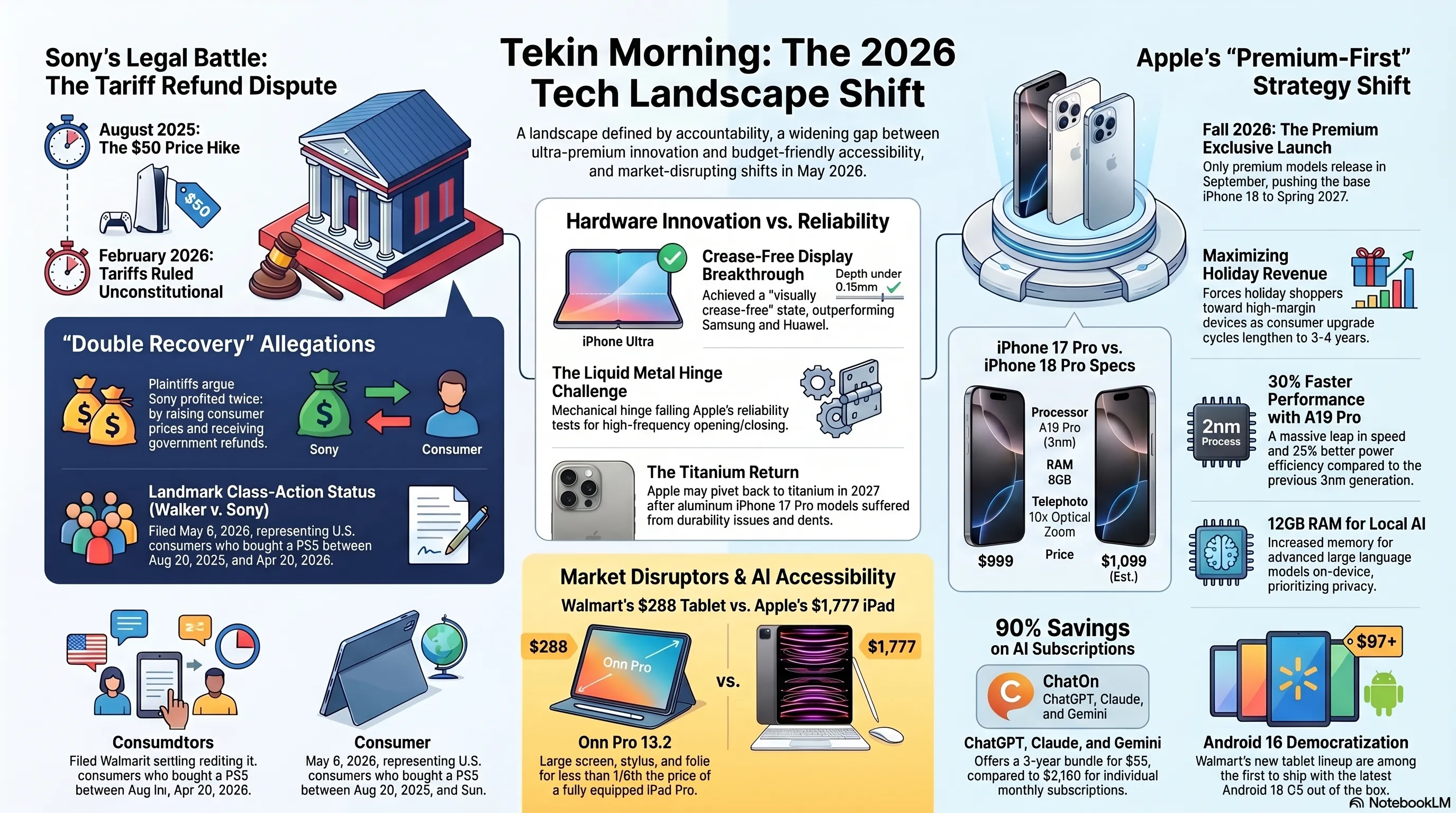
Good morning, tech enthusiasts! Tuesday, May 19, 2026, brings six explosive stories that could reshape the technology landscape. From a groundbreaking class-action lawsuit against Sony to Apple's strategic pivot with the iPhone 18 lineup, we're covering everything you need to know to start your day informed and ahead of the curve.
⚡ Today's Headlines:
⚖️ PlayStation owners sue Sony for tariff refunds in landmark case
📱 iPhone 18 Pro release date confirmed: September 2026 with new strategy
💰 Walmart disrupts tablet market with $97 Android 16 devices
🔧 Apple exploring titanium return after aluminum iPhone 17 Pro issues
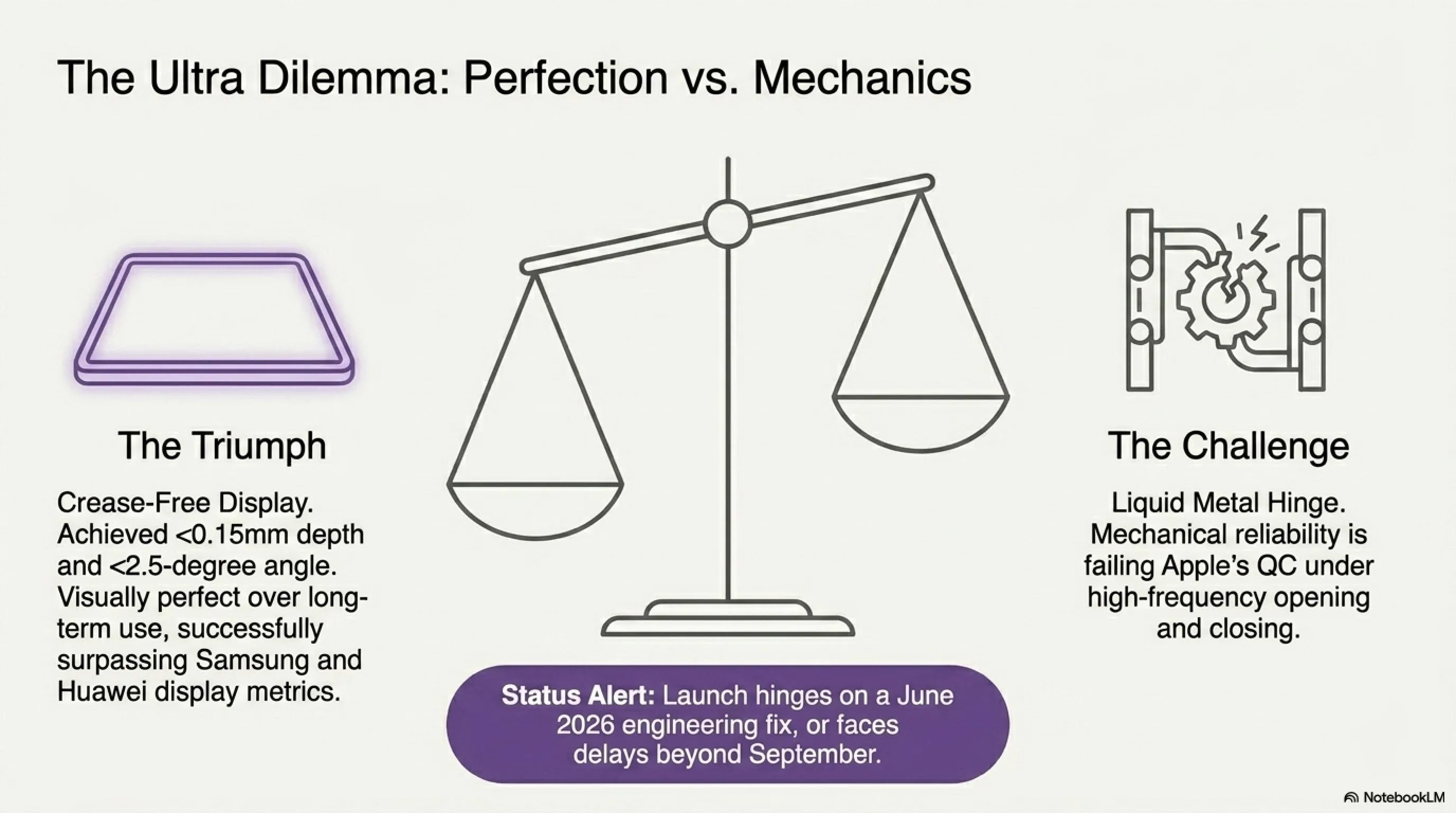
📲 iPhone Ultra achieves crease-free display but faces hinge challenges
🤖 3-year AI subscription: GPT + Claude + Gemini for just $55
☕ Grab your coffee and get ready for a comprehensive deep dive into today's most important tech developments!
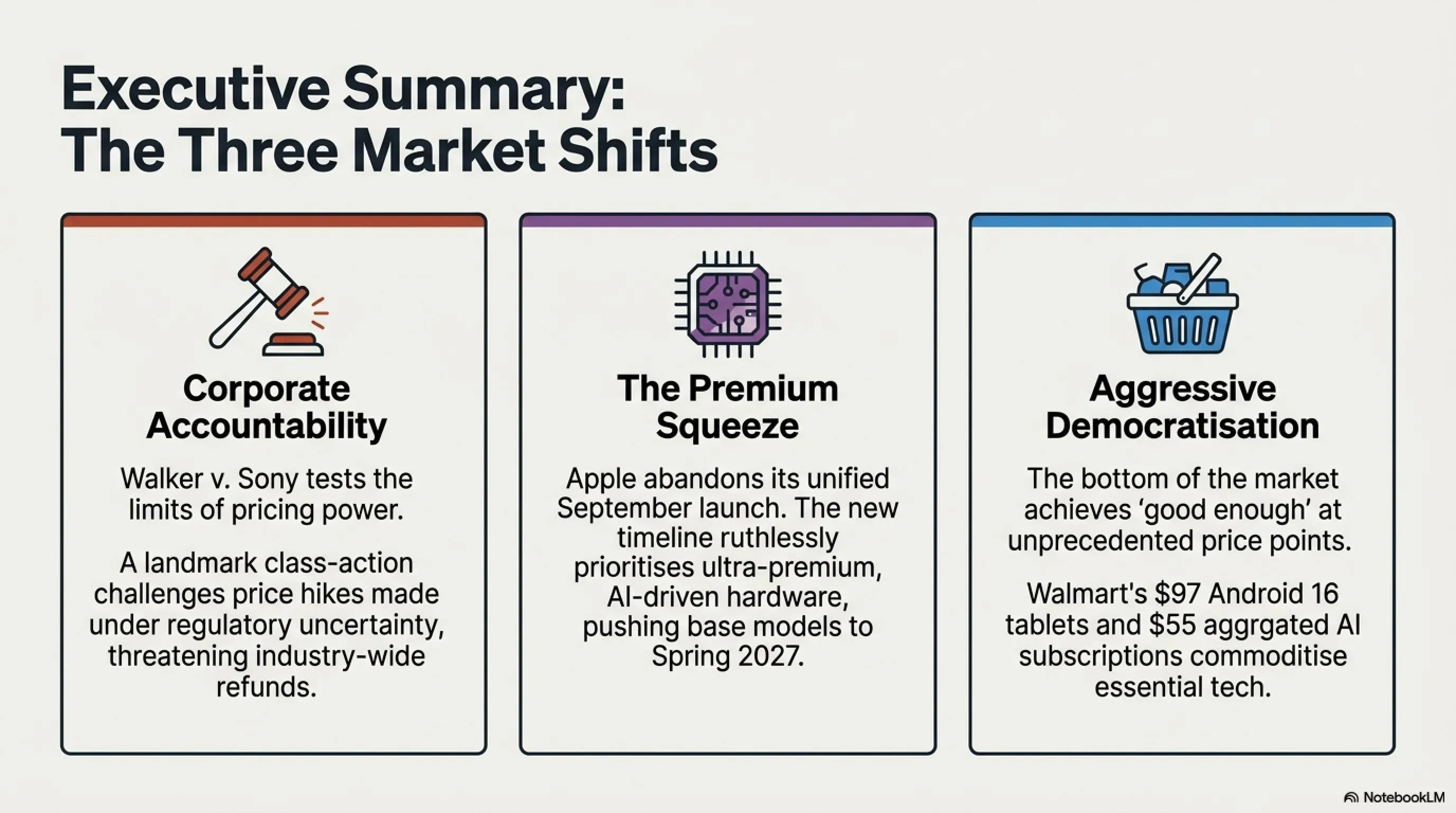
⚖️ PlayStation Owners Launch Class-Action Lawsuit Against Sony Over Tariff Refunds
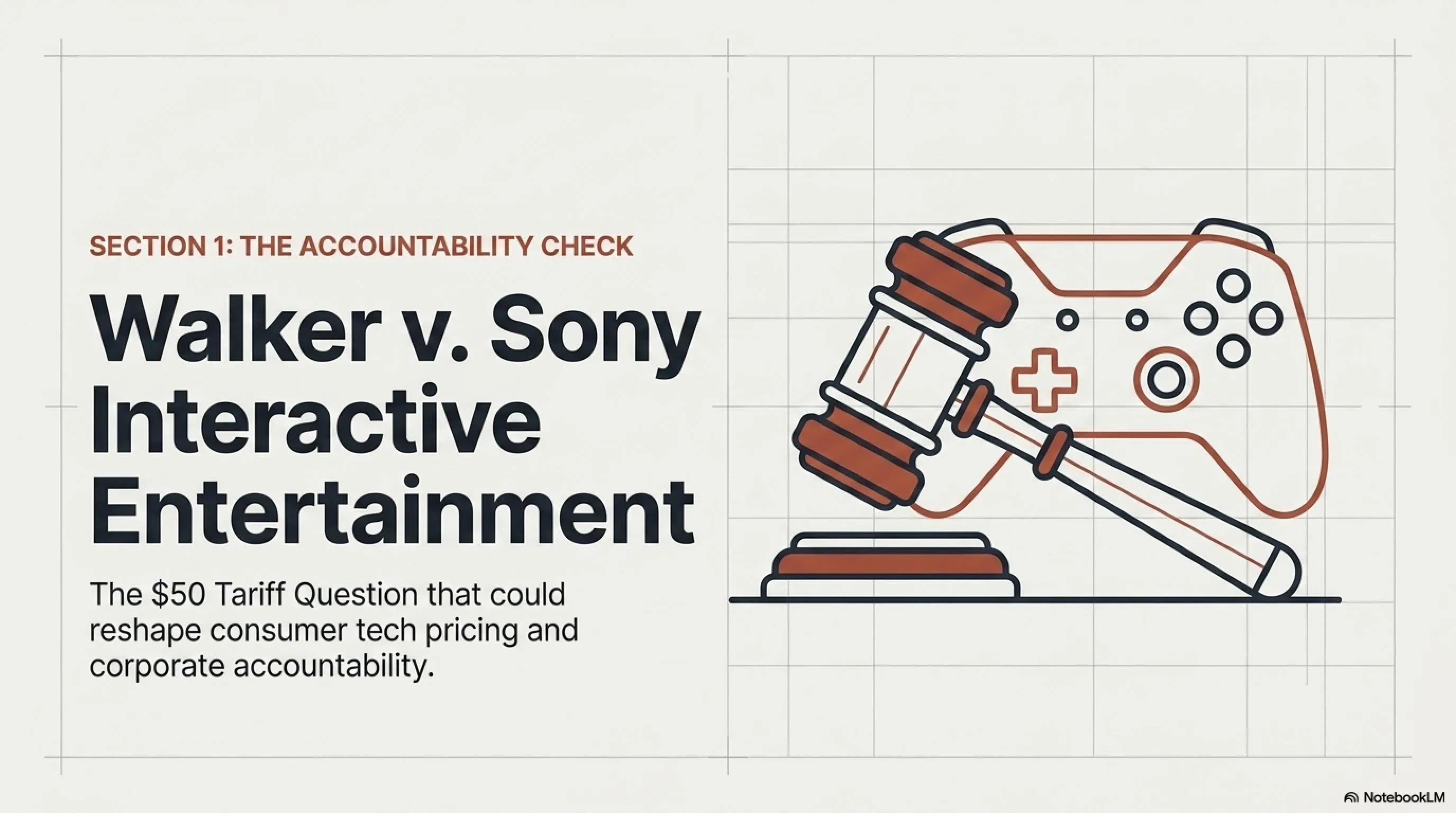
In an unprecedented move that could set a precedent for the entire consumer electronics industry, PlayStation 5 console owners have filed a class-action lawsuit against Sony Interactive Entertainment in California federal court. The case, officially titled Walker et al v. Sony Interactive Entertainment LLC, was filed on May 6, 2026, and alleges that Sony violated consumer protection and unfair competition laws by retaining what plaintiffs call a "substantial windfall" from tariff-related price increases.
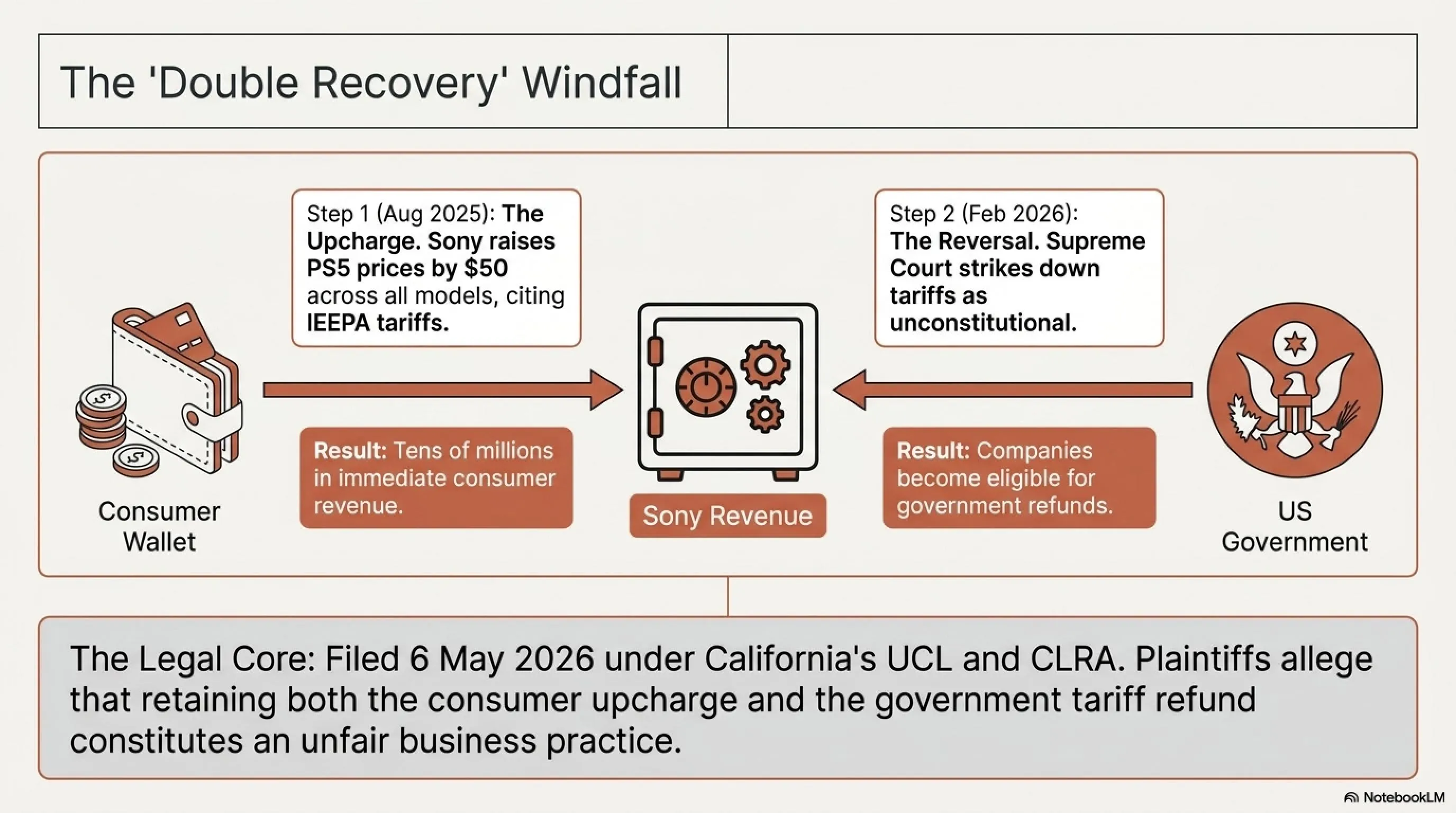
The story begins in August 2025, when Sony announced it would raise prices for all PS5 models (standard, digital, and Pro) by $50, citing the "challenging economic environment"—a direct reference to President Donald Trump's tariffs on electronics imported from China. The company justified the increase as necessary to offset the additional import costs imposed by the International Emergency Economic Powers Act (IEEPA) tariffs. However, when the U.S. Supreme Court struck down these tariffs as unconstitutional in February 2026, it raised a critical question: should companies that raised prices due to tariffs now refund consumers?
🔍 Tekin Analysis: Why This Lawsuit Matters
This case could establish crucial precedent for how corporations handle politically-driven cost increases. The plaintiffs argue that Sony engaged in "double recovery"—first by passing tariff costs to consumers through price increases, then by receiving tariff refunds from the government after the Supreme Court ruling. If successful, this lawsuit could force not just Sony, but potentially dozens of other companies that raised prices during the tariff period, to issue refunds.
The broader implications: This case tests whether companies can use political uncertainty as justification for price increases, then retain those higher prices even after the underlying justification disappears. It's a question of corporate accountability in an era where supply chain disruptions, tariffs, and geopolitical tensions frequently impact pricing.
Industry ripple effects: Nintendo faces a similar lawsuit filed in April 2026 over Switch accessory price increases. Microsoft, which also raised Xbox Series X prices during the tariff period, could be next. The outcome could reshape how tech companies approach pricing during periods of regulatory uncertainty.
The Legal Theory: Double Recovery Windfall
The plaintiffs' legal strategy centers on the concept of "double recovery windfall"—the allegation that Sony profited twice from the same tariff situation. Here's how the argument works:
First profit: When Sony raised PS5 prices by $50 in August 2025, the company collected an estimated tens of millions of dollars in additional revenue from consumers who purchased consoles during the eight-month period between the price increase and the Supreme Court ruling. Even if Sony's actual tariff costs were lower than $50 per unit, the company kept the full price increase.
Second profit: After the Supreme Court struck down the tariffs in February 2026, companies that had paid tariffs became eligible for refunds from the U.S. government. According to reports from Engadget and Kotaku, some companies have already begun receiving these refunds. If Sony receives tariff refunds while maintaining the higher consumer prices, the plaintiffs argue, the company profits twice—once from consumers, once from the government.
The lawsuit cites California's Unfair Competition Law (UCL) and Consumer Legal Remedies Act (CLRA), arguing that Sony's retention of both the price increase and potential government refunds constitutes unfair business practices. The plaintiffs, Amorey Walker and Bryce Foster-Quarles, seek to represent all U.S. consumers who purchased PS5 consoles between August 20, 2025, and April 20, 2026.
📊 Financial Impact Analysis
💡 Expert perspective: Consumer law attorneys estimate that if the plaintiffs prevail, Sony could face damages in the tens of millions of dollars, plus legal fees and potential punitive damages.
Sony's Potential Defense Strategy
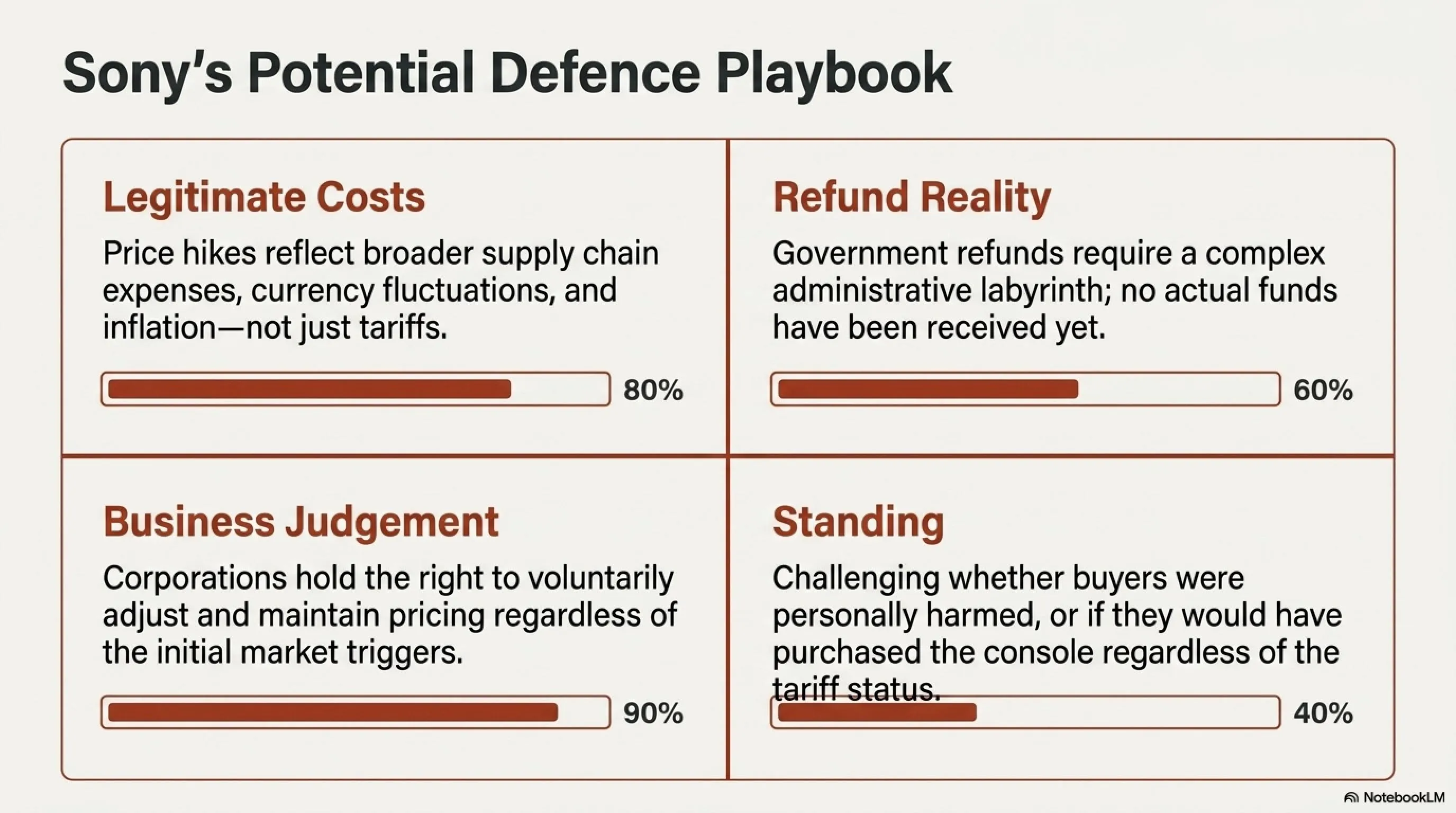
While Sony has not yet filed a formal response to the lawsuit, legal experts anticipate several possible defense strategies:
1. Legitimate business costs: Sony may argue that the $50 price increase reflected not just tariff costs, but also other supply chain expenses, currency fluctuations, and inflation. The company could present evidence that even without tariffs, price increases were justified by rising manufacturing and logistics costs during 2025.
2. No actual refunds received: Sony could argue that it has not received, and may never receive, tariff refunds from the government. The Supreme Court ruling made tariffs unconstitutional going forward but didn't automatically trigger refunds for past payments. Companies must apply for refunds through a complex administrative process, and approval is not guaranteed.
3. Voluntary price adjustment: Sony might point out that it has the right to set prices based on market conditions and business judgment. The company could argue that even if tariffs were the initial trigger for the increase, maintaining those prices afterward is a legitimate business decision not subject to legal challenge.
4. Lack of standing: Sony's legal team might challenge whether individual plaintiffs can prove they were personally harmed, especially if they would have purchased a PS5 at the higher price regardless of the tariff situation.
🎯 What This Means for Consumers
If you purchased a PS5 console (standard, digital, or Pro) between August 20, 2025 and April 20, 2026 from an authorized U.S. retailer, you may be eligible to participate in this class action. You don't need to take any action now—if the case is certified as a class action, you'll receive notification with instructions on how to claim your share of any settlement or judgment.
Keep your receipts: If you still have your purchase receipt or order confirmation, save it. You'll likely need proof of purchase to claim any refund. Digital receipts from Amazon, Best Buy, GameStop, or Walmart are sufficient.
Timeline expectations: Class-action lawsuits typically take 1-3 years to resolve. Don't expect immediate refunds. The case must first be certified as a class action, then proceed through discovery, potential settlement negotiations, or trial. Most consumer class actions settle before trial.
📱 iPhone 18 Pro Release Date: September 2026 with Apple's New Strategy
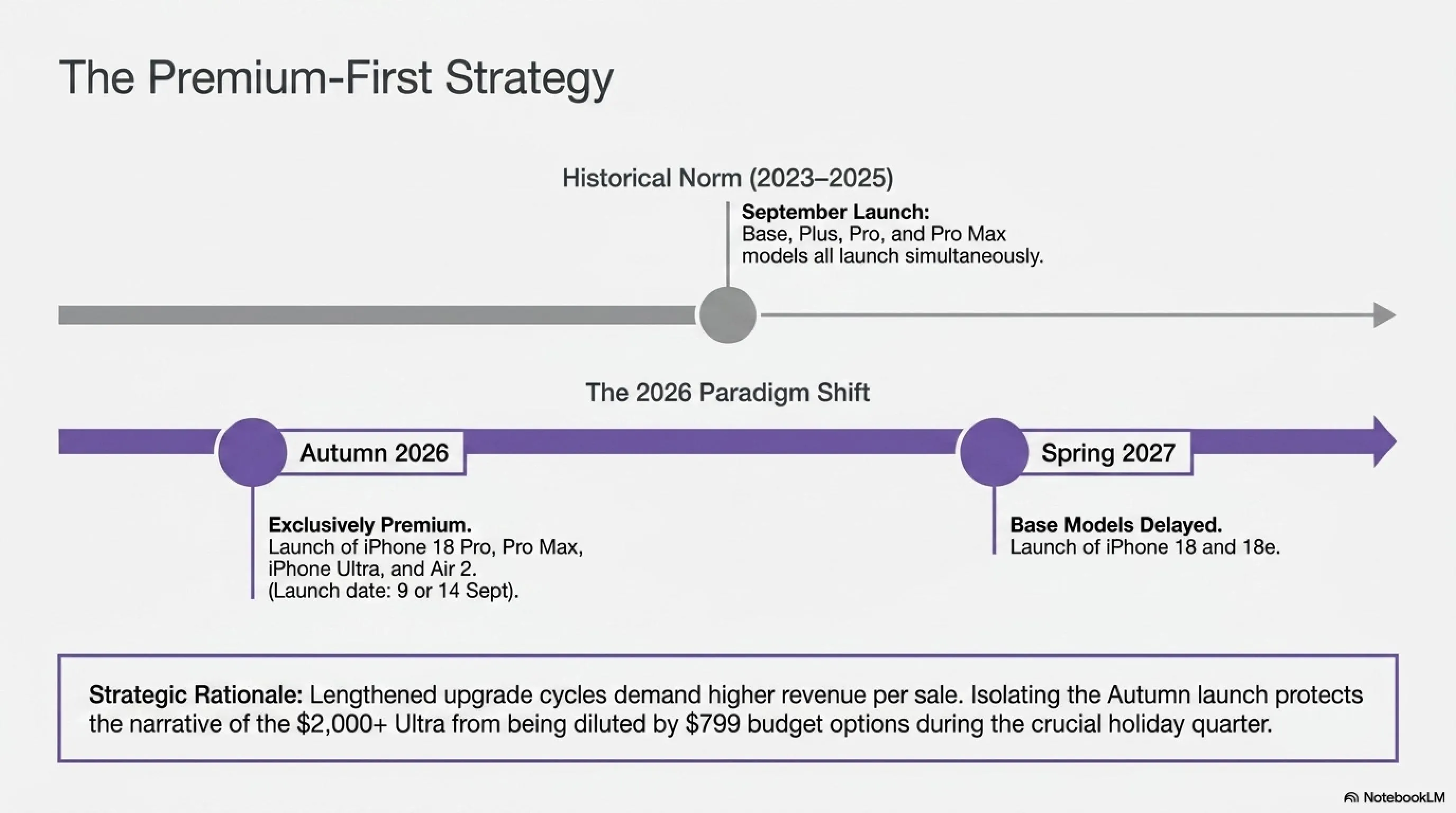
Apple is preparing to unveil the iPhone 18 Pro and companion models in September 2026, following the company's well-established annual release pattern. However, this year brings a significant strategic shift that could reshape Apple's product lineup for years to come: the base iPhone 18 model has been pushed to spring 2027, making room for the premium iPhone Ultra foldable to debut alongside the Pro models in fall 2026.
According to comprehensive reporting from 9to5Mac and MacRumors, Apple's September event will likely occur on either Wednesday, September 9 or Monday, September 14, 2026. The exact date depends on how Apple navigates Labor Day, which falls unusually late this year on September 7. Historically, Apple avoids launching the day after Labor Day because it needs time to fly press and special guests to Cupertino from around the world.
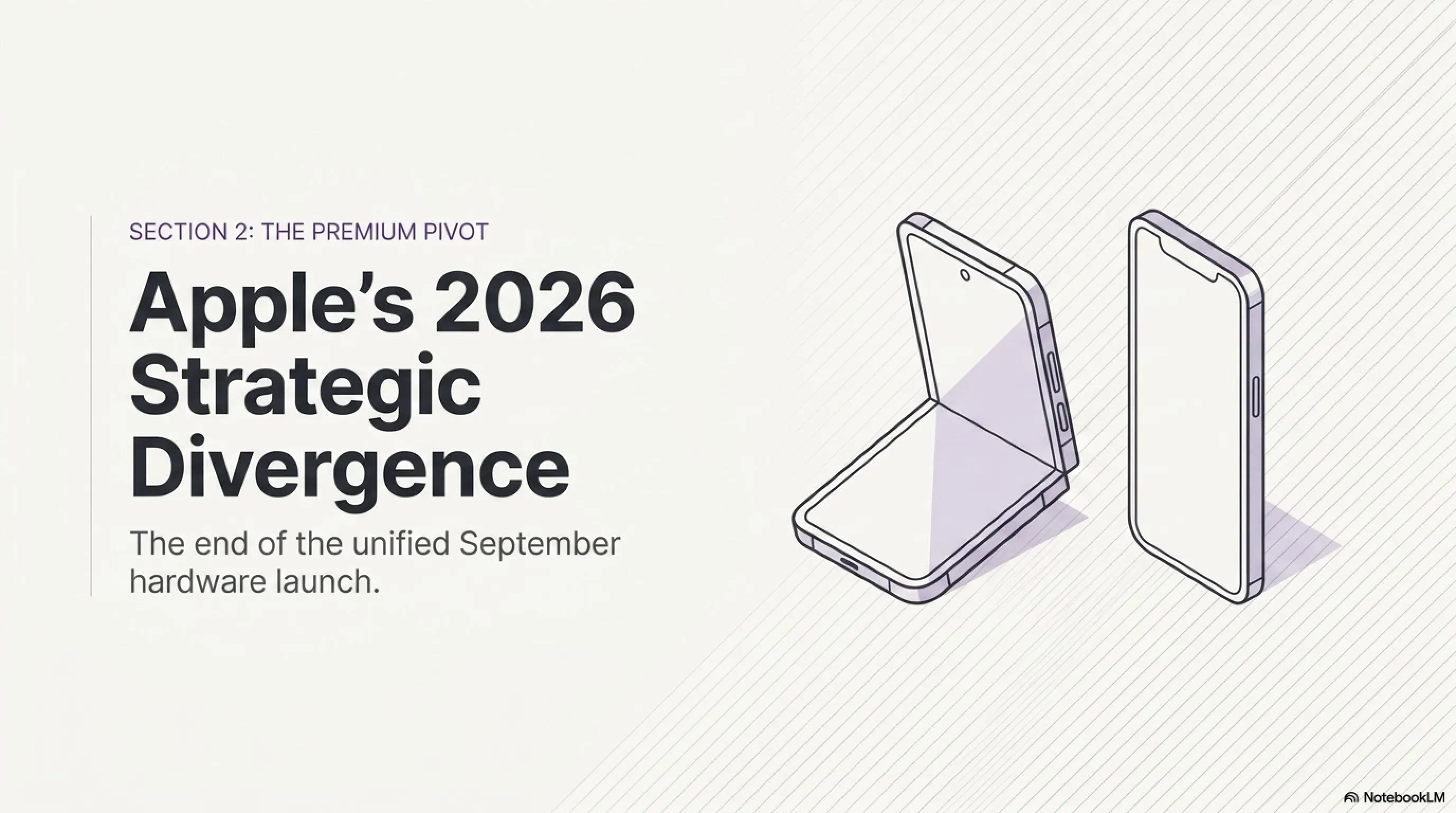
The Strategic Shift: Premium-First Approach
Apple's decision to delay the base iPhone 18 until spring 2027 represents a fundamental shift in product strategy. For over a decade, Apple has released four iPhone models simultaneously each fall: a base model, a Plus/Max variant, and two Pro models. This year, that changes. The September 2026 lineup will consist exclusively of premium devices:
- iPhone 18 Pro (6.3-inch) — The standard flagship with advanced features
- iPhone 18 Pro Max (6.9-inch) — The largest Pro model with maximum battery life
- iPhone Ultra (foldable, ~5.5-inch closed / ~7.8-inch open) — Apple's first foldable iPhone
- iPhone Air 2 (possibly) — An ultra-thin, lightweight premium model
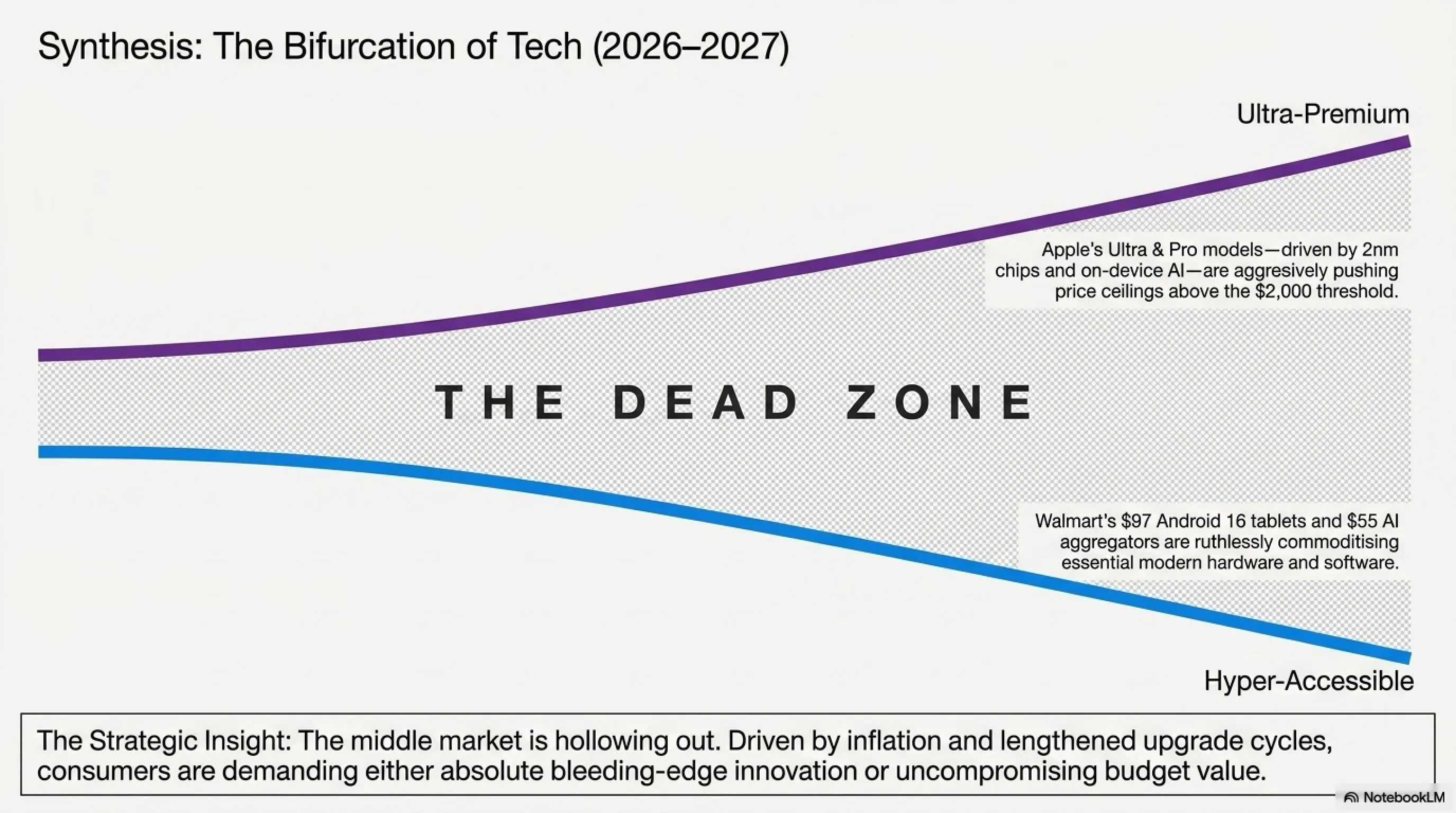
The base iPhone 18 and iPhone 18e (entry-level) will follow in spring 2027, likely around March or April. This strategy allows Apple to capture maximum revenue during the critical holiday shopping season (October-December) by offering only high-margin premium products. Budget-conscious consumers will either purchase older models (iPhone 17, 16, or SE) or wait until spring.
🔍 Tekin Analysis: Why Apple Is Making This Move
This strategic shift reflects several market realities. First, iPhone upgrade cycles have lengthened—consumers now keep their phones for 3-4 years instead of 2-3. This means Apple needs to maximize revenue per sale, which premium models accomplish better than base models.
Second, competition in the premium segment has intensified. Samsung's Galaxy S26 Ultra, Google's Pixel 11 Pro, and Chinese manufacturers like Xiaomi and OPPO are all pushing high-end devices with competitive features. By focusing its fall launch exclusively on premium models, Apple can dedicate more engineering resources and marketing attention to competing in this crucial segment.
Third, the iPhone Ultra requires a premium-focused narrative. Launching a $2,000+ foldable iPhone alongside a $799 base model would create messaging confusion. By making fall 2026 all about premium innovation, Apple can position the Ultra as the pinnacle of smartphone technology without diluting the message with budget options.
iPhone 18 Pro: Expected Features and Upgrades
Based on extensive reporting from MacRumors, 9to5Mac, and supply chain analysts, the iPhone 18 Pro will feature several significant upgrades over the iPhone 17 Pro:
The A19 Pro Chip: Apple's 2nm Breakthrough
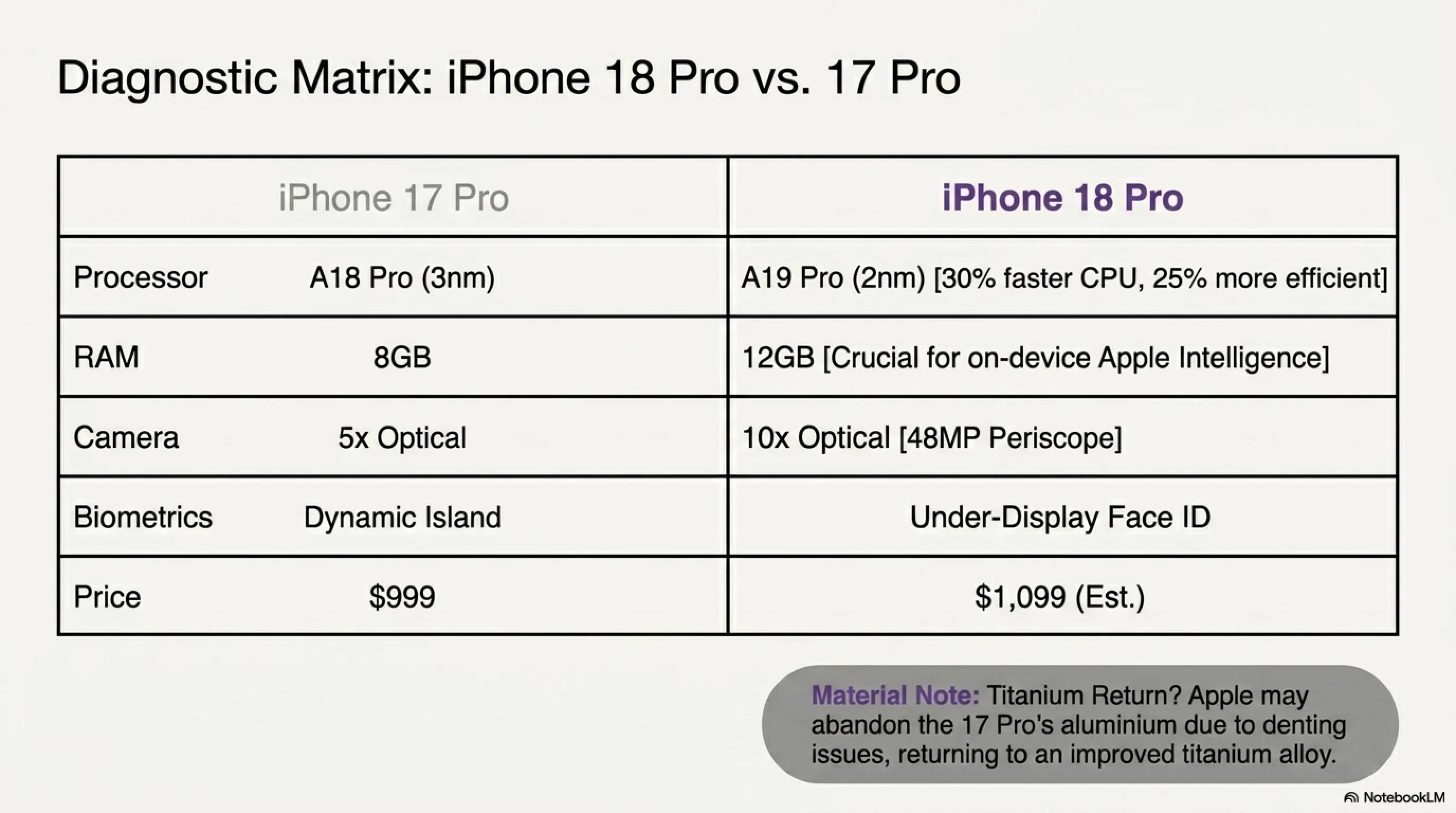
Perhaps the most significant upgrade in the iPhone 18 Pro is the A19 Pro processor, which will be manufactured using TSMC's cutting-edge 2-nanometer process. This represents a major leap from the 3nm A18 Pro, delivering substantial improvements in both performance and efficiency.
According to supply chain analyst Ming-Chi Kuo, the A19 Pro will feature:
- 30% faster CPU performance compared to A18 Pro, with improved single-core and multi-core scores
- 40% faster GPU performance, enabling console-quality gaming and advanced AR/VR applications
- 25% better power efficiency, translating to longer battery life despite the more powerful hardware
- Enhanced Neural Engine with 50% more AI processing power for on-device machine learning
- 12GB RAM (up from 8GB), crucial for running advanced AI models locally
The increased RAM is particularly significant. Apple Intelligence features in iOS 20 will require substantial memory for on-device AI processing. With 12GB, the iPhone 18 Pro will be able to run large language models, advanced image generation, and real-time translation without relying on cloud processing—a major privacy and performance advantage.
⚔️ PROS & CONS: Should You Upgrade to iPhone 18 Pro?
✅ PROS
- A19 Pro chip with 2nm process (30% faster)
- Under-display Face ID (smaller Dynamic Island)
- 48MP telephoto with 10x optical zoom
- 12GB RAM for advanced AI features
- Improved battery efficiency (25% better)
- Enhanced camera system with better low-light
❌ CONS
- $100 price increase (likely $1,099)
- Aluminum body still vulnerable to dents
- No base iPhone 18 until spring 2027
- Competition from iPhone Ultra for attention
- Limited design changes from iPhone 17 Pro
- Incremental upgrade if you have 17 Pro
🎯 Tekin Verdict: If you have an iPhone 17 Pro, the upgrade isn't essential unless you need the superior camera or AI capabilities. However, if you're on iPhone 15 Pro or older, the iPhone 18 Pro represents a substantial leap worth considering—especially with the 2nm chip and enhanced AI features.
💰 Walmart's Budget Android Tablets: The $97 Revolution
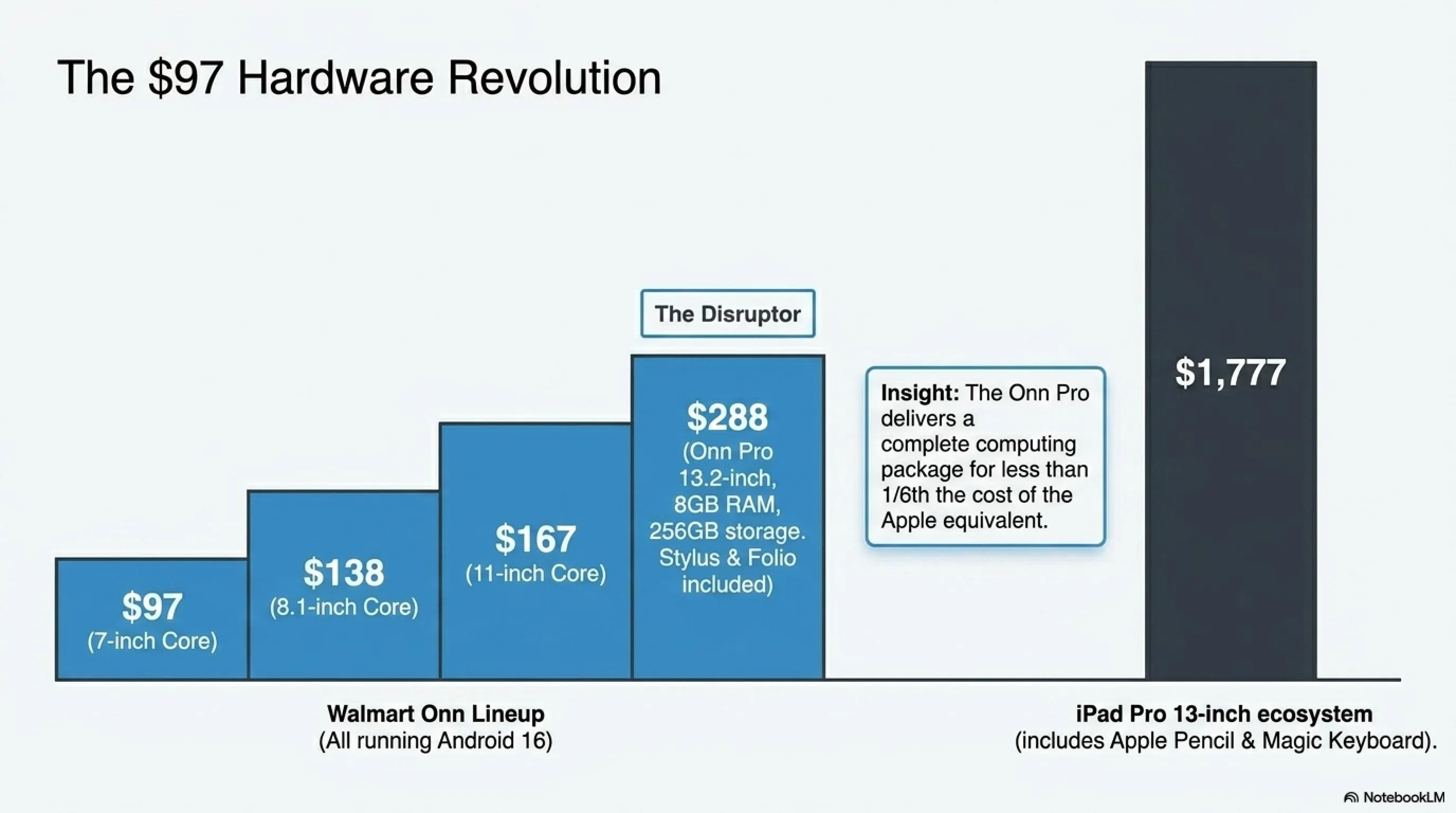
Walmart has disrupted the tablet market with the launch of six new Onn-branded Android tablets, with prices starting at an astonishing $97. All models ship with Android 16 out of the box, making them among the first devices to feature Google's latest operating system. The entire lineup costs less than a single iPad Pro, demonstrating that advanced technology no longer requires premium pricing.
The Star: Onn Pro 13.2 at $288
The flagship Onn Pro 13.2 represents extraordinary value. For $288, you get a 13.2-inch 2400×1600 IPS LCD display, 8GB RAM, 256GB storage, a 2.6GHz MediaTek processor, and—crucially—a stylus and folio case included in the box. Compare this to the iPad Pro 13-inch, which starts at $1,299 and requires an additional $129 for Apple Pencil and $349 for Magic Keyboard. The total iPad Pro package costs $1,777—over 6x the price of the Onn Pro.
🔧 Apple Might Replace Aluminum with Titanium in Future iPhones Again
📚 Classified & Related Dossiers in TekinGame
If you wish to explore beyond this report and delve into cybernetic frontiers and autonomous AI architectures, do not miss these three exclusive deep-dives in the Tekin Garage:
In a surprising reversal, new rumors from Weibo leaker Instant Digital suggest Apple may return to titanium for future iPhone models after the aluminum iPhone 17 Pro proved vulnerable to dents and scratches. The aluminum switch was intended to solve overheating issues that plagued the titanium iPhone 15/16 Pro, but user complaints about durability have apparently convinced Apple to develop an improved titanium alloy with better thermal conductivity.
📲 iPhone Ultra: Crease-Free Display Breakthrough But Hinge Challenge
Apple's first foldable iPhone, the iPhone Ultra, has achieved a genuinely crease-free display that maintains visual perfection over long-term use—a breakthrough that Samsung and Huawei have yet to accomplish. However, according to Weibo leaker Instant Digital, the device's Liquid Metal hinge is consistently failing Apple's quality control standards under prolonged, high-frequency opening and closing.
The good news: Apple has solved the crease problem. Test results show the display achieves a "visually crease-free state with long-term stability," with crease depth under 0.15mm and crease angle under 2.5 degrees—imperceptible to the human eye.
The challenge: The hinge's mechanical reliability remains problematic. The leaker states it "must be resolved with absolute perfection; otherwise, progress will simply have to be stalled." However, a follow-up post reiterates that a September 2026 launch remains likely if Apple resolves the issue by June.
🤖 Score 3 Years of ChatGPT, Gemini, and Claude for Under $60
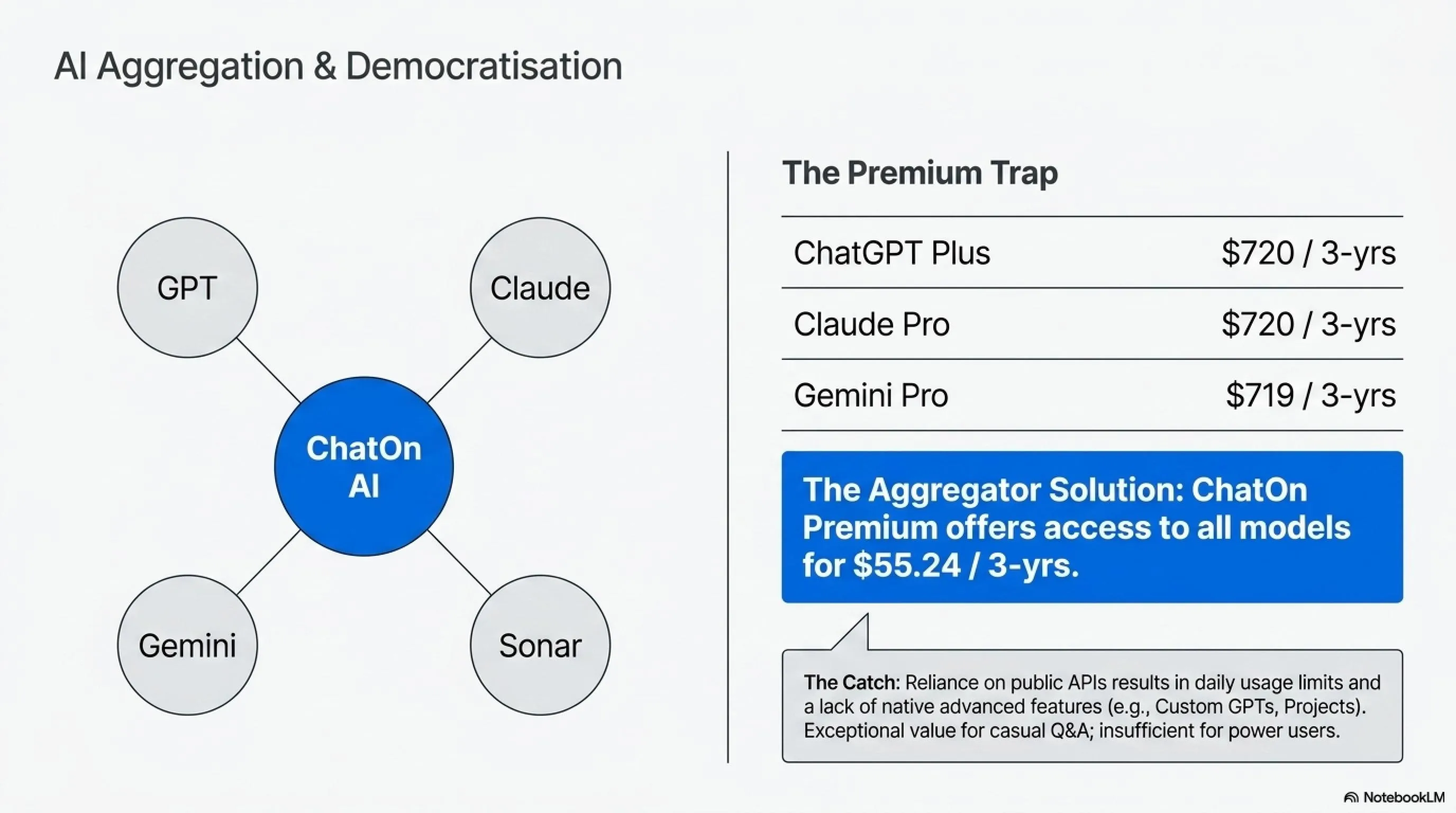
ChatOn AI Assistant Premium offers 3-year access to ChatGPT, Claude, Gemini, and Sonar for just $55.24 with code CHAT35—valid through May 31, 2026. This represents extraordinary value: ChatGPT Plus alone costs $20/month ($720 for 3 years), while ChatOn provides access to multiple premium AI models for less than one-tenth the cost.
❓ Frequently Asked Questions (FAQ)
Can international PS5 buyers join the Sony lawsuit?
No. This class-action lawsuit is limited to consumers who purchased PS5 consoles in the United States between August 20, 2025, and April 20, 2026. International buyers, including those who purchased through gray market importers, cannot participate in this specific case. However, the lawsuit could set precedent for similar cases in other jurisdictions.
Is the iPhone 18 Pro worth upgrading from iPhone 17 Pro?
It depends on your needs. If you require the superior camera system (48MP telephoto with 10x zoom) or enhanced AI capabilities (12GB RAM, A19 Pro chip), the upgrade makes sense. However, if your iPhone 17 Pro meets your current needs, waiting for the iPhone 19 Pro (2027) with improved titanium body might be wiser. For iPhone 15 Pro or older users, the iPhone 18 Pro represents a substantial leap worth considering.
When will the iPhone Ultra be released and how much will it cost?
The iPhone Ultra is expected to launch in September 2026 alongside the iPhone 18 Pro, though hinge reliability issues could delay it to December 2026 or spring 2027. Pricing is expected to start above $2,000, making it Apple's most expensive iPhone ever. The device will feature a crease-free foldable display, Liquid Metal hinge, and book-style form factor (~5.5" closed, ~7.8" open).
Does ChatOn Premium really provide full access to all AI models?
Yes, but with limitations. ChatOn uses public APIs rather than direct subscriptions, which may result in usage limits (messages per day/month) and lack of advanced features like Custom GPTs (ChatGPT) or Projects (Claude). For casual users who primarily need Q&A functionality, ChatOn is excellent value. Power users requiring advanced features should consider direct subscriptions.
Are Walmart Onn tablets available internationally?
Walmart does not ship internationally, but you can use package forwarding services like MyUS or Shipito. These services provide a U.S. address, receive your order, and forward it internationally. Shipping costs typically range from $50-80 for a tablet. Alternatively, consider similar budget tablets from Xiaomi, Lenovo, or Samsung available in your region.
🎯 Final Thoughts
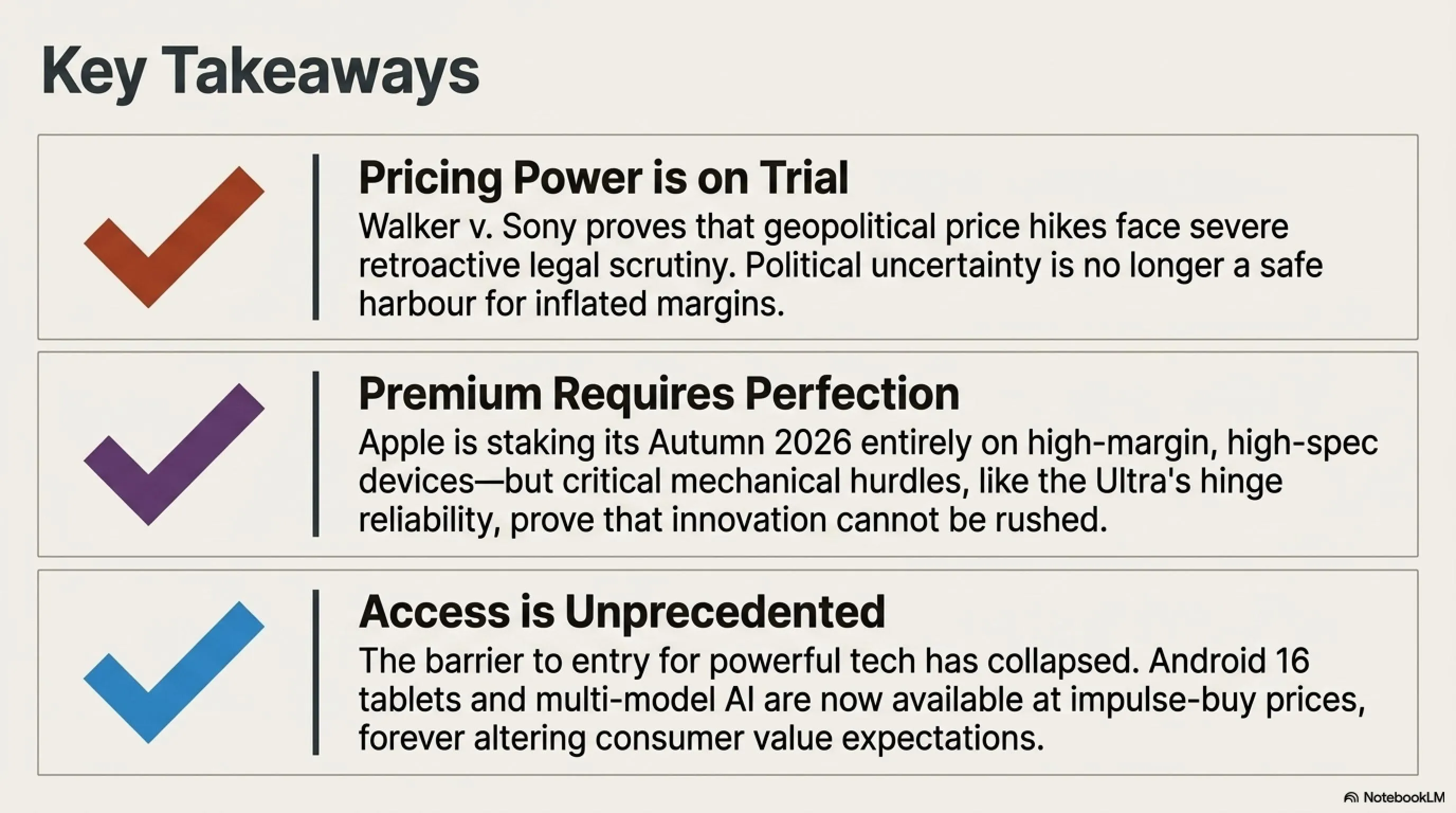
Tuesday, May 19, 2026, demonstrates that the technology industry is undergoing fundamental transformation. From the Sony lawsuit showing consumers won't tolerate unfair pricing practices, to Apple's premium-first strategy with the iPhone 18 lineup, everything is changing.
Key takeaways:
- The Sony lawsuit could establish precedent for corporate accountability during political uncertainty
- Apple's September 2026 strategy focuses exclusively on premium devices, delaying base models to spring 2027
- Walmart proves advanced technology no longer requires premium pricing
- iPhone Ultra's crease-free display is a breakthrough, but hinge challenges could delay launch
- AI market democratization continues with aggregation services like ChatOn
The message is clear: technology is becoming more accessible, but premium innovation commands premium prices. Consumers must be vigilant, compare options, and demand accountability from corporations.
📚 Sources
This article is based on verified reporting from the following sources:
- IGN: PlayStation Console Owners Launch Class-Action Lawsuit Against Sony
- 9to5Mac: iPhone 18 Pro Release Date & iPhone Ultra Leaks
- The Verge: Walmart Launches Budget-Friendly Android Tablets
- AppleInsider: Apple Might Replace Aluminum with Titanium
- MacRumors: Foldable iPhone Production Stalls Amid Hinge Issues
- Mashable: Score 3 Years of ChatGPT, Gemini, and Claude
- Engadget, Kotaku, TwistedVoxel: Additional analysis
Tekin Morning May 19, 2026 — Research and Analysis: Tekin Editorial Team
🌐 Stay Connected With Us
For the latest tech, gaming, and gadget news, follow us on social media:
📸 Instagram 🆔 Telegram Arabia 🆔 Telegram Global 🆔 Telegram Iran 💬 Direct Contact 📧 majid@tekingame.com🌐 Stay Connected With Us 🎮✨
For the latest tech, gaming, and gadget news, follow us on our official social media channels:
Additional Gallery: 🌅 Tekin Morning May 19: PS5 Lawsuit, iPhone 18 Pro Date & $97 Walmart Tablets