🌙 Welcome to Tekin Night April 19, 2026
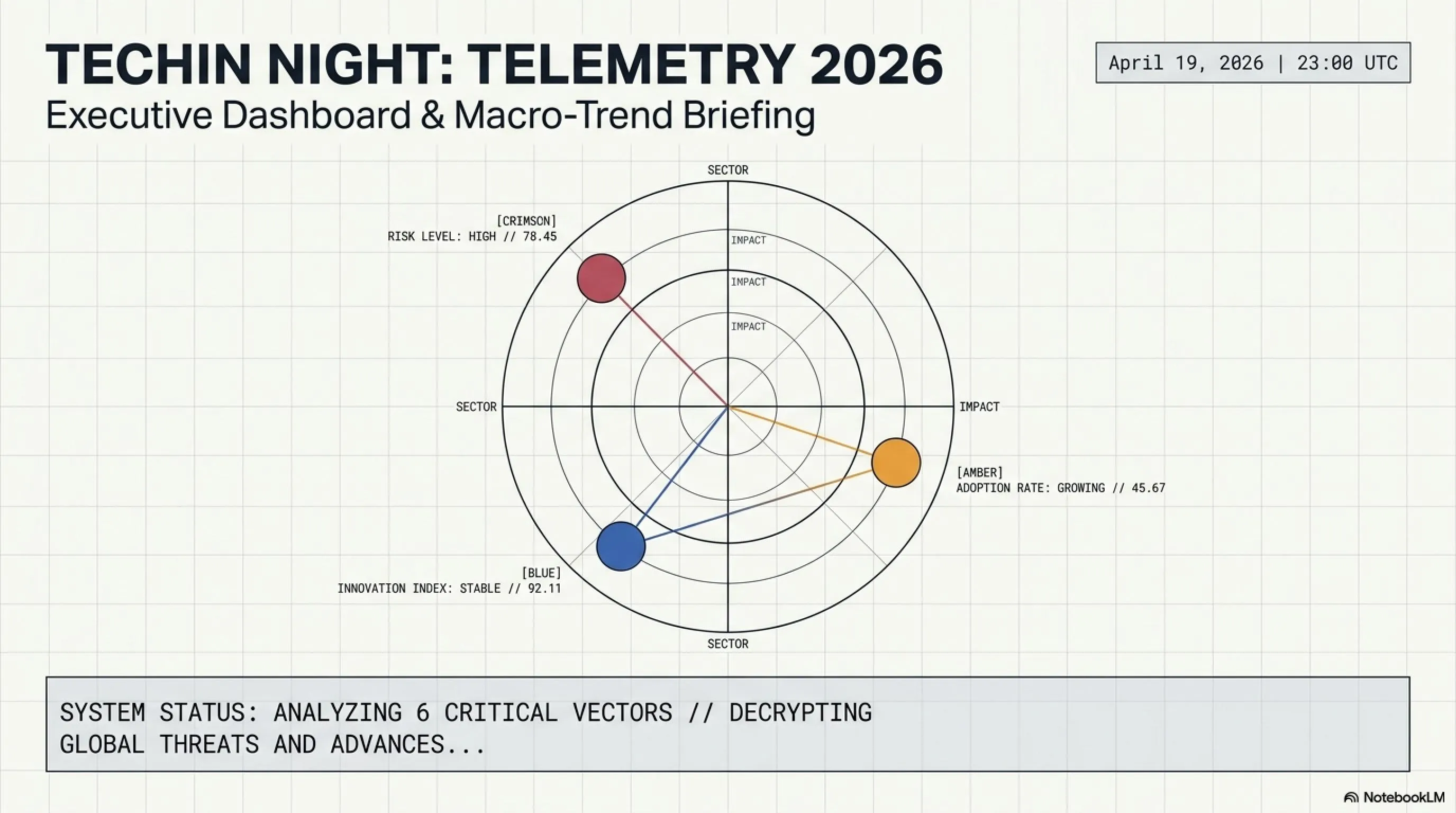
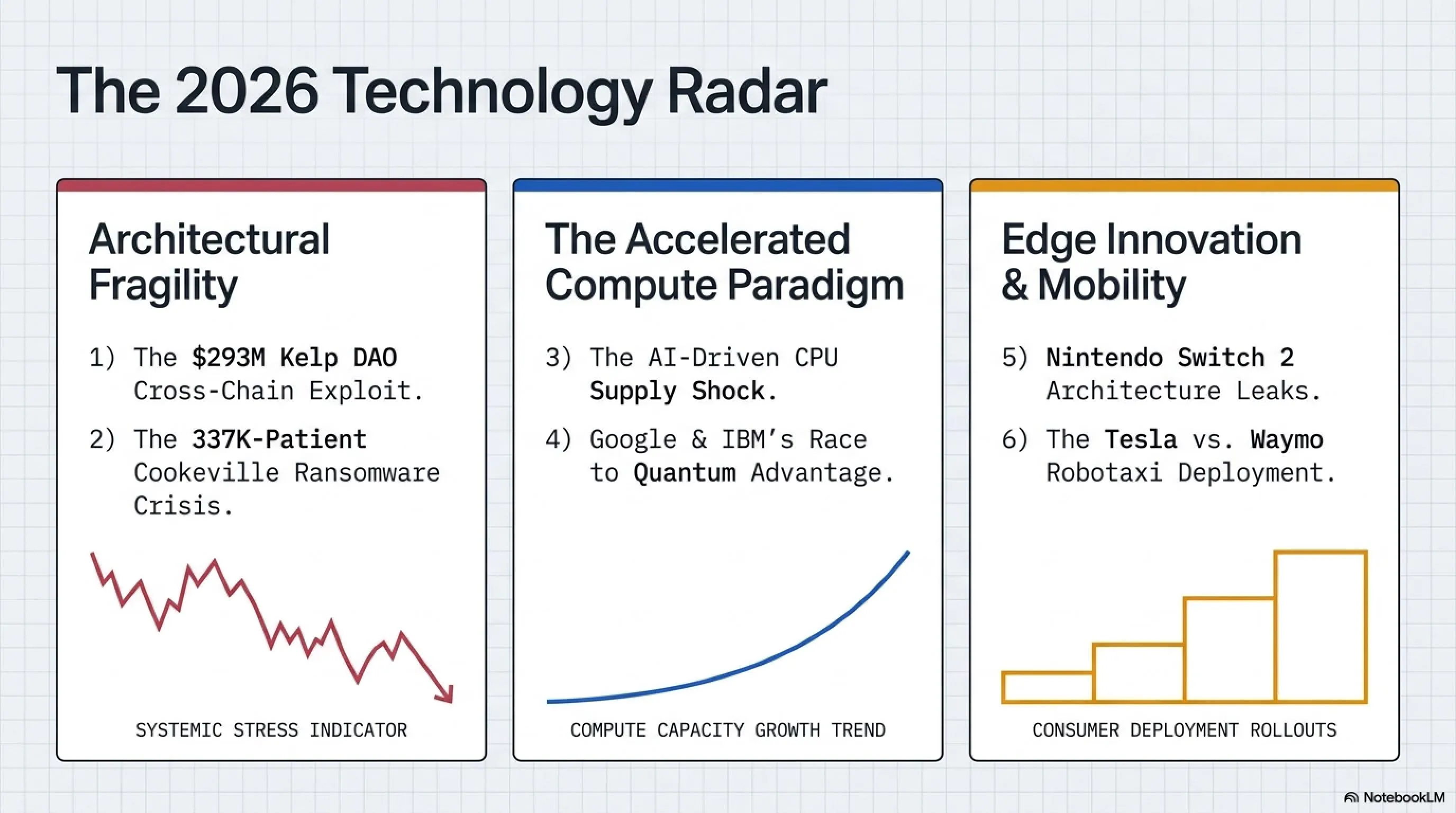
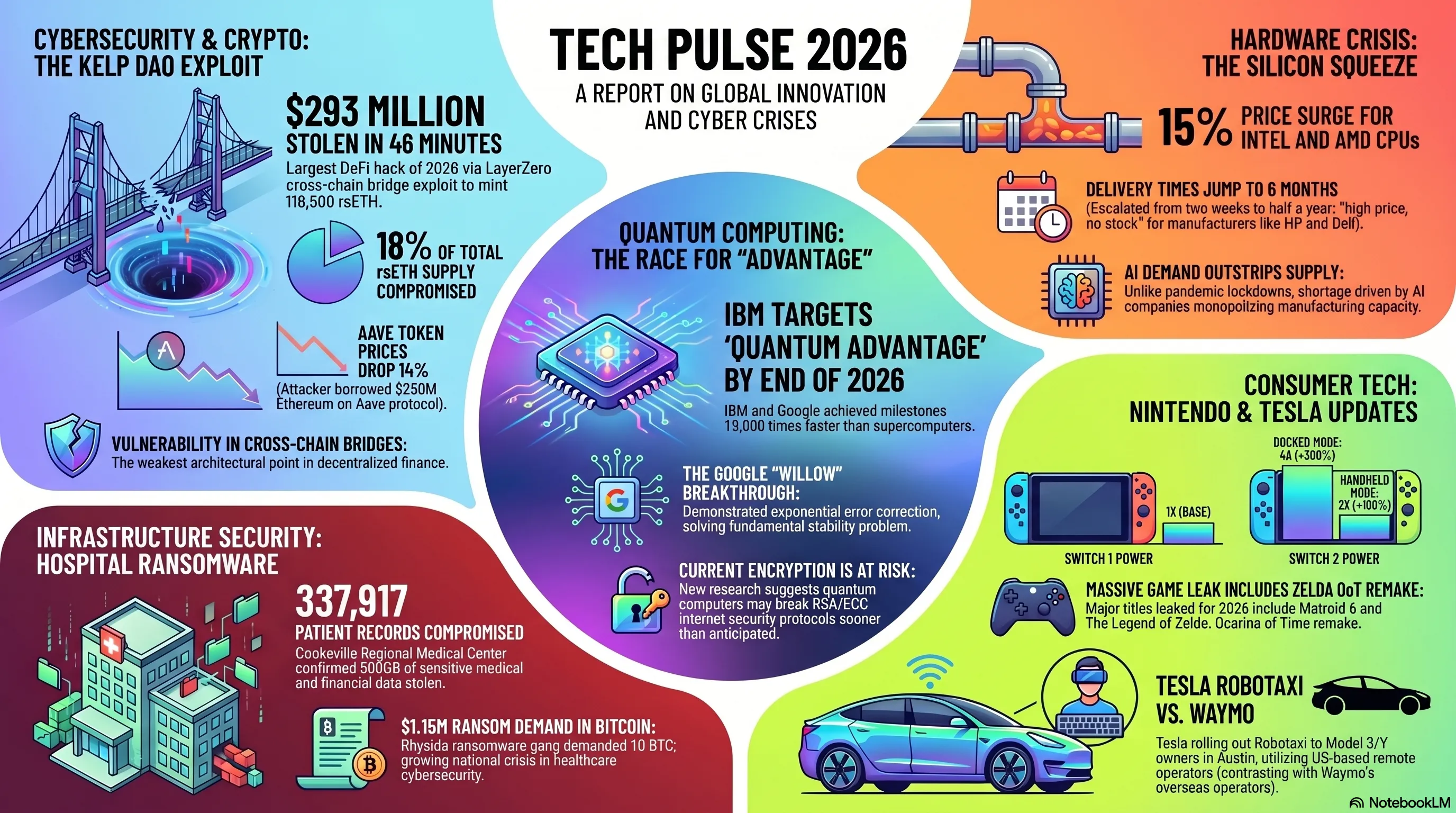
Good evening tech enthusiasts! Tonight we have 6 thrilling stories from the world of technology covering the biggest DeFi hack of the year, unprecedented CPU shortage crisis, revolutionary Quantum Computing breakthroughs, cyberattacks on hospitals, massive Nintendo leaks, and Tesla's advances in autonomous vehicles—everything you need to start your night with confidence and awareness.
⚡ Tonight's Headlines:
💰 $293M Kelp DAO Hack in 46 Minutes
💻 CPU Shortage & 15% Intel/AMD Price Increase
⚛️ IBM and Google Approach Quantum Advantage
🏥 Ransomware Attack on Hospital with 337K Victims
🎮 Massive Nintendo Switch 2 Game Leaks
🚗 Tesla Robotaxi with New Capabilities
🌃 Grab your evening beverage and get ready for a comprehensive journey through the world of technology!
💰 News One: Massive Kelp DAO Hack - $293 Million in 46 Minutes
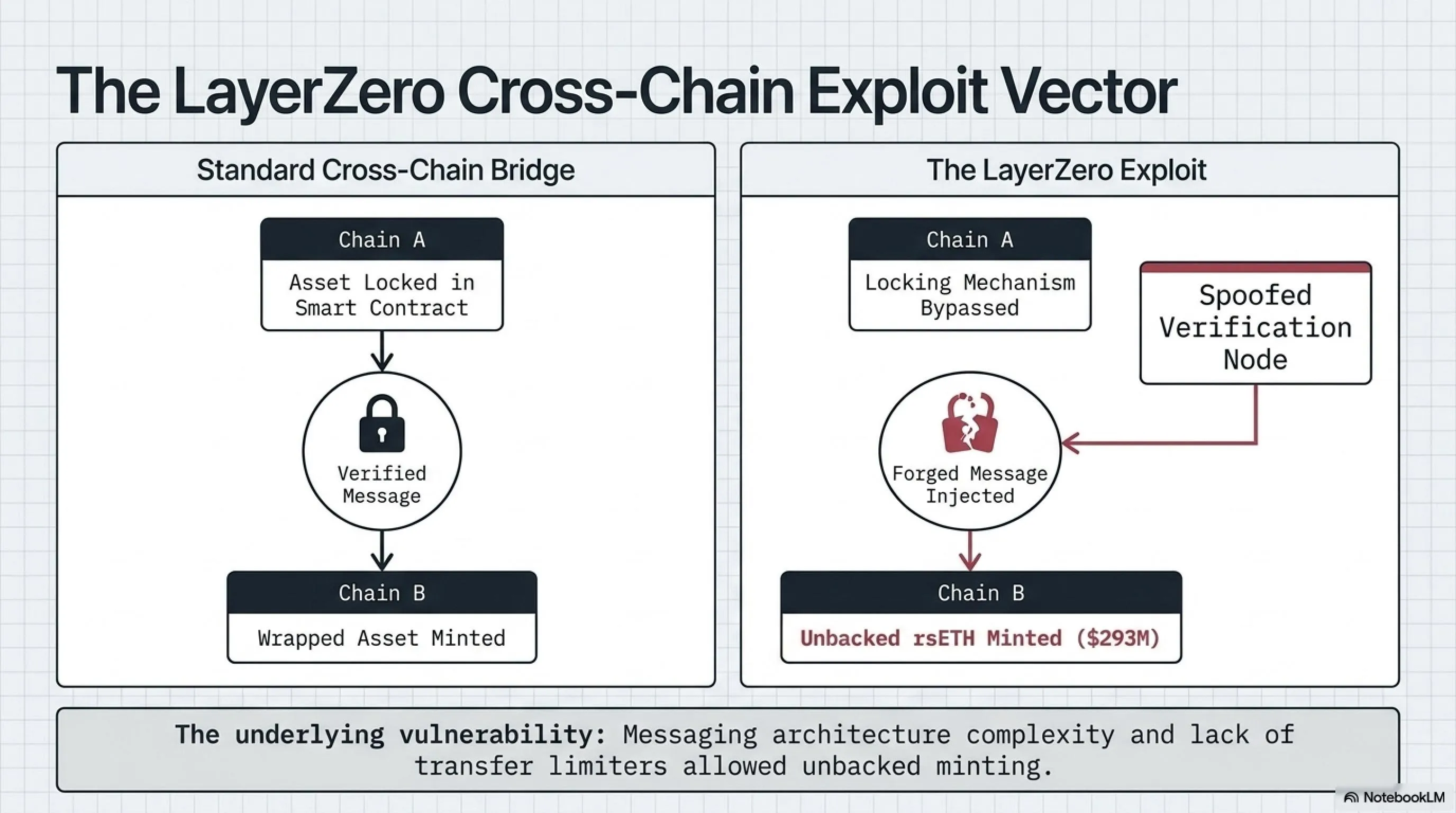
Sunday, April 19, 2026 witnessed the biggest DeFi hack of the year. An attacker managed to steal $293 million from Kelp DAO in just 46 minutes, making this attack the largest DeFi theft of 2026. The attack was executed through a vulnerability in the LayerZero cross-chain bridge and involved approximately 18% of the total circulating supply of rsETH.
🚨 Attack Details
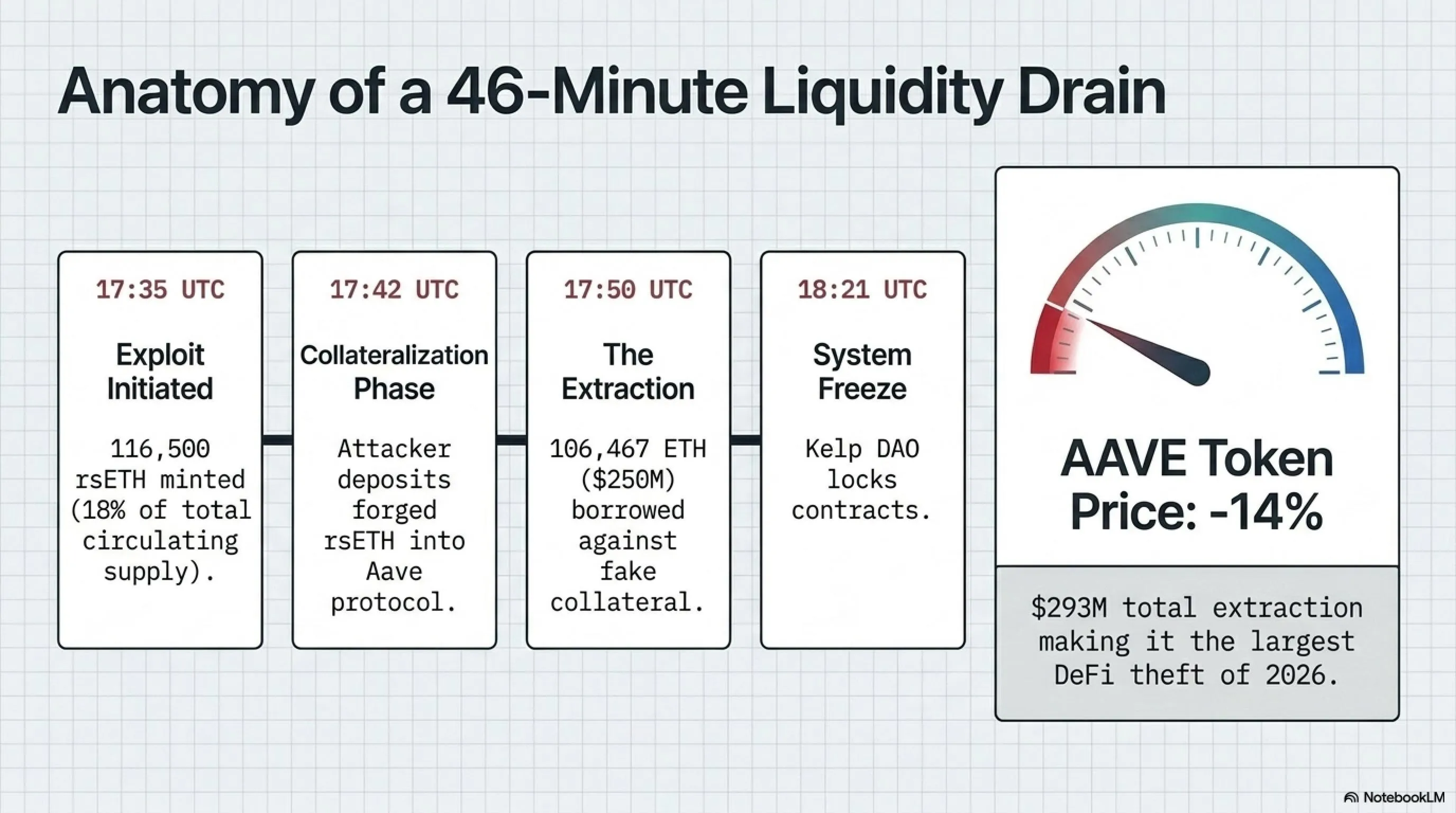
Start Time: 17:35 UTC Saturday, April 18
Amount Stolen: 116,500 rsETH (equivalent to $293 million)
Duration: Only 46 minutes until Kelp froze contracts
Attack Method: Forging cross-chain messages via LayerZero
Impact: Approximately 18% of total rsETH circulating supply
The attacker exploited a security flaw in the cross-chain bridge built by LayerZero to create forged messages and mint 116,500 rsETH tokens without any backing assets. Immediately after the theft, the attacker used these tokens as collateral on the Aave protocol and borrowed 106,467 Ethereum (equivalent to $250 million).
📊 Kelp DAO Attack Statistics
| Metric | Value | Details |
|---|---|---|
| Amount Stolen | $293M | 116,500 rsETH |
| Attack Duration | 46 minutes | Start to freeze |
| Supply Percentage | 18% | Of total rsETH |
| Aave Loan | $250M | 106,467 ETH |
| AAVE Price Drop | -14% | Following announcement |
This attack was a heavy blow not only for Kelp DAO but for the entire DeFi ecosystem. The Aave protocol, which the attacker used for borrowing, faced massive debt and the AAVE token price plummeted by 14%. This incident demonstrates that cross-chain bridges remain one of the most vulnerable points in the DeFi ecosystem.
💻 News Two: CPU Shortage Crisis - Intel and AMD Raise Prices 15%
The processor market is facing an unprecedented supply crisis. Intel and AMD have announced that due to severe inventory shortages, they will increase prices across all their CPU product lines by an average of 10 to 15 percent starting in April. This is the first time since the 2021 pandemic that the CPU market has faced such a shortage, but this time the culprit isn't global lockdowns—it's heavy AI demand.
📈 CPU Market Status
Price Increase: 10-15% across all product lines
Delivery Time: Extended from weeks to 6 months
Affected Companies: HP, Dell and other PC manufacturers
Main Cause: Heavy demand from AI companies for manufacturing capacity
Status: "High price, no stock" - worse than memory crisis
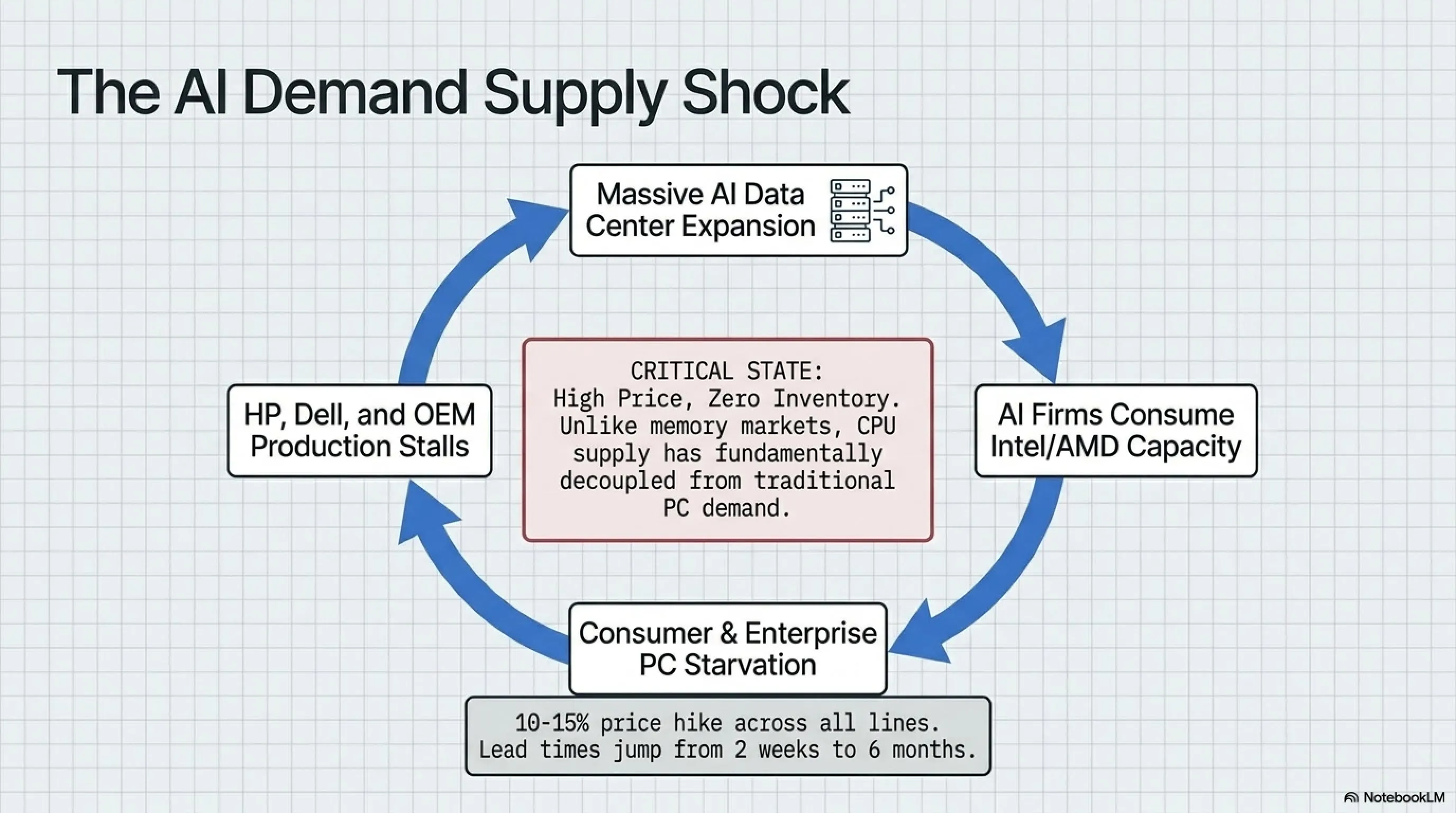
AI companies are securing CPU manufacturing capacity, leading to critical shortages of Intel and AMD processors. Unlike the memory market where "high price still delivers," the CPU market has fallen into a "high price, no stock" predicament. This situation puts significant pressure on PC manufacturers, and there are no signs of improvement in the short term.
PC manufacturers like HP and Dell have announced that the number of processors being delivered to them no longer matches the required volume. Some sources say the situation has worsened compared to a few months ago. This shortage has caused price increases and, more importantly, orders are facing significant delays—delivery times have increased from about two weeks to six months in some cases.
⚛️ News Three: Quantum Computing Revolution - IBM and Google Approach Quantum Advantage
📚 Classified & Related Dossiers in TekinGame
If you wish to explore beyond this report and delve into cybernetic frontiers and autonomous AI architectures, do not miss these three exclusive deep-dives in the Tekin Garage:
The world of quantum computing is witnessing a historic turning point. IBM and Google have both announced major advances over the past year, with IBM formally committing to achieving "Quantum Advantage" by the end of 2026—the point where a quantum computer can solve problems better than all classical methods. This breakthrough could pose a serious threat to current cryptography.
🔬 Key Achievements
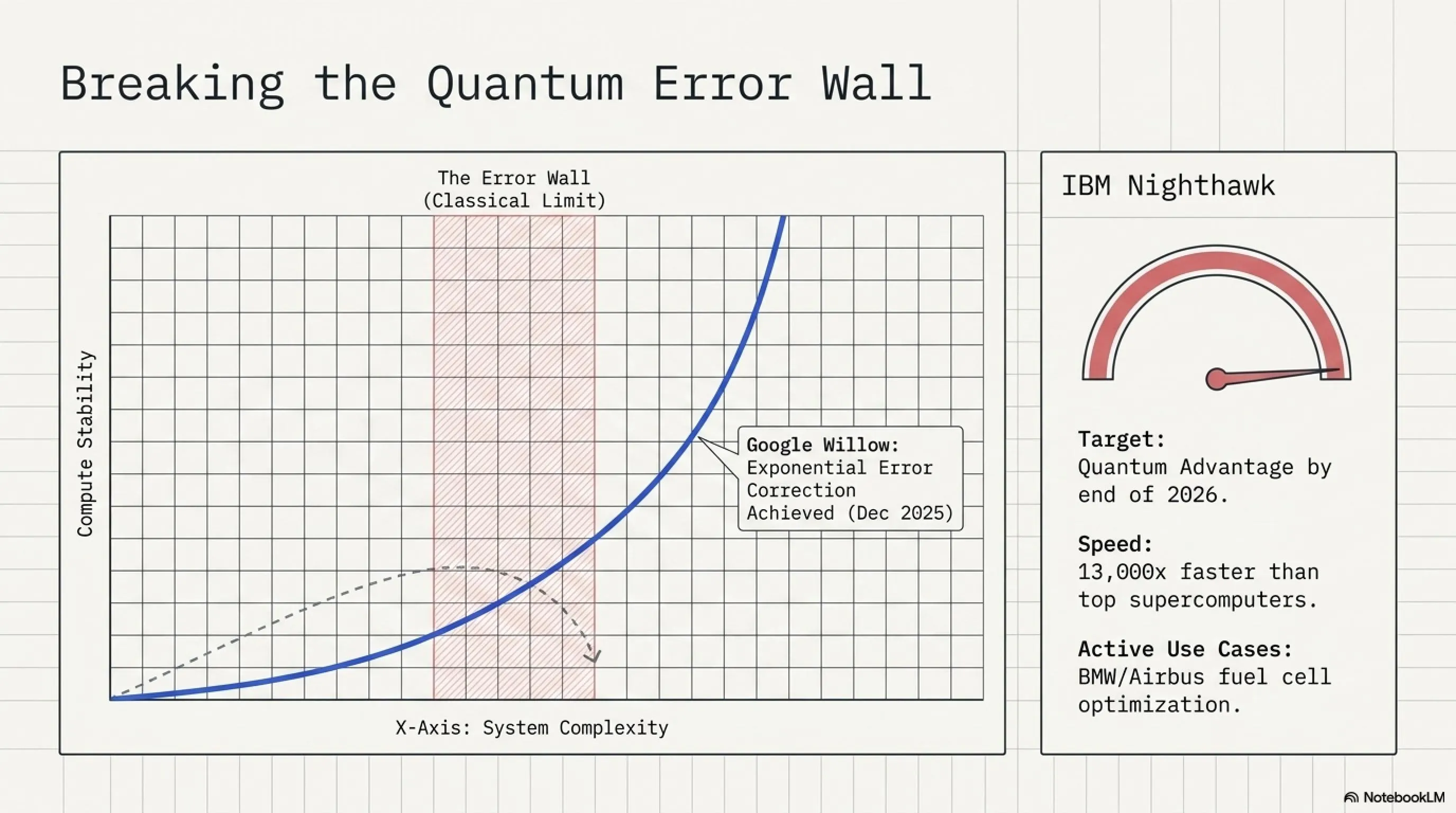
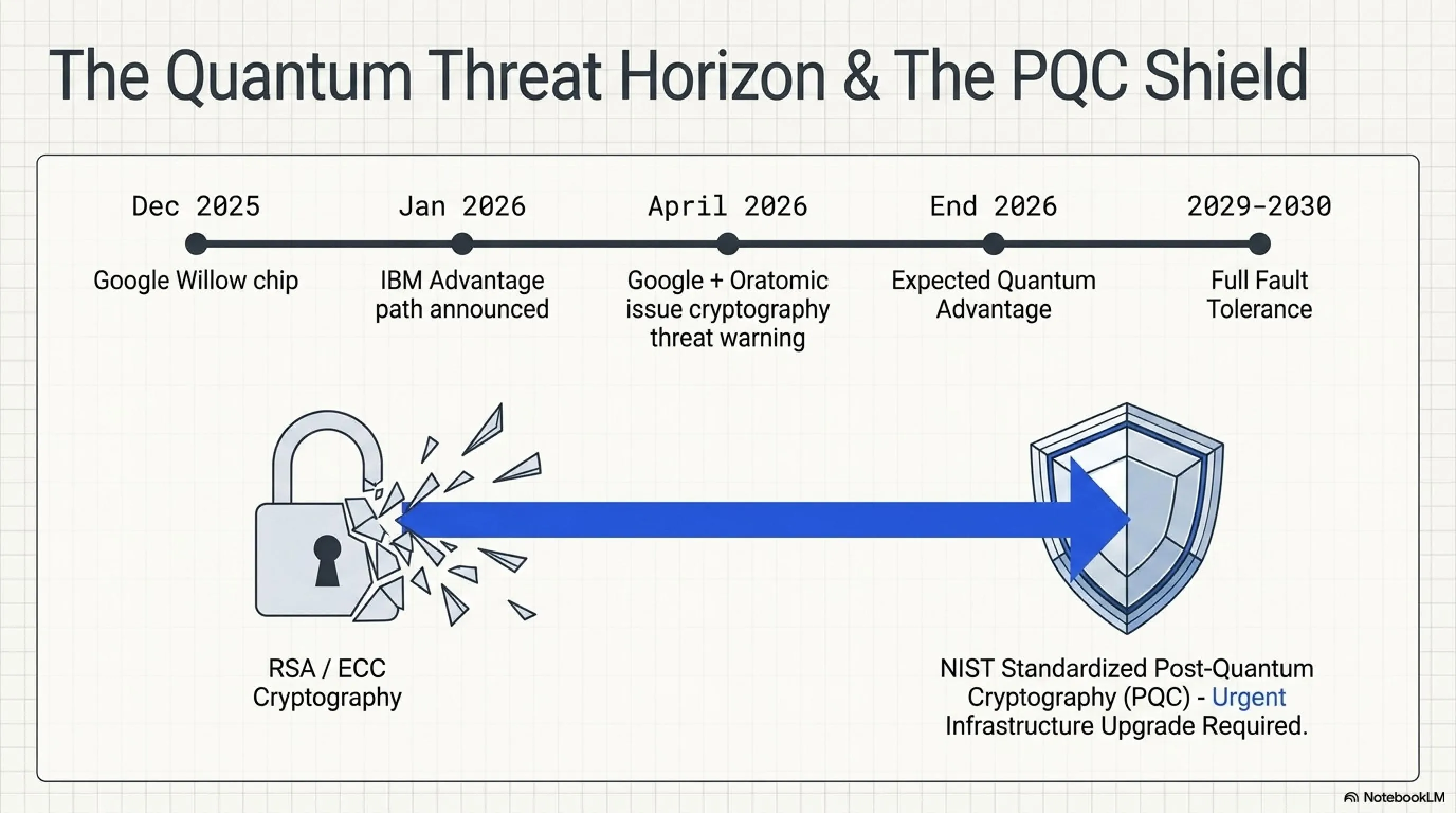
Google Willow: Demonstrated exponential error correction - main quantum problem solved
IBM Nighthawk: Target Quantum Advantage by end of 2026
Speed: 13,000x faster than world's most powerful supercomputer
Applications: Cryptography, drug discovery, fuel cell optimization
Threat: Current internet encryption at risk
Google's Willow chip demonstrated a fundamental breakthrough in exponential error correction—a problem that had limited quantum computing for decades. IBM has also announced a clear path to achieving Quantum Advantage by the end of this year. These advances are not just theoretical—practical applications are emerging, including fuel cell optimization for BMW and Airbus that demonstrate exponentially faster problem-solving than classical systems.
⏱️ Quantum Computing Progress Timeline
| Time | Event | Company |
|---|---|---|
| December 2025 | Willow chip unveiled | |
| January 2026 | Quantum Advantage roadmap announced | IBM |
| April 2026 | Cryptography threat warning | Google + Oratomic |
| End of 2026 | Quantum Advantage target | IBM |
| 2029-2030 | Full Fault Tolerance | IBM + Google |
But these advances come with a serious warning. New research published by Google and startup Oratomic shows that quantum computers capable of breaking the encryption protocols that secure the internet may arrive sooner than expected. This means the world is "not ready" and there is an urgent need to develop and implement post-quantum cryptography.
🏥 News Four: Hospital Ransomware Attack - 337,000 Patients at Risk
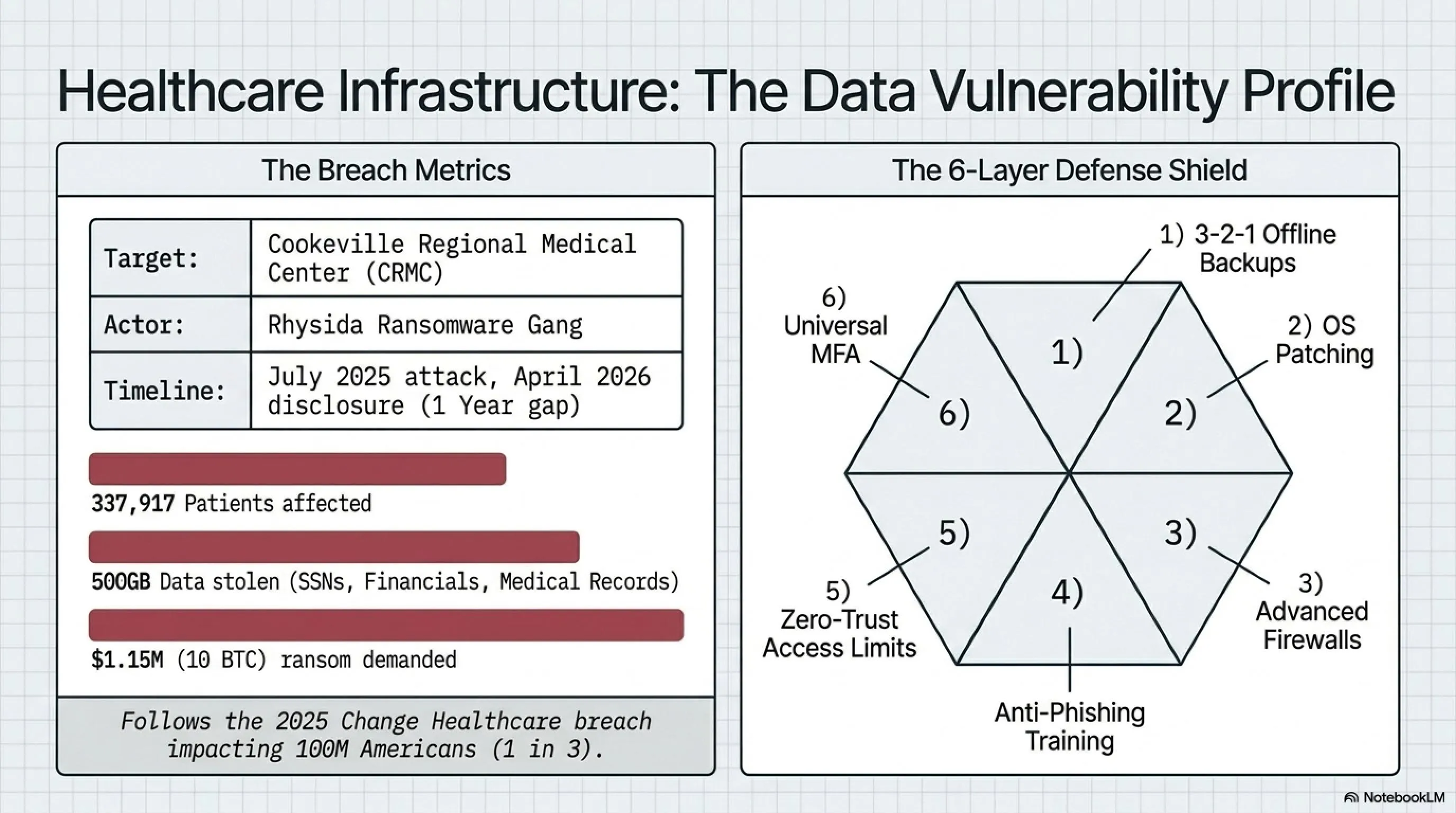
Nearly one year after a ransomware attack, Cookeville Regional Medical Center (CRMC) in Tennessee finally notified over 337,000 patients that their sensitive medical data—plus Social Security numbers, government IDs, and financial information—was compromised during a four-day attack. The attack was carried out by the Rhysida ransomware gang, which stole 500GB of data.
⚠️ Hospital Attack Details
Attack Time: July 2025 (announced April 2026)
Number of Victims: 337,917 patients
Data Volume Stolen: 500GB including sensitive information
Attacker Group: Rhysida ransomware gang
Ransom Amount: 10 Bitcoin ($1.15 million)
Data Leaked: SSN, government IDs, financial info, medical records
The Rhysida cybercriminal group claimed responsibility for this breach on August 2, 2025. On its data leak site, Rhysida demanded 10 Bitcoin as ransom for data it claims to have stolen from CRMC, which at the time was worth $1.15 million. This nearly year-long delay in notifying patients has raised serious concerns about transparency and accountability in the healthcare sector.
This attack is part of a more disturbing trend in the healthcare industry. In the same year, the Change Healthcare breach compromised the personal health information of 100 million Americans—nearly one in three people in the country—and severely disrupted billing and authorization systems to the point where medical practices warned they might have to close their doors. The structural vulnerability of the healthcare sector to cyberattacks has become a national crisis.
🎮 News Five: Massive Nintendo Switch 2 Leaks - Metroid 6 and Zelda OoT Remake
Nintendo has faced massive leaks revealing Switch 2 game launch plans for summer and fall 2026. According to reports, Nintendo is "furious" about leaks that include information about Metroid 6, a new Wario Land, classic Star Fox, and most significantly—a complete remake of The Legend of Zelda: Ocarina of Time for the 2026 holidays.
🎯 Leaked Switch 2 Games
Summer 2026:
• Metroid 6 - Continuation of beloved series
• Wario Land - Classic return
• Star Fox - New classic style
• Fire Emblem: Fortune's Weave
• Splatoon Raiders
Fall/Winter 2026:
• The Legend of Zelda: Ocarina of Time Remake - Complete remake
• Yoshi and the Mysterious Book (May 21, 2026)
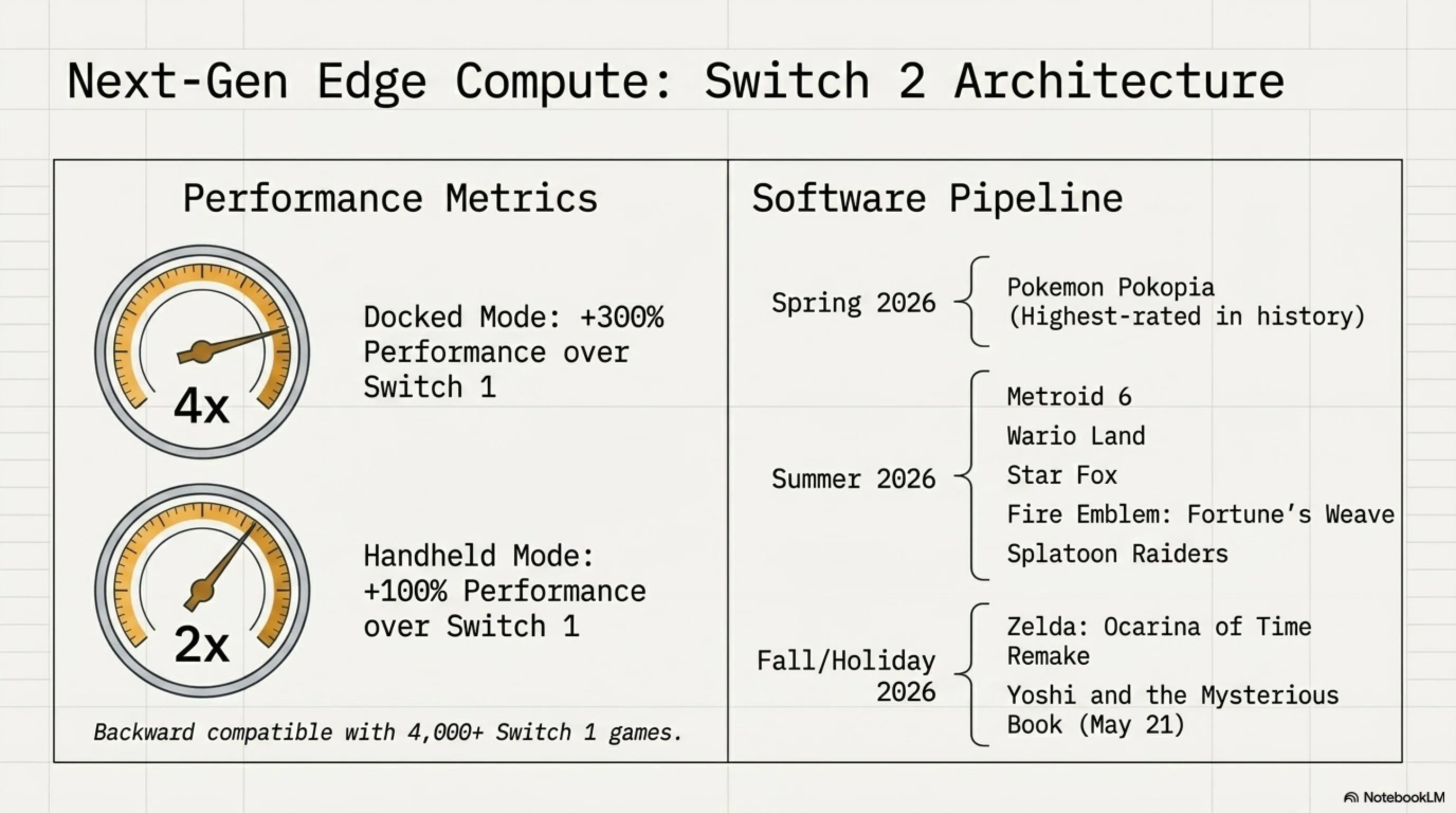
The leaks also reveal that Switch 2 is approximately 4x more powerful in docked mode and 2x more powerful in handheld mode compared to the original Switch. This power increase allows developers to create games with better graphics and more advanced gameplay experiences. Pokemon Pokopia, released in early 2026, is recognized as the highest-rated Pokemon game in history and one of the best-selling Switch 2 titles.
⚡ Switch 2 vs Switch Power Comparison
| Mode | Original Switch | Switch 2 | Increase |
|---|---|---|---|
| Docked Mode | 1x | 4x | +300% |
| Handheld Mode | 1x | 2x | +100% |
| Games Released | 4,000+ | Growing | Switch 1 compatible |
Nintendo's reaction to these leaks has been severe. The company is actively pursuing leak sources and taking legal action against individuals who published confidential information. However, the gaming community's excitement for these titles is undeniable, especially for the Ocarina of Time remake, which is one of the most beloved games in history.
🚗 News Six: Tesla Robotaxi - New Features for Customer Vehicles
Tesla has quietly begun rolling out one of its most advanced Robotaxi-inspired features to existing customer vehicles. With the new Spring Update, Tesla is adding advanced self-driving capabilities to the current fleet of Model 3 and Model Y vehicles that were previously reserved only for the Robotaxi service in Austin, Texas. This move is part of Tesla's broader strategy to compete with Waymo in the robotaxi market.
🤖 New Tesla Robotaxi Features
Spring Update 2026: Advanced FSD capabilities
Supported Models: Existing Model 3 and Model Y
Current Status: Pilot in Austin, Texas since June 2025
Main Competitor: Waymo with operations in 12+ cities
Expansion Plan: Second half of 2026 to more cities
Key Difference: American remote operators (vs Philippines Waymo)
Tesla's Robotaxi service launched in June 2025 with limited capacity in Austin, Texas, using a fleet of self-driving Model 3 and Model Y vehicles that transport paying passengers without a human driver. However, contrary to initial claims, the service is not yet fully unsupervised—Tesla uses both in-vehicle safety drivers and domestic remote operators for operation.
⚔️ Pros & Cons Battle: Tesla Robotaxi
✅ Pros
- American remote operators (safer)
- Integration with existing vehicles
- OTA update for current customers
- Lower cost compared to Waymo
- Faster expansion with existing fleet
❌ Cons
- Still requires safety driver
- Limited to Austin, Texas currently
- Unfulfilled promises (500 vehicles)
- Delayed expansion to other cities
- Behind Waymo in city count
Elon Musk initially promised that by the end of 2025, there would be 500 vehicles in Austin, coverage for half the U.S. population, fully unsupervised rides, and expansion to 8-10 cities. None of these happened. However, Tesla argues that its approach using U.S.-based remote operators is safer and more reliable than Waymo, which uses remote workers in the Philippines—an issue that has recently drawn criticism from lawmakers.
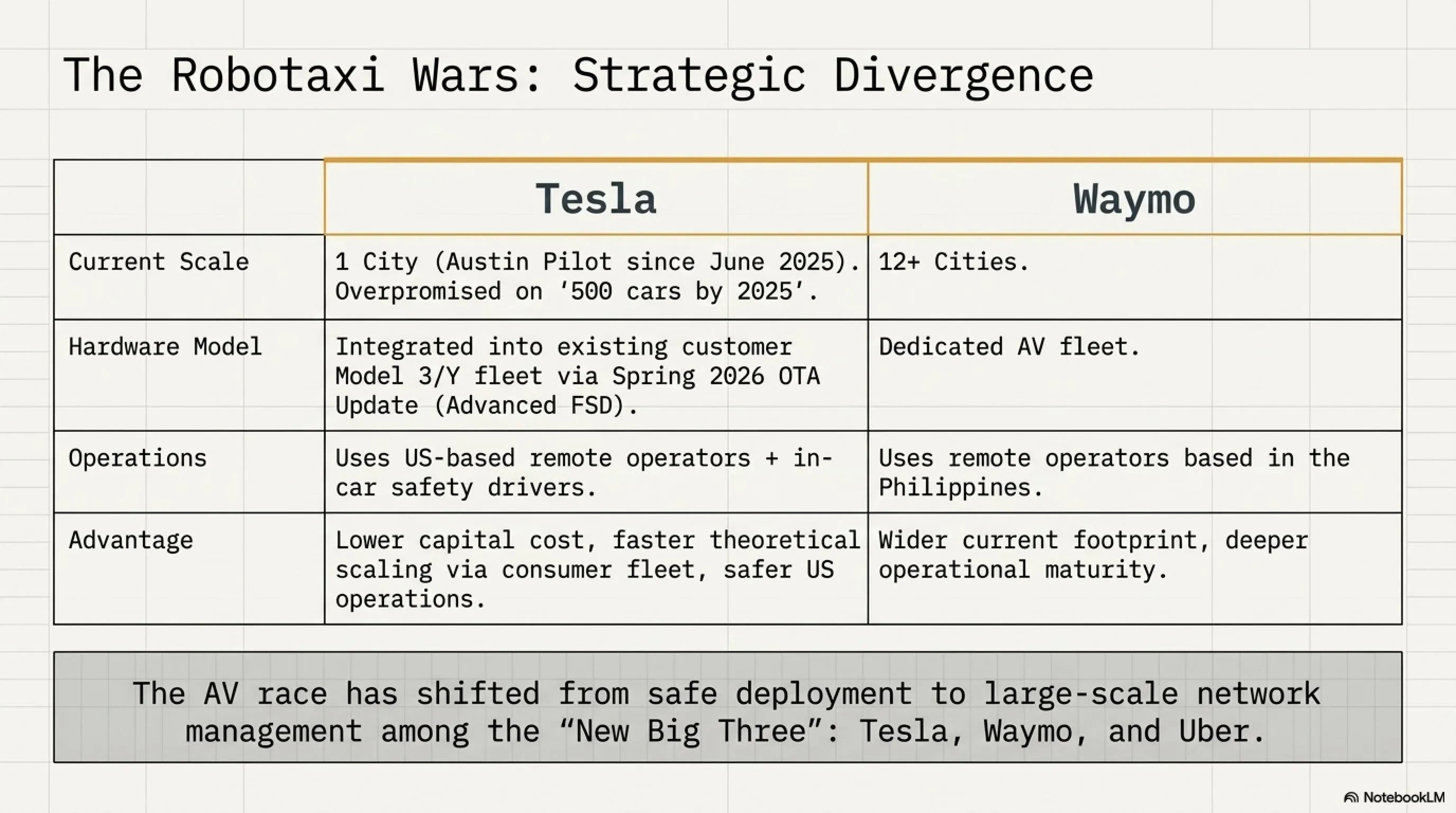
📊 Tesla vs Waymo: Robotaxi Competition
Tesla: 1 city (Austin), requires safety driver, US operators
Waymo: 12+ cities, broader operations, Philippines operators
Common Challenge: Scalability and safety in various conditions
Future: Competition for multi-billion dollar market dominance
Robotaxis are currently operating in about a dozen cities—with tests underway in more—and semi-autonomous trucks without drivers are hauling freight in Arizona and Texas. But safely deploying AV technology is just the beginning—the next phase of the AV race is about who can operate networks at scale. This competition between the "new big three" of transportation—Tesla, Waymo, and Uber—has just begun.
🎯 Summary and Conclusion
💡 Key Takeaways Tonight
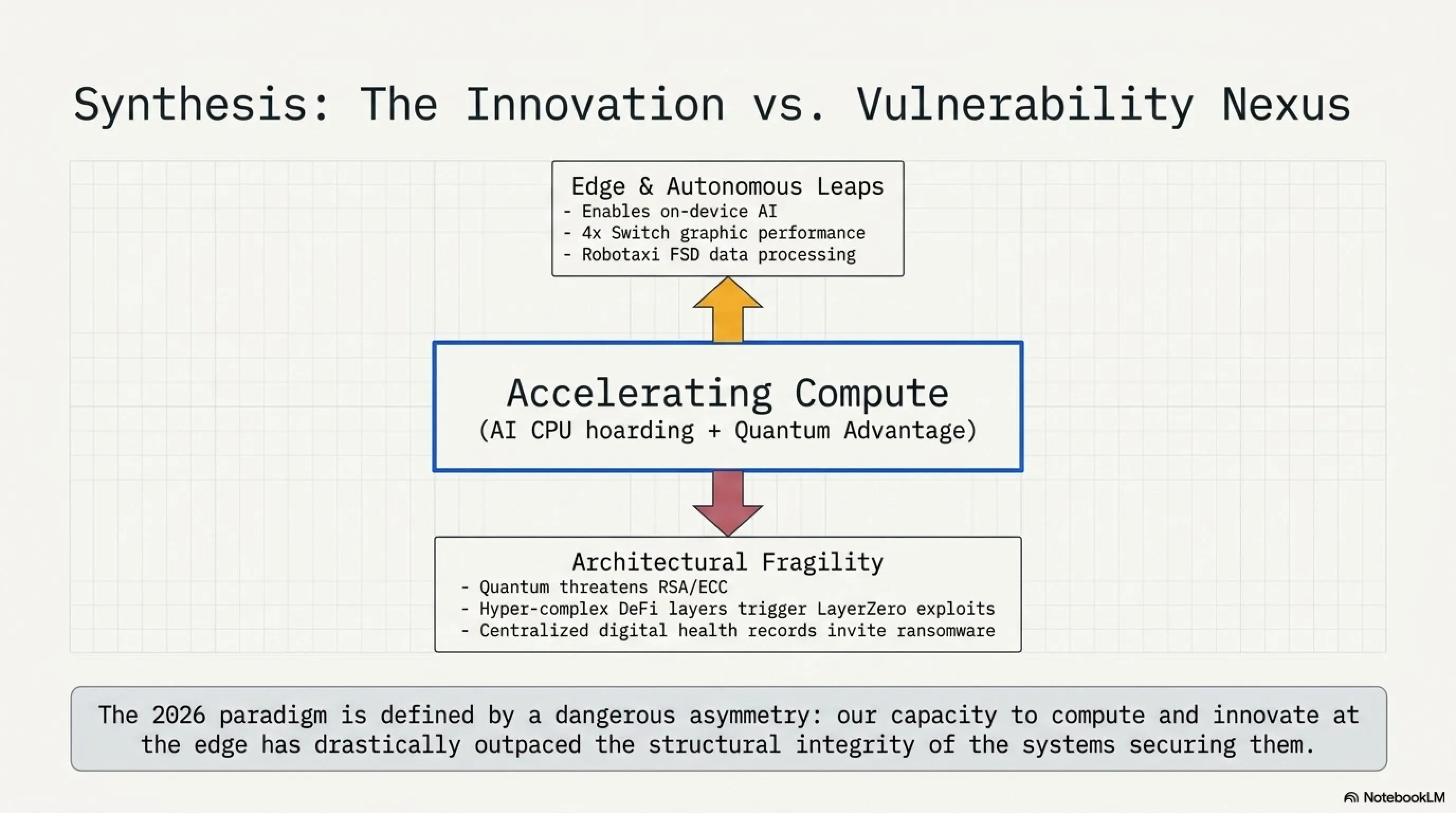
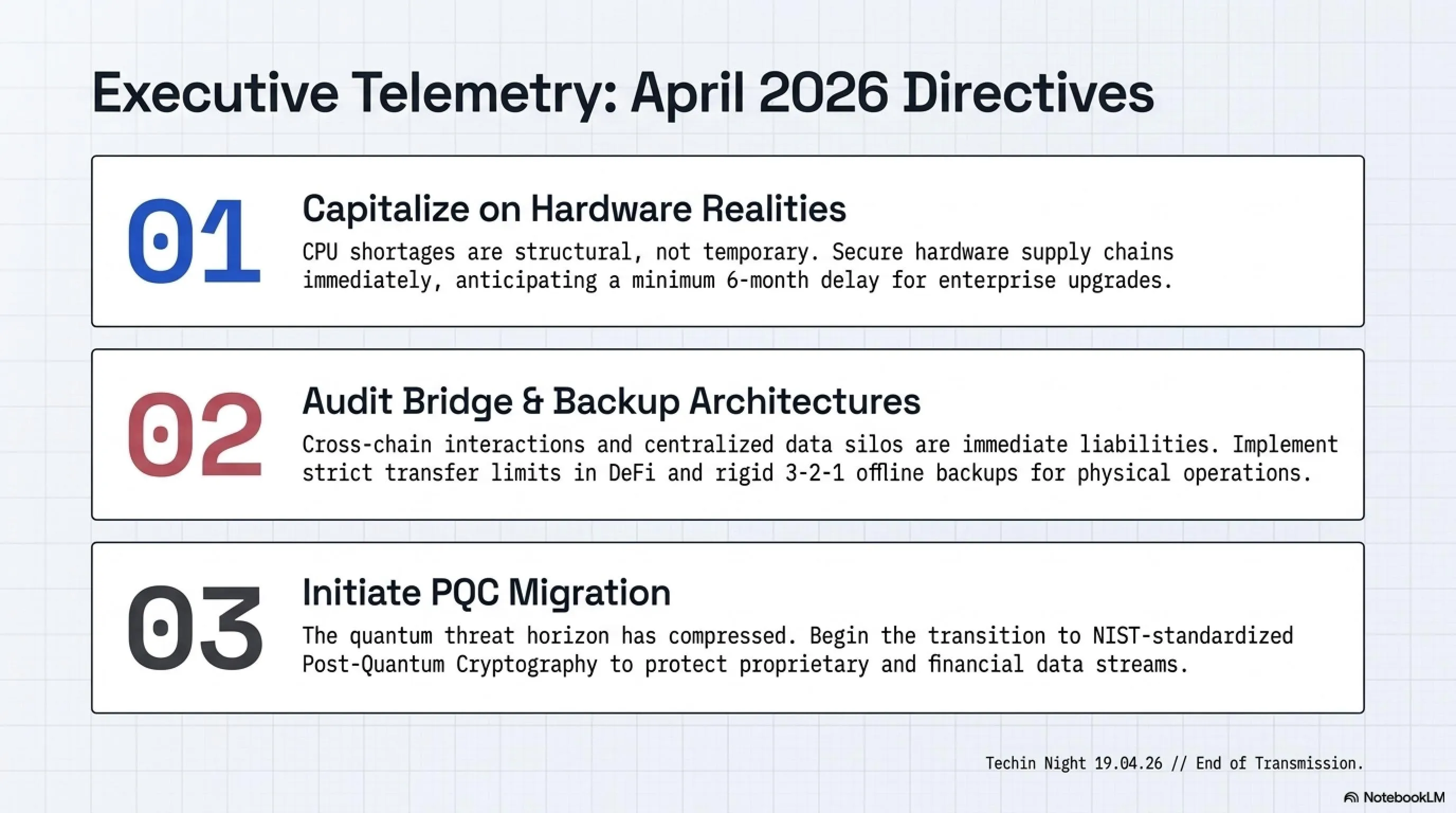
The night of April 19, 2026 showed that the technology world is simultaneously facing massive security challenges, supply crises, and revolutionary advances. The $293 million Kelp DAO hack is a reminder of the ongoing vulnerability of cross-chain bridges. The CPU shortage demonstrates how AI demand has put pressure on the entire hardware supply chain. Quantum Computing advances are both promising and concerning—offering to solve complex problems but threatening current cryptography.
Ransomware attacks on hospitals show how vulnerable our critical infrastructure is. Nintendo leaks remind us that even industry giants cannot fully protect confidential information. And Tesla's progress in Robotaxi shows that the future of autonomous transportation is taking shape, albeit slower than initial promises.
❓ Why do DeFi hacks still happen?
Cross-chain bridges are one of the most vulnerable points in the DeFi ecosystem due to architectural complexity and the need for coordination between multiple blockchains. Hackers can exploit security flaws in inter-chain messaging protocols. Solutions include more rigorous security audits, use of multi-signature, and limiting the amount of assets transferable in a single transaction.
❓ How does the CPU shortage affect computer prices?
The CPU shortage has caused a 10-15% increase in processor prices, and this increase is directly passed on to the final price of laptops and desktop computers. Additionally, delivery times have increased from weeks to 6 months, which can cause significant delays in purchasing new systems. Consumers should expect higher prices and more limited inventory through the end of 2026.
❓ What threat does Quantum Computing pose to internet security?
Powerful quantum computers can break current encryption algorithms like RSA and ECC used to secure the internet. This means banking transactions, encrypted communications, and sensitive data could be at risk. The solution is developing and implementing Post-Quantum Cryptography, which NIST is currently standardizing.
❓ How can we protect our data from ransomware attacks?
Protection against ransomware requires a multi-layered approach: 1) Regular data backups in separate locations (3-2-1 rule), 2) Updating software and operating systems, 3) Using strong antivirus and firewall, 4) Training staff to identify phishing emails, 5) Limiting unnecessary access, and 6) Implementing multi-factor authentication (MFA) for all sensitive accounts.
❓ Is Tesla Robotaxi really self-driving?
Currently, no—not completely. Tesla's Robotaxi service still relies on in-vehicle safety drivers and remote operators for monitoring and intervention when needed. This is contrary to Elon Musk's initial claims of "fully unsupervised" rides. However, Tesla is making progress, and the Spring Update 2026 adds more advanced FSD capabilities to existing customer vehicles. The ultimate goal is to achieve full Level 5 autonomy, but there's still a long way to go.
📚 Sources and References
Sources: CoinDesk, The Street, Cybernews, PanewsLab (Kelp DAO Hack), MSN, WinBuzzer, Futunn, TradingKey (CPU Shortage), NeuralStackly, WebProNews, TIME Magazine, Wanderby (Quantum Computing), SecurityAffairs, Infosecurity Magazine, SecurityWeek, Comparitech (Hospital Ransomware), GameRant, 9to5Toys, ComicBook, NintendoEverything (Nintendo Switch 2 Leaks), Teslarati, Axios, Electrek, Business Insider (Tesla Robotaxi)
Tekin Night April 19, 2026 — Research and Analysis: Tekin Editorial Team
🌐 Stay Connected With Us
For the latest tech, gaming, and gadget news, follow us on social media:
🌐 Stay Connected With Us 🎮✨
For the latest tech, gaming, and gadget news, follow us on our official social media channels:
Additional Gallery: 🌙 Tekin Night April 19: $293M Kelp DAO Hack & CPU Shortage Crisis