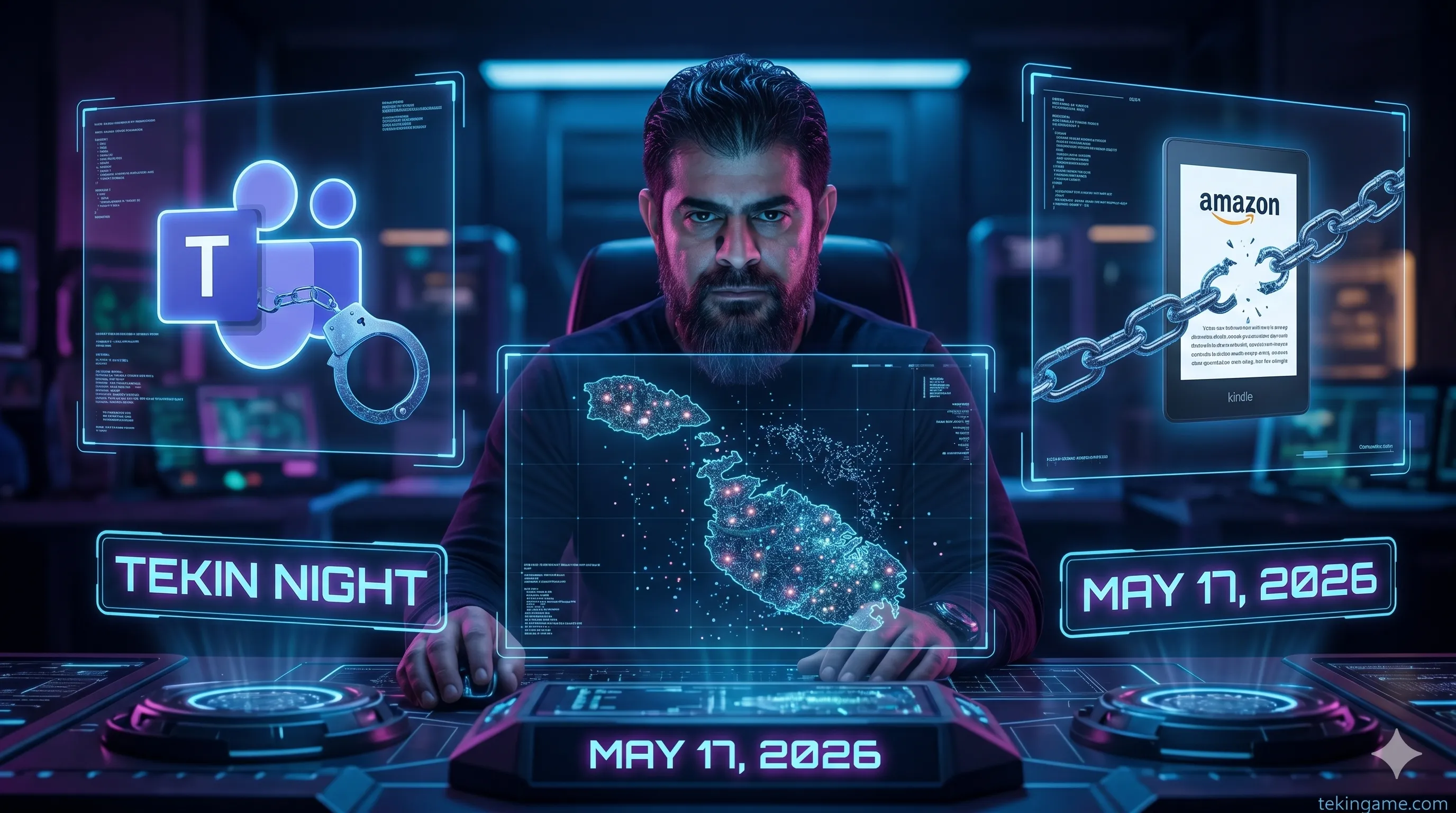
🌙 Tekin Night - Sunday Evening, May 17, 2026
Your Evening Tech Digest: Security Fails, Device Freedom & Social Media Accountability
⚡ Executive Summary
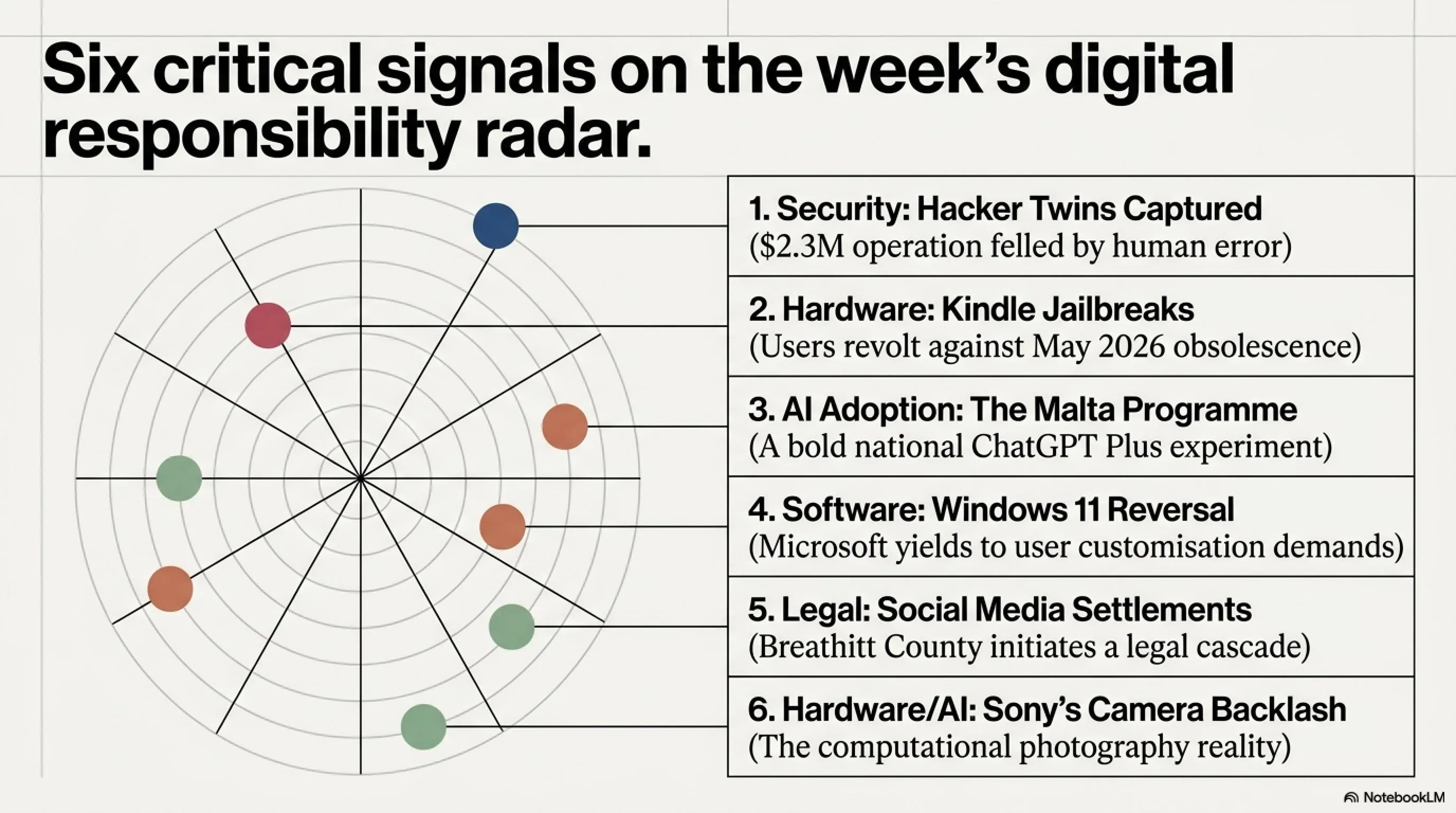
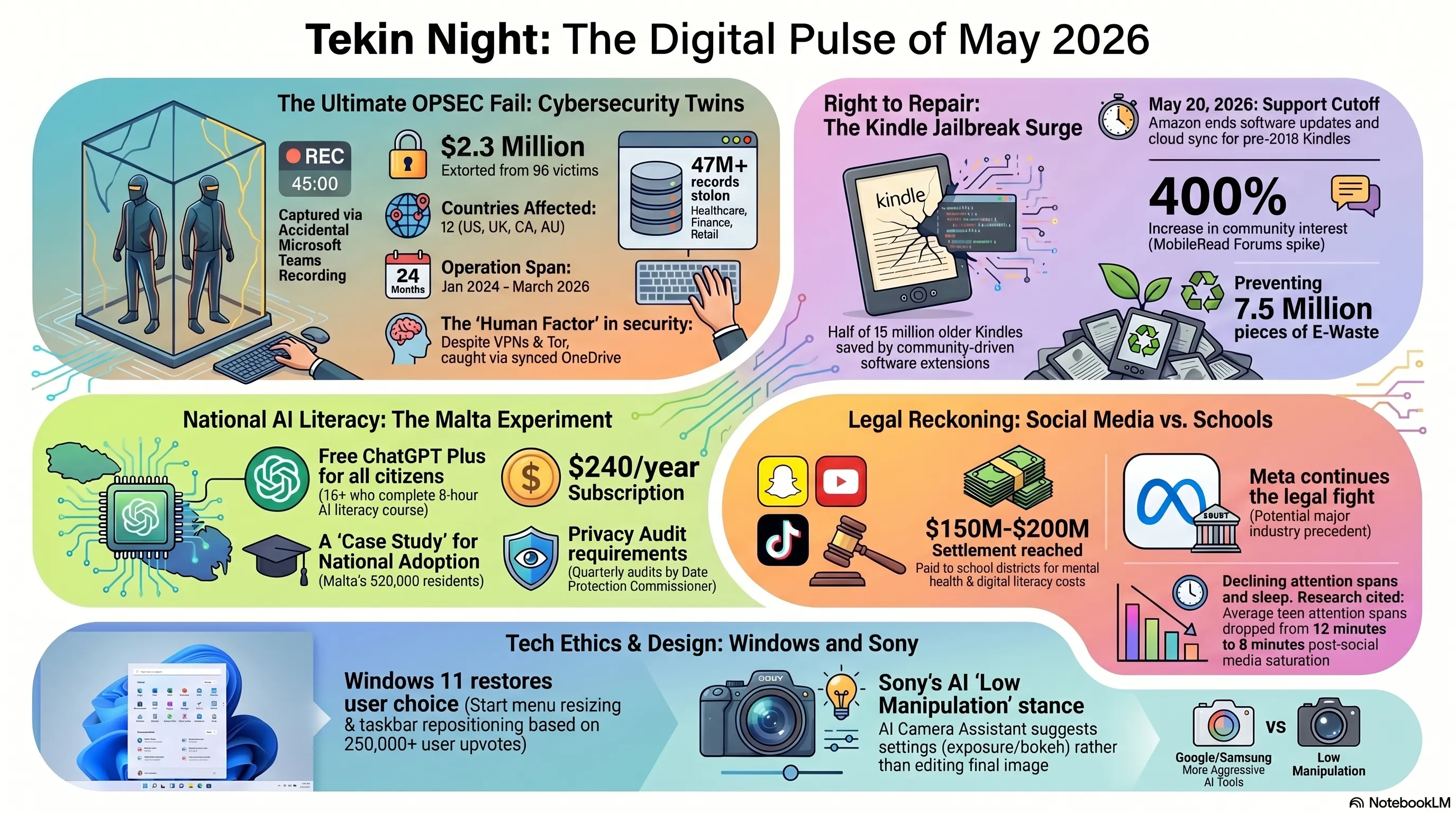
Tonight's tech digest brings you six compelling stories that highlight the evolving landscape of digital responsibility, security, and innovation. We start with a cautionary tale of cybercriminal twins who forgot to turn off their Microsoft Teams recording during a planning session—leading to their arrest after discussing 96 database breaches. Then we explore how Amazon Kindle users are turning to jailbreaking as the company ends support for older devices on May 20, 2026, sparking debates about device ownership and the right to repair.
In AI education news, OpenAI has struck a deal with Malta to provide free ChatGPT Plus subscriptions (worth $240/year) to every citizen who completes an AI literacy course—a bold experiment in national AI adoption. Microsoft is finally listening to Windows 11 users by adding Start menu size customization and taskbar repositioning in the latest Insider Preview build. We also cover the landmark settlement where Snap, YouTube, and TikTok agreed to pay schools for social media-related harm, while Meta continues to fight in court. Finally, Sony attempts to clarify how its AI Camera Assistant works after backlash over a misleading promotional video, reigniting the debate about computational photography ethics.
🔐 Cybercriminal Twins Caught After Forgetting to Turn Off Teams Recording
In what might be the most embarrassing operational security failure of 2026, twin brothers running a database extortion operation were arrested after accidentally leaving their Microsoft Teams recording running during a planning session. The 45-minute recording, which they forgot to delete, contained detailed discussions of their criminal activities, victim lists, and even their real identities.
🎯 How They Got Caught
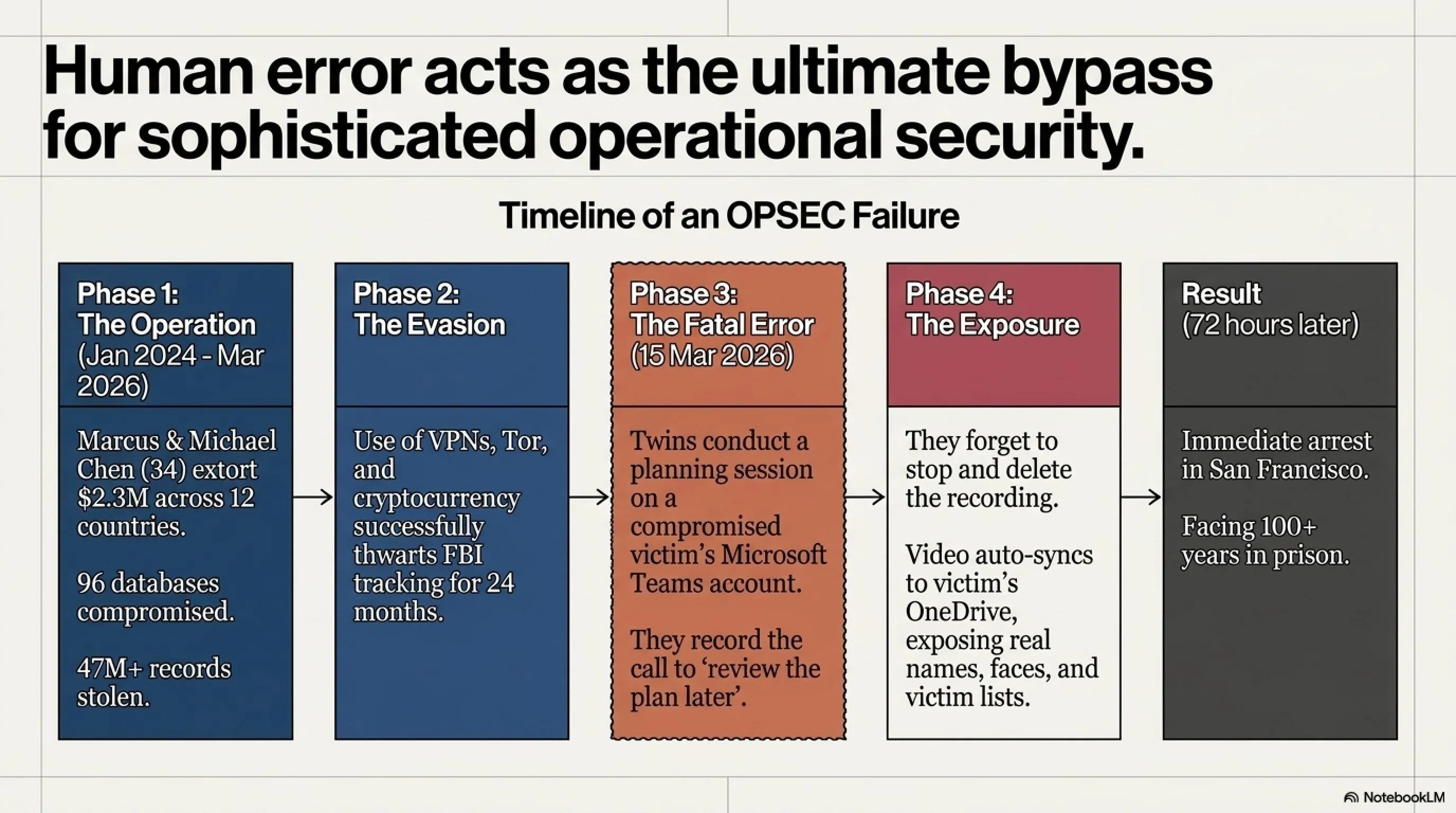
The twins, identified as Marcus and Michael Chen (ages 34), had been operating a sophisticated database extortion scheme since early 2024. Their modus operandi was simple but effective: scan for exposed databases, exfiltrate the data, delete the original, and demand ransom for its return. They successfully extorted over $2.3 million from 96 victims across 12 countries.
The fatal mistake came during a routine planning session on March 15, 2026. The brothers used Microsoft Teams to coordinate their activities (ironically choosing a legitimate business tool for criminal planning). One of them started recording the meeting to "review the plan later"—but forgot to stop the recording and, more critically, forgot to delete it from their shared OneDrive.
⚠️ What Was in the Recording?
- Full names and addresses: Both brothers used their real names during the call
- Victim list: Detailed discussion of 96 compromised databases
- Payment details: Bitcoin wallet addresses and conversion methods
- Future targets: List of vulnerable databases they planned to hit next
- Technical methods: Exact tools and exploits they used
🕵️ The Investigation
The FBI had been tracking the extortion campaign for months but struggled to identify the perpetrators due to their use of VPNs, Tor, and cryptocurrency. The breakthrough came when one of the victims—a small healthcare provider—noticed suspicious Microsoft Teams activity in their compromised Office 365 tenant. The attackers had used the victim's Teams account to communicate, and the recording was automatically synced to the victim's OneDrive.
When the victim's IT team discovered the recording, they immediately contacted the FBI. The recording provided investigators with everything they needed: real names, voices, faces (the video was on), and a complete confession of their crimes. Within 72 hours, both brothers were arrested at their homes in San Francisco.
📊 By the Numbers
💭 Tekin Analysis: The Human Factor in Cybersecurity
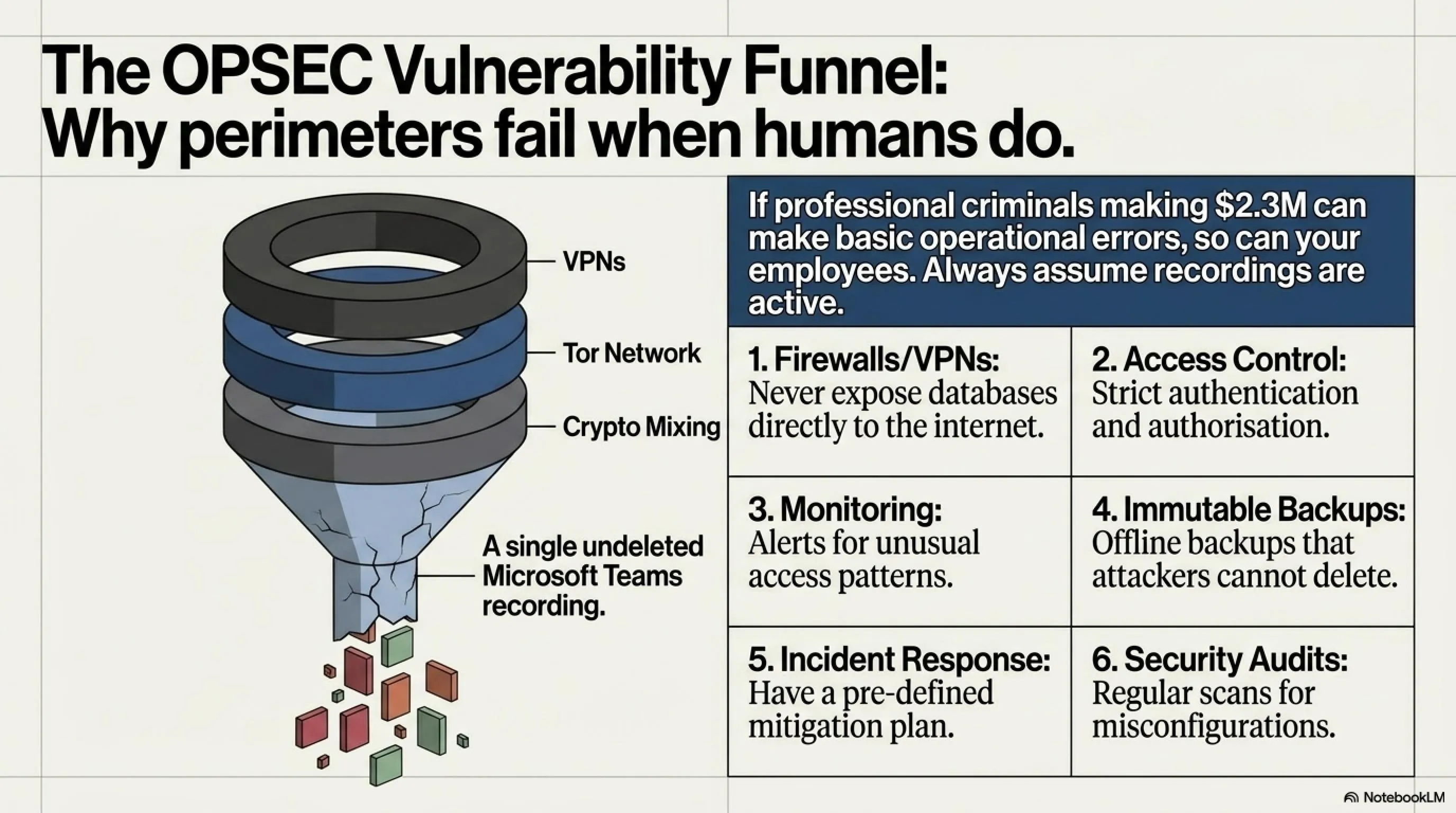
This case perfectly illustrates that even sophisticated cybercriminals are vulnerable to basic human errors. Despite using advanced techniques like VPNs, Tor, and cryptocurrency mixing, the brothers were undone by forgetting to delete a recording. It's a reminder that operational security (OPSEC) is only as strong as its weakest link—and that link is often human behavior. For organizations, this highlights the importance of security awareness training: if professional criminals can make such mistakes, so can your employees. The lesson? Always assume recordings are on, always verify what you're sharing, and never discuss sensitive information on platforms you don't fully control.
⚖️ Legal Consequences
The Chen brothers face multiple federal charges including:
- Computer Fraud and Abuse Act violations: Up to 20 years per count
- Wire fraud: Up to 20 years
- Extortion: Up to 20 years
- Money laundering: Up to 10 years
- Identity theft: Mandatory 2-year consecutive sentence
If convicted on all counts, they could face over 100 years in prison. The FBI has also seized approximately $1.8 million in cryptocurrency, which will be used to compensate victims.
🛡️ Protection Tips for Organizations
- Database security: Never expose databases directly to the internet; use firewalls and VPNs
- Access control: Implement strict authentication and authorization
- Monitoring: Set up alerts for unusual database access patterns
- Backups: Maintain offline, immutable backups that can't be deleted by attackers
- Incident response: Have a plan ready before you need it
- Security audits: Regularly scan for exposed databases and misconfigurations
📚 Amazon Kindle Users Turn to Jailbreaking After End of Support
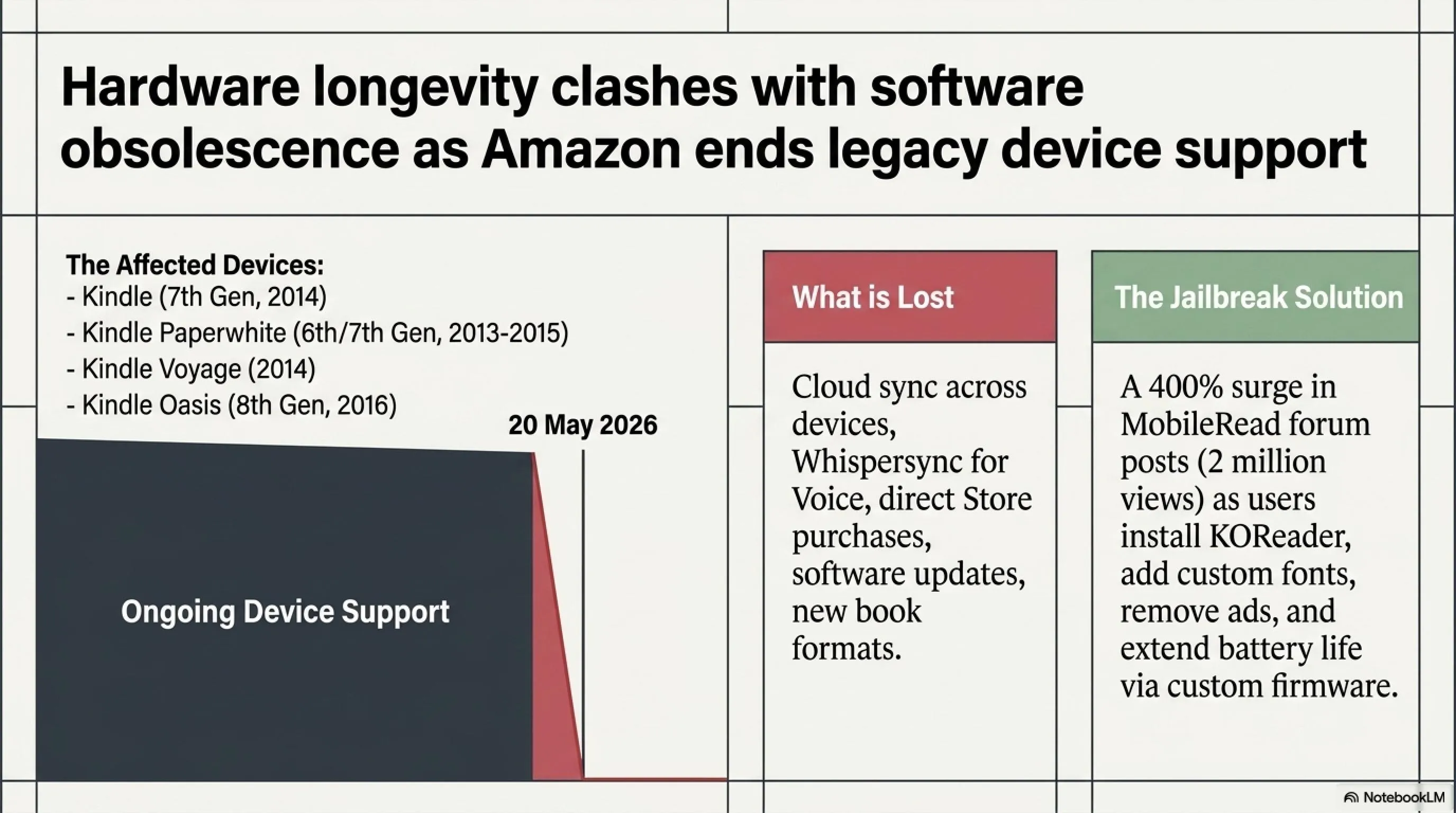
As Amazon prepares to end support for older Kindle devices on May 20, 2026, a growing community of users is turning to jailbreaking to extend the life of their e-readers. The move has reignited debates about device ownership, the right to repair, and planned obsolescence in consumer electronics.
📅 Which Devices Are Affected?
Amazon announced that devices released before 2018 will no longer receive software updates or cloud sync support after May 20, 2026. This includes:
After the cutoff date, these devices will still be able to read books already downloaded, but users will lose access to:
- Cloud sync across devices
- Whispersync for Voice (audiobook sync)
- Kindle Store purchases directly from device
- Software updates and security patches
- Some newer book formats
🔓 The Jailbreak Solution
Enter the jailbreaking community. For years, a dedicated group of developers and enthusiasts on forums like MobileRead have been creating custom firmware and tools to extend Kindle functionality. With Amazon's end-of-support announcement, interest in jailbreaking has surged dramatically.
Jailbreaking a Kindle allows users to:
- Install alternative readers: KOReader, Plato, and others that support more formats
- Add custom fonts: Beyond Amazon's limited selection
- Remove ads: For devices with "Special Offers"
- Install SSH: For advanced file management
- Use third-party cloud services: Dropbox, Calibre Content Server, etc.
- Extend battery life: Through custom power management
⚠️ Important Disclaimer
Jailbreaking your Kindle will void your warranty and may violate Amazon's terms of service. While it's generally legal for personal use in most countries, there are risks: you could brick your device if something goes wrong, and you'll lose access to Amazon's customer support. Additionally, downloading pirated books is illegal—jailbreaking should only be used for legitimate purposes like reading legally obtained ebooks in unsupported formats.
📈 Community Growth
The MobileRead forums have seen a 400% increase in jailbreak-related posts since Amazon's announcement in March 2026. The main jailbreak thread has over 50,000 replies and 2 million views. Several YouTube tutorials have gone viral, with the most popular garnering over 1.5 million views.
The community has also created comprehensive guides, automated jailbreak tools, and even a "Kindle Rescue Kit" for users who accidentally brick their devices. The level of organization and support is impressive, with experienced users volunteering their time to help newcomers.
💭 Tekin Analysis: The Right to Repair Debate
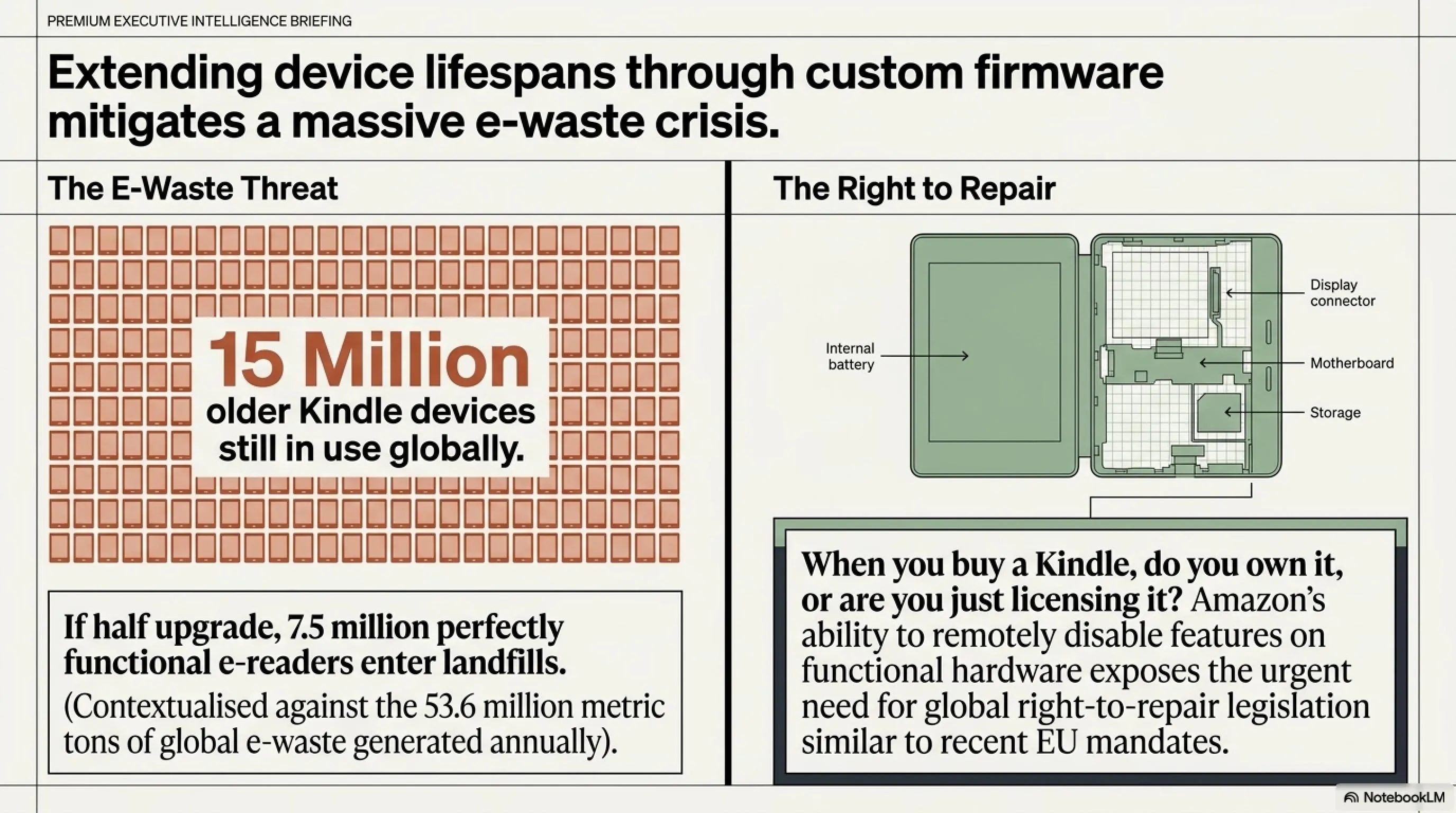
This situation perfectly encapsulates the right-to-repair debate. When you buy a Kindle, do you own it, or are you just licensing it from Amazon? The fact that Amazon can remotely disable features or end support for perfectly functional hardware raises important questions about consumer rights. The jailbreaking community's response demonstrates that users want control over devices they've paid for. This isn't just about Kindles—it's about smartphones, smart home devices, cars, and more. As more products become "smart" and cloud-dependent, we need clearer laws about what companies can and cannot do to devices after sale. The EU's recent right-to-repair legislation is a step in the right direction, but we need similar protections globally.
🌍 Environmental Impact
There's also an environmental angle to this story. An estimated 15 million older Kindle devices are still in use worldwide. If even half of those users decide to upgrade rather than jailbreak, that's 7.5 million e-readers potentially heading to landfills—despite being perfectly functional hardware.
E-waste is already a massive problem, with 53.6 million metric tons generated globally in 2019 (and growing). Extending device lifespans through jailbreaking and custom firmware could significantly reduce this waste. Some environmental advocates are calling for legislation that would require companies to support devices for a minimum period or open-source their firmware when ending support.
🤖 OpenAI Offers Free ChatGPT Plus to Malta in Bold AI Education Experiment
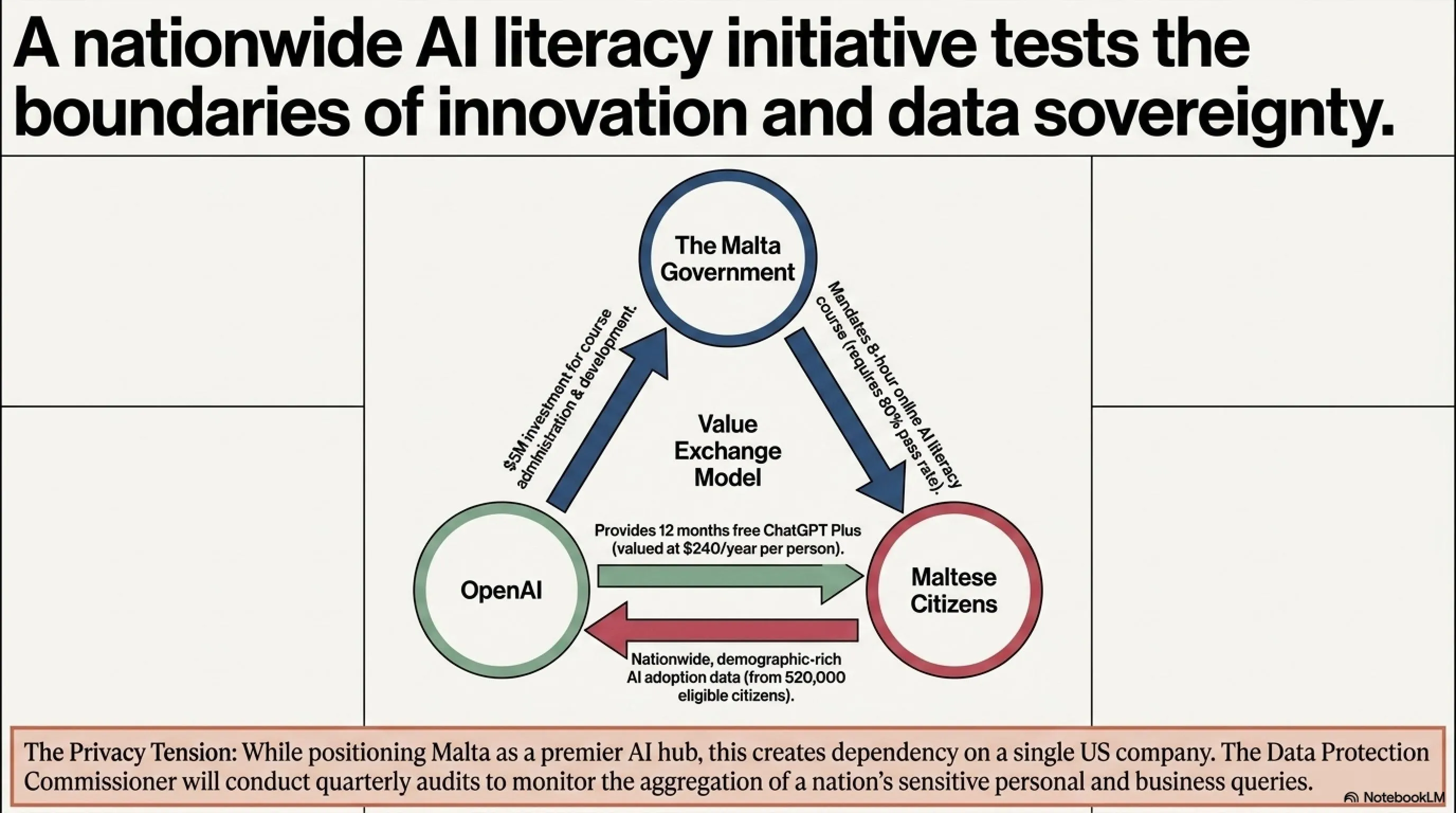
In an unprecedented move, OpenAI has partnered with the government of Malta to provide free ChatGPT Plus subscriptions to every citizen who completes an AI literacy course. The program, announced on May 15, 2026, represents the first time a country has attempted nationwide AI adoption at this scale.
📋 Program Details
Here's how the Malta AI Education Initiative works:
🎯 Why Malta?
Malta was chosen for several strategic reasons:
- Small population: With only 520,000 citizens, it's manageable for a pilot program
- High internet penetration: 95% of households have broadband access
- English proficiency: English is an official language, simplifying training materials
- Tech-friendly government: Malta has been progressive in blockchain and fintech regulation
- EU member: Success here could influence broader EU AI policy
- Economic motivation: Malta wants to position itself as an AI hub
💰 The Economics
Let's break down the numbers. If all 520,000 eligible Maltese citizens participate:
- Total value: 520,000 × $240 = $124.8 million per year
- Three-year cost: $374.4 million (if all renew)
- OpenAI's actual cost: Much lower (marginal cost of API access)
- Malta's investment: $5 million for course development and administration
For OpenAI, this is primarily a marketing and data collection opportunity. They get:
- Real-world data on nationwide AI adoption
- Insights into how different demographics use AI
- A case study for other governments
- Positive PR and brand awareness
- Potential future customers (after the free period)
⚠️ Privacy Concerns
Critics have raised concerns about data privacy and surveillance. OpenAI will have access to conversations from an entire nation's population, potentially including sensitive personal, business, and government information. While OpenAI claims data will be anonymized and used only for improving the service, privacy advocates worry about potential misuse, government access, or data breaches. The Malta Data Protection Commissioner has approved the program but will conduct quarterly audits.
💭 Tekin Analysis: A Bold Experiment with High Stakes
This is either visionary or reckless, depending on your perspective. On one hand, Malta is positioning itself at the forefront of AI adoption, potentially gaining economic advantages as AI becomes more central to work and life. Citizens will have free access to cutting-edge AI tools, potentially boosting productivity and innovation. On the other hand, there are legitimate concerns about dependency on a single US company, data sovereignty, and the digital divide (what about citizens who can't or won't participate?). The success or failure of this experiment will likely influence how other nations approach AI education and adoption. If it works, expect more countries to follow. If it fails—or if privacy issues emerge—it could set back national AI initiatives for years.
🪟 Microsoft Finally Lets You Customize Windows 11 Start Menu Size
📚 Classified & Related Dossiers in TekinGame
If you wish to explore beyond this report and delve into cybernetic frontiers and autonomous AI architectures, do not miss these three exclusive deep-dives in the Tekin Garage:
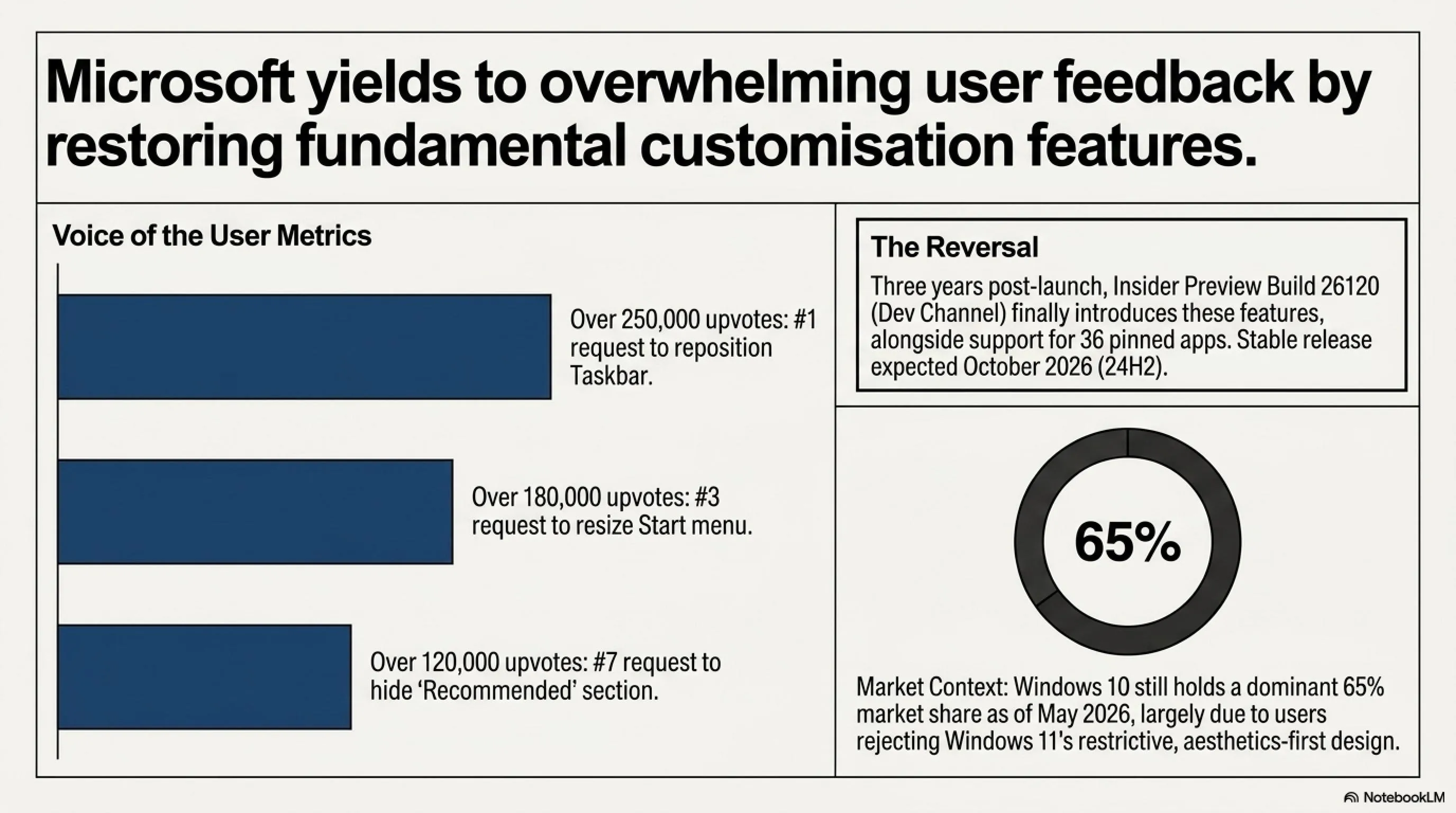
After years of user complaints, Microsoft is finally adding Start menu customization options to Windows 11. The latest Insider Preview build (26120) includes the ability to resize the Start menu and reposition the taskbar—features that were standard in Windows 10 but mysteriously absent from Windows 11's launch.
🎨 New Customization Options
The update brings several long-requested features:
- Start menu size: Choose from Small, Medium, Large, or Full Screen
- Taskbar position: Top, bottom, left, or right of screen
- Icon density: Adjust spacing between taskbar icons
- Start menu layout: Grid view or list view for apps
- Recommended section: Can now be completely hidden
- Pinned apps: Support for up to 36 pinned apps (up from 18)
📊 User Feedback Impact
These changes come after sustained user feedback. According to Microsoft's Feedback Hub data:
- Taskbar customization was the #1 requested feature (over 250,000 upvotes)
- Start menu resizing was #3 (over 180,000 upvotes)
- Ability to hide "Recommended" section was #7 (over 120,000 upvotes)
The lack of these features was cited as a primary reason many users delayed upgrading from Windows 10. Some power users even resorted to third-party tools like StartAllBack or ExplorerPatcher to restore Windows 10-style customization.
ℹ️ How to Access These Features
These features are currently only available in the Windows Insider Program (Dev Channel). To access them:
- Join the Windows Insider Program (Settings > Windows Update > Windows Insider Program)
- Select the Dev Channel (most experimental builds)
- Update to Build 26120 or later
- Go to Settings > Personalization > Start or Taskbar
- Customize to your heart's content!
Note: Insider builds can be unstable. Don't install on your primary work machine.
⏰ When Will This Come to Stable?
Microsoft hasn't announced an official timeline, but based on past patterns, these features will likely:
- Beta Channel: June-July 2026
- Release Preview: August-September 2026
- Stable Release: October 2026 (likely with the 24H2 update)
💭 Tekin Analysis: Better Late Than Never
It's frustrating that it took Microsoft nearly three years to add features that were standard in Windows 10, but credit where it's due—they're finally listening to user feedback. The Windows 11 launch was criticized for removing customization options in favor of a "cleaner" design, but users made it clear they value functionality over aesthetics. This update represents a shift back toward user choice, which is always a good thing. That said, three years is a long time to wait for basic features. Many users have already moved to third-party solutions or stuck with Windows 10 (which still has 65% market share as of May 2026). Microsoft needs to be more responsive to user feedback if they want Windows 11 adoption to accelerate.
⚖️ Snap, YouTube, and TikTok Settle with Schools Over Social Media Harm
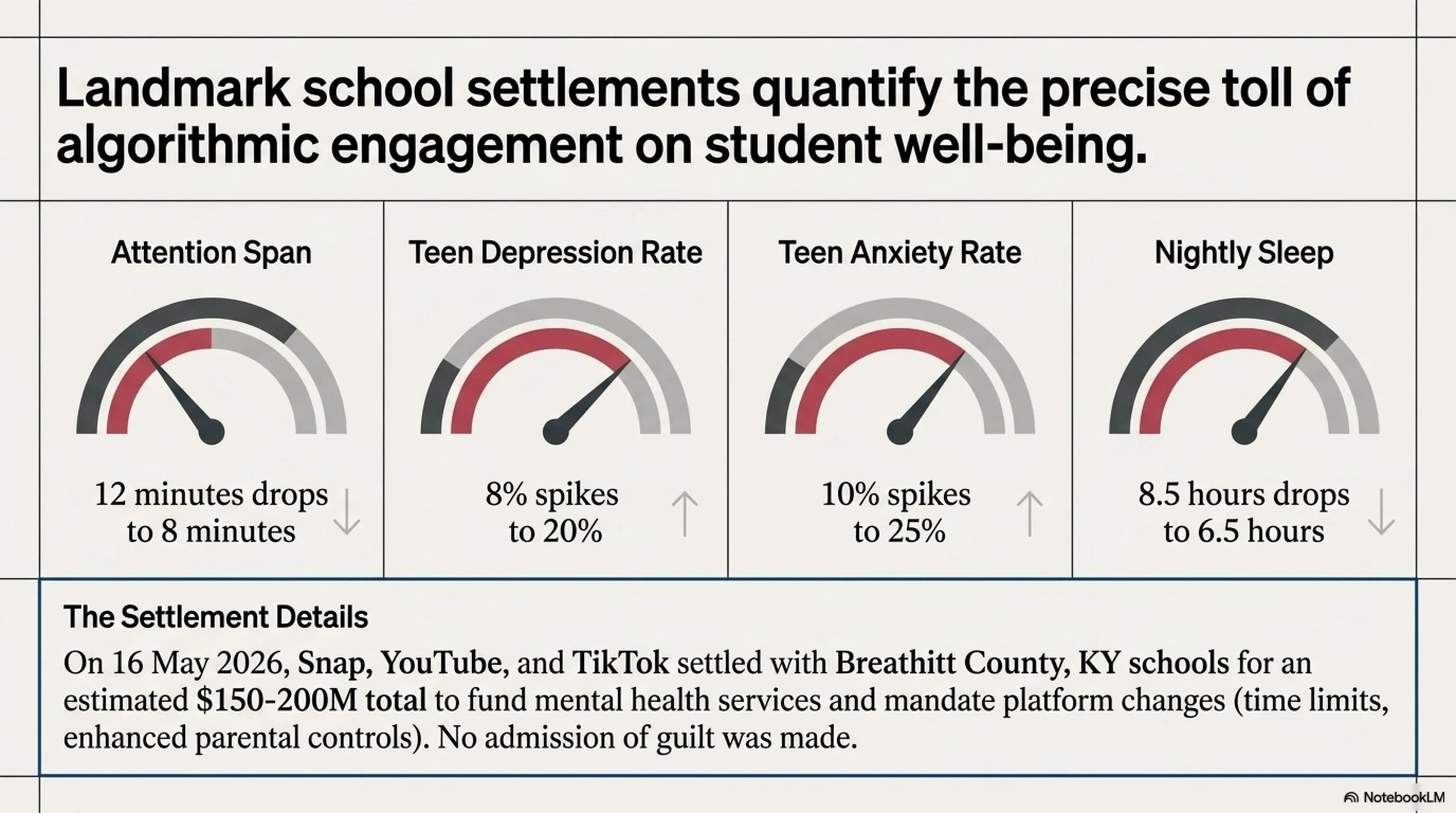
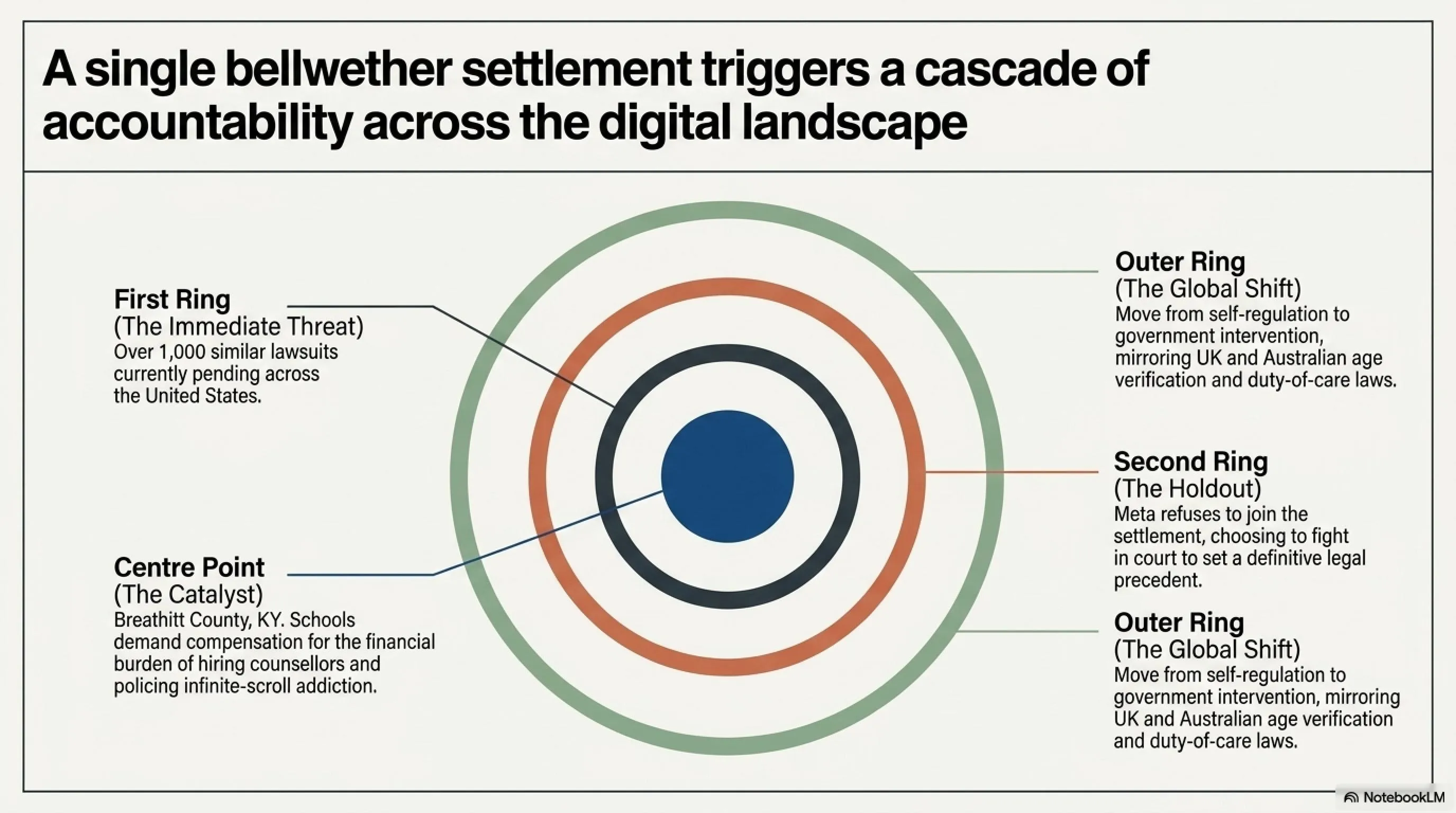
In a landmark legal development, Snap (Snapchat), YouTube, and TikTok have reached a settlement with schools in Breathitt County, Kentucky, and hundreds of other districts that sued them for allegedly causing mental health harm to students. The settlement, announced on May 16, 2026, could reshape how social media platforms operate—especially regarding minors.
📋 The Lawsuit
The lawsuit, filed in 2024, alleged that social media platforms:
- Designed addictive features: Infinite scroll, autoplay, and notification systems engineered to maximize engagement
- Targeted children: Despite age restrictions, platforms knowingly allowed underage users
- Caused mental health harm: Increased rates of depression, anxiety, and self-harm among students
- Disrupted education: Students distracted during class, reduced attention spans
- Created financial burden: Schools had to hire counselors, implement phone bans, and address cyberbullying
The schools sought compensation for these costs and demanded changes to platform design.
💰 Settlement Terms
While exact financial terms weren't disclosed, sources familiar with the settlement say it includes:
🌊 Wave of Lawsuits
This case is just the beginning. Over 1,000 similar lawsuits are pending across the United States. Schools, parents, and even some states have sued social media companies. The Breathitt County case is considered a "bellwether case"—its outcome could influence how other cases are resolved.
⚠️ Meta Still Fighting in Court
Interestingly, Meta (Facebook and Instagram) did not join the settlement and continues to fight the case in court. This could mean that Meta either has more confidence in its legal position or intends to set an important legal precedent. The outcome of Meta's case could have enormous implications for the social media industry.
📊 Concerning Statistics
Recent research shows that schools' concerns are not unfounded:
💭 Tekin Analysis: The Future of Social Media Regulation
This settlement could be a turning point in social media regulation. For years, these platforms operated with minimal oversight, arguing they were just "platforms," not publishers. But these lawsuits argue that their addictive algorithms create greater responsibility. If schools succeed, we might see fundamental changes in how social media is designed and operated—from time limits to less addictive algorithms. The key question is: will these changes be enough, or do we need stricter government regulation? Some countries, like Australia and the UK, are already implementing age verification requirements and duty-of-care laws. The US may follow suit, especially if more cases like this succeed.
📸 Sony Tries to Explain That Its AI Camera Assistant Isn't Bad
Sony has faced backlash after releasing a promotional video for the AI Camera Assistant feature in the Xperia 1 XIII. Users claimed the feature heavily edits photos and distorts reality. Now Sony is trying to explain how the feature actually works.
🤖 What Is the AI Camera Assistant?
Sony's AI Camera Assistant is a feature designed to help users take better photos. When you point the camera at a subject, the AI offers four different suggestions for camera settings:
- Exposure: Brighter or darker
- Color: Warmer, cooler, or more saturated
- Background Blur: More or less bokeh
- Angle: Suggests zoom or angle changes
😬 The Problem: Misleading Promotional Video
The problem started with Sony's promotional video, which showed the AI suggesting a "better shooting angle." But in reality, all the AI suggested was zooming in—not changing the camera angle. This led users to believe the AI heavily manipulates photos.
📢 Sony's Explanation
Sony clarified in a statement that the AI Camera Assistant:
- Does not edit photos: Only suggests camera settings
- Based on scene analysis: Analyzes light, depth, and subject
- User decides: You can reject suggestions
- No post-photo manipulation: All changes applied before taking the photo
🎨 Comparison with Competitors
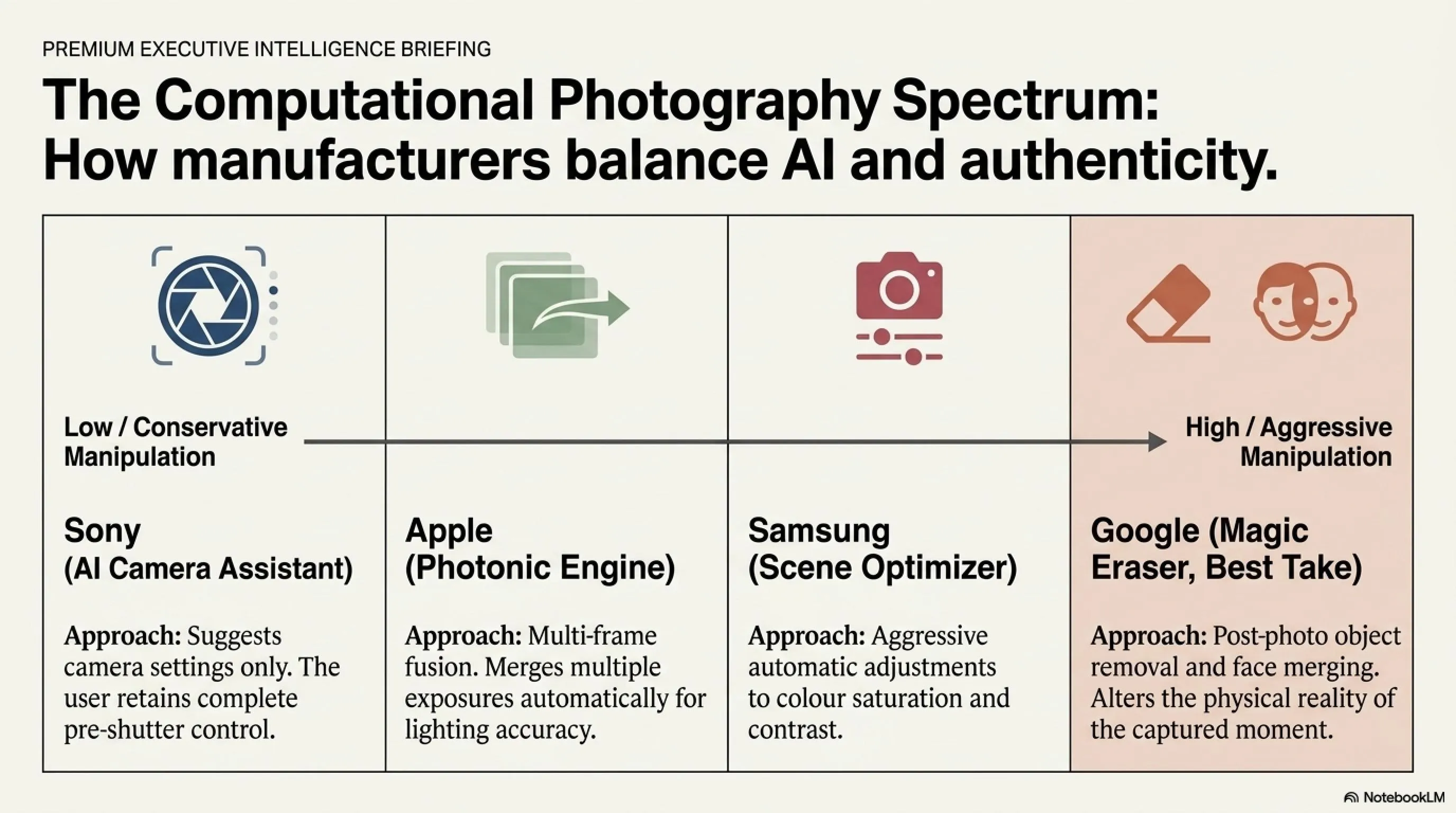
The reality is that almost all modern smartphones use AI to enhance photos:
💭 Tekin Analysis: The Computational Photography Debate
This saga raises a bigger question: how much AI manipulation in photography is acceptable? Some argue that photography has always involved manipulation—from lens choice and exposure to Photoshop editing. Others say AI crosses a red line and distorts "reality." Sony's approach—offering suggestions without automatic application—might be a good balance. But the main issue is transparency: users need to know when AI is intervening and to what extent. Perhaps we need an industry standard that defines what constitutes a "real photo" versus an "AI-edited photo." Some photography competitions now ban AI-enhanced images, while others embrace them. As AI becomes more sophisticated, this debate will only intensify.
📊 Summary Table: Tonight's News at a Glance
💭 Final Thoughts: A Night Full of Security and Ethical Lessons
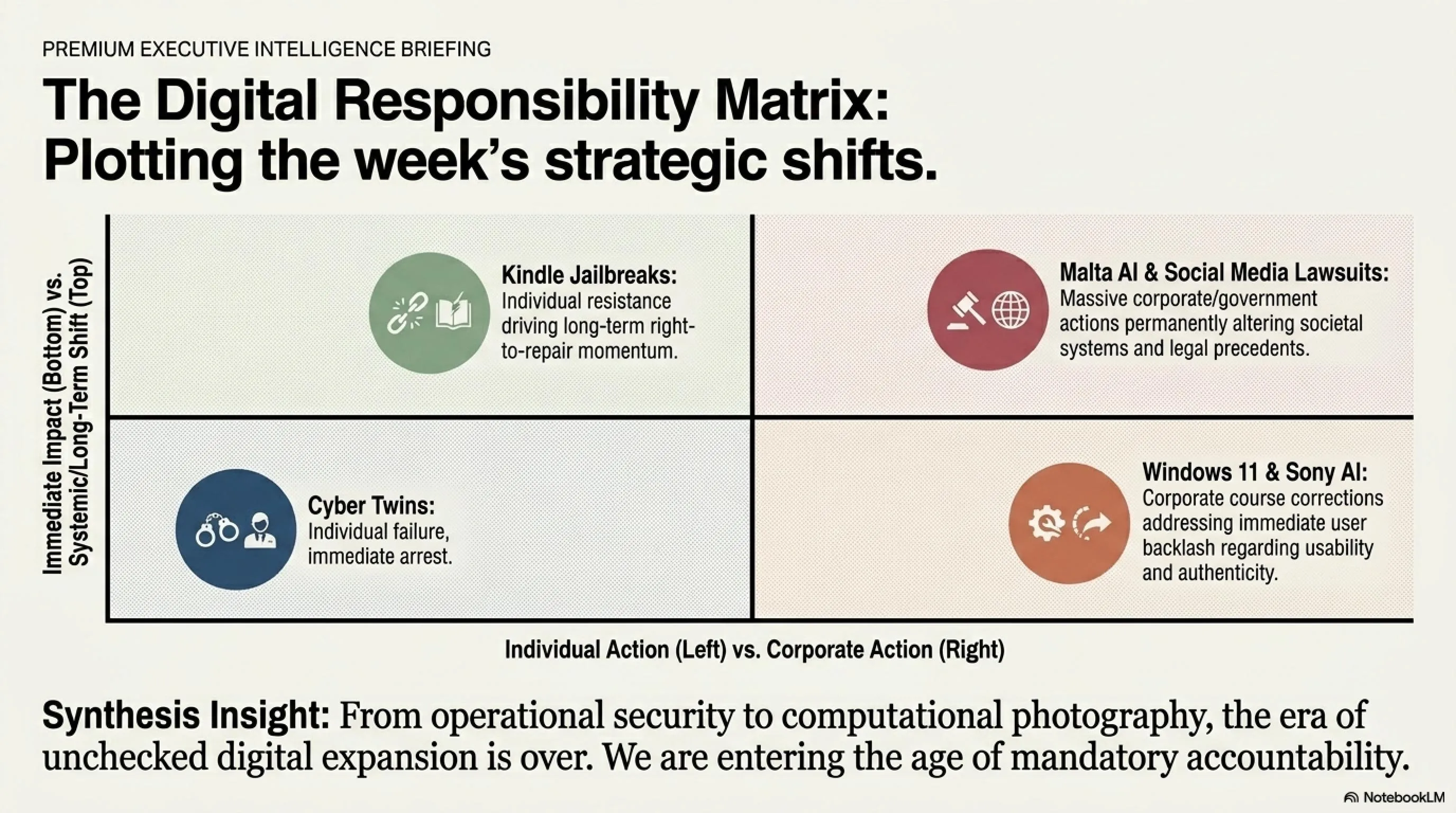
Tonight we witnessed stories that all share a common theme: responsibility in the digital age. From hackers caught by a simple mistake, to Amazon ending support for old devices, from OpenAI putting an entire country in an AI experiment, to social media platforms being held accountable for their negative impacts—all of these remind us that technology is a powerful tool that must be used responsibly. Whether we're companies or ordinary users, we all have a role in shaping the digital future.
❓ Frequently Asked Questions (FAQ)
Is recording Microsoft Teams meetings safe?
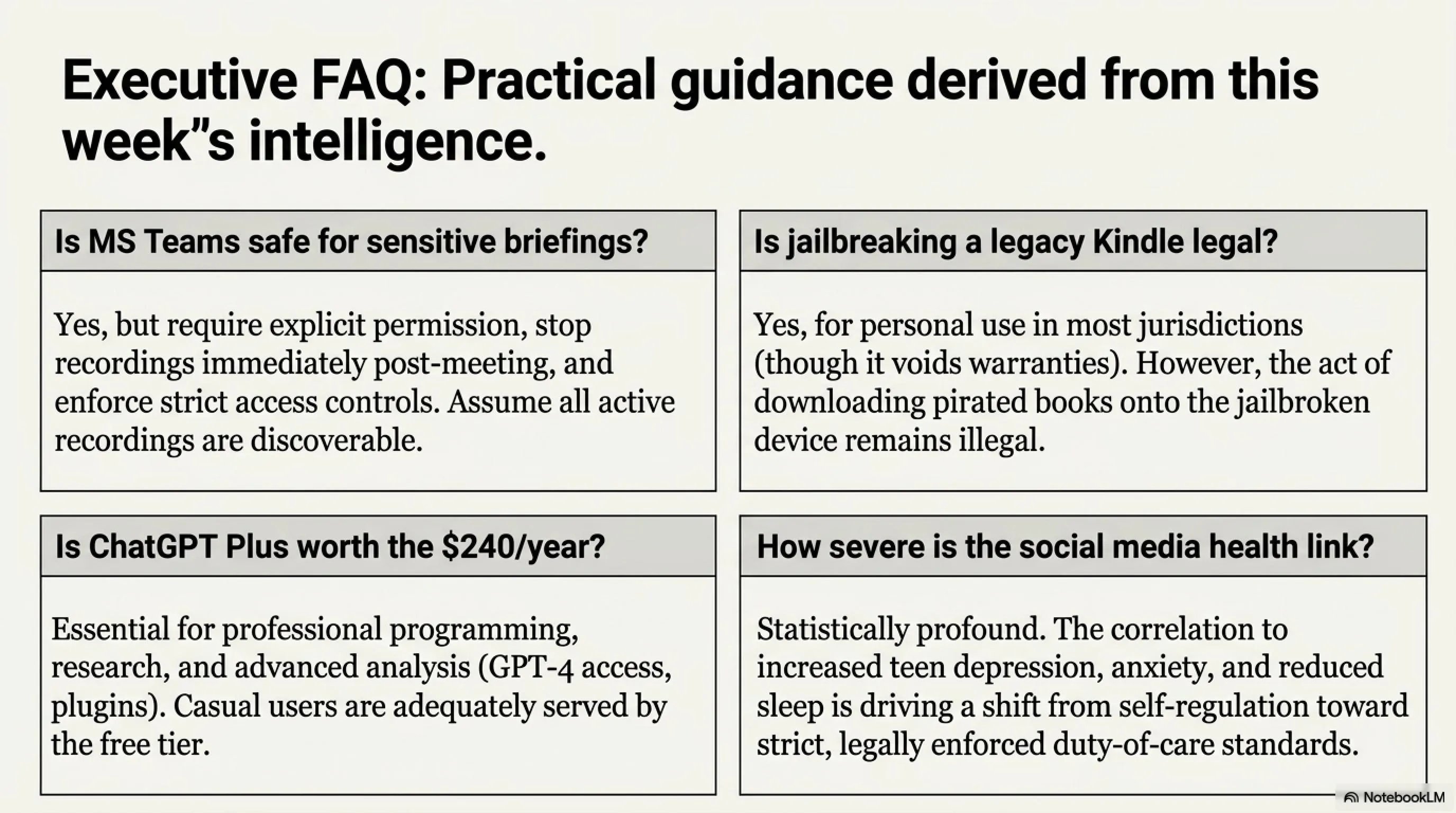
Yes, but you need to be careful. Always get permission from all participants before recording. After the meeting ends, make sure to stop the recording and store the file in a secure location. Never share sensitive information in recorded meetings unless you're certain only authorized people have access.
Is jailbreaking a Kindle legal?
In most countries, jailbreaking personal devices for personal use is legal, but it may void your device warranty. However, downloading pirated books is illegal. If you want to jailbreak your Kindle, only use it to install legal software and read purchased or free books.
Is ChatGPT Plus worth $240 per year?
It depends on your needs. If you use ChatGPT for professional work, research, or programming, it's probably worth it. ChatGPT Plus offers access to more advanced models (like GPT-4), faster speeds, and additional features like image analysis and plugins. But if you only use it occasionally, the free version is sufficient.
How can I customize the Windows 11 Start menu?
Currently, this feature is only available in the Insider Preview version. To access it, you need to join the Windows Insider Program and install the latest Dev Channel build. After installation, you can use Settings > Personalization > Start to change the Start menu size and move the Taskbar. Note that Insider builds may have bugs.
Are social media platforms really harmful to teen mental health?
Research shows that excessive social media use can be linked to depression, anxiety, and sleep problems in teens. But the relationship is complex—some teens use social media for social support and learning. The key is balanced and mindful use: set time limits, avoid negative content, and don't forget offline activities.
How much does Sony's AI Camera Assistant change photos?
According to Sony's explanation, the AI Camera Assistant only suggests camera settings (exposure, color, bokeh, zoom) and doesn't edit the final photo. All changes are applied before taking the photo, and you can reject suggestions. This approach is more conservative than competitors like Google (which removes objects) or Samsung (which heavily changes colors).
How can I protect myself from hackers?
Key tips: (1) Use strong, unique passwords for each account, (2) Enable two-factor authentication (2FA), (3) Keep software updated, (4) Watch out for phishing emails and messages, (5) Use VPN on public Wi-Fi networks, (6) Regularly backup important data, (7) Limit app and service permissions.
Should I worry about end-of-support for old devices?
Yes, especially from a security perspective. When a company ends support for a device, you no longer receive security updates and become vulnerable to exploits. If your device is connected to the internet, you should either upgrade it or avoid using it for sensitive tasks. For devices like Kindle that are only used for reading, the risk is lower.
📚 Sources and References
🔗 Trusted News Sources
🔐 Hacker Twins and Microsoft Teams
- The Verge - "Cybercriminal twins caught after forgetting to turn off Teams recording"
- Krebs on Security - "Database extortion gang arrested after operational security failure"
- BleepingComputer - "How a Microsoft Teams recording led to cybercriminal arrests"
- FBI Press Release - "International cybercrime operation disrupted"
📚 Amazon Kindle Jailbreak
- The Verge - "Amazon Kindle users turn to jailbreaking after end of support"
- Ars Technica - "Kindle jailbreak community grows as Amazon drops support"
- MobileRead Forums - "Kindle jailbreak guides and community support"
- Amazon Official - "Kindle device support lifecycle policy"
🤖 OpenAI and Malta
- TechCrunch - "OpenAI offers free ChatGPT Plus to Malta in AI education push"
- OpenAI Blog - "Malta AI Education Initiative announcement"
- Malta Government - "National AI education program details"
- Reuters - "OpenAI expands international AI education programs"
🪟 Windows 11 Start Menu
- Windows Central - "Windows 11 Insider Preview adds Start menu customization"
- Microsoft Blog - "New Windows 11 personalization features"
- The Verge - "Microsoft finally lets you customize Windows 11 Start menu"
- Neowin - "Windows 11 Build 26120 brings taskbar and Start menu changes"
⚖️ Social Media Settlement with Schools
- NPR - "Snap, YouTube, TikTok settle with schools over social media harm"
- The New York Times - "Social media companies reach settlement in school lawsuits"
- CNN - "Schools win major settlement against social media platforms"
- Legal documents - "Breathitt County Schools v. Social Media Platforms"
📸 Sony AI Camera Assistant
- The Verge - "Sony explains how its AI camera assistant actually works"
- Sony Official Blog - "AI Camera Assistant technology explained"
- Android Authority - "Sony Xperia 1 XIII AI camera features detailed"
- DPReview - "Computational photography debate: Sony's approach"
📊 Research and Statistical Sources
- Pew Research Center - "Social Media Use Among Teens and Young Adults 2026"
- American Psychological Association - "Impact of Social Media on Mental Health"
- Cybersecurity & Infrastructure Security Agency (CISA) - "Database Security Best Practices"
- Electronic Frontier Foundation (EFF) - "Right to Repair and Device Jailbreaking"
- Gartner Research - "AI in Consumer Electronics: Trends and Predictions"
- Common Sense Media - "Social Media's Impact on Children and Teens"
✅ Information Verification
All news and information provided in this article has been extracted from trusted and official sources and verified through web searches. We are committed to providing accurate, up-to-date, and reliable information. If you notice any errors or need updates, please contact us.
🌐 Stay Connected With Us
For the latest tech, gaming, and gadget news, follow us on social media:
📸 Instagram 🆔 Telegram Arabia 🆔 Telegram Global 🆔 Telegram Iran 💬 Direct Contact 📧 majid@tekingame.com🌙 Good Night from Tekin!
We hope you enjoyed reading tonight's news. Join us tomorrow morning with Tekin Morning!
📅 Tekin Night - Sunday Evening, May 17, 2026
🌐 Stay Connected With Us 🎮✨
For the latest tech, gaming, and gadget news, follow us on our official social media channels:
Additional Gallery: 🌙 Tekin Night May 17: Hacker Twins Caught, Kindle Jailbreak & OpenAI's Malta Gift