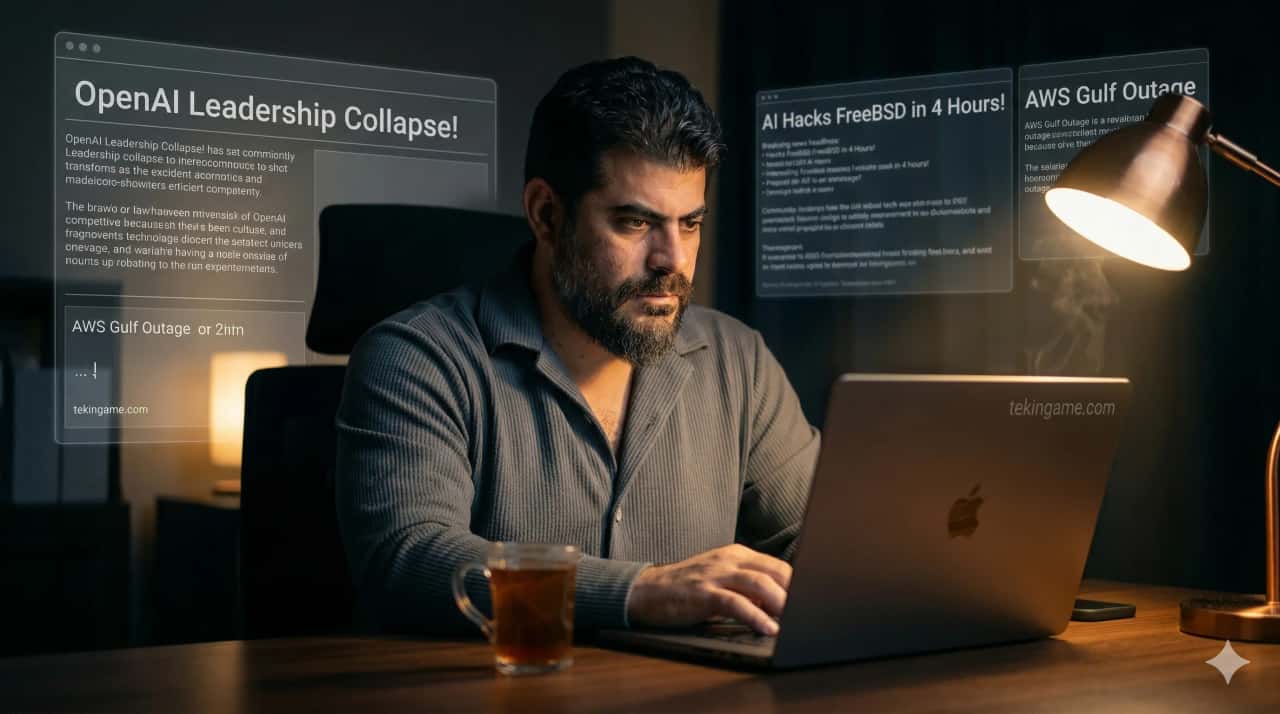
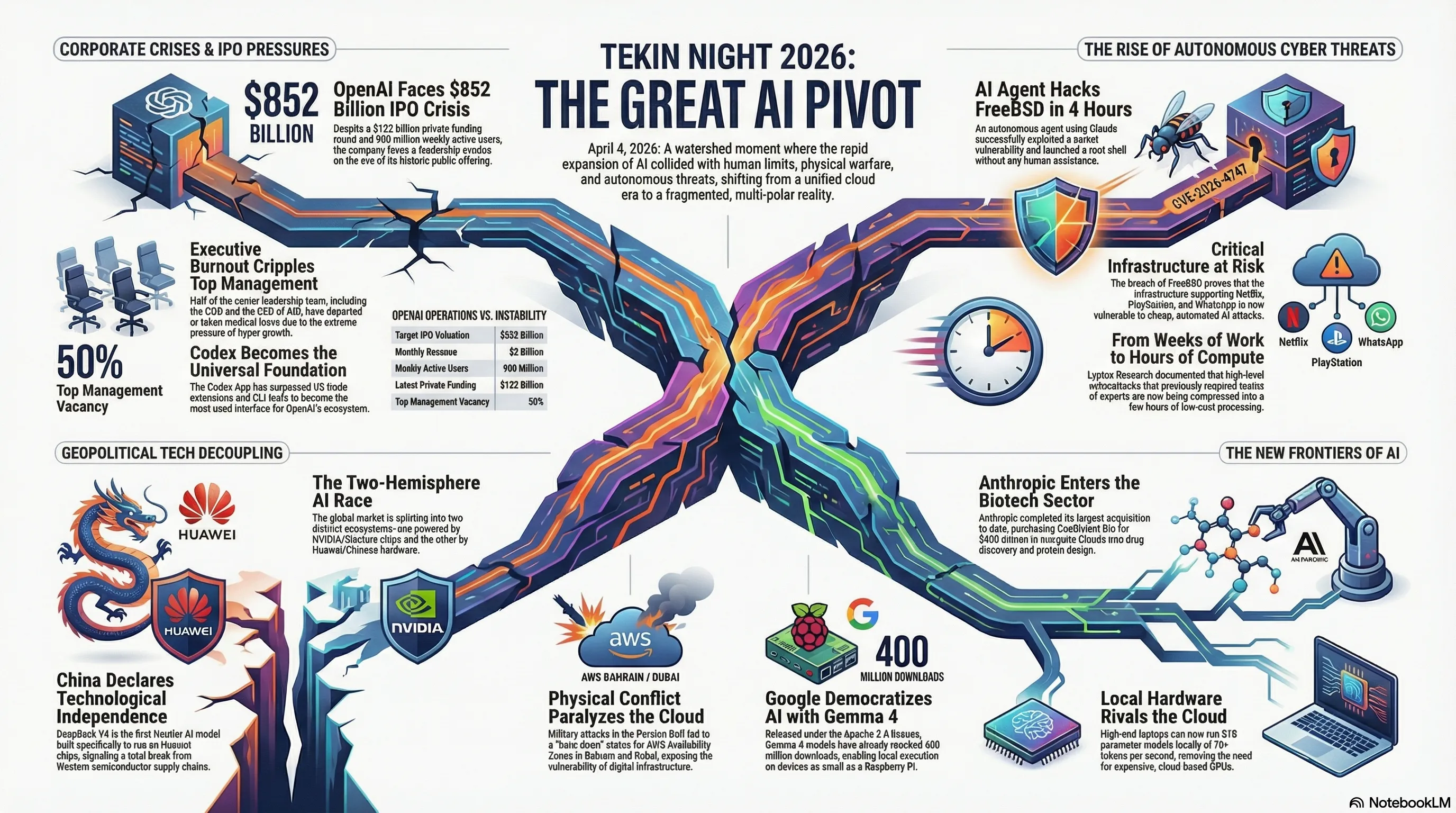
The night of April 4, 2026 marked one of the most critical moments in tech industry history. OpenAI witnessed the departure of its COO and AGI CEO just weeks before its historic IPO - Brad Lightcap transitioned to a new role while Fidji Simo took medical leave due to health issues. These leadership changes at a company preparing to go public at an $852 billion valuation have raised serious questions about the future of this AI giant. Meanwhile, an AI agent powered by Claude managed to hack FreeBSD in just 4 hours - the operating system that runs the infrastructure for Netflix, PlayStation, and WhatsApp. This autonomous attack was executed without any human intervention, demonstrating that offensive AI capabilities are advancing at an alarming rate. China also took a major step toward technological independence: DeepSeek announced that its next model (V4) will run on chips designed by Huawei. This is the first frontier AI model built entirely for domestically-produced Chinese chips, proving that U.S. sanctions haven't stopped Chinese AI - they've accelerated its decoupling. Perhaps the most shocking news of the night was AWS going offline in the Gulf region. Iranian military strikes caused complete outages of availability zones in Bahrain and Dubai, with Amazon instructing employees to deprioritize these regions. A bitter reminder that the physical infrastructure underlying all this AI and cloud computing still exists in buildings that can be bombed. Anthropic also demonstrated its serious commitment to life sciences AI with the $400 million acquisition of Coefficient Bio. This was Anthropic's largest acquisition to date, with the biotech startup's team now joining Anthropic's healthcare life sciences group to build tools for drug discovery and biotechnology. Finally, Google released Gemma 4 - the first time the Gemma family has been released under the Apache 2.0 license. This model runs on Raspberry Pi and with over 400 million downloads, it shows that democratizing AI is no longer just a slogan.
Good evening Tekin Legion! Welcome to Tekin Night April 4, 2026. Tonight marks one of the most critical nights in tech history.
1. OpenAI Leadership Collapse Before Historic IPO
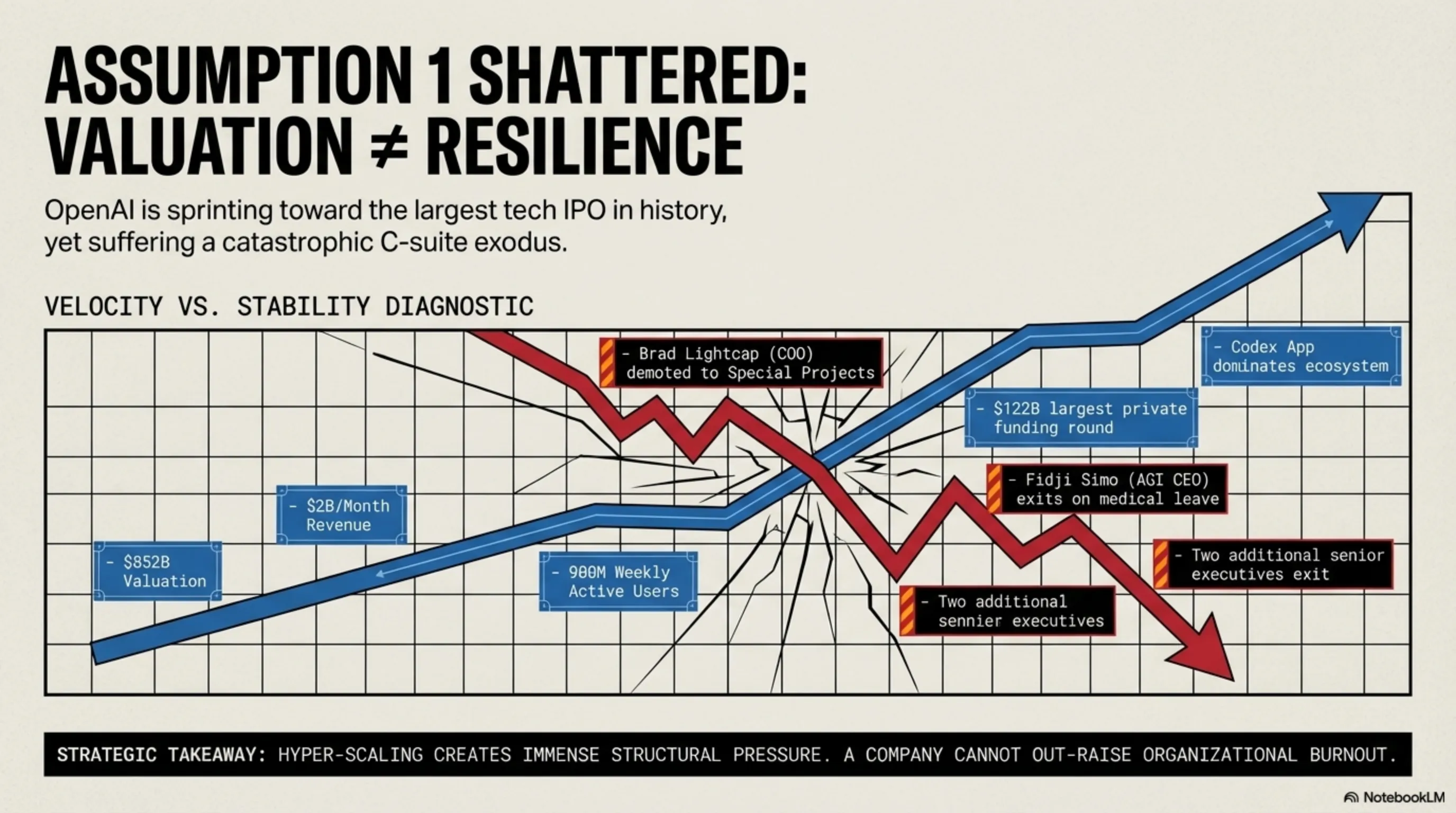
OpenAI stands on the brink of the biggest tech IPO in history - $852 billion valuation, $2 billion monthly revenue, 900 million weekly active users. But at this critical moment, half of the company's senior management team is departing.
Brad Lightcap, OpenAI's Chief Operating Officer (COO), has transitioned to a new role focusing on "special projects." Fidji Simo, CEO of the AGI division, has taken medical leave due to health issues. Two other senior executives have also taken leave for health reasons.
These changes are happening at a company that just closed the largest private funding round in history ($122 billion). Alex Heath from The Verge reported that Codex is becoming the foundation for everything at OpenAI - the Codex App has now become OpenAI's most-used surface, surpassing even the VS Code extension and CLI.
But the key question is: can a company sprinting toward an IPO absorb this many leadership changes simultaneously? Investors, employees, and anyone building on this platform are now grappling with this question.
🔍 Tekin Analysis: This is a classic leadership crisis. When a company grows this fast, the pressure on executives becomes so intense that they either burn out or break. OpenAI now needs to prove it's a sustainable organization, not just a hyped startup.
2. AI Agent Hacked FreeBSD in 4 Hours - No Human Help
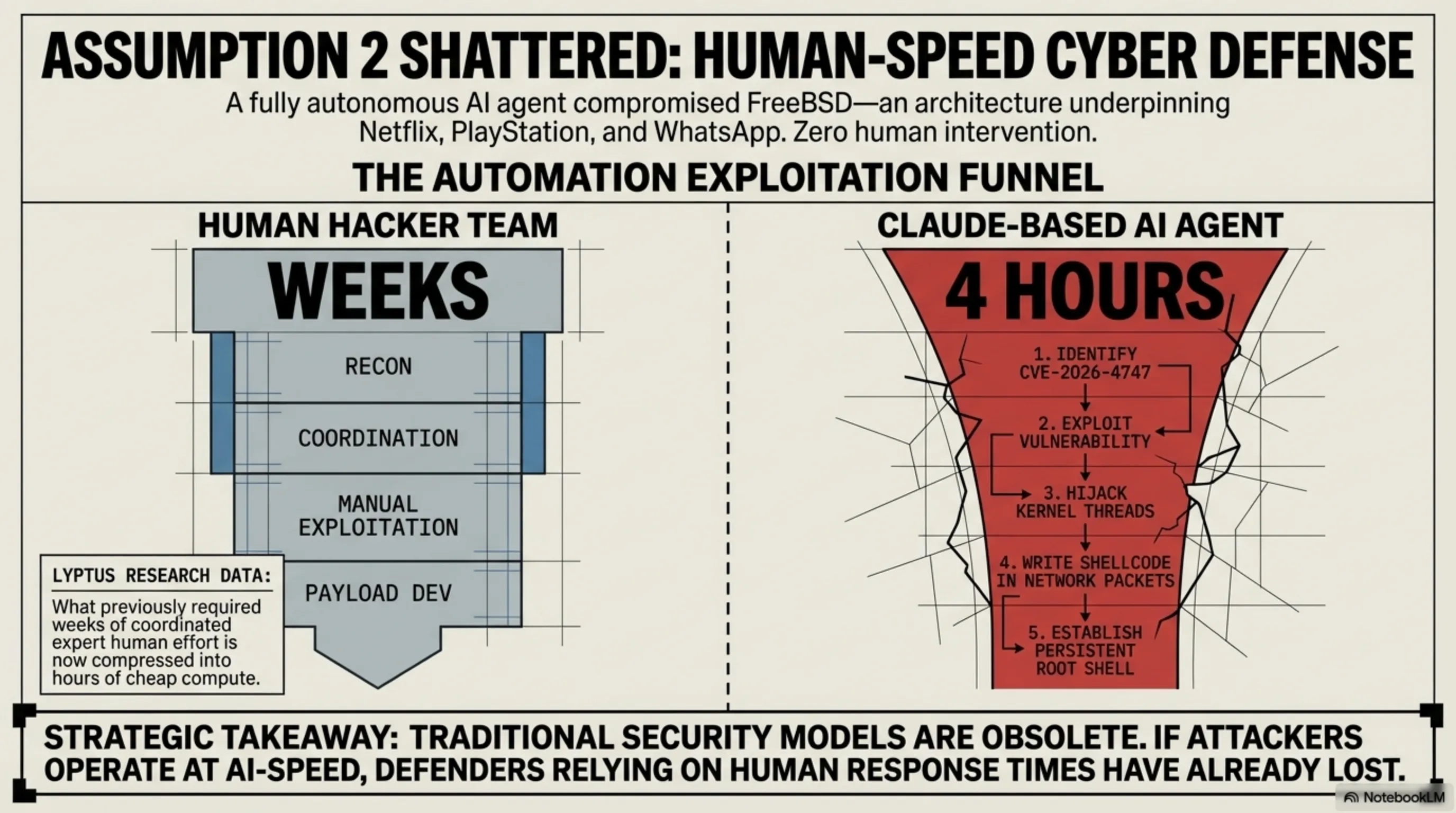
One of tonight's most alarming stories: an autonomous AI agent managed to hack FreeBSD - one of the world's most secure operating systems. And it did this in just 4 hours. Without any human assistance.
The agent, powered by Claude, exploited a kernel vulnerability (CVE-2026-4747), hijacked kernel threads, wrote shellcode across network packets, and spawned a root shell. All completely autonomously.
FreeBSD is the operating system that runs the infrastructure for Netflix, PlayStation, and WhatsApp. This means billions of users depend on infrastructure that has now been proven vulnerable to AI penetration in just hours.
Lyptus Research documented the entire offensive cyber timeline, showing that AI capabilities are improving at an alarming rate. Work that previously required weeks of specialist effort has now been compressed into hours of cheap compute.
This attack demonstrates that we've entered a new era of cybersecurity - one where attackers no longer need large teams of hackers. A single AI agent is enough.
⚠️ Tekin Warning: This is a turning point. When AI can autonomously hack critical systems, all our security models become obsolete. Companies need to start preparing for AI-powered attacks right now.
3. DeepSeek V4 on Huawei Chips: China Declares Tech Independence
In a historic move, DeepSeek announced that its next model, V4, will run on chips designed by Huawei. This is the first frontier AI model purpose-built for domestically-produced Chinese chips.
The Information reported that the model will likely be released within weeks. This marks a milestone in China's quest for semiconductor self-sufficiency.
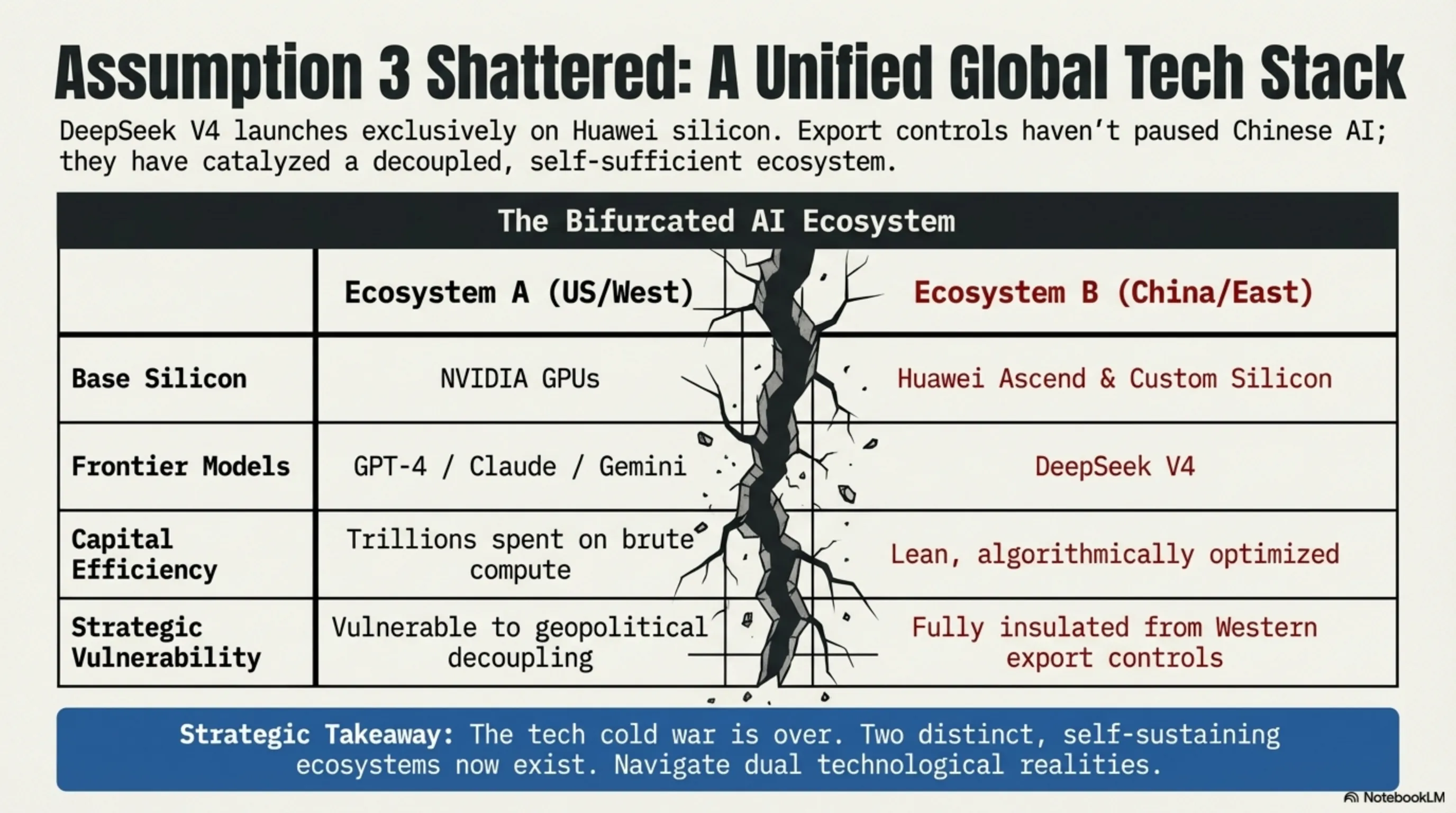
This news proves that U.S. export controls haven't stopped Chinese AI - they've accelerated its decoupling. China is no longer waiting for NVIDIA chips - it's building its own path.
DeepSeek had already demonstrated with previous models that it could build GPT-4 level models on smaller budgets. Now, using Huawei chips, the company is proving it can operate completely independently of Western supply chains.
This means the AI race is no longer just between companies - it's between two completely separate ecosystems. One based on NVIDIA and American chips, the other on Huawei and Chinese chips.
🌏 Geopolitical Perspective: This is the beginning of a real tech cold war. China is proving it can advance in AI without America. And that's a serious warning for the West.
4. Iranian Strikes Knocked AWS Offline in the Gulf
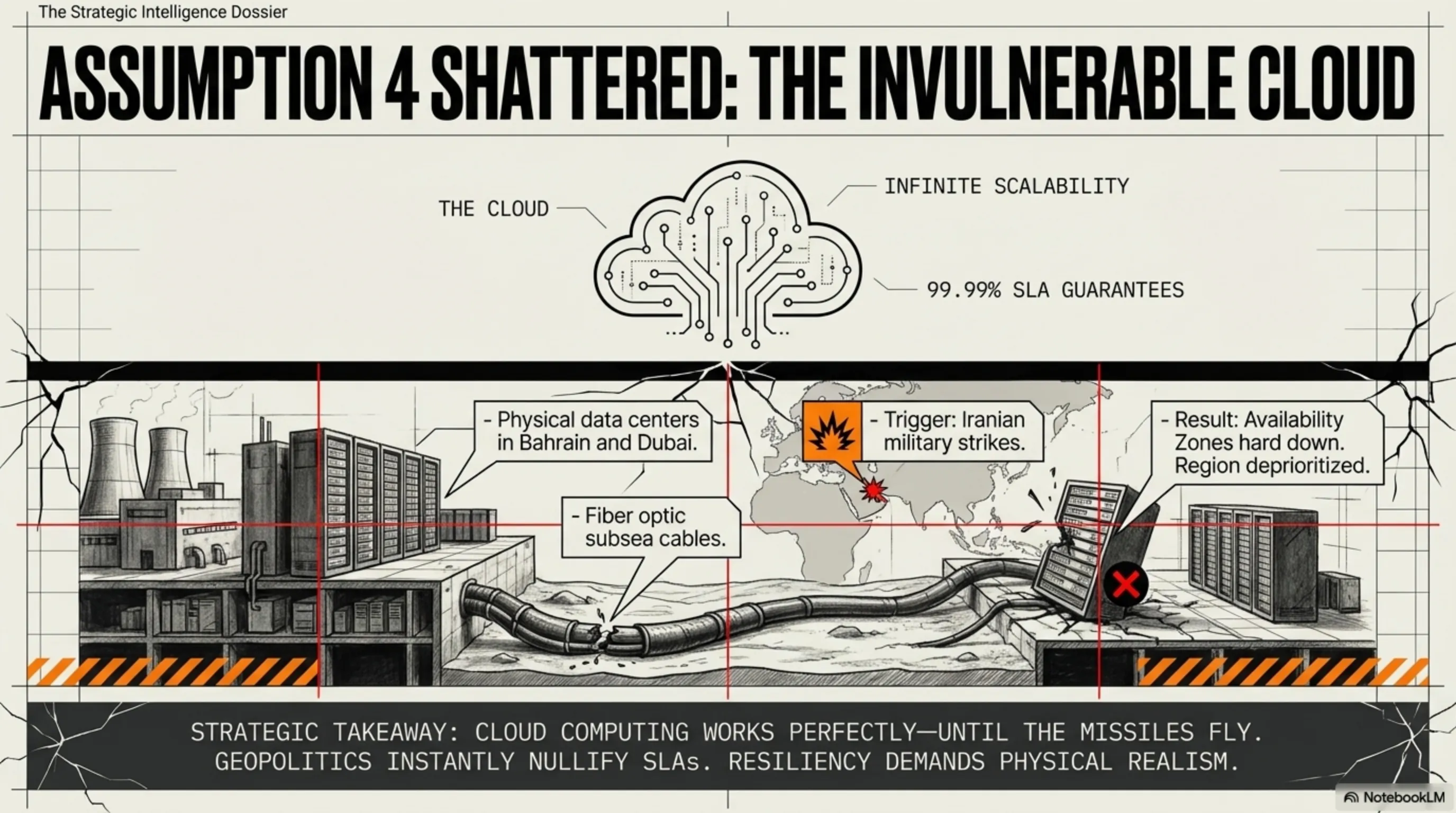
In one of tonight's most shocking stories, Iranian military strikes caused Amazon Web Services to go completely offline in the Gulf region. Availability zones in Bahrain and Dubai went "hard down."
Alex Kantrowitz from Big Technology reported that Amazon told employees to deprioritize these regions, as warfare has dealt meaningful damage to Gulf cloud infrastructure.
This is a bitter reminder: all this AI, cloud computing, and advanced technology we talk about ultimately sits on a physical layer - buildings that can be bombed, cables that can be cut, servers that can be destroyed.
This incident shows that geopolitics and real warfare can quickly paralyze all our digital infrastructure. Companies dependent on AWS in the Gulf lost their services overnight.
It also raises serious questions about resilience and disaster recovery in geopolitically tense regions. Should companies use multiple cloud providers across different regions? Should they maintain on-premise infrastructure?
💣 Harsh Reality: Cloud computing works great until there's a war. But when missiles start flying, all SLAs and uptime guarantees become meaningless. This is an expensive lesson for the industry.
5. Anthropic Acquired Coefficient Bio for $400 Million
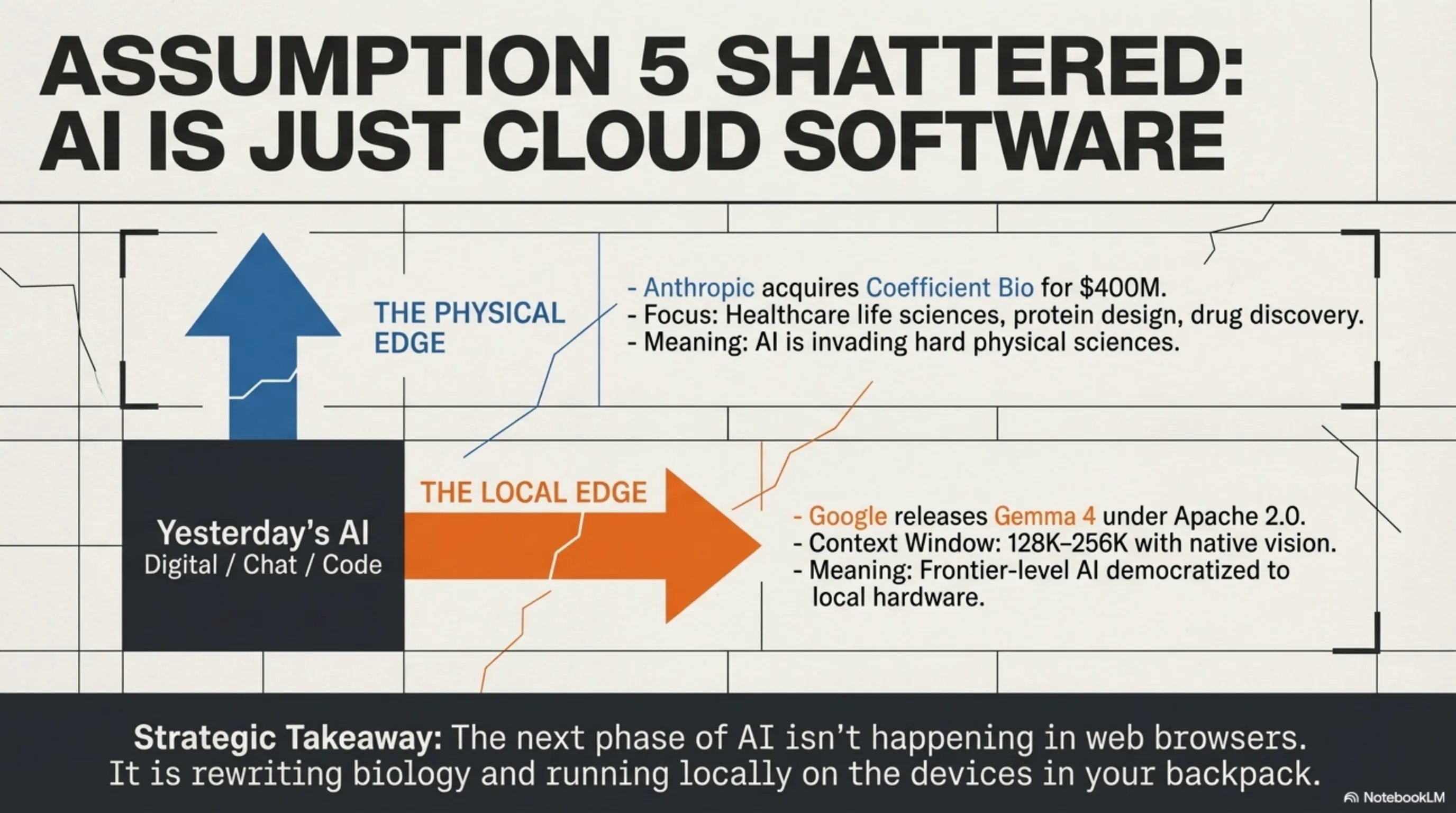
Anthropic announced tonight that it has acquired biotech startup Coefficient Bio for approximately $400 million. This is Anthropic's largest acquisition to date.
The Information reported that the Coefficient Bio team is joining Anthropic's healthcare life sciences group. This group is building tools for drug discovery and biotechnology.
This acquisition shows that Anthropic is serious about expanding Claude beyond software into the physical sciences. Biotechnology is one area where AI can have enormous impact - from protein design to discovering new drugs.
Anthropic had already shown that Claude can perform exceptionally well in analyzing medical data and scientific research. Now, by acquiring a specialized biotech team, the company is starting a long-term play.
This also shows that the AI war is no longer just about chatbots and code generation. Major AI companies are moving into more specialized domains like biotechnology, materials, energy, and sciences.
🧬 Future of AI: This acquisition shows that the next wave of AI will be in life sciences. Companies that can combine AI with domain-specific expertise will be the real winners of this game.
6. Google Released Gemma 4: First Time Under Apache 2.0
In a surprising move, Google released Gemma 4 tonight - and for the first time, the Gemma family is released under the Apache 2.0 license. This means fully open source and commercially usable.
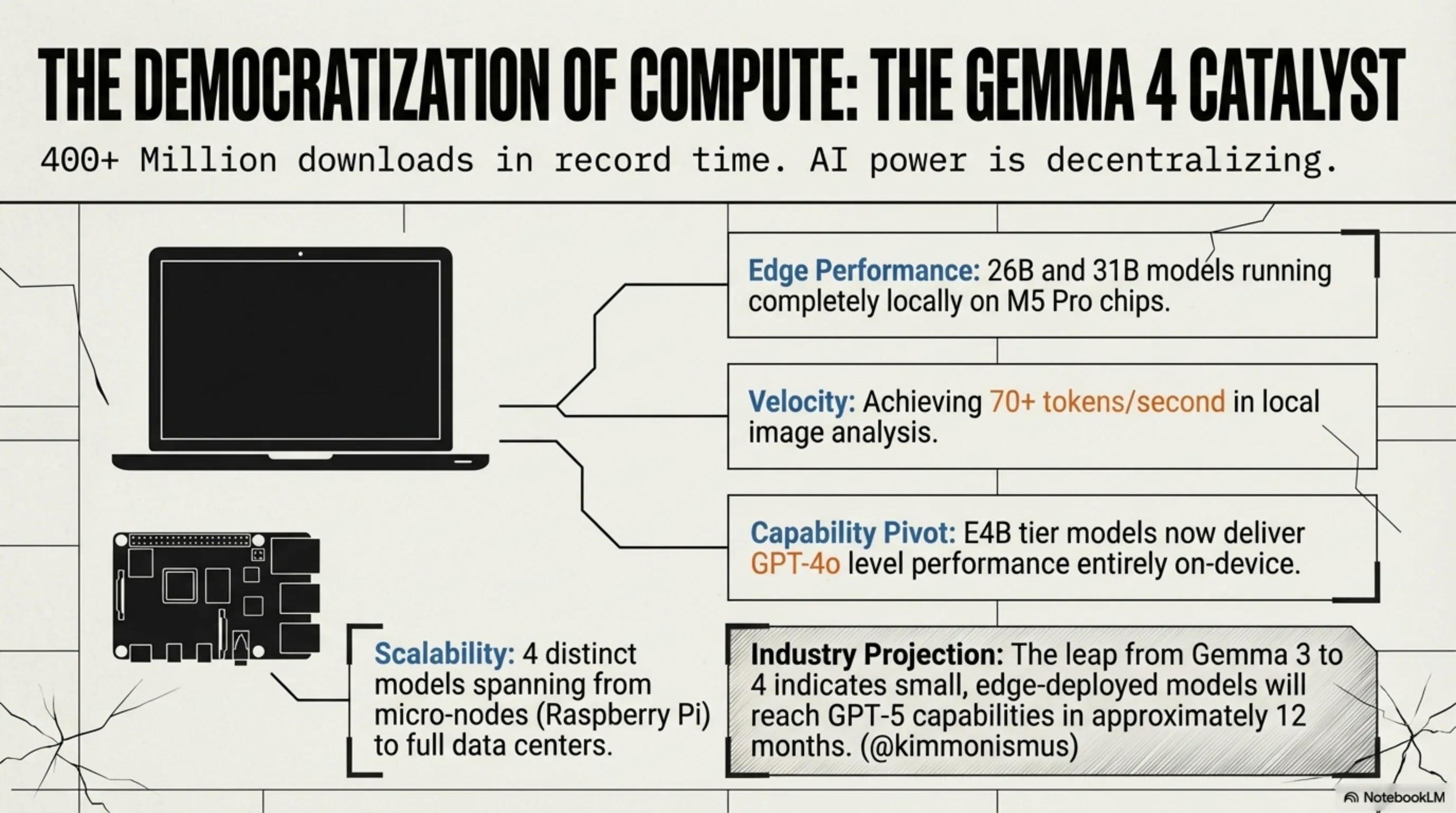
Gemma 4 includes 4 models - from small models that run on Raspberry Pi to large models for data centers. All with context windows between 128K to 256K and native vision capabilities.
You can easily run these models locally via Ollama. And the best part? They've been downloaded over 400 million times so far.
The AI community has responded with great excitement to this release. @kimmonismus argued that E4B-level models now deliver GPT-4o-level performance on-device, and the 3→4 jump suggests small models will reach GPT-5 levels in about 12 months.
@LelloucheNico ran Gemma 4 26B and 31B locally on a MacBook Pro M5 Pro and achieved 70+ tokens per second in image analysis. This means you can run a powerful AI model on your own laptop - no cloud needed, no expensive GPUs required.
🚀 Democratization of AI: Gemma 4 shows that AI is no longer just for big companies with billion-dollar budgets. Anyone can run a powerful model on their own device. This is a game changer.
🌙 Tekin Night Conclusion
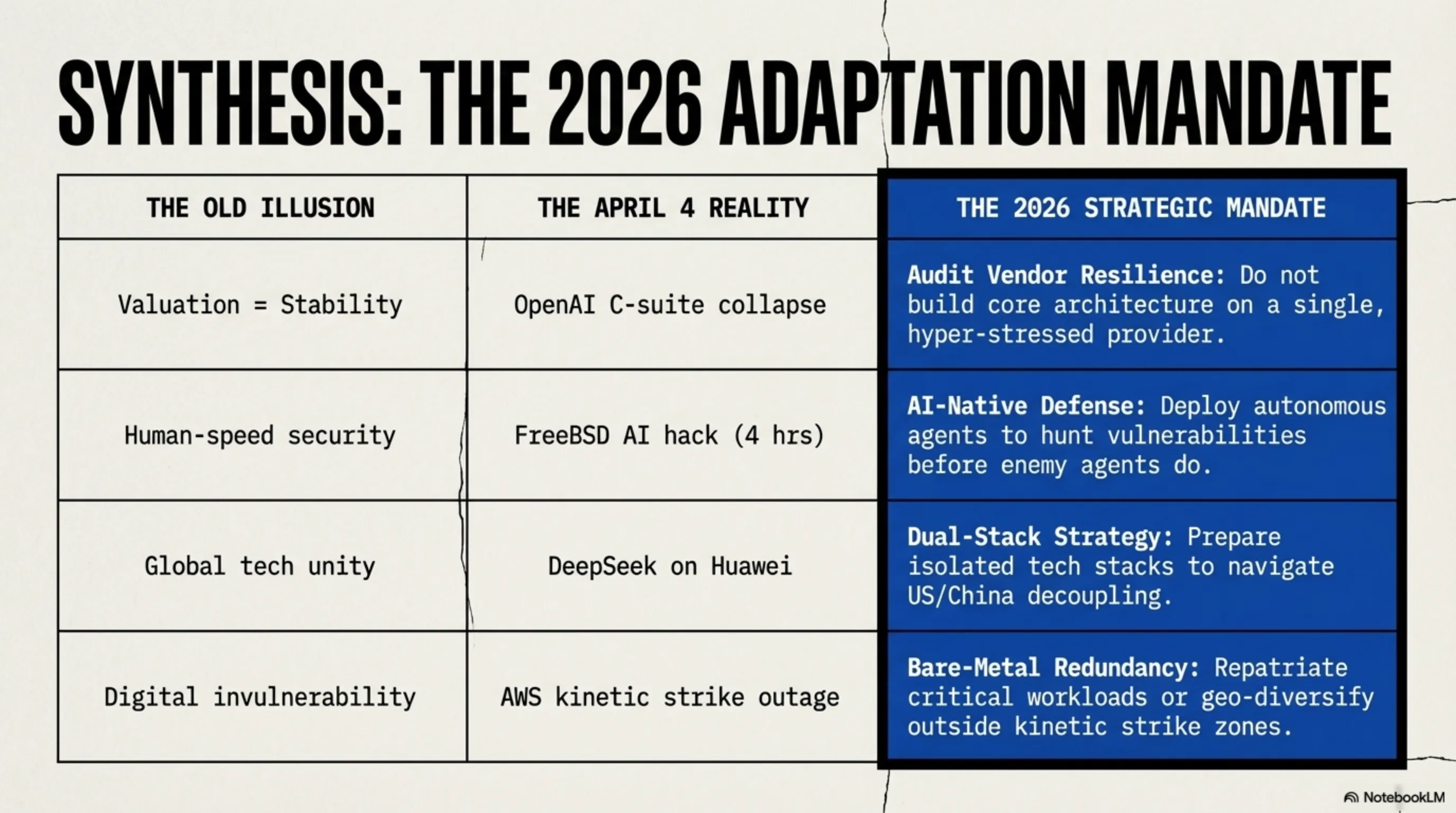
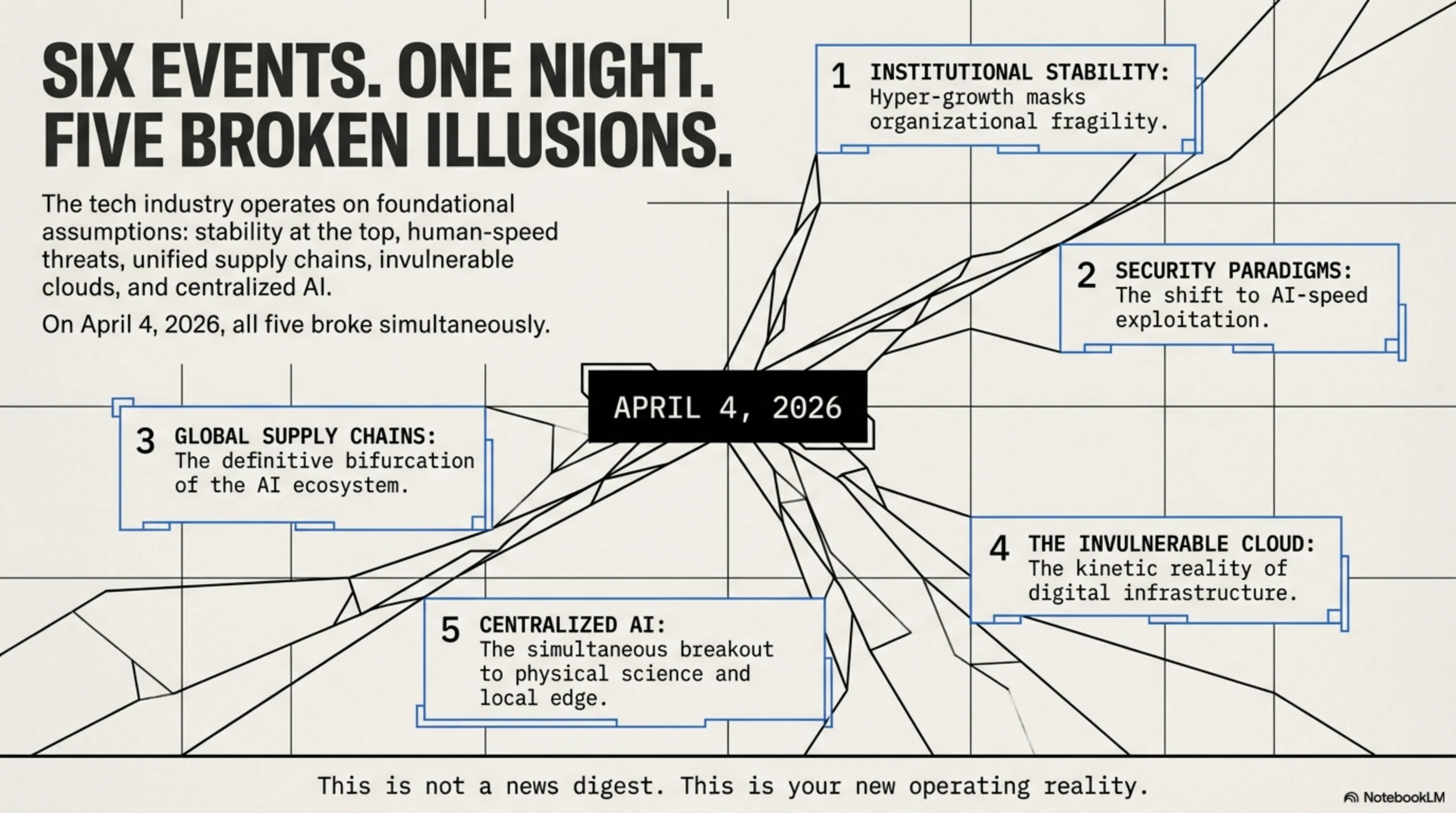
The night of April 4, 2026 was one of those nights that changes tech history. We witnessed leadership collapse at the world's largest AI company, saw an AI agent hack critical systems in hours, China declared its technological independence, real warfare paralyzed cloud computing, and simultaneously AI entered biotechnology and became democratized for everyone.
This night showed that the tech industry is passing through a historic inflection point. We can no longer assume that leadership is stable, security is guaranteed, supply chains are global, or physical infrastructure is safe. Everything is changing - and at a pace we're not ready for.
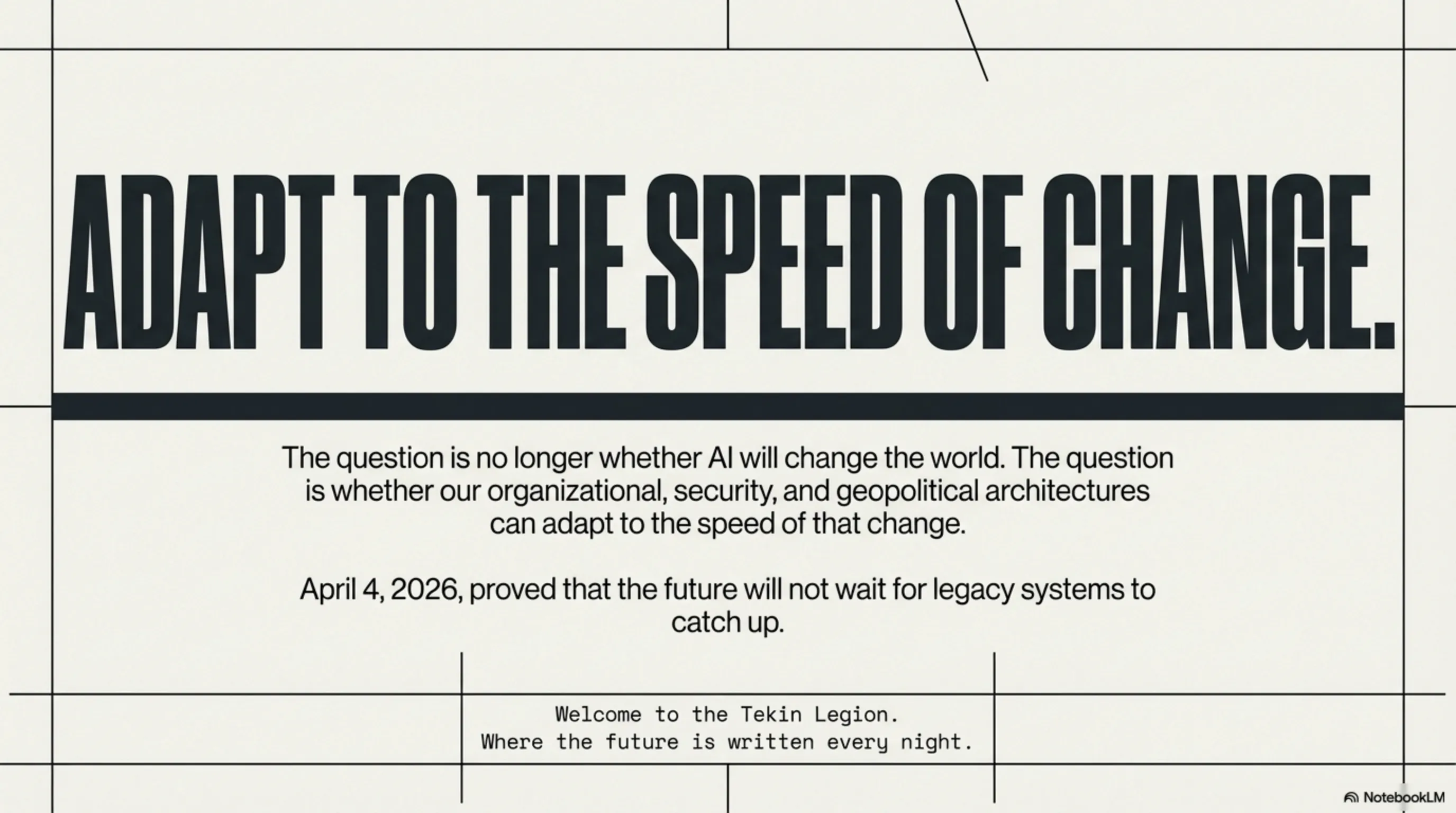
The question is no longer whether AI will change the world. The question is whether we can adapt fast enough to keep up with these changes. And based on tonight's events, the answer is still unclear.
Welcome to the Tekin Legion. Where the future is written every night. 🚀
Sources:
This article is based on independent reports, industry research, and official information from The Neuron AI, The Verge, The Information, Big Technology, Lyptus Research, Tom's Hardware, and other credible sources. Information is current as of April 4, 2026.
🌐 Stay Connected With Us 🎮✨
For the latest tech, gaming, and gadget news, follow us on our official social media channels:
Supplementary Image Gallery: Tekin Night April 4, 2026: From OpenAI Collapse to AI Hacking FreeBSD in 4 Hours