
🌙 Welcome to Tekin Night — June 1, 2026
Good evening, tech enthusiasts! Monday night kicks off with six electrifying stories from the world of technology. Tonight we witness heroic tales of blockchain security, groundbreaking hardware innovations, and bold market strategies that are reshaping the industry's future.
⚡ Tonight's Headlines:
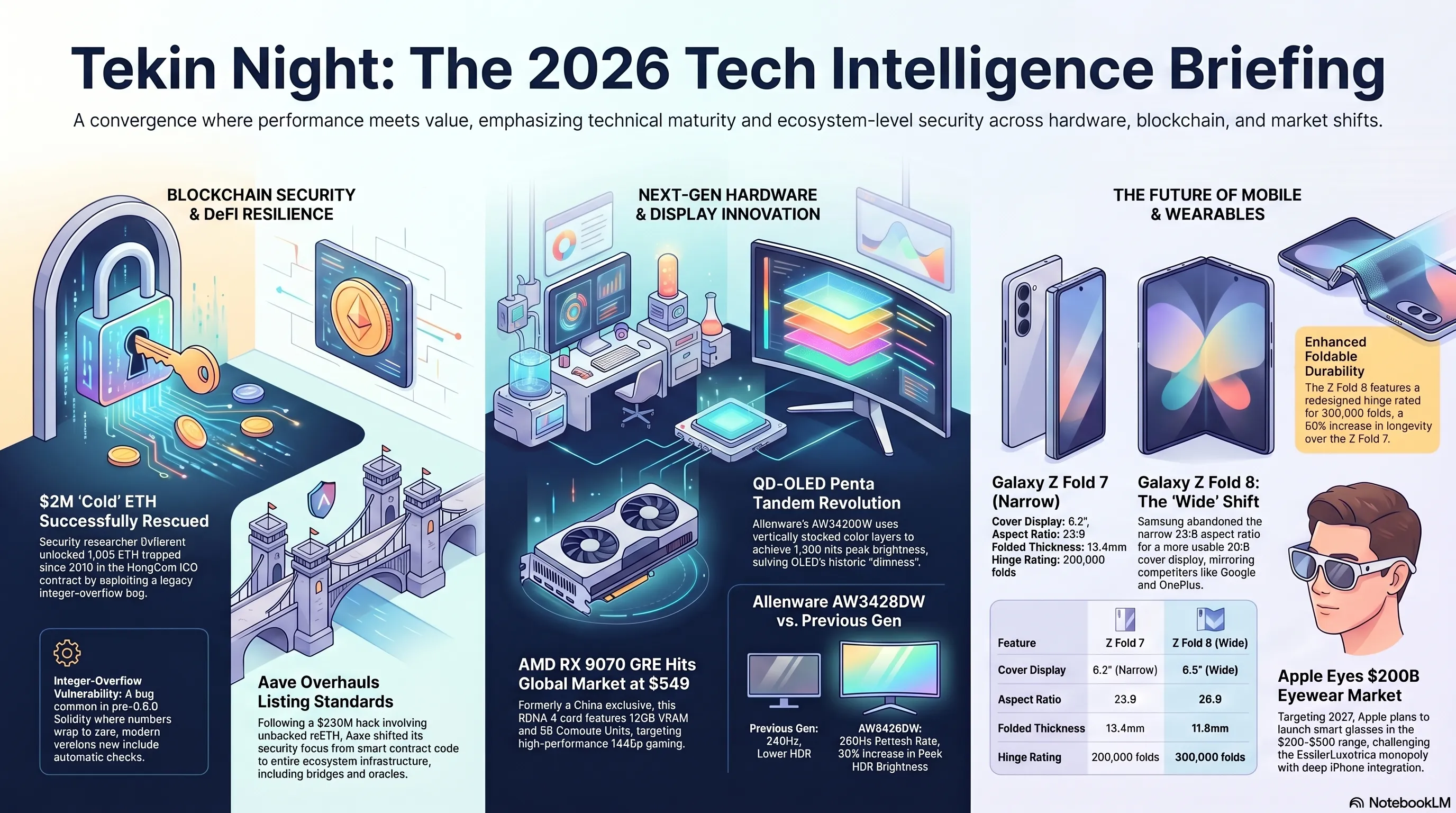
🛡️ White Hat Hero: $2M Recovery from 2016 ICO
🎮 AMD RX 9070 GRE: Global Launch at $549
📱 Galaxy Z Fold 8 Wide: First Real-World Sighting
🖥️ Alienware AW3426DW: QD-OLED Revolution
💸 Aave: Standards Overhaul After $230M Hack
👓 Apple: $200B Eyewear Market Conquest Strategy
🌃 Grab your evening coffee and join us on this nocturnal tech journey!
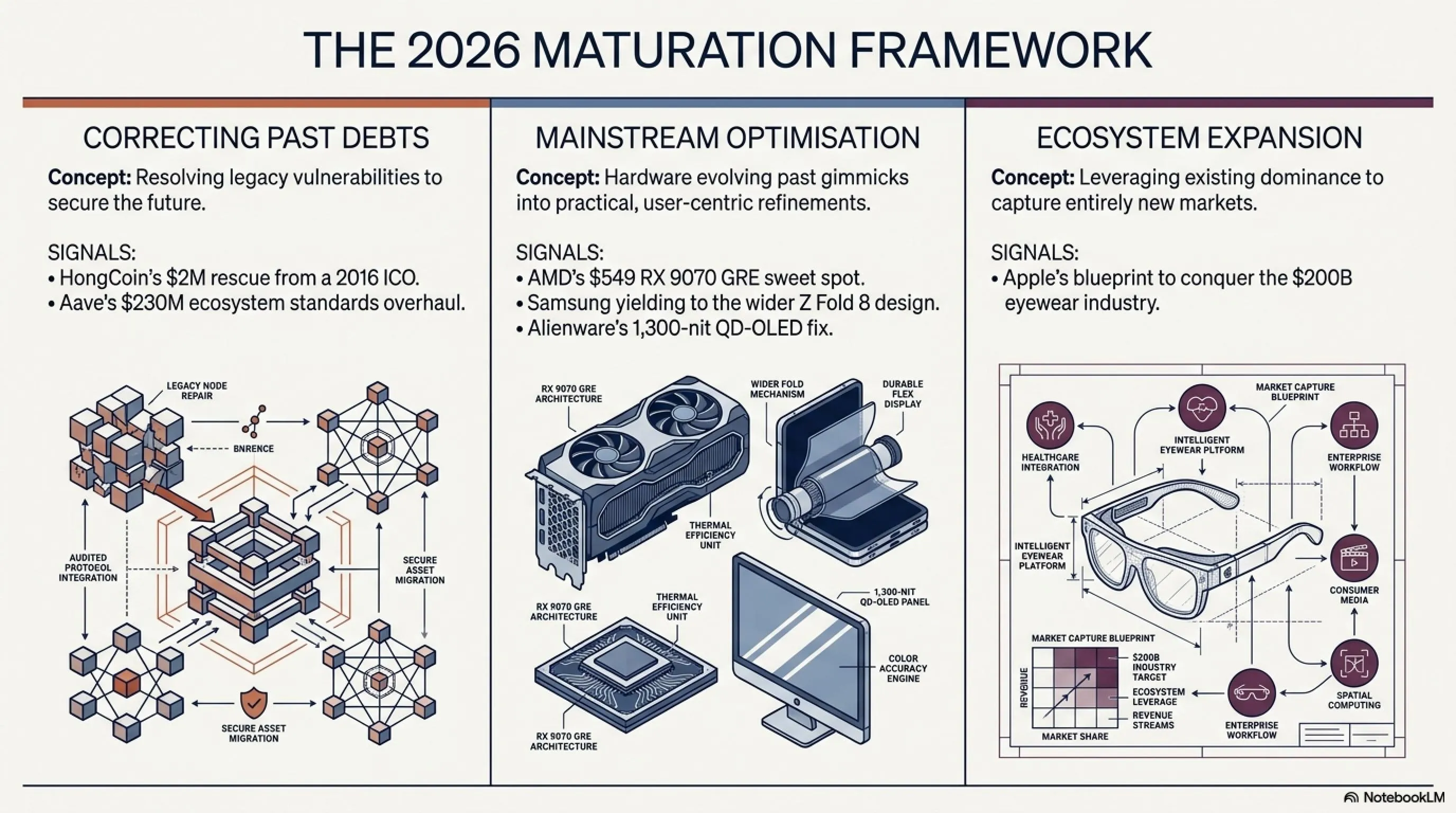
🛡️ White Hat Hero: $2M Recovery from 2016 ICO
In one of 2026's most heroic blockchain security stories, a security researcher operating under the pseudonym 0xflorent successfully unlocked 1,003 ETH (approximately $2 million) that had been trapped in the HongCoin ICO smart contract for nine years. This rescue operation, completed on June 1, 2026, demonstrates the power of blockchain community collaboration and underscores the critical importance of smart contract security in the evolving DeFi landscape.
The saga began in 2016 when the HongCoin project launched an ICO that failed to reach its funding goal. According to the original design, the smart contract should have automatically refunded investors' contributions, but an integer-overflow bug in the Solidity code prevented this mechanism from executing. This vulnerability, common in older Solidity versions, caused millions of dollars to remain locked in the contract for nearly a decade—a stark reminder of how technical debt in blockchain can have long-lasting consequences.
🔍 Technical Deep Dive: Integer-Overflow Vulnerability
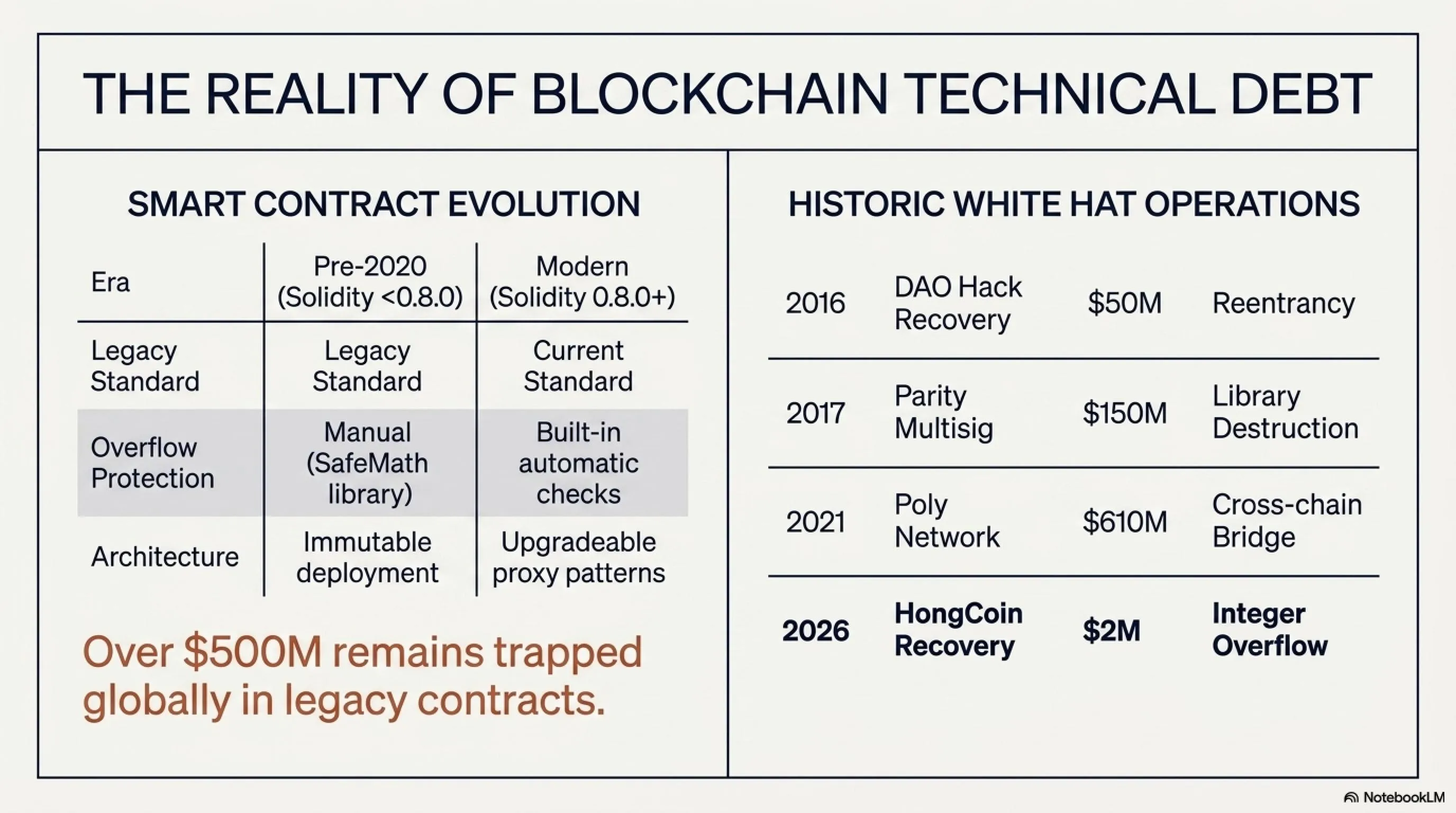
An integer-overflow bug occurs when an integer exceeds its maximum allowed value and wraps around to zero or a negative number. In the HongCoin contract, this bug existed in the refund calculation logic, preventing the refund function from executing correctly. The vulnerability was particularly insidious because it didn't cause the contract to revert—it simply failed silently, leaving funds permanently inaccessible through normal means.
Why This Matters: Older Solidity versions (pre-0.8.0) didn't include automatic overflow checks by default. Developers had to manually use the SafeMath library to prevent such issues. Since Solidity 0.8.0 (released in 2020), these checks are built-in, but legacy contracts remain vulnerable. This incident highlights the importance of contract migration and ongoing security maintenance—even for "dead" projects.
The Technical Challenge: Exploiting this vulnerability safely required deep understanding of the Ethereum Virtual Machine (EVM), precise bytecode analysis, and crafting a transaction that could trigger the overflow in a controlled manner. 0xflorent had to reverse-engineer the contract's logic, identify the exact conditions that would allow fund extraction, and coordinate with the original team to ensure legitimacy and transparency throughout the process.
Working in coordination with the original HongCoin team, 0xflorent executed a carefully orchestrated white hat operation. By leveraging the same integer-overflow vulnerability—but in a controlled, legal manner—he was able to trick the contract into releasing the funds. This process required intimate knowledge of the EVM, meticulous bytecode analysis, and the design of a precision exploit transaction that could unlock the funds without causing collateral damage to the Ethereum network or other users.
This rescue operation matters not only for the HongCoin investors who finally received their funds after nine years of waiting, but also as a crucial lesson for the entire blockchain industry. According to CoinDesk reports, an estimated $500 million+ remains trapped in legacy smart contracts across various blockchains. These cases include failed ICOs, abandoned projects, and contracts whose developers are no longer active or reachable. The HongCoin recovery demonstrates that with sufficient technical expertise, community coordination, and ethical commitment, some of these funds can be recovered.
🎯 Tekin Analysis: Why This Has Strategic Importance
1. Blockchain's Technical Debt: Millions of dollars remain locked in legacy contracts, representing not just lost capital but also lost trust in the industry. This "technical debt" removes capital from circulation and undermines confidence in blockchain technology. White hat operations like this can serve as a template for recovering these funds, potentially unlocking hundreds of millions in value while restoring faith in the ecosystem's ability to self-correct.
2. Evolution of Solidity Security: This incident showcases how the Solidity language has matured over time. Modern versions feature automatic overflow checks, improved static analysis tools, and stronger security standards that dramatically reduce the risk of such bugs. The contrast between 2016-era contracts and today's standards is stark—a testament to the industry's learning curve and commitment to improvement.
3. The White Hat Community's Value: This operation's success depended on collaboration between the security community, the original project team, and the Ethereum platform. It demonstrates that blockchain security is a collective effort, not an individual one. The white hat community serves as a crucial safety net, identifying vulnerabilities and working constructively to resolve them rather than exploiting them for personal gain.
4. Legal and Ethical Framework: The operation also highlights the importance of clear legal and ethical frameworks for white hat activities. 0xflorent worked transparently with the original team, ensuring all actions were documented and legitimate. This approach protects white hat researchers from legal liability while maintaining community trust—a delicate balance that's essential for the industry's maturation.
From a technical perspective, the operation required multiple complex stages. First, 0xflorent had to completely reverse-engineer the contract code to identify the precise vulnerability. Then, he needed to design an exploit transaction that would unlock the funds without harming the network or other users. Finally, this transaction had to be executed with full coordination from the HongCoin team and complete transparency to maintain community trust. The entire process took months of careful analysis, testing on testnets, and coordination with stakeholders.
📊 Comparison: Major White Hat Operations in Blockchain History
| Operation | Amount | Year | Vulnerability Type |
|---|---|---|---|
| HongCoin Recovery | $2M | 2026 | Integer Overflow |
| Parity Multisig | $150M | 2017 | Library Destruction |
| DAO Hack Recovery | $50M | 2016 | Reentrancy |
| Poly Network | $610M | 2021 | Cross-chain Bridge |
For developers and blockchain projects, this saga offers several critical lessons. First, never abandon legacy contracts. Even if a project has failed, there remains an ethical and potentially legal responsibility to users' funds. Second, security is an ongoing process, not a one-time event. Smart contracts should be regularly audited, and where possible, migrated to newer, more secure versions. Third, transparency and collaboration are key to success. White hat operations succeed when all stakeholders work together with open communication and shared goals.
💡 Key Takeaways for Developers
- Use Solidity 0.8.0+: Modern versions include automatic overflow checks and improved security features
- Professional Security Audits: Always get audits from reputable firms before deployment
- Bug Bounty Programs: Incentivize the security community to report vulnerabilities responsibly
- Upgradeability Patterns: Use proxy patterns to enable contract upgrades when necessary
- Comprehensive Testing: Leverage tools like Hardhat, Foundry, and Slither for testing and static analysis
- Emergency Response Plans: Have clear procedures for responding to security incidents
- Community Engagement: Maintain active communication channels with users and security researchers
🎮 AMD RX 9070 GRE: Global Launch at $549
In a strategic move to strengthen its position in the mid-range GPU market, AMD has launched the Radeon RX 9070 GRE globally at $549. Previously exclusive to the Chinese market, this graphics card features the RDNA 4 architecture with 12GB of VRAM, positioning itself between the RX 9060 XT and the standard RX 9070. Announced at Computex 2026, the card targets gamers seeking robust 1440p performance without breaking into premium-tier pricing.
The GRE designation stands for "Golden Rabbit Edition," though some enthusiasts also refer to it as the "Great Radeon Edition." Originally designed as a China-exclusive SKU, high demand and positive reception from gamers prompted AMD to expand availability worldwide. Interestingly, the $549 price point matches the original launch price of the standard RX 9070 before AMD quietly increased it to $619, making the GRE an attractive value proposition for budget-conscious gamers.
⚙️ AMD Radeon RX 9070 GRE Technical Specifications
| Architecture | RDNA 4 (Navi 48) |
| Memory | 12GB GDDR6 |
| Memory Bus | 192-bit |
| Target Resolution | 1440p Gaming |
| MSRP | $549 |
| Global Launch Date | June 2, 2026 |
| Compute Units | 56 CUs (reduced from 60) |
| TDP | ~220W |
However, the RX 9070 GRE story is more nuanced than a simple product launch. This card is essentially a cut-down version of the standard RX 9070, featuring fewer Compute Units and lower clock speeds. According to Tom's Hardware reports, the RX 9070 GRE performs approximately 10-15% slower than the standard RX 9070, but at $70 less (compared to the current $619 price of the RX 9070), it offers superior value for money. This strategic positioning allows AMD to capture the crucial $500-600 price segment where most gamers make their purchasing decisions.
✅ Advantages
- 12GB VRAM for modern games
- Competitive $549 pricing
- Efficient RDNA 4 architecture
- Excellent 1440p performance
- Reasonable power consumption
- Better value than standard RX 9070
- Future-proof memory capacity
⚠️ Disadvantages
- Slower than standard RX 9070
- Fierce competition from RTX 4070
- Weaker Ray Tracing vs Nvidia
- No DLSS support
- Limited availability initially
- FSR 3 still behind DLSS 3.5
- Lower resale value
From a market perspective, the global launch of the RX 9070 GRE represents a smart strategic move by AMD. The mid-range GPU market ($500-600) is one of the industry's most profitable segments, where the majority of gamers make their purchases. However, AMD faces intense competition from Nvidia. The RTX 4070, priced similarly, offers superior Ray Tracing performance and DLSS 3.5 technology. AMD must leverage its strengths—more memory, better pricing, and strong rasterization performance—to compete effectively.
🎯 Tekin Analysis: The Mid-Range GPU War
AMD's "Good Enough" Strategy: AMD is pursuing a "good enough" strategy with the RX 9070 GRE. This card is designed for gamers who want to play modern titles at 1440p with High to Ultra settings but don't need advanced Ray Tracing or 4K capabilities. With 12GB VRAM, the card should remain relevant for years to come, as games increasingly demand more memory. This approach targets the pragmatic majority rather than the enthusiast minority.
Nvidia's Ecosystem Lock-in: Nvidia continues to dominate the market with the RTX 4070 and RTX 4070 Super. Proprietary technologies like DLSS, Frame Generation, and Reflex provide Nvidia with significant competitive advantages that go beyond raw performance. AMD must focus on improving FSR (FidelityFX Super Resolution) and developing unique features to differentiate itself. The company's recent FSR 3.1 update shows progress, but it still lags behind DLSS in image quality and performance uplift.
RDNA 4's Future: The RX 9070 GRE demonstrates that AMD is optimizing RDNA 4 for efficiency and value rather than absolute performance leadership. The next generation (RDNA 5), expected in 2027, will likely focus more heavily on Ray Tracing and AI capabilities to close the gap with Nvidia. Industry insiders suggest RDNA 5 could feature dedicated AI accelerators and significantly improved RT cores, potentially changing the competitive landscape.
Market Dynamics: The GPU market is experiencing a shift. The crypto mining boom has ended, AI demand is absorbing high-end capacity, and gamers are becoming more price-sensitive. AMD's strategy of offering more VRAM at competitive prices could resonate with this new reality. However, the company must also address driver stability and software ecosystem gaps that have historically plagued its products.
📱 Galaxy Z Fold 8 Wide: First Real-World Sighting
In one of 2026's most exciting leaks, the first real-world images of the Samsung Galaxy Z Fold 8 Wide surfaced from a restaurant in South Korea. A Samsung employee was spotted using this new foldable device, which was concealed in an anti-leak case, but its wider form factor and new design were unmistakable. These images, shared by renowned tipster Ice Universe, confirm that Samsung is conducting public testing of the device ahead of its anticipated July 2026 launch.
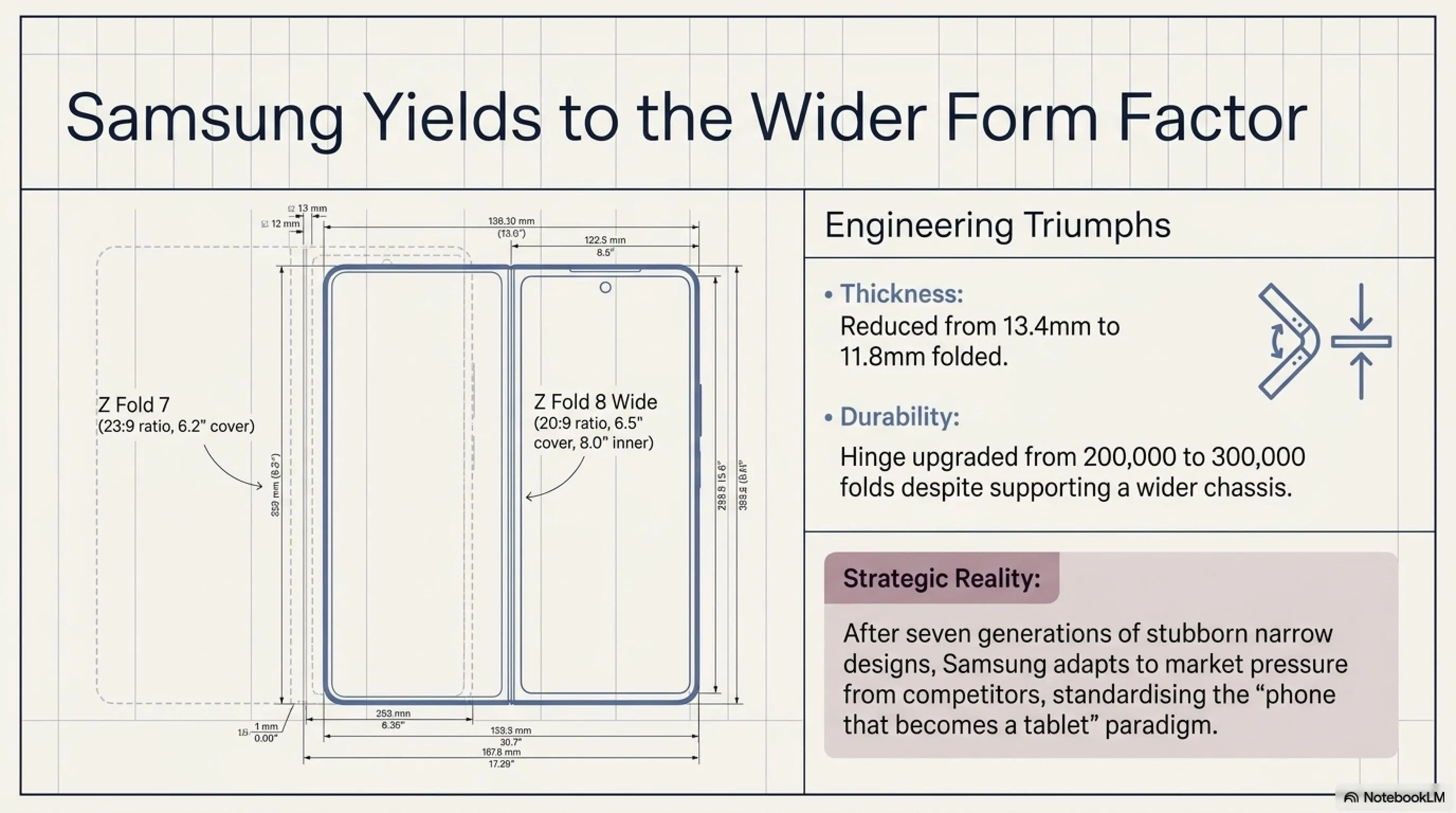
The major shift in the Galaxy Z Fold 8 Wide is Samsung's abandonment of the traditional narrow, tall form factor in favor of a wider, more balanced design. While previous Z Fold generations resembled a narrow phone that unfolded into a small tablet, the Z Fold 8 Wide is more like a regular smartphone that transforms into a genuine tablet. This design change is Samsung's direct response to competitors like the OnePlus Open and Google Pixel Fold, which adopted wider designs from the start and received positive market reception.
📐 Design Comparison: Z Fold 7 vs Z Fold 8 Wide
| Feature | Z Fold 7 | Z Fold 8 Wide |
|---|---|---|
| Cover Display | 6.2" (narrow) | 6.5" (wide) |
| Inner Display | 7.6" | 8.0" |
| Aspect Ratio (Closed) | 23:9 (narrow) | 20:9 (balanced) |
| Thickness | 13.4mm (folded) | 11.8mm (folded) |
| Weight | 253g | 248g (estimated) |
| Hinge Durability | 200,000 folds | 300,000 folds |
According to Android Authority reports, Samsung will likely name this device simply the Galaxy Z Fold 8, dropping the "Wide" designation. This decision signals that Samsung wants to establish this wider design as its new standard, not a side variant. However, rumors persist about a Z Fold 8 Ultra model that could feature premium enhancements such as improved cameras, an integrated S Pen, and luxury materials—potentially targeting the ultra-premium segment that Apple's foldable might eventually occupy.
🎯 Tekin Analysis: Why Samsung Changed the Design
1. Competitive Pressure: The OnePlus Open and Google Pixel Fold received widespread acclaim for their wider designs. Users found that the wider cover display was more comfortable for daily use, reducing the need to constantly unfold the device. Samsung, which had stubbornly maintained its narrow design for years, finally yielded to market feedback. This shift represents a rare admission from Samsung that competitors got something right first.
2. Improved User Experience: The Z Fold 7's narrow cover display was awkward for typing, web browsing, and app usage. Many users felt compelled to unfold the device for every task, which stressed the hinge and reduced its lifespan. The wider design solves this problem by making the cover display genuinely usable for most tasks, reserving the inner display for when you truly need the extra screen real estate.
3. The Future of Foldables: This change suggests the industry is converging toward a standard form factor. Future foldables will likely all adopt wider designs, resembling a regular phone that transforms into a tablet. This standardization is better for mainstream adoption, as it makes foldables more intuitive and less of a compromise. The "phone that becomes a tablet" concept is easier to understand and market than "narrow phone that becomes a square tablet."
4. Engineering Challenges Overcome: Transitioning to a wider design presented significant engineering challenges. The hinge must be stronger to support the larger, heavier display. The battery must be larger to power the bigger screens. The entire cooling system requires redesign. But Samsung, with seven generations of Z Fold experience, has apparently solved these challenges. The reported 300,000-fold durability rating (up from 200,000) suggests the new hinge is actually more robust despite the increased load.
From a technical standpoint, the Z Fold 8 Wide is expected to feature the Snapdragon 8 Gen 4 processor, 12GB of RAM, and a 4,800mAh battery. The camera system will likely see upgrades, with rumors suggesting a 200MP main sensor and improved telephoto capabilities. Samsung is also reportedly working on reducing the display crease, which has been a persistent complaint. The company's new UTG (Ultra-Thin Glass) technology and improved hinge mechanism should make the crease less noticeable than previous generations.
🖥️ Alienware AW3426DW: The QD-OLED Revolution
Dell unveiled a new generation of Alienware gaming monitors at Computex 2026, featuring groundbreaking QD-OLED Penta Tandem technology. The AW3426DW, successor to the market's most popular QD-OLED monitor, delivers a significant upgrade with 1,300 nits peak brightness, 280Hz refresh rate, and an 1800R curvature. This 34-inch ultrawide monitor with 3440×1440 resolution (21:9) is designed for gamers seeking the ultimate combination of image quality and performance.
The Penta Tandem technology represents a revolutionary advancement in OLED panels. In this technology, independent layers of red, green, and blue are stacked vertically to boost brightness to 1,300 nits while keeping colors rich, accurate, and vivid. This means the monitor can perform excellently in bright rooms, not just in the darkness where OLED has always excelled. The traditional OLED weakness—low brightness in bright content—has been solved with this technology, making it viable for a wider range of use cases beyond gaming.
⚡ Alienware AW3426DW Technical Specifications
| Display Size | 34-inch Ultrawide |
| Resolution | 3440 × 1440 (UWQHD) |
| Panel Type | QD-OLED Penta Tandem |
| Peak Brightness | 1,300 nits (HDR) |
| Refresh Rate | 280Hz |
| Response Time | 0.03ms (Grey-to-Grey) |
| Curvature | 1800R |
| Color Gamut | 99% DCI-P3 |
| HDR | DisplayHDR True Black 400 |
| Contrast Ratio | Infinite (OLED) |
Comparing with the previous generation (AW3423DW) reveals significant improvements. Peak brightness increased from 1,000 nits to 1,300 nits (30% improvement), refresh rate upgraded from 240Hz to 280Hz, and the panel technology evolved from standard QD-OLED to Penta Tandem. These enhancements are particularly noticeable in HDR games and bright content. According to The Verge, this monitor can perform excellently even in bright rooms, addressing one of OLED's biggest weaknesses and expanding its appeal beyond dedicated gaming caves.
However, the major OLED challenge remains burn-in. Despite significant technological advances, OLED panels are still susceptible to image retention, especially if static elements (like game UIs, Windows taskbar, or logos) are displayed for extended periods. Dell has implemented several protective technologies to combat this issue: Pixel Shift (automatic pixel movement), Logo Dimming (reducing brightness of static elements), and Pixel Refresh (automatic pixel restoration). Nevertheless, users must remain vigilant and use screen savers, vary content, and avoid prolonged display of static elements.
🎯 Tekin Analysis: The Future of Gaming Monitors
OLED vs Mini-LED Battle: The premium monitor market is evolving into a battle between OLED and Mini-LED technologies. OLED offers infinite contrast, vibrant colors, and incredibly fast response times. Mini-LED provides higher brightness, no burn-in risk, and lower prices. Penta Tandem technology attempts to close the brightness gap, making OLED more competitive. However, Mini-LED continues to improve with more dimming zones and better algorithms, keeping the competition fierce.
Refresh Rate: How High Can We Go? 280Hz is more than sufficient for most gamers. Even professional esports players typically don't need more than 240Hz. Yet manufacturers continue pushing boundaries—Alienware also introduced a 360Hz model. The question is: can the human eye actually perceive the difference between 280Hz and 360Hz? Scientific studies suggest diminishing returns beyond 240Hz, but competitive gamers swear by every hertz. This may be more about marketing and bragging rights than practical benefits.
Price and Accessibility: QD-OLED monitors remain expensive. The AW3426DW will likely launch at $1,200-1,500. For broader adoption, prices need to drop below $1,000. With increased production and competition, this could happen within 2-3 years. Samsung Display is ramping up QD-OLED production, and LG Display is investing heavily in WOLED technology, which should drive prices down through competition and economies of scale.
The Productivity Dilemma: While OLED excels for gaming and media consumption, it's less ideal for productivity work with static UIs. Professionals who spend 8+ hours daily with static elements (code editors, spreadsheets, design tools) should consider Mini-LED or IPS alternatives. The industry needs to develop better burn-in mitigation or create hybrid displays that can switch between OLED and LCD modes based on content type.
💸 Aave: Standards Overhaul After $230M Hack
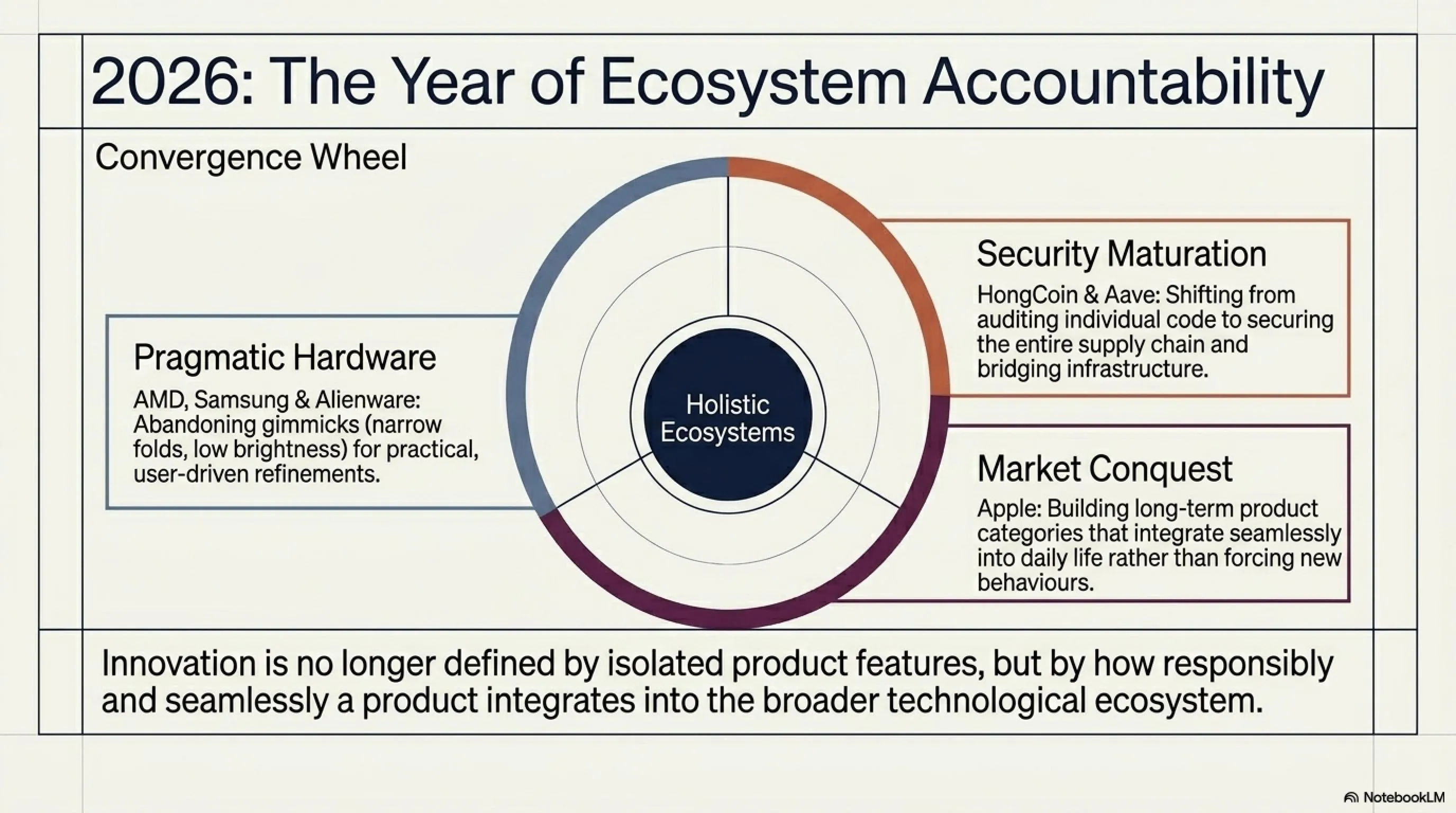
Following one of 2026's largest hacks, DeFi protocol Aave completely overhauled its asset listing standards. The $230 million rsETH hack that occurred in April 2026 demonstrated that DeFi risks are no longer limited to smart contract bugs but extend to off-chain infrastructure like bridges and oracles. This incident marked a turning point for the DeFi industry, showing that security must be approached more holistically, considering the entire ecosystem rather than just individual protocols.
According to the official postmortem released by Aave, the hack was related to a vulnerability in the LayerZero bridge, not Aave's contracts themselves. The attacker managed to approve a forged cross-chain message through a single-point verifier (one-of-one Decentralized Verifier Network) and minted 116,500 unbacked rsETH tokens. These counterfeit tokens were then used as collateral in Aave to borrow 82,650 WETH and 821 wstETH (totaling $230 million). The attacker fled with these funds, leaving Aave with a massive bad debt.
🚨 Technical Analysis: How the rsETH Hack Occurred
Stage 1 - RPC Poisoning: The attacker used an RPC-poisoning attack to manipulate the LayerZero verifier's view of the source chain state. This verifier, being the sole point of verification (one-of-one DVN), created a single point of failure—a fundamental security flaw in the bridge's architecture.
Stage 2 - Forged Message: With control over the verifier, the attacker crafted a forged cross-chain message claiming that 116,500 rsETH had been transferred from Ethereum to Arbitrum, when in reality, no such transfer had occurred. The compromised verifier validated this false message.
Stage 3 - Minting Unbacked Tokens: The rsETH contract on Arbitrum, trusting the forged message, minted 116,500 tokens without any backing assets. From the contract's perspective, these tokens were "legitimate," but they had no real value behind them—essentially creating money from nothing.
Stage 4 - Exploiting Aave: The attacker used these counterfeit tokens as collateral in Aave V3 across 8 different positions, borrowing 82,650 WETH and 821 wstETH. They then fled with these genuine assets, leaving Aave holding worthless collateral.
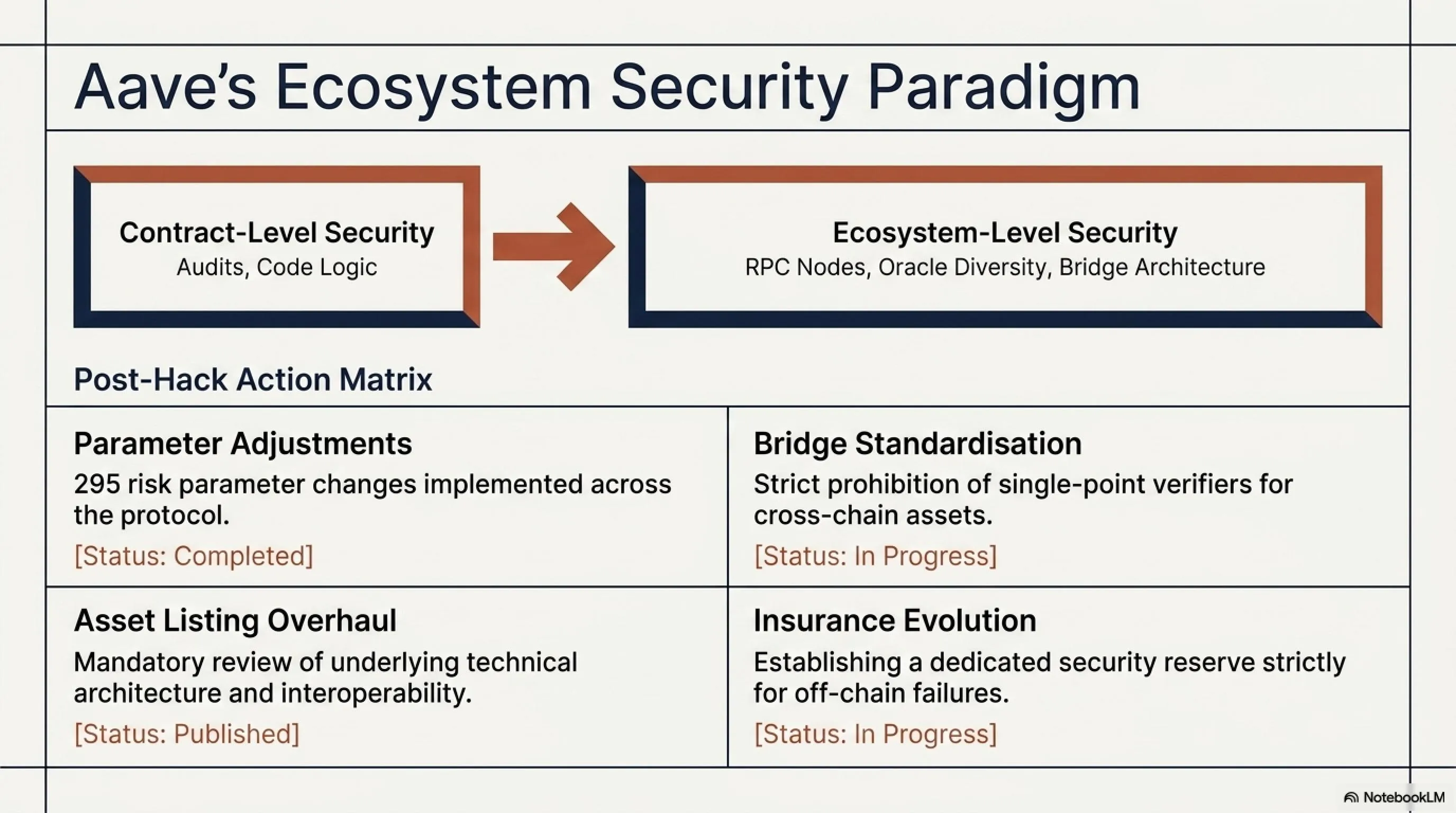
Aave's response was swift and comprehensive. The protocol immediately initiated a complete overhaul of asset listing standards. Previously, Aave primarily focused on smart contract security and market risk. Now, the review process has expanded to include: cybersecurity (does the project follow best security practices?), interoperability (are bridges and oracles secure?), and underlying technical architecture (are there structural weaknesses?). This represents a paradigm shift from contract-level security to ecosystem-level security.
📊 Aave's Post-Hack Actions
| Action | Details | Status |
|---|---|---|
| Parameter Changes | 295 parameter adjustments to reduce risk | ✅ Completed |
| Bridge Review | Security audit of all bridges | 🔄 In Progress |
| New Standards | Listing process overhauled | ✅ Published |
| Compensation | Negotiations with LayerZero and Kelp | 🔄 In Progress |
| Insurance Fund | Establishing dedicated security reserve | 🔄 In Progress |
This incident offers crucial lessons for the entire DeFi industry. First, security is a chain, not a link. Even if your smart contracts are perfectly secure, if your bridge or oracle is vulnerable, the entire system is at risk. Second, true decentralization is critical. Using a single-point verifier (one-of-one DVN) was a major mistake that created an obvious attack vector. Third, transparency and accountability are key to recovering trust. Aave's publication of a comprehensive postmortem and swift action helped maintain community confidence despite the massive loss.
🎯 Tekin Analysis: The Future of DeFi Security
From Smart Contract to Ecosystem Security: The DeFi industry must evolve from focusing solely on smart contract security to a comprehensive ecosystem security approach. This includes bridges, oracles, RPC nodes, and even off-chain infrastructure. The rsETH hack demonstrated that the weakest link determines overall security, regardless of how secure individual components are.
Bridge Security Standardization: LayerZero, Wormhole, Axelar, and other bridges must adopt and implement common security standards. Single-point verifiers should be prohibited. The industry needs a "Bridge Security Alliance" that establishes minimum requirements for verifier diversity, monitoring systems, and emergency response procedures. Without standardization, bridges will remain the Achilles' heel of cross-chain DeFi.
DeFi Insurance Evolution: Insurance protocols like Nexus Mutual and InsurAce must expand to cover bridge and oracle failures, not just smart contract exploits. Users should be able to purchase comprehensive coverage that protects against all types of DeFi risks. This could significantly boost confidence in DeFi and accelerate mainstream adoption.
Regulatory Implications: This hack will likely attract regulatory attention. Regulators may push for mandatory security standards, insurance requirements, and liability frameworks for DeFi protocols. While regulation could stifle innovation, it might also provide the legal clarity and consumer protection needed for institutional adoption. The industry must proactively engage with regulators to shape sensible policies.
👓 Apple: $200B Eyewear Market Conquest Strategy
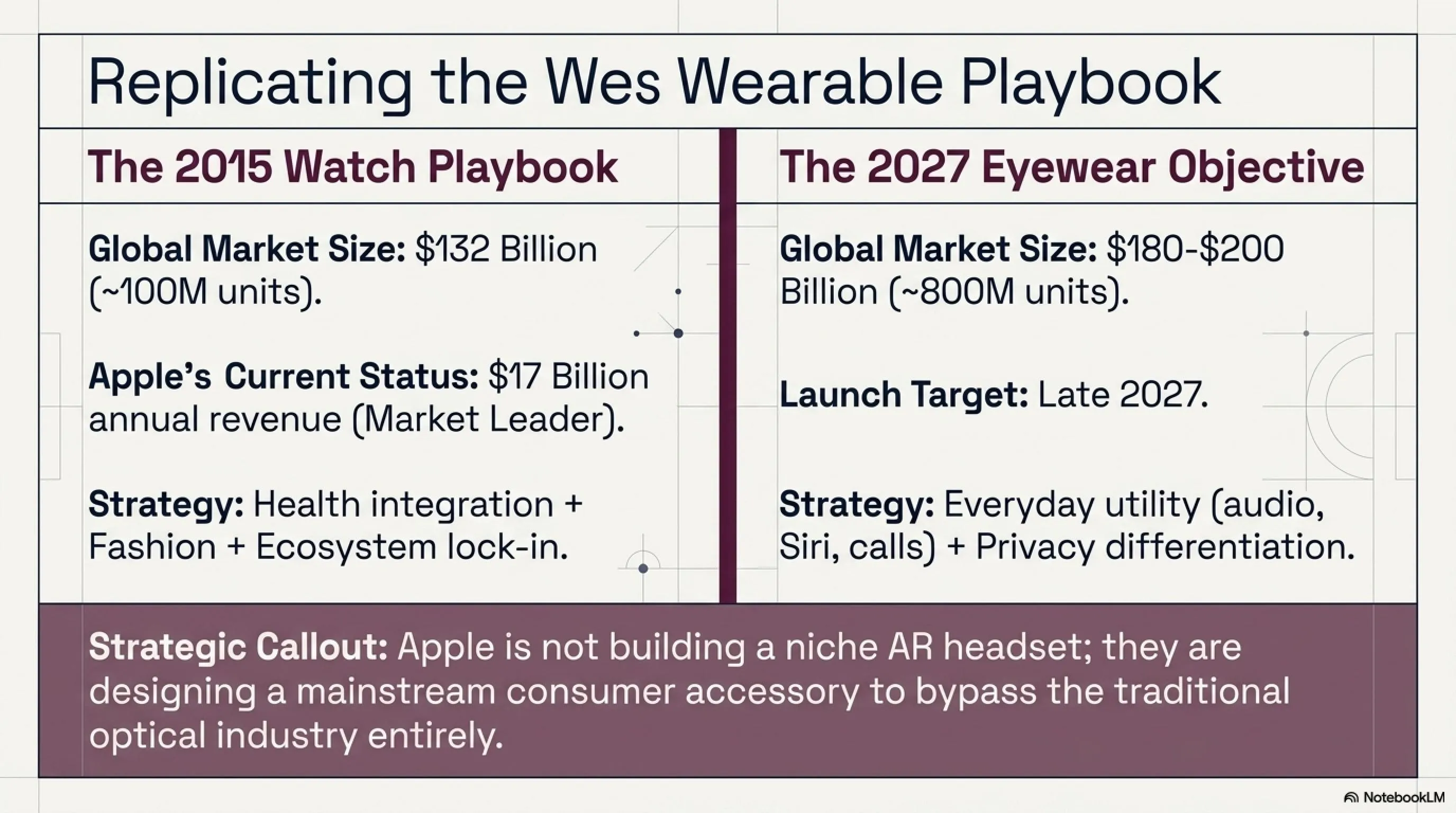
Apple plans to dominate the $200 billion eyewear market using the same playbook that made Apple Watch a success. According to reports from The Verge and Bloomberg, Apple is developing smart glasses set to launch in late 2027, competing directly with eyewear giants like EssilorLuxottica (Ray-Ban, Oakley, Persol), Safilo Group (Tommy Hilfiger, Hugo Boss), and Warby Parker in the $200-$500 price range.
Apple's strategy mirrors exactly what it did with Apple Watch. When Apple Watch launched in 2015, the smartwatch market was nascent and small. But Apple's entry transformed the entire industry. Today, Apple Watch generates approximately $17 billion annually for Apple and dominates the smartwatch market. Now Apple wants to replicate this success with eyewear—but this time, the market is significantly larger. The global watch market is valued at around $132 billion, while the eyewear industry generates between $180-200 billion annually.
💰 Market Comparison: Watches vs Eyewear
| Market | Annual Value | Annual Sales | Growth Forecast |
|---|---|---|---|
| Global Watches | $132B | ~100M units | +5% annually |
| Global Eyewear | $180-200B | ~800M units | +8% annually |
| Apple Watch | $17B | ~50M units | Market Leader |
However, Apple's challenge in the eyewear market is significantly greater than with watches. The eyewear industry is controlled by a few giants, particularly EssilorLuxottica, which holds a near-monopoly. This company owns brands like Ray-Ban, Oakley, Persol, Oliver Peoples, and Chanel, and also controls the largest eyewear retail chains (LensCrafters, Sunglass Hut, Pearle Vision). Apple must not only create an excellent product but also establish its own distribution channels to bypass this entrenched ecosystem.
According to reports, Apple's glasses will be similar to Meta Ray-Ban—regular-looking glasses with built-in cameras, speakers, and microphones for music, phone calls, and Siri notifications. Unlike Vision Pro, which is an expensive AR/VR headset, these glasses are designed for everyday use. Apple's goal is to make smart glasses a mainstream consumer product, not a niche gadget. The company is reportedly working with multiple eyewear manufacturers and designers to ensure the glasses look fashionable and appeal to style-conscious consumers.
✅ Apple's Strategic Advantages
- Powerful brand and customer loyalty
- Seamless ecosystem integration with iPhone
- Proven success with Apple Watch
- Advanced technology and beautiful design
- Global distribution channels
- Strong privacy reputation
- Deep pockets for R&D and marketing
⚠️ Challenges Ahead
- EssilorLuxottica monopoly
- Competition with Meta Ray-Ban
- Privacy concerns with cameras
- Limited battery life
- Competitive pricing pressure
- Fashion industry dynamics
- Regulatory scrutiny
🎯 Tekin Analysis: Can Apple Succeed?
Lessons from Apple Watch: Apple Watch's success depended on several key factors: deep integration with iPhone, unique health features, and beautiful design. Apple must replicate these factors in smart glasses. But glasses present unique challenges—people are more attached to their eyewear and have higher expectations for style, comfort, and durability. Unlike watches, which are optional accessories, many people depend on glasses for vision correction, adding complexity to Apple's product strategy.
Competing with Meta: Meta is the market leader with Ray-Ban Stories and Ray-Ban Meta. These glasses, priced at $299, feature excellent design and the trusted Ray-Ban brand, achieving solid market reception. Apple must offer something better—likely superior Siri integration, higher camera quality, and more advanced AR features. The company's rumored partnership with Warby Parker could help address the fashion and prescription lens challenges.
Privacy as Competitive Advantage: Cameras on glasses raise serious privacy concerns. Apple must address these with complete transparency, strong user controls, and possibly a clear LED indicator for recording. This could be a competitive advantage against Meta, which has a poor privacy reputation. Apple's privacy-first approach could differentiate its glasses and appeal to privacy-conscious consumers who distrust Meta's data practices.
The Long Game: Apple is playing the long game. The first-generation glasses will likely be limited in functionality, focusing on basics like audio, notifications, and simple camera features. But Apple will iterate rapidly, adding AR capabilities, health sensors, and AI features in subsequent generations. By 2030, Apple glasses could become as essential as iPhones are today—a bold vision that requires patience and sustained investment.
📊 Mid-Article Summary
Monday night, June 1, 2026, delivered a wealth of exciting news. From the heroic recovery of $2 million by a white hat hacker, to AMD's global launch of the RX 9070 GRE, the first real-world sighting of the Galaxy Z Fold 8 Wide, revolutionary QD-OLED monitors from Alienware, Aave's standards overhaul after a $230M hack, and Apple's ambitious strategy to conquer the eyewear market—all these stories demonstrate that the tech industry is rapidly evolving. Security, hardware innovation, and market strategy are converging to shape technology's future.
❓ Why did the rsETH hack hurt Aave, not rsETH itself?
The hack was related to the LayerZero bridge, which minted unbacked rsETH tokens. These counterfeit tokens were used as collateral in Aave, and the attacker borrowed real funds with them. Aave, as the lending protocol, bore the bad debt, not the rsETH project. This demonstrates that DeFi protocols must review the security of the entire supply chain, not just their own contracts. The incident highlights the interconnected nature of DeFi and the need for holistic security approaches.
❓ Is the AMD RX 9070 GRE worth buying?
Yes, if you're looking for a mid-range graphics card for 1440p gaming. With 12GB VRAM and a $549 price tag, it offers excellent value. However, if Ray Tracing and DLSS are important to you, the RTX 4070 is a better choice. The RX 9070 GRE is ideal for gamers who prioritize rasterization performance and memory capacity over cutting-edge ray tracing. It's also a solid choice for content creators who need VRAM for video editing and 3D rendering.
❓ When will Apple's smart glasses launch?
According to credible reports, Apple's smart glasses will launch in late 2027. Apple is working on design, ecosystem integration, and solving technical challenges like battery life and privacy. The price will likely be between $200-500 to compete with traditional eyewear brands. The company is taking its time to ensure the product is polished and ready for mainstream adoption, following the same patient approach it took with Apple Watch.
❓ Do QD-OLED monitors have burn-in issues?
Yes, all OLED panels (including QD-OLED) are susceptible to burn-in. However, protective technologies like Pixel Shift, Logo Dimming, and Pixel Refresh significantly reduce this risk. If you use screen savers, vary your content, and avoid prolonged display of static elements, the risk is minimal. For office work with static UIs, Mini-LED is a better choice. QD-OLED is ideal for gaming, media consumption, and creative work with varied content.
❓ What makes the Galaxy Z Fold 8 Wide different from previous models?
The Z Fold 8 Wide features a significantly wider cover display (6.5" vs 6.2") with a more balanced aspect ratio (20:9 vs 23:9), making it more usable as a regular phone without constantly unfolding. The inner display is also larger (8.0" vs 7.6"), and the device is thinner (11.8mm vs 13.4mm) and lighter. The hinge is more durable (300,000 folds vs 200,000), and the overall design is more practical for daily use. This represents Samsung's response to competitive pressure from OnePlus and Google.
🌟 Final Thoughts
Monday night, June 1, 2026, demonstrated that the tech industry is moving toward a future where security, hardware innovation, and user experience are at the forefront. From the heroic recovery of trapped blockchain funds to the launch of new gaming products, from the transformation of foldable phone design to the revolution in OLED monitors, and from the overhaul of DeFi security standards to Apple's ambitious strategies—all these stories are part of a larger narrative: technology is maturing, and the industry is learning from past mistakes while moving toward a more sustainable and secure future.
For the global tech community, these developments present both opportunities and challenges. Blockchain developers must learn from the security lessons of Aave and HongCoin. Gamers can benefit from AMD's global launch of the RX 9070 GRE and Alienware's QD-OLED innovations. Businesses must prepare for the arrival of new products from Apple and Samsung. The future of technology is bright, but it requires awareness, preparation, and continuous adaptation. As we've seen tonight, the companies that succeed are those that listen to their users, learn from their mistakes, and aren't afraid to change course when necessary.
The convergence of AI, blockchain, advanced hardware, and user-centric design is creating unprecedented opportunities for innovation. But with these opportunities come responsibilities—to protect user privacy, ensure security, and build products that genuinely improve people's lives rather than just extracting value. The stories we covered tonight show both the promise and the perils of modern technology. As we move forward, the industry must maintain this balance between innovation and responsibility.
📚 Sources
Primary Sources: CoinDesk, The Verge, Tom's Hardware, Engadget, Android Authority, TFT Central, Binance Square, KuCoin News, Fortune, AppleInsider, MacRumors, PC Gamer, Notebookcheck, TechCrunch
Analysis and Research: Tekin Editorial Team
Publication Date: June 1, 2026 - Tekin Night
🌐 Stay Connected With Us 🎮✨
For the latest tech, gaming, and gadget news, follow us on our official social media channels: