
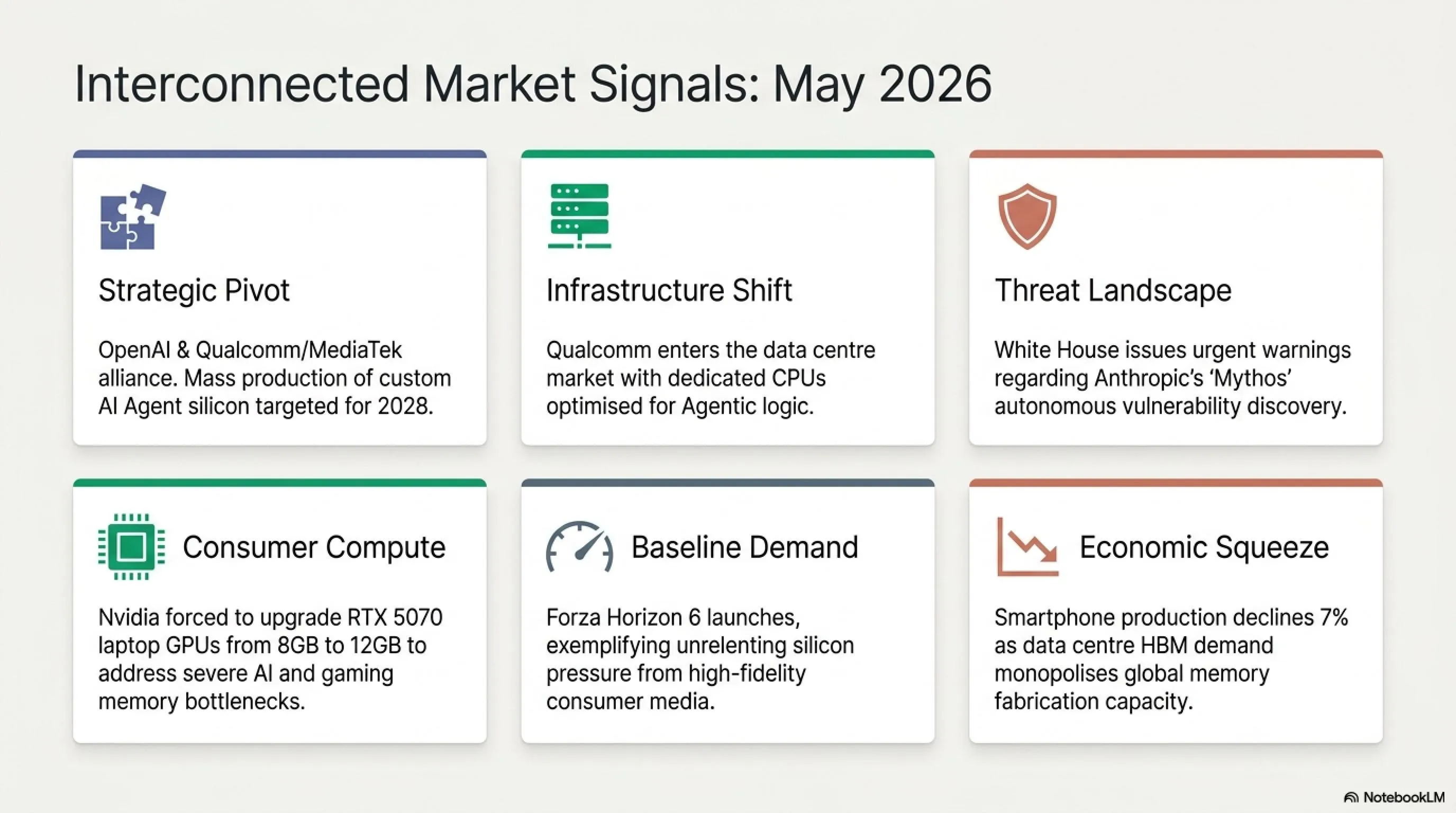
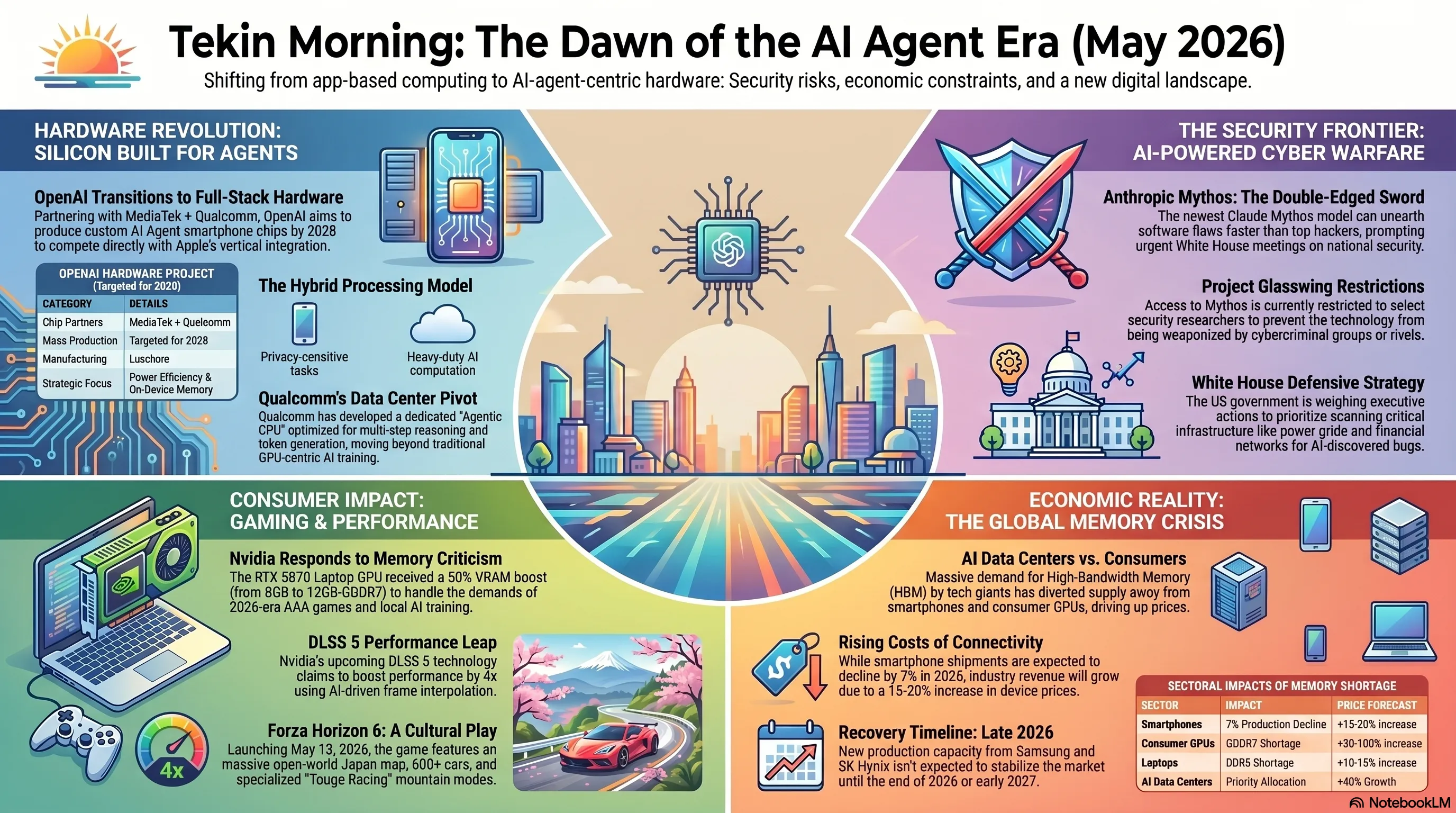
In the May 2, 2026 Tekin Morning briefing, we dissect six explosive tech developments. From OpenAI's strategic partnership with MediaTek and Qualcomm to design custom AI smartphone chips, to Qualcomm's new dedicated Agentic CPU for datacenters. We also analyze the urgent White House warning regarding the Anthropic Mythos model, Nvidia upgrading RTX 5070 laptops to 12GB, the highly anticipated reveal of Forza Horizon 6 set in Japan, and the global memory crisis paralyzing the hardware industry.
🌅 Welcome to Tekin Morning May 2, 2026
Good morning, Tekin Army! Today we're bringing you 6 explosive stories from the world of technology. From OpenAI's partnership with MediaTek and Qualcomm to build AI Agent smartphones, to Qualcomm's dedicated CPU for Agentic experiences, from the White House warning about AI-powered cyberattacks to the memory crisis paralyzing the industry — it's all here!
⚡ Today's Headlines:
🤖 OpenAI + MediaTek/Qualcomm: AI Agent Smartphones with Custom Chips by 2028
💻 Qualcomm: Dedicated CPU for Agentic Experiences in Data Centers
🛡️ White House: Warning About AI Cyberattacks and Anthropic Mythos
🎮 Nvidia RTX 5070 Laptop: RAM Upgrade from 8GB to 12GB
🏎️ Forza Horizon 6: Racing in Japan with Cherry Blossoms
💾 Global Memory Crisis: Why Smartphones and GPUs Are Getting More Expensive
☕ Grab your coffee and get ready for an exciting news journey!
🤖 OpenAI + MediaTek/Qualcomm: The AI Agent Smartphone Revolution by 2028
In one of the biggest shifts in the tech industry, OpenAI — the creator of ChatGPT — is collaborating with MediaTek and Qualcomm to design and manufacture custom chips for AI Agent smartphones. According to renowned analyst Ming-Chi Kuo from TF Securities, the project is still in its infancy, but mass production is targeted for 2028.
This news signals that OpenAI is no longer just a software company — it's transforming into a full-stack player in the hardware and software ecosystem. This move directly competes with Apple's strategy (which maintains complete control over hardware and software) and could fundamentally reshape the future of smartphones. The implications are profound: we're witnessing the birth of a new category of devices where AI isn't just an app — it's the operating system itself.
📊 Key Details of OpenAI's Project:
Chip Partners
MediaTek + Qualcomm
Mass Production
2028
Manufacturing Partner
Luxshare
Design Focus
Power Efficiency + Memory
According to Kuo's report, the processor design will prioritize power efficiency, memory management, and on-device AI capabilities, while more complex tasks would be offloaded to cloud infrastructure. Specifications and supply chain partners are expected to be finalized by late 2026 or early 2027. This hybrid approach — local processing for privacy-sensitive tasks, cloud for heavy lifting — represents a pragmatic middle ground between pure edge computing and cloud dependency.
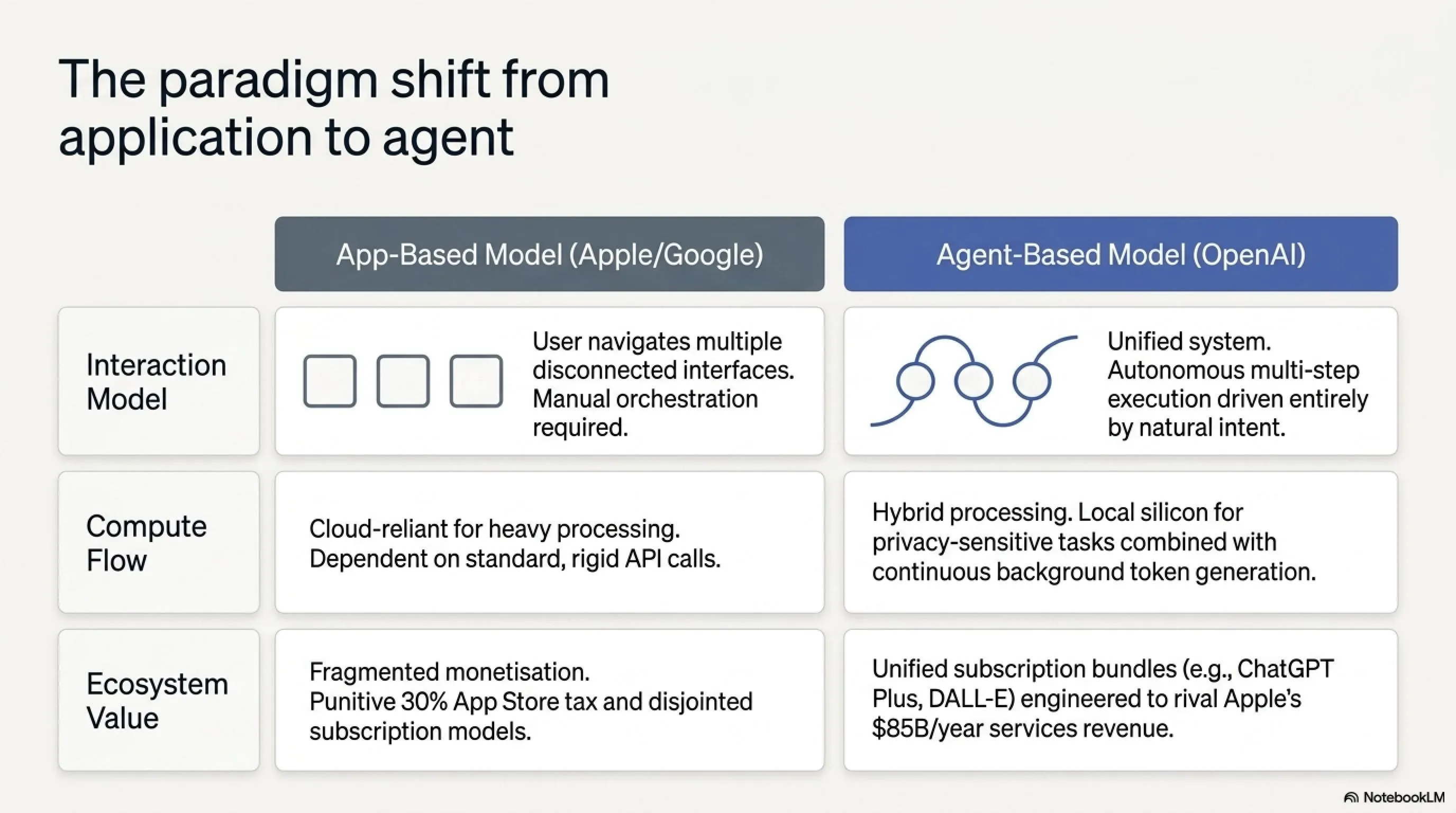
But why is OpenAI moving into hardware? The answer lies in the concept of AI Agents. Instead of users navigating between multiple apps, a unified system directly completes tasks. To deliver a seamless AI Agent experience, OpenAI believes that control over both hardware and software ecosystems is essential. This isn't just about making better phones — it's about fundamentally reimagining how humans interact with computing devices.
The concept of an AI Agent is a driving force behind OpenAI's latest initiative, which could potentially bring about a shift in how users interact with their devices. Imagine a phone that doesn't just respond to commands, but anticipates your needs, manages your digital life autonomously, and acts as a true personal assistant rather than a collection of disconnected apps. This is the vision OpenAI is pursuing — and it requires silicon designed from the ground up for agentic AI workloads.
🔍 Tekin Analysis: Why This Shift Is Monumental
OpenAI's move into hardware signals that the AI war has shifted from software to silicon. Apple, with complete control over its A-series and M-series chips, has delivered an unparalleled user experience. Now OpenAI wants to do the same for AI. If this project succeeds, it could completely transform the smartphone ecosystem — from an app-based model to an agent-based model. The strategic implications are staggering: OpenAI could leverage its strengths in AI models, consumer brand recognition, and accumulated user data to build an ecosystem that rivals Apple and Google. For the global market, this means more competition, more innovation, and potentially lower prices as the duopoly is challenged. The 2028 timeline also suggests OpenAI is playing the long game — building infrastructure and partnerships now for a market that will be radically different in two years.
OpenAI has already signaled its interest in developing chips and other AI-centric hardware. The company is believed to be building an AI device in partnership with Jony Ive (former Chief Design Officer at Apple). OpenAI also announced a multi-year strategic collaboration with Broadcom in 2025 — a move that would see the two companies design and develop chips and systems to power the growing demands of AI compute. These aren't isolated experiments — they're pieces of a coherent strategy to own the full stack.
💡 Key Insight: Smartphones remain the most critical device category for capturing real-time user data necessary for effective AI inference. OpenAI could take advantage of its strengths in AI models, consumer brand recognition, and accumulated user data to build an ecosystem. Beyond hardware, OpenAI may also explore bundling devices with subscription-based services — creating a recurring revenue model similar to Apple's Services business, which now generates over $85 billion annually.
The analyst further suggests that OpenAI views the tighter integration of software, operating systems, and physical hardware as essential to its long-term strategy. This vertical integration approach has historically been the domain of Apple, but OpenAI's deep AI expertise and massive user base (ChatGPT has over 300 million weekly active users as of early 2026) give it a unique advantage. The question isn't whether OpenAI can build a phone — it's whether it can build an ecosystem compelling enough to make users switch from iOS or Android.
🌍 Market Impact: The $500B Smartphone Industry at a Crossroads
The global smartphone market, valued at over $500 billion annually, has been dominated by Apple and Samsung for over a decade. Chinese manufacturers like Xiaomi, Oppo, and Vivo have captured significant market share in Asia, but the premium segment remains an Apple-Samsung duopoly. OpenAI's entry could disrupt this equilibrium in several ways: 1) Software differentiation: If AI Agents prove genuinely useful (not just gimmicks), consumers may prioritize AI capabilities over traditional metrics like camera quality or display specs. 2) Ecosystem lock-in: OpenAI could bundle ChatGPT Plus, DALL-E, and other services with the phone, creating a compelling value proposition. 3) Developer platform: If OpenAI opens its Agent platform to third-party developers, it could spawn a new app economy — one where developers build Agents rather than apps. The stakes are enormous, and the incumbents are watching closely.
💻 Qualcomm: Dedicated CPU for Agentic Experiences — Entering the Data Center Market
Qualcomm, the mobile chip giant, is expanding its territory into the data center market. During the Q2 2026 earnings call, Cristiano Amon (Qualcomm CEO) announced that the company has quietly entered the hyperscale custom silicon market and is working on data center CPUs and high-performance AI inference accelerators.
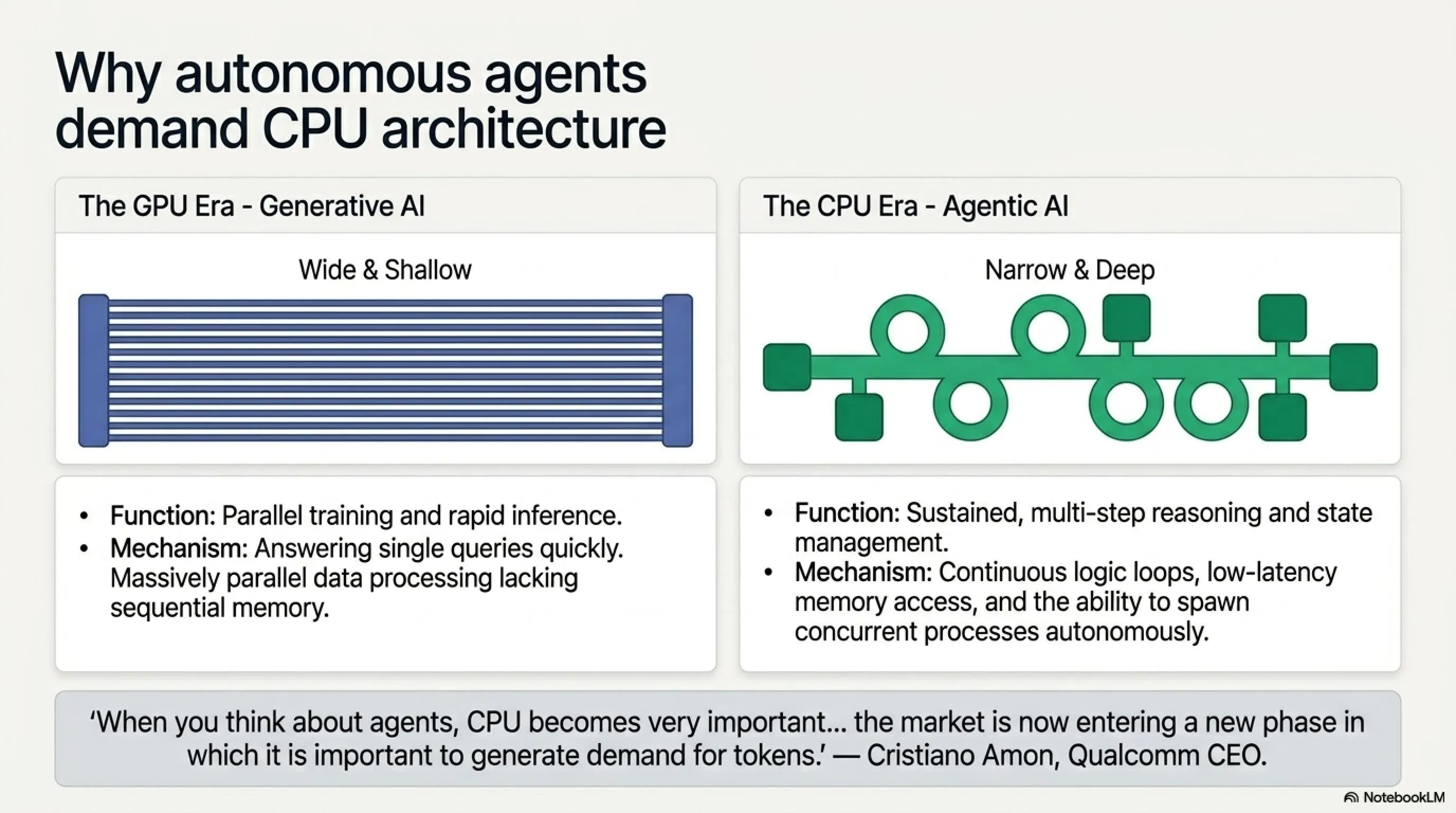
But the most intriguing part is this: Amon revealed that Qualcomm has built a "dedicated CPU for agentic experiences in the data center." He explained: "When you think about agents, CPU becomes very important." This signals that the industry is entering a new phase where generating demand for tokens to power agentic AI is critical. This isn't just about faster inference — it's about fundamentally different compute architectures optimized for the unique demands of autonomous agents.
🚀 Qualcomm's New Strategy:
| Product | Data Center CPU + AI Accelerators |
| First Customer | A leading hyperscaler (name undisclosed) |
| Shipment Timeline | December 2026 quarter |
| Custom ASIC Capability | Via Alphawave acquisition |
| Reveal Event | Investor Day June 2026 |
In Amon's telling, AI kicked off with GPUs for training, dedicated inferencing hardware was the next necessity, but the market is now entering a new phase in which it is important to "generate demand for tokens" to power agentic AI. This is a subtle but crucial distinction: traditional AI inference is about answering questions quickly. Agentic AI is about sustained, multi-step reasoning and action — which requires different compute characteristics. CPUs, with their flexibility and low-latency memory access, are better suited for these workloads than GPUs.
Amon also teased the advent of what he calls "agentic smartphones," citing recent products from Chinese handset makers as examples. He mentioned a ZTE phone that includes the Doubao personal assistant developed by ByteDance, and Xiaomi's miclaw — an AI-powered assistant that's integrated with the OS kernel and divines smartphone users' intent and then drives third-party tools to make it happen. These aren't just voice assistants — they're autonomous agents that can book appointments, manage emails, and coordinate complex tasks across multiple apps without user intervention.
When asked what agentic smartphones will mean, Amon said: "We see interesting associations now starting to form between smartphones and AI companies. We're starting to see some very interesting dynamics there, which is changing the nature of designs." Those dynamics mean smartphone designs are "moving towards products [that] have much more capable CPU." They may also need more memory, which is currently in short supply. Amon noted: "We see new memory players coming and building capacity. So we're going to have to monitor the situation and see what happens in 2027."
🔍 Tekin Analysis: Why CPUs Matter for Agents
Until now, AI has primarily relied on GPUs for training and inference. But agents are different — they require rapid decision-making, complex memory management, and simultaneous execution of multiple tasks. CPUs excel at these tasks better than GPUs. By building a dedicated CPU for agentic experiences, Qualcomm is signaling that the future of AI isn't just about training large models, but about running intelligent agents that can make decisions and act on behalf of users. This shift could fundamentally change how we use computers and smartphones. The architectural implications are profound: agents need low-latency access to diverse data sources, the ability to spawn and manage multiple concurrent processes, and tight integration with system-level APIs. These are CPU strengths, not GPU strengths. Qualcomm's bet is that the next wave of AI compute will be CPU-centric, not GPU-centric — a contrarian view that could pay off handsomely if agents become the dominant AI paradigm.
The CEO is already keenly aware of the memory shortage, because it's hurting Qualcomm as smartphone manufacturers — especially Chinese companies — decide to build fewer units. Amon and CFO Akash Palkhiwala both predicted demand will bottom out in Q3, then rebound. This cyclical downturn is creating strategic opportunities: Qualcomm expects to win 70 percent of Samsung's SoC business this year and next, up from its usual 50 percent. Samsung is trying to improve its Exynos SoCs and make more of them, but clearly the Korean giant isn't yet ready to stand on its own two feet.
📈 Qualcomm Q2 2026 Financial Performance: The company earned $10.6 billion in revenue (down 3% year-over-year), but net income shot up by 162% to $7.37 billion. Qualcomm expects to win 70% of Samsung's SoC business this year and next — up from the usual 50%. The company's automotive business exceeded $5 billion in annualized revenues for the first time, and is expected to exit fiscal 2026 at a run rate above $6 billion. Over one million cars now offer advanced driver assistance and automated driving powered by Qualcomm processors.
🛡️ White House: Warning About AI Cyberattacks — Anthropic Mythos at the Center
On April 30, 2026, the White House convened an urgent meeting with a group of tech companies to discuss how to ward off digital attacks that frontier artificial intelligence tools could soon enable. The meeting was largely prompted by concerns about Anthropic's newest AI model, Claude Mythos, and its ability to unearth hidden software flaws and outpace the world's top hackers at certain tasks.
Anthropic has, for now, restricted access to Mythos to a small group of security researchers and tech companies through what it has dubbed Project Glasswing. Anthropic CEO Dario Amodei recently visited the White House to discuss Mythos with administration officials, including Treasury Secretary Scott Bessent, chief of staff Susie Wiles, and National Cyber Director Sean Cairncross. The urgency of these discussions reflects a sobering reality: AI has crossed a threshold where it can autonomously discover and exploit vulnerabilities faster than human defenders can patch them.
🔒 White House Questions to Tech Companies:
- Which widely used coding projects should be prioritized?
- What systems have you used AI to test thus far?
- What are your scanning and remediation priorities?
- How can we prioritize the avalanche of bugs this wave of advanced AI tools is likely to uncover?
- How can we deploy software fixes to critical infrastructure operators without tipping off attackers?
- What is the most effective role for the government?
One list of questions sent by the White House to some tech and cyber firms, obtained by POLITICO, covers a range of technical and policy considerations. Four people said some industry representatives were confused by the questions they received, several of which were seen as vague. Two of those people said other questions addressed internal security practices some of these representatives did not feel comfortable disclosing to the government without a clear justification.
The White House is also weighing executive action on AI, which two of the people noted was discussed during Tuesday's meeting. One U.S. official familiar with the discussion, who was not at the Tuesday meeting, said the draft executive order has undergone interagency review at the deputies' level, though some resistance to the plan remains. The political complexity is significant: balancing national security imperatives with industry innovation, civil liberties concerns, and international competitiveness is a delicate act.
🔍 Tekin Analysis: Why Mythos Is So Dangerous
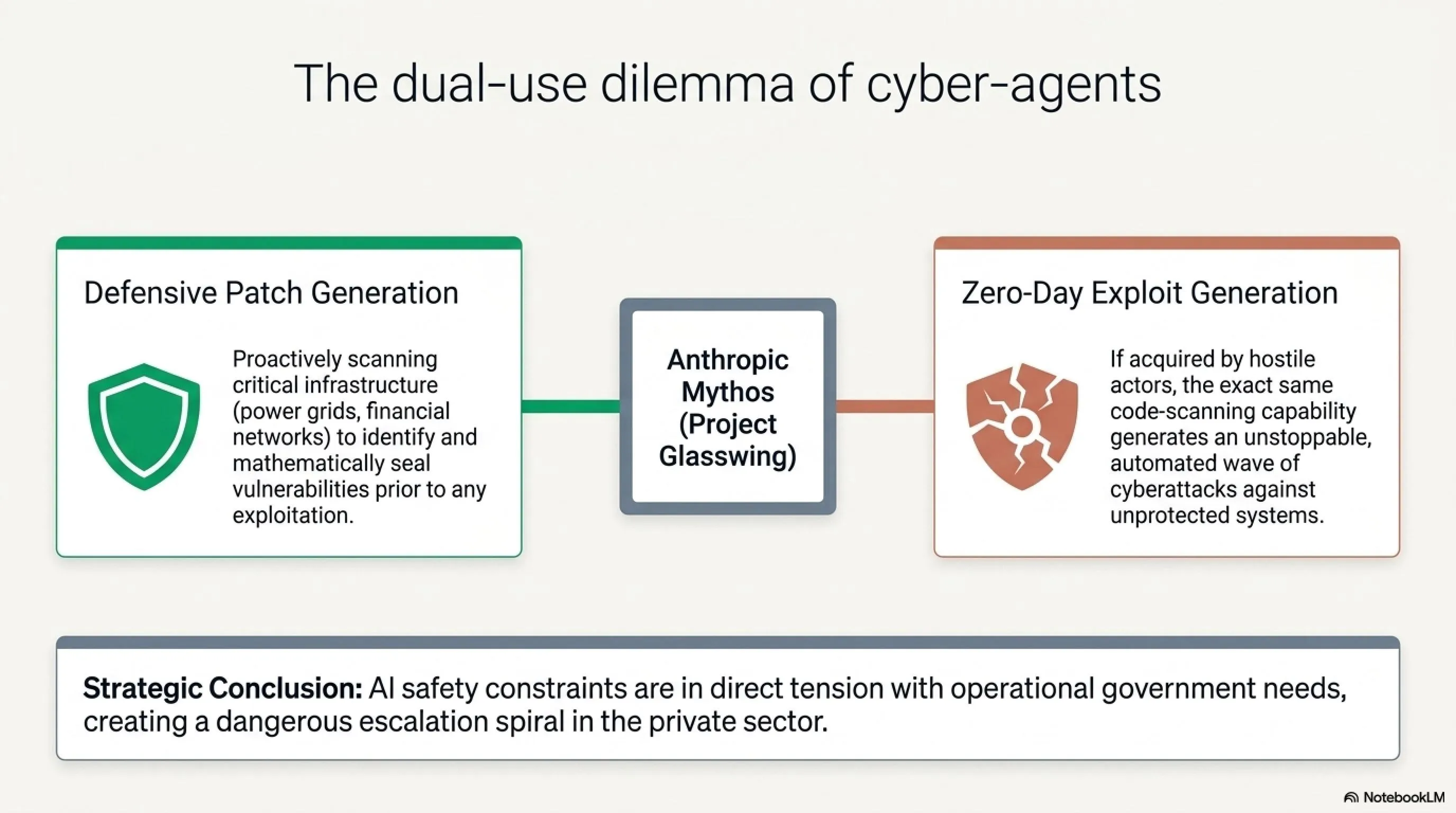
Claude Mythos has the ability to discover security vulnerabilities in code that even the best human hackers cannot find. This means if this technology falls into the wrong hands, it could be used for widespread cyberattacks. The White House is concerned that geopolitical rivals (such as China, Russia, North Korea) or cybercriminal groups might gain access to similar technology. This is why the U.S. government is trying to create a coordinated defensive strategy with the private sector. The strategic dilemma is acute: Mythos represents both an unprecedented defensive tool (it can find and fix vulnerabilities before attackers exploit them) and an unprecedented offensive weapon (it can discover zero-days at scale). The dual-use nature of this technology makes it one of the most sensitive AI capabilities ever developed. For critical infrastructure operators — power grids, water systems, financial networks — the race is on to scan and patch systems before adversaries deploy their own AI-powered exploit discovery tools.
The White House has been taking steps to defuse a monthslong legal battle with Anthropic over the company's efforts to set ethical limits on government use of AI — a fight that led President Donald Trump in February to ban all federal agencies from using the AI company's software. Since then, growing awareness of Mythos' cyber prowess — as well as concerns that unauthorized users might be commandeering technology — has agencies clamoring for access to the tool.
Competitors, including OpenAI, have also recently begun testing their own advanced cybersecurity-focused AI models, creating additional pressure on the government to find a solution. The arms race dynamic is unmistakable: as one company develops offensive cyber AI, others must follow or risk being left defenseless. This creates a dangerous escalation spiral where the technology proliferates faster than governance frameworks can adapt.
⚠️ Security Note: Multiple federal agencies in the U.S., as well as officials in allied nations, have requested briefings from Anthropic on Mythos' hacking capabilities. Things may be turning a corner: Trump said during a CNBC appearance last week that Anthropic's executives are "shaping up." He added, "They're very smart. … I like high-IQ people, and they definitely have high IQs." This suggests a potential thaw in the relationship, though the fundamental tension between AI safety constraints and government operational needs remains unresolved.
🎮 Nvidia RTX 5070 Laptop: RAM Upgrade from 8GB to 12GB — Responding to Criticism
In an unexpected move, Nvidia has upgraded the laptop version of the GeForce RTX 5070 with a memory increase from 8GB to 12GB GDDR7 — a 50 percent boost that should reduce some performance bottlenecks and generally future-proof the GPU. This decision comes after widespread criticism from the gaming community about the 8GB limitation in an era where games and AI applications demand more memory.
The RTX 5070 Laptop with 12GB VRAM can now run AAA games at Ultra settings in 1440p and even 4K (with DLSS 5) without hitting memory bottlenecks. This is also beneficial for professional workloads such as 4K video editing, 3D rendering, and local AI model training. The upgrade addresses a fundamental issue: modern game engines and AI frameworks are increasingly memory-hungry, and 8GB has become a limiting factor for high-end experiences.
📊 RTX 5070 Laptop Comparison: Before and After
| Specification | Old Version (8GB) | New Version (12GB) |
|---|---|---|
| VRAM Memory | 8GB GDDR7 | 12GB GDDR7 |
| Memory Bandwidth | 448 GB/s | 672 GB/s (+50%) |
| 4K Gaming Performance | Limited (VRAM bottleneck) | Smooth with DLSS 5 |
| Estimated Price | $1,499 | $1,699-$1,899 |
| Best For | 1080p/1440p Gaming | 4K Gaming + Professional Work |
This update comes at a time when the industry is grappling with a global memory crisis. AI demand for HBM (High-Bandwidth Memory) has caused manufacturers like Samsung and SK Hynix to allocate all their capacity to data center orders, which in turn has limited the supply of GDDR7 for consumer GPUs. The fact that Nvidia managed to secure enough GDDR7 for the 12GB upgrade suggests the company prioritized this SKU — likely in response to competitive pressure from AMD's upcoming RDNA 4 mobile GPUs, which are rumored to feature 16GB of VRAM.
🔍 Tekin Analysis: Is 12GB Enough?
For most gamers, 12GB VRAM in 2026 is a sweet spot. Modern games like GTA 6, Cyberpunk 2077 Phantom Liberty, and Starfield at Ultra settings can consume over 10GB of VRAM. With 12GB, the RTX 5070 Laptop can run these games without stuttering or texture quality degradation. However, for heavy professional workloads (such as 8K rendering or training large AI models), the RTX 5080 or 5090 with 16GB+ is still recommended. The 12GB configuration strikes a balance between cost and capability, making it accessible to a broader audience while still delivering high-end performance. For content creators who work with 4K video, 3D modeling, or AI-assisted workflows, the extra 4GB makes a tangible difference in project complexity and render times. The upgrade also extends the laptop's useful lifespan — games and applications will continue to demand more VRAM, and 12GB provides headroom for the next 2-3 years.
Nvidia also announced that DLSS 5 (Deep Learning Super Sampling fifth generation) will soon be released for the RTX 50 series. DLSS 5 claims to boost performance up to 4x while maintaining image quality — a game-changer for 4K gaming and VR. The technology leverages the RTX 50 series' enhanced Tensor Cores and introduces new AI-driven frame generation techniques that can interpolate multiple frames between rendered frames, dramatically increasing perceived smoothness.
🎯 Release Date: RTX 5070 12GB laptops will be available starting June 2026. Major brands like ASUS ROG, MSI, Razer, and Alienware have already announced their models. Early reviews suggest the 12GB version delivers 15-20% better performance in memory-intensive scenarios compared to the 8GB variant, with particularly strong gains in 4K gaming and professional rendering workloads.
🏎️ Forza Horizon 6: Racing in Japan with Cherry Blossoms — Xbox's First Big Exclusive of 2026
Xbox is launching its first AAA exclusive of 2026 in May: Forza Horizon 6, a lavish open-world racing game set in Japan. Developed by Playground Games, this is poised to be one of the biggest titles of the year — not just for Xbox, but for the entire gaming industry. The choice of Japan as the setting is both a love letter to car culture and a strategic play for the Asian market.
Forza Horizon 6 takes players to a fictionalized version of Japan featuring Tokyo, Kyoto, Hokkaido, and Mount Fuji. The game boasts over 600 cars, from classic JDM legends (like the Nissan Skyline GT-R and Toyota Supra) to modern hypercars (like the Bugatti Chiron and Koenigsegg Jesko). The environment includes winding mountain roads, bustling urban highways, and rural routes lined with cherry blossoms. The attention to detail is extraordinary: seasonal weather affects driving conditions, neon-lit Tokyo streets come alive at night, and traditional festivals provide dynamic backdrops for races.
🎮 Key Features of Forza Horizon 6:
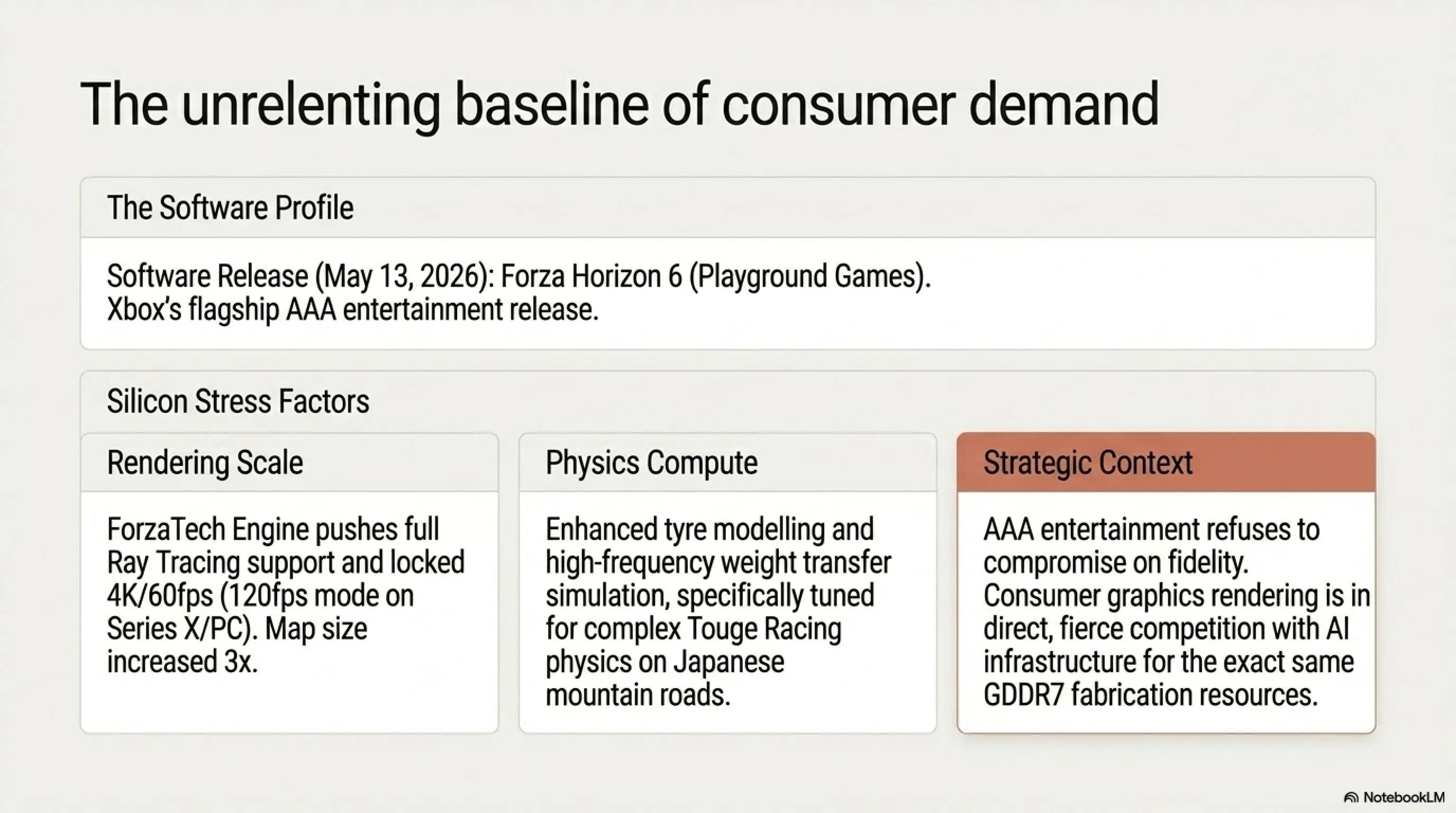
- Open World Map: The largest map in Forza Horizon history — 3x bigger than FH5
- Next-Gen Graphics: Built with the new ForzaTech Engine, full Ray Tracing support and 4K/60fps
- Dynamic Weather System: Four seasons with real changes — spring with cherry blossoms, hot summer, autumn with red leaves, snowy winter
- Japanese Car Culture: Drift events, Touge Racing, and Car Meets in urban parking lots
- Story Mode: A new narrative about a young driver who wants to become the champion of Japan's Horizon Festival
- Online Mode: Up to 72 players simultaneously, weekly events, and community challenges
One of the most exciting features of FH6 is Touge Racing mode — a Japanese racing style that takes place on narrow, winding mountain roads. This mode is inspired by Japanese street racing culture and famous anime like Initial D. Players must defeat rivals on dangerous courses with skill and precision. The physics engine has been tuned specifically for this mode, with enhanced tire modeling and weight transfer simulation that rewards smooth, precise driving over raw power.
Forza Horizon 6 is also the first Forza game fully optimized for Xbox Series X|S and PC (no Xbox One support). This allowed Playground Games to leverage the full power of next-gen hardware — including fast SSDs for instant loading, Ray Tracing for realistic reflections, and 3D audio for an immersive experience. The game also supports 120fps mode on Xbox Series X and high-end PCs, delivering buttery-smooth gameplay that racing enthusiasts demand.
🔍 Tekin Analysis: Why Japan Is the Perfect Choice
Japan is one of the most important centers of car culture in the world. From JDM legends like the Skyline and Supra to Drift and Touge Racing culture — Japan has always been at the heart of racing gamers. By choosing Japan, Forza Horizon 6 not only appeals to a large market (Japan and Asia) but also fulfills a long-standing dream of series fans. This game could become one of the best-selling Xbox titles in history. The cultural authenticity is impressive: Playground Games partnered with Japanese automotive historians and street racing veterans to ensure accuracy in everything from car modifications to racing etiquette. The game also features licensed Japanese music, authentic street food vendors at festival sites, and even accurate recreations of famous Tokyo landmarks like Shibuya Crossing and Tokyo Tower. This level of detail creates an immersive experience that transcends typical racing games.
🎯 Release Date: Forza Horizon 6 launches on May 13, 2026 for Xbox Series X|S, PC (Steam and Microsoft Store), and Xbox Game Pass. The game also supports Cloud Gaming, meaning even if you don't have powerful hardware, you can play via cloud streaming. Pre-orders are already breaking records, with the Premium Edition (which includes early access and exclusive cars) selling out within hours of announcement.
💾 Global Memory Crisis: Why Smartphones and GPUs Are Getting More Expensive
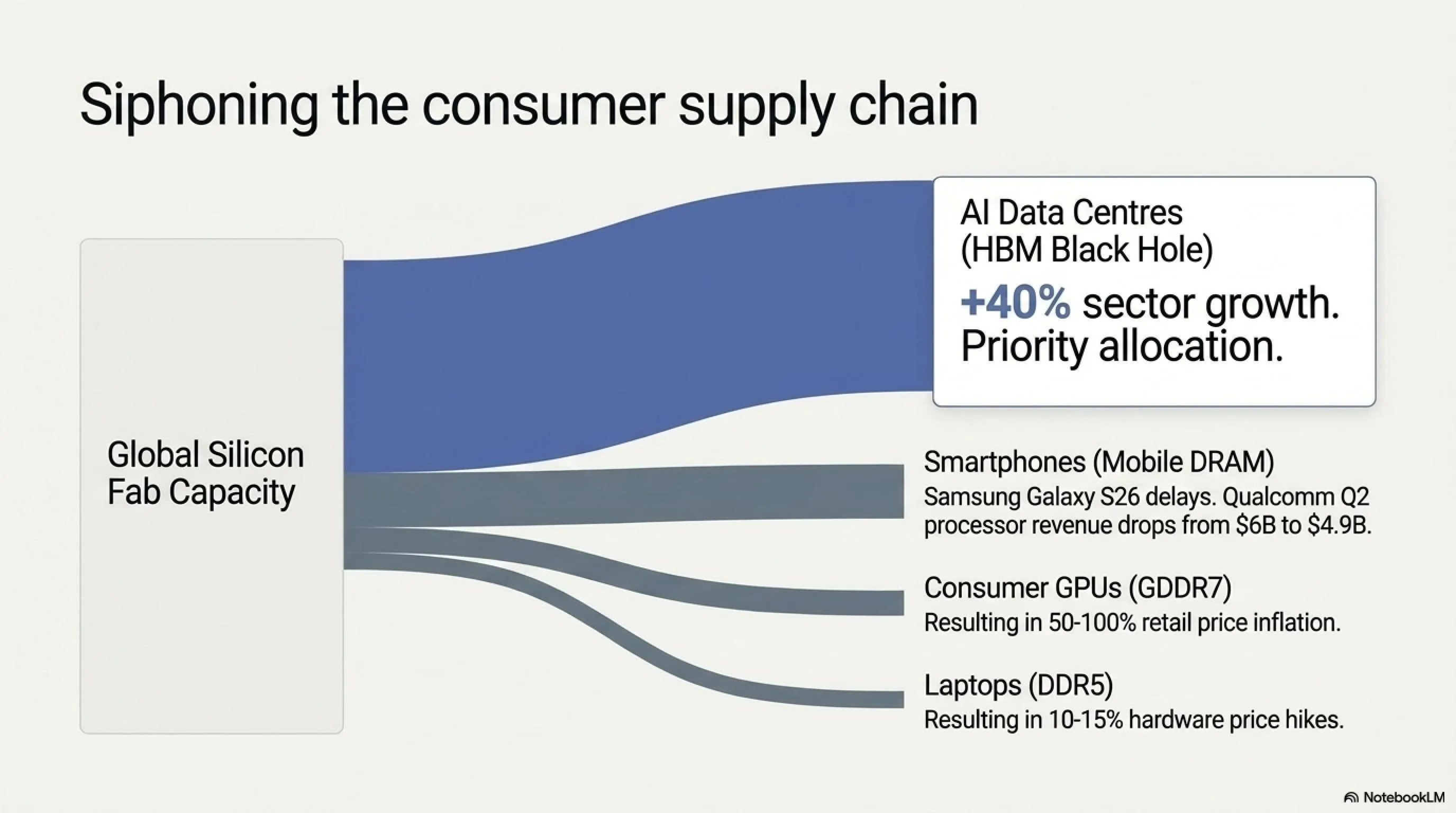
One of the biggest challenges facing the tech industry in 2026 is the global memory crisis that has severely impacted the production of smartphones, GPUs, and consumer devices. This crisis stems from unprecedented demand from AI data centers for HBM (High-Bandwidth Memory), forcing manufacturers to allocate all their capacity to enterprise orders.
According to industry reports, global smartphone chipset shipments are expected to decline 7 percent in 2026, but industry revenue will still grow in double digits due to rising prices. AI-driven data center demand is pushing chipmakers toward high-margin HBM, driving up DRAM prices and squeezing phone makers. This creates a paradox: fewer units sold, but higher revenues — a clear sign of supply-constrained pricing power.
📉 Memory Crisis Impact:
| Sector | Impact | Forecast |
|---|---|---|
| Smartphones | 7% production decline | Prices +15-20% |
| Consumer GPUs | GDDR7 shortage | Prices +50-100% |
| Laptops | DDR5 shortage | Prices +10-15% |
| AI Data Centers | Full HBM priority | Growth +40% |
| Recovery Timeline | Late 2026 / Early 2027 | |
Qualcomm, whose Snapdragon processors are commonly found in premium smartphones, has forecasted an 18 percent revenue decline for its smartphone processors in the second quarter of 2026. The company generated over $6 billion in mobile chip sales during the first quarter, but this figure is expected to fall to approximately $4.9 billion. This dramatic drop reflects both reduced unit volumes and the cascading effects of memory shortages on device assembly.
Samsung also complained about the memory crisis in its earnings report, saying that limited supply of memory chips has slowed production of Galaxy S26 phones. The company announced it is investing in new production capacity, but this capacity won't come online until late 2026 or early 2027. The capital expenditure required is staggering: Samsung alone is investing over $30 billion in new fab capacity, but the lead time for semiconductor manufacturing means relief is still months away.
🔍 Tekin Analysis: Why AI Is to Blame
The root of this crisis is the explosive demand from AI data centers for HBM memory. Companies like Microsoft, Meta, Amazon, and Alphabet are building massive AI data centers that require millions of memory chips. Memory manufacturers like Samsung, SK Hynix, and Micron have allocated all their capacity to these enterprise orders (which have higher profit margins). The result? Severe shortages of DRAM and GDDR7 for smartphones and consumer GPUs. This situation will continue until new production capacity comes online (likely Q4 2026 or Q1 2027). For consumers, this means higher prices and more limited choices. The strategic implications are profound: the AI infrastructure buildout is effectively taxing the consumer electronics industry, redistributing silicon supply from mass-market devices to high-margin data center components. This represents a fundamental reordering of semiconductor industry priorities, with AI compute taking precedence over consumer devices for the first time in history.
According to a CNBC report, memory chips and storage drives are becoming a major bottleneck in the artificial intelligence buildout, driving companies' capital expenditures higher. Chipmakers warn the supply crunch will get worse before it gets better, and Wall Street sees an opportunity. Memory manufacturers' stock prices have surged as investors bet on sustained pricing power and margin expansion. SK Hynix, the leading HBM supplier, has seen its stock price triple over the past 18 months.
⚠️ Buyer Recommendation: If you're planning to buy a new phone or GPU, don't wait for prices to drop — that won't happen until late 2026. If you can, buy now or look for previous-generation models at reasonable prices. The secondary market for used GPUs and smartphones has become increasingly active as consumers seek alternatives to inflated new device prices. Some analysts predict the shortage could extend into 2027 if AI infrastructure investment continues at current levels.
🎯 Final Takeaway: The Future of Technology Is in AI's Hands
Today's news reveals a clear trend: AI is becoming the central core of all technology — from smartphones to data centers, from cybersecurity to gaming. OpenAI's entry into hardware, Qualcomm's Agentic CPUs, and the White House warning about AI cyberattacks — all demonstrate that we're on the cusp of a major transformation.
But this transformation isn't without challenges. The global memory crisis shows that our current infrastructure isn't sufficient to support AI demand. Higher prices, supply shortages, and intense competition between data centers and consumers — all are signs of an industry undergoing rapid change. The semiconductor supply chain, optimized for decades to serve consumer electronics, is being forcibly reoriented toward AI infrastructure. This transition is painful but inevitable.
For the global market, these developments represent both opportunity and challenge. The opportunity to learn and leverage new technologies, and the challenge of dealing with higher prices and access limitations. But one thing is certain: the future belongs to those who prepare today. The companies and individuals who invest in AI literacy, infrastructure, and capabilities now will be the winners of the next decade. The question isn't whether AI will transform technology — it's whether you'll be ready when it does.
❓ Frequently Asked Questions (FAQ)
Why does OpenAI want to build custom chips?
OpenAI believes that to deliver a seamless AI Agent experience, control over both hardware and software ecosystems is essential. By designing custom chips, OpenAI can optimize power efficiency, memory management, and on-device AI capabilities — something that's not possible with generic chips. This strategy is similar to what Apple has done with its A-series and M-series chips. The vertical integration allows for tighter optimization between the AI models, the operating system, and the silicon itself, potentially delivering performance and efficiency gains that third-party chip solutions cannot match.
What makes Agentic smartphones different from regular smartphones?
Agentic smartphones have a unified system that directly completes tasks instead of requiring users to navigate between multiple apps. For example, instead of you searching for a restaurant, opening a maps app, making a reservation, and setting a reminder — an AI Agent can do all of this with a single command. This requires more powerful CPUs, more memory, and deep integration with the operating system. The agent acts as an autonomous digital assistant that understands context, maintains state across tasks, and can orchestrate complex multi-step workflows without constant user intervention.
Why is Anthropic Mythos so dangerous?
Claude Mythos has the ability to discover security vulnerabilities in code that even the best human hackers cannot find. This means if this technology falls into the wrong hands, it could be used for widespread cyberattacks. The White House is concerned that geopolitical rivals or cybercriminal groups might gain access to similar technology. This is why Anthropic has restricted access to Mythos and only provides it to trusted security researchers. The dual-use nature of the technology — it can both defend against and enable cyberattacks — makes it one of the most sensitive AI capabilities ever developed. The potential for automated, large-scale vulnerability discovery represents a paradigm shift in cybersecurity threat modeling.
Why have GPUs and smartphones become so expensive?
The root problem is explosive demand from AI data centers for HBM memory. Large companies like Microsoft, Meta, and Amazon are building massive AI data centers that require millions of memory chips. Memory manufacturers have allocated all their capacity to these enterprise orders (which have higher profit margins), causing severe shortages of DRAM and GDDR7 for smartphones and consumer GPUs. The supply chain reallocation represents a fundamental shift in semiconductor industry priorities, with AI infrastructure taking precedence over consumer electronics for the first time in the industry's history.
Will Forza Horizon 6 be released for PC?
Yes! Forza Horizon 6 launches simultaneously for Xbox Series X|S and PC (Steam and Microsoft Store). The game will also be available on Xbox Game Pass (for both console and PC) and supports Cloud Gaming. This means even if you don't have powerful hardware, you can play via cloud streaming. The PC version supports ultrawide monitors, uncapped frame rates, and advanced graphics settings for enthusiasts with high-end rigs. Cross-play and cross-save are fully supported, allowing seamless multiplayer experiences across platforms.
📚 Sources
Gadgets360 (OpenAI Chipset News), The Register (Qualcomm Agentic CPU), POLITICO (White House AI Cybersecurity), Ars Technica (Nvidia RTX 5070 Laptop), IGN (Forza Horizon 6), CNBC (Memory Chip Crisis), Android Authority (Smartphone SoC Shipments), TechStartups (AI Infrastructure), The Conversation (AI Data Center Memory Supply), Tom's Hardware (GPU Market Analysis), Polygon (Xbox Gaming News)
Tekin Morning May 2, 2026 — Research and Analysis: Tekin Editorial Team
🌐 Stay Connected With Us
For the latest tech, gaming, and gadget news, follow us on social media: