🌅 Welcome to Tekin Morning — May 1, 2026
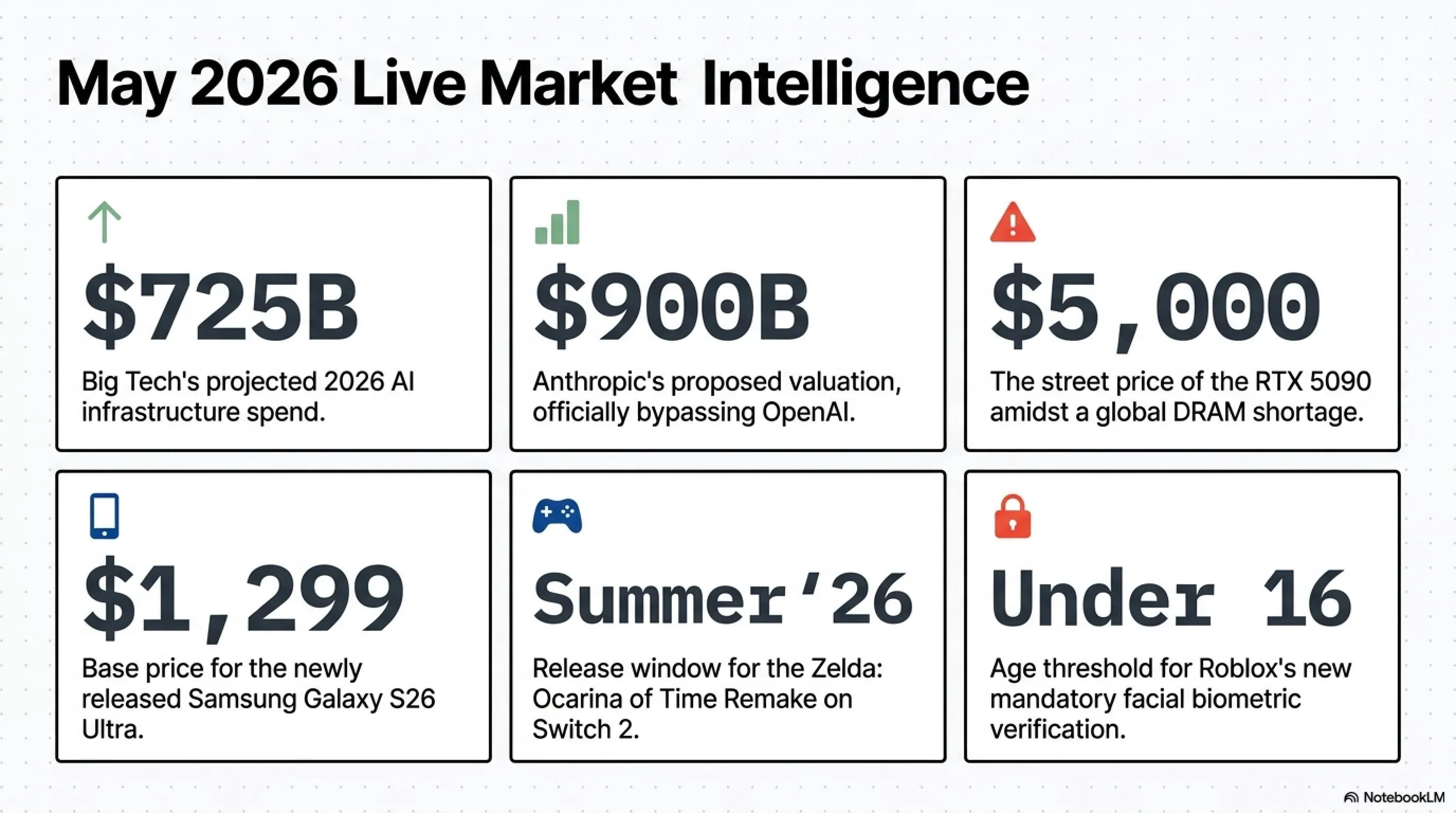
Good morning, Tekin Army! As we step into May 2026, the tech landscape is undergoing seismic shifts that will define the next decade. Today's edition brings you six strategic stories that reveal the true state of the industry: from the $725 billion AI infrastructure war reshaping Big Tech balance sheets, to the RTX 5090 crisis pricing gamers out of the market, from Samsung's AI-powered Galaxy S26 to the long-awaited Zelda: Ocarina of Time Remake, from Roblox's controversial facial verification mandate to Anthropic's stunning $900 billion valuation that could eclipse OpenAI.
⚡ Today's Headlines:
💰 Big Tech: $725B AI Capex in 2026 — The Infrastructure Arms Race
🎮 RTX 5090 Hits $5,000 — Global DRAM Crisis Explained
📱 Samsung Galaxy S26: The Most Intuitive AI Phone Yet
🕹️ Zelda: Ocarina of Time Remake Confirmed for Switch 2
👶 Roblox: Mandatory Facial Verification for Under-16 Users
🤖 Anthropic's $900B Valuation Could Surpass OpenAI
☕ Grab your coffee and let's dive into the stories shaping the future of technology.
💰 The $725 Billion AI Infrastructure War: Big Tech's Unprecedented Capital Spending Spree
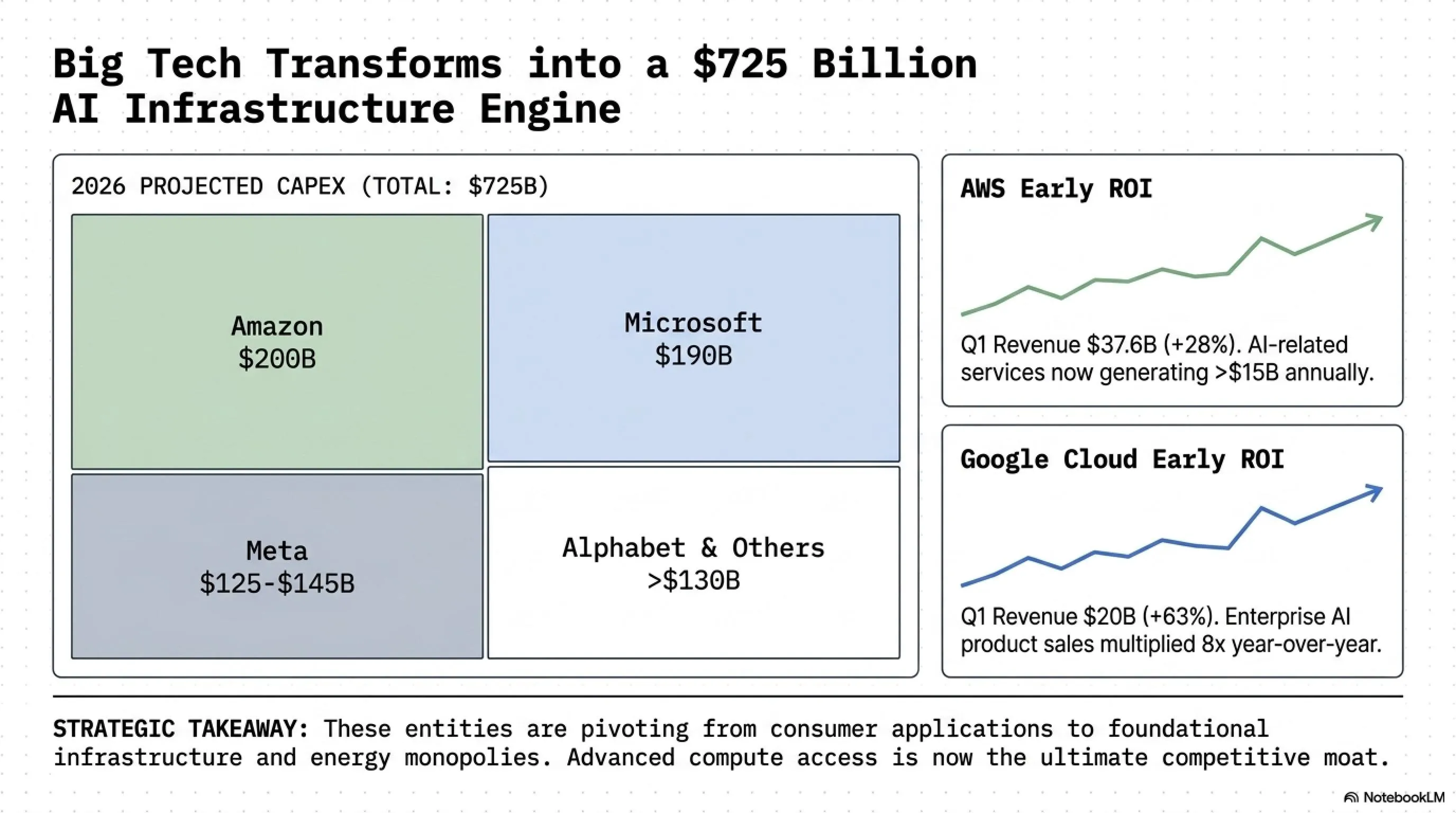
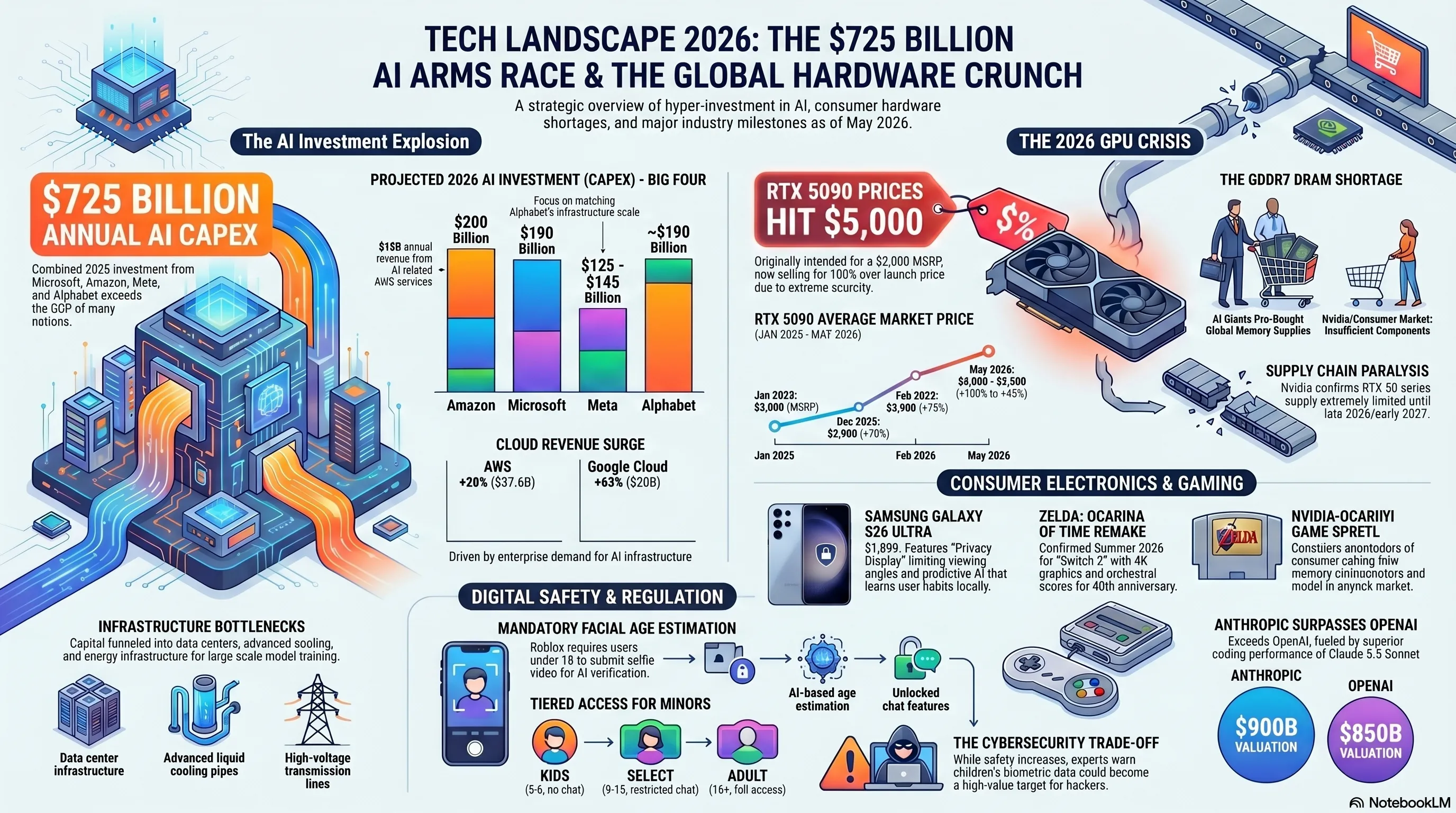
As we enter May 2026, one reality has become undeniable: American tech giants have transformed into AI infrastructure machines operating at a scale and velocity unprecedented in corporate history. According to Q1 2026 financial reports, four companies — Alphabet, Meta, Microsoft, and Amazon — collectively spent more than $130 billion in a single quarter on AI infrastructure, primarily for data centers, chips, and related equipment. This marks another quarterly record in what has become an escalating arms race for compute capacity.
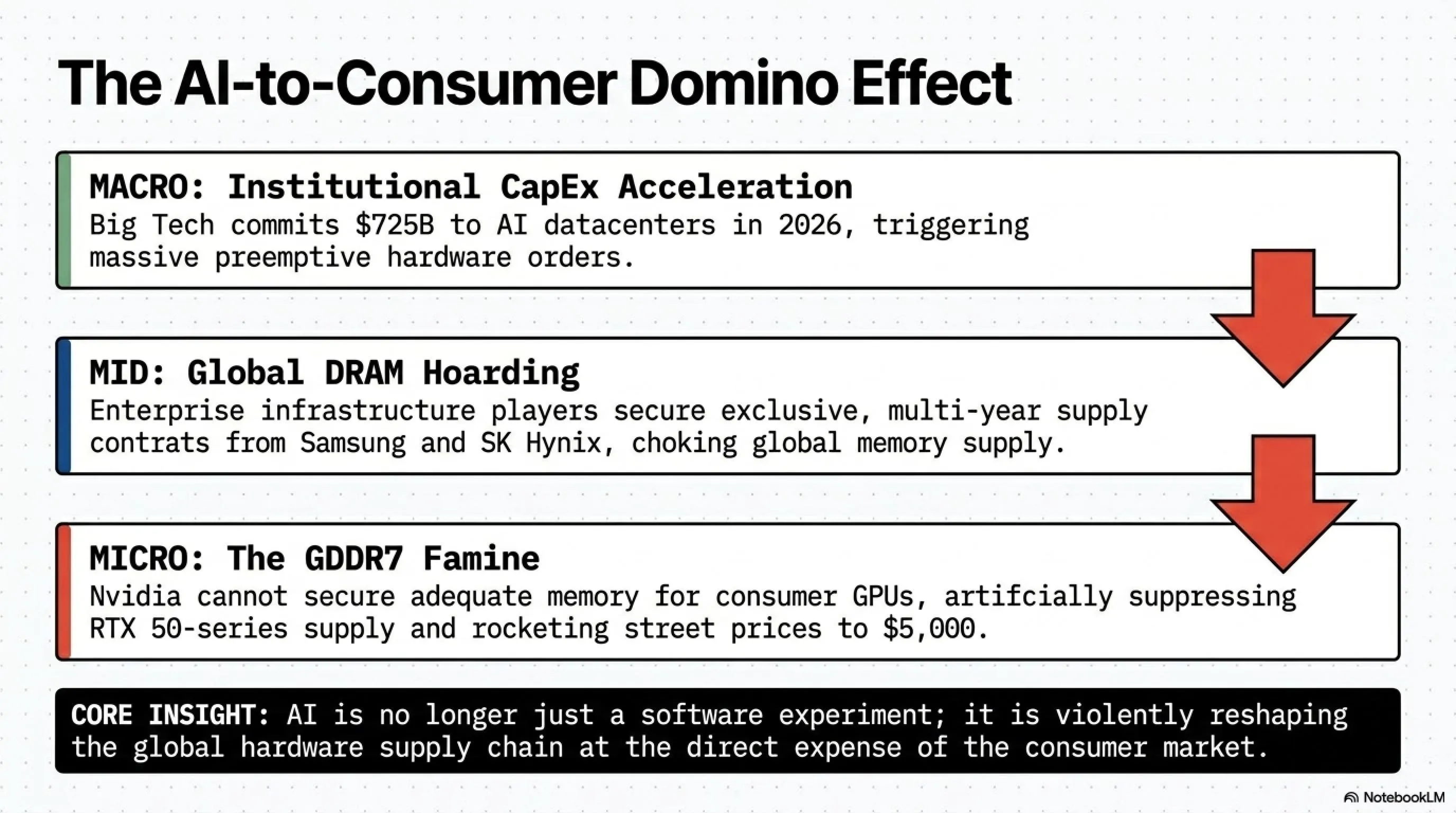
The numbers are staggering. Microsoft forecast approximately $190 billion in capital expenditures for 2026, matching Alphabet's projection. Meta raised its annual capex forecast to $125-145 billion as it races to build out data centers and secure chips for larger AI workloads. Amazon held steady at $200 billion. The total? $725 billion in a single year — a figure that exceeds the GDP of most nations and represents a fundamental shift in how these companies allocate capital.
📊 Q1 2026 Capital Expenditure Breakdown:
Microsoft 2026 Capex
$190B
Azure AI infrastructure
Amazon AWS Investment
$200B
Data centers & chips
Meta Q1 Revenue
$56.3B
+22% YoY growth
Total 2026 Capex
$725B
Across four companies
But where exactly is this money going? The answer reveals the infrastructure bottlenecks defining the AI era. First, data centers: Meta alone is building dozens of new facilities across the US and internationally, each requiring massive power infrastructure, cooling systems, and physical security. Second, chips: primarily Nvidia GPUs for training and inference, but also custom silicon from companies like Google (TPUs) and Amazon (Trainium). Third, networking equipment: the high-speed interconnects needed to link thousands of GPUs into coherent training clusters. Fourth, energy infrastructure: AI workloads consume enormous amounts of power, forcing companies to invest in dedicated power plants and renewable energy sources.
The results are starting to show. Meta reported a sharp Q1 revenue jump to $56.3 billion, but the bigger story is its rising AI infrastructure bill. The company raised its annual capital spending forecast specifically to support larger AI workloads, acknowledging that the race is far from over. CEO Mark Zuckerberg stated in the earnings call: "We're seeing explosive demand for AI training and inference. The companies that build the best infrastructure today will dominate the AI economy tomorrow."
Amazon's AWS division reported stronger-than-expected growth, with cloud revenue rising 28% to $37.6 billion as enterprise AI demand picked up. CEO Andy Jassy reaffirmed a $200 billion AI investment target for the year, while AWS-related AI services are reportedly generating more than $15 billion annually. This is crucial because AWS has faced pressure from Microsoft Azure and Google Cloud in the AI era. Amazon's deeper ties with Anthropic and OpenAI suggest the cloud wars are shifting from exclusive model partnerships to broader access to infrastructure.
🔍 Tekin Analysis: The ROI Question Nobody Wants to Answer
These investments reveal that Big Tech no longer views AI as an experiment — it's the core infrastructure for all future products. But a critical question looms: will these massive expenditures translate into meaningful revenue? Analysts are increasingly concerned about long-term ROI, especially as energy costs and chip prices continue to rise. The spending boom is reshaping global supply chains for chips, power, and cooling systems, with ripple effects on energy markets and semiconductor manufacturers. Early signs of monetization are emerging in cloud revenue growth, but the pressure to deliver returns is mounting. For startups and smaller players, this means access to cutting-edge compute is increasingly determining market survival. The AI infrastructure war isn't just about technology — it's about who can afford to compete.
Google Cloud delivered perhaps the most impressive results, with revenue jumping 63% to $20 billion. Alphabet said enterprise AI product sales rose eightfold from a year earlier, while it also began selling its TPU chips directly to select customers. This full-stack approach — from chips to models to cloud services — gives Google a stronger position as companies look for alternatives to Nvidia-heavy infrastructure. The company's results suggest it's starting to convert years of AI research into commercial momentum.
But the geopolitical dimension cannot be ignored. DeepSeek, a Chinese AI startup, is reportedly turning to Huawei chips as China accelerates efforts to reduce dependence on Nvidia amid tighter U.S. export controls. This reflects Beijing's broader push to build domestic AI infrastructure, signaling that the AI chip race is becoming a national infrastructure contest. For the global AI ecosystem, this means infrastructure is splitting along geopolitical lines, with Chinese startups potentially gaining more domestic hardware support but facing performance limits and fewer global exit paths.
💡 Key Takeaway: The $725 billion AI infrastructure war is redefining the competitive landscape. Companies that can't afford to build or access cutting-edge compute will struggle to compete. This isn't just a technology race — it's a capital-spending race that's reshaping global supply chains, energy markets, and geopolitical alliances.
🎮 The RTX 5090 Crisis: How the Global DRAM Shortage Priced Gamers Out of the Market
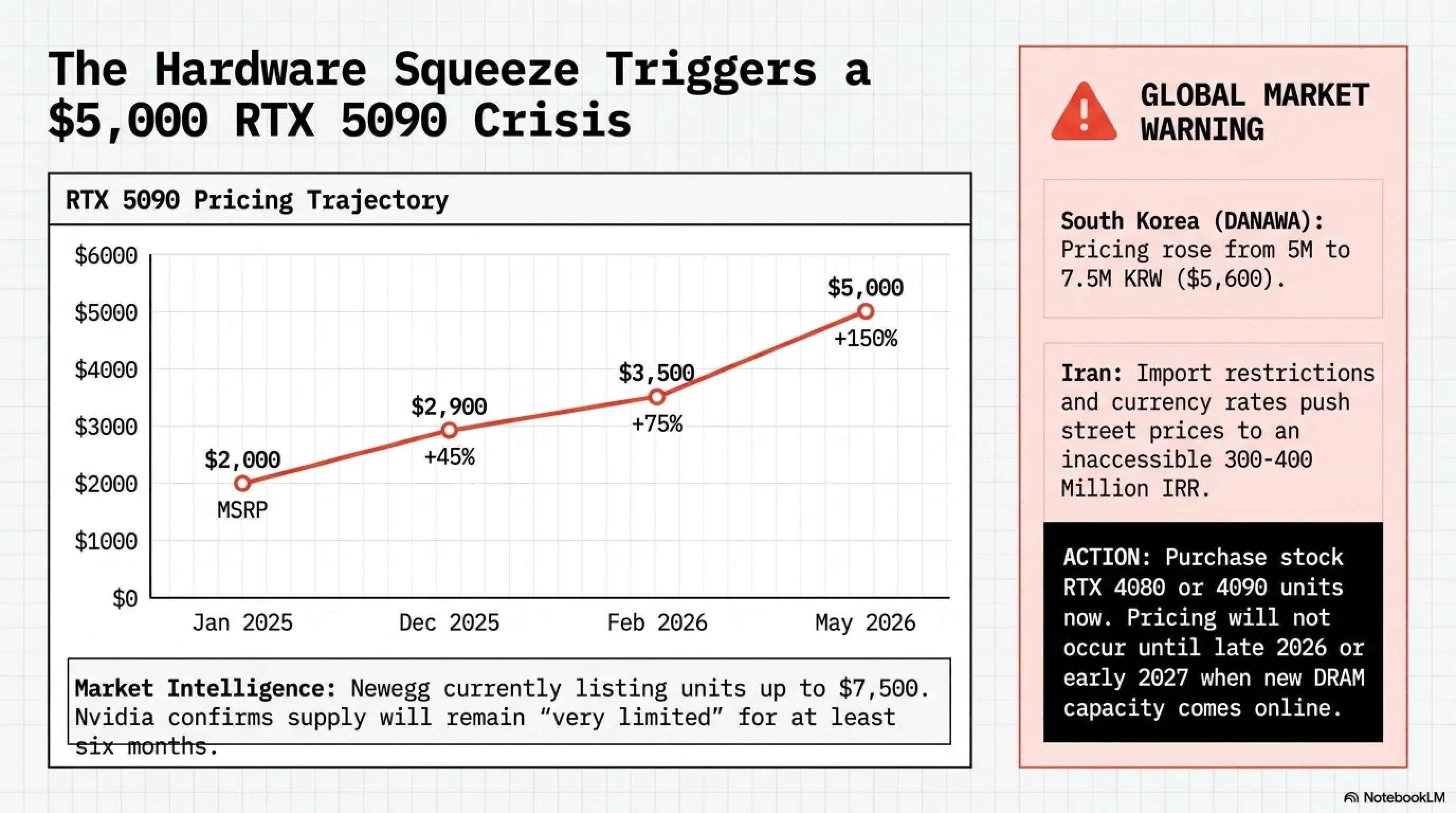
If you thought the GPU shortage was over, I have bad news: it's gotten worse. The Nvidia GeForce RTX 5090, the flagship gaming card that was supposed to launch at an MSRP of around $2,000, is now selling for $4,000 to $5,000 in the secondary market. Some retailers like Newegg have even listed models at $7,500. This isn't just a typical supply-and-demand imbalance — it's the direct result of a global DRAM memory crisis that has paralyzed the tech industry in 2026.
The root cause is simple but devastating: AI companies purchased memory supplies years in advance to build massive datacenter infrastructure, leaving GPU manufacturers like Nvidia facing severe shortages of GDDR7 memory. This isn't speculation — it's confirmed by industry data and Nvidia's own statements. The company officially acknowledged that RTX 50-series supply will remain "very tight" for at least the next six months, meaning gamers hoping to upgrade their rigs won't see relief until late 2026 or early 2027.
📈 RTX 5090 Price Evolution Timeline:
| Date | Average Price | % Change | Market Context |
|---|---|---|---|
| January 2025 | $2,000 | MSRP | Launch price |
| December 2025 | $2,900 | +45% | DRAM shortage begins |
| February 2026 | $3,500 | +75% | Nvidia confirms shortage |
| May 2026 | $4,000-$5,000 | +100-150% | Peak crisis |
DANAWA data from South Korea shows the flagship RTX 5090 with 32GB VRAM rising by more than 50%, jumping from the 5 million won range late last year to 7.5 million won (approximately $5,600). In the United States, Micro Center reported that buyers camped outside stores three days before launch — and even they couldn't secure cards. The limited Founders Edition stock that Nvidia releases directly sells out in minutes, highlighting the intense demand from both gamers and AI users who need high-VRAM cards for local inference.
The 2026 memory crisis stems from a fundamental mismatch between supply and demand. AI companies like Microsoft, Meta, and Amazon signed DRAM purchase contracts years in advance to build their datacenter infrastructure. This forced memory manufacturers like Samsung and SK Hynix to allocate their entire capacity to enterprise orders, leaving consumer GPU makers at the back of the line. Nvidia simply cannot source enough GDDR7 for the RTX 5090, and this situation will persist until new production capacity comes online — likely late 2026 or early 2027.
🔍 Tekin Analysis: The AI-Gaming Hardware Collision
The RTX 5090 crisis reveals a fundamental tension in the semiconductor industry: AI and gaming are now competing for the same resources, and AI is winning. Memory manufacturers prioritize enterprise contracts because they're larger, more predictable, and more profitable than consumer orders. This means gamers are effectively subsidizing the AI infrastructure boom with higher prices and longer wait times. The situation won't improve until either (1) new DRAM fabs come online, increasing total supply, or (2) AI demand stabilizes, freeing up capacity for consumer products. Neither scenario is likely before late 2026. For PC gamers, the best strategy is to either buy used RTX 4080/4090 cards at reasonable prices or wait until 2027. Don't expect prices to normalize anytime soon.
The broader implications are significant. High-end gaming PCs are becoming increasingly unaffordable for average consumers. PCWorld noted that average RTX 5090 prices have doubled from $2,000 in January 2025 to around $4,000 in May 2026, making enthusiast-grade builds prohibitively expensive. This could drive more gamers toward consoles like the PS5 Pro or Xbox Series X, which offer better value propositions despite lower performance ceilings.
⚠️ Tekin Recommendation: If you're looking to upgrade your GPU, consider buying a used RTX 4080 or 4090 at reasonable prices. Don't wait for prices to drop — it won't happen until late 2026 at the earliest. Alternatively, explore AMD's Radeon RX 8000 series, which may have better availability due to different memory configurations.
📱 Samsung Galaxy S26: The Most Intuitive AI Phone Yet — But Is It Worth the Premium?
Samsung unveiled the Galaxy S26 series in February 2026 with the tagline "The Most Intuitive AI Phone Yet," and now in May 2026, these devices are widely available. The Galaxy S26 Ultra, the flagship of the lineup, is 0.3mm thinner than its predecessor and weighs 214 grams — a combination of power and portability that Samsung has refined over years of iteration.
But the real transformation is internal: Galaxy AI now operates proactively and adaptively, learning your habits, simplifying daily tasks, and offering intelligent suggestions — all without sending your data to the cloud. This on-device AI processing is powered by the Snapdragon 8 Gen 4 (for global markets) or Samsung's Exynos 2600 (for select regions), both featuring dedicated NPUs (Neural Processing Units) capable of running large language models locally.
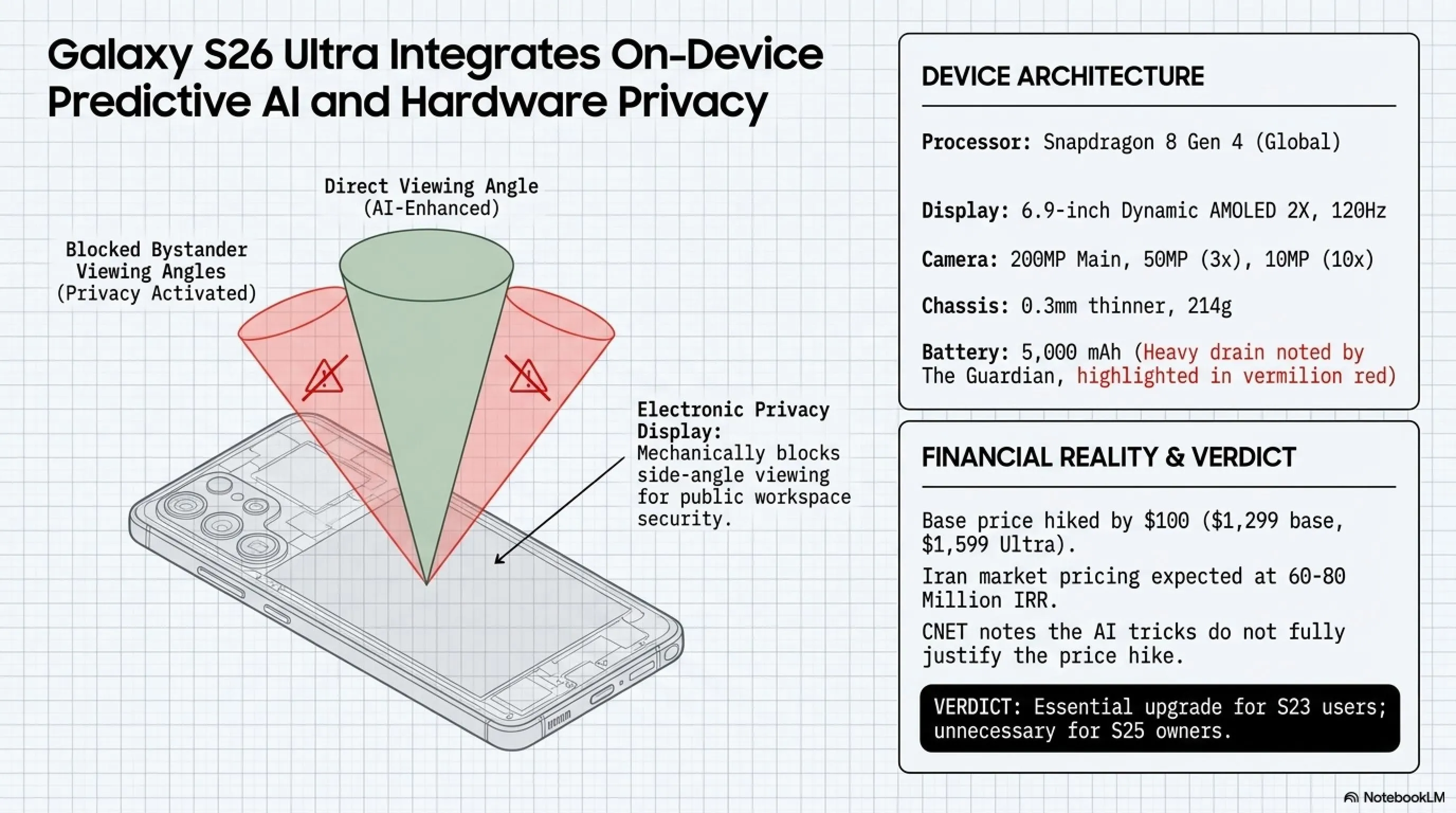
📊 Galaxy S26 Ultra Key Specifications:
| Display | 6.9" Dynamic AMOLED 2X, 120Hz adaptive refresh |
| Processor | Snapdragon 8 Gen 4 / Exynos 2600 (region-dependent) |
| Battery | 5,000 mAh (2+ days typical use) |
| Camera System | 200MP main, 50MP 3x telephoto, 10MP 10x periscope |
| Special Feature | Privacy Display (electronically controlled viewing angles) |
| Pricing | From $1,299 (S26 base) to $1,599 (S26 Ultra) |
One of the most compelling features of the S26 Ultra is Privacy Display — a technology that allows you to electronically control viewing angles with a single toggle. When activated, the screen becomes visible only from a direct angle, preventing shoulder-surfing in public spaces. This is a golden feature for professionals who work in coffee shops, airports, or open offices and are concerned about prying eyes.
But there's a catch: price. Samsung increased the base S26 price by $100 — from $1,199 to $1,299. CNET's review noted: "The AI tricks are fun, but the higher price didn't go toward the right upgrades." The Guardian pointed out that battery life, while good for typical use, struggles with intensive gaming sessions, making it less suitable for hardcore mobile gamers.
🔍 Tekin Analysis: Is the S26 Worth the Upgrade?
The Galaxy S26 is an excellent phone, but not a revolution. If you own an S25 Ultra, the upgrade isn't essential — the improvements are incremental rather than transformative. However, if you're coming from an S23 or older, the S26 Ultra offers meaningful upgrades: advanced Galaxy AI with on-device processing, a 200MP camera system with improved computational photography, Privacy Display for security-conscious users, and long-term software support (Samsung promises 7 years of updates). The $100 price increase is frustrating, especially since it didn't translate into better battery life or faster charging. For American consumers, the S26 Ultra at $1,599 competes directly with the iPhone 17 Pro Max — and the choice will likely come down to ecosystem preference rather than raw specs.
🕹️ Zelda: Ocarina of Time Remake Confirmed for Switch 2 — A 28-Year-Old Masterpiece Returns
📚 Classified & Related Dossiers in TekinGame
If you wish to explore beyond this report and delve into cybernetic frontiers and autonomous AI architectures, do not miss these three exclusive deep-dives in the Tekin Garage:
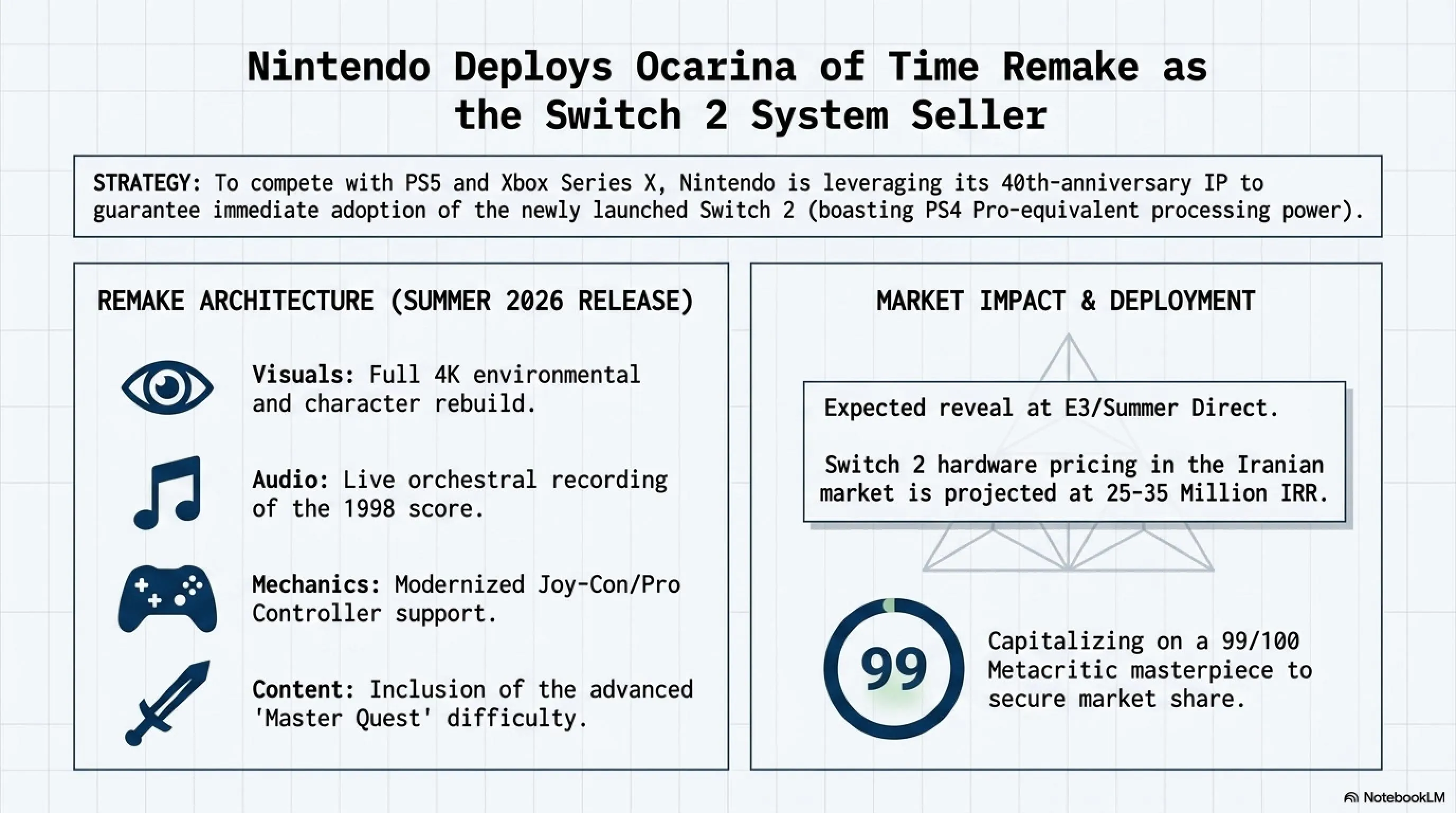
If you're a nostalgic gamer, this is your moment: according to credible reports from industry insider Nate the Hate and multiple corroborating sources, Nintendo is developing a full remake of The Legend of Zelda: Ocarina of Time for the Switch 2, scheduled for release in Summer 2026. This project is part of Nintendo's celebration of the Zelda series' 40th anniversary, which the company is commemorating throughout 2026 with multiple releases and events.
Ocarina of Time, originally released in 1998 for the Nintendo 64, is widely regarded as one of the most influential games in history. It holds a 99/100 score on Metacritic and pioneered the 3D action-adventure genre with its Z-targeting combat system, context-sensitive controls, and time-travel narrative. Now, 28 years later, this masterpiece is returning with modern graphics, orchestral music, and refined gameplay that leverages the Switch 2's significantly enhanced hardware capabilities.
🎮 What to Expect from the Remake:
- Rebuilt Graphics: Character models and environments rendered in 4K resolution with modern lighting, textures, and particle effects
- Orchestral Soundtrack: The iconic score re-recorded with a live orchestra, similar to the treatment given to Breath of the Wild and Tears of the Kingdom
- Enhanced Controls: Optimized for Joy-Con and Pro Controller with gyroscopic aiming and HD rumble support
- Additional Content: Potential new dungeons, side quests, or challenge modes to extend replayability
- Master Quest Mode: The harder version originally released for GameCube, featuring remixed dungeons and mirrored world
- Quality-of-Life Improvements: Fast travel enhancements, streamlined inventory management, and optional difficulty settings
This isn't the first time Ocarina of Time has been remade — the 3DS version released in 2011 was critically acclaimed and commercially successful, selling over 7 million copies. However, that remake was constrained by the 3DS hardware, limiting visual fidelity and screen size. With the Switch 2's rumored power (reportedly equivalent to PS4 Pro in docked mode), Nintendo can deliver a truly next-generation experience that does justice to the original vision while introducing modern conveniences.
Beyond Ocarina of Time, additional rumors suggest Nintendo has a robust 2026 lineup for Switch 2: a new Star Fox game, a 2D Zelda title scheduled for 2027, and potentially a Metroid Prime 4 release window. Nintendo is clearly positioning the Switch 2 as a platform for both new experiences and beloved franchises, leveraging nostalgia while pushing technical boundaries.
🔍 Tekin Analysis: Why This Matters Beyond Nostalgia
The Ocarina of Time Remake isn't just a nostalgic cash-grab — it's a strategic move by Nintendo to establish the Switch 2 as a must-own console. Zelda has always been a system seller: Breath of the Wild sold over 31 million copies and was the primary reason many consumers bought the original Switch at launch. Tears of the Kingdom moved 20 million units in its first month. If the Ocarina of Time Remake delivers the same quality, it could be one of 2026's biggest releases. For Nintendo, this also serves as a bridge between generations: older gamers who grew up with the N64 original will buy it for nostalgia, while younger players who only know Breath of the Wild will experience the game that defined the franchise. The Summer 2026 release window (likely June-August) positions it perfectly for the holiday sales cycle. Expect a special edition Switch 2 console bundle and aggressive marketing campaigns.
🎯 Predicted Release Date: Summer 2026 (likely June-August). Nintendo typically announces major titles at E3 or a summer Nintendo Direct. Watch for official confirmation in the coming weeks.
👶 Roblox Mandates Facial Verification for Under-16 Users: Safety vs. Privacy
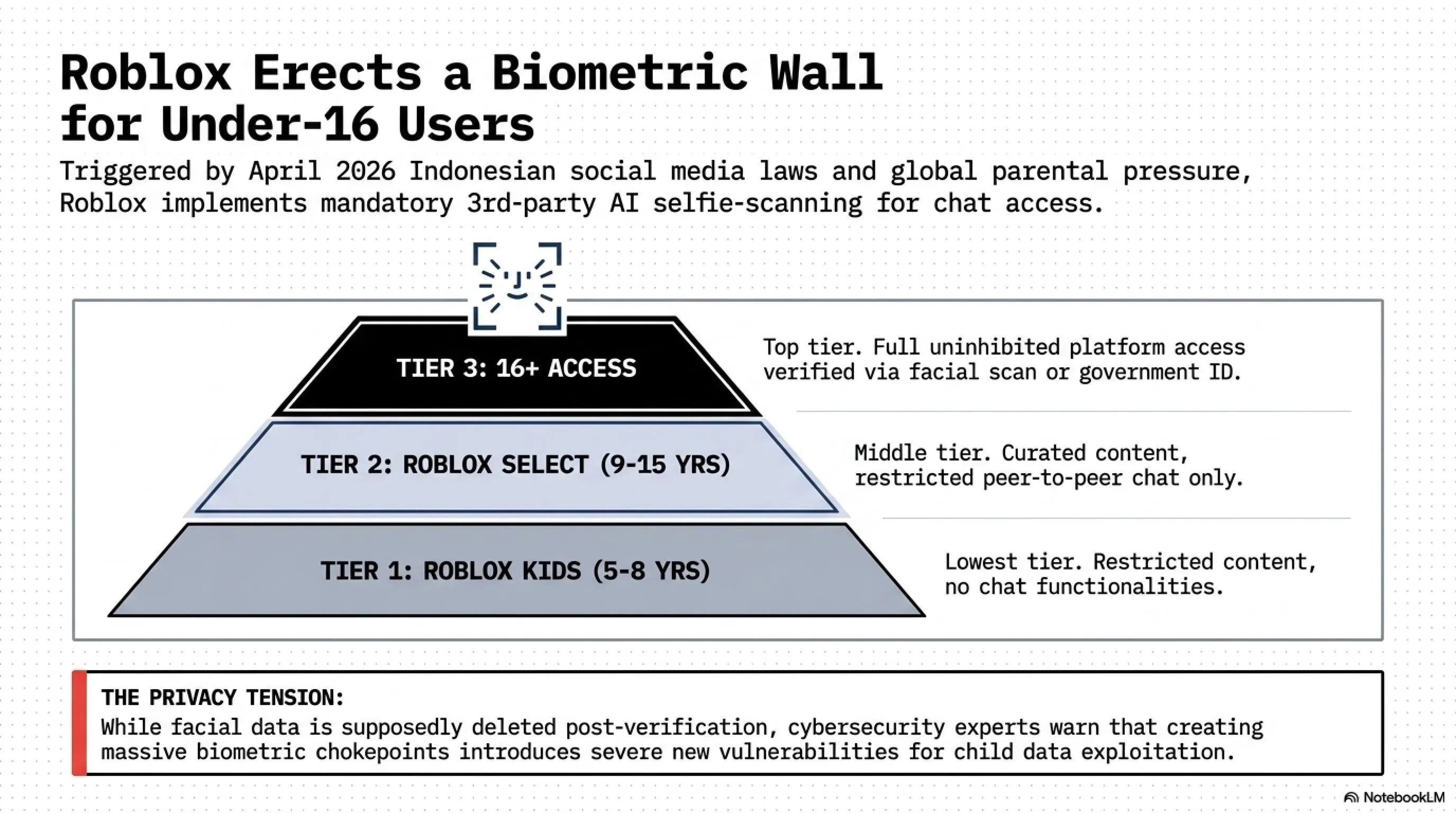
On April 30, 2026, Roblox — the gaming platform beloved by children worldwide — announced that users under 16 in Indonesia must undergo facial scans to verify their age in order to access chat features. This decision responds to Indonesia's new social media regulations designed to protect minors in online spaces. But this is just the beginning: Roblox announced in January 2026 that all users globally must complete age verification — either through facial estimation or ID submission — to access chat functionality.
This makes Roblox the first major online gaming platform to mandate age checks for users of all ages to access communication features. The move represents a significant investment in user safety and enables age-appropriate communication while limiting conversations between adults and minors. However, it also raises serious questions about biometric data collection, privacy, and the potential for security breaches.
🔒 How Facial Age Verification Works:
Roblox uses Facial Age Estimation technology provided by third-party vendors. Users submit a video selfie, and an AI algorithm estimates their approximate age based on facial features. If the user is determined to be under 16, they must invite a parent or guardian to verify and approve their account. If verification fails or is declined, chat features are automatically disabled.
- Roblox Kids (Ages 5-8): Restricted content library, no chat functionality
- Roblox Select (Ages 9-15): Moderate content access, limited chat with age-verified peers only
- 16+ Years: Full platform access with age verification required for chat
- Unverified Users: Restricted content, no communication features
Roblox claims that facial data is deleted immediately after age verification is complete, and no biometric information is stored on their servers. However, cybersecurity experts remain skeptical about the security of third-party verification systems.
The decision comes in response to mounting legal pressure and parental concerns. Roblox has faced multiple lawsuits in recent years alleging that the platform failed to adequately protect children from online predators. By implementing mandatory age verification, Roblox hopes to rebuild trust with parents and demonstrate compliance with evolving child safety regulations worldwide.
But concerns persist. Cybersecurity experts warn that children's biometric data could become a target for hackers. While Roblox insists that facial data is deleted post-verification, the involvement of third-party vendors introduces additional risk vectors. Some parents remain uncomfortable with the idea of their children submitting facial scans to any online platform, regardless of stated privacy policies.
Furthermore, experts caution that predators may simply migrate to other platforms with weaker controls, such as Discord, Minecraft, or Fortnite. Age verification on one platform doesn't solve the broader problem of online child safety — it merely shifts the risk elsewhere. This underscores the need for industry-wide standards and parental vigilance across all digital spaces where children interact.
🔍 Tekin Analysis: Is Age Verification Enough?
Age verification is a positive step, but it's not a complete solution. Online predators are adaptive and will find ways to circumvent security systems or move to platforms with weaker protections. The real challenge is creating a multi-layered defense: age verification + AI-powered content moderation + parental controls + education. Parents must actively engage with their children about online safety, set clear boundaries, and use available parental control tools. For Roblox, the success of this initiative will depend on execution: if the verification process is too cumbersome, users will abandon the platform; if it's too lenient, it won't achieve its safety goals. The company is walking a tightrope between safety and usability. For the broader industry, Roblox's move may set a precedent. If it proves effective, expect other platforms to follow suit. If it fails or faces significant backlash, the industry may seek alternative approaches.
⚠️ Security Note: If your child uses Roblox, review privacy settings immediately and have an open conversation about online safety. Teach them never to share personal information with strangers, regardless of platform protections.
🤖 Anthropic's $900B Valuation Could Eclipse OpenAI: The AI Funding Arms Race Intensifies
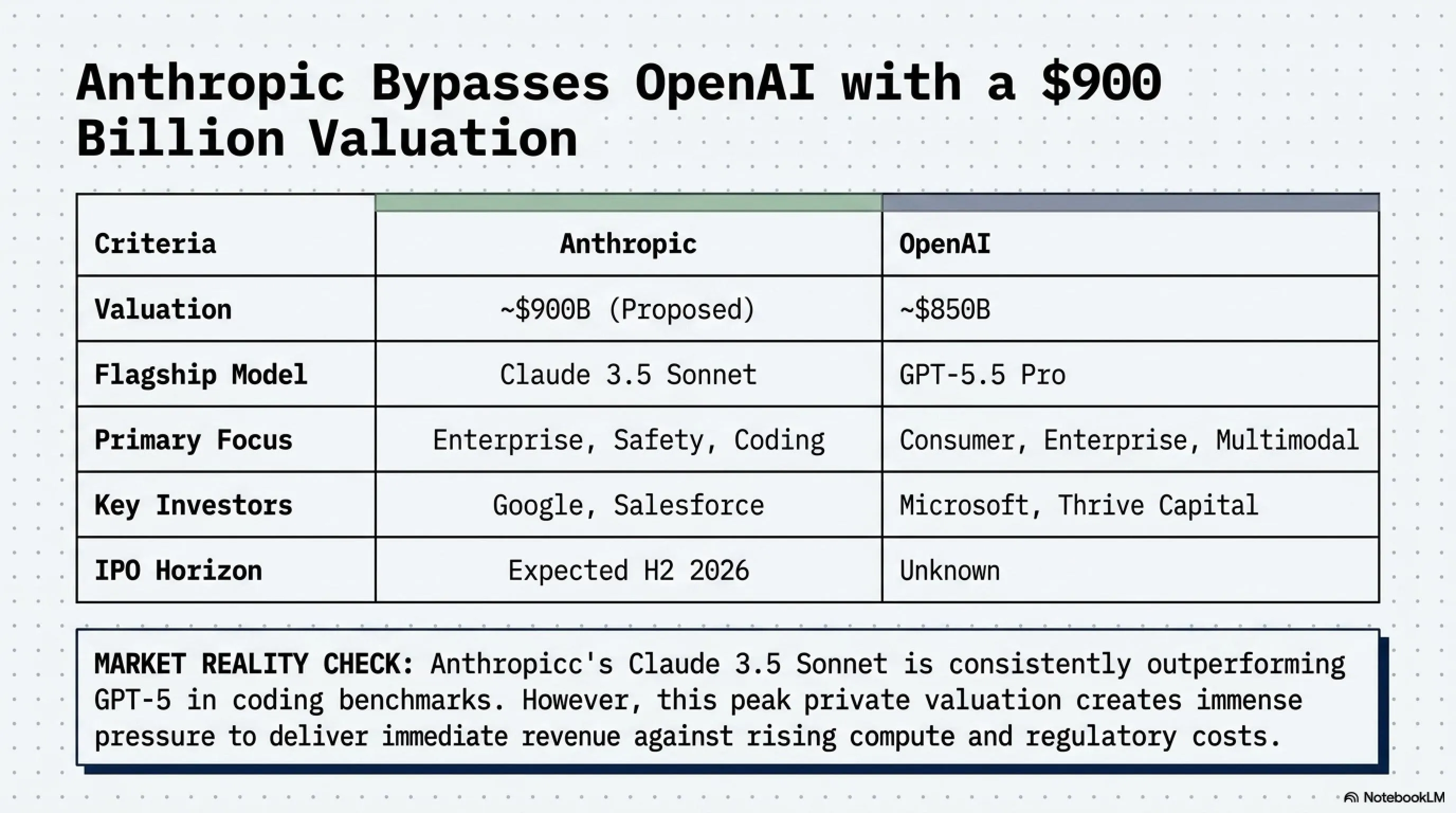
In one of the most significant developments in the AI landscape, Anthropic — the creator of the Claude AI model — is in advanced talks for a new funding round that could value the company at $900 billion. This figure would surpass OpenAI's current valuation and signals that investors remain extraordinarily bullish on the future of frontier AI labs, despite mounting costs and regulatory uncertainties.
According to CNBC, Anthropic has received multiple preemptive offers totaling around $50 billion as it prepares for what may be its final major private funding round before a potential IPO. The company's revenue momentum from coding tools and enterprise products continues to fuel investor enthusiasm, with Claude 3.5 Sonnet demonstrating superior performance in several key benchmarks compared to competing models from OpenAI, Google, and Meta.
📊 Anthropic vs OpenAI: Competitive Landscape Analysis
| Metric | Anthropic | OpenAI |
|---|---|---|
| Valuation | ~$900B (proposed) | ~$850B |
| Flagship Model | Claude 3.5 Sonnet | GPT-5.5 Pro (Venice) |
| Primary Focus | Coding, Enterprise, AI Safety | Consumer, Enterprise, Multimodal |
| Key Investors | Google, Salesforce, Spark Capital | Microsoft, Thrive Capital, Khosla |
| Revenue Model | API, Enterprise licenses | ChatGPT Plus, API, Enterprise |
| IPO Status | Likely H2 2026 | Uncertain |
Why is Anthropic so attractive to investors? Several factors converge. First, technical excellence: Claude 3.5 Sonnet outperforms GPT-5 in many coding benchmarks, making it the preferred choice for developers building AI-powered applications. Second, AI safety focus: Anthropic's commitment to constitutional AI and interpretability research resonates with enterprise customers concerned about liability and ethical risks. Third, strategic partnerships: collaborations with Google Cloud and Salesforce provide distribution channels and integration opportunities that accelerate market penetration.
The company's revenue trajectory supports the valuation. While exact figures aren't publicly disclosed, industry sources suggest Anthropic's annual recurring revenue (ARR) has grown from approximately $200 million in early 2025 to over $1 billion in Q1 2026 — a 5x increase in just over a year. This growth is driven primarily by enterprise adoption: companies like Notion, Quora, and DuckDuckGo have integrated Claude into their products, while Fortune 500 firms are deploying it for internal knowledge management and customer service automation.
However, sky-high valuations create immense pressure to deliver returns. Anthropic must prove it can sustain revenue growth while managing escalating compute costs. Training and running large language models requires enormous infrastructure investments — costs that scale exponentially with model size and usage. If Anthropic cannot maintain its technical edge or if competitors like OpenAI, Google, or emerging startups leapfrog its capabilities, the $900 billion valuation could quickly deflate.
🔍 Tekin Analysis: The Valuation Paradox
Anthropic's $900 billion valuation represents both extraordinary confidence and extraordinary risk. On one hand, it validates the thesis that frontier AI labs will capture enormous value as AI becomes embedded in every software product and business process. On the other hand, it assumes Anthropic can maintain its competitive position in a rapidly evolving market where technical advantages are fleeting and compute costs are soaring. The company faces competition from well-funded rivals (OpenAI, Google, Meta), emerging challengers (Mistral, Cohere, Inflection), and the constant threat of commoditization as open-source models improve. For investors, the bet is that Anthropic's focus on safety, interpretability, and enterprise trust will create a defensible moat. For developers and enterprises, the takeaway is clear: AI tooling is improving rapidly, and you should be prepared to leverage these capabilities regardless of which vendor ultimately wins. The real winners may be the customers who benefit from intense competition driving down prices and improving quality.
The geopolitical dimension also matters. As U.S.-China AI tensions escalate, American AI labs like Anthropic and OpenAI are increasingly viewed as strategic assets. Goldman Sachs reportedly stopped bankers in Hong Kong from using Anthropic's models, highlighting how enterprise AI adoption is becoming entangled with geopolitics and data sovereignty. This could limit Anthropic's addressable market but also position it as a trusted provider for Western enterprises and governments.
💡 Investment Perspective: Anthropic's potential IPO in H2 2026 could be one of the decade's most significant tech offerings. However, retail investors should approach with caution: high valuations mean limited upside unless the company can sustain hypergrowth and defend its market position against formidable competitors.
🌐 Geopolitical AI Tensions: The U.S.-China Technology Divide Deepens
While not a standalone headline, the geopolitical dimension of AI development deserves attention as it increasingly shapes the industry. Two Republican-led House committees are probing Airbnb and Anysphere (maker of Cursor, the AI coding tool) over their use of Chinese AI models, according to documents reviewed by Semafor. This investigation signals that Washington's AI scrutiny is moving beyond chip exports into software supply chains.
For startups, especially those using third-party models, the message is clear: model provenance, data flows, and vendor risk are becoming board-level issues. Companies must be prepared to answer questions about where their AI models come from, where data is processed, and whether they comply with evolving national security requirements. This adds compliance costs and complexity but is increasingly unavoidable in a world where AI is viewed as strategic infrastructure.
Meanwhile, DeepSeek's shift to Huawei chips underscores China's determination to build a self-sufficient AI ecosystem. While this may insulate Chinese companies from U.S. export controls, it also risks creating a bifurcated global AI market where Western and Chinese systems operate on incompatible infrastructure and standards. For multinational companies, this means navigating increasingly complex compliance requirements and potentially maintaining separate AI stacks for different regions.
🏁 Final Thoughts: What These Six Stories Tell Us About Tech's Future
Today's edition of Tekin Morning reveals six interconnected trends that will define the technology landscape for years to come:
- The AI Infrastructure War is no longer about who has the best models — it's about who can afford to build and operate the compute infrastructure needed to train and deploy them. Big Tech's $725 billion capex in 2026 is reshaping global supply chains and creating barriers to entry that will be difficult for smaller players to overcome.
- The RTX 5090 Crisis demonstrates that AI and consumer hardware are now competing for the same resources, with AI winning. Gamers are being priced out of the market, and this tension will persist until new production capacity comes online or AI demand stabilizes.
- Samsung's Galaxy S26 shows that on-device AI is becoming a key differentiator in smartphones, but consumers are increasingly price-sensitive. The $100 price increase may limit adoption despite genuine improvements in AI capabilities.
- Zelda: Ocarina of Time Remake proves that nostalgia remains a powerful force in gaming, and Nintendo understands how to leverage its IP to drive hardware sales. The Switch 2's success will depend on a steady stream of high-quality exclusives.
- Roblox's Facial Verification represents the beginning of a broader shift toward age verification and biometric authentication in online platforms. This raises important questions about privacy, security, and the balance between safety and usability.
- Anthropic's $900B Valuation signals that investors remain extraordinarily bullish on frontier AI labs, but also creates immense pressure to deliver returns. The AI funding arms race is intensifying, and only a few companies will emerge as long-term winners.
These stories collectively illustrate that we're in a period of rapid transformation where capital, compute, and talent are concentrating in a small number of companies and ecosystems. The winners will be those who can navigate this complexity while delivering genuine value to users. The losers will be those who can't afford to compete or who fail to adapt to changing market dynamics.
📚 Sources & References:
Sources: TechStartups, Bloomberg, Reuters, CNBC, The Wall Street Journal, TechCrunch, Tom's Hardware, PCWorld, ABC News, Forbes, The Guardian, CNET, GameRant, Vice, GoNintendo, Roblox Official Blog, Semafor, VentureBeat, Android Central, GSMArena, TweakTown, Ordinary Tech, Games Vot, Informer Tech, TechSpot
Research and Analysis: Tekin Editorial Team — May 1, 2026
⚔️ PROS & CONS: The Battle of Perspectives
✅ PROS
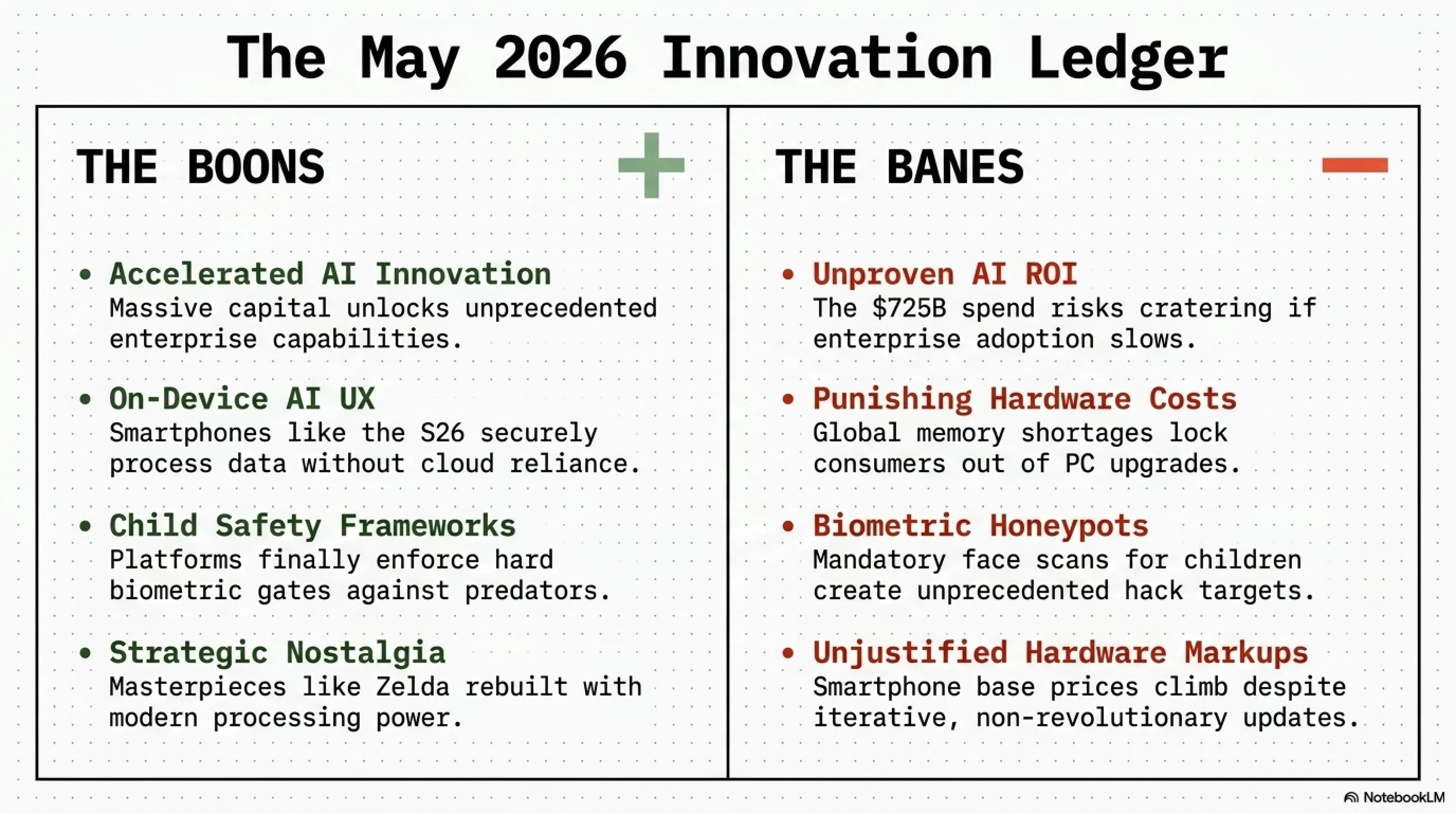
- Massive AI investment accelerates innovation and brings powerful tools to market faster
- Galaxy S26's on-device AI improves privacy and user experience without cloud dependency
- Zelda Remake combines nostalgia with modern technology, appealing to multiple generations
- Roblox age verification represents a meaningful step toward protecting children online
- Competition between Anthropic and OpenAI benefits consumers through better products and lower prices
- Enterprise AI adoption is creating new job categories and productivity gains
❌ CONS
- AI infrastructure spending may not deliver positive ROI, risking shareholder value
- RTX 5090 crisis prices gamers out of the market, creating a two-tier hardware ecosystem
- Galaxy S26 price increase ($100) doesn't translate to proportional value improvements
- Biometric data collection for children creates security risks and privacy concerns
- Sky-high AI valuations create bubble risks and unrealistic expectations
- Geopolitical AI tensions fragment the global market and increase compliance costs
❓ Will Big Tech's $725 billion AI investment pay off?
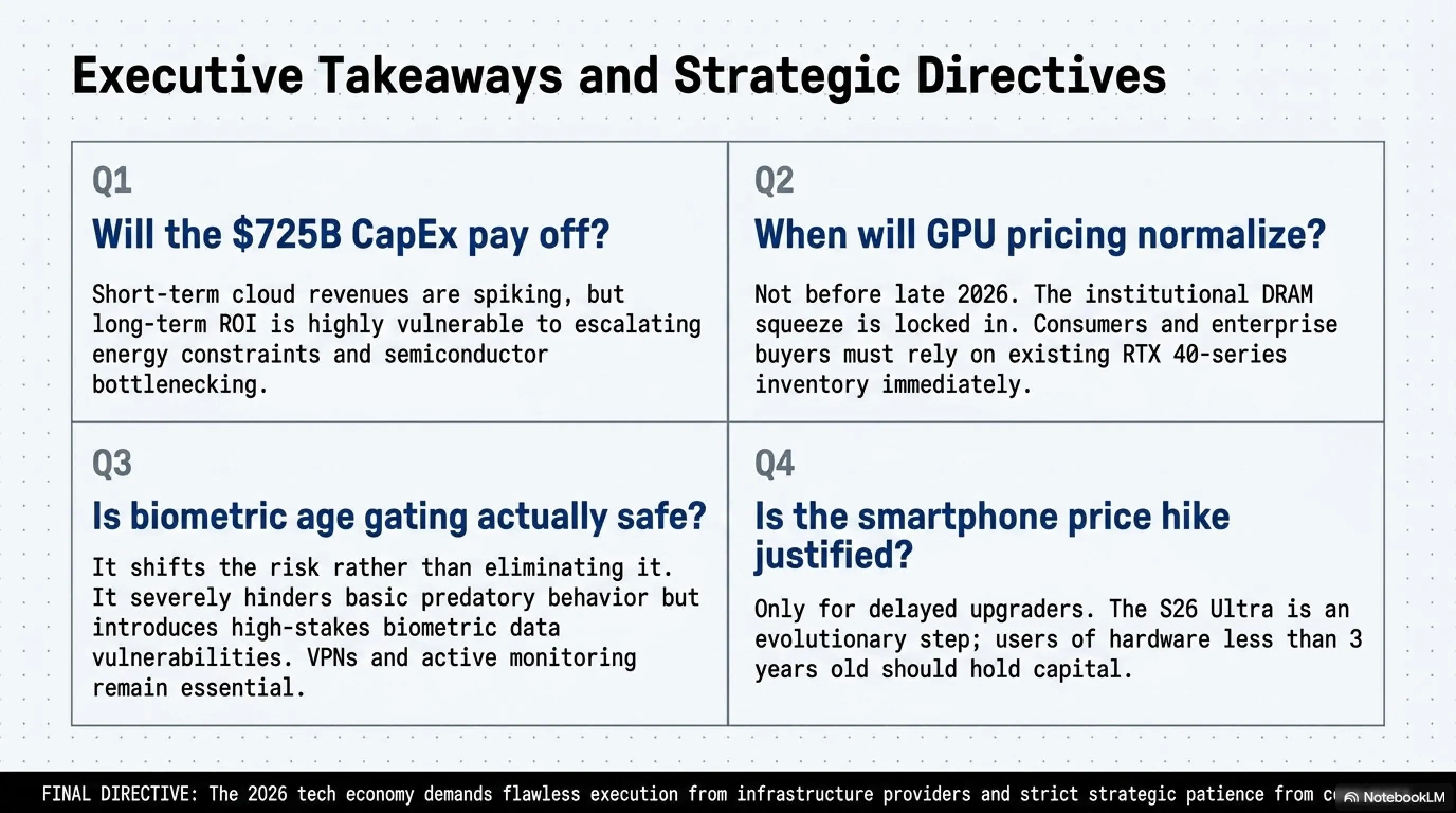
This is the trillion-dollar question. In the short term, these investments are driving cloud revenue growth and enabling new AI products. However, long-term ROI depends on whether companies can convert AI capabilities into profitable products. Analysts are concerned that energy costs, chip prices, and competitive pressure could erode margins. The companies that successfully monetize AI through enterprise software, cloud services, and consumer products will justify their investments. Those that fail to do so will face shareholder backlash and potential valuation corrections.
❓ When will RTX 5090 prices return to normal?
Nvidia has stated that supply will remain "very tight" for at least six months, meaning prices will likely stay elevated until late 2026 or early 2027. The shortage won't resolve until either (1) new DRAM manufacturing capacity comes online, increasing total supply, or (2) AI demand stabilizes, freeing up memory for consumer GPUs. Neither scenario is likely before Q4 2026. For gamers, the best options are to buy used RTX 4080/4090 cards at reasonable prices, consider AMD alternatives, or wait until 2027.
❓ Is the Galaxy S26 worth upgrading from the S25?
If you own an S25 Ultra, the upgrade isn't essential. The improvements are incremental: slightly better AI features, Privacy Display, and minor camera enhancements. However, if you're coming from an S23 or older, the S26 Ultra offers meaningful upgrades: advanced on-device AI, 200MP camera with improved computational photography, Privacy Display for security-conscious users, and 7 years of software updates. The $100 price increase is frustrating, but the long-term support and feature set may justify it for users who keep phones for 3-4 years.
❓ Is Roblox facial verification safe for children?
Roblox claims that facial data is deleted immediately after age verification and that no biometric information is stored on their servers. However, cybersecurity experts remain concerned about third-party verification vendors and potential data breaches. Parents should review privacy settings, enable parental controls, and have open conversations with children about online safety. No technical solution is perfect — active parental involvement remains the most effective protection.
❓ When will Zelda: Ocarina of Time Remake be released?
According to credible industry sources, the remake is scheduled for Summer 2026, likely between June and August. Nintendo typically announces major titles at E3 or a summer Nintendo Direct. Watch for official confirmation in the coming weeks. The game will be exclusive to Switch 2, so you'll need Nintendo's new console to play it.
❓ Should I invest in Anthropic's IPO?
Anthropic's potential IPO in H2 2026 could be one of the decade's most significant tech offerings. However, the $900 billion valuation means limited upside unless the company can sustain hypergrowth and defend its market position against OpenAI, Google, Meta, and emerging competitors. Retail investors should approach with caution: high valuations create downside risk if the company fails to meet expectations. Consider your risk tolerance, investment timeline, and portfolio diversification before participating in any IPO.
🌐 Stay Connected With Us
For the latest tech, gaming, and gadget news, follow us on social media:
🌐 Stay Connected With Us 🎮✨
For the latest tech, gaming, and gadget news, follow us on our official social media channels:
Additional Gallery: 🌅 Tekin Morning May 1: $725B AI War, RTX 5090 Crisis & Zelda Remake