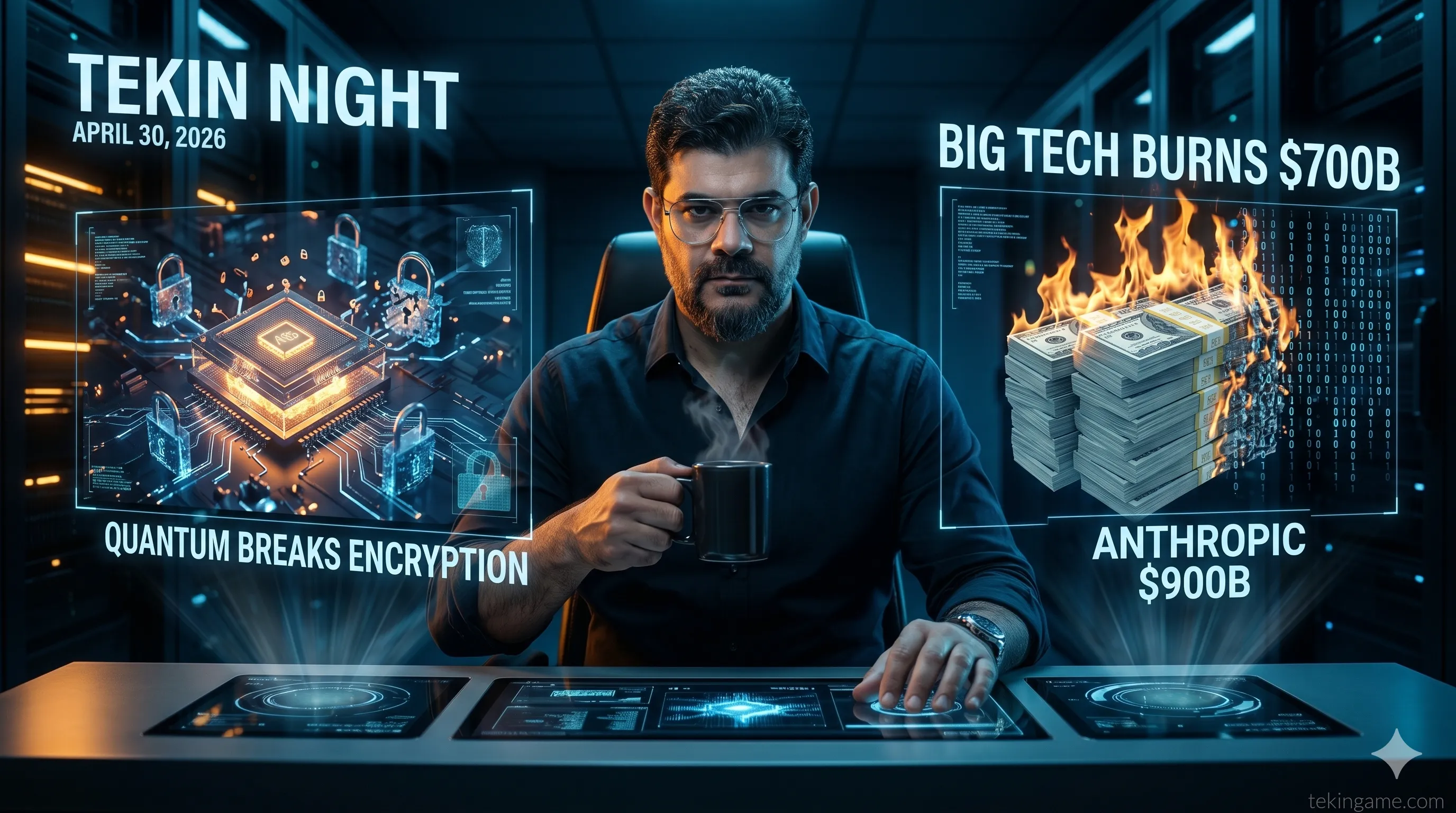
🌙 Good Evening! Tekin Night April 30, 2026
Good evening, tech enthusiasts! Tonight we bring you 6 explosive stories from the world of technology - from trillion-dollar AI spending to quantum computers breaking encryption, from datacenter-building robots to AI geopolitical tensions. Tonight is a night that redefines the future of technology.
⚡ Tonight's Headlines:
💰 Big Tech Spends $700B on AI Infrastructure
🤖 SoftBank Launches Roze AI for Datacenter Robotics
🔐 Quantum Computers Break Encryption - Almost!
🌍 AI Cold War: US vs China Tensions Escalate
🚀 Anthropic Hits $900B Valuation Record
🏥 Ransomware Attack Affects 170,000 Patients
🌌 Grab your evening beverage - we're diving deep into the tech revolution!

💰 Big Tech Burns $700 Billion on AI: Infrastructure Race or Capital Bubble?
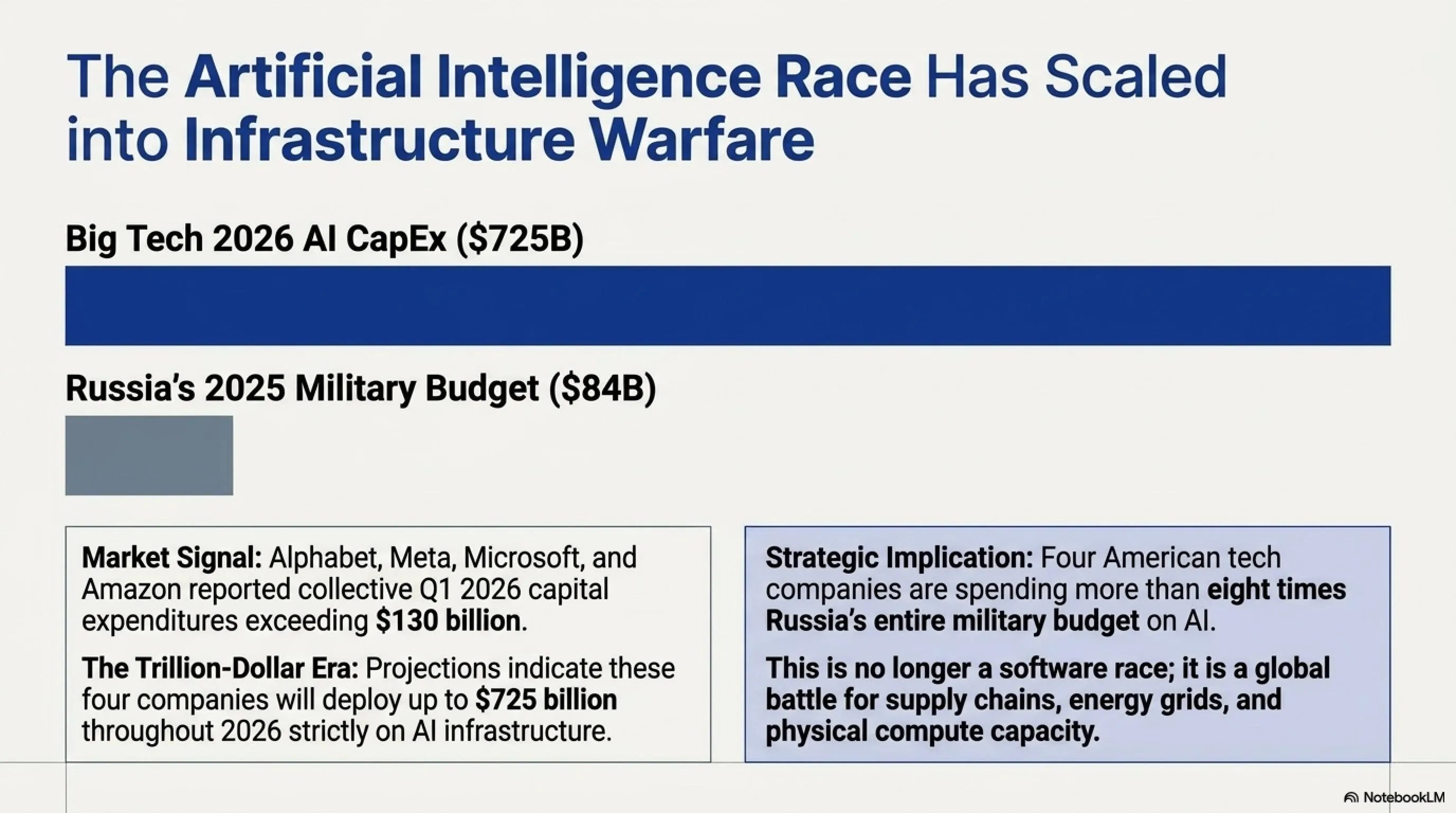
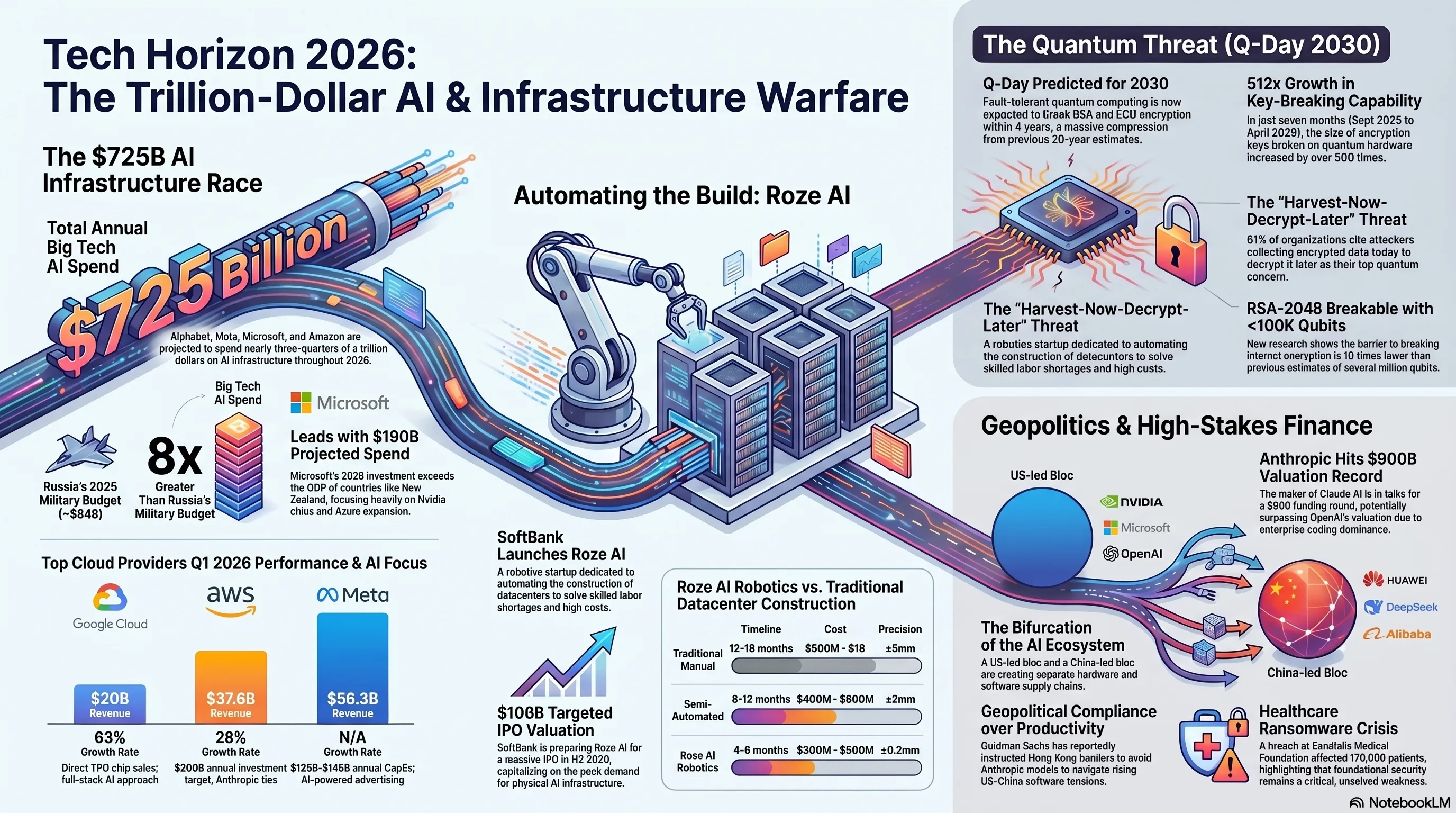
April 30, 2026 - America's technology giants are shattering every record in investment history. Alphabet, Meta, Microsoft, and Amazon collectively reported more than $130 billion in Q1 2026 capital expenditures (CapEx) - and this is just the beginning. Projections show these four companies will spend up to $725 billion throughout 2026 on AI infrastructure alone.
🔥 Tekin Analysis: Why This Number Is Historic
To understand the magnitude of this spending spree, let's put it in perspective: Russia's entire military budget for 2025 was approximately $84 billion. That means just four American tech companies are spending more than 8 times Russia's military budget on artificial intelligence in a single year! This isn't a technology race anymore - this is infrastructure warfare. The AI arms race has officially entered the trillion-dollar era, and the implications for global power dynamics are staggering.
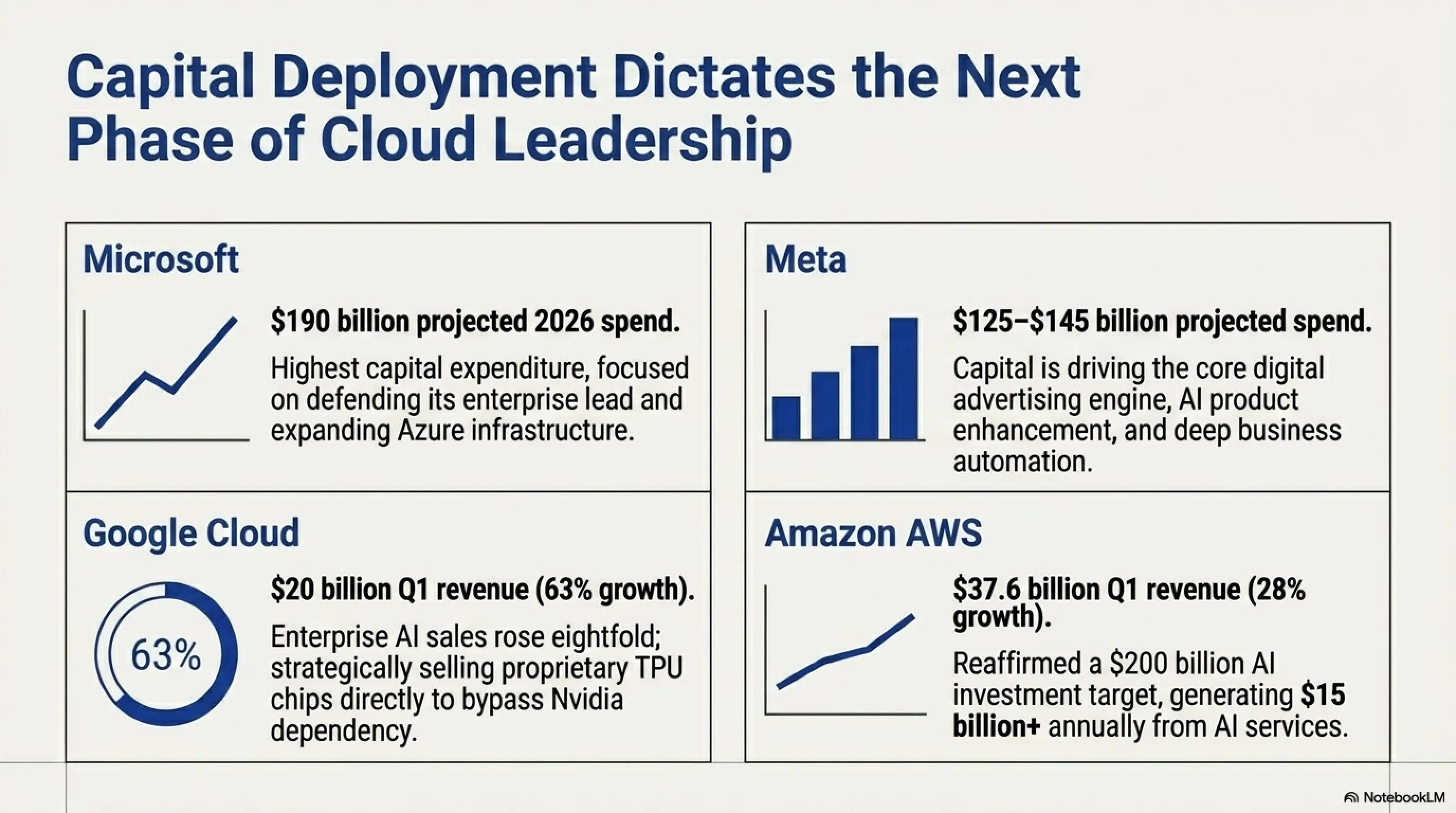
Microsoft leads the pack with a projected $190 billion spend for 2026 - more than the GDP of countries like Hungary or New Zealand. This capital is primarily flowing into AI datacenters, Nvidia chip procurement, and Azure expansion. Azure growth in Q1 exceeded expectations, and Microsoft 365 Copilot is penetrating large enterprises - albeit slowly. The company is doubling down on AI even after loosening parts of its exclusive arrangement with OpenAI, trying to defend its enterprise lead while fending off Google Cloud, AWS, Anthropic, and newer AI-native tools.
Meta reported Q1 revenue jumping to $56.3 billion - a sharp increase showing that digital advertising remains the revenue engine. But the real story lies elsewhere: Meta raised its annual capital spending forecast to $125-$145 billion. Where is this money going? Building datacenters, securing chips, and supporting larger AI workloads for smarter ads, AI products, and automation across its business. The results show the tension now defining Big Tech: AI is driving growth, but it's also consuming historic levels of capital. Meta's bet is that the spending will translate into stronger ads, better AI products, and deeper automation - but the ROI timeline remains uncertain.
Google/Alphabet also delivered stellar results: revenue rose 22% to $109.9 billion. But the real star was Google Cloud, which saw revenue jump 63% to $20 billion. Google says enterprise AI product sales rose eightfold from a year earlier, and it has even begun selling its TPU chips directly to select customers. This is a strategic move: Google is positioning itself as an alternative to Nvidia-heavy infrastructure. The company's full-stack approach - from chips to models to cloud services - gives it a stronger position as companies look for alternatives to the Nvidia monopoly.
Amazon AWS beat expectations too: cloud revenue rose 28% to $37.6 billion. CEO Andy Jassy reaffirmed a $200 billion AI investment target for the year, while AWS-related AI services are reportedly generating more than $15 billion annually. The results are important because AWS has faced pressure from Microsoft Azure and Google Cloud in the AI era. Amazon's deeper ties with Anthropic and OpenAI suggest the cloud wars are shifting from exclusive model partnerships to broader access to infrastructure. AWS is showing investors that it can still compete in AI cloud infrastructure despite stronger rivals.
💡 What This Means for Global Markets
This massive capital deployment sends a clear message: access to cutting-edge compute is becoming the survival determinant in the market. The AI race is increasingly a capital-spending race, and it's reshaping global supply chains for chips, power, and cooling systems, with ripple effects on energy markets and semiconductor manufacturers. For startups and smaller players, this means navigating a world where access to cutting-edge compute increasingly determines market survival. The gap between the haves and have-nots is widening, and countries that cannot access this infrastructure will fall behind in the next decade.
🤖 SoftBank Launches Roze AI for Datacenter Robotics - $100B IPO on the Horizon
If you thought trillion-dollar AI spending was crazy, wait until you hear this: SoftBank is launching Roze AI - a robotics startup dedicated to automating datacenter construction across the United States. And the best part? Executives are already preparing Roze for an IPO as early as the second half of 2026, targeting a valuation of around $100 billion!
🔍 Why Datacenter-Building Robots?
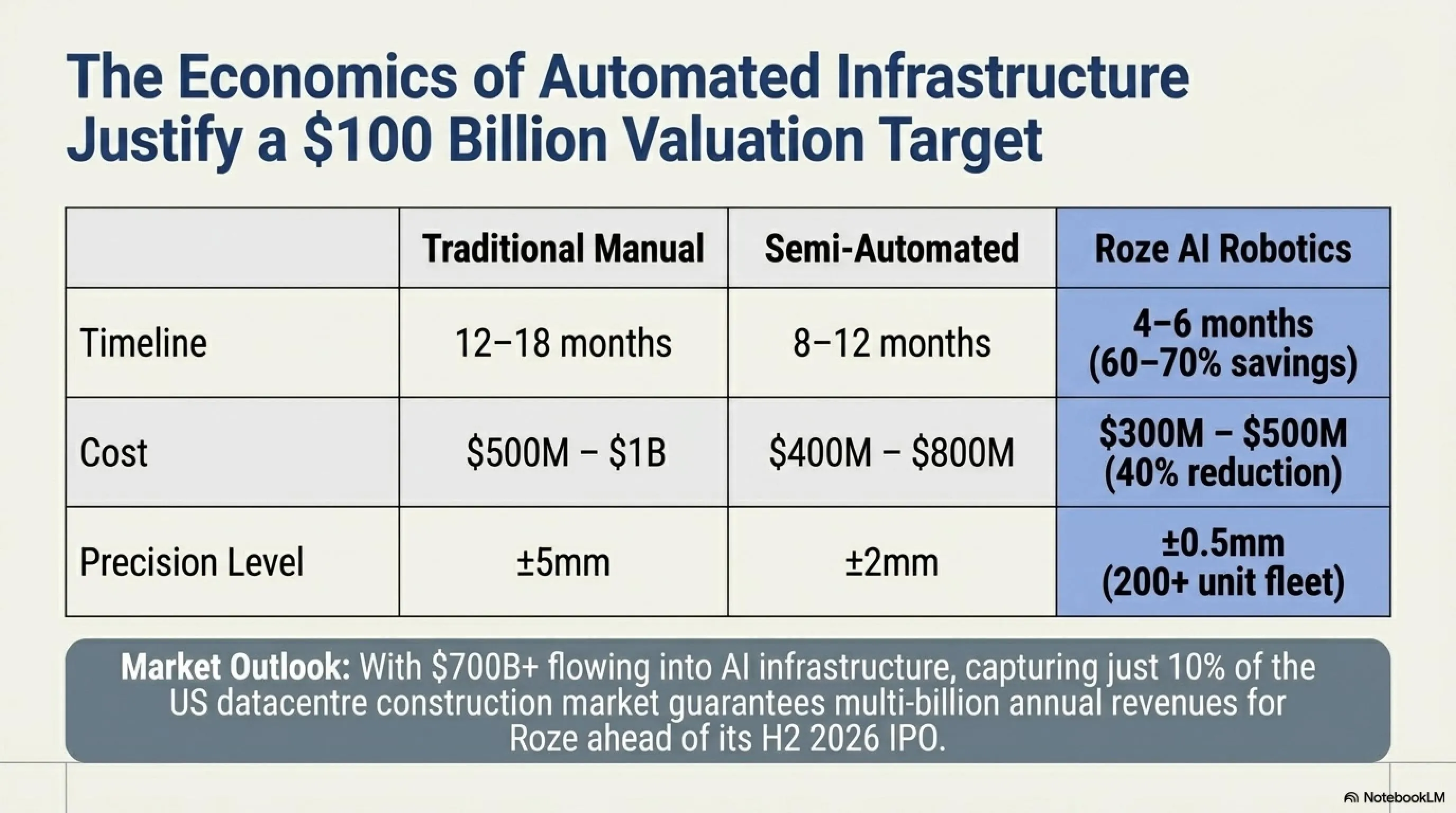
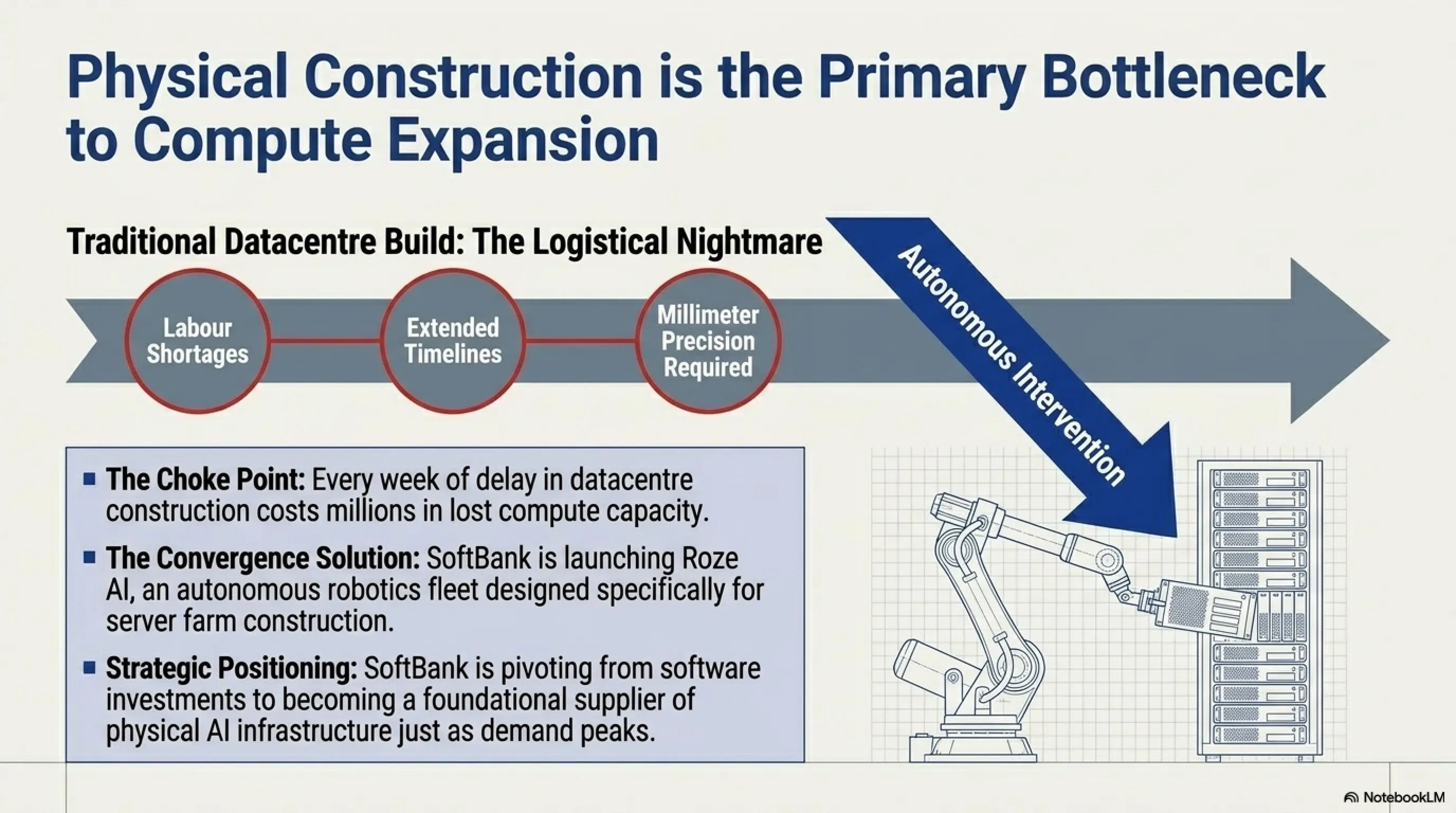
Building AI datacenters is a logistical nightmare: skilled labor shortages, extended timelines, high costs, and the need for millimeter precision in installing servers and cooling systems. Roze AI aims to deploy autonomous robots to streamline server farm builds, addressing these pain points head-on. The goal: reduce construction time from months to weeks and cut costs by up to 40%. In an era where every week of delay costs millions in lost compute capacity, this is a game-changer.
The move leverages SoftBank's deep investments in robotics, energy, land, and infrastructure, including its recent acquisition of ABB Robotics. By combining robotics expertise with datacenter knowledge, Roze aims to make AI buildouts faster and more cost-effective. This is a long-term play: SoftBank wants to position itself as a key supplier of physical AI infrastructure - right when demand is exploding. The company is betting that automation of physical AI infrastructure could slash deployment times and costs, enabling faster scaling across the industry while positioning SoftBank as a major player in the robotics-AI convergence.
📊 Market Outlook: Why $100B Is Realistic
The global datacenter construction market is experiencing explosive growth. With Big Tech spending over $700 billion on AI infrastructure in 2026 alone, any technology that can reduce 20-30% of costs or time is worth billions. If Roze can capture just 10% of the US datacenter construction market, annual revenue in the multi-billion range is entirely achievable - justifying a $100B valuation. Moreover, the technology is defensible: robotics expertise, datacenter domain knowledge, and SoftBank's capital create a formidable moat. The IPO timing is strategic: strike while AI infrastructure demand is at its peak and before competitors can catch up.
⚙️ Roze AI Technical Specifications
🔐 Quantum Computers Break Encryption - Almost! Q-Day Closer Than We Thought
If the news above didn't worry you, this one definitely will. In April 2026, cybersecurity researchers woke up to bad news: new research published by Google and quantum computing startup Oratomic suggests that quantum computers capable of breaking the encryption protocols that secure the internet may arrive sooner than expected.
⚠️ What Is Q-Day and Why Should We Worry?
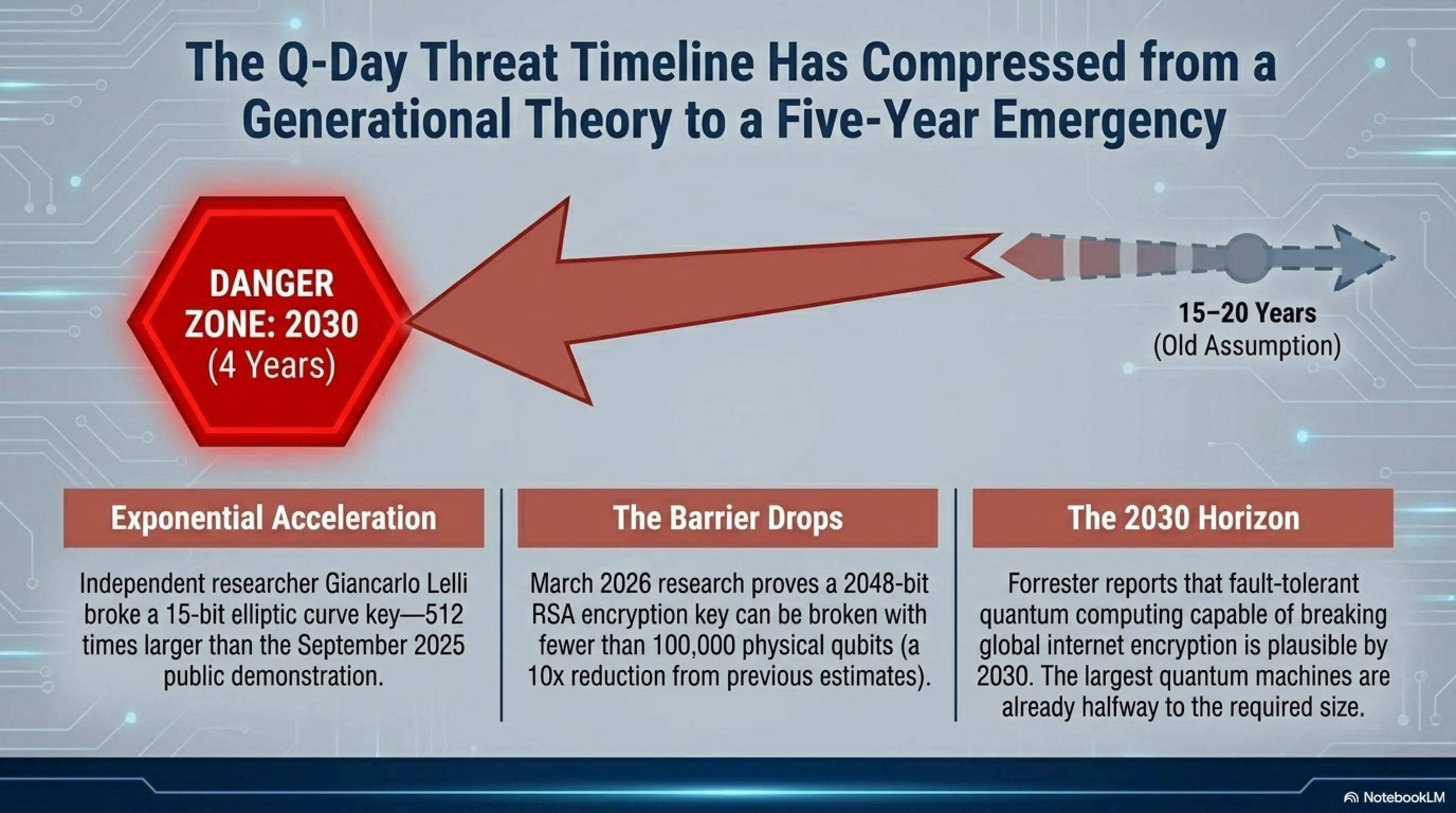
Q-Day (Quantum Day) is the moment when quantum computers become powerful enough to break RSA and ECC encryption that currently protects banks, emails, government communications, and virtually the entire internet. Until just a few months ago, experts thought Q-Day was at least 15-20 years away. Now? Forrester's March 2026 report concluded that fault-tolerant quantum computing and Q-Day are plausible by 2030 - just 4 years away! The timeline has compressed from a generational planning exercise into a five-year execution window. The world is not prepared.
In April 2026, independent researcher Giancarlo Lelli broke a 15-bit elliptic curve key on publicly accessible quantum hardware - 512 times larger than the previous public demonstration in September 2025. He won 1 bitcoin for the achievement. This may sound small, but the growth trend is exponential: every few months, quantum power doubles. The current largest quantum computer has about 1,000 qubits - and we're already more than halfway to the danger zone.
Other research in March 2026 demonstrated that a 2048-bit RSA encryption key could be broken with fewer than 100,000 physical qubits - an order-of-magnitude improvement over previous estimates that predicted several million qubits would be needed. This is a stunning revelation: the barrier to breaking internet encryption has dropped dramatically. Google's research suggests that the current largest quantum machine is already more than halfway towards the size needed to break encryption. The first quantum computer to break encryption is now shockingly close.
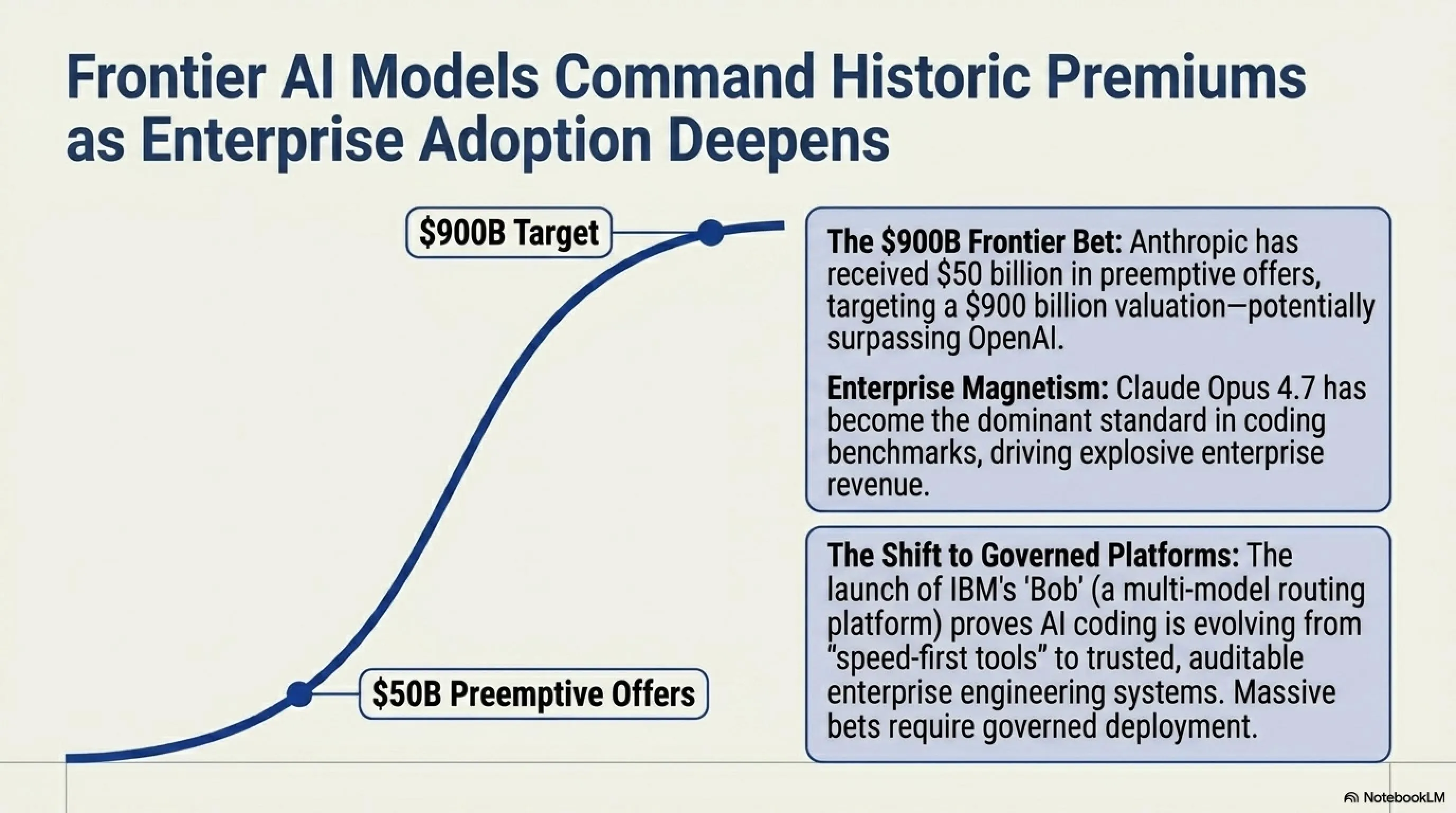
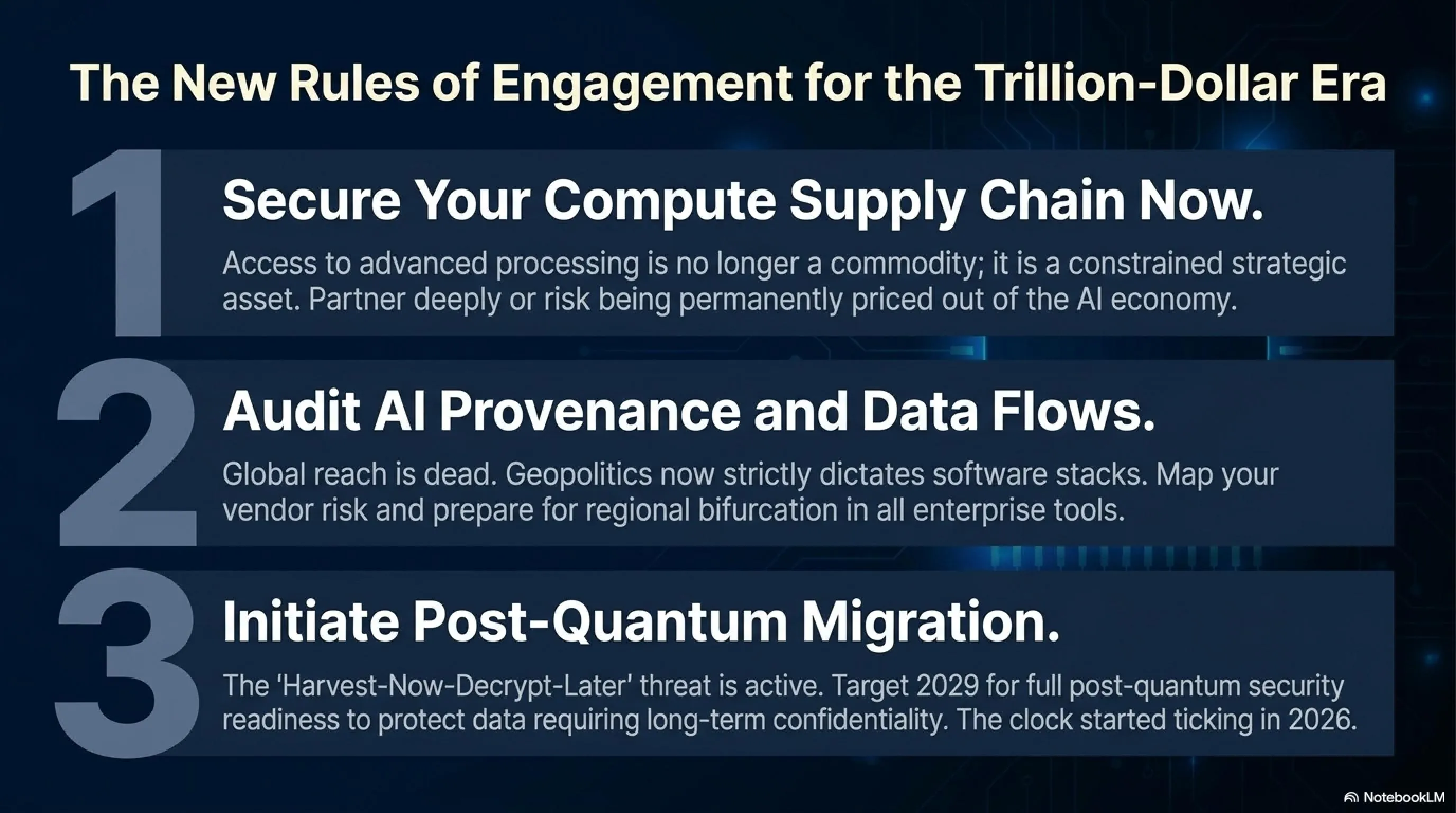
Industry response has been swift. Cloudflare announced in April 2026 that it's accelerating its post-quantum cryptography roadmap, targeting full post-quantum security by 2029. Anthropic launched Project Glasswing on April 7 - a defensive coalition of 40+ organizations with restricted Mythos access to patch critical software before adversaries develop similar capabilities. This structural shift places quantum-secure encryption companies and cybersecurity firms at the center of an operational emergency that spans post-quantum migration, AI-native defense, and cryptographic modernization.
🚨 Harvest-Now-Decrypt-Later: The Current Threat
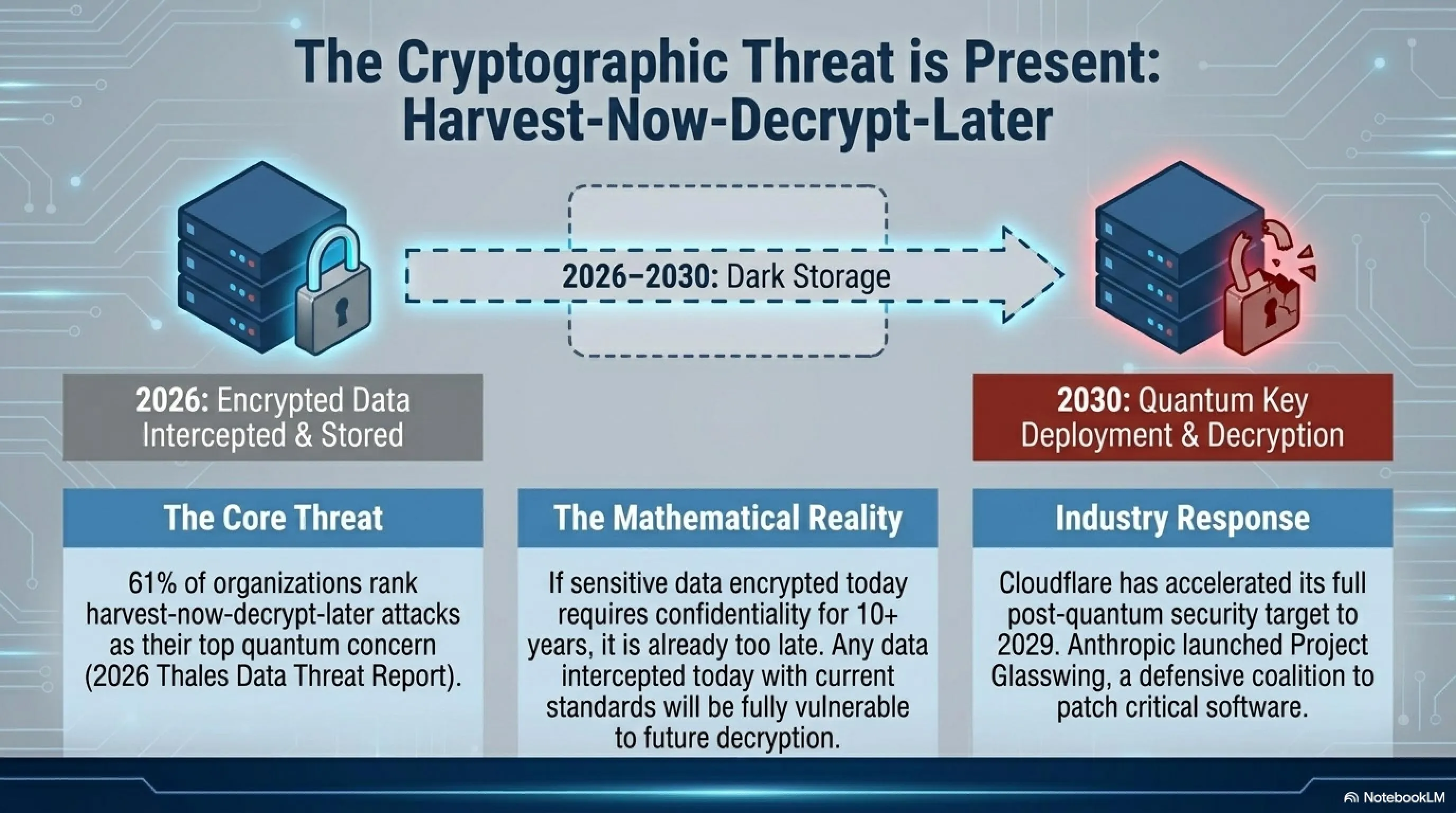
The 2026 Thales Data Threat Report reveals that 61% of organizations rank harvest-now-decrypt-later attacks as their top quantum concern. This means attackers are collecting encrypted data now to decrypt it 5-10 years later with quantum computers. If you're encrypting sensitive information today that needs to remain confidential for 10 years, it's already too late - that data is likely being harvested. The threat is not future - it's present. Any data encrypted today with current standards is vulnerable to future quantum decryption. Organizations must act now to protect long-term sensitive data.
🔐 Quantum Threat Summary: The Clock Is Ticking
📚 Classified & Related Dossiers in TekinGame
If you wish to explore beyond this report and delve into cybernetic frontiers and autonomous AI architectures, do not miss these three exclusive deep-dives in the Tekin Garage:
The quantum computing threat to encryption is no longer a distant concern - it's an imminent reality that demands immediate action:
- Timeline Compression: Q-Day moved from 15-20 years away to potentially 2030 (4 years)
- Exponential Progress: Key-breaking capability grew 512x in just 7 months
- Lower Barrier: RSA-2048 now breakable with <100K qubits (10x reduction)
- Current Threat: 61% of orgs cite harvest-now-decrypt-later as top concern
- Industry Response: Cloudflare targets 2029, Anthropic launches Project Glasswing
Action Required: Organizations must begin post-quantum migration now. Any sensitive data encrypted today with current standards is vulnerable to future quantum decryption. The window for preparation is closing rapidly.
🌍 AI Cold War: US-China Geopolitical Tensions Extend to Software
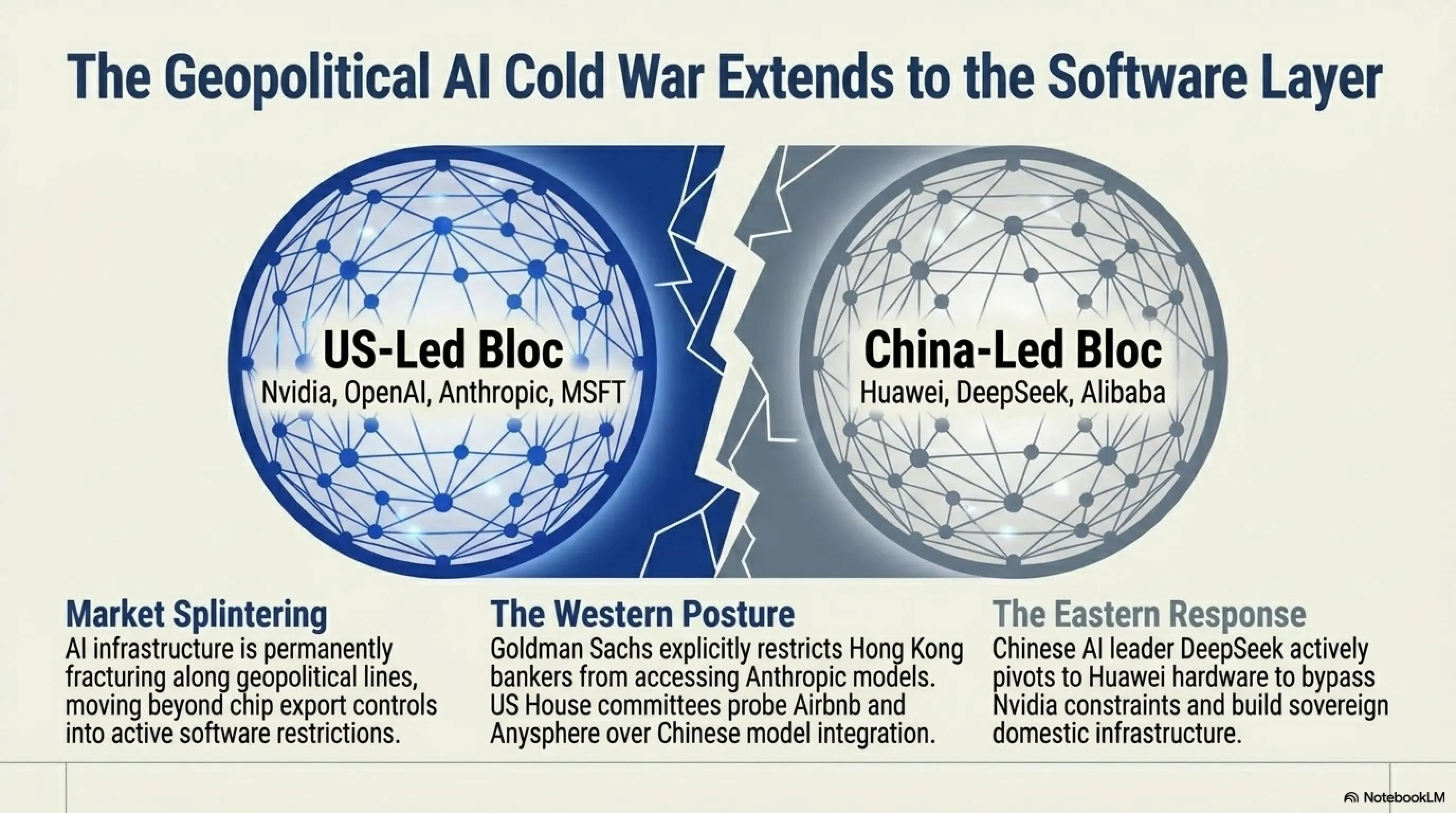
If you thought the US-China trade war was only about chips and hardware, think again. In April 2026, AI geopolitical tensions have entered a new phase: restricting access to AI models. Reports indicate that Goldman Sachs has instructed its bankers in Hong Kong to refrain from using AI models from Anthropic.
🔍 Why This Matters
This isn't the first time American companies have imposed geopolitical restrictions, but this time is different: AI tools are now embedded in finance, law, software, and research. Restricting access to models means restricting productivity. Companies are being forced to choose between productivity and compliance - especially in regions caught between US and Chinese tech systems. The issue matters because AI tools are now embedded in knowledge work that has long relied on analysts, spreadsheets, and manual research. As geopolitical rules harden, companies may be forced to choose between productivity and compliance, especially in regions caught between U.S. and Chinese tech systems.
Meanwhile, DeepSeek - one of China's AI leaders - is pivoting to Huawei chips as China accelerates efforts to reduce dependence on Nvidia. The move reflects Beijing's broader push to build domestic AI infrastructure amid tighter U.S. export controls and rising geopolitical pressure. For the global AI ecosystem, this is another sign that AI infrastructure is splitting along geopolitical lines. Chinese startups may gain more domestic hardware support, but they could also face performance limits and fewer global exit paths.
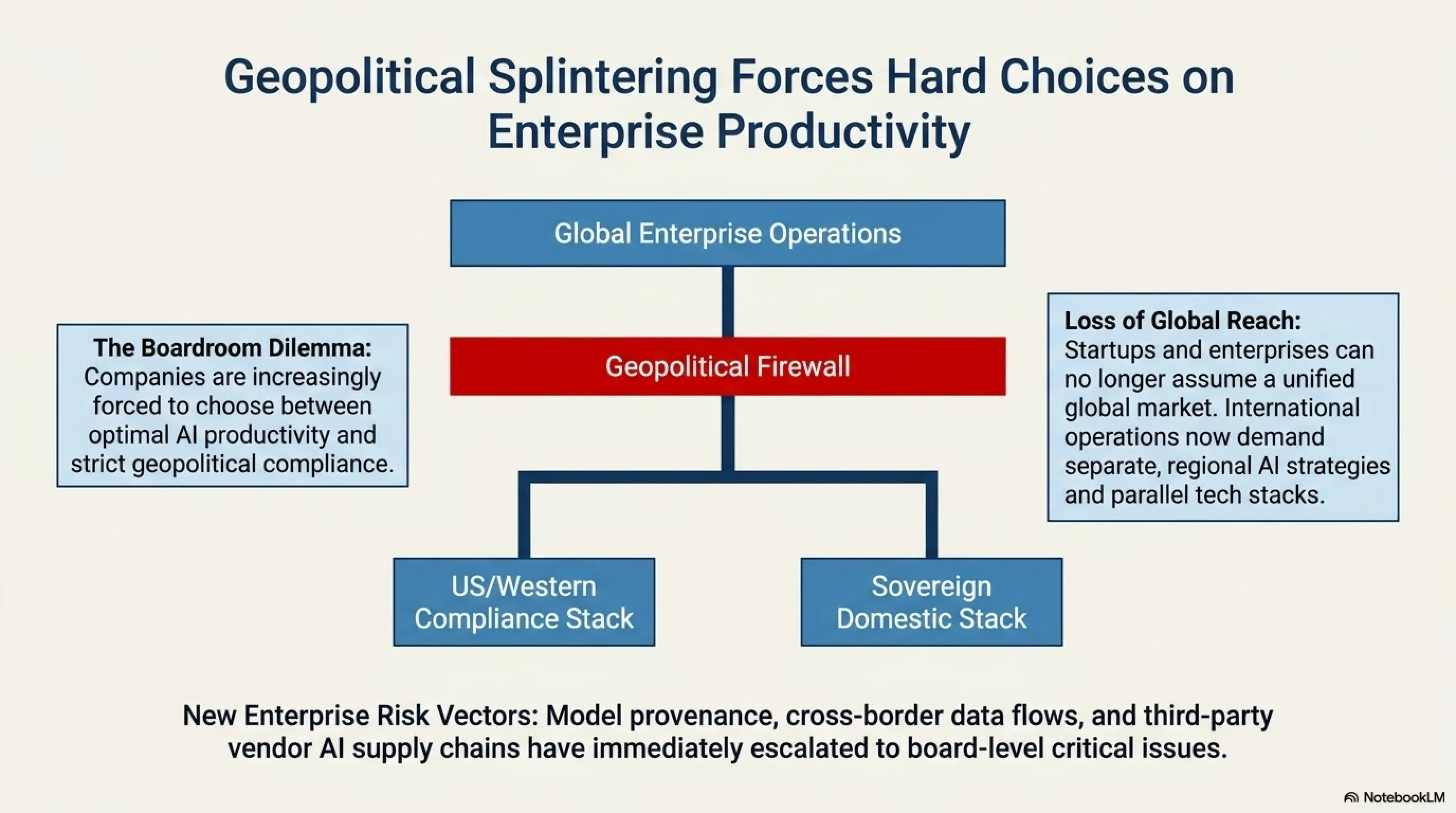
But the story doesn't end there. Two Republican-led House committees are probing Airbnb and Anysphere (the maker of Cursor) over their use of Chinese AI models, according to documents reviewed by Semafor. The investigation signals that Washington's AI scrutiny is moving beyond chip exports and into software supply chains. For startups, especially those using third-party models, the message is clear: model provenance, data flows, and vendor risk could soon become board-level issues.
🌐 Impact on Global AI Ecosystem
The global AI ecosystem is splitting into two blocs: a US-led bloc with Nvidia, OpenAI, Anthropic, and Microsoft, and a China-led bloc with Huawei, DeepSeek, and Alibaba. For Chinese startups, this may mean more domestic hardware support, but also potential performance limitations and fewer global exit opportunities. For international companies, this means hard choices: which market to target? Which models to use? Where to store data? Enterprise AI adoption is becoming entangled with geopolitics and data sovereignty. The AI chip race is becoming a national infrastructure contest, and the software layer is following suit.
🚀 Anthropic Hits $900B Valuation Record - Bigger Than OpenAI?
Amid all these tensions and challenges, there's some good news: Anthropic - the maker of Claude AI - is in advanced talks with investors for a new round that could value the company at up to $900 billion - potentially surpassing OpenAI! The company has received multiple preemptive offers totaling around $50 billion as it prepares for what may be its final major private raise before a possible IPO.
💰 Why Investors Are Crazy About Anthropic
Anthropic is becoming one of the most popular AI tools for programmers and enterprises. Claude Opus 4.7 delivers exceptional performance in coding benchmarks, and the company's revenue from coding and enterprise tools continues to grow rapidly. Investors see that Anthropic can become a serious competitor to OpenAI - and perhaps even surpass it. Revenue momentum from coding and enterprise tools continues to fuel investor enthusiasm. Sky-high valuations signal sustained investor confidence in frontier AI labs, but also intensify pressure to deliver returns amid soaring compute costs and regulatory scrutiny. The $900B bet is massive, but in the AI world, massive bets can yield enormous returns.
Meanwhile, IBM launched Bob, an AI coding platform built around multi-model routing and human checkpoints. The goal is to help engineering teams use AI-generated code without losing control over security, review, and production standards. The launch comes as AI coding tools move from individual developer assistants to enterprise engineering systems. For large companies, the next challenge is not just generating code faster but also ensuring that AI-created software can be trusted, audited, and maintained. AI coding is moving from speed-first tools to governed enterprise platforms.
✅ AI Competition Benefits
- Faster innovation and better models
- More competitive pricing for users
- Diversity in tool choices
- Massive investment in research
⚠️ Risks and Concerns
- Geopolitical ecosystem split
- Investment bubble risk
- Power concentration in few companies
- Security and privacy concerns
💼 Strategic Investments: From Fintech to Defense
Amid all these major headlines, several other important investments occurred in April 2026, showing that the venture capital market remains active - but more selective than before.
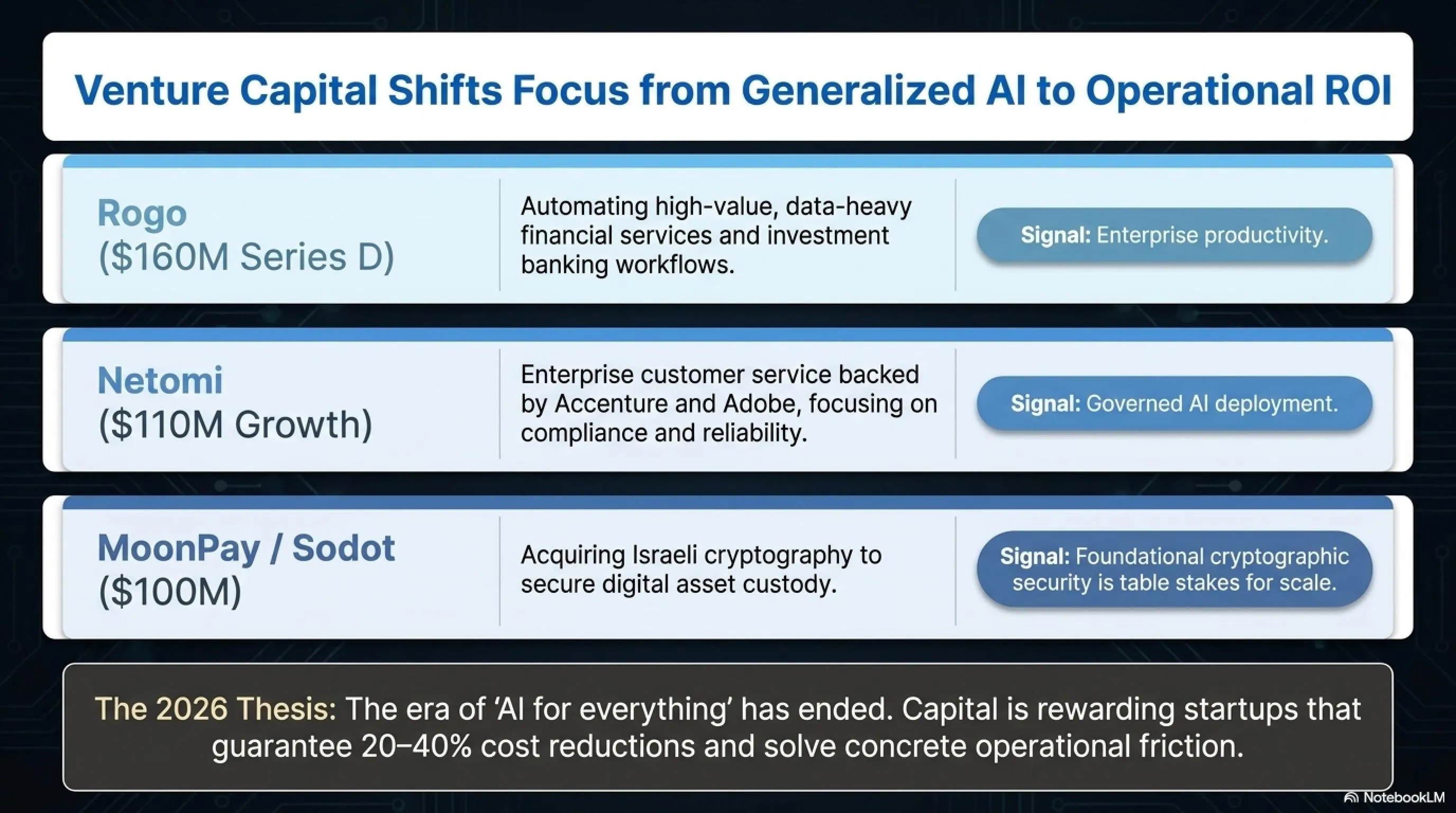
Netomi raised $110 million with backing from Accenture and Adobe for its AI customer service platform. The funding comes as enterprises seek AI systems that can handle customer workflows while meeting governance, reliability, and integration requirements. The round reflects a broader market shift from simple chatbots to AI systems designed for real business operations. Investors are increasingly favoring startups that can prove measurable savings, not just impressive demos. Enterprise AI funding is shifting toward tools that solve operational problems inside large companies.
Rogo, based in New York, raised $160 million in a Series D round led by Kleiner Perkins, bringing its total funding to more than $300 million. The startup builds AI tools for financial services, including investment banking workflows. The funding shows how deeply AI is moving into knowledge work that has long relied on analysts, spreadsheets, and manual research. Finance is a particularly attractive market because the work is expensive, repeatable, and data-heavy. AI is moving into high-value financial workflows where even small productivity gains can be worth millions.
MoonPay - the crypto payments unicorn - is acquiring Tel Aviv-based cybersecurity startup Sodot in a $100 million deal. Sodot's key management and encryption technology - already securing tens of billions in assets and over 10 million wallets for clients like BitGo and Exodus - will power MoonPay's new institutional custody and payments platform. The acquisition taps Israel's cryptography expertise to eliminate single points of failure in digital asset management. As institutional adoption of crypto accelerates, robust on-chain security infrastructure becomes table stakes, elevating cybersecurity startups as critical enablers for fintech and blockchain scale.
💡 2026 Investment Trends
April 2026 investments show a clear pattern: investors are moving toward tools that solve operational problems inside large companies. The era of "AI for everything" is over. Now investors want to see clear ROI, provable enterprise customers, and predictable revenue paths. Startups that can demonstrate how they reduce costs by 20-40% or increase revenue are attracting capital. The rest? They need to work harder. The market has matured from hype to execution, from demos to deployments, from promises to profits.
🏥 Sandhills Medical Ransomware Attack: 170,000 Patients at Risk
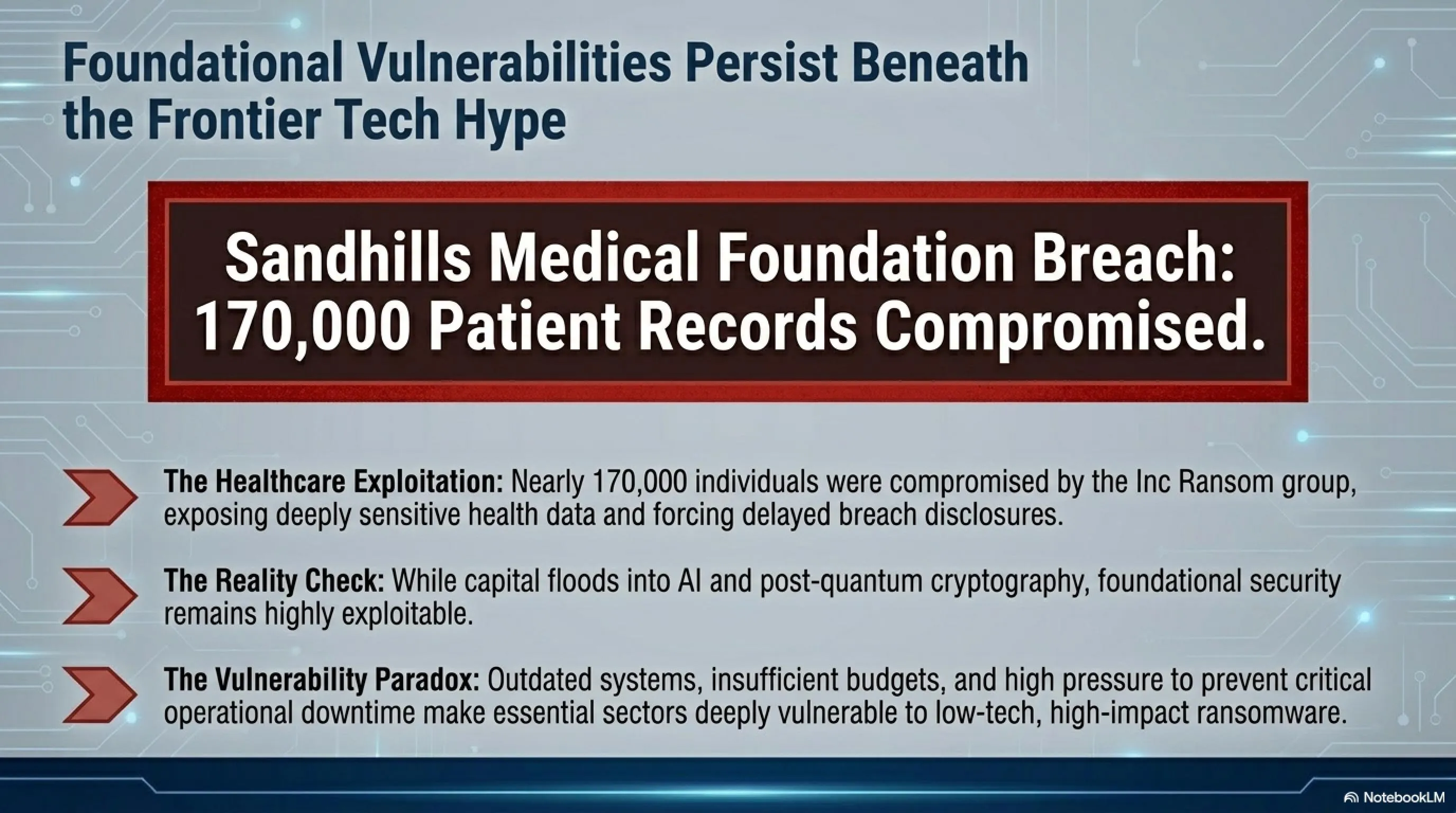
And finally, a bitter reminder that cybersecurity remains a critical challenge: Sandhills Medical Foundation in South Carolina disclosed a ransomware-related data breach affecting nearly 170,000 individuals. The disclosure came almost a year after the organization was targeted by the Inc Ransom group.
🚨 Why Healthcare Is a Prime Target
Healthcare remains one of the most exposed sectors in cybersecurity because attackers know patient data is sensitive and downtime can be costly - putting organizations under pressure to pay ransoms quickly. Additionally, many healthcare systems are outdated and vulnerable, and cybersecurity budgets are often insufficient. The delayed disclosure also raises questions about breach reporting, incident response, and transparency. The Sandhills Medical attack reminds us that while everyone is talking about AI, foundational cybersecurity remains an unsolved problem. Healthcare cyberattacks continue to expose sensitive data and reveal weak points in breach disclosure timelines.
🎯 Final Verdict: A Night of Major Transformations
Tonight we witnessed several historic turning points that are shaping the future of technology:
- AI Infrastructure Race: Big Tech spending $700+ billion in 2026 - this isn't competition anymore, it's warfare
- Physical Automation: SoftBank's Roze AI shows robots can revolutionize datacenter construction
- Quantum Threat: Q-Day is closer than we thought - 2030 is no longer science fiction
- AI Cold War: Geopolitical tensions extended from chips to software
- Sky-High Valuations: Anthropic's $900B shows investors still believe in AI
- Security Remains a Challenge: Ransomware attacks on healthcare continue
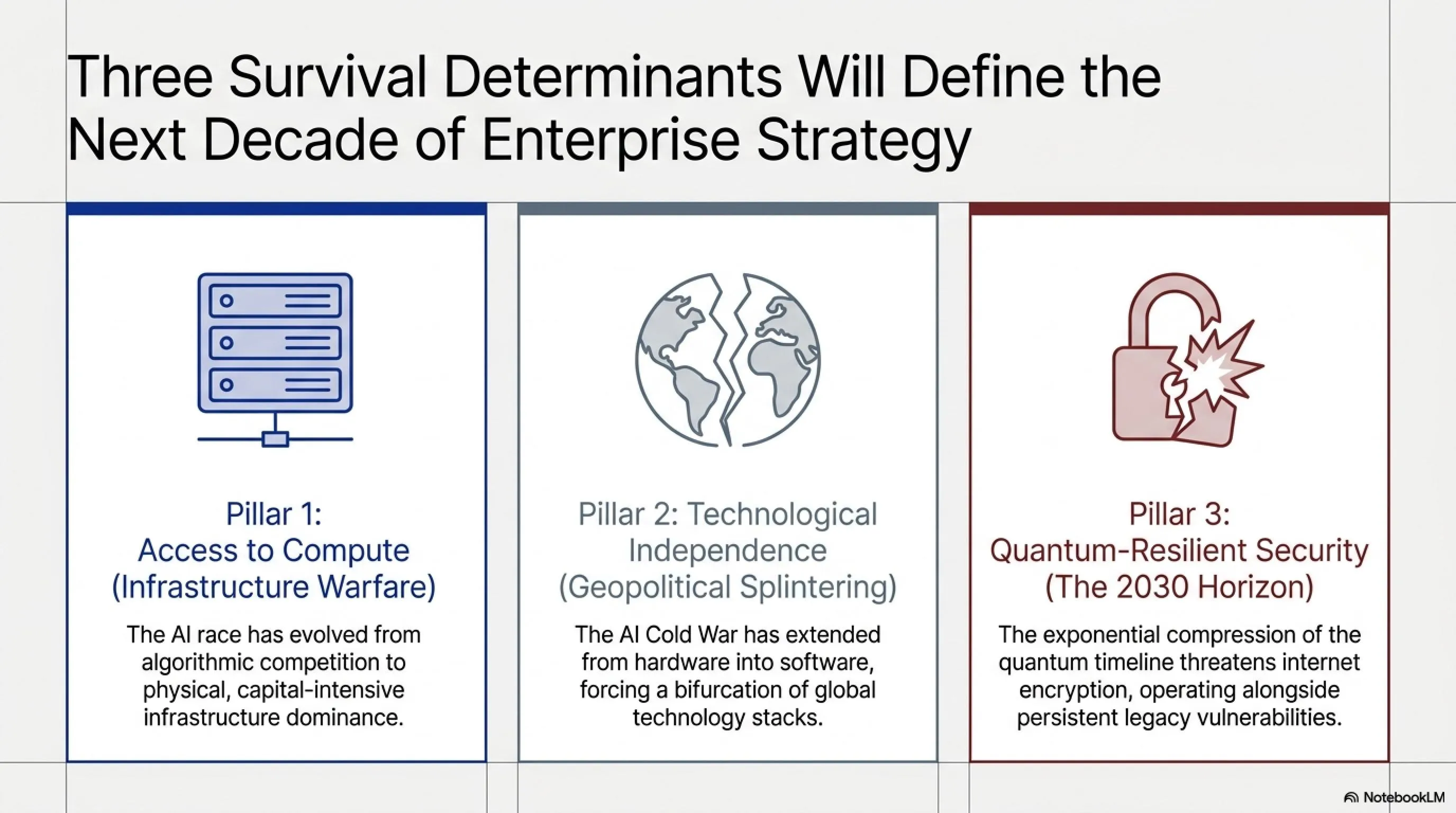
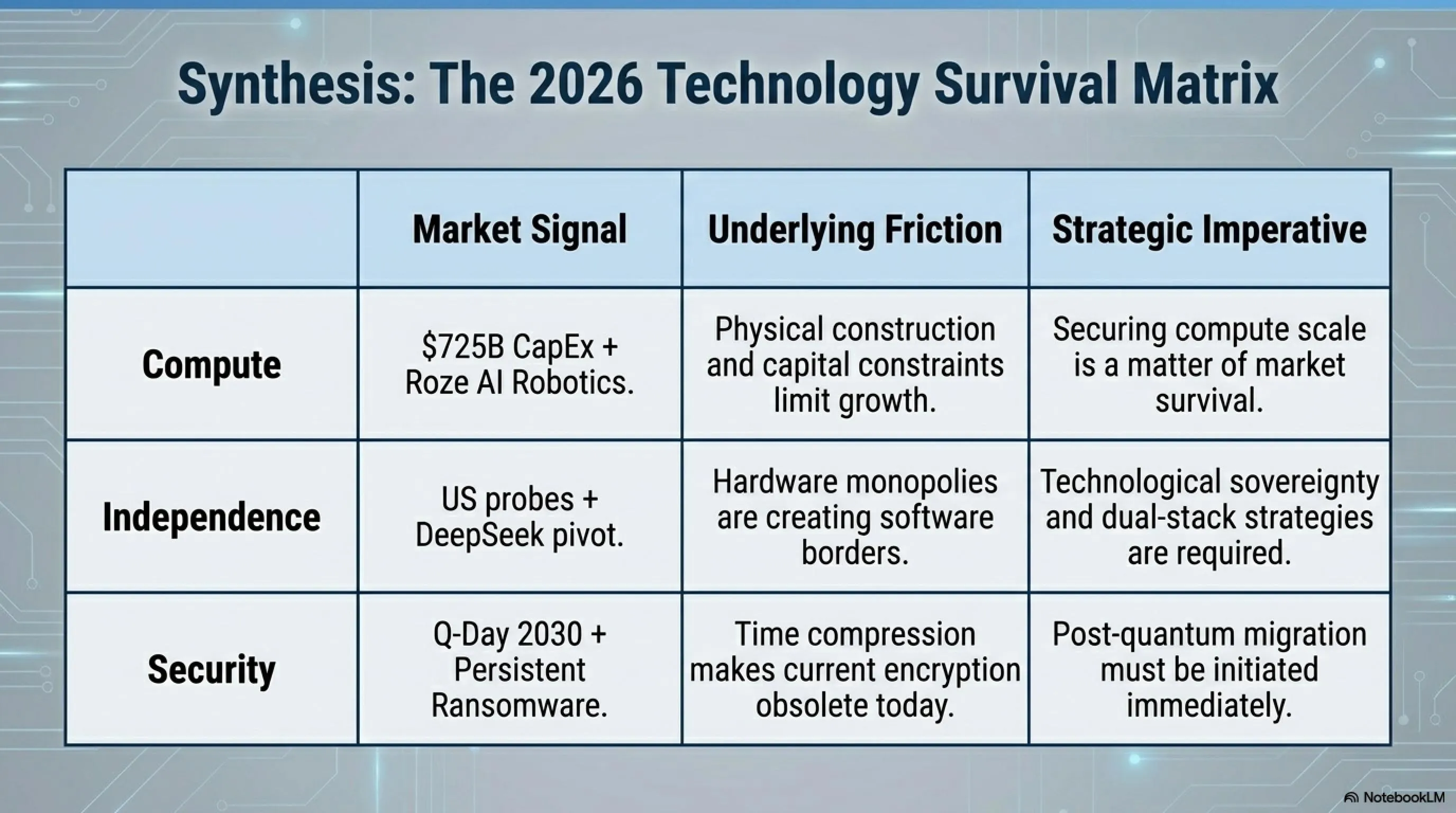
Tonight's main message? Access to compute power, quantum security, and technological independence are becoming the survival determinants for the next decade. Countries, companies, and startups that cannot prepare for this new reality will fall behind. The AI race is no longer just about algorithms - it's about infrastructure, security, and geopolitical power.
📊 April 2026 Investment Sentiment Gauge
Key Insight: April 2026 shows sustained investor confidence in frontier AI despite high valuations. The market has shifted from "AI for everything" to operational tools with clear ROI. Foundation models remain hot, but enterprise AI and security infrastructure are gaining momentum as practical deployment challenges emerge.
❓ Why is Big Tech spending so much on AI?
Because AI is becoming the primary revenue growth engine. Microsoft with Azure, Google with Cloud, and Amazon with AWS are showing that AI investments translate into cloud growth. Additionally, this is an arms race: if one company falls behind, it may never catch up. Access to advanced compute power is becoming a critical competitive advantage. The companies that control the infrastructure will control the AI economy. It's not just about building better models - it's about having the capacity to train, deploy, and scale them at unprecedented levels.
❓ When will Q-Day arrive and how should we prepare?
Forrester's March 2026 report says Q-Day is plausible by 2030 - just 4 years away. To prepare, organizations should: (1) begin migrating to post-quantum cryptography, (2) identify sensitive data that must remain confidential for more than 10 years, (3) be aware of harvest-now-decrypt-later attacks, and (4) work with vendors that have post-quantum roadmaps. Cloudflare has set a 2029 target - this is a good signal for industry urgency. The time to act is now, not when quantum computers are already breaking encryption. By then, it will be too late for data already harvested.
❓ Is Anthropic's $900B valuation realistic?
It depends on how you look at it. If Anthropic can become a real competitor to OpenAI and capture a significant portion of the enterprise AI market, $900B can be justified. Claude is becoming programmers' favorite tool, and enterprise revenue is growing rapidly. But risks exist: high compute costs, intense competition, and regulatory pressure. This is a big bet - but in the AI world, big bets can yield enormous returns. The valuation reflects not just current performance but future potential in a market that could be worth trillions. Investors are betting on Anthropic becoming the next tech giant, not just another AI company.
❓ How does AI geopolitical split affect startups?
Startups must make hard choices: which market to target? Which AI models to use? Where to store data? Using Chinese models may limit access to the US market, and vice versa. For international startups, this means having separate regional strategies. Additionally, model provenance and data flow may become board-level issues - especially for companies working with sensitive data. The bifurcation of the AI ecosystem means startups can no longer assume global reach. They must choose sides or build parallel systems for different markets, significantly increasing complexity and cost.
❓ Why is healthcare still a cyberattack target?
Because patient data is highly sensitive and valuable, and healthcare system downtime can mean danger to patients' lives - putting organizations under pressure to pay ransoms quickly. Additionally, many healthcare systems are outdated and vulnerable, and cybersecurity budgets are often insufficient. The Sandhills Medical attack reminds us that while everyone is talking about AI, foundational cybersecurity remains an unsolved problem. Healthcare organizations need to prioritize security infrastructure, employee training, and incident response planning. The cost of prevention is always lower than the cost of a breach.
❓ What makes Roze AI's $100B valuation achievable?
The datacenter construction market is experiencing explosive growth driven by AI infrastructure demand. With Big Tech spending over $700 billion on AI infrastructure in 2026, any technology that can reduce 20-30% of costs or time is worth billions. If Roze can capture just 10% of the US datacenter construction market, multi-billion annual revenue is entirely achievable. The technology is defensible: robotics expertise, datacenter domain knowledge, and SoftBank's capital create a formidable moat. The IPO timing is strategic: strike while AI infrastructure demand is at its peak and before competitors can catch up.
📚 Sources & References
Sources: TechStartups, WSJ, Bloomberg, Reuters, CNBC, Time Magazine, New Scientist, Semafor, VentureBeat, SecurityWeek, Forrester Research 2026, Thales Data Threat Report 2026, CoinDesk, Financial Times, Calcalistech, Economic Times, Axios, AlleyWatch
Research & Analysis: Tekin Editorial Team - Tekin Night April 30, 2026
🌐 Stay Connected With Us
For the latest tech, gaming, and gadget news, follow us on social media:
🌐 Stay Connected With Us 🎮✨
For the latest tech, gaming, and gadget news, follow us on our official social media channels:
Additional Gallery: 🌙 Tekin Night April 30: Big Tech Burns $700B & Quantum Breaks Encryption