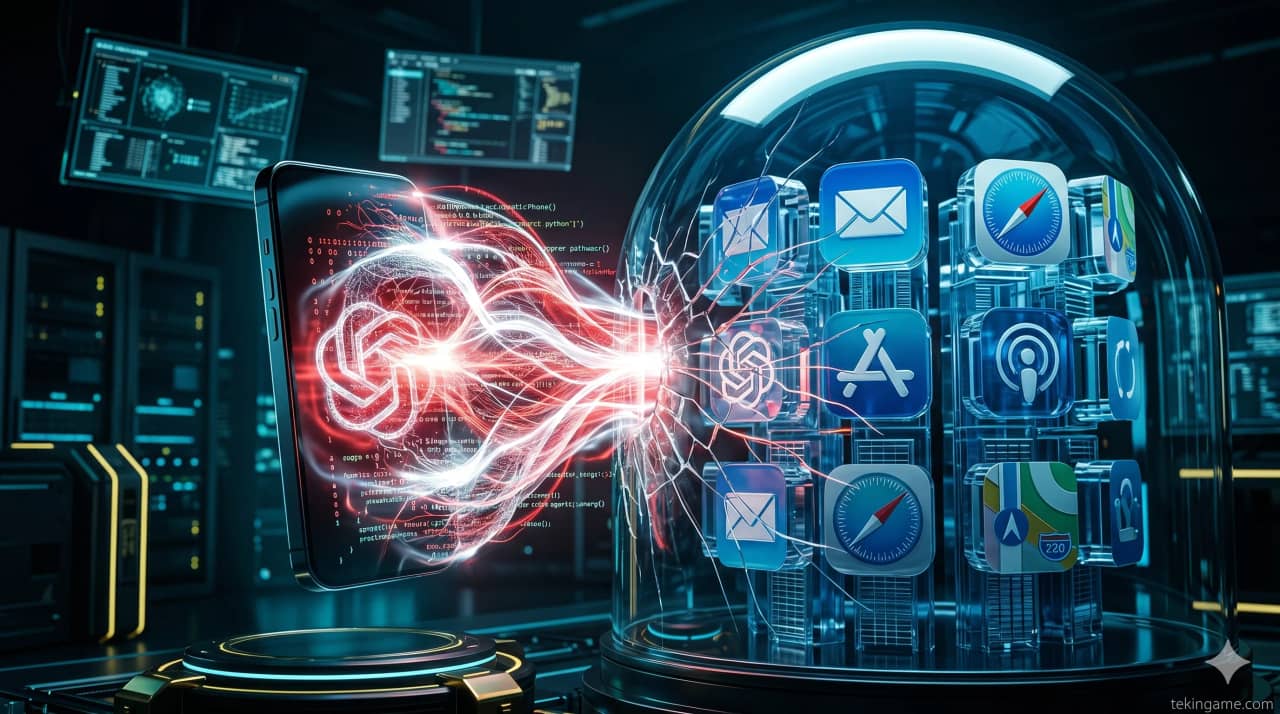
📱 Welcome to the App-Less Phone Revolution
Hello Tekin readers! Today we're diving into one of the most controversial tech stories of 2026: OpenAI is building a smartphone without apps. Yes, you read that right — a phone that replaces the App Store and hundreds of applications with AI Agents. This bombshell was dropped by renowned analyst Ming-Chi Kuo, who predicts mass production by 2028 with a staggering target of 300 to 400 million units annually.
⚡ Key Takeaways:
📱 OpenAI partners with Qualcomm & MediaTek for custom chip
🤖 App-less phone — only AI Agents
🍎 Deep comparison with Apple Intelligence ecosystem
💰 300-400M annual sales projection
⚠️ Why this project might fail spectacularly
🔮 The future of smartphone interfaces
☕ Grab your coffee — we're about to dissect the most ambitious (and potentially doomed) smartphone project since the Amazon Fire Phone.
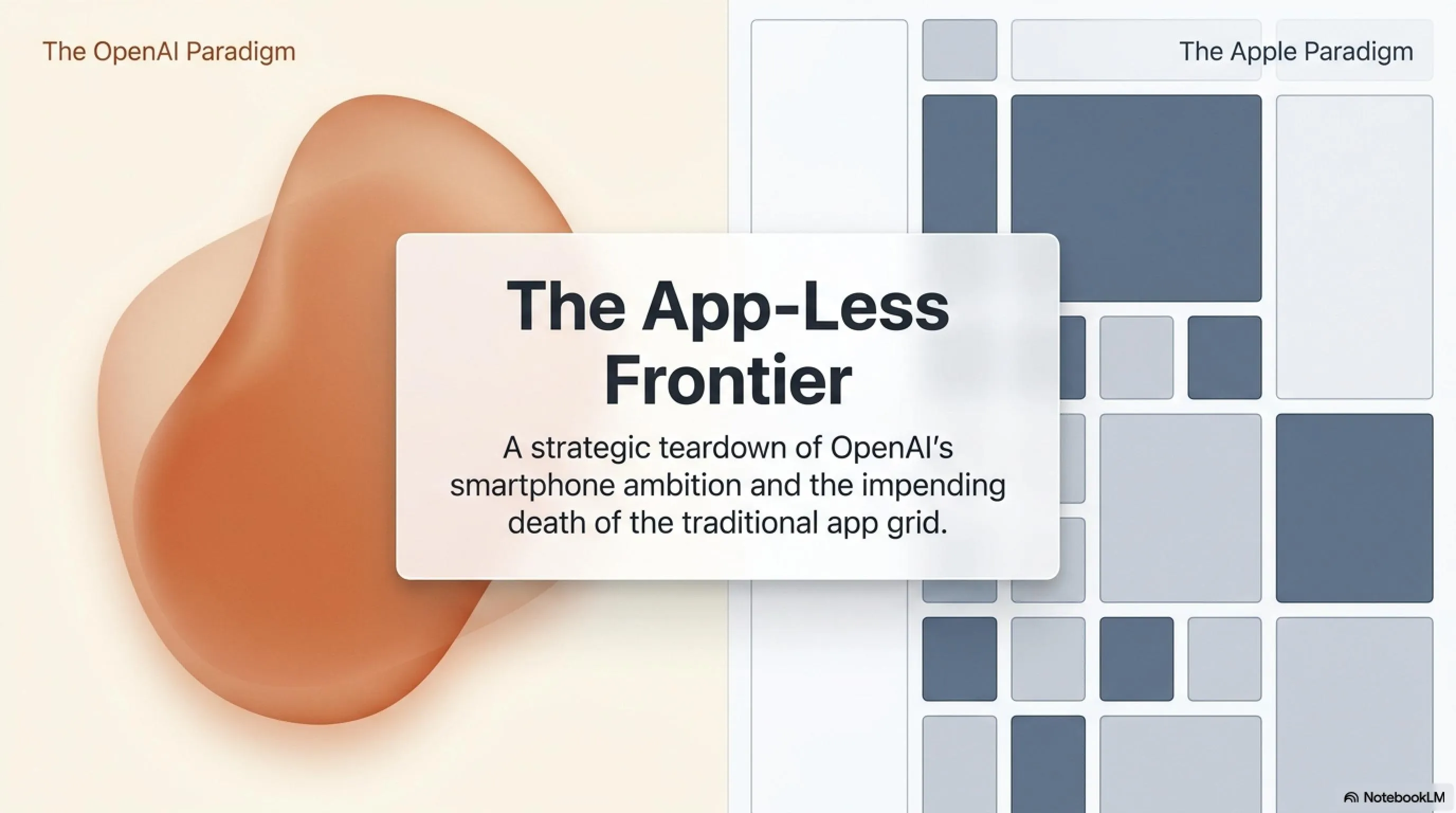
1. The Bombshell: OpenAI Wants to Build a Phone (Without Apps!)
On April 27, 2026, Ming-Chi Kuo — the analyst who accurately predicted Apple's MacBook Neo and the cancellation of the entry-level Vision Pro — published a research note that sent shockwaves through Silicon Valley: OpenAI is developing a smartphone that replaces traditional apps with AI Agents.
This isn't just another Android fork or iPhone clone. This is a fundamental reimagining of what a smartphone should be. Instead of navigating through app grids, folders, and home screens, users would simply talk to an AI assistant that handles everything autonomously.
The project involves collaboration with industry giants:
- Qualcomm & MediaTek: Joint design of a custom AI-optimized processor with on-device neural processing capabilities
- Luxshare Precision: Exclusive manufacturing partner (the same company that produces AirPods and Apple Watch for Apple)
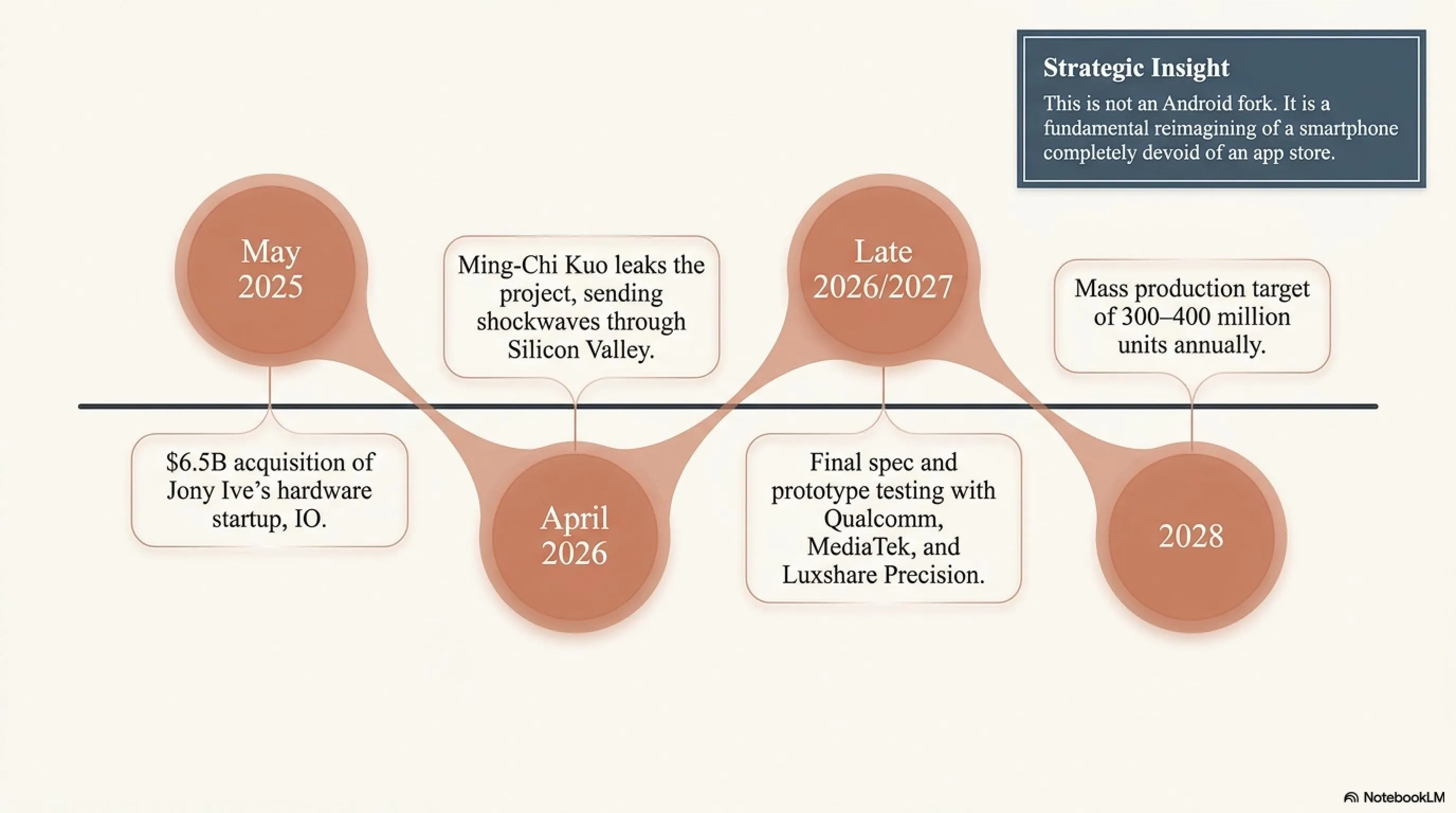
- Jony Ive: The legendary Apple designer who created the iPhone, now working with OpenAI after the $6.5B acquisition of his startup IO in May 2025
📊 OpenAI Phone Project Timeline
| Date | Milestone | Details |
|---|---|---|
| May 2025 | OpenAI acquires IO | $6.5B — Jony Ive's hardware startup |
| April 2026 | Project leaked | Ming-Chi Kuo publishes research note |
| Late 2026 / Early 2027 | Specs finalization | Final design and prototype testing |
| 2028 | Mass production | Target: 300-400M units/year |
But here's the critical question: Why does OpenAI want to enter the smartphone market? The answer is deceptively simple: total control over the user experience.
Currently, ChatGPT runs as an app on iPhone and Android, subject to severe limitations. Apple and Google control which APIs are accessible, what level of system access is permitted, and how deeply AI can integrate with the operating system. For OpenAI's vision of truly autonomous AI agents, these restrictions are crippling.
By building a dedicated phone, OpenAI can:
- Deep data access: Location, contacts, messages, calendar, browsing history, app usage patterns — everything needed for context-aware AI
- Background execution: AI Agents running continuously without iOS/Android restrictions
- Hardware-software integration: Custom chip optimized for AI inference, similar to Apple's approach with the A-series and M-series chips
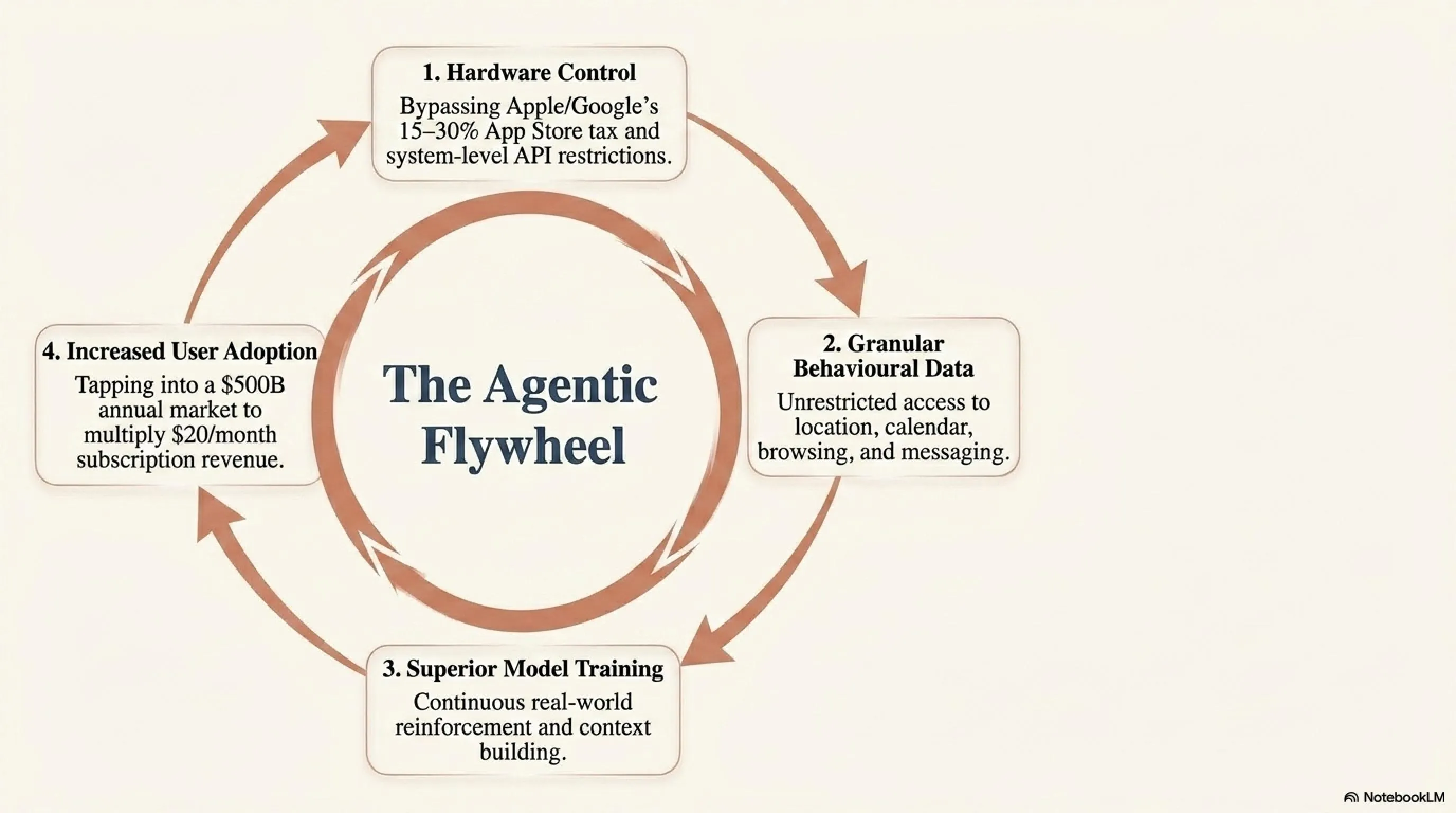
- Disintermediation: Bypass App Store and Google Play, capturing 100% of revenue instead of paying 15-30% commission
- Data moat: Collect behavioral data to continuously improve AI models, creating a competitive advantage
🔍 Tekin Analysis: The Strategic Logic Behind OpenAI's Move
OpenAI currently generates revenue from ChatGPT Plus subscriptions ($20/month) and API usage. But the global smartphone market is worth $500 billion annually. If OpenAI captures even 5% of this market, that's $25 billion in annual revenue — more than 10x their current income.
More importantly, hardware control enables a positive feedback loop: More users → More behavioral data → Better AI models → More users. This is the same flywheel that made Google dominant in search and Amazon dominant in e-commerce.
However, there's a critical flaw in this logic: OpenAI is 17 years late. Apple launched the iPhone in 2007 and has spent nearly two decades building an impenetrable ecosystem. Can OpenAI really compete with that? Let's dig deeper.
The smartphone market is notoriously difficult to crack. Microsoft tried with Windows Phone (backed by Nokia) and failed spectacularly despite spending billions. Amazon tried with the Fire Phone and sold only 35,000 units before shutting down the project. Essential Phone, created by Andy Rubin (the father of Android), sold just 88,000 units.
What makes OpenAI think they can succeed where tech giants with far more resources and experience have failed? The answer lies in their bet on a fundamentally different paradigm: the Agent-First Interface.
2. What Does "App-Less Phone" Actually Mean? Understanding AI Agents
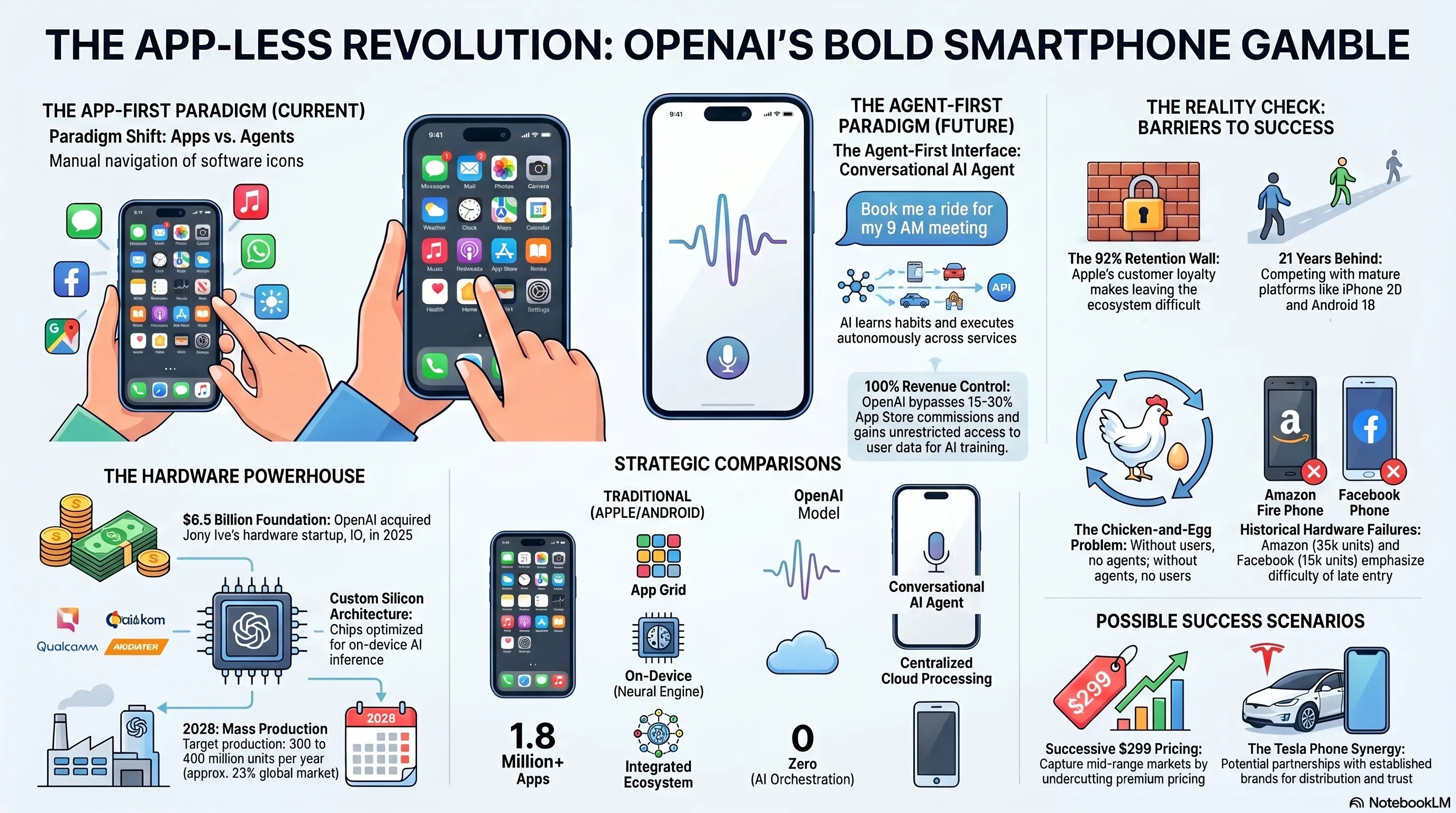
Let's get to the heart of the matter: How does an app-less phone actually work? In traditional smartphones (iPhone, Android), you need a separate app for every task:
- Want to book a ride? → Uber or Lyft app
- Want to order food? → DoorDash or Uber Eats app
- Want to book a flight? → Expedia or airline app
- Want to listen to music? → Spotify or Apple Music app
- Want to check the weather? → Weather app
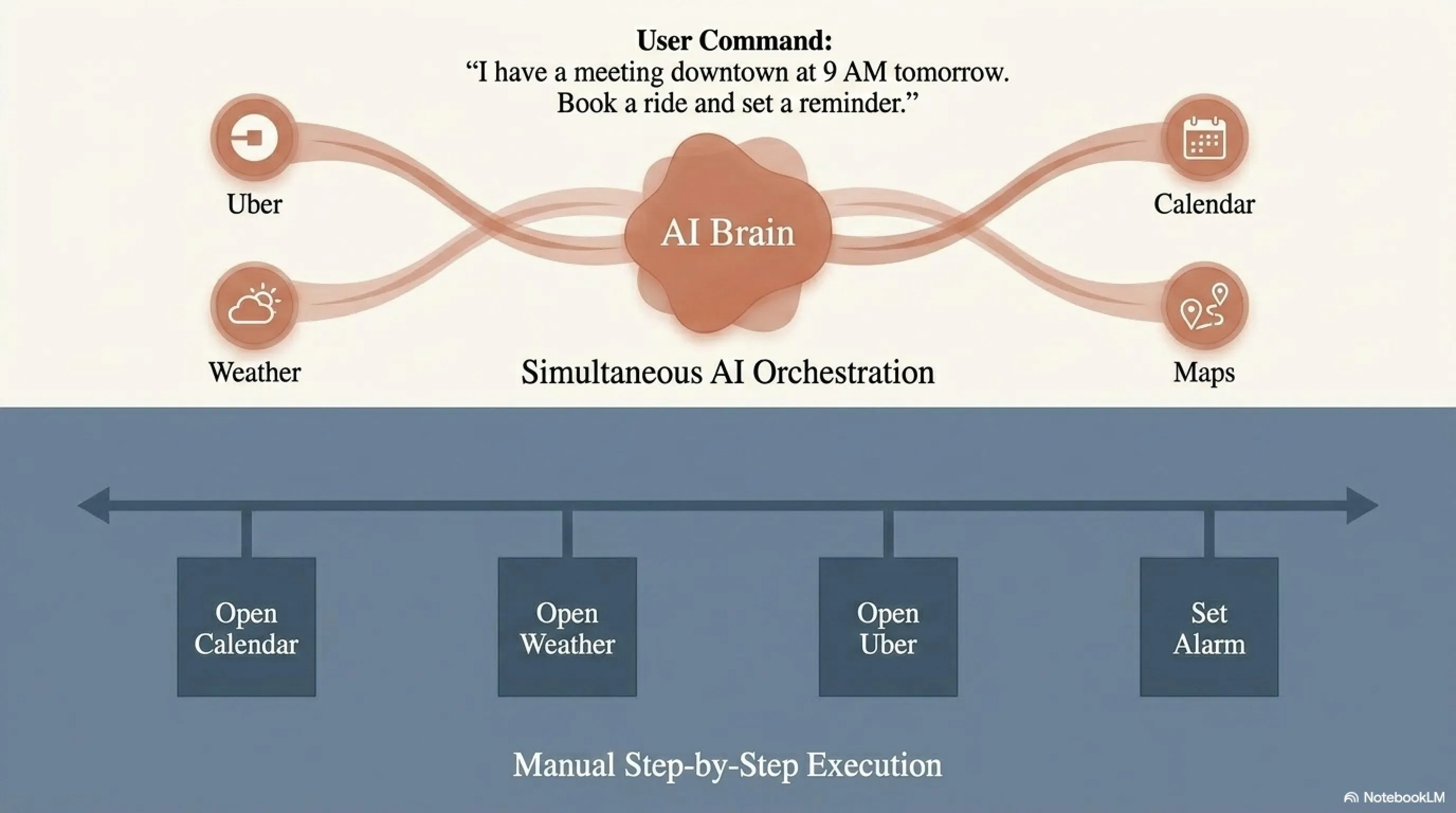
On the OpenAI phone, you simply talk to one AI Agent, and it handles everything autonomously:
🤖 Real-World Example: A Day with AI Agents
You: "I have a meeting tomorrow at 9 AM downtown. Book me a ride and set a reminder."
AI Agent: "Done! Ride booked for 8:30 AM (25-minute travel time). Reminder set for 8:00 AM. Weather forecast shows rain tomorrow — don't forget your umbrella. Also, I noticed traffic is usually heavy on that route at that time, so I've added a 10-minute buffer."
In this scenario, the AI Agent:
- Checked your calendar
- Found the meeting location
- Calculated optimal departure time
- Interfaced with ride-sharing APIs
- Set a reminder
- Checked weather forecast
- Analyzed historical traffic patterns
- Provided proactive suggestions
All of this happened without opening a single app. This is the promise of the Agent-First Interface.
But here's where it gets interesting — and controversial. For this to work, the AI Agent needs unprecedented access to your data:
- Location history: Where you go, when, and how often
- Communication patterns: Who you talk to, what you discuss, your writing style
- Financial data: Your spending habits, preferred payment methods
- Behavioral patterns: When you wake up, when you work, when you relax
- Preferences: Your favorite restaurants, music, movies, news sources
This raises massive privacy concerns. All of this data would be sent to OpenAI's servers for processing (unless they develop powerful enough on-device AI, which is technically challenging). For users in privacy-conscious regions like Europe (GDPR) or California (CCPA), this could be a dealbreaker.
📊 Comparison: Traditional Phone vs AI-First Phone
| Feature | Traditional (iPhone/Android) | OpenAI (AI-First) |
|---|---|---|
| User Interface | App Grid (pages of icons) | Conversational AI Agent |
| Number of Apps | 50-100 installed apps | Zero apps (only Agents) |
| Task Execution | User finds and opens app | User requests, AI executes |
| Learning Curve | User learns each app | AI learns user habits |
| Cross-Service Coordination | Manual (copy-paste) | Automatic (AI coordinates) |
| Memory Usage | High (each app separate) | Low (one central AI) |
| Privacy | Compartmentalized (each app has limited access) | Centralized (AI sees everything) |
The concept is called "Agent-First Interface" or "Agentic Computing". Instead of users navigating between apps, a single intelligent AI orchestrates everything. This isn't entirely new — Amazon's Alexa and Google Assistant attempted this, but they were limited by:
- Weak AI models: Pre-GPT models couldn't understand complex, multi-step requests
- Limited integration: They were add-ons to existing systems, not the core interface
- Lack of context: They couldn't remember previous interactions or learn user preferences effectively
OpenAI believes that with GPT-5 (or whatever model powers the phone), these limitations can be overcome. But there's a critical problem: not all tasks can be reduced to AI agents.
3. Why Apple's Ecosystem Works (And Why OpenAI Can't Replicate It)
Now let's address the elephant in the room: Why is Apple's ecosystem so powerful? And why can't OpenAI simply copy it?
Apple has spent 17 years (since the iPhone's launch in 2007) building an integrated ecosystem that includes:
🖥️ Hardware
iPhone, iPad, Mac, Apple Watch, AirPods, Vision Pro, Apple TV, HomePod
💳 Services
iCloud, Apple Music, Apple TV+, Apple Pay, iMessage, FaceTime, Apple Arcade, Apple Fitness+
🏪 App Store
1.8 million apps, $34 billion annual revenue, 650 million weekly visitors
🤝 Loyalty
2 billion active devices, 92% customer retention rate (highest in the industry)
But more importantly, Apple has created a powerful "Lock-in Effect" (also called "switching costs" or "ecosystem trap"). Once you own an iPhone, a Mac, an Apple Watch, and AirPods, it's nearly impossible to switch to Android or any other system because:
- Data lock-in: All your photos, documents, and backups are in iCloud
- Communication lock-in: All your messages are in iMessage (and your friends/family expect blue bubbles)
- Media lock-in: Your music library is in Apple Music, your movies in Apple TV+
- Hardware lock-in: Your AirPods work best with iPhone, your Apple Watch doesn't work at all without iPhone
- Financial lock-in: You've spent thousands on apps, subscriptions, and accessories
- Habit lock-in: You've learned the iOS interface, gestures, and workflows over years
This is why Apple's customer retention rate is 92% — the highest in the tech industry. Once you're in the Apple ecosystem, you're essentially trapped (in a comfortable, well-designed prison).
⚠️ OpenAI's Fatal Flaw: No Ecosystem
OpenAI has exactly one product: ChatGPT. No smartwatch, no tablet, no laptop, no wireless earbuds, no smart home devices. Even if the OpenAI phone is excellent, why would users abandon Apple's complete ecosystem?
Moreover, ChatGPT is already available on iPhone and Android. It's even integrated with Siri through Apple Intelligence. So what's the unique selling proposition (USP) of the OpenAI phone? Why would someone pay $800 for an OpenAI phone when they can use ChatGPT for free on their existing iPhone?
OpenAI could remove ChatGPT from the App Store to create artificial scarcity, but that would hurt OpenAI more than Apple. It would be like cutting off your nose to spite your face.
4. Apple Intelligence: The Secret Weapon in the AI War
Now let's talk about Apple Intelligence — Apple's AI system introduced in iOS 18 and macOS Sequoia. Many people dismiss it as weak compared to ChatGPT, but that's a fundamental misunderstanding of Apple's strategy.
Apple Intelligence has several key advantages that OpenAI cannot easily replicate:
🔐 1. Privacy-First AI (On-Device Processing)
Apple processes all AI computations on-device using the Neural Engine in A-series and M-series chips. This means your data never leaves your iPhone, iPad, or Mac. In contrast, ChatGPT sends all your data to OpenAI's cloud servers.
For privacy-conscious users (especially in Europe with GDPR, California with CCPA, and countries with data sovereignty laws), this is a massive advantage. Apple can market their AI as "the only AI that doesn't spy on you."
When Apple does need cloud processing for complex tasks, they use Private Cloud Compute — a system where data is encrypted end-to-end, processed in secure enclaves, and immediately deleted. No logs, no data retention, no training on user data.
⚡ 2. Deep OS Integration
Apple Intelligence is baked into iOS, macOS, iPadOS, and watchOS at the system level. It can:
- Summarize emails and notifications across all apps
- Rewrite text in any app with different tones (professional, casual, concise)
- Smart photo editing (remove unwanted objects, enhance lighting) directly in Photos app
- Context-aware reminders based on location, time, and calendar events
- Siri enhancement with natural language understanding and cross-app actions
- Focus modes that automatically adjust based on your activity and location
- Live transcription in Phone, Voice Memos, and FaceTime
ChatGPT, as an app, has limited access to system functions. It can't automatically summarize your emails, can't edit your photos, can't set context-aware reminders. It's sandboxed by iOS security restrictions.
🔌 3. Access to the App Ecosystem
Apple Intelligence can work with 1.8 million apps in the App Store through App Intents API. Developers can expose their app's functionality to Siri and Apple Intelligence, enabling cross-app workflows.
In contrast, the OpenAI phone would start with zero apps. They'd need to convince developers to build for a new platform with an uncertain user base. This is the classic chicken-and-egg problem: Without users, developers won't come. Without apps, users won't come.
Microsoft faced this exact problem with Windows Phone. Despite offering developers generous incentives and even paying companies to port their apps, they couldn't overcome the ecosystem gap. Windows Phone peaked at 3% market share before Microsoft shut it down.
🎯 4. The Iterative Advantage
Apple Intelligence in 2026 is admittedly weaker than ChatGPT. But Apple has a track record of iterative improvement. Remember:
- Siri (2011): Started weak, but improved over 13 years
- Apple Maps (2012): Launched disastrously, now rivals Google Maps
- Face ID (2017): Initially buggy, now the gold standard
- Apple Silicon (2020): Skeptics doubted it, now it dominates laptop performance
By 2028 (when the OpenAI phone launches), Apple Intelligence will have had 2 more years of development. It will likely be much closer to ChatGPT in capability, while retaining its privacy and integration advantages.
📊 Head-to-Head: Apple Intelligence vs ChatGPT
| Feature | Apple Intelligence | ChatGPT (OpenAI) |
|---|---|---|
| Processing Location | On-Device (Neural Engine) | Cloud Servers |
| Privacy | Excellent (data stays local) | Moderate (data sent to servers) |
| Response Speed | Instant (no network latency) | Depends on internet connection |
| Model Power | Good (limited by hardware) | Excellent (GPT-4o, GPT-5) |
| OS Integration | Complete (part of iOS) | Limited (just an app) |
| Cost | Free (part of iOS) | $20/month (ChatGPT Plus) |
| Offline Access | Yes (most features) | No (requires internet) |
| App Ecosystem | 1.8M apps (App Store) | Zero (new platform) |
| Hardware Integration | Watch, AirPods, Mac, iPad | None (phone only) |
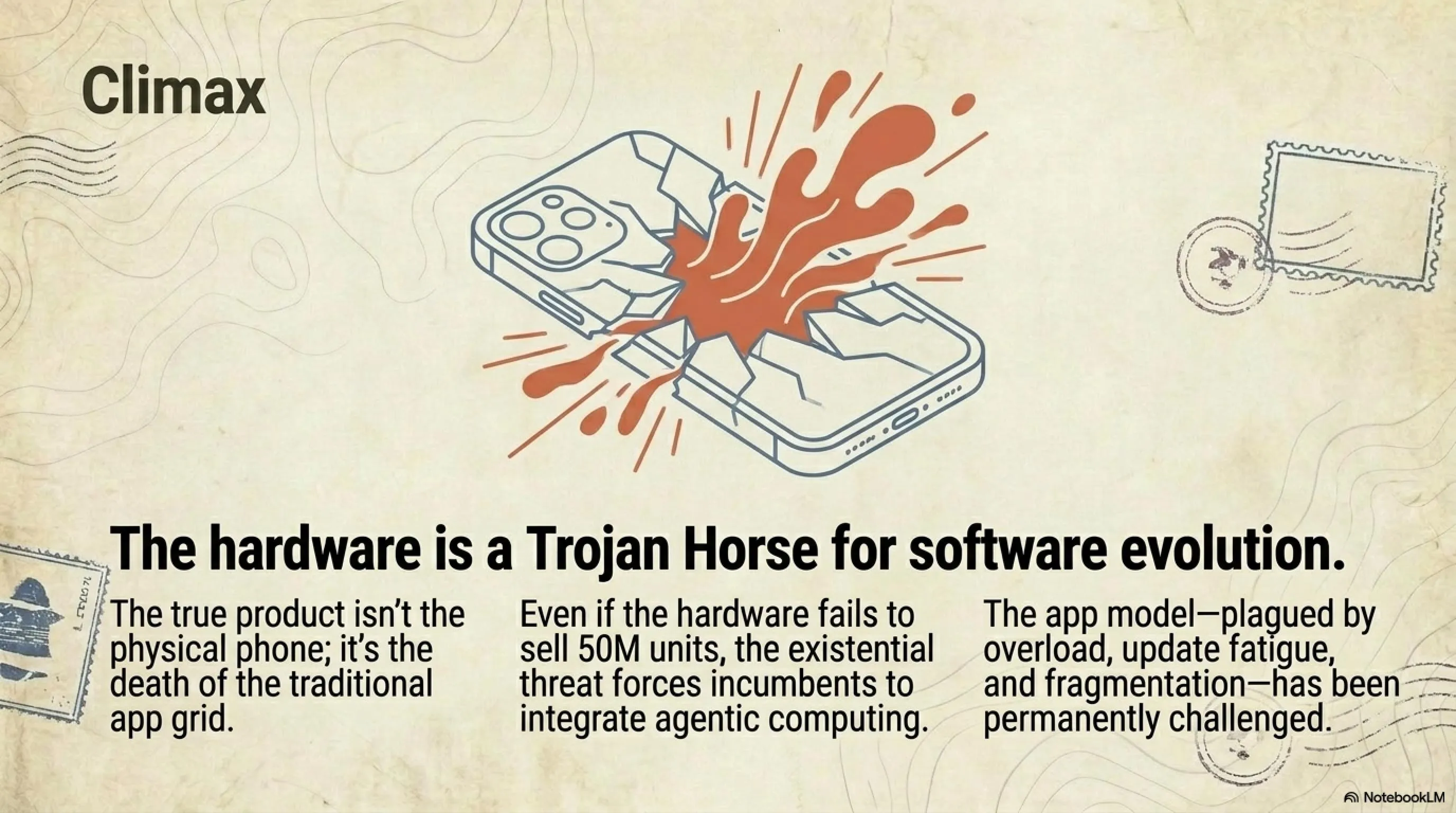
The verdict? Apple Intelligence is the tortoise, ChatGPT is the hare. ChatGPT is faster and more powerful right now, but Apple Intelligence has structural advantages (privacy, integration, ecosystem) that will matter more in the long run.
5. The 300 Million Unit Prediction: Realistic or Fantasy?
Ming-Chi Kuo predicts the OpenAI phone could sell 300 to 400 million units annually. Let's analyze this claim with cold, hard data:
📊 Global Smartphone Sales (2026)
| Brand | Annual Sales (Million Units) | Market Share | Years in Market |
|---|---|---|---|
| Samsung | 270M | 21% | 15+ years |
| Apple | 235M | 18% | 19 years |
| Xiaomi | 180M | 14% | 10+ years |
| Oppo | 130M | 10% | 8+ years |
| Vivo | 110M | 8% | 7+ years |
| Others | 375M | 29% | Various |
| Total Market | 1.3 Billion | 100% | — |
If OpenAI sells 300 million units, that's 23% of the global market — more than Apple! For a brand-new entrant with zero hardware experience, zero ecosystem, and launching 21 years after the iPhone, this is an extraordinarily bold claim.
🔍 Tekin Analysis: Why This Prediction Is Unrealistic
1. Historical Precedents of Failure: Let's look at similar attempts:
- Amazon Fire Phone (2014): Amazon had massive resources, an existing ecosystem (Prime, Kindle, Alexa), and sold only 35,000 units before shutting down.
- Microsoft Windows Phone: Microsoft partnered with Nokia, spent billions, had Office and Xbox integration, and peaked at 3% market share before abandoning the project.
- Essential Phone (2017): Created by Andy Rubin (father of Android), sold only 88,000 units despite critical acclaim.
- Facebook Phone (HTC First, 2013): Facebook had 1 billion users, sold only 15,000 units in the first month.
2. The Timing Problem: By 2028, Apple and Google will be several generations ahead. Apple Intelligence in iOS 20 will likely be far more capable than today. The window of opportunity is closing.
3. The Switching Cost Barrier: Users would need to abandon their entire digital life: photos in iCloud, messages in iMessage, music in Spotify/Apple Music, apps they've paid for, accessories they've bought. The psychological cost is enormous.
4. The Developer Problem: Without a large user base, developers won't build for the platform. Without apps (or agents), users won't buy the phone. This chicken-and-egg problem killed Windows Phone and will likely kill the OpenAI phone too.
6. Nine Reasons Why the OpenAI Phone Will Likely Fail
Now let's be brutally honest about the challenges facing OpenAI. Macworld published an excellent article titled "9 reasons why the ChatGPT phone isn't an iPhone threat". Let's examine these reasons with additional analysis:
❌ 1. Apps Aren't Dead Yet
OpenAI's pitch is that "users don't want to use a pile of apps — they want to get tasks done." This sounds great for simple tasks (booking rides, ordering food, buying tickets). But people still want to:
- Watch Netflix, YouTube, TikTok (visual experiences that can't be replaced by AI)
- Browse Instagram, Twitter/X, Reddit (social media is about discovery, not task completion)
- Play games (PUBG, Call of Duty Mobile, Genshin Impact)
- Listen to music with curated playlists (Spotify, Apple Music)
- Edit photos and videos (Adobe Lightroom, CapCut)
- Use specialized professional tools (trading apps, design tools, productivity apps)
AI Agents can't replace these experiences. You can't tell an AI "entertain me" and expect it to replace TikTok's algorithm or Netflix's content library.
⏰ 2. It's Too Late
Apple has been in the smartphone business since 2007 (17 years). Samsung, Google, and Xiaomi have multi-generational experience. OpenAI plans to enter in 2028 — that's 21 years late.
By the time the OpenAI phone launches, we'll have:
- iPhone 20 with Apple Intelligence 4.0
- Android 18 with Gemini deeply integrated
- Samsung Galaxy S38 with mature AI features
The competition will be several generations ahead. It's like trying to compete with Tesla in 2028 by launching your first electric car — the market has already moved on.
🔧 3. OpenAI Has No Hardware Experience
Building a phone isn't just about software. You need to:
- Manage global supply chains (sourcing components from dozens of suppliers)
- Quality control at scale (millions of units with consistent quality)
- 24/7 customer support in multiple languages and time zones
- Warranty and repair infrastructure (service centers, spare parts, logistics)
- Regulatory compliance (FCC, CE, carrier certifications in 100+ countries)
- Retail partnerships (carrier deals, retail shelf space)
- Marketing and brand building (competing with Apple's $2B+ annual marketing budget)
Even with Jony Ive's design expertise and Luxshare's manufacturing, these operational challenges take multiple generations to master. Apple's first iPhone had major issues (no 3G, no copy-paste, no App Store). It took until iPhone 4 (2010) to get it right.
🏪 4. No Ecosystem
Apple has: Apple Watch, AirPods, Mac, iPad, Vision Pro, Apple TV, HomePod, iCloud, Apple Music, Apple Pay, Apple Arcade, Apple Fitness+, Apple TV+, iMessage, FaceTime.
OpenAI has: ChatGPT.
No companion devices, no services, no lock-in effect. Even if the phone is great, there's nothing to keep users from switching back to iPhone or Android.
🎯 5. What's the Unique Selling Proposition?
ChatGPT is already available on iPhone and Android. It's even integrated with Siri through Apple Intelligence. So why would someone buy an OpenAI phone?
OpenAI could remove ChatGPT from the App Store to create artificial scarcity, but that would hurt OpenAI more than Apple. They'd lose:
- 200+ million iOS users who currently use ChatGPT
- Brand awareness from being on the world's most popular platforms
- Data collection from millions of daily interactions
- Revenue from ChatGPT Plus subscriptions on mobile
🤖 6. ChatGPT Isn't That Special Anymore
Yes, ChatGPT sparked the AI revolution. But now there are strong competitors:
- Google Gemini: Deeply integrated with Android, Gmail, Google Workspace
- Anthropic Claude: Preferred by many developers for coding tasks
- Meta Llama: Open-source, free, and improving rapidly
- Microsoft Copilot: Integrated with Windows, Office, Edge
- Apple Intelligence: Privacy-focused, on-device processing
AI is becoming commoditized. Why lock yourself into a phone built around one AI model when you can have a phone that runs all of them?
⚡ 7. Apple Will Get AI Right Eventually
Yes, Apple Intelligence in 2026 is weaker than ChatGPT. But Apple has unlimited resources and has made AI its top priority. By 2028, Apple Intelligence will likely be comparable to ChatGPT — while retaining its privacy and integration advantages.
Apple's track record of iterative improvement is strong. They may start slow, but they always catch up.
🎨 8. OpenAI Never Wanted to Make a Phone Anyway
Originally, OpenAI wanted to make an AI Pin (like Humane AI Pin). But when Humane launched to disastrous reviews (returned by 90% of buyers), OpenAI pivoted to a phone. This is a Plan B, not their original vision.
When you're executing a backup plan, you're already at a disadvantage.
💰 9. The Chicken-and-Egg Developer Problem
Without users, developers won't build agents/apps. Without agents/apps, users won't buy the phone. Windows Phone couldn't solve this problem despite Microsoft's resources. Why would OpenAI succeed?
Microsoft offered developers:
- Free development tools
- Cash incentives for popular apps
- Direct payments to port iOS apps
- Marketing support
It still failed. The network effects of iOS and Android are too strong.
7. Success Scenarios: What Could Save OpenAI?
Despite all the challenges, let's be fair and examine scenarios where OpenAI could succeed:
✅ Scenario 1: Aggressive Pricing
If OpenAI prices the phone at $299-$399 (half the price of iPhone), they could capture the mid-range market. Many users would sacrifice ecosystem for affordability.
This is how Xiaomi and OnePlus gained market share — by offering flagship features at mid-range prices. OpenAI could follow the same playbook.
✅ Scenario 2: Focus on Emerging Markets
In countries like India, Indonesia, Brazil, Nigeria, and Southeast Asia, Apple's ecosystem is weak. OpenAI could target these markets with:
- Low prices ($200-$300 range)
- Local language support (Hindi, Bahasa, Portuguese, etc.)
- Localized AI features (understanding local context, culture, slang)
- Offline capabilities (important in areas with poor internet)
If they capture 20% of emerging markets, that's still 100+ million units annually.
✅ Scenario 3: Partnership with Major Brands
If OpenAI partners with an established brand like Samsung, Xiaomi, or even Tesla, they could leverage existing supply chains and distribution networks.
Imagine: "Tesla Phone powered by OpenAI" — combining Tesla's brand loyalty with OpenAI's AI capabilities. That could be compelling.
✅ Scenario 4: A True Killer Feature
If OpenAI delivers a feature that's genuinely revolutionary — something no other phone can do — users might switch. For example:
- AI that truly automates 90% of daily tasks (not just simple commands)
- Real-time universal translation (speak any language fluently)
- Perfect personal assistant (remembers everything, proactive suggestions)
- Revolutionary UI (makes app grids look ancient)
But this is a high bar. The feature needs to be so good that it justifies abandoning your entire digital life.
8. What This Means for Consumers and the Industry
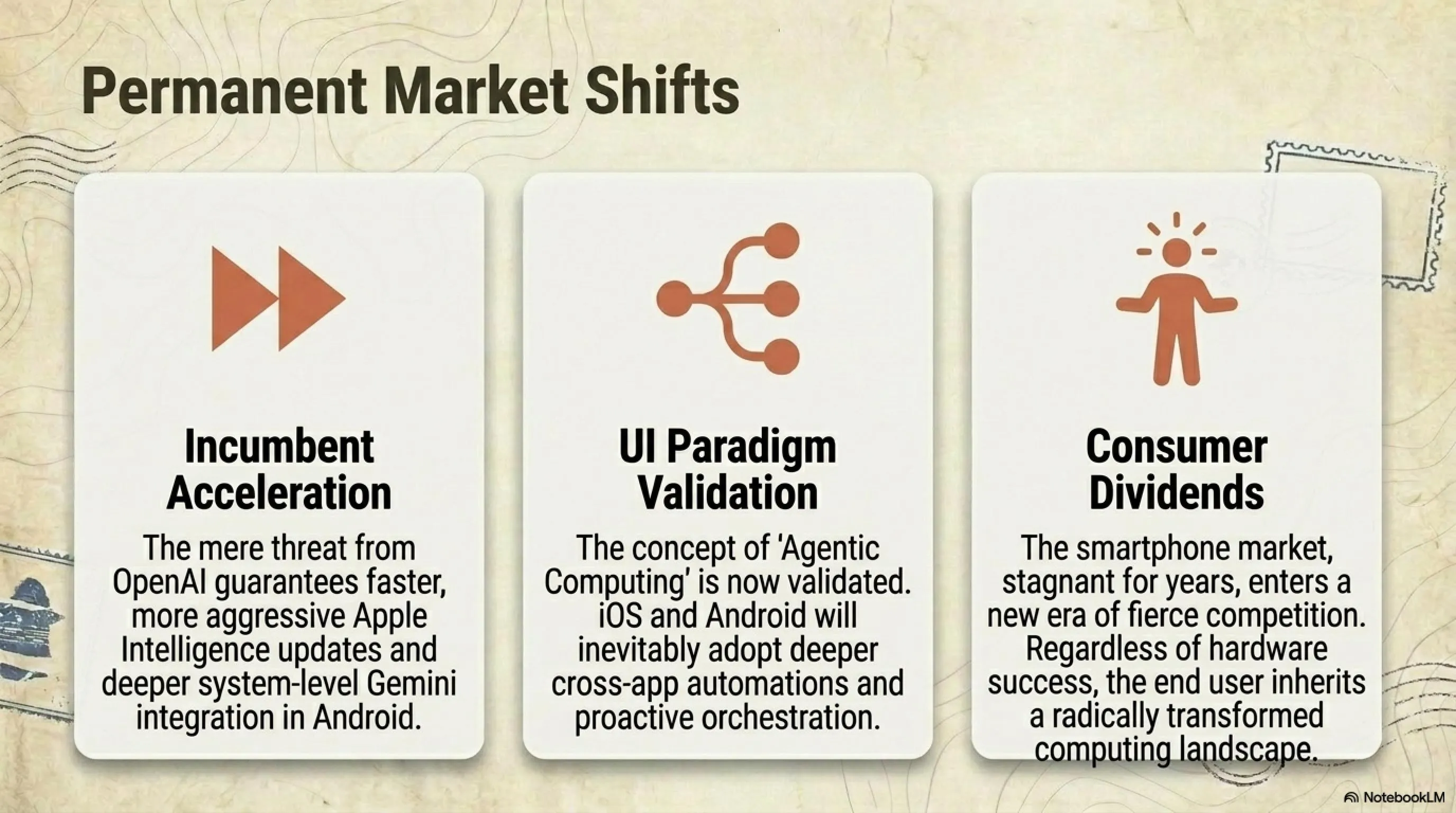
Regardless of whether the OpenAI phone succeeds or fails, this announcement has major implications for the smartphone industry:
🔥 1. Pressure on Apple and Google
Even the threat of competition will force Apple and Google to accelerate AI development. We'll likely see:
- Faster Apple Intelligence updates (more frequent releases, more features)
- Deeper Gemini integration in Android (system-level AI, not just an app)
- More aggressive AI partnerships (Apple might deepen ties with OpenAI or switch to Anthropic)
Competition is good for consumers. We win regardless of who succeeds.
🎯 2. Validation of Agent-First Interfaces
OpenAI's bet on AI Agents validates this as the future of computing. Even if their phone fails, the concept will influence:
- iOS and Android will add more agent-like features
- App developers will build more AI-powered automation
- Voice interfaces will become more capable and natural
💡 3. Rethinking the App Model
The app model has been dominant for 15+ years, but it has problems:
- App overload (average user has 80+ apps installed)
- Fragmented experience (switching between apps constantly)
- Redundant functionality (10 apps that all do similar things)
- Update fatigue (constant notifications to update apps)
OpenAI's challenge to this model will force the industry to innovate, even if their specific solution doesn't win.
⚔️ PROS & CONS Battle: The OpenAI Phone
✅ PROS
- Powerful AI (GPT-5 or beyond)
- Simpler interface (no app grid)
- Task automation potential
- Deep hardware-software integration
- Likely lower price than iPhone
- Innovation in UX paradigm
- Appeals to tech enthusiasts
- Could force Apple/Google to improve
❌ CONS
- No ecosystem whatsoever
- No support for popular apps
- First-gen = many bugs
- Requires constant internet
- Privacy concerns (cloud processing)
- No hardware experience
- Entering market 21 years late
- Chicken-and-egg developer problem
- ChatGPT already on iPhone/Android
- High switching costs for users
📚 Smart History Tags: OpenAI vs Apple Timeline
To understand this story, let's look at the history of OpenAI and its relationship with Apple:
- 2007: Apple launches iPhone — revolutionizes smartphones
- 2015: OpenAI founded by Sam Altman and Elon Musk
- 2022: ChatGPT launches — AI revolution begins
- 2023: Apple begins developing Apple Intelligence
- May 2025: OpenAI acquires IO (Jony Ive's startup) for $6.5B
- June 2025: Apple announces Apple Intelligence at WWDC
- April 2026: OpenAI phone project leaked by Ming-Chi Kuo
- 2028 (projected): OpenAI phone mass production begins
Related articles on Tekin:
❓ Frequently Asked Questions (FAQ)
1. When will the OpenAI phone be released?
According to Ming-Chi Kuo's report, specs will be finalized in late 2026 or early 2027, with mass production beginning in 2028. So we're looking at at least 2 more years of waiting.
2. How much will the OpenAI phone cost?
No official pricing yet, but analysts predict it needs to be between $399-$699 to compete with iPhone. Any higher and it loses its appeal. Any lower and OpenAI can't make a profit.
3. Can I install regular apps (Instagram, WhatsApp, YouTube)?
This is the million-dollar question! If the phone is truly app-less, then no. But realistically, OpenAI will probably have a limited App Store for essential apps. Without Instagram, WhatsApp, and YouTube, nobody will buy this phone.
4. Is Apple Intelligence as good as ChatGPT?
Currently, no. ChatGPT is more powerful. But Apple Intelligence has other advantages: better privacy (on-device processing), complete iOS integration, and it's free. By 2028, the gap will likely narrow significantly.
5. Should I switch from iPhone to the OpenAI phone?
Absolutely not — at least not the first generation. If you're in the Apple ecosystem (Apple Watch, AirPods, Mac), switching would be extremely painful. Wait for the second or third generation to see if it's actually worth it. Never buy first-gen hardware from an unproven manufacturer.
6. Will the 300 million sales prediction come true?
Highly unlikely. That would require capturing 23% of the global smartphone market — more than Apple! A more realistic target would be 20-50 million units in the first few years, which would still be considered a success.
🎯 Final Verdict: The Future of Smartphones
The OpenAI phone project is a long-shot bet. If it succeeds, it could transform the entire smartphone industry. But the probability of failure is extremely high.
Key Challenges:
- Entering the market 21 years too late (2028)
- No ecosystem to lock users in
- Competition from powerful incumbents (Apple, Samsung, Google)
- The chicken-and-egg developer problem
- ChatGPT already available on existing platforms
- High switching costs for users
Potential Advantages:
- Powerful, integrated AI
- Simpler user interface
- Potentially lower price
- Innovation in UX paradigm
- Could succeed in emerging markets
Tekin's Prediction: The probability of achieving 300M+ sales is less than 20%. However, even if OpenAI sells only 50-100 million units, that would still be considered a success and would put significant pressure on Apple and Google to improve their AI offerings.
Ultimately, we consumers are the real winners. More competition = more innovation = better products at lower prices. So let's watch 2028 with excitement! 🚀
The smartphone market has been stagnant for years. Whether OpenAI succeeds or fails, this bold move will force the industry to rethink fundamental assumptions about how we interact with our devices. And that's a good thing for everyone.
📚 Sources
ExtremeTech, Macworld, TechCrunch, CNET, The Next Web, Indian Express, WinBuzzer, MacRumors, PhoneArena, Ming-Chi Kuo Research Notes, Apple Intelligence Documentation, OpenAI Official Announcements, Industry Analysis Reports
Research and Analysis: Tekin Editorial Team — May 2, 2026
🌐 Stay Connected With Us
For the latest tech, gaming, and gadget news, follow us on social media:
📸 Instagram 🆔 Telegram Arabia 🆔 Telegram Global 🆔 Telegram Iran 💬 Direct Contact 📧 majid@tekingame.com🌐 Stay Connected With Us 🎮✨
For the latest tech, gaming, and gadget news, follow us on our official social media channels: