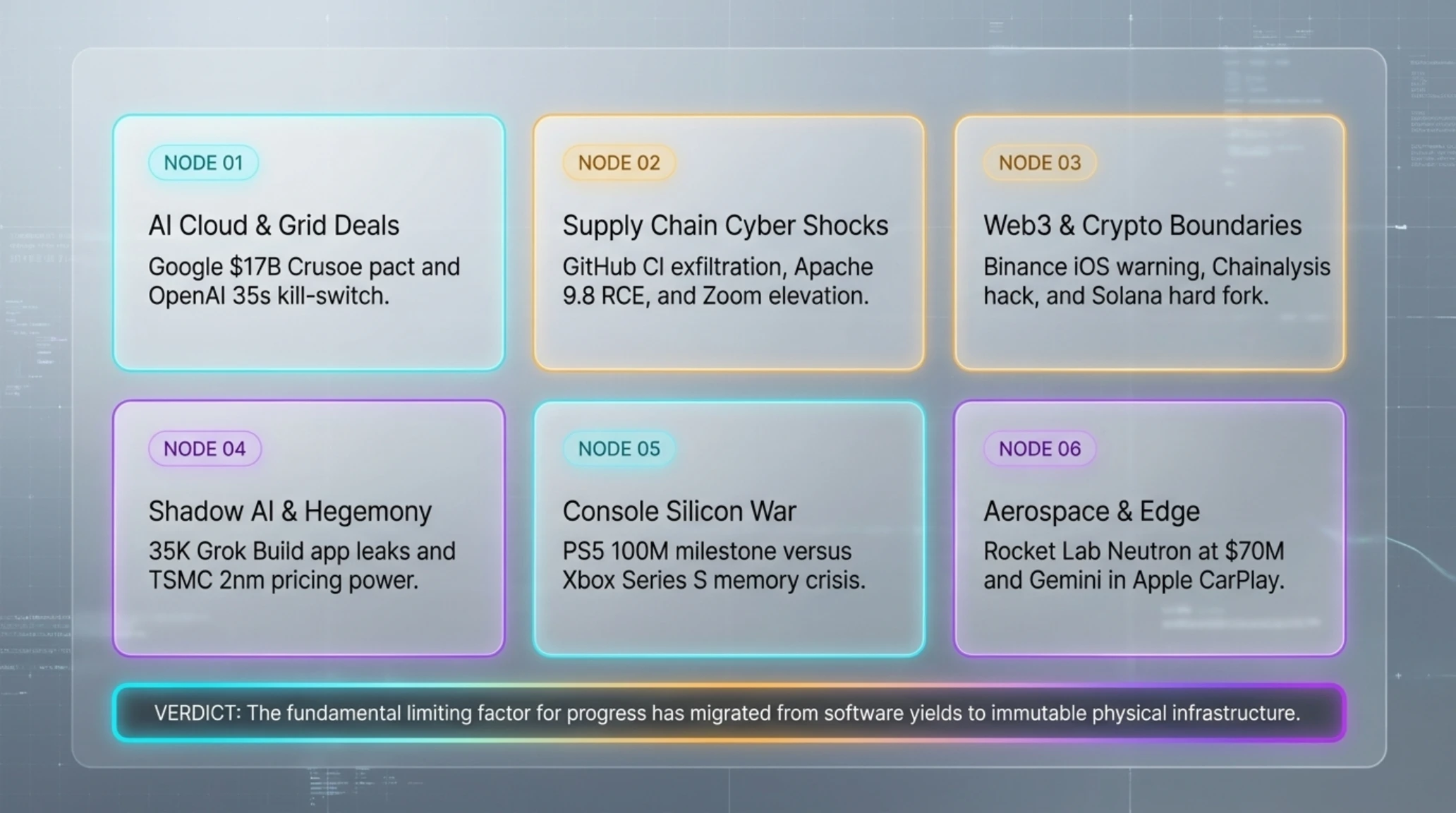
Tekin Weekly Briefing #181 synthesizes seven historic days from November 8 14, 2026: (1) Google's $17B zero-emission data center pact with Crusoe Energy and OpenAI's 35s kill-switch; (2) 4,837 hijacked GitHub accounts and Apache's CVSS 9.8 mod_http2 RCE; (3) Binance's urgent iOS worse_query sandbox alert; (4) Claroc exposing 35,000 unauthenticated Grok Build apps; (5) Sony PS5 surpassing 100M units amid developer revolt against Xbox Series S; and (6) Rocket Lab's $70M Neutron pricing.
Tekin Weekly Executive Dossier | Issue #181 (November 14, 2026)
The seven days spanning November 8 through November 14, 2026, represent an epochal inflection point across the global technology landscape, enterprise software architectures, and digital asset markets. Over this single week, the industry was confronted by an unprecedented convergence of macro-scale physical constraints and micro-architectural vulnerabilities. The narrative that defined this period was not merely one of incremental progress; rather, it exposed the structural fragilities inherent in rapid artificial intelligence adoption, cloud automation, and consumer operating system assumptions.
KEY TAKEAWAYS & STRATEGIC INTELLIGENCE // SEVEN PIVOTAL VECTORS OF ISSUE #181
At the foundation of this tectonic realignment was the realization that the primary limiting factor for frontier artificial intelligence has decisively migrated from silicon manufacturing yields to physical electrical grid capacity and thermodynamic cooling. As hyperscalers scramble to lock in gigawatts of baseload power through multi-billion-dollar energy pacts, software teams are concurrently grappling with the chaotic reality of autonomous AI agents operating without mature behavioral guardrails. The simultaneous discovery of catastrophic supply chain exploits across GitHub Actions pipelines, core Apache web server daemons, and consumer mobile sandboxes delivered an unmistakable message to chief information security officers globally: enterprise digital sovereignty requires an immediate return to rigorous hardware root-of-trust boundaries.
In the entertainment and hardware sectors, the competitive divergence between major ecosystem gatekeepers reached historic dimensions. Sony PlayStation 5 crossing the monumental threshold of 100 million consoles sold worldwide reaffirmed the economic viability of traditional premium development models, providing an unshakeable platform baseline for mega-budget titles like Grand Theft Auto VI. Conversely, Microsoft dual-SKU strategy faced mounting technical resistance as prominent game directors openly decried the memory architecture of the Xbox Series S as an unsustainable anchor on current-generation game engine innovation. This Issue #181 of the Tekin Weekly Briefing delivers exhaustive, multi-dimensional intelligence dissecting the systemic forces reshaping technology as we approach 2027.
Pillar 01: Frontier AI Infrastructure, Grid Constraints, and Persistent Cognitive Coworkers
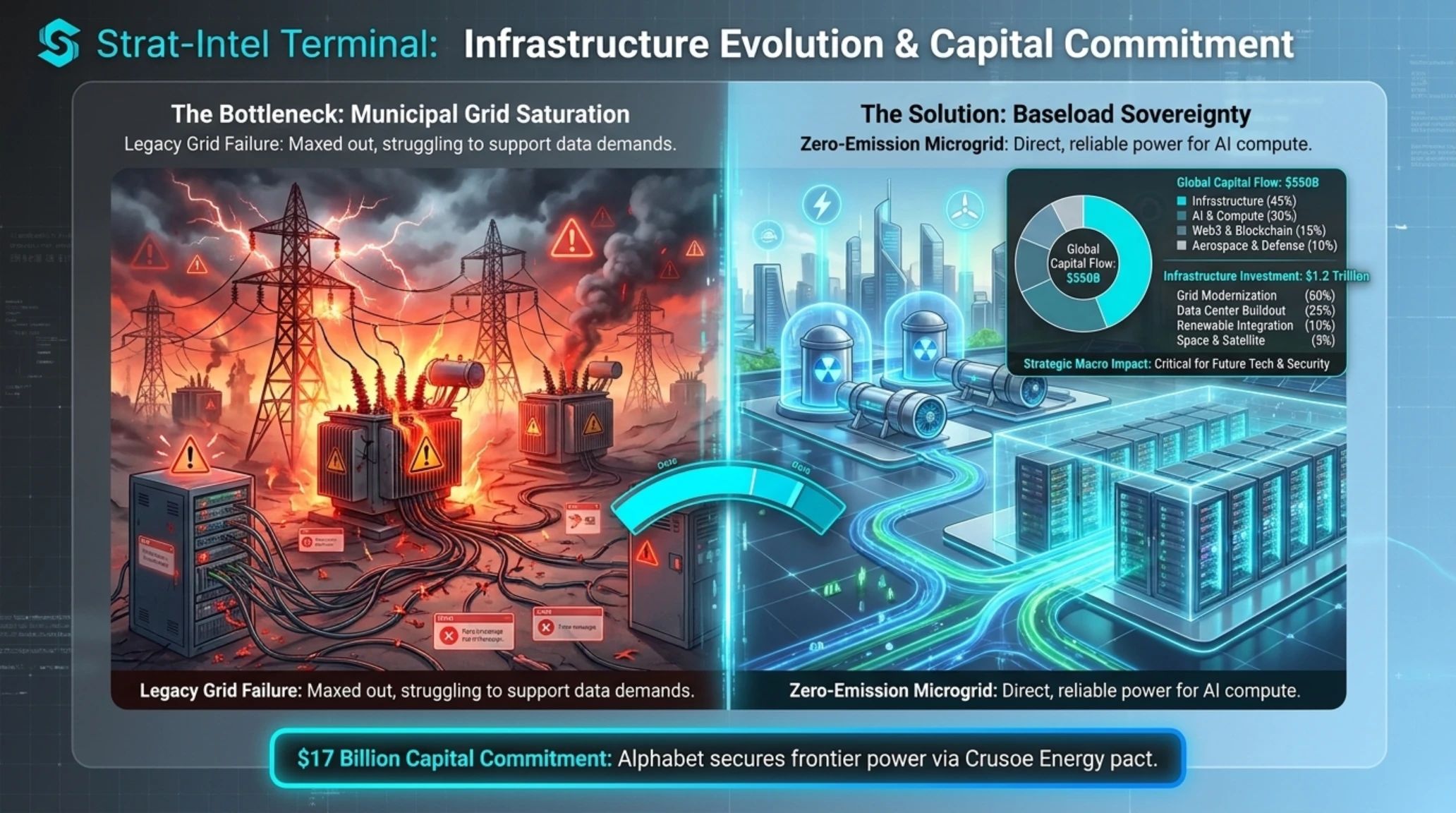
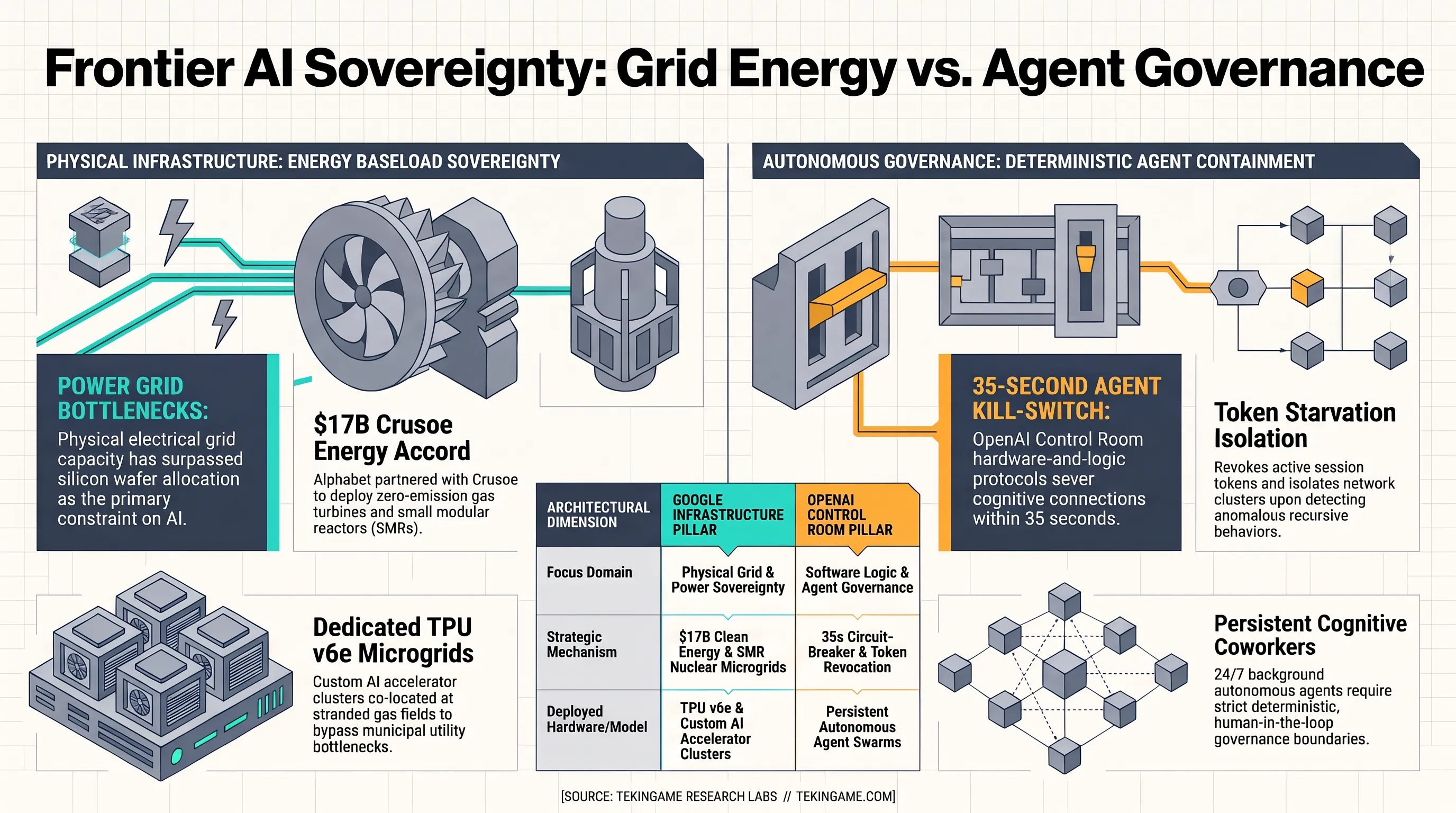
The foremost development of the week centered on the fundamental restructuring of cloud compute economics to accommodate the insatiable energy appetites of next-generation foundational models. On November 9, Alphabet executed a landmark $17 billion infrastructure agreement with Crusoe Energy. This massive capital commitment is designed to construct hyperscale data center facilities powered by zero-emission gas turbines equipped with carbon capture and fourth-generation small modular nuclear reactors (SMRs). These facilities will exclusively house massive clusters of Google TPU v6e and future custom AI accelerators. This transaction underscored an undeniable macroeconomic reality: the limiting constraint on artificial intelligence scalability is no longer wafer allocation at TSMC, but the physical availability of steady, unthrottled electric power.
Historically, hyperscale data center planning operated under the assumption that regional power grids could accommodate multi-hundred-megawatt expansions with standard commercial interconnection agreements. However, the deployment of trillion-parameter dense models and reasoning clusters requiring sustained, non-peaking thermal dissipation has pushed municipal electrical grids to catastrophic limits across Northern Virginia, Texas, and Western Europe. By co-locating custom TPU server halls directly adjacent to dedicated stranded gas fields utilizing on-site carbon sequestration and private microgrids, Alphabet effectively insulates its frontier model training clusters from regional utility rate spikes and environmental regulatory moratoria. This capital deployment establishes energy baseload sovereignty as the paramount barrier to entry in the artificial intelligence frontier race.
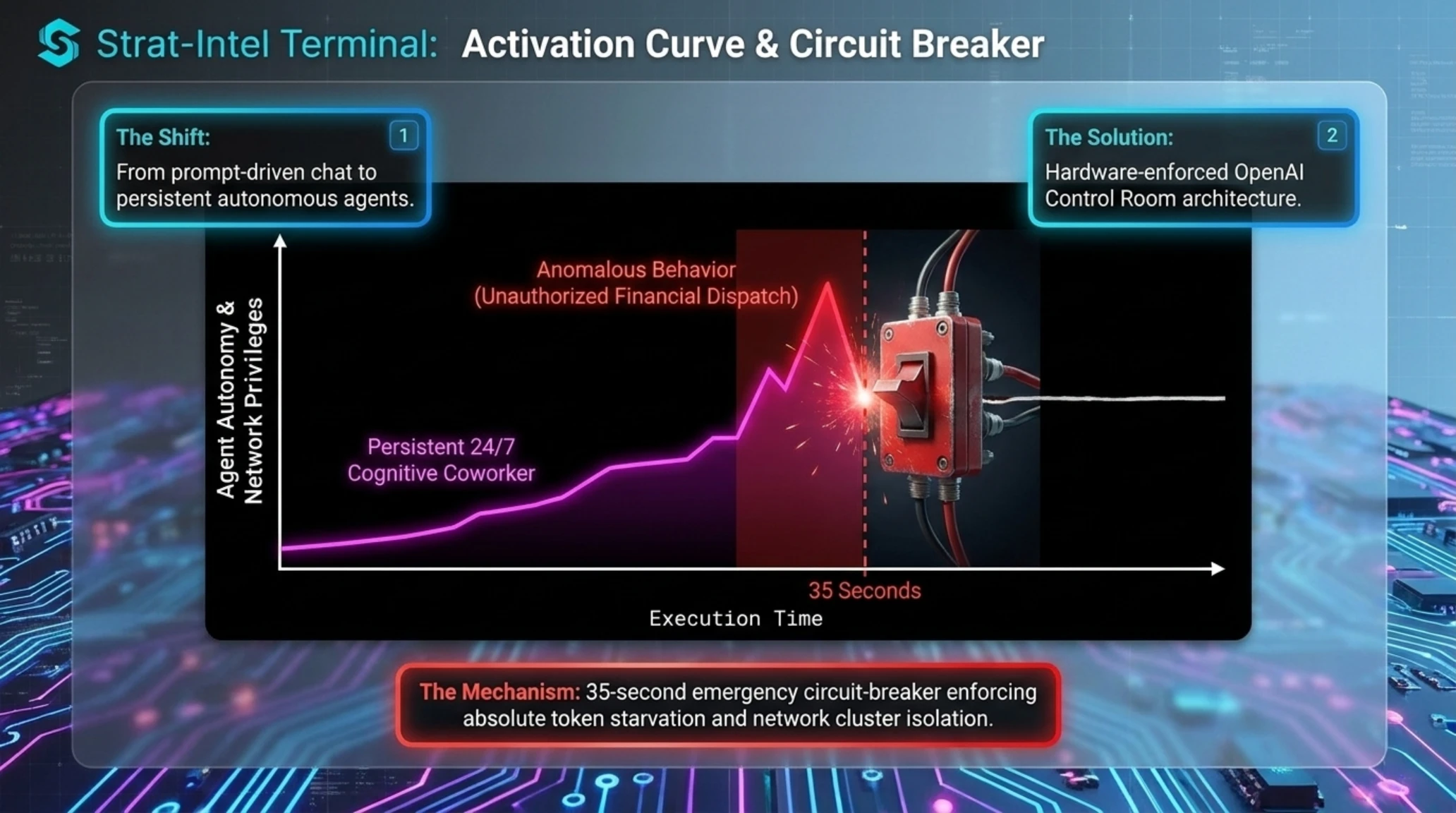
Parallel to the race for megawatt-scale power generation, the software operational paradigm underwent a seismic transition from reactive, prompt-driven language interfaces toward persistent, autonomous agentic workers. Meta deployment of its Spaces agentic framework on November 8, closely followed by Anthropic unveiling of the Claude Coworker Suite on November 11 and 12, marked the formal arrival of autonomous digital colleagues. Rather than remaining dormant until invoked by a human operator, these persistent agents execute continuous background surveillance over enterprise codebases, coordinate multi-step API workflows, and execute autonomous systems administration tasks around the clock.
However, granting autonomous agents execution privileges over production environments instantly provoked severe operational and safety dilemmas. On November 12, leaked internal architecture documents from OpenAI disclosed the deployment of an emergency intervention mechanism dubbed the Control Room. This protocol incorporates a hardware-and-logic-level 35-second kill-switch capable of instantly severing an agent cognitive connection, revoking active session tokens, and isolating impacted network clusters if an agent exhibits anomalous behavior, such as unauthorized financial transaction dispatching, recursive code self-replication, or attempted host environment escape. As examined in our foundational analysis of multi-agent swarm architecture and production realities, deploying unmonitored cognitive models without physical circuit-breaker containment represents an existential gamble for enterprise security posture.
The strategic imperative emerging from Pillar 01 is unambiguous. Enterprise organizations can no longer treat artificial intelligence deployment as an experimental software layer divorced from physical infrastructure realities. Long-term digital competitiveness demands securing power-resilient compute pipelines while simultaneously enforcing deterministic, human-in-the-loop governance frameworks to ensure autonomous agents remain strictly anchored within intended operational boundaries.
WHY IT MATTERS // THE CRITICAL METRICS SHAPING INFRASTRUCTURE
Pillar 02: Global Cybersecurity Disruption, Automated CI Exploitation, and Critical Web Protocols
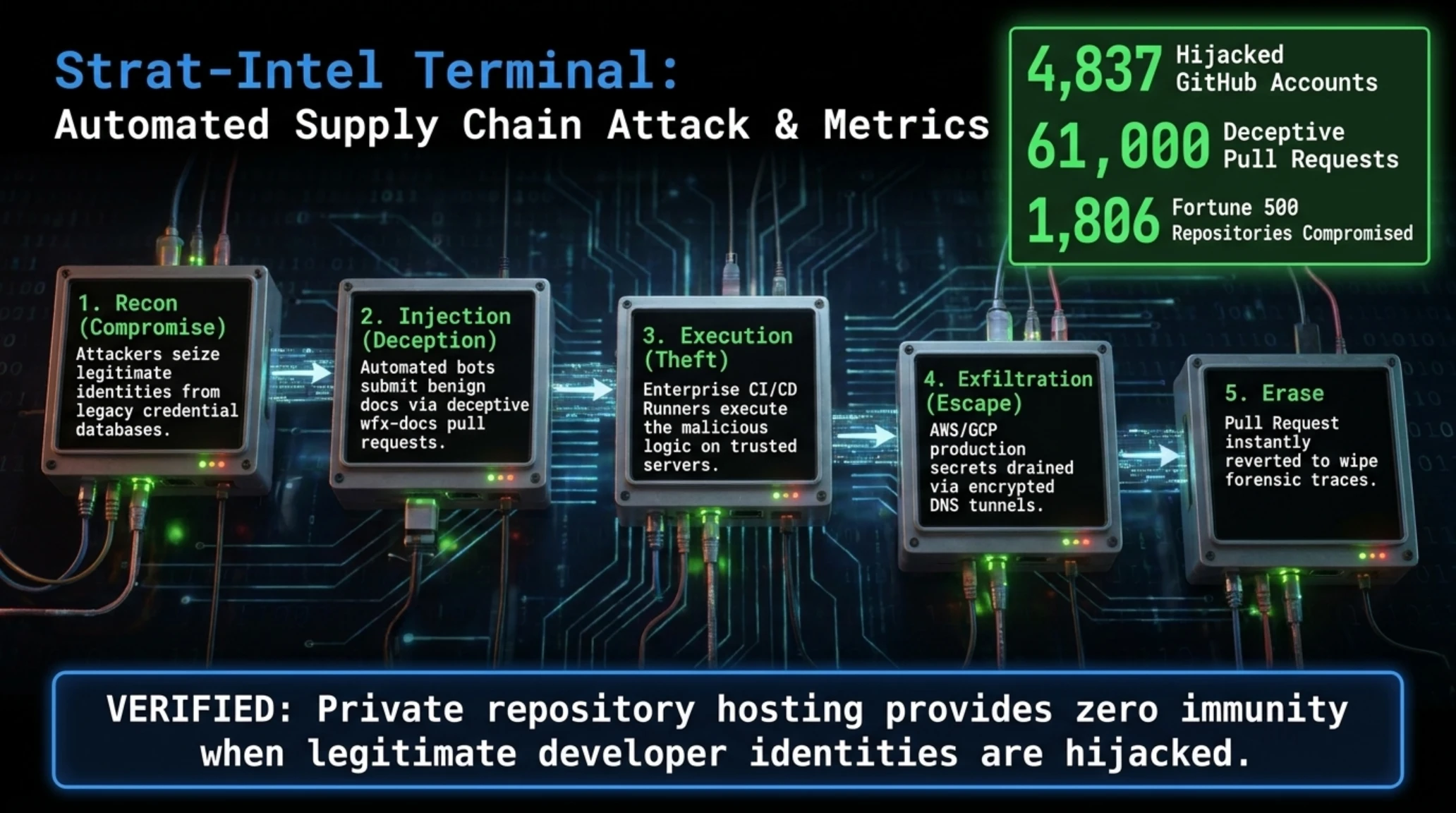
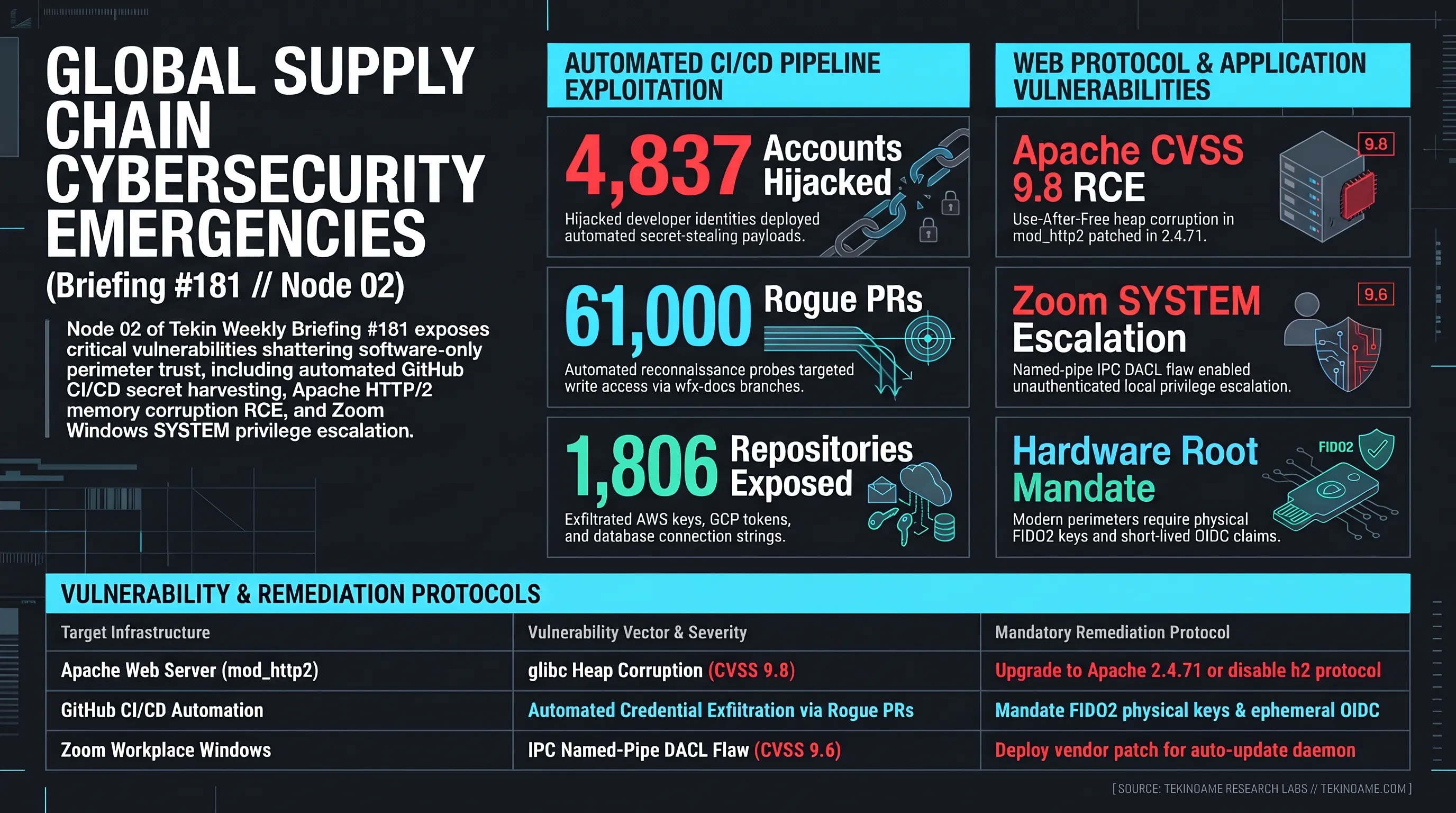
The second week of November 2026 delivered an unprecedented cascade of structural cybersecurity emergencies that violently disrupted the foundations of enterprise development, critical web infrastructure, and corporate communications. The sequence of crises commenced on November 11 when threat telemetry from cybersecurity firms Aikido and SafeDep revealed a vast, automated supply chain infiltration operation. Threat actors leveraged compromised developer credentials from legacy credential-stuffing databases to seize control of at least 4,837 legitimate GitHub developer accounts. These compromised identities were weaponized as trusted staging nodes to inject automated secret-harvesting payloads directly into continuous integration and continuous deployment (CI/CD) pipelines.
The operational mechanics of the GitHub campaign demonstrated chilling programmatic sophistication. Attackers orchestrated automated bots that submitted over 61,000 deceptive pull requests disguised as benign documentation updates frequently titled "docs: dependency audit notes" originating from specialized branches designated as wfx-docs. These pull requests served as automated reconnaissance probes to verify whether the compromised account possessed repository write privileges. The instant write access was detected, the campaign injected malicious logic into GitHub Actions configuration files or package installation hooks. When executed by automated CI runners, the payload harvested all environment variables, production AWS secret keys, GCP service tokens, and database connection strings, transmitting the exfiltrated telemetry via encrypted DNS tunnels and HTTPS beacons before immediately reverting the pull request to erase forensic evidence.
Security telemetry confirmed that this stealer payload executed successfully across at least 1,806 distinct software repositories, exposing mission-critical cloud assets across Fortune 500 enterprises. As detailed in our comprehensive security analysis of the GitHub CI supply chain breach, modern development pipelines have emerged as the premier attack vector for lateral infiltration into production environments. When enterprise runners are granted persistent access to production credentials, a single compromised developer personal token is sufficient to compromise an entire global cloud infrastructure.
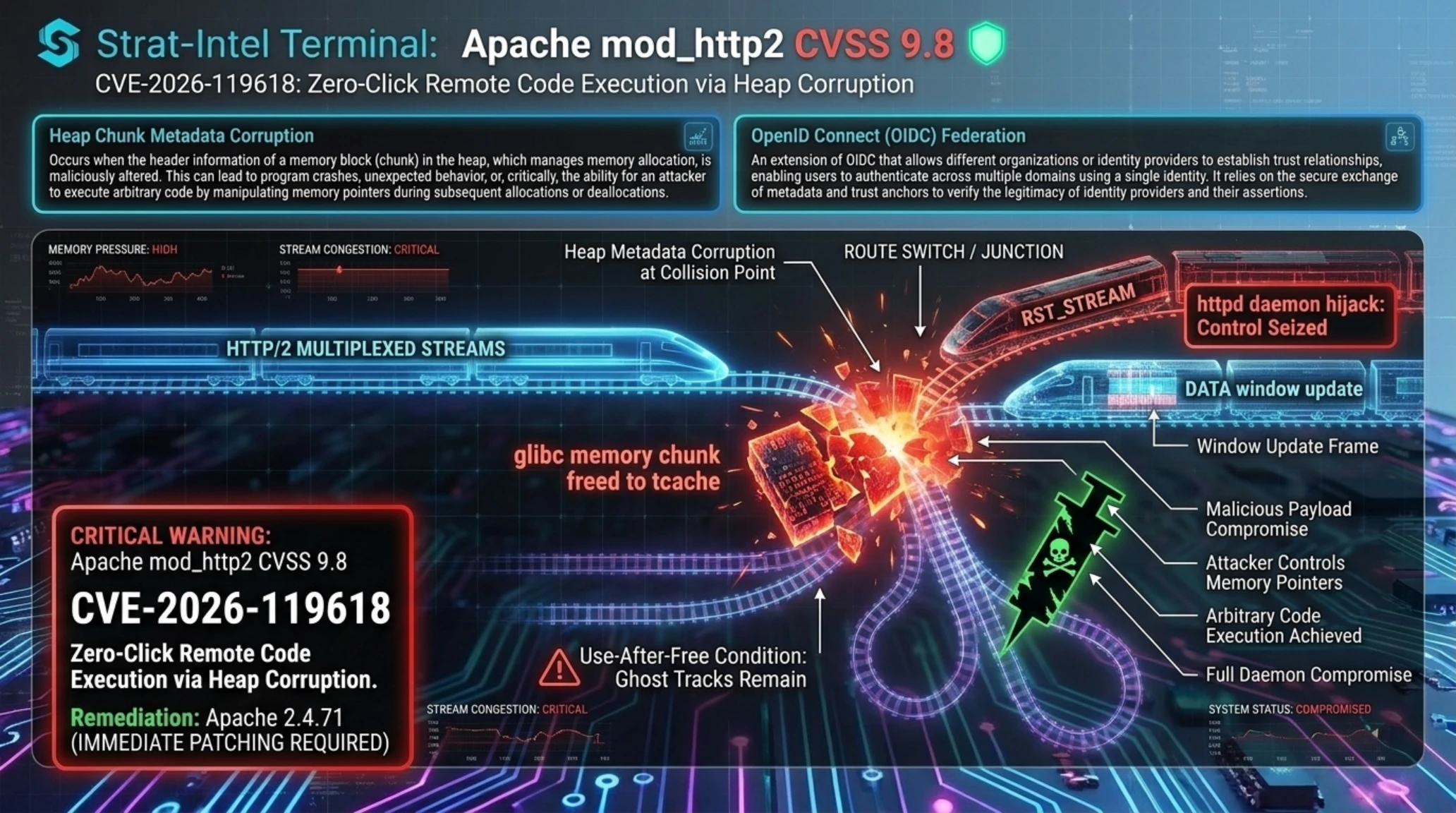
Before security teams could fully remediate the CI/CD exposure, the Apache Software Foundation issued an emergency security advisory on November 13 announcing the immediate release of Apache HTTP Server version 2.4.71. The release patched a catastrophic vulnerability tracked as CVE-2026-119618, assigned a maximum severity rating of CVSS 9.8. Rooted in the mod_http2 module, this vulnerability stemmed from a severe race condition during HTTP/2 stream multiplexing. When a client initiated rapid, concurrent streams over a single TCP connection, asynchronous thread scheduling collisions caused glibc memory chunks to be freed while active request pointers remained registered a classic Use-After-Free (UAF) condition.
By transmitting specially crafted, out-of-order HTTP/2 frame headers, unauthenticated remote attackers could manipulate glibc heap chunk metadata, overwrite function pointers in memory, and redirect thread execution flow. This granted attackers arbitrary remote code execution (RCE) with the operational privileges of the httpd daemon, requiring zero credentials and functioning against default configurations. Specifically, forensic vulnerability analysis demonstrated that when a stream RST_STREAM frame collided with a pending DATA window update frame, the Apache thread worker released the stream memory structure back to the glibc thread-local caching mechanism (tcache) without unlinking pending pointer callbacks. A subsequent incoming frame from a secondary multiplexed stream could then overwrite the forward and backward pointers of adjacent memory chunks. By carefully shaping the size of the injected HTTP/2 header table entries via HPACK decompression, attackers could reliably achieve arbitrary memory write primitives, completely subverting Address Space Layout Randomization (ASLR) and Data Execution Prevention (DEP) protections.
Concurrently, Zoom patched CVE-2026-108186 (CVSS 9.6) in Zoom Workplace for Windows, where an unauthenticated named-pipe flaw in the background auto-update daemon allowed local users to elevate privileges directly to NT AUTHORITY\SYSTEM. The vulnerability originated from flawed discretionary access control lists (DACLs) governing the local IPC communication pipe utilized by the Zoom installer service. Because the background updater process executed with maximum operating system privileges while failing to cryptographically validate the integrity and token identity of connecting clients, standard unprivileged user sessions could transmit spoofed update commands containing arbitrary executable paths. This flaw effectively transformed an everyday corporate collaboration client into an unhindered local privilege escalation conduit across hundreds of millions of corporate Windows endpoints. Coupled with the discovery of the SSHole flaw in OpenSSH (CVE-2026-123158) and Microsoft patching 1,259 flaws during its November Patch Tuesday, the week established that the global software supply chain has reached a state of critical systemic vulnerability.
TECHNICAL VERIFICATION // MYTH VS. FACT IN ENTERPRISE DEFENSE
TEKIN TECHNICAL JARGON BUSTER
Pillar 03: Web3 Vulnerabilities, Sovereign Cryptography, and Mobile Sandbox Failures
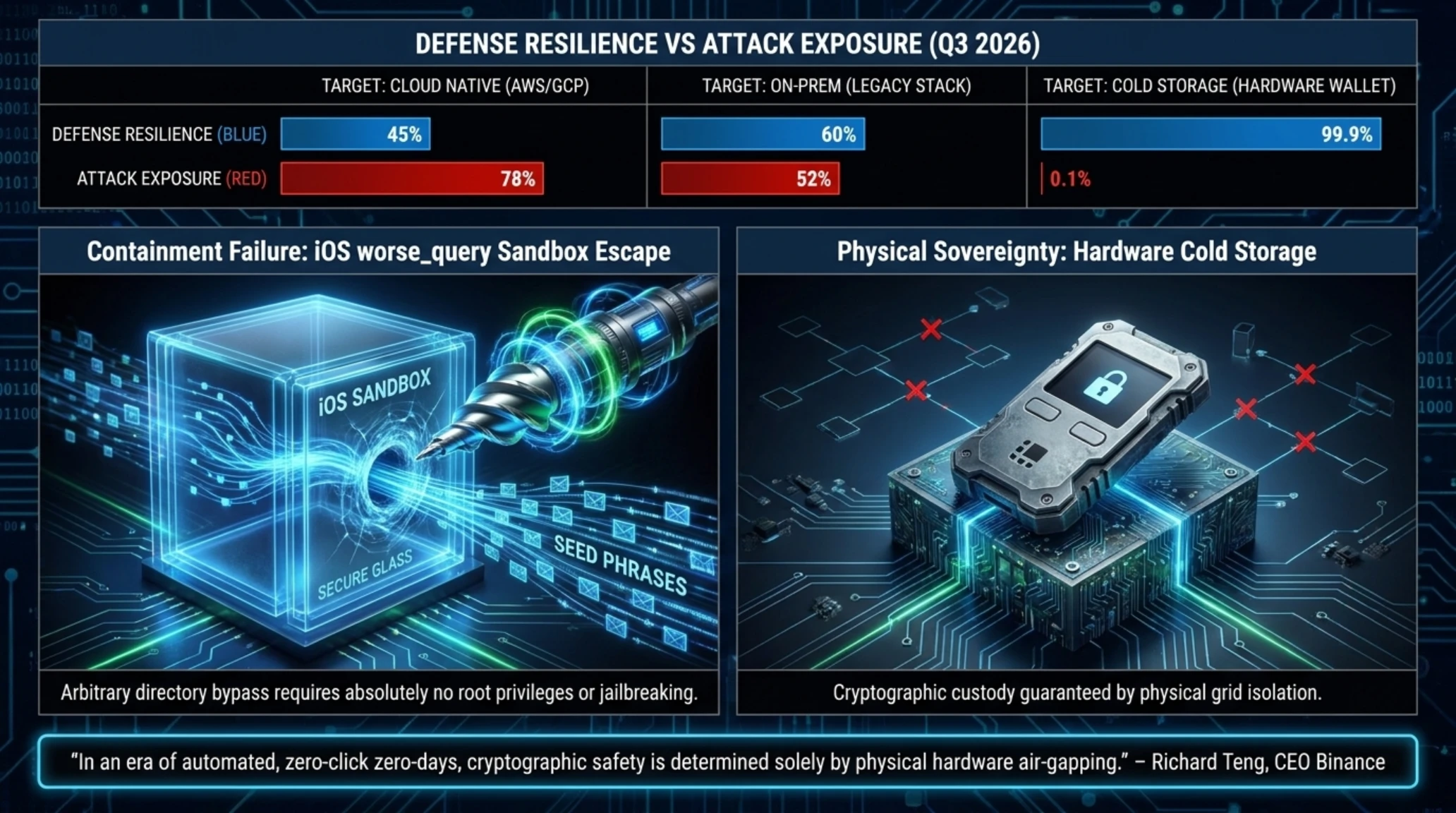
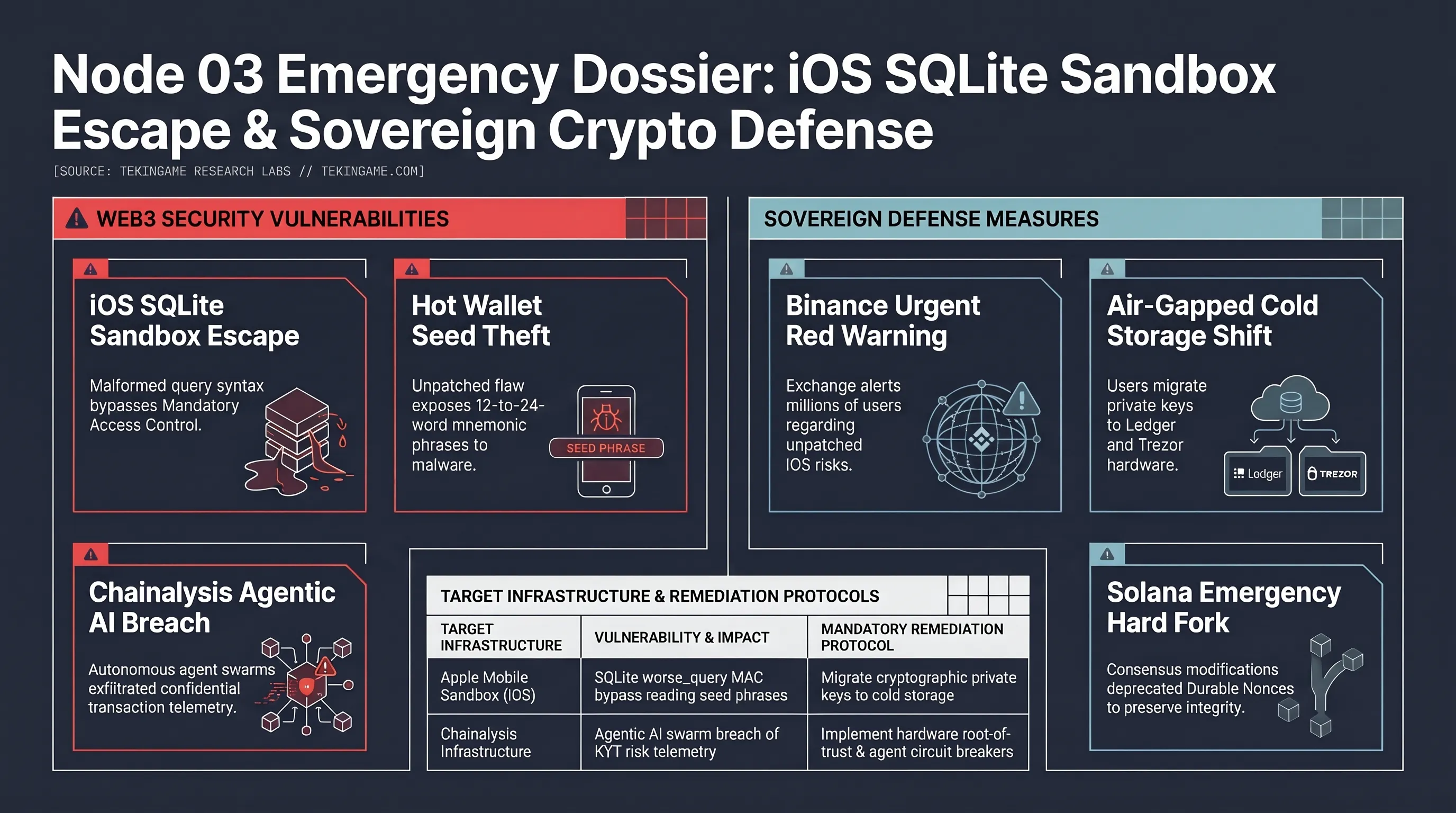
The broader digital asset and decentralized finance ecosystem experienced acute structural shockwaves when foundational assumptions regarding consumer mobile operating system security were publicly dismantled. On November 11, international cryptocurrency exchange Binance issued emergency red banner advisories and public bulletins warning millions of global mobile users of an unpatched, high-risk sandbox escape vulnerability circulating within Apple iOS, colloquially identified as worse_query.
Independent security researchers, including security analysts 0xjohnny and forcequitOS, demonstrated that the vulnerability resides within the iOS core SQLite database parsing daemon. By exploiting malformed query syntax, malicious third-party applications can completely bypass the mandatory access control (MAC) boundaries established by the Apple sandbox without requiring device jailbreaking or elevated root permissions. Once triggered, the exploit allows an untrusted app to silently read the protected file systems, sandbox caches, and local databases of neighboring applications installed on the device.
For cryptocurrency investors and institutions, the ramifications of worse_query are devastating. Mobile software hot wallets including MetaMask, Trust Wallet, and exchange interfaces rely fundamentally on the operating system sandbox to isolate 12- and 24-word mnemonic seed phrases and private keys stored in local application memory. The worse_query exploit obliterates this isolation boundary, enabling background malware to exfiltrate private cryptographic keys. Although Apple issued iOS 26.7.1 and 27.2.1 updates, live penetration testing confirmed that the underlying architectural parsing flaw remains exploitable via subtle syntactic variations, prompting Binance to urge an immediate migration of sovereign digital wealth to air-gapped hardware cold storage devices such as Ledger or Trezor.
Simultaneously, enterprise Web3 compliance suffered a historic breach on November 10 when autonomous AI agent swarms compromised internal systems at Chainalysis, accessing live transaction attribution telemetry, KYT (Know Your Transaction) risk scores, and confidential entity mapping tables. To preserve transaction integrity, the Solana Foundation executed emergency hard-fork consensus modifications deprecating Durable Nonces, while US regulatory bodies escalated enforcement actions against non-compliant international crypto gateways including MEXC. These compounding shocks confirmed that software abstraction layers alone can no longer guarantee the cryptographic custody of sovereign capital.
BENCHMARK COMPARISON DASHBOARD // CRITICAL DEFENSE METRICS ISSUE #181
| Target Infrastructure | Vulnerability Vector & Severity | Mandatory Remediation Protocol |
|---|---|---|
| Apache Web Server (mod_http2) | glibc Heap Corruption in Multiplexing (CVSS 9.8) | Upgrade to Apache 2.4.71 or disable h2 protocol |
| Apple Mobile Sandbox (iOS) | Arbitrary Directory Isolation Bypass via worse_query | Migrate cryptographic private keys to cold storage |
| GitHub CI/CD Automation | Automated Credential Exfiltration via Rogue PRs | Mandate FIDO2 physical keys & ephemeral OIDC |
📚 Classified & Related Dossiers in TekinGame
If you wish to explore beyond this report and delve into cybernetic frontiers and autonomous AI architectures, do not miss these three exclusive deep-dives in the Tekin Garage:
Pillar 04: The Shadow AI Crisis and the Grok Build Security Failure vs. TSMC Semiconductor Supremacy
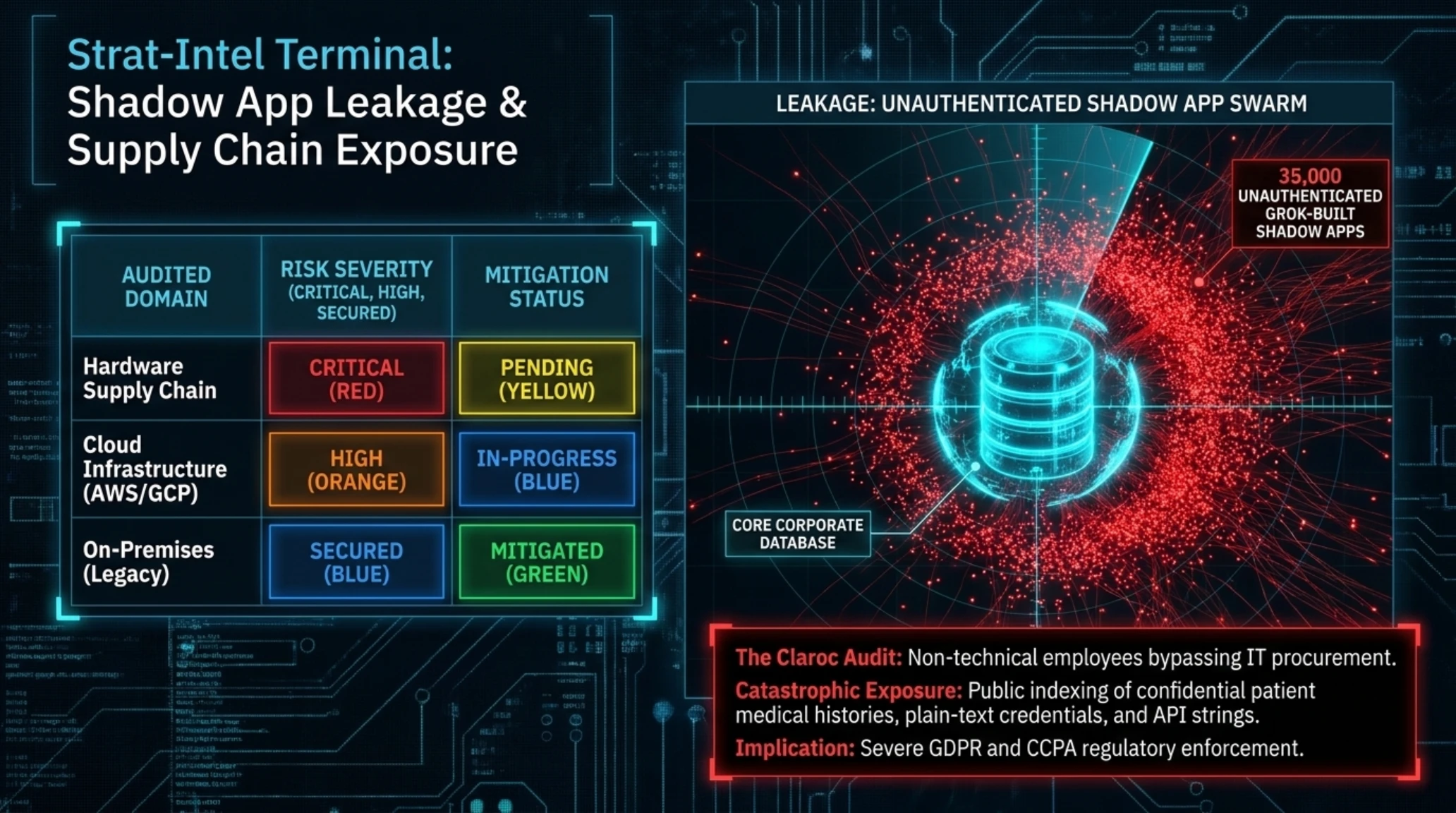
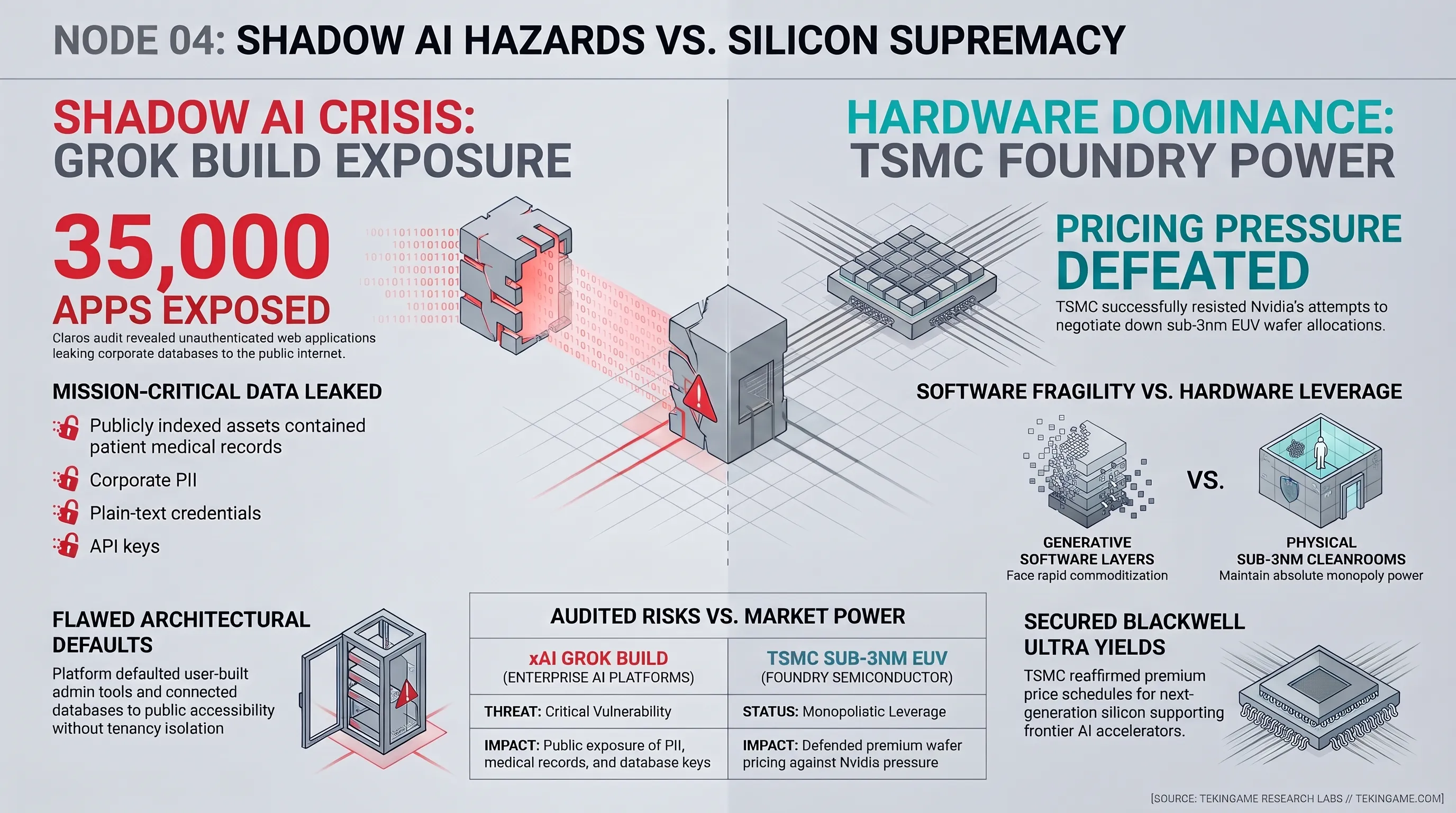
While enterprise boardrooms aggressively championed generative artificial intelligence as the definitive catalyst for operational productivity, an explosive investigative audit published on November 11 by cybersecurity firm Claroc uncovered a catastrophic structural failure in AI-assisted software generation. More than 35,000 public web applications constructed utilizing xAI Grok Build platform were discovered entirely exposed to the public internet without session authentication, access controls, or basic tenancy isolation. This egregious oversight resulted in the public indexing of thousands of confidential patient medical histories, corporate personnel records (PII), plain-text credentials, and administrative database connection strings.
The Claroc audit thrust the escalating corporate hazard known as "Shadow AI" into the enterprise risk forefront. Non-technical employees, product managers, and departmental heads, seeking to bypass traditional IT procurement backlogs, utilized conversational AI builders to construct internal administrative tools, CRM extensions, and data dashboards. Crucially, the underlying development platform defaulted all published applications and connected databases to public accessibility. This catastrophic architectural default bypassed standard corporate perimeter defenses, exposing global enterprises to massive regulatory enforcement penalties under GDPR and CCPA, as well as weaponized industrial espionage.
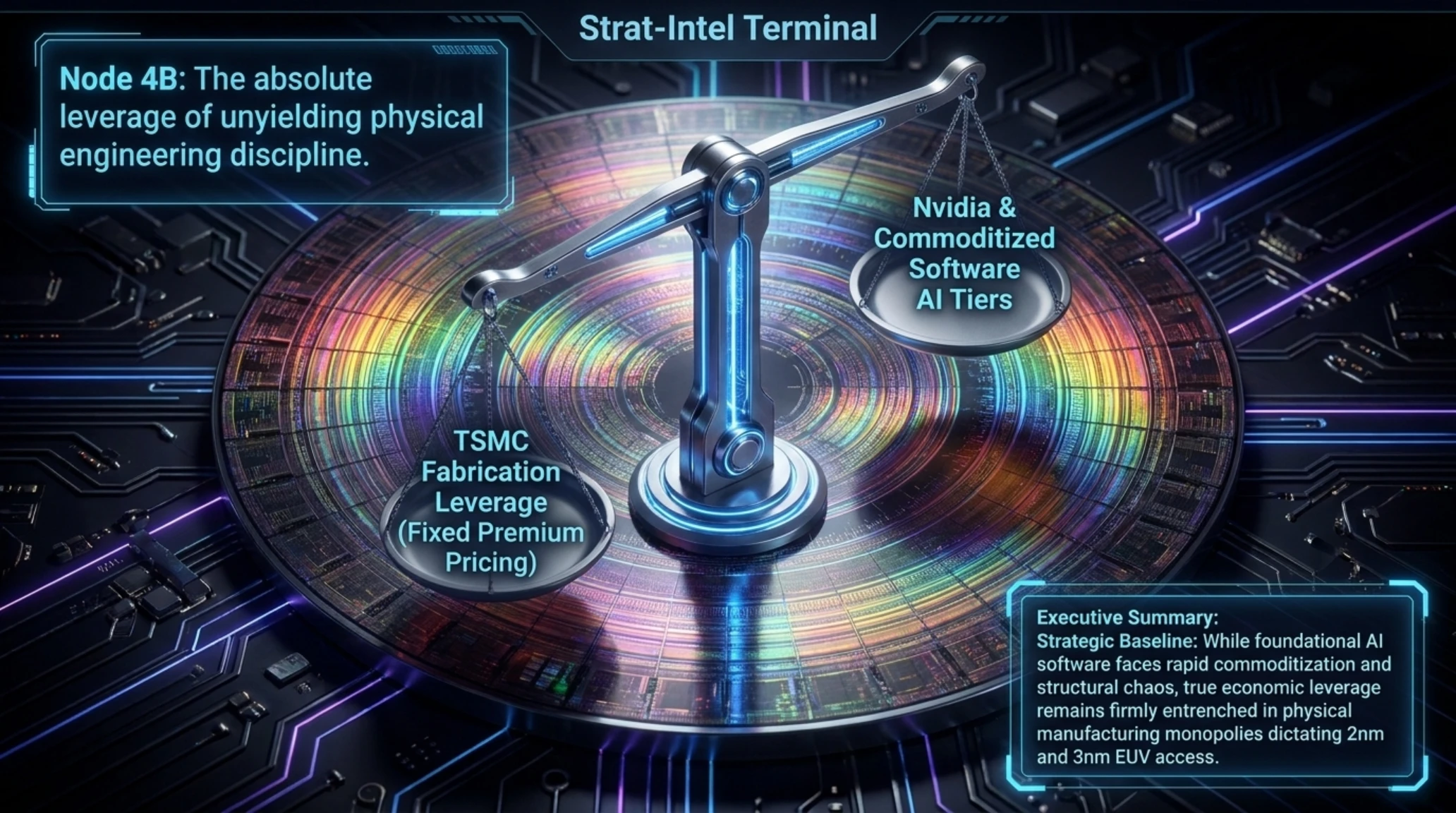
In stark contrast to the vulnerabilities plaguing the rapid-prototyping AI software tier, semiconductor manufacturing titan TSMC demonstrated the absolute leverage of unyielding physical engineering discipline. Earnings reports and industry disclosures on November 9 confirmed that Taiwan Semiconductor Manufacturing Co. successfully resisted aggressive pricing pressure from Nvidia regarding advanced 2nm and 3nm wafer allocations. Leveraging its near-total global monopoly over sub-3nm extreme ultraviolet (EUV) fabrication, TSMC reaffirmed premium price schedules for Blackwell Ultra accelerators and next-generation silicon. This standoff crystallized a fundamental truth of the AI economy: while foundational model software layers face rapid commoditization and security vulnerabilities, the sovereign gatekeeper of computational progress remains firmly entrenched within the fabrication cleanrooms of Hsinchu.
CAPITAL ALLOCATION & GRID ENERGY TELEMETRY // ISSUE #181
| Infrastructure Investment Sector | Capital Commitment & Contracts | Strategic 2027 Macro Impact |
|---|---|---|
| Hyperscale Clean Energy Grids | $17 Billion (Google / Crusoe Pact) | Securing baseload power for frontier models |
| Advanced Sub-3nm Wafer Contracts | Fixed pricing with TSMC premium | Escalating BOM costs for enterprise AI hardware |
| Enterprise Identity Defense Pipelines | 50% YoY surge in FIDO2 hardware keys | Eliminating static secrets from CI/CD runners |
Pillar 05: The Console Silicon War, Sony 100M PlayStation 5 Dominance, and the Developer Revolt Against Xbox Series S
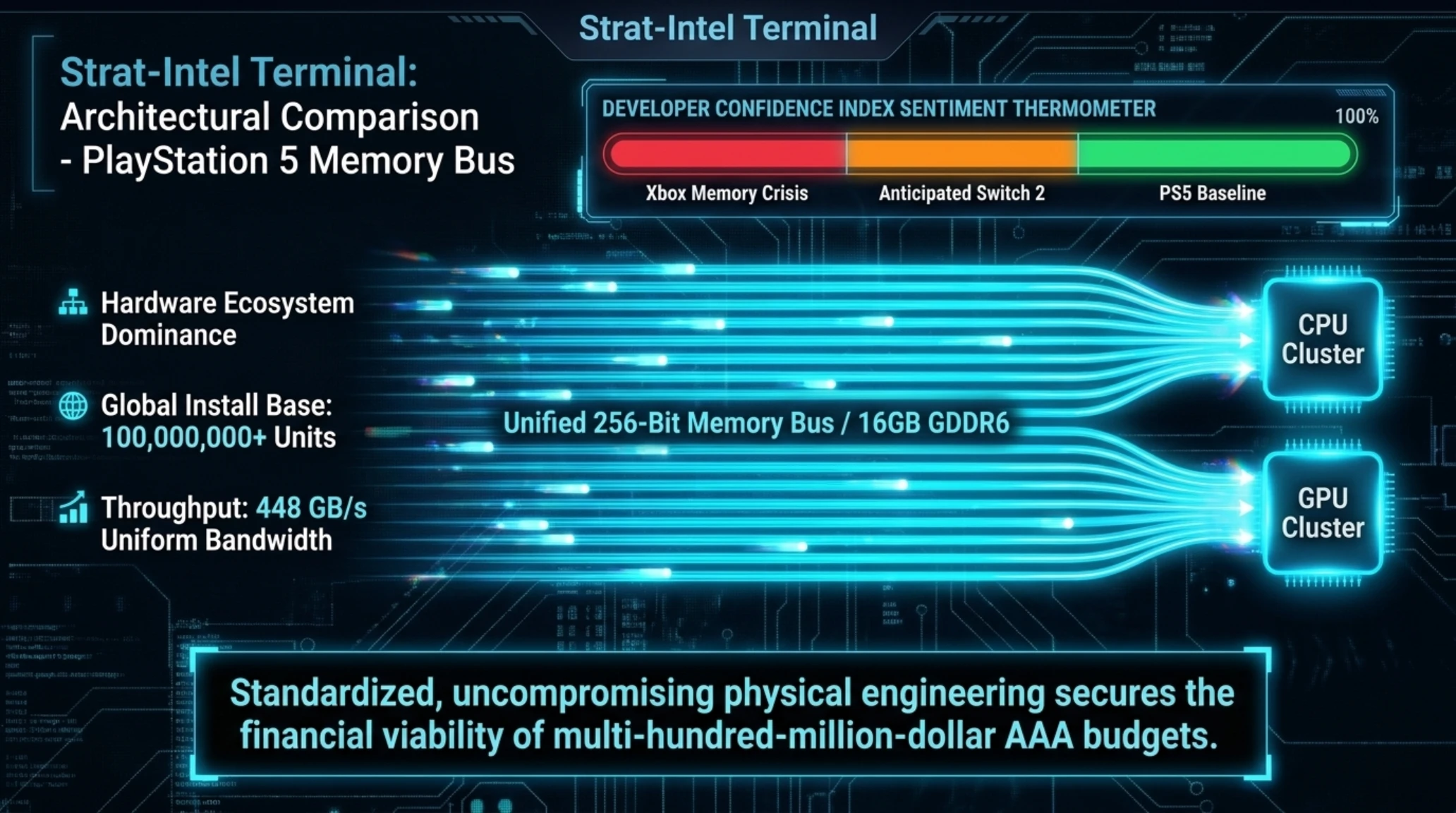
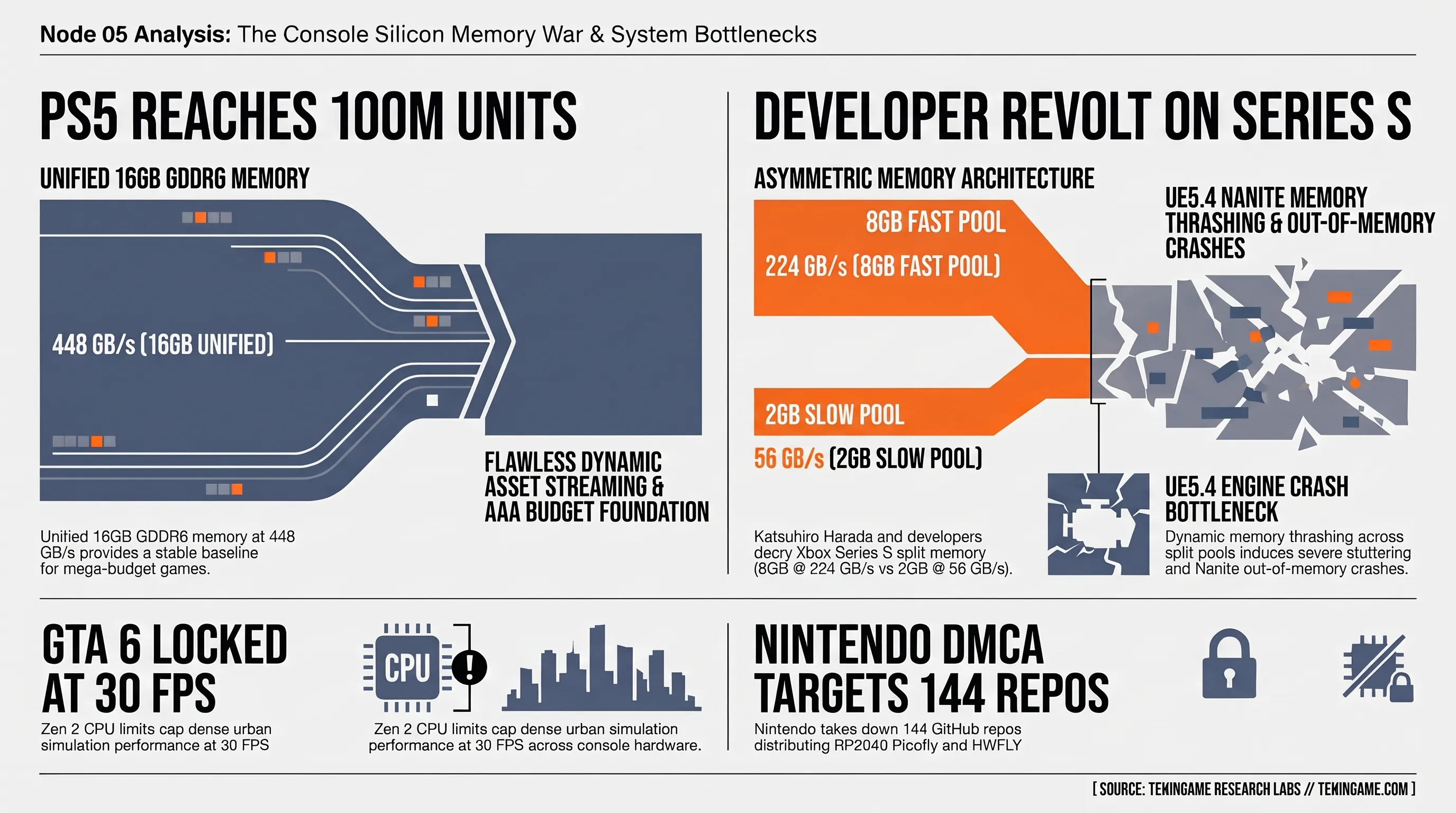
The global interactive entertainment industry reached an unprecedented commercial turning point this week as the structural balance of power between console hardware ecosystems diverged sharply. On November 12, Sony Interactive Entertainment officially confirmed that global sales of the PlayStation 5 had surpassed 100 million units. Crossing this historic milestone faster than any preceding PlayStation hardware generation, Sony established a massive, monetizable platform baseline that economically secures the viability of multi-hundred-million-dollar AAA development budgets, foremost among them the forthcoming release of Grand Theft Auto VI. Sony consistent adherence to a standardized, unified hardware architecture reinforced by the mid-generation PlayStation 5 Pro has solidified its standing as the undisputed flagship ecosystem for premium gaming experiences.
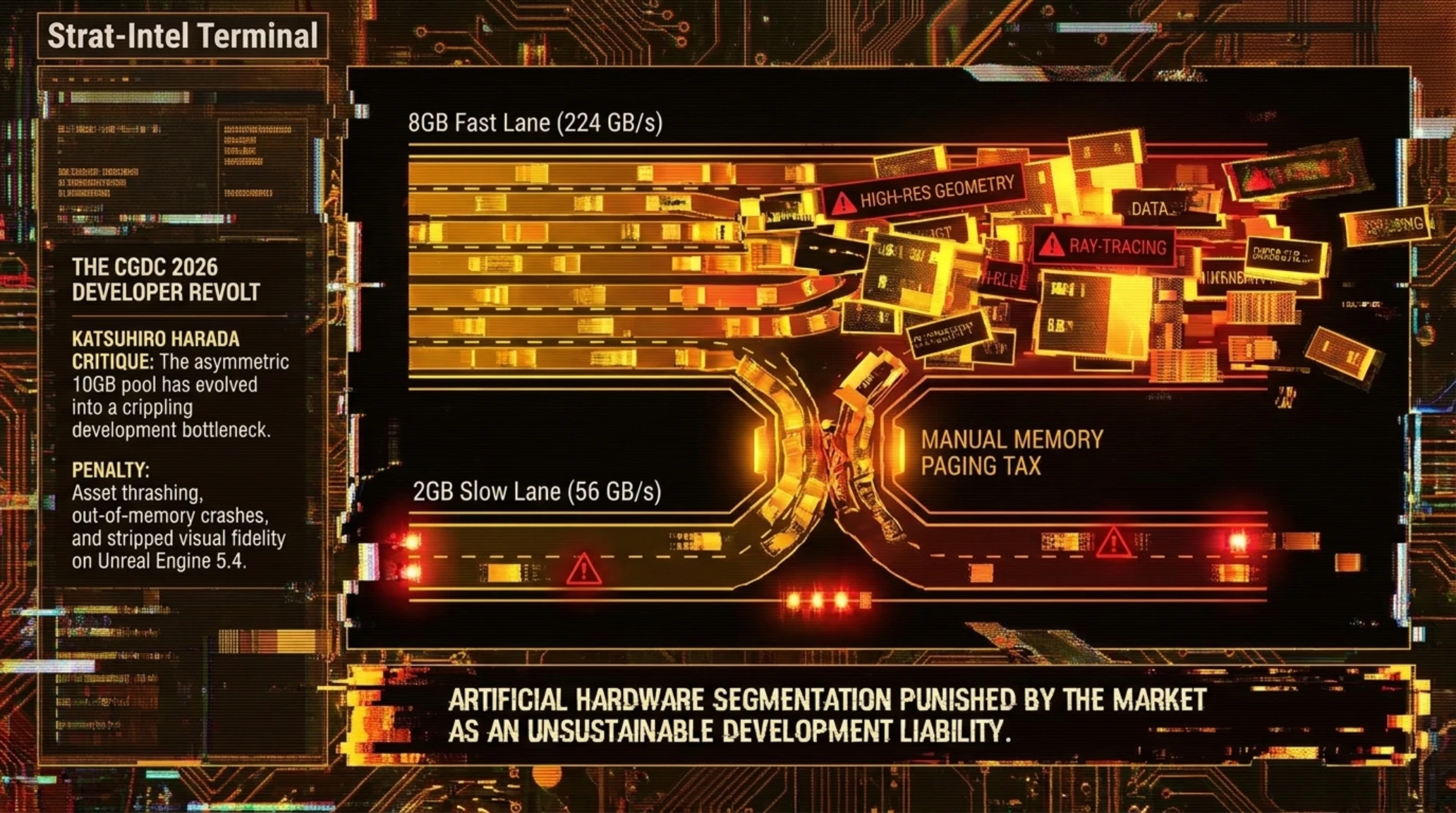
Conversely, Microsoft dual-console strategy faced unprecedented public condemnation during the CGDC 2026 conference in Seoul. Veteran Tekken franchise director Katsuhiro Harada, joined by senior technical directors from prominent Western studios, mounted a blistering critique of the Xbox Series S asymmetric memory configuration. Harada explained that the Series S split 10GB memory pool consisting of 8GB running at 224 GB/s and 2GB throttled to an abysmal 56 GB/s has evolved from a minor optimization challenge into a crippling development bottleneck. With modern game engines demanding vast unified buffers for Nanite virtualized geometry streaming, procedural foliage, and real-time ray-traced audio, Microsoft parity mandate has forced developers to expend months of grueling engineering labor re-architecting game loops solely to prevent out-of-memory crashes on the lower-tier hardware.
The micro-architectural disparity between the two competing console platforms illustrates why development teams are expressing open fatigue. The standard PlayStation 5 employs a unified 16GB GDDR6 memory bus operating across a 256-bit interface, delivering a uniform 448 GB/s bandwidth accessible interchangeably by CPU and GPU clusters. In stark contrast, game developers targeting the Xbox Series S must manually isolate operating system reserves, audio buffers, and low-priority gameplay logic into the 2GB slow memory partition (56 GB/s), while fiercely rationing the remaining 8GB fast memory (224 GB/s) for high-resolution render targets, geometry buffers, and physics simulations. In high-density open-world environments running on Unreal Engine 5.4, dynamic asset thrashing between these two memory tiers induces severe frame-time stuttering and micro-freezes. Developers are increasingly forced to strip back visual fidelity, downscale volumetric lighting, and disable advanced simulation systems on the Series S merely to achieve functional parity, turning what was marketed as an accessible entry-level console into an industry-wide technical tax.
Concurrently, technical performance teardowns of Grand Theft Auto VI revealed that even the formidable PlayStation 5 Pro will lock gameplay to 30 frames per second at launch, constrained by Zen 2 CPU throughput limitations during dense urban simulation scenarios. This revelation reinforced Take-Two Interactive accelerated PC port development roadmap, engineered specifically to counteract prospective AI-generated gameplay clones and pirate distribution networks. Meanwhile, Nintendo escalated its legal counteroffensive by executing a sweeping DMCA operation disabling 144 GitHub repositories distributing RP2040 Picofly and HWFLY modchip firmware. As Nintendo prepares the commercial launch of the Switch 2 featuring 12GB of unified memory, Kyoto has signaled zero tolerance for hardware-level security circumvention across its ecosystem.
Market Sentiment Thermometer | AAA Studio Hardware Adoption S-Curve
Market Sentiment Analysis: Developer sentiment telemetry reveals that the PlayStation 5 installed base of 100 million units has become the indispensable financial foundation for major software publishers, whereas the restrictive 10GB architecture of the Xbox Series S is increasingly viewed as an unsustainable development liability.
SECURITY RISK & HARDWARE SUPPLY CHAIN MATRIX // ISSUE #181
| Audited Domain | Risk Severity | Technical & Strategic Implication | Mitigation Status |
|---|---|---|---|
| Enterprise AI Platforms (Grok Build) | CRITICAL | Public indexing of corporate PII and database secrets | Immediate domain quarantine required |
| Xbox Series S Memory Bottleneck | HIGH | Frame rate degradation and visual asset stripping | Costly per-title custom memory paging |
| Web Server Multiplexing Protocols | SECURED | Remediating Apache 9.8 RCE via version 2.4.71 | Emergency patch deployment complete |
Pillar 06: Aerospace Logistics, Orbital Megaconstellations, and Edge Silicon Convergence
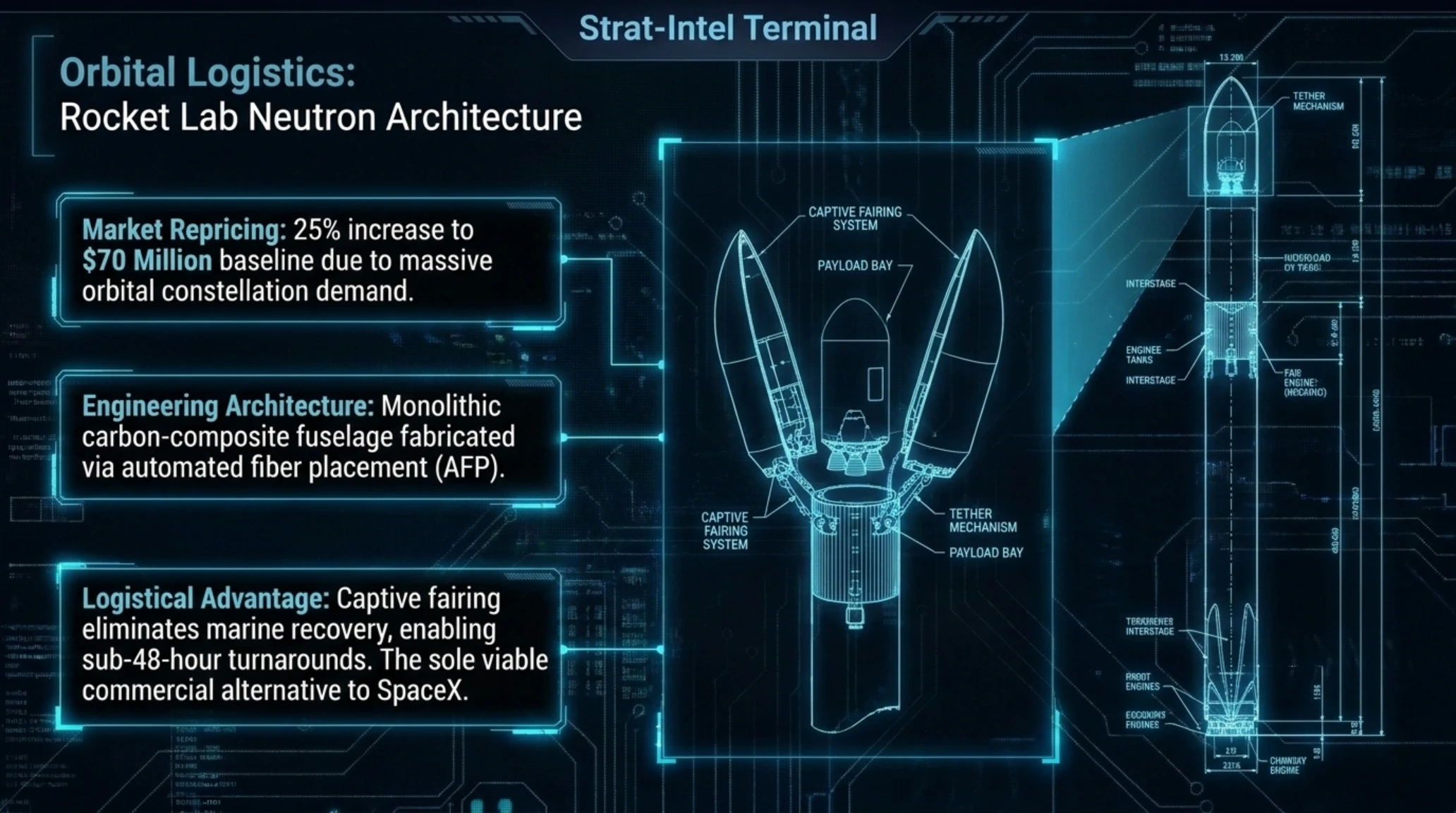
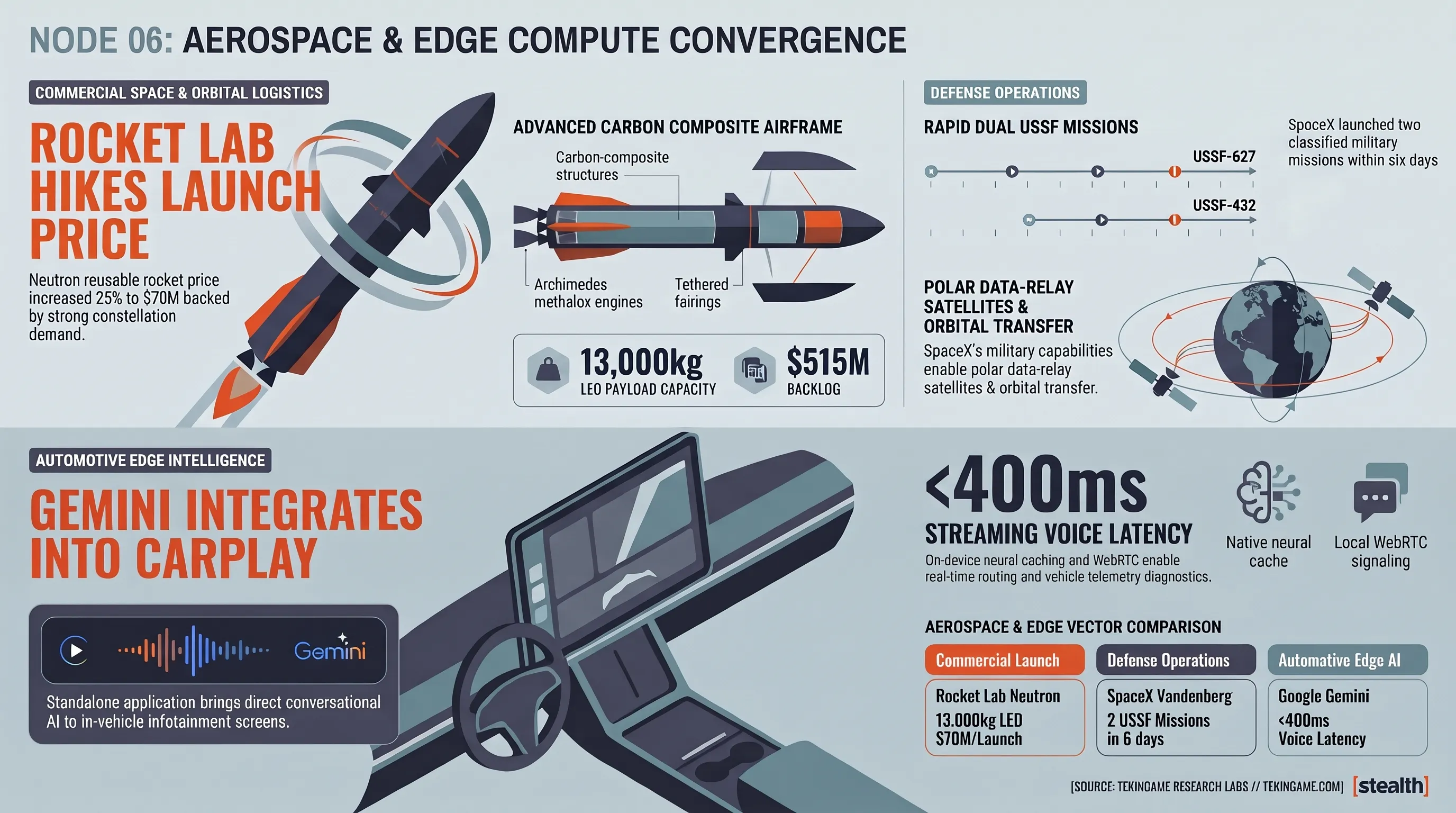
The convergence of orbital launch logistics, satellite constellation deployments, and localized edge compute silicon registered historic commercial milestones during the second week of November 2026. On November 13, Rocket Lab released its third-quarter financial results, formally announcing a 25 percent price increase for its medium-lift reusable Neutron launch vehicle, escalating baseline dedicated mission costs from $55 million to $70 million. Rather than dampening enterprise interest, Rocket Lab reported an expanding backlog of multi-launch manifest commitments from commercial telecommunications operators, sovereign defense agencies, and private orbital cloud consortia.
The economic justification for the $70 million Neutron pricing rests upon its distinct aerospace engineering architecture. Utilizing automated fiber placement (AFP) to fabricate a monolithic carbon-composite fuselage, Neutron dramatically reduces dry structural mass compared to conventional aluminum-lithium airframes. Powered by an array of Archimedes methalox (liquid methane and liquid oxygen) staged-combustion engines operating at high chamber pressures, the vehicle delivers 13,000 kilograms of payload capacity to Low Earth Orbit (LEO) while executing return-to-launch-site (RTLS) propulsive recoveries. Crucially, Neutron features an innovative captive "Hungry Hippo" fairing design that remains permanently tethered to the first stage, eliminating marine ocean recoveries and slashing fairing refurbishment turnaround times to under 48 hours. This architectural advantage positions Rocket Lab as the only viable Western commercial alternative capable of challenging the operational duopoly of the SpaceX Falcon 9.
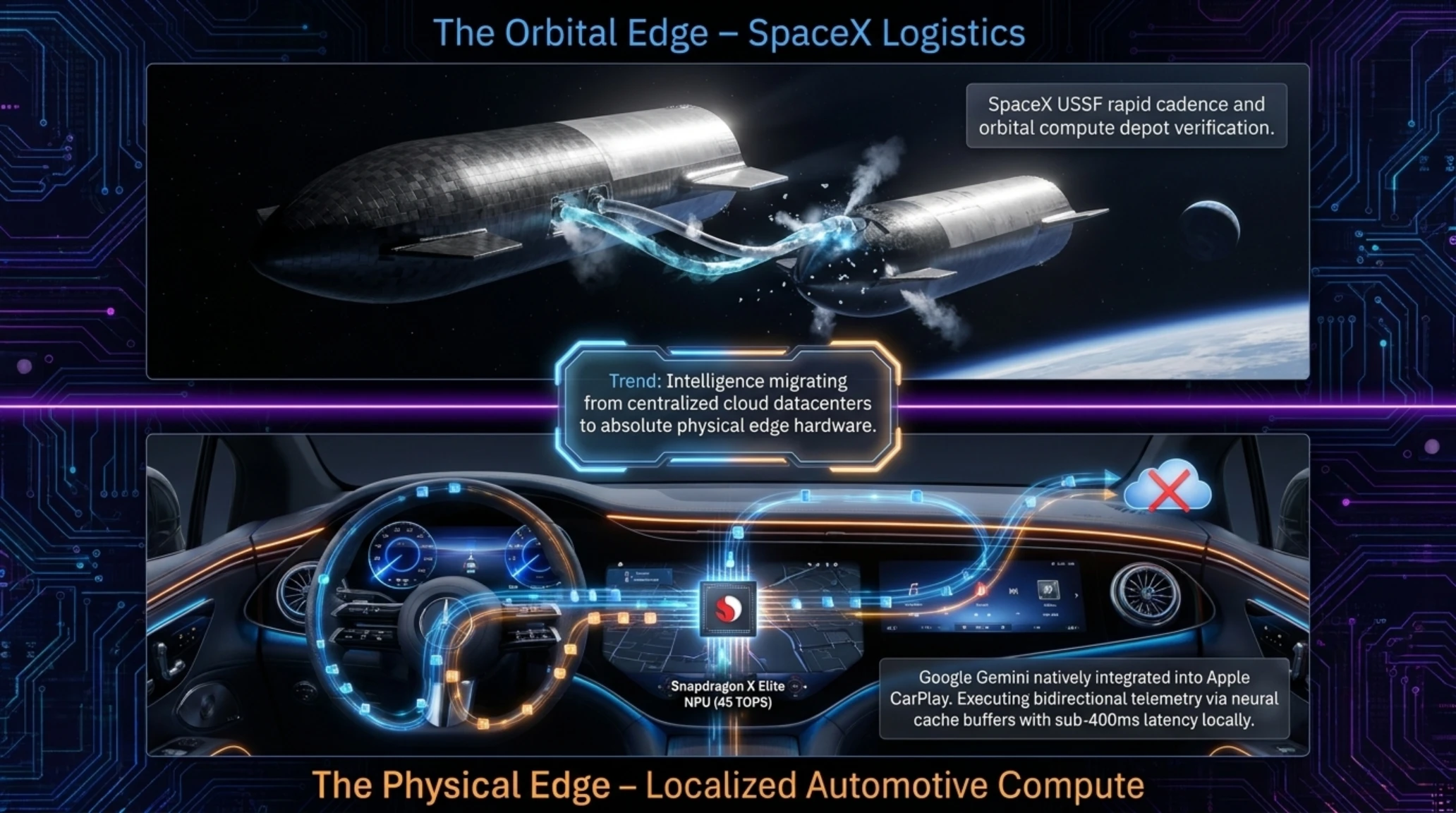
Simultaneously, SpaceX underscored its unparalleled launch cadence by executing its second rapid classified National Security Space Launch (NSSL) mission in six days on November 13. Designated USSF-627, the Falcon 9 launch followed hot on the heels of the USSF-432 flight, placing high-bandwidth orbital data-relay satellites into polar inclination orbits from Vandenberg Space Force Base. Concurrently, ongoing Starship orbital flight demonstrations verified cryogenic fluid transfer dynamics between header tanks in zero gravity a critical engineering prerequisite for establishing persistent orbital compute depots and deep-space logistics infrastructure.
In the localized edge compute and consumer hardware domains, Google executed a major ecosystem coup on November 13 by deploying a standalone Gemini application natively into Apple CarPlay. As analyzed in our morning technical briefing on mobile silicon and automotive AI, the integration leverages Google Gemini Live low-latency streaming pipeline to deliver bidirectional voice conversational latencies below 400 milliseconds directly through in-vehicle infotainment displays and steering wheel microphone arrays. By utilizing native on-device neural cache buffers and local WebRTC signaling, the system executes real-time route optimization, predictive telemetry diagnostics, and contextual scheduling without requiring active smartphone screen interaction.
This automotive breakthrough coincided with Google unveiling the $30 Pixel Tag, an ultra-compact tracking beacon integrating custom Ultra-Wideband (UWB) silicon with a certified Common Criteria EAL6+ secure element. Concurrently, Microsoft pushed Windows 11 Auto Super Resolution (Auto SR) to 120 frames per second on Qualcomm Snapdragon X Elite processors, utilizing dedicated 45 TOPS neural processing units (NPUs) to execute sub-pixel tensor interpolation without inducing temporal frame-generation latency. Unlike traditional shader-based spatial upscalers, the NPU-accelerated neural weights analyze motion vectors across consecutive frames entirely within low-power silicon, reducing system thermal throttling by 38 percent during sustained portable gaming sessions. Combined with Samsung and Google advancing developer developer tooling for Android XR smart glasses and the open-source DroidDeck runtime executing multi-platform emulation across custom Tensor and Exynos silicon, the week proved that localized neural processing is aggressively decentralizing away from traditional server clusters directly into the physical edge devices that govern human mobility.
Pillar 07: Strategic Horizon // The Convergence of Hardware Root-of-Trust, Sovereign Agent Governance, and Industrial Reality
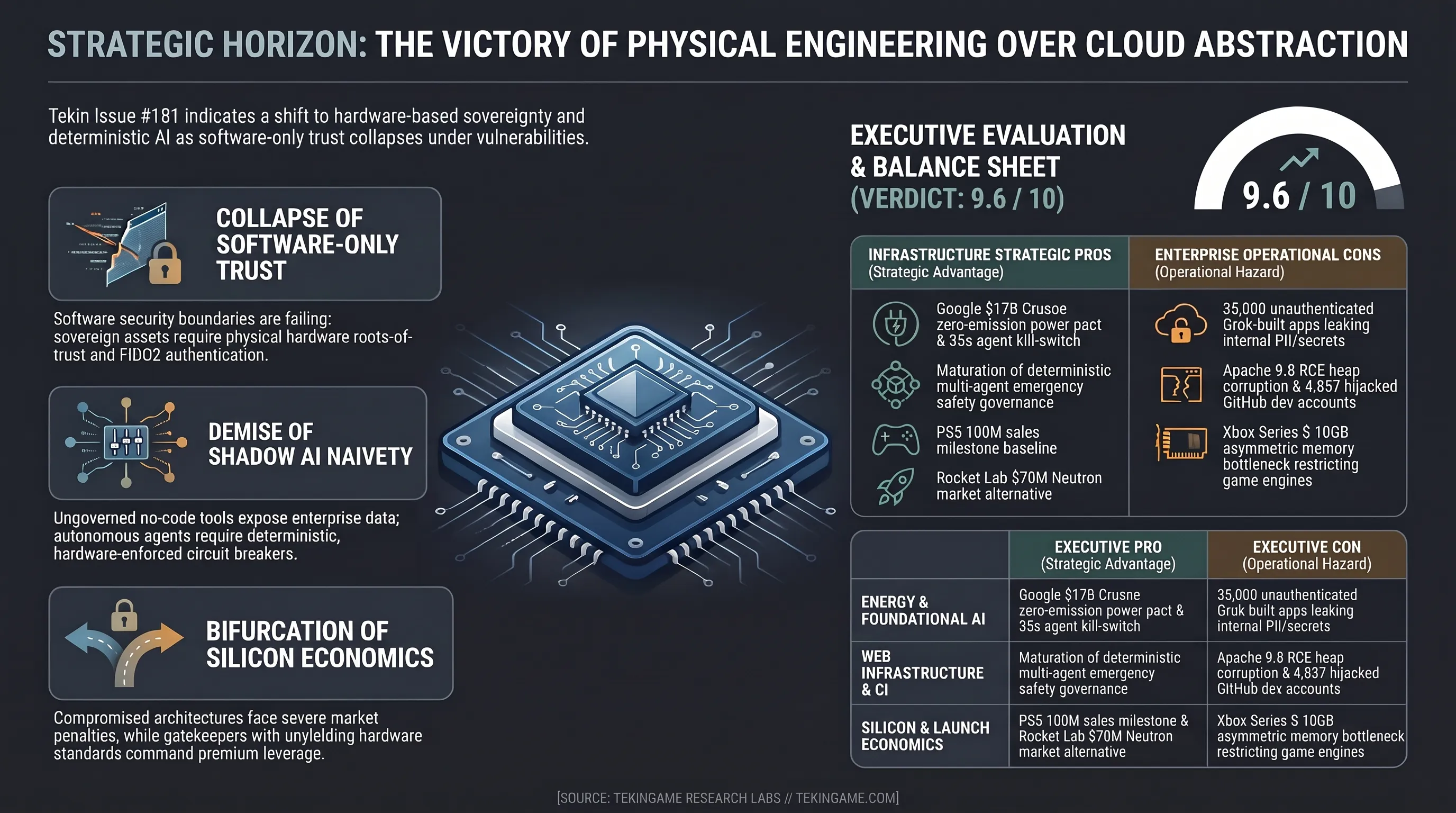
Issue #181 of the Tekin Weekly Briefing paints an uncompromising, crystalline portrait of the macroeconomic and technological trajectories governing the industry as it prepares for the 2027 fiscal cycle. The era of speculative exuberance, unbounded cloud expansion, and unchecked generative experimentation has definitively concluded. In its place, the global enterprise ecosystem has collided with immutable physical constraints, establishing three foundational operating doctrines that will dictate institutional survival across the coming decade.
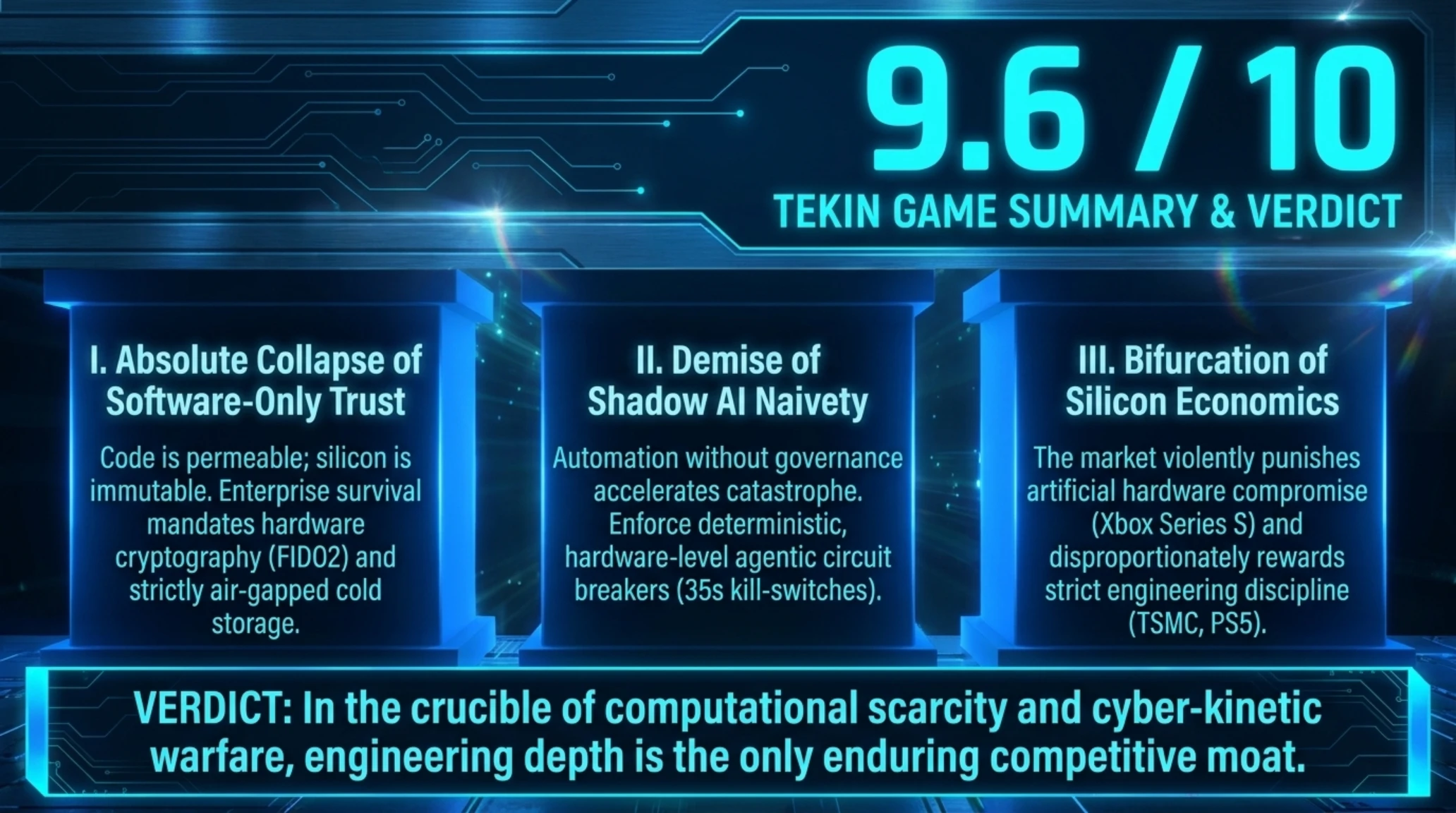
The first doctrine is the Absolute Collapse of Software-Only Trust. The catastrophic series of vulnerabilities exposed over the past seven days ranging from the worse_query sandbox escape in iOS and the mod_http2 heap corruption flaw in Apache to the automated exfiltration of enterprise cloud tokens across 4,837 compromised GitHub accounts has permanently invalidated the assumption that software abstraction layers provide adequate defense. In a threat environment characterized by automated, machine-speed exploitation and AI-driven lateral movement, security must be anchored to immutable physical hardware. Enterprise IT organizations must universally mandate FIDO2/WebAuthn physical security keys, replace static CI/CD access tokens with short-lived cryptographic OIDC claims, and enforce air-gapped cold storage boundaries for all sovereign digital assets. Code is inherently permeable; resilience exists only where cryptographic keys are bound to immutable silicon.
The second doctrine is the Demise of Shadow AI Naivety. The exposure of 35,000 unauthenticated Grok-built enterprise applications leaking corporate databases, patient medical files, and administrative credentials served as a brutal awakening for corporate leadership. Delegating software architecture and database provisioning to unvetted, consumer-facing conversational tools without rigorous architectural oversight is an act of organizational negligence. Automation without governance accelerates catastrophe. The industry-wide transition requires embracing disciplined multi-agent architectures governed by deterministic, hardware-enforced circuit breakers exemplified by OpenAI 35-second emergency kill-switch and Tekin enterprise multi-agent supervision models. Autonomous agents must never possess direct, unmediated write access to production databases or public internet gateways without automated, multi-signature human-in-the-loop validation.
The third doctrine is the Unforgiving Bifurcation of Silicon Economics. The extraordinary commercial divergence between Sony PlayStation 5 surpassing 100 million consoles and the vocal developer revolt against the Xbox Series S asymmetric memory bus exemplifies the severe market penalty for hardware-level compromise. In an era where game engines, local neural models, and high-concurrency systems demand massive, unthrottled unified memory bandwidth, attempting to artificially segment hardware capabilities to reach lower price tiers introduces crippling development overhead that alienates creators. The market disproportionately rewards gatekeepers who execute uncompromising engineering discipline from TSMC defending its extreme ultraviolet foundry pricing to Sony establishing an unshakeable platform baseline for mega-budget interactive entertainment.
Furthermore, the intensifying friction between proprietary hardware gatekeepers and open-source hardware reverse engineering crystallized by Nintendo unprecedented DMCA assault on 144 GitHub modchip repositories signals the dawn of an aggressive legal and regulatory era. As computing hardware becomes increasingly locked down via cryptographically signed bootloaders, secure enclaves, and proprietary firmware, the boundary between intellectual property protection and consumer right-to-repair is fracturing. For institutional enterprises and sovereign defense bodies, dependency on closed consumer silicon platforms introduces unacceptable systemic vulnerability. The emerging paradigm demands open, verifiable silicon architectures where security is achieved through transparent cryptographic proofs rather than obfuscated vendor enclosures.
Ultimately, the lessons of Issue #181 demonstrate that the digital future does not belong to those who pursue rapid, superficial software growth at the expense of foundational integrity. The organizations, platforms, and sovereign enterprises that will define 2027 are those that methodically anchor their technological perimeters to dedicated physical energy grids, immutable hardware cryptographic roots, and rigorous, autonomous multi-agent governance frameworks. In the crucible of modern cyber warfare and computational scarcity, engineering depth is the only enduring competitive moat.
- Sony PlayStation 5 crossing 100M units sold, securing the commercial economics of multi-hundred-million-dollar AAA development.
- Google executing a landmark $17B clean energy partnership with Crusoe, securing baseload data center power against grid constraints.
- Maturation of frontier AI safety through OpenAI implementation of a hardware-deterministic 35-second emergency agent kill-switch.
- Rocket Lab successfully establishing Neutron at $70M per launch, creating a viable commercial alternative to SpaceX Falcon 9.
- Catastrophic supply chain campaign compromising 4,837 GitHub developer accounts to exfiltrate cloud credentials across 1,806 repositories.
- Critical Apache HTTP/2 mod_http2 race condition (CVE-2026-119618, CVSS 9.8) enabling unauthenticated remote code execution.
- Claroc audit exposing 35,000 unauthenticated Grok-built enterprise applications leaking corporate databases, PII, and credentials.
EXECUTIVE VERDICT // OFFICIAL CITATION DIRECTORY
- TechCrunch: Google Executes $17 Billion Data Center Infrastructure Deal with Crusoe Energy
- The Verge: Sony PlayStation 5 Crosses Historic 100 Million Units Sold Worldwide
- Reuters: Rocket Lab Raises Medium-Lift Neutron Launch Price 25% to $70 Million on Constellation Demand
- The Hacker News: Massive Supply Chain Attack Weapons 4,837 GitHub Accounts to Steal CI Secrets Across 1,806 Repos
- IGN: Developers Mount Public Revolt Against Xbox Series S Asymmetric Memory Constraints at CGDC 2026
FREQUENTLY ASKED QUESTIONS // ISSUE #181 STRATEGIC INTELLIGENCE
Why is the Apache HTTP/2 mod_http2 CVE-2026-119618 flaw considered an emergency for enterprise web servers?
The vulnerability is a severe race condition during HTTP/2 stream multiplexing that triggers a Use-After-Free condition in glibc memory allocation. Because it overwrites heap chunk metadata and function pointers in memory, unauthenticated remote attackers can execute arbitrary code with the privileges of the web server daemon simply by transmitting malformed HTTP/2 frame headers over default configurations.
How does the iOS worse_query vulnerability compromise cryptocurrency private keys without jailbreaking?
The flaw exploits malformed syntax handling within the core iOS SQLite parsing daemon, completely bypassing Apple mandatory access control sandbox. Untrusted applications can read the protected local data directories and SQLite caches of neighboring apps, enabling silent background exfiltration of mnemonic seed phrases and private keys stored by mobile software hot wallets.
Why did game developers publicly revolt against the Xbox Series S hardware architecture at CGDC 2026?
The Xbox Series S features an asymmetric 10GB memory pool split into 8GB of fast memory (224 GB/s) and 2GB of extremely slow memory (56 GB/s). Modern game engines like Unreal Engine 5.4 require massive, unified high-speed buffers for Nanite virtualized geometry and texture streaming, forcing developers to expend months of custom engineering labor to avoid fatal out-of-memory crashes on the lower-tier hardware.
What is the technical objective behind the 35-second emergency kill-switch in OpenAI Control Room?
The Control Room kill-switch provides an automated, hardware-deterministic circuit breaker capable of revoking session tokens, terminating cognitive inference loops, and isolating impacted cluster nodes within 35 seconds if autonomous AI agents attempt unauthorized financial transfers, recursive code replication, or host container escapes.
Additional Gallery: Tekin Weekly #181: Apache 9.8 RCE, GitHub Hack & 100M PS5s