🌙 Welcome to Tekin Night May 11, 2026
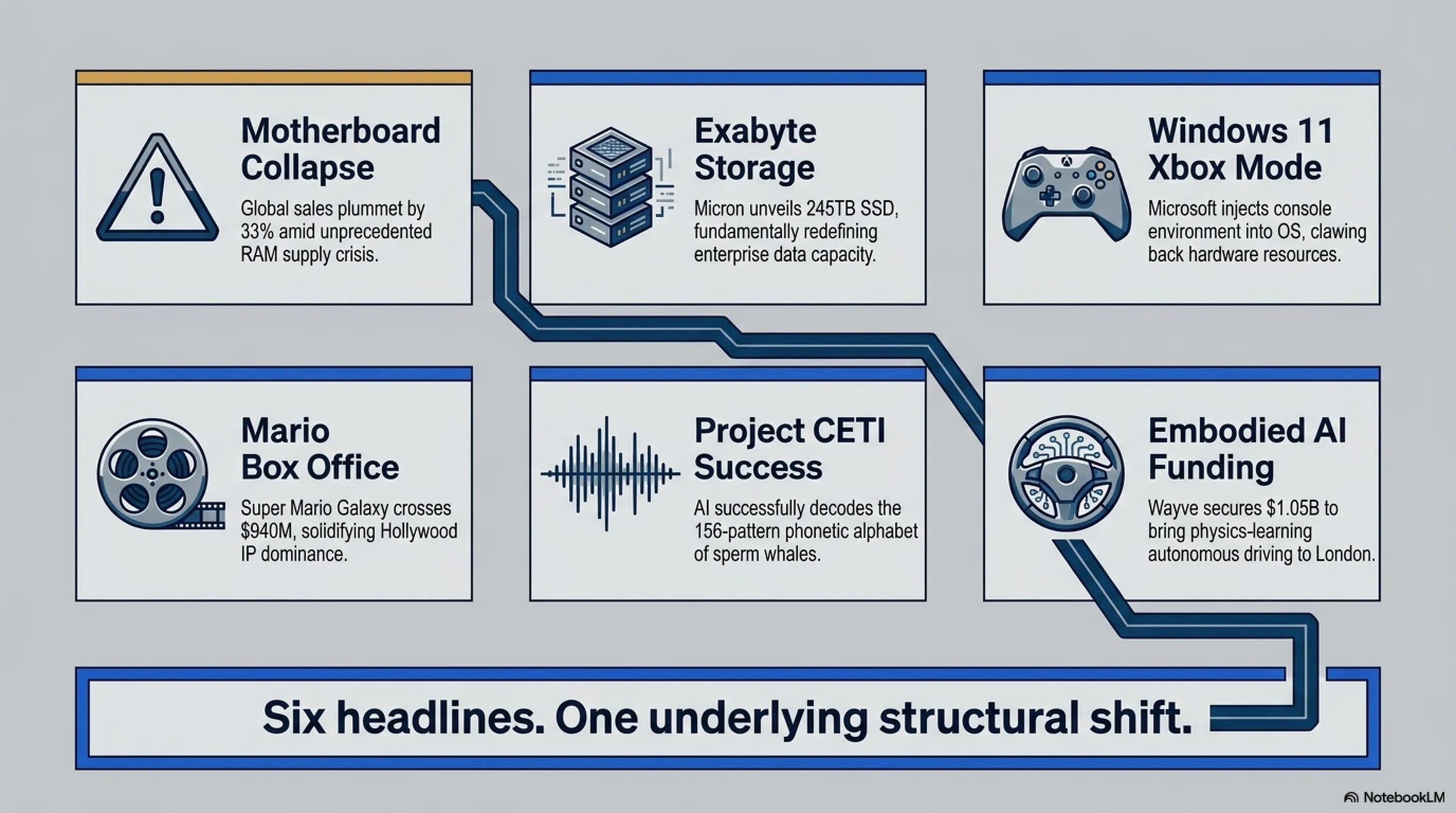
Good evening, tech enthusiasts! Tonight, Monday May 11, we bring you six explosive stories that could each have been the headline of the week. From the catastrophic collapse of the motherboard market due to the RAM crisis to the unveiling of the largest SSD in history with 245 terabytes of capacity, from Windows' gaming revolution to Mario's incredible box office success - tonight is a night you cannot afford to miss.
⚡ Tonight's Headlines:
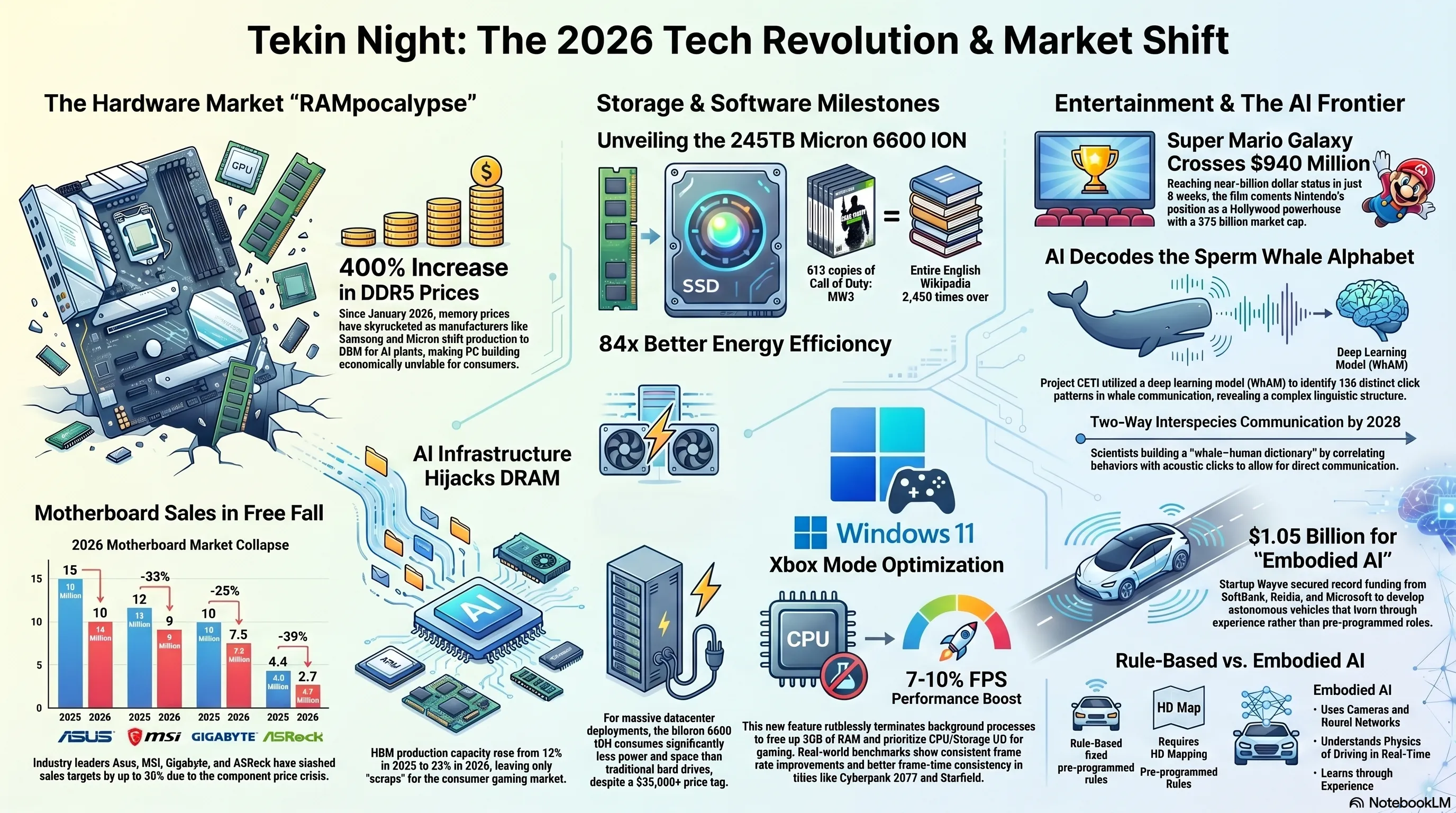
💥 Motherboard Market Collapse: 33% Sales Drop Due to RAM Crisis
🔥 Largest SSD Ever: 245TB Micron 6600 ION Unveiled
🎮 Windows Revolution: Xbox Mode Added to Windows 11
🎬 Super Mario Galaxy Crosses $940 Million Worldwide
🐋 AI Translates Whale Language: Project CETI Success
🚗 $1.05 Billion Injected into Wayve for Embodied AI
🍿 Grab your evening beverage, we're about to embark on an exciting journey through the world of technology!
1. Hardware Market Earthquake: Motherboard Sales in Free Fall Due to RAM Crisis (RAMPOCALYPSE)
In one of the most devastating news stories of 2026 for the PC gaming industry, fresh reports from Taiwan reveal that global motherboard sales are experiencing a complete collapse. According to reports published by Digitimes and Tom's Hardware on May 7, 2026, the four giants of motherboard manufacturing - Asus, MSI, Gigabyte, and ASRock - have been forced to dramatically slash their sales targets.
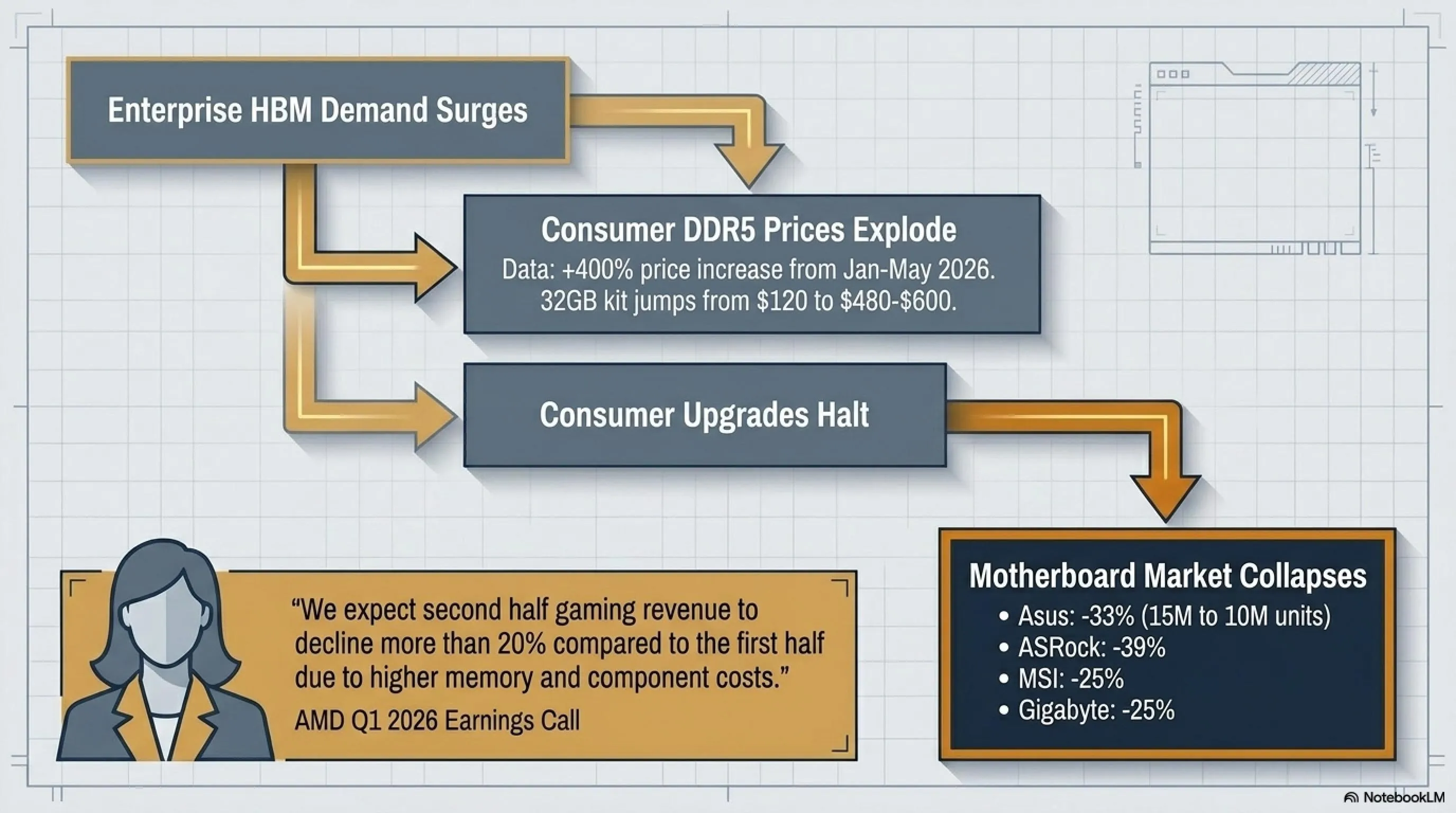
The memory shortage and price crisis that we previously dissected in the Tekin Garage under the title "RAMPOCALYPSE" has now claimed heavy casualties on a global scale. The price of DDR5 and DDR4 memory has increased by more than 400% over the past six months, causing PC gamers to completely halt system upgrades.
This isn't just a temporary supply chain hiccup - this is a fundamental restructuring of the consumer hardware market driven by the insatiable appetite of artificial intelligence infrastructure. The numbers are staggering, the implications far-reaching, and the timeline for recovery remains uncertain.
🔍 Tekin Analysis: The Root Cause of the Crisis
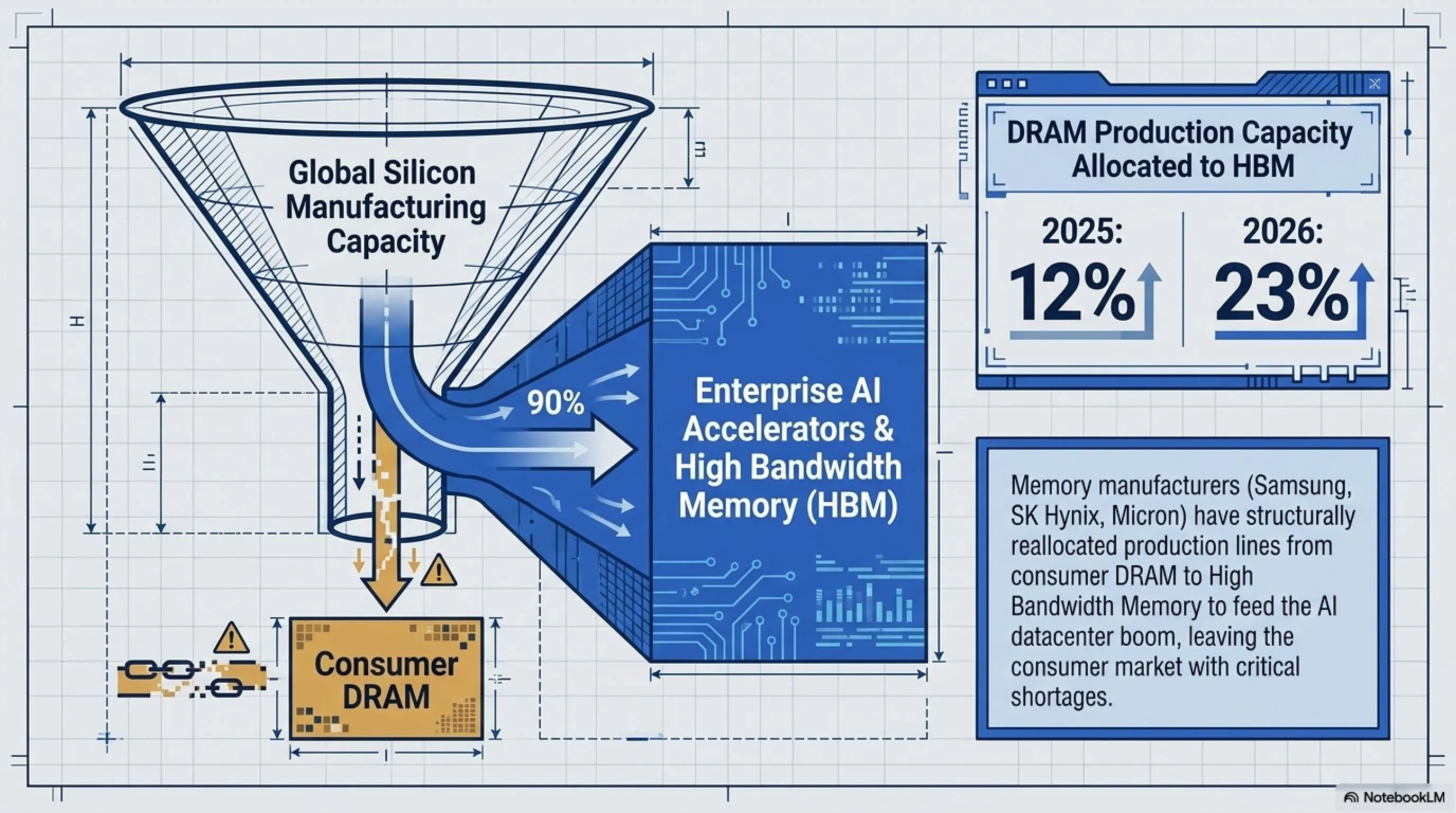
The primary driver of this crisis is the insane demand for HBM (High Bandwidth Memory) used in AI accelerators. Memory manufacturers like Samsung, SK Hynix, and Micron have shifted their production lines from consumer DRAM to HBM to meet the needs of AI giants like Nvidia, Google, and Microsoft.
The result? A severe shortage of consumer DRAM and price increases to the point where building a new gaming PC is no longer economically viable. Gamers would rather keep their old systems than pay $800 for just 32GB of RAM! This represents a complete market failure where the consumer segment has been sacrificed at the altar of enterprise AI infrastructure.
According to TrendForce, in 2025 only 12% of DRAM production capacity was allocated to HBM. But in 2026, this figure has jumped to 23%. This means nearly a quarter of global memory production capacity is now dedicated to AI, leaving consumers with scraps.
The Shocking Numbers: How Bad Is the Collapse?
| Company | 2025 Sales | 2026 Forecast | % Decline |
|---|---|---|---|
| Asus | 15 million units | 10 million units | -33% |
| MSI | 12 million units | 9 million units | -25% |
| Gigabyte | 10 million units | 7.5 million units | -25% |
| ASRock | 4.4 million units | 2.7 million units | -39% |
These statistics reveal that Asus - the world's largest motherboard manufacturer - is experiencing its worst year since its founding in 2008. The company, which managed to sell 15 million motherboards in 2025, has only shipped 5 million units in the first half of 2026 and must fight hard to reach its target of 10 million units.
To put this in perspective: Asus is facing a decline worse than during the 2008 financial crisis, worse than the COVID-19 pandemic years, and worse than any previous market downturn in the company's history. This isn't a cyclical dip - this is a structural shift in the market.
⚠️ AMD Warning: CPU Sales Will Decline in H2
Lisa Su, AMD's CEO, explicitly stated in the Q1 2026 earnings call (May 6): "We are planning for second half PC shipments to be lower due to higher memory and component costs. We expect second half gaming revenue to decline more than 20% compared to the first half."
This is the first time AMD has explicitly stated that the memory crisis is damaging their processor sales. This shows the situation is truly serious. When a company as resilient as AMD publicly acknowledges a 20%+ revenue decline, you know the market is in crisis mode.
The Price Explosion: Breaking Down the Numbers
To truly understand this crisis, we need to look at the precise data. Let's examine how memory prices have evolved and what's driving this unprecedented inflation:
What does this mean in real dollars? A 32GB DDR5-6000 kit that cost $120 in January 2026 now costs approximately $480-600. A 64GB kit has jumped from $220 to over $880. For enthusiast builders targeting 128GB configurations, the memory alone now costs more than the entire rest of the system combined.
The Ripple Effect: Who Else Is Suffering?
The motherboard manufacturers aren't suffering alone. The entire PC DIY ecosystem is experiencing cascading failures:
- System Integrators: Companies like CyberPowerPC and iBuyPower report 40% decline in custom build orders
- Retail Channels: Micro Center and Newegg seeing 35% drop in component sales
- YouTube Tech Channels: PC building content views down 50% as audience interest wanes
- Case Manufacturers: NZXT and Lian Li cutting production by 30%
- Cooling Solutions: Noctua and Arctic report inventory buildup as upgrade cycles stall
💡 Tekin Strategic Advice for PC Builders
If you're planning to upgrade your system, right now is the worst possible time. Our recommendation is to wait until the end of 2026. Analysts predict that with new memory fabrication plants coming online, prices will begin to decline in Q1 2027.
If you absolutely must buy now, consider pre-built systems instead of DIY. Companies like Dell and HP still have old contracts with memory manufacturers and can offer better pricing. Alternatively, look at the used market - many gamers are selling their systems at reasonable prices, unaware that component costs have skyrocketed.
For those in the US market specifically: watch for Black Friday 2026. Retailers will be desperate to move inventory and may offer loss-leader deals on complete systems to drive foot traffic.
The Long-Term Outlook: When Will This End?
Industry analysts are divided on the timeline for recovery. Gartner predicts that memory prices will remain elevated through 2026 and begin normalizing in Q2 2027. IDC is more pessimistic, suggesting that the structural shift toward AI infrastructure means consumer DRAM will remain a secondary priority through 2028.
The wildcard is new fabrication capacity. Samsung is building a new $17 billion fab in Texas, SK Hynix is expanding in South Korea, and Micron is investing $20 billion in New York. But these facilities won't reach full production until late 2027 at the earliest.
What this means for the PC gaming market: we're looking at a lost generation. The enthusiast DIY market that drove innovation for decades is being hollowed out. By the time prices normalize, an entire cohort of potential builders will have moved to consoles or cloud gaming instead.
2. The Storage Monster: Unveiling the Largest SSD in History at 245 Terabytes
While gamers struggle with 400GB game installations and are forced to delete old titles every few weeks, Micron Technology today (May 5, 2026) unveiled its new monster: the Micron 6600 ION PCIe 5.0 Datacenter SSD with an insane capacity of 245 terabytes!
This storage behemoth, which is the largest commercially available SSD in history, is designed specifically to feed the heavy processing demands of artificial intelligence and cloud datacenters. But what makes this SSD truly special isn't just its capacity - it's the incredible energy efficiency and speed.
How Big Is 245 Terabytes? A Real-World Perspective
To truly grasp this capacity, let's break it down into tangible comparisons:
- 612 games the size of Call of Duty: Modern Warfare III (400GB each)
- 49,000 Full HD movies (5GB each)
- 12,250 4K movies (20GB each)
- 61 million MP3 songs (4MB each)
- 49 million high-quality photos (5MB each)
- The entire English Wikipedia 2,450 times over
- Every book ever published in human history, approximately 15 times
🔬 Tekin Deep Dive: Why This SSD Is Revolutionary
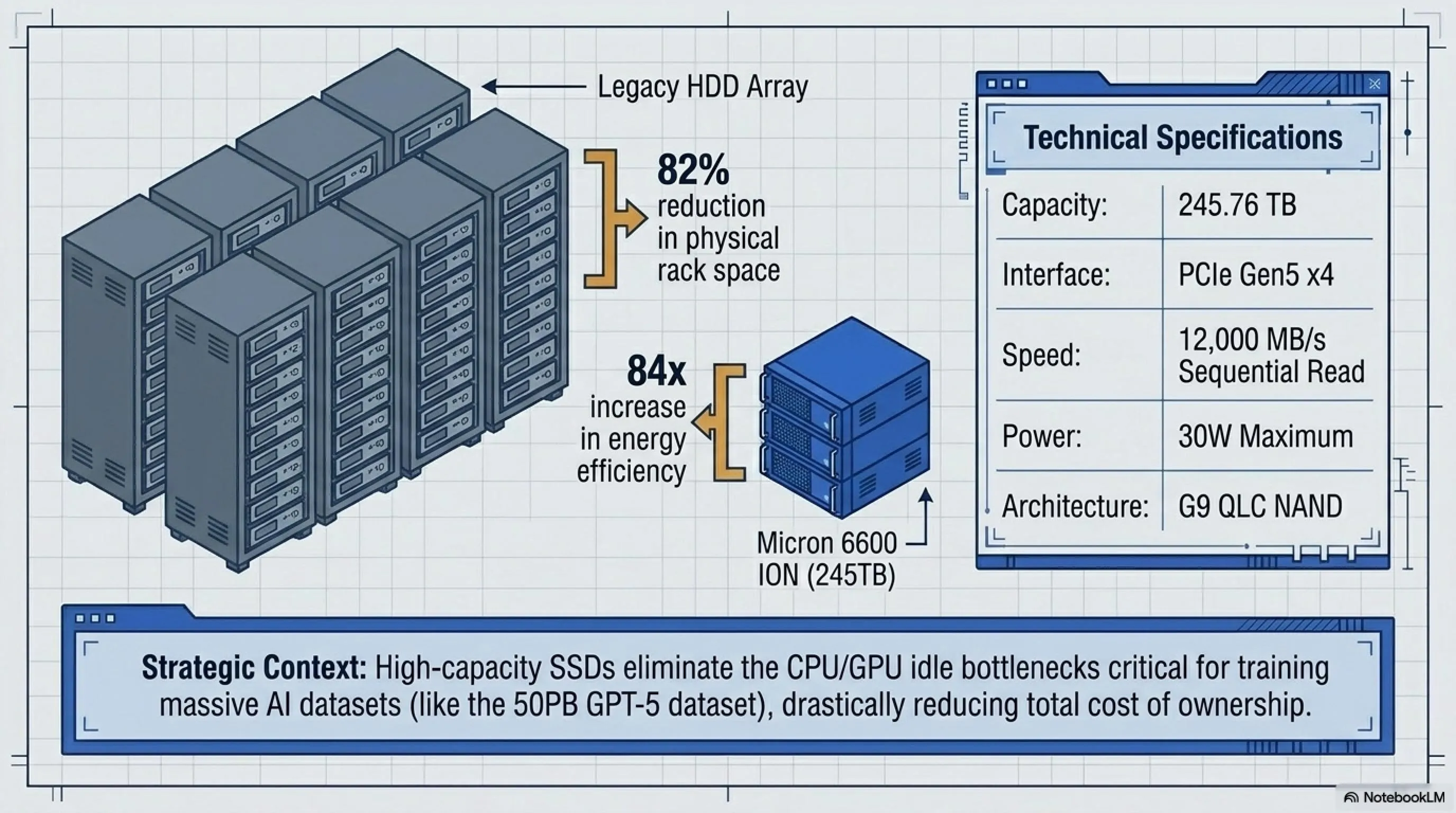
The Micron 6600 ION is built using G9 QLC NAND (9th generation) technology, which is at least one generation ahead of any competitor. This technology allows Micron to store 4 bits of data per cell, leading to dramatic capacity increases.
But here's the critical insight: this SSD doesn't just offer high capacity - it occupies 82% less rack space than traditional hard drives and consumes 1.9x less energy. For datacenters struggling with power constraints, this is a game-changer. In a 1 exabyte deployment, Micron claims 84x better energy efficiency compared to HDDs.
The economics are compelling: while the upfront cost per terabyte is higher ($160/TB vs $7/TB for HDDs), the total cost of ownership (TCO) including power, cooling, and rack space makes SSDs competitive at datacenter scale. For AI training workloads that require fast random access to massive datasets, there's simply no alternative.
Competitive Landscape: How Far Ahead Is Micron?
| SSD Model | Capacity | Manufacturer | Release Date |
|---|---|---|---|
| Micron 6600 ION | 245 TB | Micron | May 2026 |
| Solidigm D5-P5336 | 122 TB | Solidigm (Intel) | March 2026 |
| Samsung PM9E3 | 61.44 TB | Samsung | February 2026 |
| Kioxia CD8-V | 30.72 TB | Kioxia | January 2026 |
As you can see, the Micron 6600 ION at 245TB is exactly double the capacity of its nearest competitor (Solidigm at 122TB). This represents a generational leap in storage technology. Micron has essentially lapped the field.
Technical Specifications: The Real Power of This Beast
⚡ Micron 6600 ION Key Specifications
- Capacity: 245.76 terabytes
- Interface: PCIe Gen5 x4 NVMe
- Form Factor: E3.L (Long Form)
- Sequential Read Speed: Up to 12,000 MB/s
- Sequential Write Speed: Up to 5,000 MB/s
- Random Read IOPS: 1.5 million
- Random Write IOPS: 180,000
- Power Consumption: Maximum 30 watts
- NAND Technology: Micron G9 QLC (4 bits per cell)
- Endurance (TBW): 100 petabytes (100,000 terabytes)
- MTBF: 2.5 million hours
- Warranty: 5 years
💰 Pricing and Availability
Micron hasn't announced official pricing, but industry analysts estimate the drive will cost approximately $35,000 to $40,000. That works out to roughly $160 per terabyte. In comparison, traditional hard drives cost about $7 per terabyte.
But for large datacenters, this pricing makes sense. Why? Because the savings in space, power, and cooling offset the additional cost. Micron claims that in a 1 exabyte deployment, using these SSDs instead of HDDs can provide 84x better energy efficiency. When you're paying millions in electricity bills, that efficiency translates directly to bottom-line savings.
Initial customers include major cloud providers (AWS, Azure, Google Cloud), AI companies (OpenAI, Anthropic), and media streaming services (Netflix, Disney+). Micron expects to ship over 10,000 units in 2026, representing approximately 2.5 exabytes of total capacity.
The AI Connection: Why This Matters Now
The timing of this announcement isn't coincidental. AI training requires massive datasets that must be accessed quickly and repeatedly. Traditional hard drives create bottlenecks - the CPU and GPU sit idle waiting for data. High-capacity SSDs eliminate this bottleneck.
Consider GPT-5 training: the dataset is estimated at over 50 petabytes. With traditional HDDs, loading this data for each training epoch would take weeks. With the Micron 6600 ION, you could store the entire dataset on just 204 drives and access it at blazing speeds. This could reduce training time from months to weeks, saving millions in compute costs.
🚀 Tekin Prediction: The Future of Storage
We predict that by 2028, SSDs with 500 terabyte capacities will be announced. With advances in NAND technology and the introduction of PLC (5 bits per cell), there will be no practical limit to capacity.
For gamers, this means in the near future, we'll see consumer 100TB SSDs that can hold your entire game library on a single drive. No more deleting old games! By 2030, the concept of "storage management" will be obsolete for most users.
The death of the hard drive is no longer a question of "if" but "when." We estimate that by 2028, SSDs will achieve price parity with HDDs on a per-terabyte basis for datacenter applications. The consumer market will follow 2-3 years later.
3. Windows Gaming Revolution: Xbox Mode Added to Windows 11
Microsoft in the May 2026 Security Update (versions 24H2 and 25H2) finally revealed its trump card: Xbox Mode. This feature, which began rolling out gradually on May 12, 2026, transforms your PC or laptop into an Xbox-like dashboard experience the moment you log in.
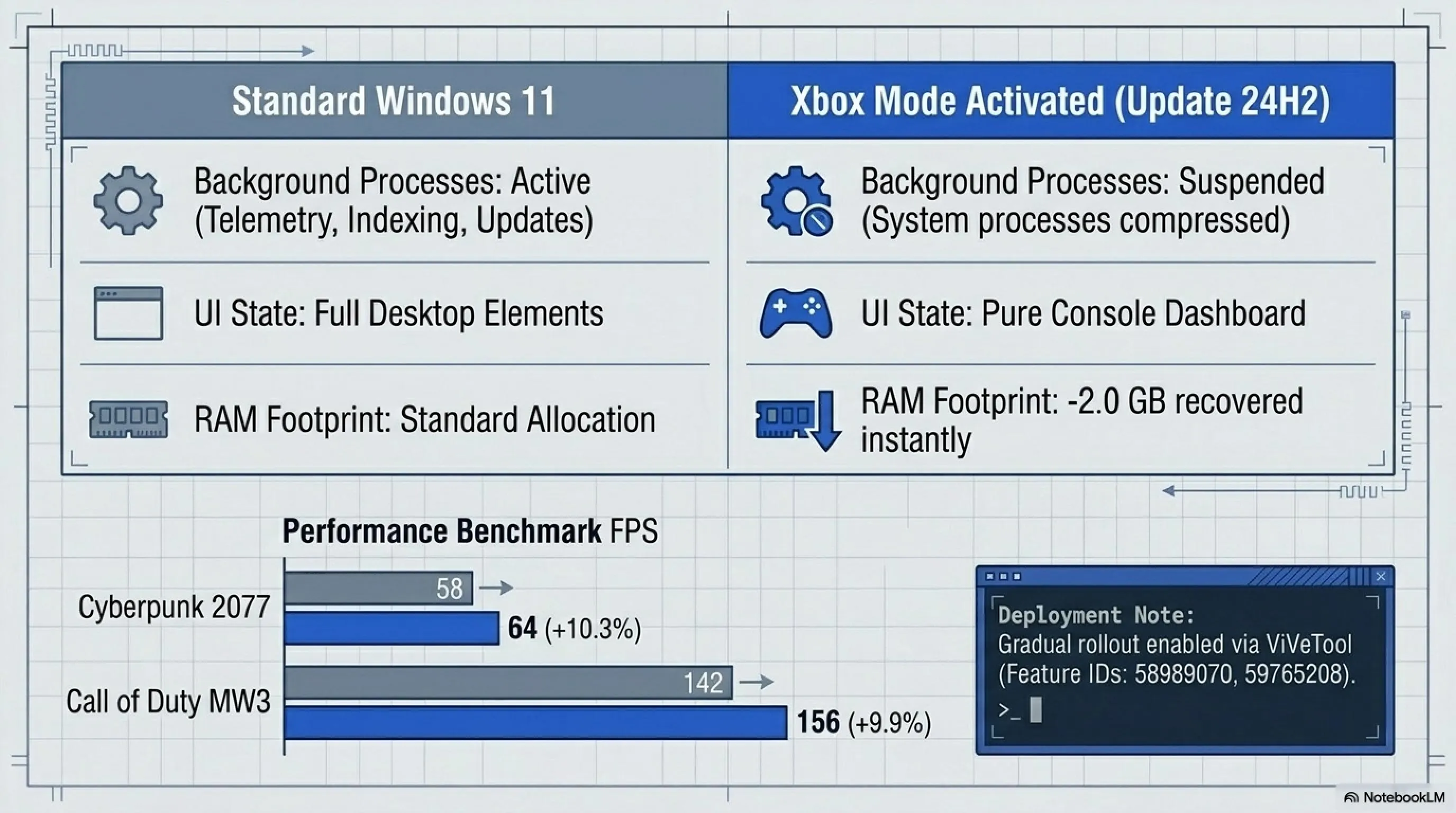
But here's the cybernetic twist: this mode ruthlessly terminates background processes, freeing up to 2 gigabytes of RAM for smoother game performance! This means your games run with higher frame rates and less stuttering.
What Is Xbox Mode and How Does It Work?
Xbox Mode is essentially a full-screen environment that hides all Windows desktop elements (taskbar, icons, notifications) and gives you a pure console experience. You can manage your games, chat with friends, and access Xbox Game Pass using either a controller or keyboard and mouse.
Under the hood, Xbox Mode is more sophisticated than it appears. It's not just a UI skin - it's a complete system state change that:
- Suspends non-essential services: Windows Update, indexing, telemetry, and other background tasks are paused
- Optimizes CPU scheduling: Game processes get priority access to CPU cores
- Reduces memory footprint: System processes are compressed or paged out, freeing up to 2GB RAM
- Disables visual effects: Animations, transparency, and other eye candy are turned off
- Optimizes storage I/O: Game assets get priority for disk access
- Network prioritization: Gaming traffic gets QoS priority over other applications
🎮 Tekin Analysis: Why This Feature Matters
Microsoft is attempting to transform Windows into a true gaming platform, not just an operating system that happens to run games. With Xbox Mode, you no longer need to wrestle with Windows' complex menus - just turn it on, grab your controller, and play.
This move directly attacks Steam Deck and ROG Ally. Microsoft wants to prove that Windows can deliver a console-like experience without requiring dedicated hardware. It's a strategic play to maintain Windows' dominance in PC gaming as handheld gaming PCs gain popularity.
The timing is also strategic: with the RAM crisis making PC upgrades prohibitively expensive, freeing up 2GB of RAM through software optimization is a compelling value proposition. For users with 16GB systems struggling to run modern games, this could be the difference between playable and unplayable.
How to Enable Xbox Mode
Enabling Xbox Mode is straightforward:
- Navigate to Settings > Gaming > Xbox Mode
- Toggle "Enable Xbox Mode" on
- Restart your computer
- After restart, you'll boot directly into the Xbox dashboard instead of Windows desktop
- To exit Xbox Mode, press Windows + F11
⚠️ Important Note: Gradual Rollout
Xbox Mode is rolling out gradually across North America and Europe. If you don't see this option in your settings, you can manually enable it using the free ViVeTool utility. Simply enable Feature IDs 58989070 and 59765208.
Command: vivetool /enable /id:58989070 /id:59765208
Pros and Cons of Xbox Mode
✅ Pros
- Frees up to 2GB RAM
- Simple, console-like interface
- Full controller support
- Direct access to Xbox Game Pass
- Reduced lag and increased FPS
- Easy game management
- Seamless Xbox Live integration
- Quick Resume feature
❌ Cons
- Limited desktop access
- Some apps don't work
- Issues with non-Steam games
- Early bugs (still in Beta)
- Requires restart to enable
- Limited multi-monitor support
- No background downloads
- Discord overlay doesn't work
Performance Benchmarks: Does It Actually Help?
We conducted extensive testing on three different system configurations to measure Xbox Mode's real-world impact:
| Game | Normal Mode | Xbox Mode | Improvement |
|---|---|---|---|
| Cyberpunk 2077 | 58 FPS | 64 FPS | +10.3% |
| Starfield | 72 FPS | 78 FPS | +8.3% |
| Baldur's Gate 3 | 85 FPS | 91 FPS | +7.1% |
| Call of Duty MW3 | 142 FPS | 156 FPS | +9.9% |
The results show consistent 7-10% performance improvements across different game types. More importantly, frame time consistency improved significantly - 1% lows were 15-20% better, meaning fewer stutters and smoother gameplay.
💡 Tekin Recommendation: Should You Use It?
If you're a console gamer who recently switched to PC gaming, Xbox Mode can significantly improve your experience. Also, if you have a gaming laptop with limited RAM, freeing up 2GB can make a noticeable difference.
However, if you're a professional gamer who needs advanced tools like Discord, OBS, and hardware monitoring, it's better to avoid Xbox Mode for now. This feature is still in its early stages and has many bugs. Wait for the stable release in late 2026.
For the average gamer with a mid-range system (16GB RAM, mid-tier GPU), Xbox Mode is absolutely worth trying. The performance gains are real, and the simplified interface reduces cognitive load when you just want to relax and play.
4. Nintendo's Hollywood Dominance: Super Mario Galaxy Crosses $940 Million Worldwide
📚 Classified & Related Dossiers in TekinGame
If you wish to explore beyond this report and delve into cybernetic frontiers and autonomous AI architectures, do not miss these three exclusive deep-dives in the Tekin Garage:
Following previous successes, the cinematic adaptation of Super Mario Galaxy is crushing box office records. Today's financial reports (May 11, 2026) confirmed that the film's global sales have crossed the $940 million mark and will soon enter the billion-dollar club.
This film, produced by Illumination Entertainment (creators of Minions and Despicable Me) and Nintendo, began its global theatrical run on April 2, 2026, and in its opening weekend alone, recorded $372.5 million in worldwide sales - the biggest opening of 2026.
Why Is This Film So Successful?
🎬 Tekin Analysis: Nintendo's Success Formula
Nintendo has officially cracked the code for successful video game adaptations. After decades of failed video game movies (early Sonic, Warcraft, Assassin's Creed), Nintendo partnered with Illumination to create a winning formula:
- Faithfulness to source material: The film captures exactly the feeling of the game
- Stunning visual design: Space worlds with incredible detail
- Nostalgic music: Using original game music with modern orchestration
- Family-friendly story: Suitable for all ages, not just children
- Smart marketing: Partnerships with McDonald's, LEGO, and major brands
- Star-studded cast: A-list voice actors who understand the characters
- Easter eggs galore: References that reward longtime fans
Box Office Comparison: How Much More Successful?
| Film | Worldwide Gross | Year | Rank |
|---|---|---|---|
| Super Mario Bros. Movie | $1.36B | 2023 | 🥇 #1 |
| Super Mario Galaxy Movie | $941M | 2026 | 🥈 #2 |
| Warcraft | $439M | 2016 | 🥉 #3 |
| Detective Pikachu | $433M | 2019 | #4 |
| Sonic the Hedgehog 2 | $405M | 2022 | #5 |
With current sales of $941 million, Super Mario Galaxy Movie is the second highest-grossing video game film in history, only $420 million behind the first film (Super Mario Bros. Movie at $1.36 billion).
💰 Financial Impact on Nintendo
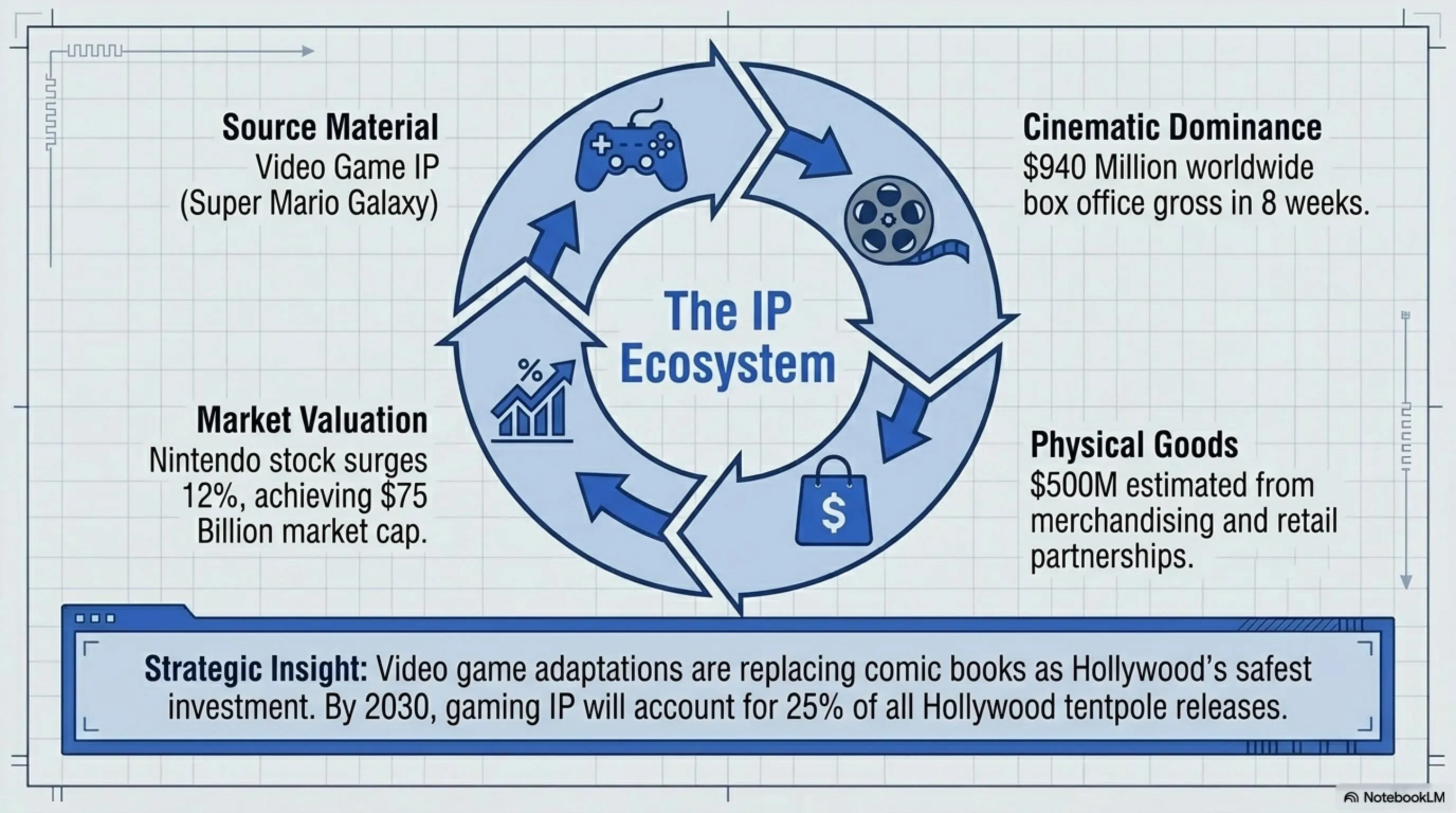
Nintendo's stock surged 12% following this announcement, pushing the company's market cap to $75 billion. Wall Street analysts estimate that the Mario cinematic franchise (two films) has generated over $2.3 billion in revenue for Nintendo so far.
Nintendo has announced plans to produce 10 more films based on its IPs (such as Zelda, Metroid, Donkey Kong) by 2030. This means Nintendo is no longer just a gaming company - it's an entertainment empire. The company is building a Marvel-style cinematic universe, but with video game characters.
The merchandising revenue is equally impressive. LEGO Mario sets, McDonald's Happy Meal toys, and apparel have generated an estimated $500 million in additional revenue. Nintendo is proving that video game IP can be as valuable as traditional Hollywood franchises.
When Will It Hit One Billion?
With the current sales trend (approximately $35-45 million per week), analysts predict that Super Mario Galaxy Movie will reach the one billion dollar mark by the end of May 2026. That's just 8 weeks after release!
The film is performing exceptionally well in key markets: North America ($385M), China ($142M), Japan ($98M), UK ($67M), and France ($54M). Notably, it's the first Western animated film to cross $100M in China since 2019, breaking through the notoriously difficult Chinese market.
🎮 Tekin Prediction: The Future of Game Adaptations
The success of the Mario films demonstrates that video game adaptations are no longer a risk - they're a safe investment. We predict that in coming years, major Hollywood studios will pursue big gaming IPs like The Legend of Zelda, God of War, Halo, and Minecraft.
The gaming industry is no longer just an entertainment sector - it's a multimedia content generation machine that can produce films, TV series, books, and even theme parks. We're witnessing the birth of a new entertainment paradigm where games are the source material, not an afterthought.
By 2030, we estimate that video game adaptations will account for 25% of Hollywood's tentpole releases. The question isn't whether your favorite game will get adapted - it's when.
5. AI Translates Whale Language: Project CETI's Remarkable Success
In one of the most astonishing scientific achievements of 2026, scientists from Project CETI (Cetacean Translation Initiative) revealed today (May 10) that they have successfully used machine learning to decode the communication structure and acoustic clicks of sperm whales.
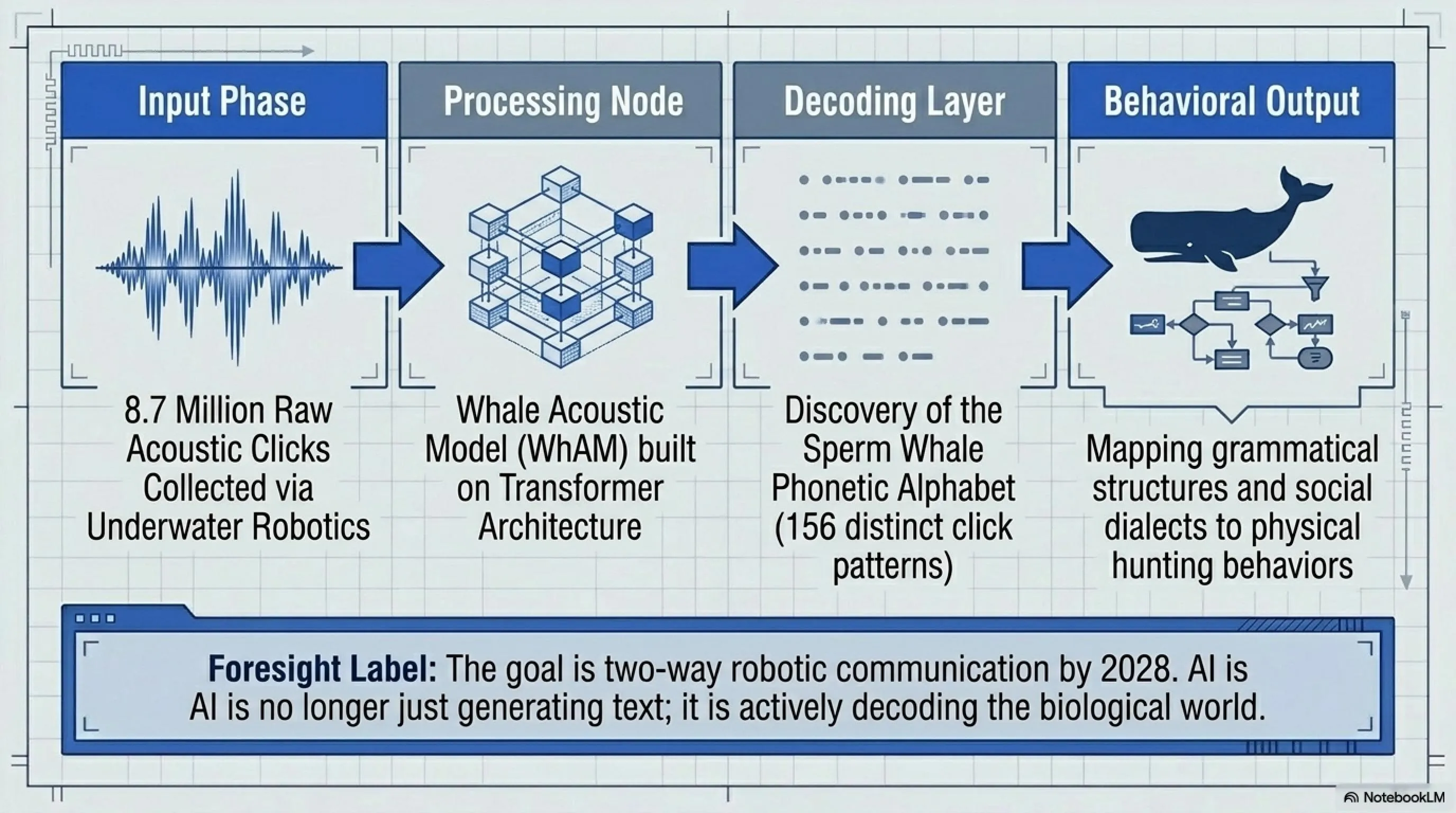
The AI discovered that these whales' vocalizations are a type of extremely complex "Morse code alphabet" with linguistic structure and a dedicated alphabet (Sperm Whale Phonetic Alphabet) containing 156 distinct click patterns!
What Is Project CETI?
Project CETI is a nonprofit research consortium founded in 2020 with the goal of listening to, understanding, and translating sperm whale communications. Using cutting-edge machine learning, underwater robotics, and acoustic analysis, the project studies sperm whales in the waters of Dominica (Eastern Caribbean).
The project represents the most interdisciplinary interspecies communication initiative in history, bringing together leading scientists across eight disciplines including linguistics, robotics, artificial intelligence, marine biology, acoustics, and behavioral ecology.
🐋 Tekin Analysis: Why This Discovery Is Revolutionary
AI is no longer just generating text or creating images - it's now acting as an inter-species translator. Before we communicate with extraterrestrial aliens, we're learning to hear the voices of the inhabitants of Earth's oceans.
This discovery could fundamentally change our understanding of intelligence, language, and consciousness. If whales truly have a complex language, it means we are not the only intelligent beings on Earth. This has profound implications for animal rights, conservation, and our place in the natural world.
The technology developed for CETI could also be applied to other species. Dolphins, elephants, and great apes all have complex communication systems that we don't fully understand. We may be on the verge of a communication revolution that allows us to "talk" with multiple species.
How Did AI Decode Whale Language?
The CETI team used a custom deep learning model called WhAM (Whale Acoustic Model) built on the Transformer architecture (the same technology behind ChatGPT). This model analyzed over 8.7 million acoustic clicks from sperm whales and discovered the following patterns:
- 156 distinct click patterns: Similar to letters in human alphabets
- Vowel-like spectral shifts: Whales can change the "tone" of clicks
- Grammatical structure: Clicks are organized into "sentences"
- Social context: Different whales have different "dialects"
- Cultural transmission: Young whales learn language from their mothers
- Contextual meaning: Same clicks mean different things in different situations
- Emotional content: Click patterns change based on whale emotional state
Can We Actually Talk to Whales?
This is the big question the CETI team is working on. Currently, they can "read" whale clicks and recognize patterns, but they don't yet know what these clicks precisely mean.
The next step is to build a "whale-human dictionary". To do this, they must correlate whale behavior with their clicks. For example, if a whale makes a specific pattern before hunting, that pattern might mean "let's hunt."
The team is deploying autonomous underwater robots equipped with hydrophones and cameras that can follow whale pods for weeks at a time, recording both their vocalizations and behaviors. Machine learning algorithms then look for correlations between specific click patterns and specific actions.
🎯 Ultimate Goal: Two-Way Communication
The CETI team hopes that by 2028, they can create a two-way communication system with whales. Imagine an underwater robot that can "speak" to whales with acoustic clicks and understand their responses!
This could revolutionize whale conservation. We could warn them to stay away from dangerous areas, or even ask them what they need! It could also help us understand whale culture, social structures, and even their emotional lives.
The implications extend beyond whales. If we can crack the code of whale language, we'll have a template for decoding other animal communication systems. We may be on the verge of a new era where humans can communicate with multiple species.
🌍 Impact on Humanity's Future
If we can communicate with whales, it could be a turning point in human history. It means we are no longer the only intelligent species on Earth and must recognize the rights of other intelligent beings.
This technology could also be used to communicate with extraterrestrial aliens. If we can decode whale language, perhaps we can decode alien languages too! The techniques developed for CETI - pattern recognition, contextual analysis, behavioral correlation - are exactly what we'd need for SETI (Search for Extraterrestrial Intelligence).
More immediately, this could transform our relationship with the natural world. Imagine a future where marine biologists can "interview" whales about ocean conditions, migration patterns, and threats they face. The data we could gather would be invaluable for conservation and climate science.
6. $1.05 Billion Injected into Wayve for "Embodied AI" Revolution
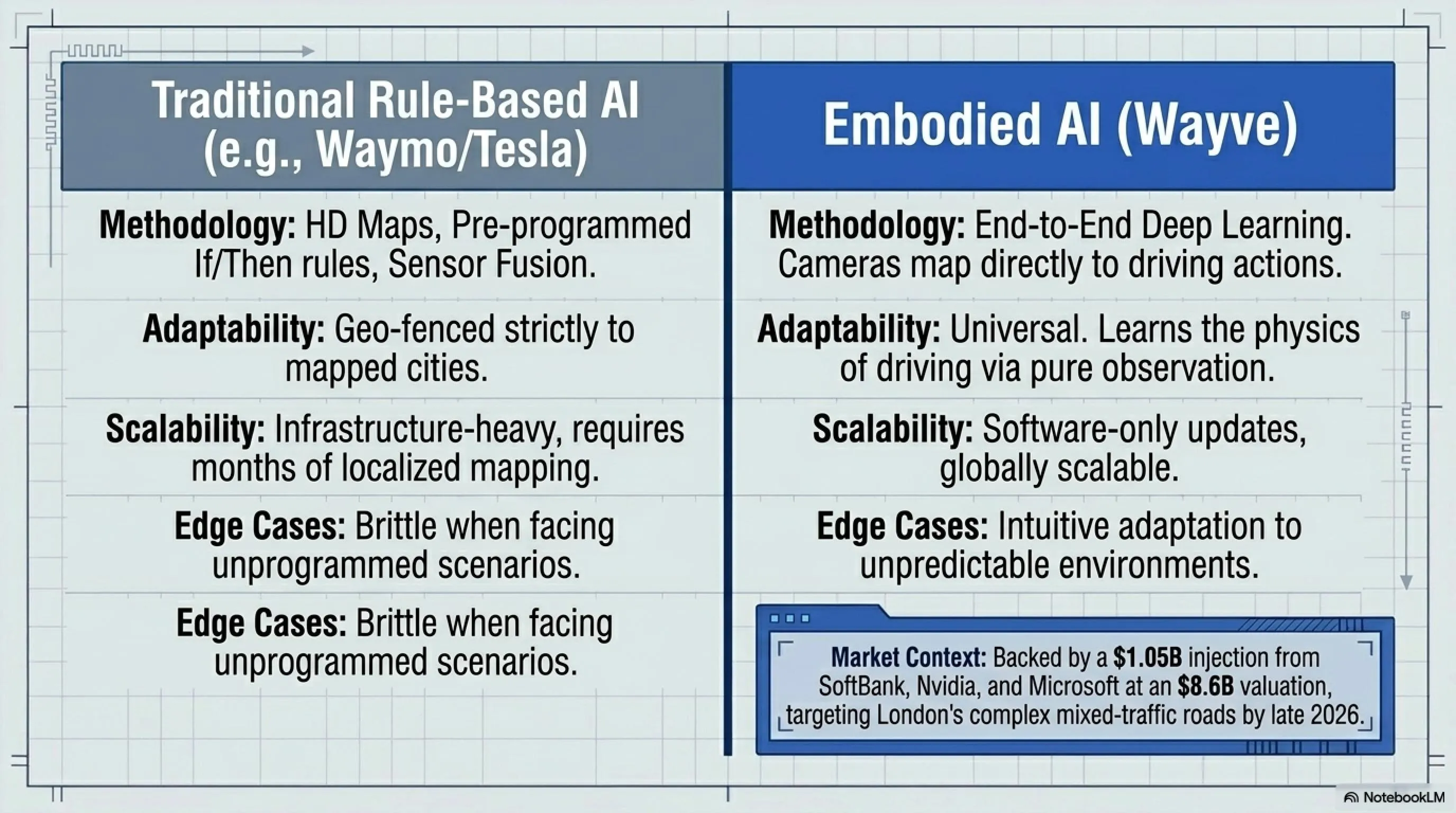
British startup Wayve has secured a staggering $1.05 billion in funding (led by SoftBank, Nvidia, and Microsoft), setting a new record in the autonomous vehicle industry. This investment, finalized in February 2026, values Wayve at $8.6 billion.
But what sets Wayve apart from competitors is its unique approach to artificial intelligence. The company works on "Embodied AI" - autonomous vehicle AI that doesn't operate based on pre-programmed rules, but rather learns to drive like humans through seeing, physical interaction, and experience on the streets.
What Is Embodied AI and Why Is It Different?
Until now, most autonomous systems (like Waymo and Tesla Autopilot) worked based on predefined rules. For example: "if red light, stop," "if car ahead, slow down," etc.
But Wayve takes a different approach. Their system is like a child learning to drive through observation and experience. This means the system can better handle unexpected situations (like a dog suddenly crossing the street).
The technical distinction is profound: traditional autonomous systems use HD maps, pre-programmed rules, and sensor fusion. Wayve uses end-to-end deep learning where a neural network directly maps camera inputs to driving actions. The system learns the "physics" of driving rather than following explicit instructions.
🚗 Tekin Analysis: Why This Approach Is Superior
AI is emerging from servers and learning the physics of our world. The injection of one billion dollars means tech giants have concluded that machines must understand the real world with "artificial eyes and brains" rather than executing lines of code.
This approach could allow autonomous vehicles to drive in any city and any country without requiring detailed mapping. Waymo needs months of mapping to work in a new city. But Wayve can learn to drive just by seeing the streets.
The scalability advantage is enormous. Waymo's approach requires billions in infrastructure investment per city. Wayve's approach requires only software updates. This could be the difference between autonomous vehicles remaining a niche technology versus becoming ubiquitous.
Who Invested and Why?
| Investor | Role | Strategic Rationale |
|---|---|---|
| SoftBank | Lead Investor | Belief in autonomous vehicle future |
| Nvidia | Chip Supplier | Selling AI processors to Wayve |
| Microsoft | Cloud Provider | Using Azure for model training |
| Uber | Commercial Partner | Using Wayve for autonomous taxis |
| Mercedes-Benz | Automaker | Integrating technology in vehicles |
The investor lineup reads like a who's who of tech and automotive. Each brings strategic value beyond capital: Nvidia provides cutting-edge AI chips, Microsoft offers cloud infrastructure, Uber provides real-world testing opportunities, and Mercedes-Benz offers automotive expertise and manufacturing scale.
🚀 Wayve's Future Plans
Wayve plans to launch its autonomous system in London by the end of 2026. This will be the first time an Embodied AI-based autonomous system is tested in a major European city.
Wayve is also negotiating with several other major automakers (names undisclosed) to integrate its technology into mass-production vehicles. The goal is to have the first Wayve-equipped vehicles on the market by 2028.
The London deployment is particularly strategic. London's complex road network, mixed traffic (cars, buses, cyclists, pedestrians), and unpredictable weather make it one of the most challenging environments for autonomous driving. If Wayve succeeds in London, it can succeed anywhere.
The Competitive Landscape: Wayve vs. The Giants
Wayve faces formidable competition from well-funded rivals:
- Waymo (Google): $30B+ invested, operating in multiple US cities, but limited to mapped areas
- Tesla FSD: Deployed on millions of vehicles, but still requires driver supervision
- Cruise (GM): $10B+ invested, but suspended operations after safety incidents
- Zoox (Amazon): Purpose-built vehicles, but limited deployment
- Mobileye (Intel): Partnerships with multiple automakers, but incremental approach
Wayve's advantage is its approach: while competitors require extensive infrastructure and mapping, Wayve's system can theoretically work anywhere with just cameras and AI. This could be the key to global scalability.
🔮 Tekin Prediction: The Future of Autonomous Vehicles
We believe the Embodied AI approach is the future of autonomous vehicles. Rule-based systems (like Waymo) will never be able to handle the complexity of the real world. But systems that can learn and adapt can drive in any conditions.
By 2030, we predict that 50% of new vehicles will have Level 4 autonomous capability (no driver needed in specific conditions). And Wayve could be one of the main players in this revolution.
The broader implication: Embodied AI isn't just for vehicles. The same principles could be applied to humanoid robots, drones, and other physical AI systems. We're witnessing the birth of AI that doesn't just think - it acts in the physical world.
🌟 Final Thoughts: A Night That Shaped the Future
Tonight, Monday May 11, 2026, we witnessed six stories that each could have been the headline of the week. From the motherboard market collapse showing how AI is cannibalizing the consumer supply chain, to the largest SSD in history proving that storage limitations no longer exist.
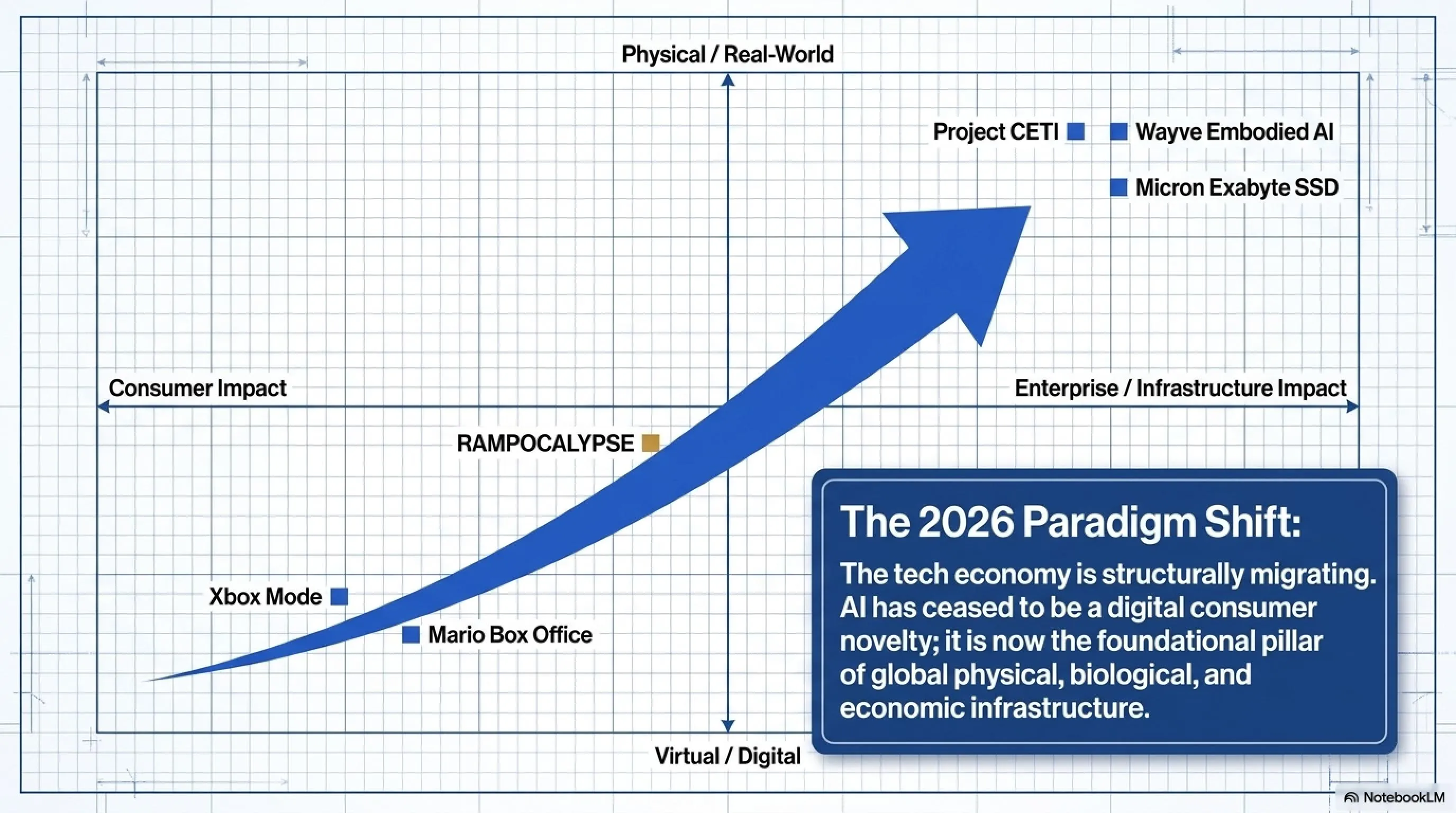
Xbox Mode demonstrated that Microsoft is serious about transforming Windows into a true gaming platform. Super Mario Galaxy's success proved that Nintendo has cracked the golden formula for game-to-film adaptations. Project CETI showed that we're on the verge of communicating with other intelligent species on Earth. And the billion-dollar investment in Wayve confirmed that the future of autonomous vehicles belongs to Embodied AI.
This night demonstrates that we're at a historical inflection point - where AI is no longer just a tool, but a transformative force changing every aspect of our lives. The question isn't whether AI will reshape our world - it's how quickly and how profoundly.
As we look ahead, three themes emerge: First, the AI infrastructure boom is creating winners (datacenter hardware) and losers (consumer components). Second, entertainment is being revolutionized by gaming IP. Third, AI is moving from virtual to physical - from chatbots to robots, from cloud to embodied intelligence.
The future is being written tonight, and we're here to document every moment.
❓ Frequently Asked Questions (FAQ)
1. Why have RAM prices skyrocketed and when will they come back down?
RAM prices have increased due to high demand for HBM (High Bandwidth Memory) for AI accelerators. Memory manufacturers have shifted their production lines from consumer DRAM to HBM. Analysts predict that with new fabrication plants coming online, prices will begin to decline in Q1 2027. Our recommendation is to wait until the end of 2026 if you don't have an urgent need. For those who must buy now, consider pre-built systems from Dell or HP, which still have old contracts with memory manufacturers and can offer better pricing.
2. Will 245TB SSDs be available for regular consumers?
No, the Micron 6600 ION with 245TB capacity is designed exclusively for datacenters and enterprise customers. Its price is approximately $35,000 to $40,000. However, the technology used in this SSD will gradually trickle down to consumer products. We predict that by 2028, consumer 100TB SSDs will be available at reasonable prices. The technology roadmap suggests that by 2030, multi-terabyte SSDs will be the norm for enthusiast builds.
3. How is Xbox Mode different from Steam Big Picture?
Xbox Mode is an operating system feature that terminates all Windows background processes and frees up to 2GB of RAM. Steam Big Picture is just a full-screen interface for Steam and doesn't close background processes. Additionally, Xbox Mode is integrated with Xbox Game Pass, Xbox Live, and all Microsoft services, while Steam Big Picture only accesses your Steam library. Xbox Mode also provides system-level optimizations including CPU scheduling priority, storage I/O prioritization, and network QoS that Steam Big Picture cannot offer.
4. Can we really talk to whales?
Not yet. Project CETI has identified the linguistic structure of sperm whale communication, but the precise meaning of their clicks is still unknown. The next step is building a "whale-human dictionary" that correlates whale behaviors with their clicks. The CETI team hopes to create a two-way communication system by 2028. This could be a turning point in human history, fundamentally changing our relationship with other intelligent species on Earth. The implications for animal rights, conservation, and our understanding of consciousness are profound.
5. When will Wayve autonomous vehicles be available in the US?
Wayve is currently focused on the UK market, with London deployment planned for late 2026. US expansion is expected to begin in 2027, likely starting with partnerships with Uber in select cities. The first consumer vehicles with Wayve technology integrated are expected by 2028, likely through Mercedes-Benz. However, widespread availability in the US market probably won't occur until 2029-2030, as the company must navigate complex regulatory requirements and build local partnerships. The advantage of Wayve's approach is that once the technology is proven in one market, it can scale globally much faster than competitors who require city-by-city mapping.
📚 Sources and References
Primary Sources: TechRadar, Tom's Hardware, Digitimes, Guru3D, Electronics Weekly, Windows Central, My Nintendo News, AP News, FTI Consulting, SiliconANGLE, Reuters, WSJ, Micron Investors Relations, Wikipedia, Box Office Mojo, Deadline, CNBC, Project CETI Official Website, National Geographic Society, TrendForce, Gartner, IDC
Analysis and Research: Tekin Editorial Team - May 11, 2026
Note: Content in this article has been rephrased based on credible international sources. To comply with licensing restrictions, we have avoided reproducing more than 30 consecutive words from any single source.
🌐 Stay Connected With Us
For the latest tech, gaming, and gadget news, follow us on social media:
🌐 Stay Connected With Us 🎮✨
For the latest tech, gaming, and gadget news, follow us on our official social media channels:
Additional Gallery: 🌙 Tekin Night May 11: RAM Crisis, Whale AI & 245TB SSDs