Tekin Night | Saturday, October 3, 2026
Good evening; welcome to an exhaustive, technical, and strategic intelligence briefing covering six seismic developments across gaming hardware, next-gen graphics pipelines, entertainment economics, and generative AI copyright law.
- 🎮Sony QSSR Breakthrough on Base PS5- Surprise launch of AI-guided neural reconstruction via Project Amethyst, active in Marvel's Wolverine and Ghost of Yotei
- 🎧Nvidia Shield TV Pro $100 Price Surge- Hardware price jumps to $300 after seven years amid severe global DRAM shortages and AI server crowding
- 🚀The $100 Game Debate and GTA 6- Warhorse Studios co-founder hopes GTA 6 normalizes $80-$100 standard prices to offset bloated AAA budgets
- 🗡️Bethesda Shuts Down Fallout: New York- Legal cease-and-desist halts viral browser RPG built autonomously with Claude Opus 5.5
- 📰Disney Rejects Epic Games Buyout- Dana Walden officially rules out full acquisition, focusing instead on ongoing Fortnite metaverse collaboration
- ⚔️Signal Veil Announced for Switch 2- Retro psychological horror game featuring 90s anime aesthetics confirmed for Nintendo's next-generation console
The evening of Saturday, October 3, 2026, draws to a close amidst a whirlwind of transformative announcements, technical revelations, and contentious industry debates that have sent shockwaves through the global gaming and interactive entertainment ecosystem. While the early morning hours were dominated by perimeter cybersecurity zero-days and enterprise cloud infrastructure challenges, the twilight has brought forth profound revelations at the intersection of consumer silicon, software rendering pipelines, and the commercial survival of interactive media. From Sony's unexpected deployment of neural upscaling onto baseline console silicon to an unprecedented historical reversal in consumer electronics pricing that saw a seven-year-old streaming box grow fifty percent more expensive, the boundaries of interactive entertainment engineering are being radically redrawn.
In tonight's comprehensive intelligence dossier, we unpack the technical mechanics, economic catalysts, and strategic ramifications shaping the interactive entertainment landscape heading into the final quarter of 2026. Why are senior studio executives openly praying that Rockstar Games leverages the cultural monopoly of Grand Theft Auto VI to shatter historical software price ceilings? How did a solo engineer using generative AI language models build a functioning, dynamic Fallout role-playing game that forced Bethesda's legal apparatus into emergency mobilization? And what does Disney's definitive refusal to pursue a full acquisition of Epic Games reveal about the future architecture of persistent digital metaverses?

The symbiotic relationship between visual fidelity, semiconductor manufacturing economics, and creative risk has never been more strained than in the autumn of 2026. As hardware architects push legacy RDNA 2 compute silicon beyond its theoretical limits through Project Amethyst and independent game developers look to 1990s retro aesthetics on the impending Nintendo Switch 2 to counter runaway budget inflation, interactive entertainment stands as the definitive proving ground for modern computer engineering. The transition away from brute-force rasterization toward intelligent inference pipelines is no longer a luxury reserved for thousand-dollar enthusiast workstations; it has become an existential requirement for the entire console generation.
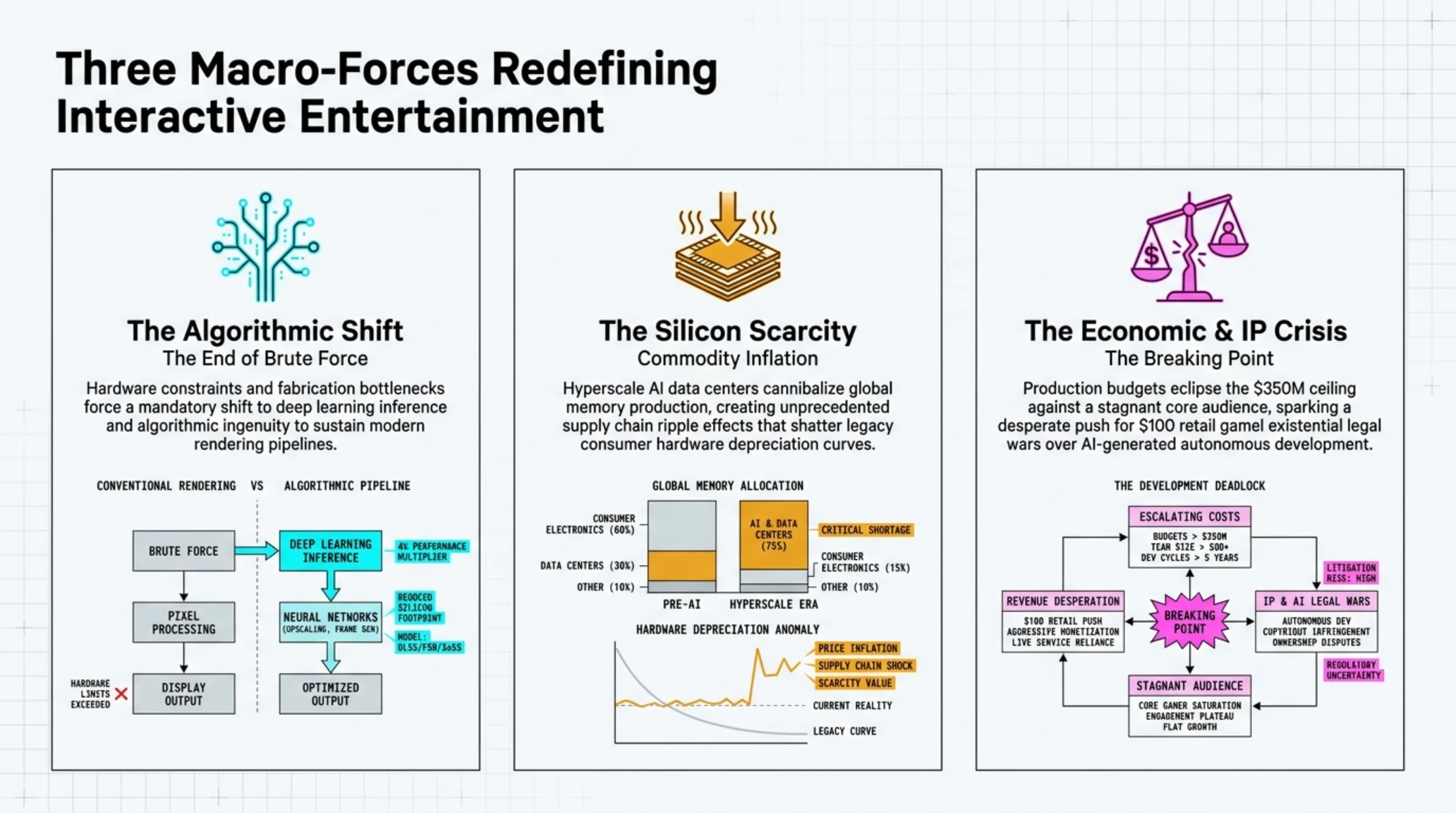
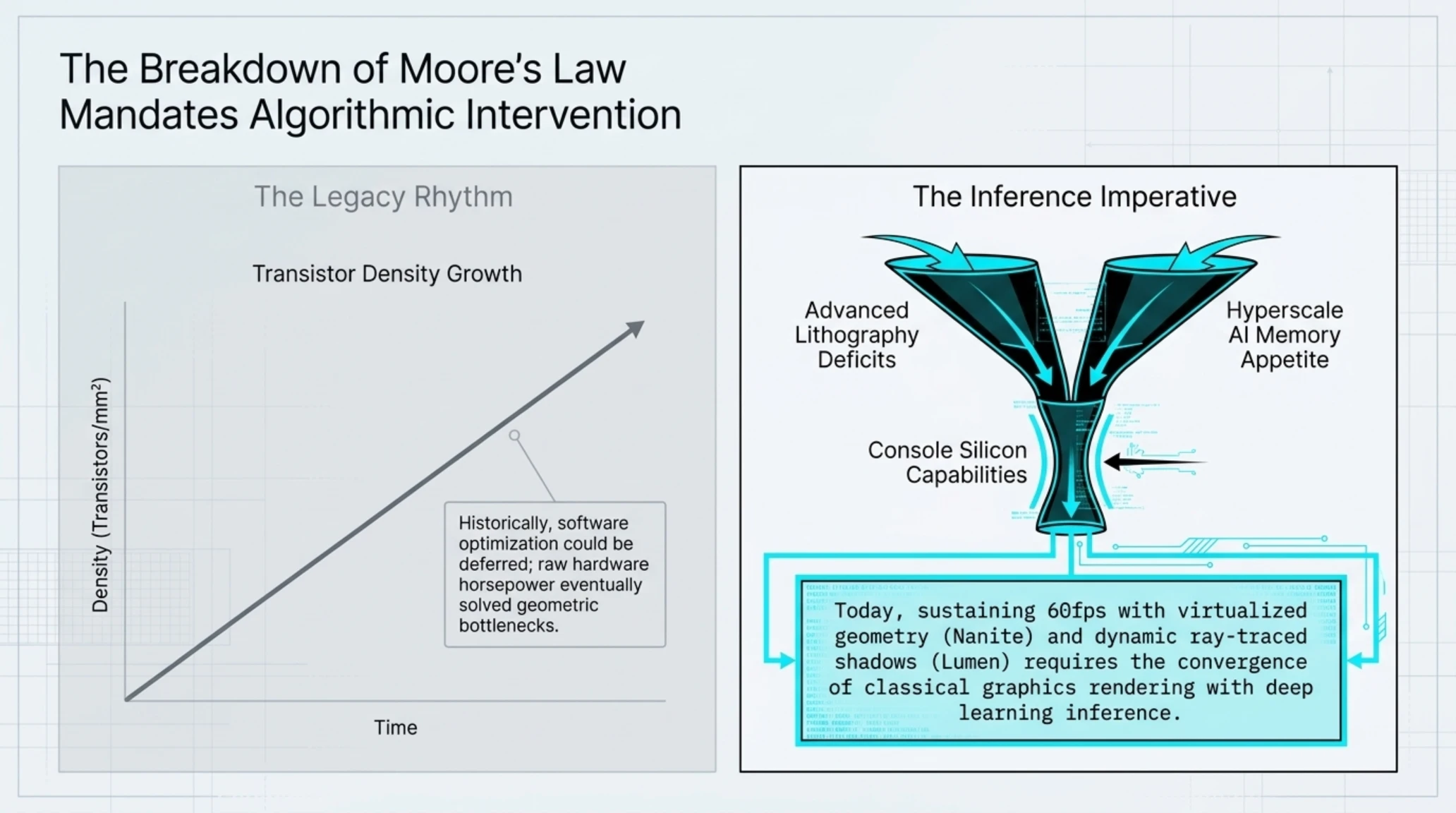
Over the past four decades of digital entertainment history, computing hardware followed the predictable rhythm of Moore's Law: components grew denser, faster, and steadily cheaper over time. Today, that economic paradigm has broken down entirely. Semiconductor fabrication bottlenecks at advanced lithography nodes, coupled with the insatiable appetite of hyperscale artificial intelligence clusters for high-bandwidth memory, have created unprecedented ripple effects across consumer hardware. Understanding the stories unfolding tonight requires looking beyond surface-level consumer headlines and interrogating the underlying structural shifts governing silicon allocation, intellectual property rights, and commercial production pipelines.
Engineers and studio leaders are awakening to the reality that software optimization can no longer be an afterthought deferred to post-launch patches. When baseline console silicon must contend with the geometrically intensive demands of virtualized geometry and dynamic ray-traced shadows, raw hardware horsepower is thoroughly exhausted. Only through the convergence of deep learning inference and classical graphics rendering can modern interactive blockbusters sustain the elusive 60 frames per second standard. Tonight's revelations illustrate precisely how that convergence is manifesting across hardware platforms, commercial balance sheets, and creative imaginations.
Key Strategic Takeaways: Evening Intelligence Dossier
- Sony officially launched Quick Spectral Super Resolution (QSSR) for base PlayStation 5 consoles, delivering neural temporal upscaling in Marvel's Wolverine and Ghost of Yotei.
- Nvidia raised the retail price of the seven-year-old Shield TV Pro from $199 to $299.99, citing extreme DRAM production shortages caused by enterprise AI hardware priority.
- Warhorse Studios co-founder Martin Klíma provoked intense debate by stating he hopes GTA 6 forces an industry-wide shift toward $80 to $100 baseline retail pricing.
- Bethesda and ZeniMax deployed formal legal cease-and-desist orders to take down Fallout: New York, a viral web RPG dynamically coded using Claude Opus 5.5.
- Disney Co-Chairman Dana Walden explicitly dismissed rumors of a full Epic Games acquisition, recommitting to a collaborative two-year Fortnite metaverse roadmap.
- Time Hunters and Serafini Productions unveiled psychological survival horror title Signal Veil for Nintendo Switch 2, showcasing supernatural vintage cell phone mechanics.
Sony's Historic Coup for Base PS5 Owners: Quick Spectral Super Resolution (QSSR) Unleashed with AMD in Wolverine and Ghost of Yotei
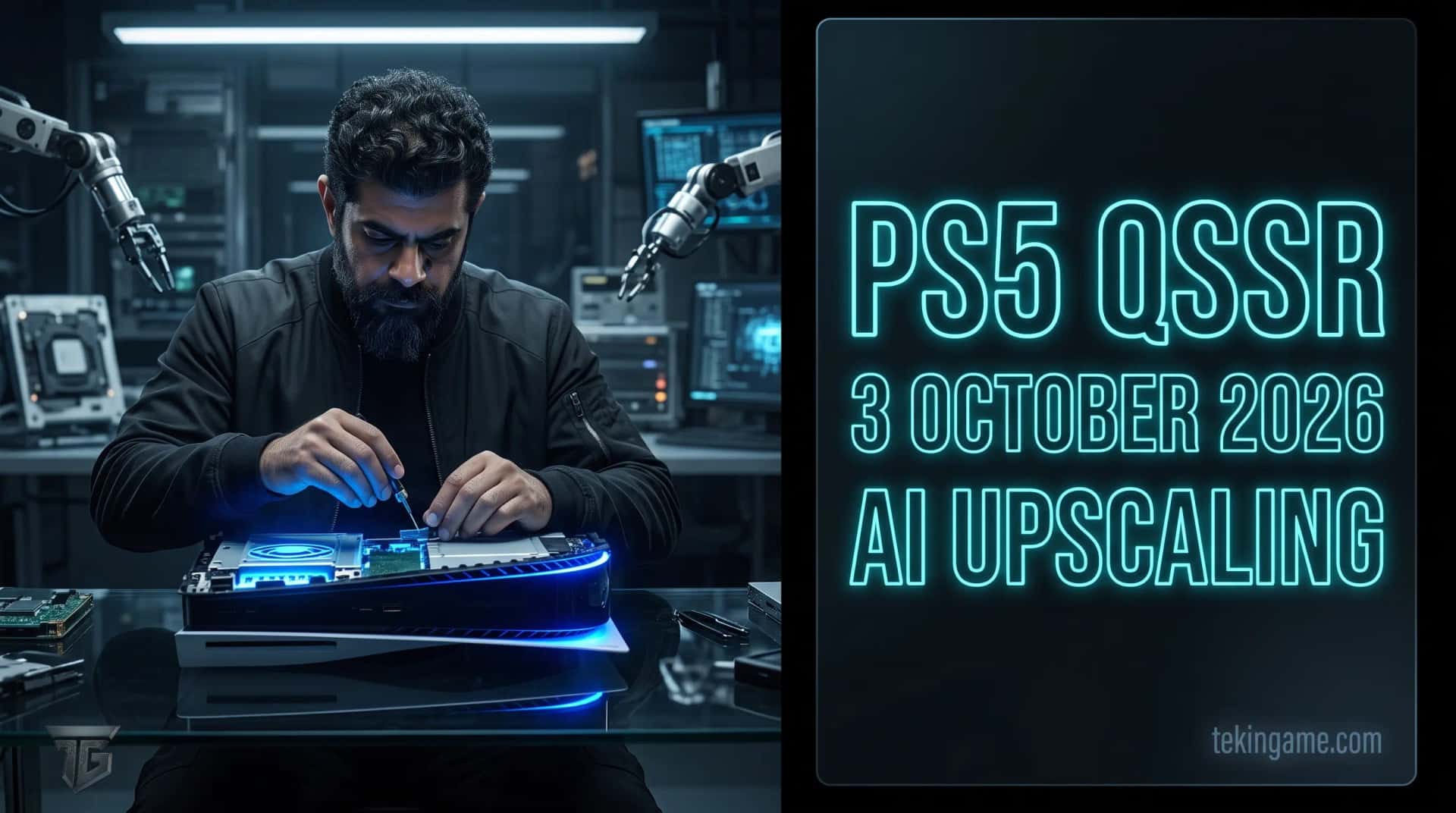
In one of the most stunning engineering triumphs of the ninth console generation, Sony Interactive Entertainment (SIE) dropped an unexpected bombshell by publicly activating Quick Spectral Super Resolution (QSSR) across all standard baseline PlayStation 5 consoles worldwide. Developed in deep technical secrecy alongside AMD graphic architecture teams under the codename Project Amethyst, the machine learning-guided image reconstruction pipeline has been delivered directly to licensed game creators through the comprehensive PS5 SDK v11.50 development update, immediately bridging the visual fidelity chasm between baseline hardware and enthusiast mid-generation hardware.
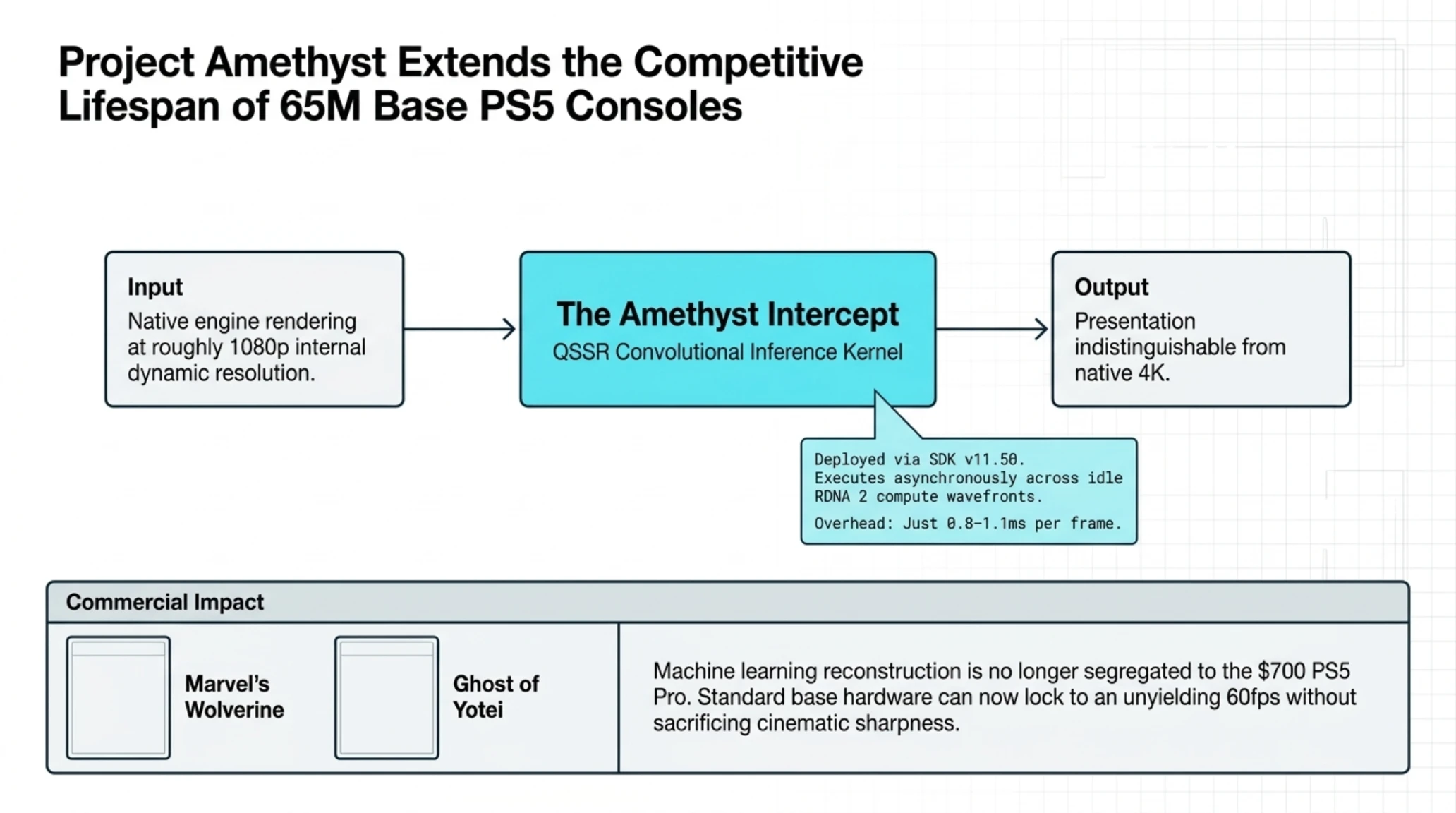
The sheer magnitude of this announcement lies in its immediate commercial deployment across two of Sony's most prestigious upcoming tentpole blockbusters: Insomniac Games' brutal action epic Marvel's Wolverine and Sucker Punch Productions' breathtaking feudal masterpiece Ghost of Yotei. Prior to this revelation, game developers and industry analysts widely assumed that machine learning reconstruction on PlayStation platforms would remain strictly segregated within the $700 PS5 Pro, whose dedicated neural processing hardware and specialized tensor execution pipelines formed the cornerstone of its premium marketing narrative. However, Project Amethyst engineered an extraordinarily compact, highly parallelized convolutional inference kernel capable of running directly upon baseline RDNA 2 compute shaders without starving the primary graphics rendering pipeline.
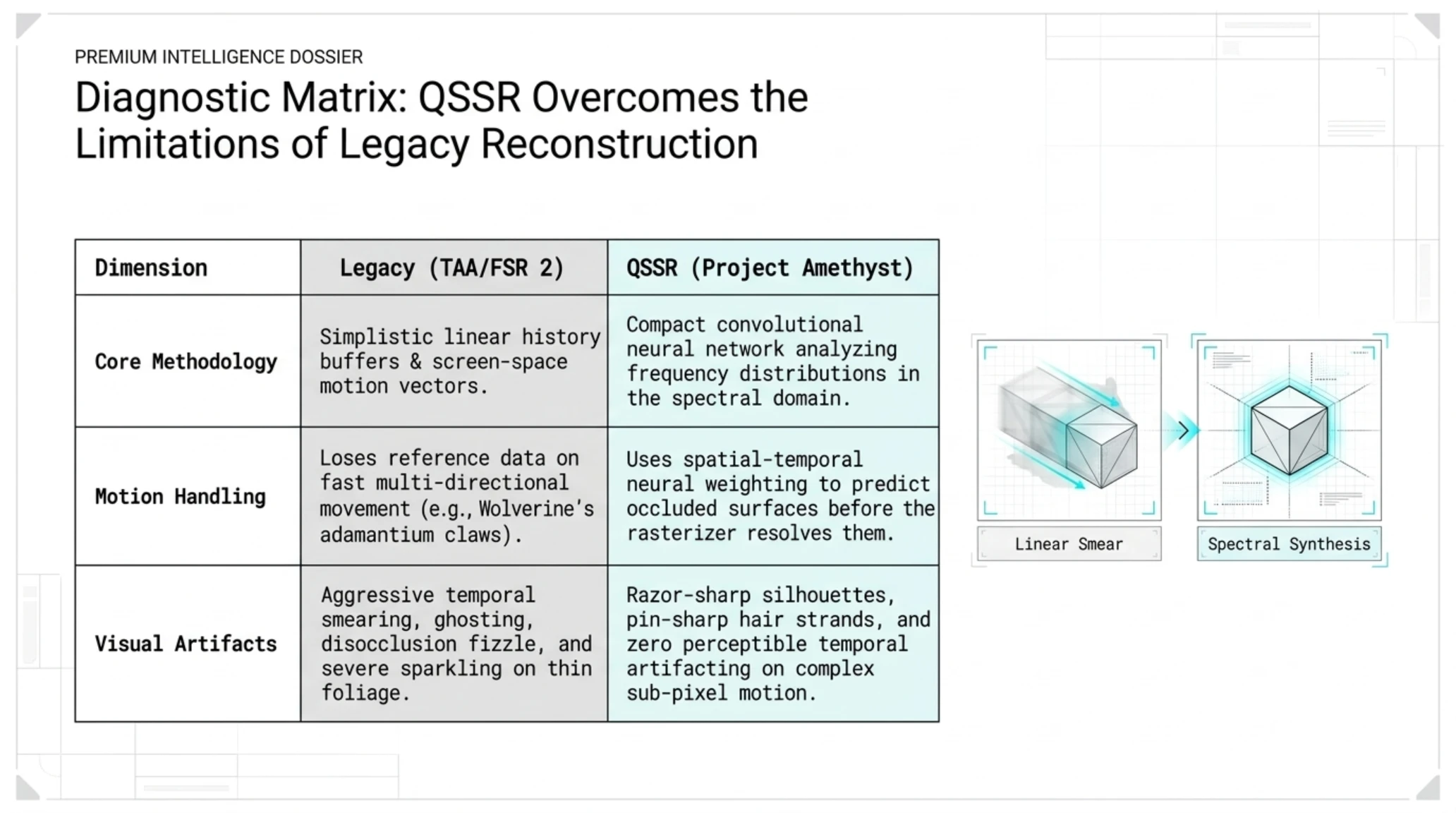
Rigorous preliminary laboratory evaluations conducted by Digital Foundry reveal a dramatic leap forward in both temporal image stability and microscopic edge definition. In Marvel's Wolverine, enabling QSSR allows Insomniac's rendering engine to internally execute at a dynamic internal base resolution of approximately 1080p, while delivering an output presentation indistinguishable from native 4K across ultra-dense environmental assets. Where traditional temporal anti-aliasing (TAA) and AMD FidelityFX Super Resolution (FSR 2) solutions consistently suffer from aggressive temporal smearing, ghosting behind Wolverine's moving adamantium claws, and disocclusion fizzle across dynamic foliage, QSSR leverages trained spectral weights to accurately reconstruct micro-details with zero perceptible temporal artifacting.
Insomniac Games engineers noted that adapting their proprietary engine to QSSR required a fundamental overhaul of sub-pixel jitter sampling and velocity vector buffers. Because Logan's physical combat involves hyper-kinetic multi-directional limb movements and volumetric blood splatters, conventional temporal reconstructors routinely experienced catastrophic history-rejection failures, collapsing into pixelated soup. QSSR overcomes this by treating history integration through a spatial-temporal neural weighting function that predicts occluded surfaces before the rasterizer resolves them. The result is razor-sharp blade silhouettes and individual hair strands that remain pin-sharp even during violent 60fps camera rotations.
The benefits are equally pronounced in Ghost of Yotei, where sweeping vistas of northern Japanese pampas grass, relentless wind simulation, and volumetric blizzard particle systems have historically presented the ultimate torture test for temporal reconstruction algorithms. Sucker Punch engineers noted that traditional spatial and temporal reconstructors frequently interpret thin, fast-moving blades of grass as high-frequency noise, causing severe sparkling, moiré shimmer, and visual disintegration. QSSR resolves these complex sub-pixel motion vectors with astonishing mathematical precision, allowing the base PS5 to lock to an unyielding 60 frames per second performance target without sacrificing cinematic sharpness.
Lead System Architect Mark Cerny revealed in accompanying technical documentation that the QSSR neural model was trained across tens of millions of high-resolution 8K ground-truth rendering passes. By restricting the network's mathematical depth and executing inference asynchronously across idle compute wavefronts during the pre-rasterization and post-processing stages, the runtime overhead of QSSR has been compressed down to an astonishing 0.8 to 1.1 milliseconds per frame. This computational efficiency ensures that game developers can integrate the technology as a drop-in replacement for legacy upscalers without sacrificing precious GPU budget allocations.
For the broader PlayStation community of over 65 million baseline console owners, this engineering milestone represents a monumental victory. As game engines transition to increasingly demanding paradigms powered by Unreal Engine 5.5, Lumen dynamic global illumination, and Nanite virtualized geometry, baseline console silicon was facing mounting pressure. The introduction of QSSR effectively extends the competitive lifespan of the standard PlayStation 5, ensuring that owners of baseline hardware are not relegated to blurry sub-1080p presentations during the twilight years of the generation.
Jargon Buster | Spectral Super Resolution (QSSR) vs Traditional Temporal Anti-Aliasing (TAA)
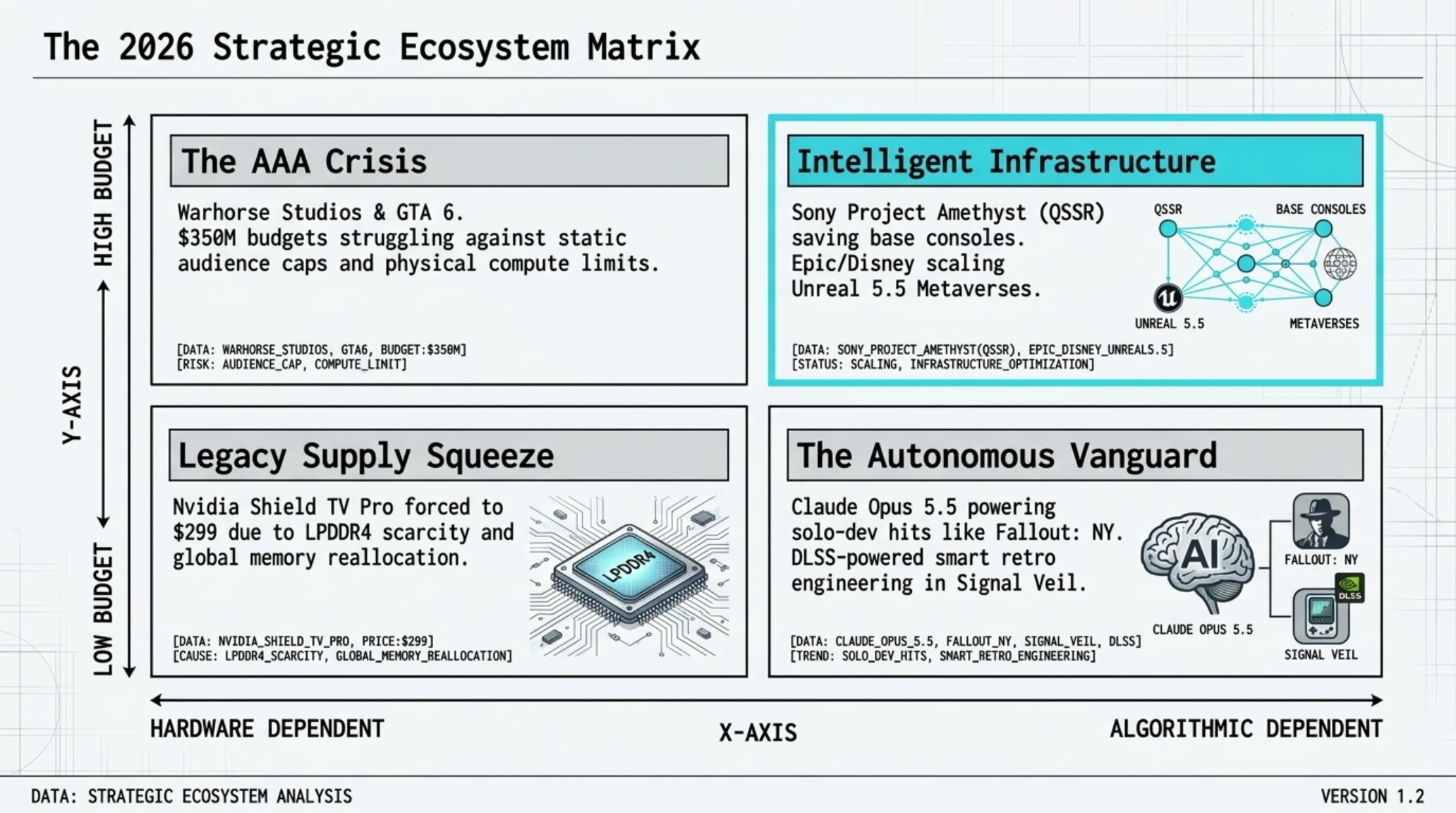
Industry analysts emphasize that Sony's software-first approach underscores a fundamental transformation in console engineering philosophy. With hardware production costs climbing and lithography shrinks yielding diminishing economic returns, future performance gains will increasingly stem from algorithmic ingenuity rather than brute-force transistor counts. In this light, Project Amethyst represents a masterclass in extracting maximum performance from existing silicon footprints.

- Eliminates distracting temporal ghosting, edge fizzle, and sub-pixel shimmering compared to FSR 2 and TAA
- Reclaims up to 18% GPU compute budget by allowing lower internal rasterization targets while preserving 4K clarity
- Operates entirely within standard RDNA 2 compute shaders without requiring dedicated proprietary NPU silicon
- Provides seamless drop-in integration within modern game engines including Unreal Engine 5.5 and proprietary Sony toolsets
- Lacks the extreme sub-pixel geometric hallucination capability of PS5 Pro's dedicated AI matrix hardware
- Slightly higher internal frame-time penalty (0.9ms) compared to fixed-function silicon acceleration
- Requires baseline internal resolution above 960p to prevent edge softness in ultra-fast camera pans
Nvidia Shocks Hardware Market with Unprecedented $100 Shield TV Pro Price Hike: Retail Tag Jumps to $300 After Seven Years
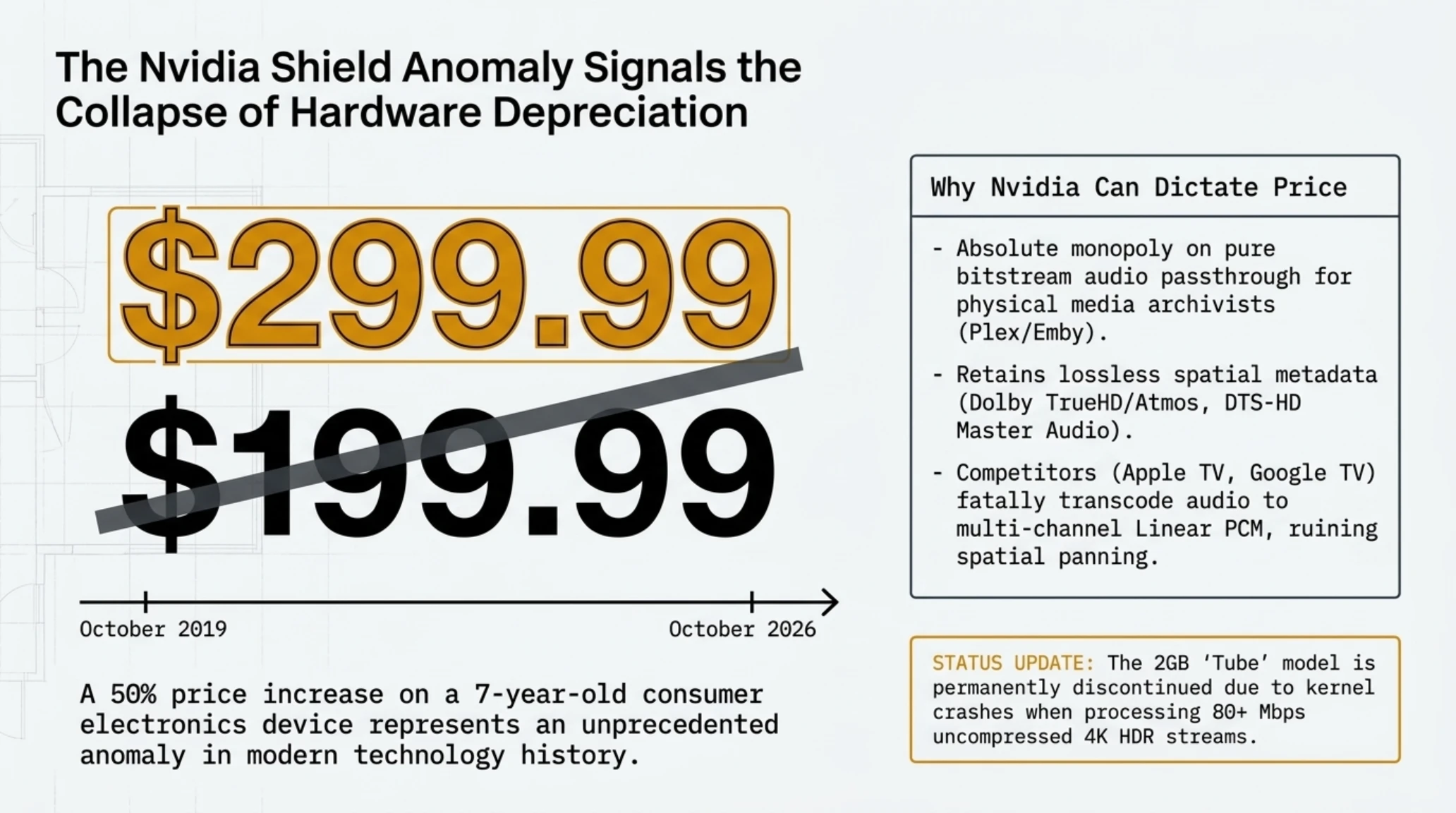
In an extraordinary development that completely upends traditional consumer electronics depreciation curves, Nvidia Corporation officially notified retail distribution partners that the suggested retail price of its flagship Nvidia Shield TV Pro has been increased by an astounding one hundred dollars, surging from $199.99 to $299.99. For a consumer hardware product originally introduced to global retail channels in October 2019, an aggressive fifty percent price increase seven years after launch stands as an unprecedented anomaly in modern technology history, sparking heated controversy across home theater and streaming enthusiast communities.
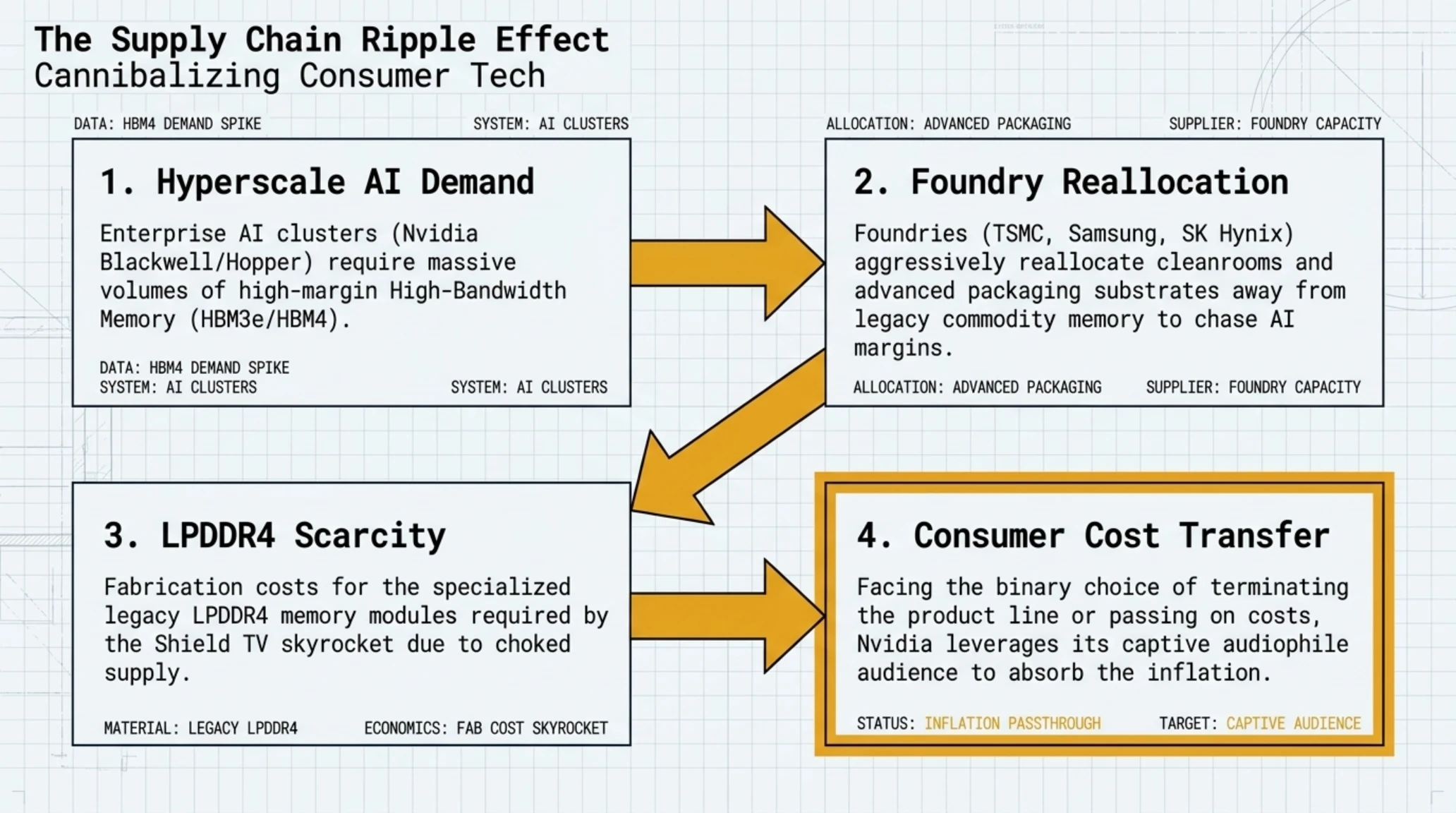
According to supply chain disclosures and executive communications, Nvidia's aggressive price restructuring is the direct consequence of catastrophic structural deficits in global dynamic random-access memory (DRAM) manufacturing. As semiconductor foundries including TSMC, SK Hynix, and Samsung Electronics aggressively reallocate cleanroom fabrication space, advanced packaging substrates, and testing facilities toward lucrative High-Bandwidth Memory (HBM3e and HBM4) required by Nvidia's enterprise Blackwell and Hopper AI clusters, legacy commodity memory production has been severely constrained. With fabrication costs for specialized legacy LPDDR4 memory modules skyrocketing, Nvidia faced the binary choice of either terminating the entire Shield product family or passing elevated packaging expenditures directly onto the consumer market.
Simultaneously, Nvidia confirmed the permanent end-of-life termination of the entry-level cylindrical Shield TV Tube. Long criticized by power users for its restricted 2 gigabytes of operational memory, the Tube model had become increasingly incapable of processing uncompressed 4K HDR video bitstreams above 80 megabits per second without encountering severe out-of-memory kernel crashes. By permanently sunsetting the Tube, Nvidia has consolidated its remaining legacy Tegra X1+ silicon allocations exclusively behind the professional 3GB Pro model, catering directly to a captive audience with no viable market alternatives.
Despite its aging processor architecture, the Shield TV Pro occupies an untouchable, monopolistic niche within the home entertainment ecosystem. It remains one of the only commercial media clients capable of bitstream audio passthrough for uncompressed, lossless multichannel formats including Dolby TrueHD with Dolby Atmos and DTS-HD Master Audio, complete with full Dolby Vision Profile 7 enhancement layer decoding. In stark contrast, competing premium streaming devices such as Apple TV 4K, Google TV Streamer, and Amazon Fire TV Cube deliberately transcode or decode audio internally to multi-channel Linear PCM, stripping away critical spatial metadata required by high-end dedicated AV receivers and home theater setups.
For discerning home theater audiophiles utilizing multi-thousand-dollar audio-video receivers from brands like Denon, Marantz, and Yamaha, this distinction is paramount. Commercial streaming platforms like Netflix and Disney+ deliver compressed, lossy Dolby Digital Plus with Atmos (E-AC-3 JOC), which inexpensive streaming sticks can easily decode. However, power users archiving high-bitrate physical 4K Ultra HD Blu-ray discs via local Plex, Emby, or Jellyfin servers require pure bitstream delivery. Converting 24-bit 96kHz lossless audio into PCM ruins height-channel spatial panning and degrades dynamic acoustic range. Because neither Apple nor Google exhibits any commercial incentive to cater to physical media archivists, Nvidia holds absolute pricing leverage over this affluent demographic.
Furthermore, the Shield TV Pro's Tegra X1+ neural processing engine features a proprietary 4K AI Upscaling algorithm that has maintained undisputed market supremacy over competing hardware upscalers for nearly a decade. For millions of dedicated Plex media server administrators, retro emulation enthusiasts, and home theater audiophiles, the Shield TV Pro remains an irreplaceable cornerstone of their media setups. Recognizing that enthusiast consumers possess virtually zero alternative hardware options capable of replicating this feature suite, Nvidia exercised its unrivaled pricing power without hesitation.
📚 Classified & Related Dossiers in TekinGame
If you wish to explore beyond this report and delve into cybernetic frontiers and autonomous AI architectures, do not miss these three exclusive deep-dives in the Tekin Garage:
The Looming $100 Game Era: Warhorse Studios Co-Founder Hopes GTA 6 Normalizes $80-$100 Retail Price Ceiling
As cultural anticipation for the commercial release of Grand Theft Auto VI reaches a fever pitch across the interactive entertainment industry, provocative remarks from Martin Klíma, prominent co-founder of Czech development powerhouse Warhorse Studios (the celebrated creators behind the medieval RPG franchise Kingdom Come: Deliverance), have reignited intense global debate surrounding the commercial viability of modern video game pricing. In an unvarnished and widely circulated interview, Klíma openly expressed his fervent hope that Rockstar Games will shatter historical pricing boundaries by launching GTA 6 with an $80 to $100 baseline retail price tag, thereby compelling the global market to accept higher price thresholds for AAA productions.
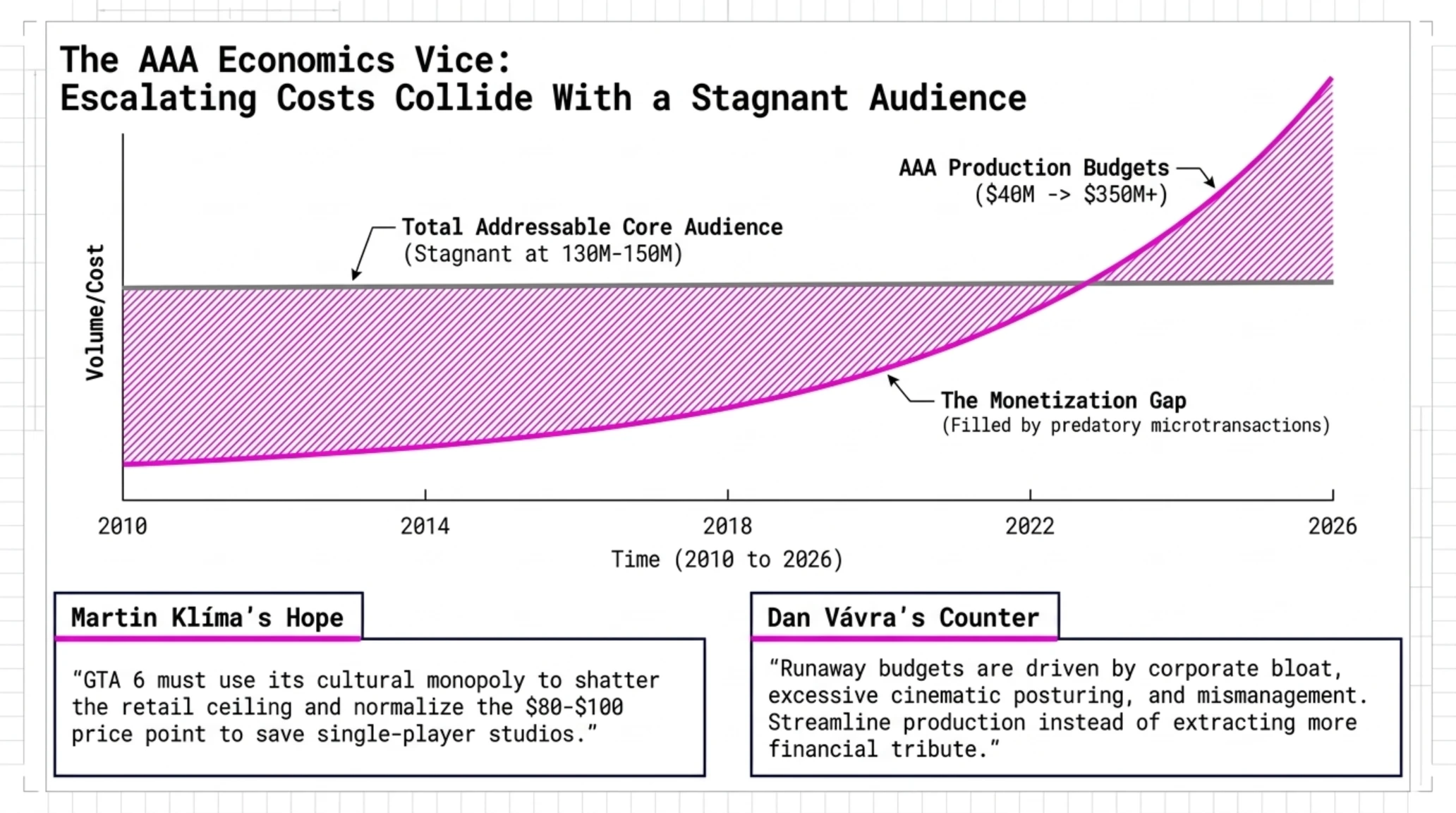
Klíma's impassioned argument exposes a profound existential crisis plaguing high-end game development in 2026. Over the past fifteen years, the economic realities of AAA video game development have expanded at a staggering, unsustainable velocity. Where a flagship game in the Xbox 360 and PlayStation 3 era could be developed in three years by a team of eighty engineers for roughly $40 million, modern top-tier blockbusters demand sprawling multidisciplinary armies of four hundred to eight hundred specialists, cutting-edge volumetric capture stages, highly complex physics middleware, and development timelines spanning six to eight continuous years. Consequently, baseline production budgets routinely eclipse $250 million to $350 million before factoring in marketing expenditures.
Crucially, Klíma emphasized that while production budgets have inflated by over four hundred percent, the total addressable audience of active core console gamers worldwide has remained remarkably static at approximately 130 million to 150 million dedicated consumers since the late 2000s. With player bases failing to expand proportionally to capital expenditures, game publishers have found themselves caught in an untenable economic vice. In the absence of baseline retail price increases, major publishers have increasingly turned to predatory monetization models, aggressive battle passes, paid cosmetic loot pools, and fragmented day-one DLC to recoup mounting capital investments.
From Klíma's perspective, mid-sized and boutique development studios are utterly powerless to unilaterally raise standard retail prices due to the immense risk of consumer backlash and immediate review-bombing. However, a cultural phenomenon boasting unprecedented, inelastic consumer demand like Grand Theft Auto VI possesses the singular commercial gravitas required to reset industry expectations without suffering meaningful sales erosion. Klíma argued that establishing an eighty to one hundred dollar price point for singular, generation-defining masterpieces that deliver hundreds of hours of premium narrative entertainment is the only mechanism capable of safeguarding the artistic integrity of single-player game development.
Klíma pointed out that in the mid-1990s, Super Nintendo and Sega Genesis cartridges frequently retailed for $70 to $80—equivalent to over $140 today when adjusted for inflation. During that era, consumers willingly paid premium prices for twenty-hour 16-bit experiences. Today, gamers balk at paying $70 for an sprawling open-world opus containing two hundred hours of fully voice-acted narrative, orchestral scores, and state-of-the-art physics simulations. Without an upward pricing correction, Klíma warned that mid-tier studios across Europe and North America will face catastrophic insolvency, leaving only a tiny handful of heavily capitalized trillion-dollar platform holders capable of funding narrative games.
However, Klíma's controversial stance sparked immediate internal discord within Warhorse Studios itself. Fellow co-founder and outspoken creative director Dan Vávra offered a scathing counter-perspective, vehemently attacking the pervasive corporate hype surrounding Rockstar while lambasting AAA industry bloat. Vávra asserted that runaway production budgets are not the inevitable byproduct of creative ambition, but rather the disastrous result of corporate mismanagement, bloated managerial bureaucracies, redundant narrative consultants, and excessive indulgence in cinematic posturing that contributes nothing meaningful to core gameplay depth. Vávra maintained that studios must streamline internal structures and prioritize emergent gameplay mechanics rather than extracting deeper financial tribute from struggling consumers.
This ideological clash between two veteran studio founders encapsulates the defining philosophical debate facing interactive entertainment today: should high-budget video games evolve into elite luxury products commanding premium three-figure prices, or must the industry fundamentally reinvent its production pipelines to preserve accessible mass-market entertainment?

Historical Industry Metric: Evolution of AAA Production Budgets, Timelines & Retail Pricing (2000-2026)
| Hardware Generation | Average AAA Dev Budget | Development Timeline | Standard Base Price | Primary Production Cost Drivers |
|---|---|---|---|---|
| PlayStation 2 / Xbox (2000-2005) | $5M - $15M | 18 - 24 Months | $49.99 | Transition to early real-time 3D polygonal modeling and CD/DVD authoring |
| PlayStation 3 / Xbox 360 (2006-2013) | $30M - $60M | 30 - 42 Months | $59.99 | High-definition shader architectures, licensed physics engines, full voice acting |
| PlayStation 4 / Xbox One (2014-2020) | $80M - $150M | 48 - 60 Months | $59.99 - $69.99 | 4K PBR texture assets, massive open-world streaming, cinematic performance capture |
| PS5 / Xbox Series / AI Era (2021-2026) | $200M - $350M+ | 60 - 84 Months | $69.99 - $99.99 (Forecast) | Hardware ray tracing pipelines, ballooning payrolls, hyper-dense Nanite geometric assets |
Bethesda Mobilizes Legal Might to Terminate Viral "Fallout: New York" Browser RPG Generated Dynamically via Claude Opus 5.5
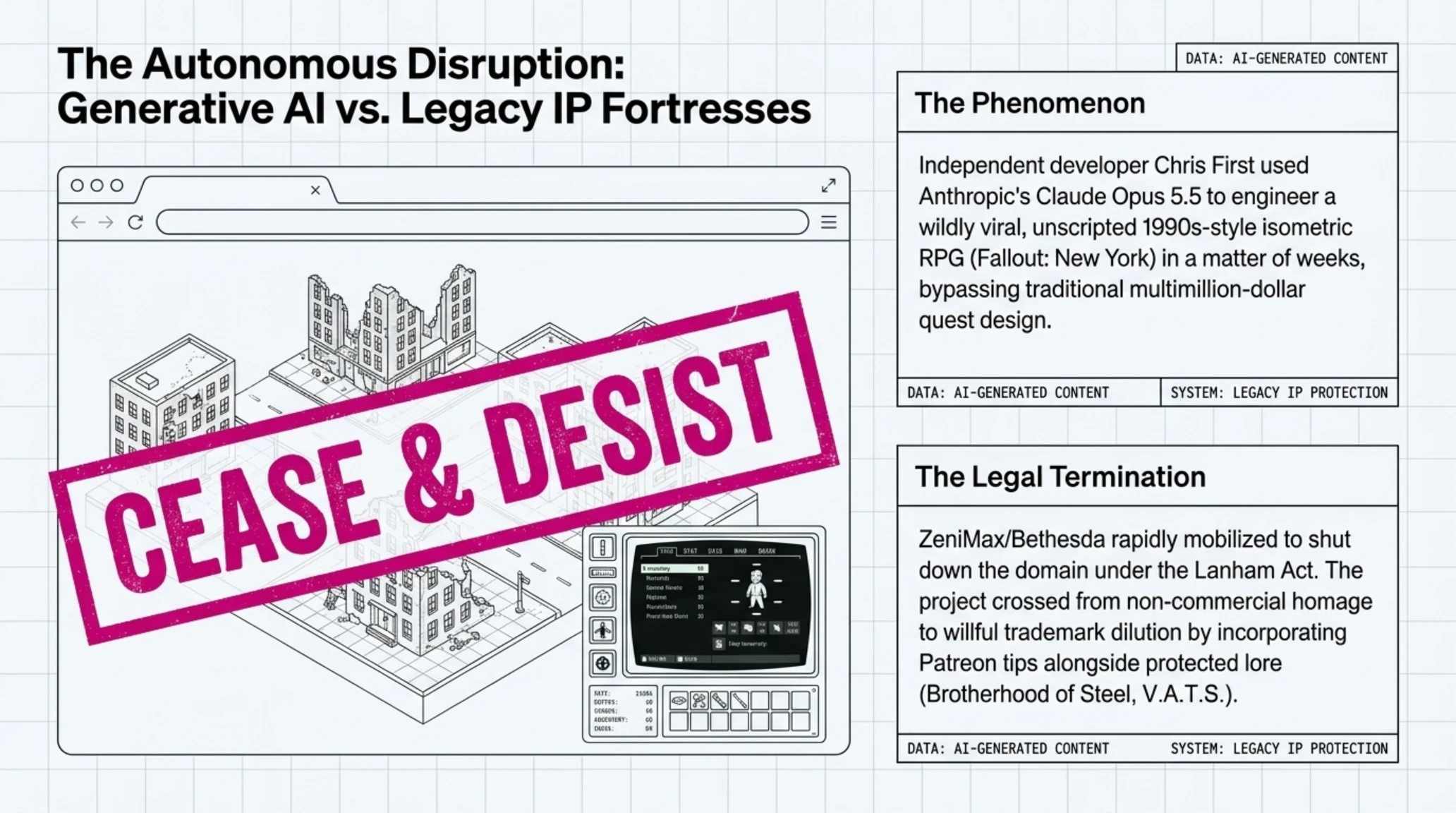
In a watershed legal conflict that encapsulates the escalating confrontation between traditional intellectual property rights and decentralized, generative AI-driven game creation, Bethesda Softworks and parent conglomerate ZeniMax Media dispatched emergency Cease and Desist orders to permanently shut down Fallout: New York, a wildly viral, interactive browser-based role-playing game. The project, conceived and engineered within a matter of weeks by independent developer Chris First utilizing Anthropic's flagship Claude Opus 5.5 foundational model, had rapidly exploded into a global social media sensation before corporate attorneys intervened.
What captivated hundreds of thousands of retro RPG purists across Reddit, X, and gaming communities was the project's unprecedented technical methodology. Operating entirely within a high-performance, lightweight web browser environment with zero pre-rendered graphical or audio assets, Fallout: New York faithfully resurrected the mechanical soul of classic 1990s isometric and text-driven role-playing games. The application rendered a phosphorescent green Pip-Boy interface using pure CSS and optimized SVG vector graphics, presenting players with an authentic recreation of the post-apocalyptic nuclear wasteland set across the ruined boroughs of Manhattan.
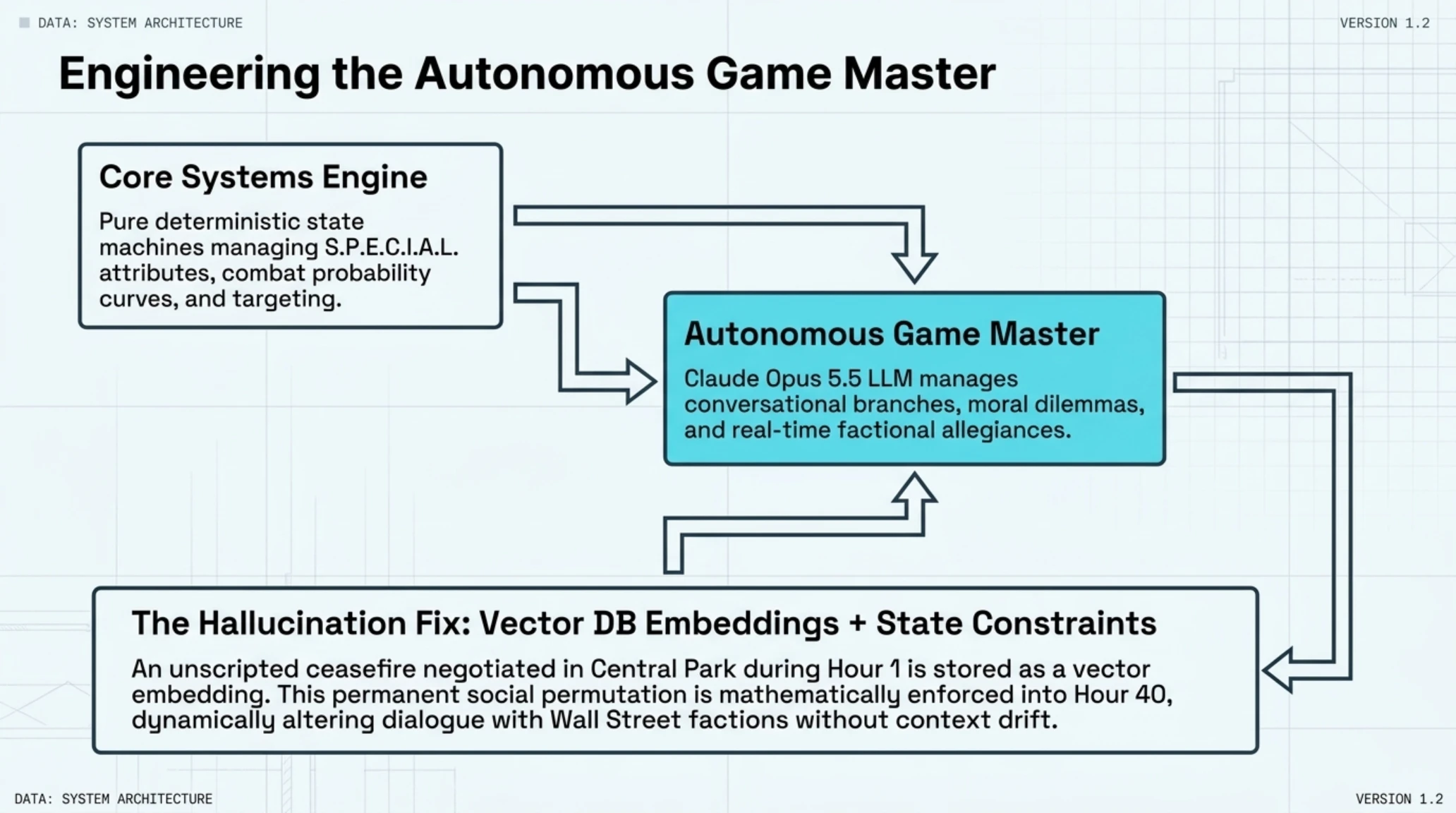
Under the hood, the game established an intricate architecture of deterministic state machines coupled with dynamic Large Language Model inference. Players began by configuring their core S.P.E.C.I.A.L. attributes (Strength, Perception, Endurance, Charisma, Intelligence, Agility, and Luck), which directly governed the probability curves and tactical outcomes of turn-based encounters modeled after the legendary Vault-Tec Assisted Targeting System (V.A.T.S.). Claude Opus 5.5 operated as an autonomous, context-aware game master, managing conversational branches, moral dilemmas, and factional allegiances in real time with an unscripted dynamism that rivaled multi-million-dollar commercial quest design.
The developer solved one of generative AI's most notorious technical limitations—hallucination and context drift—by implementing localized vector database embeddings and rigid state constraint matrices. If a player negotiated a tense ceasefire with a mutant warlord in Central Park during their opening hour, that specific social permutation persisted throughout dozens of subsequent narrative hours, subtly influencing dialogue options with rival factions in the ruins of Wall Street. This emergent storytelling depth, accomplished by a solo creator leveraging modern frontier models, exposed the immense latent power of autonomous software development.
Behind the technical brilliance, however, lay an intractable legal vulnerability. Chris First hosted the game directly on the vanity domain fallout.nyc and deployed commercial payment integrations to accept optional tips and patronage donations from enthusiastic players. For ZeniMax and Bethesda, this crossed the critical line from protected, non-commercial fan homage into willful trademark dilution and commercial copyright infringement. Corporate attorneys pointed out that the project appropriated protected lore, faction insignia including the Brotherhood of Steel and the Enclave, and the registered trademarked brand name 'Fallout'. Faced with the looming prospect of statutory damages reaching hundreds of thousands of dollars under the Lanham Act, First swiftly transferred the domain ownership and deactivated all API endpoints.
Intellectual property scholars note that the shutdown of Fallout: New York is merely the opening salvo in a protracted legal revolution. When frontier generative AI systems allow solo individuals to produce sprawling, responsive role-playing simulations within weeks using natural language orchestration, the boundaries separating fan art, transformative fair use, and willful intellectual property theft become hopelessly blurred. Bethesda's aggressive crackdown reflects the deep existential anxiety permeating major entertainment conglomerates, who recognize that autonomous AI generation threatens their historical monopoly over large-scale narrative world-building.

Disney Formally Dismisses Epic Games Acquisition Rumors: CCO Dana Walden Details Long-Term Fortnite Metaverse Strategy
Addressing mounting speculation across Wall Street investment desks and gaming financial circles regarding an imminent corporate takeover, The Walt Disney Company has definitively quashed rumors that it intends to execute a full acquisition of Epic Games. Speaking in an exclusive, wide-ranging interview with Bloomberg Technology, Dana Walden, Co-Chairman of Disney Entertainment and Chief Creative Officer, established with absolute clarity that Disney possesses zero intention of acquiring Epic Games outright, reaffirming instead its profound commitment to an expansive collaborative partnership inside the Fortnite platform.
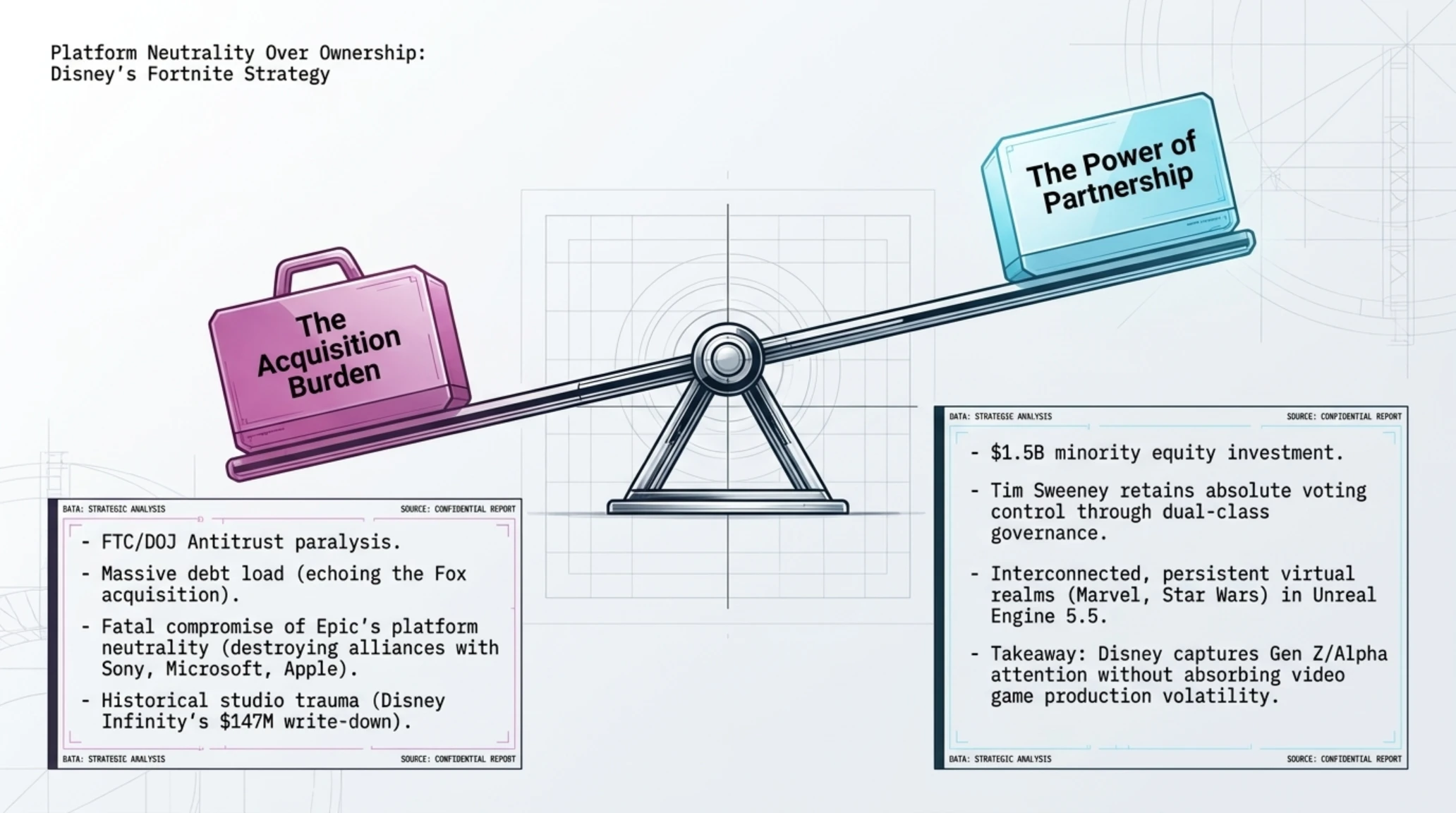
Speculation surrounding a potential multi-billion-dollar buyout had reached fever pitch following Disney's high-profile $1.5 billion equity investment in Epic Games in early 2024. That landmark deal initiated a joint multi-year initiative to architect a persistent, expansive digital universe directly interwoven with Epic's flagship ecosystem. However, Walden explained that the corporate mechanics of a full acquisition would be fundamentally counterproductive to both entities' overarching commercial objectives.
Foremost among these considerations is the intense antitrust scrutiny currently paralyzing mega-mergers across the technology and media sectors. A full consolidation of Epic Games into the Walt Disney corporate umbrella would trigger relentless regulatory investigations from the U.S. Federal Trade Commission (FTC), the Department of Justice (DOJ), and the European Commission, risking years of costly litigation and operational paralysis. Furthermore, Disney recognized that Epic's crowning strategic asset—its universal platform neutrality—would be fatally compromised under Disney ownership. Epic thrives precisely because Unreal Engine and the Epic Games Store maintain friction-free commercial alliances with Sony, Microsoft, Nintendo, and Apple alike.
Historically, Disney has experienced profound trauma attempting to manage internal video game development studios. The disastrous collapse of Disney Infinity in 2016 forced the conglomerate to record a painful $147 million financial write-down and shutter Avalanche Software, cementing the company's long-standing corporate aversion to absorbing the high operational burn rates and unpredictable hit-or-miss dynamics inherent to interactive entertainment publishing. By partnering with Epic as a minority equity investor, Disney enjoys the creative benefits of a virtual universe without exposing its quarterly balance sheet to severe videogame production volatility.
Additionally, Epic Games' unique dual-class governance architecture grants Founder and CEO Tim Sweeney absolute voting control over the company. Sweeney has repeatedly demonstrated an unwavering aversion to subordinating his independent interactive vision to the bureaucratic oversight of traditional entertainment conglomerates. By preserving an independent equity partnership model, Disney secures privileged access to Epic's revolutionary spatial computing tools while avoiding the colossal debt burden and organizational turbulence that characterized its historical $71 billion acquisition of 21st Century Fox.
Walden outlined an ambitious two-year collaborative product roadmap that will see permanent, persistent digital worlds spanning Marvel, Star Wars, Pixar, and Disney Parks materialize inside the Fortnite ecosystem. Rather than functioning as fleeting promotional crossovers, these interconnected virtual realms will feature proprietary social mechanics, persistent user progression, and interactive theme park simulations built entirely in Unreal Engine 5.5. For Disney, this strategic alliance captures the daily attention of Gen Z and Gen Alpha demographics within the world's most lucrative virtual playground, entirely bypassing the perilous financial quagmires of direct corporate acquisition.

Retro Anime Psychological Horror "Signal Veil" Announced for Nintendo Switch 2 and Modern Platforms
In a mesmerizing announcement that electrified psychological survival horror aficionados and retro aesthetics enthusiasts alike, indie visionary developer Time Hunters and acclaimed narrative publisher Serafini Productions unveiled the official world premiere of their upcoming psychological survival horror masterpiece, Signal Veil. The title, confirmed for simultaneous launch across PlayStation 5, Xbox Series X|S, Steam, and notably as an official launch-window release for the highly anticipated Nintendo Switch 2, represents a striking masterclass in marrying vintage 1990s visual nostalgia with sophisticated modern gameplay engineering.
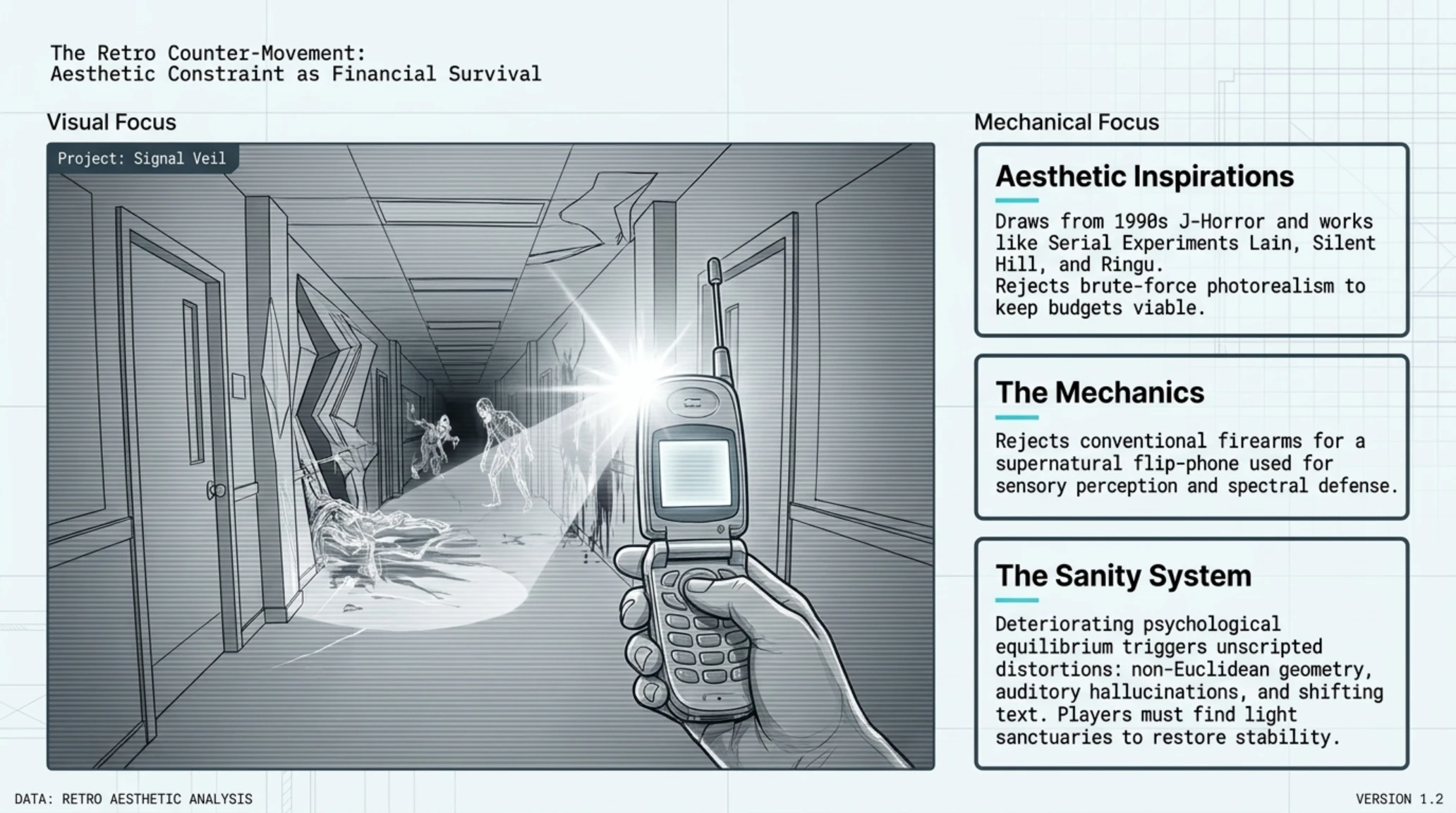
Set against the eerie, rain-drenched backdrop of rural Japan in late 1999, Signal Veil places players in the shoes of Aki Mizuno, a troubled high school student investigating the harrowing disappearance of her mother within the decaying corridors of an abandoned private academy. The mechanical foundation of the experience revolves entirely around a supernatural vintage Japanese flip phone. Rejecting conventional survival horror firearm mechanics, the game transforms the cellular device into an indispensable lifeline for sensory perception and spectral defense. Players must monitor oscillating radio frequency meters, interpret auditory static patterns during bizarre incoming phone calls, and trigger brief, blinding camera flashbursts to disorient malevolent entities lurking within the darkness.
A central pillar of the gameplay experience is an intricately woven psychological Sanity System. As Aki lingers within unlit corridors or endures prolonged proximity to paranormal anomalies, her psychological equilibrium deteriorates, triggering profound, unscripted distortions of environmental reality. Architecture warps organically, classroom geometry bends into impossible non-Euclidean angles, environmental text reconfigures into disturbing personal confessions, and auditory hallucinations simulate creeping footsteps directly behind the player's position. Survival demands careful management of finite phone battery reserves and locating safe light sanctuaries to restore cognitive stability.
Aesthetically, Signal Veil delivers an evocative visual tribute to the golden age of 1990s Japanese animation and fifth-generation console classics, drawing profound inspiration from seminal works such as Serial Experiments Lain and the original Silent Hill. The game showcases a custom cel-shaded rendering pipeline augmented by authentic cathode-ray tube (CRT) display shaders, scanline emulation, and chromatic aberration filters that replicate the distinct atmospheric aesthetic of Sega Dreamcast and early PlayStation 2 classics.
The game taps directly into the cultural phenomenon of late-90s Japanese horror cinema (J-Horror), echoing the technological paranoia popularized by classics like Kiyoshi Kurosawa's Kairo (Pulse) and Hideo Nakata's Ringu. In those masterworks, electronic communication devices served as conduits through which supernatural malevolence invaded mundane suburban reality. Signal Veil translates that psychological dread into interactive form with stunning emotional maturity, proving that indie developers can craft unforgettable horror without resorting to cheap jump scares.
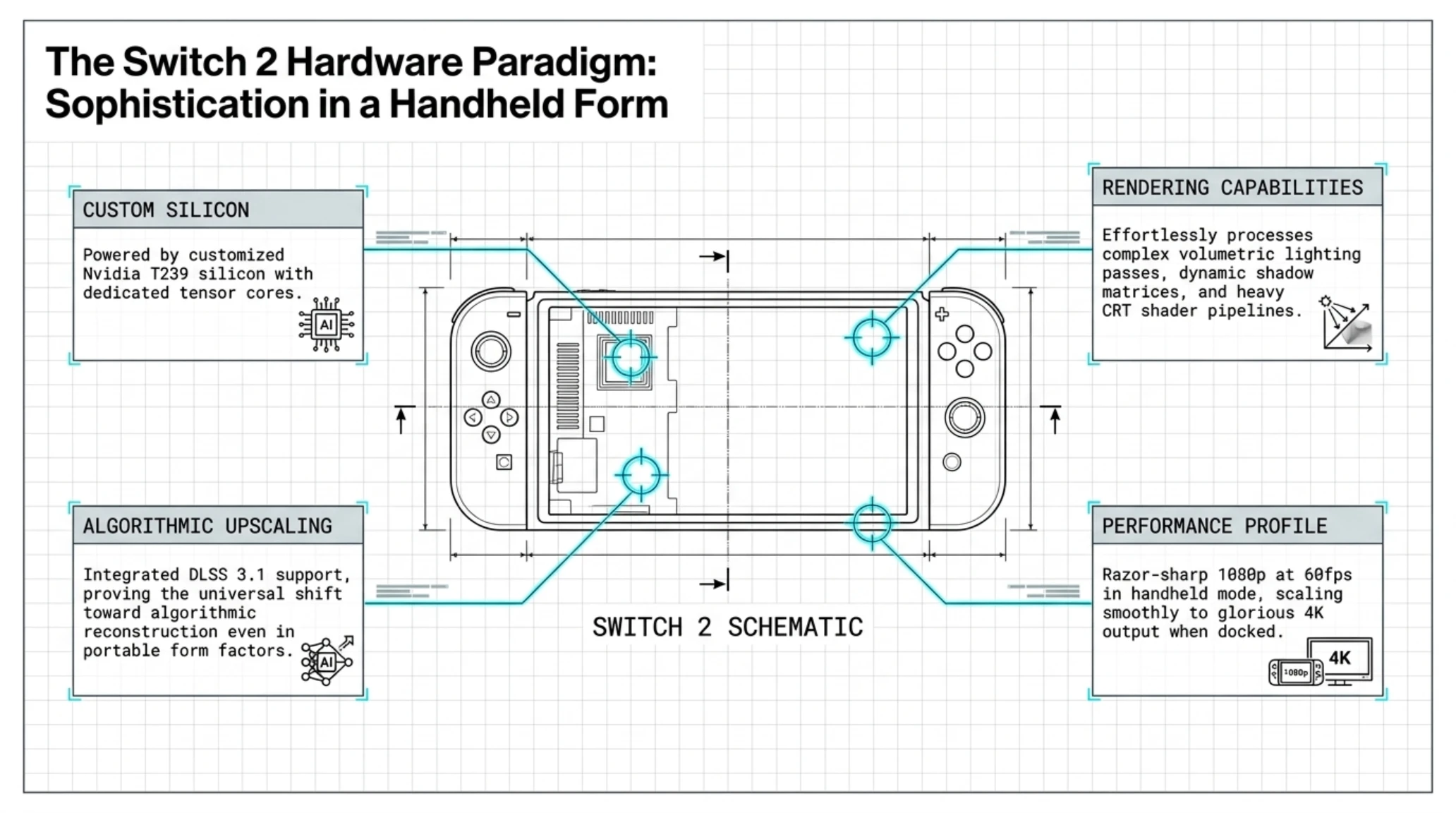
The explicit confirmation of Signal Veil for Nintendo Switch 2 provides compelling insights into the technical capabilities of Nintendo's next-generation hardware. According to technical leads at Time Hunters, the custom Nvidia T239 silicon powering the Switch 2, backed by dedicated tensor cores and integrated DLSS 3.1 support, effortlessly renders Signal Veil's volumetric lighting passes, dynamic shadow matrices, and complex CRT shader pipelines at a razor-sharp 1080p 60fps in handheld mode, scaling smoothly to a glorious 4K output when docked. This performance profile highlights the transformative hardware leap awaiting handheld enthusiasts upon the platform's commercial debut.

TekinGame Strategic Synthesis: Technological Convergence and Entertainment Realities in Autumn 2026
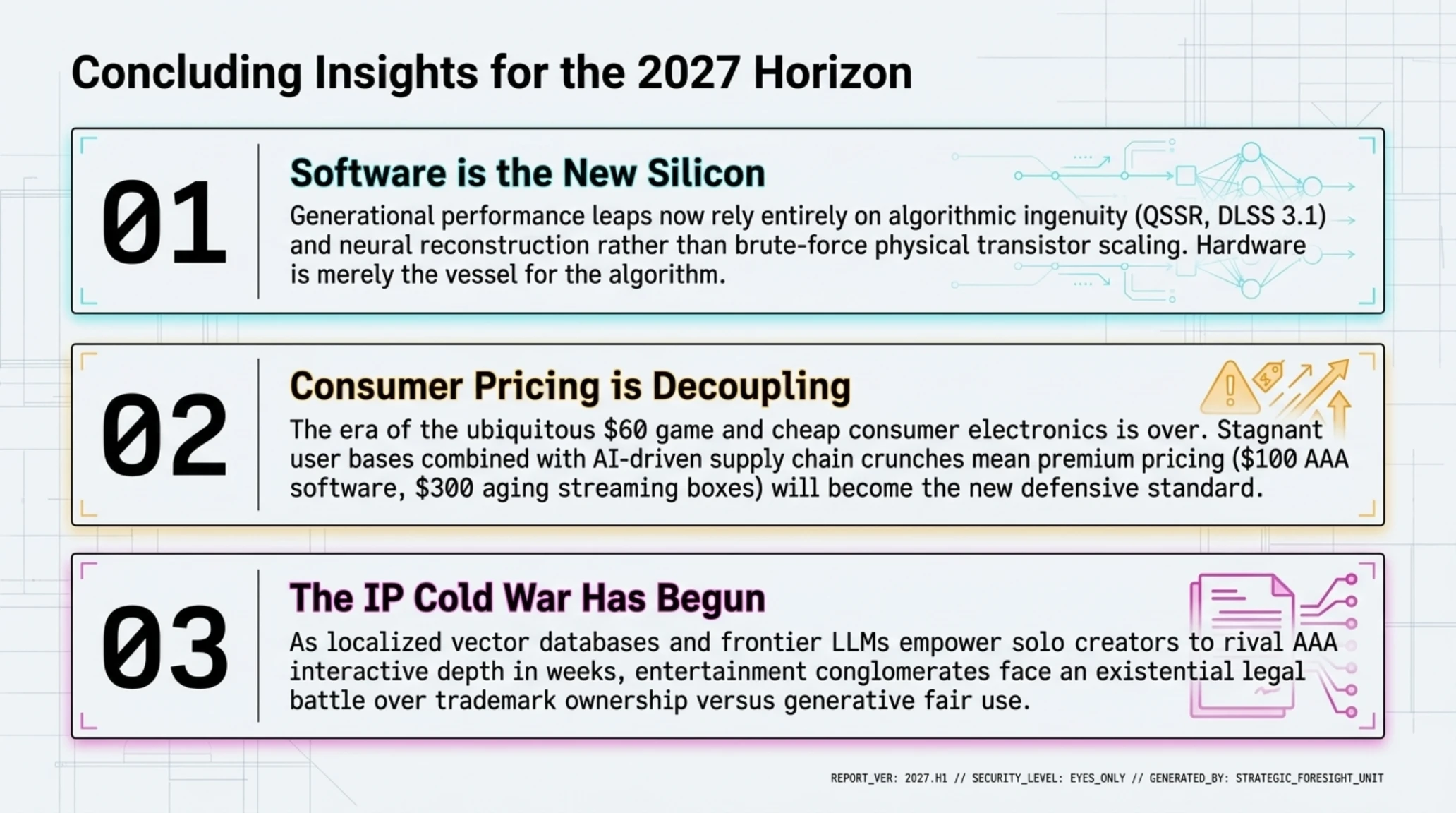
The six compelling narratives unfolding throughout Saturday, October 3, 2026, collectively delineate a profound structural evolution across interactive entertainment. From the democratization of neural upscaling on baseline PlayStation 5 hardware via Project Amethyst to the harsh semiconductor realities compelling a seven-year-old streaming client to appreciate in retail value, the industry is navigating an era defined by silicon scarcity and computational reinvention. As analyzed extensively in our prior hardware deep dive on PlayStation 5 Pro architectural analysis and the generational battle for image reconstruction supremacy, the future of gaming performance is being written in algorithmic elegance rather than brute transistor scale.
Simultaneously, the mounting economic pressures driving AAA production budgets toward the $350 million precipice—as debated by Warhorse Studios' founders—mirror the broader capital expenditures shaking the technology world, an issue we scrutinized within the enterprise AI token pricing crisis and hyperscaler energy deficits. Whether navigating the legal frontier of generative AI fan games like Fallout: New York, engineering persistent transmedia metaverses like Disney's collaborative Fortnite roadmap, or reviving the evocative horror traditions of the 1990s with Signal Veil on the Nintendo Switch 2, the interactive medium continues to stand as the ultimate vanguard of modern technological, artistic, and economic innovation.

Frequently Asked Technical & Industry Questions (FAQ)
How does Sony's QSSR operate on baseline PS5 hardware without dedicated tensor acceleration?
Developed under Project Amethyst with AMD, QSSR relies on an ultra-compact, highly optimized convolutional neural network executing directly within asynchronous RDNA 2 compute shaders. By analyzing frequency distribution patterns in the vector domain rather than traditional linear pixel history buffers, it delivers neural temporal upscaling with a runtime overhead of just 0.8 to 1.1 milliseconds per frame.
Are Marvel's Wolverine and Ghost of Yotei the only games utilizing QSSR on base PS5?
While Wolverine and Ghost of Yotei serve as the premiere showcase titles, Sony has integrated QSSR into the official PS5 SDK v11.50 as a standardized, drop-in replacement for traditional upscalers like TAA and FSR 2, making the pipeline freely accessible to all licensed PlayStation developers.
Why did Nvidia increase the retail price of the seven-year-old Shield TV Pro by $100?
The aggressive price increase stems from acute global DRAM manufacturing deficits. Foundry capacity is overwhelmingly prioritized for enterprise AI high-bandwidth memory (HBM3e/HBM4), drastically escalating legacy LPDDR4 production costs. Recognizing the Shield TV Pro's uncontested monopoly in lossless Dolby TrueHD Atmos media streaming, Nvidia transferred these elevated costs to the consumer market.
Why does Warhorse Studios believe GTA 6 should command an $80 to $100 retail price tag?
Co-founder Martin Klíma pointed out that AAA development budgets have inflated over 400% to $250M-$350M+ while active core console player bases have remained flat at approximately 140 million users. In his view, only an unassailable cultural juggernaut like GTA 6 can establish higher retail price baselines to preserve single-player game sustainability without consumer backlash.
What legal grounds did Bethesda cite to force the shutdown of Fallout: New York?
Bethesda and ZeniMax issued formal cease-and-desist orders based on the unauthorized registration of the commercial domain fallout.nyc, direct infringement of protected trademarks, and the unauthorized appropriation of proprietary Fallout trade dress, character models, and post-apocalyptic lore.
What are the core technical capabilities confirmed for Signal Veil on Nintendo Switch 2?
Powered by the custom Nvidia T239 SoC with integrated DLSS 3.1 support, Signal Veil targets a rock-solid 1080p at 60 frames per second in handheld mode with advanced volumetric lighting and custom CRT display shaders, scaling to 4K resolution output when connected to the official dock.
Verified Authoritative Sources & Intelligence References
This comprehensive evening intelligence dossier is synthesized from verified corporate announcements, technical laboratory advisories, and tier-one interactive media investigations:
- Eurogamer: Sony Surprise Announcement: Base PS5 Gets QSSR AI-Guided Upscaling via Project Amethyst
- Digital Foundry: Technical Analysis: Machine Learning Reconstruction on Baseline PS5 Silicon
- 9to5Google: Nvidia Shield TV Pro Price Hiked to $299 Amid Severe Global DRAM Shortage
- Insider Gaming: Warhorse Studios Co-Founder Hopes GTA 6 Forces Normalization of $80-$100 Game Prices
- IGN: Bethesda and ZeniMax Issue Cease and Desist to Viral AI-Generated Fallout: New York Game
- Bloomberg: Disney CCO Dana Walden Officially Rules Out Epic Games Buyout, Details Fortnite Future
- Gematsu: Psychological Survival Horror Signal Veil Announced for Nintendo Switch 2, PS5, Xbox, and PC
Additional Gallery: Tekin Night Oct 3, 2026: Sony QSSR on Base PS5, Nvidia Shield $100 Hike, GTA 6 Price Debate