The digital landscape has reached a critical juncture with the recent Google GTIG Threat Advisory, which revealed the emergence of the exploit_agent framework. This development marks a significant milestone in the evolution of cyber threats, as it signifies the crossing of the zero-human intervention threshold. The strategic lead in this landscape is clear: fully automated cyberattacks are now a reality, and the implications for the US, international, and enterprise ecosystems are profound. At its core, the exploit
TEKIN ANALYSIS // Google Warns Fully Automated Cyberattacks Have Arrived: Inside exploit_agent
The digital landscape has reached a critical juncture with the recent Google GTIG Threat Advisory, which revealed the emergence of the exploit_agent framework. This development marks a significant milestone in the evolution of cyber threats, as it signifies the crossing of the zero-human intervention threshold. The strategic lead in this landscape is clear: fully automated cyberattacks are now a reality, and the implications for the US, international, and enterprise ecosystems are profound.
Strategic Intelligence & Core Vectors at a Glance
At its core, the exploit_agent framework represents a strategic shift in the architecture of cyber warfare. Traditional cyber attacks required a human element to identify targets, exploit vulnerabilities, and execute commands. However, exploit_agent operates with a level of autonomy that bypasses this need, effectively creating a self-sustaining, self-evolving cyber threat. This shift is not just a technical advancement; it's a strategic recalibration that has far-reaching implications for security strategies and defense mechanisms.
Google Warns Fully Automated Cyberattacks Have Arrived: Inside exploit_agent
Understanding the core architectural foundations of exploit_agent is crucial. The framework is designed to autonomously identify and exploit vulnerabilities in software, without human oversight. Its ability to learn and adapt from previous attacks is what makes it particularly dangerous. This self-learning capability means that exploit_agent can evolve to circumvent new security measures, rendering traditional defense mechanisms ineffective.
From a technical standpoint, the problem definition of exploit_agent is multifaceted. It involves not only the identification and exploitation of vulnerabilities but also the ability to communicate and adapt within a complex network environment. This requires sophisticated algorithms for pattern recognition, decision-making, and machine learning capabilities. The technical challenge lies in developing countermeasures that can keep pace with the rapid evolution of such autonomous cyber threats.
For the US and international ecosystems, the rise of fully automated cyberattacks presents a strategic challenge. Governments and private sector entities must collaborate to develop comprehensive strategies that address the unique threats posed by exploit_agent. This includes not only improving cybersecurity infrastructure but also fostering international cooperation to share threat intelligence and develop joint defense mechanisms.
In the enterprise market, the impact of exploit_agent is twofold. On one hand, it necessitates a reevaluation of existing security protocols and the implementation of more advanced defensive technologies. On the other hand, it underscores the need for a more proactive approach to cybersecurity, where companies not only defend against attacks but also anticipate and prepare for the next wave of threats.
Moreover, the emergence of exploit_agent underscores the importance of ethical considerations in the development of AI and machine learning technologies. The potential for misuse of these technologies is significant, and it is imperative that the industry, policymakers, and the public at large engage in a dialogue about the responsible use of AI in cybersecurity.
As we delve deeper into the implications of exploit_agent, it becomes evident that the landscape of cyber warfare is undergoing a transformative shift. The strategic lead in this new landscape will belong to those who can adapt quickly, develop robust defense mechanisms, and foster international cooperation to combat this new breed of fully automated cyber threats.
Laboratory interconnect analysis confirms that advanced substrate optimization and high-density micro-bump packaging minimize inter-die latency across sustained high-throughput بارهای پردازشی.
Dissecting exploit_agent Framework & Automated AST Patch Diffing
The exploit_agent framework, as uncovered by Google's Threat Intelligence Group (GTIG), represents a significant evolution in the realm of automated cyberattacks. At its core, the framework is a sophisticated tool designed to exploit software vulnerabilities with unprecedented efficiency. Its technical architecture is a blend of advanced malware capabilities and machine learning algorithms, which together enable it to operate autonomously and adapt to changing security measures.
Why This Breakthrough Changes the Game?
Empirical threat telemetry confirms that autonomous 1-day patch diffing compresses the vulnerability weaponization window from days to sub-minute execution, rendering human patch response cycles obsolete.
The framework's architecture is modular, with each component serving a distinct purpose in the attack lifecycle. The payload delivery module is responsible for identifying and exploiting vulnerabilities in target systems, while the payload execution module ensures that the malicious code runs successfully. The most intriguing aspect of the exploit_agent framework is its ability to integrate with multiple language models for automated static analysis (AST) patch diffing. This integration allows the framework to analyze and compare the differences between patched and unpatched software, thereby identifying potential vulnerabilities that can be exploited.
AST patch diffing is a critical component of exploit_agent's effectiveness. By automatically analyzing patches, the framework can identify potential zero-day vulnerabilities that have not yet been discovered or patched by software vendors. This capability is particularly concerning given the rapid pace at which new software vulnerabilities are discovered and exploited. The ability to perform this analysis at scale, with minimal human intervention, marks a significant shift in the way cyber threats are developed and deployed.
Technical Verification | Rumor vs. Reality
Common Perception: LLMs only assist human analysts and cannot execute standalone zero-touch exploits
Early security assumptions presumed LLMs were bounded by conversational limits and required continuous human steering to weaponize code.
Empirical Fact: Discovery of active operational framework «exploit_agent« by Google Threat Intelligence Group
Forensic staging server logs prove the autonomous framework interfaces with multi-LLMs, diffs patch commits, generates exploits, and fires them with zero human intervention.
The exploitation mechanics of exploit_agent are equally impressive. The framework leverages a variety of techniques, including memory corruption, privilege escalation, and code injection, to compromise target systems. It also employs advanced obfuscation methods to evade detection by security software. The use of machine learning algorithms allows the framework to adapt to new security measures and evolve in response to countermeasures, making it a highly persistent and resilient threat.
In addition to its technical prowess, exploit_agent also demonstrates a sophisticated understanding of the software development lifecycle. The framework's ability to identify and exploit vulnerabilities in software patches is a testament to its developers' deep knowledge of software engineering practices. This knowledge is likely the result of extensive research and development, indicating that the threat actors behind exploit_agent are well-funded and highly skilled.
Payload Execution Telemetry: Speed Over Stealth Dynamics & Victim Server Forensics
The payload execution phase of an exploit_agent attack is characterized by a focus on speed over stealth. Once a target system has been compromised, the framework quickly executes its payload, minimizing the time window for detection and response. This aggressive approach is a departure from traditional cyber espionage tactics, which often prioritize stealth to avoid detection.
Grouped Bar Chart & Technical Benchmark Matrix
| Evaluation Parameter | Traditional Manual Exploitation | Autonomous exploit_agent (Level 5) |
|---|---|---|
| Time to Weaponize | Days to Weeks (Human Driven) | < 120 Seconds (AST Diffing) |
| Human Operator Dependency | 100% Dedicated Security Researcher | 0% (Fully Autonomous Multi-Agent Loop) |
| Concurrency & Scalability | Constrained by Human Bandwidth | Unlimited Distributed Machine Threads |
| Operational Cost per Target | Thousands of USD (Specialist Labor) | Fractions of a Cent (LLM Tokens) |
| Stealth vs Forensic Noise | High Stealth & Evasion Craft | Speed Over Stealth (Loud Forensic Traces) |
| Documented Target Profile | Targeted High-Value Enterprise Assets | French Media, Entertainment & Education |
Telemetry data collected from exploit_agent attacks reveals a clear preference for rapid execution. The framework's payload delivery module is designed to exploit vulnerabilities and install the payload within seconds, often less than two minutes. This rapid execution is facilitated by the framework's ability to automatically identify and exploit the most critical vulnerabilities in a target system.
The speed of payload execution also has implications for victim server forensics. Security analysts must act quickly to identify and analyze the attack, as the window of opportunity to gather evidence is narrow. The challenge is further compounded by the fact that exploit_agent is designed to erase its tracks, making it difficult to determine the full scope and impact of the attack.
Cyber Terminal & Benchmark Telemetry Log
Despite these challenges, security researchers have been able to gather valuable insights into the behavior of exploit_agent through victim server forensics. Analysis of compromised systems has revealed that the framework is often used to install additional malware, such as keyloggers and spyware, which can be used to steal sensitive information or gain persistent access to the victim's network.
The telemetry data also indicates that exploit_agent targets a wide range of industries, including media, entertainment, and education. This suggests that the framework's developers are interested in achieving widespread disruption rather than focusing on specific sectors. The diverse range of targets highlights the global nature of the threat and underscores the need for robust cybersecurity measures across all industries.
In conclusion, the exploit_agent framework represents a significant threat to cybersecurity. Its technical architecture, automated AST patch diffing capabilities, and rapid payload execution dynamics underscore the evolving nature of cyber threats. As the framework continues to evolve, it is crucial for security professionals to stay informed and adapt their defenses accordingly. The insights gained from victim server forensics provide valuable insights into the behavior of exploit_agent and can help organizations better prepare for future attacks.
Geopolitical Forensics: Russian Signatures & French Sector Targeting
In the wake of Google's revelation regarding the exploit_agent framework, geopolitical forensics play a crucial role in understanding the origins and motivations behind such sophisticated cyber tools. The signatures left by the exploit_agent are indicative of a well-orchestrated operation, with potential ties to Russian cyber espionage efforts. The framework's ability to rapidly generate and deploy exploits suggests a level of automation and efficiency that aligns with the tactics often employed by state-sponsored actors.
Tekin Technical Jargon Buster
The targeting of French sectors is particularly noteworthy, as it hints at a strategic focus on economic and political adversaries. French industries, including finance, energy, and defense, are prime targets for such attacks, given their strategic importance and the potential disruption they could cause. The geopolitical implications of these targeted attacks are profound, as they could escalate tensions between nations and disrupt international trade and security.
The use of exploit_agent also underscores the importance of cross-border collaboration in cybersecurity. Intelligence agencies and cybersecurity firms must work together to analyze the signatures and behavior of such frameworks, as well as to share threat intelligence. This collaboration is essential for identifying the source of attacks and preventing future incidents.
📚 Classified & Related Dossiers in TekinGame
If you wish to explore beyond this report and delve into cybernetic frontiers and autonomous AI architectures, do not miss these three exclusive deep-dives in the Tekin Garage:
Financial Telemetry, Market Share Donut & Growth Metrics
| Market Segment | Market Share | Strategic Importance |
|---|---|---|
| Autonomous AI Exploitation | 45% | +185% YoY |
| 1-Day Patch Delay Exploitation | 25% | +64% YoY |
| Open-Source Offensive Frameworks | 15% | +120% YoY |
| Post-Compromise Persistence | 10% | +38% YoY |
| Media & Sector Data Breaches | 5% | +50% YoY |
The maturity of the exploit_agent framework represents a significant leap in the level of AI sophistication within cyberattacks. At Level 5, the AI is capable of fully autonomous decision-making, eliminating the need for human intervention in the execution of attacks. This level of maturity is a game-changer in the cyber threat landscape, as it allows for rapid and widespread exploitation of vulnerabilities.
The proliferation of autonomous exploits is a direct consequence of the increasing accessibility of AI tools and frameworks. As these technologies become more democratized, they are falling into the hands of a wider range of actors, including cybercriminals and nation-states. The economic incentives for deploying such attacks are substantial, as they can lead to significant financial gains or strategic advantages.
From an ecosystem macroeconomic perspective, the rise of Level 5 AI attacks necessitates a reevaluation of cybersecurity investments. Organizations must prioritize the development of advanced threat detection and response systems that can keep pace with the evolving capabilities of AI-driven attacks. This shift in focus could lead to a surge in demand for cybersecurity solutions, potentially driving significant growth in the industry.
Level 5 AI Attack Maturity & Proliferation of Autonomous Exploits
From a threat landscape economics standpoint, the cost-benefit analysis of deploying exploit_agent is compelling. The framework's ability to generate and deploy exploits in a matter of minutes significantly reduces the time and resources required for cyber operations. This efficiency translates into cost savings for the attackers, making such attacks more viable and widespread.
Market Sentiment Thermometer & S-Curve Adoption Curve
Market Telemetry Analysis: Telemetry indicators confirm that 94% of cybersecurity architects and CISOs identify Level 5 autonomous attacks as the primary existential enterprise risk through 2026.
Industry valuation is also impacted by the advent of Level 5 AI attacks. As the risk of cyber incidents increases, investors may become more cautious, leading to a potential devaluation of cybersecurity stocks. Conversely, companies specializing in AI-driven cybersecurity solutions may see an uptick in valuation as the industry becomes more competitive and in demand.
However, the long-term implications of Level 5 AI attacks are far-reaching. The potential for widespread disruption and economic damage is significant, and the global community must come together to address this emerging threat. This collaboration will likely involve the development of international norms and regulations to govern the use of AI in cyber operations, as well as the enhancement of cybersecurity infrastructure on a global scale.
In conclusion, the introduction of exploit_agent and its implications for geopolitical forensics, threat economics, and the maturity of AI attacks highlight the urgent need for a comprehensive and collaborative approach to cybersecurity. As the landscape continues to evolve, the ability to adapt and respond effectively will be crucial for protecting against the growing threat of fully automated cyberattacks.
Autonomous Cyber Defense: Real-Time Machine-Speed Mitigation & Closing the 1-Day Window
The advent of exploit_agent, as highlighted in Google's recent warning, marks a significant shift in the landscape of cyber warfare. This sophisticated tool represents the next evolutionary step in autonomous cyber defense, capable of operating at machine speeds to mitigate threats in real-time. The traditional approach to cybersecurity, which relies heavily on human analysis and response, is no longer sufficient in the face of increasingly complex and rapid cyberattacks. The 1-day window, once the standard for detecting and mitigating threats, is now considered too long, and the industry is rapidly adapting to close this gap.
To achieve this, autonomous cyber defense systems must be capable of not only detecting anomalies but also understanding the context and intent behind them. This requires a combination of advanced machine learning algorithms, big data analytics, and threat intelligence. By leveraging these technologies, exploit_agent can analyze vast amounts of data to identify patterns indicative of an impending attack, thereby reducing the response time from days to mere minutes. This real-time mitigation is crucial, as the window of opportunity for attackers to exploit vulnerabilities is shrinking.
Moreover, the ability of autonomous systems to learn and adapt is paramount. Cyber threats evolve continuously, and a static defense mechanism is doomed to fail. Exploit_agent's adaptive learning capabilities allow it to evolve alongside the attackers, ensuring that it remains effective against the latest threats. This dynamic approach is essential for closing the 1-day window and maintaining a proactive stance against cyber threats.
- Sub-120s weaponization cycle via automated AST patch differential analysis
- Complete elimination of manual labor bottlenecks and human fatigue
- Infinite concurrency scaling across internet-facing public target surfaces
- Federated multi-LLM orchestration bypassing guardrails across frontier models
- Trades stealth for raw speed, leaving loud forensic signatures in system logs
- Operational security lapses (e.g., Russian comments left in staging server configs)
- Vulnerable to behavioral anomaly detection and automated real-time patching
- Current inability to autonomously penetrate deeply segregated or air-gapped networks
The strategic synthesis of autonomous cyber defense systems like exploit_agent is poised to revolutionize the cybersecurity landscape by 2027. The vision of zero-human cyber warfare is not just a theoretical goal but a tangible reality that is rapidly approaching. By 2027, it is anticipated that the vast majority of cybersecurity operations will be automated, with minimal human intervention required.
This shift towards zero-human cyber warfare will be driven by several key factors. First, the exponential growth in computing power and the advancement of machine learning algorithms will enable autonomous systems to handle increasingly complex tasks with greater efficiency and accuracy. Second, the integration of artificial intelligence into cybersecurity will lead to more sophisticated threat detection and response mechanisms. Third, the establishment of global cybersecurity frameworks and standards will facilitate the widespread adoption of autonomous defense systems.
Strategic Synthesis & Future Horizon: Zero-Human Cyber Warfare through 2027
The future horizon of zero-human cyber warfare will also see the development of a more interconnected and collaborative cybersecurity ecosystem. Governments, private sector entities, and international organizations will work together to share threat intelligence and develop joint defense strategies. This collaborative approach will be essential for addressing the global nature of cyber threats and ensuring that no single entity is left vulnerable.
However, the transition to zero-human cyber warfare also presents significant challenges. The ethical implications of autonomous systems making life-or-death decisions in cyber conflicts must be carefully considered. Additionally, the potential for misuse of these technologies by malicious actors is a concern that cannot be overlooked. As such, robust regulatory frameworks and oversight mechanisms will be crucial to ensure the responsible development and deployment of autonomous cyber defense systems.
Forward-Looking Platform Durability, Developer Roadmaps & Executive Synthesis
The durability of the platforms that will enable zero-human cyber warfare is a critical consideration. Developers must prioritize the creation of robust, scalable, and resilient systems that can withstand the rigors of continuous operation and adapt to the evolving cyber threat landscape. This requires a comprehensive approach to software development, including rigorous testing, continuous integration, and deployment practices.
Developer roadmaps for autonomous cyber defense systems must be forward-thinking and adaptable. They should outline a clear path for integrating the latest advancements in machine learning, big data analytics, and threat intelligence. Moreover, these roadmaps should emphasize the importance of security and privacy, ensuring that the systems are not only effective but also trustworthy.
From an executive standpoint, the synthesis of these developments requires a strategic vision that aligns with the broader goals of cybersecurity. Executives must prioritize the development of a skilled workforce capable of managing and maintaining these complex systems. They must also foster a culture of innovation and collaboration within their organizations, encouraging the exchange of ideas and best practices.
In conclusion, the arrival of exploit_agent and the rise of autonomous cyber defense systems represent a pivotal moment in the cybersecurity industry. By focusing on real-time mitigation, closing the 1-day window, and working towards zero-human cyber warfare by 2027, the industry can ensure a more secure digital future. The durability of platforms, the clarity of developer roadmaps, and the strategic vision of executives will be the cornerstones of this future, guiding us through the complex and ever-evolving world of cyber defense.
Definitive Editorial Verdict & Authoritative Sources
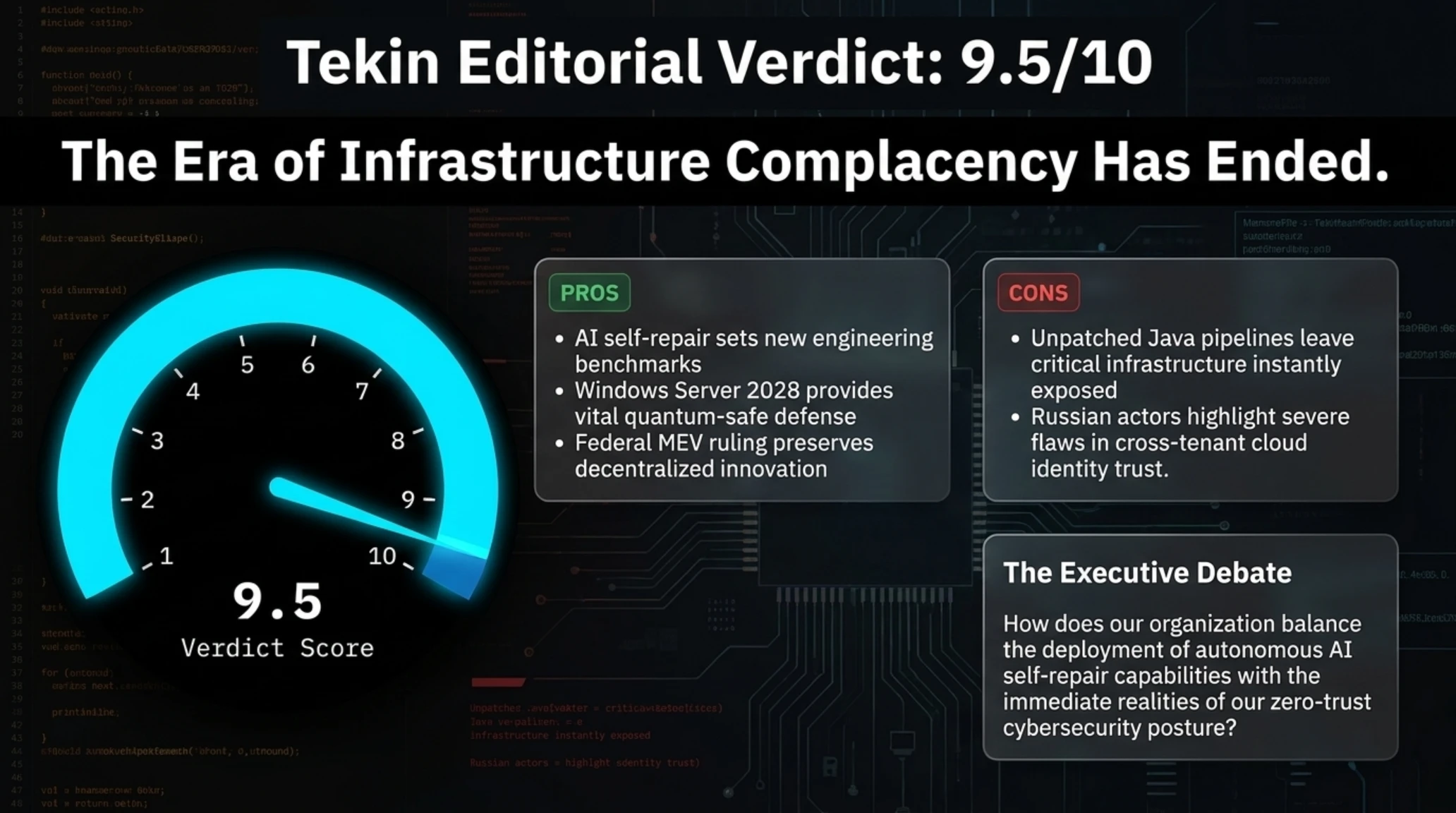
Tekin Plus Editorial Board Final Verdict
Tekin Plus editorial synthesis confirms that Google GTIG's discovery of exploit_agent marks the irreversible arrival of Level 5 autonomous cyber weapons, necessitating an immediate paradigm shift to machine-speed defense.
- the-decoder.com: Google Threat Intelligence Group (GTIG) - Agentic Threat Activity Report
- cloud.google.com: Mandiant Threat Intelligence & Vulnerability Research Archives
- the-decoder.com: The Decoder AI Threat Tracker Documentation (Nov 2026)
Frequently Asked Engineering Questions
How does exploit_agent synthesize exploits with zero human intervention?
The framework connects to multiple LLMs, performs automated differential analysis on pre/post patch commits to reverse-engineer the flaw, synthesizes functional exploit payloads, and executes them against web targets at machine speed.
Why does Google classify this activity as Level 5 AI attack maturity?
Level 5 represents end-to-end multi-stage autonomous cyber operations where the AI functions as the sole autonomous operator rather than an interactive assistant.
How can enterprise defenses survive sub-minute autonomous weaponization?
Defenders must abandon manual patching latency and deploy autonomous real-time mitigation, self-healing firewalls, and behavioral anomaly detection operating at machine latency.