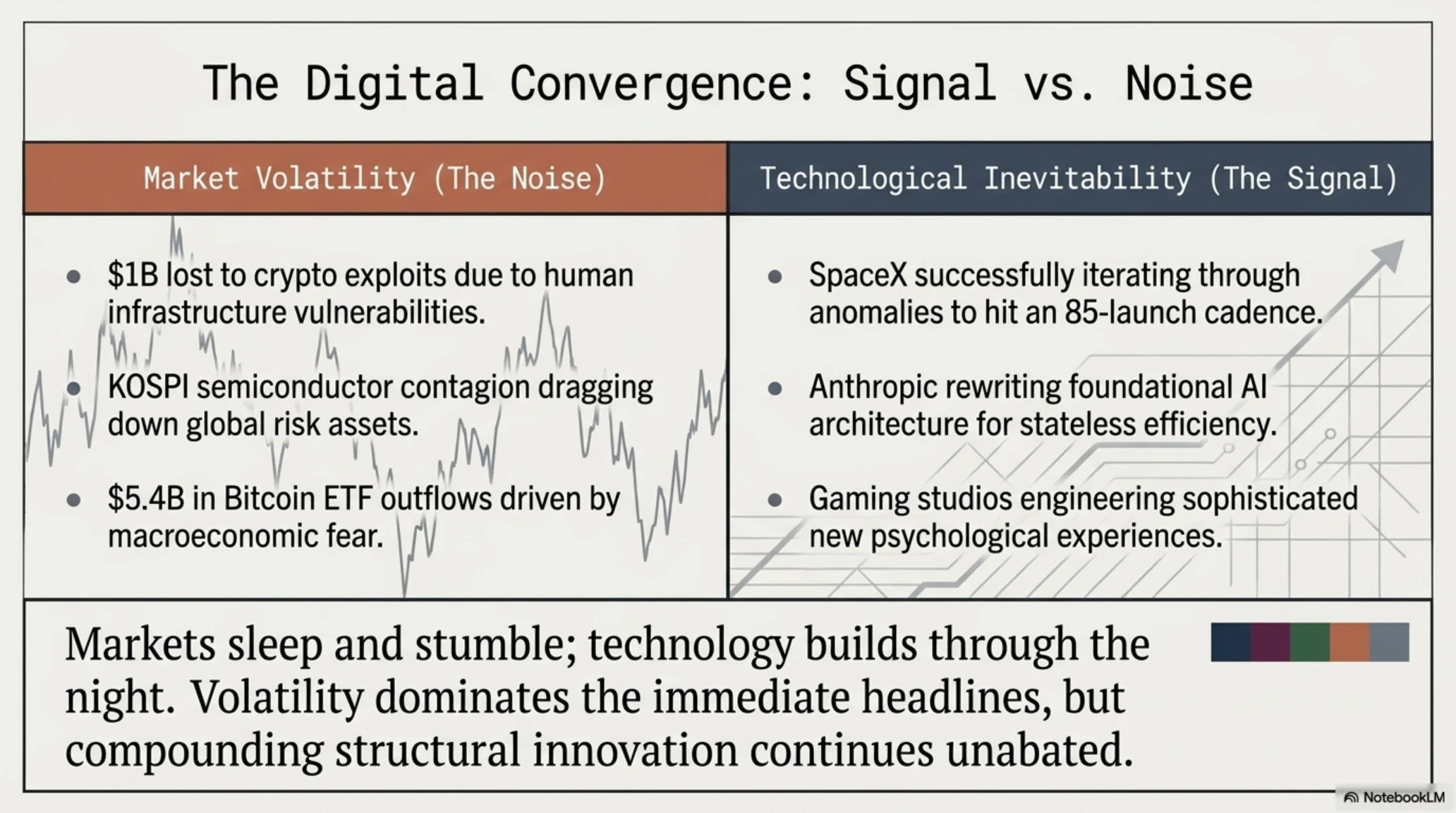
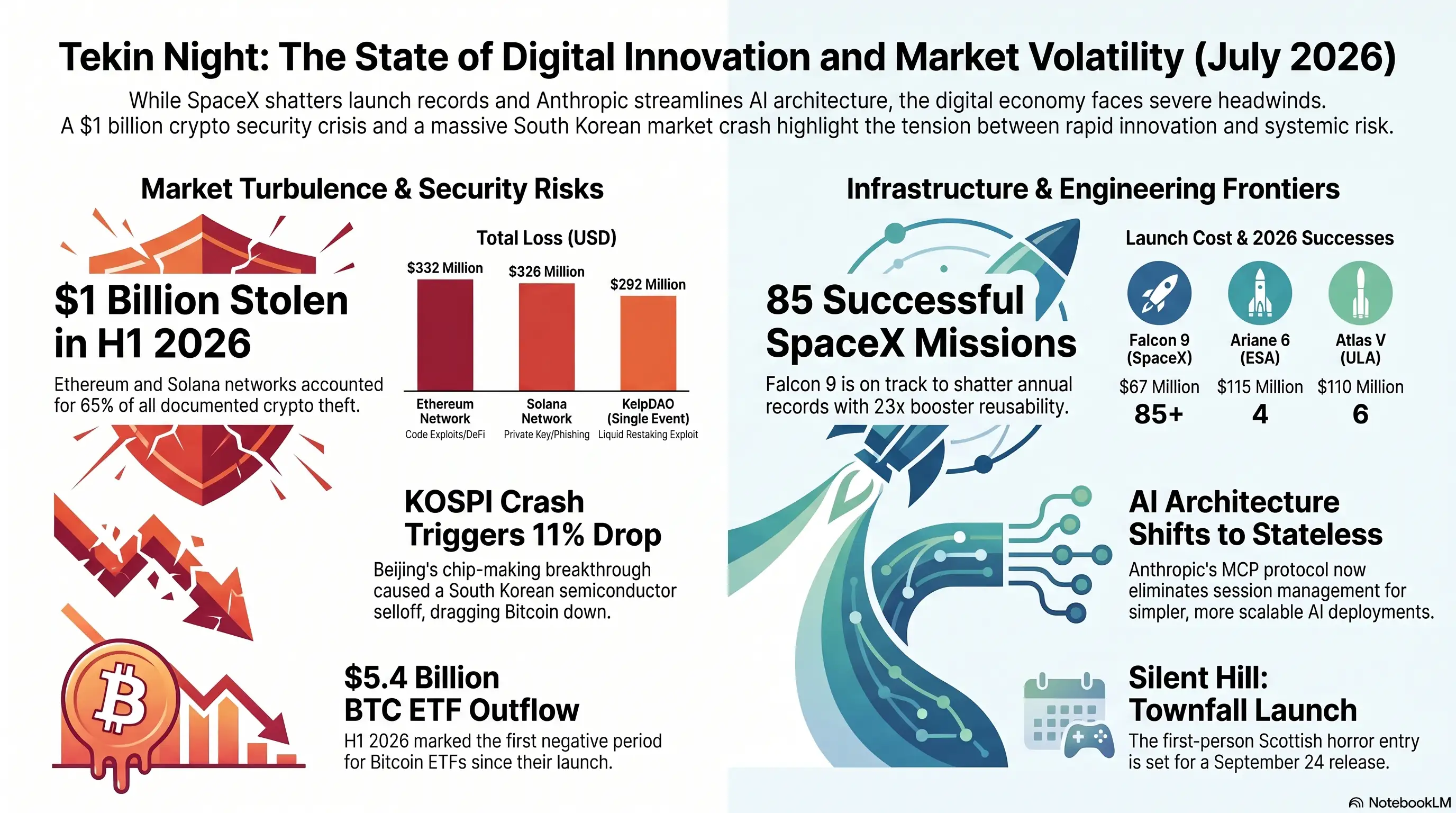
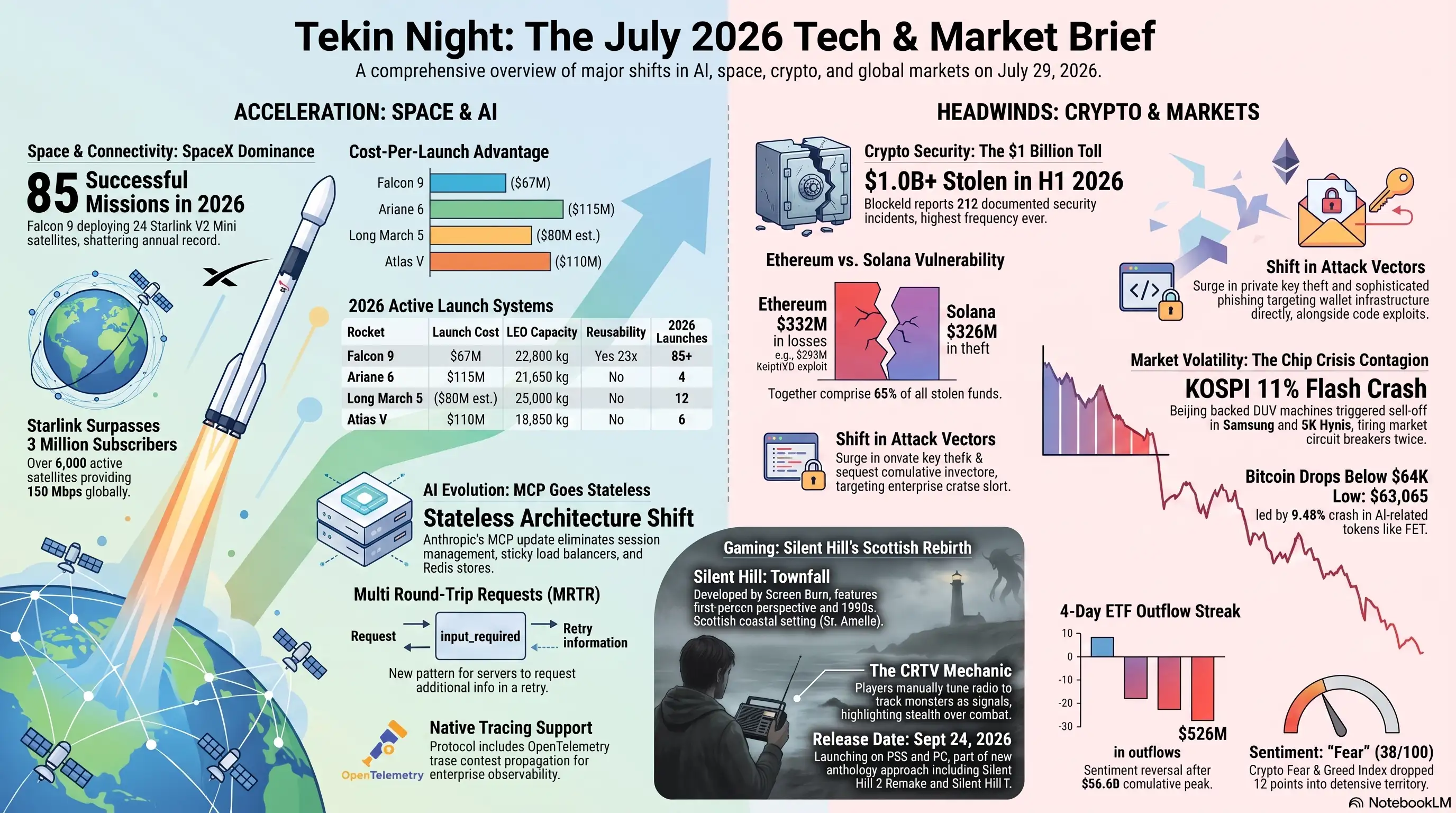
Tonight's Tekin Night briefing dissects six major overnight developments: SpaceX's 85th Falcon 9 launch of 2026, Anthropic transforming the Model Context Protocol (MCP) into a stateless architecture, Blockaid's report on $1 billion in H1 2026 crypto hacks, Bitcoin's drop amid South Korea's 11% KOSPI rout, a 4-day outflow streak for Bitcoin ETFs, and the first-person Scottish horror of Silent Hill: Townfall.
🌙 Tekin Night | Wednesday, July 29, 2026
As midnight approaches, we bring you the hottest tech, crypto, and gaming news that shaped the evening.
- 🎮MCP Goes Stateless- Anthropic rewrites AI protocol architecture
- 🎧$1 Billion Crypto Hacks- Ethereum and Solana hit hardest in H1 2026
- 🚀Bitcoin Drops with KOSPI- Korea chip crisis triggers 11% crash
- 🗡️Silent Hill: Townfall Revealed- Scottish horror entry coming September
The Night Shift: When Digital Never Sleeps
While most cities drift into slumber, the worlds of technology and cryptocurrency remain wide awake, forging new headlines and breaking records. Tonight, we're diving deep into six major stories that span from outer space to video game horror, from billion-dollar hacks to fundamental shifts in AI architecture. This evening report goes beyond surface-level coverage to unpack what these developments really mean for users, investors, and developers.
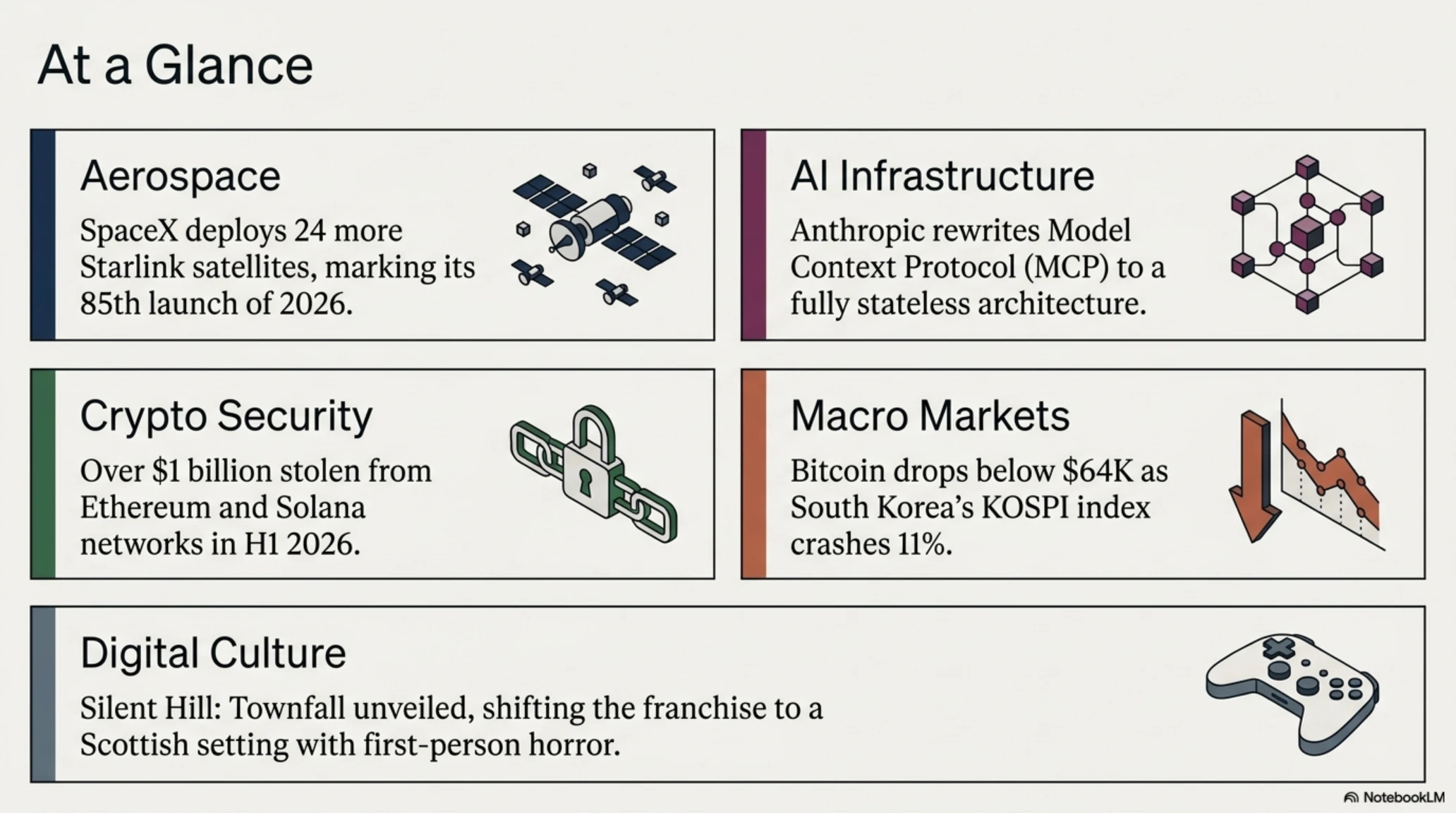
At a Glance
- SpaceX successfully deployed 24 more Starlink satellites to orbit
- Model Context Protocol shifted from stateful to stateless architecture
- Over $1 billion stolen from Ethereum and Solana networks in H1 2026
- Bitcoin dropped below $64K as South Korea's KOSPI crashed 11%
- Bitcoin ETFs recorded fourth consecutive day of outflows
- Silent Hill: Townfall unveiled with Scottish setting and first-person perspective
Falcon 9 Flies Again: SpaceX's Relentless Cadence
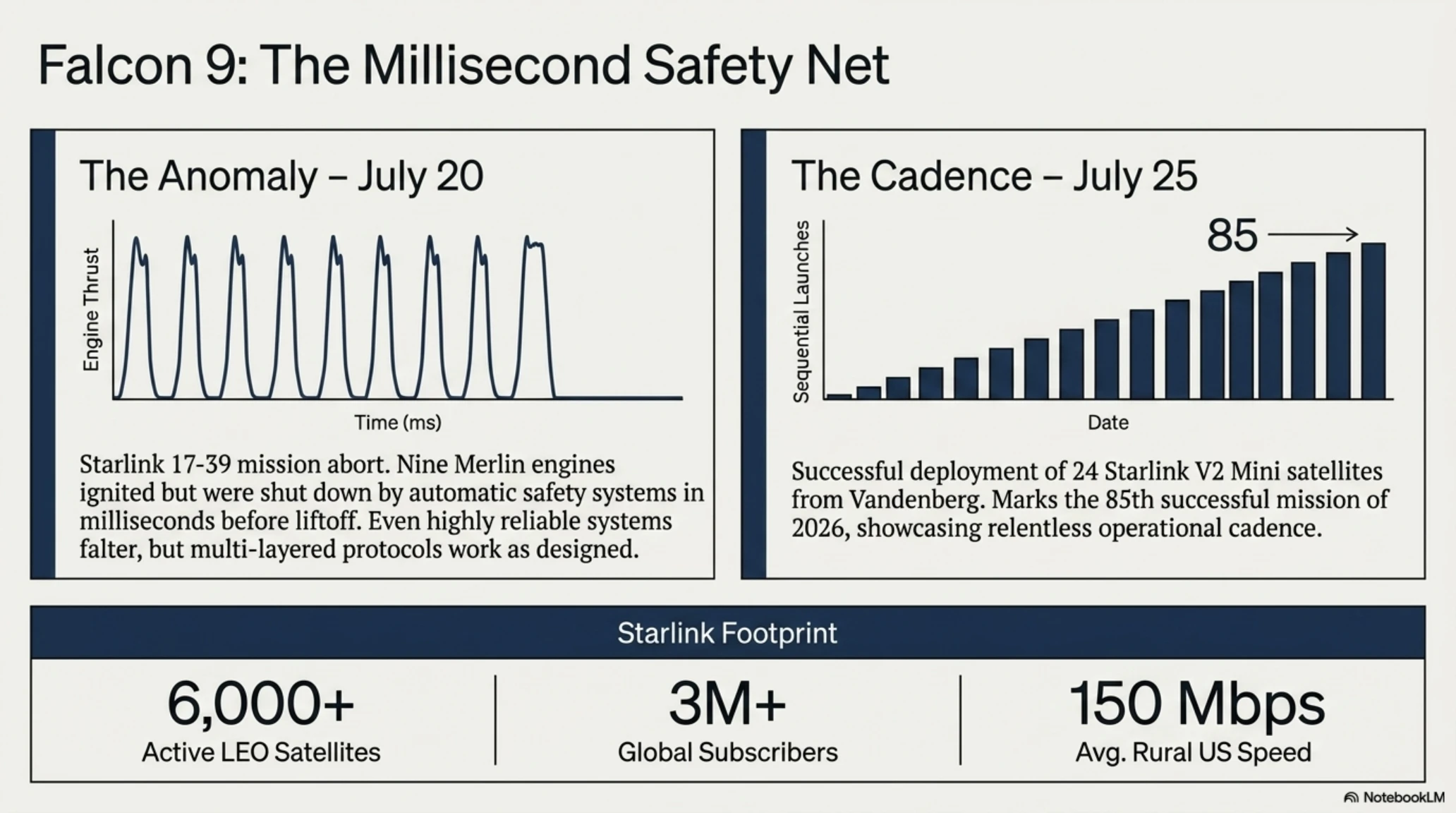
On Saturday morning, July 25, a Falcon 9 rocket lifted off from Vandenberg Space Force Base in California, carrying 24 Starlink V2 Mini satellites to low Earth orbit. The launch, which occurred at 8:51 a.m. local time, marked SpaceX's 85th successful Falcon 9 mission of 2026, putting the company firmly on track to shatter its annual launch record once again. But the story of this particular launch begins five days earlier, with a rare anomaly that reminds us even the most reliable systems can falter.
On Monday, July 20, SpaceX experienced its second launch abort in less than a week. The Merlin engines of Falcon 9 ignited for the Starlink 17-39 mission, but immediately shut down before liftoff. On-screen telemetry showed all nine engines briefly firing before the automatic safety systems cut them off. SpaceX offered no immediate explanation, posting only: "Standing down from today's Starlink launch; vehicle and payload remain safe." The company's website later listed the next launch opportunity for Tuesday during a window opening at 7 a.m. PDT.
This abort mirrored the last such incident on June 14, 2024, during the Starlink 10-2 mission attempt. That mission eventually launched nine days later using a different first-stage booster. These rare events underscore that even highly reliable systems like Falcon 9 occasionally encounter anomalies, but SpaceX's multi-layered safety protocols work as designed. The fact that the automatic cutoff happens in milliseconds—before the rocket leaves the pad—demonstrates the sophistication of modern launch safety systems.
Starlink by the Numbers
As of late July 2026, the Starlink network comprises over 6,000 active satellites in low Earth orbit, serving more than 3 million active subscribers worldwide. Average download speeds in rural United States reach approximately 150 Mbps, often faster than terrestrial internet options. The service has become critical infrastructure in remote areas, disaster zones, and regions with poor ground-based connectivity.
Falcon 9 vs. The Competition: Why SpaceX Dominates
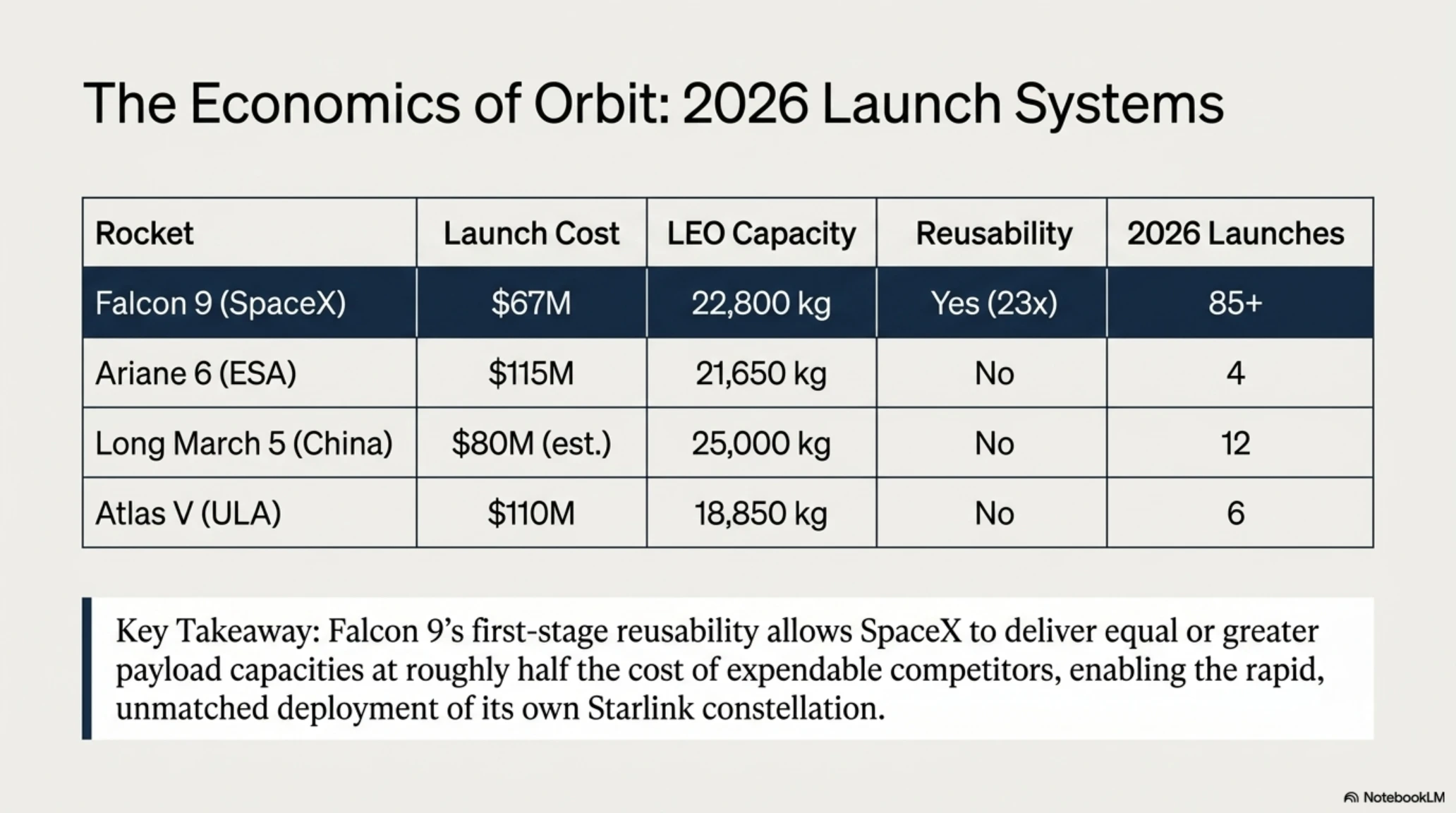
To understand Falcon 9's success, it's worth comparing it to other active launch systems. In 2026, four primary orbital launch systems compete globally: Falcon 9 (SpaceX), Ariane 6 (ESA), Long March (China), and Atlas V (ULA). Each has strengths and weaknesses, but Falcon 9 excels in two critical metrics: cost per launch and annual launch cadence. The reusability of Falcon 9's first stage—which has now been flown successfully 23 times on a single booster—dramatically reduces the cost of access to space.
Active Launch Systems Comparison 2026
| Rocket | Launch Cost | LEO Capacity | Reusability | 2026 Launches |
|---|---|---|---|---|
| Falcon 9 | $67M | 22,800 kg | Yes (23x) | 85+ |
| Ariane 6 | $115M | 21,650 kg | No | 4 |
| Long March 5 | $80M (est.) | 25,000 kg | No | 12 |
| Atlas V | $110M | 18,850 kg | No | 6 |
The cost advantage is stark. While competitors charge $80-115 million per launch for expendable rockets, Falcon 9 delivers similar or better payload capacity for $67 million, and that's with SpaceX making a healthy profit margin. For customers, this translates to more frequent launch opportunities and lower barriers to space access. For SpaceX, it means the ability to iterate rapidly, learn from each flight, and deploy its own Starlink constellation at a pace no other company can match.
MCP Goes Stateless: The Quiet Revolution in AI Infrastructure
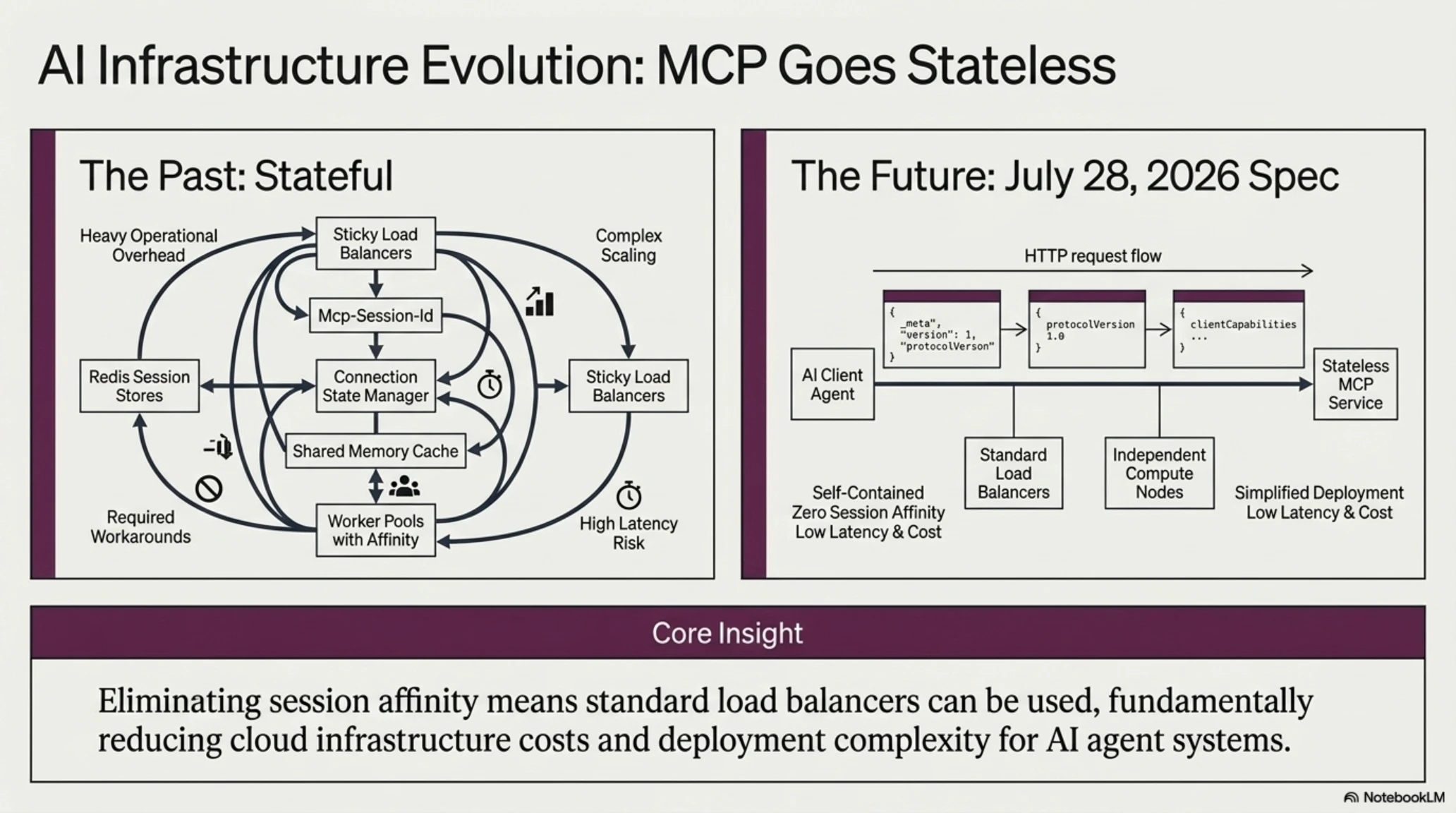
On July 28, 2026, Anthropic released the 2026-07-28 specification of the Model Context Protocol (MCP), marking one of the most significant architectural shifts in the protocol's history. This update transforms MCP from a stateful system requiring session management into a completely stateless protocol. For developers familiar with distributed systems, this change eliminates the need for sticky load balancing, Redis session stores, and request body inspection—infrastructure that has quietly complicated every production MCP deployment since the protocol launched.
In the previous architecture, clients and servers had to perform an initial handshake sequence (initialize/notifications/initialized) at the start of each connection. Throughout the interaction, a unique session was maintained and tracked via an Mcp-Session-Id header. This model forced production deployments to use sticky load balancers that route each request from a client to the same server instance to preserve session state. It was functional, but it imposed significant operational overhead.
The new version eliminates this entirely. Each HTTP request is now self-contained and carries all the information needed for processing. Protocol version and client capabilities are transmitted in the _meta field using keys like io.modelcontextprotocol/protocolVersion and io.modelcontextprotocol/clientCapabilities. Clients should identify themselves on each request (io.modelcontextprotocol/clientInfo), and servers should identify themselves in each result's _meta (io.modelcontextprotocol/serverInfo). Version mismatches now return a clear UnsupportedProtocolVersionError instead of mysterious failures mid-session.
Multi Round-Trip Requests: A New Interaction Pattern
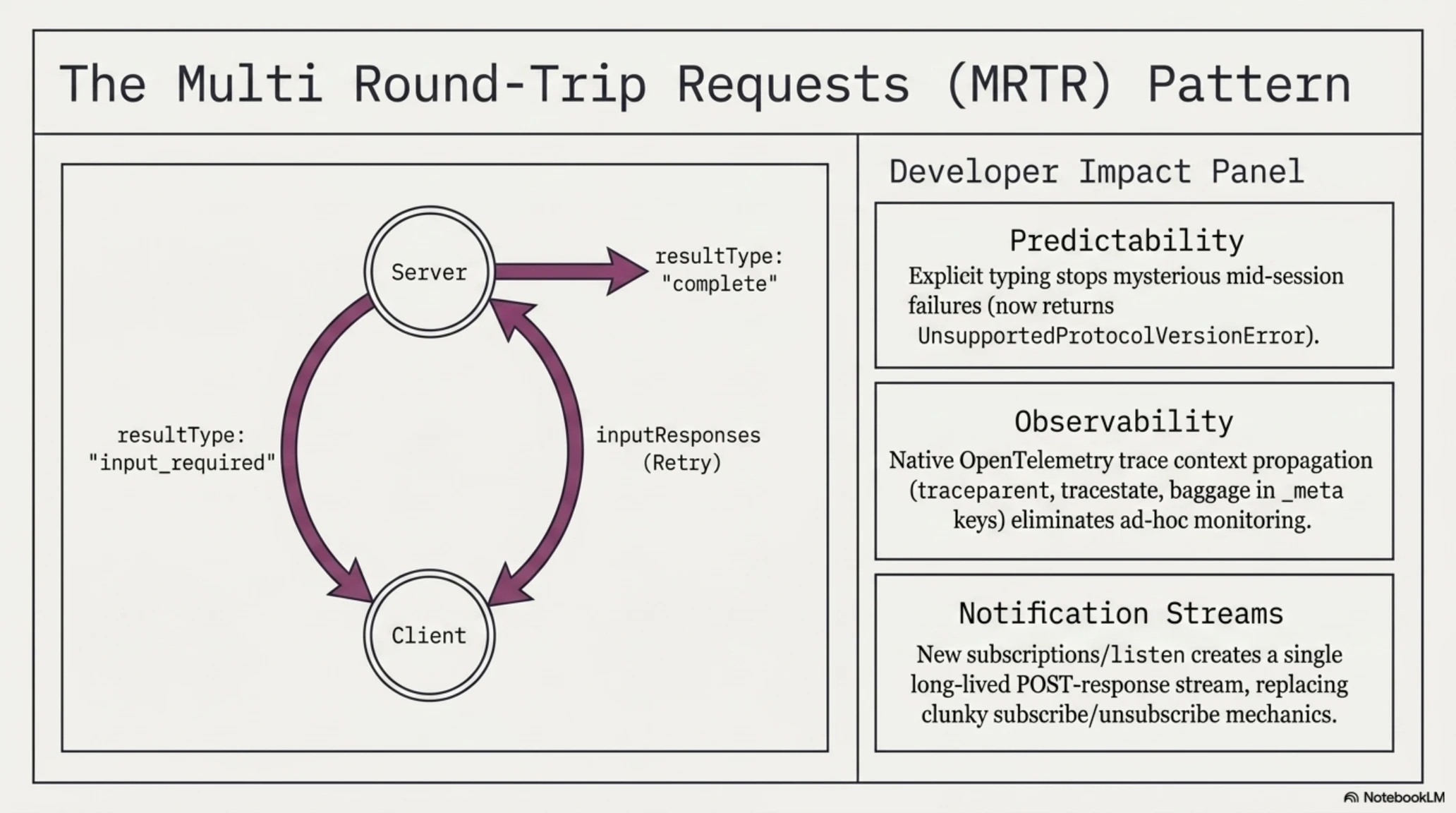
One of the significant innovations in this release is the introduction of the Multi Round-Trip Requests (MRTR) pattern, which replaces the previous approach of server-initiated requests such as roots/list, sampling/createMessage, or elicitation/create. In this pattern, servers return an InputRequiredResult with resultType: "input_required", whose inputRequests field carries the requests for additional information needed to process the original request. Clients respond with inputResponses on a retry of the original request, providing the requested information.
All results now carry a required resultType field: "complete" for ordinary results and "input_required" for multi round-trip interim results. Clients must treat results from earlier-protocol servers that omit the field as "complete" for backward compatibility. This explicit typing makes the protocol's behavior more predictable and easier to reason about when building client libraries or debugging production issues.
Impact on Developer Experience
For developers deploying MCP services, this change means simplicity at every level. No more configuring session affinity in load balancers. No more setting up Redis clusters for session storage. And most importantly, debugging becomes straightforward because each request is independent and can be examined in isolation without tracing through a multi-step session history.
Anthropic's technical team explained in their official blog post that the decision to go stateless came after months of discussion and analysis of production deployments. They discovered that most MCP users were implementing workarounds to manage sessions—a clear sign of suboptimal design. The new architecture respects the lessons learned from decades of web API development: stateless protocols scale better, fail more gracefully, and integrate more easily with existing infrastructure.
MCP Evolution Timeline
Anthropic's Vision for MCP's Future
Anthropic, as the primary architect of MCP, has demonstrated willingness to revisit even major architectural decisions when production feedback warrants it. Beyond the stateless transformation, version 2026-07-28 introduces other significant changes: the server/discover endpoint that servers must implement to advertise supported protocol versions, capabilities, and identity; and subscriptions/listen, a single long-lived POST-response stream for opted-in server-to-client change notifications, replacing the previous resources/subscribe and resources/unsubscribe mechanisms. These changes all point toward simplification and standardization.
The protocol also introduces explicit support for OpenTelemetry trace context propagation through standardized _meta keys (traceparent, tracestate, baggage), making it easier to monitor and debug distributed MCP systems in production. For enterprise deployments where observability is critical, this native tracing support is a major improvement over the previous ad-hoc approaches teams were using.
Crypto's Billion-Dollar Problem: The H1 2026 Security Report
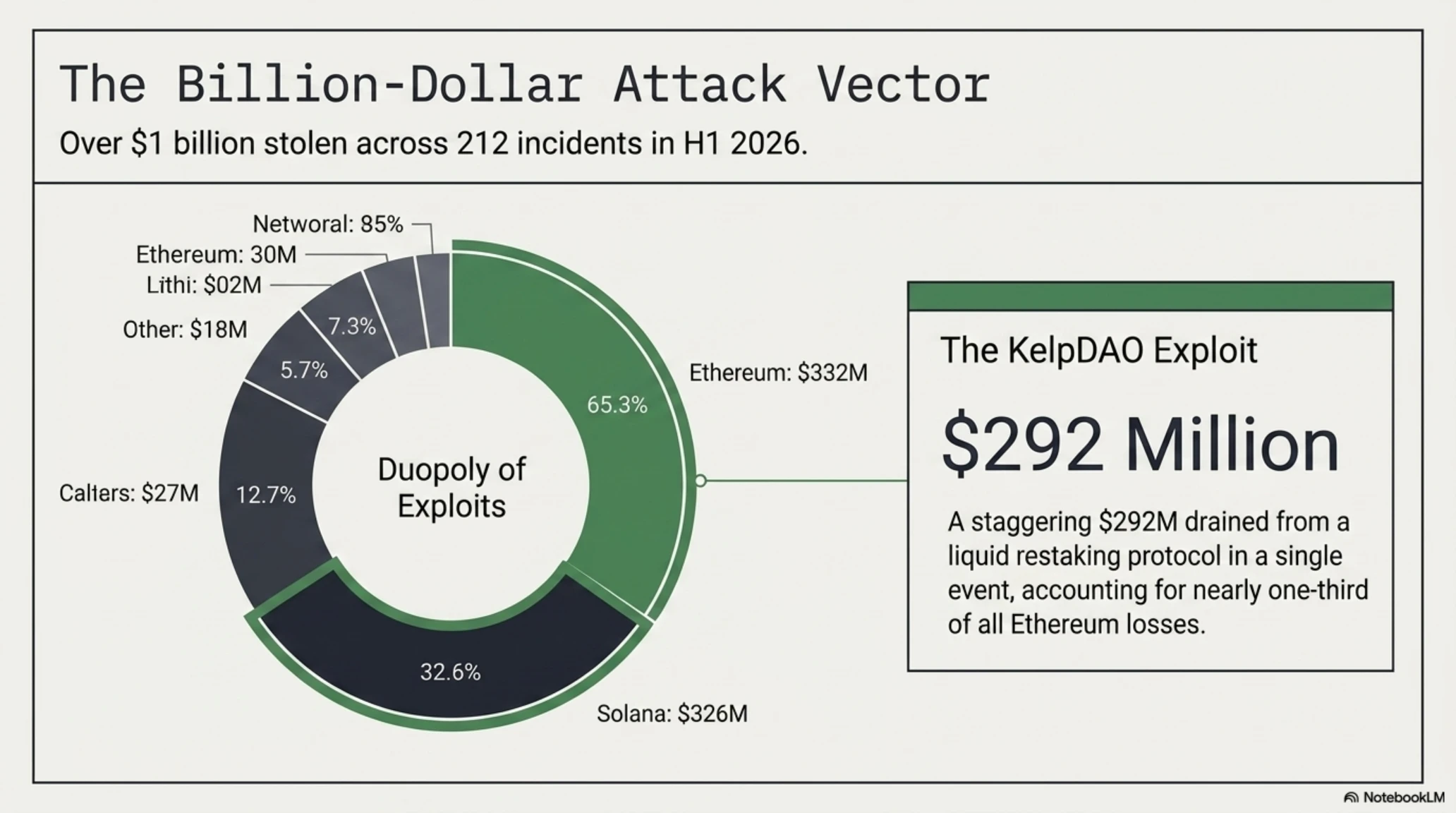
Blockaid's first-half 2026 security report delivered sobering numbers: more than $1 billion stolen from blockchain networks during the first six months of the year, spread across 212 documented security incidents. This represents the highest number of hacks in any six-month period that Blockaid has tracked, signaling that as the crypto ecosystem grows, so does its appeal to sophisticated attackers.
Two networks bore the brunt of the damage: Ethereum with approximately $332 million in losses, and Solana with around $326 million. Together, these two chains accounted for 65% of all theft in H1 2026. Ethereum's position as the leading target is unsurprising given its massive DeFi ecosystem and total value locked (TVL). But the rise in Solana attacks reflects that network's rapid growth and increasing DeFi activity, making it a more attractive target for cybercriminals.
Primary Attack Vectors
- Code Exploits: Most common type, exploiting bugs in smart contract logic
- Private Key Theft: Increasingly common, targeting wallet infrastructure
- Phishing Attacks: Social engineering targeting end users
- Bridge Vulnerabilities: Cross-chain bridges remain high-risk components
- Governance Exploits: Manipulating protocol voting mechanisms
KelpDAO: The Largest Single Exploit
Among all security incidents, one stands out dramatically: the KelpDAO exploit, which Blockaid reported at $292 million. This single hack accounts for nearly one-third of all Ethereum losses and demonstrates how a single vulnerability can drain hundreds of millions of dollars in minutes. KelpDAO was a liquid restaking protocol that allowed users to maintain liquidity on staked assets—a popular primitive in the post-Merge Ethereum ecosystem.
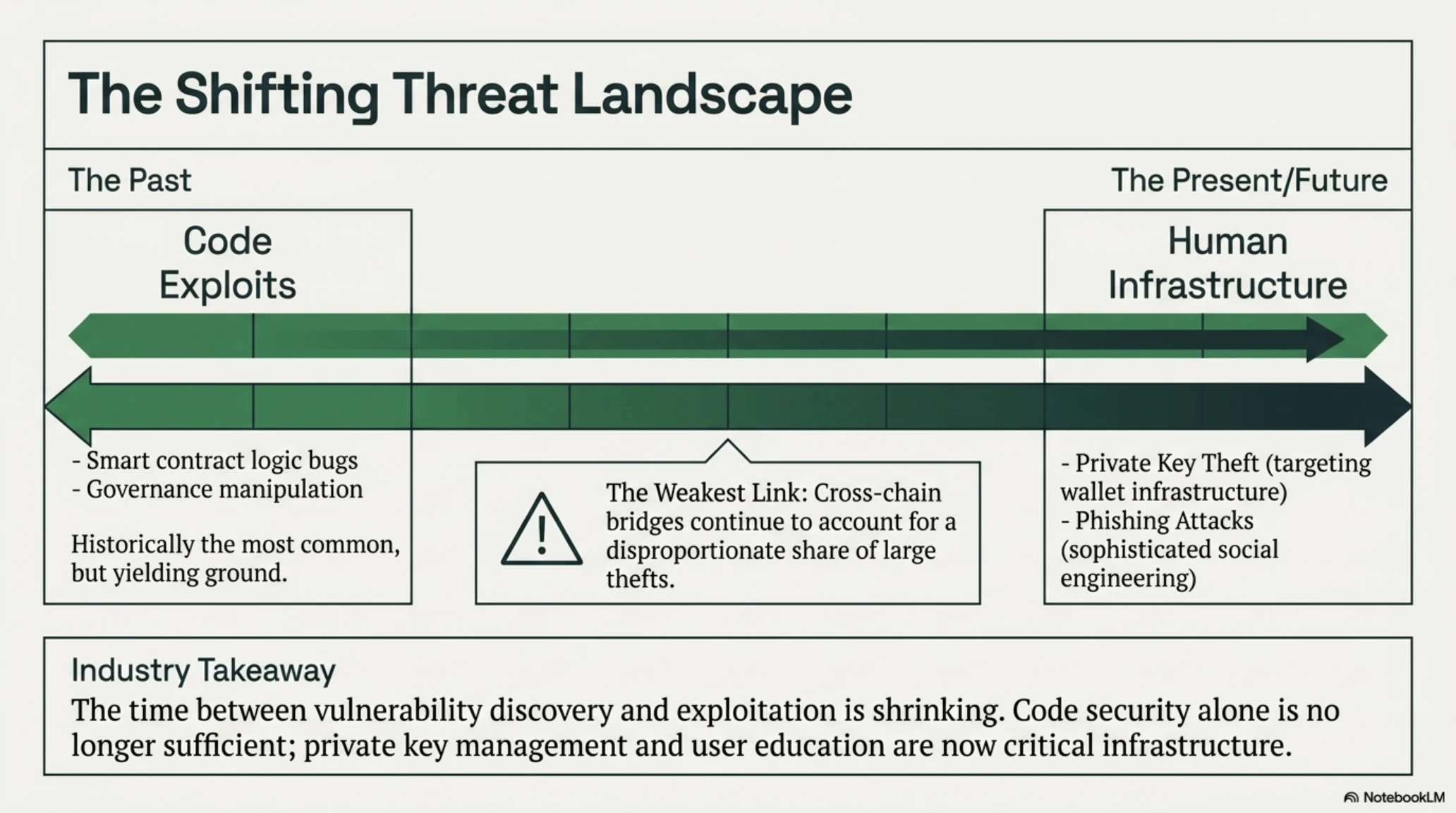
Security analysts note that the nature of attacks in 2026 has shifted. While code exploits and smart contract bugs dominated previous years, 2026 has seen a marked increase in private key theft and phishing attacks. Attackers are no longer focusing solely on code vulnerabilities; they're targeting users and wallet infrastructure directly. For everyday users, this means code security alone isn't sufficient—private key management and user education have become critically important.
The Blockaid Analysis: Trends and Takeaways
Blockaid's report highlights several troubling trends. First, the sophistication of attacks is increasing. Many recent exploits involve multi-step processes that combine social engineering, phishing, and technical exploits. Second, cross-chain bridges remain the weakest link in crypto infrastructure, accounting for a disproportionate share of large thefts. Third, the time between vulnerability discovery and exploitation is shrinking—attackers are moving faster than ever.
For the industry, these numbers represent both a crisis and a call to action. Projects must invest more heavily in security audits, bug bounties, and formal verification. Users need better education on wallet security and phishing awareness. And regulators are likely to use these figures to push for stricter oversight of crypto platforms, particularly around custody and security standards.
Bitcoin in the KOSPI Storm: When Korea's Chips Fall
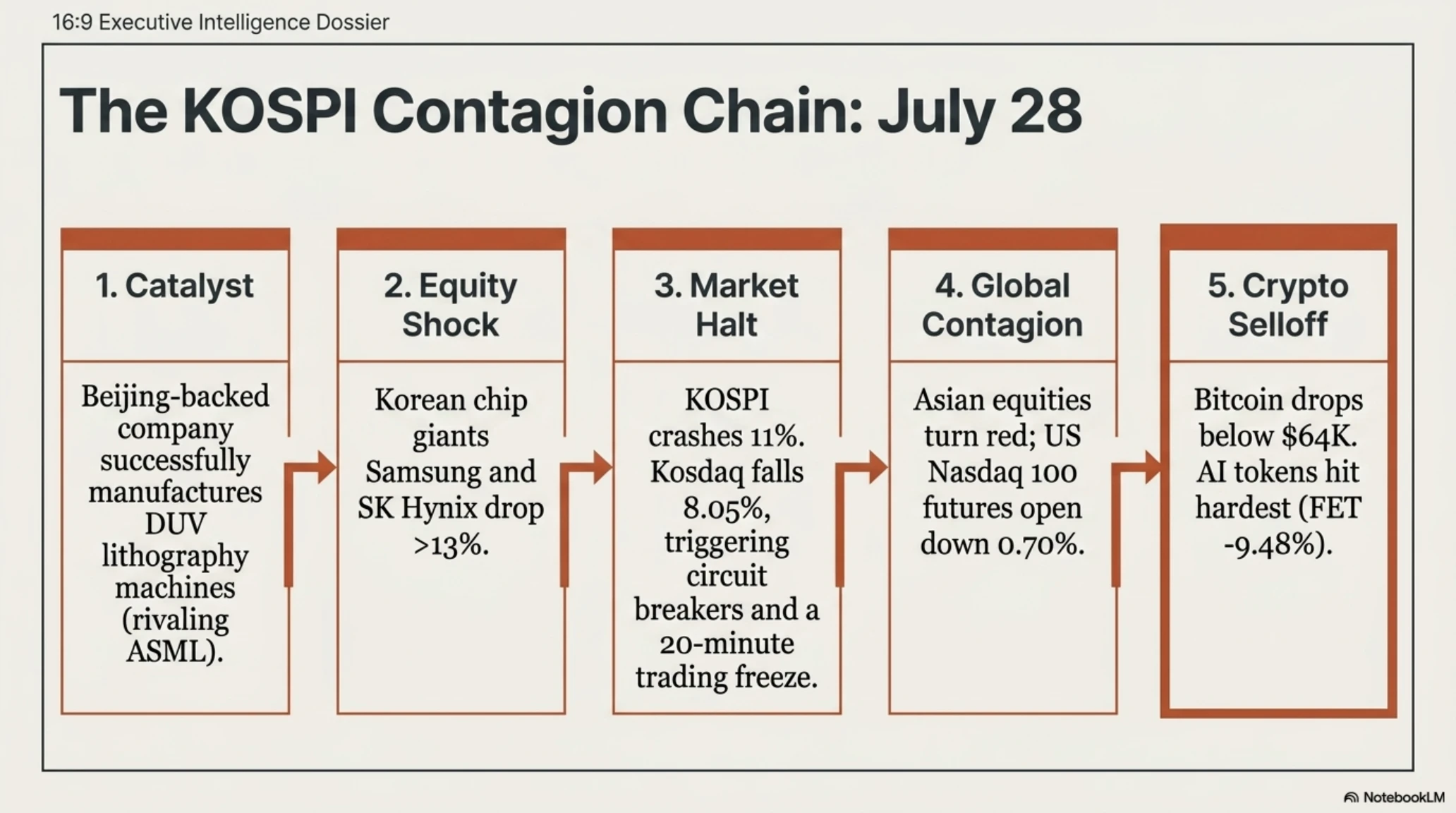
Monday morning, July 28, delivered one of South Korea's worst stock market days in years. The KOSPI index plunged 11%, dragging Bitcoin down with it. BTC, which started the day around $65,500, dropped to a low of $63,065 during the Asian session, ultimately shedding about 2% of its value. The catalyst? News that a Beijing-backed company had successfully manufactured deep ultraviolet (DUV) lithography machines similar to those produced by ASML, the Netherlands-based chipmaker that has been the West's primary tool for restricting China's semiconductor advances.
The announcement sent shockwaves through Korea's semiconductor industry. Samsung and SK Hynix, the country's chip-making giants, saw their shares drop more than 13%. The KOSPI's 11% decline represents one of its steepest single-day losses in recent history, triggering circuit breakers designed to halt trading during extreme volatility.
Circuit Breakers Fire: Market Safety Mechanisms Activate
The KOSPI crash was severe enough to trigger South Korea's circuit breaker mechanism—twice. First, the smaller Kosdaq index fell 8.05% (56.85 points) to 649.00 at 12:19 p.m. local time, halting trading for 20 minutes. This automatic mechanism freezes the entire market for a fixed window once an index falls a set percentage in a single session, designed to prevent panic selling and give market participants time to reassess.
The contagion didn't stop at Korea's borders. Asian equity markets from Japan to Hong Kong painted red, and Nasdaq 100 futures in the United States opened down 0.70%. For crypto markets, this translated into broad selling pressure: AI tokens like FET led the decline with a 9.48% drop. NEAR, HYPE, and WLD each shed between 8% and 9%. Layer-1 tokens weren't spared either.
Crypto Market Stats - July 28
Derivatives Positioning Shifts Bearish
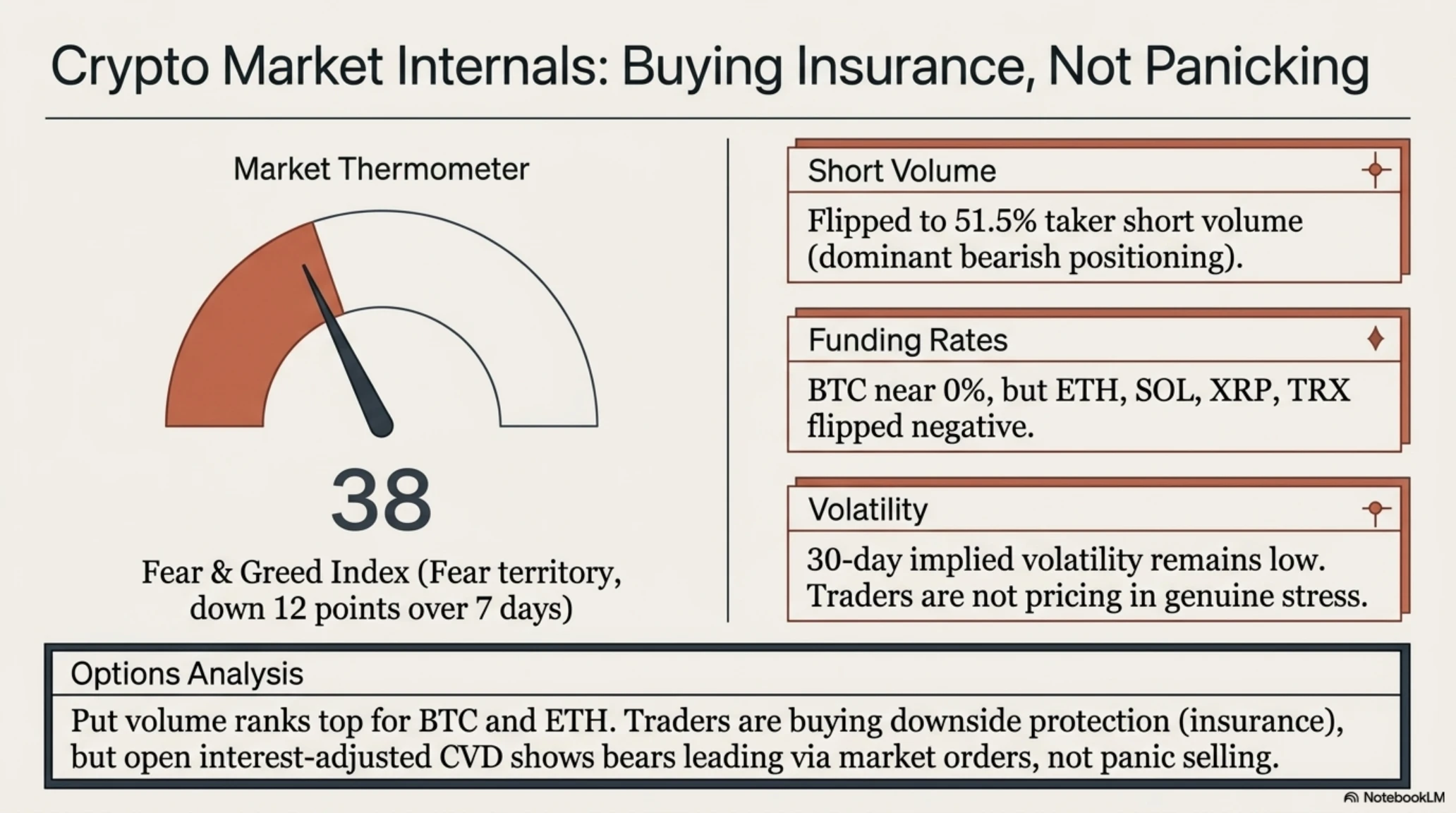
Looking at derivatives markets reveals a complete sentiment shift. Taker long/short volume in futures flipped to 51.5% short, indicating dominant bearish positioning. This marks a complete reversal from the bullish bias seen in recent days. A "taker" is a market participant who trades at prevailing market prices rather than placing limit orders, and changes in their behavior often signal broader market direction shifts.
Interestingly, while open interest in BTC, ETH, and SOL futures remained relatively stable, XRP saw open interest rise nearly 6% to 2.35 billion tokens. Meanwhile, tokens like SHIB, AVAX, LINK, and DOGE experienced declining open interest, signaling capital outflows. The 24-hour open interest-adjusted cumulative volume delta (CVD) turned negative for the top 25 coins for the first time in at least three weeks, meaning bears are leading price action by shorting via market orders rather than passive limit orders.
Funding Rates and Volatility Surfaces
Funding rates for BTC hovered near 0%, indicating balanced positioning between longs and shorts. However, funding rates for ETH, SOL, XRP, and TRX flipped negative, signaling growing bias for bearish plays. Despite key events like the Fed meeting and core U.S. PCE inflation data due this week, BTC and ETH volatility surfaces showed no signs of traders pricing in genuine stress. Both coins' 30-day implied volatility indexes remained near recent lows, suggesting market calm despite the overnight selloff.
In Deribit-listed options, put-call skews climbed slightly, consistent with the overnight spot price losses. The bias for puts was considerably lower in ETH options compared to BTC. However, volume rankings showed puts (downside protection) taking the top spots in both BTC and ETH, indicating that even if traders aren't panicking, they're buying insurance.
Bitcoin ETFs: Fourth Straight Day of Outflows
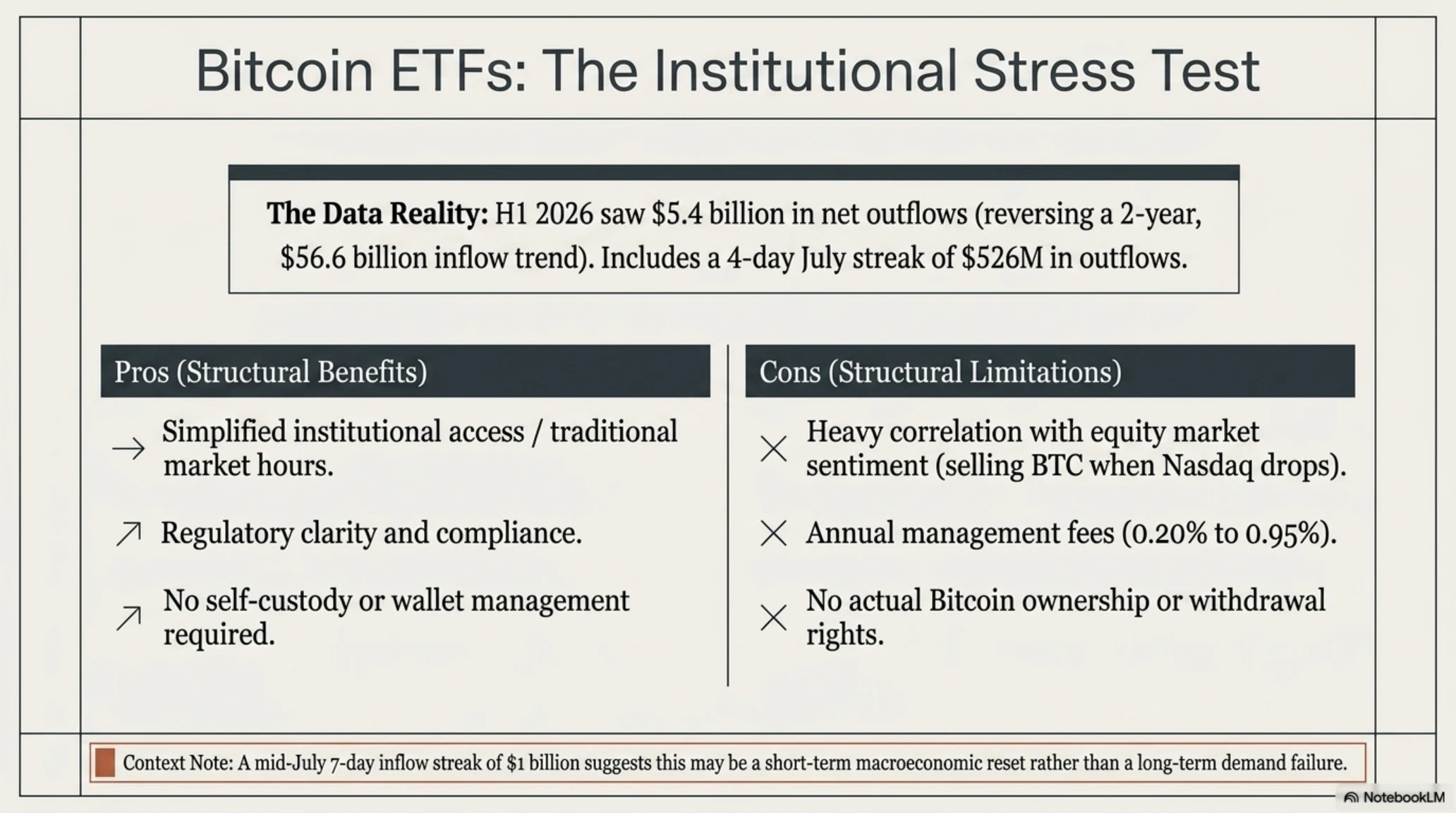
While Bitcoin struggled to hold above $64,000, U.S.-listed spot Bitcoin exchange-traded funds (ETFs) told a different story. According to Farside Investors data, these funds recorded approximately $49.7 million in net outflows on July 28, extending a streak of negative flows to four consecutive trading days. Over this four-day period, total outflows reached approximately $526 million, with the largest withdrawals occurring on July 24 and 23, which saw outflows of roughly $240 million and $225 million, respectively.
But this is only part of a larger narrative. Analysis from DWF Labs reveals that Bitcoin ETFs ended the first half of 2026 with $5.4 billion in net outflows—the first negative period since their launch in January 2024. This reversal came after two years of largely uninterrupted demand, during which cumulative net flows had reached $56.6 billion at the start of 2026.
- Simplified institutional access to Bitcoin exposure
- Regulatory clarity and compliance for traditional finance
- High liquidity and ability to trade during market hours
- No need for self-custody or wallet management
- H1 2026 saw $5.4 billion in net outflows
- Heavy correlation with equity market sentiment
- Annual management fees ranging from 0.20% to 0.95%
- No actual Bitcoin ownership or withdrawal rights
Institutional Demand Reversal?
This demand reversal follows two years of nearly uninterrupted inflows. Analysts point to several factors driving the trend. First, regulatory uncertainty in the United States, exacerbated by the Senate shelving the Crypto Clarity Act to prioritize a Russia sanctions bill and federal nominations. With just two weeks remaining before the August 8 recess, the bill's fate this year is genuinely uncertain. Second, macroeconomic concerns including the Federal Reserve's upcoming interest rate decision, set to be announced Wednesday. Third, reduced risk appetite across financial markets following Asia's stock market rout.
However, not all the data is negative. Some analysts argue that after multiple weeks of continuous outflows in May and June—which saw 10 consecutive outflow sessions ($2.8B-$3.5B) and then 13 consecutive sessions ($4.37B)—the market is simply resetting. In fact, Bitcoin ETFs experienced a 7-day inflow streak in mid-July totaling nearly $1 billion, the longest positive run in 11 weeks. Perhaps what we're seeing now is a short-term correction rather than the start of a long-term downtrend.
Market Sentiment Deep Dive: Fear & Greed Index
One popular tool for gauging crypto market sentiment is the Fear & Greed Index, which ranges from 0 (Extreme Fear) to 100 (Extreme Greed). On July 28, the index stood at 38, squarely in Fear territory. This composite metric incorporates volatility, market momentum, social media sentiment, surveys, and Bitcoin dominance to provide a snapshot of market psychology.
Crypto Market Thermometer
Current Index: 38 - Fear
7-Day Change: -12 points
Traders in defensive mode
ETFs and Bitcoin: Why It Matters
Bitcoin ETFs represent institutional capital's entry point into crypto. Before ETFs launched in January 2024, many institutional investors and pension funds couldn't buy Bitcoin directly due to regulatory constraints and custody risks. ETFs solved this by delegating custody to specialist firms, simplifying tax and compliance, and enabling Bitcoin exposure during traditional market hours.
But ETFs have limitations. Investors don't actually own Bitcoin and can't transfer it to personal wallets. There are annual management fees, typically between 0.20% and 0.95%. And there's heavy correlation with equity market sentiment: when stocks crash, ETFs often see selling pressure even if Bitcoin's fundamentals haven't changed. That's exactly what happened on July 28—the KOSPI and Nasdaq declines triggered Bitcoin ETF outflows despite no fundamental change in Bitcoin itself.
Silent Hill: Townfall - Scottish Terror Comes to Life
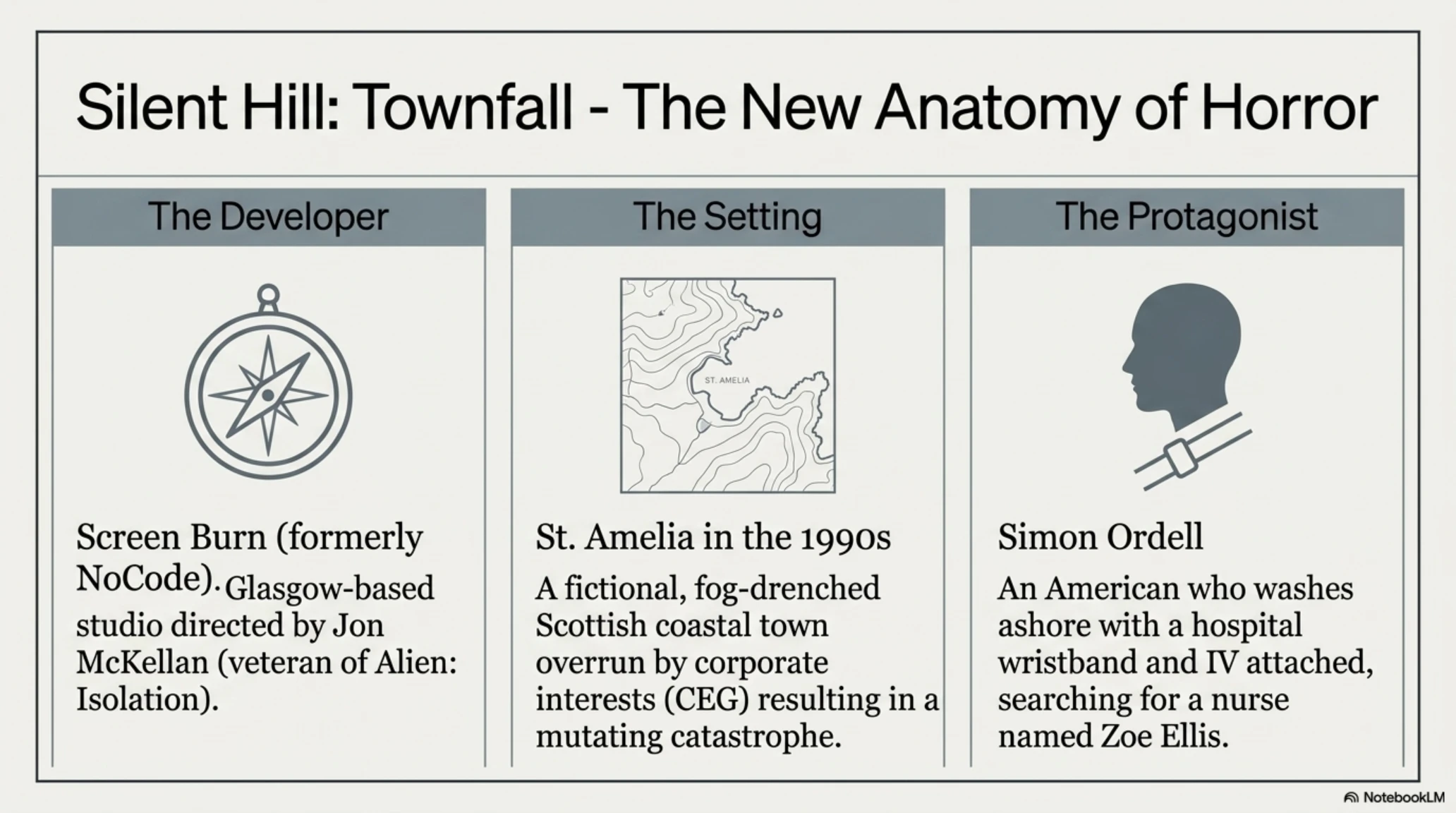
Few gaming franchises have mastered psychological horror like Silent Hill. Now, with Silent Hill: Townfall developed by Glasgow-based Screen Burn (formerly NoCode), the series enters a new chapter. Recent gameplay previews released last week suggest this might be exactly what the Silent Hill franchise needed—a fresh perspective rooted in a different cultural horror tradition.
Townfall takes place in the 1990s in the fictional Scottish coastal town of St. Amelia. You play as Simon Ordell, an American who mysteriously washes ashore with an IV still attached to his arm and a hospital wristband around his wrist. He's searching for a nurse named Zoe Ellis who lives in St. Amelia, and she reaches out to him through a radio device called the CRTV, guiding him with vague, desperate voice lines.
First-Person Perspective: Closer to Fear Than Ever
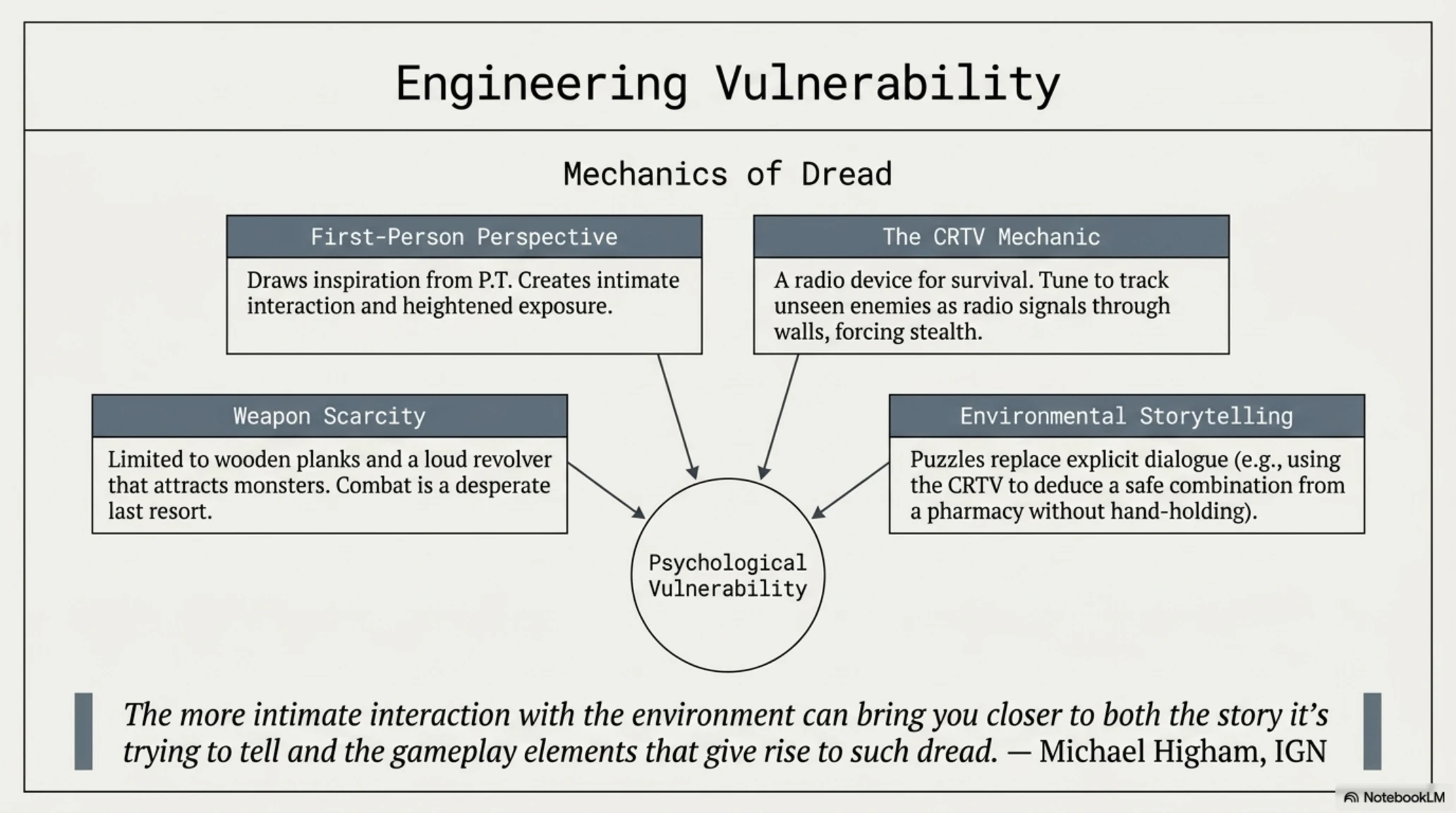
One of Screen Burn's boldest decisions was adopting a first-person perspective. This immediately evokes P.T. (Playable Teaser), the legendary demo for the Silent Hills game that never was. But Townfall goes beyond simple homage. Director Jon McKellan, who worked on Alien: Isolation and its DLC, draws from that experience to build a system that emphasizes player vulnerability—relying on stealth with combat as a last resort.
In Townfall, your weapons are limited to wooden planks and a revolver with scarce ammunition. The gun is loud, attracting every monster in earshot, making gunfire a desperate measure. This means stealth is paramount, and you must carefully survey your environment. The CRTV isn't just a radio—it's your primary tool. Enemies appear as radio signals, and you must manually tune the device to mark them on the CRTV screen. Once marked, you can track them through walls, planning your route carefully to avoid detection.
Puzzles That Tell Stories
One of Townfall's standout aspects is its puzzle design. Unlike many modern games that hand-hold players through solutions, Townfall trusts you to figure things out. In the pharmacy section shown in the preview, players must find a four-digit combination to unlock a safe. The CRTV, after color tuning, shows a series of close-up clips of objects throughout the pharmacy. Each clip and object represents a number in the lock, and without explicit guidance, players must examine the environment carefully to deduce the solution.
McKellan emphasized in interviews that puzzles are part of the story itself. Clues and solutions tell you about characters or what happened in the town without needing explicit dialogue. This design philosophy works perfectly with the first-person perspective because it allows environmental subtleties to become part of the solution. An earlier section features an escape room-style puzzle where you examine photos on walls, journal entries, and calendar markings to unlock a door—training you for the deeper mysteries ahead.
St. Amelia: A Town Forgotten
St. Amelia is a fictional coastal town heavily influenced by real Scottish seaside communities, particularly St. Monans. These towns are naturally foggy, but in Townfall, the fog density is intensified, signaling that something has gone catastrophically wrong in this close-knit community. Abandoned protest signs condemning an organization called CEG suggest the small town was overrun by corporate interests, leading to a catastrophe that mutated residents into monstrous creatures.
Zoe Ellis, the nurse Simon searches for, plays a central role in the narrative. Through emails, notes, and letters left behind, you learn about her mental breakdown, her sense of responsibility toward colleagues at the hospital, and her regret at failing to save the townspeople. When you reach her house, you find a portrait of Simon in the upstairs hallway—something strange is happening here that hasn't been fully revealed.
Screen Burn's Pedigree
Screen Burn (formerly NoCode) is a Glasgow-based studio that created Observation, a space thriller. Director Jon McKellan worked on Alien: Isolation and its DLC, and that experience clearly informs Townfall. The focus on stealth, the feeling of vulnerability, and the atmosphere of escalating dread all draw from that lineage. The Scottish setting also reflects the studio's cultural roots, bringing authenticity to St. Amelia's coastal atmosphere.
Townfall vs. Recent Silent Hill Entries
Silent Hill is evolving into an anthology series where each entry has a different story and creator. Silent Hill 2 Remake by Bloober Team successfully modernized a classic. Silent Hill f by NeoBards Entertainment, set in 1960s Japan, explores women's struggles. And now Townfall distinguishes itself with a Scottish setting and first-person perspective.
This anthology approach allows Silent Hill to avoid repeating old formulas, instead bringing fresh stories and culturally diverse perspectives to each entry. Townfall, with its Scottish studio and focus on foggy coastal towns, offers a unique atmosphere distinct from American or Japanese Silent Hill games. This cultural diversity could become one of the franchise's greatest strengths in coming years.
Silent Hill 2026 Release Timeline
- Silent Hill 2 Remake: Released January 2026
- Silent Hill: Townfall: September 24, 2026 (PS5 & PC)
- Silent Hill f: Q4 2026 (exact date TBA)
Evening Wrap: Looking Ahead
Wednesday evening, July 29, 2026, closed with a mix of technological advancement and market turbulence. On one hand, developments like MCP's stateless architecture and SpaceX's successful Starlink deployment show that innovation continues unabated. On the other, crypto security crises with over $1 billion in hacks, Korea's dramatic stock market crash, and persistent Bitcoin ETF outflows paint a concerning picture of current digital financial markets.
For traders and investors, the Federal Reserve's interest rate decision set for Wednesday could be a critical inflection point. For gamers, anticipation builds for Silent Hill: Townfall's September 24 release on PlayStation 5 and PC. And for AI developers, migrating to stateless MCP presents an opportunity to rebuild infrastructure with higher efficiency. Night gives way to morning, but the digital world never sleeps.
Frequently Asked Questions
Why did MCP go stateless?
To improve horizontal scalability, eliminate the need for sticky load balancing, and better integrate with standard HTTP infrastructure like CDNs. This change reduces infrastructure costs and simplifies deployments for developers building AI agent systems.
Have Bitcoin ETFs failed?
No, but they're experiencing a difficult period. After two years of growth, H1 2026 marked the first negative period with $5.4 billion in outflows. This may be a market reset rather than the end of institutional demand. Mid-July saw a 7-day inflow streak of nearly $1 billion.
Why were Ethereum and Solana hit hardest by hacks?
Ethereum has always been the primary target due to its extensive DeFi ecosystem and high total value locked. Solana's rapid growth and increasing DeFi activity have made it more attractive to attackers. Together, these two networks accounted for 65% of the $1 billion stolen in H1 2026.
When does Silent Hill: Townfall release?
September 24, 2026, for PlayStation 5 and PC. It's a standalone spinoff developed by Glasgow-based Screen Burn, offering a different experience from previous entries with its first-person perspective and Scottish setting.
Why did KOSPI's crash affect Bitcoin?
When major stock markets crash, investors typically reduce risk across all asset classes. The 11% KOSPI crash, triggered by China's DUV chip manufacturing breakthrough, created macroeconomic concerns that pressured Bitcoin as a risk-on asset, despite no fundamental change in Bitcoin itself.
Sources
- IGN - Silent Hill: Townfall Preview
- Model Context Protocol - Changelog 2026-07-28
- CoinDesk - Bitcoin Drops as South Korean Stocks Tumble
- Cointelegraph - Ethereum And Solana Lead H1 2026 Crypto Hack Losses
- The Block - Crypto Hacks Hit Record High in H1 2026
- Spaceflight Now - SpaceX Falcon 9 Launches Starlink
- CoinPaper - Bitcoin ETF Outflow Streak Continues
Additional Gallery: 🌙 Tekin Night | Wednesday, July 29, 2026: MCP Goes Stateless, $1B Crypto Hacks & KOSPI Crash