Tekin Radar | GTA Online Gambling Ban
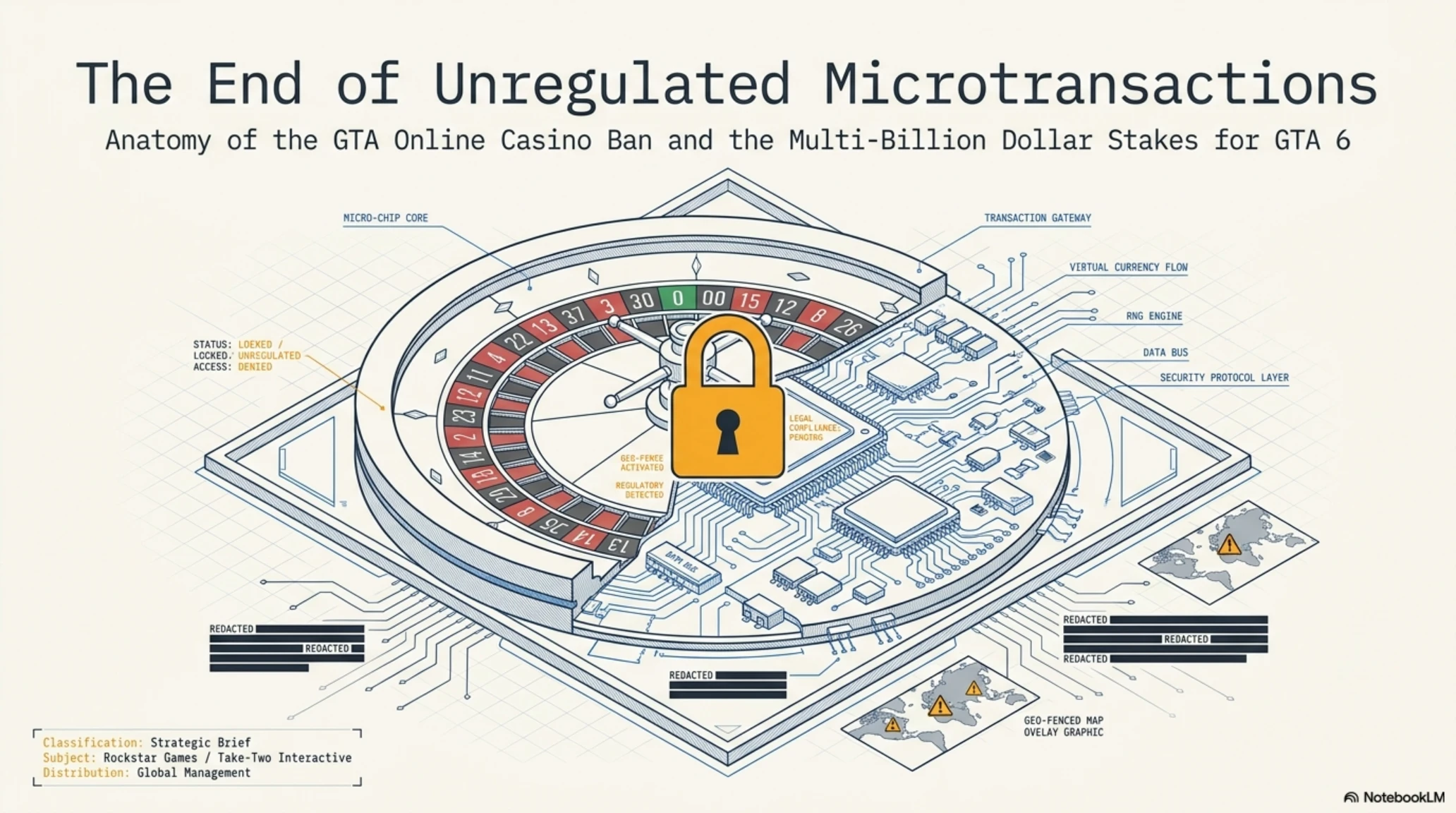
An urgent analytical investigation into Rockstar Games' sudden compliance move in Australia, the 50-nation ban list, and the looming monetization crisis for GTA 6.
- 🎮Sudden Australian Restriction- Rockstar silently disables all Diamond Casino gambling activities for Australian players despite in-game chip limits.
- 🎧50+ Banned Nations- Australia joins over 50 countries including Saudi Arabia, Poland, Portugal, and China in restricting simulated gambling.
- 🚀The GTA 6 Conundrum- Severe regulatory implications for Vice City's underground economies, casino mechanics, and online monetization.
Rockstar Bows to Regulatory Pressure: GTA Online Casino Features Disabled in Australia
The interactive entertainment industry has hit a major regulatory watershed as Rockstar Games quietly enforced regional restrictions on all gambling activities within Grand Theft Auto Online’s famed The Diamond Casino & Resort for Australian players. Without prior public announcement or patch note warnings, Australian gamers logging into the game were greeted with regional lock notifications, preventing them from participating in virtual blackjack, roulette, three-card poker, slot machines, the Inside Track horse racing, and even the daily free Lucky Wheel spin. This abrupt operational shift marks a significant concession by one of gaming’s most powerful publishers to mounting international anti-gambling statutes.
What makes this regulatory enforcement particularly striking is that it targets in-game virtual chips that cannot be officially cashed out for real-world currency. However, the Australian Communications and Media Authority (ACMA) and the Australian Classification Board (ACB) have increasingly scrutinized simulated gambling mechanics linked to real-money microtransactions via Shark Cards. Because players can purchase in-game currency (GTA$) using actual cash, regulatory bodies view the casino's virtual chips as a direct conduit for simulated gambling funded by real money. This move officially aligns Australia with more than 50 nations worldwide that enforce strict blocks on GTA Online's gambling mechanics.

While regional digital content blocks are not unprecedented, the scale of Rockstar’s decision in Australia underscores a fundamental realignment in publisher legal strategies. Australia represents one of Rockstar’s most lucrative markets in the Asia-Pacific region. Disrupting core online features for millions of active players demonstrates that the legal risks—including potential classification revocations or multi-million-dollar statutory fines—outweighed the revenue generated by unrestricted in-game casino access. Rockstar chose to proactively sever these features rather than risk broader commercial suspension of Grand Theft Auto V.
Over the past decade, loot boxes and simulated gambling mechanics have faced unprecedented legislative scrutiny globally. The Australian government's updated Online Safety Codes and tightened classification guidelines for digital games containing simulated gambling mechanics require publishers to eliminate real-money entry vectors or face mandatory R18+ restrictions and storefront blocks. In GTA Online, although players cannot convert winnings back into Australian dollars, the ability to buy in-game funds with real money blurs the legal boundary between digital entertainment and regulated gambling.
Industry legal analysts view Rockstar’s sudden compliance as a preemptive defense maneuver against evolving classification standards. Under newly proposed statutory amendments in multiple jurisdictions, video games containing simulated gambling paired with real-money microtransactions risk receiving automatic restrictive ratings or being banned from digital distribution channels altogether. By restricting access to table games in Australia, Rockstar preserved the foundational operational status of GTA V across regional console and PC storefronts.
The reaction across the Australian gaming community has been marked by vocal frustration and disappointment. Players took to community forums and social media to express anger over losing access to features that had operated without incident for nearly seven years. Many players highlighted the perceived unfairness of locking even non-monetized daily rewards, such as the Lucky Wheel's chance to win vehicles, simply because the underlying code uses a random probability generator.
This enforcement also highlights the technical complexity of geographic content fencing in live-service games. Rockstar relies on automated IP detection, platform regional tagging, and account billing locations to enforce these restrictions. However, attempts by players to bypass these regional barriers using virtual private networks (VPNs) create secondary risks, including permanent Rockstar Games Social Club account bans for terms-of-service violations.
The legal implications extend far beyond Australia’s borders, serving as a stark warning to all major publishers utilizing hybrid monetization models. When real-world money enters a digital economy, sovereign financial and gaming regulations inevitably take precedence over developer artistic vision, constraining how virtual worlds can be monetized.
Furthermore, consumer advocacy organizations in Commonwealth jurisdictions have praised the Australian Classification Board's intervention, calling it an essential consumer protection benchmark. They argue that un-gated simulated gambling environments train players, particularly younger demographics, to adopt risky wagering habits under the guise of casual video gameplay.
From an operational engineering perspective, implementing geo-fencing at this granular level requires continuous server-side validation. Rockstar's back-end infrastructure must reconcile user location telemetry in real time during session matchmaking, ensuring that players from restricted jurisdictions are dynamically isolated from active gambling tables without causing network disconnections or server instance crashes.
Legal scholars analyzing interactive media law point out that Australia's legislative framework reflects a growing international willingness to hold software platforms accountable for systemic financial mechanisms. Unlike static media, online games represent living software ecosystems where real-time microtransaction flows must comply with local consumer protection codes.
Consequently, gaming executives across the AAA landscape are taking note of Australia's decisive stance. As sovereign governments assert control over virtual financial exchanges, live-service developers must re-evaluate their long-term monetization roadmaps to avoid localized operational shutdowns.
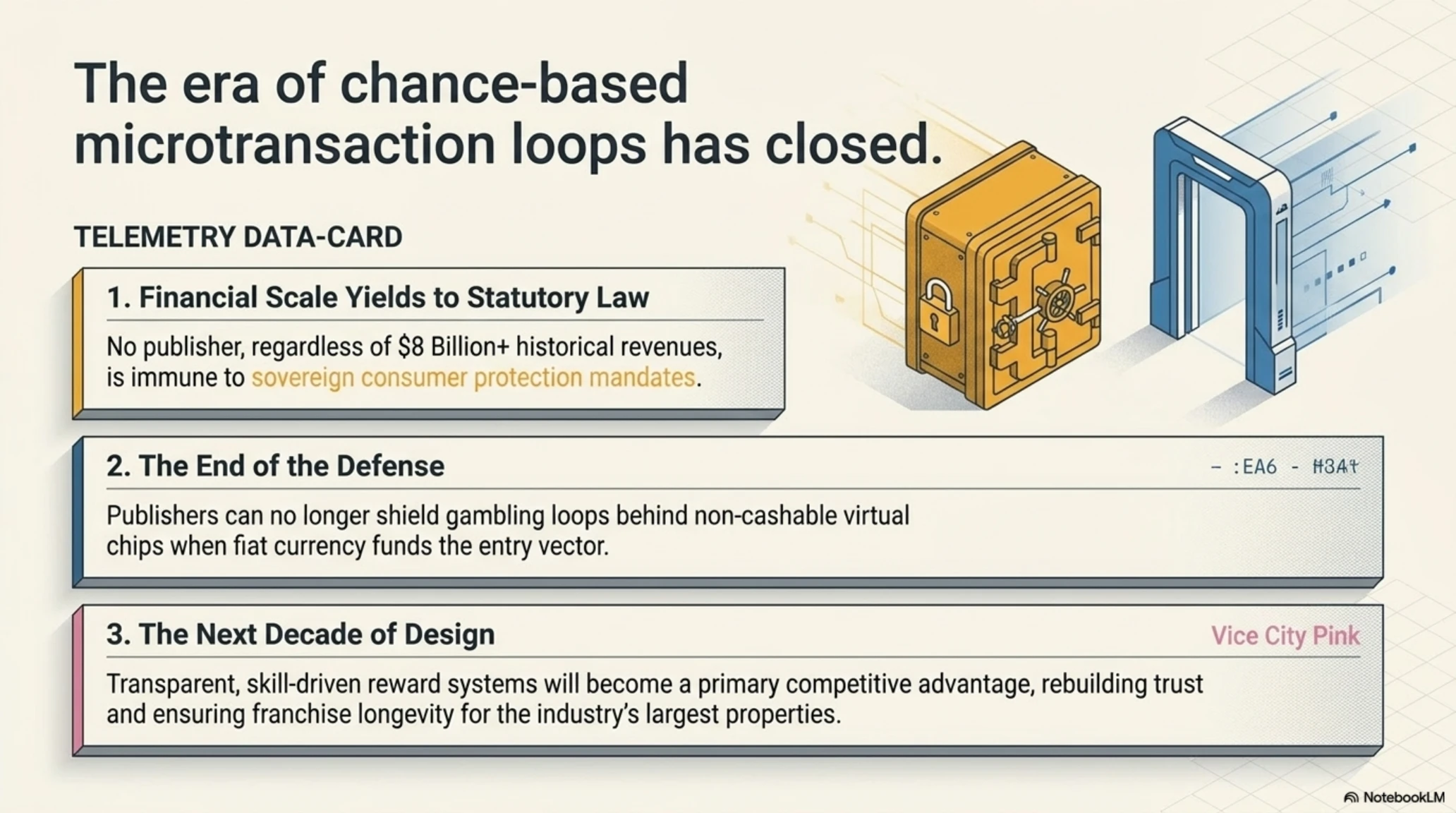
Ultimately, this retreat confirms that no publisher—regardless of market dominance or financial capital—is immune to regulatory enforcement, forcing Rockstar to sacrifice high-margin microtransaction engagement to maintain compliance across key international markets.
Core Takeaways from the GTA Online Ban Investigation
- Rockstar Games abruptly disables all Diamond Casino gambling tables for Australian players.
- Microtransaction connection via Shark Cards triggered regulatory enforcement by Australia's ACMA.
- Australia joins a growing roster of 50+ restricted nations, including Saudi Arabia, Poland, and Portugal.
- Creates massive technical and financial design hurdles for the upcoming release of GTA 6.
The 50-Nation Blacklist: Geofencing a Fragmented Grand Theft Auto Online
The restriction of gambling mechanics in GTA Online is part of a broader, fragmented global landscape. When The Diamond Casino & Resort update launched in July 2019, players in over 50 countries discovered on day one that gambling features were completely disabled. Nations such as China, Saudi Arabia, the United Arab Emirates, Poland, Portugal, Greece, South Korea, and Argentina were among the first to experience these geographic content blocks imposed by Rockstar Games.
The primary driver behind these regional variations lies in the diverse statutory definitions of online gambling and consumer protection laws across international jurisdictions. In several Middle Eastern and Asian countries, all forms of gambling—whether physical, digital, or simulated—are strictly illegal under local religious or civil laws. In European nations such as Poland and Portugal, stringent gambling statutes treat any chance-based activity connected to real-money microtransactions as regulated betting, requiring specialized state licenses that video game publishers cannot obtain.

The operational execution within these restricted regions allows players to physically enter the casino building, purchase luxury penthouses, and complete narrative casino story missions. However, upon approaching the blackjack, roulette, or poker tables, the option to place bets is greyed out, displaying a system notification reading: "This feature is not available in your region."
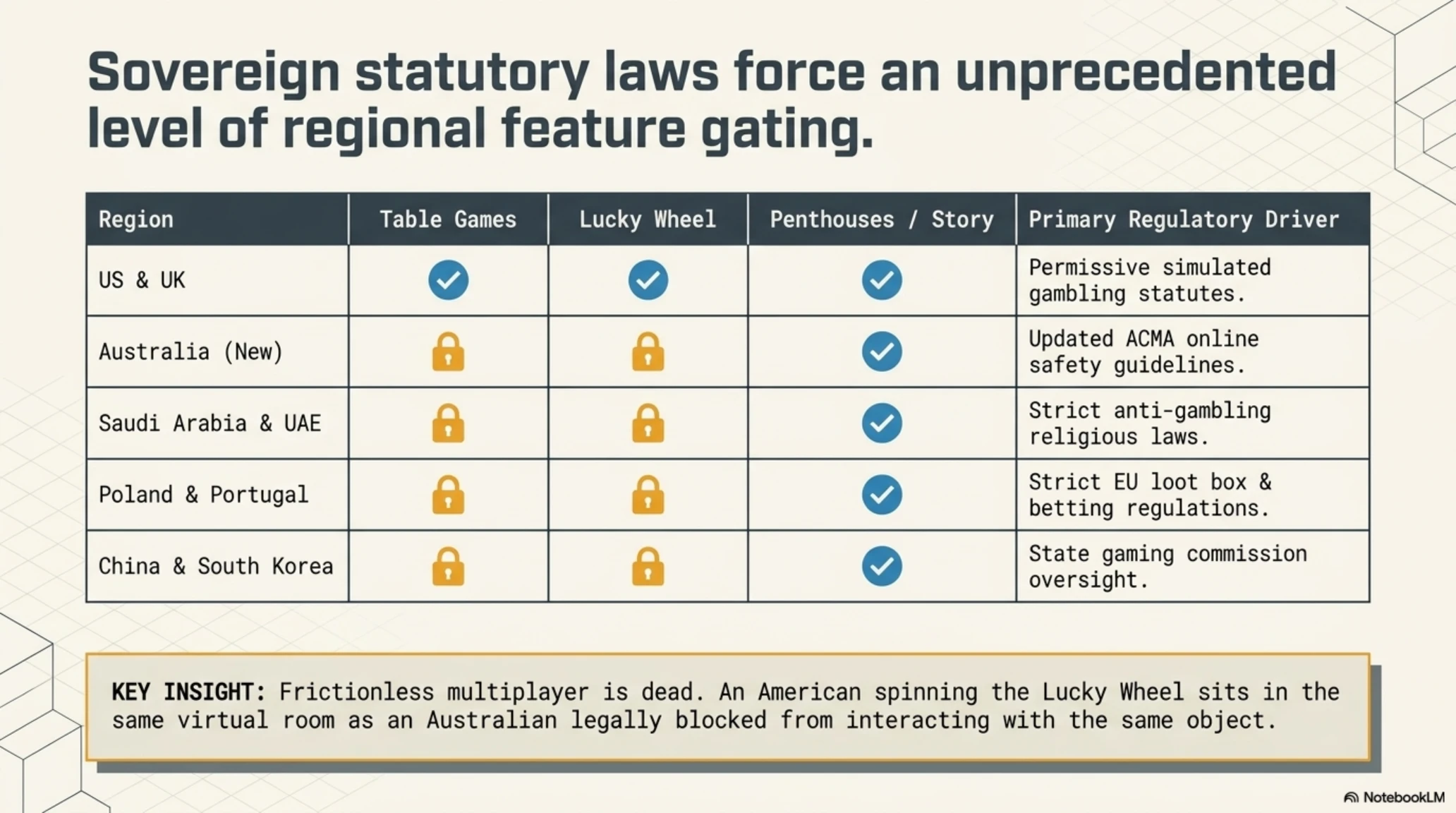
This regional partition creates significant friction within the multiplayer experience. International crews and friends playing in the same online session experience a split reality: a player connecting from the United States can win a supercar on the Lucky Wheel, while their crewmate connecting from Australia or Poland sitting in the same virtual room is legally blocked from spinning the wheel.
The following comparative table details the regional feature accessibility across major international markets:
Comparative Analysis: Regional Accessibility to Diamond Casino Features
| Region / Country | Table Games (Poker/Roulette) | Daily Lucky Wheel | Penthouse & Story Missions | Primary Regulatory Driver |
|---|---|---|---|---|
| United States & UK | Fully Accessible | Fully Accessible | Fully Accessible | Permissive simulated gambling statutes |
| Australia (New) | Completely Blocked | Completely Blocked | Fully Accessible | Updated ACMA online safety guidelines |
| Saudi Arabia & UAE | Completely Blocked | Completely Blocked | Fully Accessible | Strict anti-gambling religious laws |
| Poland & Portugal | Completely Blocked | Completely Blocked | Fully Accessible | Strict EU loot box & betting regulations |
| China & South Korea | Completely Blocked | Completely Blocked | Fully Accessible | State gaming commission oversight |
Regulators worldwide have become acutely focused on protecting minors from simulated gambling behaviors. European and Australian consumer protection agencies argue that introducing simulated gambling mechanics in games played by young audiences acts as a psychological gateway to real-world gambling addiction, normalizing betting behaviors through familiar game interfaces.
Additionally, growing advocacy from consumer rights groups has forced publishers to provide complete transparency regarding microtransaction odds and currency flows. When real money buys virtual chips that can be lost on a digital spin, the underlying neurological reward loop is identical to commercial casino gambling.
These compliance demands force Rockstar Games to maintain extensive legal and localization teams dedicated to tracking legislative updates across more than 100 countries, ensuring live-service updates do not violate shifting regional statutes.
Cross-border game publishing in 2026 has consequently transformed into a legal minefield. Independent and AAA studios alike must weigh the economic gains of chance-driven monetization models against the massive administrative cost of maintaining customized, region-specific game client builds for restricted territories.
Moreover, regulatory compliance audits are increasingly targeting third-party digital marketplaces that trade virtual goods. As global enforcement strengthens, live-service titles featuring un-gated virtual economies will face mandatory compliance verification prior to securing regional distribution licenses.
Why Australia's Regulatory Stance Matters Globally
Market Sentiment & Financial Risk Radar
Regulatory Compliance Status: 100% Proactive compliance to prevent storefront bans.
Player Satisfaction Index: Sharp decline across Australian, Polish, and Middle Eastern player bases.
The Shark Card Monetization Paradox: When Virtual Currency Meets Real-World Cash
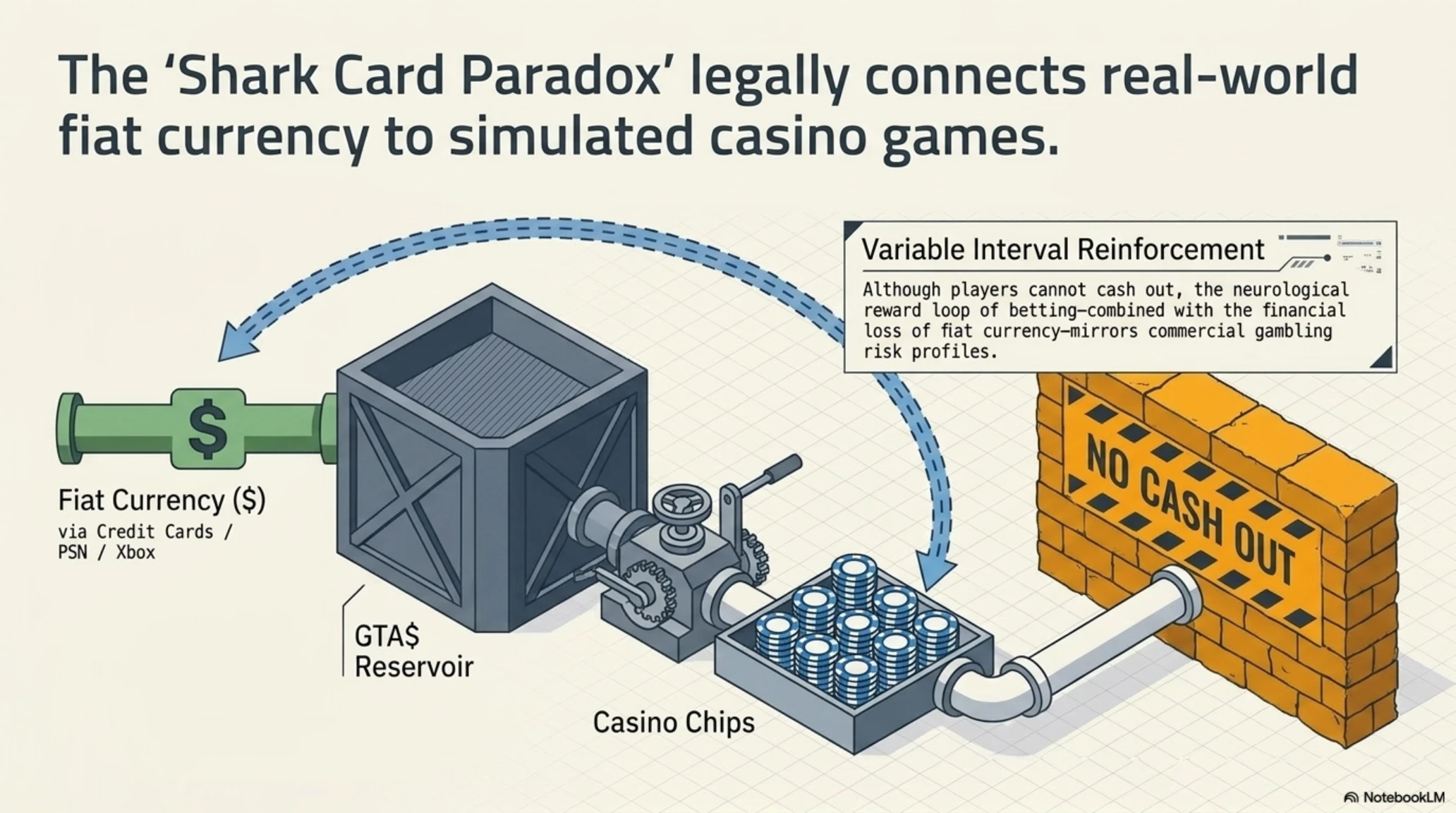
At the center of Rockstar’s regulatory battle lies the lucrative microtransaction framework powered by Shark Cards. These real-money purchases allow players to buy in-game currency (GTA$) using credit cards or platform store balances across PlayStation Network, Xbox Live, and Steam. Although Rockstar has maintained that casino chips cannot be purchased directly with real-world currency, the fact that GTA$ can be converted into casino chips creates a direct financial bridge between real money and simulated gambling.
This monetization design creates a unique structural paradox: players can spend real-world money to acquire casino chips, but there is no legitimate mechanism to cash out virtual winnings back into real currency. However, regulatory bodies contend that the inability to withdraw cash does not mitigate the psychological harms associated with gambling. The emotional highs of winning, the loss of actual money spent on Shark Cards, and the habituation of betting mechanics mirror the risk profiles of traditional commercial gambling.

Furthermore, the financial feedback loop becomes acutely apparent when players lose virtual chips at the tables and purchase additional Shark Cards to replenish their in-game bank balances. This system generated billions of dollars in recurring player spending for Rockstar Games and parent company Take-Two Interactive, while simultaneously exposing the title to aggressive regulatory backlash worldwide.
Several European nations, notably Belgium and the Netherlands, previously established strict anti-loot box frameworks that compelled major publishers to disable randomized purchase mechanics altogether. To avoid total commercial bans in these territories, Rockstar implemented regional blocks on Diamond Casino table games, sacrificing localized microtransaction revenue to preserve core game distribution.
From a legal perspective, the statutory definition of simulated gambling has broadened significantly in recent years. Where lawmakers once defined digital gambling strictly by real-money payouts, modern consumer protection codes classify any chance-based mechanic linked to real-money entry fees as regulated betting, regardless of payout format.
This shifting legal standard forces game developers to navigate complex compliance hurdles when designing live-service economies. Any attempt to blend real-money microtransactions with chance-driven gameplay mechanics now carries an escalating risk of regional geoblocking.
Moreover, rising concern over unauthorized purchases by minors has amplified political pressure on regulatory agencies. Documented cases of children spending substantial sums on Shark Cards to fund in-game betting have accelerated legislative efforts to curb simulated gambling mechanics across the video game industry.
Industry financial analysts highlight that while Shark Cards represent a steady revenue stream, Take-Two Interactive's investor disclosures must now routinely account for regional regulatory friction. As more jurisdictions adopt stringent anti-gambling codes, recurring live-service player spending encounters natural geographic ceilings that limit long-term revenue growth unless underlying game economies are re-architected.
The psychological dimension of this monetization design relies on variable interval reinforcement—a well-documented behavioral mechanic that maintains high user engagement by offering unpredictable rewards. When combined with friction-free digital payment gateways like platform-linked credit cards, players experience diminished financial awareness, accelerating impulse purchases during extended gaming sessions.
Financial technology regulators also note that allowing real money to flow into virtual casino economies introduces operational transparency challenges. Without rigorous transaction monitoring, digital currencies can inadvertently facilitate gray-market item trading and unauthorized account reselling platforms.
Furthermore, consumer advocacy groups argue that dual-currency conversion flows deliberately obfuscate the true monetary cost of in-game purchases. By converting fiat currency into GTA$ before purchasing casino chips, players encounter cognitive friction that masks the actual cash outlay required to fund digital betting sessions.
Consequently, Rockstar has been forced to make a strategic trade-off: forfeiting localized microtransaction engagement from casino games in restricted markets to maintain legal compliance and secure uninhibited distribution for its core software titles.
Legal Glossary: Simulated Gambling & Dual-Currency Mechanics
Dual-Currency Economy: A monetization architecture where real money is converted into a primary virtual currency (GTA$) before being exchanged for specialized gameplay tokens (Casino Chips).
The Looming Crisis for GTA 6: Vice City, Underground Casinos, and Online Economy Design
The expanding list of restricted nations presents an ominous challenge for the highly anticipated Grand Theft Auto VI. Official trailers and promotional materials confirm that GTA 6 is set in the fictional state of Leonida—a sprawling recreation of Florida centered around Vice City, a location culturally synonymous with high-stakes gambling, luxury resorts, and underground criminal economies.
Rockstar Games has undoubtedly invested immense resources into designing GTA 6's multiplayer component to replicate or exceed the historic financial success of GTA Online. Incorporating interactive casinos, underground betting rings, and dynamic stock markets was widely considered central to Vice City's immersive experience. However, the multi-national regulatory wall now forces Rockstar into a critical strategic crossroads for GTA 6's monetization engine.

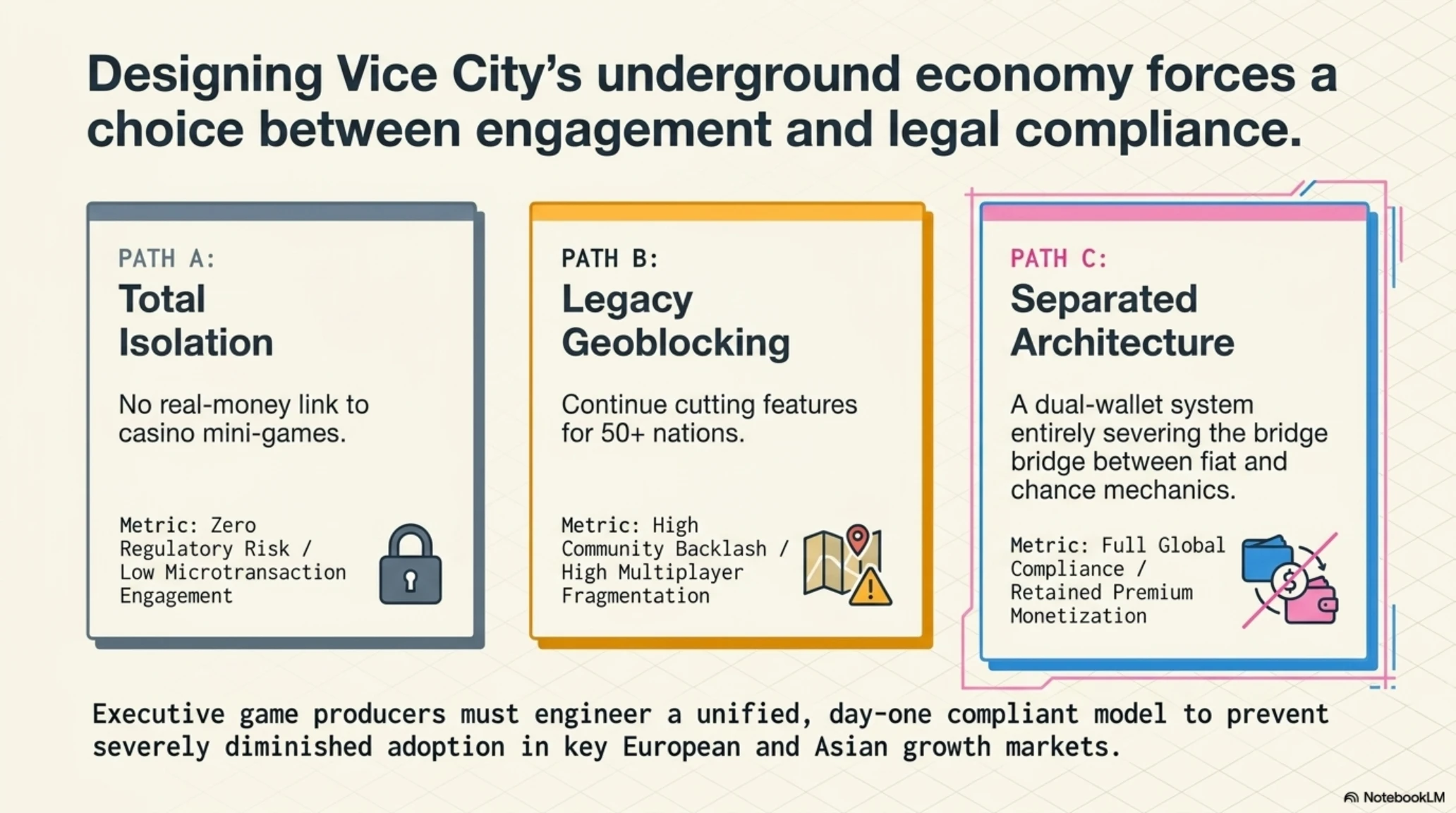
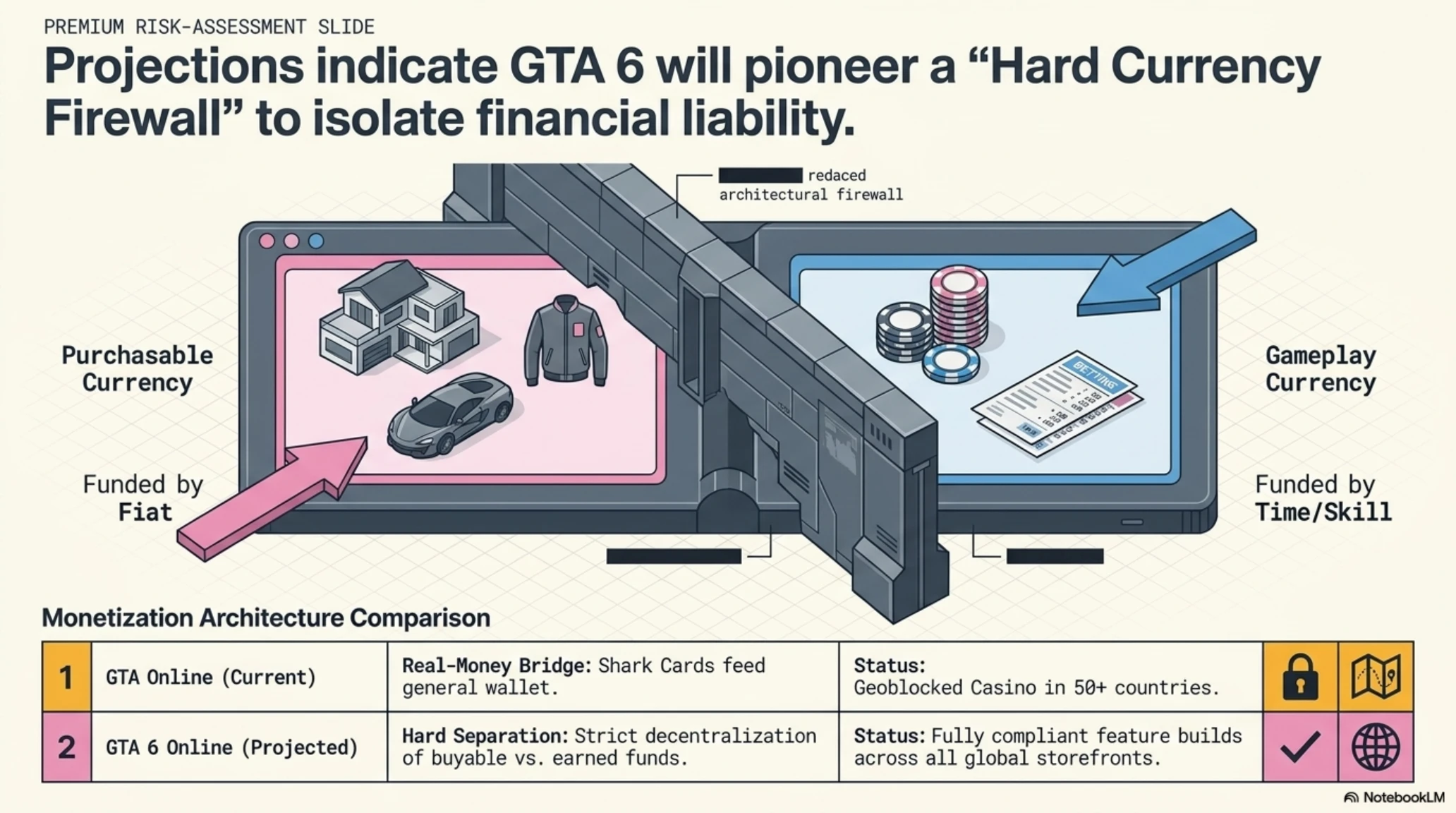
Rockstar’s first operational option is to completely isolate gambling mechanics from real-money microtransactions in GTA 6 Online. Under this framework, in-game casino games and betting activities could only be accessed using non-purchasable currency earned strictly through gameplay achievements, completely walling off real-money microtransactions from chance-based activities. While this eliminates regulatory risk, it reduces microtransaction engagement potential.
Alternatively, Rockstar could continue its regional geoblocking strategy across 50+ countries in GTA 6. However, delivering a truncated, feature-stripped experience to millions of players in key international markets risks triggering severe community backlash, negative review scores, and reduced software adoption across affected regions.
Industry insiders suggest that Rockstar’s engineering teams are developing a novel Separated Currency Architecture for GTA 6. This design would establish two completely isolated digital currencies: one reserved for microtransaction purchases (used exclusively for real estate, vehicles, and cosmetics), and a separate, non-buyable earned currency designated for casino games and sports betting.
This regulatory scrutiny also impacts the roleplay community and platforms like FiveM, which Rockstar acquired in 2023. Operating virtual casinos within custom roleplay servers could expose both server operators and Rockstar to legal liability if real-money donations or server subscriptions are tied to in-game gambling perks.
The immense legal complexity across global markets has forced Rockstar’s design teams to re-evaluate core economic systems during the final stages of GTA 6 production to prevent launch day compliance failures.
Furthermore, narrative game designers face unique creative constraints when building Vice City's criminal lore. Satirizing American excess and gambling culture has been a hallmark of the franchise since 1997; however, translating satire into interactive, monetized game mechanics without breaching modern regulatory statutes requires an extraordinarily delicate balance.
Executive game producers understand that a fragmented launch build could severely diminish day-one engagement in key growth markets across Europe and Asia, incentivizing Rockstar to pioneer a unified, fully compliant monetization model prior to release.
Technical architects building Vice City's back-end economy are evaluating decentralized token tracking systems that guarantee strict separation between microtransaction wallets and gameplay reward balances, ensuring complete statutory compliance across all global storefronts.
Ultimately, how Rockstar resolves Vice City's casino dilemma will set the benchmark for the entire video game industry, demonstrating whether live-service titles can sustain complex virtual economies amid tightening global anti-gambling regulations.
Monetization Strategy Comparison: GTA Online vs. GTA 6 Challenges
| Feature / Economic Structure | GTA Online (Current) | GTA 6 Online (Projected) |
|---|---|---|
| Real-Money Currency Bridge | Shark Cards feed general GTA$ wallet | Expected hard separation between buyable & earned funds |
| Casino Feature Access | Geoblocked in 50+ countries | Requires localized feature builds or full gambling decoupling |
| Anti-Gambling Regulatory Risk | High (New bans added like Australia) | Must comply with EU Loot Box directives and ACMA safety codes |
| Roleplay Server Economy (RP) | Unregulated third-party servers | Direct Rockstar oversight following cfx.re / FiveM acquisition |
Global Regulatory Shift: From Loot Box Scrutiny to Simulated Gambling Enforcement
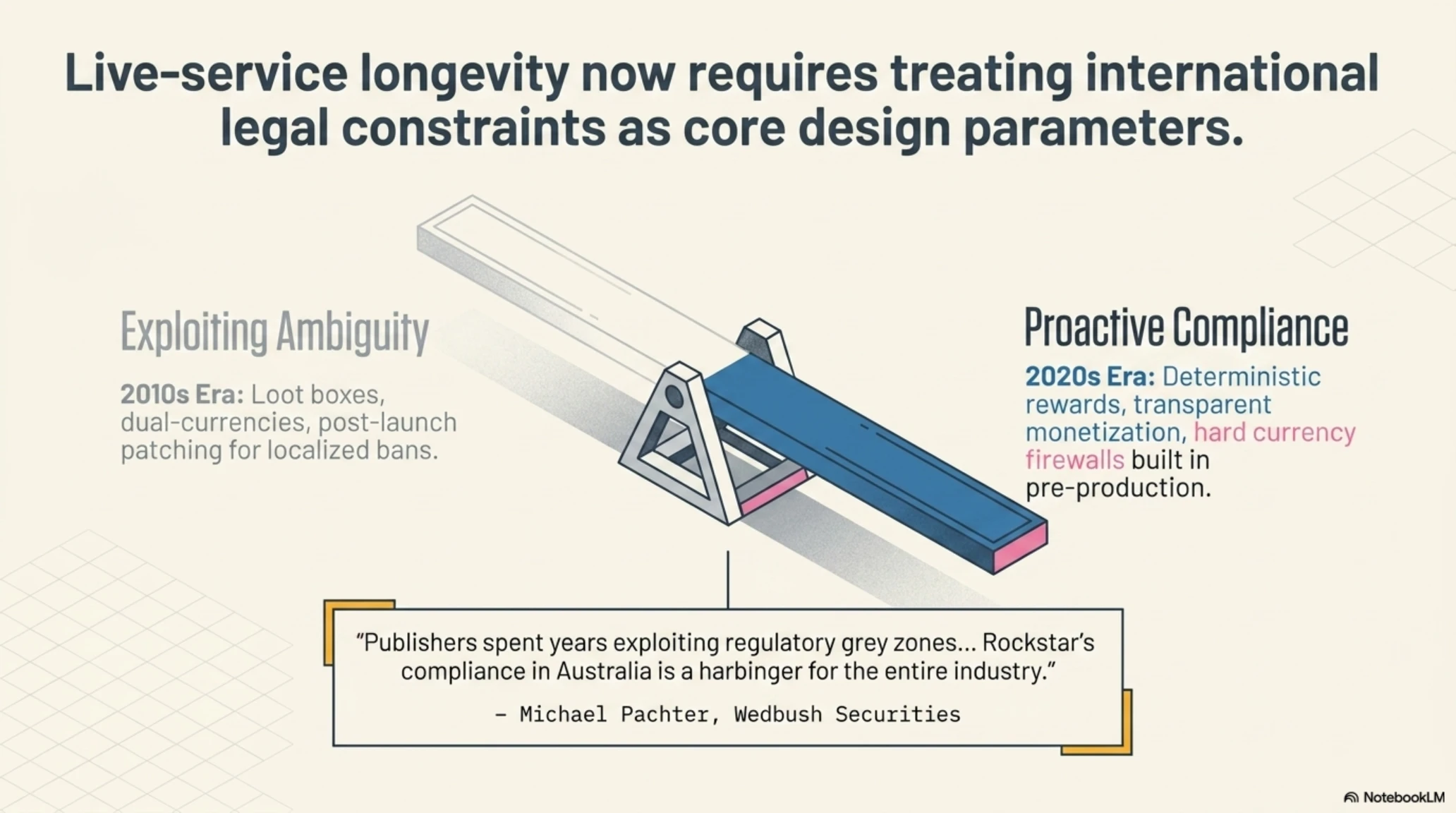
The tightening restrictions surrounding GTA Online's Diamond Casino represent a milestone in the ongoing evolution of digital entertainment regulation. Over the past decade, video game publishers utilized legal ambiguity surrounding virtual currencies, loot boxes, and digital wagering to maximize recurring player spending. However, sovereign regulatory bodies worldwide have closed these loopholes, establishing firm boundaries between interactive entertainment and commercial gambling operations.
Legal analyses highlight that regulatory bodies employ distinct legislative mechanisms to enforce compliance. Nations like Belgium and the Netherlands classified chance-based purchase mechanics as illegal gambling operations, forcing publishers like Electronic Arts and Valve to alter core game features. Conversely, jurisdictions such as Australia utilize statutory classification boards (ACB) to mandate restrictive adult ratings (R18+) or complete sales bans for titles featuring simulated gambling linked to microtransactions.

This legislative movement reflects a broader consensus among behavioral psychologists and consumer advocacy groups. Psychological research indicates that variable reward schedules—the underlying mechanism governing slot machines, roulette wheels, and loot boxes—trigger identical neurochemical responses regardless of whether the payout is tangible cash or a digital asset.
Furthermore, the growth of custom online roleplay communities, where players manage complex virtual businesses, has attracted heightened regulatory scrutiny. Monetizing access to in-game assets within third-party servers creates secondary legal exposures that major publishers can no longer ignore.
Legislative initiatives in 2026 reflect increased international coordination among regulatory agencies. The European Commission is currently drafting standardized directives aimed at harmonizing microtransaction transparency and chance-based mechanics across all 27 member states.
These mounting regulatory pressures have compelled executive leadership at major interactive entertainment companies—including Take-Two Interactive, Electronic Arts, and Ubisoft—to restructure future monetization roadmaps to ensure long-term legal sustainability.
Consumer protection advocates further emphasize that un-gated simulated gambling mechanisms in video games distort young players' perception of financial risk. In traditional physical casinos, age verification and mandatory identity checks serve as barriers to entry; however, within home video game consoles and PCs, frictionless digital payment infrastructures allow rapid, unmonitored capital deployment.
International statutory bodies are also examining the ethical implications of dark design patterns—user interface techniques crafted to manipulate players into spending real-world money under emotional impulse. By combining time-limited events with chance-based casino rewards, live-service games create artificial urgency that heightens consumer vulnerability.
Sociological studies tracking gaming addiction patterns indicate that early exposure to simulated gambling environments in adolescence significantly correlates with adult participation in commercial sports betting and online casinos. Consequently, public health agencies view gaming compliance not merely as a commercial matter, but as a critical public health defense mechanism.
Furthermore, international financial authorities are scrutinizing virtual game currencies for potential anti-money laundering (AML) non-compliance. In complex virtual economies where real-world money converts into secondary tokens, regulators demand strict auditing protocols to prevent illicit capital flows through digital entertainment channels.
Key Data Points & Historical Milestones
July 2019: Launch date of The Diamond Casino & Resort update.
2006: Landmark year for early online gambling legislation archives.
$8 Billion+: Lifetime total revenue generated by GTA V & GTA Online microtransactions.
Technical Architecture and FiveM Roleplay Integration Challenges
A frequently overlooked dimension of Rockstar's compliance strategy is its impact on FiveM and the broader custom roleplay (RP) ecosystem. Following Take-Two Interactive's acquisition of cfx.re (the development team behind FiveM) in 2023, Rockstar assumed direct legal and operational responsibility for thousands of user-operated multiplayer servers, many of which featured custom virtual casinos and player-driven economies.
With statutory regulations tightening in Australia and Europe, Rockstar must enforce identical compliance standards across the FiveM ecosystem. If a custom roleplay server allows players to purchase in-game casino chips or VIP gambling access using real-world real-money server donations, both the server operator and Rockstar face severe legal liability under local anti-gambling statutes.

Enforcing compliance across thousands of decentralized community servers represents an immense technical and legal hurdle. Rockstar's engineering teams have deployed automated content scanning systems to identify and disable unauthorized gambling scripts within FiveM server environments.
While these strict enforcement measures may constrain community modding freedom, they remain essential to protect Rockstar's corporate entity from costly international litigation and brand disruption.
Roleplay community leaders have expressed concern that over-regulating custom server economies could diminish gameplay diversity, highlighting the delicate balance publishers must maintain between regulatory compliance and player creative freedom.
From an engineering infrastructure standpoint, FiveM server compliance requires real-time telemetry filtering. Server hosts must strip out all chance-based mini-game scripts that link to real-world monetary transaction plugins, ensuring that player-run underground casinos remain strictly fictional, roleplay-driven constructs without external financial interfaces.
Additionally, server verification protocols must constantly validate script integrity to prevent bad actors from deploying obfuscated gambling code. By automating code audits across private servers, Rockstar mitigates legal vulnerabilities while fostering a safe, sustainable environment for community creators.
Comprehensive Legal Framework Matrix: Gambling Laws Across Major Markets
| Country / Region | Legal Status of Simulated Gambling | Primary Enforcement Body | Non-Compliance Penalties |
|---|---|---|---|
| Australia | Strictly restricted if linked to microtransactions | ACMA & ACB Classification Board | Classification revocation & digital storefront bans |
| Belgium & Netherlands | Complete statutory ban on loot boxes & gambling | Belgian Gaming Commission (KSA) | Fines up to €800,000 & criminal prosecution |
| Saudi Arabia & UAE | Prohibited under civil & religious law | General Commission for Audiovisual Media | Complete domain blocking & product distribution bans |
| United States | Varies by state law (Permissive in Nevada) | FTC & State Gaming Commissions | Mandatory odds disclosures & age-gating warnings |
| United Kingdom | Under active legislative review | UK Gambling Commission | Mandatory strict age verification protocols |
Technical Dossier & Compliance Fact Sheet
Initial Content Launch: July 23, 2019
Restricted Jurisdictions: 52 Countries (As of 2026)
Primary Australian Authority: Australian Communications and Media Authority (ACMA)
Affected Platforms: PlayStation 5, PlayStation 4, Xbox Series X|S, Xbox One, PC
Conclusion: The End of Unregulated Microtransactions and Lessons for the Gaming Industry
Rockstar Games’ strategic concession to Australian anti-gambling regulators and its ongoing geoblocking across more than 50 nations marks a definitive end to the era of unregulated digital microtransactions. The precedent is now firmly established: publishers can no longer shield chance-based purchase loops behind the defense of "non-cashable virtual chips" when real-world currency funds the entry vector.
For the global gaming community, this regulatory enforcement carries double-edged consequences. Protecting younger players and vulnerable individuals from simulated gambling addiction and financial exploitation is an undeniable ethical necessity. However, abruptly revoking access to core gameplay features for legitimate players who invested time and money creates widespread frustration and highlights the fragile nature of digital asset ownership in live-service games.
As the gaming industry anticipates the global launch of Grand Theft Auto VI, all eyes remain fixed on Rockstar Games and Take-Two Interactive. The publisher faces an unprecedented design challenge: engineering an online multiplayer economy that delivers high financial returns while remaining completely compliant with tightening anti-gambling laws across diverse international jurisdictions.

Ultimately, the Diamond Casino controversy provides an enduring lesson for independent developers and AAA blockbusters alike: respecting international consumer protection laws, maintaining financial transparency, and separating core entertainment from high-risk wagering mechanics are mandatory prerequisites for operational longevity in modern gaming.
Tekin Review will continue to monitor legal developments, statutory updates, and official communications regarding GTA 6's economic architecture, delivering authoritative analysis to our global audience.
The coming months will determine whether additional Western democracies enact similar restrictions or if Rockstar will pioneer a revolutionary, fully compliant monetization model that reconciles player freedom with international law.
Industry analysts agree that Rockstar's approach to Vice City's virtual economy will reshape live-service game design for the next decade, proving that long-term player trust and legal compliance must always take priority over aggressive short-term microtransaction strategies.
As digital storefronts and regulatory bodies continue to align, the video game industry moves toward a more transparent, ethically grounded future where player protection and immersive entertainment coexist harmoniously.
For players worldwide, the resolution of this conflict promises a more stable gaming ecosystem where live-service content remains accessible without exposing communities to predatory financial mechanics.
Tekin Radar will remain at the forefront of tracking these industry shifts, analyzing the intersection of video game technology, corporate strategy, and global law.
The lessons learned from GTA Online's regional geoblocking will ripple across future online game development. Studios planning massive multiplayer economies must now integrate regulatory compliance directly into pre-production architecture, treating legal constraints as core design parameters rather than post-launch patches.
Furthermore, as public awareness of digital consumer rights matures, players will increasingly demand that publishers preserve access to purchased content, pushing the industry toward sustainable, skill-based reward systems that respect user investments.
This paradigm shift ultimately benefits the broader interactive entertainment landscape, fostering an environment where artistic innovation and ethical monetization can thrive together without incurring severe legal friction.
Looking ahead to the next decade, game development studios will invest heavily in ethical monetization design patterns, replacing un-gated chance mechanics with deterministic reward paths that empower player skill while respecting global statutory standards.
By transforming regulatory compliance from an operational burden into a creative opportunity, progressive developers can rebuild trust with global gaming audiences, laying the groundwork for a more resilient, highly engaging digital economy.
Modern gaming communities are demanding greater accountability from AAA publishers. As player awareness expands, transparent monetization frameworks will become a key competitive advantage, attracting players who prioritize fair, skill-driven multiplayer environments.
Ultimately, Rockstar's journey through this regulatory crucible demonstrates that long-term brand equity depends on adapting to changing societal values, ensuring that the legacy of Grand Theft Auto remains defined by groundbreaking interactive storytelling rather than legal controversy.
This evolving legal landscape ultimately challenges publishers to rethink how digital value is created and distributed within virtual worlds. As regulatory frameworks become increasingly standardized across international borders, the game development community has a unique opportunity to lead the shift toward transparent, sustainable monetization models that inspire player loyalty while fully complying with global law.
Through proactive compliance, industry transparency, and auteur-driven creative vision, the future of online multiplayer gaming can achieve a healthy balance between commercial viability and ethical consumer protection, ensuring that iconic franchises like Grand Theft Auto continue to captivate audiences for generations to come.
As the international gaming sector embraces these ethical benchmarks, players can look forward to immersive virtual worlds where entertainment integrity and creative excellence remain paramount, setting a inspiring standard for future digital media innovations.
Tekin's analytical editorial board will maintain active tracking of all legislative updates, studio disclosures, and compliance frameworks to ensure our global readership receives the most authoritative insights into the future of interactive entertainment economies.
Tekin Analysis: The Future of GTA 6 Microtransactions
- Protects minors and vulnerable players from simulated gambling exposure
- Forces publishers to adopt transparent, consumer-friendly monetization models
- Mitigates unauthorized real-money credit card purchases by youth
- Deprives legitimate players in 50+ countries of full gameplay features
- Creates fragmented multiplayer lobbies between international player bases
- Increases account security risks due to VPN circumvention attempts
Final Conclusion & Industry Assessment
Related Industry Files on Tekin
• Tekin Radar | Epic Launch Comparison of GTA 6 & Burj Khalifa Reveal
• Tekin Analysis | GTA 6 Physical Edition Disc-less Release June 2026
• Tekin Night | Official GTA VI Price, Neuralink & Omni Breakdown
Frequently Asked Questions: GTA Online Casino Ban
Why were Diamond Casino features disabled in Australia?
Due to new ACMA regulations targeting simulated gambling mechanics linked to real-money microtransactions via Shark Cards.
Is using a VPN safe to bypass GTA Online casino regional blocks?
No. Using VPNs to bypass regional restrictions violates Rockstar Terms of Service and risks permanent account bans.
How many countries currently restrict GTA Online casino gambling?
Over 50 nations—including Australia, Saudi Arabia, UAE, Poland, Portugal, Greece, and China—restrict access to table games.
How will this affect the upcoming release of GTA 6?
Rockstar must redesign GTA 6's online monetization engine to isolate real-money purchases from chance-based casino mechanics to avoid global bans.
Sources & References
• GameSpot: GTA Online Players in Australia Can No Longer Gamble Report
• PC Gamer: GTA Online Gambling Blocked in Australia & Legal Breakdown
• Eurogamer: Will GTA Online Shut Down When GTA 6 Launches?
• IGN: Physical Copies of GTA 6 & Regional Restrictions Analysis
Additional Gallery: Tekin Radar | Rockstar Bows to Regulators: GTA Online Gambling Ban Hits Australia & 50+ Nations