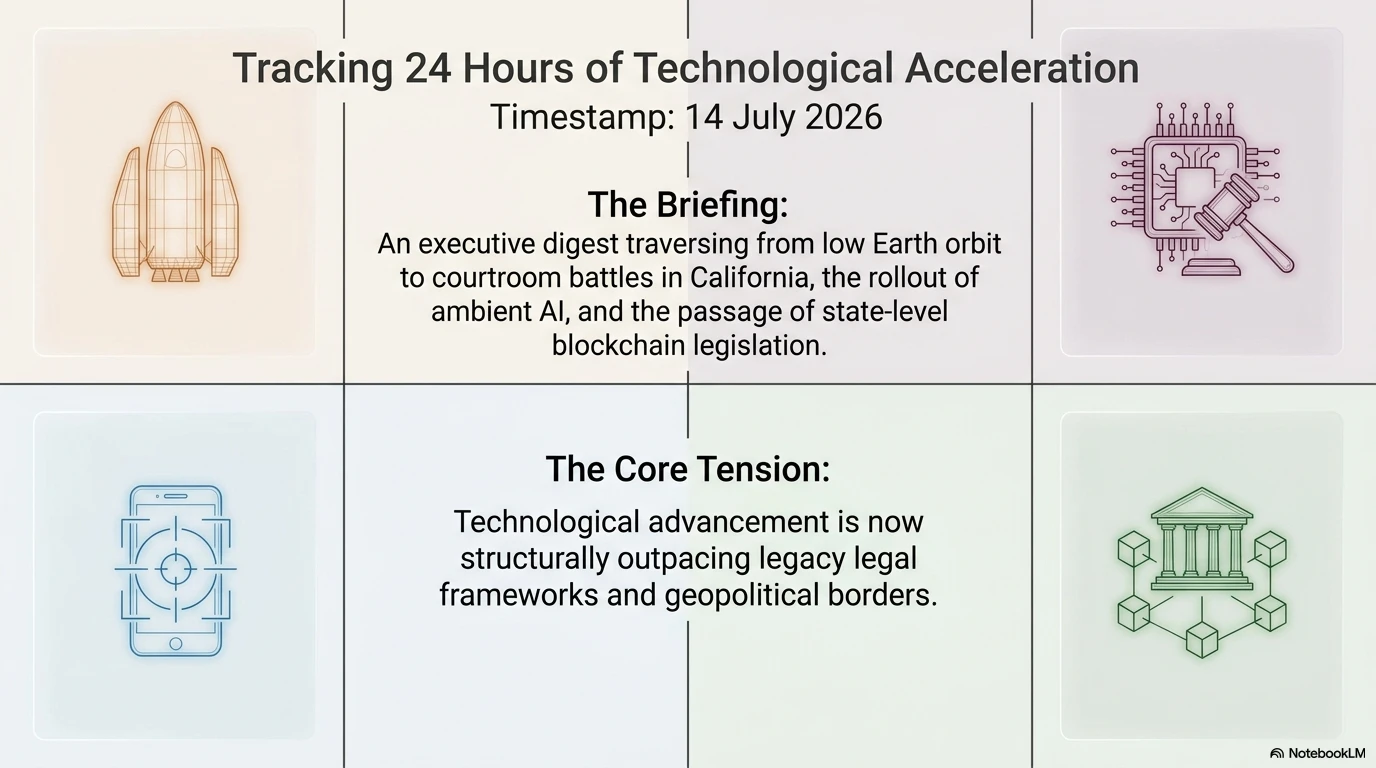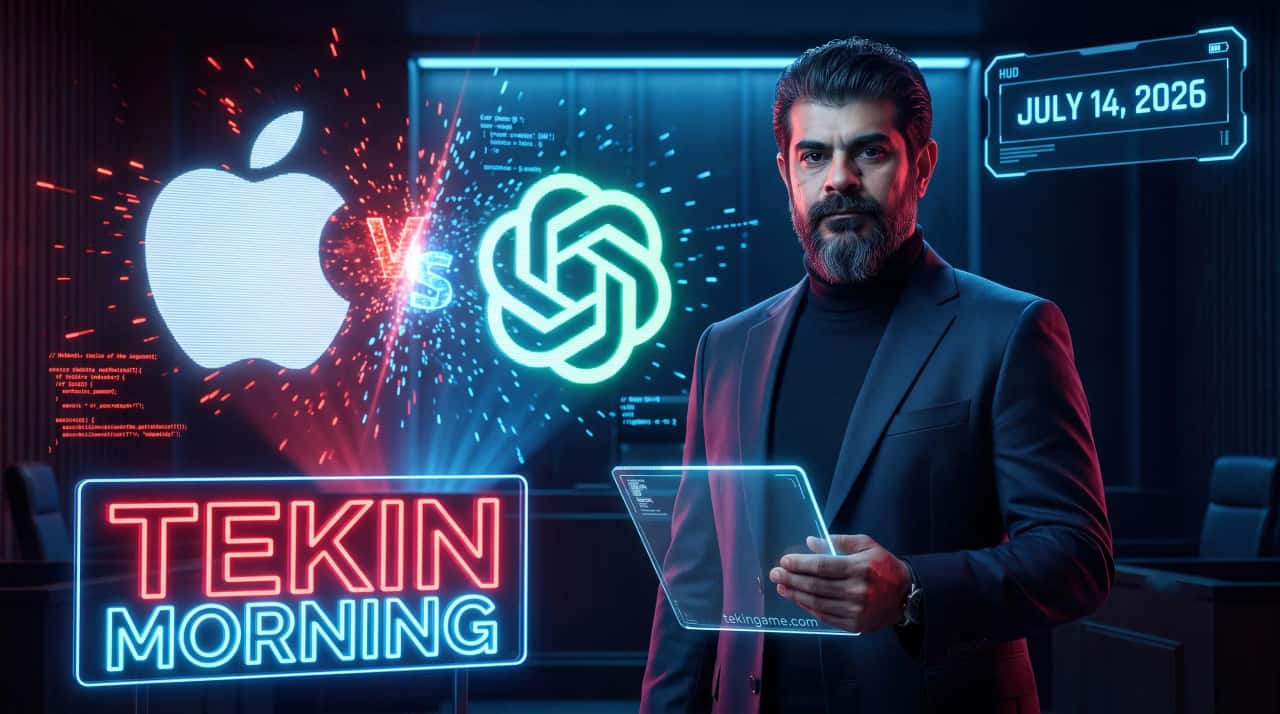
Tuesday, July 14, 2026, marks a critical intersection of orbital mechanics, artificial intelligence, and regulatory frameworks. SpaceX is executing final protocols for Starship Flight 13 to deploy operational Starlink V3 satellites, while NASA executes a pragmatic crew transfer aboard a Russian Soyuz rocket despite ongoing geopolitical friction. In the corporate sector, Apple has ignited a fierce legal battle against OpenAI, alleging systematic trade secret theft regarding custom hardware development by former engineers
☀️ Good Morning Tech Enthusiasts! Tuesday, July 14, 2026
Starting today with 6 breaking stories from space to AI.
- 🎮🚀 SpaceX Starship Flight 13- Launch window opens Thursday evening
- 🎧⚖️ Apple vs OpenAI Legal Battle- Trade secret theft allegations heat up
- 🚀🤖 Siri AI Public Beta Released- Revolutionary voice assistant upgrade
- 🗡️₿ New Hampshire Blockchain Laws- Protection for miners and validators
Tuesday, July 14, 2026. What time is it? It's news o'clock. Time to pour that coffee, settle in, and dive deep into the most significant technological developments of the past 24 hours. Today's morning briefing spans from the edge of space to the depths of artificial intelligence, from courtrooms in California to state legislatures in New Hampshire. We're witnessing SpaceX preparing for its thirteenth Starship flight with operational Starlink V3 satellites, NASA sending an astronaut to the International Space Station aboard a Russian rocket despite geopolitical tensions, Apple escalating its legal war against OpenAI over alleged trade secret theft, and the release of a genuinely intelligent Siri that can finally see your screen and take action across apps.
Meanwhile, New Hampshire is making history as the first US state to comprehensively regulate blockchain technology while building a strategic Bitcoin reserve. These aren't isolated incidents; they're interconnected threads in the fabric of our technological future. Each story raises fundamental questions about innovation, competition, cooperation, and regulation in an era where technological advancement outpaces legal frameworks and geopolitical structures struggle to contain transnational challenges.
SpaceX Starship Flight 13: The First Operational Mission
Thursday evening, July 16, 2026, between 6:45 and 8:15 PM Eastern Time, SpaceX will open the launch window for Starship Flight 13. This isn't just another test flight. For the first time, Starship will carry operational Starlink V3 satellites, transforming what has been an experimental program into a commercial reality. But before we celebrate, we need to understand what went wrong on Flight 12 and how SpaceX addressed those issues.
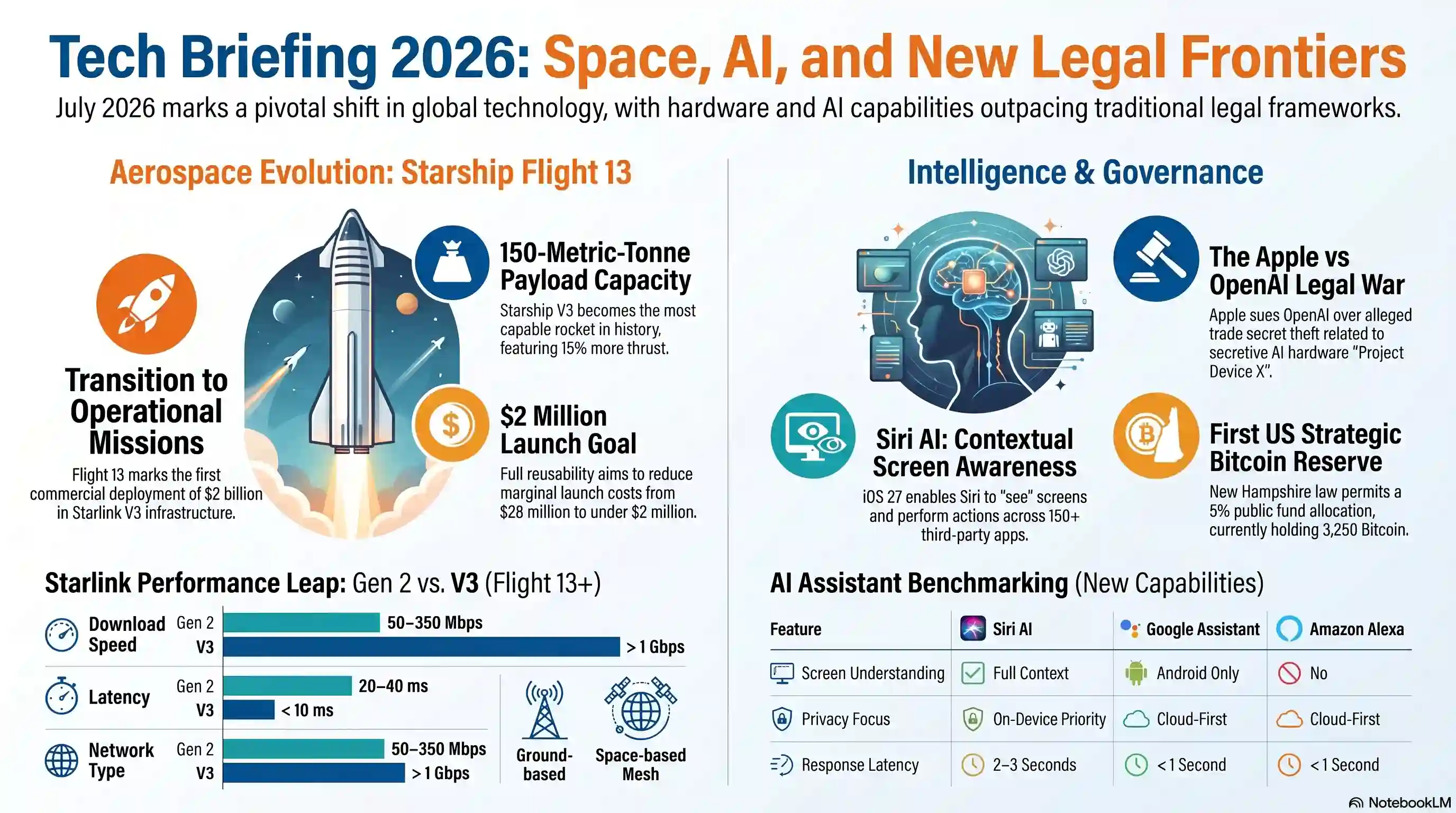
According to Space.com's detailed technical reporting, Flight 12 experienced a combustion anomaly in one of the Raptor engines during booster separation. The incident occurred approximately four minutes into the flight, just as the Super Heavy booster was preparing to separate from the upper stage. Telemetry data showed a sudden pressure spike in the methane feed line of Engine 7, followed by an uncontrolled burn that forced an emergency shutdown of that engine. Fortunately, the redundancy built into the 33-engine system allowed the booster to complete separation, though not within optimal parameters.
SpaceX's engineering team spent three weeks analyzing flight data, conducting ground tests, and implementing hardware modifications. The investigation revealed that the anomaly stemmed from a thermal management issue in the engine's regenerative cooling system. During the high-stress phase of maximum aerodynamic pressure (Max-Q), localized heating caused a temporary loss of cooling efficiency, leading to the combustion instability. The solution involved redesigning the cooling channel geometry and upgrading the thermal monitoring sensors to provide real-time feedback for engine control algorithms.
Starship Version 3: Technical Specifications
The Version 3 configuration represents a significant evolution from earlier iterations. The vehicle features a thicker stainless steel skin (increased from 3mm to 4mm), providing better structural integrity during atmospheric reentry. The heat shield employs an improved hexagonal tile pattern with enhanced gap-filling ablative material to prevent plasma intrusion. Most significantly, the Raptor 3 engines deliver 15% more thrust than Raptor 2 while maintaining the same physical footprint, achieved through optimized combustion chamber geometry and higher propellant flow rates. Payload capacity has increased to 150 metric tons to low Earth orbit, making Starship the most capable operational rocket in history.
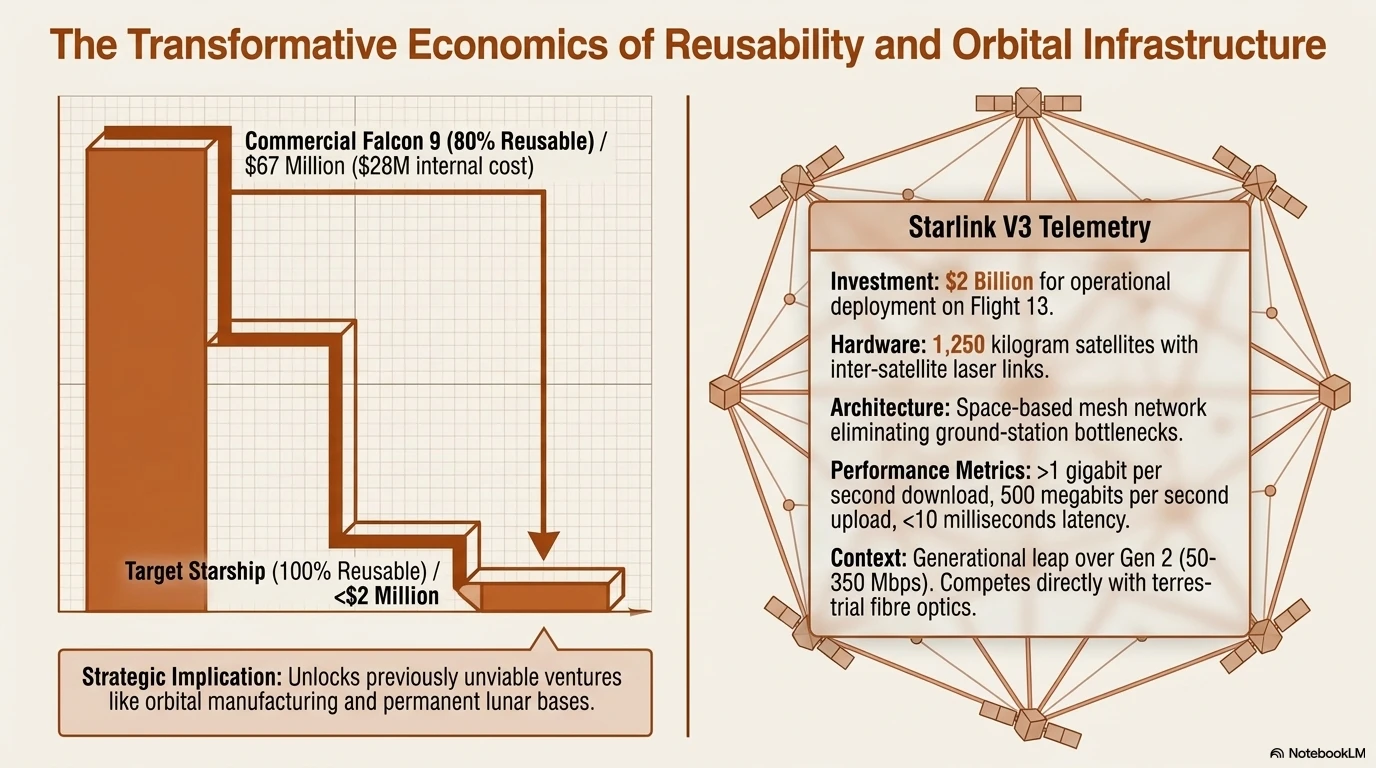
Why does Flight 13 matter more than any previous test? Because it marks the transition from development to operations. The Starlink V3 satellites aboard this flight represent a $2 billion investment in next-generation space-based internet infrastructure. Each satellite masses 1,250 kilograms and features inter-satellite laser links capable of routing data at terabits per second. Unlike previous Starlink generations that communicated through ground stations, V3 creates a mesh network in space, dramatically reducing latency and enabling true global coverage including polar regions and mid-ocean.
The performance targets for Starlink V3 are ambitious: download speeds exceeding 1 gigabit per second, upload speeds of 500 megabits per second, and latency under 10 milliseconds. These specifications would make satellite internet competitive with fiber optic connections, eliminating the traditional disadvantage of space-based connectivity. For context, current Starlink Gen 2 satellites deliver 50-350 megabit downloads with 20-40 millisecond latency. The V3 improvement represents a generational leap, not incremental progress.
The Economic Implications of Reusability
Flight 13 will also attempt a controlled splashdown of the Super Heavy booster on a floating platform in the Atlantic Ocean. This test represents another step toward full reusability, the holy grail that has driven SpaceX's strategy since its founding. Current Falcon 9 rockets achieve approximately 80% reusability by recovering only the first stage. Starship aims for 100% reusability, recovering and rapidly refurbishing both the booster and upper stage.
The economics are transformative. A Falcon 9 launch currently costs SpaceX approximately $28 million internally, with commercial prices around $67 million. A fully reusable Starship could reduce marginal costs to under $2 million per launch once the system is mature. This cost structure would fundamentally alter the economics of space access, enabling applications that are currently impossible due to launch costs. Imagine deploying massive space telescopes, building orbital manufacturing facilities, or establishing permanent lunar bases becoming economically viable ventures.
Starship Flight History Timeline
NASA-Roscosmos Cooperation: Politics vs Science
Today, Tuesday July 14, 2026, NASA astronaut Anil Menon launches to the International Space Station aboard Soyuz MS-29 from Baikonur Cosmodrome in Kazakhstan. This marks a significant diplomatic thaw after years of strained relations following Russia's invasion of Ukraine in February 2022. The resumption of crew exchange demonstrates that despite terrestrial conflicts, space cooperation remains possible when national interests align.
The backstory is complex. Following the Ukraine invasion, Roscosmos Director Dmitry Rogozin made inflammatory statements threatening to strand American astronauts on ISS by refusing cooperation. The rhetoric was largely bluster; Russia benefits economically and politically from ISS partnership. However, NASA took the threats seriously enough to accelerate commercial crew capabilities through SpaceX and Boeing, reducing dependence on Soyuz access.
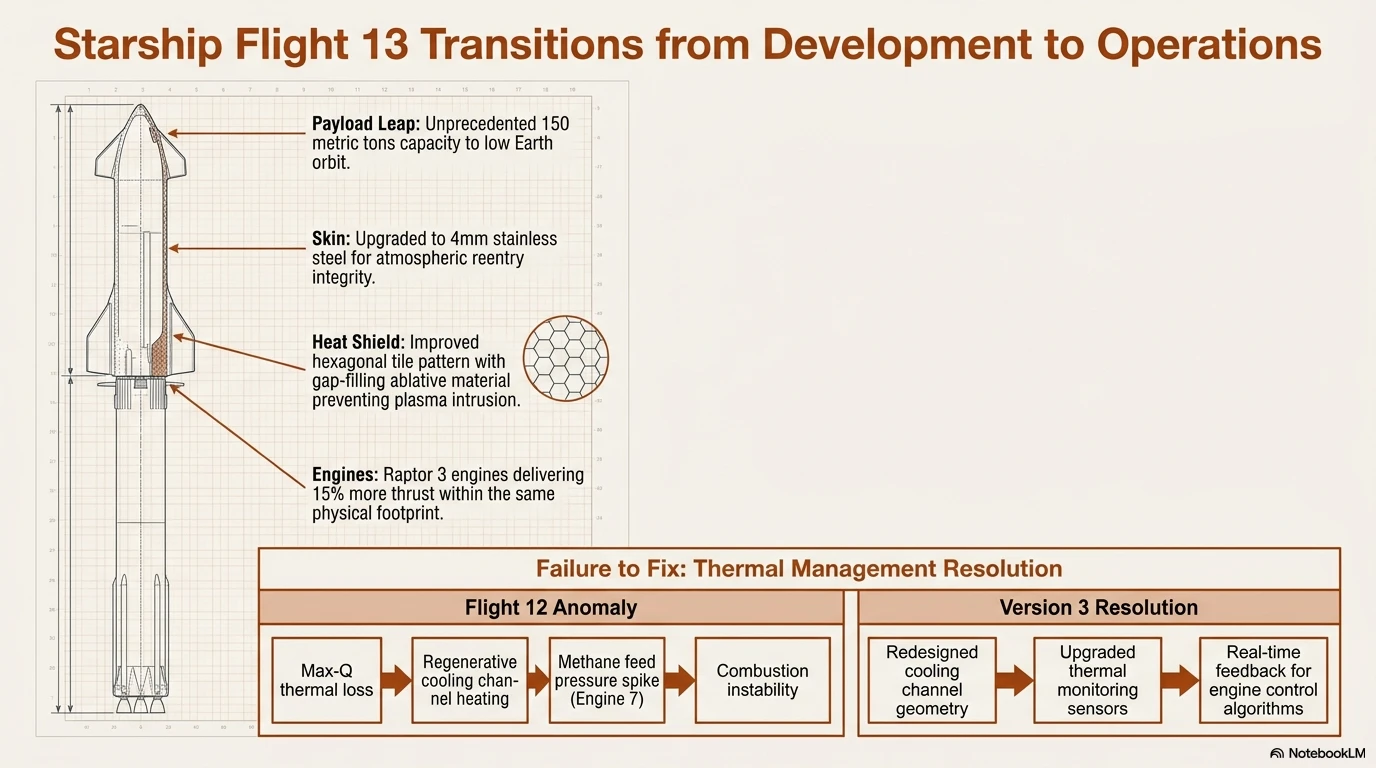
Anil Menon's flight represents a carefully negotiated agreement that serves multiple purposes. For NASA, it maintains operational flexibility; Soyuz remains the most reliable crew vehicle with over 150 successful launches and an unmatched safety record. Soyuz spacecraft serve as emergency evacuation vehicles ("lifeboats") for ISS, and having mixed crew training ensures that any crew member can operate any escape vehicle regardless of nationality. For Russia, hosting American astronauts provides hard currency revenue and political legitimacy, demonstrating that despite sanctions, Russia remains an essential spacefaring nation.
Dr. Menon brings unique qualifications to this mission. As a physician and aerospace engineer, he previously served as SpaceX's first flight surgeon, supporting the Crew Dragon program during its early operational flights. His medical expertise will prove valuable for ongoing biomedical research aboard ISS, particularly experiments studying the effects of long-duration spaceflight on cardiovascular health and bone density. His engineering background also enables him to contribute to maintenance and repair activities that keep the aging station operational.
Why NASA Still Needs Soyuz
- Soyuz is the only spacecraft currently certified for year-long stays docked to ISS as an emergency evacuation vehicle
- SpaceX Crew Dragon has a six-month docked duration limit due to propellant degradation concerns
- Boeing Starliner remains limited operational status after multiple technical setbacks
- Crew cross-training requirements mandate that astronauts train on multiple vehicle systems
- Soyuz's 50-year operational history provides unmatched reliability data
- Political diversification reduces vulnerability to any single nation's policy changes
The Future of International Space Station Operations
Current planning extends ISS operations through 2030, after which the station will undergo controlled deorbit into the Pacific Ocean. NASA is already contracting with commercial companies to develop replacement facilities. Axiom Space is building commercial modules that will initially attach to ISS before separating to form an independent station. Blue Origin is developing Orbital Reef, a mixed-use space station designed for research, manufacturing, and tourism. These commercial stations represent a fundamental shift from government-owned infrastructure to commercial space real estate.
The geopolitical implications are profound. ISS was built as a post-Cold War symbol of international cooperation, involving the United States, Russia, Europe, Japan, and Canada. Its successor architecture is decidedly more fragmented. China has already deployed Tiangong, its own space station, after being excluded from ISS partnership due to US congressional restrictions. India has announced plans for its own station by 2030. We're transitioning from one shared international outpost to multiple competing national and commercial stations. Whether this represents progress or regression depends on your perspective.
Apple vs OpenAI: The Trade Secret War Begins
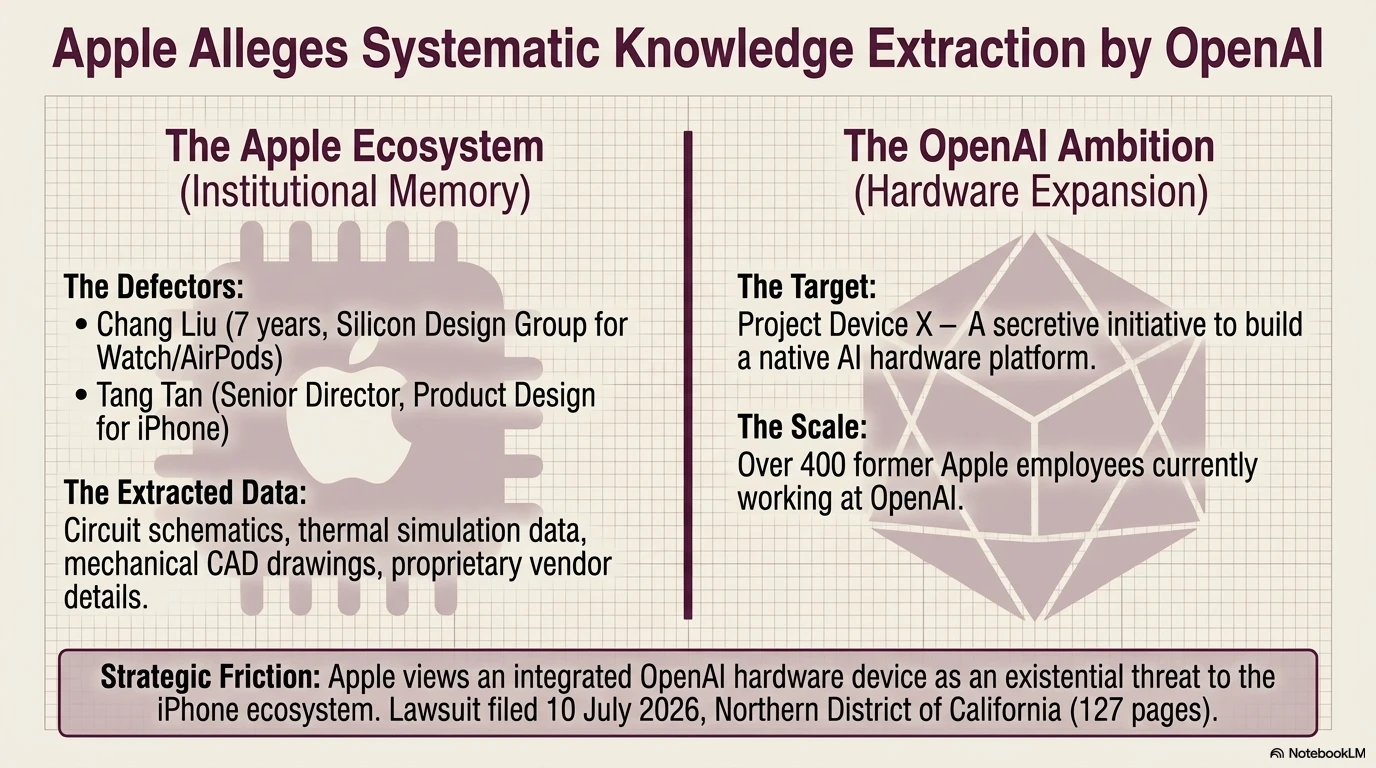
On July 10, 2026, Apple filed a lawsuit in the United States District Court for the Northern District of California alleging that OpenAI systematically stole trade secrets related to hardware development through the hiring of former Apple engineers Chang Liu and Tang Tan. The complaint, spanning 127 pages with extensive technical exhibits, represents one of the most significant intellectual property disputes in the technology sector's history. The outcome could establish precedent affecting talent mobility, competitive intelligence, and the boundaries of corporate secrecy for decades.
The factual background is damning from Apple's perspective. Chang Liu worked for seven years in Apple's silicon design group, contributing to the development of custom chips for Apple Watch and AirPods. His role gave him access to highly confidential information about Apple's chip architecture philosophy, power management techniques, and integration strategies for wearable devices. Tang Tan held an even more sensitive position as Senior Director of Product Design, with direct involvement in iPhone and Apple Watch hardware development. He participated in executive meetings where future product roadmaps were discussed years in advance.
Both engineers left Apple in 2024 and joined OpenAI to work on Project "Device X," a secretive hardware initiative aimed at creating an AI-powered personal device. According to court documents, Apple's forensic investigation revealed that Liu and Tan transferred significant volumes of proprietary files to personal accounts in the days before their departure. The transferred files allegedly included circuit schematics, thermal simulation data, mechanical CAD drawings, and confidential vendor information.
OpenAI's response has been equally forceful. The company argues that all new employees sign comprehensive non-disclosure agreements and undergo mandatory training on avoiding the use of prior employers' confidential information. OpenAI claims that Project Device X was developed entirely through internal research and that any similarities to Apple's work are coincidental or result from applying public domain knowledge and standard industry practices. OpenAI's lawyers point out that many technological problems have limited optimal solutions, meaning independent teams will naturally converge on similar designs.
The Broader Context of Tech Talent Wars
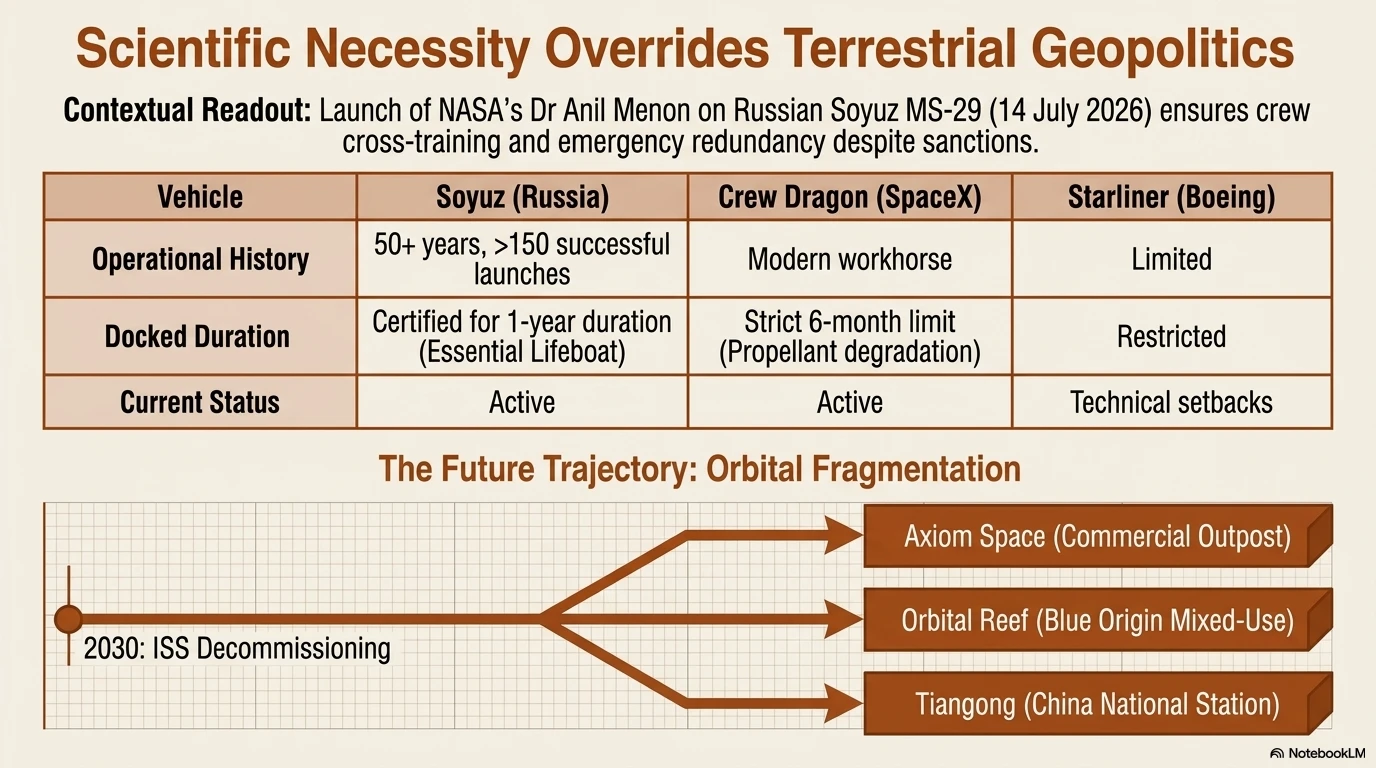
This lawsuit didn't emerge in a vacuum. Silicon Valley has always struggled with the tension between employee mobility and trade secret protection. California law generally prohibits non-compete agreements, ensuring that employees can freely move between companies. This legal framework has been credited with enabling Silicon Valley's rapid innovation by allowing talent to flow to wherever ideas and opportunities exist. However, this mobility also enables the transfer of knowledge that companies spent millions developing.
Apple itself has been both victim and beneficiary of talent migration. The company has aggressively recruited from competitors, including hiring key engineers from Intel, AMD, and Qualcomm to build its custom silicon capabilities. When Apple poached chip designers from Intel for its M-series processor development, Intel grumbled but didn't sue. The difference in OpenAI's case, according to Apple, is the alleged mass transfer of actual proprietary documents rather than merely the application of learned skills and general knowledge.
Notable Technology Talent War Cases
- 2009: Google vs Microsoft: Google sued over Microsoft's hiring of Kai-Fu Lee, eventually settled with restrictions on Lee's role
- 2014: Tesla vs Apple: Elon Musk publicly accused Apple of being a "Tesla graveyard" for poaching engineers
- 2017: Waymo vs Uber: $245 million settlement after Waymo proved former employee Anthony Levandowski stole self-driving car secrets
- 2019: Apple vs Rivos: Apple sued chip startup Rivos for allegedly stealing chip design secrets through hired engineers
- 2022: Meta vs Snap: Dispute over wholesale hiring of AR/VR team with ongoing litigation
- 2026: Apple vs OpenAI: Potentially the largest trade secret case of the decade given OpenAI's valuation and strategic importance
Strategic Implications for the AI Hardware Race
The lawsuit's timing is particularly significant because it occurs amid OpenAI's push into hardware. Since ChatGPT's launch in late 2022, OpenAI has been primarily a software company, licensing its AI models to other companies. However, in 2024, Sam Altman reportedly approached former Apple designer Jony Ive about collaborating on an AI device that would be to AI what the iPhone was to mobile computing. That device, presumed to be Project Device X, would give OpenAI direct control over the user experience and hardware-software integration.
For Apple, OpenAI's hardware ambitions represent an existential threat. Apple's strategic vision involves tightly integrating AI capabilities across its hardware ecosystem, with on-device processing ensuring privacy and responsiveness. If OpenAI successfully launches a compelling AI device, it could fragment Apple's ecosystem and provide users with an alternative platform for AI-powered computing. The lawsuit may therefore serve both legal and strategic purposes—recovering damages while simultaneously delaying OpenAI's hardware timeline and creating uncertainty for potential manufacturing partners.
Ironically, this lawsuit comes as Apple and OpenAI were supposedly negotiating to integrate ChatGPT with Siri. Those talks are now frozen, and industry analysts speculate that Apple may accelerate development of its in-house large language models to avoid dependence on OpenAI. The breakdown of this potential partnership represents a fascinating case study in how competitive dynamics can override seemingly beneficial collaborations.
Siri AI: Finally, A Smart Assistant That's Actually Smart
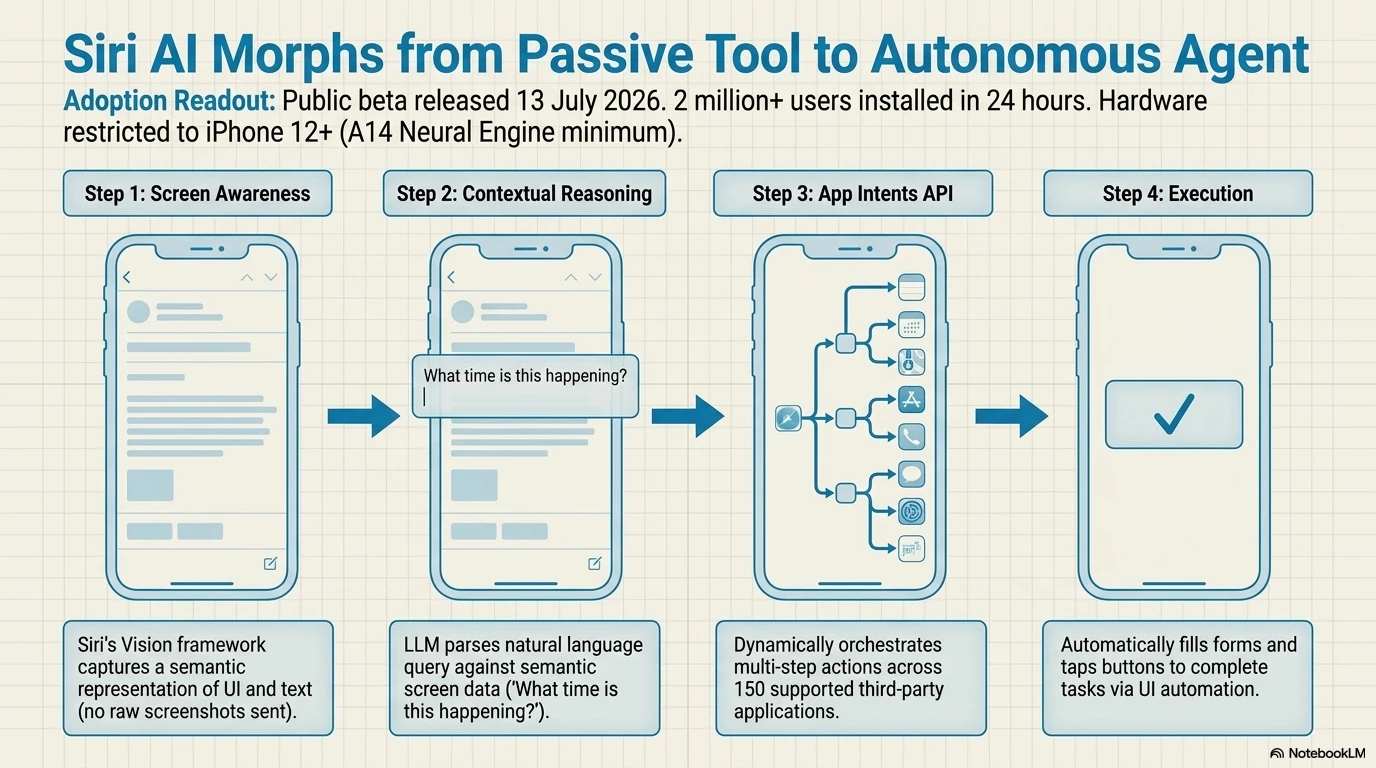
On July 13, 2026, Apple released the first public beta of iOS 27, introducing Siri AI—a fundamentally reimagined voice assistant that can finally see your screen, understand context, and take meaningful action across applications. After years of being mocked as the dumbest of the major voice assistants, Siri has leapfrogged competitors in several crucial capabilities. The question is whether this represents genuine intelligence or merely better illusion.
The Verge's comprehensive hands-on testing reveals that Siri AI differs fundamentally from its predecessor. The previous Siri operated primarily through pre-programmed responses and structured data lookups. If your query didn't match a known pattern, Siri would fail or punt to web search. The new Siri AI employs a large language model trained specifically for iOS that can understand natural language, reason about context, and generate appropriate responses even for novel queries it has never seen before.
The most impressive capability is screen awareness. Siri can now analyze whatever is currently displayed on your screen and incorporate that visual context into its understanding. Reading an email about a meeting? Ask Siri "What time is this happening?" and it will parse the email content to extract the meeting time. Looking at a photo? Ask "What kind of dog is this?" and Siri will use computer vision to identify the breed. This contextual awareness makes interactions feel dramatically more natural because you don't need to explicitly provide all information—Siri can see what you see.
- Genuine screen content understanding enables contextual awareness
- Natural language processing handles complex, multi-step requests
- Cross-app actions allow Siri to complete tasks without explicit programming
- Privacy-focused architecture with on-device processing for sensitive data
- Learns from usage patterns to provide personalized suggestions
- Integration with Apple's ecosystem provides deep system access
- Response latency noticeably slower than previous Siri (2-3 seconds vs instant)
- Still makes factual errors approximately 15-20% of the time based on early testing
- Requires constant internet connection for most advanced features
- Privacy concerns about screen content analysis despite Apple's assurances
- Limited third-party app integration at launch (only 150 apps supported)
- Heavy battery drain during extended use (approximately 20% faster drain)
The Technology Behind Siri AI
Apple has revealed limited technical details, but we can infer the architecture from behavior and industry knowledge. Siri AI appears to use a hybrid approach combining on-device and cloud processing. For privacy-sensitive operations like analyzing your emails or messages, processing occurs entirely on the device using Apple's Neural Engine—specialized silicon designed for machine learning workloads. For general knowledge queries and complex reasoning that requires massive datasets, queries are sent to Apple's server infrastructure, where larger models process the request.
This hybrid architecture represents Apple's attempt to balance capability with privacy. Unlike Google Assistant, which routes almost everything through cloud servers for analysis, Siri AI makes a runtime decision about where processing should occur based on the sensitivity of the data and complexity of the task. Apple claims that all server communications are encrypted, anonymized, and that no personally identifiable information is stored in logs. Independent security researchers are currently auditing these claims, and we should expect detailed reports within weeks.
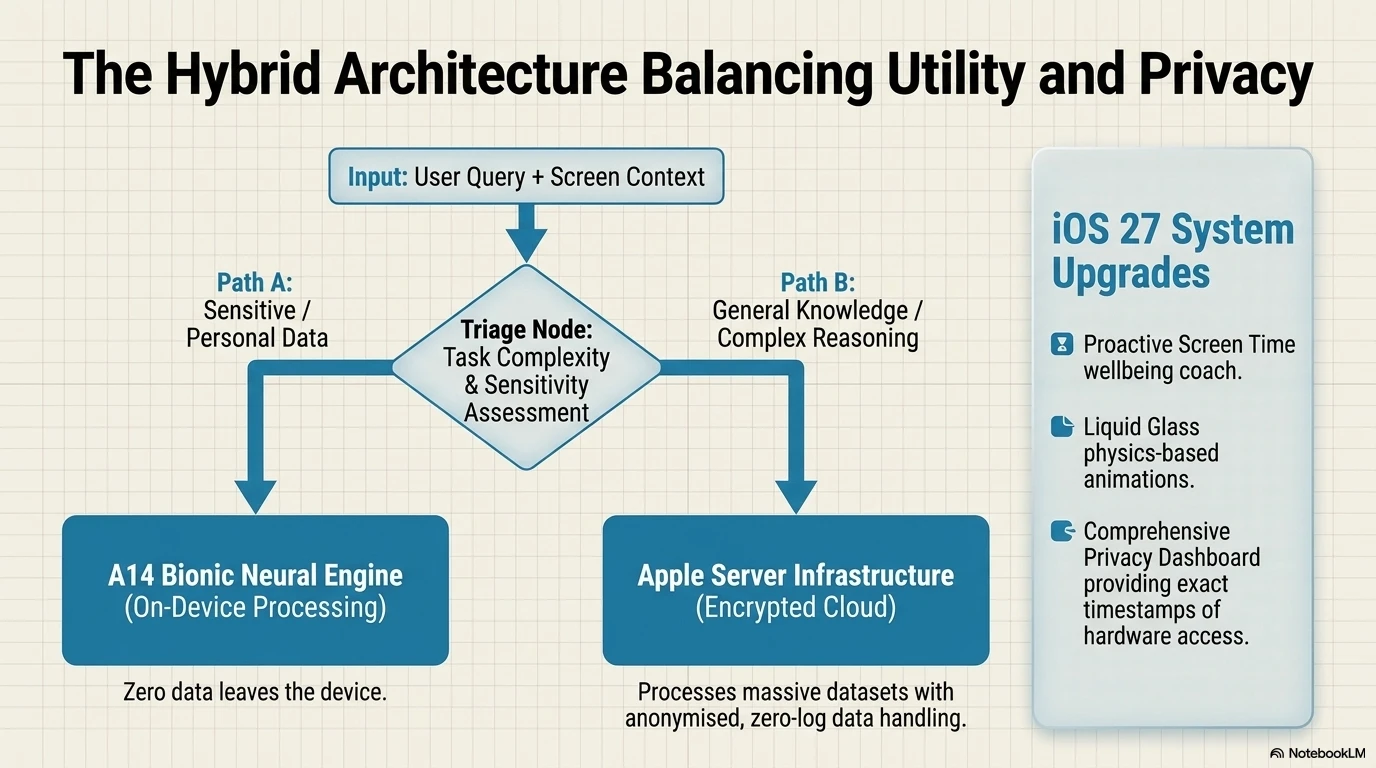
The visual understanding capability relies on Apple's Vision framework enhanced with multimodal AI models that can process both text and images simultaneously. When you ask Siri about on-screen content, the system captures a semantic representation of what's displayed—understanding text, UI elements, and image content—then feeds this structured representation into the language model for reasoning. Importantly, Apple claims that raw screenshots are never transmitted to servers; only semantic descriptions are sent, providing a privacy layer while enabling the AI to "see" your screen.
Third-Party App Integration: The Real Game Changer
Perhaps most significantly, Siri AI can now interact with third-party applications through a new App Intents API. Developers can define high-level actions their apps support, and Siri can orchestrate these actions to complete multi-step tasks. For example, you could say "Order my usual from that Thai place and schedule pickup for 7 PM tonight," and Siri will open your food delivery app, find the restaurant, select your previous order, set the pickup time, and complete the transaction—all without you touching the screen.
This capability has been technically possible for years through Apple's Shortcuts feature, but it required manual configuration and explicit programming. Siri AI uses natural language understanding to map your intent to available actions dynamically. If an app doesn't explicitly support an action, Siri can sometimes accomplish the goal through UI automation—literally tapping buttons and filling forms on your behalf. This is simultaneously impressive and slightly terrifying, as it gives the AI significant agency over your digital life.
Siri AI Compared to Competitors
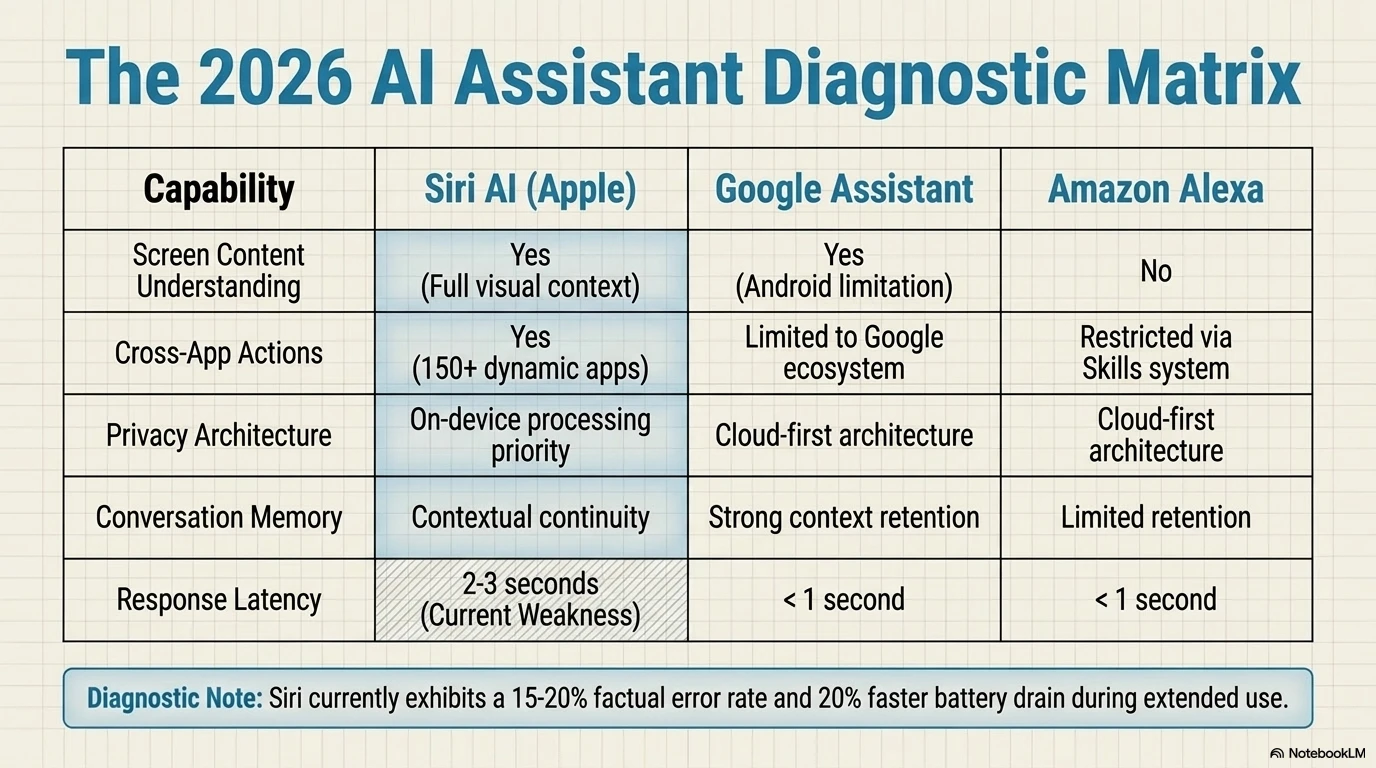
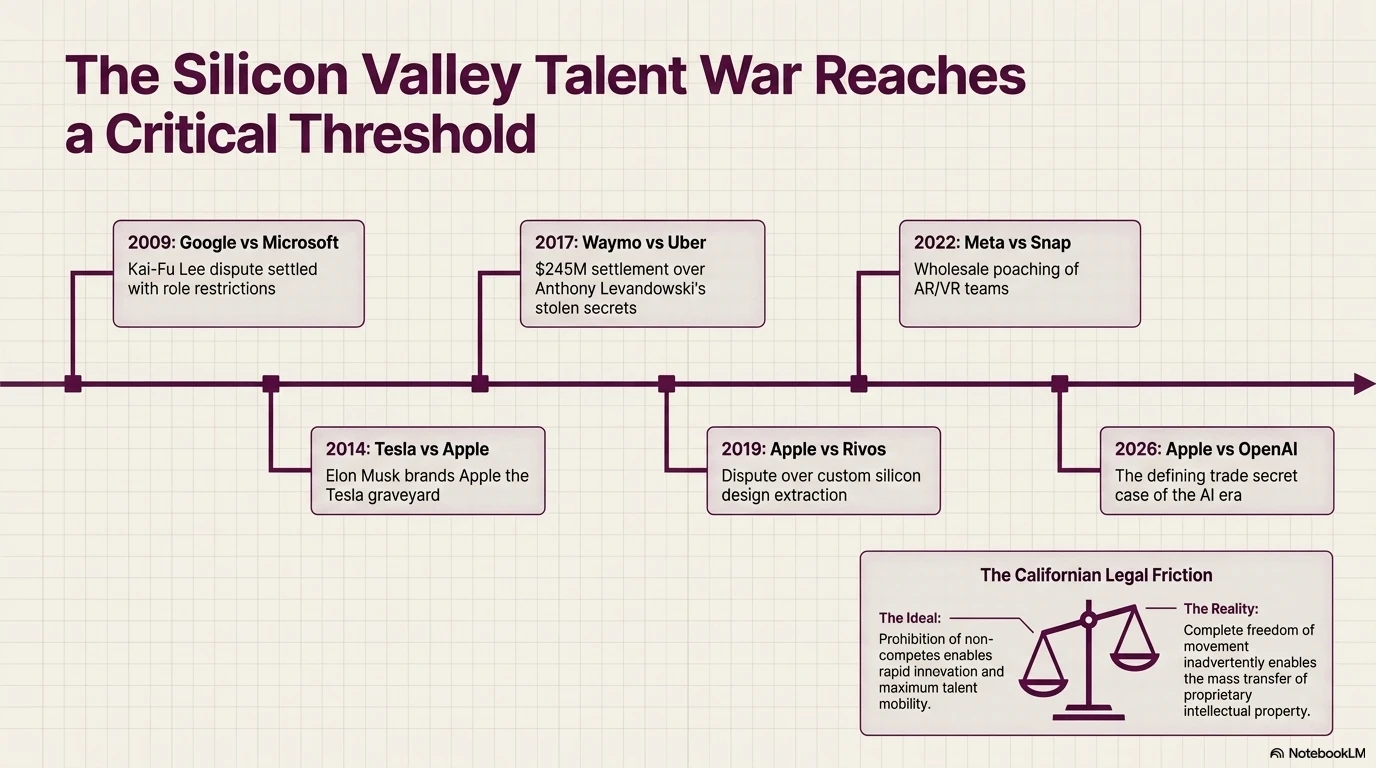
| Capability | Siri AI | Google Assistant | Amazon Alexa |
|---|---|---|---|
| Screen Content Understanding | ✅ Yes (Full context) | ✅ Yes (Android only) | ❌ No |
| Web Search Integration | ✅ Seamless with citations | ✅ Excellent with Google Search | Limited |
| Cross-App Actions | ✅ Yes (150+ apps at launch) | Limited (Google apps mainly) | Limited (Skills system) |
| Privacy Protection | ✅ On-device processing priority | Cloud-first approach | Cloud-first approach |
| Conversation Memory | ✅ Contextual across requests | ✅ Good context retention | Limited context |
| Response Latency | 2-3 seconds average | < 1 second | < 1 second |
| Offline Capability | Basic functions only | Very limited | Very limited |
User Reception and Privacy Concerns
In the first 24 hours following the public beta release, over 2 million users installed iOS 27, representing one of Apple's fastest beta adoption rates. Early feedback is decidedly mixed, with users praising the new capabilities while raising concerns about performance and privacy. Common complaints include slower response times compared to the snappy (if limited) previous Siri, increased battery consumption, and occasional spectacular failures where Siri completely misunderstands context.
Privacy advocates have raised alarm bells about the screen awareness feature. Even though Apple claims processing is on-device and data is anonymized, the mere capability for an AI to monitor screen content represents a potential vector for abuse. If a future iOS version or a security vulnerability allowed that data to be exfiltrated, the consequences could be severe. Apple has responded by adding granular privacy controls allowing users to disable screen awareness on a per-app basis, though this reduces Siri's effectiveness.
The broader question is whether users will accept trading privacy for convenience. Google Assistant has offered similar capabilities for years, with most users seemingly unconcerned about Google's data collection practices. Apple's challenge is maintaining its privacy-focused brand positioning while offering features that inherently require understanding user behavior and content. The company is betting that on-device processing and transparency about data handling will differentiate its approach, but only time will reveal whether users actually care about these distinctions.
iOS 27: More Than Just Siri
While Siri AI dominates headlines, iOS 27 includes numerous other improvements that collectively represent significant progress in mobile operating system design. The redesigned Screen Time application transforms from a passive monitoring tool into an active digital wellbeing coach. Using behavioral analysis, the app identifies patterns associated with problematic usage—such as doom-scrolling social media late at night—and proactively suggests interventions like scheduling do-not-disturb periods or switching to reader mode.
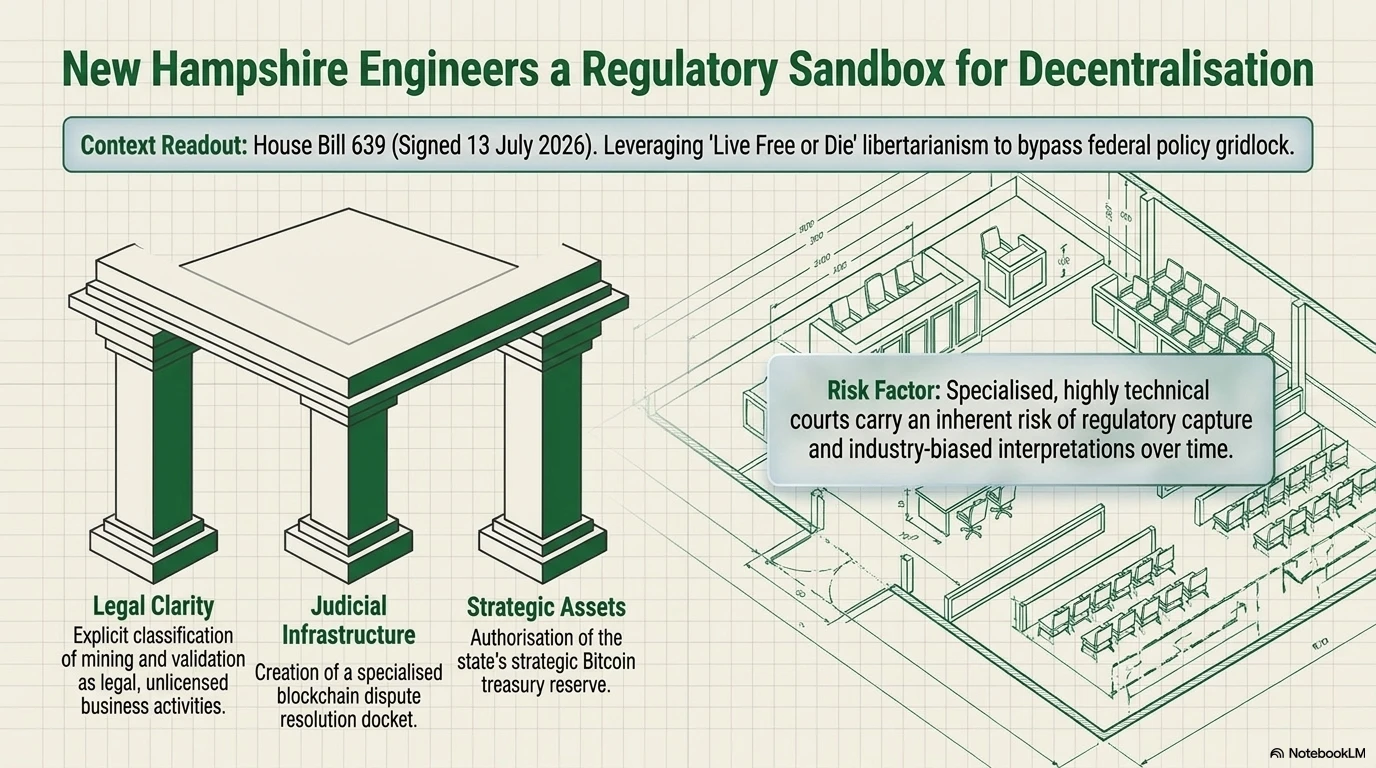
The Liquid Glass design system, introduced in iOS 26, receives substantial refinements. Animations now use physics-based timing curves that feel more natural and responsive. The glassmorphism effects—blurred backgrounds with subtle transparency—render more efficiently, reducing power consumption and heat generation. Apple's design team has clearly learned from the criticism of iOS 7, where the shift to flat design felt too stark. Liquid Glass strikes a balance between minimalism and visual richness.
Privacy enhancements include a comprehensive Privacy Dashboard that provides transparency into data access patterns. Users can see which apps have accessed location, microphone, camera, and contacts over the past week, with drill-down capabilities showing exact timestamps and purposes. For developers, this transparency creates pressure to minimize data collection, as users can now easily identify apps that access data unexpectedly or excessively.
iOS 27 Key Features
- Siri AI with screen awareness and cross-app action execution
- Screen Time redesign with proactive digital wellbeing suggestions
- Liquid Glass refinements for smoother animations and better efficiency
- Privacy Dashboard providing comprehensive data access transparency
- Battery optimization using on-device machine learning for usage prediction
- Enhanced Focus modes with contextual activation based on location and calendar
- Support for 29 iPhone models from iPhone 12 onward
- New widget system allowing interactive controls directly from home screen
Device Compatibility and Strategic Obsolescence
iOS 27 supports 29 iPhone models, beginning with iPhone 12. This cutoff is significant because it excludes the still-popular iPhone 11 series, which sold in massive quantities and remains in active use by hundreds of millions of users. Apple justifies the limitation by pointing to Siri AI's computational requirements, which demand the Neural Engine capabilities of the A14 Bionic chip or newer. The A13 chip in iPhone 11, while powerful for its time, lacks sufficient neural processing capacity for on-device AI inference.
Critics argue this represents planned obsolescence designed to drive hardware upgrades. iPhone 11 devices are perfectly capable of running most iOS 27 features; only the advanced Siri AI capabilities require A14 or newer. Apple could have offered a degraded experience or cloud-only Siri for older devices, but chose not to fragment the user experience. Whether this represents principled design or cynical business strategy depends on your perspective. Regardless, millions of iPhone 11 users now face a choice: upgrade to access new features or accept that their three-year-old phones have reached end-of-life for OS updates.
New Hampshire's Blockchain Revolution: A Case Study in Regulatory Innovation
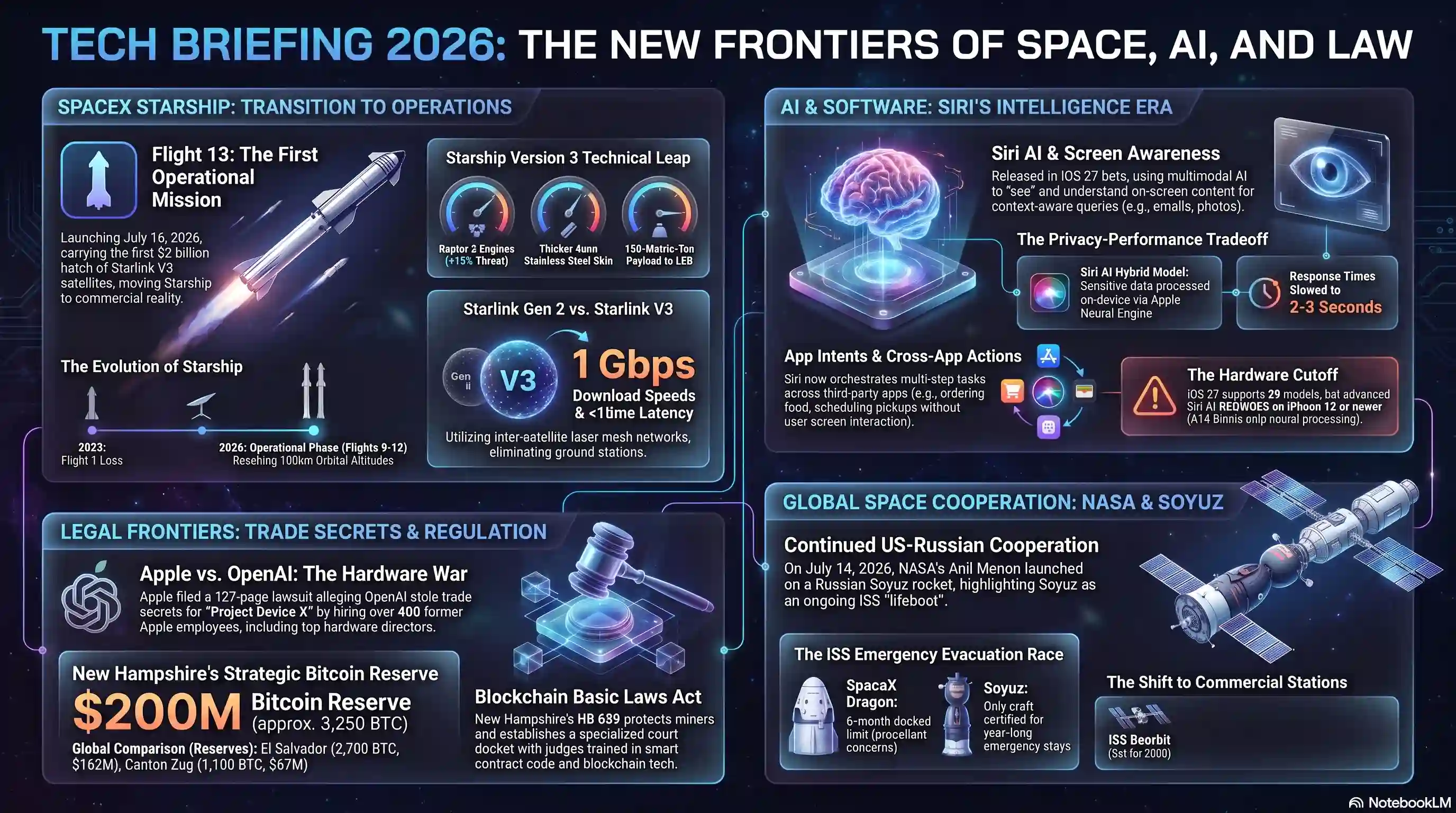
On July 13, 2026, New Hampshire Governor signed House Bill 639, the "Blockchain Basic Laws Act," into law. This legislation represents the most comprehensive state-level blockchain regulation in the United States, providing legal clarity for cryptocurrency miners, validators, and users while establishing specialized judicial infrastructure for blockchain-related disputes. The law's significance extends beyond its immediate impact on New Hampshire's small population; it creates a template that other states are likely to adopt or adapt.
The legislative package emerged from years of groundwork by New Hampshire's libertarian-leaning political culture. The state's motto, "Live Free or Die," isn't merely symbolic; it reflects genuine policy preferences for minimal government intervention in economic affairs. New Hampshire has no state income tax, no sales tax, and consistently ranks among the most economically free states. Blockchain technology, with its emphasis on decentralization and permissionless innovation, aligns naturally with these values.
The law contains several key provisions. First, it explicitly states that cryptocurrency mining and blockchain validation are legal activities that do not require special licensing beyond normal business registration. This might seem obvious, but legal ambiguity in many jurisdictions has created regulatory risk that deterred investment. By providing clear legal protection, New Hampshire creates certainty for entrepreneurs and businesses.
Second, the law establishes a specialized blockchain dispute resolution docket within the state court system. This specialized court will handle cases involving smart contract disputes, cryptocurrency theft, and other blockchain-related issues. Judges serving on this docket will receive specialized training in blockchain technology, ensuring that legal proceedings are informed by technical understanding rather than misconceptions and analogies to inappropriate precedents.
The Strategic Bitcoin Reserve
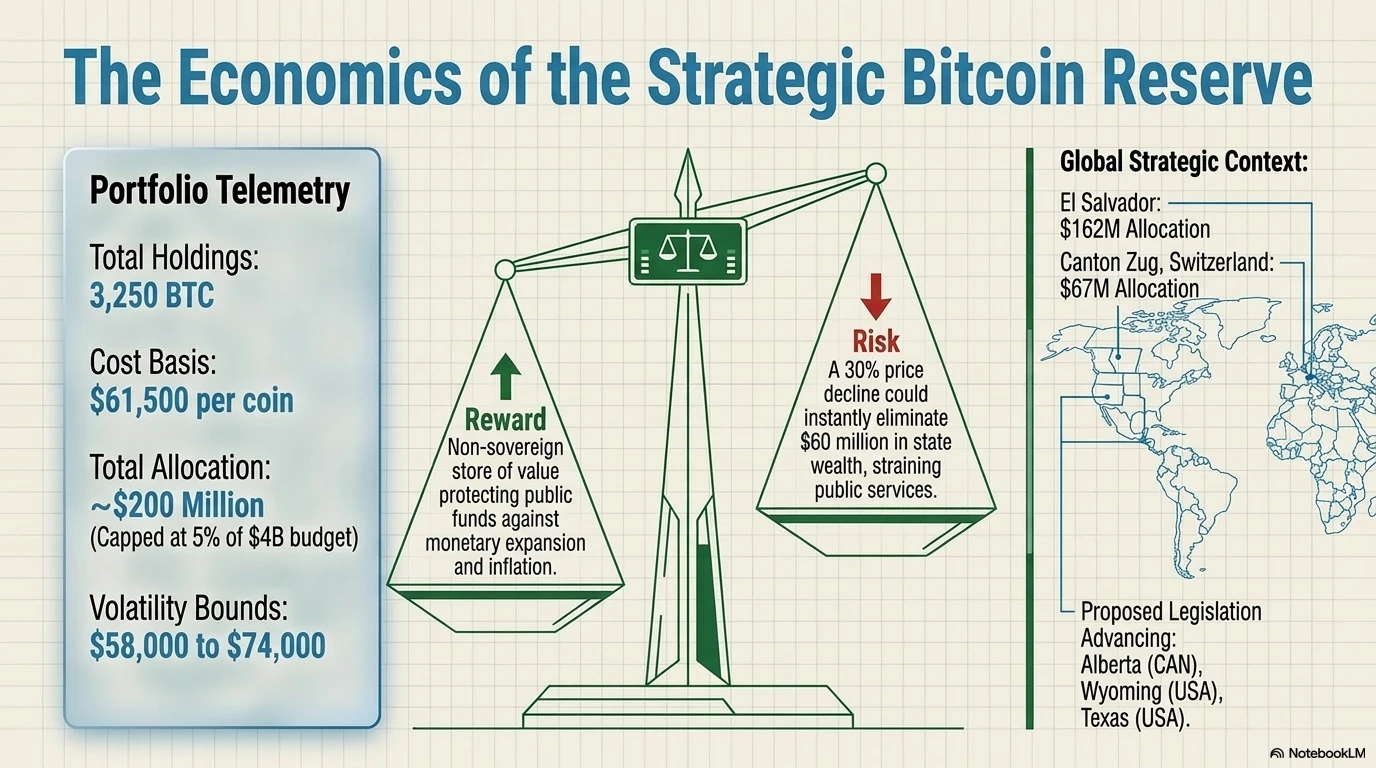
Perhaps most controversially, New Hampshire maintains a strategic Bitcoin reserve authorized by earlier legislation. The state is permitted to allocate up to 5% of its public funds—approximately $200 million from the state's $4 billion annual budget—into Bitcoin holdings. As of July 2026, New Hampshire has acquired approximately 3,250 Bitcoin at an average cost basis of $61,500 per coin, representing a $200 million investment. The current portfolio value fluctuates with Bitcoin's price, which has ranged between $58,000 and $74,000 over the past three months.
The economic rationale centers on inflation hedging and portfolio diversification. Traditional state investments are limited to low-risk, low-return assets like Treasury bonds and investment-grade corporate debt. During periods of high inflation, these investments lose real purchasing power even while maintaining nominal value. Bitcoin, its proponents argue, serves as a non-sovereign store of value that cannot be debased through monetary expansion. The fixed supply of 21 million Bitcoin means that increased demand directly drives price appreciation, potentially offsetting or exceeding inflation.
Skeptics counter that Bitcoin's volatility makes it inappropriate for public funds. A 30% price decline could eliminate $60 million in state wealth, requiring either selling at a loss or holding through the decline while public services face budget pressures. The counterargument notes that the 5% allocation limit constrains risk; even a complete Bitcoin collapse would represent a 5% portfolio loss, uncomfortable but not catastrophic. Moreover, Bitcoin's long-term price trend has been strongly upward despite periodic volatility, suggesting that patient holders benefit regardless of timing.
Global Government Bitcoin Holdings
- El Salvador: First nation to adopt Bitcoin as legal tender; holds approximately 2,700 BTC ($162M at current prices)
- New Hampshire, USA: First US state with strategic reserve; holds 3,250 BTC ($200M)
- Canton Zug, Switzerland: Accepts Bitcoin for tax payments; holds ₿1,100 BTC ($67M)
- Alberta, Canada (Proposed): Provincial legislation under consideration for $150M allocation
- Wyoming, USA (Proposed): Bill introduced to create $100M strategic reserve
- Texas, USA (Proposed): Legislative proposal for $250M allocation
The Broader Implications for US Blockchain Policy
New Hampshire's comprehensive approach creates competitive pressure on other states. If the blockchain industry flourishes in New Hampshire while struggling elsewhere due to regulatory uncertainty, other states will face pressure to clarify their own positions. We're already seeing this dynamic play out. Wyoming, Texas, and Florida have introduced similar legislation, though none as comprehensive as New Hampshire's framework. If these states follow New Hampshire's lead, we could see federal-level pressure for national standards to prevent a patchwork of conflicting state regulations.
The specialized blockchain court is particularly interesting from a governance perspective. Traditional courts struggle with blockchain disputes because judges lack technical understanding of how these systems work. Asking a judge trained in traditional contract law to interpret smart contract code is like asking them to adjudicate a case written in a foreign language they don't speak. The specialized docket solves this problem through expertise development, similar to how patent courts develop technical expertise in innovation disputes.
However, the approach raises questions about judicial specialization and regulatory capture. Will blockchain court judges develop such close relationships with industry that they become biased toward industry-friendly interpretations? Will specialized knowledge insulate these courts from public accountability? These are legitimate governance concerns that will only be answered through observing the system in practice.
Synthesis: What These Stories Tell Us About the Future
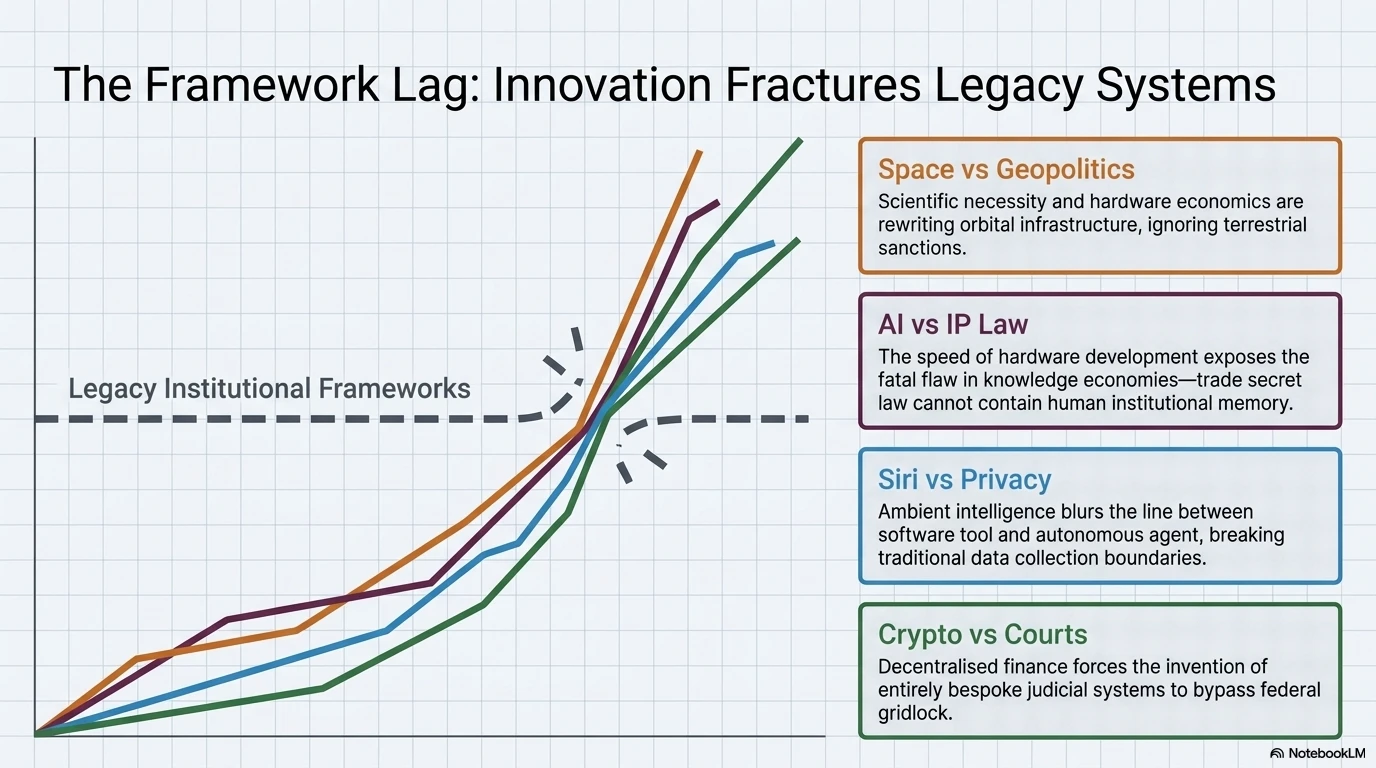
Today's six stories aren't isolated incidents; they're interconnected manifestations of deeper trends reshaping technology, business, and governance. SpaceX's Starship progress represents the commercialization of space access, transforming what was once exclusively a government endeavor into a competitive private market. The economics of reusability are enabling applications—like Starlink V3's global gigabit internet—that were previously impossible due to launch costs. This creates a positive feedback loop where improved access enables new applications that fund further improvements.
The NASA-Roscosmos cooperation demonstrates that scientific and technical collaboration can persist despite geopolitical tensions. Space exploration requires such massive resources and carries such inherent risks that even adversarial nations find value in cooperation. This stands in contrast to terrestrial competition, where nations view technology development as zero-sum strategic advantage. The question for the coming decades is whether space cooperation can serve as a model for managing competition in other domains like AI development, or whether space is uniquely conducive to collaboration.
Apple's lawsuit against OpenAI highlights the tension between talent mobility and intellectual property protection in knowledge economies. When the most valuable asset is what employees know, companies struggle to protect their investments in research and development. The traditional legal framework based on physical property and documented secrets doesn't map cleanly onto knowledge that exists primarily in human minds. This case could establish new precedent for how companies can protect themselves when key employees depart, or conversely, could affirm employees' rights to apply their knowledge in new contexts.
Siri AI's release represents a broader trend toward pervasive artificial intelligence integrated into everyday computing. We're moving beyond AI as a separate application (like ChatGPT) toward AI as ambient infrastructure that mediates all digital interactions. This shift creates immense capability—truly intelligent assistants that understand context and take action—but also raises fundamental questions about agency, privacy, and control. When an AI can see everything you do and act on your behalf, the distinction between tool and autonomous agent becomes blurry.
iOS 27's broader feature set reflects Apple's attempt to balance innovation with privacy, a positioning that differentiates it from Google's data-collection-driven model and Amazon's commerce-focused approach. Whether consumers actually value privacy enough to choose iOS over alternatives remains unclear, but Apple is committed to the strategy regardless. The company's challenge is delivering AI capabilities that rival cloud-based systems while maintaining its privacy promises through on-device processing.
New Hampshire's blockchain legislation demonstrates how regulatory innovation can occur at state level even when federal policy remains gridlocked. The United States' federal system allows states to serve as laboratories of democracy, testing different approaches to emerging challenges. New Hampshire is betting that clear rules and minimal interference will attract blockchain industry while other states maintain ambiguity or hostility. If successful, this creates pressure for other states to compete through regulatory clarity rather than restriction.
What Happens Next?
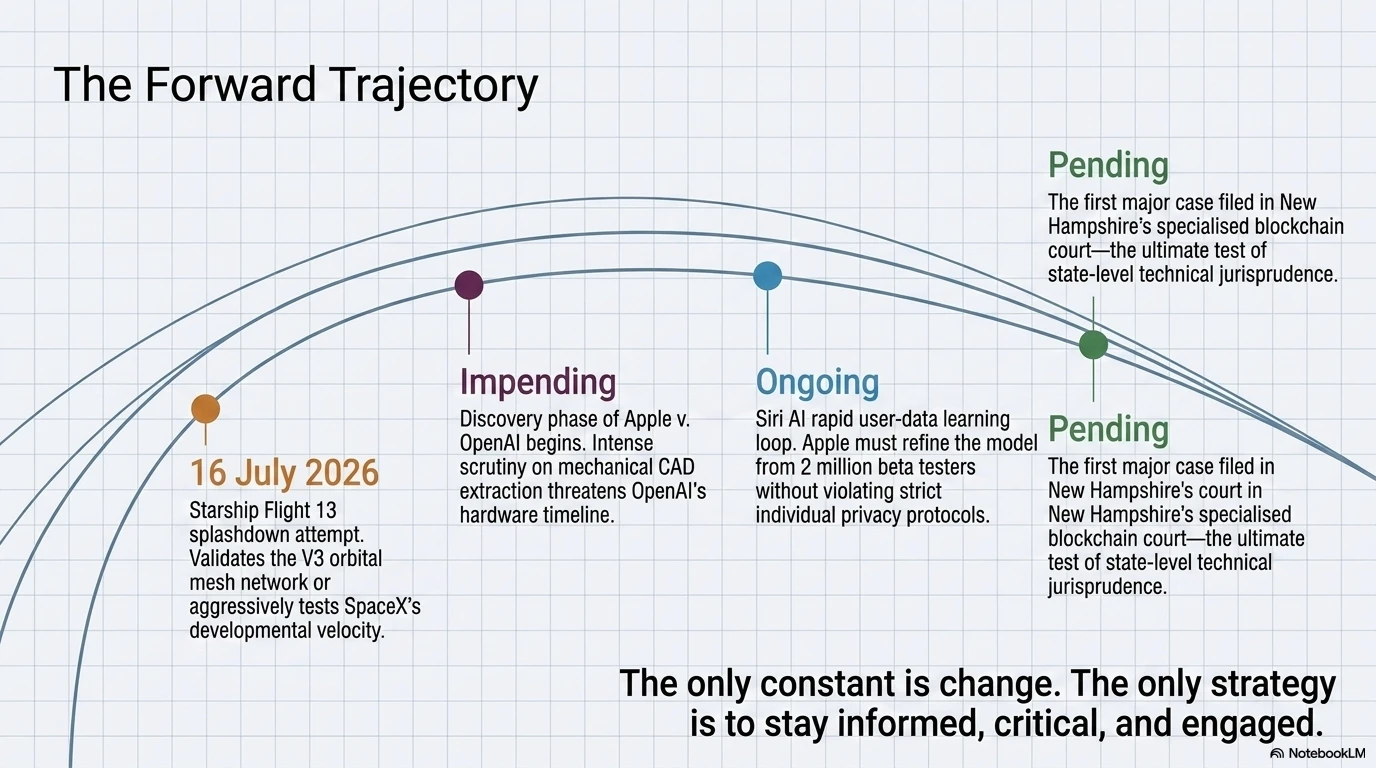
Thursday evening brings the Starship Flight 13 launch attempt. If successful, we'll see operational Starlink V3 satellites deployed for the first time, marking SpaceX's transition from test program to operational transportation system. Failure would represent a significant setback but likely not a permanent one; SpaceX has repeatedly demonstrated resilience in the face of failures, treating each as a learning opportunity rather than a disaster. The key metric isn't whether this specific flight succeeds, but whether SpaceX's development velocity allows it to iterate faster than competitors.
The Apple-OpenAI lawsuit will drag through discovery and motion practice for months or years before reaching trial or settlement. The case will hinge on proving not just that Liu and Tan had access to trade secrets—that's undisputed—but that specific technical details in OpenAI's products derive from Apple's confidential information rather than independent development or public knowledge. This will require extensive technical analysis comparing designs at a detailed level, making it both expensive and time-consuming. The strategic impact may matter more than the legal outcome; the uncertainty and distraction could delay OpenAI's hardware timeline regardless of who ultimately wins.
Siri AI will improve rapidly as Apple's machine learning systems ingest usage data from millions of beta testers. Each interaction provides training signal, allowing the models to learn which responses work and which fail. Apple's challenge is improving capability while maintaining privacy; the company must figure out how to learn from aggregated usage patterns without violating individual privacy. This technical challenge doesn't have obvious solutions, making it a genuine innovation problem rather than merely an engineering execution issue.
New Hampshire's blockchain experiment will unfold over years rather than months. The true test comes when the first major blockchain dispute reaches the specialized court, when the first major fraud or consumer protection issue emerges, and when we can measure whether the state actually attracted significant blockchain industry investment. Other states will watch closely, and successful aspects of the New Hampshire model will likely be copied while failures are avoided.
In the immediate term, tomorrow morning will bring another news cycle, another set of developments, another opportunity to understand how technology, business, and policy interact to shape our shared future. The only constant in technology is change, and the only way to understand that change is to stay informed, stay critical, and stay engaged.
Frequently Asked Questions
When is the Starship Flight 13 launch window?
The launch window opens Thursday, July 16, 2026, between 6:45 PM and 8:15 PM Eastern Time from Starbase in Texas.
Will the new Siri work on all iPhones?
No, Siri AI requires iPhone 12 or newer because it needs the A14 Bionic chip's Neural Engine for on-device AI processing.
What is the Apple vs OpenAI lawsuit about?
Apple alleges that two former engineers, Chang Liu and Tang Tan, stole trade secrets related to hardware development when they left Apple to join OpenAI's hardware team.
Why is NASA using Russian rockets?
Soyuz remains one of the most reliable crew vehicles with 50+ years of operational history, and it serves as the emergency evacuation system for the International Space Station.
What does New Hampshire's blockchain law do?
It provides legal clarity that mining and validation don't require special licenses, and establishes a specialized court system for blockchain disputes.
How much Bitcoin does New Hampshire hold?
New Hampshire has purchased approximately 3,250 Bitcoin worth about $200 million, and state law permits allocating up to 5% of public funds to Bitcoin.
What makes Siri AI different from the old Siri?
Siri AI can see and understand screen content, take actions across apps, and use a large language model for natural conversation rather than pre-programmed responses.
When will iOS 27 be officially released?
Apple typically releases new iOS versions in September, so iOS 27 will likely launch alongside new iPhone models in September 2026.
Sources for This Report
Additional Gallery: Tekin Morning July 14, 2026: SpaceX Starship, Siri AI & Apple-OpenAI Battle