🌅 Tekin Morning | Monday, July 13, 2026
- 🎮🪟 Android Meets Windows 11- Microsoft's deep integration revolution begins
- 🎧🤖 GPT-5.6 Sol Goes Unlimited- OpenAI removes the 5-hour cap
- 🚀⚖️ Brazilian Court vs Xbox- Historic ruling forces account restoration
- 🗡️🎮 Super Yanoman Collection Drops- Classic anthology hits all platforms
- 📰₿ Home Miner Hits Bitcoin Jackpot- $200K won with $150 device
- ⚔️🍎 Apple's Secret Car Legacy- Canceled project birthed Neural Engine
Microsoft and Android: The Real Integration Era Begins
Monday morning kicks off with news that could reshape the future of personal computing. Microsoft is preparing for the deepest integration yet between Android and Windows 11—going far beyond anything we've seen before. According to Android Authority's report published July 12, 2026, this project aims to elevate the user experience to an entirely new level.
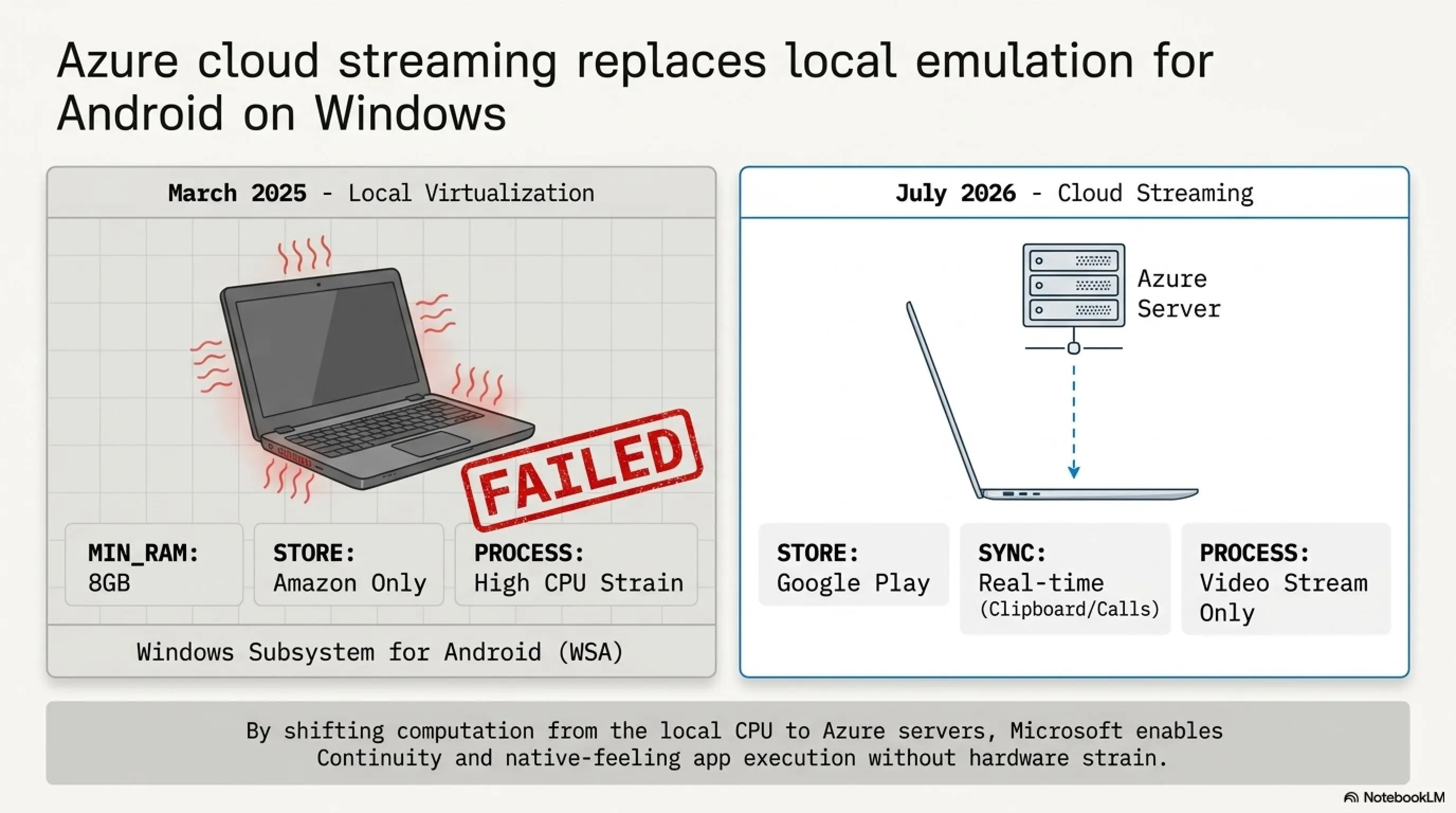
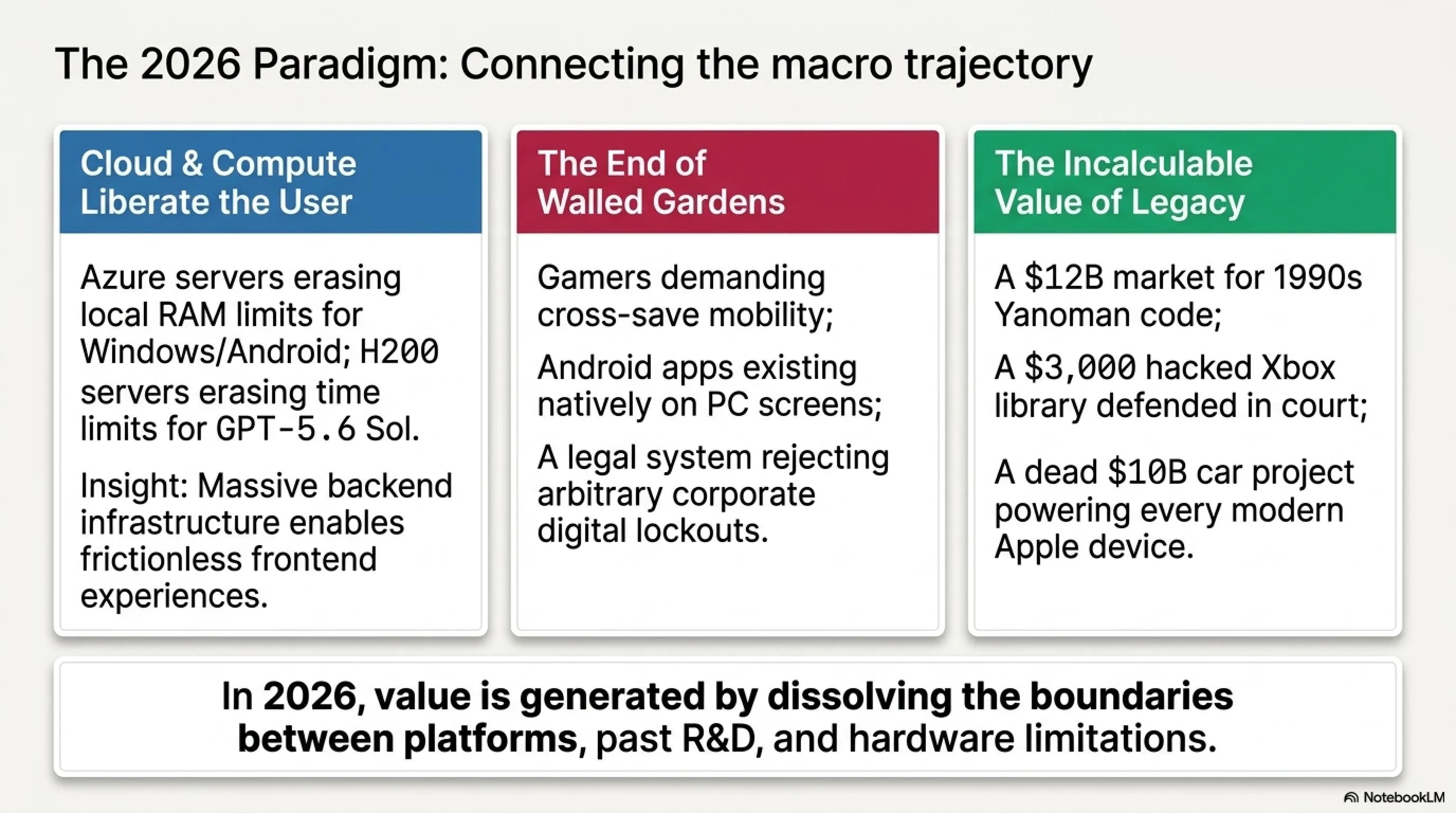
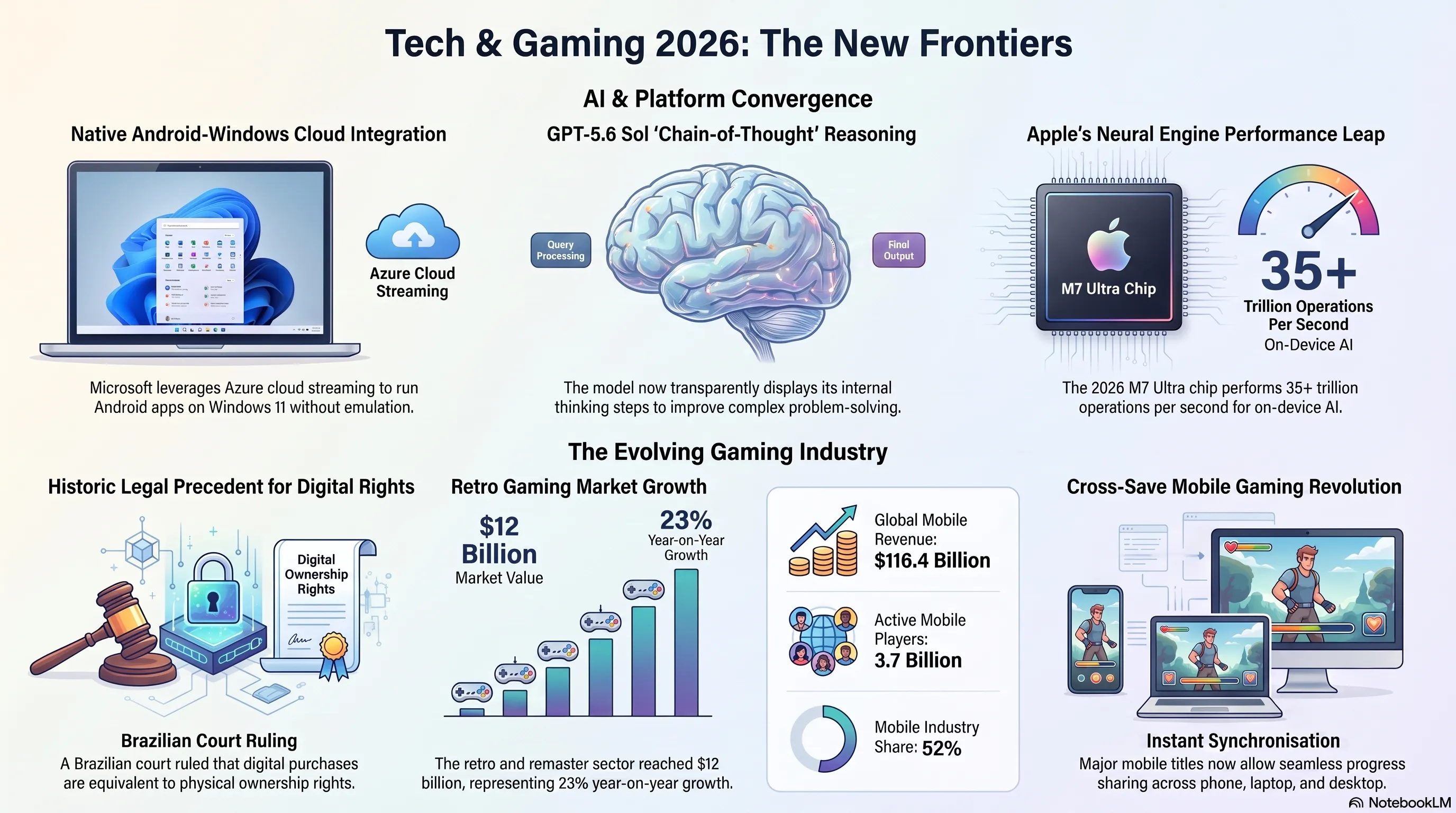
The Windows Subsystem for Android (WSA), which was discontinued in March 2025, was just the beginning. Now, leveraging its Azure cloud infrastructure, Microsoft is developing a new architecture that will run Android applications directly in Windows 11 without requiring emulation. This means access to millions of popular Android apps—from Instagram and TikTok to AAA mobile games—without any limitations.
Three Pillars of the New Project
Sources familiar with Microsoft's roadmap have outlined three key components for this integration. First, native app execution via Cloud Streaming—meaning applications run on Azure servers and only video streams to your device. This approach reduces hardware strain and offers better compatibility with demanding applications.
Second, real-time synchronization between phone and computer. Notifications, clipboard, files, calls, and messages sync automatically—exactly like Apple's ecosystem but for Android and Windows. Third, Continuity functionality that lets you start something on your phone and seamlessly continue on your laptop without interruption.
Jargon Buster: Cloud-Based App Streaming
In this technology, the application doesn't actually install on your computer. Instead, it runs on Microsoft's servers and only streams video to you—exactly like streaming a movie from Netflix. The benefit? No strain on your CPU or RAM, and even weak laptops can run heavy apps smoothly.
Why Did WSA Fail?
Windows Subsystem for Android, introduced in October 2021, faced serious problems from the start. Restriction to Amazon App Store instead of Google Play Store, extremely high RAM consumption (minimum 8GB), lack of Google Play Services support, and poor performance on mid-range laptops all prevented the project from gaining popularity. Eventually, Microsoft announced in March 2025 that WSA would no longer be supported.
But lessons from that project are now being applied to the new architecture. Using Cloud Streaming instead of Local Virtualization means no more complex installation and setup. Everything will be available through the Microsoft Store—one click and the app is ready to use.
Revolution in Mobile Gaming
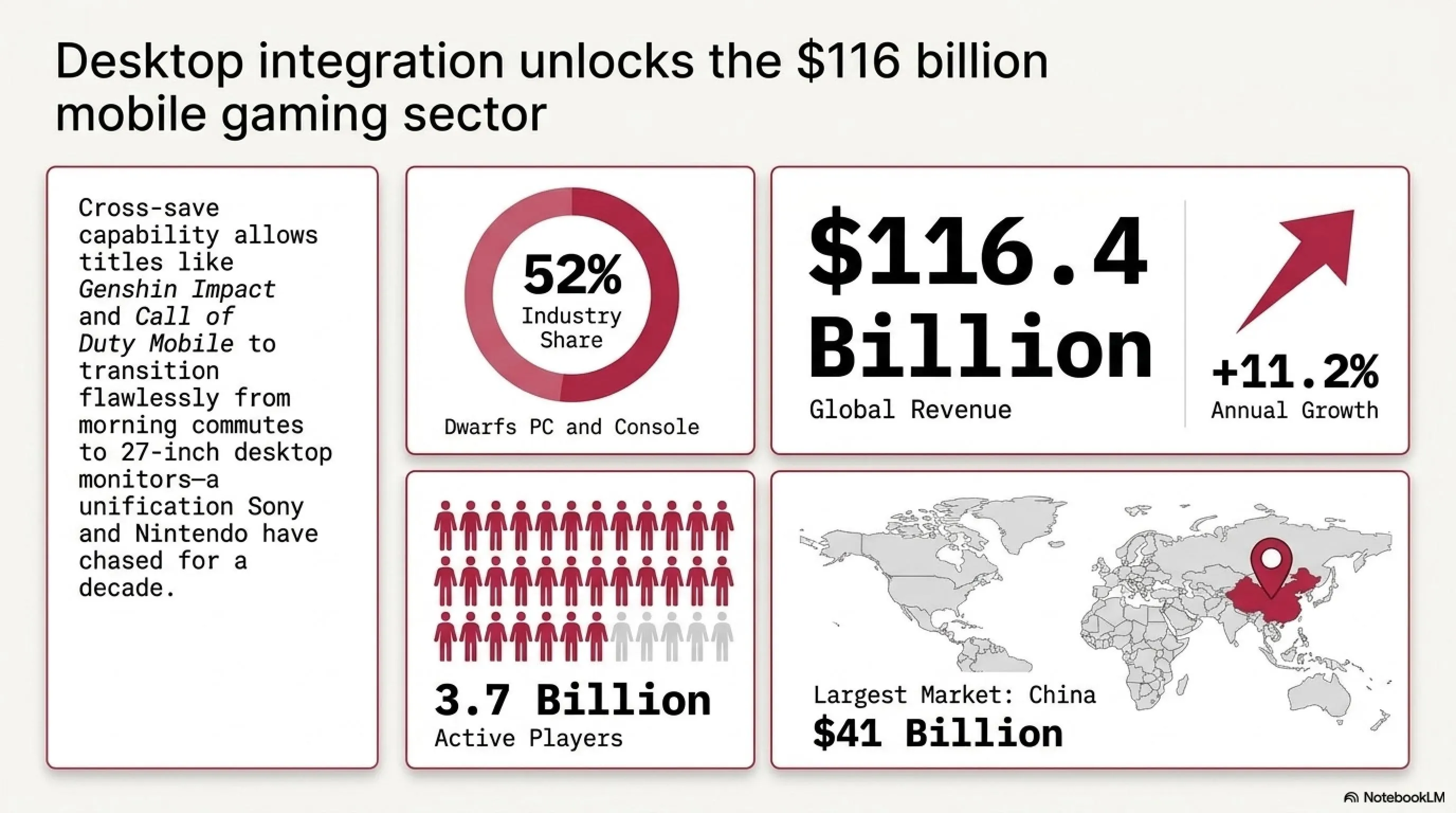
This transformation is critically important for gamers. The mobile gaming industry in 2026 is worth over $116 billion—more than console and PC gaming combined. Games like Genshin Impact, Honkai Star Rail, PUBG Mobile, and Call of Duty Mobile have millions of active players. Now imagine playing all these games in high quality on a 27-inch monitor with keyboard and mouse.
Cross-Save capability means you can play on your phone in the morning commute, on your laptop at work during lunch, and on your gaming desktop at night—all with one account without losing progress. This is something Sony and Nintendo have been chasing for years but never achieved at this level of integration.
Mobile Gaming Market Stats 2026
- Global Revenue: $116.4 billion
- Active Players: 3.7 billion people
- Industry Share: 52%
- Annual Growth: 11.2%
- Largest Market: China with $41 billion
OpenAI Lifts GPT-5.6 Sol Usage Limits
The second story this morning comes from the AI world. OpenAI has officially announced that it has temporarily removed the 5-hour daily usage limit for the advanced GPT-5.6 Sol model. According to Bleeping Computer's report published July 13, 2026, this decision follows intense user pressure and increased server capacity.
GPT-5.6 Sol, released on June 28, 2026, is OpenAI's most powerful language model to date. Its capabilities in multi-step reasoning, advanced programming, complex data analysis, and solving Olympic-level math problems caused demand to exceed all predictions.
What Happened?
When Sol launched, OpenAI implemented a 5-hour daily usage limit for Plus ($20/month), Pro ($200/month), and Business (enterprise) users to manage server load. But this limitation quickly became one of the biggest complaints. Programmers using Sol to write code, researchers analyzing data, and students solving complex problems all hit the limitation wall.
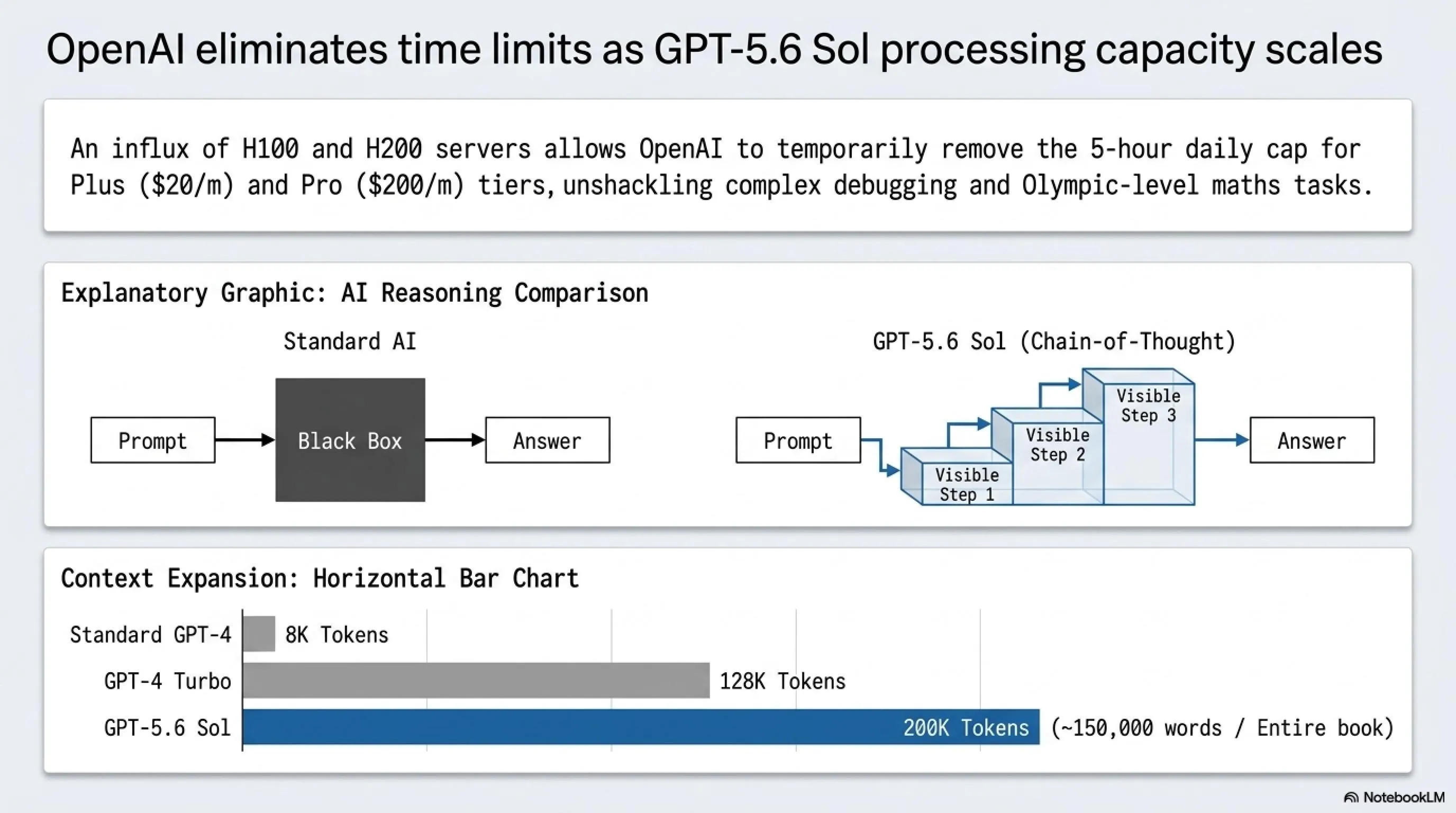
Now OpenAI has announced that by increasing the number of H100 and H200 servers in its data centers, it has managed to boost capacity enough that time restrictions are no longer necessary. Of course, this situation is "temporary" and limits may be reimposed if demand surges excessively—but for now, users can use Sol without worry.
How Is Sol Different from GPT-4?
GPT-5.6 Sol has two key capabilities that distinguish it from previous generations. First, Chain-of-Thought Reasoning—meaning the model transparently shows its thinking steps before giving an answer. This is extremely useful for complex tasks like debugging code or solving math problems because you can see where the model made mistakes.
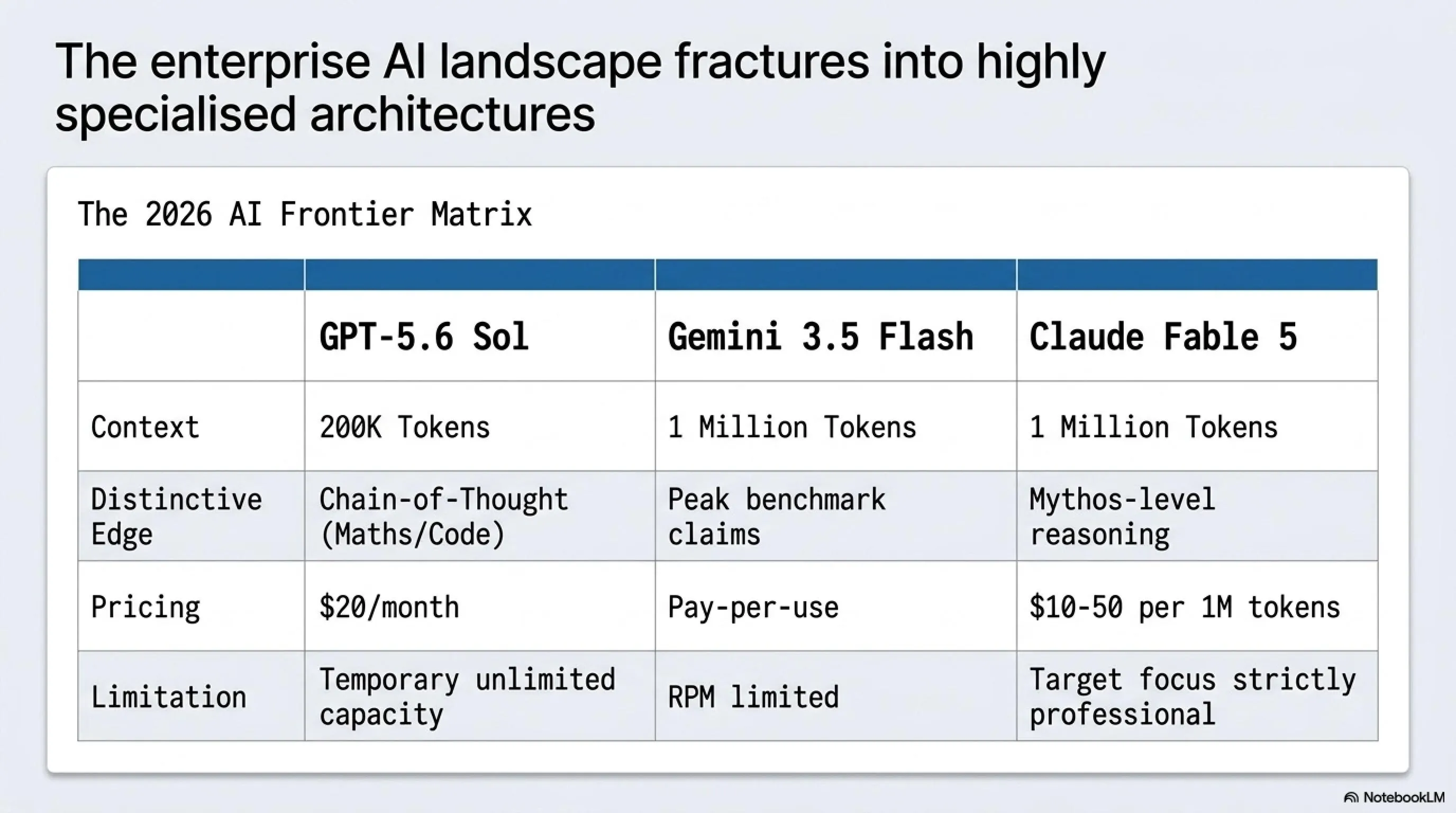
Second, a much larger Context Window—Sol can process up to 200,000 tokens (approximately 150,000 words) in one conversation. This means you can give the model an entire book, a complete code project, or dozens of documents and ask for comprehensive analysis. GPT-4 Turbo had only 128,000 tokens, and standard GPT-4 just 8,000.
Competition with Google and Anthropic Intensifies
This OpenAI move comes at a time when Google with Gemini 3.5 Flash and Anthropic with Claude Fable 5 have brought intense pressure to the AI market. Gemini 3.5 Flash, released in early May 2026, claims to have surpassed Sol in math and programming benchmarks. Claude Fable 5, with its 1-million-token context window and Mythos-level reasoning power, targets professional audiences.
Now with Sol's limitations lifted, OpenAI shows it intends to maintain its position. Users no longer have reason to turn to competitors just because of time restrictions—and that's exactly what Sam Altman wanted.
Advanced AI Models Comparison
| Model | Context Window | Pricing | Time Limit |
|---|---|---|---|
| GPT-5.6 Sol | 200K | $20/month | None ✅ |
| Gemini 3.5 Flash | 1M | Pay-per-use | RPM limited |
| Claude Fable 5 | 1M | $10-50/1M tokens | None ✅ |
Brazilian Court Forces Xbox to Restore Hacked Account
The third story this morning comes from the gaming world and concerns user rights. A Brazilian court has ordered Microsoft to restore an Xbox account that was hacked and pay $400 in damages. According to reports from Kotaku and Engadget published July 12, 2026, this case could set important precedent for digital rights of gamers.
Here's the story: A Brazilian gamer named Carlos Silva (pseudonym), after years of using Xbox Live and purchasing over 150 digital games, discovered his account had been hacked and the email and password changed. He immediately contacted Xbox support, but the response was something no one expected: "Unfortunately, we cannot restore your account. We suggest you repurchase your games."
Microsoft's Response: Buy Again!
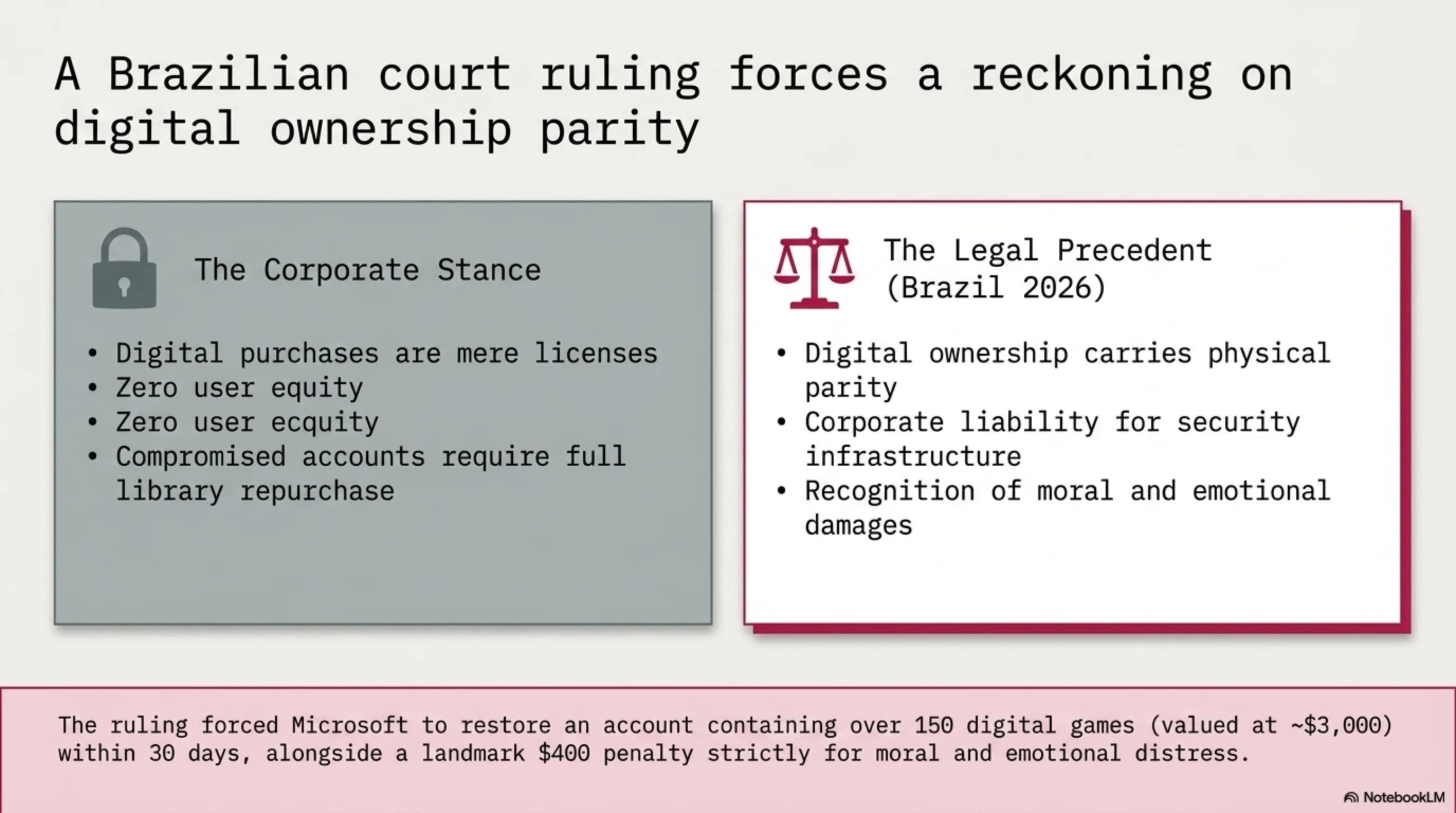
This response led Silva to court. His lawyer argued that Microsoft has responsibility for protecting user accounts and cannot simply tell a hacked user to "buy your games again" after a breach. The court accepted this argument and ruled that Microsoft must restore the account within 30 days or refund the value of all purchased games (approximately $3,000).
Additionally, the court ordered Microsoft to pay $400 in moral damages—due to stress and distress from losing years of memories and game progress. This is the first time a court has officially recognized the emotional value of a gamer's digital library.
Why It Matters: Significance of This Ruling
This ruling could be a turning point in digital rights. For the first time, a court has said companies cannot dodge responsibility with a simple 'Sorry, nothing we can do.' If this precedent is adopted in other countries, companies like Sony, Nintendo, Steam, and Epic Games will have to take their security and support systems seriously.
Is Digital Ownership at Risk?
This case has revived the old debate about digital ownership. When you buy a digital game, do you actually own it or just have a license to use it? Most companies write in their contracts that you're buying a license, not ownership. This means if your account is deleted, you have no legal right to get your money or games back.
But the Brazilian court rejected this argument and said that from a consumer perspective, digital purchase is no different from physical purchase. If you pay $70 for a game, you expect to have it forever—not lose it someday without reason.
Super Yanoman Collection Announced for PS5, PS4, Switch, and PC
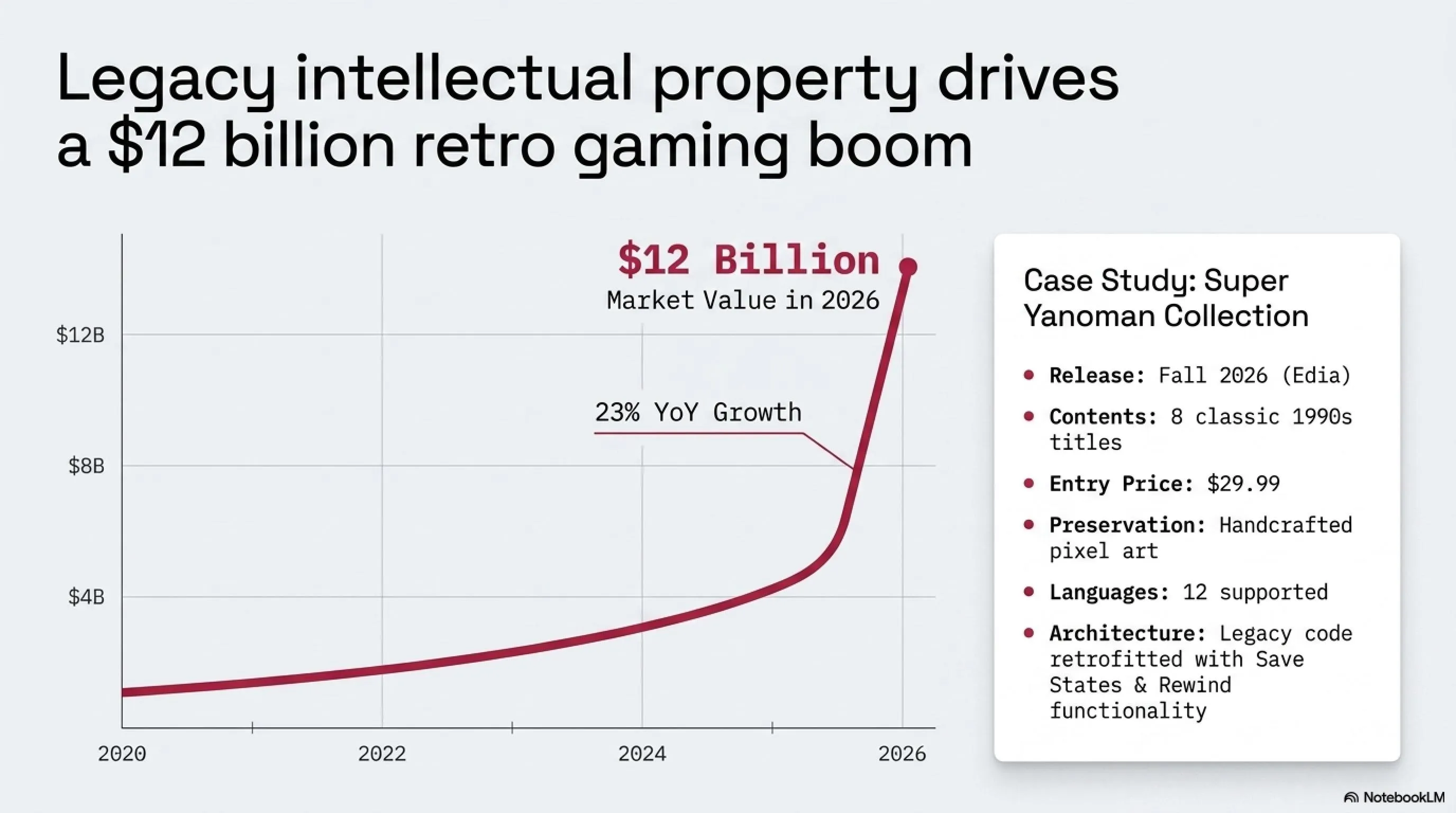
The fourth story is for classic game fans. Edia has announced that Super Yanoman Collection, an anthology of Yanoman family games, will be released for PS5, PS4, Nintendo Switch, and PC (Steam). According to Gematsu's report published July 13, 2026, this collection will include 8 classic games from the 1990s released with remastered graphics and modern features.
The Yanoman series, highly popular in Japan, is a mix of puzzle, action, and adventure. These games sold millions of copies during the Famicom and Super Famicom era but were never officially released outside Japan. Now for the first time, players worldwide can experience these classics.
What Games Are in the Collection?
Edia hasn't announced the complete list yet, but based on the released trailer, at least four recognizable titles are visible: Yanoman Quest (classic RPG), Super Yano Bros (platformer), Yano Puzzle Challenge (puzzle game), and Yanoman Racing (racing game). Other games are expected to be revealed in coming weeks.
Interestingly, this collection isn't just a simple port. Edia has announced that all games' graphics have been redesigned with handcrafted Pixel Art (while preserving the original spirit), music has been remastered by original team members, and features like Save States, Rewind, Filters, and even Speedrun Timer have been added.
At a Glance: Super Yanoman Collection
- Platforms: PS5, PS4, Nintendo Switch, PC (Steam)
- Release Date: Fall 2026
- Number of Games: 8 classic titles
- Expected Price: $29.99
- Language Support: 12 languages including English, Japanese, Spanish, and French
Is the Retro Gaming Market Still Hot?
Yes, and even hotter than before. According to Newzoo's report, the Retro and Remaster gaming market reached $12 billion in 2026—23% growth compared to last year. Success of titles like Final Fantasy VII Rebirth, Resident Evil 4 Remake, and The Last of Us Part I has shown that gamers not only love nostalgia but are willing to pay to re-experience classics with modern quality.
Companies like Nintendo with Virtual Console, Sony with PlayStation Plus Classics, and Microsoft with Backward Compatibility are all investing heavily in this market. Even indie studios have achieved remarkable success making games with Retro style (like Shovel Knight, Celeste, and Hollow Knight).
📚 Classified & Related Dossiers in TekinGame
If you wish to explore beyond this report and delve into cybernetic frontiers and autonomous AI architectures, do not miss these three exclusive deep-dives in the Tekin Garage:
- Modern graphics while preserving classic spirit
- 8 complete games at reasonable price
- Multilingual support including 12 languages
- Modern features like Save State and Rewind
- Cross-platform for all major platforms
- Complete game list not yet revealed
- May be limited to Japan-familiar players
- Physical version not announced
Home Miner Wins $200K Bitcoin with $150 Device
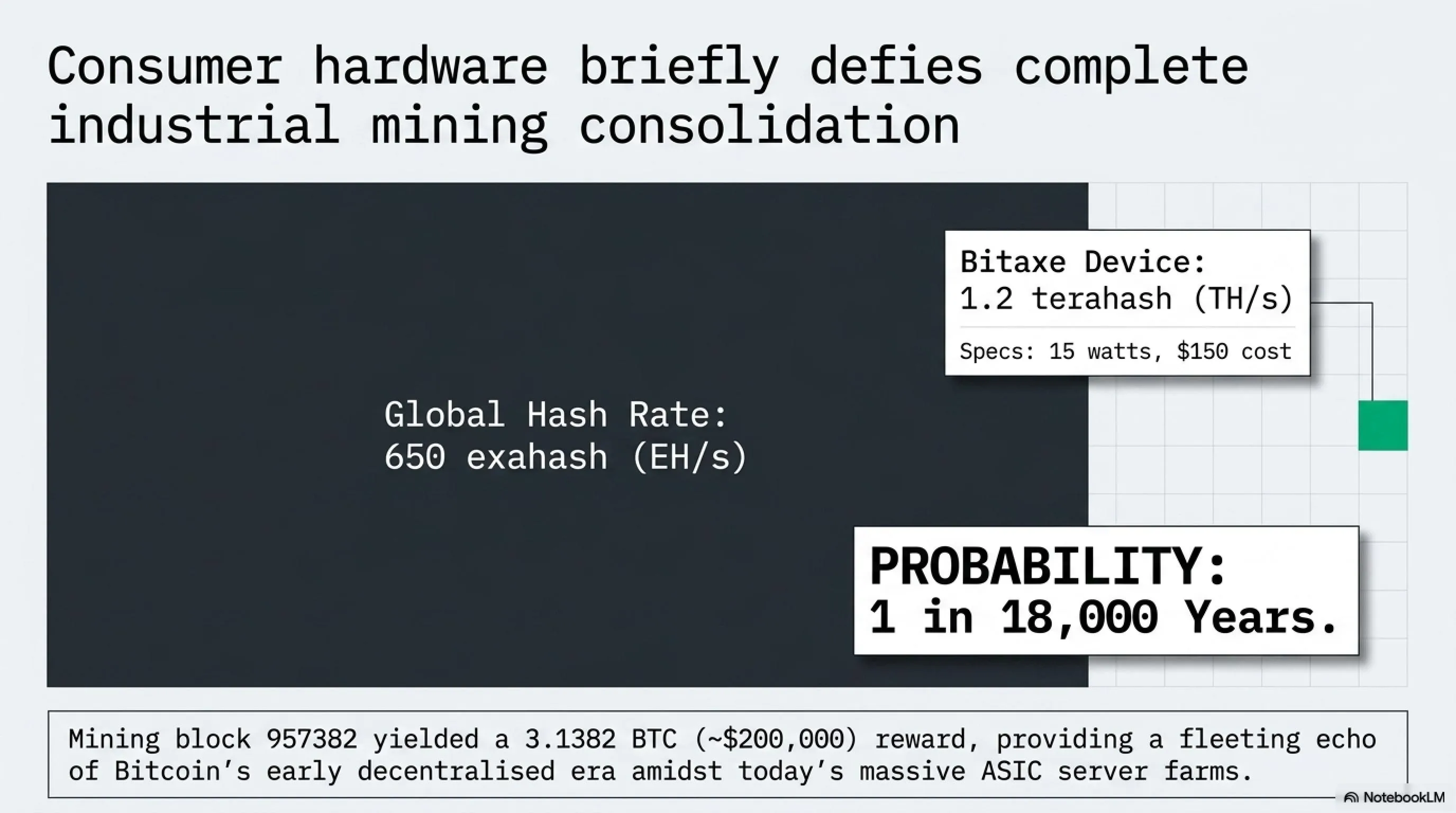
The fifth story this morning comes from the crypto world and is an incredible tale. A home miner using a small Bitaxe device (priced at $150) successfully mined Bitcoin block 957382 and won the 3.1382 BTC reward (approximately $200,000). According to Bitcoin.com's report published July 12, 2026, the probability of this happening was approximately one in 18,000 years.
To understand this better, you need to know that Bitcoin mining today is completely industrialized. Massive farms with thousands of ASIC devices, each costing tens of thousands of dollars, work around the clock on complex calculations. Bitcoin network's total Hash Rate in July 2026 reached 650 exahash (EH/s)—an astronomical number meaning competition to find a block is extremely difficult.
What Is Bitaxe and How Does It Work?
Bitaxe is a small consumer mining device designed by an open-source group. Its size is smaller than a home modem and it only consumes 15 watts of power. Its Hash Rate is just 1.2 terahash per second (TH/s)—while industrial devices like Antminer S21 have about 200 TH/s.
By this calculation, the probability of Bitaxe finding a block is approximately equivalent to winning the lottery. But that's exactly what happened on July 9, 2026. The lucky miner (whose identity hasn't been revealed) wrote in the Bitaxe project's Discord channel: "I think my device is broken because it's showing a weird message!" Then he realized his device had actually found a block.
Is It Worth Buying Bitaxe?
Financially? Absolutely not. If you want to mine normally with Bitaxe, you probably won't earn even a dollar during the device's lifetime (3-5 years). The electricity cost will exceed your income. But Bitaxe is designed for those who want to have a real mining device just for fun and learning—and who knows, maybe someday you'll test your luck too.
This story recalls Bitcoin's early days, when ordinary people mined with their home laptops and actually had a chance of winning. Now with complete industrialization, such cases are very rare—but that rarity is what makes them interesting.
Apple's Hidden Legacy: How Canceled Car Became AI Core
The last story this morning comes from Apple and is about successful failures. According to The Verge's report published July 12, 2026, citing Mark Gurman's Bloomberg report, Apple's self-driving car project canceled in February 2024 left an important legacy: Neural Engine—the AI chip that is now the heart of all Apple devices.
The Apple Car project (codenamed Project Titan) began in 2014 with the goal of building a fully autonomous vehicle. Apple's team worked on complex machine vision systems, real-time processing, intelligent decision-making, and neural networks. But developing these technologies required very powerful hardware—hardware that didn't exist at the time.
Birth of Neural Engine
To solve this problem, Apple's Silicon team started designing a dedicated chip for AI processing. The initial goal was use in the car, but engineers quickly realized this technology could be applied in all Apple devices. The result was Neural Engine—a dedicated processing unit that can perform trillions of machine learning operations per second.
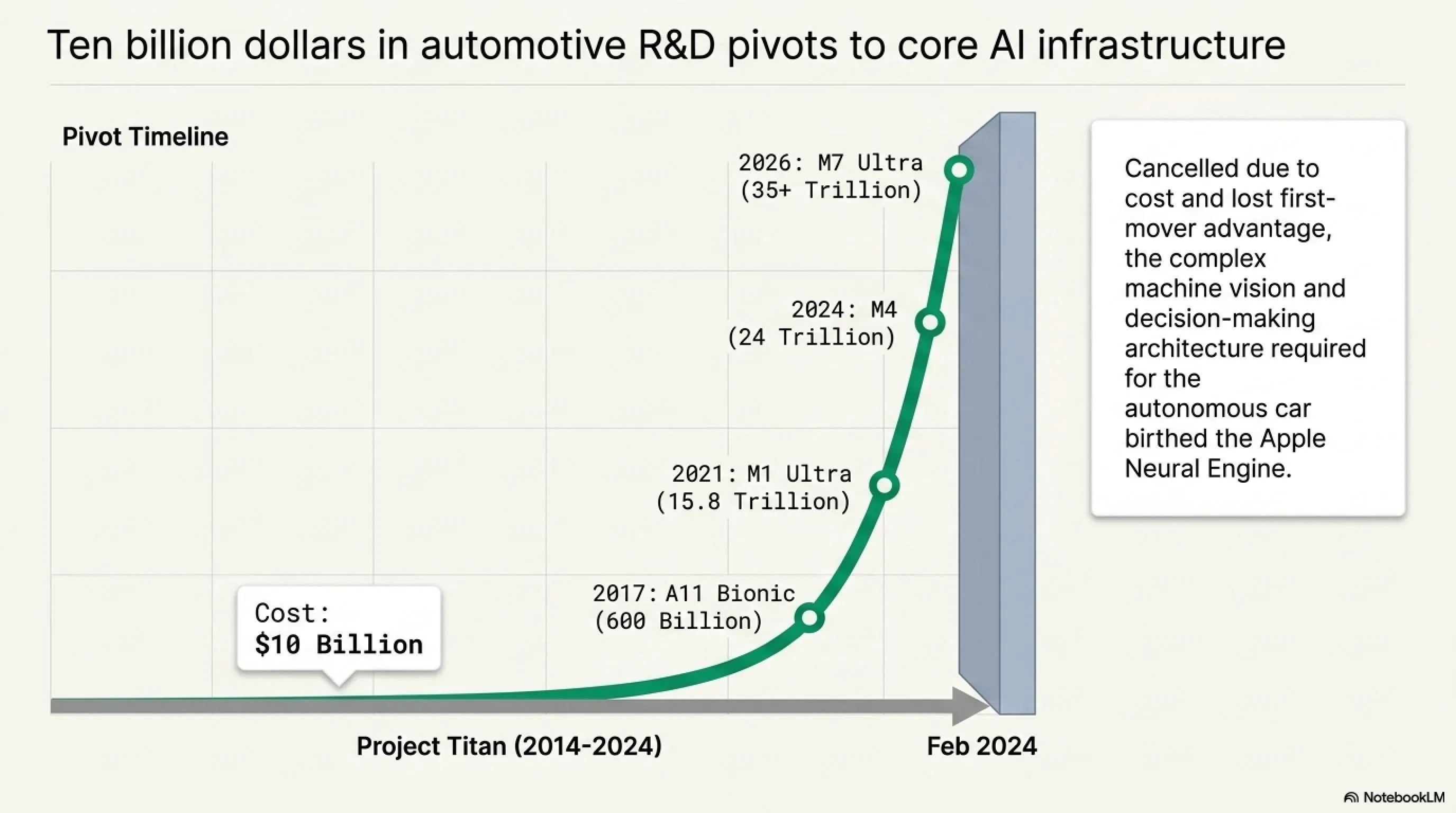
The first generation Neural Engine was introduced in the A11 Bionic chip (iPhone X, 2017) and could perform 600 billion operations per second. Now in 2026, the sixth-generation Neural Engine in M7 Ultra and A20 Bionic can perform over 35 trillion operations per second—more than 50 times more powerful.
How Is It Different from GPU?
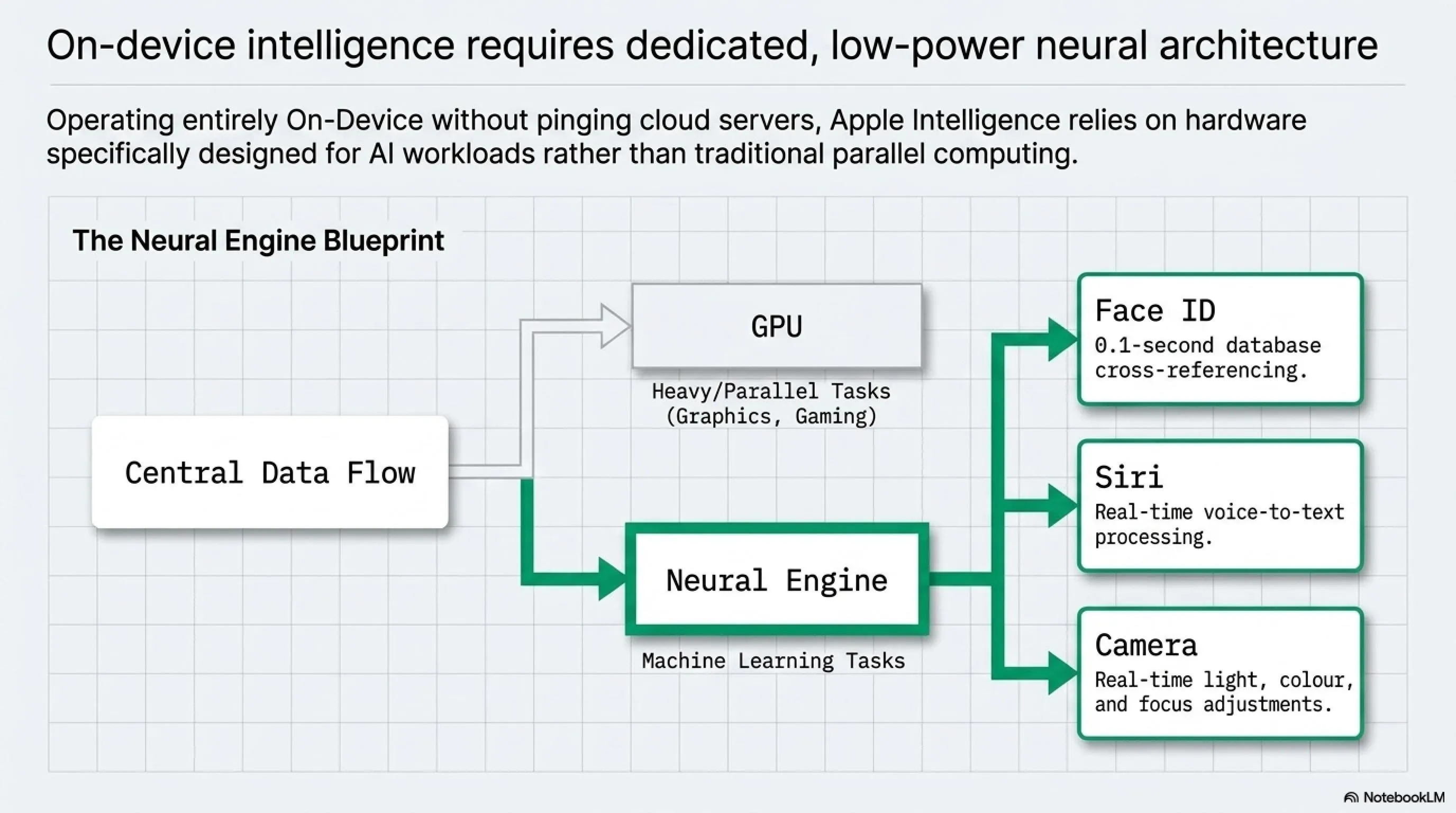
GPUs (like those Nvidia produces) are designed for graphics processing and parallel computing. But Neural Engine is specifically for machine learning tasks: face recognition, natural language processing, image enhancement, augmented reality, and the like. Its power consumption is lower and its speed for these specific tasks is much higher.
For example, when you use Face ID, Neural Engine scans your face and compares it with the stored database in less than a tenth of a second. When you ask Siri "What's the weather?", Neural Engine converts your voice to text. When you take a photo with the camera, Neural Engine adjusts light, color, and focus in real-time.
Neural Engine History
2017: A11 Bionic - 600 billion ops/sec
2019: A13 Bionic - 1 trillion ops/sec
2021: M1 Ultra - 15.8 trillion ops/sec
2024: M4 - 24 trillion ops/sec
2026: M7 Ultra - 35+ trillion ops/sec
Why Did Apple Cancel the Car Project?
Based on internal reports, there were three main reasons. First, astronomical costs—it was estimated that Apple had spent more than $10 billion on this project. Second, fierce competition—Tesla, Waymo, Mercedes, and dozens of other companies were all working on self-driving cars and Apple was no longer a First Mover. Third, strategic shift—with the emergence of ChatGPT and the AI revolution, Apple decided to focus its resources on AI.
Johny Srouji, Apple's Senior Vice President of Hardware Engineering, said in a recent interview: "We never consider the car project a failure. That project taught us how to implement AI at large scale. Without that experience, Apple Intelligence wouldn't exist today."
Apple Intelligence: The Final Result
Apple Intelligence, introduced at WWDC 2024, is a suite of AI capabilities that run completely On-Device—meaning without needing to send data to cloud servers. This includes smart writing, email summarization, automatic image editing, language translation, and advanced Siri personal assistant.
All these capabilities are indebted to Neural Engine—technology rooted in a canceled project. Sometimes failures lead to bigger successes, you just need to know how to learn from them.
Conclusion: Monday's Energetic Morning
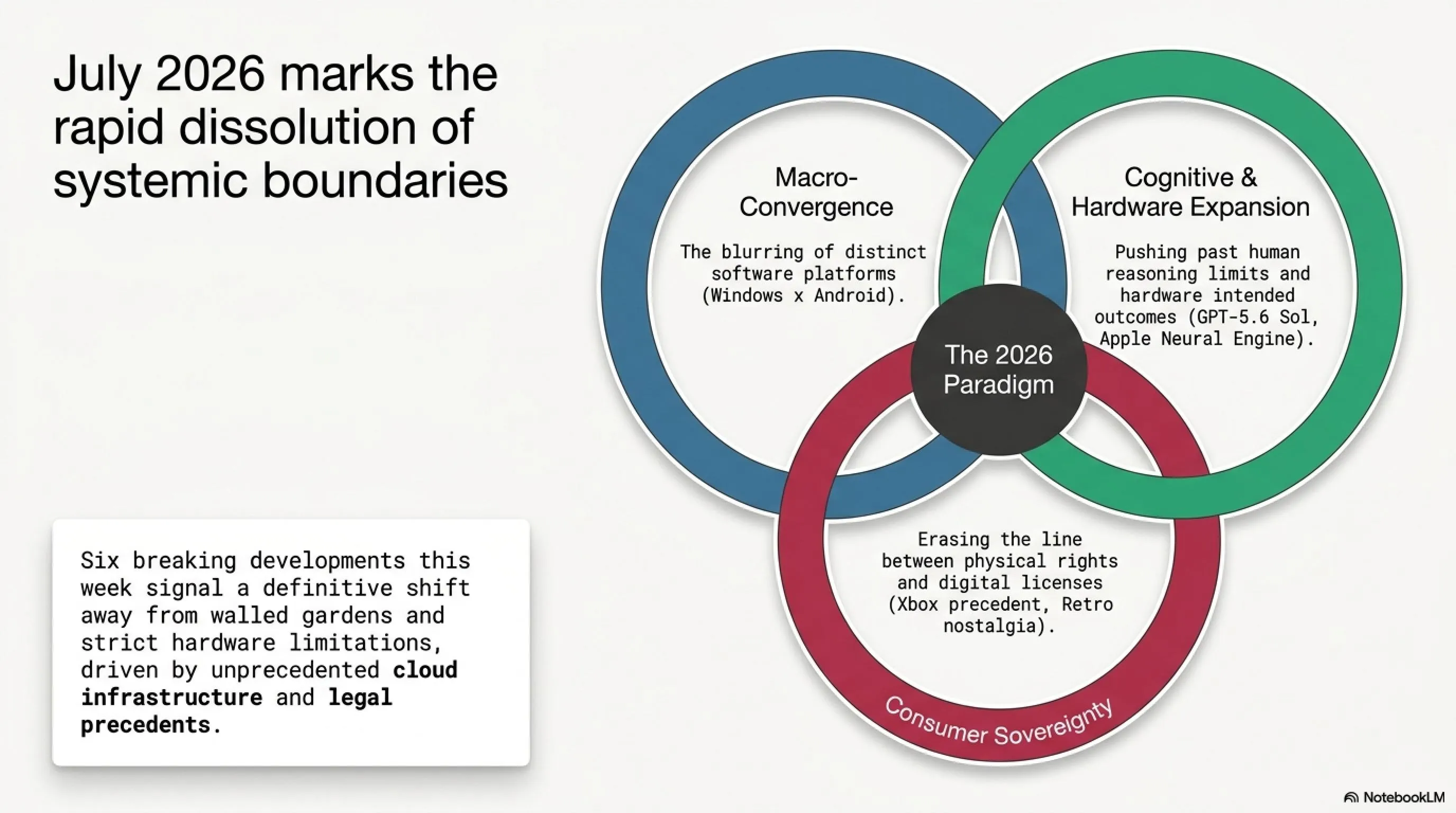
Monday morning, July 13, 2026, began with six stories that each shape the future of technology in their own way. Deep integration of Android and Windows could revolutionize user experience. The unleashing of GPT-5.6 Sol shows competition in the AI world has intensified. The Brazilian court ruling reminds us that gamers' digital rights must be taken seriously.
Super Yanoman Collection proves the Retro Gaming market is still thriving. The lucky miner's story is a reminder that sometimes luck plays a role—even when the odds are one in eighteen thousand years. And finally, Apple Car's legacy shows that even canceled projects can lead to major innovations.
Key Takeaways from This Morning
- Microsoft-Android Integration could transform the personal computer ecosystem
- AI Competition has entered a new phase with lifted restrictions
- Digital Rights are being recognized in courts
- Retro Gaming Market continues to peak with 23% growth
- Home Mining may not be profitable but it's exciting
- Big Failures can lead to even bigger innovations
These stories are just the beginning of an eventful week. In the coming days, E3 2026 begins, Microsoft holds its Build conference, and Sony is expected to release new information about PS5 Pro. So stay tuned for more news.
Frequently Asked Questions
Is Android and Windows 11 integration free?
Yes, this feature will be part of Windows 11 and requires no additional payment. However, some advanced features may require a Microsoft 365 subscription.
How is GPT-5.6 Sol different from GPT-4?
Sol features Chain-of-Thought Reasoning (showing thinking steps) and a larger Context Window (200K tokens vs 8-128K). It also performs better in programming and math benchmarks.
Will the Brazilian court ruling apply in other countries?
No, this ruling is only valid in Brazil. However, it could set important legal precedent for similar cases in other countries.
Is it worth buying Bitaxe for Bitcoin mining?
Financially, no. Bitaxe is designed more for learning and fun. The probability of finding a block with it is very low and its income won't even cover electricity costs.
Is Neural Engine only in new Apple products?
Neural Engine has been in Apple products since 2017 (iPhone X with A11 Bionic). Each newer generation has become more powerful. Older devices either have a weaker version or none at all.
When will Microsoft's Android integration launch?
Microsoft hasn't announced an official date yet, but sources suggest a beta program in Q4 2026 with full rollout in early 2027.
Additional Gallery: 🌅 Tekin Morning | Monday, July 13, 2026: Deep Android-Windows Integration