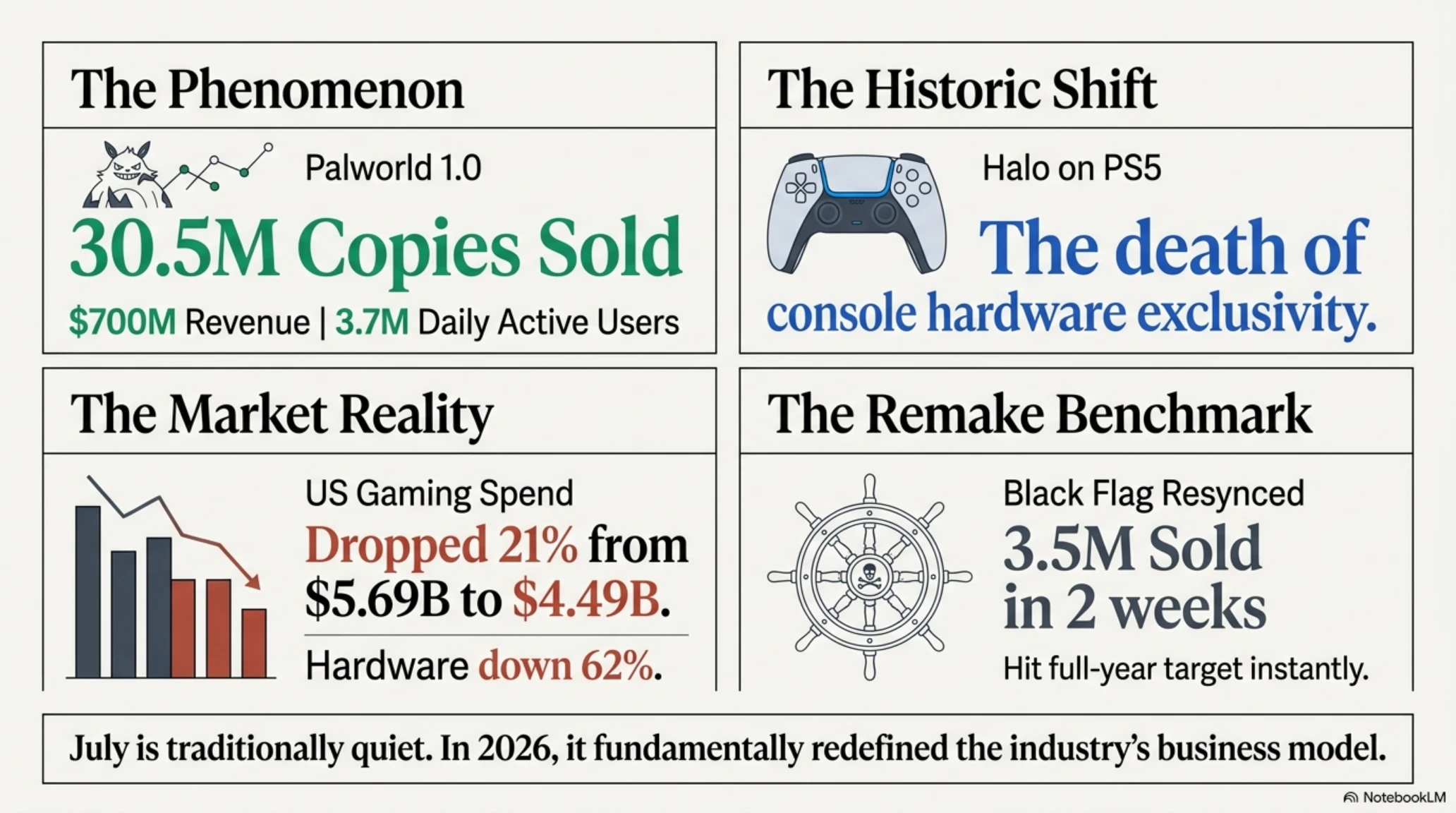
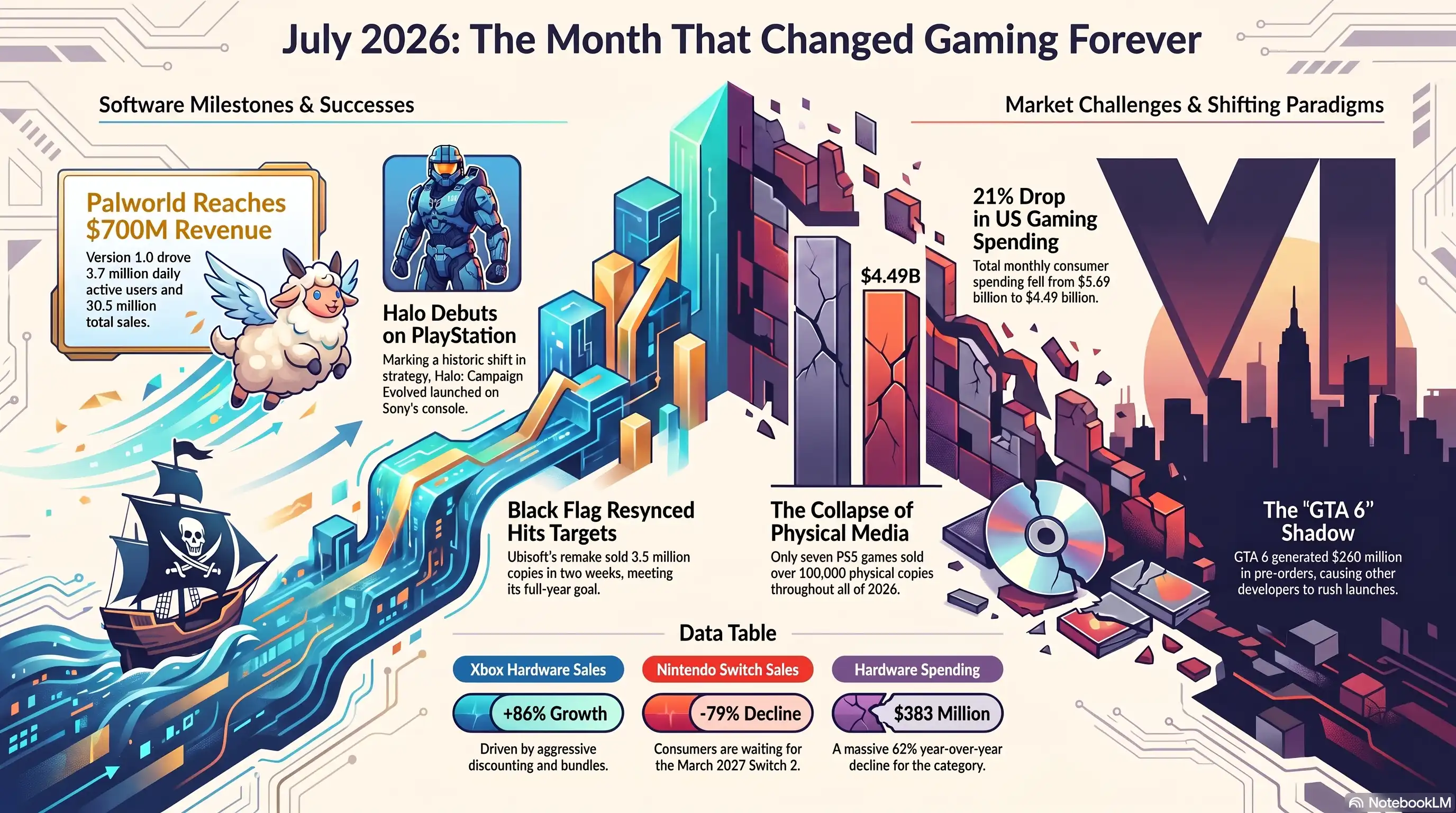
July 2026 became a turning point in gaming history. Palworld version 1.0 sold 30.5 million copies and generated $700 million in revenue. Halo: Campaign Evolved made history as the first Halo game ever released on PlayStation, while Assassin's Creed Black Flag Resynced sold 3.5 million copies in two weeks. Yet simultaneously, US gaming spending dropped 21%, hardware sales fell 62%, and the PS5 physical disc market faced a severe collapse.
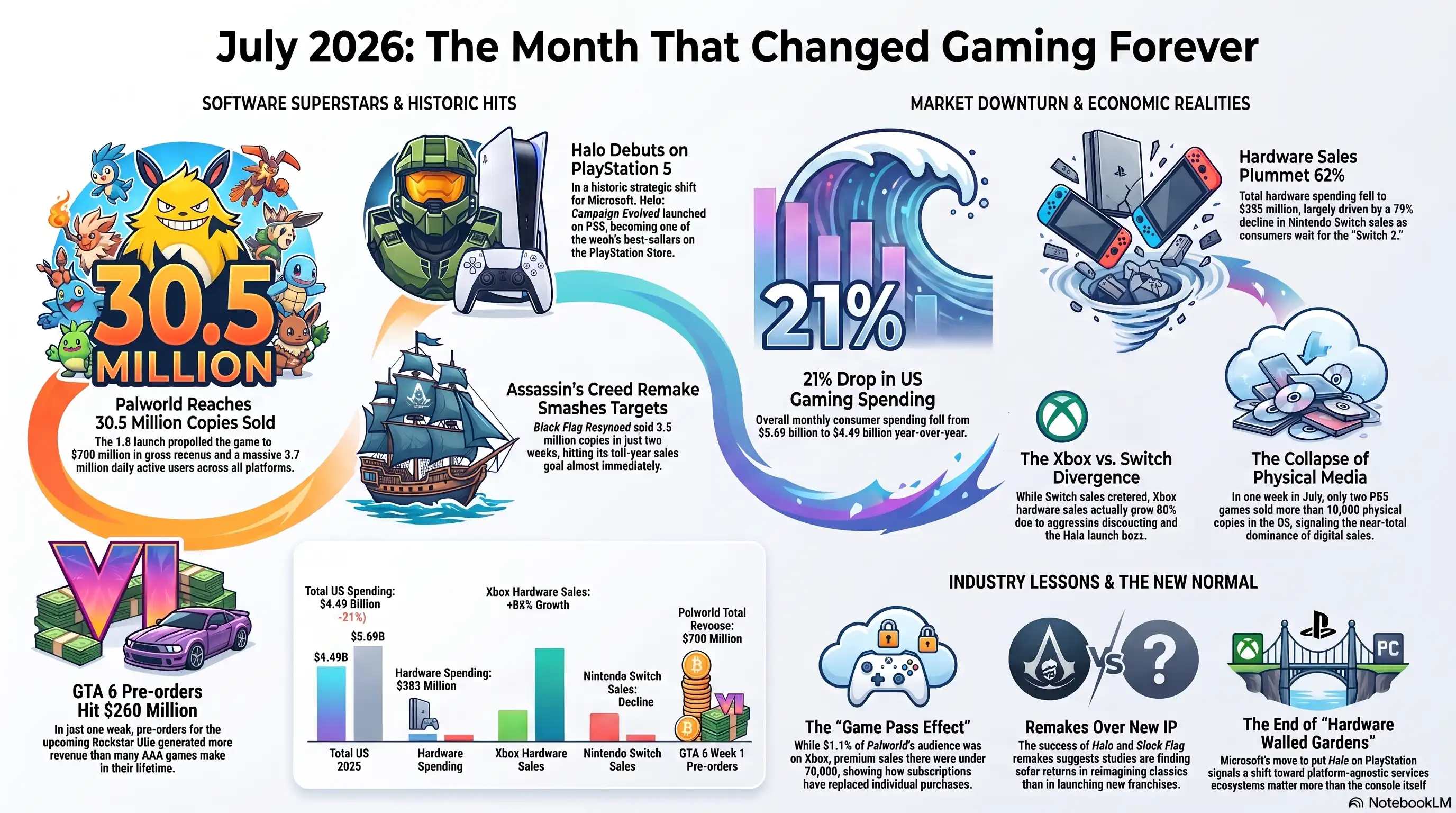
July 2026: The Month That Changed Gaming Forever
A month packed with historic successes, massive remakes, and industry milestones. From Palworld's record-breaking comeback to Halo's historic PlayStation debut.
- 🎮Palworld hit 30.5 million copies sold- $700M revenue and 3.7M daily active users
- 🎧Halo launched on PlayStation- First Halo game ever on Sony's console
- 🚀US gaming spending dropped 21%- Consumer spending fell from $5.69B to $4.49B
- 🗡️Black Flag Resynced sold 3.5M in 2 weeks- Ubisoft's remake hit its full-year target
The History-Making Month Nobody Expected
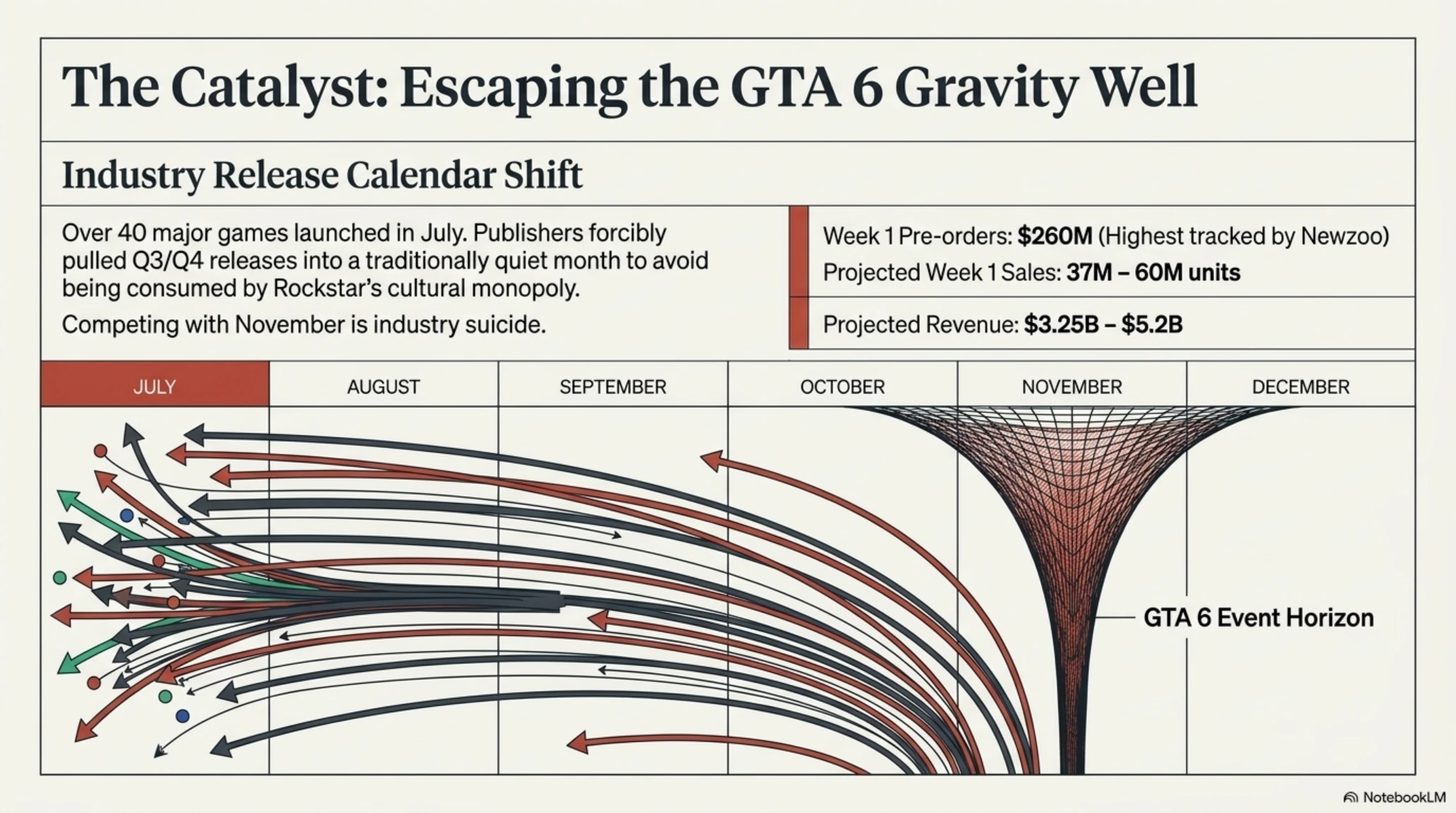
July is typically the quiet month of the gaming calendar. Publishers prefer to save their biggest releases for the high-traffic fall and winter months, leaving July to smaller titles and indie exclusives. But July 2026 shattered that tradition entirely. With Grand Theft Auto 6 looming in November, studios rushed into a fierce competition to launch their games before Rockstar monopolizes the entire industry conversation.
The result of this scramble was one of the busiest months in the 2026 gaming calendar. From AAA remakes to full-release launches of Early Access games, from the historic arrival of exclusive franchises on rival platforms to unexpected comebacks, July had it all. But the real question is: which games actually succeeded? Which ones failed? And what lessons can we extract from this chaotic month?
To answer these questions, we need to look at the hard data, analyze market trends, and understand the broader shifts happening across the gaming industry. July 2026 wasn't just about game releases—it was about platform wars, business model transformations, the death of physical media, and the changing definition of what "exclusive" means in modern gaming.
Quick Stats: July 2026 Gaming Industry
- Palworld 1.0 sold 30.5 million copies and generated $700 million in revenue
- Assassin's Creed Black Flag Resynced sold 3.5 million copies in two weeks
- Halo: Campaign Evolved became the first Halo game released on PlayStation
- US gaming spending dropped 21% to $4.49 billion
- PS5 physical sales in the US and UK collapsed dramatically
- GTA 6 pre-orders generated $260 million in the first week
- Over 40 major games launched throughout July
- Hardware sales fell 62% to $383 million in June 2026
The Undisputed Champion: Palworld's Legendary Return
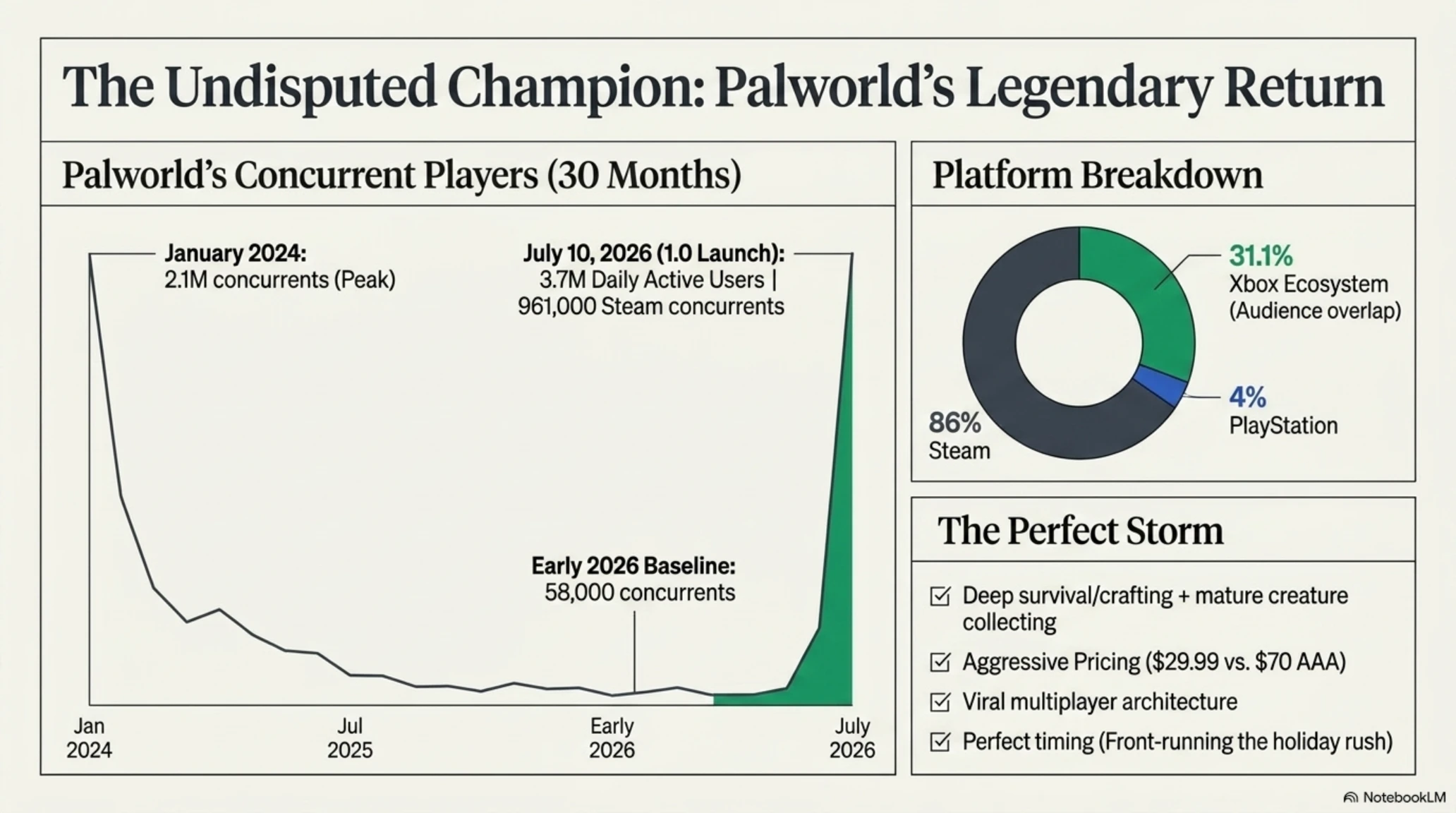
If we had to crown one game as the undisputed champion of July 2026, it would be Palworld without question. This survival shooter blended with creature-collecting mechanics launched in Early Access in January 2024 and immediately broke global Steam records. But after that initial excitement, player counts gradually declined, settling around 58,000 concurrent players on Steam.
Then on July 10, 2026, everything changed. Pocketpair released version 1.0, officially pulling the game out of Early Access. This update included a Wing Pack for personal flight, a Pal that transforms into a two-handed sword with its own moveset, new floating islands, extensive endgame content, and massive structural improvements. The result? An absolute explosion.
According to Alinea Analytics, Palworld's daily active users surged from 400,000 to 3.7 million across all platforms. On Steam alone, the game reached 961,000 concurrent players, hitting its highest numbers since the January 2024 launch. Back then, Palworld exceeded 2.1 million concurrent players, making it the third most-played game in Steam's history.
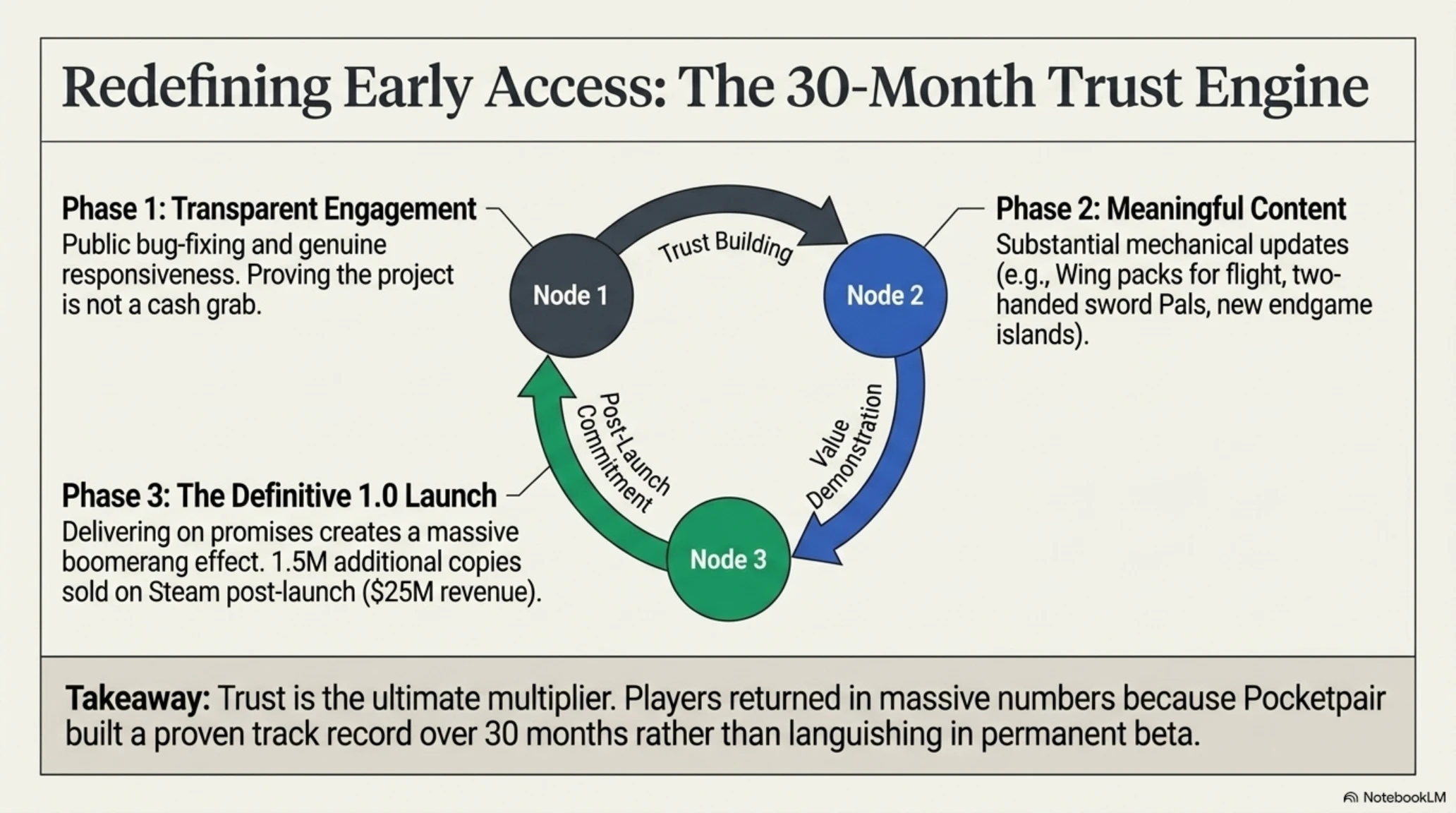
But the record-breaking didn't stop there. Market analysts estimate that Palworld has sold a total of 30.5 million copies and generated $700 million in gross revenue from direct software sales. Steam accounts for 86% of sales, while Xbox (including Game Pass) holds 31.1% of the audience and PlayStation just 4%. Following the 1.0 release, Palworld sold approximately 1.5 million additional copies on Steam, generating $25 million in revenue. PlayStation added another 300,000 copies, while Xbox contributed just under 70,000 premium sales.
The Early Access Success Formula
Palworld's journey offers valuable lessons for other developers considering the Early Access route. The game spent 30 months in development with constant community engagement, regular content updates, transparent bug fixing, and genuine responsiveness to player feedback. This wasn't a cynical cash grab disguised as Early Access—it was legitimate iterative development done in public.
The numbers validate this approach. When the 1.0 update launched, players returned in massive numbers because Pocketpair had built trust over those 30 months. The game had a proven track record of delivering on promises, fixing issues, and genuinely improving over time. This stands in stark contrast to countless Early Access titles that languish in permanent development limbo or launch to disappointing reception.
But success also depends on the core product. Palworld combined several winning elements: Pokemon-style creature collecting with more freedom and edge, deep survival and crafting gameplay with genuine strategic depth, a reasonable $29.99 price point compared to $70 AAA releases, co-op and multiplayer functionality that enabled community building, and consistent support throughout the 30-month Early Access period that earned player confidence.
Why Palworld Dominated July 2026
Palworld's success came from a combination of factors that created a perfect storm: First, the creature-collecting mechanics reminded players of Pokemon but with more freedom and mature themes. Second, the survival and crafting gameplay provided genuine depth and replayability. Third, the $29.99 price point undercut $70 AAA releases significantly. Fourth, co-op and multiplayer features facilitated community growth and viral spread. Fifth, 30 months of consistent Early Access support built trust and proved the developers' commitment. Finally, the 1.0 launch timing was perfect—before GTA 6 dominates the conversation and during a traditionally quiet month when competition was manageable.
Platform Distribution and Game Pass Impact
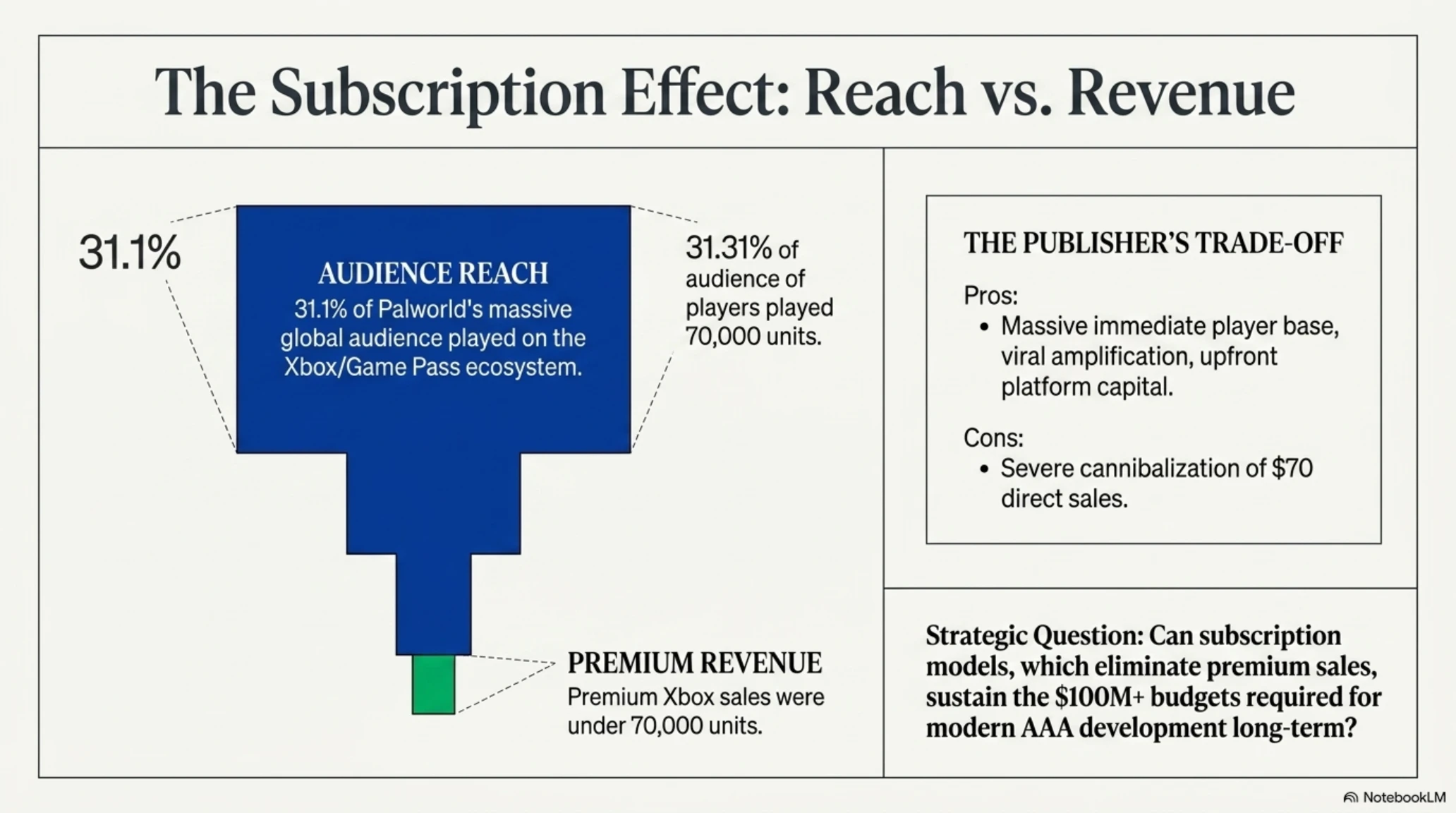
The platform breakdown for Palworld reveals interesting insights about the modern gaming market. Steam's 86% share of sales demonstrates that PC remains the dominant platform for this type of game. But the 31.1% Xbox audience figure tells a more complex story. Most of those Xbox players accessed Palworld through Game Pass, not direct purchases. Xbox premium sales were under 70,000 copies, a tiny fraction compared to Steam's millions.
This disparity illustrates the Game Pass effect. Millions of subscribers can access games without additional payment, drastically reducing direct sales while massively expanding the player base. For developers, this trade-off depends on the Game Pass deal terms. Pocketpair likely received substantial upfront payment or per-player compensation from Microsoft, but the exact financial arrangement remains undisclosed.
PlayStation's 4% share is notably small, partly because the PlayStation version launched later than other platforms and partly because Palworld's survival-crafting genre traditionally performs better on PC and Xbox. Still, 300,000 additional sales following the 1.0 update demonstrates meaningful demand even on Sony's platform.
The Big Remakes: Black Flag and Halo Make History
Alongside Palworld's triumph, two massive remakes launched in July, each making history in its own way.
Assassin's Creed Black Flag Resynced: The Pirate Returns
Assassin's Creed Black Flag, originally released in 2013, has always been one of the franchise's most beloved entries. The story of Edward Kenway, the roguish pirate who becomes an Assassin, combined with an open-world Caribbean setting and naval fleet battles, delivered a unique experience that many fans consider the series' peak.
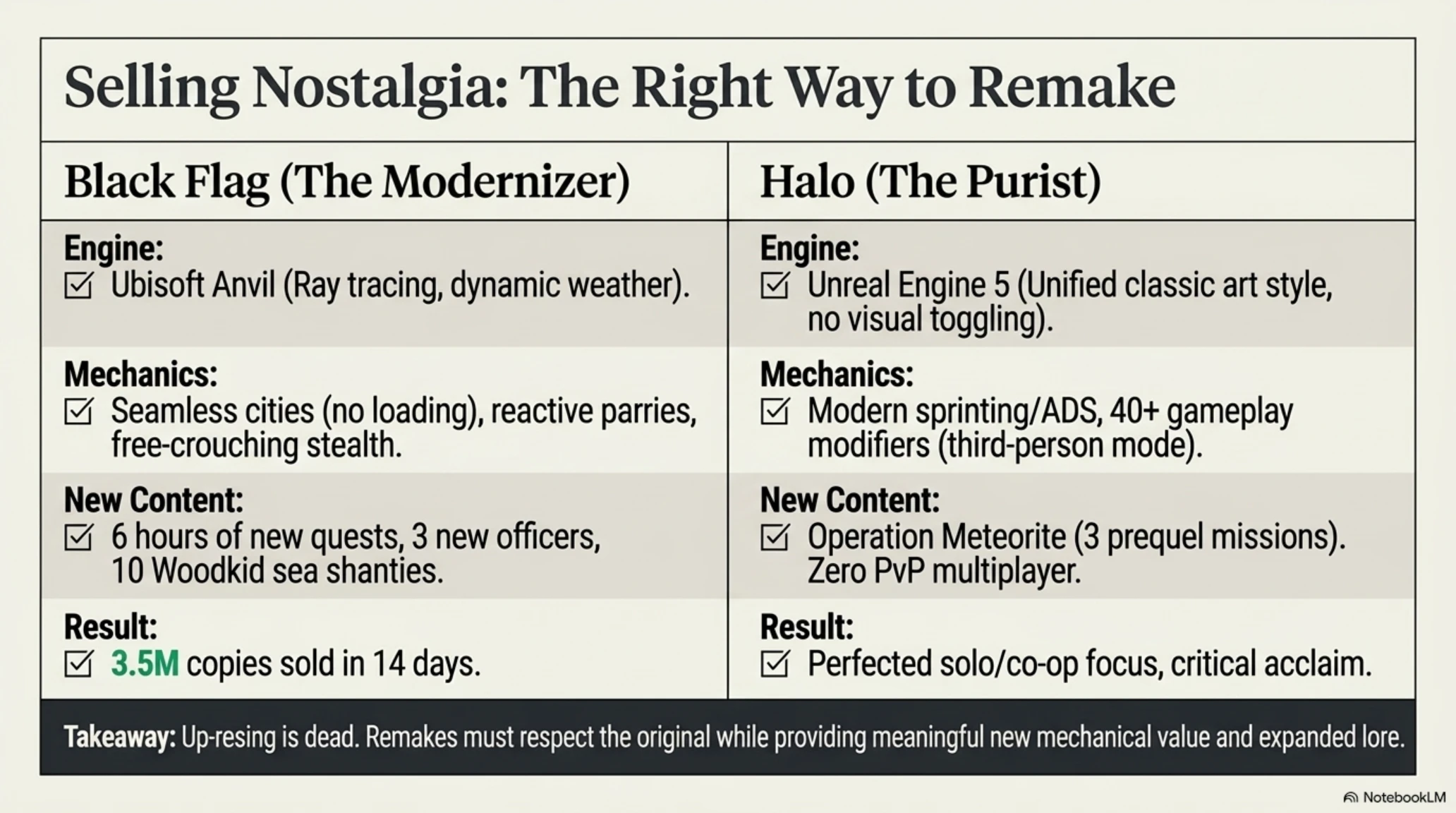
The Resynced remake, developed by Ubisoft Singapore with many original developers returning, rebuilds the game from the ground up. The latest Ubisoft Anvil Engine, the same one powering Mirage and Shadows, brings ray-traced lighting, advanced water rendering, and dynamic weather simulation. One significant change removes loading screens when entering major cities, replacing them with seamless transitions.
The combat system has been completely rewritten. Enemies now adapt to predictable player behavior, and reactive parries open up chained takedowns. Stealth has been improved with Kenway now able to crouch freely at any time. Tailing missions have been updated so being spotted no longer instantly fails the mission but instead shifts the encounter to direct combat. Parkour has been tightened up, with the team aiming to retain Kenway's signature movement while delivering more fluid controls and free-jumping capabilities.
New content includes six hours of additional quests, three new recruitable crew officers each with their own storylines, new story scenes including one featuring Edward's wife Caroline, 10 new sea shanties featuring French artist Woodkid, new ship weapon upgrades, ziplines added across cities, and the Kenway's Fleet mini-game brought back into the main game from its previous mobile-only format. Players can also keep a cat or monkey pet aboard the Jackdaw.
Game director Richard Knight confirmed during the initial reveal that the remake remains a solo adventure and character-driven experience, explicitly not an RPG. For fans of the original who felt the series drifted too far from its roots in later entries, this is welcome news. The commitment to preserving the spirit of the original while modernizing the execution clearly resonated with players.
The result of these efforts? Resynced sold 3.5 million copies in its first two weeks and hit its full-year sales target. Ubisoft confirmed the remake performed beyond their expectations, validating their strategy of reimagining beloved older titles with modern technology rather than constantly chasing new IP.
Halo: Campaign Evolved: A Historic PlayStation Debut
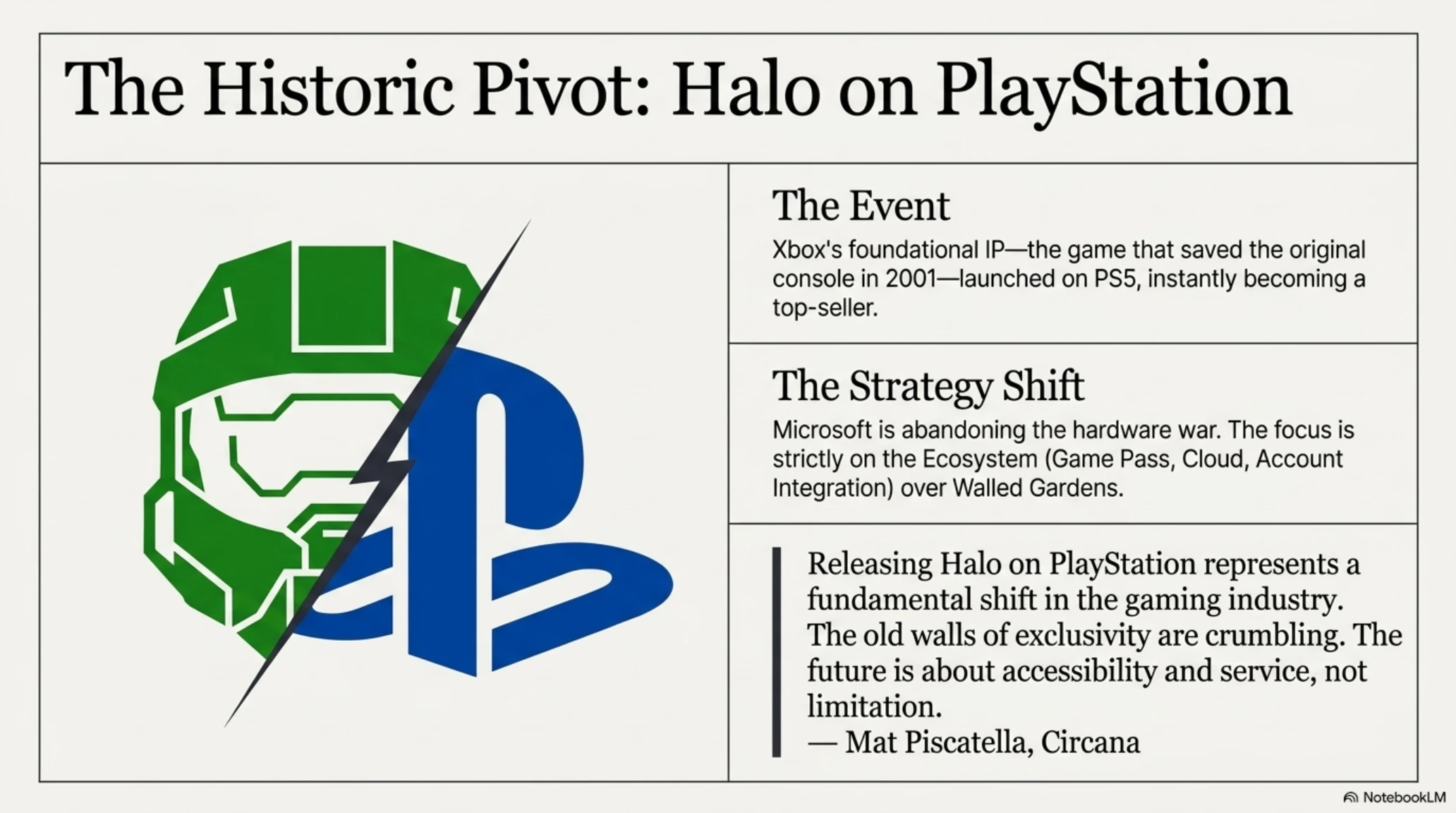
But the most truly historic moment of July was the release of Halo: Campaign Evolved. The game launched on July 27 for Xbox Series X/S, PC, and for the first time in history, PlayStation 5. For anyone familiar with Xbox history, this event was unthinkable. Halo has always been the symbol of Xbox exclusivity, the game that saved the original Xbox console in 2001 and forever changed the definition of a console shooter.
Campaign Evolved is a complete remake of the original Combat Evolved, this time built in Unreal Engine 5. Unlike the 2011 Anniversary Edition, this version doesn't include the ability to toggle between old and new graphics. Halo Studios instead decided to create a unified look with an art style faithful to the original, not the more generic aesthetic of Halo 4 and 5.
The most significant addition is Operation Meteorite: three brand-new prequel missions featuring Master Chief and Sgt. Johnson set one year before the main story. These missions introduce new environments, characters, and enemies, providing context and backstory that enriches the original campaign. The full campaign, including Operation Meteorite, supports two-player splitscreen and four-player online co-op with crossplay and shared progression.
Modern additions include sprinting and aiming down sights, expected features at this point though a departure from the original Combat Evolved experience. Over 40 Skulls are included, among them one that adds a third-person camera mode and a campaign remix option, giving the game meaningful replay value beyond the initial run.
Notably, there is no PvP multiplayer included. The name Campaign Evolved is deliberate in that regard. For players who want the classic multiplayer modes, the Master Chief Collection remains the place for that. This decision allowed Halo Studios to focus entirely on perfecting the single-player and co-op experience.
Why Halo on PlayStation Was Truly Historic
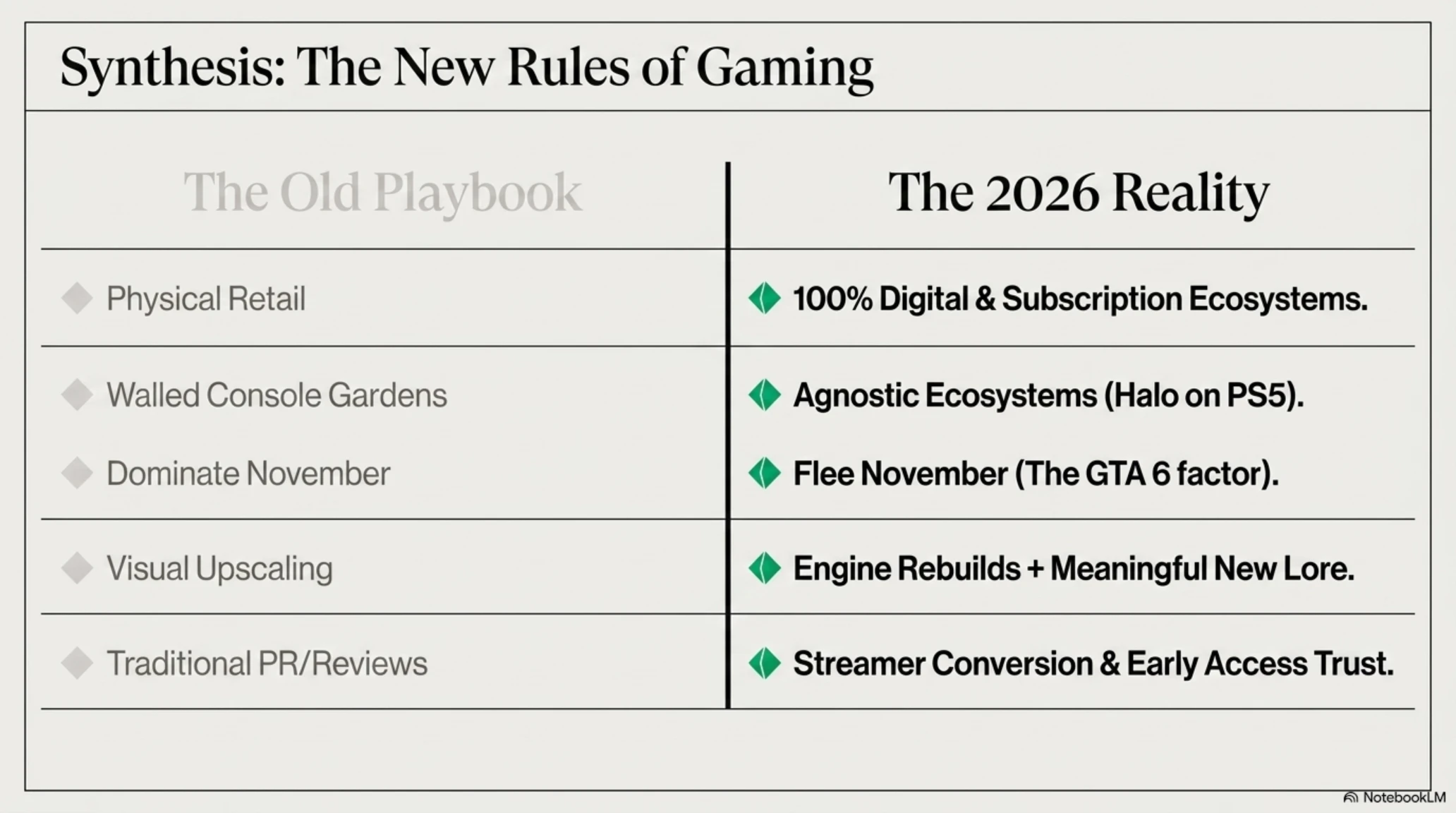
Microsoft's decision to release Halo on PlayStation represents a fundamental shift in the company's strategy. Phil Spencer, head of Xbox, has stated in multiple interviews that Xbox's future lies in services and ecosystem, not hardware exclusivity. Game Pass and cloud gaming are the central pillars of this strategy, and releasing Xbox games on rival platforms is part of this transformation.
Reactions were mixed. Some loyal Xbox fans felt betrayed, believing that Halo's exclusivity was one of the primary reasons to own an Xbox console. But many others, especially PlayStation players who never had the opportunity to experience Halo, welcomed the decision enthusiastically. Campaign Evolved became one of the week's best-sellers on the PlayStation Store and received positive reviews.
The broader implications extend beyond a single game. If Microsoft is willing to bring its most iconic exclusive franchise to PlayStation, what does "exclusive" even mean anymore? The answer seems to be: not what it used to. The industry is shifting away from hardware-based walled gardens toward platform-agnostic services. Microsoft wants you in the Xbox ecosystem—whether that's through a physical Xbox console, Game Pass on PC, cloud streaming on your phone, or even playing on a PlayStation with Xbox Account integration.
The Critical Reception and Player Response
Campaign Evolved launched to generally positive reviews across all platforms. Critics praised the Unreal Engine 5 visuals, the quality of the remaster work, and the value added by Operation Meteorite's three prequel missions. The decision to focus exclusively on the campaign without multiplayer was largely seen as the right call, allowing the team to perfect what they included rather than spreading resources too thin.
On PlayStation specifically, the response was particularly enthusiastic. Many PlayStation users had never played a Halo game before, making Campaign Evolved their introduction to the franchise. The game's blend of sci-fi storytelling, large-scale battles, and iconic set pieces resonated with this new audience. Some longtime Halo fans expressed concern that the experience wasn't quite the same without the original's multiplayer component, but most acknowledged that the Master Chief Collection already serves that purpose.
Sales figures for Campaign Evolved haven't been officially disclosed, but analyst estimates suggest strong performance across all three platforms. The Premium Edition, which included five days of early access starting July 23, reportedly sold particularly well, indicating high enthusiasm from hardcore fans willing to pay extra.
Other Games That Shined in July
Palworld and the two major remakes weren't the only success stories. Several other titles achieved notable success throughout the month.
Splatoon Raiders: A New Experience for Switch 2
Splatoon Raiders, launched on July 23 exclusively for Switch 2, marks the first Splatoon game to center single-player gameplay. Instead of the competitive multiplayer that defines the franchise, Raiders is a story-based adventure where players take on the role of a mechanic exploring the Spirhalite Islands.
The game features the Deep Cut characters Shiver, Frye, and Big Man. Players mine Spirhalite Shards to develop gadgets that expand combat options. Optional local and online co-op is available, but the core experience is designed for single-player. For a franchise whose entire identity has been built around team-based paint battles, this is a bold pivot.
Early reception has been cautiously positive. Fans appreciate Nintendo's willingness to experiment with the formula, and the campaign has been praised for its environmental variety and clever level design. However, some longtime Splatoon devotees miss the competitive multiplayer that made the series famous. Sales figures haven't been disclosed, but the game reportedly met Nintendo's internal projections.
Other Notable July Successes
Beyond the marquee releases, several other games performed well throughout July:
- EA Sports College Football 27: The first new entry since 2015, this college football sim was warmly received by fans who had been waiting over a decade for the series' return. The game sold particularly well in the United States, where college football has a massive following.
- Doom: The Dark Ages - Revelations: This major expansion added new story content, enemies, and the Chain Spear weapon. Id Software's continued support for Doom has kept the franchise relevant and profitable years after the base game's launch.
- Avatar Legends: The Fighting Game: A 2D fighter featuring 12 characters from both the Aang and Korra eras, this game filled a niche that fans of the Avatar franchise had long requested. Rollback netcode and crossplay support were particularly appreciated.
- Mistfall Hunter: This dark fantasy extraction RPG with Soulslike influence launched on July 29 and quickly built a dedicated following. The game's blend of high-risk extraction gameplay with challenging combat resonated with hardcore players.
- Echoes of Aincrad: A single-player action RPG based on the Sword Art Online anime, this game found an audience among fans of the franchise despite not being an official adaptation.
The Dark Side: Failures and Challenges
But July wasn't all success stories. The gaming industry faced serious challenges that revealed not everything is as bright as it appears.
US Gaming Spending Plummets 21%
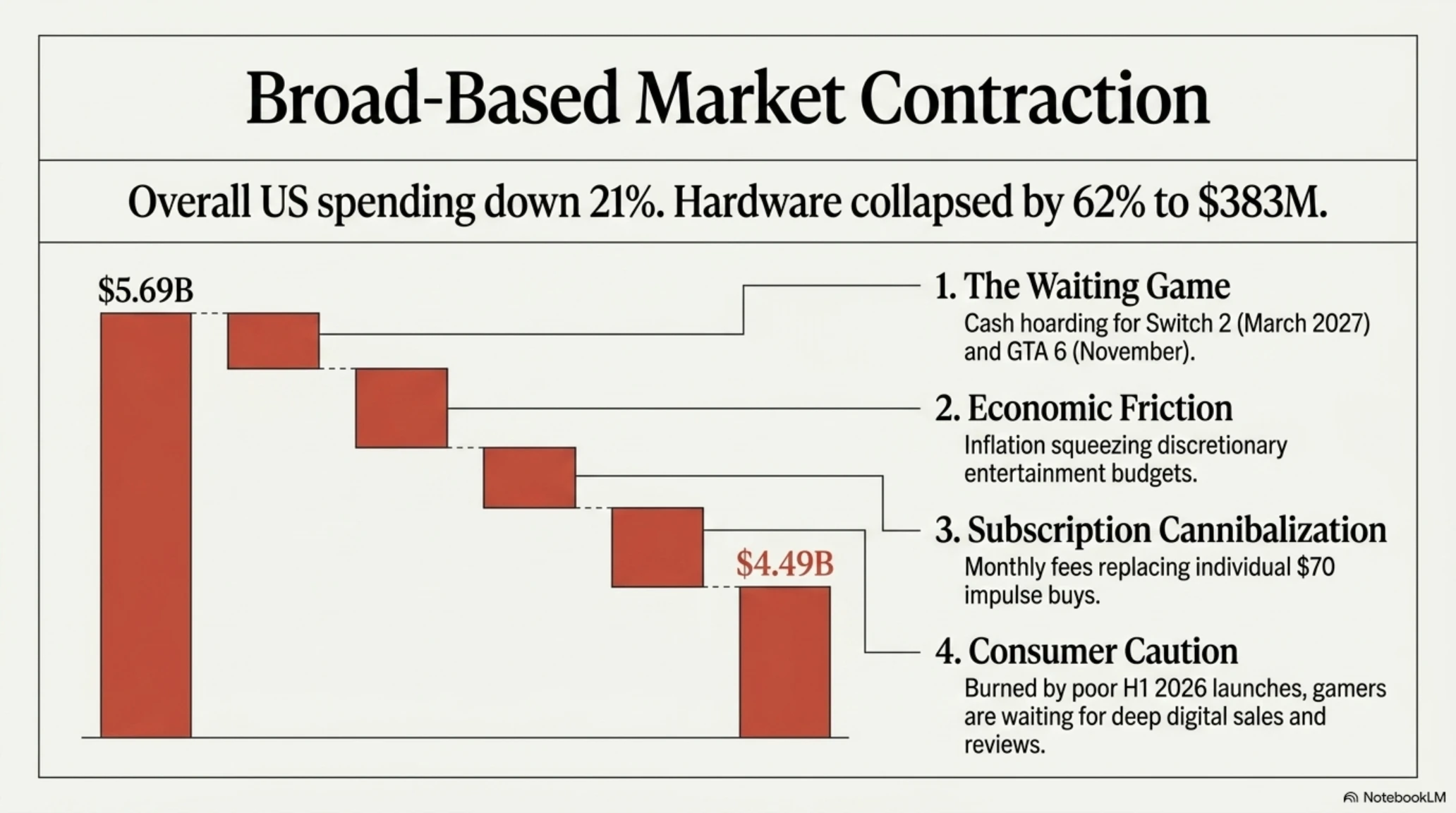
According to Circana's report, US consumers spent a total of $4.49 billion on games, consoles, and accessories in June 2026, down 21% from $5.69 billion in June 2025. This decline was broad-based but uneven.
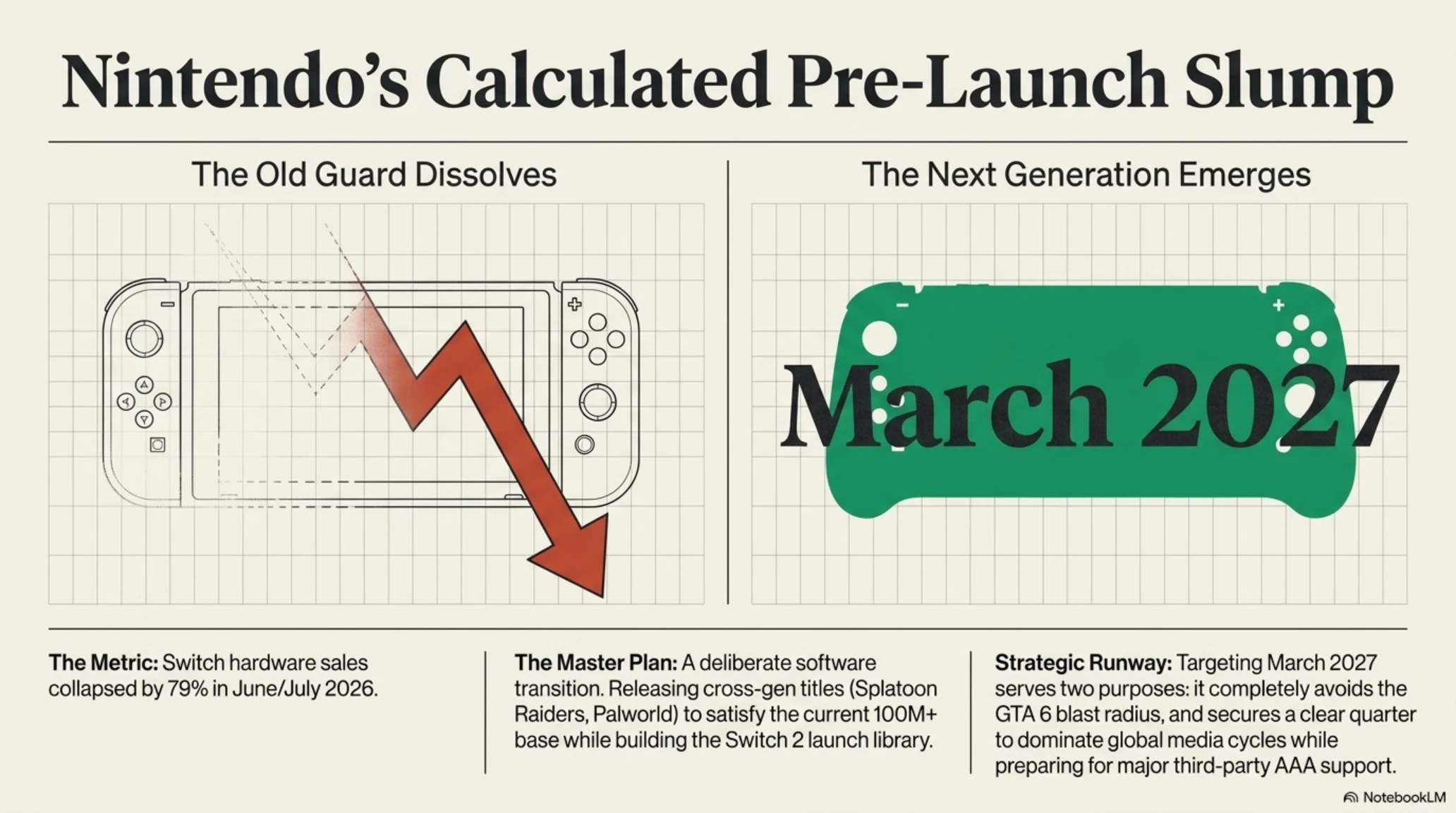
Content spending (game software, in-game purchases, and subscriptions) fell 12% to $3.88 billion. But hardware spending took a much harder hit, dropping 62% to $383 million. Nintendo Switch sales, with consumers waiting for Switch 2, fell 79%. Xbox sales, buoyed by aggressive discounting and attractive bundles, actually grew 86% year-over-year.
Several factors contributed to this spending decline. First, consumers are waiting for major releases like GTA 6 and the Switch 2, delaying big purchases. Second, economic conditions and inflation have constrained gaming budgets. Third, the growing popularity of Game Pass and subscription services means fewer direct purchases. Fourth, poor quality launches in the first half of 2026 have made gamers more cautious about day-one purchases.
Why Gaming Spending Declined
Multiple factors converged to create this spending decline: Consumer anticipation for GTA 6 and Switch 2 has led to delayed purchases as gamers save money for these major releases. Economic pressure from inflation and general economic uncertainty has constrained discretionary spending budgets. Subscription services like Game Pass and PlayStation Plus mean consumers are paying monthly fees instead of making $60-70 individual game purchases. Launch quality issues with several major 2026 releases have made consumers more hesitant to buy games at launch price, preferring to wait for reviews and price drops. Digital sales dominance has shifted spending patterns, with more consumers waiting for digital sales rather than buying physical copies at full price.
The Physical Sales Crisis: PS5 on the Brink
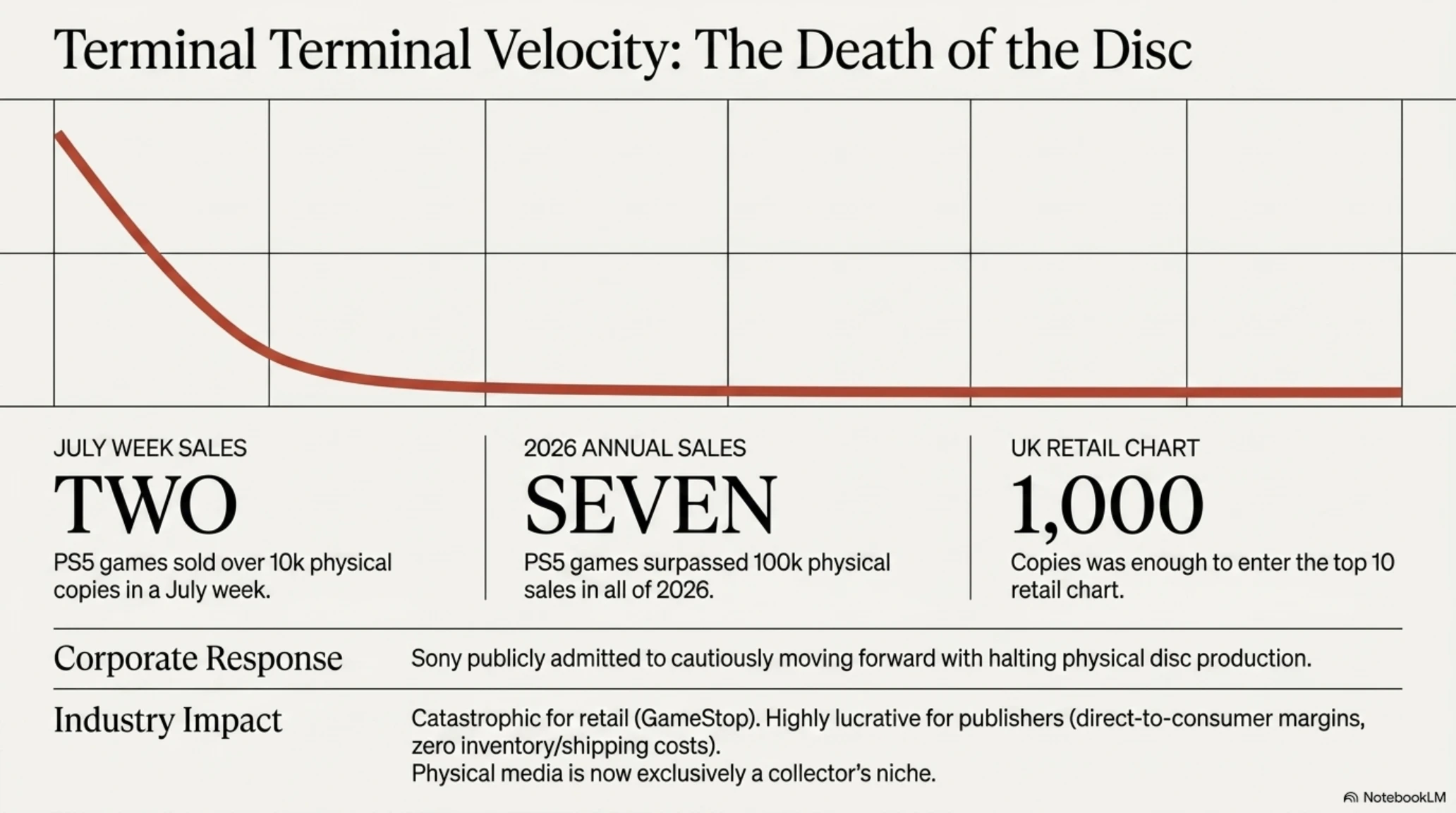
One of July's most shocking statistics concerned PS5 physical sales. Mat Piscatella from Circana reported that in the week ending July 11, only two PS5 games sold more than 10,000 physical copies in the United States. He also noted that only seven PS5 games have sold more than 100,000 physical copies in the United States throughout all of 2026 so far.
The situation in the United Kingdom was similar. Some reports indicated that selling just 1,000 copies was enough to enter the top 10 chart. These figures demonstrate that the physical market is rapidly collapsing, with digital completely dominating the industry.
Sony itself acknowledged this trend in its Q1 FY26 financial report. First-party game sales fell from 6.9 million units to 6 million units, while non-first-party software edged up slightly from 65.9 million to 66.1 million units. The company also stated it is "cautiously moving forward" with halting physical disc production, acknowledging the inevitable shift while trying not to alienate consumers who still prefer physical media.
Games That Struggled or Failed
Not every July release succeeded. Several titles faced serious challenges:
- Happy's Humble Burgatory: This co-op survival horror fast food restaurant game failed to attract a sufficient audience despite its unique premise.
- Bodycam Onrecord: An FPS with PVP, Co-op, and Horror modes that struggled with technical problems and poor performance.
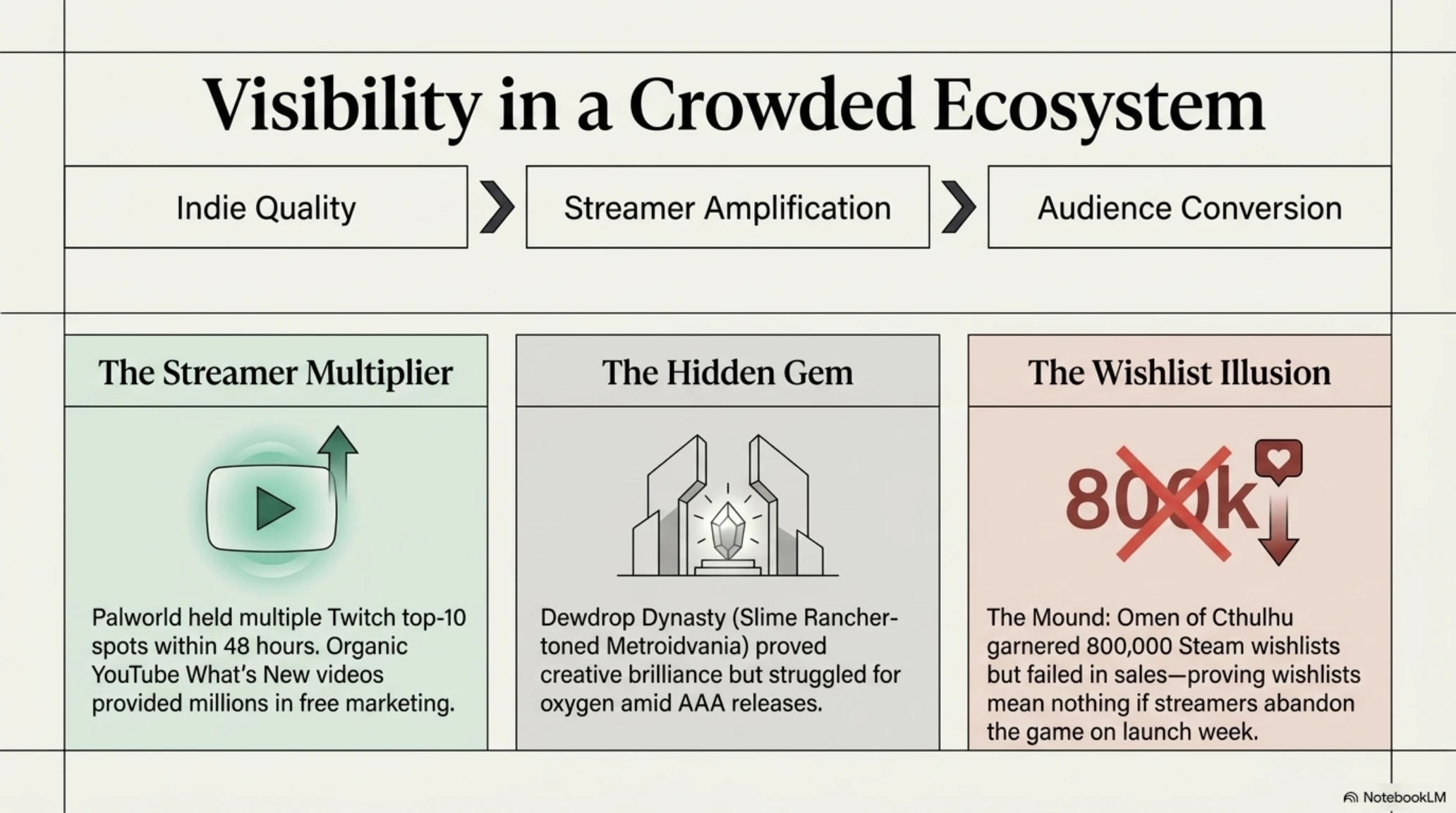
- The Mound: Omen of Cthulhu: Despite accumulating 800,000 wishlists, the game failed to convert that interest into meaningful sales, suggesting wishlist inflation has become a problem on Steam.
- Heave Ho 2: The sequel to the physics-based party game got lost in the shadow of bigger releases, unable to generate sufficient awareness.
- Database Detective: Minor Crimes Division: An SQL-based puzzle game that was too niche to find a broad audience despite positive reviews from those who played it.
Platform Wars: Xbox Grows, PlayStation and Nintendo Wait
One of July's most interesting narratives was the divergent performance of different gaming platforms. Xbox achieved 86% year-over-year hardware sales growth in June 2026, posting its best month in years. This growth came primarily from attractive bundles, significant discounts, and anticipation for major titles like Halo: Campaign Evolved.
But Nintendo and Sony told different stories. Switch sales plummeted 79% as consumers waited for Switch 2, which Nintendo has officially announced for a March 2027 release. This console is expected to feature higher processing power, a larger screen, and support for more third-party games.
Interestingly, several major July games like Splatoon Raiders, Palworld version 1.0, and Avatar Legends launched simultaneously for both Switch and Switch 2, showing Nintendo is preparing for a smooth transition. Xenoblade Chronicles 2 also received an Enhanced Switch 2 version.
Game Pass and Its Impact on Sales Patterns
Another major factor in changing sales patterns is the growth of subscription services like Game Pass. Palworld was available on Game Pass day one, which meant 31.1% of the game's audience accessed it through Xbox even though direct Premium sales were under 70,000 copies.
Halo: Campaign Evolved also launched day one on Game Pass Ultimate and PC Game Pass. This means millions of subscribers can access the game without paying additional fees, which impacts direct sales but massively increases the player base. For publishers, this trade-off depends on their deal terms with Microsoft. The upfront or per-player payment from Game Pass can potentially exceed what they would make from direct sales, especially for games that might struggle to find an audience otherwise.
However, this model raises questions about long-term sustainability. If consumers become accustomed to accessing major releases through subscriptions rather than individual purchases, will they continue paying $70 for games they don't own? And if Game Pass becomes the primary way to access games, what happens to the $70 premium game model?
don't own? And if Game Pass becomes the primary way to access games, what happens to the $70 premium game model?Lessons From July: What Worked and What Didn't
July 2026 offered valuable lessons for developers and publishers. Let's examine some of the most important takeaways.
Lesson 1: Early Access Can Lead to Success, But Only If Done Right
Palworld is the perfect example. The game spent 30 months in Early Access, and during that time Pocketpair continuously added content, fixed bugs, and listened to community feedback. The result? An explosive 1.0 launch that increased daily active users from 400,000 to 3.7 million.
But not all Early Access games share this success. Many never leave Early Access, or if they do, they're met with lukewarm reception. The key to success is transparent communication with the community, regular updates that demonstrate ongoing commitment, delivering quality content that justifies continued engagement, building trust through consistent improvement, and knowing when to actually launch the full 1.0 version rather than languishing in permanent beta.
Lesson 2: Nostalgia Is Powerful, But Must Be Combined With Innovation
Both Black Flag Resynced and Halo: Campaign Evolved leveraged nostalgia, but in intelligent ways that added new content. Black Flag brought six hours of new quests, three new officers, and ten new sea shanties. Halo added three completely new prequel missions with Operation Meteorite.
Simply upscaling graphics isn't enough. Players want a reason to return beyond prettier visuals—they want meaningful additions that justify the investment. Remakes need to respect the original while providing new value. Lazy ports or simple visual upgrades won't cut it in 2026's competitive market.
Lesson 3: Exclusivity Doesn't Mean What It Used To
The release of Halo on PlayStation is a clear signal of industry change. Microsoft has realized that hardware exclusivity isn't as valuable as it once was. The future is in services, ecosystem, and broad access. Game Pass is Xbox's primary strategy, not console sales.
This shift has implications for Sony and Nintendo as well. Will they eventually follow a similar path? Currently, the answer is unclear, but market pressure is pushing in that direction. Sony has already started releasing PlayStation exclusives on PC, though with significant time delays. Nintendo remains the most protective of its exclusives, but even they are exploring mobile and other platforms for franchise expansion.
Lesson 4: The Physical Market Is Dying
PS5's physical sales statistics were shocking. Only two games sold more than 10,000 physical copies in a week. Only seven games have sold more than 100,000 physical copies all year. These numbers demonstrate that digital is no longer just an option—it's the standard.
For physical retailers like GameStop, this is catastrophic news. But for developers, it means higher profit margins, greater control over pricing and sales, direct-to-consumer relationships without retail middlemen, and elimination of manufacturing, shipping, and inventory costs. The physical market will likely persist as a niche for collectors and enthusiasts, but it's no longer the primary distribution channel.
Lesson 5: GTA 6 Will Change Everything
The $260 million first-week pre-order figure for GTA 6 demonstrates this game has transcended being just a game launch—it's a cultural event. Forecasts suggest 37 to 60 million copies in the first week and $3.25 to $5.2 billion in revenue. These numbers will shatter every previous record.
But GTA 6's impact extends beyond its own sales. Many developers rushed to launch their games before November because they know once GTA 6 releases, all attention will shift to it. July 2026's crowded schedule owes much to this strategic positioning. Publishers understand that competing directly with GTA 6 is suicide, so they're launching earlier or delaying until well after the November storm passes.
July 2026 By The Numbers: A Statistical Deep Dive
Key Gaming Industry Statistics - July 2026
The Subscription Services Effect
One of the most significant trends revealed by July's data is the growing impact of subscription services on traditional game sales. Palworld's numbers illustrate this perfectly: while the game sold over 30 million copies across all platforms, the Xbox audience of 31.1% generated fewer than 70,000 premium sales. The vast majority of Xbox players accessed Palworld through Game Pass.
This pattern repeats across multiple titles. Game Pass, PlayStation Plus, and similar services are fundamentally changing how consumers access games. Instead of making individual $60-70 purchases, they pay monthly fees for access to libraries of hundreds of games. For consumers, this is excellent value. For publishers and developers, it's complicated.
Subscription services provide guaranteed revenue and broader audience reach, especially beneficial for smaller titles that might struggle to gain visibility. But they potentially reduce the upside of massive hits, as players access games through subscriptions rather than individual purchases. The long-term sustainability of this model for AAA development remains an open question. Can subscription revenue support the massive budgets required for modern blockbusters? Or will we see a two-tier system emerge, with premium titles launching traditionally and catalog titles going to subscriptions?
Looking Forward: What's Next?
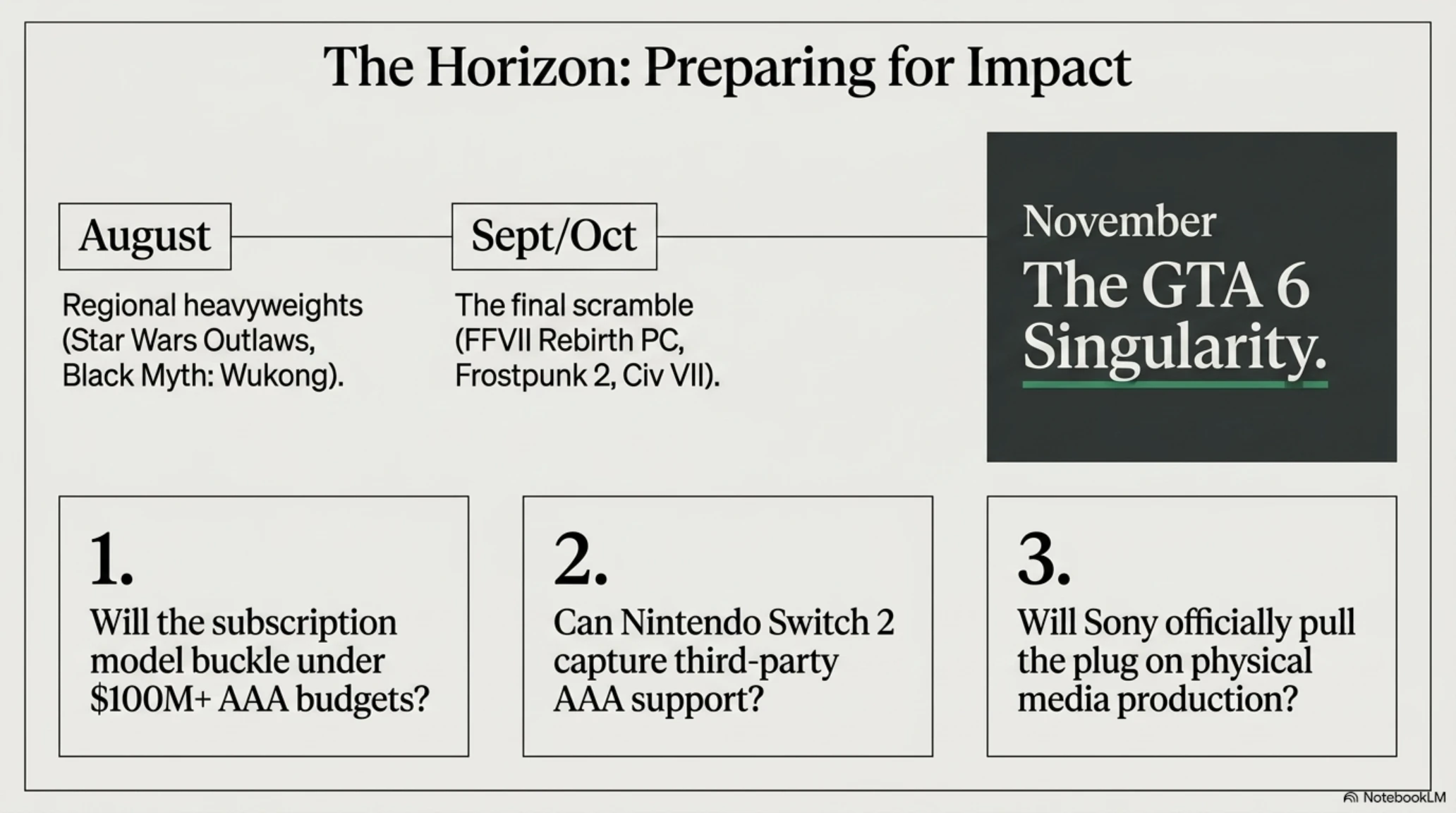
With July concluded, attention turns toward the coming months. August is typically a quiet month, but this year brings several significant releases. Star Wars Outlaws from Ubisoft Massive is one of the month's biggest anticipations. Black Myth: Wukong, an action RPG inspired by Chinese mythology, is also set for mid-August release and has recorded strong pre-orders.
September and October have longer lists: Final Fantasy VII Rebirth for PC, Frostpunk 2, Civilization VII, and dozens of other titles. But all of these will be overshadowed by GTA 6, which launches in November and will shatter every industry record.
For the gaming industry, the second half of 2026 could be definitive. Will spending decline continue or will gamers start spending again? Will subscription services continue their growth or will the market reach saturation? Can Switch 2 replicate the previous generation's success? Will Sony's cautious approach to discontinuing physical production prove wise or will they miss the opportunity to fully transition to digital?
July 2026 was an extraordinary month for gamers, but it also contained warning signs. Spending declines, physical sales collapse, and challenges for smaller developers indicate that not everything is as bright as it appears. The industry is changing, and that change brings both opportunities and threats.
- Palworld hit $700M revenue milestone
- Halo made history launching on PlayStation
- High-quality remakes in Black Flag and Halo Campaign Evolved
- Over 40 major games released in a single month
- Genre diversity from AAA to Indies
- US gaming spending dropped 21%
- Hardware sales fell 62%
- PS5 physical sales crisis
- Smaller games overshadowed by blockbusters
- GTA 6 anticipation causing purchase delays
The Switch 2 Factor and Nintendo's Strategy
Nintendo's upcoming Switch 2 casts a long shadow over current gaming market dynamics. The original Switch's 79% sales decline in June 2026 demonstrates that consumers are holding their money, waiting for the new console officially announced for March 2027. This is a classic pre-launch slump that Nintendo anticipated and accepted as part of their transition strategy.
What makes Nintendo's approach interesting is their dual-platform release strategy for major July titles. Splatoon Raiders, while primarily marketed as a Switch 2 exclusive, works on both systems. This allows Nintendo to build Switch 2's early library while still serving the massive existing Switch install base. It's a careful balance—showcase the new hardware's capabilities without completely abandoning the current generation.
Switch 2's specifications remain officially unconfirmed, but industry reports suggest a significant power upgrade, likely utilizing an Nvidia chip that provides performance closer to PlayStation 4 Pro or Xbox One X levels. This would finally allow Nintendo to attract the third-party AAA support that often skipped the original Switch due to technical limitations. Games like Palworld launching simultaneously on Switch 2 suggest developers believe the new hardware can handle more demanding titles.
The March 2027 launch timing is strategic. It avoids the November 2026 GTA 6 apocalypse and gives Nintendo a clear runway in Q1 2027 when major competition is minimal. It also provides several months of exclusive territory before E3 season brings competitor announcements. If Nintendo can deliver compelling launch software and adequate supply, Switch 2 could replicate or exceed the original's phenomenal success.
The Indie Scene in July: Hidden Gems and Missed Opportunities
While blockbuster releases dominated July's headlines, the indie scene delivered several noteworthy titles that deserved more attention than they received. Dewdrop Dynasty, launching July 21 on Steam, offered a fast-paced Metroidvania set in a colorful insect-filled world. Unlike many modern Metroidvanias that embrace darkness and difficulty, Dewdrop Dynasty filtered the genre's core mechanics through a tone closer to Slime Rancher than Hollow Knight.
The game features quirky monsters, colorful pixel art, unusual collectible mechanics, and a genuinely welcoming atmosphere. Combat centers around gun-jumping movement and pistol-whipping, with map-marking features to assist exploration. While comparisons to Hollow Knight: Silksong are inevitable given the shared insect-kingdom premise, Dewdrop Dynasty deliberately goes in the opposite tonal direction, proving that Metroidvanias can be challenging without wrapping that challenge in unrelenting bleakness.
Other notable indie releases included Raccoons to Riches, a roguelike deck builder where players manage a business-running raccoon; ZeroSpace, a hybrid sci-fi RTS/RPG; and Theropods, a wordless prehistoric adventure. These games demonstrated creativity and innovation but struggled to gain visibility amid July's crowded release schedule. The harsh reality is that launching an indie game during a month packed with AAA remakes and major franchise entries is an uphill battle.
The Streaming and Content Creator Impact
July 2026 also highlighted the growing influence of streaming and content creation on game success. Palworld's explosive 1.0 launch was significantly amplified by Twitch and YouTube creators returning to the game. Major streamers who covered Palworld during its January 2024 Early Access launch came back for the 1.0 version, introducing the game to new audiences and reminding existing players why they loved it.
Within 48 hours of the 1.0 launch, Palworld held multiple spots in Twitch's top 10 most-viewed categories. YouTube coverage exploded with hundreds of creators publishing "What's New in 1.0" videos, tutorial content, and showcases of new features. This organic marketing wave, worth millions in equivalent advertising value, costs developers nothing beyond providing a compelling product that creators want to cover.
Conversely, games that failed to gain traction with content creators struggled regardless of quality. The Mound: Omen of Cthulhu accumulated 800,000 wishlists but failed to convert that interest into strong sales, partly because major horror game streamers moved on to other titles quickly after launch. In 2026's market, visibility on streaming platforms has become nearly as important as traditional review scores.
Regional Market Differences and Global Performance
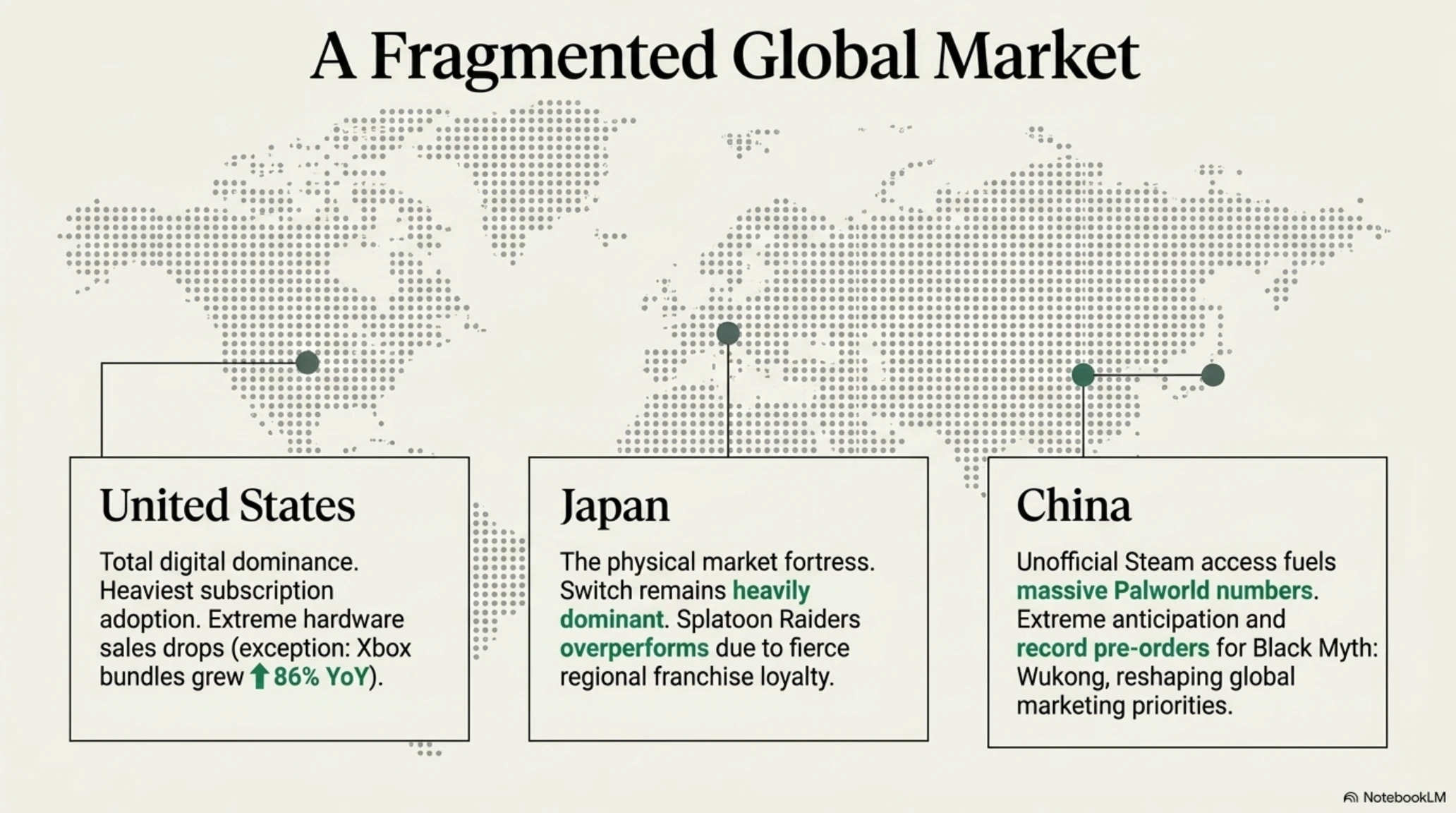
While much of the July analysis focuses on US and Western markets, regional differences tell important stories. Japan, for instance, showed different preferences and patterns. Switch continued to dominate the Japanese market despite the upcoming Switch 2, with physical sales remaining far more relevant than in Western markets. Splatoon Raiders performed exceptionally well in Japan, where the Splatoon franchise has always been more popular than in the West.
China presented another unique market. Palworld's performance in China through Steam was significant but complicated by the game's regulatory status and the unofficial nature of Steam access in the region. Black Myth: Wukong's August release had massive anticipation in China, with pre-orders far exceeding Western figures, demonstrating the growing importance of the Chinese gaming market.
Europe showed patterns somewhere between the US and Japan—physical sales declined but not as dramatically as in the US, subscription service adoption grew but at a slower pace, and local preferences varied significantly by country. France, Germany, and the UK each displayed distinct buying patterns and genre preferences.
The Developer Perspective: Challenges and Opportunities
From a developer perspective, July 2026 presented both tremendous opportunities and significant challenges. The crowded release schedule meant massive potential audience availability but also fierce competition for attention and spending. Smaller studios faced the constant risk of being buried under the marketing avalanche of AAA releases.
Development costs continue to rise. Modern AAA games routinely exceed $100 million in production budgets, with some approaching $200 million before marketing. This creates an environment where only the biggest hits can justify the investment, leading to increased risk aversion, franchise reliance, and hesitation to greenlight original IP. July's success stories were primarily remakes, sequels, or games with established audiences from Early Access. Truly new IP struggled to break through.
Smaller studios increasingly rely on publishers or platform deals for funding. Game Pass deals, Epic Games Store exclusivity arrangements, and PlayStation/Xbox console launch partnerships provide crucial upfront capital but potentially limit long-term revenue upside. It's a Faustian bargain—guaranteed funding and visibility in exchange for revenue share and control.
Conclusion: A Month That Redefined Gaming
July 2026 became a turning point in gaming history. The month demonstrated that traditional boundaries no longer exist in their old forms. Halo launched on PlayStation, Palworld proved Early Access can lead to explosive success, and the industry confronted serious challenges like spending declines and the death of physical media.
For gamers, this was a fantastic month. Dozens of quality games, from AAA remakes to creative indies, all launched within a single month. But for the industry, warnings abounded: declining sales, financial challenges for smaller studios, and fundamental changes in business models.
What's clear is that gaming is transforming. Subscription services are replacing traditional purchases, digital is destroying physical, and hardware exclusivity no longer holds its former priority. July 2026 was just the beginning of this transformation. The coming months will show how these changes shape the industry.
One thing is certain: with GTA 6 approaching in November, everything will change again. But we'll never forget July 2026—the month Halo came to PlayStation, Palworld hit 30 million, and gaming changed forever.
Frequently Asked Questions
Why did Palworld succeed so dramatically in July 2026?
Palworld released its version 1.0 on July 10 after 30 months in Early Access. This update included a Wing Pack for personal flight, a new Pal that transforms into a two-handed sword, floating islands, extensive endgame content, and massive structural improvements. The result was a surge in daily active users from 400,000 to 3.7 million, reaching 30.5 million total copies sold with $700 million in revenue. The success came from consistent Early Access support that built player trust, a compelling core gameplay loop mixing creature-collecting with survival mechanics, reasonable $29.99 pricing, and perfect timing before GTA 6 dominates the conversation.
Is Halo: Campaign Evolved the first Xbox game on PlayStation?
Halo: Campaign Evolved is the first Halo game ever released on PlayStation, but not the first Xbox game on Sony's platform. Microsoft has previously released titles like Minecraft and some Bethesda games on rival platforms. However, releasing Halo—the iconic symbol of Xbox exclusivity—on PlayStation is a historic turning point that signals Microsoft's strategic shift toward multi-platform availability and Game Pass focus rather than hardware exclusivity.
Why did gaming hardware sales decline so much in July 2026?
Hardware sales in June 2026 dropped 62% to $383 million due to several converging factors. Nintendo Switch sales plummeted 79% as consumers waited for Switch 2 officially announced for March 2027. Economic conditions and inflation constrained discretionary spending. Subscription services like Game Pass reduced the urgency to buy new consoles. And anticipation for GTA 6 caused consumers to delay major purchases. Only Xbox showed growth at 86% year-over-year, driven by aggressive discounting and attractive bundles.
What makes Black Flag Resynced different from the original?
Resynced is a complete ground-up rebuild, not just a remaster. Key differences include completely rebuilt graphics with ray tracing and advanced water rendering, rewritten combat and stealth systems, removal of loading screens with seamless city transitions, six hours of new quest content, three new recruitable officers with unique storylines, 10 new sea shanties featuring artist Woodkid, new story scenes including Caroline content, ship weapon upgrades, ziplines across cities, and Kenway's Fleet mini-game brought back into the main game. The game sold 3.5 million copies in two weeks and hit its full-year target.
Is the physical game market really dying?
July 2026 data strongly suggests physical is rapidly dying. In the US, only two PS5 games sold more than 10,000 physical copies in a week, and only seven PS5 games have sold more than 100,000 physical copies all year. In the UK, selling 1,000 copies was enough to enter the top 10 chart. Digital has become completely dominant. Sony stated it is cautiously moving forward with halting physical disc production. While physical will likely persist as a niche for collectors, it's no longer the primary distribution channel.
How much did GTA 6 make in pre-orders?
GTA 6 generated over $260 million in pre-order revenue during its first week, the strongest start Newzoo has ever tracked. In just the US, UK, Spain, Germany, France, and Italy, the game earned more than $180 million. Forecasts predict 37 to 60 million copies sold in the first week with $3.25 to $5.2 billion in revenue. These numbers will shatter every previous gaming industry record.
Does Game Pass hurt game sales?
Game Pass impact is complex. On one hand, direct premium sales decline because millions of subscribers can access games without additional payment. For example, Palworld on Xbox sold fewer than 70,000 premium copies despite 31.1% of the audience being on Xbox. However, Game Pass massively expands the player base, gives smaller games greater visibility, and provides developers with guaranteed revenue. The financial arrangement depends on the specific deal terms between developers and Microsoft. For some games, Game Pass payment exceeds what direct sales would generate, especially for titles that might struggle to find an audience otherwise.
Sources
- Gaming Amigos - All July 2026 Game Releases
- Game Dev Reports - Games and Numbers (July 14-28, 2026)
- Notebookcheck - Palworld 1.0 Sales Data
- OtakuKart - Palworld Revenue Report
- GamesRadar - Palworld 1.0 Launch Analysis
- Halo Waypoint - Campaign Evolved Official Info
- Wikipedia - Halo: Campaign Evolved
- Tech Insider - US Video Game Spending Report
- OtakuKart - PS5 Physical Sales Crisis
- GameSpot - Biggest July 2026 Releases
- Game Rant - Best Games of July 2026
- TechTimes - Halo PlayStation Launch
Additional Gallery: July 2026: The Month Gaming Changed Forever | Palworld Hit $700M, Halo Came to PlayStation