Rumors of Disney preparing a full buyout of Epic Games signal a seismic shift in digital entertainment. We dissect Epic's valuation drop to $22.5 billion, the strategic necessity of Unreal Engine 5 for metaverse infrastructure, and the massive antitrust and Tencent hurdles blocking a potential $30 billion deal.
Epic Games Sale to Disney: Is the Fortnite Era Coming to an End?
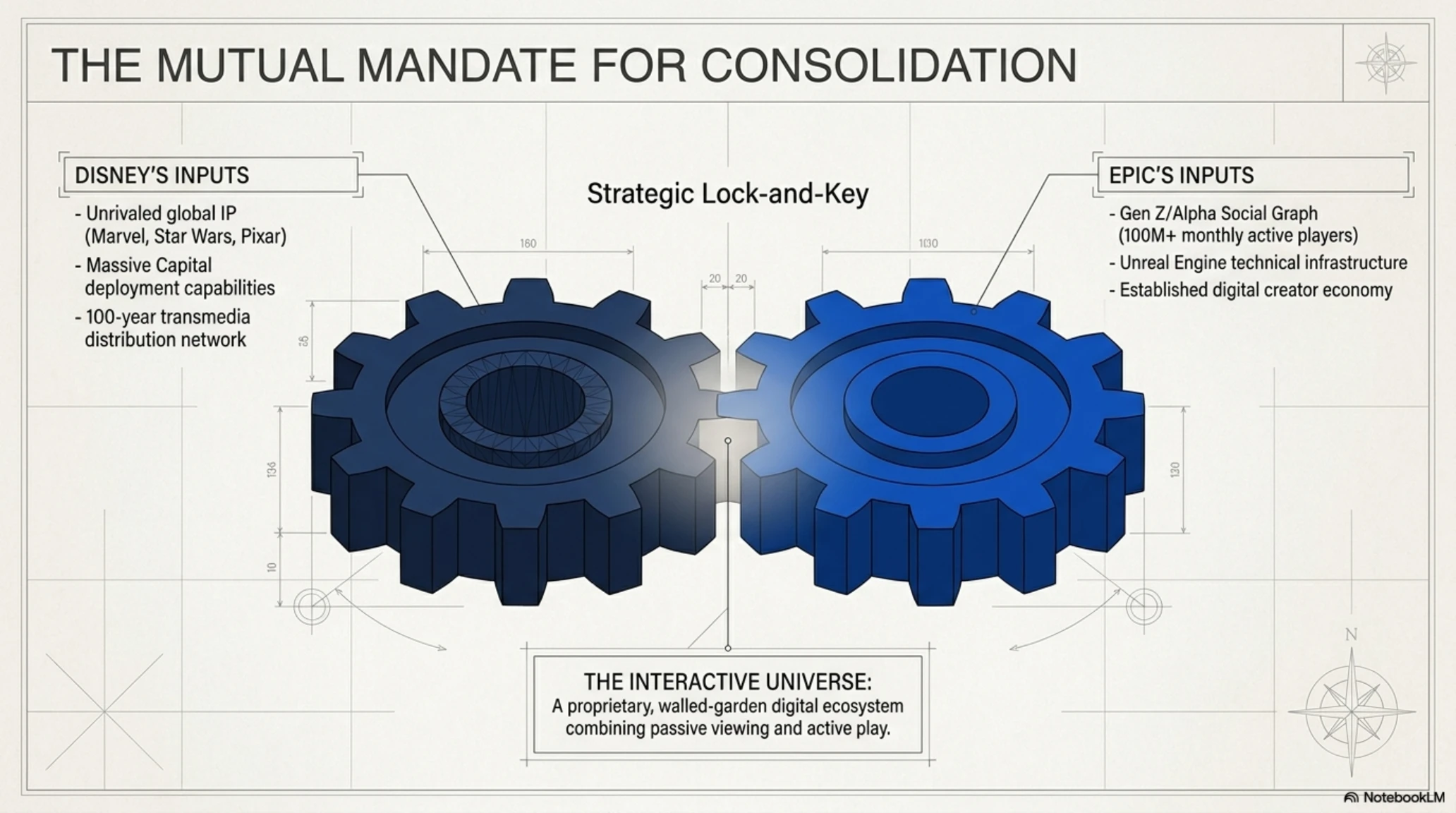
One of the biggest rumors shaking the gaming world is that Disney is seriously considering acquiring Epic Games in its entirety.
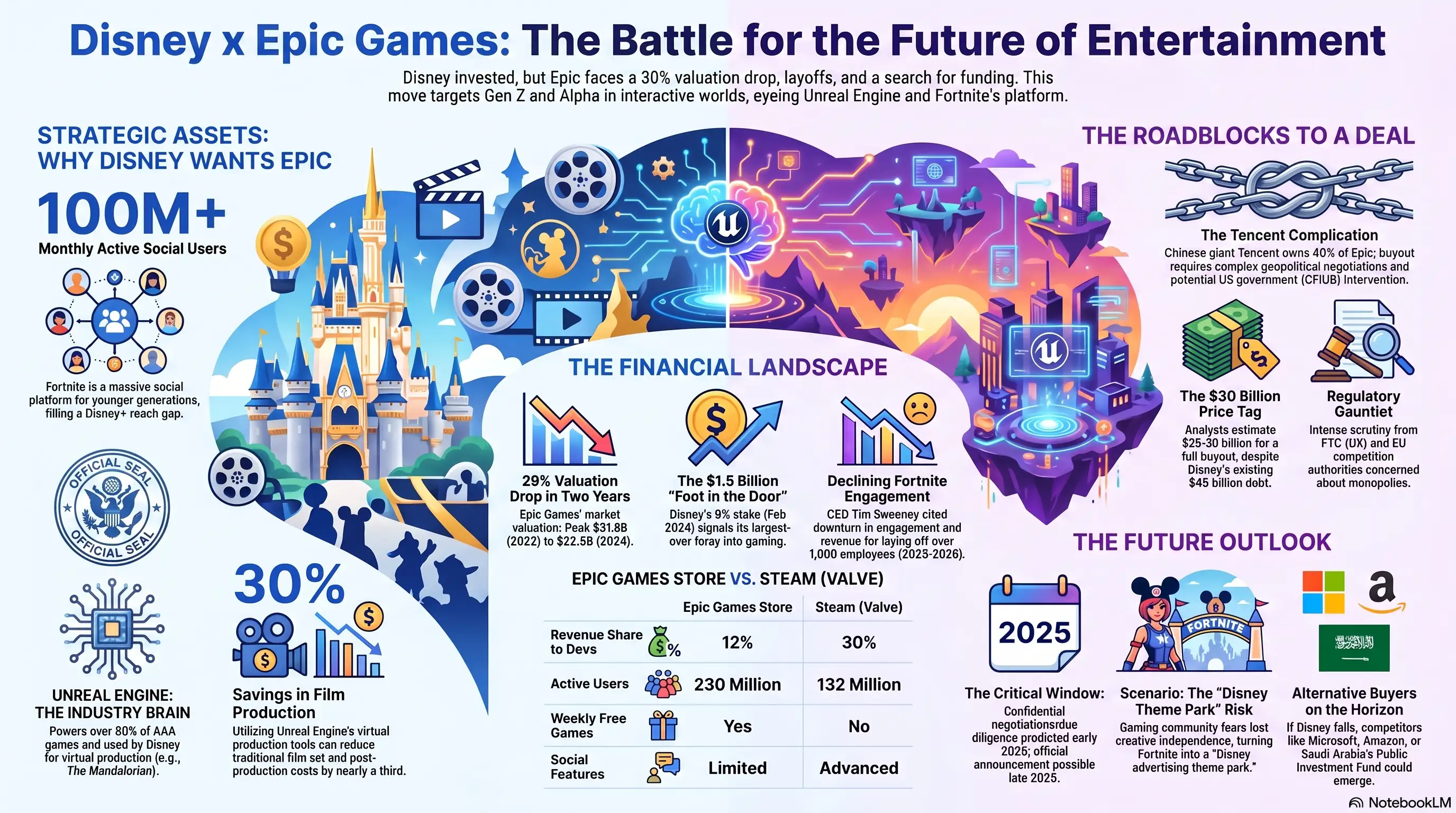
- 🎮$1.5 Billion Disney Investment- Disney purchased a 9% Epic stake in February 2024.
- 🎧Epic's Valuation Drop- Valuation fell from $31.5B in 2022 to $22.5B in 2024.
- 🚀Over 1,000 Layoffs- Tim Sweeney cited declining Fortnite engagement as the catalyst.
- 🗡️Unreal Engine 5 Dominance- Over 50% of AAA games and VFX studios rely on Epic's core engine.
- 📰Creative Independence Risks- Player community fears Fortnite turning into a corporate Disney theme park.
- 🎮The 40% Tencent Barrier- Chinese tech giant Tencent holds veto power over any major buyout attempt.
Disney on the Brink of Gaming's Biggest Deal
In a world where the lines between traditional and digital entertainment are rapidly blurring, a rumor has emerged that could completely redraw the map of the gaming industry. According to multiple credible sources including IGN and Gfinity Esports, senior Disney executives are monitoring the right moment to fully acquire Epic Games, the creator of the wildly popular Fortnite and the Unreal Engine graphics platform.
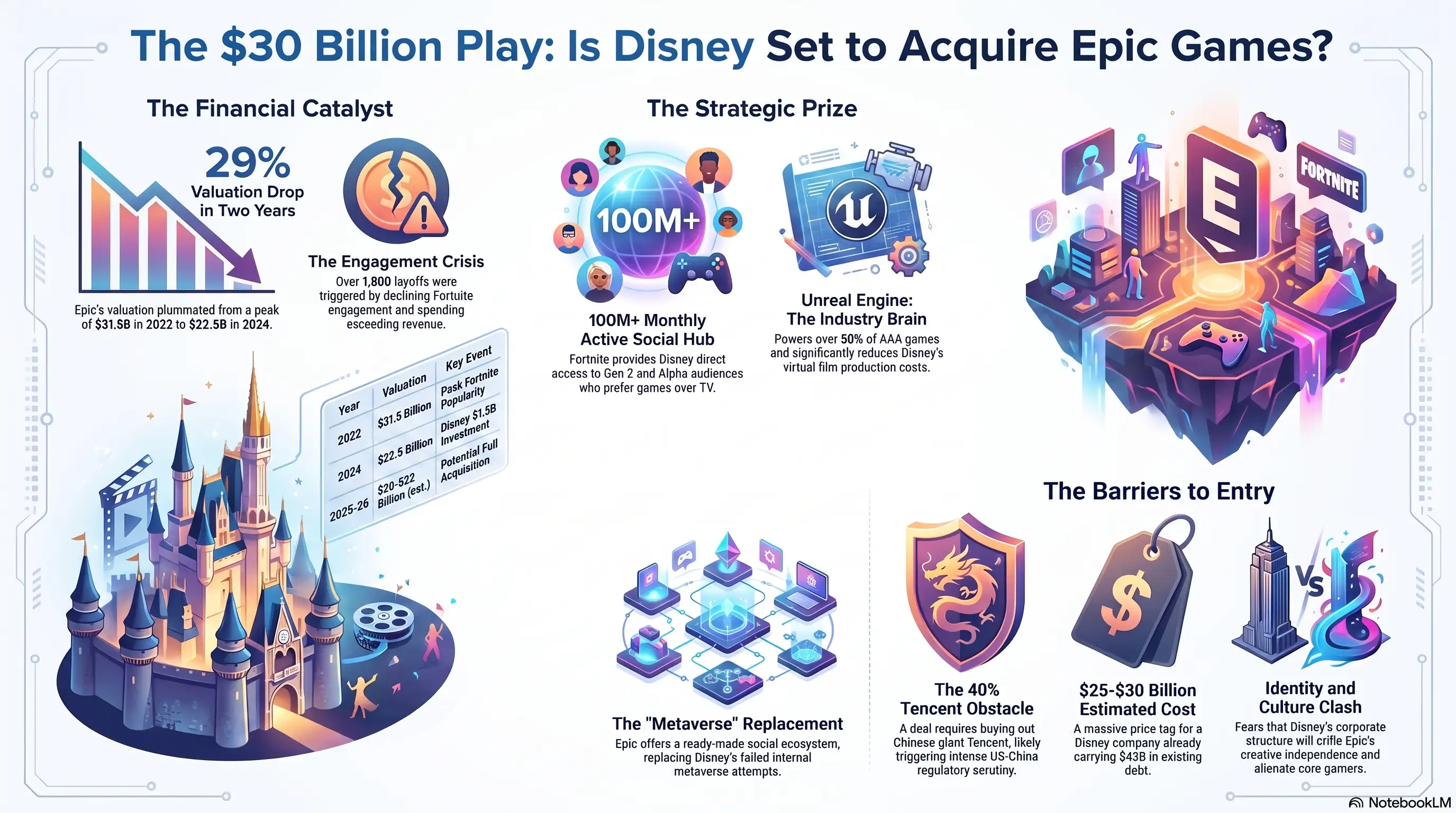
This rumor comes after Disney already invested $1.5 billion in Epic in February 2024, acquiring approximately 9% of the company's shares. But according to TechSpot, this was just the first step. Sources close to Disney revealed that some senior executives are "waiting for the right moment" to acquire Epic completely.
Why This Matters
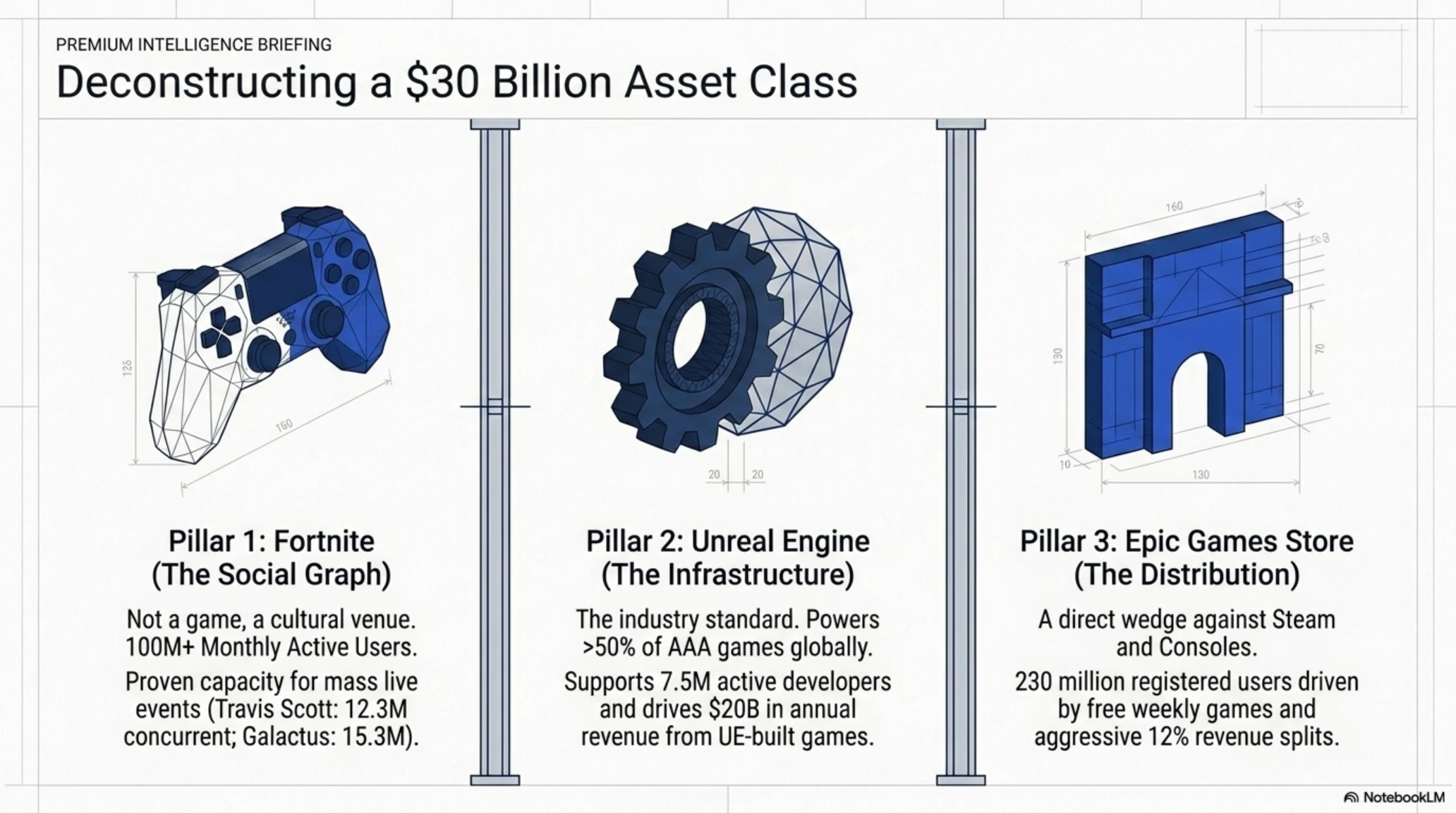
- Epic Games owns Unreal Engine, powering over 50% of AAA games worldwide
- Fortnite has 100+ million monthly active players, making it one of the world's largest social platforms
- This could be Disney's biggest tech acquisition in history
- The future of Epic Store and its competition with Steam and Xbox Game Pass hangs in the balance
From $1.5 Billion Investment to Full Acquisition
The story began in February 2024. Disney CEO Bob Iger announced on CNBC that his company invested $1.5 billion in Epic Games to build a "massive games and entertainment universe" connected to Fortnite. According to Variety, this investment was called Disney's "biggest foray into the game space ever."
However, as reported by Forbes, this deal revealed a harsh reality: Epic Games' valuation had dropped from its peak of $31.5 billion in 2022 to $22.5 billion. That's a 29% decline in just two years.
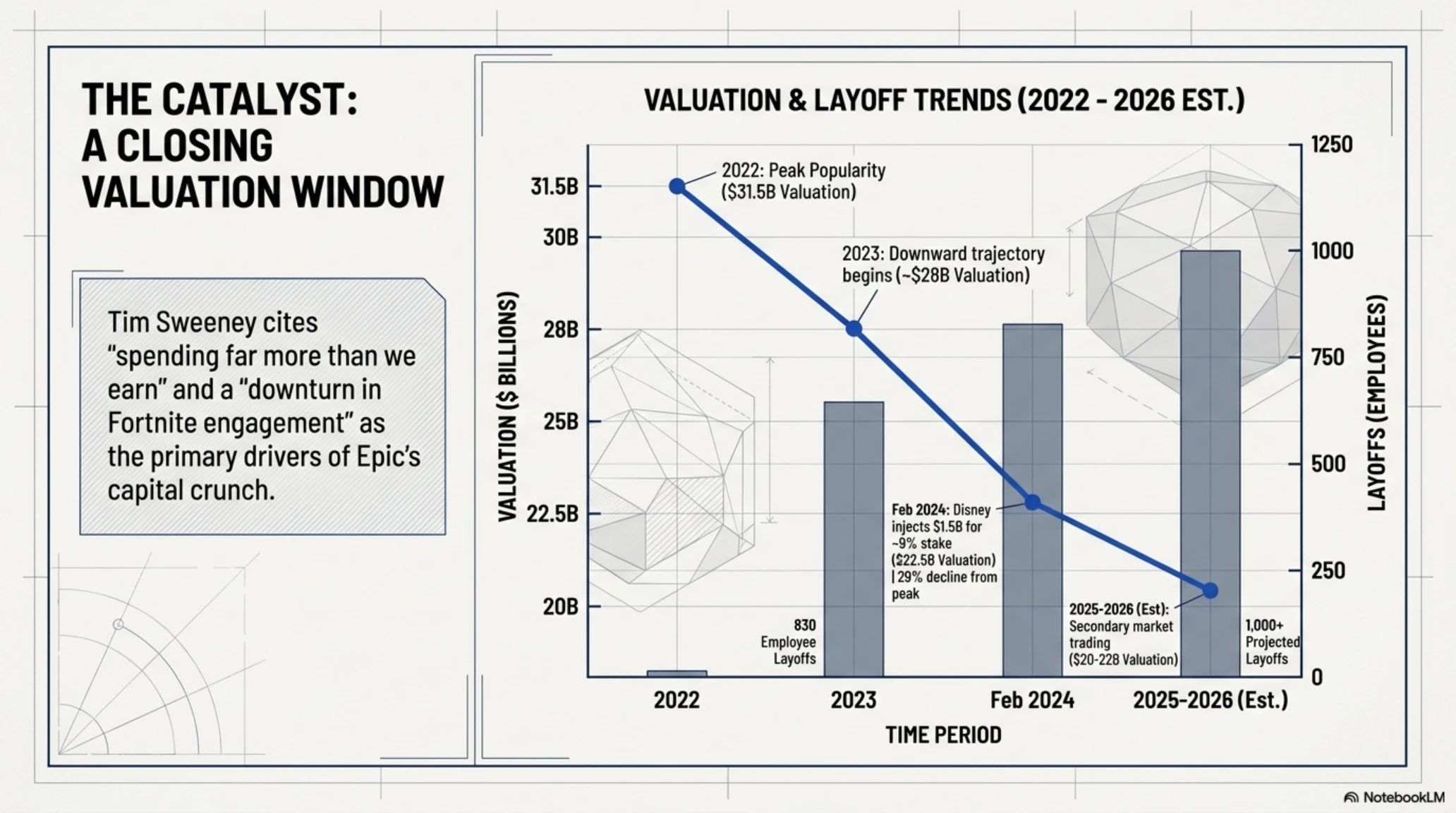
Epic Games Valuation Timeline
| Year | Valuation | Key Event |
|---|---|---|
| 2022 | $31.5 Billion | Fortnite peak popularity |
| 2023 | ~$28 Billion | Massive layoffs begin |
| Feb 2024 | $22.5 Billion | Disney investment |
| 2025-2026 | $20-22 Billion (est.) | Secondary market trading |
Why Would Tim Sweeney Sell Epic Games?
Tim Sweeney, founder and CEO of Epic Games, has always positioned himself as a champion of developer independence. He founded his company in 1991 and has maintained majority control to this day. But several factors suggest that Sweeney might be forced to make a difficult decision this time.
Declining Fortnite Revenue and Mass Layoffs
In September 2023, Sweeney sent an internal memo to employees stating that Epic was "spending far more than we earn" and the company needed to make "major cuts to keep the company funded." The result? Layoffs of 830 employees in 2023 and over 1,000 more in 2026. According to GamesRadar, Sweeney blamed the layoffs on "the downturn in Fortnite engagement."
This comes despite Fortnite still being one of the world's most popular games. However, its revenue model, which relies entirely on in-app purchases (skins and V-Bucks), is no longer as profitable as before. Competitors like Call of Duty Warzone, Apex Legends, and even PUBG have captured significant market share.
Shareholder Pressure: Tencent and Disney
Epic Games is a private company, but it has two major shareholders who can influence strategic decisions. The first and most significant is Tencent, the Chinese tech giant that paid approximately $330 million in 2012 to acquire 40% of Epic's shares. According to VentureBeat, this deal was one of Tencent's largest Western investments at the time.
Sweeney has always emphasized that he maintains full control of the company and Tencent has no involvement in operational decisions. However, the second shareholder, Disney, presents a different story. Disney not only invested $1.5 billion but also signed a multi-year contract to build a Disney universe within Fortnite. This means Disney is now not just an investor but a strategic partner.
Epic Games History: From ZZT to the Fortnite Empire
To understand why the possibility of Epic's sale to Disney has sent such shockwaves through the industry, we need to look back. Tim Sweeney founded his company as Potomac Computer Systems in 1991. His first game, ZZT, was a simple text-based adventure that unexpectedly sold several thousand copies. At the time, Sweeney was the company's only employee, and his father handled all orders through the mail.
In 1992, Sweeney changed the company name to Epic MegaGames to sound bigger. Throughout the 1990s, Epic became one of the world's largest game development studios with titles like Unreal Tournament and Gears of War. But the real revolution came in 2017 with the launch of Fortnite Battle Royale.
Fortnite: From Game to Global Cultural Phenomenon
Within a year of its launch, Fortnite transformed into a cultural phenomenon. In-game live events like the Travis Scott concert (which drew 12.3 million concurrent players) or the Galactus event (15.3 million players) demonstrated that this platform could do far more than a typical game. Brands like Nike, Marvel, DC Comics, and even footballers like Neymar entered Fortnite's universe.
Most importantly, Fortnite proved one thing: Gen Z and Gen Alpha spend more time in online games than watching television. This is exactly what Disney needs to survive in the digital world.
Unreal Engine: Epic's Strategic Asset
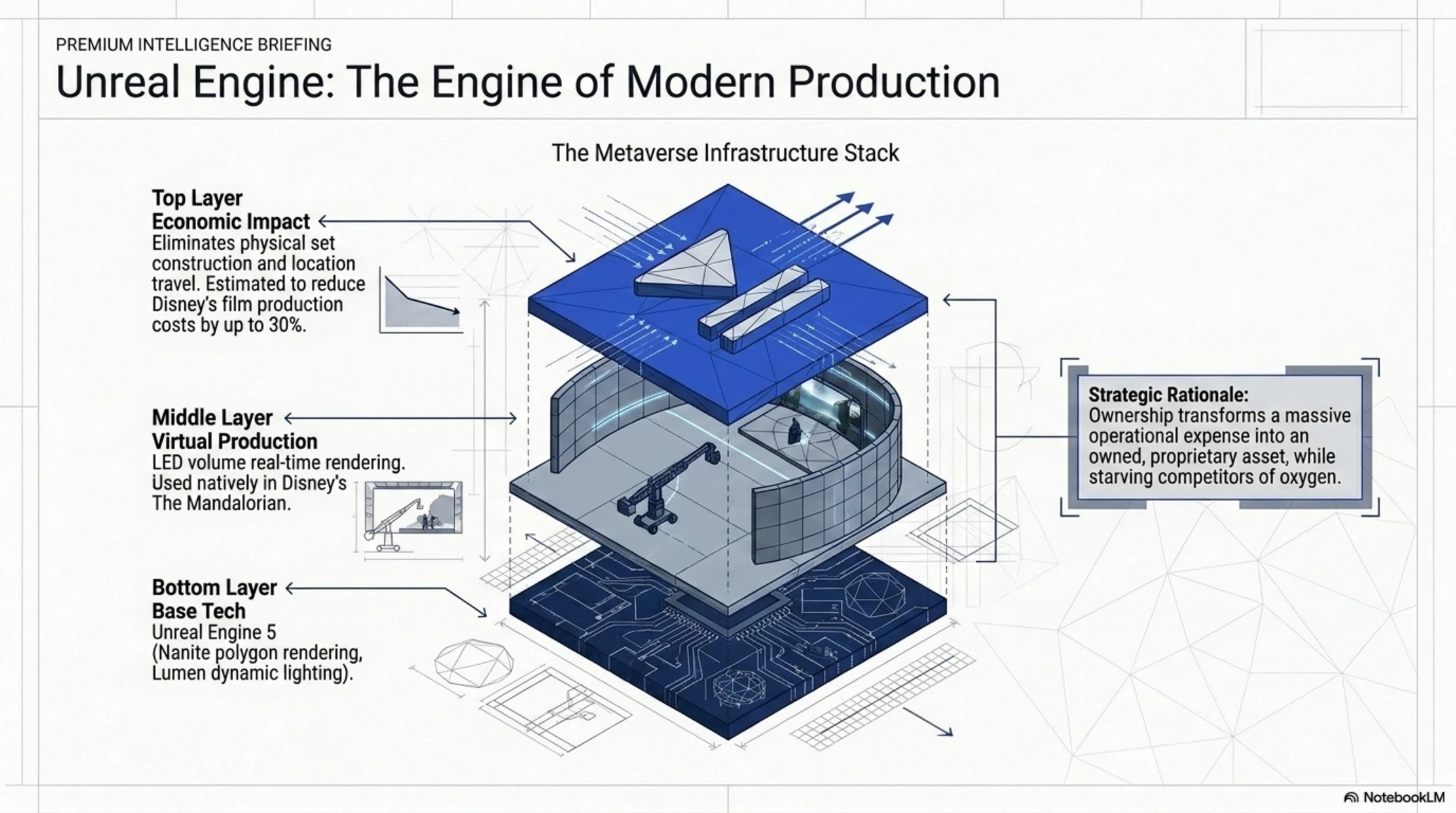
If Fortnite is Epic Games' heart, Unreal Engine is its brain. This graphics engine, whose first version was released in 1998, has become the industry standard today. Games like Final Fantasy VII Remake, Gears 5, Borderlands 3, and even parts of The Mandalorian (Disney+ series) were built with Unreal Engine.
Unreal Engine by the Numbers
- Over 50% of AAA games use Unreal Engine
- 7.5 million active developers worldwide
- $20 billion annual revenue from Unreal-built games
- Other industries: Film, architecture, automotive, and military
Unreal Engine 5, released in 2022, set new standards for game graphics with features like Nanite (rendering trillions of polygons without frame rate loss) and Lumen (dynamic Global Illumination lighting). If Disney acquires Epic, it won't just own Fortnite but also one of the world's most powerful graphics engines.
Why Is Disney Interested in Epic?
Throughout its history, Disney has always stayed one step ahead of competitors. From the first feature-length animated film (Snow White in 1937) to themed amusement parks, Disney has always been where technology and storytelling converge. But in the past decade, the company has faced serious challenges.
The Metaverse Failure and Search for Alternatives
Disney enthusiastically entered the Metaverse market in 2021. However, after the cryptocurrency crash and the failure of platforms like Meta Horizon Worlds, the company quickly exited. Now Fortnite could be the perfect Metaverse replacement since it already has millions of active users and doesn't need to be built from scratch.
Competing with Netflix and YouTube
Despite decent growth, Disney+ has yet to reach Gen Z audiences at the level of Netflix or YouTube. The younger generation prefers spending time in Fortnite with friends over watching movies or series. If Disney owns Fortnite, it can deliver its exclusive content interactively in ways that resonate with the next generation.
Potential Obstacles and Challenges
While the rumor of Disney acquiring Epic sounds exciting, several serious obstacles stand in the way.
Tencent and the Share Control Issue
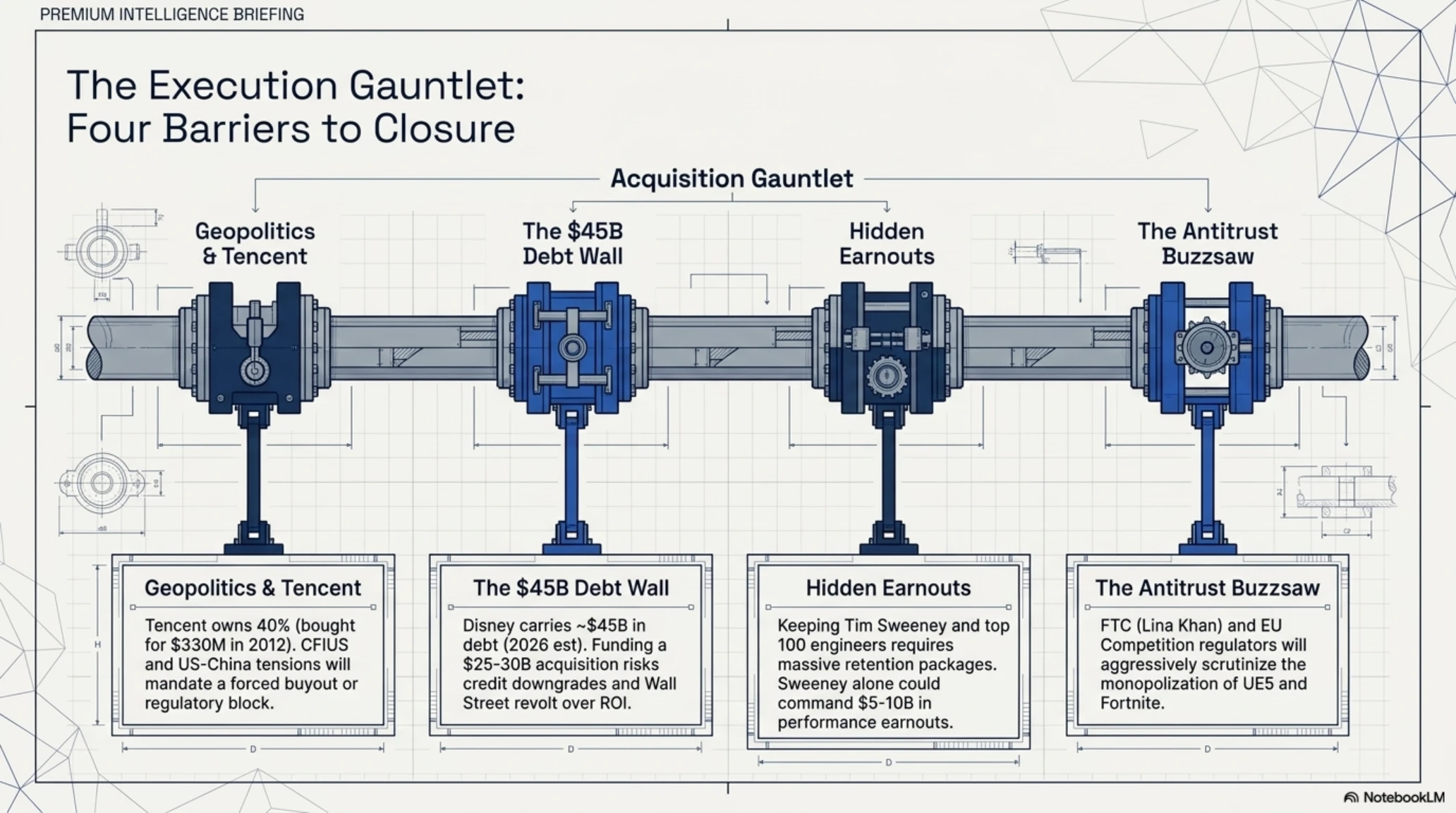
As mentioned, Tencent owns 40% of Epic's shares. According to PC Gamer, Sweeney maintains full control of the company, but if Disney wants to buy Epic, it must negotiate with Tencent as well. This means potential involvement from both the Chinese and US governments due to geopolitical tensions.
Gamer Community Opposition
Another major challenge is the gamer community's reaction. Many players fear that if Disney owns Epic, Fortnite will become a "Disney advertising theme park" and lose its creative independence. On Reddit and Twitter, thousands of users have expressed concerns about this possibility.
Pricing: Can Disney Afford the Purchase?
With Epic's current valuation around $22.5 billion, Disney would need to pay at least $25-30 billion for a complete acquisition. This comes as Disney has struggled with financial issues in recent years. Box office flops, Disney+ losses, and declining theme park revenues have led many analysts to question whether Disney can actually afford such a massive deal.
The Competitive Landscape: Epic vs. Gaming Giants
Epic Games doesn't operate in a vacuum. It faces intense competition from multiple angles, and understanding this competitive pressure helps explain why a Disney acquisition might make strategic sense.
The Battle Royale Wars
While Fortnite pioneered the mainstream battle royale genre, competitors have emerged with their own unique twists. Call of Duty Warzone leverages Activision's shooter expertise, Apex Legends brings hero-based abilities, and PUBG Mobile dominates Asian markets. Each competitor chips away at Fortnite's player base and wallet share.
The Platform War: Epic Store vs. Steam vs. Consoles
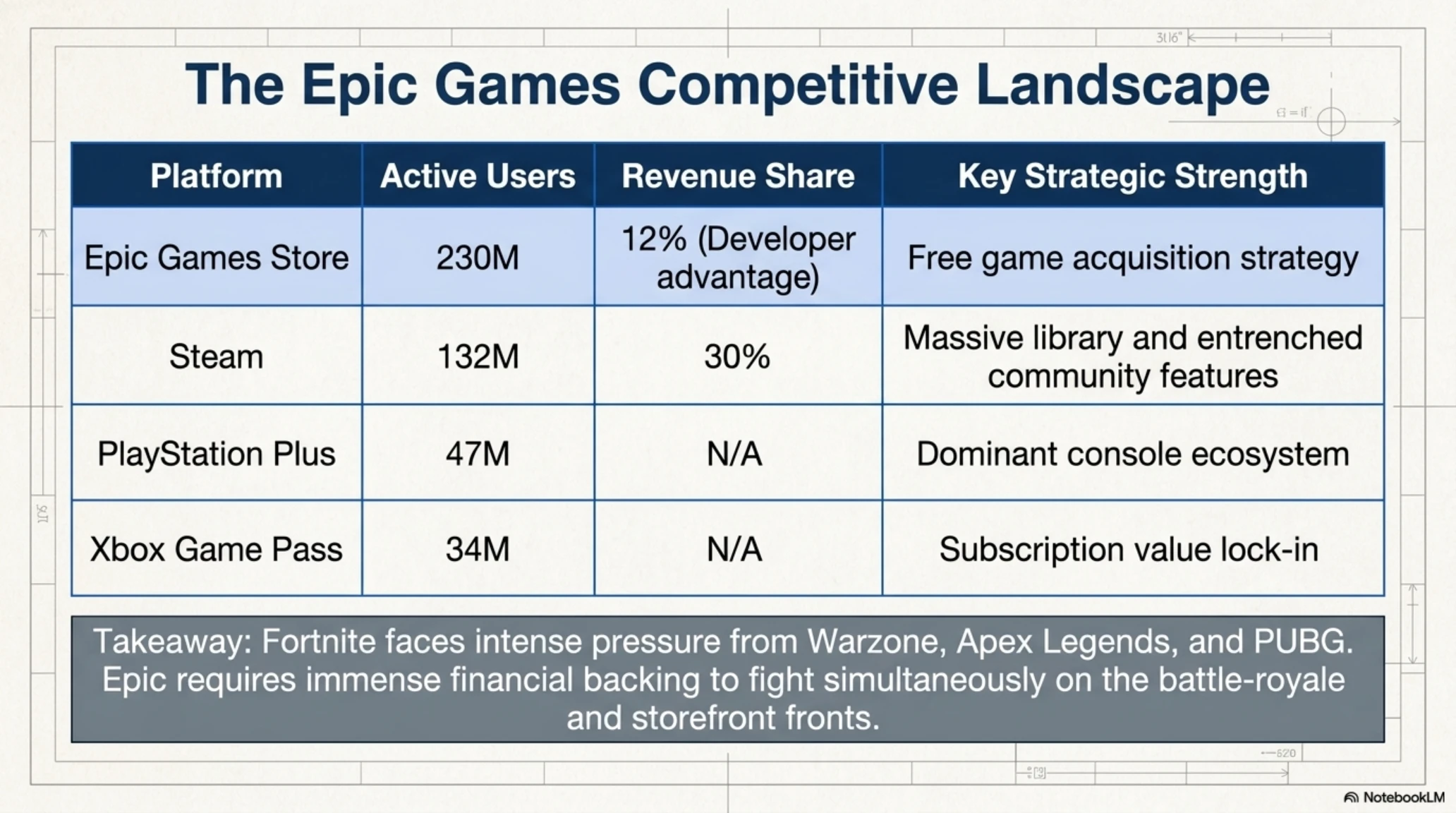
Epic Games Store launched in 2018 as a direct Steam competitor, offering better revenue splits for developers (12% vs. Steam's 30%) and free weekly games. While it's gained traction with over 230 million registered users, Steam's community features and established library keep it dominant. Microsoft's Game Pass and Sony's PlayStation Plus represent yet another competitive threat, offering subscription-based game libraries that reduce individual game purchases.
Gaming Platform Market Share 2026
| Platform | Active Users | Key Strength |
|---|---|---|
| Steam | 132M | Massive library, community |
| Epic Store | 230M | Free games, lower fees |
| Xbox Game Pass | 34M | Subscription value |
| PlayStation Plus | 47M | Console ecosystem |
Multiple Scenarios: What Could Happen?
Based on available information, several scenarios exist for Epic Games' future. Each carries different consequences for the gaming industry, game developers, and players themselves.
Scenario One: Disney Becomes Full Owner
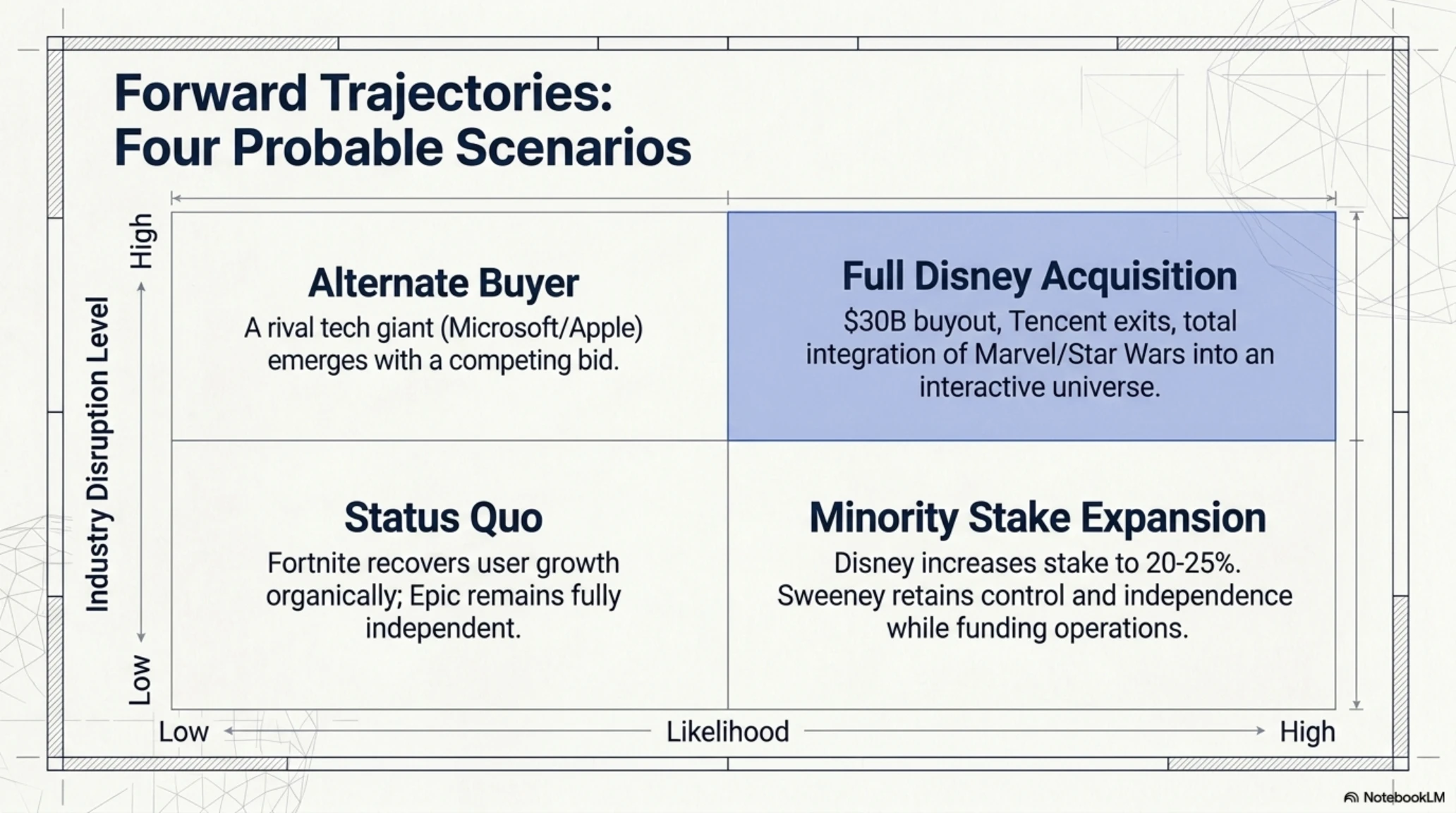
In this scenario, Disney purchases all Epic shares, and Sweeney either continues or leaves the company. The advantages for Disney are clear: complete access to Fortnite, Unreal Engine, and Epic Store. But the risks are equally significant. If Disney can't preserve Epic's creative culture, players and developers might migrate to competitors.
- Complete Disney access to 100M+ monthly Fortnite players
- Control over Unreal Engine and its licensing revenue
- Ability to build unified Disney universe in Fortnite
- Integration of Marvel, Star Wars, and Pixar content
- Extremely high cost ($25-30 billion)
- Risk of losing gamer community due to over-commercialization
- Legal and regulatory challenges
- Negotiation required with Tencent
Scenario Two: Disney Increases Stake Without Full Control
In this case, Disney buys more shares (perhaps up to 20-25%) but leaves full control to Sweeney. This scenario benefits both parties: Disney gains more access to Epic, and Sweeney maintains his independence.
Scenario Three: Status Quo Continues
Epic might ultimately decide to remain as is. If Fortnite can regain growth in coming years and Unreal Engine 5 attracts more developers, Sweeney may no longer need to sell the company.
Scenario Four: Another Buyer Emerges
Disney isn't the only major player capable of buying Epic. Companies like Apple, Microsoft, Amazon, and even Saudi Arabia's Public Investment Fund (which has previously invested in Nintendo and EA) could all emerge as potential buyers.
Impact on the Gaming Industry
If Disney actually acquires Epic, the effects will extend far beyond the two companies. This deal could transform the entire gaming ecosystem.
Epic Store and Competition with Steam
Epic Games Store launched in 2018 to compete with Steam. By offering free weekly games and lower commission for developers (12% versus Steam's 30%), Epic attracted millions of users. But if Disney takes ownership, Epic Store policies might change. Will Disney continue offering free games? Will exclusive titles still launch on Epic?
Epic Store vs. Steam Comparison
| Feature | Epic Store | Steam |
|---|---|---|
| Revenue Share | 12% | 30% |
| Weekly Free Games | ✅ Yes | ❌ No |
| Active Users | 230 million | 132 million |
| Social Features | Limited | Advanced (Workshop, Community) |
Unreal Engine and the Future of Game Development
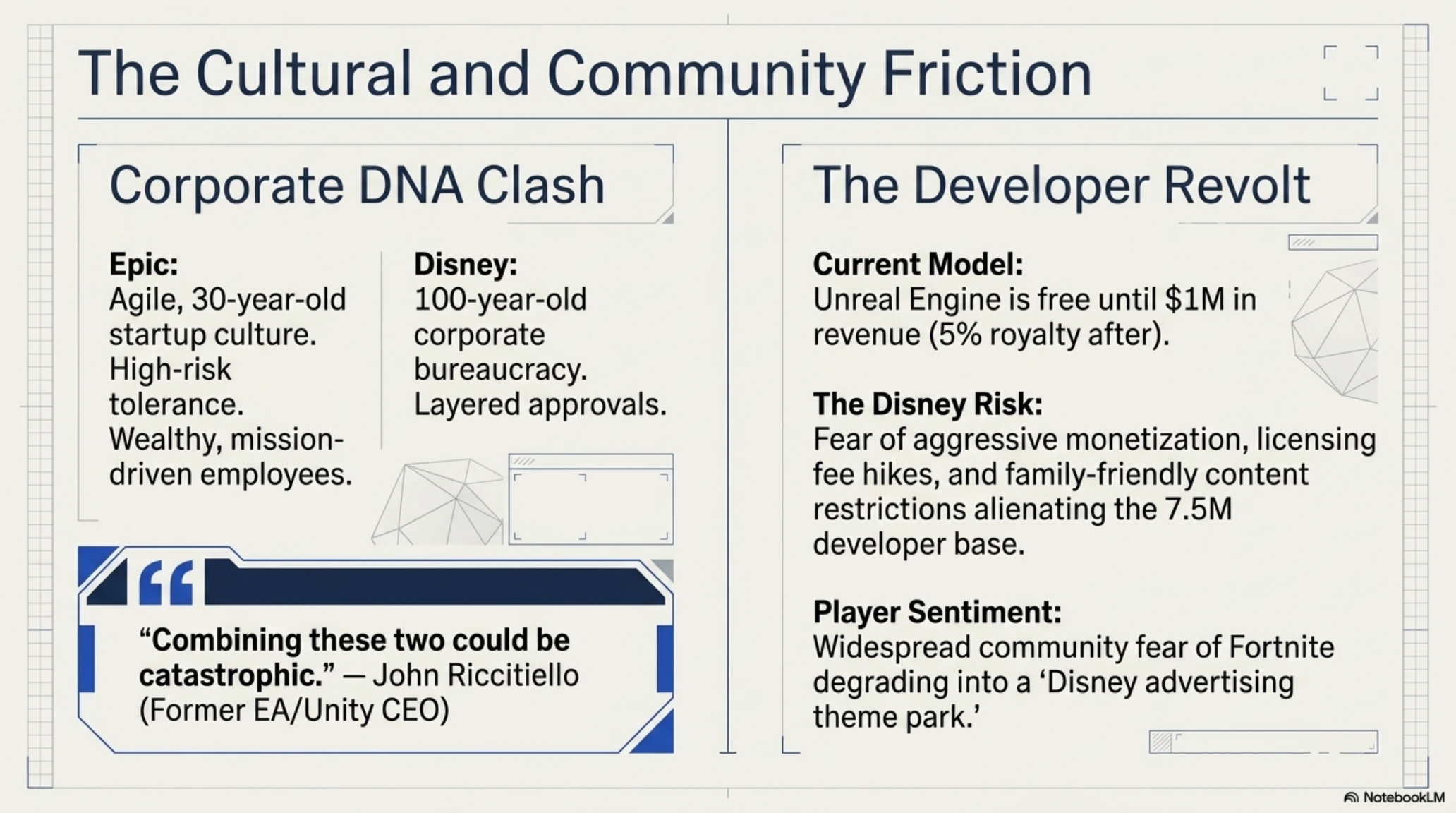
One major concern for independent developers is whether Disney ownership of Unreal Engine would lead to increased licensing fees or more restrictive usage terms. Currently, Unreal Engine is free until a game generates over $1 million in revenue. But if Disney wants to maximize profits from this asset, this policy might change.
Market and Analyst Reactions
Since the Disney-Epic acquisition rumor surfaced, reactions from analysts and the industry have been mixed. Some view this move as a "major transformation," while others call it a "threat to creative independence."
Positive View: Disney Needs Digital Transformation
Financial market analysts like Wedbush Securities believe Disney must make a bold move to compete with the next generation of digital platforms. Acquiring Epic could allow Disney to establish positions in online gaming, the metaverse, and even NFTs and blockchain.
Negative View: Risk of Losing Epic's Identity
Conversely, many gaming industry experts are concerned. Jason Schreier, renowned Bloomberg journalist, tweeted: "If Disney buys Epic, the first thing it'll probably do is shut down unprofitable divisions like Epic Store. This could be a major blow to industry competition."
Disney's Other Gaming Entry Options
If the Epic deal doesn't materialize for any reason, Disney has other options.
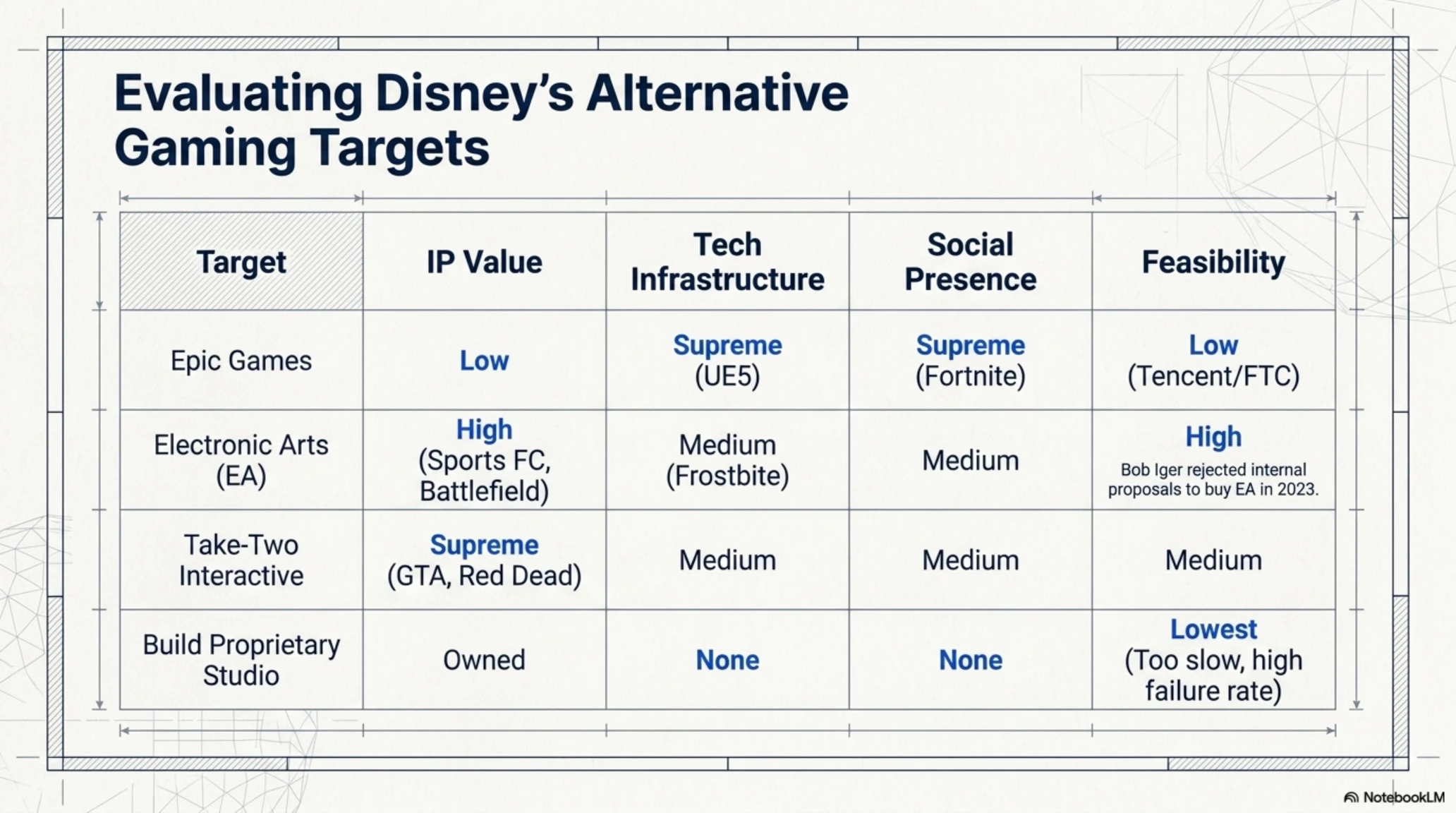
Acquiring Electronic Arts (EA)
As mentioned earlier, some Disney executives proposed buying EA last year. EA owns blockbuster franchises like FIFA (now EA Sports FC), Battlefield, The Sims, and Apex Legends. While EA isn't as innovative as Epic, it has stronger established brands.
Acquiring Take-Two Interactive
Take-Two owns Rockstar Games (creator of GTA and Red Dead Redemption) and 2K Games. Acquiring Take-Two could give Disney access to one of gaming history's most profitable franchises (GTA).
Building a Proprietary Studio
The third option is for Disney to build its own game development studio instead of buying. This approach is time-consuming and risky but could give Disney complete control over content and organizational culture.
The Financial Mechanics of a Potential Deal
Understanding the financial complexities of this potential acquisition reveals why it's more than just a simple purchase. Multiple layers of complexity exist that could make or break the deal.
The Tencent Problem
Tencent's 40% stake isn't just a financial consideration—it's a geopolitical one. Any Disney acquisition would likely require Tencent's approval or buyout. With US-China tensions running high, government regulators on both sides might block or heavily scrutinize the deal. The Committee on Foreign Investment in the United States (CFIUS) could demand that Tencent divest before allowing Disney to proceed.
Debt and Leverage Considerations
Disney's balance sheet in 2026 shows the company still carrying significant debt from previous acquisitions (20th Century Fox, Marvel, Lucasfilm) and pandemic-related losses. Taking on another $25-30 billion in debt or equity dilution for Epic could trigger credit downgrades or shareholder revolts. Wall Street would demand clear ROI projections showing how Epic's assets justify the price tag.
Earnout Structures and Retention
Even if a deal happens, it likely wouldn't be a simple cash buyout. Industry observers expect any acquisition to include earnout provisions where Epic executives receive additional compensation based on hitting revenue and user growth targets. Keeping Tim Sweeney and key leadership engaged would be critical—something Disney learned from its Pixar acquisition, where retaining John Lasseter proved essential.
Comparable Gaming Acquisitions
| Deal | Price | Outcome |
|---|---|---|
| Microsoft-Activision | $68.7B | Completed 2023 |
| Take-Two-Zynga | $12.7B | Completed 2022 |
| EA-Glu Mobile | $2.1B | Completed 2021 |
| Tencent-Supercell | $8.6B | Completed 2016 |
The Technology Strategy Behind Disney's Interest
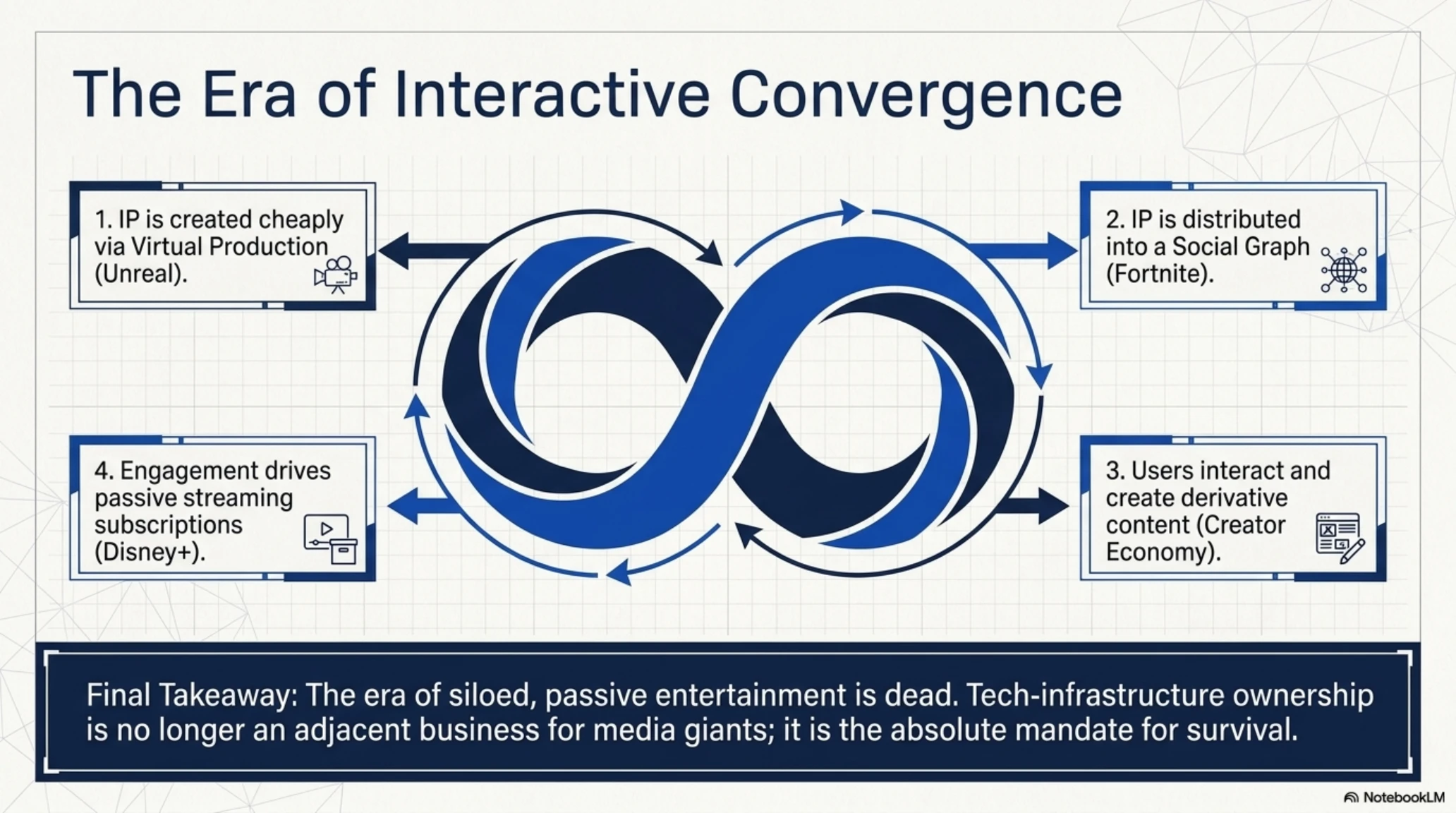
To truly understand why Disney is interested in Epic, we need to examine Disney's long-term technology strategy. In recent years, Disney has realized that the future of entertainment lies in technology and digital interactions, not just producing linear content.
Disney+ Failure to Capture Gen Z
Despite Disney+'s initially impressive growth to over 150 million subscribers, the company discovered that the platform fails to attract younger audiences. Gen Z and Generation Alpha prefer participating in interactive worlds like Fortnite rather than passively watching streamed content.
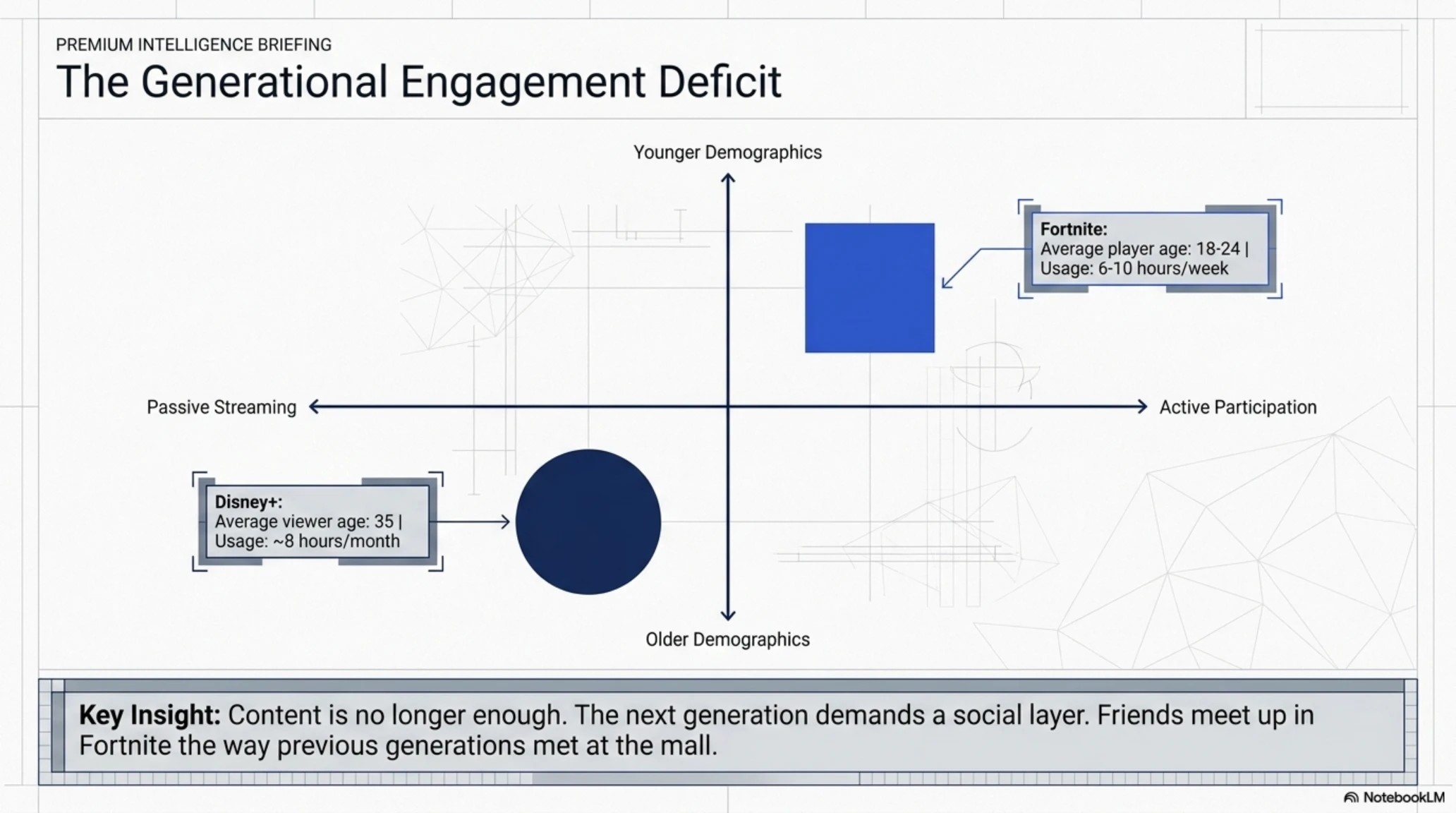
Statistics show that the average Disney+ viewer is around 35 years old, while the average Fortnite player is 18-24. This generational gap is concerning for Disney, which has always been known as a brand for children and teens.
Virtual Production and Cost Savings
Another reason Epic is attractive to Disney is the Virtual Production technology powered by Unreal Engine. Using this technology on The Mandalorian significantly reduced production costs. Instead of building physical sets or traveling to real locations, the production team could display photorealistic 3D environments on LED screens.
According to industry reports, using Virtual Production can reduce production costs by up to 30%. For Disney, which spends billions annually on content production, this savings could have an enormous impact.
Impact on the Game Engine Industry
If Disney owns Unreal Engine, the impact will extend far beyond Epic and Disney. It could transform the entire game engine market competition.
Unity at Risk
Unity, Unreal Engine's main competitor, has faced serious challenges in recent years. Controversial management decisions like pricing model changes and mass layoffs have caused many developers to migrate to Unreal. If Disney allocates more resources to Unreal and keeps it free, Unity might exit the market entirely.
Amazon Lumberyard and Other Competitors
Amazon also has its own game engine called Lumberyard (now renamed O3DE), but it has never achieved significant market share. If the Disney-Epic deal happens, Amazon will likely increase its competitive efforts.
Political and Economic Perspectives
From political and economic perspectives, this deal could have broader implications.
Antitrust Concerns
In recent years, the US government has shown significant concern about monopolies in the technology industry. The Federal Trade Commission (FTC) under Lina Khan's leadership actively reviews and sometimes blocks major deals. Disney's acquisition of Epic might attract FTC attention, especially if Disney wants to release its exclusive content only on its own platforms.
Geopolitical Tensions with China
The Tencent issue isn't just financial—it's political. The US government has recently tried to limit Chinese investments in American tech companies. CFIUS (Committee on Foreign Investment in the United States) can review and block any deal involving a Chinese shareholder.
For Disney, this likely means negotiating with Tencent to sell their stake before acquisition. But Tencent might demand an extremely high price, knowing Disney is in a weak bargaining position.
Developer Community Reaction
One of the biggest concerns is the developer community's reaction. Unreal Engine has gained popularity due to its developer-friendly policies.
Current Royalty Model
Currently, developers can download and use Unreal Engine for free. Only when their game generates over $1 million in revenue must they pay 5% royalty to Epic. This model appeals to independent studios because it eliminates initial financial risk.
But if Disney takes ownership, this model might change. Disney might charge from the start or increase the royalty percentage. This could force small studios to leave Unreal for Unity or other engines.
Potential Content Restrictions
Disney is a family-oriented brand with a history of being strict about adult content. If it owns Unreal Engine, it might impose restrictions on the types of games built with Unreal. Violent games or adult content might not be allowed, which could alienate a large portion of developers.
The Streaming Wars Context
This potential acquisition also needs to be understood within the broader context of the streaming wars and entertainment industry consolidation.
Content Is King, But Engagement Is Emperor
Disney has learned a harsh lesson: owning great content doesn't guarantee engagement. Despite having Marvel, Star Wars, Pixar, and classic Disney properties, Disney+ engagement metrics lag behind Netflix and especially gaming platforms. The average Disney+ user watches about 8 hours per month. The average Fortnite player spends 6-10 hours per *week*.
This engagement gap represents a fundamental shift in how younger audiences consume entertainment. They don't want to passively watch—they want to actively participate, create, and socialize. Fortnite delivers all three.
The Social Layer Problem
Every major streaming platform struggles with the same issue: they lack a meaningful social layer. You can't hang out with friends in Disney+. There's no persistent identity or social graph. Fortnite, conversely, is primarily a social platform that happens to be a game. Friends meet up in Fortnite the way previous generations met at the mall or movie theater.
For Disney, owning this social infrastructure could be transformative. Imagine being able to watch a new Marvel movie with friends in a virtual theater inside Fortnite, then immediately jump into a Marvel-themed game mode together. That's the vision Disney is chasing.
The Financial Engineering Challenge
Beyond the strategic rationale, the financial mechanics of this deal present significant challenges.
Disney's Debt Load
Disney's total debt stands at approximately $45 billion as of 2026. While this is manageable for a company of Disney's size, taking on another $25-30 billion in debt or equity dilution for Epic would significantly impact the balance sheet. Credit rating agencies would scrutinize this heavily, and a downgrade could increase Disney's borrowing costs across all operations.
Justifying the Price to Shareholders
Disney shareholders have already expressed frustration with the company's numerous acquisitions and their mixed results. The Fox acquisition, while bringing valuable IP, also brought significant debt and integration challenges. Shareholders will demand clear ROI projections for an Epic acquisition.
The bull case is relatively straightforward: combine Disney's content with Epic's platform to create an entertainment juggernaut. But the bear case is equally compelling: Disney overpays for a gaming company whose best days might be behind it, then mismanages it into irrelevance.
Earnout Structures and Retention Bonuses
Any realistic deal would likely include substantial earnout provisions and retention bonuses for key Epic executives and engineers. Tim Sweeney alone might demand $5-10 billion in earnouts tied to hitting specific revenue and user growth targets. Epic's top 100 engineers might require retention packages worth hundreds of millions combined.
These contingent liabilities don't show up in the headline acquisition price but significantly impact the deal's total cost and complexity.
Looking Ahead: What Awaits Us?
Ultimately, the critical question is: will this deal actually happen? Based on available evidence, there's no definitive answer. Epic Games has officially stated it's "not for sale," but history has shown that when financial offers are substantial enough, everything becomes negotiable.
Probable Timeline
If Disney is truly serious, negotiations will likely take shape over the next 12-18 months. However, several factors could alter the timeline:
- Epic's Financial Performance: If Fortnite can recover its growth, the likelihood of a sale decreases.
- Shareholder Pressure: If Tencent or Disney applies pressure, Sweeney might be forced to sell.
- Regulatory Changes: Antitrust laws in America and Europe could make such a large deal more difficult.
- New Competitors: If another buyer emerges with a better offer, Disney might exit the race.
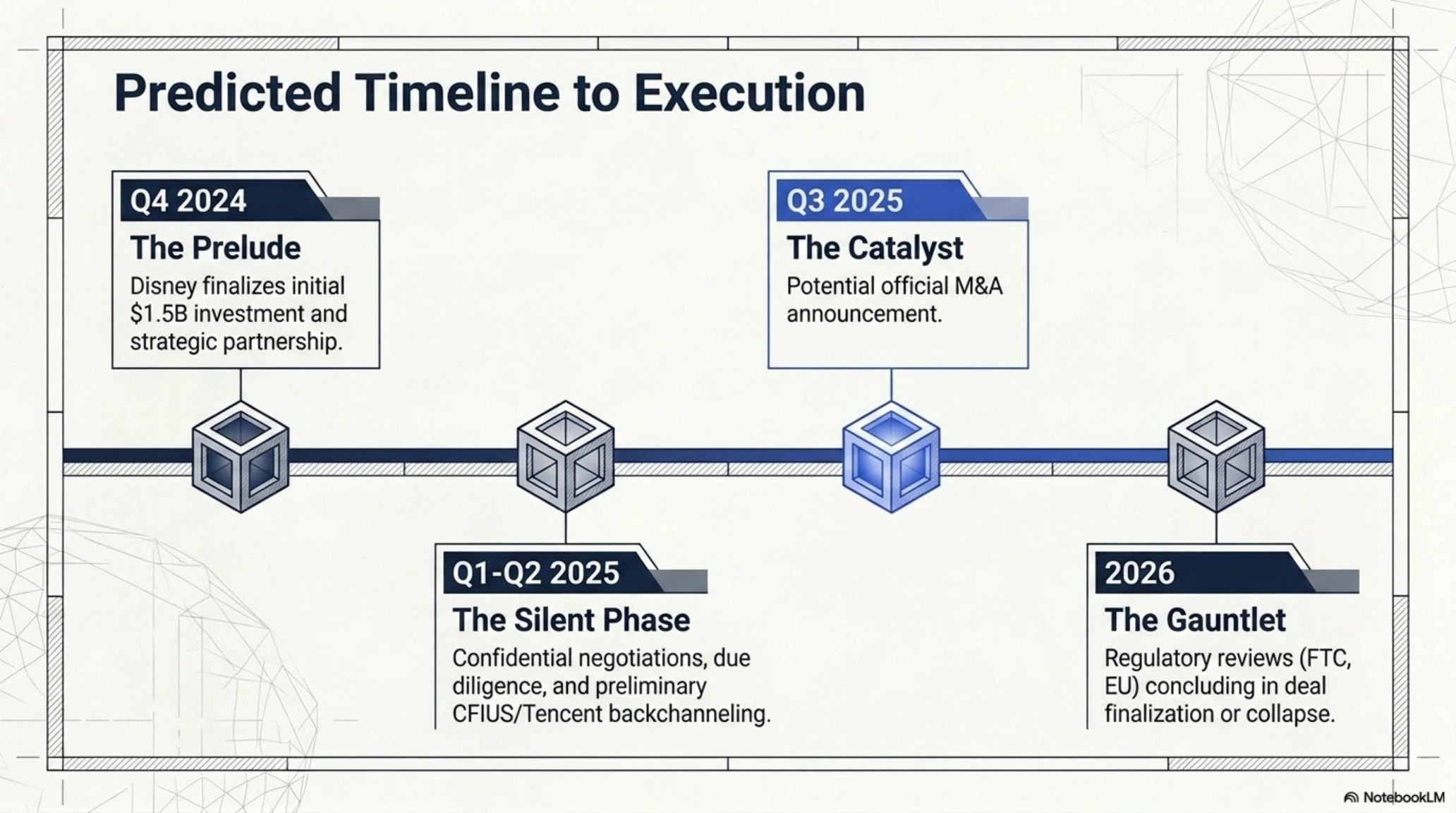
Predicted Timeline
Initial $1.5B Disney investment
Confidential negotiations and due diligence
Official announcement (if deal reached)
Deal completion after regulatory approval
Long-Term Industry Implications
Regardless of whether this deal happens, one thing is certain: the boundaries between traditional and digital entertainment are dissolving. Companies like Disney, Netflix, and Warner Bros can no longer simply produce movies and series. They must establish presence in gaming, the metaverse, and interactive experiences.
If Disney acquires Epic, we'll likely see a new wave of mergers and acquisitions in the industry. Netflix might pursue a game development studio, Amazon might invest more in its gaming initiatives, and Apple might enter the console market.
The Creator Economy and User-Generated Content
One aspect of this potential deal that deserves deeper examination is how it might affect the creator economy that has flourished within Fortnite's ecosystem.
Fortnite Creative and the Maker Movement
Fortnite Creative has evolved from a simple map-making tool into a full-fledged game creation platform. Thousands of creators now earn substantial income building custom game modes, experiences, and worlds within Fortnite. Some top creators reportedly earn six-figure incomes from their Fortnite islands.
A Disney acquisition could dramatically alter this landscape. Would Disney impose stricter content guidelines? Would they take a larger revenue share? Or conversely, could Disney's marketing muscle and IP library actually supercharge the creator economy by providing official Marvel, Star Wars, and Pixar assets for creators to use?
Roblox as the Comparison Point
The closest comparison is Roblox, which has built an entire economy around user-generated content. Roblox creators collectively earned over $600 million in 2023. If Disney can replicate this model with Fortnite while adding its own IP, the platform could become even more valuable than standalone games.
The Technology Stack: Why Unreal Engine Matters More Than Fortnite
While Fortnite gets most of the attention, many industry insiders believe Unreal Engine is the real prize in any Epic acquisition.
Beyond Gaming: Unreal in Film and Virtual Production
Disney already uses Unreal Engine extensively. The Mandalorian's groundbreaking virtual production—using LED walls displaying real-time Unreal Engine environments—revolutionized filmmaking. Owning the technology that powers this revolution would give Disney unprecedented control over production costs and capabilities.
Other Disney+ shows and upcoming Marvel films increasingly rely on Unreal-powered virtual production. Currently, Disney pays licensing fees and depends on Epic's continued development. Ownership would eliminate these concerns entirely.
The Metaverse Infrastructure Play
If the metaverse ever becomes real (and that's still a big "if"), Unreal Engine is positioned to be its infrastructure. Just as AWS powers much of the internet's backend, Unreal could power the metaverse's 3D environments. Disney ownership would position it as the metaverse's landlord—a strategic asset worth far more than Fortnite's current revenue.
Industry Expert Opinions
Reactions from industry experts and analysts to this rumor have been diverse and sometimes contradictory. Some view this move as a historic opportunity, while others call it a major mistake.
Matthew Ball's Perspective on the Metaverse
Matthew Ball, one of the most prominent metaverse and entertainment future analysts, wrote in a Bloomberg article: "If Disney is serious about building a real metaverse, buying Epic is the only logical path. You can't start from zero and expect to compete with Fortnite, Roblox, or Minecraft. You must buy a platform that already has millions of users."
Ball also noted that Disney has made mistakes in the past by trying to build everything itself, while competitors like Netflix and Amazon grew faster by acquiring existing companies.
John Riccitiello's Contrarian View
John Riccitiello, former CEO of Electronic Arts and Unity, has a different perspective. He said on a podcast: "Disney has a very different organizational culture from Epic. Disney is a bureaucratic company with many management layers. Epic is an agile, innovative company. Combining these two could be catastrophic."
Riccitiello also noted that many of the biggest failures in the tech industry happened when a large traditional company tried to buy an innovative startup and absorb it into its own culture.
Alternative Scenarios: Who Else Could Buy Epic?
Disney isn't the only option. Several other candidates could enter the race to acquire Epic.
Microsoft: A Powerful Contender
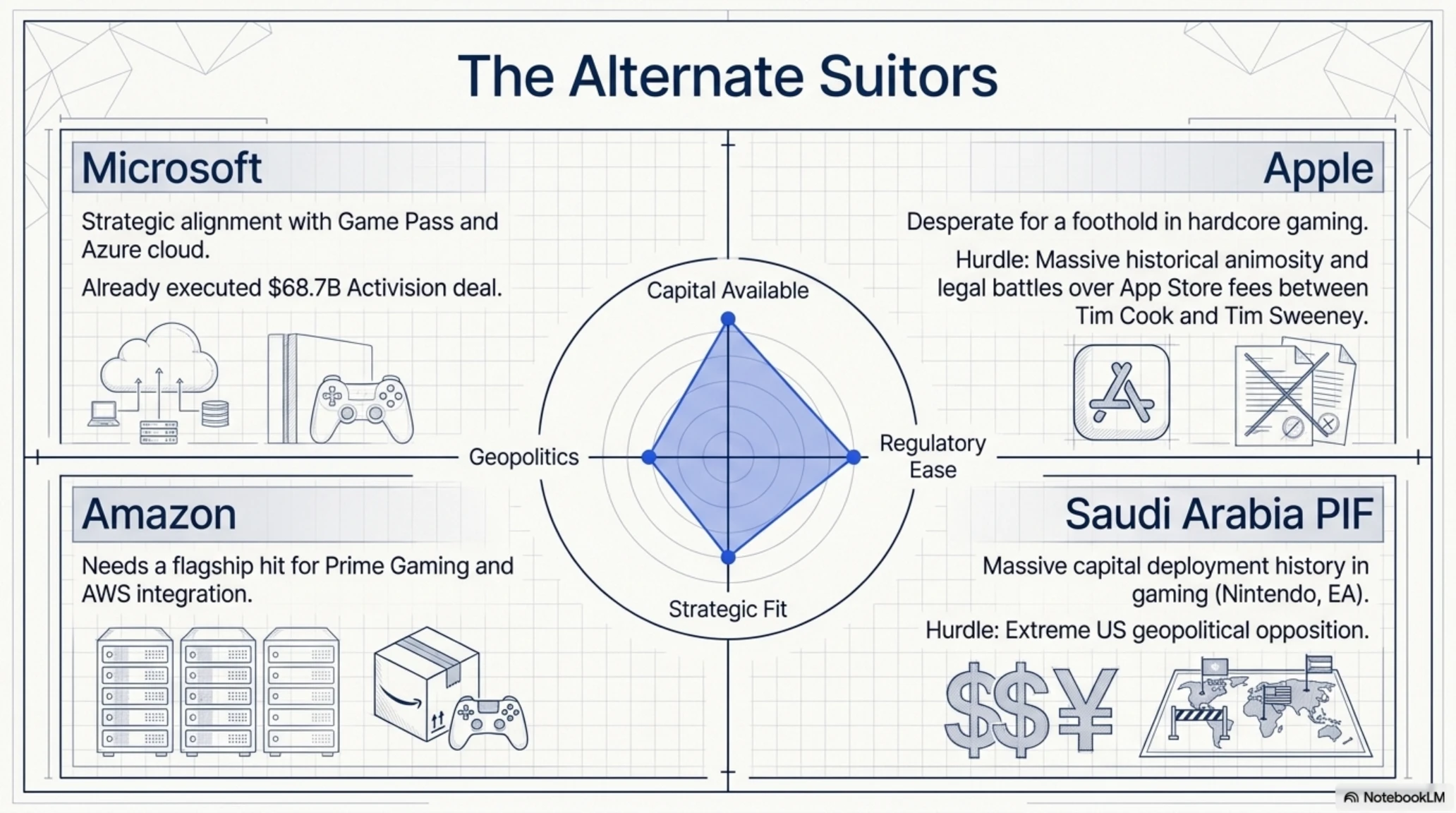
Microsoft, with its $68.7 billion acquisition of Activision Blizzard King, demonstrated willingness to spend big in the gaming industry. Although this deal attracted significant regulatory attention, Microsoft ultimately completed it successfully.
Microsoft buying Epic makes sense: Epic Store could merge with Xbox Game Pass, Unreal Engine could integrate with Azure (Microsoft's cloud service), and Fortnite could become an Xbox exclusive (though this would likely anger PlayStation players).
Apple: Entering the Gaming World
Apple has wanted to enter serious gaming for years, but its efforts (like Apple Arcade) haven't been particularly successful. Buying Epic could allow Apple to instantly become a major industry player.
However, the history of animosity between Apple and Epic (the legal battle over App Store commission) reduces this likelihood. Tim Cook and Tim Sweeney don't have a good relationship, and Sweeney has repeatedly criticized Apple's policies.
Amazon: Completing the Entertainment Puzzle
Amazon has presence in gaming (with Amazon Games and Twitch) but has never built a major hit. Buying Epic could solve this problem. Fortnite could merge with Prime Gaming, Unreal Engine could integrate with AWS, and Epic Store could merge with Amazon Store.
Saudi Arabia's Public Investment Fund
Saudi Arabia's Public Investment Fund (PIF) has made massive investments in the gaming industry in recent years. This fund has invested in Nintendo, Capcom, Nexon, EA, and other major companies. Buying Epic could be part of Saudi Arabia's long-term strategy to diversify its economy and reduce oil dependency.
However, Epic's acquisition by a Middle Eastern government entity would likely face strong opposition from the US government.
The Cultural Integration Challenge
Beyond financial and strategic considerations, one of the biggest risks in any Epic acquisition is cultural integration.
Epic's Startup Culture vs. Disney's Corporate Structure
Epic Games, despite being a 30-year-old company, maintains a startup-like culture. Decisions are made quickly, risks are taken regularly, and innovation is prioritized over process. Disney, conversely, is a 100-year-old corporation with established procedures, committees, and approval chains.
History shows that these cultural clashes often doom acquisitions. When Microsoft bought Nokia's mobile division, the integration was so problematic that Microsoft eventually wrote off almost the entire $7.6 billion investment. When Yahoo bought Tumblr for $1.1 billion, cultural mismatches led to mass executive departures and Tumblr's eventual sale for under $3 million.
Retaining Key Talent
Epic's value isn't just in its products—it's in its people. The engineers who built Unreal Engine 5, the designers who created Fortnite's cultural moments, and the business leaders who challenged Apple and Google are Epic's true assets. If Disney acquisition causes these people to leave, the company buys an empty shell.
Retention becomes especially challenging when many Epic employees are already wealthy from the company's success. Unlike typical acquisition targets where employees are motivated by acquisition payouts, many Epic employees are already financially secure. They work at Epic because they believe in the company's mission and enjoy the culture. Disney would need to preserve this or risk mass departures.
The Regulatory Gauntlet
Any Epic acquisition by a major tech or media company would face intense regulatory scrutiny in multiple jurisdictions.
US Antitrust Review
The Federal Trade Commission and Department of Justice have become increasingly aggressive in challenging tech mergers. The FTC sued to block Microsoft's Activision acquisition (though ultimately unsuccessfully) and continues to pursue cases against Amazon, Meta, and Google.
A Disney-Epic deal would likely trigger an in-depth investigation. Regulators would examine whether Disney could unfairly leverage Epic's platform to promote its own content, whether Unreal Engine would be used to disadvantage competitors, and whether Epic Store would be managed anti-competitively.
European Union Competition Review
The European Union's competition authorities have been even more aggressive than their US counterparts. The EU could demand behavioral remedies (commitments about how Disney would operate Epic) or even structural remedies (forcing Disney to divest certain Epic assets).
The approval process could take 12-18 months and might ultimately fail, as happened with Broadcom's attempted acquisition of Qualcomm.
Conclusion: Epic Games' Future in Uncertainty
The rumor of Epic Games being sold to Disney represents one of the most fascinating and complex stories in the tech and gaming industries in recent years. On one hand, Disney desperately needs a powerful digital platform to connect with the next generation. On the other hand, Epic Games, despite financial challenges, remains one of the industry's most influential companies.
What's certain is that whatever decisions Tim Sweeney and Disney make will have profound impacts on millions of players, thousands of developers, and the entire gaming ecosystem. Will Fortnite under Disney management retain the same creative and open experience? Will Unreal Engine remain accessible to independent developers? And most importantly, will this deal even happen?
Only time will answer these questions. But one thing is clear: the gaming industry is changing, and we stand at the threshold of a new era of entertainment convergence. Whether Disney acquires Epic or not, the fact that such a deal is even being discussed signals a fundamental shift in how major media companies view gaming—not as an adjacent business, but as the future of entertainment itself.
The next 12-18 months will be critical. Wall Street will watch Disney's financial position closely. Gamers will voice their concerns loudly on social media. Regulators will scrutinize any deal for antitrust implications. And Tim Sweeney will face the most consequential decision of his career: maintain independence and fight through financial headwinds, or accept that Epic's next chapter might be written under Disney's banner.
Whatever happens, the gaming landscape of 2027 will look very different from today. And this rumor, whether it becomes reality or not, has already changed the conversation about gaming's place in the broader entertainment ecosystem.
Frequently Asked Questions About Epic Games Sale to Disney
Is Epic Games actually for sale?
Officially, no. Epic Games has stated it's not for sale, but credible reports indicate Disney is evaluating the possibility of acquisition and waiting for the right moment.
How much would Disney need to pay for Epic?
Based on Epic's current valuation around $22.5 billion, Disney would likely need to pay between $25-30 billion for complete acquisition.
What would happen to Fortnite if Disney owns Epic?
Likely, more Marvel, Star Wars, and Pixar content would be added to the game. However, the concern is that the game might become a Disney advertising platform and lose its original identity.
Would Unreal Engine remain free?
There's no definitive answer. Currently, Unreal Engine is free up to $1 million in revenue, but if Disney takes ownership, this policy might change.
What role does Tencent play in this deal?
Tencent owns 40% of Epic's shares, and any deal would require their approval. This could complicate negotiations, especially given US-China geopolitical tensions.
When might this deal be finalized?
If negotiations become serious, an official announcement would likely come within 12-18 months (late 2025 or early 2026). However, there's no guarantee this deal will happen at all.
How would this affect independent game developers?
The biggest concern is whether Disney would change Unreal Engine's licensing terms or impose stricter content guidelines on Epic Store. This could significantly impact indie developers who rely on these platforms.
Sources and References
- Variety: Disney Invests $1.5 Billion in Epic Games
- IGN: Disney Reportedly Keen on Buying Epic Games
- Gfinity Esports: Disney Eyeing Epic Games Deal
- Forbes: Why Disney's Epic Games Stake Is Smart
- Reuters: Epic Games Valuation Drop
- TechSpot: Disney's Gaming Push
- VentureBeat: Tencent Epic Investment
- GamesRadar: Epic Games Layoffs 2026
Additional Gallery: Tekin Analysis | Epic Games Sale to Disney: Is the Fortnite Era Coming to an End?