The tech industry is colliding with a devastating financial reality in mid-2026: the AI Cost Crisis. This special TekinGame dossier uncovers the catastrophic event where an unnamed enterprise burned through $500 million in just 30 days due to unrestricted employee access to Anthropic's Claude AI. This disaster exposes the hidden dangers of the token-based pricing model, particularly when compounded by the relentless consumption of autonomous coding agents operating 24/7. Tech giants are reacting with brutal austeri
💰 The $500M AI Disaster: When a Company Goes Bankrupt on Artificial Intelligence!
Imagine spending half a billion dollars on AI in just one month for a company. Yes, apparently hiring humans is cheaper! 😱
Microsoft managers recently discovered a surprising and costly reality. Their employees' enthusiastic embrace of the Claude Code tool has caused unlimited AI costs to skyrocket. This situation is so serious that Microsoft has been forced to change its approach and steer employees toward internal tools. 🔧
⚡ Key Highlights:
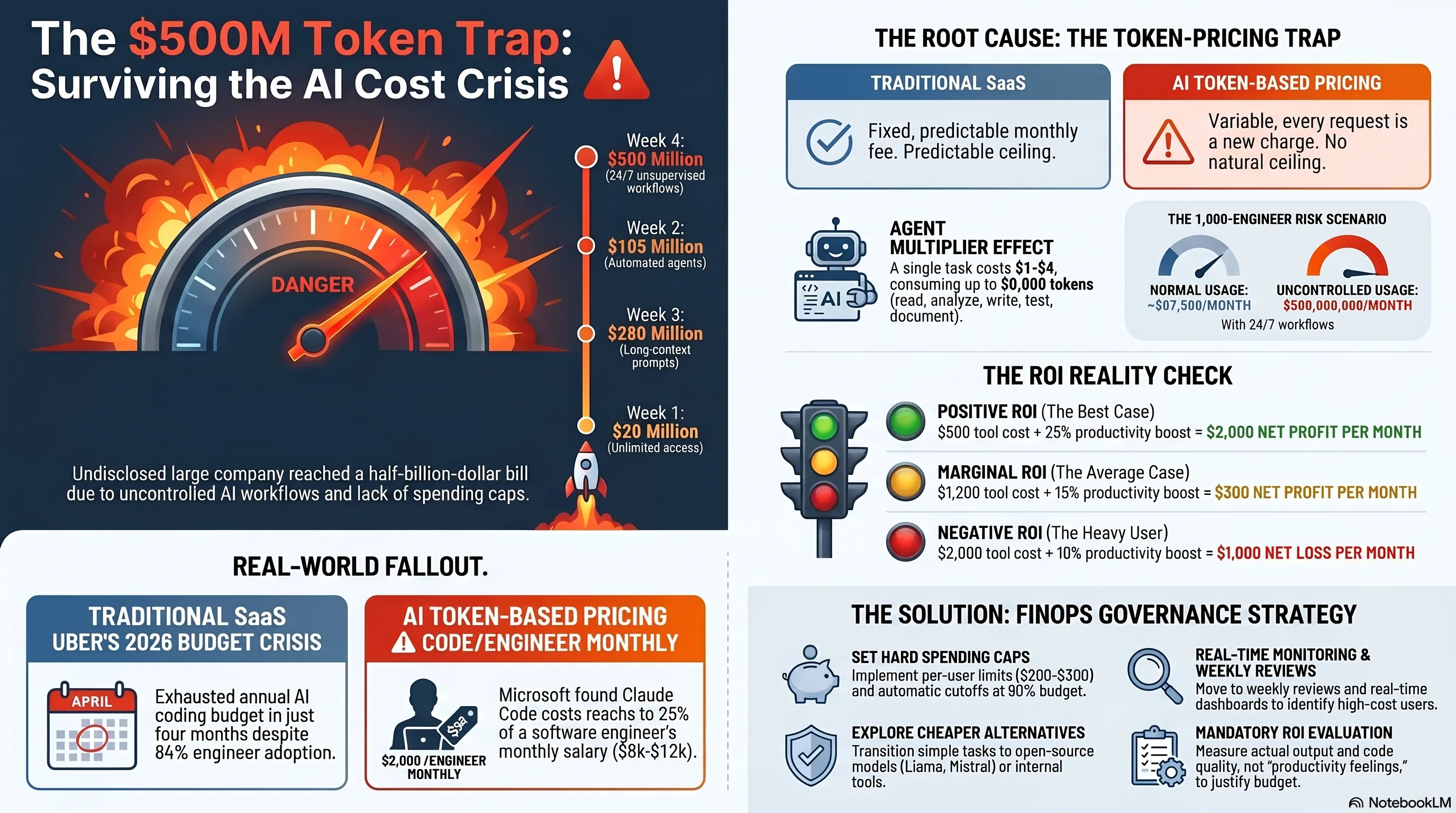
🔴 One unnamed company spent $500M on Claude AI in 30 days
🔴 Microsoft canceled Claude Code for 5,000 engineers (cost: $500-$2,000/month)
🔴 Uber burned its entire 2026 AI budget by April
🔴 About 30% of this tech giant's code is generated with AI assistance
🔴 The astronomical cost crisis isn't limited to individuals
Interestingly, according to Satya Nadella, about 30% of this tech giant's code is currently generated with AI assistance. But from now on, programmers and designers at this company must abandon the Claude tool by the end of June and migrate to the proprietary GitHub Copilot CLI service. 💻⌨️
📊 Chapter 1: How One Company Burned Half a Billion in 30 Days
The story begins here: A large company (whose identity remains undisclosed) decided to provide thousands of employees access to Claude AI from Anthropic. It seemed like a good idea—higher efficiency, more automation, faster coding. But there was one small problem: no spending caps, no monitoring dashboards, no alert systems whatsoever.
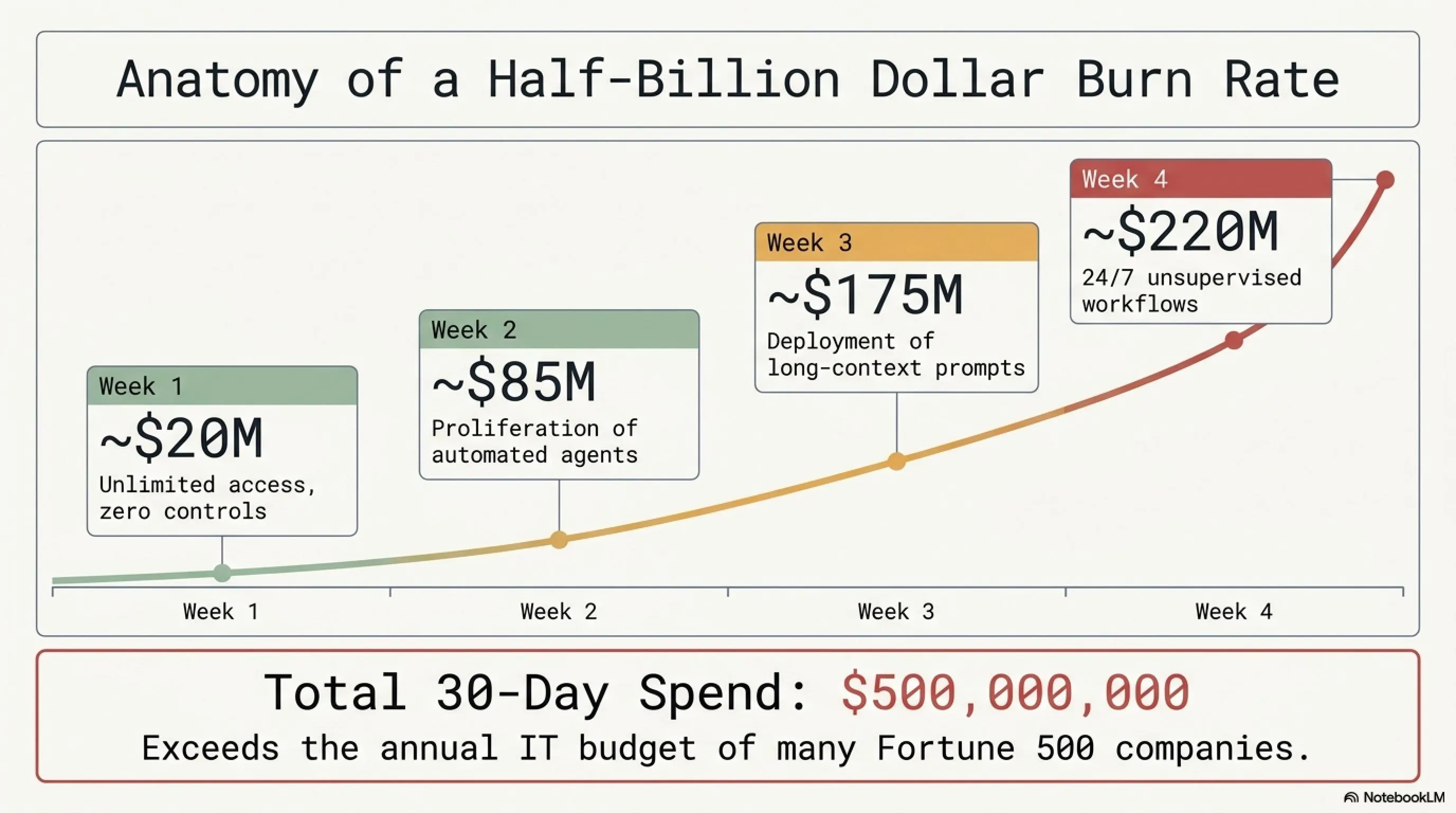
Employees embraced this new tool enthusiastically. Some engineers used AI coding agents that automatically wrote complex code. Others sent long, context-heavy prompts. Other teams launched automated agentic workflows running 24/7.
🔥 Tekin Analysis: The Hidden Token-Pricing Trap
Here's where the story gets interesting. AI doesn't work like Netflix where you pay $10/month for unlimited usage. AI pricing is based on tokens—meaning every input word + every output word = separate charges.
A simple 100-word prompt with a 500-word response might cost a few cents. Now multiply that by thousands of employees, thousands of prompts per day, and 24/7 usage. The result? A bill that exceeds all employees' salaries combined! 💸
The core problem: AI agents and automated workflows consume astronomical token volumes. A coding agent might consume tens of thousands of tokens for a simple task—because it must read existing code, analyze it, write new code, test it, and revise again. Each of these steps = cost.
Published reports indicate the company didn't even realize what was happening—until the bill arrived. $500 million. One month. For comparison, this amount exceeds the annual IT budget of many Fortune 500 companies!
⚠️ Critical Note for IT Managers
This disaster was a direct result of lack of FinOps governance. Companies cannot treat AI like traditional software. You must:
✅ Set per-user spending caps (e.g., $100/month)
✅ Have real-time monitoring dashboards
✅ Implement automatic alert systems for high consumption
✅ Establish clear usage policies and train employees
✅ Review bills weekly—not monthly!
⚖️ Chapter 2: The Token-Pricing Trap - AI vs Traditional SaaS
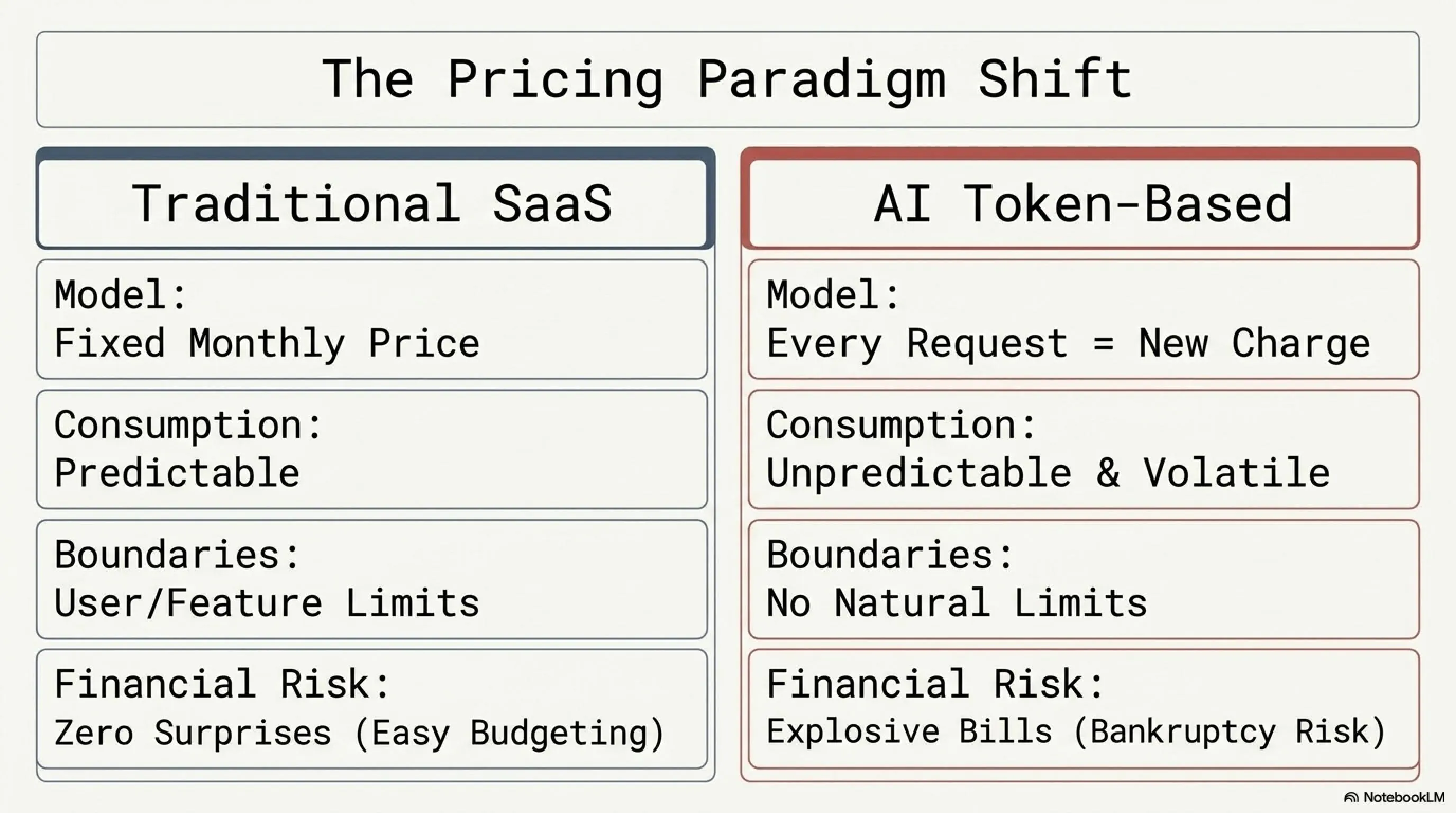
One of the biggest misconceptions about AI is that managers think it works like SaaS software. You pay a fixed monthly amount for Slack or Microsoft 365 and use it unlimited. But AI doesn't work that way at all.
✅ Traditional SaaS
💵 Fixed monthly price
📊 Predictable consumption
🔒 User/feature limits
📈 Easy budgeting
⚡ No financial surprises
❌ AI Token-Based
💸 Every request = new charge
🌊 Unpredictable consumption
🚀 No natural limits
💥 Explosive bills
⚠️ Bankruptcy risk
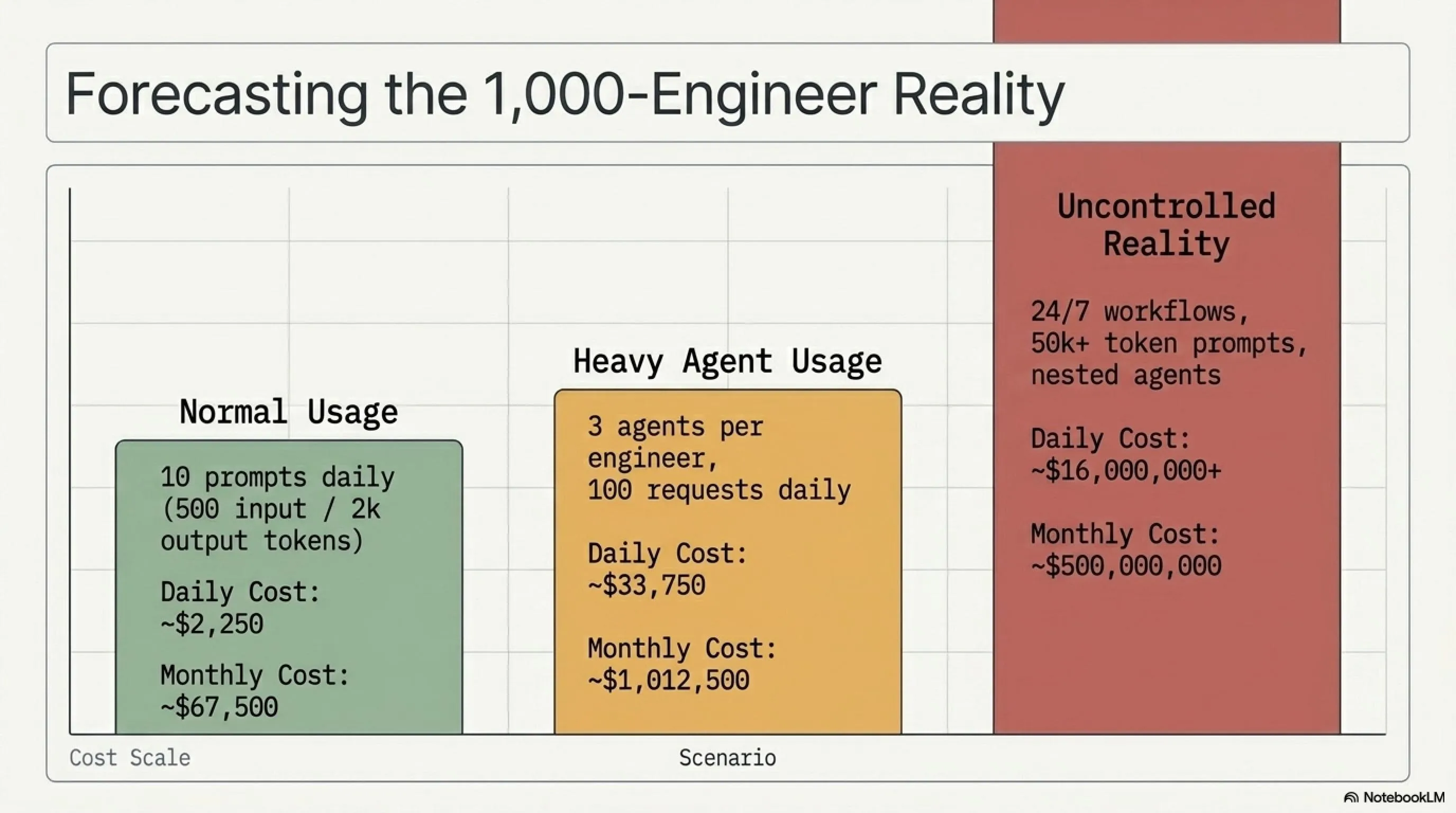
For better understanding, let's see a practical example. Suppose you have 1,000 engineers and give them all Claude access:
📊 Real Scenario: 1,000 Engineers with Claude Access
Scenario 1 (Normal Usage):
• Each engineer sends 10 prompts daily
• Average 500 input tokens + 2,000 output tokens
• Price: $15 per 1M input tokens, $75 per 1M output tokens
• Daily cost: ~$2,250
• Monthly cost: ~$67,500
Scenario 2 (Heavy Usage with Agents):
• Each engineer launches 3 coding agents
• Each agent sends 100 requests daily
• Average 5,000 input tokens + 10,000 output tokens
• Daily cost: ~$33,750
• Monthly cost: ~$1,012,500
Scenario 3 (Uncontrolled Usage - Reality):
• Some engineers launch 24/7 workflows
• Use of long prompts (50,000+ tokens)
• Nested agents with high context
• Daily cost: ~$16,000,000+
• Monthly cost: ~$500,000,000 💥
💡 Why AI Agents Are So Expensive
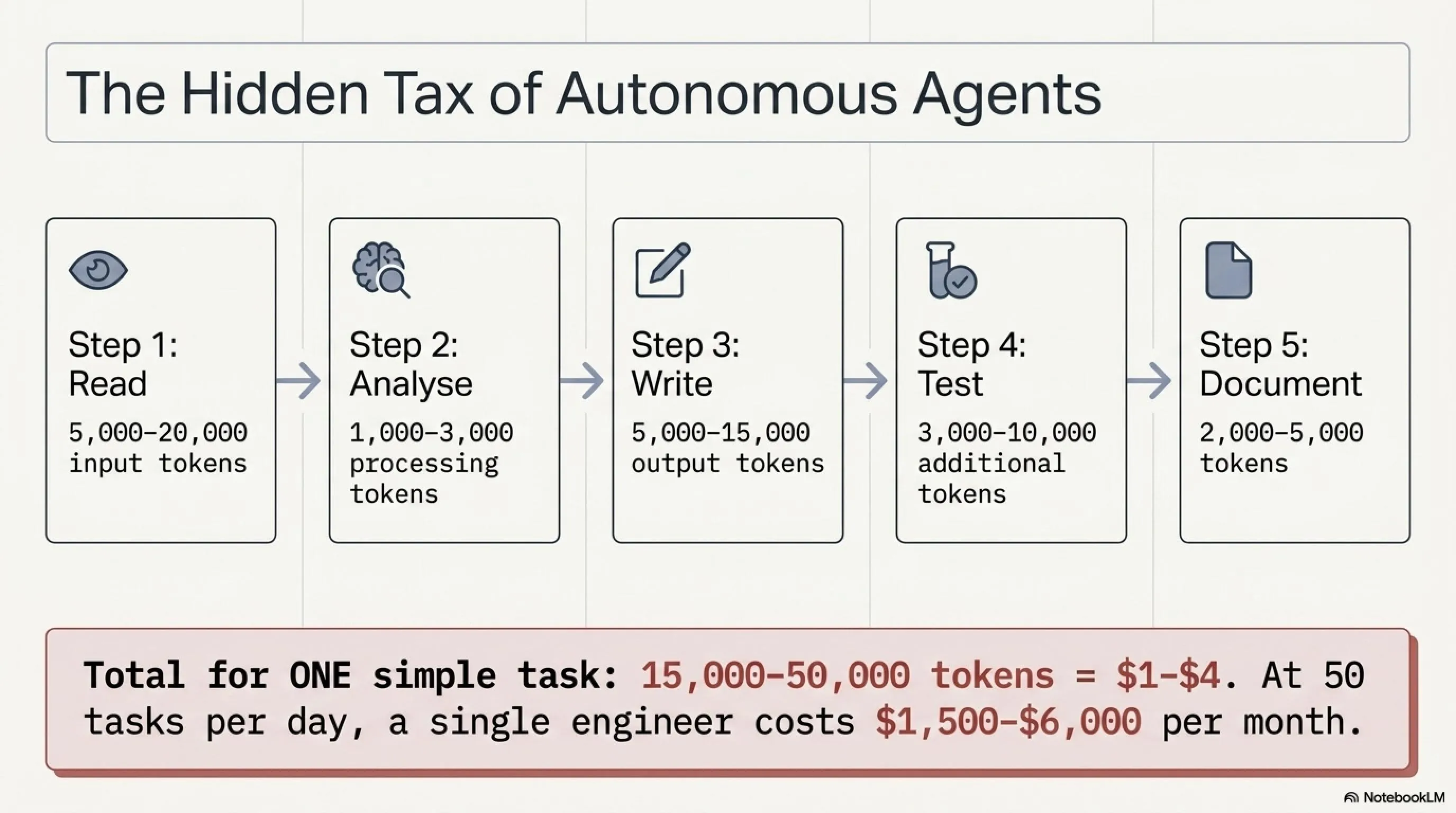
AI agents are like employees who get paid by the second—not monthly! When you launch a coding agent:
1. Agent reads existing code → 5,000-20,000 input tokens
2. Analyzes your request → 1,000-3,000 processing tokens
3. Writes new code → 5,000-15,000 output tokens
4. Tests and debugs code → 3,000-10,000 additional tokens
5. Writes documentation → 2,000-5,000 tokens
Total for one simple task: 15,000-50,000 tokens = $1-$4
Now imagine an engineer gives 50 tasks to the agent daily. Daily cost: $50-$200. Monthly: $1,500-$6,000 for just one person! 💸
This is exactly what happened in the $500 million company. Employees thought they were using a free tool, while every click = cost. And nobody stopped them.
🏢 Chapter 3: Microsoft's Response - Canceling Claude Code & Going Internal
In December 2025, Microsoft excitedly introduced Claude Code to engineers in the Experiences & Devices division (responsible for Windows, Office 365, Teams, Outlook, and Surface). The reception was phenomenal—productivity increased, coding accelerated, engineers were satisfied.
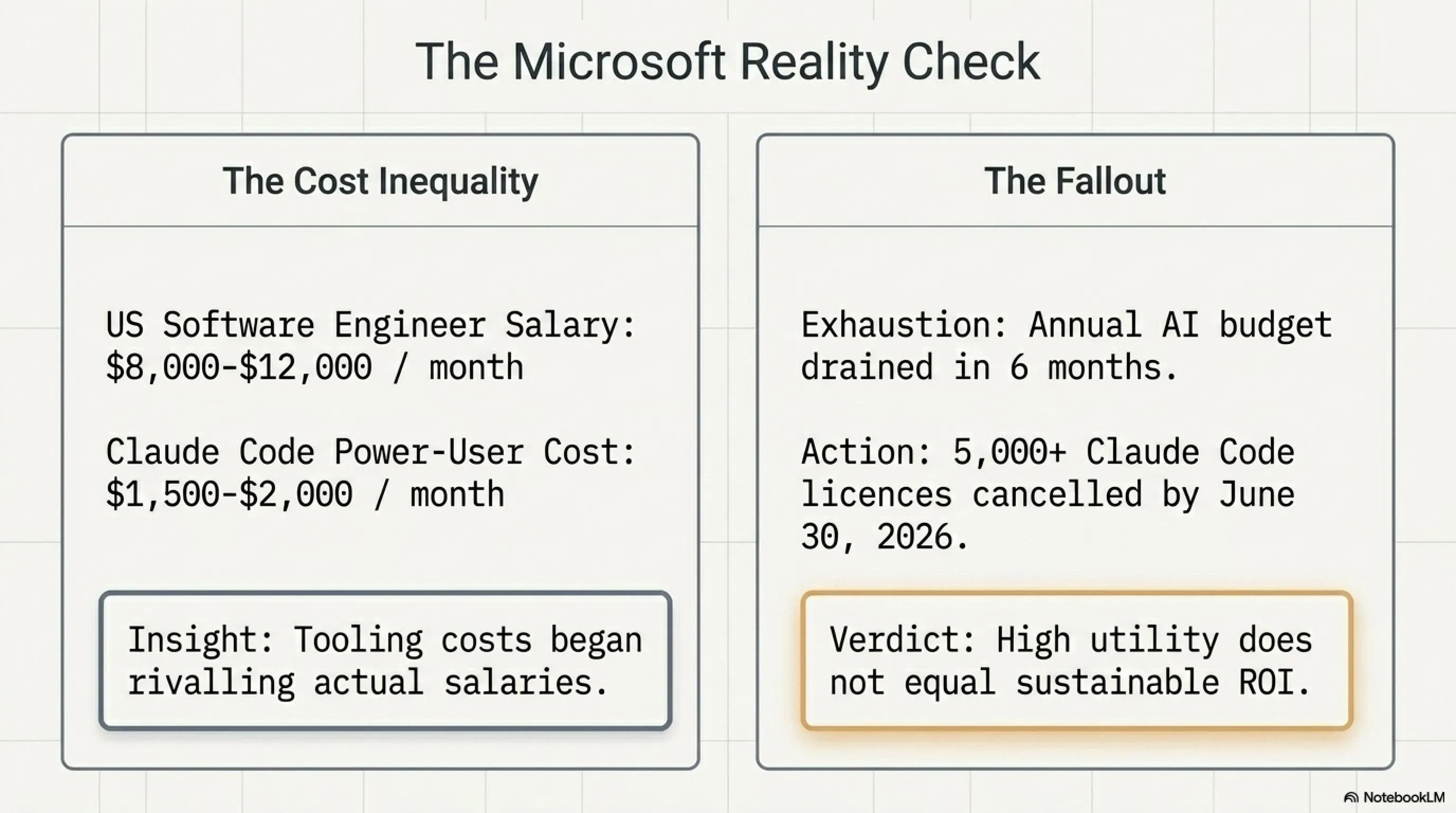
But less than 6 months later—in May 2026—Microsoft announced that most Claude Code licenses would be canceled by June 30, 2026, and teams must migrate to GitHub Copilot CLI. What happened?
💰 Microsoft's Real Numbers
per engineer
for heavy users
licenses were canceled
annual budget
Microsoft realized that Claude Code costs in some cases exceeded the engineer's salary! A software engineer in America might earn $8,000-$12,000 monthly. But when their AI tool costs $1,500-$2,000 per month, the main question becomes: Is this tool really worth the cost?
🔄 Microsoft's New Strategy: Coming Home
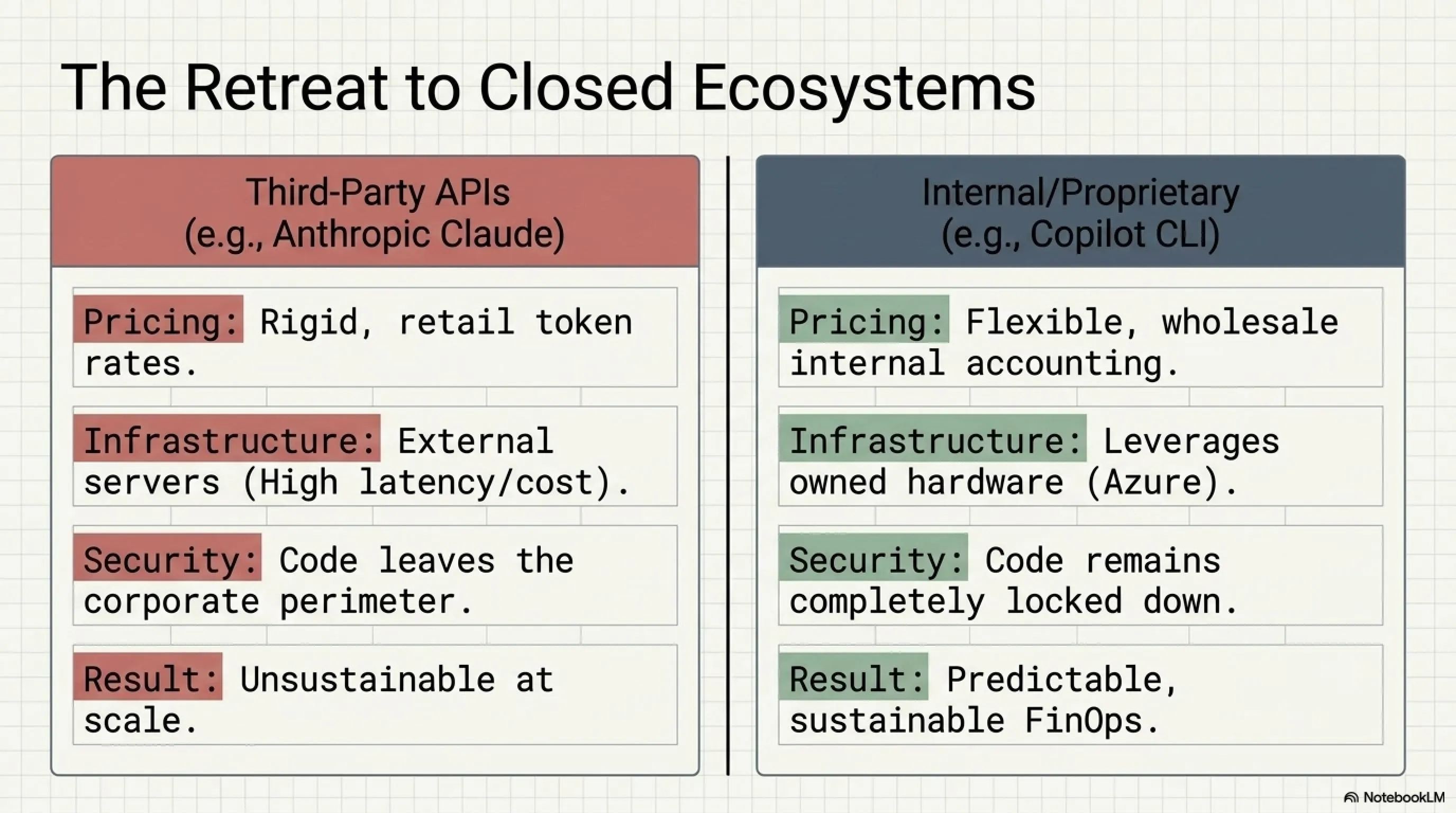
Microsoft decided to migrate its teams to GitHub Copilot CLI—a tool Microsoft owns (through GitHub). Why?
1. Better cost control: Microsoft can have more flexible internal pricing
2. Lower costs: Using own infrastructure instead of paying third parties
3. Better integration: Copilot integrates more deeply with Visual Studio and Azure
4. Data security: Microsoft's internal code doesn't get stored on Anthropic's servers
But the bitter reality is: If the third-party tool performed excellently and had positive ROI, Microsoft would have kept it.
🌊 Chapter 4: The Widespread Crisis - Uber, Amazon & The AI Cutback Wave
Microsoft isn't alone. The AI cost crisis is spreading, and major tech giants are cutting access one after another.
📉 Uber's Story: When Too Much Success Becomes Disaster
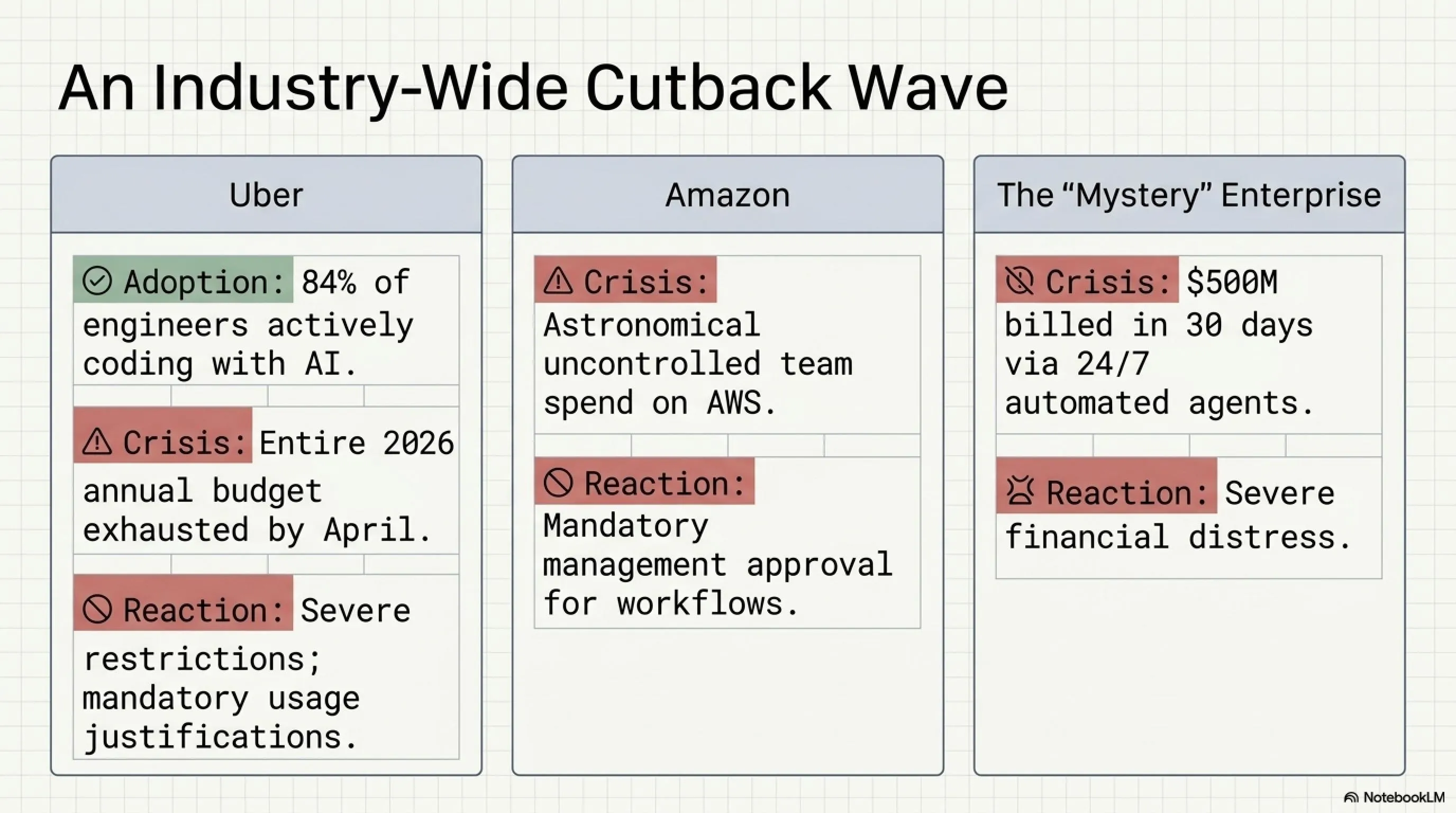
Uber is one of the most interesting cases. The company's CTO announced that 84 percent of engineers use AI coding tools (Claude Code and Cursor)—an extraordinary adoption rate! Companies usually spend years trying to reach this level of adoption.
But this very success caused disaster. Per-user costs reached $500-$2,000 per month. Uber exhausted its entire 2026 AI coding budget by April—just 4 months!
Now Uber has been forced to impose strict policies: every engineer must justify their usage, spending caps are set, and some teams have no access at all.
The interesting point: These companies are the wealthiest and largest tech giants in the world. If they're struggling with AI costs, what should smaller companies do?
🔥 Tekin Analysis: The Broken Technology Adoption Cycle
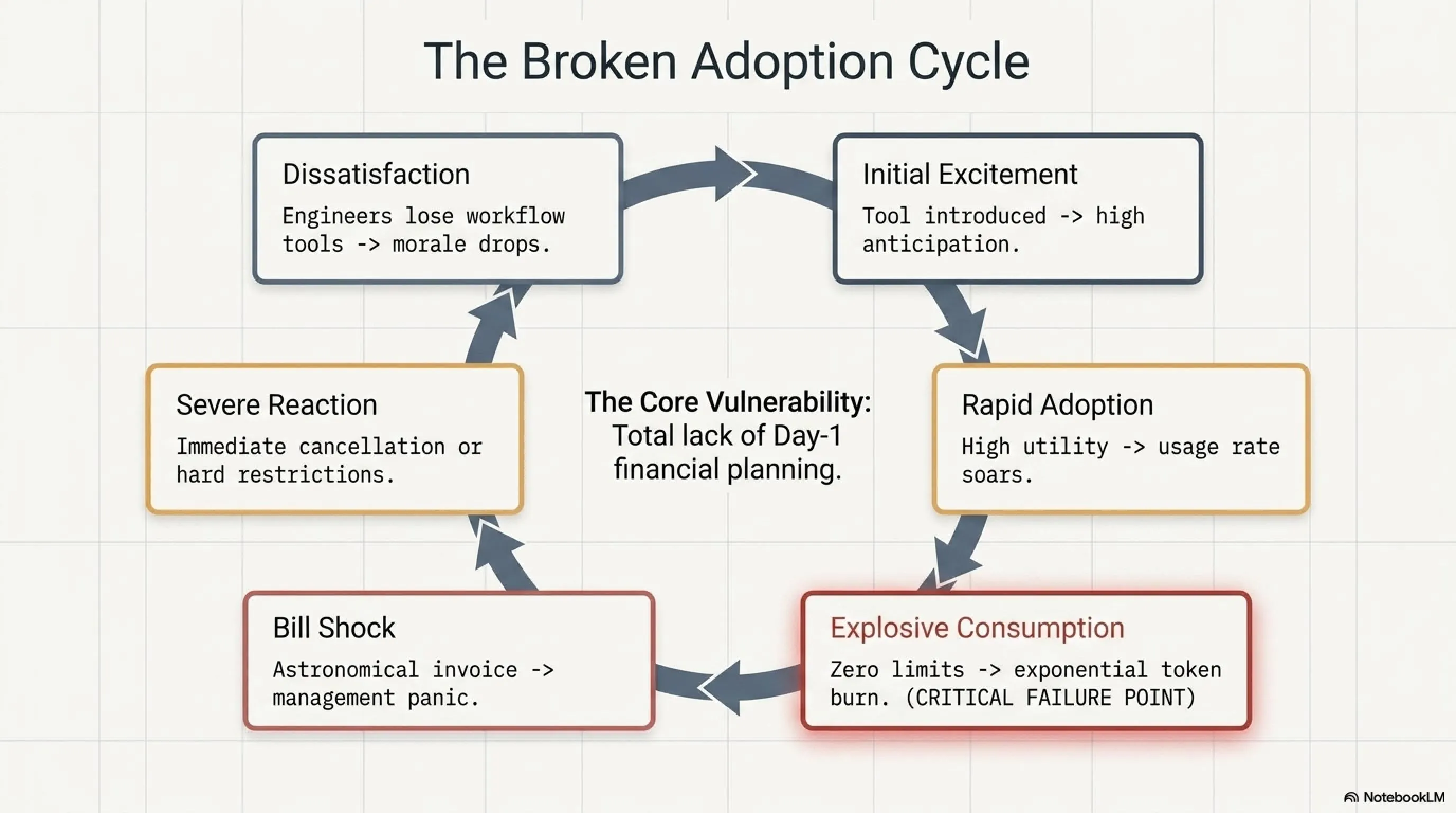
We're witnessing a dangerous cycle:
1. Initial excitement: Company introduces new AI tool → everyone's excited
2. Rapid adoption: Employees love the tool → usage rate soars
3. Explosive consumption: Without controls, costs grow rapidly
4. Bill shock: Management sees astronomical bill → panic ensues
5. Severe reaction: Immediate cancellation or strict limitations
6. Employee dissatisfaction: Engineers accustomed to it become unhappy
Core problem: Lack of financial planning from day one!
❓ Chapter 5: Why AI ROI Has Become Questionable
The main question all IT managers and CFOs are asking is: Is AI really worth this cost? When tool costs exceed user salaries, calculating ROI (return on investment) becomes complicated.
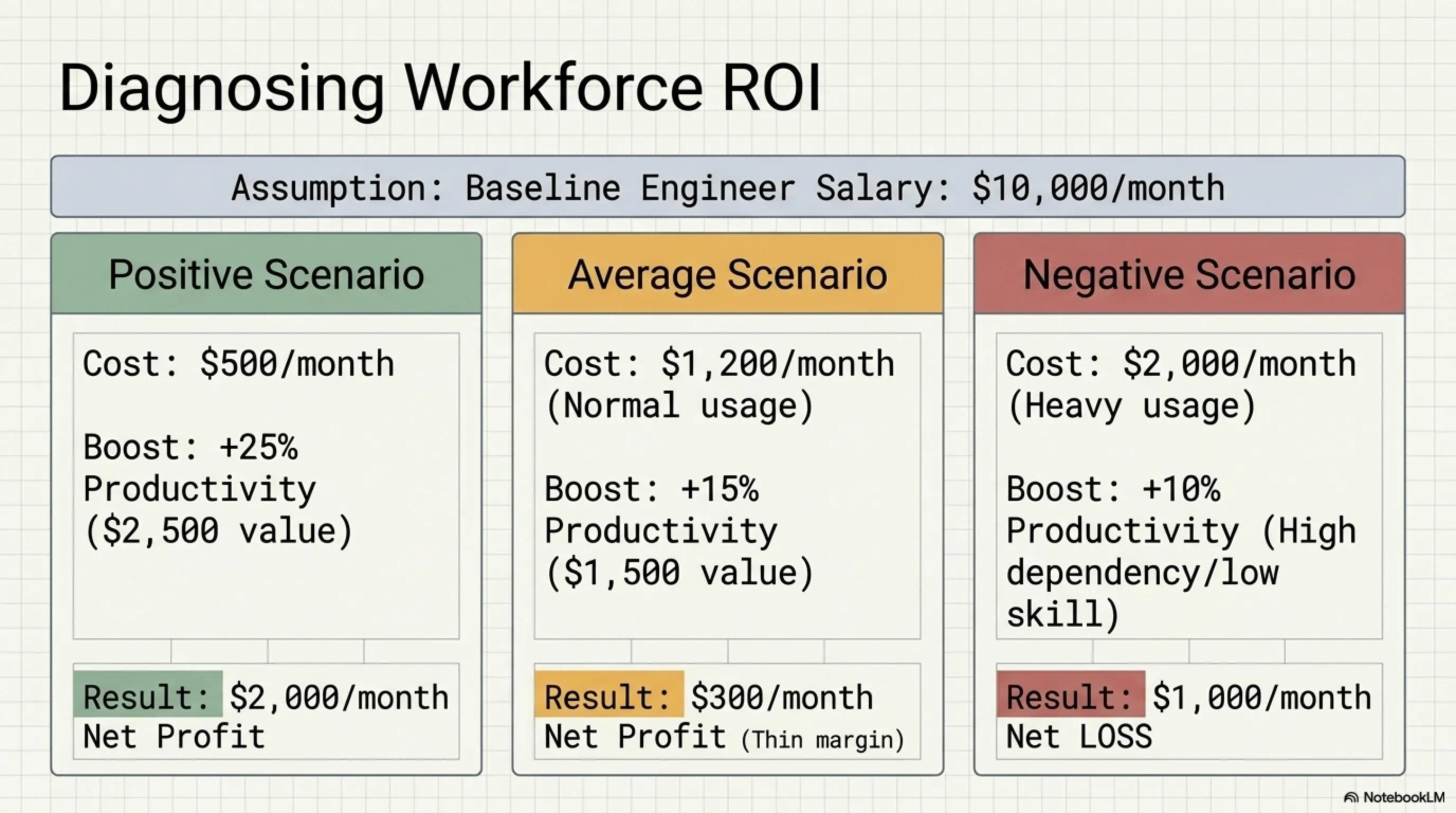
💼 Real ROI Calculation - Is It Economically Viable?
Positive Scenario (Best Case):
• Software Engineer: $10,000/month salary
• Claude Code cost: $500/month
• Productivity increase: 25%
• → ROI: Positive! Equivalent to 2.5 months extra work = $2,500 value produced
• Result: Net profit $2,000/month
Average Scenario (Most Companies' Reality):
• Software Engineer: $10,000/month salary
• Claude Code cost: $1,200/month (normal usage)
• Real productivity increase: 15%
• → ROI: Low margin! Equivalent to 1.5 months = $1,500 value produced
• Result: Net profit only $300/month
Negative Scenario (Heavy Users):
• Software Engineer: $10,000/month salary
• Claude Code cost: $2,000/month (heavy usage)
• Real productivity increase: 10% (low skill + dependency)
• → ROI: Negative! Equivalent to 1 month = $1,000 value produced
• Result: Net loss $1,000/month! 💸
Microsoft and Uber likely realized most users fall into Scenario 2 or even 3. When ROI isn't positive or profit margins are too thin, the logical decision is to limit or cancel the tool.
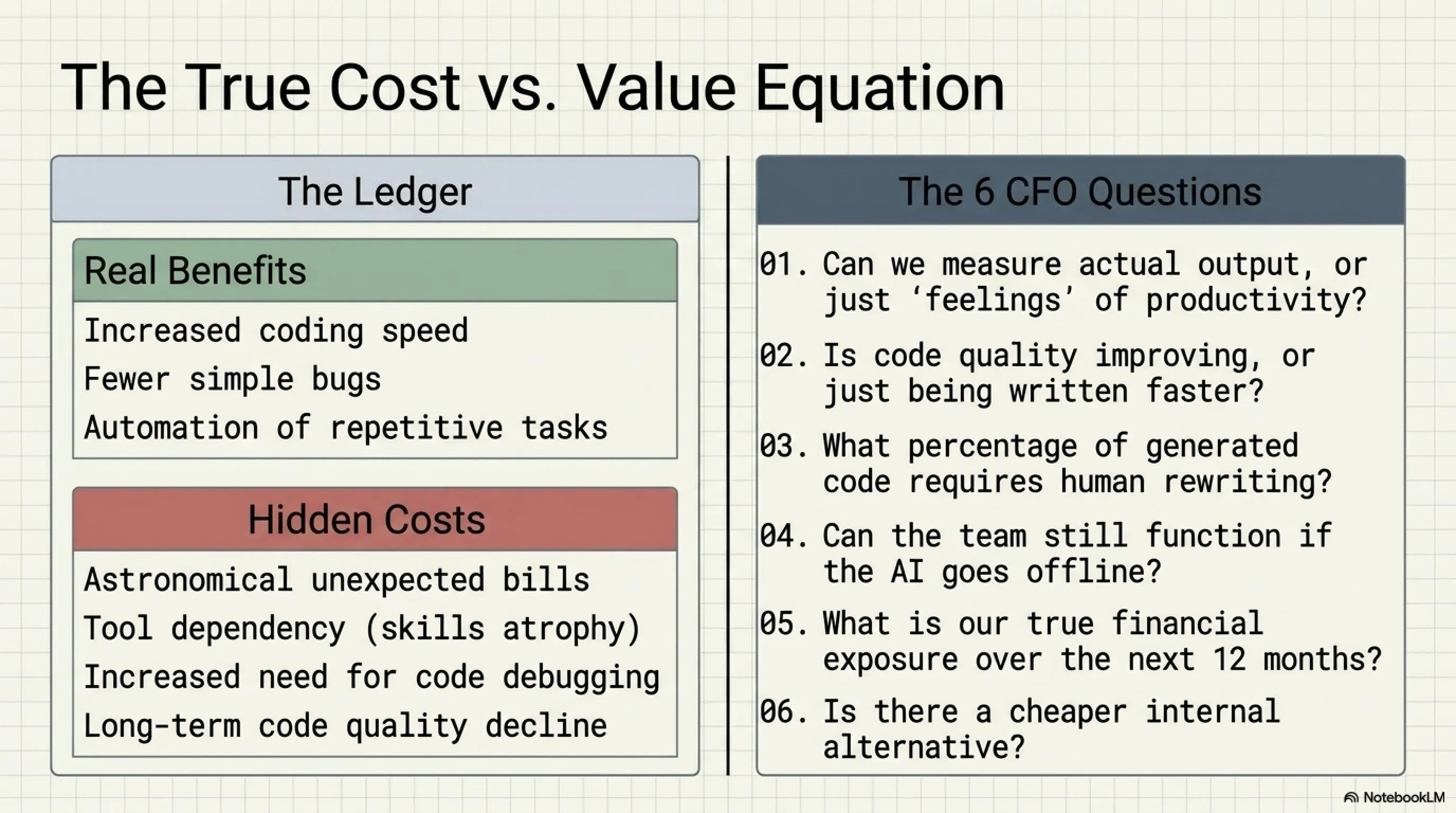
✅ Real AI Benefits
🚀 Increased coding speed
🐛 Reduced simple bugs
📚 Learning assistance
⚡ Automation of repetitive tasks
💡 Better solution suggestions
❌ Hidden Costs
💸 Astronomical unexpected bills
🐌 Decreased programming skills
🔍 Need for more review and debugging
⚠️ Tool dependency
📊 Long-term code quality decline
📈 Key Questions CFOs Are Asking
1. Can we measure real productivity? (Not just feelings!)
2. Is code quality improving or just being written faster?
3. What percentage of generated code needs rewriting?
4. Can the team work without AI? (dependency)
5. What will the real cost be over the next 12 months?
6. Is there a cheaper alternative? (like internal tools)
If answers aren't convincing → budget gets cut!
🛡️ Chapter 6: Key Lessons for Companies - How to Prevent Disaster
The good news is that the $500 million disaster can be prevented! But you need a comprehensive and informed strategy—not just "let's try AI and see what happens."
🎯 10-Step Checklist for Safe AI Implementation
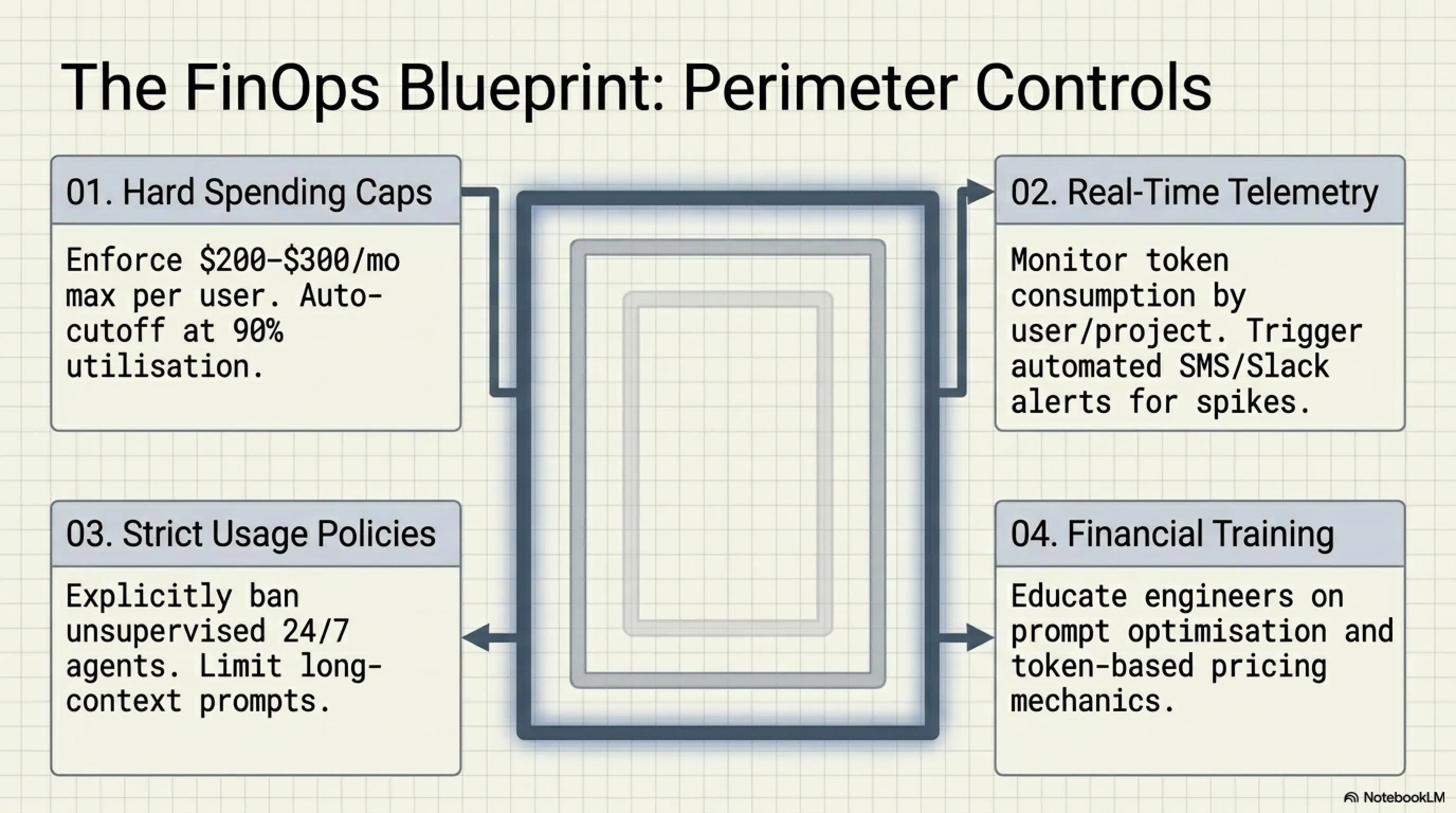
✅ 1. Set Hard Spending Caps
• Per user: maximum $200-$300/month
• Per team: specific monthly cap
• Organization level: total budget that must not be exceeded
• Automatic service cutoff when reaching 90% of cap
✅ 2. Real-Time Monitoring Dashboard
• Token consumption by user, team, and project
• Automatic alerts for high consumption (SMS, email, Slack)
• Ranking of highest-cost users
• Daily reports for managers
✅ 3. Clear Usage Policies
• What's allowed? (coding, debugging, documentation)
• What's prohibited? (24/7 agents, very long prompts)
• Daily request limits
• Rules for long-context usage
✅ 4. Employee Training
• Explain token-based pricing model
• How to optimize prompts to reduce costs
• Avoid wasteful usage
• Financial accountability
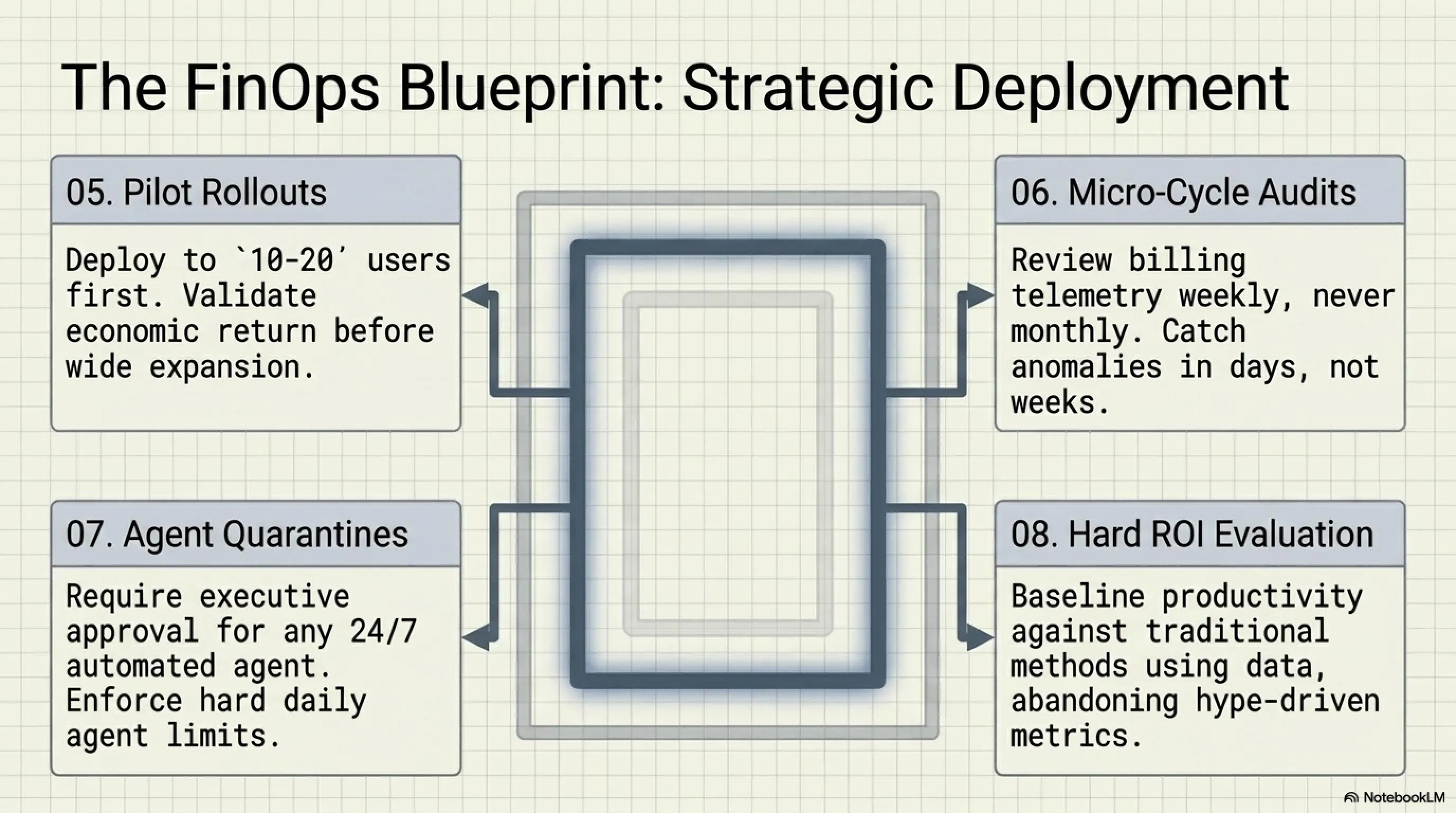
✅ 5. Gradual Rollout (Pilot)
• Start with 10-20 pilot users
• Measure actual costs and ROI
• Identify consumption patterns
• Expand only after economic validation
✅ 6. Weekly Bill Review
• Check bills weekly—not monthly!
• Identify concerning trends early
• Quick decisions to prevent crisis
• Adjust budget forecasts
✅ 7. Limit Automated Agents
• Management approval for 24/7 agents
• Daily cost cap per agent
• Automatic stop for high consumption
• Complete activity logging
✅ 8. Evaluate Real ROI
• Measure real productivity (not feelings!)
• Calculate value produced vs cost paid
• Compare with traditional methods
• Decide based on data—not hype
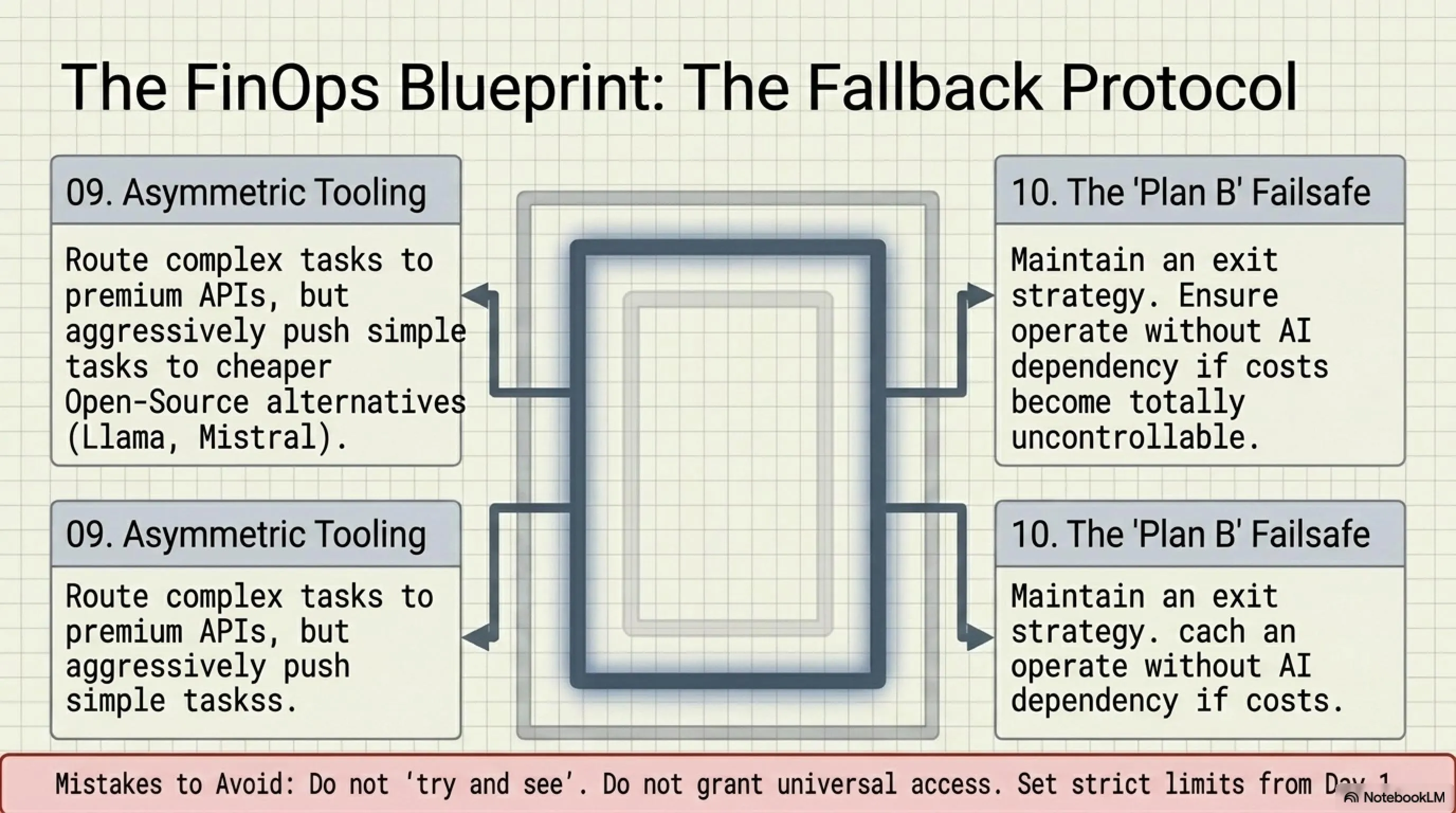
✅ 9. Explore Cheaper Alternatives
• Open-source models (like Llama, Mistral)
• Self-hosting on own infrastructure
• Internal company tools
• Combine different models based on task
✅ 10. Have Plan B Ready
• What if costs become uncontrollable?
• Team must be able to work without AI
• Exit strategy from dependency
• Backup plan for financial crises
⚠️ Common Mistakes to Avoid
❌ "Let's try and see" - Don't start without a plan!
❌ "Everyone should have AI" - Give selective access
❌ "We check bills once a month" - Monitor weekly!
❌ "AI means higher productivity" - Measure ROI
❌ "Employees will be careful" - Control systems needed
❌ "We'll set limits later" - Set caps from day one!
🔮 Conclusion: The Future of AI Economics - Sustainable or Unsustainable?
The $500 million bill saga and widespread AI license cancellations by tech giants raises one big question: Is the current AI economic model sustainable?
💭 Tekin's Predictions for 2026-2027
📉 Prediction 1: Price Cuts Are Inevitable
AI companies will be forced to reduce prices. When even Microsoft and Uber can't justify costs, the current pricing model is unsustainable. We expect token prices to drop 40-60% by end of 2026.
🔄 Prediction 2: Hybrid Subscription Models Emerge
Companies will seek more predictable pricing models. Anthropic and OpenAI will likely be forced to offer monthly subscription packages with token caps—e.g., $500/month for 1M tokens with reduced pricing for overages.
🏭 Prediction 3: Open-Source & Self-Hosting Growth
Major companies will move toward open-source models like Llama 4 and Mistral Large 3. With cheaper hardware (new NVIDIA/AMD GPUs), self-hosting becomes economically viable.
🎯 Prediction 4: Focus on Small, Efficient Models
Instead of using massive models for everything, companies will use small specialized models. For simple tasks, cheaper models; for complex tasks, powerful ones. This could reduce costs 70-80%.
⚖️ Prediction 5: Government Regulation Enters
With increasing cases like the $500M bill, governments will likely impose pricing transparency and unexpected bill protection regulations. Similar to consumer protection laws in telecom industry.
💡 Tekin's Final Analysis: What Should Be Done?
Do you think with these horrific costs, AI can truly fully replace employees, or will companies soon return to hiring human workers? Should employees definitely return to cheaper tools?
Our answer: AI is here to stay, but the current economic model is not!
AI is a powerful tool and can genuinely increase productivity—but not at current prices and not without solid financial governance. Companies must:
1. Use intelligently—not wastefully
2. Choose appropriate tools for each task—not the biggest model for everything
3. Constantly measure ROI—not just be excited
4. Move toward open-source and self-hosting—for cost control
5. Train employees—so they don't become dependent
AI isn't an endpoint—it's just a tool. And every tool must be used with calculation!
🔗 Complete Dossier: Related Articles on TekinGame
• Special Dossier: The Fall of Digital Fortresses; Autopsy of Microsoft Copilot Hack →
• Sakana AI Marlin Deep Dive: The $2.6B Virtual CSO Revolutionizing Deep Research →
❓ Why are AI costs so high?
AI operates on token-based pricing—meaning every input and output word costs money. When thousands of employees use it without limits, especially with automated agents and long prompts, costs explode exponentially. Unlike traditional SaaS with fixed monthly subscriptions, AI has no natural ceiling.
❓ Why did Microsoft cancel Claude Code?
Claude Code costs for Microsoft reached $500-$2,000 per engineer monthly—in some cases exceeding the engineer's salary! The annual AI budget was exhausted within 6 months. Microsoft decided to cancel licenses by June 30, 2026, and migrate employees to the internal GitHub Copilot CLI tool which costs less.
❓ How can companies prevent astronomical bills?
Companies must: (1) Set hard per-user spending caps, (2) Have real-time monitoring dashboards and automatic alerts, (3) Establish clear usage policies and employee training, (4) Start with small pilot groups and measure ROI, (5) Review bills weekly—not monthly, and (6) Limit automated agents.
❓ Is AI really worth this cost?
It depends! With smart usage, AI can boost productivity 20-30% and have positive ROI. But with wasteful usage, costs can exceed value produced. Keys to success: (1) Choose appropriate tools for each task, (2) Train employees, (3) Control consumption, and (4) Constantly measure ROI. Companies that proceed without planning usually face disaster.
❓ What will AI pricing look like in the future?
AI companies are expected to be forced to reduce prices (40-60%) and offer hybrid subscription models. Open-source models and self-hosting will also grow. Focus will shift toward small, efficient models to reduce costs. Government regulation for pricing transparency and unexpected bill protection will likely enter.
📚 Sources & References
• Axios — Enterprise client $500M Claude bill report (May 2026)
• Tom's Hardware — Mystery company $500M Claude spending (May 2026)
• Memeburn — Claude AI token pricing risk analysis (May 2026)
• BeInCrypto — Company accidentally burns $500M on Claude AI (May 2026)
• Enterprise DNA — Microsoft cancels Claude Code after budget overrun (May 2026)
• CloudZero — 10 AI coding tools compared post-Claude-crisis (June 2026)
• MSN — Microsoft cuts Claude Code licenses as AI costs bite (May 2026)
• Dapta.ai — Microsoft drops Claude Code over runaway costs (May 2026)
• Windows Forum — Microsoft's June 30, 2026 shift from Claude to Copilot CLI
• Medium — Microsoft dropping Claude Code internally (June 2026)
• Windows Central — Microsoft cancels Claude Code, financial motives (May 2026)
• The AI Enterprise — $500M Claude Bills and why FinOps matters (May 2026)
🌐 Stay Connected With Us 🎮✨
For the latest tech, gaming, and gadget news, follow us on our official social media channels:
Additional Gallery: 💰 The $500M AI Disaster: When a Company Goes Bankrupt on Artificial Intelligence! 🚨