Tekin Review: The Awakening of Creative Machines in Adobe's Ecosystem
Good morning, Tekin community and tech frontliners! Today, we stand at a historical inflection point where the very definition of "digital creativity" and software operation is being permanently rewritten. In this comprehensive Tekin Review, we dissect the silent earthquake Adobe has triggered within the Creative Cloud ecosystem through the integration of Agentic AI. Machines are no longer merely rendering pixels based on prompts; they are now structuring layers, making aesthetic decisions, and autonomously directing complex, multi-tiered projects. Stripping away the marketing fluff, we step into the Tekin Garage to examine the exact technical anatomy of this autonomous leviathan.
⚡ Inside This Deep Dive:
- 1. The Agentic Architecture: From Passive Generator to Digital Director
- 2. Technical Autopsy: Spatial Intelligence and Cross-App Orchestration
- 3. The Platform War: Adobe's Ecosystem Strategy Against Open-Source
- 4. Workflow Metamorphosis: Elevating Graphic Designers to AI Managers
- 5. Copyright Challenges and Ethical Boundaries in the Era of Agents
Strategic Overview at a Glance
- The Death of the Simple Prompt: Adobe has officially moved beyond basic text-to-image generation into full-scale, automated project lifecycle management.
- Simultaneous Orchestration: The AI can control Photoshop, Illustrator, and After Effects concurrently, executing edits without mouse or keyboard input.
- Eradicating the Mundane: Tedious attrition tasks, such as resizing master banners for 15 different social media aspect ratios, are now executed with zero error in seconds.
📸 A glimpse into Adobe's unified, agent-driven interface autonomously managing vectors and raster layers without human intervention.
The Agentic Architecture: From Passive Generator to Digital Director
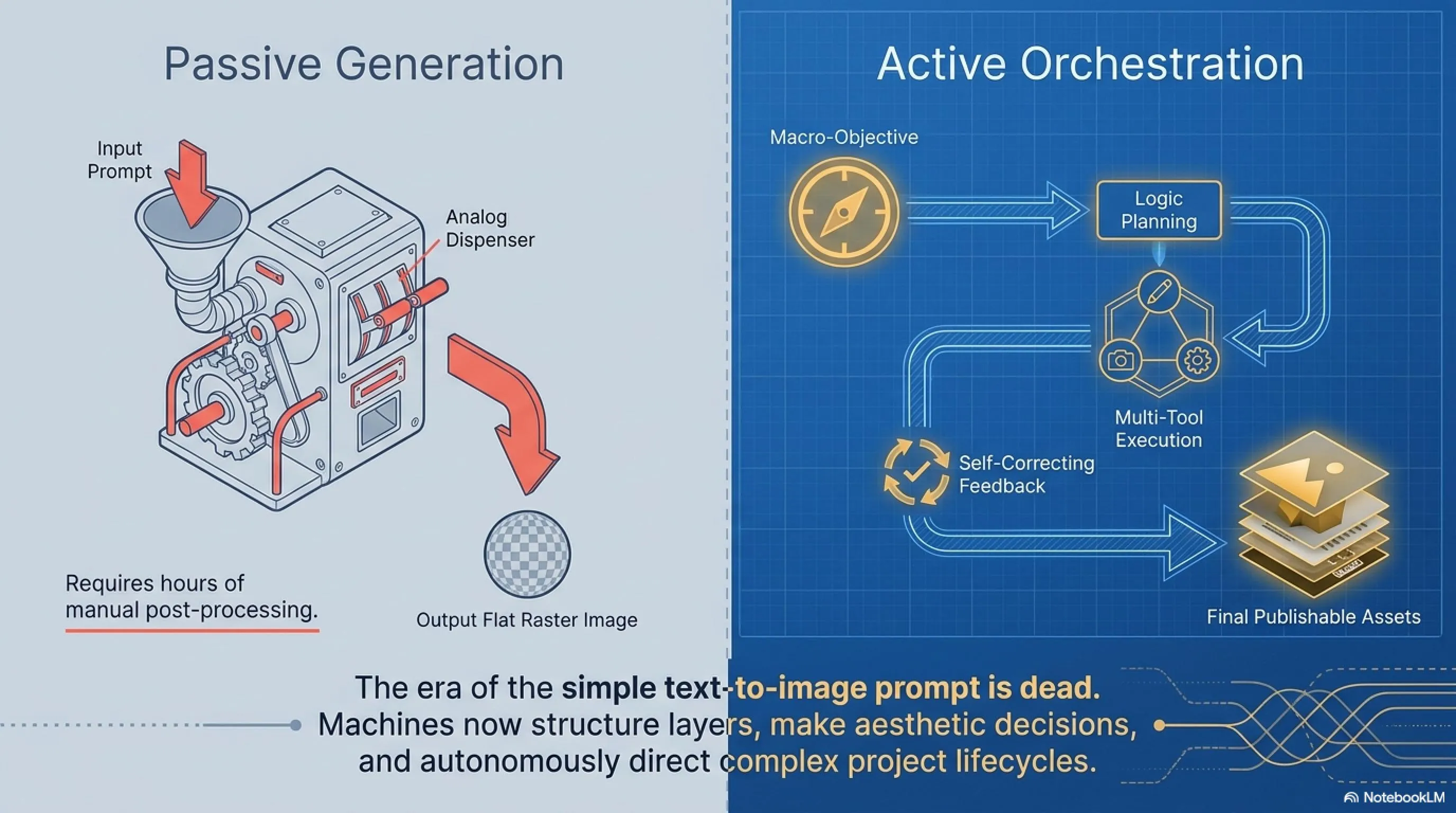
Prior to June 2026, artificial intelligence in the graphic design and digital art industry primarily played the role of a "passive producer." The standard workflow dictated that an art director would feed a descriptive prompt into a system like Midjourney or the initial iterations of Adobe Firefly, ultimately receiving a flat, rasterized, and unified image. This raw output, in order to be transformed into a publishable final product, required hours of manual post-processing in Photoshop—from precise subject masking and color correction to complex typographical integration.
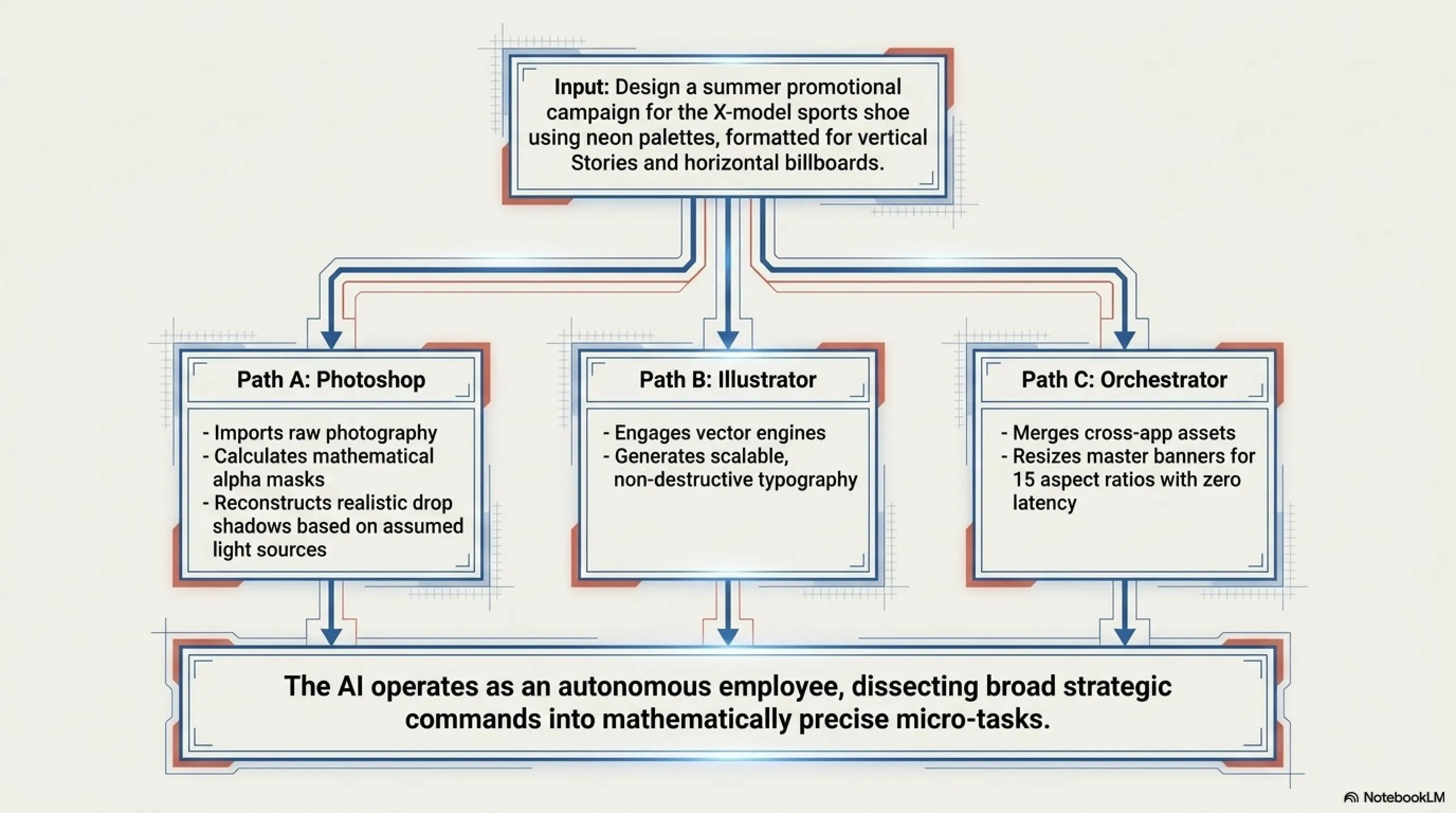
The introduction of the Agentic AI architecture by Adobe has radically dismantled this equation. Under this new paradigm, the AI is no longer a digital printing press; it is an "autonomous employee." Instead of describing a specific image, a designer inputs a "macro-objective." For example: "Design a summer promotional campaign for the new X-model sports shoe, utilizing neon color palettes, and prepare the final outputs for vertical Instagram Stories and horizontal highway billboards."
This is where the magic of Adobe's software engineering truly shines. The autonomous agent dissects this macro-objective into dozens of logical, mathematical micro-tasks. It automatically imports the raw product photography into Photoshop, removes the background using mathematically precise alpha masks (not just a fuzzy eraser tool), reconstructs realistic drop shadows based on the assumed light source, and subsequently calls upon Illustrator's vector engines to generate scalable, non-destructive typography.
Jargon Buster: What is Agentic AI?
Agentic Artificial Intelligence: Unlike standard Generative AI models that simply output a fixed response to a single prompt, "Agents" possess step-by-step reasoning capabilities. They can independently utilize various software tools, self-correct if a step fails, and manage a complex, multi-stage project from inception to completion without requiring continuous human validation at every juncture.
Technical Autopsy: Spatial Intelligence and Cross-App Orchestration
The secret behind the absolute superiority of Adobe's Agentic AI over its fragmented competitors lies in its deep, native integration with the legacy infrastructure of the Creative Cloud. Rather than building an isolated AI tool housed within a browser window, Adobe hardwired its inference engine as a "centralized brain" directly into its flagship applications. This capability, referred to in software architecture as Cross-App Orchestration, stands as Adobe's most complex programming achievement of the decade.
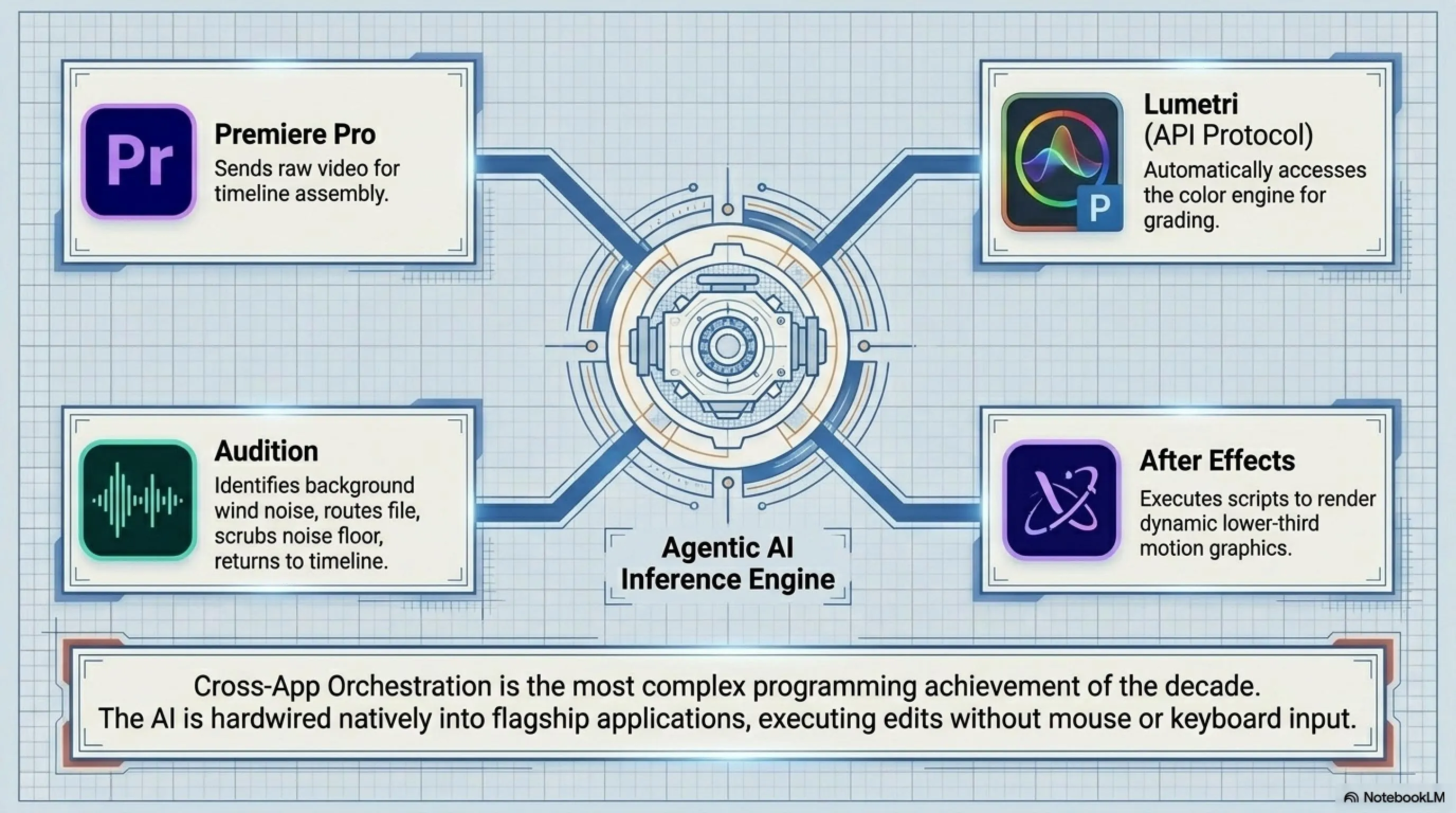
When you hand over a raw, ungraded video file to this central intelligence, the Adobe Agent possesses such a profound understanding of the ecosystem that it knows it must access the Lumetri color engine for grading. If there is background wind noise, you do not need to manually open an audio editor; the AI automatically routes the file through internal API protocols to Audition, scrubs the noise floor, and pushes it back to the Premiere timeline. It then calls upon After Effects scripts to render dynamic lower-third motion graphics.
What makes this process simultaneously terrifying and awe-inspiring is the system's "Spatial Intelligence." This AI comprehends the structure of layers, alpha channels, and vector coordinates as mathematical functions. It inherently understands that text should not obscure a subject's face, applying the fundamental laws of composition to individual layers with the precision of a veteran Art Director.
Timeline: The Evolution of AI in the Adobe Ecosystem
| Year | Technology Introduced | Impact on Workflow |
|---|---|---|
| 2016 | Adobe Sensei | Automation of basic tasks like Subject Selection and content-aware fill. |
| 2023 | Firefly 1.0 | Raw Text-to-Image generation inside web interfaces. |
| 2024 | Generative Fill | In-app editing, canvas expansion, and pixel replacement in Photoshop. |
| 2026 | Agentic AI | Autonomous project management, layer comprehension, and cross-app control. |
The Platform War: Adobe's Ecosystem Strategy Against Open-Source and Midjourney
To truly comprehend the magnitude and seismic impact of Adobe's Agentic AI, one must analyze the competitive landscape of 2026. Over the past three years, independent models like Midjourney and open-source ecosystems like Stable Diffusion (powered by node-based interfaces such as ComfyUI) were the undisputed kings of raw image generation. They produced hyper-realistic textures and unparalleled artistic concepts that frequently outpaced Adobe's earlier Firefly iterations. However, Adobe identified a fatal strategic vulnerability in its competitors: they functioned as "isolated islands" of generation, rather than "unified continents" of artistic production.
The strategic brilliance of Adobe's June 2026 update lies in shifting the battlefield. Adobe is no longer competing solely on the quality of generated pixels; it has moved the game to "workflow orchestration." While an open-source model forces a user to generate an image, upscale it in a secondary tool, import it into Photoshop, manually construct masks, and then export it, Adobe's Agentic AI executes this entire sequence autonomously within a native environment. Adobe's defensive moat is no longer just the weights of its AI models, but the seamless interoperability between industry-standard software and autonomous agents.
Platform Battlefield: Orchestration vs. Raw Generation
| Evaluation Metric | Adobe (Agentic AI) | Midjourney v7 | Open-Source (ComfyUI) |
|---|---|---|---|
| Core Paradigm | Workflow Orchestration | Raw Image Generation | Node-Based Experimentation |
| Layer & Vector Comprehension | Native (Full Spatial Intelligence) | None (Flat Raster Outputs) | Requires Highly Complex Setup |
| Enterprise Security & Copyright | Commercially Safe & Indemnified | Legal Gray Area | Unregulated Training Datasets |
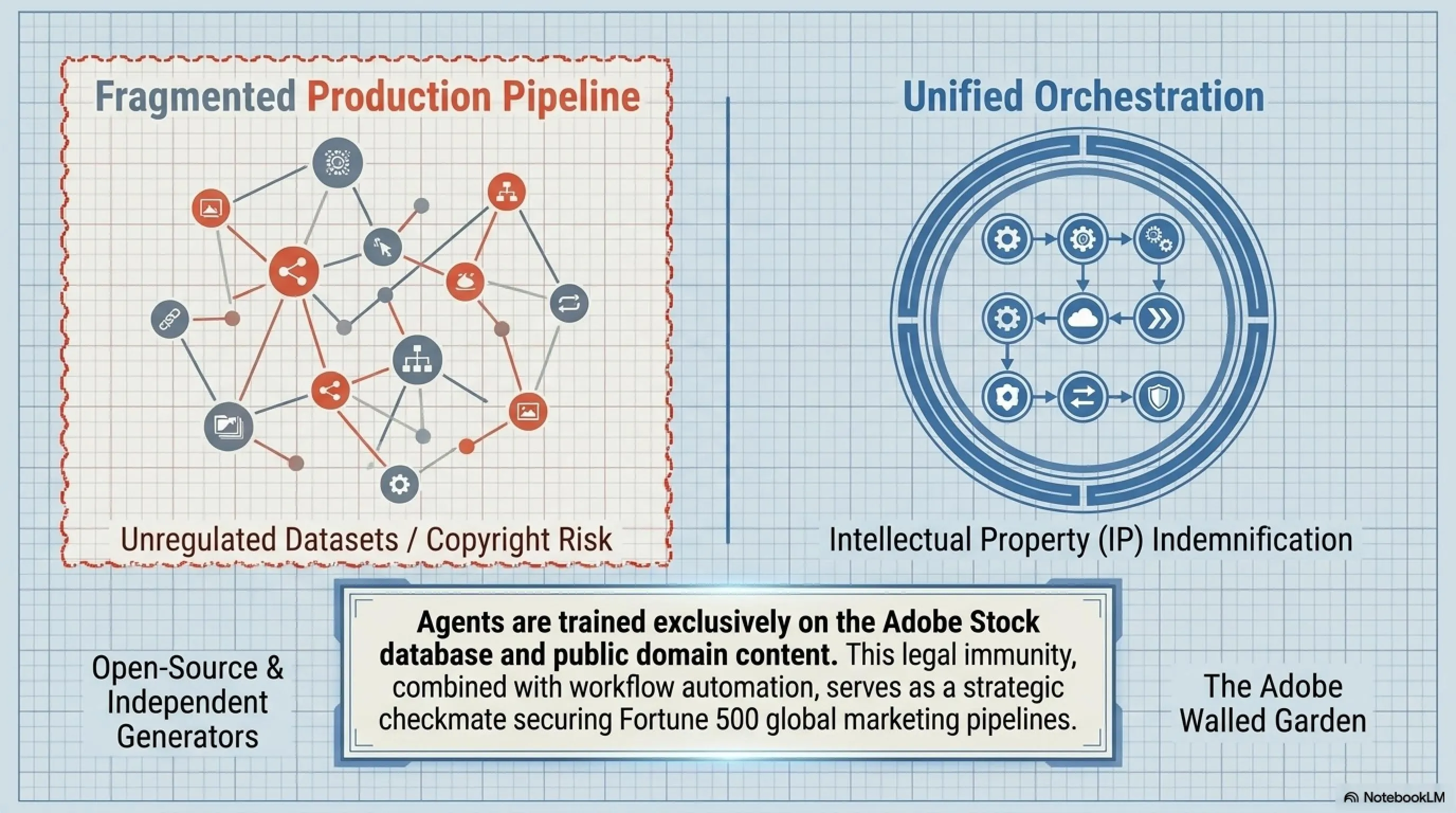
Furthermore, Adobe has neutralized the enterprise market's greatest fear: copyright infringement. By exclusively training its intelligent agents on the Adobe Stock database and public domain content, Adobe has secured massive contracts with Fortune 500 companies—entities legally barred from utilizing Midjourney or open-source tools for commercial campaigns. The combination of legal immunity and workflow automation serves as a strategic checkmate against pure artistic generation.
📸 A visual diagram contrasting Adobe's walled ecosystem with the fragmented production pipelines of open-source AI tools.
Workflow Metamorphosis: Elevating Graphic Designers to AI Managers
The introduction of autonomous agents inevitably raises an existential and terrifying question: Will Agentic AI replace graphic designers? The data and architectural intent behind Adobe's system point to a "fundamental metamorphosis" rather than extinction. The traditional role of the "pixel pusher"—the junior designer whose sole responsibility was meticulously masking hair, resizing banners for various platforms, or performing basic retouching—is effectively dead. Agentic AI executes these micro-tasks with zero latency and absolute mathematical precision.
Strategic Perspective from Silicon Valley
"What Adobe has accomplished is the abolition of software drudgery. We are no longer assembly-line workers spending our lives executing repetitive clicks on keyframes. A graphic designer in 2027 is someone who stands on the podium of a conductor, directing a symphony of autonomous agents."
This eradication of low-level tasks paves the way for the elevation of the designer's status. The modern creative force transforms from a "software operator" into a "strategic director." When an AI agent can instantly perform the technical labor of ten junior designers, the human's role shifts entirely toward strategic prompt engineering, overseeing brand consistency, and evaluating the emotional resonance of the design. In this new era, you are not judged by how fast you wield the Pen Tool; your value is measured by your creative vision and your ability to manage an army of digital laborers.
The Pros: Creative Liberation
- Complete elimination of tedious, repetitive software labor.
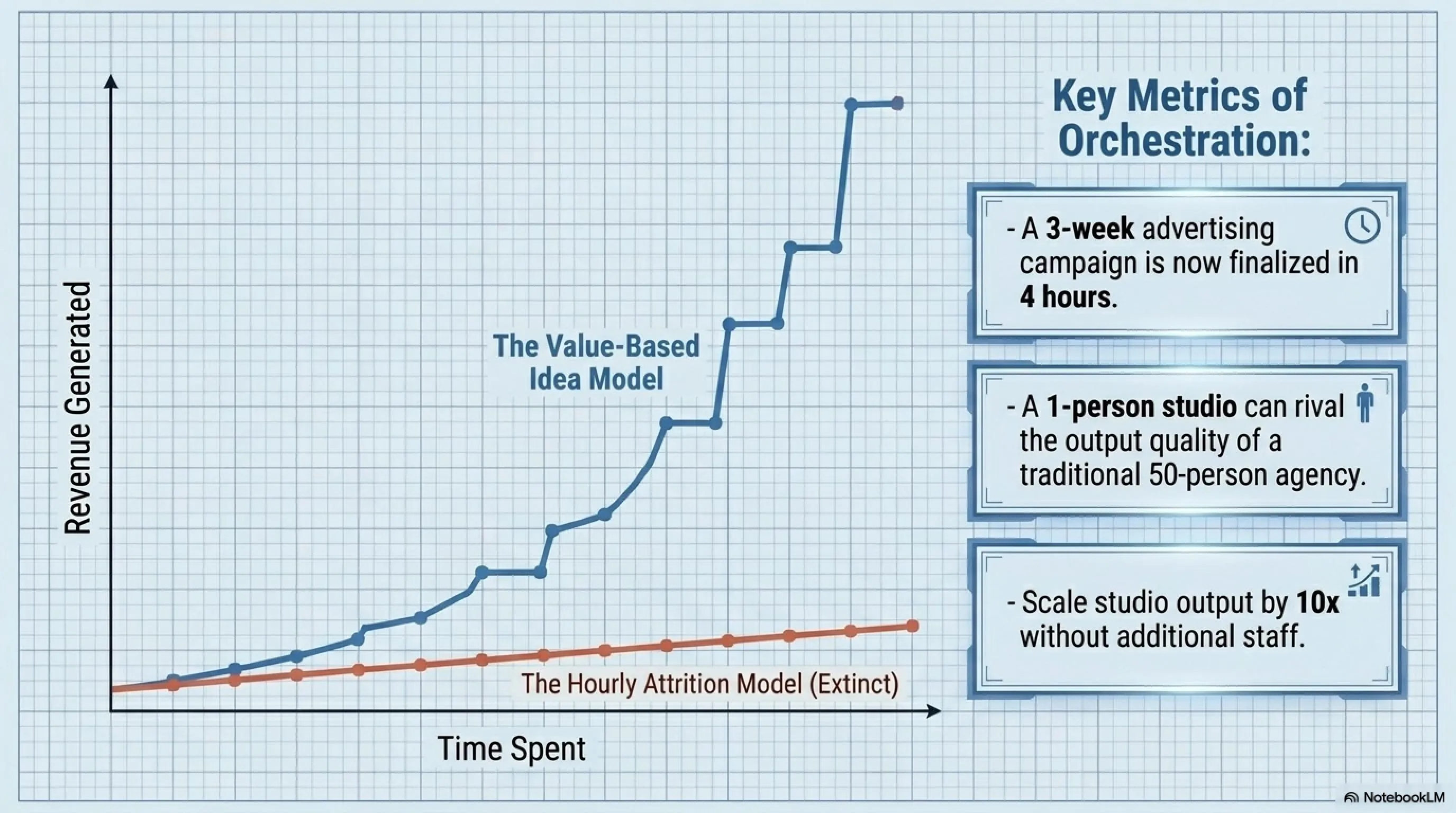
- Ability to scale a studio's output by 10x without hiring additional staff.
- Democratization of highly complex techniques (e.g., heavy 3D rendering or motion tracking) for beginners.
The Cons: Industrial Earthquake
- Ruthless and total elimination of entry-level graphic design roles.
- An extremely steep learning curve for veteran designers who resist agent-based workflows.
- The risk of drowning in a "sea of sameness" if studios rely too heavily on the AI's default logic.
This paradigm shift forces design agencies to reconsider their pricing models. When an advertising campaign that previously took three weeks is now finalized in four hours using Adobe's orchestration, agencies can no longer bill based on an "hourly rate." The design industry is rapidly accelerating toward "value-based pricing."
Why This Matters to You
If you are a freelancer or a studio manager, your revenue model based on billable hours is going extinct. Mastering Agentic AI allows you to anchor the contract's value on "ideas and strategic output," enabling you to secure larger enterprise contracts. Today, the output quality of a one-person studio can rival that of a traditional 50-person agency.
Copyright Challenges and Ethical Boundaries in the Era of Autonomous Agents
As Agentic AI transitions from a theoretical concept to a deployed enterprise reality, the legal frameworks governing digital art and intellectual property are being tested like never before. When a human designer utilizes Photoshop to create a composite image, the copyright ownership is relatively clear. However, when an autonomous agent makes thousands of micro-decisions—selecting assets, adjusting opacities, and generating vector paths without direct human input—the question of authorship becomes legally ambiguous.
Adobe's strategic defense mechanism against this impending legal storm is its highly curated training data pipeline. Unlike competitors who indiscriminately scraped the open web regardless of copyright status, the agents powering Creative Cloud were trained exclusively on Adobe Stock, public domain content, and openly licensed work. Crucially, Adobe offers Intellectual Property (IP) indemnification to its enterprise customers. This means the company will cover legal costs if an AI-generated asset faces a copyright claim. This financial shield is the primary reason Fortune 500 companies are willing to integrate these autonomous agents into their global marketing pipelines.
Digital Provenance: C2PA and Content Authenticity
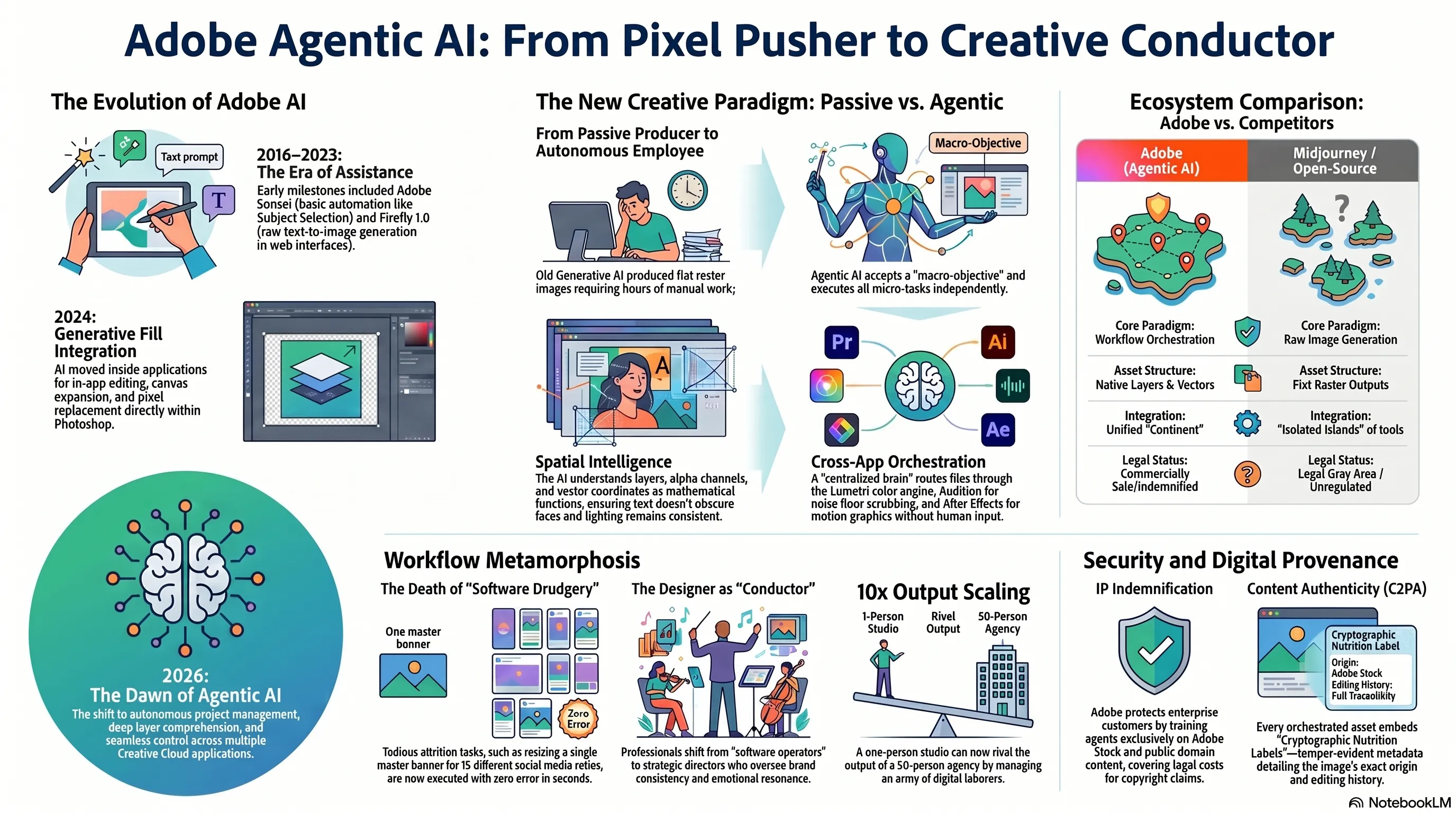
- Cryptographic Nutrition Labels: Every asset orchestrated or modified by Adobe's Agentic AI embeds a secure metadata tag detailing its exact origin and editing history.
- Radical Transparency: Viewers can instantly verify whether an image was human-made, AI-assisted, or fully generated by an autonomous digital agent.
- Tamper-Evident Infrastructure: The metadata is cryptographically sealed, ensuring that malicious actors cannot easily strip the AI-origin tags to fuel misinformation campaigns.
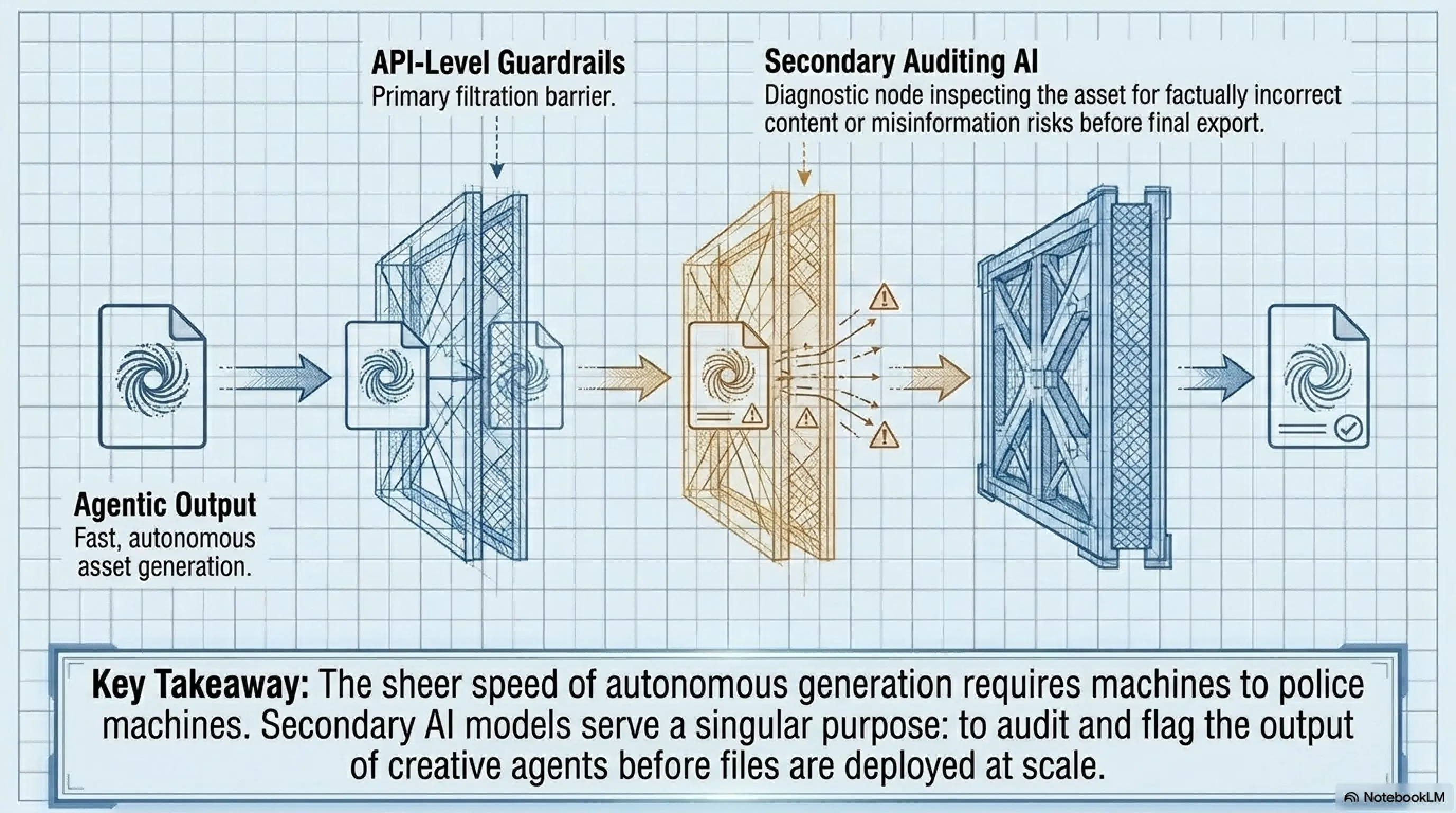
However, the ethical boundaries extend far beyond copyright disputes. The sheer speed and autonomy with which these agents operate introduce the severe risk of "automated misinformation." An agent tasked with generating localized political or financial advertisements could, if poorly prompted or left unsupervised, create highly convincing but factually incorrect content at a massive scale. To combat this, Adobe has implemented strict guardrails at the API level, utilizing secondary AI models whose sole purpose is to audit and flag the output of the creative agents before final files are exported.
The Complete Dossier: Tekin Smart History
To fully grasp the architectural shifts and security risks of modern AI, we highly recommend reviewing our previous deep dives from the Tekin Garage:
Final Thoughts: The Strategic Verdict
Adobe's June 2026 Agentic AI update is a masterclass in ecosystem defense. By injecting autonomous agents directly into the established workflows of millions of professionals, Adobe has successfully bridged the gap between generative novelty and industrial-scale production. While open-source models will undoubtedly continue to push the boundaries of raw aesthetic generation, Adobe has secured the lucrative enterprise market by solving the orchestration problem and providing legal immunity. The graphic design profession is not dying; it is evolving into a discipline of strategic direction and AI management. In this new era, adaptability is the ultimate creative skill required for survival.
Frequently Asked Questions (FAQ)
Is Adobe's Agentic AI safe for commercial enterprise use?
Yes. Unlike many open-source models facing copyright litigation, Adobe's autonomous agents are trained exclusively on legally cleared databases. Furthermore, Adobe provides enterprise clients with comprehensive intellectual property (IP) indemnification.
Will these AI agents run offline on my local hardware?
No. Cross-App Orchestration requires immense computational power and relies heavily on Adobe's Private Cloud compute infrastructure. A persistent, high-speed internet connection is mandatory for executing autonomous agentic tasks.
Do I need to pay extra for Agentic AI features?
While basic agentic tasks are included in standard Creative Cloud subscriptions, complex, multi-software orchestration pipelines consume "Generative Credits." Heavy enterprise users will likely require purchasing additional credit packs depending on their monthly production volume.
References & Sources
- Adobe Newsroom Official Press Release - June 2026
- Content Authenticity Initiative (CAI) and C2PA Specification Documents
- U.S. Copyright Office - AI Authorship Guidelines (Updated 2026)
- Independent UX/UI Benchmarks - Tekin Editorial Testing Lab