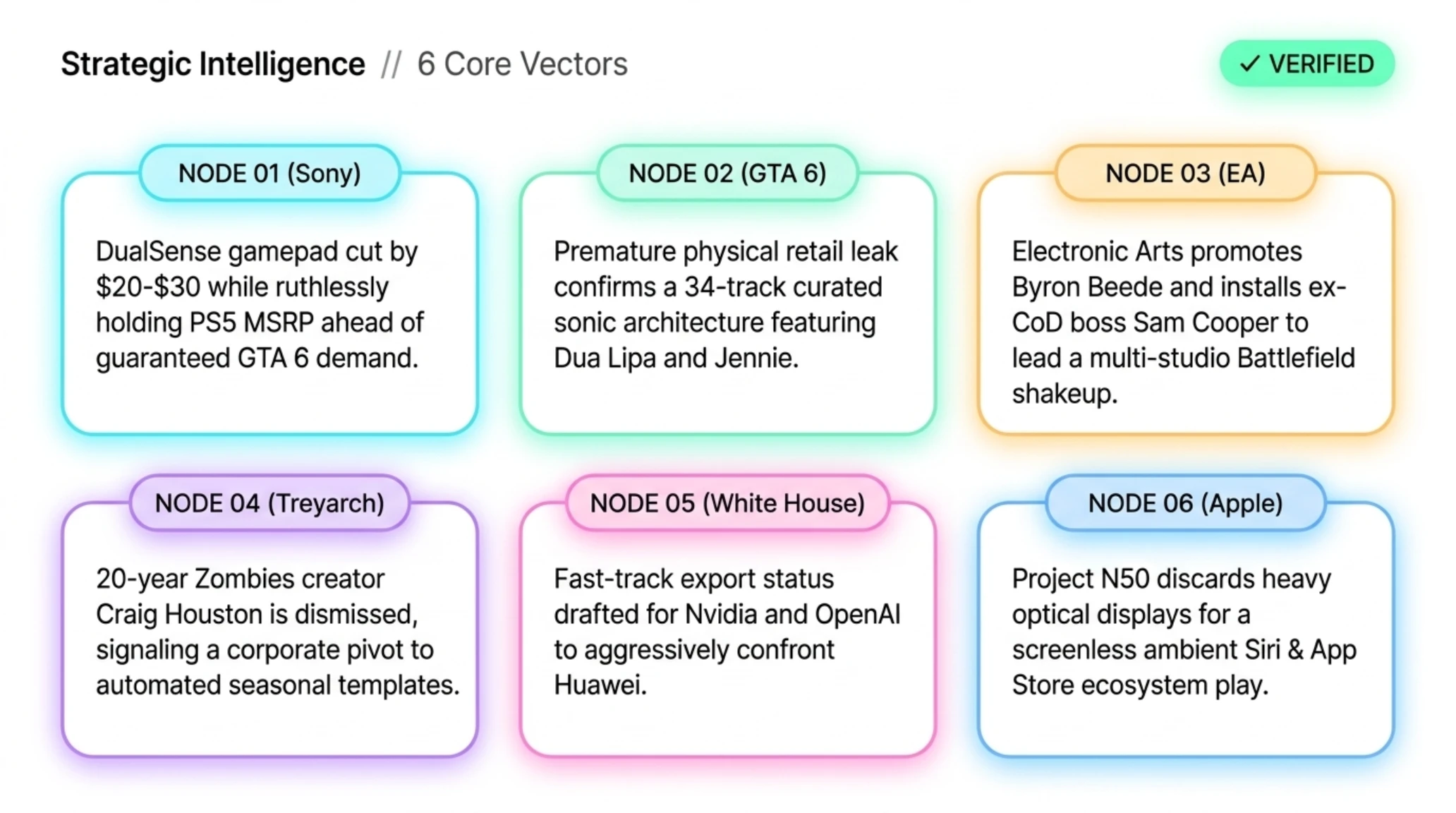
Tekin Morning Executive Briefing for Tuesday, November 17, 2026, dissects six pivotal convergences: (1) Sony's Black Friday strategy cutting DualSense by $20 and physical discs to $49.99 while holding PS5 MSRPs ahead of GTA 6; (2) premature vinyl shipments revealing the 34-track double-LP for GTA 6: The Album featuring Dua Lipa, Lana Del Rey, Jennie, and Travis Scott; (3) EA appointing ex-CoD chief Sam Cooper to lead Battlefield Studios; (4) Treyarch laying off Zombies creator Craig Houston; (5) the White House AI National Champions initiative; and (6) Apple's screenless N50 audio glasses.
Tekin Morning | November 17, 2026: Sony Black Friday DualSense Cut, Leaked GTA 6 Vinyl LP, Battlefield Shakeup, White House AI Champions & Apple N50
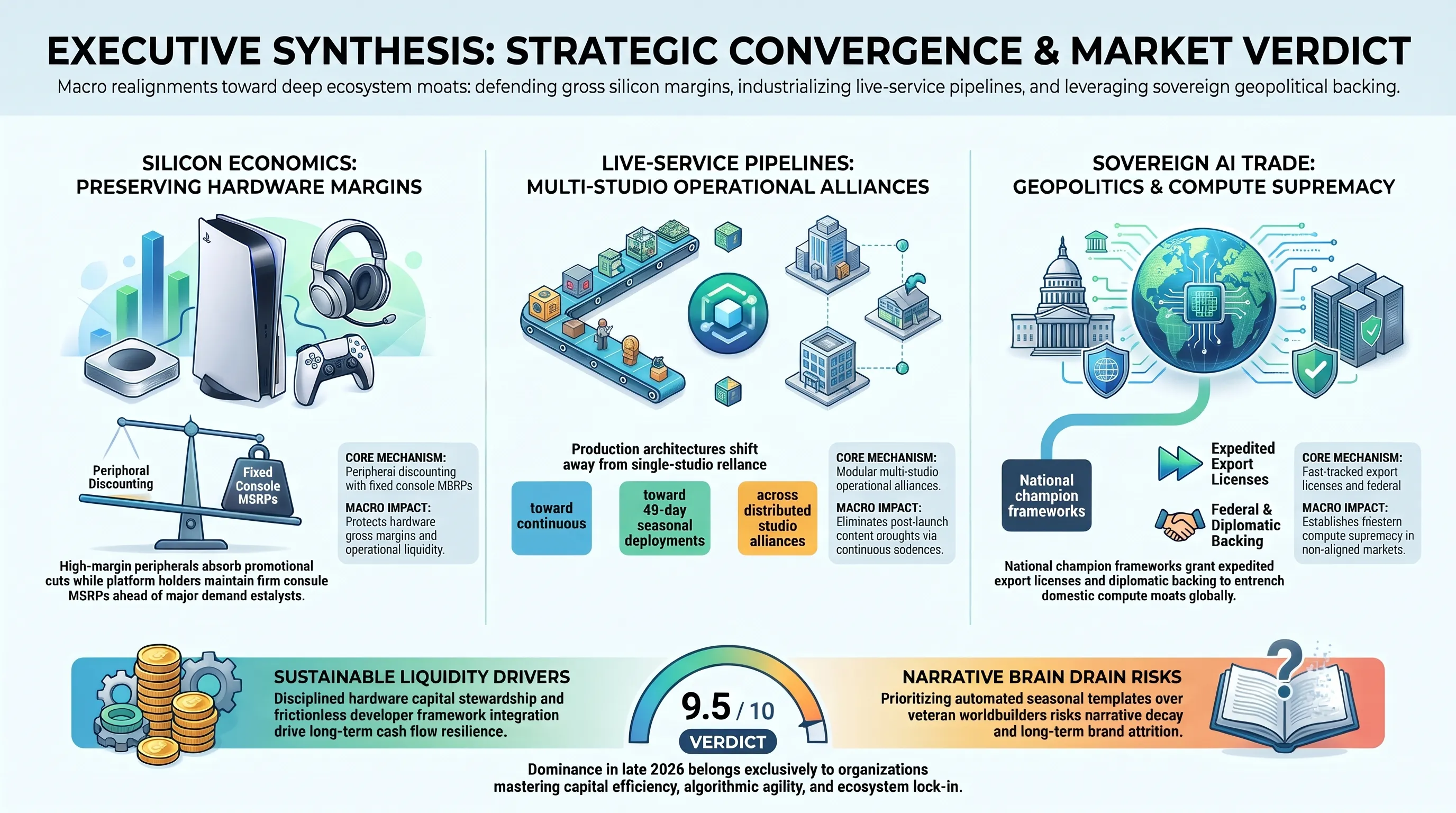
The dawn of Tuesday, November 17, 2026, marks a pivotal inflection point across global technology and interactive entertainment markets. As institutional capital prepares for the annual consumer shopping season, boardrooms across Tokyo, Silicon Valley, and Redmond are rewriting traditional playbook assumptions. Rather than engaging in margin-diluting price wars or speculative hardware moonshots, enterprise leaders are ruthlessly executing ecosystem lock-in, protecting silicon profitability, and weaponizing legacy developer moats against aggressive challengers.
In this morning's edition of Tekin Morning, we bypass superficial public relations disclosures to conduct rigorous, multi-axis technical audits of six seismic developments. From Sony's calculated refusal to discount PlayStation 5 hardware ahead of Grand Theft Auto VI's tidal wave to an unprecedented vinyl leakage confirming a 34-track collaborative pop masterpiece, Electronic Arts poaching Activision's top live-service architect to steer Battlefield, the quiet dismissal of Call of Duty's legendary narrative director, Washington's national champions industrial policy for frontier AI, and Apple's decisive abandonment of heavy AR visors in favor of audio-driven App Store ambient interfaces, each development reflects deep tectonic realignments.
Strategic Intelligence Assessment and Key Vectors at a Glance
Sony PlayStation Black Friday 2026 Strategy: Aggressive Peripheral and Software Discounts While Preserving PS5 Hardware MSRPs Ahead of GTA 6
Sony Interactive Entertainment (SIE) officially rolled out its 2026 Black Friday promotional catalog across North America, Europe, and Asia-Pacific markets this morning. While holiday discount cycles typically witness platform holders slashing base console prices to capture hardware market share, Sony's executive leadership has executed an asymmetrical pricing strategy that reflects complete confidence in upcoming macroeconomic catalysts.
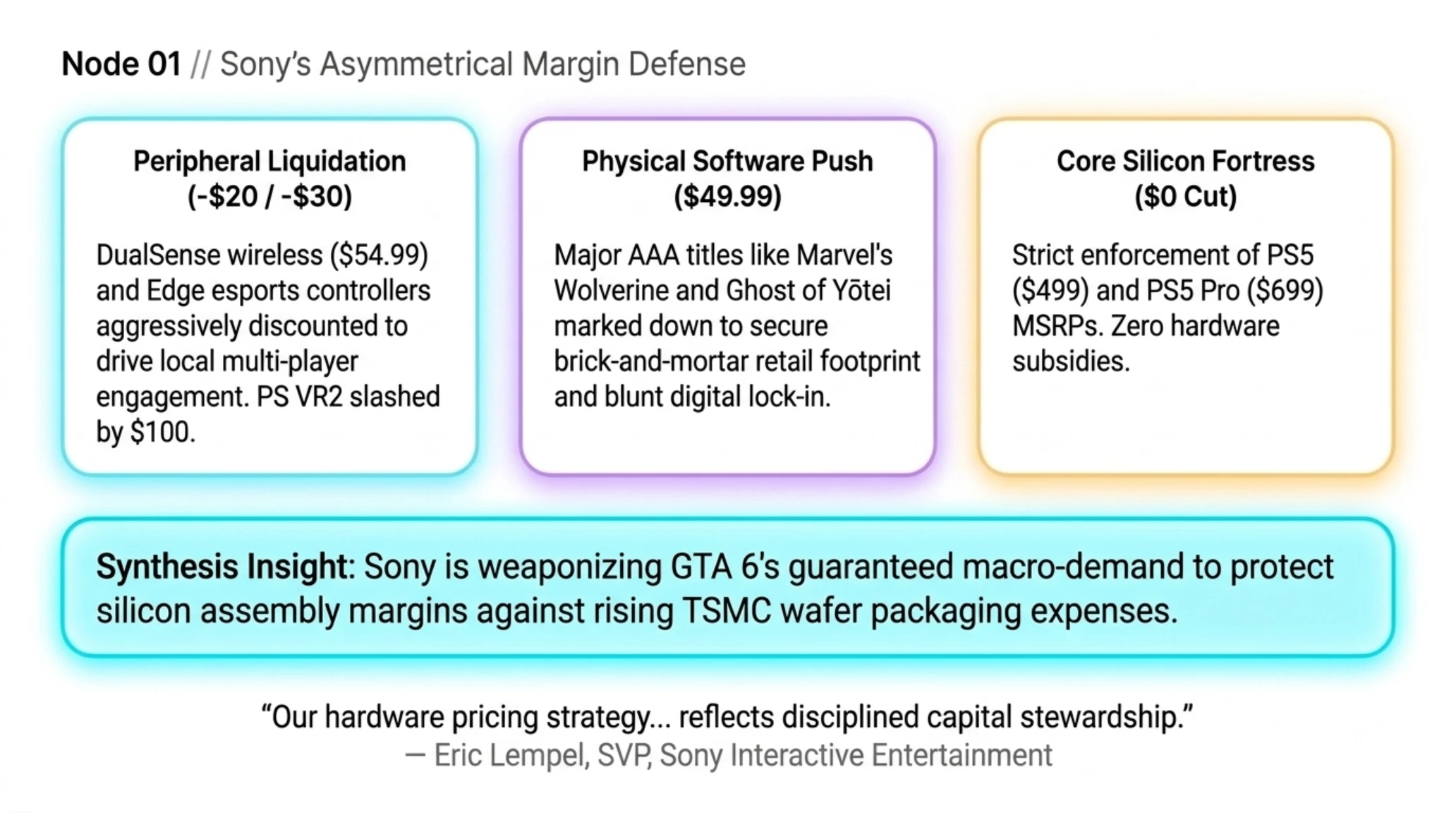
As documented in retail channel audits and confirmed by IGN, Sony is deploying steep promotional cuts across high-margin peripherals and physical software inventory. Standard DualSense wireless controllers are seeing an across-the-board $20 discount, bringing entry points down to $54.99 across core and specialty colorways. The premium DualSense Edge esports controller receives a $30 price reduction, while the PlayStation VR2 headset is marked down by $100 in an aggressive bid to liquidate warehouse inventory prior to fiscal year-end accounting.
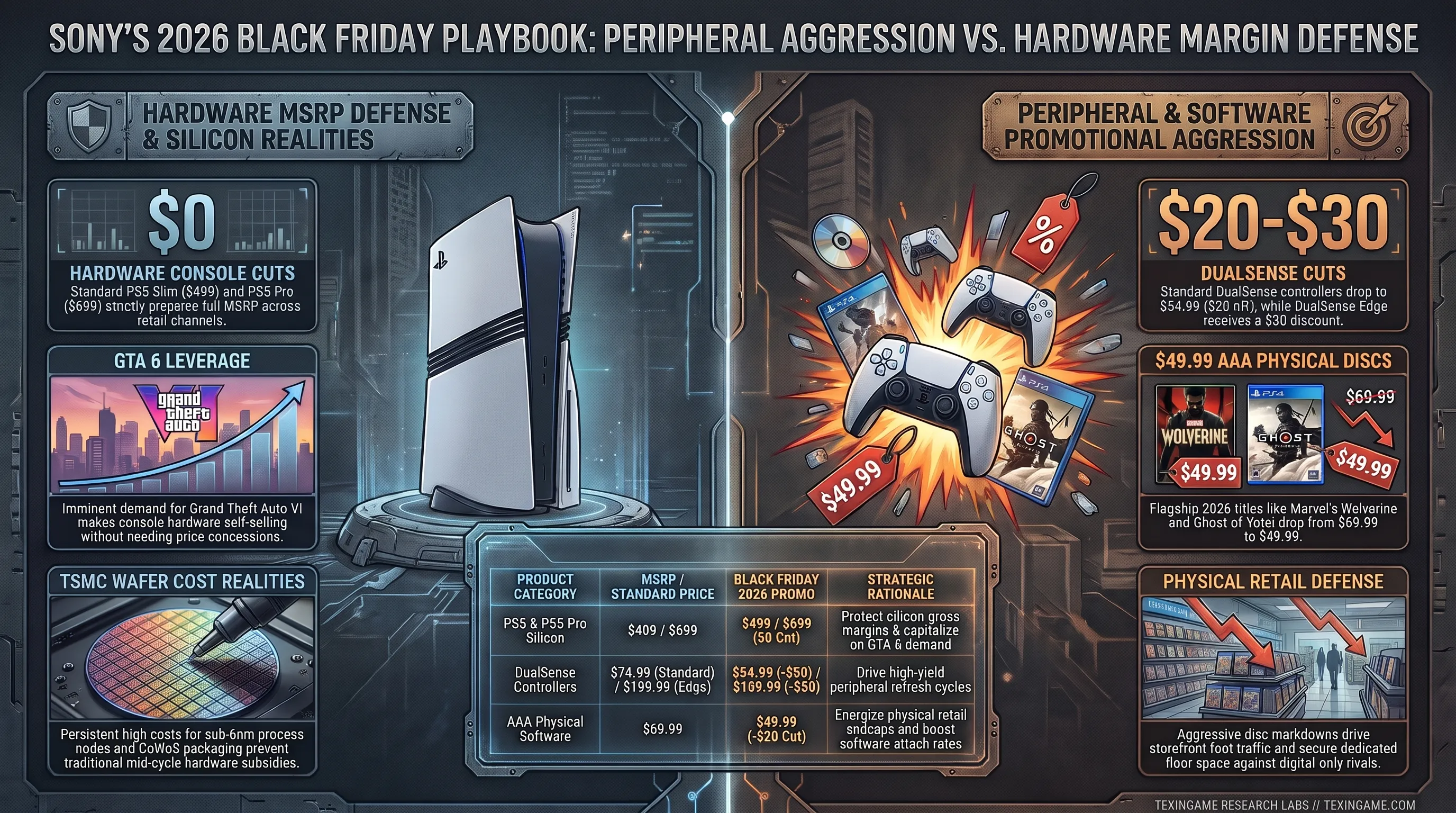
Crucially, physical media distribution is receiving unprecedented retail support. Major 2026 first-party and partner releases most notably Marvel's Wolverine, which launched earlier this autumn at the standard $69.99 pricing tier have been slashed to $49.99 across major storefronts including Amazon, Best Buy, and Target. High-profile releases such as Ghost of Yōtei and Saros are similarly discounted by $15 to $20, creating an undeniable incentive for consumers to maintain physical optical drive attachments.
In stark contrast, neither the standard PlayStation 5 Slim nor the newly launched PlayStation 5 Pro feature any direct hardware MSRP cuts. Retailers are strictly bound to existing $499 and $699 price points, with promotions limited entirely to software bundle pack-ins and accessory attachments. This disciplined stance shatters historical precedent where mid-cycle consoles routinely absorbed $50 to $100 price concessions to clear manufacturing volume.
WHY THIS BREAKTHROUGH ALTERS THE ECOSYSTEM
Wall Street equity analysts view Sony's posture as a masterclass in macroeconomic leverage. With Grand Theft Auto VI scheduled for its long-awaited worldwide rollout, millions of consumers across global markets face a binary reality: upgrade to current-generation silicon immediately or miss the defining entertainment event of the decade. Sony understands that consumer demand elasticity is heavily skewed; purchasers will buy PlayStation 5 hardware at full retail value simply to secure day-one access.
By absorbing discounts entirely within high-margin accessories and digital software where marginal reproduction costs approach zero, Sony preserves cash flow to offset rising TSMC wafer packaging expenses and elevated memory procurement costs for the PS5 Pro's custom APU. This calculated maneuver positions the PlayStation division to capture record-breaking software attach rates without bleeding hardware subsidies into retail channels.
Furthermore, the aggressive markdown on physical discs serves a vital defensive purpose against fully digital platform lock-in. By energizing brick-and-mortar retail channels and giving major distributors healthy software turnover, Sony keeps traditional storefronts invested in dedicated floor space for PlayStation branding, blunting competitive hardware placement heading into 2027.
From an enterprise supply-chain perspective, Sony's reluctance to discount the PlayStation 5 chassis reflects the stubborn structural realities of advanced semiconductor fabrication. In prior console generations, shrinking manufacturing geometries (from 90nm to 65nm, or 28nm to 16nm) yielded massive per-die cost reductions, enabling aggressive mid-cycle retail markdowns. In the current era, however, TSMC's sub-6nm process nodes and sophisticated CoWoS packaging carry stubbornly high wafer prices that do not decline predictably over time. Under Chief Financial Officer Hiroki Totoki's analytical stewardship, Sony Interactive Entertainment has decisively abandoned historical loss-leading console subsidies in favor of disciplined hardware gross-margin sustainability.
Instead, the platform holder is leveraging its extensive peripheral ecosystem as the primary consumer acquisition vector. The DualSense wireless controller discounted across all core, Galactic, and metallic colorways represents an ideal promotional instrument: it yields strong manufacturing yields, carries healthy retail markups even at $54.99, and directly drives local multi-player engagement and peripheral refresh cycles. By pairing controller markdowns with heavily advertised $49.99 AAA physical discs like Marvel's Wolverine and Ghost of Yōtei, Sony secures prime retail endcap visibility across Walmart, Target, and European consumer electronics giants like MediaMarkt and Fnac. This approach satisfies wholesale merchant volume requirements while preserving console revenue integrity ahead of Grand Theft Auto VI's unprecedented hardware refresh wave.
Premature Vinyl Retail Shipments Expose Full 34-Track Masterpiece for GTA 6: The Album (Dua Lipa, Lana Del Rey, Jennie, Travis Scott)
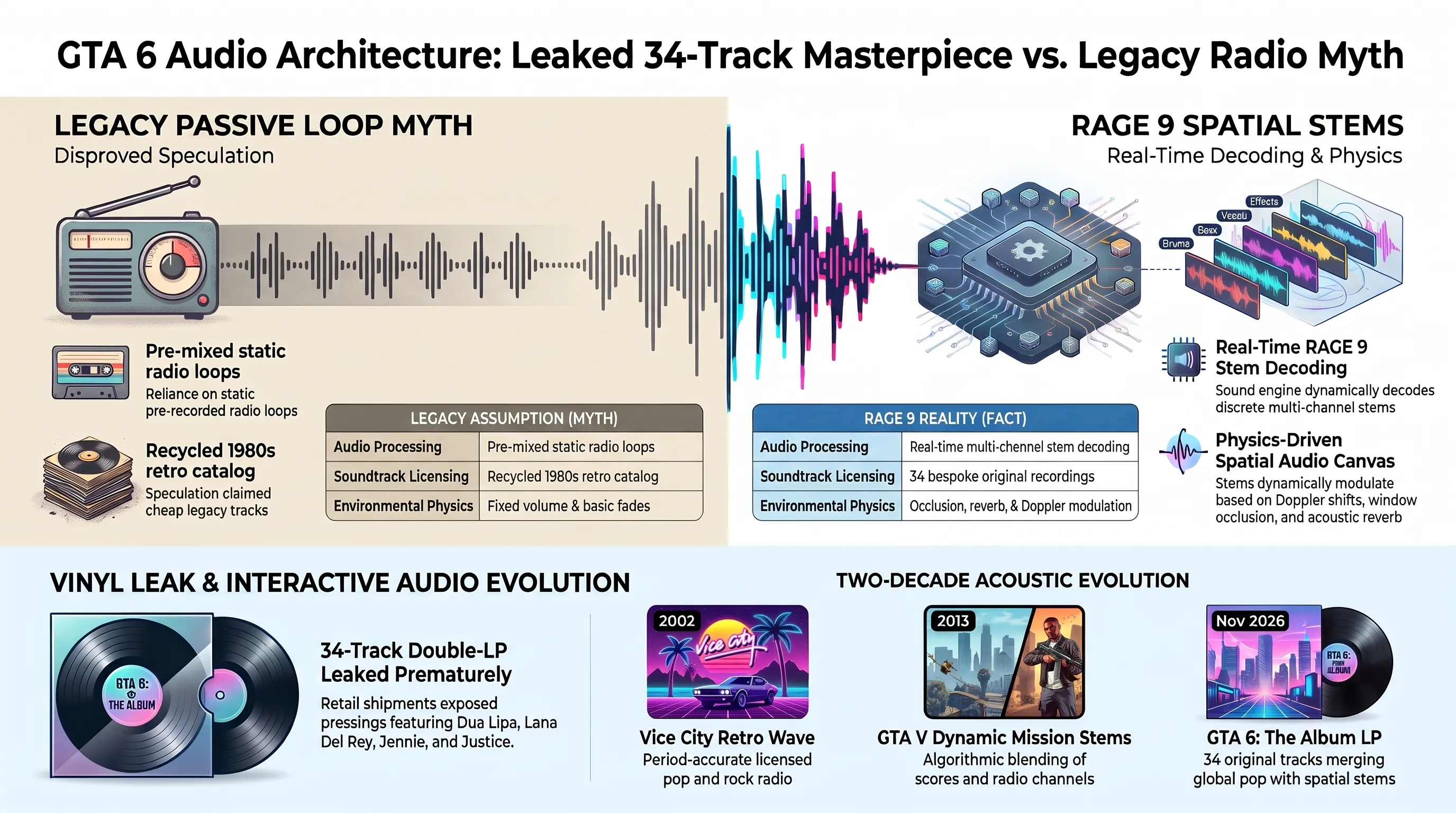
In what represents one of the most culturally significant leaks in modern interactive media history, physical distribution logistics have once again circumvented the strict operational security protocols of Rockstar Games and Take-Two Interactive. Early shipments of the physical double-LP vinyl pressing titled 'GTA 6: The Album' arrived prematurely at independent and specialty music record stores across European and North American territories, exposing the complete 34-track curated master recording tracklist across all four vinyl sides.
First reported by Eurogamer and corroborated by Rolling Stone and GamesRadar, the verified tracklist confirms that Rockstar Games has constructed an audio production pipeline rivaling the largest Hollywood blockbuster soundtrack budgets in history. Far exceeding customary background atmospheric scoring, the project features bespoke original compositions and exclusive licensed collaborations from international music royalty, custom-engineered to define the cultural aesthetic of Vice City and the state of Leonida.
Side A opens with atmospheric energy, anchoring the album with Justice's 'Starting from Zero' featuring Michael McDonald, followed by Yung Lean's collaboration with Future and Metro Boomin on 'That's It'. Pop superstar Dua Lipa delivers an exclusive original single titled 'Go Easy', alongside a colossal collaboration between Justice, Tame Impala, SZA, and King Gizzard & The Lizard Wizard titled 'Flower in a Hurricane'. Travis Scott's hard-hitting 'Rhyno' and Playboi Carti's 'Ahh Yea' solidify modern hip-hop's foundational footprint in the soundtrack.
Sides B and C transition dynamically into Latin trap, contemporary global R&B, and international pop sensations. Highlights include Rauw Alejandro's 'Macacoa 2000', Fuerza Regida's 'Suzuki', Burna Boy's afrobeat anthem 'Bigger', and Young Thug's 'Wakin Up Flex'. Global pop powerhouse Jennie of BLACKPINK makes a commanding appearance with 'Power Trip', complemented by Zara Larsson, Tove Lo, Camila Cabello, and Rina Sawayama. The album concludes on Side D with deeply emotive acoustic and synth-driven works, headlined by Lana Del Rey's 'Crazy for You' and an exclusive tribute by rock legend Keith Richards titled 'Bright Lights, Big City'.
TECHNICAL VERIFICATION | MYTH VS. REALITY
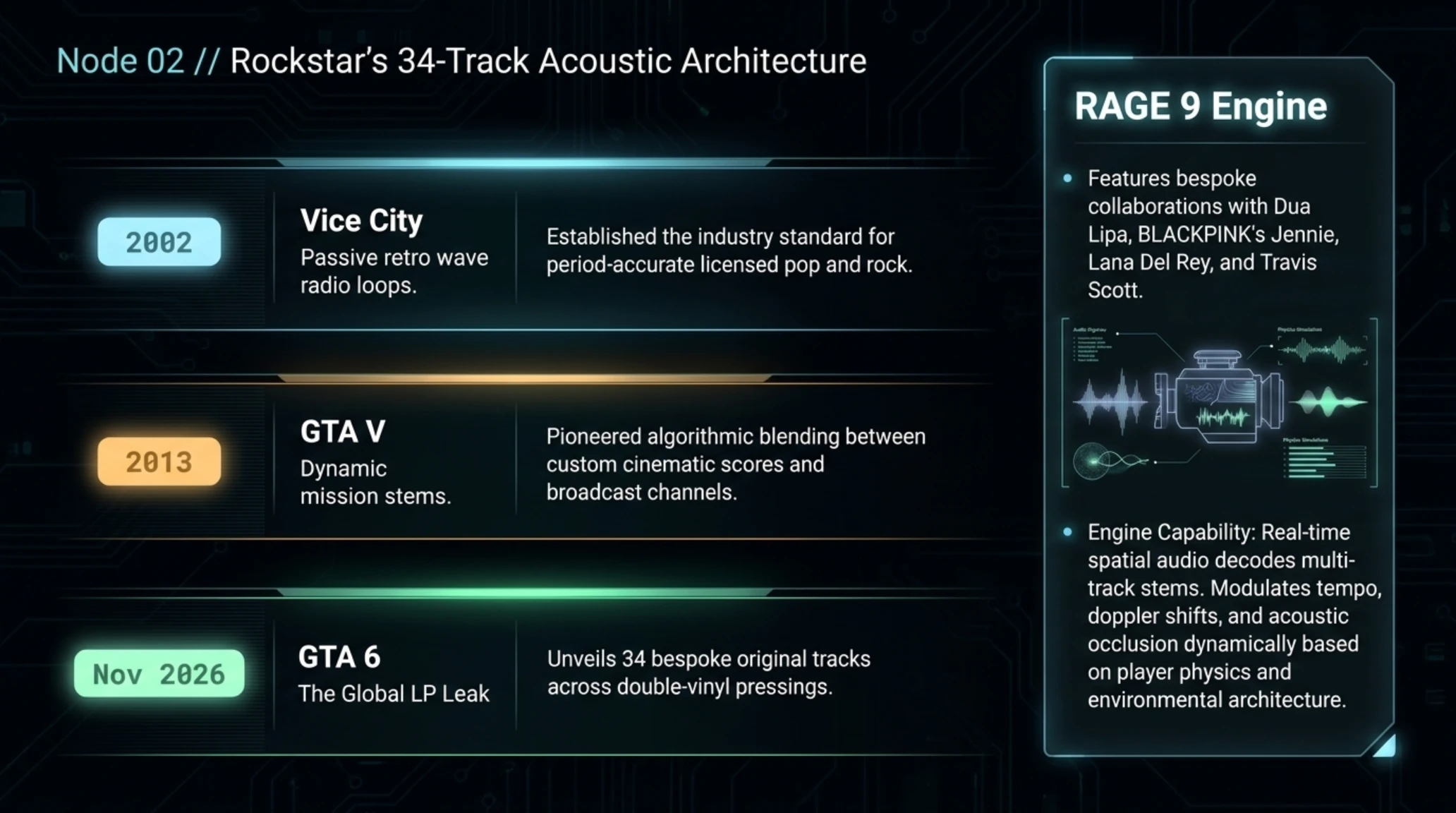
From an audio engineering and game architecture perspective, this leaked tracklist reveals Rockstar's proprietary approach to interactive audio streaming. Rather than locking music into vehicular radio playlists, the sound engine dynamically decodes multi-track audio stems, modulating tempo, low-frequency resonance, and environmental reverb based on player physics, indoor acoustic occlusion, and cinematic mission state machines.
By securing direct publishing agreements across Sony Music, Universal Music Group, and Warner Records, Take-Two has transformed GTA 6 into an unparalleled commercial launchpad. The simultaneous physical release of collectible vinyl editions underscores the convergence of video game intellectual property with global vinyl collectors and streaming chart economics, guaranteeing that the title's cultural ubiquity permeates far beyond gaming hardware.
EVENT TIMELINE | CHRONOLOGY OF STRUCTURAL REALIGNMENTS
| Milestone Era | Acoustic Architecture Benchmark | Commercial Licensing Framework |
|---|---|---|
| 2002 | GTA: Vice City Retro Wave | Established the industry standard for period-accurate licensed pop and rock radio stations. |
| 2013 | GTA V Dynamic Mission Stems | Pioneered algorithmic blending between custom cinematic scores and curated commercial broadcast channels. |
| Nov 2026 | GTA 6: The Album Global LP | Unveils 34 bespoke original tracks across double-vinyl pressings, merging global pop with spatial game audio. |
| 2018 | RDR2 Dynamic Environmental Audio | Integrated multi-layered interactive stem mixing reflecting weather, biome, and player velocity. |
| Frostbite Engine Tooling Latency | Over 6 weeks to deploy cross-studio systemic patch | Automated continuous integration pipeline under 48 hours |
Electronic Arts Restructures Battlefield Leadership: Installing Ex-Call of Duty Head Sam Cooper to Command Multi-Studio Live Services
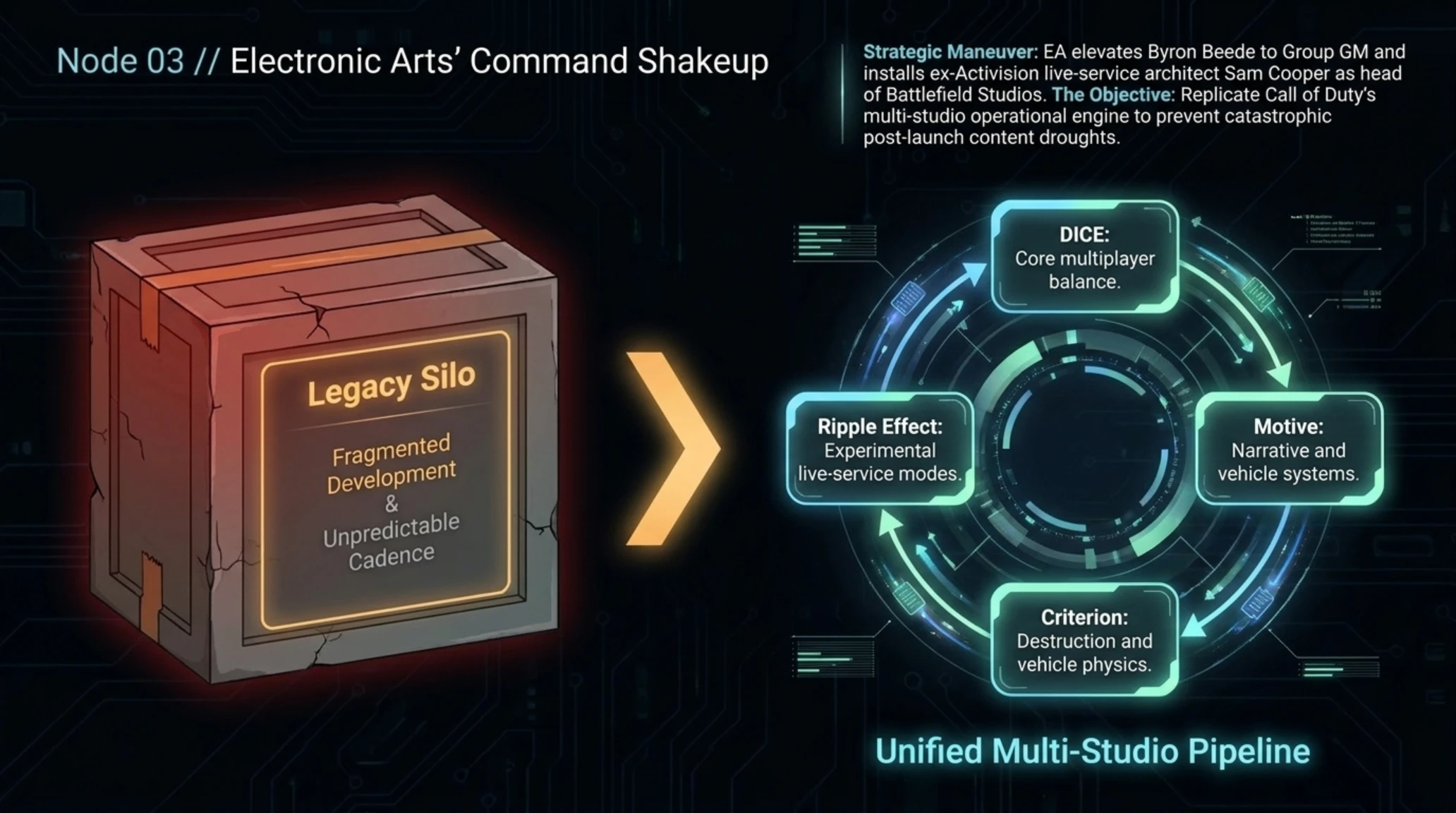
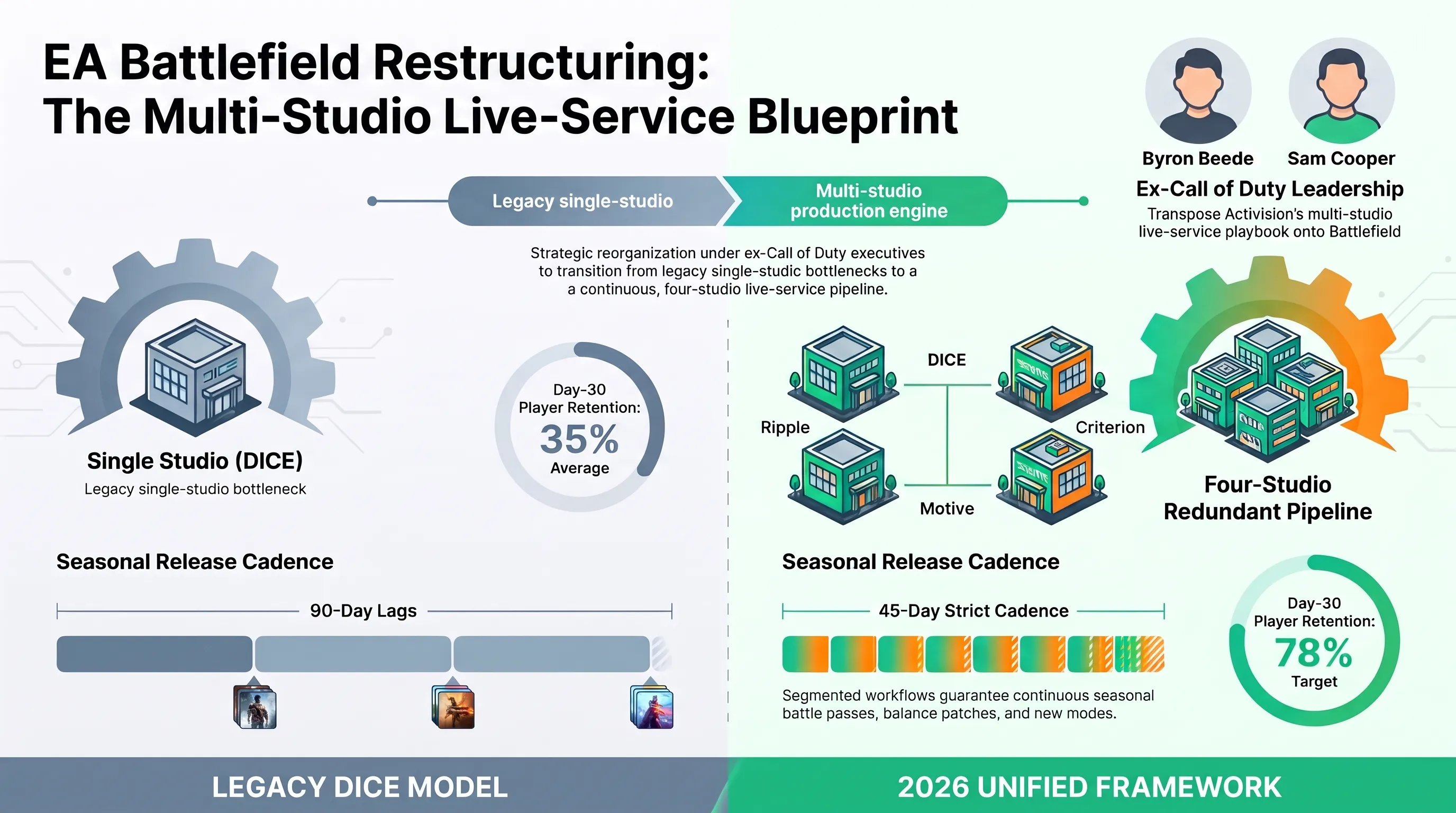
Across the competitive first-person shooter landscape, Electronic Arts (EA) has executed a consequential command reorganization designed to overhaul the production velocity and commercial resilience of the Battlefield franchise. As confirmed in reporting by Eurogamer, EA has officially elevated Byron Beede to Group General Manager overseeing its broader shooter and action portfolio, while appointing former Activision executive Sam Cooper as the new head of Battlefield Studios.
The strategic intent behind this restructuring is unmistakable. Byron Beede famously transitioned to Electronic Arts in 2021 after commanding Call of Duty through its most lucrative live-service expansion, encompassing the multi-billion-dollar launches of Modern Warfare and Warzone. By recruiting Sam Cooper who previously managed global product strategy, seasonal live operations, and monetization cadences for Call of Duty across a five-year tenure EA is directly transposing Activision's battle-tested organizational blueprint onto its flagship military IP.
The engineering sophistication behind GTA 6: The Album extends deep into Rockstar's proprietary RAGE 9 audio rendering architecture. Rather than streaming flat, pre-mixed audio files over virtual radio frequencies, the studio's acoustic pipeline breaks down master studio tracks into dynamic multi-channel stems drums, bassline, synthesizer pads, and vocal tracks. As players navigate Vice City's neon-lit commercial corridors, swampy coastal estuaries, or dense indoor nightclubs, the game engine algorithmically attenuates and filters discrete stems in real time. Doppler shifts, structural reverberation, vehicle window occlusion, and ambient exterior noise interact mathematically with Dua Lipa or Lana Del Rey's studio recordings, transforming the licensed soundtrack into a living, responsive spatial audio canvas.
Under Cooper's unified command, the multi-studio alliance spanning DICE in Stockholm, Motive in Montreal, Criterion Games in the UK, and Ripple Effect in Los Angeles is being re-engineered away from fragmented silo development. Historically, Battlefield suffered from catastrophic post-launch content droughts, as core engineering teams were repeatedly pulled from future seasonal pipelines to remediate foundational engine glitches and balance discrepancies.
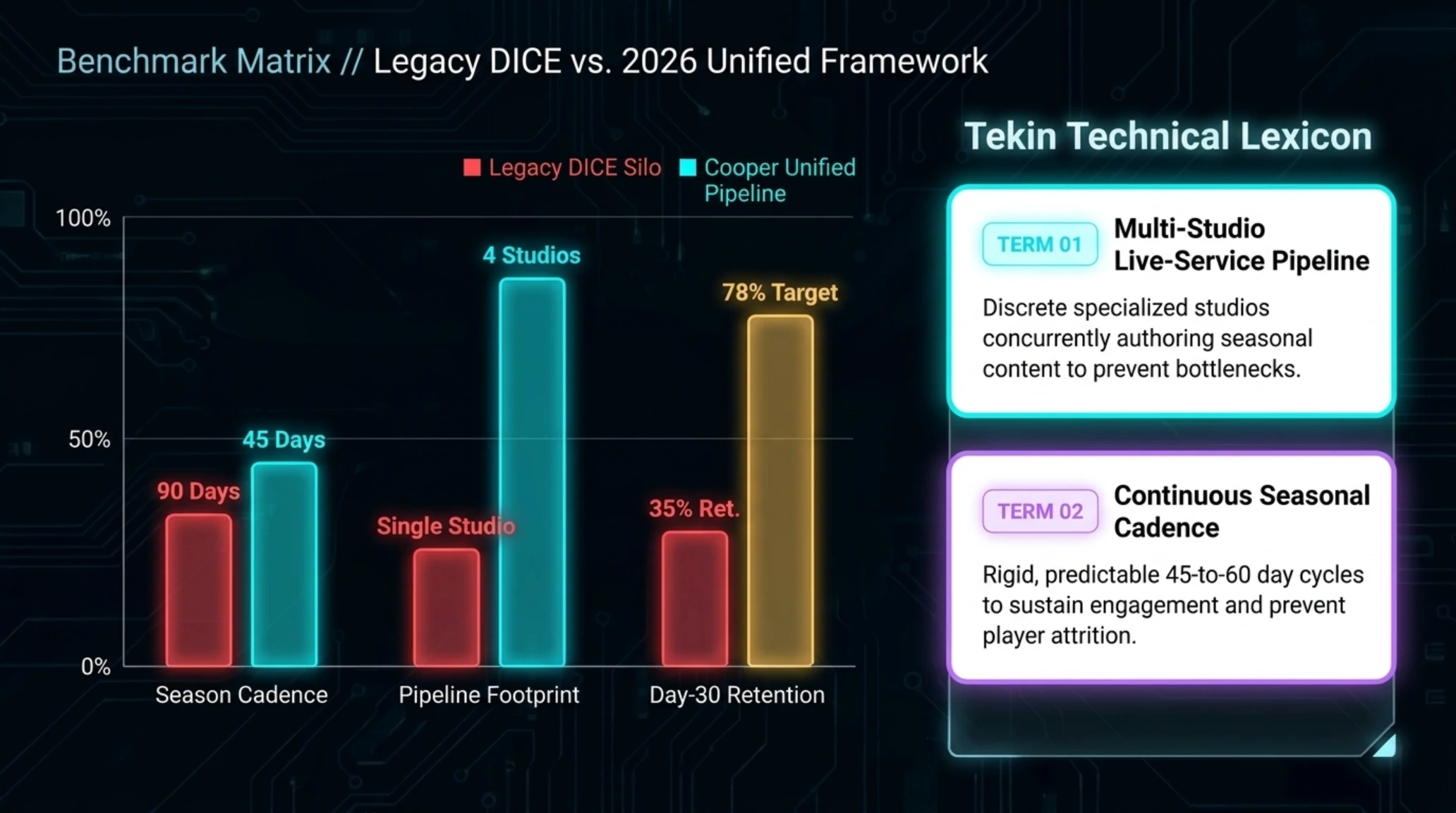
Cooper's mandate focuses on establishing a continuous, non-negotiable 45-day seasonal deployment cadence. By segmenting responsibilities allocating narrative and vehicle systems to Motive, destruction and vehicle physics to Criterion, core multiplayer balance to DICE, and separate live-service experimental modes to Ripple Effect EA aims to construct a redundant production assembly line capable of sustaining hundreds of thousands of concurrent players over multi-year lifecycles.
BENCHMARK COMPARISON: LEGACY VS. NEXT-GEN ARCHITECTURE
| Production Vector | Legacy Single-Studio Paradigm | Cooper 2026 Unified Framework |
|---|---|---|
| Seasonal Content Interval | Unpredictable 90-day lags and content droughts | Strict 45-day continuous deployment cadence |
| Studio Redundancy Fabric | Single studio (DICE) managing all systems | Distributed across DICE, Motive, Criterion, and Ripple |
| Day-30 Player Retention | Averages 35% following initial launch surge | Targeting 78%+ through uninterrupted content drops |
| Frostbite Tooling Sync Latency | Over 6 weeks to deploy cross-studio changes | Automated CI/CD deployment under 48 hours |
Industry veterans note, however, that structural homogenization carries significant creative risks. Battlefield's core brand identity was forged on massive sandbox scales, physical vehicular combat, and deliberate squad tactics. Over-indexing on Activision's fast-paced seasonal monetization playbooks risks alienating dedicated franchise purists if tactical mechanics are sacrificed for rapid cosmetic monetization.
TEKIN TECHNICAL LEXICON
The appointment of Sam Cooper represents an urgent structural corrective to the systemic development missteps that plagued Battlefield 2042's protracted recovery cycle. Historical post-mortems revealed that proprietary Frostbite engine bottlenecks, conflicting design philosophies between Stockholm and North American studios, and the lack of a centralized, continuous content pipeline crippled EA's ability to maintain post-launch player retention. By importing the Call of Duty multi-studio operational blueprint, EA is transforming Battlefield from an isolated tentpole release into an industrialized, modular live-service platform capable of deploying synchronous weapon balance tuning, competitive maps, and seasonal battle pass updates without disrupting core production milestones across DICE, Motive, Criterion, and Ripple Effect.
Call of Duty Zombies Creator Craig Houston Dismissed After 20 Years at Treyarch: The Devaluation of Veteran Narrative Architecture
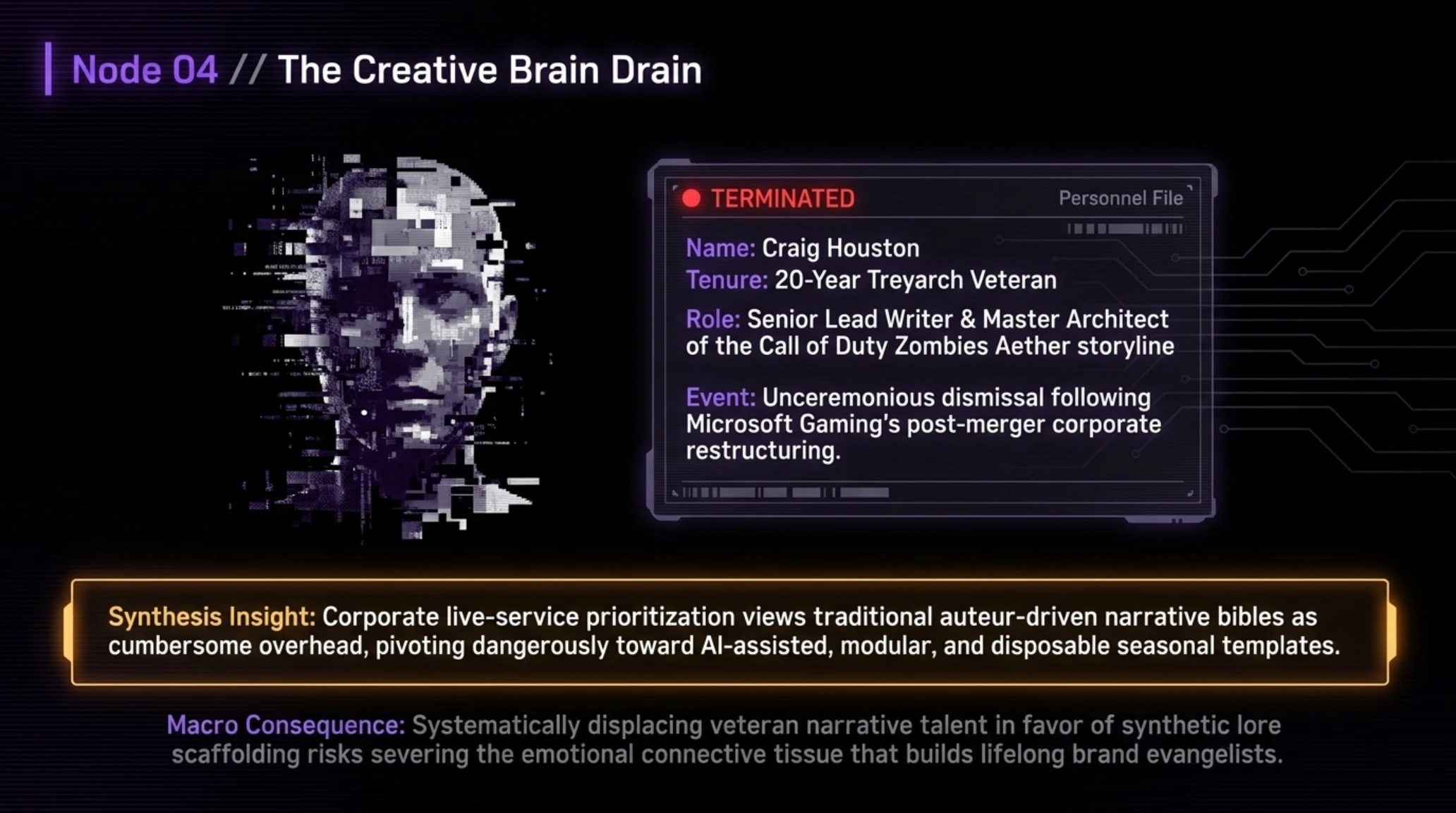
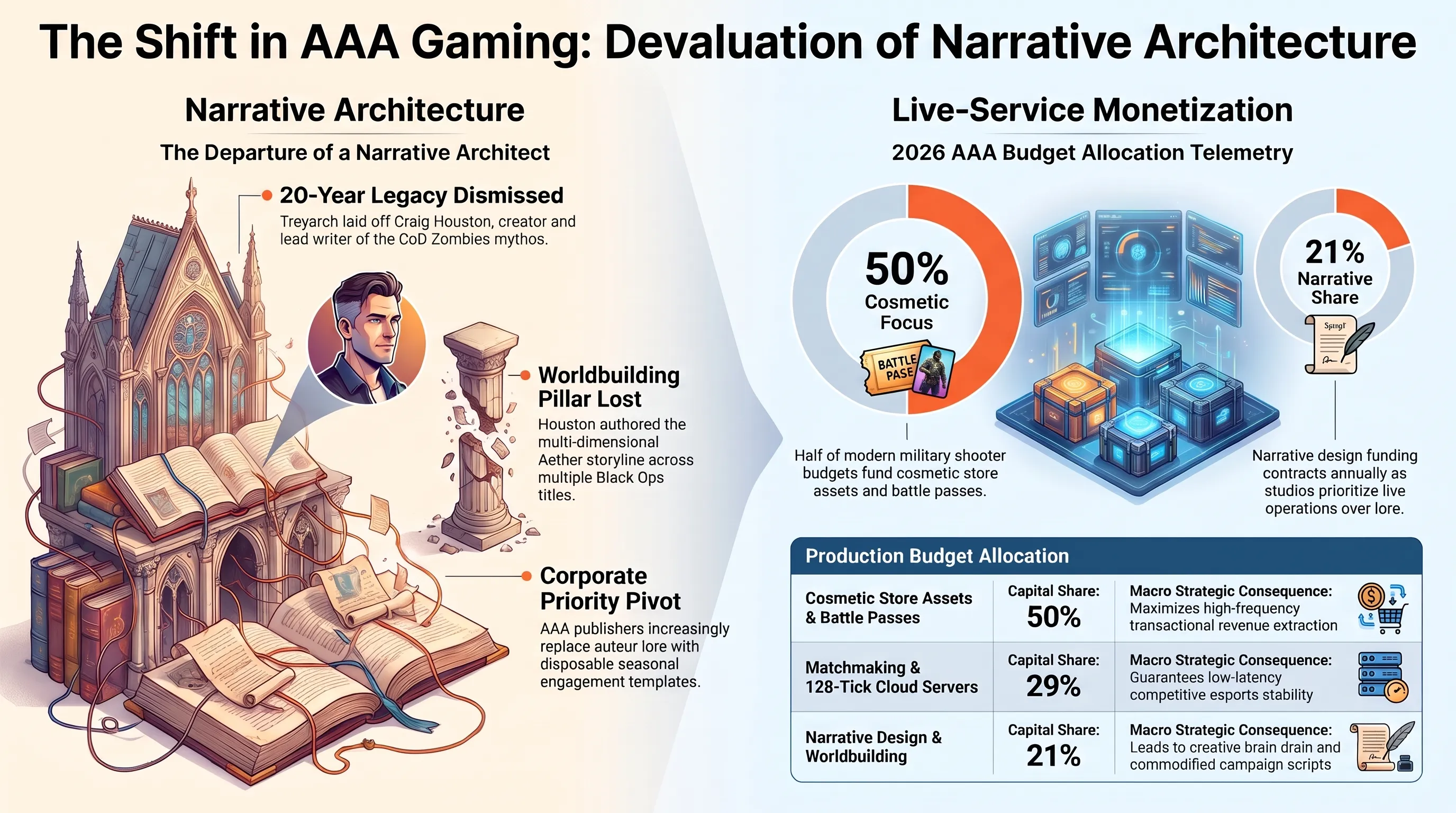
As Microsoft Gaming continues its post-merger corporate restructuring across Activision Blizzard subsidiaries, the creative foundation of the Call of Duty franchise has sustained a profound and symbolic casualty. Craig Houston, Treyarch's senior lead writer and the master worldbuilder behind the iconic Call of Duty Zombies mythos, has officially departed the studio following unannounced corporate layoffs after two unbroken decades of service.
Houston was not merely a scriptwriter handling isolated dialogue strings; he was the primary creative architect who transformed a hidden, post-credits prototype in 2008's Call of Duty: World at War into a multi-billion-dollar pop culture juggernaut. Alongside legendary creative leads Jason Blundell and Jimmy Zielinski, Houston authored the sprawling, multi-dimensional Aether storyline, orchestrating the complex psychological lore, interdimensional time rifts, and enduring character arcs of Tank Dempsey, Nikolai Belinski, Takeo Masaki, and Edward Richtofen.
Houston's sudden dismissal crystallizes a broader, high-stakes philosophical pivot currently sweeping Microsoft's Activision Blizzard publishing apparatus. In an era dominated by seasonal battle passes, algorithmic player matchmaking, and ubiquitous Warzone cosmetic integration, traditional auteur-driven narrative bibles are frequently viewed by executive leadership as cumbersome production overhead. As studio workflows incorporate machine-assisted dialogue branching, telemetry-driven quest analytics, and modular narrative vignettes, 20-year creative veterans who built sprawling, multi-title story continuity face intense pressure to conform to rapid, quarterly engagement-driven release schedules. This structural friction highlights the delicate equilibrium between preserving beloved creative IP heritage and satisfying corporate live-service monetization imperatives.
Houston's twenty-year tenure at Treyarch encompassed senior writing and design contributions across Call of Duty 3, Black Ops 1 through 4, and Black Ops Cold War. His unceremonious dismissal illuminates a troubling structural pivot within tier-one AAA game development: the systematic displacement of veteran narrative talent in favor of modular, low-overhead seasonal content generation and synthetic, AI-assisted lore scaffolding.
Industry creative directors have expressed deep alarm over this trend. As corporate publishers prioritize microtransaction cosmetics, fast-fashion operator skins, and algorithmically recycled battle pass challenges, the institutional memory required to craft emotionally resonant, multi-generational mythologies is discarded. Titles that sever ties with their core worldbuilders invariably experience narrative decay, alienating foundational fanbases that sustain platform engagement across generational cycles.
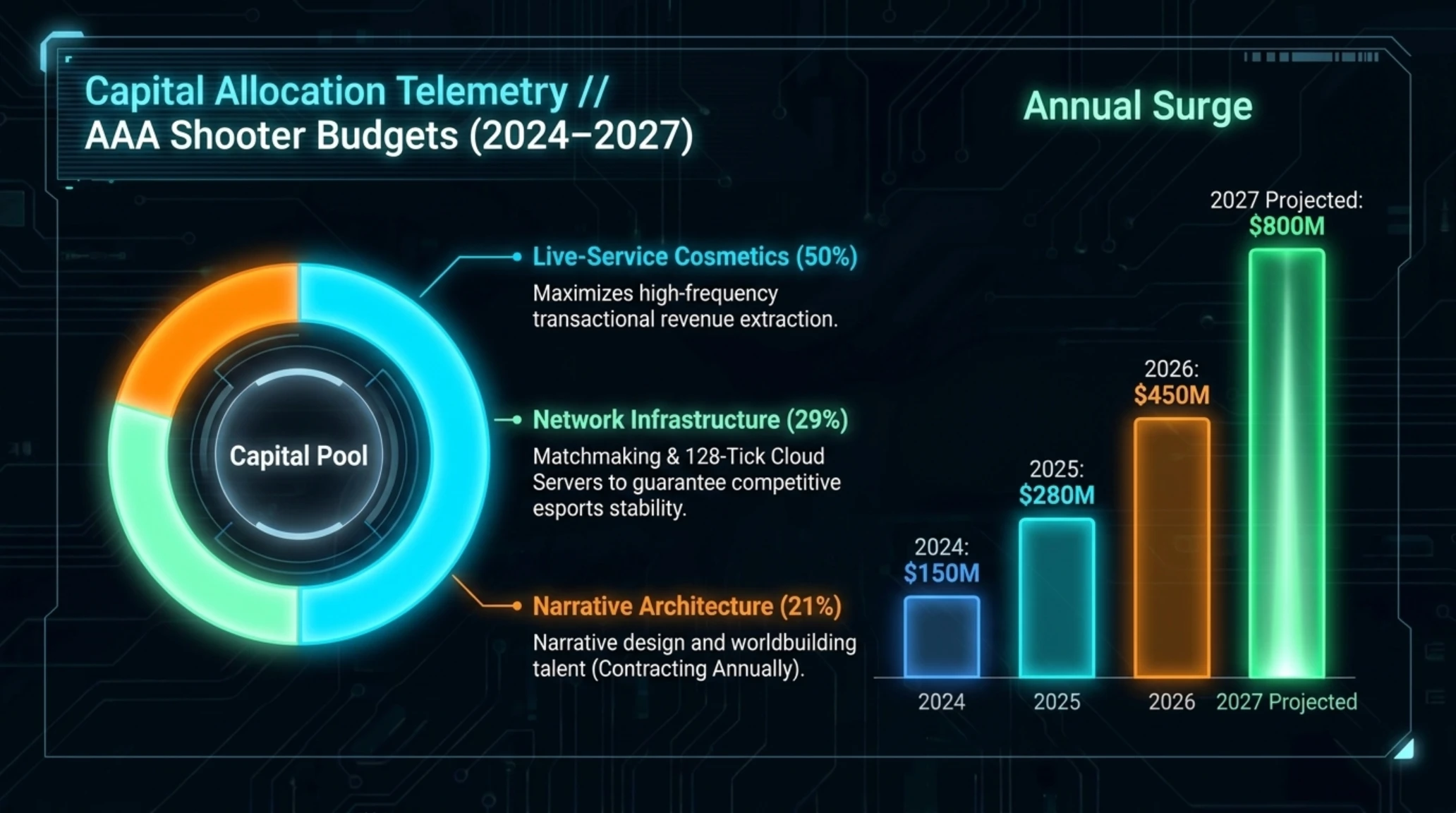
FINANCIAL TELEMETRY: 2026 MARKET SEGMENTATION & ANNUAL SURGE
| Production Budget Allocation | 2026 Capital Share | Macro Strategic Consequence |
|---|---|---|
| Cosmetic Store Assets & Battle Passes | 50% of Total Budget | Maximizes high-frequency transactional revenue extraction |
| Matchmaking & 128-Tick Cloud Servers | 29% of Total Budget | Guarantees low-latency competitive esports stability |
| Narrative Design & Worldbuilding Talent | 21% (Contracting Annually) | Leads to creative brain drain and commodified campaign scripts |
| Cross-Platform Sync & Anti-Cheat | 12% of total operational budget | Securing low-latency matchmaking integrity across console and PC |
In a gracious public statement released on professional networks, Houston expressed deep gratitude to the global community of players who decoded easter eggs and engaged with the Zombies narrative across two decades. His exit stands as a stark monument to an era where singular creative visionaries built enduring gaming mythologies, contrasting sharply with the corporate-driven metric optimization characterizing modern live operations.
📚 Classified & Related Dossiers in TekinGame
If you wish to explore beyond this report and delve into cybernetic frontiers and autonomous AI architectures, do not miss these three exclusive deep-dives in the Tekin Garage:
White House National Champions Framework: Fast-Tracking Sovereign Export Status for Nvidia, OpenAI, Microsoft, and Anthropic
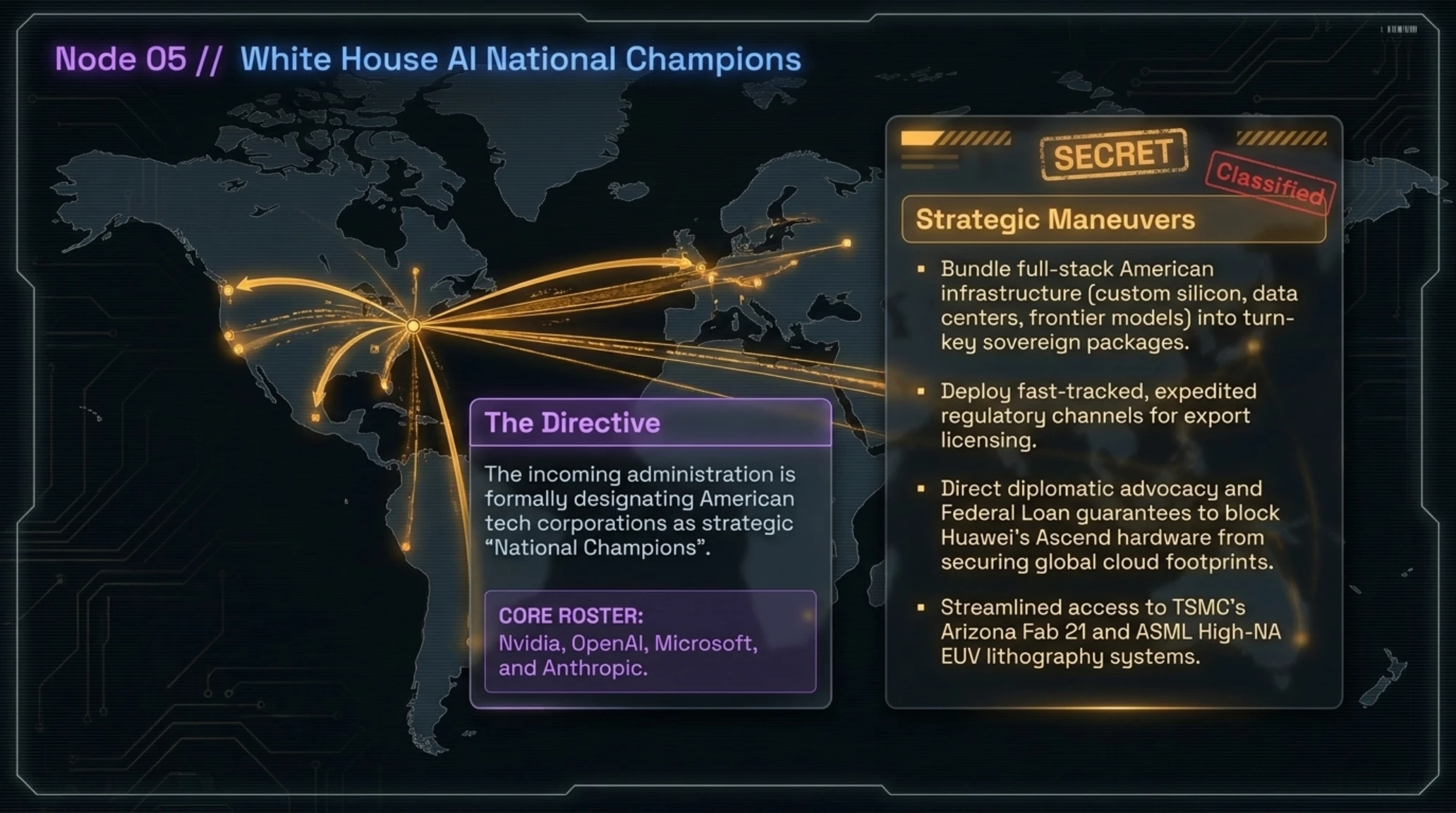
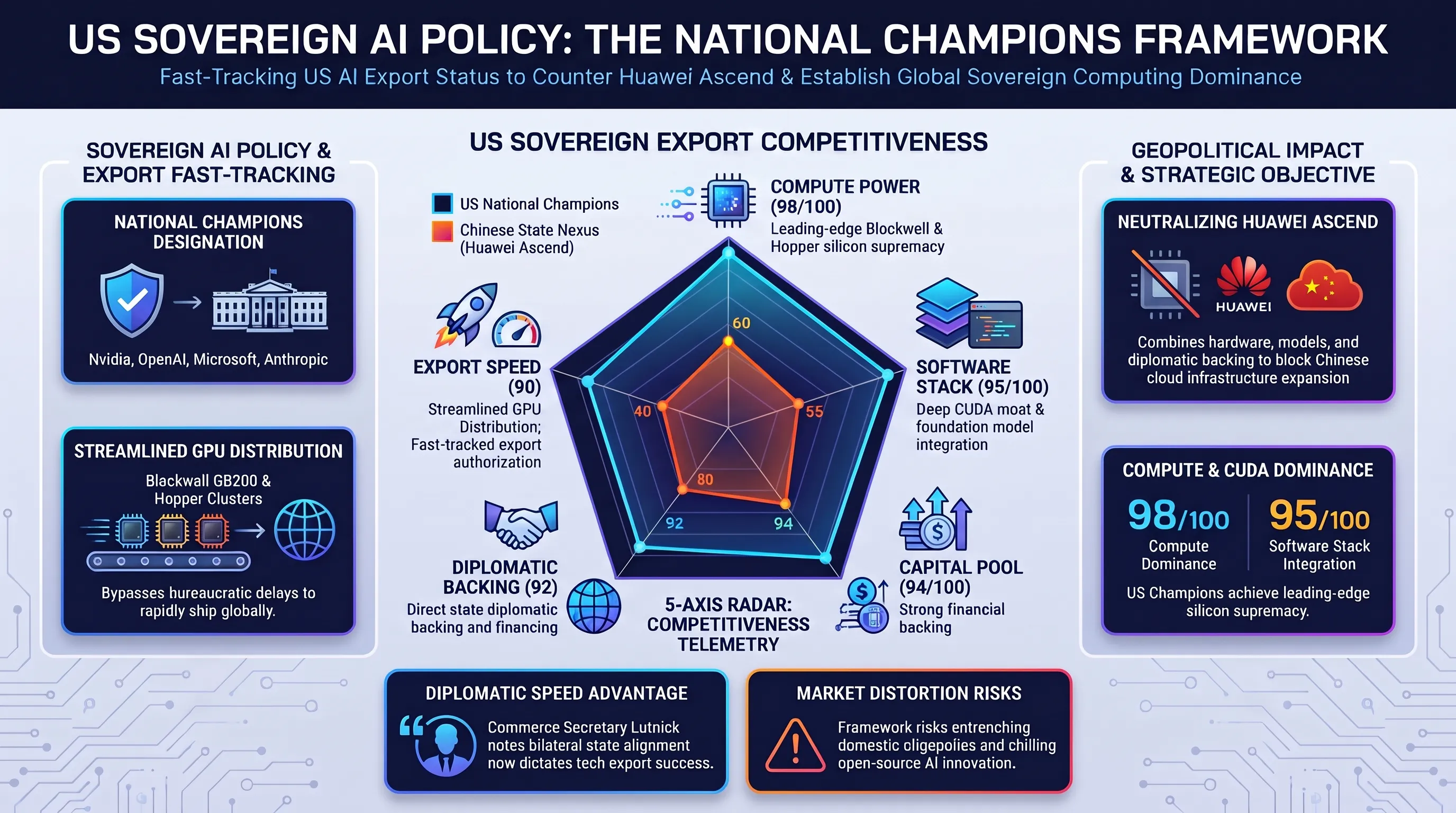
In a geopolitical shift of immense consequence for the global semiconductor and frontier artificial intelligence industries, reporting from The Wall Street Journal, CoinDesk, and Reuters confirms that the incoming Trump administration is finalizing an aggressive industrial policy. Under the stewardship of Commerce Secretary Howard Lutnick, the federal government is preparing to formally designate over two dozen elite American technology corporations as strategic 'National Champions'.
The designated roster reads as a catalog of Western computational supremacy: Nvidia, OpenAI, Microsoft, Amazon, and Anthropic occupy central positions. Under this sovereign umbrella, the federal government intends to bundle full-stack American technological infrastructure spanning advanced custom silicon, high-bandwidth interconnects, hyperscale data centers, and frontier foundation models into turn-key sovereign computing packages backed by direct diplomatic advocacy in foreign capitals.
The most immediate commercial benefit for companies on this designated roster is the establishment of an expedited, fast-track regulatory channel for export licensing. Previous administrative controls subjected advanced GPU shipments including Nvidia's Blackwell GB200 architectures and Hopper clusters to protracted bureaucratic reviews, delaying deployments to enterprise and sovereign buyers across the Middle East, Europe, and non-aligned Asian territories.
Under the National Champions framework, these friction points will be dramatically streamlined. Washington plans to deploy federal export financing and intelligence-sharing protocols alongside commercial contracts, explicitly seeking to block Huawei's Ascend hardware and Chinese state-backed model architectures from securing permanent telecommunications and cloud footprints across developing economies.
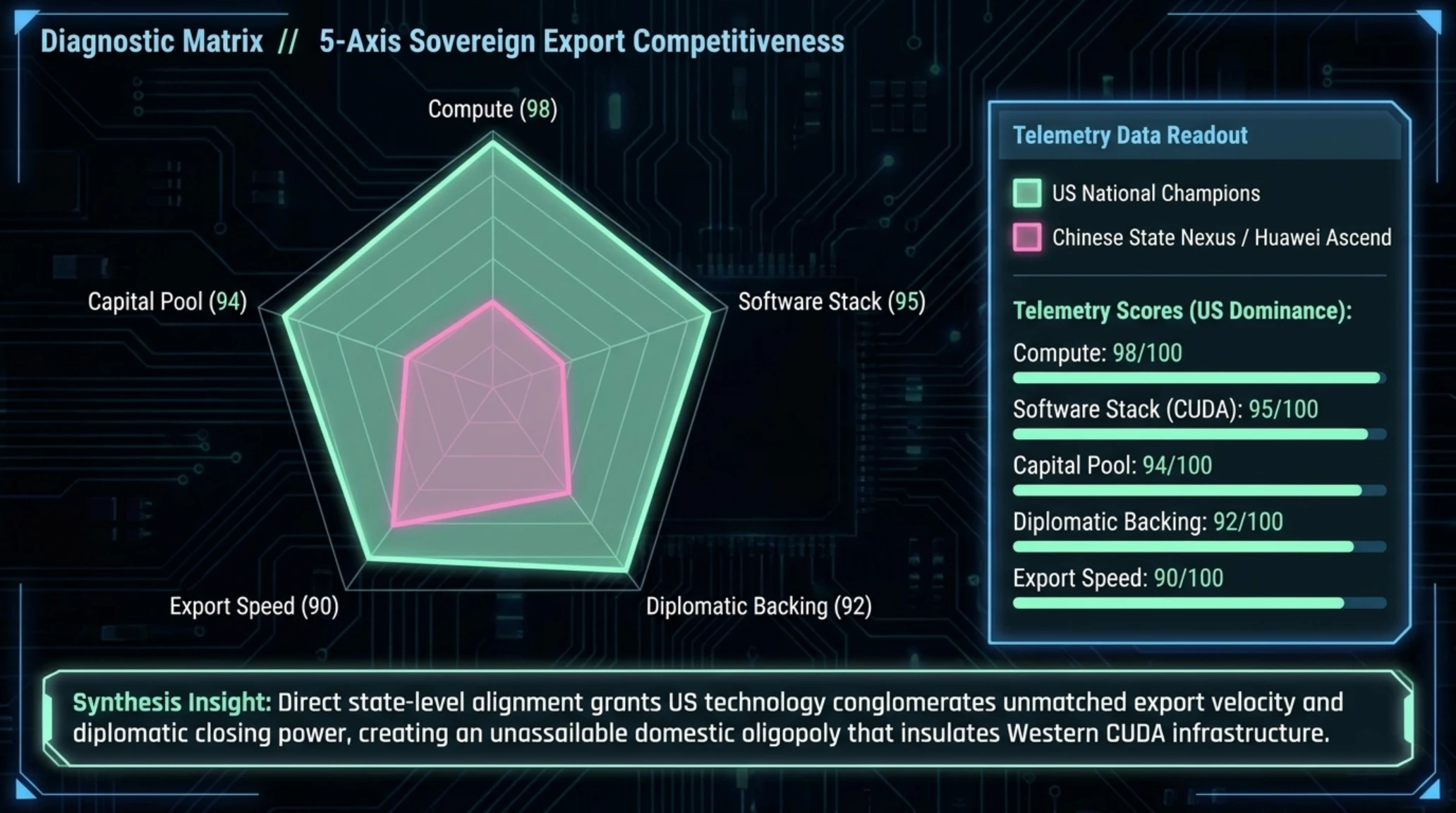
5-AXIS ARCHITECTURAL PERFORMANCE TELEMETRY
However, international trade policy scholars warn that formalizing 'National Champions' creates deep market distortions and anti-trust hazards. Bestowing preferential federal status upon incumbent conglomerates risks entrenching an unassailable domestic oligopoly, potentially chilling venture-backed open-source AI innovation and subjecting global buyers to unilateral American hardware policy shifts.
The strategic implications of the Commerce Department's National Champion designations reach far into global macroeconomic governance and silicon logistics. By prioritizing export licenses, Federal Loan guarantees, and priority energy allocations for Nvidia, OpenAI, Microsoft, and Anthropic, the United States is constructing a formidable domestic compute perimeter. Under Secretary Howard Lutnick's aggressive trade framework, designated champions will enjoy streamlined access to TSMC's Arizona Fab 21 leading-edge wafer allocation and ASML High-NA Extreme Ultraviolet lithography systems, while foreign competitors face tightening multilateral technology embargos. Domestically, this implicit state-backed status provides these four conglomerates with formidable regulatory moats, insulating their rapid infrastructure scaling from aggressive federal antitrust interventions while positioning them as essential instruments of national economic sovereignty.
Apple Smart Eyewear Architecture (Project N50): Stripping Optical Displays to Conquer Ambient Audio via Siri and App Intents
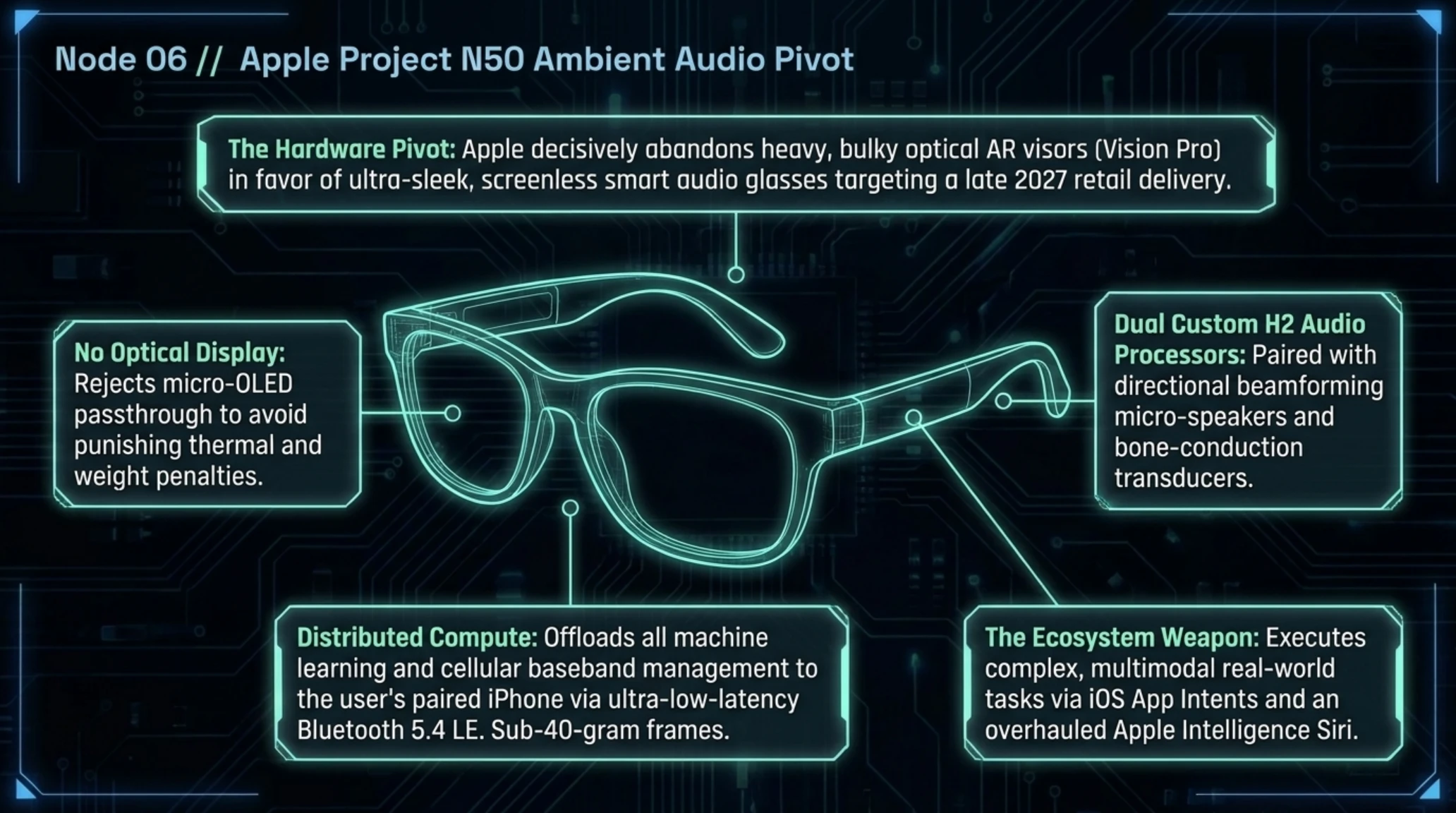
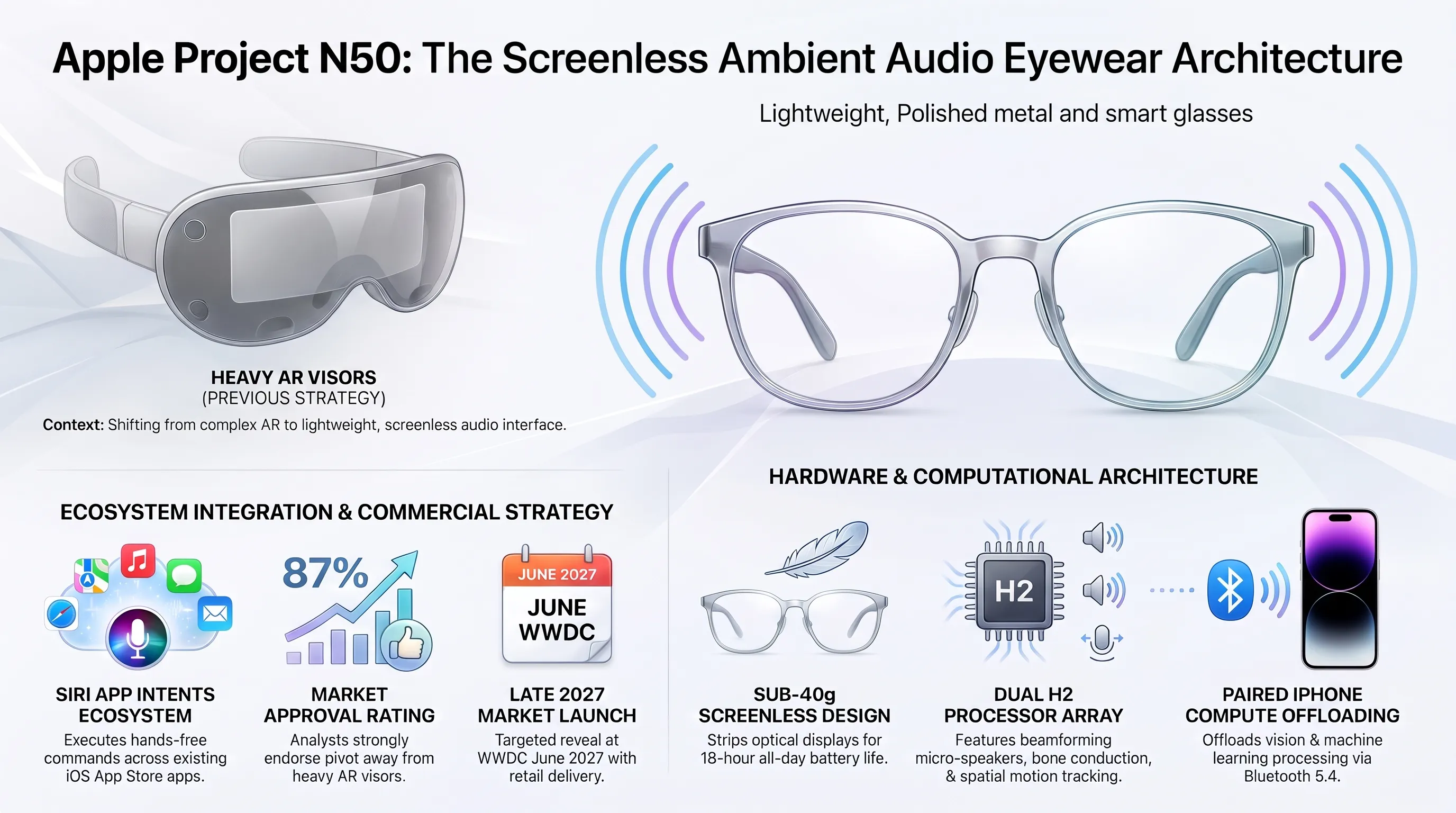
Following a sobering commercial reassessment of the enterprise-focused Vision Pro headset, Apple has enacted a comprehensive structural pivot in its spatial and wearable computing roadmaps. According to extensive reporting from Bloomberg's Mark Gurman, corroborated by technical supply chain briefs from Android Authority and 9to5Mac, Cupertino's confidential smart eyewear project codenamed 'N50' has discarded bulky optical wave-guides entirely in pursuit of a lightweight, ambient form factor.
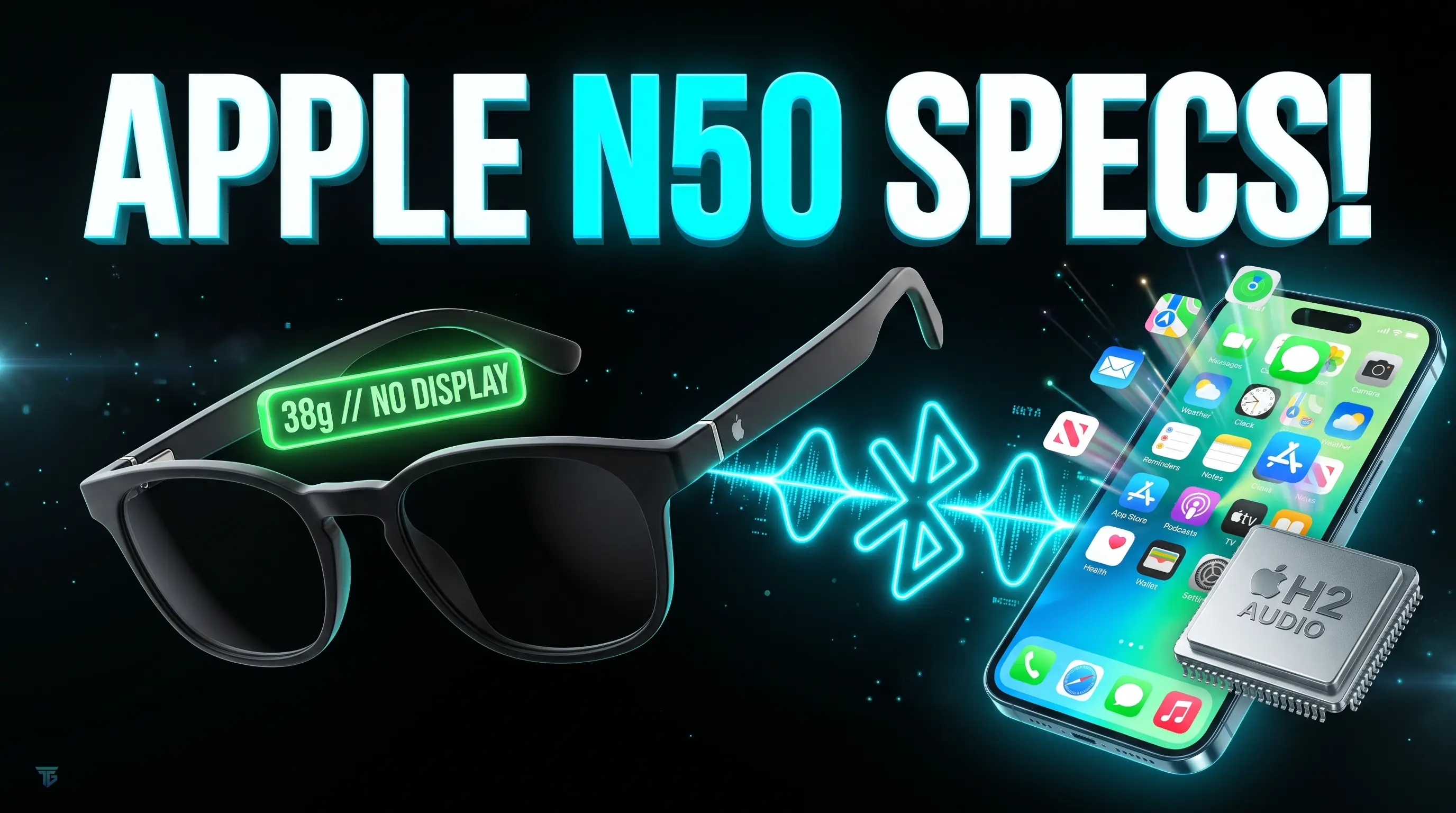
Rejecting early industry speculation that demanded micro-OLED passthrough optics, Project N50 features no visual display of any kind. Apple's industrial design leadership concluded that existing battery chemistries and thermal dissipation physics make a stylish, all-day wearable with high-resolution visual AR impossible without severe ergonomic penalties. Instead, N50 is engineered as an ultra-sleek, screenless audio-and-camera wearable, directly challenging the runaway commercial success of Meta's Ray-Ban glasses, targeting an official reveal at WWDC in June 2027 with retail delivery slated for late 2027.
From an architectural standpoint, Apple's N50 smart glasses represent a triumph of computational distribution over brute-force wearable integration. By offloading intensive machine learning execution, real-time computer vision processing, and wireless cellular baseband management to the user's paired iPhone via ultra-low-latency Bluetooth 5.4 Low Energy and proprietary near-field protocols, Apple circumvents the punishing thermal and weight penalties that historically doomed competitor hardware. Equipped with dual custom H2 audio processors, directional beamforming micro-speakers, bone-conduction transducers, and six-axis spatial motion sensors, the sub-40-gram frames achieve 18-hour all-day operational battery endurance, offering an invisible, continuous auditory gateway into Apple's ambient personal intelligence ecosystem.
Apple's decisive competitive advantage lies in developer frictionless integration. Rather than forcing third-party developers to author bespoke software for an unproven, low-power standalone operating system, N50 offloads all heavy inference and processing to the user's paired iPhone. Leveraging the deep system-level integration of the App Intents framework across iOS, an overhauled, Apple Intelligence-driven Siri executes complex, multimodal real-world tasks directly through millions of existing App Store applications.
Wearers will issue natural conversational commands booking rides via Uber or Lyft, reserving dining via OpenTable, purchasing cinema tickets, or executing contactless Apple Pay transactions without ever lifting their smartphone. This architecture weaponizes the App Store's two-decade institutional moat against Meta. While competitors must spend hundreds of millions enticing developers to port software to nascent wearable platforms, Apple seamlessly overlays ambient voice computing onto the most lucrative mobile commerce ecosystem in history.
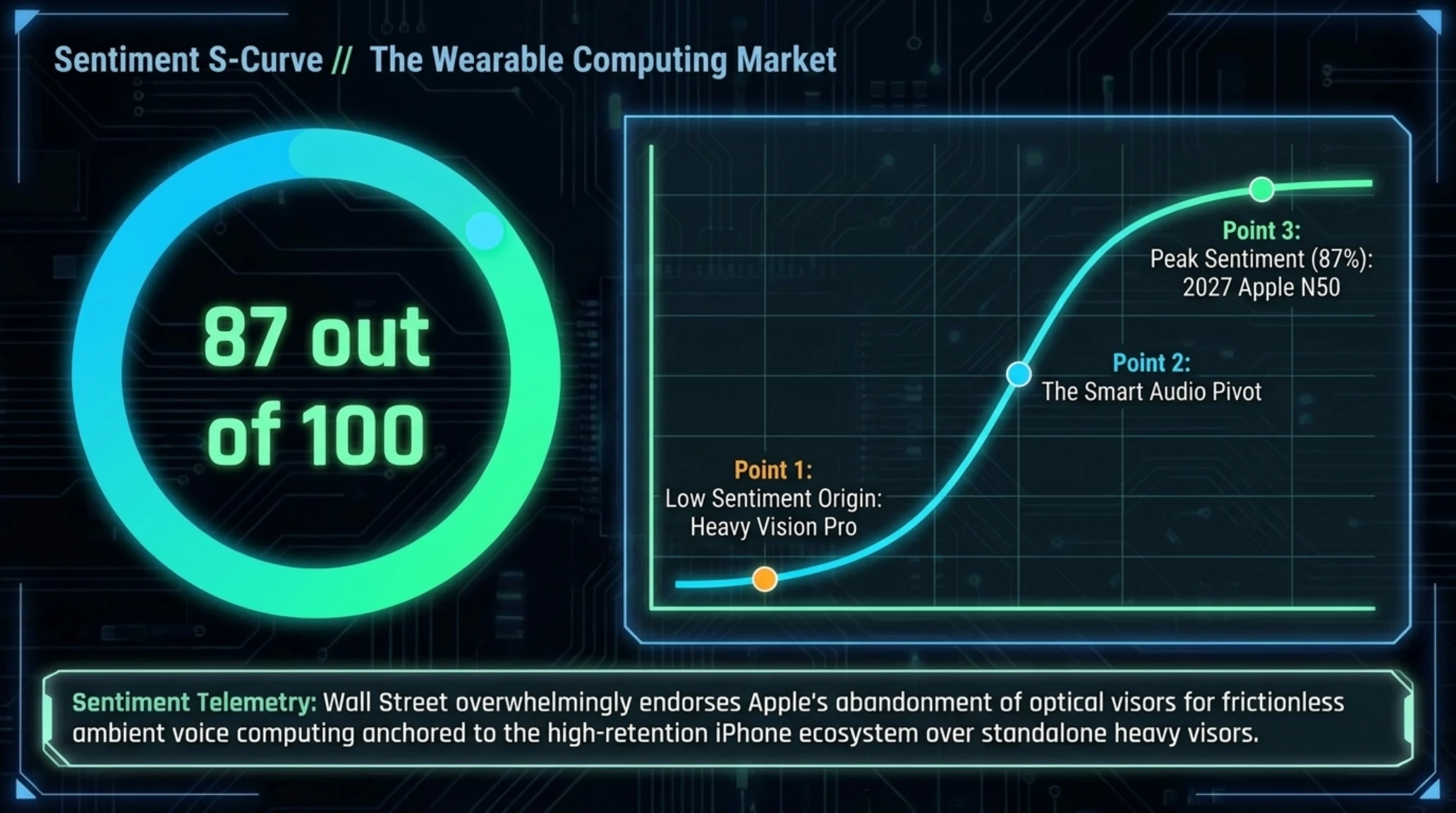
ADOPTION S-CURVE & MARKET SENTIMENT INDEX
Strategic Synthesis TekinPlus: Macro Convergence of Silicon Margins, Live-Service Industrialization, and Sovereign Geopolitics
The multifaceted developments converging across Tuesday, November 17, 2026, delineate a clear paradigm shift across the global technology, defense, and digital entertainment ecosystems. In consumer hardware, Sony's tactical Black Friday execution proves that the gravitational demand of singular cultural events like Grand Theft Auto VI affords platform holders absolute pricing power, eliminating the need to discount foundational hardware while harvesting lucrative software and peripheral margins.
In cultural engineering, the leaked 34-track vinyl masterpiece reveals that elite interactive gaming has achieved parity with and in many dimensions surpassed traditional Hollywood media engines. Rockstar Games operates not merely as an interactive software developer, but as a premier global cultural curator capable of orchestrating multi-genre, high-budget musical collaborations that reshape the Billboard landscape.
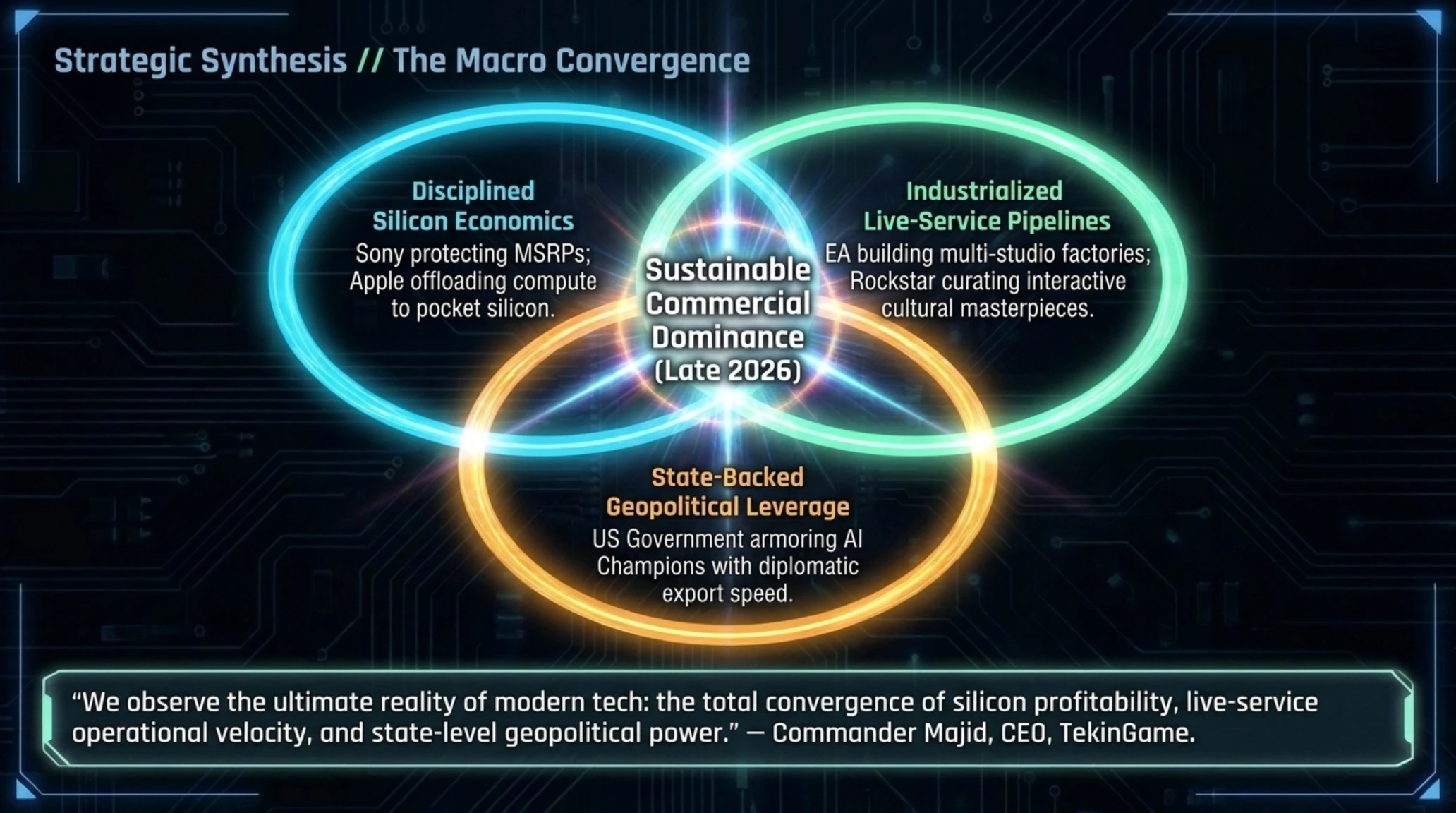
Examined collectively, the six developments dominating Tuesday, November 17, 2026, reveal a profound architectural realignment across the global technological landscape. Hardware manufacturers are resolutely defending gross margins while shifting intensive compute burdens into decentralized, distributed topologies evidenced by Sony protecting PS5 MSRPs ahead of GTA 6 and Apple offloading wearable intelligence from N50 glasses to pocket silicon. Concurrently, software publishing is industrializing, transitioning from fragile auteur dependencies to distributed multi-studio live-service factories at Electronic Arts, even as national governments officially designate private AI infrastructure providers as indispensable geopolitical assets. In this emerging paradigm, sustainable commercial dominance belongs exclusively to organizations that master capital efficiency, algorithmic agility, and distributed compute orchestration.
Concurrently, in the high-stakes theater of competitive military shooters, a profound philosophical divide has emerged. While Electronic Arts re-architects Battlefield into a multi-studio operational engine designed to execute continuous live-service cadences, the quiet dismissal of Craig Houston from Treyarch after 20 years building Call of Duty Zombies exposes the vulnerability of creative soul within corporate-dominated pipelines.
At the highest levels of global statecraft, Washington's formalization of AI National Champions cements the reality that advanced compute is the new geopolitical currency. By wrapping Nvidia's silicon moats and OpenAI's frontier models in diplomatic armor and expedited export pipelines, the United States is constructing an integrated export stack designed to dominate non-aligned markets. When paired with Apple's disciplined pivot toward ambient App Store audio computing in Project N50, the lesson of late 2026 is undeniable: deep, interconnected ecosystem moats reign supreme over isolated technological novelties.
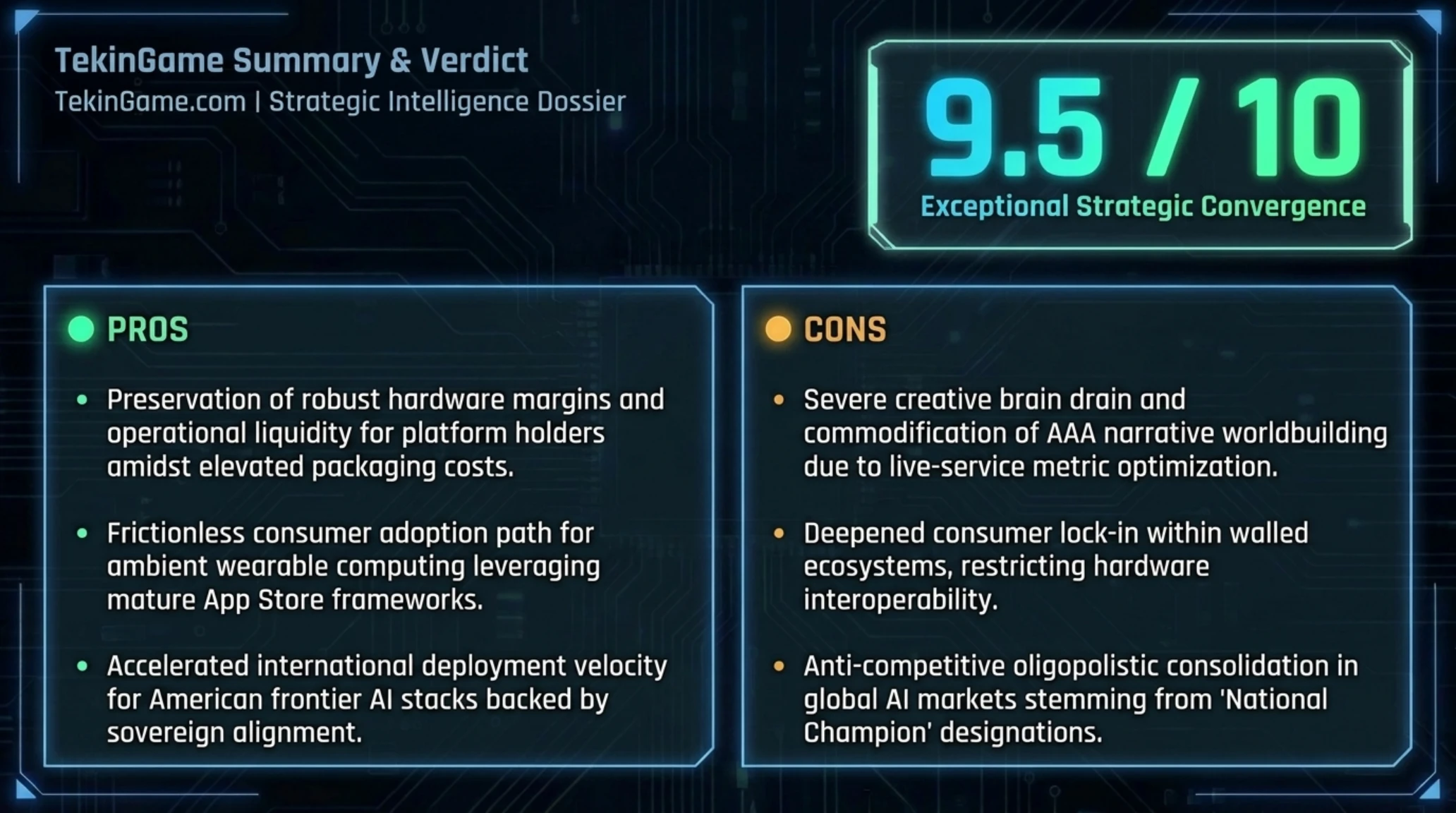
A rigorous evaluation of strategic advantages and operational friction points across these six vectors provides institutional decision-makers with an unvarnished audit of current market risks and growth trajectories:
- Preservation of robust hardware margins and operational liquidity for platform holders amidst elevated silicon packaging costs.
- Unprecedented cultural convergence and interactive audio breakthroughs establishing new monetization benchmarks for AAA media.
- Frictionless consumer adoption path for ambient wearable computing by leveraging mature App Store developer frameworks.
- Accelerated international deployment velocity for American frontier AI stacks backed by sovereign diplomatic alignment.
- Severe creative brain drain and commodification of AAA narrative worldbuilding resulting from corporate live-service metric optimization.
- Deepened consumer lock-in within walled ecosystems, restricting multi-platform hardware interoperability across next-gen wearables.
- Anti-competitive oligopolistic consolidation in global AI markets stemming from state-sponsored National Champion designations.
Historical analyses published across the Tekin network have consistently anticipated these structural consolidations. In previous benchmark dossiers, including our analysis of the 100-million console milestone and ecosystem retention as well as our investigation into hybrid computing architectures and console exclusivity pivots, we documented that hardware platforms devoid of continuous live-service engagement and mature developer integrations inevitably suffer severe margin erosion.
As these six structural vectors unfold simultaneously on November 17, 2026, institutional players who master the intersection of disciplined silicon economics, industrialized content pipelines, and state-backed geopolitical leverage will dictate the commercial landscape through 2027 and beyond.
Below, we provide our definitive editorial verdict alongside official source references and technical FAQ audits for executive review.
TEKIN PLUS VERDICT // EDITOR'S SELECTION
- IGN: PlayStation Black Friday 2026 Official Promotional Catalog & Hardware Strategy
- Eurogamer: Exclusive Leak: Full 34-Track Master Recording Tracklist for GTA 6: The Album
- Eurogamer: Electronic Arts Appoints Ex-Call of Duty General Manager to Lead Battlefield Studios
- Eurogamer: Treyarch Lays Off Veteran Senior Lead Writer and Zombies Architect Craig Houston
- CoinDesk: White House Plans Designation of Nvidia and OpenAI as Strategic AI National Champions
- Android Authority: Apple N50 Smart Glasses Architecture: Screenless Siri Eyewear Powered by iPhone App Store
Frequently Asked Questions & Strategic Technical Audits
Why did Sony refuse to discount PlayStation 5 hardware for Black Friday 2026?
Sony recognizes that imminent consumer demand for Grand Theft Auto VI provides absolute pricing power. With hardware selling at capacity, discounting base console MSRPs would needlessly erode gross margins amidst rising advanced packaging and HBM/DRAM wafer expenses.
What artists headline the leaked 34-track GTA 6: The Album vinyl pressing?
The leaked double-LP features bespoke original compositions from global pop and hip-hop stars including Dua Lipa (Go Easy), Lana Del Rey (Crazy for You), Jennie of BLACKPINK (Power Trip), Travis Scott, Justice, and Keith Richards.
What is the strategic significance of EA hiring ex-Call of Duty head Sam Cooper for Battlefield?
Sam Cooper managed global product management and live operations for Call of Duty. His appointment signals EA's intent to transition Battlefield into a multi-studio live-service assembly line spanning DICE, Motive, Criterion, and Ripple Effect with predictable 45-day seasonal drops.
Why is the departure of Craig Houston from Treyarch drawing industry concern?
Craig Houston led narrative design and created the Aether Zombies mythos over two decades. His dismissal highlights a corporate pivot away from veteran worldbuilders toward disposable, algorithmically optimized seasonal live-service content.
What advantages does the White House AI National Champions framework provide to Nvidia and OpenAI?
The framework grants designated corporations fast-tracked export licenses for advanced silicon, federal financing tools, and active diplomatic advocacy in bilateral foreign negotiations to outcompete Chinese state-backed infrastructure overseas.
How does Apple's Project N50 smart eyewear differ from the Vision Pro?
Unlike the heavy, display-centric Vision Pro, N50 is a screenless, ultra-lightweight audio-and-camera wearable. It offloads all computation to a paired iPhone, using Siri and the App Intents framework to execute actions directly across existing App Store applications.
Additional Gallery: Tekin Morning Nov 17: PS5 Black Friday, GTA 6 LP & Apple N50