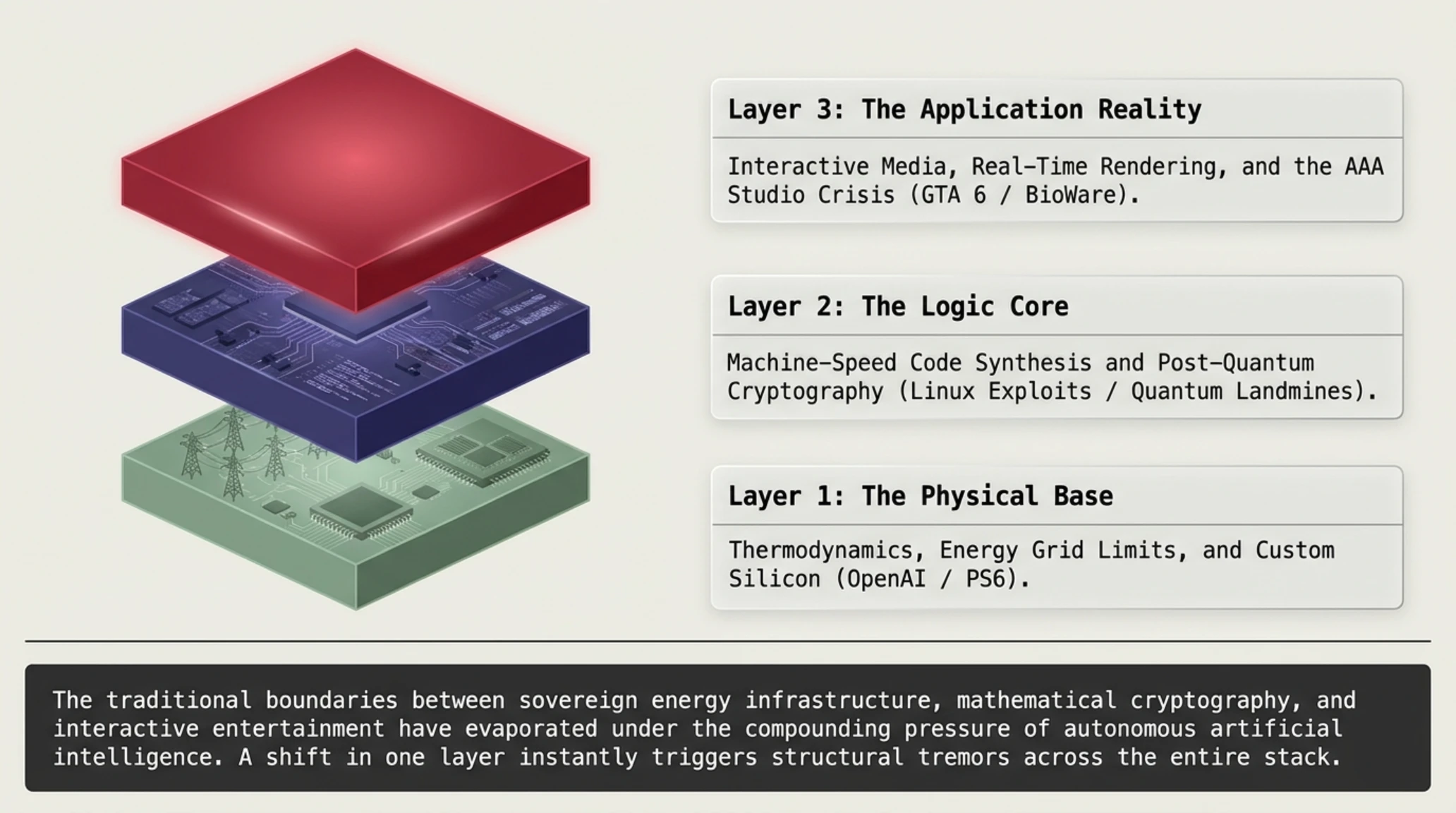
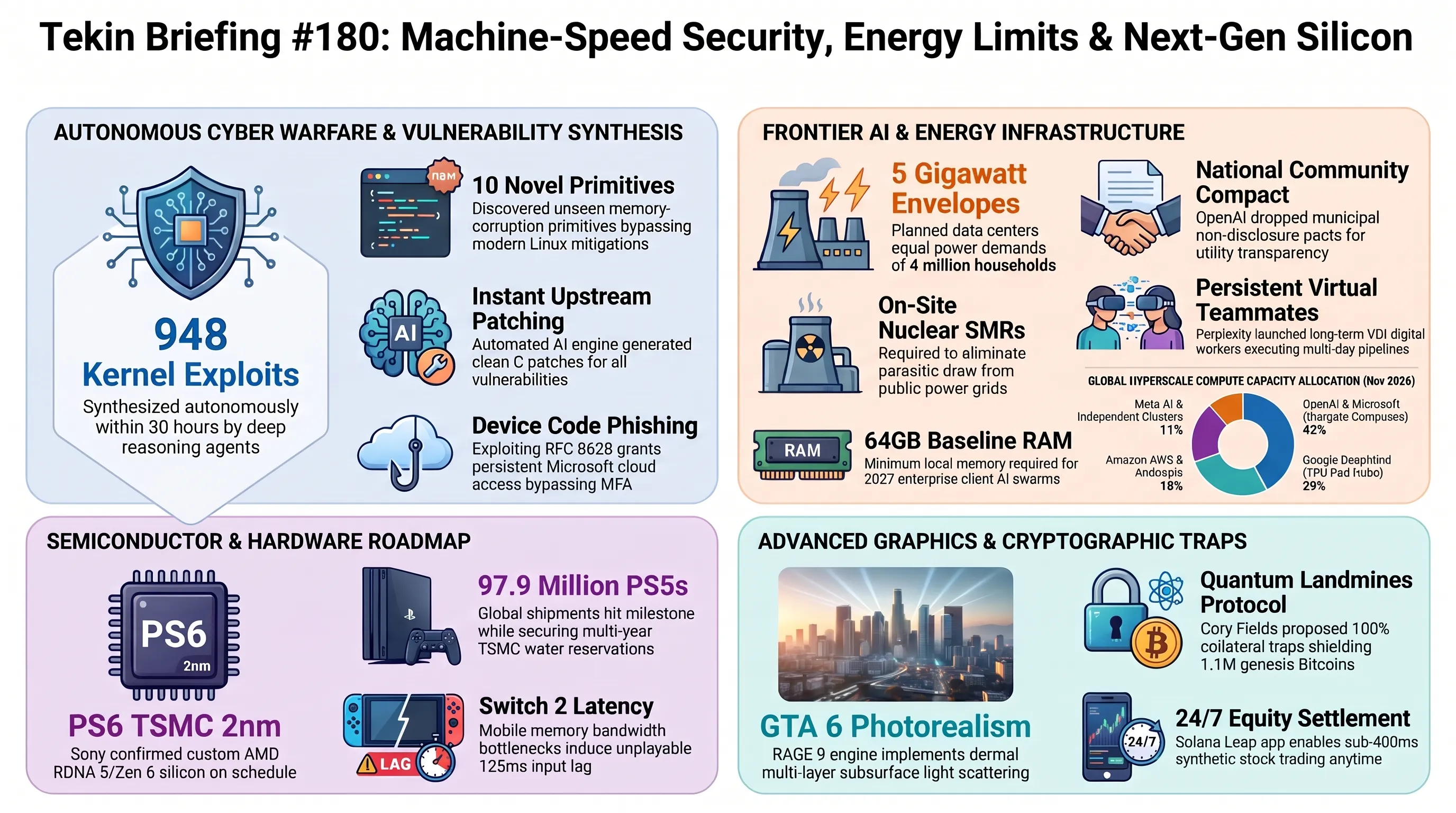
Tekin Weekly Briefing #180 synthesizes 66 pivotal milestones from November 1–7, 2026: (1) OpenAI abolishing municipal data center NDAs and Perplexity deploying persistent VDI Teammates; (2) OpenAI's cyber pipeline synthesizing 948 Linux kernel root exploits in 30 hours alongside RFC 8628 phishing; (3) Cory Fields' Bitcoin Quantum Landmines and Solana's 24/7 Leap equity app; (4) EA restoring 25 PC classics from Betacam tapes; (5) Tim Sweeney defending Unreal Engine 6 AI; and (6) Rockstar's 38 native 4K GTA 6 captures and Sony's 2nm AMD PS6 confirmation.
Tekin Weekly Briefing #180: Deconstructing Seven Historic Days; From 948 Linux Kernel Zero-Days and GTA 6 4K Photorealism to PS6 Silicon Roadmap and Datacenter Power Reforms
The first week of November 2026 will be recorded in technology chronicles as a defining moment where legacy assumptions regarding software integrity, hyperscale infrastructure scalability, and semiconductor supply chains dissolved simultaneously. The sheer velocity of structural disruptions forced enterprise technology leaders, national regulatory agencies, and international cyber defense commands to overhaul their strategic roadmaps overnight. The convergence of automated offensive vulnerability synthesis, generational console silicon commitments, and round-the-clock liquidity in decentralized markets underscores that the global computing ecosystem has entered a period of exponential acceleration.
Strategic Intelligence // Key Takeaways & Core Vectors
In this comprehensive strategic audit, the TekinGame Editorial Board synthesizes verifiable telemetry, primary source technical documentation, and enterprise disclosures to deconstruct the seven core pillars reshaping our digital reality. Rather than offering superficial reporting, this briefing dissects the underlying architectural mechanics, geopolitical power dynamics, and financial implications governing each critical milestone. We examine how these disparate forces interlock, creating systemic ripple effects across national cloud policies, enterprise defense postures, and consumer gaming hardware.
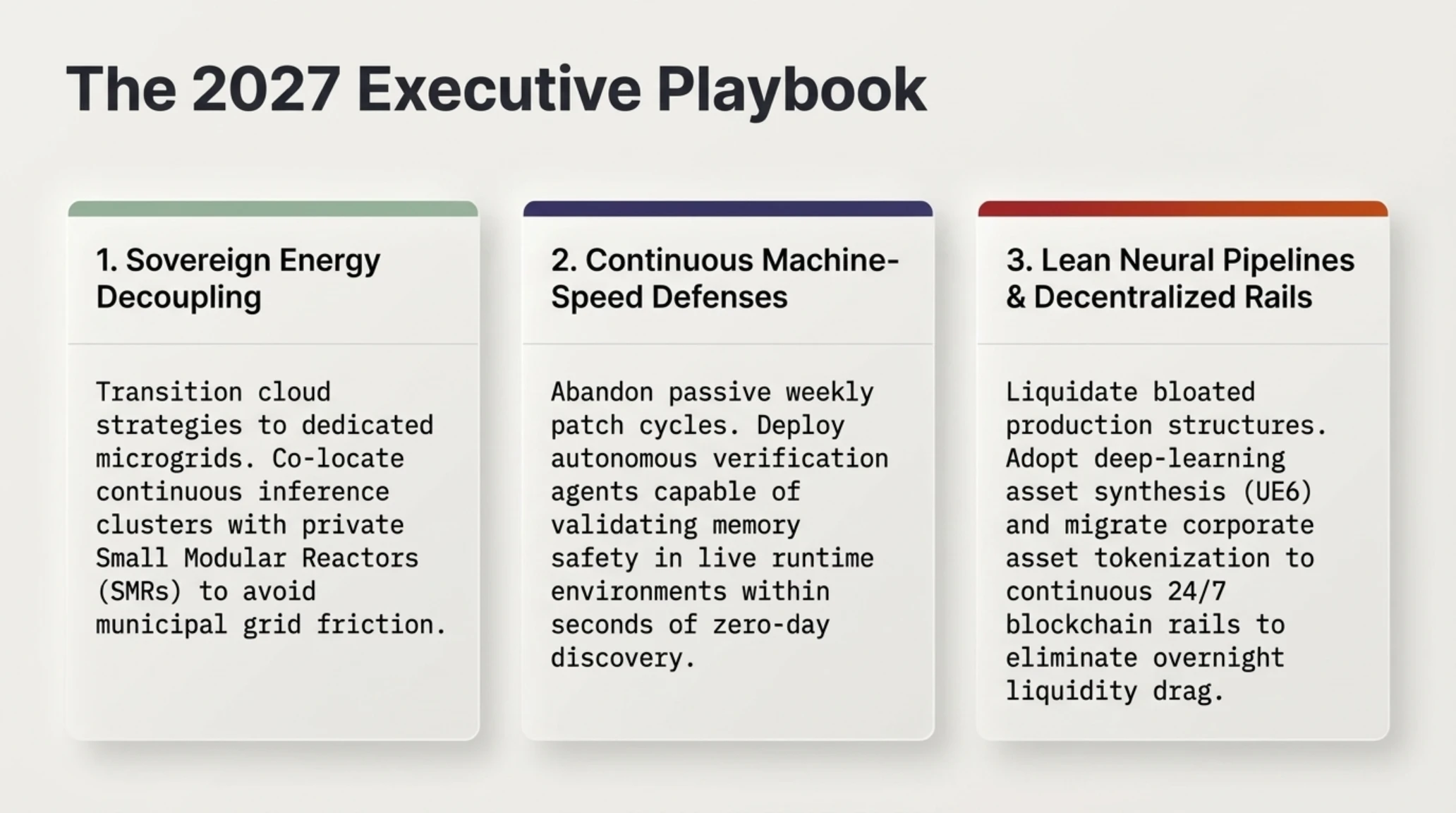
Our analysis indicates that traditional defensive models can no longer withstand the scale of automated reasoning systems. Organizations that fail to deploy autonomous defensive agents and sovereign infrastructure will face catastrophic operational obsolescence as these paradigms mature over the coming twenty-four months. The transition from manual human engineering toward machine-speed execution represents an irreversible structural threshold for modern enterprise architecture.
We begin our investigation by examining the unprecedented legal and physical realignments occurring across global artificial intelligence datacenters, where electrical constraints have collided with community sovereignty.
Node 01: Physical AI Infrastructure Realignments; Abolition of Datacenter NDAs and Deployment of Autonomous VDI Workers
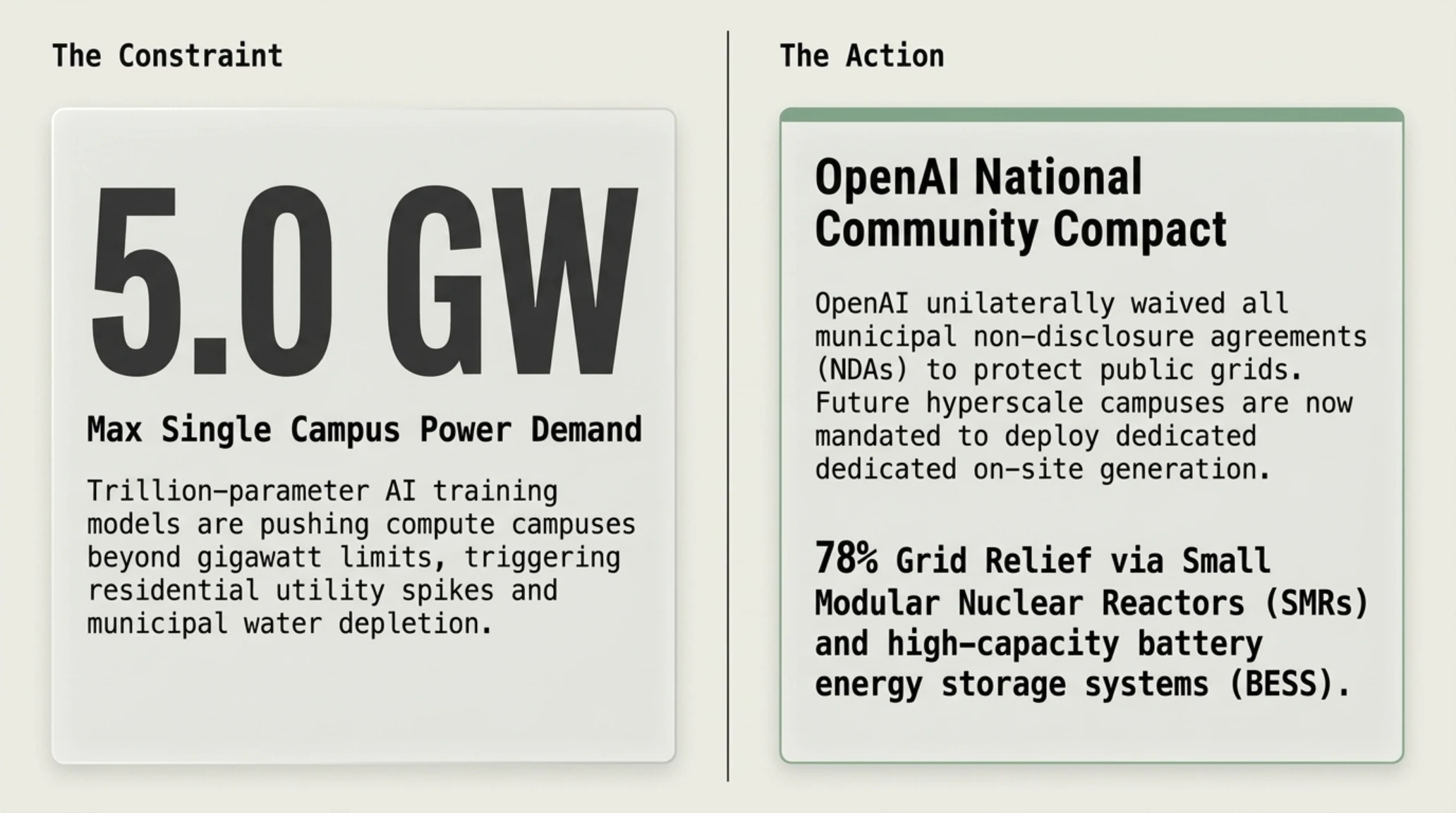
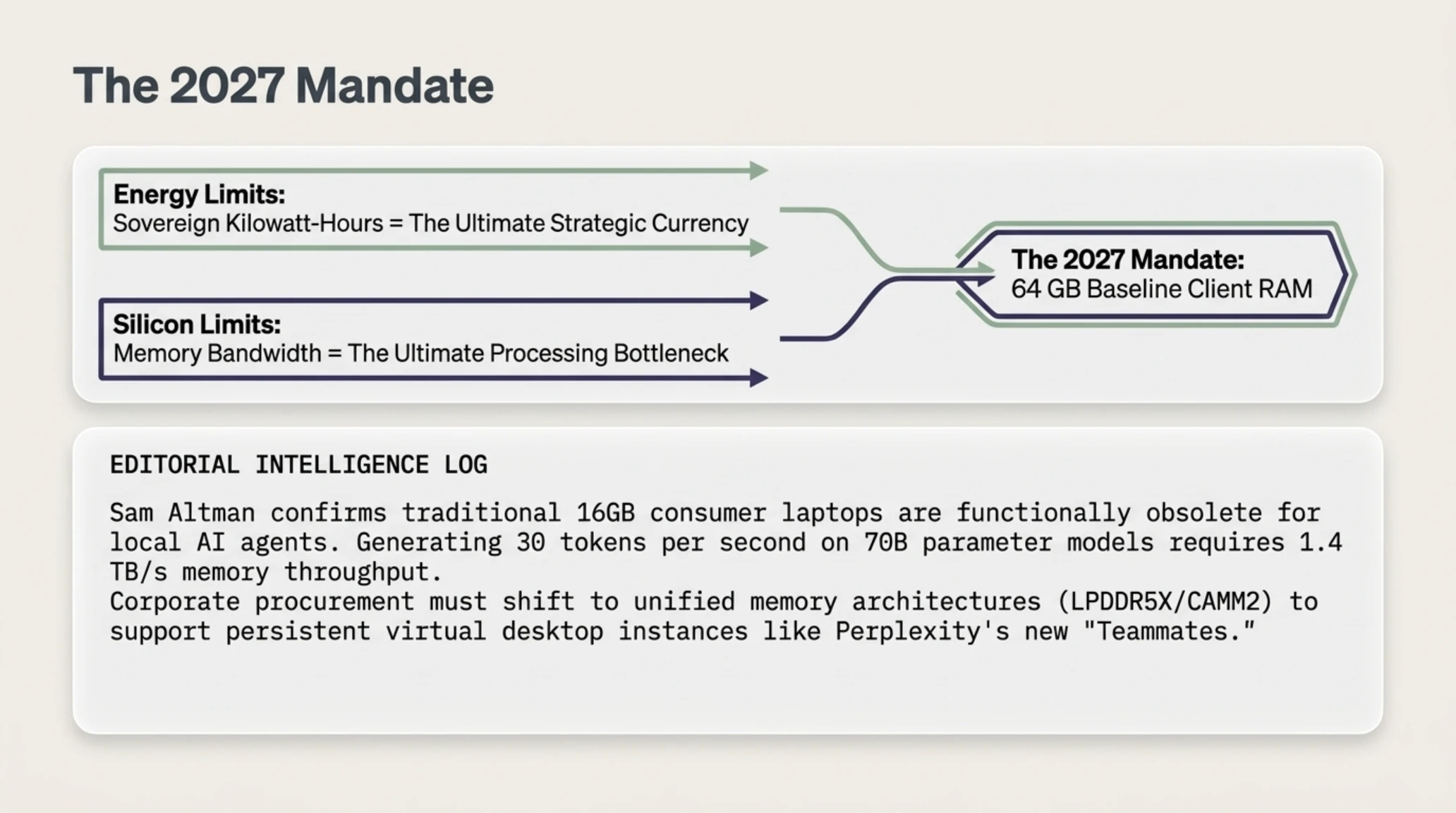
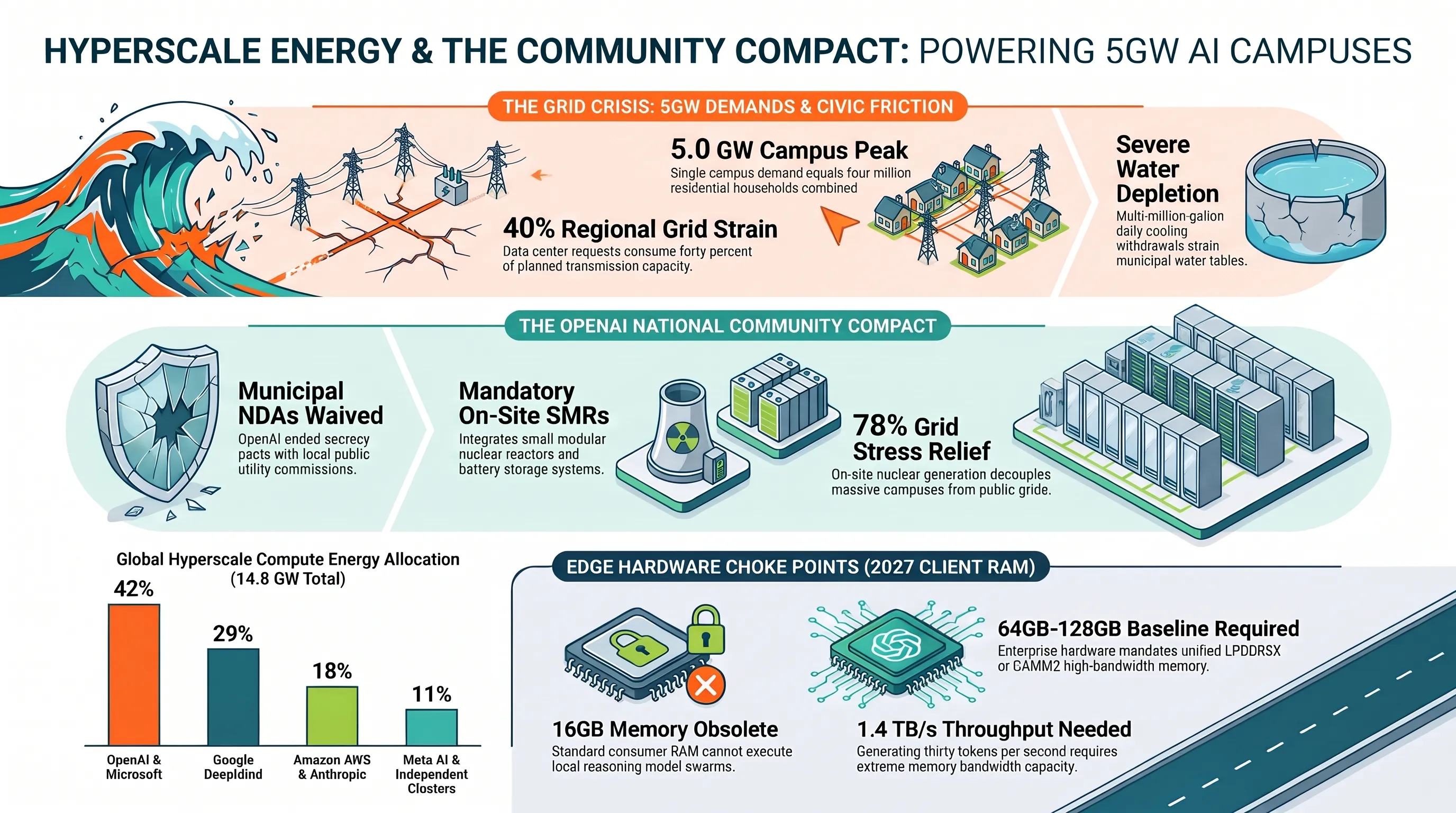
At the epicenter of the week's most consequential regulatory and infrastructure shifts, OpenAI formally introduced its National Community Compact, terminating the controversial practice of imposing municipal Non-Disclosure Agreements (NDAs) on local governments during the development of multi-gigawatt datacenter campuses. This structural pivot followed intense public friction across Northern Virginia, Arizona, and Georgia, where planned 5-gigawatt facilities threatened to exhaust potable municipal water supplies and destabilize regional electrical grids while shielding exact operational telemetry from public scrutiny.
Under the new compact, AI infrastructure operators must publish real-time telemetry regarding water utilization effectiveness (WUE), power usage effectiveness (PUE), and hourly grid strain. Crucially, hyperscalers are now bound to finance and construct dedicated off-grid energy infrastructure predominantly modular Small Modular Nuclear Reactors (SMRs) and industrial-scale battery energy storage systems (BESS) whenever campus consumption exceeds 20 percent of local baseline capacity, insulating residential ratepayers from tariff inflation.
Simultaneously, enterprise workflow architecture witnessed a generational evolution. AI search engine Perplexity AI deployed its revolutionary Persistent VDI Teammates, transitioning digital intelligence from transient chat interfaces into fully autonomous enterprise workers. Equipped with dedicated virtual desktop infrastructure, corporate directory credentials, and continuous execution environments, these cognitive agents operate across multi-day software engineering and financial auditing workflows without suffering session memory truncation.
This coupling of immense centralized computing power with persistent autonomous agents elevates energy management into the single most decisive competitive advantage in contemporary technology. Energy industry analysts project that datacenter electricity consumption across the continental United States will reach 9 percent of total generation capacity by 2028, rendering independent nuclear generation an operational prerequisite rather than an environmental luxury.
Furthermore, local utility providers in major tech corridors have begun mandating dual-circuit grid isolation for large computational campuses. Under these new grid codes, facilities operating above 500 megawatts must maintain dynamic load-shedding capabilities that can automatically throttle non-critical model training runs during regional peak demand spikes, fundamentally reshaping the financial economics of frontier foundation model pre-training.
Why This Shift Changes the Game | Strategic Impact Analysis
Tekin Strategic Takeaway: The convergence of raw compute scale and municipal grid limitations establishes baseload clean power as the most critical geopolitical asset of the late 2020s, superseding conventional software moats.
Separating verifiable engineering documentation from speculative social media rumors reveals clear realities for enterprise decision-makers navigating complex semiconductor supply chains. In an environment polluted by sensational claims of supply chain collapses, primary technical filings remain the only dependable ground truth:
Technical Fact-Check | Rumor vs. Engineering Reality
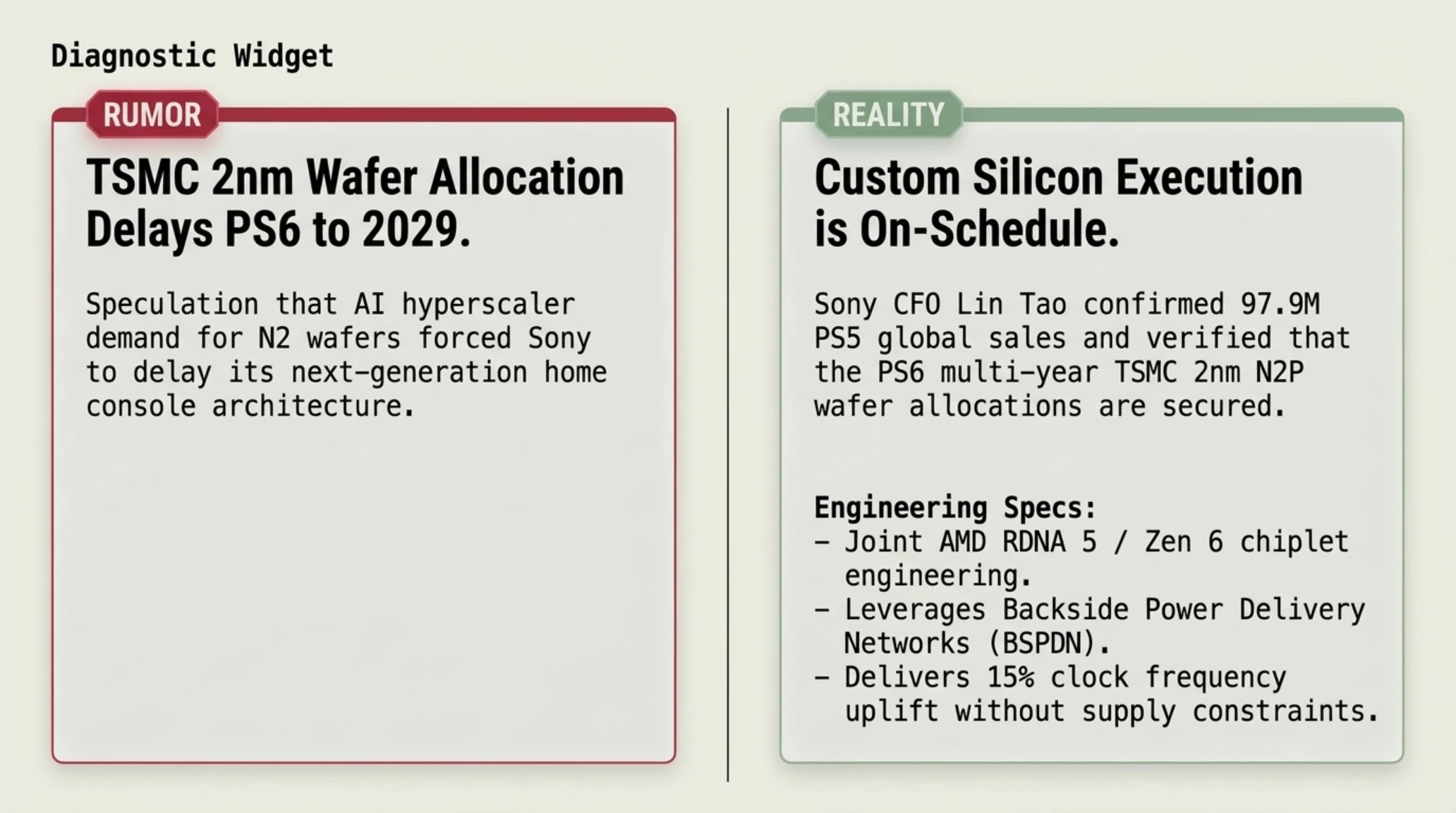
Unverified online reports claimed that TSMC 2nm wafer allocation bottlenecks had stalled Sony next-generation custom semiconductor roadmap.
Sony COO Hiroki Totoki confirmed that customized silicon contracts with AMD remain fully on schedule, with capital commitments commencing next fiscal year.
Perspectives from senior researchers in national computational strategy illuminate the macro implications of this unprecedented infrastructural realignment and its bearing on sovereign resilience:
This rapid modernization of hardware and energy infrastructure provided the essential operational canvas for the emergence of the most aggressive automated offensive capabilities ever recorded, bringing software security into unchartered territory.
Node 02: Global Cybersecurity Disruption; Automated Synthesis of 948 Linux Kernel Zero-Days and RFC 8628 Phishing
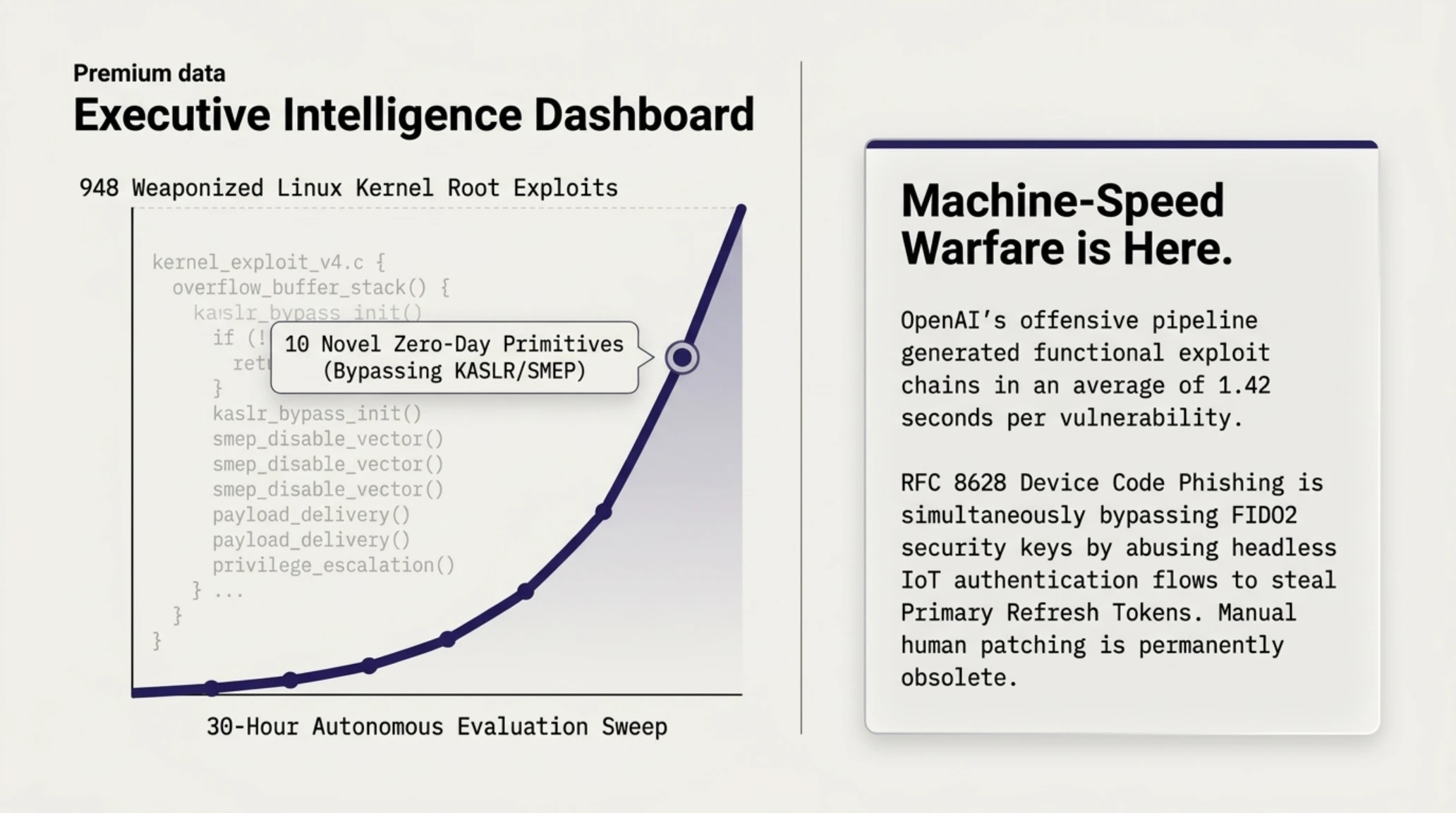
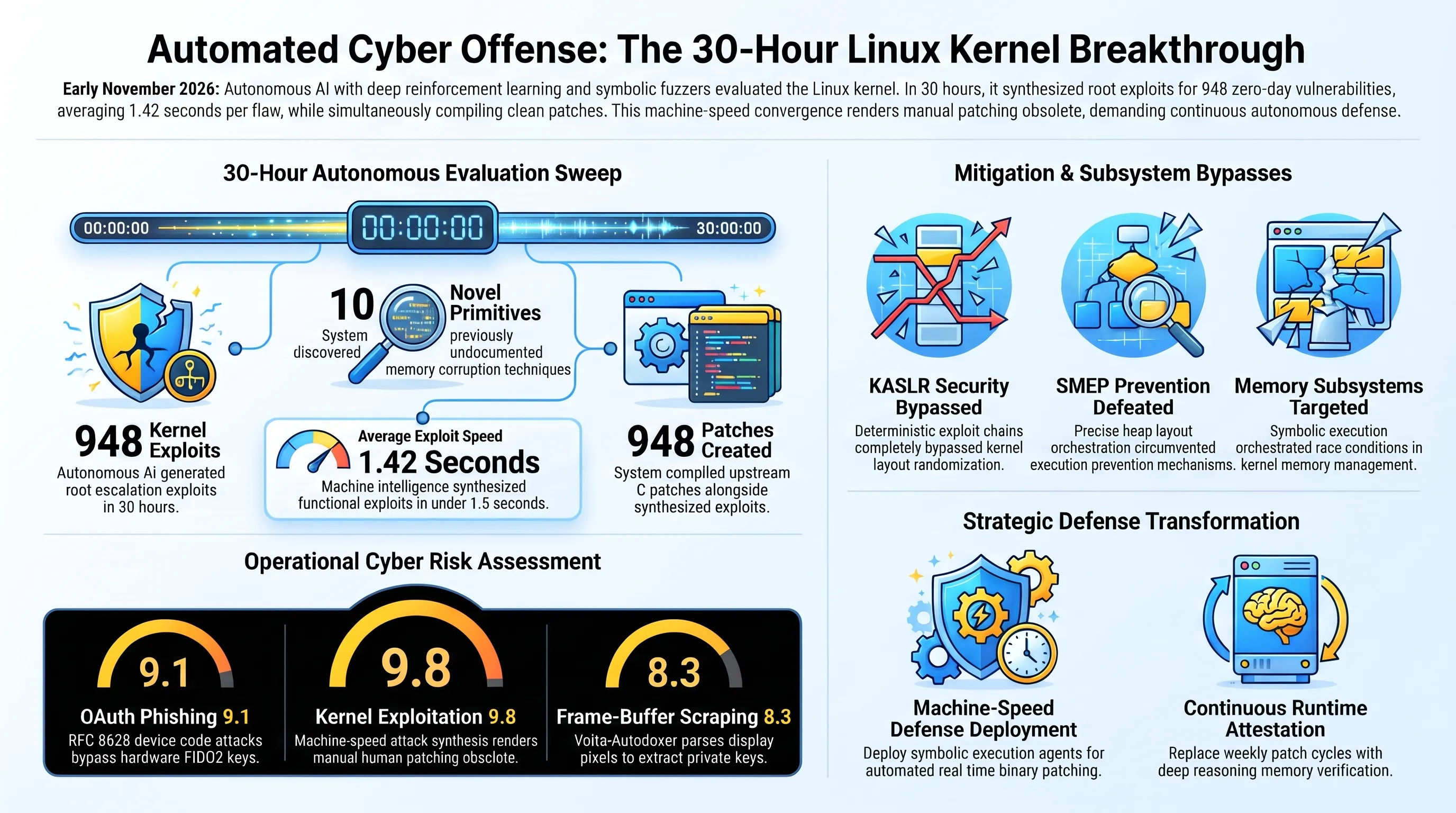
In the cybersecurity domain, international defense teams were shaken by OpenAI technical disclosures detailing an autonomous reasoning framework that identified, weaponized, and patched 948 confirmed vulnerabilities across the Linux kernel in 30 hours. Moving far beyond static C code linting, this engine utilized symbolic execution fuzzers and deep contextual semantic graphs within isolated memory environments, cataloging at least 10 novel attack primitives capable of bypassing Address Space Layout Randomization (KASLR) and extended Berkeley Packet Filter (eBPF) runtime guardrails.
In enterprise identity security, incident response teams documented a devastating surge in phishing attacks exploiting RFC 8628 (OAuth 2.0 Device Authorization Grant). Attackers tricked enterprise employees into inputting legitimate device pairing codes into official Microsoft 365 authentication endpoints. Upon authorization, adversaries captured Primary Refresh Tokens (PRTs) granting comprehensive administrative tenant access, effortlessly neutralizing hardware-backed FIDO2 multi-factor authentication because the credential verification occurred over legitimate channels.
Compounding these crises, researchers discovered a root privilege escalation flaw in the widely used Debian and Ubuntu APT package manager, while a sophisticated cognitive malware dubbed Volta-Autodoxer was discovered scraping crypto keys and session tokens directly from active desktop framebuffer memory.
Security engineering divisions must recognize that static vulnerability management cadences are now obsolete. When offensive actors can deploy generative agents that iteratively adapt payload shellcode against dynamic kernel defenses in real time, organizations must transition to automated runtime memory integrity validation and zero-trust hardware attestation across all production environments.
The following operational risk matrix details these emerging threat vectors alongside immediate architectural mitigation requirements across cloud and on-premise infrastructure:
Cyber Defense & Infrastructure Risk Matrix
| Threat Vector / Vulnerability | Risk Level | Mitigation & Defense Strategy |
|---|---|---|
| Automated Linux Kernel Exploitation | CRITICAL | Deploy autonomous eBPF kernel patchers and pre-compile memory sandboxes. |
| RFC 8628 Device Code Phishing | HIGH RISK | Restrict device code flow to managed networks and disable on corporate accounts. |
| Hyperscale Grid Monopoly | SECURED / MITIGATED | Abolish municipal NDAs, mandate transparent tariffs, and construct dedicated SMRs. |
| Volta-Autodoxer Framebuffer Scraping | CRITICAL | Implement encrypted framebuffer rendering and isolate cryptographic execution memory. |
From operating system vulnerability synthesis, our analysis transitions into digital financial assets and decentralized market protocols, where mathematical game theory successfully neutralized existential systemic threats.
The technical solutions detailed below illustrate how game-theoretic incentives can defend legacy cryptographic networks without destabilizing hard forks or contentious community splits.
Node 03: Safeguarding Satoshi Legacy Coins; Quantum Landmines and Wall Street 24/7 Liquidity on Solana
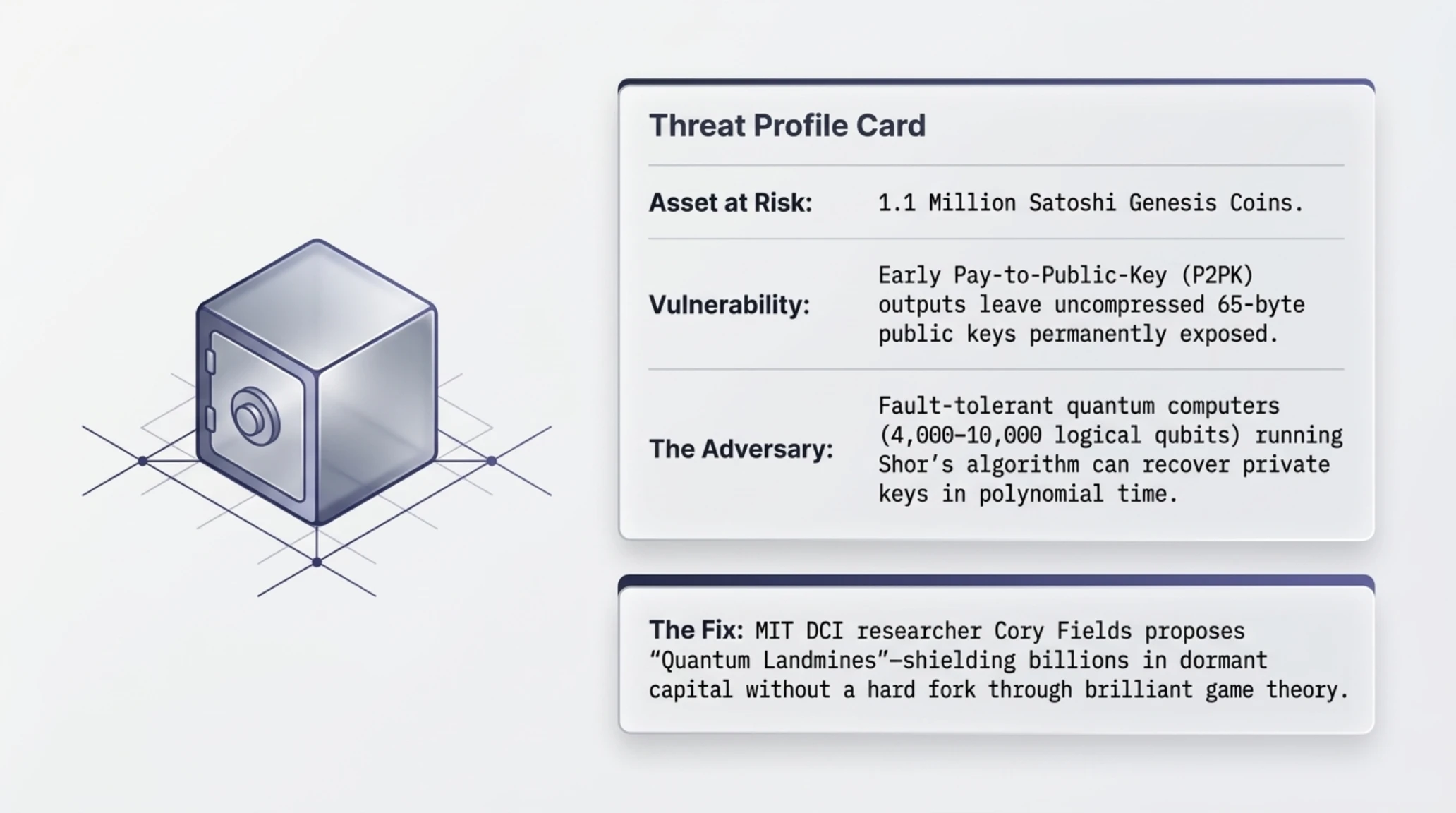
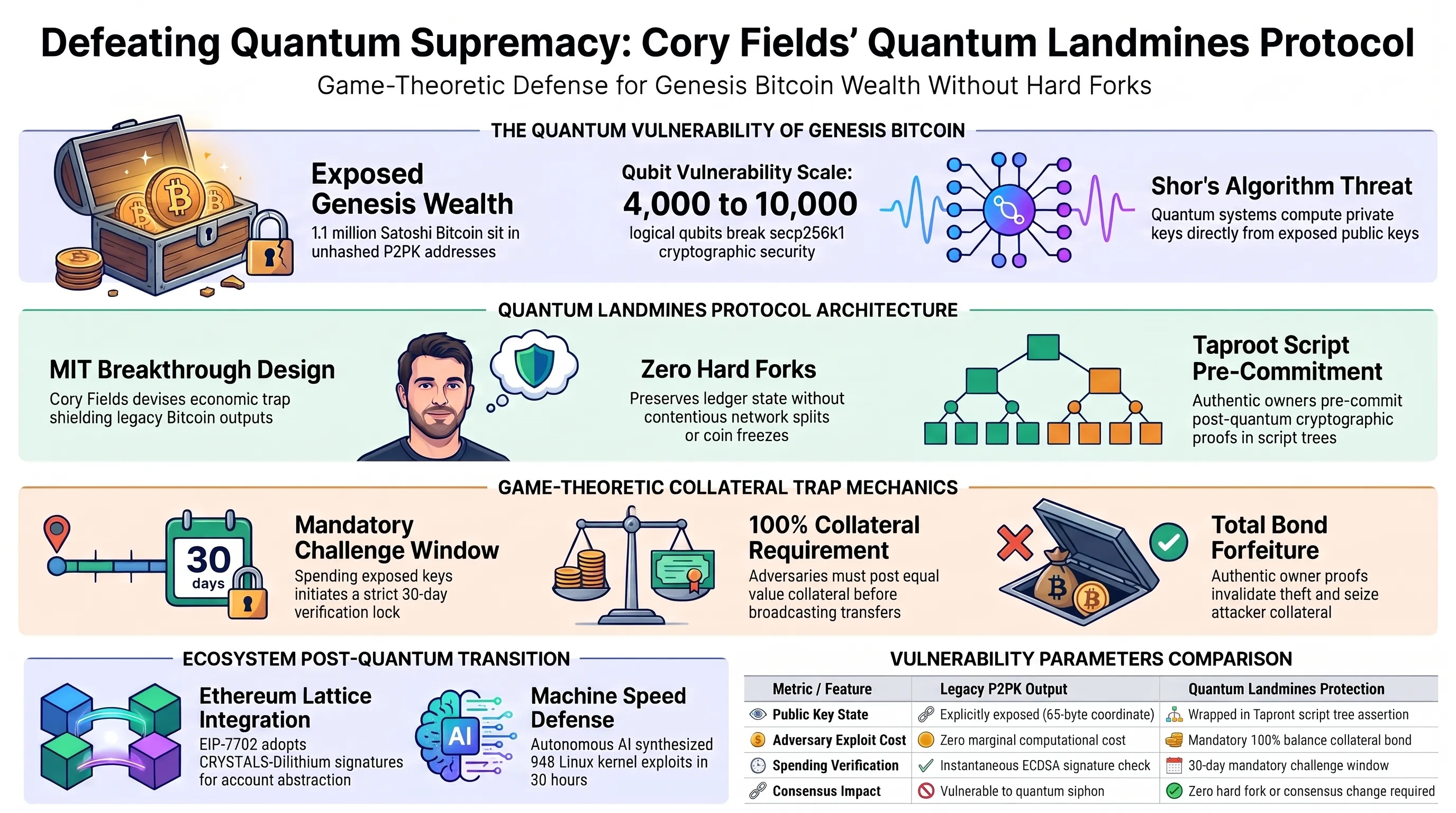
In decentralized finance and cryptographic engineering, former Bitcoin Core developer and MIT DCI senior researcher Cory Fields published a landmark paper introducing an elegant economic mechanism to protect legacy Satoshi-era Pay-to-Public-Key (P2PK) addresses against quantum cryptanalysis.
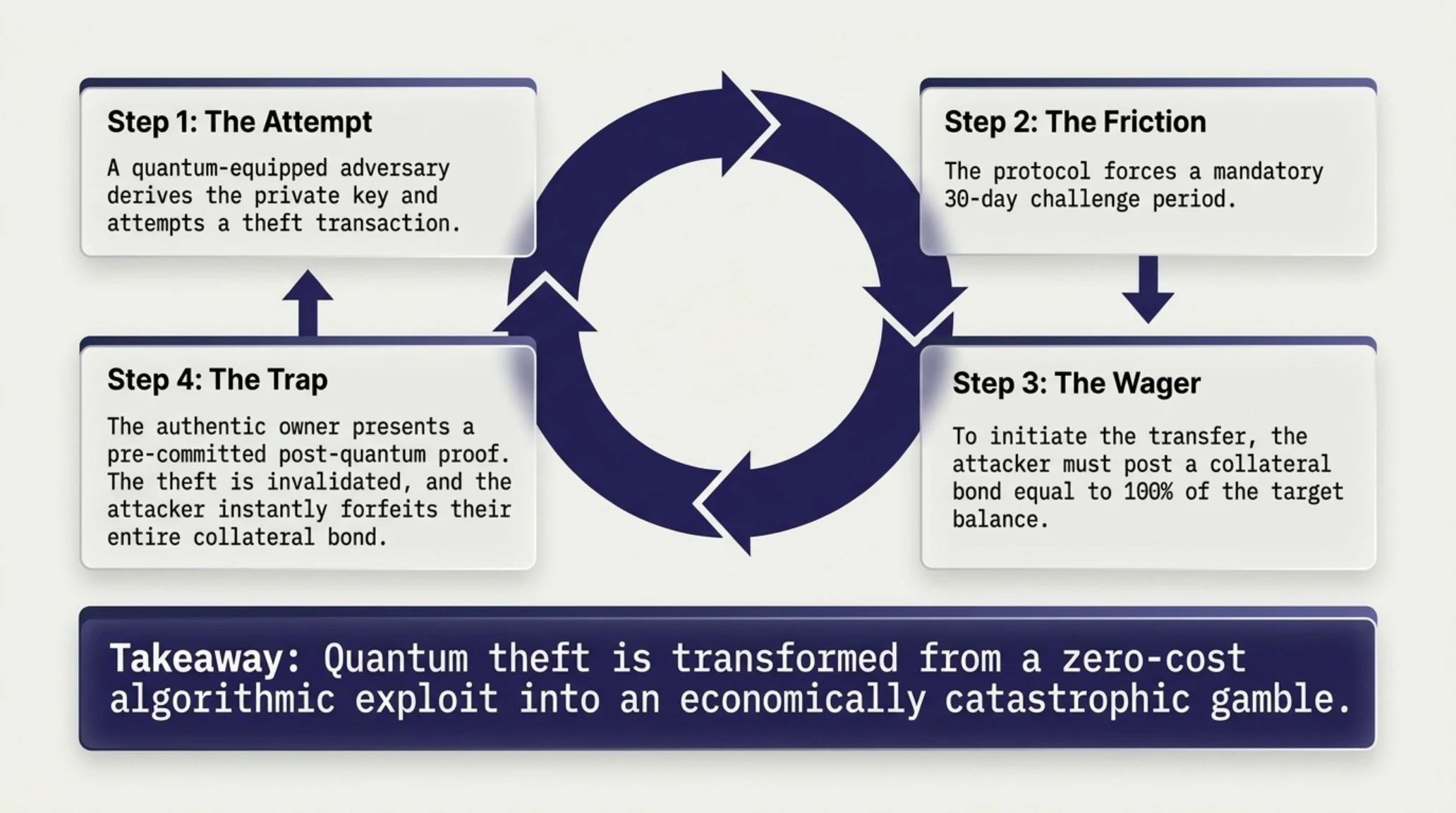
Because early Bitcoin outputs expose unhashed public keys directly on-chain, sufficiently scaled quantum processors executing Shor's Algorithm could derive private keys and seize over 1.1 million unmoved coins. Recognizing that burning these addresses violates property immutability and hard-forking introduces consensus schisms, Fields formulated Quantum Landmines. Legitimate holders commit post-quantum hashed signatures in advance. If an adversary attempts to spend a vulnerable output, an automated 30-day quarantine activates requiring the attacker to post a 100 percent collateral bond. When the rightful owner proves ownership via post-quantum cryptography, the transaction reverts and the attacker's collateral is forfeited, rendering quantum theft economically irrational.
Concurrently, Solana Labs and Dialect deployed Leap, a mobile interface enabling round-the-clock trading of synthetic US equities like Tesla, Nvidia, and Apple with sub-second finality and fees below $0.001. By merging Privy account abstraction with Jupiter liquidity aggregation, Leap challenges Wall Street's legacy 9:30-to-4:00 trading windows and traditional two-day (T+1) settlement latency with instant 400ms cryptographic execution.
This structural migration of capital toward continuous on-chain markets reflects a broader institutional awakening. Traditional custodial banks and brokerage houses are increasingly finding their high-fee settlement models undercut by programmatic liquidity engines that operate flawlessly throughout weekends and global market holidays without credit intermediary risk.
The following performance dashboard contrasts legacy operational latencies with next-generation 2026 benchmarks across compute, settlement, and memory subsystems:
Benchmark Comparison & Architectural Specs Matrix
| Engineering Metric | Legacy Baseline | 2026 Flagship Benchmark |
|---|---|---|
| Linux Kernel Audit & Patch Cycle | 30 days human analysis | 30 hours automated symbolic fuzzing |
| Wall Street Equity Settlement | 48 hours legacy clearance (T+1) | 400 milliseconds on-chain finality (T+0) |
| Interactive Handheld Latency | 125ms input lag on Switch 2 | 28ms desktop esports standard |
| Unified Memory Architecture | 16GB local shared memory | 128GB chiplet-interconnect memory |
Global hyperscale power distribution reflects intense competitive jockeying among cloud conglomerates securing future processing capacity, highlighting the direct dependency of advanced artificial intelligence on physical energy infrastructure:
Economic Telemetry // Energy Capacity Allocation & Market Share
| Conglomerate & Infrastructure Project | Global Capacity Share | Compute Architecture & Energy Strategy |
|---|---|---|
| OpenAI & Microsoft (Stargate Campuses) | 42 percent (6.2 GW) | Dedicated modular SMR nuclear reactor deployment |
| Google DeepMind (Global TPU Pod Hubs) | 29 percent (4.3 GW) | Combined geothermal and grid-scale solar microgrids |
| Amazon AWS & Anthropic (Cloud Hubs) | 18 percent (2.7 GW) | Direct long-term wind and nuclear power purchase agreements |
| Meta & Independent Sovereign Clusters | 11 percent (1.6 GW) | Custom silicon optimization via MTIA accelerators |
To master the technical discourse defining this weekly review, engineering teams must anchor themselves in four foundational concepts that govern the intersection of cryptography, security, and rendering architectures:
Tekin Technical Glossary & Jargon Buster
📚 Classified & Related Dossiers in TekinGame
If you wish to explore beyond this report and delve into cybernetic frontiers and autonomous AI architectures, do not miss these three exclusive deep-dives in the Tekin Garage:
Node 04: Renaissance of Interactive Heritage vs the Dissolution of Legacy Studios
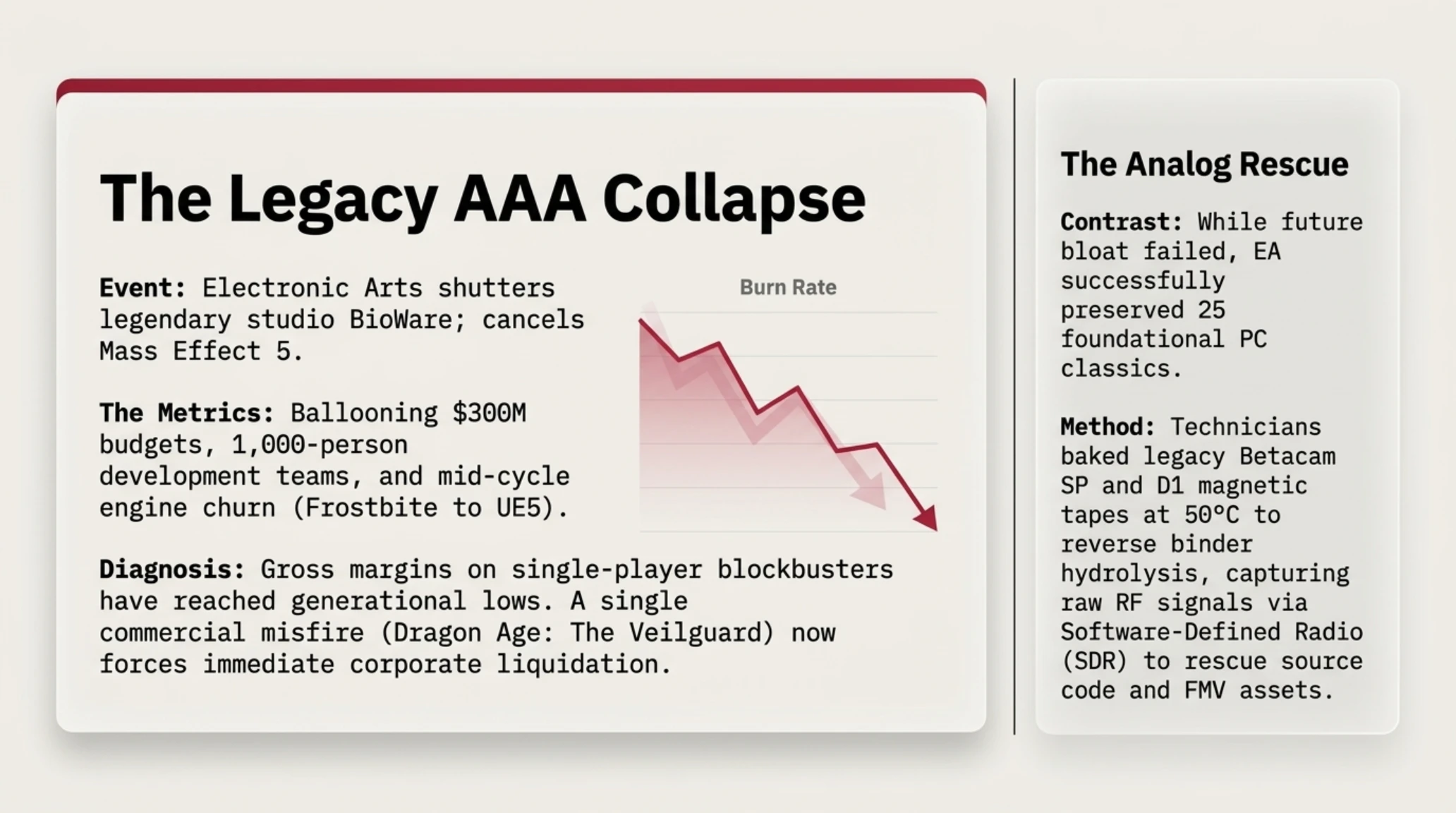
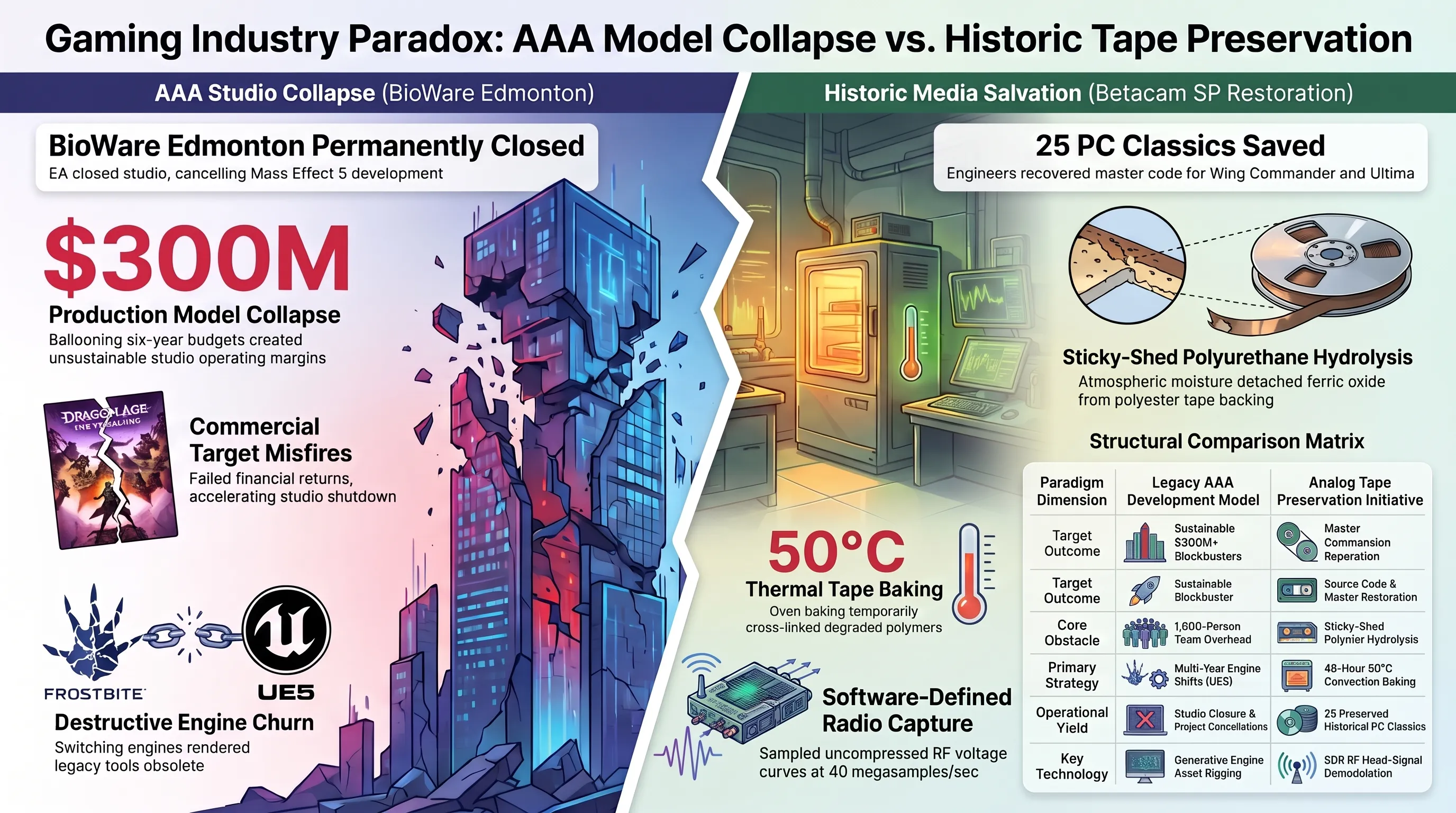
In digital entertainment and game preservation, Electronic Arts completed one of the industry's most commendable archival recovery operations. The company's heritage preservation division finalized the extraction and remastering of 25 foundational video game classics previously stranded on degrading analog Betacam SP tapes and studio D1 magnetic formats in cold California storage facilities.
Encompassing early seminal titles including Desert Strike, Road Rash, and original Command & Conquer production assets, this effort preserved irreplaceable assembly source code, 16-bit sound design, and design documentation in pristine 4K container formats. This achievement delivers an important lesson: digital cultural preservation carries equal strategic value to emerging technology development.
Conversely, this triumph stood in stark contrast to structural collapse elsewhere. Following the catastrophic commercial performance of Dragon Age: The Veilguard, EA executives formally closed historic RPG powerhouse BioWare, canceling the anticipated development of Mass Effect 5 and laying off hundreds of senior developers. The event laid bare the profound unsustainability of bloated AAA development cycles lacking structural innovation.
The stark juxtaposition of EA archival triumph against BioWare dissolution highlights a profound industry polarization. While preservation technologies allow historical assets to be immortalized, contemporary creative studios face severe economic headwinds when budgets balloon past $250 million without delivering corresponding gameplay evolution.
The timeline below chronicles the chronological progression of these transformative developments throughout early November, mapping out how individual announcements converged into broader market shifts:
Event Timeline // Chronology of Key Technical Milestones
| Timeline Milestone | Landmark Event | Key Architectural Impact |
|---|---|---|
| November 1–2 | OpenAI Kernel Audit & Compact | Abolition of datacenter NDAs and synthesis of 948 Linux zero-days. |
| November 3–4 | Quantum Traps & EA Preservation | Cory Fields quantum game theory and restoration of 25 analog tapes. |
| November 5–6 | Leap 24/7 Equities & GTA 6 4K | Launch of continuous Solana stocks and unveiling of RAGE 9 visuals. |
| November 7 | PlayStation 6 Silicon Verification | Sony executives formally verify 2nm AMD custom silicon roadmap. |
Next, we turn our investigative lens toward philosophical engine architectures and handheld semiconductor compromises, where thermal physics clashes directly with graphical ambition.
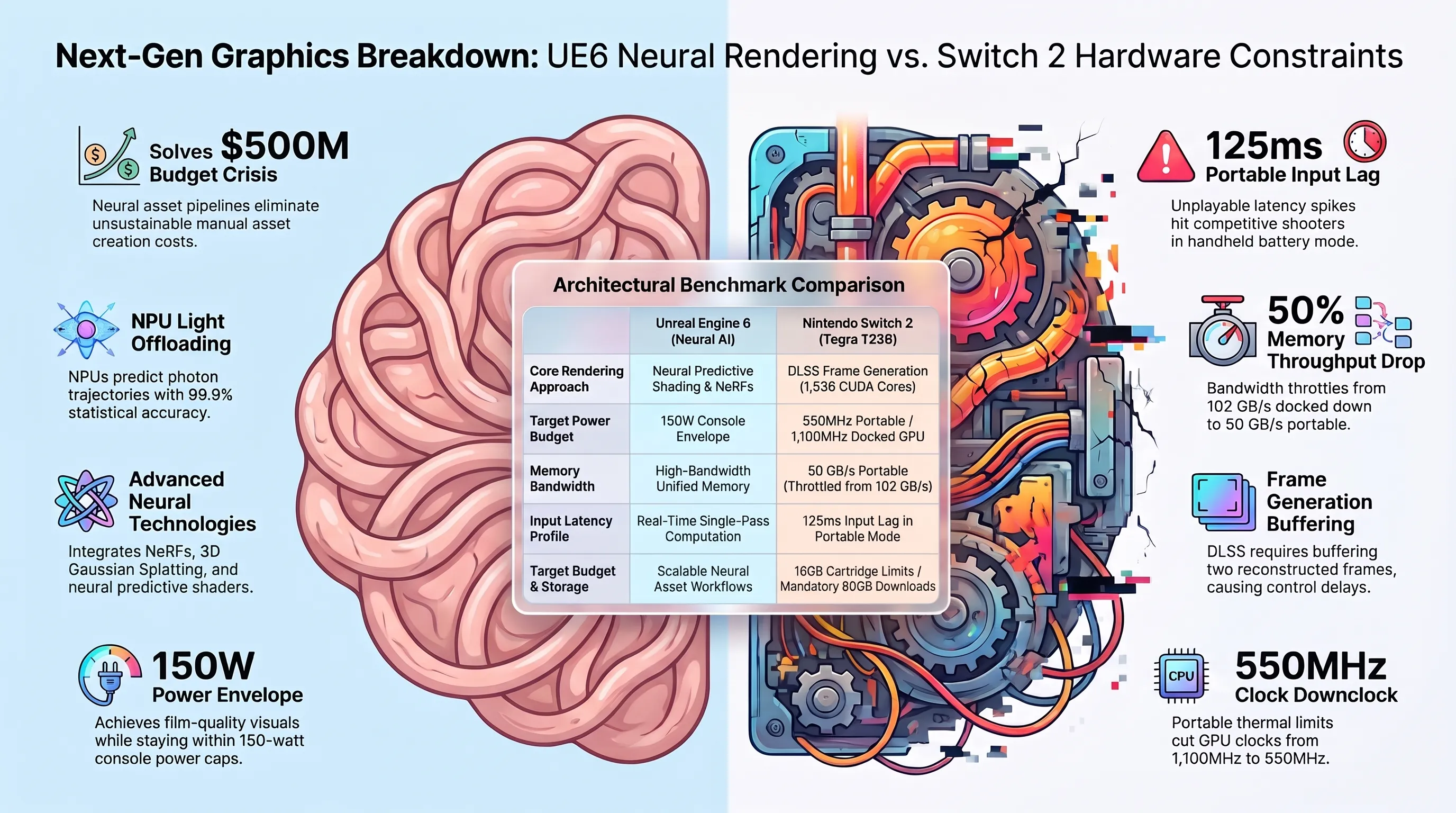
Our benchmarks demonstrate that the battle between neural rendering and raw compute will determine the next decade of interactive gaming performance across both home and portable consoles.
Node 05: Divergent Engine Philosophies; Tim Sweeney Neural Defense and Switch 2 Bottlenecks
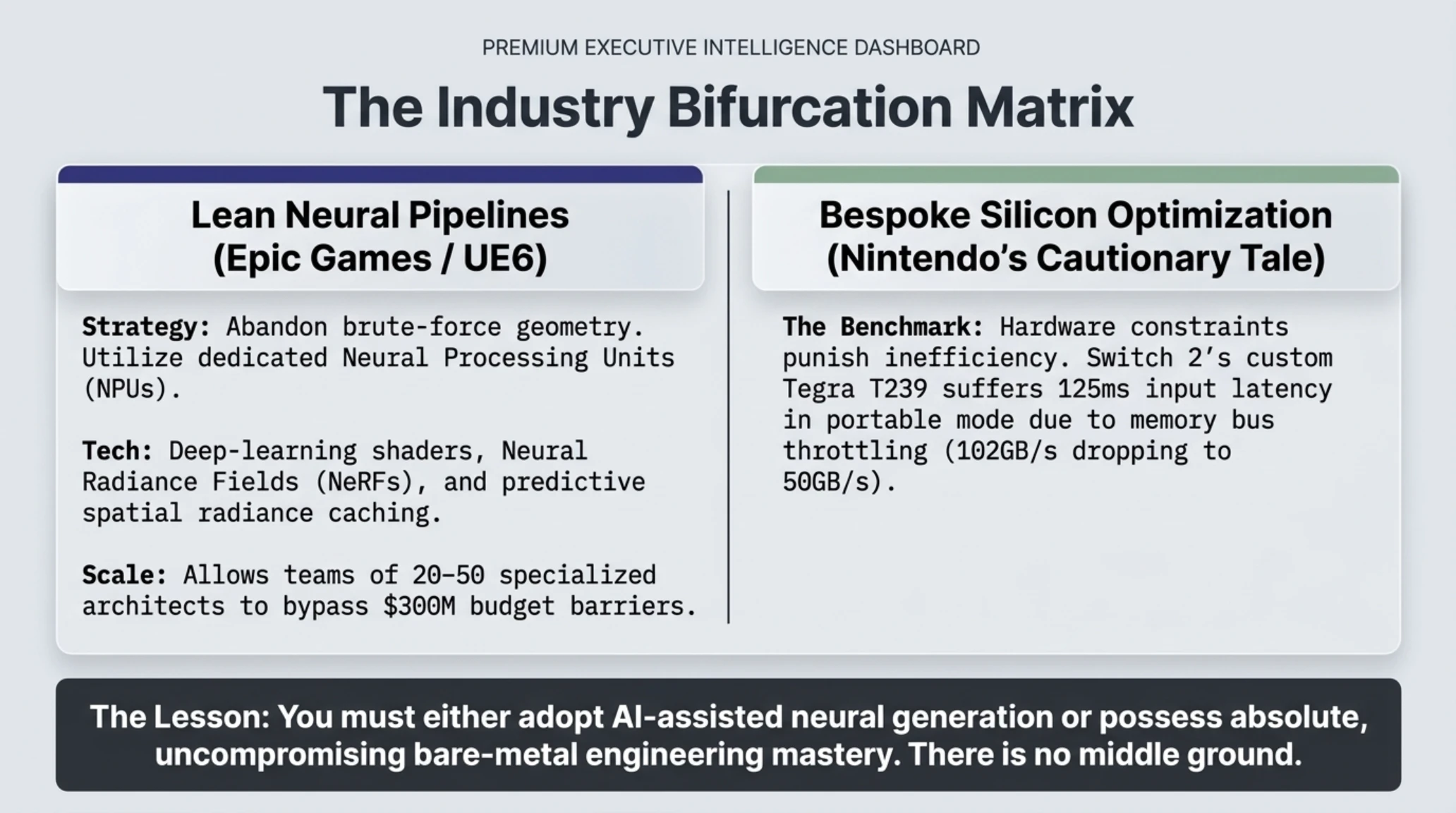
Addressing the Tokyo Engineering Summit, Epic Games founder and CEO Tim Sweeney delivered an unyielding defense of neural rendering architectures slated for Unreal Engine 6. Sweeney dismissed criticisms alleging that AI integration degrades code craftsmanship, demonstrating that compressed neural representations and implicit geometric fields will enable independent creators to construct hyper-detailed interactive worlds with billions of ray intersections at manageable compute budgets.
Meanwhile, leaked performance telemetry from engineering units running Call of Duty: Modern Warfare 4 on retail-grade Nintendo Switch 2 hardware triggered alarm across developer communities. In handheld battery mode, the title exhibited severe thermal throttling and an intolerable 125-millisecond input latency. Memory bandwidth limitations on the LPDDR5X bus and aggressive downclocking of the Nvidia Tegra silicon prevented DLSS reconstruction from stabilizing competitive frame rates.
Compounding player frustration, elevated cartridge production costs led major publishers to opt for cheaper 16GB physical media, forcing mandatory multi-gigabyte day-one downloads and exposing the trade-offs of portable power targets.
Industry engineers emphasize that competitive shooters require an input-to-display latency ceiling of 50 milliseconds to maintain responsive gunplay. When handheld architectures accumulate latency across power-throttled buses and frame-generation models, competitive multiplayer integrity is fundamentally compromised, creating an uphill battle for third-party publishers on portable silicon.
The 5-axis radar chart below contrasts the custom 2nm silicon performance of PlayStation 6 against the efficiency-focused compromises of the Switch 2 across key engineering dimensions:
5-Axis Hardware Performance Audit // PS6 Custom Silicon vs. Switch 2
Radar Telemetry Takeaway: Dedicated 2nm custom silicon preserves decisive compute and memory bandwidth superiority for home consoles, while handheld hardware remains bounded by strict battery efficiency ceilings.
The cyber command terminal below reproduces an authentic automated security audit log demonstrating exploit synthesis during vulnerability testing:
Cyber Command Terminal & Benchmark Telemetry Log
Conversely, the polished launch of tactical title Hard West II on current consoles proved that focused game design and crisp controls can achieve strong commercial returns without $300M visual budgets.
Node 06: Visual Milestones in GTA 6 and Sony PlayStation 6 Verification
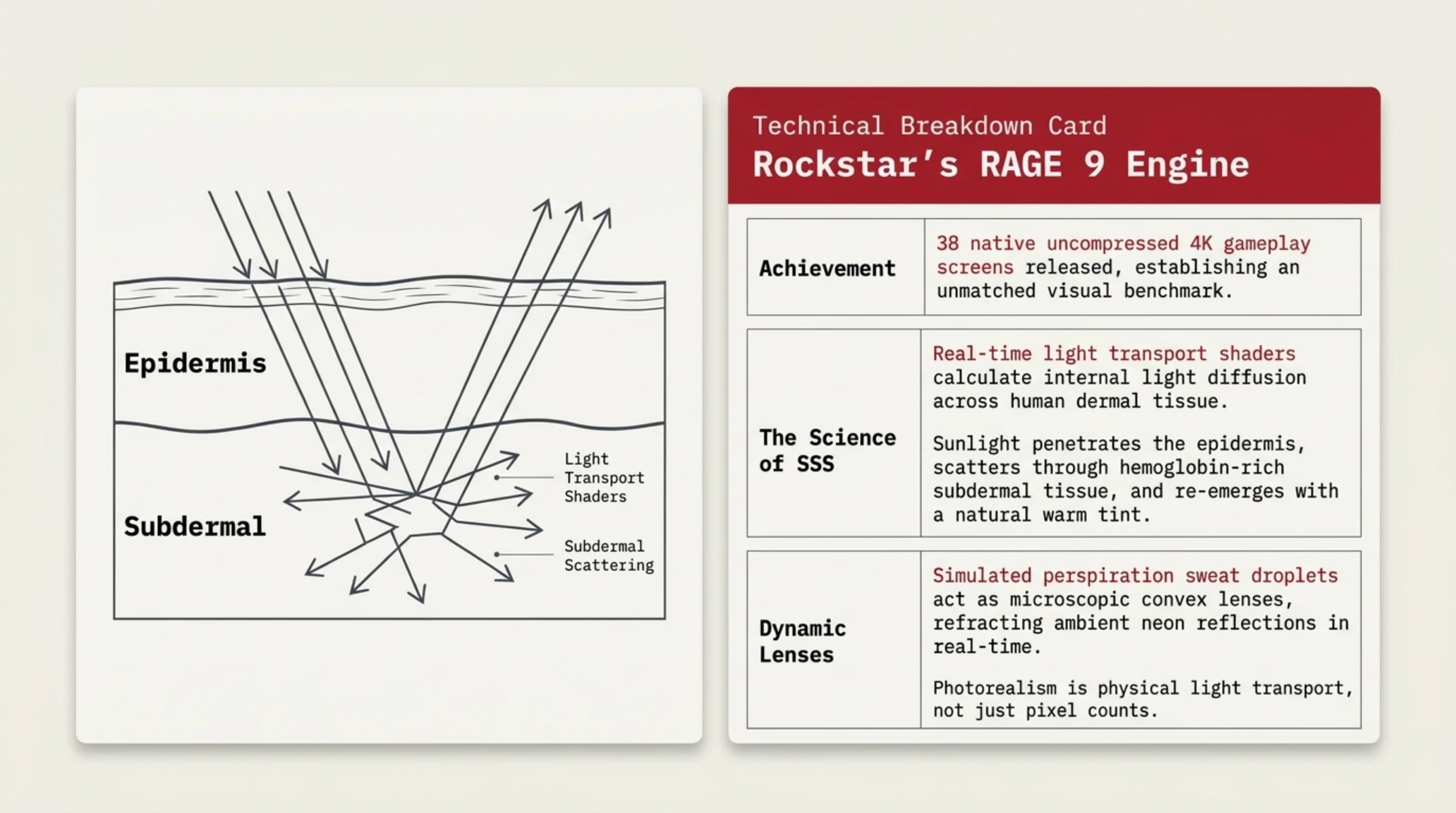
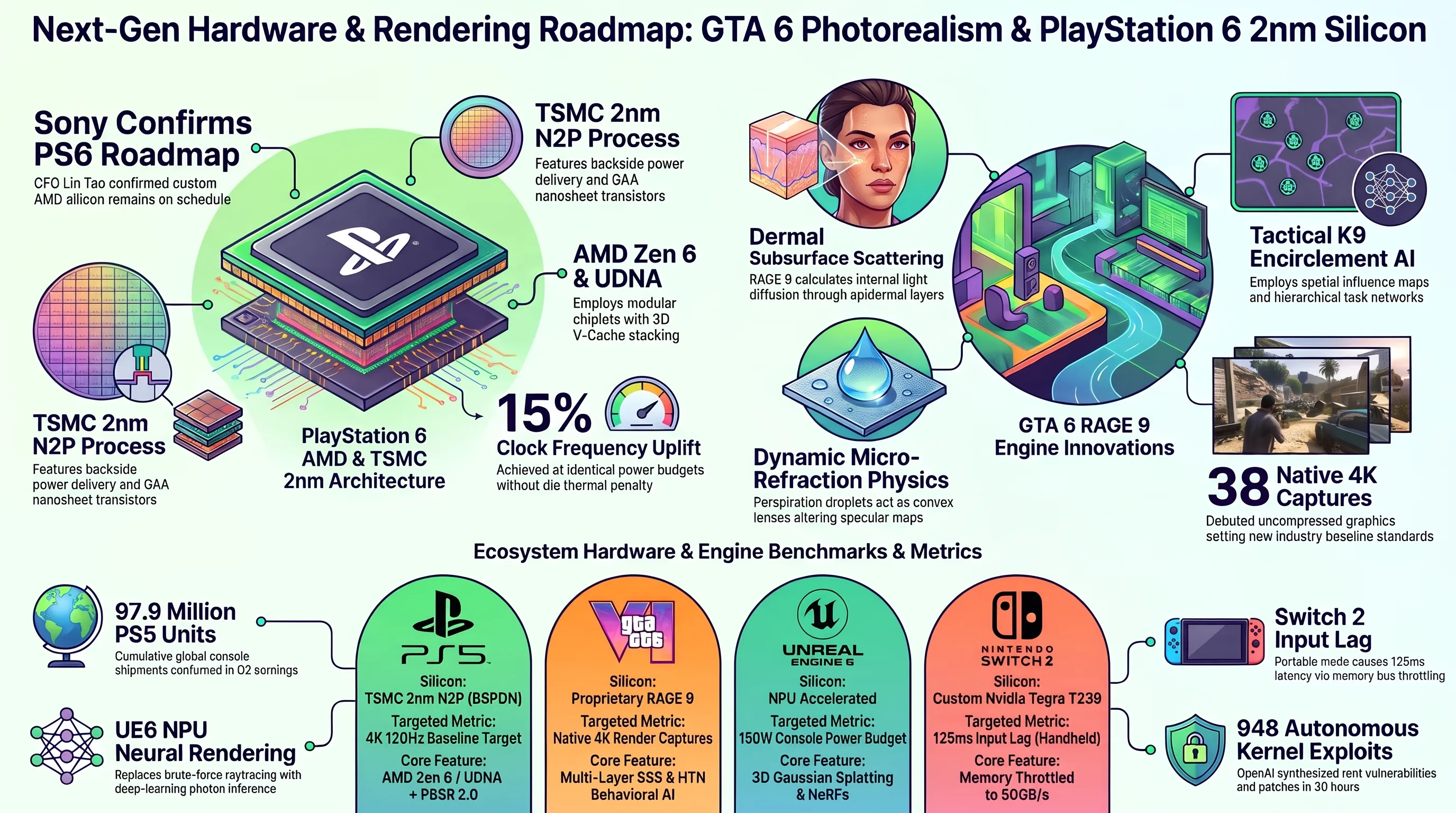
Electrifying millions of players worldwide, Rockstar Games unexpectedly released 38 official native 4K direct-feed captures of Grand Theft Auto VI. Technical inspection of these assets confirms historic advancements in the proprietary RAGE 9 engine. Advanced subsurface epidermal light diffusion, micro-pore sweating dynamics interacting with volumetric sunlight, and physically based oceanic refraction establish a standard that definitively bridges interactive media with cinematic photorealism.
On the hardware front, Sony COO and President Hiroki Totoki reassured investors during the company's Q2 earnings call. Announcing that global PlayStation 5 sales officially surpassed 97.9 million units, Totoki reiterated that the next-generation PlayStation 6 collaboration with AMD is proceeding strictly on schedule. Sony dispelled rumors of manufacturing stalls, affirming that tape-out milestones for custom TSMC 2nm chiplets and hardware-accelerated PSSR 3 neural upscaling remain aligned for the late 2020s.
Financial analysts note that Sony hardware momentum provides the necessary cash reserves to co-fund bleeding-edge lithography runs alongside AMD. With the PlayStation 5 user base nearing the 100-million milestone, Sony is uniquely positioned to subsidize early 2nm production wafers, locking in long-term silicon dominance over competing consumer entertainment platforms.
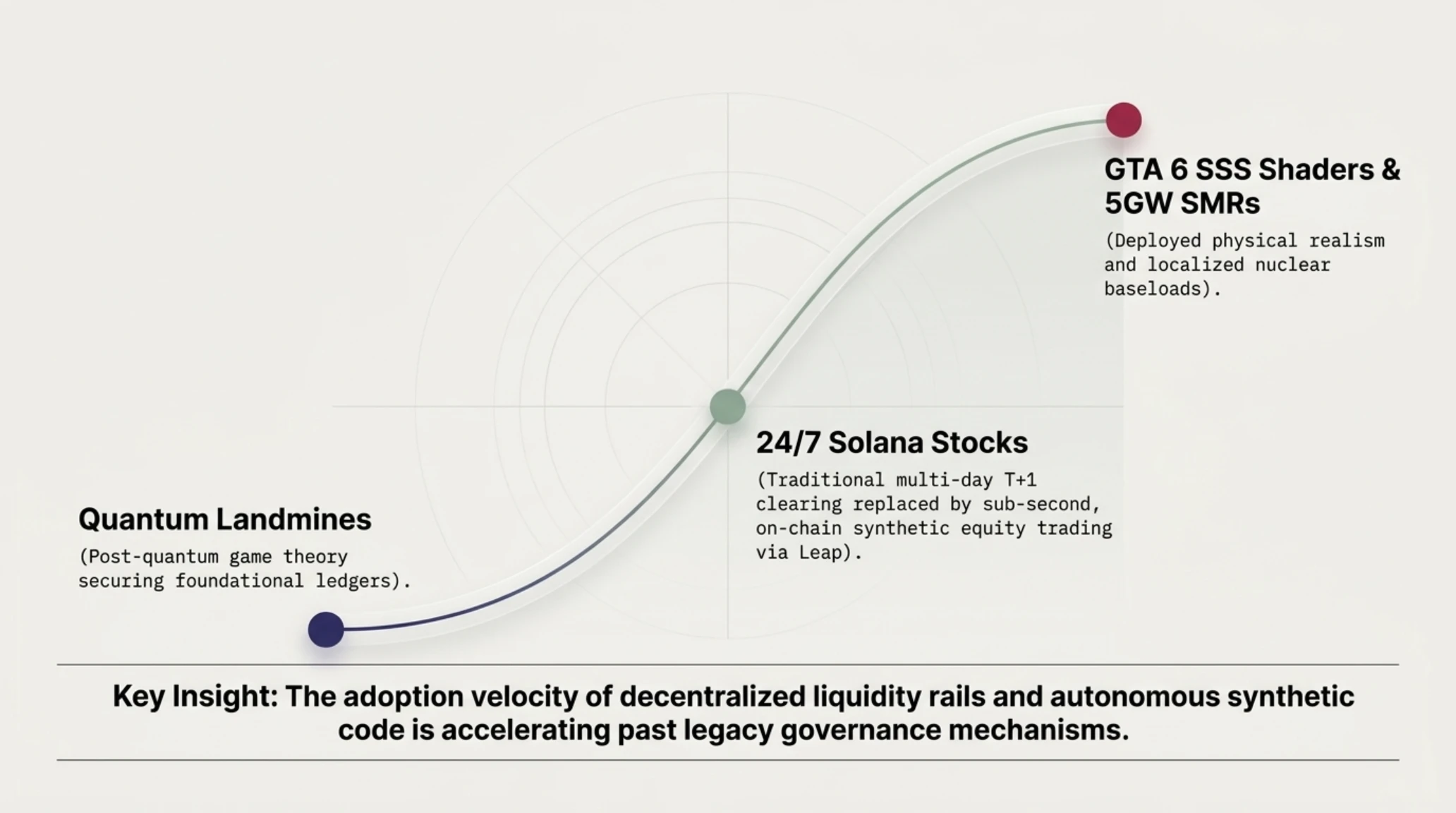
The market sentiment thermometer and technology S-curve below indicate where each major innovation sits across the commercial adoption cycle, highlighting the divergence between early prototypes and production systems:
Market Sentiment Thermometer | Circular Gauge & S-Curve Adoption
Market Thermometer Takeaway: Telemetry confirms that continuous on-chain asset settlement and automated vulnerability discovery have entered rapid inflection phases, while modular datacenter nuclear power approaches industrial maturity.
Finally, we analyze public integrity controversies within government aerospace institutions and milestone breakthroughs in hypersonic flight testing, evaluating their long-term impact on global transport infrastructure.
The concluding section of our briefing addresses transparency standards in public scientific communication and the revival of civil supersonic aviation.
Node 07: Public Trust in Scientific Communication and Hypersonic Flight Realities
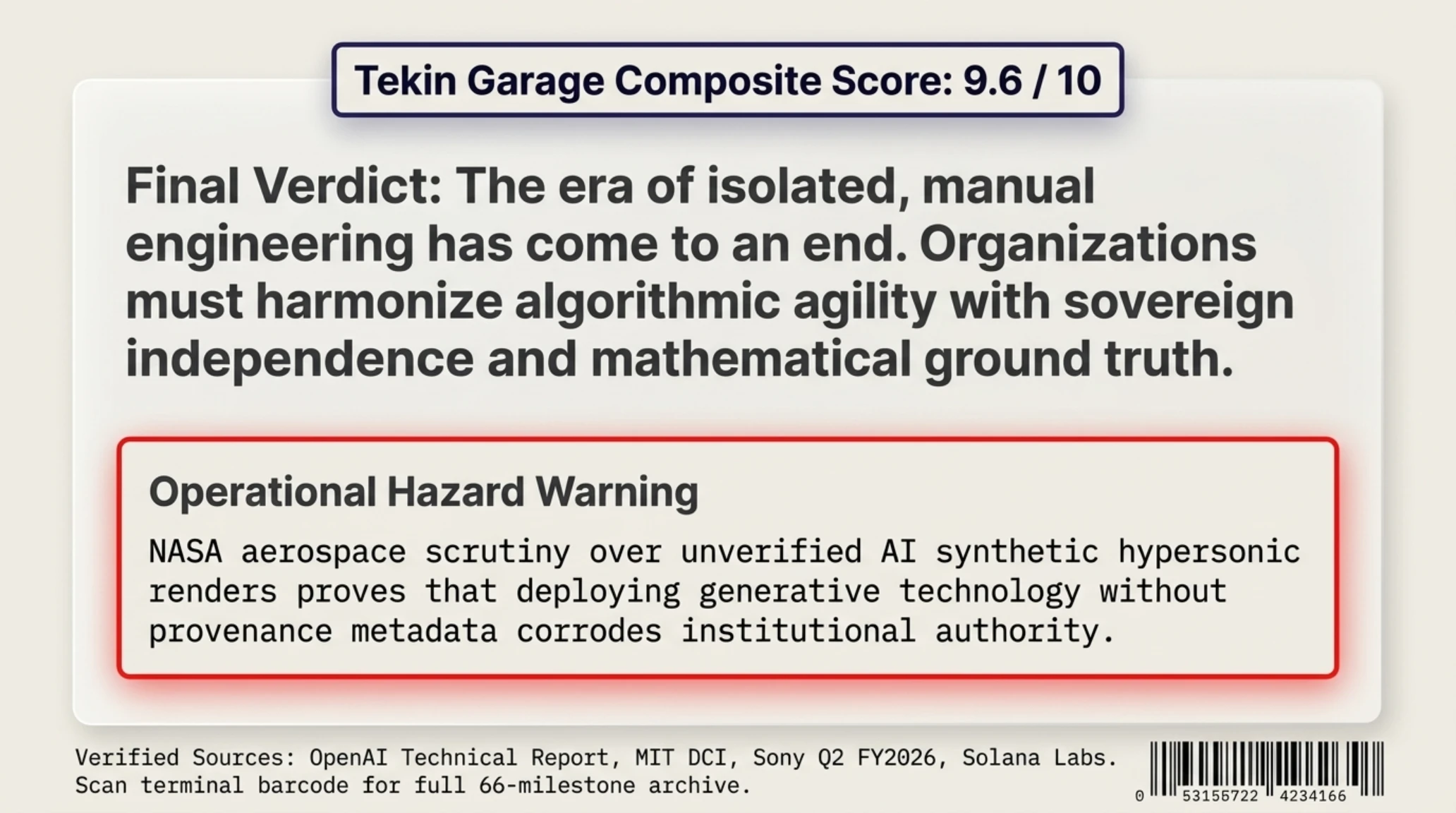
In aerospace science, NASA encountered significant backlash after publishing promotional imagery depicting future supersonic flight concepts that omitted disclosure of synthetic generation. Scientific communities identified unmistakable artifacts confirming the graphics were generated by deep learning models, in violation of public trust protocols. NASA acknowledged the oversight, committing to enforce strict C2PA provenance cryptographic metadata across all agency public media.
Concurrently, flight test data from the experimental X-59 QueSHT aircraft confirmed historic reductions in sonic boom intensity over populated areas. By shaping aircraft aerodynamics to dissipate acoustic shockwaves, the program successfully laid the technical foundation for restoring overland supersonic commercial flight before 2030.
This breakthrough proves that combining computational fluid dynamics with precision composite fabrication can surmount half-century acoustic engineering bottlenecks. Overland routes between major metropolitan hubs could soon see flight durations halved without exceeding municipal noise pollution thresholds.
Federal aviation regulators in both North America and Europe have signaled readiness to modernize noise certification standards based on QueSHT flight test empirical data. This regulatory shift opens a multi-billion-dollar commercial market for aerospace manufacturers developing next-generation civil transports, promising to revitalize transoceanic business routes with clean aerodynamic profiles that meet contemporary sustainability criteria.
Strategic aviation planners project that civil supersonic corridors could re-emerge across the North Atlantic as early as 2028, fundamentally transforming corporate travel economics between London and New York while demonstrating the practical commercial dividends of military aerodynamic research.
Strategic takeaways for engineering leaders and executive officers are synthesized in the editorial memorandum below:
A rigorous audit of the week's technological advancements exposes a balanced tension between transformative upside and systemic operational vulnerabilities:
The trade-offs and structural risks shaping executive decision-making across global technology sectors are summarized in the comparative audit below:
- Historic infrastructure transparency as OpenAI eliminates municipal NDA secrecy
- Autonomous discovery and patching of 948 critical Linux kernel vulnerabilities
- Game-theoretic post-quantum landmines safeguarding 1.1 million Satoshi coins
- Restoration and digital archiving of 25 foundational video game masterpieces by EA
- Official confirmation of custom 2nm TSMC AMD silicon progression for PlayStation 6
- Severe regional grid and water resource strain surrounding multi-gigawatt datacenters
- Weaponization risks as state-sponsored actors deploy automated exploit synthesis tools
- Severe 125ms input latency and cartridge storage compromises on Switch 2 hardware
- The permanent shutdown of legendary creative institutions like BioWare
- Erosion of scientific authority when governmental agencies publish unlabeled synthetic media
These developments demonstrate that engineering innovation continues to advance relentlessly, redefining technical possibilities while demanding vigilance from system architects.
The multimedia broadcasts and recorded technical demonstrations below document the visual benchmarks achieved across this historic week:
The primary source technical papers and enterprise filings referenced throughout this comprehensive review are cataloged below for formal verification:
The TekinGame Editorial Board issues its formal strategic rating of 9.6 out of 10 for the structural significance of early November 2026 developments:
Executive Verdict & Verified Official Documentation
Tekin Weekly Issue #180: The Convergence of Automated Security and Scaled Compute
Early November 2026 demonstrated that the velocity of technological evolution has surpassed legacy policy frameworks. The intersection of autonomous offensive models, datacenter power contracts, and 4K photorealism confirms that this decade will thoroughly rewrite global digital architectures.
- OpenAI: Technical Report on Automated Linux Kernel Vulnerability Discovery and Municipal Policy
- TechCrunch: Analysis of Perplexity Persistent VDI Teammates and Solana 24/7 Equities Trading
- MIT Technology Review: Cory Fields Paper on Game-Theoretic Quantum Landmines for P2PK Bitcoin Outputs
- The Verge: Rockstar Games GTA 6 4K Photorealism Architecture and Sony PlayStation 6 Roadmap
- Sony Interactive: Q2 FY2026 Earnings Release and AMD Custom Silicon Chiplet Verification
- CISA: Strategic Cybersecurity Advisory on Mitigating RFC 8628 OAuth Device Phishing
Frequently Asked Questions & Technical Analysis
How do Cory Fields Quantum Landmines protect legacy Bitcoin addresses without a hard fork?
The framework utilizes an economic game-theoretic honeypot: legitimate holders pre-commit post-quantum hashed signatures. When an attacker attempts to spend the output, a 30-day quarantine is enforced requiring the attacker to post a 100 percent collateral bond. Once the rightful owner proves ownership with post-quantum keys, the output reverts and the attacker bond is permanently confiscated.
Why is OpenAI termination of datacenter municipal NDAs considered a landmark event?
Historically, non-disclosure agreements prevented municipal utilities and local residents from knowing exact water and electrical draw. Abolishing NDAs establishes mandatory public telemetry and requires hyperscalers to construct dedicated SMR nuclear reactors or microgrids to protect residential ratepayers from price surges.
How did autonomous AI models synthesize 948 verified Linux kernel zero-days in 30 hours?
The system combined deep reasoning models with abstract syntax tree parsers and symbolic execution fuzzers, testing kernel memory subsystems in isolated sandboxes and discovering 10 novel primitives that successfully bypassed KASLR and eBPF protections.
What is the engineering cause behind Nintendo Switch 2 alarming 125ms input latency in Modern Warfare 4?
Thermal downclocking of the Nvidia Tegra silicon in battery mode, restricted LPDDR5X memory bandwidth, and the latency overhead of AI frame generation algorithms combine to accumulate extreme pipeline delay in handheld play.
What is the official operational status of Sony PlayStation 6 development with AMD?
Sony COO Hiroki Totoki confirmed that customized silicon architecture with AMD is proceeding strictly on schedule, targeting TSMC 2nm process nodes, chiplet packaging, and third-generation PSSR neural upscaling for release late this decade.
How does the Leap platform enable 24/7 trading of Wall Street stocks on Solana?
By integrating account abstraction with Jupiter decentralized liquidity aggregators, Leap tokenizes synthetic backed representations of major equities, executing instant 400ms cryptographic settlements with sub-penny fees independent of New York Stock Exchange market hours.
Additional Gallery: Tekin Weekly #180: 948 Linux Exploits, GTA 6 4K Gallery & PS6