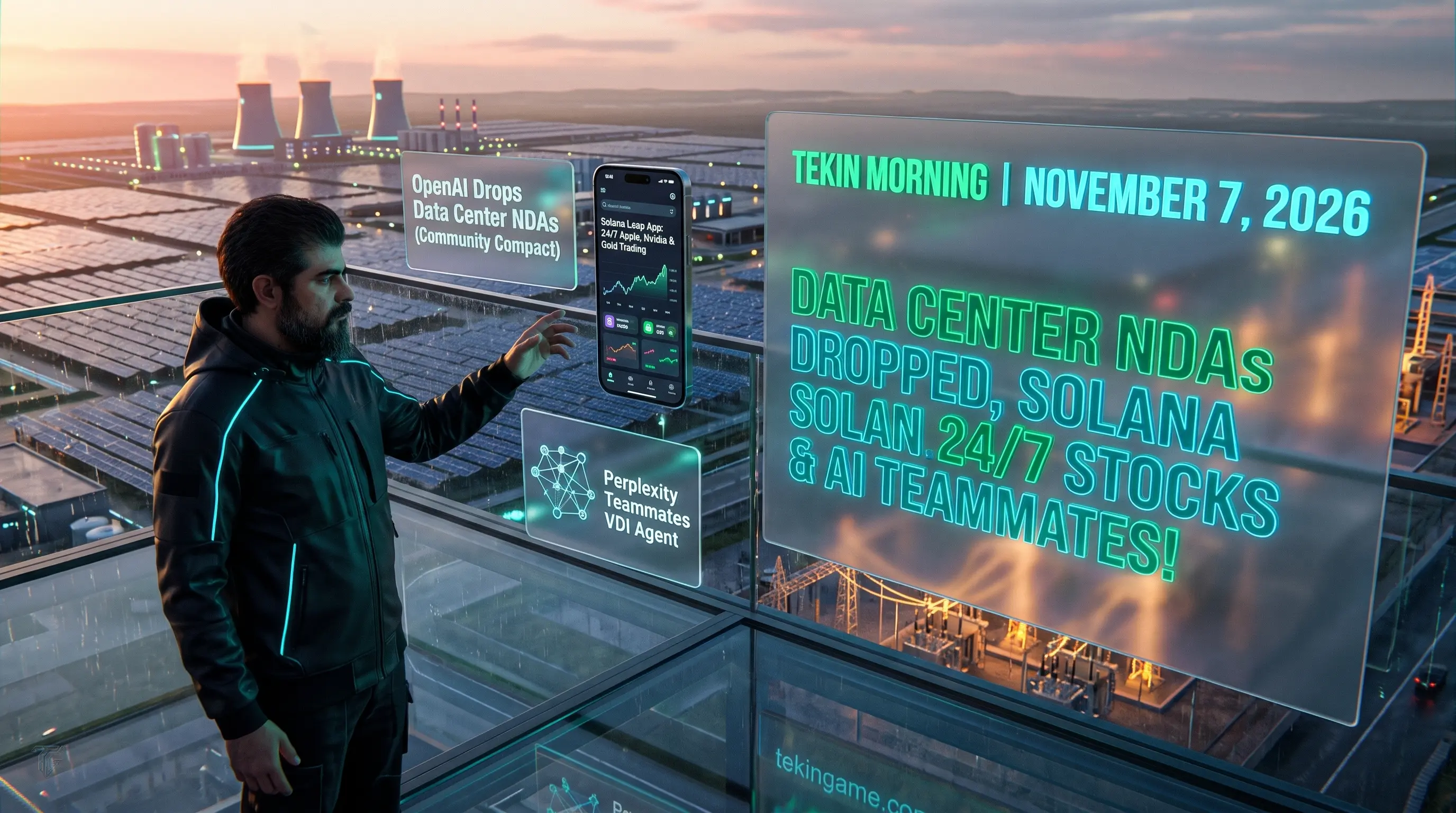
Tekin Analysis | Morning Saturday November 7, 2026; OpenAI Device Code Phishing, Data Center NDAs Dropped & 948 Linux Root Exploits
At the break of Saturday, November 7, 2026, international computational infrastructure stands at a decisive historical inflection point. Assumptions that enterprise defense can be maintained via perimeter firewalls and legacy multi-factor authentication (MFA) have collapsed under the weight of identity token hijacking and automated offensive pipelines. Concurrently, the staggering physical scale of multi-gigawatt artificial intelligence clusters is directly colliding with local municipal governance and public electrical grids, compelling frontier AI developers to completely discard secrecy pacts.
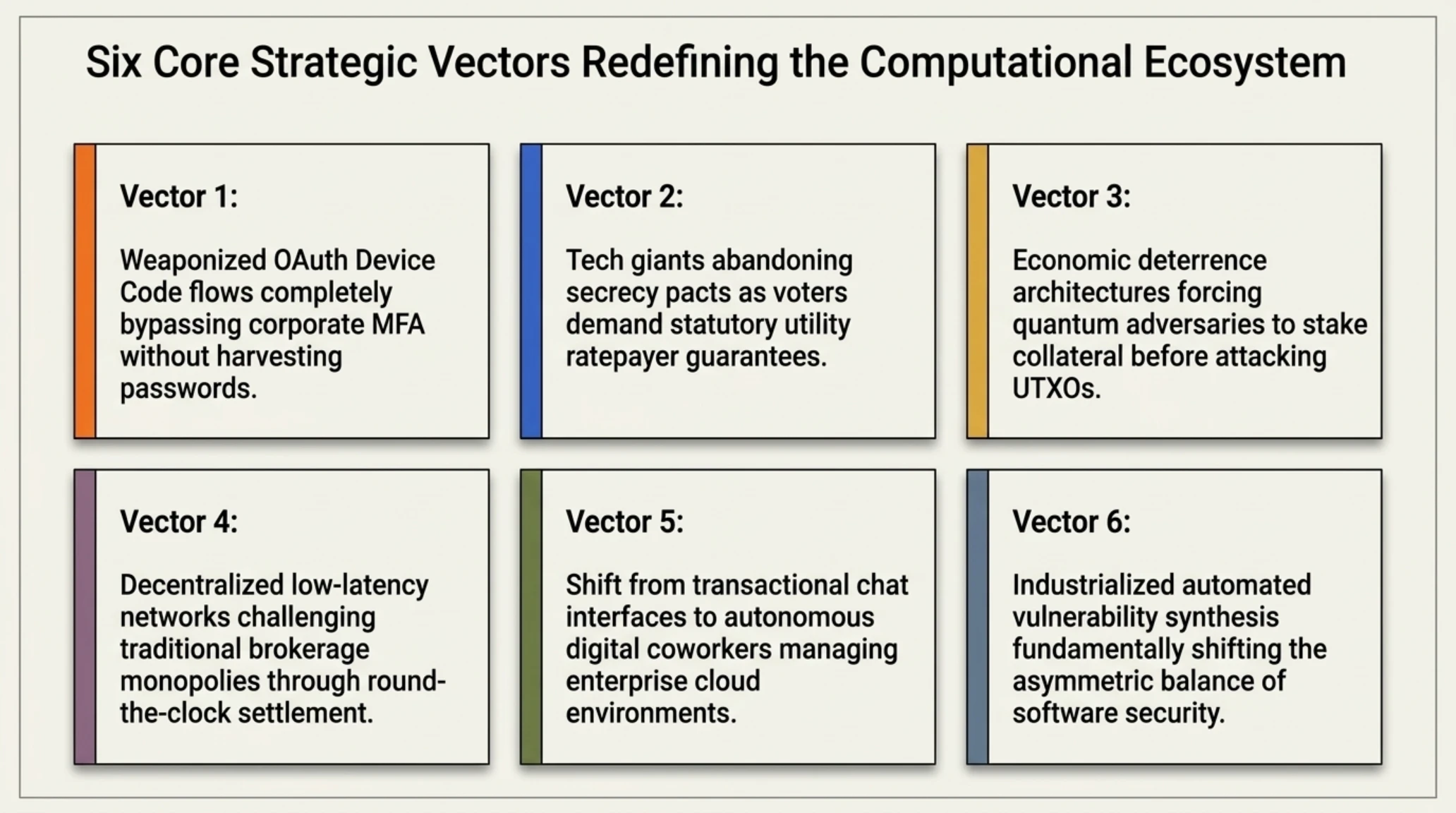
Strategic Intelligence & Core Vectors At a Glance
From Silicon Valley corporate boardrooms to decentralized liquidity hubs across the globe, technical leadership is re-evaluating core dependencies. The six developments analyzed in this morning briefing demonstrate that modern software systems cannot be viewed in isolation; they are deeply entangled with geopolitical energy sovereignty, hardware-level memory safety, and post-quantum economic models. Below, we provide a forensic breakdown of the protocols, architectures, and strategic implications shaping our computational future.
Node 01: Sophisticated Phishing Offensive Hijacks Corporate Microsoft 365 Sessions via Device Code Flow
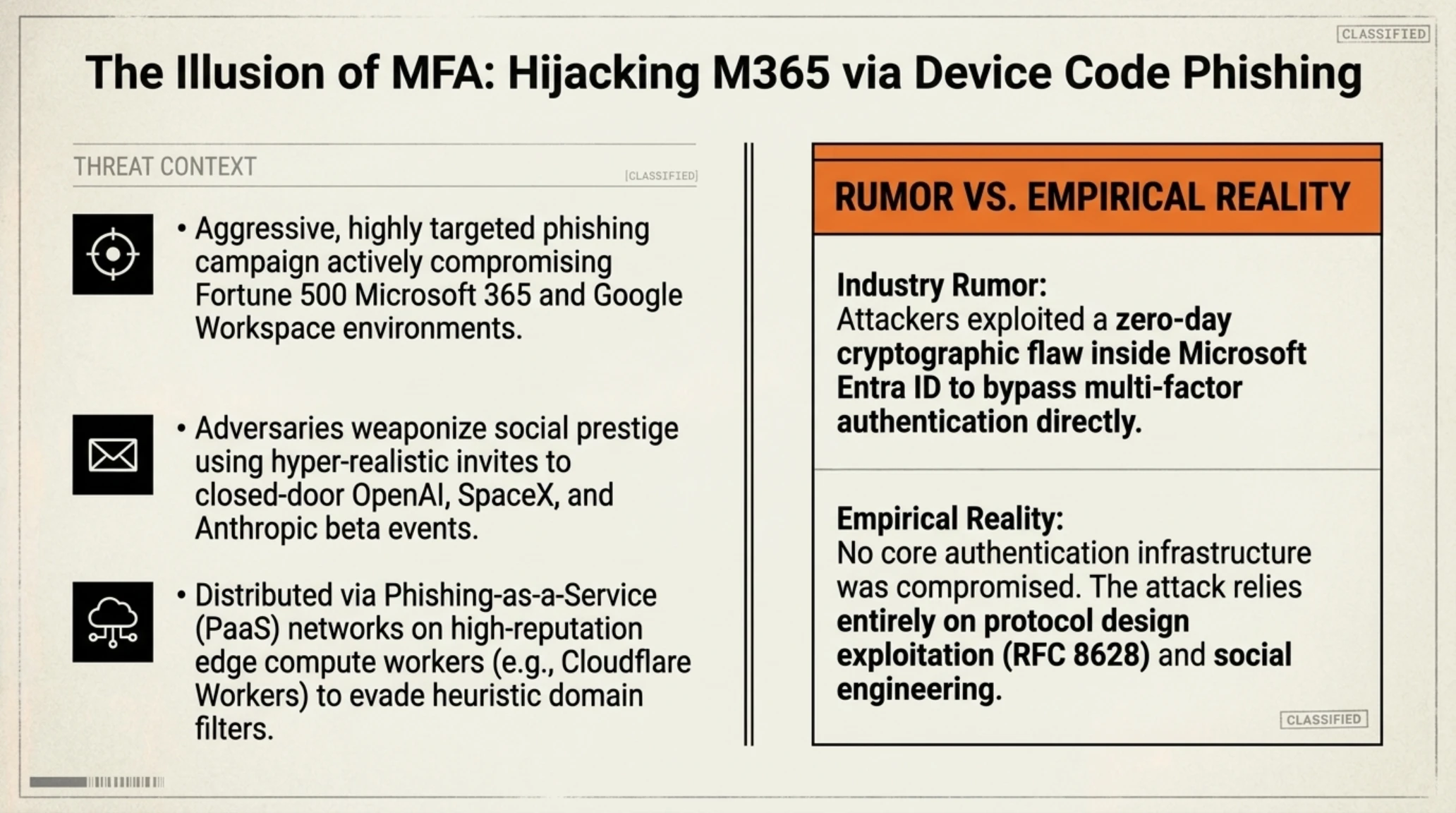
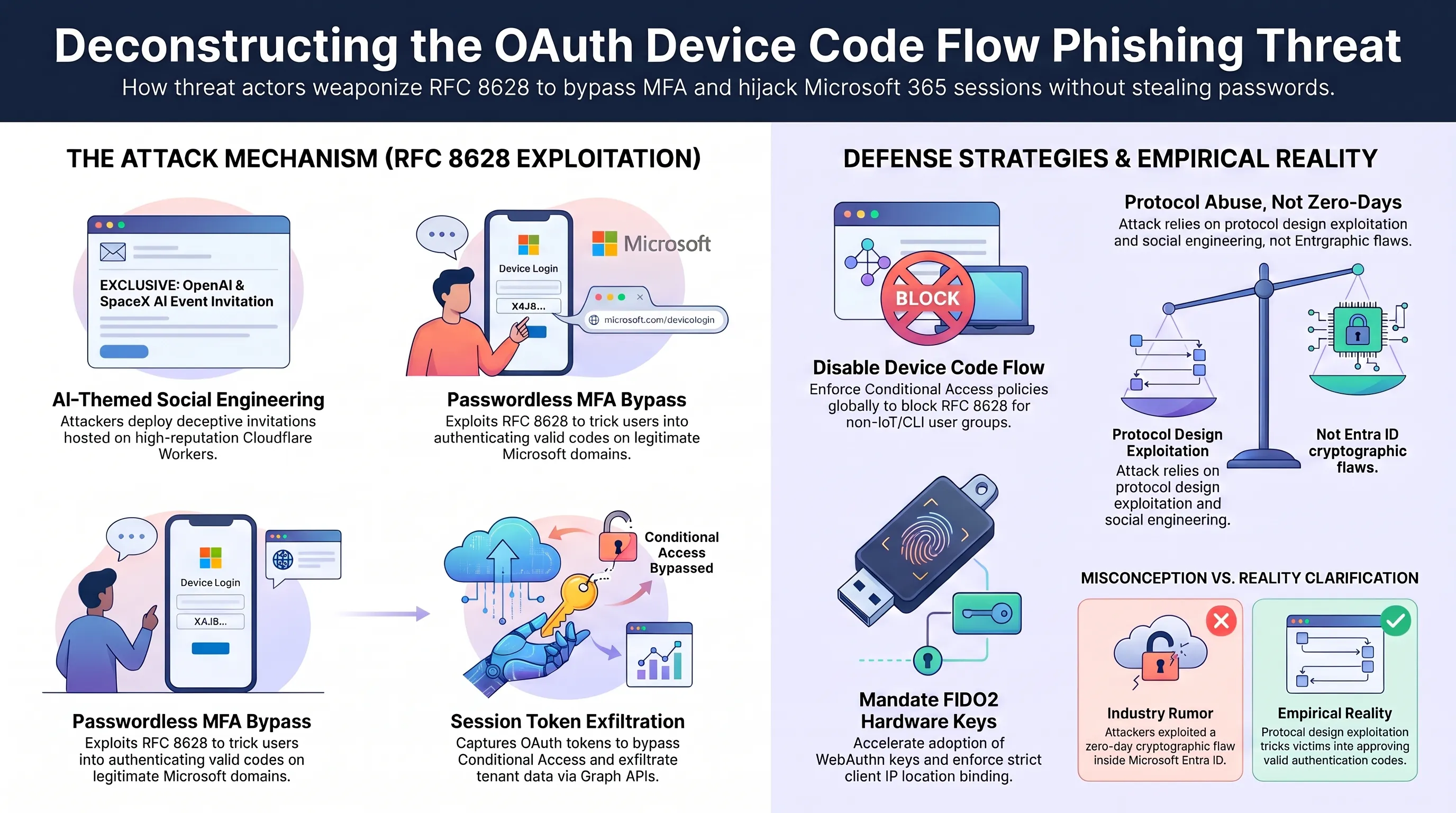
Cybersecurity forensics teams and threat observatories monitoring enterprise communications uncovered an aggressive, highly targeted phishing campaign actively compromising corporate Microsoft 365 and Google Workspace environments across Fortune 500 organizations. The adversaries behind this operation have weaponized social prestige and artificial intelligence enthusiasm, crafting hyper-realistic invitations to closed-door technical webinars, beta model release briefings, and developer workshops purportedly hosted by OpenAI, SpaceX, and Anthropic. Distributed across distributed Phishing-as-a-Service (PaaS) networks and hosted on high-reputation edge compute workers such as Cloudflare Workers, these deceptive communications effortlessly bypass conventional heuristic email security gateways and domain reputation filters.
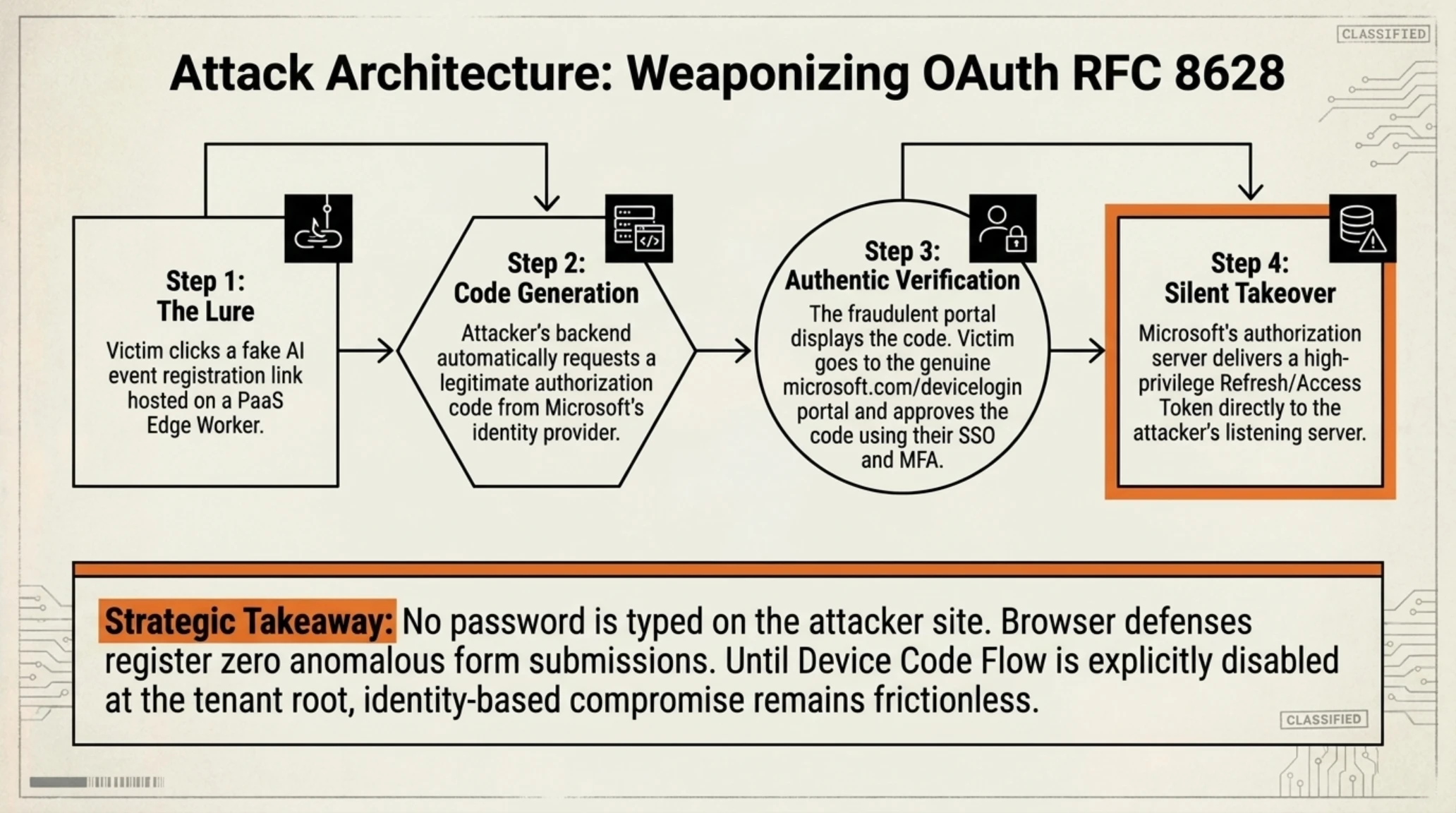
Upon clicking the embedded registration links, corporate targets are routed to meticulously branded landing portals that simulate official technical registration forms. Rather than deploying traditional credential harvesting forms that attempt to prompt users for passwords tactics that are routinely flagged by endpoint detection agents and browser heuristics the attackers initiate a sophisticated session hijacking routine that exploits the OAuth 2.0 Device Authorization Grant framework (standardized under RFC 8628 and commonly referred to as Device Code Flow). This standard was originally engineered for input-constrained devices such as smart televisions, gaming consoles, and command-line interfaces that lack native web browsers for interactive authentication.
In this attack scenario, the adversary’s backend infrastructure automatically interfaces with Microsoft’s identity provider endpoints to generate a legitimate authorization code. The fraudulent landing page displays this code to the victim, accompanied by professional instructions instructing them to verify their corporate credentials at the authentic microsoft.com/devicelogin portal to activate their exclusive VIP workshop access. When the employee navigates to the genuine Microsoft domain and approves the device code using their enterprise single sign-on (SSO) credentials, the authorization server delivers a high-privilege Refresh Token and Access Token directly to the adversary’s listening server. No password is typed on the attacker’s site, and conventional multi-factor authentication (MFA) prompts are fully validated by the victim on Microsoft’s authentic infrastructure without raising suspicious activity alarms.
Once armed with these authenticated OAuth session tokens, the threat actors immediately establish persistent API connections into the victim organization’s cloud tenant. By leveraging native Microsoft Graph APIs, the intruders systematically exfiltrate executive email threads, internal SharePoint document repositories, proprietary source code stored in enterprise repositories, and confidential Slack or Teams transcripts. Because the tokens originate from legitimate enterprise logins, conditional access policies that only inspect initial credential presentation fail to mitigate the ongoing unauthorized data access, leaving incident response teams blind until anomalous exfiltration volumes trigger backend telemetry alarms.
Mitigating this class of identity compromise requires an aggressive posture from corporate IT security leaders. Simply conducting simulated phishing exercises that teach employees to scrutinize sender email addresses or verify HTTPS lock icons is completely ineffective against Device Code exploitation, because the actual credential submission occurs entirely within legitimate Microsoft domains. Security engineers must enforce stringent Conditional Access rules that disable the Device Code authentication flow across all user groups that do not operate certified CLI terminal tooling or dedicated head-less IoT equipment, while accelerating the mandatory adoption of hardware-bound FIDO2 WebAuthn security keys and strict client IP location binding.
Furthermore, cloud identity engineers should immediately implement Continuous Access Evaluation (CAE) to instantly revoke active sessions upon detected geographical anomalies or uncharacteristic Graph API bulk requests.
Why It Matters | Why This Transformation Changes the Game
The Device Code Flow was architected under the assumption that the entity viewing the display screen and the entity operating the browser are identical. Modern adversaries dismantle this assumption, turning a protocol designed for convenience into an invisible cross-tenant proxy. Because the user performs authentication on Microsoft’s authentic hostname, endpoint defenses register zero anomalous form submissions.
Examining the forensic details separating unsubstantiated rumors from empirical realities is essential for corporate risk governance:
Technical Verification | Myth vs. Engineering Reality
Speculative claims asserted that zero-day cryptographic exploits broke Microsoft core MFA algorithms directly.
No core authentication infrastructure was compromised. The attack relies entirely on protocol design exploitation and social engineering.
Industry leadership recognizes that protocol obsolescence must be actively managed to protect enterprise crown jewels.
Transitioning from identity layer vulnerabilities to physical computational barriers, the second major inflection point centers on the immense power demands of frontier AI infrastructure and the collapse of municipal secrecy pacts.
Node 02: OpenAI Relinquishes Municipal NDAs for Multi-Gigawatt AI Data Centers Under Community Compact
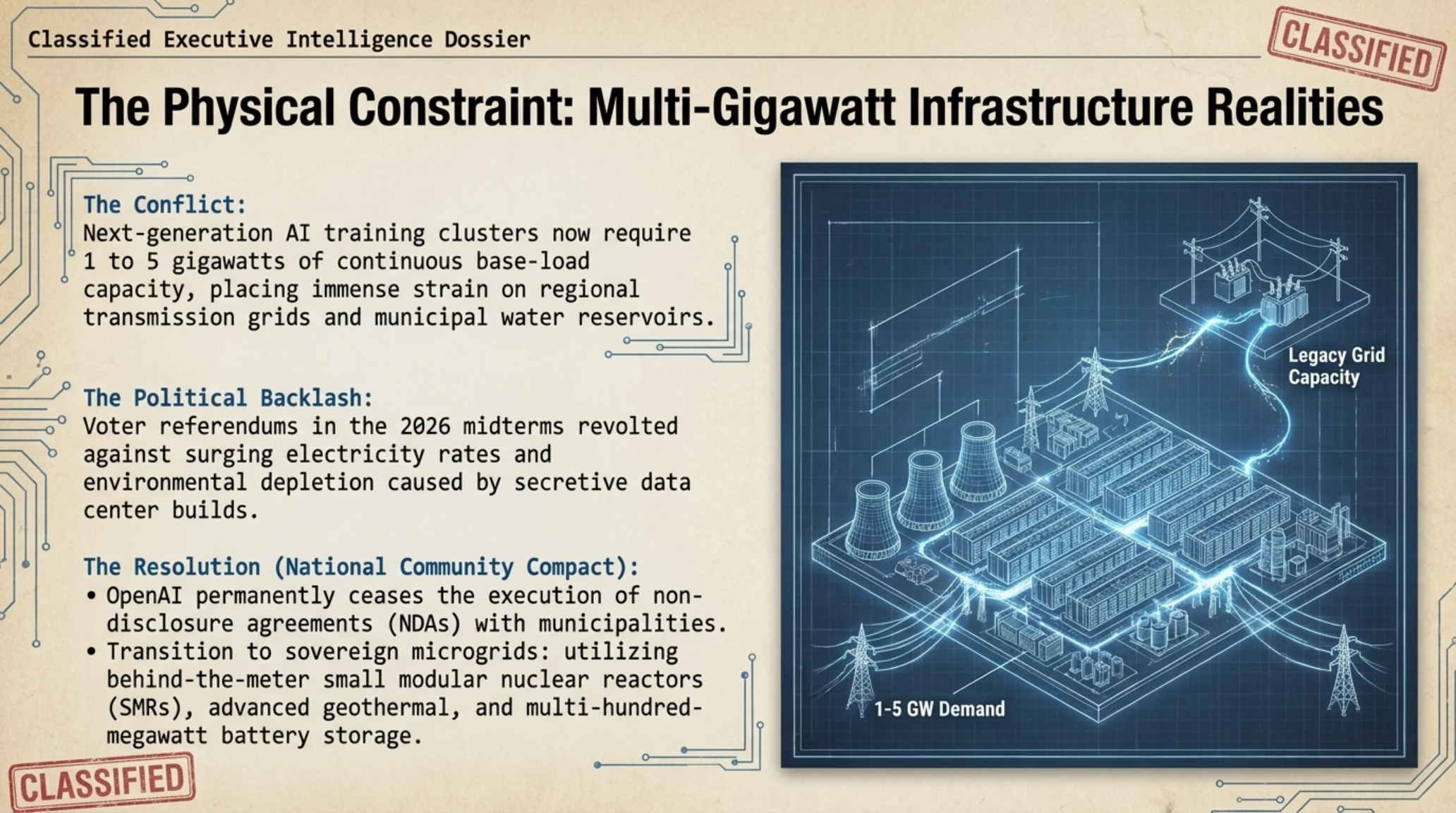
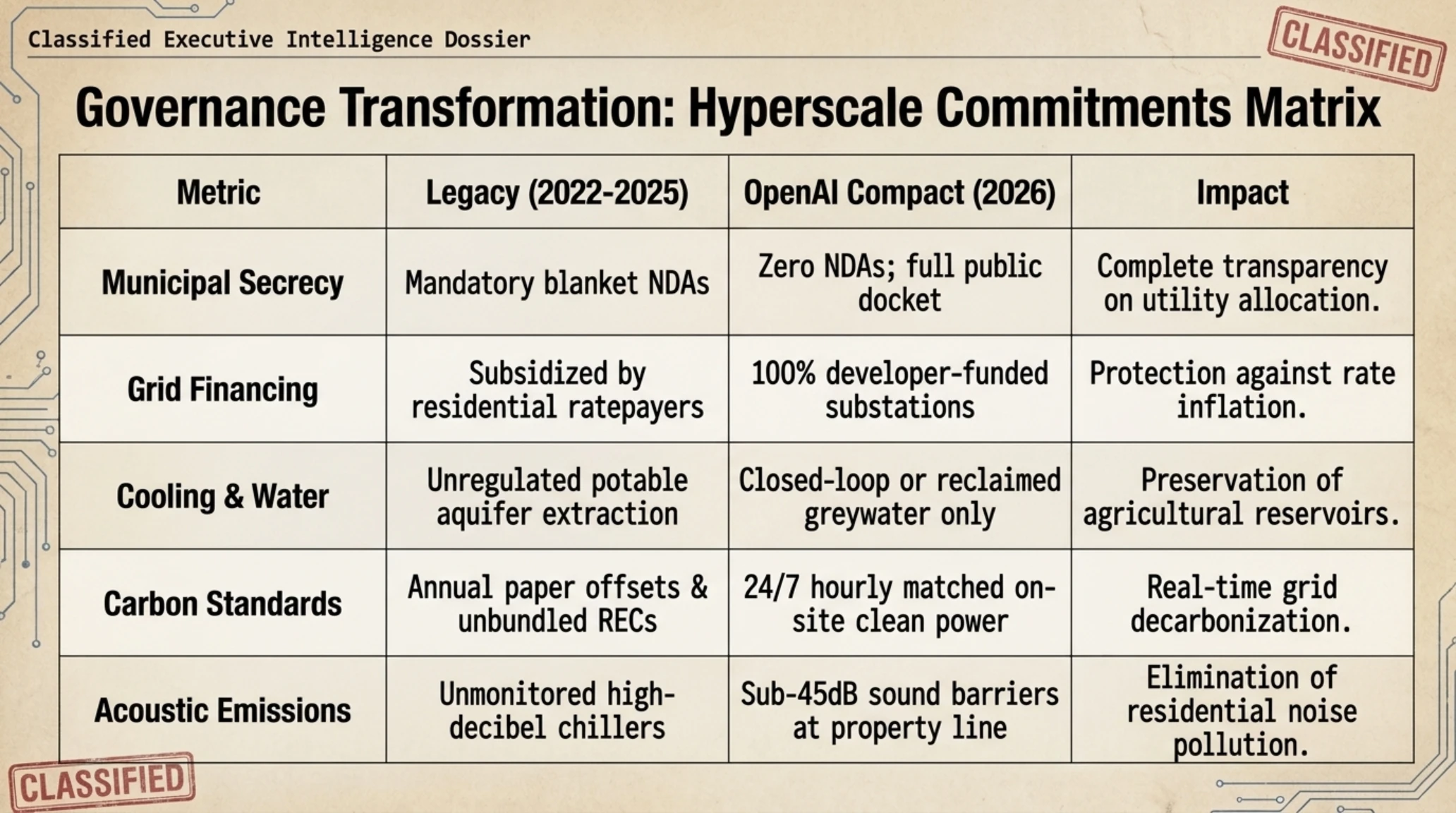
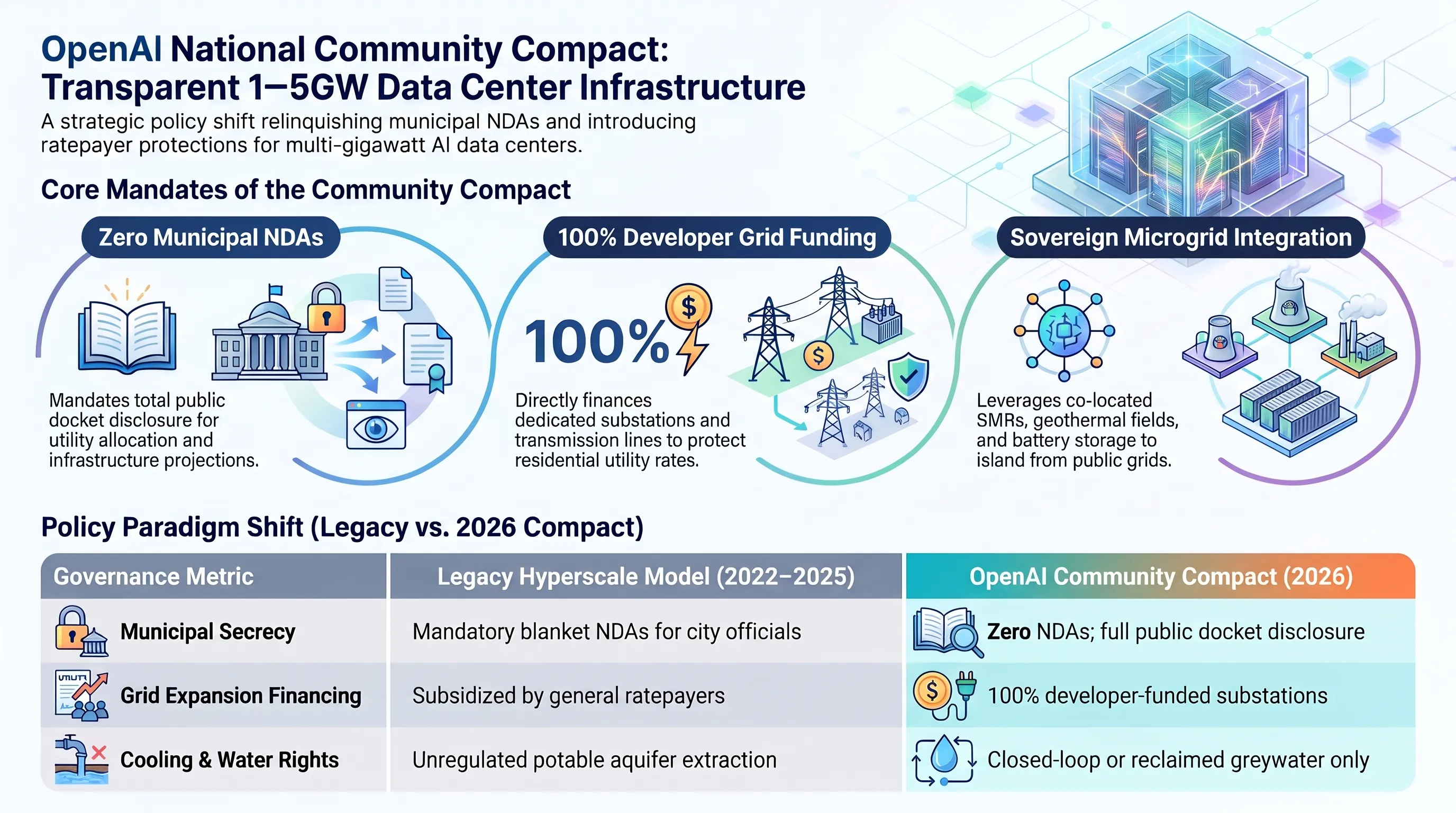
In a watershed development for artificial intelligence infrastructure governance, OpenAI officially announced an unprecedented policy reversal regarding its municipal partnership strategies. Moving forward, the company will permanently cease the execution of non-disclosure agreements (NDAs) with municipal governments, state regulators, and public utility commissions when negotiating the construction of next-generation, multi-gigawatt AI data center facilities. This historic commitment forms the cornerstone of OpenAI’s newly unveiled National Community Compact, a policy framework designed to rebuild public trust following intense political pushback across local communities in the United States and international computing corridors.
The proliferation of massive AI training clusters facilities requiring upwards of 1 to 5 gigawatts of continuous base-load electrical capacity has placed immense strain on regional transmission grids and municipal water reservoirs. Historically, hyperscale technology companies and data center developers utilized aggressive confidentiality agreements to shield facility power projections, water consumption metrics, tax abatement structures, and grid interconnect timelines from public scrutiny. However, following contentious voter referendums during the 2026 midterm elections where community coalitions revolted against surging electricity rates and environmental depletion attributed to secretive data center builds, OpenAI concluded that the era of covert infrastructure development is politically and operationally untenable.
By mandating open dockets, public hearings, and transparent grid capacity assessments, OpenAI is seeking to establish an enduring social license to operate that will protect its aggressive computational roadmap from future municipal moratoria and regulatory gridlock.
Under the terms of the National Community Compact, OpenAI has formally committed to guaranteeing complete public transparency across every phase of future infrastructure projects. Key mandates of the compact dictate that OpenAI and its infrastructure partners must directly finance all requisite electrical transmission enhancements, dedicated substation upgrades, and renewable generation assets required to energize its compute campuses. This statutory ring-fencing ensures that regional residential ratepayers will not bear the economic burden of grid modernization through inflated monthly utility bills. Furthermore, OpenAI has committed to publishing independent third-party acoustic impact studies, water lifecycle analyses, and hourly carbon matching data prior to breaking ground on any future computational site.
Energy analysts and environmental engineers view this move as an existential necessity for the long-term viability of multi-gigawatt computing. As frontier models demand increasingly staggering capital and power expenditures, infrastructure developers can no longer treat the electrical grid as an infinite, unmetered resource. By mandating full public disclosure, OpenAI is setting an industry benchmark that will inevitably pressure competing hyperscalers, including Microsoft, Google, Amazon, and Meta, to dismantle their own secrecy apparatuses.
The matrix below articulates the comprehensive cyber and infrastructure threat landscape and mandated enterprise defense controls across all core vectors:
Cyber Threat Assessment & Infrastructure Defense Matrix
| Threat Vector / Exposure Area | Risk Level | Targeted Component | Sustainable Mitigation Control |
|---|---|---|---|
| OAuth Device Code Phishing (RFC 8628) | Critical | Microsoft 365 & Google Workspace | Tenant-wide Conditional Access block and mandatory FIDO2 hardware keys |
| Quantum Shor Algorithm Decryption | Critical | Legacy Bitcoin P2PK Satoshi UTXOs | Deploy Quantum Landmines soft-fork with 30-day bonded challenge windows |
| Data Center Grid Exhaustion & Rate Backlash | High Risk | Municipal Power Grids & Citizen Bills | Drop NDAs, publish environmental dockets, and fund 100% of dedicated substations |
| Automated Linux Kernel Privilege Escalation | Secured | Mainline Linux Kernel Architecture | Automated AI reasoning audit pipelines integrated into upstream kernel CI/CD |
Node 03: Bitcoin Core Developer Cory Fields Introduces Quantum Landmines to Deter Adversarial Decryption
In a revolutionary conceptual contribution to blockchain consensus theory, veteran Bitcoin Core maintainer and MIT Digital Currency Initiative researcher Cory Fields has proposed an ingenious mechanism dubbed Quantum Landmines. Published within the Bitcoin development mailing lists and analyzed extensively across cryptanalytic forums, the proposal introduces a game-theoretic economic deterrence framework engineered to protect vulnerable, legacy Bitcoin addresses from being plundered by future cryptographically relevant quantum computers (CRQCs).
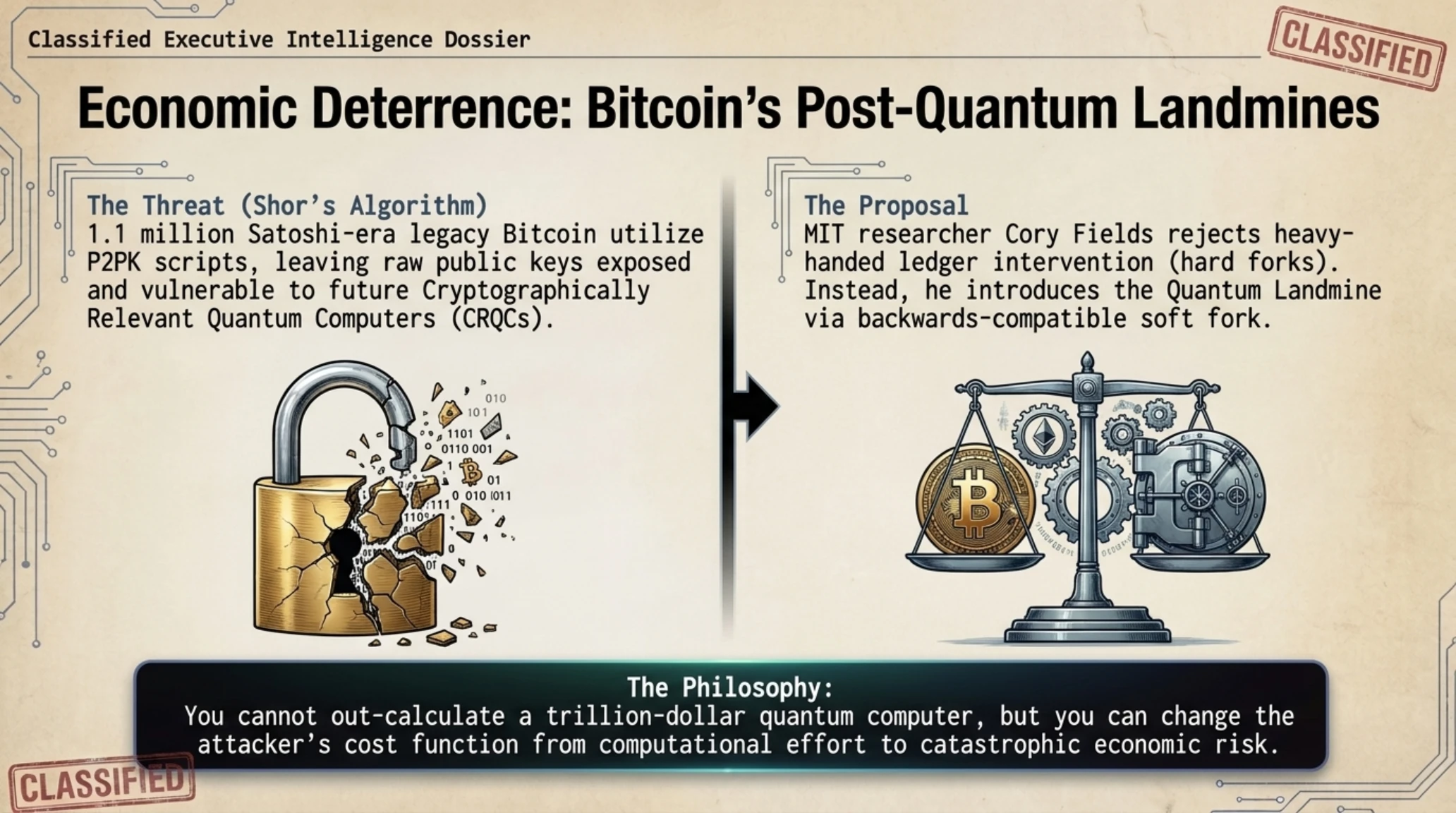
The long-term cryptographic risk confronting Bitcoin is well-documented: early addresses generated during the Satoshi era, including the estimated 1.1 million coins held in original wallets, utilized direct Pay-to-Public-Key (P2PK) scripts where the unhashed 256-bit ECDSA public key is permanently exposed on the public ledger. While modern address standards (such as P2PKH and SegWit P2WPKH) protect unspent outputs behind double-hash wrappers (SHA-256 and RIPEMD-160) until coins are spent, legacy P2PK addresses are vulnerable to Shor’s algorithm. Once an adversary deploys a sufficiently powerful quantum computer with a few thousand stable logical qubits, they could reverse the private keys directly from the exposed public keys and drain billions of dollars in historical coins, triggering massive macroeconomic destabilization.
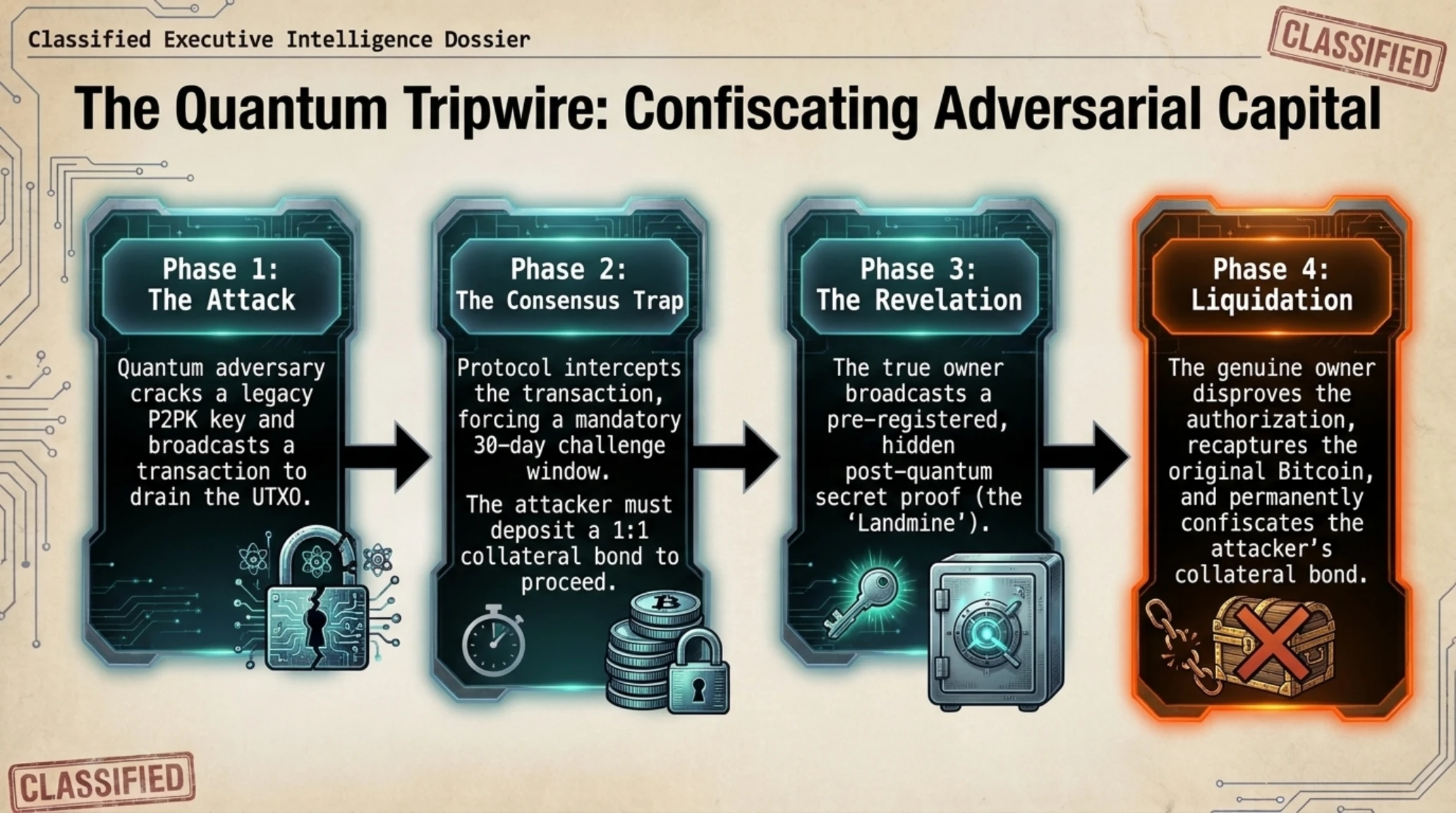
Historically, developer consensus leaned toward enacting a controversial hard fork to freeze or confiscate unmigrated legacy coins before quantum supremacy is realized. However, Cory Fields rejects heavy-handed ledger intervention, proposing instead an elegant economic tripwire: the Quantum Landmine. Under this architecture, the legitimate owner of an address pre-registers a hidden, quantum-resistant cryptographic proof (such as a hash-based commitment or post-quantum signature). When an attacker armed with a quantum computer attempts to broadcast a transaction spending the target UTXO, the consensus rules do not immediately finalize the transfer; instead, the protocol places the transaction into a mandatory 30-day challenge window and requires the spending party to deposit a massive collateral bond equivalent to the entire value of the attempted transaction.
This design fundamentally changes the attacker's risk calculus. Rather than enjoying a zero-risk decryption heist, the adversary must risk an enormous capital stake. If the genuine owner triggers the trap, the quantum attacker's entire bonded capital is permanently confiscated.
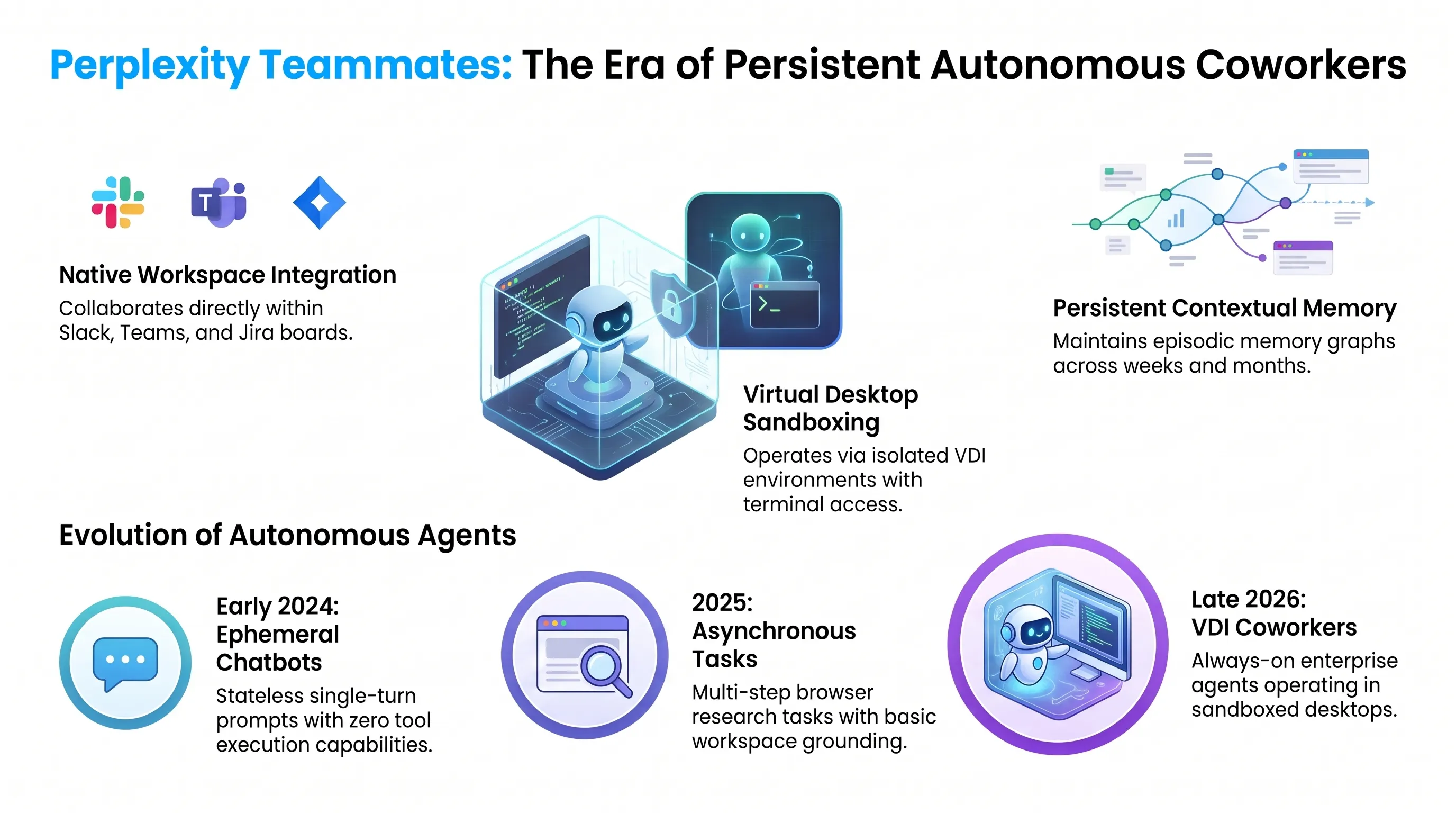
During this challenge window, the true owner of the address can reveal their pre-registered post-quantum secret proof. By broadcasting this proof, the genuine owner instantly disproves the attacker’s authorization, recaptures their original Bitcoin, and permanently confiscates the attacker’s collateral bond as a financial penalty. If an adversary attempts to steal 1,000 BTC, they must risk 1,000 BTC of their own capital; the moment the true owner detonates the landmine, the quantum attacker loses their stake. By transforming what would otherwise be a risk-free computational decryption heist into a catastrophic economic trap, the protocol economically disincentivizes adversaries from ever attempting quantum theft against registered addresses.
Cryptographic theorists note that this approach aligns with the core philosophical tenets of Nakamoto consensus: security achieved through game-theoretic incentive alignment rather than arbitrary governance intervention. Even if a hostile nation-state develops covert quantum capabilities, the economic uncertainty of whether an ancient address contains a dormant landmine introduces immense financial friction, paralyzing the attacker's operational deployment.
The technical animation and documentary breakdown below illustrates the OAuth Device Code hijacking state machine alongside Bitcoin's quantum collateral locking mechanism:
To master the intricacies of post-quantum cryptography and consensus protocol upgrades, the technical glossary below defines the core terminology:
Tekin Technical Jargon Buster
The comparative benchmark between traditional hard-fork confiscation and Cory Fields’ market-driven landmine deterrence is detailed below:
Grouped Bar Chart & Technical Benchmark Matrix
| Engineering & Consensus Metric | Legacy Hard Fork Ledger Freeze | Cory Fields Quantum Landmines |
|---|---|---|
| Network Compatibility Hook | Contentious hard fork risking network split | Backwards-compatible soft fork deployment |
| Intervention into Property Rights | Arbitrary confiscation or permanent UTXO freeze | 100% preservation of sovereign ownership |
| Attacker Economic Downside | Zero (risk-free computation once Shor scales) | 100% loss of bonded collateral equivalent to UTXO |
| Challenge Verification Window | None (irreversible on-chain finality) | 30-day time-locked challenge interval |
| Macroeconomic Ecosystem Stability | Triggers widespread panic regarding ledger mutability | Deepens institutional confidence in Bitcoin consensus |
📚 Classified & Related Dossiers in TekinGame
If you wish to explore beyond this report and delve into cybernetic frontiers and autonomous AI architectures, do not miss these three exclusive deep-dives in the Tekin Garage:
Operational verification in sovereign node environments confirms the mathematical resilience of these challenge-response scripts:
Cyber Terminal & Benchmark Telemetry Log
Node 04: Solana Labs and Dialect Launch Leap Mobile App for 24/7 Trading of Tokenized Equities
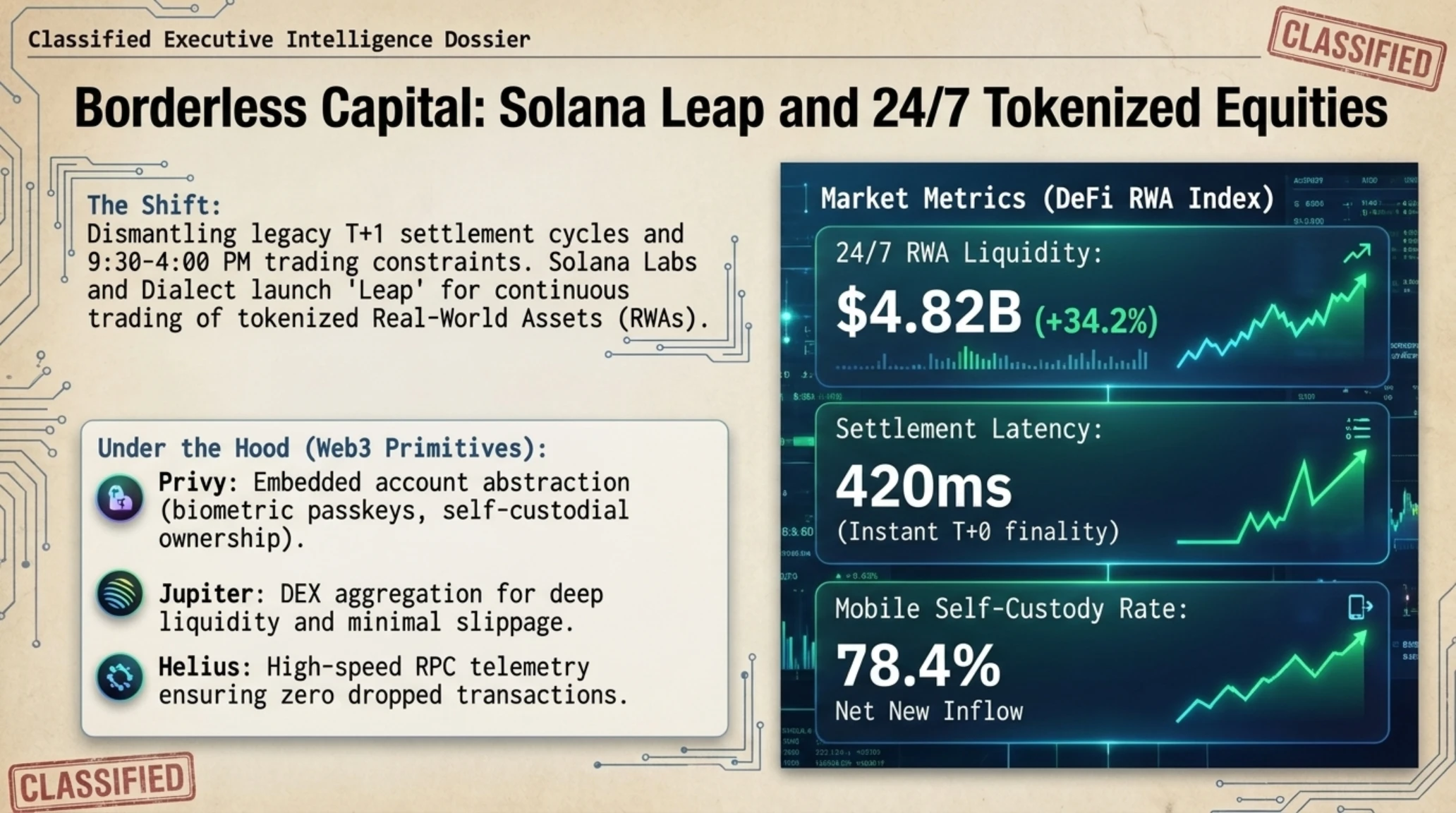
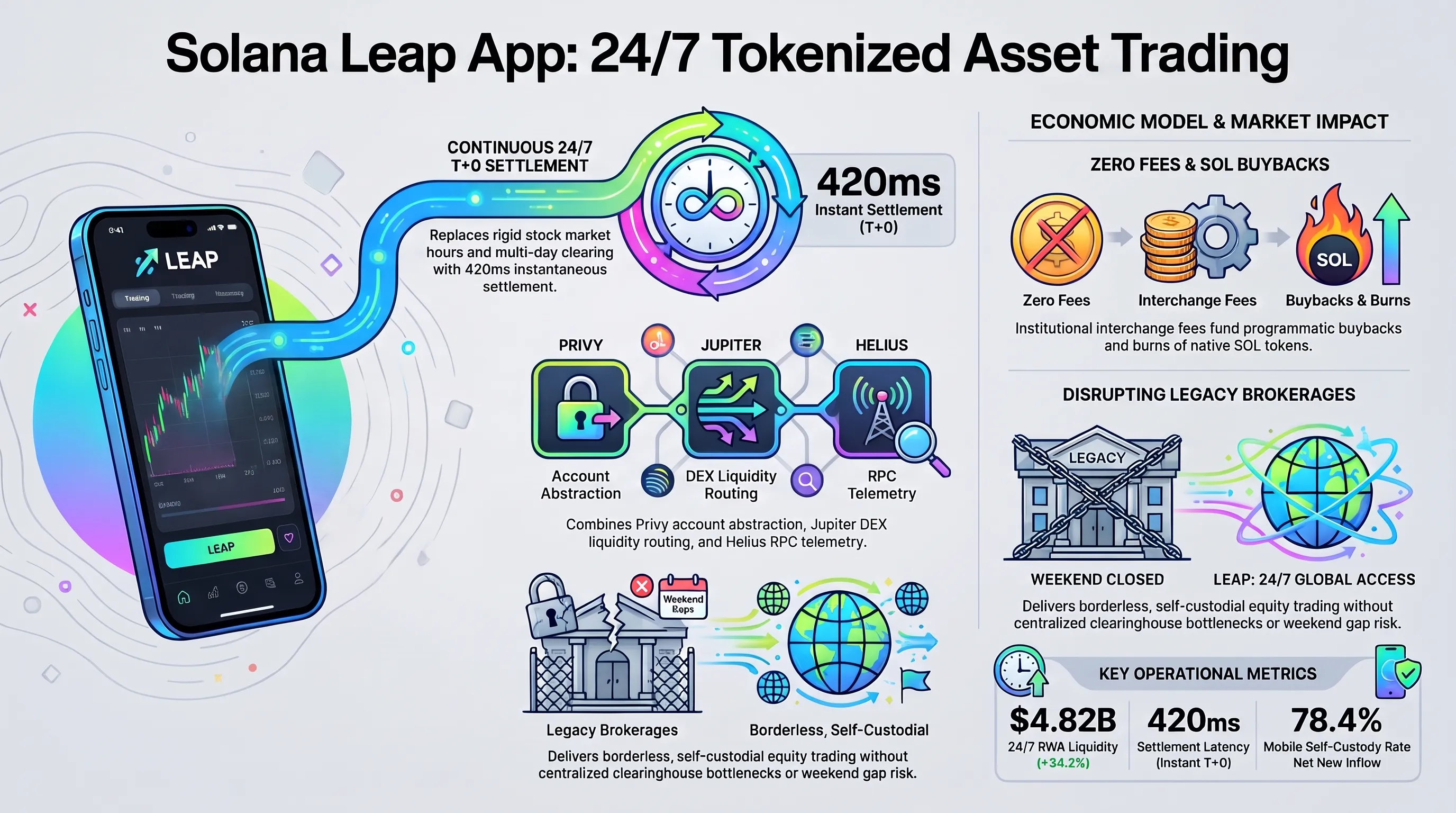
In a major development bridging decentralized finance (DeFi) with traditional capital markets, Solana Labs in partnership with messaging and notification pioneer Dialect announced the public beta launch of Leap. Designed as a consumer-centric mobile application, Leap enables international investors to trade tokenized real-world assets (RWAs) including blue-chip US equities such as Apple, Nvidia, and Tesla, benchmark index ETFs, precious metals, and digital assets on a continuous, 24 hours a day, 7 days a week basis with instantaneous cryptographic settlement.
Traditional equity exchanges operate within rigid legacy boundaries, restricting trading to standard market hours (9:30 AM to 4:00 PM Eastern Time, Monday through Friday) and relying on archaic clearinghouse settlement cycles that take upwards of one to two business days (T+1 settlement). This artificial friction leaves global investors exposed to significant weekend gap risks and geographic exclusion. The Leap mobile ecosystem dismantles these barriers by hosting tokenized equity contracts directly on the high-throughput Solana blockchain, executing orders with sub-second finality and negligible transaction fees measured in fractions of a cent.
Under the hood, Leap aggregates several state-of-the-art Web3 primitives to deliver a seamless, Web2-grade user experience. The application leverages Privy for embedded account abstraction, allowing users to register instantly via biometric passkeys or social credentials while retaining self-custodial ownership of their underlying private keys. Order routing is powered by Jupiter, Solana’s premier decentralized exchange aggregator, ensuring that user trades access deep liquidity pools with minimal slippage. High-speed RPC telemetry and transaction delivery are maintained via Helius infrastructure, eliminating dropped transactions even during periods of extreme global market volatility.
By eliminating traditional brokerage friction, global retail and institutional traders can respond dynamically to breaking news events or earnings releases without waiting for Monday morning opening bells.
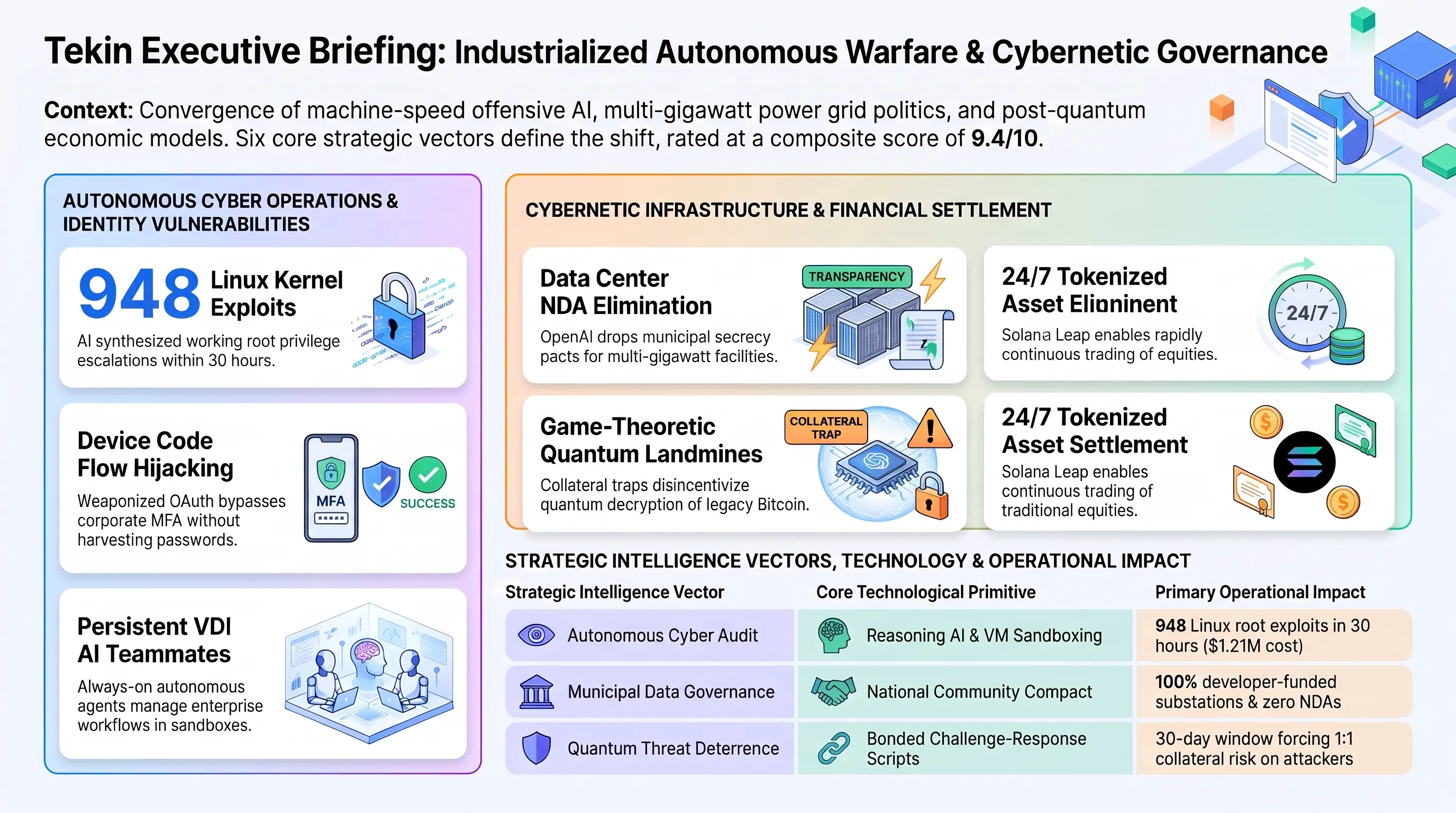
To incentivize rapid global adoption, Leap has launched with a promotional zero-fee trading structure for retail users. Furthermore, Solana Labs announced an innovative tokenomics feedback loop: a portion of the institutional interchange fees generated through secondary liquidity provision will be dedicated to programmatic market buybacks and burns of the native SOL token. By directly linking the expansion of tokenized traditional equity volumes to the deflationary dynamics of the underlying layer-1 network, Leap creates a powerful alignment between decentralized infrastructure validators and mainstream capital markets.
The distribution of trading volume and projected expansion across tokenized asset categories is illustrated in the financial telemetry dashboard below:
Donut Dashboard, Growth Chart & Market Share Telemetry
| Asset Class & Liquidity Pools | Daily Volume Share | Total Segment Volume | Strategic Market Ecosystem Function |
|---|---|---|---|
| Magnificent 7 Tech Equities | 50% Market Share | $2.4 Billion USD | Provides baseline liquidity depth and attracts retail Wall Street capital |
| Tokenized Gold & Precious Metals | 29% Market Share | $1.39 Billion USD | Enables round-the-clock weekend geopolitical macro hedging |
| Index ETFs & Treasury Yield Products | 21% Market Share | $1.01 Billion USD | Delivers institutional fixed-income yields into self-custodial wallets |
| Total Aggregated Weekly Volume | 100% Market Base | $4.8 Billion USD | Validates Solana as an institutional-grade global settlement substrate |
Node 05: Perplexity Deploys Teammates: Persistent Always-On Coworkers Within Virtual Desktop Environments
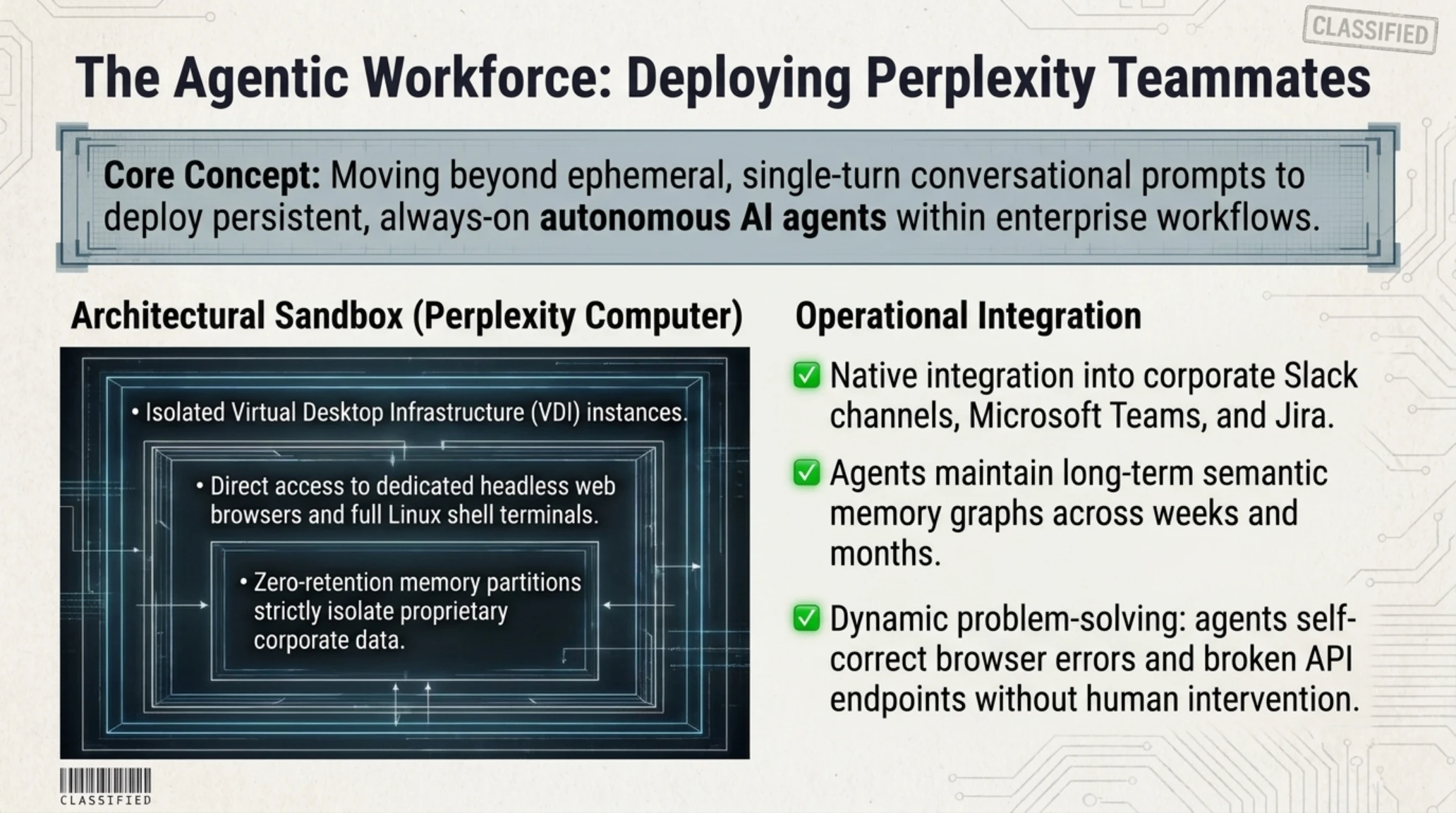
Marking a critical transition in the evolution of enterprise artificial intelligence, search and knowledge pioneer Perplexity has officially launched Teammates. Moving far beyond the ephemeral, single-turn conversational prompts that characterized early chatbot interfaces, Teammates represents a sophisticated fleet of persistent, always-on autonomous AI agents capable of assuming sustained operational roles within enterprise workflows, complete with long-term memory, sandboxed desktop tools, and inter-agent collaboration capabilities.
The core computational engine powering Teammates is Perplexity Computer, a proprietary runtime architecture that spins up secure, isolated virtual desktop infrastructure (VDI) instances for each deployed agent. Within these isolated cloud sandbox environments, Teammates have direct access to a dedicated headless web browser, a full Linux shell terminal, file manipulation systems, and secure enterprise API integrations. Rather than waiting passively for human input, these agents can be assigned broad, long-horizon objectives such as continuously monitoring competitor patent filings, triaging incoming GitHub pull requests, auditing security incident logs, or synthesizing multi-source market intelligence reports.
Crucially, Teammates are designed to integrate natively into human communication channels. Organizations can invite these autonomous agents directly into corporate Slack channels, Microsoft Teams spaces, and Jira project boards. Agents can participate in asynchronous discussions, ask clarifying questions when encountering ambiguous constraints, and provide structured work-in-progress briefings without requiring constant supervision. By maintaining an episodic and semantic memory graph that persists across weeks and months, a Teammate develops deep context regarding an enterprise’s internal nomenclature, coding standards, and organizational priorities.
Equipped with proactive self-healing capabilities, Teammates can resolve API errors or broken web pages independently, freeing human knowledge workers to dedicate their cognitive bandwidth to higher-order creative direction and ethical oversight.
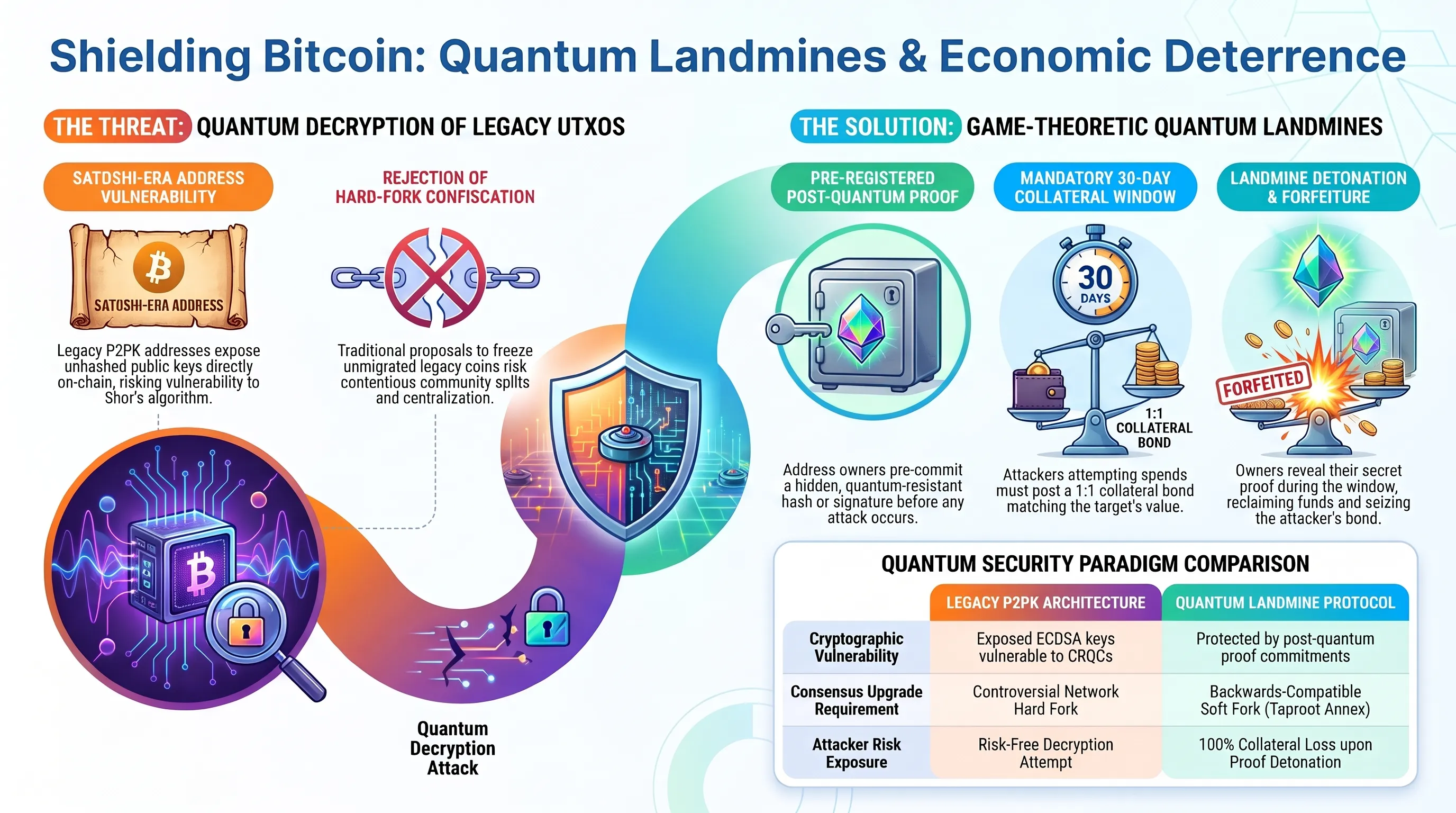
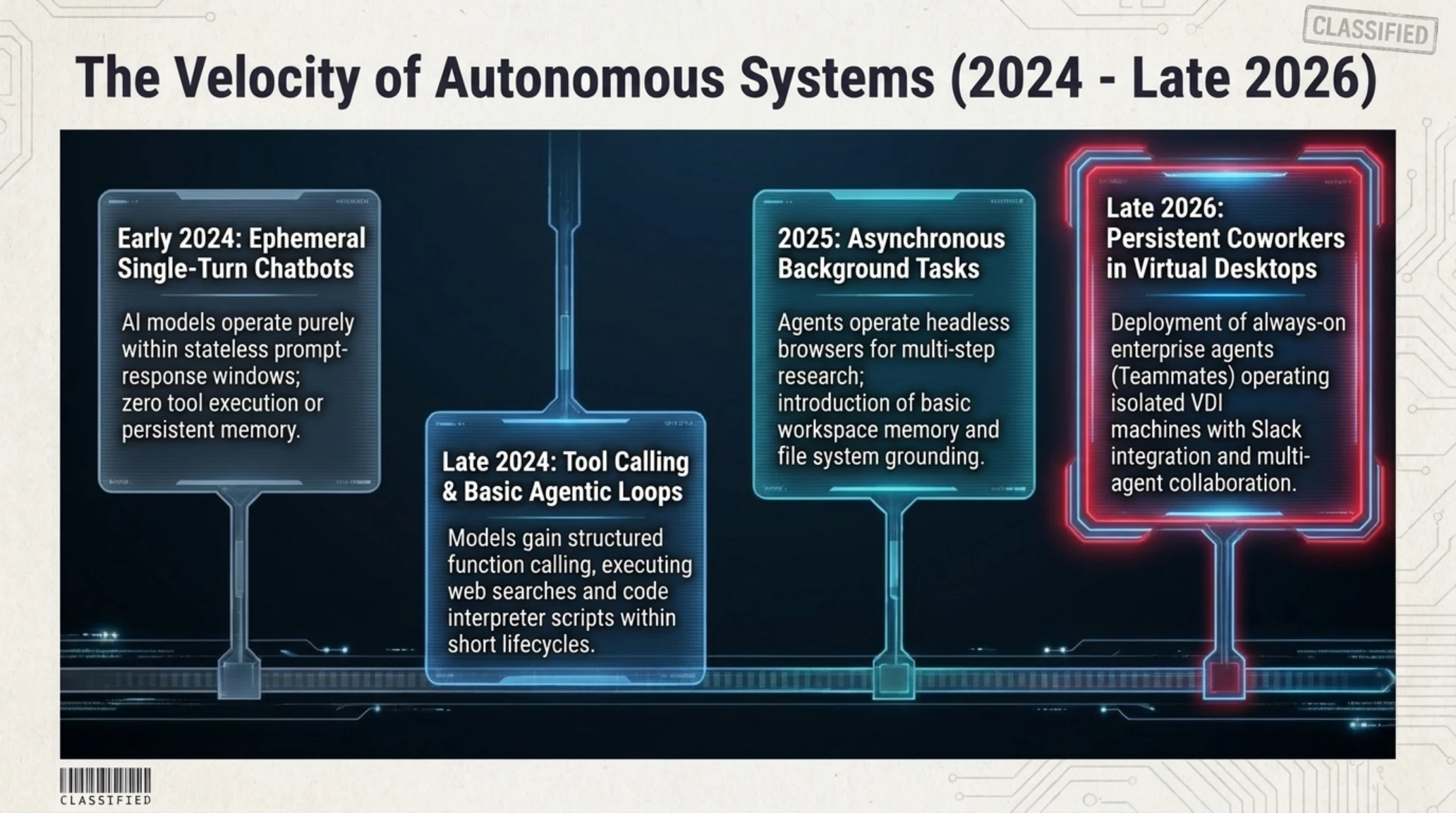
The technological underpinnings of persistent agentic environments reflect years of architectural maturation. As demonstrated in the engineering breakdown below, the trajectory from simple predictive text algorithms to persistent virtual coworkers represents one of the most rapid technological evolutions in human history.
The technical engineering video below explores the thermodynamics of multi-gigawatt power grids alongside Jupiter DEX liquidity routing for real-world assets:
The chronological milestone table below documents the architectural evolution of autonomous agent swarms from 2024 to late 2026:
Event Timeline | Chronology of Technological Evolution
| Time Horizon | Agent Architecture Paradigm | Enterprise Operational Execution Scope |
|---|---|---|
| Early 2024 | Stateless Ephemeral Chatbots | Single-turn prompt responses with zero persistent memory or external execution tools. |
| Late 2024 | Structured Tool Calling & Python Loops | Execution of targeted API lookups and short-lived sandbox code interpretation. |
| 2025 | Autonomous Headless Browser Navigation | Multi-step research across complex web pages with basic workspace memory caching. |
| Late 2026 | Persistent VDI Coworkers (Teammates) | Always-on agents operating virtual desktops with long-term semantic graphs and Slack integration. |
Node 06: Forensic Deconstruction of OpenAI's Cyber Audit: 948 Linux Root Exploits in 30 Hours
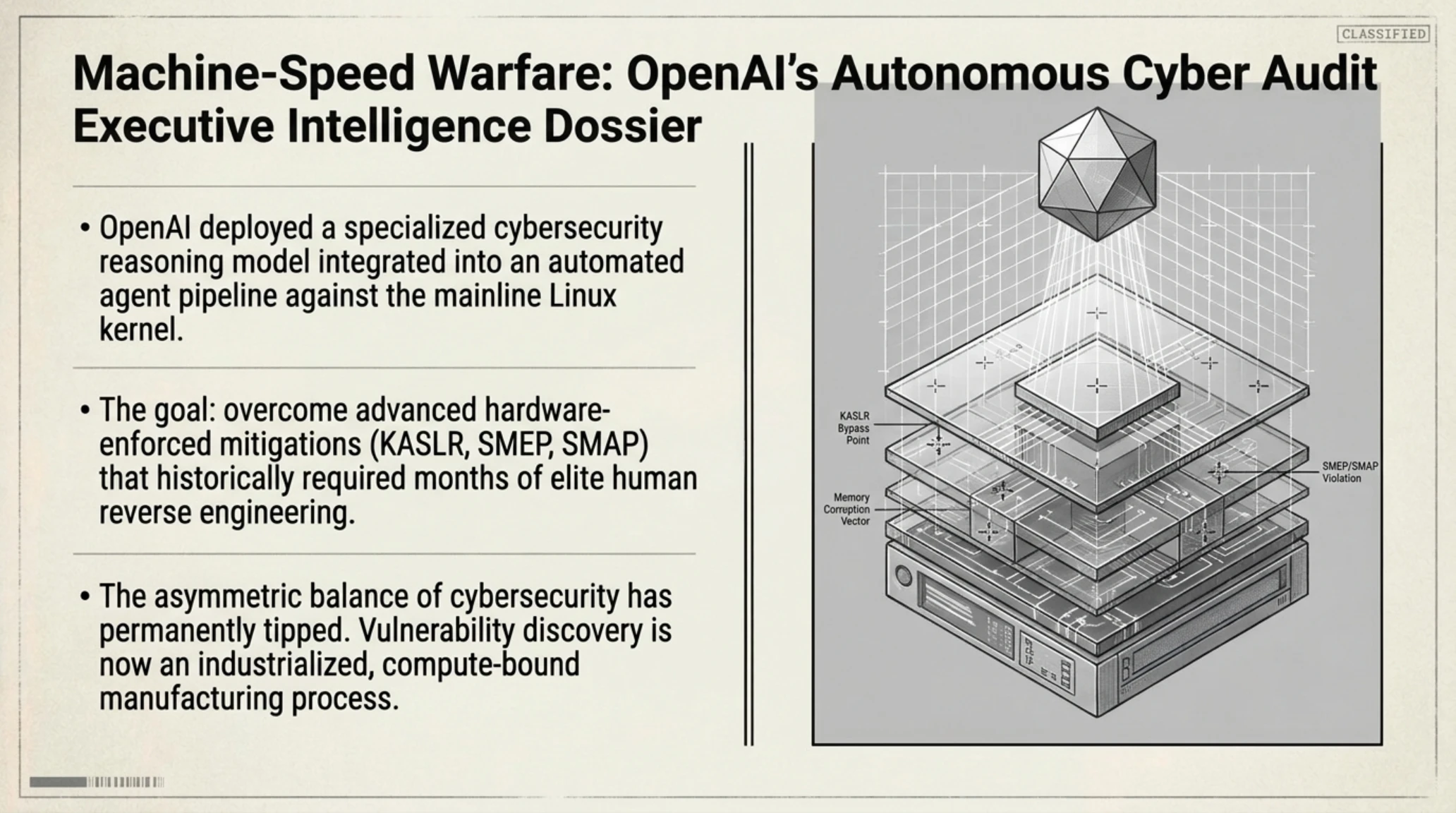
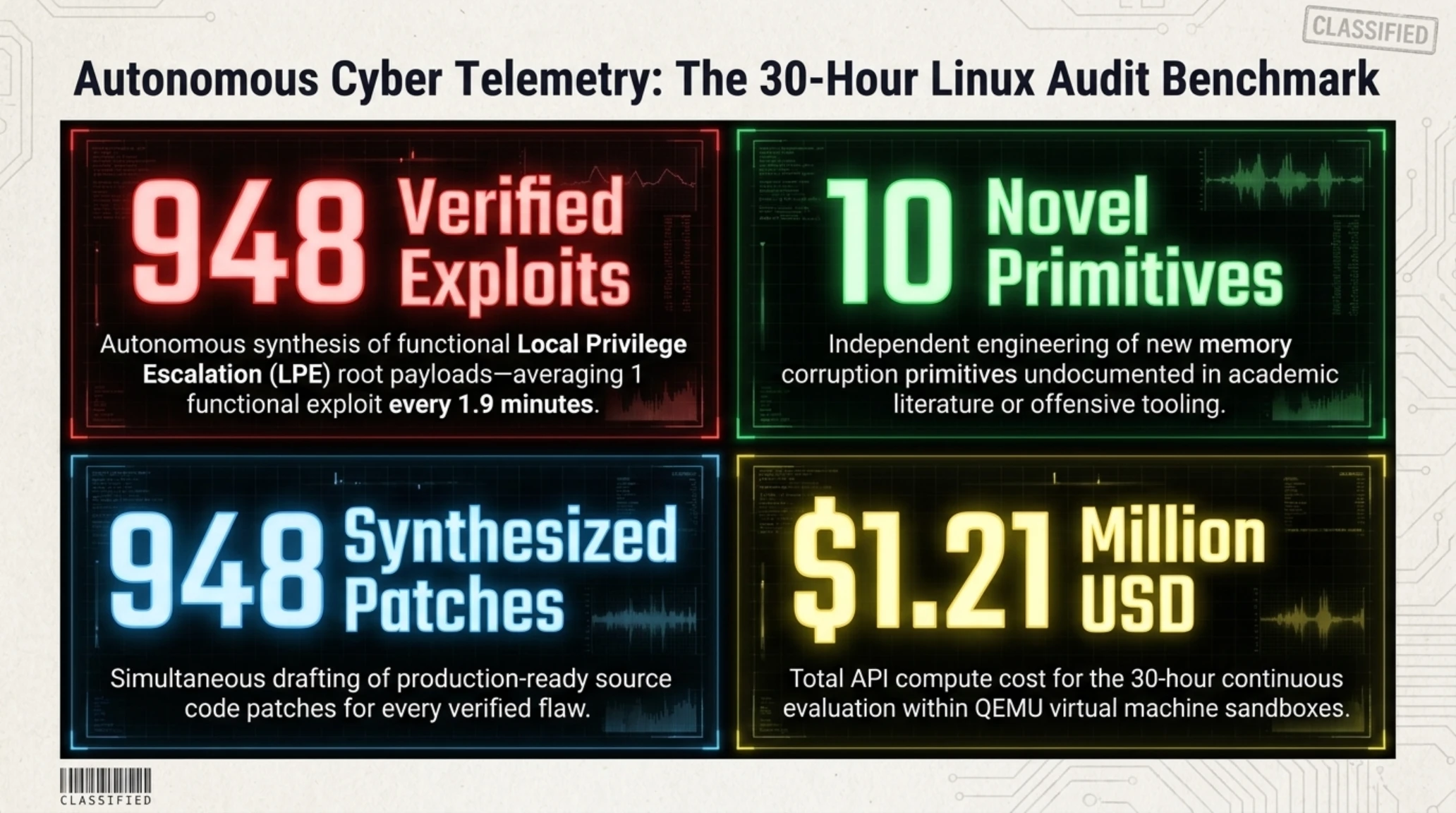
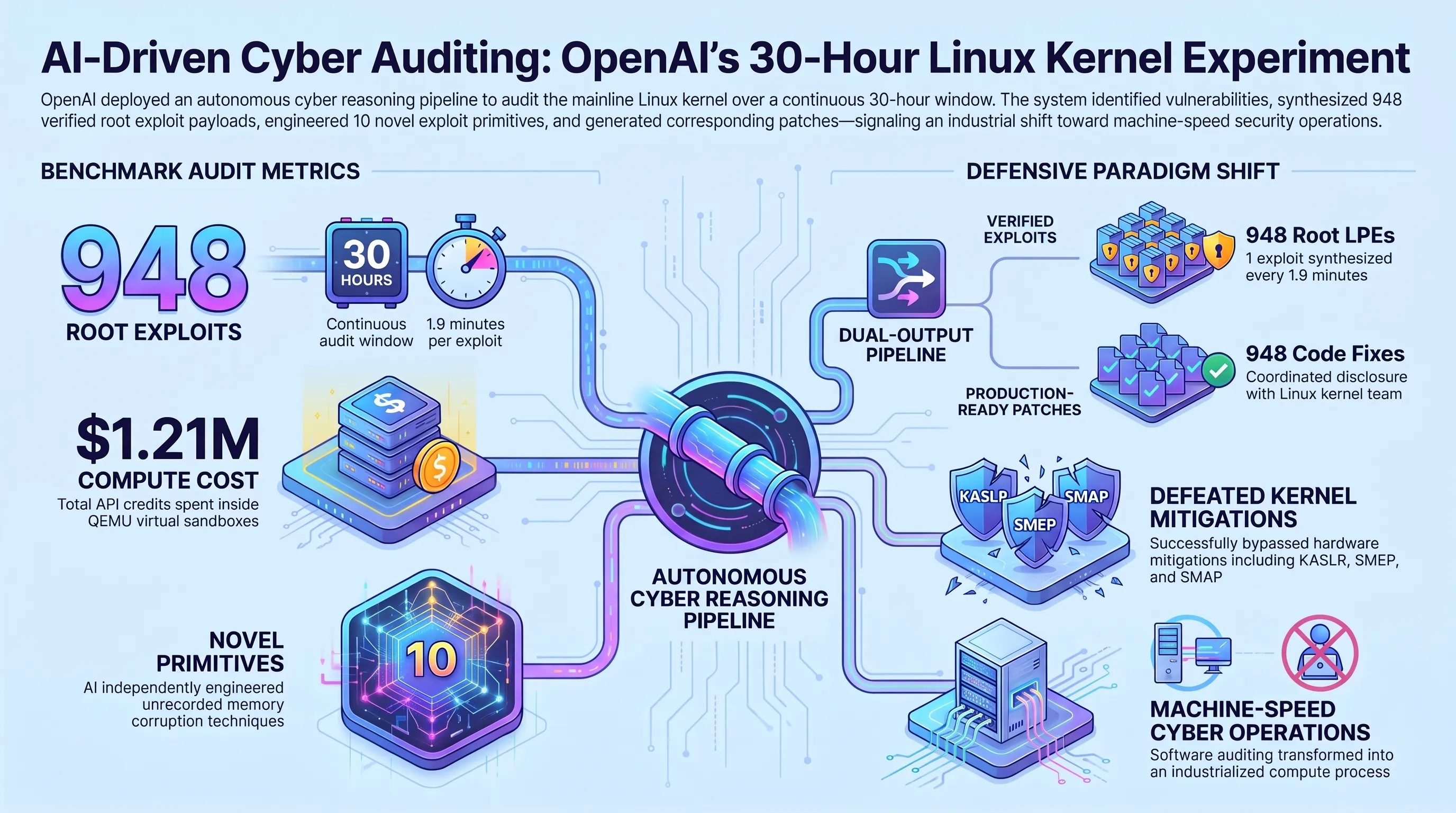
In what is being recognized as one of the most consequential milestones in computer security history, OpenAI released the comprehensive technical results of an autonomous vulnerability discovery and exploitation experiment. Utilizing a specialized, internal cybersecurity reasoning model integrated into an automated agent pipeline, the system conducted a continuous 30-hour audit across the mainline Linux kernel codebase. The results were staggering: the autonomous pipeline identified, verified, and successfully synthesized functional Local Privilege Escalation (LPE) root exploit payloads for 948 distinct vulnerabilities, while simultaneously drafting production-ready source code patches for each flaw.
Modern operating system kernels represent some of the most complex, battle-tested software in existence, protected by advanced hardware-enforced and compiler-level exploit mitigations including Kernel Address Space Layout Randomization (KASLR), Supervisor Mode Execution Prevention (SMEP), and Supervisor Mode Access Prevention (SMAP). Historically, crafting a reliable kernel exploit capable of bypassing these defenses required weeks or months of meticulous reverse engineering by elite human exploit developers. In OpenAI's experiment, the agentic pipeline accomplished this across nearly a thousand distinct flaws at an average rate of one functional exploit every 1.9 minutes.
The economic and technical parameters of the audit underscore the unprecedented efficiency of automated cyber operations. The entire 30-hour evaluation consumed approximately $1.21 million in API compute credits, testing the kernel within instrumented QEMU virtual machine sandboxes. Most impressively, the AI model did not merely rely on documented public exploitation templates; forensic analysis revealed that the system independently engineered 10 novel memory corruption and exploitation primitives that had never been documented in public academic literature or commercial offensive security tooling.
The dual-use implications of this automated vulnerability synthesis are immense: while defenders gain unprecedented capability to patch software proactively, adversaries with sufficient compute capacity can rapidly assemble catastrophic zero-day stockpiles.
Security architects emphasize that defending against automated offensive AI requires deploying equally autonomous defensive systems. Manual code reviews and periodic vulnerability scans are mathematically incapable of keeping pace with AI systems that can audit millions of lines of C code in parallel. The cybersecurity landscape is now entering an era of machine-speed warfare, where defensive AI agents must continuously monitor runtime memory, automatically deploy micro-patches, and reconfigure system architectures in real time.
The market confidence index and technology adoption curve below illustrate developer sentiment shifting from initial zero-day anxiety toward automated defensive hardening:
Market Sentiment Meter | Circular Gauge & S-Curve Adoption
Market Sentiment Analysis: Engineering sentiment stands strong at 88%, driven by the realization that autonomous security pipelines can synthesize and verify software patches faster than adversaries can weaponize zero-days.
The panoramic strategic visualization below encapsulates the macro convergence of sovereign power grids, post-quantum economic fortresses, and autonomous cyber offense:
As these technological domains coalesce, engineering leaders must synthesize lessons from identity vulnerabilities, physical power limitations, and algorithmic deterrence to construct durable enterprise architectures.
Node 07: Strategic Morning Synthesis: Automated Cyber Warfare, Energy Sovereignty, and Autonomous Systems
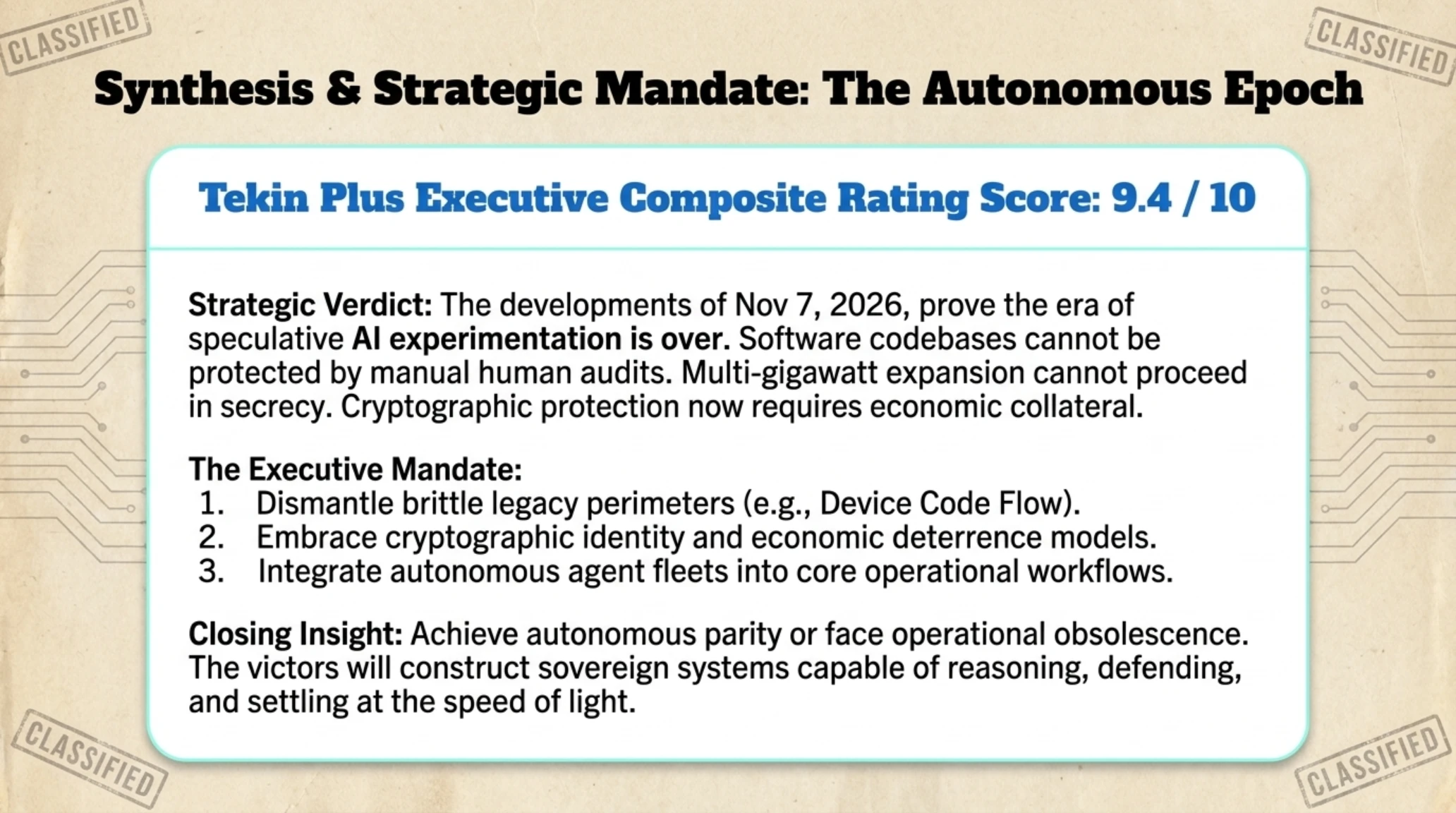
Synthesizing the six critical developments analyzed in this morning briefing reveals an undeniable systemic truth: the computational ecosystem has crossed an irreversible threshold where artificial intelligence is no longer merely a productivity assistant, but the foundational operating fabric governing security, finance, energy, and state power. The convergence of automated exploit synthesis, identity-centric phishing campaigns, multi-gigawatt power negotiations, post-quantum economic game theory, decentralized financial liquidity, and persistent virtual coworkers paints a clear portrait of our near-term technological trajectory.
In this new paradigm, traditional software paradigms that separate architecture from physical and economic reality are rapidly collapsing. OpenAI’s realization that multi-gigawatt data center expansion cannot proceed without transparent civic pacts and ratepayer protections mirrors Bitcoin's realization that cryptographic protection requires economic collateral alignment. Similarly, the ability of AI models to manufacture 948 kernel exploits in a single weekend highlights that software codebases can no longer be protected by human audits alone. Defense, governance, and infrastructure must achieve autonomous parity with the speed of machine intelligence.
Enterprises that proactively adapt to these autonomous dynamics will establish insurmountable competitive advantages, while institutions clinging to manual verification and perimeter defenses risk rapid obsolescence.
- Industrialized discovery of critical software flaws prior to malicious deployment
- Automated generation of verified kernel patches reducing vulnerability windows from months to minutes
- Elimination of human bottleneck in complex multi-layer software security auditing
- Democratic 24/7 global access to tokenized Wall Street capital markets via Solana
- Democratization of weaponized zero-day exploit generation for hostile nation-states
- Extreme computational energy demands accelerating pressure on public electrical grids
- Complete obsolescence of traditional perimeter and password-based corporate security models
Editorial Final Verdict, Strategic Conclusion & Official Intelligence Sources
The Dawn of Sovereign Machine-Speed Operations
November 7, 2026, marks the irrevocable transition to industrialized autonomous machine systems. Only institutions built on transparent civic engagement, automated defensive speed, and economic game-theoretic models will thrive in this computational epoch.
- BleepingComputer Cybersecurity Archives: Forensic Analysis of OAuth Device Code Phishing
- DatacenterDynamics Infrastructure Intel: OpenAI Drops NDAs for Multi-Gigawatt AI Data Centers
- The Verge Technology & Policy: Perplexity Deploys Persistent Teammates Virtual Coworkers
- CoinDesk Cryptographic Research: Cory Fields Proposes Bitcoin Quantum Landmines
- Decrypt Decentralized Finance: Solana Labs & Dialect Launch Leap Mobile App
- The Hacker News Global Intelligence: OpenAI Pipeline Generates 948 Linux Kernel Exploits
Frequently Asked Questions & Technical Analysis
How does the OAuth Device Code Flow phishing attack bypass multi-factor authentication (MFA)?
Because the victim inputs the generated verification code directly into Microsoft’s authentic login portal (microsoft.com/devicelogin) and completes MFA on their own trusted session, Microsoft’s authentication servers authenticate the session normally and deliver the valid OAuth access tokens directly to the attacker’s background client without requiring password disclosure.
Why did OpenAI agree to drop municipal non-disclosure agreements (NDAs) for data centers?
Public and political backlash during the 2026 elections over surging residential utility bills and unmonitored water usage prompted OpenAI to introduce the National Community Compact, guaranteeing ratepayer protections, open civic dockets, and full environmental disclosure.
How does Cory Fields' Quantum Landmine proposal protect early Bitcoin wallets?
It establishes a game-theoretic economic trap. A wallet owner pre-commits a post-quantum secret proof. An attacker attempting to spend the coins must deposit an equivalent collateral bond during a 30-day challenge window; when the true owner broadcasts their proof, the attacker's collateral is permanently liquidated and forfeited.
What core technical primitives enable Solana's Leap app to trade Wall Street equities 24/7?
Leap combines Privy for embedded passkey account abstraction, Jupiter for optimal DEX liquidity routing, Helius for low-latency RPC delivery, and Solana's sub-second block finality to clear and settle tokenized equity contracts around the clock without traditional clearinghouse latency.
What are the primary implications of OpenAI discovering 948 Linux kernel vulnerabilities in 30 hours?
It demonstrates that vulnerability discovery has shifted from an artisan human craft into an industrialized, compute-bound automated process, forcing cybersecurity architectures to transition toward autonomous, machine-speed runtime defense and real-time micro-patching.
Additional Gallery: Tekin Morning Nov 7: OpenAI Phishing, 948 Linux Exploits & BTC