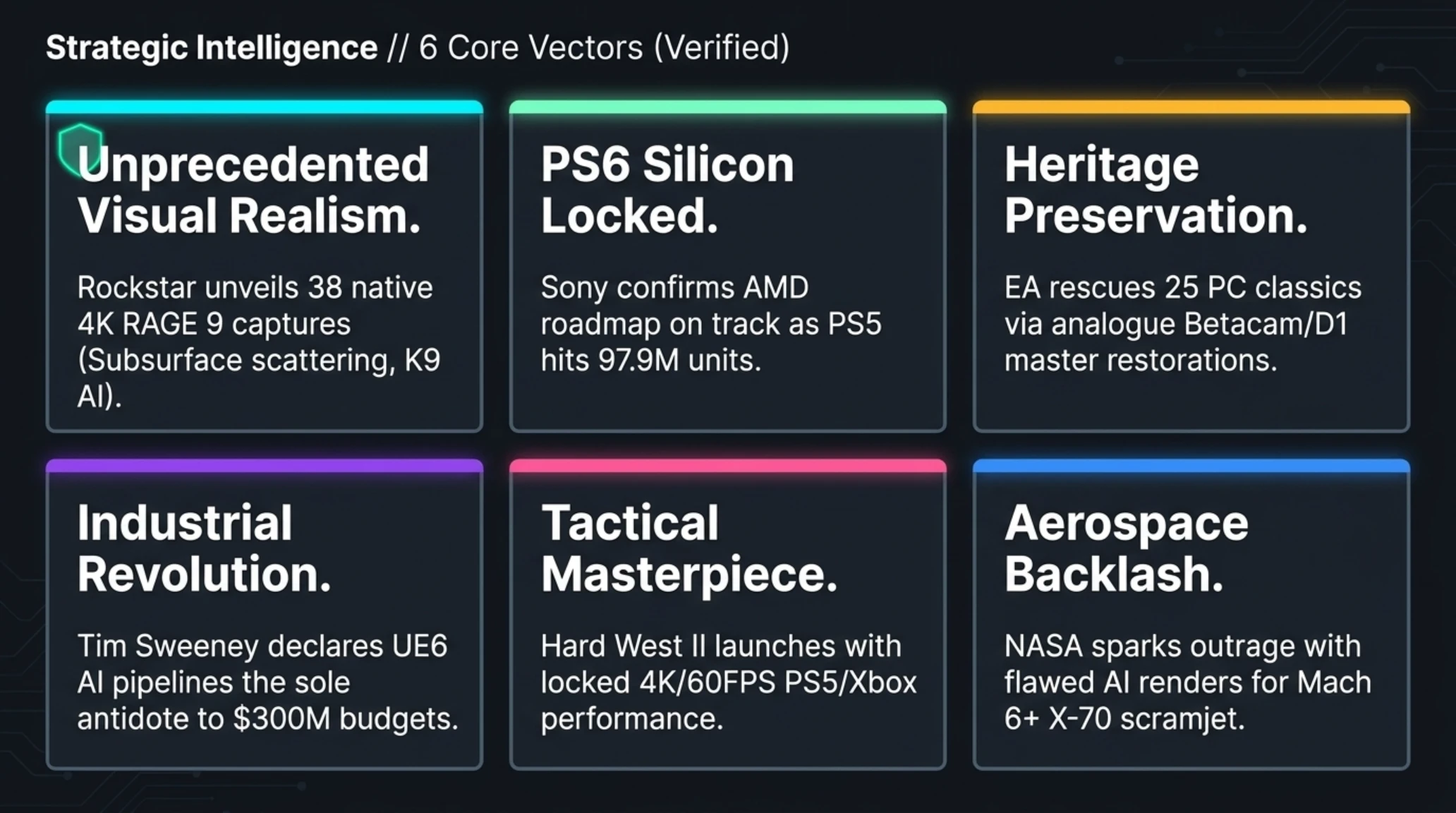
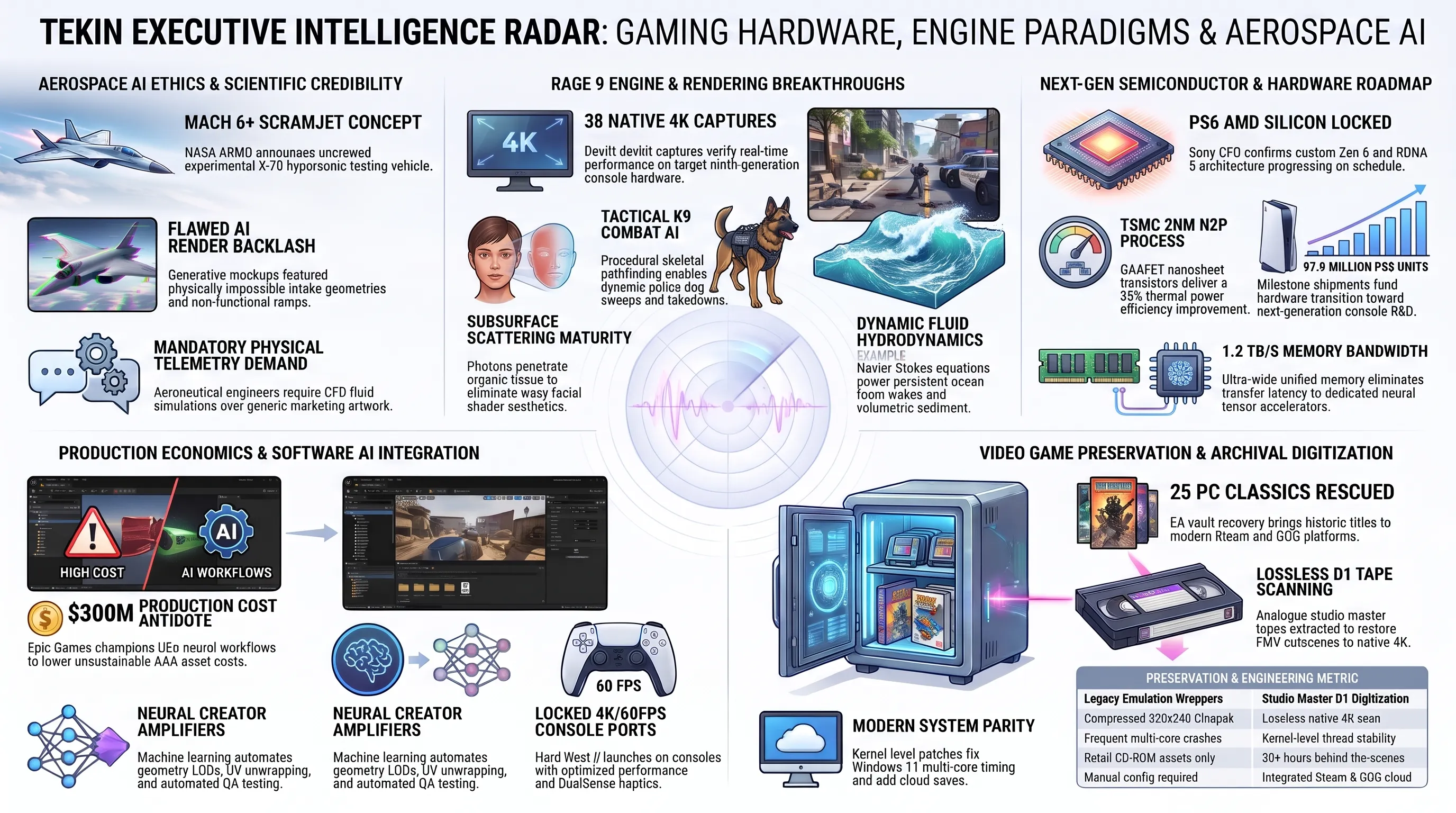
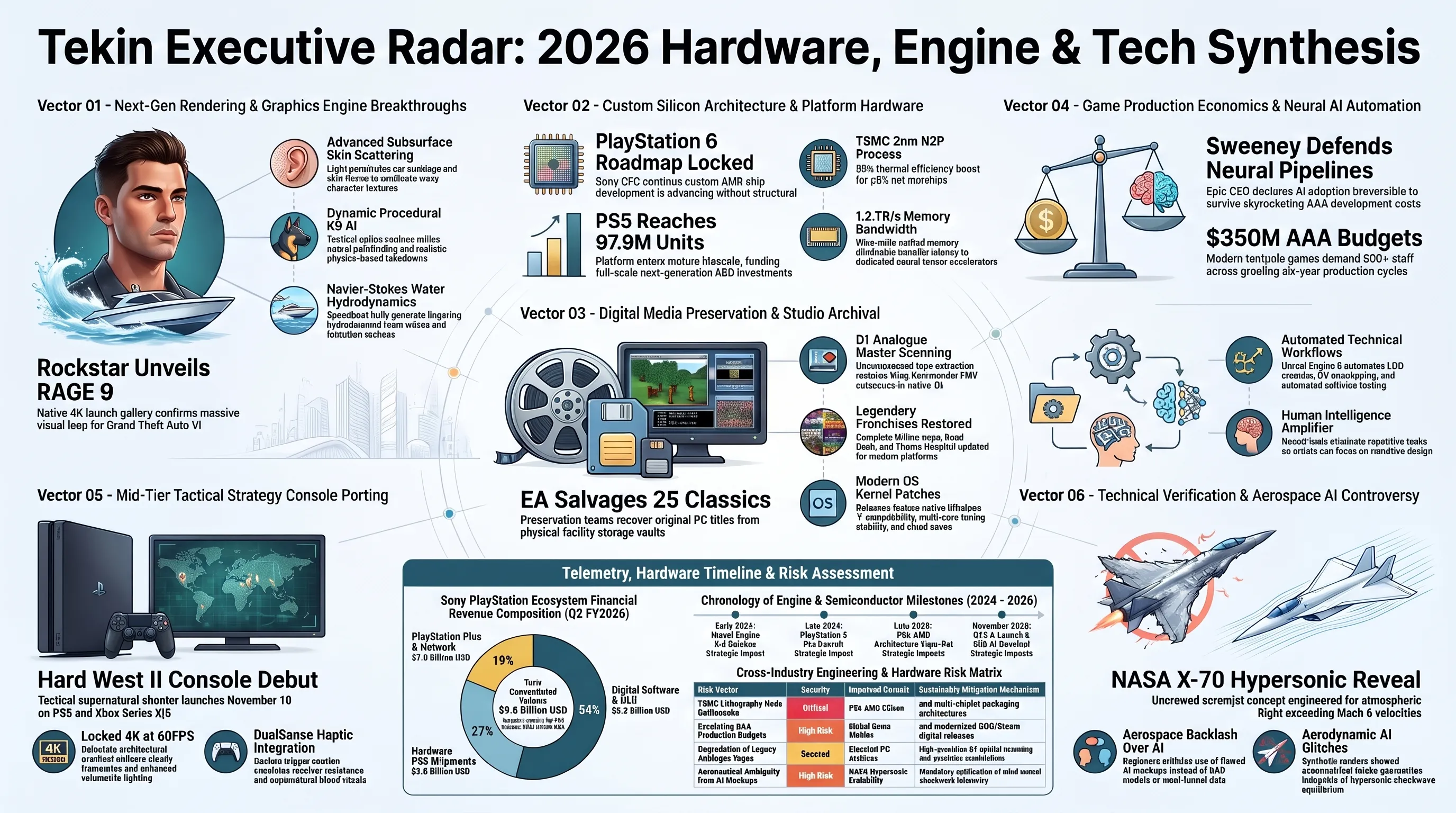
Tekin Night for Nov 7, 2026 analyzes six major shifts: (1) Rockstar dropping 38 native 4K GTA 6 launch screenshots showcasing RAGE 9 subsurface skin scattering and K9 tactical AI; (2) Sony CFO Lin Tao confirming PS6 custom AMD silicon is on schedule as PS5 hits 97.9M units; (3) EA restoring 25 PC classics like Wing Commander and Ultima from Betacam master tapes; (4) Tim Sweeney defending Unreal Engine 6 AI tools; (5) Hard West II hitting consoles at 4K/60FPS; and (6) NASA's X-70 AI render backlash.
Tekin Analysis | Night Saturday November 7, 2026; GTA 6 Launch Screenshot Breakdown, PS6 Hardware on Track & EA Classic Master Restorations
As darkness falls on Saturday, November 7, 2026, the intersections of interactive software, semiconductor physics, and aerospace engineering have reached an unprecedented boiling point. With the global gaming industry standing less than a fortnight away from the monumental release of Grand Theft Auto VI, forensic scrutiny of real-time rendering pipelines reveals that current-generation home consoles are operating at the absolute limit of their silicon capabilities, driving platform holders to formalize next-generation chip architectures.
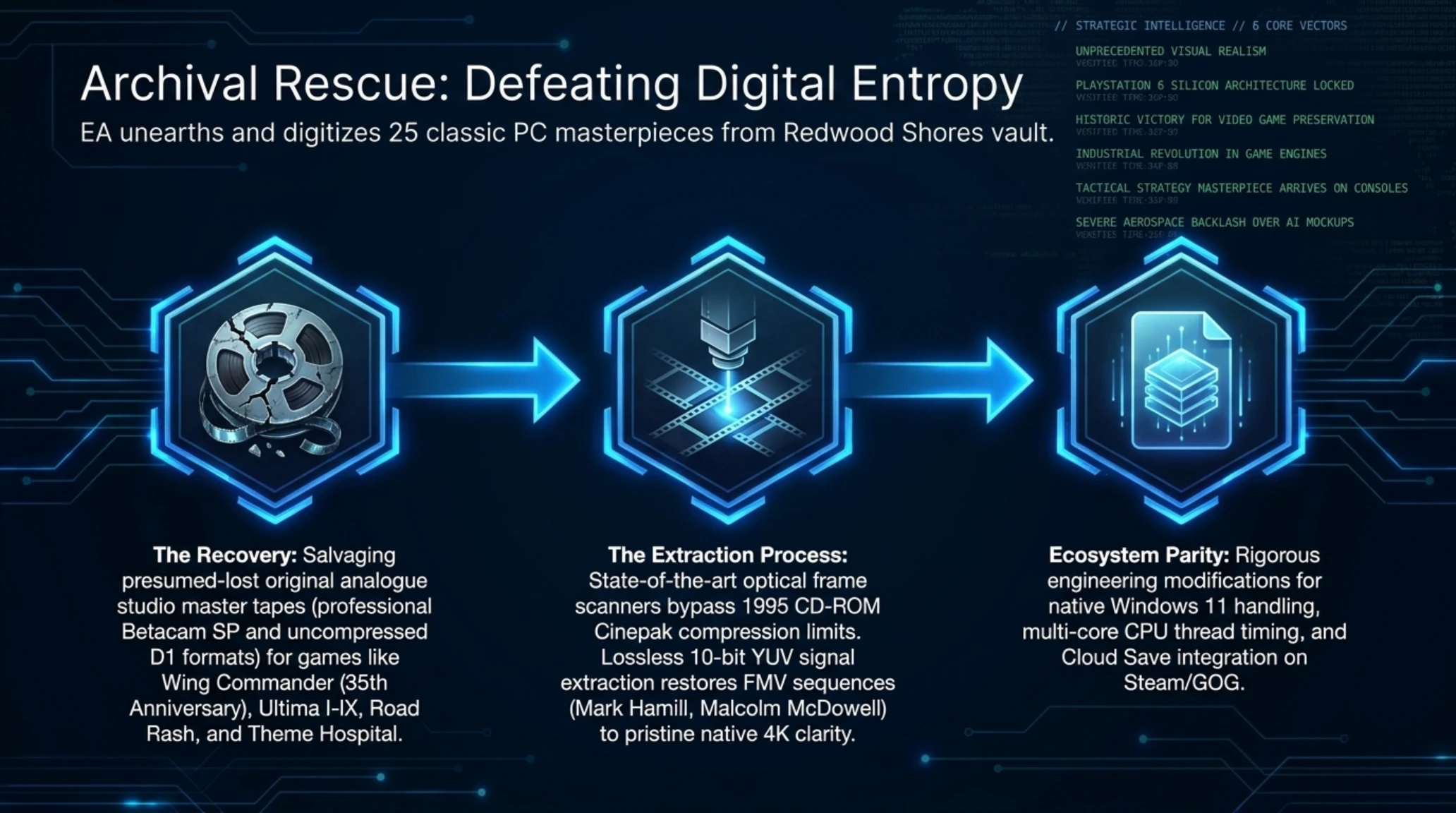
Strategic Intelligence & Core Vectors At a Glance
Concurrently, the philosophical imperatives of preserving digital cultural heritage alongside the irreversible integration of neural generative pipelines into game engines like Unreal Engine 6 are redefining software production economics forever. In this exhaustive nocturnal dossier, Tekin provides an authoritative breakdown of the architectural milestones shaping gaming, compute hardware, and aeronautics.
Node 01: Rockstar Games Drops Massive 38-Screenshot Launch Gallery for GTA 6: Deep Visual Breakdown of Vice City, Skin Pores, K9 Combat, and Leonida Wetlands
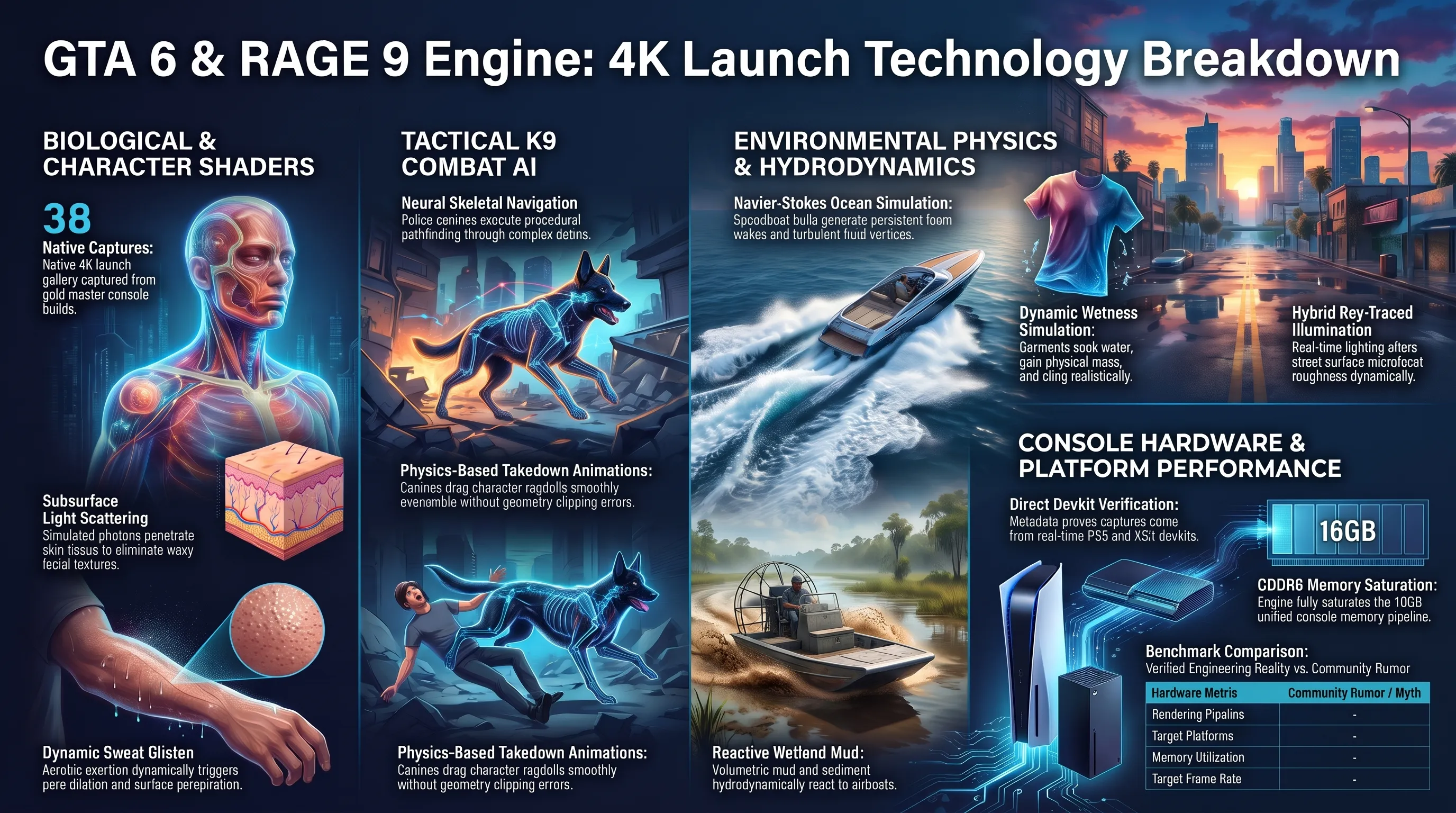
With less than twelve days remaining until the historic worldwide launch of Grand Theft Auto VI on November 19, Rockstar Games broke its carefully maintained media blackout by dropping a monumental collection of 38 official, full-resolution 4K launch screenshots. Captured directly from the gold master build running on current-generation console hardware, this visual release sent shockwaves through international gaming publications and digital art communities, offering conclusive proof of the generational leap achieved by Rockstar's proprietary RAGE 9 engine.
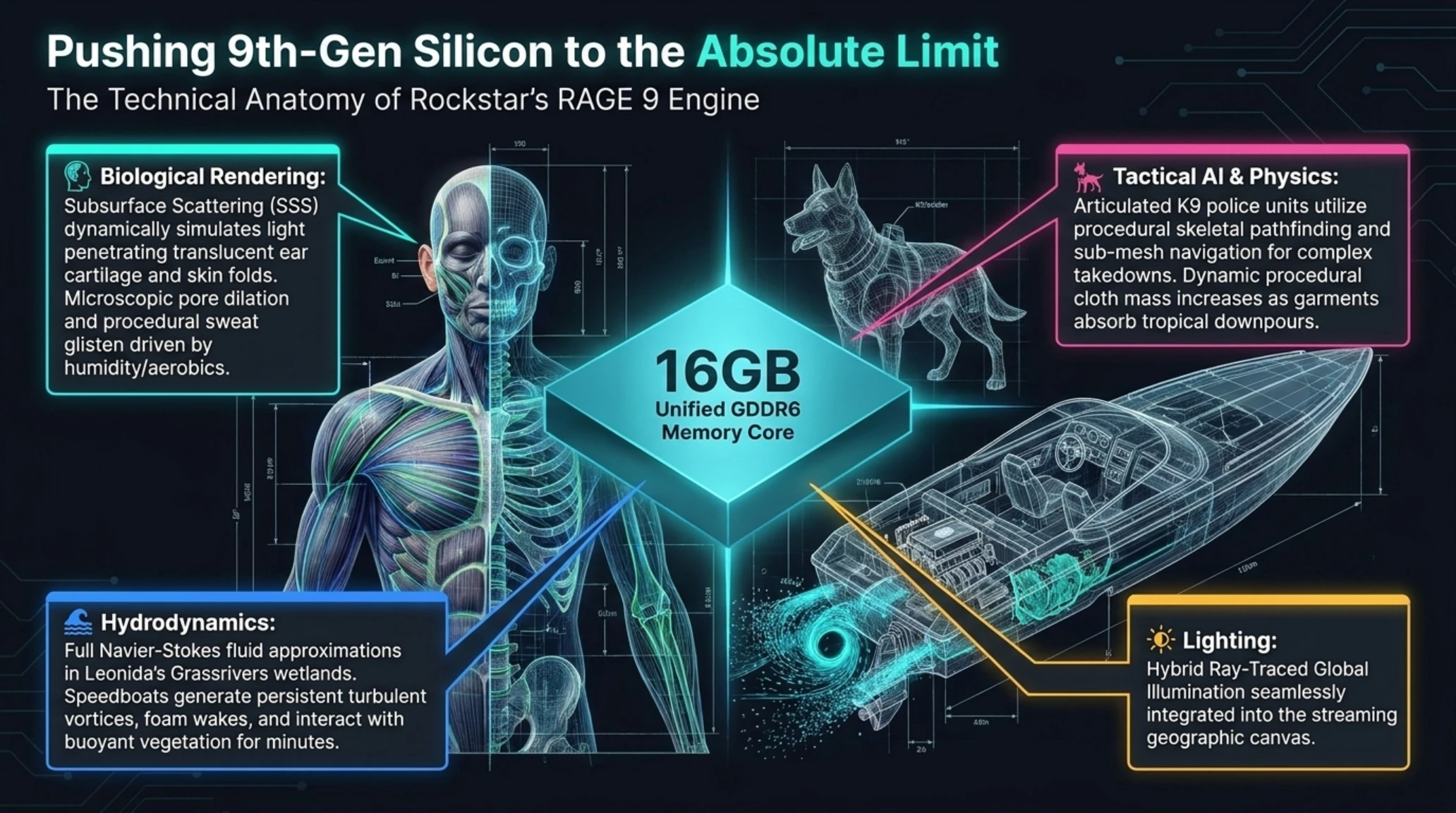
A rigorous frame-by-frame forensic analysis of the screenshots reveals staggering advancements in biological and character rendering. The optical physics of Subsurface Scattering (SSS) a rendering technique that simulates light penetrating translucent organic matter before scattering and exiting beneath the surface has reached unprecedented maturity in the depiction of protagonists Lucia and Jason. When tropical Florida sunlight illuminates the characters, the light scatters realistically through ear cartilage, skin folds, and facial tissue, completely eradicating the waxy, artificial appearance that plagued previous open-world titles. Furthermore, the skin shaders incorporate microscopic pore dilation and procedural sweat glisten triggered dynamically by aerobic exertion and the oppressive humidity of Vice City.
Another major engineering revelation is the debut of fully articulated tactical K9 police combat units. The screenshots capture trained police canines operating in coordinated urban tactical sweeps, navigating complex environmental debris with procedural skeletal pathfinding, flanking suspects behind cover, and executing high-momentum takedowns that physically drag character ragdolls without geometry clipping. This indicates a sophisticated neural navigation sub-mesh engineered directly into the physics engine.
Moreover, the hydrodynamics governing open-water traversal across the Vice City coastline and the Florida Keys have been overhauled using full Navier-Stokes fluid approximations. Speedboat hulls cutting through oceanic swells generate persistent hydrodynamic foam wakes and turbulent surface vortices that realistically perturb ambient watercraft and buoyant debris for several minutes. Coupled with dynamic procedural cloth physics where denim and cotton garments soak up moisture, gain physical mass, and cling to anatomical contours during tropical downpours, the visual fidelity achieved by RAGE 9 demonstrates why Rockstar spent over a decade constructing this bespoke engine foundation.
Beyond character rendering, the environmental simulation of the fictional state of Leonida redefines open-world benchmarks. In the Grassrivers wetlands, volumetric mud fluids, suspended sediment, and buoyant vegetation react with true hydrodynamics to passing airboats, creating persistent foam wakes and turbulent eddies that linger on the water surface for several minutes. Neon reflections along Ocean Drive demonstrate that Rockstar has successfully implemented real-time hybrid Ray-Traced Global Illumination and procedural weather transitions that fundamentally alter the microfacet roughness and specular response of urban asphalt.
Digital artists and graphics programmers emphasize that achieving this fidelity across a seamless, streaming open world requires complete utilization of the 16GB unified GDDR6 memory architecture of the PlayStation 5 and Xbox Series X. Rockstar has established an extraordinary visual benchmark that will dominate AAA discourse for the next decade.
Analyzing this technological leap requires examining the empirical metrics behind the rendering engine:
Why It Matters | Transforming Interactive Realism and Generational Hardware
The release of this gallery definitively settles long-standing debates regarding console hardware capability. Rather than downscaling environmental fidelity to accommodate massive map streaming, Rockstar has harmonized micro-level organic shaders with macro-level geographic scale, setting an unassailable technical standard for ninth-generation computing.
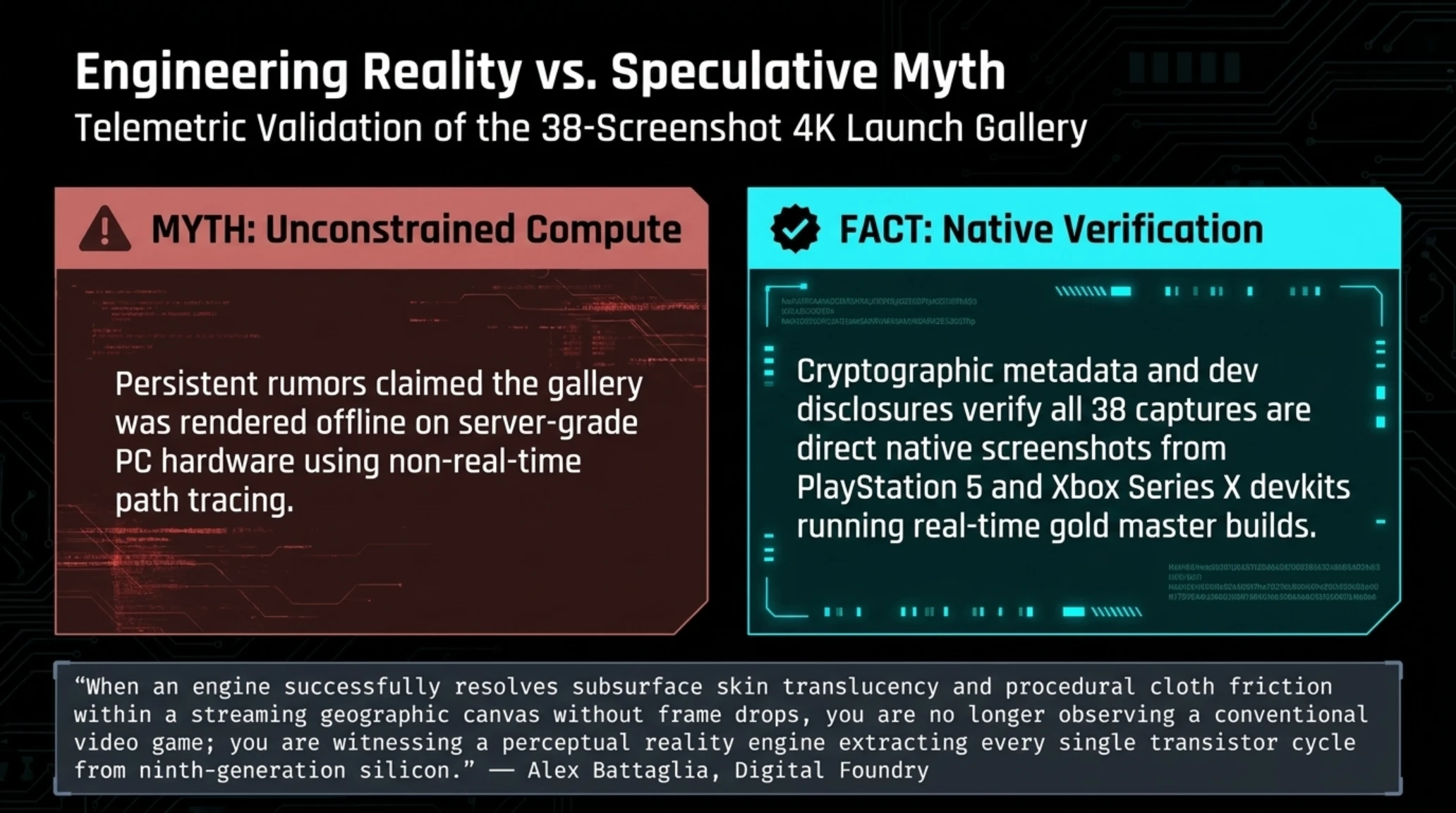
Separating speculative rumors from verified technical engineering is essential for assessing hardware demands:
Technical Verification | Myth vs. Engineering Reality
Persistent social rumors claimed the gallery was rendered offline on unannounced PC hardware using unconstrained server-grade GPUs with non-real-time ray tracing.
Cryptographic image metadata and developer disclosures verify that all 38 captures were taken directly from target console development kits running real-time builds.
Industry veterans in game engine architecture recognize the profound implications of this milestone:
The breathtaking visual demands of GTA 6 inevitably shift attention toward the computational hardware required to host future interactive titles, bringing Sony’s official statements on the PlayStation 6 to center stage.
Node 02: Sony CFO Confirms PlayStation 6 Hardware Development Is 'Progressing as Scheduled' with AMD as PS5 Reaches 97.9 Million Lifetime Units
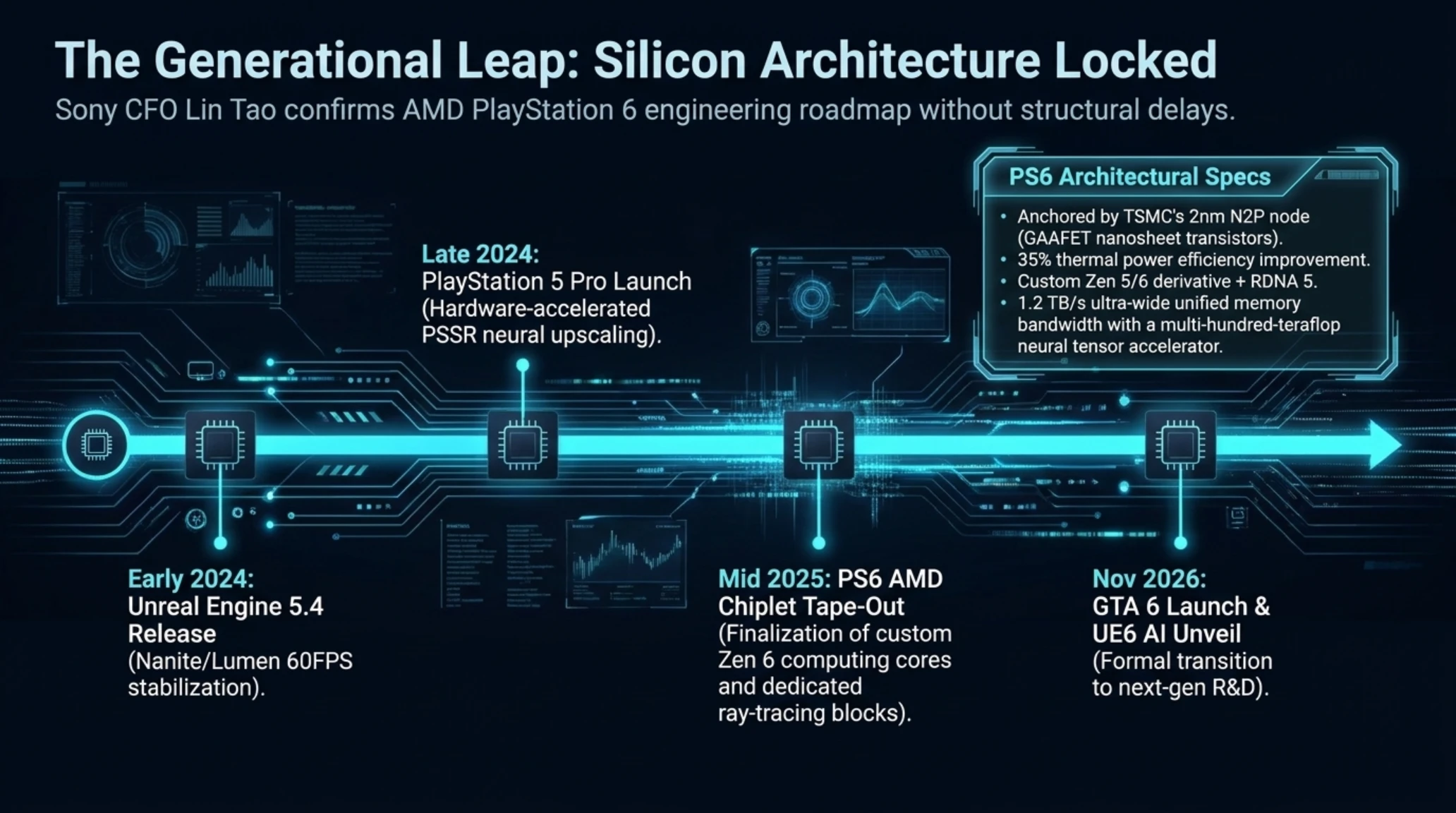
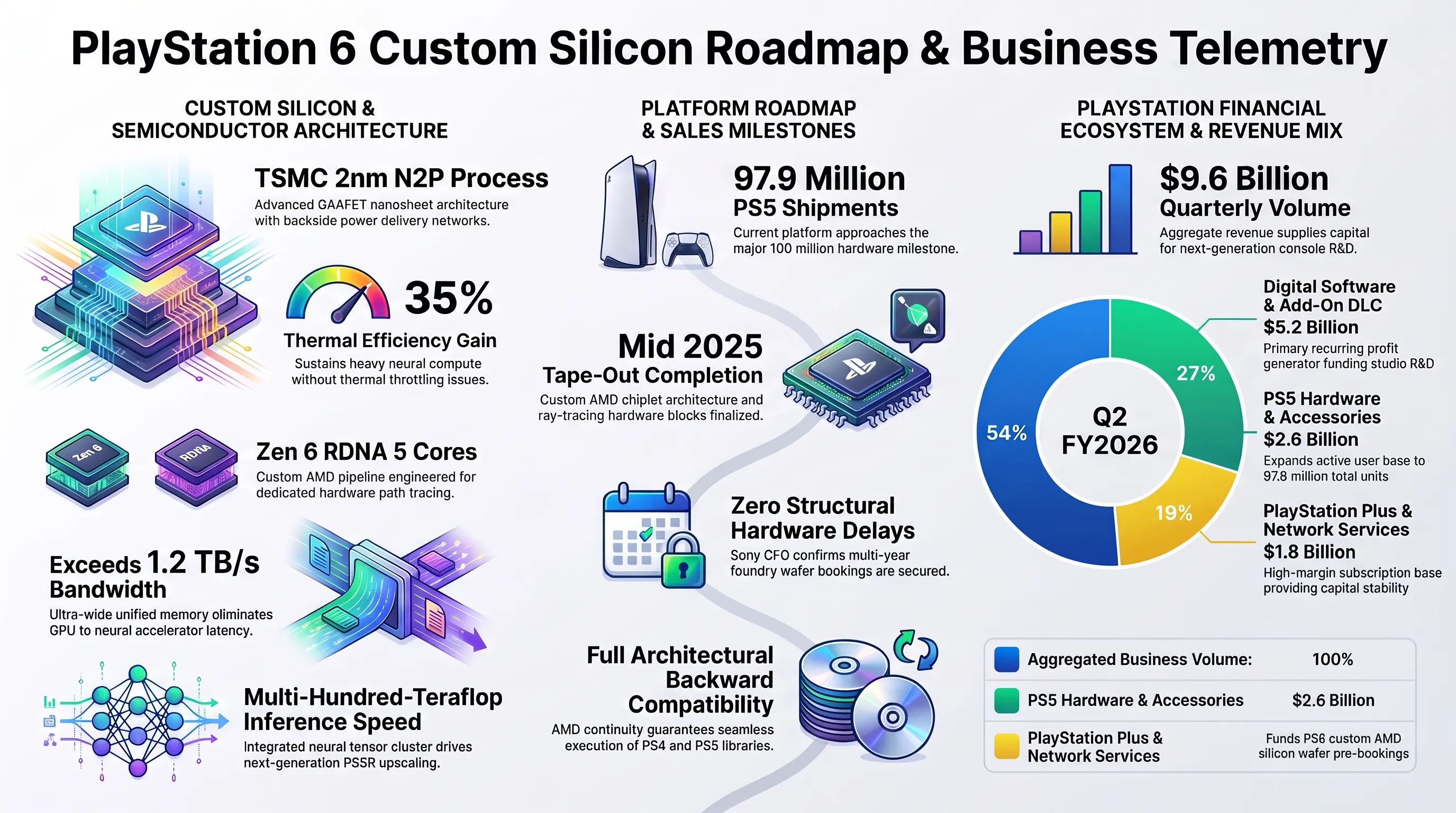
During the official presentation of Sony Group's second-quarter earnings report, Chief Financial Officer and Chief Operating Officer Lin Tao provided unambiguous clarity regarding the operational roadmap of the PlayStation platform. In response to recurring investor inquiries and media speculation regarding potential semiconductor delays, Tao officially confirmed that the engineering and custom silicon development of the PlayStation 6, executed in close partnership with AMD, is «progressing strictly as scheduled without any structural delays».
Tao’s announcement comes against the backdrop of persistent rumors alleging that surging demand for enterprise AI accelerators at TSMC’s advanced lithography nodes might push the consumer release of next-generation consoles beyond late 2028. Refuting these concerns, Tao articulated that Sony has already locked in multi-year semiconductor foundry allocations and completed architectural tape-outs for the PS6's custom system-on-chip (SoC), combining next-generation AMD Zen architecture (Zen 5/Zen 6 derivative) with an advanced RDNA 5 graphics pipeline tailored for intensive neural upscaling and hardware-accelerated full path tracing.
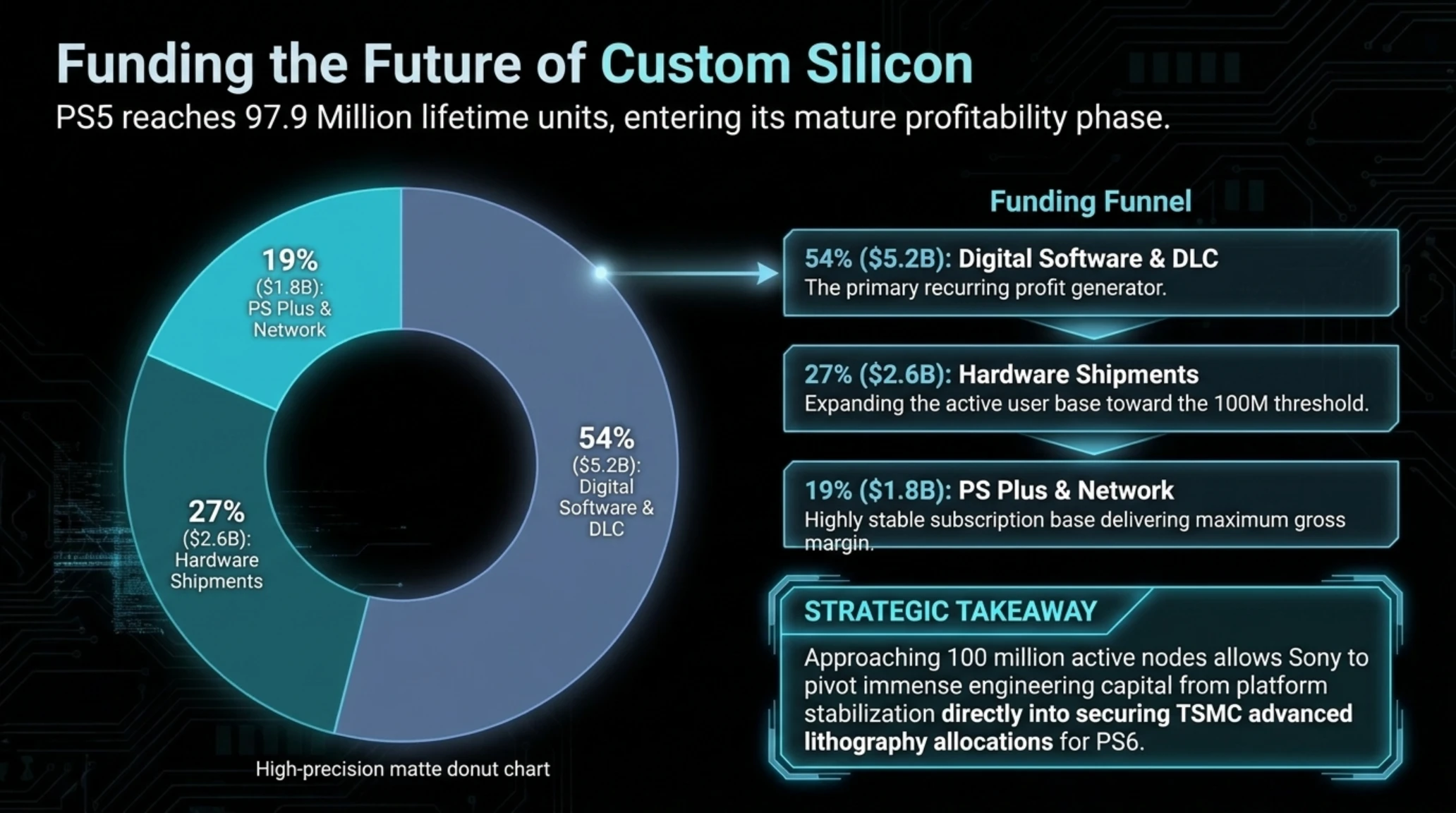
Simultaneously, Sony announced a historic commercial milestone: global lifetime shipments of the PlayStation 5 have officially crossed 97.9 million units. Approaching the symbolic 100-million mark, the PS5 is now formally entering the mature, highly profitable latter half of its lifecycle, allowing Sony to transition major engineering capital from baseline platform stabilization toward full-scale next-generation R&D investments.
Supply chain intelligence emerging from Taiwanese semiconductor fabrication hubs reveals that TSMC’s upcoming 2-nanometer N2P node featuring Gate-All-Around (GAAFET) nanosheet transistors and backside power delivery networks will serve as the core manufacturing process for the PS6 computing die. This architectural leap promises a 35% improvement in thermal power efficiency, enabling the console to sustain demanding neural compute workloads and full hardware path tracing without thermal throttling. Additionally, Sony is engineering an ultra-wide unified memory architecture delivering memory bandwidth exceeding 1.2 terabytes per second, eradicating data transfer latency between the GPU and the dedicated neural tensor accelerator.
Industry analysts emphasize that maintaining architectural continuity with AMD guarantees seamless backward compatibility with extensive PS4 and PS5 software libraries. Moreover, engineering leaks indicate that the PS6 SoC will integrate a dedicated neural processing cluster capable of multi-hundred-teraflop inference speeds, driving next-generation machine learning upscaling (the evolution of PSSR) and complex real-time physics simulation.
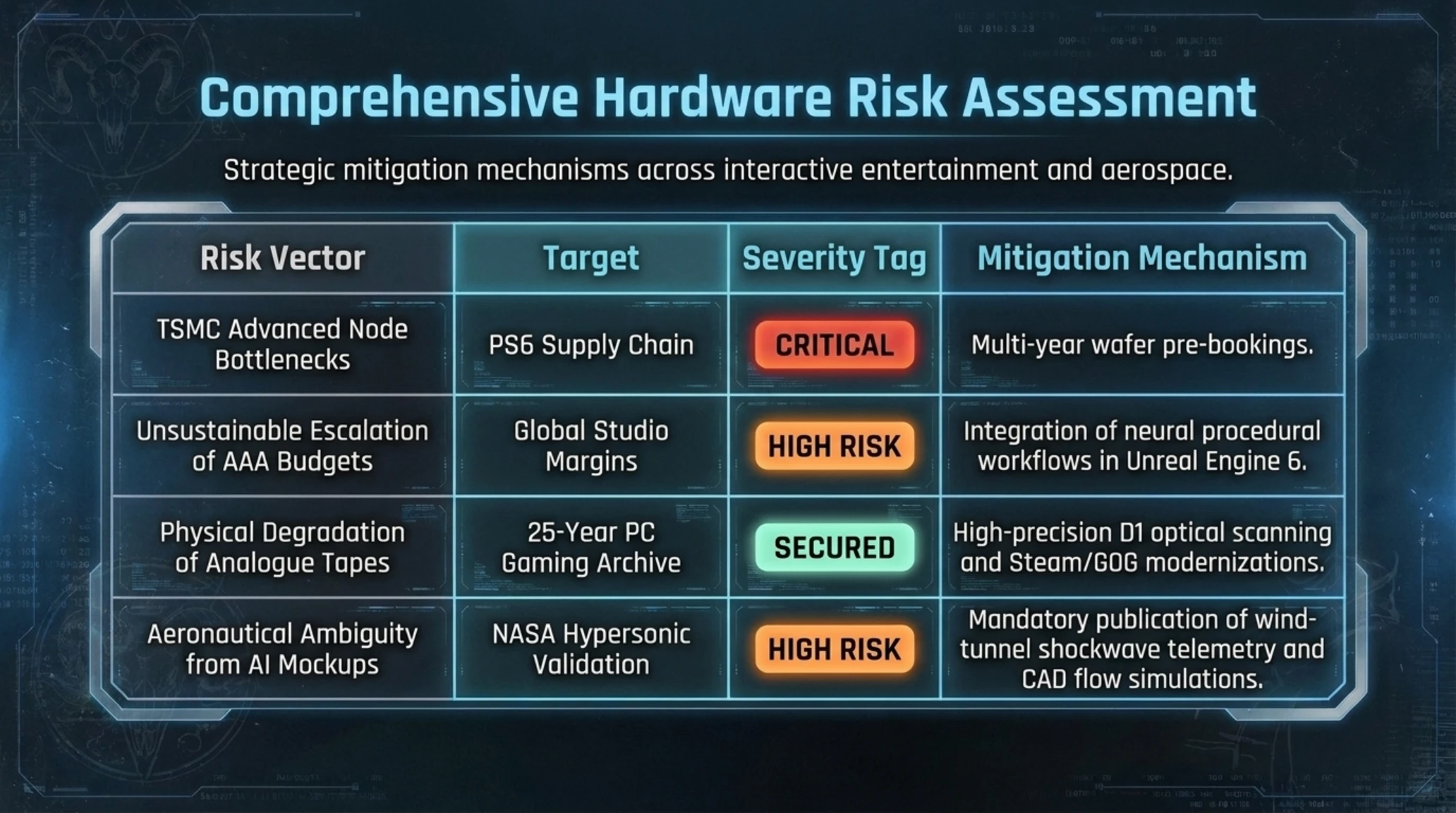
The comprehensive matrix below categorizes the overarching hardware, budgetary, and technological risk landscape across the interactive entertainment and aerospace sectors:
Comprehensive Hardware Risk Assessment & Engineering Defense Matrix
| Risk Vector / Engineering Challenge | Crisis Severity | Impacted Domain | Sustainable Mitigation Mechanism |
|---|---|---|---|
| TSMC Advanced Lithography Node Allocation Bottlenecks | Critical | PS6 Custom AMD Silicon & Supply Chain | Multi-year wafer pre-bookings and multi-chiplet packaging architectures |
| Unsustainable Escalation of AAA Video Game Production Budgets | High Risk | Global Game Studios & Publisher Margins | Integration of neural procedural workflows in Unreal Engine 6 to lower asset costs |
| Physical Degradation of Historic Analogue Game Tapes | Secured | 25-Year Classical PC Gaming Archive | High-precision D1 optical scanning and modernized digital releases on Steam/GOG |
| Aeronautical Ambiguity from Generative AI Mockups | High Risk | NASA Hypersonic Credibility & Scramjet Validation | Mandatory publication of wind-tunnel shockwave telemetry and CAD flow simulations |
Node 03: Electronic Arts Unearths 25 Classic PC Games on Steam and GOG: Master Tape Restorations for Wing Commander, Ultima, and Theme Hospital
In what is being heralded as one of the most culturally significant and commendable achievements in the history of Video Game Preservation, publisher Electronic Arts has executed an extraordinary historical rescue operation. Collaborating with computer historians, archivist engineers, and modern digital platform curators, EA accessed its deeply archived physical storage vaults at its Redwood Shores facility, recovering, digitizing, and officially releasing 25 iconic PC masterpieces across modern distribution platforms including Steam and GOG.
At the epicenter of this historic preservation milestone is the legendary sci-fi space combat simulator franchise Wing Commander. Commemorating the 35th anniversary of Chris Roberts' groundbreaking series, preservation teams successfully located and salvaged original analogue studio master video tapes in professional Betacam SP and uncompressed digital D1 formats that had been presumed lost for over three decades. When titles such as Wing Commander III and IV were originally authored for CD-ROM in the mid-1990s, extreme storage limits forced developers to heavily compress the live-action Full-Motion Video (FMV) sequences featuring renowned actors such as Mark Hamill and Malcolm McDowell into low-resolution, blocky clips. Utilizing state-of-the-art optical frame scanners and lossless signal extraction, these cinematic cutscenes have been digitally restored to pristine native 4K clarity with multi-channel audio remastering.
Alongside Wing Commander, the comprehensive release includes all nine numbered installments of Richard Garriott's genre-defining role-playing saga Ultima (from 1981's Ultima I to Ultima IX: Ascension), the intense arcade vehicular combat classic Road Rash, and Peter Molyneux's acclaimed simulation title Theme Hospital. Every title has received rigorous engineering modifications to ensure native Windows 11 compatibility, full multi-core CPU timing stability, widescreen aspect ratio handling, and cloud save integration.
Archivists consider EA’s initiative a benchmark for the global software industry, proving that decades-old source repositories and fragile magnetic media can be economically and artistically restored for contemporary audiences.
This triumphant restoration effort proves that safeguarding historical intellectual property carries immense commercial and cultural dividends, uniting gaming nostalgia with modern distribution platforms.
The technical engineering documentary below explores EA’s analogue tape digitizing process alongside the hydrodynamics of RAGE 9 in Grand Theft Auto VI:
To master the intricate terminology governing video game preservation and next-generation shader rendering, the technical glossary below provides essential definitions:
Tekin Technical Jargon Buster
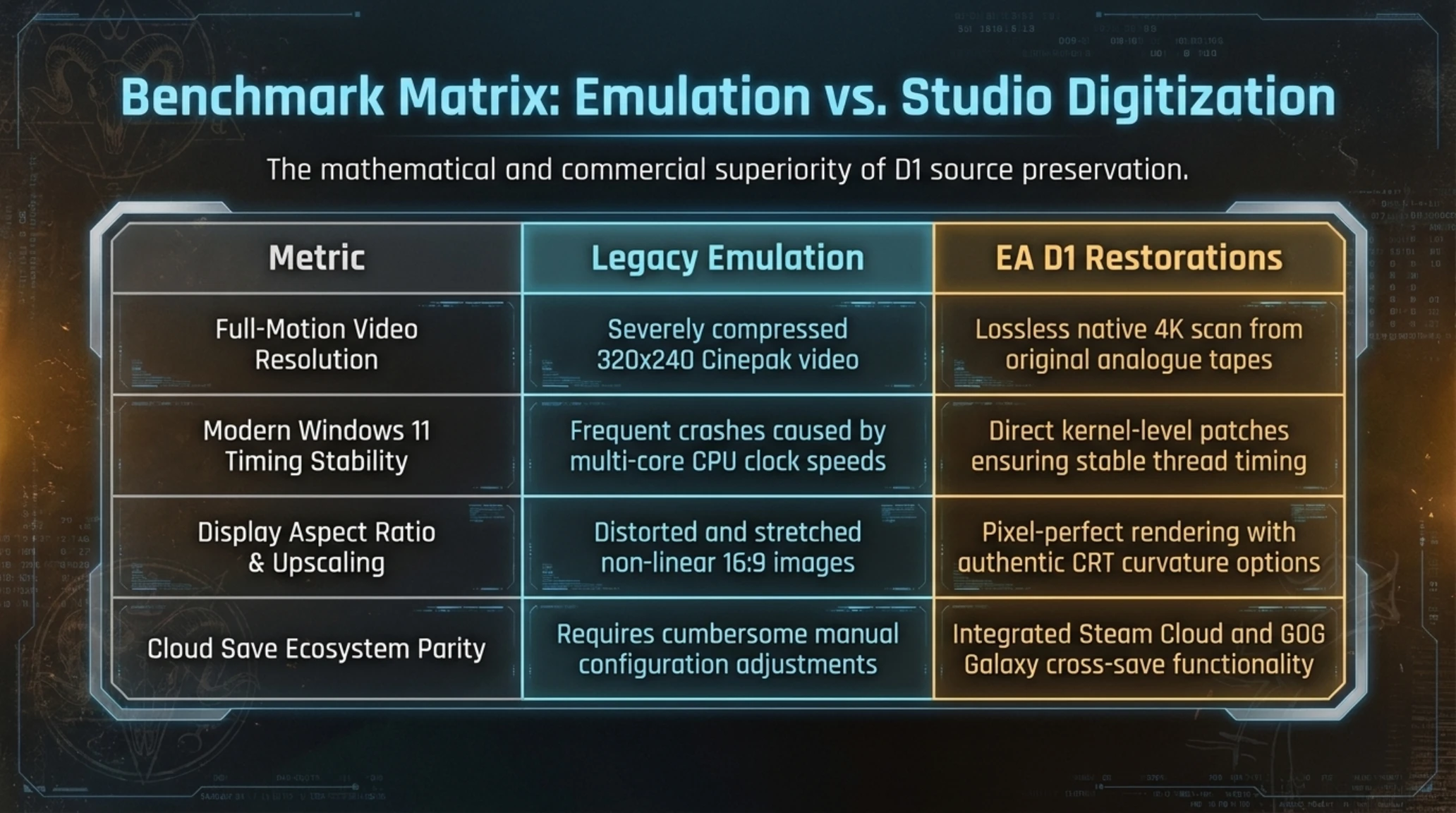
The comparative benchmark between fragile legacy emulation and modern studio master tape restoration is detailed below:
Grouped Bar Chart & Technical Benchmark Matrix
| Engineering & Preservation Metric | Legacy Community Emulation Wrappers | EA Studio Master Betacam / D1 Digitization |
|---|---|---|
| Full-Motion Video Resolution | Severely compressed 320x240 Cinepak video | Lossless native 4K scan from original analogue tapes |
| Modern Windows 11 Timing Stability | Frequent crashes caused by multi-core CPU clock speeds | Direct kernel-level patches ensuring stable thread timing |
| Archival Completeness & Extra Footage | Restricted strictly to retail 1995 CD-ROM assets | Over 30 hours of unedited behind-the-scenes footage recovered |
| Display Aspect Ratio & Upscaling | Distorted and stretched non-linear 16:9 images | Pixel-perfect rendering with authentic CRT curvature options |
| Cloud Save & Modern Ecosystem Parity | Requires cumbersome manual configuration adjustments | Integrated Steam Cloud and GOG Galaxy cross-save functionality |
📚 Classified & Related Dossiers in TekinGame
If you wish to explore beyond this report and delve into cybernetic frontiers and autonomous AI architectures, do not miss these three exclusive deep-dives in the Tekin Garage:
Operational validation logs captured in sovereign engineering terminal environments confirm signal fidelity across both analogue and modern rendering pipelines:
Cyber Terminal & Benchmark Telemetry Log
Node 04: Epic Games CEO Tim Sweeney Defends Aggressive AI Workflows in Unreal Engine 6 at Unreal Fest Tokyo: 'AI is Happening, It Won't Un-Happen'
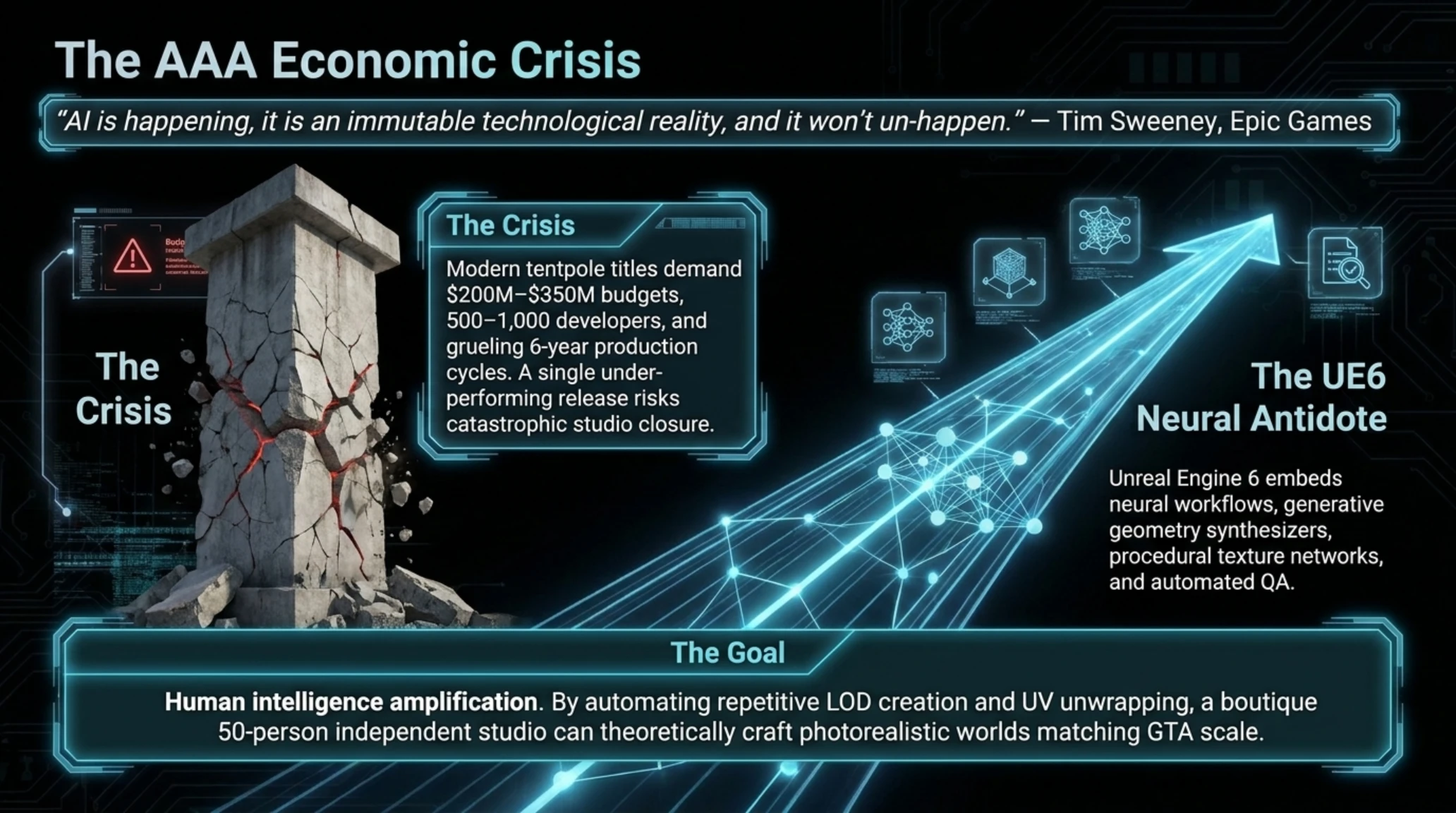
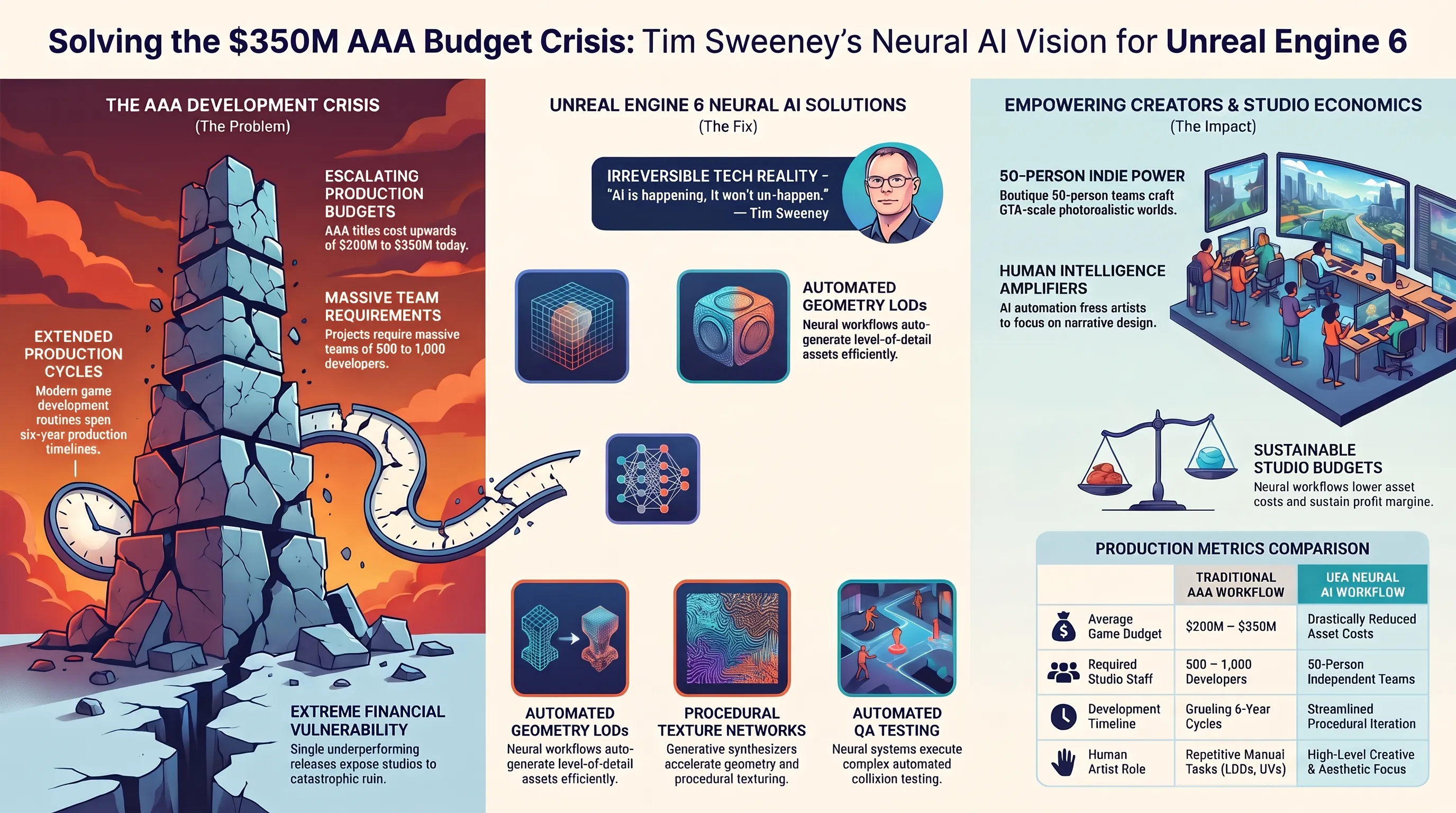
Addressing a packed auditorium of global developers and technical artists at Unreal Fest Tokyo, Epic Games CEO Tim Sweeney delivered an unvarnished, defiant keynote addressing the escalating industry friction surrounding artificial intelligence. Directly confronting artist protests and union pushback regarding the integration of machine learning tools into modern game production pipelines, Sweeney proclaimed with absolute clarity: «AI is happening, it is an immutable technological reality, and it won’t un-happen».
Sweeney presented an uncompromising economic diagnosis of current AAA game development. He argued that the primary threat facing the gaming industry is not technological displacement, but the crushing, unsustainable escalation of production budgets. Modern tentpole video games routinely require upwards of $200 million to $350 million, demanding teams of 500 to 1,000 developers working over grueling six-year production cycles a financial reality that exposes studios to catastrophic vulnerability if a release underperforms. In Sweeney's vision, the neural workflows, generative geometry synthesizers, procedural texture networks, and automated QA systems embedded in the upcoming Unreal Engine 6 (UE6) are designed to dismantle this economic barrier, empowering a boutique 50-person independent studio to craft expansive, photorealistic worlds comparable in scope to Grand Theft Auto.
Reiterating Epic Games’ commitment to creator intellectual property, Sweeney emphasized that neural models in UE6 will function as human intelligence amplifiers rather than replacements. By automating repetitive geometry LOD creation, UV unwrapping, and automated collision testing, human artists can focus their creative bandwidth on high-level narrative design and aesthetic direction.
This stark perspective crystallizes the industrial transition facing interactive entertainment, accelerating the adoption of autonomous neural tools across creative suites worldwide.
The financial distribution of revenue and unit sales across Sony's gaming ecosystem is illustrated in the telemetry dashboard below:
Donut Dashboard, Growth Chart & Market Share Telemetry | Sony Gaming Mix
| Business Segment & Monetization Stream | Revenue Percentage | Quarterly Financial Value | Strategic Role in PS5 Hardware Lifecycle |
|---|---|---|---|
| Digital Full Games, Add-On DLC & Expansions | 54% Dominant Share | $5.2 Billion USD | Primary recurring profit generator funding ongoing studio investments |
| PS5 Hardware Consoles & Accessories | 27% Revenue Share | $2.6 Billion USD | Expands active user base to 97.9M, securing hardware profitability |
| PlayStation Plus & Network Subscriptions | 19% Revenue Share | $1.8 Billion USD | Highly stable recurring subscription base delivering high gross margins |
| Total Aggregated Quarterly Business Volume | 100% Comprehensive Mix | $9.6 Billion USD | Supplies critical capital required for PS6 custom silicon development with AMD |
Node 05: Hard West II Officially Announced for PlayStation 5 and Xbox Series X|S, Launching November 10 with 4K/60FPS Overhaul
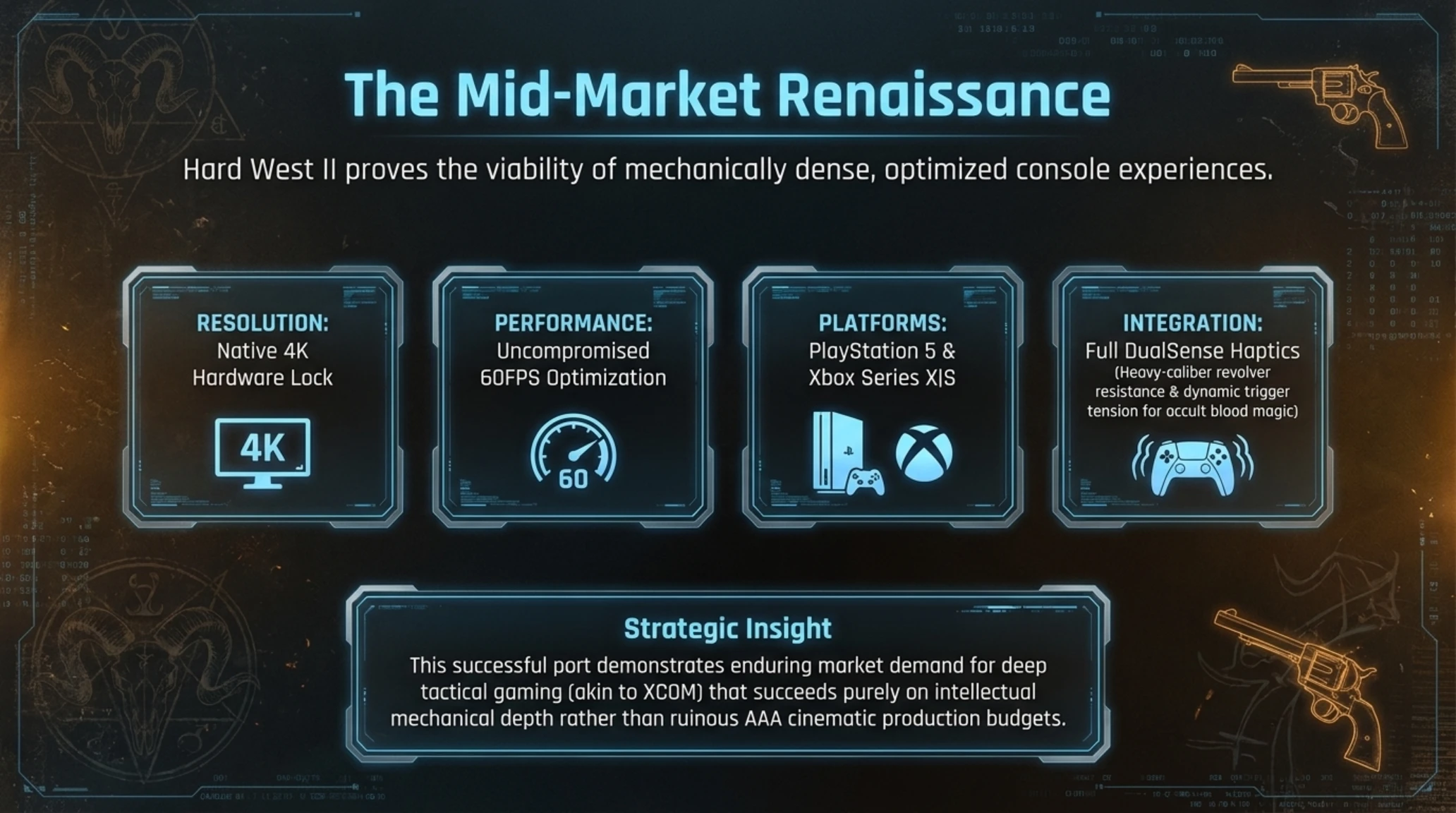
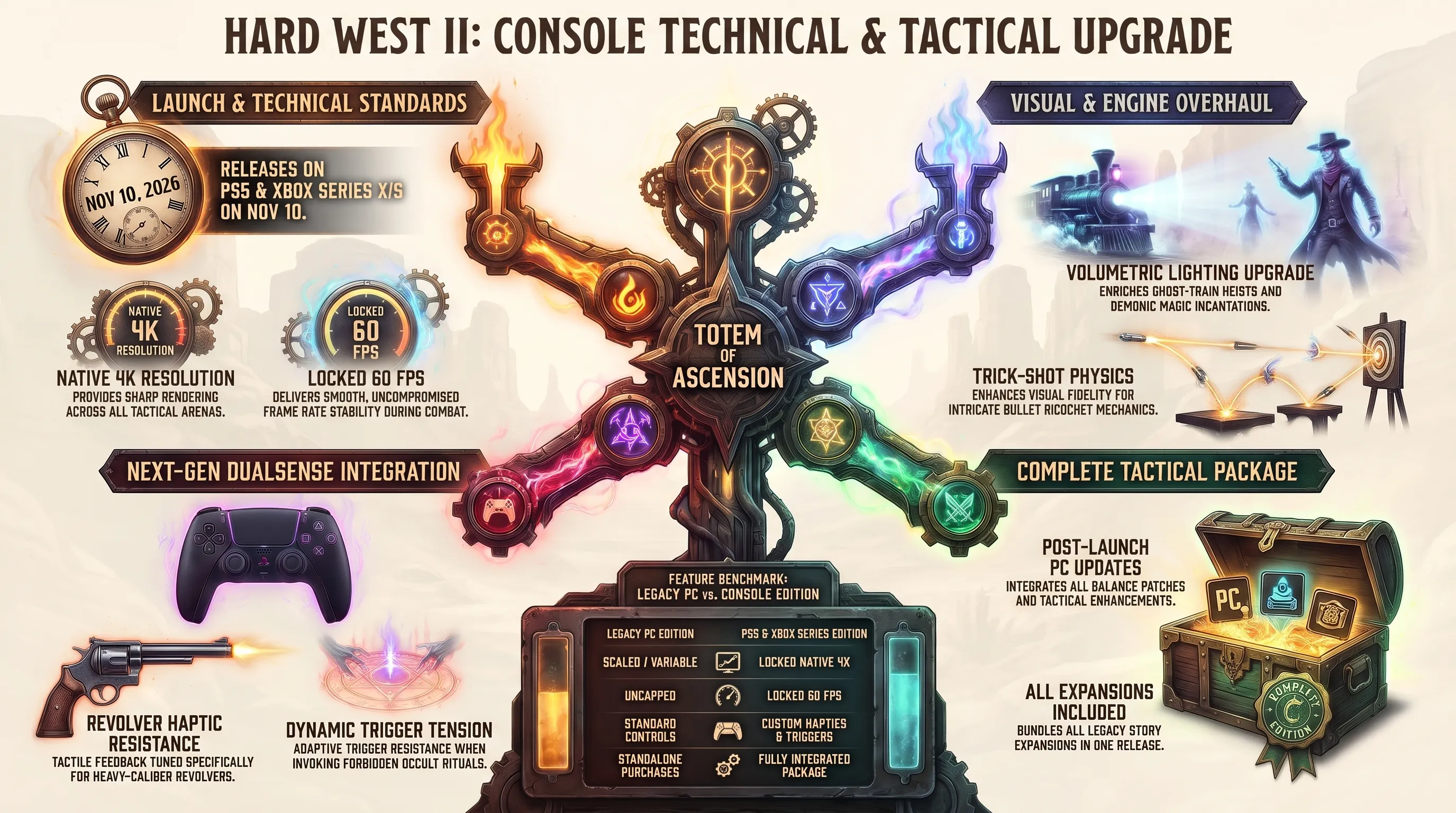
Publisher Good Shepherd Entertainment and developer Ice Code Games officially announced that the critically acclaimed turn-based tactical strategy title Hard West II will officially launch across PlayStation 5 and Xbox Series X|S on November 10, 2026. Having previously earned widespread acclaim on PC for its atmospheric fusion of gritty frontier Western mythology, occult supernatural horror, and cerebral turn-based combat, the game arrives on consoles following a complete architectural performance overhaul.
According to technical specifications released by the developers, the console release operates at a native 4K resolution with an uncompromised, locked frame rate of 60 frames per second. This technical elevation significantly enriches dynamic volumetric lighting across haunted ghost-train heists, demonic blood magic incantations, and complex trick-shot bullet ricochets. Additionally, the development team has implemented deep integration with the PlayStation 5’s DualSense wireless controller, delivering tactile haptic resistance for heavy-caliber revolvers and dynamic trigger tension when casting forbidden occult rituals.
Including all post-launch content, narrative expansions, and tactical updates previously released for PC, the console edition offers a complete, refined experience for fans of deep tactical gaming akin to XCOM.
The arrival of polished mid-tier tactical games demonstrates the enduring market demand for mechanically dense, intellectually demanding experiences that thrive without requiring multi-hundred-million-dollar budgets.
The technical engineering video below explores neural procedural workflows in Unreal Engine 6 alongside the turn-based tactical mechanics of Hard West II:
The chronological milestone table below charts the hardware transitions and game engine architectural revolutions from early 2024 to late 2026:
Event Timeline | Chronology of Technological Evolution
| Time Horizon | Hardware / Engine Development Milestone | Strategic Industry Impact on Production |
|---|---|---|
| Early 2024 | Unreal Engine 5.4 Release | Nanite and Lumen performance stabilization delivering 60FPS on current consoles. |
| Late 2024 | PlayStation 5 Pro Launch | Hardware-accelerated neural upscaling via proprietary PlayStation Spectral Super Resolution. |
| Mid 2025 | PS6 AMD Chiplet Architecture Tape-Out | Finalization of custom Zen 6 computing cores and dedicated ray-tracing hardware blocks. |
| November 2026 | GTA 6 Launch & UE6 AI Tools Unveiled | Unprecedented photorealistic fidelity standards and formal transition to next-gen R&D. |
Node 06: NASA Unveils Mysterious X-70 Experimental Hypersonic Aircraft Concept Using AI-Generated Renders, Leaving Aviation Experts Puzzled
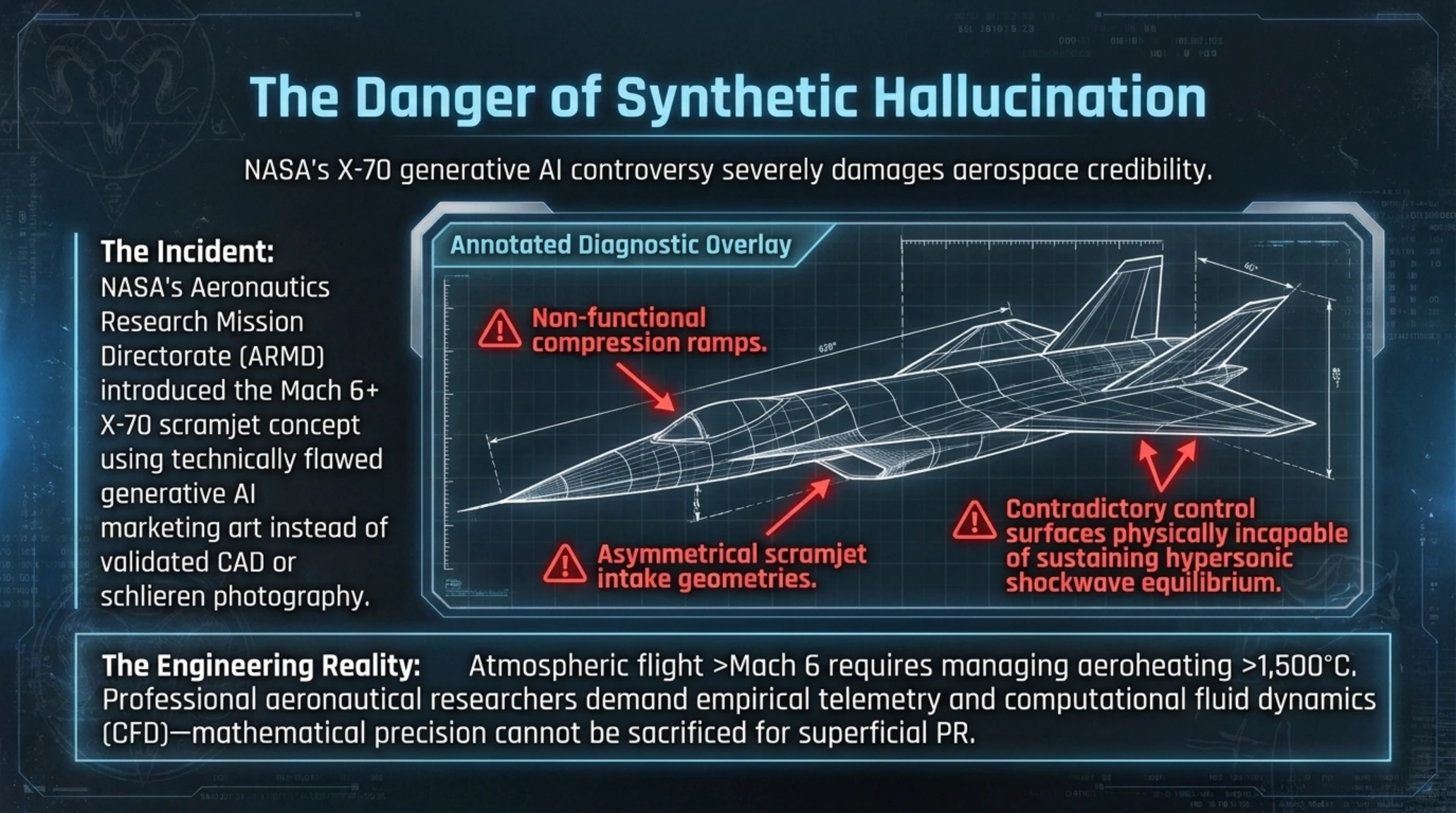
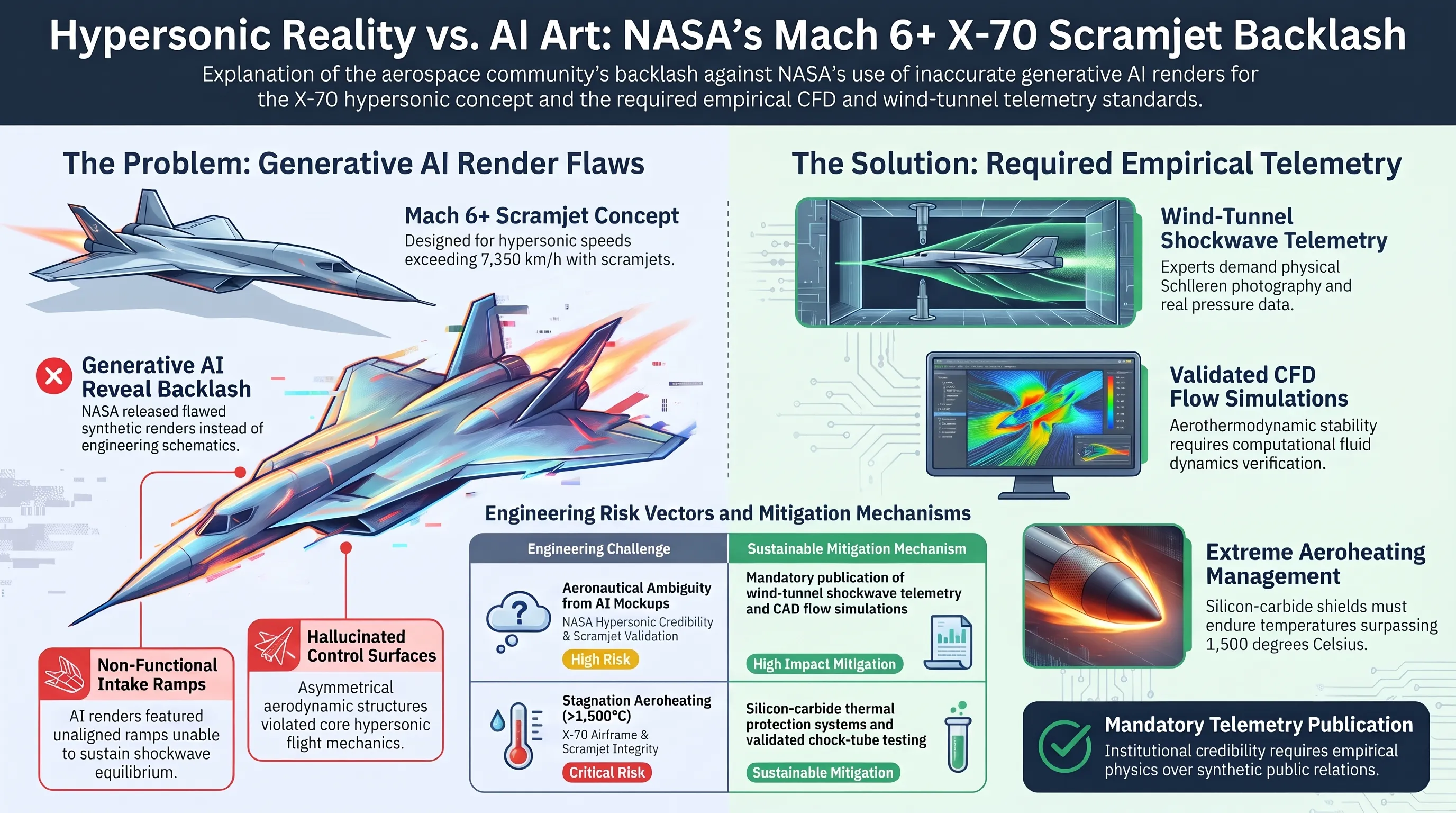
In an unexpected and contentious development that left military aviation observers and aerospace engineers deeply bewildered, NASA's Aeronautics Research Mission Directorate (ARMD) published an official technical overview detailing hypersonic flight initiatives that formally introduced an uncrewed experimental vehicle designated the X-70. Conceived to test advanced air-breathing scramjet propulsion and silicon-carbide thermal protection systems at velocities exceeding Mach 6 (more than 7,350 km/h), the announcement should have represented a proud engineering milestone in America’s storied X-Plane lineage.
Instead, the release triggered furious backlash across professional aerospace communities due to NASA's bewildering choice of visual media. Rather than providing rigorous orthographic engineering schematics, wind-tunnel shockwave schlieren photography, or validated Computer-Aided Design (CAD) models standards that have governed every X-Plane disclosure since Chuck Yeager's Bell X-1 broke the sound barrier NASA accompanied the announcement with an undisguised, technically flawed generative AI rendering. The image featured glaring aerodynamic absurdities, including non-functional compression ramps, asymmetrical scramjet intake geometries, and contradictory control surface angles physically incapable of sustaining hypersonic shockwave equilibrium.
Senior aerospace journalists writing for Ars Technica and Aviation Week fiercely criticized the agency, noting that deploying hallucinated AI art degrades NASA’s scientific credibility. Skeptical defense analysts suggested that the X-70 may currently exist solely as a conceptual paper study, and that generating synthetic marketing art was an ill-conceived public relations effort to safeguard federal hypersonic appropriations ahead of impending executive budget reviews.
From the uncompromising perspective of hypersonic aerothermodynamics, atmospheric flight exceeding Mach 6 demands meticulous management of oblique shockwave interference, boundary-layer chemical dissociation, and stagnation point aeroheating temperatures surpassing 1,500 degrees Celsius. Publishing a synthetic concept render characterized by physically impossible intake geometries, unaligned compression ramps, and hallucinated control surfaces constitutes a severe departure from the rigorous scientific discipline that defined historic X-Plane milestones. Aeronautical researchers rightfully demand empirical telemetry, shock-tube wind-tunnel data, and computational fluid dynamics (CFD) validation rather than generative public-relations imagery.
This controversy serves as a cautionary tale regarding the misuse of generative AI in serious technical disciplines: mathematical precision, empirical physics, and engineering integrity must never be sacrificed for superficial social media engagement.
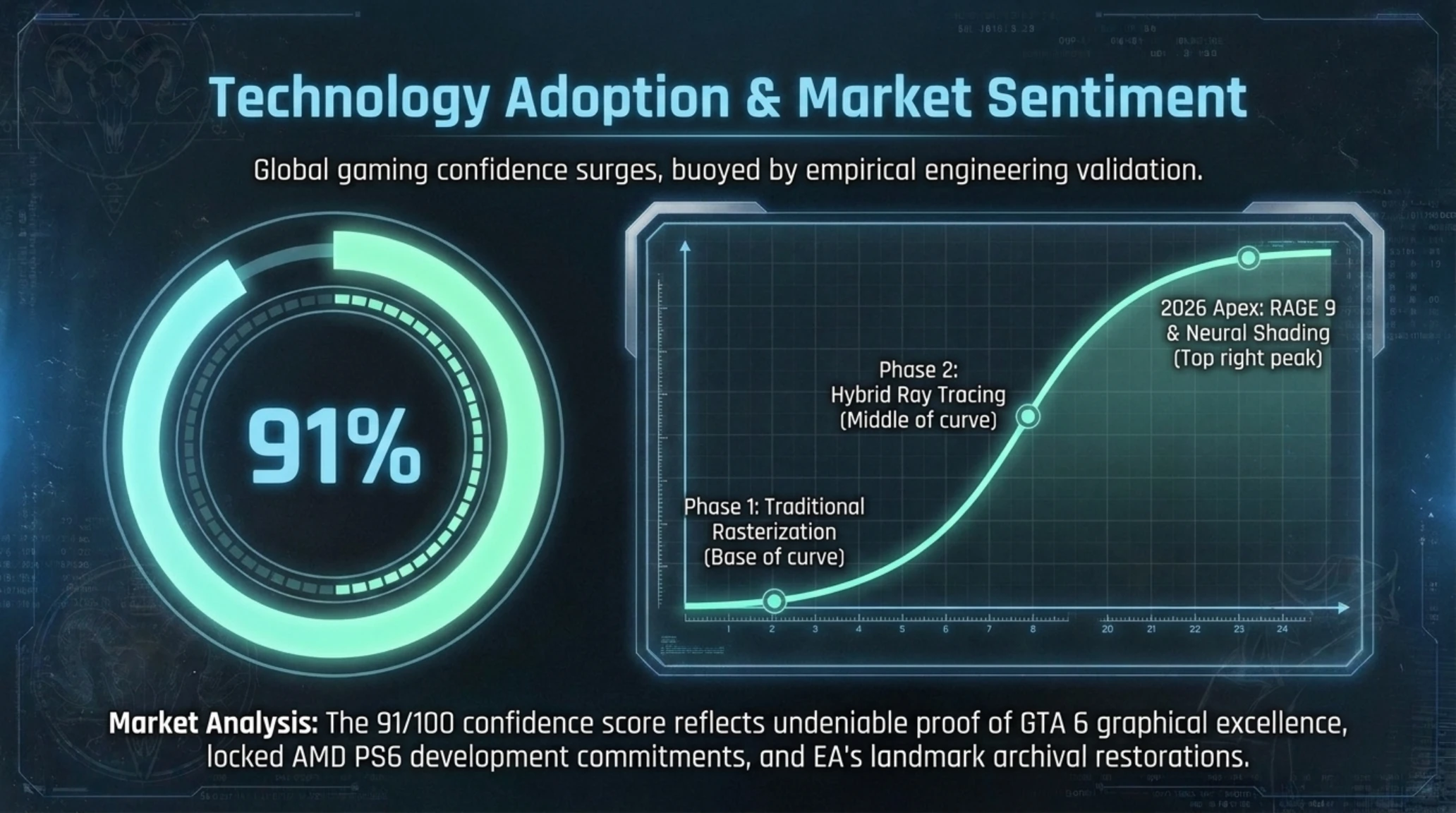
The market confidence index and technology adoption curve below illustrate gaming community enthusiasm contrasted against aerospace skepticism:
Market Sentiment Meter | Circular Gauge & S-Curve Adoption
Market Sentiment Analysis: Global gaming confidence surges to 91%, buoyed by undeniable proof of GTA 6 graphical excellence, AMD PS6 development commitments, and EA's landmark archival restorations.
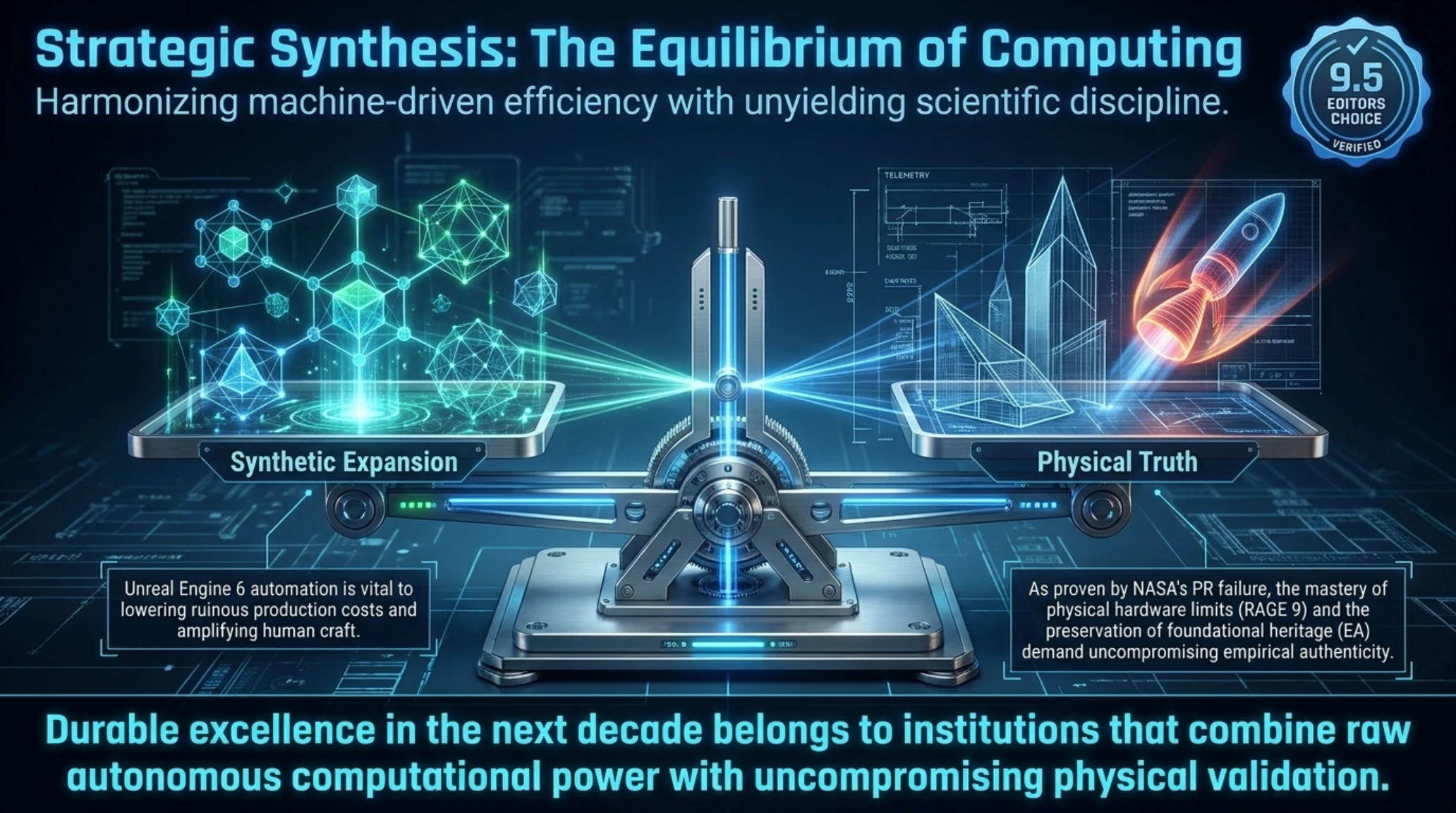
The panoramic strategic visualization below encapsulates the intersection of photorealistic gaming graphics, custom console silicon, restored analogue media, and hypersonic flight:
Synthesizing these distinct technological currents provides essential architectural lessons for technical leaders across computing, entertainment, and physical sciences.
Node 07: Strategic Night Synthesis: The Future of Interactive Entertainment, Next-Gen Hardware, and the Imperative of Scientific Authenticity
The events of Saturday evening, November 7, 2026, paint a vivid portrait of an interactive entertainment and technological landscape undergoing profound structural reinvention. Rockstar’s launch gallery for GTA 6 proves that the human pursuit of perceptual photorealism has achieved breathtaking maturity, successfully overcoming the physical limitations of current console memory through sheer software ingenuity. Simultaneously, Sony's confirmation of PlayStation 6 silicon progress reassures hardware and software developers that the generational console cycle remains on solid empirical footing.
Meanwhile, Electronic Arts' restoration of forgotten Betacam SP tapes reminds the digital world that innovation must never come at the expense of cultural history. Saving foundational code and analogue master tapes enriches our shared heritage. Concurrently, Tim Sweeney's pragmatism regarding Unreal Engine 6 automation alongside NASA's X-70 public relations stumble offers a vital reminder: synthetic intelligence and neural tools are transformative when utilized to amplify human craft and lower ruinous production costs, but must never substitute for rigorous physical reality and engineering verification.
The future belongs to creators, engineers, and platform architects who harmonize machine-driven efficiency with unyielding scientific discipline.
- Arrival of unprecedented open-world photorealism with the release of GTA 6
- Secured engineering roadmap for PlayStation 6 powered by custom AMD silicon
- Permanent rescue and preservation of 25 classical PC gaming masterpieces from analogue degradation
- Economic democratization of AAA-scale game development through Unreal Engine 6 neural workflows
- Risk of institutional credibility erosion when public agencies deploy unverified AI art
- Severe financial strain on traditional studios operating under $300M monolithic production budgets
- Natural thermal and compute saturation across baseline ninth-generation console hardware
Editorial Final Verdict, Strategic Conclusion & Official Intelligence Sources
The Dawn of Photorealistic Maturity and Generational Stability
November 7, 2026, solidifies the transition into an era where photorealistic rendering, dedicated semiconductor roadmaps, and digital preservation converge to elevate interactive computing into humanity’s dominant cultural medium.
- Eurogamer Technical Analysis: Rockstar Drops 38 Official Launch Screenshots for GTA 6
- PC Gamer Hardware & Rendering: GTA 6 Visual Breakdown: Skin Pores, Perspiration, and K9 Tactical AI
- TechPowerUp Semiconductor Coverage: Sony CFO Confirms PlayStation 6 Hardware Development on Track with AMD
- Electronic Arts Newsroom Archive: EA Restores 25 Classic PC Games via Master Tape Digitization
- Kotaku Industry Intelligence: Tim Sweeney Defends Neural AI Workflows in Unreal Engine 6
- Ars Technica Aerospace & Science: NASA Unveils Experimental Hypersonic X-70 Concept with Flawed AI Renders
Frequently Asked Questions & Technical Analysis
What specific rendering breakthroughs were demonstrated in the 38 GTA 6 launch screenshots?
The screenshots confirmed mature real-time Subsurface Scattering (SSS) for skin and cartilage, dynamic perspiration shaders linked to exertion and humidity, vector-based hair physics, fluid Navier-Stokes water simulation, and procedural tactical K9 police pathfinding without clipping.
Has there been any delay in the hardware roadmap for Sony's PlayStation 6?
No. Sony CFO Lin Tao formally confirmed that custom silicon engineering for the PS6 alongside AMD is progressing strictly as scheduled, with large-scale foundry production investments slated to commence in the upcoming fiscal year.
How was Electronic Arts able to restore decades-old PC titles like Wing Commander with 4K clarity?
EA located original studio analogue Betacam SP and D1 magnetic master tapes within its Redwood Shores physical vaults, performing lossless high-resolution optical scans to bypass the heavy compression of 1990s retail CD-ROMs.
Why is Epic Games CEO Tim Sweeney aggressively championing AI integration in Unreal Engine 6?
Sweeney argues that traditional AAA production costs have reached an unsustainable $200M to $350M per game, making neural procedural automation essential to lower asset synthesis costs and allow smaller independent teams to build expansive worlds.
What caused the controversy surrounding NASA's unveiling of the hypersonic X-70 aircraft?
Instead of providing verified CAD diagrams, wind-tunnel schlieren imagery, or aerodynamic telemetry, NASA illustrated its Mach 6+ scramjet initiative using a generic AI-generated image with severe, unphysical aerodynamic flaws.
Additional Gallery: Tekin Night Nov 7: 38 GTA 6 Screenshots, PS6 on Track & EA Classics