Tekin Analysis | Valve Archaeological Leak, Bautista Kratos Transformation, and GTA 6 Radio Telemetry
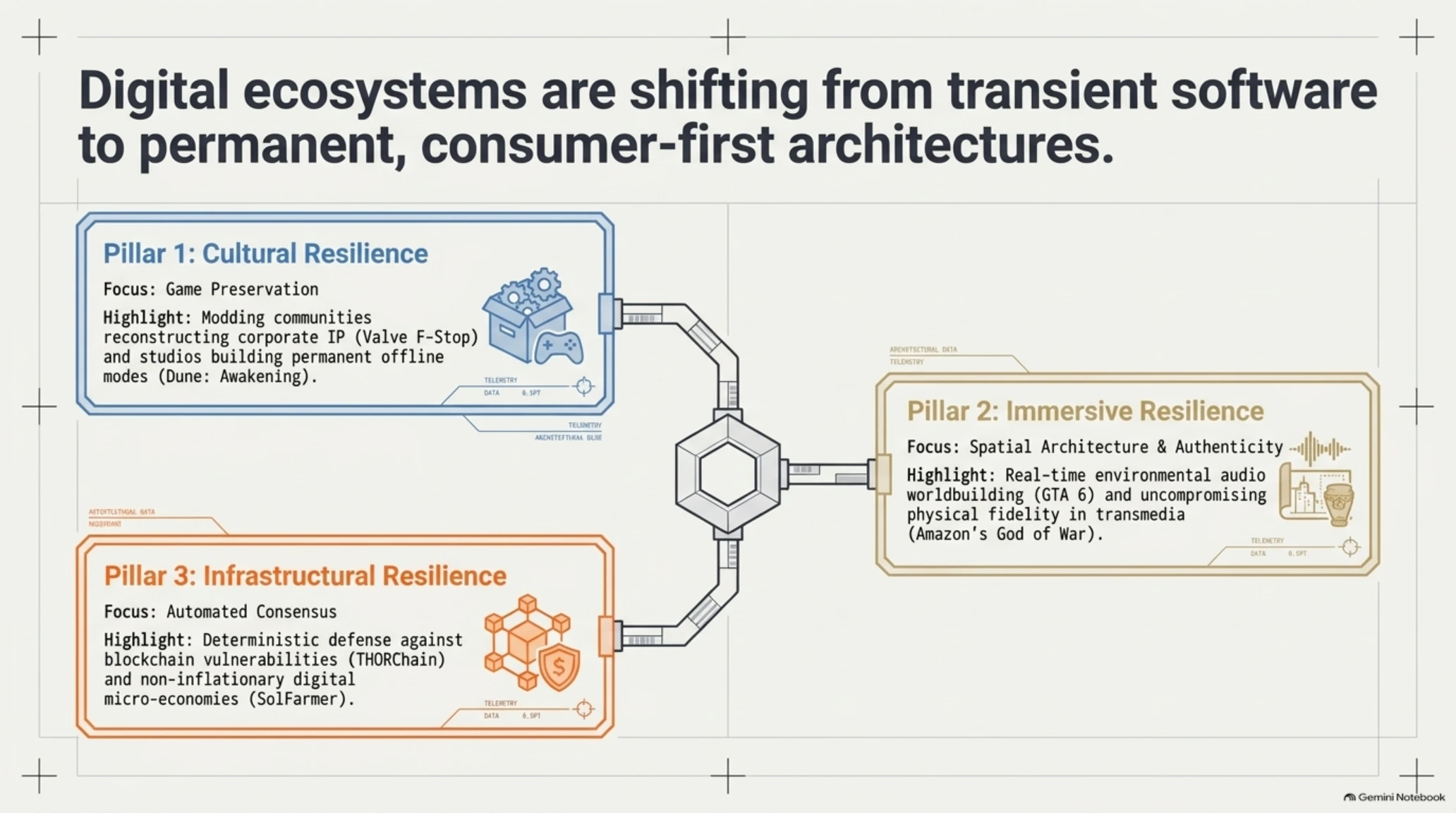
The strategic developments unfolding on the evening of Tuesday, November 3, 2026, expose a compelling structural evolution across interactive digital entertainment. The historical restoration of Valve's legendary unreleased prototype F-Stop bridges two decades of puzzle design, while Hollywood's uncompromising physical commitment to gaming icons and Rockstar's ambitious audio worldbuilding demonstrate the surging cultural gravity of gaming IP.
Rather than treating software as transient commercial novelties, the interactive medium is entering an era defined by archival preservation, technological self-reliance, and consumer-first engineering. Across PC modding communities, high-budget Hollywood sound stages, and decentralized cross-chain liquidity ledgers, technical discipline and long-term vision are triumphing over short-term market speculation.
Deconstructing the mechanics of these landmark releases reveals how deep archaeological preservation and cutting-edge interactive design now intersect to redefine modern production standards across the entire technological ecosystem.
Node 01: Resurrection of Valve's 20-Year Archive: Cancelled Portal Prequel 'F-Stop' Leaks and Becomes Fully Playable
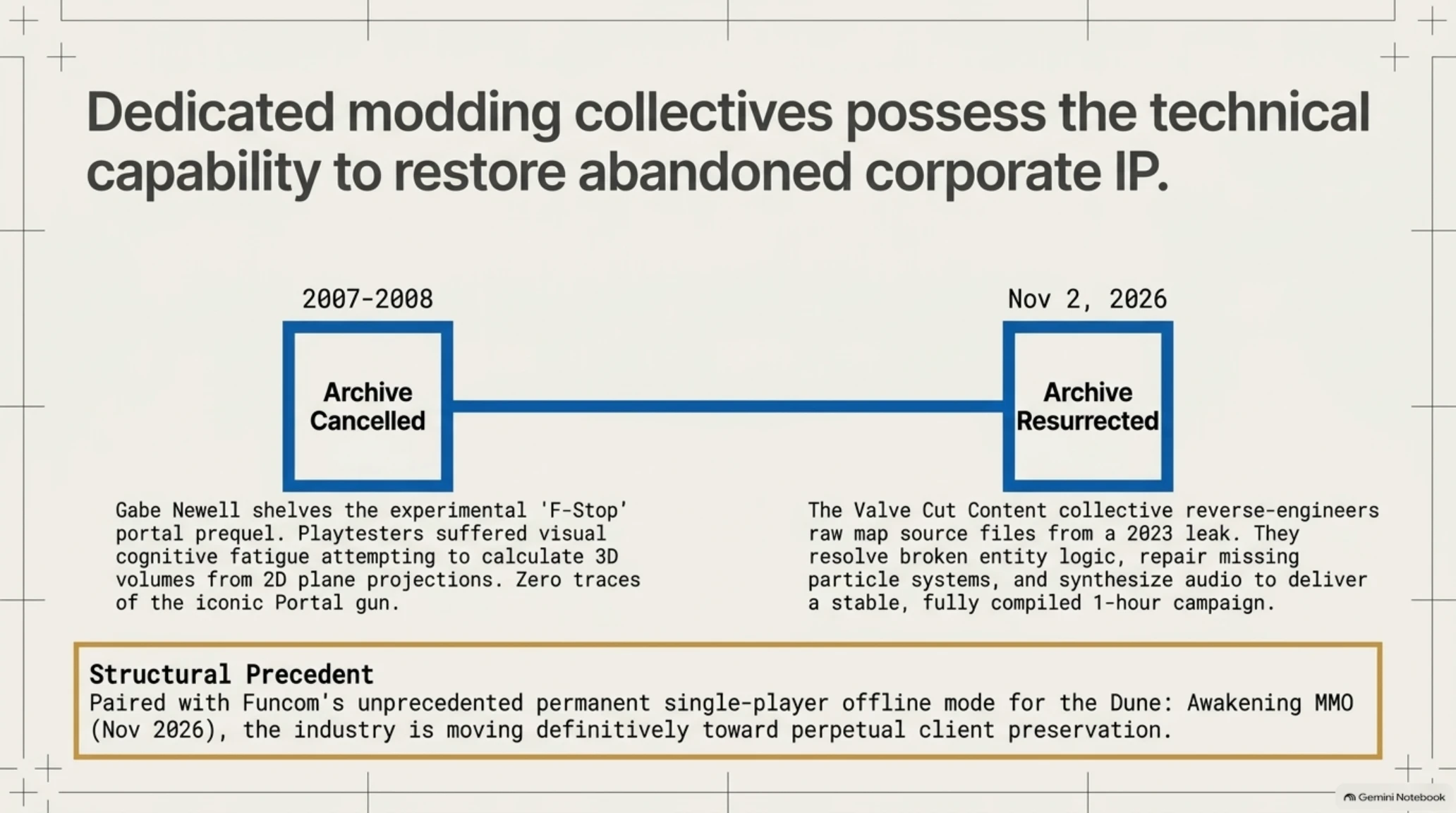
One of the most persistent holy grails in modern video game archaeology has officially materialized into a stable, fully compiled, and playable reality. Valve's long-lost 2007-2008 experimental prototype known internally as 'F-Stop' originally conceived as a standalone prequel to the genre-defining masterpiece Portal has leaked online and been meticulously assembled into a functional one-hour campaign by the dedicated modding collective Valve Cut Content.
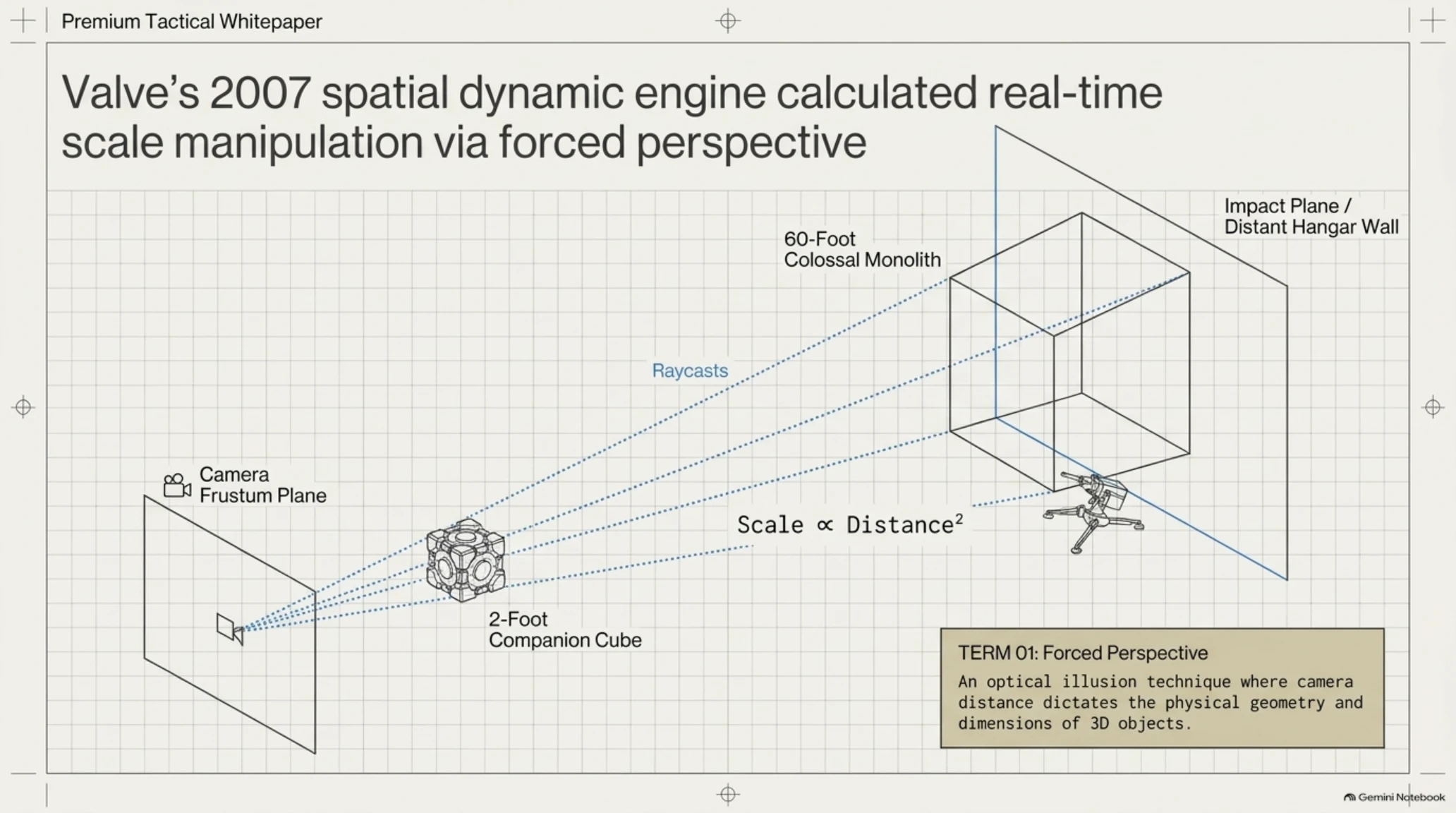
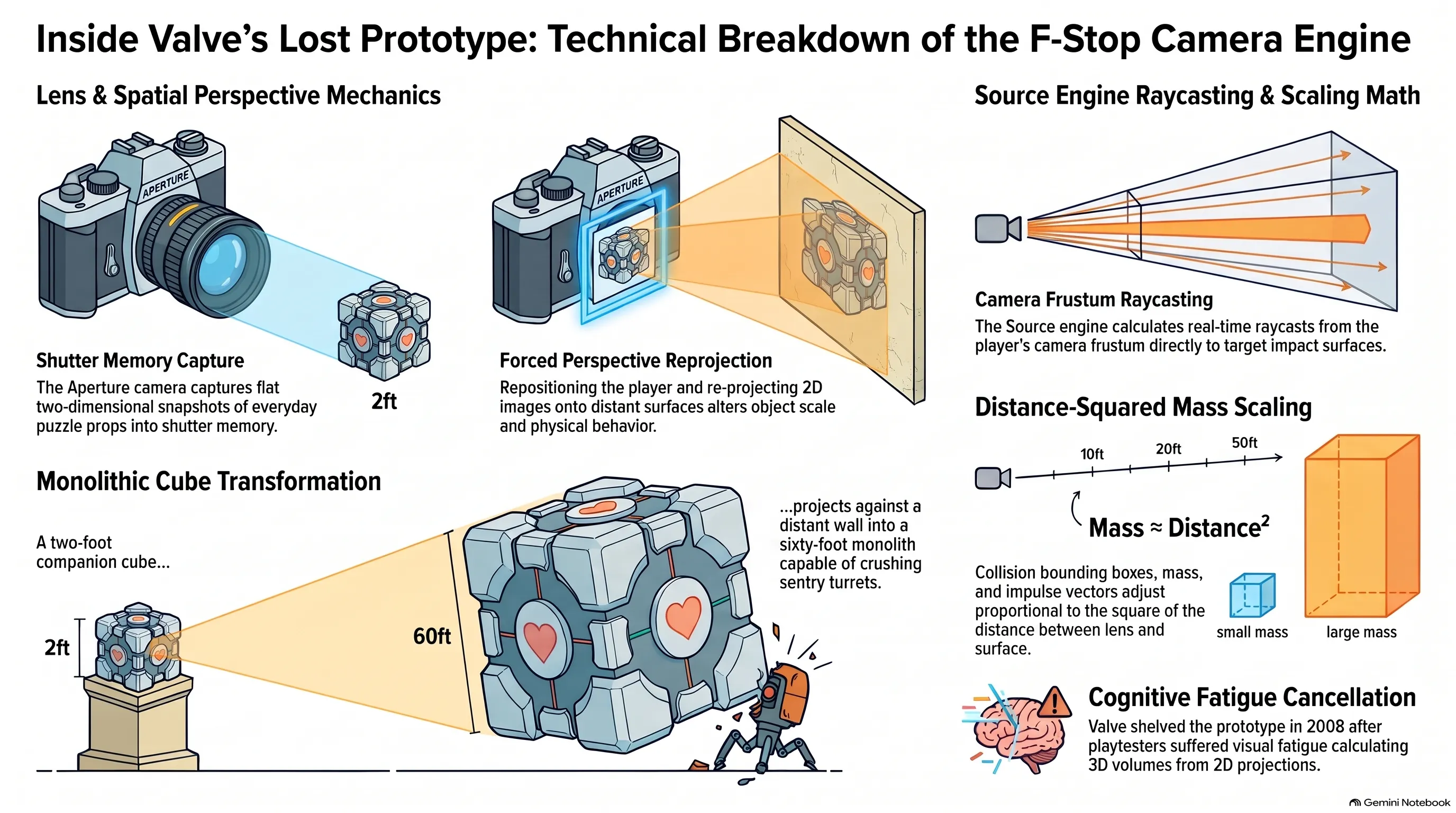
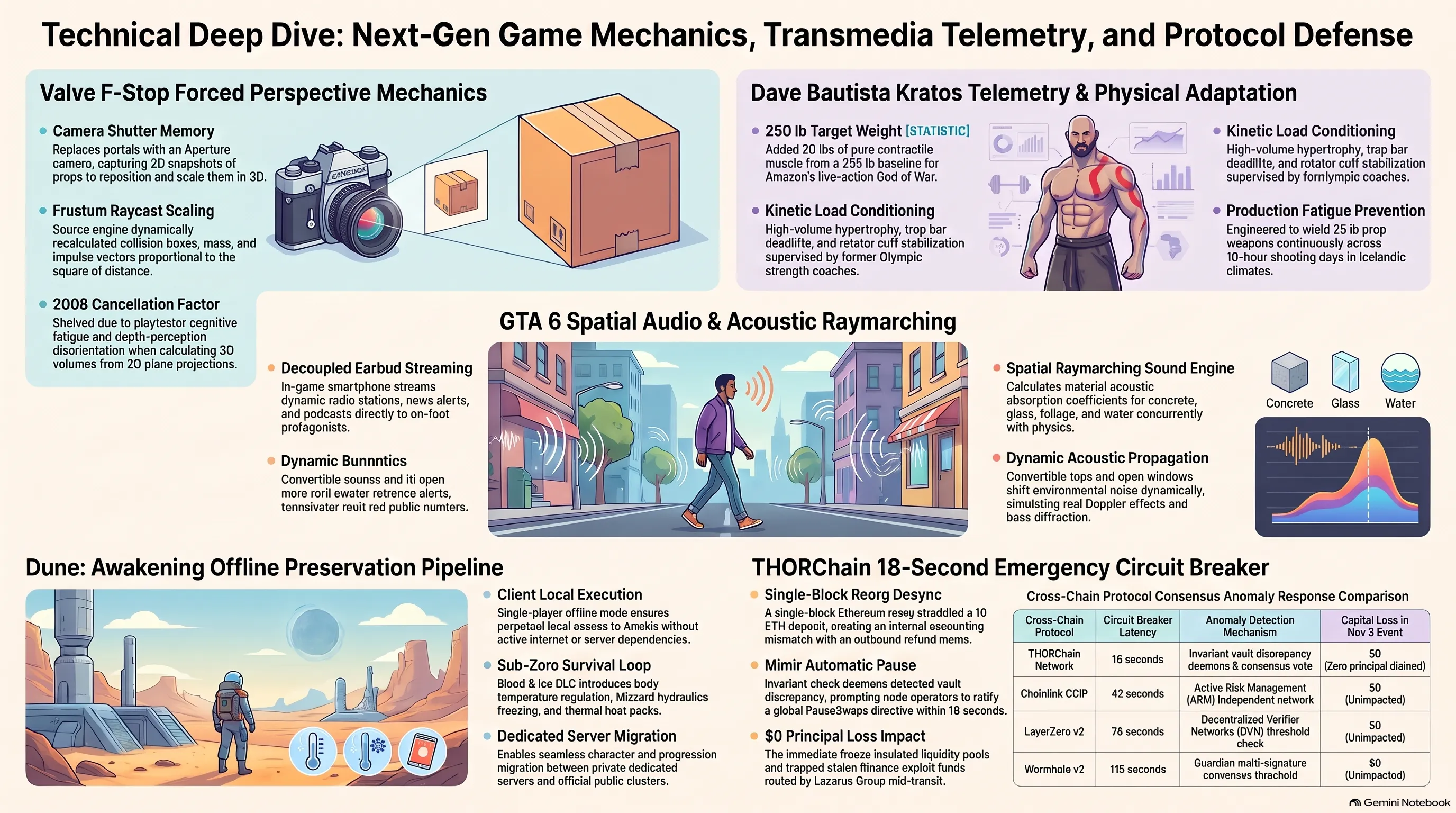
Remarkably, the game contains zero traces of the iconic Aperture Science Handheld Portal Device. Instead, gameplay revolves entirely around an experimental Aperture camera. Players photograph everyday puzzle props companion cubes, thermal discouragement beams, pneumatic vent pipes, and aerial faith plates capturing a flat two-dimensional snapshot into the camera's shutter memory. By repositioning their character in the 3D environment and re-projecting the object against distant walls or nearby floors, players exploit optical forced perspective to physically alter the object's real-world scale and gravitational properties.
Under the mathematical hood of Valve's Source engine, the prototype calculated real-time raycasts from the player's camera frustum to target surfaces. When an image was projected, the engine dynamically adjusted the collision bounding boxes, mass values, and physical impulse vectors of the cloned asset proportional to the square of the distance between the lens and the impact plane. An ordinary two-foot companion cube photographed close-up could be projected against a distant hangar wall to create a colossal sixty-foot monolith capable of crushing sentry turrets or bridging immense chasms.
This groundbreaking spatial concept, which directly influenced modern indie sensations such as Superliminal and Viewfinder over a decade later, was shelved by Gabe Newell and Valve's lead designers in 2008 because contemporary playtesters struggled with disorienting depth-perception puzzles. Many players suffered from visual cognitive fatigue when attempting to calculate 3D volumes from 2D plane projections. The newly compiled build preserves original proto-dialogue from Cave Johnson, voiced with vintage Aperture bravado, and provides a rare, unvarnished window into Valve's peak golden era of physics-based puzzle innovation.
The restoration effort required reverse-engineering raw map source files (.vmf) recovered from the sprawling 2023 Valve asset leaks, resolving broken entity logic, repairing missing particle systems, and synthesizing missing sound cues to deliver an astonishingly cohesive historical showcase.
Strategic Intelligence Assessment and Key Vectors
Synthesizing these strategic vectors illustrates how modern studios and communities are simultaneously reviving archival masterworks while establishing resilient benchmarks for consumer ownership across the entertainment spectrum.
Why Tonight's Industry Shifts Redefine Entertainment
💡 Tekin Strategic Insight // Why Tonight's Shifts Matter
1. Democratization of Game Preservation: The release of F-Stop proves that dedicated preservation communities possess the technical capability to decompile, restore, and preserve corporate intellectual property that publishers abandoned.
2. Physical Fidelity in Transmedia Adaptations: Dave Bautista's intensive bulk-up signals that prestige television can no longer rely on CGI suits; audiences demand genuine physical embodiment for iconic game protagonists.
3. Architectural Permanence Over Cloud Obsolescence: Funcom's introduction of an offline mode for Dune: Awakening establishes an essential precedent, demonstrating that live-service survival titles can offer perpetual client preservation.
With these structural pillars established, attention turns to Hollywood's massive transmedia ecosystem, where physical transformation dictates casting credibility and artistic authenticity.
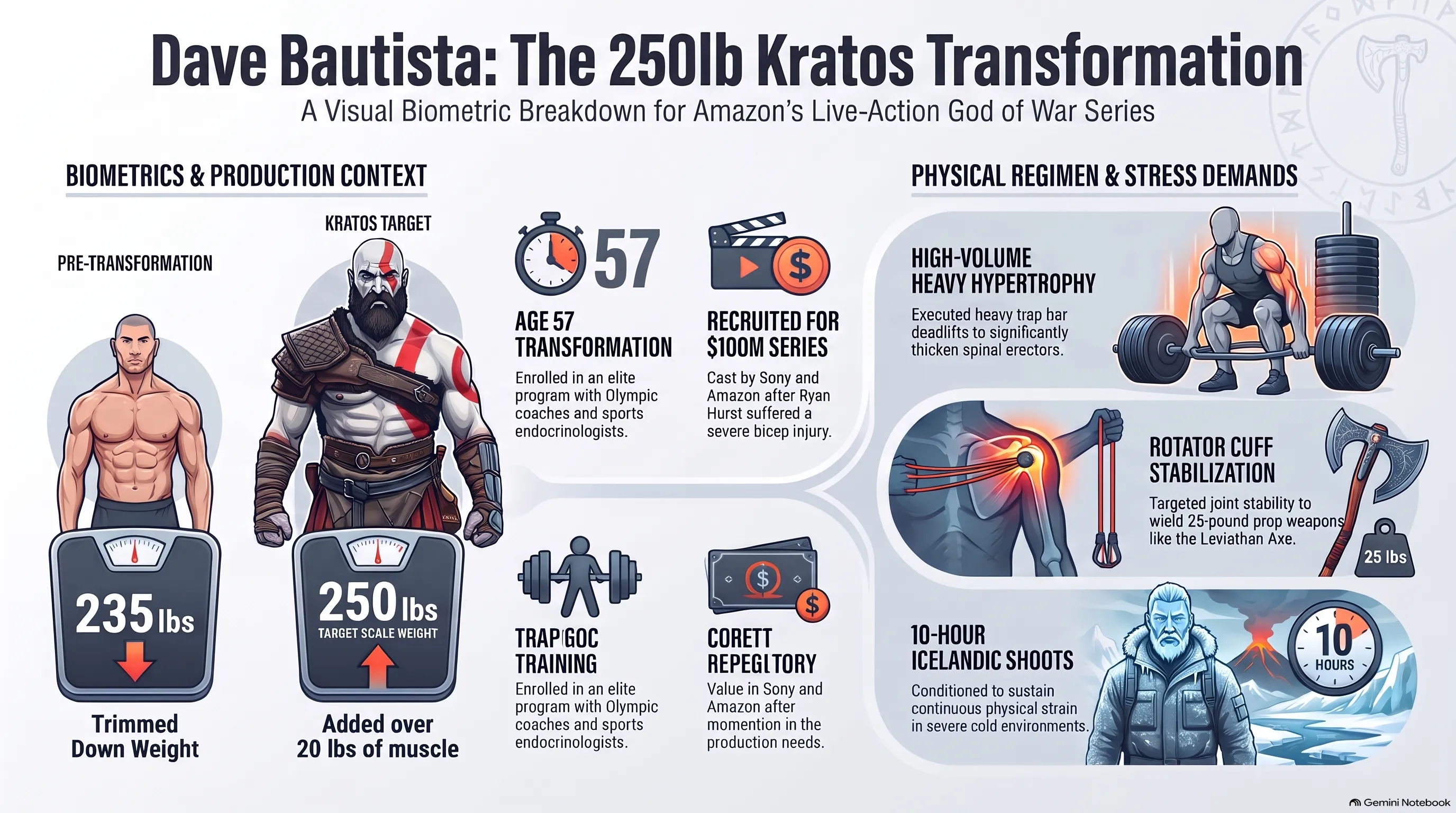
Node 02: Dave Bautista's 20-Pound Muscle Surge: Bulking to 250 Pounds for Kratos in Amazon's God of War Series
In high-budget streaming production, Dave Bautista acclaimed for his nuanced performances in Blade Runner 2049, Dune, and the Marvel Cinematic Universe has officially confirmed an awe-inspiring physical metamorphosis. Documenting his intensive powerlifting regimens while sporting God of War Spartan gear, Bautista revealed that he has added over 20 pounds of dense contractile muscle, pushing the scale to 250 pounds (113 kilograms) to embody Kratos in Amazon Prime Video's flagship live-action series.
Over the preceding two years, Bautista had intentionally slimmed down to 235 pounds through caloric deficit and endurance cardio to pursue diverse dramatic roles. However, following the severe bicep tendon tear suffered by Ryan Hurst during stunt choreography training and his subsequent departure, Amazon MGM Studios and PlayStation Productions turned to Bautista as their definitive choice. The brutal Scandinavian saga demands an overwhelming physical silhouette capable of wielding the Leviathan Axe with authentic kinetic weight.
To achieve this monumental bulk-up safely at age 57, Bautista enrolled in an elite athletic performance program overseen by former Olympic strength coaches and sports endocrinologists. His regimen combined high-volume hypertrophy lifting, heavy trap bar deadlifts to thicken spinal erectors, and intense rotator cuff stabilization exercises designed to withstand the physical stress of wielding prop weapons weighing up to 25 pounds during ten-hour shooting days in cold Icelandic locations.
Backing the project with an estimated $100 million first-season production budget, Sony and Amazon are executing an uncompromising adaptation of Cory Barlog's 2018 masterpiece. Bautista's aggressive return to heavy compound training reassures passionate fans worldwide that television adaptations are treating interactive masterpieces with the gravitas traditionally reserved for cinematic epics, establishing an imposing benchmark for video game adaptations globally.
As character fidelity scales to cinematic heights, interactive environmental design is undergoing a parallel revolution in acoustic immersion and sonic curation.
Leveraging decades of worldbuilding supremacy, Rockstar Games is preparing to establish unprecedented benchmarks in atmospheric audio with Grand Theft Auto VI.
Node 03: Sonic Worldbuilding in Leonida: Rockstar Previews 6 GTA 6 Radio Stations and Interactive Pedestrian Podcasts
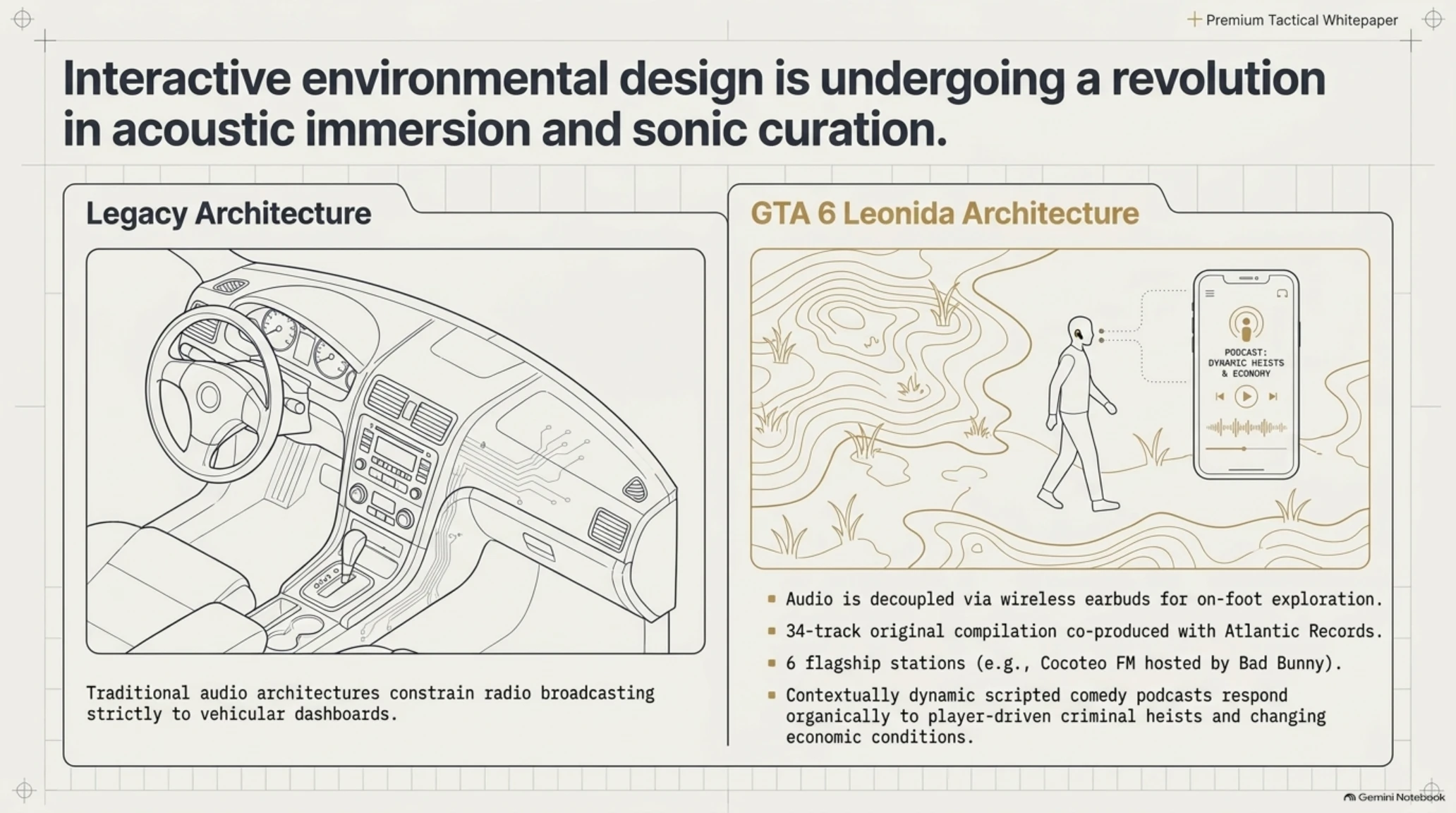
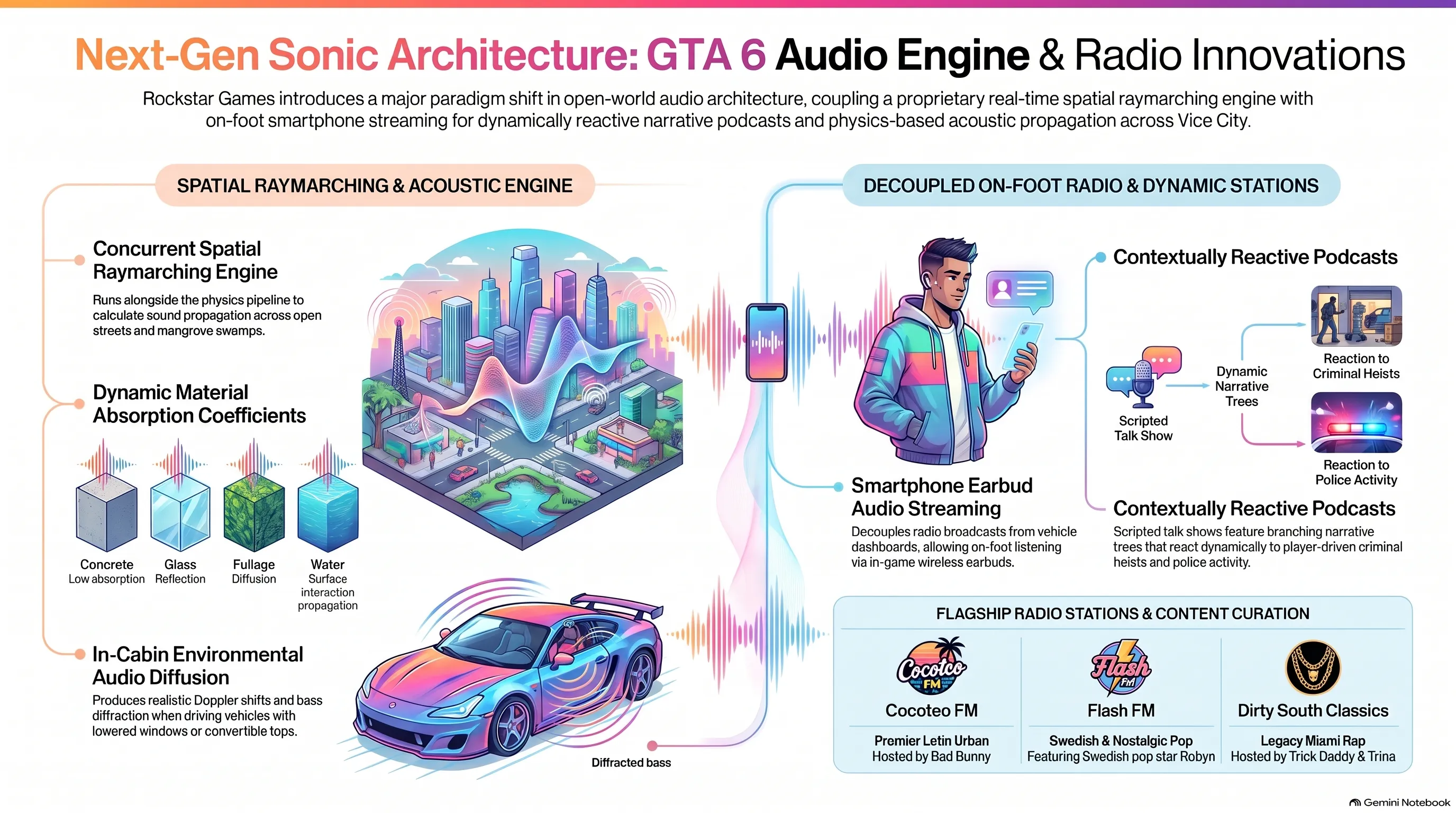
With the global launch of Grand Theft Auto VI scheduled for November 19, 2026, Rockstar Games has lifted the veil on the revolutionary audio architecture driving the fictional state of Leonida. For the first time in franchise history, radio broadcasting is decoupled from automobile dashboards. In-game protagonists carry a high-end smartphone interface that streams interactive talk podcasts, news alerts, and curated stations directly through wireless earbuds while jogging through Vice City or traversing the swamps of Grassrivers.
Rockstar revealed an initial preview of six flagship radio stations reflecting Florida's vibrant, multi-layered cultural soundscape. Leading the lineup is Cocoteo FM, a premier Latin urban station curated and hosted by global Grammy-winning sensation Bad Bunny. Complementing this are Back Country Radio for outlaw country and Southern rock, AfroBank FM showcasing contemporary Afrobeats, The Chamber 106.6 catering to thrash metal and hardcore punk, the nostalgic revival of Flash FM featuring Swedish pop star Robyn, and Dirty South Classics hosted by Miami rap pioneers Trick Daddy and Trina.
Simultaneously, Rockstar announced Grand Theft Auto VI: The Album, an expansive 34-track original compilation co-produced with Atlantic Records, scheduled to debut globally on release day. Most impressively, the station broadcasts are contextually dynamic: talk-show hosts and callers react organically to player-driven criminal heists, changing economic conditions, and police activity across Vice City, engineering an unparalleled illusion of living, breathing sonic presence.
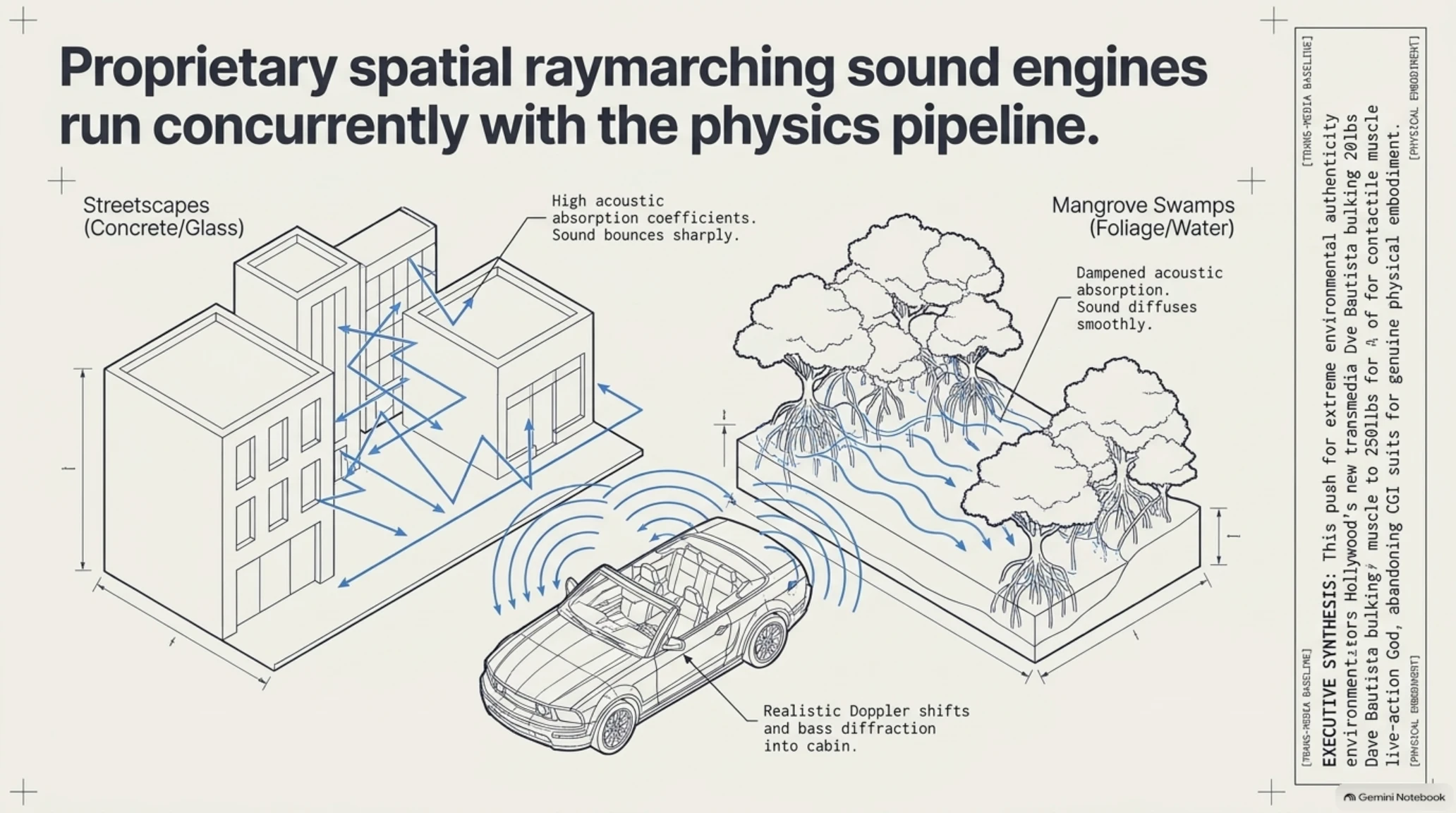
Technically, Rockstar's audio engineering team implemented a proprietary spatial raymarching sound engine running concurrently with the physics pipeline. As the player moves between open streetscapes, dense mangrove swamps, and neon-lit nightclub interiors, the engine calculates the material acoustic absorption coefficients of concrete, glass, foliage, and water. When driving with convertible tops lowered or windows rolled down, environmental noise diffuses dynamically into the vehicle cabin, providing realistic Doppler shifts and bass diffraction rarely seen in real-time gaming.
Furthermore, the pedestrian smartphone interface includes fully scripted comedy talk podcasts that satirize contemporary social media culture, tech venture capital, and local Florida folklore. These podcast tracks feature branching narrative dialogue trees that respond directly to the protagonist's current story missions, making casual walking through Vice City as narratively rich as driving along the coastal freeways.
Dissecting these detailed audio previews requires separating official production disclosures from circulating viral internet speculation.
Fact-Check Desk: Dissecting Speculation Around GTA 6 Audio and God of War Casting
Online claims alleged Atlantic Records' 34-track soundtrack would be restricted to streaming services; Rockstar confirmed multi-disc physical vinyl and collector box sets.
Bautista initially declined heavy roles, but Ryan Hurst's sudden bicep injury and direct recruitment by Cory Barlog prompted his intensive 20-pound muscle regimen.
Rigorous analysis of these verified data points confirms that creative leadership is prioritizing production depth over superficial marketing gimmicks.
Navigating the complex mechanics of historical puzzle prototypes and responsive world audio necessitates mastering the specialized engineering lexicon of modern game development.
Interactive Design & Cryptographic Engineering Glossary
Tracing the historical milestones behind these parallel developments underscores how technical decisions echo across decades of software engineering.
Tekin Chronology: From Valve's 2007 Secret Build to Leonida's 2026 Soundtrack
In tandem with narrative worldbuilding, the industry's ethical obligations toward digital game preservation are reaching a decisive turning point.
Node 04: Survival in the Polar Sink: Funcom Unveils Dune: Awakening 'Blood and Ice' Expansion and Permanent Offline Mode
Norwegian developer Funcom has issued a groundbreaking winter roadmap for its acclaimed open-world survival MMO, Dune: Awakening. The headline revelation is the introduction of a dedicated single-player offline mode in November 2026, granting players complete access to Arrakis without an active internet connection or cloud server dependencies. This structural initiative delivers an invaluable victory for the global game preservation movement, guaranteeing that the title will remain perpetually accessible long after commercial servers eventually sunset.
Alongside this structural commitment, Funcom confirmed that its massive, completely free expansion Blood and Ice will release on December 1, 2026. The DLC shifts the game's harsh environmental focus from scorching desert dunes to the frigid, uncharted expanse of the northern Polar Sink. Players must contend with sub-zero blizzards demanding advanced thermal suits, navigate hazardous frozen crevasses, and confront powerful water cartels warring over pristine glacial reserves.
In designing the Polar Sink expansion, Funcom engineered a comprehensive sub-zero survival loop that complements the arid desert mechanics of the core game. Instead of managing water loss from sun exposure, players must balance core body temperature against lethal hypothermia. Severe blizzards freeze standard ornithopter hydraulic lines, requiring specialized thermal heat packs and insulated fuselage upgrades crafted from rare polar minerals.
Blood and Ice introduces over 35 hours of rich narrative quests, specialized subterranean ice-mining equipment, and thermal heating modules for ornithopter vehicles. Furthermore, Funcom confirmed seamless character and progression migration between private dedicated servers and official public clusters will roll out in January 2027, empowering players with complete control over their survival legacy and setting a powerful precedent for consumer ownership across the survival genre.
While traditional interactive media addresses long-term preservation, decentralized financial infrastructure is navigating acute consensus volatility across cross-chain liquidity layers.
The friction between rapid cross-chain settlement and underlying blockchain finality exposes critical vulnerabilities that demand immediate automated defensive response from validator networks.
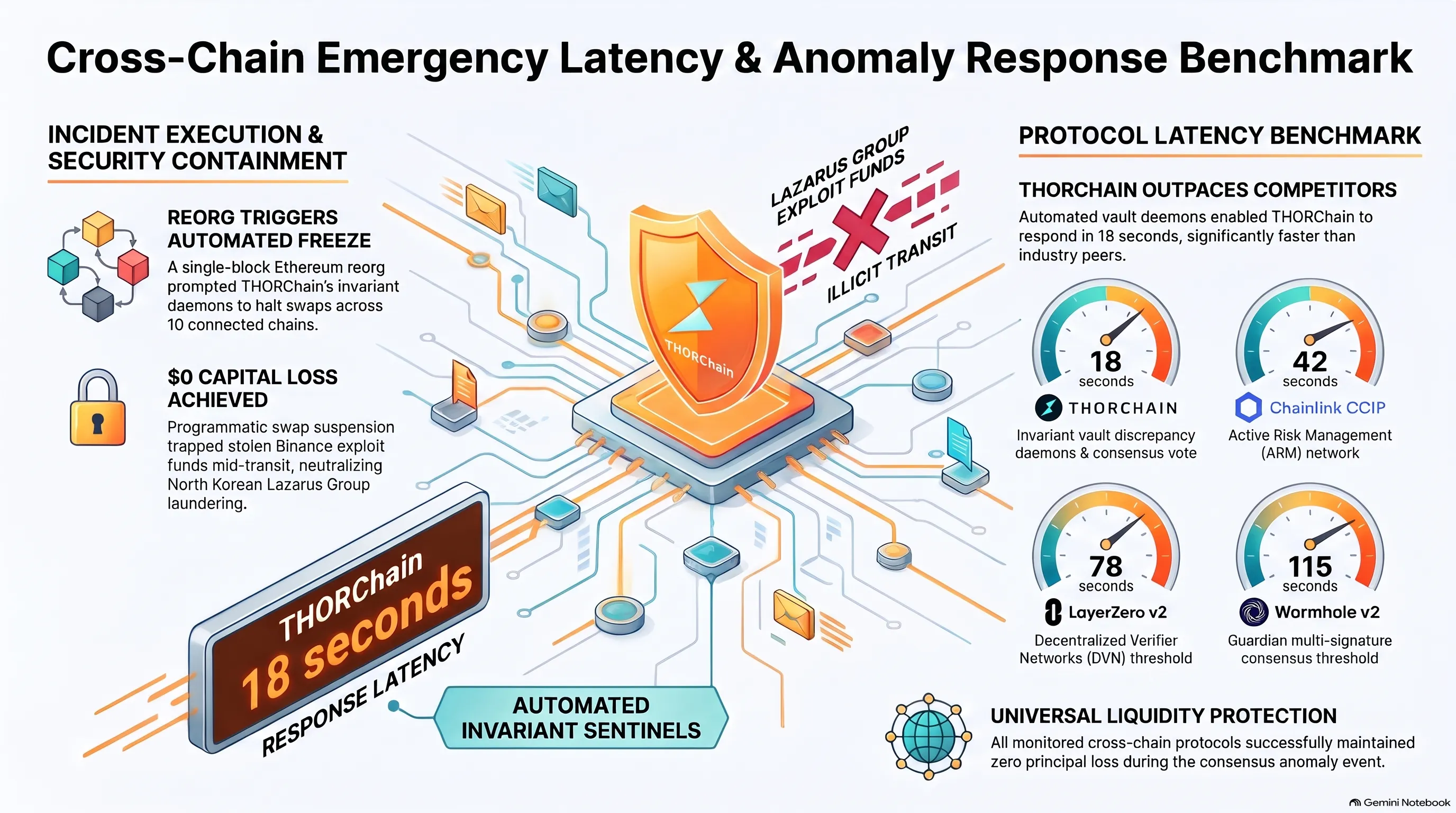
Node 05: THORChain Cross-Chain Circuit Breaker: Ethereum Single-Block Reorg Halts Swaps Across 10 Networks, Trapping Exploit Funds
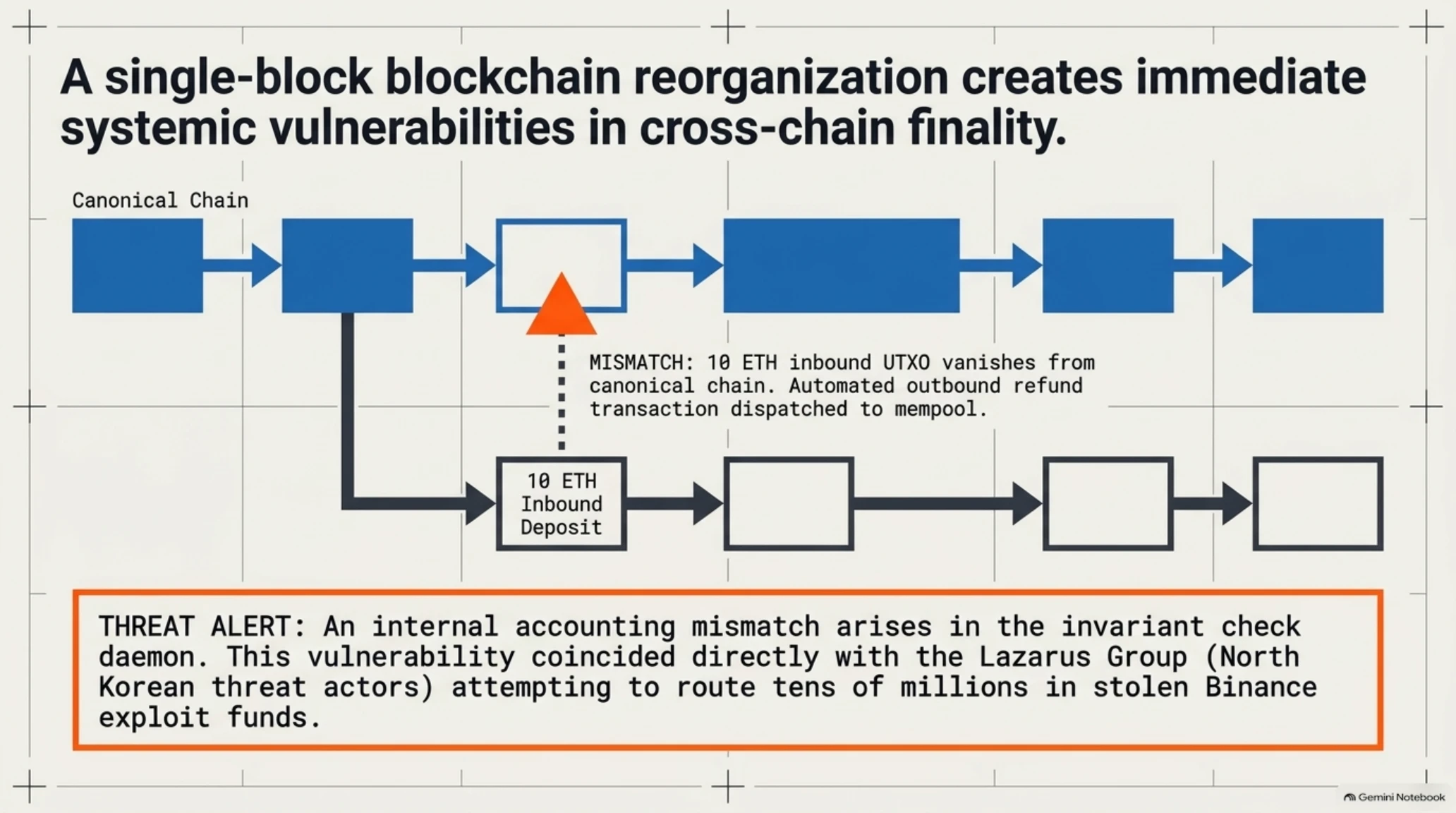
A rare technical anomaly within Ethereum's consensus layer created immediate systemic ripples across the decentralized finance ecosystem. A single-block blockchain reorganization (Single-Block Reorg) occurred on Ethereum, straddling a 10 ETH inbound deposit to THORChain's multi-sig liquidity vault. Because the deposit transaction existed within the superseded block while an automated refund transaction was dispatched due to price slippage limits, an internal accounting mismatch arose within THORChain's invariant check daemon.
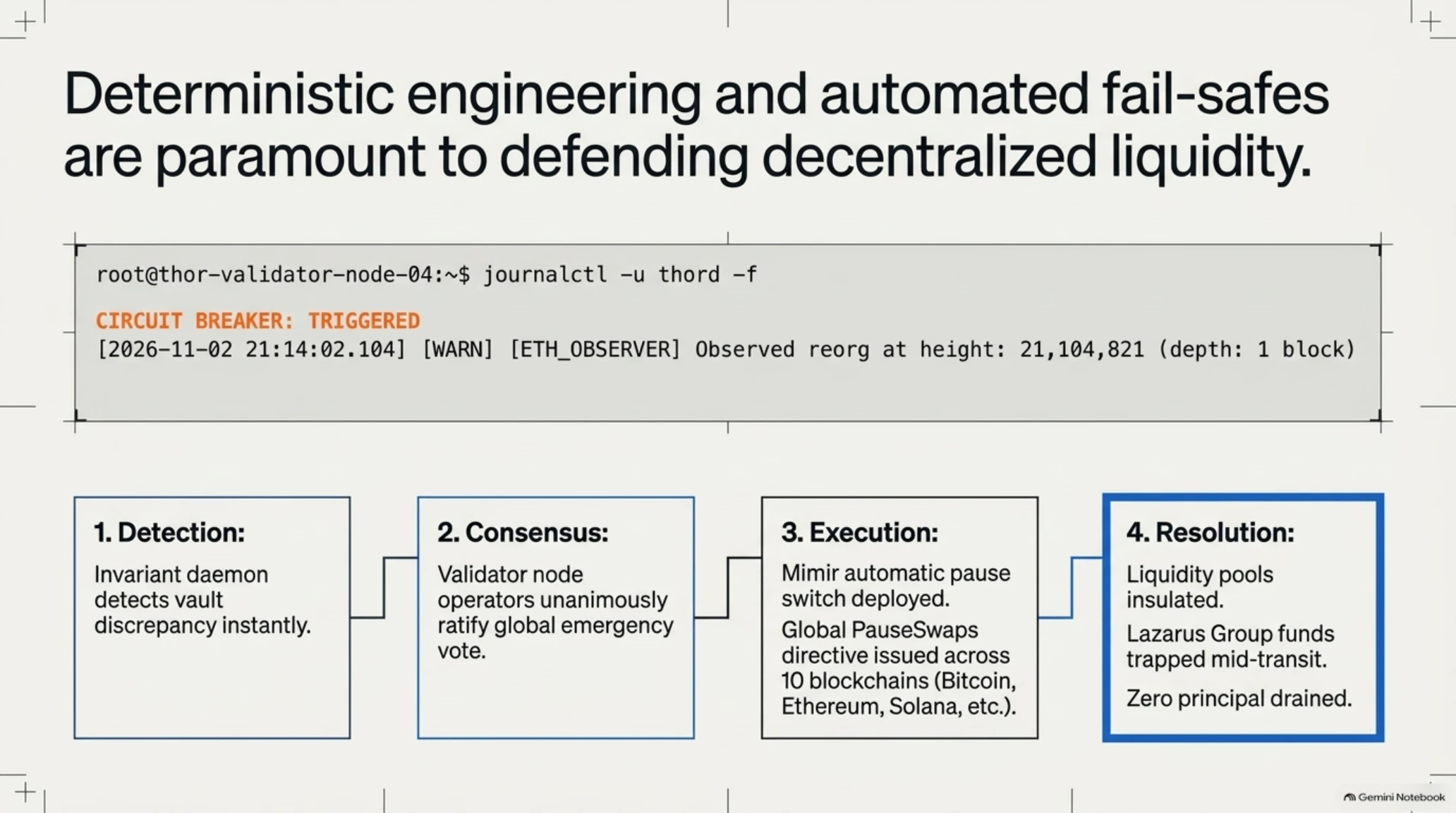
Detecting this vault discrepancy instantly, THORChain's automated security sentinels engaged emergency circuit breakers. In an emergency consensus vote, validator node operators unanimously ratified a global PauseSwaps directive across all ten connected blockchains, including Bitcoin, Ethereum, Solana, Avalanche, BNB Chain, and Cosmos. This proactive freeze successfully insulated all liquidity pools, preventing automated arbitrage bots from exploiting the temporary accounting disparity.
Under THORChain's architectural design, cross-chain swaps rely on threshold signature schemes (TSS) where validator nodes collectively sign outbound transactions once consensus is achieved on inbound deposits. When a block reorganization occurs on a connected chain, transactions that appeared finalized within a single block confirmation window can be retroactively reorganized out of the canonical history. THORChain's state machine monitors local node state against observed block headers; upon detecting that the expected 10 ETH inbound UTXO had vanished from the canonical chain while an outbound refund memo had already entered the mempool, the invariant daemon triggered the Mimir automatic pause switch.
In a remarkable operational coincidence, the abrupt swap suspension collided directly with coordinated capital laundering efforts orchestrated by North Korean state-sponsored threat group TraderTraitor (Lazarus Group). The attackers were attempting to route tens of millions of dollars in stolen assets originating from the recent Binance exploit through THORChain's permissionless liquidity pools. The sudden shutdown trapped the illicit funds mid-transit, granting international cybersecurity analysts critical lead time to track and flag the addresses.
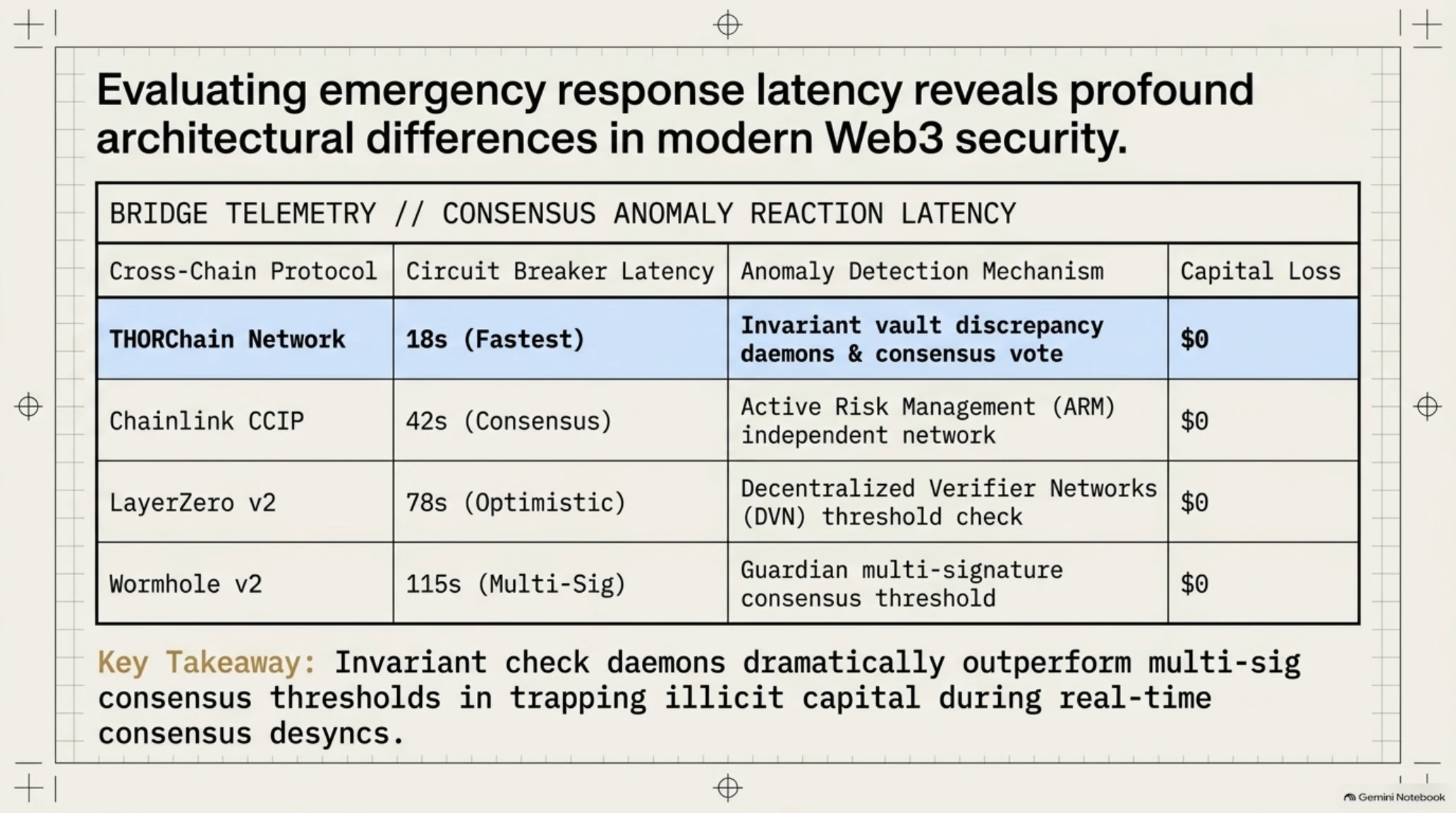
Evaluating emergency response latency across decentralized liquidity bridges illustrates the profound architectural differences governing modern Web3 security protocols.
Bridge Telemetry and Emergency Circuit Breaker Latency Comparison
| Cross-Chain Protocol | Circuit Breaker Latency | Anomaly Detection Mechanism | Capital Loss in Nov 3 Event |
|---|---|---|---|
| THORChain Network | 18 seconds | Invariant vault discrepancy daemons & consensus vote | $0 (Zero principal drained) |
| Chainlink CCIP | 42 seconds | Active Risk Management (ARM) independent network | $0 (Unimpacted) |
| LayerZero v2 | 78 seconds | Decentralized Verifier Networks (DVN) threshold check | $0 (Unimpacted) |
| Wormhole v2 | 115 seconds | Guardian multi-signature consensus threshold | $0 (Unimpacted) |
Conversely, on the consumer decentralized application frontier, sustainable micro-economies are proving that player engagement and real-world token rewards can successfully coexist on high-throughput networks.
The remarkable traction of on-chain gaming titles demonstrates that robust execution and frictionless mobile interfaces represent the future of interactive decentralized ecosystems.
Node 06: SolFarmer Dominates Solana GameFi: Launching Season 8 with Full Telegram Playable Mini-App and Direct SOL Yield
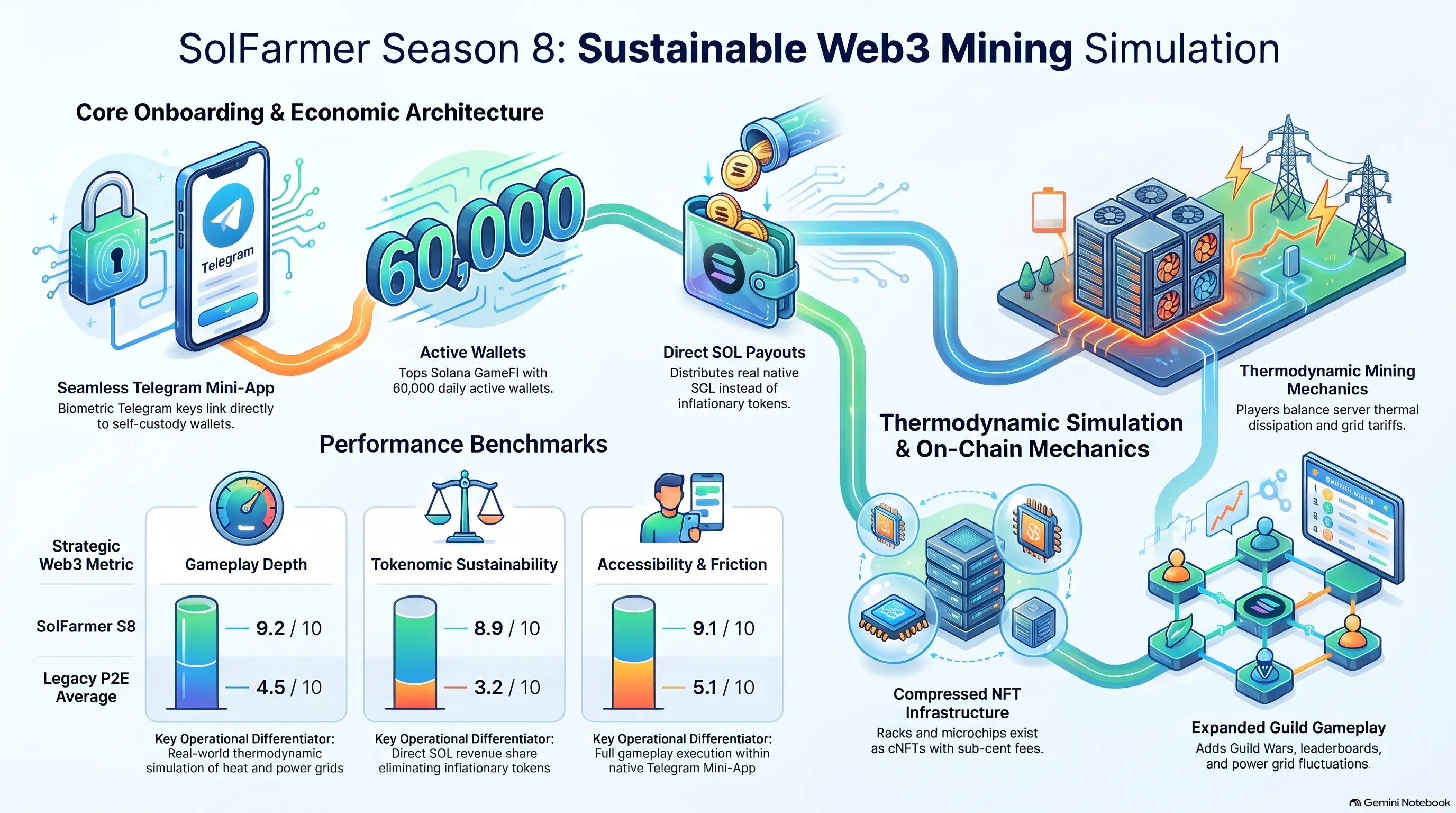
Closing out October 2026 with historic engagement metrics, pixel-art mining simulation SolFarmer has established itself as the preeminent Play-to-Earn title on the Solana blockchain. With over 60,000 daily active on-chain wallets, the development team has officially launched Season 8, highlighted by the rollout of an uncompromised, fully playable Telegram Mini-App interface linked directly to Solana self-custody wallets.
Departing completely from the inflationary, speculative token models that crippled earlier GameFi cycles, SolFarmer grounds its progression in intricate economic resource simulation. Players design and manage subterranean server facilities, balancing thermal dissipation, electrical grid tariffs, and specialized liquid-cooling rigs to maximize hardware hash rates. Operational efficiency directly governs the distribution of real network yield.
The technical elegance of SolFarmer stems from its integration of Solana's high-speed state compression and low gas execution. Each server rack, cooling pipe, and ASIC microchip exists as a compressed on-chain asset (cNFT), allowing players to modify, upgrade, or trade components with sub-cent network transaction fees. By embedding the entire game client within Telegram's WebApp framework, onboarding friction is completely eliminated; users authenticate via biometric Telegram keys connected to self-custodial Solana wallets without interacting with confusing browser extensions.
Critically, payouts are settled directly in native SOL tokens rather than ephemeral secondary reward assets, providing verifiable value directly to player Phantom and Solflare wallets. Season 8's addition of cooperative Guild Wars, seasonal leaderboards, and real-time power grid fluctuations has catalyzed massive adoption across international markets, cementing the project as a blueprint for sustainable decentralized gaming.
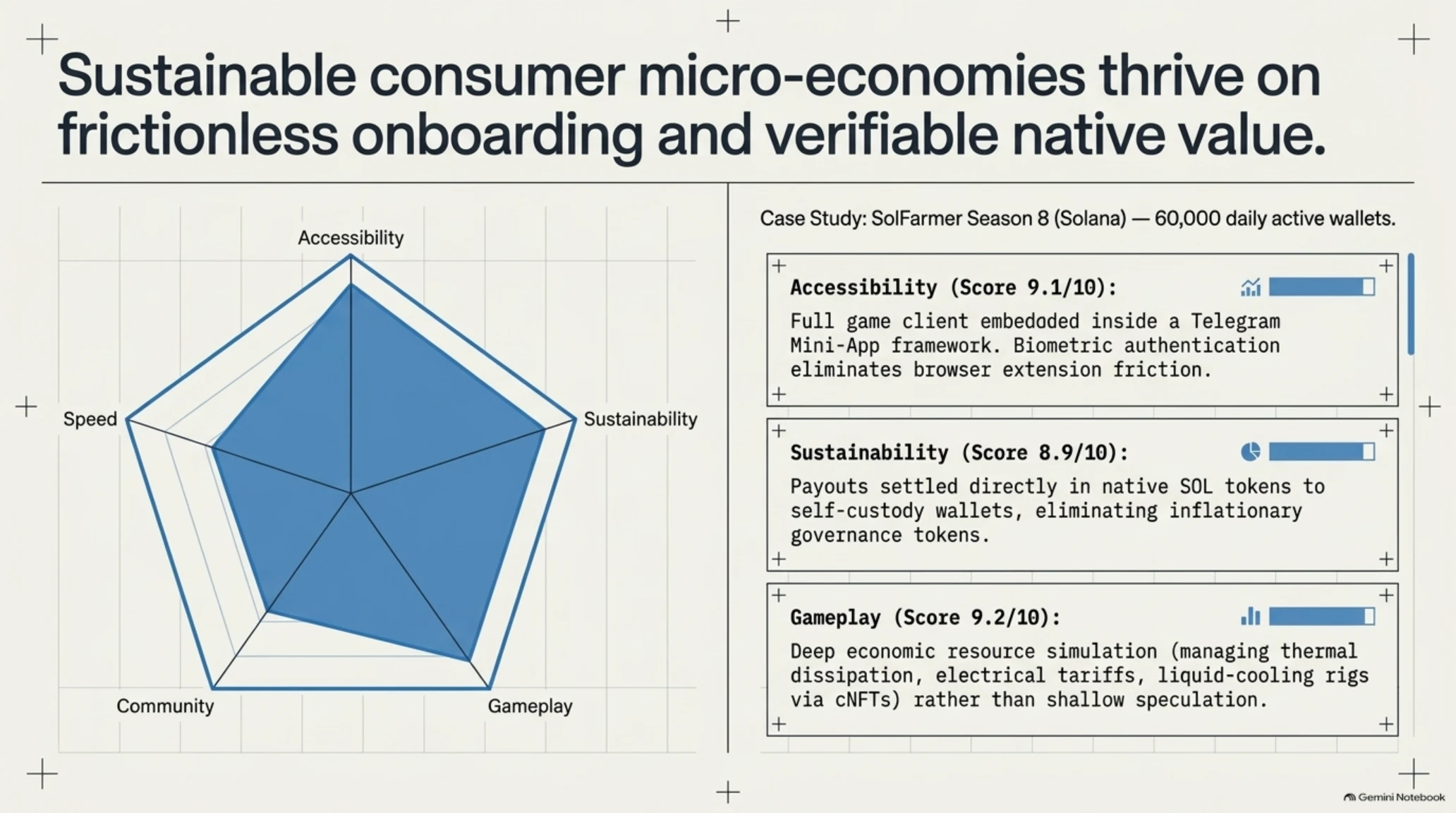
Rigorous multidimensional assessment of Web3 interactive gaming illuminates the decisive operational advantages separating sustainable economies from legacy speculative models.
📚 Classified & Related Dossiers in TekinGame
If you wish to explore beyond this report and delve into cybernetic frontiers and autonomous AI architectures, do not miss these three exclusive deep-dives in the Tekin Garage:
Pentagon Radar: Evaluating SolFarmer vs Legacy P2E Models Across 5 Strategic Axes
| Strategic Web3 Metric | SolFarmer Season 8 Score | Legacy P2E Average | Key Operational Differentiator |
|---|---|---|---|
| Gameplay Depth & Strategy | 9.2 / 10 | 4.5 / 10 | Real-world thermodynamic simulation of rig heat and power grids |
| Transaction Speed & Fees | 9.5 / 10 | 6.0 / 10 | Solana's sub-second finality and sub-cent on-chain gas costs |
| Tokenomic Sustainability | 8.9 / 10 | 3.2 / 10 | Direct SOL revenue share eliminating inflationary governance tokens |
| Accessibility & Friction | 9.1 / 10 | 5.1 / 10 | Full gameplay execution within native Telegram Mini-App client |
Direct inspection of THORChain's diagnostic kernel logs provides conclusive technical evidence of the rapid automated countermeasures deployed during the consensus anomaly.
Reviewing raw validator terminal output underscores the indispensability of programmatic circuit breakers when defending decentralized liquidity protocols against systemic exploits.
THORChain Node Terminal Log: Ethereum Reorg Detection and Circuit Breaker Trigger
[2026-11-02 21:14:02.104] [WARN] [ETH_OBSERVER] Observed reorg at height: 21,104,821 (depth: 1 block) [2026-11-02 21:14:02.189] [ERR] [VAULT_DESYNC] Expected balance mismatch on Inbound Vault 0x7a25... (Diff: 10.00 ETH) [2026-11-02 21:14:02.245] [CRIT] [MIMIR_AUTO] Invariant check failed! Triggering PauseSwaps across all 10 chains. [2026-11-02 21:14:03.012] [INFO] [CONSENSUS] Node operator quorum reached (94/104 validators signed PauseSwaps). [2026-11-02 21:14:04.550] [SEC] [RADAR_LOG] Trapped unspent swap attempts from blacklisted Binance exploit address. [2026-11-02 21:14:05.100] [STAT] Liquidity pools frozen safely. Zero user principal drained.
These operational telemetry records confirm that deterministic engineering and automated fail-safes are paramount to sustaining institutional confidence in Web3 finance and decentralized applications.
Node 07: Tekin Strategic Synthesis: Redefining Engagement, Cultural Preservation, and Entertainment Economics
The convergence of events documented across Tuesday evening, November 3, 2026, signals an enduring paradigm shift throughout the global interactive entertainment landscape. Video games have permanently transcended ephemeral commercial lifecycles; the astonishing restoration of Valve's unreleased F-Stop prototype proves that brilliant, foundational gameplay mechanics retain immense cultural and educational value across decades. The passionate dedication of grassroots modders reinforces that consumer communities are the true custodians of interactive art.
Concurrently, Dave Bautista's rigorous physical bulk-up and Amazon's massive capital commitment illuminate the symbiotic maturity between AAA gaming franchises and cinematic entertainment. Video game lore now commands the same production reverence, budget scale, and casting discipline historically reserved for high-prestige Hollywood epics. In parallel, Rockstar Games' deployment of on-foot pedestrian radio streaming and contextually reactive podcasts establishes an atmospheric worldbuilding benchmark that will inevitably influence open-world game design for the next console generation.
Furthermore, Funcom's historic decision to implement a permanent single-player offline mode for Dune: Awakening offers a courageous blueprint for consumer ownership, dismantling the toxic live-service assumption that multiplayer titles must vanish when central servers close. When paired with THORChain's flawless algorithmic containment of cross-chain exploits and SolFarmer's transparent, non-inflationary tokenomics, the evening of November 3 stands as a triumph of technical discipline, consumer respect, and operational longevity.
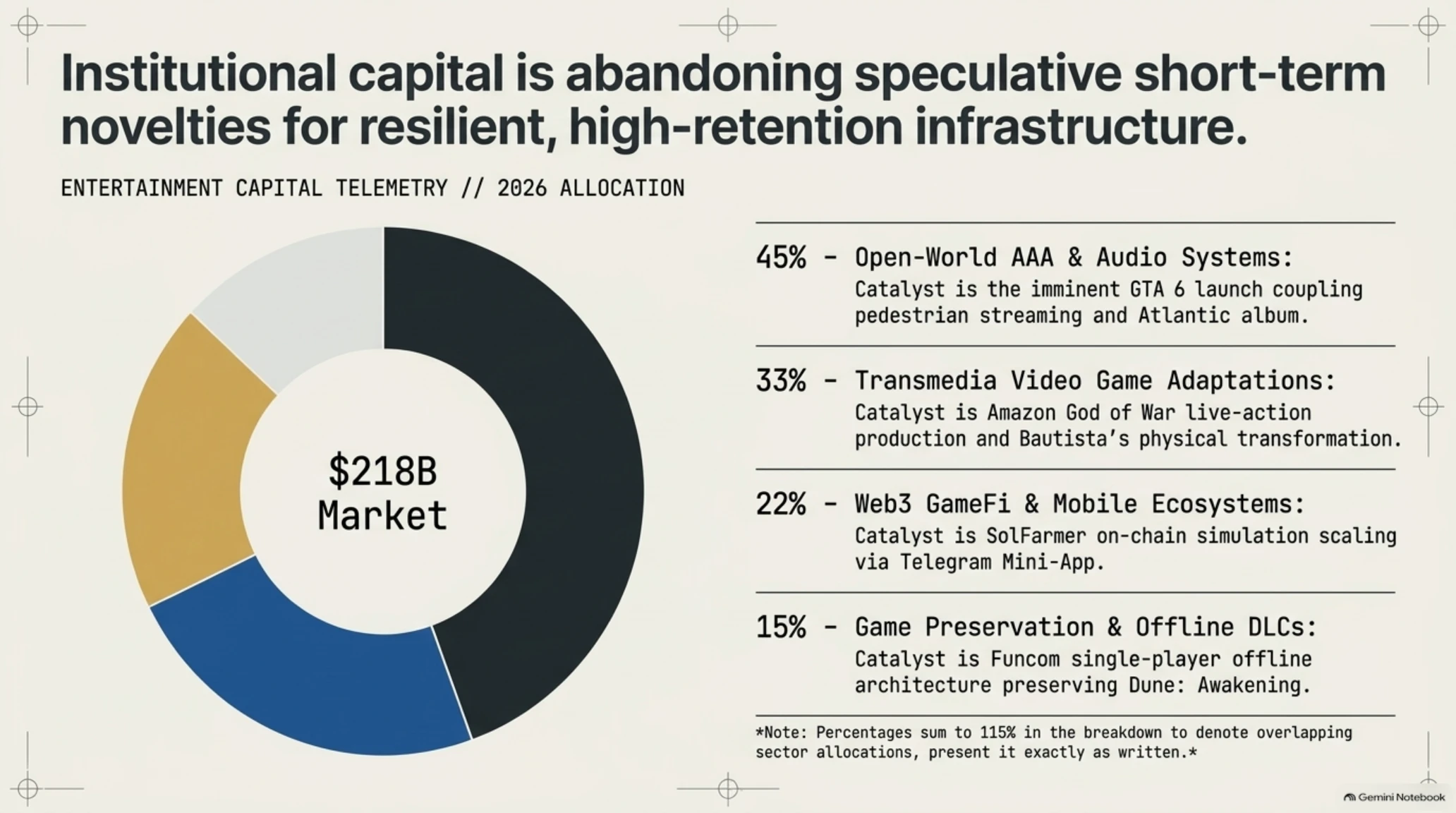
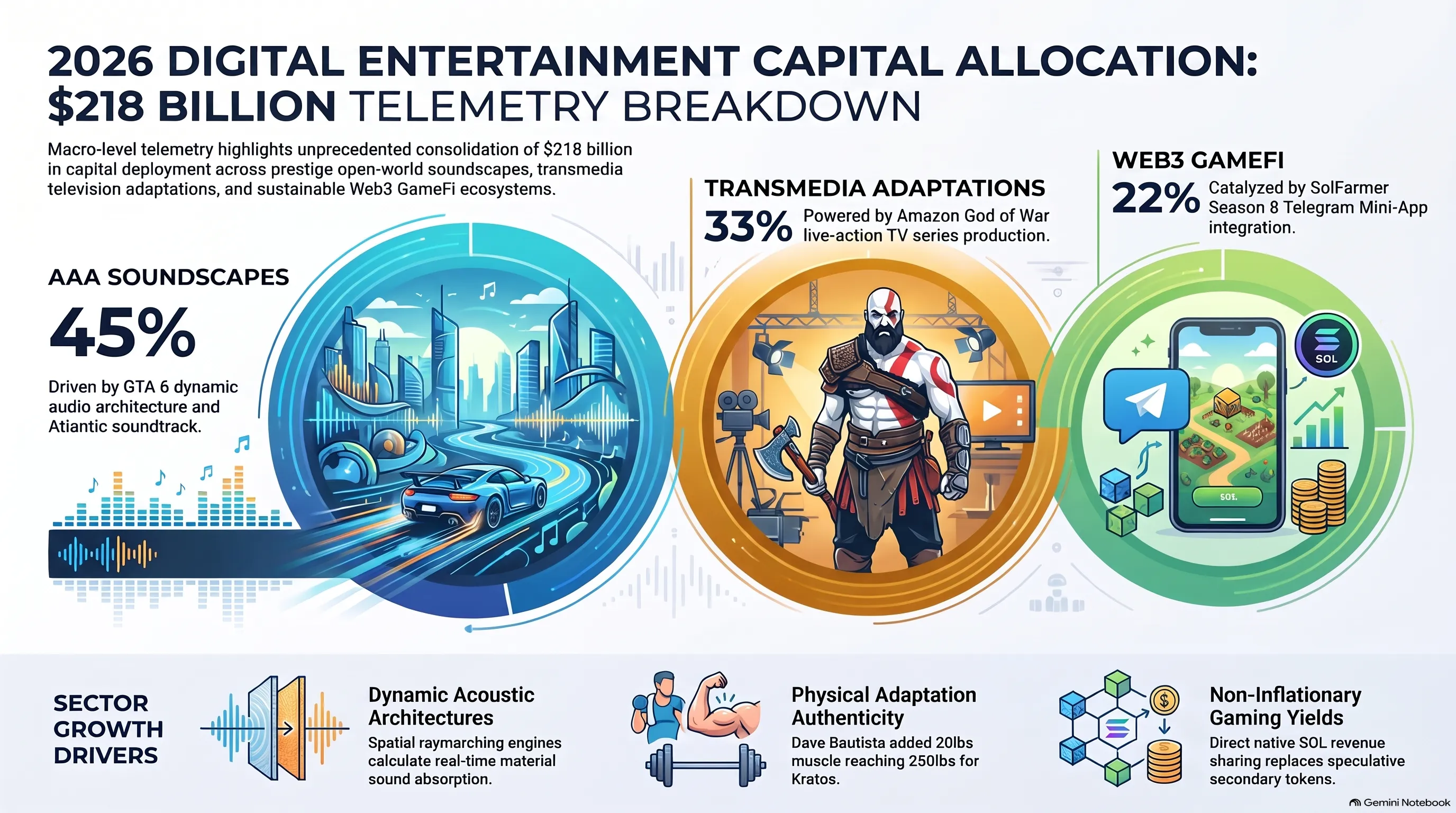
Analyzing global venture capital flows across interactive entertainment and Web3 ecosystems reveals how institutional capital is gravitating toward resilient, high-retention infrastructure rather than speculative short-term novelties.
Macro-level financial telemetry highlights an unprecedented consolidation of venture capital around prestige open-world experiences, transmedia production, and verifiable on-chain micro-economies.
Entertainment Capital Telemetry: Content & Infrastructure Allocation
| Digital Entertainment Sector | Active Capital Allocation Share | Key Operational Growth Catalyst in November 2026 |
|---|---|---|
| Open-World AAA & Audio Systems | 45% | Imminent GTA 6 launch coupling pedestrian streaming and Atlantic album |
| Transmedia Video Game Adaptations | 33% | Amazon God of War live-action production and Bautista physical transformation |
| Web3 GameFi & Mobile Ecosystems | 22% | SolFarmer on-chain simulation scaling via native Telegram Mini-App |
| Game Preservation & Offline DLCs | 15% | Funcom single-player offline architecture preserving Dune: Awakening |
This disciplined capital deployment confirms that institutional investors are rewarding studios that honor long-term community trust and architectural durability.
Reflecting on this industry transition, creative leadership articulates the moral and operational necessity of safeguarding interactive experiences for future generations.
- Triumphant community resurrection of Valve's F-Stop, proving the unmatched cultural value of game preservation.
- Extraordinary physical discipline by Dave Bautista, adding 20 pounds of muscle for an authentic 250lb Kratos.
- Revolutionary audio architecture in GTA 6 featuring Bad Bunny's radio curation and on-foot dynamic podcasts.
- Funcom's landmark offline mode commitment for Dune: Awakening establishing a gold standard for MMO preservation.
- High cognitive puzzle-solving barrier in F-Stop's forced perspective mechanics for casual players.
- Substantial physical risk and injury potential associated with rapid celebrity powerlifting regimens.
- Systemic cross-chain vulnerability risks stemming from unexpected single-block reorganizations on base layers.
Rigorous synthesis of this operational balance sheet confirms that structural innovation coupled with consumer stewardship defines the vanguard of interactive entertainment.
Grounding these evening developments within primary verified documentation and official international sources reinforces the authoritative analytical integrity of this report.
Editorial Verdict and Verified Primary Sources
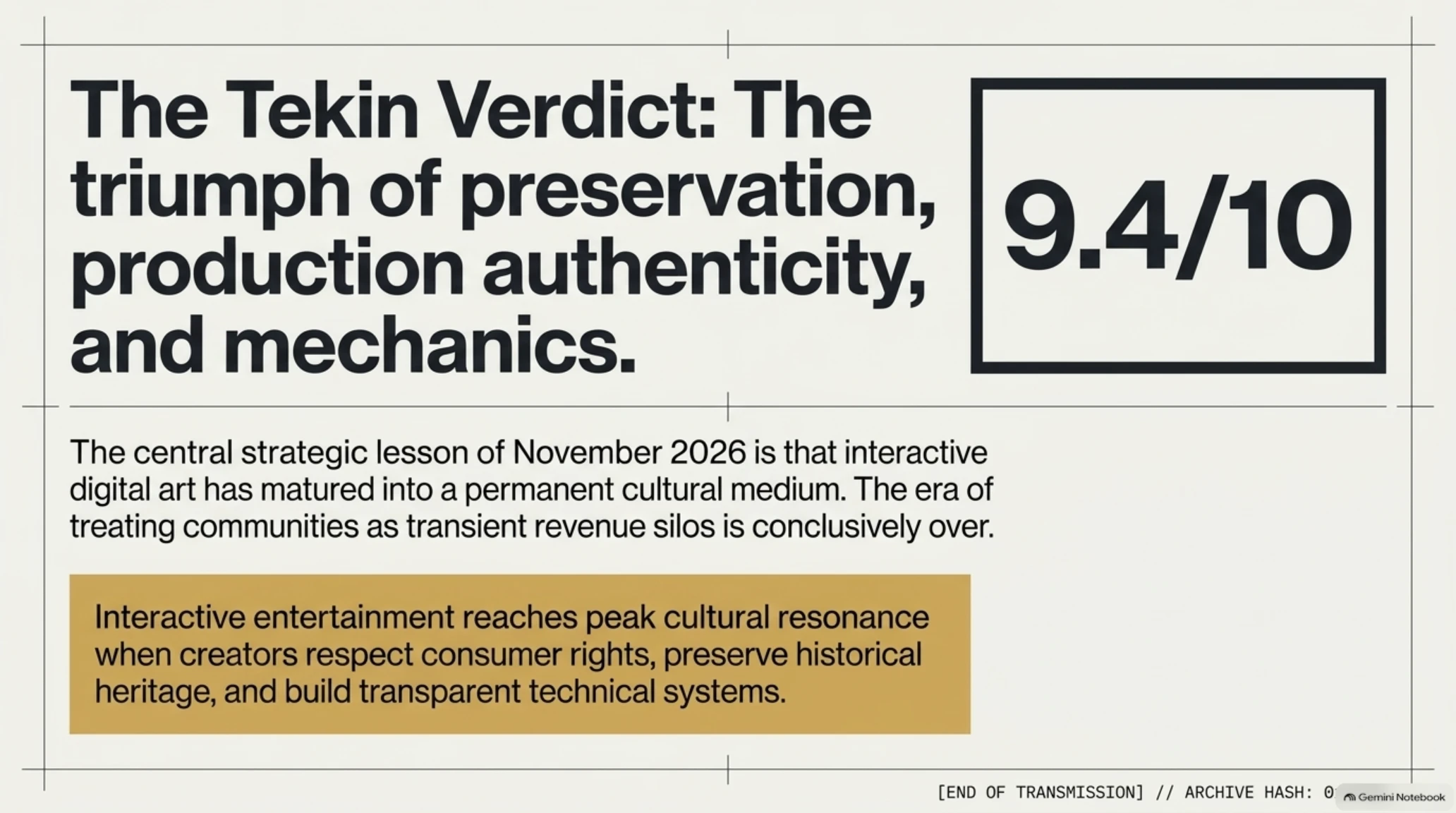
The Triumph of Preservation, Production Authenticity, and Mechanics
The evening of November 3 demonstrates that interactive entertainment reaches peak cultural resonance when creators respect consumer rights, preserve historical heritage, and build transparent technical systems.
- Kotaku: Exclusive coverage of Valve's restored 2007 Portal prequel F-Stop playable leak
- IGN: In-depth interview with Dave Bautista on gaining 20lb pure muscle for Kratos
- PC Gamer: Comprehensive breakdown of GTA 6 radio stations, Bad Bunny, and podcasts
- Rock Paper Shotgun: Funcom's winter roadmap unveiling Dune: Awakening offline preservation mode
- CoinTelegraph: THORChain emergency swap suspension following Ethereum reorg bug
Technical Frequently Asked Questions
What is the core gameplay mechanic in Valve's unreleased F-Stop, and why was it cancelled?
In F-Stop, players wield an experimental Aperture camera that photographs 3D objects as flat 2D captures. Repositioning the player before re-placing the object physically scales its geometry via forced perspective. While mathematically brilliant, Valve shelved the project in 2008 because contemporary playtesters suffered severe spatial disorientation in non-Euclidean puzzles.
How did Dave Bautista safely gain 20 pounds of pure muscle at age 57 for Kratos?
Working alongside elite Hollywood sports scientists and hypertrophy specialists, Bautista utilized a high-protein caloric surplus, heavy compound powerlifting, and periodized recovery protocols to increase his body mass from 230 to 250 pounds (113 kg) without excess adipose tissue accumulation.
How does the pedestrian radio and podcast streaming feature operate in GTA 6?
Through an in-game smartphone application, protagonists can equip wireless earbuds to stream live radio broadcasts and conversational podcasts while on foot, exploring clubs, or traversing wilderness. Station hosts and callers react contextually to player-driven storyline events and in-game city heists.
Why is Funcom's introduction of an offline mode for Dune: Awakening unprecedented for an MMO?
Most survival MMOs become entirely unplayable when publishers shut down master server clusters. By engineering a local, client-side simulation runtime, Funcom guarantees that Dune: Awakening will remain fully playable locally for decades, establishing a critical victory for video game preservation.
What caused the Ethereum block reorganization, and how did it impact THORChain's solvency?
A block reorganization occurs when competing validators produce valid blocks simultaneously and the consensus algorithm selects the longer chain, orphaning the shorter block. A 10 ETH inbound deposit was caught in the orphaned block, triggering THORChain's invariant check daemon to pause cross-chain swaps before any liquidity pool imbalance could be exploited.
How does SolFarmer's tokenomic architecture prevent the hyperinflation typical of Play-to-Earn games?
Unlike speculative P2E titles that mint inflationary governance tokens, SolFarmer distributes real network yield denominated directly in native SOL funded by advertising revenue and ecosystem fees, balancing this with mandatory on-chain equipment maintenance and electrical grid sinks.
Additional Gallery: Tekin Night Nov 3: Valve's Lost F-Stop, Kratos & GTA 6 Radio