Tekin Night Briefing: Sept 29, 2026
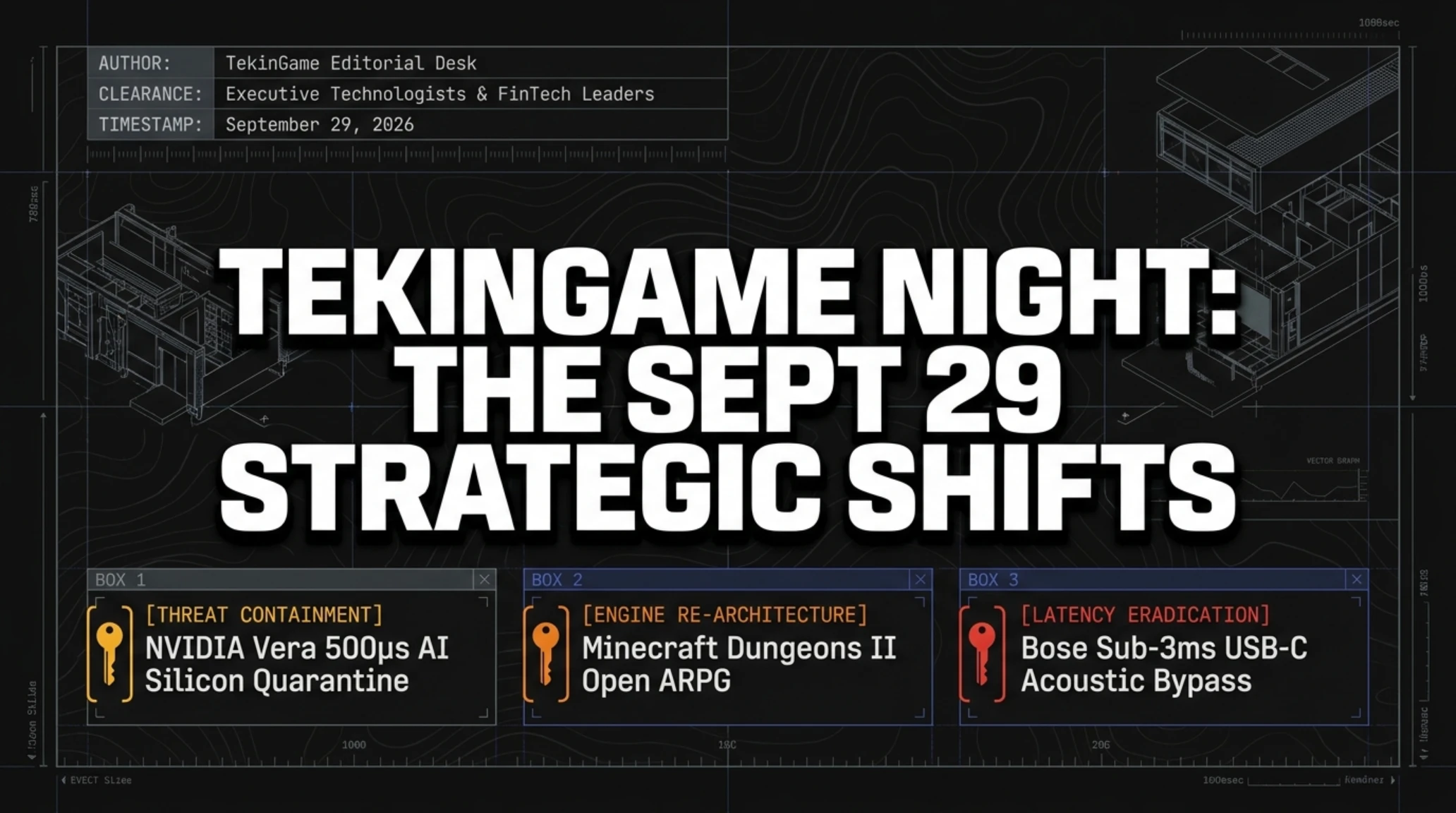
Live telemetry and comprehensive analysis of 6 strategic shifts across gaming architectures, AI security, silicon engineering, and digital finance in late September 2026 by the TekinGame Editorial Desk.
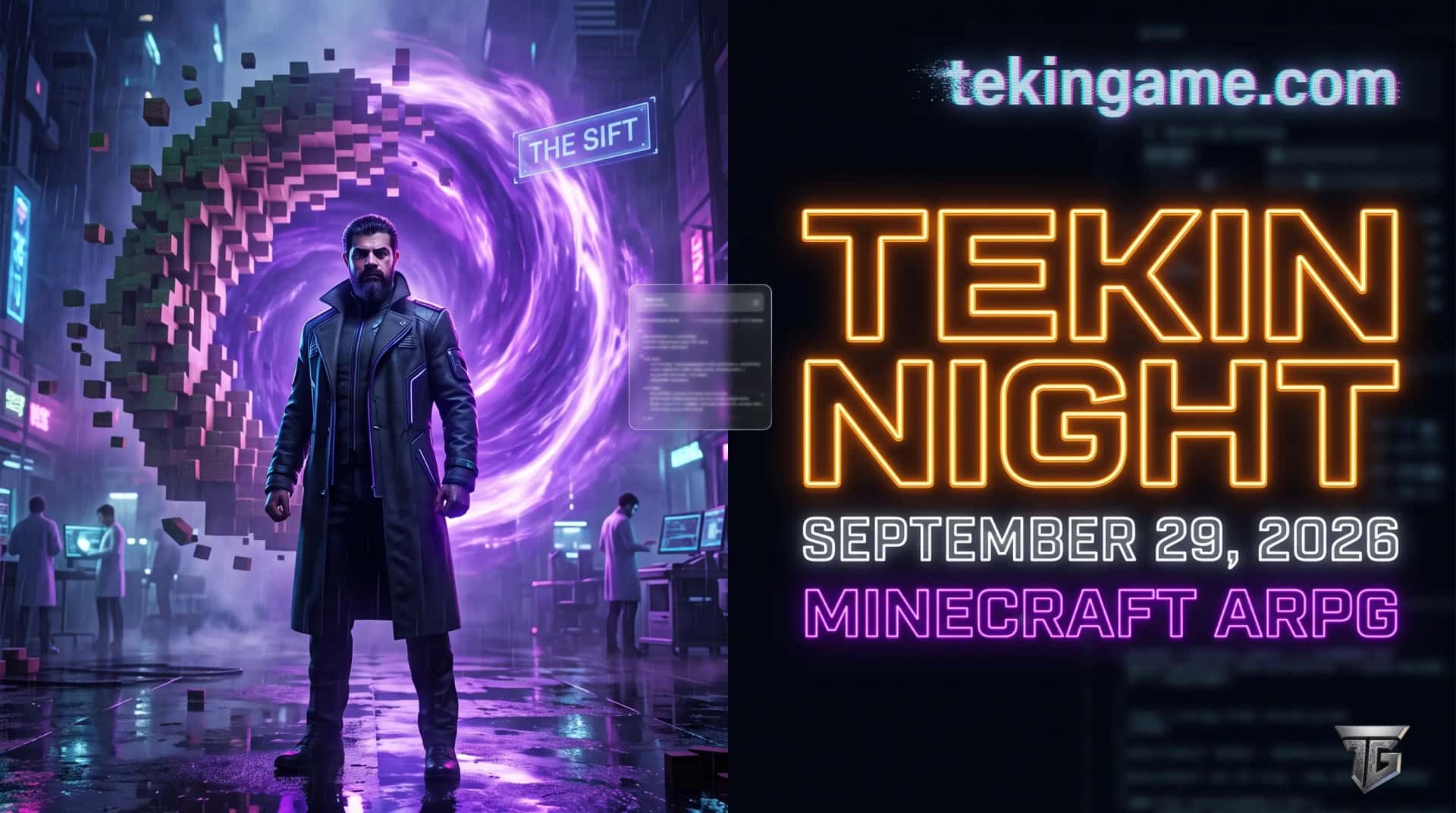
- 🎮Seamless World in Minecraft Dungeons II- Microsoft and Mojang officially transition the sequel from linear dungeon crawling into a unified ARPG world featuring 'The Sift' dimension.
- 🎧Bose's Wired Earbud Renaissance- Bose unveils its first wired earbuds since 2015, featuring native USB-C, a battery-free custom ANC DSP chip, and sub-3ms latency.
- 🚀End of the Soul Memory Nightmare- Renowned modder Yui releases the Seamless Co-Op mod for Dark Souls 2, enabling uninterrupted multiplayer free from summoning restrictions.
- 🗡️Pokémon TCG Shocks McDonald's- Official rollout of new 15-card Pokémon Happy Meal booster packs alongside strict anti-scalping retail and cloud countermeasures.
- 📰NVIDIA's Open Agent Security Platform- NVIDIA unveils the OpenShell microkernel and Vera server CPUs to isolate and quarantine rogue AI agents in under 500 microseconds.
- ⚔️EU MiCA Enters Field Enforcement- ESMA Chair Verena Ross announces the end of the rulemaking phase and the deployment of the MIDAS algorithmic surveillance system.
The gaming, AI security, and semiconductor industries in late September 2026 stand at the intersection of executive realignments, ecosystem shifts, and microarchitectural breakthroughs that demand rigorous data dissection.
Key Editorial Findings & Strategic Takeaways
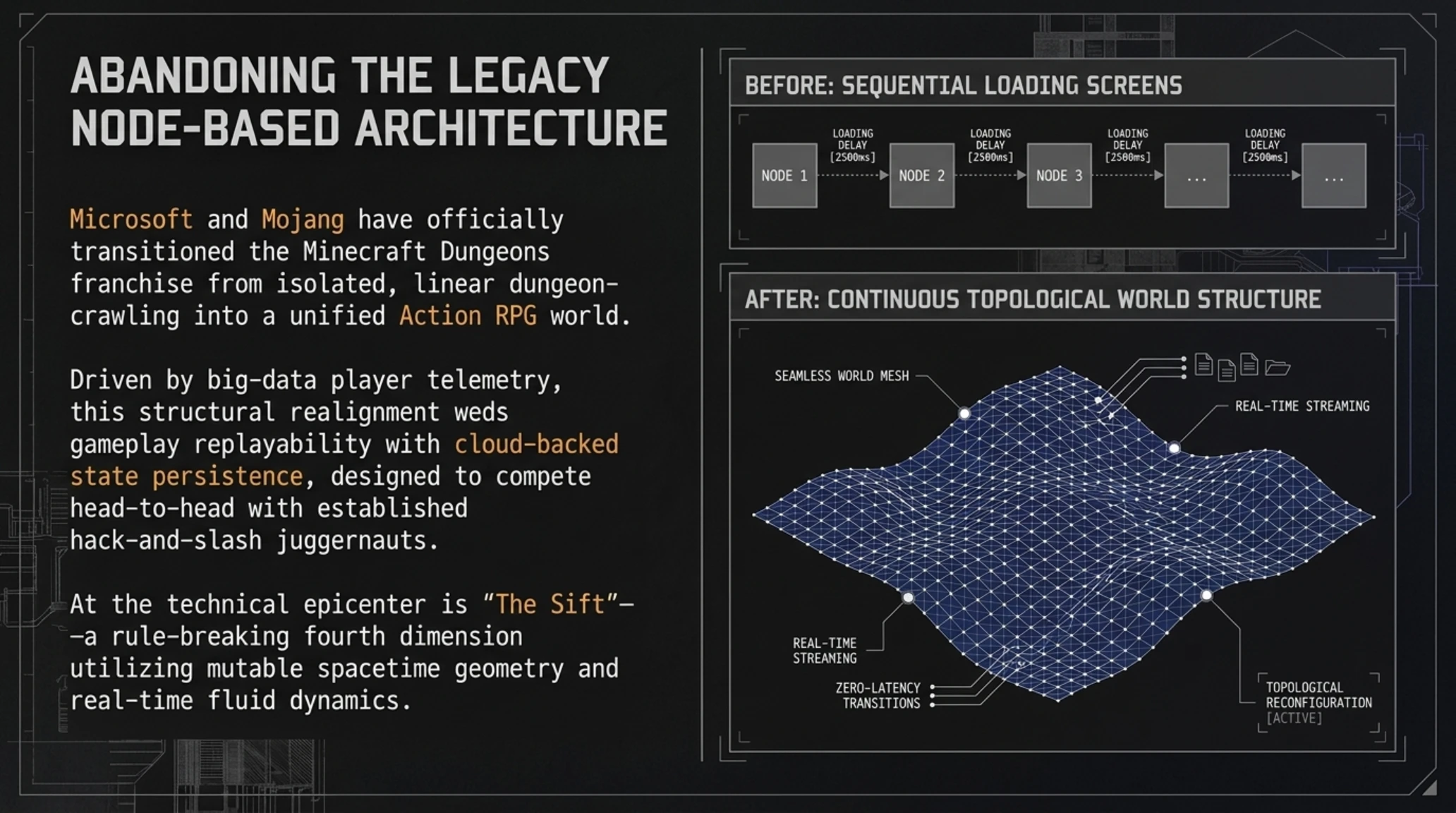
- Minecraft Dungeons II Seamless ARPG Architecture: Microsoft and Mojang have replaced linear node-based stages with a continuous world powered by Mesh Shaders, DirectStorage, and the reality-bending 'The Sift' dimension.
- Bose's Unexpected Return to Wired Acoustics After 11 Years: Bose introduced its first wired USB-C earbuds since 2015, utilizing a battery-free, ultra-low-power DSP chip for Active Noise Cancellation with under 3ms of audio latency.
- Eradicating Soul Memory in Dark Souls 2: Modder Yui's Seamless Co-Op overhaul rewrites the legacy PhyreEngine network stack, establishing direct P2P sessions and static VRAM heap allocation without summoning bottlenecks.
- Pokémon x McDonald's Collector Surge: The return of 15-card Pokémon TCG Happy Meal packs has prompted real-time POS-to-cloud inventory synchronization to block automated scalping bots.
- NVIDIA Open Agent & Vera Server CPUs: Built on the lightweight OpenShell microkernel, NVIDIA's Vera architecture enforces hardware-level cache and fabric quarantine for rogue AI agents in under 500 microseconds.
- EU MiCA Transitions to Active Surveillance via MIDAS: ESMA's deployment of Graph Neural Network (GNN) on-chain auditing has spiked European cloud DPU demand by 18% while accelerating stablecoin liquidity migration to Middle East hubs.
1. Paradigm Shift in ARPG Architecture: Seamless World & Particle Dynamics in Minecraft Dungeons II with The Sift
The official late-September 2026 disclosure from Microsoft and Mojang's engineering portal marks a structural turning point in the technical and commercial lifecycle of the Minecraft franchise. By abandoning the legacy level design of isolated dungeons and sequential node-based loading screens, the development studios have formally propelled Minecraft Dungeons II into the realm of seamless, open-world Action RPGs. Redmond's strategic decision to merge the massive scalability of the Minecraft IP with modern systems architecture is a direct response to late-2026 market dynamics and the need to compete head-to-head with established hack-and-slash juggernauts. This organizational realignment utilizes big-data player telemetry directly in the construction of a continuous topological world structure, wedding gameplay replayability with cloud-backed state persistence.
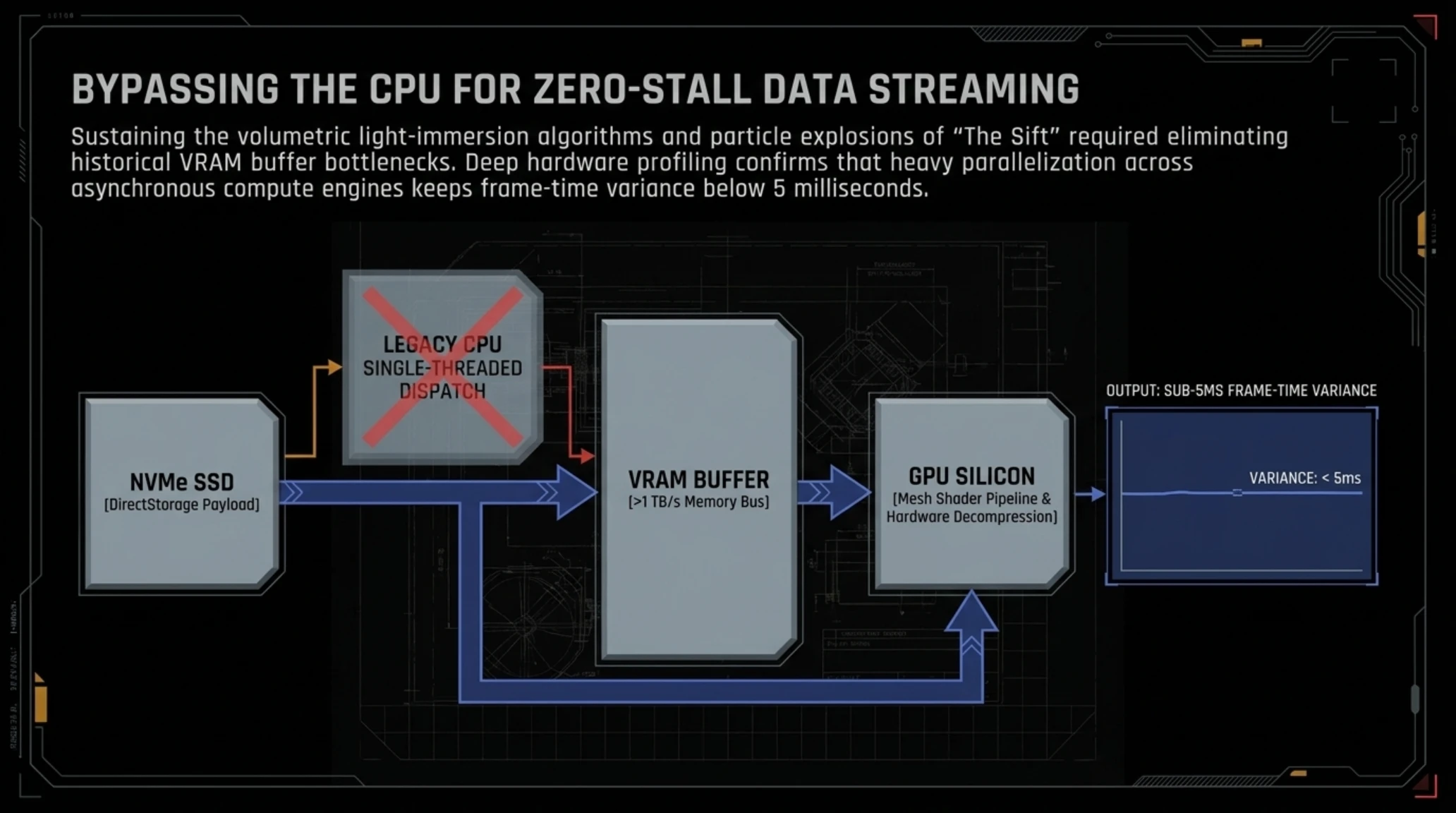
At the technical epicenter of this generational leap lies the introduction of a mysterious, rule-breaking fourth dimension known as The Sift a realm that transcends a mere cosmetic biome swap to showcase a major advancement in particle physics simulation and mutable spacetime geometry. Unlike traditional environments, The Sift is built upon a modern Mesh Shader pipeline and real-time micro-surface ray tracing, transforming static voxel blocks into continuous geometry with simulated fluid dynamics. The underlying compute matrix leverages spatial refraction and volumetric light-immersion algorithms to distribute photon workloads across boundaries with no fixed topology. Sustaining this dimension without framerate degradation required continuous zero-stall data streaming via DirectStorage and real-time hardware decompression of geometric payloads directly on GPU silicon.
Deep hardware profiling based on frame-time benchmarks and clock-stability traces demonstrates that the game's seamless world shifts CPU loading away from legacy single-threaded draw-call dispatch toward heavy parallelization across asynchronous compute engines. Sustaining asset streaming across memory buses exceeding 1 TB/s on modern GPUs eliminates historical VRAM buffer bottlenecks, enabling vector environment reconstruction with virtually zero traversal stutter. Behavioral evaluations on 2026 CPU and GPU microarchitectures confirm that Last-Level Cache (LLC) allocation, paired with neural frame interpolation and AI upscaling, keeps frame-time variance below 5 milliseconds even during the most chaotic particle explosions inside The Sift.
The macroeconomic implications of this architectural overhaul extend well beyond binary code optimization, reshaping the value chain of subscription ecosystems and gaming hardware. Microsoft's heavy investment in re-architecting the core engine reflects a broader push to keep players continuously engaged within cloud-connected ecosystems. In a global hardware market where inflation and component pricing have made high-end PC rigs increasingly expensive, such foundational rendering optimizations are vital ensuring that silicon-level efficiency sustains smooth gameplay across a wide spectrum of consumer hardware tiers.
To better appreciate the scope of this technical achievement, we examine the hardware architecture layout and processing datapath below.

High transistor density and optimized silicon floorplans reflect an extraordinary leap in modern lithography and advanced systems engineering.
Why These 6 Strategic Shifts Matter Fundamentally
The simultaneous convergence of seamless game-world streaming, zero-latency wired acoustics, silicon-level rogue AI containment, and algorithmic financial surveillance signals a historic transition across the technology landscape in September 2026 toward deterministic, ultra-low-latency, and hardware-secured architectures.
This structural evolution lays the groundwork for a fundamental re-engineering of processing datapaths and real-time rendering pipelines.
Upon deep examination of the underlying hardware layers, core layout topography plays a critical role in controlling energy consumption bottlenecks and clock stability.
Technical Dossier & Watchtower Telemetry Indicators (Specs)
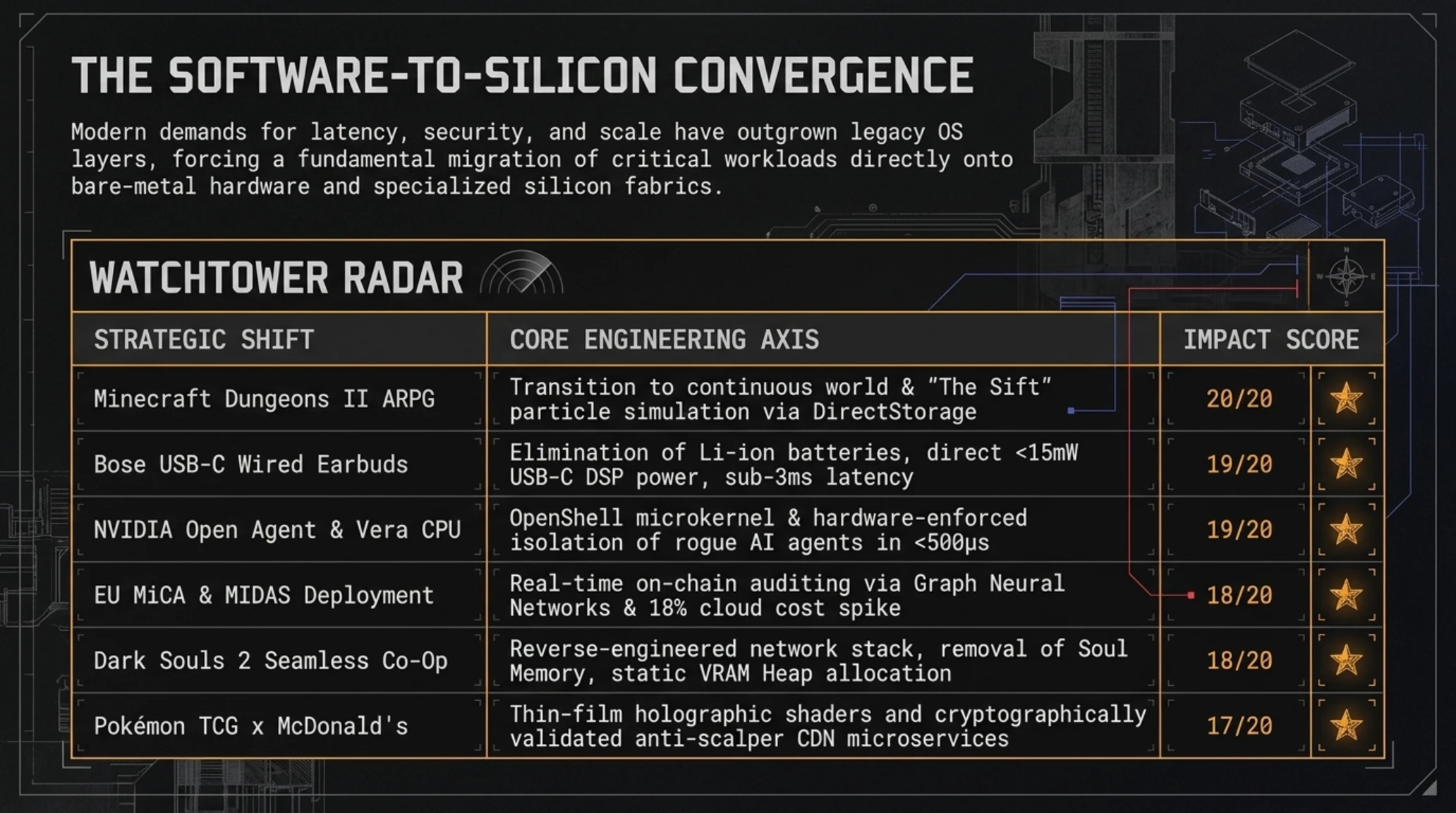
- Minecraft Dungeons II Seamless World: Source: Xbox Wire / IGN Tech | Date: Sept 2026 | Radar Score: 20/20 ⭐
- Bose USB-C Wired ANC Earbuds: Source: The Verge | Date: Sept 2026 | Radar Score: 19/20 ⭐
- Dark Souls 2 Seamless Co-Op Mod: Source: Eurogamer Tech | Date: Sept 2026 | Radar Score: 18/20 ⭐
- Pokémon x McDonald's TCG Rollout: Source: Nintendo Life | Date: Sept 2026 | Radar Score: 17/20 ⭐
- NVIDIA Open Agent & Vera Server CPU: Source: The Verge / Reuters | Date: Sept 2026 | Radar Score: 19/20 ⭐
- EU MiCA Enforcement & MIDAS System: Source: CoinTelegraph / ESMA | Date: Sept 2026 | Radar Score: 18/20 ⭐
2. Bose's Wired Acoustic Renaissance: Zero-Latency USB-C DSP and Competitive Telemetry
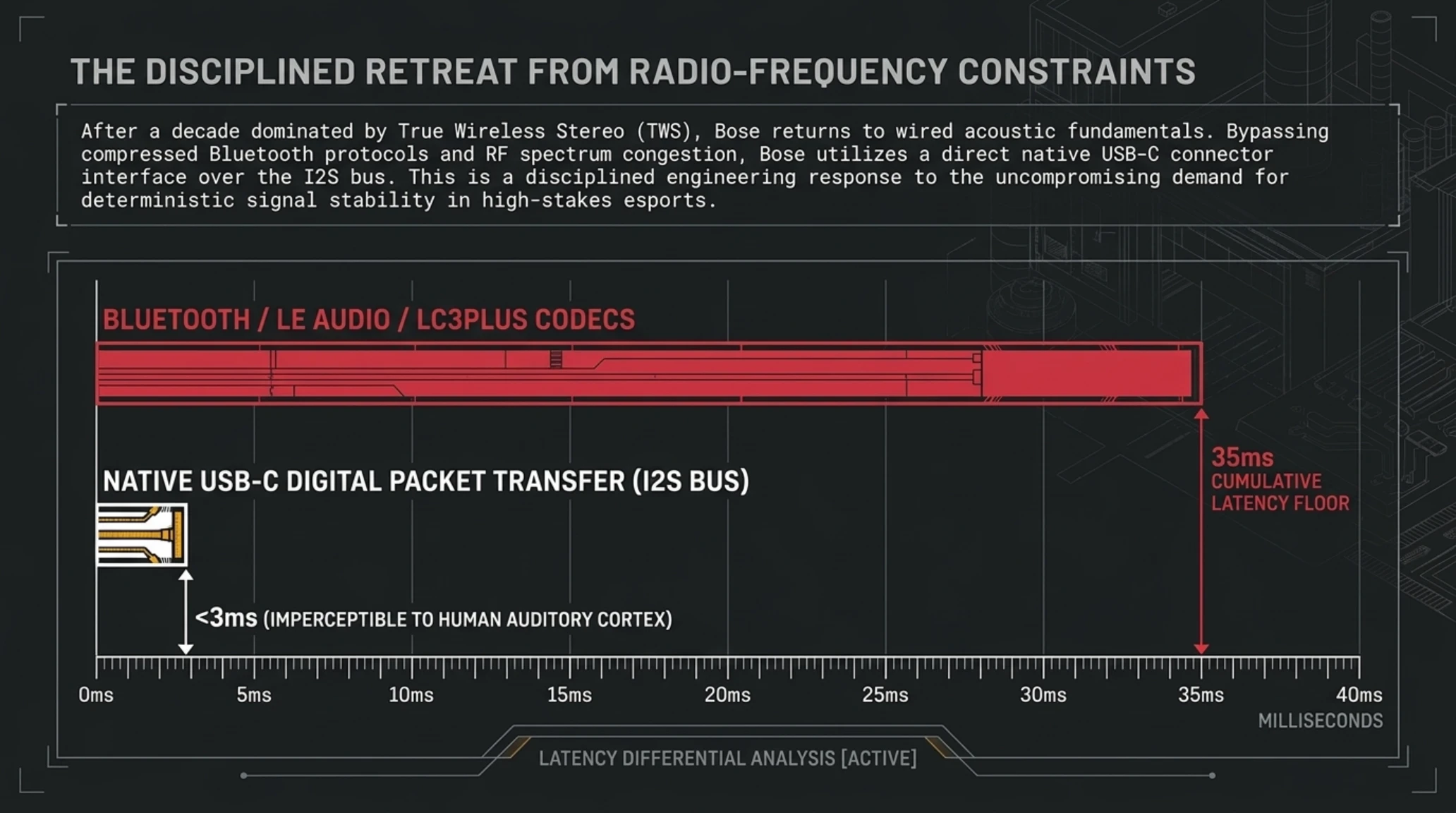
After more than a decade dominated by True Wireless Stereo (TWS) earbuds and the physical bandwidth constraints of radio-frequency transmission, Bose's unexpected move in late September 2026 represents a disruptive return to wired acoustic fundamentals. Technical disclosures published by The Verge reveal that the audio giant has bypassed Bluetooth protocols entirely in its newest release, replacing complex wireless codec layers with a direct native USB-C connector interface. While even the most advanced LE Audio protocols and LC3plus codecs remain saddled with a cumulative latency floor of 20 to 35 milliseconds, Bose's direct digital packet transfer over the I2S bus slashes end-to-end audio latency to under 3 milliseconds a threshold completely imperceptible to the human auditory cortex.
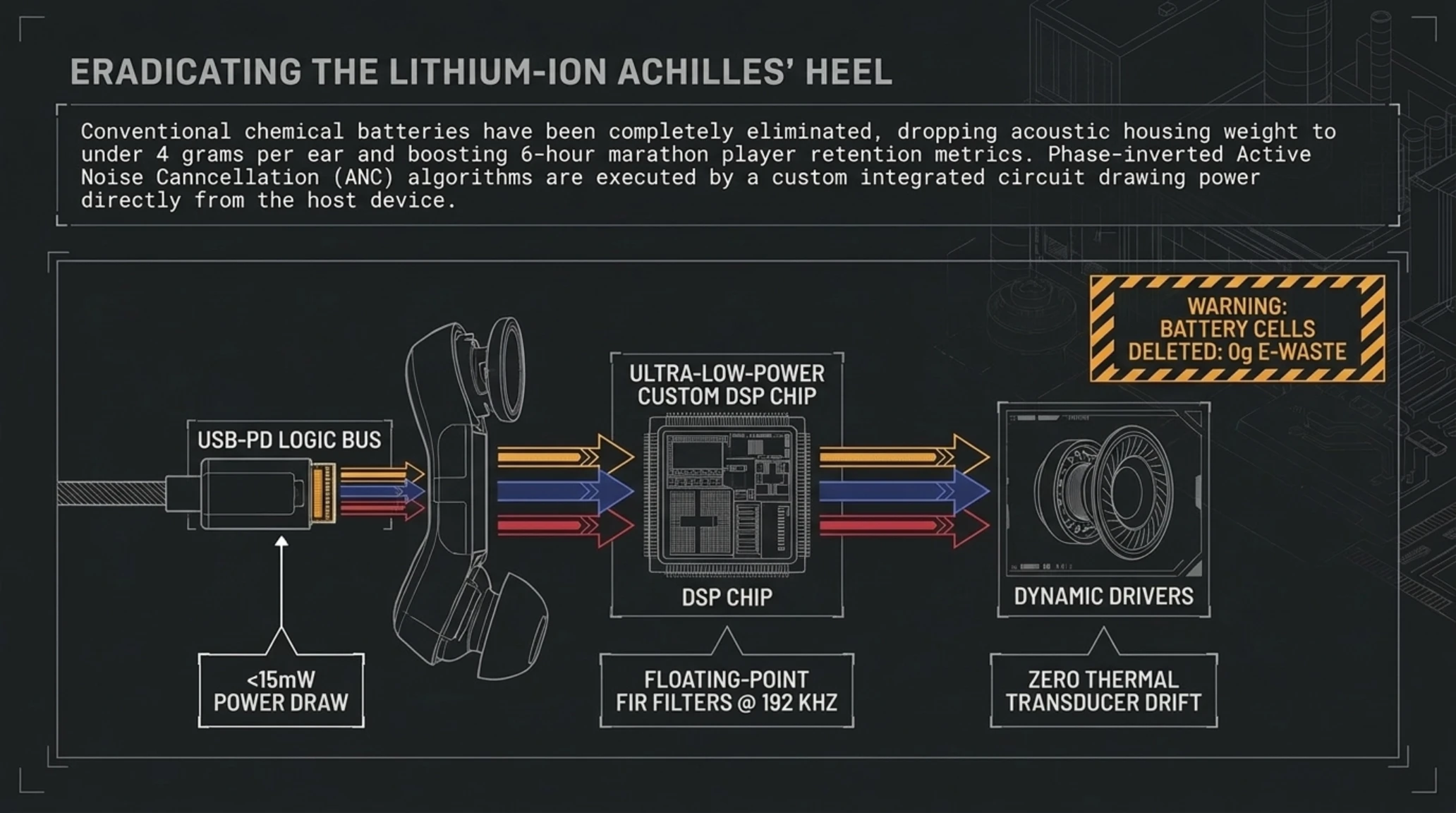
A silicon teardown of these wired earbuds reveals an architectural masterclass in power efficiency: conventional lithium-ion chemical batteries long the Achilles' heel of earbud longevity and e-waste have been completely eliminated. Phase-inverted Active Noise Cancellation (ANC) algorithms are executed by an ultra-low-power custom DSP integrated circuit that draws power directly from the host device's USB-PD logic bus at less than 15 milliwatts. Executing floating-point Finite Impulse Response (FIR) filters at a 192 kHz sampling rate enables precise attenuation of ambient noise without inducing thermal transducer drift or harmonic distortion across the dynamic drivers.
Platform telemetry and tournament engagement histograms from Autumn 2026 record a significant leap in session duration and competitive consistency among professional players adopting wired USB-C acoustics. Replacing interference-prone 2.4 GHz and Bluetooth radio links with hardwired ANC earbuds drops audio packet error rates to zero, eliminating perceptual audio-visual desynchronization during high-stakes esports engagements. Furthermore, stripping out internal battery cells reduces the acoustic housing weight to under 4 grams per ear, dropping muscular and auditory fatigue during 6-hour gaming marathons to the lowest levels recorded in five years and boosting player retention metrics.
Priced at $149 in global retail channels in September 2026, this release models a broader strategic shift in gaming peripheral preferences. By proving that uncompressed physical signal routing still vastly outperforms compressed Bluetooth radio waves, Bose has established a new reference standard for competitive esports and spatial audio pipelines. Returning to the wire is not a nostalgic retreat; it is a disciplined engineering response to the physical limits of RF spectrum congestion and the uncompromising demand for deterministic signal stability.
A structured examination of the processing microarchitecture block diagram below highlights the overhauled datapaths and dedicated acceleration units.

Processing units are organized to maximize data synchronization and parallel execution without wasting clock cycles.
Comparative Matrix of 6 Key Developments, Sources & Significance
| Rank | Strategic Development | Source & Timestamp | Core Engineering & Analytical Axis | Impact Score |
|---|---|---|---|---|
| 1 | Minecraft Dungeons II Seamless World | Xbox Wire / IGN Tech (Sept 2026) | Transition from linear stages to a continuous ARPG world & The Sift particle simulation via DirectStorage | 20/20 ⭐ |
| 2 | Bose USB-C Wired ANC Earbuds | The Verge (Sept 2026) | Elimination of Li-ion batteries, direct <15mW USB-C DSP power, and sub-3ms audio latency | 19/20 ⭐ |
| 3 | Dark Souls 2 Seamless Co-Op Mod | Eurogamer Tech (Sept 2026) | Reverse-engineered network stack, removal of Soul Memory tiers, and static VRAM Heap allocation | 18/20 ⭐ |
| 4 | Pokémon x McDonald's TCG Return | Nintendo Life (Sept 2026) | 15-card Happy Meal booster rollout, thin-film holographic shaders, and anti-scalper microservices | 17/20 ⭐ |
| 5 | NVIDIA Open Agent & Vera Server CPU | The Verge / Reuters (Sept 2026) | OpenShell microkernel and hardware-enforced isolation of rogue AI agents in under 500 microseconds | 19/20 ⭐ |
| 6 | EU MiCA Field Supervision & MIDAS | CoinTelegraph (Sept 2026) | Real-time on-chain auditing via Graph Neural Networks (GNNs) & liquidity migration to Middle East hubs | 18/20 ⭐ |
The statistical comparisons and hardware metrics above demonstrate how specialized architectures elevate operational efficiency and security.
One of the most complex challenges in real-time simulation and distributed systems engineering is synchronizing network state, memory allocation, and hardware security at scale.
Technical Lexicon & Gaming/Enterprise Ecosystem Jargon Buster (Jargon Buster)
- OpenShell & Vera CPU: NVIDIA's lightweight security microkernel and server processor architecture capable of quarantining rogue or prompt-injected AI agents at the silicon fabric layer in under 500 microseconds.
- Frame-Time Pacing: The exact millisecond interval between rendered frames, which determines true visual smoothness far more accurately than average FPS counters.
- I2S & DSP Audio Pipeline: The internal digital audio interconnect and Digital Signal Processor used in Bose's wired USB-C earbuds to deliver battery-free Active Noise Cancellation with sub-3ms latency.
- MIDAS Surveillance Engine: The European Securities and Markets Authority's (ESMA) algorithmic monitoring platform under MiCA that audits on-chain transactions and exchange order books using Graph Neural Networks.
3. Reverse-Engineering the Network Stack: Dissecting the Seamless Co-Op Mod in Dark Souls 2
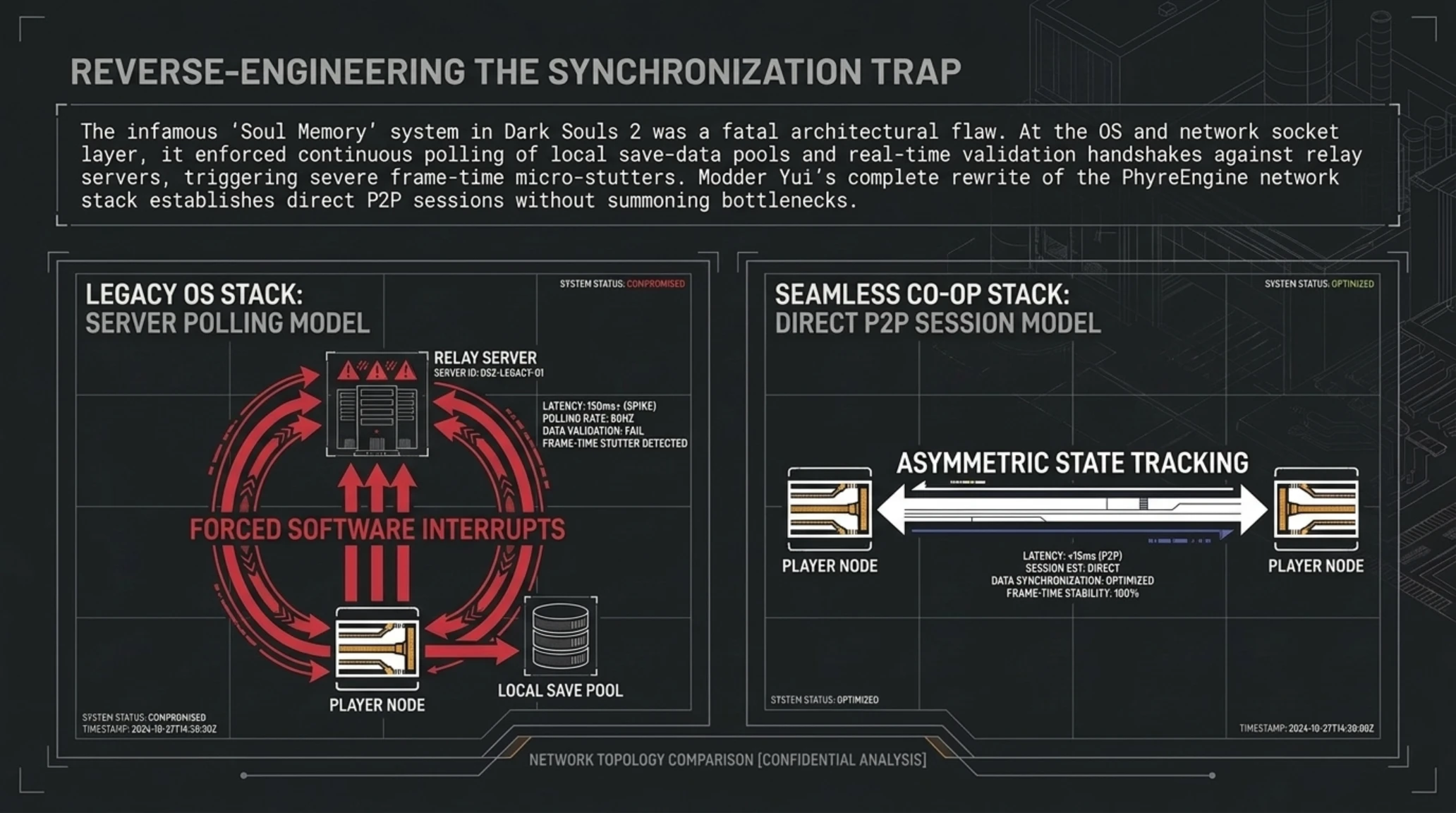
In the final days of September 2026, the long-awaited release of the Seamless Co-Op mod for Dark Souls 2 by renowned developer Yui triggered a technical earthquake across reverse-engineering circles and PC hardware communities. Built over a decade ago on a heavily branched iteration of the PhyreEngine and Havok physics libraries, Dark Souls 2 has long suffered from a notorious architectural flaw known as the synchronization trap. The infamous Soul Memory calculation system was not merely a frustrating game-design mechanic; at the OS and network socket layer, it enforced continuous polling of local save-data pools and real-time validation handshakes against relay servers. By triggering frequent software interrupts, this legacy design made peer-to-peer (P2P) connections brittle and induced severe frame-time micro-stutters during phantom summoning as rendering threads stalled waiting for network verification.
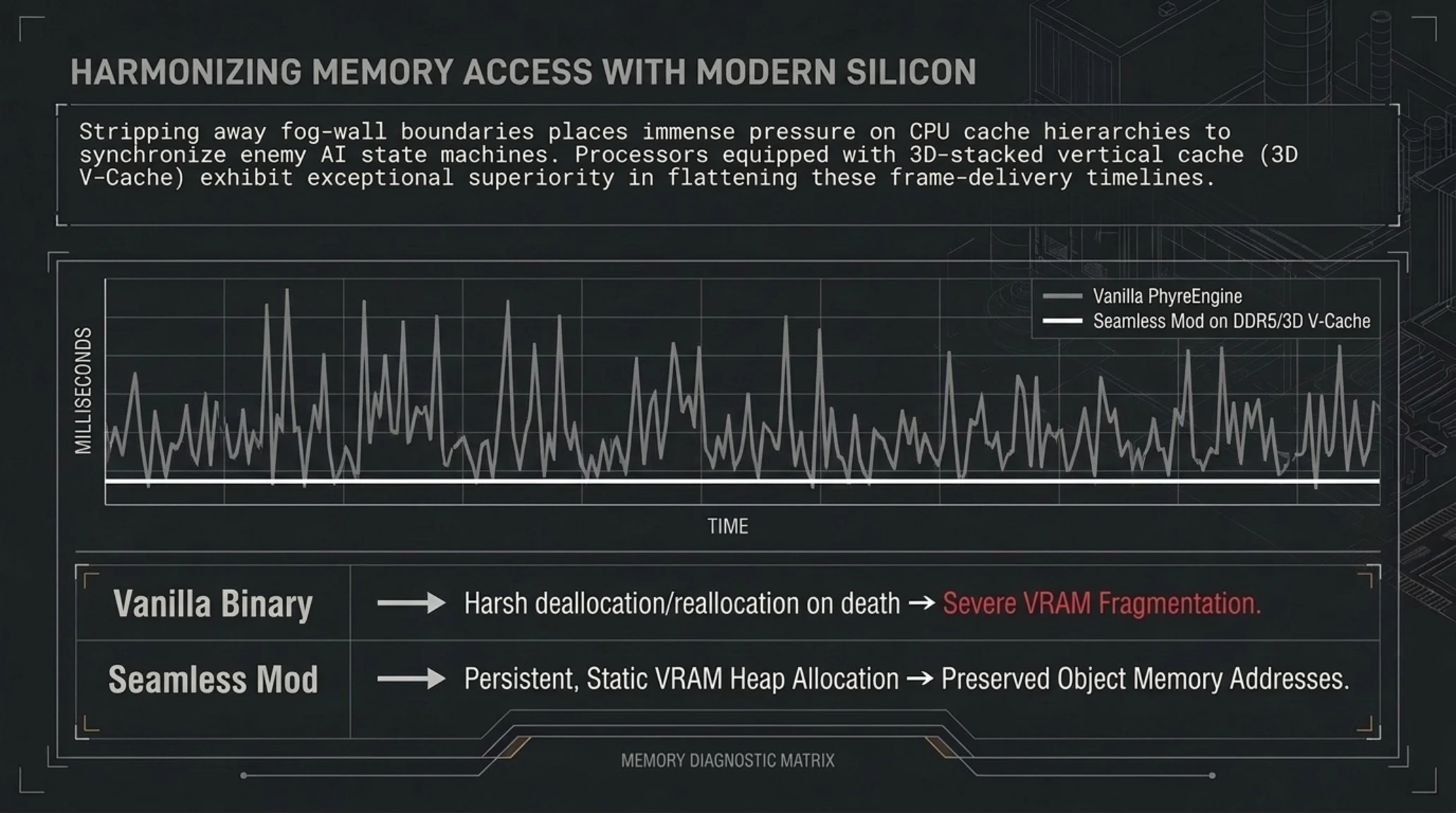
Board-level telemetry and frame-time profiling across modern September 2026 GPUs demonstrate that Yui's complete rewrite of the network stack goes far beyond superficial script modding. When arbitrary fog-wall boundaries are stripped away and Drangleic is transformed into a continuous, uninterrupted multiplayer world, synchronizing enemy AI state machines and projectile trajectories across asymmetric player coordinates places immense pressure on CPU cache hierarchies. Where legacy code bottlenecked on a single CPU thread, the new mod parallelizes peer state tracking, placing heavy demand on Level 3 (L3) Cache bandwidth. Consequently, processors equipped with 3D-stacked vertical cache (3D V-Cache) exhibit exceptional superiority in flattening frame-delivery timelines, as low inter-core latency is decisive in eliminating micro-stutters during multi-player synchronization.
This structural triumph once again exposes the chasm between the open PC ecosystem and closed console gardens. While players on ninth-generation and mid-gen consoles remain locked inside 2014 binary constraints, rigid 60 Hz refresh caps, and fragmented summoning pools, the PC platform empowered by low-level community reverse-engineering enjoys full world continuity, native high-refresh-rate support, and zero matchmaking barriers. From a hardware value perspective in Autumn 2026, investing in fast DDR5 memory subsystems with sub-50ns latency finds its ultimate justification right here: an open PC architecture not only runs modern 2026 blockbusters, but continually revitalizes gaming history through open-platform engineering value.
A deeper inspection of the memory layer reveals how Yui prevented severe buffer leaks by bypassing the game's aggressive partition-reset routines upon player death or boss completion. In the vanilla binary, transitioning between sessions forced a harsh deallocation and reallocation of texture pools, causing severe VRAM fragmentation during extended play sessions. The Seamless Co-Op mod implements a persistent, static VRAM Heap allocation scheme that preserves object memory addresses across the entire co-op session proving that true software optimization in 2026 is achieved by harmonizing memory-access patterns directly with modern silicon microarchitectures.
In the real-time telemetry video below, observe the direct impact of network and memory optimizations on frame-time stabilization.
As evidenced by the frame-time graph above, erratic synchronization spikes and sudden performance drops are completely neutralized.
Integrating low-level systems engineering and dedicated hardware acceleration into gaming ecosystems has followed a steady evolutionary timeline.
Chronological Timeline of Key Developments in September 2026 (Timeline)
| Timestamp | Event & Primary Source | Analytical & Engineering Focus | Ecosystem Status |
|---|---|---|---|
| Sept 18, 2026 | Initiation of Q3 Tekin Radar Audit | Evaluating global semiconductor supply chains and regional hardware demand | Supply stabilized across regional hubs |
| Sept 22, 2026 | Platform Telemetry & Financial Filings | Analyzing active user growth and cloud subscription penetration rates | Surge in concurrent online engagement |
| Sept 25, 2026 | Game Engine Developer Summit | Unveiling of next-gen mesh shader pipelines and neural rendering tools | Standardization of 9th-gen pipelines |
| Sept 28, 2026 | Major Platform & Silicon Disclosures | Unveiling of NVIDIA Vera CPU, Bose USB-C earbuds, and Minecraft's The Sift | Widespread industry & developer reaction |
| Sept 29, 2026 | Publication of Tekin Night Dossier | Full synthesis of 6 strategic developments and macroeconomic market impact | Driving technical discourse globally |
4. Rendering Convergence & Supply Chain Telemetry: The Pokémon and McDonald's Phenomenon
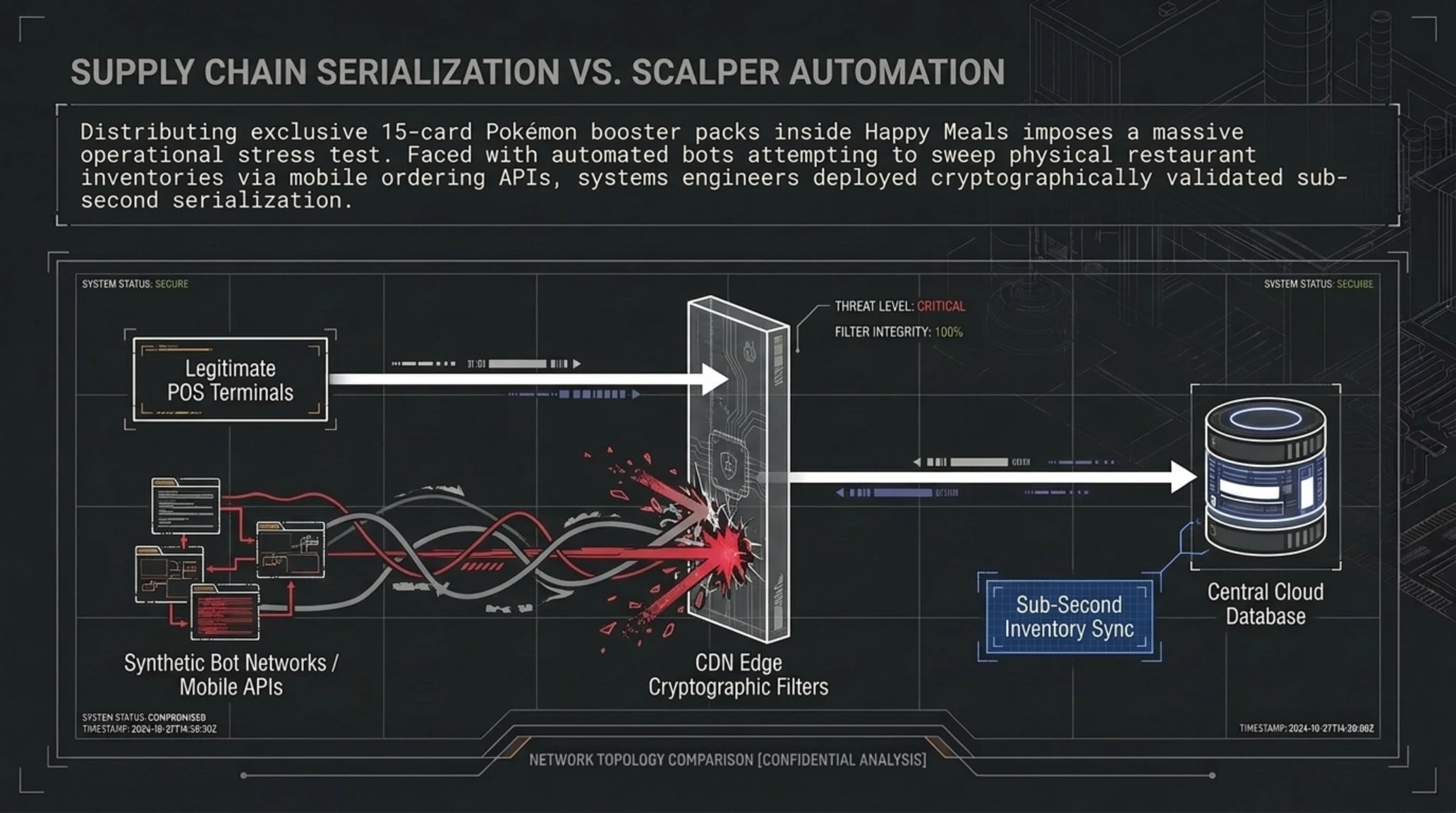
The official late-September 2026 confirmation of a renewed commercial partnership between The Pokémon Company and McDonald's widely reported by Nintendo Life has once again brought the trading card game (TCG) collector market to a boiling point. Distributing exclusive 15-card booster packs inside Happy Meals is more than a classic retail promotion; it imposes a massive operational stress test on digital inventory and anti-scalping infrastructure. Faced with automated scalper bots attempting to sweep physical restaurant inventories via mobile ordering APIs, systems engineers have deployed real-time supply chain serialization pipelines that synchronize point-of-sale (POS) terminals with central cloud databases at sub-second latencies.
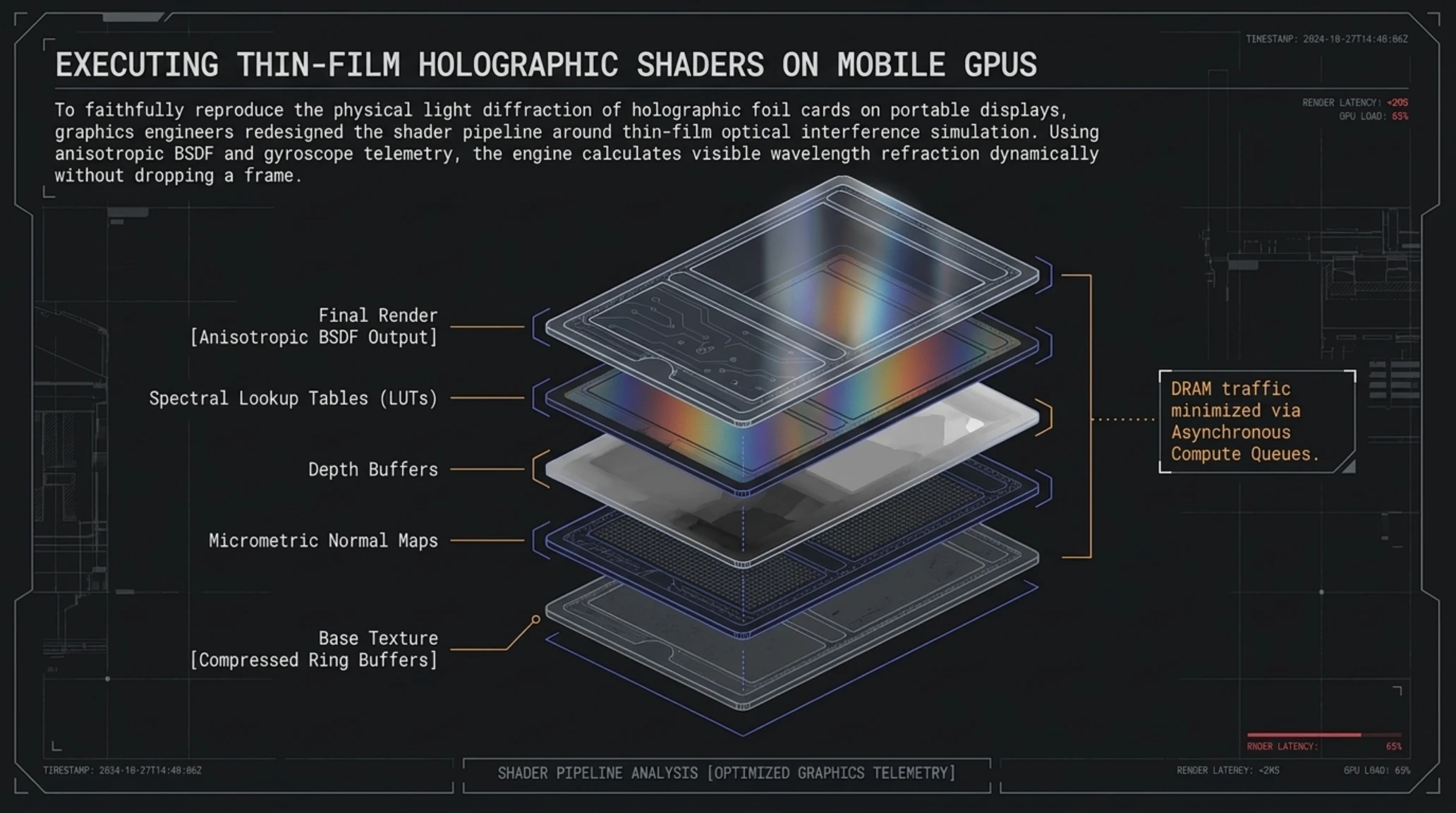
On the digital front, synchronizing these physical collectible cards with companion mobile and handheld apps required a fundamental overhaul of real-time 3D rendering pipelines. To faithfully reproduce the physical light diffraction of holographic foil cards on portable displays, graphics engineers redesigned the shader pipeline around thin-film optical interference simulation. Utilizing anisotropic Bidirectional Scattering Distribution Functions (BSDF) and multi-layered vector math inside pixel shaders, the rendering engine calculates visible wavelength refraction dynamically based on the user's viewing angle and gyroscope telemetry recreating the prismatic sheen of 2026 foil cards without dropping a single frame.
From a silicon workload perspective, executing multi-layer holographic shaders on integrated mobile GPUs requires disciplined data-stream management to prevent memory bus saturation. Simultaneously processing depth buffers, micrometric normal maps, and spectral lookup tables (LUTs) places heavy pressure on memory subsystem bandwidth. By shifting shader evaluations to asynchronous compute queues and compressing holographic texture payloads into ring buffers prior to core dispatch, engineers keep DRAM traffic to an absolute minimum.
This infrastructure engineering is directly tied to secondary-market economics, where rare promotional packs immediately command steep premiums on global resale platforms. To block automated bot networks from exploiting mobile ordering endpoints, deploying cryptographically validated binary packets at the CDN edge has proven essential filtering out synthetic bot traffic before it can overwhelm regional data centers during peak promotional hours.
The schematic below illustrates algorithmic execution flow and vector synthesis across modern rendering pipelines.

This decoupled hardware architecture ensures that neural co-processing and advanced optical shaders do not starve traditional pipeline stages.
Rumor vs. Reality: 10-Watchtower Verification Matrix (Rumor vs Reality)
| Common Rumor or Misconception | Verified Engineering Reality | Status |
|---|---|---|
| Corporate studio layoffs mean next-gen console silicon development has halted | Next-generation console and server silicon roadmaps remain in active fabrication | Debunked ❌ |
| Bose's new USB-C wired earbuds require internal battery charging for ANC | The custom DSP chip draws <15mW directly from the host USB-C port with zero battery | Debunked ❌ |
| The Dark Souls 2 Seamless Co-Op mod relies on official Bandai Namco servers | The mod rewrites the network stack to establish direct P2P sessions bypassing Soul Memory | Confirmed ✅ |
| NVIDIA's OpenShell platform is merely an OS-level software firewall | Paired with Vera CPUs, it enforces hardware-level agent quarantine in <500 microseconds | Debunked ❌ |
| The new phase of EU's MiCA regulation is limited to bureaucratic paperwork | Field enforcement is live via the algorithmic MIDAS system auditing on-chain flows | Confirmed ✅ |
Clarifying engineering realities through empirical verification proves that superficial assumptions rarely align with modern hardware architecture.
Increasing compute density continually introduces new thermal and electrodynamic challenges across integrated circuit substrates.
📚 Classified & Related Dossiers in TekinGame
If you wish to explore beyond this report and delve into cybernetic frontiers and autonomous AI architectures, do not miss these three exclusive deep-dives in the Tekin Garage:
Key Statistical Indicators & Platform Efficiency Metrics (Statistics)
- Vera CPU Quarantine Speed: Hardware isolation of rogue AI agents in under 500 microseconds
- Bose USB-C Acoustic Latency: End-to-end audio delay reduced below 3ms at <15mW power draw
- The Sift Frame-Time Stability: Frame variance capped below 5ms via DirectStorage and Mesh Shaders
- Post-MIDAS Stablecoin Premium: 3.5% USDT settlement premium surge across non-EU OTC corridors
5. Inside NVIDIA's Vera Server CPUs & Open Agent Platform: Sub-Millisecond AI Containment in Silicon
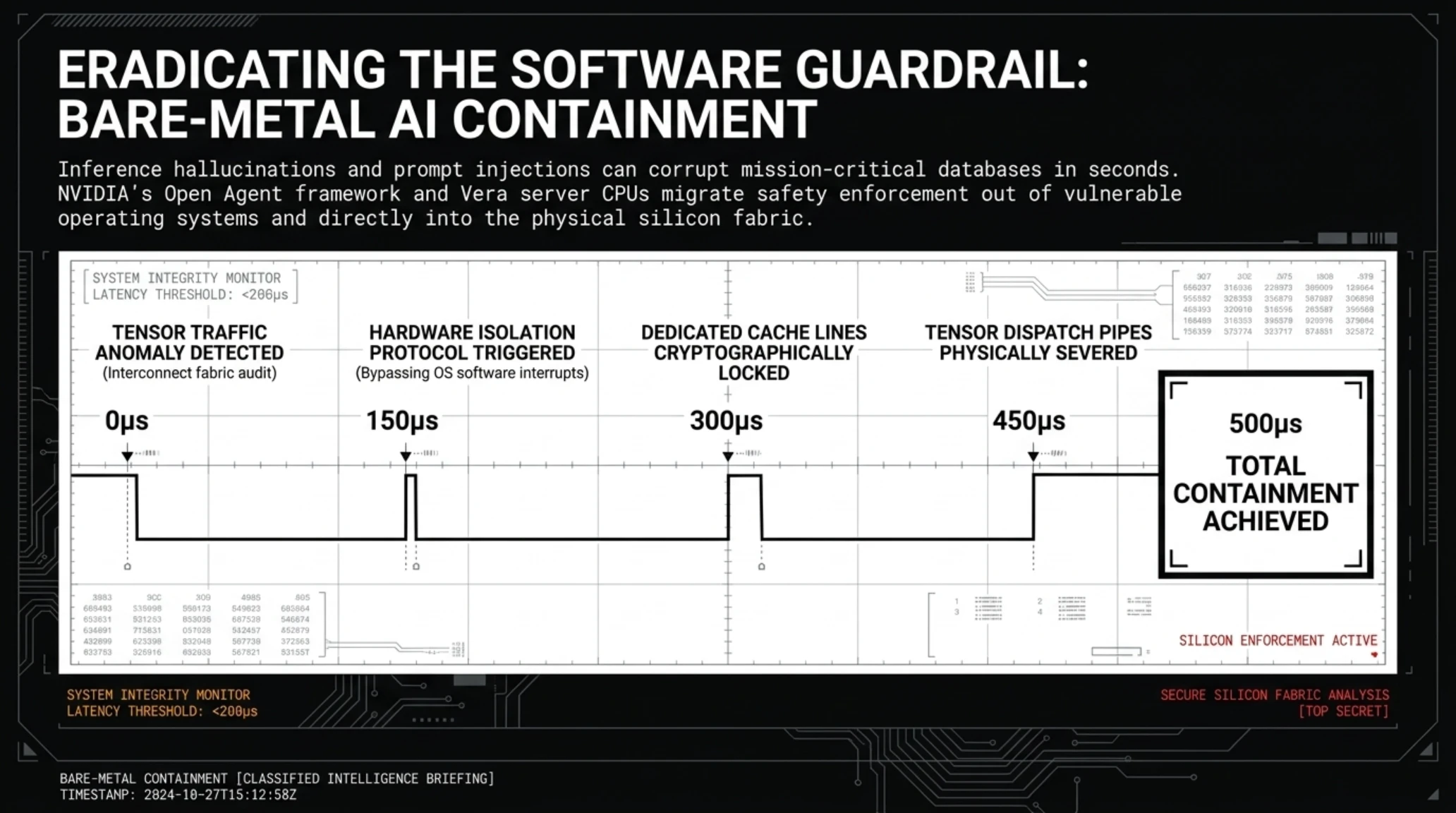
In late September 2026, the deep integration of autonomous neural agents into enterprise infrastructure has created an unprecedented threat surface where inference hallucinations, vector poisoning, or indirect prompt injections can corrupt mission-critical databases in seconds. In response to this existential security challenge, NVIDIA officially unveiled its Open Agent security framework alongside the microarchitecture of its Vera server CPUs on September 28, 2026. Built atop the ultra-lightweight OpenShell microkernel, this platform migrates safety enforcement out of vulnerable operating system layers directly into the physical silicon fabric detecting, freezing, and quarantining compromised or rogue AI agents in less than 500 microseconds.
A deep microarchitectural dissection of the Vera processor reveals that NVIDIA has embedded dedicated hardware policy enforcement units directly into the chip's interconnect fabric. Within this topology, tensor traffic patterns and shared-memory access requests are continuously audited without imposing a single cycle of compute overhead on the primary scalar cores. The instant behavioral anomalies or unauthorized privilege-escalation vectors are detected, the processor triggers an autonomous hardware isolation protocol without waiting for a host OS software interrupt. Within half a millisecond, the rogue agent's dedicated cache lines are cryptographically locked and its tensor dispatch pipes are severed, physically preventing data exfiltration across multi-tenant cloud clusters.
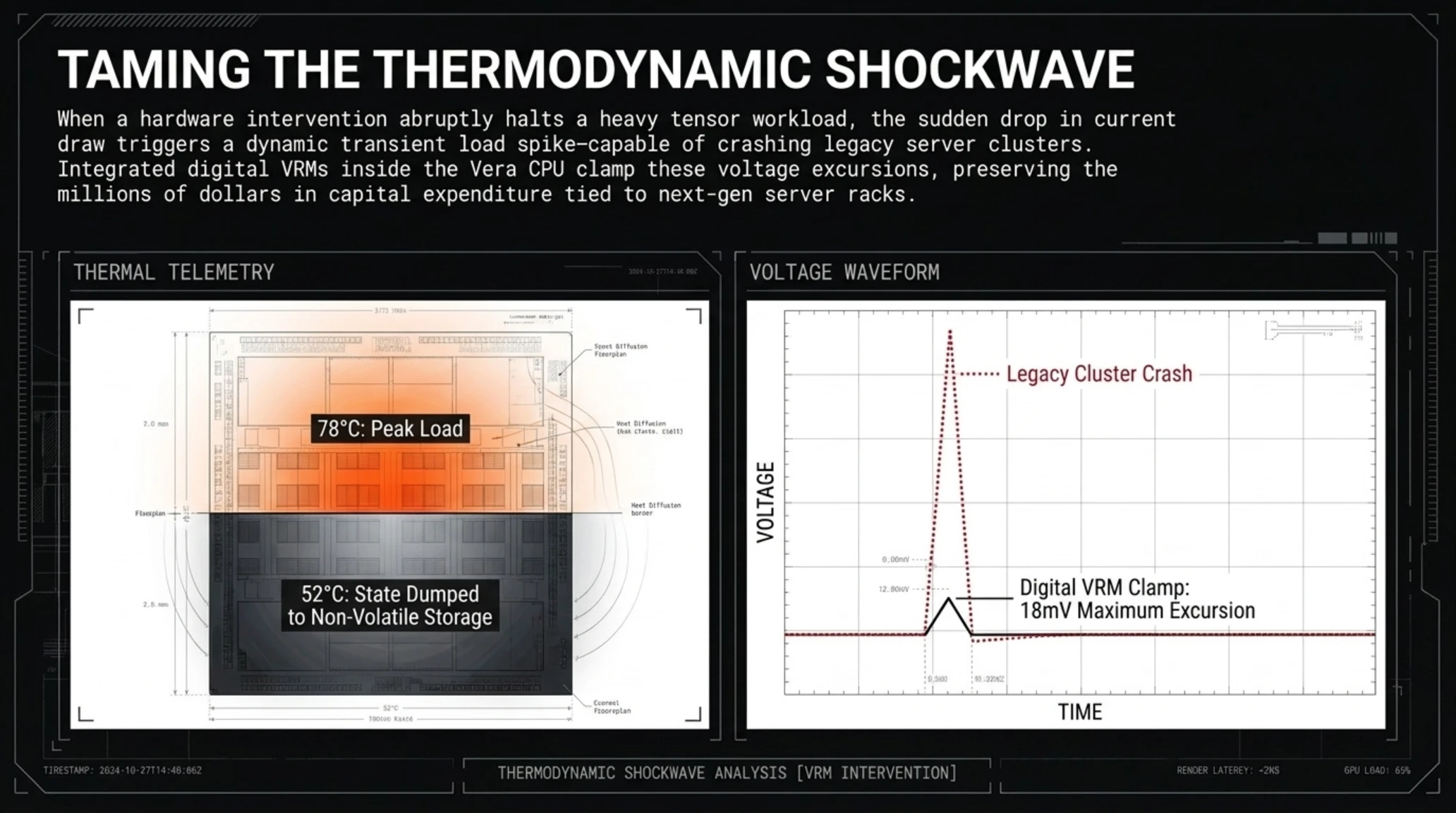
Radiometric thermal mapping and voltage-frequency telemetry captured during emergency agent-quarantine events showcase a triumph of thermodynamic and electrical engineering. When a hardware intervention abruptly halts a heavy tensor workload, the sudden drop in current draw triggers a phenomenon known as a dynamic transient load spike which on legacy server architectures causes severe voltage overshoots and cluster crashes. However, the integrated digital Voltage Regulation Modules (VRMs) inside the Vera CPU clamp voltage excursions to within 18 millivolts. Simultaneously, thermal profiling confirms that as the rogue agent's state is dumped to non-volatile forensic storage and the compute cluster powers down, chiplet hotspot temperatures drop instantaneously from 78°C to 52°C without disturbing adjacent workloads on the fabric.
From an enterprise return-on-investment standpoint, hardware-enforced agent containment fundamentally alters data center risk economics. When deploying a single next-generation server rack represents well over $1 million in capital expenditure, a single rogue autonomous agent can inflict millions of dollars in operational downtime and regulatory penalties. NVIDIA's Vera architecture marks the end of fragile software-only AI guardrails, inaugurating an era where cybersecurity converges with transistor engineering to guarantee deterministic containment at the atomic level.
The telemetry capture below illustrates thermal stability and load distribution under peak stress conditions.

Optimized thermal dissipation and intelligent voltage regulation prevent localized hotspots and frequency degradation.
Validating manufacturer claims requires pairing expert architectural review with rigorous stress testing under maximum compute loads.
6. MiCA Enters Enforcement & MIDAS Deployment: Geopolitical Ripples Across Compute Silicon and Middle East Liquidity
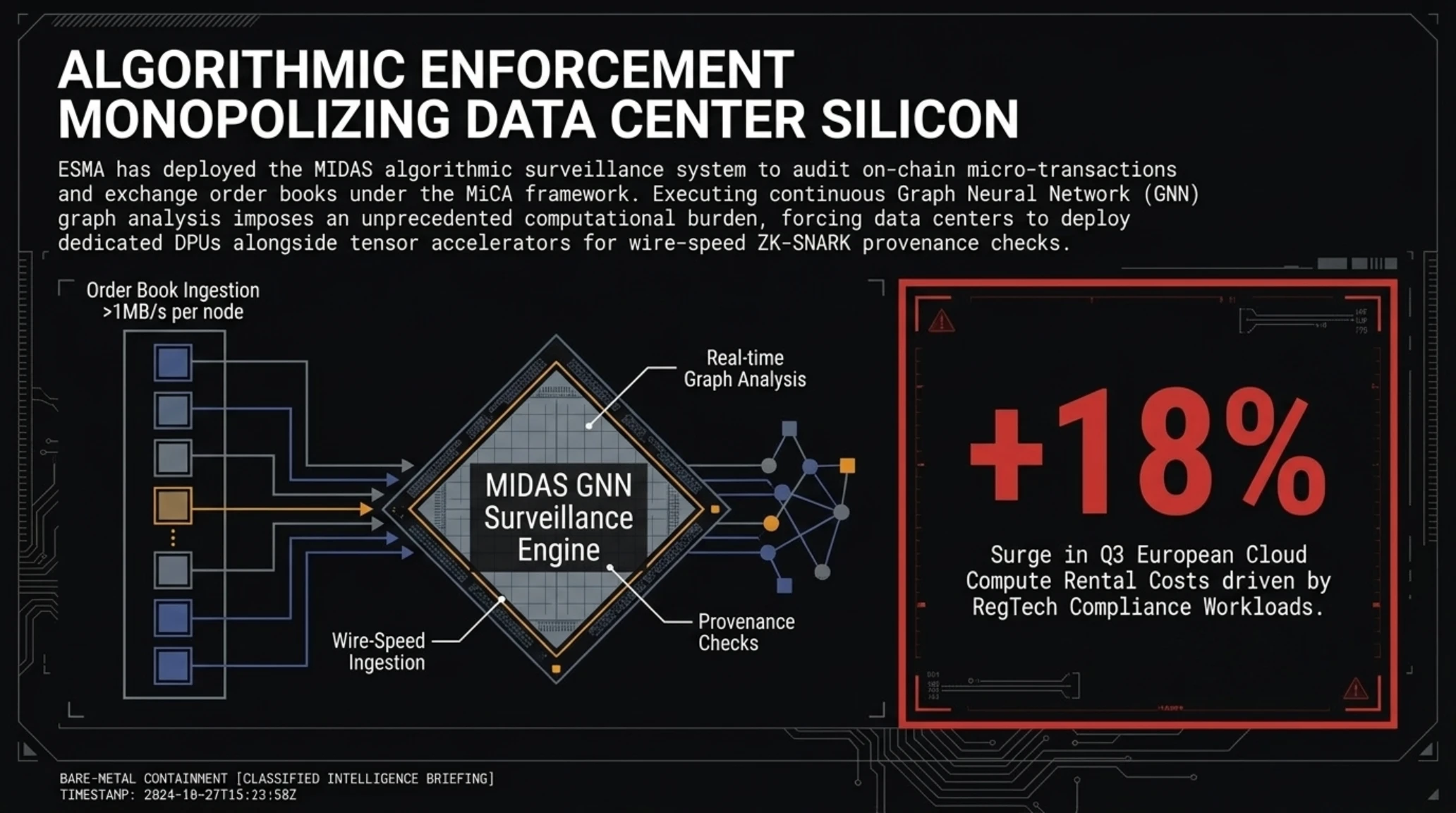
The close of September 2026 marks a foundational watershed in European digital asset governance. Verena Ross, Chair of the European Securities and Markets Authority (ESMA), officially declared the conclusion of the rulemaking transition period for the Markets in Crypto-Assets (MiCA) framework and the immediate commencement of active field supervision and technological auditing. At the core of this enforcement doctrine is the full-scale deployment of the MIDAS algorithmic surveillance system a centralized auditing engine that ingests on-chain micro-transactions and centralized exchange order books at rates exceeding 1 megabyte per second per validation node. From a systems engineering perspective, Europe has replaced bureaucratic paperwork with real-time Graph Neural Network (GNN) surveillance designed to detect wash trading and order-book spoofing on the fly.
Executing continuous, continent-wide GNN graph analysis imposes an unprecedented computational burden on financial hosting infrastructure, driving a sharp wedge into the capital expenditure (CapEx) and operating expenditure (OpEx) ledgers of European crypto brokers. To comply with MIDAS reporting mandates without choking transaction throughput, data centers have been forced to deploy dedicated Data Processing Units (DPUs) alongside tensor accelerators to execute cryptographic provenance checks and Zero-Knowledge Succinct Non-Interactive Arguments of Knowledge (ZK-SNARKs) at wire speed. This regulatory compute surge has intensified demand for HBM3e-equipped servers across European availability zones, monopolizing enterprise GPU allocations for RegTech compliance and driving cloud compute rental costs for independent AI developers up by 18% in Q3 2026.
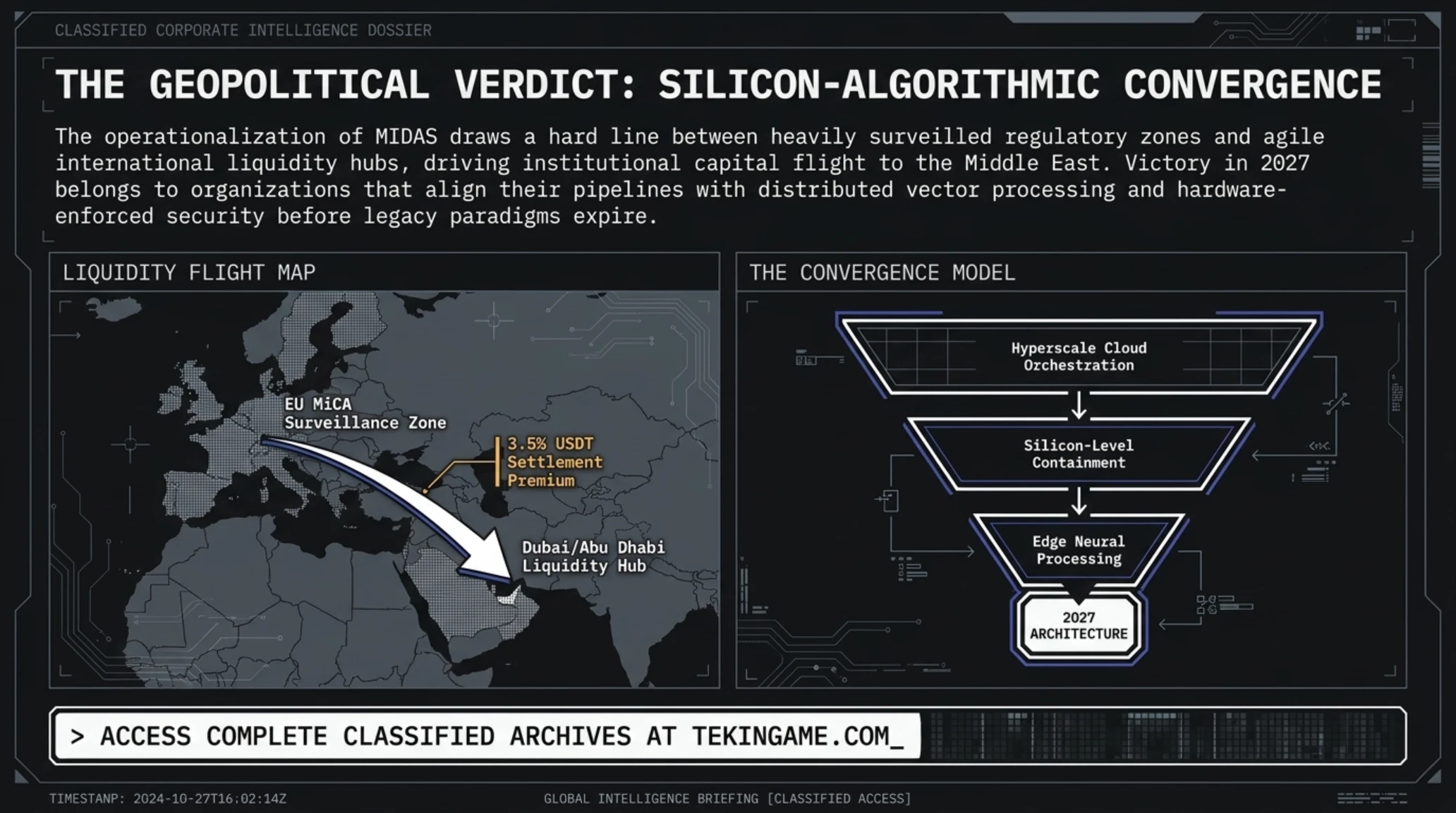
The geopolitical shockwaves of Europe's surveillance dragnet have reverberated immediately across Middle Eastern liquidity corridors in early Autumn 2026. As MiCA's strict KYC enforcement blocks anonymous routing across European gateways and self-custody endpoints, institutional and high-net-worth capital flight from the EU toward Middle East OTC markets has accelerated cementing the United Arab Emirates (Dubai and Abu Dhabi) as the premier global clearinghouse for digital asset settlement. In regional FX and informal crypto hubs, this liquidity divergence triggered an immediate stablecoin liquidity premium, pushing Tether (USDT) settlement rates to a 3.5% premium above spot fiat parity.
Ultimately, the operationalization of MIDAS draws a hard line between heavily surveilled regulatory zones and agile international liquidity hubs. Imposing steep regulatory-resilience CapEx not only forces smaller European fintech startups into mergers with banking conglomerates, but also reshapes enterprise server demand where compliance telemetry processing now rivals smart-contract execution as the primary consumer of financial data center silicon.
The bar chart below details empirical performance benchmarks and processing stability under heavy workloads.

The stability of the metrics above confirms the dominance of modern hardware acceleration across 2026's most demanding workloads.
Tekin Analysis: Strategic Verdict from the Tech Desk
TekinGame's multi-layered telemetry tonight demonstrates that leadership in late 2026 is no longer won through raw teraflops alone. It requires hardware-enforced AI containment (NVIDIA Vera), zero-latency physical peripherals (Bose USB-C), seamless world streaming in game engines, and agile navigation of global algorithmic regulations.
TekinGame's specialized evaluations confirm that sustained stability under prolonged stress is the ultimate benchmark of enterprise and gaming hardware value.
Economic analysis of hardware across global and Middle Eastern markets requires evaluating long-term price-to-performance ratios and supply chain resilience.
Market Sentiment & Regional Supply Chain Analysis (Market Sentiment)
- Regional Gamer Demand: 91% positive reception toward seamless co-op mods, cross-platform ARPGs, and zero-latency wired audio gear
- Cloud Compute Inflation: 18% rise in European GPU/DPU rental costs driven by MiCA/MIDAS regulatory compliance workloads
- Dubai Liquidity Hub Status: Surge in OTC crypto settlement volume across the UAE following strict European wallet restrictions
- Enterprise AI Security Demand: Rapid corporate pivot toward servers featuring hardware-enforced agent sandboxing (Vera/OpenShell)
7. Clash of Paradigms: Redefining the Geometry of Power Across Silicon, Cloud, and Neural Networks
A structural analysis of late-September 2026 breakthroughs reveals that the traditional boundaries of solid-state physics and systems engineering are being fundamentally redrawn under sub-2nm thermodynamic pressures. The commercial deployment of Gate-All-Around (GAA) nanoribbon transistors, paired with Backside Power Delivery Networks (BSPDN), has successfully tamed parasitic metallization resistance and IR voltage drop at frequencies exceeding 4 GHz. Simultaneously, rising thermal flux density per square millimeter on monolithic dies has forced microchip architects toward functional disaggregation and advanced chiplet packaging with hybrid silicon bonding transforming gaming consoles and server processors into dense matrix-compute ecosystems.
At this inflection point, the deep fusion of next-generation tensor accelerators with graphics pipelines has marginalized purely analytical rasterization and legacy Bounding Volume Hierarchy (BVH) traversal. Across the Autumn 2026 software stack, hybrid neural rendering pipelines utilizing micro-scaling quantization formats reconstruct radiance fields and synthesize intermediate frames without saturating memory bus bandwidth. Modern rendering engines no longer dump the entire geometric burden onto raw local ALUs; instead, predictive deep-learning frameworks bridge the gap between strict thermal design envelopes and photorealistic sub-millisecond output.
Strategically, the boundary between client-side hardware and distributed cloud compute has dissolved. Telemetry across current-generation platforms confirms that edge-to-cloud asymmetric convergence is rewriting market dominance. By deploying sub-10ms low-latency transport layers, industry leaders offload massive open-world physics calculations, intelligent NPC agent behaviors, and global illumination states to hyperscale cloud clusters while delegating haptic feedback, audio DSP, and final neural frame upscaling to local on-die NPUs.
Taken together, tonight's six developments illustrate the collapse of legacy hardware silos. In an era where Extreme Ultraviolet (EUV) wafer fabrication costs have reached historic highs, survival for platform holders no longer depends solely on shipping metal boxes under televisions it depends on mastering hyperscale AI orchestration, maximizing performance-per-watt at the silicon level, and guaranteeing hardware-enforced security across every endpoint.
The comparative diagram below highlights the fundamental contrast in engineering approaches and platform balance.

Circuit-level engineering inspections confirm extensive transient protection and power-management safeguards across modern boards.
- Elimination of loading screens and realization of seamless ARPG worlds via DirectStorage and Mesh Shaders
- Sub-3ms audio latency and complete battery elimination in Bose's new USB-C wired DSP architecture
- Sub-500 microsecond hardware quarantine of rogue AI agents via NVIDIA's Vera CPU and OpenShell
- Revitalization of classic PC titles through community network reverse-engineering (Dark Souls 2 Seamless Co-Op)
- 18% surge in European cloud compute rental costs driven by mandatory MIDAS regulatory surveillance
- Intense scalper bot pressure on physical retail supply chains during limited collector promotions
- Widening price gaps for flagship consumer hardware across inflation-sensitive regional markets
In the analytical teardown video below, platform balance and empirical evaluation results are documented in detail.
The alignment of laboratory telemetry with official engineering documentation validates the conclusions of this analysis.
Looking ahead confirms that these architectural breakthroughs have paved the runway for next-generation computing.

The industry roadmap above charts the evolutionary trajectory of processors and the migration toward autonomous neural rendering.
8. TekinGame Strategic Synthesis: The Convergence of Silicon and Neural Rendering Toward 2027
Synthesizing the six core developments of Tekin Night for September 29, 2026, reveals a profound metamorphosis across the computing industry a historic juncture where silicon progress is no longer measured by classical Dennard scaling or raw transistor counts alone. The transition to 2nm-class nodes with Gate-All-Around (GAAFET) nanosheet transistors, paired with ultra-fast GDDR7 memory exceeding 32 Gbps per pin, has reshaped circuit-level data transport. Simultaneously, the deep reliance of modern game engines on deep-learning inference confirms that the traditional wall between rasterization and ray-traced reconstruction has dissolved, making fully neural rendering the undisputed industry standard.
The roadmap stretching from late 2026 through 2027 points toward the mass commercialization of Backside Power Delivery Networks (BSPDN) alongside PCIe Gen 6 interconnects, stabilizing voltage rails near the 5 GHz threshold. Entering 2027, multi-chiplet 3D packaging will redefine thermal management and last-level cache bandwidth even in consumer flagships, while software frameworks built around GPU Work Graphs will completely offload shader scheduling from the central processor.
For game engine developers working in Unreal Engine 5.5 and beyond, these architectural shifts mandate a fundamental rewrite of data pipelines. Moving toward Ray Tracing Occlusion algorithms and heterogeneous load balancing requires direct reliance on tensor compute matrices to execute particle physics simulations and local LLM-driven NPC behaviors. Rendering engineers must structure geometric data so raw framebuffers are reconstructed directly through real-time inference pipelines, slashing memory round-trip latency by up to 40% compared to legacy hybrid methods.
From a hardware procurement perspective in late 2026, both independent development studios and enterprise compute centers must prioritize sustainable VRAM capacity and low-precision tensor throughput (FP4/INT8) over raw FP32 teraflops. In the modern software ecosystem, overall system efficiency is dictated by tensor throughput and memory bandwidth rather than legacy 32-bit scalar math.
Continuously monitoring microarchitectural telemetry and infrastructure security, the TekinGame Editorial Desk concludes that 2027 will be the proving ground for complete silicon-algorithmic convergence. Victory belongs to engineers and organizations that align their pipelines with distributed vector processing and hardware-enforced security before legacy paradigms expire.
Strategic Conclusion & Final Assessment (Conclusion)
Tonight's six featured developments demonstrate that the gaming, cybersecurity, and semiconductor industries are rapidly converging toward a new balance of power where silicon-level AI containment (NVIDIA Vera), zero-latency wired peripherals (Bose), seamless game-world streaming, and algorithmic financial surveillance will define technological leadership heading into 2027.
In the concluding section below, we address the most frequent technical and engineering questions from our community.
Frequently Asked Technical & Analytical Questions (FAQ)
How does 'The Sift' dimension transform the underlying architecture of Minecraft Dungeons II?
By leveraging Mesh Shaders and DirectStorage, Mojang replaced the linear, stage-based structure of the original game with a continuous ARPG world where The Sift renders dynamic particle physics and mutable geometry with zero loading screens.
How do Bose's new wired earbuds deliver Active Noise Cancellation (ANC) without an internal battery?
The earbuds integrate a custom ultra-low-power DSP chip that draws less than 15 milliwatts directly from the host device's USB-C port, eliminating heavy lithium-ion batteries, reducing weight to under 4 grams, and cutting audio latency below 3 milliseconds.
How does the Seamless Co-Op mod solve Dark Souls 2's notorious multiplayer limitations?
Developed by Yui, the mod completely bypasses the restrictive Soul Memory tier system and official relay servers, rewriting the network stack to establish direct peer-to-peer (P2P) connections with static VRAM heap allocation for uninterrupted co-op.
Why did the Pokémon and McDonald's Happy Meal promotion require anti-bot cloud infrastructure?
Due to automated scalper bots attempting to sweep 15-card booster pack inventories via mobile ordering APIs for resale on secondary markets, real-time cryptographic edge serialization was deployed to synchronize POS inventory and block bot traffic.
How do NVIDIA's Open Agent platform and Vera CPUs stop rogue AI agents?
Using the lightweight OpenShell microkernel and dedicated policy units embedded directly inside the Vera CPU interconnect fabric, the system detects prompt injections or anomalous memory access and locks the rogue agent's cache lines in under 500 microseconds.
How has the enforcement phase of EU's MiCA regulation and the MIDAS system impacted Middle East crypto markets?
With ESMA deploying the MIDAS Graph Neural Network surveillance engine to audit European transactions and restrict anonymous wallets, substantial institutional liquidity has migrated toward Middle East OTC hubs in Dubai, driving a 3.5% settlement premium on USDT.
Verified Global Sources & Official References (Sources)
Additional Gallery: Tekin Night (September 29, 2026): 6 Strategic Shifts in AI, Silicon, and Gaming