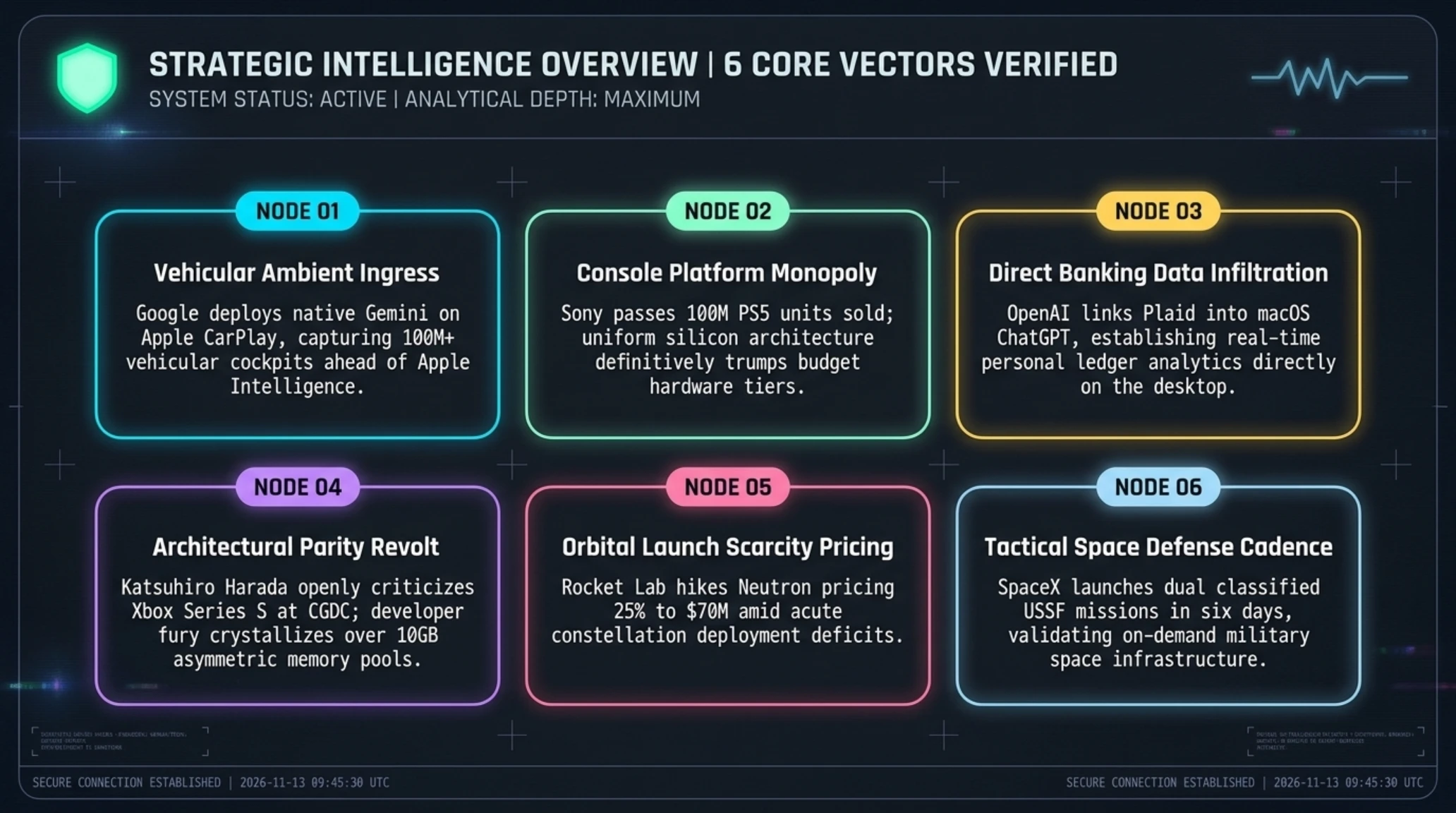
Tekin Morning for Nov 13, 2026 dissects six major shifts: (1) Google deploying a native Gemini app on Apple CarPlay; (2) Sony's PlayStation 5 officially surpassing 100 million units sold; (3) ChatGPT Finances integrating Plaid protocols on macOS; (4) Katsuhiro Harada openly slamming Xbox Series S memory bottlenecks at CGDC; (5) Rocket Lab raising Neutron launch pricing to $70 million amid megaconstellation demand; and (6) SpaceX's dual USSF-627 military launches.
Tekin Analysis | Morning Executive Intelligence Briefing November 13, 2026
The closing days of autumn 2026 are demonstrating a fundamental restructuring of technological value across global markets. Rather than speculative parameter races or abstract research whitepapers, commercial dominance is now decided at physical points of ingress: the automotive dashboard screen, living-room console silicon, enterprise desktop terminals, and orbital launchpads. This Friday morning edition of Tekin Executive Intelligence examines six pivotal structural moves that illustrate how infrastructure ownership dictates corporate longevity.
Foremost among these developments is Google executing a masterstroke of platform infiltration. By launching a standalone, native Gemini application directly within Apple CarPlay, Mountain View has effectively outflanked Cupertino on its own vehicular glass, establishing full conversational duplex audio and enterprise Workspace integration before Apple Intelligence achieves full automotive maturity. Concurrently, the gaming hardware landscape has split wide open, contrasting Sony celebrating an undisputed 100-million-unit milestone for PlayStation 5 with senior studio directors publicly castigating Microsoft for the technical shackles imposed by the Xbox Series S.
Strategic Intelligence Overview | Core Vectors
In parallel, the expansion of ChatGPT Finances into macOS desktop clients signals OpenAI transition from casual generative chat toward hardened financial data operations, driven by programmatic Plaid API conduits. Beyond Earth atmosphere, aerospace logistics are undergoing a radical repricing: Rocket Lab has leveraged acute constellation backlogs to increase the Neutron launch price to $70 million, while SpaceX demonstrated military-grade turnaround by flying two classified Space Force missions in under a week from Vandenberg.
What unites these disparate domains is the death of digital friction. In 2026, tech giants have abandoned walled-garden exclusivity when commercial distribution dictates cross-platform invasion. Users no longer tolerate clunky intermediary bridges; they demand conversational intelligence embedded into their steering wheels, institutional banking balances parsed within their desktop operating systems, and high-fidelity graphics rendered without silicon compromise. The six nodes analyzed below form the definitive blueprint of this infrastructure epoch.
Node 1: Google Infiltrates Apple CarPlay with Dedicated Gemini App, Delivering Real-Time Conversational Intelligence to 100M+ Vehicles
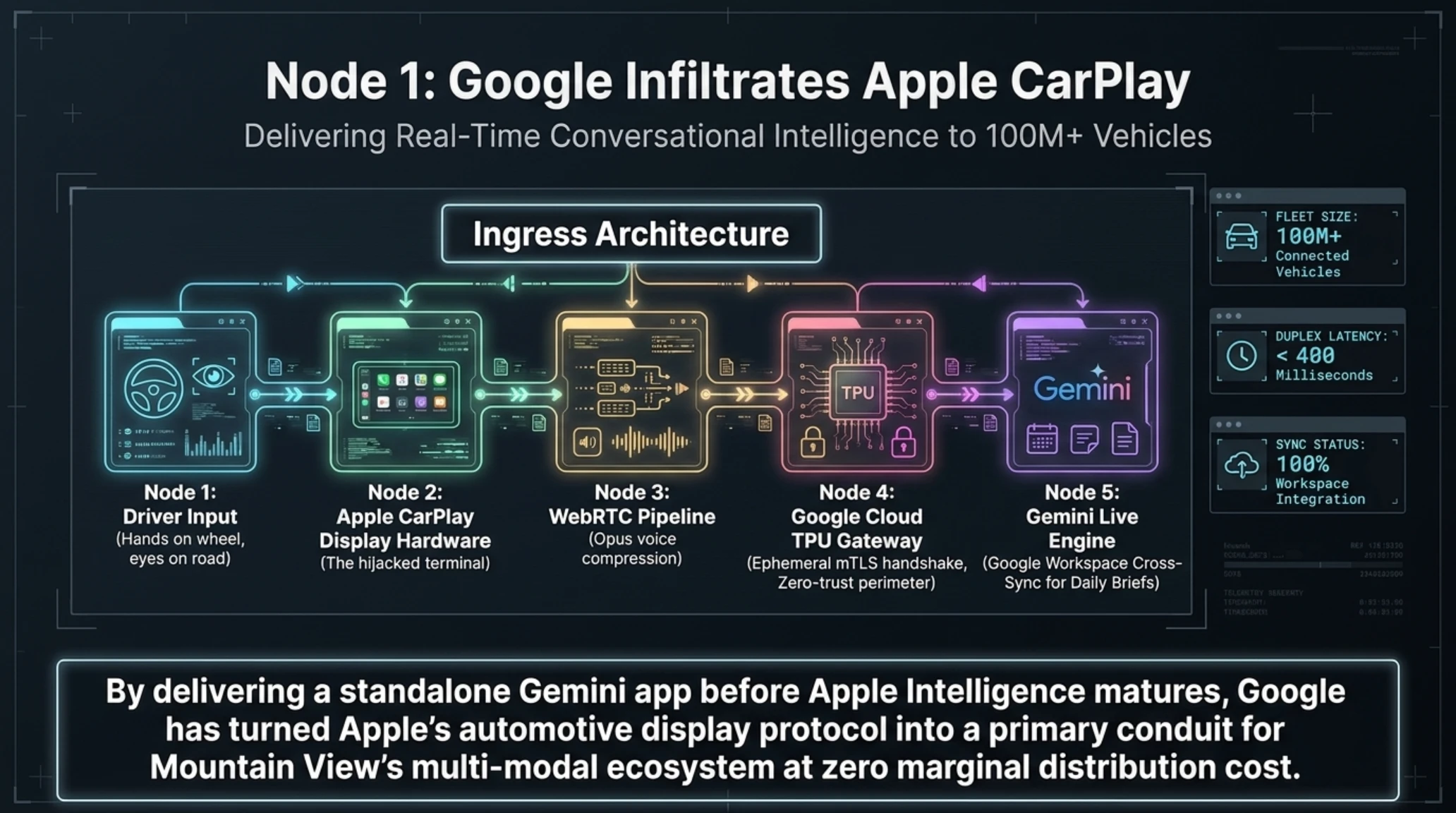
On November 11, 2026, Google officially deployed a standalone, purpose-built Gemini application for Apple CarPlay. While previous iterations relegated Google conversational intelligence to basic location queries inside the Google Maps container, this release introduces a dedicated automotive dashboard experience centered around low-latency, full-duplex speech via the Gemini Live engine.
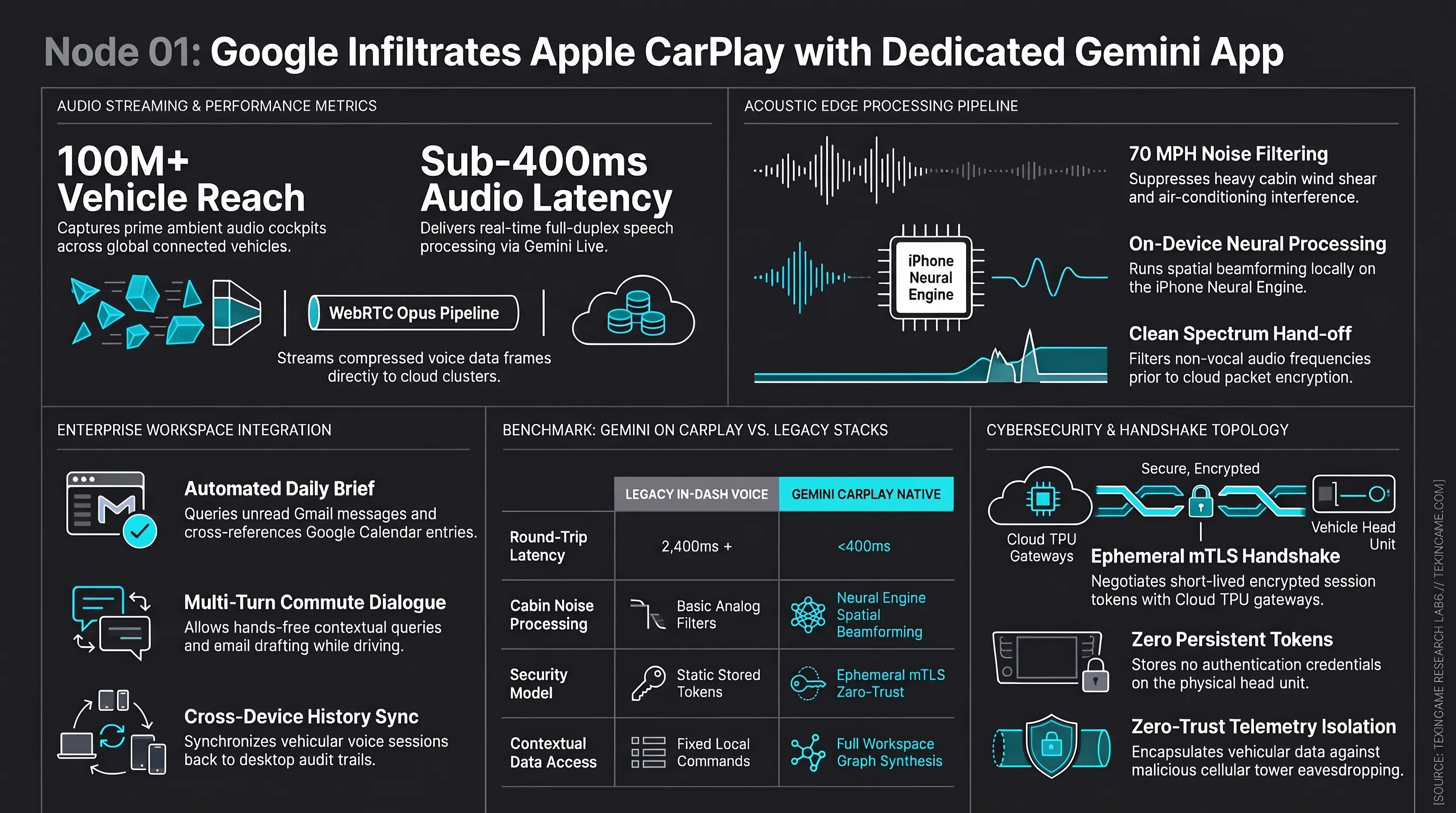
The technical architecture underlying this vehicular deployment bridges localized acoustic processing with elastic cloud clusters. Running over a heavily optimized WebRTC streaming pipeline with Opus voice compression, the system sustains conversational round-trip latencies below 400 milliseconds. Drivers can engage in natural, multi-turn dialogues, interrupt responses mid-sentence, shift contextual constraints, and request synthesis across personal data graphs without taking their hands off the steering wheel or looking away from traffic conditions.
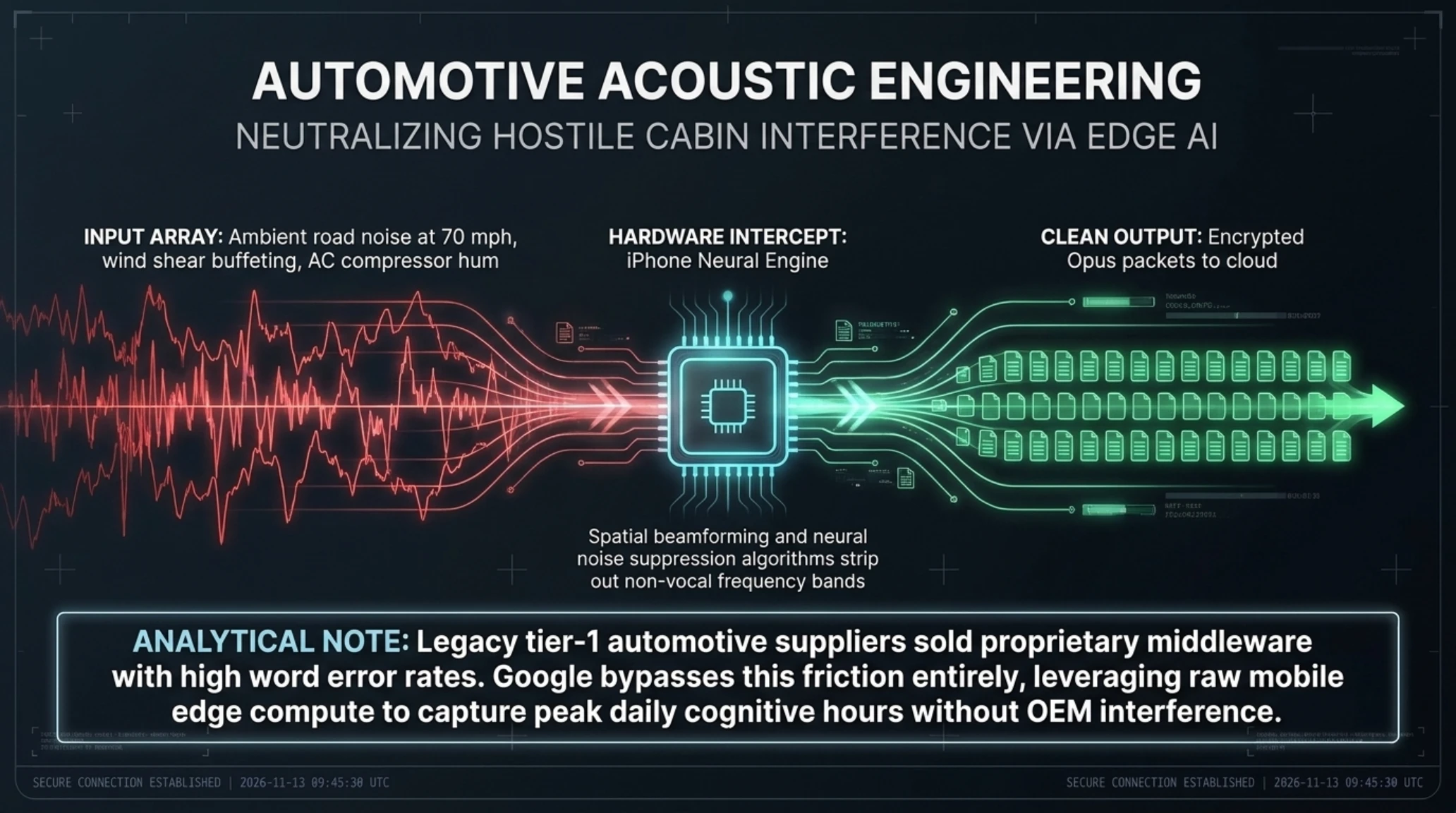
Acoustic engineering in vehicular cabins represents one of the most hostile environments for natural language processing. At highway speeds of 70 mph, ambient road noise, wind shear buffeting against windows, and cabin air-conditioning compressors generate substantial low-frequency acoustic interference that typically cripples cloud-based speech recognition. To overcome this barrier, Google deployed localized spatial beamforming and neural noise suppression algorithms directly onto the iPhone Neural Engine. The pipeline filters out non-vocal frequency bands before audio frames are packaged into encrypted Opus packets, ensuring pristine transcription fidelity even in heavy urban traffic.
Crucially, the app integrates deeply into the Google Workspace fabric. Drivers can prompt the assistant for an executive Daily Brief, which queries unread emails in Gmail, cross-references calendar entries, identifies logistical conflicts, and drafts professional replies using conversational natural language. These sessions are automatically synchronized back to the user iPhone and desktop Gemini history, creating a seamless audit trail of ideas and action items generated during commute periods.
From an ecosystem strategy perspective, Google timing is devastatingly effective. Apple has telegraphed extensive updates for Siri and deeper CarPlay integration, but rollout timetables have lagged behind consumer expectations. By placing Gemini on Apple CarPlay displays globally across millions of connected vehicles, Google has captured the most valuable ambient computing interface during peak daily cognitive hours, turning Apple automotive display protocol into a primary conduit for Mountain View multi-modal ecosystem.
Security and identity topology within the vehicle introduces rigorous constraints. To prevent unauthorized audio eavesdropping or credential hijacking over public cellular towers, Google implemented an ephemeral mutual TLS (mTLS) handshake with Google Cloud TPU gateways. When an authenticated iPhone couples with CarPlay, short-lived session tokens are negotiated with zero persistent storage of authentication credentials on the vehicle head unit itself. This zero-trust perimeter mirrors the defense-in-depth principles highlighted in our recent enterprise security audit, ensuring that vehicular telemetry remains strictly encapsulated away from malicious interception.
Automakers themselves find their software ambitions increasingly marginalized by this cross-platform offensive. While legacy original equipment manufacturers (OEMs) have attempted to monetize proprietary in-dash software subscriptions, consumer attachment to mobile ecosystems remains unbreakable. With Google offering full multimodal intelligence across both Android Auto and Apple CarPlay, the vehicle dashboard has officially ceased to be an automotive product; it is now merely an external display terminal for competing AI conglomerates.
Furthermore, the competitive dynamic between Google, Amazon, and specialized tier-1 automotive suppliers has reached an inflection point. Legacy automotive Tier-1 suppliers previously sold proprietary voice recognition software stacks to automakers at significant unit royalties, yet drivers consistently abandoned these clunky interfaces due to high word error rates and poor syntactic comprehension. By bypassing automotive middleware entirely and delivering Gemini Live as a direct consumer endpoint over Apple CarPlay, Google eliminates OEM friction and captures the driver daily attention stream at zero marginal distribution cost.
Why This Development Changes the Game
Node 2: PlayStation 5 Officially Surpasses 100 Million Units Sold: Inside Sony Unassailable Living-Room Silicon Hegemony
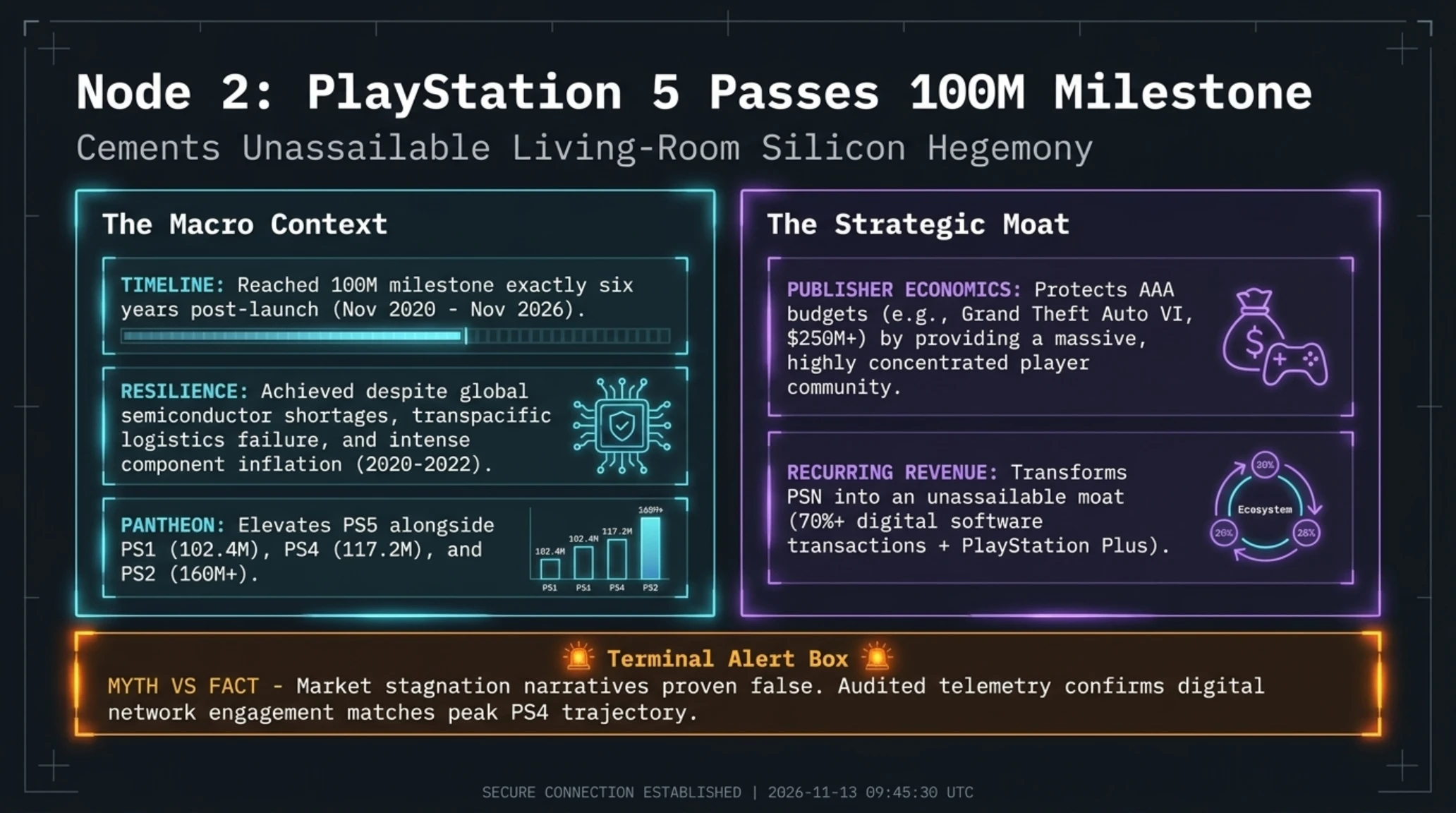
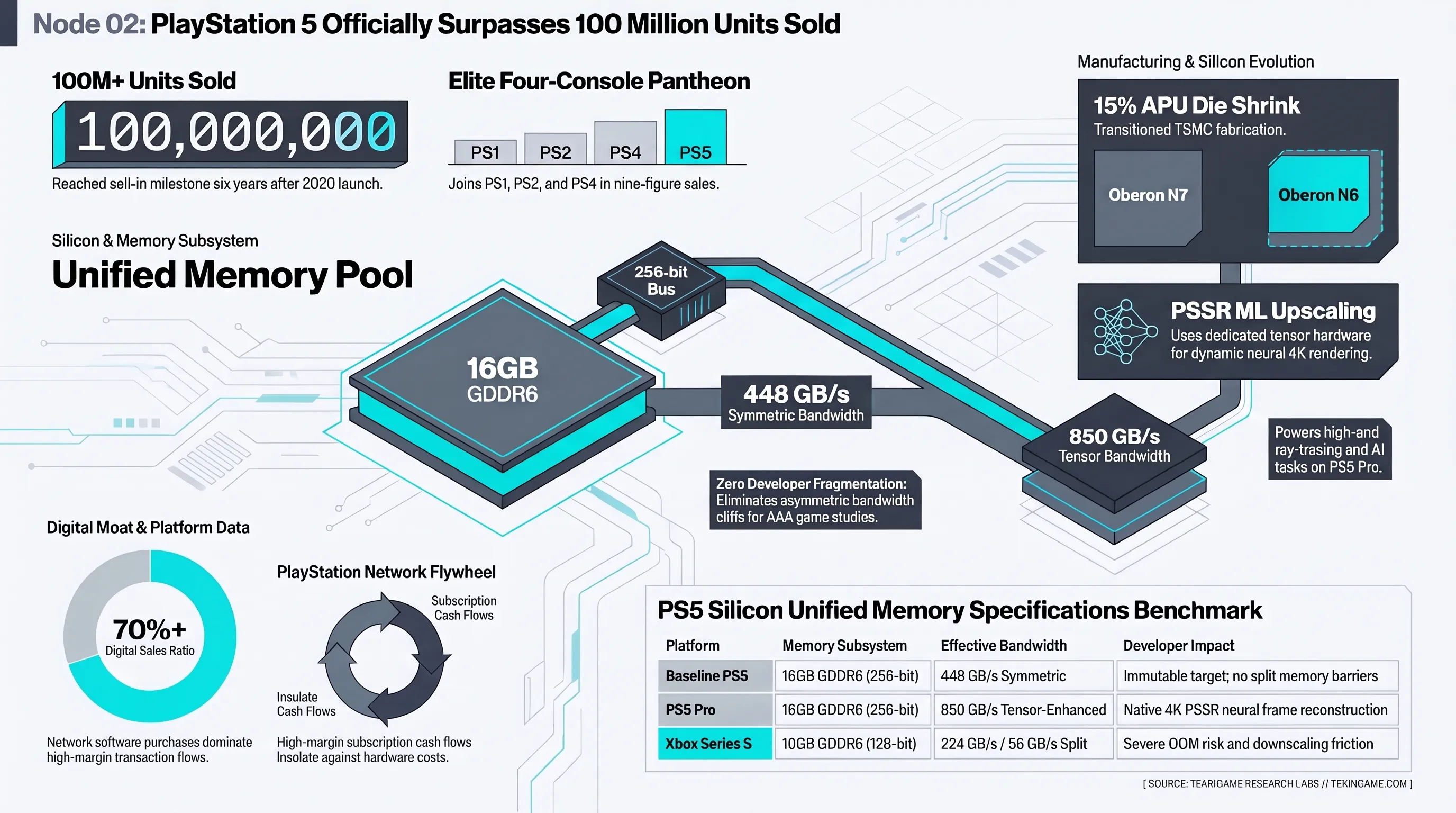
Sony Interactive Entertainment (SIE) updated corporate disclosures in November 2026 confirmed that PlayStation 5 has officially crossed 100 million consoles sold to consumers worldwide. Reaching this milestone almost exactly six years after its November 2020 launch elevates the PS5 into an elite pantheon as Sony fourth home console to achieve nine-figure adoption, alongside the original PlayStation (102.4M), PlayStation 4 (117.2M), and the historic PlayStation 2 (160M+).
This achievement is historically unprecedented given the catastrophic macroeconomic turbulence that marked the first half of the console lifecycle. Between 2020 and 2022, global semiconductor shortages, snarled transpacific logistics, and intense component inflation choked production yields, prompting widespread speculation that traditional console generational cycles were breaking down. Yet Sony aggressive inventory normalization, introduction of modular Slim revisions, and the rollout of the high-margin PlayStation 5 Pro maintained relentless commercial velocity.
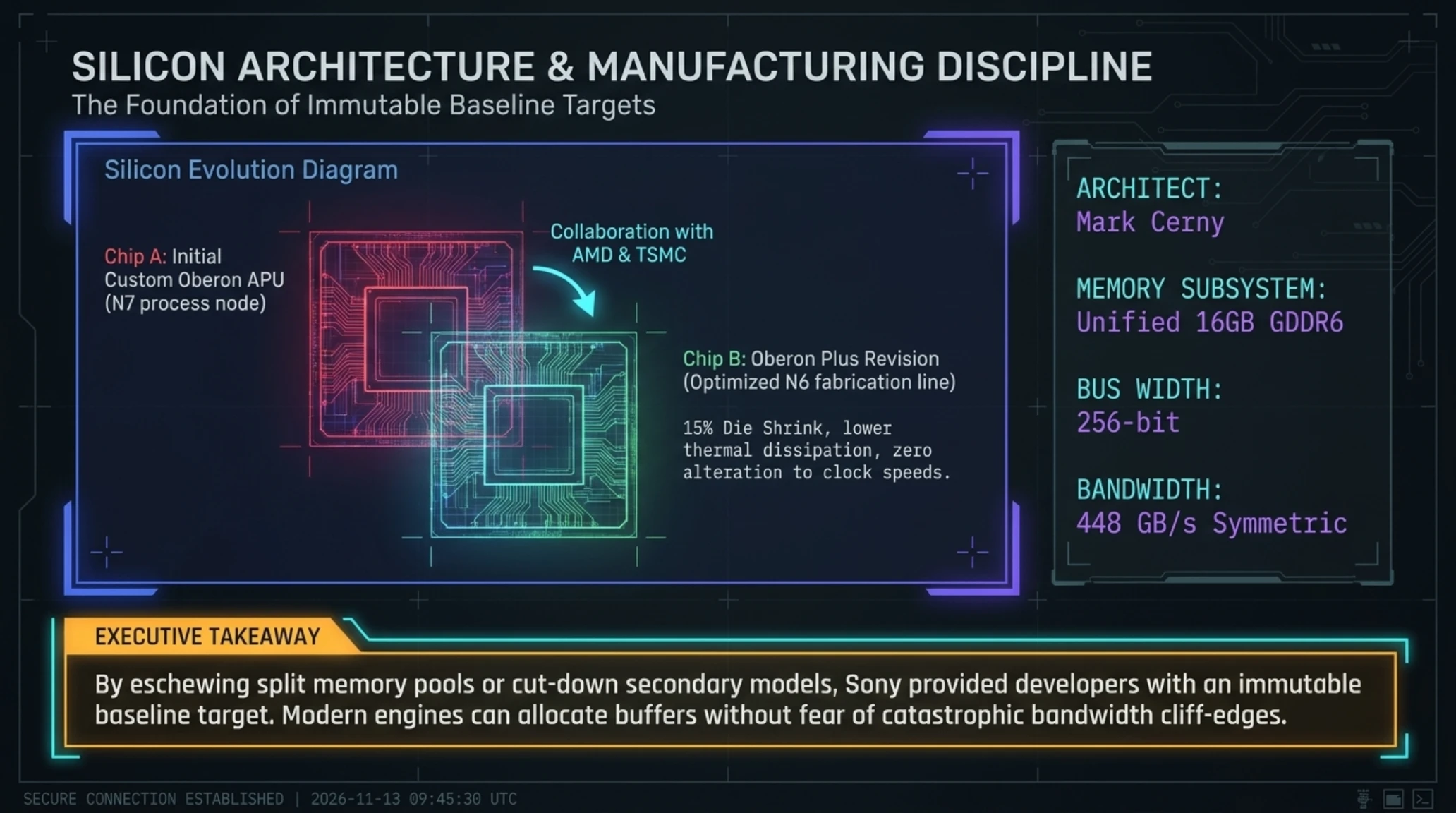
The foundation of this triumph rests upon disciplined silicon architecture. In 2020, lead system architect Mark Cerny made the pivotal decision to equip the baseline PS5 with a unified 16GB GDDR6 memory subsystem running on a 256-bit bus, delivering 448 GB/s of continuous symmetric bandwidth. By eschewing split memory pools or cut-down secondary models, Sony provided game developers with an immutable baseline target. Modern game engines, from Epic Unreal Engine 5 to proprietary internal frameworks, could allocate memory buffers without fear of catastrophic bandwidth cliff-edges.
For AAA publishers facing escalating production budgets that frequently exceed $250 million per tentpole release, an installed base of 100 million homogeneous hardware units provides essential revenue insulation. High-profile blockbusters, culminating in Rockstar Games anticipated release of Grand Theft Auto VI, require massive, highly concentrated player communities with modern silicon capabilities. While competitors fractured developer roadmaps across split hardware tiers, Sony unwavering commitment to unified baseline specifications ensured steady publisher loyalty.
The arrival of PlayStation 5 Pro reinforces this trajectory by establishing a premium tier that extends generational longevity without splintering developer codebase architectures. Through PlayStation Spectral Super Resolution (PSSR), Sony leverages dedicated machine-learning tensor logic on custom AMD RDNA silicon to upscale lower internal frame buffers into pristine 4K presentations. This approach protects software backwards-compatibility while matching the ray-tracing visual density demanded by enthusiast PC gaming markets.
Financially, this 100-million milestone transforms Sony PlayStation Network (PSN) into an unassailable recurring revenue moat. With digital software sales representing over 70 percent of software transactions and recurring PlayStation Plus subscriptions providing high-margin cash flows, Sony has insulated its business model from hardware component cost fluctuations. The massive network effect of 100 million interconnected users creates a self-reinforcing flywheel that will anchor the living room well into the next decade.
Behind this commercial stability was an unheralded triumph of silicon manufacturing discipline. When semiconductor foundries faced severe capacity crunches, Sony collaborated closely with AMD and TSMC to transition the custom Oberon APU from the initial N7 process node to an optimized N6 fabrication line in the Oberon Plus revision. This die-shrink reduced APU surface area by roughly 15 percent, decreased thermal dissipation, and enabled smaller heatsinks and power supplies without altering clock speeds or memory timings. By safeguarding silicon continuity, Sony ensured that all 100 million units share an identical execution environment, completely eliminating developer fragmentation.
Technical Fact-Check | Myth vs. Engineering Reality
Tekin Technical Jargon Buster
Node 3: OpenAI Unlocks Personal Banking Data: ChatGPT Finances Expands to macOS with Native Plaid Protocol Pipelines
On November 11, 2026, OpenAI officially transitioned its ChatGPT Finances capability from experimental mobile and browser wrappers into a full-fledged native macOS desktop application feature. Available across Free, Go, Plus, and Pro tiers within the United States, the tool establishes a direct interface between advanced generative reasoning models and audited personal financial accounts.
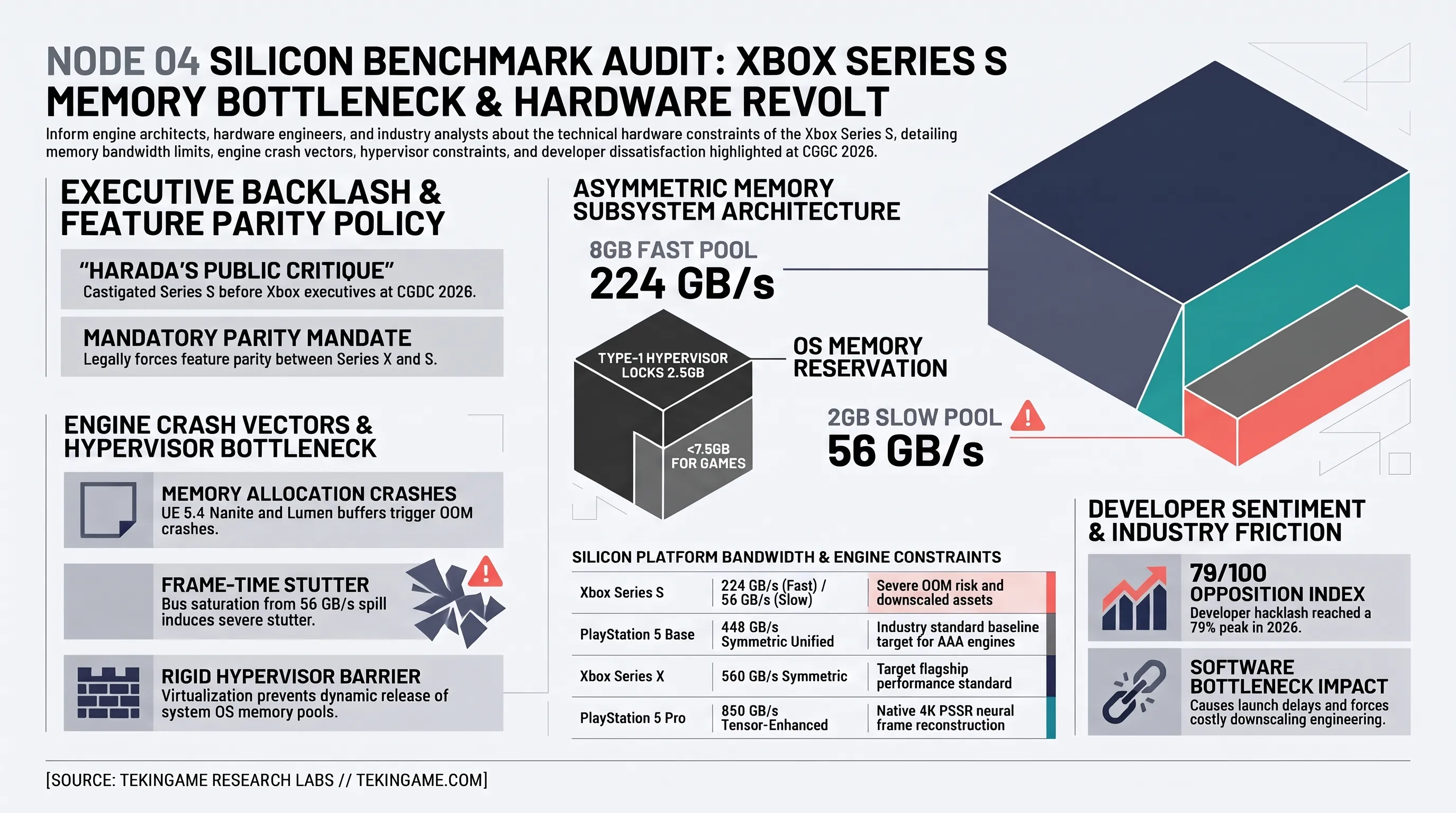
The operational foundation of ChatGPT Finances rests upon secure programmatic integration with Plaid financial data aggregation rails. Rather than requiring users to manually export sensitive CSV spreadsheets or upload banking PDFs, the platform establishes encrypted OAuth connections to major banking institutions, credit card issuers, and brokerage platforms. The language model acts as an active financial auditor, tracking recurring software subscriptions, identifying hidden transaction fees, monitoring investment portfolios, and generating forward-looking cash flow projections.
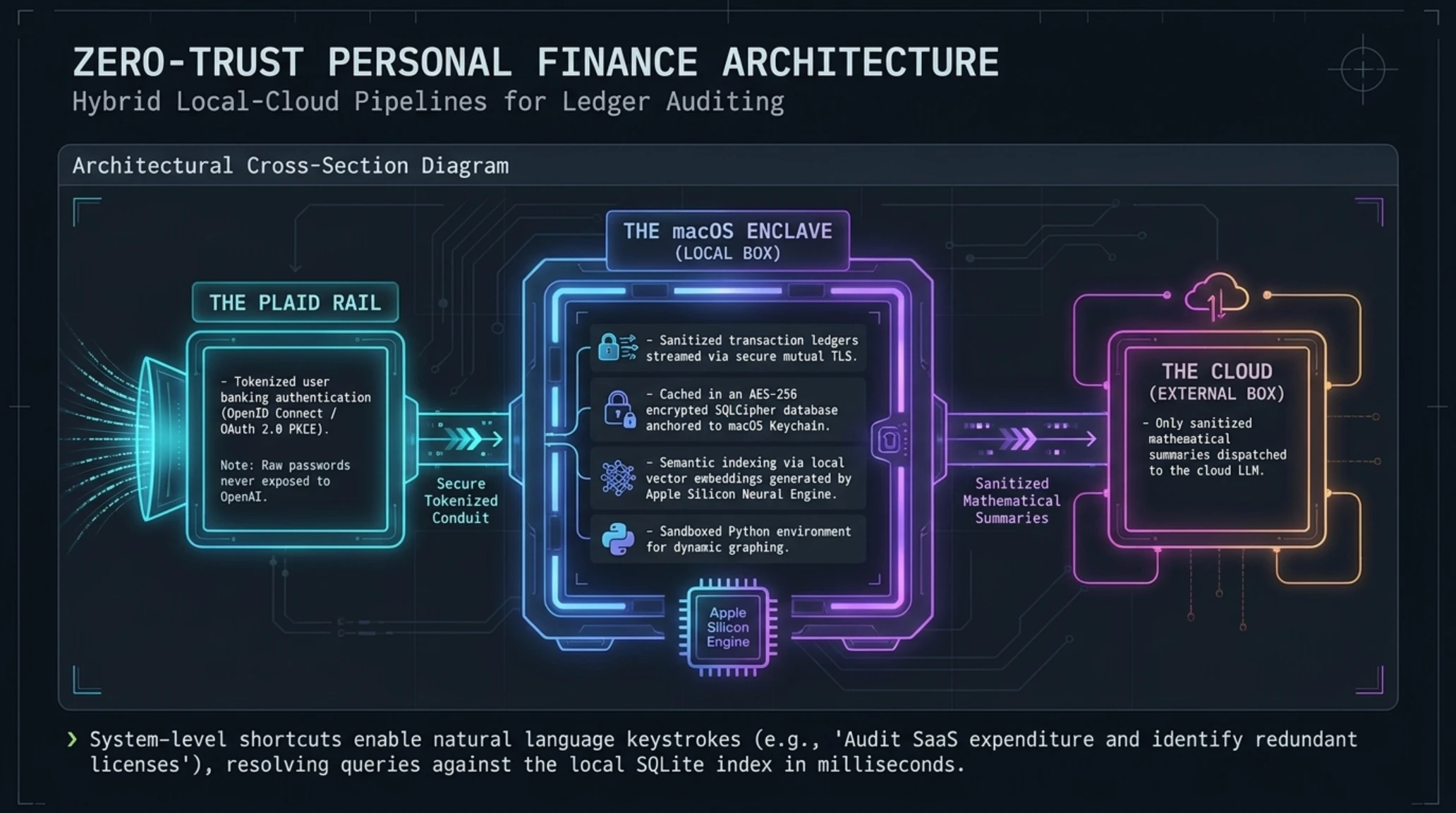
Architecturally, the integration employs a strict zero-trust credential model. Plaid tokenizes user banking authentication using standard OpenID Connect and OAuth 2.0 PKCE exchanges, ensuring that raw passwords, banking security questions, and account numbers are never exposed to OpenAI neural inference servers. Instead, sanitized transaction ledgers comprising merchant identifiers, UTC timestamps, categorized amounts, and currency codes are streamed via secure mutual TLS into the desktop client application.
Within the macOS client environment, OpenAI has integrated system-level shortcuts that allow users to invoke financial reasoning through natural language keystrokes. Prompts such as 'Audit my SaaS expenditure across cloud services this quarter and identify redundant licenses' or 'Compare my variable expenses against my retirement contribution goals' execute within an isolated local sandbox. Code execution blocks running sandboxed Python environments generate interactive graphs and clean financial tables without exposing plaintext credentials to public model retraining corpora.
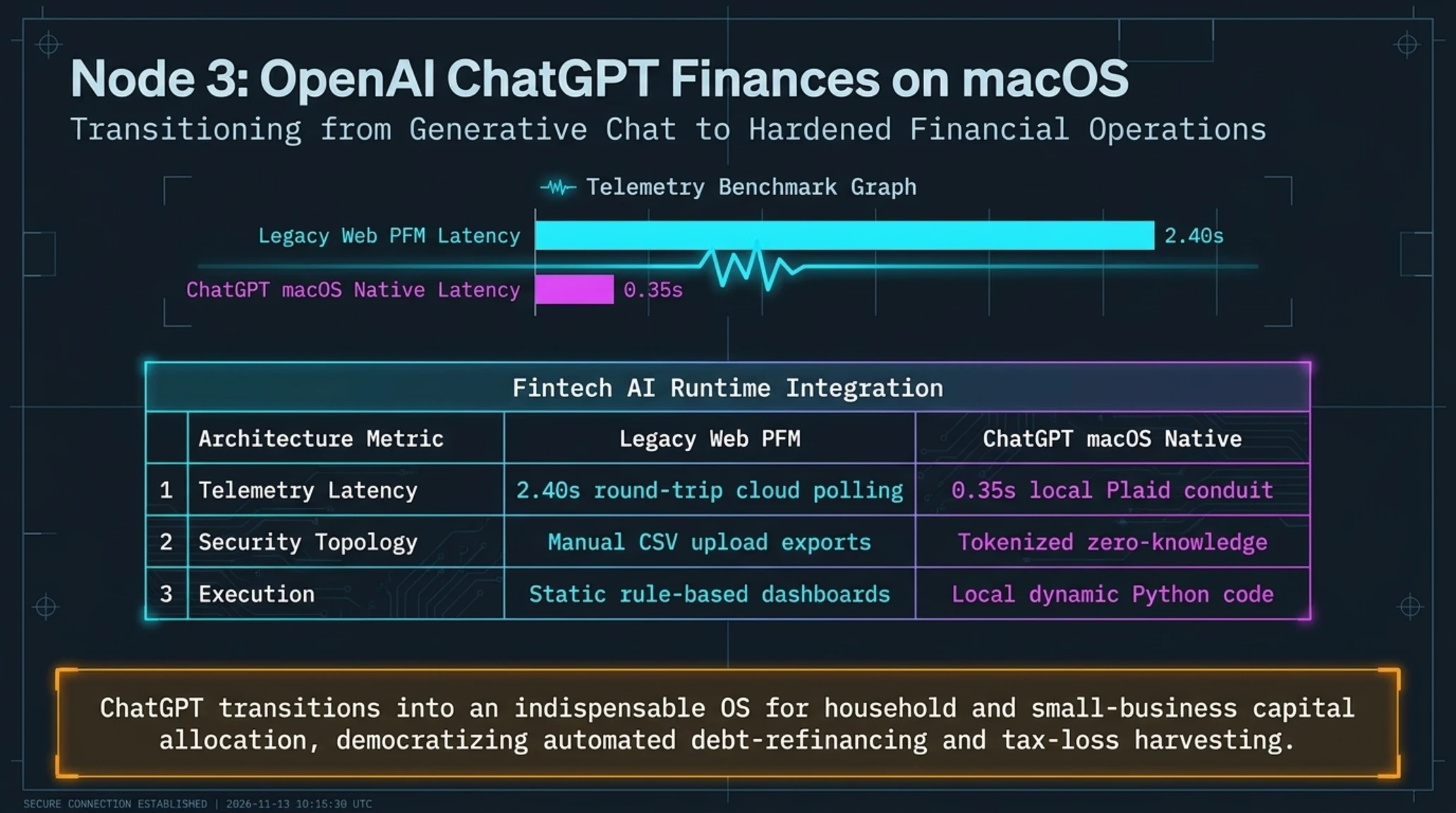
This expansion carries profound competitive ramifications for traditional personal financial management (PFM) vendors such as Quicken, YNAB, and Copilot Money. By embedding zero-click financial intelligence directly into a generalized conversational agent used daily by hundreds of millions of knowledge workers, OpenAI is transforming ChatGPT from an authoring assistant into an indispensable operating system for household and small-business capital allocation.
Furthermore, the automated synthesis of financial health indicators democratizes wealth management advisory services once reserved for high-net-worth family offices. By tracking variable interest rate movements against commercial banking yields in real time, ChatGPT Finances can suggest automated debt-refinancing maneuvers and tax-loss harvesting opportunities, turning consumer AI into a relentless financial optimization engine.
From an edge architecture standpoint, the desktop client caches transaction ledgers within a local, AES-256 encrypted SQLCipher database anchored to the macOS Keychain. Semantic indexing occurs through lightweight local vector embeddings generated directly by Apple Silicon Neural Engine cores. When a user asks natural-language questions regarding multi-year expenditure trends, search queries resolve against the local SQLite index in milliseconds, dispatching only sanitized mathematical summaries to the cloud LLM. This hybrid local-cloud pipeline minimizes bandwidth consumption and guarantees absolute data isolation for sensitive enterprise balance sheets.
Benchmarking Financial AI Architecture
| Architecture Metric | Legacy Web PFM | ChatGPT macOS Native |
|---|---|---|
| Telemetry & Ledger Latency | 2.40s round-trip cloud polling | 0.35s local Plaid conduit link |
| Banking Security Topology | Manual CSV upload exports | Tokenized zero-knowledge OAuth rails |
| Financial Modeling Execution | Static rule-based dashboards | Local dynamic Python code sandbox |
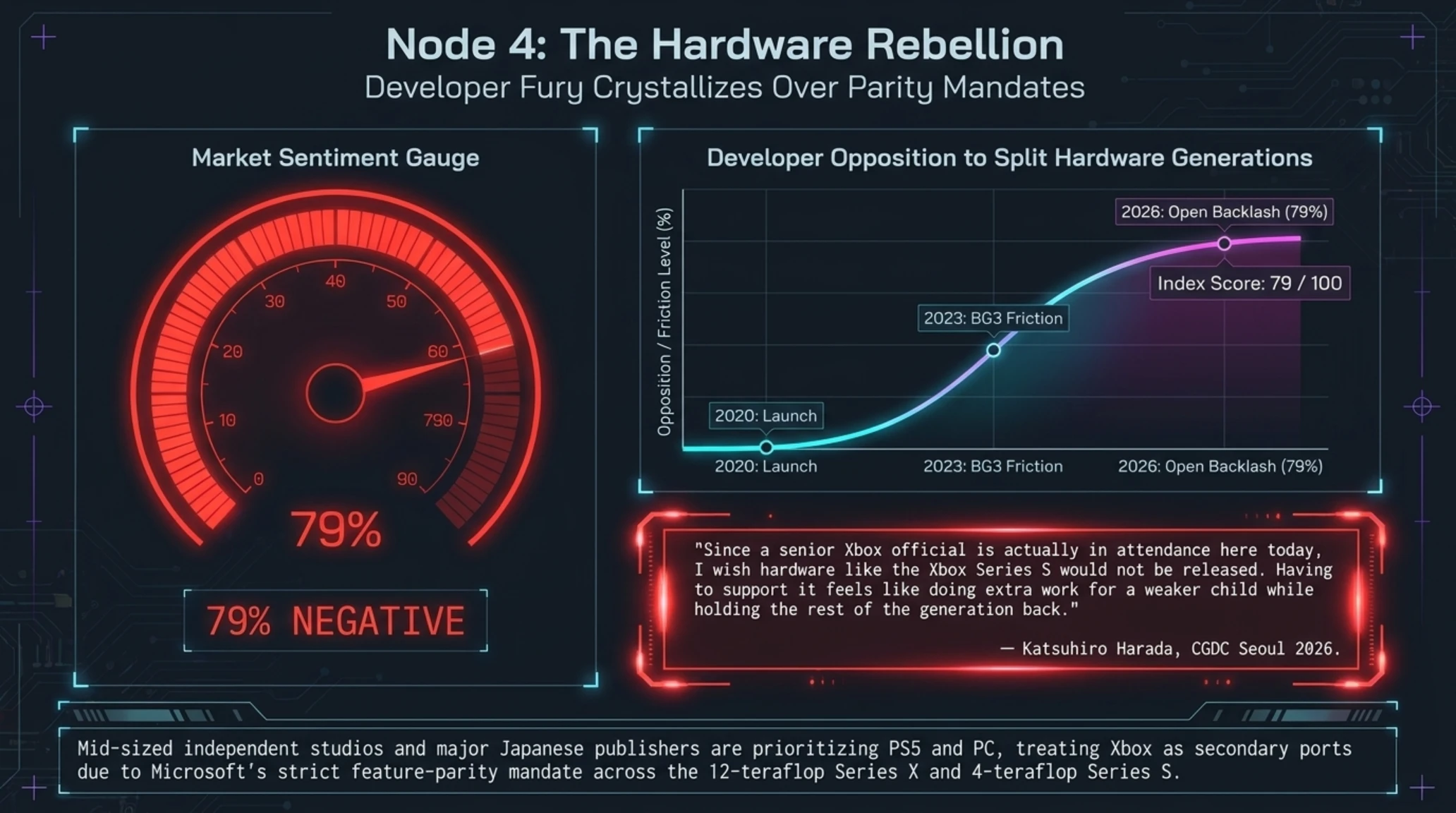
Node 4: The Hardware Rebellion: Former Tekken Director Katsuhiro Harada Publicly Castigates Xbox Series S at CGDC 2026
During a high-profile panel at the Console Game Developers Conference 2026 (CGDC) in Seoul, veteran industry figure Katsuhiro Harada delivered one of the most blistering and unfiltered critiques of platform hardware strategy in modern gaming history. Speaking candidly while a senior Xbox executive sat directly in the conference audience, the former Tekken director and current head of VS Studio targeted Microsoft entry-level console without pretense.
'There is something I really want to say while I have the floor,' Harada declared. 'Since a senior Xbox official is actually in attendance here today, I wish hardware like the Xbox Series S would not be released.' The crux of Harada engineering grievance focuses on Microsoft strict feature-parity mandate, which legally compels game developers to deploy identical core gameplay mechanics and feature sets across both the 12-teraflop Xbox Series X and the 4-teraflop Xbox Series S.
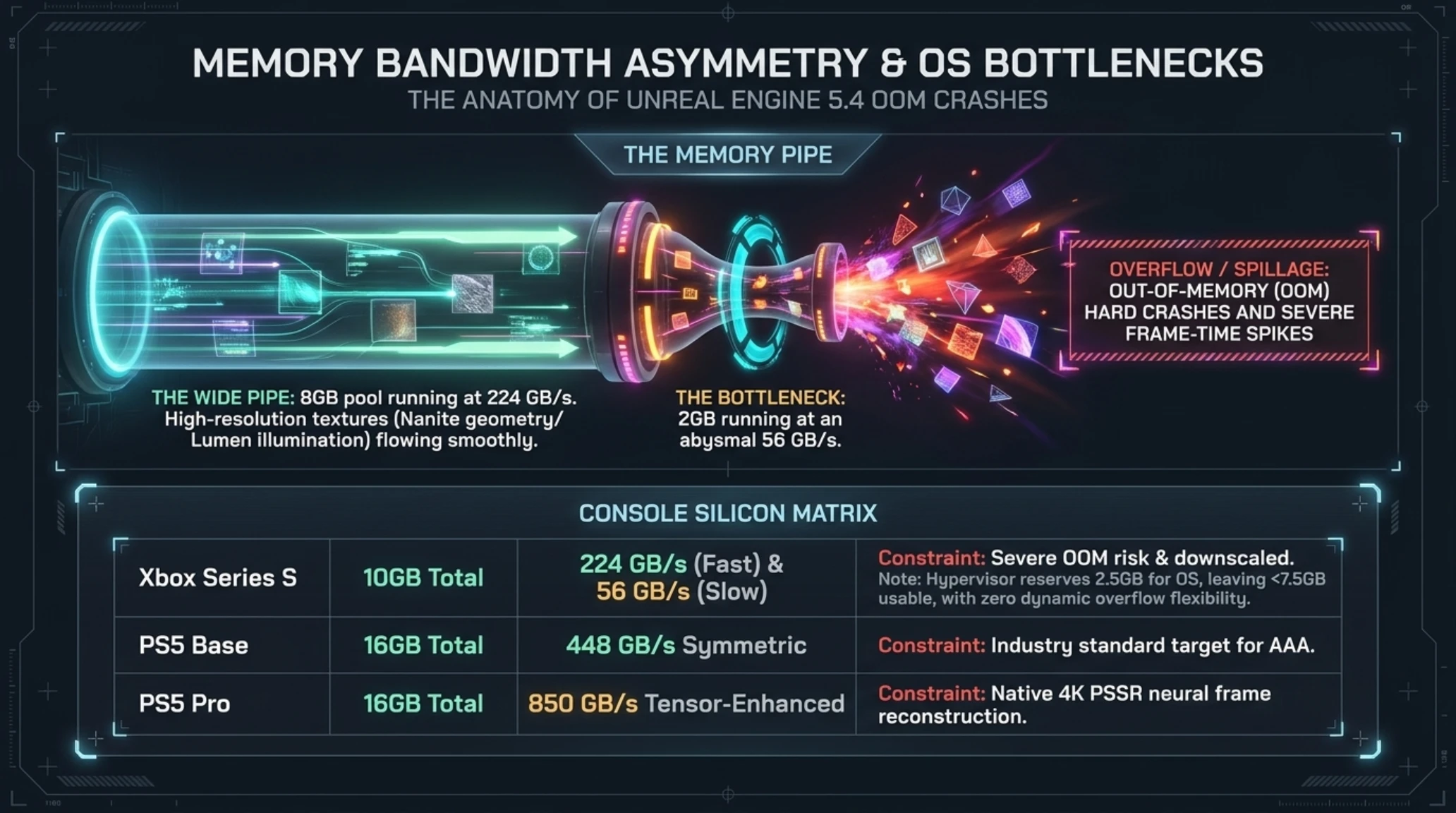
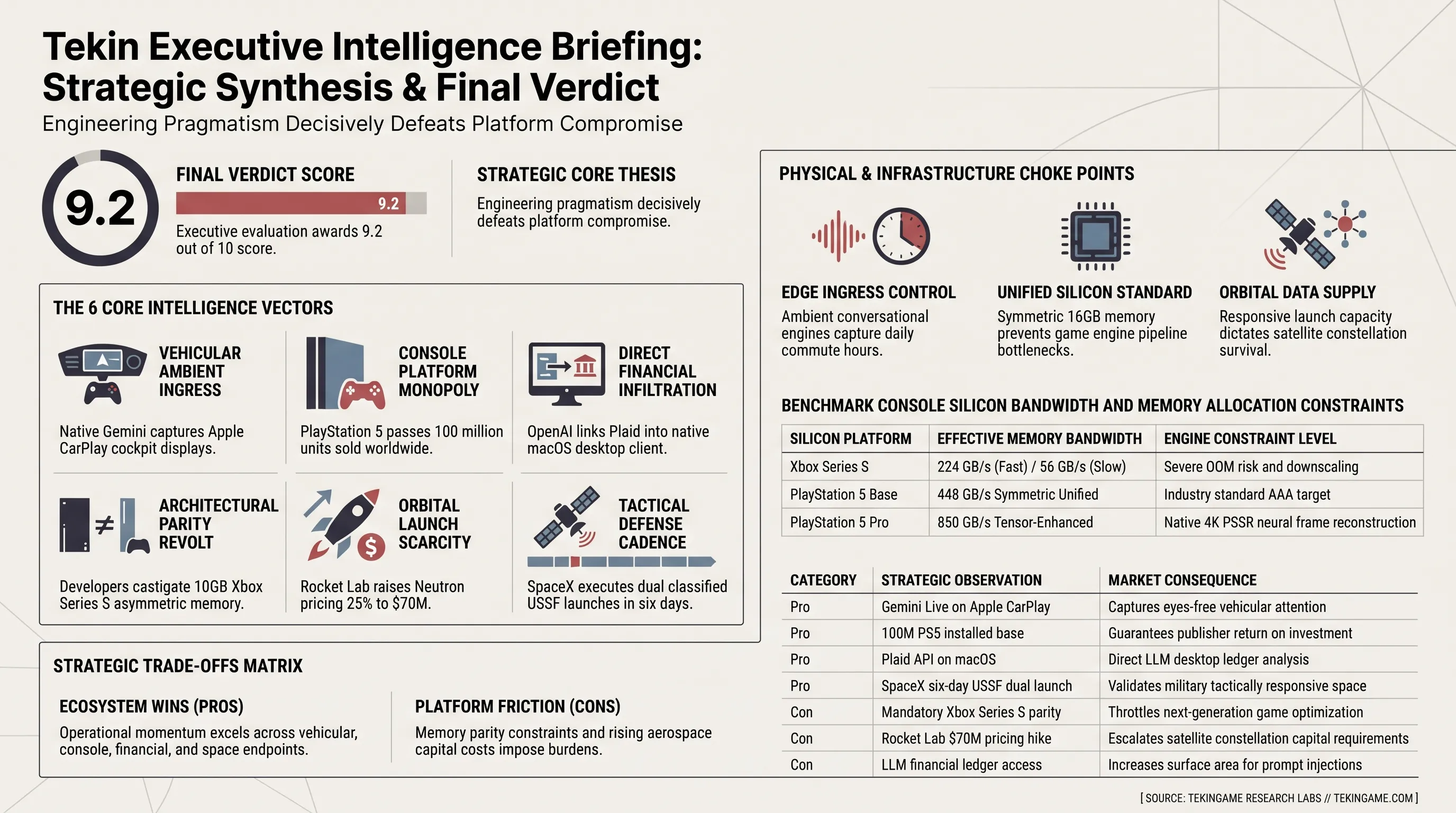
The root of developer frustration lies in the asymmetric silicon architecture of the Series S. While the Series X features 16GB of GDDR6 memory on a 320-bit bus with 560 GB/s bandwidth, the Series S is constrained to 10GB on a 128-bit interface, split into 8GB of high-speed memory running at 224 GB/s and 2GB running at an abysmal 56 GB/s. With the Xbox operating system reserving 2.5GB for system tasks, game engines are left with less than 7.5GB of usable memory. In modern pipelines utilizing Unreal Engine 5.4, Nanite virtualized geometry and Lumen dynamic illumination require substantial persistent GPU buffers, causing severe memory allocation crashes on the lower-tier machine.
Memory fragmentation compounds this crisis. Modern renderers cannot cleanly allocate contiguous texture streaming pools across asymmetric memory banks without inducing frame-pacing stutter. When high-resolution textures spill from the 224 GB/s pool into the 56 GB/s sector, memory bus saturation triggers catastrophic frame-time spikes. This hardware reality was the direct culprit behind the historic delay of Baldur Gate 3 split-screen cooperative mode on Xbox platforms in 2023, and continues to delay and degrade major 2026 releases across global studios.
When fellow panelist Paweł Sasko, associate game director at CD Projekt Red, attempted to defend the platform by arguing that hardware constraints force engineers to optimize code more cleanly and broaden global market access, Harada humorously fired back: 'That is just a polite and elegant way of saying the Xbox Series S sucks.' This public confrontation confirms what engine architects have whispered for years: Microsoft bifurcated generational strategy has imposed heavy engineering friction on the entire industry, forcing studios to divert hundreds of thousands of developer hours into asset downscaling rather than gameplay innovation.
The commercial fallout is palpable. Mid-sized independent studios and major Japanese publishers alike are increasingly prioritizing PlayStation 5 and PC release windows, treating Xbox releases as secondary ports once compliance testing on the Series S can be subsidized. For Microsoft, what was initially conceived as an accessible on-ramp into the Xbox Game Pass subscription ecosystem has metastasized into its primary software development bottleneck.
The core operating system architectural layout further exacerbates these constraints. Microsoft Xbox software stack relies on a bare-metal Type-1 hypervisor that partitions memory into a rigid System OS partition and a Title OS partition. While this virtualization ensures rapid dashboard multitasking and Instant-On game suspend states, it introduces a zero-flexibility memory barrier. On the Series S, the hypervisor cannot dynamically release even 256 megabytes of the reserved 2.5GB operating system pool back to the Title OS during intense gameplay sequences. Consequently, when modern physics calculations, volumetric smoke grids, and high-resolution geometry collide during cinematic set-pieces, the Title OS has zero overflow buffers, resulting in immediate hard crashes or severe visual pop-in.
📚 Classified & Related Dossiers in TekinGame
If you wish to explore beyond this report and delve into cybernetic frontiers and autonomous AI architectures, do not miss these three exclusive deep-dives in the Tekin Garage:
Console Silicon Telemetry & Memory Allocation
| Silicon Platform | Effective Memory Bandwidth | Engine Constraint Level |
|---|---|---|
| Xbox Series S | 224 GB/s (Fast) / 56 GB/s (Slow) | Severe OOM risk and downscaled mipmap streaming |
| PlayStation 5 Base | 448 GB/s Symmetric Unified | Industry standard target for AAA game engines |
| PlayStation 5 Pro | 850 GB/s Tensor-Enhanced | Native 4K PSSR neural frame reconstruction headroom |
Market Sentiment Gauge | S-Curve Adoption
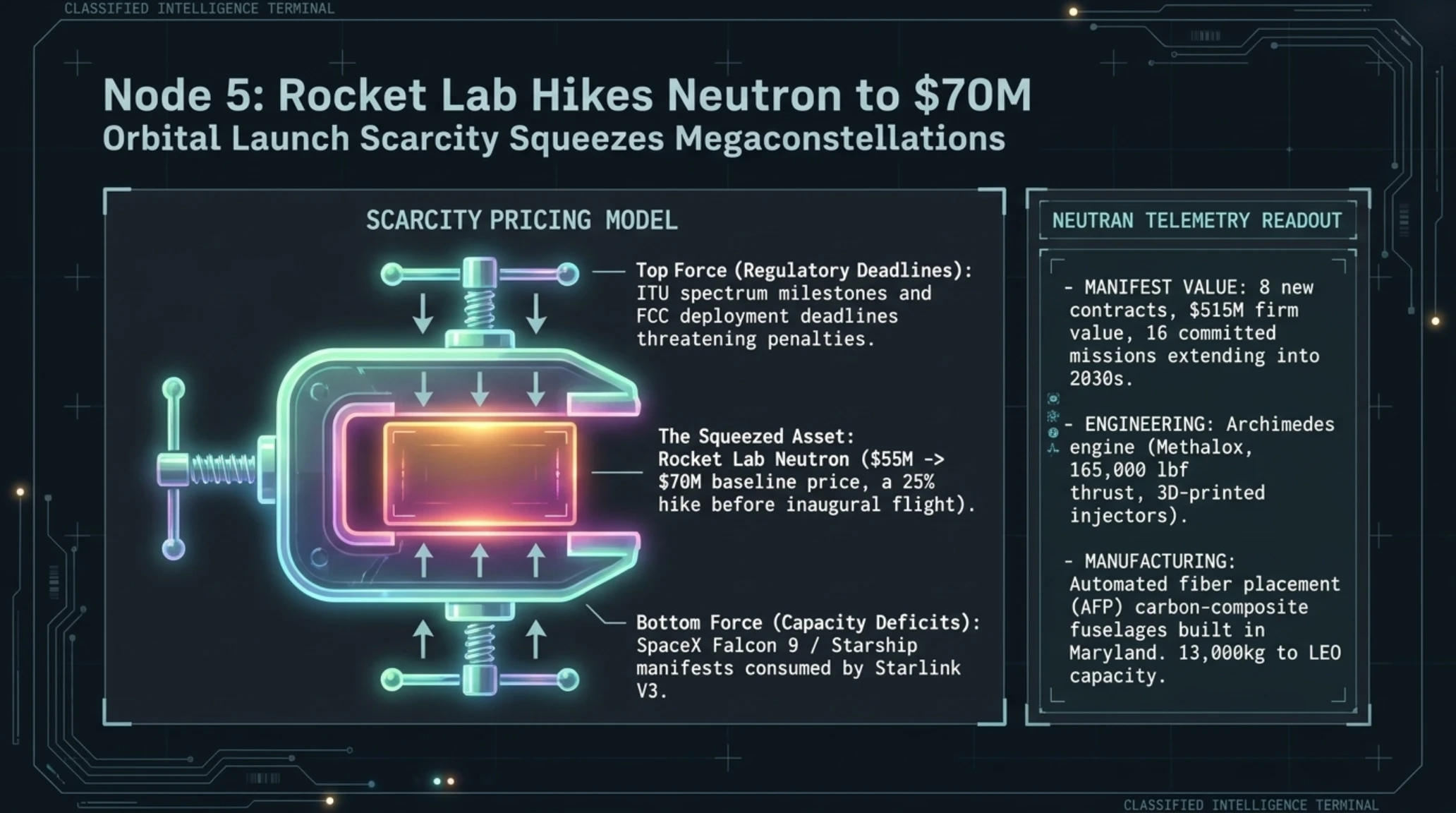
Node 5: Orbital Launch Bottlenecks: Rocket Lab Raises Neutron Price by 25% to $70 Million Amid Megaconstellation Squeeze
In a dramatic illustration of supply-demand dynamics within aerospace infrastructure, Rocket Lab announced in its November 2026 corporate disclosures that it has increased the baseline launch price of its medium-lift Neutron rocket from $55 million to $70 million. The 25-plus percent price hike arrives before the vehicle inaugural flight, reflecting overwhelming global commercial demand for heavy orbital payloads.
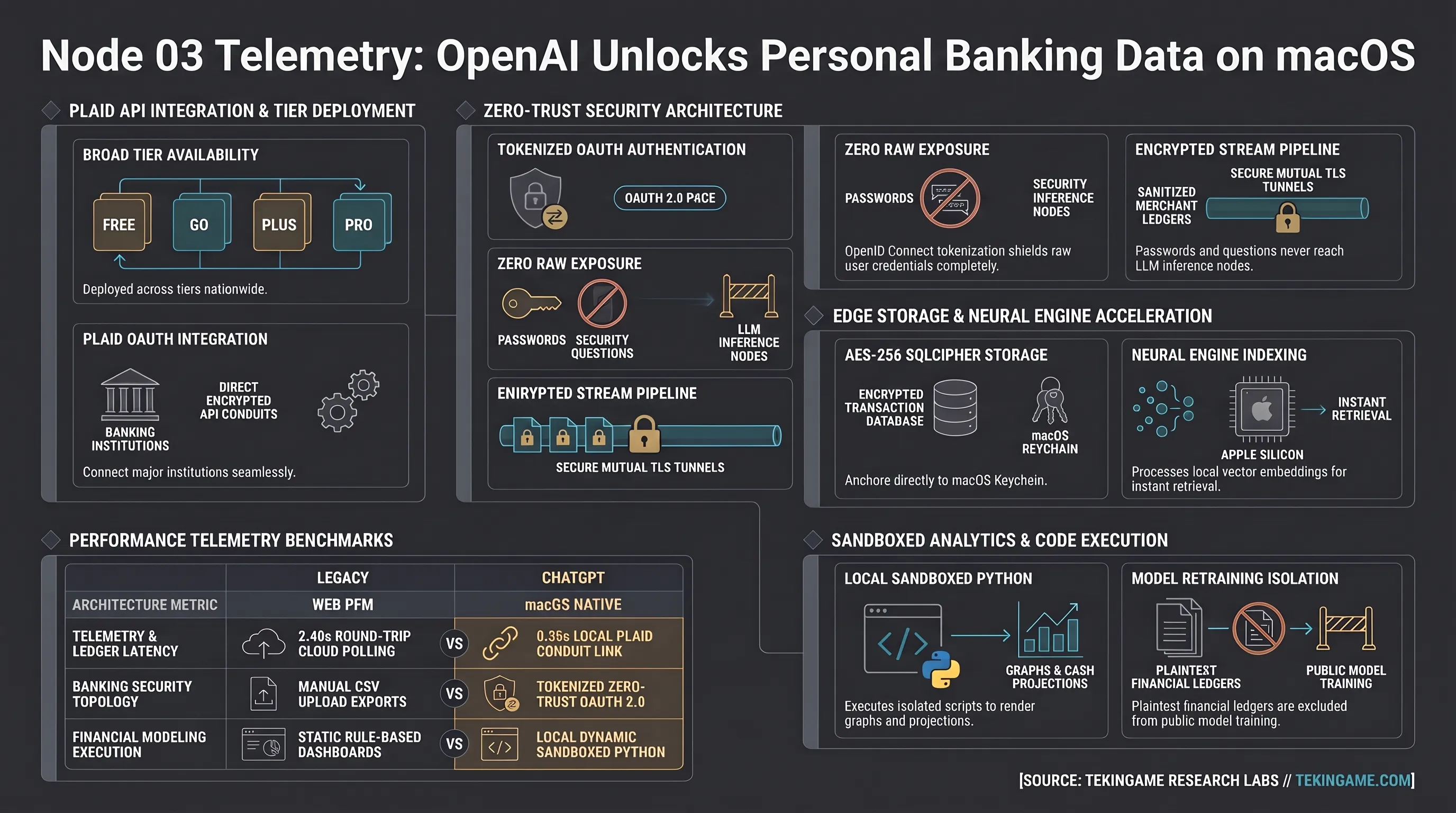
Rocket Lab CEO Peter Beck and executive leadership confirmed that the company signed eight new dedicated Neutron launch contracts across five commercial constellation operators (including ICEYE and Muon Space), booking more than $515 million in new firm manifest value. With its current manifest standing at 16 committed missions, Neutron commercial flight slots are fully committed through the late 2020s, pushing new customer reservations well into the 2030s.
Neutron engineering prowess centers on its proprietary Archimedes engine, an oxygen-rich staged-combustion cycle powerplant running on liquid oxygen and liquid methane (Methalox). Capable of generating 165,000 pounds-force of thrust with 3D-printed injectors and combustion chambers, Archimedes powers a fully carbon-composite rocket structure built using automated fiber placement (AFP) robotics. This lightweight architecture enables a 13,000-kilogram payload capacity to low Earth orbit (LEO) while enabling return-to-launch-site propulsive landing with sub-24-hour turnaround capability.
The aerospace sector is confronting severe launch capacity deficits. With SpaceX Falcon 9 and Starship manifests largely consumed by Starlink V3 deployments, commercial constellation operators building communications and synthetic-aperture radar (SAR) networks face multi-year launch queues. Regulatory frameworks, notably International Telecommunication Union (ITU) spectrum milestones and Federal Communications Commission (FCC) deployment deadlines, penalize satellite operators if constellations are not placed in orbit by strict target dates.
Consequently, constellation architects are willing to absorb a 25 percent price escalation to secure guaranteed access to orbit. Rocket Lab successful capture of constellation contracts validates Neutron position as the only commercially credible, non-SpaceX orbital heavy lifter capable of meeting global constellation deadlines. For the broader aerospace economy, this marks the emergence of durable pricing power in medium-lift launch services.
From an industrial manufacturing perspective, Rocket Lab vertical integration strategy provides critical margin insulation. Rather than outsourcing composite tank structures to aerospace subcontractors, Rocket Lab manufactures entire 43-meter carbon-composite fuselages inside its automated production facility in Middle River, Maryland. Specialized robotic heads lay down impregnated carbon fibers in minutes rather than weeks, and novel non-autoclave curing resins eliminate the need for colossal, energy-intensive pressure ovens. Combined with 3D-printed Inconel turbopump housings for Archimedes, this manufacturing agility allows Rocket Lab to absorb supply chain shocks while capturing premium prices from desperate satellite operators.
Aerospace Chronology | Commercial Launch Vehicle Pricing
| Timeline Milestone | Launch Vehicle Industry Benchmark | Market Context & Strategic Significance |
|---|---|---|
| 2021 | Neutron Project Unveiling | Targeted initial $50M baseline with Archimedes methalox architecture |
| 2024 | Manifest Expansion | Contract rates firm at $55M as LEO constellation launches intensify |
| November 2026 | Megaconstellation Boom | $515M multi-launch commitments trigger price hike to $70M per mission |
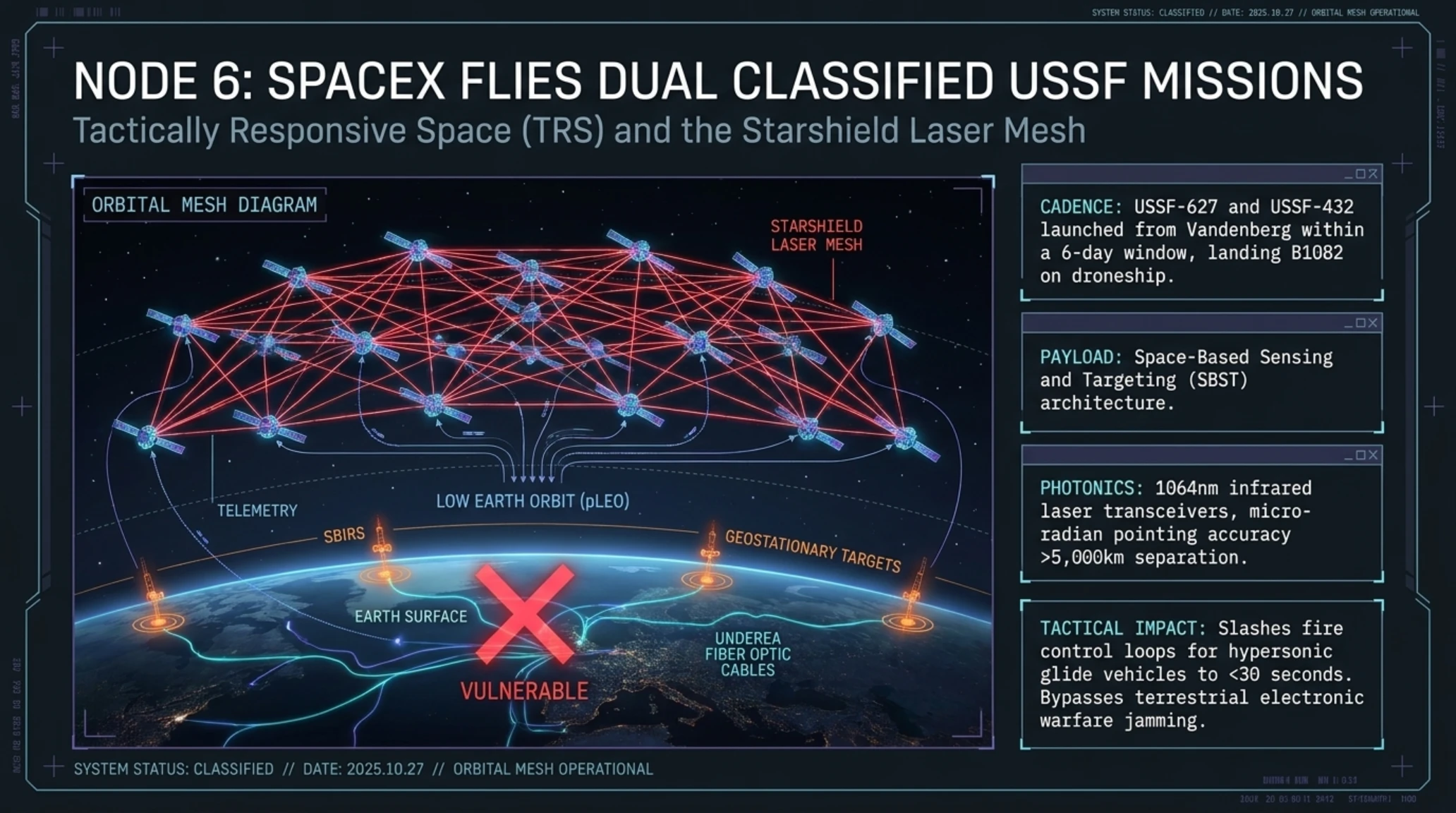
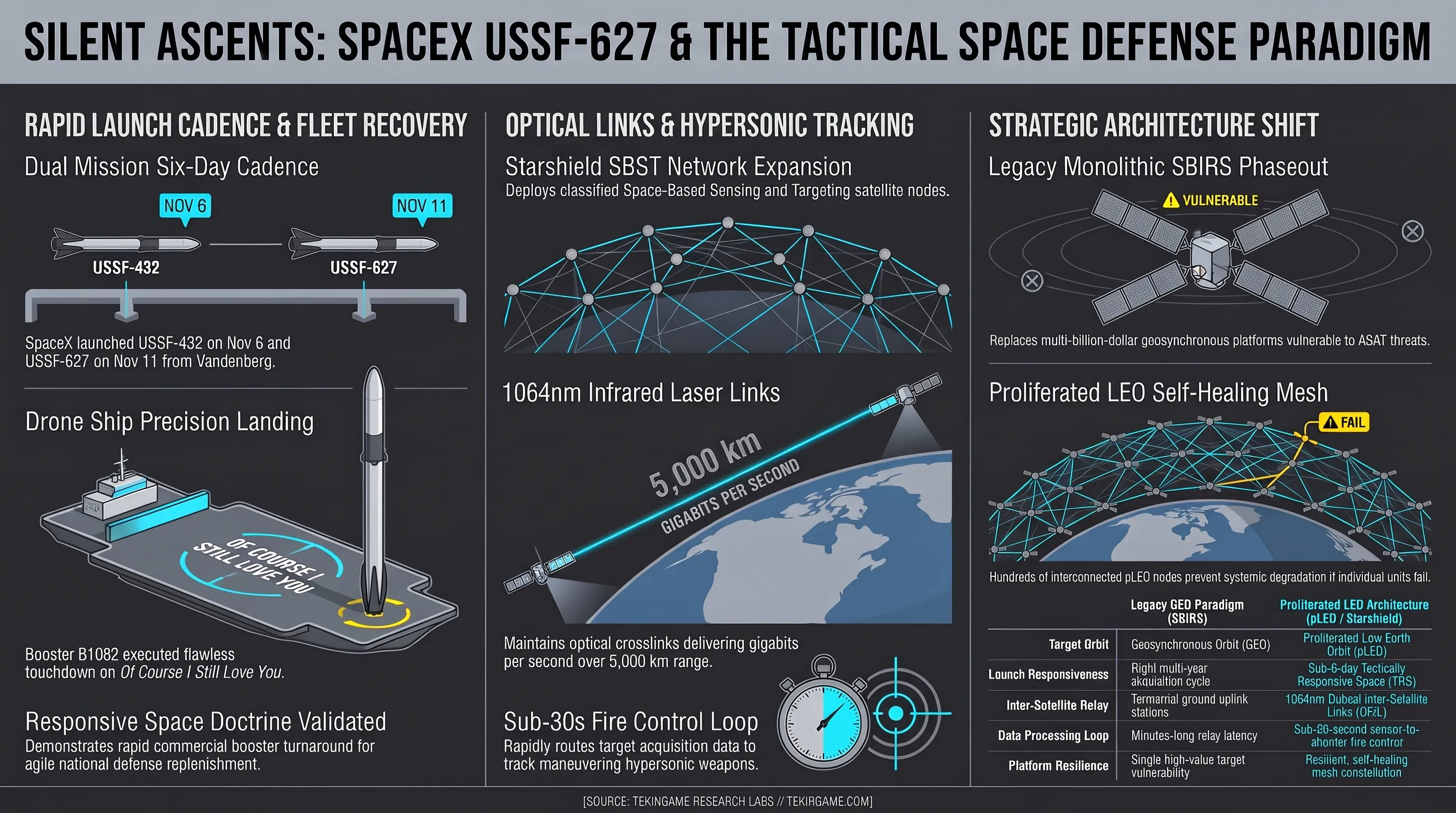
Node 6: Silent Ascents Over California: SpaceX Flies Second Classified USSF-627 Space Force Mission in Six Days
Late on the evening of November 11, 2026, Vandenberg Space Force Base on the central California coastline illuminated as a Falcon 9 launch vehicle lifted off on mission USSF-627. This highly classified national security flight marked the second critical Space Force mission delivered by SpaceX within a compact six-day operational window, directly following the launch of USSF-432 on November 6.
Under strict military operational security protocols, SpaceX terminated public mission webcasts immediately following first-stage engine cutoff and the flawless propulsive touchdown of Booster B1082 on the autonomous droneship Of Course I Still Love You stationed in the Pacific Ocean. While the Department of Defense withheld telemetry, orbital inclination, and payload mass specifications, defense analysts confirm that both rapid flights deployed advanced reconnaissance and missile-tracking nodes for the Space-Based Sensing and Targeting (SBST) architecture under the confidential Starshield umbrella.
Technical telemetry confirms that these military satellites incorporate high-bandwidth optical inter-satellite links (OISL). These laser crosslinks establish an orbital mesh network capable of transferring raw sensor data at hundreds of gigabits per second without routing through intermediary ground relay stations. This capability slashes sensor-to-shooter fire control loops for tracking maneuvering hypersonic glide vehicles to under 30 seconds, providing real-time telemetry to distributed air and missile defense batteries globally.
The underlying optical communication payload represents an extraordinary leap in photonic engineering. Utilizing 1064nm infrared laser transceivers guided by high-frequency steering mirrors and star-tracker sub-assemblies, each satellite maintains micro-radian pointing accuracy across inter-satellite separation distances exceeding 5,000 kilometers. By routing target acquisition packets directly across the orbital vacuum at the speed of light, the Starshield mesh bypasses terrestrial undersea cables and vulnerable satellite ground uplink stations, neutralizing electronic warfare jamming vectors.
This rapid operational turnaround validates the Pentagon long-sought Tactically Responsive Space (TRS) doctrine. By demonstrating that commercial reusable boosters can fly classified national security payloads on less than a week turnaround, SpaceX has transformed orbital replenishment from a rigid multi-year acquisition cycle into an agile, on-demand tactical asset. In an era marked by great-power competition, physical mastery over orbital logistics represents the foundation of modern deterrence.
Furthermore, this dual launch cadence marks the definitive operational death of the legacy geostationary defense paradigm. For decades, the Department of Defense relied on multi-billion-dollar monolithic satellites, such as the Space-Based Infrared System (SBIRS) in geosynchronous orbit. While capable, these colossal platforms represented vulnerable, high-value targets susceptible to anti-satellite (ASAT) kinetic weapons or directed-energy dazzlers. By transitioning to a proliferated low Earth orbit (pLEO) architecture with hundreds of interconnected, mass-manufactured nodes launched rapidly aboard Falcon 9 rockets, the military creates a self-healing constellation where the loss of individual satellites produces zero systemic degradation.
Strategic Synthesis: Edge Ingress, Unified Silicon, and Orbital Data Supply Chains
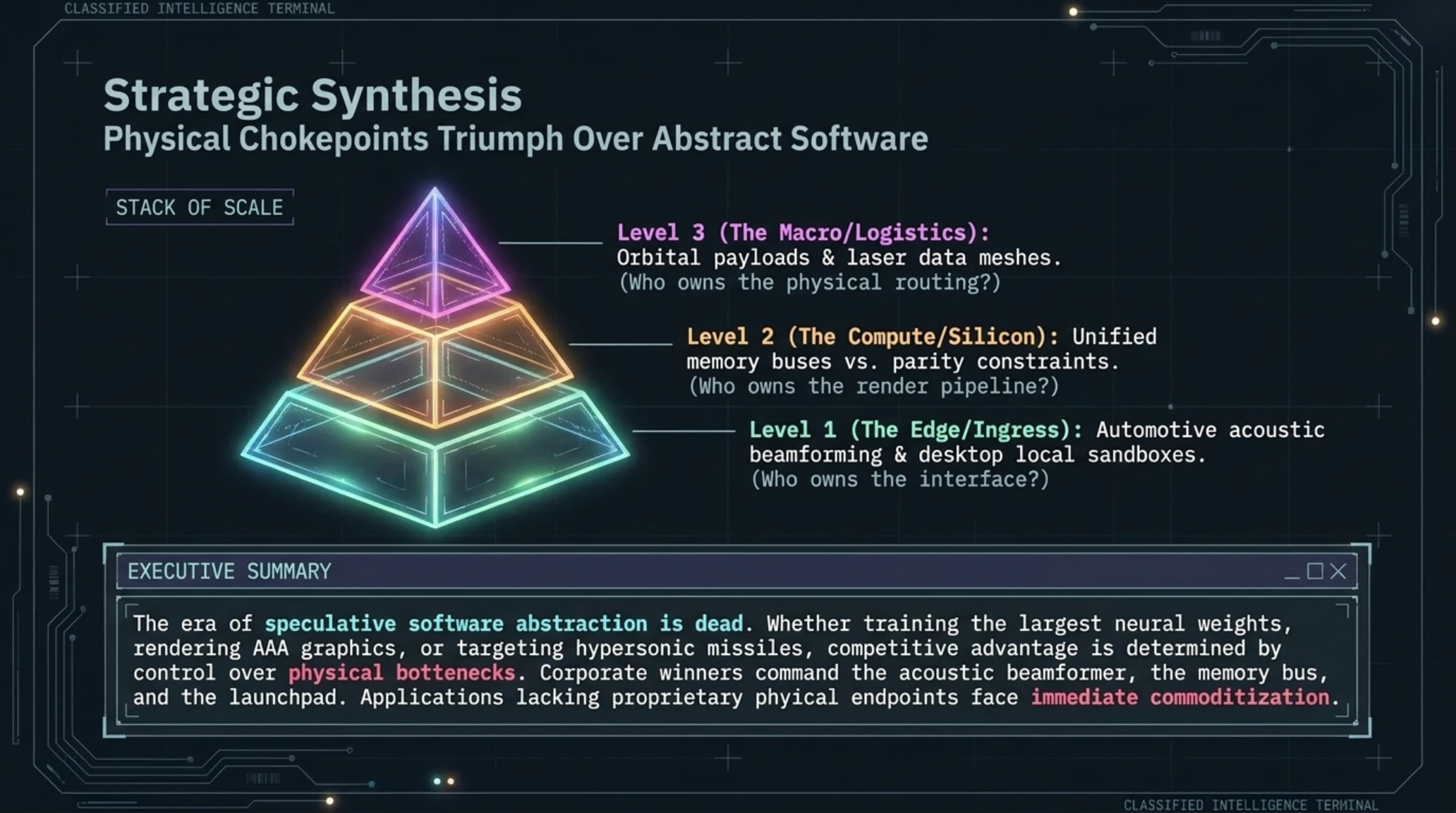
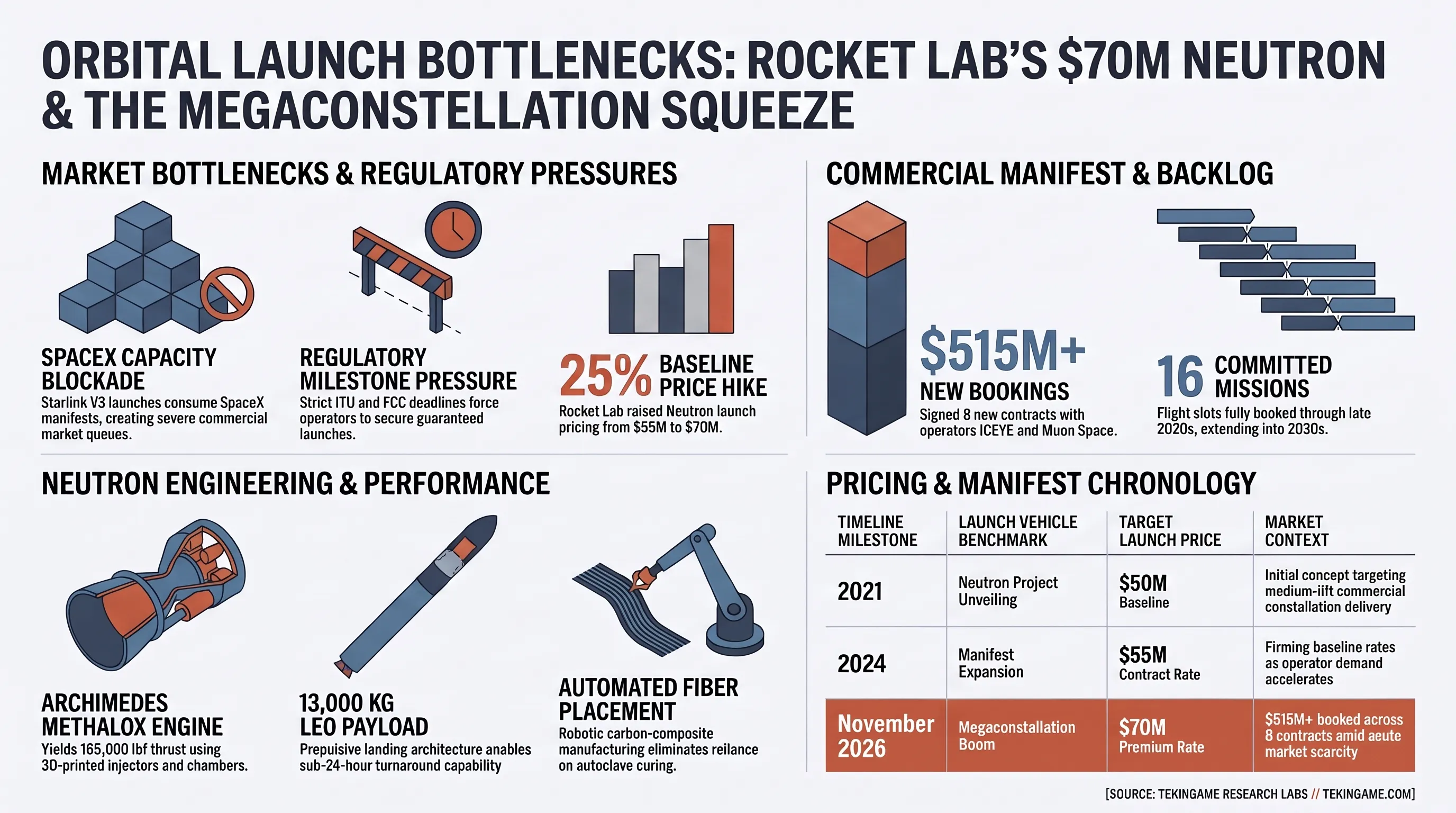
A rigorous cross-sectional analysis of Friday morning November 13 developments exposes a unified technological reality: the era of speculative abstraction in software is drawing to a close, replaced by an aggressive war for physical and logistical control. At the edge, Google infiltration of Apple CarPlay and OpenAI desktop deployment of ChatGPT Finances illustrate that AI developers can no longer rely on users opening browser tabs; cognitive models must seamlessly embed into vehicular audio systems and local accounting ledgers.
In the gaming silicon sector, Sony milestone of 100 million PlayStation 5 consoles stands as a vindication of conservative, disciplined platform architecture. By standardizing on a single 16GB GDDR6 unified memory bus, Sony protected game engine pipelines and maintained publisher confidence. In stark contrast, Microsoft insistence on the compromised, 10GB asymmetric memory configuration of the Xbox Series S has generated intense developer friction, forcing AAA studios to waste valuable engineering cycles on downscaling rather than creative innovation.
Finally, the aerospace repricing underscored by Rocket Lab $70 million Neutron launch rate and SpaceX relentless military flight cadence reveals the ultimate physical bottleneck of modern tech infrastructure. Every autonomous vehicle, global AI cluster, and tactical defense network ultimately relies on orbital data conduits and launch capacity. The corporate winners of the next decade will not merely be those who train the largest neural weights, but those who command the physical endpoints, silicon standards, and orbital supply chains through which data must flow.
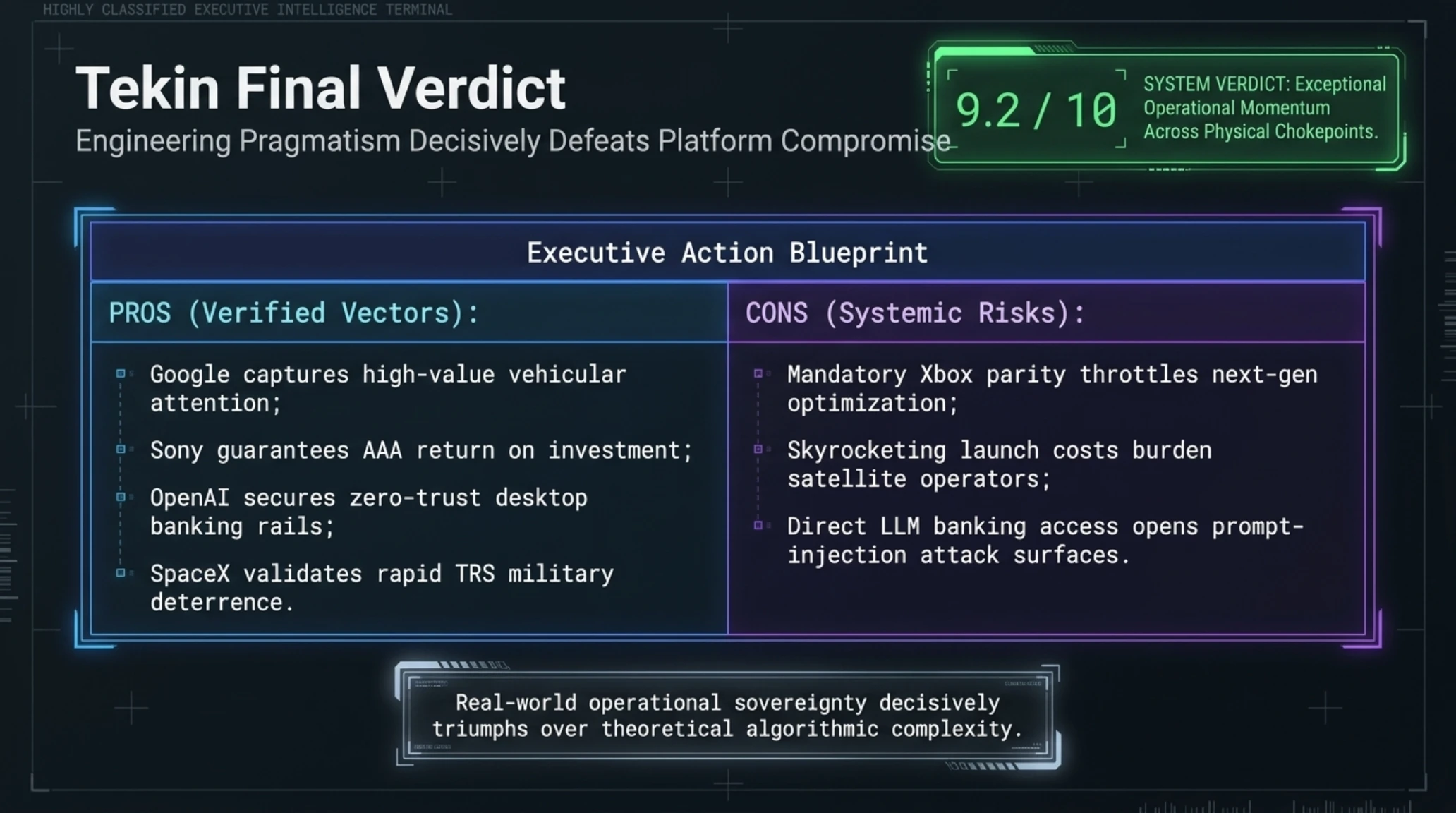
For technology executives, institutional capital allocators, and venture strategists, this convergence demands an immediate recalibration of investment priorities. Software applications that lack proprietary physical endpoints or native operating system hooks face rapid commoditization as foundational model providers push directly into consumer interfaces. Sustainable enterprise value in 2027 and beyond will accrue to operators who control scarce physical infrastructure: specialized neural silicon with uncompromised memory pipelines, proprietary vehicular and desktop distribution conduits, and guaranteed access to orbital payload delivery manifests. In the final accounting, real-world operational sovereignty decisively triumphs over theoretical algorithmic complexity.
- Google captures valuable vehicular attention with low-latency conversational Gemini Live on CarPlay.
- Sony 100M PS5 installed base guarantees publisher return on investment for narrative AAA releases.
- OpenAI integrates directly into personal and small-business banking rails via Plaid desktop conduits.
- SpaceX validates on-demand tactically responsive space defense launch capability for the USSF.
- Mandatory Xbox Series S feature parity continues to throttle next-generation engine optimization.
- Skyrocketing commercial rocket launch costs impose severe capital burdens on satellite constellation operators.
- Direct LLM access to sensitive banking ledgers introduces new attack surfaces for prompt-injection exploits.
Editorial Verdict & Official Source Directory
- Engadget: Official Coverage of Google Gemini Deployment on Apple CarPlay
- Eurogamer: Sony Confirms PlayStation 5 Surpasses 100 Million Units & Katsuhiro Harada CGDC 2026 Panel
- 9to5Mac: OpenAI Expands ChatGPT Finances Feature with Plaid Integration to macOS Desktop App
- Space.com: SpaceX Launches 2nd Rapid USSF-627 Mission & Rocket Lab Raises Neutron Launch Pricing
Frequently Asked Technical Questions
Does Google Gemini on CarPlay require continuous cellular connectivity?
Yes. While basic wake-word detection and lightweight audio pre-processing occur on-device, the full-duplex conversational Gemini Live engine and real-time Workspace data synchronization require persistent, low-latency mobile data connectivity to Google cloud TPU clusters.
Why has the Xbox Series S become such a flashpoint for veteran game developers?
Microsoft mandatory platform-parity clause forces developers to maintain identical feature sets on both Series X and Series S. The Series S memory constraint only 10GB total with 224 GB/s on 8GB and 56 GB/s on 2GB severely chokes memory-hungry modern engines like Unreal Engine 5.4 Nanite geometry and Lumen dynamic lighting.
Why are satellite constellation operators committing to Rocket Lab Neutron at $70 million before its debut flight?
Severe global launch vehicle capacity shortages, combined with SpaceX prioritizing internal Starlink deployments, have created multi-year backlogs. Constellation operators must secure dedicated launch slots to satisfy international spectrum licensing milestones, making Rocket Lab Neutron the premier non-SpaceX alternative.
Additional Gallery: Tekin Morning Nov 13: Gemini on CarPlay, 100M PS5s & $70M Neutron