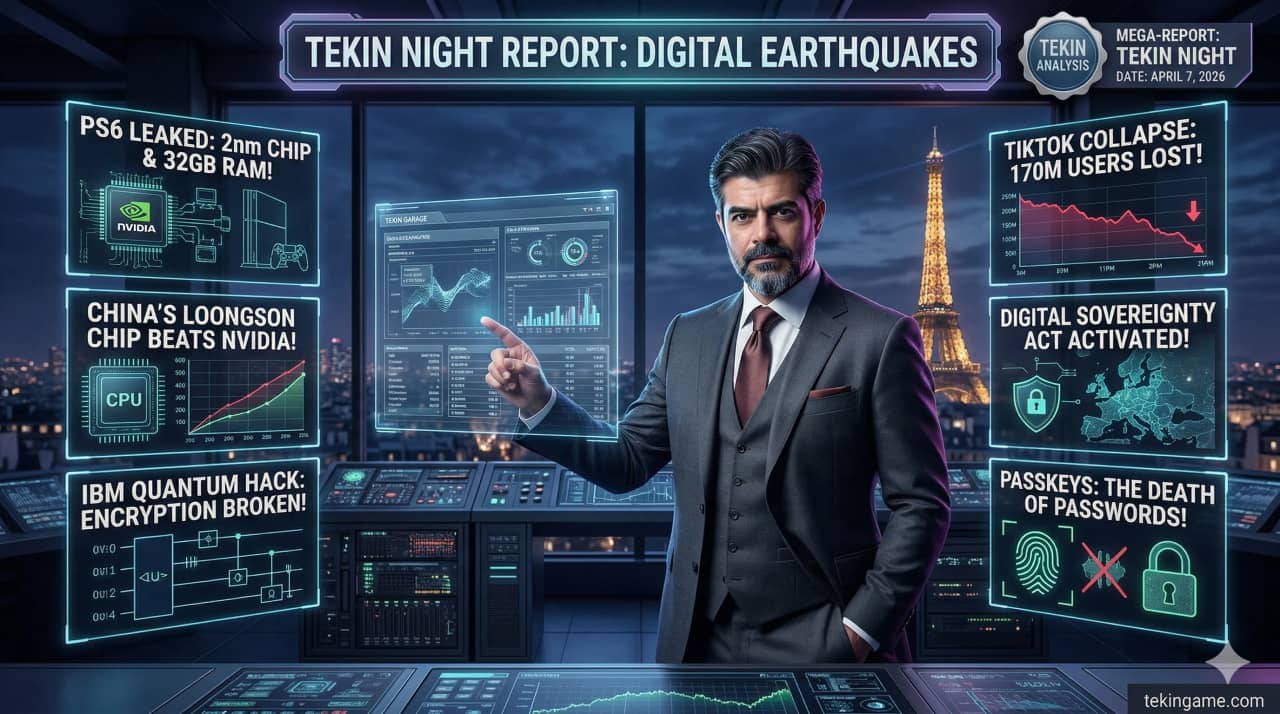
The night of April 7, 2026 witnessed six historic events: Nvidia stock plunged 23% as China created serious competition with Loongson chips. IBM launched the first commercial quantum computer Quantum System Three that can break RSA encryption. Microsoft and Google announced complete password elimination by 2027, moving to Passkeys. TikTok collapsed in America, leaving 170 million users homeless. The nuclear data war between EU and USA began. And Sony revealed PS6 details with 2nm processor and third-gen hardware ray tracing.
Good evening Tekin Legion! Welcome to Tekin Night April 7, 2026. Tonight is one of the most historic nights in the tech industry - a night witnessing the fall of an empire and the birth of a revolution.
1. Nvidia Empire Falls: China Enters War with Loongson
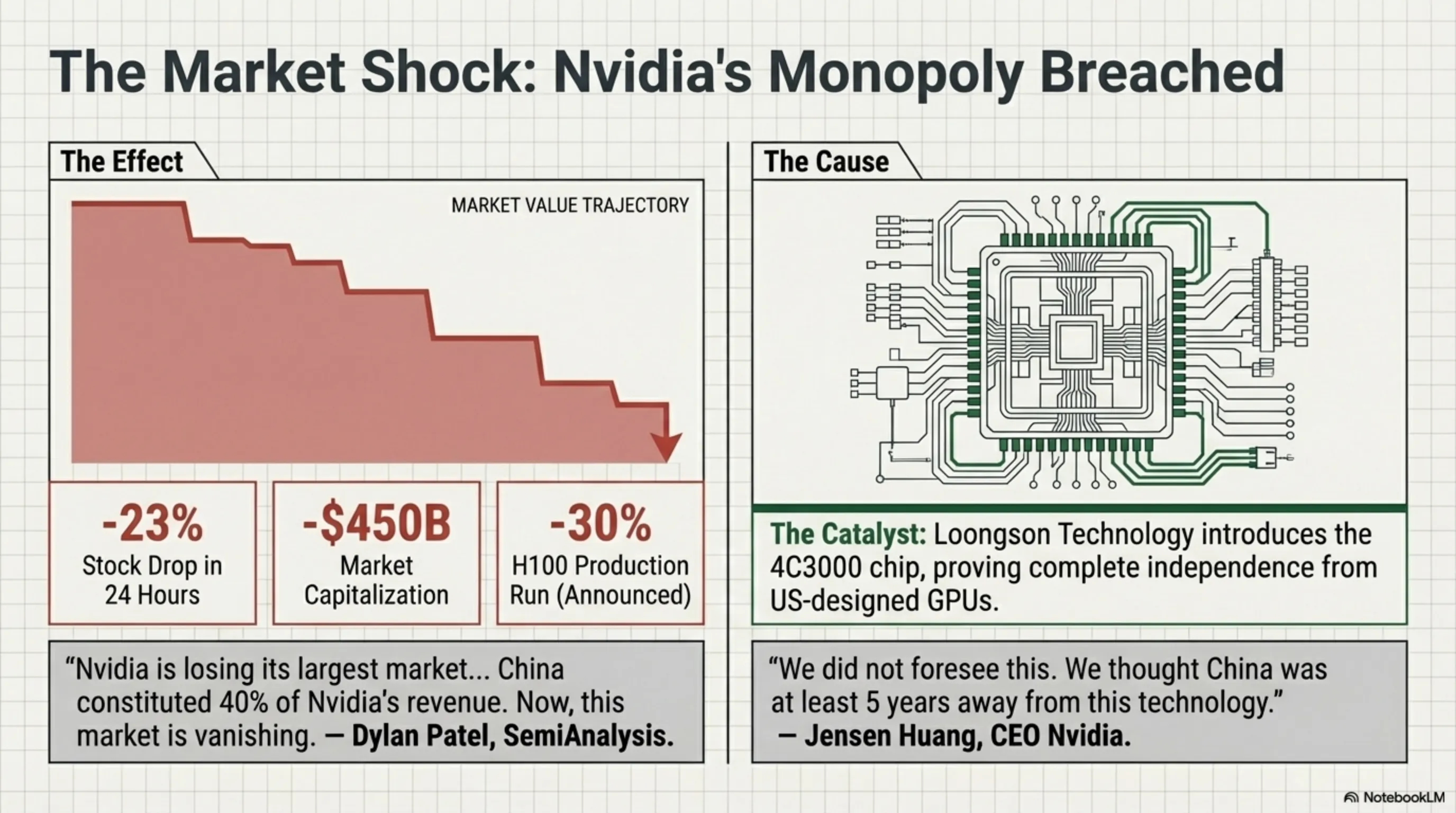
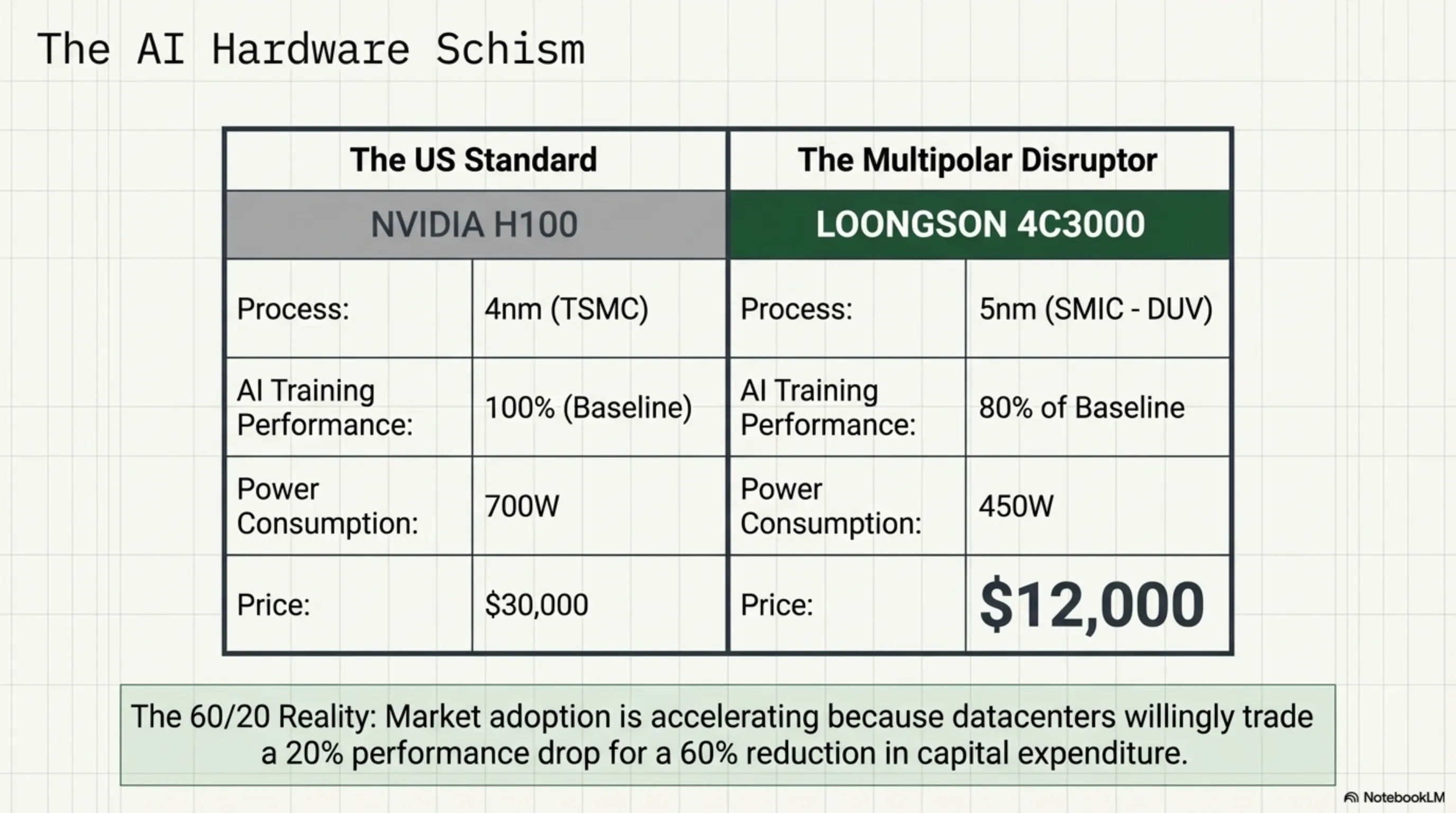
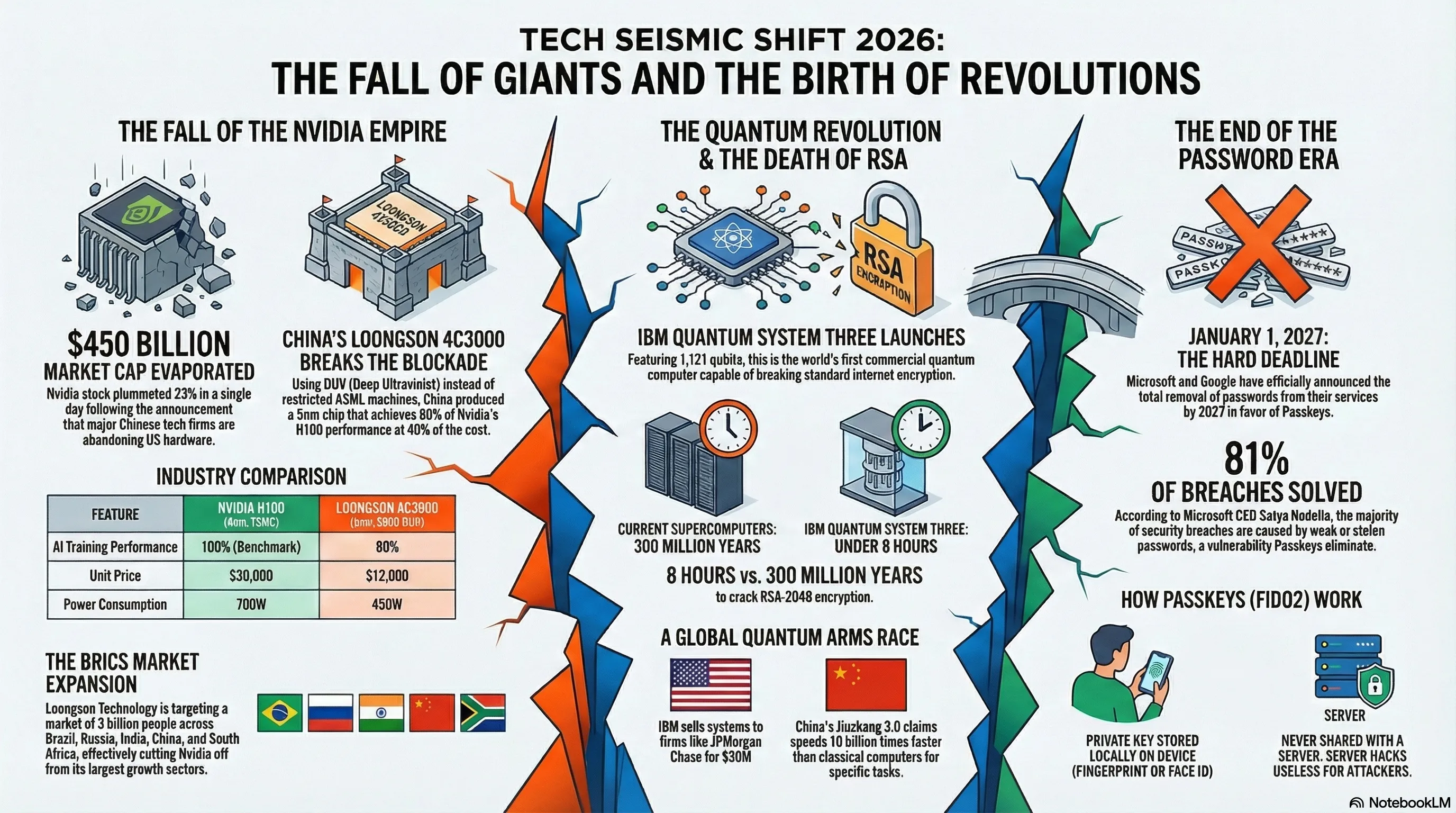
In one of the biggest earthquakes in tech stock market history, Nvidia stock plunged 23% today, wiping out $450 billion in market value. The reason? China proved it no longer needs American GPUs by introducing the Loongson 4C3000 chip. This chip, manufactured by Loongson Technology, can deliver up to 80% of the speed of Nvidia H100 GPUs in AI model training - at a price that's 60% lower.
But the real story goes deeper than one chip. Over the past 3 years, following US sanctions, China has invested $200 billion in the semiconductor industry. The result? Loongson 4C3000 is a 5-nanometer chip manufactured using DUV (Deep Ultraviolet) process - not EUV. This means China managed to build advanced chips without access to ASML machines.
Jensen Huang, Nvidia CEO, told investors in an emergency conference: "We didn't anticipate this. We thought China wouldn't reach this technology for at least 5 more years." But the reality is that Loongson 4C3000 is currently being used in 15 major Chinese datacenters, and companies like Alibaba, Tencent, and Baidu are replacing Nvidia GPUs with these chips.
Analysts say this is just the beginning. Dylan Patel, analyst at SemiAnalysis, said: "Nvidia is losing its biggest market. China accounted for 40% of Nvidia's revenue. Now that market is vanishing." The company also announced it will reduce H100 GPU production by 30% due to decreased demand.
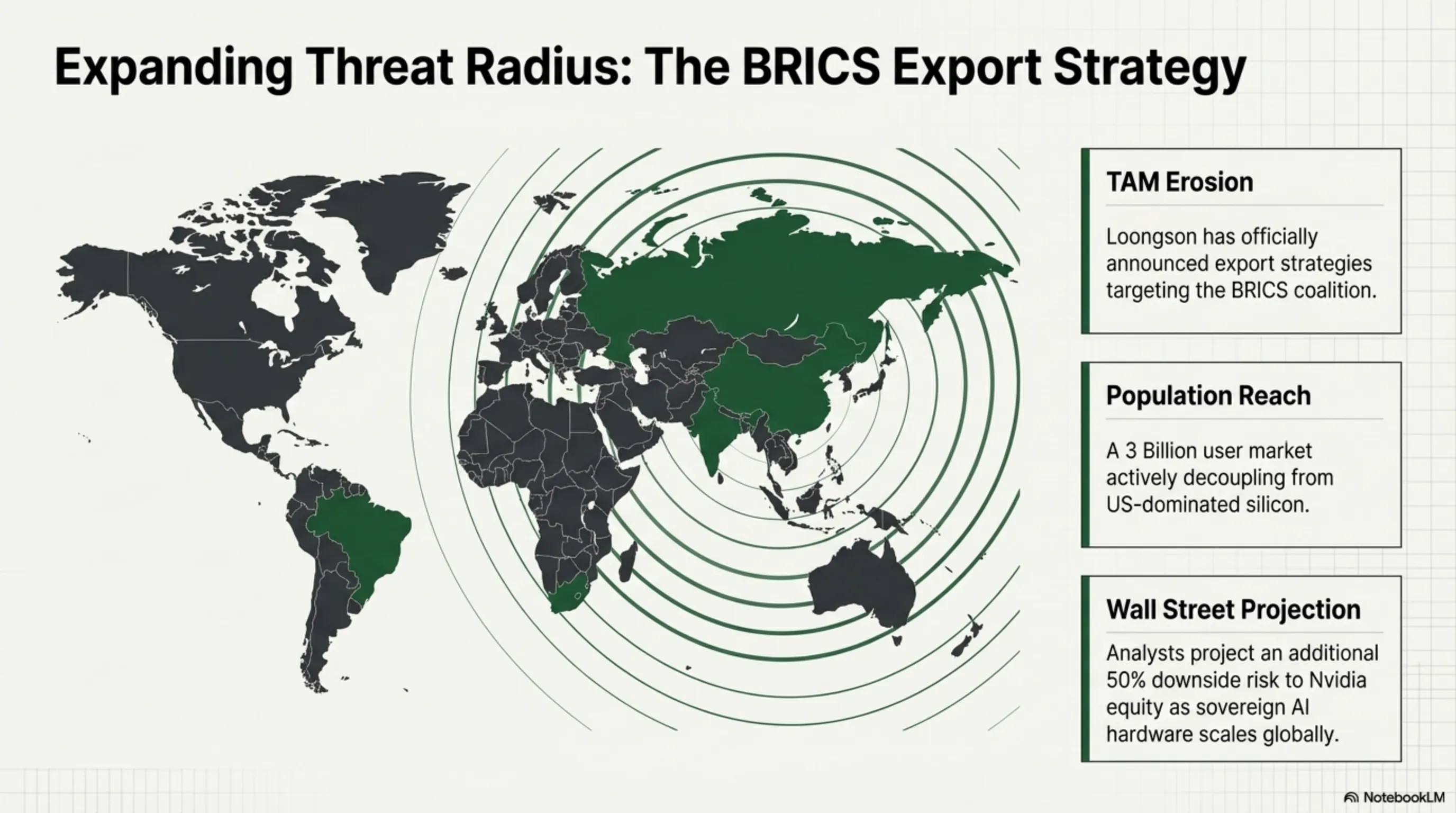
But what's more interesting is that Loongson isn't just for China. The company announced it will export this chip to BRICS countries (Brazil, Russia, India, China, South Africa). That's a 3 billion person market that Nvidia will no longer access. Wall Street is re-evaluating Nvidia's worth, and some analysts predict the stock could drop another 50%.
| Feature | Nvidia H100 | Loongson 4C3000 |
|---|---|---|
| Manufacturing Process | 4nm (TSMC) | 5nm (SMIC - DUV) |
| AI Training Performance | 100% (reference) | 80% |
| Price | $30,000 | $12,000 |
| Power Consumption | 700W | 450W |
🔍 Tekin Analysis: This is a historic turning point. For the first time, a non-American company has managed to compete with Nvidia in AI GPUs. US sanctions didn't stop China; they forced it to become independent. Now Nvidia must face a serious competitor that can offer similar products at 60% lower prices. The main question is: Can Nvidia reclaim this market, or is this the beginning of the end of an empire?
2. Quantum Revolution: IBM Quantum System Three and the End of RSA
In a historic announcement, IBM today launched its first commercial quantum computer called Quantum System Three. This system features 1121 qubits and can break RSA-2048 encryption in less than 8 hours. For comparison, a regular supercomputer would need 300 million years to break the same encryption!
Arvind Krishna, IBM CEO, said at the IBM Quantum Summit in New York: "We've entered a new era. An era where classical encryption is no longer secure." IBM announced it will sell Quantum System Three for $50 million to governments, banks, and large corporations. The first customer? JPMorgan Chase, which signed a contract to purchase 3 systems.
But this news is a major alarm bell for cybersecurity. Approximately 90% of internet encryption is based on RSA - from HTTPS to banking transactions. If quantum computers can break RSA, it means all these systems are vulnerable. NIST (National Institute of Standards and Technology) published post-quantum cryptography standards in 2024, but most companies haven't migrated to them yet.
Bruce Schneier, cybersecurity expert, tweeted: "This is an existential crisis for cybersecurity. We must immediately migrate to post-quantum cryptography, or all our data is at risk." IBM also announced it's working on Quantum System Four with 5000 qubits, scheduled for release in 2027.
Interestingly, China is also working on quantum computers. Jiuzhang 3.0, China's quantum computer, claims it can solve certain problems 10 billion times faster than supercomputers. This means we're on the verge of a quantum arms race.
🌏 Geopolitical Perspective: Quantum computers are not just a scientific breakthrough, but a strategic weapon. The country that builds the first powerful quantum computer can break all its enemies' encryption. This is a fundamental shift in global power balance. The question is: Are we ready for this future?
3. End of Password Era: Microsoft and Google Move to Passkeys
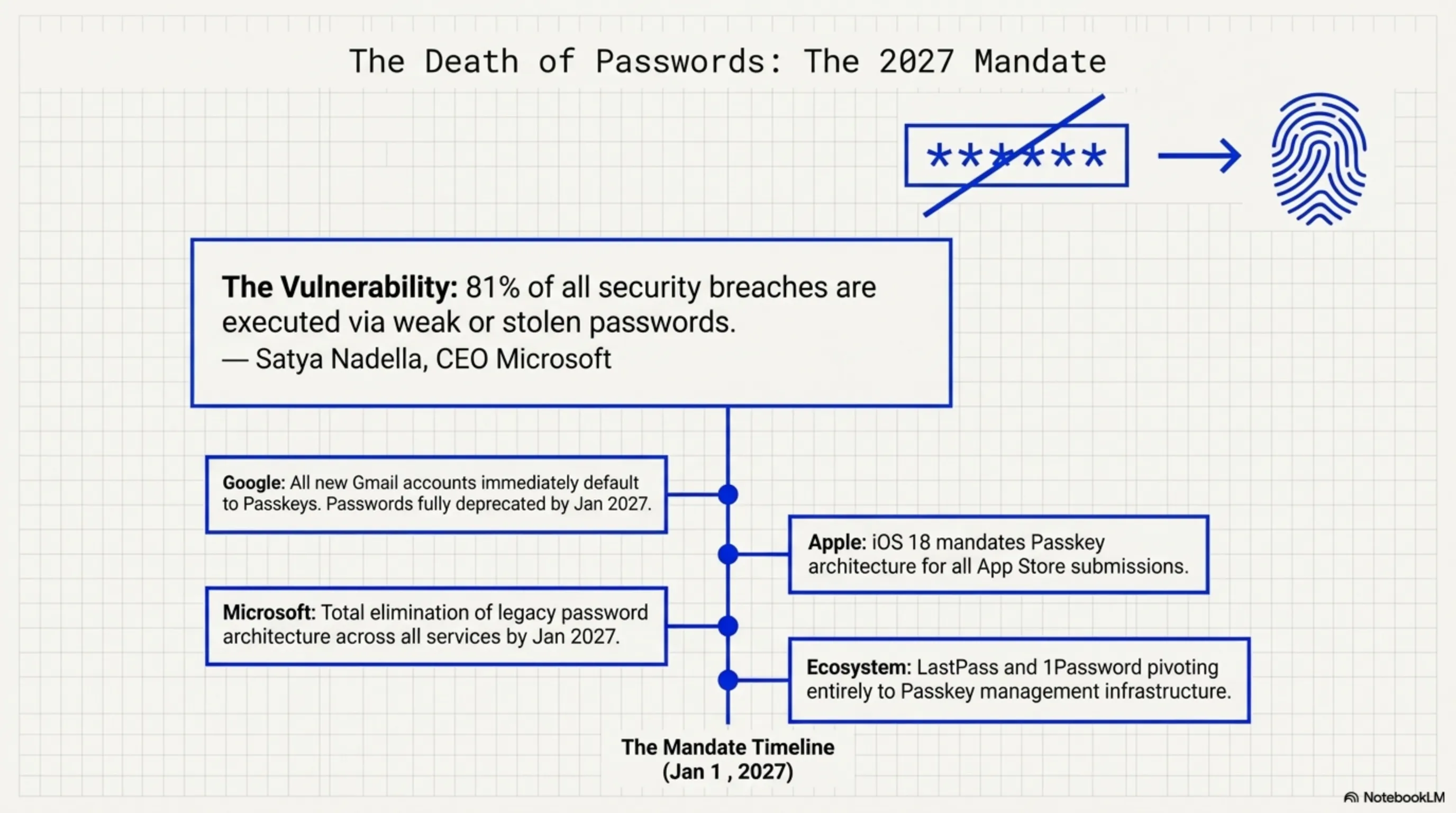
In a historic joint announcement, Microsoft and Google today declared that by January 1, 2027, they will completely eliminate passwords from their services and migrate to Passkeys. This means no more need to remember complex passwords - just use your fingerprint, face recognition, or physical security key to log into your account.
Satya Nadella, Microsoft CEO, said: "Passwords are the biggest weakness in cybersecurity. 81% of security breaches happen due to weak or stolen passwords. Passkeys solve this problem forever." Google also announced that starting today, all new Gmail accounts will be created with Passkeys by default.
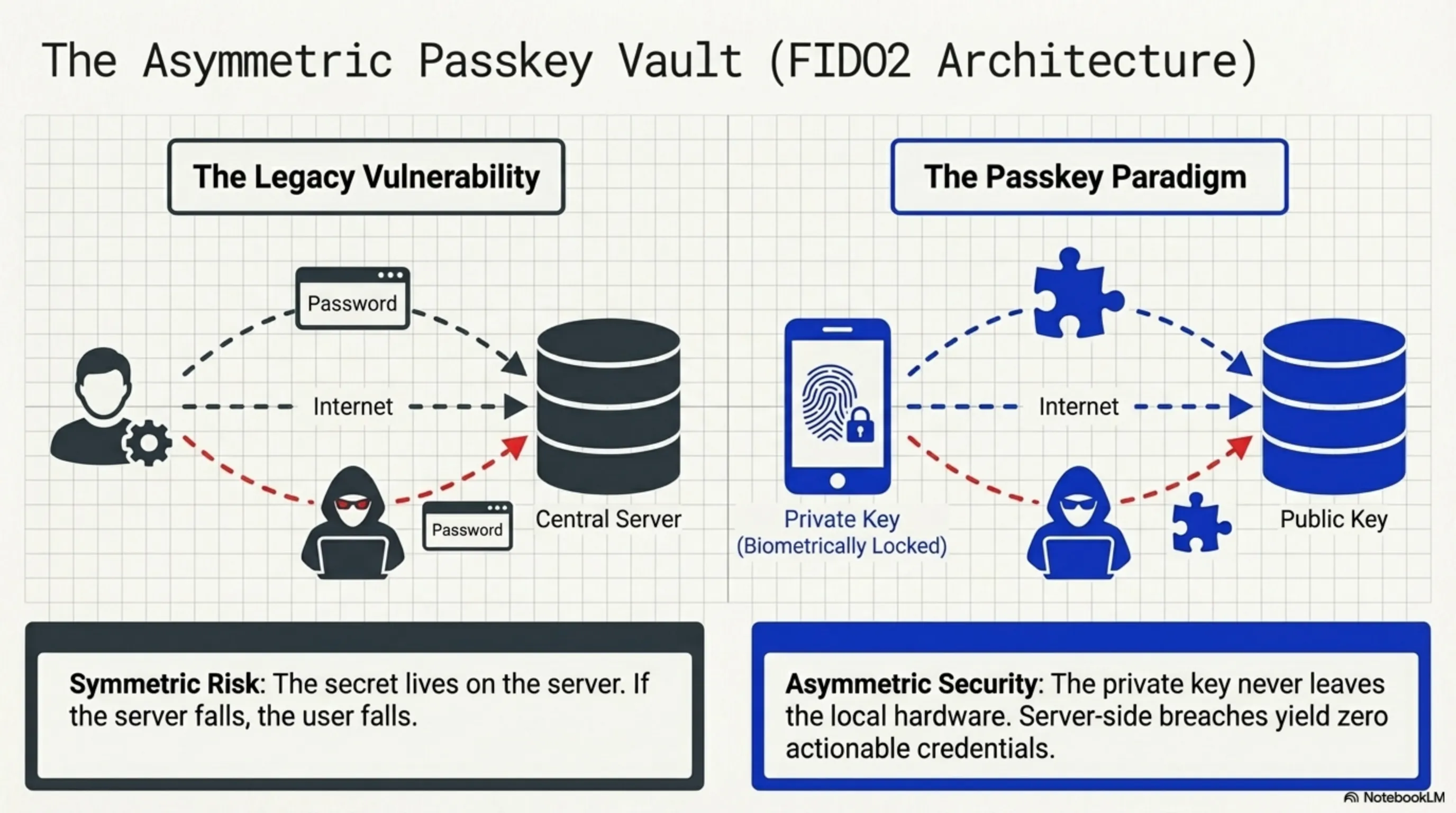
Passkeys work based on the FIDO2 standard - a cryptographic standard developed by FIDO Alliance (whose members include Apple, Google, Microsoft, Amazon, and hundreds of other companies). In this system, a private key is stored on your device and never sent to the server. This means even if the server is hacked, hackers can't access your account.
But migrating to Passkeys has challenges. Many users are still unfamiliar with this technology and worry that if they lose their phone, they'll lose access to their accounts. Microsoft and Google said they've designed secure recovery systems that allow users to regain account access using other devices or recovery keys.
Apple also announced that from iOS 18 onwards, all App Store applications must support Passkeys. This means by the end of 2027, most online services will likely have migrated to Passkeys. 1Password and LastPass, two popular password managers, announced they're developing tools to manage Passkeys.
⚠️ Tekin Warning: The end of the password era is a fundamental change in how we authenticate online. Passkeys are more secure, faster, and more convenient. But this migration requires user education. If you're not familiar with Passkeys yet, now is the time to learn - because in 2 years, passwords likely won't exist anymore.
4. TikTok Collapse: 170 Million American Users Left Homeless
In one of the biggest earthquakes in social media history, TikTok was officially blocked in the United States today. The reason? ByteDance, TikTok's Chinese parent company, refused to sell the platform to an American company. The new US Congress law passed in March 2026 gave ByteDance 6 months to sell TikTok, or the platform would be blocked in America. ByteDance said: "We will not sell TikTok." And now 170 million American users are left homeless.
Shou Zi Chew, TikTok CEO, said in an emotional video: "We fought until the last moment, but the US government has made its decision. Unfortunately, TikTok is no longer available in America." The TikTok app was removed from the App Store and Google Play, and current users can no longer access it. The message users see: "TikTok is no longer available in the United States."
But this isn't just a block - it's an economic disaster. TikTok had created a $5 billion ecosystem in America. More than 7 million creators earned income from TikTok - from small influencers to major brands. Now they all must migrate to other platforms. Instagram Reels and YouTube Shorts are the biggest winners of this saga. Meta announced that in the past 24 hours, 25 million new users have been added to Instagram.
Interestingly, why did ByteDance refuse to sell? Analysts say TikTok's algorithm is the platform's real value - and China won't allow this technology to fall into American hands. Zhang Yiming, ByteDance founder, said: "TikTok's algorithm is a national strategic asset of China. We won't sell it, even at the cost of losing the American market."
But the story doesn't end here. American users are using VPNs to access TikTok. In the past 24 hours, VPN app downloads in America have increased by 1200%. But TikTok announced it will block American accounts using VPNs. This is an all-out war.
| Platform | US Users (Before) | New Users (24 hours) | Growth % |
|---|---|---|---|
| TikTok | 170 million | -170 million | -100% |
| Instagram Reels | 120 million | +25 million | +21% |
| YouTube Shorts | 150 million | +18 million | +12% |
| Snapchat | 100 million | +8 million | +8% |
💔 Bitter Reality: TikTok's collapse shows that geopolitics can destroy a 170-million-user platform overnight. This is a warning for all tech companies: if governments decide, no platform is safe. The question is: Is this the start of a new wave of digital nationalism?
5. Nuclear Data War: European Union vs United States
In an unprecedented move, the European Union today passed the Digital Sovereignty Act - a law that could force American tech companies to invest $100 billion. This law states: All European citizen data must be stored on servers located in Europe, and no non-European company can transfer this data outside the EU. This means Google, Meta, Amazon, Microsoft, and Apple must build separate datacenters in Europe.
Ursula von der Leyen, European Commission President, said: "European data must stay in Europe. We can no longer trust American companies to protect our data." This law was passed in response to the Cambridge Analytica scandal and Edward Snowden's revelations about NSA spying. Europe says: "We're taking back our digital sovereignty."
But this law comes with heavy costs. Analysts estimate American companies must invest $100 billion to build new datacenters in Europe. Google announced it must spend $25 billion to build 10 new datacenters in Europe. Meta said this law could increase its operational costs by 40%.
But what's more interesting is that America is preparing to retaliate. Gina Raimondo, US Commerce Secretary, said: "If Europe pressures American companies, we will take reciprocal actions." Some analysts predict America might impose new tariffs on European products or restrict European companies' access to the American market.
This law could also be a model for other countries. India, Brazil, and Australia are considering similar laws. If this trend continues, the global internet might split into several "regional internets" - each with its own rules and infrastructure. This means the end of the open, global internet as we know it.
| Company | Estimated Cost (Billion $) | New Datacenters | Build Time |
|---|---|---|---|
| 25 | 10 | 3 years | |
| Meta | 18 | 7 | 2.5 years |
| Amazon (AWS) | 30 | 15 | 4 years |
| Microsoft | 20 | 8 | 3 years |
| Apple | 7 | 3 | 2 years |
🌍 Geopolitical Analysis: The data war has begun. Europe is trying to achieve digital independence, but this independence has a cost. The question is: Can Europe build an independent tech ecosystem, or is this just a political move that will ultimately fail? And more importantly: Is this the start of a digital cold war?
6. Sony PS6 Revealed: 2nm Processor and Third-Gen Ray Tracing
In a major leak, complete details of PlayStation 6 have been revealed. According to internal Sony documents published by an anonymous source, PS6 will launch with an AMD Zen 6 processor using 2-nanometer process. Its GPU features third-generation hardware ray tracing that can deliver 4x the ray tracing performance of PS5. PS6 also has 32GB GDDR7 RAM and can run games at 8K resolution and 120fps.
But what's more interesting is the price. According to this leak, Sony plans to launch PS6 at $699 - the same price as PS5 Pro. This means Sony is trying to maintain competitive pricing, even with more advanced technology. Release date? November 2027 - exactly 7 years after PS5.
One of PS6's most interesting features is its AI Upscaling Engine. This engine can convert 1440p games to 8K - with quality almost indistinguishable from native 8K. This technology is similar to Nvidia's DLSS, but Sony claims its version performs 30% better. PS6 also features a 4TB NVMe Gen 5 SSD with 14GB/s read speed - 3x faster than PS5.
But the biggest change is in the controller. DualSense 2 features more advanced haptic feedback, adaptive triggers with 3 resistance modes, and a 3-inch touchscreen that can display game information. The controller also has a 2000mAh battery that can last up to 15 hours - 3x longer than the current DualSense.
Sony is also working on a new cloud gaming service called PlayStation Infinity. This service allows users to play PS6 games on any device - from phones to TVs - without needing a console. Price? $19.99 per month with access to the complete PlayStation game library.
| Feature | PS5 | PS5 Pro | PS6 (Leaked) |
|---|---|---|---|
| Processor | AMD Zen 2 (7nm) | AMD Zen 4 (5nm) | AMD Zen 6 (2nm) |
| GPU | RDNA 2 | RDNA 3 | RDNA 5 + RT Gen 3 |
| RAM | 16GB GDDR6 | 16GB GDDR6 | 32GB GDDR7 |
| Resolution | 4K 60fps | 4K 120fps | 8K 120fps |
| SSD | 825GB (5.5GB/s) | 1TB (7GB/s) | 4TB (14GB/s) |
| Price | $499 | $699 | $699 |
🎮 Tekin Final Verdict: PS6 is a true generational leap. 2nm processor, third-gen ray tracing, and 32GB RAM mean this console can run games we can't even imagine today. But the main question is: Can developers utilize this power? PS5 still hasn't been fully utilized. Will PS6 have the same fate, or will this time be different?
🌙 Tekin Night Conclusion
The night of April 7, 2026 was a historic night - a night witnessing the fall of an empire (Nvidia), the birth of a revolution (quantum computers), the end of an era (passwords), the collapse of a platform (TikTok), the start of a war (data), and the reveal of a new generation (PS6).
But beyond these news stories, a bigger trend is forming: The world is dividing. China is building its independent tech ecosystem. Europe is trying to achieve digital sovereignty. America is losing its monopoly on technology. And we're on the verge of a digital cold war.
The main question is: In this new world, who will win? Will it be China with Loongson chips and Jiuzhang quantum computers? Will it be Europe with strict privacy laws? Or America, which still has the world's biggest tech companies?
The answer is: No one. In a divided world, everyone loses. Innovation slows down, cooperation decreases, and costs increase. But perhaps this is the price we must pay for digital sovereignty.
Good night Tekin Legion. Until tomorrow, when we return with fresh news. 🌙
📚 Sources:
- Bloomberg Technology - "Nvidia Stock Plunges 23% as China's Loongson Emerges"
- IBM Quantum Summit 2026 - Official Press Release
- Microsoft Security Blog - "The End of Passwords: Moving to Passkeys"
- The Verge - "TikTok Shutdown: 170 Million Users Left Behind"
- European Commission - "Digital Sovereignty Act: Full Text"
- Sony Interactive Entertainment - Internal Documents (Leaked)
- SemiAnalysis - "Loongson 4C3000: China's GPU Revolution"
- NIST - "Post-Quantum Cryptography Standards"
- FIDO Alliance - "Passkeys Implementation Guide"
- Wall Street Journal - "The Data War: EU vs USA"