☕ Tekin Morning - Saturday, September 26, 2026
Good morning! Start your day energized with the hottest tech and gaming news from around the world.
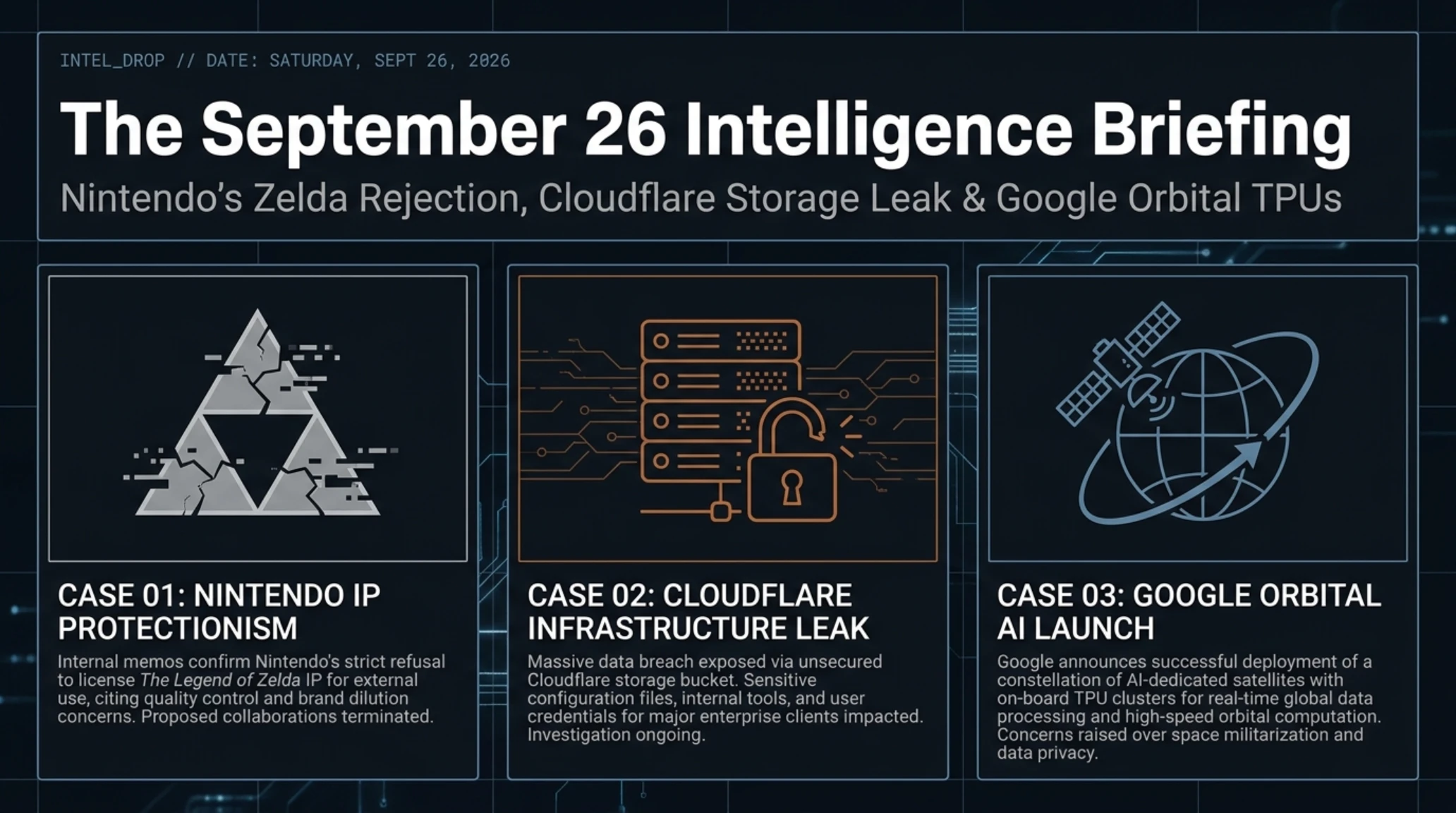
- 🎮🎮 Zelda Game with Ganondorf Rejected- Nintendo turned down Ubisoft's pitch
- 🎧🔐 Cloudflare Vulnerability- Data leak between customer containers
- 🚀🏎️ BeamNG Coming to PS5- Ultra-realistic sim launches October 19
- 🗡️🚀 AI Chips Heading to Space- Google's Project Suncatcher
- 📰🚛 Tesla Semi Mass Production- Electric truck after 9 years
- ⚔️🎯 PS5 Dominates GTA 6- 77% of pre-orders
Nintendo Shuts the Door on Ubisoft's Ganondorf-Led Zelda Spinoff
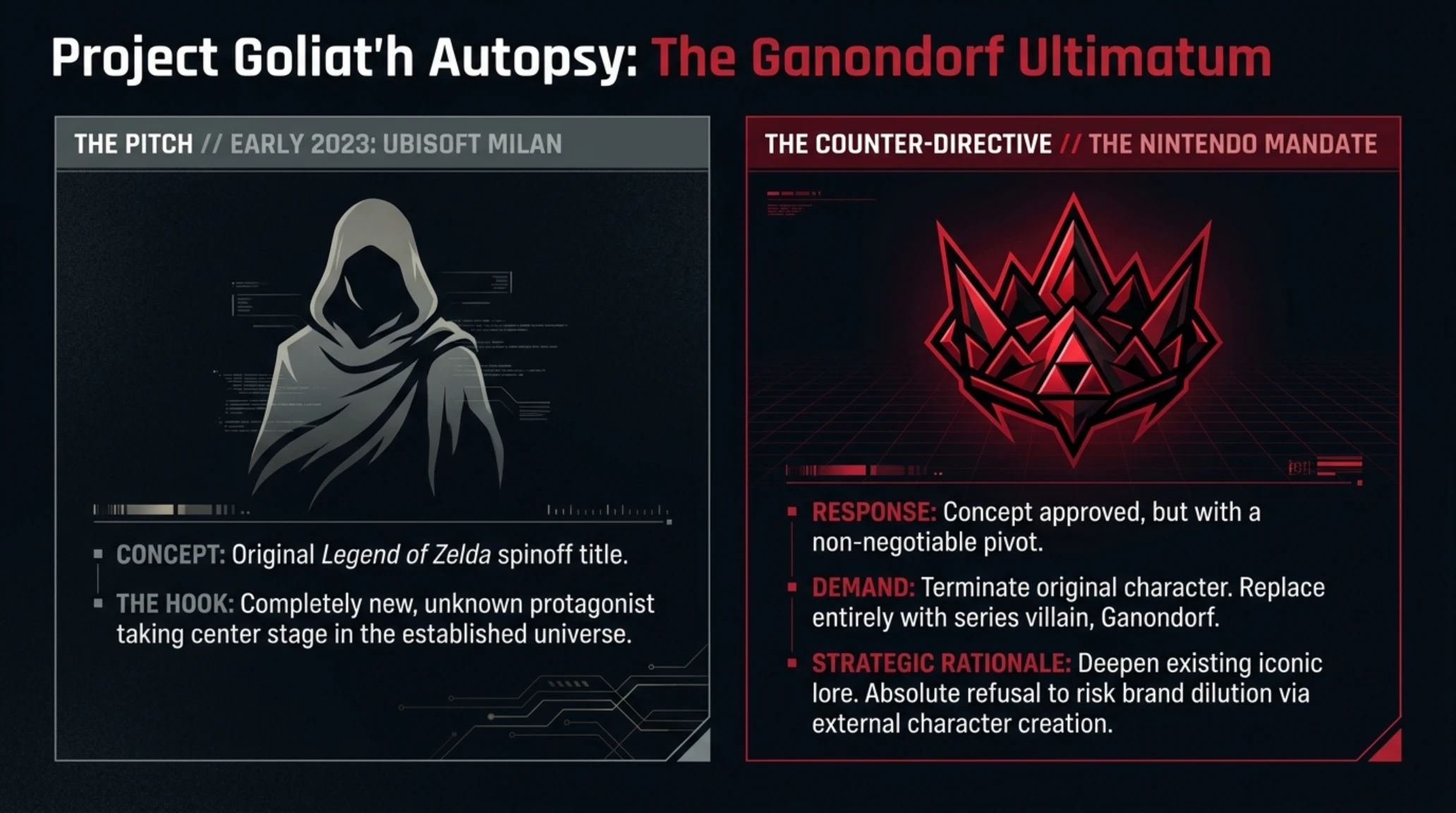
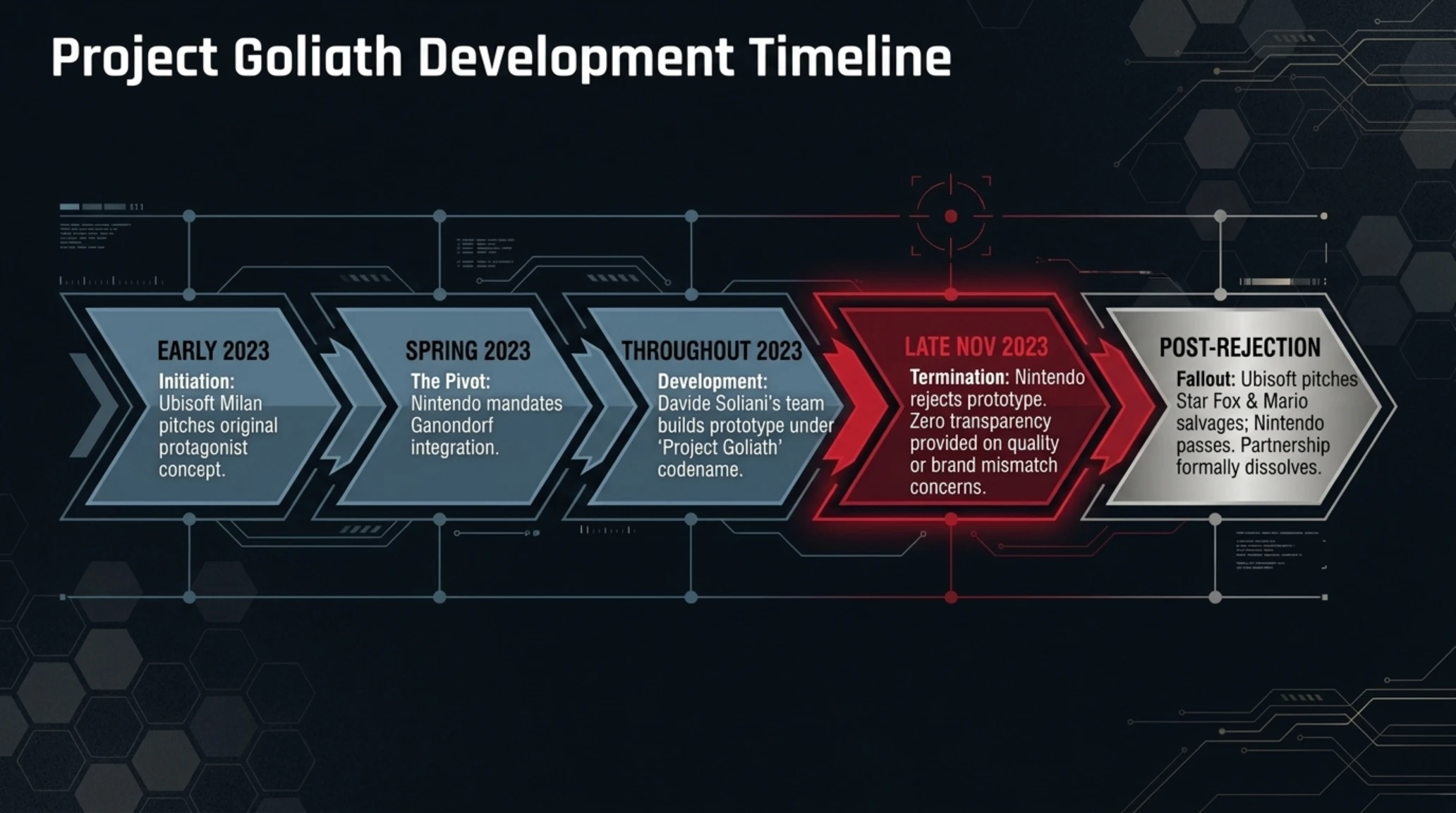
The video game industry has been buzzing this week with revelations about one of the most intriguing canceled projects in recent Nintendo-Ubisoft collaboration history. According to an exclusive report published by Insider Gaming, Ubisoft Milan pitched Nintendo an original Legend of Zelda spinoff in early 2023 that was set to feature a previously unknown protagonist taking center stage in the beloved franchise's universe.
Key Takeaways: Morning Intelligence Briefing
- Nintendo officially rejects Ubisoft's Ganondorf-led Zelda spinoff pitch, ending collaboration
- Cloudflare remediates critical cross-tenant residual disk data leakage in Containers
- BeamNG.drive ends 11 years of PC exclusivity with an upcoming PS5 Early Access launch
- Google launches four TPU AI processors into Earth orbit via Project Suncatcher and SpaceX
- Tesla Semi enters volume mass production in Nevada targeting 50,000 units annually
- PlayStation 5 commands 77% of global GTA 6 pre-orders, leaving Xbox with 23%
The proposal was well-received by Nintendo executives, but they had an unexpected counter-suggestion: instead of introducing a brand-new character, they wanted the game to star Ganondorf one of the most iconic villains in video game history. This request signaled Nintendo's interest in exploring deeper layers of their existing characters rather than creating entirely new faces for the Zelda universe.

This decision reflected a fascinating strategic direction from Nintendo. Rather than diluting the Zelda brand with yet another new character, the company saw an opportunity to provide fans with a fresh perspective on a character they already knew and loved or loved to hate. Ganondorf, the Gerudo king and primary antagonist of numerous Zelda titles, has always been portrayed as a power-hungry villain. A game exploring his backstory, motivations, or even an alternate timeline where he's the protagonist could have been revolutionary for the franchise.
Project Goliath: A Dream That Never Came to Be
After receiving Nintendo's feedback, a small team at Ubisoft Milan led by Davide Soliani the acclaimed director behind the Mario + Rabbids series was tasked with creating a prototype by the end of 2023. The project was internally codenamed "Goliath," a name that seemed to reference the ambitious scale and scope of what Ubisoft Milan was aiming to develop.
According to the available information, the development team worked throughout 2023 on the prototype, pouring their creative energy and technical expertise into bringing this unique vision to life. By late November 2023, they were ready to present their work to Nintendo for evaluation. Unfortunately, Nintendo rejected the prototype, and the exact reasons behind this decision remain unclear to this day.
No details have emerged about the gameplay mechanics, visual style, or specific narrative direction of the prototype. Was it an action-adventure game in the traditional Zelda mold? A strategy game? A narrative-driven experience? We may never know. What's particularly frustrating for industry observers and fans alike is the lack of transparency regarding why Nintendo ultimately passed on the project. Was it a quality issue? A mismatch with the Zelda brand identity? Concerns about market positioning? All of these questions remain unanswered.
📋 Project Goliath Timeline
The Bitter End of a Successful Partnership
Following the rejection of Project Goliath, Ubisoft attempted to salvage the partnership by proposing additional game concepts based on other Nintendo franchises. According to the report, ideas for games centered around Star Fox and Mario were floated, but Nintendo showed no interest in continuing the collaboration. This marked the end of what had been, until that point, a highly successful relationship between the two companies.
The dissolution of this partnership is particularly striking given the commercial and critical success of previous Ubisoft-Nintendo collaborations. The Mario + Rabbids series, also directed by Davide Soliani, proved that Ubisoft could handle Nintendo's precious IP with creativity and respect. Mario + Rabbids: Kingdom Battle, released in 2017 for the Nintendo Switch, was a surprise hit that married the chaotic humor of Ubisoft's Rabbids with the colorful world of Super Mario in a turn-based tactical strategy format. The game sold millions of copies and earned praise for its inventive gameplay and charming presentation.
The 2022 sequel, Mario + Rabbids: Sparks of Hope, expanded on the formula with an even more ambitious scope, adding real-time movement to the tactical battles and introducing new characters and storylines. While it didn't quite match the sales of the original, it was still well-received and demonstrated that the partnership could produce quality content consistently.
Given this track record, many industry insiders were surprised that Nintendo wouldn't give Ubisoft Milan another chance, especially after the studio had already invested significant time and resources into developing the Zelda prototype. Some speculate that Nintendo's increasingly protective stance toward its core franchises in recent years may have played a role. The company has become more selective about external partnerships, particularly when it comes to its most valuable IP like Zelda and Mario.

Cloudflare Patches Critical Cross-Tenant Data Leakage Vulnerability
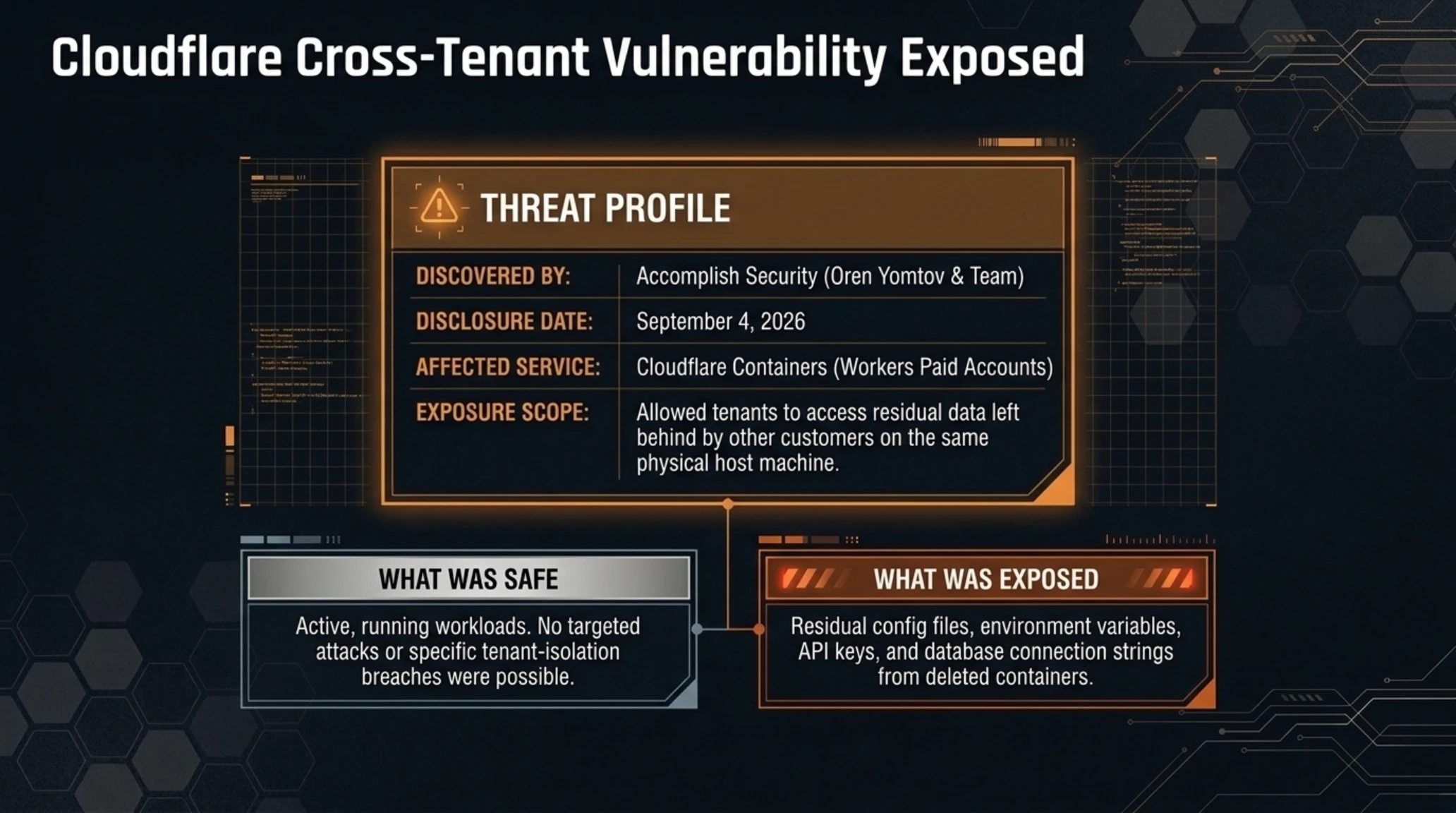
In a sobering reminder of the complex security challenges facing cloud infrastructure providers, Cloudflare announced on Thursday, September 25, that it had discovered and remediated a serious security flaw in its Cloudflare Containers service. The vulnerability could have allowed customers with Workers Paid accounts to access residual data left behind by other customers on the same physical server a nightmare scenario in multi-tenant cloud environments.
Discovery by Accomplish Security Researchers
The security issue was responsibly disclosed to Cloudflare on September 4, 2026, by the research team at Accomplish, a cybersecurity firm specializing in cloud infrastructure security. Lead researcher Oren Yomtov and his team were able to demonstrate that a customer with a Workers Paid account could recover disk blocks that had previously been used by other customers' containers running on the same host machine.
It's crucial to understand what this vulnerability could and couldn't do. The technique demonstrated by Accomplish couldn't target a specific customer, workload, host machine, or particular dataset. In other words, an attacker couldn't specifically go after Company X's data or steal a particular database. Instead, they would essentially be reading random leftover data from whoever had previously used that storage space. While this limits the immediate targeting capabilities of a potential attacker, it doesn't make the vulnerability any less serious sensitive information is sensitive information, regardless of whose it is.
Furthermore, the vulnerability only exposed residual data information left behind after a container was deleted. It didn't provide access to active, running workloads. This is an important distinction, as it means that data currently being processed by other customers was not at risk. However, residual data can still contain plenty of sensitive information: configuration files, environment variables, code snippets, database connection strings, API keys, and potentially fragments of user data.
🔐 Jargon Buster: What is Residual Data?
Residual data refers to information that remains on physical storage media after a file or container has been deleted. When you delete a file, the operating system typically just removes the reference to that file the actual data remains on the disk until it's overwritten by new data. In multi-tenant cloud environments like Cloudflare's infrastructure, this creates a security risk if disk blocks are recycled without being properly wiped. A new customer receiving a recycled disk block could potentially read fragments of the previous tenant's data that haven't yet been overwritten.
The Root Cause: Inadequate Disk Block Sanitization
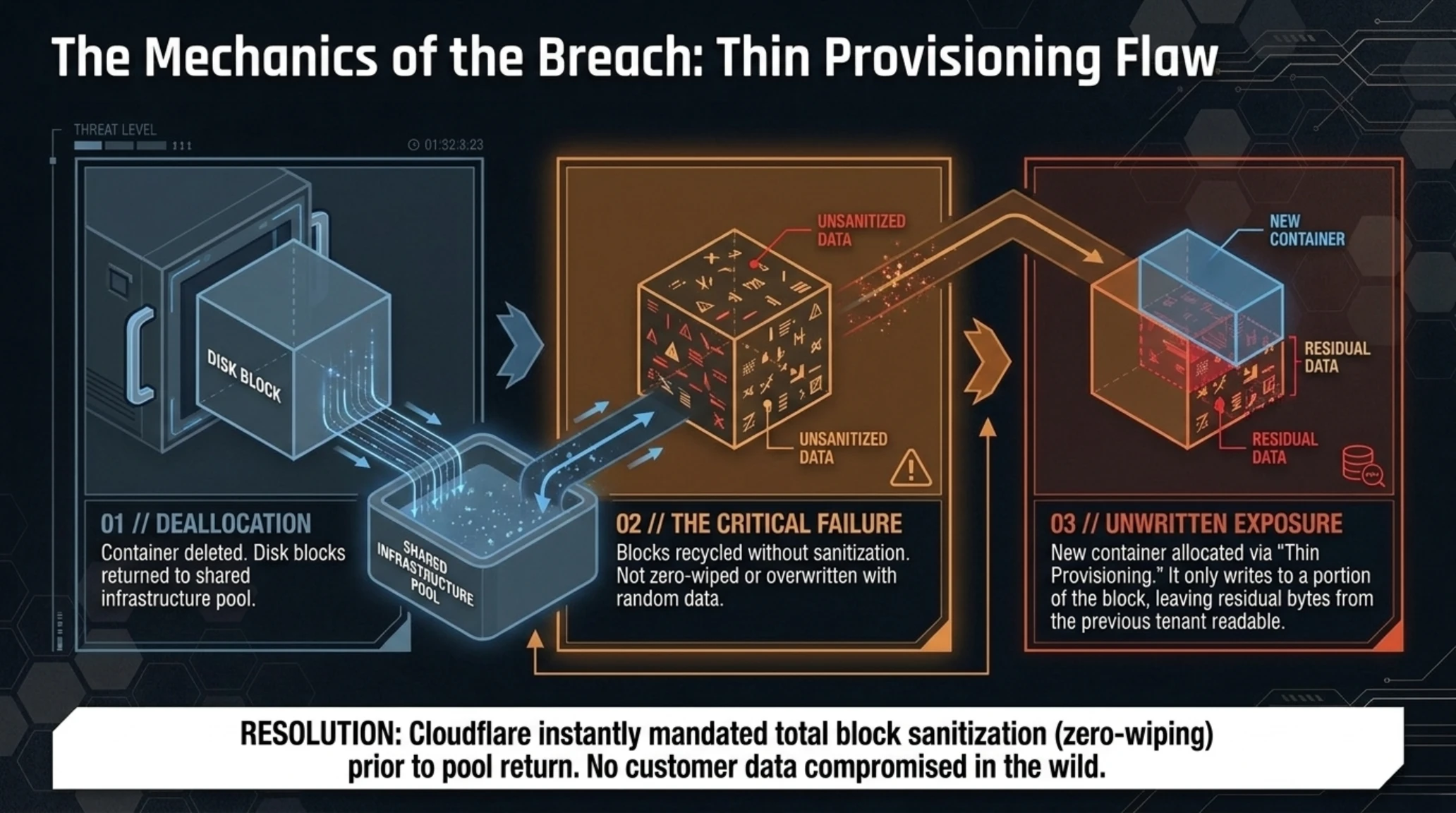
The technical root of the problem lay in how Cloudflare managed disk block allocation and deallocation in its multi-tenant infrastructure. When a container was deleted, the physical disk blocks it had used were returned to a shared pool that would then be allocated to new workloads from various customer accounts. The critical mistake was that these disk blocks weren't being wiped clean before being added back to the pool.
Cloudflare Containers uses thin provisioning, a storage optimization technique where disk space is allocated dynamically as needed rather than all at once. While thin provisioning is efficient and helps cloud providers maximize their infrastructure utilization, it creates additional security considerations. When a thinly-provisioned disk block is allocated to a new container and that container only writes to a portion of the block, the unwritten portions still contain whatever data was there previously.
This is exactly what the Accomplish researchers were able to exploit. By requesting new container storage and carefully examining the disk blocks they received, they could read bytes that belonged to previous customers. The amount of recoverable data would vary if a previous container had written extensively to a disk block, there might be very little residual data left. But if a container had been short-lived or hadn't written much data, significant amounts of information could potentially be recovered.
Cloudflare's Swift Response and Remediation
To Cloudflare's credit, the company acted quickly once the vulnerability was reported. In a detailed blog post published alongside the disclosure, Cloudflare's security team outlined the steps they took to address the issue. First and foremost, they implemented an immediate fix that ensures all disk blocks are securely wiped before being returned to the shared pool. This wiping process overwrites every byte of the disk block with zeros or random data, ensuring that no residual information from the previous tenant remains.
Additionally, Cloudflare performed a thorough scrub of all existing disk blocks in their shared pools, ensuring that any potentially contaminated blocks were cleaned. The company also conducted an extensive investigation to determine whether the vulnerability had been exploited in the wild prior to its discovery by Accomplish. According to Cloudflare's statement, they found no evidence of actual customer data compromise or malicious exploitation of the flaw.
The incident serves as a valuable case study in cloud security best practices. Multi-tenant infrastructure providers must implement defense-in-depth strategies that ensure proper data isolation at every layer not just at the application or virtual machine level, but all the way down to the physical storage layer. While virtualization and containerization technologies provide strong isolation boundaries, they're not foolproof, especially when it comes to shared physical resources like disk storage.
For Cloudflare customers, this incident is a reminder of the importance of encryption at rest. Even if residual data were to leak between tenants, properly encrypted data would be unreadable without the encryption keys. It's also worth noting that Cloudflare's transparency in disclosing this issue and working with the security research community demonstrates mature security practices. Many organizations might be tempted to downplay or hide such vulnerabilities, but Cloudflare chose to be forthcoming about the problem and its resolution.

BeamNG.drive Finally Crashes onto PS5 After 11 Years of PC Exclusivity
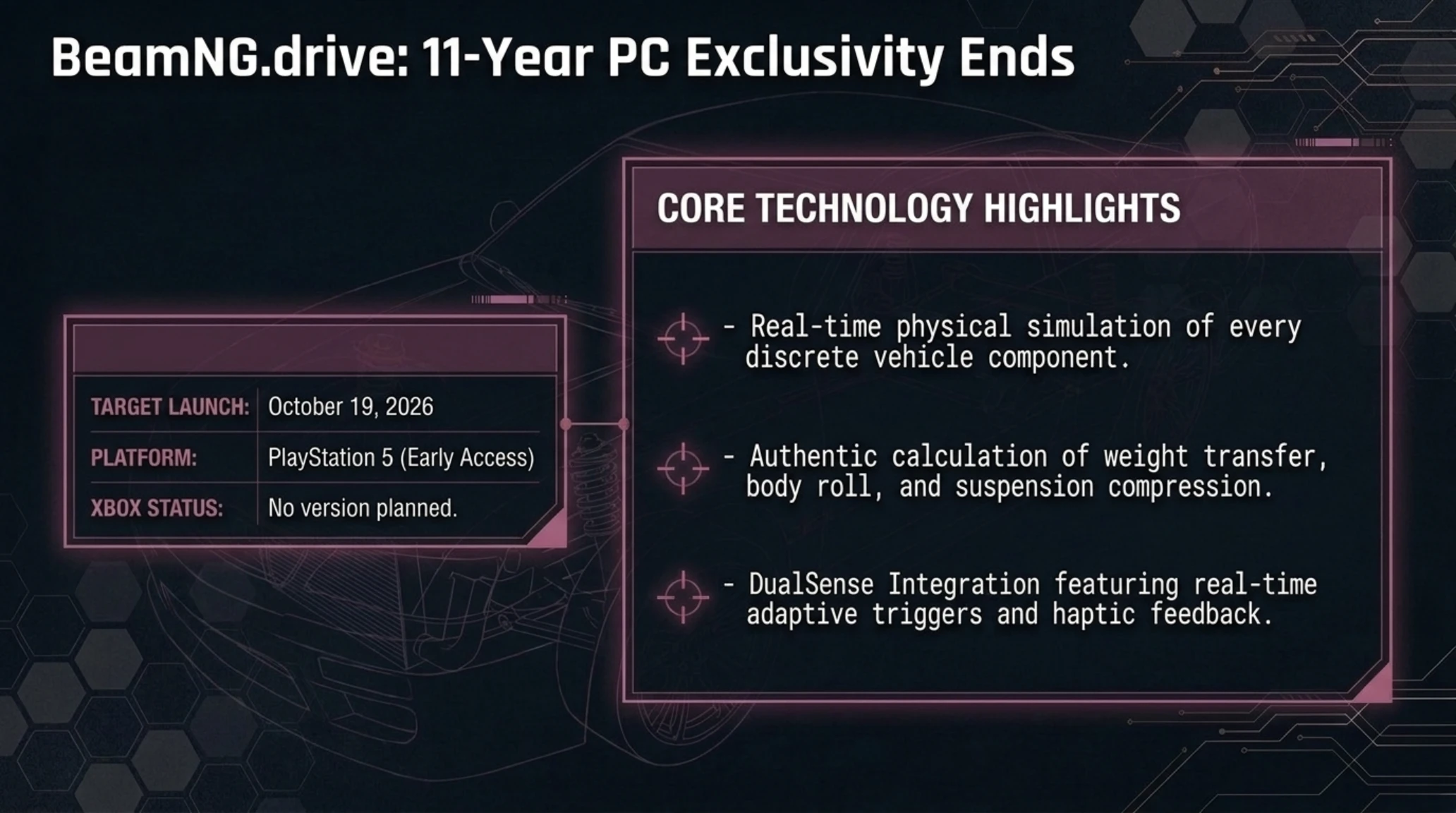
One of the most exciting announcements for simulation racing enthusiasts this week was the confirmation that BeamNG.drive, the beloved soft-body physics simulator, will launch on PlayStation 5 on October 19, 2026. After more than a decade of being exclusively available on PC, where it has built a devoted cult following, the game is finally making the jump to console though notably, only to PlayStation 5, with no Xbox version currently planned.
The Soft-Body Physics Engine That Changes Everything
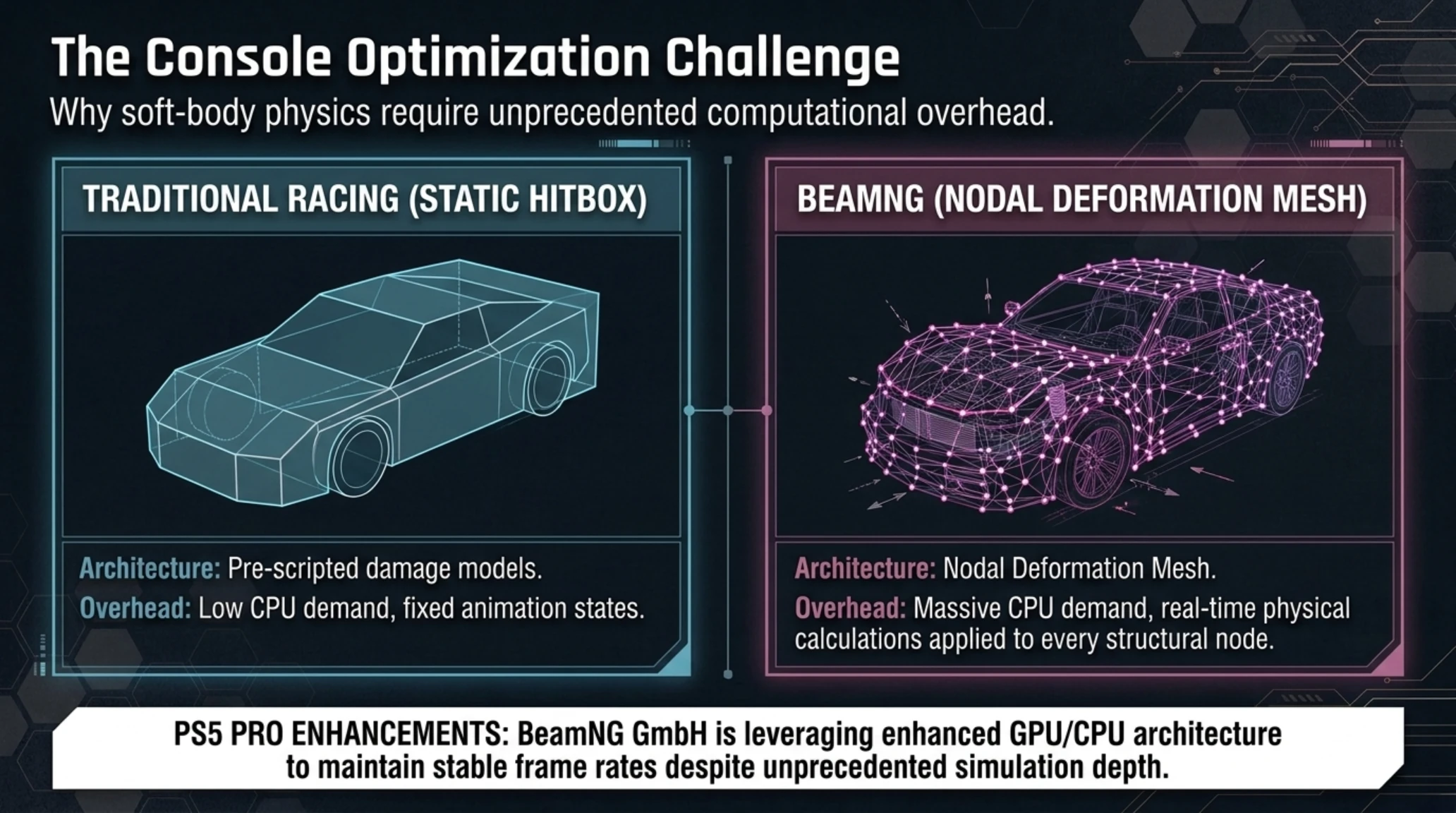
What sets BeamNG.drive apart from virtually every other racing or driving game on the market is its groundbreaking soft-body physics engine. While most driving games use simplified, pre-scripted physics models for vehicle damage and collisions, BeamNG simulates every component of a vehicle in real-time. This isn't just about making crashes look cool it's about creating an authentic, physics-accurate representation of how vehicles actually behave and deform.
When you crash your car into a wall or another vehicle in BeamNG.drive, the deformation, bending, and breaking of every part of the body is calculated based on real physics principles. The hood can crumple in a realistic accordion pattern, doors can be torn from their hinges, wheels can separate from the axles, suspension components can bend and snap, and even subtle details like how the chassis flexes under stress are accurately modeled.
This level of simulation extends beyond just crashes. The soft-body physics affect how vehicles handle during normal driving as well. Weight transfer during acceleration and braking, body roll in corners, suspension compression over bumps all of these are calculated using the same detailed physics model. The result is a driving experience that feels remarkably authentic, even if it can be challenging and sometimes unforgiving for players accustomed to more arcade-style racing games.
🎮 PS5 Version Key Features
- PS5 Pro Support: Special optimizations for Sony's more powerful console variant
- Soft-body Physics Engine: Real-time simulation of every vehicle component
- Expansive Open Worlds: Large environments for exploration and vehicle testing
- Extensive Customization: Deep vehicle modification and tuning options
- Frame Rate Optimization: Dedicated work to maintain stable performance
- Early Access: Launch in active development with ongoing updates
- DualSense Integration: Adaptive triggers and haptic feedback support
- Multiple Control Options: Support for various steering wheel peripherals
The Console Optimization Challenge
One of the primary reasons BeamNG.drive remained PC-exclusive for so long is the sheer computational demands of its soft-body physics engine. Simulating every component of a vehicle in real-time requires massive processing power, and doing so while maintaining acceptable frame rates is a significant technical challenge. On PC, players with high-end hardware can push the game to its limits, but console optimization requires making the game run smoothly on a fixed hardware specification.
The development team at BeamNG GmbH has stated that extensive optimization work has been done specifically for the PS5 version to ensure stable frame rates. However, given the Early Access nature of this console release, it's likely that there will be some limitations initially, with performance improvements coming through updates over time. The studio hasn't specified exact performance targets, but console players generally expect either 60 FPS at lower resolutions or 30 FPS with enhanced visual fidelity.
The fact that the game is also being optimized for PS5 Pro is noteworthy. Sony's enhanced console variant, expected to launch later this year, will offer additional GPU power and possibly improved CPU performance. BeamNG.drive is positioned to take advantage of this extra horsepower to deliver either higher frame rates, more detailed simulations, or enhanced visual features like improved lighting and higher-resolution textures.
Another interesting aspect of the console version will be control input. On PC, BeamNG.drive supports a wide variety of racing wheels, pedals, and other peripherals. While the PS5 version will obviously support the DualSense controller likely making excellent use of its adaptive triggers and haptic feedback for an immersive driving experience it remains to be seen which racing wheel peripherals will be compatible. The PlayStation ecosystem has a more limited selection of officially supported racing wheels compared to PC, which could be a point of concern for serious sim racing enthusiasts.

Google Launches First AI Chips into Orbit with Project Suncatcher
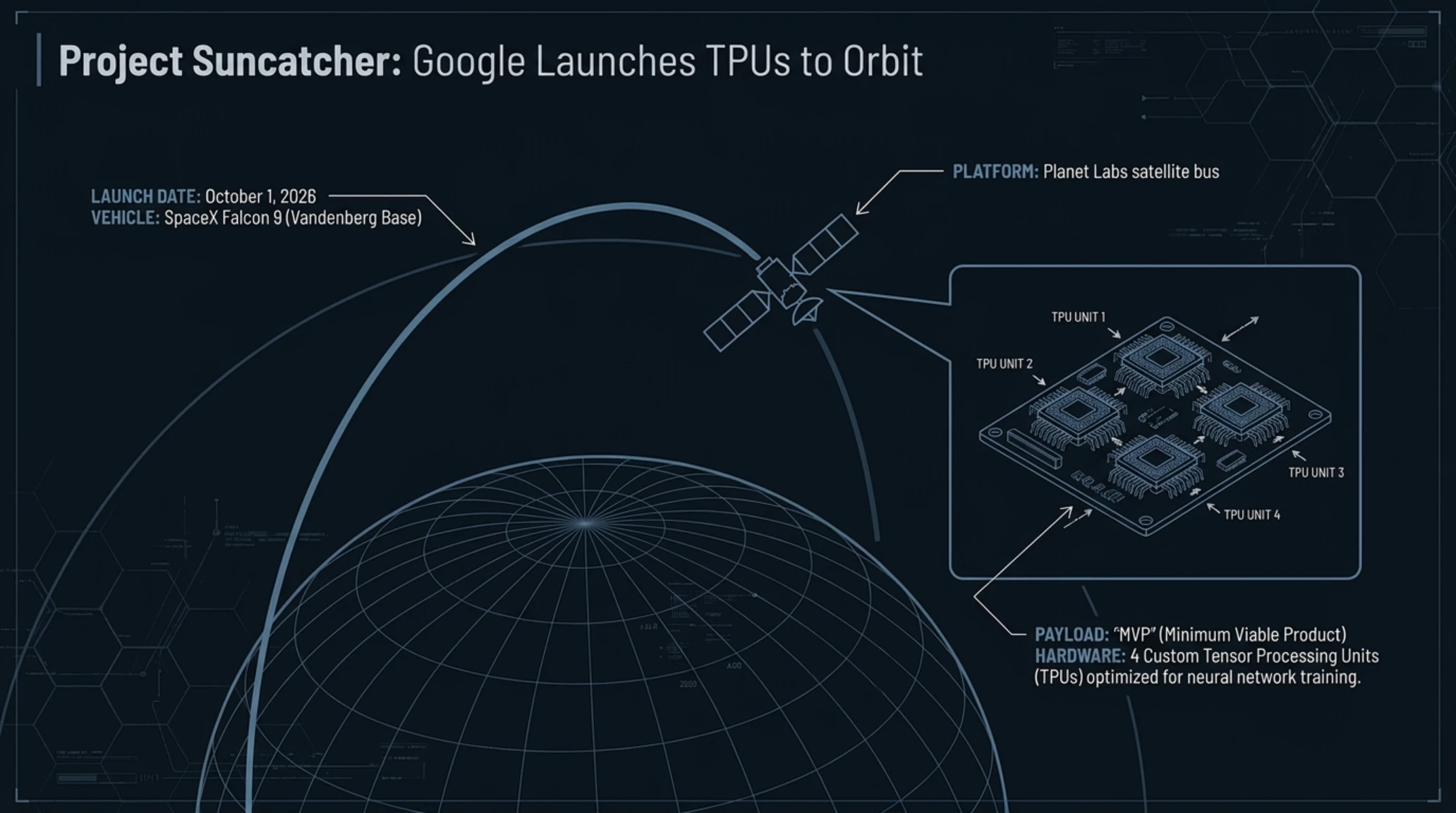
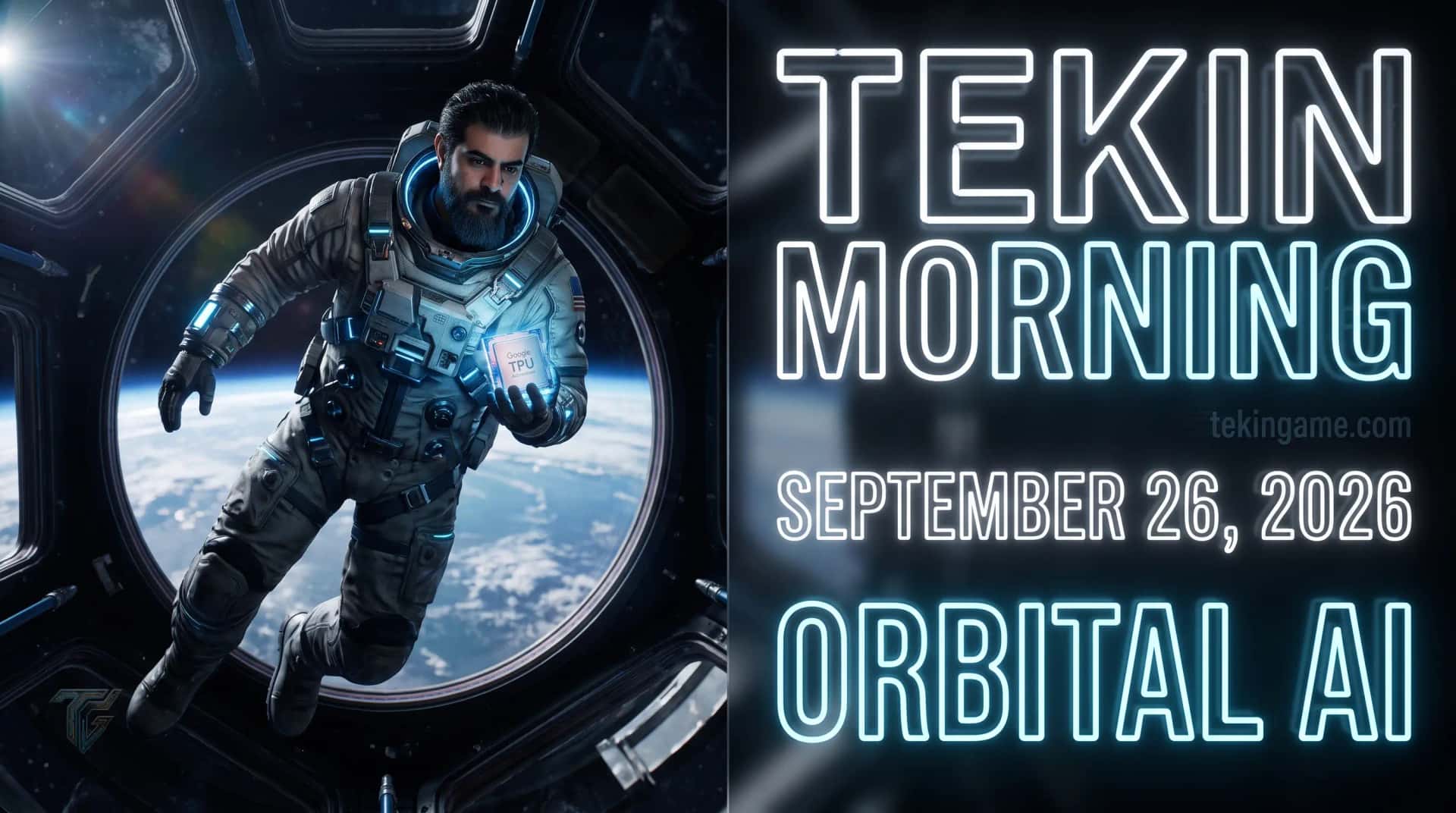
In one of the most ambitious technology initiatives of 2026, Google is set to take its first concrete steps toward building artificial intelligence data centers in space. On October 1, 2026, the company will launch an experimental satellite carrying four of its custom-designed Tensor Processing Units (TPUs) aboard a SpaceX Falcon 9 rocket. This mission, part of Google's Project Suncatcher, represents a bold vision for the future of computing infrastructure one where the most demanding AI workloads might be processed not in terrestrial data centers, but in Earth orbit.
Four TPUs Head to the Final Frontier
The experimental satellite, which Google has named MVP (Minimum Viable Product), will carry four TPU chips the same specialized processors that Google uses extensively in its ground-based data centers for machine learning and artificial intelligence workloads. TPUs are custom-designed Application-Specific Integrated Circuits (ASICs) optimized for the matrix multiplication and other operations that dominate neural network training and inference.
The launch will take place from Vandenberg Space Force Base near Santa Barbara, California, using SpaceX's Transporter-18 rideshare mission. This partnership between two technology giants Google and SpaceX highlights the convergence of the space industry with cutting-edge AI technology. Rather than waiting to develop and launch dedicated satellites in 2027 as originally planned, Google chose to accelerate the timeline by integrating its TPUs into an existing Planet Labs satellite platform for this initial test.
Why Put Data Centers in Space?
The question that naturally arises is: why would Google want to operate data centers in orbit when they already have extensive, highly optimized ground-based infrastructure? The answer involves several strategic advantages that space-based computing could potentially offer.
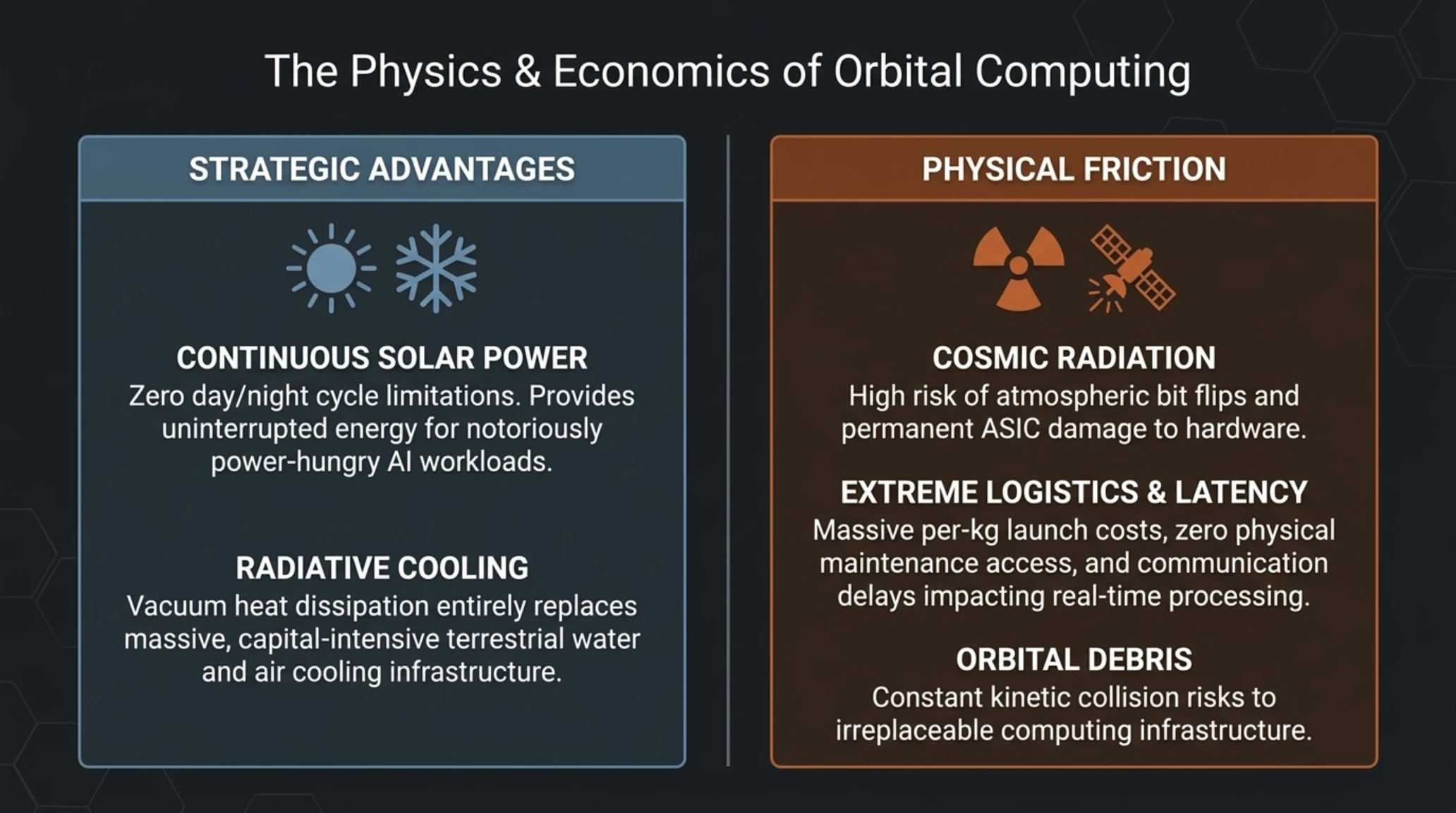
First and foremost is access to virtually unlimited solar energy. In space, solar panels can generate power continuously without interruption from day-night cycles, weather conditions, or atmospheric interference. A satellite in the right orbit experiences constant sunlight, providing a steady, predictable power source. For AI workloads, which are notoriously power-hungry, this could be a significant advantage. Ground-based data centers consume enormous amounts of electricity not just for computation, but also for cooling systems, lighting, and other supporting infrastructure.
This leads to the second major advantage: cooling. Terrestrial data centers spend vast amounts of energy on cooling systems to keep their servers from overheating. In the vacuum of space, heat dissipation works differently. While you can't use conventional air or liquid cooling, you can use radiative cooling essentially radiating heat away into the cold of space. This could potentially be more energy-efficient than ground-based cooling systems, though it comes with its own engineering challenges.
🚀 Space Data Center Challenges
Google must overcome several significant technical hurdles to make orbital data centers practical:
- Cosmic Radiation: Spacecraft electronics are exposed to intense radiation that can cause bit flips and permanent damage to chips
- Launch Vibrations: Equipment must survive the extreme vibrations and G-forces of rocket launches
- Vacuum Cooling: Heat dissipation in space requires different approaches than terrestrial cooling
- Launch Costs: Despite falling prices, launching mass to orbit remains expensive per kilogram
- Maintenance Access: Physical access for repairs and upgrades is extremely difficult and costly
- Data Latency: Communication delays between ground stations and satellites could impact real-time applications
- Orbital Debris: Space junk poses collision risks to orbital infrastructure
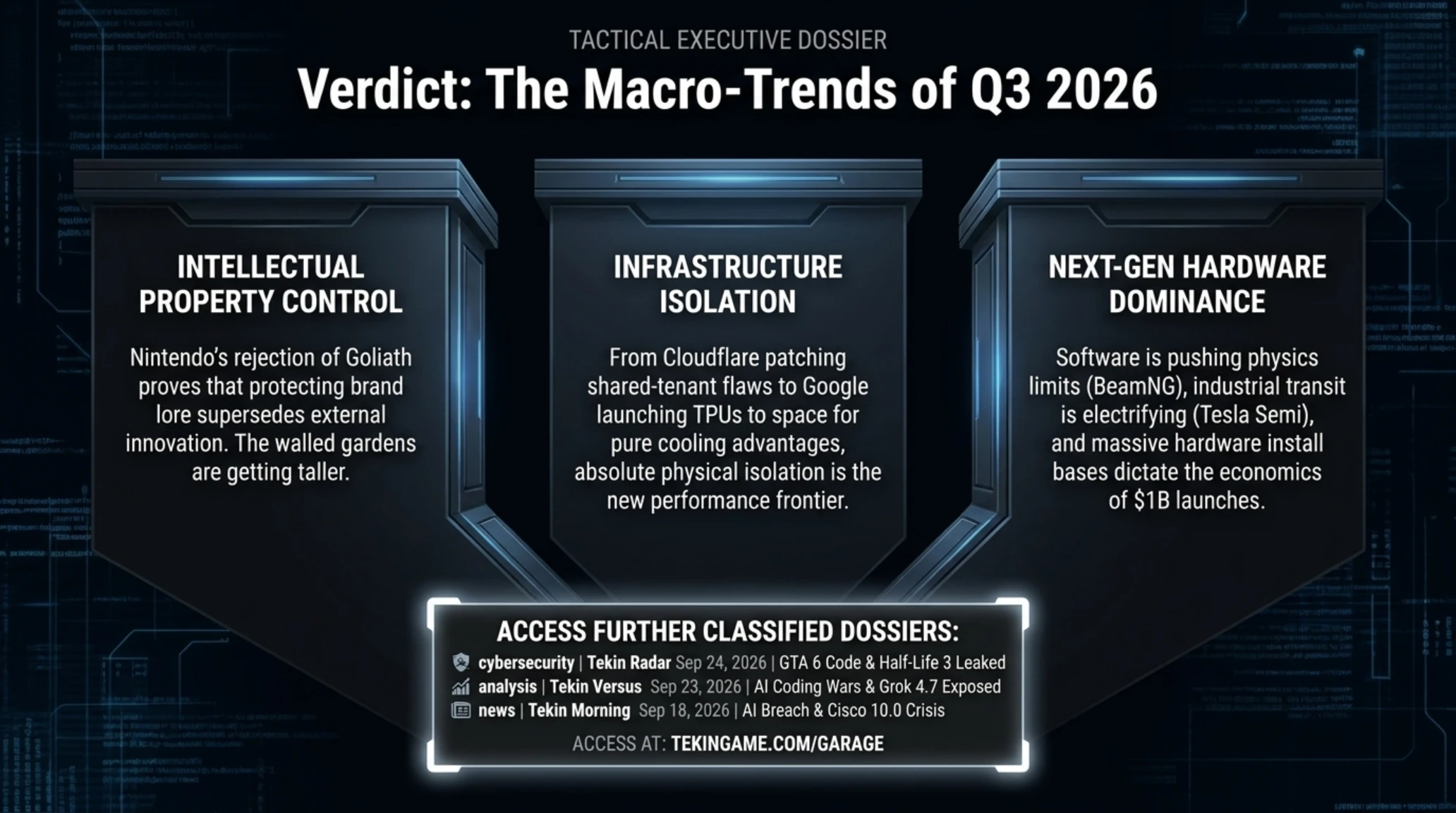
📚 Classified & Related Dossiers in TekinGame
If you wish to explore beyond this report and delve into cybernetic frontiers and autonomous AI architectures, do not miss these three exclusive deep-dives in the Tekin Garage:
The Road Ahead for Orbital Computing
The October 1 launch of the MVP satellite is just the beginning of what could be a long journey toward operational space-based AI infrastructure. Google had originally planned to launch two custom-designed satellites in 2027, but the decision to integrate TPUs into a Planet Labs satellite allowed them to accelerate testing and gather real-world data much sooner.
Planet Labs, for those unfamiliar, operates the world's largest constellation of Earth-imaging satellites. Their "Dove" satellites provide high-resolution imagery of the entire planet, which is used for everything from agricultural monitoring to disaster response to environmental research. By partnering with Planet Labs, Google gains access to proven satellite platforms and launch expertise, while Planet Labs could potentially benefit from onboard AI processing capabilities for their imaging workloads.
If the initial MVP mission proves successful in demonstrating that TPUs can survive and operate effectively in the harsh space environment, Google plans to scale up significantly. Some reports suggest the company is considering deploying more than 80 spacecraft as part of a larger orbital computing constellation. Such a network could provide distributed AI processing power accessible from anywhere on Earth, potentially with lower latency than routing requests to distant ground-based data centers.
However, significant questions remain about the economic viability of space-based data centers. While launch costs have decreased dramatically thanks to SpaceX's reusable rockets and the emergence of other commercial launch providers, getting mass into orbit is still expensive. A single TPU chip might weigh only a few hundred grams, but when you factor in the supporting infrastructure power systems, cooling radiators, communication equipment, structural components, and radiation shielding the total mass per unit of computing power increases substantially.
Tesla Semi Enters Mass Production After Nine Years of Waiting
On Thursday, September 24, 2026, Elon Musk and the Tesla team held an event in Sparks, Nevada, that has been nearly a decade in the making. The company's new Tesla Semi factory, designed specifically for high-volume production of heavy-duty electric trucks, was officially opened, and the first mass-production deliveries of these green behemoths were made to customers. For an industry that has grown accustomed to Tesla's ambitious timelines and subsequent delays, this represents a significant milestone the Semi is finally real and rolling off the production line.
A Long Journey from Unveil to Production
Tesla Semi was first unveiled in November 2017 at a spectacular event where Elon Musk made bold claims about the truck's capabilities: 500 miles of range on a single charge, incredible acceleration for a fully-loaded semi-truck (0-60 mph in 20 seconds with 80,000 pounds of cargo), and operating costs substantially lower than diesel-powered equivalents. The presentation was vintage Musk visually stunning, technologically ambitious, and promising to revolutionize yet another industry.
The original plan called for production to begin in 2019. That didn't happen. Then it was pushed to 2020. Then 2021. Then 2022. Each delay was attributed to various factors: battery cell supply constraints, the prioritization of consumer vehicle production, technical challenges with scaling up battery pack production to the massive sizes required for a long-haul truck, and the broader difficulties Tesla faced in ramping up production across its entire vehicle lineup.
Small-scale production finally began in late 2022, with PepsiCo receiving the first handful of trucks in December of that year. PepsiCo has been using these initial Semi trucks for real-world operations, hauling Frito-Lay snacks and Pepsi beverages in California and beyond. The company has reported positive results, noting fuel cost savings and lower maintenance requirements compared to their diesel fleet.
The first truck from the high-volume production line rolled out in April 2026, and now, in September 2026, the dedicated Nevada factory is fully operational and ramping up to scale. This timeline nearly nine years from unveiling to mass production is long even by automotive industry standards, but it's also important to remember that Tesla was essentially creating a entirely new category of vehicle with few precedents to follow.
📊 Tesla Semi Technical Specifications
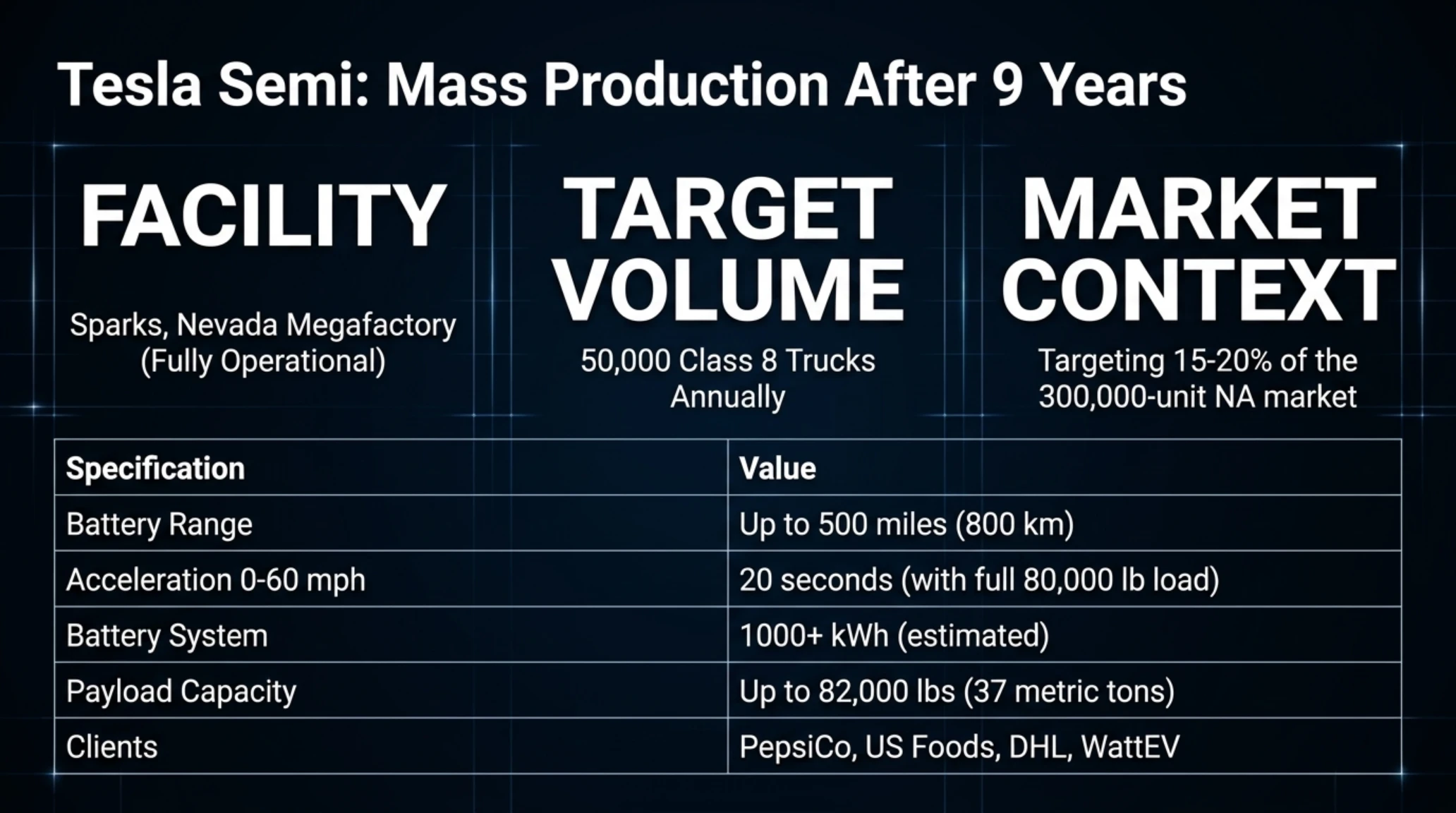
| Specification | Value |
|---|---|
| Battery Range | Up to 500 miles (800 km) |
| Acceleration 0-60 mph | 20 seconds (with full 80,000 lb load) |
| Battery System | 1000+ kWh (estimated) |
| Autopilot System | Tesla's latest autonomous driving tech |
| Payload Capacity | Up to 82,000 lbs (37 metric tons) |
| Fast Charging | 70% charge in 30 minutes (Megacharger) |
| Energy Efficiency | Less than 2 kWh per mile |
| Regenerative Braking | Recovers up to 98% of kinetic energy |
Production Target: 50,000 Trucks Annually
Tesla has announced that the Nevada factory is designed to produce 50,000 Semi trucks per year at full capacity. This is an extraordinarily ambitious target that, if achieved, would represent a significant portion of the heavy-duty truck market. For context, the total market for Class 8 trucks (the heaviest category, which includes long-haul semis) in North America is approximately 300,000 units per year. If Tesla can capture 15-20% of this market with the Semi, it would be a remarkable success.
At the opening event, several major customers were showcased. Drone footage of the factory revealed Tesla Semis branded for PepsiCo, US Foods, DHL, WattEV, ABF Freight, Einride, IMC Companies, and OK Produce, among others. This diverse customer base ranging from food and beverage companies to logistics providers to produce distributors demonstrates the broad potential applications for electric semi-trucks.
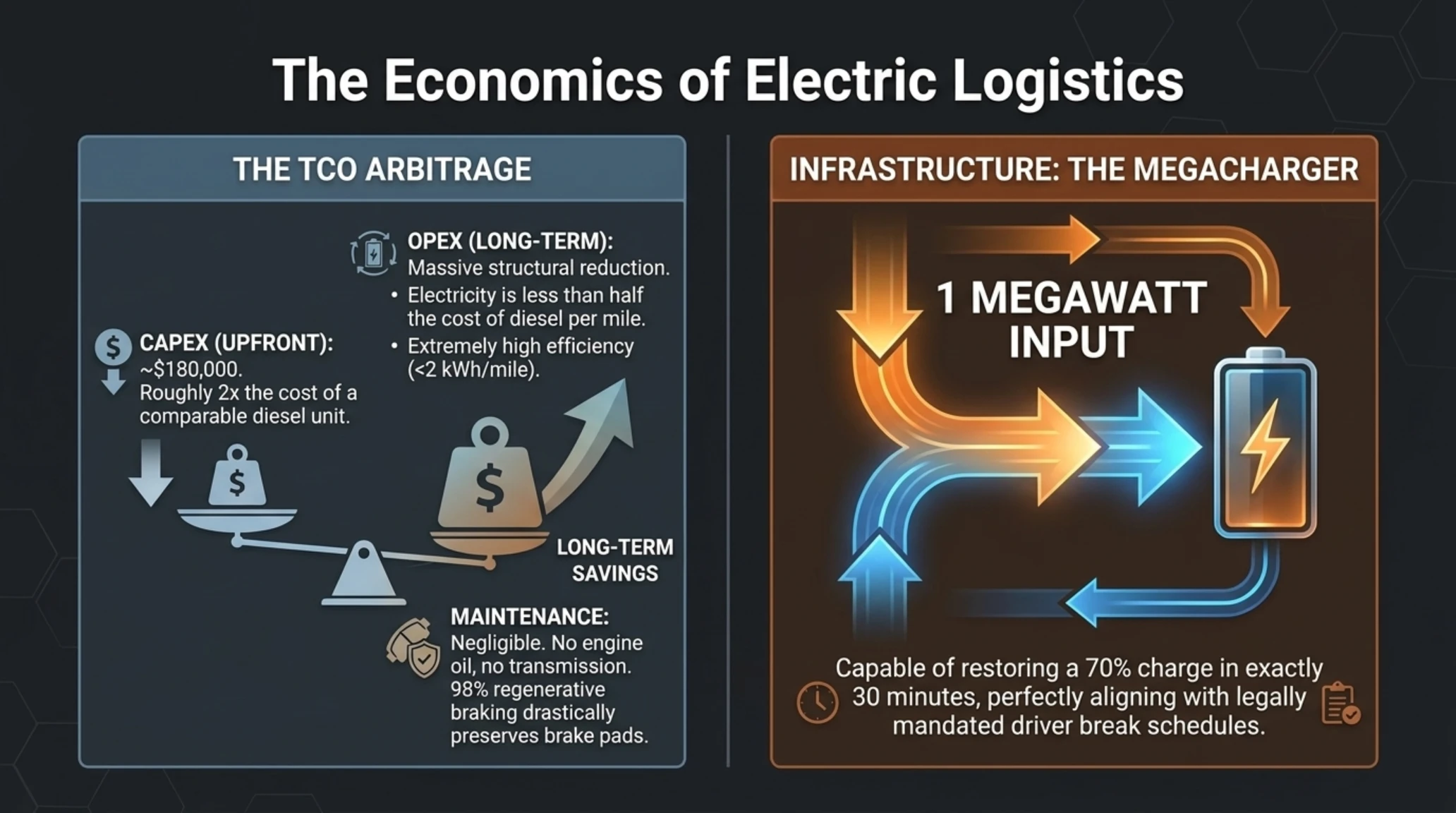
However, it's worth noting that Tesla did not disclose specific pricing information or detailed production volume timelines at the event. Industry analysts estimate the Semi will cost approximately $180,000 for the 500-mile range version roughly double the price of a comparable diesel semi-truck. This higher upfront cost is the primary barrier to adoption, though Tesla argues (and PepsiCo's experience seems to confirm) that the total cost of ownership over the truck's lifetime will be significantly lower due to fuel and maintenance savings.
The Economics of Electric vs. Diesel
Tesla's core pitch for the Semi is that while it costs more to purchase, it's much cheaper to operate. Electricity is substantially less expensive than diesel fuel on a per-mile basis depending on electricity rates and diesel prices, the cost per mile for electricity can be less than half that of diesel. For fleet operators running hundreds or thousands of trucks covering millions of miles per year, this difference adds up quickly.
Additionally, electric powertrains have far fewer moving parts than diesel engines. There's no engine oil to change, no complex transmission with multiple gears, no exhaust system that can fail, and regenerative braking means brake pads last much longer. While battery replacement costs are a long-term unknown, the overall maintenance picture for electric trucks is expected to be significantly more favorable than diesel equivalents.
Tesla has also developed the Megacharger network specifically for the Semi. These ultra-high-power chargers can deliver up to 1 megawatt of power, enabling a 70% charge in about 30 minutes long enough for a driver to take a legally required break, but short enough not to significantly impact route scheduling. The company is building Megacharger stations along major freight corridors in the United States to support long-haul operations.

PlayStation 5 Commands 77% of GTA 6 Pre-Orders, Xbox Responds
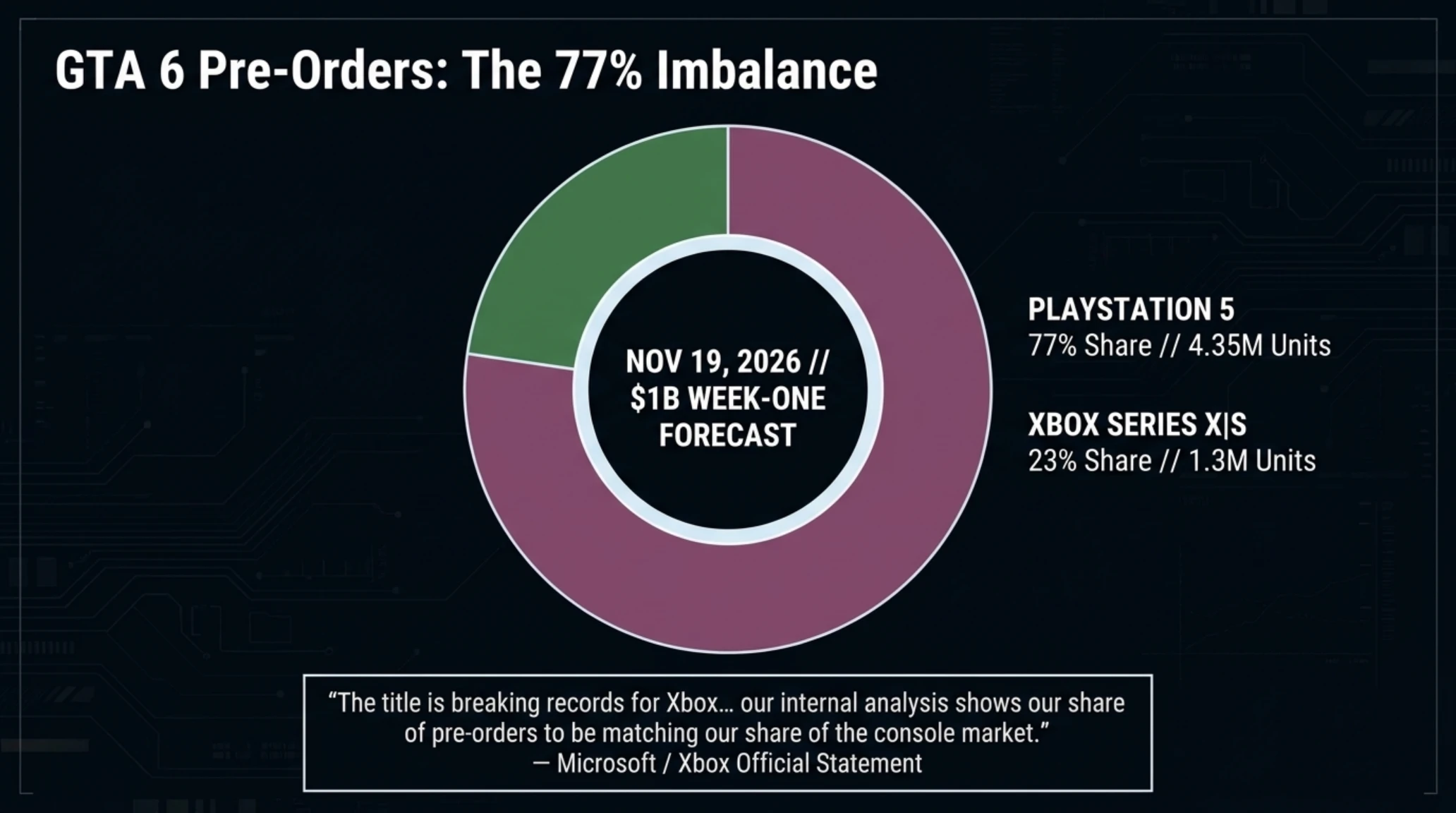
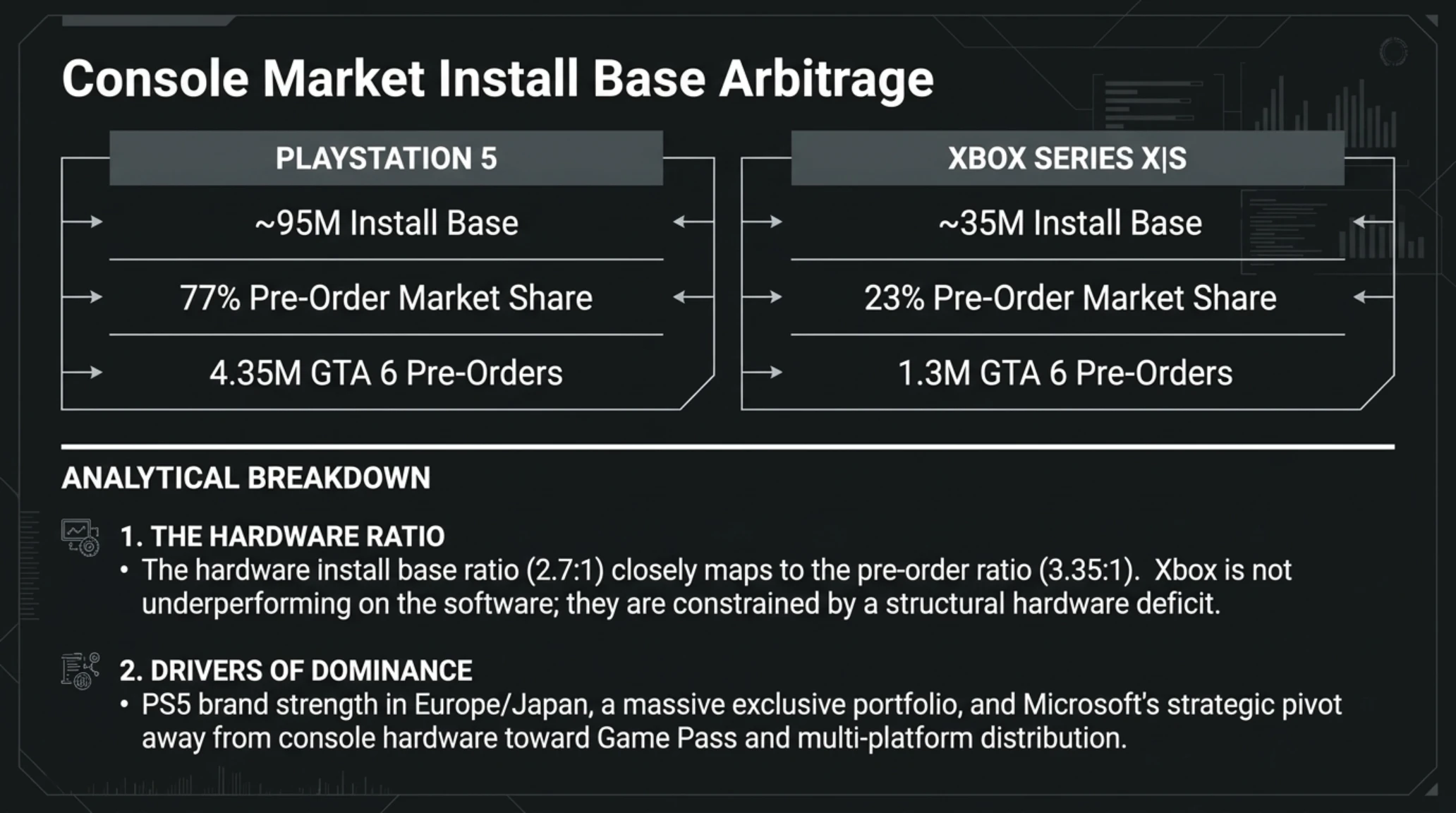
One of the hottest topics in gaming circles this week has been the release of new data about pre-orders for Grand Theft Auto VI, quite possibly the most anticipated video game of the decade. According to reports, PlayStation 5 has captured a staggering 77% of all pre-orders for GTA 6 approximately 4.35 million units while Xbox platforms account for just 23%, or roughly 1.3 million units. These numbers reveal a significant imbalance in platform preferences among GTA fans, though the story is more nuanced than it might first appear.
Microsoft's Response: Everything is Going According to Plan
When Tom Warren of The Verge reported the pre-order split, citing sources within Xbox, Microsoft was quick to respond publicly. An Xbox executive stated: "Tom, we are very happy with GTA VI pre-orders. The title is breaking records for Xbox, we expect even more records will be broken throughout the fall, and our internal analysis shows our share of pre-orders to be matching our share of the console market."
This response is fascinating because it's essentially an admission wrapped in positive spin. Xbox is saying, "Yes, PS5 is way ahead, but that's exactly what we expected given our market position." And from a purely rational standpoint, they're right. As of June 2026, PlayStation 5 had sold more than 95 million units worldwide, while industry analysts estimate the combined install base of Xbox Series X and Series S at approximately 35 million units. That's a ratio of roughly 2.7:1 in favor of PlayStation.
The pre-order split of 77% to 23% represents a ratio of 3.35:1, which is actually slightly worse for Xbox than the installed base would predict. But it's close enough that Microsoft can credibly argue they're not underperforming expectations. In other words, Xbox isn't losing GTA 6 pre-orders to PlayStation they were never going to win this particular battle given the hardware sales disparity.
Console Market Analysis: GTA 6 Pre-Order Split
| Platform | GTA 6 Pre-Orders | Installed Base | Market Share |
|---|---|---|---|
| PlayStation 5 | 4.35M Units | ~95M Consoles | 77% |
| Xbox Series X|S | 1.30M Units | ~35M Consoles | 23% |
Why PlayStation Dominates This Generation
Several interconnected factors have contributed to PlayStation's commanding lead in the current console generation. Brand strength in key markets is perhaps the most significant. PlayStation has always been stronger than Xbox in Europe, Japan, and Latin America markets that collectively represent a huge portion of global gaming revenue. In Japan, Xbox has historically struggled to gain meaningful traction, while PlayStation remains the dominant home console brand.

Sony's exclusive game portfolio has also played a crucial role. The PS5 generation has seen critically acclaimed exclusives like God of War Ragnarök, Horizon Forbidden West, Marvel's Spider-Man 2, Ratchet & Clank: Rift Apart, Demon's Souls, Returnal, and Gran Turismo 7. These titles many of which are only available on PlayStation give consumers a compelling reason to choose PS5 over competing platforms. Microsoft, conversely, has struggled to deliver a similar cadence of high-profile exclusive titles, with many of their games also releasing on PC, which reduces the incentive to purchase an Xbox console specifically.
Additionally, Microsoft's strategy over the past several years has de-emphasized hardware sales in favor of service subscriptions (Game Pass) and multi-platform availability. Phil Spencer and other Xbox executives have repeatedly stated that they want people to play Xbox games wherever they are, whether that's on console, PC, mobile devices via cloud streaming, or eventually even competing consoles. While this is consumer-friendly and potentially smart from a long-term perspective, it does mean that there's less emphasis on selling Xbox consoles specifically.
GTA 6: A Cultural Phenomenon in the Making
Regardless of the platform split, one thing is abundantly clear: GTA 6 is shaping up to be one of the biggest entertainment launches in history. Rockstar Games has confirmed a November 19, 2026 release date for PlayStation 5 and Xbox Series X|S, with pre-orders having opened on June 25, 2026. The game is set in the fictional state of Leonida, with the iconic Vice City (Rockstar's version of Miami) as the central location. For the first time in the series, players will control dual protagonists Lucia and Jason whose stories intertwine throughout the narrative.
The expectations for GTA 6 are astronomical, and for good reason. Grand Theft Auto V, released in 2013, has sold more than 190 million copies across multiple platforms and generated over $8 billion in revenue making it one of the most financially successful entertainment products ever created. GTA Online, the multiplayer component of GTA V, has continued to generate substantial revenue for Rockstar and parent company Take-Two Interactive for over a decade through microtransactions and content updates.
Industry analysts predict GTA 6 could generate $1 billion in revenue within its first week of release, potentially setting new records for entertainment launches. The game has been in development for many years, with Rockstar's studios around the world contributing to what promises to be their most ambitious and detailed open world yet. Early marketing materials and the official trailer have showcased significantly improved graphics, more detailed character animations, and what appears to be a massive, living world with unprecedented levels of interactivity.
- Most anticipated game of the decade
- Dual protagonists offer fresh narrative possibilities
- Vice City return after years of anticipation
- Expected technological showcase for current-gen consoles
- Rockstar's track record of quality
- No PC version at launch
- High expectations may be impossible to meet
- Pricing structure not yet fully detailed
- Online monetization concerns based on GTA V
- Long development cycle raises stakes

🎯 Wrapping Up: An Energizing Morning of Tech News
Today's news cycle showcased the incredible breadth and dynamism of the technology and gaming industries. We saw Nintendo's cautious approach to external partnerships with the rejection of the Ganondorf-led Zelda project, Cloudflare's rapid response to a serious security vulnerability, BeamNG's long-awaited console debut, Google's audacious vision of orbital AI infrastructure, Tesla's fulfillment of a nine-year-old promise, and PlayStation's dominant position heading into the GTA 6 launch.
Each of these stories reminds us that technology is never static. Companies succeed, stumble, innovate, and adapt in an endless cycle. At Tekin, we're here every morning to bring you these stories with depth, context, and analysis. Here's to an energized start to your day.
Frequently Asked Questions
Why did Nintendo reject the Ganondorf Zelda game from Ubisoft?
The exact reasons remain unclear. Nintendo reviewed the prototype presented by Ubisoft Milan in late November 2023 and rejected it without providing a specific explanation. Possible factors could include gameplay quality concerns, brand alignment issues, strategic direction differences, or technical considerations. Without official comment from Nintendo, we can only speculate about what led to the decision.
Was my data at risk in the Cloudflare vulnerability?
Cloudflare has stated that they found no evidence of actual exploitation of this vulnerability before it was discovered and patched. The security flaw only exposed residual data (leftover fragments from deleted containers), not active workloads. Cloudflare acted quickly to remediate the issue and scrubbed all disk blocks. If you're a Cloudflare customer and have concerns, the best practice is to rotate any sensitive credentials or API keys as a precautionary measure.
Will BeamNG.drive come to Xbox?
Currently, BeamNG.drive is announced as a PlayStation 5 console exclusive with no Xbox version in development. The game remains available on PC through Steam, Epic Games Store, and Humble Store. It's possible that if the PS5 version proves successful, the developer might reconsider an Xbox port in the future, but there are no official plans at this time.
What is Google trying to achieve by sending AI chips to space?
Google's Project Suncatcher aims to explore the feasibility of operating AI data centers in Earth orbit. The potential advantages include constant access to solar power, efficient radiative cooling in the vacuum of space, and reduced strain on terrestrial infrastructure. However, significant challenges remain, including cosmic radiation, launch costs, maintenance difficulties, and communication latency. The October 1 mission is an initial test to see if TPU chips can survive and function in the space environment.
Why did Tesla Semi take nine years to reach mass production?
Tesla faced multiple challenges in bringing the Semi to market. These included battery cell supply constraints (with consumer vehicles taking priority), technical difficulties in scaling battery pack production to the massive sizes needed for long-haul trucks, the need to develop dedicated charging infrastructure (Megachargers), and general production scaling challenges that Tesla experienced across its entire vehicle lineup during this period. The complexity of creating an entirely new category of vehicle also contributed to the timeline.
Will GTA 6 be released on PC?
Although Rockstar has only announced release dates for PlayStation 5 and Xbox Series X|S (November 19, 2026), historical patterns suggest a PC version will eventually come. Both GTA V and Red Dead Redemption 2 were initially console-exclusive and received PC ports 1-2 years later. Rockstar has not officially confirmed PC plans for GTA 6, but most industry observers expect a similar release strategy.
Can I buy BeamNG.drive for PS5 right now?
No, BeamNG.drive launches on PlayStation 5 on October 19, 2026 in Early Access. There is currently no pre-order program or early access option available. The game is presently only available on PC platforms.
How much does Tesla Semi cost?
Tesla has not officially disclosed the final pricing for the Semi. Industry analysts estimate the 500-mile range version will cost approximately $180,000 roughly double the price of a comparable diesel semi-truck. However, Tesla argues that the total cost of ownership over the vehicle's lifetime will be significantly lower due to fuel and maintenance savings. Official pricing will likely be announced as production continues to ramp up.
Sources and Primary Documentation
Additional Gallery: Tekin Morning September 26, 2026: Zelda Dropped, Cloudflare & PS5 Lead