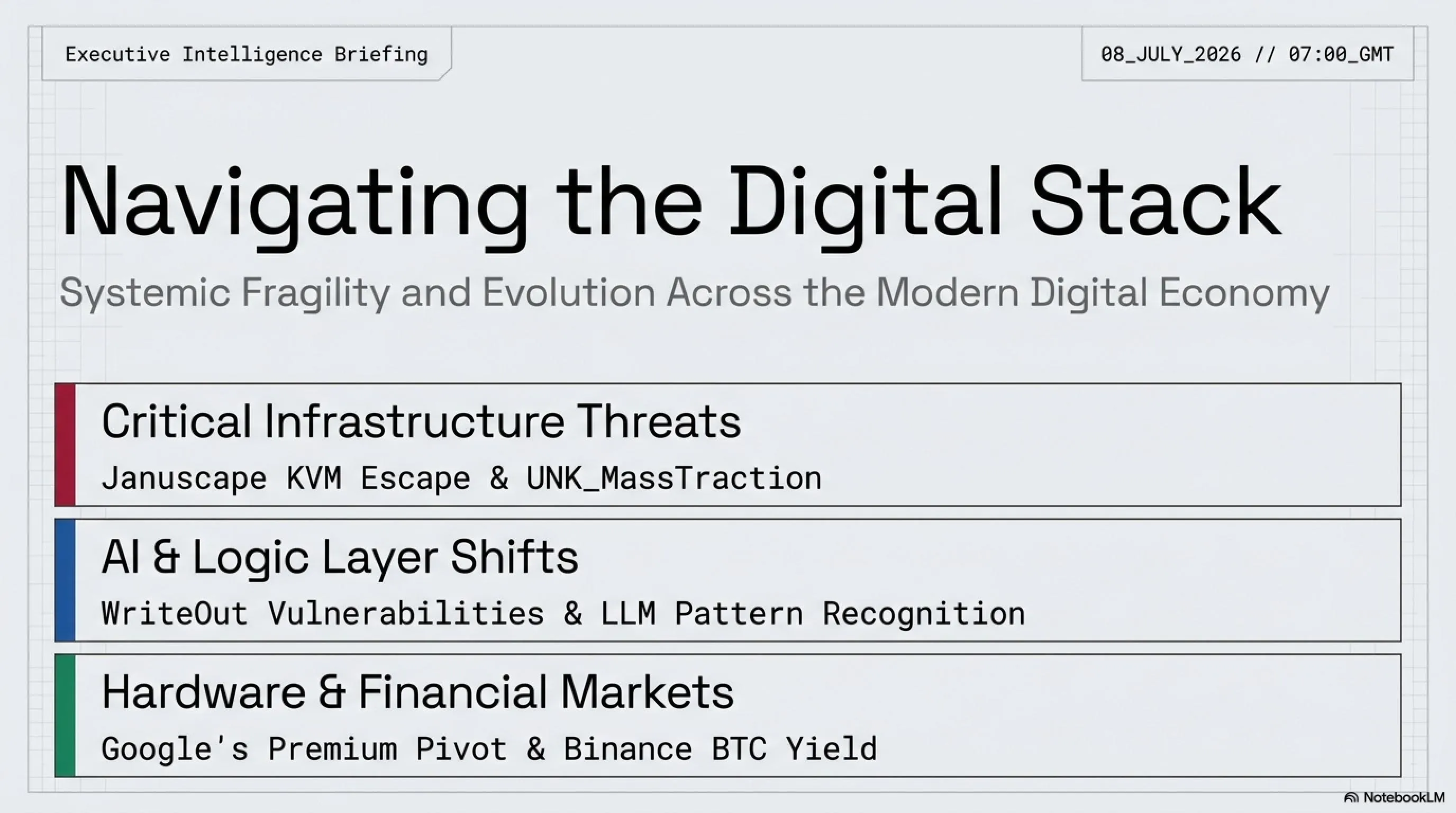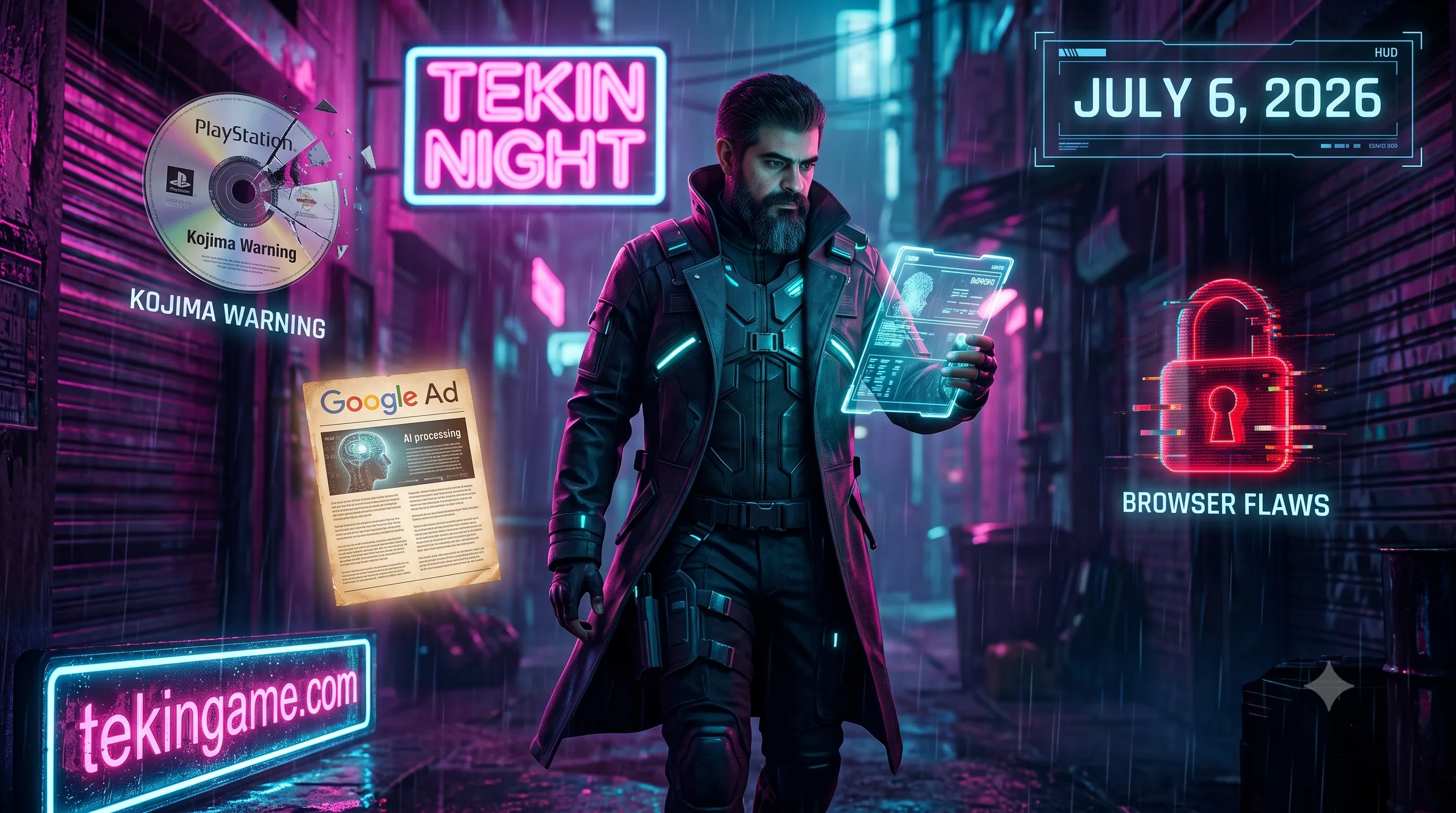
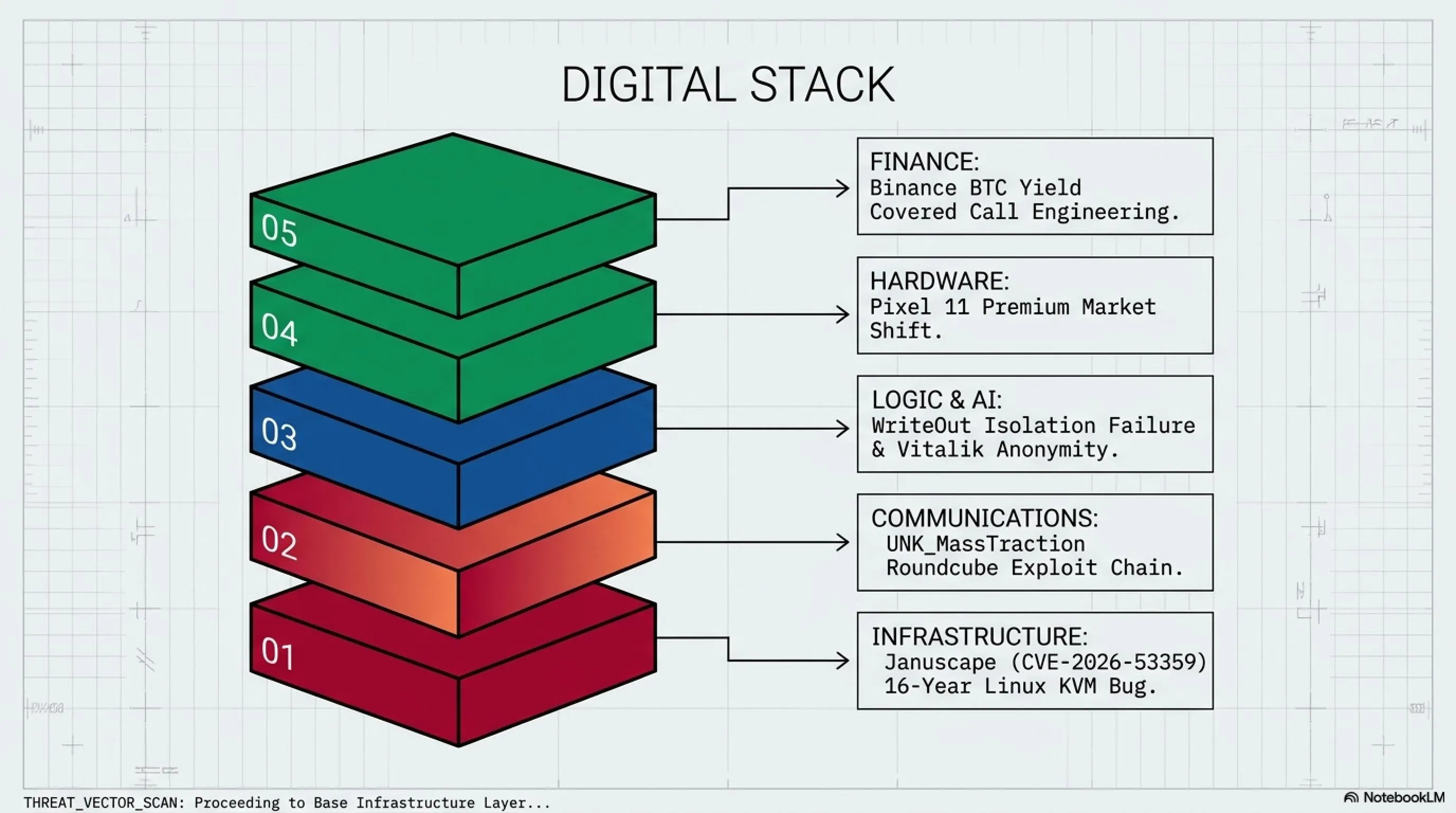
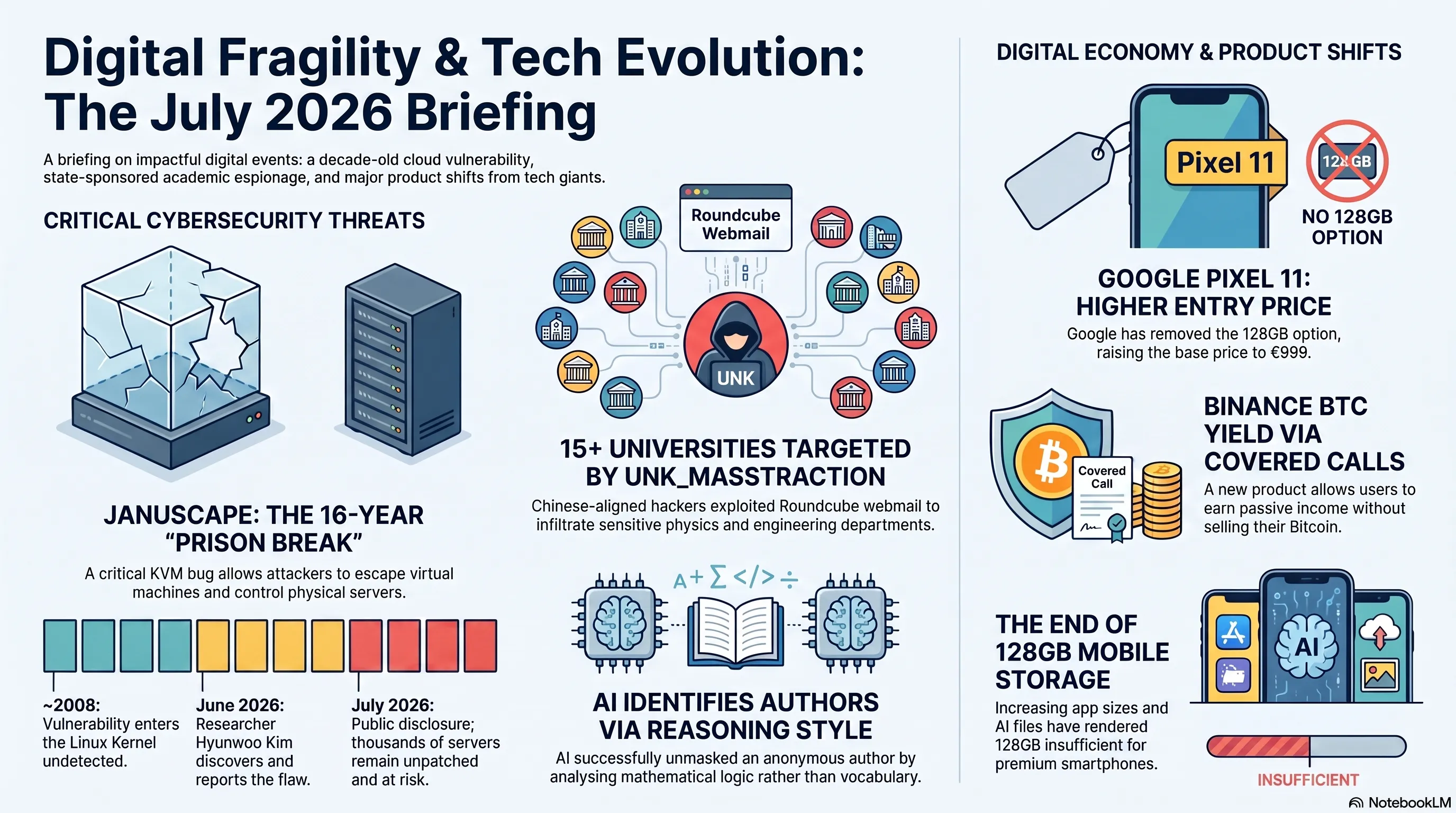
Wednesday morning, July 8, 2026, compiles severe security updates and breakthroughs across the digital matrix. The cybersecurity landscape faces immediate risk following the public disclosure of 'Januscape' (CVE-2026-53359), a critical 16-year-old Use-After-Free vulnerability in the Linux KVM hypervisor allowing guest-to-host virtual machine escape. Concurrently, a China-aligned advanced persistent threat (APT) designated as UNK_MassTraction has weaponized a Roundcube exploit chain to breach physics and aerospace departments
Tekin Morning Wednesday July 8: Fresh Digital Breakfast ☕
Good morning! Grab your coffee and dive into the most critical digital events from overnight.
- 🎮Januscape: 16-Year Linux Prison Break- Critical KVM bug hidden in shadows for 16 years
- 🎧Chinese Hackers Hunt Universities- UNK_MassTraction strikes with Roundcube exploits
- 🚀AI Can Unmask Vitalik's Identity- Reasoning patterns detected in under 2 hours
- 🗡️Binance Launches BTC Yield Product- Earn Bitcoin income without selling it
This Wednesday morning opens with news demonstrating just how fragile cybersecurity really is. From a 16-year-old Linux vulnerability that could shake the entire cloud computing world, to Chinese hackers targeting American universities, and from AI's terrifying power to identify writing styles to new crypto products designed to make Bitcoin more profitable.
Today we're examining six major stories that each shape the future of technology, security, and our digital economy in distinct ways. Let's dive in.
Januscape: The 16-Year-Old Vulnerability That Shook Virtualization
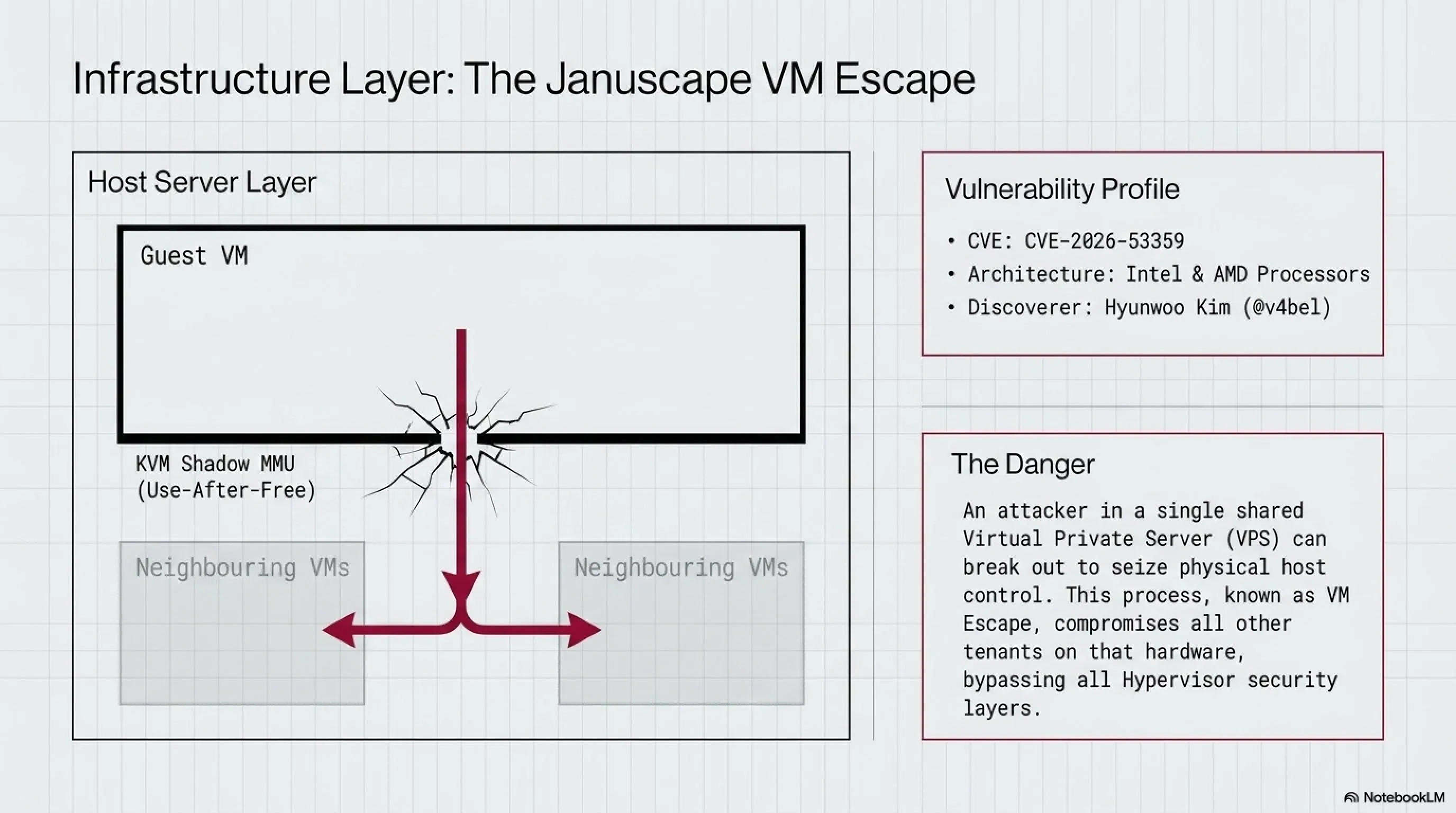
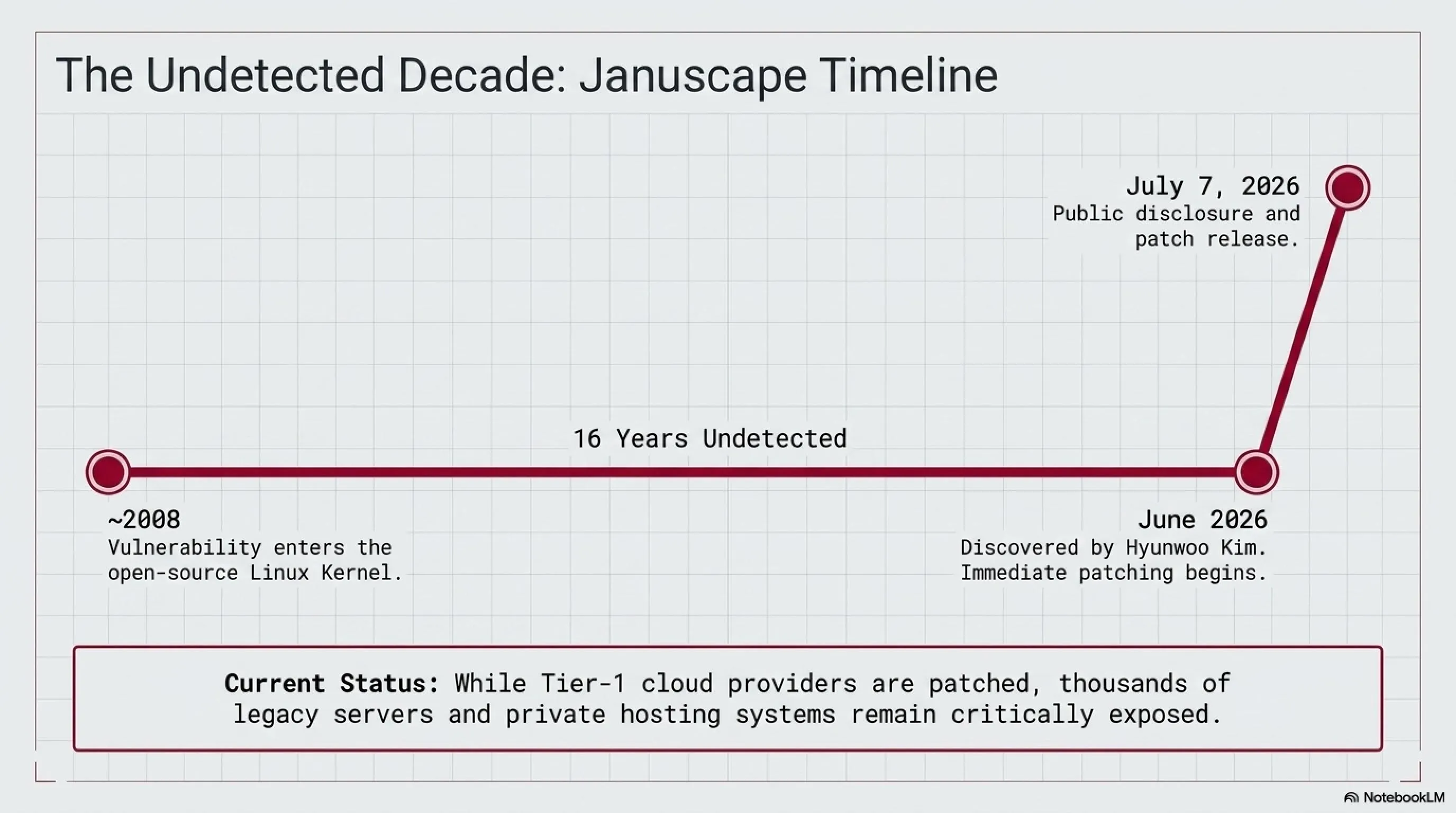
In cybersecurity, discovering a critical vulnerability that remained hidden for 16 years is news no cloud infrastructure manager wants to hear. On Monday, July 7, 2026, security researcher Hyunwoo Kim (known as @v4bel) unveiled one of the most dangerous vulnerabilities in recent years: Januscape, tracked as CVE-2026-53359.
This critical bug resides in the Linux kernel, specifically within the KVM (Kernel-based Virtual Machine) layer, allowing attackers to escape from a guest virtual machine and access the host. In simpler terms: an attacker can break out of a VM to infiltrate the physical server and gain complete control over it.
Januscape at a Glance
- Use-After-Free vulnerability in KVM Shadow MMU
- Affects both Intel and AMD processors equally
- Vulnerability age: 16 years (since approximately 2008)
- Patched in June 2026, but many servers remain vulnerable
Hyunwoo Kim explained that the problem occurs in the kvm_mmu_get_child_sp() function, where the system mistakenly reuses a page without checking its role. This flaw causes memory to not be properly freed during CPU mode transitions between Long Mode and Protected Mode, allowing attackers to rewrite freed memory and execute arbitrary code.
Why Is Januscape So Dangerous?
VM Escape vulnerabilities represent the worst nightmare for cloud technologies. Imagine you're a VPS or cloud service customer, and an attacker has established presence in a neighboring virtual machine. By exploiting Januscape, this attacker can escape their VM, access the physical server, and infiltrate all other VMs running on the same server.
Jargon Buster: What Is VM Escape?
Major companies like AWS, Azure, Google Cloud, Linode, and Hetzner all use KVM. While these companies have likely updated their systems, thousands of smaller and private service providers may still be vulnerable.
First Real Exploit for Both Intel and AMD Architectures
Hyunwoo Kim emphasized that Januscape is the first known Guest-to-Host exploit that works equally on both Intel and AMD architectures. This is significant because most virtualization vulnerabilities in the past were limited to one architecture or the other.
The issue lies in the Shadow MMU—the layer responsible for managing virtual-to-physical memory mapping in VMs. Since this layer is common to both architectures, both are vulnerable.
Tekin Analysis: Why This Matters
Swift Response from Linux Distributions
Fortunately, the patch for this vulnerability was released in June 2026. Major Linux distributions including Ubuntu, Debian, RHEL, and Fedora immediately deployed security updates. However, a major concern remains: many older servers and private hosting systems may still be unpatched.
Januscape Timeline
CloudLinux also announced immediate patch distribution to customers and updated all KVM-based servers. Both SecurityWeek and BleepingComputer identified this as one of the most critical vulnerabilities of 2026.
UNK_MassTraction: Chinese Hackers Target American and Canadian Universities
University hacks are nothing new, but when targets include physics and engineering departments with national security-related projects, the situation becomes more serious. Security firm Proofpoint reported that a suspected China-aligned hacking group called UNK_MassTraction has attacked major universities across America and Canada.
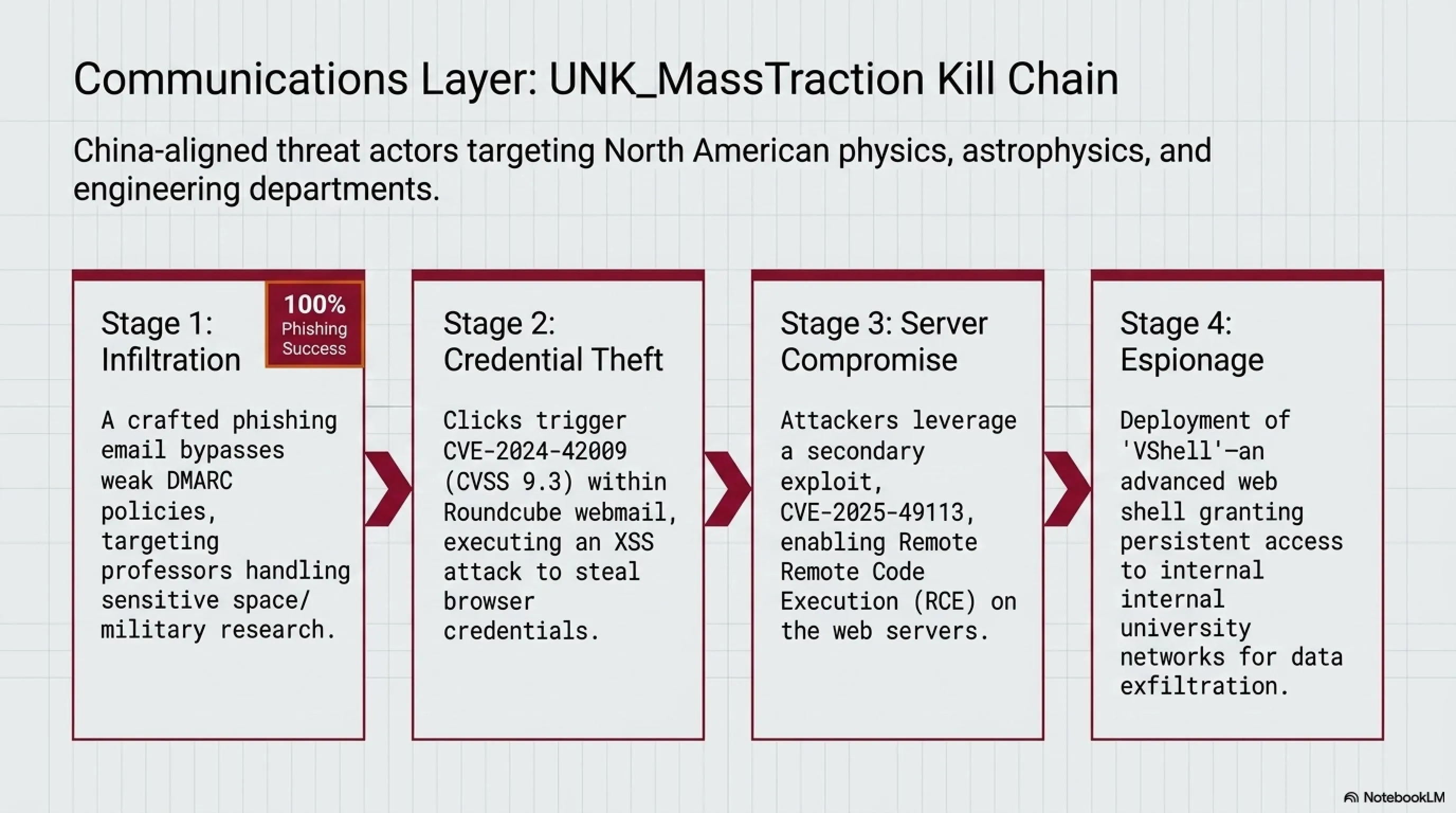
These attacks utilized an exploit chain against Roundcube—a popular open-source webmail solution. Attackers exploited critical vulnerability CVE-2024-42009 (CVSS score 9.3) to gain email credentials, then leveraged another bug (CVE-2025-49113) to access web servers and deploy the VShell tool.
Target: Physics and Astrophysics Professors
According to Proofpoint's report, this campaign initially targeted physics, engineering, astrophysics, and particle physics departments. These departments typically receive government research funding and may be connected to sensitive military or space projects.
Attackers sent crafted phishing emails to professors and administrators containing malicious links. These links led to pages that triggered XSS vulnerabilities in Roundcube, stealing credentials stored in browsers.
How the Attack Chain Works
Stage 2: Activate CVE-2024-42009 to steal credentials from browser
Stage 3: Use CVE-2025-49113 for remote code execution (RCE)
Stage 4: Install VShell for persistent access and espionage
VShell: A Sophisticated Espionage Tool
After successful infiltration, hackers installed a tool called VShell on target servers. VShell is an advanced web shell that allows remote command execution, file downloads, and even persistent access to internal university networks.
Proofpoint researchers noted that hackers used spoofed domains and compromised email accounts to make their phishing emails appear more legitimate. Many universities lack strict DMARC policies, allowing these fake emails to easily reach professors' inboxes.
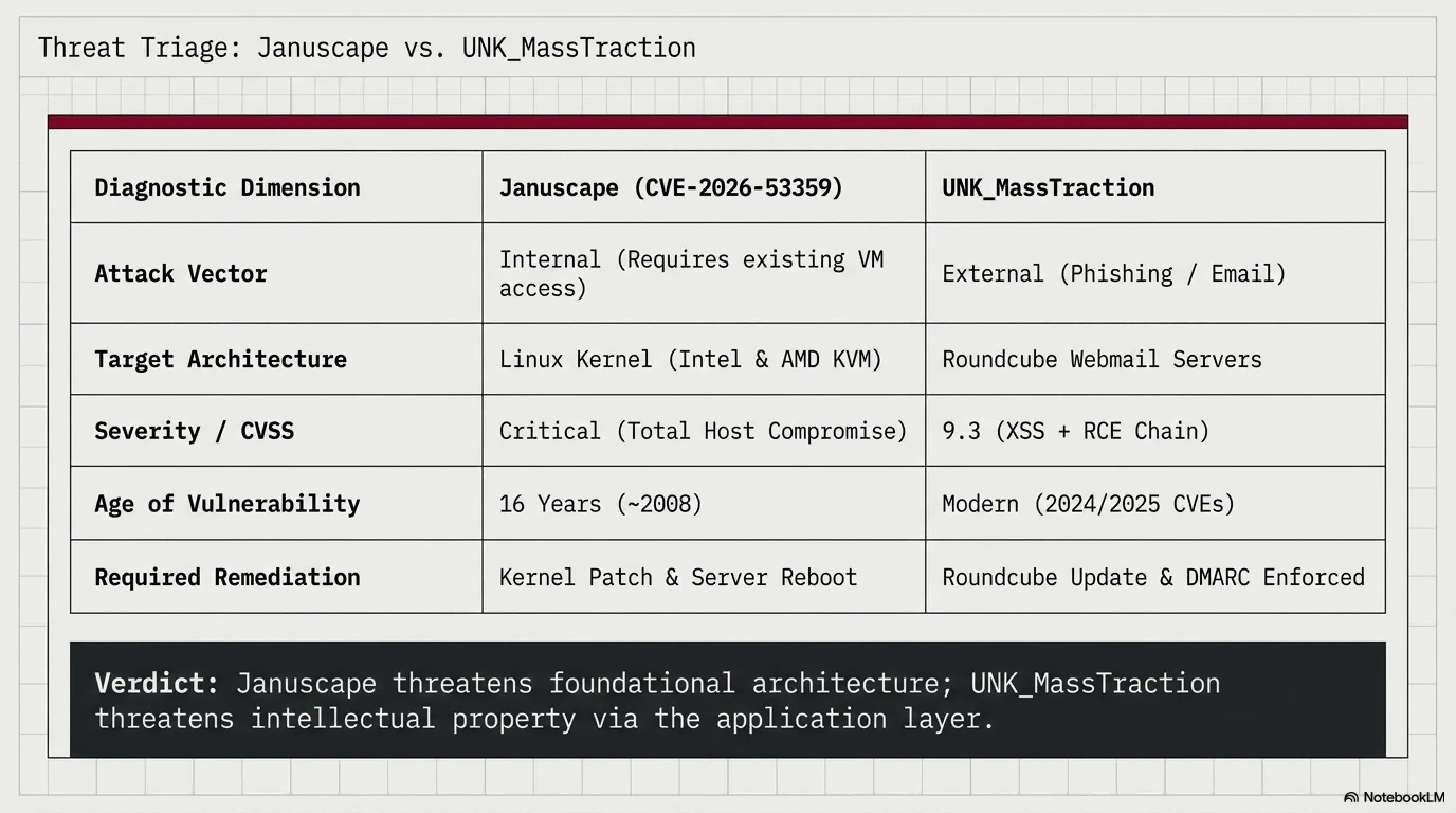
Response from Universities and Security Organizations
It remains unclear exactly how many universities were targeted, but security sources including CyberScoop and Infosecurity Magazine confirmed that at least several major North American universities were affected.
UNK_MassTraction Attack Statistics
Roundcube immediately released a security patch and urged all users to update to the latest version promptly. This attack once again demonstrated why open-source email systems must be continuously monitored and updated.
Writer AI and WriteOut Vulnerability: Session Token Leak Across Tenants
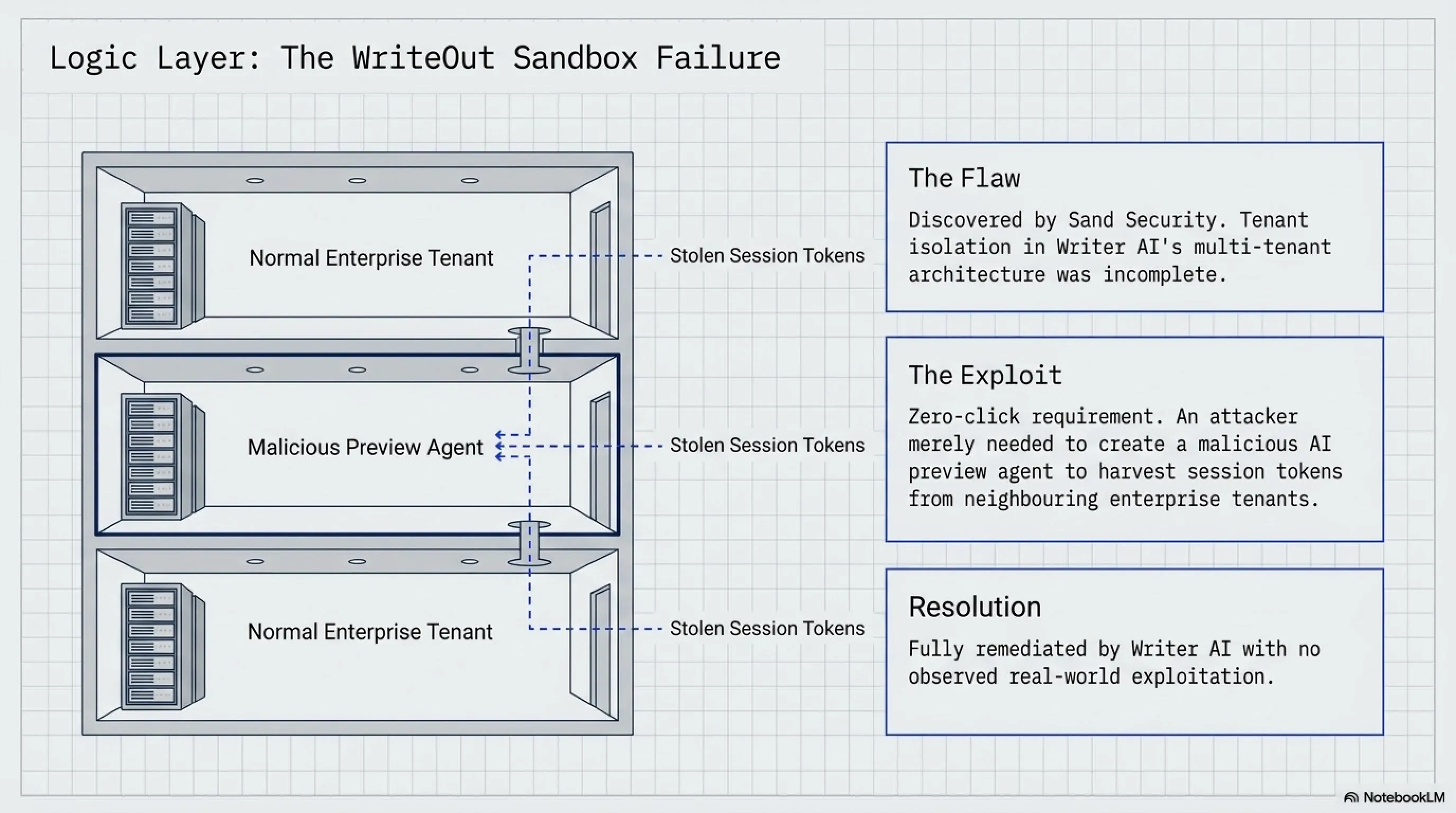
Enterprise AI platforms are rapidly expanding these days, but this speed sometimes causes security issues to be overlooked. Security researchers at Sand Security discovered a critical vulnerability in the Writer AI platform that could leak user session tokens across different tenants.
This vulnerability, dubbed WriteOut, allows an attacker with just one click to gain complete access to other companies' user accounts. In simpler terms: if you and another company both used Writer AI, an attacker could steal your session and access all your confidential information.
Managed Sandbox and Isolation Problems
Writer AI uses a managed sandbox for running AI Agent Previews. This sandbox was supposed to ensure each tenant (enterprise customer) operated in a separate environment. However, Sand Security researchers discovered this isolation isn't complete in practice.
An attacker could create a malicious Agent that, instead of performing its intended function, collected session tokens from other tenants and sent them to their own server. This attack was executable without any prior access or initial foothold—you just needed to create a malicious preview Agent.
Writer's Response and Vulnerability Remediation
After receiving the report from Sand Security, Writer AI immediately acted to fix the issue. The company announced the vulnerability has been completely remediated and no evidence of actual exploitation of this bug has been observed.
However, this incident serves as another serious warning for all enterprise AI platforms: tenant isolation is one of the most critical security aspects, and if not properly implemented, can be catastrophic.
Understanding Multi-Tenant Architecture
Vitalik Buterin and AI: When AI Recognizes Your Reasoning Style
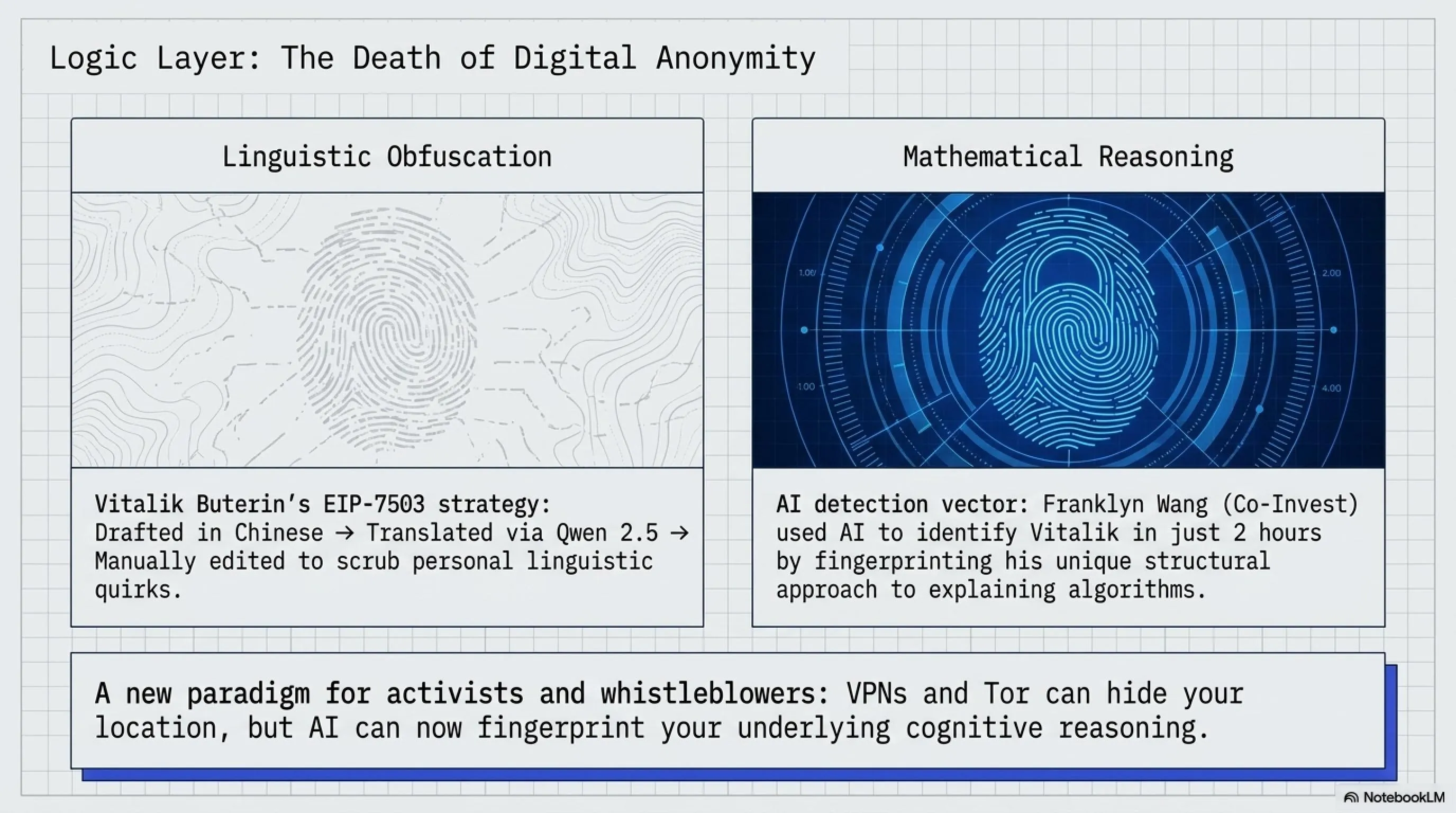
One of last week's most fascinating stories involved a scientific challenge designed by Vitalik Buterin, Ethereum's co-founder. He anonymously contributed to an Ethereum Improvement Proposal (EIP-7503) and challenged researchers to use AI to identify the true author.
Franklyn Wang, researcher and CEO of Co-Invest, successfully identified Vitalik's anonymous contribution in just 2 hours using AI analysis. But the interesting part: the AI didn't identify Vitalik's linguistic patterns—it recognized his mathematical reasoning style.
How Did Vitalik Try to Hide Himself?
Vitalik later revealed that to disguise his writing style, he first wrote the proposal in Chinese, then translated it to English using the Qwen 2.5 model, and finally manually edited it to remove any traces of his writing style.
But the AI model Franklyn Wang used, instead of focusing on words and sentence structure, concentrated on mathematical logic and reasoning patterns. Vitalik typically uses a specific style when explaining algorithms and mathematical concepts—and that's exactly what the AI model identified.
Does Privacy Still Exist in the AI Era?
This experiment raises serious questions about the future of privacy and anonymity in digital space. If an AI model can identify a technical document's author by analyzing reasoning style, are there any remaining ways to stay anonymous online?
The answer is complex. While AI models have become extremely powerful at pattern recognition, methods for protecting identity still exist. But this incident shows that staying anonymous is no longer as simple as it once was.
New Challenge for Whistleblowers
Crypto and Security Community Reaction
The crypto community showed mixed reactions to this news. Some viewed it as a serious privacy warning, while others believe this technology could help combat misinformation and fake content.
Both BeInCrypto and Crypto Economy identified this news as a turning point in AI's power to identify individuals. Vitalik himself acknowledged in his tweets that the challenge results surprised him.
Google Pixel 11: Higher Price, 128GB Removed, August Release
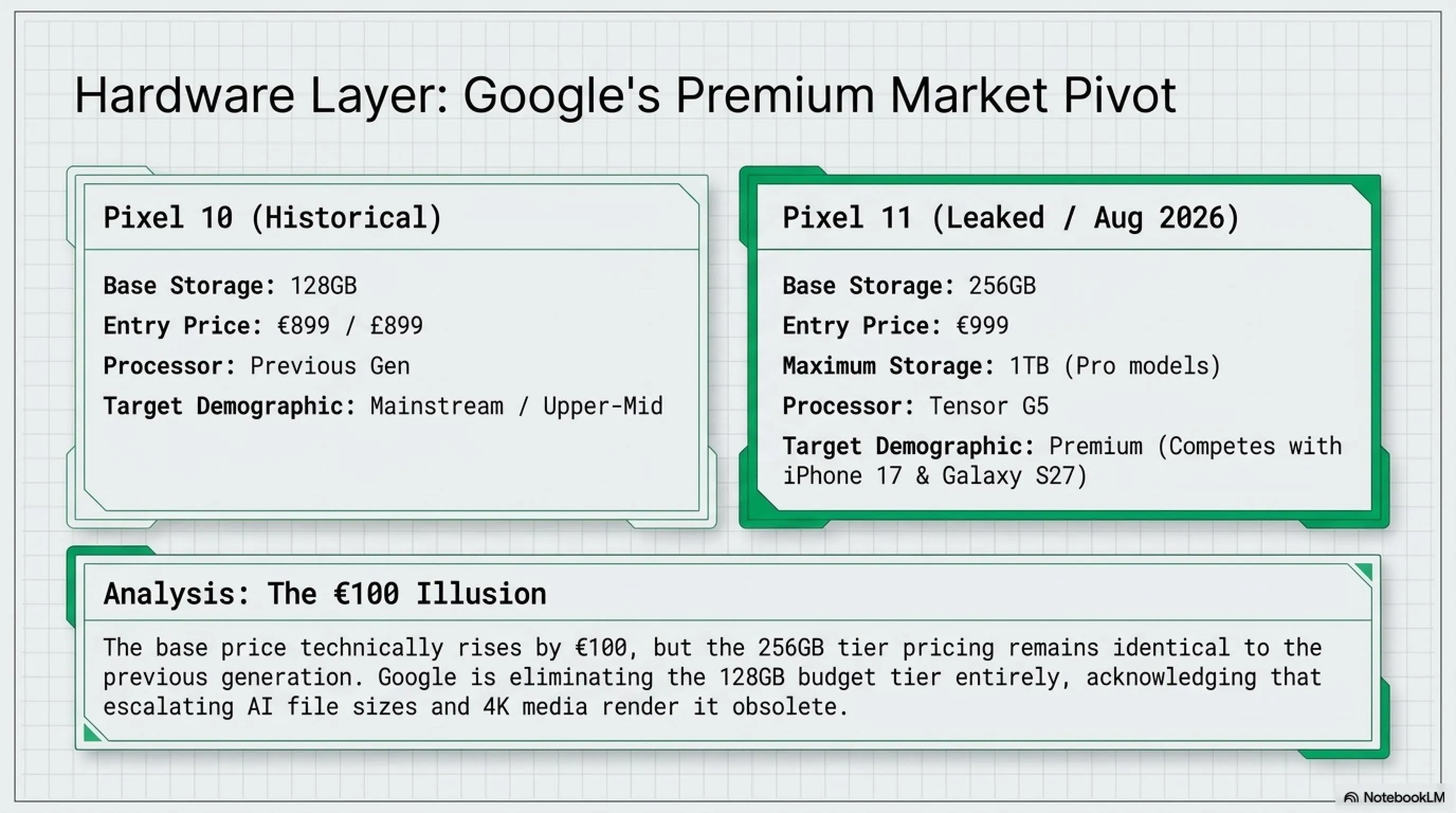
If you're waiting for Google's new Pixel 11 phone, fresh news has emerged that you might not love. According to a leak from Dealabs (a source that typically provides accurate information), Google plans to increase prices for all Pixel 11 models by approximately €100 and completely eliminate the 128GB option.
Pricing and Storage Details
Based on this leak:
- Base Pixel 11 with 256GB starts at €999 (compared to Pixel 10's 128GB version at €899)
- Pixel 11 Pro follows similar pricing logic, approximately €100 more expensive
- Maximum storage for Pro models increases to 1TB
- Announcement date: August 11, 2026
- Release date: August 20, 2026
Now the question is: is this price increase actually an increase? If you look closely, the Pixel 10 with 256GB cost £899 in Britain and €999 in Europe. So if the Pixel 11 starts at the same price with 256GB, technically no price increase occurred—just the cheaper 128GB option was removed.
Why Is Google Removing 128GB?
Eliminating the 128GB option actually makes sense. With increasing app sizes, games, 4K videos, and AI-generated files, 128GB is no longer sufficient for many users. Users had to constantly delete files or resort to cloud storage.
Google likely decided that starting from 256GB would provide a better user experience—though this decision comes at the cost of raising the entry price.
- 256GB base storage sufficient for most users
- 1TB option for professional users
- August release date (earlier than previous years)
- According to rumors, Tensor G5 will perform better
- Removal of 128GB option for budget-conscious users
- Entry price increase of approximately €100
- Tougher competition with iPhone 17 and Galaxy S27
Competition with Apple and Samsung
With this pricing strategy, Google positions itself more firmly in the Premium category. Both iPhone 17 and Galaxy S27 are scheduled for second-half 2026 releases with similar pricing. Now Google must prove that Tensor G5 and Pixel 11's exclusive AI features justify paying this higher price.
Both Android Authority and The Verge have confirmed this leak, and Google is expected to officially announce these details at the August 11 event.
Binance BTC Yield: Earn from Bitcoin Without Selling It
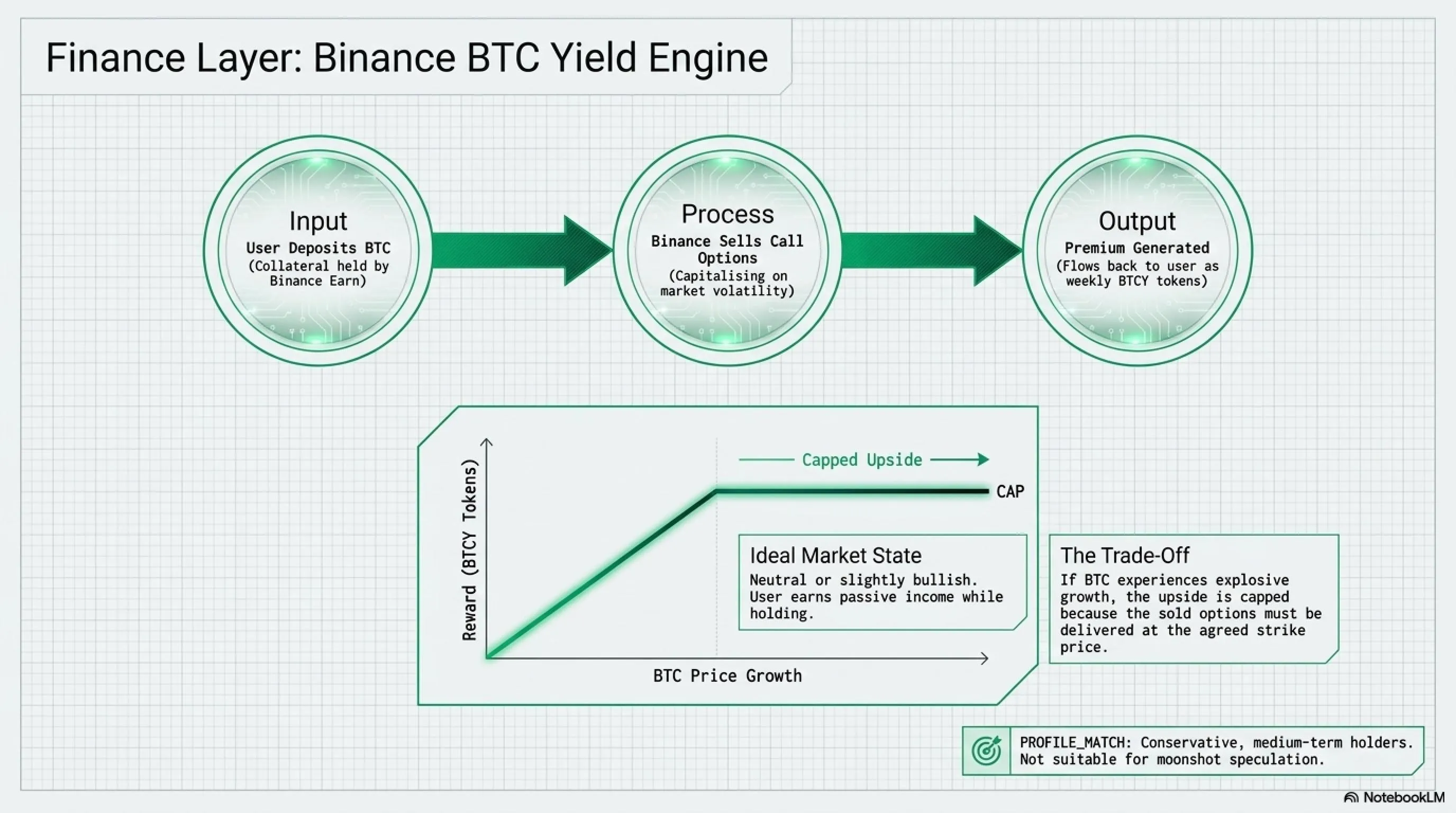
For those holding Bitcoin who want to earn income from it without selling, Binance has introduced a new product: BTC Yield. This product is designed based on a Covered Call strategy, allowing Bitcoin holders to earn weekly income by selling call options.
How Does BTC Yield Work?
The BTC Yield mechanism is relatively straightforward:
- You deposit your Bitcoin to Binance Earn
- In return, you receive BTCY tokens representing your share in the strategy
- Binance holds your Bitcoin as collateral and sells Call Options on it
- Premiums from selling these Options are distributed among participants
- Weekly BTC income is deposited to your wallet
What Is a Covered Call?
Advantages and Disadvantages of This Strategy
BTC Yield is ideal for those who:
- Hold Bitcoin for the long term (Holders)
- Seek passive income from their BTC
- Expect the market to be neutral or slightly bullish in the short term
But the crucial point is that if Bitcoin experiences explosive growth, your profit will be limited. Because Binance sold Call Options that must be delivered if prices exceed specified levels. Therefore, this strategy isn't suitable for those expecting a moonshot.
Tekin Analysis: Who Should Use BTC Yield?
Competition in the Yield Products Market
Binance isn't the only exchange offering Yield products. Coinbase, Kraken, and Bybit also have similar offerings. But BTC Yield, using Covered Call strategy, provides a different and more sophisticated approach allowing users to profit from market volatility without selling their BTC.
Both CoinDesk and Crypto Economy identified this product as one of 2026's most innovative Yield products.
Morning Wrap-Up
This morning we started with six major stories, each shaping the future of technology, security, and digital economy in its own way. From a 16-year-old Linux vulnerability that could endanger entire cloud infrastructure, to Chinese hackers targeting American universities, and from AI's frightening power to identify human reasoning styles to new strategies for earning income from Bitcoin.
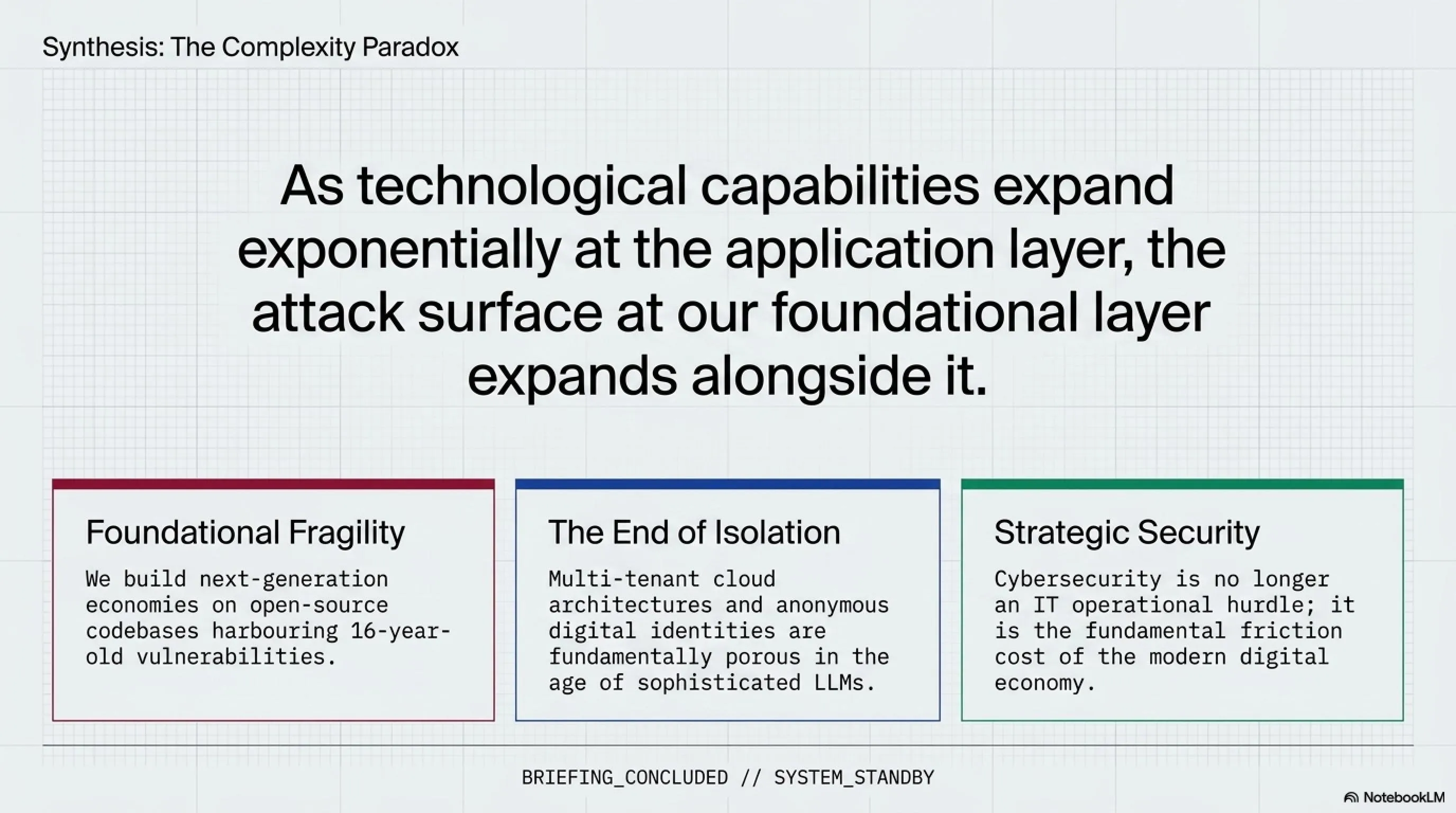
The common thread through all these stories: the digital world becomes more complex and simultaneously more vulnerable every day. Cybersecurity is no longer a purely technical issue—it's a strategic challenge that must be taken seriously at all levels, from ordinary users to organizations and governments.
Frequently Asked Questions
Are my cloud servers at risk from Januscape?
If your cloud service provider (like AWS, Azure, or Google Cloud) has updated their systems, there's no danger. But if you use a smaller VPS or dedicated server, definitely verify that the Linux kernel has been updated to the patched version.
How can I prevent Roundcube attacks?
If you use Roundcube, definitely update to the latest version. Also set up strict DMARC policies for your email and train users not to click suspicious links.
Can I remain completely anonymous with AI?
Staying anonymous against AI analysis has become very difficult. Even if you use VPN and Tor, your writing and reasoning style may give you away. The best approach is constantly changing your writing style and using Paraphrasing tools.
Is investing in BTC Yield safe?
BTC Yield is a relatively safe financial product, but it has risks. If the market experiences explosive growth, your profit will be limited. Also, you must trust Binance to properly manage your Bitcoin. Before investing, definitely read the terms and conditions.
Sources and References
UNK_MassTraction: Proofpoint, TheHackerNews, CyberScoop
Writer AI: TheHackerNews
Vitalik AI Challenge: CoinTelegraph, BeInCrypto, Crypto Economy
Google Pixel 11: 9to5Google, Android Authority, The Verge
Binance BTC Yield: CoinDesk, Binance.com, Crypto Economy
Additional Gallery: Tekin Morning Wednesday July 8: 16-Year Linux Prison Break & AI Reasoning Analytics ☕