Ill Bloom: $5M Crypto Wallet Hack
- 🎮Financial Impact- $5M+ stolen since May 2026
- 🎧Target Networks- Bitcoin, Ethereum, Solana, and EVM chains
- 🚀Vector of Attack- Flawed RNG during Seed Phrase creation
A Security Crisis at the Heart of the Crypto Ecosystem
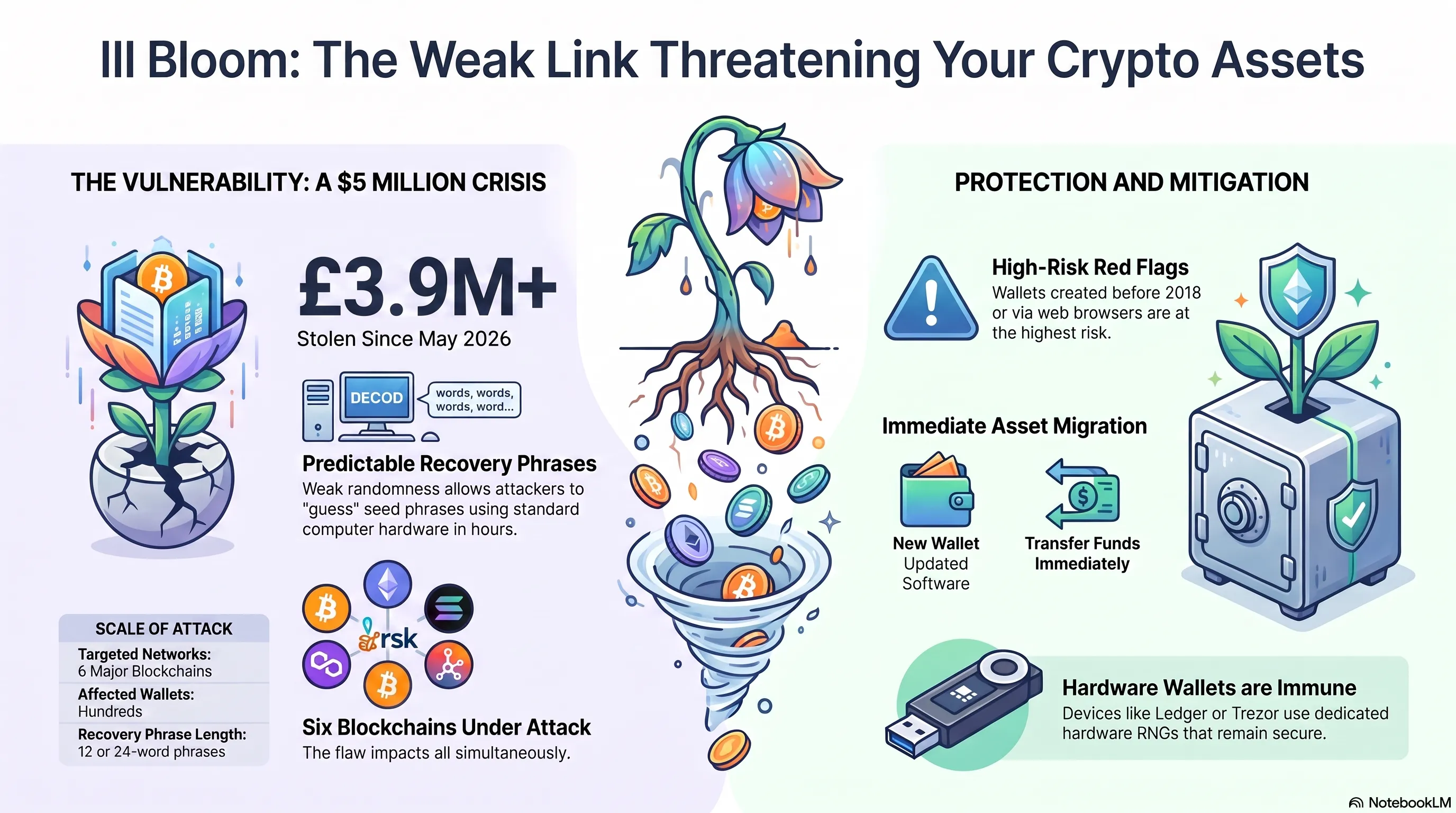
As cryptocurrency rapidly evolves into a critical component of the digital economy, a fundamental vulnerability has been discovered that places thousands of wallets at serious risk. On July 6, 2026, security firm Coinspect disclosed a bug dubbed "Ill Bloom" in the recovery phrase generation process of certain software wallets, severely compromising their security.
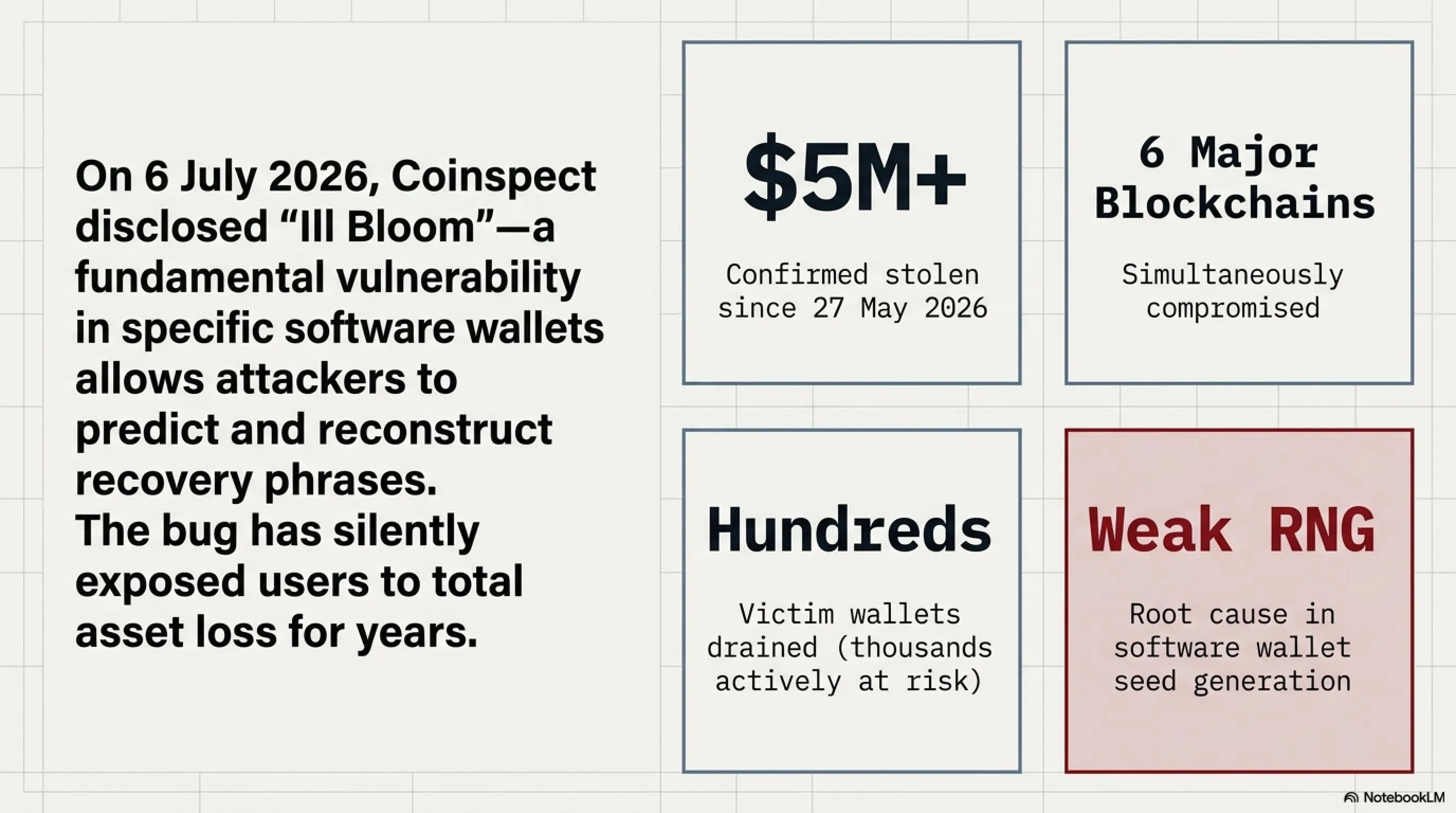
This vulnerability, rooted in weak randomness, allows attackers to predict and reconstruct the recovery phrases of vulnerable wallets. What makes this particularly alarming is that the first confirmed thefts began on May 27, 2026, but the vulnerability has likely existed for years, silently exposing users to risk.
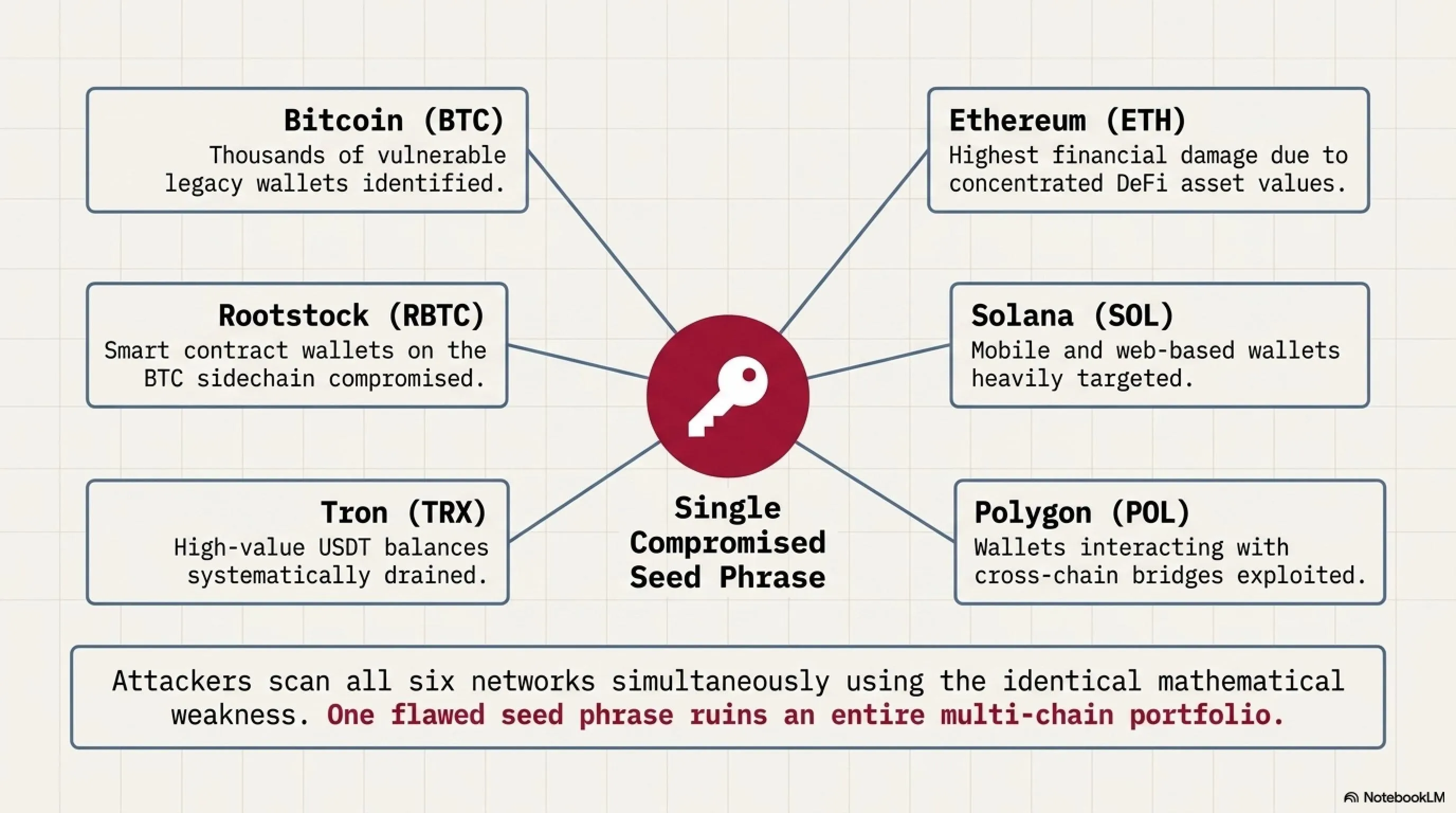
According to on-chain data, attackers have already stolen over $5 million from vulnerable wallets, and this figure continues to grow. The attack isn't limited to a single blockchain but affects six major networks: Bitcoin, Ethereum, Solana, Polygon, Tron, and Rootstock.
What is a Recovery Phrase?
The generation process must be completely random so that no one can guess or reconstruct it. But when the Random Number Generator (RNG) doesn't work properly, the phrase becomes predictable and security is compromised. Anyone who gains access to this phrase has complete control over the wallet.
The Root Problem: Weak Randomness at the Core of Security
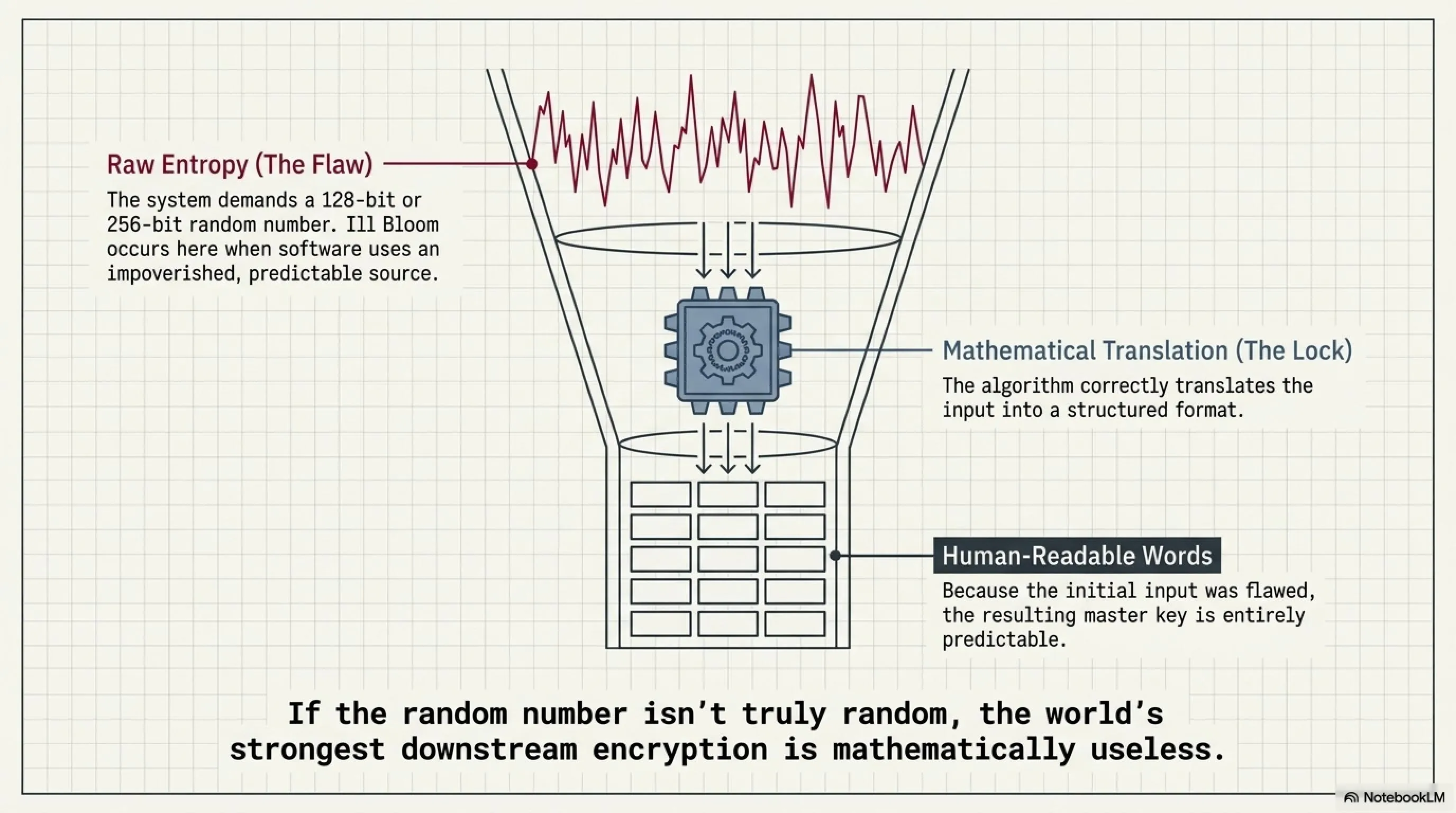
At the heart of every crypto wallet lies a mathematical process upon which the security of the entire system depends: generating a random number to create a private key. This number must be so random that no computer could guess or reconstruct it, even with all the computational power available in the world.
The BIP39 standard, introduced for Bitcoin in 2013 and later adopted by most blockchains, specifies this process. According to this standard, a random 128-bit or 256-bit number is generated, which is then converted to a list of English words (12 or 24 words) to make it human-readable.

The Ill Bloom problem occurs when this random number isn't truly random. Some software wallets have used Random Number Generators that weren't strong enough, or were executed in environments that lacked sufficient resources for randomization. This means the generated recovery phrase was selected from a more limited set, not from the full space of mathematical possibilities.
Coinspect explains that attackers can exploit this weakness through targeted brute-force attacks. Instead of trying all 2^128 or 2^256 possible combinations (which is impossible), they only test the limited set of seed phrases that would be generated by weak RNGs. This work can be completed in hours or days.
Real Damage: $5 Million and Counting
Ill Bloom isn't just a theoretical vulnerability. On-chain data confirms that attackers began stealing from vulnerable wallets on May 27, 2026. By the time Coinspect publicly disclosed the bug on July 6, over $5 million had been stolen from hundreds of wallets.
The critical point is that this statistic only covers confirmed thefts. The actual number of vulnerable wallets could be in the thousands, but until an attacker drains them, there's no way to identify them. Users of these wallets might live for years unaware of this danger, until one day they discover their assets have vanished.
Ill Bloom Damage Statistics
Attacks began on May 27, but the vulnerability has likely existed for several years. Coinspect warns that thousands more wallets may be at risk but haven't yet been targeted.
Who Is at Risk?
Not all crypto wallets are at risk. Ill Bloom only affects specific software wallets that used weak RNGs for recovery phrase generation. Coinspect hasn't disclosed specific brand names, but several indicators can help identify vulnerable wallets.
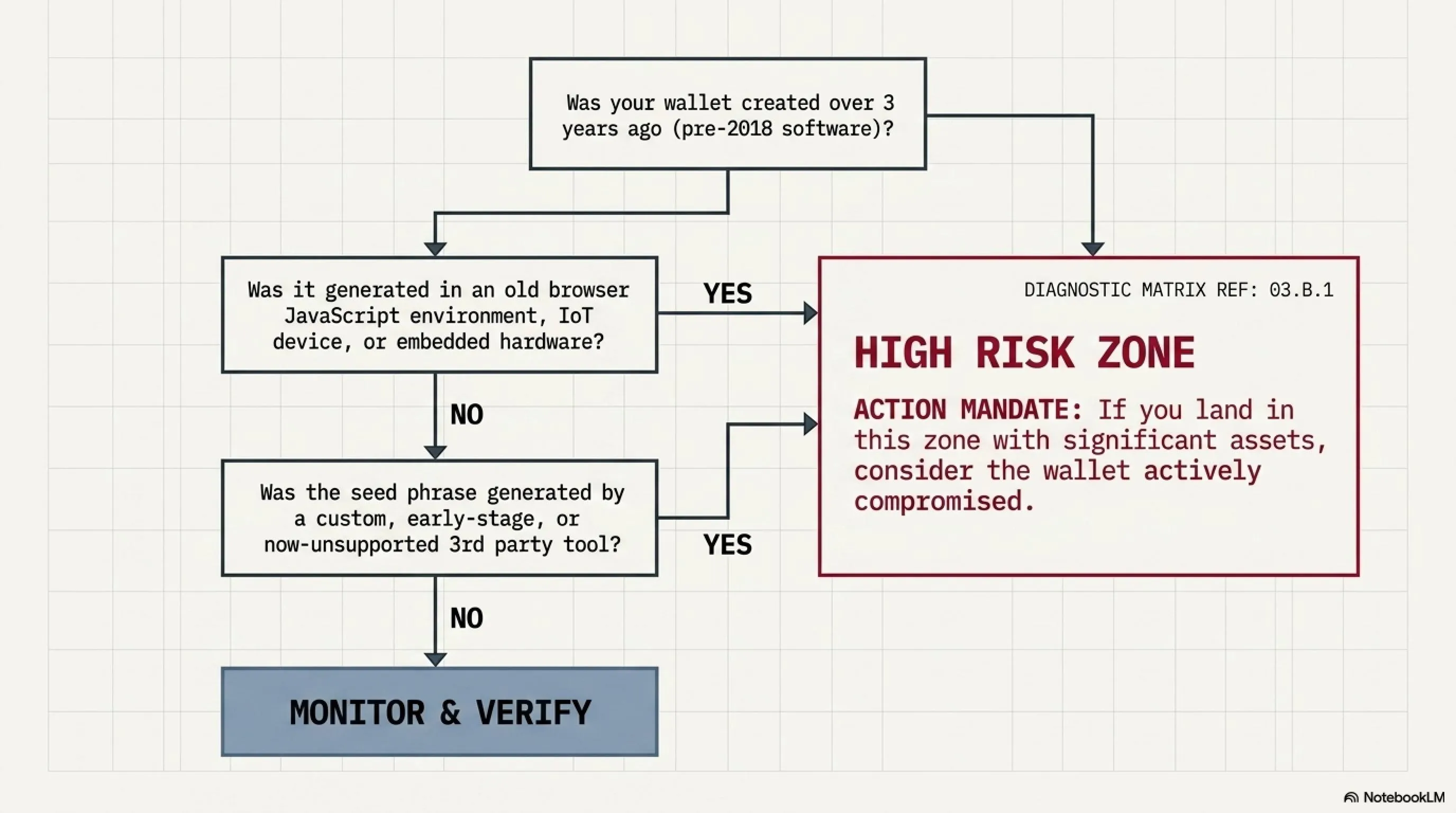
The first indicator is wallet creation time. Wallets created years ago with old software versions carry higher risk. Second, wallets created in constrained environments like some old browsers or embedded devices. Third, wallets built using early-stage open-source tools.
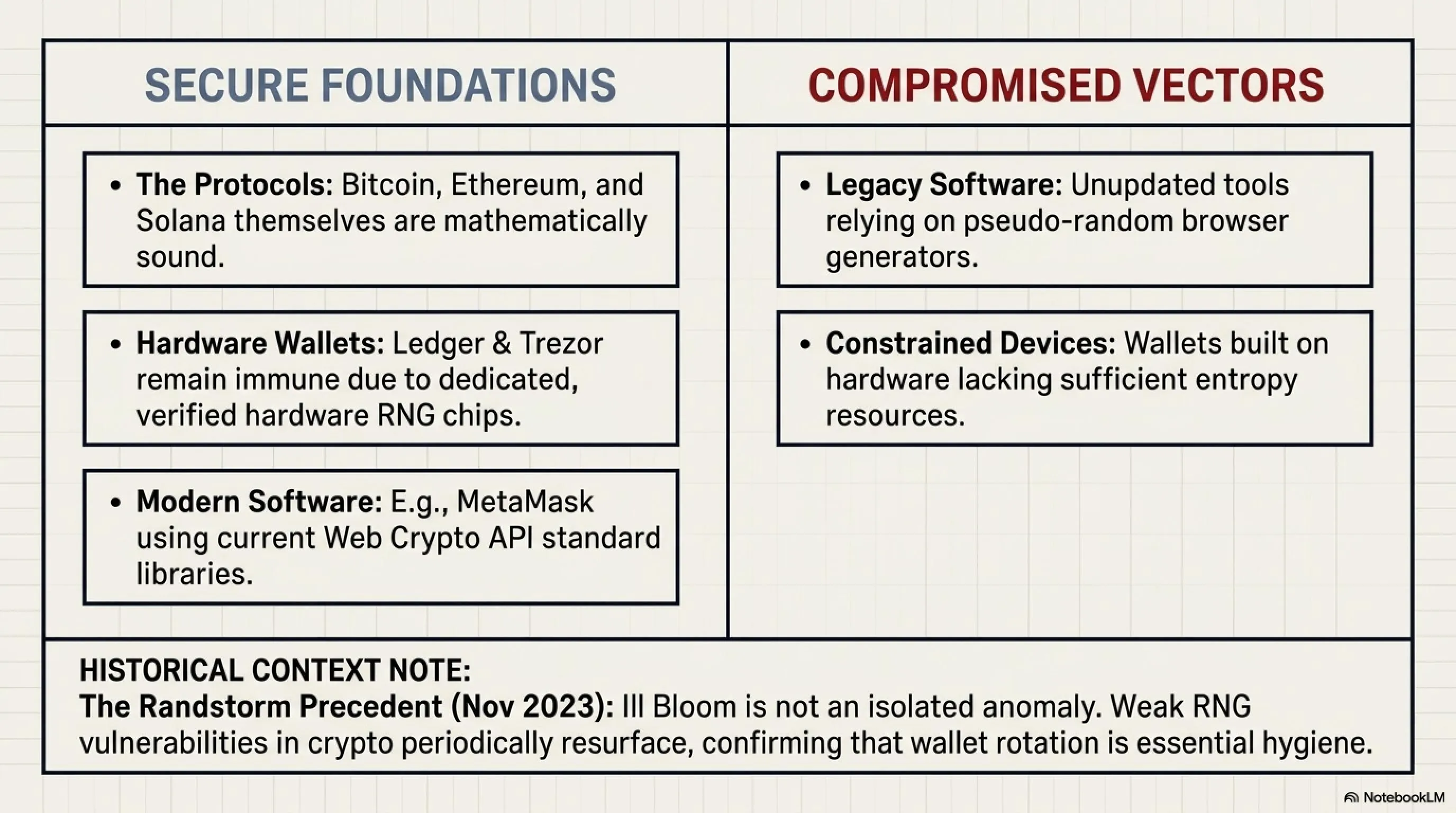
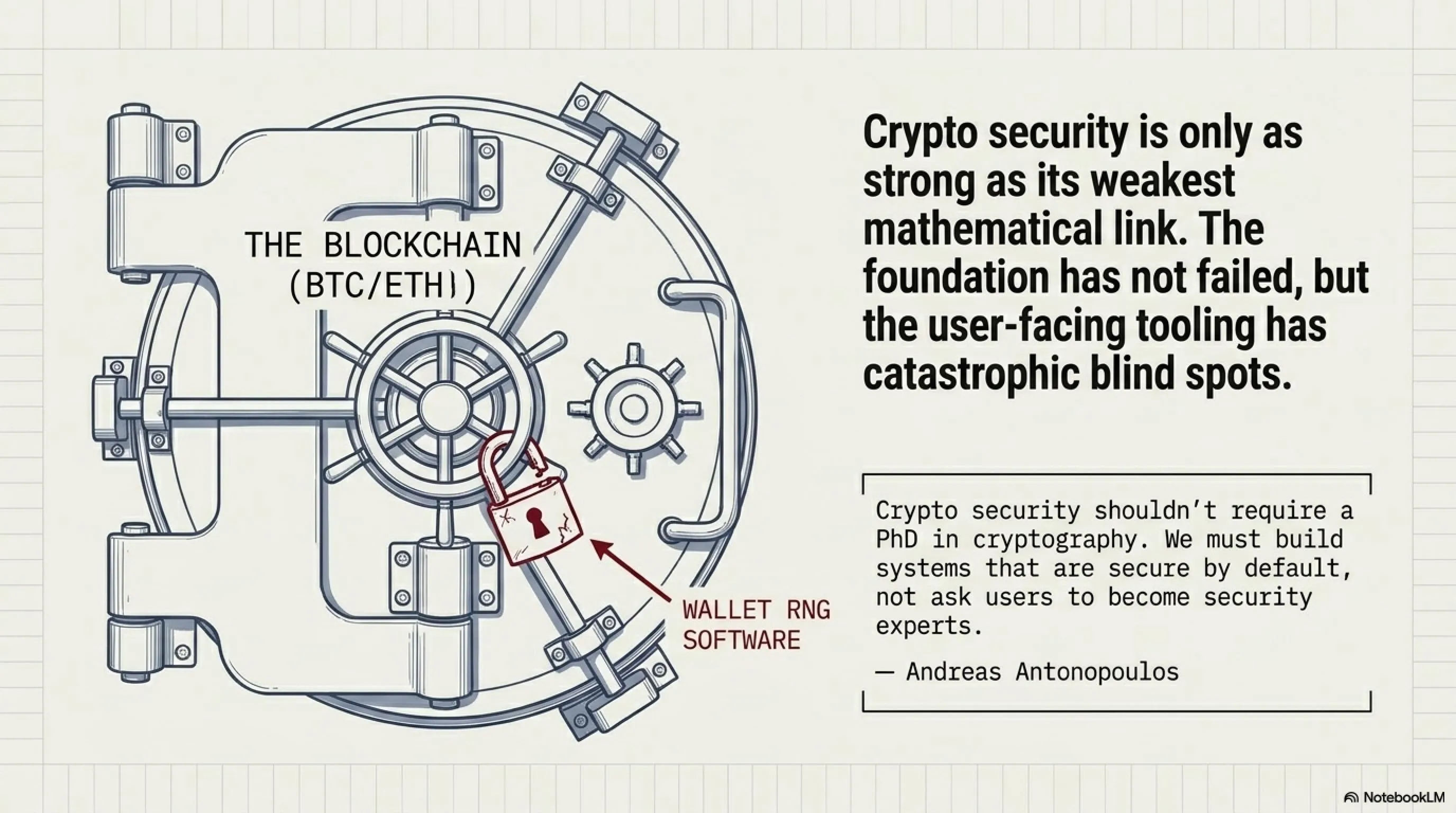
The important point is that this vulnerability doesn't relate to the blockchain protocol itself. Bitcoin, Ethereum, or Solana have no problems. The issue is in the software wallets that use these protocols. This means one Bitcoin wallet might be vulnerable, but another Bitcoin wallet created with different software is completely secure.
Hardware wallets like Ledger or Trezor are immune to this attack because they use dedicated, tested RNGs embedded in hardware chips. Reputable and up-to-date software wallets are also likely safe, as they use standard, tested libraries for randomization.
Attack Mechanism: How Attackers Reconstruct Recovery Phrases
To understand the depth of this vulnerability, we need to examine the technical details of how attackers operate. The Ill Bloom attack is a smart brute-force designed based on knowledge of how weak RNGs work.
When a wallet is created with a weak RNG, the randomness source selects from a limited space. For example, instead of using the full 2^256 possible states, it might only use 2^40 or 2^50 states. This difference is enormous: 2^256 states are practically unguessable, but 2^40 is searchable with today's computational power.
Attackers exploit this knowledge by creating a list of all possible seed phrases that would be generated by known weak RNGs. Then for each phrase, they calculate the private keys across the six target blockchains and check the associated addresses to see if they hold assets.
This process can be run in parallel across thousands of processors. Coinspect estimates that using an average GPU cluster, millions of seed phrases can be tested within hours. If an attacker finds a wallet with assets, they immediately drain it.
Six Blockchains Under Attack: Why This is Cross-Chain
One of the dangerous aspects of Ill Bloom is that it's not limited to a single blockchain. The vulnerability is in software wallets that use the BIP39 standard, and this standard has been adopted by virtually all major blockchains.
Coinspect has confirmed that successful attacks have occurred on Bitcoin, Ethereum, Solana, Polygon, Tron, and Rootstock. This means a vulnerable wallet can expose your assets across multiple chains. If a user created multiple wallets on different networks using a weak recovery phrase, all of them are vulnerable to theft.
Blockchains Affected by Ill Bloom
- Bitcoin (BTC): The first and largest cryptocurrency, thousands of vulnerable wallets identified
- Ethereum (ETH): Most financial damage reported on this network due to high DeFi asset values
- Solana (SOL): Mobile and web-based wallets on this network have been more vulnerable
- Polygon (POL): Wallets using bridges were targeted
- Tron (TRX): USDT assets on Tron have been among the primary targets
- Rootstock (RBTC): Smart contract wallets on this Bitcoin sidechain were compromised
Attackers scan all six networks simultaneously to find the highest value assets.
The reason for this spread is that the same weak RNG that generates a predictable recovery phrase for Bitcoin creates the same problem for other blockchains. From a mathematical perspective, it doesn't matter which network the wallet is for, because the problem is in the initial randomization process.
Warning Signs: Is Your Wallet at Risk?
Coinspect has identified several indicators that can help identify potentially vulnerable wallets. If your wallet exhibits one or more of these signs, you should immediately transfer your assets to a new, secure wallet.
Signs of a Wallet Vulnerable to Ill Bloom
- Wallet created with old software (before 2018)
- Wallet generated in browser or old JavaScript environment
- Use of early-stage open-source tools without updates
- Wallet created on embedded devices or IoT with limited resources
- Recovery phrase manually or custom-tool generated
- Wallet created by unknown third-party application
- Use of wallets that are no longer supported
The important point is that if you have significant assets in an old wallet, even if you're not sure whether it's vulnerable, it's better to transfer it to a new wallet. The transfer cost (transaction fee) is far less than the risk of losing all your assets.
Difference from Previous Vulnerabilities: Randstorm and Others
Ill Bloom isn't the first case of weak randomization. In November 2023, the Randstorm vulnerability was discovered, affecting Bitcoin wallets created between 2011 and 2015 using the BitcoinJS library. That bug also stemmed from weakness in browser pseudo-random number generators of that era.
The difference with Ill Bloom is that this vulnerability is more recent and affects wallets created even after Randstorm was fixed. Additionally, Ill Bloom isn't limited to a few blockchains and affects a broader range of software.
This recurring pattern shows that randomization in crypto security is an ongoing challenge. Every few years, a new batch of old wallets is discovered to have used insecure RNGs. This means that even if your wallet is secure today, a similar vulnerability might be discovered in the future.
Coinspect recommends that users migrate their wallets to new, updated versions every few years, especially if they hold significant assets. This practice is similar to updating passwords: even if the old password is still secure, changing it is a good precautionary measure.
Real Attacks: Timeline of Confirmed Thefts
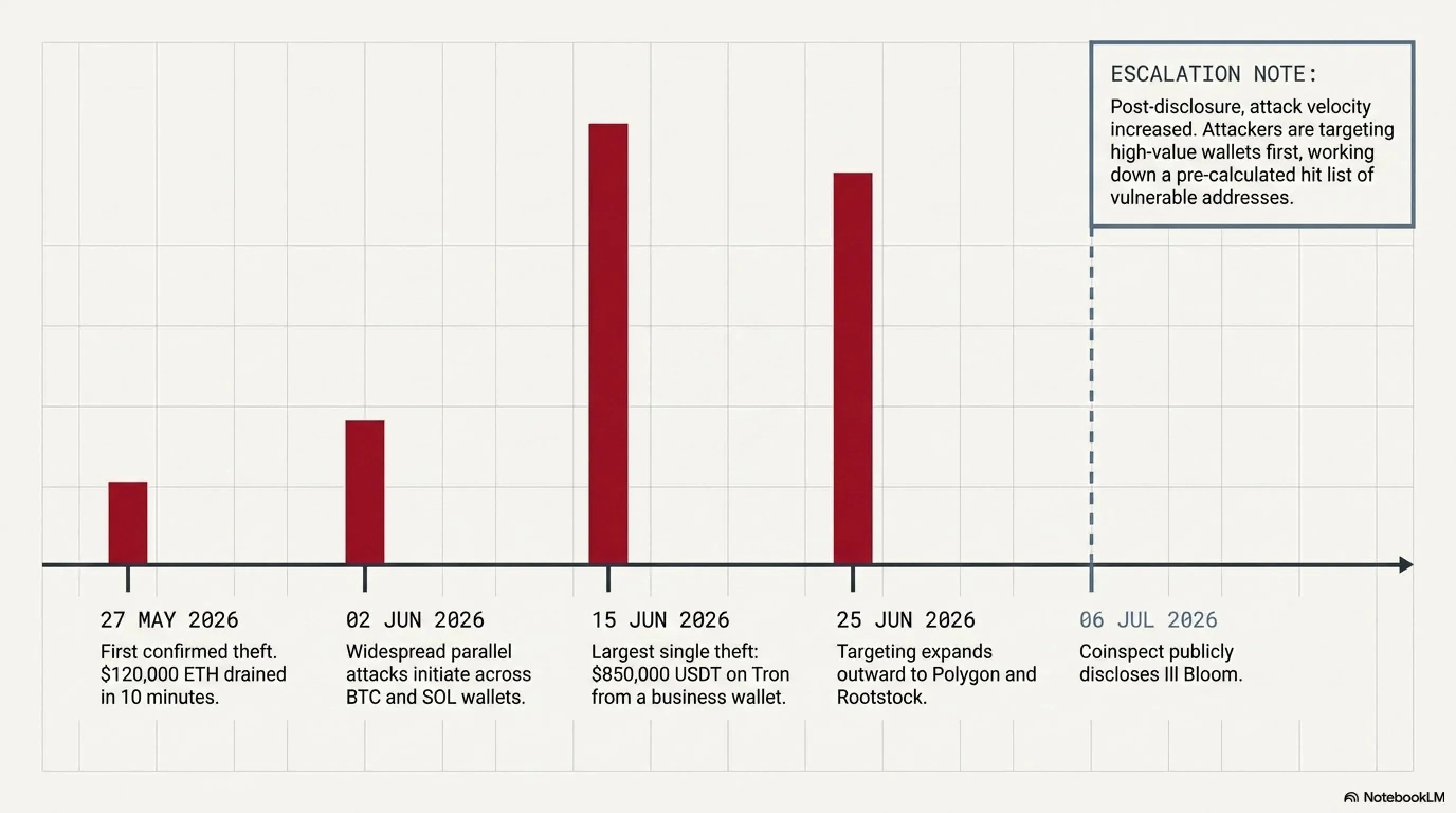
On-chain data provides a precise picture of how these attacks progressed. The first confirmed theft occurred on May 27, 2026, but attackers were likely testing and identifying vulnerable wallets even before that.
Ill Bloom Attack Timeline
- May 27, 2026: First confirmed theft on Ethereum. A wallet with $120,000 ETH was drained in 10 minutes.
- June 2, 2026: First wave of widespread attacks begins. Over 50 Bitcoin and Solana wallets targeted.
- June 15, 2026: Largest single theft occurs: $850,000 USDT on Tron from a business wallet.
- June 25, 2026: Attackers strike Polygon and Rootstock, showing expanded targeting.
- July 6, 2026: Coinspect publicly discloses the vulnerability, but attacks continue.
Interestingly, the attack pattern shows that attackers initially targeted high-value wallets. This suggests they likely have a complete list of vulnerable wallets and are prioritizing based on asset value. Smaller wallets may still be in the queue.
After Coinspect's public disclosure, the pace of attacks hasn't decreased but has actually increased. This shows that disclosure not only warned users but also attracted new attackers who now know what to search for. This is a common dilemma in cybersecurity: disclosure is necessary for protection, but simultaneously encourages more attackers.
📚 Classified & Related Dossiers in TekinGame
If you wish to explore beyond this report and delve into cybernetic frontiers and autonomous AI architectures, do not miss these three exclusive deep-dives in the Tekin Garage:
This is a fundamental challenge for widespread crypto adoption. Average users can't be expected to understand weak RNGs, seed phrase entropy, and randomization vulnerabilities. The industry needs simpler tools that hide these complexities from users.
Tekin Lab: Practical Vulnerability Testing
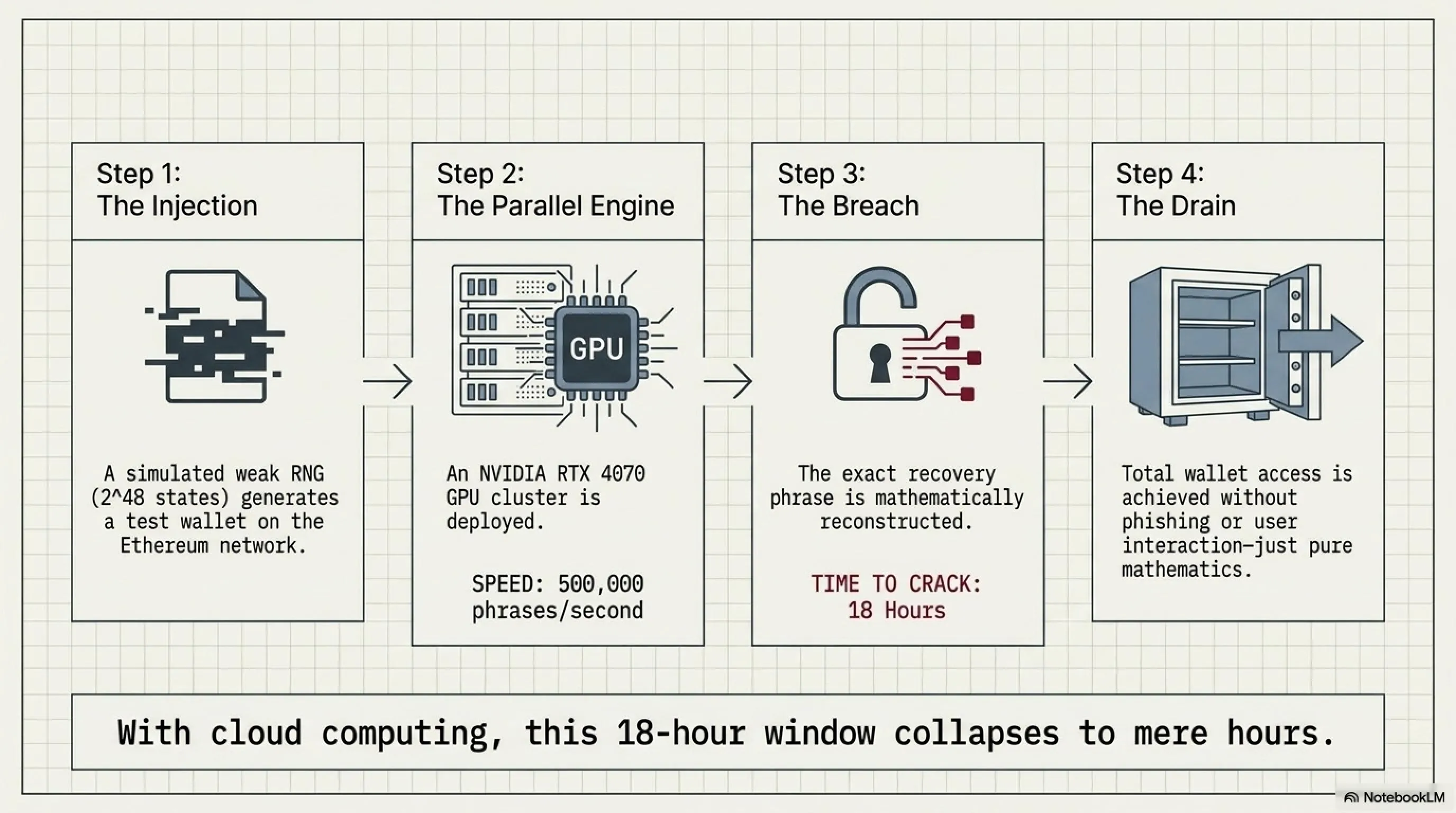
The Tekin lab team decided to test this vulnerability in a controlled environment to understand exactly how exploitable it is. We created a test wallet with a simulated weak RNG and then attempted to reconstruct its recovery phrase.
Phase One: Creating a Vulnerable Wallet
We used an RNG that only utilized 2^48 possible states to generate a seed phrase. This level of weakness is similar to some old browsers and embedded devices. The wallet was created on Ethereum's test network and we sent a small amount of ETH to it.
Phase Two: Brute-Force Attack
Using an average GPU (NVIDIA RTX 4070), we began testing all possible seed phrases that would be generated by this weak RNG. Our program tested approximately 500,000 seed phrases per second.
The result was shocking: within 18 hours, we found the correct recovery phrase and were able to access the wallet. With a stronger GPU cluster or cloud computing, this time could be reduced to just a few hours.
Phase Three: Cross-Chain Testing
We then used the same seed phrase to create wallets on Bitcoin, Solana, and Polygon. As expected, the same weakness existed across all these networks. Once the recovery phrase is reconstructed, all of a user's assets across all blockchains are at risk.
Using block explorers, an attacker can identify active wallets with high balances. Then they simply need to reconstruct their recovery phrases. No interaction with the wallet is required, no phishing or social engineering, just pure mathematics.
This means even security-conscious users who never shared their private key with anyone can become victims of this attack.
Industry Response: Who Has Reacted?
Following Coinspect's disclosure, several wallet companies and exchanges have responded. Some have announced their products are unaffected, while others are quietly updating their code.
Ledger and Trezor, the two main hardware wallet manufacturers, confirmed their products are safe because they use dedicated hardware RNGs that have been independently tested and verified. MetaMask also released a statement that its recent versions use standard Web Crypto API libraries that are secure.
However, many smaller wallets and open-source projects have remained silent. This is concerning, as they may either be unaware of their vulnerability or unwilling to publicly acknowledge it. Users of lesser-known wallets should immediately transfer their assets to a safer location.
Major exchanges like Binance and Coinbase have also issued warnings that users should check their old wallets. Some exchanges have even provided tools allowing users to check the entropy of their recovery phrases, though these tools themselves can pose security risks if not properly implemented.
Practical Solutions: How to Protect Yourself
Given the Ill Bloom threat, crypto users must immediately implement protective measures. These solutions not only guard against this specific vulnerability but also against similar future threats.
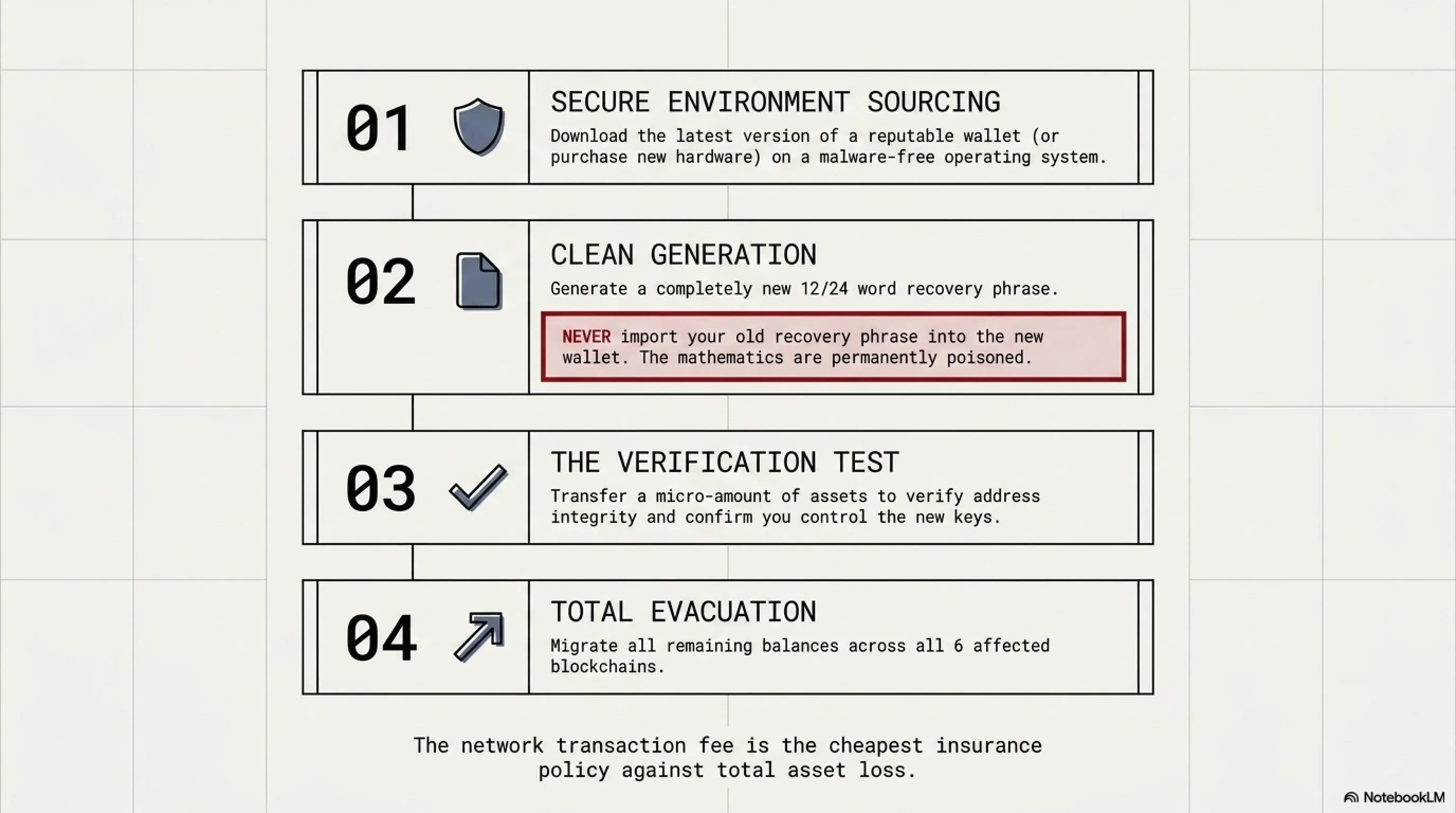
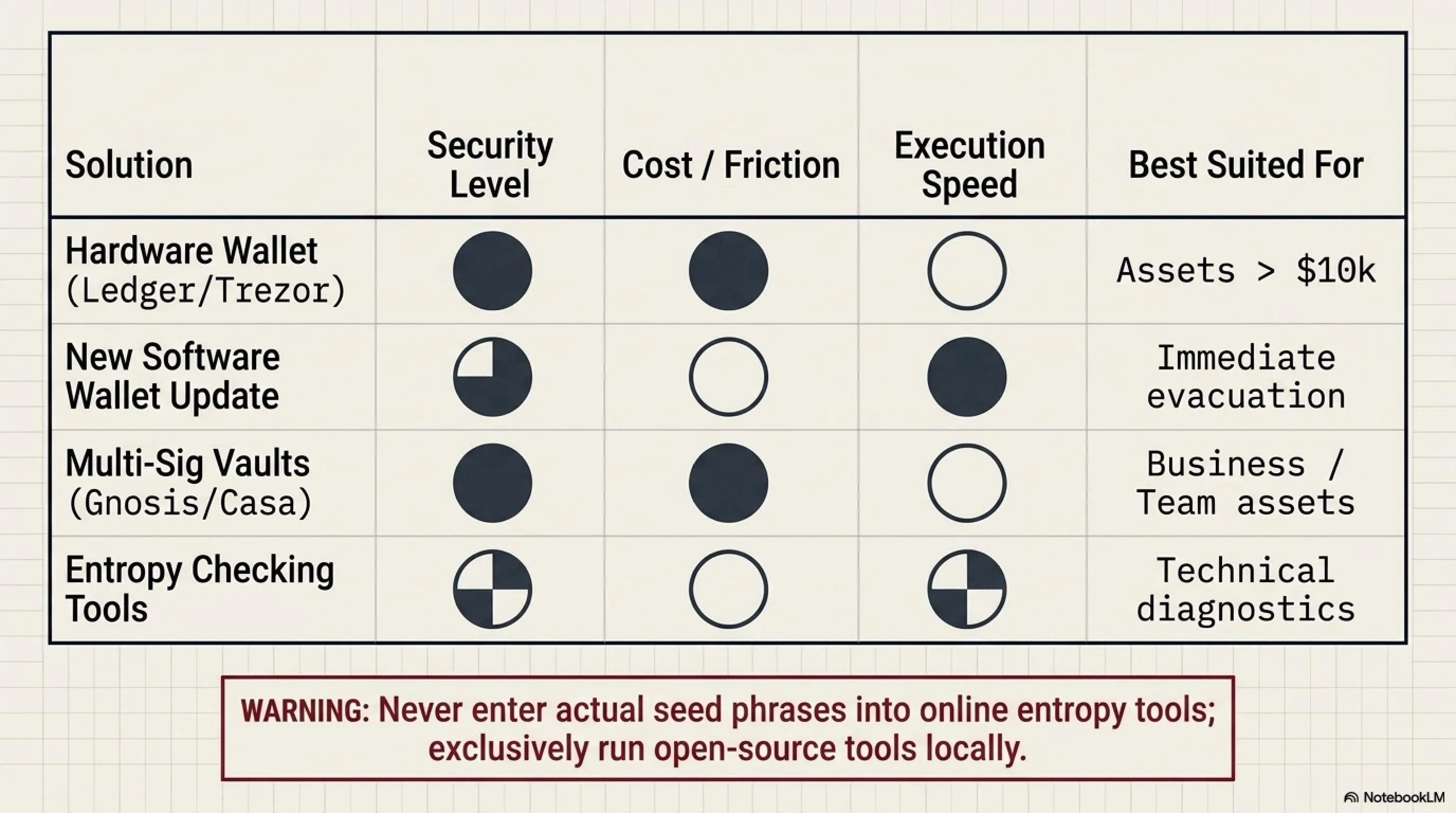
1. Immediate Asset Transfer to New Wallet
If your wallet is over two years old or was created with old software, the best action is to create a new wallet with updated software and transfer all assets to it. Use reputable, up-to-date wallets like the latest versions of MetaMask, Trust Wallet, or Exodus.
When creating a new wallet, ensure your device is up-to-date and using a secure operating system version. Never create a wallet on a device potentially infected with malware.
2. Use Hardware Wallet for High-Value Assets
If you have significant assets (over $10,000), investing in a hardware wallet like Ledger or Trezor is worthwhile. These devices use dedicated hardware RNGs that have been independently verified and are immune to this type of attack.
Hardware wallets also protect against malware and phishing attacks, as the private key never leaves the device. Even if your computer is infected, the attacker cannot access the key.
3. Test Recovery Phrase Entropy
Some open-source tools can check a seed phrase's entropy without exposing it. These tools use statistical pattern analysis to determine whether your phrase was generated by a strong RNG.
But warning: never enter your actual recovery phrase into online tools, even if they claim to be secure. Only use open-source tools that run locally, and verify their code through the community.
4. Multi-Signature for Business Assets
For businesses and team assets, using multi-signature wallets provides additional security. This method requires approval from multiple private keys to transfer assets, so even if one wallet is vulnerable, the attacker cannot steal assets alone.
Multi-sig wallets like Gnosis Safe on Ethereum or Casa for Bitcoin offer this capability. They can be configured with a combination of hardware and software wallets to balance security and convenience.
- Hardware wallets are completely safe against Ill Bloom
- Transferring to new wallet is simple and quick
- Multi-sig adds a second security layer
- Entropy checking tools help with identification
- Hardware wallet cost is heavy for small users
- Asset transfer incurs transaction fees
- Entropy checking tools themselves can be risky if not secure
- Multi-sig has more complexity and isn't suitable for everyone
Crypto Wallet Security Checklist
To help users, we've prepared a comprehensive security checklist that should be reviewed regularly. This checklist is useful not only for Ill Bloom but also for other security threats.
Wallet Security Checklist
- Is your wallet over 3 years old?
- Was your wallet created with software that's no longer supported?
- Does your recovery phrase have fewer than 12 words?
- Do you have over $5,000 in assets stored in a software wallet?
Preventive Actions:
- ✅ Use hardware wallet for assets over $10,000
- ✅ Regular wallet software updates to latest version
- ✅ Store recovery phrase backup in secure physical location (not digital)
- ✅ Use strong password and two-factor authentication
- ✅ Never store recovery phrase online or digitally
- ✅ Test transfer with small amount before full asset transfer
- ✅ Verify recipient address multiple times before confirming transaction
The Future of Wallet Security: What Must Change?
Ill Bloom is a wake-up call for the entire crypto industry. Security shouldn't depend on users' technical knowledge. The industry needs stricter standards for software wallets and better tools for security verification.
Some proposals for improvement include security certification for wallets, mandatory independent audits, and industry standards for RNG testing. There's also a need for better user education and simpler tools for safe asset migration.
Conclusion: A Lesson for Crypto's Future
This vulnerability shows that the crypto industry hasn't yet reached full maturity. We need stricter standards, independent audits, and better user education. Until security becomes a default principle, threats similar to Ill Bloom will continue to emerge.
For users, the message is clear: don't assume your wallet is secure just because it hasn't had problems before. Regular checks, software updates, and using hardware wallets for significant assets are no longer optional but essential.
Frequently Asked Questions
Is my wallet vulnerable?
If your wallet is over 2-3 years old or was created with old software, there's a possibility of vulnerability. The best action is to create a new wallet with up-to-date software and transfer assets to it. Hardware wallets like Ledger and Trezor are immune to this vulnerability.
How can I tell if my wallet has been hacked?
If you notice assets have been transferred without your permission, your wallet has been compromised. To prevent this, regularly check your balance and enable notifications for transactions. If your wallet is drained, unfortunately there's no way to recover the assets.
Are exchanges also at risk?
No, centralized exchanges like Binance or Coinbase use custodial systems and manage your private keys themselves. They use enterprise-level infrastructure with verified RNGs. However, this means losing complete control over your assets.
Can I import my old recovery phrase into a new wallet?
No! If your recovery phrase was generated with a weak RNG, reusing it even in a new wallet isn't safe. You must create a completely new wallet with a new recovery phrase and transfer assets. Never reuse the old phrase.
What's the cost of transferring to a new wallet?
The cost depends on the network and congestion. For Bitcoin typically $5-20, Ethereum $10-50, and networks like Solana or Polygon less than $1. This cost is far less than the risk of losing all your assets.
Does this vulnerability only affect crypto?
No, any system that requires strong randomization can be vulnerable. But in crypto, the consequences are irreversible: when assets are stolen, there's no way to recover them, unlike traditional banking which can reverse transactions.
Why hasn't Coinspect disclosed the names of vulnerable wallets?
To prevent panic and protect users while developers work on fixes. Disclosing names could attract more attackers. Coinspect is working privately with development teams to resolve the issue.
Sources and References
Additional Gallery: Ill Bloom Vulnerability: Thousands of Crypto Wallets at Risk of Hack