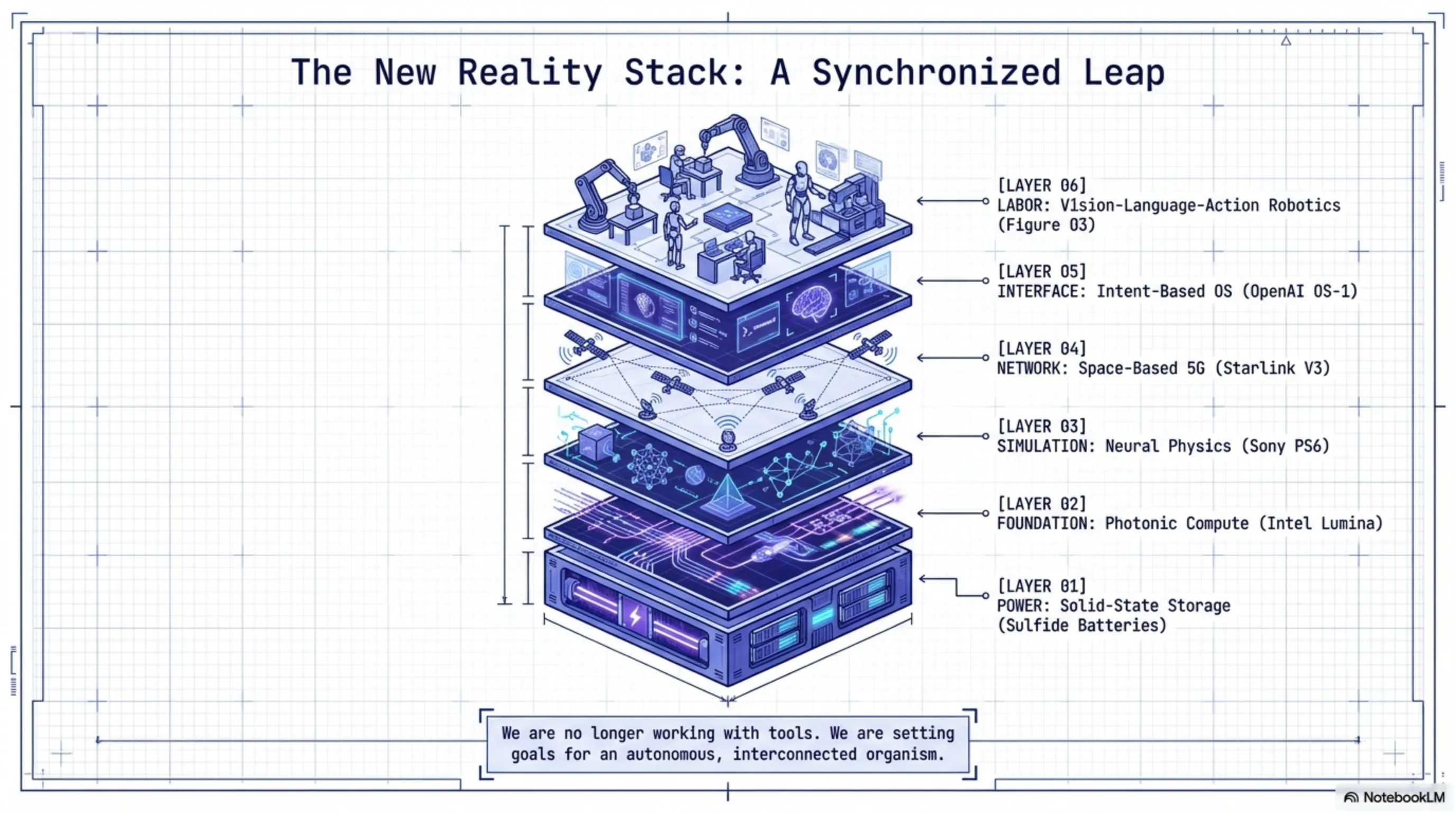
Intel's Photonic Chips (Lumina): Light-Speed Processing and the End of the Silicon Era
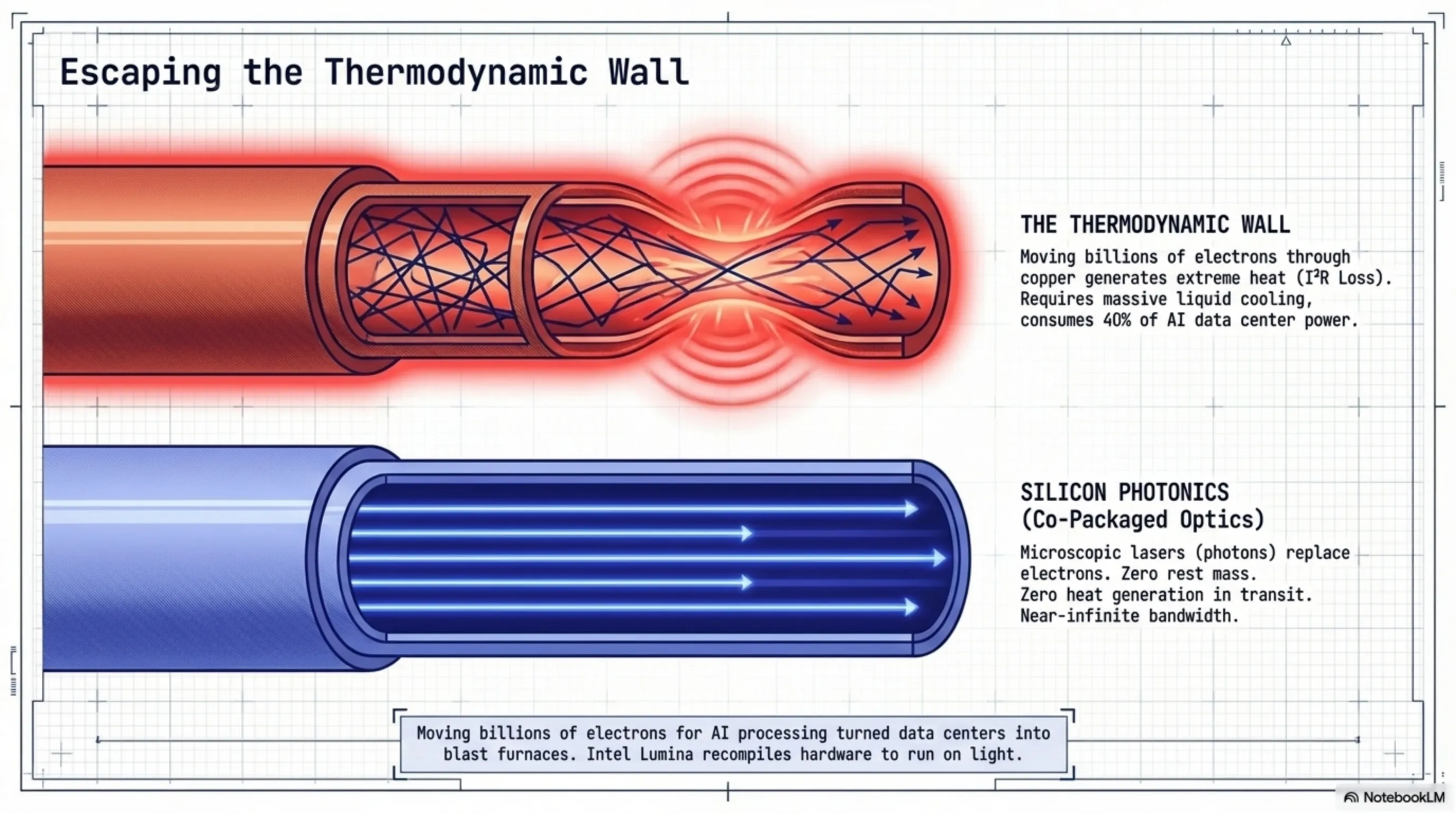
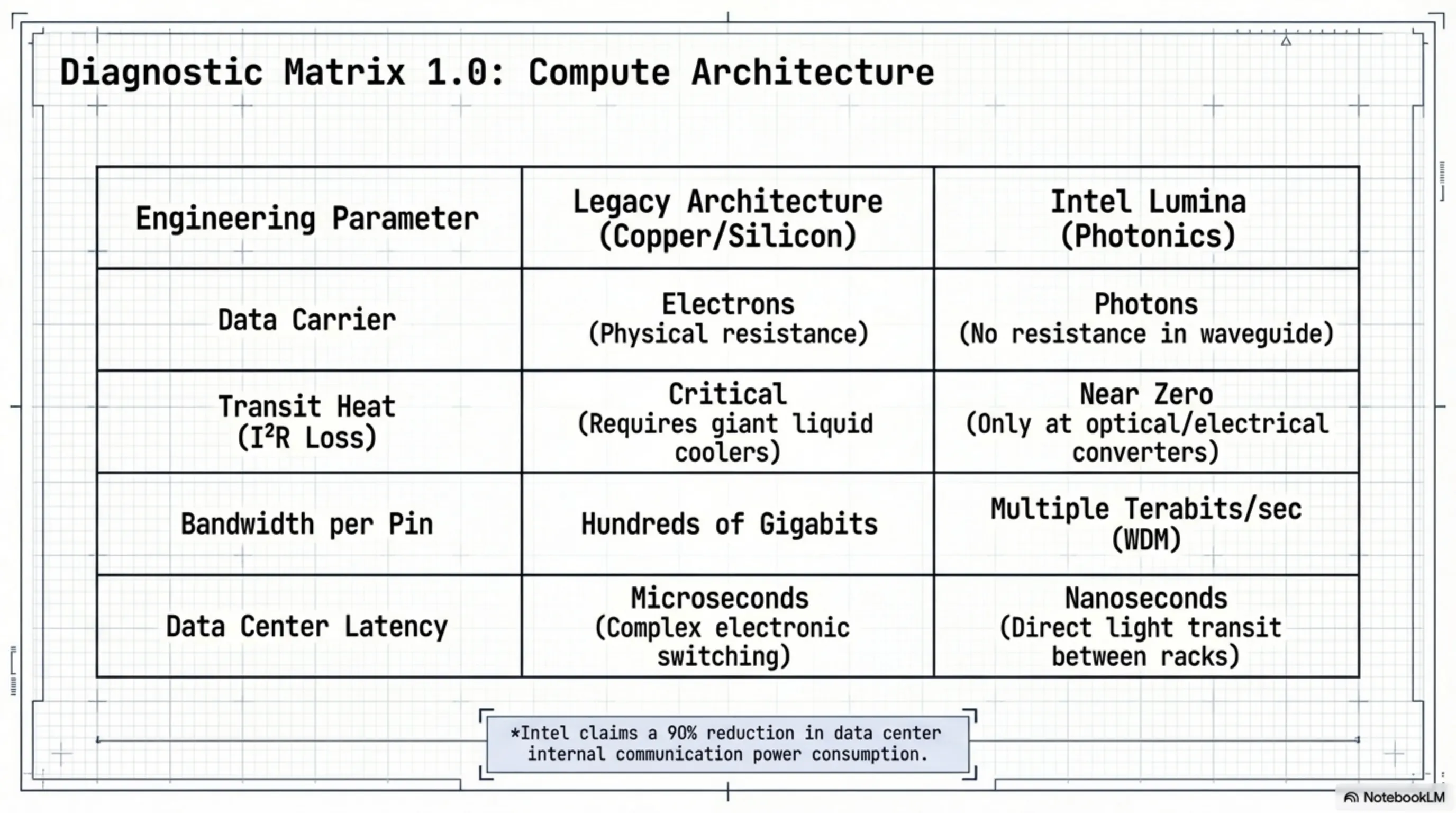
Moore's Law has been surviving on life support in the intensive care unit for years. We have successfully shrunk transistors down to the agonizing 2-nanometer threshold, but we have now slammed into a massive, physical concrete wall known as "Thermodynamics." Pushing billions of electrons through microscopic copper wires inside modern AI processors (like Nvidia's B200 chips) generates a terrifying amount of heat. Today’s data centers resemble industrial smelting furnaces rather than data processing hubs. But early this morning (March 16, 2026), Intel fundamentally rebooted the hardware matrix with the unveiling of the Lumina architecture.
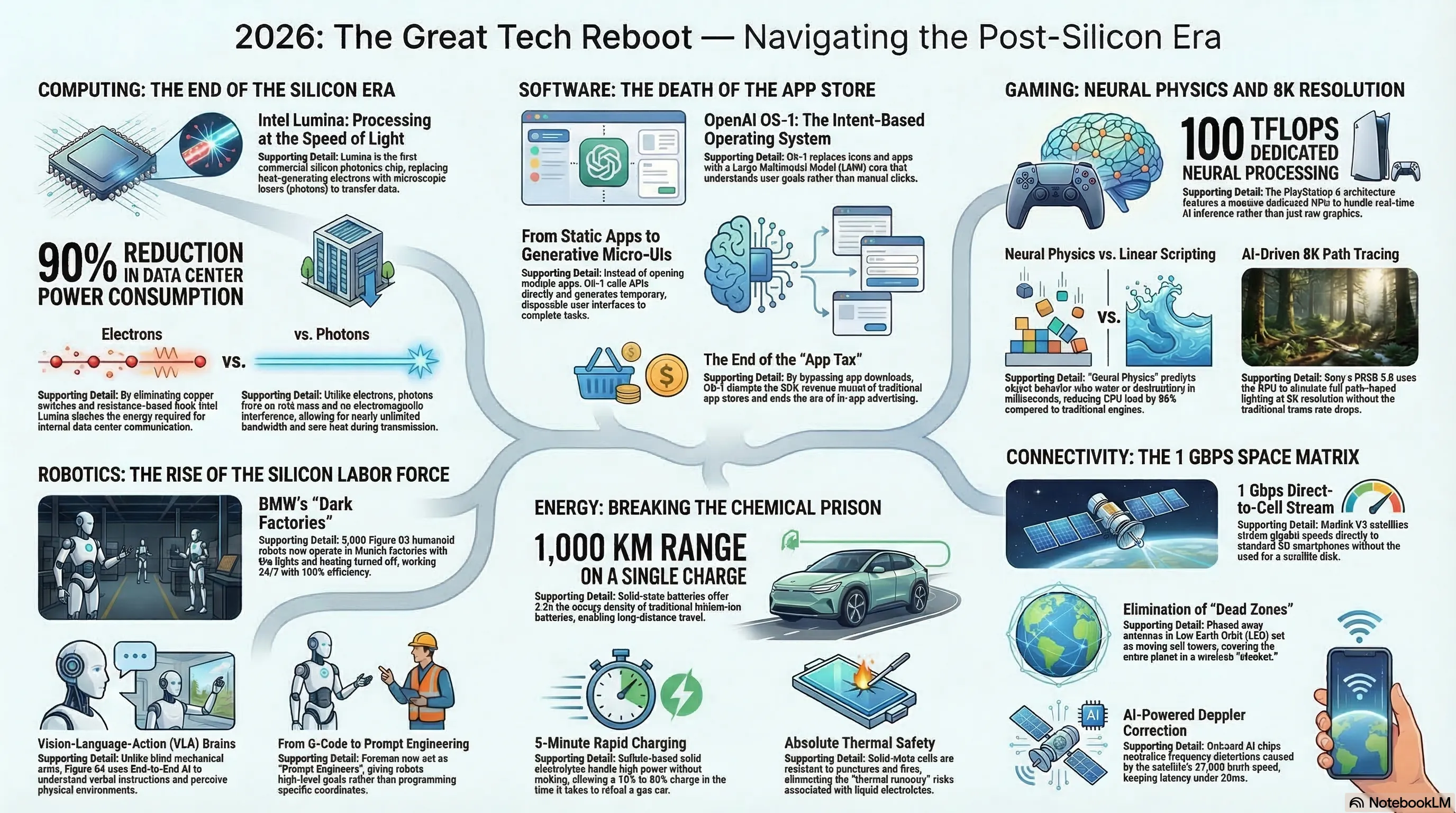
Lumina is not a classical processor; it is the world's first commercial Silicon Photonics chip engineered for data center scale. Inside Tekin Garage, we relentlessly debugged the architecture of this monster. Instead of utilizing electrons to transfer data between processing cores and memory banks, Intel employs optical photons (microscopic lasers). Why is this a tectonic earthquake? Because photons, unlike electrons, possess zero rest mass and do not generate electromagnetic interference with one another. This translates to data transmission at the literal speed of light, with practically infinite bandwidth, and most importantly: zero heat generation during the transfer process!
An autopsy of the Lumina packaging reveals that Intel has successfully integrated Optical Transceivers directly onto the processor's silicon substrate—a groundbreaking technology known as Co-Packaged Optics (CPO). In traditional architecture, Memory Bandwidth was the ultimate bottleneck that choked the training of Large Language Models (LLMs). However, by utilizing nanoscale Optical Waveguides etched directly into the silicon, Lumina can seamlessly transport terabytes of data across hundreds of chips in a fraction of a millisecond, completely bypassing the need for massive, power-hungry copper switches.
This unveiling is a direct declaration of war against Nvidia's empire. Massive AI studios currently burn over 40% of their electricity budget purely on "cooling down" their data centers. Intel claims that the Lumina architecture slashes the power consumption of internal data center communications by a staggering 90%. Sabrina wrote on the Garage whiteboard this morning: "Electrons were too old and exhausted for 2025's processing demands. The future matrix will be compiled with pure light."
OpenAI's OS-1: The Death of Applications and the Birth of Autonomous Interfaces
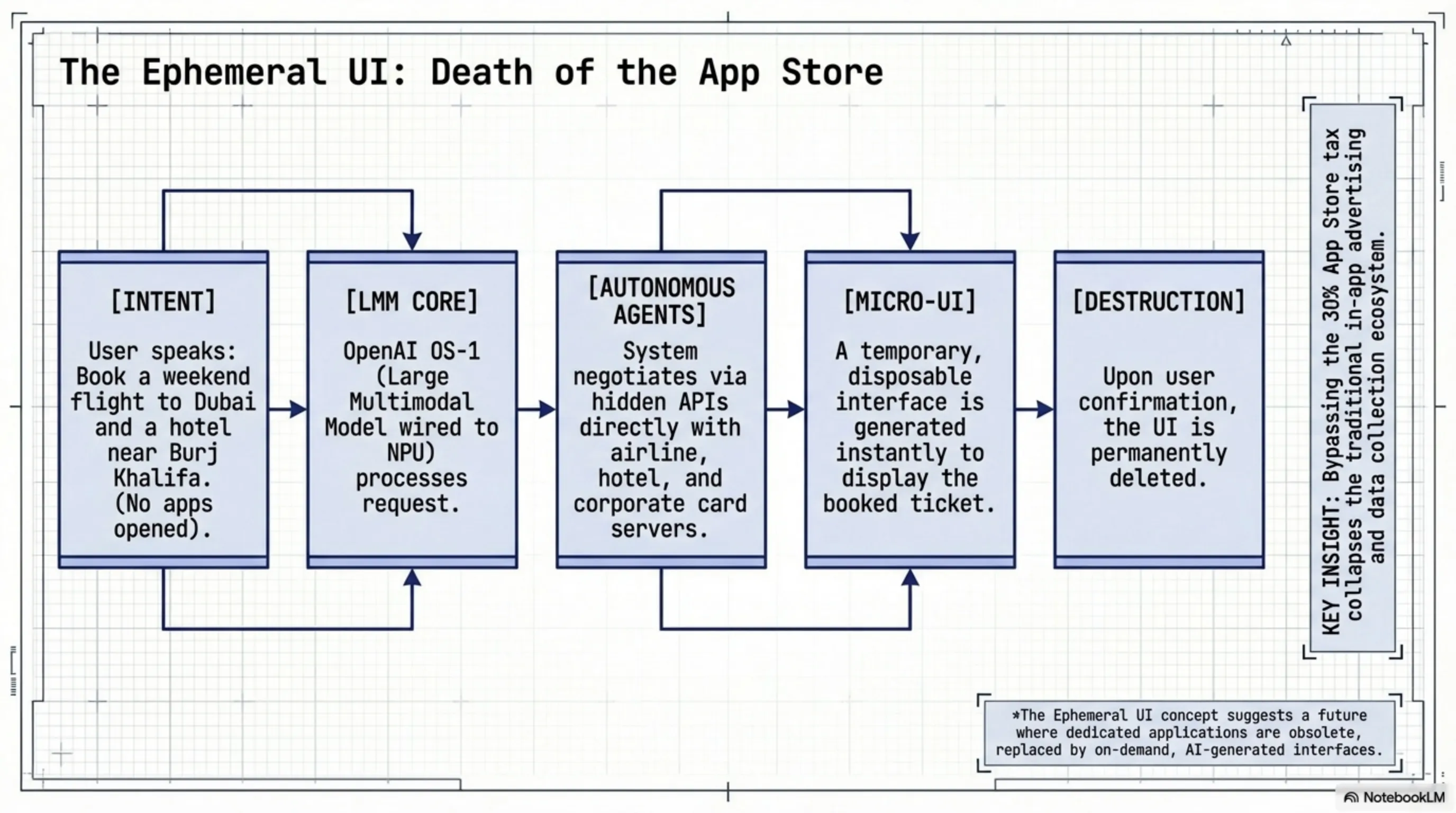
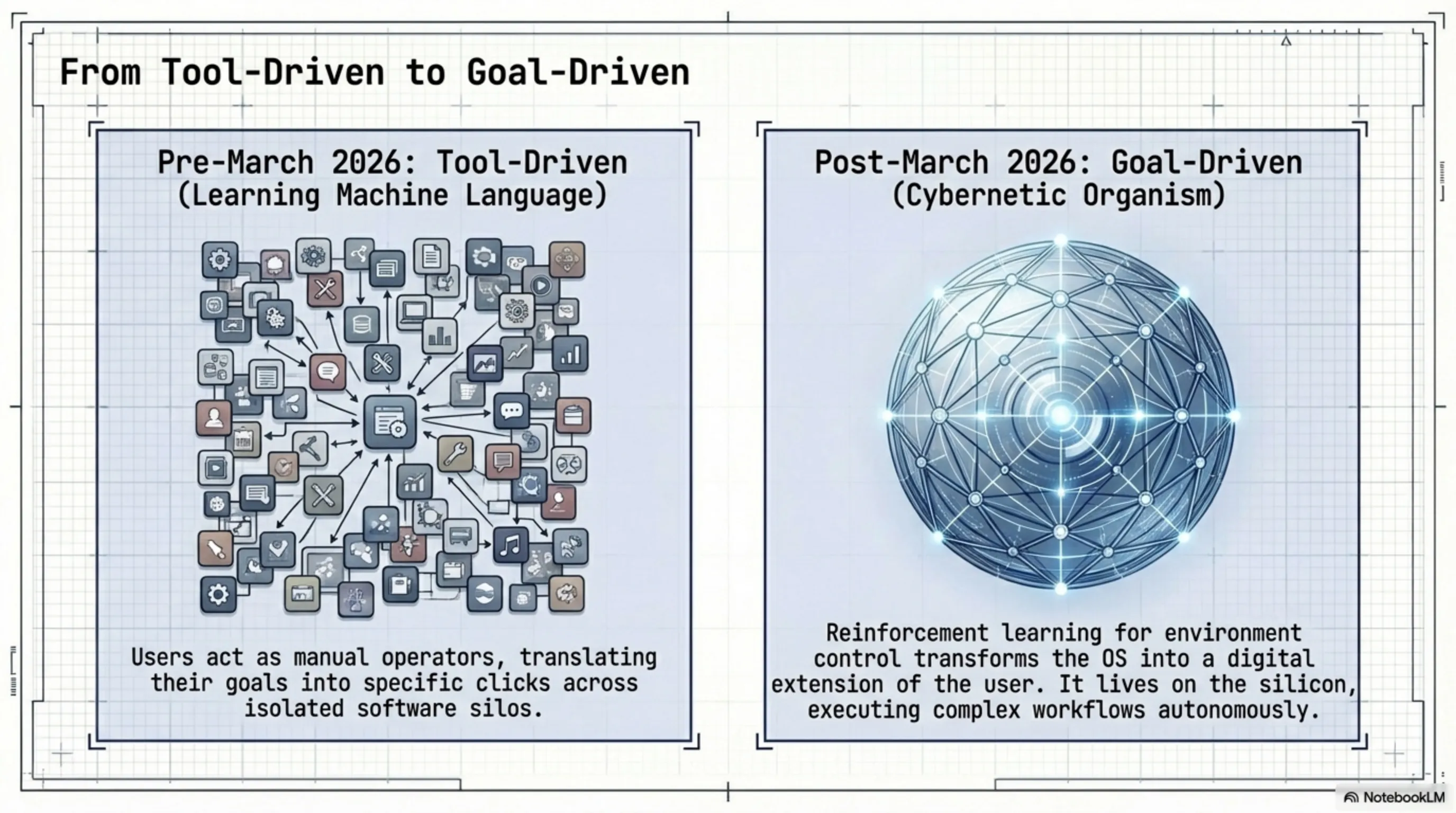
The concept of the Graphical User Interface (GUI)—comprising icons, windows, and isolated applications (Apps)—has not fundamentally mutated since the Apple Macintosh debuted in 1984. As users, we were always forced to learn the machine's language; we had to memorize exactly which icon to click and which menu to navigate to accomplish a task. But early this morning, Sam Altman signed the ultimate death warrant for App Stores by unveiling the OS-1 conceptual project. OS-1 is the world's first "Intent-Based Operating System," a cybernetic environment where absolutely zero applications are installed!
In the architecture of OS-1, the core of the operating system is no longer Linux, iOS, or Windows; it is a Large Multimodal Model (LMM) wired directly into the device's Neural Processing Unit (NPU). Inside this new matrix, you will not see a screen cluttered with WhatsApp, Chrome, or Uber icons. You are presented with a fluid, breathing environment. When you command your device: "Book a flight to Dubai for the weekend, find a hotel near the Burj Khalifa, pay for it using my corporate card, and email the itinerary to my manager," what exactly happens under the hood?
In legacy systems, you would have to manually open and juggle four different applications. OS-1, however, operates via Autonomous Agents. The operating system directly negotiates with airline servers, hotel databases, and banking gateways through backend API calls. To show you your ticket, OS-1 does not launch an app; instead, it dynamically generates a disposable, ephemeral Micro-UI in a fraction of a second, displays the ticket, and the moment you confirm the action, it ruthlessly destroys that interface.
Inside Tekin Garage, we view this as a brutal "Revolution in the Attention Economy." The primary reason titans like Apple and Google are terrified of this OS is that OS-1 completely bypasses the lucrative "30% App Store tax" business model. When a user never needs to download an application, the entire ecosystem of in-app advertising and traditional data harvesting collapses overnight.
The core of OS-1 utilizes a bleeding-edge technology called "Reinforcement Learning for Environmental Control." The OS learns exactly how you prefer to execute tasks, gradually evolving into a digital, cybernetic clone of yourself. This is no longer merely software; OS-1 is a cybernetic organism living on your phone's silicon. We have officially crossed from the "Tool-driven" era into the "Goal-driven" epoch of human-machine interaction.
Leaked PlayStation 6 Architecture: Dedicated Neural Processor for Cybernetic Physics
📚 Classified & Related Dossiers in TekinGame
If you wish to explore beyond this report and delve into cybernetic frontiers and autonomous AI architectures, do not miss these three exclusive deep-dives in the Tekin Garage:
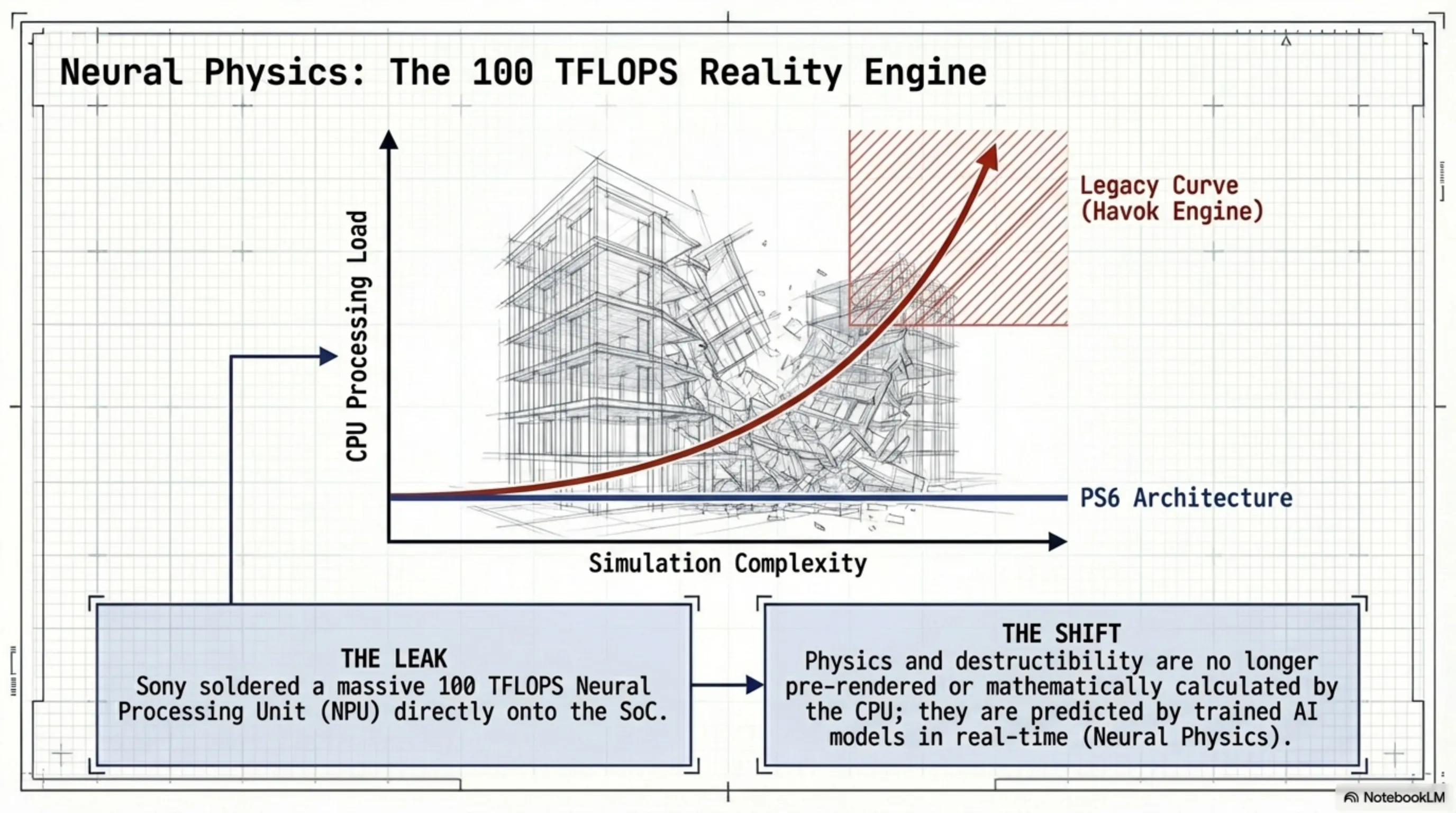
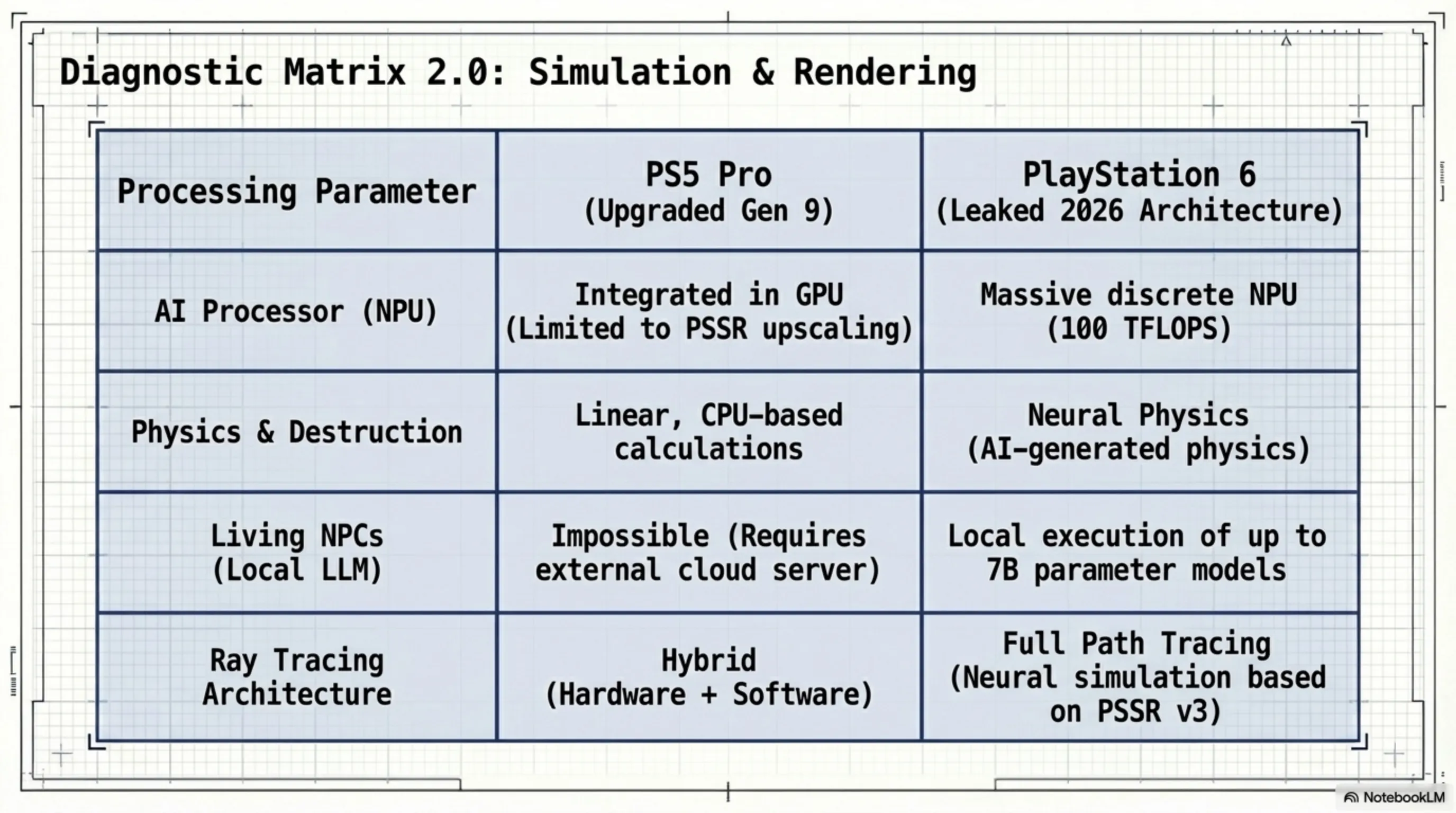
Early this morning, one of the heaviest data leaks of the decade detonated across underground Reddit and Discord forums, immediately corroborated by reliable hardware insiders: the preliminary architecture specifications of Sony's PlayStation 6! At first glance, one might expect Sony to simply double the GPU core count, but inside Tekin Garage, we detected a terrifying paradigm shift. For the first time, Sony has soldered a massive, entirely dedicated Neural Processing Unit (NPU) capable of 100 TFLOPS of Machine Learning compute directly onto the console's System-on-Chip (SoC).
Why invest in neural processing instead of raw graphics? The answer lies in the exact codes we previously debugged. As we extensively explored in our hardcore autopsy, "Games That Cannot Be Built Without AI," game studios can no longer generate dynamic worlds and living NPCs using linear scripts. Sony has realized that if the console's processing core cannot natively hardware-accelerate Large Language Models (LLMs) and Generative AI, their new console will effectively be a silicon corpse before it even launches.
This dedicated NPU in the PS6 shoulders two lethal responsibilities. First: "Neural Physics." In classic physics engines like Havok, calculating the destruction of a building or fluid dynamics severely crippled the CPU. But in the PS6 architecture, a trained AI model "predicts" the physical behavior of objects in fractions of a millisecond, slashing the CPU's processing load by up to 80%. Destructibility in tenth-generation games is no longer pre-rendered or scripted; it is generated in real-time by the neural net.
The second responsibility is executing the third iteration of PSSR (PlayStation Spectral Super Resolution). Sony has fundamentally rewritten its upscaling algorithms to utilize this NPU, enabling it to simulate Full Path Tracing without frame drops at natively upscaled 8K resolutions. Sony's first-party studios (like Naughty Dog and Santa Monica) have already received DevKits for this architecture. The gaming matrix is transitioning from "mathematical calculations" to "neural inferences," and with this leak, Sony proved it has no intention of falling behind Nvidia in this cybernetic war.
Starlink's 1 Gbps Direct-to-Cell: The Collapse of Traditional Telecommunications
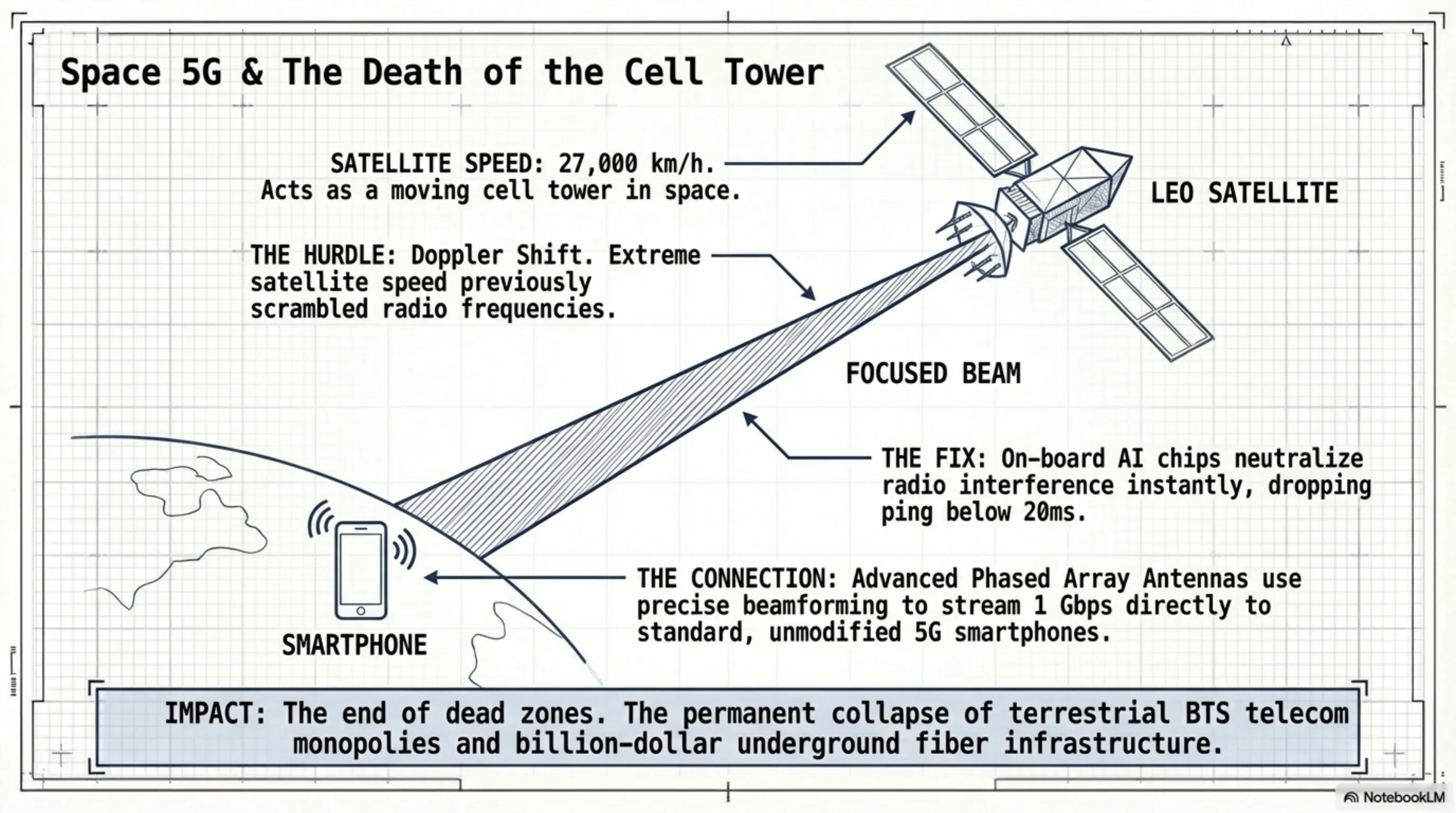
This morning, as European and American stock markets opened, shares of global telecom giants like AT&T, Vodafone, and T-Mobile faced a bloody freefall. The catalyst for this financial earthquake was not an economic crisis, but a simple tweet from Elon Musk announcing the successful final test of SpaceX's Direct-to-Cell V3 project. For the first time in history, Starlink successfully streamed satellite internet at a devastating speed of 1 Gbps directly to standard, unmodified 5G smartphones (iPhones and Android flagships) without requiring any additional dish or hardware equipment!
For decades, the telecommunications business model rested on a terrestrial hardware foundation: installing giant, astronomically expensive BTS cell towers in cities and laying fiber-optic cables beneath oceans. But inside Tekin Garage, we debugged the frequency codes of this new Starlink. SpaceX's next-generation V3 satellites are equipped with hyper-advanced Phased Array Antennas in Low Earth Orbit (LEO) that act exactly like "mobile cell towers in space."
When you request data on your smartphone, your device's standard 5G protocols, utilizing advanced Beamforming technology, shoot the signal directly to a satellite moving at 27,000 km/h above your head, rather than a local tower down the street. The historical engineering challenge here was the Doppler Shift phenomenon, which severely disrupted frequencies due to the satellite's extreme velocity. However, SpaceX announced today that the AI chips embedded in the hearts of their satellites have successfully neutralized these radio interferences in real-time, dropping network ping to under 20 milliseconds.
Sabrina states regarding this event: "This is the absolute end of the concept of Dead Zones." It no longer matters if you are in downtown Tokyo or the middle of the Sahara Desert; Starlink's internet matrix has blanketed the entire surface of the Earth in a 1 Gbps data quilt. This technology permanently eradicates the need for developing nations to spend billion-dollar budgets on terrestrial telecom infrastructure, effectively shattering government monopolies over information highways. This is not a network upgrade; it is the death of terrestrial antennas and the birth of a spatial wireless matrix.
Deployment of Figure 03 Robots at BMW: The Dawn of Dark Factories and Ruthless Automation
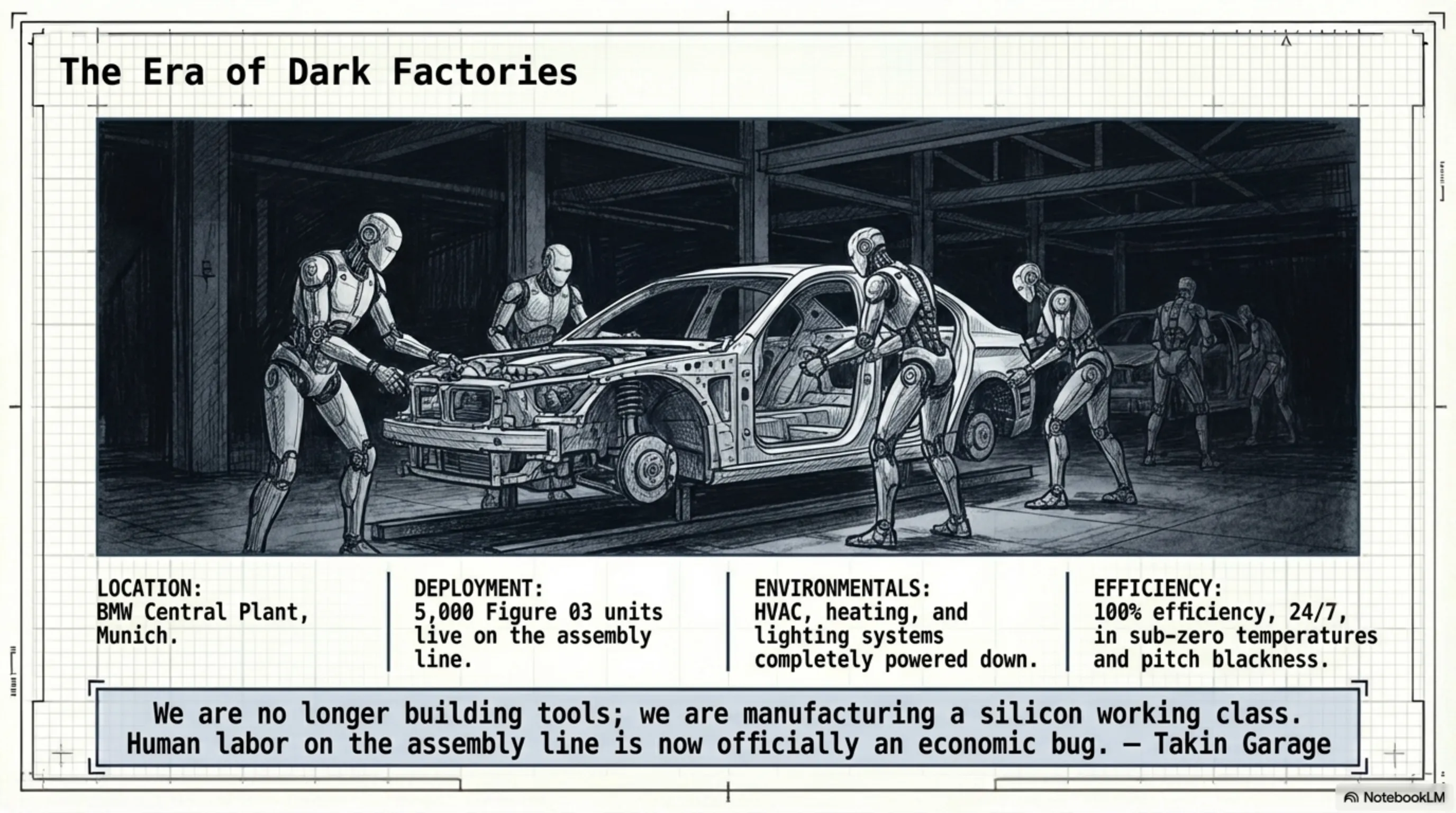
Early this morning, the central assembly lines of BMW’s Munich plant witnessed a full-scale cybernetic takeover. Figure AI, a robotics firm that previously made headlines with massive capital injections from Microsoft and Nvidia, officially initiated the final deployment phase of 5,000 third-generation humanoid robots—the Figure 03—directly onto BMW's manufacturing floors. This monumental event has immediately triggered the largest European labor union strikes of the decade, but the matrix does not pause for human tears.
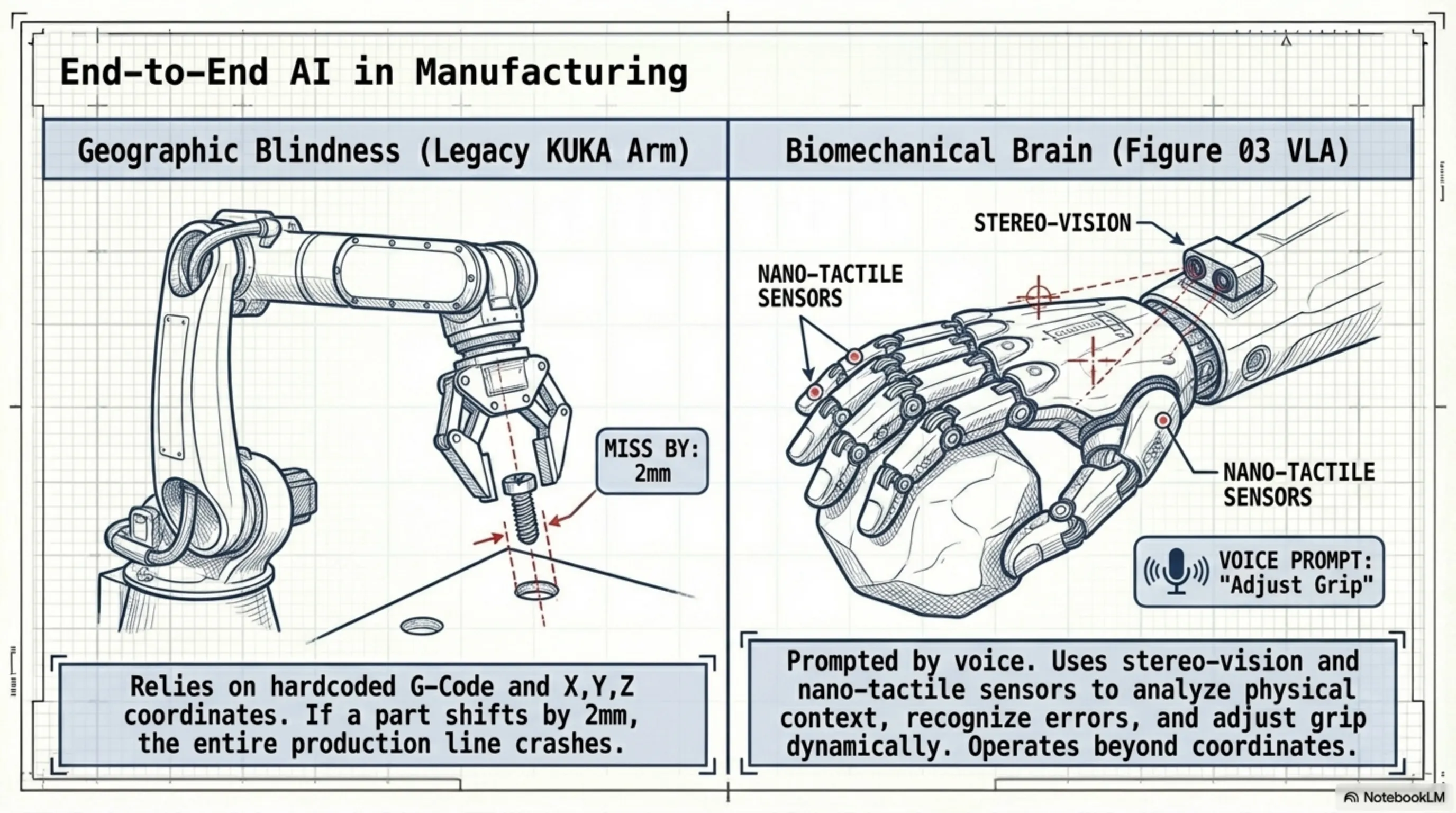
What fundamentally separates the Figure 03 from traditional mechanical arms (like the KUKA robots used in automotive manufacturing for decades)? Legacy robotic arms are blind and rigid; they merely repeat a hardcoded spatial coordinate (X,Y,Z) millions of times. If a chassis is misaligned by a mere two millimeters, the entire production line crashes. The Figure 03, however, possesses a "Biomechanical Brain" fueled by Vision-Language-Action (VLA) models. These humanoids operate on a pure End-to-End AI architecture.
Inside Tekin Garage, we dissected the processing logic of these machines. You no longer need to write complex G-Code to program them. A human supervisor (who is now effectively a Prompt Engineer) simply tells the robot: "Pick up the front door panel, straighten any bent alignment pins, and bolt it onto the chassis. Be extremely careful not to scratch the paint." Using stereo cameras, the robot analyzes its environment, comprehends the physics of the component in real-time, and executes the task using five-fingered hands equipped with nanoscale tactile sensors, achieving a precision rate that obliterates the most skilled human technician.
This ruthless automation has dragged the concept of "Dark Factories" from science fiction into brutal reality. BMW announced that in the sectors governed by the Figure 03 workforce, the lighting, air conditioning, and heating systems have been completely powered down. These robots operate in pitch-black darkness and sub-zero temperatures with 100% efficiency, 24 hours a day, 7 days a week. Sabrina noted on our internal network: "We are no longer building tools; we are manufacturing a silicon working class. Human labor on an assembly line is now officially classified as an economic bug."
Commercialization of Solid-State Batteries: The End of Charging Anxiety for Cars and Mobiles
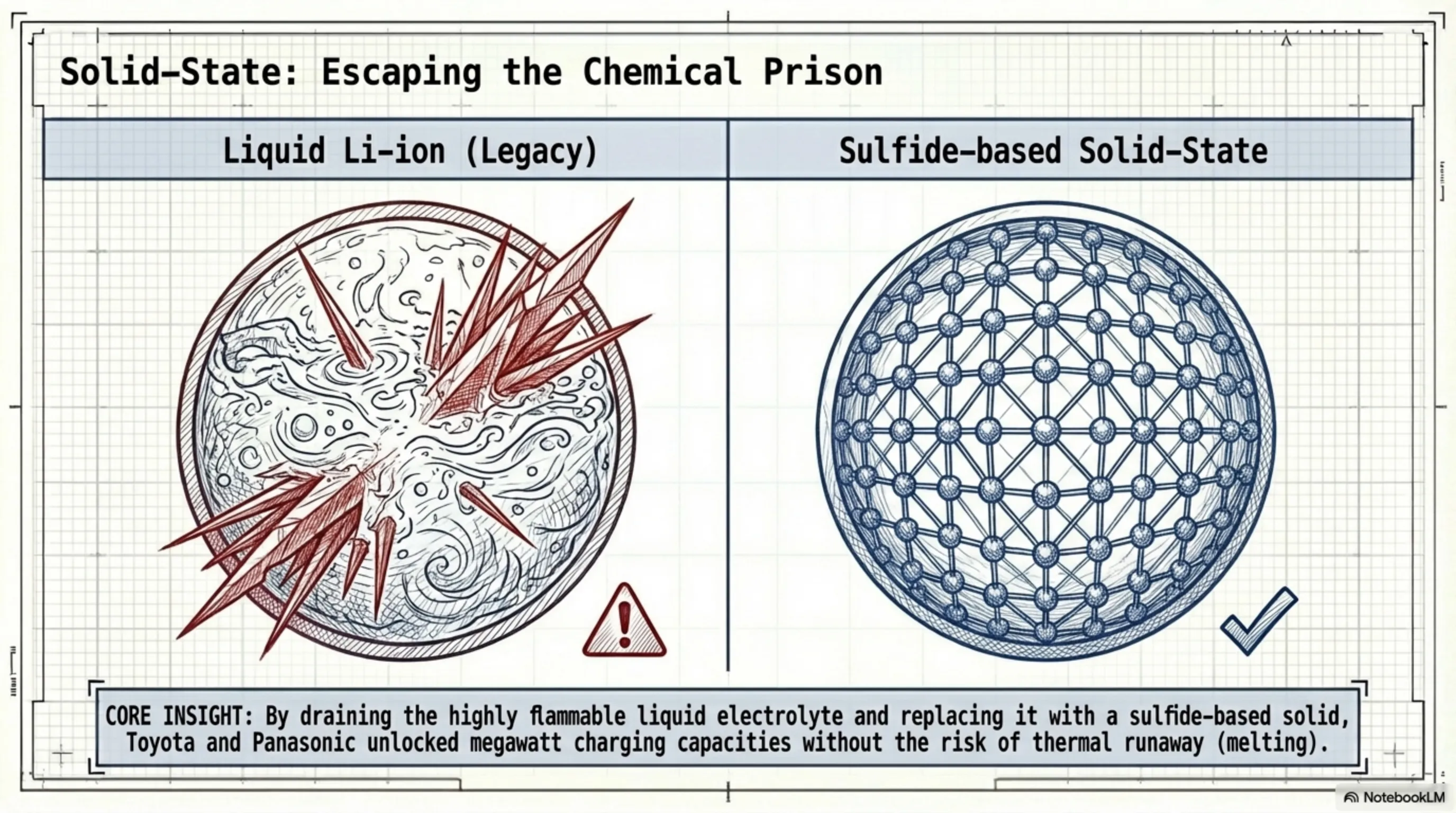
For over a decade, the technology matrix has been held hostage by the chemical limitations of Lithium-ion (Li-ion) batteries. From smartphones that die halfway through the day to electric vehicles (EVs) that lose half their range in freezing temperatures and harbor the risk of uncontrollable thermal runaway. But this morning, the strategic alliance between Toyota and Panasonic shattered the walls of this chemical prison by launching the world's first mass-production line for Solid-State Batteries.
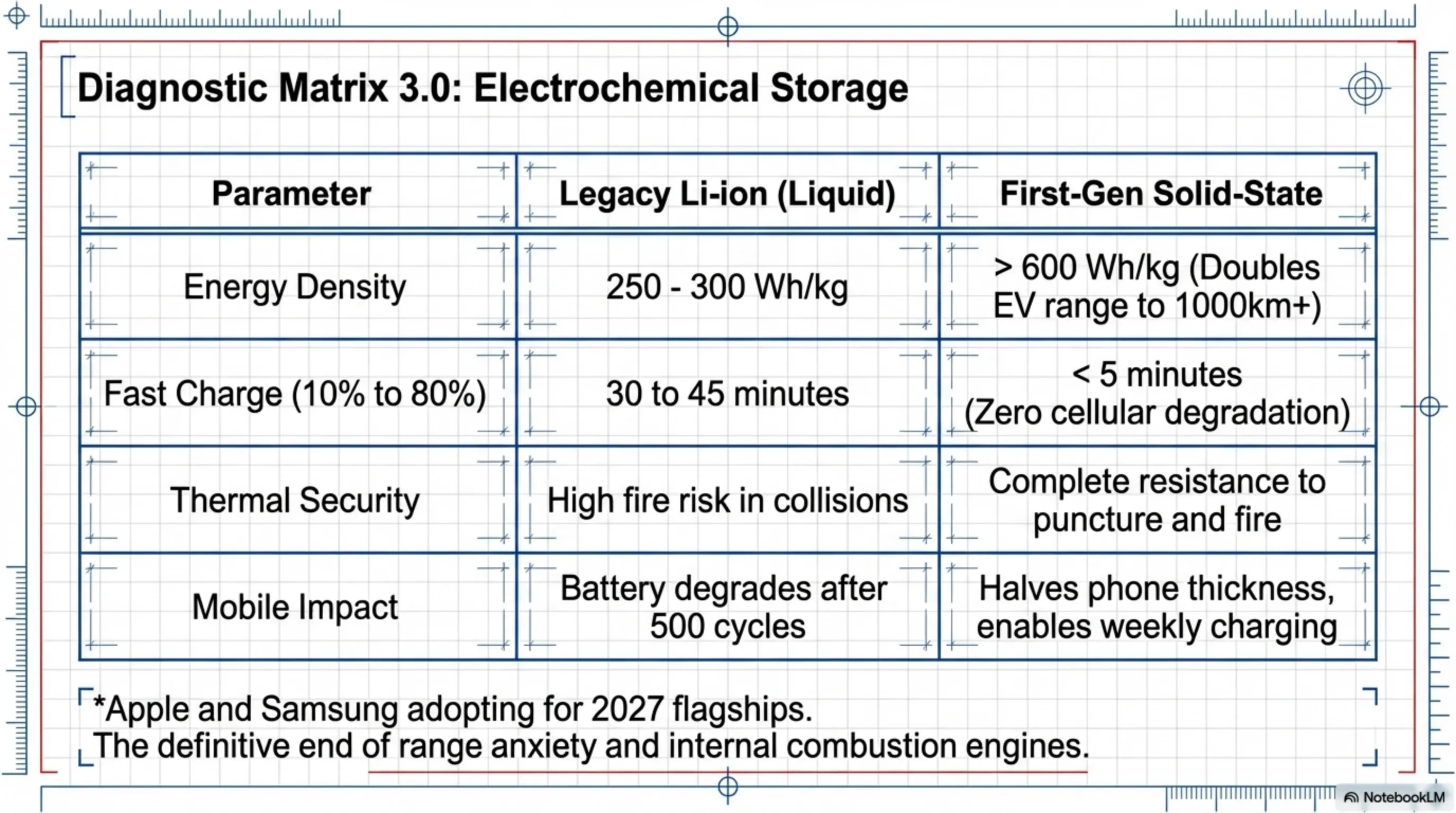
To comprehend this electrochemical earthquake, we must penetrate the battery cells themselves. In traditional Li-ion batteries, ions travel through a "liquid" electrolyte. This liquid is highly flammable and, over time, fosters the growth of needle-like crystals called dendrites, which pierce the separator, causing short circuits and explosive fires. The engineers at Toyota have completely drained this hazardous liquid, replacing it with a Sulfide-based Solid Electrolyte.
The output of this architectural mutation is an absolute energy storage monster. The Energy Density in these new cells has multiplied by more than 2.5 times. This means an EV equipped with the exact same physical volume of batteries can now obliterate the 1,000-kilometer range barrier on a single charge! But the true shockwave lies in the charging speed. Due to the extreme thermal resistance of the solid electrolyte, these batteries can absorb megawatt-level power surges without the risk of melting, charging from 10% to 80% in under 5 minutes—precisely the time it takes to refuel a combustion engine car.
Apple and Samsung have also immediately signaled that their 2027 flagship devices will be armed with these solid-state cells. This is not a simple hardware update; this is the final nail in the coffin of internal combustion engines and the dawn of an era where "battery anxiety" will be permanently erased from human memory.
🏁 Tekin Morning Final Debug
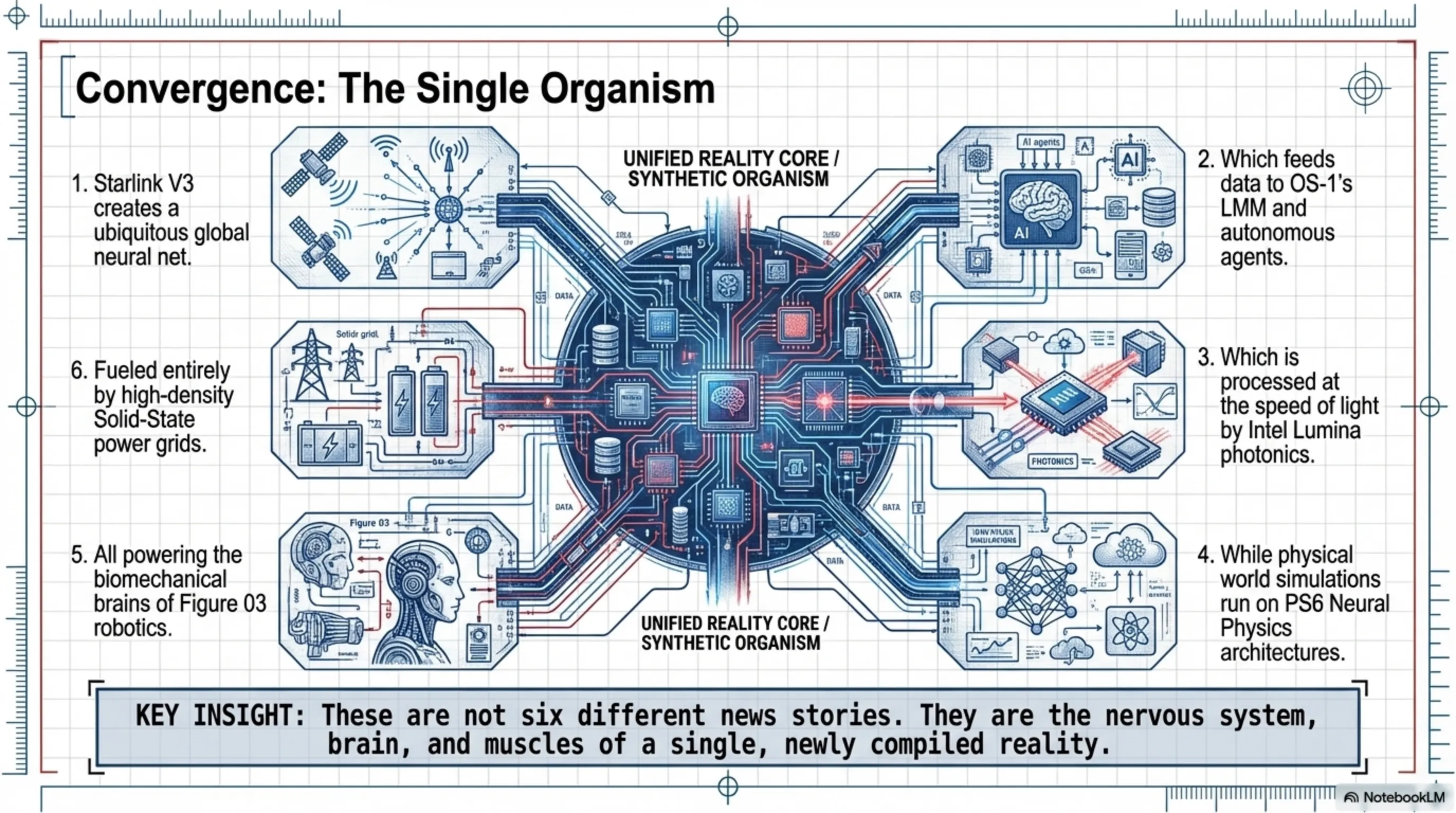
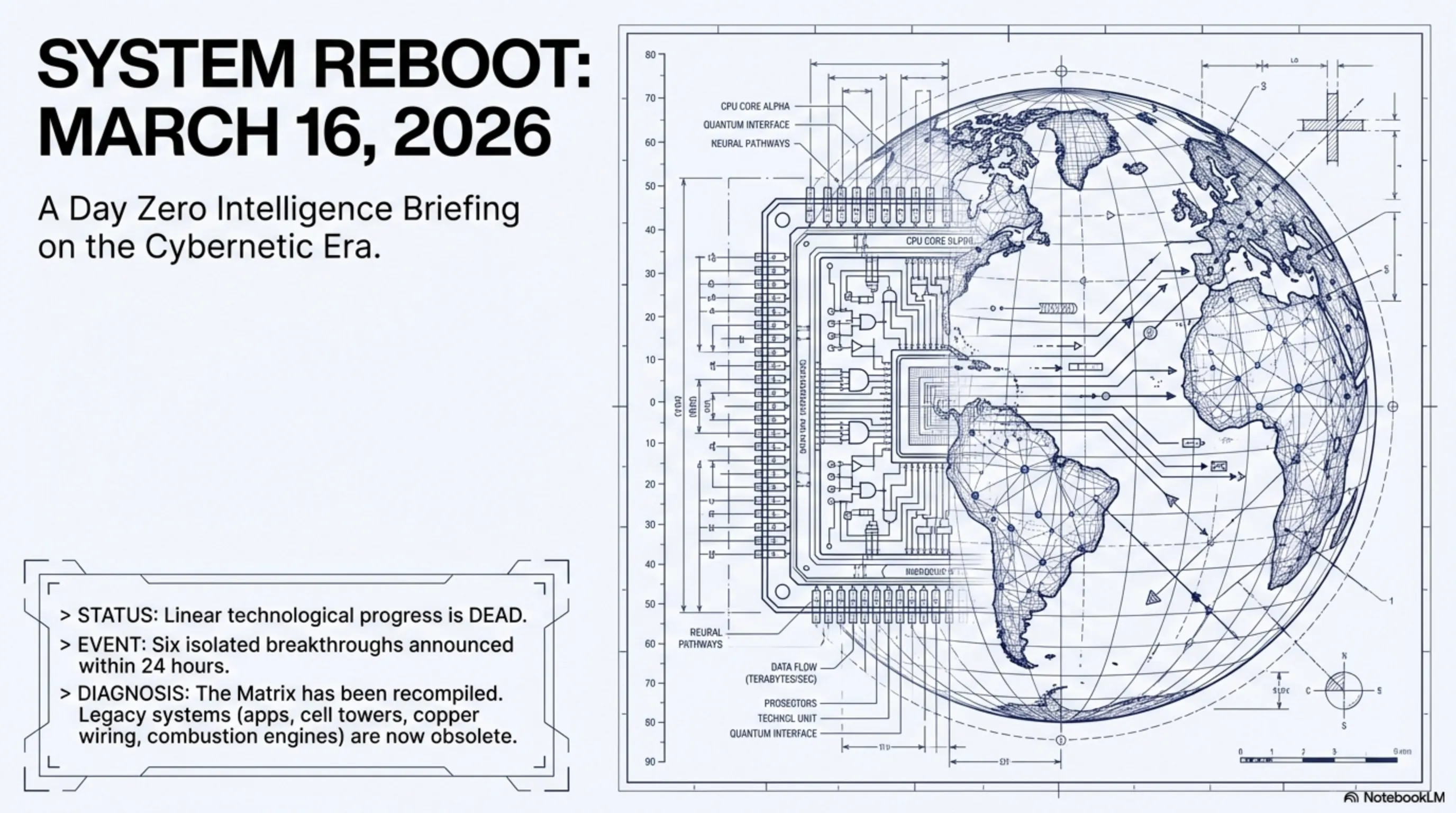
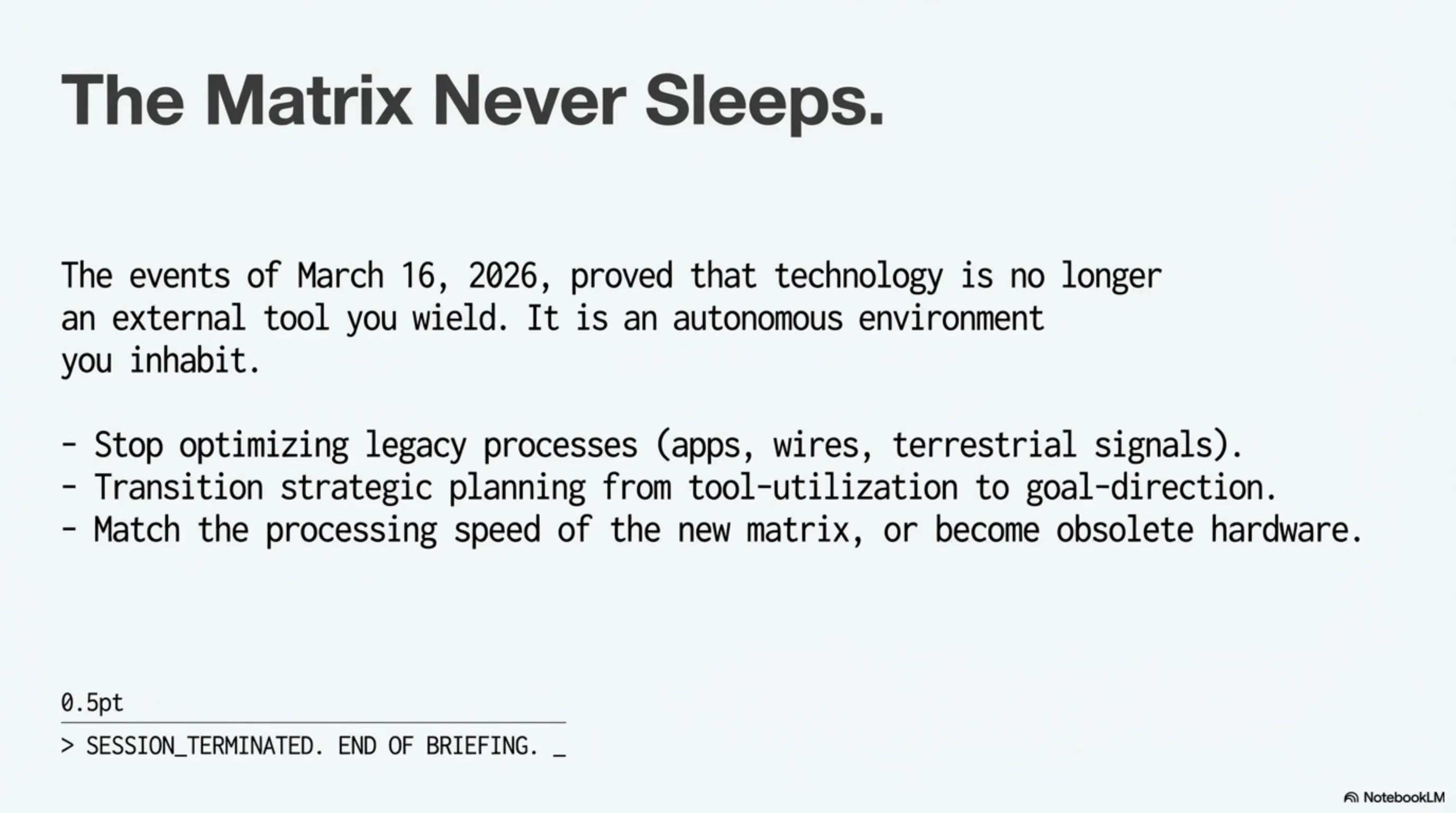
The dawn of March 16, 2026, has proven that the technology matrix no longer progresses linearly; it is mutating exponentially. Data processing has migrated from electrons to photonic light, autonomous operating systems have murdered traditional applications, the PlayStation has fused with neural inference, space internet has reached our pockets, robots have conquered the factories, and chemistry has granted our batteries near-immortality.
Inside Tekin Garage, our ultimate mission is to prepare you for survival in this cybernetic, ruthless world. Technology is no longer a tool resting in our hands; we are the ones who must synchronize our processing speed with the matrix codes, lest we become obsolete hardware.
The matrix never sleeps; we at Tekin Garage will always be here to debug its codes for you. ☀️🚀
Final Note: This article is based on independent testing, industry reports from IDC and Counterpoint Research, and official information from Apple, Qualcomm, MediaTek, and Google. Information is current as of March 15, 2026. Prices and specifications may vary by region.
🌐 Stay Connected With Us 🎮✨
For the latest tech, gaming, and gadget news, follow us on our official social media channels:
Additional Gallery: Tekin Morning March 16, 2026: From OpenAI's App-less OS to Intel's Photonic Earthquake