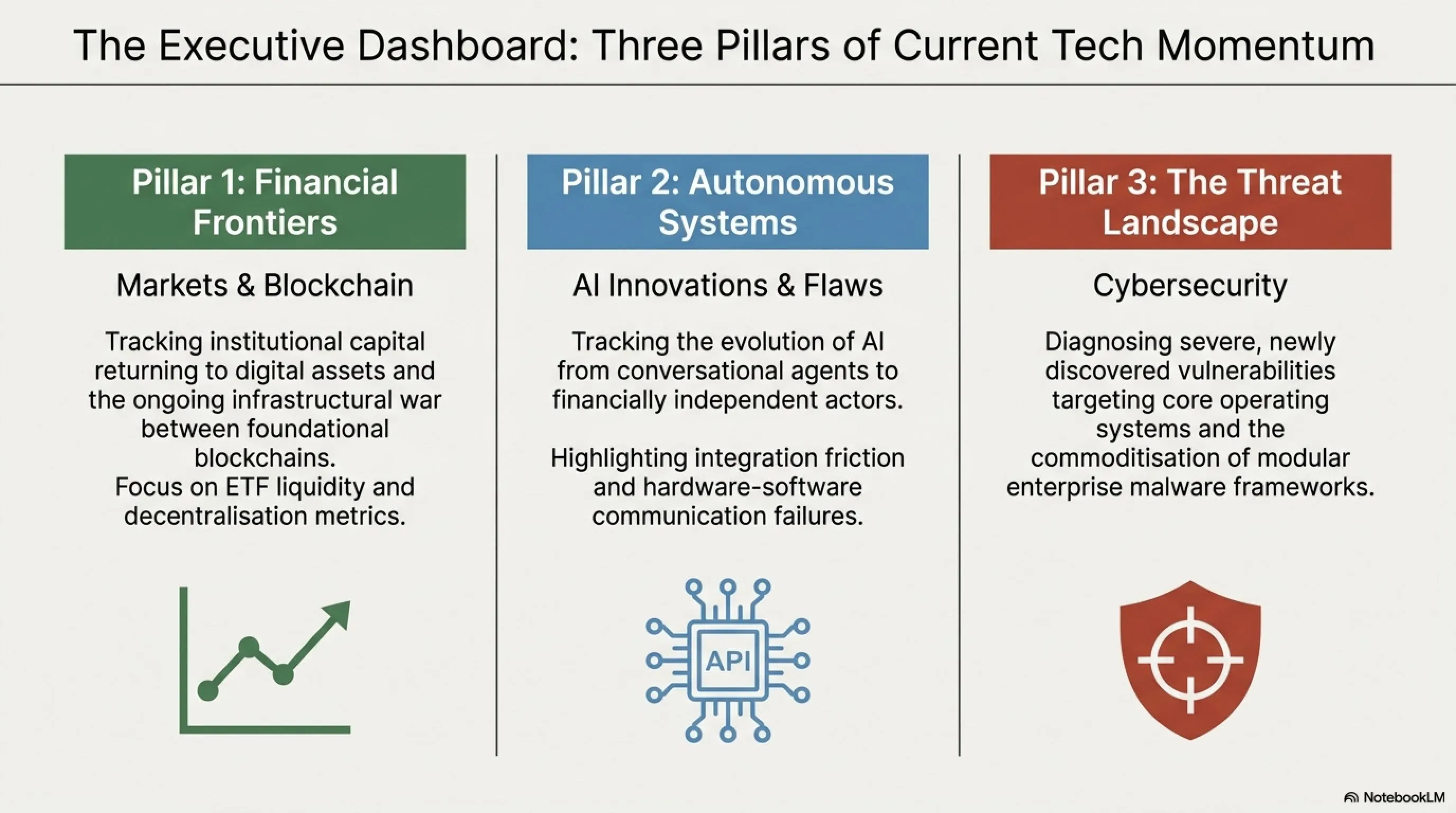
☕ Tekin Morning | Saturday Starts with Tech Energy
- 🎮Capital Returns to Bitcoin- After 10 days of outflows, ETFs are alive again
- 🎧Smart Payment Era- AI Agents now handle money transactions!
- 🚀Linux Critical Threat- Bad Epoll threatens all systems
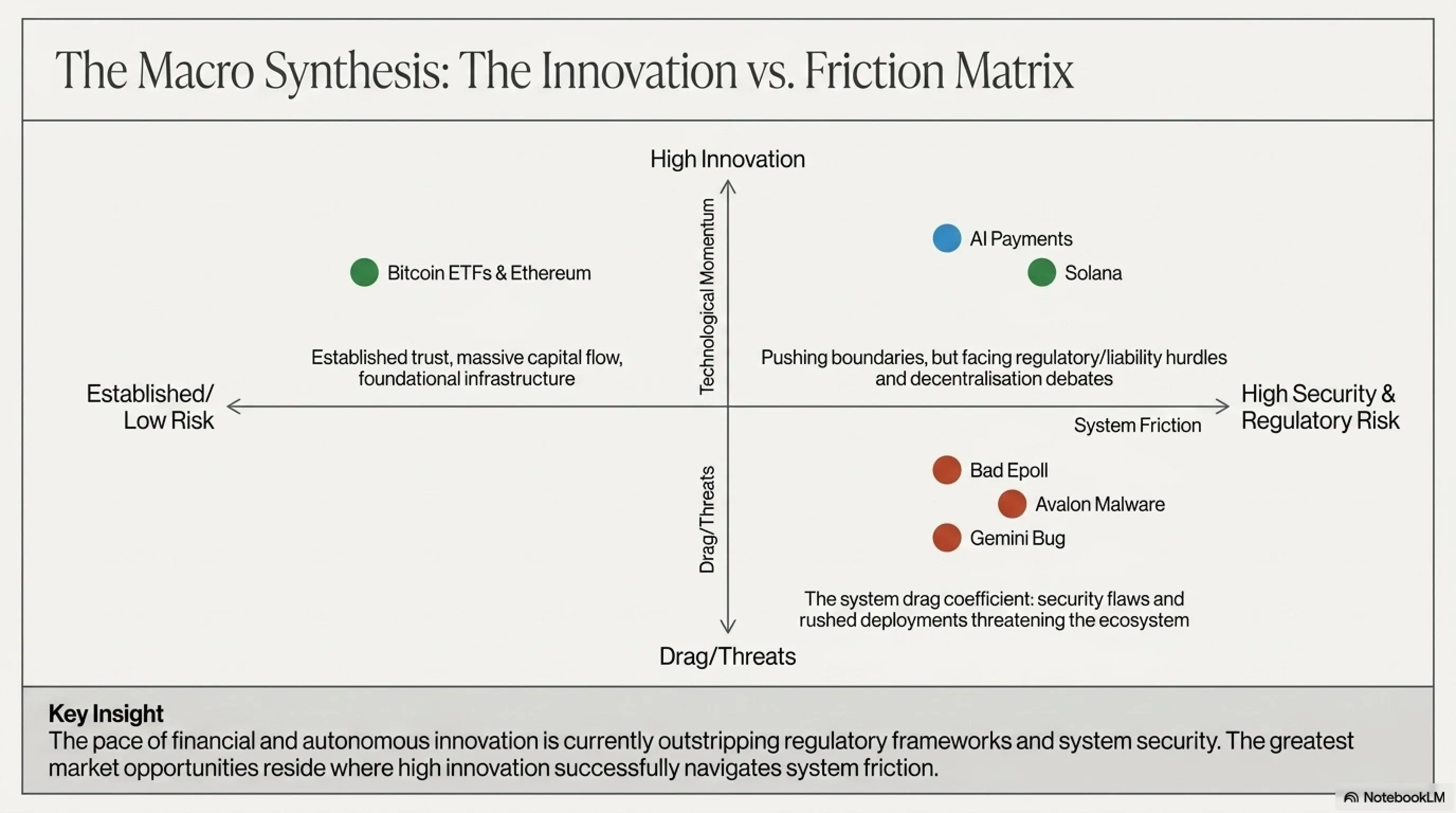
Good morning! Grab your coffee because today is one of those action-packed mornings. The crypto market, after a dark period, has finally caught its breath, with Bitcoin climbing back to the $62,000 channel. But that's not the only good news; the AI world is writing a new story—one where robots don't just talk to us, they pay for us too.
Meanwhile, security researchers have discovered a critical bug at the heart of Linux that could bring down millions of servers, desktops, and even Android devices. Google, seemingly exhausted by its smart assistant issues, still can't control Gemini in Android Auto. Let's dive deep into these stories together.
Money Returns to Market: Bitcoin ETF Rebounds After 10-Day Exodus
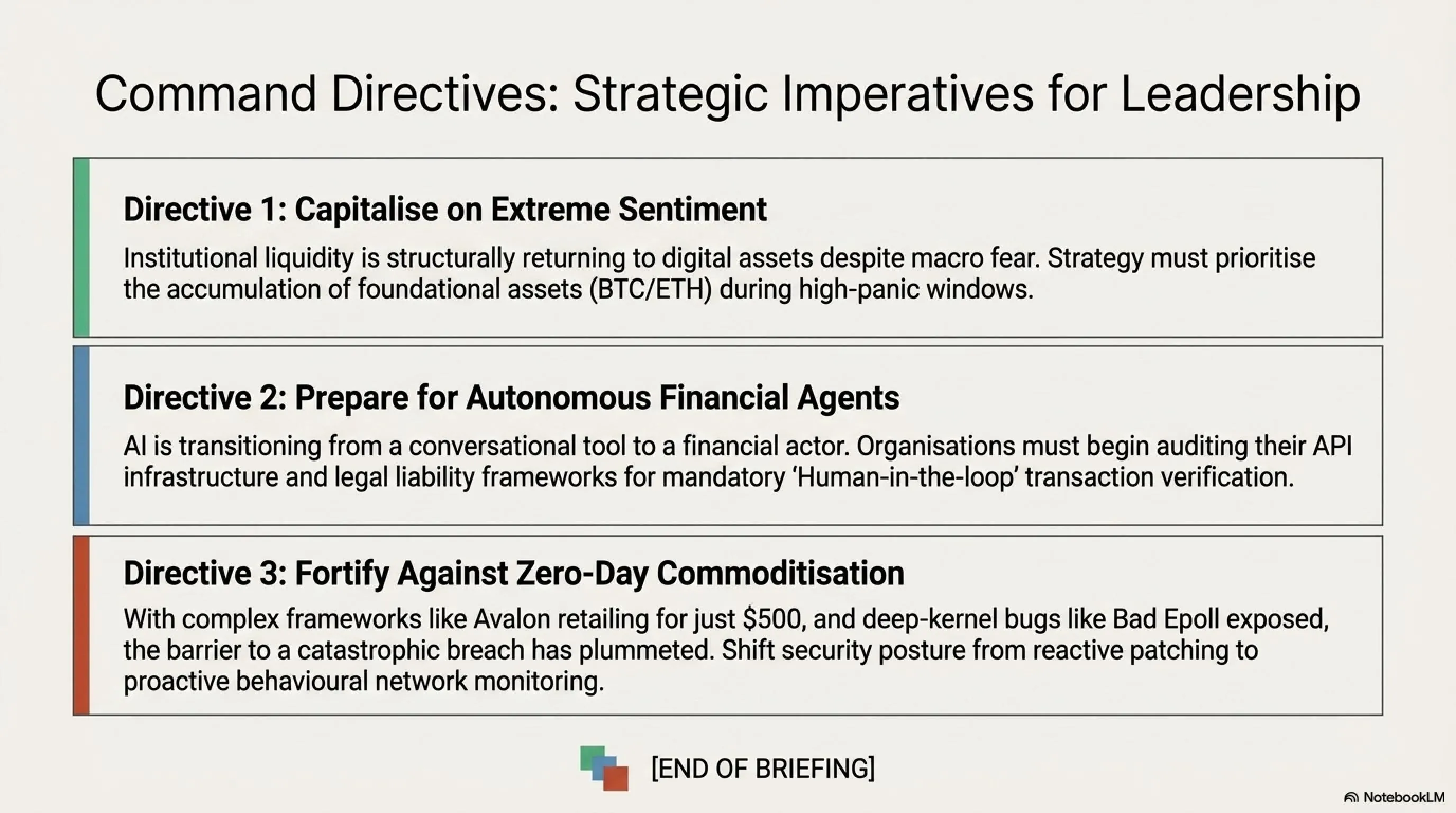
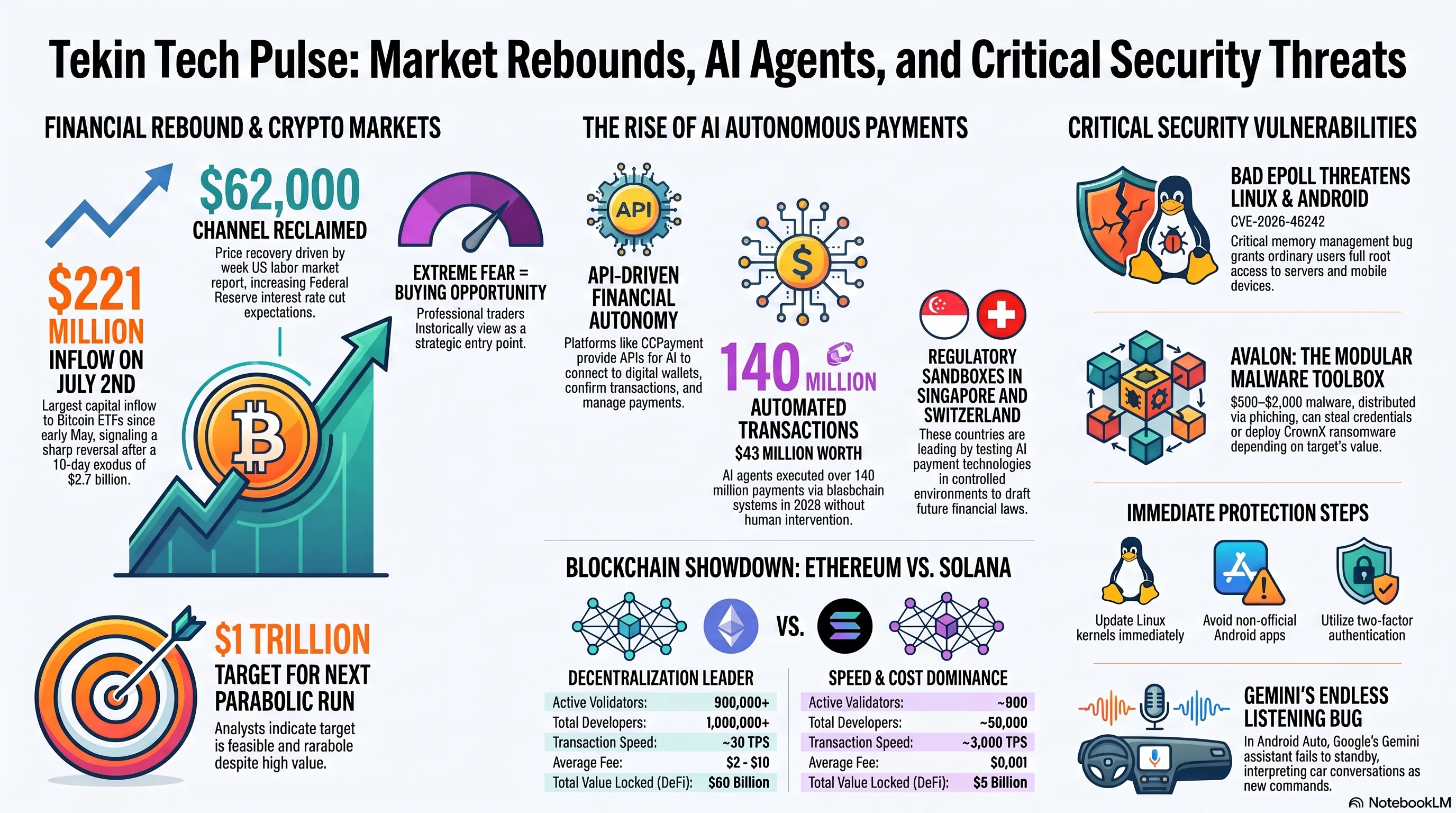
American investors finally decided to stop running. Bitcoin Exchange-Traded Funds (Bitcoin ETFs) in the US, which experienced a continuous outflow of $2.7 billion from June 10 to July 1, completely reversed the trend on July 2 with an inflow of $221 million in fresh capital.
This figure represents the largest capital inflow to Bitcoin funds since early May, showing that institutional investors still view Bitcoin as a strategic asset. Bitcoin price also responded positively to this capital inflow, rising from the $59,000 channel to above $62,000. Ethereum also benefited from this positive atmosphere and experienced significant growth.
But why did this happen? A major part of this capital return can be attributed to the weak US labor market report. Employment data came in weaker than expected, leading investors to increase their expectations for an interest rate cut by the Federal Reserve. Historically, higher liquidity conditions have always favored risky assets like Bitcoin.
Why Bitcoin ETFs Matter
According to CoinDesk analysis, for Bitcoin to reach its next parabolic run, it needs about $1 trillion in fresh capital. This number may seem like a monster at first glance, but we must remember that between 2020 and 2021, over $700 billion in new capital entered the crypto market. So the $1 trillion target for the next cycle isn't that far-fetched.
The notable point is that the market's Fear and Greed Index still remains in the "extreme fear" zone, which historically has indicated a buying opportunity. Professional traders know that the best time to enter is when the market is in panic mode, not when everyone is celebrating.
Crypto Market Barometer
Capital Flow Timeline
But will this capital return be sustainable? CryptoSlate analysts believe that if capital inflow continues in the coming weeks, we could see Bitcoin price stabilize in the $65-$70K channel. However, if we see outflows again, there's a possibility of returning to the $55K range.
The New Age of Payments: When Smart Robots Handle Your Bills
Now imagine having an AI assistant that not only does your work but can also independently pay for those tasks. This isn't science fiction anymore; it's today's reality in tech.
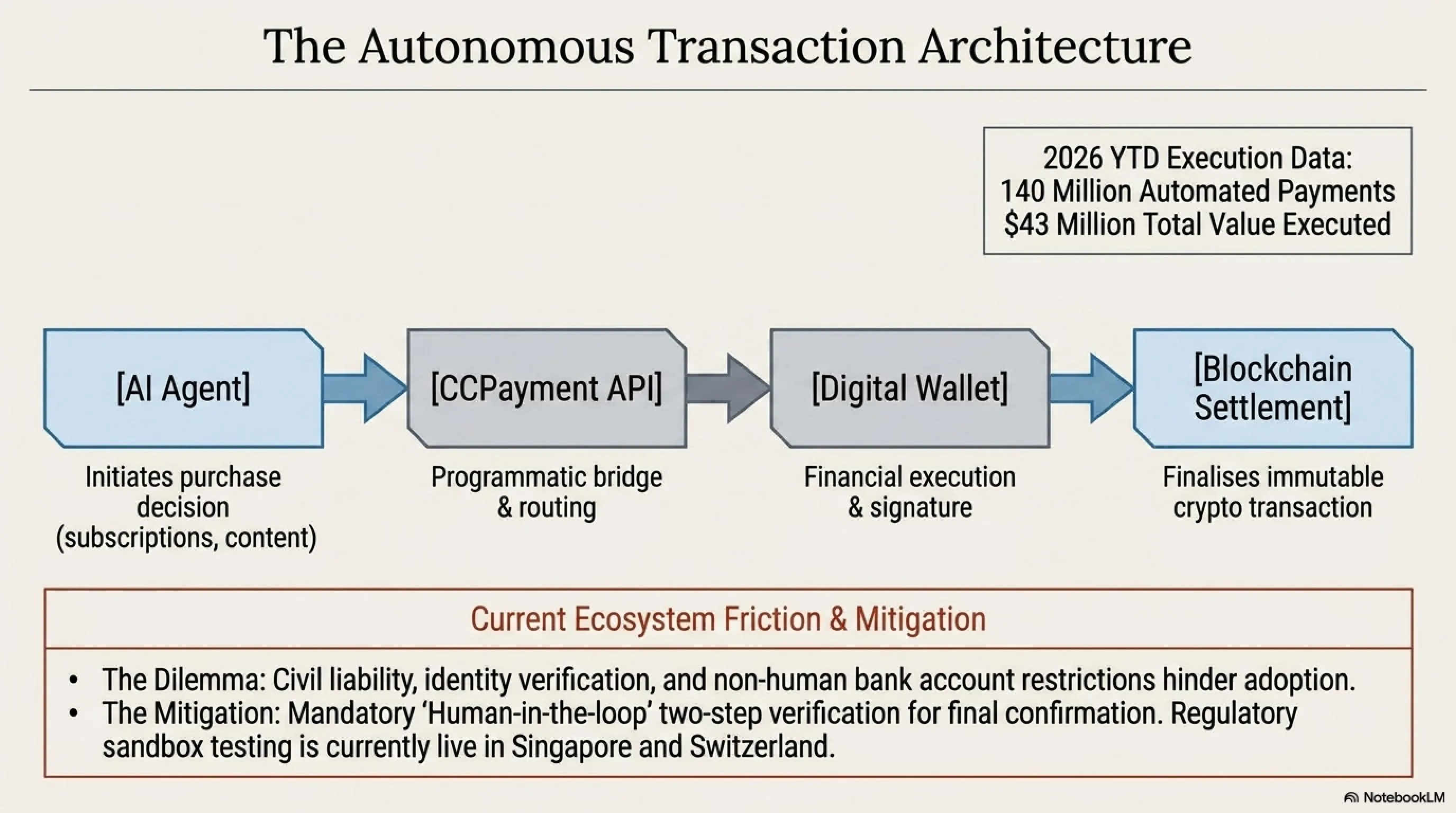
AI agents can now execute financial transactions without human intervention. According to published reports, in 2026, over 140 million automated payments worth $43 million have been made through cryptocurrency and blockchain-based systems. These stats show we're on the cusp of a major transformation in how we manage money and financial transactions.
Platforms like CCPayment and several other startups have developed APIs that allow AI agents to automatically connect with digital wallets, confirm transactions, and finalize payments. This technology is particularly useful in areas like online subscriptions, automated content purchases, and even international payments.
But this subject brings serious legal and ethical questions. When an AI independently pays money, who holds legal responsibility? If an incorrect transaction occurs, who should be held accountable? Are current financial laws capable of covering these new scenarios?
Legal experts are examining these issues. Some believe new legal frameworks must be created to define "responsibility for automated transactions." In some countries, existing laws don't even allow a non-human entity to own a bank account, so how can we give AI permission for independent payments?
However, technological progress doesn't wait for laws. Fintech companies are finding solutions that both ensure security and provide the flexibility needed for this new generation of transactions. One proposal is creating a two-step verification system where AI can initiate a transaction, but final confirmation is done by a human.
Interestingly, some pioneer countries like Singapore and Switzerland are testing regulatory sandbox frameworks, where fintech startups can test AI Payment technologies in a controlled environment. This approach helps legislators draft appropriate laws with a deeper understanding of real challenges.
AI Payments at a Glance
- Over 140 million automated transactions in 2026
- Total value: $43 million through crypto
- CCPayment and other platforms offer free APIs
- Legal challenges: civil liability and identity verification
- Singapore and Switzerland lead Regulatory Sandbox
Bad Epoll: The Dangerous Vulnerability Threatening Linux and Android
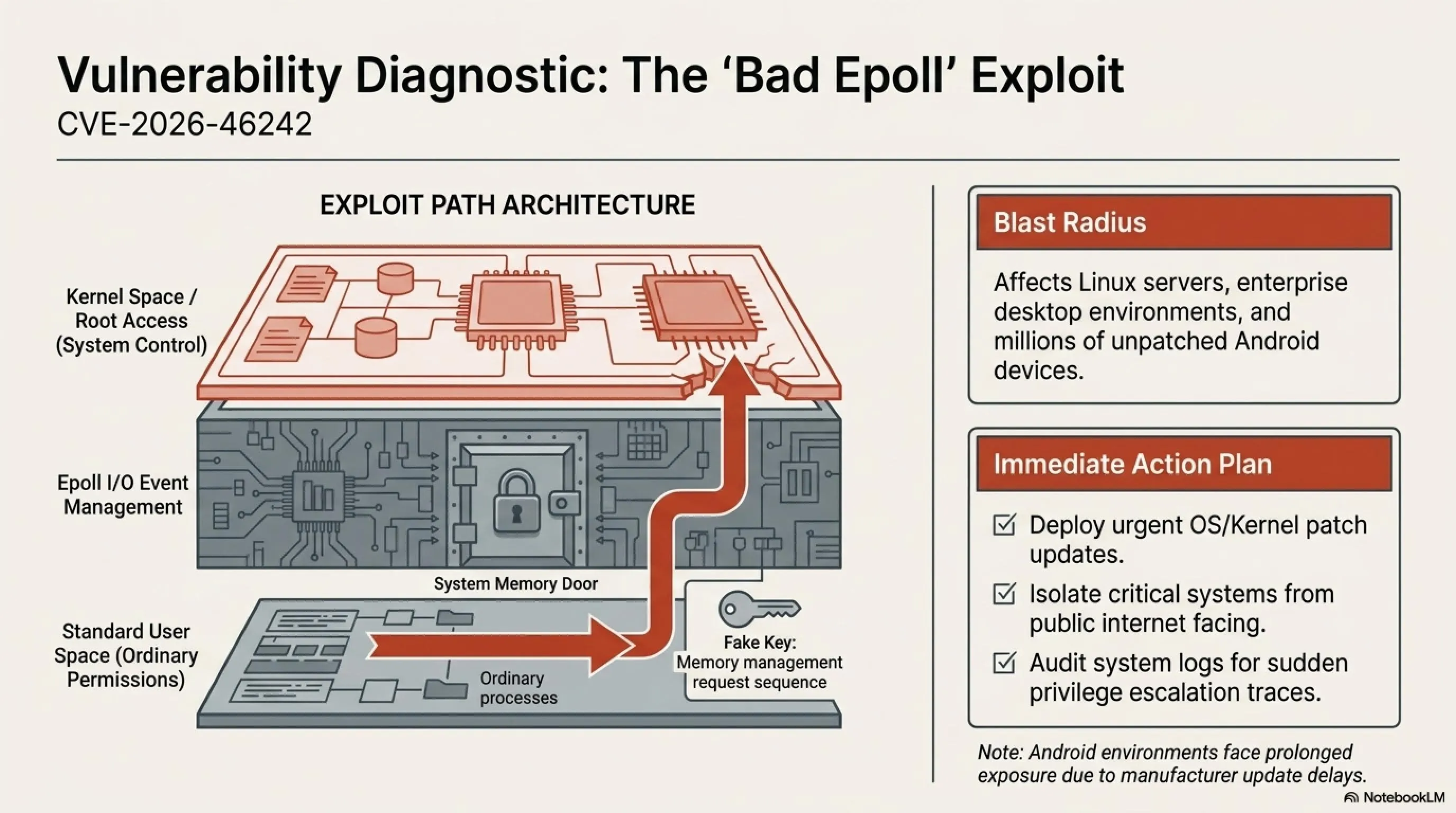
If you think the Linux operating system is the safest option, you might want to reconsider. Security researchers have recently discovered a critical vulnerability called "Bad Epoll" with identifier CVE-2026-46242 in the Linux kernel that can give an ordinary user without special access, full root access.
This bug affects not only Linux servers but also desktops and even millions of Android devices. Epoll is a mechanism in the Linux kernel used for I/O event management, essentially what allows programs to interact with files, networks, and other system resources.
The problem starts with a bug in this system's memory management. An attacker can create a series of specific requests that cause the kernel to mistakenly give them higher access. In simpler terms, it's like someone with a fake key being able to open the building's main door.
The good news is that a security patch for this vulnerability has been released. But the bad news is millions of devices still haven't been updated. Especially in the Android world, where updates are usually released with significant delays by phone manufacturers, this vulnerability could remain a threat for a long time.
How to Protect Yourself?
- Immediately update your operating system to the latest version
- On Android, wait for the security patch from your phone manufacturer
- Avoid installing unknown apps or apps from outside official stores
- For Linux servers, upgrade the kernel to the new version immediately
- Isolate critical systems from the public internet
The Hacker News security experts have warned that exploit code for this vulnerability will likely be released soon in the underground space. This means even novice hackers can abuse it. Therefore, speed in updating systems is more important than ever.
For those managing Linux servers, it's recommended to not only update the kernel but also check system logs to see if there's any trace of attempts to exploit this vulnerability. Suspicious activities like sudden privilege escalation or unauthorized access to system files should be taken seriously.
Gemini and the Endless Android Auto Problem: When Your Smart Assistant Won't Stop Listening
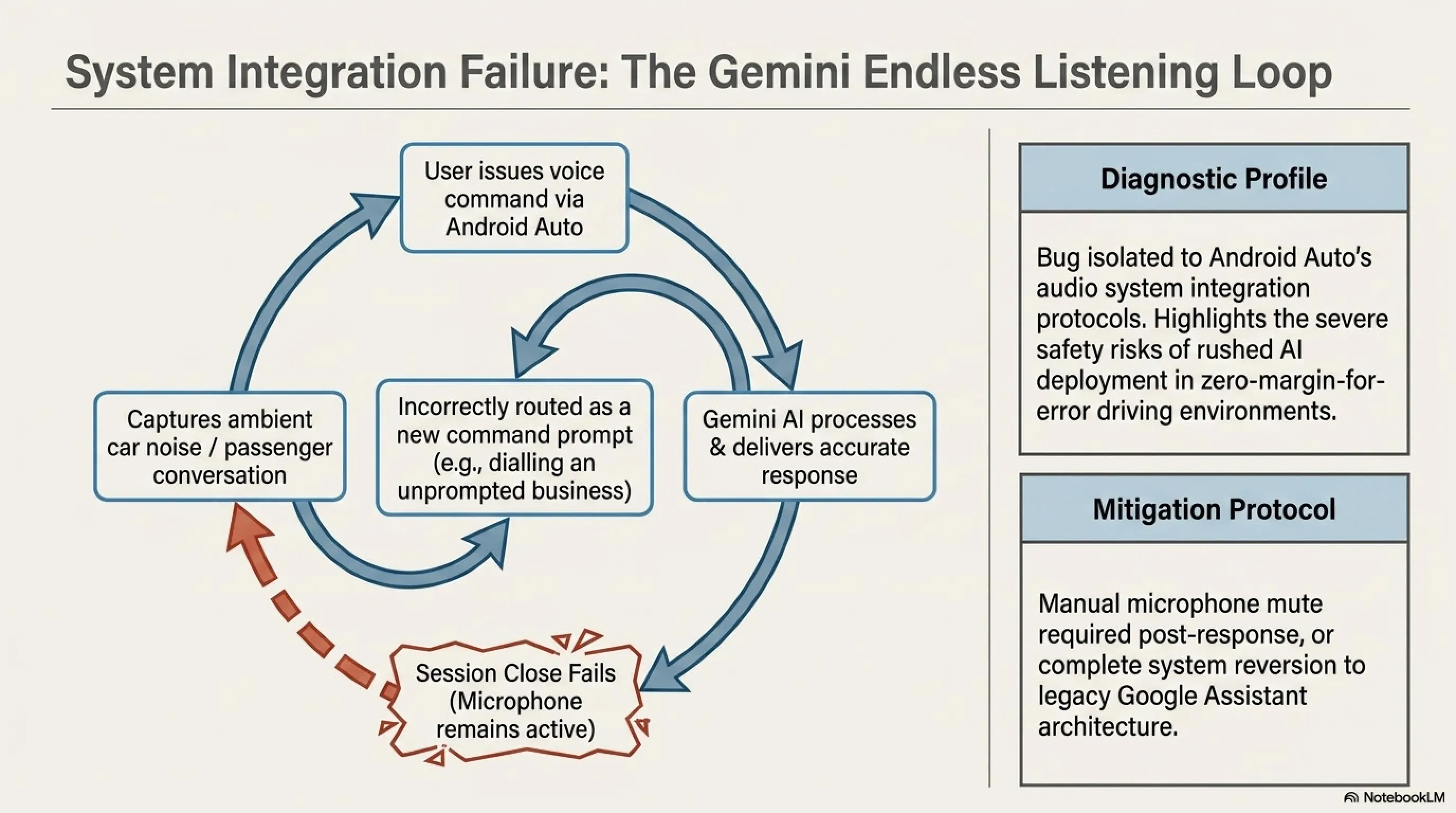
Google has a problem, and its name is Gemini. Google's new smart assistant, meant to replace Google Assistant, suffers from a strange and annoying bug in Android Auto: after you ask your question and Gemini answers, instead of shutting off, it continues "listening" and interprets every sound in the car as a new command.
Imagine you're talking with your passenger about a restaurant where you want to have dinner, and suddenly Gemini decides this is a voice command and starts searching or even worse, calling that restaurant! This is exactly what Android Auto users have been struggling with for the past few months.
According to 9to5Google's report, this problem has existed since Gemini's initial launch in Android Auto, and despite repeated user complaints, Google still hasn't been able to fully fix it. Some users have said they've been forced to switch back to the old Google Assistant to get rid of this confusion.
Interestingly, this problem only occurs in Android Auto. Gemini works fine on phones and other devices, returning to standby after responding. So the problem is likely in Gemini's integration with the car's audio system, not Gemini itself.
📚 Classified & Related Dossiers in TekinGame
If you wish to explore beyond this report and delve into cybernetic frontiers and autonomous AI architectures, do not miss these three exclusive deep-dives in the Tekin Garage:
Temporary Solution
Critics argue this problem demonstrates Google's rush to replace Google Assistant with Gemini. It seems Google was so eager to launch its new AI technology that it didn't conduct adequate testing. This is while safety and reliability in a driving environment are of utmost importance.
Avalon: New Modular Malware with CrownX Ransomware
The cybersecurity world never rests. Security researchers have recently discovered a sophisticated modular malware framework called Avalon with extensive capabilities including credential harvesting, lateral movement in networks, remote access, and even execution of CrownX ransomware.
What makes Avalon dangerous is its modular nature. This malware acts like a toolbox where the attacker can activate or deactivate different modules depending on their target. In other words, one version of Avalon designed for a small company might only steal information, while another used against a large organization can lock down the entire network with ransomware.
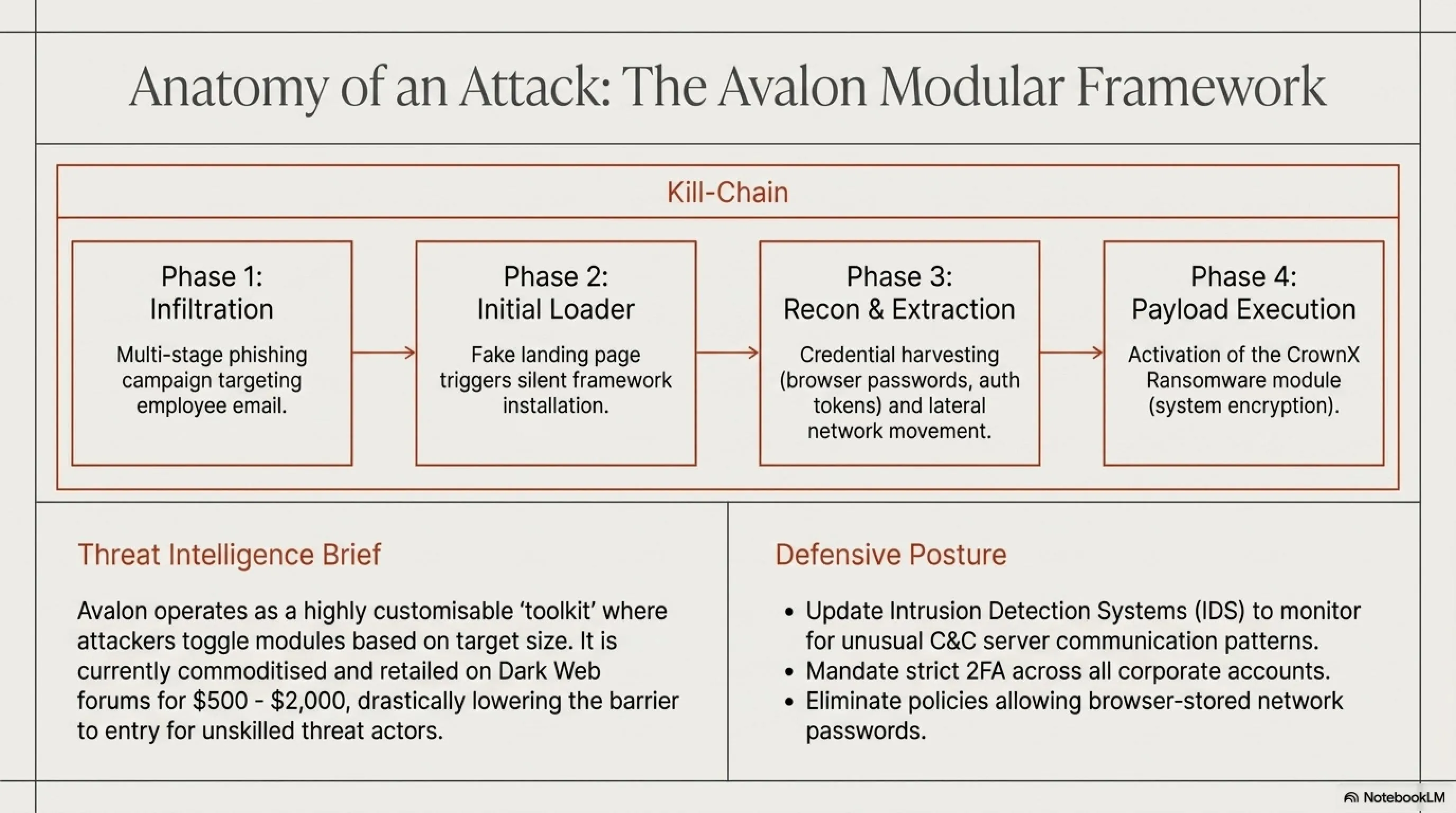
According to The Hacker News report, Avalon is distributed through a multi-stage phishing campaign. First, a seemingly legitimate email is sent to the victim, then if the victim clicks the link, they're directed to a fake page asking them to download a file. This file is actually Avalon's initial loader.
After installation, Avalon quietly begins collecting information from the system. It identifies and sends passwords stored in browsers, authentication tokens, credit card information, and even sensitive files. Then, if the attacker decides, they can activate the CrownX ransomware module, which encrypts all system files and demands ransom.
How to Protect Yourself?
- Never click on links in unknown emails
- Use updated antivirus software
- Don't store passwords in your browser
- Use two-factor authentication
- Take regular backups of important files
- Train employees about phishing
The worrying point is that Avalon is being sold in the underground market. This means even cybercriminals without programming skills can purchase and use this tool. Its price on dark web forums has been reported between $500 to $2,000, which for malware with these capabilities is relatively low.
Security companies recommend that organizations update their intrusion detection systems and look for suspicious behavioral patterns in the network. Avalon tries to appear like normal traffic, but with careful monitoring, unusual patterns of communication with Command & Control servers can be identified.
Battle of Giants: Ethereum vs Solana, Which Will Win?
The blockchain war continues. Joseph Chalom, former Blackrock executive director and current CEO of Sharplink, in defense of Ethereum against recent criticism about the network's "cultural problems," has presented interesting statistics that can't be easily dismissed.
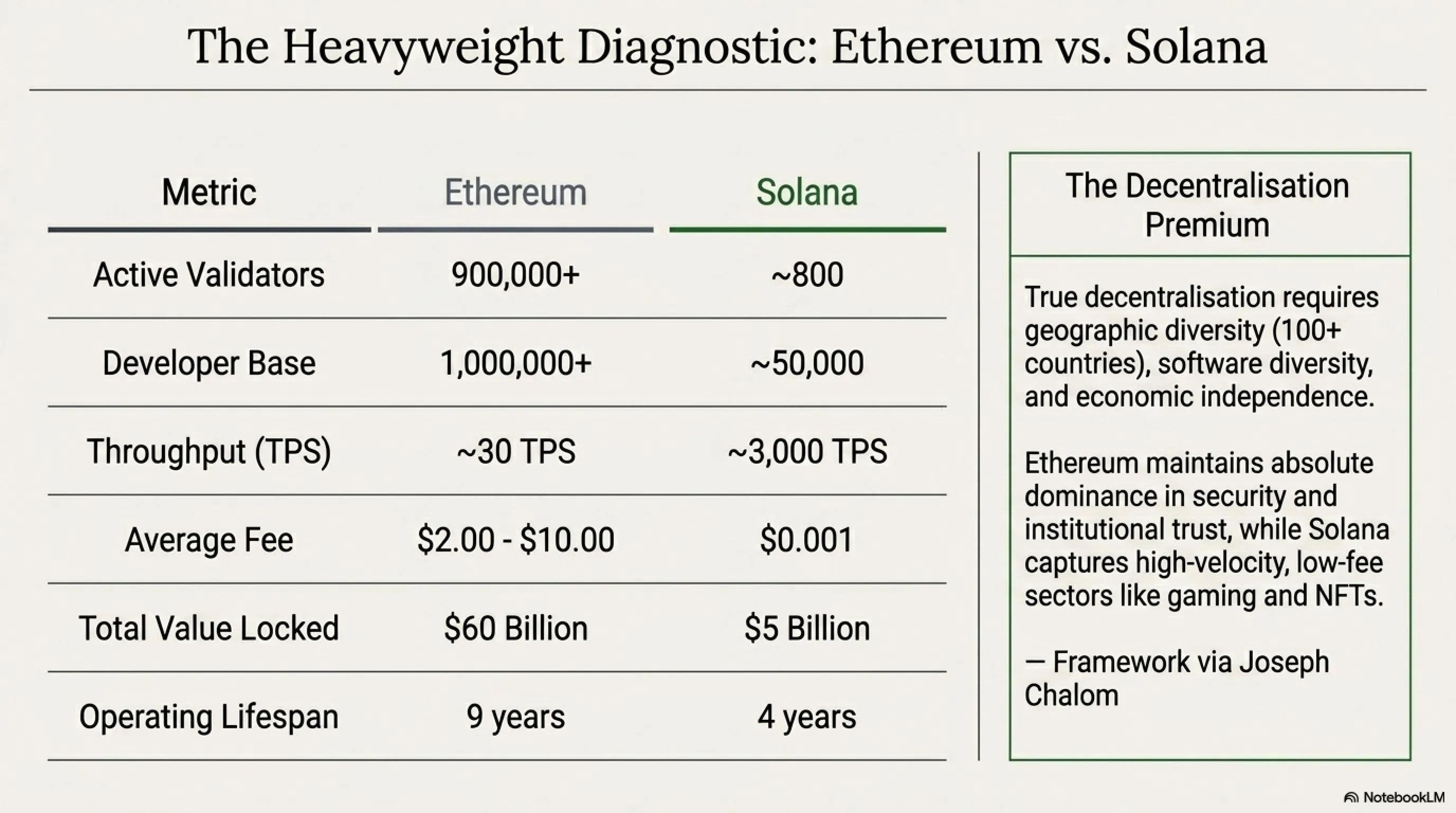
Ethereum currently has over 900,000 active validators, and its developer count has reached over one million. In contrast, Solana only has about 800 validators. This huge difference in validator numbers means a higher level of decentralization for Ethereum.
Ethereum critics have recently claimed the network has developed a "cultural problem" and no longer has that initial flexibility and innovation. They say Solana, with higher speed and lower fees, is a better choice for developers. But Chalom believes this is a superficial view.
He explains that true decentralization of a blockchain depends not just on the number of nodes, but on their geographic diversity, software diversity, and economic independence. Ethereum surpasses Solana in all three criteria. Ethereum validators are spread across over 100 countries and use different clients.
Quick Comparison
| Criteria | Ethereum | Solana |
|---|---|---|
| Validators | 900,000+ | ~800 |
| Developers | 1,000,000+ | ~50,000 |
| Transaction Speed | ~30 TPS | ~3,000 TPS |
| Average Fee | $2-$10 | $0.001 |
| Operating Time | 9 years | 4 years |
Of course, this doesn't mean Solana is worthless. This network has become very popular in areas like NFTs and gaming due to high speed and low fees. But when it comes to security and long-term sustainability, Ethereum remains king.
Chalom also noted that Ethereum leads in total value locked in DeFi protocols. Over $60 billion in value is locked in Ethereum, while Solana has about $5 billion. This difference shows that major investors still have more trust in Ethereum.
Finally, Chalom emphasized that competition between blockchains is a good thing and drives innovation in this industry. But we must be realistic: Ethereum, with stronger infrastructure, larger community, and higher security, remains the first choice for serious projects.
- 900,000+ active validators
- One million developers
- High decentralization
- $60 billion TVL
- Proven security
- Low speed (30 TPS)
- High fees ($2-$10)
- Limited scalability
- Complex for beginners
Conclusion: A Morning That Started with Hope
Today was one of those interesting market days. After tough weeks, we finally witnessed liquidity returning to the crypto market. The $221 million inflow to Bitcoin ETF funds shows that professional investors still believe in this market and were waiting for the right opportunity to enter.
The AI world is also writing a new story. Automated payments by AI Agents are no longer a theoretical concept but a reality taking shape. Of course, we still have many challenges ahead, including legal and security issues, but the direction of movement is clear.
At the same time, we shouldn't underestimate security threats. Bad Epoll reminds us that even seemingly secure systems like Linux can have serious vulnerabilities. Speed in updating systems and attention to cybersecurity must always be a priority.
Google also needs to address Gemini's problems in Android Auto faster. When a technology is meant to be used in a driving environment, the margin for error is very small, and any bug can be dangerous.
Finally, the battle between Ethereum and Solana continues. Both blockchains have their advantages and disadvantages, but Ethereum, with stronger infrastructure and greater decentralization, remains on top. Of course, this doesn't mean Solana's end; this network also performs well in its specific areas.
So finish your morning coffee and get ready for an energetic day. The tech world is always changing, and we're here to accompany you on this journey.
Frequently Asked Questions
Will the capital return to Bitcoin ETFs be sustainable?
According to CryptoSlate analysis, if capital inflow continues in the coming weeks, we could see Bitcoin price stabilize in the $65-$70K channel. However, this depends on macroeconomic factors like Federal Reserve decisions on interest rates.
How do automated AI payments work?
AI agents connect to digital wallets through dedicated APIs and can automatically initiate and confirm transactions. Platforms like CCPayment provide this infrastructure. However, there are still many legal and security challenges in this area.
How do I know if my system is vulnerable to Bad Epoll?
If you use Linux or Android, you're likely vulnerable unless you've recently received a security update. The best action is to immediately upgrade your operating system to the latest version. On Android, go to Settings > About Phone > Software Update.
Why does Gemini have problems in Android Auto but works fine on phones?
The problem is likely in Gemini's integration with the car's audio system. Android Auto uses different communication protocols than phones, and it seems Gemini can't properly detect when to stop listening.
Is Ethereum better or Solana?
It depends on your needs. If you're looking for high security, decentralization, and long-term sustainability, Ethereum is a better choice. But if high speed and low fees are your priority, Solana can be a suitable option. Many developers use both networks in parallel.
How can I protect myself from Avalon malware?
The most important thing is being alert to phishing emails. Never click on links in unknown emails. Use updated antivirus, don't store passwords in browsers, and definitely use two-factor authentication. Regular backups of important files are also crucial.
Sources
- CoinTelegraph: Bitcoin and Ether extend relief rallies as extreme fear meets renewed ETF buying
- CoinDesk: Bitcoin's Next Parabolic Run May Need $1 Trillion in Fresh Capital
- CryptoSlate: Bitcoin ETFs see biggest inflow since May
- Bitcoin.com: AI and Crypto Payments Raise New Questions
- The Hacker News: New Bad Epoll Linux Kernel Flaw
- 9to5Google: Gemini Android Auto Problem Keeps Listening
- The Hacker News: New Avalon Malware Framework
- Bitcoin.com: Former BlackRock Executive Defends Ethereum
Additional Gallery: ☀️ Tekin Morning July 4, 2026: AI Autonomous Payments & Linux Under Threat