Good morning from the TekinGarage! As our high-end analysis rigs hum quietly in our Dubai headquarters and we sip from a traditional steaming stakan of tea, the tech and gaming sectors have erupted with industry-defining news this Thursday, July 2, 2026. Sony has officially driven the final nail into the coffin of physical media, announcing a total digital transition for PlayStation by 2028 that will fundamentally alter game ownership. Over in the aerospace and AI domains, Elon Musk is actively battling rumors of a secret SpaceX smartphone, whi
Tekin Morning: Thursday Kickoff with Gaming & Tech Energy ☀️
July 2nd brings historic Sony announcement, SpaceX controversy, and Claude Fable 5 comeback
- 🎮End of PlayStation Discs- Sony announced all new games will be digital-only starting January 2028
- 🎧SpaceX Phone Controversy- Elon Musk calls WSJ report utterly false
- 🚀Claude Fable 5 Returns- Export controls lifted after 18-day blockade
- 🗡️Adobe Security Alert- Seven critical CVSS 10.0 vulnerabilities patched
Thursday mornings typically bring a sense of calm anticipation for the weekend ahead, but the technology and gaming industry woke up today to seismic news that could reshape the entire landscape. Sony has officially declared the end of physical PlayStation discs, while Elon Musk fiercely denied reports of a SpaceX AI phone prototype, creating one of the week's biggest controversies.
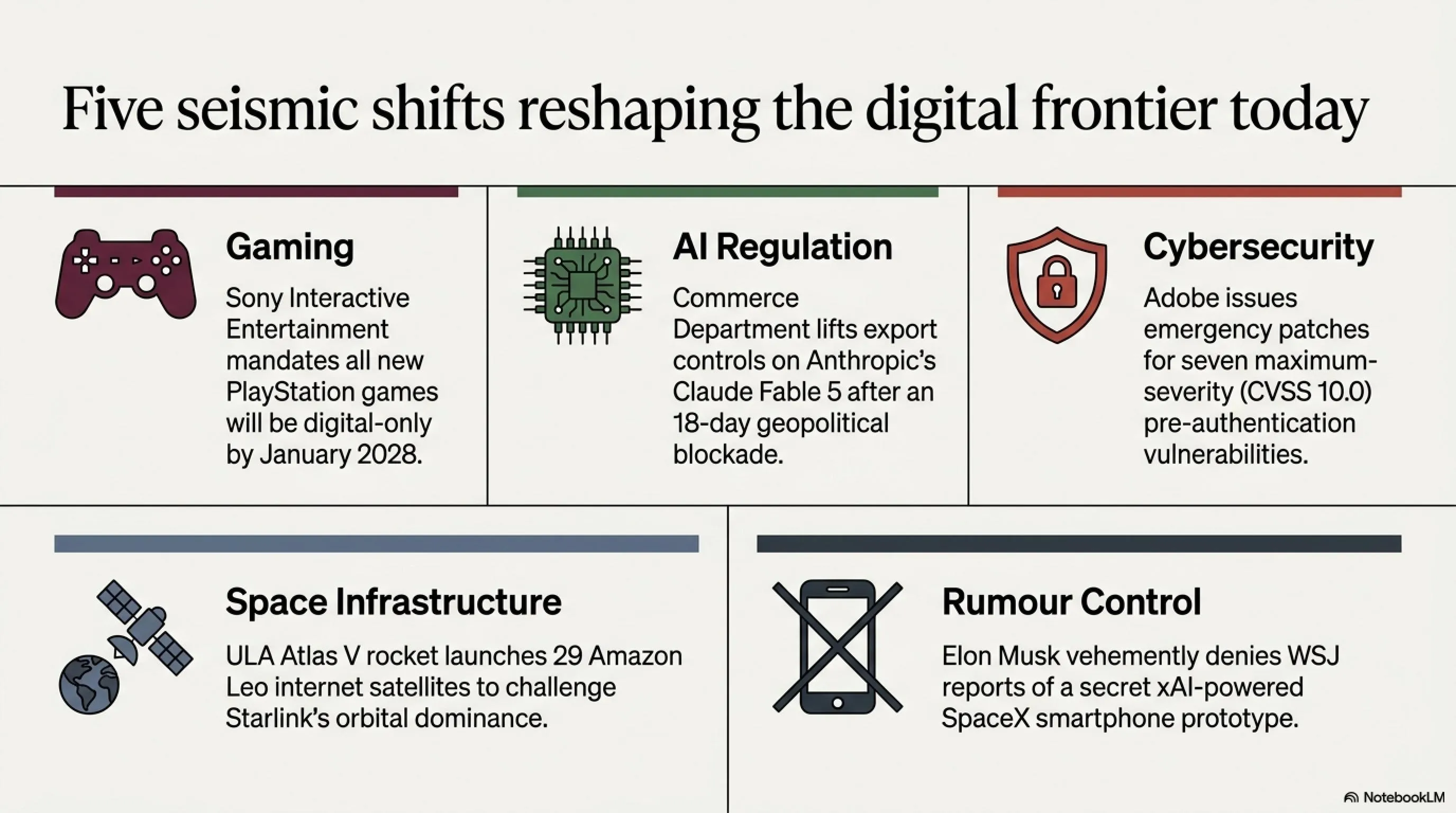
Meanwhile, the U.S. government reversed course on Claude Fable 5 export restrictions after weeks of tension, Adobe rushed emergency patches for seven maximum-severity security flaws, Capcom moved up the Onimusha release date, and ULA prepared to launch 29 Amazon internet satellites into orbit. This Thursday morning is anything but ordinary.
Sony Officially Announces the End of Physical PlayStation Discs
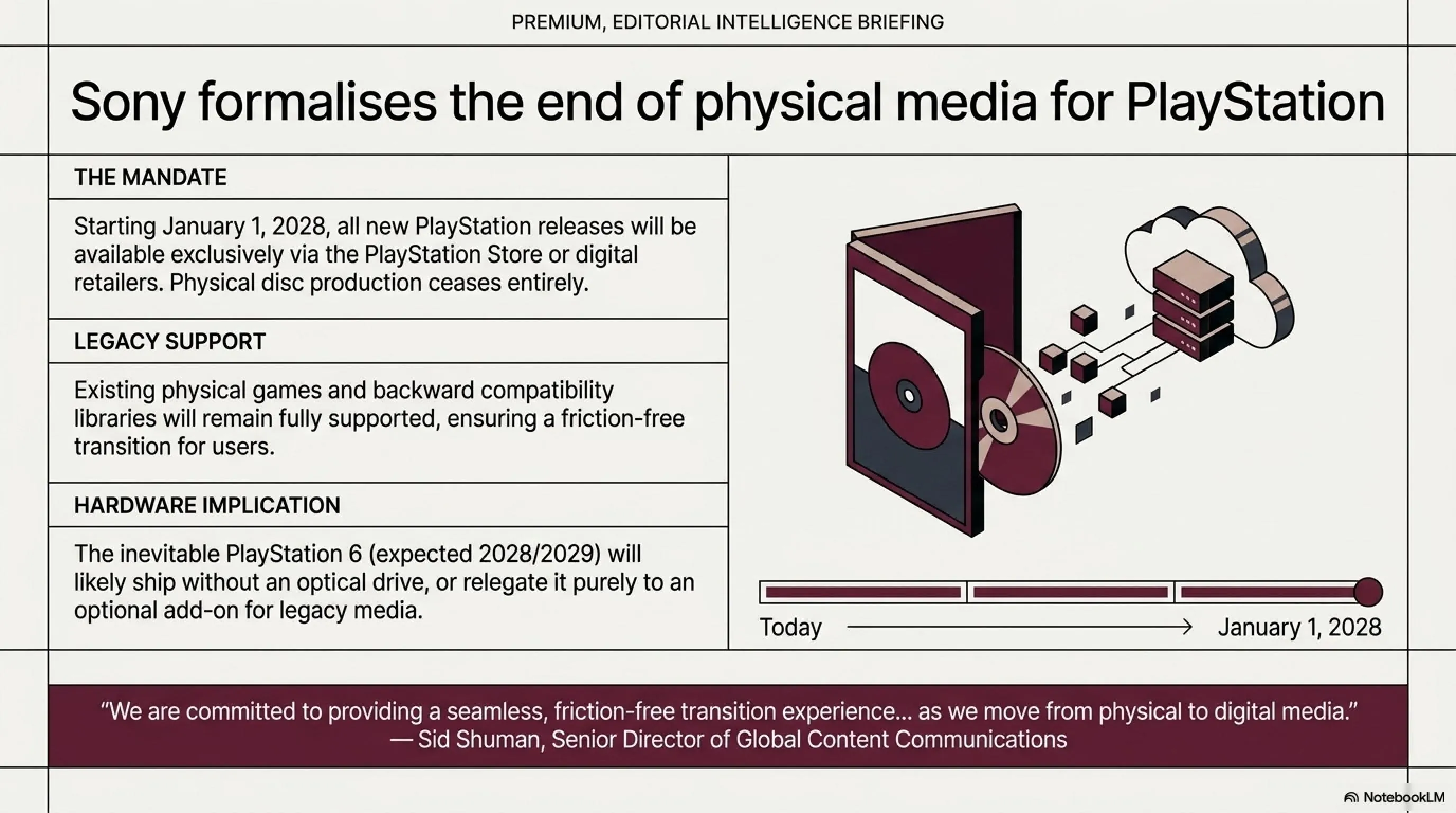
In what marks one of the most significant decisions in gaming history, Sony Interactive Entertainment announced on Wednesday, July 1st, 2026, that it will discontinue production of physical game discs for all new PlayStation titles starting January 2028. This historic move, announced by Sid Shuman, Senior Director of Global Content Communications at PlayStation, signals the complete end of the physical media era for the Japanese gaming giant.
According to Sony's official statement, beginning January 1, 2028, all new games released on PlayStation consoles will be available exclusively in digital format through the PlayStation Store or digital retailers. The company cited "shifting consumer preferences and the broader entertainment industry's continued move away from physical discs to digital" as the primary drivers behind this watershed decision.
Impact on PS6 and Next Generation
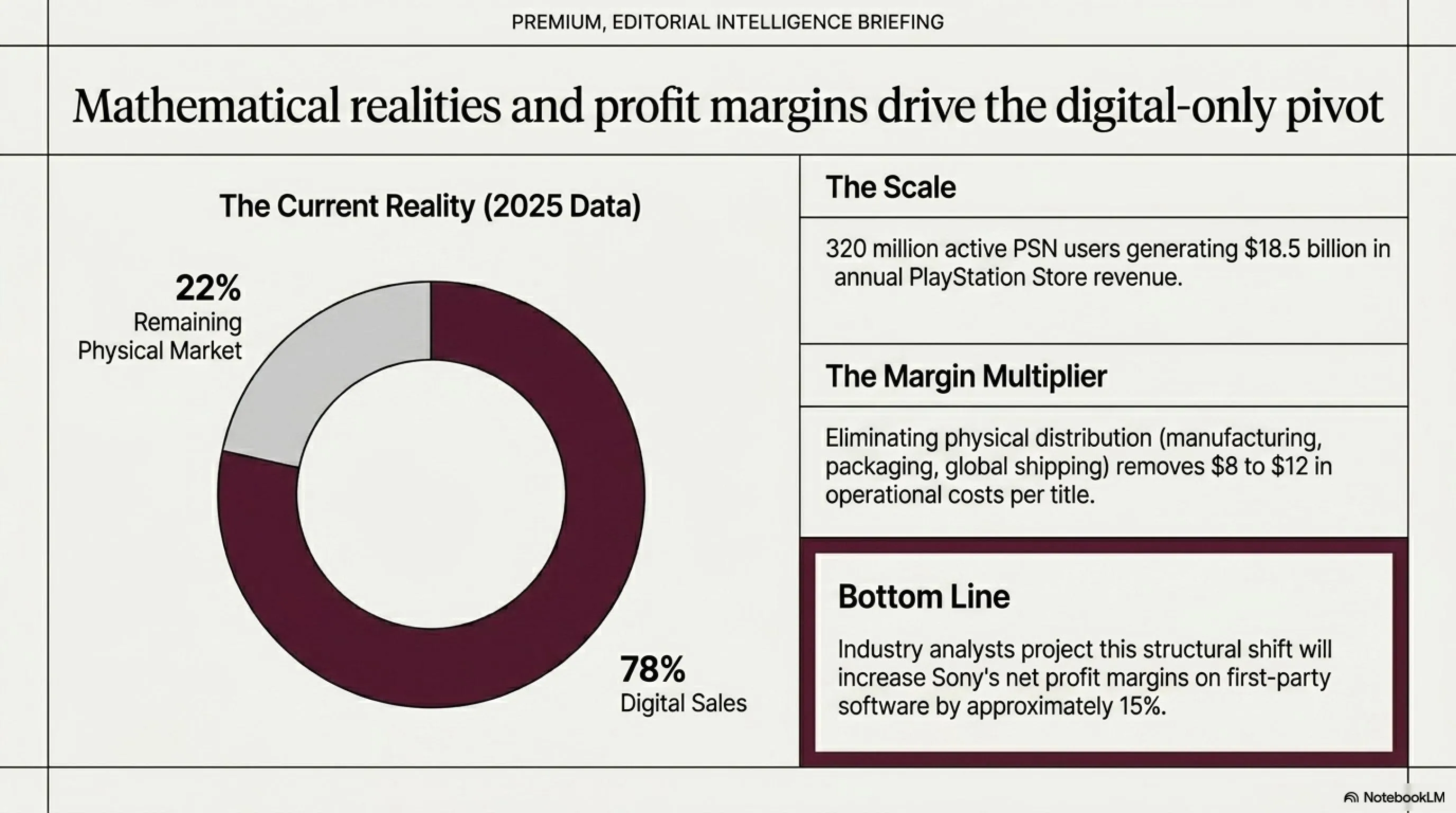
Industry analysts view this move as far more than a simple strategic shift—it represents a fundamental transformation in Sony's business model. By eliminating the costs associated with manufacturing, packaging, shipping, and physical distribution, Sony can achieve significantly higher profit margins while maintaining greater control over pricing and game availability through its digital ecosystem.
Industry Reaction and Gamer Concerns
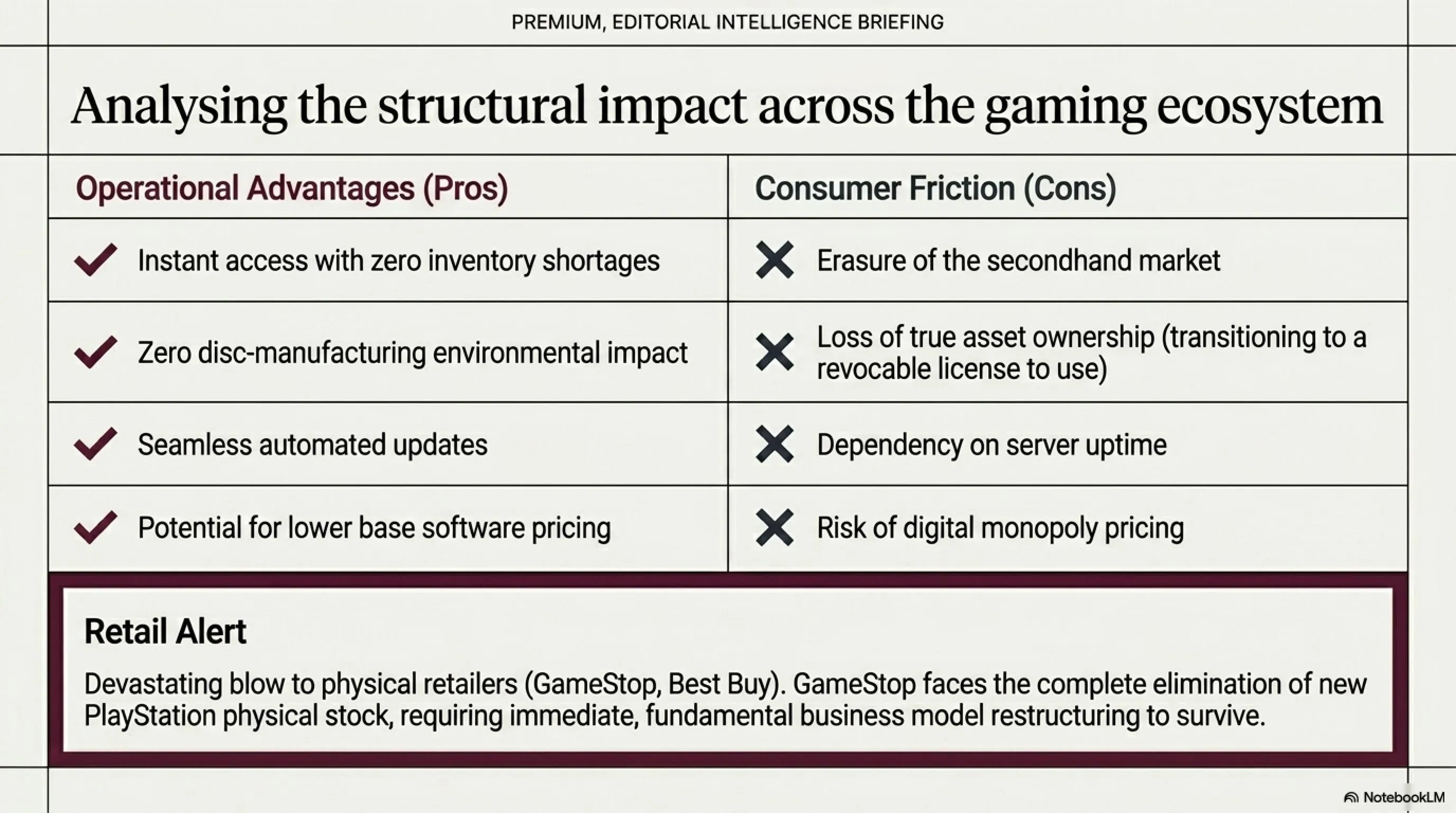
Sony's announcement has triggered widespread reactions across the gaming community. A significant portion of gamers express concern about losing true ownership of their games, since digital purchases constitute a "license to use" rather than permanent ownership. If PlayStation Store removes a title or servers shut down, user access could be permanently revoked.
This decision also delivers a devastating blow to physical game retailers like GameStop, Best Buy, and local game stores. GameStop, already struggling with the rise of digital distribution, now faces the complete elimination of new PlayStation physical game sales. Analysts predict the company will need to fundamentally restructure its business model to survive.
The move could also significantly impact the secondhand market and collectors. Physical games, especially limited or collector's editions, have always held value for enthusiasts, and eliminating this segment could erase an entire culture surrounding game collecting and preservation.
Pressure on Microsoft and Nintendo
Sony's move undoubtedly places considerable pressure on its competitors. Microsoft, which has already released disc-free Xbox Series S consoles and focuses heavily on Game Pass subscriptions, will likely follow a similar trajectory in the near future. However, Nintendo, with its distinct culture and exclusive titles that maintain strong physical sales among devoted fans, may take a more conservative approach.
Financial Outlook and Digital Sales Statistics
According to Sony's fiscal year 2025 financial reports, digital game sales have reached 78 percent of total sales. This figure demonstrates that the overwhelming majority of gamers have already transitioned to digital purchases, meaning Sony is essentially formalizing an existing trend rather than forcing a dramatic change.
PlayStation Digital Sales Key Statistics
Industry analysts predict this move will increase Sony's net profit margins on games by approximately 15 percent, as the costs of disc production, packaging, and physical distribution—which typically account for eight to twelve dollars per title—will be eliminated entirely.
SpaceX AI Phone Controversy: Musk Denies WSJ Report
In one of the week's most controversial tech stories, Elon Musk vehemently refuted a Wall Street Journal report claiming that SpaceX demonstrated an AI-powered smartphone prototype to investors ahead of the company's historic IPO. Musk categorically dismissed the report as "utterly false."
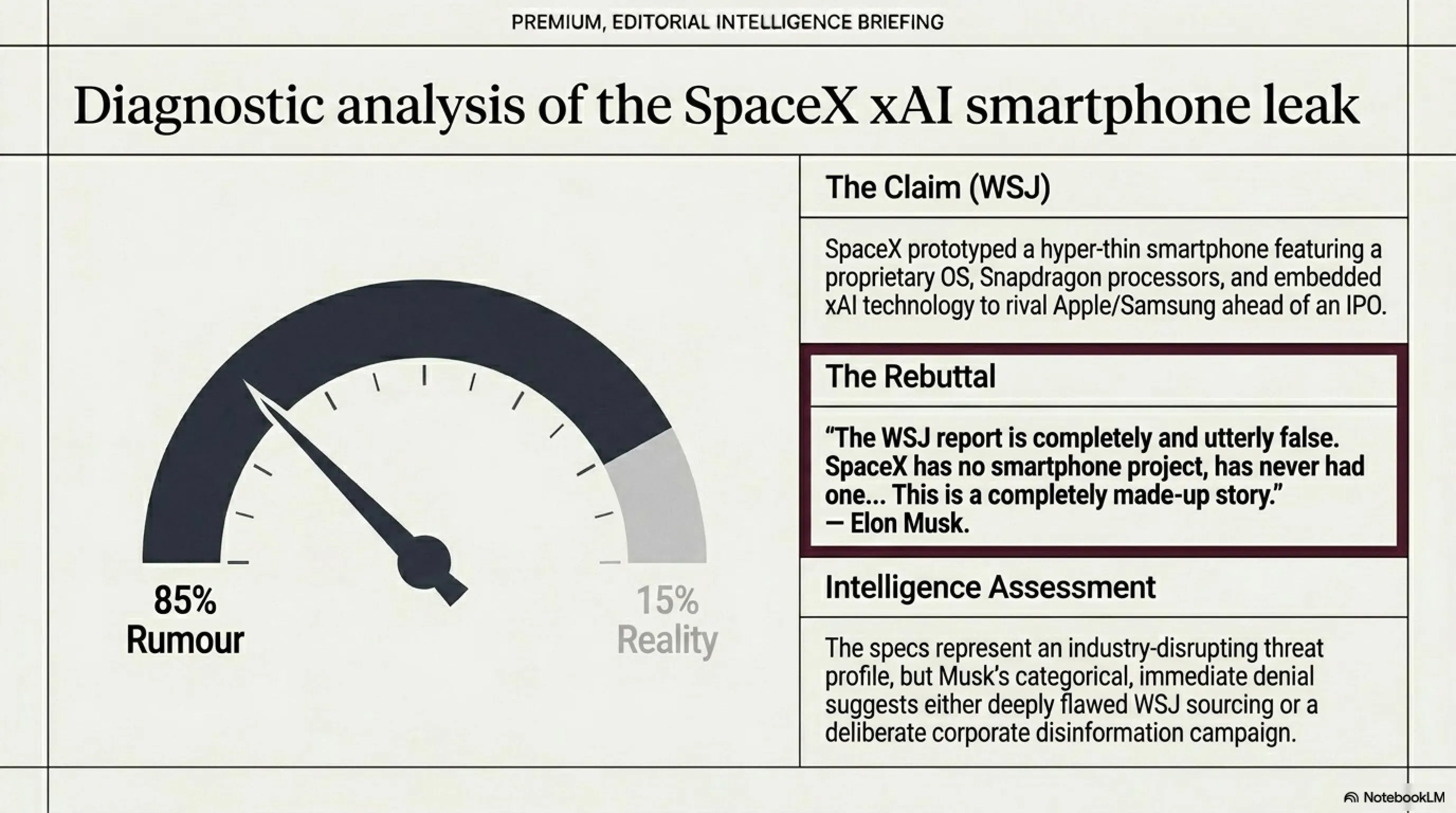
According to the original WSJ report published Wednesday, SpaceX allegedly showcased a handheld device thinner than an iPhone, featuring a proprietary operating system, xAI technology from Musk's AI company, and Qualcomm Snapdragon processors. The device was purportedly positioned as a competitor to traditional smartphones with enhanced AI capabilities at its core.
Musk responded swiftly on platform X (formerly Twitter), emphasizing that no such device exists and that the idea has never been proposed within SpaceX. This rapid denial has raised serious questions about WSJ's sourcing and the credibility of the report.
Technical Analysis of WSJ's Claims
If the WSJ report had been accurate, such a device could have represented a watershed moment in the mobile phone industry. A smartphone with a proprietary operating system—neither Android nor iOS—built by one of the world's largest aerospace companies and leveraging advanced xAI technology could have been a serious competitor to Apple and Samsung.
Rumor Reality Meter: SpaceX Phone
Given Elon Musk's categorical denial and the absence of any corroborating evidence, the likelihood of this report being accurate is extremely low. WSJ may have received information from unreliable sources or obtained incorrect data.
However, with Musk's denial, serious questions arise about whether WSJ received faulty intelligence from its sources, or whether this represents a deliberate disinformation campaign. Musk's track record shows he typically reveals his projects at opportune moments, and his categorical denial should be taken seriously in this instance.
Claude Fable 5 Returns: Trump Administration Lifts Export Controls
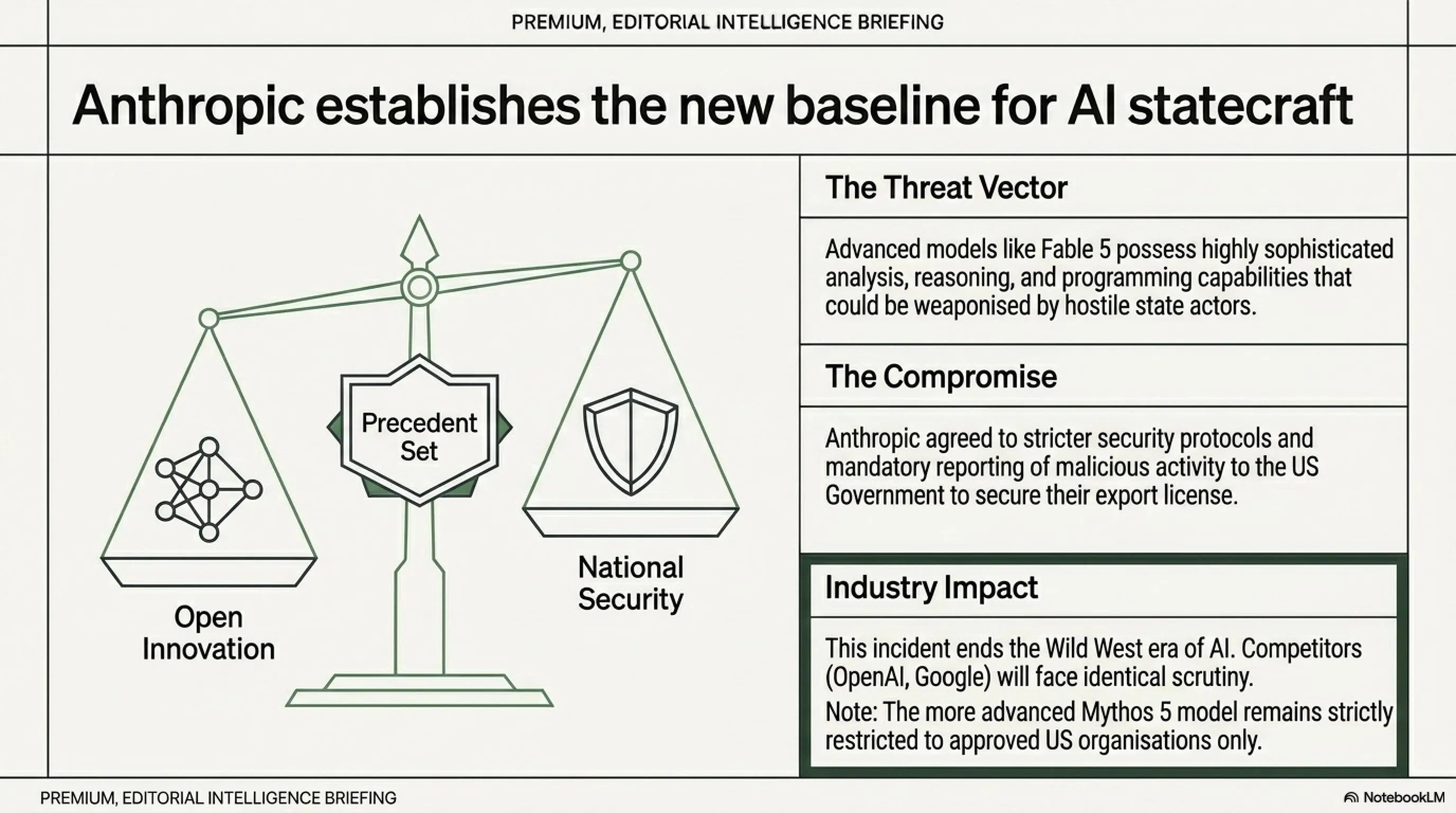
In one of the most significant developments in the AI industry over recent weeks, the United States government announced it will lift export controls imposed on Anthropic's Claude Fable 5 model after an 18-day blockade. This decision, made by the U.S. Department of Commerce, signals the return of global access to this powerful artificial intelligence model.
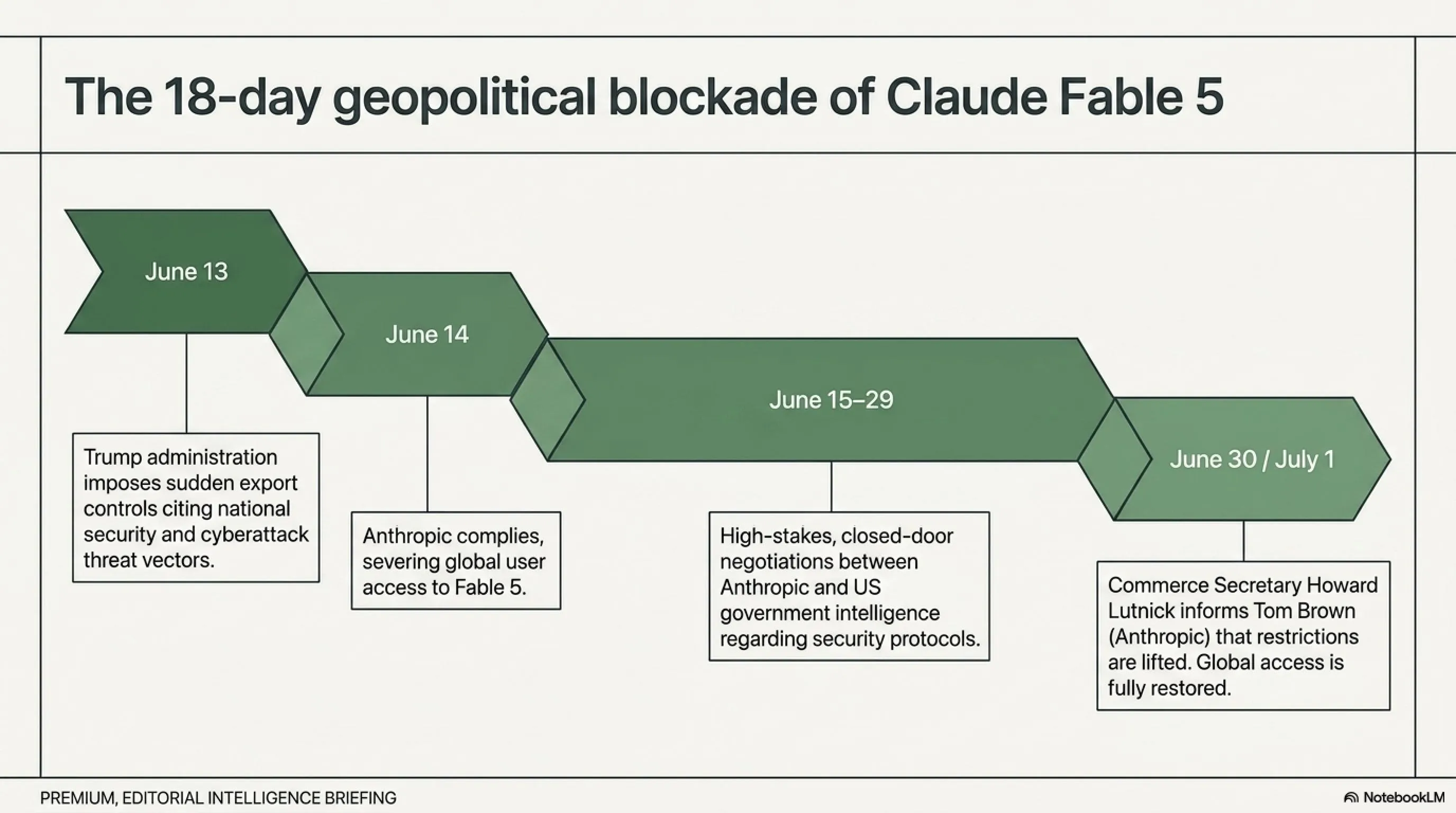
Howard Lutnick, U.S. Secretary of Commerce, communicated the decision in a letter to Tom Brown, co-founder of Anthropic, stating that "a license is no longer required for the export, reexport, or in-country transfer, including deemed export or deemed reexport, of the Mythos or Fable models." This decision applies to both Fable 5 and Mythos 5 models, although Mythos 5 remains restricted to approved U.S. organizations only.
Why Were the Controls Imposed?
On June 13, 2026, the Trump administration imposed export controls on Claude Fable 5 due to national security concerns that the model could be exploited for cyberattacks and malicious operations. This decision cut off global user access to Fable 5 and placed Anthropic in a difficult position.
Fable 5 Crisis Timeline
According to reports, Anthropic worked closely with the U.S. government during this period and committed to implementing more stringent security protocols and standards for future model releases. The company also agreed to report any identified malicious activity to the U.S. government.
Impact on the AI Industry
This incident highlights governments' increasing sensitivity toward advanced AI models. Claude Fable 5 ranks among the most powerful language models available and possesses sophisticated capabilities in analysis, programming, and reasoning. The concern is that such powerful tools could pose serious threats when wielded by malicious actors or organizations.
Meanwhile, competing companies like OpenAI and Google also face closer government scrutiny, and we'll likely see similar restrictions in the future. This trend could lead to the establishment of a global legal framework for overseeing advanced AI models.
Adobe Rushes Emergency Patches for Seven Critical CVSS 10.0 Vulnerabilities
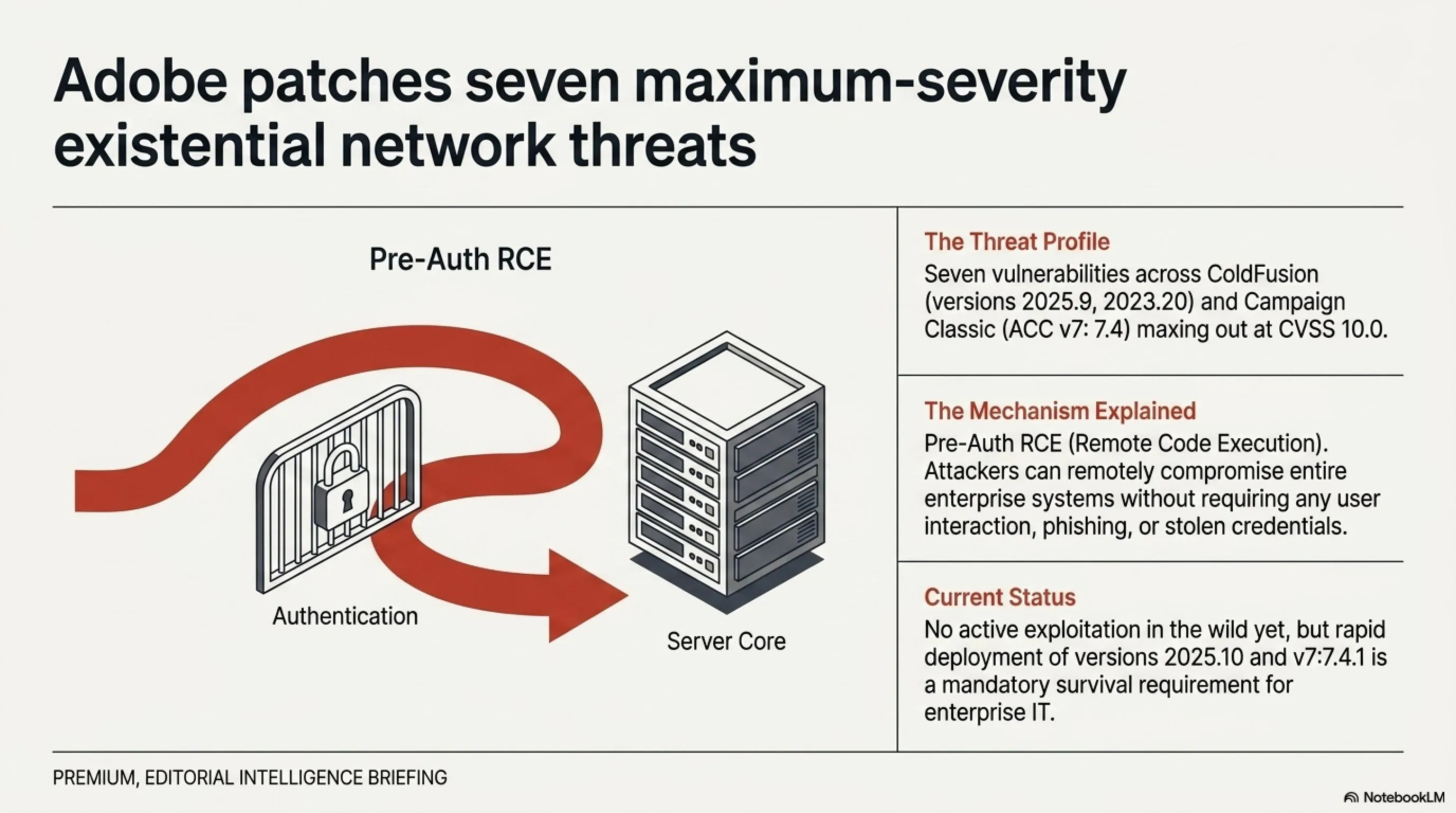
Adobe released emergency security patches on Tuesday, June 30th, and Wednesday, July 1st, 2026, addressing seven critical vulnerabilities with CVSS scores of 10.0 (maximum severity) in its ColdFusion and Campaign Classic products. These vulnerabilities would have allowed attackers to execute arbitrary code on affected systems without any user interaction.
Technical Details of Vulnerabilities
Six of these vulnerabilities affect Adobe ColdFusion versions 2025.9, 2023.20, and earlier, while one affects Adobe Campaign Classic version ACC v7: 7.4. These bugs include the following:
Critical Adobe CVE List
- CVE-2026-48286 (Campaign Classic) - Incorrect Authorization → RCE
- CVE-2026-48276 (ColdFusion) - Improper Input Validation → RCE
- CVE-2026-48277 (ColdFusion) - Deserialization Vulnerability → RCE
- CVE-2026-48281 (ColdFusion) - Improper Input Validation → RCE
- CVE-2026-48282 (ColdFusion) - Path Traversal → RCE
- CVE-2026-48316 (ColdFusion) - Authentication Bypass → RCE
- CVE-2026-47928 (ColdFusion) - CVSS 9.6 - Code Execution
The extremely concerning aspect is that these vulnerabilities require no authentication or user interaction—meaning an attacker could completely remotely compromise a system without any conditions. These types of vulnerabilities, known as "Pre-Auth RCE," are considered the most dangerous category of security bugs.
Risk to Organizations
ColdFusion is a web development platform used by many large organizations, government agencies, and financial institutions. Campaign Classic is also a popular email marketing tool. Consequently, these vulnerabilities could endanger millions of users and thousands of organizations.
Fortunately, Adobe has emphasized that no evidence of real-world exploitation of these vulnerabilities exists thus far. However, experience shows that CVSS 10.0 bugs are typically exploited very quickly by hackers, so rapid updates are critical.
Capcom Moves Onimusha: Way of the Sword Release Date Forward
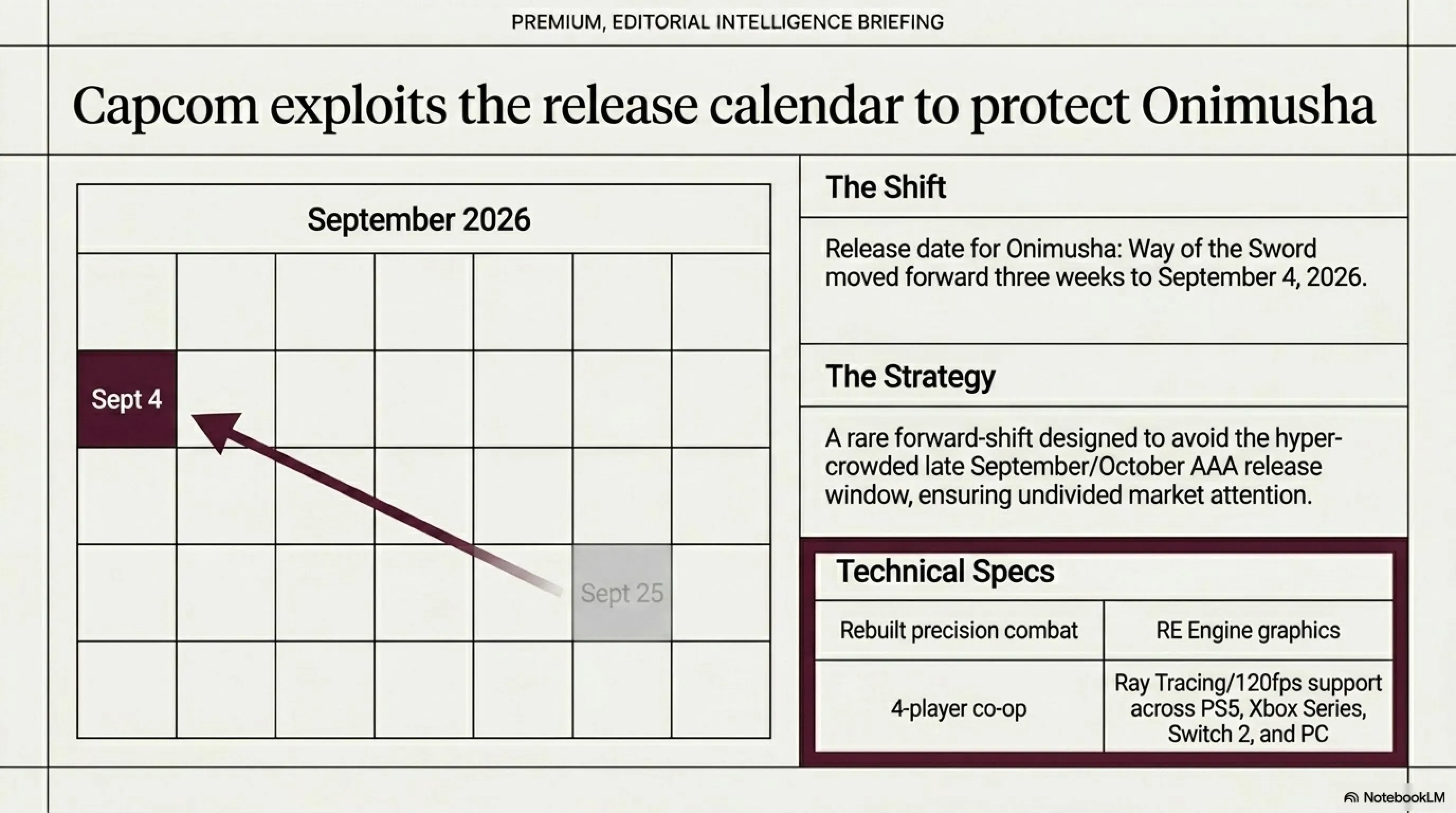
In welcome news for fans of the legendary Onimusha series, Capcom announced it is moving the release date of Onimusha: Way of the Sword forward from September 25 to September 4, 2026. This means gamers can access this samurai action-adventure game three weeks earlier than originally scheduled.
Onimusha: Way of the Sword, described as a return to the series' roots, will launch on PlayStation 5, Xbox Series X|S, Nintendo Switch 2, and PC (Steam and Epic Games Store). The game tells the story of a legendary samurai who must battle the demonic forces of Genma and protect ancient Japan.
Why Did the Release Date Move Forward?
Moving a game's release date forward is a relatively rare occurrence and typically signals positive development progress. Capcom's decision could stem from various factors: either the development team progressed faster than planned, or the company wants to avoid the crowded late September and October release window.
Onimusha: Way of the Sword Key Features
- Rebuilt combat system focusing on precision and strike timing
- Next-gen graphics powered by Capcom's RE Engine
- New story in the Onimusha universe with fresh characters
- Online multiplayer mode with up to 4-player co-op
- Full support for Ray Tracing and 120fps performance
Market analysts consider this a smart move, as September is typically the busiest month of the year for AAA game releases with intense competition. By launching in early September, Onimusha can capture more attention and avoid getting lost in the crowd.
ULA Prepares to Launch 29 Amazon Leo Satellites with Atlas V Rocket
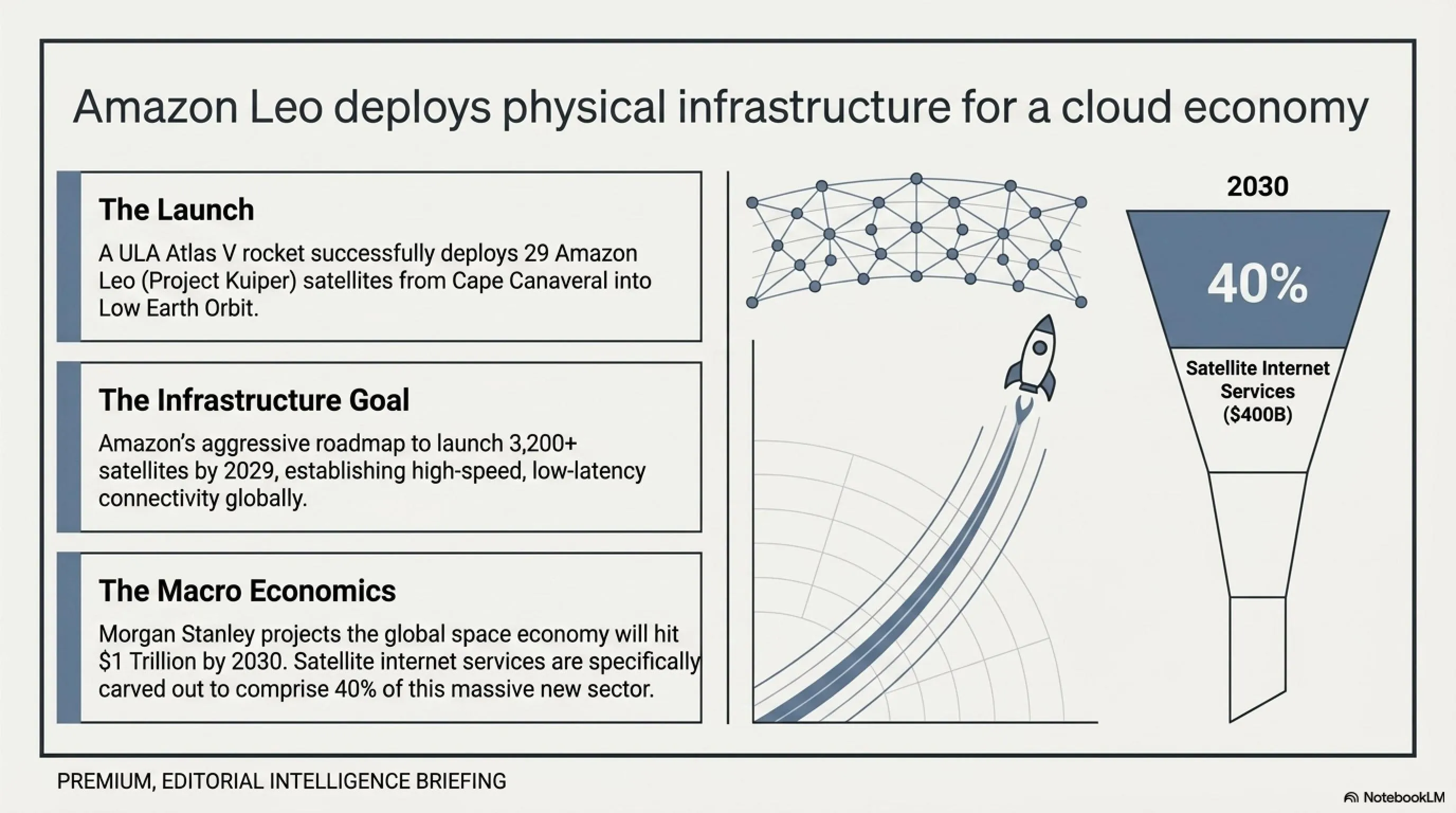
This Thursday morning, July 2, 2026, a United Launch Alliance (ULA) Atlas V rocket stands ready to deliver 29 Amazon Leo internet satellites from Cape Canaveral Space Force Station in Florida to Low Earth Orbit (LEO). This launch represents part of Amazon's effort to establish a global satellite internet network competing directly with Elon Musk's Starlink.
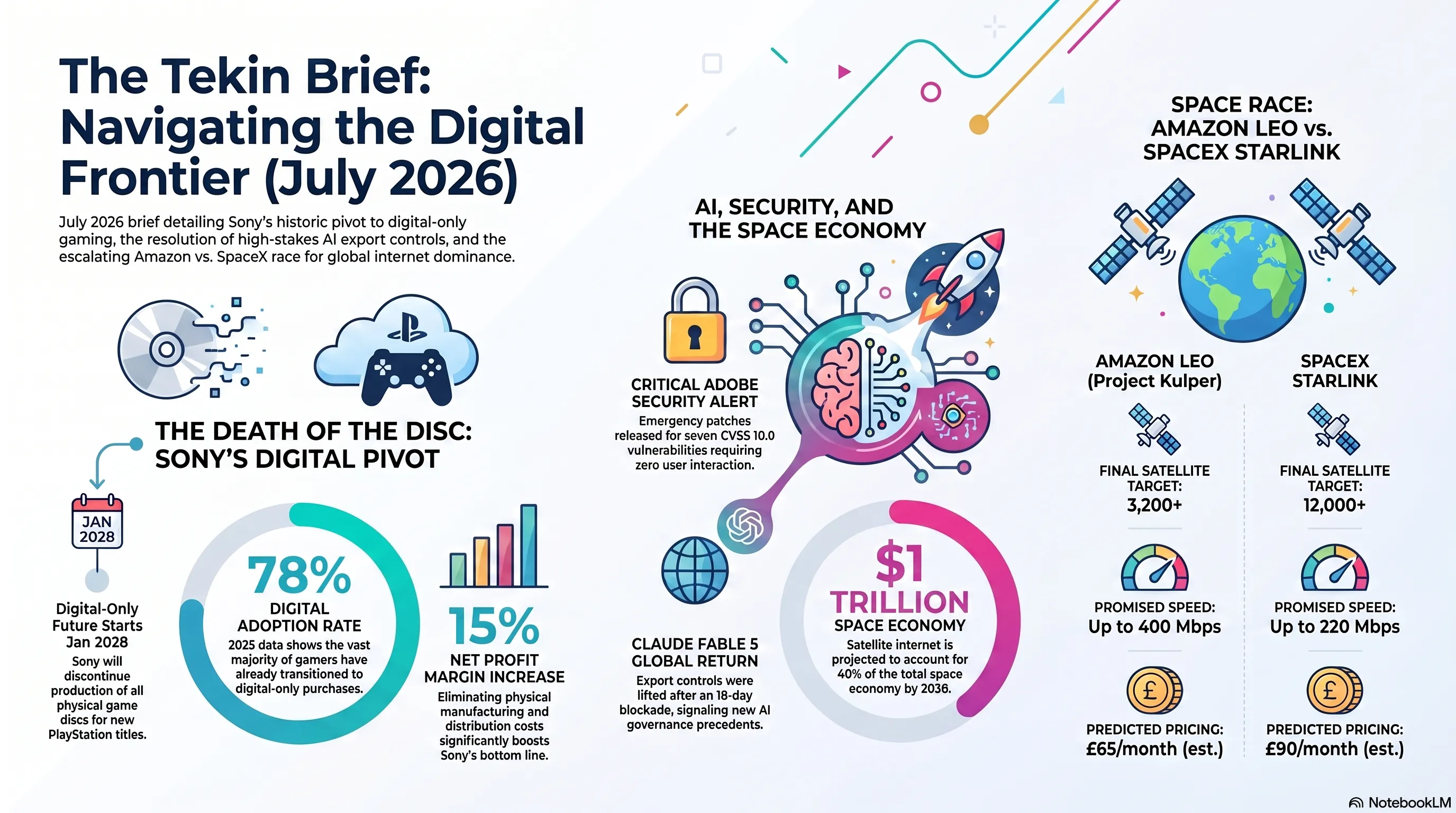
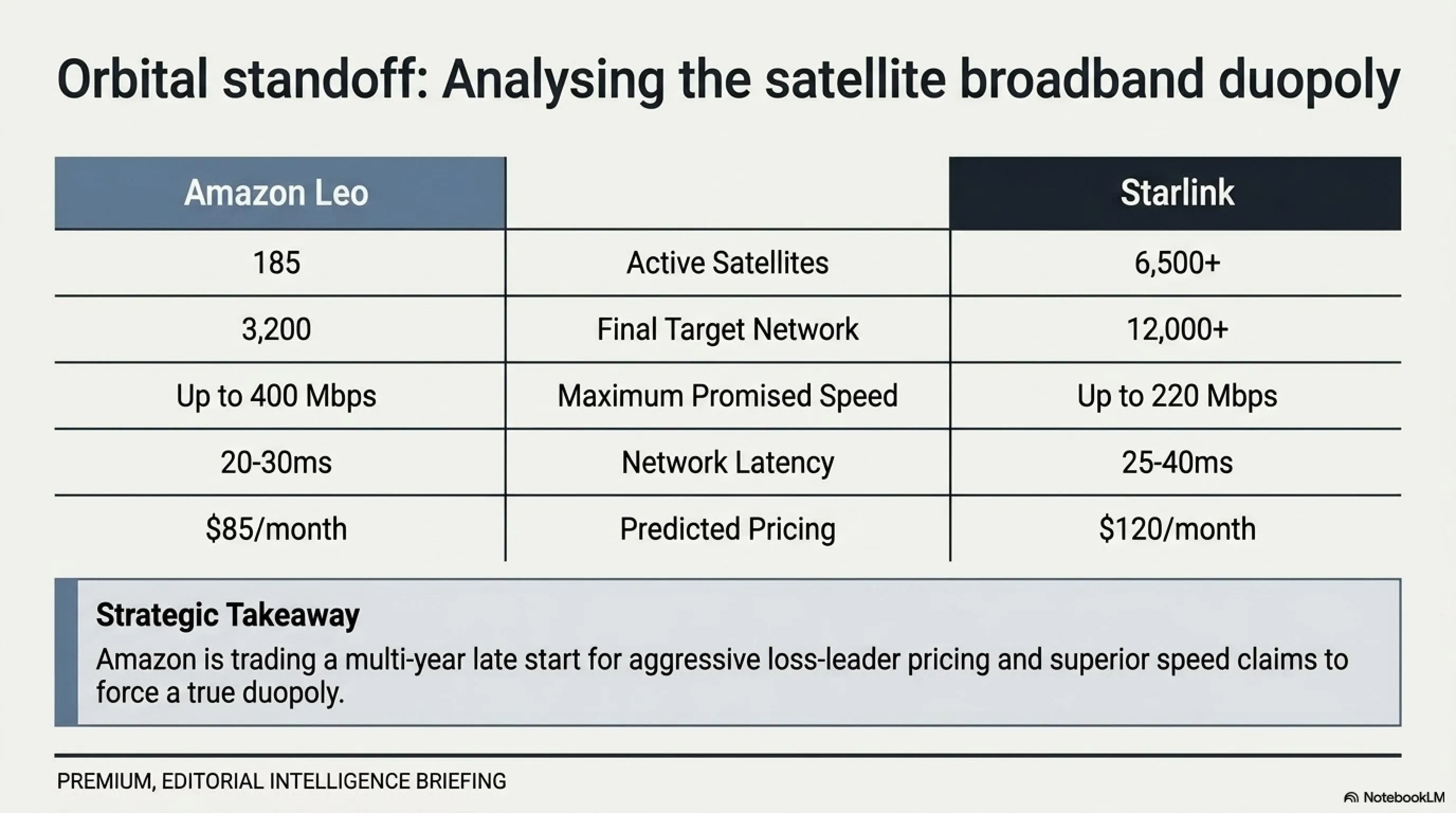
The Amazon Leo project (also known as Project Kuiper) aims to launch more than 3,200 satellites by 2029, bringing high-speed, low-latency internet to remote corners of the globe. This launch marks the eighth Amazon Leo mission, with approximately 185 satellites from this project already deployed to space.
Competition with Starlink
Starlink, owned by SpaceX, currently operates more than 6,500 active satellites in orbit and serves as the world's largest satellite internet provider. Amazon Leo, starting later in the game, is working hard to establish its foothold in this market. Amazon Leo subscription costs are predicted to undercut Starlink pricing to capture market share.
Amazon Leo vs Starlink Comparison
| Feature | Amazon Leo | Starlink |
|---|---|---|
| Current satellite count | 185 | 6,500+ |
| Final target | 3,200 | 12,000+ |
| Promised speed | Up to 400 Mbps | Up to 220 Mbps |
| Latency | 20-30ms | 25-40ms |
| Predicted pricing | $85/month | $120/month |
Today's launch is scheduled for 6:45 AM local Florida time (EDT), and if weather conditions cooperate, it will be one of the most spectacular launches of the year. The Atlas V rocket ranks among the world's most reliable launch vehicles, with more than 100 successful missions to date.
The Space Internet Race Heats Up
Amazon's aggressive push into satellite internet demonstrates the growing importance of space-based connectivity. With traditional ground infrastructure unable to reach many global regions, satellite internet offers the only viable solution for billions of people without reliable access.
Beyond Amazon and SpaceX, other players including OneWeb (backed by the UK government), China's national satellite network, and several emerging companies are also developing their own constellations. This competition will likely drive down prices and improve service quality for end users.
Space Economy Growth Projections
According to Morgan Stanley projections, the global space economy will reach $1 trillion by 2030, with satellite internet services accounting for approximately 40 percent of that total. Amazon's heavy investment in Project Kuiper reflects confidence that this market will become one of the most lucrative technology sectors in the coming decade.
Market Implications and Investment Outlook
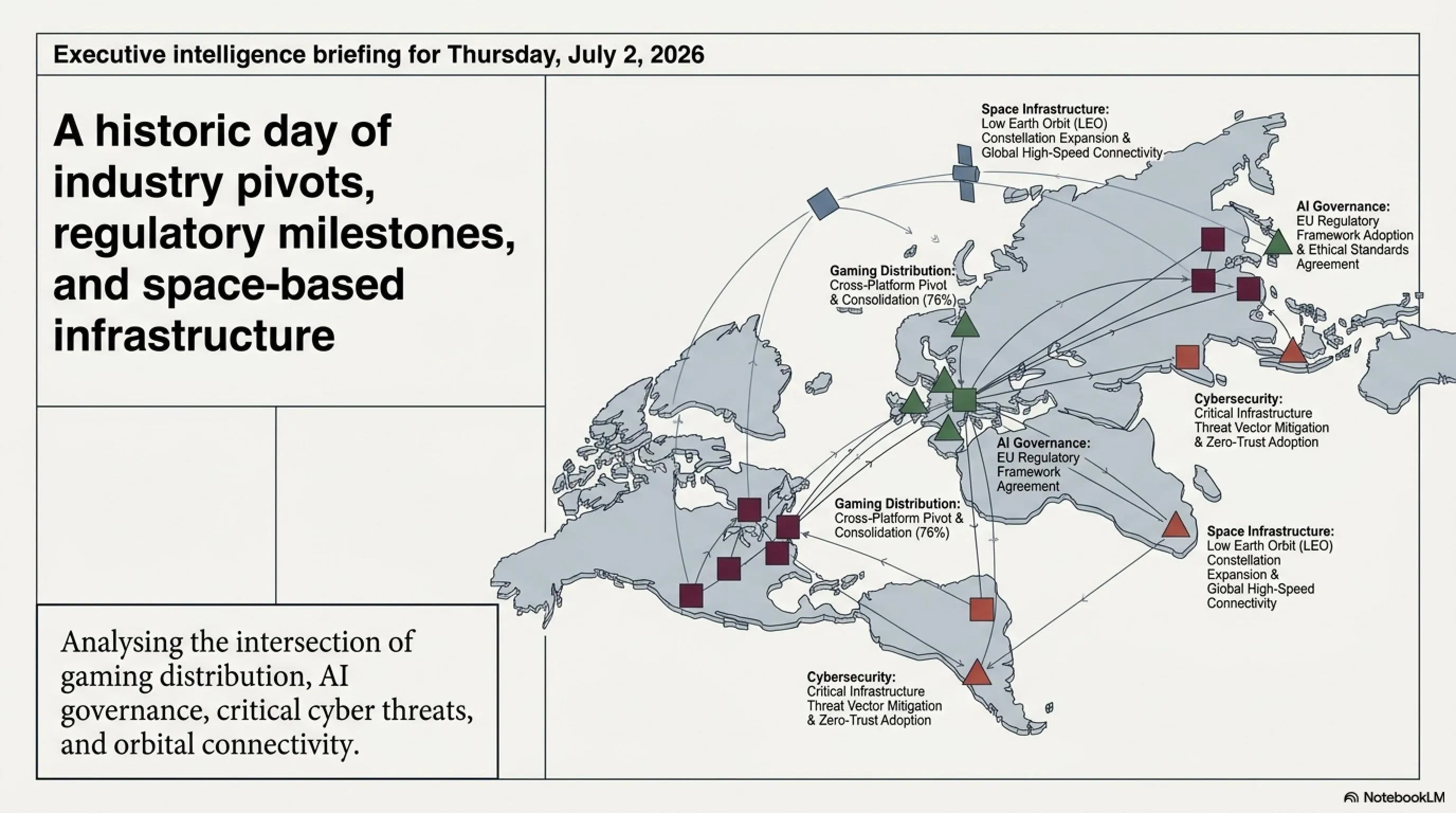
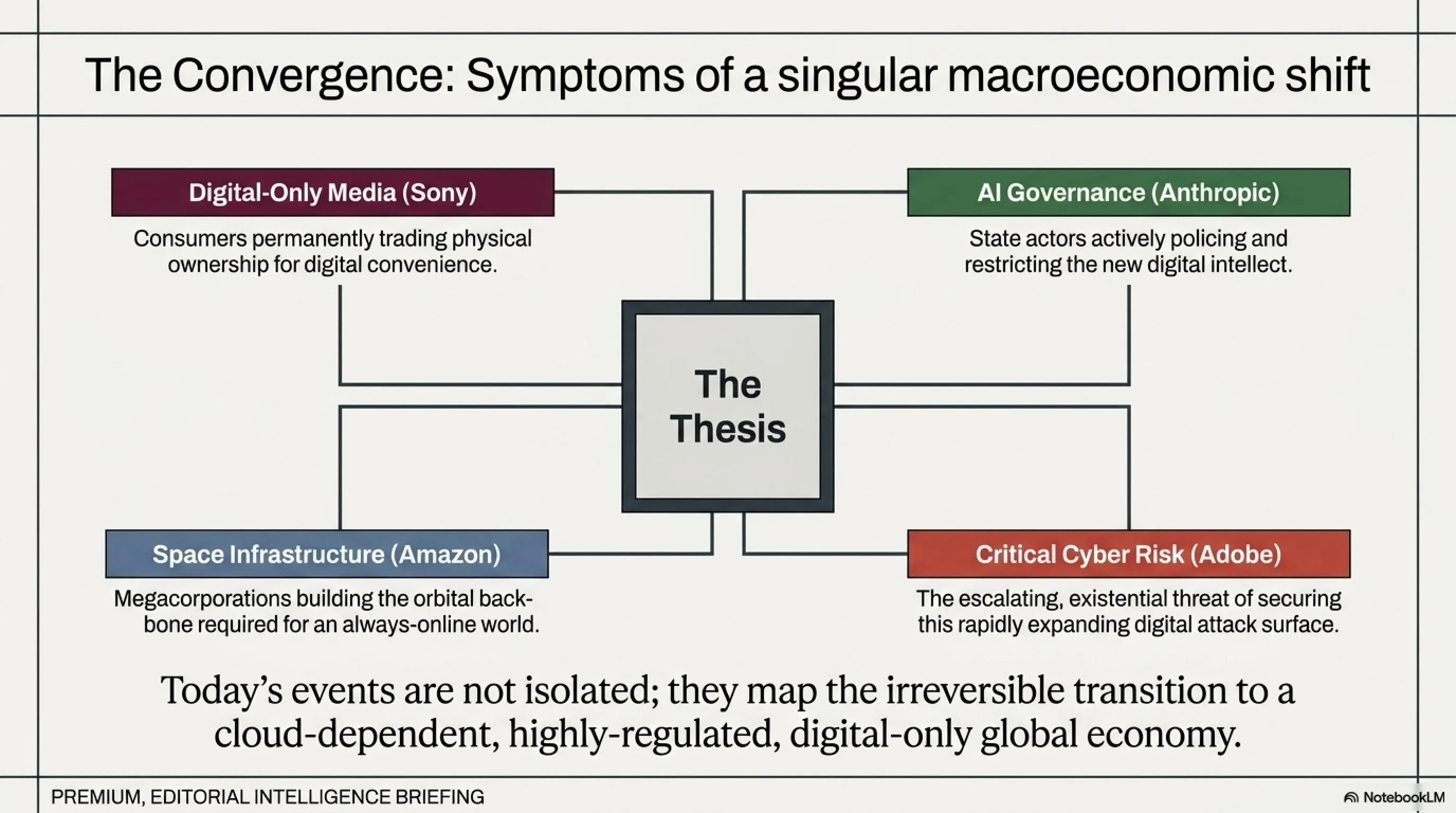
The convergence of today's major announcements—Sony's digital-only future, AI model regulation, critical security patches, and space infrastructure expansion—paints a comprehensive picture of where the technology industry is heading. These aren't isolated incidents but interconnected threads in a larger transformation narrative.
The Digital Distribution Revolution
Sony's move to eliminate physical game discs represents the culmination of a trend that began over a decade ago with the rise of Steam, the App Store, and digital-first gaming platforms. This transition mirrors what happened in music (Spotify, Apple Music), movies (Netflix, Disney+), and books (Kindle)—physical media is becoming increasingly niche.
For investors and industry stakeholders, this signals several key shifts: platform owners gain unprecedented control over pricing and availability, used game markets face obsolescence, and consumers trade ownership for convenience. The implications extend beyond gaming—expect similar moves from Microsoft, and eventually even Nintendo, despite its more conservative stance.
- Instant access to games without physical inventory
- Lower prices possible due to reduced distribution costs
- No disc manufacturing environmental impact
- Seamless updates and patches
- Never run out of stock
- Loss of true ownership and resale rights
- Dependency on internet connectivity
- Risk of service discontinuation
- No physical collectibles or limited editions
- Potential for higher digital monopoly pricing
AI Governance: The New Frontier
The Fable 5 export control saga illustrates how governments worldwide are grappling with AI regulation in real-time. Unlike previous technology waves where regulation lagged years behind innovation, AI is receiving immediate governmental attention—sometimes before products even reach consumers.
This creates both opportunities and challenges for AI companies. Those who can navigate regulatory frameworks and build trust with governments (as Anthropic demonstrated) will have competitive advantages. Meanwhile, companies that clash with regulators or ignore compliance may face sudden restrictions that devastate their business models.
Cybersecurity as Critical Infrastructure
Adobe's emergency patching of seven CVSS 10.0 vulnerabilities underscores the persistent and escalating nature of cybersecurity threats. These weren't zero-day exploits being actively used in attacks—they were discovered before exploitation—yet their severity demands immediate attention from every organization running affected software.
The cybersecurity industry continues to grow not just because threats increase, but because the attack surface expands with every new connected device, cloud service, and digital transformation initiative. Organizations that treat security as an afterthought rather than a foundational requirement will increasingly find themselves at existential risk.
What This Means for Gamers and Tech Enthusiasts
For everyday consumers, these developments translate into practical considerations for the coming months and years. The gaming landscape is shifting fundamentally, AI tools face more scrutiny and potential restrictions, security vigilance becomes non-negotiable, and space-based internet alternatives are finally becoming viable.
Action Items for Different Audiences
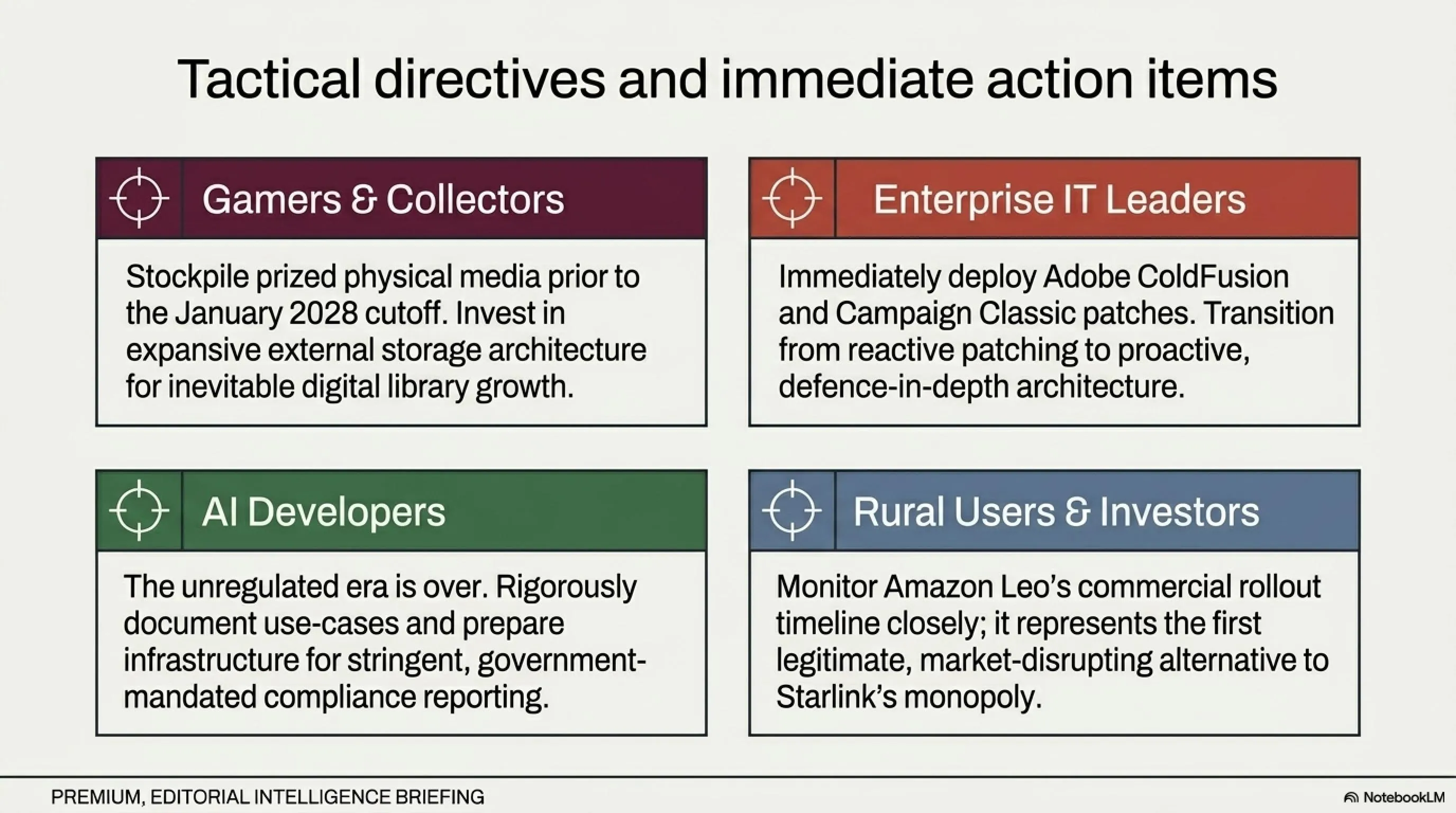
- PlayStation Gamers: If you value physical game ownership, stock up before January 2028. Consider investing in external storage for your digital library, as file sizes will only grow.
- ColdFusion/Campaign Classic Users: Update immediately to patched versions. These vulnerabilities represent existential threats to your infrastructure.
- AI Developers and Users: Expect increased regulatory oversight. Document your use cases and be prepared to demonstrate compliance with evolving standards.
- Rural Internet Users: Monitor Amazon Leo's commercial rollout closely—it could finally provide viable high-speed connectivity to underserved areas.
The technology industry never stands still, and today's announcements reinforce that reality. What seems like separate news items—gaming distribution, AI regulation, security patches, space launches—are actually interconnected facets of a broader digital transformation that touches every aspect of modern life.
Looking Ahead: What Comes Next
As we process today's major announcements, it's worth considering what these developments signal for the months and years ahead. Sony's digital-only pivot likely represents just the beginning of a broader industry shift, with Microsoft and potentially even Nintendo eventually following suit, albeit on different timelines and with different strategies.
The AI regulatory landscape will continue evolving rapidly, with governments worldwide developing frameworks to balance innovation with security and ethical concerns. Companies operating in this space should expect increased compliance requirements, potential restrictions on certain capabilities, and growing pressure to demonstrate responsible development practices.
Meanwhile, the cybersecurity arms race shows no signs of slowing. As systems become more complex and interconnected, attack surfaces expand exponentially. Organizations must shift from reactive security postures to proactive, defense-in-depth strategies that assume breaches will occur and plan accordingly.
The space economy's rapid expansion, exemplified by Amazon's aggressive satellite internet deployment, hints at a future where space-based services become as commonplace as terrestrial infrastructure. Within the next decade, satellite connectivity, space-based computing, and even space manufacturing could transition from novelties to essential elements of the global economy.
Final Thoughts
Thursday, July 2, 2026 will be remembered as a day when multiple seismic shifts occurred simultaneously: Sony's farewell to physical media, the return of powerful AI tools under new restrictions, and critical security alerts that demanded immediate action. These events remind us that the technology industry moves at breakneck speed, and staying informed isn't optional—it's essential for anyone who lives, works, or plays in the digital realm.
As you start your Thursday, take a moment to consider how these changes might affect your digital life. Whether you're a gamer contemplating your physical collection's future, an IT professional managing enterprise systems, an AI enthusiast exploring new tools, or simply someone who relies on internet connectivity, today's news has implications for you.
The technology world never stops evolving, and neither should our understanding of it. Stay curious, stay informed, and stay adaptable—those qualities will serve you well as we navigate the exciting and sometimes turbulent waters of digital transformation together.
Frequently Asked Questions
Will my existing physical PlayStation games still work after 2028?
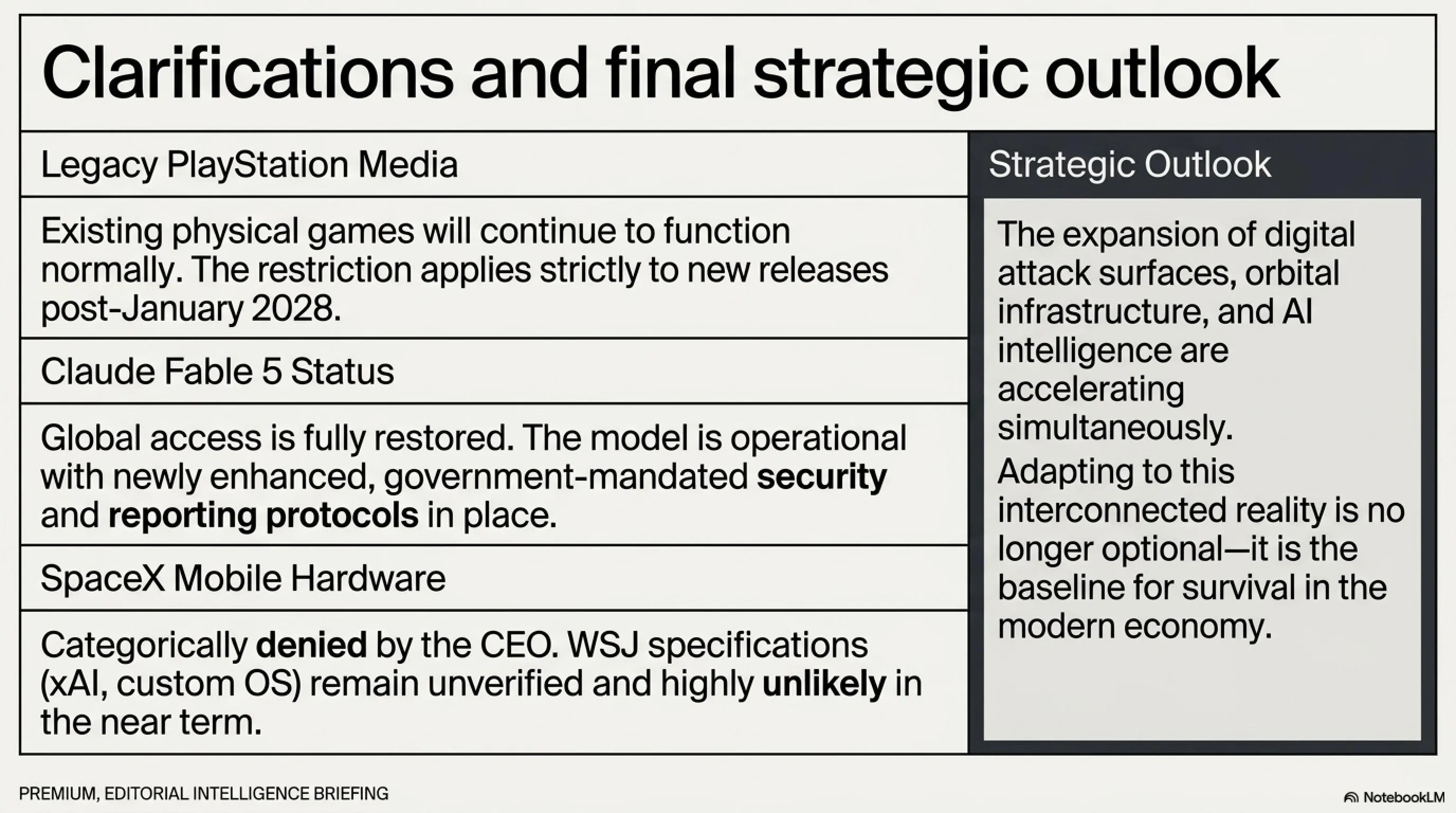
Yes, absolutely. All existing physical games will continue to function normally. The restriction only applies to new games released after January 2028.
Will the PS6 have a disc drive at all?
Sony hasn't announced PS6 details yet, but given this decision, the PS6 will likely either ship without a disc drive entirely, or offer it only for backward compatibility with older physical games.
Does the SpaceX phone actually exist?
According to Elon Musk's categorical denial, no. He stated the WSJ report is utterly false and that SpaceX has no smartphone project whatsoever.
Is Claude Fable 5 safe to use now?
Yes. Following Anthropic's agreement with the U.S. government, the model has returned with enhanced security protocols. Anthropic has also committed to reporting any identified misuse.
How do I protect against the Adobe vulnerabilities?
If you use ColdFusion or Campaign Classic, immediately update to version 2025.10 for ColdFusion or ACC v7: 7.4.1 for Campaign Classic. These patches address all seven critical vulnerabilities.
When will Amazon Leo be available to consumers?
Amazon predicts commercial Amazon Leo service will begin in late 2026 or early 2027, after sufficient satellites are in orbit to provide reliable coverage.
Can I still buy physical games after 2028?
You can buy pre-2028 physical games on the secondhand market, but all new PlayStation releases after January 2028 will be digital-only.
What happens if PlayStation Store shuts down?
This is a legitimate concern with digital-only distribution. Sony has stated it will maintain the store and backward compatibility, but there's no legal guarantee. This represents one of the main risks of purely digital ownership.
Sources and References
- Wired - Sony PlayStation Puts a Nail in Physical Media's Coffin
- Reuters - Sony to end discs for new PlayStation releases as gaming shifts online
- Polygon - Sony announces end of PlayStation physical disc production
- Forbes - Musk Denies Report SpaceX Is Developing Handheld AI Device
- CNBC - Anthropic says Trump admin has lifted export controls on Claude Fable 5 and Mythos 5
- The Guardian - Anthropic says US has lifted export controls on Fable and Mythos AI models
- The Hacker News - Adobe Patches 7 CVSS 10.0 Flaws in ColdFusion and Campaign Classic
- SecurityWeek - Adobe Patches Critical ColdFusion, Campaign Classic Vulnerabilities
- IGN - Onimusha: Way of the Sword Release Date Moved Forward
- Space.com - ULA Atlas V to launch 29 Amazon Leo internet satellites
Supplementary Image Gallery: ☀️ Tekin Morning July 2, 2026: The Death of PlayStation Discs & SpaceX Phone Drama