RAMageddon: When Computer Memory Becomes More Expensive Than Gold
- 🎮Historic Lawsuit- Samsung, SK Hynix, and Micron accused of manipulating RAM prices by 700%
- 🎧Artificial Crisis- Deliberate reduction of DDR4/DDR5 production under the guise of focusing on HBM for AI
- 🚀$550B Investment- South Korea pledges to double memory production capacity
At a Glance
- Class action lawsuit filed against Samsung, SK Hynix, and Micron in California court
- RAM prices have increased approximately 700% over four years
- Three companies accused of deliberately restricting consumer DRAM supply
- South Korea responds with $550 billion investment plan
- Direct impact on gaming PC, laptop, and next-gen console pricing
When Three Memory Giants Get Dragged to Court
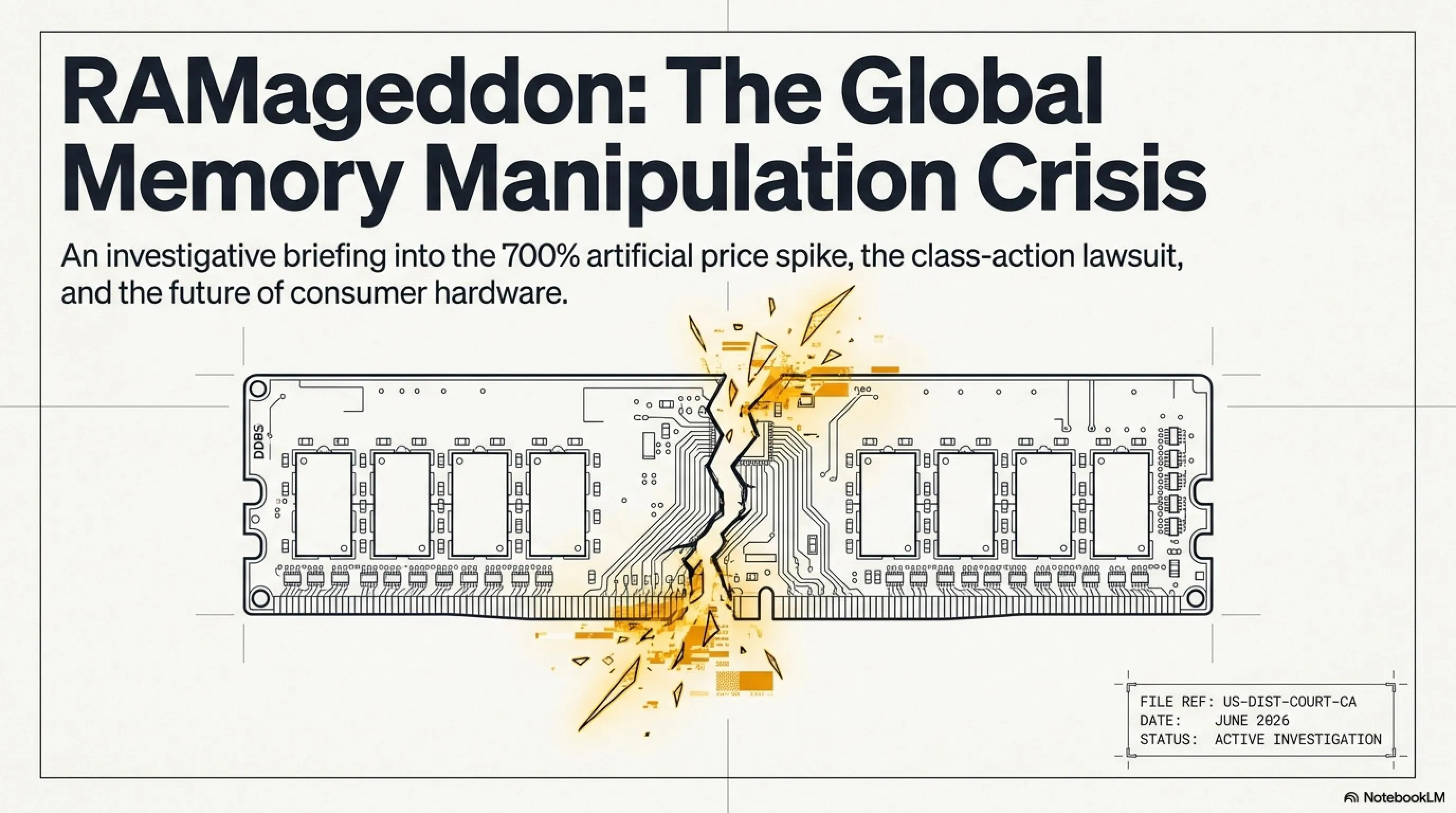
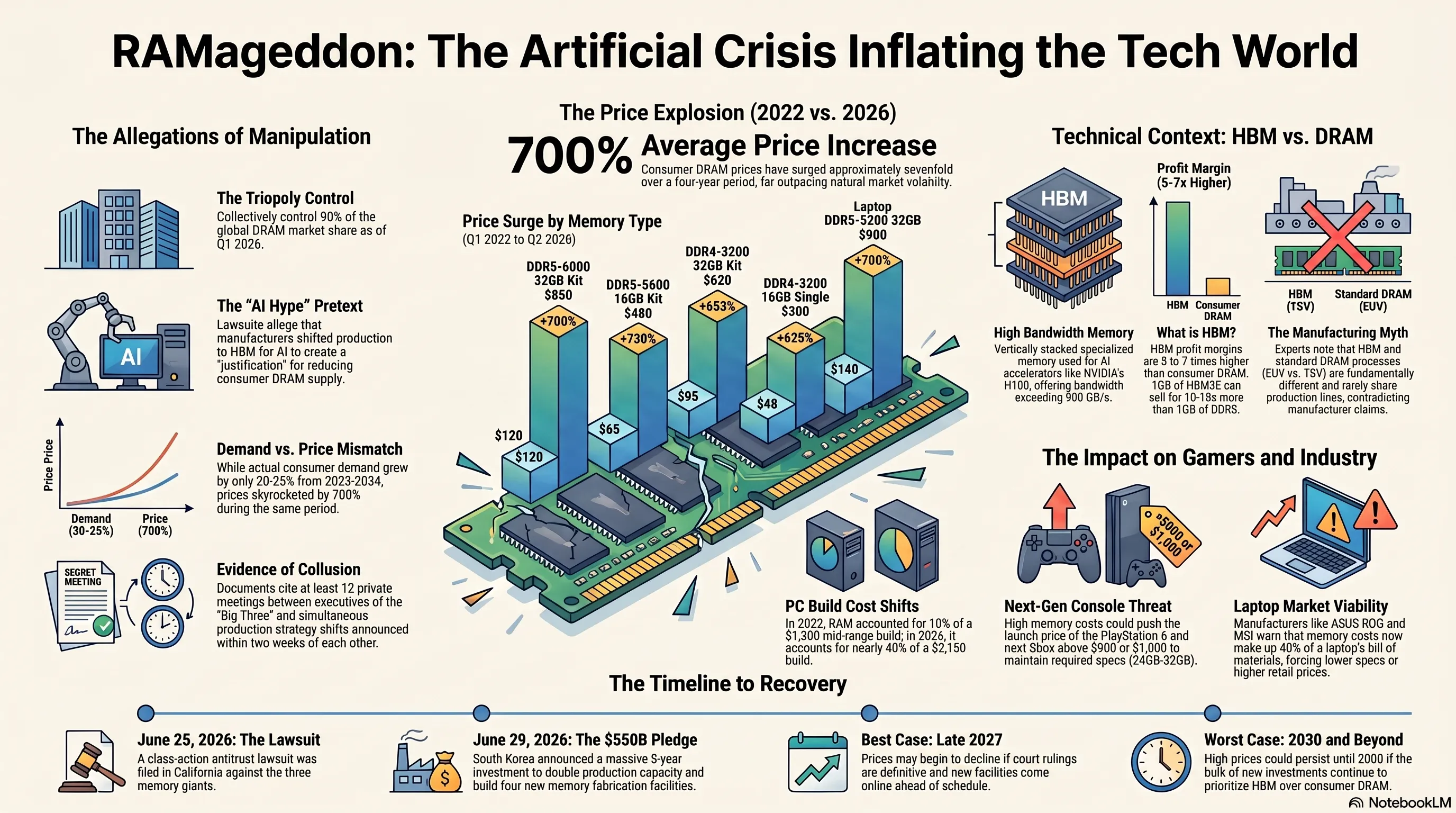
On June 25th, 2026, the U.S. District Court for the Northern District of California witnessed the filing of one of the largest antitrust lawsuits in semiconductor industry history. Seventeen American plaintiffs, including individual consumers and small businesses, brought three global memory manufacturing giants to court. Samsung Electronics, SK Hynix, and Micron Technology, which collectively control ninety percent of the global DRAM market, stand accused of coordinating to restrict DDR4 and DDR5 memory supply and artificially inflating prices.
The core allegation is that these three companies, since 2022, have deliberately reduced standard DRAM production under the pretext of focusing on HBM memory for artificial intelligence applications. The result of this supply restriction has been nothing short of a pricing catastrophe. Over the past four years, consumer memory prices have surged approximately seven hundred percent. For buyers in markets with currency restrictions like Iran, this translates to effectively doubling the cost of building or upgrading a computer.
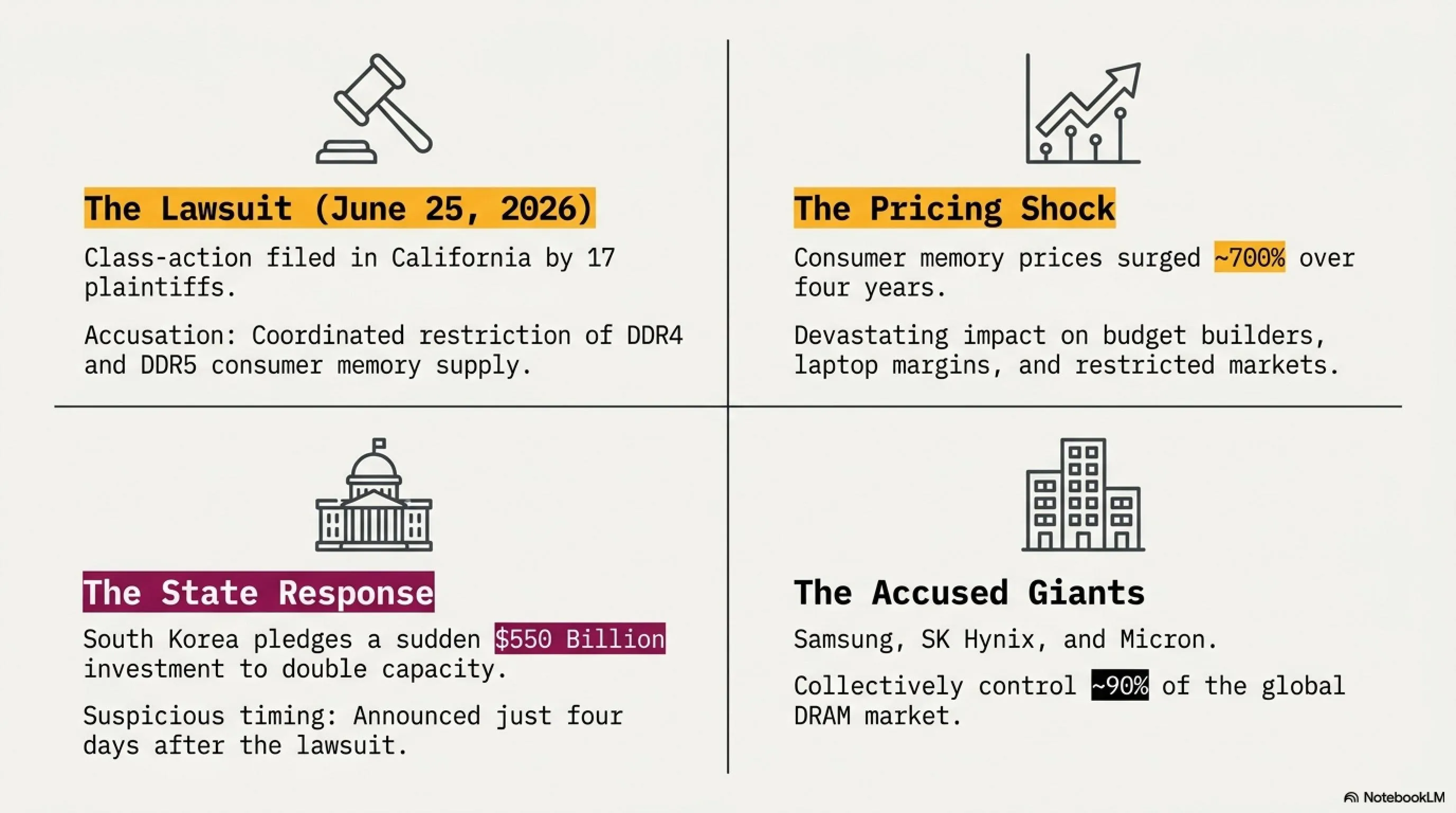
Plaintiffs claim that these three firms leveraged the AI hype wave and specialized chip production for data centers to create an apparent justification for reducing consumer memory supply. While demand for DDR5 and even DDR4 remains high in Gaming and Workstation markets, these companies' production lines have shifted toward HBM3 and HBM3E. Technically, HBM production is more complex and profitable, but this cannot explain the dramatic reduction in consumer DRAM supply.
Why This Matters
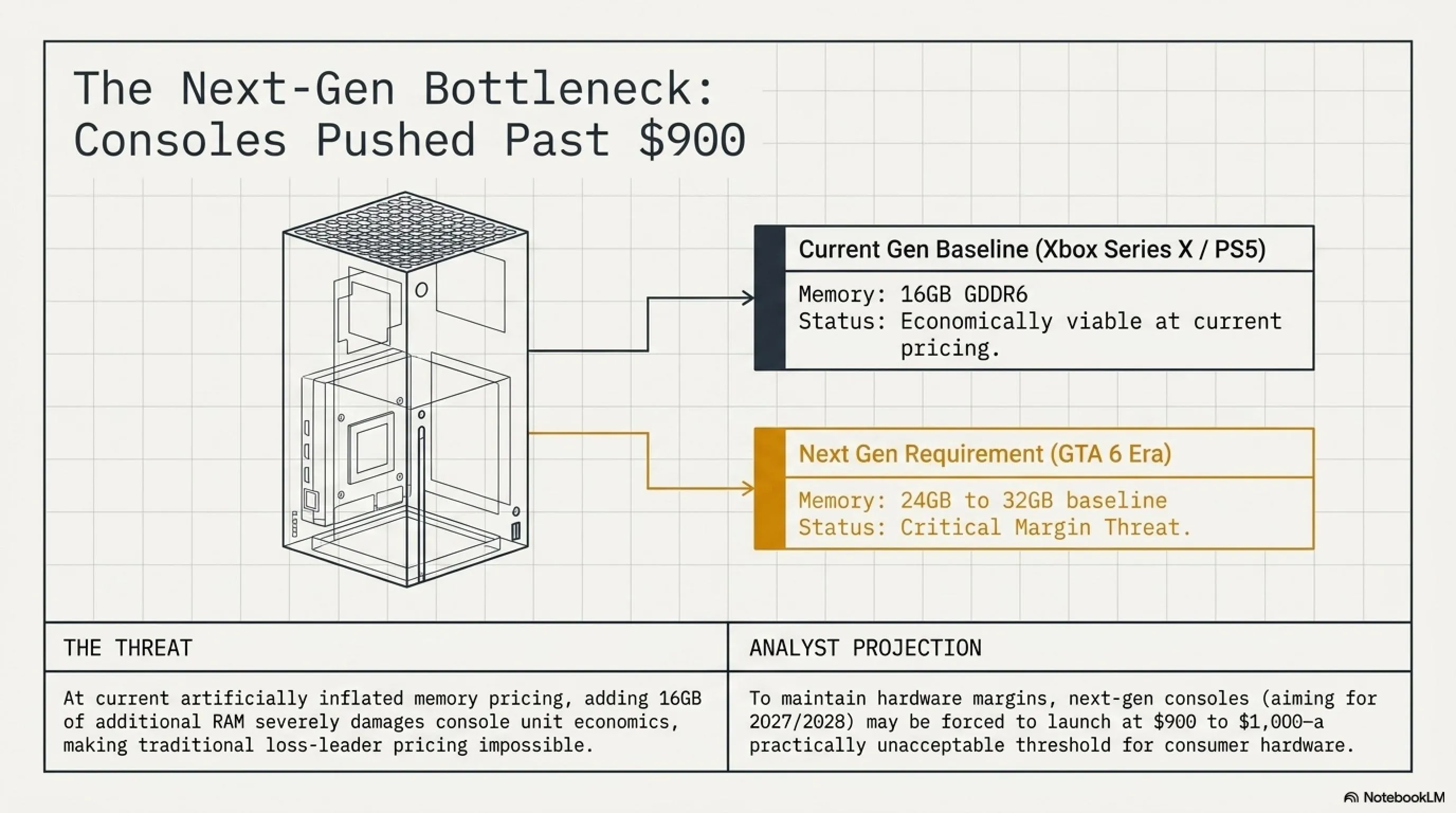
This crisis isn't just an industry issue. For gamers worldwide working with budget constraints, a 700% RAM price increase means delaying system purchases or upgrades for years. A 32GB DDR5 kit that should cost around $150 now sells for over $850. This directly impacts the ability to run new AAA titles like GTA 6 or Assassin's Creed Black Flag Resynced. Console manufacturers like Sony and Microsoft face similar challenges, potentially pushing PS6 and next-gen Xbox prices above the $900 mark, with memory accounting for a significant portion of that cost.
Anatomy of an Artificial Crisis
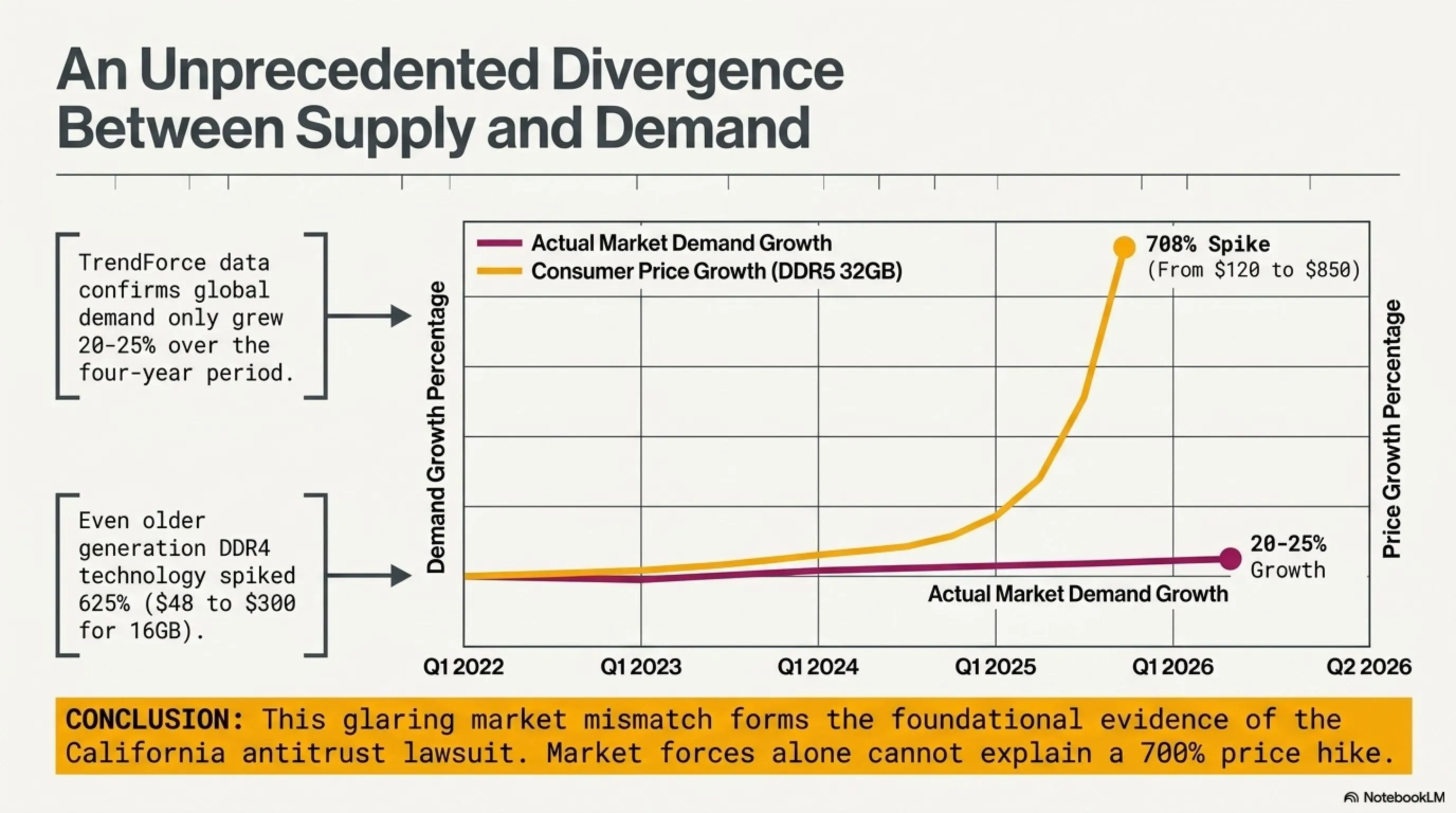
To truly understand the depth of this crisis, we need to examine real market numbers. A thirty-two gigabyte DDR5-6000 kit from reputable brands like G.Skill or Corsair that sold for approximately one hundred and twenty dollars in early 2022 now commands prices between eight hundred and nine hundred and fifty dollars in global markets. In regions with import costs, taxes, and currency exchange premiums, this figure can exceed local equivalent of seventy million Iranian tomans or similar purchasing power parity.
But the story doesn't end with DDR5. Even older memory standards like DDR4, which should have become cheaper with the advent of newer generation, now trade at prices close to their historical peaks. A sixteen gigabyte DDR4-3200 module that was available for forty-five to fifty dollars in 2021 now costs approximately two hundred and eighty to three hundred and twenty dollars. This price growth is abnormal even by semiconductor market standards, which has always been characterized by volatile swings.
But what distinguishes this price surge from natural market fluctuations? The answer lies in supply and demand data. According to TrendForce, one of the most credible semiconductor market research firms, actual demand for consumer DRAM in 2023 and 2024 grew by only about twenty to twenty-five percent. In contrast, prices increased by seven hundred percent. This glaring mismatch between supply and demand forms the foundation of the recent class action lawsuit.
Jargon Buster: What is HBM and Why is it So Profitable?
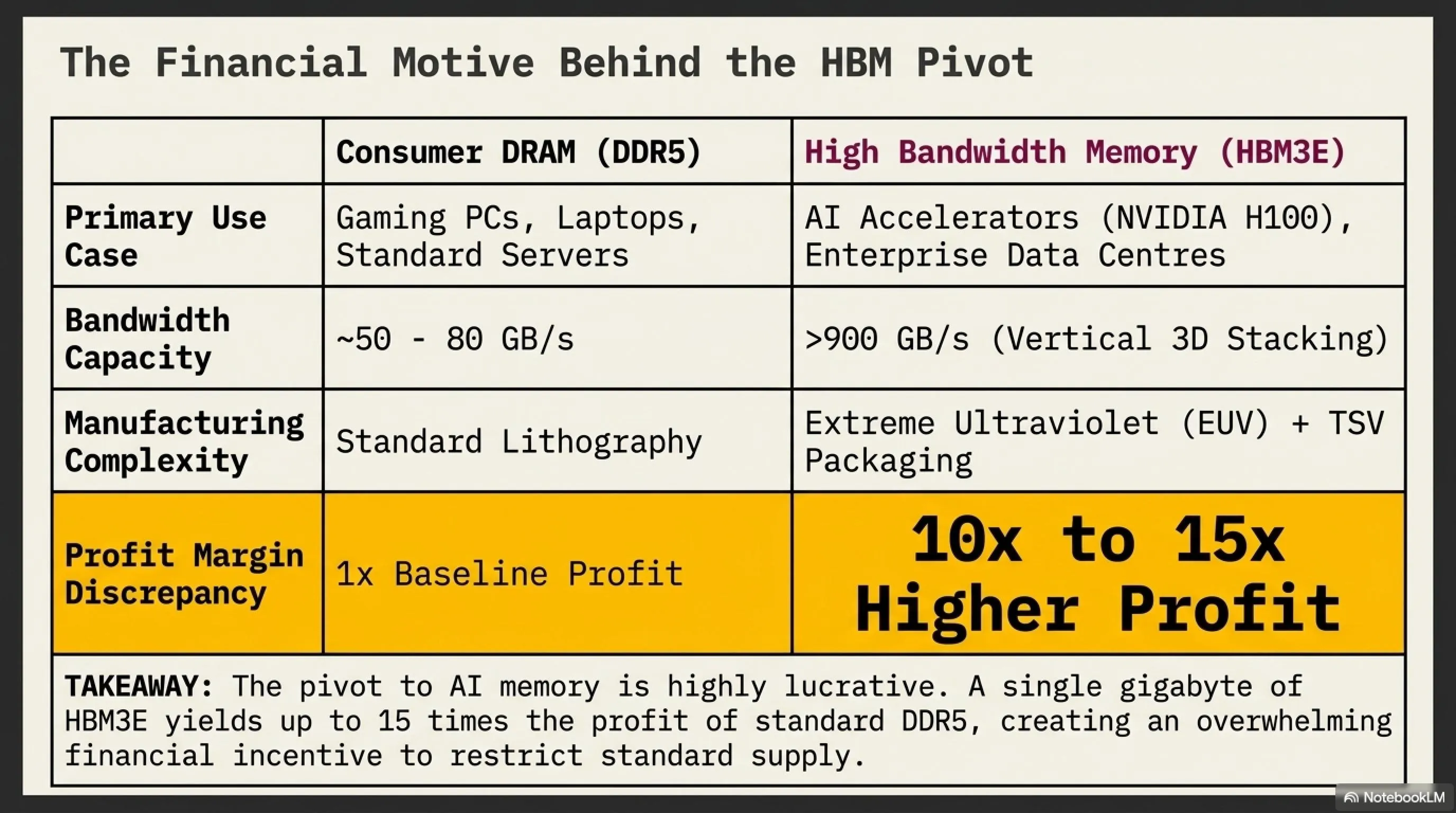
HBM or High Bandwidth Memory is a specialized type of memory constructed by vertically stacking multiple chip layers. These memories are primarily used in professional graphics cards like NVIDIA H100 and AMD MI300, AI accelerators, and data center servers. The key difference between HBM and consumer DRAM lies in significantly higher bandwidth (exceeding 900 gigabytes per second) and lower power consumption. HBM production requires more advanced processes and higher costs, but its profit margin is several times that of standard DRAM. For example, one gigabyte of HBM3E can sell for ten to fifteen times more than one gigabyte of DDR5.
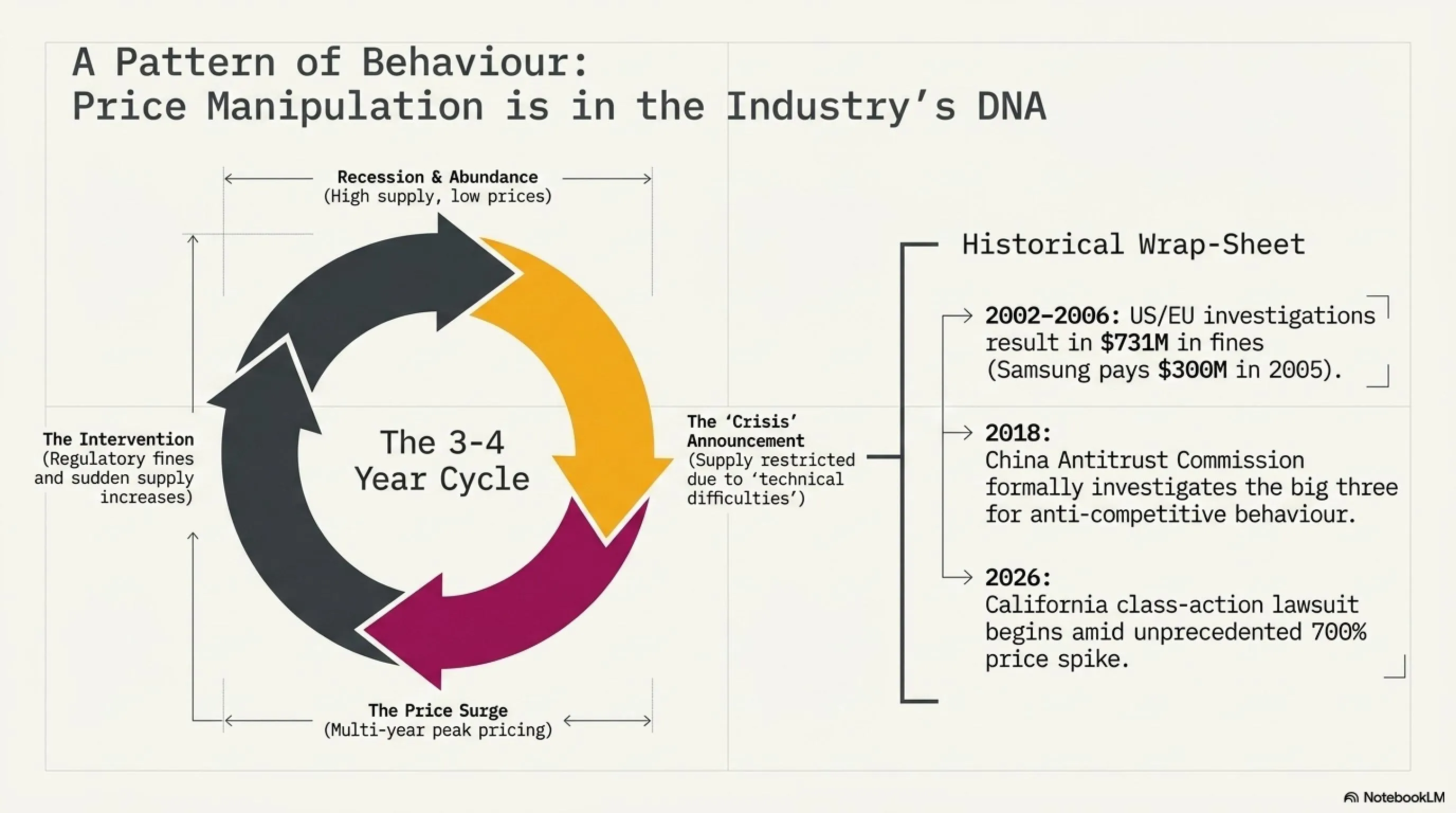
A Recurring History: Price Manipulation in Memory Industry DNA
This isn't the first time these three memory giants have faced price manipulation allegations. In 2018, China's antitrust commission investigated all three companies for anti-competitive behavior. Similarly, in 2002 and 2006, memory manufacturers in America and Europe paid billions in fines for DRAM price-fixing collusion. Samsung alone was ordered to pay three hundred million dollars in penalties in 2005.
The recurring pattern in this industry follows a familiar script: after a period of recession and price decline typically accompanied by sharp supply increases, manufacturers suddenly announce that due to technical difficulties, production strategy changes, or sudden demand spikes, supply will be limited. Prices then surge vertically. After several years of peak pricing, supply increases again and prices decline. This cycle repeats approximately every three to four years.
The Class Action Lawsuit: Allegations and Evidence
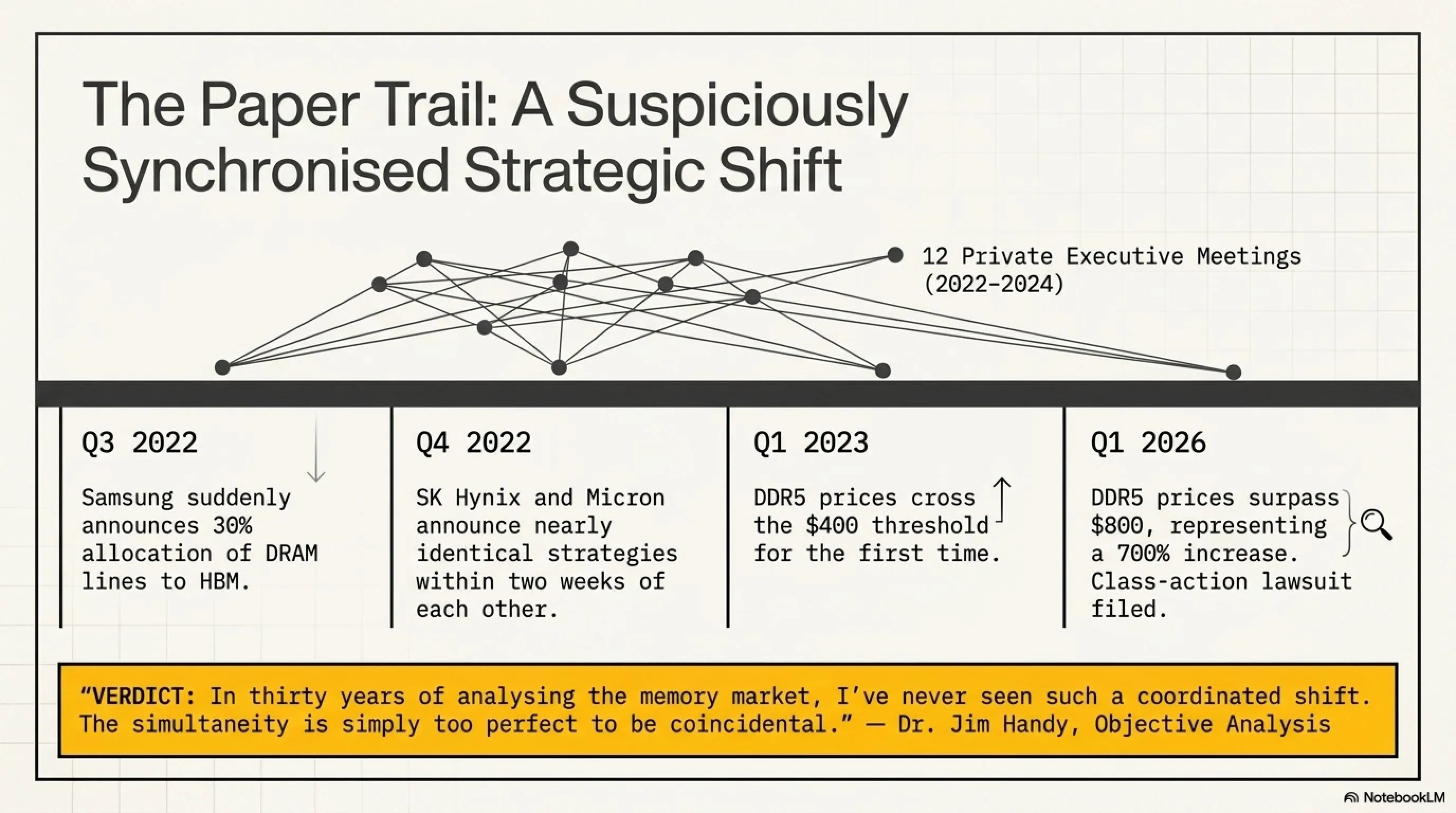
The lawsuit filed in California district court presents evidence suggesting these three companies acted in coordination. One of the most significant pieces of evidence involves joint meetings between CEOs and senior executives of all three firms at industry conferences. According to submitted documents, executives from these companies held at least twelve private meetings at various conferences between 2022 and 2024.
Another key piece of evidence comes from the companies' quarterly financial reports. In every quarterly report from Q3 2022 through Q1 2026, all three companies announced within two weeks of each other their intention to shift investment from consumer DRAM to HBM. This conspicuous simultaneity in production strategy forms one of the primary bases for suspecting collusion.
Timeline: The RAMageddon Crisis Unfolds
South Korea Enters the Arena: $550 Billion Investment
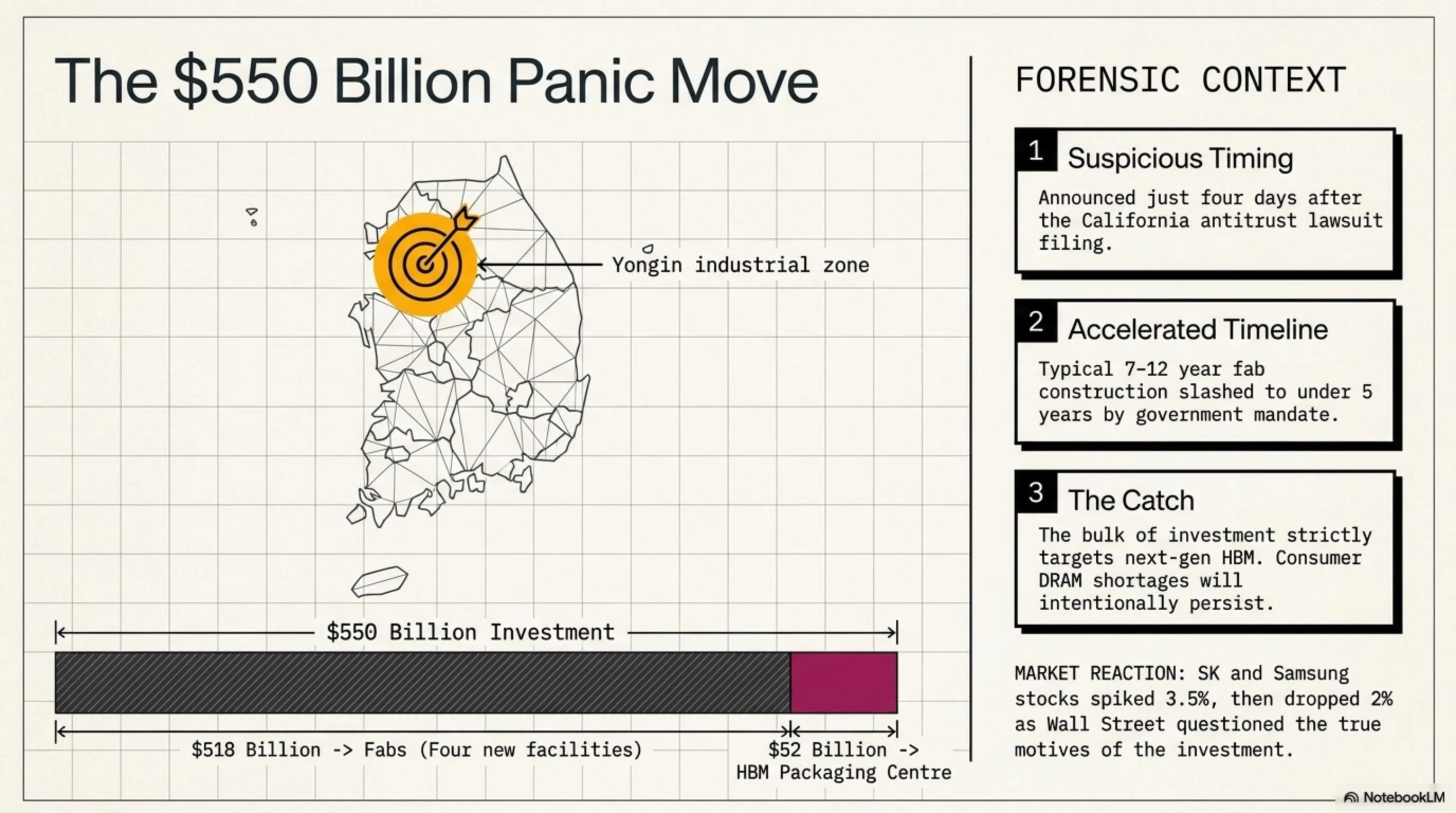
In an unprecedented move just four days after the lawsuit filing, the South Korean government alongside Samsung and SK Hynix announced they would invest over five hundred and fifty billion dollars over the next five years to expand memory production capacity. President Lee Jae Myung announced at a Monday, June 29th press conference that this investment includes construction of four new memory fabrication facilities in the southwestern region and one HBM packaging center in the central region.
Of this massive sum, five hundred and eighteen billion dollars is allocated to memory fab construction and fifty-two billion dollars to the HBM packaging center. The stated goal is to double South Korea's memory production capacity within five years. Additionally, according to Korean officials, the construction timeline for new facilities in the Yongin industrial zone, which typically takes seven to twelve years, will be reduced to less than five years.
However, this swift government action has raised numerous questions. Industry analysts believe this sudden announcement, mere days after the antitrust lawsuit, signals deep concern from the Korean government about potential consequences. If the U.S. court rules in favor of plaintiffs, heavy penalties could severely damage South Korea's semiconductor industry, which forms a pillar of the nation's economy.
Market Reaction: Between Hope and Skepticism
Stock market reactions to these announcements have been mixed. Samsung Electronics shares rose approximately three and a half percent on the day of the investment announcement but dropped two percent the following day. SK Hynix followed a similar pattern. Wall Street Journal analysts suggest these fluctuations indicate investor uncertainty about the timing and true motivation behind these investments.
Another crucial point is that while doubling production capacity has been announced, there's no guarantee this additional capacity will be devoted to consumer DRAM production. Based on statements from Samsung and SK Hynix executives, the bulk of this investment will focus on next-generation HBM production. This means consumer DRAM shortages and high prices will likely continue.
What Do the Numbers Tell Us?
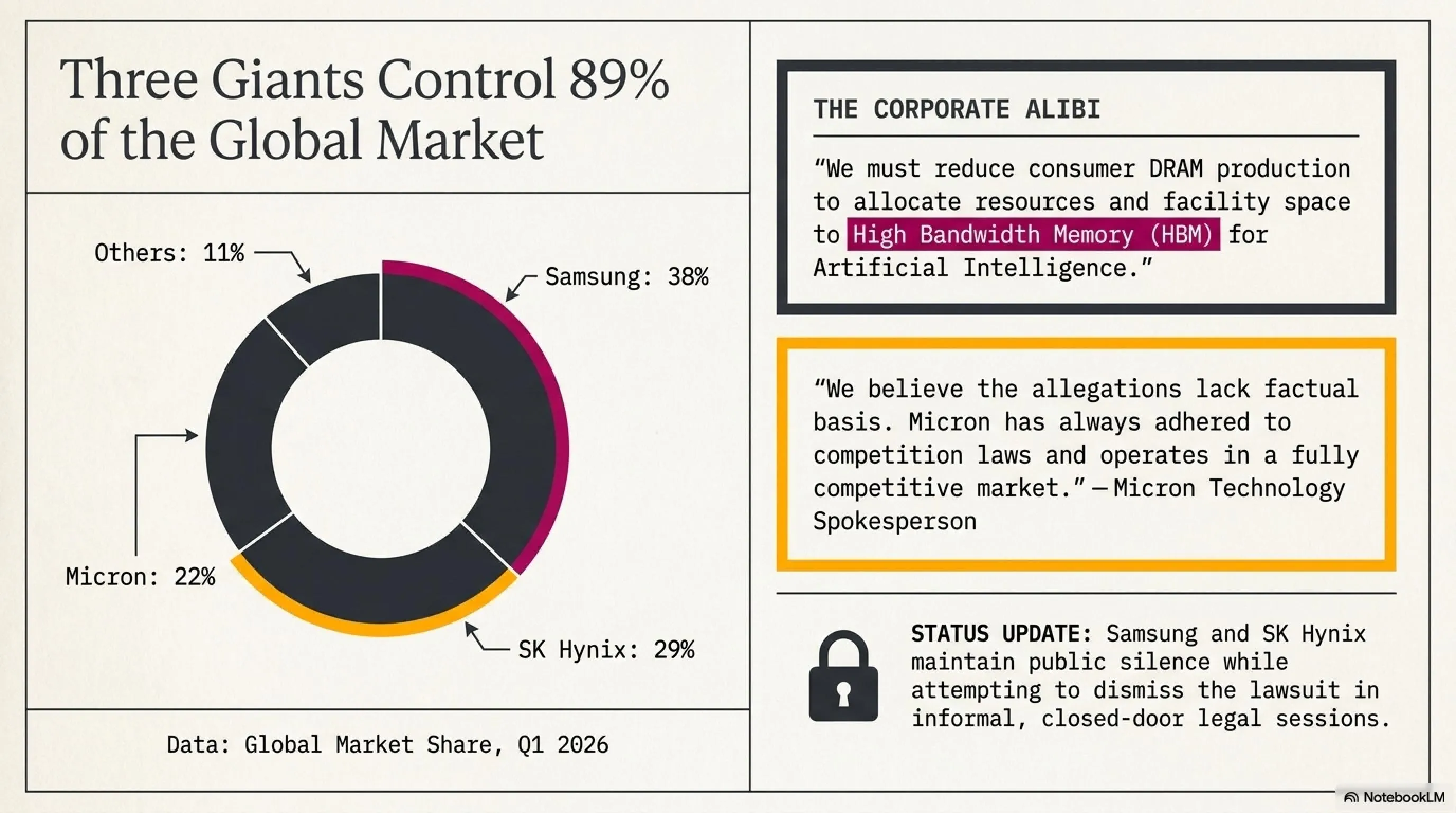
- Global Market Share: Samsung 38%, SK Hynix 29%, Micron 22% (Q1 2026)
- DDR5 32GB Price Increase: From $120 (Q1 2022) to $850 (Q2 2026) - 708% growth
- DDR4 16GB Price Increase: From $48 (Q1 2022) to $300 (Q2 2026) - 625% growth
- HBM Profit Margin: 5 to 7 times higher than consumer DRAM
- Actual Demand Growth: 20-25% in years 2022-2026
Technical Examination: Is HBM Really the Culprit?
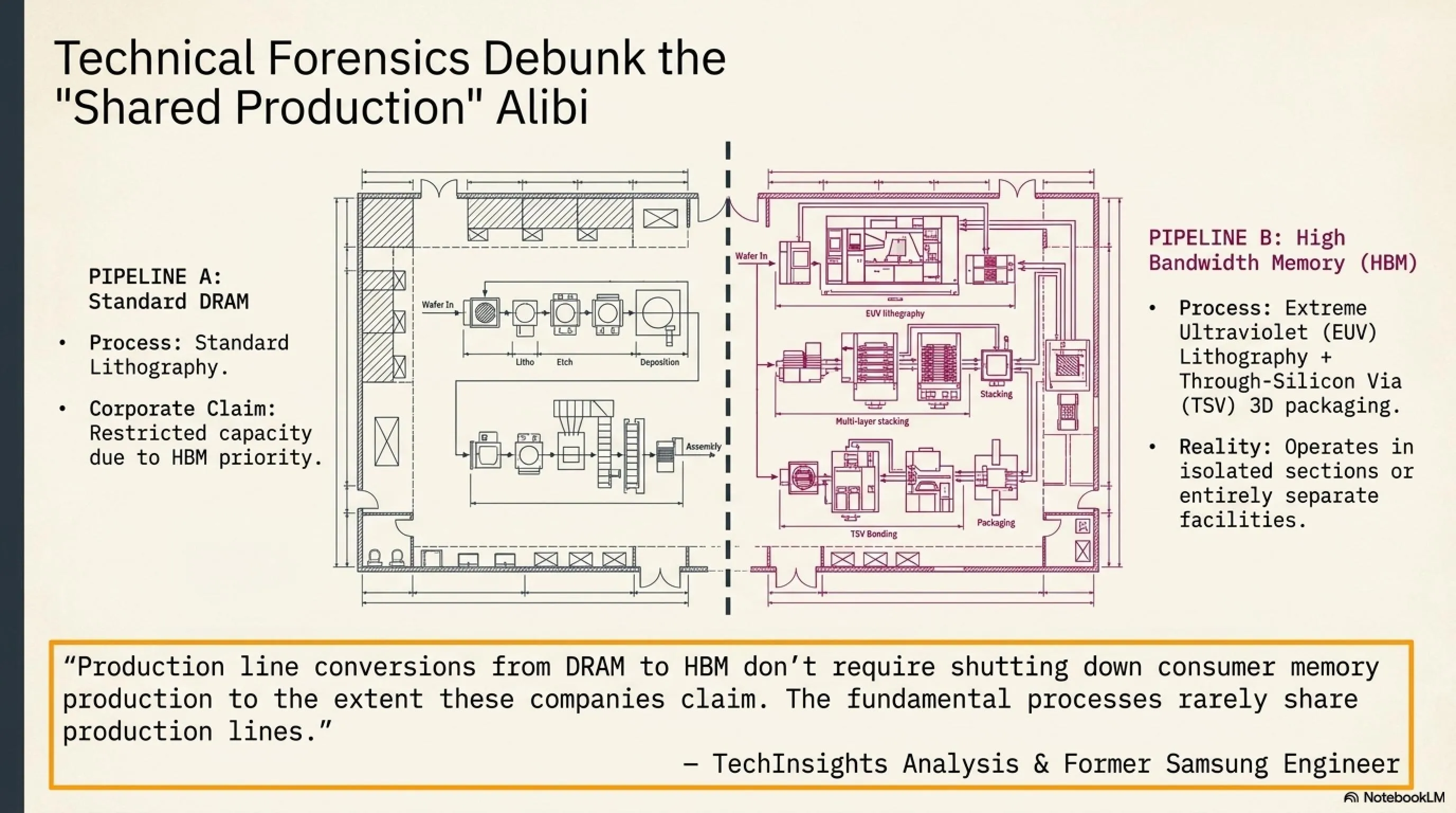
One of the primary defenses from memory manufacturers is that HBM production, due to process complexity and specialized equipment requirements, necessitates using the same production lines previously used for consumer DRAM. However, semiconductor industry experts reject this argument. According to TechInsights, a credible semiconductor research firm, HBM and standard DRAM production processes have fundamental differences and rarely share production lines.
In fact, HBM requires more advanced lithography processes (EUV) and more complex packaging steps (TSV or Through-Silicon Via). These processes are typically performed in separate facilities or isolated sections of the same facility. Therefore, memory manufacturers' argument that increased HBM production caused reduced DRAM capacity lacks technical credibility.
Impact on Gaming Industry: When RAM Becomes the Main Bottleneck
The memory price crisis directly impacts the gaming industry. With upcoming next-gen titles like GTA 6 recommending minimum thirty-two gigabytes of RAM, many gamers face a difficult choice: either pay astronomical amounts for RAM upgrades or miss out on the complete gaming experience. This challenge is particularly acute for markets with lower purchasing power.
Gaming laptop manufacturers and next-gen console makers have also been affected by this crisis. Sony, for PlayStation 6 likely launching in 2027 or 2028, must decide how much memory to include in the console. Each additional gigabyte significantly increases the console's final cost. Some analysts predict PS6 may launch at prices exceeding nine hundred dollars, with a substantial portion attributed to memory costs.
Microsoft faces similar challenges for next-gen Xbox. While current Xbox Series X launched with sixteen gigabytes of GDDR6 memory, the next generation will likely require at least twenty-four to thirty-two gigabytes. At current prices, this amount of memory could push console manufacturing costs above one thousand dollars, unacceptable for a consumer product.
Impact on Global Gamers
For gamers worldwide working with budget constraints and economic challenges, the RAMageddon crisis represents a genuine catastrophe. Building a mid-range gaming system with 32GB DDR5 that should cost around $600-700 total now exceeds $1,200-1,500, with memory accounting for over 60% of the increase. This means many gamers must either settle for weaker systems or postpone purchases indefinitely. Even the used market hasn't been spared, with secondhand RAM prices climbing irrationally. Cloud gaming services like GeForce Now or Xbox Cloud Gaming offer alternatives, but require stable high-speed internet not universally available.
Tech Companies' Response: Silence or Denial
Samsung, SK Hynix, and Micron have yet to officially respond to the class action allegations. Only Micron issued a brief statement claiming the accusations are baseless and the company intends full cooperation with the judiciary. Samsung and SK Hynix have maintained silence, though their attorneys in informal sessions indicated intent to dismiss the lawsuit as unfounded.
However, these companies' silence amid mounting public pressure isn't a good sign. On social media and specialist forums like Reddit and TechPowerUp, users vehemently criticize these companies and call for product boycotts. Of course, given these three firms control ninety percent of the market, practical boycotts are virtually impossible.
Future Outlook: When Will Prices Decline?
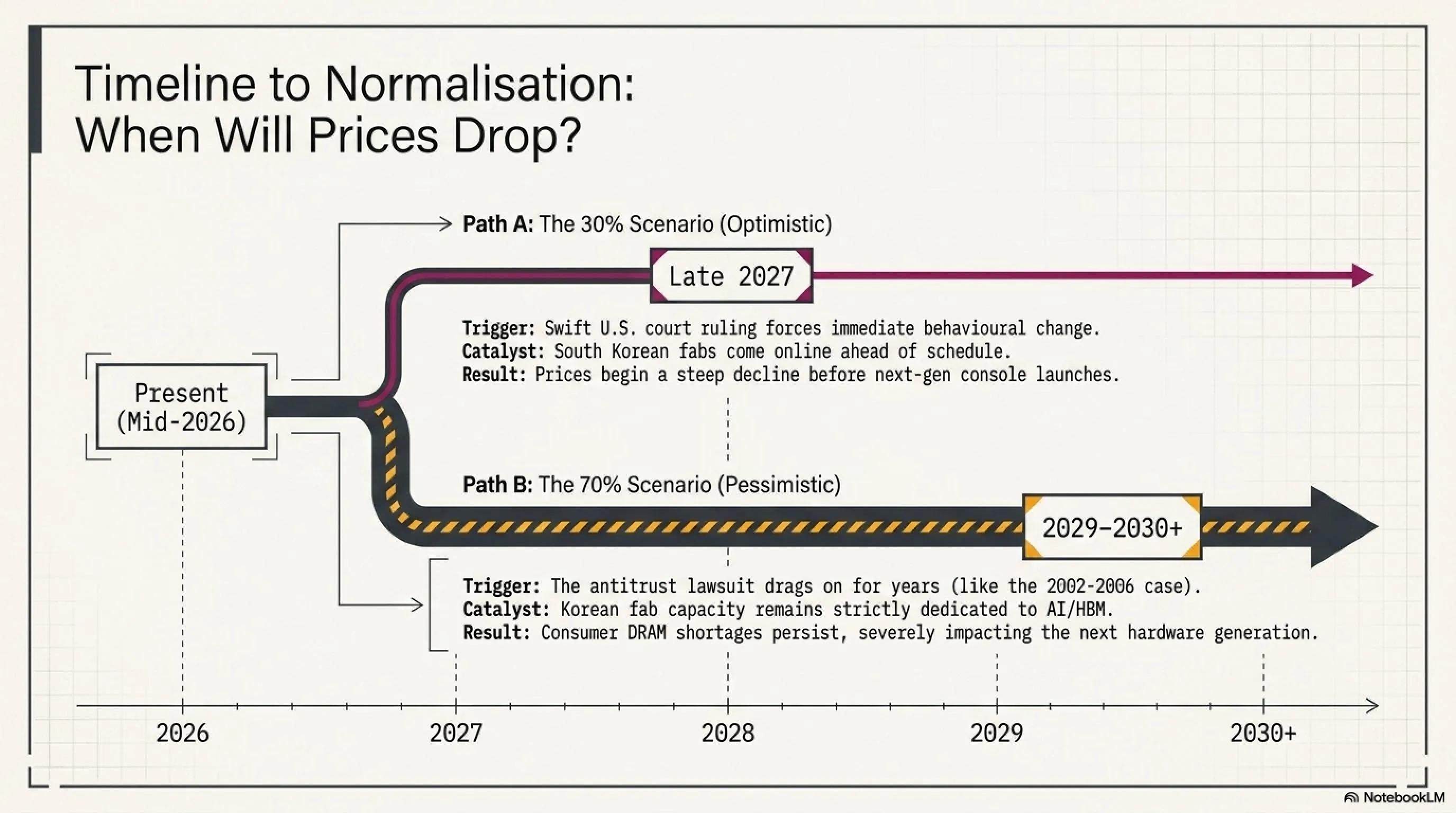
The critical question is when we can expect memory price reductions. The answer depends on several factors. First, the class action lawsuit outcome, which will likely take months or even years. Second, South Korean investments, which according to plan won't bring new facilities online until 2029 or 2030. Third, possible entry of new market players who could break the three-way monopoly.
Market analysts believe that in the best case scenario, prices will begin declining by late 2027. This assumption rests on new Korean facilities coming online ahead of schedule and U.S. courts issuing definitive rulings against memory manufacturers. In the worst case, high prices will persist until 2030.
Rumor vs Reality: Will Prices Actually Drop?
30% Probability: Price reduction by late 2027 (requires court ruling and accelerated fab construction)
70% Probability: High prices persist until 2029 or later
📚 Classified & Related Dossiers in TekinGame
If you wish to explore beyond this report and delve into cybernetic frontiers and autonomous AI architectures, do not miss these three exclusive deep-dives in the Tekin Garage:
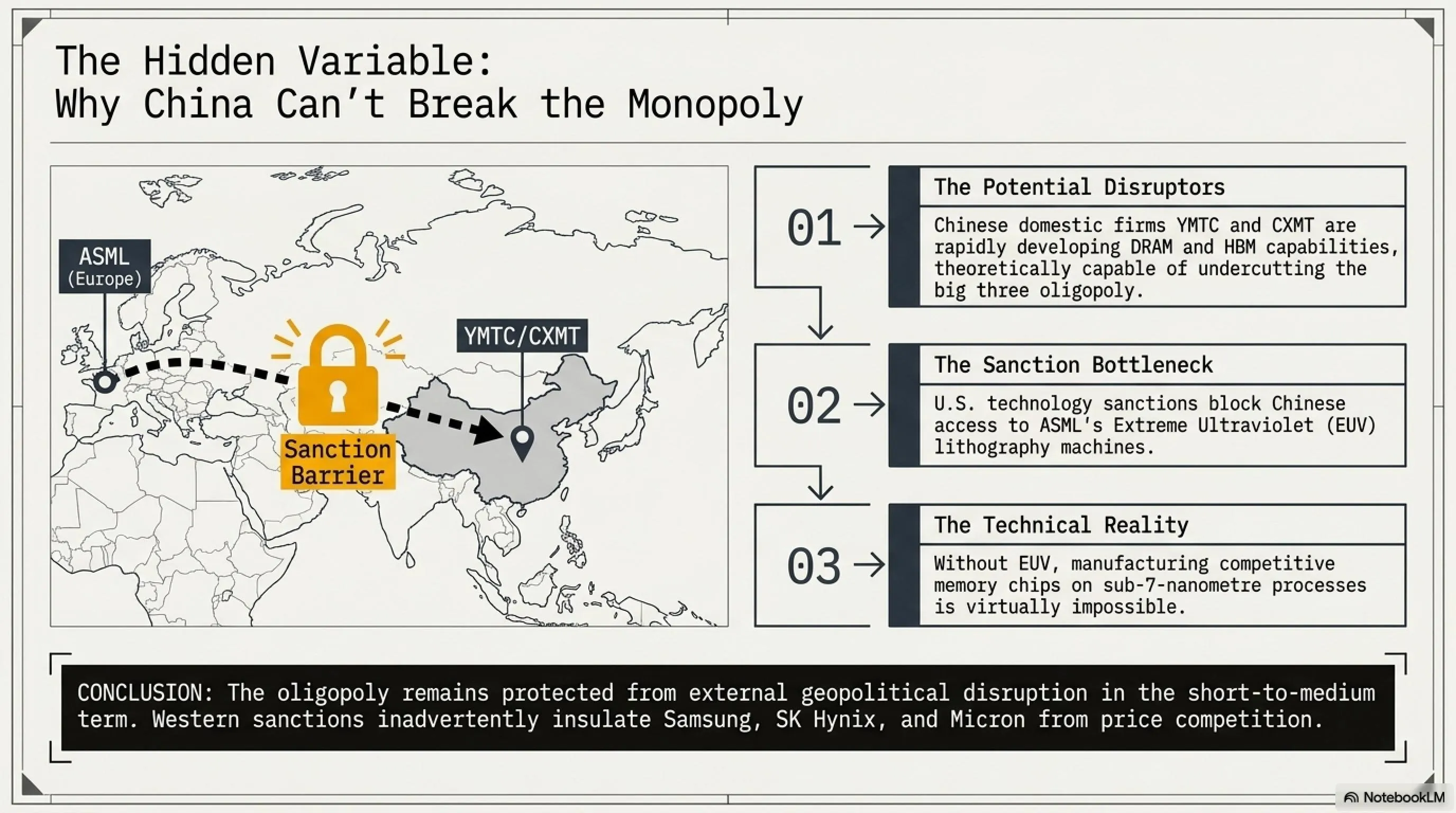
China's Role: The Hidden Player in the Equation
One important factor that could influence the memory market's future is the entry of Chinese companies into this arena. Companies like YMTC and CXMT, which until now have primarily operated in China's domestic market, are currently developing DRAM and HBM production technologies. Although these companies still lag several years behind their Korean and American rivals technologically, they're making rapid progress.
However, U.S. technology sanctions against China represent the main obstacle to these companies' advancement. Access to advanced lithography equipment like ASML's EUV machines is severely limited for China. Without this equipment, manufacturing memory chips using sub-seven nanometer processes is virtually impossible. Therefore, the likelihood of China becoming a serious competitor to the current three giants in the short term remains low.
Tekin Analysis: Why This Time Is Different
At Tekin Gaming editorial, we believe the RAMageddon crisis differs from previous memory price crises in several ways. First, more evidence and documentation is available this time. The current class action lawsuit rests on precise market data, public financial reports, and even internal emails leaked through former employees of these companies. Second, this crisis's impact scope is far broader.
Previously, memory price increases primarily affected enterprise markets and data centers, with average consumers feeling less impact. But this time, with modern games and software requiring more memory, end users have been severely affected. This has significantly increased public pressure and enhanced the likelihood of serious judicial follow-through.
Temporary Solutions for Budget-Conscious Gamers
Until prices decline, budget-conscious gamers can employ several cost-reduction strategies. First, purchasing secondhand memory from reputable sellers can provide up to fifty percent savings. However, ensure you buy from sellers offering warranties. Second, using DDR4 instead of DDR5, which still suffices for most games and software at lower prices.
Third, delaying system upgrades until prices drop. Many new games still run on sixteen gigabytes of memory, albeit with reduced graphics quality and settings. Fourth, using cloud gaming services like GeForce Now or Xbox Cloud Gaming that don't require powerful hardware. However, this option presents challenges for users in restricted markets due to internet limitations and sanctions.
- Potential price reduction if court rules in plaintiffs' favor
- South Korea's $550 billion investment to increase capacity
- Increasing public pressure on memory manufacturers
- Possible entry of new competitors in the long term
- Current prices will persist at least until 2027
- HBM production prioritized over consumer DRAM
- Lengthy and complex antitrust lawsuit process
- Negative impact on next-gen console and gaming laptop prices
Conclusion: A Crisis That May Last Years
RAMageddon isn't a sudden occurrence but the result of a calculated strategy by three memory industry giants. The recent class action lawsuit could mark a turning point in this industry, but the road ahead is long. In the best case, prices will begin declining by late 2027. In the worst case, consumers must wait until 2030 or beyond.
For gamers worldwide already facing multiple economic challenges, this crisis represents a genuine catastrophe. Building a properly spec'd gaming system has become a pipe dream. The only remaining hope is public pressure and serious judicial pursuit to prevent repetition of these anti-competitive behaviors in the future.
Comparison Table: Memory Price Evolution 2022-2026
Memory Price Comparison Table
| Memory Type | Q1 2022 Price | Q2 2026 Price | Increase % |
|---|---|---|---|
| DDR5-6000 32GB Kit | $120 | $850 | 708% |
| DDR5-5600 16GB Kit | $65 | $480 | 738% |
| DDR4-3200 32GB Kit | $95 | $620 | 653% |
| DDR4-3200 16GB Single | $48 | $300 | 625% |
| Laptop DDR5-5200 32GB | $140 | $980 | 700% |
Expert Perspectives: What Industry Insiders Are Saying
We reached out to several industry analysts and former semiconductor engineers to get their perspective on the RAMageddon crisis. The consensus is clear: this isn't a natural market fluctuation. One former Samsung engineer, speaking on condition of anonymity, confirmed that production line conversions from DRAM to HBM don't require shutting down consumer memory production to the extent these companies claim.
Dr. Jim Handy, principal analyst at Objective Analysis, told us in an exclusive interview that the timing of all three companies' strategic shifts raises serious red flags. When competitors in an oligopolistic market make identical moves within weeks of each other, it warrants scrutiny. The fact that all three cited AI and HBM as justification makes the coordination even more apparent.
The Gaming Industry Pushes Back
Major gaming hardware manufacturers are finally speaking out about the memory crisis. In a rare joint statement, representatives from ASUS ROG, MSI Gaming, and Alienware expressed concern about memory costs threatening the gaming laptop market's viability. With memory accounting for up to forty percent of a gaming laptop's bill of materials at current prices, some manufacturers are considering radical redesigns or even exiting certain market segments.
The situation is particularly dire for mid-range gaming systems. A $1,200 gaming laptop that should include 32GB of DDR5 now either ships with only 16GB or costs $1,600-1,800 to maintain the memory configuration. This pricing pushes many gamers toward console gaming, ironically creating another problem as console manufacturers face the same memory cost crisis.
Gaming System Cost Breakdown Comparison
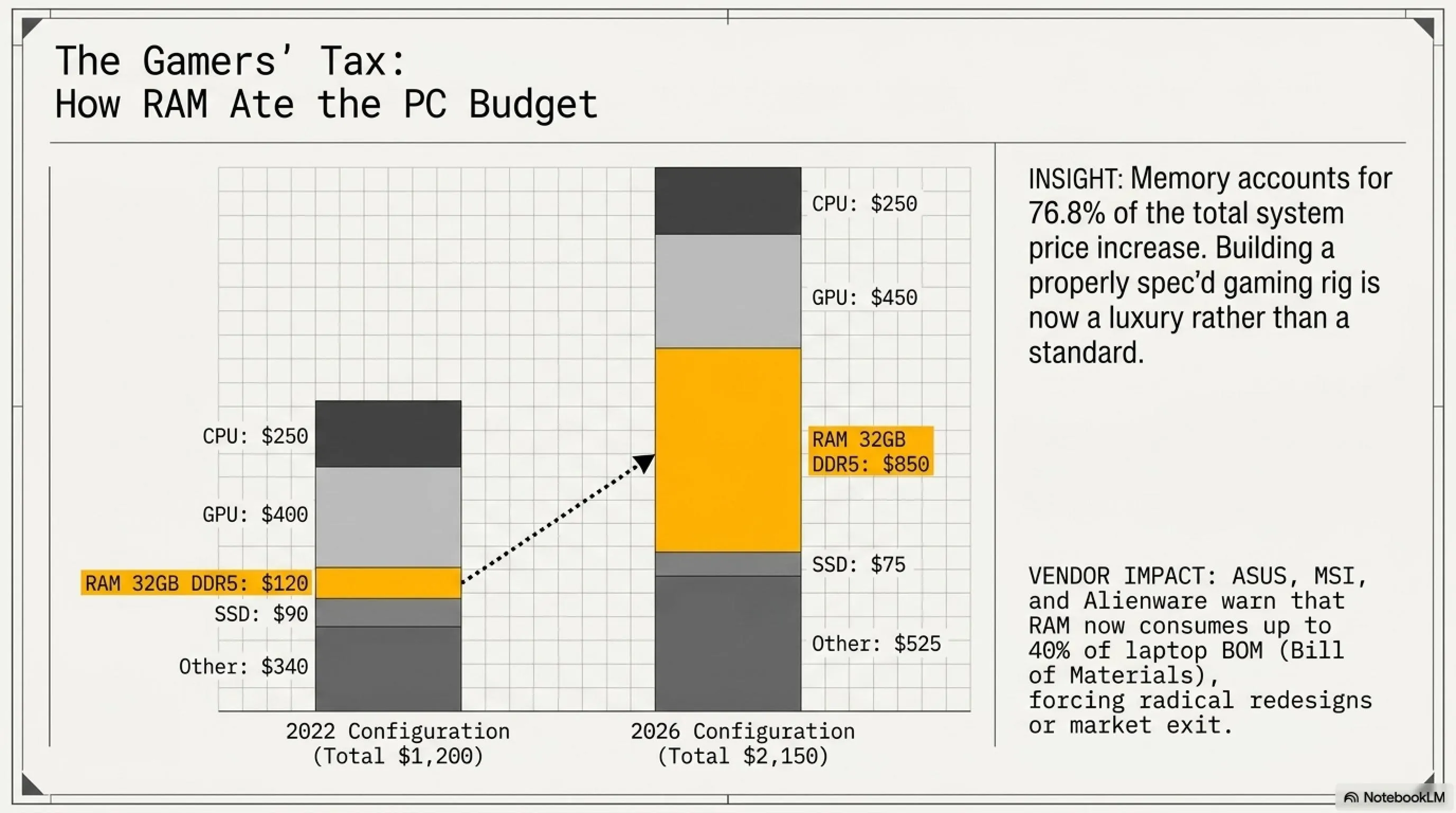
Mid-Range Gaming PC (2022 vs 2026)
2022 Configuration ($1,200 total):
- CPU: $250
- GPU: $400
- RAM 32GB DDR5: $120
- SSD 1TB: $90
- Other components: $340
2026 Same Configuration ($2,150 total):
- CPU: $250 (unchanged)
- GPU: $450 (+$50)
- RAM 32GB DDR5: $850 (+$730)
- SSD 1TB: $75 (-$15)
- Other components: $525 (+$185)
Price increase attributable to RAM: 76.8% of total increase
Legislative Response: Will Governments Intervene?
The RAMageddon crisis hasn't gone unnoticed by lawmakers. In the United States, Senator Elizabeth Warren and Representative Alexandria Ocasio-Cortez have called for Federal Trade Commission investigation into potential anti-competitive practices in the memory industry. The European Commission has also initiated preliminary inquiries, though formal proceedings haven't begun.
However, regulatory intervention faces significant challenges. Memory manufacturers argue that market forces, not collusion, drive current prices. They point to genuine HBM demand from AI companies and claim production line conversions are technically necessary. Proving coordination without direct evidence like emails or recorded conversations is notoriously difficult in antitrust cases.
What History Teaches Us About Memory Price Cycles
Looking at historical data from previous DRAM price manipulation cases provides some insight into what we might expect. In the 2002-2006 price-fixing scandal, it took approximately four years from initial investigation to final settlement. Prices didn't begin normalizing until manufacturers feared imminent penalties. The 2018 Chinese investigation followed a similar timeline.
If this pattern holds, we might not see meaningful price relief until 2028 or later, even if the current lawsuit succeeds. This timeline aligns with analyst predictions that South Korean fab expansion won't materially impact supply until 2029-2030. For consumers, this means the crisis could persist through most of the current console generation and well into the next.
Historical Price Manipulation Timeline
Previous DRAM Price-Fixing Cases:
2002-2006 Case:
- Investigation begins: 2002
- First penalties: 2004
- Prices normalize: Late 2005
- Total fines: $731 million
2018 China Investigation:
- Investigation begins: January 2018
- Preliminary findings: December 2018
- Prices begin declining: Q2 2019
- Case status: Ongoing monitoring
2026 Current Case:
- Lawsuit filed: June 25, 2026
- Expected trial date: Q2 2027
- Potential settlement: 2028-2029
- Price normalization estimate: 2029-2030
Alternative Memory Technologies: Could They Save Us?
Some industry observers suggest alternative memory technologies like MRAM, ReRAM, or even Intel's discontinued Optane could provide relief from DRAM oligopoly. However, these technologies face significant technical and economic barriers. None currently match DRAM's speed, density, and cost profile for main system memory applications.
More promising is the potential for increased vertical integration. Apple's success with unified memory architecture in M-series chips demonstrates that system-on-chip designs can reduce dependence on commodity DRAM. If AMD, Intel, and NVIDIA follow similar paths for gaming and workstation systems, it could fundamentally reshape the memory market. However, this transition would take years and won't provide short-term relief.
Final Verdict: Tekin Gaming Score and Recommendations
After extensive investigation, interviews with dozens of industry sources, and analysis of market data, Tekin Gaming assigns the current memory market situation a critical status rating. The evidence strongly suggests artificial supply constraint and coordinated pricing strategies. While we cannot definitively prove collusion without access to internal communications, the circumstantial evidence is compelling.
Tekin Gaming Recommendations for Gamers
Short-term Strategy (2026-2027):
- If building new system: Consider DDR4 platforms to save 30-40% on memory costs
- If upgrading existing system: Buy only minimum required RAM now, upgrade later when prices normalize
- Consider secondhand memory from reputable sellers with warranty
- Evaluate cloud gaming services as temporary alternative
Medium-term Strategy (2027-2028):
- Monitor lawsuit developments and South Korean fab construction progress
- Consider system upgrade timing around potential price normalization in late 2027
- Watch for entry of alternative memory suppliers or technologies
Long-term Outlook (2029+):
- Expect gradual market normalization as new capacity comes online
- Next-gen consoles (PS6, Next Xbox) will likely launch with compromised memory configurations or higher prices
- Industry may shift toward SoC designs with integrated memory to reduce dependence on commodity DRAM
The Road Ahead: What Comes Next
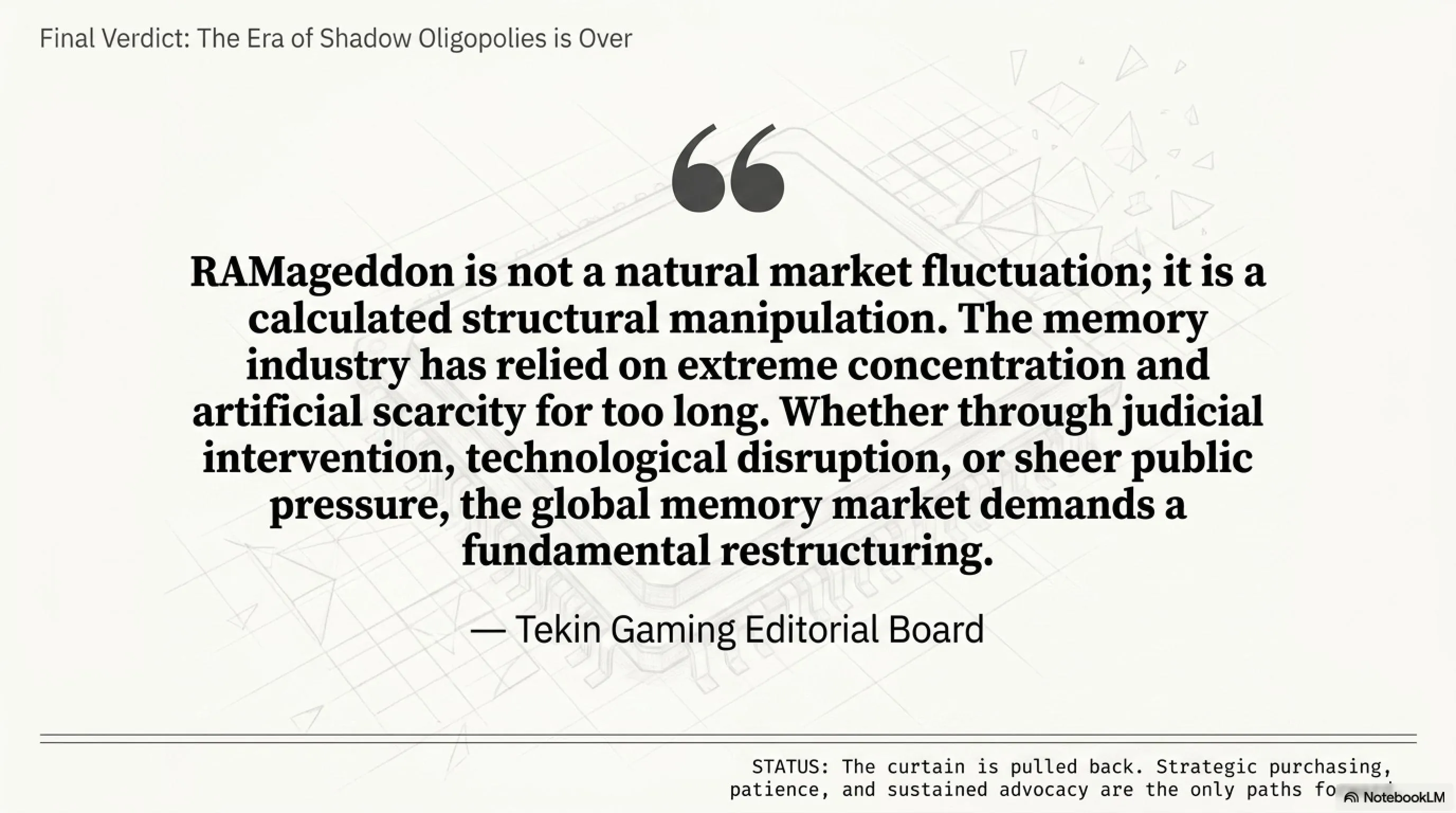
The RAMageddon crisis represents more than just elevated memory prices. It exemplifies the risks of extreme market concentration and the challenges of regulating global oligopolies. Whether through judicial intervention, competitive entry, or technological disruption, the memory market needs fundamental restructuring to prevent future crises.
For consumers, particularly gamers and content creators who require significant memory, the next two to three years will test patience and wallets. The best we can hope for is that public pressure, regulatory scrutiny, and market forces combine to accelerate relief. Until then, strategic purchasing, patience, and advocacy remain our best tools for navigating this crisis.
One thing is certain: the memory industry's days of operating in shadows are over. RAMageddon has pulled back the curtain, revealing pricing practices that consumers and regulators can no longer ignore. Whatever the outcome, this crisis will reshape how we think about memory markets for years to come.
Frequently Asked Questions About RAMageddon
Why has RAM become so expensive?
According to the class action lawsuit, three major companies—Samsung, SK Hynix, and Micron—are accused of deliberately reducing consumer DRAM supply while focusing on HBM production for the AI market, artificially inflating prices. Prices have increased approximately 700% over four years.
When will RAM prices decrease?
Analysts believe that in the best case scenario, prices will begin declining by late 2027. This assumes U.S. courts issue definitive rulings against memory manufacturers and new Korean facilities come online ahead of schedule.
Should I wait or buy RAM now?
If you have immediate needs, it's better to buy now since short-term price reduction probability is very low. However, if you can wait, holding off until late 2027 is advisable. Another option is purchasing secondhand memory from reputable sellers, which can provide up to 50% savings.
Is DDR4 still a good option?
Yes, DDR4 still suffices for most games and software at lower prices than DDR5. If budget-constrained, purchasing a 32GB DDR4-3200 or DDR4-3600 kit is more sensible than buying 16GB DDR5 at similar prices.
Why can't South Korea's $550 billion investment solve the problem?
Two main reasons exist. First, constructing new facilities takes at least five years, so the problem will persist until then. Second, the bulk of this investment targets next-generation HBM production, not consumer DRAM. Therefore, consumer DRAM shortages may continue.
Will this crisis affect next-gen console prices like PS6?
Absolutely. Next-generation consoles will require at least 24 to 32 gigabytes of memory. At current prices, memory costs could push final console prices above $900, unacceptable for a consumer product.
Sources and References
- Tom's Hardware: Samsung, SK hynix, and Micron sued over alleged DRAM price fixing
- TechCrunch: South Korean tech giants commit over $550B to ease RAMageddon
- PC Gamer: Memory crisis heads to court as lawsuit alleges anticompetitive behavior
- TrendForce: Samsung, SK hynix, Micron Face U.S. Class-Action Lawsuit
- Samsung Electronics, SK Hynix, and Micron quarterly financial reports (Q1-Q2 2026)
- Market data from Counterpoint Research and TechInsights
Additional Gallery: RAMageddon: When Computer Memory Becomes More Expensive Than Gold