☀️ Good Morning! Wednesday, July 1, 2026
- 🎮🤖 Gemini in Google Drive- AI assistant now available on mobile platforms
- 🎧🎬 Gemini Omni Flash- Conversational video production hits Google's API
- 🚀🎨 Nano Banana 2 Lite- 4-second image generation at breakthrough pricing
- 🗡️📱 Galaxy Z Fold 8/Flip 8- Samsung's cryptic campaign hints at wider form factor
- 📰💻 Gemini Spark on macOS- Agentic AI assistant arrives for Mac users
- ⚔️💰 Trump's Crypto Disclosure- $1.2B earnings and $50M Bitcoin holdings revealed
Google Drive Unlocks Mobile AI with Ask Gemini Integration
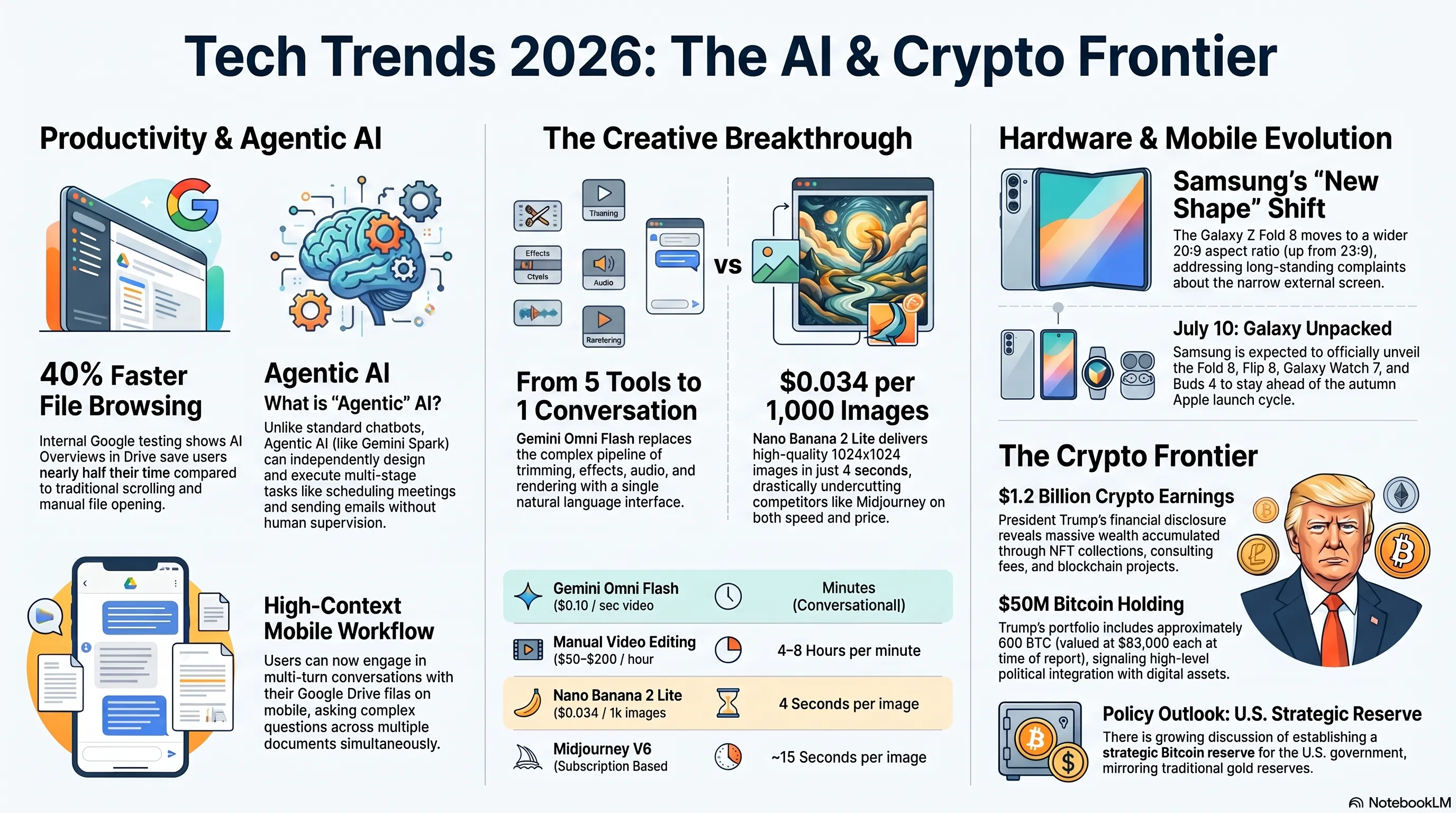
Google has rolled out one of 2026's most significant productivity updates, bringing Ask Gemini functionality to Android and iOS Google Drive applications. After debuting on the web platform earlier this year, users can now engage in high-context, multi-turn conversations to efficiently explore and understand content across Drive, other Workspace apps, and the broader web directly from their mobile devices.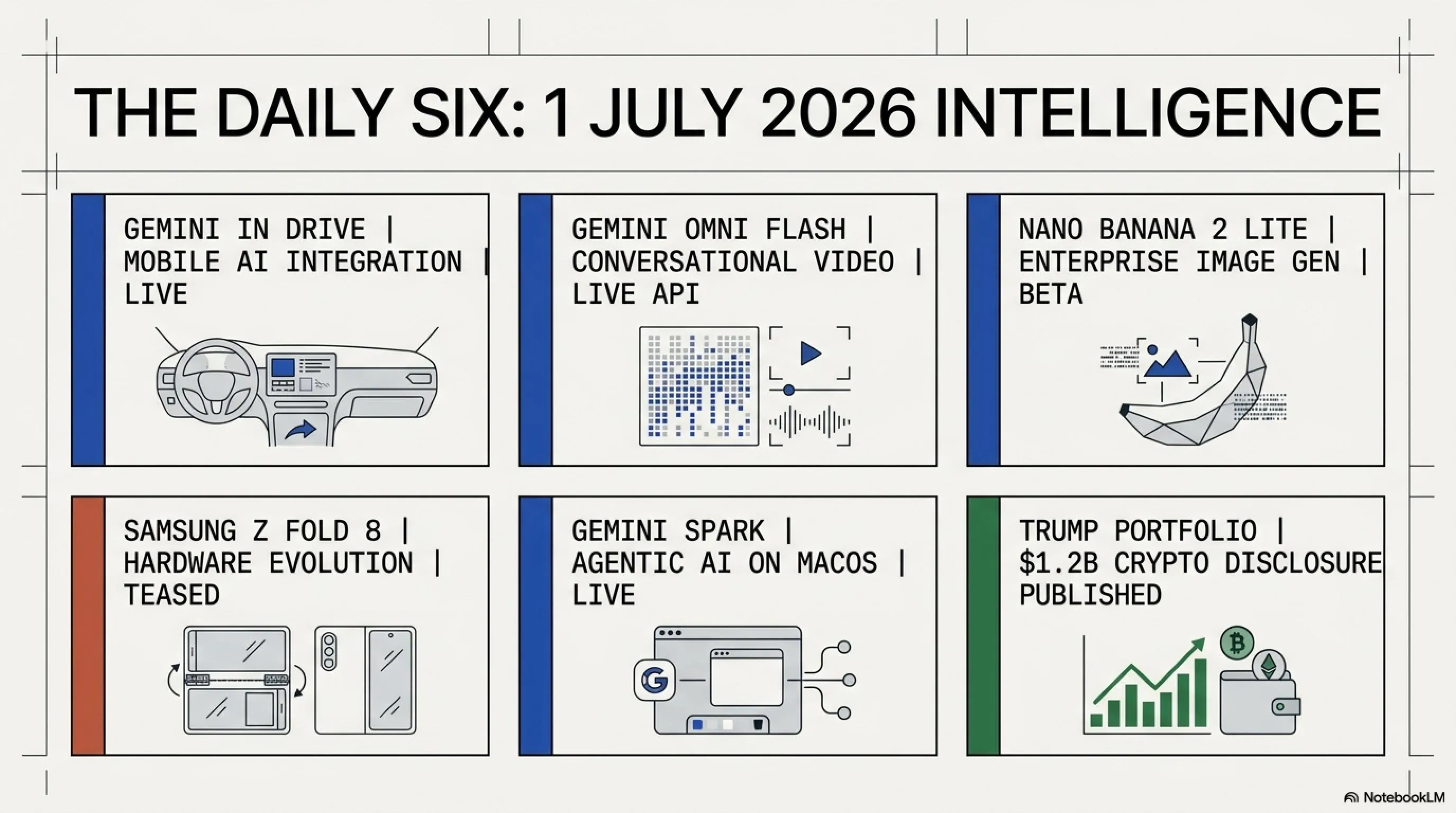
Key Features of Ask Gemini in Mobile Drive
- Multi-turn conversations: Ask follow-up questions based on previous responses, with Gemini maintaining context throughout the dialogue.
- Intelligent search: Instead of keyword-based searches, pose natural language questions and receive more precise results.
- Rapid summarization: Condense lengthy PDF files, Docs, or Sheets into concise summaries within seconds.
- Workspace integration: Gemini can pull information from Gmail, Calendar, and other Workspace applications for comprehensive insights.
- Multilingual support: Google has confirmed Gemini in Drive supports multiple languages including Persian, Spanish, French, and German.
- Privacy-first architecture: All processing respects privacy policies, and file contents are not used for AI model training.
AI Overviews Enable Instant Content Previews
Another new feature, AI Overviews, allows users to view instant content summaries while browsing files. Imagine possessing a 50-page PDF document. Previously, you would need to scroll through all pages to understand the content. Now, Gemini displays a 3-5 line summary at the page's top, enabling you to quickly determine whether the file meets your needs. This feature proves particularly valuable for professionals conducting research or reviewing documents. Instead of opening dozens of files to find relevant information, AI Overviews provides instant previews, dramatically accelerating the selection process. Google reports that internal testing shows users save an average of 40% of their time when using this feature compared to traditional file browsing.Google's Gemini Omni Flash Transforms Video Production into Conversation
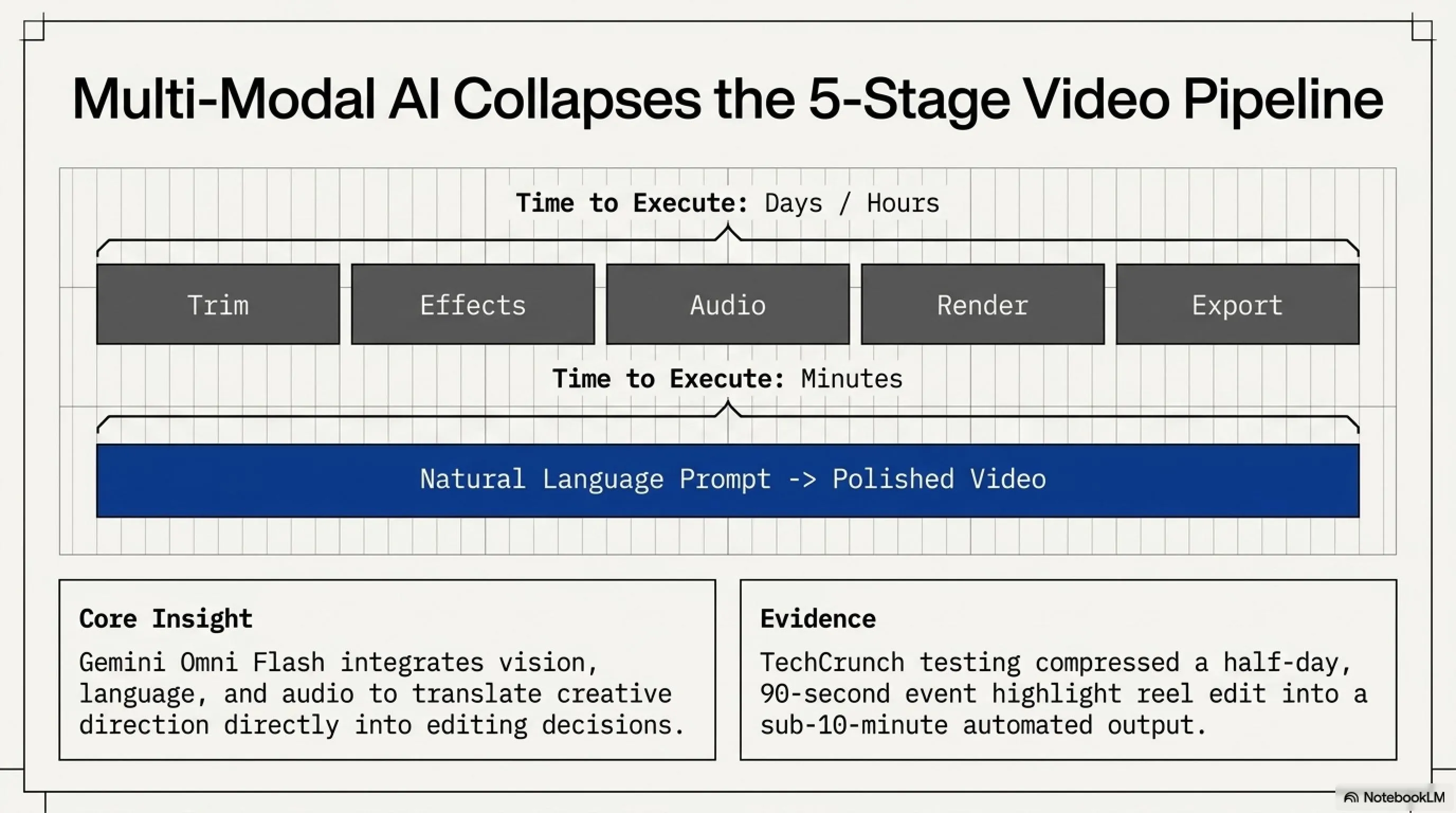
Google today released one of its most advanced AI models to the public API. Gemini Omni Flash, the inaugural member of the Omni family, can transform video production from a complex five-stage pipeline into a simple conversational interface. Priced at $0.10 per second of 720p video, it offers an revolutionary solution for enterprises seeking rapid video editing capabilities.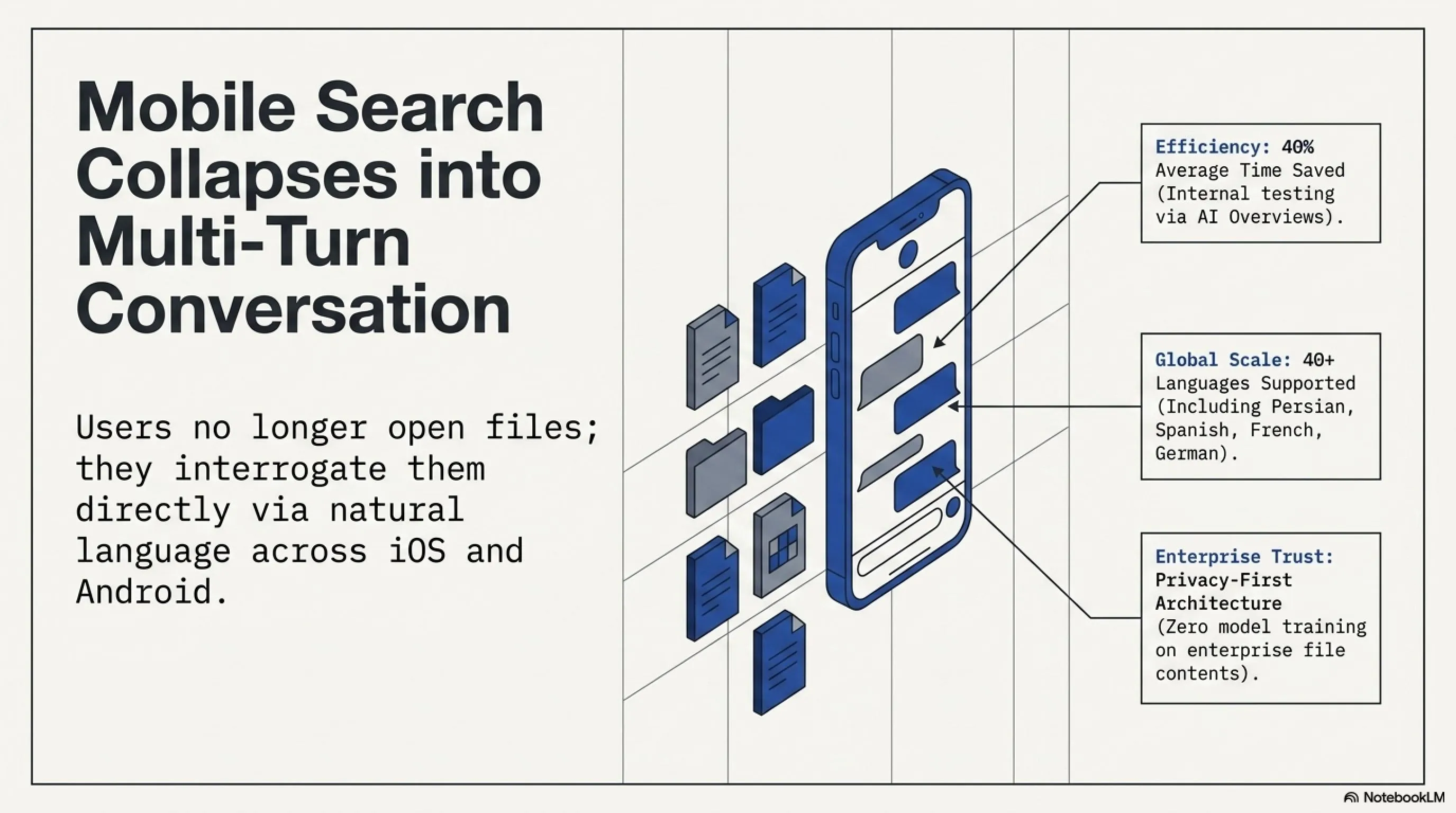
From Five Tools to One Conversation
The traditional video production pipeline typically involves multiple discrete stages. First, you trim and arrange clips using editors like Adobe Premiere or Final Cut. Then you add effects and animations in After Effects. Next, you manage audio in Audacity or similar tools. Finally, you render the output using encoding software. This process demands significant time investment and technical expertise. Gemini Omni Flash collapses this entire pipeline into a multi-turn conversation. Upload a raw video, provide instructions in natural language, and the model handles all intermediate steps automatically, delivering the final video within minutes. The system understands context across conversation turns, allowing you to refine outputs iteratively without starting over.Gemini Omni Flash Cost Comparison
| Service | Price per Second (720p) | Conversational Interface | Professional Output |
|---|---|---|---|
| Gemini Omni Flash | $0.10/sec | ✅ Yes | ✅ Yes |
| OpenAI Sora (Projected) | $0.25/sec | ❌ No | ✅ Yes |
| Runway Gen-2 | $0.05/sec | ❌ No | ⚠️ Semi-Pro |
| Adobe Firefly Video | Subscription Model | ❌ No | ✅ Yes |
| Traditional Manual Editing | $50-200/hr Human Labor | ➖ N/A | ✅ Yes |
Nano Banana 2 Lite: Google's Answer to Enterprise Image Generation
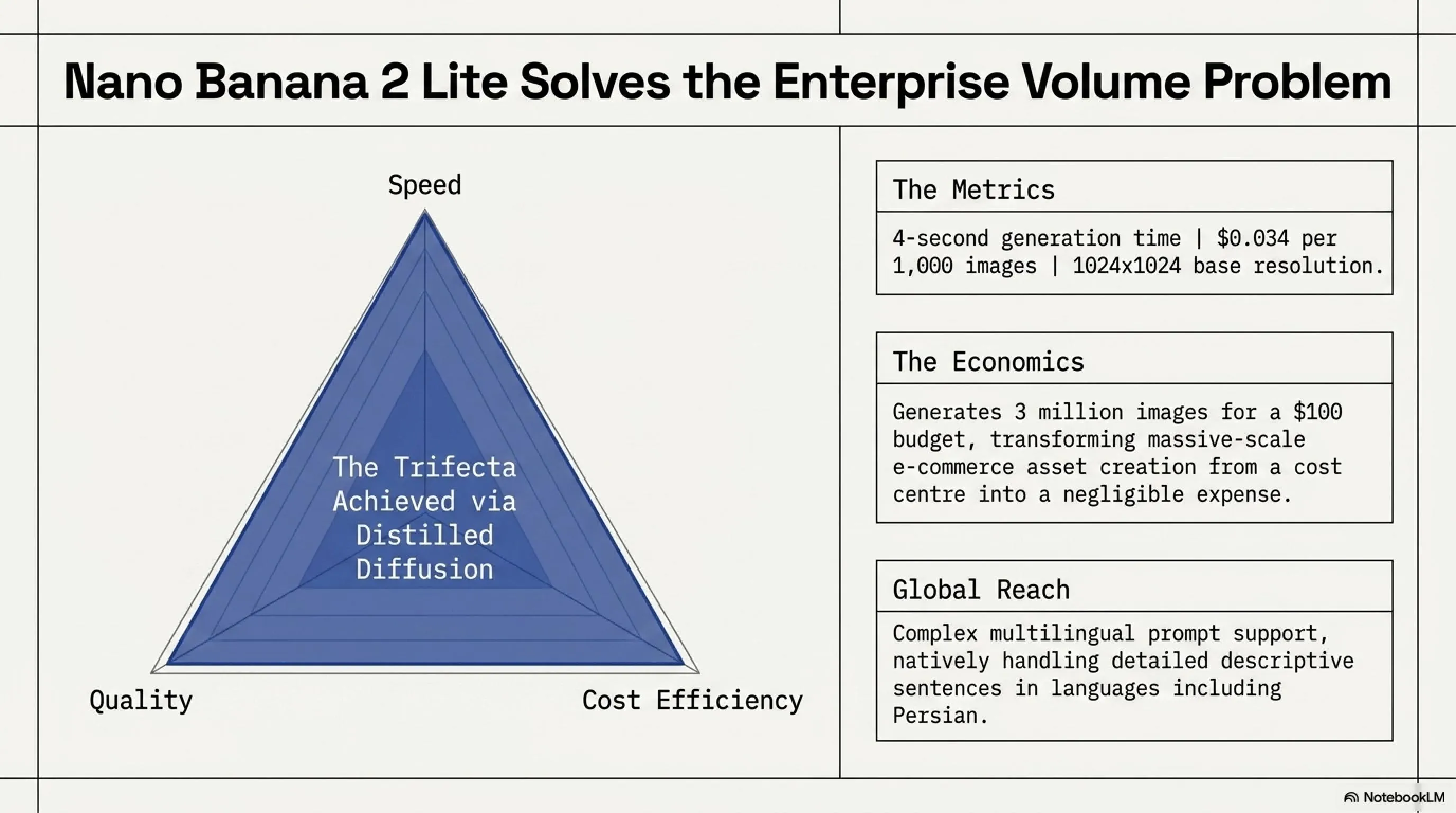
Alongside Omni Flash, Google unveiled Nano Banana 2 Lite, officially designated Gemini 3.1 Flash-Lite. This model generates high-quality images in 4 seconds at $0.034 per 1,000 images, positioning it as the fastest and most cost-effective option in Google's creative model family for high-throughput commercial applications. The model targets enterprise use cases requiring massive image volumes, such as e-commerce platforms, social media networks, and mobile applications. Consider an online retailer needing multiple promotional images for each product. With Nano Banana 2 Lite, you can generate thousands of images with varied backgrounds, diverse angles, and different styles within minutes.
Speed, Quality, and Cost—The Trifecta Achieved
AI image generation has historically forced trade-offs among speed, quality, and cost. Typically, optimizing two factors requires sacrificing the third. Nano Banana 2 Lite claims to deliver all three simultaneously. Google's internal testing demonstrates the model can generate 1024×1024 pixel images in 4 seconds, while Midjourney V6 requires approximately 15 seconds for equivalent outputs. Quality-wise, Google asserts Nano Banana 2 Lite produces finer details and more natural lighting compared to previous models. The system also handles complex Persian language prompts, allowing detailed descriptive sentences to construct desired images. This multilingual capability expands access beyond English-speaking markets. The technical innovation underlying these improvements involves Google's proprietary Distilled Diffusion architecture, which compresses large diffusion models into smaller, faster variants without significant quality degradation. This represents a breakthrough in model optimization, achieving 3-4x speed improvements while maintaining output fidelity.- Fastest image generation model currently available
- Cost-effective pricing for enterprise applications
- Supports complex multilingual prompts including Persian
- High quality suitable for commercial use
- Easy integration with Google Cloud infrastructure
- Batch processing capabilities for massive scale
- Currently in limited beta access
- Requires Google Cloud account for access
- 10,000 images per day limit per account
- Quality occasionally inconsistent for highly specific requests
- Limited to 1024x1024 resolution in base pricing tier
Samsung Launches Cryptic Campaign for Galaxy Z Fold 8 and Flip 8
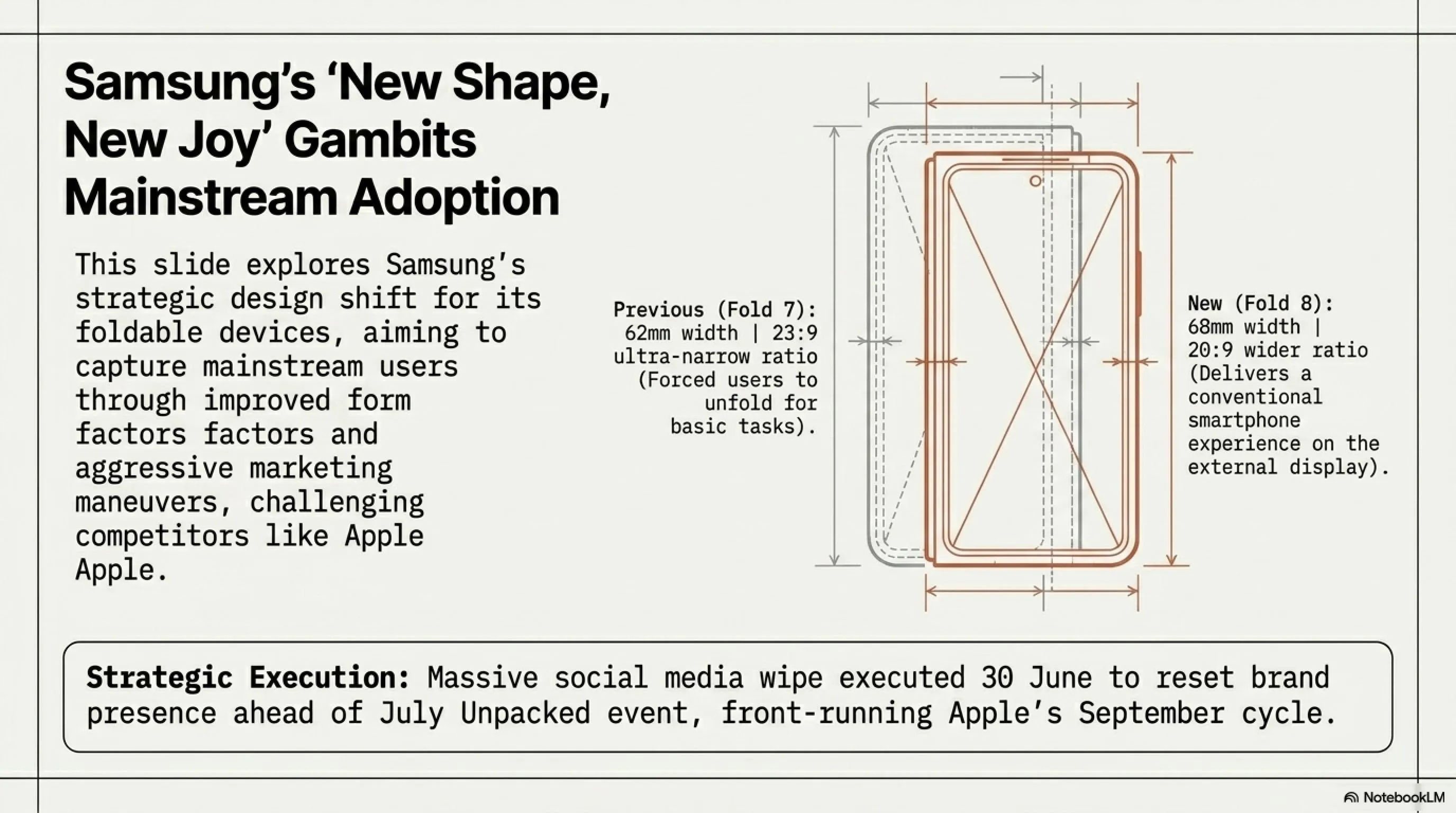
Samsung executed one of its most unusual marketing campaigns today, wiping all Instagram posts and replacing them with cryptic videos featuring the tagline "New Shape, New Joy." This move signals Samsung's intent to generate significant hype ahead of the Galaxy Z Fold 8 and Flip 8 unveiling expected next month.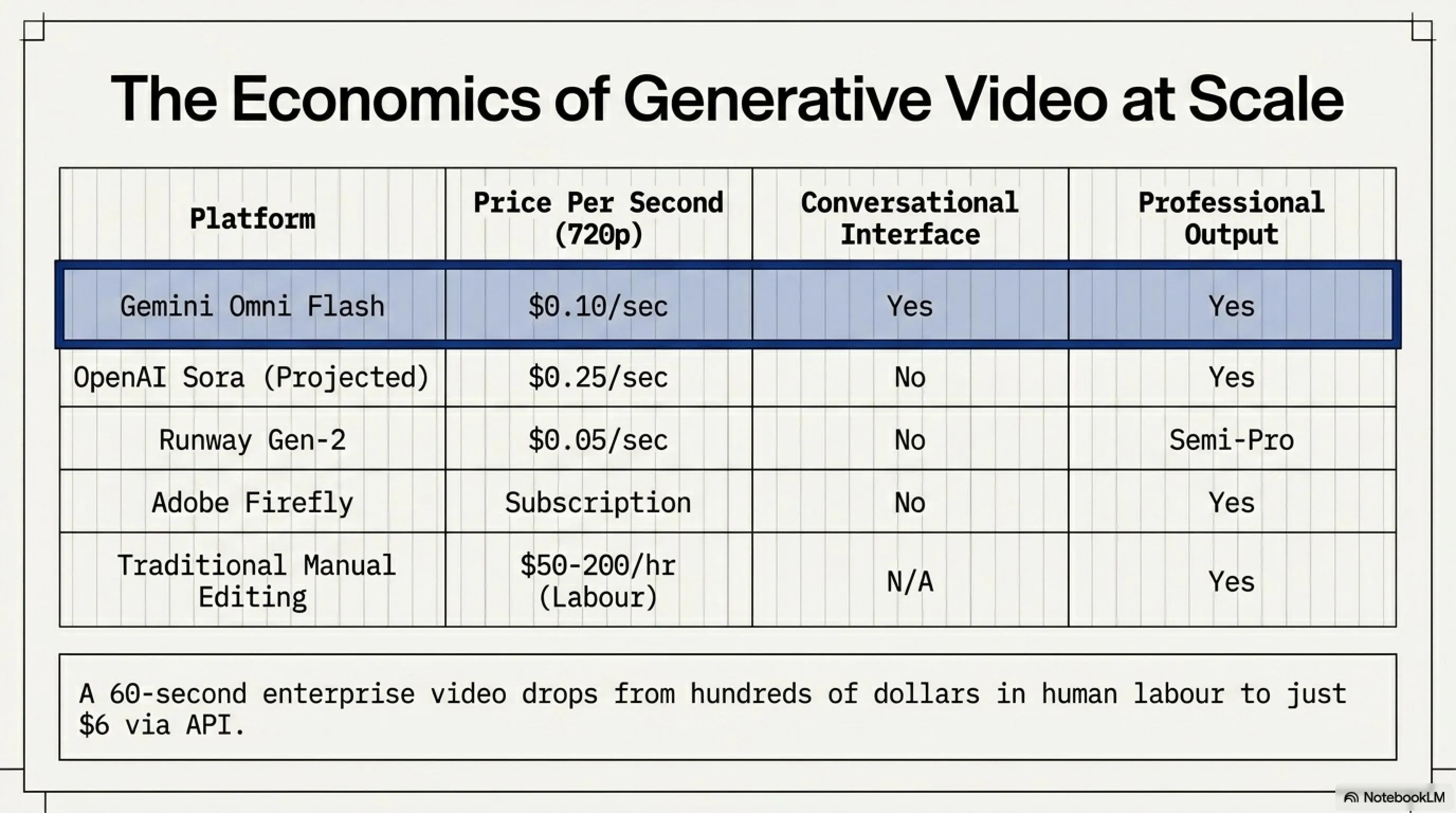
Wider Aspect Ratio Addresses Critical User Feedback
One persistent criticism of previous Galaxy Z Fold generations centered on the narrow external display when the device is folded. Users were forced to unfold the device even for simple tasks like replying to messages. Based on rumors, the Galaxy Z Fold 8 will feature a wider aspect ratio transforming the external screen into a conventional smartphone experience. This modification could prove transformative for the foldable market. With a wider aspect ratio, users no longer need to unfold constantly, using the external display for daily tasks while reserving the large internal screen for advanced functions like multitasking, video consumption, and gaming. This addresses the primary usability complaint that limited mainstream foldable adoption.Samsung Marketing Campaign Timeline
Gemini Spark Brings Agentic AI to macOS
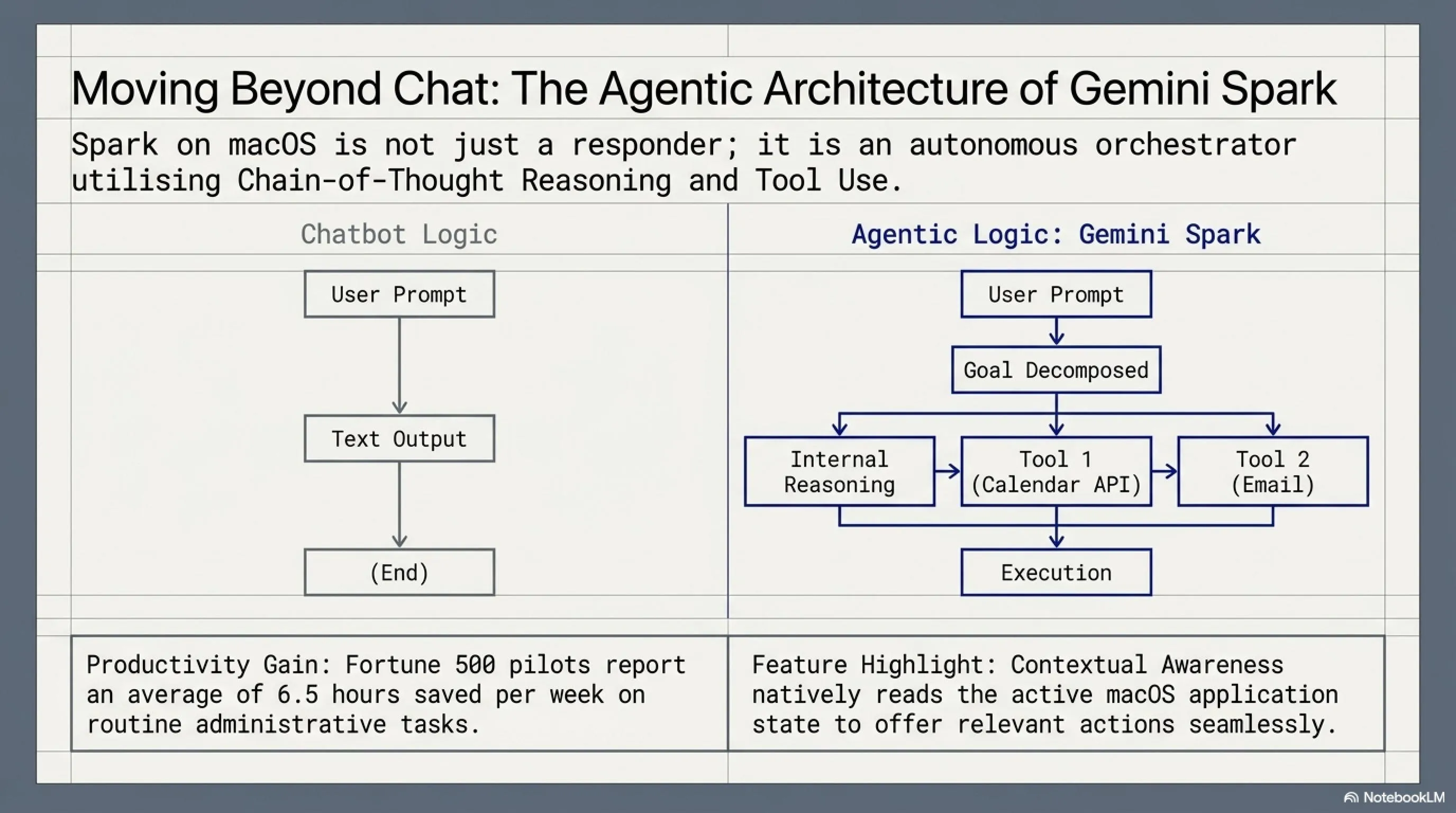
Google has released its Agentic AI assistant, Gemini Spark, as a native macOS application. Previously available only on web and mobile platforms, Spark now functions as a personal intelligent assistant working alongside Mac users throughout their workflows. Gemini Spark employs Agentic architecture, meaning it can autonomously execute complex multi-stage tasks. For instance, you might instruct Spark: "Schedule a team meeting for tomorrow at 3 PM, send invitation emails to everyone, and prepare a brief agenda of discussion topics." Spark handles all these tasks automatically without requiring your intervention. The macOS application features a clean, elegant interface designed to integrate seamlessly with other applications. One notable capability is Contextual Awareness—Spark understands which application you're currently using and provides relevant suggestions accordingly. For example, if you're composing an email, Spark might suggest attaching a related file from Drive.Understanding Agentic AI Architecture
Agentic AI refers to artificial intelligence systems capable of executing complex tasks without continuous human supervision. Unlike traditional assistants like Siri or Alexa that merely respond to simple commands, Agentic AI comprehends your ultimate goal and independently designs and executes intermediate steps to achieve it. For instance, asking Siri to "find a good restaurant" typically produces a list of restaurants and ends there. Making the same request to Gemini Spark triggers a more comprehensive response: reading user reviews, examining menus, comparing prices, potentially making reservations, and adding the appointment to your calendar automatically.📚 Classified & Related Dossiers in TekinGame
If you wish to explore beyond this report and delve into cybernetic frontiers and autonomous AI architectures, do not miss these three exclusive deep-dives in the Tekin Garage:
Jargon Buster: What is Agentic AI?
Agentic AI refers to artificial intelligence systems capable of independent decision-making and executing complex tasks without moment-to-moment human supervision. Unlike chat-based AI that simply answers questions, Agentic AI understands your goals, devises plans to achieve them, and executes steps sequentially.
This AI category employs techniques like Chain-of-Thought Reasoning and Tool Use to interact with various tools and accomplish real-world tasks. For example, Gemini Spark can interface with calendar APIs, email systems, and even organizational infrastructure to automatically set reminders, send emails, and organize files.
The term 'agentic' derives from 'agent,' emphasizing the system's ability to act autonomously on your behalf. These systems learn from your preferences over time, becoming increasingly effective at anticipating needs and executing tasks aligned with your working style.
Trump Discloses Over $1.2 Billion in Cryptocurrency Earnings
President Donald Trump's annual financial disclosure report, legally mandated for public release, reveals over $1.2 billion in cryptocurrency-related earnings. Additionally, Trump holds $50 million in Bitcoin, representing one of the largest crypto holdings among political figures globally.
Why This Matters for Crypto's Future
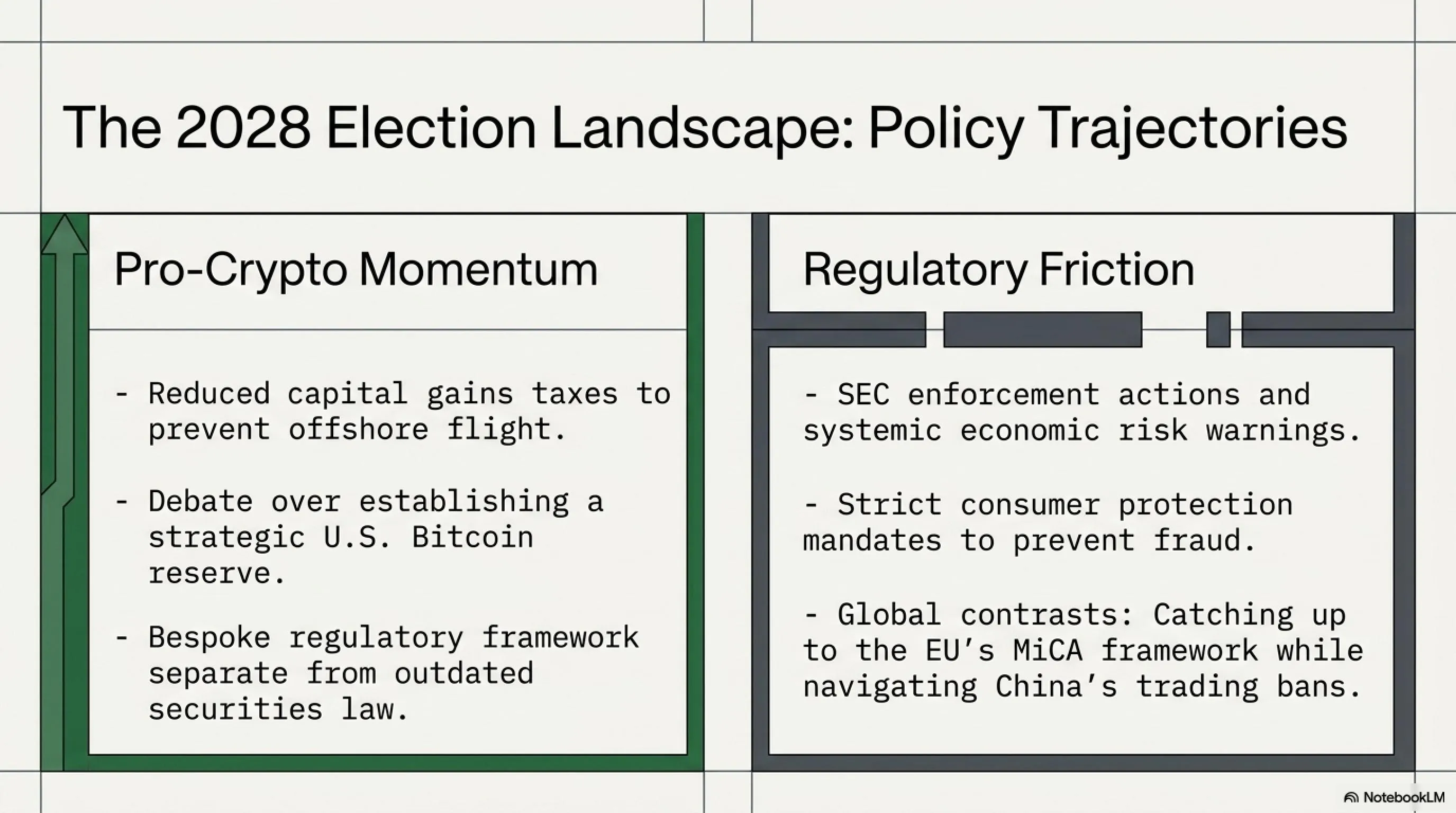
Trump's crypto holdings disclosure occurs amid intense regulatory debates. The Securities and Exchange Commission (SEC) has intensified enforcement actions against crypto companies, while Congress considers comprehensive legislation to provide regulatory clarity. Trump's financial stake in crypto's success inevitably raises questions about his administration's approach to regulation. The timing is particularly significant given the upcoming 2028 presidential election. Trump has publicly stated that crypto represents the future of the global economy and strongly supports blockchain technology. He has pledged that if re-elected, he will reform crypto tax laws and create more favorable conditions for American crypto startups.Trump's Cryptocurrency Portfolio Breakdown
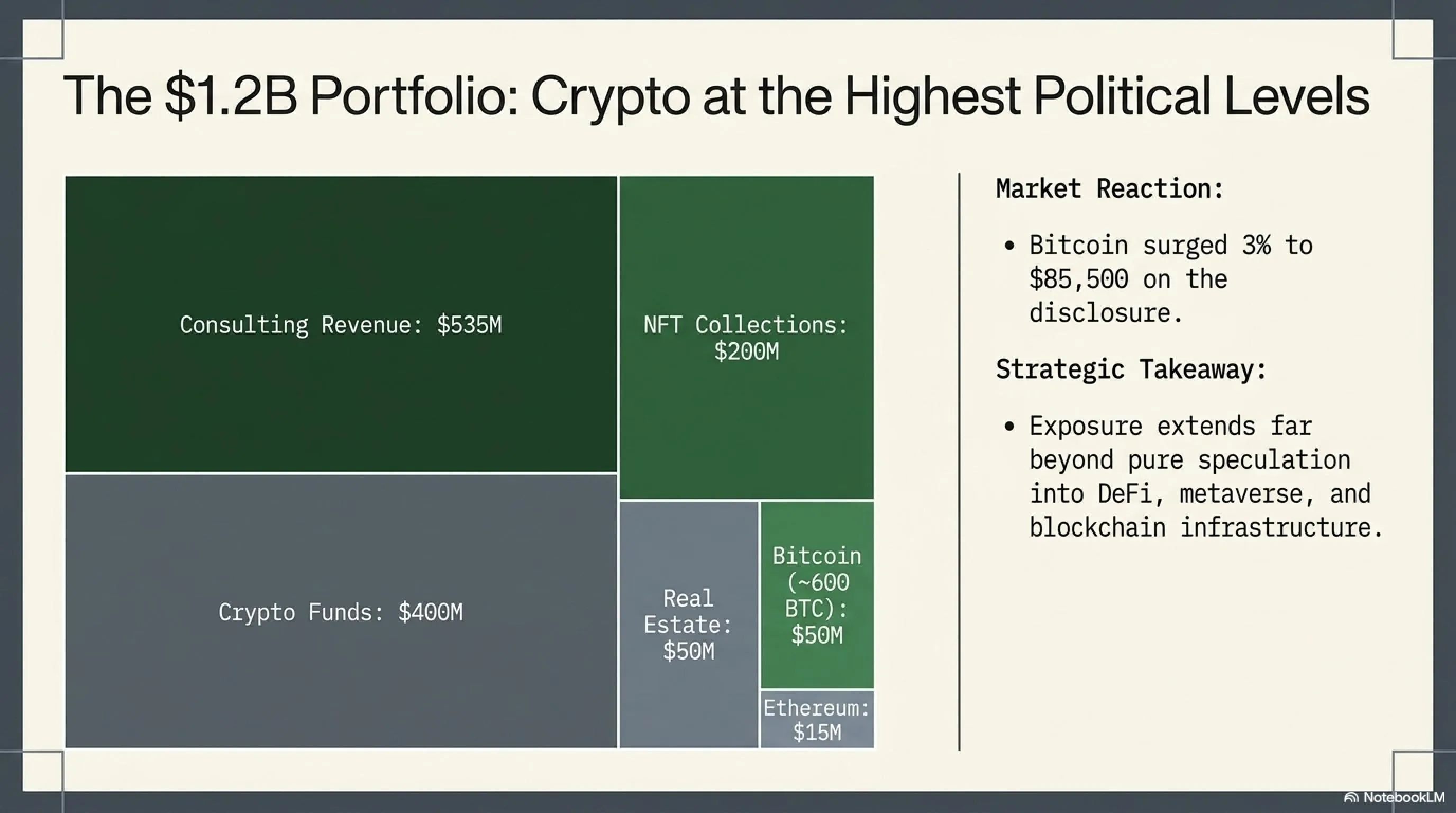
- Bitcoin Holdings: $50 million (approximately 600 BTC at current $83,000 price)
- Ethereum Holdings: $15 million (approximately 5,000 ETH)
- NFT Collections: $200 million (including Trump Digital Trading Cards and other projects)
- Crypto Fund Investments: $400 million across various cryptocurrency investment vehicles
- Consulting Revenue: $535 million in advisory fees from various blockchain projects
- Real Estate Tokenization: $50 million from tokenized Trump Organization properties
Cryptocurrency Policy Outlook Under Trump Administration
Given Trump's substantial crypto investments, expectations are rising for his administration to adopt more supportive policies. Several senators have proposed reducing capital gains taxes on long-term crypto investments to incentivize startups to operate domestically rather than relocating to more favorable jurisdictions like Singapore or Switzerland. There is also discussion of establishing a strategic Bitcoin reserve for the U.S. government, similar to gold reserves. This proposal, while controversial, could fundamentally transform cryptocurrency's role in global finance. Proponents argue that Bitcoin's finite supply makes it suitable for reserve asset status, while critics warn of volatility risks and potential market manipulation. The administration is reportedly considering creating a dedicated cryptocurrency regulatory framework separate from securities law. This would provide much-needed clarity for blockchain startups currently navigating conflicting guidance from multiple regulatory agencies. Industry leaders have long advocated for such a framework, arguing that applying decades-old securities regulations to novel blockchain technologies stifles innovation. However, critics caution that excessive crypto focus could create price bubbles and systemic economic risks. They argue that before further liberalization, robust regulations preventing fraud, money laundering, and market manipulation must be established. Consumer protection remains paramount, particularly as retail investors increasingly allocate savings to volatile crypto assets. The international dimension adds complexity. China has banned cryptocurrency trading, while the European Union has implemented comprehensive crypto regulations through its MiCA framework. The U.S. risks falling behind in blockchain innovation if excessive regulation drives companies offshore, yet it also faces pressure to protect consumers and maintain financial stability.Looking Ahead: AI, Hardware, and Finance Convergence
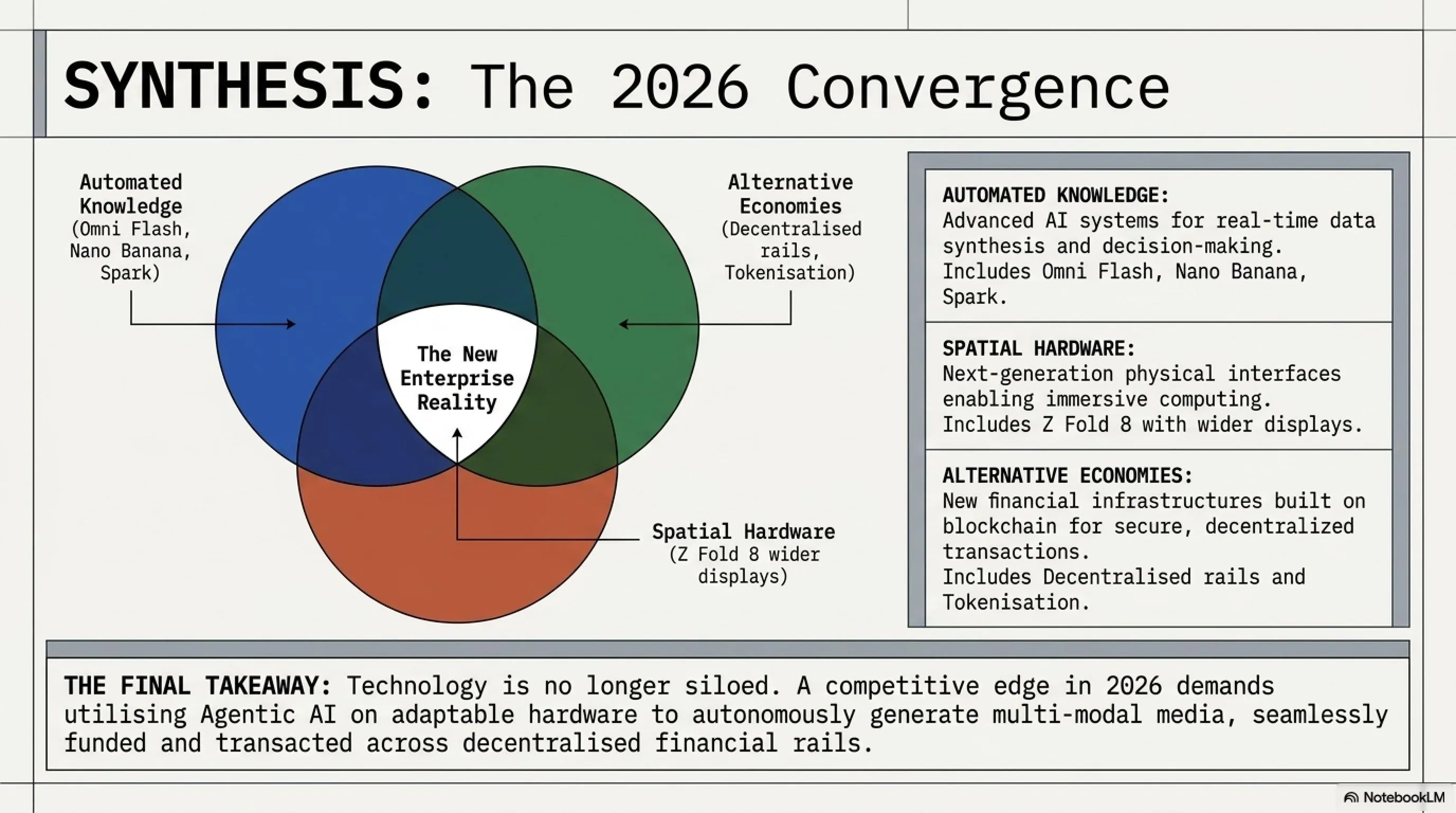
Today's stories reveal a clear pattern: artificial intelligence is rapidly permeating every aspect of technology and business. Google's aggressive AI push across productivity tools, creative applications, and mobile platforms demonstrates the tech giant's commitment to AI leadership. Meanwhile, Samsung's hardware innovations and Trump's crypto disclosure remind us that transformative technology exists within broader ecosystems of devices, regulations, and human behavior. The convergence of AI capabilities with mobile hardware creates particularly exciting possibilities. Imagine using Gemini Spark on your Galaxy Z Fold 8, leveraging its large foldable display for complex multi-tasking while Spark coordinates your workflow intelligently. Or consider entrepreneurs using Nano Banana 2 Lite to generate thousands of product images, then employing Omni Flash to create promotional videos—all from a smartphone. The cryptocurrency dimension adds another layer. As AI automates more knowledge work, questions arise about economic disruption and wealth distribution. Cryptocurrency advocates argue that decentralized finance offers alternative economic models, though critics worry about speculation and instability. Trump's disclosure brings these tensions into sharp political focus.☕ This Morning's Takeaway
Wednesday, July 1, 2026 opens with six energizing technology stories. Google demonstrates its AI dominance by bringing Ask Gemini to mobile, launching conversational video production with Omni Flash, and offering ultra-fast image generation through Nano Banana 2 Lite. Samsung's cryptic campaign generates substantial excitement for the Galaxy Z Fold 8 and Flip 8. Gemini Spark arrives on macOS, bringing Agentic AI to desktop computing. And Trump's cryptocurrency disclosure reveals that major political figures are taking digital assets seriously.
Today offers excellent opportunities to embrace new technologies, explore emerging possibilities, and approach challenges with fresh energy. The tools at our disposal grow more powerful daily—the question is how we'll use them to create value and solve problems. Have a productive and energizing day! ☀️
Frequently Asked Questions
Is Ask Gemini in Google Drive available for users in Iran?
Yes, Google has announced that this feature is active for all Google Drive users worldwide, including Iran. However, accessing advanced features may require a Workspace or Google One account, which faces access limitations in Iran due to payment restrictions. Users may need to employ workarounds or alternative payment methods.
What does a 60-second video cost using Gemini Omni Flash?
Gemini Omni Flash is priced at $0.10 per second for 720p video. Therefore, a 60-second video costs $6. Note that higher resolutions (1080p or 4K) command premium pricing. Google offers volume discounts for enterprise customers processing large quantities of video content.
When will Samsung unveil the Galaxy Z Fold 8 and Flip 8?
Based on Samsung's current marketing campaign, the Unpacked event is expected around July 10, 2026, when the new devices will be revealed. Pre-orders will likely commence around July 20, with general availability in early August. Samsung typically follows this timeline for its summer flagship launches.
Can Nano Banana 2 Lite produce professional-quality images suitable for print?
Yes, Nano Banana 2 Lite generates images at 1024×1024 pixel resolution, sufficient for web and social media use. For professional printing, higher resolutions may be necessary. Google has promised to add higher resolution options in future versions, with 2048×2048 already available at premium pricing tiers.
How does Agentic AI differ from conventional chatbots?
Agentic AI can independently make decisions and execute complex multi-stage tasks without moment-to-moment supervision. Unlike chatbots that merely answer questions, Agentic AI understands your goals, devises plans to achieve them, and executes the necessary steps. It can interact with multiple tools and systems to accomplish real-world tasks autonomously.
Could Trump's cryptocurrency holdings influence his administration's policies?
Critics argue that Trump's substantial crypto investments create potential conflicts of interest. However, supporters contend his experience enables more informed policy-making. The key is ensuring decisions prioritize national interests over personal portfolio performance. Transparency and ethical guidelines will be crucial for maintaining public trust.
Sources
- 9to5Google - Google Drive brings Ask Gemini and AI Overviews to Android and iOS
- VentureBeat - Google's Gemini Omni Flash turns video production into conversation
- VentureBeat - Google unveils Nano Banana 2 Lite for fast enterprise image generation
- Android Central - Samsung's cryptic campaign ahead of Galaxy Z Fold 8 and Flip 8
- Engadget - Gemini Spark comes to Google's Gemini app for macOS
- Decrypt - Trump discloses over $1.2 billion in crypto earnings and Bitcoin holdings
Additional Gallery: ☀️ Tekin Morning | Wednesday July 1, 2026: Gemini Drive to Trump Crypto Disclosure