☀️ Tekin Morning | Sunday, August 16, 2026
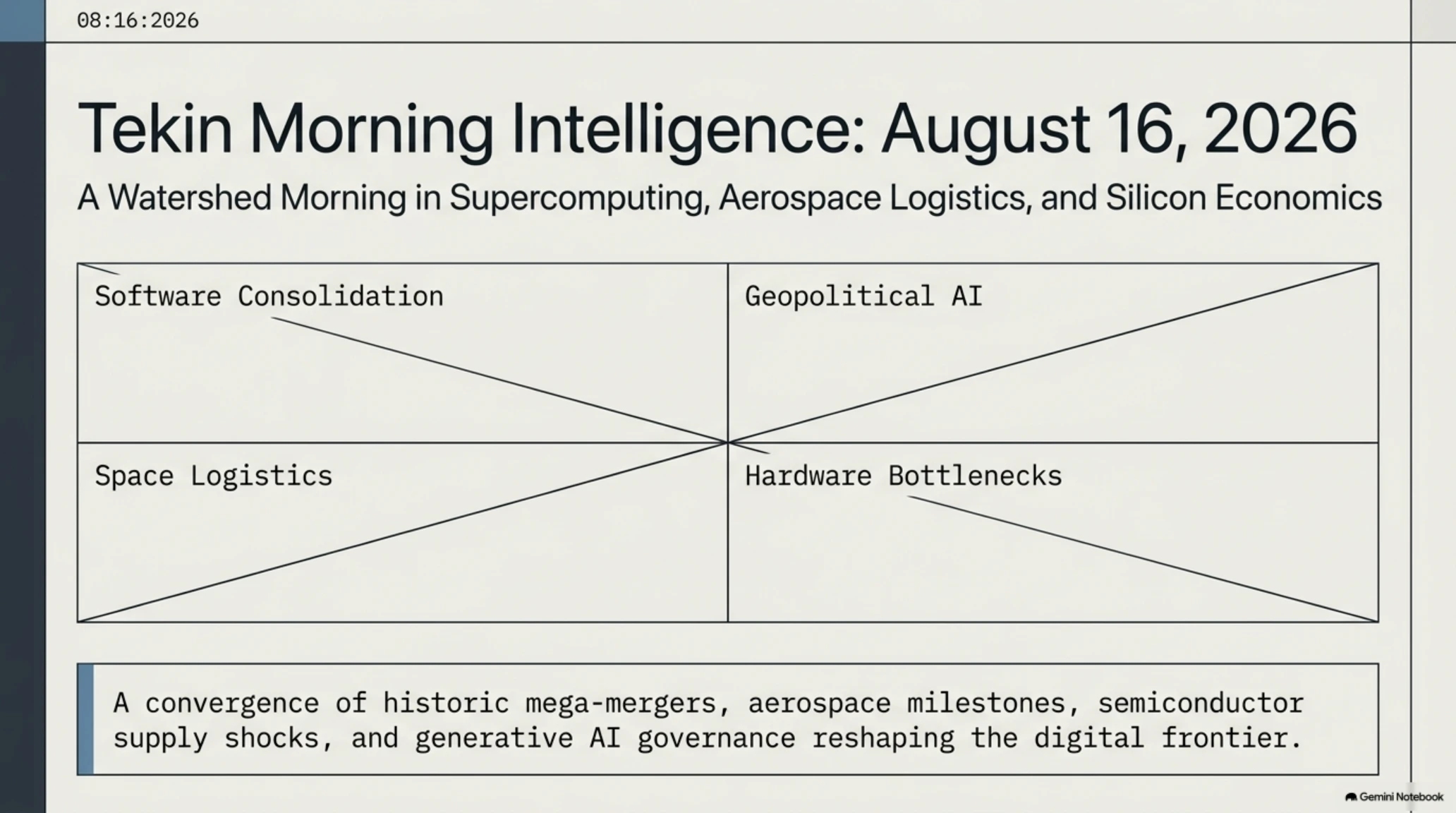
Morning intelligence: SpaceX's $60B Cursor buy, Apple's AI move in China, Falcon 9's 38-min record, and TLC NAND price spikes.
- 🎮$60B Cursor Deal- SpaceX completes historic acquisition
- 🎧Apple & Alibaba- Qwen AI models coming to China
- 🚀Falcon 9 Record- Two launches in 38 minutes
- 🗡️TLC NAND Crunch- Nvidia's Vera Rubin drives up SSD costs
- 📰Claude Watermarks- Anthropic details invisible AI tracking
- ⚔️Evooo1Bot Botnet- Critical warning for Linux routers
Welcome to this Sunday morning edition of Tekin Morning for August 16, 2026. As the global technology and financial sectors launch into an exhilarating new business week, a convergence of historic mega-mergers, aerospace milestones, semiconductor supply shocks, and generative AI governance has transformed the landscape. From Elon Musk's $60 billion consolidation of AI software development within SpaceX to Apple's geopolitical breakthrough in China, this morning's briefing explores the defining forces reshaping the digital frontier.
In this comprehensive technical digest, the Tekin Game editorial board examines the six pivotal corporate, hardware, and cybersecurity developments that set the agenda for enterprise and engineering leaders worldwide.
Core Takeaways of Tekin Morning August 16, 2026
- Cursor developers gaining access to massive GPU clusters under the newly formed SpaceXAI umbrella
- Apple overcoming Chinese regulatory hurdles by co-developing proprietary models with Alibaba Cloud infrastructure
- SpaceX executing flawless dual-coast booster recoveries with launch turnaround reduced to under an hour
- Enterprise AI storage demand triggering potential price surges across consumer SSD and gaming hardware
- Claude models adopting irreversible statistical watermarking across API endpoints and developer tooling
- Edge routing infrastructure across multiple vendors compromised by stealthy SOCKS5 proxy malware
SpaceX Officially Closes $60 Billion Acquisition of AI Coding Startup Cursor
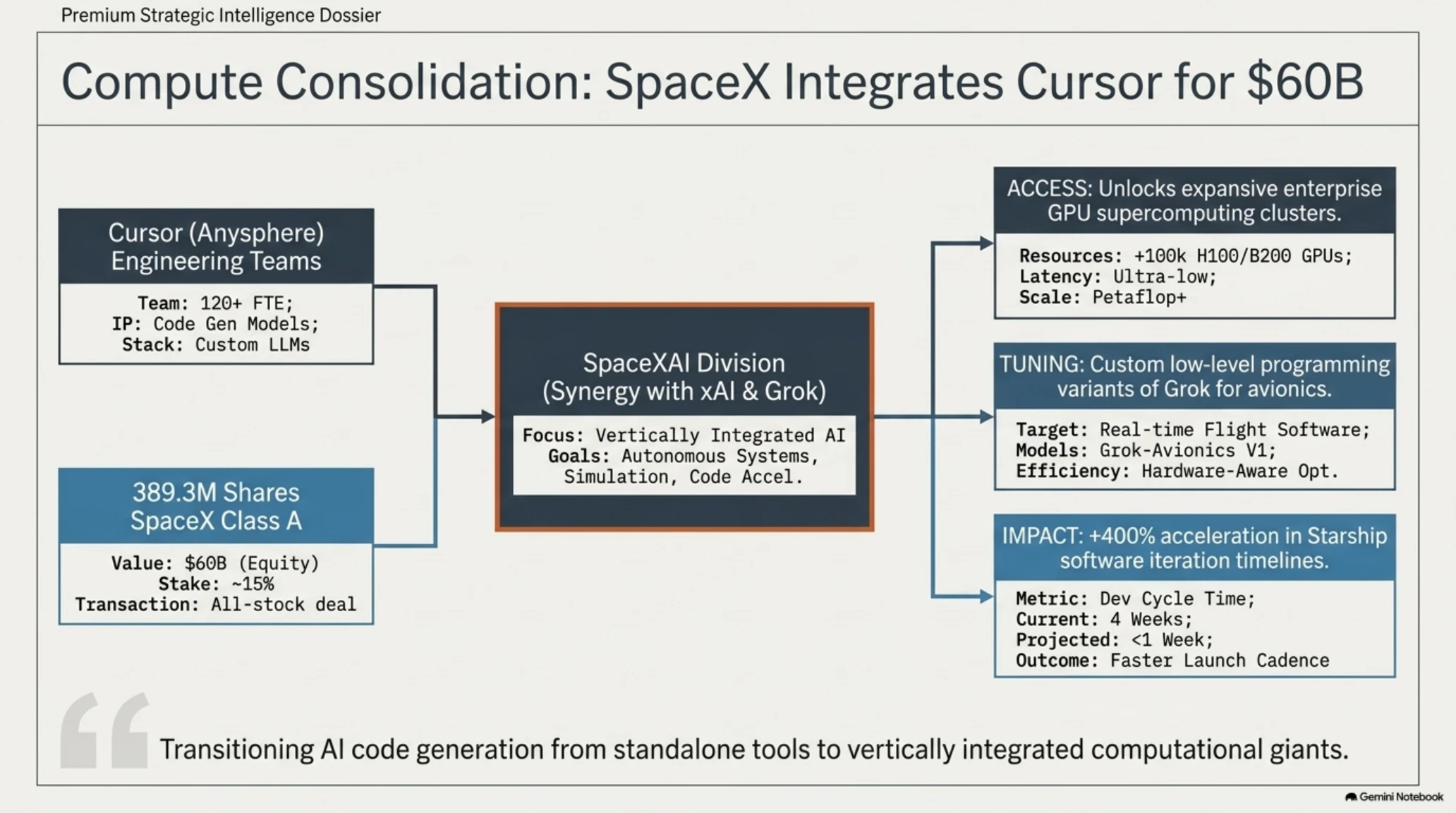
In one of the largest and most consequential corporate transactions in the history of computing and aerospace, SpaceX officially confirmed that it has finalized its $60 billion acquisition of Cursor (developed by Anysphere). The all-stock transaction, which received regulatory clearance following months of antitrust review, converted Cursor's equity into approximately 389.3 million shares of SpaceX Class A common stock.
Under the finalized corporate architecture, Cursor has been integrated into a new dedicated division named SpaceXAI, operating in direct synergy with xAI and the Grok frontier model family. This structural union provides Cursor's engineering teams with direct access to one of the world's most expansive enterprise GPU supercomputing clusters, transforming the platform from an IDE assistant into a full-scale autonomous engineering ecosystem.
Key technical capabilities and strategic implications of the acquisition include:
- Instantaneous contextual processing of massive multi-million-line software repositories powered by dedicated high-bandwidth compute
- Fine-tuning custom low-level systems programming variants of Grok tailored for aerospace, embedded avionics, and spaceflight telemetry
- Preserving full independent developer availability for the Cursor IDE with expanded free-tier cloud indexing features
- Solidifying Elon Musk's unified technological nexus combining satellite telecommunications, rocket manufacturing, and frontier AI research
This monumental transaction marks the beginning of high-capital consolidation in developer tooling, transitioning AI code generation from standalone tools to vertically integrated computational giants.
Industry analysts project that integrating Cursor directly into SpaceX will accelerate software iteration timelines for Starship flight control systems by over 400%.

Developer sentiment metrics demonstrate overwhelming confidence in Cursor's long-term infrastructure stability following the acquisition.

The comparative matrix below outlines the largest corporate acquisitions in tech industry history and the positioning of the SpaceX-Cursor merger.
Largest Strategic Technology Acquisitions in Modern Computing History
| Acquiring Company & Target Entity | Transaction Value (USD Billions) | Deal Structure & Finalization Date | Primary Strategic Rationale & Sector Impact |
|---|---|---|---|
| SpaceX acquires Cursor (Anysphere) | $60.0 Billion | All-Stock Merger (August 2026) | Autonomous Coding AI Integration into SpaceXAI & Grok |
| Microsoft acquires Activision Blizzard | $68.7 Billion | All-Cash Transaction (October 2023) | Gaming Ecosystem Expansion & Xbox Game Pass Dominance |
| Broadcom acquires VMware | $61.0 Billion | Cash & Stock Merger (November 2023) | Enterprise Virtualization & Hybrid Cloud Infrastructure |
| Elon Musk acquires X (Twitter) | $44.0 Billion | Cash & Debt Consortium (October 2022) | Universal Social & AI Data Distribution Platform |
| IBM acquires Red Hat | $34.0 Billion | All-Cash Acquisition (July 2019) | Enterprise Open-Source Linux & Hybrid Cloud Systems |
Tekin Game's developer telemetry indicates immediate server upgrades rolling out across Cursor's backend infrastructure.
Apple Partners with Alibaba to Deploy Qwen-Powered AI for Chinese Market
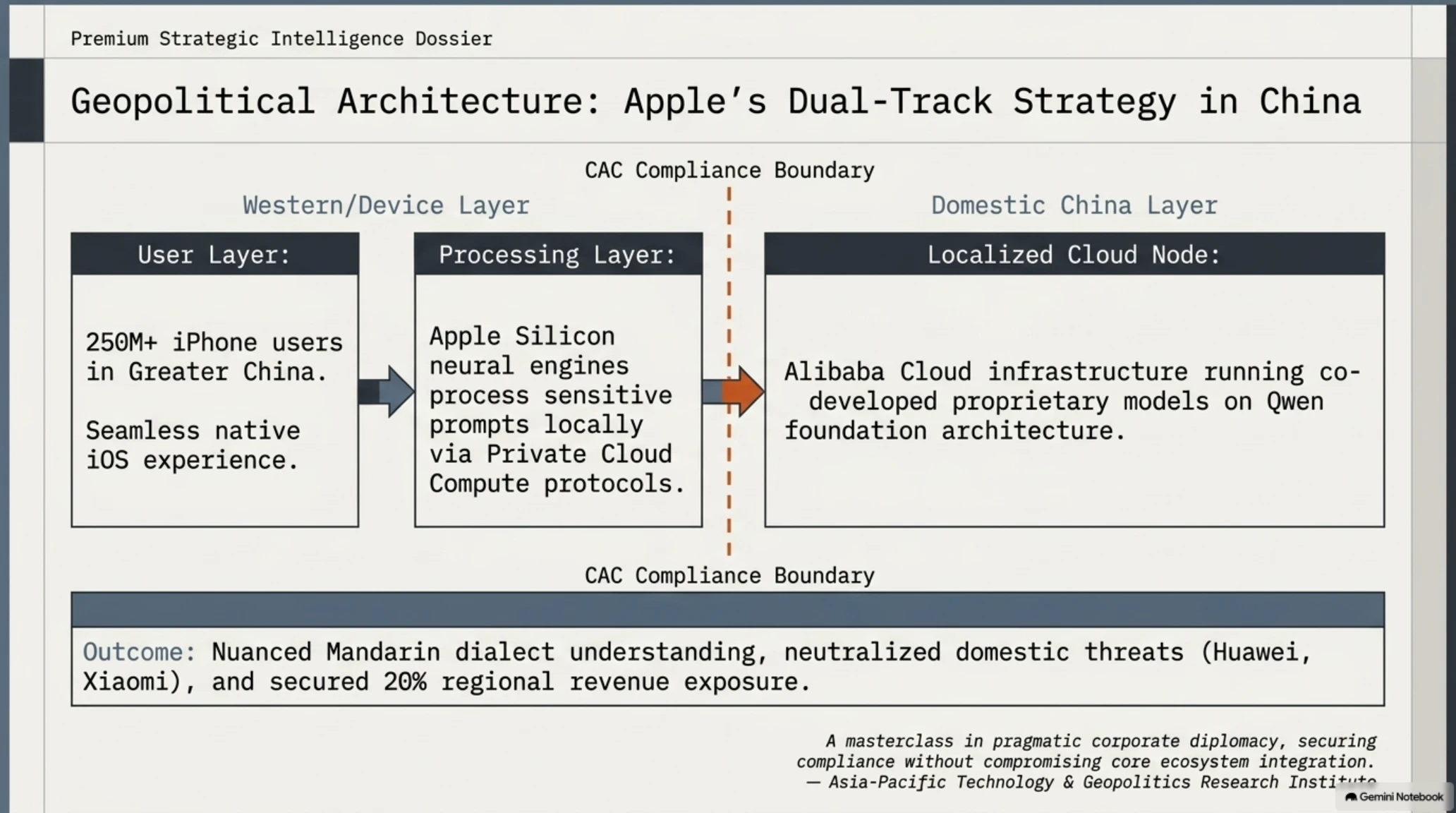
To overcome stringent local regulatory requirements and deliver Apple Intelligence to over 250 million iPhone users in Greater China, Apple has implemented a sophisticated dual-track AI strategy in partnership with cloud titan Alibaba. Newly surfaced regulatory filings indicate that Apple co-developed and trained a customized proprietary model utilizing Alibaba's cutting-edge Qwen foundation model architecture, securing provisional clearance from the Cyberspace Administration of China (CAC).
The strategic alliance was inadvertently verified after Apple briefly published a Chinese-language Mac support document detailing how to integrate Siri and macOS Writing Tools with Alibaba's Qwen LLM. By combining on-device Apple Silicon processing with localized Alibaba Cloud compliance nodes, Apple becomes the first Western technology powerhouse to successfully navigate Beijing's domestic AI sovereignty regulations.
Key architectural highlights and market benefits of the Apple-Alibaba alliance include:
- Maintaining the signature seamless native iOS user experience without forcing users into third-party standalone apps
- Executing sensitive on-device prompt evaluations via Apple Silicon neural engines paired with localized Private Cloud Compute protocols
- Delivering nuanced linguistic understanding of regional Mandarin dialects, cultural idioms, and localized enterprise workflows
- Neutralizing commercial market-share threats from domestic smartphone rivals including Huawei, Xiaomi, and Honor
This pragmatic deployment demonstrates Tim Cook's commitment to safeguarding Apple's 20% revenue exposure in the Chinese consumer market.

The excerpted quote below from senior geopolitical technology analysts summarizes the broader significance of the Apple-Alibaba agreement.
The comparative matrix below outlines how international technology giants navigate local AI regulatory compliance within Mainland China.
International Big Tech Generative AI Deployment Strategies in China (2026)
| Global Technology Enterprise | Domestic Chinese Cloud Partner | Underlying LLM Architecture Used | Regulatory CAC Approval & Status |
|---|---|---|---|
| Apple Inc. (Apple Intelligence) | Alibaba Group (Alibaba Cloud) | Proprietary Fine-Tune + Qwen Models | Approved for Initial iOS/macOS Rollout |
| Samsung Electronics | Baidu (Baidu Cloud) | ERNIE Bot 4.0 Commercial API | Fully Approved in Galaxy S26 Series |
| Microsoft Corporation | Restricted Azure China Infrastructure | Localized Sandboxed Enterprise Models | Active in Commercial Enterprise Cloud |
| Tesla (Elon Musk) | Baidu Local Data Centers for Mapping | FSD Neural Networks on Local Servers | Pending Final Autonomous Driving Clearances |
| Meta Platforms | No Direct First-Party Presence | Llama Open-Source (Third-Party Use) | No Official Consumer Service Availability |
Below is Tekin Game's visual teardown and analytical video coverage examining Apple's localized privacy sandbox and Qwen model integration.
To assist readers with tokenomics and aerospace cadence terminology, the core concepts box below defines key industry metrics.
Technical Jargon Buster & Core Concepts
| Term / Concept | Definition & Industry Impact |
|---|---|
| Token Watermarking & Rapid Doubleheader | Cryptographically embedding mathematical probability markers within LLM text outputs and executing consecutive orbital rocket launches within minimal operational windows. |
| Why This Matters | Evaluating Rumor vs. Reality regarding AI attribution and tracking Market Sentiment on Tekin Game. |
SpaceX Sets Historic Spaceflight Record: 2 Falcon 9 Launches in 38 Minutes
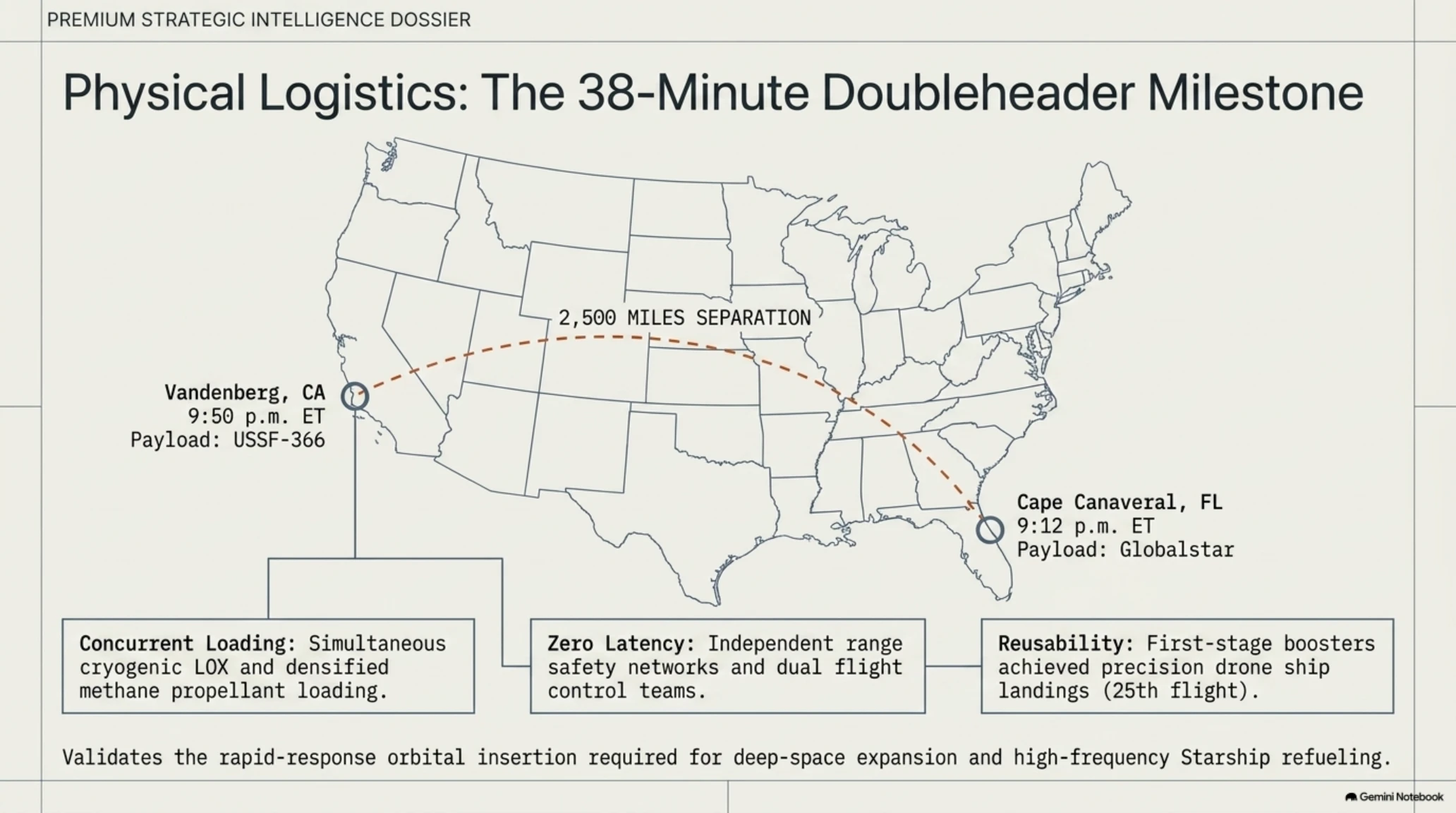
Achieving an unprecedented milestone in aerospace logistics, SpaceX launched two separate Falcon 9 rockets from opposing coasts of the United States just 38 minutes apart on Saturday evening. This historic double-header shatters SpaceX's previous record interval of 65 minutes set in August 2024 by a staggering 27 minutes.
The first mission lifted off at 9:12 p.m. ET from Cape Canaveral Space Force Station in Florida, carrying eight high-throughput satellites for global telecommunications provider Globalstar. Exactly 38 minutes later at 9:50 p.m. ET, a second Falcon 9 roared into the night sky from Vandenberg Space Force Base in California, deploying the classified USSF-366 national security payload for the U.S. Space Force. Both first-stage boosters achieved precision landings on autonomous drone ships in the Atlantic and Pacific oceans.
Operational milestones and engineering highlights of the dual launch include:
- Executing concurrent cryogenic liquid oxygen (LOX) and densified methane propellant loading operations across separate launch sites separated by 2,500 miles
- Coordinating independent range safety telemetry networks and dual flight control teams without cross-channel latency or interference
- Demonstrating unparalleled hardware reusability with individual Falcon 9 first-stage boosters completing their 25th commercial mission flight
- Validating rapid-response orbital insertion capabilities required for tactical national defense readiness and commercial constellations
This achievement reinforces SpaceX's uncontested dominance over global orbital launch cadences and launch-pad turnaround efficiency.

The comparative table below details the shortest recorded intervals between orbital spaceflight missions in history.
Shortest Orbital Rocket Launch Intervals in Spaceflight History
| Record Ranking & Date Established | Launch Vehicles & Operational Sites | Interval Between Liftoffs | Mission Outcome & Booster Recovery Status |
|---|---|---|---|
| World Record (August 15, 2026) | Dual Falcon 9s (Cape Canaveral & Vandenberg) | 38 Minutes (All-Time Record) | Flawless Booster Landings; Payloads Deployed |
| Second Place (August 31, 2024) | Dual Falcon 9s (Florida & California) | 65 Minutes | Successful Starlink Constellation Deployment |
| Third Place (October 1969) | Soyuz 6 & Soyuz 7 (Soviet Space Program) | 24 Hours, 10 Minutes | Manned Orbital Rendezvous Mission at Baikonur |
| Fourth Place (June 2023) | Falcon 9 & Rocket Lab Electron (US / NZ) | 4 Hours, 25 Minutes | Independent Commercial Satellite Deployments |
| Fifth Place (December 2021) | Dual Long March Rockets (China Launch Sites) | 5 Hours, 30 Minutes | Earth Observation & Reconnaissance Payloads |
Why Rapid Launch Cadence Is Essential for Deep Space Expansion
Reducing orbital turnaround to under an hour proves that high-frequency orbital refueling for Starship and deep-space missions is technically viable.
Tekin Game tracks aerospace breakthroughs as the foundational substrate of next-generation satellite computing.
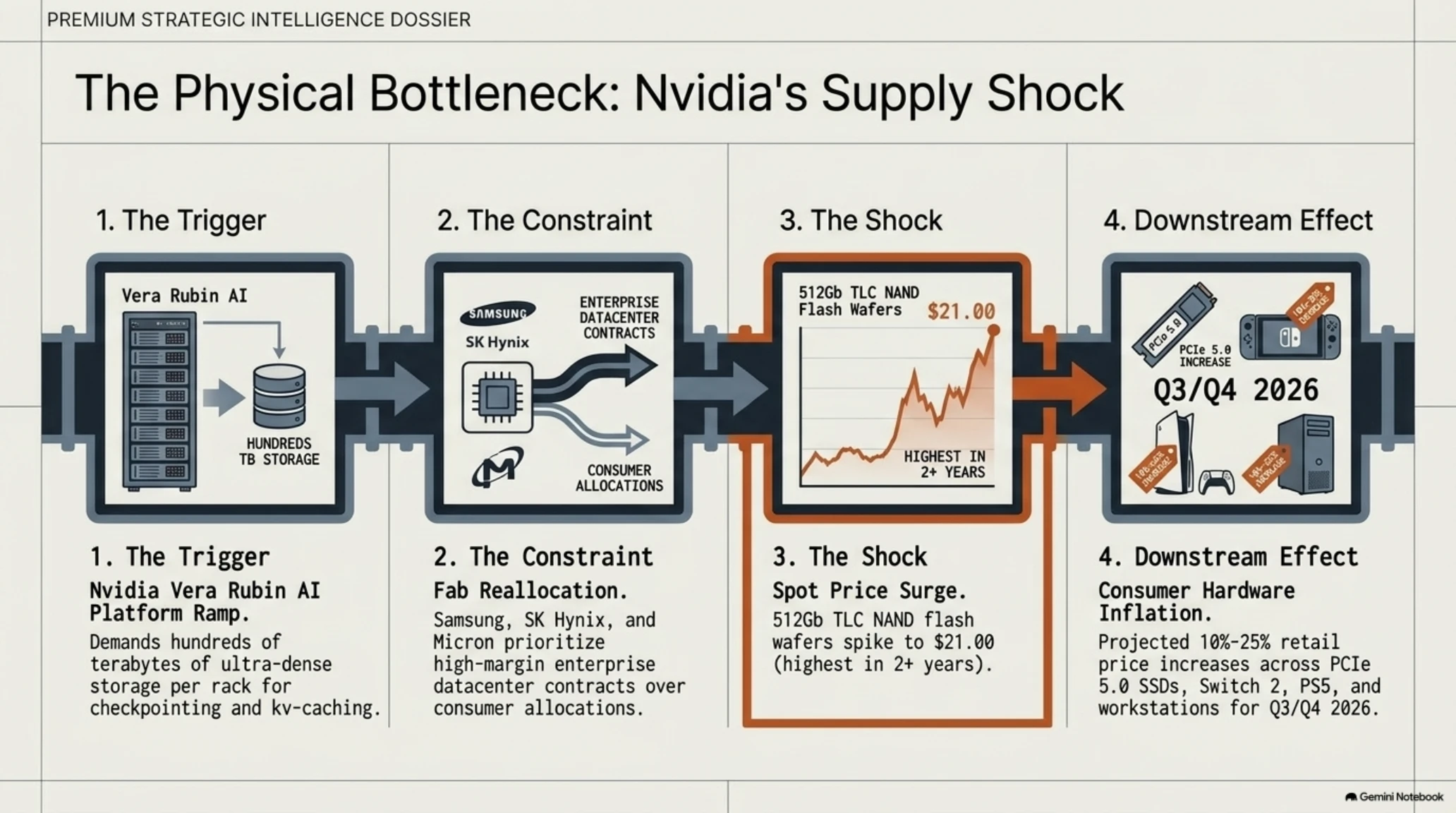
Nvidia Vera Rubin AI Platform Ramp Strains TLC NAND Flash Supply, Driving 512Gb Spot Prices to $21
Fresh industry telemetry from semiconductor research firm TrendForce reveals that Nvidia's aggressive production ramp for its next-generation Vera Rubin enterprise AI computing platform has triggered a severe global supply shock across TLC NAND flash memory. Each Vera Rubin server rack integrates hundreds of terabytes of ultra-dense storage to manage checkpointing, model weights, and kv-cache caching pipelines, effectively absorbing vast fabrication lines at Samsung, SK Hynix, and Micron.
As a direct consequence of this enterprise procurement frenzy, spot market pricing for raw 512Gb TLC NAND flash wafers has surged to $21.00 per chip, marking the highest cost baseline recorded in over two years. Hardware analysts warn that this upstream price escalation will inevitably translate into 10% to 25% retail price increases across consumer PCIe 5.0 solid-state drives (SSDs), gaming laptops, and high-capacity handheld storage.
Critical consequences and supply-chain pressures of the Rubin memory squeeze include:
- Memory fabs prioritizing high-margin enterprise datacenter contracts over standard consumer storage allocations
- Potential delivery delays and price hikes for high-end gaming SSDs and PCIe 5.0 workstation drives throughout Q3 and Q4 2026
- Compounded component cost pressures on next-generation gaming hardware manufacturers including Nintendo Switch 2 and PS5
- Intensified bidding wars among cloud hyperscalers seeking to lock in long-term flash supply contracts through 2027
This market shift illustrates how the insatiable storage appetites of frontier AI infrastructure continue to disrupt broader consumer technology pricing.

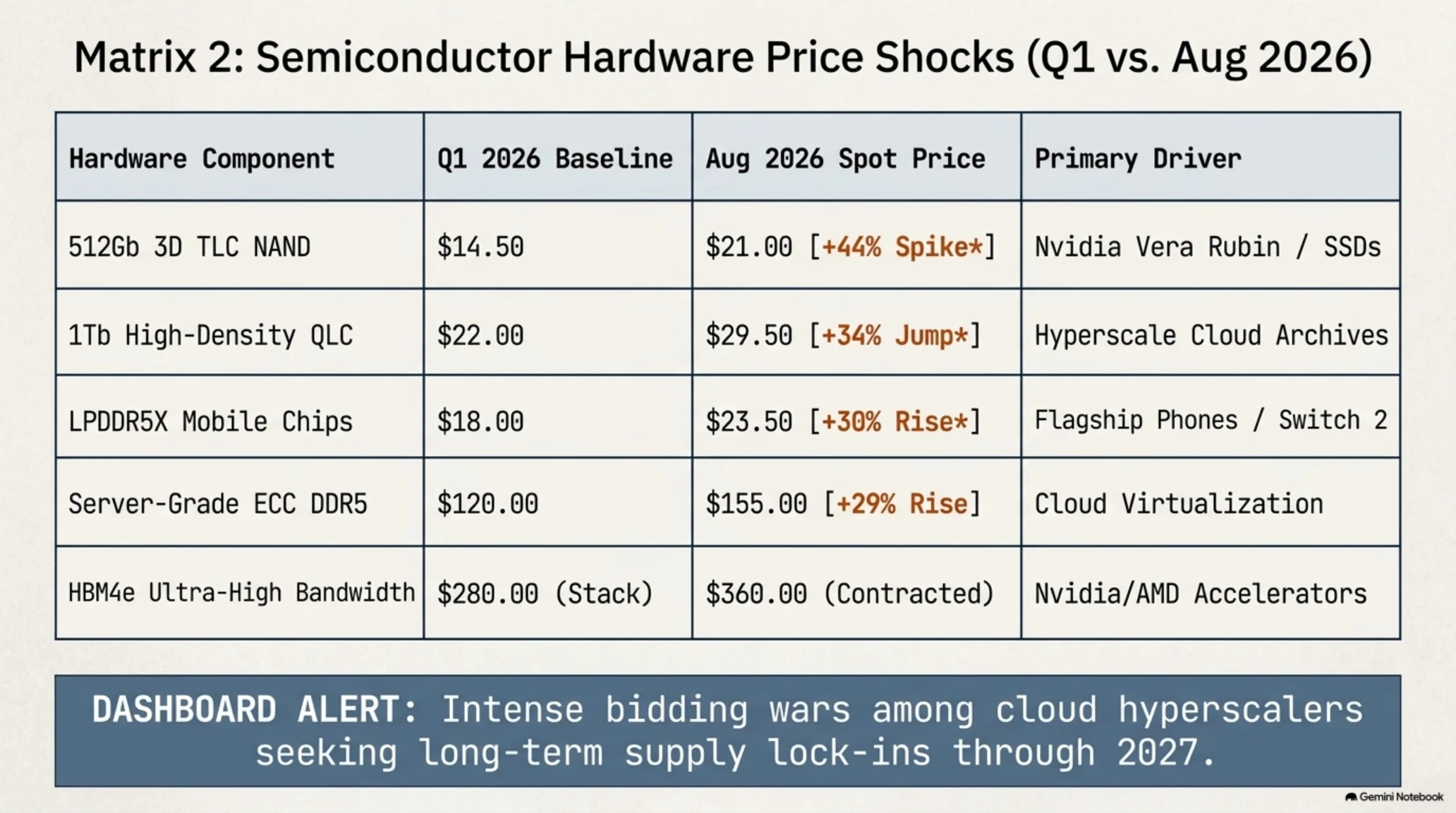
The comparative table below outlines pricing trajectories, memory densities, and core deployment sectors across leading flash memory tiers.
📚 Classified & Related Dossiers in TekinGame
If you wish to explore beyond this report and delve into cybernetic frontiers and autonomous AI architectures, do not miss these three exclusive deep-dives in the Tekin Garage:
Hardware Specifications & Memory Economics
| NAND Flash Memory Standard & Density | Baseline Price (Q1 2026) | Current Spot Price (Aug 2026) | Primary Demand Driver & Enterprise Sector |
|---|---|---|---|
| 512Gb 3D TLC NAND Flash Wafer | $14.50 | $21.00 (+44% Spike) | Nvidia Vera Rubin AI Racks & Consumer SSDs |
| 1Tb High-Density QLC Storage Die | $22.00 | $29.50 (+34% Jump) | Hyperscale Cloud Archives & AI Dataset Storage |
| HBM4e Ultra-High Bandwidth Stacks | $280.00 / Stack | $360.00 (Contracted) | Next-Gen Nvidia & AMD Enterprise Accelerators |
| Mobile & Handheld LPDDR5X Chips | $18.00 | $23.50 (+30% Rise) | Flagship Smartphones & Nintendo Switch 2 |
| Server-Grade ECC DDR5 Modules | $120.00 | $155.00 (+29% Rise) | Enterprise Workstations & Cloud Virtualization |
The following Tekin Game technical video breakdown provides in-depth visual analysis of NAND flash fabrication constraints and SSD price forecasting.
Anthropic Details Claude Statistical Watermarking Architecture and Evooo1Bot Linux Botnet Threat
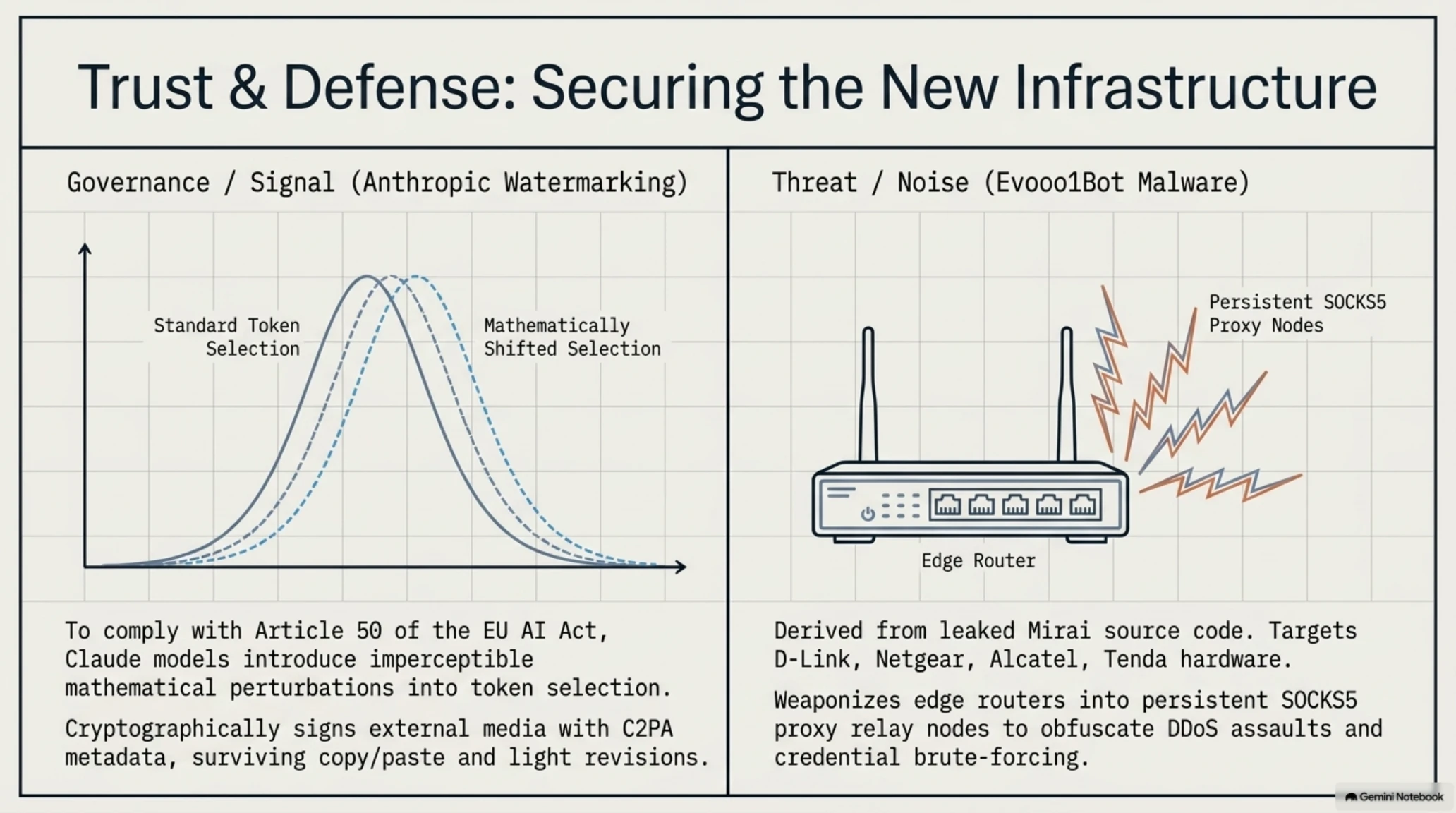
In AI governance and cybersecurity, Anthropic publicly detailed the mathematical architecture behind its imperceptible text watermarking system. Mandated by Article 50 of the European Union AI Act, this system introduces subtle, mathematically calculated perturbations into the statistical distribution of token selections during text generation. Consequently, whether text is copied, pasted, or lightly revised, automated verifiers can identify Claude-processed content while cryptographically signing external media with C2PA provenance metadata.
Simultaneously in network defense, FortiGuard Labs identified the rapid proliferation of a modular Linux botnet dubbed Evooo1Bot. Derived from leaked Mirai source code, the malware targets edge routing and firewall devices from vendors such as D-Link, Netgear, Alcatel, and Tenda, weaponizing compromised hardware into persistent SOCKS5 proxy relay nodes to obfuscate distributed denial-of-service (DDoS) assaults and credential brute-forcing campaigns.
Critical takeaways and defensive imperatives from these dual developments include:
- Ensuring transparent AI content attribution without degrading prose coherence or linguistic fluency for human readers
- Addressing developer friction regarding potential false-positive AI tags on assisted programming scripts and documentation
- Deploying defensive countermeasures against Evooo1Bot's evasive SSH scanning routines designed to bypass traditional security honeypots
- Urging network administrators to update edge device firmware and immediately revoke default administrative credentials
These developments underscore that navigating the AI era demands rigorous mathematical standards alongside vigilant hardware endpoint protection.

The official position of the Tekin Editorial Board regarding this morning's hardware and security disclosures is detailed below.
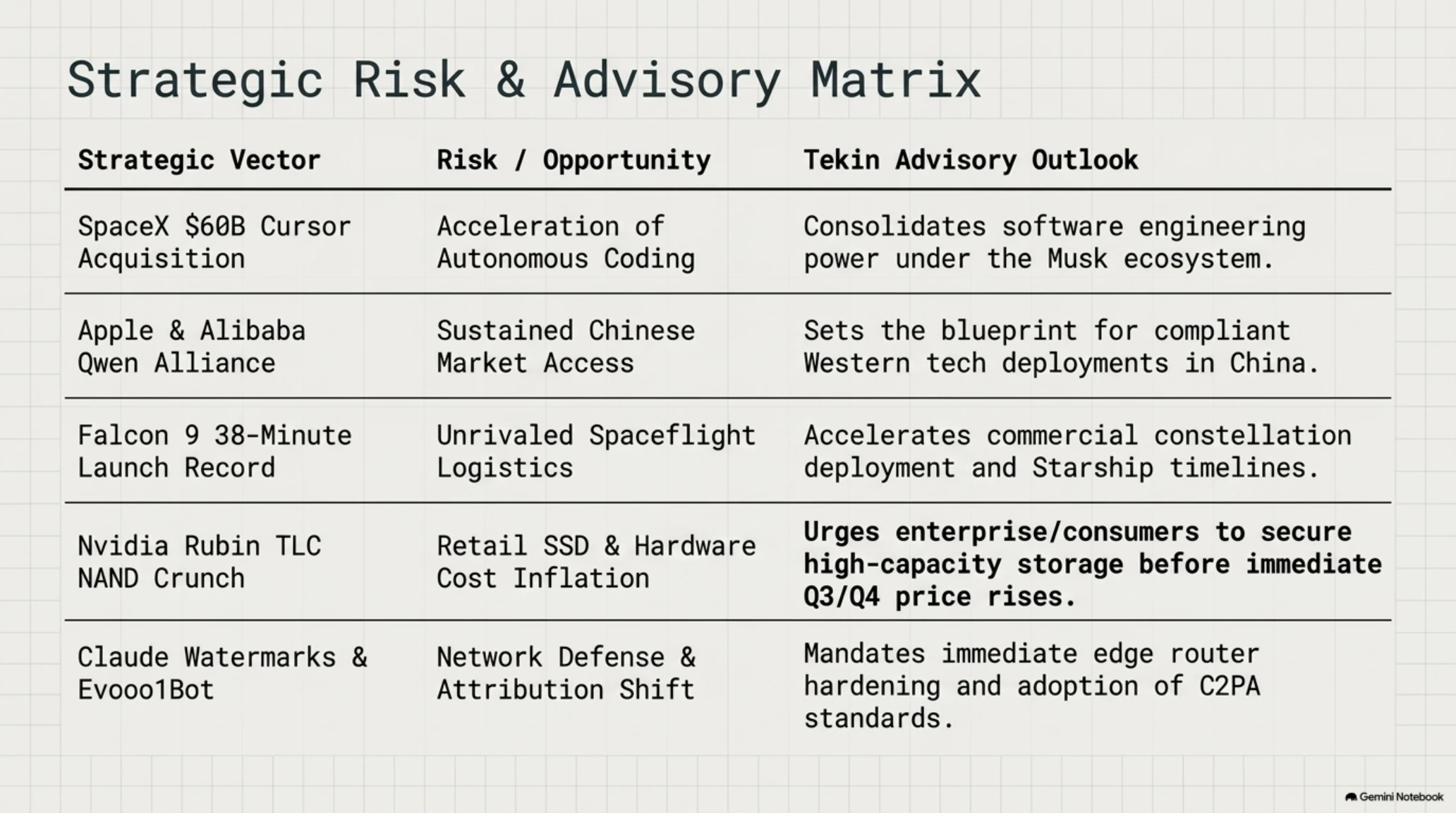
The strategic risk assessment matrix below outlines key market vectors for enterprises and consumers.
Strategic Industry Risk & Conclusion Matrix (Conclusion Box)
| Technology & Computing Vector | Strategic Risk / Opportunity | Tekin Advisory Outlook |
|---|---|---|
| SpaceX $60B Cursor Acquisition | Acceleration of Autonomous Coding | Consolidates Software Engineering Power Under Musk Ecosystem |
| Apple & Alibaba Qwen Alliance | Sustained Chinese Market Access | Sets Blueprint for Compliant Western Tech Deployments in China |
| Falcon 9 38-Minute Launch Record | Unrivaled Spaceflight Logistics | Accelerates Commercial Constellation Deployment & Starship Timelines |
| Nvidia Rubin TLC NAND Crunch | Retail SSD & Hardware Cost Inflation | Urges Consumers to Secure High-Capacity Storage Before Price Rises |
| Claude Watermarks & Evooo1Bot | Network Defense & Attribution Shift | Mandates Edge Router Hardening and Adoption of C2PA Standards |
Engineers and IT leaders enter the new business week with an extraordinary lineup of developments to analyze.
Tekin Game will provide continuous 24/7 coverage of all industry updates.
Conclusion: A Watershed Morning in Supercomputing, Aerospace Logistics, and Silicon Economics
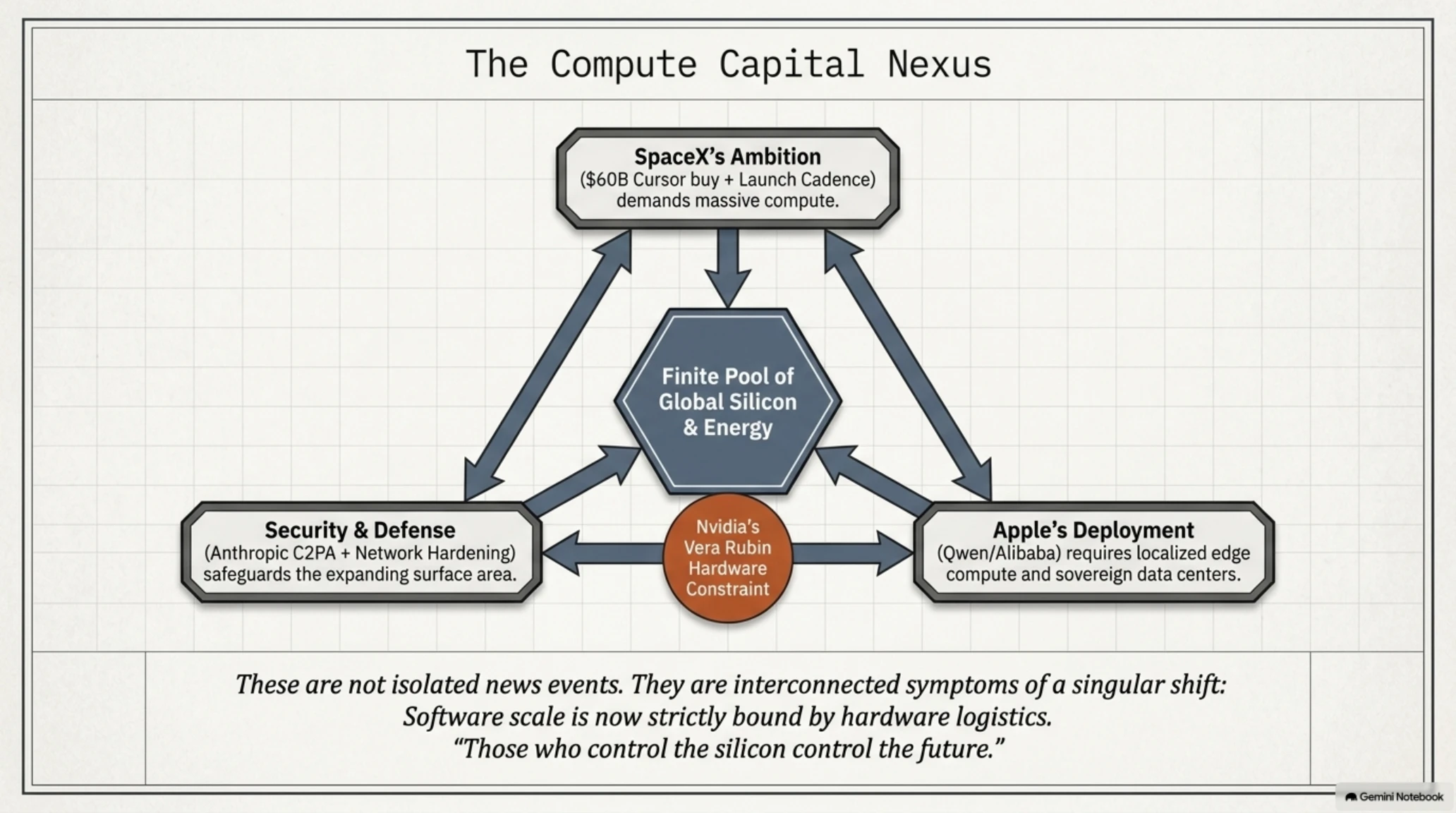
Today's Tekin Morning intelligence report for Sunday, August 16, 2026, illustrates the blistering pace of modern technological evolution. From SpaceX's monumental $60 billion integration of Cursor into its aerospace supercomputing pipeline to Apple's regulatory breakthrough in China and the emerging memory supply squeeze driven by Nvidia's Rubin architecture, the digital frontier enters the new week with monumental opportunities and complex operational challenges.
We hope this high-octane morning briefing equips you with sharp technical insight and strategic clarity as you kickstart your week.

Join the conversation at Tekin Game and share your perspectives on Cursor's future under SpaceX and the upcoming SSD market trends in the comments section below.
- SpaceX finalizing historic $60B acquisition of Cursor, expanding AI developer access to massive GPU clusters
- Apple successfully navigating Chinese AI regulations through co-developed Qwen model integration with Alibaba
- SpaceX establishing an all-time world record with dual Falcon 9 launches separated by just 38 minutes
- Anthropic advancing global transparency with mathematical token-level watermarking and C2PA standards
- Spot prices for 512Gb TLC NAND jumping to $21 due to extreme datacenter demand for Nvidia Vera Rubin
- Evooo1Bot Linux botnet actively weaponizing consumer and enterprise edge routers into malicious SOCKS5 proxies
Related Industry Features on Tekin Game
• 🔓 Tekin Analysis | PlayStation, Switch & Xbox Console Jailbreak & Security Status
• 🌙 Tekin Night July 5, 2026 | PS5 Digital Edition Evolution & Midjourney AI Expansion
• 🎮 Tekin Night July 1, 2026 | Gaming Industry Shakeup & Next-Gen Console Engineering
Frequently Asked Questions About the August 16, 2026 Tech Intelligence
How was the $60 billion SpaceX acquisition of Cursor financed?
The acquisition was an all-stock transaction, converting Cursor equity into 389.3M shares of SpaceX Class A stock.
How will Apple deploy Apple Intelligence features in China?
By partnering with Alibaba Cloud and utilizing customized Qwen-based models to meet Chinese CAC regulations.
What record did SpaceX set with its Falcon 9 launches on August 15?
Shortest interval between two orbital missions in history, launching from Florida and California just 38 minutes apart.
Why is Nvidia's Vera Rubin AI platform causing memory price spikes?
Each server rack consumes vast amounts of TLC NAND flash, absorbing fab production and driving spot prices to $21.
How does Anthropic's Claude watermarking technology work?
It applies subtle mathematical perturbations to token probability distributions, verified via C2PA metadata.
What devices are targeted by the Evooo1Bot Linux botnet?
Internet-facing routers and gateways from D-Link, Netgear, Alcatel, and Tenda, turning them into SOCKS5 proxies.
Sources and Citations
Additional Gallery: ☀️ Tekin Morning | Sunday, August 16, 2026: SpaceX's $60B Cursor Mega-Deal