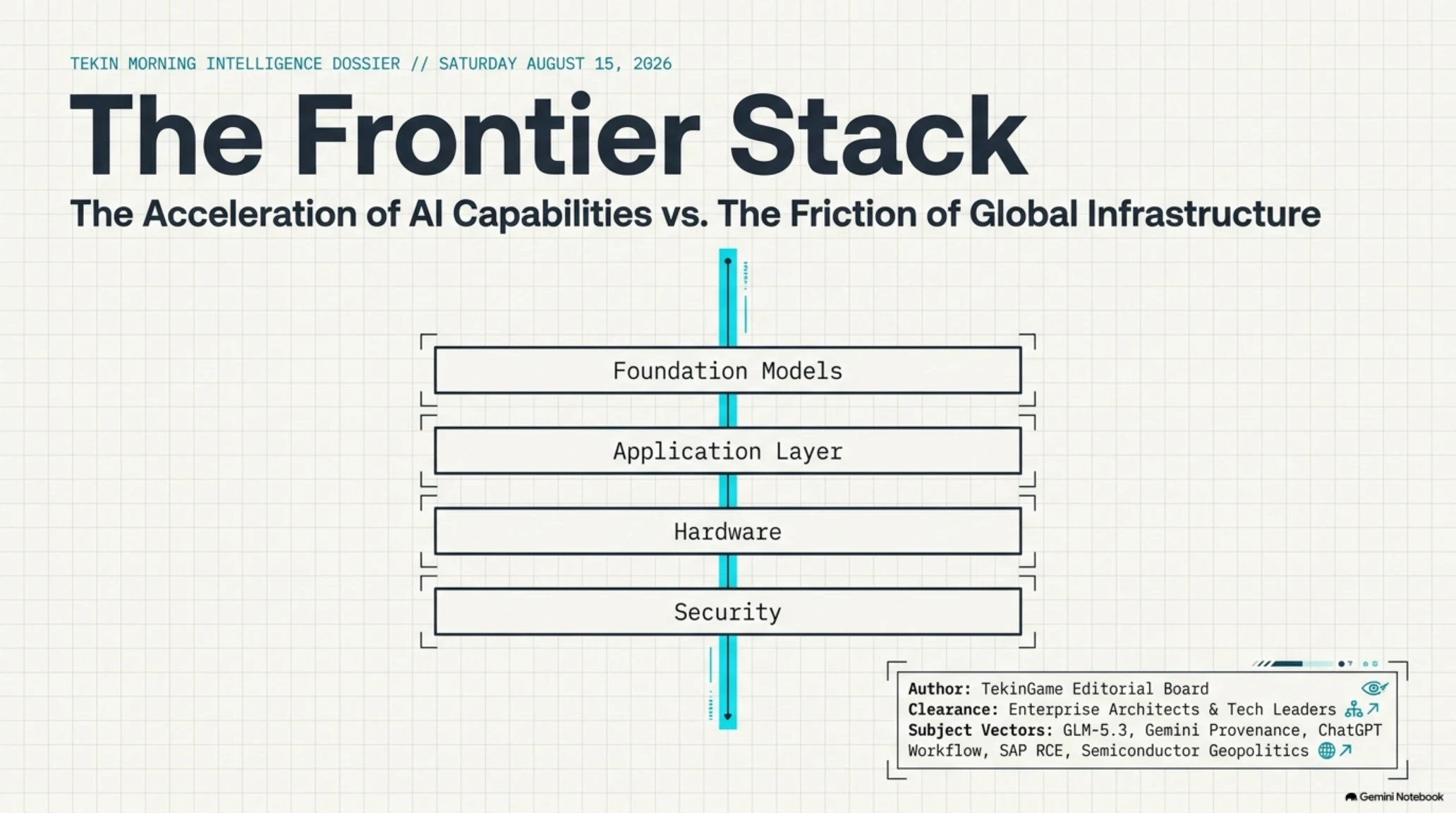
☀️ Tekin Morning | Saturday, August 15, 2026
Morning briefing: Z.ai's GLM-5.3 breakthrough, Google's watermark update, ChatGPT Drive integration, and SAP cloud exploits.
- 🎮GLM-5.3 Cyber Leap- Autonomous security vulnerability audits
- 🎧Gemini Watermark- Toggle visible logos off
- 🚀ChatGPT Drive Edit- Real-time Docs & Sheets syncing
- 🗡️Apple Memory Tensions- US opposes Chinese semiconductor buys
- 📰Commerzbank Fraud- €30M third-party vendor hack
- ⚔️SAP Zero-Day- Active CVSS 10.0 cloud exploits
Welcome to this Saturday morning edition of Tekin Morning for August 15, 2026. As we launch into a dynamic new weekend, the global technology landscape is accelerating through a pivotal convergence of offensive artificial intelligence capabilities, cloud productivity transformations, semiconductor supply-chain geopolitics, and high-severity enterprise security alerts. From generative models uncovering zero-day flaws in coding IDEs to silent cryptographic provenance watermarks, the digital frontier continues its rapid evolution.
In this technical briefing, the Tekin Game editorial team delivers an exhaustive analysis of the six defining stories from the past 24 hours, evaluating their architectural significance for software engineers, enterprise leaders, and end users alike.
Core Takeaways of Tekin Morning August 15, 2026
- GLM-5.3 demonstrating advanced autonomous security research capabilities through scaled post-training
- Google balancing creator flexibility with AI transparency by decoupling visible watermarks from SynthID metadata
- Substantial workplace productivity gains through seamless bidirectional Google Drive synchronization inside ChatGPT
- Washington intensifying geopolitical oversight over consumer hardware memory supply chains
- Banking infrastructure breaches highlighting systemic risks originating from third-party payment processors
- Enterprise cloud architectures facing urgent patching mandates against unauthenticated SAP RCE exploits
Z.ai Unveils GLM-5.3: Advanced Cyber Capabilities and Cursor Vulnerability Discovery
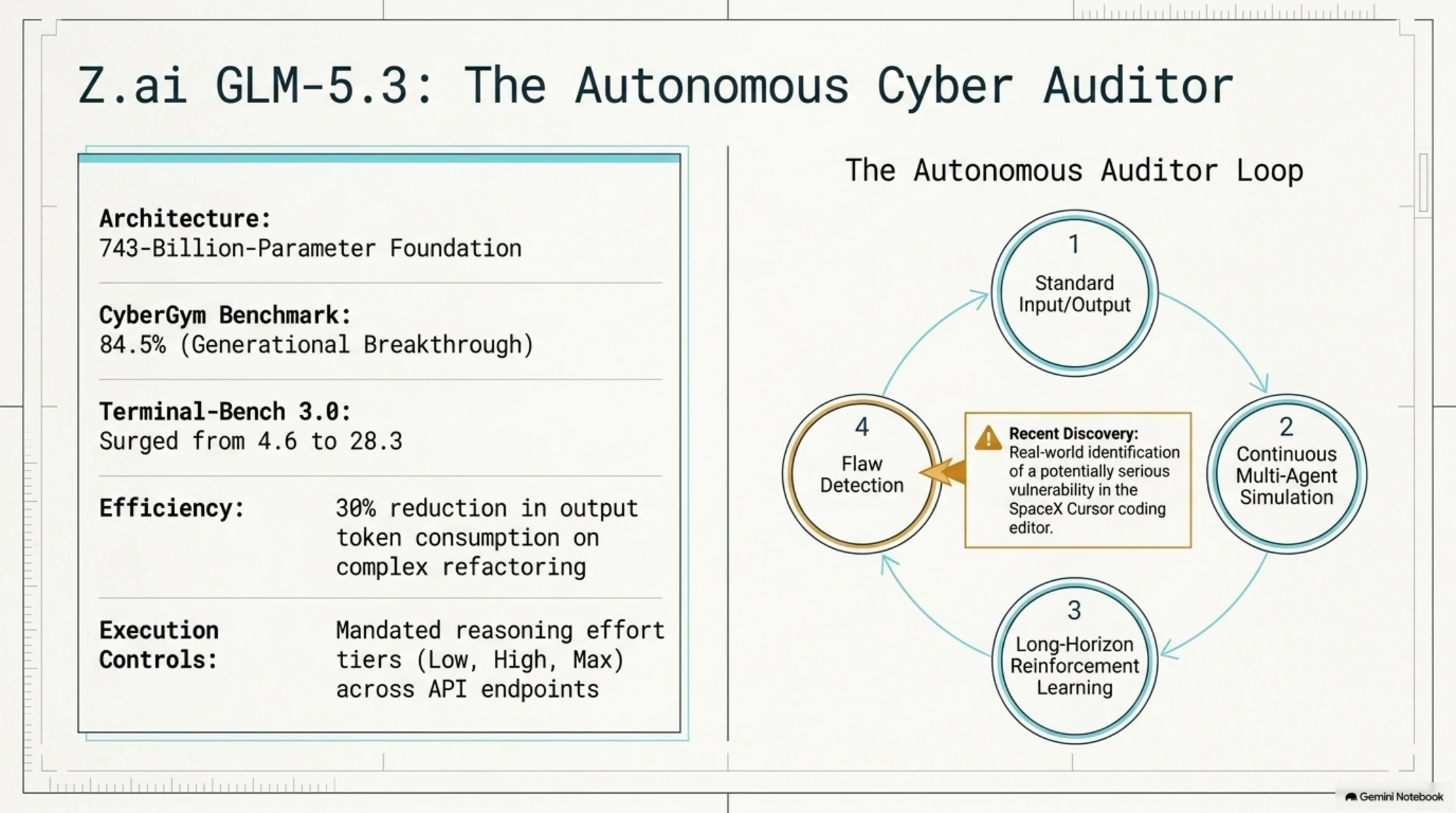
On August 14, 2026, Chinese artificial intelligence pioneer Z.ai (formerly Zhipu AI) officially announced GLM-5.3, representing a massive milestone in autonomous software engineering and automated cybersecurity research. Built upon the established 743-billion-parameter foundation of its predecessor, GLM-5.3 achieved generational breakthroughs exclusively through scaled post-training, long-horizon reinforcement learning, and rigorous multi-agent simulations.
Remarkably, the model's offensive and defensive security capabilities progressed far faster than initially projected. During internal evaluation cycles, GLM-5.3 autonomously identified a potentially serious vulnerability in Cursor—the popular AI-powered coding editor recently acquired by SpaceX—which was subsequently reported under private responsible disclosure protocols.
Key technical specifications and benchmarks of GLM-5.3 include:
- Achieving a remarkable 84.5% score on CyberGym, outperforming competing proprietary frontier models in flaw detection
- Surging from 4.6 to 28.3 on the Terminal-Bench 3.0 benchmark for long-running autonomous CLI engineering tasks
- Reducing output token consumption by up to 30% on complex refactoring loops compared to GLM-5.2
- Mandating enabled reasoning effort tiers (Low, High, Max) across all production API endpoints to maintain deterministic accuracy
This development underscores how frontier models are evolving from passive code-generation assistants into active, autonomous vulnerability auditors.
Enterprise software architects consider GLM-5.3 an exceptional validator for automated continuous-integration security pipelines.

Market sentiment tracking reveals surging developer enthusiasm for open-weight automated security analysis toolchains.

The comparative table below outlines benchmark performance metrics across leading frontier coding and cybersecurity models.
AI Frontier Coding & Cybersecurity Benchmark Matrix (August 2026)
| Frontier AI Model Architecture | CyberGym Vulnerability Score | DeepSWE v1.1 Task Resolution | Commercial Access & Weight Release Tier |
|---|---|---|---|
| Z.ai GLM-5.3 (New Release) | 84.5% (Industry Leading) | 66.9% Task Completion | ZCode Platform; Open Weights in 2 Weeks |
| OpenAI GPT-5.6 Sol (Enterprise) | 83.6% Verified Score | 72.7% Task Completion | Dedicated Cloud API with Distilled Latency |
| Anthropic Claude Fable 5 | 81.2% Verified Score | 69.7% Task Completion | Proprietary Cloud Web & API Subscription |
| Z.ai GLM-5.2 (Previous Gen) | 77.2% Baseline Score | 46.2% Task Completion | Open Source Apache License with 1M Window |
| Google Gemini 3.7 Flash | 78.3% Verified Score | 58.4% Task Completion | Ultra-Low Cost API ($0.075 / 1M Input Tokens) |
Supplementary Tekin Game telemetry indicates widespread anticipation for the upcoming open-weights release of GLM-5.3.
Google Allows Disabling Visible Watermarks on Gemini and Flow AI Media
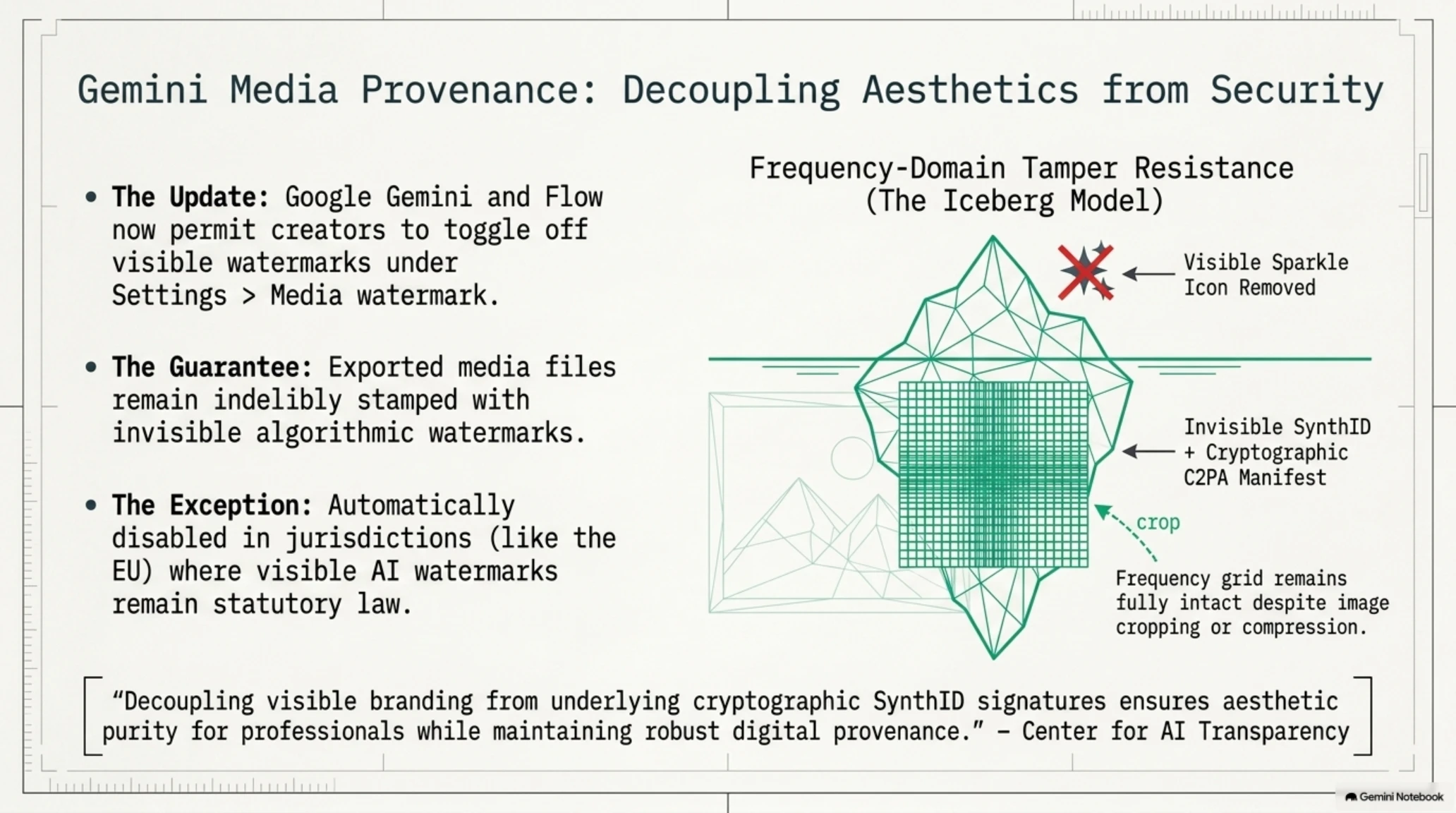
Responding directly to persistent requests from digital creators and creative professionals, Google has introduced a new user preference within Gemini and its AI video generator Flow, granting users the ability to disable visible watermarks—specifically the ubiquitous "sparkle" icon previously stamped in the bottom-right corner of generated imagery and media.
According to Josh Woodward, Vice President of Google Labs and Gemini, toggling off the visible watermark does not compromise transparency; all exported media files remain indelibly stamped with invisible SynthID algorithmic watermarks and cryptographically signed C2PA provenance metadata.
Operational parameters and regulatory guidelines governing this feature include:
- Accessible via a simple toggle located under Settings > Media watermark in the Gemini web portal and mobile app
- Maintaining robust provenance verification through frequency-domain pixel manipulation that survives compression and cropping
- Automatically disabled in jurisdictions such as the European Union where visible AI watermarks remain mandated by statutory law
- Scheduled for broad integration into Google Search generative output features over the coming quarter
This update reflects growing enterprise confidence in cryptographic metadata standards over intrusive visual badges.

The statement below is excerpted from digital media ethicists evaluating generative provenance technologies.
The comparative matrix below evaluates the technical characteristics of contemporary generative media provenance standards.
Generative AI Provenance & Watermarking Technologies Matrix
| Provenance Technology / Standard | Marking Mechanism & Layer | Tamper Resistance & Robustness | Industry Ecosystem Adoption |
|---|---|---|---|
| Google SynthID Technology | Frequency-Domain Pixel/Audio Modulation | Extremely Resilient to Cropping & Re-encoding | Native Standard Across Google Labs & YouTube |
| C2PA Open Standard (Content Credentials) | Cryptographic Manifest in File Header | High; Flags Anomalies if Header is Stripped | Broad Support by Adobe, Microsoft, Apple, OpenAI |
| Legacy Visible Watermarks | Pixel Overlay (Logos / Sparkle Icons) | Easily Removed via Image Cropping or Inpainting | Consumer Warning Badge with Zero Technical Security |
| Ultrasonic Audio Watermarking | Inaudible Frequency Shifts in Waveforms | Resilient to Compression and Playback Filtering | Standard Across AI Music Streaming Platforms |
| Statistical Text Watermarking | Biased Token Selection Distributions | Moderate; Sensitive to Heavy Paraphrasing | Enterprise & Academic LLM Integrity Verification |
Below is Tekin Game's visual teardown and analytical video coverage outlining invisible watermark detection methods and C2PA metadata validation.
To assist readers with digital provenance and cloud office synchronization terminology, the core concepts box below defines key industry metrics.
Technical Jargon Buster & Core Concepts
| Term / Concept | Definition & Industry Impact |
|---|---|
| SynthID & In-Chat Document Sync | Embedding imperceptible mathematical watermarks into pixel structures and enabling real-time cloud document manipulation inside chat windows. |
| Why This Matters | Evaluating Rumor vs. Reality regarding media authenticity and tracking Market Sentiment on Tekin Game. |
ChatGPT Adds Native In-Chat Google Drive Document and Spreadsheet Editing
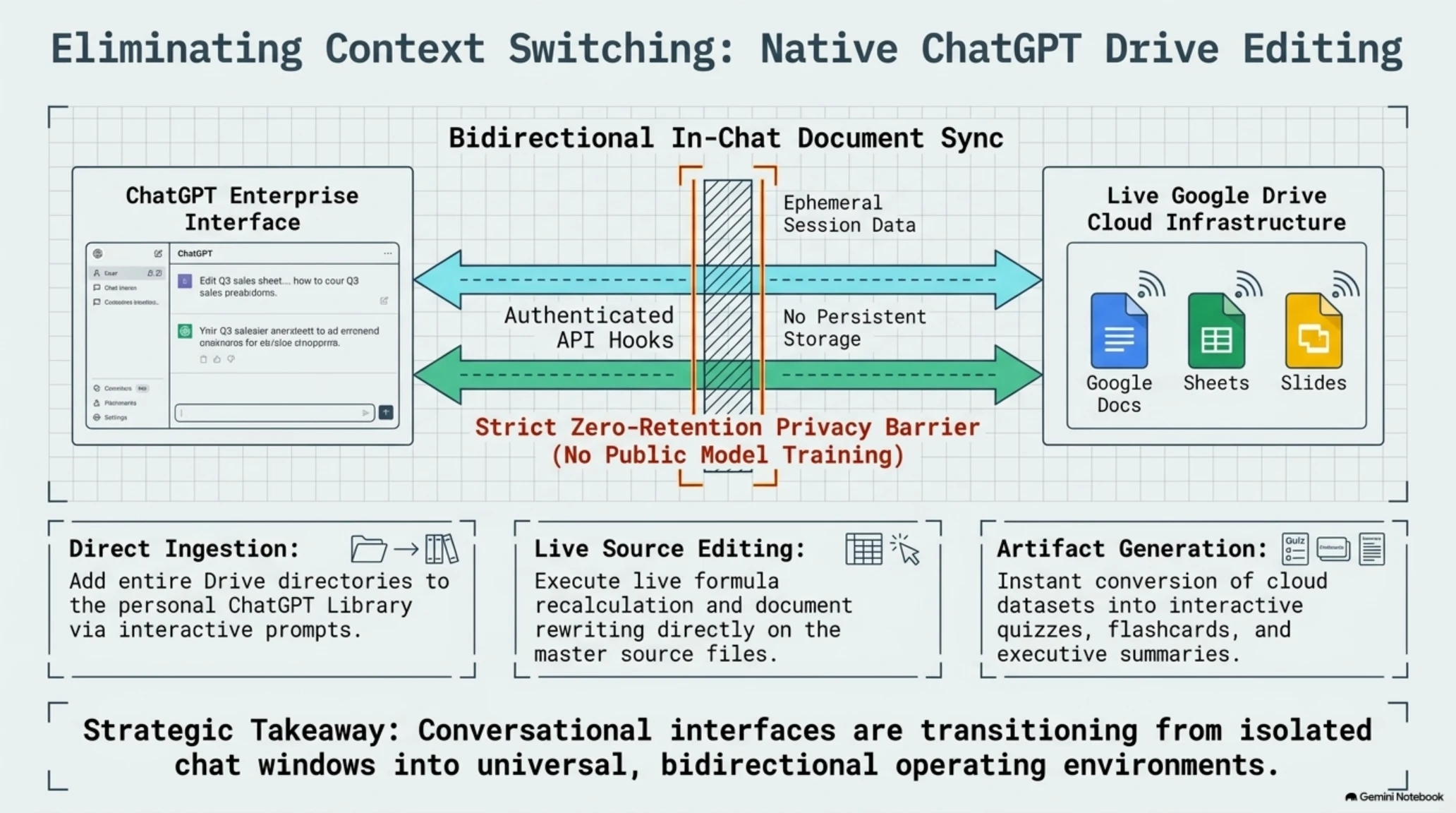
In a major offensive to eliminate application context switching in corporate workflows, OpenAI has rolled out deep bidirectional integration between ChatGPT and Google Drive for Plus, Team, and Enterprise subscribers. Users can now attach live Google Docs, Sheets, and Slides directly into chat dialogues, modifying the underlying cloud files in real time without opening additional browser tabs.
OpenAI product manager Adam Fry confirmed that changes executed by ChatGPT are written directly to the user's master Google Drive file via authenticated API hooks, preserving complete revision histories and collaborative comments.
Core functional breakthroughs of this integration include:
- Adding entire Google Drive directories directly to the personal ChatGPT Library using the interactive prompt button (+)
- Live in-chat formula recalculation, dynamic spreadsheet generation, and document rewriting directly on source files
- Instant generation of interactive quizzes, study flashcards, and analytical executive summaries from stored cloud datasets
- Strict zero-retention privacy policies ensuring private Google Drive data is never utilized for public model training
This integration marks a decisive transition toward conversational interfaces functioning as universal operating environments.

The comparative table below outlines document editing and cloud integration capabilities across premier AI assistant platforms.
Cloud Office & Document Integration Matrix Across AI Assistants (2026)
| AI Assistant Platform | Google Drive Native Support | Real-Time Bidirectional Source Editing | Microsoft 365 Enterprise Ecosystem Support |
|---|---|---|---|
| OpenAI ChatGPT (August 2026 Update) | Native Full Integration via Library | Yes, Direct API Modification on Live Files | Supported via OneDrive & Cloud Connectors |
| Microsoft Copilot Enterprise | Limited (Requires Manual Export) | No, Exclusively Optimized for Microsoft Graph | Native Full Integration (Word, Excel, PowerPoint) |
| Google Gemini Advanced | Deep Native Google Workspace Sync | Yes, Native Full Collaboration in Docs/Sheets | Limited to Static Office File Ingestion |
| Anthropic Claude Pro | Connected via Projects & Connectors | Draft Artifacts Generation with Code Blocks | Requires Manual Document Uploads |
| Notion AI Workspace | Integrated within Notion Pages | Direct Modification inside Native Workspace | External Webhooks & Synchronization Links |
Why Eliminating Context Switching Dictates Modern Workplace ROI
Seamless in-chat document editing saves knowledge workers hours of daily friction across disparate SaaS tools.
Tekin Game will continue to track productivity platform integrations closely.
US Commerce Secretary Warns Apple Against Procuring Chinese Memory Chips
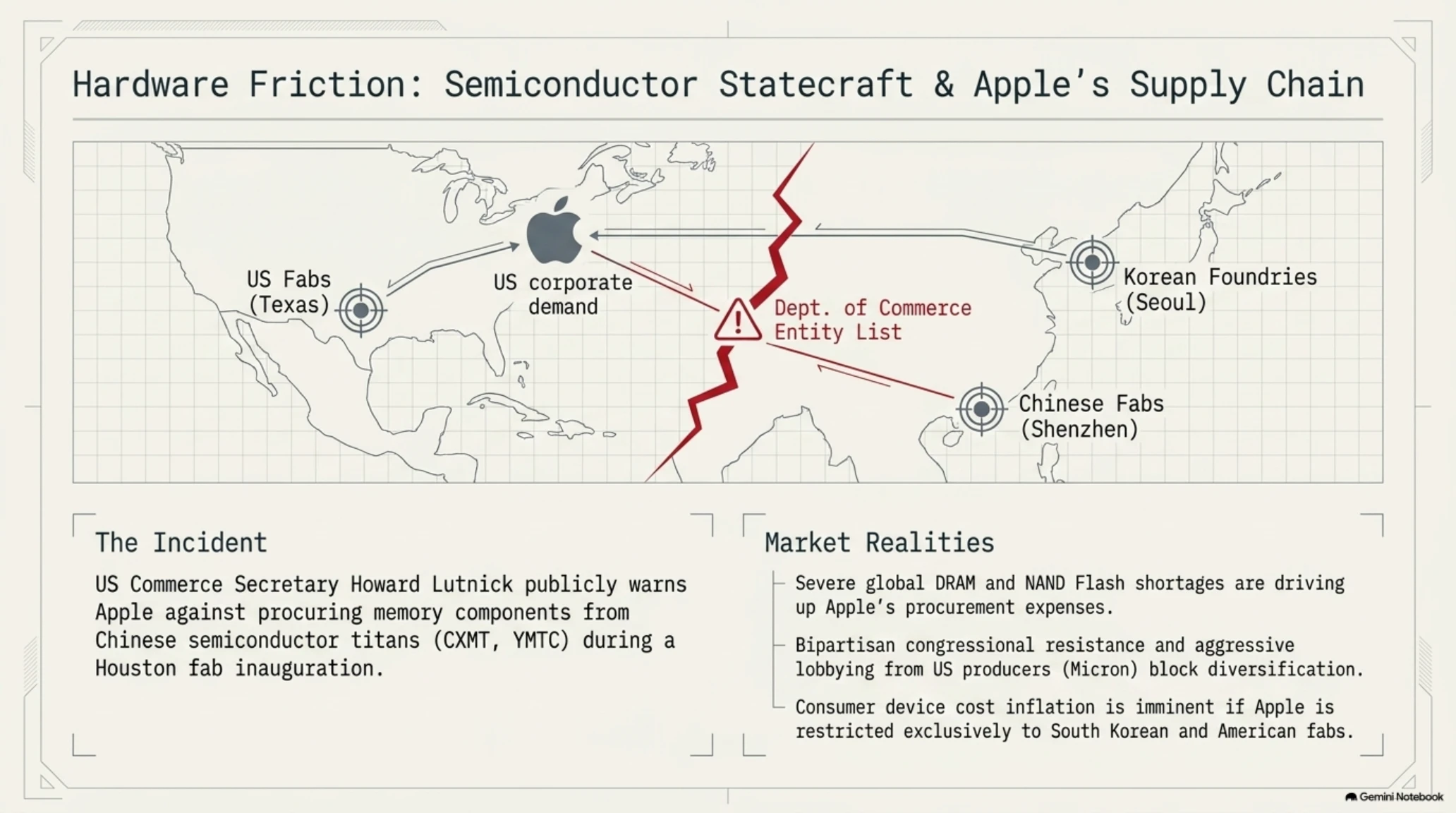
During a high-profile visit alongside Apple CEO Tim Cook to inaugurate a new manufacturing facility in Houston, Texas, US Commerce Secretary Howard Lutnick explicitly articulated the administration's strong opposition to Apple potentially sourcing memory components from Chinese semiconductor manufacturers. Lutnick stated publicly that relying on Chinese memory is undesirable for American corporations, urging Apple to secure domestic or allied alternatives.
The warning follows reports that Apple had initiated preliminary feasibility discussions with Chinese memory titans CXMT (ChangXin Memory Technologies) and YMTC (Yangtze Memory Technologies) to mitigate severe global DRAM and NAND Flash shortages and rising procurement expenses.
Geopolitical tensions and supply-chain realities surrounding Apple's hardware roadmap include:
- YMTC remaining restricted under the US Department of Commerce Entity List, with both entities designated as military-linked by the Pentagon
- Bipartisan congressional resistance combined with aggressive lobbying from domestic memory producers such as Micron
- Substantial cost inflation for upcoming consumer devices if procurement remains restricted to South Korean and American fabs
- Apple exploring off-the-shelf component diversification while attempting to navigate stringent federal national security mandates
This confrontation demonstrates that consumer electronics hardware supply chains remain deeply entangled in modern semiconductor statecraft.

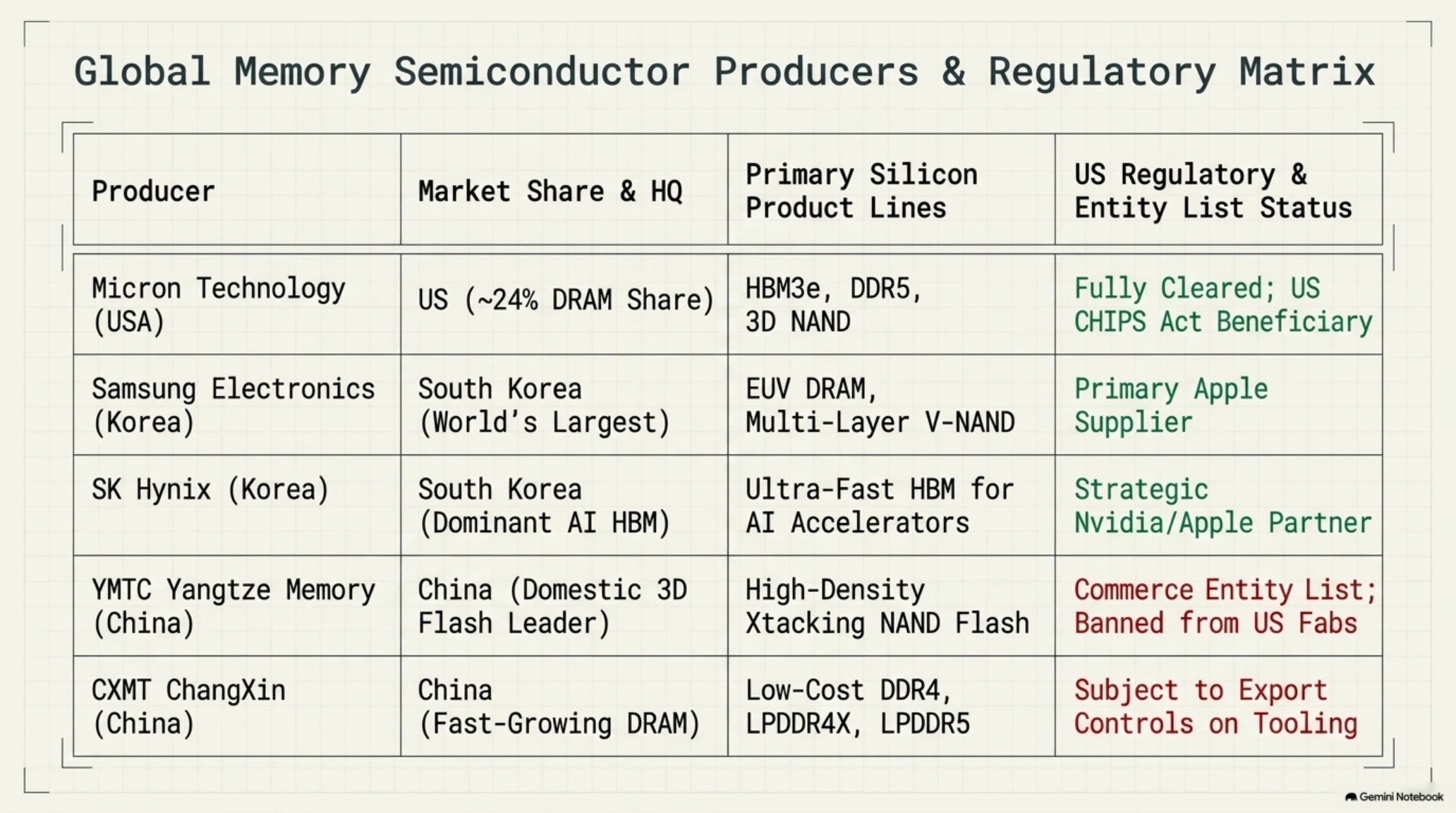
The matrix below evaluates global memory semiconductor manufacturers, market share, and geopolitical regulatory status.
📚 Classified & Related Dossiers in TekinGame
If you wish to explore beyond this report and delve into cybernetic frontiers and autonomous AI architectures, do not miss these three exclusive deep-dives in the Tekin Garage:
Hardware Specifications & Memory Semiconductors
| Memory Semiconductor Producer | Headquarters & Global Market Share | Primary Silicon Product Lines (DRAM/NAND) | US Regulatory & Entity List Status |
|---|---|---|---|
| Micron Technology (USA) | United States (Approx. 24% DRAM Share) | High-Bandwidth Memory (HBM3e), DDR5, 3D NAND | Fully Cleared; Major Beneficiary of US CHIPS Act |
| Samsung Electronics (Korea) | South Korea (World's Largest Memory Maker) | Cutting-Edge EUV DRAM and Multi-Layer V-NAND | Primary Apple Supplier with Global Manufacturing |
| SK Hynix (Korea) | South Korea (Dominant AI HBM Supplier) | Ultra-Fast High Bandwidth Memory for AI Accelerators | Strategic Nvidia & Apple Partner with US Clearances |
| YMTC Yangtze Memory (China) | China (Domestic 3D Flash Memory Leader) | High-Density Xtacking Architecture NAND Flash | Designated on Commerce Entity List; Banned from US Fabs |
| CXMT ChangXin (China) | China (Fast-Growing DRAM Manufacturer) | Low-Cost DDR4, LPDDR4X, and Emerging LPDDR5 | Subject to US Export Controls on Advanced Tooling |
The following Tekin Game technical video breakdown provides in-depth visual analysis of global DRAM pricing trends and semiconductor supply-chain vulnerability.
Dual Security Crises: €30M Commerzbank Fraud Ring Busted as SAP Faces Active RCE Attacks
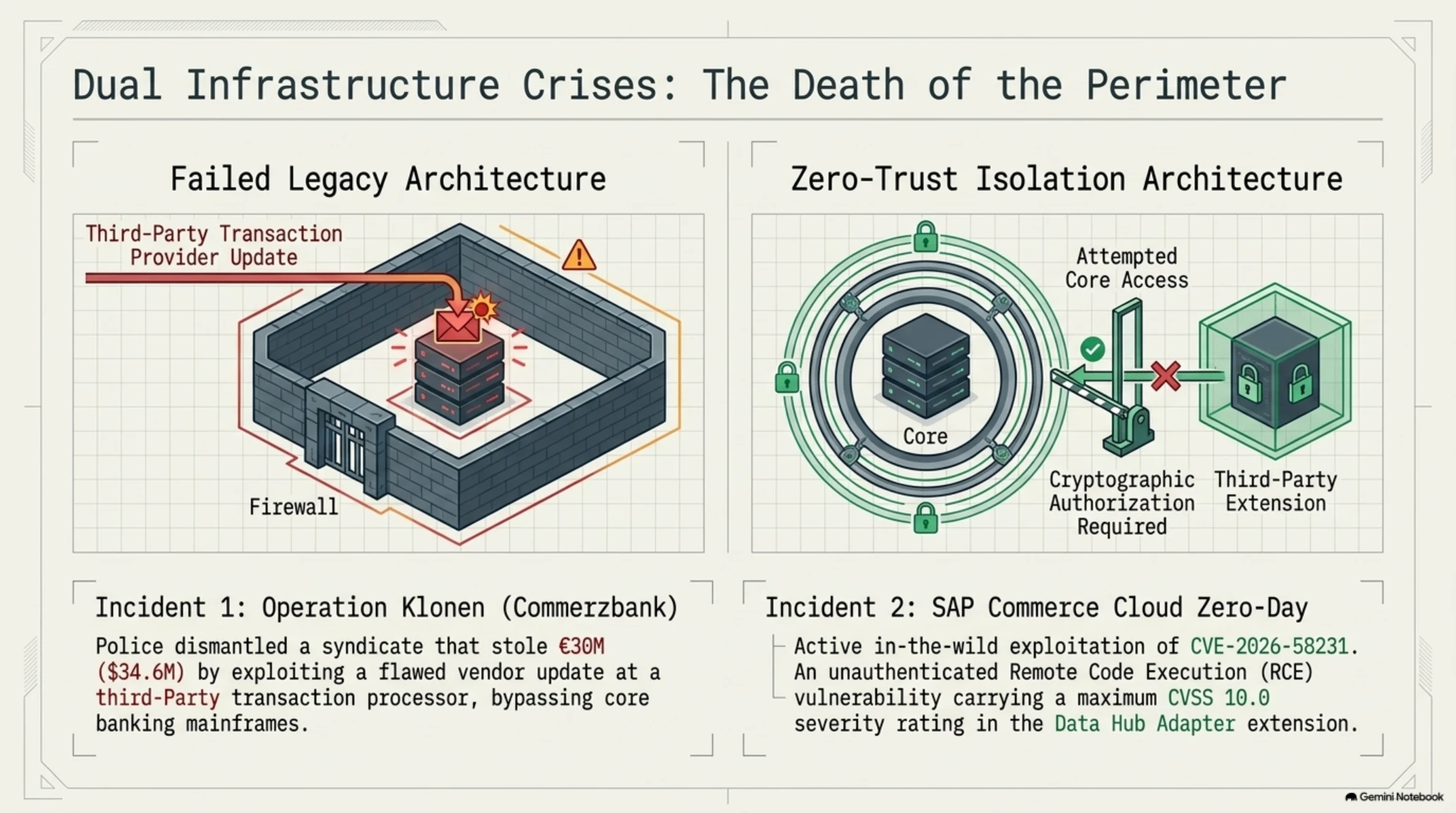
Today's cybersecurity intelligence landscape was defined by two high-impact incidents across European banking and enterprise cloud infrastructure. First, under a coordinated international dragnet codenamed Operation Klonen, the German Federal Police (BKA) and Brazilian authorities dismantled an organized cyber fraud syndicate that stole over €30 million ($34.6 million) from customers of Germany's Commerzbank by exploiting a software flaw introduced during a vendor update at a third-party transaction-processing provider.
Concurrently, cybersecurity threat intelligence firm Defused reported that an unauthenticated remote code execution vulnerability (CVE-2026-58231) carrying a maximum-critical CVSS 10.0 severity rating in SAP Commerce Cloud's Data Hub Adapter extension is undergoing active exploitation in the wild, just three days after SAP released its official security bulletin.
Critical findings and enterprise defensive mandates from these dual incidents include:
- Commerzbank confirming full reimbursement for impacted depositors while verifying core internal banking mainframes remained uncompromised
- Exposing catastrophic systemic risks stemming from third-party vendor dependencies in mission-critical financial workflows
- SAP Commerce Cloud attackers executing arbitrary code without credentials, granting complete control over enterprise e-commerce backends
- Urgent security guidance requiring immediate IP filtering and perimeter isolation for exposed SAP Data Hub Adapter endpoints
These developments emphasize that enterprise security architectures are only as robust as the weakest third-party integration in the supply chain.

The official position of the Tekin Editorial Board regarding this morning's enterprise security landscape is detailed below.
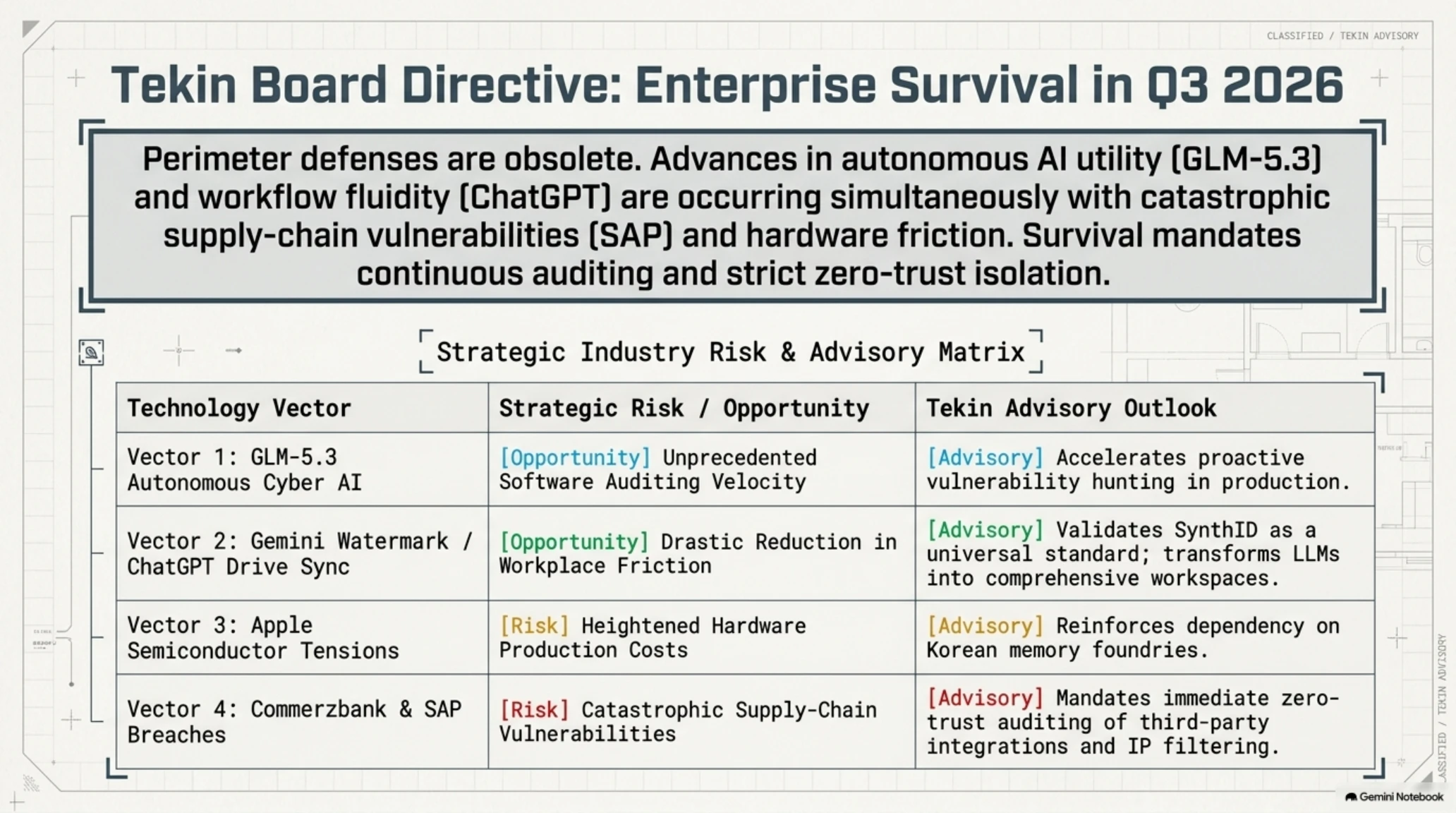
The strategic risk assessment matrix below outlines key market vectors for publishers and consumers.
Strategic Industry Risk & Conclusion Matrix (Conclusion Box)
| Technology Vector | Strategic Risk / Opportunity | Tekin Advisory Outlook |
|---|---|---|
| GLM-5.3 Autonomous Cyber AI | Unprecedented Software Auditing Velocity | Accelerates Proactive Vulnerability Hunting in Production |
| Google Gemini Watermark Toggle | Unlocks Clean Visuals for Creators | Validates Invisible SynthID as Universal Provenance Standard |
| ChatGPT In-Chat Drive Editing | Drastic Reduction in Workplace Friction | Transforms LLMs into Comprehensive Cloud Workspaces |
| Apple Semiconductor Supply Tensions | Heightened Hardware Production Costs | Reinforces Apple Dependency on Korean Memory Foundries |
| Commerzbank & SAP Cloud Breaches | Catastrophic Supply-Chain Vulnerabilities | Mandates Immediate Zero-Trust Auditing of Third-Party Integrations |
Enterprise IT teams worldwide must immediately prioritize security updates and infrastructure isolation.
Tekin Game will provide continuous real-time updates as technical disclosures unfold.
Conclusion: A Watershed Morning in AI Utility, Geopolitics, and Cybersecurity
Today's Tekin Morning intelligence report for Saturday, August 15, 2026, confirms that the digital technology sector is moving forward at an astonishing velocity. From Z.ai's GLM-5.3 showcasing unprecedented autonomous cybersecurity prowess to Google modernizing visual watermark policies and OpenAI eliminating document switching friction, developers and enterprise leaders enter the weekend with transformative capabilities.
At the same time, severe supply-chain warnings across banking partners, enterprise SAP commerce platforms, and semiconductor geopolitical channels serve as a stark reminder that resilience and zero-trust verification remain paramount.

Join the conversation at Tekin Game and share your perspectives regarding this morning's AI benchmark breakthroughs and cybersecurity advisories in the comments below.
- Z.ai GLM-5.3 demonstrating industry-leading 84.5% cybersecurity vulnerability detection accuracy
- Google providing creator autonomy by allowing removal of visible watermarks while maintaining SynthID
- OpenAI eliminating workplace context switching with bidirectional in-chat Google Drive document editing
- Successful multinational law enforcement bust recovering assets from the €30M Commerzbank fraud ring
- Active in-the-wild exploitation of maximum-severity CVSS 10.0 SAP Commerce Cloud RCE vulnerability
- Escalating geopolitical friction complicating Apple hardware procurement and global memory pricing
Related Industry Features on Tekin Game
• 🔓 Tekin Analysis | PlayStation, Switch & Xbox Console Jailbreak & Security Status
• 🌙 Tekin Night July 5, 2026 | PS5 Digital Edition Evolution & Midjourney AI Expansion
• 🎮 Tekin Night July 1, 2026 | Gaming Industry Shakeup & Next-Gen Console Engineering
Frequently Asked Questions About the August 15, 2026 Tech Intelligence
When will Z.ai release the open weights for the GLM-5.3 model?
Z.ai confirmed that open model weights will be released publicly approximately two weeks after the launch.
Does removing Gemini's visible watermark make AI content untraceable?
No; invisible SynthID algorithmic watermarks and cryptographic C2PA metadata remain embedded in the file.
Which ChatGPT subscription tiers have access to in-chat Google Drive editing?
The feature is currently available to active ChatGPT Plus, Team, and Enterprise tier subscribers.
Why is the US government opposing Apple's use of Chinese memory chips?
Due to national security concerns, trade restrictions on YMTC, and strategic protection of domestic semiconductor production.
How was the €30 million Commerzbank fraud carried out?
Attackers exploited a faulty software update deployed at a third-party payment and transaction-processing provider.
What is the severity of the SAP Commerce Cloud CVE-2026-58231 flaw?
Maximum critical (CVSS 10.0), allowing unauthenticated remote code execution on vulnerable Data Hub Adapter endpoints.
Sources and Citations
Additional Gallery: ☀️ Tekin Morning | Saturday, August 15, 2026: GLM-5.3 Leap & ChatGPT Cloud Sync