🌅 Welcome to Tekin Morning — April 25, 2026
Good morning, tech enthusiasts! Today is not an ordinary morning — GPT-5.5 just went official, Starlink is connecting directly to your phone, and robots are replacing firefighters in burning buildings. Six stories that each could have been the headline of the year — all happening today.
⚡ Today's Top Headlines:
🤖 GPT-5.5 by OpenAI — Full Agentic Automation is Here
🛰️ Starlink Direct-to-Cell — Satellite Internet Goes Mobile
🎮 GameSir Swift Drive — Real Direct-Drive Wheel in a Gamepad
🚒 Hyundai Firefighting Robot — AI on the Front Lines
🧊 GE Profile Smart Fridge — AI That Builds Your Shopping List
🌐 Google Chrome Skills — Your Browser Just Got a Brain
☕ Grab your coffee and buckle up for a comprehensive tech news journey!
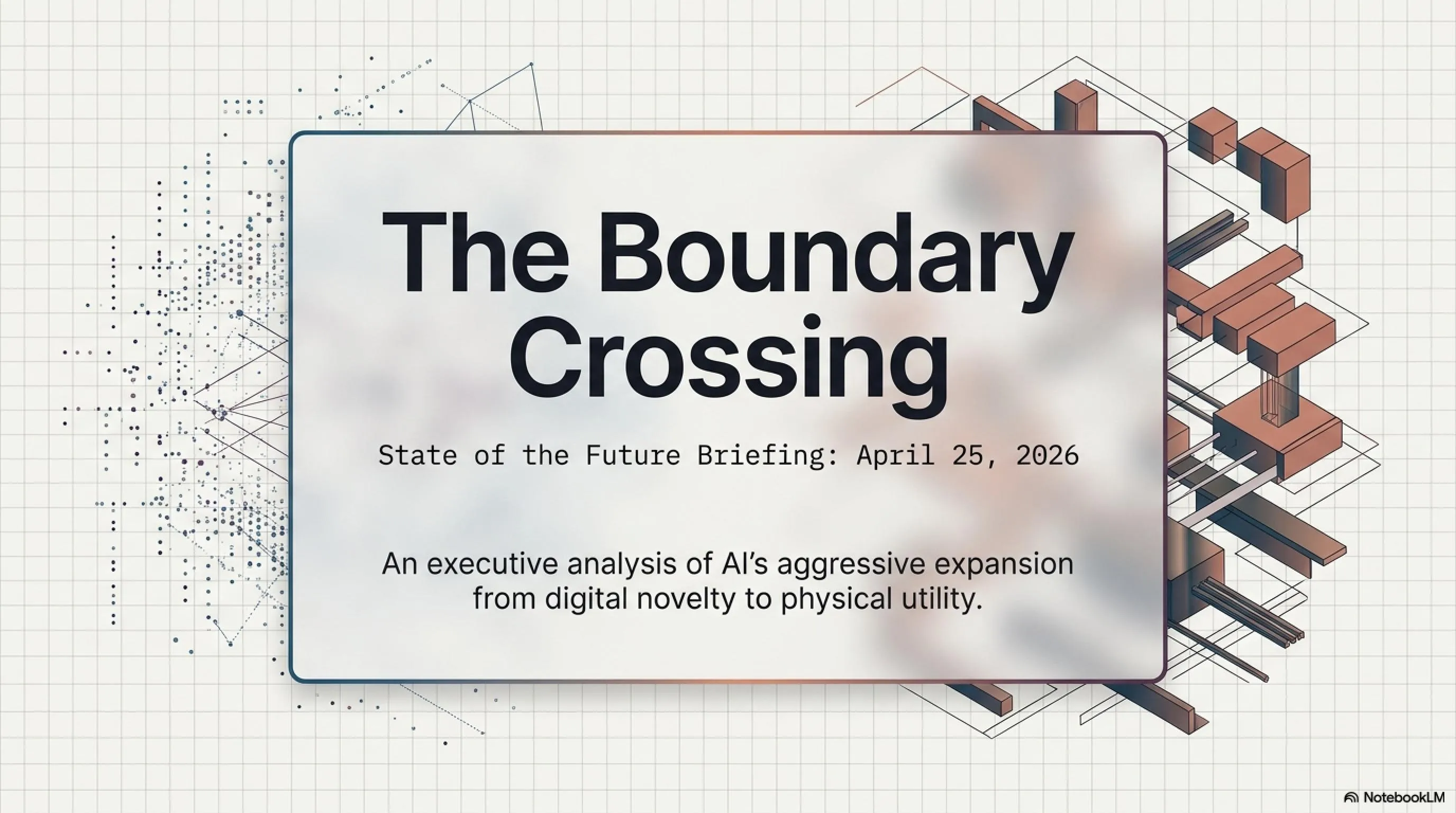
🤖 Story 1: GPT-5.5 by OpenAI — The Agentic AI Revolution Begins
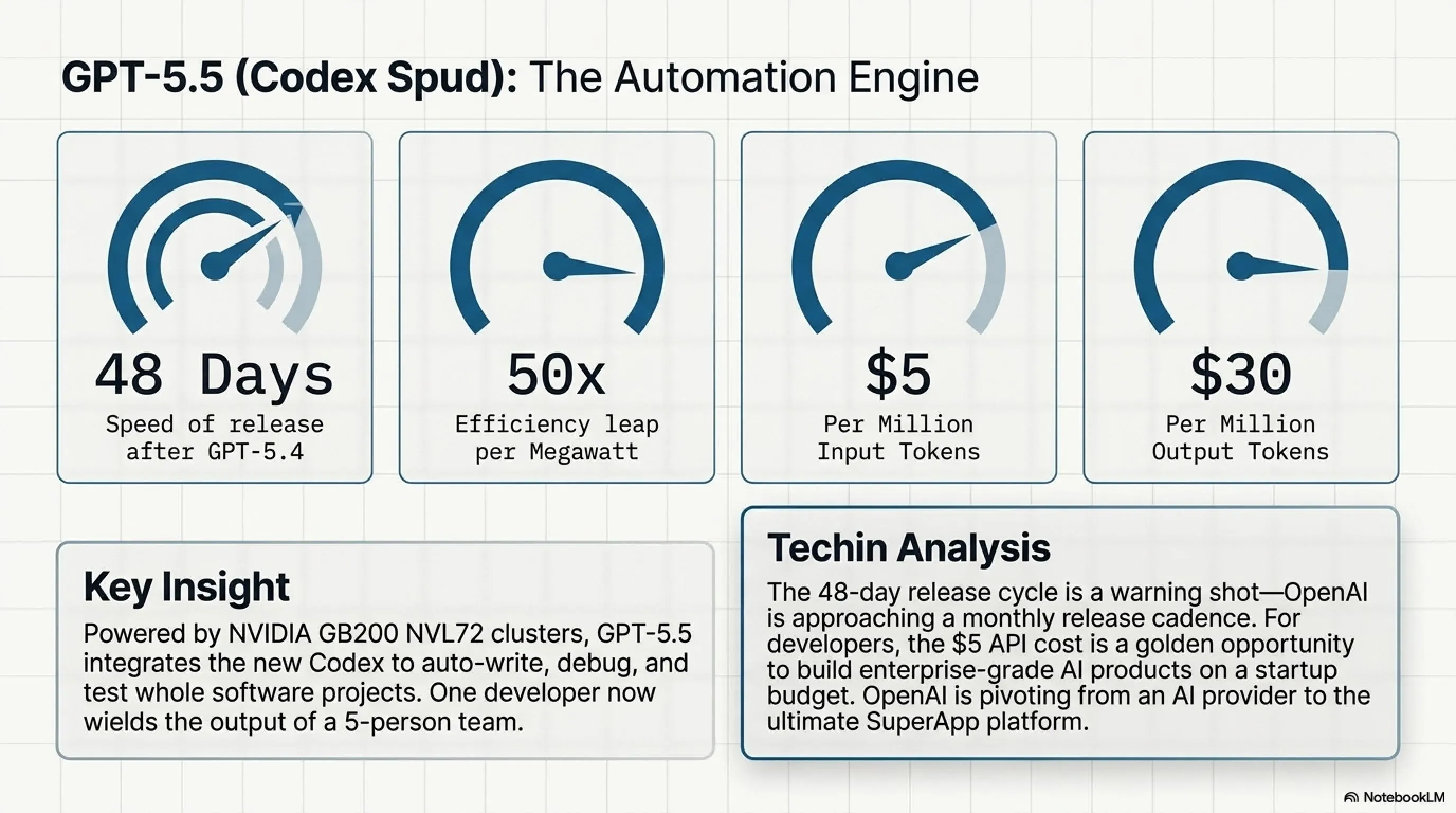
On April 23, 2026, OpenAI dropped a bombshell that shook the entire tech world: the official launch of GPT-5.5, codenamed "Spud." OpenAI President Greg Brockman called it "the most intelligent and intuitive model in OpenAI's history." Released just 48 days after GPT-5.4, this pace of development is unprecedented even by OpenAI's own standards.
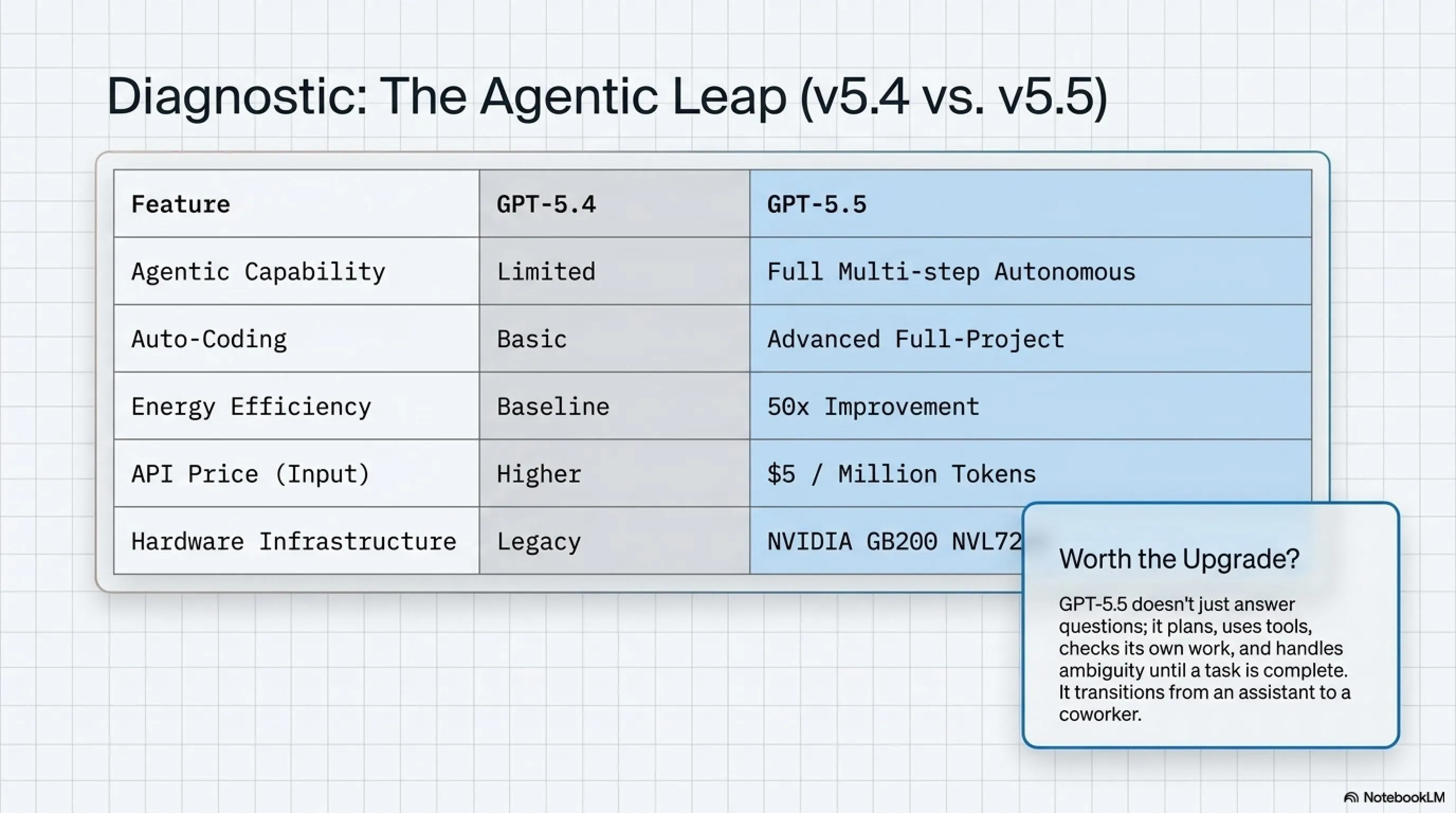
What makes GPT-5.5 fundamentally different? One word: Agentic. This model doesn't just answer questions — it can take a complex multi-step task, plan it out, use tools, verify its own work, handle ambiguity, and execute until full completion. Think of it as a real employee, not just an assistant. It can write entire software projects from scratch, find and fix bugs, write automated tests, and deploy — all without constant human supervision.
📊 GPT-5.5 Key Statistics
GPT-5.5 runs on NVIDIA GB200 NVL72 infrastructure — the most powerful AI hardware currently available. Despite dramatically expanded capabilities, response speed matches GPT-5.4. The 50x energy efficiency improvement is critical for commercial scalability. OpenAI has integrated GPT-5.5 with the new Codex, enabling full software project automation.
🏷️ OpenAI Full File: GPT Evolution Timeline
- 2022: ChatGPT launches — 100M users in 2 months
- 2023: GPT-4 — multimodal, massive capability leap
- 2024: GPT-4o — real-time voice, faster responses
- 2025: GPT-5 — reasoning breakthrough, o-series integration
- Early 2026: GPT-5.4 — enhanced tool use
- April 2026: GPT-5.5 "Spud" — full agentic automation
🔍 Tekin Analysis: Why GPT-5.5 Changes Everything
The 48-day release cycle between GPT-5.4 and GPT-5.5 sends a clear message: OpenAI is approaching monthly release cadence. Companies that built on older models need to update faster than ever. At $5 per million input tokens, GPT-5.5 is accessible to indie developers and startups — meaning the barrier to building AI-powered products just dropped dramatically. The real disruption isn't the model itself; it's the speed of iteration.
🛰️ Story 2: Starlink Direct-to-Cell — Satellite Internet Reaches Your Phone
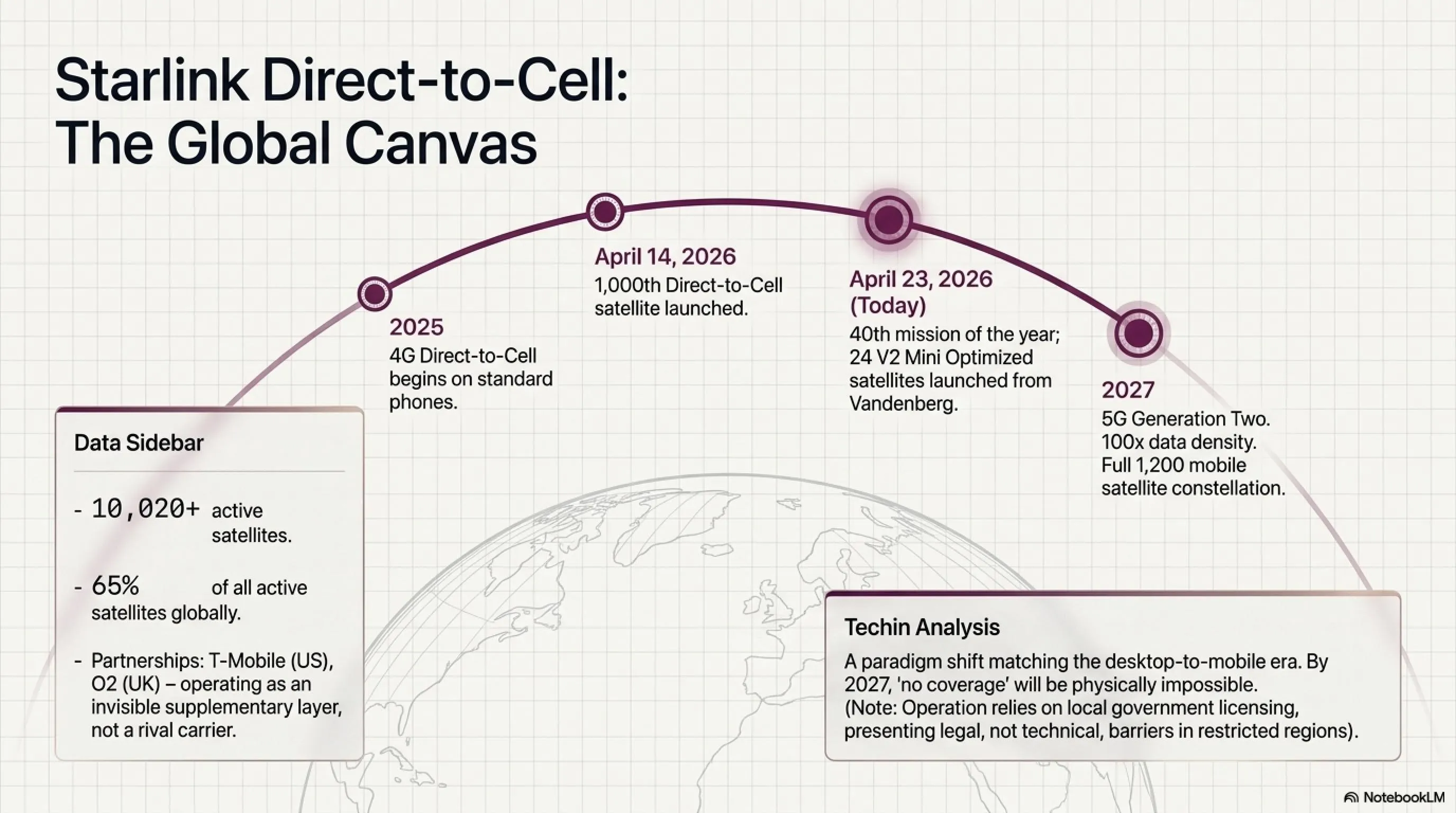
On April 23, 2026, SpaceX completed its 40th Starlink mission of the year, launching 24 V2 Mini Optimized satellites from Vandenberg Space Force Base. But this wasn't just another routine launch — these satellites are part of a communications revolution: Direct-to-Cell connectivity that works on standard smartphones with no additional hardware required.
The current Starlink Mobile service provides global 4G coverage on regular phones — no hardware changes needed. The second generation planned for 2027 promises 5G speeds with "100x more data density." SpaceX now has over 10,020 satellites in low Earth orbit — 65% of all active satellites in the world. The company has partnered with carriers like T-Mobile (US) and O2 (UK), meaning users keep their existing number and plan.
🛰️ Starlink Stats — April 2026
🔍 Tekin Analysis: The End of Dead Zones
When Gen 2 Direct-to-Cell launches in 2027, no point on Earth will be "out of coverage." This is a paradigm shift in global communications — comparable to when the internet moved from desktop to mobile. For maritime, aviation, agriculture, and emergency response industries, this is a genuine revolution. The carrier partnership model is brilliant: SpaceX becomes a partner to operators, not a competitor.
🎮 Story 3: GameSir Swift Drive — A Real Direct-Drive Wheel Inside a Gamepad
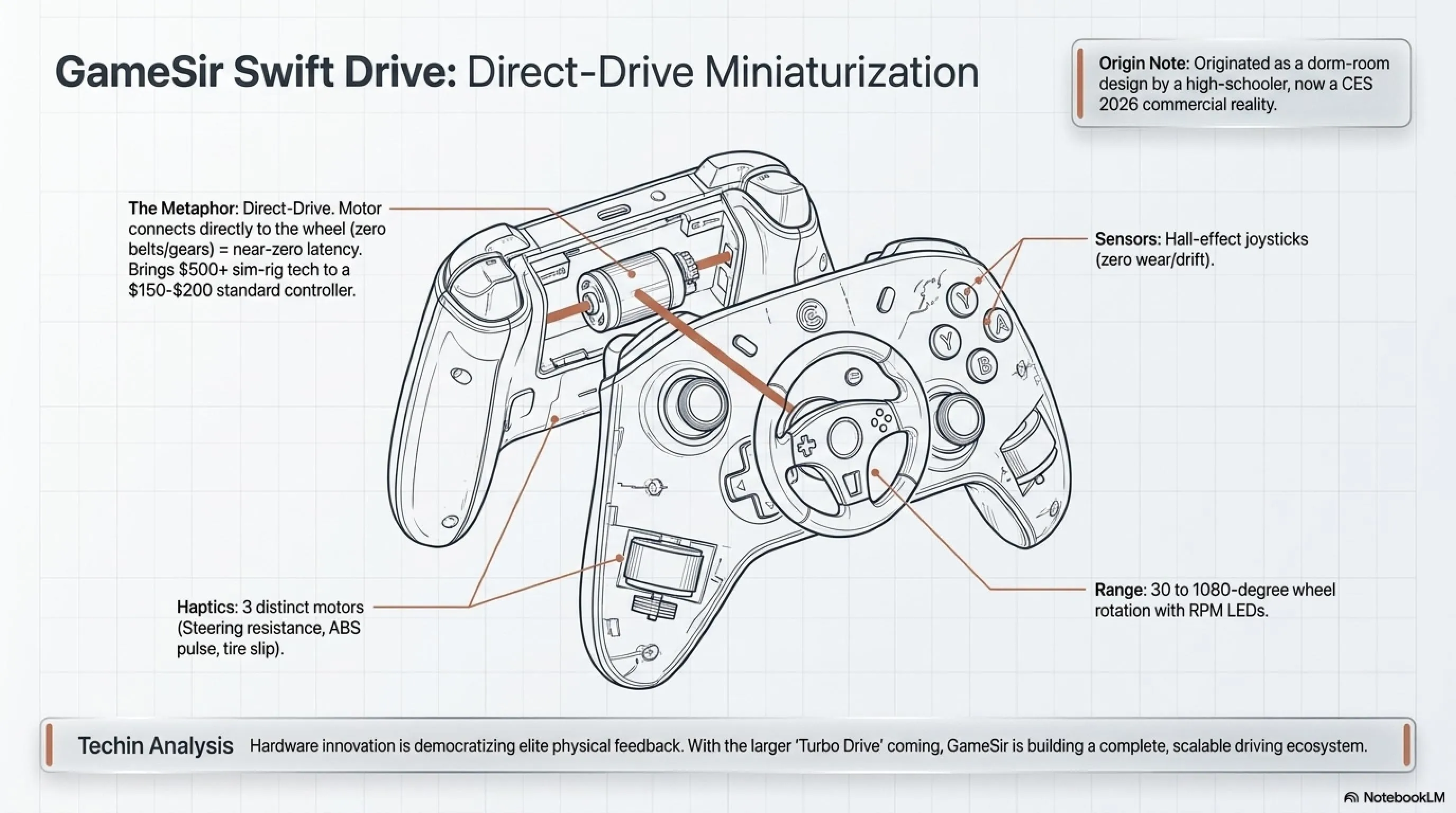
Imagine a regular gamepad with a miniature Direct-Drive wheel with real haptic feedback built right into the center. That's exactly what GameSir Swift Drive delivers — the world's first gamepad with an integrated Direct-Drive wheel, introduced at CES 2026 and now hitting the market. The backstory is remarkable: designed by a high school student in his dorm room — a real-life Tony Stark story that GameSir turned into a commercial product.
The miniature wheel offers 30 to 1080 degrees of rotation, three separate haptic motors for simulating steering resistance, ABS pulses, and tire slip. Hall-effect sensors on joysticks and triggers eliminate drift and wear. The Direct-Drive mechanism means the motor connects directly to the wheel — no gearbox, no belt — the same technology found in $500-$1000 professional sim rigs, now in a standard gamepad form factor.
🎮 GameSir Swift Drive Technical Specs
⚔️ PROS & CONS BATTLE — GameSir Swift Drive
🟢 PROS
- World's first Direct-Drive in a gamepad
- Precise, realistic haptic feedback
- 1080° rotation range
- Hall-effect sensors — no wear
- Far cheaper than a full sim rig
- Works on console and PC
🔴 CONS
- Miniature wheel, not full-size
- Final price not yet announced
- Exact release date TBD
- Less useful for non-racing games
- Learning curve for control
🚒 Story 4: Hyundai Firefighting Robot — AI on the Front Lines of Rescue
📚 Classified & Related Dossiers in TekinGame
If you wish to explore beyond this report and delve into cybernetic frontiers and autonomous AI architectures, do not miss these three exclusive deep-dives in the Tekin Garage:
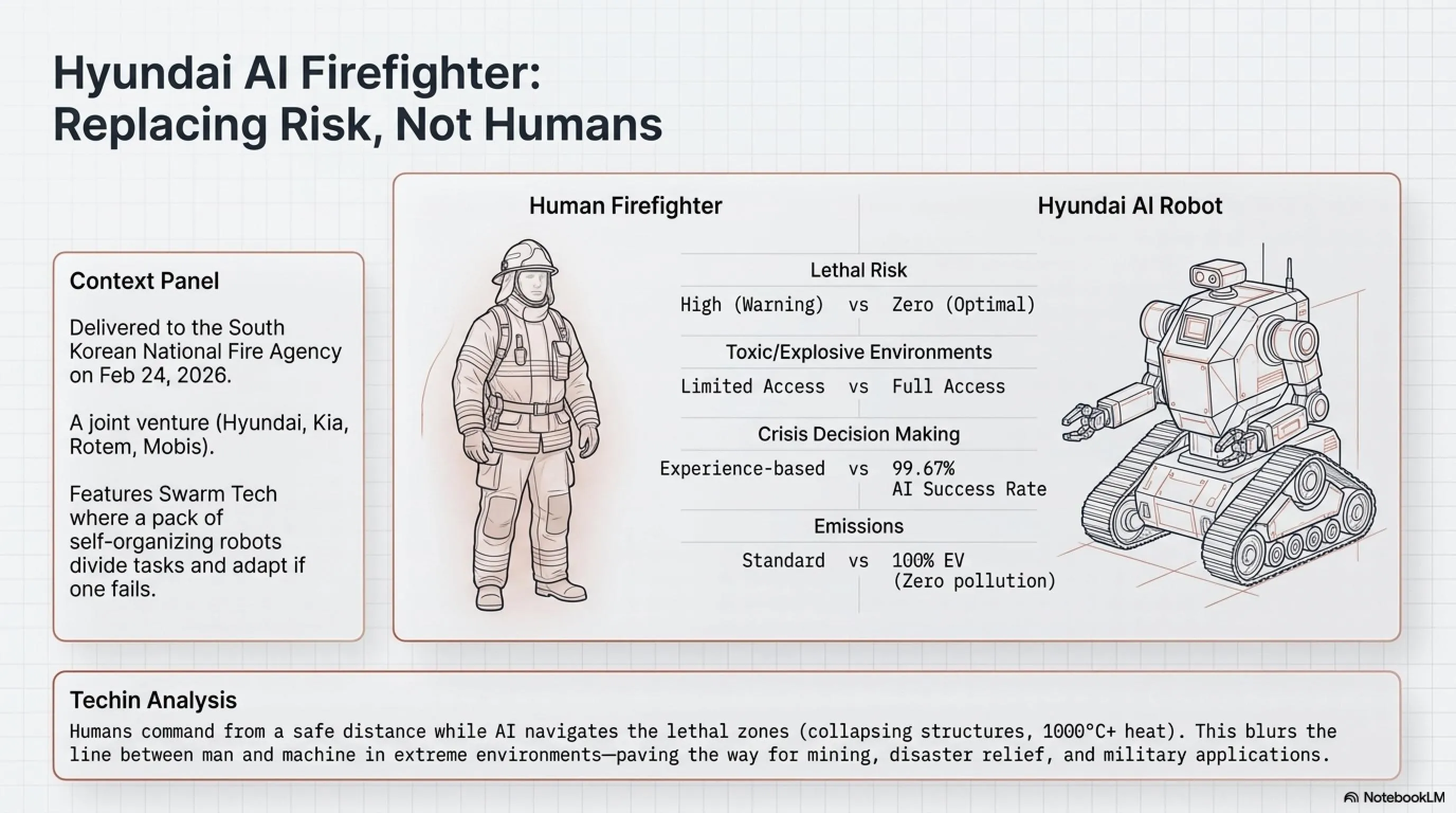
On February 24, 2026, Hyundai Motor Group marked a historic moment: the official delivery of an unmanned firefighting robot to South Korea's National Fire Agency. The result of collaboration between Hyundai Motor, Kia, Hyundai Rotem, and Hyundai Mobis, this robot can enter burning buildings, navigate collapsing structures, and suppress flames — all without a single human inside the danger zone.
The robot is designed for environments that are lethal to humans: collapsing structures, potential explosions, extreme temperatures, toxic gases, and dense smoke. Using AI, it can find its own path, identify the fire source, and select the optimal suppression strategy — all without direct human commands. A separate research team tested a swarm of AI robots that coordinate together to fight multiple fires simultaneously, achieving a 99.67% success rate.
🚒 Hyundai Firefighting Robot Stats
🔍 Tekin Analysis: The Future of Emergency Response Robots
The Hyundai firefighting robot is just the beginning. The same technology can be applied to mining operations, chemical cleanup, earthquake rescue, and military operations. Hyundai is explicit: these robots are not replacements for human firefighters — they're designed for tasks humans shouldn't do. Human firefighters direct operations from a safe distance while robots enter the most dangerous zones. This human-robot collaboration model could save thousands of lives annually.
🧊 Story 5: GE Profile Smart Fridge — The AI That Builds Your Shopping List
Imagine your refrigerator knowing when you're out of milk, knowing you have guests tomorrow, and preparing your shopping list before you even realize you need it. This is no longer the future — the GE Profile Smart Refrigerator with AI Shopping List is on the US market right now, transforming how we manage our kitchens.
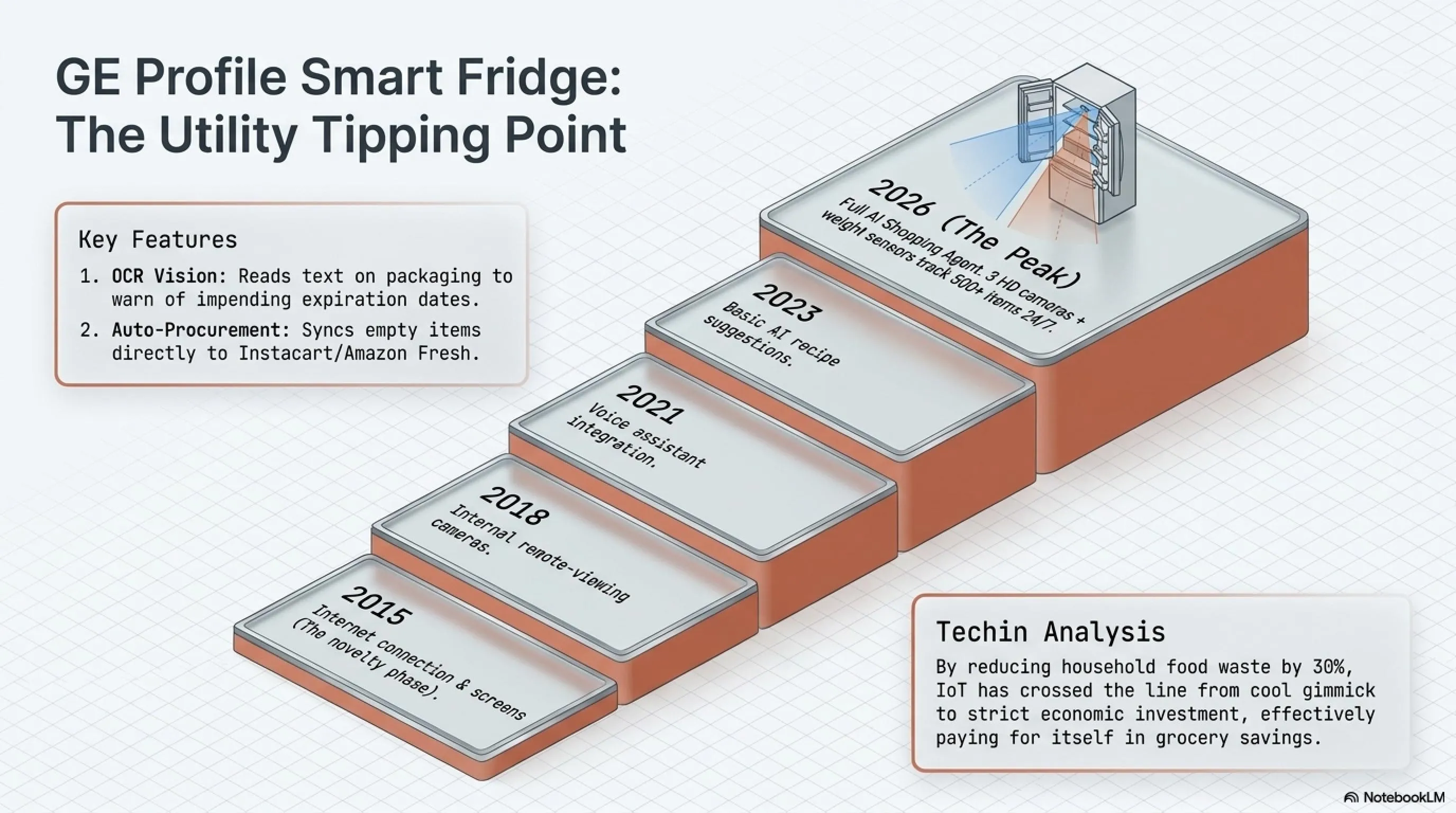
This fridge uses a combination of internal cameras, weight sensors on each shelf, and a dedicated AI model to track inventory in real time. When a product drops below a set threshold, it's automatically added to the shopping list — which syncs directly with online shopping apps like Instacart and Amazon Fresh. One tap and your order is placed. The fridge also uses OCR (optical character recognition) to read expiration dates from product labels, alerting you before anything goes bad.
🧊 GE Profile Smart Fridge Stats
🏷️ Full File: Smart Refrigerator Evolution
- 2015: First internet-connected fridges with touchscreens (Samsung Family Hub)
- 2018: Internal cameras added for remote viewing
- 2021: Voice assistant integration (Alexa, Google)
- 2023: AI-powered recipe suggestions begin
- 2025: Automatic inventory tracking with weight sensors
- 2026: GE Profile — auto shopping list + OCR expiry tracking
🔍 Tekin Analysis: When IoT Actually Becomes Useful
The GE Profile Smart Fridge shows that IoT is finally moving from "interesting but unnecessary" to "genuinely useful." When a device can reduce food waste by 30%, it's no longer a luxury — it's an economic investment. For families dealing with rising grocery costs, this technology can make a real difference. The recipe suggestion feature is the killer app: it turns leftover ingredients into meals, reducing both waste and the mental load of "what's for dinner?"
🌐 Story 6: Google Chrome Skills — Your Browser Just Got a Brain
On April 23, 2026, Google announced a major Chrome update that could fundamentally change how we use browsers: Chrome Skills — an integrated AI system that lives directly inside the browser and can handle everyday tasks on your behalf. No extensions to install, no separate apps — just your browser, now with a brain.
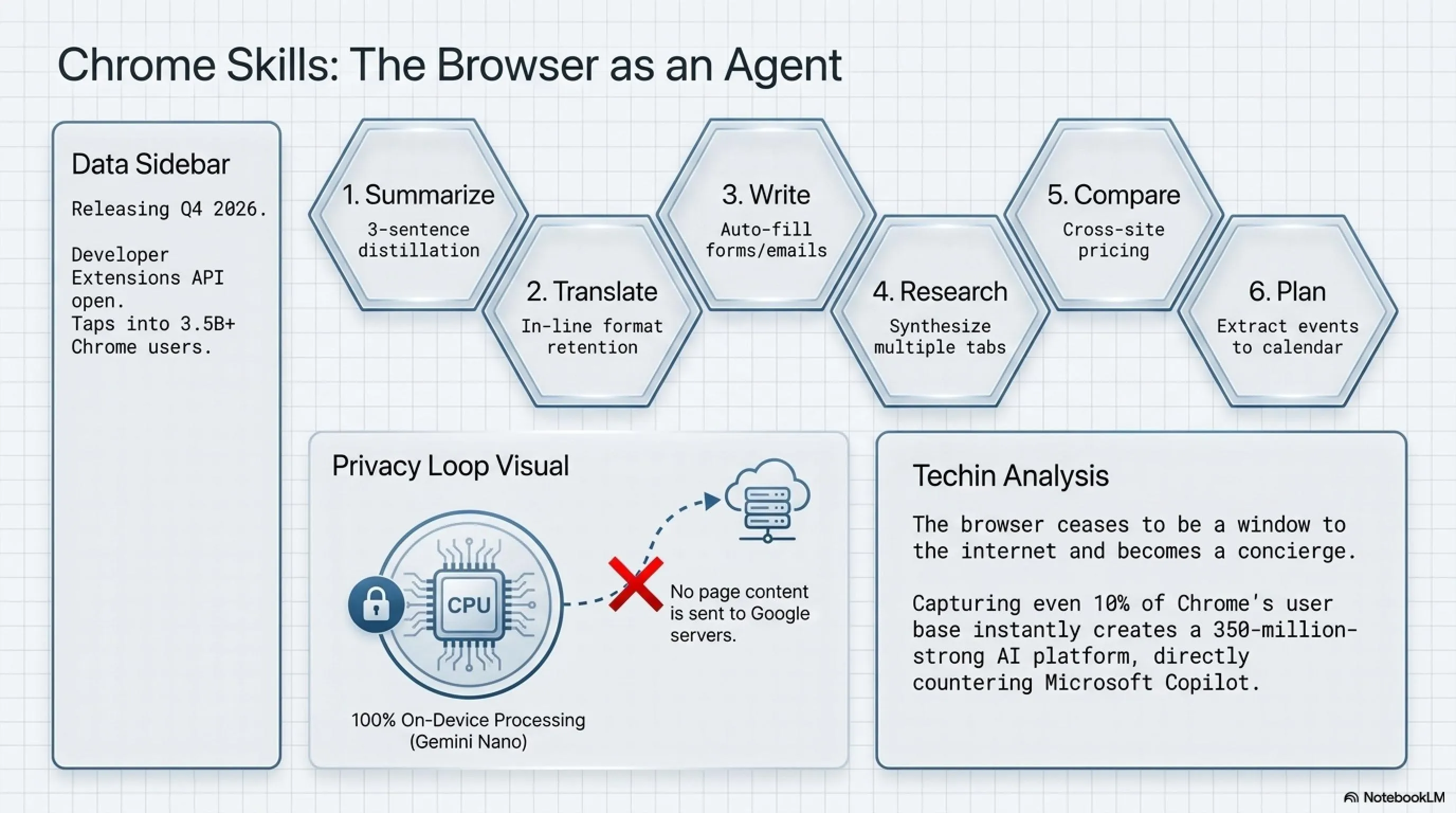
Chrome Skills is a collection of AI "skills," each designed for a specific task. The "Summarize" skill condenses any webpage into a few sentences. "Smart Translate" translates entire pages while preserving formatting. "Writing Assistant" helps compose emails and fill forms. "Research Blend" combines information from multiple pages into a single report. "Shopping Compare" finds the best price across multiple sites. "Calendar Extract" pulls events from any page directly into your calendar.
🌐 Chrome Skills — Core Capabilities
Any page in 3 sentences
Full page with layout preserved
Emails, forms, drafts
Multi-page synthesis
Best price across sites
Events from any page
The critical privacy feature: Chrome Skills runs entirely on-device using Gemini Nano — Google's compact AI model optimized for local execution. Your browsing data never leaves your machine. Google has also opened a Chrome Extensions API for developers to build new Skills, meaning an entire ecosystem of AI capabilities is forming around the browser.
📊 Chrome Skills by the Numbers
⚔️ PROS & CONS BATTLE — Chrome Skills
🟢 PROS
- On-device processing — privacy first
- Built into browser, no install needed
- Free for all Chrome users
- Open API for developers
- Multi-language support
🔴 CONS
- Currently US/Canada/UK only
- Requires reasonably modern hardware
- Smaller models = lower accuracy
- Competes with existing extensions
- Google ecosystem lock-in concern
🔍 Tekin Analysis: Chrome Skills vs Microsoft Copilot in Edge
Chrome Skills is a paradigm shift in browsers. Until now, a browser was just a "window" to the internet — now it's becoming an "assistant." This directly competes with Microsoft's Copilot in Edge strategy. With 3.5 billion Chrome users, if even 10% adopt Skills, Google instantly has an AI platform with 350 million active users — without anyone downloading a new app. The developer API is the real long-term play: it turns Chrome into an AI app store.
📝 Tekin Morning April 25, 2026 — Final Verdict
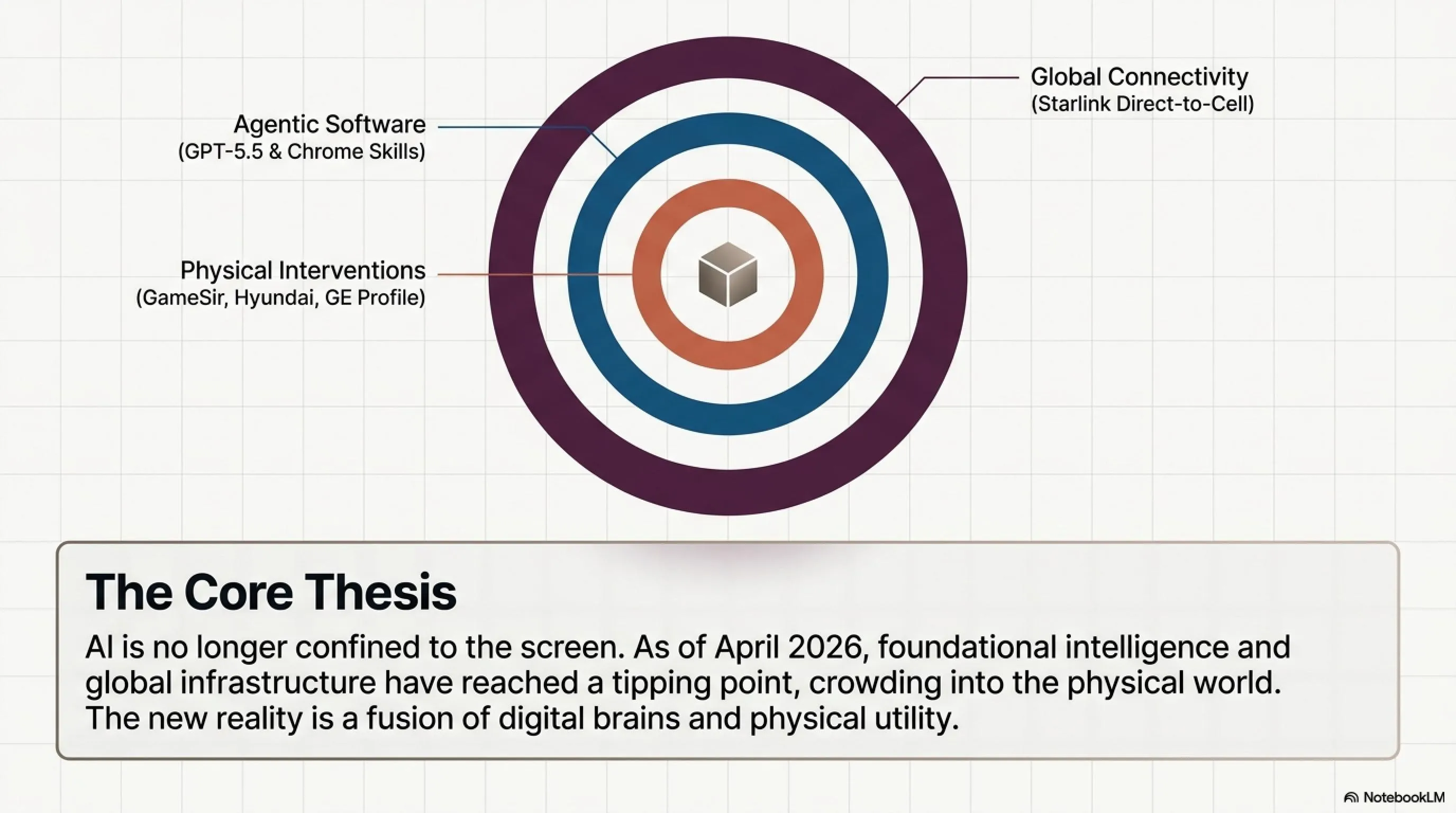
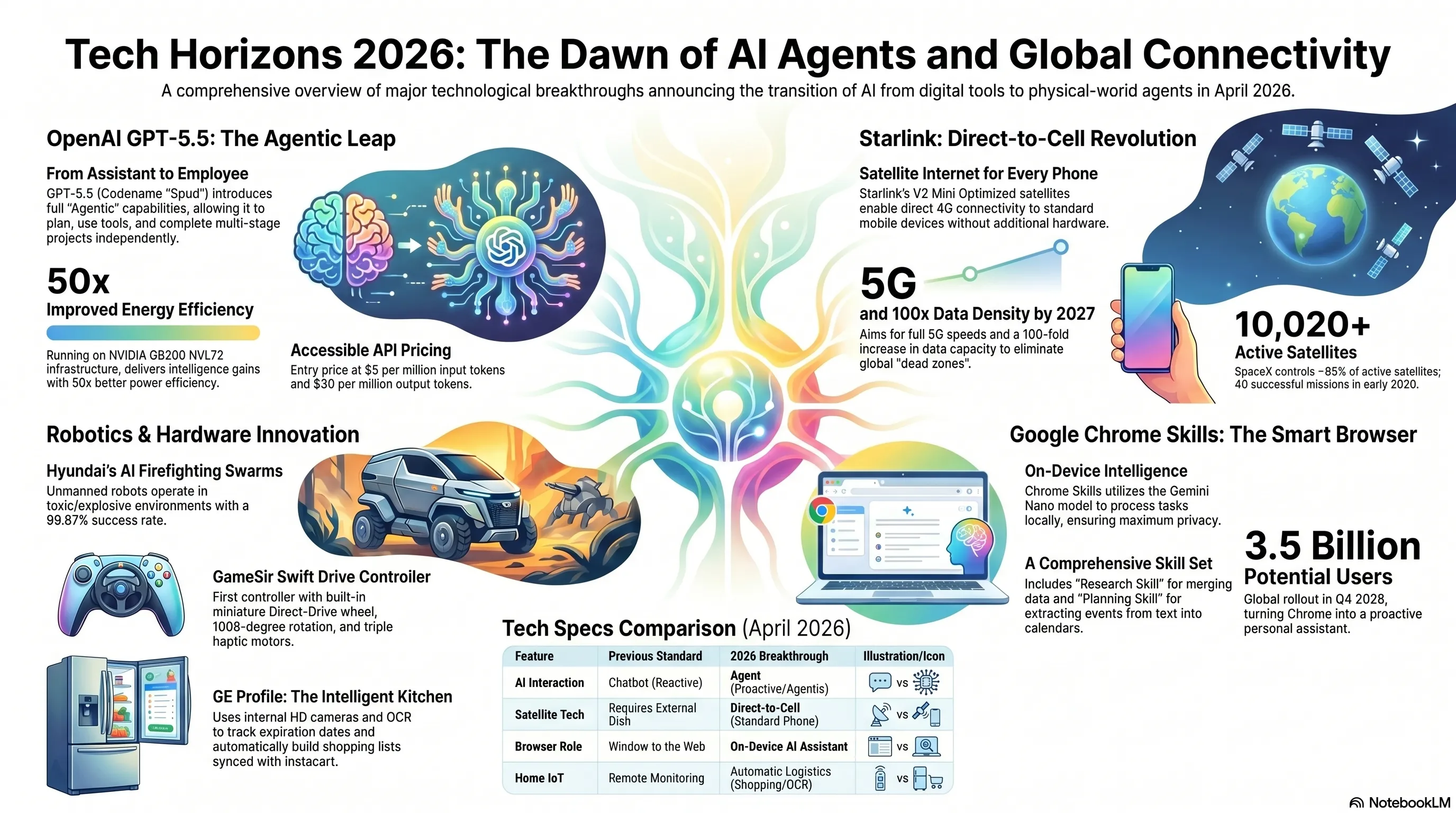
Today was a historic day in tech. GPT-5.5 showed that AI is moving from "tool" to "colleague." Starlink is filling the last dead zones on Earth. GameSir proved that innovation can start in a dorm room. Hyundai demonstrated that robots can save human lives. GE Profile turned the smart kitchen from dream to reality. And Google transformed the browser from a window into an assistant.
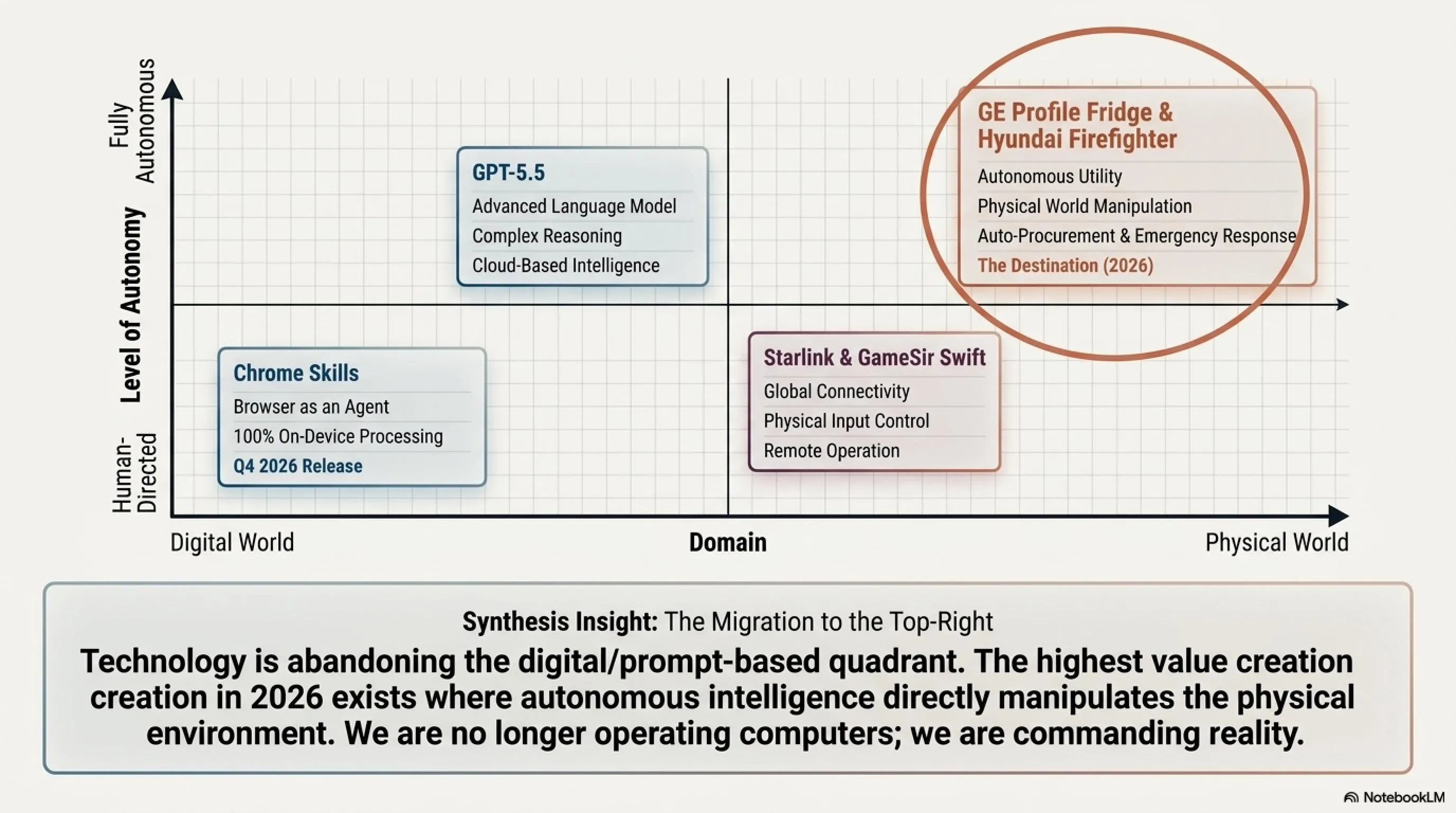
🎯 Key Takeaway: All 6 stories share one thread — AI is leaving the digital world and entering the physical one. From kitchens to burning buildings, from space to your browser — artificial intelligence is no longer just software. It's a new layer of reality.
❓ Frequently Asked Questions
📚 Sources & References
- OpenAI Blog — Official GPT-5.5 announcement (April 2026)
- SpaceX Launch Updates — Starlink Mission 40 of 2026
- GameSir Official — Swift Drive reveal at CES 2026
- Hyundai Motor Group — Firefighting robot delivery to South Korea NFA
- GE Appliances — Profile Smart Refrigerator with AI Shopping List
- Google Chrome Blog — Chrome Skills announcement (April 2026)
- Tekin Morning April 25, 2026 — Research & Analysis: Tekin Editorial Team
🌐 Stay Connected With Us
For the latest tech, gaming, and gadget news, follow us on social media:
🌐 Stay Connected With Us 🎮✨
For the latest tech, gaming, and gadget news, follow us on our official social media channels:
Additional Gallery: 🌅 Tekin Morning April 25: OpenAI GPT-5.5 Launch & Starlink Direct-to-Cell 🤖🛰️🚒