End of an Empire: Why Legendary Crypto Exchange BitMEX is Shutting Down After 11 Years
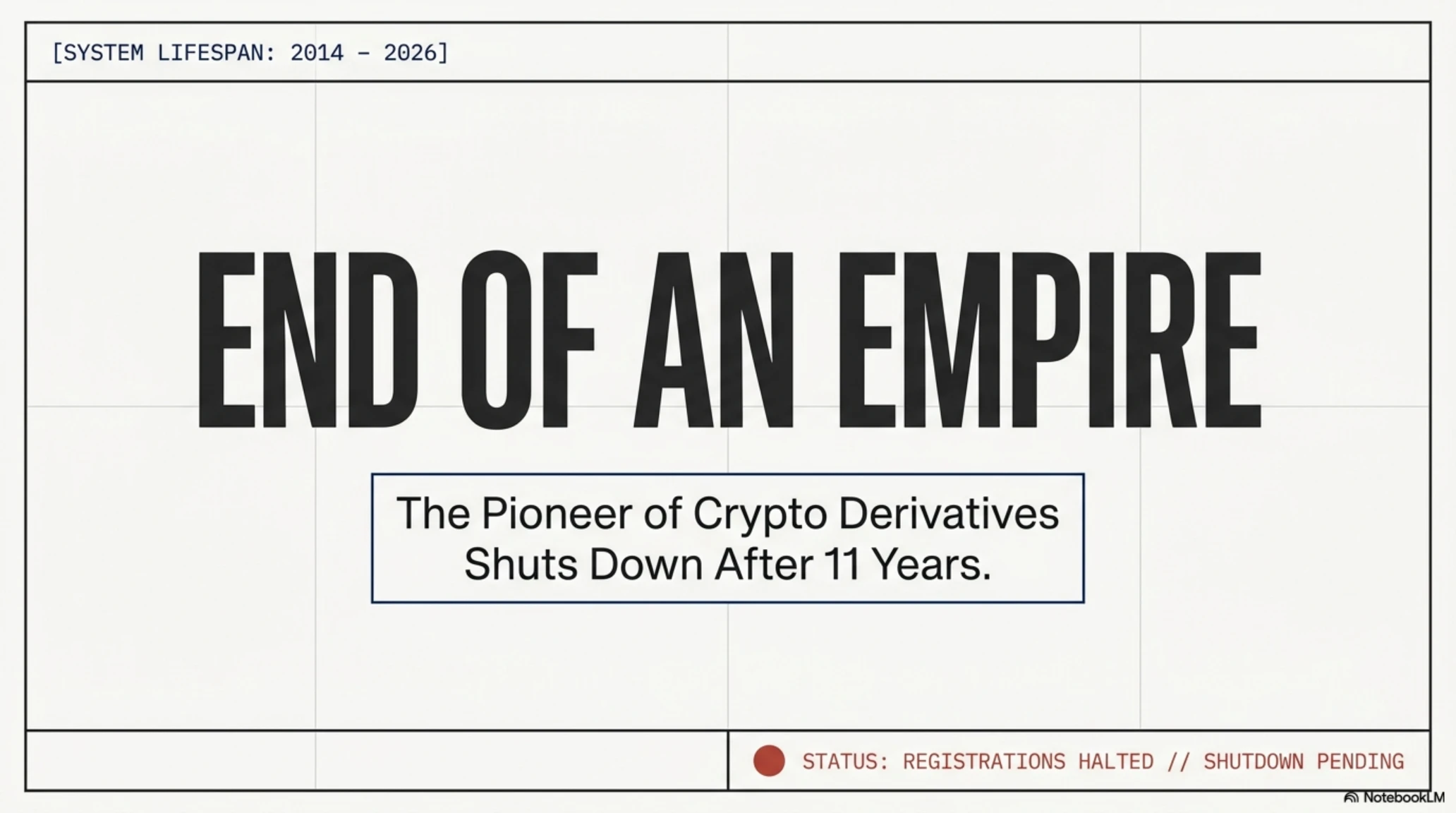
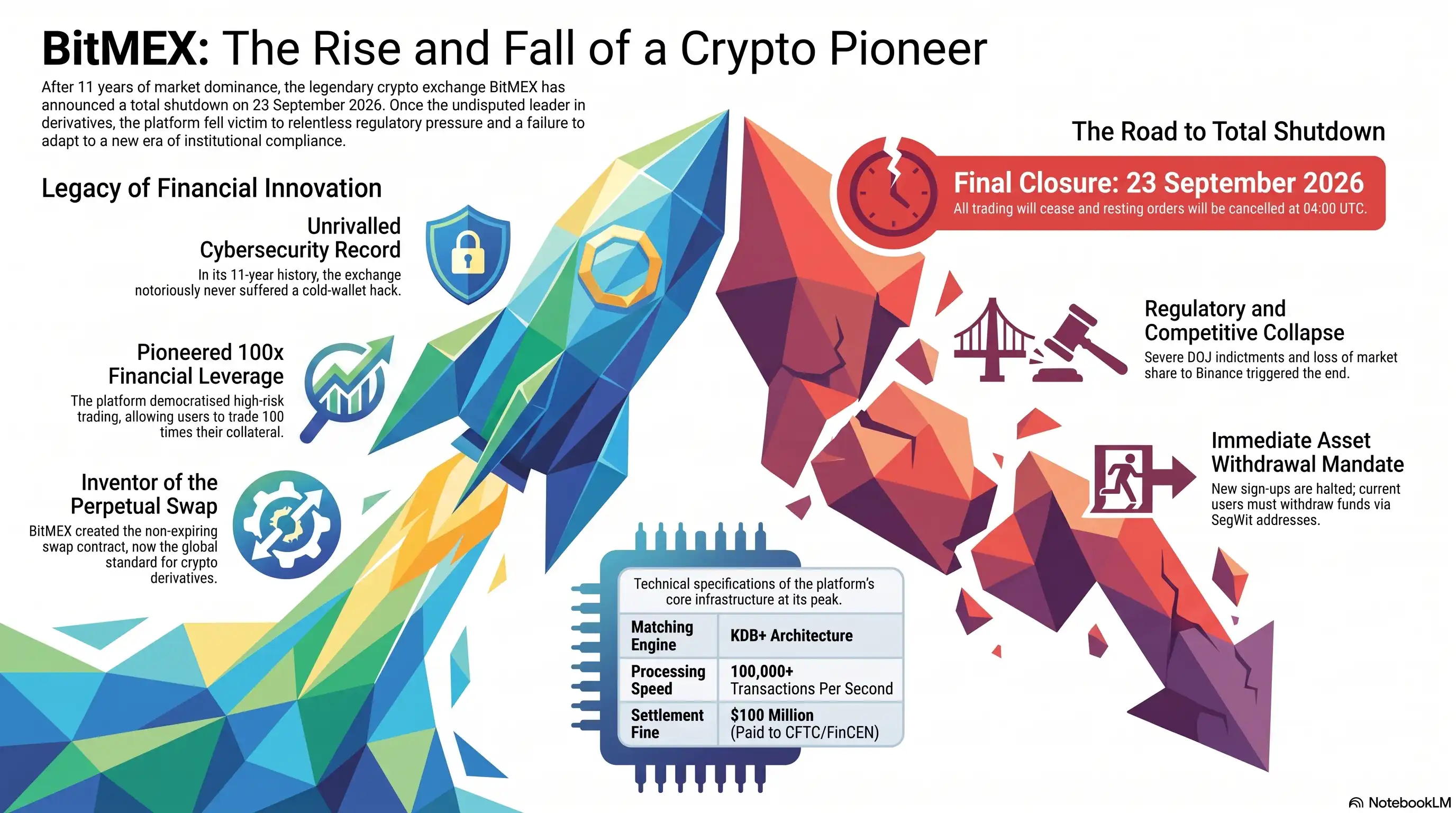
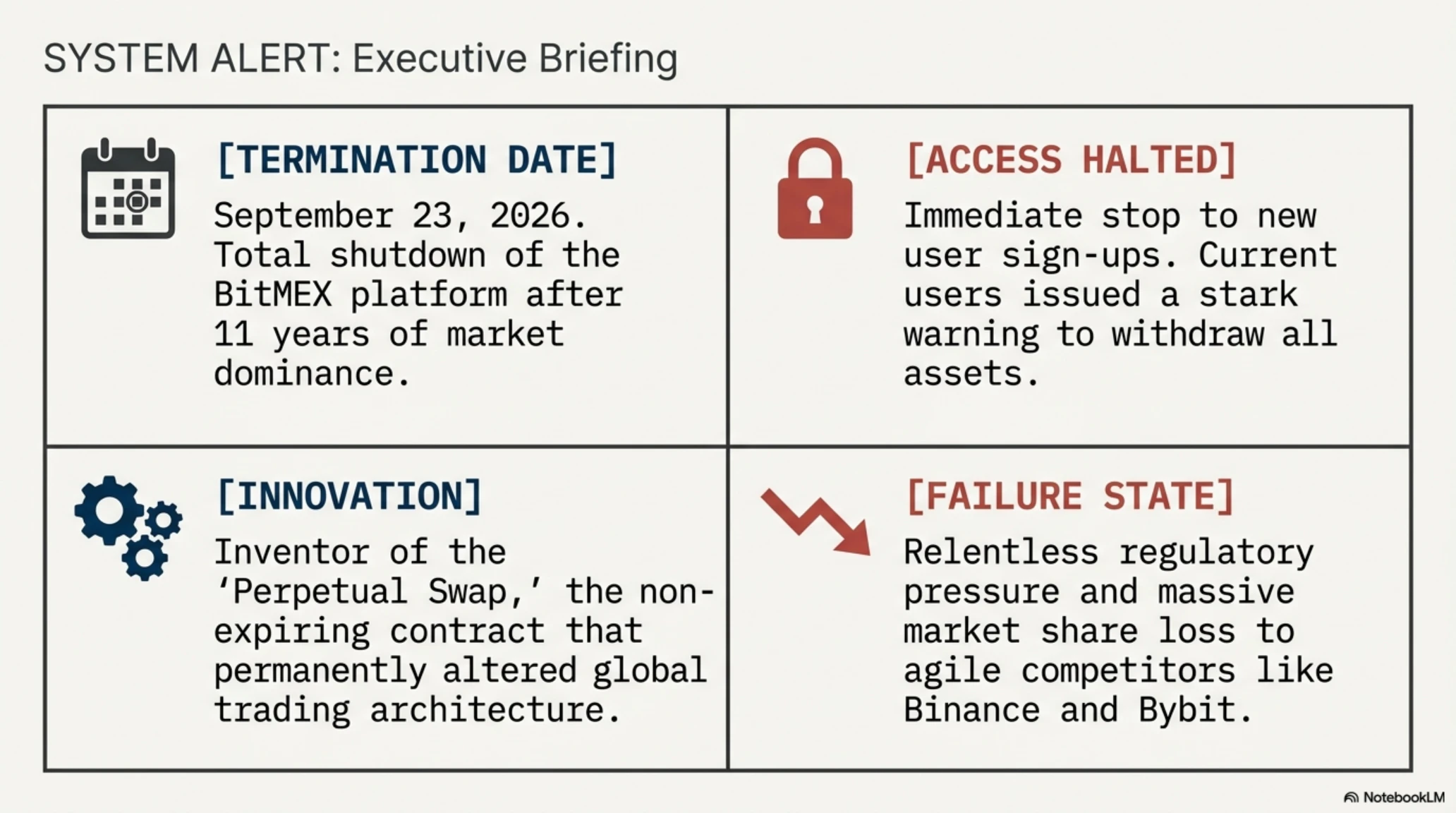
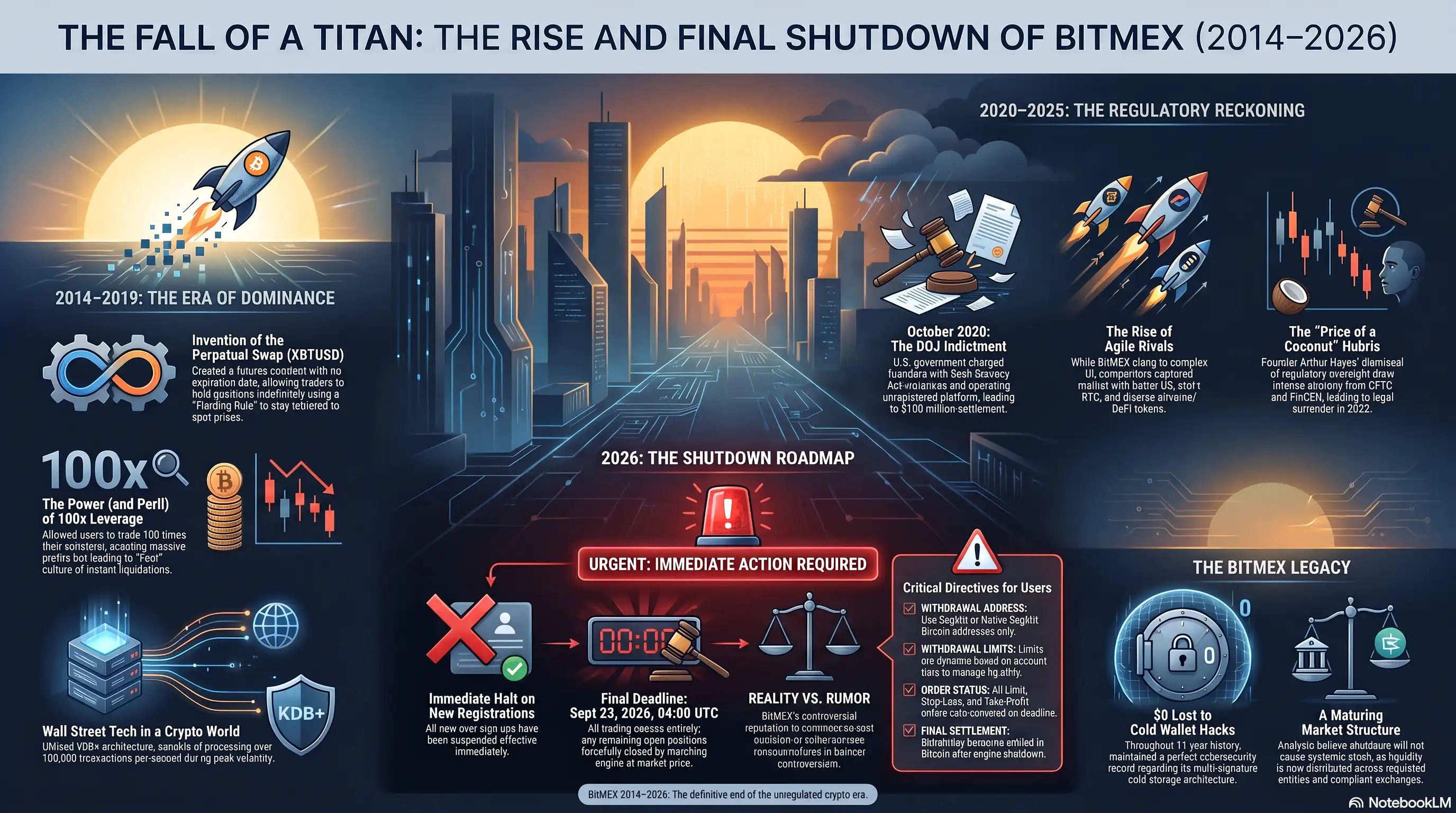
- 🎮End of an Era- Complete closure of the BitMEX exchange platform on September 23, 2026, bringing an end to an 11-year legacy of market dominance.
- 🎧Registrations Halted- Immediate termination of new user account sign-ups, accompanied by urgent directives for existing clients to withdraw assets.
- 🚀Inventor of the Perpetual Swap- The platform revolutionized digital asset trading forever by engineering the XBTUSD non-expiring perpetual futures contract.
- 🗡️Catalysts for Collapse- Relentless international regulatory enforcement, severe legal penalties, and a drastic loss of market share to rivals like Binance and Bybit.
- 📰Arthur Hayes' Legacy- The colorful and controversial co-founder who transitioned from Wall Street investment banker to institutional crypto fugitive.
The Fall of a Pioneer: An Earthquake in the Crypto Market Core
The cryptocurrency industry has always been defined by extreme volatility, relentless technological evolution, and dramatic market cycles. Yet, throughout the short history of digital assets, very few institutions have fundamentally altered the structural architecture of global financial markets as profoundly as the BitMEX derivatives exchange. Founded in 2014 during the aftermath of the catastrophic Mt. Gox collapse, BitMEX transformed Bitcoin from a speculative peer-to-peer digital currency into a high-stakes, multi-billion-dollar derivative asset class. However, yesterday, HDR Global Trading Limited, the ultimate parent company operating BitMEX, published a brief but monumental statement confirming that the exchange will permanently wind down all trading services on September 23, 2026.
This development is far more than a routine corporate closure or business restructuring. For veteran traders who spent sleepless nights navigating BitMEX's legendary order book and experiencing the brutal efficiency of its matching engine, the news represents an absolute seismic event. Effective immediately, the platform has halted all new user account creations across all jurisdictions. Furthermore, existing retail users and institutional clients have been issued a strict timeline to close open positions, reduce leverage, and transfer funds to external non-custodial wallets or alternative regulated trading venues before the final system shutdown.
Why It Matters: The Closure of BitMEX (Why It Matters)
BitMEX was not merely another cryptocurrency trading venue; it was the financial laboratory that invented the derivative mechanisms driving trillions of dollars in daily global volume today. Its final closure marks the official end of the unregulated 'Wild West' era of offshore crypto leverage and solidifies the total dominance of institutional-grade, regulatory-compliant trading platforms.
The Macroeconomic Backdrop of BitMEX's Founding in 2014
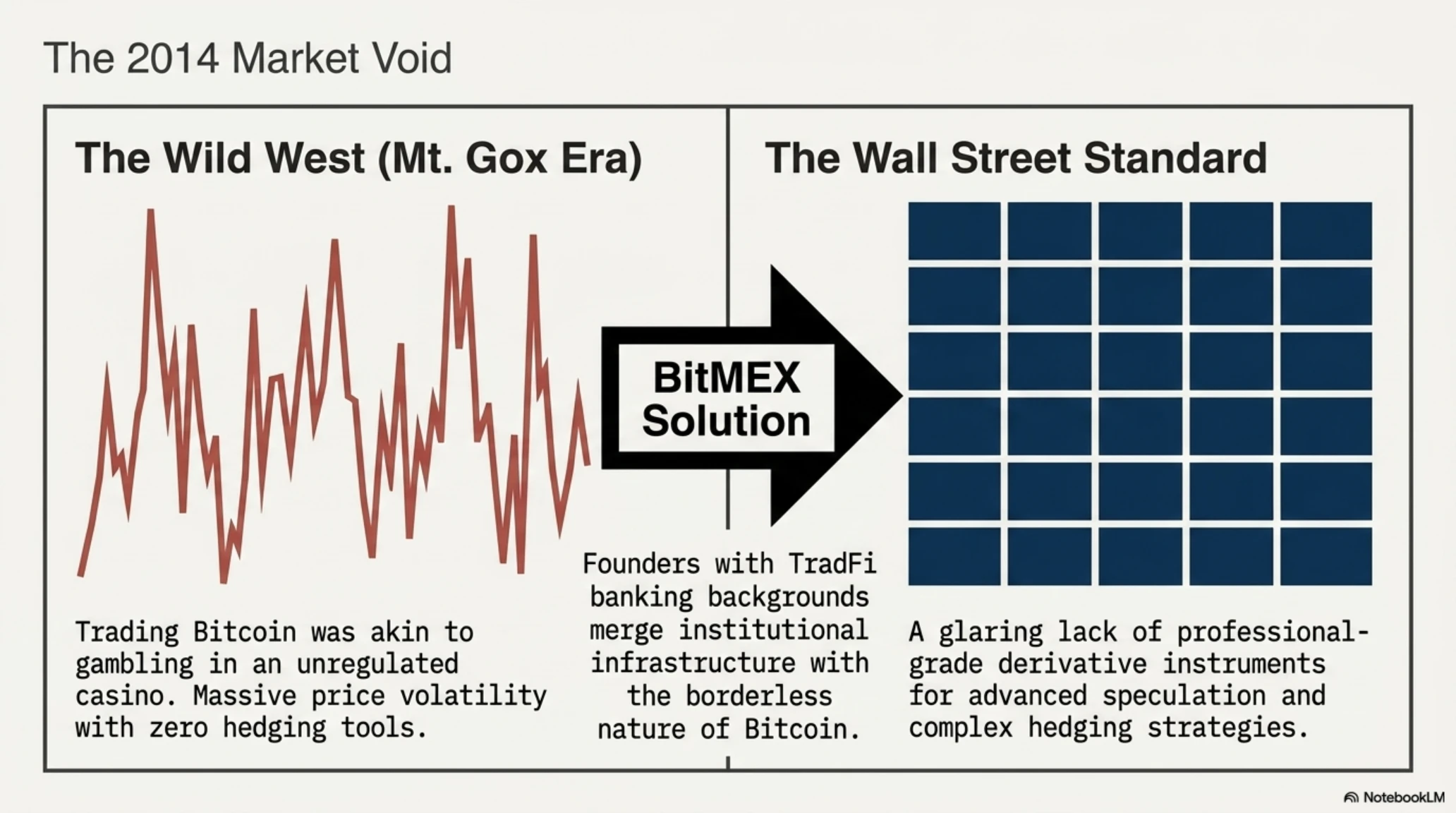
To contextualize the monumental significance of BitMEX, one must examine the macroeconomic state of the Bitcoin ecosystem in 2014. Following the collapse of Tokyo-based Mt. Gox, which had previously handled over 70% of global Bitcoin spot volume, trust in centralized crypto infrastructure was severely fractured. The market was crippled by extreme illiquidity, severe counterparty risk, and a total absence of institutional financial instruments. Institutional investors viewed digital assets with deep skepticism, regarding Bitcoin primarily as an un-regulated experiment susceptible to catastrophic security breaches.
Furthermore, early cryptocurrency spot markets operated under severe capital constraints. Traders seeking to execute directional strategies had to post 100% principal capital upfront, exposing themselves entirely to asset price depreciation without any ability to hedge downside portfolio risk. Shorting Bitcoin required borrowing actual coins from obscure lending desks at exorbitant interest rates with minimal consumer protections. The crypto market was desperately in need of sophisticated financial engineering capable of bridging traditional Wall Street capital efficiency with Bitcoin's 24/7 decentralized network.
Dissecting the Official Announcement: Strategic Pivot vs. Regulatory Extinction
To fully understand the gravity of BitMEX's final shutdown, analysts must look beyond the formal corporate communications. In its public statement, company leadership framed the decision as the outcome of an exhaustive strategic evaluation aimed at aligning the firm's resources with long-term industry trends. Management insisted that the shutdown is not triggered by financial insolvency, an operational hack, or a sudden loss of customer deposits. Unlike the disastrous collapses of FTX, Celsius, or Voyager Digital, BitMEX maintains full 1-to-1 reserve backing for all client assets, stored securely in multi-signature cold storage vaults.
However, veteran market observers and forensic financial analysts emphasize that the shutdown is the direct consequence of structural unviability in the modern regulatory environment. Operating an offshore derivatives venue without strict international licensing has become virtually impossible under the coordinated enforcement frameworks established by global regulators. As compliance overhead surged and market share migrated toward fully licensed exchanges, BitMEX's business model faced unsustainable margin compression, making an orderly liquidation the only rational financial outcome.
Cross-Border Legal Jurisdictions and Regulatory Arbitrage in Offshore Finance
The rise and ultimate demise of BitMEX highlights the inherent limitations of jurisdictional arbitrage in global digital asset finance. In 2014, corporate incorporation in island tax havens like the Seychelles or Bermuda provided a temporary legal buffer against domestic regulatory subpoenas. Offshore jurisdictions offered favorable corporate tax structures, minimal financial reporting requirements, and zero local oversight over non-resident trading platforms.
However, international financial regulatory enforcement underwent a profound transformation between 2015 and 2025. Coordinated enforcement initiatives led by the Financial Action Task Force (FATF), the US Department of Justice, and European financial regulators established that serving citizens within sovereign jurisdictions creates legal nexus regardless of corporate incorporation offshore. As bilateral extradition treaties, inter-agency information sharing, and banking sanctions intensified, the strategic advantage of offshore corporate structuring completely collapsed, leaving legacy venues exposed to existential legal enforcement.
Anatomy of a Winding-Down Exchange: Cold Storage Security Protocols
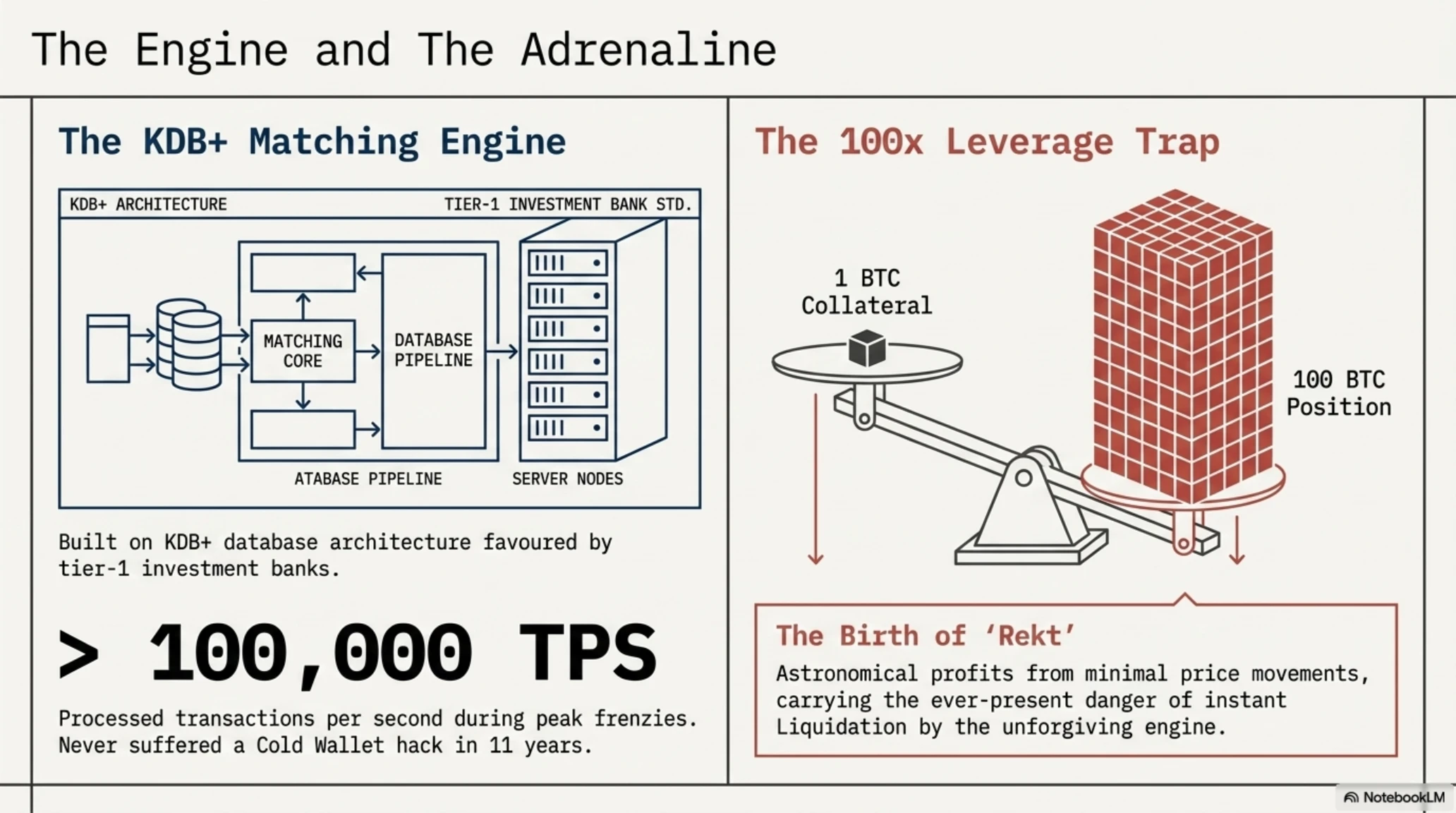
A critical distinguishing factor of BitMEX's operational wind-down is its unwavering adherence to rigorous wallet security standards. Throughout its entire 11-year operational history, BitMEX maintained an unblemished cybersecurity record, famously remaining one of the very few legacy exchanges to never suffer a hot-wallet or cold-wallet hack. This security architecture relies on an offline multi-signature scheme requiring multiple executive authorizations for every single daily withdrawal batch.
During the wind-down period leading to September 2026, BitMEX will continue processing client withdrawals through its established cold-storage security protocol. Transactions are broadcast once daily following rigorous manual verification and multi-party key signing. This deliberate security velocity prevents automated API drain attacks and ensures that client reserves remain fully protected against external cyber threats during the heightened vulnerability window of exchange liquidation.
Critical Directives and Operational Timelines for Clients
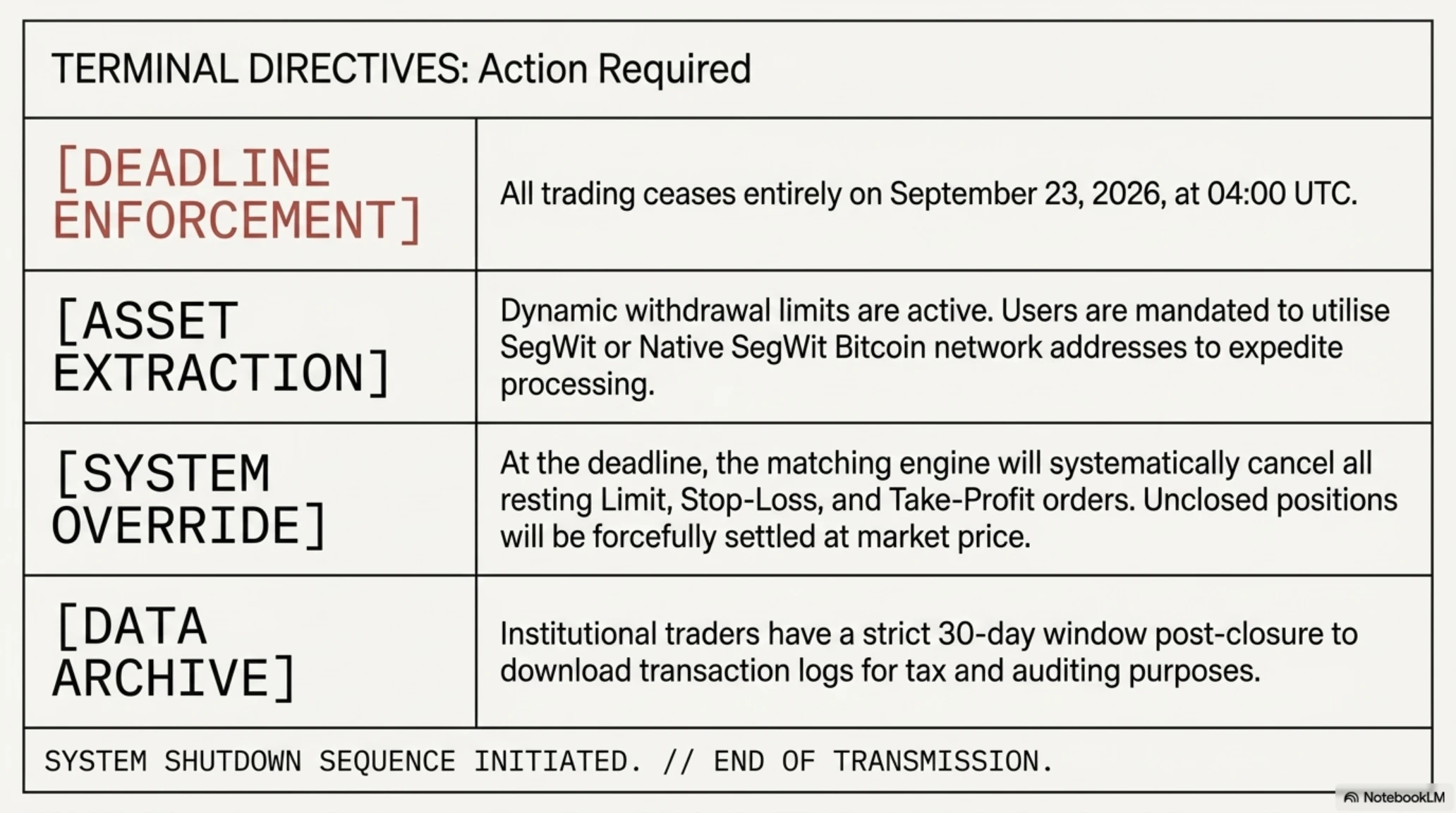
To ensure a smooth transition and prevent localized liquidity panics across secondary markets, BitMEX management has established a rigid operational roadmap leading up to the final September 2026 deadline. All active clients are required to review and execute the following directives:
- Final Trading Termination: All trading activity across spot markets, linear futures, and inverse perpetual swaps will be permanently frozen at exactly 04:00 UTC on September 23, 2026.
- Dynamic Withdrawal Quotas: Daily withdrawal limits have been adjusted dynamically based on account tier levels to prevent server bottlenecks and ensure smooth processing through the exchange's cold-wallet infrastructure.
- Mandatory Address Formats: Clients withdrawing Bitcoin reserves are instructed to utilize Native SegWit (bech32) or SegWit-compatible address formats to minimize network transaction fees and accelerate blockchain confirmation times.
- Automated Position Liquidation: Any open positions remaining past the final deadline will be systematically closed out by the matching engine at prevailing index prices, with remaining balances credited in BTC or USDT.
- Historical Data Archival: Institutional clients and algorithmic trading firms are granted a strict 30-day post-closure window to download transaction histories, funding rate logs, and execution data for tax reporting and audit compliance.
Analytical Timeline: Rise and Fall of a Financial Giant (Timeline Table)
2014: BitMEX is founded in the Seychelles by Arthur Hayes, Ben Delo, and Samuel Reed to bring Wall Street derivatives to Bitcoin.
2016: The exchange introduces the revolutionary XBTUSD Perpetual Swap contract, featuring up to 100x leverage.
2018: Peak operational dominance; BitMEX handles over $8 billion in daily volume, establishing an absolute monopoly on crypto liquidity.
2020: The US DOJ and CFTC file criminal and civil charges against BitMEX and its founders for Bank Secrecy Act violations.
2022: Founders plead guilty in US federal court, paying $100 million in fines and receiving probation sentences.
2026: Official corporate announcement of total operational wind-down due to compliance costs and market share loss.
The Derivatives Revolution: Inventing the Perpetual Swap
To fully comprehend why the collapse of BitMEX is sending shockwaves through global finance, one must analyze the groundbreaking financial innovations that propelled the exchange to global dominance in the first place. When BitMEX launched in 2014, trading Bitcoin was an inefficient, high-friction process. Most spot exchanges suffered from terrible engine latency, poor order book depth, and frequent banking cutoffs. More critically, traditional spot trading offered no viable mechanism for institutional market participants to hedge inventory risk or take short positions during severe bear market downturns.
The founders of BitMEX—Arthur Hayes, Ben Delo, and Samuel Reed—brought a lethal combination of Wall Street expertise and high-frequency trading engineering to the crypto market. Hayes had traded equity derivatives at Citigroup and Deutsche Bank; Delo was an Oxford-educated mathematician specializing in high-frequency algorithmic systems; and Reed was a veteran web developer who built ultra-low-latency backend architectures. Together, they recognized that applying traditional derivatives mechanics to a decentralized, 24/7 global asset could unlock unprecedented trading volume.
Jargon Buster: Dissecting Derivative Concepts (Jargon Buster)
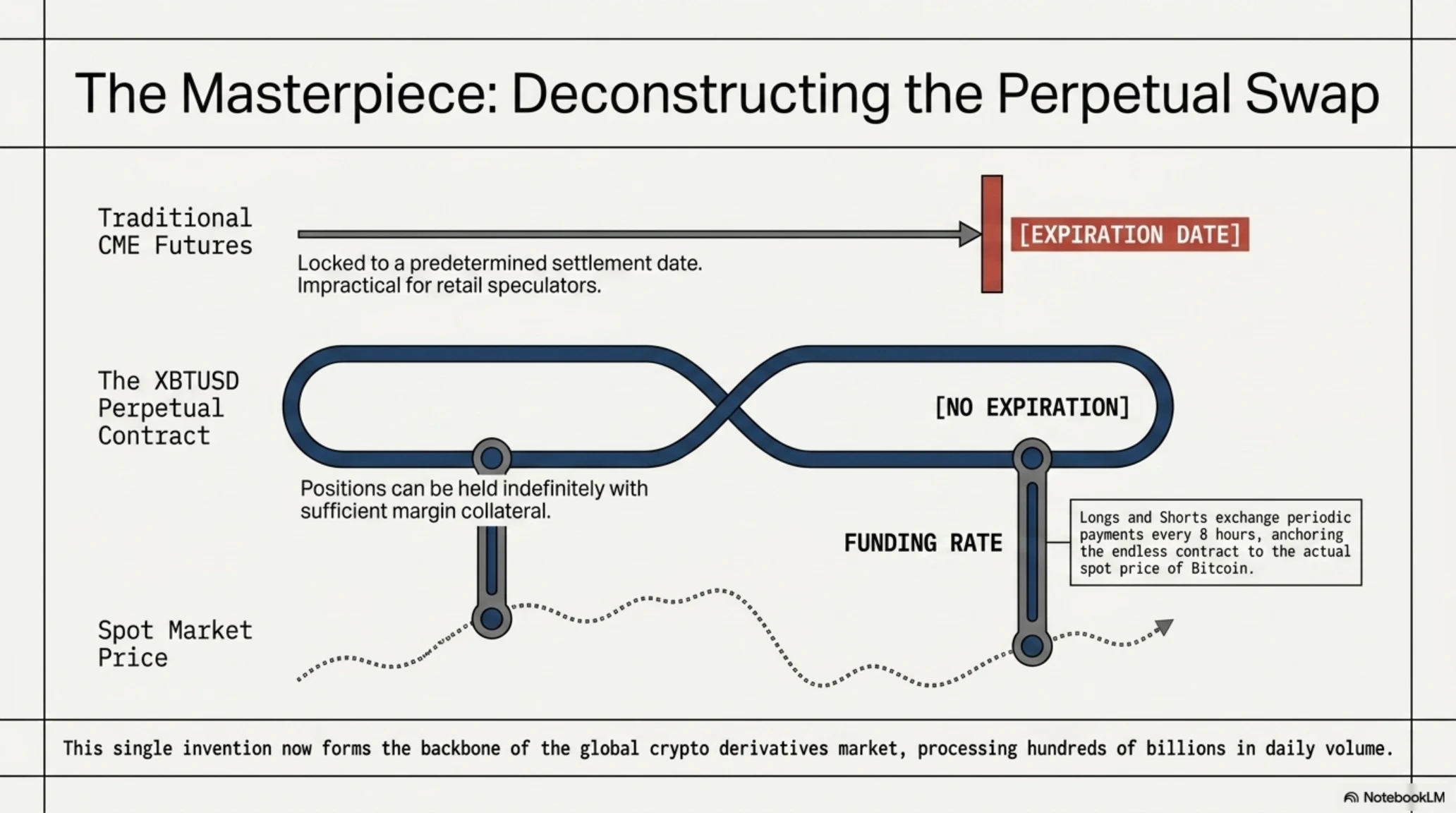
Perpetual Swap: A financial derivative contract that mimics a margin-based spot market but has no expiration date, enabling continuous leverage trading.
Funding Rate: A periodic cash flow payment transferred directly between long and short traders to keep the contract price pegged to the underlying index price.
Maintenance Margin: The absolute minimum amount of equity required in a trading account to keep an open leveraged position from being liquidated.
Insurance Fund: A financial reserve pool utilized by the exchange to absorb unfilled liquidation orders and prevent auto-deleveraging of profitable traders.
The Financial Mechanics of Perpetual Contracts: Funding Rates and Index Arbitrage
In traditional financial markets like the Chicago Mercantile Exchange (CME), standard futures contracts operate with fixed monthly or quarterly expiration dates. Upon expiry, positions must be settled physically or through cash reconciliation, forcing traders to constantly roll over contracts to maintain market exposure. For retail crypto day traders seeking continuous, intraday exposure to Bitcoin price swings, managing quarterly roll costs and calendar spreads was cumbersome and inefficient.
BitMEX solved this structural friction in 2016 by inventing the XBTUSD Perpetual Swap. The contract offered perpetual exposure with no expiry date whatsoever. To maintain price convergence between the perpetual contract and the actual spot market, BitMEX introduced the Funding Rate mechanism. Every eight hours, a dynamic interest fee is calculated based on the premium or discount of the derivative price relative to the spot index price. When the perpetual price trades above spot, long traders pay short traders; when it trades below spot, shorts pay longs. This self-balancing incentive structure proved so remarkably effective that it became the universal standard across every major crypto derivative platform on earth.
The Mathematics of Funding Rate Arbitrage: Delta-Neutral Cash-and-Carry
The creation of the perpetual swap enabled sophisticated institutional traders to execute delta-neutral cash-and-carry strategies at scale. By purchasing physical Bitcoin in the spot market while simultaneously taking an equivalent short position in the XBTUSD perpetual swap, quantitative funds could completely insulate themselves from directional market volatility. During rampant bull markets, when aggressive retail demand pushed perpetual derivative prices to a substantial premium over spot, the funding rate turned heavily positive.
Under these conditions, long traders paid short traders lucrative fees every eight hours. Institutional funds executing delta-neutral arbitrage earned double-digit annualized yields purely by collecting positive funding payments without taking net directional asset risk. This mechanism injected billions of dollars of institutional liquidity into BitMEX's order books, establishing a deep liquidity foundation that powered global price discovery throughout the historic 2017 bull market.
Order Book Dynamics: Deep Liquidity vs Market Impact in High-Frequency Trading
Central to BitMEX's early supremacy was its highly engineered order book architecture. The exchange implemented a competitive maker-taker fee schedule that paid passive liquidity providers a rebate fee for posting limit orders while charging active takers a fee for executing market orders. This incentive alignment encouraged quantitative high-frequency market makers to maintain ultra-tight bid-ask spreads across massive order book depths.
As market makers competed for fee rebates, order book slippage diminished, allowing institutional traders to execute multi-million-dollar block trades with minimal adverse market impact. BitMEX's order book depth became the primary reference price for global Bitcoin valuation. Arbitrage bots across secondary exchanges continuously rebalanced prices against BitMEX's engine, solidifying its role as the central nerve center of digital asset price discovery.
Deep Dive: The Regulatory War on Crypto Derivatives
The global regulatory crackdown on cryptocurrency derivatives has escalated dramatically since the peak of BitMEX's market reign. In the exchange's early years, offshore platforms operated in a regulatory vacuum, taking full advantage of jurisdictional arbitrage in secrecy-friendly tax havens like the Seychelles, Bermuda, and the Bahamas. Retail traders worldwide were granted unrestricted access to institutional-grade financial instruments without identity verification, suitability checks, or leverage caps.
However, as cryptocurrency market capitalization expanded into the trillions, global financial authorities—including the US Commodity Futures Trading Commission (CFTC), the Securities and Exchange Commission (SEC), and the Financial Action Task Force (FATF)—recognized the severe systemic risks posed by unmonitored offshore venues. Massive leverage-fueled liquidation cascades routinely triggered multi-billion-dollar flash crashes, liquidating retail capital and destabilizing broader market confidence. International regulators launched coordinated enforcement initiatives to enforce Anti-Money Laundering (AML) mandates, sanction enforcement, and strict licensing requirements, effectively ending the era of unmonitored offshore derivatives trading.
Quantifying the Impact of Auto-Deleveraging (ADL) Systems
To preserve exchange solvency during violent market crashes, BitMEX engineered the Auto-Deleveraging (ADL) system as a final safety net behind its Insurance Fund. When a highly leveraged trading position is liquidated, the exchange attempts to close the order in the open order book. However, during extreme market illiquidity or gap movements, liquidation orders may fail to execute at prices above the bankrupt trader's maintenance margin threshold.
If the exchange's Insurance Fund is depleted or unable to absorb the bankruptcy loss, the ADL system automatically steps in. ADL ranks profitable opposing traders in order of leverage and profit percentage, forcefully deleveraging their positions at the bankruptcy price of the liquidated account. While ADL successfully prevented exchange-wide insolvency, it frequently angered top-tier algorithmic traders who saw their highly profitable positions closed prematurely during major market volatility spikes.
The Double-Edged Sword of 100x Financial Leverage
While the perpetual swap was a brilliant architectural breakthrough, BitMEX supercharged market enthusiasm—and systemic danger—by offering up to 100x financial leverage on its flagship Bitcoin contracts. With 100x leverage, a trader needed only 1% margin collateral to open a massive trading position. A mere 1% price move in favor of the trade doubled the client's capital, while a 1% price move against the position resulted in total account liquidation.
This extreme leverage structure created an intoxicating environment for retail traders, giving rise to legendary stories of modest balances turning into multi-million-dollar fortunes overnight. Conversely, it generated catastrophic wealth destruction. The term Rekt became embedded in internet subculture to describe retail traders whose positions were wiped out in seconds by BitMEX's automated matching engine. As liquidations accelerated, the exchange's automated Insurance Fund grew into one of the largest single holdings of Bitcoin in existence, serving as a fortress against systemic exchange bankruptcies during extreme market volatility.
Arthur Hayes: Controversial Genius or Brazen Lawbreaker?
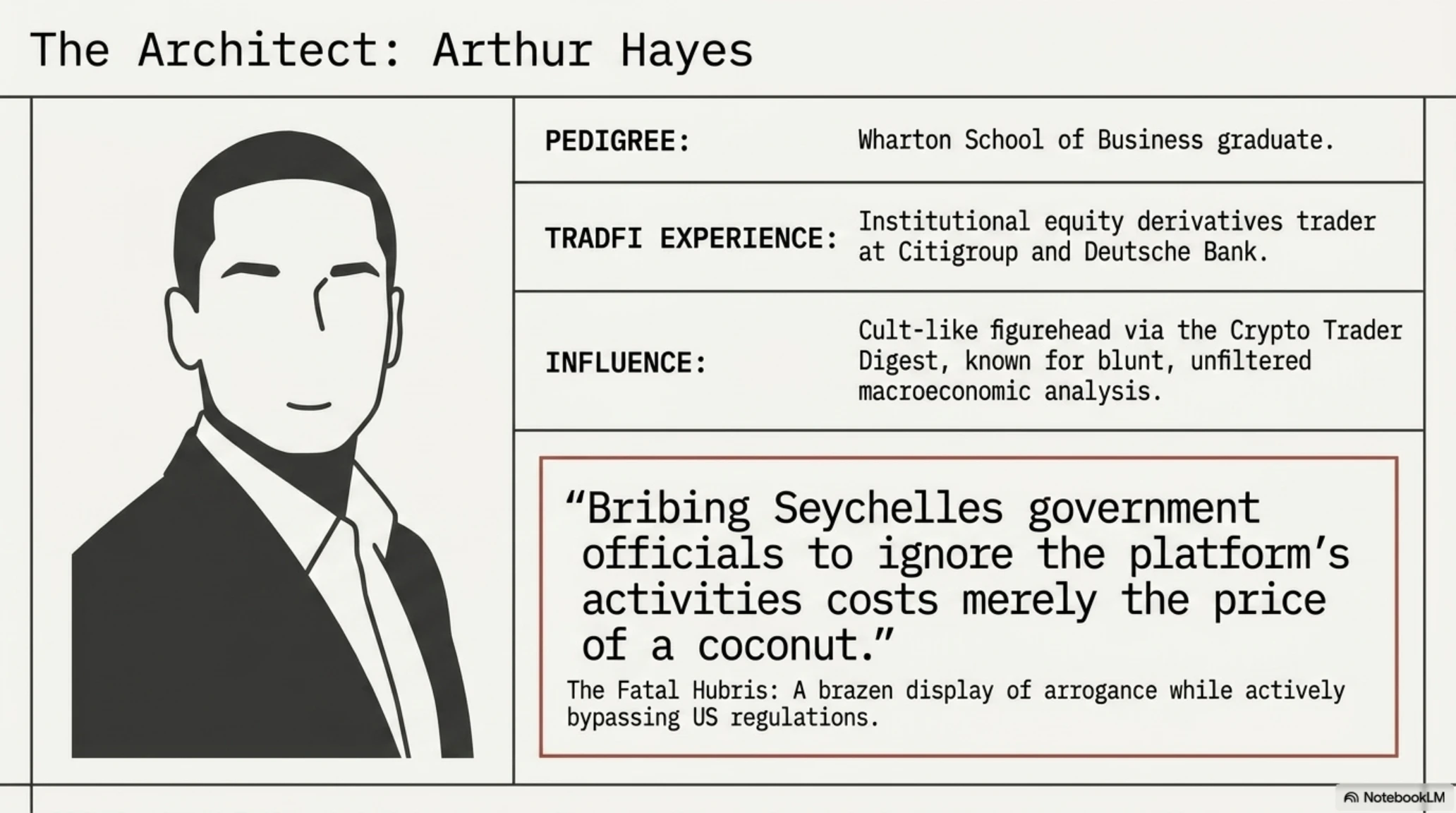
No historical narrative of BitMEX can be written without centering on its enigmatic co-founder and former Chief Executive Officer, Arthur Hayes. A graduate of the Wharton School at the University of Pennsylvania, Hayes possessed a rare combination of sharp financial acumen, deep mathematical literacy, and an unapologetically flamboyant persona. After honing his skills on institutional trading desks in Hong Kong for Citigroup and Deutsche Bank, Hayes recognized early that traditional finance was bound by rigid bureaucracy, whereas Bitcoin offered an unencumbered frontier for rapid financial engineering.
Through his wildly popular economic newsletter, Crypto Trader Digest, Hayes cultivated a massive global following. His long-form macroeconomic essays combined sophisticated central bank monetary policy analysis with irreverent pop culture commentary, sharp wit, and unapologetic bullishness on Bitcoin. For millions of retail day traders and crypto enthusiasts, Hayes was not just an exchange executive; he was the charismatic intellectual leader of an economic revolution challenging Wall Street's legacy hegemony.
Rumor vs. Reality: Was BitMEX Stealing from its Users? (Rumor vs. Reality)
Rumor: Critics long accused BitMEX of operating an internal proprietary trading desk that actively front-ran customer orders and intentionally pushed prices toward liquidation clusters to confiscate user margin.
Reality: Exhaustive investigations by forensic auditors and federal law enforcement confirmed that BitMEX's core matching engine operated deterministically without internal order-manipulation algorithms. The exchange's legal downfall stemmed entirely from willful non-compliance with anti-money laundering regulations and Bank Secrecy Act requirements, rather than internal fraud or theft of client assets.
The Macroeconomic Theory of Fiat Debasement and Digital Gold
Central to Arthur Hayes' trading philosophy was his deeply analytical thesis on global fiat currency debasement. Hayes argued that modern central banks—led by the Federal Reserve, the European Central Bank, and the Bank of Japan—were structurally trapped in a cycle of perpetual debt monetization and money supply expansion. To service bloated sovereign debt burdens, central authorities were compelled to suppress interest rates below prevailing inflation rates, eroding the purchasing power of paper fiat currencies.
In this macroeconomic framework, Bitcoin was not merely a speculative asset, but the ultimate digital hedge against monetary debasement—an un-debasable, algorithmically scarce store of value. BitMEX's high-leverage perpetual contracts provided institutional macro traders with a potent mechanism to speculate on central bank liquidity injections. Hayes' long-form essays accurately predicted major shifts in global credit cycles, elevating his reputation from an offshore exchange operator to one of the most respected macro analysts in modern digital finance.
From Wharton to Seychelles: The Psychological Evolution of Arthur Hayes
Arthur Hayes' transition from traditional institutional finance to offshore cryptocurrency pioneer reflects a broader philosophical divergence between legacy banking and decentralized technology. During his tenure at Wall Street institutions in Asia, Hayes experienced firsthand the immense systemic friction, rigid licensing hurdles, and operational slow-downs inherent in legacy market-making. When he was laid off by Citibank in 2013, he turned his full attention to Bitcoin arbitrage trading across Hong Kong and mainland Chinese spot exchanges.
This hands-on arbitrage experience exposed the fundamental flaws of existing trading infrastructure. Hayes envisioned a trading venue that operated with the mathematical rigor of institutional equity desks, yet remained accessible to any individual with an internet connection and a Bitcoin wallet. His founding philosophy prioritized financial sovereignty and unencumbered market access, leading him to establish BitMEX outside Western legal jurisdictions—a strategic choice that ultimately laid the groundwork for both his monumental fortune and his eventual prosecution.
An Arrogance That Cost an Empire: The Seychelles Coconut Controversy
Despite his brilliant strategic execution, Hayes' defiant attitude toward state regulatory oversight ultimately catalyzed the exchange's legal destruction. BitMEX chose to register its corporate entities in the Republic of Seychelles, deliberately seeking a jurisdiction far removed from American legal subpoenas. In a famously controversial public panel interview, when questioned about operating outside Western legal frameworks, Hayes arrogantly joked that bribing regulators in the Seychelles cost merely "a coconut."
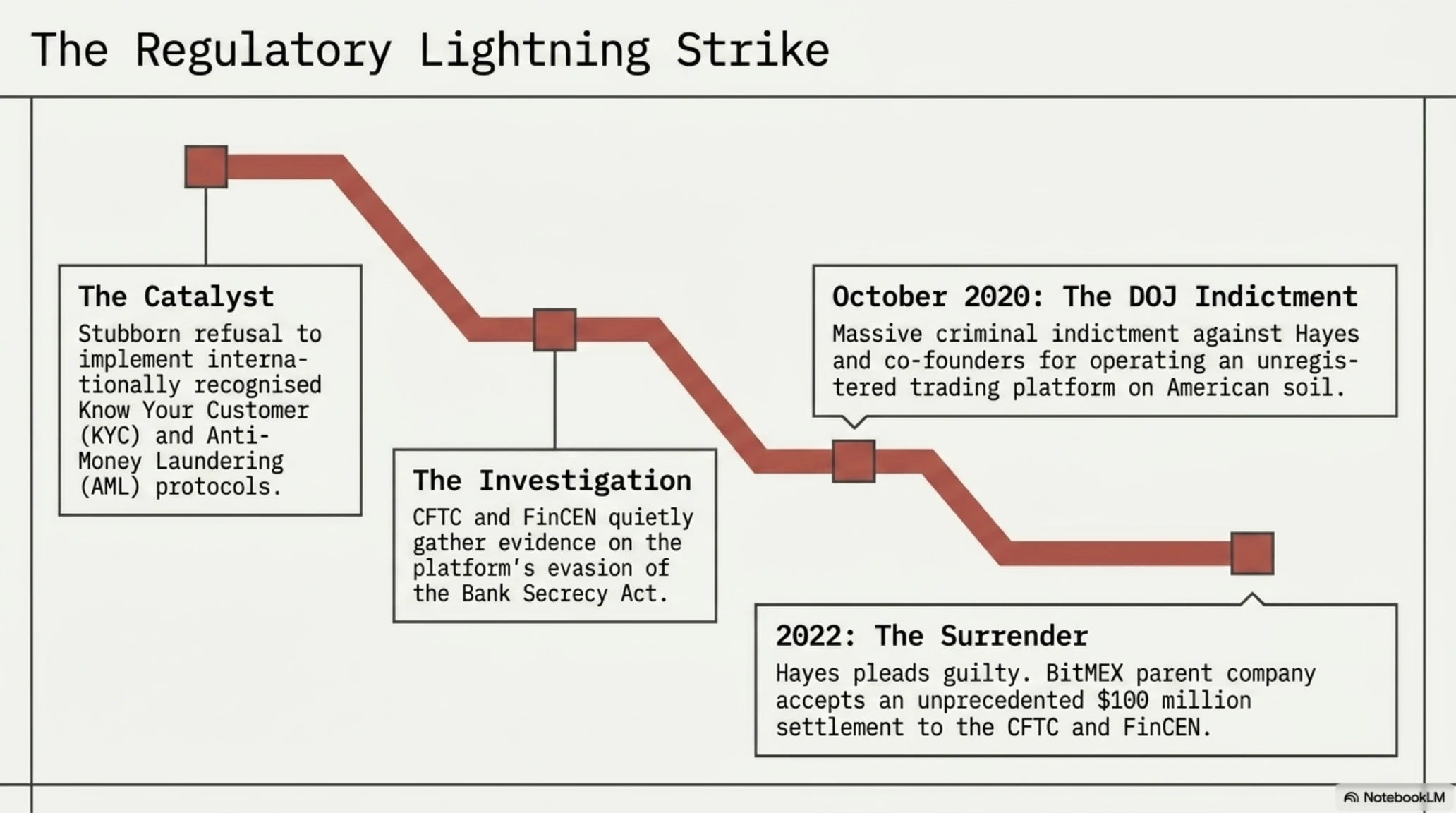
While the comment was intended as hyperbole, it infuriated Western regulatory authorities and targeted BitMEX as a high-priority enforcement objective. United States regulatory bodies—including the Commodity Futures Trading Commission (CFTC), the Department of Justice (DOJ), and the Financial Crimes Enforcement Network (FinCEN)—spent years gathering evidence on BitMEX's systematic failure to restrict US-based traders, enforce KYC protocols, or report suspicious financial transactions originating from sanctioned jurisdictions.
- Invention of the Perpetual Swap contract, which became the universal foundation of crypto derivatives trading.
- Provided unmatched market liquidity and zero cold-wallet security breaches throughout its 11-year operational history.
- Engineered an ultra-fast, deterministic matching engine capable of handling extreme volatility bursts.
- Published high-caliber macroeconomic research that educated millions of retail and institutional market participants.
- Persistent refusal to implement basic KYC and AML compliance until federal criminal indictments forced their adoption.
- A complex, developer-heavy user interface that alienated novice retail traders during mainstream bull runs.
- Extremely slow listing process for altcoins, allowing agile rivals to capture market share during booming crypto cycles.
- Uncompromising leverage limits that contributed to massive liquidation waves and market volatility spikes.
📚 Classified & Related Dossiers in TekinGame
If you wish to explore beyond this report and delve into cybernetic frontiers and autonomous AI architectures, do not miss these three exclusive deep-dives in the Tekin Garage:
The Lightning Strike of the Law: Enter the Department of Justice (DOJ)
The regulatory hammer officially fell in October 2020 when the US Department of Justice unsealed a damning criminal indictment against Arthur Hayes, Ben Delo, Samuel Reed, and Gregory Dwyer. Federal prosecutors charged the executives with conspiring to violate the Bank Secrecy Act by failing to establish and maintain an effective Anti-Money Laundering program. Simultaneously, the CFTC filed civil actions accusing BitMEX of operating an illegal, unlicensed futures exchange on American soil.
The criminal charges sent shockwaves through digital asset markets, forcing Hayes and his co-founders to step down from executive leadership immediately. After a period of legal maneuvering from abroad, Hayes surrendered to US authorities in Hawaii in 2021. In February 2022, Hayes and Delo pled guilty in federal court to Bank Secrecy Act violations. Each executive agreed to pay $10 million in criminal fines, received probation sentences with period house arrest, and relinquished corporate operational control. Additionally, BitMEX parent companies agreed to pay $100 million in civil penalties to resolve CFTC and FinCEN enforcement actions.
The Legal Precedents of the Bank Secrecy Act in Digital Finance
The federal prosecution of BitMEX established an indelible legal precedent regarding the extraterritorial jurisdiction of US financial laws over offshore digital asset platforms. Under the Bank Secrecy Act (BSA), any financial institution servicing US residents—regardless of where its corporate entities are incorporated or where its physical servers reside—is legally obligated to implement comprehensive Customer Identification Programs (CIP), monitor suspicious activity, and submit Suspicious Activity Reports (SARs) to FinCEN.
By demonstrating that US-based retail traders routinely accessed BitMEX via VPNs while executive management turned a blind eye, federal prosecutors established that offshore registration offers zero legal immunity against US enforcement actions. This legal precedent fundamentally reshaped the strategic landscape for all global crypto exchanges, compelling every major offshore venue to either completely geoblock US IP addresses with mandatory identity checks or submit directly to US regulatory oversight.
Investor Sentiment Following the Closure Announcement (Market Sentiment)
Market reaction to BitMEX's final shutdown announcement has been remarkably calm and orderly. Unlike the chaotic bank-runs observed during the collapse of uncollateralized lending platforms, traders have methodically migrated open interest to tier-1 licensed exchanges and decentralized perpetual protocols. Institutional analysts view the closure as a positive structural milestone that eliminates lingering regulatory overhang and elevates market compliance standards globally.
Failure to Adapt: The Meteoric Rise of Powerful Rivals
In the wake of the 2020 legal crisis, BitMEX brought in a new executive management team to rebuild institutional trust, satisfy global regulators, and salvage the firm's declining market presence. Former Boerse Stuttgart CEO Alexander Höptner was appointed as Chief Executive Officer in late 2020. Höptner spearheaded an ambitious corporate turnaround strategy labeled "Beyond Derivatives," attempting to transform BitMEX into a full-service crypto ecosystem encompassing spot trading, custodial services, institutional brokerage, and yield-earning financial products.
However, BitMEX's strategic pivot came far too late in the competitive cycle. While BitMEX was bogged down by complex legal remediation, compliance overhaul, and corporate restructuring, agile global rivals capitalized on the vacuum. Exchanges like Binance, Bybit, and FTX (prior to its late-2022 collapse) aggressively replicated BitMEX's flagship perpetual swap architecture while introducing dramatic user-experience innovations that captivated retail and institutional traders alike.
The Evolution of Competitor UI/UX and Asset Breadth
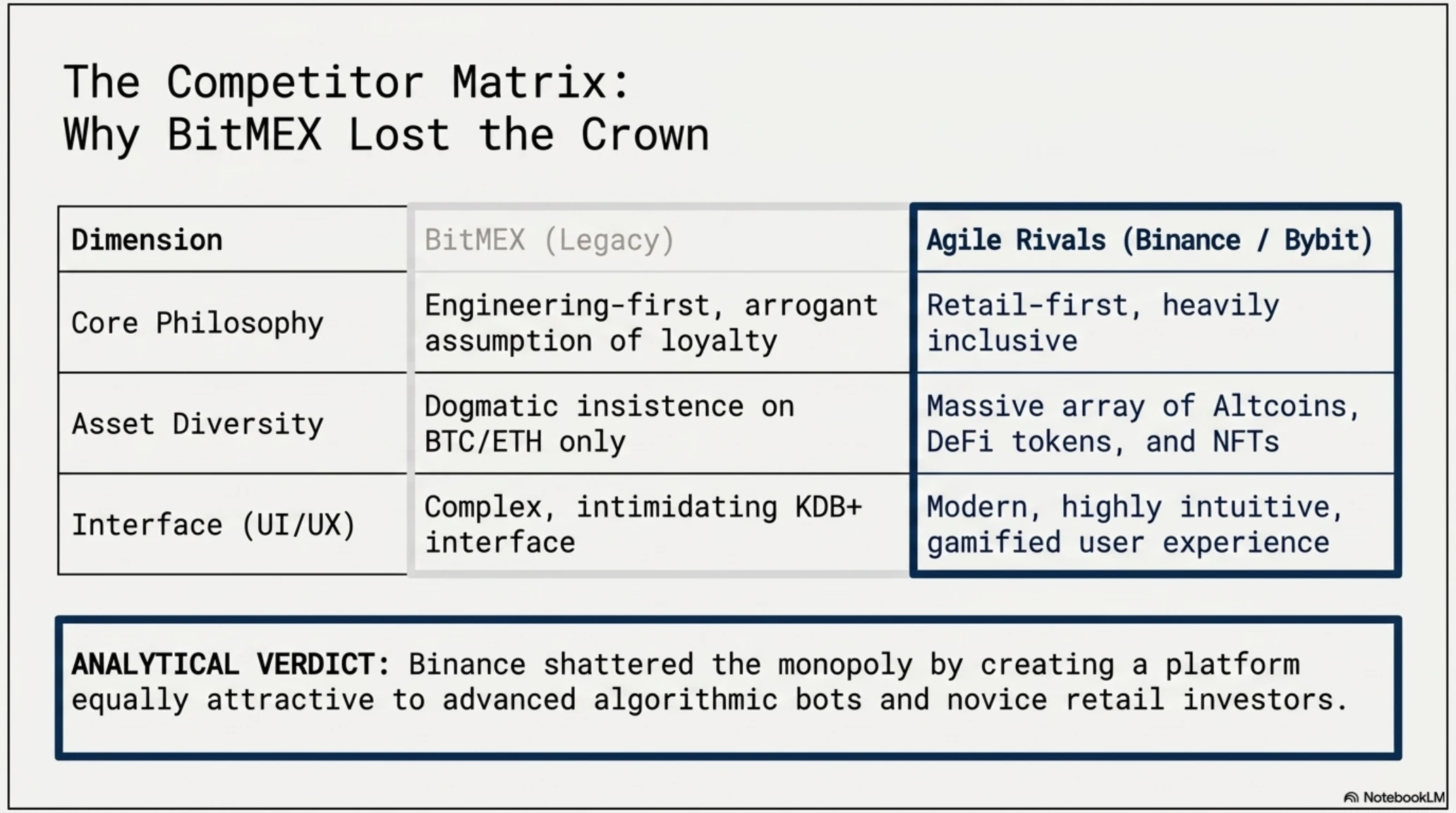
A primary factor driving BitMEX's competitive demise was its dogmatic refusal to expand beyond core Bitcoin and Ethereum derivatives during the early growth years of altcoin trading. BitMEX's trading interface remained stark, technical, and developer-centric—built for quantitative traders who valued raw API speed over visual ergonomics. In contrast, Binance and Bybit constructed highly visual, mobile-first trading interfaces that gamified derivatives trading for mainstream retail users.
Furthermore, during the historic 2020-2021 bull run, retail capital rushed into booming sectors such as Decentralized Finance (DeFi), Non-Fungible Tokens (NFTs), and emerging Layer-1 smart contract platforms like Solana and Avalanche. While competitors listed dozens of trending altcoin perpetual contracts weekly, BitMEX enforced an ultra-conservative listing policy, sticking strictly to Bitcoin and Ethereum. By the time BitMEX launched its spot market and expanded altcoin derivative listings in 2022, retail liquidity had permanently migrated elsewhere.
Analytical Perspective: Why BitMEX Lost the Game to Binance (Tekin Analysis)
Dr. William Shine (Senior Crypto Market Structure Analyst): BitMEX's fatal mistake was believing that institutional loyalty to its low-latency matching engine would insulate it from consumer UI/UX trends. Binance shattered BitMEX's dominance not by building a better engine, but by creating an all-encompassing digital asset super-app that bridged retail spot trading directly into liquid derivative markets.
The Institutional Infrastructure Paradigm Shift
As institutional capital flooded digital asset markets following the 2020-2021 bull cycle, the requirements for crypto exchange infrastructure underwent a complete paradigm shift. Wall Street hedge funds, asset managers, and family offices demanded bankruptcy-remote custodial solutions. Under traditional BitMEX architecture, trader collateral was deposited directly into the exchange's omni-bus wallet, exposing clients to full exchange counterparty risk.
Modern institutional trading venues adapted by partnering with independent regulated custodians (such as Fireblocks, Copper ClearLoop, and Coinbase Custody) to provide off-exchange settlement solutions. Institutional market makers could trade derivatives with zero direct exchange exchange deposit risk, settling net PnL daily via off-chain tri-party custodial networks. BitMEX's legacy omnibus wallet model became an insurmountable deterrent for risk-averse institutional allocation, driving institutional liquidity toward compliant off-exchange networks.
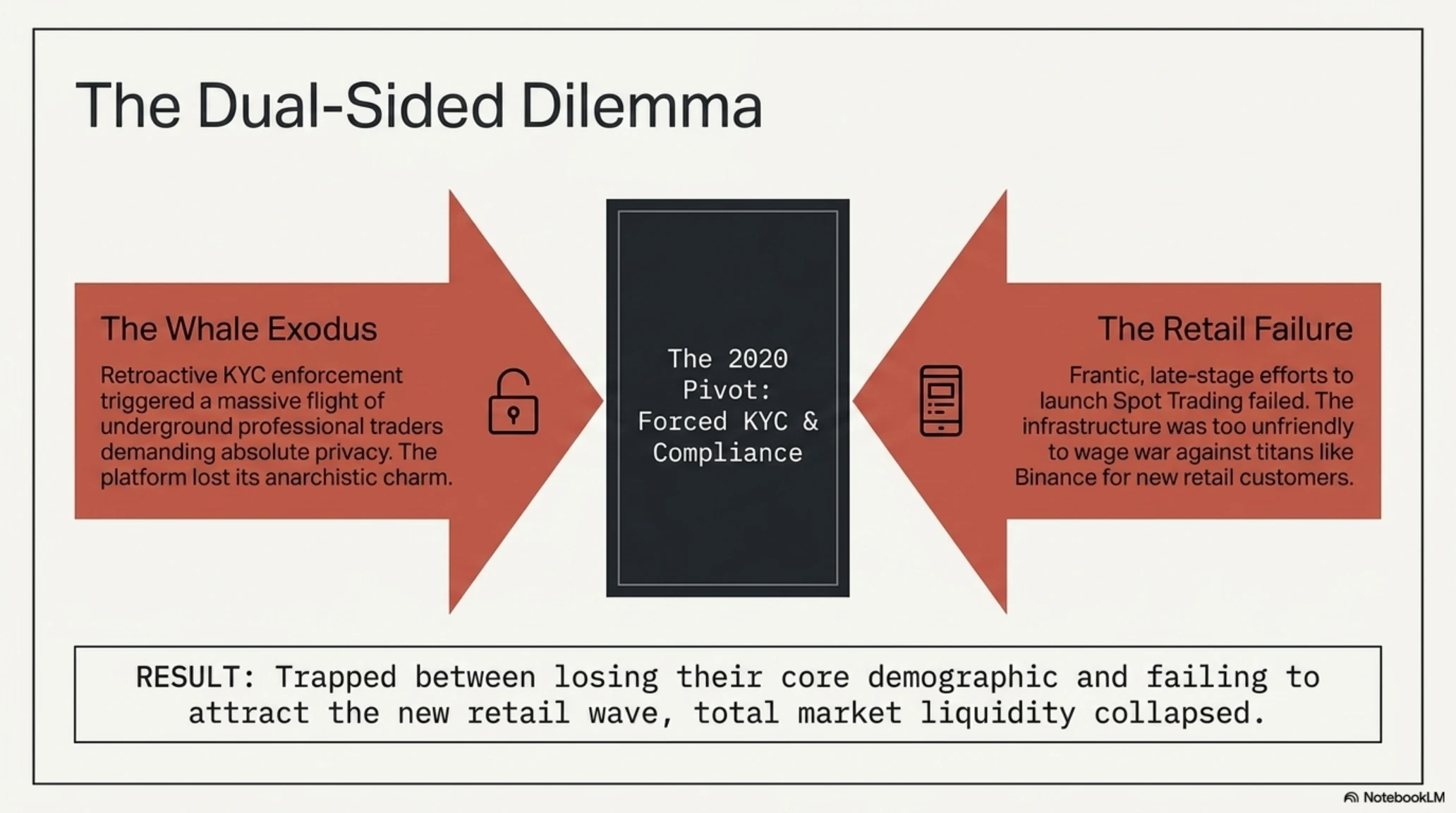
The Exodus of the Whales and the Liquidity Drain
The forced implementation of mandatory KYC protocols in late 2020 served as the final tipping point for BitMEX's core client base. Historically, a substantial portion of BitMEX's multi-billion-dollar daily volume was driven by privacy-focused traders, offshore funds, and US market participants utilizing Virtual Private Networks (VPNs) to bypass geo-restrictions. When BitMEX enforced strict identity verification across all accounts, high-net-worth individual traders and offshore liquidity providers withdrew capital en masse.
This capital exodus triggered a severe liquidity drain. Lower open interest led to wider bid-ask spreads, higher execution slippage, and reduced market depth on BitMEX's order books. As market quality degraded, institutional algorithmic trading firms shifted their market-making operations to deeper liquidity pools on Binance and CME futures. BitMEX's global share of crypto derivatives open interest plummeted from over 50% in 2018 to under 1% by 2025, cementing its status as a legacy exchange unable to reclaim past glory.
The Rise of Decentralized Perpetual Protocols (Perp DEXs)
Another major structural force accelerating BitMEX's decline was the emergence of Decentralized Perpetual Exchanges (Perp DEXs) within the DeFi ecosystem. Protocols such as dYdX, GMX, Hyperliquid, and Jupiter constructed non-custodial derivative trading venues powered by smart contracts and Layer-2 rollup architectures. These protocols enabled traders to execute high-leverage perpetual contracts directly from self-custodial Web3 wallets, eliminating centralized exchange custodial risk entirely.
Perp DEXs effectively recaptured the core value proposition that had originally made BitMEX famous: global, permissionless, high-speed derivative trading without centralized account friction. As high-frequency traders and privacy-conscious market participants embraced transparent on-chain order books and automated liquidity vaults, legacy centralized venues operating in regulatory limbo were left completely out-competed on both ends of the market spectrum.
Specs Box: BitMEX Trading Platform (specs-box)
Founding Year: 2014
Registered Headquarters: Republic of Seychelles
Key Founders: Arthur Hayes (CEO), Ben Delo, Samuel Reed
Final Closure Date: September 23, 2026
Major Financial Innovation: Perpetual Swap Contracts (XBTUSD)
Maximum Leverage Offered: Up to 100x
The Market Post-BitMEX: What Will Happen to Global Liquidity?
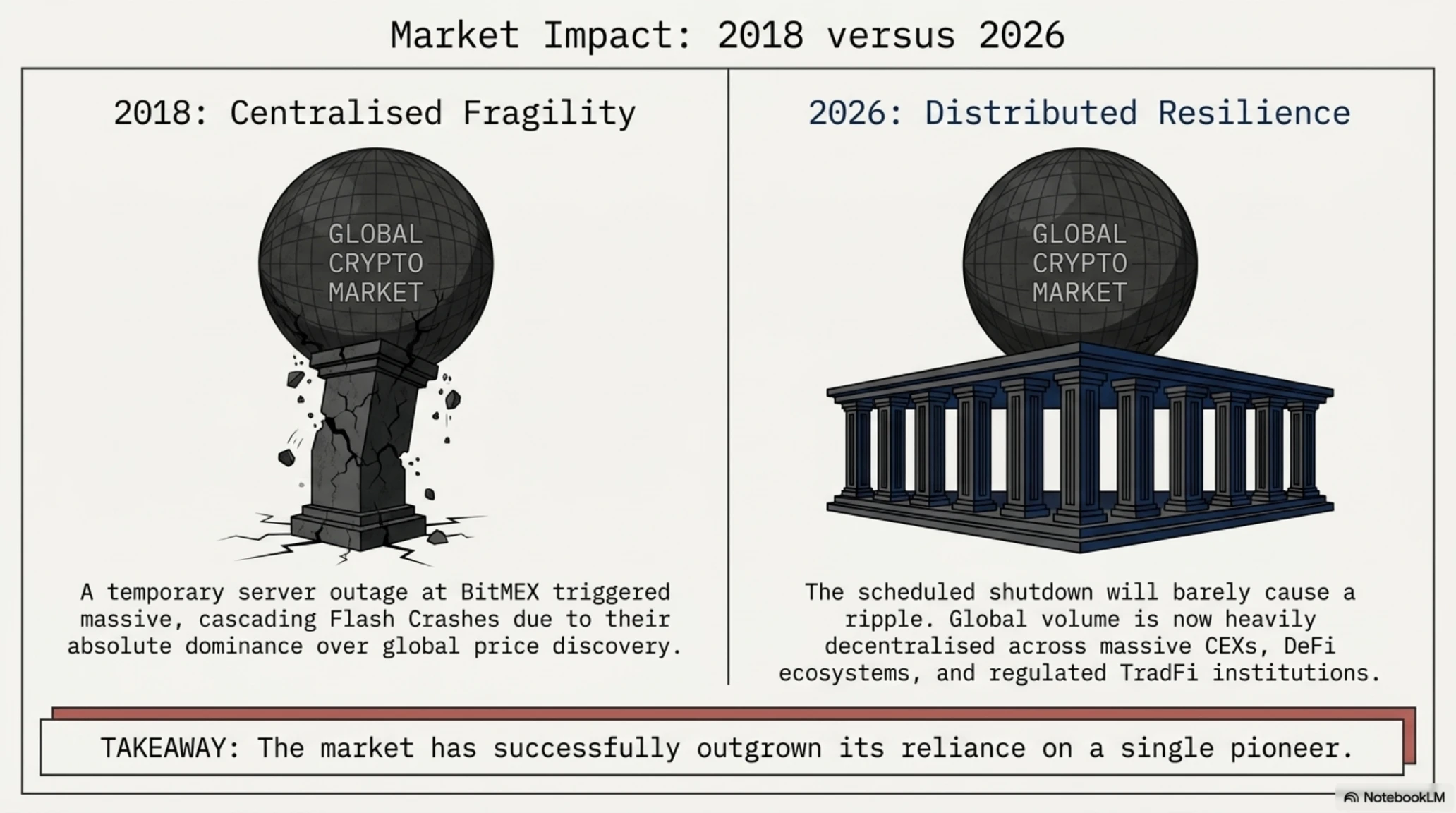
With the permanent shutdown of BitMEX scheduled for September 2026, market participants are evaluating whether the closure will disrupt global market liquidity or trigger systemic volatility across digital asset prices. Historical evidence indicates that the broader crypto ecosystem is now fully insulated from BitMEX-specific operational events. In 2018, an unscheduled maintenance window on BitMEX could trigger severe multi-thousand-dollar price spikes across spot venues due to market concentration. In 2026, however, derivatives liquidity is deeply fragmented across dozens of centralized and decentralized platforms.
Today, institutional volume is dominated by fully regulated venues like the Chicago Mercantile Exchange (CME), which regularly leads global Bitcoin futures open interest, alongside fully compliant centralized exchanges. Simultaneously, decentralized perpetual protocols like Hyperliquid, dYdX, GMX, and Jupiter offer transparent, on-chain perpetual trading without centralized custodial risk. The shutdown of BitMEX represents the natural completion of a market evolution cycle, transitioning from pioneer-era offshore venues to modern, institutional-grade infrastructure.
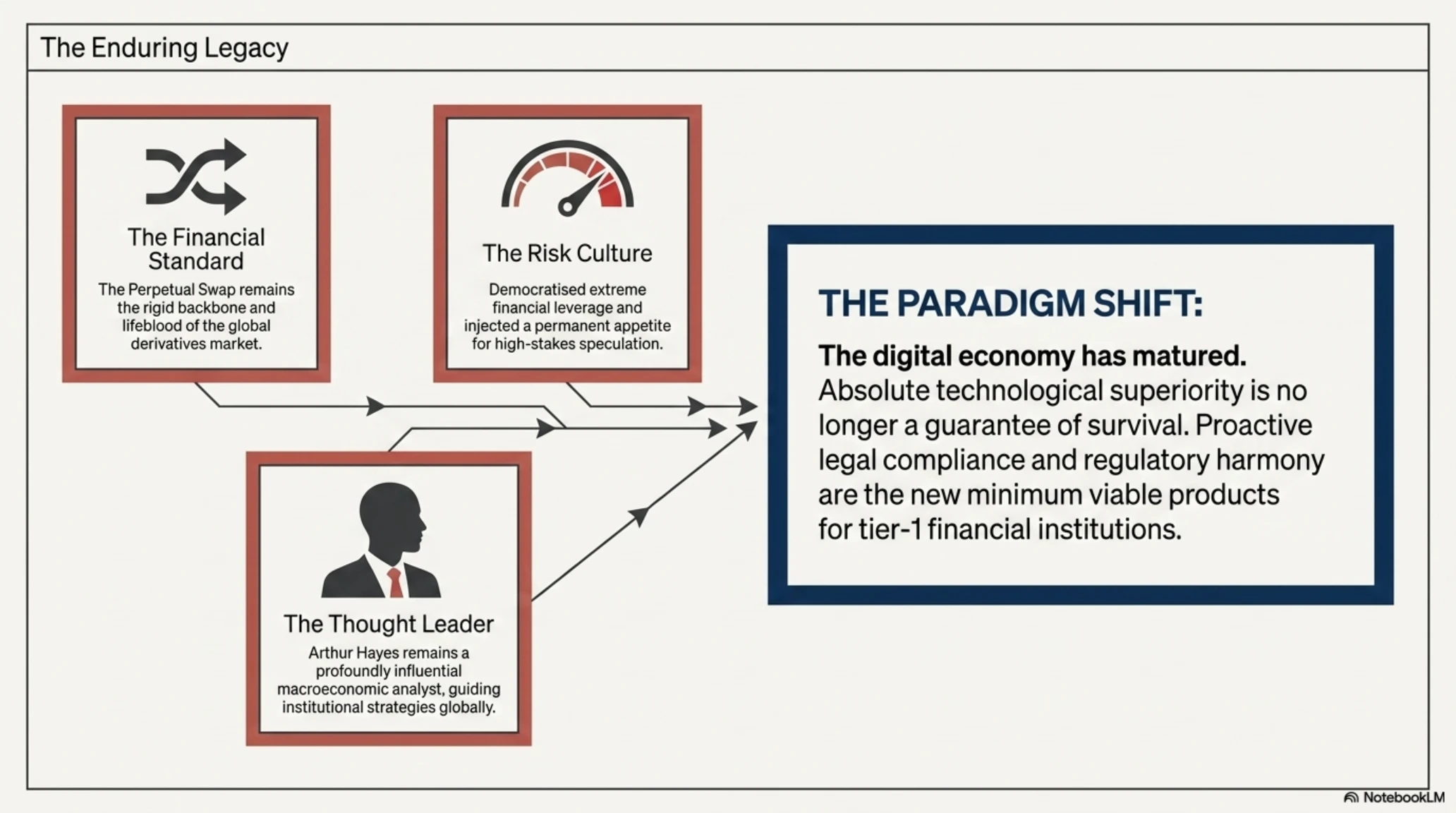
An Enduring Legacy That Will Never Be Erased
Despite the tragic conclusion of BitMEX's eleven-year journey, history will record the exchange as one of the most consequential institutions in the development of modern financial technology. BitMEX did not merely adapt existing Wall Street instruments for Bitcoin; it invented a totally original financial primitive—the Perpetual Swap—that fundamentally changed how financial assets are traded globally. Today, perpetual derivatives account for over 75% of total cryptocurrency trading volume worldwide and are increasingly being adopted by traditional finance institutions exploring 24/7 tokenized asset trading across global markets.
Furthermore, Arthur Hayes' visionary contributions to macroeconomic analysis and digital asset market theory continue to resonate throughout global finance. Following his legal settlement, Hayes transitioned into an influential macro strategist, managing the Maelstrom family office fund and authoring widely read essays on global fiat debasement, Federal Reserve monetary policy, and sovereign debt dynamics. His intellectual impact on crypto market culture remains as potent today as it was during the peak of BitMEX's operational reign.
The Future of 24/7 Digital Derivatives in Global TradFi
The legacy of BitMEX extends far beyond cryptocurrency into the heart of traditional finance. Major traditional stock and derivative exchanges in New York, London, Tokyo, and Frankfurt are currently studying BitMEX's perpetual swap mechanics as they evaluate the transition toward continuous, 24/7 global market hours for legacy equities, commodities, and sovereign debt instruments. Traditional financial infrastructure has long been constrained by weekend market closures, regional settlement delays, and clearinghouse friction.
By demonstrating that a derivative contract can maintain continuous price discovery and automatic self-balancing funding rates without central clearinghouse settlement windows, BitMEX laid the technological architectural blueprint for the future of tokenized global finance. As real-world assets (RWAs) are tokenized on public and private blockchains, the perpetual contract primitive pioneered by BitMEX in 2016 is poised to become the standard derivative contract across all asset classes in global financial markets worldwide.
A Comparative Analysis of Landmark Crypto Exchange Failures
To fully appreciate the orderly nature of BitMEX's final liquidation, one must contrast it with the chaotic, catastrophic exchange collapses that have periodically devastated digital asset markets. In 2014, Mt. Gox filed for bankruptcy following the unannounced loss of 850,000 Bitcoins to internal hot-wallet theft, leaving creditors entangled in a decade-long bankruptcy litigation process. In 2019, QuadrigaCX imploded after its founder passed away with sole custody of client private keys, revealing fraudulent fractional-reserve practices.
Most notoriously, the 2022 collapses of Celsius Network, Voyager Digital, Three Arrows Capital, and FTX erased over $20 billion in client capital due to commingling of customer funds, uncollateralized internal lending, and outright corporate fraud. In stark contrast, BitMEX's shutdown involves no lost assets, no uncollateralized liabilities, and no creditor bankruptcy filings. By maintaining 1-to-1 cold-storage reserves and providing a multi-year wind-down runway, BitMEX is executing the most professional, transparent, highly organized, and solvent exchange retirement in cryptocurrency history.
The final closure of BitMEX in September 2026 marks the absolute conclusion of crypto's rebellious adolescence. The era when rebellious software engineers, rebellious Wall Street traders, and privacy advocates could launch multi-billion-dollar unregulated offshore casinos in island tax havens has officially drawn to a close. Modern digital asset finance is defined by institutional custody, stringent regulatory licensing, zero-knowledge compliance verification, and transparent on-chain settlement. The death of BitMEX is the definitive price paid for the maturation, institutionalization, and global mainstream adoption of cryptocurrency.
Final Conclusion (Conclusion Box)
BitMEX brought Wall Street financial leverage to the digital asset frontier, empowering retail traders worldwide while challenging sovereign financial oversight. While the platform ultimately succumbed to legal pressure and intense competition, its core invention—the Perpetual Swap—will forever remain embedded in the bedrock of global financial markets.
Comprehensive Frequently Asked Questions (FAQ) Regarding the Shutdown
Are current user funds on BitMEX safe and backed 1-to-1?
Yes. All user balances on BitMEX are fully collateralized and held in secure, multi-signature cold-storage vaults. BitMEX maintains full solvency, and user withdrawals are being processed normally ahead of the September 2026 deadline.
What is the final deadline for withdrawing funds from BitMEX?
All trading, deposit, and withdrawal services will cease permanently on September 23, 2026, at 04:00 UTC. Users are strongly advised to withdraw assets well before this date to prevent potential blockchain network congestion.
What happens if I leave an open position past the September deadline?
Any open leveraged positions remaining at the deadline will be automatically closed by the matching engine at prevailing index prices, with remaining margin balances settled in Bitcoin or USDT.
Did Arthur Hayes go to prison following his guilty plea?
No. Arthur Hayes pled guilty to Bank Secrecy Act violations in 2022, paying a $10 million criminal fine. He was sentenced to six months of home detention and two years of probation, avoiding federal prison time.
Where has BitMEX's derivatives market share migrated?
Derivatives trading volume has primarily shifted to major compliant centralized exchanges (Binance, Bybit, OKX), traditional regulated futures exchanges (CME), and decentralized perpetual protocols (Hyperliquid, dYdX, GMX).
Will the Perpetual Swap contract continue to exist after BitMEX closes?
Yes. The Perpetual Swap has become the universal standard financial contract across digital asset markets globally and will remain the dominant derivative instrument across all major trading platforms.
Will BitMEX's shutdown cause a sudden Bitcoin price crash?
No. BitMEX's share of global Bitcoin open interest has fallen below 1% in recent years. The current market structure is highly distributed, preventing any single exchange shutdown from causing systemic price crashes.
Additional Gallery: End of an Empire: Why Legendary Crypto Exchange BitMEX is Shutting Down