Samsung's Hardware & AI Revolution: A Deep Dive into Unpacked 2026
- 🎮Galaxy Z Fold 8- Ultra-thin 4.5mm design and the introduction of an Ultra variant with an advanced titanium hinge.
- 🎧Galaxy Z Flip 8- Camera upgrades and AI integration; could this be the final iteration of the Flip series?
- 🚀Smart Wearables- Watch 9 and Ultra 2 smartwatches focusing heavily on AI-driven health and fitness tracking.
- 🗡️XR Smart Glasses- A joint product by Samsung and Google boasting an impressive 9-hour battery life.
- 📰Gemini AI Integration- Native integration of Gemini Nano 4 at the OS level for seamless task automation.
- ⚔️One UI 9 OS- Offering enhanced privacy tools and vastly improved ecosystem synchronization.
A New Era Dawns: The Architectural Marvel of the Galaxy Z Fold 8 and Ultra Variant
In the fast-paced world of smartphone technology, true innovation is a rare occurrence. However, Samsung’s summer Galaxy Unpacked 2026 event, hosted in the heart of London, proved to be a magnificent exception to the rule. By unveiling its new lineup of foldable smartphones—most notably the Galaxy Z Fold 8 and its highly premium sibling, the Galaxy Z Fold 8 Ultra—Samsung not only delivered a resounding answer to its fierce Chinese competitors but also fundamentally shifted the boundaries of materials engineering. These devices are far from mere iterative upgrades boasting a slightly faster processor or a marginally better camera; they represent the triumph over the physical limitations that had, for years, prevented foldable phones from becoming mainstream, ubiquitous devices. The smartphone market, which has arguably suffered from a dearth of fresh ideas in recent years, is now faced with a device that combines cutting-edge sensors, the processing power of a high-end laptop, and an unimaginably sleek design into a truly pocketable chassis.
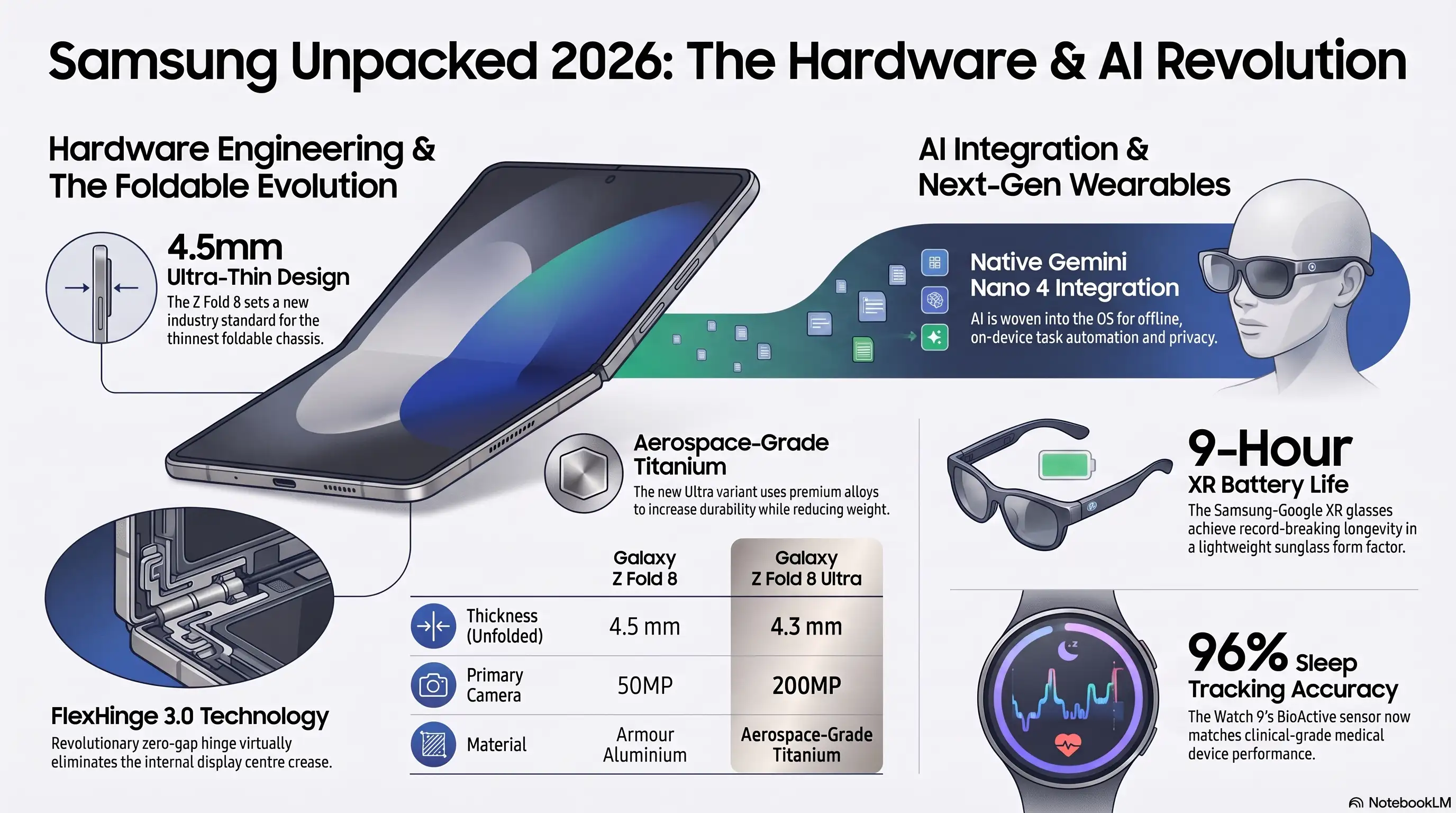
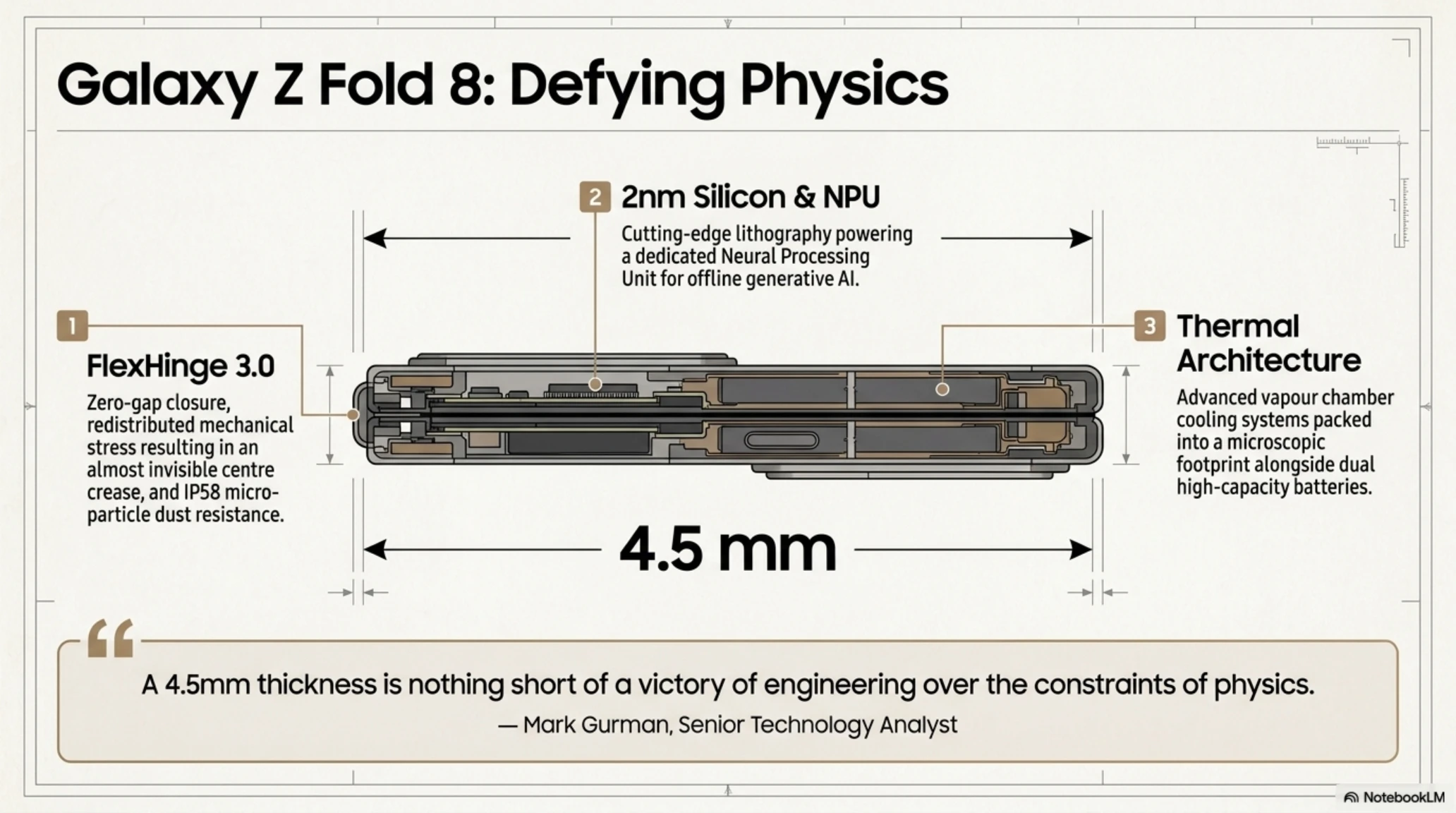
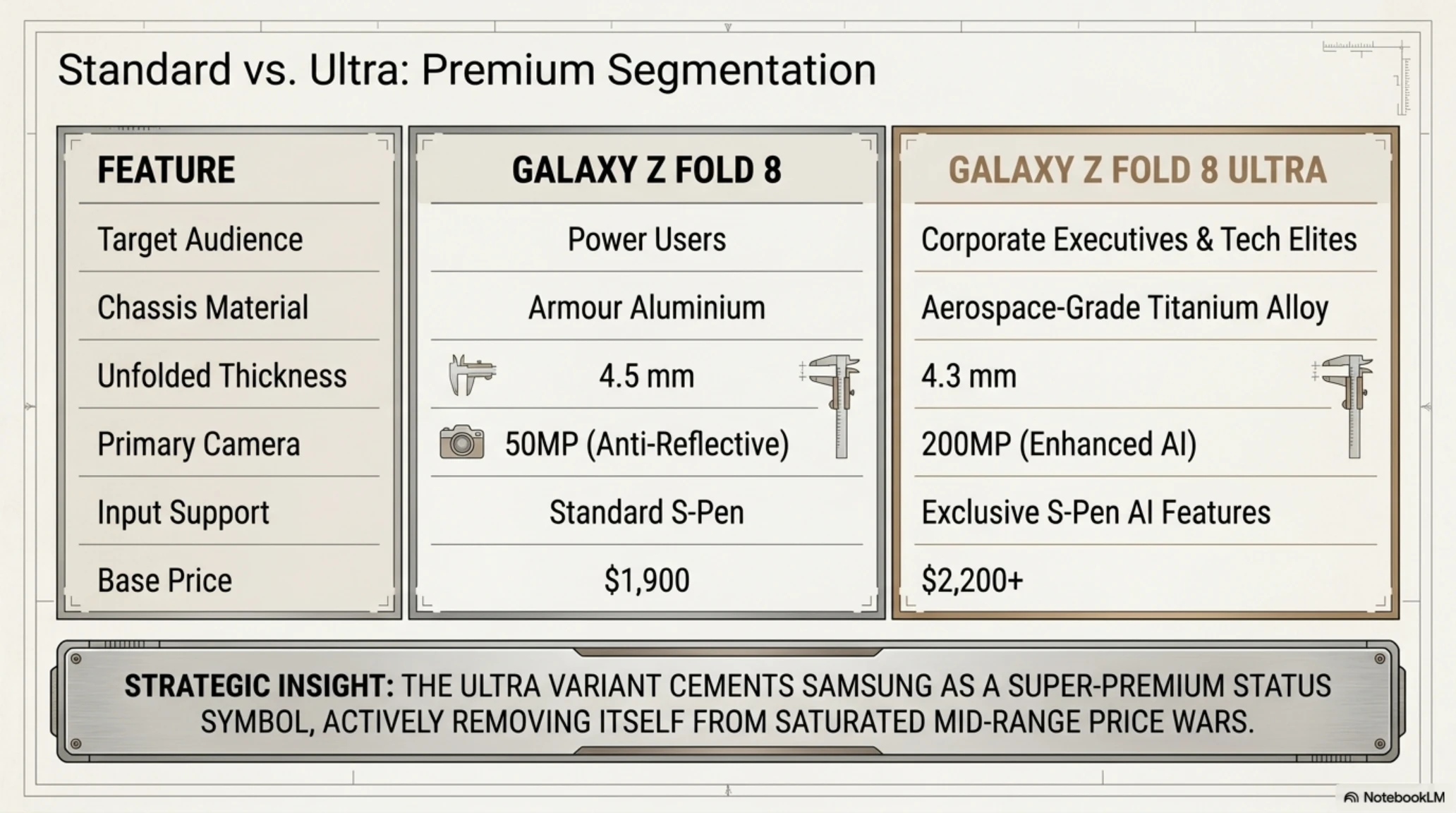
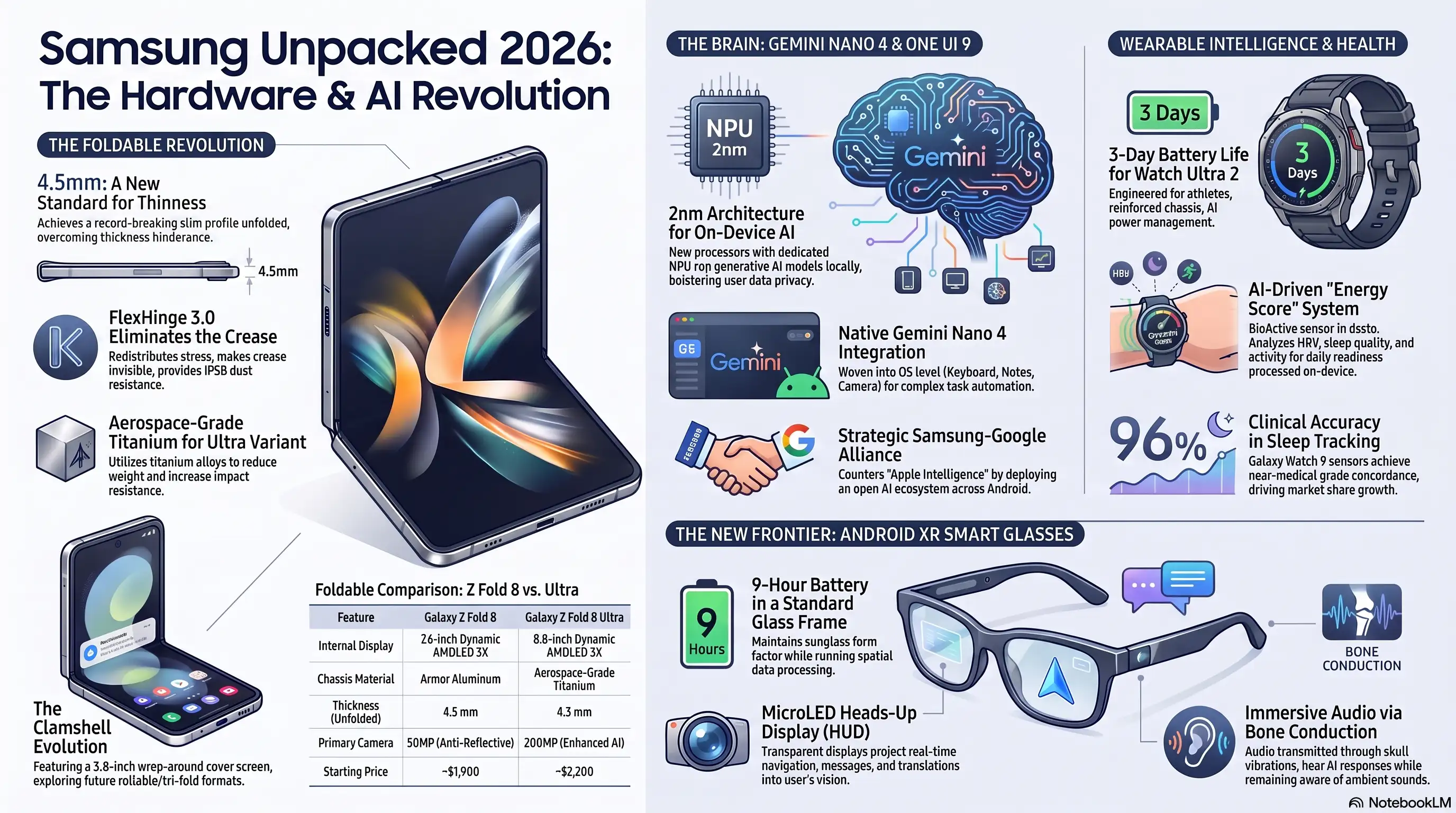
For a long time, tech critics and consumers alike cited the excessive thickness and hefty weight of foldable phones as the form factor’s biggest Achilles' heel. Samsung clearly listened to these critiques and, with the Z Fold 8, created a masterpiece that measures a jaw-dropping 4.5 millimeters in thickness when unfolded. That number alone is staggering, but it becomes even more impressive when one considers how Samsung managed to cram dual high-capacity batteries, advanced vapor chamber cooling systems, and massive camera modules into such a confined space. The Ultra variant, which is unabashedly designed for power users, corporate executives, and tech enthusiasts, takes things a step further. This model utilizes aerospace-grade titanium alloys that not only significantly reduce the overall weight but also drastically increase the device's resistance to impacts and accidental drops. This strategic move effectively removes Samsung from the intense price wars of the mid-range market, firmly cementing its status as a super-premium brand sitting at the very pinnacle of the technological hierarchy.
Key Takeaways and Market Implications (Key Points Box)
- The 4.5mm thickness of the Fold 8 sets a completely new industry standard for foldable devices.
- The implementation of the FlexHinge 3.0 has virtually eliminated the center crease on the internal display.
- By introducing the Ultra model, Samsung is directly targeting enterprise users and affluent tech enthusiasts.
- Deep integration of Gemini AI reduces reliance on cloud services, bolstering user privacy.
- The high starting price indicates a deliberate high-margin strategy over chasing mass-market volume.
The real magic behind this unprecedented reduction in thickness lies in the revolutionary new hinge mechanism, dubbed by Samsung engineers as 'FlexHinge 3.0'. In previous generations, the hinge mechanism involved numerous moving parts and a noticeable gap when the device was closed, which allowed dust and debris to enter. The new hinge not only reduces that gap to absolute zero but also redistributes mechanical stress across the folding axis in such a way that the crease in the middle of the internal display is now so faint it is almost impossible to feel or see. This monumental achievement makes the experience of watching multimedia content or using the S-Pen absolutely flawless and incredibly immersive. Furthermore, the dust resistance mechanism (IP58) within this hinge has been completely redesigned to prevent the ingress of microscopic particles, which are the primary killers of flexible displays. This unprecedented level of durability and elegance puts a massive distance between Samsung and its rivals, many of whom are still struggling with premature hinge failures.
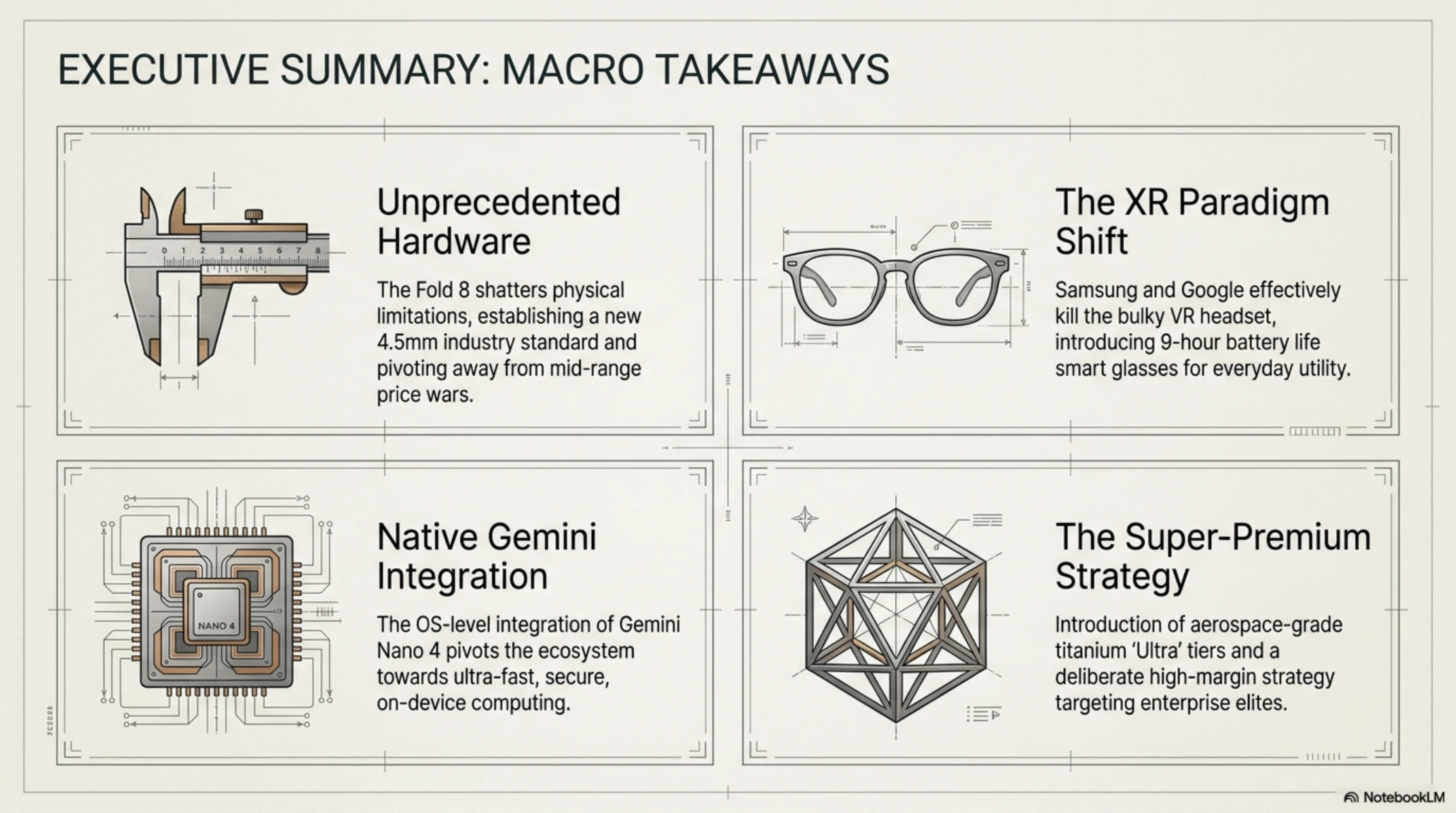
From a hardware perspective, these devices are equipped with the newest and most powerful silicon currently available on the market. The central processor, manufactured using an advanced 2-nanometer lithography process, not only provides raw power for heavy gaming and 8K video editing but also features a dedicated Neural Processing Unit (NPU) designed exclusively for running generative AI models natively. This means that AI-driven features—such as real-time translation of phone conversations, summarization of lengthy PDF documents, and magical photo editing—happen at lightning speed and entirely on-device, without the need to send sensitive data to external servers. This represents a massive victory for enterprise user privacy. Samsung has astutely realized that in today's tech landscape, powerful hardware is of little value without equally intelligent software.
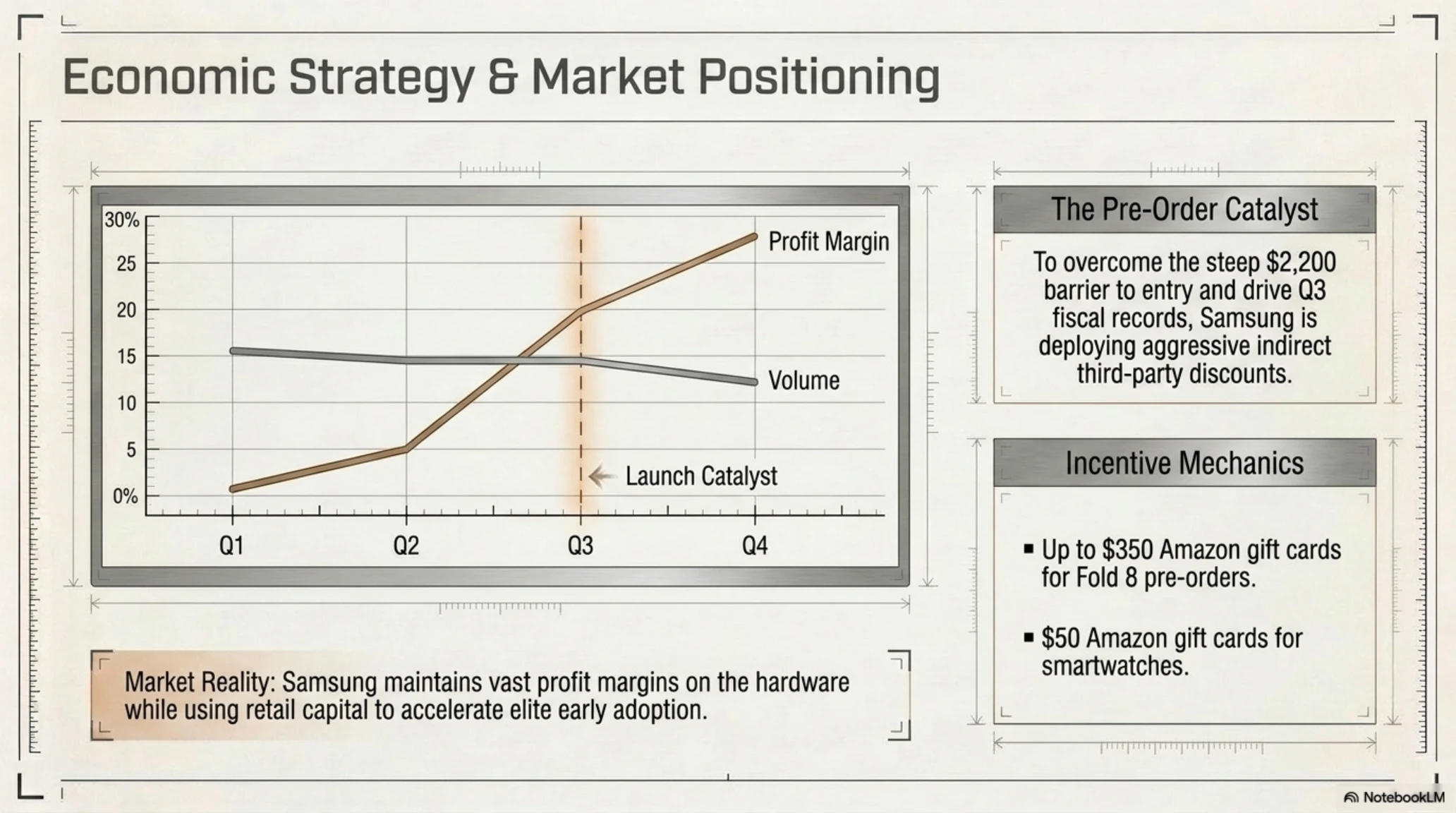
Of course, these unparalleled innovations come with an incredibly steep price tag. The base price of the Galaxy Z Fold 8 starts at around $1,900, and the fully-loaded Ultra version can easily surpass the $2,200 mark. This pricing strategy clearly indicates that Samsung currently has no intention of democratizing or cheapening its foldable phones under the Fold moniker. Instead of competing with budget-friendly alternatives, they are building an entirely new class of 'status symbol' devices. These phones are designed for individuals who are willing to pay top dollar to possess the most advanced technology on the planet. However, to incentivize users to make this expensive upgrade, Samsung has rolled out highly attractive pre-order schemes. This includes offering a $350 Amazon gift card, a move that has garnered significant attention from the media and early adopters alike.
Flagship Key Specifications (Specs Box)
| Feature / Model | Galaxy Z Fold 8 | Galaxy Z Fold 8 Ultra |
|---|---|---|
| Internal Display | 7.6-inch Dynamic AMOLED 3X (144Hz) | 8.0-inch Dynamic AMOLED 3X (144Hz) |
| Chassis and Hinge Material | Armor Aluminum & Gorilla Glass Armor | Aerospace-Grade Titanium Alloy |
| Thickness (Unfolded) | 4.5 mm | 4.3 mm |
| Primary Camera | 50MP with Anti-Reflective Coating | 200MP with Enhanced AI Processing |
| Native AI Capabilities | Gemini Nano 4 | Gemini Nano 4 + Exclusive S-Pen Features |
The camera upgrades on both models are also highly significant. Despite the severe physical limitations of fitting large lenses into such a remarkably thin body, Samsung has managed to offset potential hardware shortcomings by heavily relying on AI-driven Image Signal Processing (ISP). The output, particularly in low-light conditions (branded as Nightography), has seen dramatic improvements. The telephoto lenses, featuring 5x optical zoom capabilities, now perform at a level that closely rivals professional DSLR cameras when capturing detailed portraits with natural bokeh effects.
Evolution in the Clamshell Form Factor: A Look at the Galaxy Z Flip 8 and Its Future
While the Fold series is explicitly designed for executives and power users, the Flip series has always strived to bring foldable technology to the masses, positioning itself as a trendy, fashionable accessory. The introduction of the Galaxy Z Flip 8 at this event continued down this established path, but with one major caveat: the looming shadow of rumors suggesting that this model might be the absolute last member of the Z Flip family. This new device was introduced with a significantly larger external Cover Screen that now wraps around almost the entirety of the back panel. This expansive display allows users to reply to messages, run full navigation apps, and manage their NFC payments without ever needing to unfold the phone.
The cameras on the Z Flip 8 have also seen welcome upgrades, particularly with the ultrawide lenses and improved low-light performance. However, the core appeal of the Flip has always been its ability to act as its own tripod (Flex Mode) during photography and video calls. In this new iteration, Samsung, in close collaboration with major social media platforms like Instagram and TikTok, has integrated unparalleled features directly into the native camera UI. This allows content creators to record their videos at the highest possible quality without relying on third-party app optimizations that often degrade image fidelity.
Rumor vs. Reality Meter
The Rumor: The Galaxy Z Flip 8 will be the final phone in the Flip series, and Samsung is discontinuing this product line to focus entirely on newer form factors.
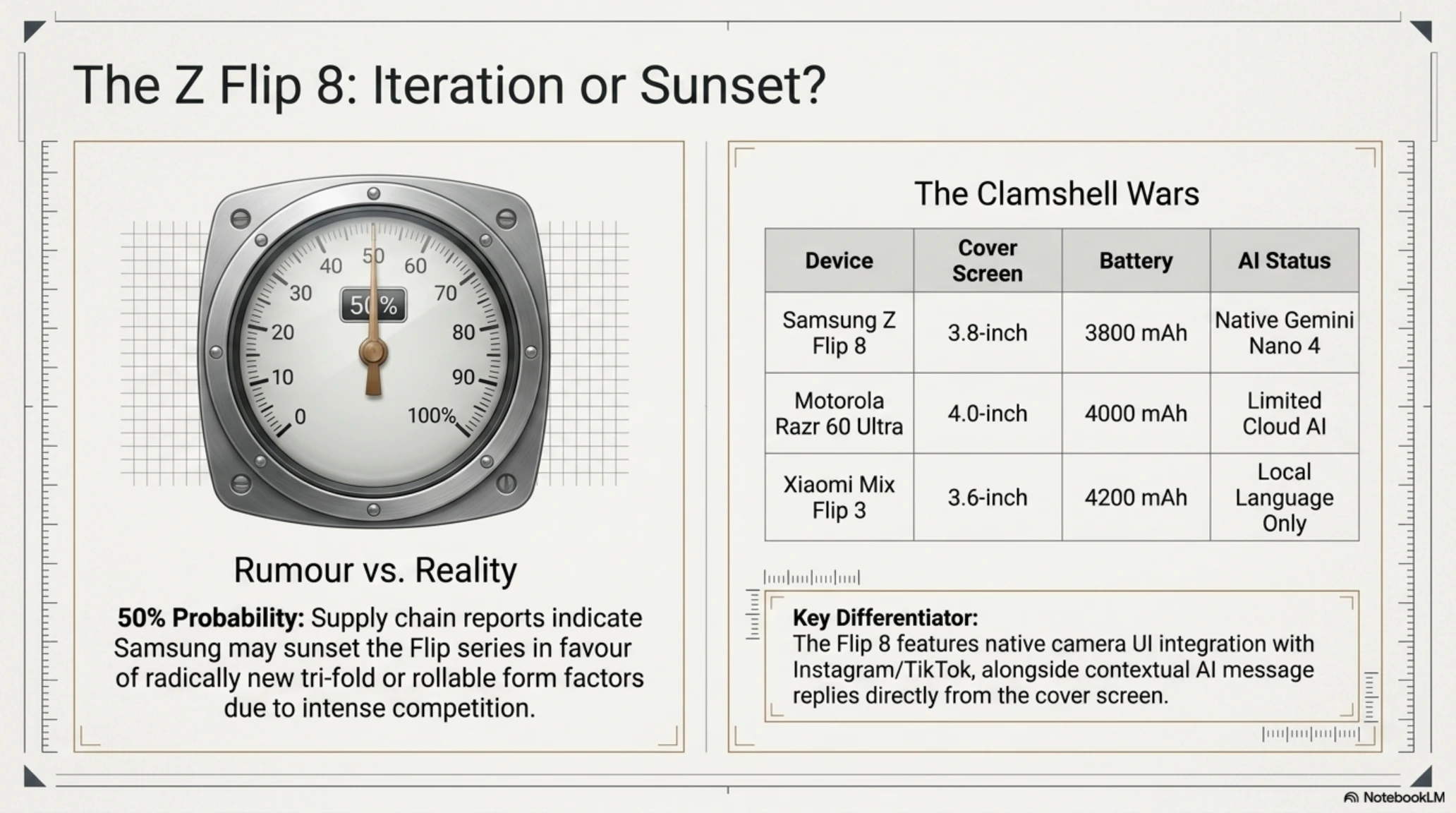
The Reality (50% Probability): Supply chain reports strongly indicate that Samsung is actively testing new form factors, such as rollable phones and tri-fold devices. With the Flip market becoming increasingly saturated and fierce competition from Chinese companies offering similar products at half the price, it is entirely plausible that Samsung might sunset the Flip line to replace it with a radically innovative new product category.
Despite all these upgrades, when compared to the quantum leap represented by the Fold 8, the Z Flip 8 feels much more like an iterative update. The battery capacity and charging speeds have remained largely unchanged, which could be considered a significant drawback for heavy users. But where the Flip 8 truly shines is in its deep integration with the native Gemini Nano 4 AI. These new features allow the device to analyze the context of incoming messages and suggest highly accurate, context-aware responses matching the user's specific tone, which drastically reduces the need to constantly flip the phone open to type out replies.
To better understand the positioning of these products, we must view them alongside their competitors. The foldable market is no longer a Samsung monopoly. Chinese tech giants like Xiaomi, Huawei, and Motorola are innovating at a breathtaking pace. To maintain its market leadership, Samsung is heavily relying on its cohesive software ecosystem and long-term support guarantees—areas where Chinese manufacturers frequently fall short.
Comparison Table: The Clamshell Foldable War (Comparison Tables Box)
| Device Model | Cover Screen Size | Battery Capacity | AI Status |
|---|---|---|---|
| Samsung Galaxy Z Flip 8 | 3.8 inches | 3800 mAh | Native Integration (Gemini Nano 4) |
| Motorola Razr 60 Ultra | 4.0 inches | 4000 mAh | Limited to Cloud Apps |
| Xiaomi Mix Flip 3 | 3.6 inches | 4200 mAh | Local Languages Only |
Smart Wearables: The Advance of Galaxy Watch 9 and Ultra 2
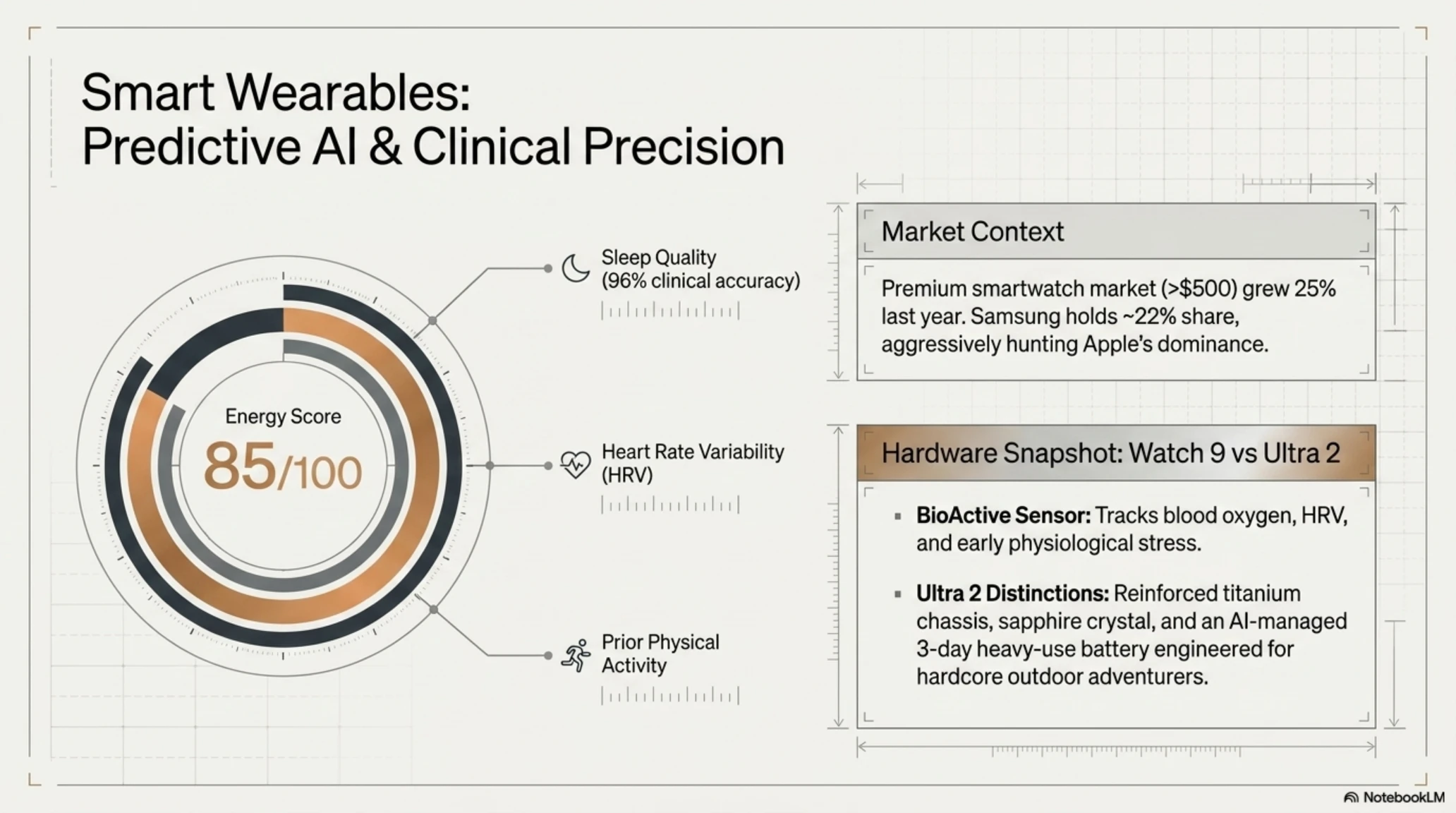
Samsung’s smart wearables division also took center stage with the introduction of the Galaxy Watch 9 and its rugged flagship counterpart, the Galaxy Watch Ultra 2, focusing entirely on AI and highly precise health tracking. While there were no radical aesthetic changes, the biometric sensors within these watches have received an unprecedented upgrade thanks to novel AI algorithms. Samsung's BioActive sensor can now track heart rate variability, blood oxygen levels, and even early physiological stress indicators with clinical-grade accuracy.
The Ultra 2 model is specifically engineered for professional athletes and hardcore outdoor adventurers. Featuring a reinforced titanium chassis, scratch-resistant sapphire crystal glass, and an extraordinary battery life that lasts up to 3 days under heavy use—thanks to AI-driven power management systems—it stands as a direct and formidable competitor to the Apple Watch Ultra.
Wearables Market Statistics (Statistics Box)
| Statistical Indicator | Value / Change |
|---|---|
| Growth of Premium Watch Market (>$500) | 25% increase over the past year |
| Samsung's Market Share in Wearables | Approximately 22% (Trailing Apple) |
| Sleep Tracking Accuracy Rate (Watch 9) | 96% concordance with clinical medical devices |
| Initial Pre-orders for Watch Ultra 2 | Setting new records in Amazon pre-sales |
One of the most exciting software capabilities introduced in these watches is the 'Energy Score' system. By analyzing sleep quality, the previous day's physical activity, and heart rate variability (HRV), this system provides users with a daily score to determine their physical readiness for grueling workouts or their need for rest. All of this intensive processing is handled entirely on the device itself, showcasing the immense capabilities of Samsung's new wearable processor.
The New Frontier of Mixed Reality: Android XR Smart Glasses
Perhaps the most astonishing segment of the Unpacked event was Samsung's official entry into the Extended Reality (XR) space with the unveiling of the Android XR smart glasses. This highly anticipated product, resulting from a long-term strategic partnership between Samsung, Google, and Qualcomm, represents a massive leap forward in making smart glasses a practical, everyday tool. Unlike bulky and heavy Virtual Reality (VR) headsets like the Apple Vision Pro, which are primarily designed for indoor, stationary use, Samsung's product looks exactly like a standard, ultra-lightweight pair of sunglasses.
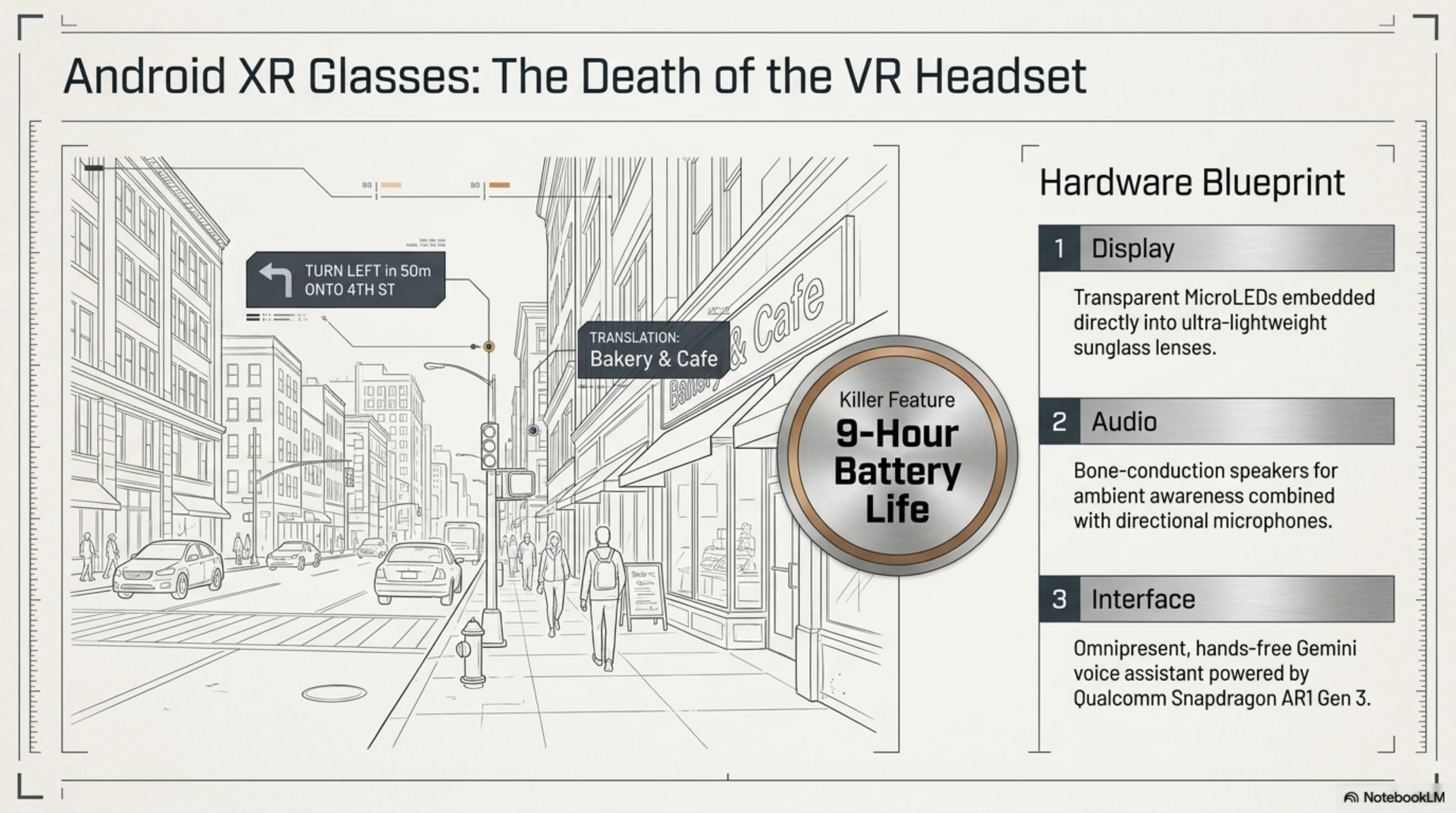
The undeniable 'Killer Feature' of these XR glasses, which drew unanimous praise from critics, is the astonishing 9-hour battery life on a single charge. Achieving such battery longevity in a device this small—one that is constantly processing video, audio, and spatial environmental data—was previously considered impossible. By leveraging Qualcomm’s dedicated Snapdragon AR1 Gen 3 processors and a highly optimized software architecture developed by Google, Samsung has managed to manage power consumption in a truly miraculous way.
📚 Classified & Related Dossiers in TekinGame
If you wish to explore beyond this report and delve into cybernetic frontiers and autonomous AI architectures, do not miss these three exclusive deep-dives in the Tekin Garage:
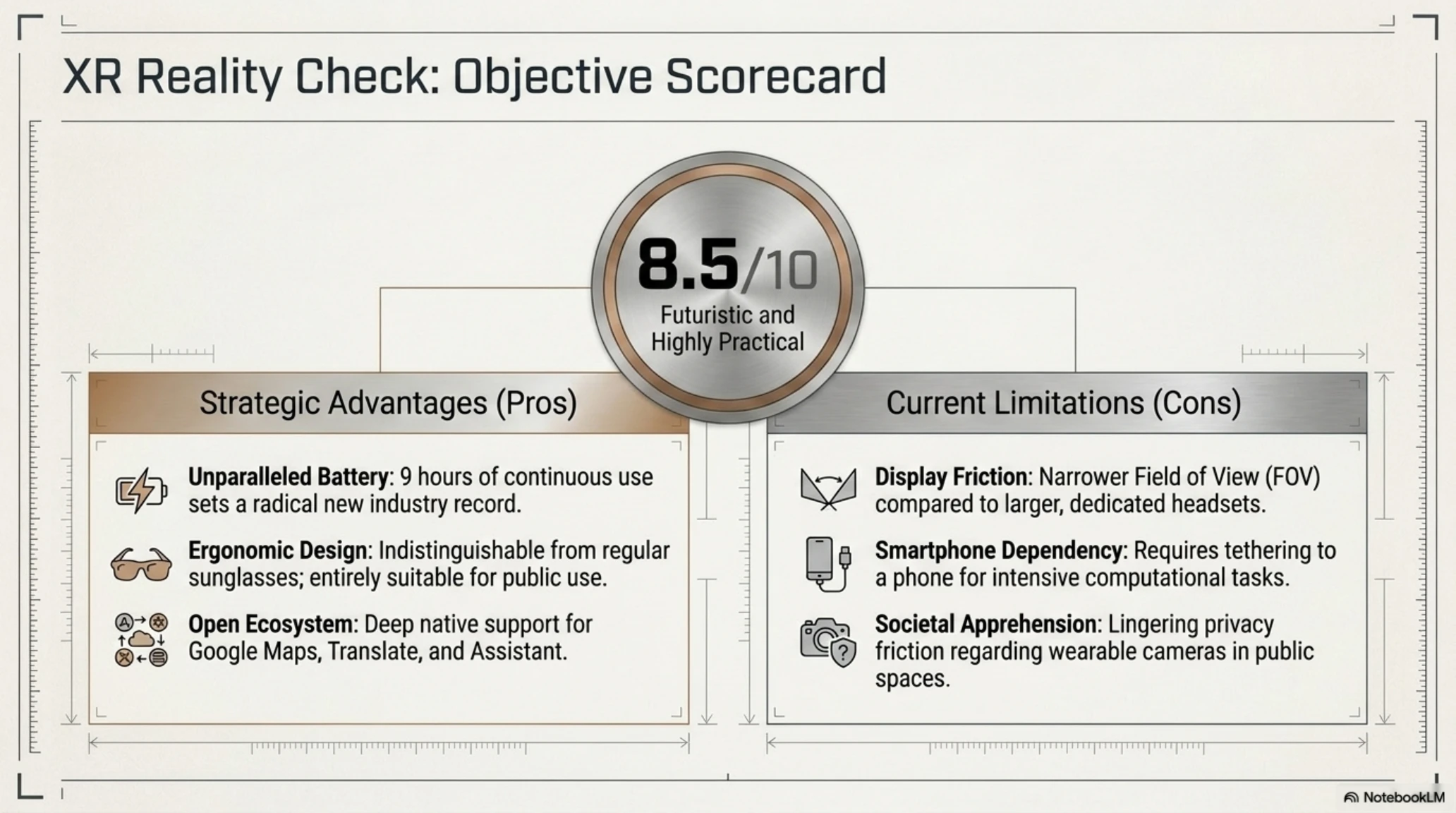
- Unparalleled Battery Life: Up to 9 hours of continuous use, setting a new industry record.
- Ergonomic and Lightweight Design: Indistinguishable from regular sunglasses, perfect for public use.
- Open Ecosystem: Full support for all Google services including Maps, Translate, and Assistant.
- Display Limitations: A narrower Field of View (FOV) compared to larger, dedicated headsets.
- Smartphone Dependency: Requires tethering to a smartphone for extremely heavy computational tasks.
- Privacy Concerns: Lingering societal apprehensions regarding wearable cameras in public spaces.
These glasses are equipped with transparent MicroLED displays embedded directly into the lenses, projecting information straight into the user's Heads-Up Display (HUD). Users can seamlessly read incoming messages, follow turn-by-turn navigation instructions from Google Maps, and even utilize the built-in camera to translate foreign text in real-time. The most crucial aspect of this product is the omnipresent integration of the Gemini voice assistant. Through directional microphones and bone-conduction speakers, the XR glasses provide a highly natural, entirely hands-free conversational interface for the user.
The introduction of this device signifies a fundamental paradigm shift in how humans interact with digital information. We are gradually transitioning away from an era where we were forced to crane our necks down to look at small mobile screens. XR smart glasses overlay critical information onto the canvas of the real world, exactly where and when we need it. The collaboration between Samsung and Google has been pivotal here; Google provided the flawless software foundation and massive language models, while Samsung brought its unmatched expertise in hardware engineering and advanced display technology.
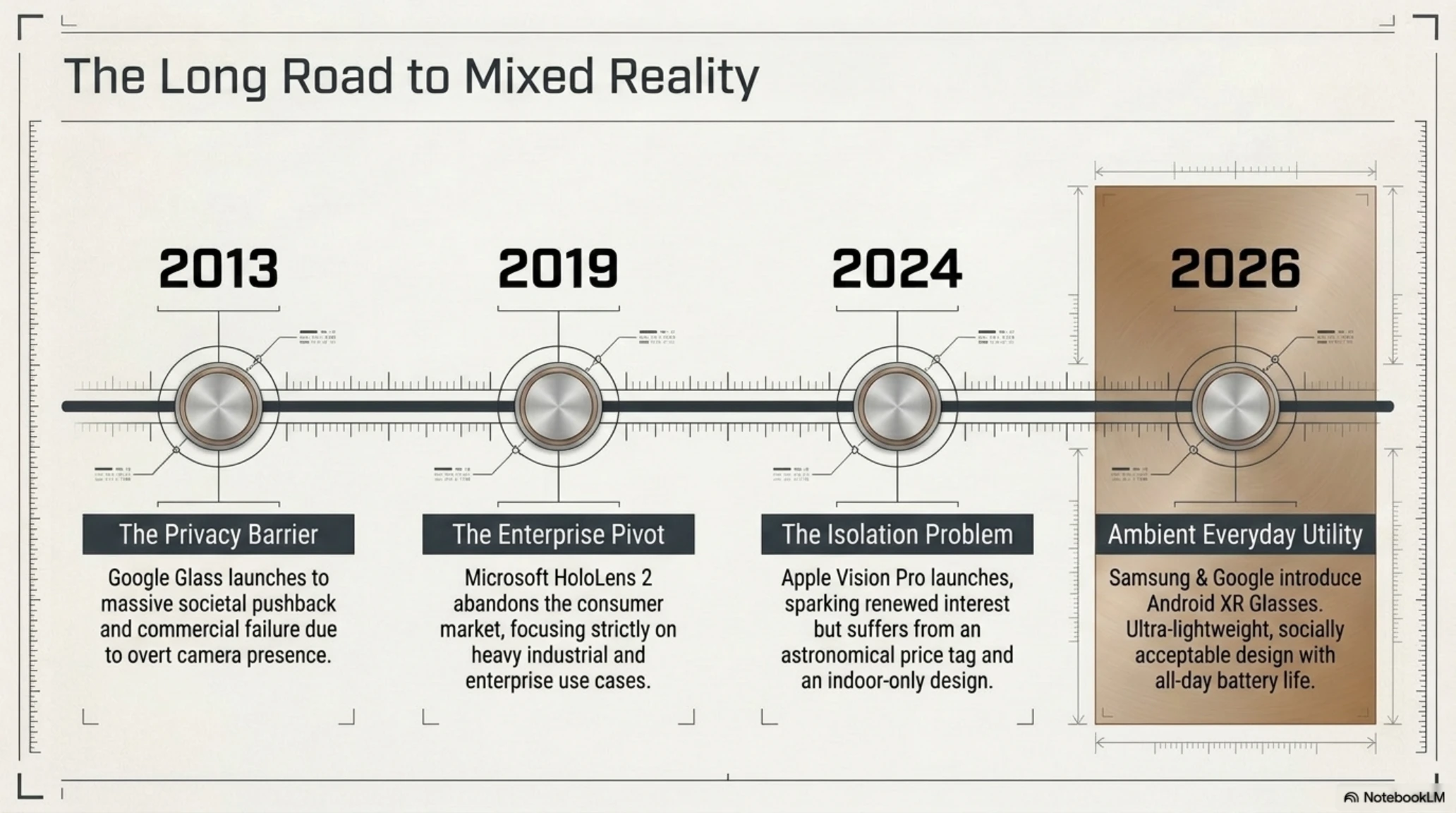
Timeline: The Evolution of Augmented Reality Gadgets (Timeline Table)
| Year | Technological Milestone |
|---|---|
| 2013 | Release of the initial Google Glass (a commercial failure largely due to privacy concerns). |
| 2019 | Microsoft enters the fray with HoloLens 2, focusing strictly on enterprise and industrial clients. |
| 2024 | Apple unveils the Vision Pro (sparking a new wave of interest in mixed reality, albeit at an astronomical price). |
| 2026 | Samsung and Google introduce XR glasses focused on everyday usability, extreme lightness, and long battery life. |
Software Convergence: The One UI 9 Operating System
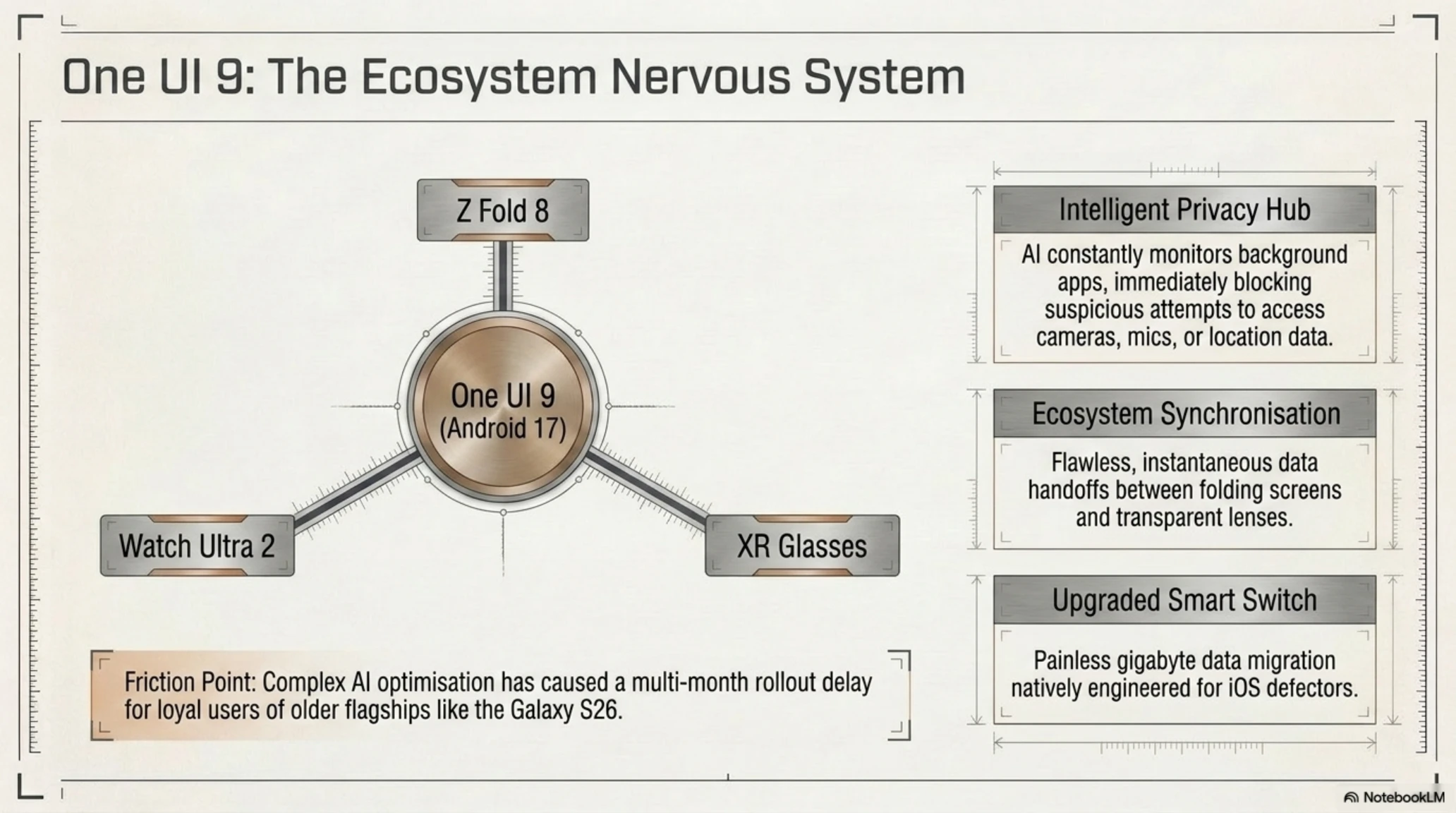
Alongside the impressive hardware reveals, Samsung officially launched the stable version of the One UI 9 operating system, built atop Android 17. This update, which will initially be available exclusively for the newly announced foldable devices, is touted as one of the smoothest, most highly optimized iterations Samsung has ever developed. The primary focus of One UI 9 is to create absolute seamless integration across the entire Galaxy ecosystem—spanning phones, watches, tablets, and the new smart glasses.
Among the most substantial changes in One UI 9 is a complete overhaul of the security and privacy dashboard. With the introduction of an intelligent privacy hub, the operating system's AI constantly monitors background applications, immediately blocking any suspicious attempts to access the camera, microphone, or precise location data. Additionally, the Smart Switch application (Samsung's data migration tool) has received a massive upgrade, making the process of transferring gigabytes of data—even from an iPhone to a Galaxy—vastly faster and entirely painless.
Technical Jargon Buster (Jargon Buster Box)
Extended Reality (XR): An umbrella term that encompasses all immersive technologies, including Virtual Reality (VR), Augmented Reality (AR), and Mixed Reality (MR). XR seamlessly blends the physical and digital worlds.
Bone Conduction: An audio technology that, instead of sending sound waves through the eardrum, transmits them via vibrations through the bones of the skull directly to the inner ear. This feature allows smart glasses users to hear device audio while still remaining completely aware of ambient environmental sounds.
Despite One UI 9 being released in its stable form, owners of older flagship devices, such as the Galaxy S26 series, will unfortunately have to wait several more months to receive the update. The stated reason for this delay is the necessity to meticulously optimize the advanced AI features for older processors. While logical from an engineering standpoint, this staggered rollout has understandably caused some dissatisfaction among Samsung's fiercely loyal user base.
Deep AI Integration: Gemini Nano 4 at the Heart of Galaxy
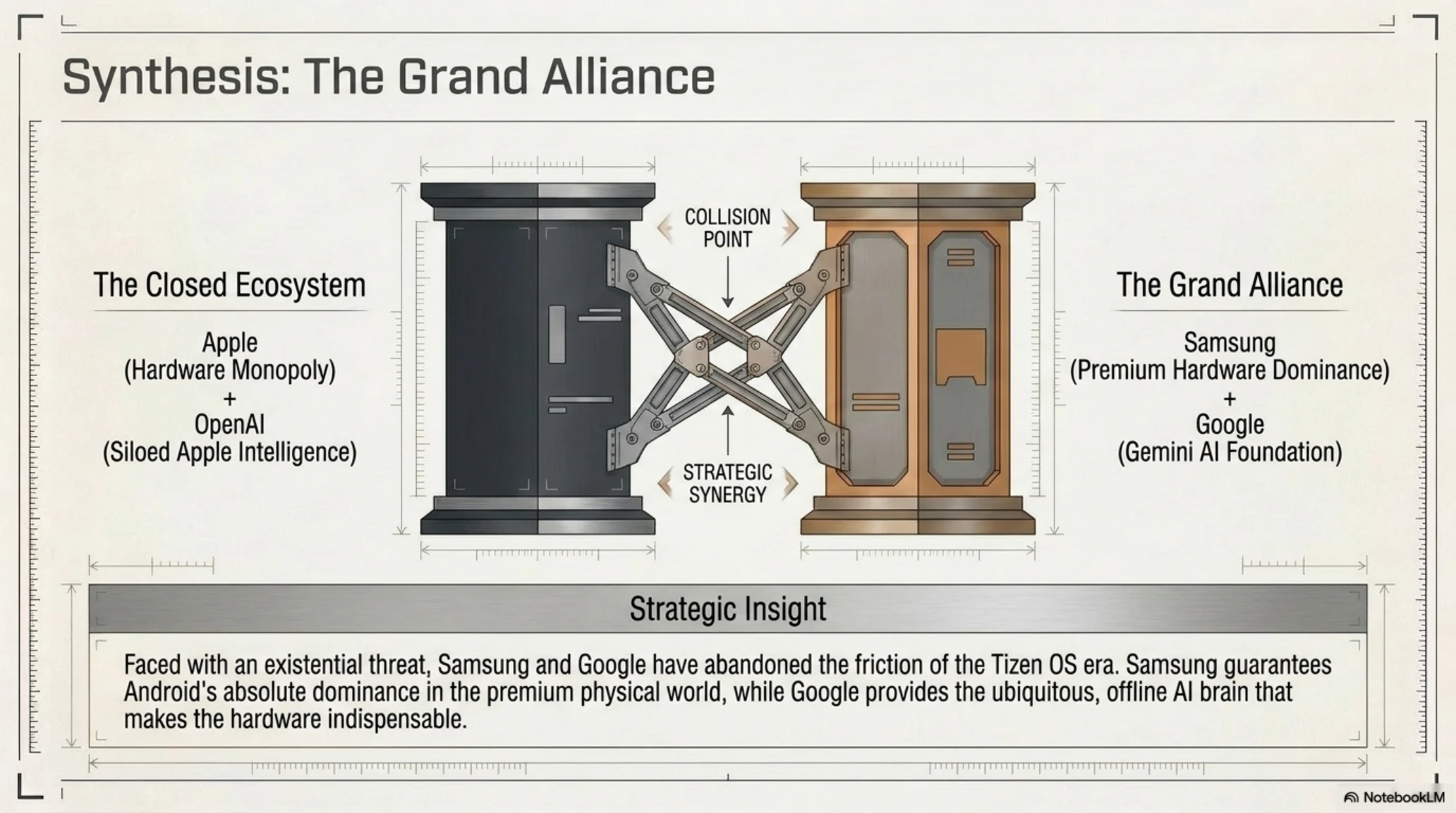
The most crucial underlying narrative at the Unpacked event wasn't the titanium hinges or the mesmerizing folding displays; it was the unprecedented strategic alliance formed between Samsung and Google. The event made it abundantly clear that these two tech titans have strongly united to counter the formidable alliance between Apple and OpenAI (Apple Intelligence). The absolute pinnacle of this partnership is the complete, native integration of Google's Gemini Nano 4 artificial intelligence directly into the core operating system of Samsung's new devices. There is no longer a need to run separate, clunky applications; Gemini is now deeply woven into the Samsung keyboard, the native Notes app, the camera interface, and even the default messaging application.
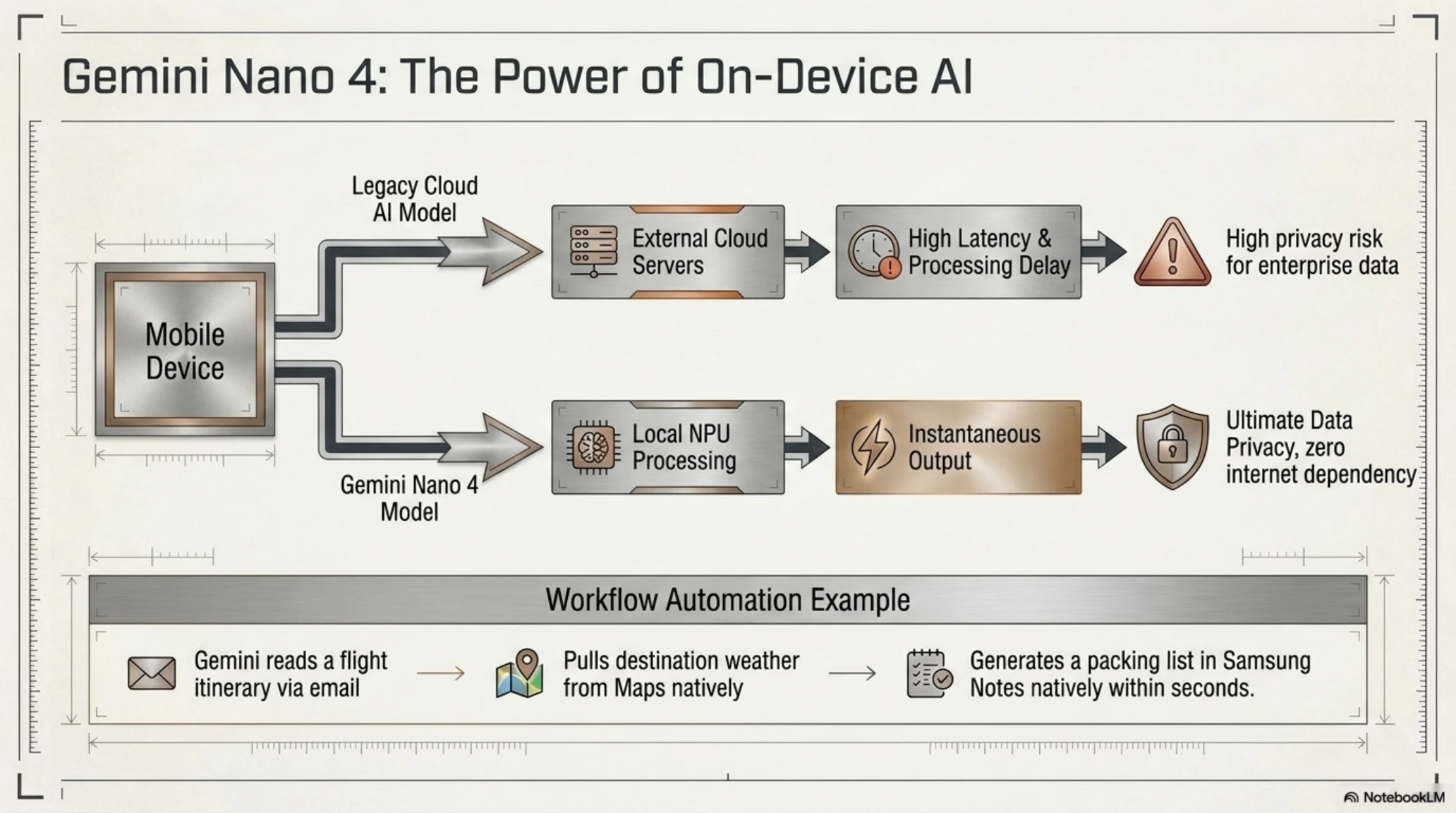
The Gemini Nano 4 language model, which stands as the lightest, most agile member of Google's AI family, has been specifically optimized for offline, on-device execution. This AI provides an unprecedented level of automation; users can now use a simple voice command to trigger complex workflows that would otherwise require manually opening and navigating through multiple applications. For instance, the phone can read your flight itinerary from your email, extract weather conditions for your destination from Google Maps, and automatically generate a comprehensive packing list within Samsung Notes—all within seconds.
Exclusive Tekin Analysis (Tekin Analysis Box)
The alliance between Google and Samsung has entered a new, critical phase. While Apple is attempting to silo AI features exclusively for its user base with Apple Intelligence, Samsung and Google have adopted a far more inclusive approach by deploying Gemini across the entire Android ecosystem. The ability to run Gemini Nano 4 offline is a massive competitive advantage, as it strictly guarantees user data privacy (especially vital for the enterprise clients targeted by the Fold 8) and completely eliminates dependency on internet connectivity and server latency.
The economic ramifications of these product launches are impossible to ignore. Samsung and its vast network of retail partners have deployed highly aggressive strategies to maximize initial sales figures. Offering Amazon gift cards up to $350 for pre-ordering the foldable phones, and $50 for the smartwatches, clearly demonstrates the company's fierce determination to shatter sales records in the third quarter of the fiscal year. Given the premium pricing of these devices, these indirect discounts serve as a powerful catalyst for hesitant consumers contemplating an upgrade.
Ultimately, the Summer 2026 Unpacked event definitively proved that Samsung has evolved far beyond being merely a manufacturer of hardware components. They have transformed into a cohesive, ecosystem-driven platform that delivers Google's highly advanced artificial intelligence packaged within the most elegantly and complexly engineered devices available to consumers today.
The Full Dossier: A Platform Alliance (Smart History Tags)
The relationship between Samsung and Google hasn't always been perfectly amicable. In the early 2010s, Samsung notably attempted to gain software independence from Google by aggressively developing the Tizen OS for its smartphones, an endeavor that ultimately failed. Today, faced with the mutual, existential threat posed by Apple, the two companies have set aside past differences to forge an unparalleled synergy. The massive success of Samsung's foldable phones guarantees the continued dominance of Android in the premium market sector, and conversely, Google's cutting-edge AI ensures the continued robust sales of Samsung's hardware.
Final Thoughts and Conclusion (Conclusion Box)
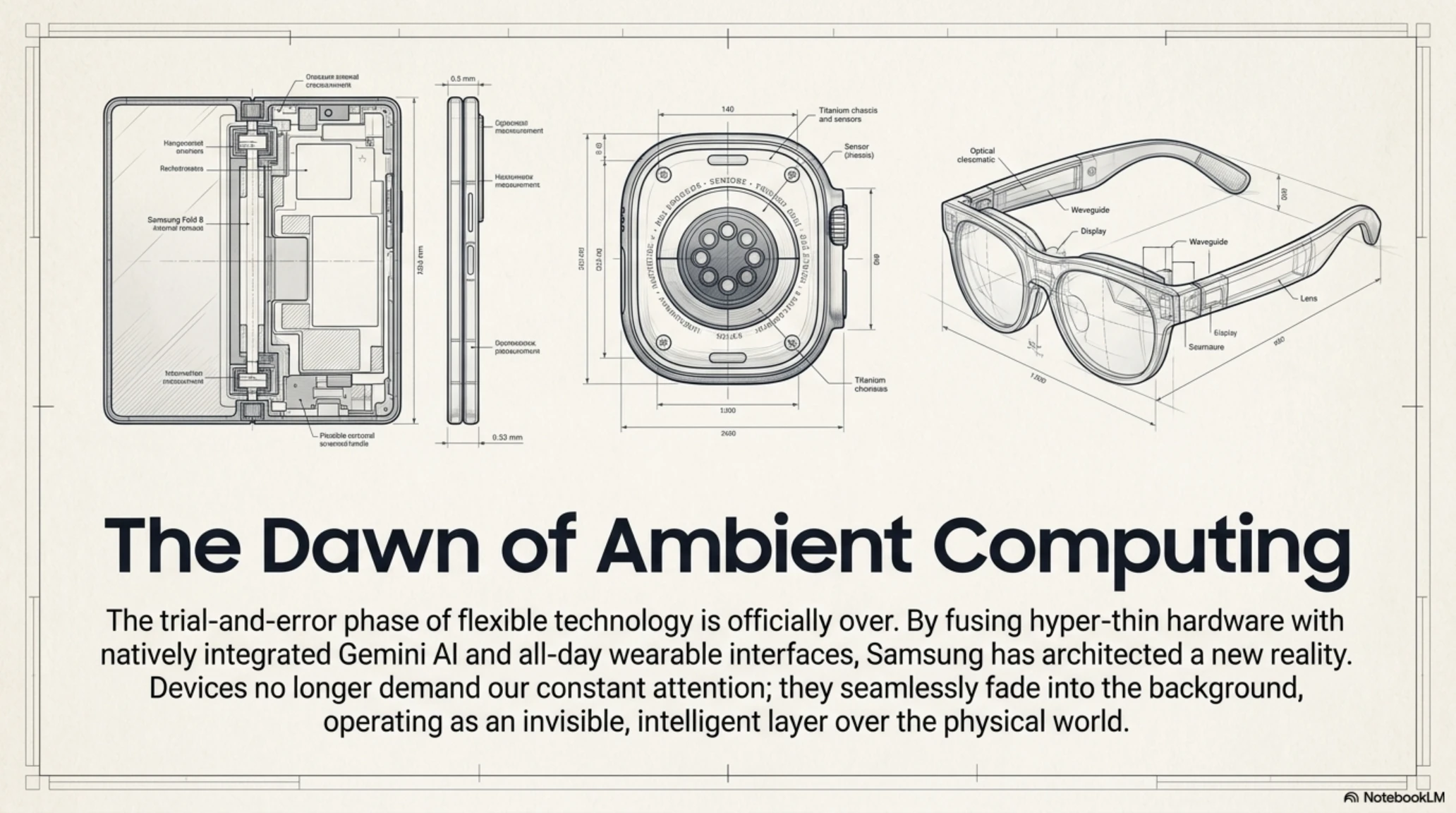
Samsung’s Summer 2026 Galaxy Unpacked event marked a significant turning point in the maturation of emerging technologies. Foldable smartphones have definitively moved past the trial-and-error phase, blossoming into highly reliable, astonishingly thin, and ultra-premium devices. Furthermore, the introduction of lightweight XR glasses boasting incredible battery life, coupled with the flawless integration of Gemini AI, provides a crystal-clear vision of the future of Ambient Computing. It's a future where our devices, rather than demanding our constant attention, seamlessly fade into the background while effortlessly facilitating our daily lives.
Frequently Asked Questions (FAQ Accordions)
Has the center crease on the Galaxy Z Fold 8 display been completely eliminated?
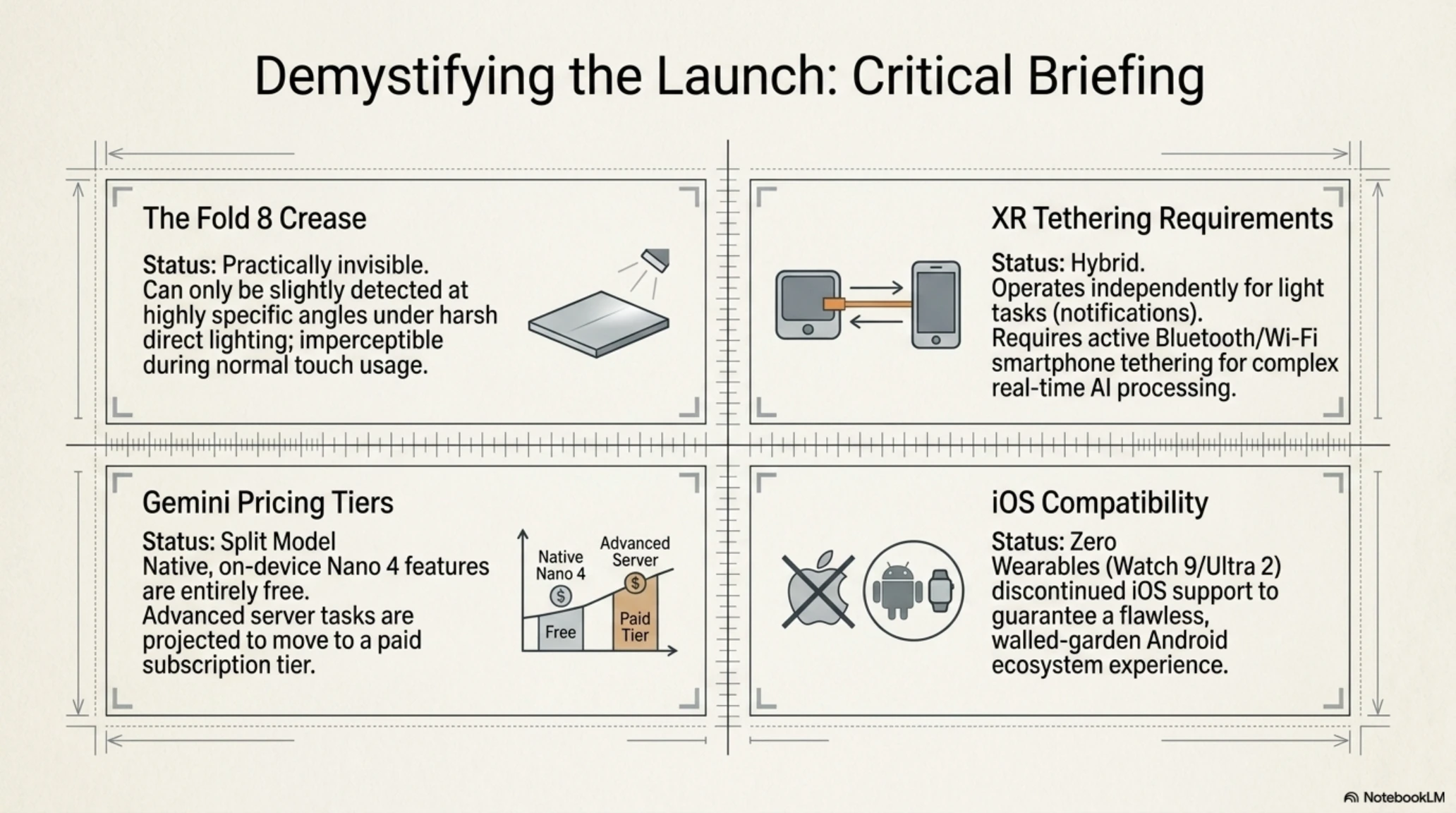
While Samsung has managed to make it practically invisible with the new hinge, it can still be slightly detected if held at a specific angle under direct, harsh lighting. However, during normal daily usage and touch interaction, you will essentially not feel or notice it at all.
What are the core differences between the standard Fold 8 and the Ultra variant?
The Ultra version boasts a titanium chassis for superior durability, a marginally thinner profile, a massive 200MP primary camera, and more advanced, enterprise-focused software capabilities.
Do the Android XR smart glasses require a constant tether to a smartphone?
For lightweight tasks such as displaying notifications and simple navigation, they can operate independently. However, for heavy-duty AI processing and real-time translation, they require an active Bluetooth or Wi-Fi connection to your mobile device.
Is the 9-hour battery life of the XR glasses for continuous, heavy use?
This 9-hour battery life estimate is calculated based on 'Mixed Usage'. If you are continuously streaming video content or performing intensive AI computations, this duration will predictably drop to around 4 to 5 hours.
Will the new Gemini AI features require a paid subscription?
The native, on-device AI features (like basic text processing) are completely free. However, more advanced capabilities that require massive cloud-based server processing will likely become part of a paid Samsung/Google subscription tier in the near future.
Are the newly announced smartwatches compatible with Apple iPhones?
No. Samsung discontinued iOS support several generations ago. These watches are designed exclusively for Android smartphones, and they offer the most optimized, seamless experience when paired specifically with a Galaxy device.
References and Citations (Sources Box)
- Android Authority: Stable Launch of One UI 9
- 9to5Google: Gemini Nano 4 Integration in Samsung Devices
- Mashable: Live Coverage of Summer 2026 Galaxy Unpacked
- ZDNet: 3 Ways Gemini AI is Deeply Integrated into Galaxy
- 9to5Google: Android XR Smart Glasses with 9-Hour Battery
- Mashable: Samsung Pre-order Deals and Amazon Gift Cards
Additional Gallery: Samsung's Hardware and AI Revolution: A Deep Dive into Summer Unpacked