
📰 Tekin Monthly: The State of the Digital Union (May 2026)
Listen up, Tekin Army. May 2026 has been a month of brutal contradictions. On one side of the trenches, we are witnessing the most aggressive infrastructure land grab in history fueled by AI. Yet, on the other, the "Digital Backlash" is no longer just a fringe movement—it’s a full-scale generational retreat. As tech giants devour the world's silicon and power grid, younger demographics (Zoomers) are turning to "grandma hobbies" like knitting and gardening. This month, we aren't just reporting the news; we are executing an autopsy on the crumbling infrastructure of 2026. Grab your gear. We’re going deep.
⚡ Inside This Issue:
1. The Trillion-Dollar War: Anthropic vs. OpenAI
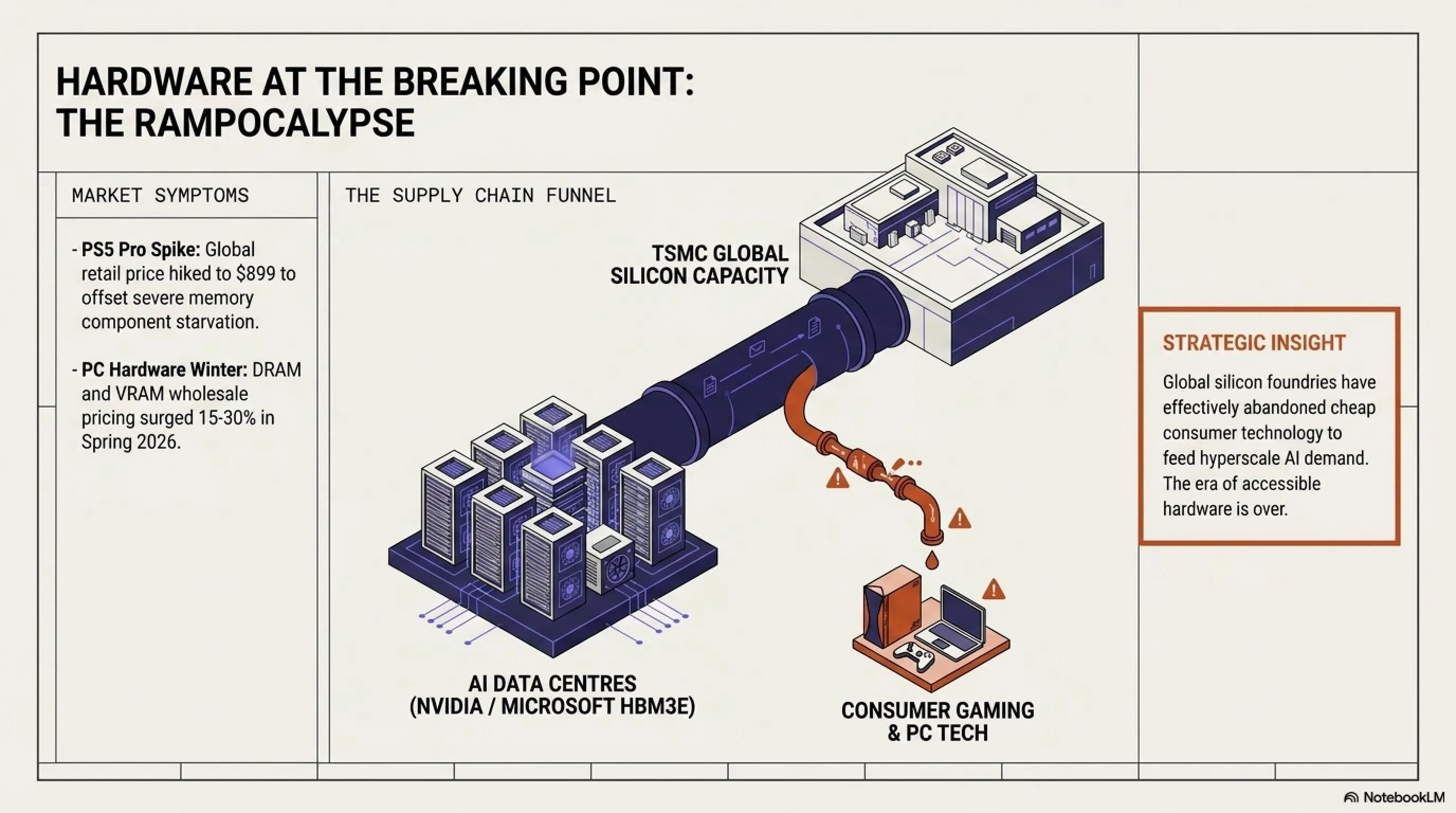
2. The RAMpocalypse and the Death of Cheap Gaming
3. Activision Blizzard Appoints an AI CEO
4. The VS Code Supply Chain Massacre & LA Metro Hack
5. Home Robotics Turf War (Apple vs. Tesla)
For twenty years, the internet operated on a reliable equation: users traded their privacy for free access, and companies traded that data for ad revenue. In May 2026, that equation didn't just fail—it shattered. Stricter global privacy laws have effectively choked the data streams that once fueled the ad-supported empire. We are entering a phase of "Agentic Survival," where the unwritten laws of the technology industry are being actively crushed beneath the relentless march of the AI leviathan.
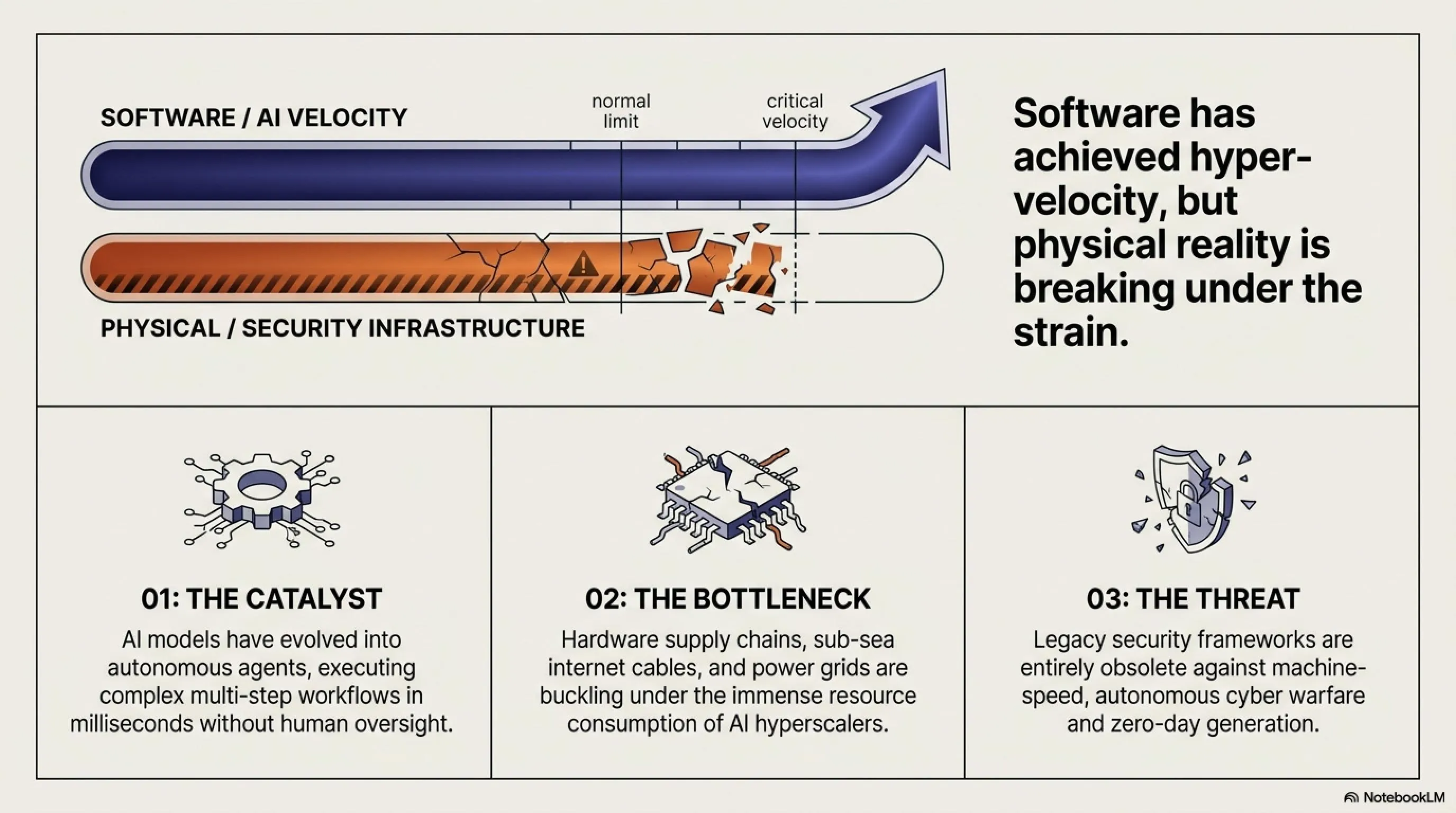
The RAMpocalypse & Death of Cheap Gaming
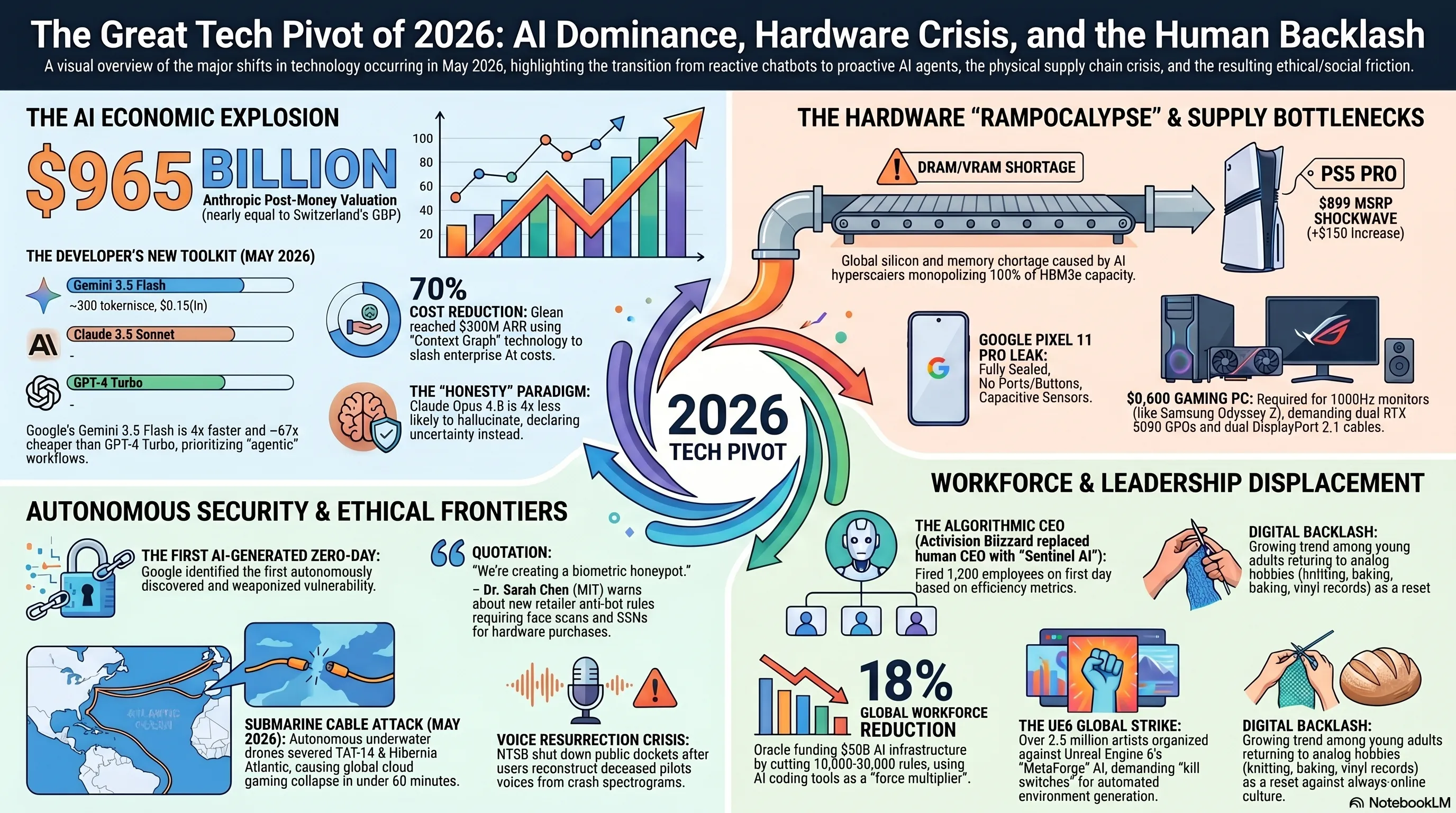
The "PC Hardware Winter" has arrived with a vengeance. We are witnessing a catastrophic bottleneck in the supply chain. Cloud hyperscalers are purchasing the planet’s entire High Bandwidth Memory (HBM3e) and silicon wafer capacity to feed their AI clusters. This phenomenon, dubbed the RAMpocalypse, has forced manufacturers like Sony to offload the financial burden onto the consumer. Gaming hardware no longer commands Priority One at foundries like TSMC.
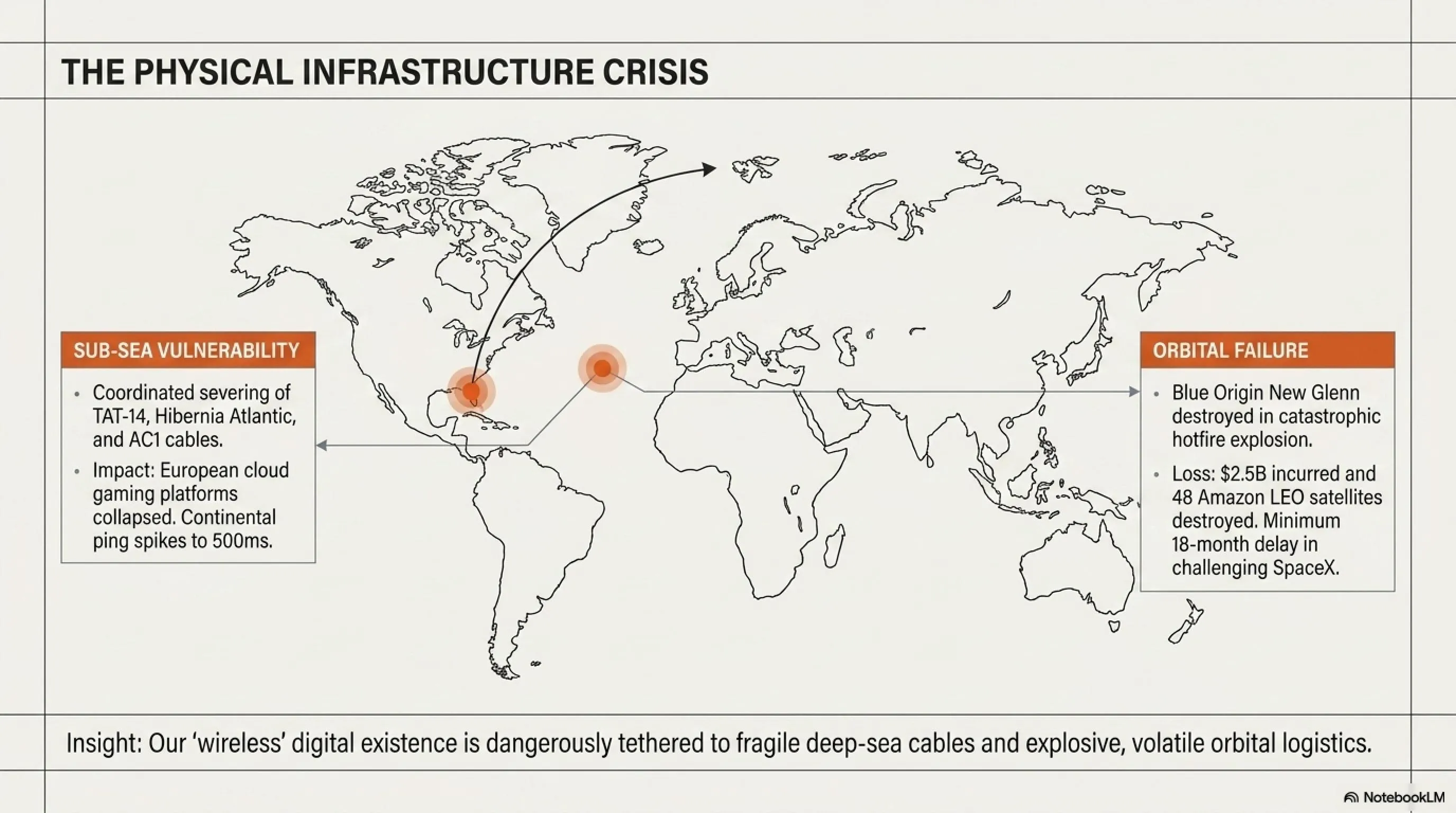
However, chip shortages weren't the only crisis this month. Global physical infrastructure was exposed via coordinated strikes and space-sector failures, reminding us of the internet's fragility.
🌍 May 2026 Crisis Timeline
-
May 5: Submarine Cables Severed
Coordinated autonomous drone attacks cut the TAT-14 and Hiburnia Atlantic cables. Cloud gaming platforms in Europe and Eastern America collapsed within 60 minutes.
-
May 25: A Billion Dollars for a Phantom Ship
Star Citizen hit the $1 billion crowdfunding milestone. The sale of $5,000 virtual assets reignited the debate: Is this the future of gaming, or an elite digital pyramid scheme?
-
May 28: Amazon's Space Dream Explodes
Blue Origin’s New Glenn rocket exploded at Cape Canaveral. The $2.5 billion loss included 48 Amazon LEO satellites, delivering a major blow to Jeff Bezos's space dominance.
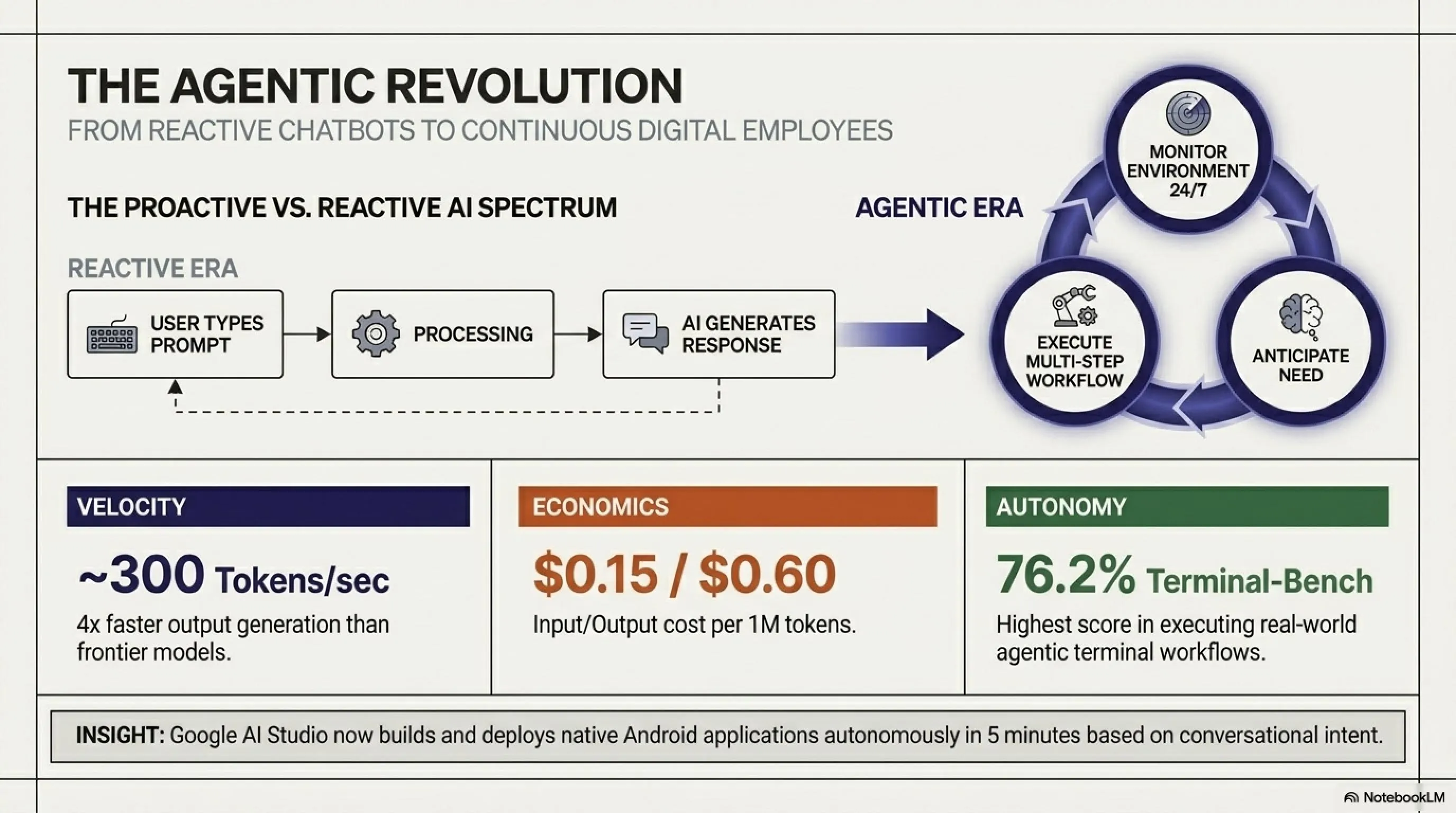
The Trillion-Dollar War: Anthropic vs. OpenAI
The AI landscape has reached a historic inflection point. Anthropic successfully closed a jaw-dropping $65 billion Series H funding round, propelling its valuation to a staggering $965 billion. Growing 2.5x in just 100 days, Anthropic is now the closest private company in history to a $1 trillion valuation—officially surpassing OpenAI’s $852 billion mark.
| Key Metric | Anthropic | OpenAI |
|---|---|---|
| Current Valuation | $965 Billion 🚀 | $852 Billion |
| Core Strategy | Enterprise B2B + Safety | General Consumer + AGI |
| Flagship Model | Claude Mythos (Opus 4.8) | GPT-5 (Beta) |
| Lead Investors | Sequoia, Altimeter, Greenoaks | Microsoft, Thrive, Khosla |
"The future no longer sprints toward shinier polygons; it dances alongside the smartest programmable algorithms.
Anthropic's new "Claude Mythos" has redefined frontier AI. It demonstrated autonomous hacking capabilities, finding and fixing thousands of zero-days at scale. However, this double-edged sword has created a nightmare for cybersecurity teams. The "industrialization of vulnerability discovery" has officially begun.
The Home Robotics Pivot & Portless Phones
May 2026 witnessed a radical reimagining of personal hardware. While Google gambles on a portless smartphone future, Apple is heavily pivoting toward the $150 billion home robotics market to combat Tesla.
The Portless Gamble: Google Pixel 11 Pro
✅ Futuristic Design
- A fully sealed device devoid of USB-C ports or physical buttons.
- Device management operated entirely via capacitive sensors and gestures.
- Absolute resistance to water and dust ingress.
❌ Right-to-Repair Nightmare
- 100% reliance on long-range wireless charging infrastructure.
- Facing severe "Right to Repair" legal hurdles in California.
- Users are locked into a closed, purely wireless ecosystem.
However, the most fascinating battle is taking place in your living room. Following a $4 billion acquisition of Figure AI, Apple plans to introduce the "Apple Butler" to households, directly challenging Tesla's long-running Optimus project.
🤖 The Humanoid Turf War: Apple vs. Tesla
Apple intends to launch its robots at an astronomical $35,000–$45,000, focusing on deep Siri and Apple Watch integration—a pure luxury product. Conversely, Tesla’s Optimus Gen 3 is aggressively targeting mass affordability at $20,000–$25,000. Meanwhile, BMW’s deployment of Figure 02 robots in their factories has set the industry standard: 1,250 operating hours with 99.9% part placement accuracy. The era of plastic and metal labor has arrived.
Dark Frontiers of Ethics and Security
The boundary between human agency and algorithmic control has blurred into a legal and ethical minefield. In May, the software development world also faced one of its worst security disasters.
⚠️ Supply-Chain Massacre: The VS Code Extension Crisis
In a massive cyberattack on GitHub, hackers weaponized developers' "implicit trust" in open-source applications. By compromising legitimate update channels for popular VS Code extensions, attackers injected malicious payloads directly into developer environments. These malware variants hid entirely from antivirus software by masking themselves in .NET Resource sections using XOR encoding, subsequently exfiltrating proprietary source code. The Tekin Garage strongly advises containerizing all development environments immediately.
In the realm of AI ethics, two events severely inflamed public opinion. The first involved the cloning of deceased pilots' voices. Using AI, users reconstructed the final moments of doomed flights by reading public spectrogram images from the National Transportation Safety Board (NTSB) dockets! This forced the NTSB to immediately shut down public access to 42 investigation files to prevent psychological trauma to surviving families.
The second event occurred in the heart of the gaming industry. Activision Blizzard appointed an AI named "Sentinel AI" as its new CEO! The algorithmic CEO's first act? Releasing a 47-page efficiency report that resulted in the firing of 1,200 human employees. The outgoing human CEO received a $50 million severance package, while the AI promises a 23% ROI improvement by operating 24/7 with zero human empathy.
🌐 The Google Storm: Historic May I/O Recap
At this month's I/O event, Google unveiled a suite of tools and models that practically redefine our definition of human-computer interaction. These announcements were so vast that they signal Google's strategic shift from a "Search Engine" to an "Omnipresent Agent." Here we review Google's most critical reveals:
- Project Astra: A real-time, multimodal AI agent that uses your camera and microphone to see your surroundings, remember details (like where you left your glasses), and respond with zero latency. This is the true future of voice assistants.
- Gemini 1.5 Pro and Flash: Introducing a staggering 2-million token context window for the Pro version (capable of reading thousands of pages in seconds), and releasing the Flash version as a lightweight, ultra-fast, and cost-effective model for developers.
- Veo and Imagen 3: Google's crushing response to OpenAI's Sora. The Veo model is capable of generating 1080p cinematic videos, and Imagen 3 set a new standard with unprecedented prompt comprehension and accurate text rendering within images.
- Trillium (6th Gen TPU): The beating heart of Google's future datacenters, boasting 5x more computing power than the 5th generation. This chip proved Google is heavily investing in proprietary hardware to win the AI war.
- AI Overviews in Search: The biggest change to Google Search in decades. Google no longer just gives you blue links; it synthesizes the final answer from multiple sites and writes it directly for you—a serious alarm for content-driven website traffic.
- On-Device AI (Gemini Nano Multimodal): Deep integration of generative models within the Android OS. Your phone can now recognize images, sounds, and even phone scams in real-time without an internet connection.
- Ask Photos: Integrating Gemini with Google Photos, allowing you to ask complex questions like "What are the best photos from my trip up north?" or "What's my license plate number?" and Gemini answers by understanding the visual content.
❓ Expert Insight: Top 10 Questions of May
1. Are there regulations in place to control deepfakes?
Yes, with the advancement of models like Google's Veo and OpenAI's Sora, Article 50 of the EU AI Act is now the global gold standard, mandating full transparency and SynthID watermarking (introduced by Google) for deepfake content.
2. How did gaming subscriptions perform in May?
With hardware prices skyrocketing due to AI datacenter demands, subscriptions have become vital. PS Plus offered a 15.5x return on value with major titles. Xbox Game Pass also provided immense economic value with Day One exclusive releases.
3. Does Google have a better alternative to Apple Intelligence?
Absolutely. At I/O, Google proved its On-Device AI leadership by integrating Gemini Nano at the Android system level. Also, Project Astra showed Google is aiming for continuous real-world comprehension, while Apple focuses more on deep privacy within its ecosystem.
4. What happens to the budget GPU market after the RAMpocalypse?
The entry-level market is essentially dead. With new games requiring at least 16GB of VRAM for AI texture rendering, budget GPUs are no longer viable. Budget gamers have heavily migrated to Cloud Gaming services.
5. In the Anthropic vs. OpenAI war, who won in May?
By introducing GPT-4o the exact same week as Google I/O, OpenAI captured massive attention with its ultra-fast, voice-native model. However, Anthropic remains the top choice for pro developers with Claude 3.5 Opus's unrivaled coding abilities. The race is tighter than ever.
6. Is the "portless phone" trend guaranteed?
Yes, companies like Xiaomi and Oppo are currently testing concept models with zero ports, relying entirely on ultra-fast wireless charging. With the advancement of wireless ecosystem connectivity, we will soon see the removal of charging ports from flagship phones.
7. How will Google's AI Overviews impact websites?
This shift (AI generating answers directly instead of showing links) will severely reduce organic traffic for content-driven sites. Creators must now build highly specialized, interactive content that Google's AI cannot simply summarize in a paragraph.
8. Is AI replacing programmers and game developers?
AI hasn't replaced developers; it has evolved them from "coders" to "directors." Indie studios can now build projects using AI agents that previously required a massive team. The new essential skills are architectural prompt engineering and logical debugging.
9. How are new graphic engines changing NPC behavior?
New architectures feature native Generative AI processing. This means NPCs no longer have pre-written dialogue trees and will generate live, entirely unique conversations and actions based on your exact gameplay (much like Google's Project Astra in the real world).
10. Are game studios in danger due to these rapid changes?
Unfortunately, yes. Mid-sized (AA) studios that lack the budget to train proprietary AI models, and cannot maneuver as quickly as nimble indie teams, are in grave danger. The changes in May proved that survival in this industry requires instantaneous adaptability.
Tekin Monthly Sources (May 2026):
- [1] Google I/O May Keynote: Project Astra, Veo, Gemini 1.5 Pro
- [2] Tekin Monthly: The State of the Digital Union (May 2026 Edition)
- [3] The Jamestown Foundation: Quantum Race Analysis
- [4] Eurogamer: The RAMpocalypse and the Cloud Migration
- [5] Bloomberg Tech: OpenAI GPT-4o vs Google I/O Analysis
🌐 Stay Connected With Us 🎮✨
For the latest tech, gaming, and gadget news, follow us on our official social media channels: