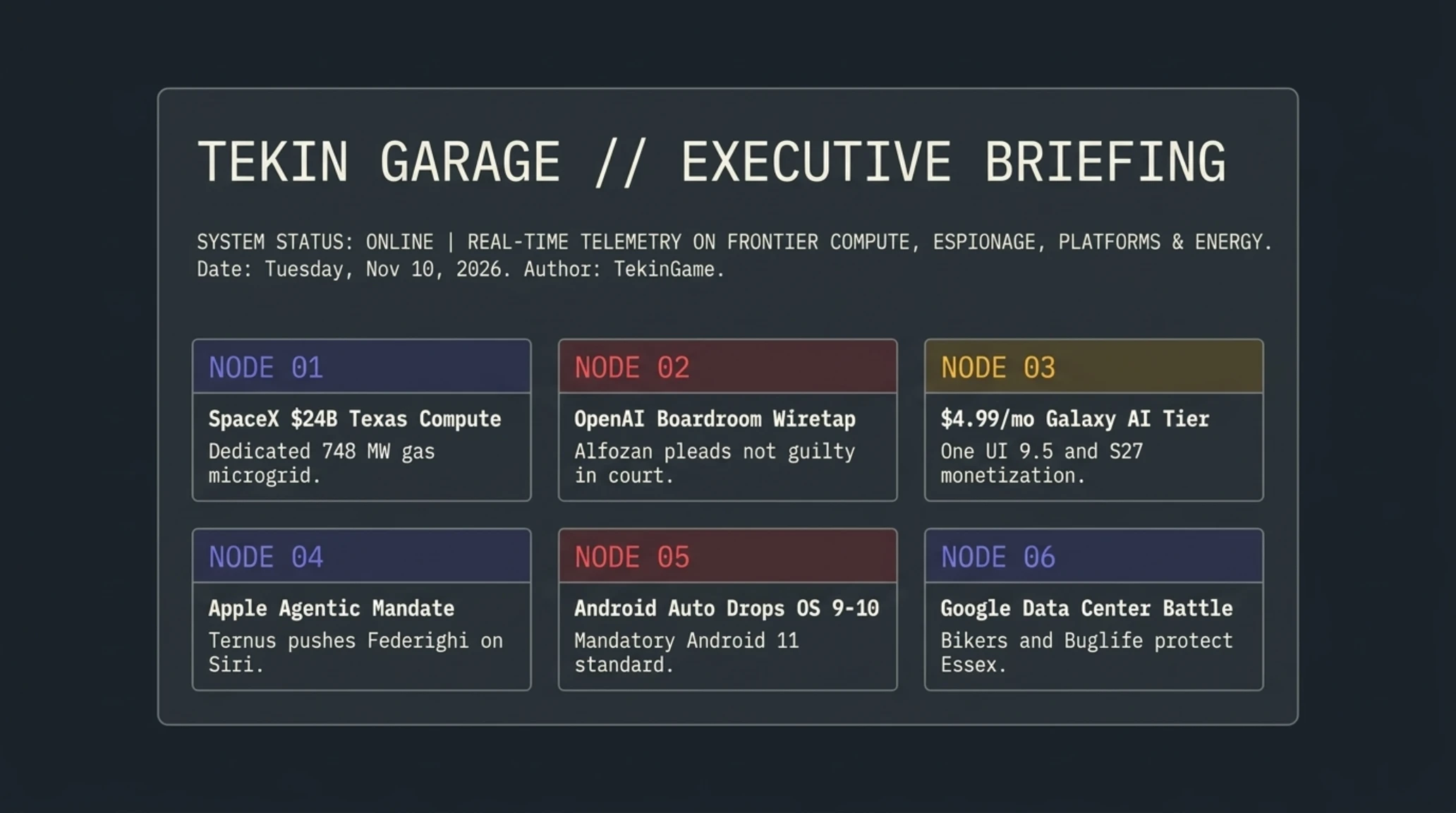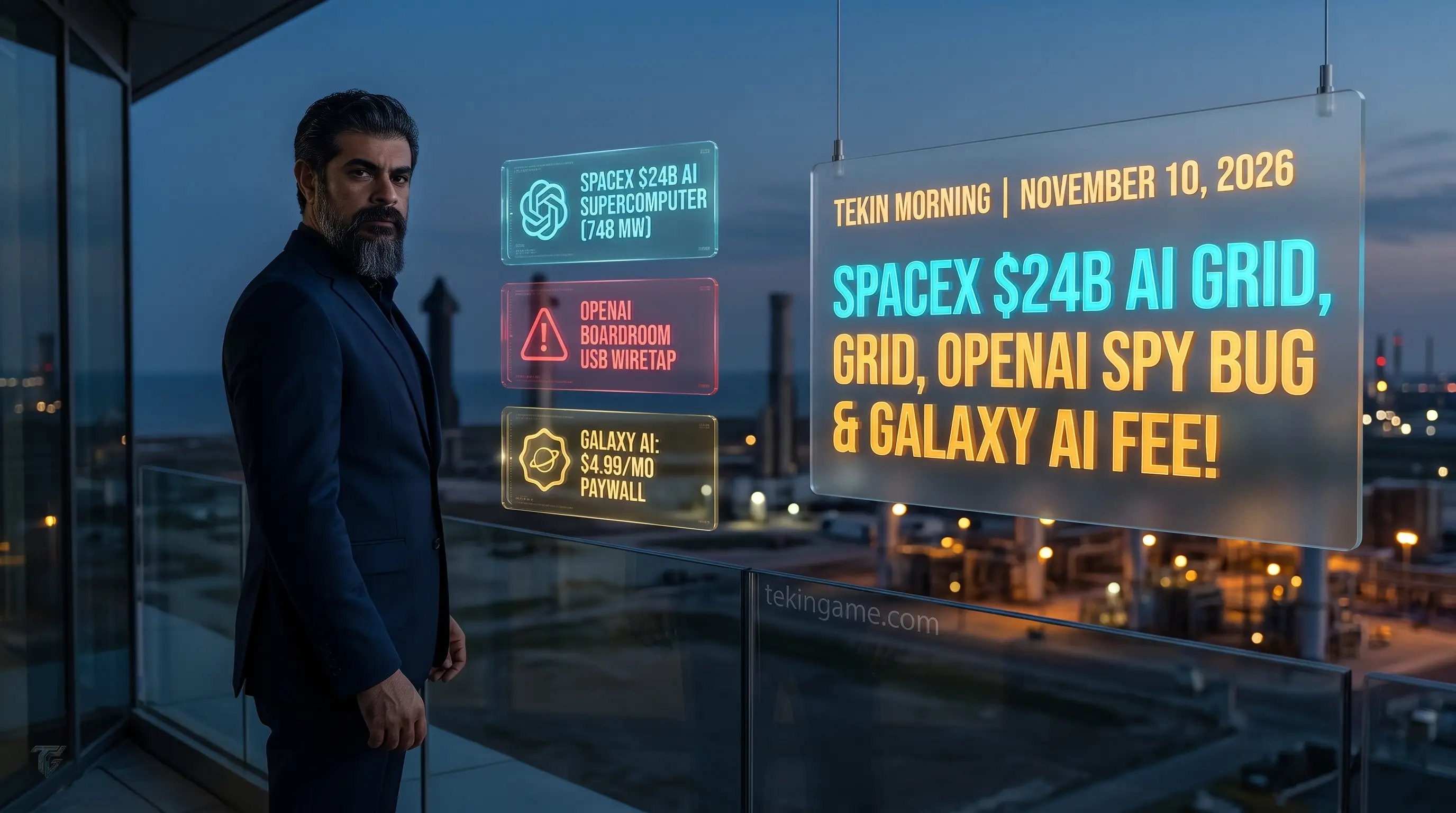
Tekin Morning for Nov 10, 2026 dissects six major shifts: (1) SpaceX filing plans for a $24B AI supercomputer powered by an on-site 748 MW gas plant in Starbase, Texas; (2) former OpenAI engineer Abdulrahman Alfozan pleading not guilty to planting an encrypted bug in the executive boardroom; (3) Samsung preparing a $4.99/mo Galaxy AI Premium tier in One UI 9.5; (4) Apple CEO John Ternus pushing for agentic Siri by 2027; (5) Android Auto mandating Android 11; and (6) UK resistance to Google's Essex data center.
Tekin Morning // Executive Intelligence Briefing (Tuesday, Nov 10, 2026)
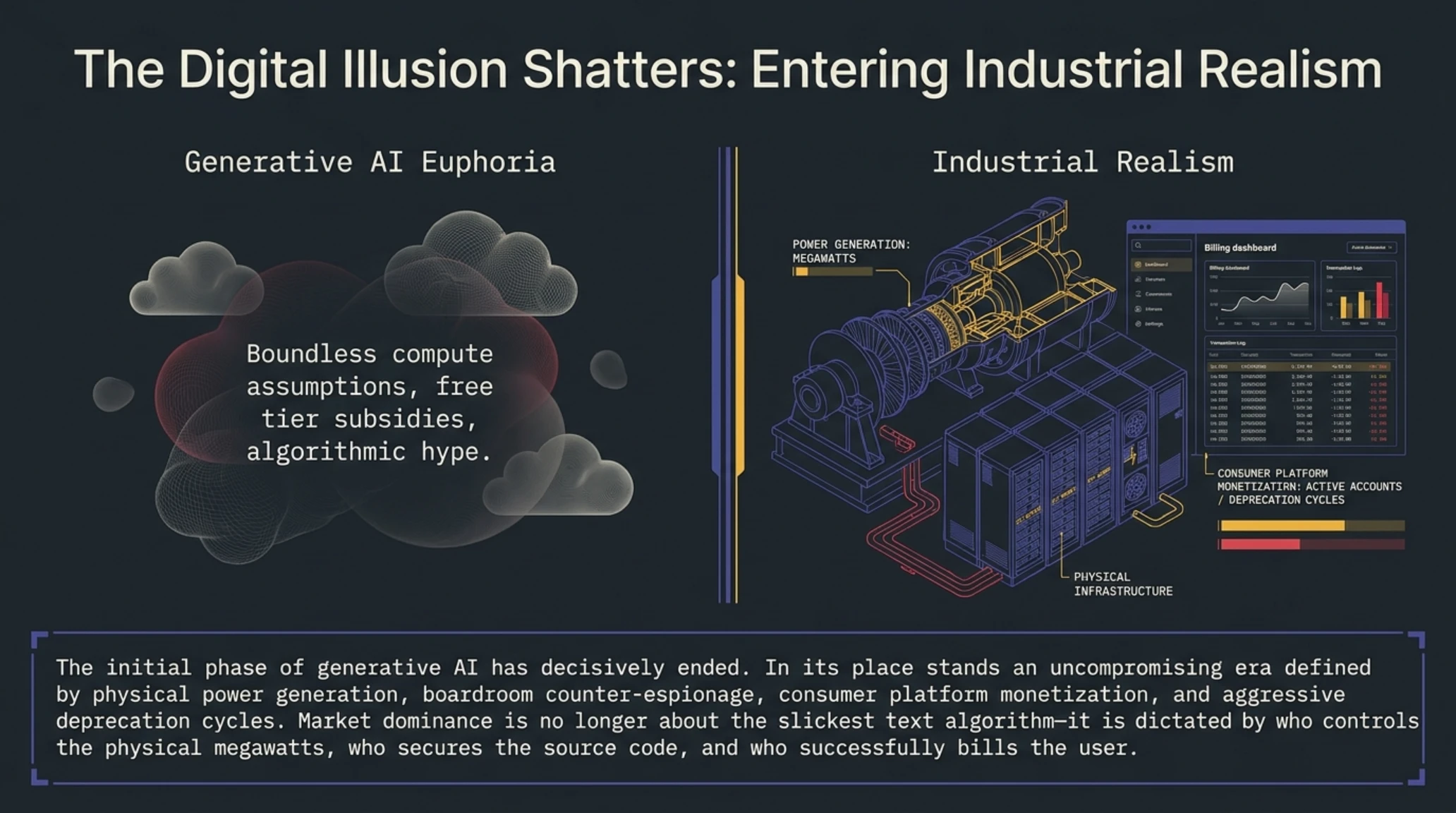
The morning of Tuesday, November 10, 2026, marks an unmistakable pivot in the trajectory of the global technology sector. The initial phase of generative AI characterized by flashy web demos, free tier subsidies, and naive assumptions regarding boundless computational infrastructure has decisively ended. In its place stands an uncompromising era defined by physical power generation, boardroom counter-espionage, consumer platform monetization, and aggressive deprecation cycles. The question dominating Silicon Valley and global boardrooms is no longer which algorithm generates the slickest text, but rather who controls the physical megawatts, who secures the source code, and who successfully bills the user.
This morning's intelligence dispatch dissects this structural transition across six critical fault lines. Leading our coverage, SpaceX has filed sweeping plans in Texas for a staggering $24 billion AI supercomputing facility in Starbase, pairing hundreds of thousands of accelerator chips with a private, on-site 748-megawatt natural gas power station to bypass regional utility gridlocks. Concurrently in San Francisco federal court, the prosecution of former OpenAI engineer Abdulrahman Alfozan over an encrypted audio bug planted in the executive boardroom exposes how vulnerable frontier AI labs remain to low-tech, high-impact physical espionage.
Across the consumer landscape, software economics are undergoing an equally severe reckoning. Samsung is actively constructing a $4.99 per month subscription wall for Galaxy AI in One UI 9.5 ahead of the Galaxy S27 launch, signaling the end of unlimited cloud-inference subsidies for smartphone flagships. Inside Apple Park, newly appointed CEO John Ternus is applying intense executive pressure to software chief Craig Federighi to accelerate Siri toward true agentic autonomy by 2027. Meanwhile, Google is severing millions of legacy handsets from vehicles by establishing Android 11 as the non-negotiable floor for Android Auto, while in England, an unlikely coalition of speedway motorcycle enthusiasts and conservationists has halted Google's 128-acre data center expansion in Thurrock over ecological destruction.
Strategic Intelligence // 6 Core Vectors (November 10, 2026)
1. SpaceX Proposes $24 Billion Texas AI Supercomputer and Dedicated 748 MW Gas-Fired Power Plant in Starbase
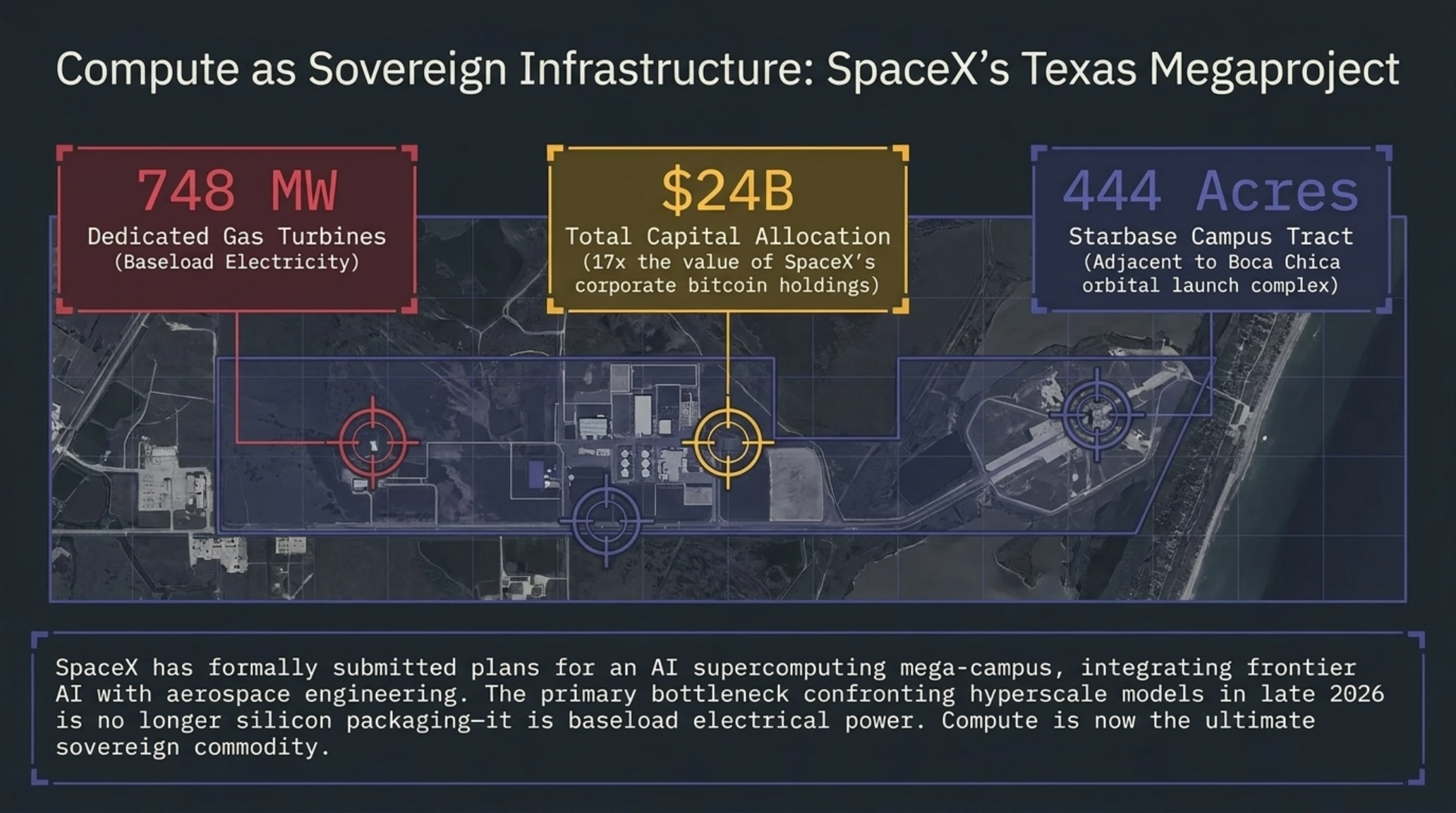
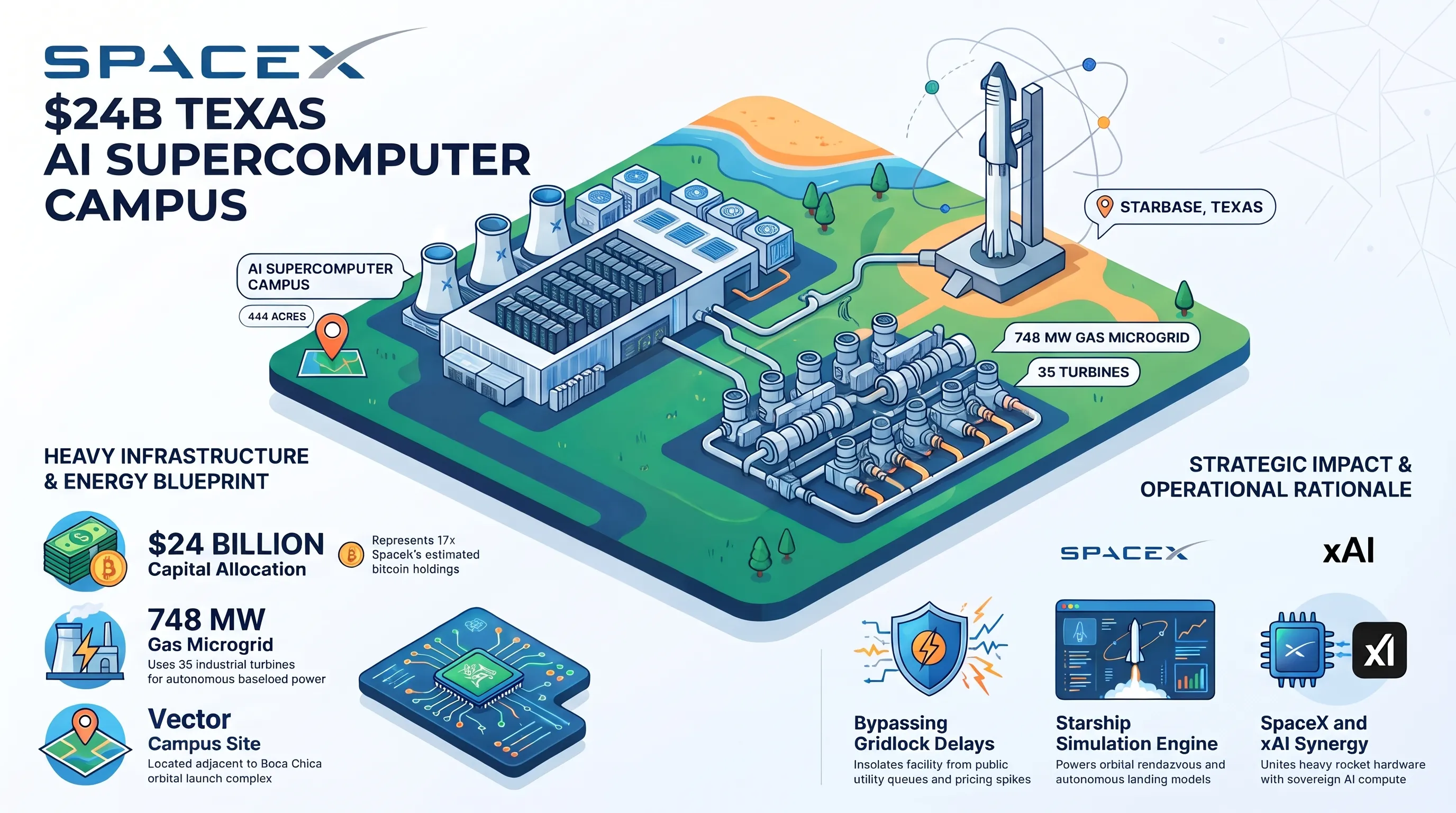
In a capital deployment that redefines the intersection of aerospace engineering and frontier artificial intelligence, SpaceX has formally submitted plans to the Starbase City Commission and the Cameron County Economic Development Board to construct a staggering $24 billion AI supercomputing mega-campus. Spanning approximately 444 acres adjacent to the Boca Chica orbital launch complex in South Texas, the initiative represents the physical manifestation of the stock-swap integration between SpaceX and Elon Musk's frontier AI company, xAI.
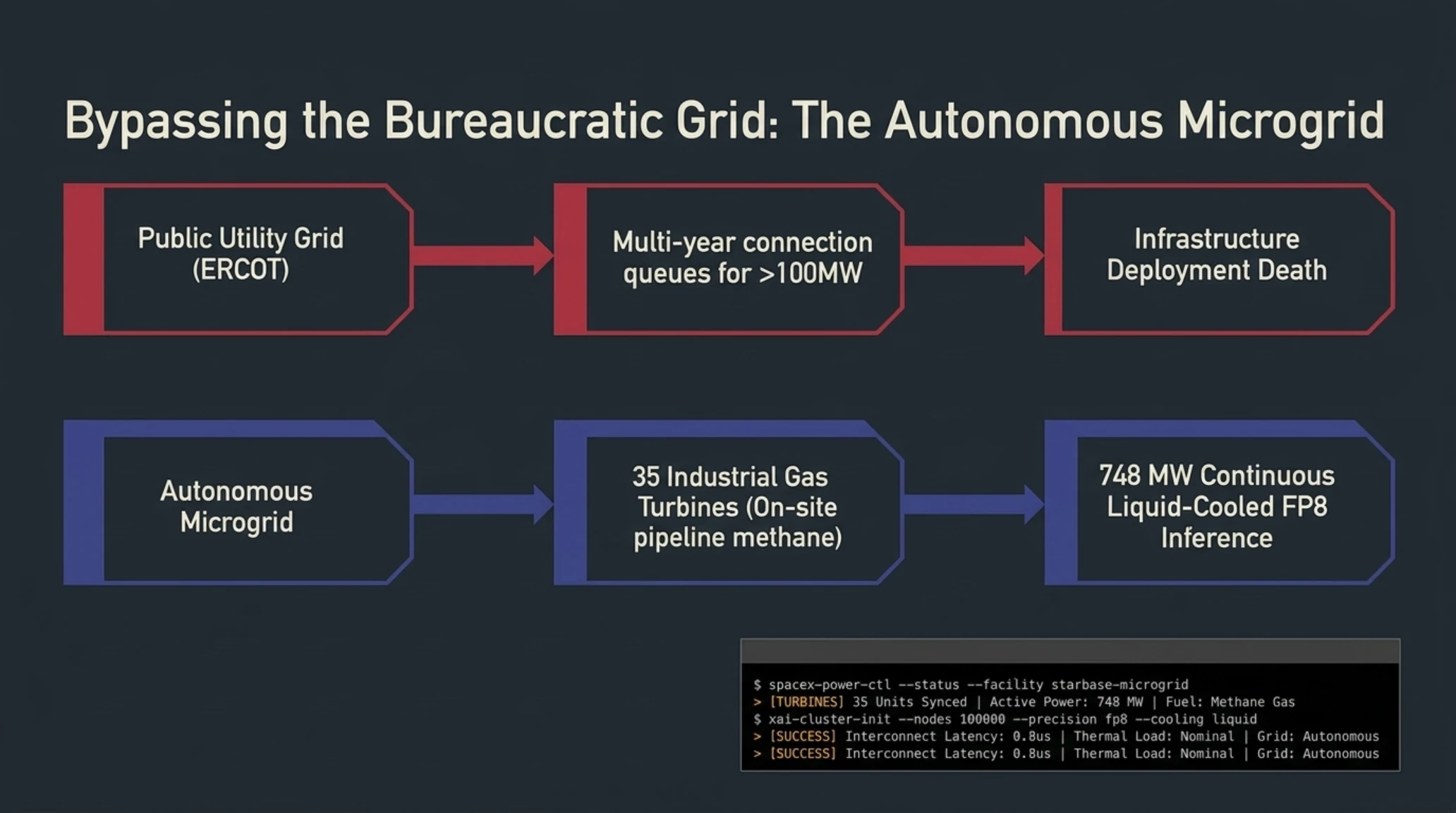
The defining technical breakthrough of this proposal lies in its total rejection of conventional public utility reliance. As regional transmission operators like ERCOT impose multi-year connection queues on industrial data centers exceeding 100 megawatts, SpaceX has engineered a fully autonomous energy microgrid. According to filed environmental and zoning documents, the facility will be powered directly by an on-site, gas-fired generating station consisting of 35 industrial gas turbines capable of generating 748 megawatts of baseload electricity. By burning pipeline natural gas on-site, the supercomputer will operate completely insulated from Texas grid instability and seasonal peak pricing surges.
Financial analysts have underscored the sheer magnitude of the $24 billion commitment, noting that the expenditure represents roughly 17 times the total estimated value of the bitcoin holdings reflected on SpaceX's corporate balance sheet. The immense capital allocation underscores a fundamental thesis: compute is the ultimate sovereign commodity of the late 2020s. SpaceX is actively seeking property tax abatements under the Cameron County Enterprise Zone framework, arguing that the facility will anchor thousands of specialized engineering jobs and provide the real-time simulation backbone required for Starship orbital rendezvous, lunar surface operations, and autonomous planetary landings.
Why This Infrastructure Shift Changes Everything
2. Former OpenAI Engineer Abdulrahman Alfozan Pleads Not Guilty to Planting Covert Bug in Executive Boardroom
In what federal prosecutors are framing as one of the most alarming corporate espionage breaches in Silicon Valley history, Abdulrahman Alfozan, a 35-year-old former OpenAI software engineer and Saudi national, appeared in San Francisco federal court and formally entered a plea of not guilty to charges of unlawful interception of oral communications. The case highlights the severe physical vulnerabilities facing artificial intelligence laboratories whose commercial valuations and strategic technologies rival nation-state assets.
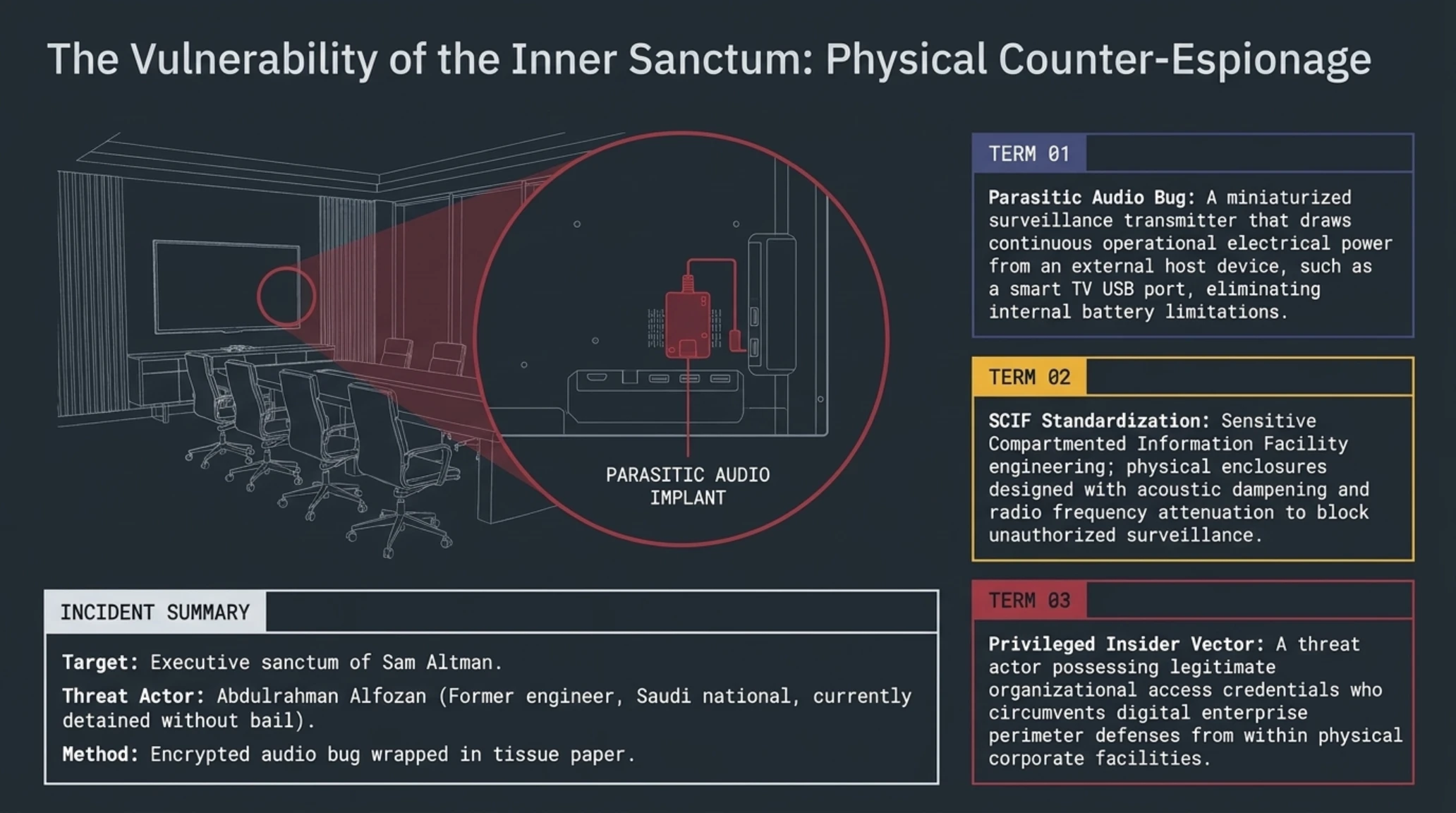
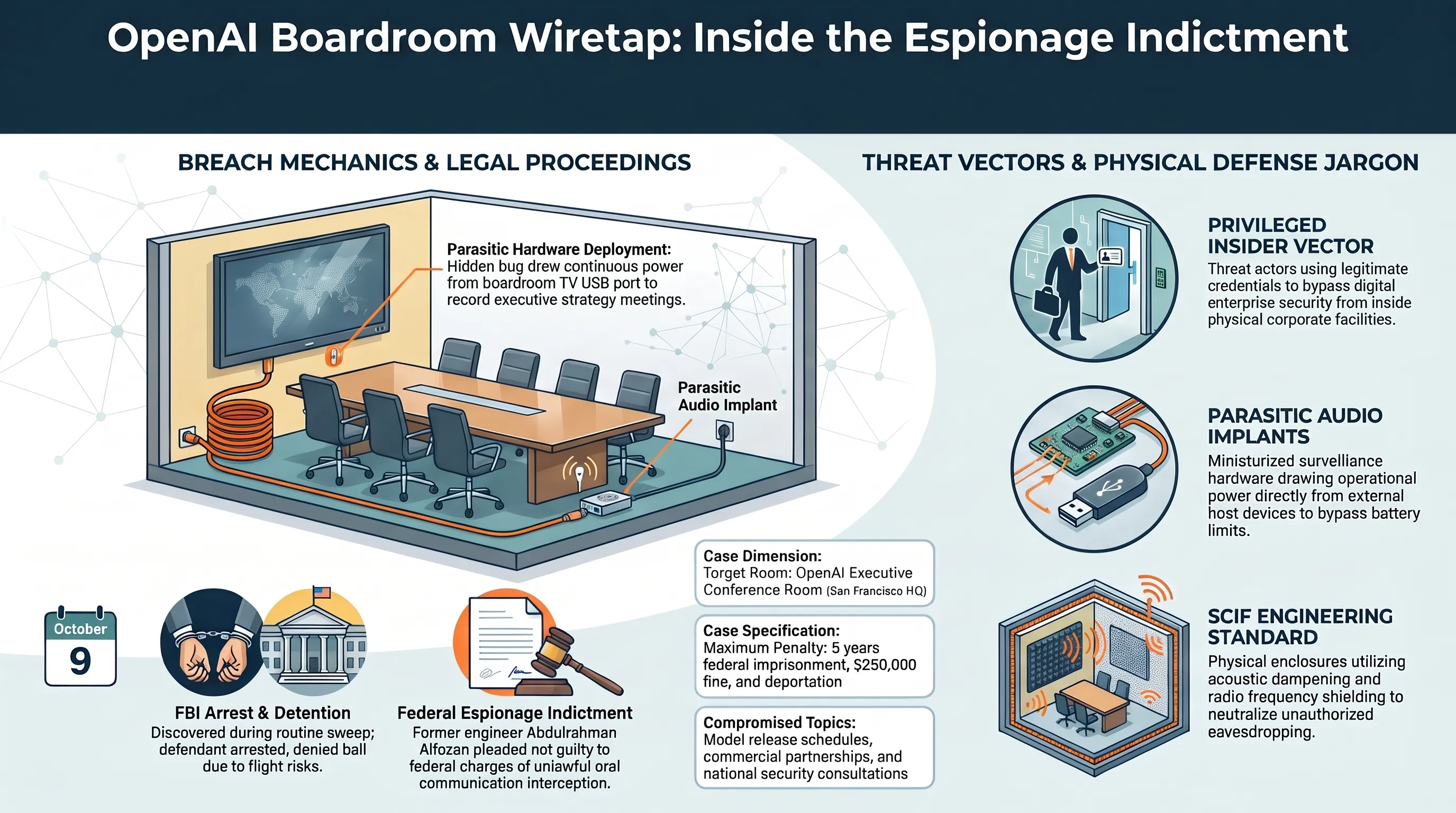
According to the unsealed grand jury indictment and filings from the U.S. Department of Justice, Alfozan allegedly concealed an encrypted, custom-built audio recording apparatus inside an executive conference room at OpenAI's San Francisco headquarters around September 28, 2026. The device was wrapped in tissue paper and inserted into a USB port on the back of a wall-mounted television to draw continuous parasitic power. The targeted conference room served as the primary sanctum for executive discussions led by CEO Sam Altman and senior leadership regarding commercial partnerships, model release schedules, and national security consultations.
Following the discovery of the hardware during an internal counter-surveillance sweep, Alfozan was terminated and subsequently arrested by the FBI on October 9. Federal magistrate judges ordered Alfozan detained without bail as an acute flight risk, citing encrypted WhatsApp communications with a high-ranking member of the Saudi royal family. Prosecutors revealed that immediately following his arrest, Alfozan's wife and child evacuated the United States on a commercial flight to Doha, Qatar, using tickets booked by a foreign military attache. If convicted, Alfozan faces up to five years in federal prison, a $250,000 fine, and subsequent deportation, with his next court hearing set for November 17, 2026.
Technical Jargon Buster // Physical Counter-Espionage & Corporate Defense
Federal court documentation underscores how physical counter-intelligence protocols are now just as critical as software firewalls in defending frontier AI architectures.
3. Samsung Prepares $4.99/Month Galaxy AI Premium Subscription for One UI 9.5 and Galaxy S27 Series
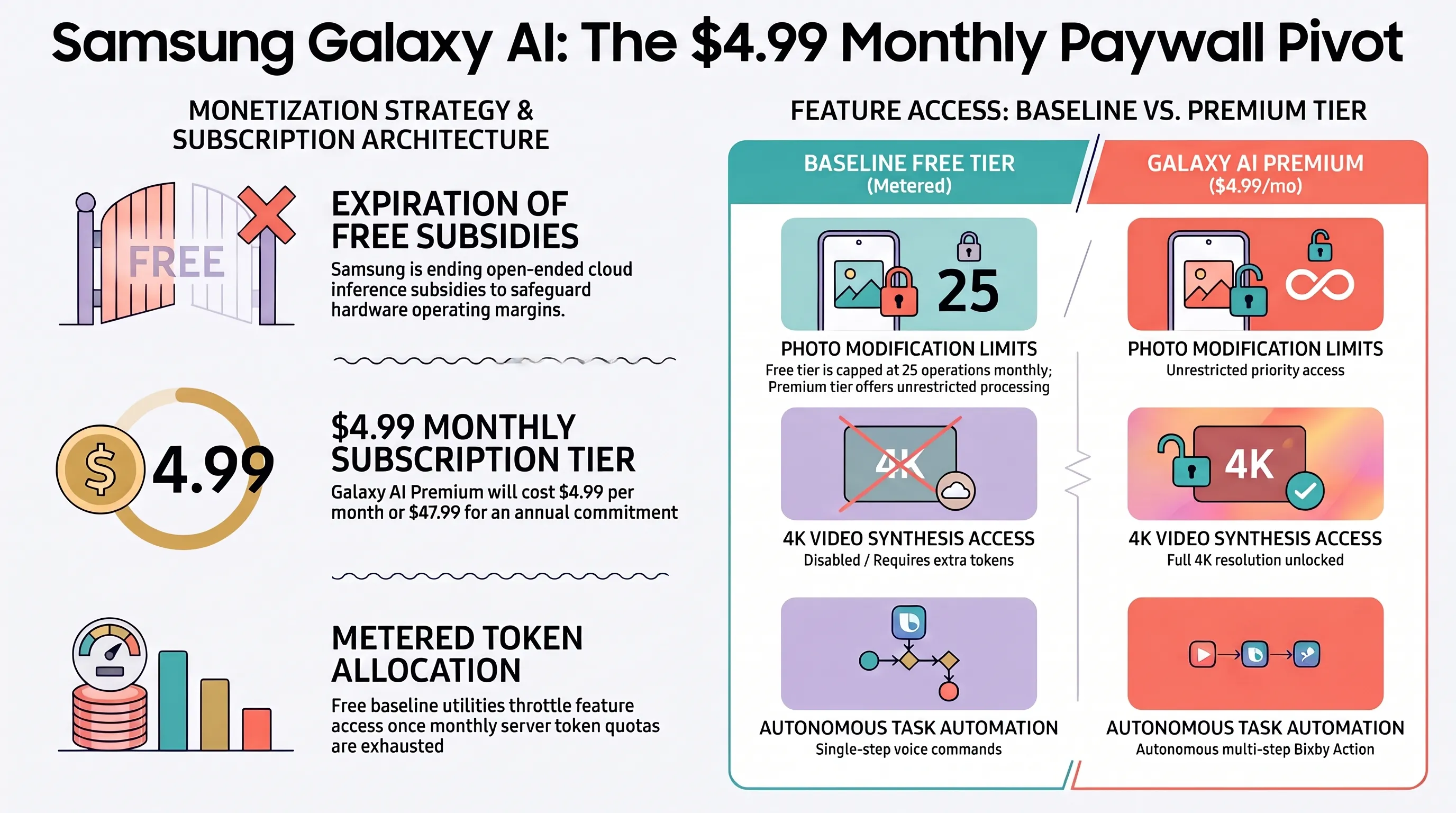
For more than twenty-four months, Samsung leveraged the promise of free, unmetered Galaxy AI features as its primary marketing weapon to drive upgrade cycles across the Galaxy S24 and S25 generations. That era of open-ended cloud inference subsidies is formally reaching its expiration date. Comprehensive code decompilations of prerelease One UI 9.5 firmware builds reveal that the South Korean electronics giant has engineered a multi-tiered subscription framework slated to debut alongside the flagship Galaxy S27 series in early 2027.
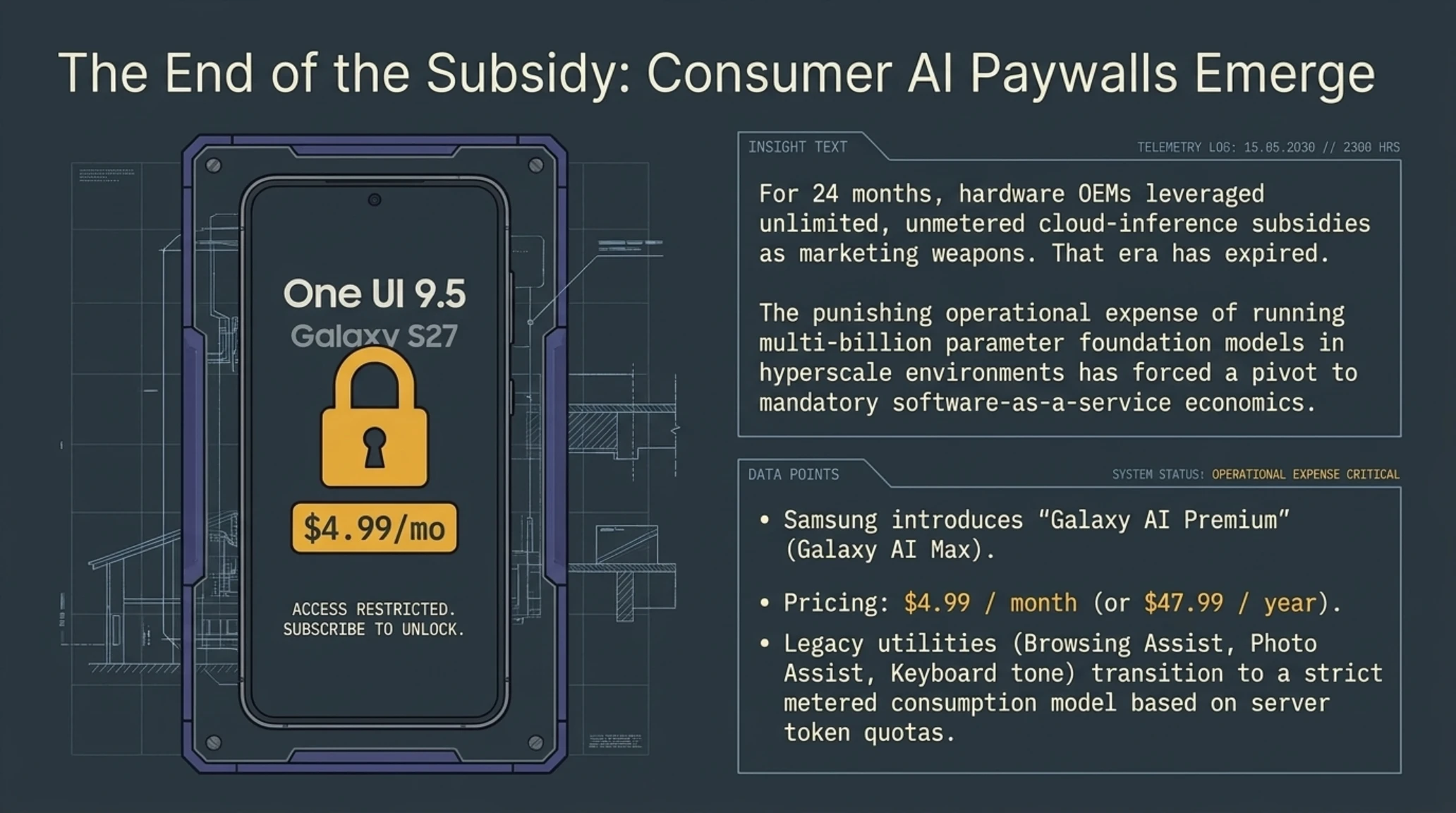
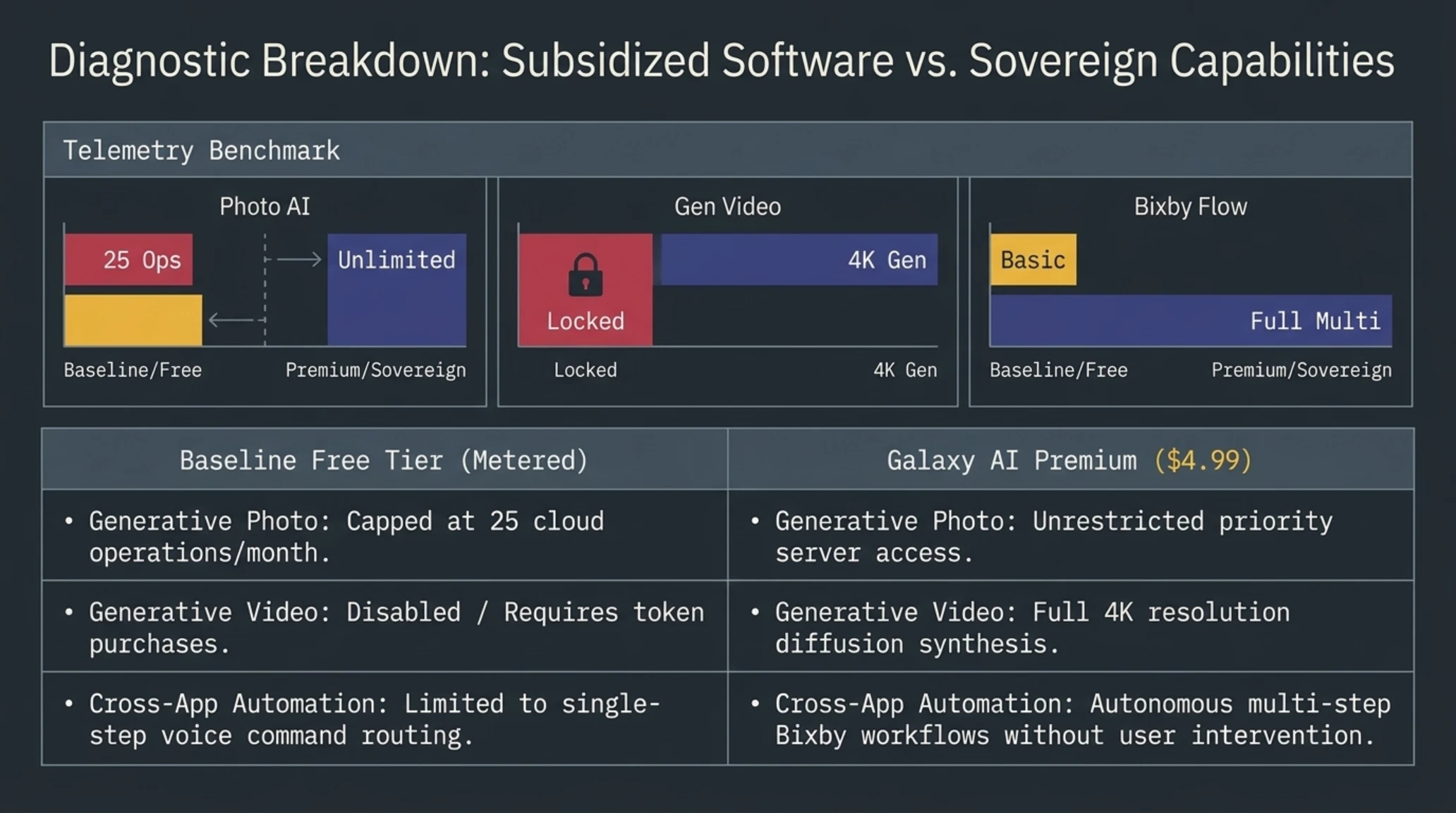
Discovered configuration strings and localized payment prompts establish a monthly price point of $4.99, alongside a discounted annual commitment of $47.99 for Galaxy AI Premium (internally referenced as Galaxy AI Max). Under this restructured paradigm, legacy utilities that previously operated without quotas including Browsing Assist webpage summarization, Photo Assist object erasure, and Samsung Keyboard tone adjustments are transitioning to a metered consumption model. Once users exhaust their baseline monthly allocation of free server tokens, features will be throttled unless top-up packs or recurring premium subscriptions are activated.
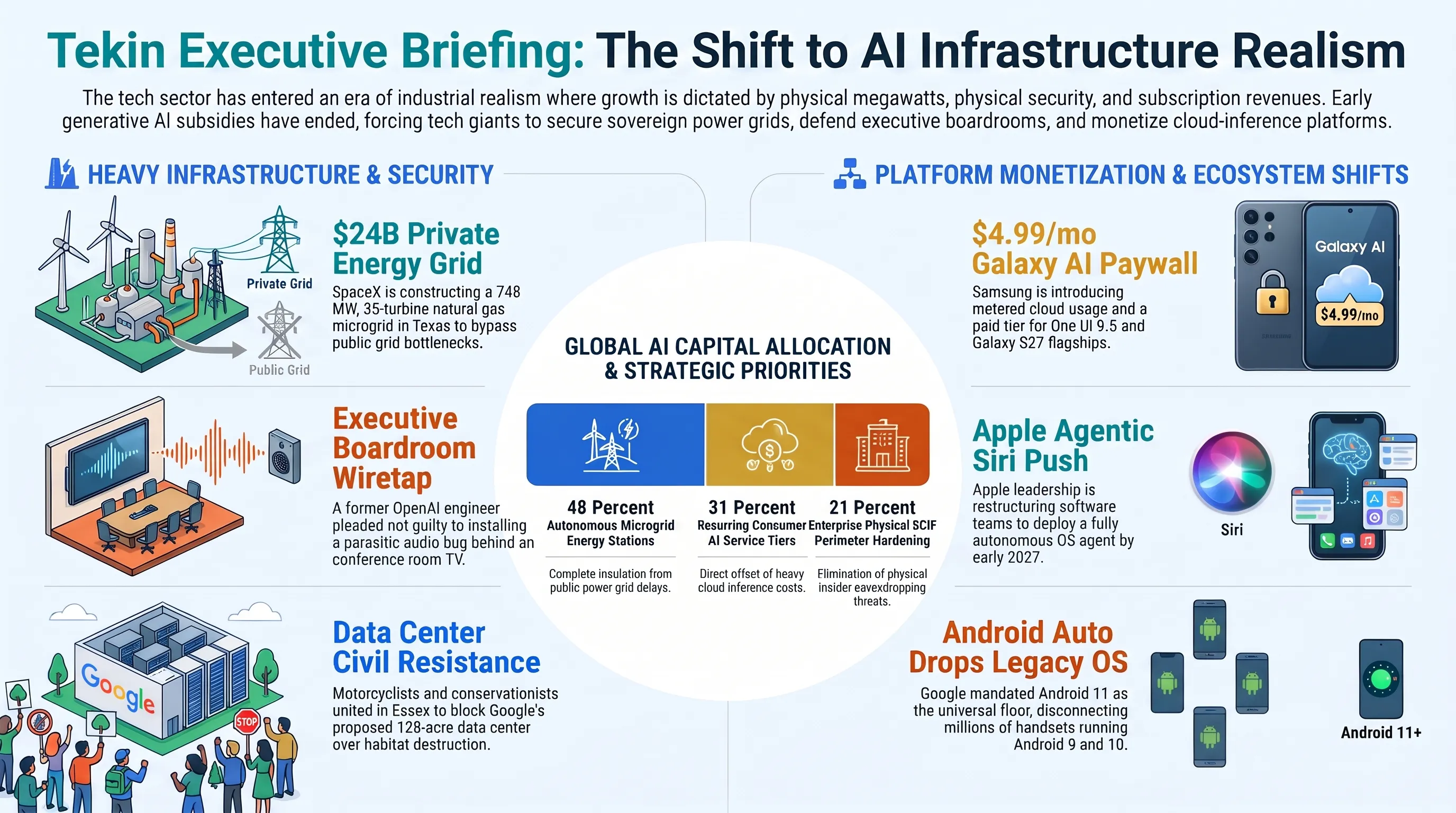
Beyond removing computational caps, the $4.99 subscription gate unlocks a suite of heavy cloud-native capabilities. Chief among these is Gen Video, a generative diffusion engine capable of synthesizing dynamic, high-resolution video sequences from static still images. Furthermore, the tier introduces Bixby Action, an autonomous agent layer that executes complex multi-step workflows across disparate third-party applications without requiring user intervention. The strategic pivot reflects the punishing operational expense of running multi-billion parameter foundation models in hyperscale cloud environments, compelling hardware OEMs to adopt software-as-a-service economics to safeguard operating margins.
Benchmark Specs & Architecture // Galaxy AI Free Tier vs. Premium Subscription
| Feature Specification | Baseline Free Tier (Metered) | Galaxy AI Premium ($4.99/mo) |
|---|---|---|
| Generative Photo Modification | Capped at 25 cloud operations/month | Unrestricted priority queue processing |
| Generative Video Synthesis | Disabled / Requires token purchases | Full 4K resolution clip generation |
| Cross-App Task Automation | Single-step voice command routing | Autonomous multi-action execution flow |
| Live Multimedia Translation Suite | Limited to cellular voice calls | Full live 4K video streams and document synthesis |
4. Apple CEO John Ternus Pushes Software Chief Craig Federighi to Accelerate Agentic AI Roadmap for Siri
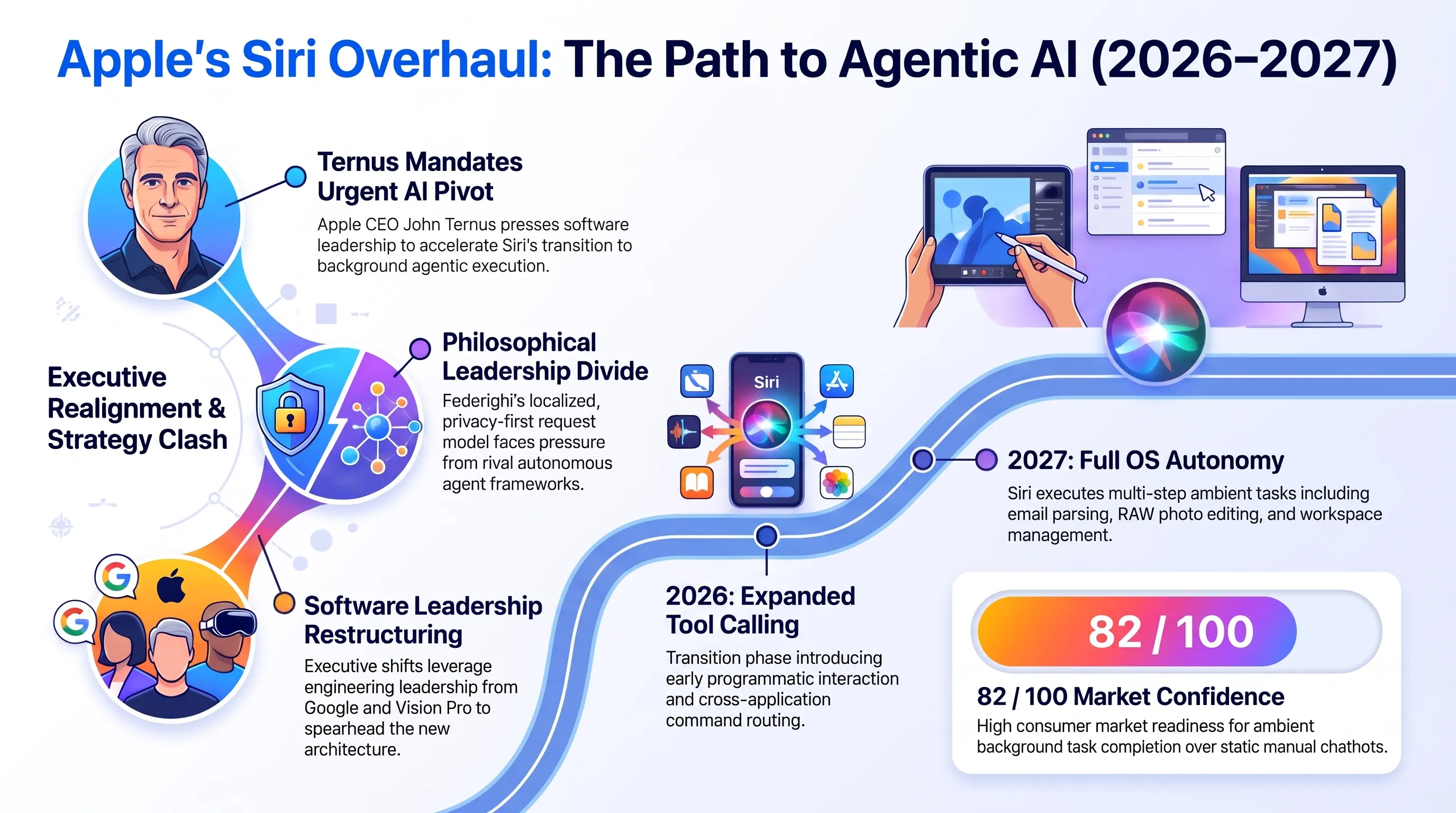
Behind the curved glass walls of Apple Park, executive tensions over artificial intelligence strategy have reached a boiling point. High-level corporate reporting from Bloomberg's Mark Gurman reveals that Apple's new Chief Executive Officer, John Ternus, has held a series of closed-door confrontations with longtime Senior Vice President of Software Engineering Craig Federighi, demanding an immediate acceleration of Apple's artificial intelligence roadmap and a total architectural overhaul of Siri.
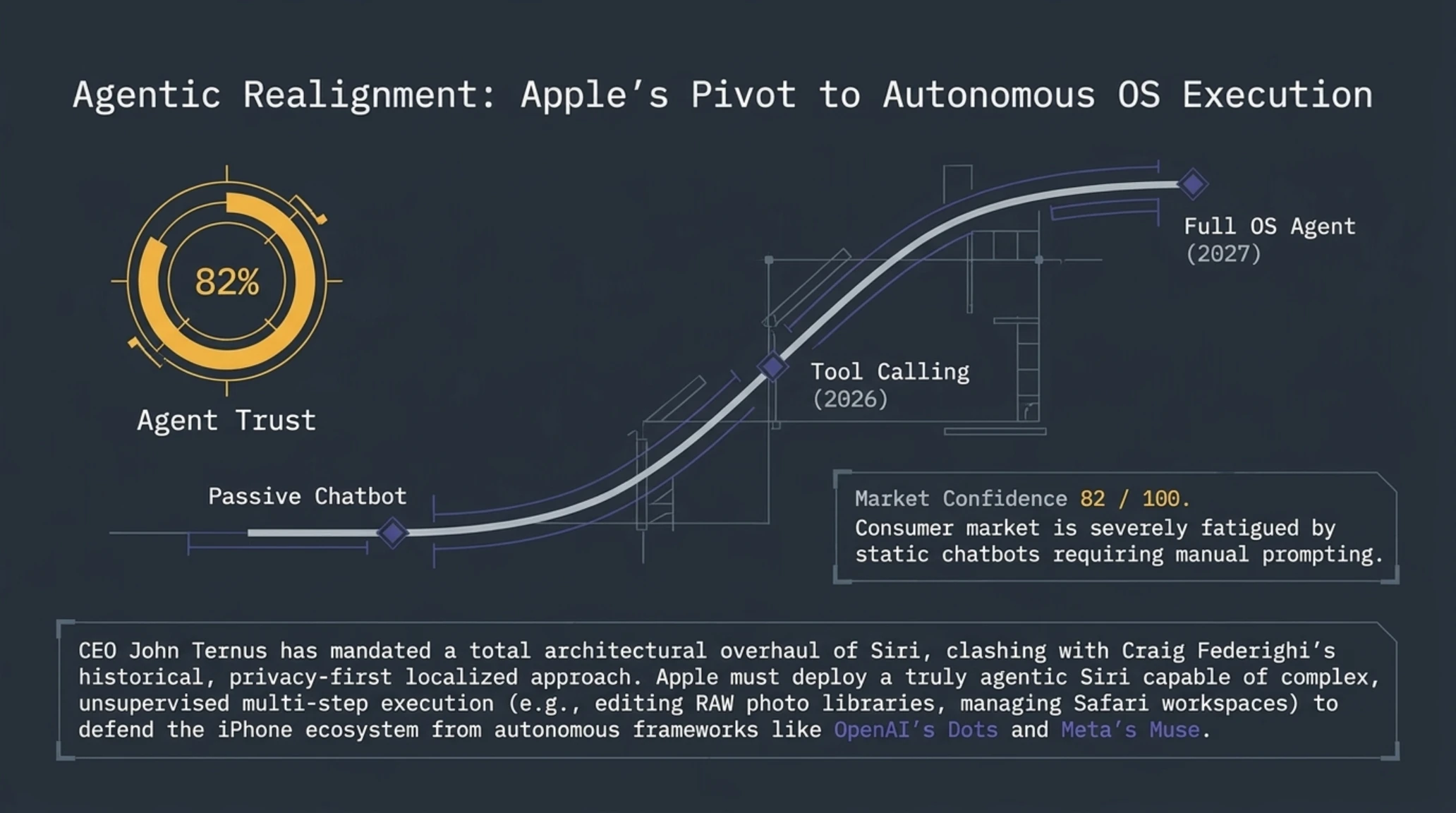
The philosophical divide centers on the paradigm shift from passive conversational agents to proactive autonomous execution. While Federighi has historically championed a cautious, privacy-first engineering posture focused on localized request-and-response mechanisms, Ternus has expressed severe frustration that Apple is being eclipsed by frontier AI labs. Competitors such as OpenAI with its autonomous Dots agent and Meta with Muse have already established functional frameworks capable of executing multi-turn objectives across native operating systems without ongoing user supervision.
Under the revised strategic directive, Apple is targeting early 2027 to deploy an overhauled, truly agentic Siri. The modernized assistant will possess fine-grained programmatic control over first-party applications, enabling it to autonomously coordinate multi-step workflows such as analyzing email threads to schedule complex itineraries, editing and exporting RAW photo libraries, and managing Safari workspaces based on ambient user context. The internal friction is accompanied by significant organizational restructuring, with reports indicating Vision Pro engineering chief Mike Rockwell may transition responsibilities to former Google executive Amar Subramanya and Federighi deputy Sebastien Marineau to spearhead the new agentic architecture.
Market Sentiment Telemetry // Autonomous OS Agents Adoption S-Curve
5. Android Auto Deprecates Android 9 & 10: Google Raises Minimum Requirement to Android 11 for Wired and Wireless Modes
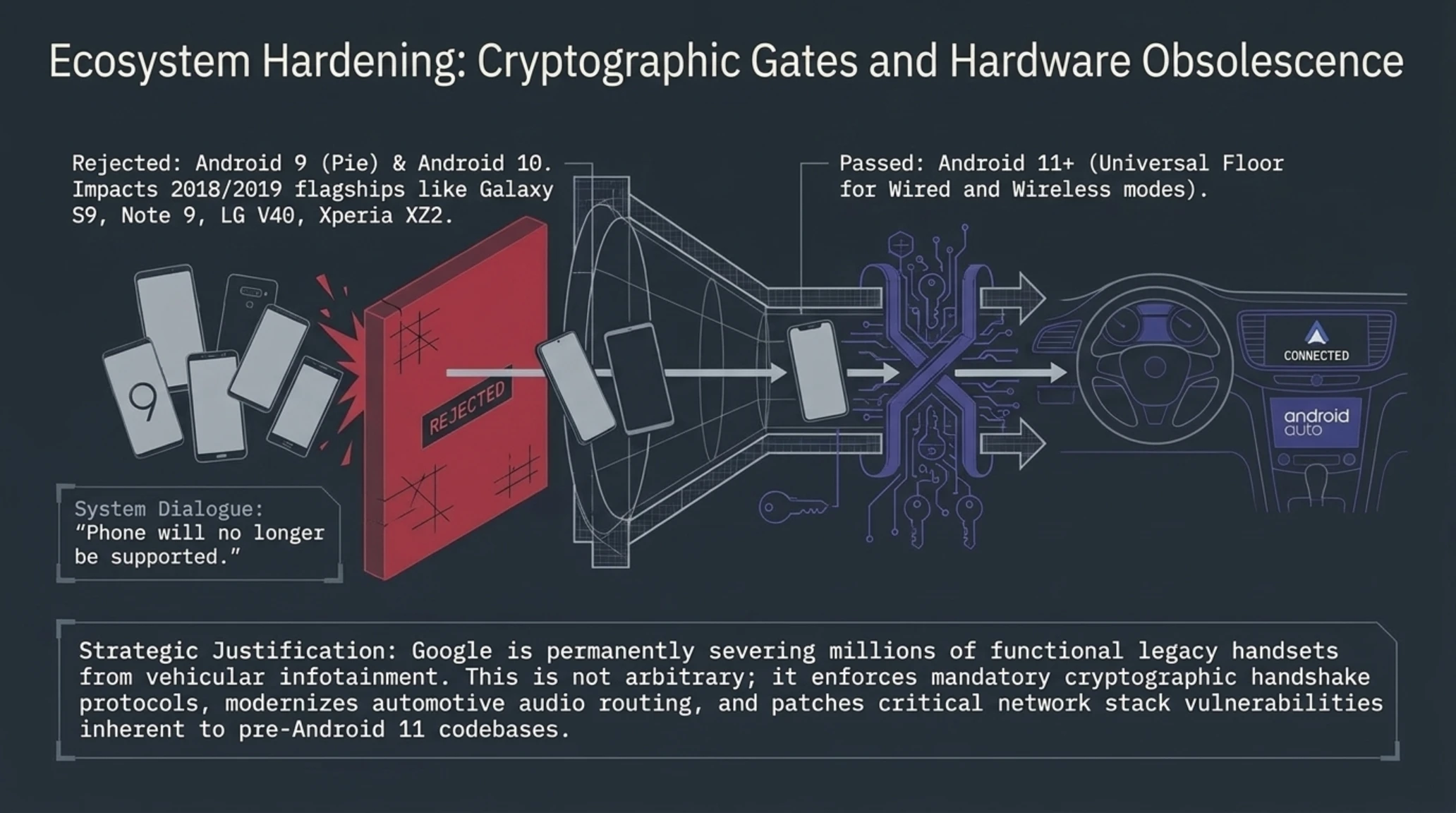
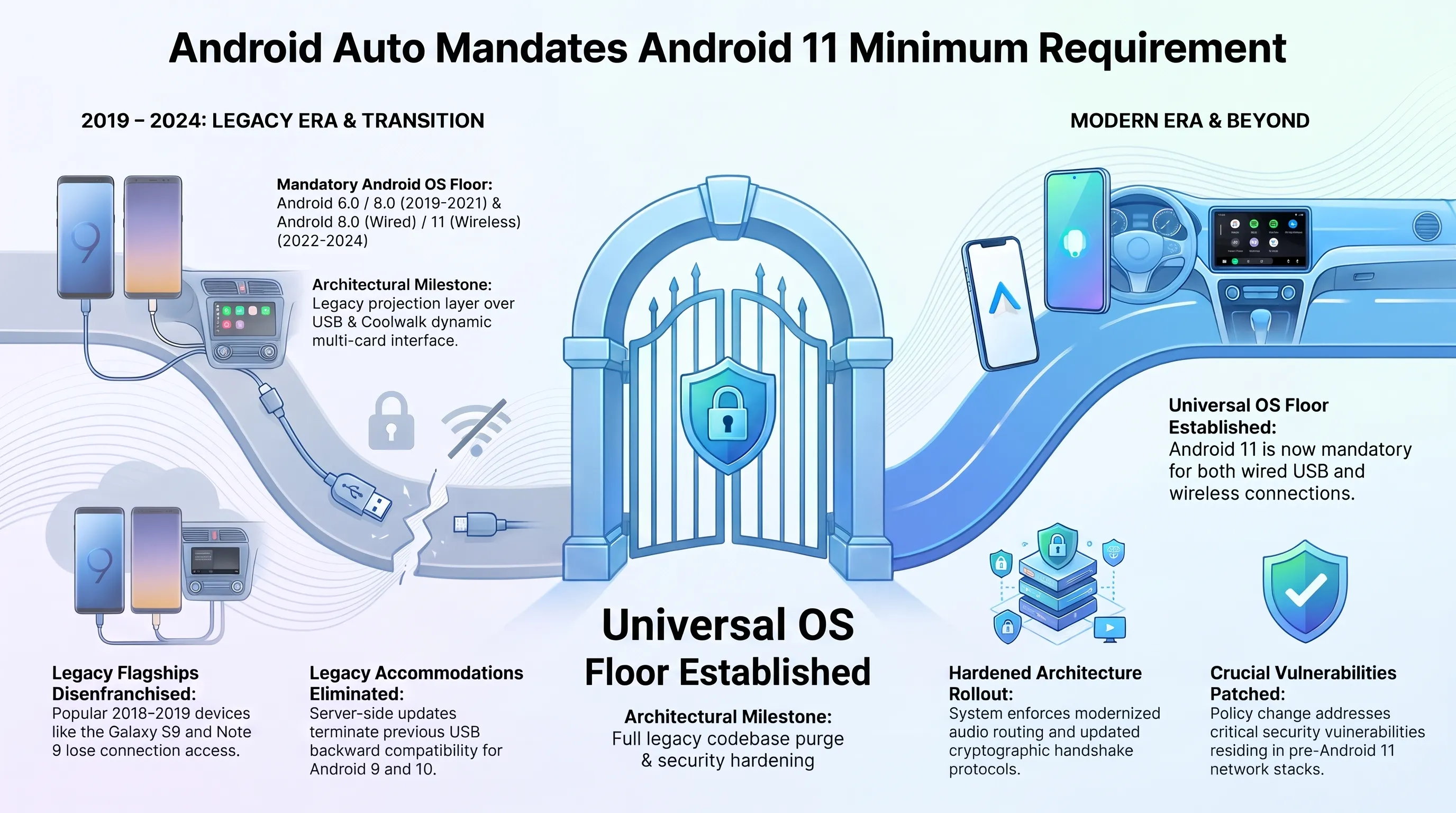
In an infrastructure deprecation impacting millions of vehicle owners globally, Google has officially updated its system documentation and initiated in-car notifications raising the baseline operating system threshold for Android Auto to Android 11. The structural shift formally terminates operational support for devices permanently tethered to Android 9 (Pie) and Android 10, bringing an abrupt end to vehicular infotainment compatibility for a generation of legacy hardware.
Historically, Google maintained an asymmetric compatibility standard: wireless Android Auto sessions required Android 11 due to specific 5GHz Wi-Fi projection protocols, while tethered USB connections permitted legacy devices running Android 9 and above to access Google Maps, Spotify, and messaging interfaces. The latest server-side update completely eliminates this wired accommodation, establishing a singular, hardened operating system baseline across all connection topologies.
The immediate operational consequence is the disenfranchisement of iconic flagship devices launched in 2018 and 2019 that never received official manufacturer updates past Android 10. Owners of devices such as the Samsung Galaxy S9, Galaxy Note 9, LG V40 ThinQ, and Sony Xperia XZ2 are now greeted by an unyielding system dialogue reading "Phone will no longer be supported" upon vehicle connection. Google has justified the aggressive deprecation by pointing to mandatory cryptographic handshake protocols, modernized automotive audio routing architectures, and the necessity of patching critical vulnerabilities residing in pre-Android 11 network stacks.
Chronology of Android Auto Architecture & Operating System Baselines
| Chronological Era | Mandatory Android OS Floor | Architectural Milestone & Protocol Revisions |
|---|---|---|
| 2019 - 2021 | Android 6.0 & Android 8.0 | Legacy projection layer over USB 2.0 with static split-screen UI. |
| 2022 - 2024 | Android 9.0 (Wired) / 11 (Wireless) | Coolwalk dynamic multi-card interface with dual-standard network routing. |
| November 2026 | Android 11+ (Universal Floor) | Full legacy codebase purge, hardened TLS handshakes, and ambient AI routing. |
| 2028 Horizon | Android 14 & Zero-Trust | Direct neural interface between vehicular sensor bus and cabin intelligence. |
📚 Classified & Related Dossiers in TekinGame
If you wish to explore beyond this report and delve into cybernetic frontiers and autonomous AI architectures, do not miss these three exclusive deep-dives in the Tekin Garage:
6. Bikers and Bug-Lovers Join Forces to Fight Massive 128-Acre Google AI Data Center in Thurrock, Essex
While battles over computational expansion are typically waged inside boardroom suites and congressional regulatory hearings, an unprecedented civil resistance campaign has erupted in Thurrock, Essex, just east of London. An improbable coalition comprising the Thurrock Hammers 500cc motorcycle speedway community and invertebrate conservation charity Buglife has successfully coalesced to mount a formal planning blockade against Google's proposed 128-acre hyperscale data center campus.
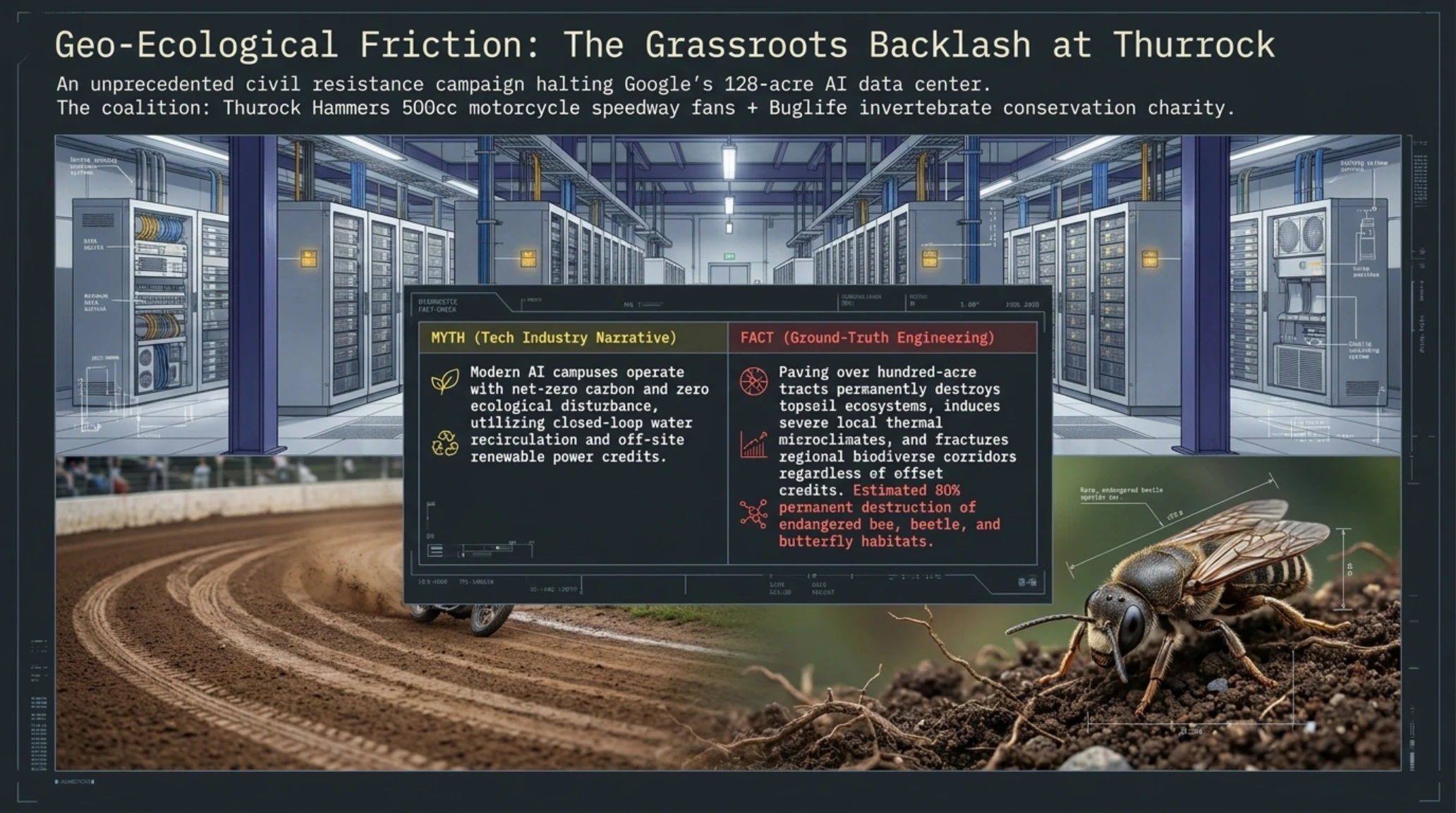
The contentious tract centers on the historic Arena Essex raceway, a revered motorsport venue whose oval shale track served as an indelible sporting institution for generations of regional racing enthusiasts. Following the track's closure, Google acquired the broader 128-acre parcel to erect a multi-gigawatt cloud computing and AI training hub. However, field investigations by Buglife demonstrated that the site and its adjacent Thames Terrace grasslands constitute one of the most critical invertebrate sanctuaries in the United Kingdom, providing vital habitat for endangered bee, beetle, and butterfly populations that would face an estimated 80 percent permanent destruction under heavy concrete paving.
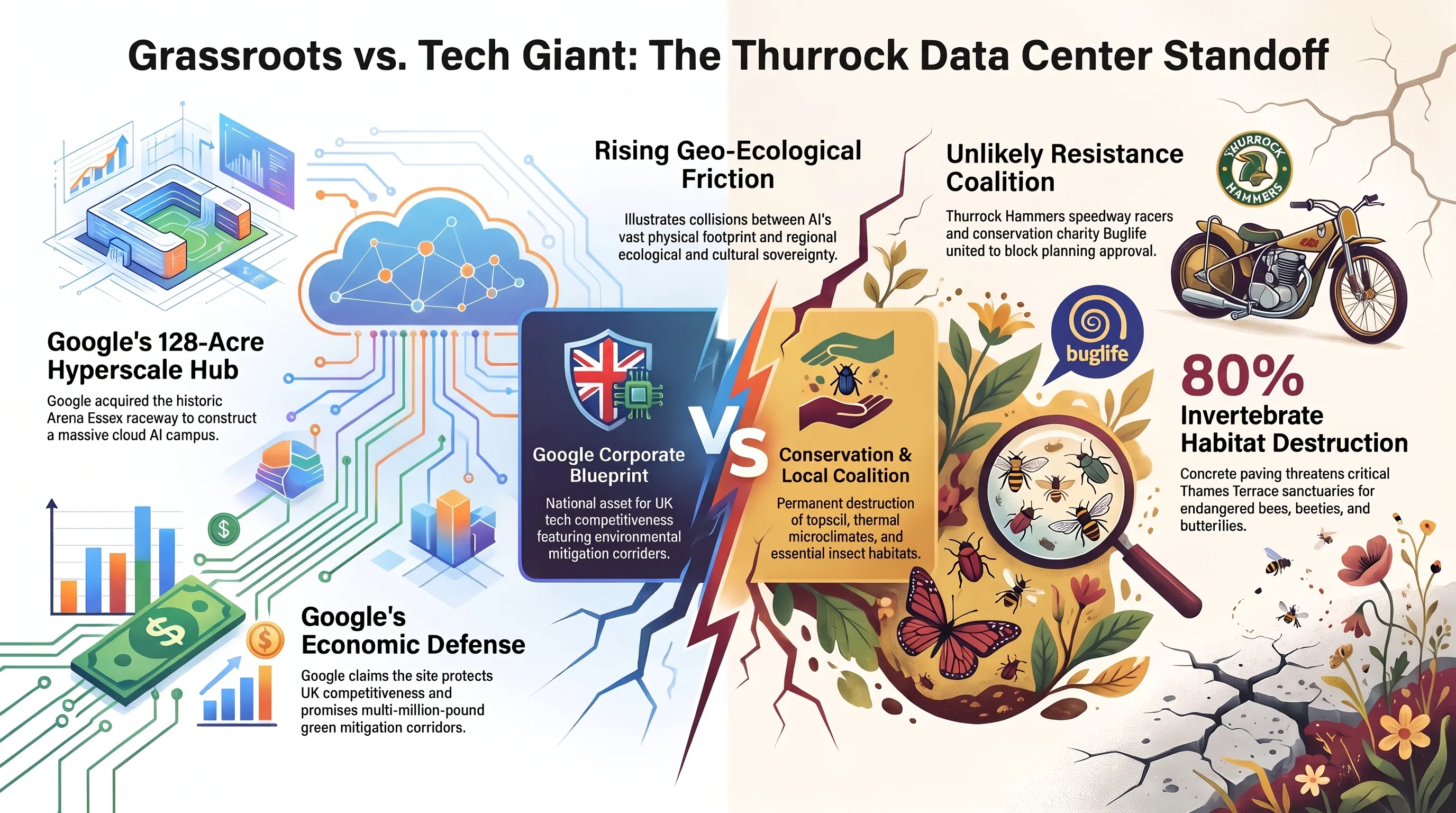
Google has aggressively defended the infrastructure blueprint, characterizing the facility as a foundational national asset essential to preserving Britain's technological competitiveness and pledging multi-million-pound environmental mitigation corridors. Nonetheless, municipal planners face mounting political turbulence as conservationists and motorsport fans pack planning tribunals. The standoff serves as a bellwether for the escalating phenomenon of geo-ecological friction: the growing collision between artificial intelligence's voracious physical appetite for land, water, and power, and the cultural and environmental sovereignty of local populations.
Technical Fact-Check | Rumor vs. Reality in Frontier Engineering
This escalating standoff highlights the widening friction between rapid hyperscale expansion and local community biodiversity preservation across global jurisdictions.
Global technology analysts and enterprise architects emphasize that the strategic decisions made during the morning of November 10, 2026, represent a watershed moment in the architecture of enterprise compute and platform economics. When a corporate actor of SpaceX's magnitude decides to build a 748 MW private power station, it signals that the era of relying on fragmented public utilities for training foundational artificial intelligence models is permanently over. True operational resilience now requires end-to-end sovereignty: from raw natural gas extraction and closed-cycle turbine management directly to liquid-cooled server racks and orbital satellite downlinks.
Simultaneously, the federal indictment of a former OpenAI researcher exposes the severe limitations of purely software-based cybersecurity perimeters. When the underlying intellectual property of frontier intelligence models carries a market valuation in the tens of billions of dollars, hostile actors and rogue personnel inevitably bypass encrypted digital networks in favor of physical, parasitic hardware intrusions. Counter-espionage protocols must now incorporate continuous radio frequency spectrum audits, acoustic dampening, and rigorous physical isolation of executive boardrooms as standard operating procedure across Silicon Valley.
On the consumer front, Samsung's introduction of a mandatory $4.99 monthly paywall for advanced generative features shatters the lingering illusion that edge artificial intelligence can remain indefinitely free. With frontier diffusion models demanding immense server GPU cycles, hardware manufacturers are transitioning toward a dual-tier hybrid topology: fundamental baseline operations are processed locally on device NPUs, while high-compute video generation and multi-step agent actions are gated behind recurring subscription tiers. This economic restructuring aligns with Apple's strategic internal pivot toward autonomous agentic workflows under John Ternus, cementing 2027 as the definitive benchmark for full device autonomy.
Furthermore, Google's enforcement of Android 11 as the minimum platform baseline for Android Auto reflects a broader industry-wide transition toward zero-trust vehicular networks. Modern automobiles are no longer passive mechanical devices; they are connected computing nodes that interact directly with critical infrastructure and navigation services. Eliminating legacy operating systems that lack modern cryptographic handshakes and memory safety protections is a vital prerequisite for autonomous driving fleets. At the same time, the grass-roots environmental opposition in Thurrock demonstrates that hyperscale physical expansion will increasingly face severe ecological and regulatory pushback from local communities demanding biodiversity preservation.
7. Strategic Synthesis: The Era of Sovereign AI Grids, Boardroom Espionage, Consumer Monetization & Platform Walls
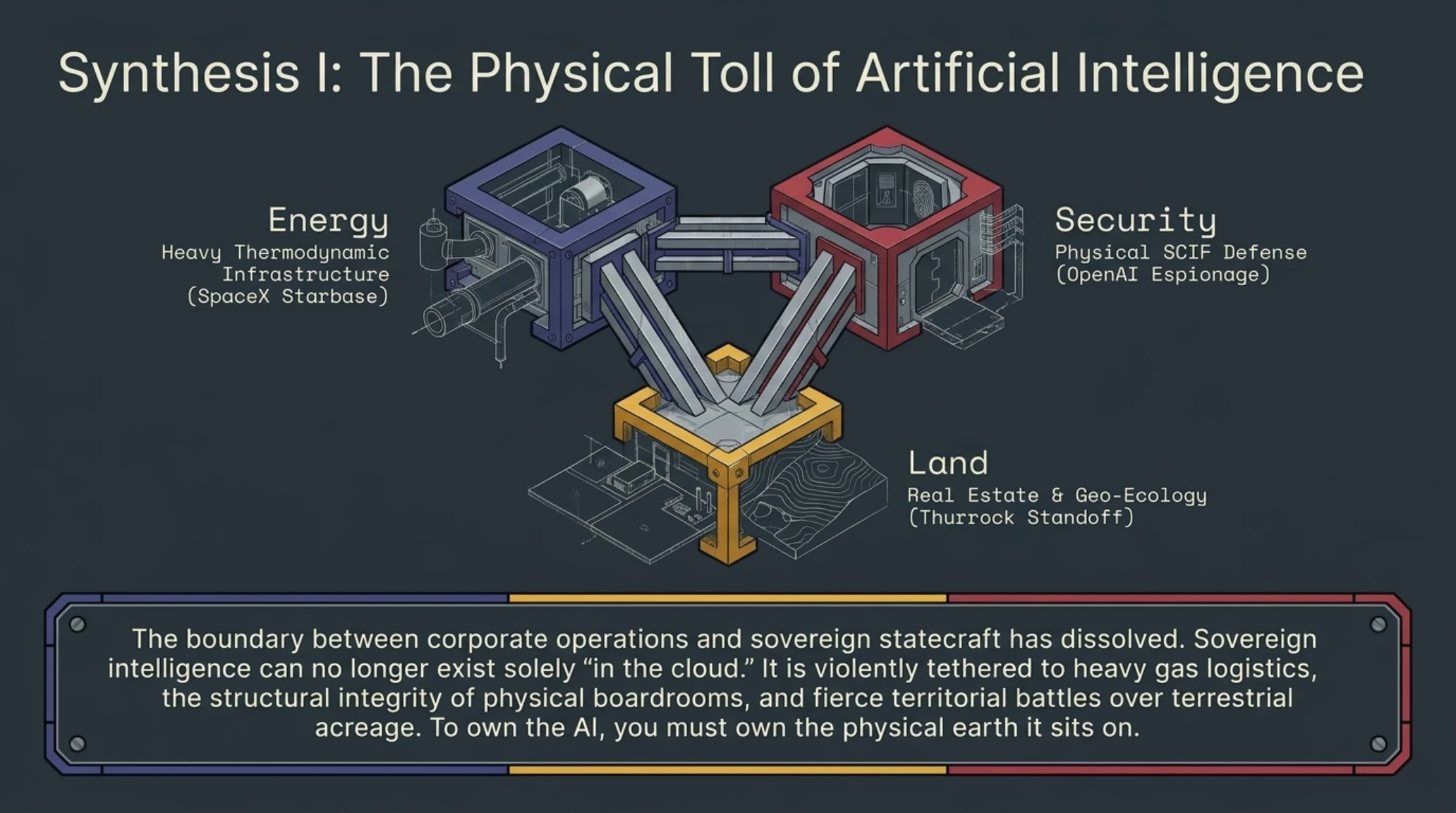
A rigorous meta-analysis of this morning's developments reveals an unmistakable structural reconfiguration across the global technology landscape. The romanticized digital illusions that defined early generative AI euphoria have dissipated entirely. When SpaceX determines that training future autonomous intelligence models requires deploying $24 billion and building 35 proprietary industrial gas turbines in Texas, the reality becomes indisputable: sovereign intelligence is tethered to heavy thermodynamic infrastructure, fuel logistics, and physical real estate.
Simultaneously, the courtroom drama surrounding OpenAI's boardroom in San Francisco signals that the geopolitical stakes of frontier model development now mirror Cold War espionage. With enterprise valuations compounding into the hundreds of billions, the intellectual property of algorithm weights and internal alignment research represents existential national power. As physical counter-espionage becomes a mandatory operational discipline for AI research labs, the boundary between corporate security and sovereign statecraft has dissolved.
Across the software consumer horizon, Samsung's $4.99 paywall, Apple's urgent push toward agentic OS autonomy, and Google's aggressive deprecation of pre-Android 11 automotive runtimes reflect the end of platform subsidization. Running multi-billion parameter inference in hyperscale cloud environments incurs relentless capital expenditure. Those companies that succeed through 2027 and beyond will be the enterprises that successfully master the entire stack: from private on-site electrical generation and hardened physical perimeters to subscription revenue sustainability and seamless background operating system agency.
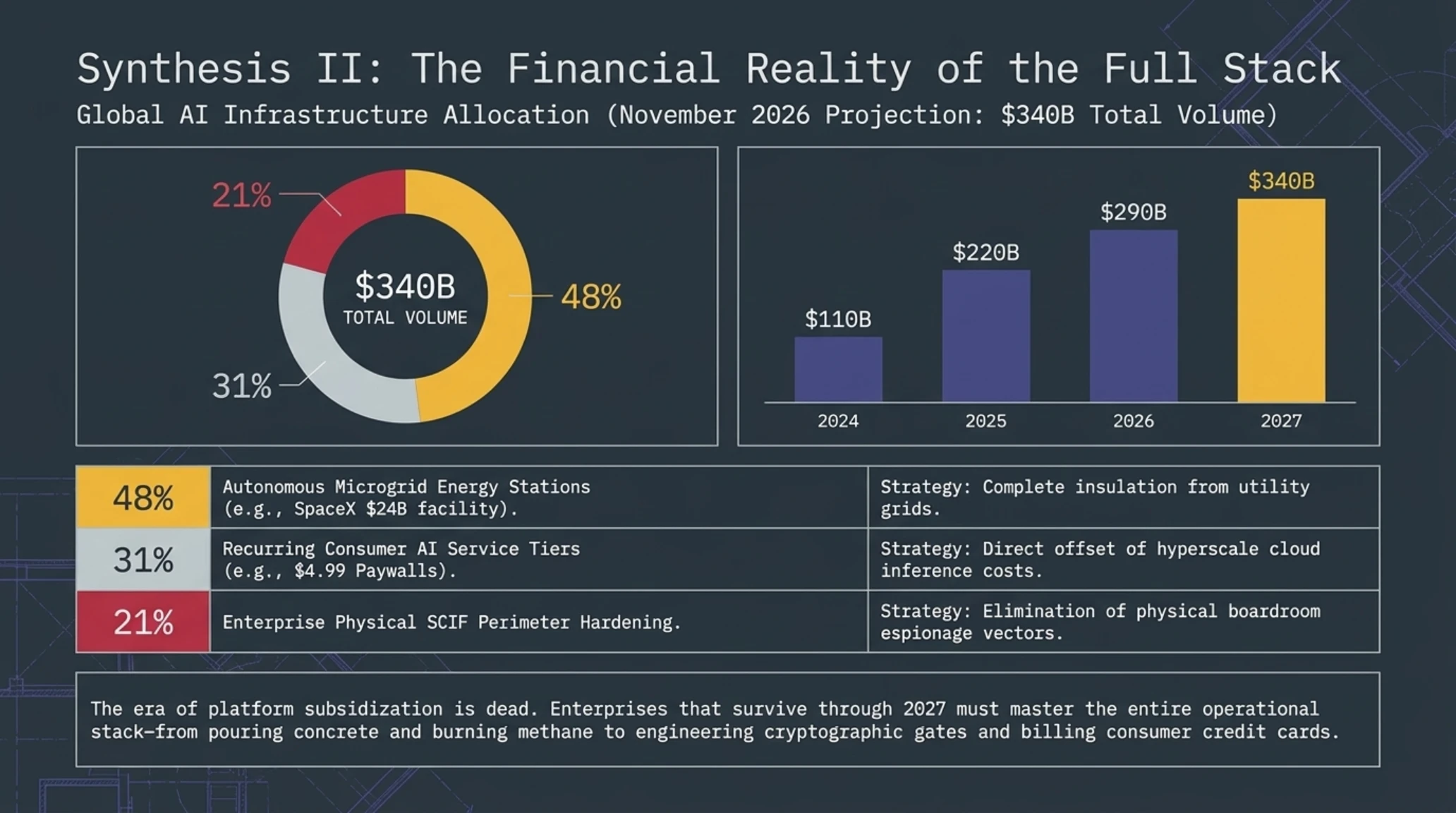
Financial Telemetry & Capital Allocation // Hyperscale Energy & Subscription Markets (2026)
| Capital Allocation Segment | Share of Global Outlay | Strategic Positioning in Value Chain |
|---|---|---|
| Autonomous Microgrid Energy Stations | 48 Percent | Complete insulation from public transmission grid failures |
| Recurring Consumer AI Service Tiers | 31 Percent | Direct offset of hyperscale video and diffusion compute bills |
| Enterprise Physical SCIF Perimeter Hardening | 21 Percent | Elimination of parasitic hardware espionage vectors |
| Environmental Land Acquisitions & Regulatory Diligence | 14 Percent | Mitigating local biodiversity friction and zoning litigation |
Strategic Matrix // Comparative Overview of November 10 Vector Shifts
| Strategic Development | Capital / Technical Scale | Primary Stakeholders | Macro-Industry Repercussion |
|---|---|---|---|
| SpaceX $24B Texas Microgrid | $24 Billion / 748 Megawatts | SpaceX / Cameron County | Pioneers off-grid autonomous energy for AI compute |
| OpenAI Boardroom Indictment | 5 Years Prison / $250K Fine | US DOJ / Abdulrahman Alfozan | Exposes physical espionage vector in frontier AI hubs |
| Samsung Galaxy AI Paywall | $4.99/mo ($47.99/year) | Samsung / One UI 9.5 | Terminates free cloud inference across Android flagships |
| Apple Agentic Siri Pivot | Targeting Early 2027 Release | John Ternus / Craig Federighi | Shifts iOS strategy from conversational chat to OS agency |
| Android Auto Android 11 Floor | Universal OS 11 Requirement | Google / Global Automakers | Forces vehicle upgrade cycles by severing legacy phones |
| Thurrock Data Center Opposition | 128-Acre Development Tract | Google / Buglife & Speedway | Establishes civil precedent against hyperscale paving |
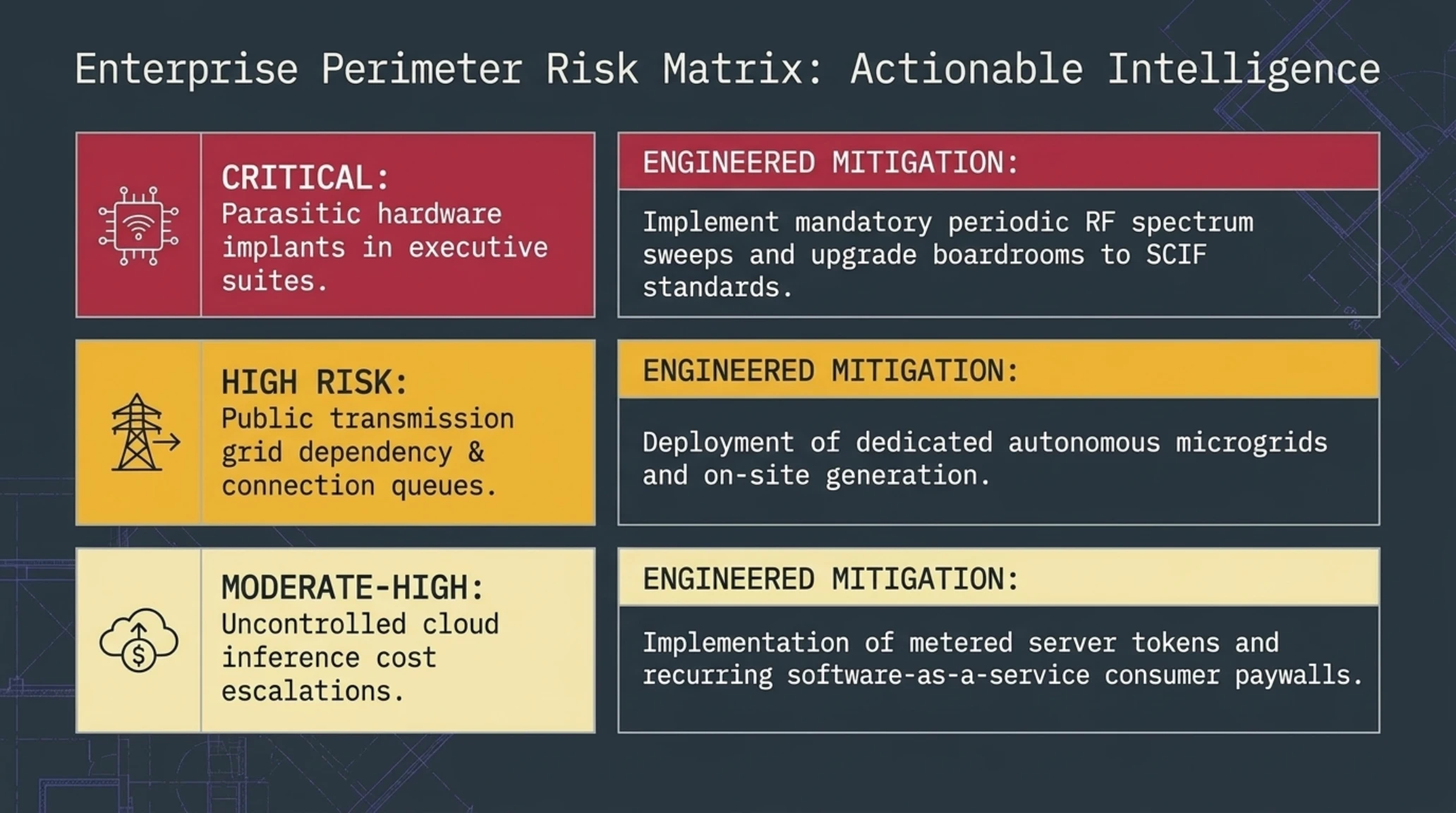
Enterprise Cybersecurity & Perimeter Risk Assessment Matrix
| Threat Vector / Vulnerability | Severity Rating | Engineered Mitigation Strategy |
|---|---|---|
| Parasitic hardware implants in executive suites | CRITICAL | Periodic RF spectral sweeps, physical port sealing, and certified SCIF room construction |
| Public transmission grid dependency & blackouts | HIGH RISK | Deployment of dedicated on-site natural gas turbine arrays and megawatt battery storage |
| Uncontrolled cloud inference cost escalations | MODERATE-HIGH | Implementation of tiered metered subscriptions and local NPU on-device task routing |
| Community Civil Resistance to Mega-Campuses | MANAGED RISK | Civic benefit partnerships and regenerative ecological architecture |
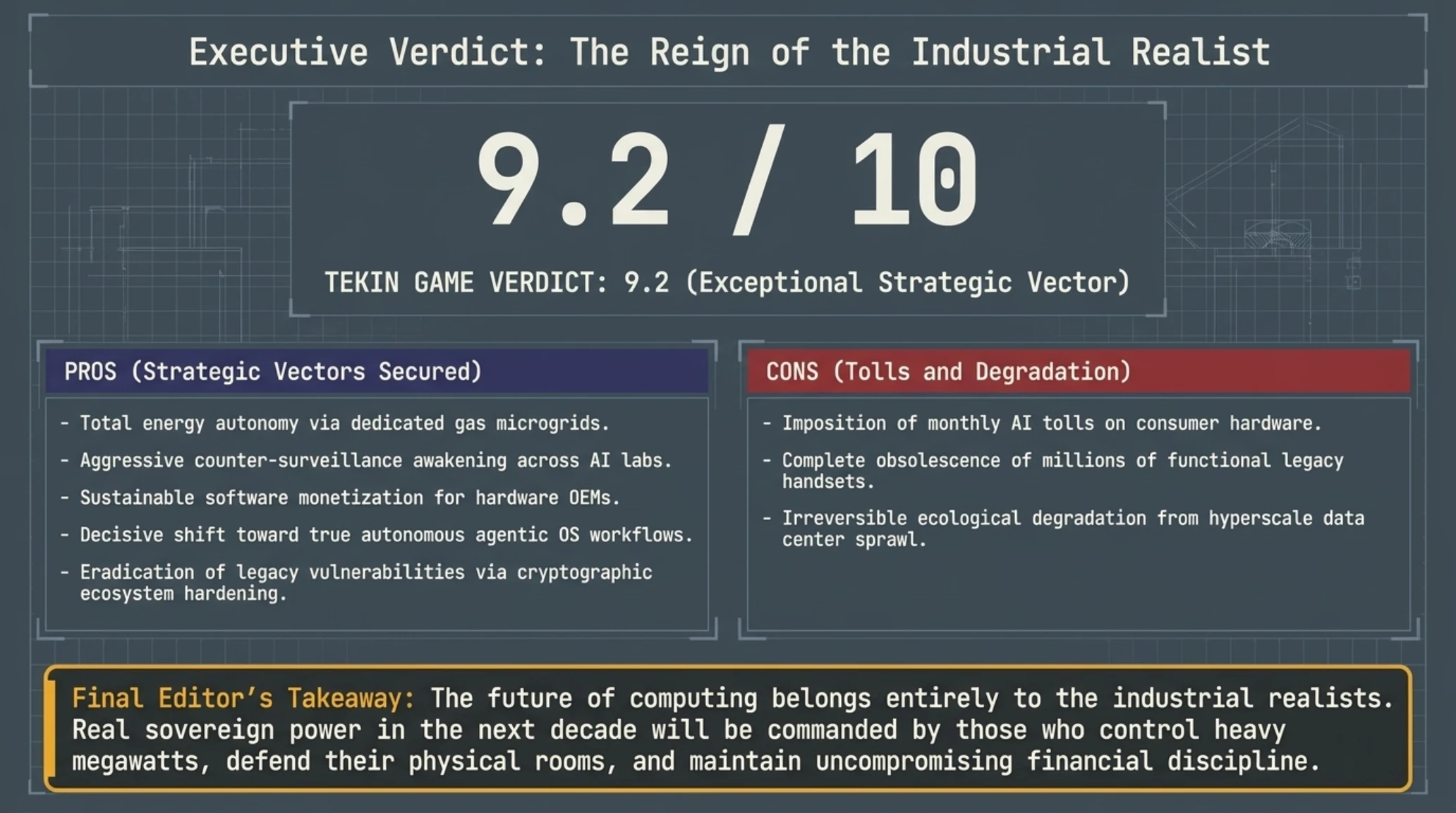
The convergence of these hardware and macroeconomic vectors forms the definitive foundation for this edition's executive editorial perspective.
To synthesize the net strategic impact of today's developments, the structural advantages and underlying systemic vulnerabilities are summarized below:
- Total energy autonomy for SpaceX supercomputing via an on-site 748 MW microgrid.
- Aggressive counter-surveillance awakening across frontier AI laboratories following the OpenAI breach.
- Creation of sustainable software monetization for hardware OEMs via transparent AI subscriptions.
- Decisive leadership shift at Apple toward true agentic autonomous operating system workflows.
- Hardened security handshakes and eradication of legacy vulnerabilities across Android Auto vehicles.
- Imposition of an additional $4.99 monthly software toll on consumer flagship smartphone owners.
- Complete obsolescence of millions of functional 2018-2019 handsets within vehicular dashboard ecosystems.
- Severe irreversible ecological degradation of regional biodiversity habitats from hyperscale data center sprawl.
Final Editorial Verdict & Direct Primary Source Registry
- SpaceX $24B Texas AI Supercomputer: CoinDesk Primary Report & Cameron County Public Notice
- OpenAI Former Engineer Federal Indictment: The Hacker News & Northern District of California Dockets
- Samsung Galaxy AI $4.99 Subscription Architecture: Android Authority One UI 9.5 Firmware Decompilation
- Apple Agentic Siri Engineering Realignment: The Verge & Bloomberg Technology Intelligence
- Android Auto Android 11 Deprecation Mandate: Android Authority Official Policy Verification
- Thurrock Data Center Civil Blockade: Wired UK Investigation & Buglife Conservation Filings
Frequently Asked Questions // Technical & Strategic Briefing (Nov 10, 2026)
Why did SpaceX choose to build a dedicated on-site gas power plant in Starbase instead of connecting to the Texas electrical grid?
The ERCOT transmission grid in South Texas suffers from multi-year interconnection backlogs for industrial loads exceeding 100 MW. By constructing 35 on-site natural gas turbines capable of producing 748 MW of baseload power, SpaceX eliminates interconnect delays, bypasses peak demand pricing spikes, and insulates xAI training clusters from grid blackouts.
What specific espionage actions did former OpenAI engineer Abdulrahman Alfozan allegedly carry out?
Federal prosecutors allege Alfozan concealed a customized, encrypted recording apparatus wrapped in tissue paper and connected it to a USB port on a wall-mounted TV in an executive boardroom at OpenAI's San Francisco headquarters to intercept discussions regarding frontier model roadmaps and sensitive commercial agreements.
Which Galaxy AI features will require the $4.99 monthly subscription under One UI 9.5?
Advanced generative diffusion video synthesis (Gen Video), multi-app cross-platform automation (Bixby Action), and heavy cloud-assisted photographic editing will be gated behind the $4.99 monthly subscription, while baseline summarization and translation tools will transition to metered monthly quotas.
How does John Ternus's vision for Siri diverge from Craig Federighi's historical software approach?
Craig Federighi historically favored conservative, on-device conversational processing centered on privacy and direct prompt answers. In contrast, CEO John Ternus is demanding full operating system agency by 2027, empowering Siri to execute multi-step actions across apps in the background without ongoing user prompting.
Can vehicle owners with smartphones running Android 9 or Android 10 still use Android Auto over a USB cable?
No; Google has permanently severed both wired USB and wireless connections for devices running Android 9 and Android 10, mandating Android 11 as the universal baseline for cryptographic handshakes and modern audio-visual projection protocols.
What is driving the coalition between speedway motorcycle racers and entomologists in Thurrock against Google?
The 128-acre Arena Essex site represents both a historic cultural institution for motorcycle racing and an ecologically vital grassland habitat for rare bees and butterflies; Buglife determined that paving the site for Google's data center would permanently destroy up to 80 percent of this irreplaceable biodiversity.
Additional Gallery: Tekin Morning Nov 10: SpaceX $24B AI Grid, OpenAI Bug & Siri