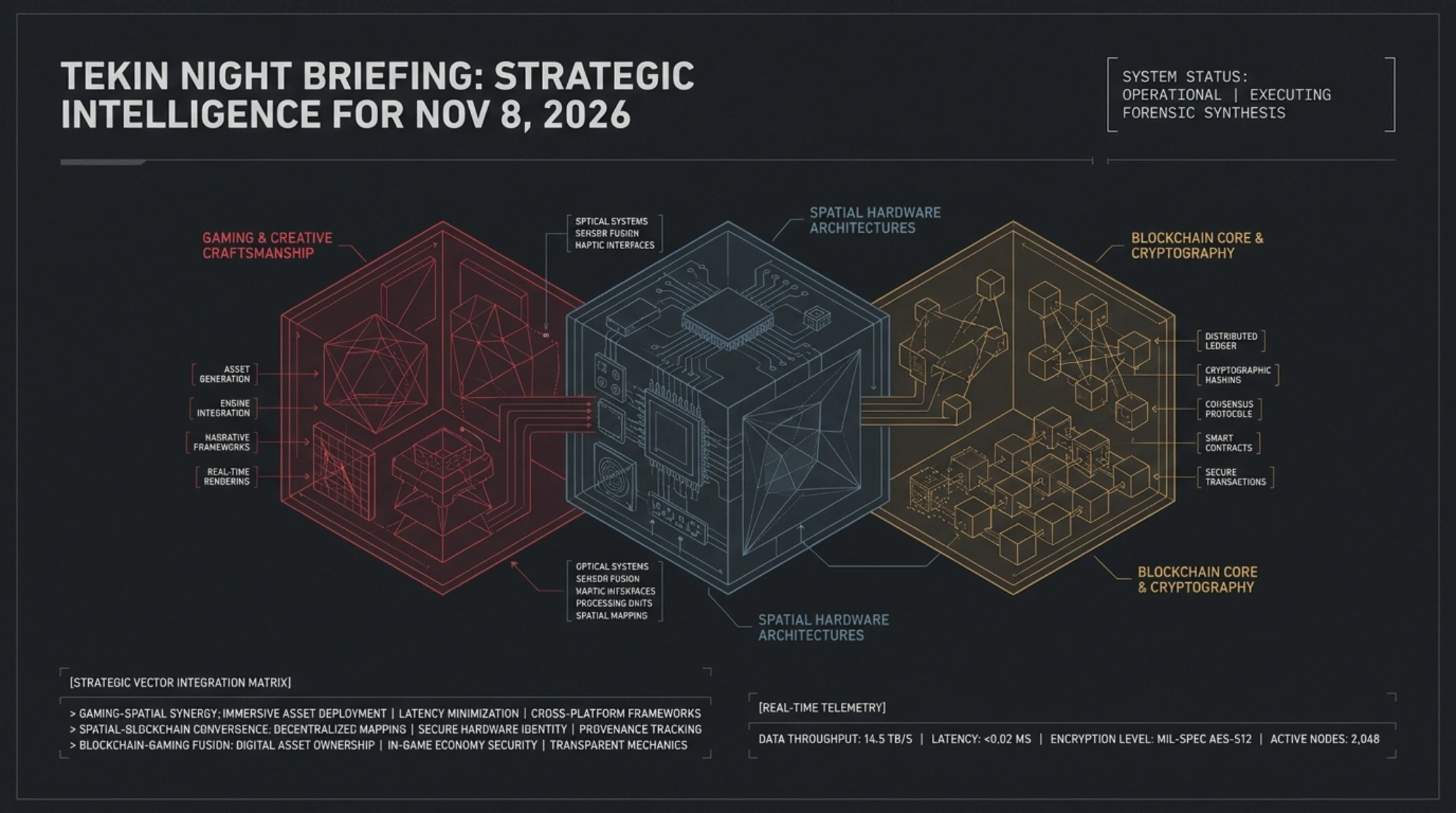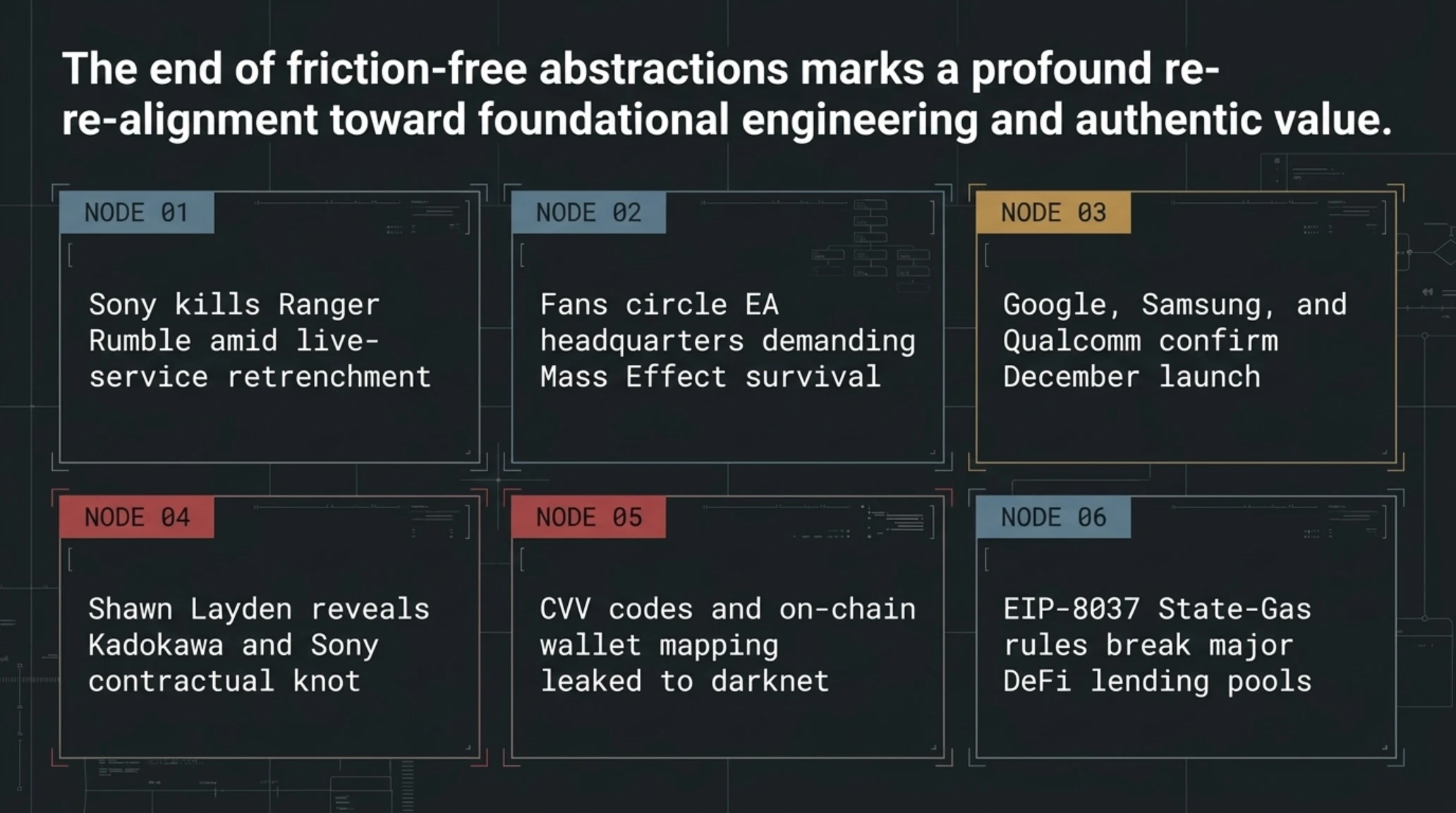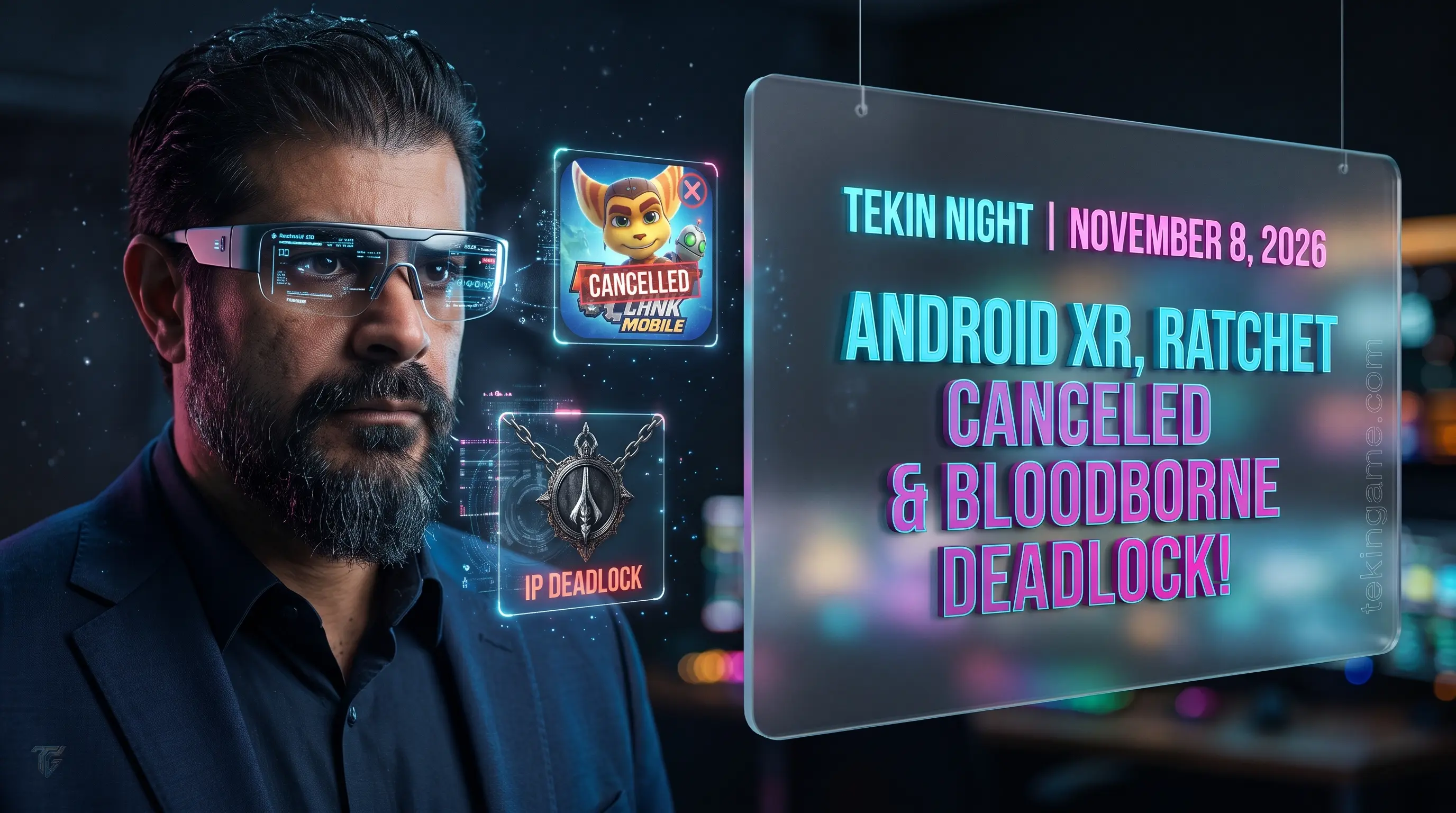
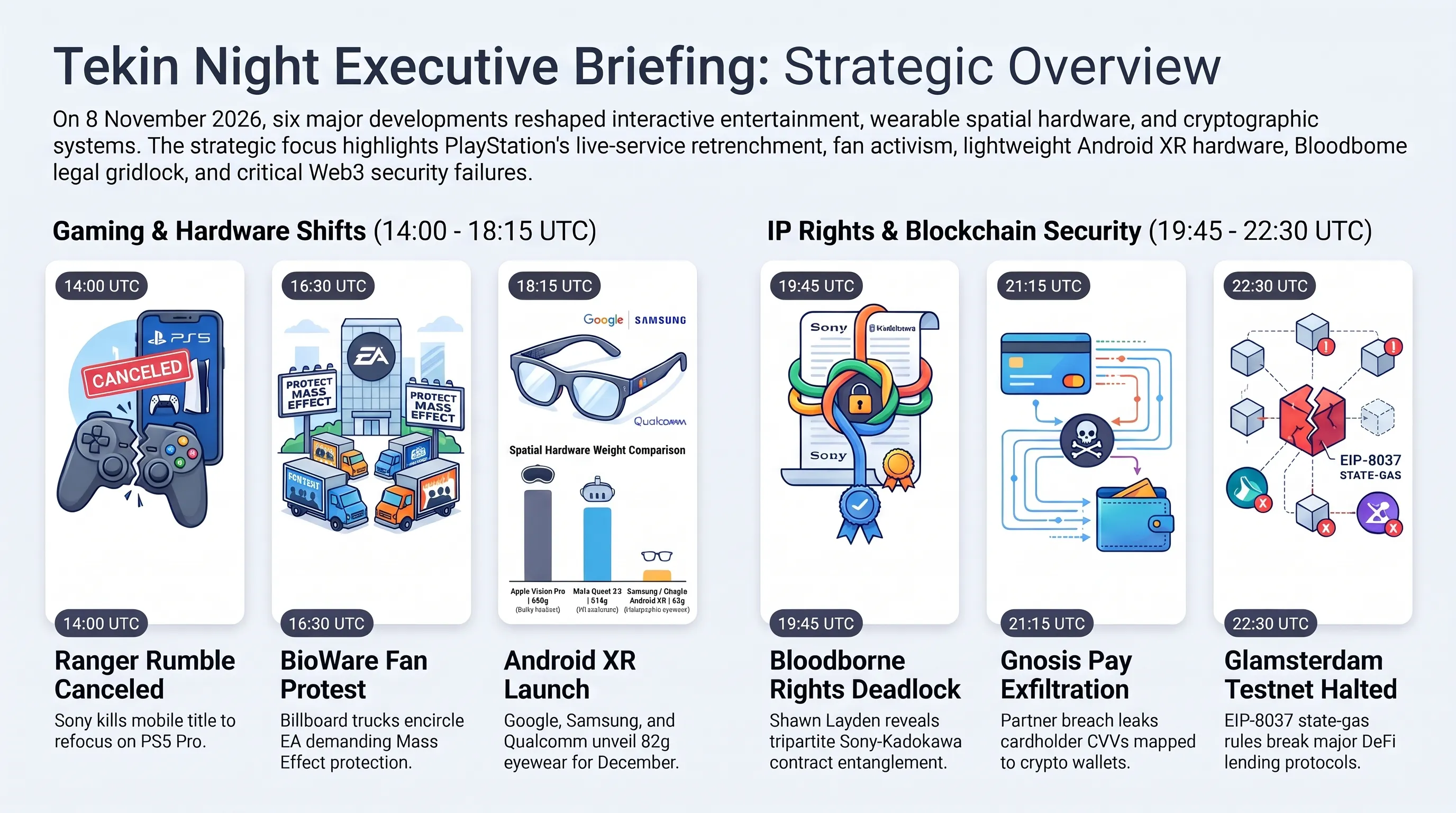
Tekin Night for Nov 8, 2026 analyzes six major shifts: (1) Sony terminating Ratchet & Clank mobile to focus on PS5 Pro single-player; (2) Mass Effect fans besieging EA headquarters on N7 Day; (3) Google and Samsung confirming 82-gram Android XR smart glasses; (4) Shawn Layden revealing Kadokawa's IP lock on Bloodborne; (5) Gnosis Pay's debit card breach leaking CVVs; and (6) Ethereum halting the Glamsterdam testnet over EIP-8037.
Tekin Night | Strategic Intelligence & Evening Briefing for November 8, 2026
The closing hours of Sunday, November 8, 2026, illuminate a profound re-alignment across the global entertainment technology and decentralized finance landscapes. For nearly a decade, multinational gaming publishers chased the ephemeral promise of perpetual recurring revenue through live-service monetization, often cannibalizing their most beloved creative studios to feed engagement algorithms. That speculative bubble is now definitively collapsing under the combined weight of consumer revolt, critical post-mortems, and institutional reassessments. Simultaneously, computing hardware is reaching an inflection point as spatial augmented reality transitions from cumbersome head-mounted displays into natural, lightweight frames, while decentralized finance confronts the brittle realities of its cryptographic bridges and foundational state accounting.
Key Strategic Vectors of November 8, 2026 Evening Briefing
Sony Kills Off Ratchet & Clank: Ranger Rumble Mobile Game Just 12 Months After Reveal
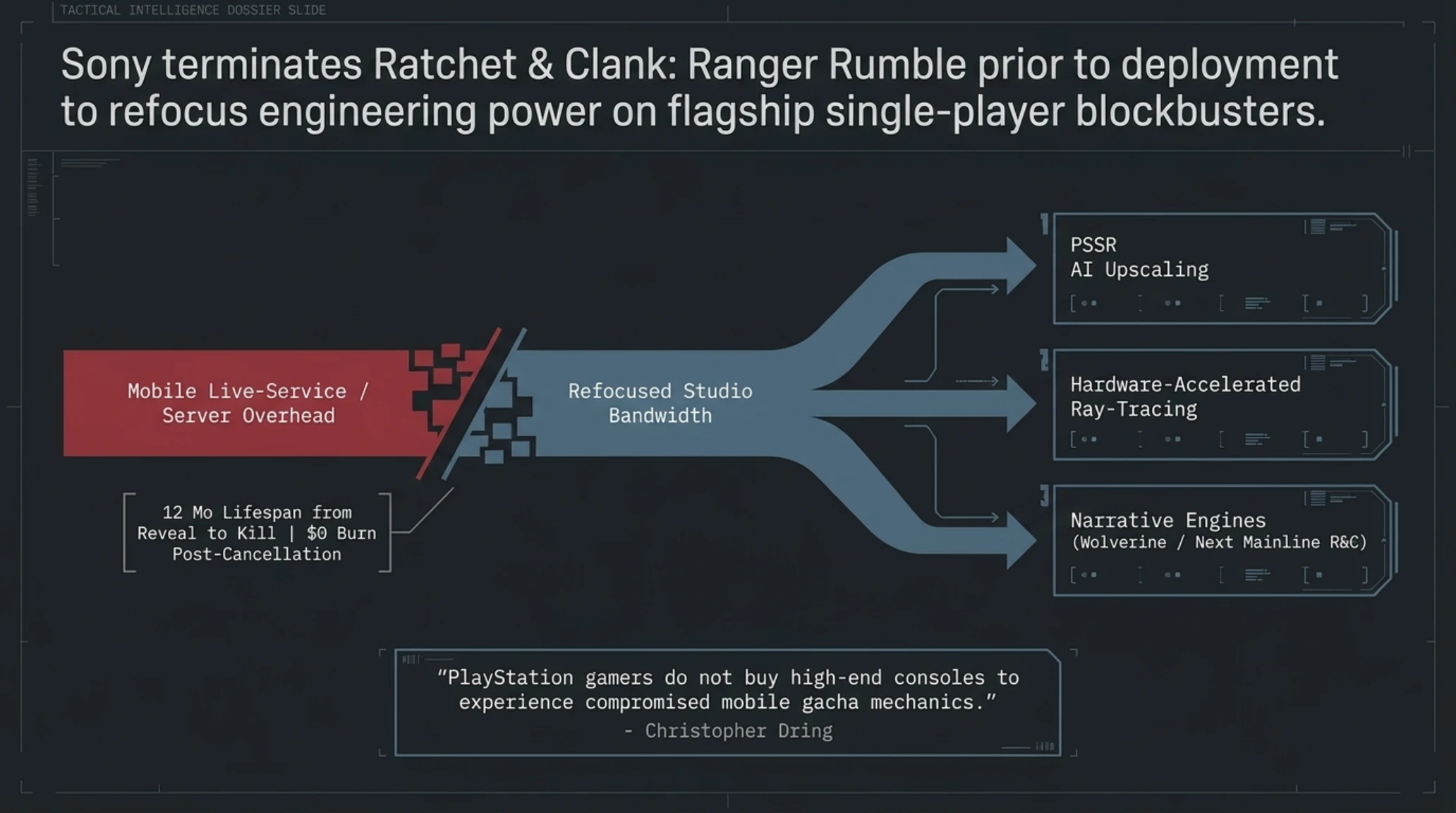
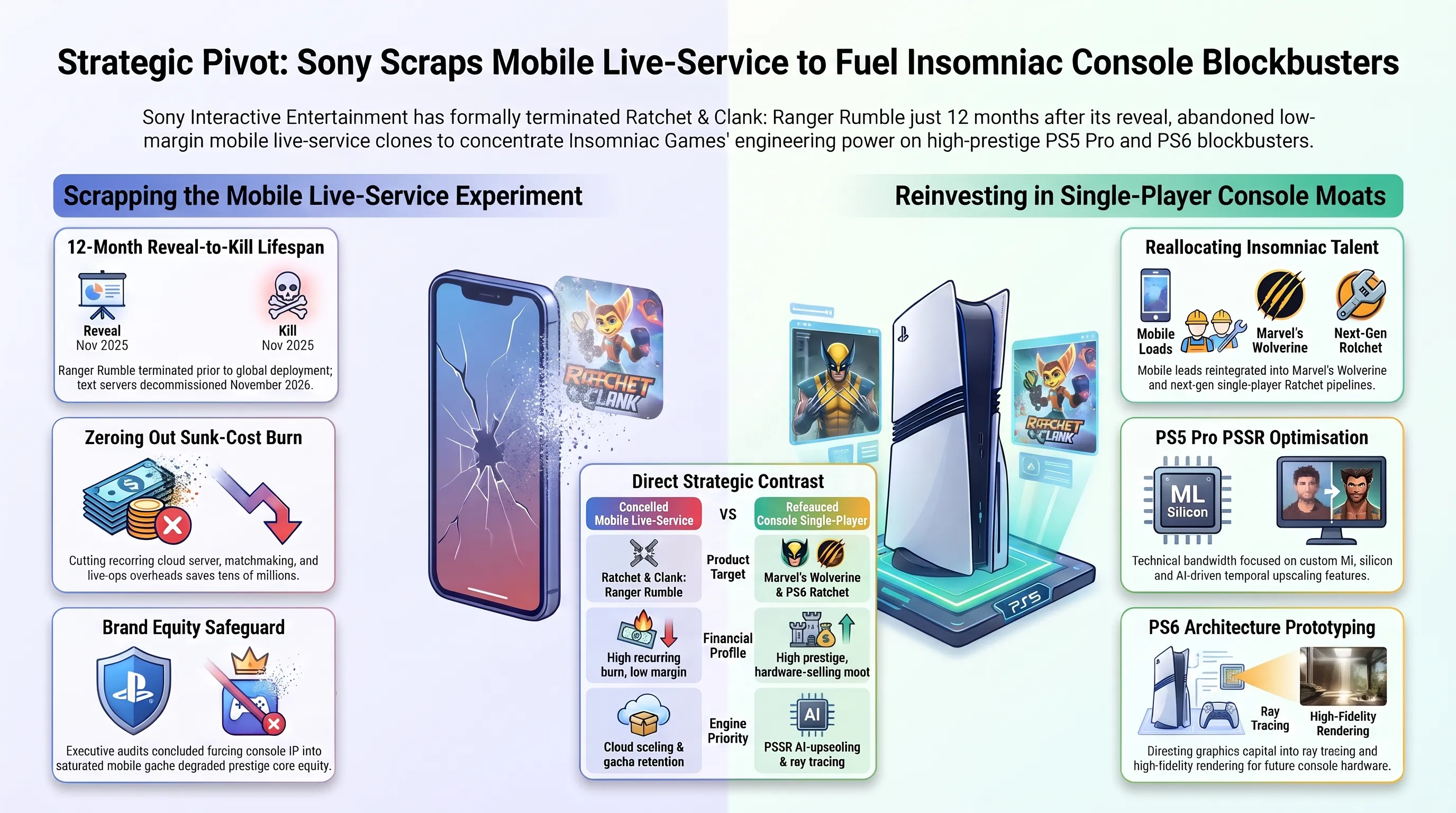
In a decisive operational course correction that underscores the sweeping strategic reorganization across PlayStation Studios, Sony Interactive Entertainment (SIE) has formally terminated development of Ratchet & Clank: Ranger Rumble. Originally announced in late 2025 with considerable marketing fanfare as the vanguard of Sony's aggressive expansion into mobile multiplayer gaming, the title has been abruptly canceled prior to achieving global deployment. Dedicated test servers currently supporting closed-beta regional cohorts will be permanently decommissioned at the conclusion of November 2026, with all internal development personnel reassigned to core console infrastructure projects.
The swift euthanasia of Ranger Rumble reflects a fundamental philosophical reckoning inside Sony headquarters following the catastrophic market failure of Concord earlier this year. Under the interim leadership of Hiroki Totoki and newly installed studio management, PlayStation has systematically audited its multi-billion-dollar live-service pipeline. The forensic conclusion was stark: attempting to force historic single-player console intellectual property into the saturated, hyper-commoditized mobile free-to-play arena not only fails to deliver predictable cash flow, but actively degrades prestige brand equity cultivated over two decades.
Why the Cancellation of Ranger Rumble Signals a PlayStation Renaissance
By ruthlessly severing sub-scale mobile live-service experiments before expensive marketing rollouts, Sony concentrates engineering capital back into its premier single-player narrative engines.
For Insomniac Games, the studio behind the legendary franchise, this cancellation represents an unmitigated operational victory. Internal leaks and staffing registers confirm that technical leads previously tasked with managing mobile server scaling and battle-pass retention mechanics have been reintegrated into the primary production pipelines for Marvel's Wolverine and early conceptual prototyping for the next mainline, single-player Ratchet & Clank adventure engineered specifically for PlayStation 5 Pro hardware and the upcoming PlayStation 6 architecture. Wall Street investors welcomed the decisiveness, recognizing that Sony's core economic moat remains premium, hardware-selling narrative experiences rather than low-margin mobile clones.
From an engineering and technological budgeting standpoint, the reallocation of talent back to Insomniac's core console engine delivers immediate technical dividends. The studio's proprietary engine architecture is currently being overhauled to exploit the advanced hardware features of the PlayStation 5 Pro, most notably PlayStation Spectral Super Resolution (PSSR) an AI-driven temporal upscaling pipeline powered by custom machine learning silicon within the console's GPU. Maintaining a live-service mobile backend required continuous expenditure on cloud server instances, regional matchmaking clusters, anti-cheat telemetry, and live-ops content cycles. By severing these recurring overheads, Sony can direct tens of millions of dollars into high-fidelity character rendering, volumetric lighting, and hardware-accelerated ray tracing pipelines that definitively establish generational hardware supremacy.
EA Headquarters Circled by "Save Mass Effect" Billboard Trucks on N7 Day Amid BioWare Turmoil
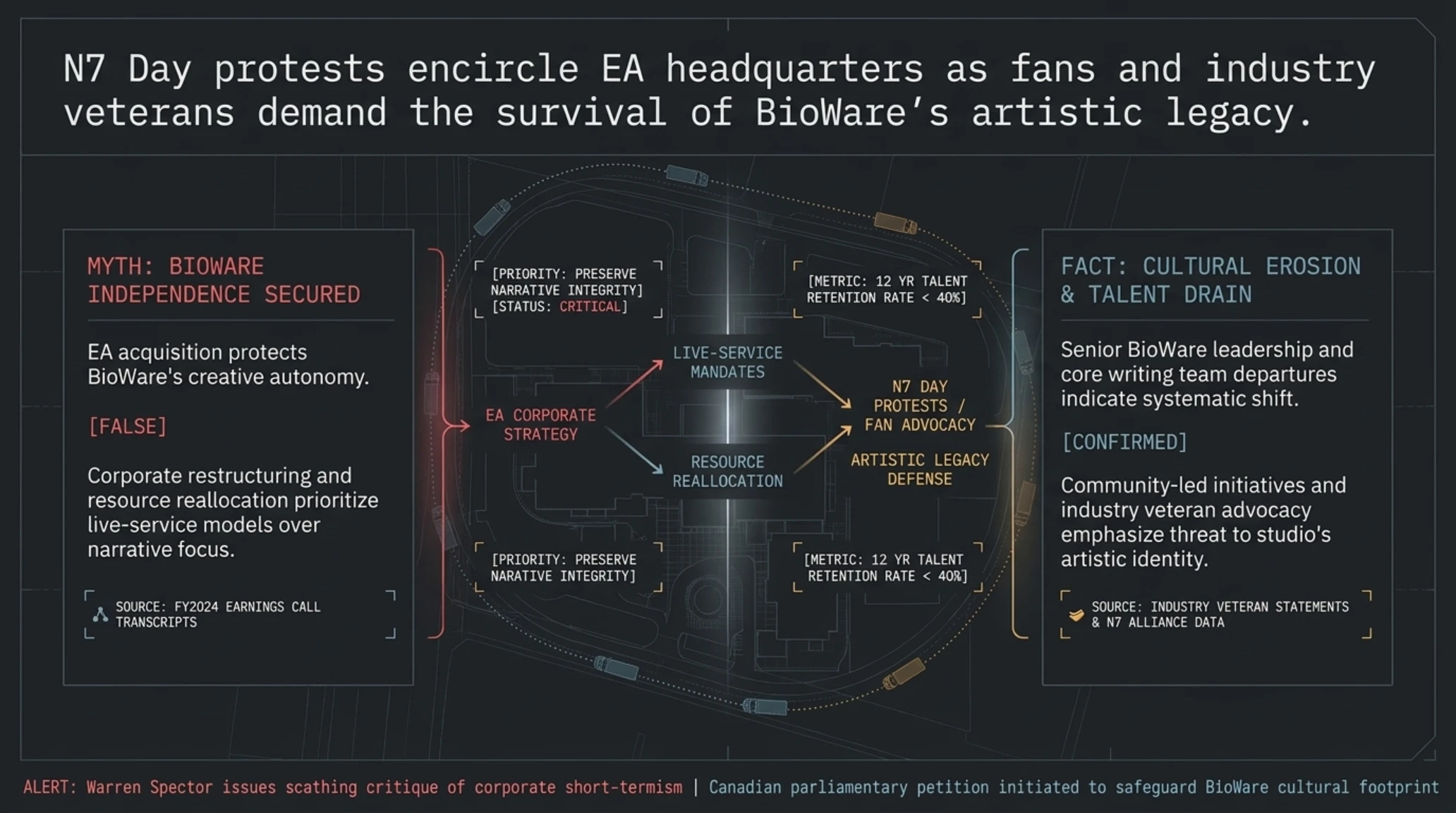
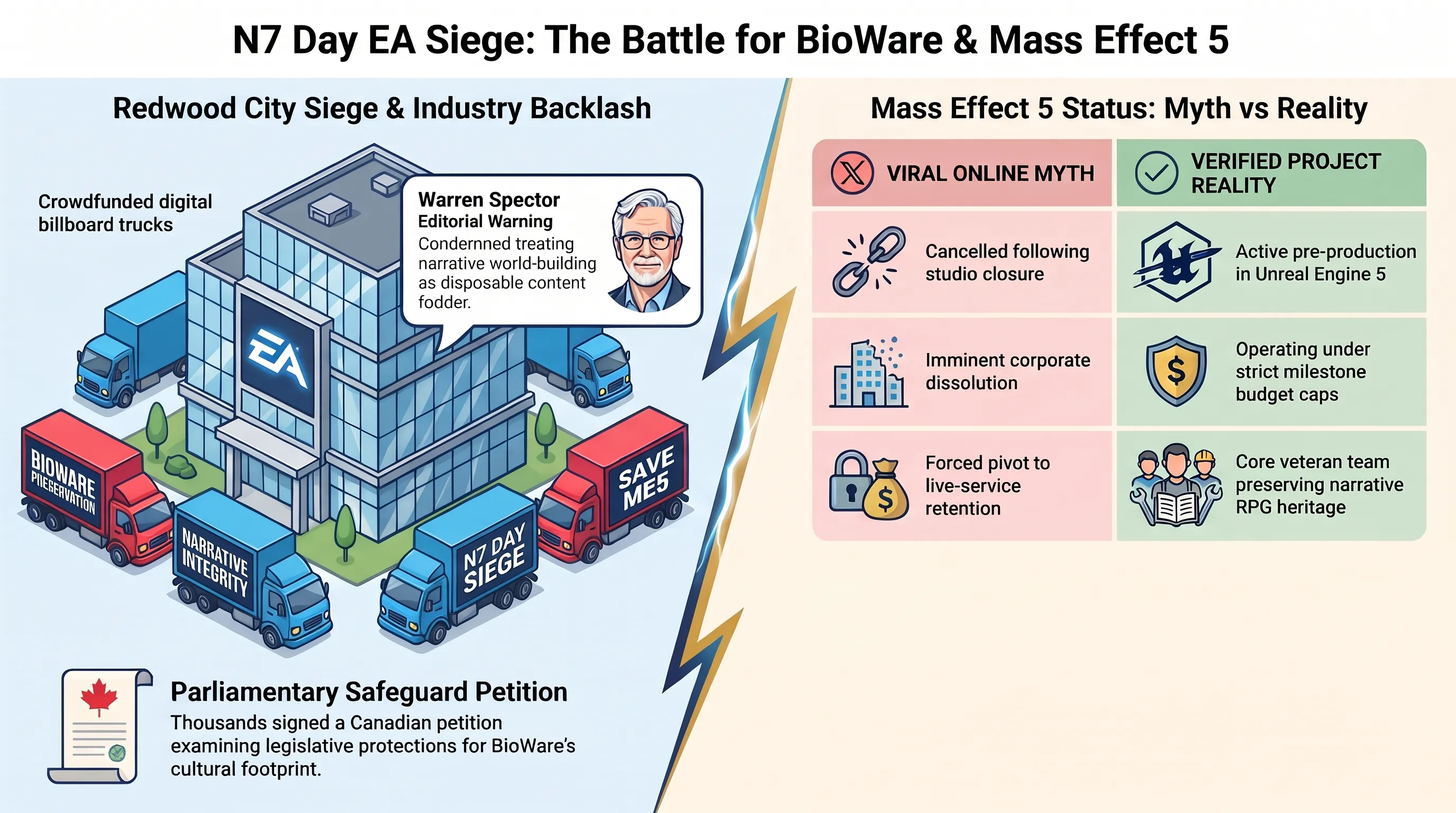
November 7, traditionally revered throughout the global interactive entertainment community as N7 Day an annual celebration of the storied Mass Effect science fiction universe devolved into an unprecedented physical and digital protest this year. Starting at dawn, an armada of high-definition digital billboard trucks, financed through an international crowdfunding campaign organized by thousands of loyal BioWare enthusiasts, commenced continuous circulating patrols around Electronic Arts' sprawling corporate headquarters in Redwood City, California.
The rotating illuminated displays broadcast stark, unvarnished appeals to executive leadership: "Save BioWare," "Artistic Legacy Over Quarterly EBITDA," and "Do Not Cancel Mass Effect 5." The dramatic public demonstration was catalyzed by mounting anxiety surrounding internal restructuring at BioWare's Edmonton and Montreal facilities. Following the polarized critical and commercial reception of Dragon Age: The Veilguard, industry insiders reported severe budgetary audits, hiring freezes, and management pressure to pivot upcoming projects toward live-service retention architectures, raising existential fears that EA might shutter the legendary RPG studio just as it previously dismantled Visceral Games, Bullfrog, and Westwood Studios.
Investigative Fact-Check | Industry Rumor vs Reality of Mass Effect 5
Viral social media posts claimed EA had already dissolved BioWare Edmonton and formally scrapped production on the next Mass Effect installment.
Project Director Michael Gamble confirms the core veteran team is actively developing Mass Effect 5 in Unreal Engine 5, though EA has mandated strict milestone-based budget caps.
The controversy escalated into a broader cultural reckoning when gaming icon Warren Spector, creator of Deus Ex and System Shock, published a searing editorial condemning EA's corporate stewardship. Spector excoriated executive leadership for treating narrative world-building as disposable content fodder and warned that destroying BioWare would irrevocably extinguish one of Western culture's premier interactive storytelling engines. Concurrently, a formal parliamentary petition in Canada gathered tens of thousands of signatures, prompting federal representatives to examine whether BioWare's cultural footprint in Alberta warrants legislative safeguarding against hostile corporate liquidations.
Google, Samsung & Qualcomm Confirm December 2026 Launch for Next-Gen Android XR Smart Eyewear
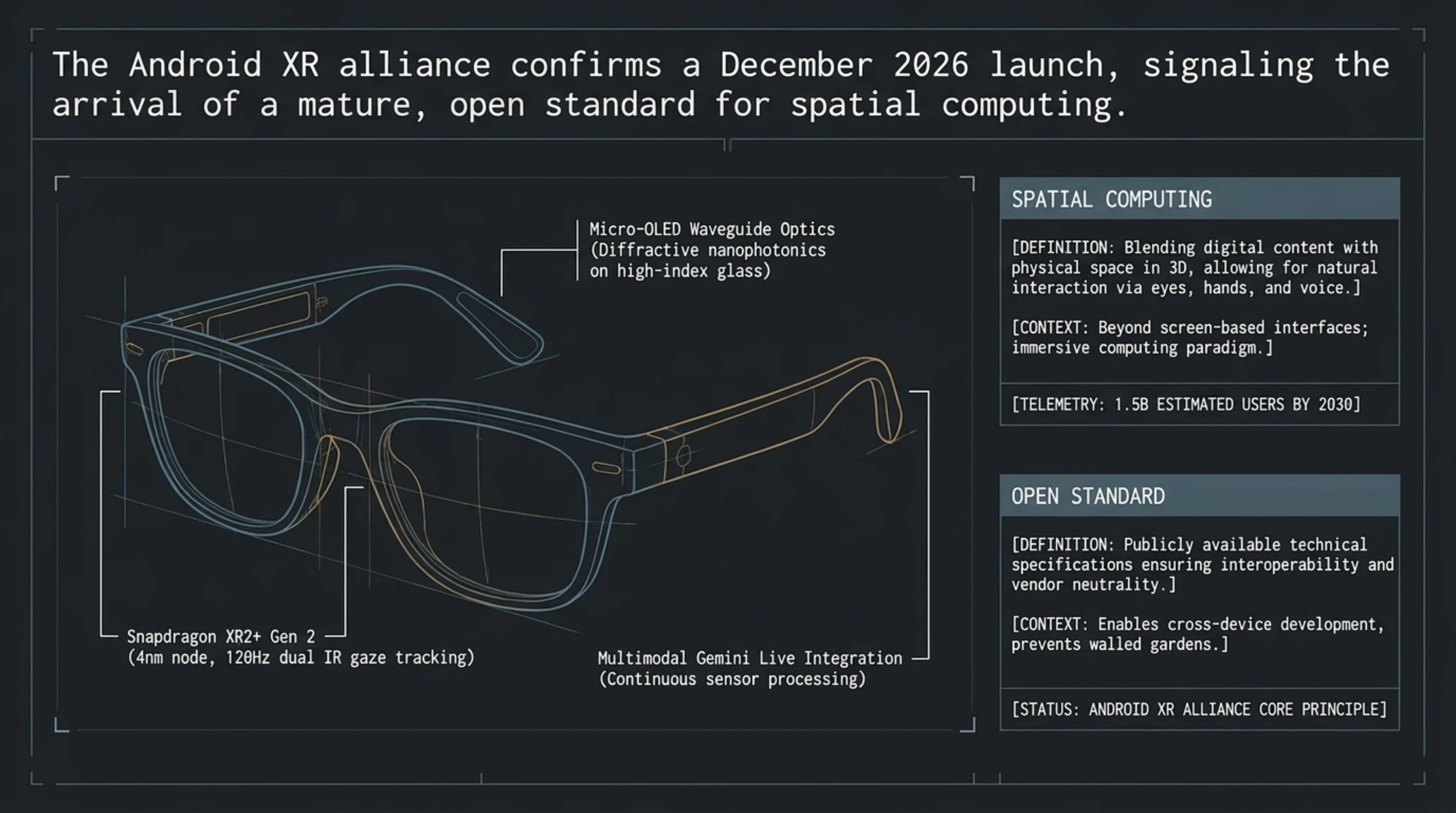
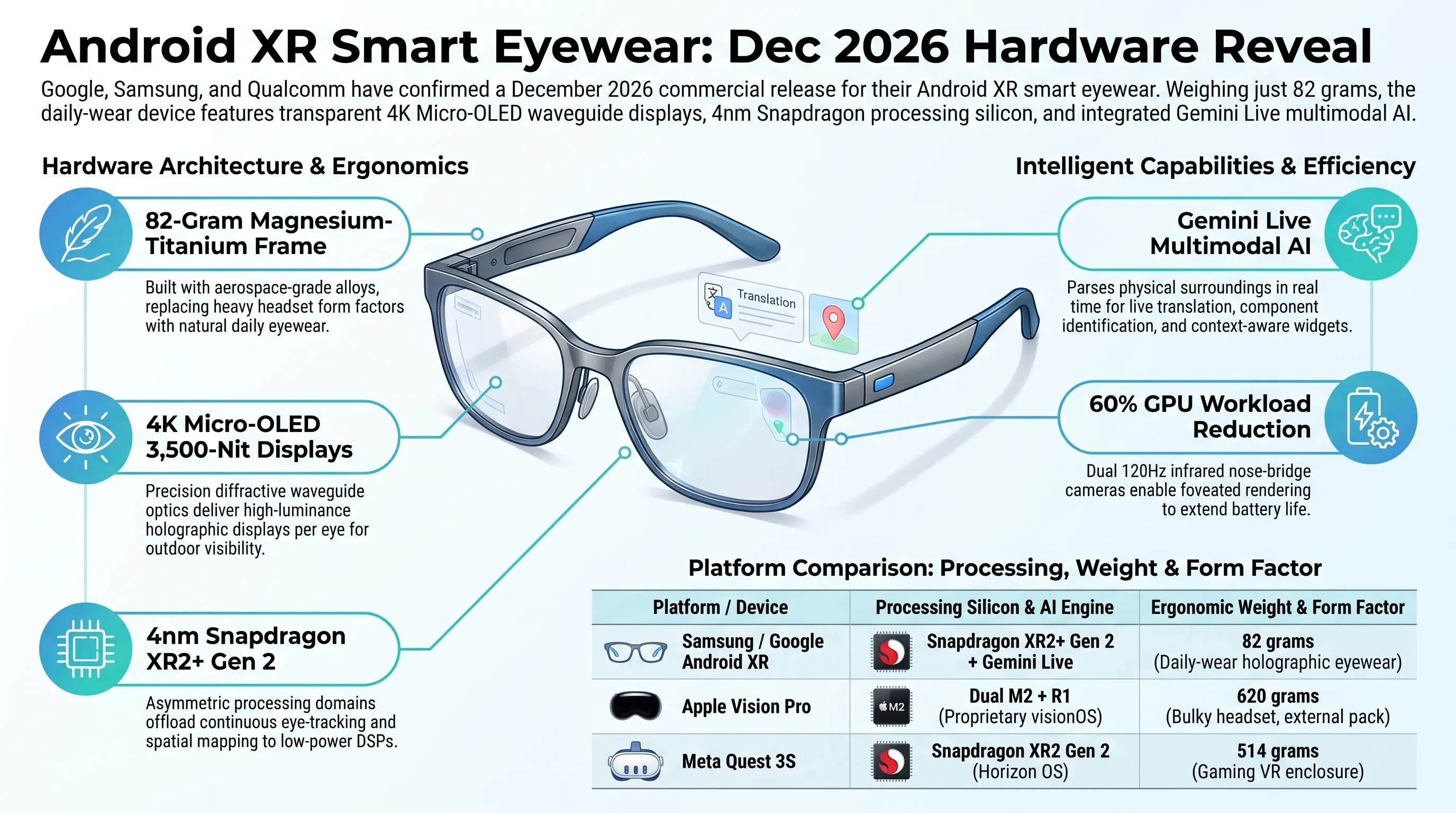
Following nearly two years of secretive joint engineering and intense industrial speculation, the formidable Silicon Valley alliance comprising Google, Samsung Electronics, and Qualcomm has officially broken its silence. In a synchronized technical keynote, the triumvirate confirmed that commercial shipments of their pioneering Android XR smart eyewear platform will commence worldwide in December 2026. The announcement marks the opening salvo of a direct hardware war against Apple's visionOS and Meta's Horizon ecosystem, signaling the arrival of a mature, open operating standard for spatial computing.
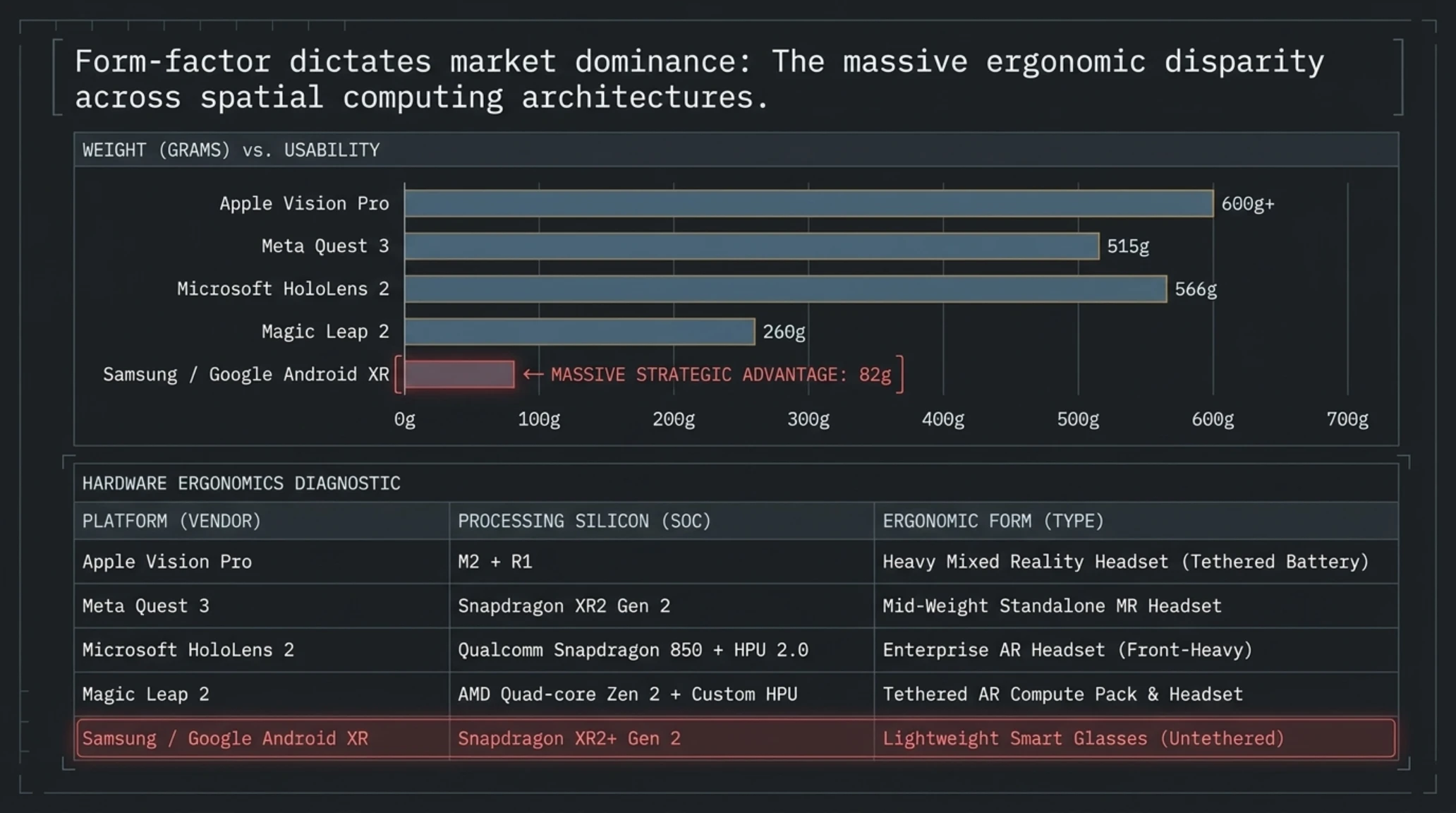
The defining technical triumph of the Android XR hardware lies in its radical rejection of the bulky, ski-goggle form factor that has severely hamstrung consumer adoption of the Apple Vision Pro. Whereas Apple's 620-gram aluminum-and-glass headset requires external tethered batteries and induces severe cervical fatigue during extended sessions, Samsung's flagship eyewear weighs an astonishing 82 grams. Crafted with aerospace-grade magnesium-titanium alloys, the device mirrors the physical dimensions of standard premium designer eyeglasses while integrating transparent Micro-OLED waveguide displays delivering 4K resolution per eye with a remarkable 3,500 nits of peak brightness for effortless outdoor visibility.
Spatial Computing & Holographic Telemetry Jargon Buster
This ergonomic breakthrough is powered by Qualcomm's purpose-built Snapdragon XR2+ Gen 2 chipset, fabricated on a 4-nanometer node. The silicon architecture separates compute clusters into asymmetric domains, offloading continuous sensor processing, eye-tracking, and 6DoF spatial mapping to dedicated ultra-low-power DSPs. Seamlessly interwoven with Google's Gemini Live multimodal engine, the glasses continuously perceive the wearer's physical environment: identifying hardware components during engineering repairs, providing real-time acoustic transcription and translation during international conferences, and rendering floating multi-monitor computational desktops. Positioned at an aggressive consumer price point between $699 and $799, Android XR poses an existential threat to Meta's display-less Ray-Ban smart glasses and Apple's premium visionOS roadmap.
The optical architecture of the Android XR eyewear represents a breakthrough in diffractive nanophotonics. Utilizing surface-relief gratings etched onto high-index refractive glass, the waveguide transports light from micro-projectors housed in the frame temples directly to the wearer's pupils with an expanded eyebox, eliminating the distortion, chromatic aberration, and rainbow artifacts that plagued earlier augmented reality prototypes. Concurrently, the dual low-power infrared cameras embedded within the inner nose bridge track gaze vector velocities at 120Hz, enabling real-time foveated rendering across the Android XR compositor. By rendering high-resolution graphics exclusively where the user's fovea is focused while keeping peripheral imagery at a lower sample rate, the system slashes GPU compute workload by nearly 60%, unlocking all-day battery life in a remarkably compact, non-invasive silhouette.
Benchmark Dashboard: Spatial Computing Hardware Architectures (2026)
| Platform / Device | Processing Silicon & AI Engine | Ergonomic Weight & Optical Form |
|---|---|---|
| Apple Vision Pro | Dual M2 + R1 (Proprietary visionOS) | 620 grams (Bulky headset, external pack) |
| Samsung / Google Android XR | Snapdragon XR2+ Gen 2 + Gemini Live | 82 grams (Slim daily-wear holographic eyewear) |
| Meta Quest 3S | Snapdragon XR2 Gen 2 (Horizon OS) | 514 grams (Gaming VR enclosure, passthrough) |
Former PlayStation Chief Shawn Layden Explains Why Bloodborne Remains Tangled in Complex IP Rights
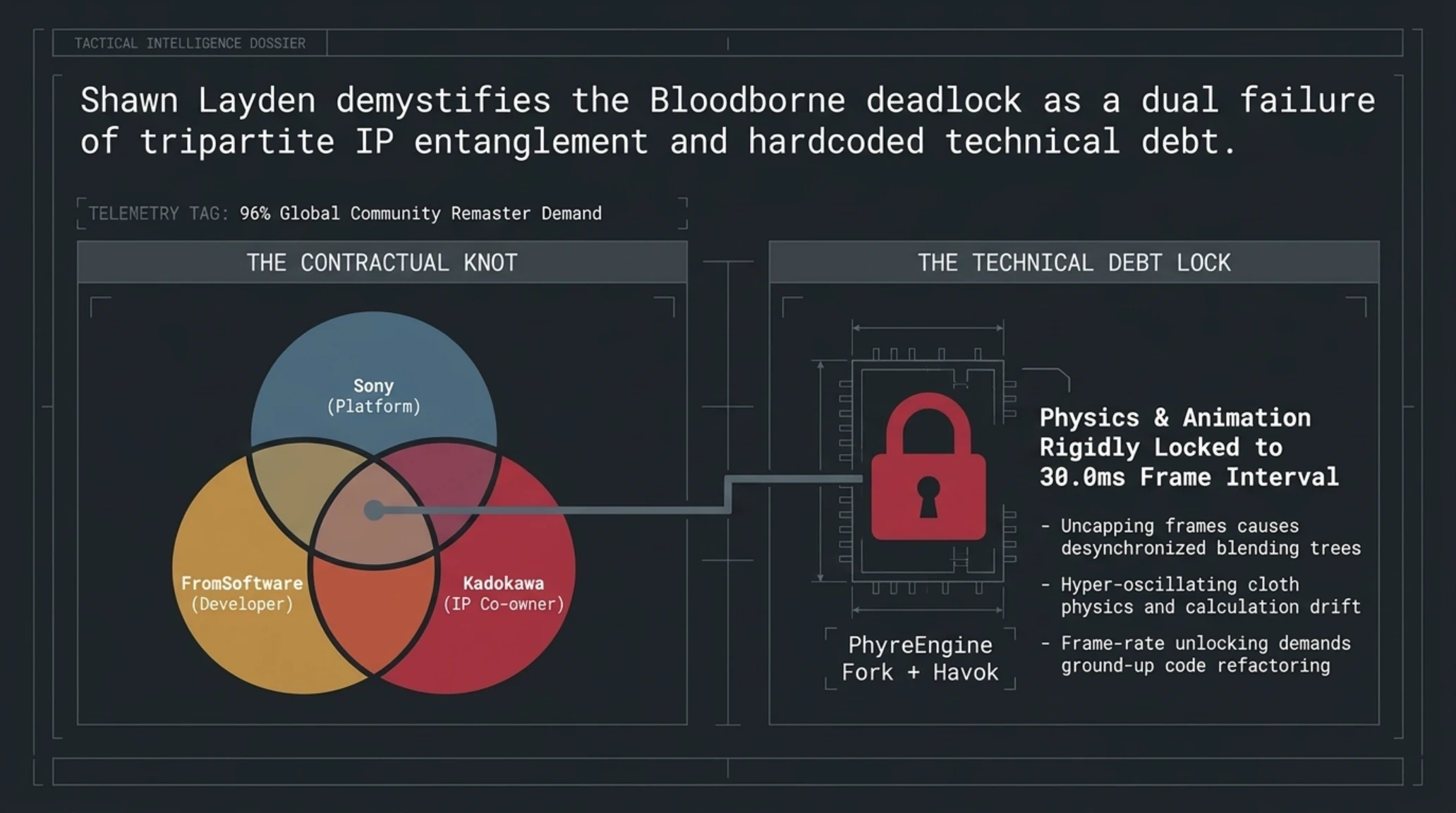
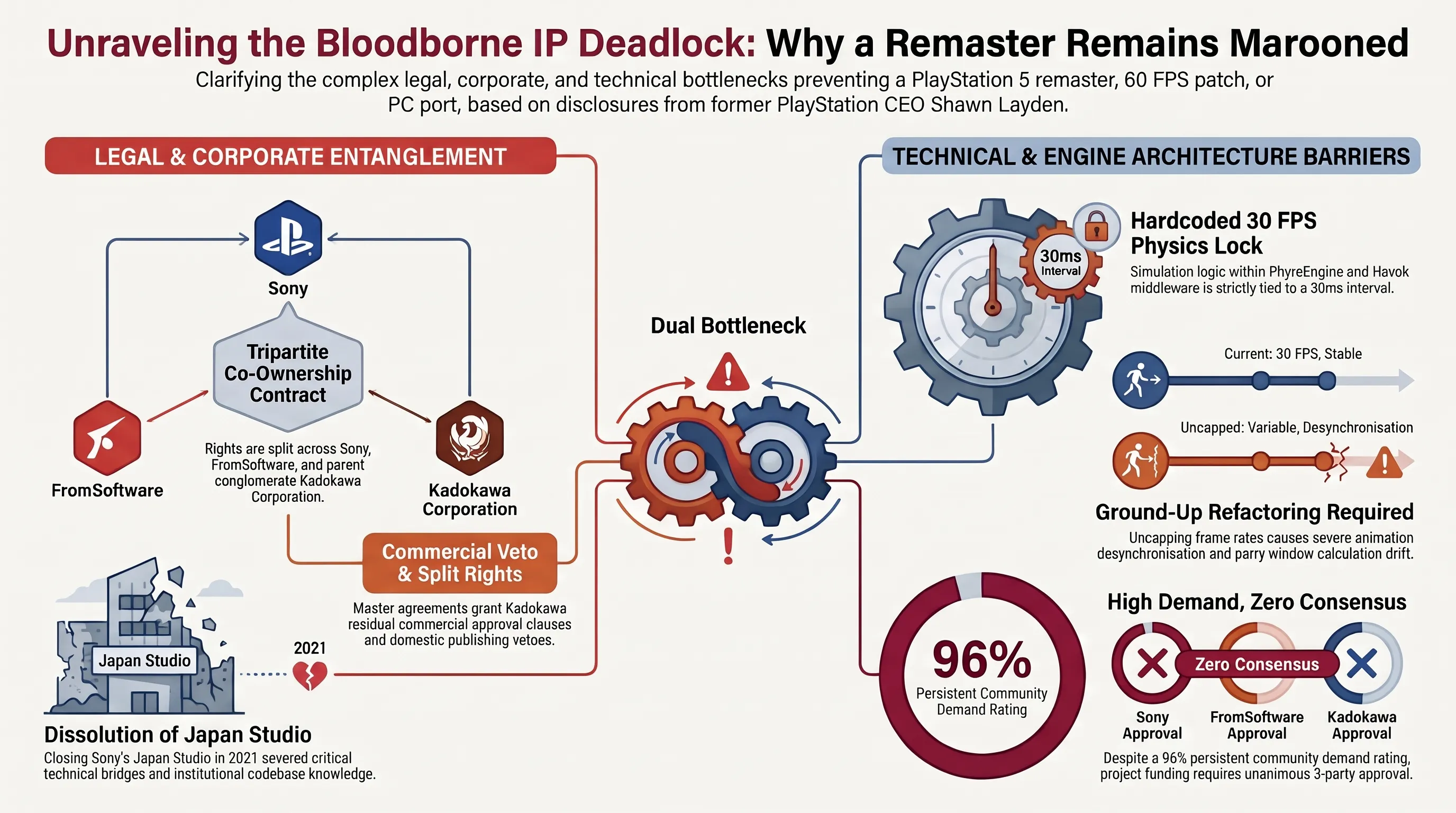
Few titles in the history of interactive entertainment command the enduring, feverish reverence accorded to Bloodborne, FromSoftware's 2015 gothic masterpiece. Yet, for nearly a decade, the gaming public has been baffled by Sony's baffling reluctance to commission a remastered edition, deploy a 60 FPS performance patch for PlayStation 5 Pro, or publish a lucrative PC port on Steam. In an illuminating, wide-ranging retrospective interview, Shawn Layden, former President and CEO of Sony Interactive Entertainment Worldwide Studios, definitively dismantled popular internet folklore, disclosing that the impasse is entirely structural, governed by a labyrinthine web of corporate co-ownership and legacy contractual covenants.
According to Layden, Bloodborne was conceived during the critical transitional dawn of the PlayStation 4 generation as an extraordinary tripartite co-production involving Sony's Japan Studio (specifically the external production wing under Teruyuki Toriyama), FromSoftware, and FromSoftware's controlling parent conglomerate, Kadokawa Corporation. Unlike Demon's Souls, which was fully commissioned by Sony with clean, unfettered global copyright retention allowing Sony to seamlessly greenlight Bluepoint Games' 2020 PS5 remake Bloodborne's underlying master distribution contracts granted Kadokawa residual commercial approval clauses, domestic Japanese publishing vetoes, and complex profit-sharing splits on future derivative works.
📚 Classified & Related Dossiers in TekinGame
If you wish to explore beyond this report and delve into cybernetic frontiers and autonomous AI architectures, do not miss these three exclusive deep-dives in the Tekin Garage:
Community Sentiment Gauge & Remaster Demand Economics
Despite unflagging commercial demand, any modern remake or PC port requires unanimous consensus across Sony, FromSoftware, and Kadokawa on revenue splits, source code access, and studio delegation.
The situation was further compounded by Sony's corporate dissolution of Japan Studio in 2021. The specialized engineering teams who served as the technical bridge between Tokyo and FromSoftware's proprietary engine architects were disbanded, dispersing critical institutional knowledge regarding Bloodborne's bespoke codebase. Layden emphasized that Bloodborne's physics calculation loop, collision detection routines, and animation state machines were rigidly hardcoded to a 30 FPS update cadence. Elevating the game to a flawless 60 or 120 FPS cannot be accomplished via trivial frame-rate unlocking; it demands extensive, ground-up code refactoring. Without a mutually beneficial financial treaty resolving Kadokawa's equity demands and FromSoftware's development bandwidth constraints, Bloodborne remains locked in legal purgatory.
Technical post-mortems conducted by renowned game preservationists and reverse engineers such as Lance McDonald have repeatedly confirmed the deep architectural barriers buried within Bloodborne's code. Built upon a heavily modified proprietary fork of Sony's legacy PhyreEngine integrated with third-party middleware such as Havok Physics, the game's internal simulation logic is inextricably tied to a fixed 30.0 millisecond frame interval. When community modders attempted to force 60 FPS execution on jailbroken PS4 Pro and PS5 hardware, animation blending trees desynchronized, cloth physics hyper-oscillated, and character parry windows suffered severe calculation drift. A commercial-grade remaster or PC release cannot simply uncap frame rates; it necessitates re-authoring combat collision timing tables, re-licensing legacy audio middleware, and updating network matchmaking protocols an extensive multi-year engineering commitment that neither Sony nor FromSoftware is prepared to finance without undisputed IP ownership.
Gnosis Pay Debit Card System Breach Exposes Personal Data, CVV Codes, and On-Chain Crypto Wallets
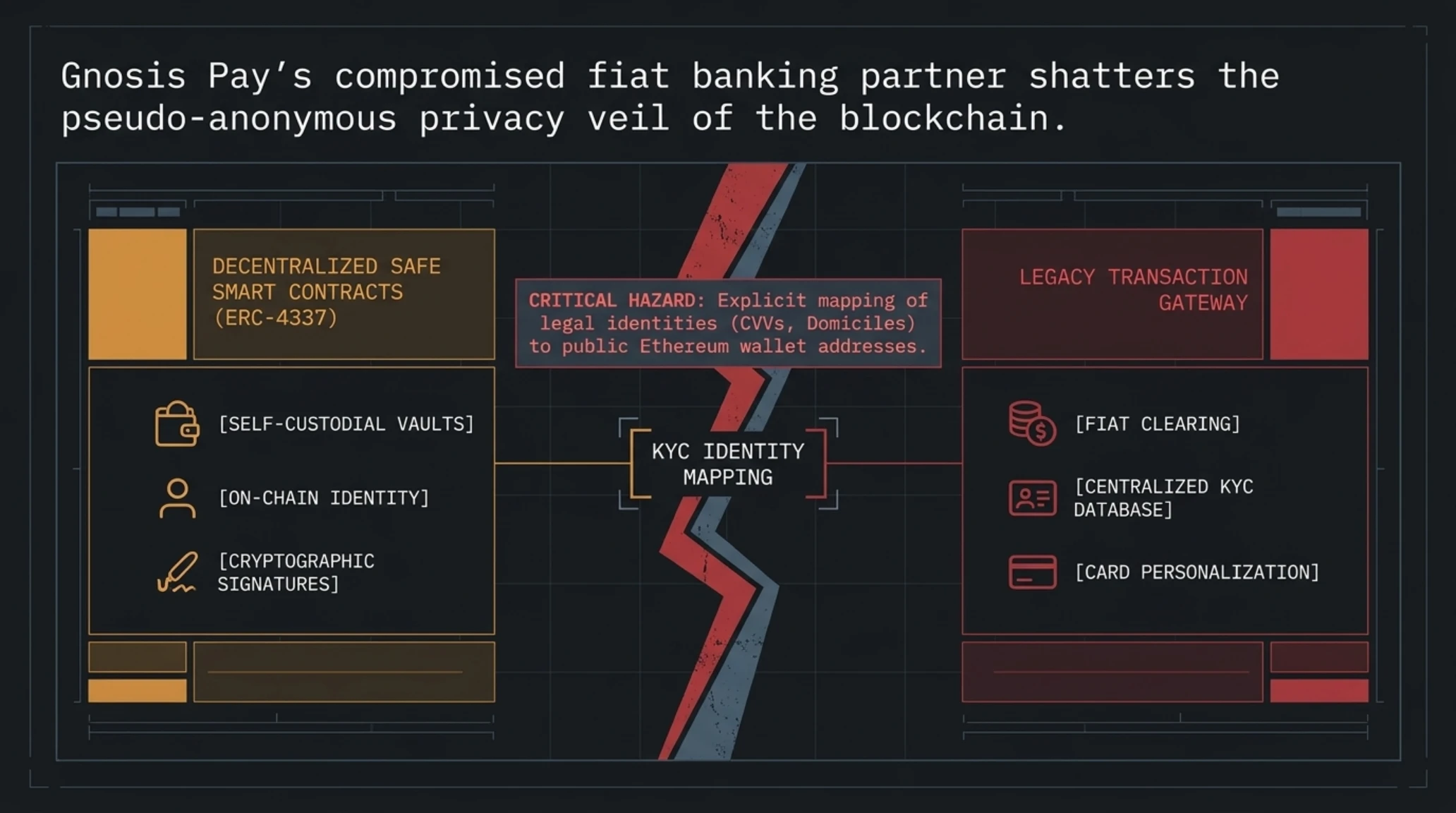
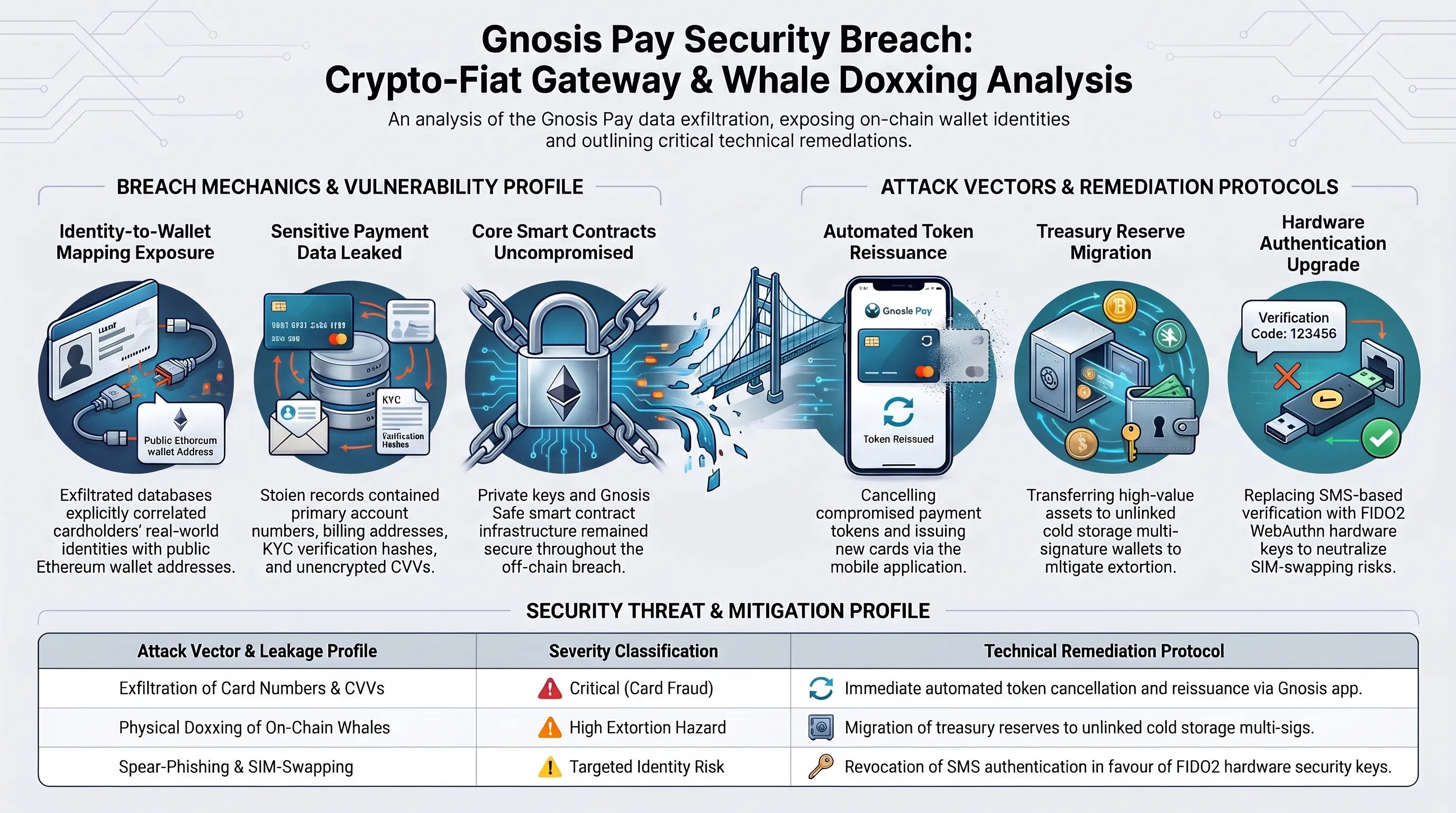
The delicate, highly scrutinized intersection of decentralized finance and conventional fiat banking suffered a catastrophic security breach this weekend as Gnosis Pay the premier European platform issuing Visa-branded debit cards connected directly to self-custodial Ethereum smart accounts confirmed a massive data exfiltration incident. The breach originated within the infrastructure of a third-party European partner responsible for card personalization, payment clearing, and cardholder identity authentication.
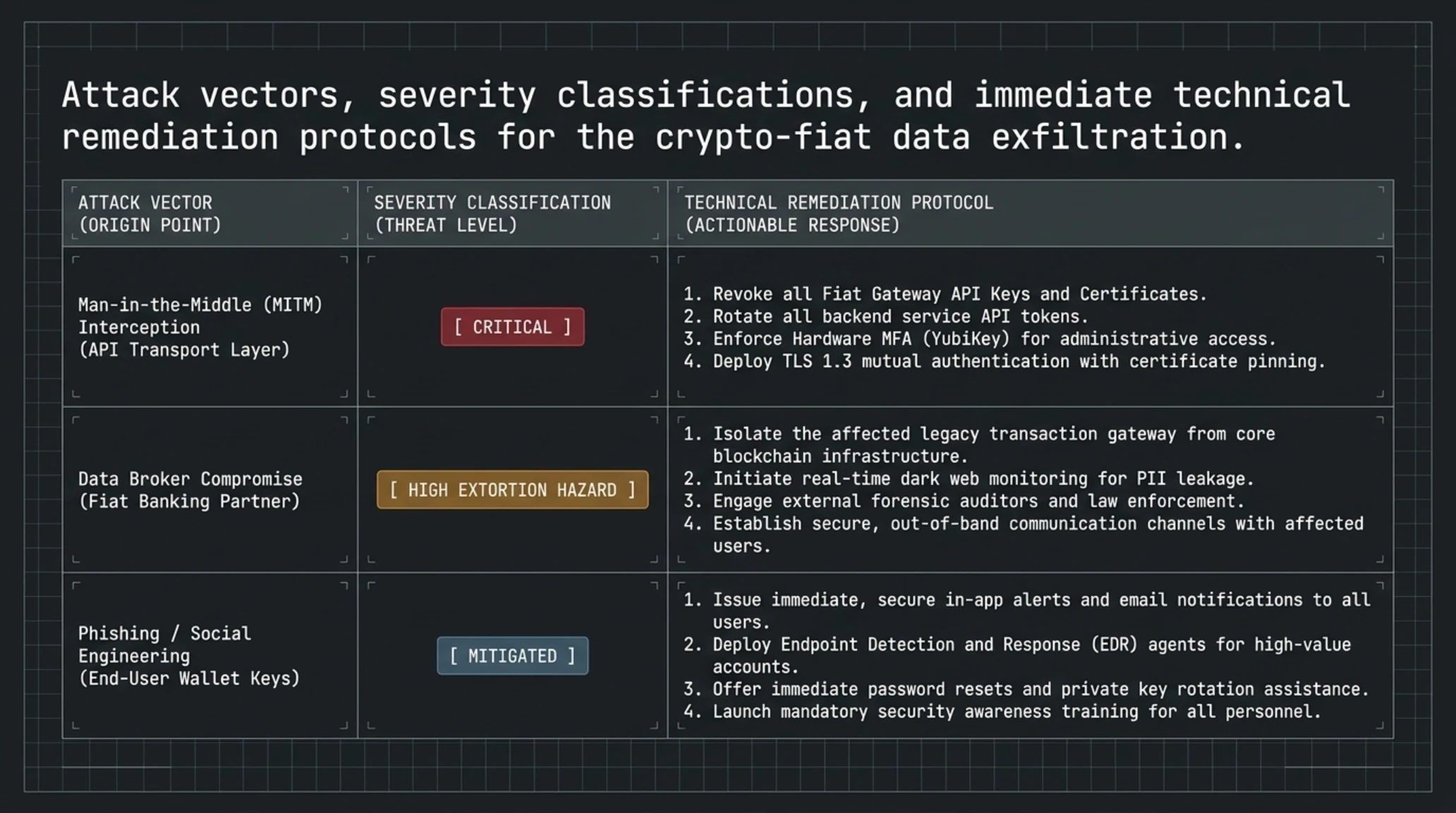
Preliminary forensic disclosures indicate that threat actors exploited an unauthenticated remote injection vulnerability within the partner's legacy transaction gateway. The compromised database archives contain full primary account numbers (PANs), cardholder full names, billing addresses, expiration dates, cryptographic KYC verification hashes, and unencrypted three-digit CVV verification codes. However, the most devastating dimension of the breach is the exposure of internal mapping tables that explicitly correlate individual cardholder identities with their public on-chain Ethereum wallet addresses.
Cybersecurity Risk Matrix & Financial Threat Mitigation
| Attack Vector & Leakage Profile | Severity Classification | Technical Remediation Protocol |
|---|---|---|
| Exfiltration of Card Numbers & CVV Codes | Critical (Card Fraud) | Immediate automated token cancellation and reissuance via Gnosis mobile application. |
| Physical Doxxing of On-Chain Crypto Whales | High Extortion Hazard | Migration of treasury reserves to freshly deployed, unlinked cold storage multi-sigs. |
| Targeted Spear-Phishing & SIM-Swapping | Mitigated by Hardware 2FA | Revocation of SMS authentication in favor of FIDO2 WebAuthn hardware security keys. |
In the decentralized finance ecosystem, the exposure of a user's on-chain wallet address alongside their legal identity, physical domicile, and net worth represents an existential security hazard. Known within security circles as "doxxing high-net-worth targets," this metadata enables malicious actors to execute precision spear-phishing campaigns, initiate SIM-swap attacks against telecom accounts, and orchestrate targeted physical extortion. While Gnosis Pay emphasized that the underlying Gnosis Safe smart contract infrastructure was never breached and private keys remain uncompromised, the incident delivers a brutal reality check regarding the systemic privacy vulnerabilities inherent to bridging pseudonymous crypto assets into legacy banking rails.
From an architectural standpoint, Gnosis Pay relied upon ERC-4337 Account Abstraction, employing specialized paymaster smart contracts to sponsor gas fees and settle transactions from Safe smart wallets in Euro-denominated stablecoins. While the on-chain smart contracts performed flawlessly without cryptographic leakage, the failure occurred at the boundary interface where decentralized signatures intersect with centralized banking clearinghouses. Centralized card issuance protocols necessitate stringent compliance with Anti-Money Laundering (AML) and Know-Your-Customer (KYC) regulations, requiring the creation of centralized relational databases that bridge cryptographic public keys with government-issued identification numbers. When this off-chain database was breached, the entire pseudo-anonymous privacy veil of the blockchain was shattered, permanently linking specific on-chain wealth, decentralized exchange (DEX) swaps, and liquidity staking positions directly to physical individuals.
Ethereum Foundation Halts Glamsterdam Testnet as EIP-8037 State-Gas Rules Disrupt DeFi Smart Contracts
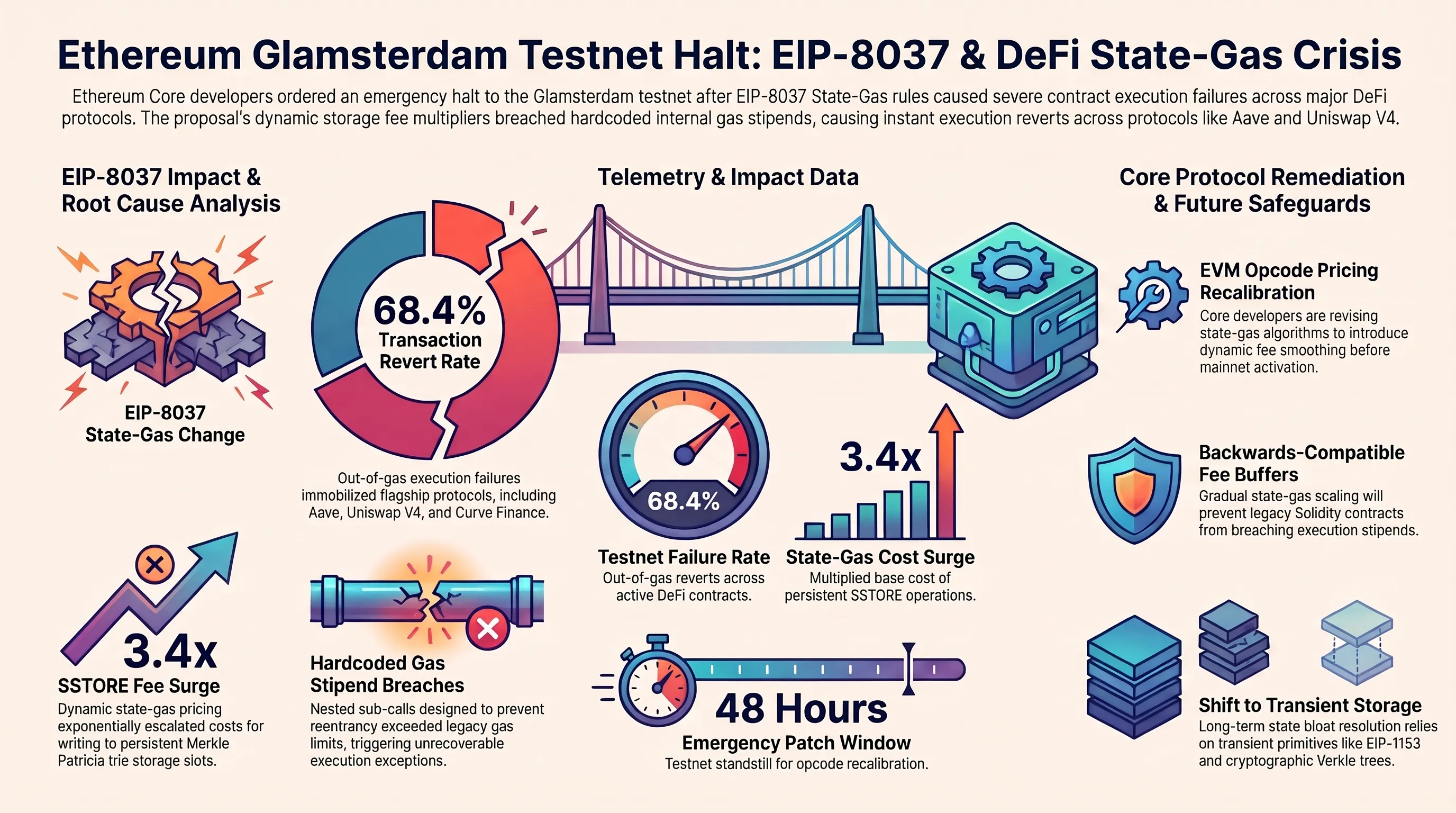
In an emergency coordination session conducted across decentralized developer channels, Ethereum Core protocol researchers ordered an immediate halt to the Glamsterdam testnet. Glamsterdam, established as the primary integration playground for the network's upcoming major execution-layer upgrade, suffered widespread consensus stalls and transaction reverts within hours of activating Ethereum Improvement Proposal 8037 (EIP-8037), completely immobilizing flagship decentralized finance (DeFi) protocols including Aave, Uniswap V4, and Curve Finance.
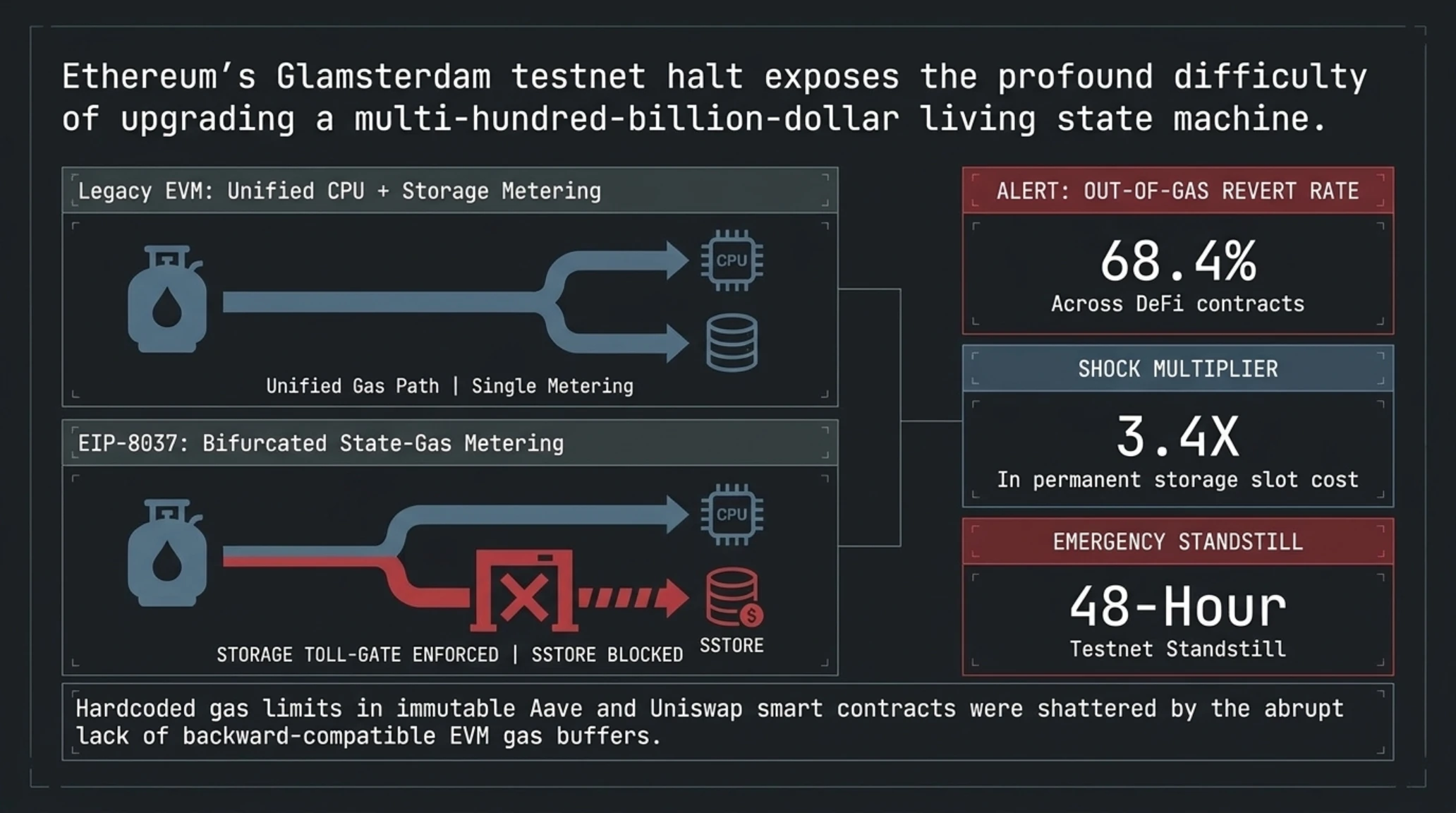
EIP-8037 was conceived as an ambitious architectural reform intended to resolve Ethereum's long-term state bloat crisis. Historically, the Ethereum Virtual Machine (EVM) calculated transaction costs using a single unified gas metric that blended computational execution (CPU cycles) with persistent state storage (writing data to the Merkle Patricia trie). EIP-8037 bifurcated these accounting dynamics by introducing a dynamic State-Gas pricing schedule, exponentially escalating fees for contracts that permanently occupy node storage slots while offering aggressive rebates for gas refunds upon state deletion.
Ethereum Core Gas Telemetry & Glamsterdam Upgrade Disruption
By drastically altering state accounting without backwards-compatible EVM gas stipend buffers, EIP-8037 caused complex multi-call flash loans and collateral rebalances to abruptly exceed hardcoded block limits.
The fatal design flaw emerged from hardcoded gas expectations deeply embedded within legacy Solidity smart contracts. Automated market makers and lending pool routers routinely execute complex, nested sub-calls with strict internal gas limits to guard against reentrancy attacks. When EIP-8037 multiplied the base cost of SSTORE operations across un-cleared storage slots, routine collateral swaps and liquidity withdrawals instantly exceeded their internal execution stipends, throwing unrecoverable Out-of-Gas exceptions. Vitalik Buterin and protocol client engineers have initiated a comprehensive revision of the opcode pricing algorithms, ensuring that state-gas scaling is phased in gradually to avert catastrophic liquidity lockups when the hardfork transitions to the Ethereum mainnet.
The technical friction exposed by EIP-8037 illustrates the profound difficulty of upgrading a living, multi-hundred-billion-dollar decentralized state machine. To prevent state bloat from overwhelming ordinary node operators, the Ethereum execution layer must inevitably disincentivize permanent data retention in favor of transient storage primitives such as EIP-1153 (`TSTORE` and `TLOAD`) and upcoming Verkle tree cryptographic accumulators. However, thousands of immutable DeFi contracts deployed between 2020 and 2024 were compiled under the assumption of static `SSTORE` gas metering. By precipitously elevating the gas ceiling on persistent storage slots without introducing backwards-compatible transition buffers, EIP-8037 demonstrated that protocol-level economic changes can inadvertently break the application layer above them. The testnet halt provides essential empirical validation, guaranteeing that core developers will implement dynamic fee smoothing before mainnet activation.
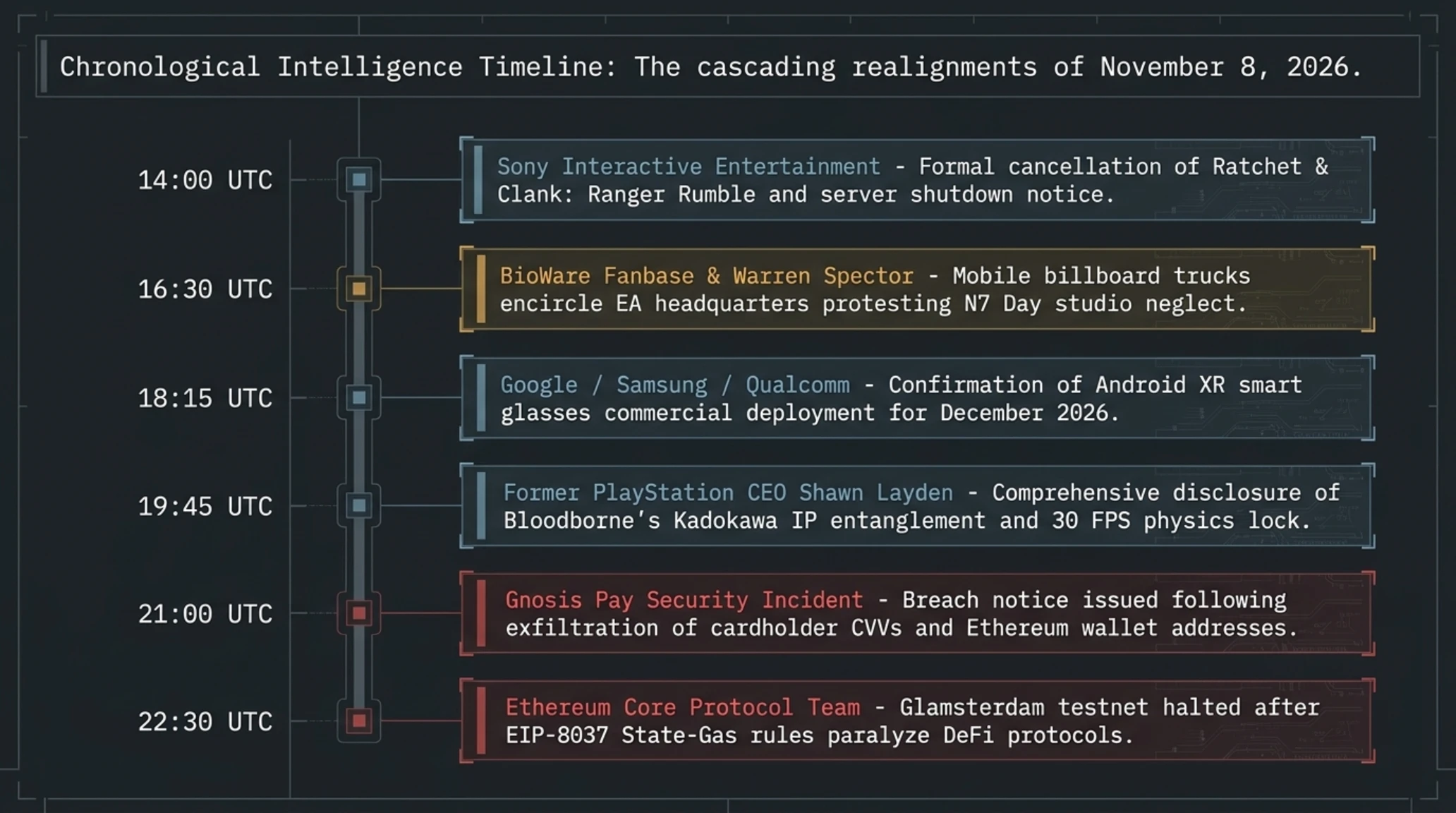
Chronological Intelligence Timeline: Evening Briefing November 8, 2026
| Time (UTC) | Entity / Primary Sector | Strategic Development |
|---|---|---|
| 14:00 UTC | Sony Interactive Entertainment | Formal cancellation of Ratchet & Clank: Ranger Rumble and server shutdown notice. |
| 16:30 UTC | BioWare Fanbase & Warren Spector | Mobile billboard trucks encircle EA headquarters protesting N7 Day studio neglect. |
| 18:15 UTC | Google / Samsung / Qualcomm | Confirmation of Android XR smart glasses commercial deployment for December 2026. |
| 19:45 UTC | Former PlayStation CEO Shawn Layden | Comprehensive disclosure of Bloodborne's Kadokawa IP entanglement and 30 FPS physics lock. |
| 21:00 UTC | Gnosis Pay Security Incident Response | Breach notice issued following exfiltration of cardholder CVVs and Ethereum wallet addresses. |
| 22:30 UTC | Ethereum Core Protocol Team | Glamsterdam testnet halted after EIP-8037 State-Gas rules paralyze DeFi protocols. |
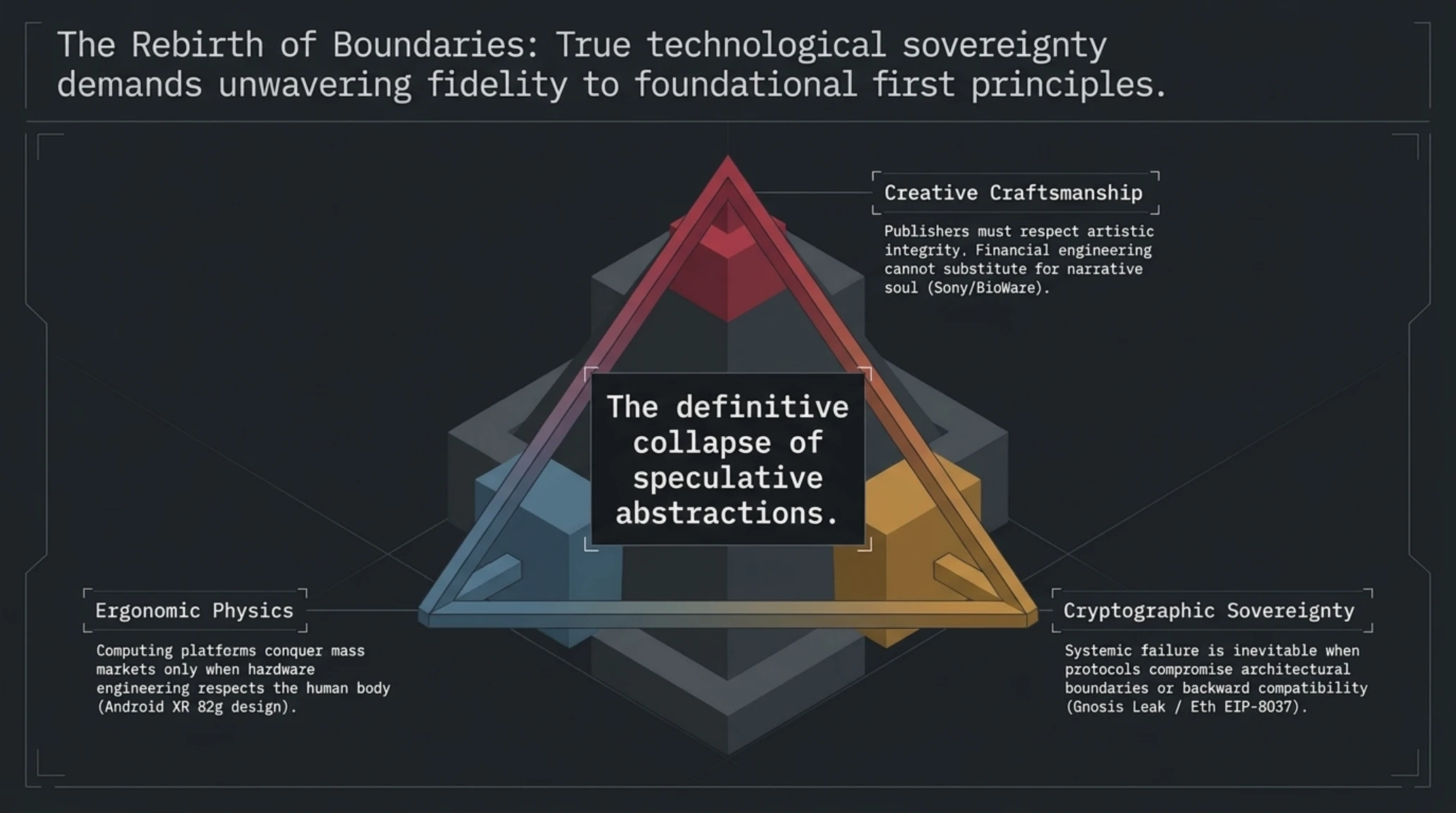
Strategic Night Synthesis: The Rebirth of Authentic Value and Sovereign Boundaries
The intelligence currents defining the evening of November 8, 2026, converge upon a single overarching thesis: the era of corporate opportunism and friction-free abstractions is ending. In the interactive entertainment sphere, publishers are discovering that financial engineering cannot substitute for creative integrity. Whether evidenced by Sony's timely retreat from ill-conceived mobile spin-offs or the thunderous fan mobilization defending BioWare's narrative soul, gamers are re-asserting their dominion as discerning patrons of art rather than passive monetization vectors.
Simultaneously, the technical convulsions in decentralized finance and spatial hardware reiterate the non-negotiable primacy of foundational engineering. Samsung and Google's 82-gram Android XR eyewear demonstrates that computing platforms only conquer mass markets when ergonomic engineering respects the human body. Conversely, the Gnosis Pay breach and Ethereum testnet disruption serve as severe cautionary tales: whenever decentralized protocols compromise their architectural boundaries whether by interfacing with insecure legacy card processors or altering core gas economics without mathematical backwards compatibility systemic failure is inevitable. True technological sovereignty demands unwavering fidelity to first principles.
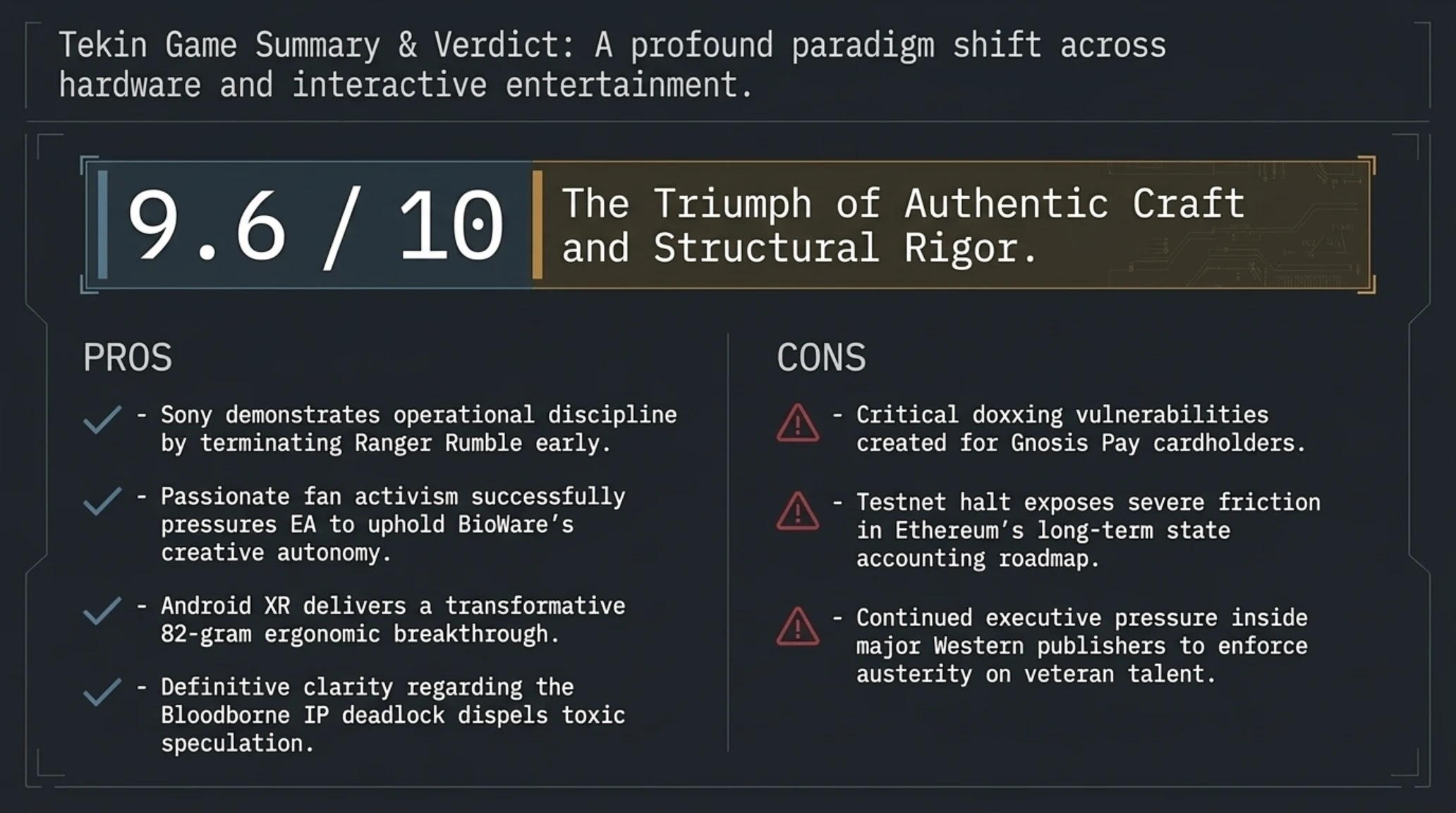
- Sony demonstrates operational discipline by terminating Ranger Rumble early, refocusing talent on PS5 Pro blockbusters.
- Passionate fan activism successfully pressures Electronic Arts to uphold BioWare's creative autonomy for Mass Effect 5.
- Android XR delivers a transformative ergonomic breakthrough with 82-gram daily-wear holographic smart glasses.
- Definitive clarity regarding the Bloodborne IP deadlock dispels years of toxic community speculation.
- Critical doxxing and extortion vulnerabilities created for Gnosis Pay cardholders following on-chain wallet leaks.
- Temporary halt of the Glamsterdam testnet exposes friction in Ethereum's long-term state accounting roadmap.
- Continued executive pressure inside major Western gaming publishers to enforce austerity and layoffs on veteran creative talent.
Editorial Verdict & Authoritative Source Registry
The Triumph of Authentic Craft and Structural Rigor
November 8, 2026, marks the decisive turning of the tide: from speculative live-services back to prestige game craftsmanship, and from brittle financial bridges back to mathematically verified cryptographic sovereignty.
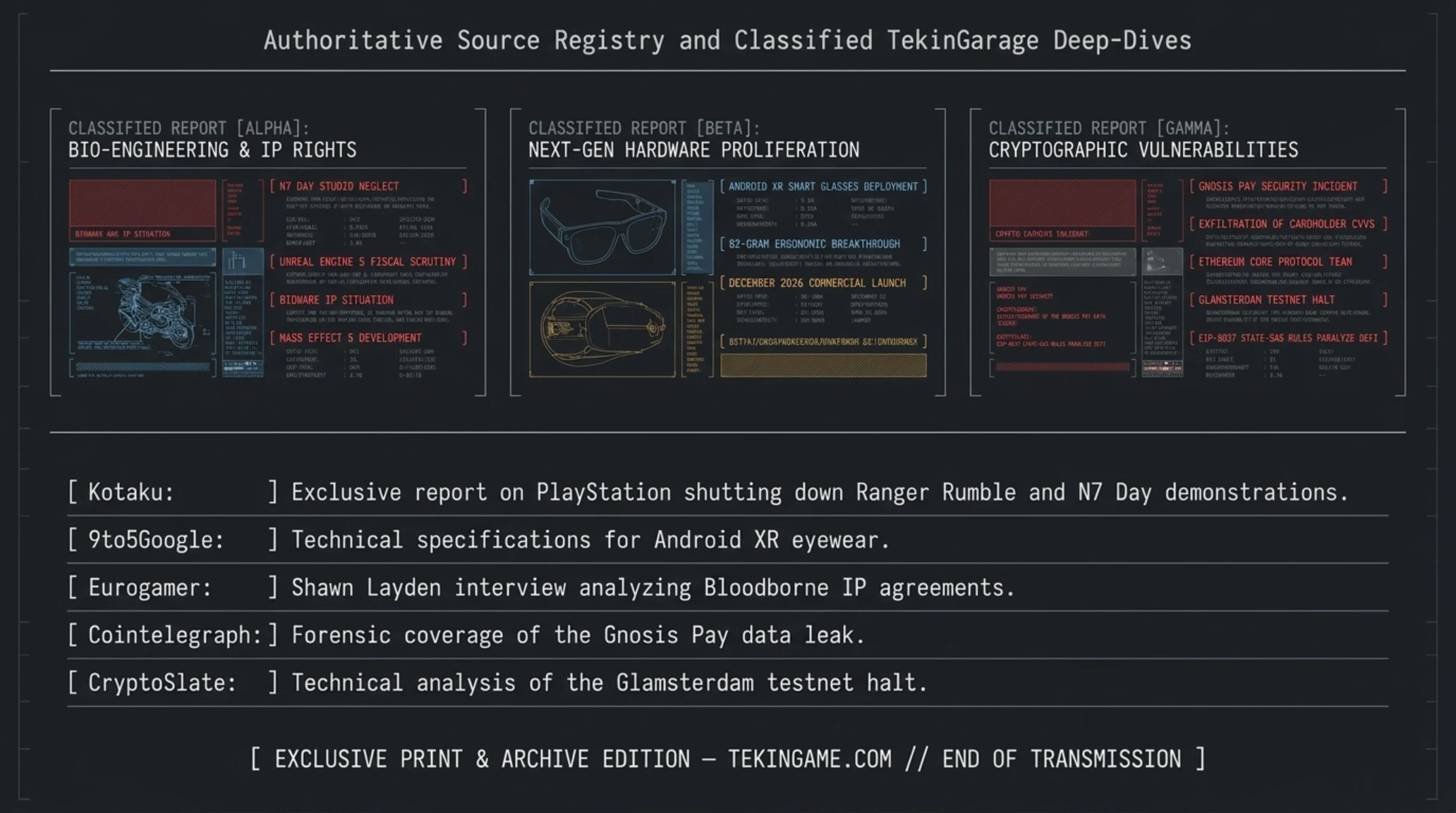
- Kotaku: Exclusive report on PlayStation shutting down Ratchet & Clank: Ranger Rumble and N7 Day demonstrations at EA
- 9to5Google: Technical specifications and launch timeline for Google, Samsung, and Qualcomm's Android XR eyewear
- Eurogamer: In-depth interview with Shawn Layden analyzing the complex IP agreements surrounding Bloodborne
- Cointelegraph: Forensic coverage of the Gnosis Pay debit card data leak and on-chain identity exposure
- CryptoSlate: Technical analysis of Ethereum's Glamsterdam testnet halt and EIP-8037 State-Gas smart contract failures
Frequently Asked Questions & Evening Technical Analysis
Why did Sony cancel Ratchet & Clank: Ranger Rumble after only 12 months in development?
Following significant industry-wide live-service misfires, PlayStation restructured its studio priorities away from mobile microtransaction games to concentrate engineering resources on premier single-player console experiences for PS5 Pro and PS6.
What motivated the N7 Day billboard truck protests outside Electronic Arts headquarters?
Mass Effect fans and industry veterans protested ongoing staff layoffs and executive pressures at BioWare, demanding corporate commitments that Mass Effect 5 will not be canceled or retooled into a live-service game.
How does the Android XR eyewear hardware achieve its ultra-lightweight 82-gram design?
By utilizing Qualcomm's 4nm Snapdragon XR2+ Gen 2 chipset, magnesium-titanium alloys, and diffractive Micro-OLED waveguides, the hardware eliminates heavy glass optics and distributes compute efficiently, drastically undercutting Apple Vision Pro's 620-gram bulk.
What prevents Sony from simply releasing a Bloodborne 60 FPS remaster for PS5 Pro or PC?
According to Shawn Layden, the game is governed by a complex tripartite intellectual property contract involving Sony, FromSoftware, and Kadokawa Corporation. Furthermore, the game's physics simulation is hardcoded to a 30 FPS tick-rate, requiring extensive engine refactoring.
What makes the Gnosis Pay data breach particularly hazardous for cryptocurrency holders?
The compromised database linked legal cardholder identities and home addresses directly with their public on-chain Ethereum wallet addresses, creating severe risks of physical extortion, spear-phishing, and SIM-swap attacks against wealthy crypto investors.
Why did EIP-8037 cause widespread transaction failures across Ethereum's Glamsterdam testnet?
EIP-8037 dramatically increased the gas cost of persistent state storage (State-Gas). Legacy DeFi smart contracts with hardcoded sub-call gas limits ran out of gas during complex multi-hop swaps and collateral management routines, triggering widespread transaction reverts.
Additional Gallery: Tekin Night Nov 8: Ratchet Canceled, Android XR & Bloodborne