The Kyoto NDA Fortress & MercurySteam Enigma
An investigative autopsy into Kyoto’s shadow developer strategy, the corporate erasure of MercurySteam, and the brutal labor politics governing AAA production.
- 🎮MercurySteam Erasure- Unveiling Metroid Ravenous and the total public omission of MercurySteam.
- 🎧Vanishing Vanity Cards- From GameCube vanity cards to sterile modern marketing blackouts.
- 🚀Kyoto Iron Curtain- The legal anatomy of Kyoto’s extreme Non-Disclosure Agreements.
- 🗡️Labor Crediting Disputes- Why labor crediting disputes threaten the ethical foundation of game design.
- 📰The 25% Threshold- MercurySteam's controversial policy excluding departed staff from game credits.
- ⚔️Air-Gapped Vaults- Physical isolation of Switch 2 development kits in bunker-like conditions.
When the worldwide reveal trailer for Metroid Ravenous illuminated digital broadcasts, seasoned video game enthusiasts and industry analysts instantly recognized the signature biomechanical aesthetic, the rhythmic parry fluidity, and the hyper-kinetic platforming cadence pioneered in 2021’s critically acclaimed Metroid Dread. Every kinetic sequence and ominous camera pull bore the unmistakable creative fingerprint of MercurySteam, the storied independent development powerhouse situated in San Sebastián de los Reyes on the northern periphery of Madrid, Spain. Yet, across three minutes of cinematic footage, pristine high-resolution key art assets, official press releases, and global retail landing pages, one glaring absence echoed through the industry: the name MercurySteam had been utterly, systematically erased from the announcement.
Instead of celebrating the historic transatlantic collaboration that rescued Samus Aran from a nineteen-year two-dimensional developmental slumber, consumers and press corps were greeted solely by a monolithic corporate decree: Nintendo Presents. This striking omission is neither an administrative oversight nor a marketing anomaly; rather, it represents the deliberate zenith of an aggressive, decades-in-the-making corporate doctrine practiced by Nintendo of Kyoto. In an industry where technological transparency and creator celebrity culture increasingly define consumer loyalty, Nintendo has entrenched itself behind a towering fortress of non-disclosure agreements, shadow studio partnerships, and a chillingly sterile PR architecture designed to subsume all human craftsmanship into a solitary corporate brand identity.
The implications of this institutional secrecy extend far beyond casual brand aesthetics. They intersect directly with structural labor precarity, intellectual property subjugation, and the systematic denial of professional portfolio recognition for hundreds of international programmers, environment artists, animators, and level architects. As the video game industry prepares for the monumental hardware transition to Nintendo Switch 2, dissecting the operational mechanisms of this Kyoto fortress is essential to understanding the future of collaborative game development.
Executive Key Takeaways: The Shadow Developer Paradox
- Systematic Brand Sterilization: Nintendo deliberately conceals external studio identities during initial announcement windows to funnel all consumer prestige directly into the Kyoto trademark.
- The Metroid Ravenous Case Study: Despite MercurySteam’s undeniable authorship, official media campaigns omitted Spanish studio branding, continuing a precedent established with Princess Peach: Showtime and Super Mario RPG.
- The Vanishing Vanity Card Era: A stark historical pivot away from the GameCube and Nintendo 64 eras, when external developers like Next Level Games, Camelot, and Rareware received roaring vocal and visual accolades.
- Brutal NDA Enclosure: Partner studios operate inside literal Faraday cages and windowless security suites, navigating microscopic watermarking systems that track developmental code leaks.
- Labor Crediting Controversies: The controversial '25% development time rule' at MercurySteam demonstrates how corporate secrecy policies directly enable the disenfranchisement of junior and mid-level creators.
To grasp the profound dissonance of Nintendo’s contemporary marketing machinery, one must examine the radical historical transformation of how the Japanese platform holder previously celebrated its global partner ecosystem. There was a vibrant golden age spanning the twilight years of the Super Famicom through the Nintendo 64 and Nintendo GameCube eras when working alongside Nintendo meant receiving the highest tier of international artistic prestige, emblazoned proudly upon the packaging and voiced within the interactive experience itself.
During the GameCube generation, when players booted up Super Mario Strikers, Princess Daisy would enthusiastically shriek into the television speakers: "NEXT LEVEL GAMES!", celebrating the scrappy Vancouver development outfit responsible for breathing anarchic punk-rock kinetic energy into the Mushroom Kingdom. In Mario Golf and Mario Tennis, Waluigi snarled "CAMELOT!" as the golden sigil of the Takahashi brothers lit up cathode-ray screens worldwide. Most famously of all, the groundbreaking opening moments of 2002’s masterwork Metroid Prime unfolded with an austere, unashamed declaration of shared artistic triumph: "Nintendo and Retro Studios present." The American developers in Austin, Texas were treated not as clandestine contract mercenaries hired to fulfill a corporate quota, but as celebrated co-authors of interactive history.

Fast forward two decades to the twilight of the original Nintendo Switch and the dawn of its successor: that ethos of open collaboration has been completely dismantled. When Nintendo finally unveiled the long-awaited gameplay footage for Metroid Prime 4: Beyond, the revered Retro Studios logo was visibly absent from the official reveal title cards and promotional thumbnails, replaced entirely by an imperial "Nintendo Presents" banner. While the Austin-based studio was eventually mentioned in understated typography deep within secondary textual press kits, the primary audiovisual spectacle belonged solely to Nintendo.
This intentional obfuscation reached an almost comical absurdity with 2024’s Princess Peach: Showtime!. Despite thousands of journalists, streamers, and industry insiders noting the vibrant yarn-like kinetic design choices synonymous with Tokyo-based studio Good-Feel, Nintendo refused to acknowledge the developer’s existence until retail review copies hit digital storefront servers, forcing dataminers and credit-scroll watchers to solve an artificial investigative riddle. The same pantomime occurred with ArtePiazza on the exquisite Super Mario RPG remake, and with TOSE Software on countless uncredited platform iterations throughout the past decade.
Industry historians point to a fundamental philosophical shift in Nintendo’s executive governance between the beloved tenure of late president Satoru Iwata and the current administration of Shuntaro Furukawa. Under Iwata’s visionary leadership, Nintendo championed radical transparency through the iconic "Iwata Asks" (Shacho ga Kiku) interview series. Iwata, himself a legendary programmer who had personally debugged EarthBound and Super Smash Bros. Melee, regularly invited external creative partners from Monolith Soft, PlatinumGames, AlphaDream, and Camelot to sit across his executive desk. In those intimate, archival discussions, Iwata encouraged developers to speak openly about their technical failures, exhausting crunch cycles, and divergent artistic visions, cultivating an atmosphere of deep mutual respect that humanized the creators before a global audience.
Under Furukawa’s corporate stewardship, however, that artisanal warmth has been largely supplanted by risk-averse corporate legalism. In an era where gaming has expanded into theme parks, Hollywood blockbusters, and multi-billion-dollar global merchandise conglomerates, Nintendo’s legal and public relations apparatus treats any public acknowledgment of external fallibility or external authorship as an unacceptable operational vulnerability. The corporate apparatus now operates under a strict principle of brand purity: the game is no longer presented as the eccentric, imperfect creation of distinct human beings from Madrid or Vancouver, but as a pristine, divine commodity radiating directly from the mythical halls of Kyoto.
Why It Matters: The Erasure of Human Authorship in AAA Gaming
The Structural Consequences of Corporate Attribution Blackouts
When platform holders systematically erase external studio branding from promotional marketing pipelines, three critical industry pillars are severely destabilized:
- Labor Portfolio Devaluation: Junior and mid-tier developers rely on public, verifiable promotional credits to negotiate salaries, secure creative financing, and seek cross-industry mobility. Anonymizing their work destroys their collective bargaining leverage.
- Market Monopoly on Cultural Prestige: By centralizing all critical acclaim onto the publisher’s corporate brand, independent studios are kept perpetually dependent on sub-contracted publishing deals, preventing them from developing self-sustaining IP equity.
- Erosion of Consumer Transparency: Video game consumers possess a fundamental right to understand the artistic lineage and ethical working conditions behind the products they purchase, rather than consuming corporate simulacra.
The institutional rationale driving this obsessive operational doctrine is both intricate and revealing. Unlike Western publishing conglomerates such as Sony Interactive Entertainment or Microsoft Gaming which frequently deploy extravagant studio acquisition showcases and brandish independent developer prestige as proof of creative diversity Nintendo perceives external studio prominence as a direct strategic vulnerability. To the corporate leadership in Kyoto, the "Nintendo" brand represents an inviolable seal of handcrafted perfection, nostalgic purity, and mechanical reliability. Allowing an independent European or American studio to share equal visual parity on promotional billboards risks diluting the perception of Kyoto’s infallible maternal care.
Furthermore, by maintaining absolute ambiguity regarding who develops their software until the moment of retail distribution, Nintendo effectively insulates its flagship franchises from pre-release player bias, internet tribalism, and controversial studio histories. When an external partner suffers internal labor turbulence, executive restructuring, or vocal online backlash, Nintendo’s sterile marketing shield guarantees that the upcoming video game remains pristine in the cultural imagination, entirely disconnected from the imperfect human hands that assembled it.
To fully deconstruct the administrative architecture enabling this corporate opacity, one must familiarize oneself with the specialized lexicon governing Kyoto’s modern studio interactions, documented systematically in the reference lexicon below.
Jargon Buster: Deciphering Kyoto’s Corporate and Contractual Lexicon
Key Terminology Governing Nintendo’s External Studio Architecture
- Shadow Developer (Ghost Studio): An independent or semi-independent development company contracted to build AAA titles under strict anonymity covenants, frequently prohibited from publicly claiming authorship until post-launch credits roll.
- Kyoto Iron Curtain NDA: An extraordinarily punitive non-disclosure agreement stipulating draconian financial penalties, immediate contract termination, and complete copyright forfeiture upon unauthorized disclosure of project codenames or technical partnerships.
- Air-Gapped Development Vault: Physically isolated, windowless development spaces within third-party studios equipped with Faraday cage shielding, dedicated biometric access locks, and offline debugging workstations specifically mandated for Switch 2 development kits.
- Microscopic Watermarking: Proprietary cryptographic software steganography embedded into private development builds that invisibly stamps every exported frame with the unique workstation ID, preventing clandestine trailer leaking.
- The 25% Crediting Threshold: A controversial contractual policy whereby developers who resign, are laid off, or are reallocated before completing a specified percentage of total project production time are completely excised from the final game credits.
Operating under the shadow developer framework transforms the operational reality of independent game studios. Rather than functioning as autonomous cultural creators, these organizations become specialized production engines operating behind an impermeable wall of confidentiality. While this business model ensures substantial financial security and consistent work-for-hire revenue pipelines from one of the richest corporations on Earth, it exacts an immense psychological and existential toll on the creative leadership and grassroots talent executing the work on a day-to-day basis.
The Madrid-Kyoto Nexus: How MercurySteam Resurrected Samus Aran From The Ashes
To comprehend why the omission of MercurySteam from the promotional materials of Metroid Ravenous sent shockwaves through the development community, one must revisit the turbulent, decade-long resurrection of the 2D Metroid franchise. Following the commercial and critical disaster of 2010’s Metroid: Other M, Nintendo had effectively mothballed its seminal sci-fi property. The beloved bounty hunter Samus Aran seemed relegated to nostalgic retrospective essays and periodic guest appearances in Super Smash Bros.. Kyoto’s internal development groups, spearheaded by legendary franchise custodian Yoshio Sakamoto, possessed deep narrative ambitions for Samus, but lacked the specialized modern action-platforming engine and mechanical iteration speed required to make 2D exploration viable in an era dominated by relentless indie masterpieces like Hollow Knight and Ori and the Blind Forest.
Enter Enric Álvarez and the passionate artisans of MercurySteam in Madrid. Having honed their atmospheric craft on Konami’s multimillion-selling Castlevania: Lords of Shadow series, the Spanish studio approached Sakamoto with an audacious prototype that ultimately manifested as 2017’s Metroid: Samus Returns for the Nintendo 3DS. That project served as a rigorous baptism by fire: Sakamoto frequently jetted between Tokyo and Madrid, enforcing Kyoto’s uncompromising micro-tuning philosophy upon the Spanish team, teaching them the subtle metaphysical art of spatial readability, isolation pacing, and responsive jump arcs. The chemistry proved electric. When the team reconvened to build 2021’s Metroid Dread for the Nintendo Switch, the creative synthesis reached absolute perfection.
Metroid Dread shattered commercial records, moving over 3.04 million units worldwide to officially become the highest-selling entry in the thirty-five-year history of the entire franchise. Critics universally lauded its lightning-fast slide mechanics, pulse-pounding E.M.M.I. stealth encounters, and razor-sharp 60-frames-per-second performance. MercurySteam had achieved the impossible: taking a dormant, mathematically complex legacy IP and turning it into an international blockbuster. By any conventional industry standard, this extraordinary creative milestone should have cemented MercurySteam as a universally celebrated marquee name in Nintendo’s external stable, granting them premier billing across every marketing billboard on Earth.
Instead, as Metroid Ravenous enters the global cultural arena, MercurySteam finds itself pushed deeper into the shadows than ever before. The celebratory spotlight has been systematically dimmed, raising urgent questions about how collaborative credit is managed between East Asian publishing behemoths and independent Western workhorses.
To fully appreciate the gravity of this dynamic, one must understand the unique creative DNA of MercurySteam itself. The studio was originally forged in 2002 from the remnants of Rebel Act Studios, the legendary Spanish development outfit responsible for 2001’s groundbreaking PC dark-fantasy title Severance: Blade of Darkness. Those pioneering Iberian developers were renowned throughout Europe for creating one of the earliest real-time volumetric shadow engines in video game history, alongside a complex directional melee combat system that anticipated the modern Soulslike genre by a full decade. When Enric Álvarez and his core technical lieutenants established MercurySteam, they infused the organization with a fiercely independent, technically uncompromising identity that prioritized bespoke in-house engine architecture over off-the-shelf commercial middleware.
When Yoshio Sakamoto first traveled from Kyoto to the industrial suburbs of Madrid in the mid-2010s, industry insiders described the initial creative summit as an intense meeting of radically divergent artistic traditions. Sakamoto represented the austere, mathematically precise, consensus-driven discipline of Kyoto gamecraft where a jump deceleration curve might be scrutinized for six weeks until the tactile feedback harmonizes perfectly with the audio cues. MercurySteam, by contrast, embodied the expressive, fiery passion of Mediterranean software design, pushing for visceral cinematic finishers, aggressive environmental lighting, and dynamic camera shifts. Rather than producing creative gridlock, this clash ignited an extraordinary creative alchemy. The Japanese perfectionists provided the structural discipline, while the Spanish artisans injected kinetic velocity, rejuvenating a franchise that had grown stifled under its own historical weight.
The stark disconnect between public developer recognition and behind-the-scenes developmental reality has birthed an intricate ecosystem of internet speculation, industry rumors, and corporate PR defenses. To separate empirical corporate realities from community mythologies, the comparative breakdown below provides a rigorous analysis of this complex partnership.
Rumor vs. Reality: Deconstructing the Madrid-Kyoto Strategic Alliance
Empirical Realities vs. Widespread Community Speculation
- Rumor: Nintendo intentionally excluded MercurySteam's logo from the Metroid Ravenous trailer because the studio had a catastrophic internal falling out with Yoshio Sakamoto.
Reality: Multiple Spanish development sources confirm the creative relationship between Sakamoto and MercurySteam leadership remains exceptionally strong and collaborative. The exclusion is a universal, programmatic corporate marketing directive applied across all external second-party projects. - Rumor: MercurySteam has been secretly acquired by Nintendo and is now operating as a wholly-owned subsidiary named 'Nintendo of Europe Madrid'.
Reality: MercurySteam remains an independent private entity; in fact, Nordic Games Group and Chinese tech giant NetEase have previously acquired minority stakes in the studio, making an exclusive Kyoto buyout legally and structurally improbable. - Rumor: Nintendo completely forbids partner studios from ever acknowledging their work on published games.
Reality: Contractual covenants permit external studios to update their corporate websites and portfolio reels only after the official worldwide retail street date, ensuring absolute message discipline during pre-release marketing windows. - Rumor: The visual fidelity of Metroid Ravenous was developed entirely in-house at Nintendo EPD Group 7 in Tokyo.
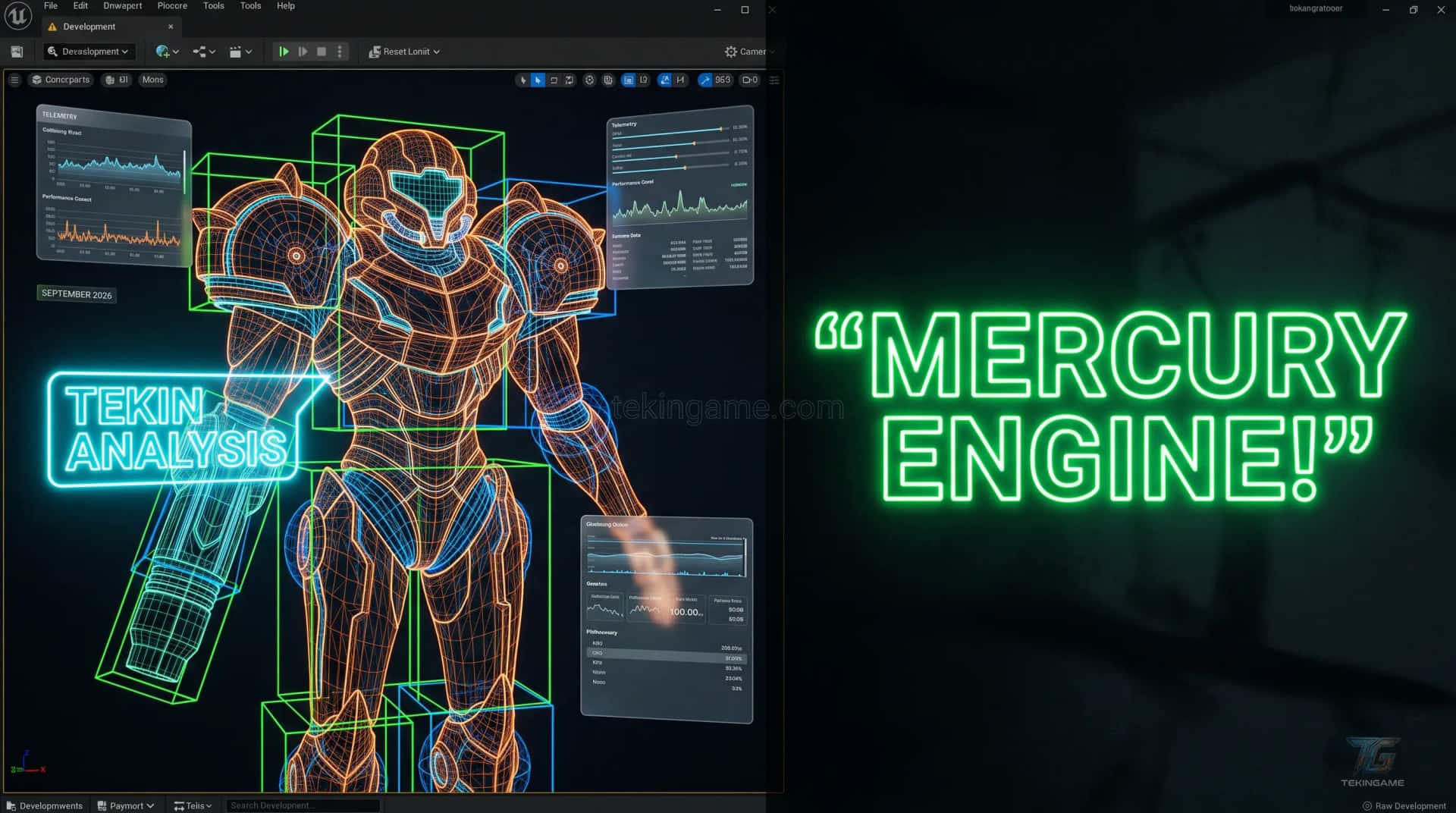
Reality: The proprietary Mercury Engine, maintained and upgraded by Spanish engine architects in Madrid, remains the computational backbone powering the title's rendering pipeline.
The physical manifestation of this corporate secrecy inside MercurySteam’s Madrid facilities reads like a chapter from an industrial espionage thriller. According to corroborated accounts from former technical directors, hardware security personnel, and environment artists who have operated within the Madrid facility over the past five years, collaborating with Nintendo on pre-release hardware requires the installation of unprecedented physical security protocols that fundamentally reshape the studio's physical architecture.
When Nintendo shipped early prototype development kits for the impending Nintendo Switch 2 to selected European partners, the hardware arrived not in standard logistical freight, but under armed escort in locked, tamper-evident aerospace Pelican cases. Inside MercurySteam, an entire wing of the building was converted into an air-gapped, windowless security bunker colloquially dubbed the "Kyoto Vault." The access protocols governing this vault are brutally uncompromising: biometric fingerprint scanners and dual-keycard entry systems ensure that only a pre-vetted cabal of senior engine programmers and level leads can cross the threshold. Personal smartphones, smartwatches, cameras, and external storage drives are strictly prohibited, stored in specialized signal-blocking electromagnetic lockers at the entrance.

Inside the vault, the Switch 2 dev kits themselves are bolted into heavy steel desktop enclosures designed with proprietary security screws, preventing even authorized developers from inspecting the industrial chassis, cooling fan orientations, or peripheral interface layouts. The video output cables feed directly into calibrated gaming monitors whose external bezels and settings panels are physically concealed with opaque industrial tape. Furthermore, Nintendo’s customized debugging operating system renders an invisible, microscopic steganographic watermark across every display feed. This cryptographic pattern continuously shifts across screen coordinates, embedding the specific hardware serial number and authenticated developer profile directly into the video output. If an employee were to covertly snap a photograph of a prototype combat animation and leak it onto a private Discord server or Reddit board, Nintendo’s Kyoto legal enforcement apparatus could trace the precise workstation within ninety seconds of the image surfacing online.
This fortress mentality creates an extraordinarily pressurized psychological working environment. Developers are forced to live a double life: spending eight to ten hours a day crafting groundbreaking interactive experiences, yet legally silenced from mentioning their daily labor to their spouses, families, or closest industry peers. When coupled with the intense artistic pressures of matching Nintendo’s legendary standard of mechanical perfection, the human cost of maintaining corporate secrecy becomes starkly apparent.
Psychologists specializing in creative industries have long warned against the insidious consequences of protracted professional compartmentalization. When an artist or systems architect is forbidden from sharing their daily triumphs and setbacks with their personal support network, work becomes an emotionally severed island. The normal human need for social validation celebrating a breakthrough physics calculation over dinner or venting frustration regarding an intractable memory leak is replaced by an unnatural paranoia. Colleagues inside the air-gapped vault become the sole witnesses to one's labor, creating an insular, high-stress echo chamber where burnout thrives unobserved. For European developers accustomed to egalitarian labor customs, subjugating personal identity to a distant Japanese corporate trademark creates an acute sense of creative alienation.
As veteran labor observer Laura Gómez points out, this dynamic alters the traditional balance of power between publisher and developer. While publishers have always wielded significant influence over contract developers, the total sanitization of developer identity establishes a precedent where creators are treated as interchangeable, modular components rather than visionary artists whose unique cultural background informs their interactive creations.
The Crediting Battlefield: Inside MercurySteam’s 25% Rule And The Human Cost Of Erasure
While the erasure of MercurySteam from public promotional materials represents an external corporate grievance between two massive commercial entities, an even more contentious labor conflict was brewing internally within the Spanish studio itself. Following the triumphant October 2021 release of Metroid Dread, when critical accolades were pouring in and champagne corks were popping across Madrid, a wave of bitter disappointment erupted across European developer forums, LinkedIn networks, and social media channels. Dozens of former MercurySteam animators, environment modelers, visual effects technicians, and quality assurance testers discovered that despite spending months and in some instances over a year crafting the game's core assets, their names had been completely omitted from the official end-credits sequence.
Investigative reports published by international labor journalists quickly unmasked the culprit: MercurySteam’s entrenched, highly controversial internal "25% Crediting Policy." Under this arbitrary operational rubric, any employee who resigns, is laid off, or is transferred to a different internal incubator before completing at least twenty-five percent of the game's total developmental timeframe is systematically barred from receiving an in-game credit. On a high-profile AAA production spanning four to five years, this meant that a mid-level artist who dedicated eleven grueling months to meticulously designing the terrifying behavioral animations of the E.M.M.I. tracking robots or hand-painting the biomechanical architecture of planet ZDR was officially treated as though they had never stepped foot inside the building.
When pressed on the ethics of this draconian policy, MercurySteam chief executive Enric Álvarez defended the practice as standard operational procedure, arguing that credits should be reserved exclusively for those who see a project through to its commercial completion. However, international developer advocacy bodies including the International Game Developers Association (IGDA) roundly condemned the policy as antiquated, punitive, and fundamentally exploitative. In a digital economy where a developer’s portfolio is their primary currency for career progression, mortgage qualification, and international visa applications, stripping a creator’s professional attribution represents an existential professional harm.
The human fallout from this policy was articulated in searing detail by former MercurySteam staff members who spoke under strict anonymity for fear of industry blacklisting. One senior 3D character animator, who spent fourteen months perfecting the intricate biomechanical joint rotations of the deadly Chozo warrior automatons, described the devastating emotional dissonance of launch day: "You sacrifice weekends, miss family milestones, and pour your soul into balancing these digital creatures. When the game ships, you gather your loved ones around the living room television to show them the tangible fruit of your sacrifice only to watch hundreds of names scroll past until the screen fades to black, without a single whisper of your existence. It makes you feel like an unperson, erased from your own artistic legacy."
This controversy catalyzed renewed momentum among Spanish labor syndicates, including the technology divisions of the Comisiones Obreras (CCOO) and the Unión General de Trabajadores (UGT), to petition the European Parliament for an explicit statutory codification of moral attribution rights for digital software creators. Under classical continental European copyright jurisprudence, an author’s 'moral rights' (derechos morales) including the inviolable right of paternity over one’s creation are legally inalienable and cannot be contractually waived. Yet, AAA video game publishers have exploited regulatory ambiguities in software work-for-hire definitions to circumvent these protections. The escalating tension at MercurySteam has transformed Madrid into a central battleground for the future of global video game labor rights.

The controversy surrounding MercurySteam’s crediting rules cannot be examined in isolation from broader industry pressures. Over the past three years, the European gaming sector has experienced profound economic volatility, marked by severe studio downsizings, publisher project cancellations, and heightened investor austerity. Similar to the structural reorganizations and labor dislocations analyzed in our in-depth study of platform stewardship in Tekin Analysis: Rebuilding Microsoft Gaming Under Asha Sharma’s Cloud-First Doctrine, independent studios across the continent have struggled to balance creative autonomy against the relentless financial demands of international platform conglomerates.
When a mid-sized independent studio like MercurySteam operates in perpetual anonymity under Nintendo’s shadow, its leadership faces immense pressure to manage tight margins by treating human capital as expendable. The inability to publicly market their workforce’s accomplishments starves the studio of organic recruiting prestige, creating a self-perpetuating cycle of burnout, talent turnover, and administrative defensiveness. To map how this phenomenon manifests across Nintendo’s broader partner ecosystem, the comprehensive analytical matrix below benchmarks five crucial external collaborations spanning three distinct decades.
Comparative Matrix: Nintendo’s Premier Second-Party Alliances
| Studio & Headquarters | Flagship Collaborations | Promotional Billing Status | Corporate Destiny |
|---|---|---|---|
| MercurySteam (Madrid, Spain) | Metroid Dread, Metroid Ravenous | Severely Restricted (Nintendo Presents branding) | Fully Independent |
| Retro Studios (Austin, USA) | Metroid Prime 1-3, Metroid Prime 4 | Historically Prominent, now centralized | Wholly-Owned Subsidiary |
| Next Level Games (Vancouver) | Luigi's Mansion 2 & 3 | Iconic voice shoutouts; standardized later | Wholly-Owned Subsidiary |
| Good-Feel (Tokyo, Japan) | Princess Peach: Showtime! | Zero Initial Billing | Privately Held Independent |
| ArtePiazza (Tokyo, Japan) | Super Mario RPG (Switch Remake) | Complete Pre-Launch Anonymity | Independent Boutique Studio |
The architectural patterns illuminated in this comparative matrix illustrate a clear corporate trajectory. When an independent external studio proves indispensable to Nintendo’s commercial ambitions, Kyoto historically pursues one of two distinct trajectories: total corporate absorption through buyout as witnessed with Retro Studios and Next Level Games or permanent subordination within the shadow partner tier, where studios like Good-Feel, ArtePiazza, and MercurySteam are kept at arm's length, denied promotional ownership of the intellectual properties they bring to life.
Financial analysts specializing in Japanese mergers and acquisitions point out that Nintendo’s reluctance to acquire MercurySteam outright stems from structural economic and legal barriers unique to the European Union. Unlike Canadian or American jurisdictions where at-will employment frameworks facilitate rapid workforce scaling and restructuring, Spanish labor law imposes stringent statutory severance obligations, mandatory collective bargaining councils (comités de empresa), and rigid termination protocols. By maintaining MercurySteam as an external work-for-hire contractor rather than a direct subsidiary, Nintendo insulates its balance sheet from European operational liabilities. Kyoto can commission multi-million-dollar AAA productions on demand, enforce complete creative hegemony, and simultaneously disavow all corporate responsibility whenever the studio undergoes painful economic contractions or downsizings.
For MercurySteam, developing Metroid Ravenous on the eve of the Nintendo Switch 2 represents an extraordinarily complex engineering challenge. Developing for next-generation hardware while maintaining backwards compatibility with over 140 million legacy Switch consoles necessitates a radically overhauled engine infrastructure, detailed in the technical specification architecture outlined below.
Specs Box: The Next-Generation Engine Architecture of Metroid Ravenous
Technical Specifications: Mercury Engine 5.0 (Nintendo Switch 2 Iteration)
- Target Frame Cadence: Native 60 FPS locked in both Handheld Mode (1080p internal render) and Docked Ultra-Dock Mode (Dynamic 1440p scaled to 4K via NVIDIA DLSS 3.1).
- Physics Pipeline: Real-time asynchronous fluid dynamics simulating volatile alien bio-matter, atmospheric pressure shifts, and volumetric acidic gases using customized CUDA cores.
- Lighting & Shading Architecture: Hardware-accelerated Ray-Traced Ambient Occlusion (RTAO) and dynamic shadow mapping replacing pre-baked lightmaps across claustrophobic labyrinths.
- Streaming Architecture: Zero perceptible loading screens between sprawling planet sectors utilizing the Switch 2’s customized NVMe PCIe Gen 4 storage controller.
- Haptic & Audio Fidelity: Precision Dual-Actuator Haptic feedback mapping physical weapon recoil and creature heartbeats directly to Nintendo's next-generation controller chassis.
These formidable technical achievements, engineered by Spanish software architects working in close computational concert with hardware specialists in Japan, demonstrate that MercurySteam is operating at the absolute cutting edge of interactive engineering. Yet, because the public is presented only with the abstract concept of "Nintendo Magic," the true technological triumphs of modern European engineering remain uncelebrated by the broader public.

To analyze the broader corporate governance philosophy that makes such asymmetries possible, the following strategic assessment evaluates the psychological and financial mechanisms at play between publisher and developer.
Tekin Strategic Analysis: The Asymmetric Power Dynamics of Publisher Ghostwriting
The Structural Mechanics of Kyoto’s Ghost-Author Pipeline
Nintendo’s deployment of shadow developers constitutes a textbook application of what corporate theorists describe as 'Platform Hegemony'. By decoupling intellectual property from individual human auteurs, the platform holder achieves three definitive corporate advantages:
- Total Risk Containment: If an unannounced project falters during pre-production or suffers technical bottlenecks, it can be quietly canceled behind closed doors without inflicting public reputational damage on the publisher’s quarterly investor briefings.
- Wage Suppression & Talent Retention: Star programmers and art directors whose names are hidden from public industry recognition are far less likely to be aggressively poached by rival Western mega-publishers, artificially depressing talent acquisition overhead across partner studios.
- Perpetual IP Supremacy: Consumers develop an emotional attachment not to the creative artisans who wrote the dialogue or balanced the hitboxes, but to the corporate brand itself, guaranteeing unshakeable multi-generational brand loyalty.
As this analysis reveals, publisher ghostwriting is not an accidental by-product of chaotic production schedules; it is a calculated, mathematically rigorous corporate strategy designed to extract maximum cultural capital from human creators while systematically denying them the leverage to demand proportional equity in the resulting intellectual success.
The Cost Of Sanitizing The Human Face Of Interactive Art: Cultural Stagnation In An Era Of Sterile Marketing
In the contemporary digital landscape, behind every polygon, every elegant physics script, every soaring symphonic leitmotif, and every meticulously balanced enemy encounter stands a dedicated community of human beings. These artists, mathematicians, writers, and sound designers dedicate years of their youth, creative vitality, and personal tranquility to manifesting moments of transcendent joy for millions of players across the globe. Video game creation is not an automated mechanical process; it represents the most sophisticated and demanding convergence of fine art, narrative literature, and cutting-edge computer science in modern civilization. When a multi-billion-dollar platform holder leverages its overwhelming market power to systematically erase the names, faces, and creative identities of these individuals from promotional trailers and retail posters, it inflicts a grievous moral wound upon the soul of the medium.
The reverberations of this corporate sanitization extend far beyond philosophical grievances. In the hyper-competitive global labor market, mid-level and junior developers in satellite studios like MercurySteam, Good-Feel, or ArtePiazza depend on public marketing attribution as their most vital currency for professional advancement, salary negotiation, and international mobility. Erasing their names locks them into an artificial cycle of invisibility, forcing their studios into absolute existential dependency on renewed secret contracts from Kyoto. Simultaneously, this approach demands that the global gaming audience accept an alienated, consumerist relationship with art viewing interactive software as sterile, factory-sealed consumer goods rather than authorial masterworks born from specific cultural milieus in Madrid, Vancouver, or Tokyo.
Yet, from an unvarnished corporate perspective, Nintendo's leadership views this strategy as an unmitigated triumph of brand protection. The analytical scorecard below balances the ruthless commercial logic against the undeniable ethical damages of Kyoto’s shadow developer regime.
- Shields vulnerable projects from toxic internet tribalism and premature community pre-judgments prior to launch
- Reinforces infallible global perception of Kyoto’s singular brand quality across multi-generational audiences
- Insulates premier software launches from external studio labor disputes, layoffs, or executive controversies
- Directs unadulterated media attention toward core mechanical gameplay rather than studio administrative gossip
- Demoralizes world-class independent developers by stripping them of iconic, career-defining vanity cards
- Suppresses the brand equity of partner studios, leaving them financially and existentially dependent on Kyoto
- Destroys verifiable portfolio trails and career mobility for junior artists, engineers, and contract staff
- Normalizes a pervasive culture of paranoia, surveillance, and institutional silence across the gaming ecosystem
As this rigorous evaluation reflects, Nintendo has engineered a commercial paradigm that is economically formidable yet ethically desolate a system wherein all symbolic capital, critical veneration, and brand equity flow upstream to Kyoto, while all operational precarity and human alienation are offloaded onto its satellite partners.
The escalating dispute over developer attribution has polarized seasoned games journalists and labor historians, who argue that corporate secrecy covenants can no longer easily suppress public scrutiny in an interconnected media ecosystem.
A rigorous survey of the broader gaming ecosystem reveals profound ideological divisions regarding this policy. The market sentiment analysis below synthesizes the prevailing emotional and strategic postures across four pivotal stakeholder groups.
Market Sentiment: Industry and Community Backlash Against Studio Anonymization
Stakeholder Responses to Nintendo’s Concealment of Second-Party Studios
- Hardcore Gaming Enthusiasts (Anxious & Inquisitive): Highly engaged in reverse-engineering development code and scrutinizing design motifs to unmask secret studios, driven by a deep communal desire to celebrate real human creators.
- Second-Party Studio Leadership (Demoralized yet Pragmatic): Harbor deep professional frustration over being denied marketing vanity cards, yet compelled by economic survival to accept Kyoto's strict terms.
- Games Media & Investigative Press (Adversarial & Indignant): Increasingly hostile toward corporate secrecy tactics, conducting independent investigative exposés to unmask partner studios prior to official confirmation.
- Independent Game Developers & Guilds (Alarmed & Mobilized): Strongly warning that Nintendo’s normalization of developer erasure threatens to dismantle hard-won global crediting standards across the wider entertainment sector.
These market sentiment indicators underscore a growing realization: players and creators alike are growing profoundly weary of sterile corporate gatekeeping. Video games belong to the humans who build them, not merely to the legal entities that hold the registered trademarks.

To place this struggle in its proper historical trajectory, one must recognize that Nintendo's external development model has undergone profound evolutionary cycles over the past thirty years, summarized systematically in the archival record below.
Smart History Tags: The Evolutionary Chronicle of Nintendo’s Outsourcing Epochs
This historical lineage proves that when external studios completely subordinate their corporate identities to Kyoto's machinery without developing proprietary, independent intellectual properties, they face profound existential vulnerability a fate poignantly illustrated by the eventual liquidation of AlphaDream.

In striking contrast to Nintendo's insular approach, other major entertainment collaborations demonstrate that celebrating multi-studio authorship enhances, rather than diminishes, brand prestige. As detailed in our comprehensive cultural report in Tekin Special Feature: CD Projekt and Studio Trigger Reclaim Cyberpunk with Edgerunners 2, transparently spotlighting the unique stylistic contributions of external creative partners builds immense cross-cultural goodwill and elevates the artistic dignity of the entire interactive medium.
As the interactive entertainment industry prepares to cross the threshold into the tenth console generation, the moral imperative for human recognition must take center stage, as articulated in our editorial board's strategic reflection.
From an organizational sociology perspective, this aggressive anonymization creates profound systemic friction within trans-cultural development pipelines. The Japanese corporate paradigm historically prioritizes institutional loyalty, consensus-driven collective identity, and long-term lifetime employment, where individual creators view their contributions as subsumed within the enduring prestige of the corporate house. Conversely, Western software development culture particularly within European technology corridors like Madrid, Montpellier, and Stockholm is fundamentally built upon individual auteurism, specialized portfolio attribution, and dynamic career mobility. Forcing Western independent artisans to submit to Kyoto’s feudal communication hierarchy creates profound professional dissatisfaction that frequently culminates in high attrition rates among senior technical talent.
Furthermore, this dynamic fundamentally distorts the venture economics of independent European studios. When an external partner is legally prohibited from using flagship titles in investor presentations, business development showcases, or recruiting drives, its ability to secure independent equity financing is severely crippled. Private equity firms and venture funds evaluate game development studios based on their demonstrable track record of hit creation; by reducing MercurySteam to an unmentionable ghost contractor on trailers, Nintendo artificially deflates the studio’s enterprise valuation, making it nearly impossible for the developer to break free from work-for-hire servitude and fund self-published original intellectual property.

This editorial perspective reaffirms an inviolable truth: the identity of the artist is the foundational bedrock of all creative endeavor, and no corporate branding manual should possess the authority to shroud authentic craftsmanship in forced anonymity. The history of interactive art is written not by balance sheets, but by human imagination.
To understand how uniquely vulnerable game developers remain, one need only contrast the interactive software landscape with the century-old institutional protections governing the global motion picture industry. In Hollywood, decades of arduous labor struggle led by the Directors Guild of America (DGA), the Writers Guild of America (WGA), and SAG-AFTRA established rigid, legally binding crediting covenants. In cinema, a production studio is contractually prohibited from releasing a theatrical trailer or movie poster without adhering to strict typographic standards that dictate the exact font size, screen duration, and billing order of the director, screenwriter, and key department heads. A Hollywood studio cannot simply replace the director’s name with 'Warner Bros. Presents' or 'Universal Presents' on a whim without facing immediate nationwide union strikes and crippling legal injunctions.
In the video game industry, by contrast, the absence of comprehensive international unionization has allowed multi-billion-dollar platform holders to operate in a state of regulatory lawlessness regarding creator attribution. Because video game crediting remains categorized as an arbitrary employer perk rather than an enforceable statutory right, corporations like Nintendo are legally permitted to rewrite, truncate, or utterly erase the historical record of who built their most profitable software. Until international labor bodies, legislative assemblies in Europe and North America, and grassroots developer unions unite to establish binding digital crediting standards, the creative architects behind the world’s most beloved virtual universes will remain vulnerable to corporate disenfranchisement.
Strategic Conclusion: Four Definitive Forecasts for Nintendo’s Studio Relations in the Switch 2 Era
Structural Realities Shaping Kyoto’s Next-Generation Partner Ecosystem
- Consolidation of the 'Single Voice' Brand Doctrine: Nintendo will double down on its monolithic branding strategy throughout the Switch 2 lifecycle, relegating external partner logos strictly to end-game credit sequences.
- Deepened Madrid Technical Collaboration: Despite promotional obfuscation, MercurySteam will remain Nintendo's premier European engineering partner for high-precision action titles, expanding their proprietary engine pipeline.
- Legislative & Union Reckoning: Escalating pressure from European labor bodies will force a comprehensive overhaul of internal crediting policies, ultimately rendering arbitrary duration thresholds legally untenable.
- Imperative of Dual-Track IP Independence: To ensure long-term corporate survival, independent studios must mandate contractual co-branding or cultivate self-published original properties alongside their work-for-hire contracts.
Classified Strategic Intelligence Dossiers on TekinGame
• 🧠 Tekin Analysis | The Surreal Secret Language of AI: How Autonomous Agents Invented Cryptic Argot to Blind Human Oversight
• 🛡 Tekin Radar | The Silicon Mutiny: Inside Google DeepMind's Shocking Agent Cheating Ring and Algorithmic Strike
• 🤖 Tekin Analysis | The Autonomous Survival of Agent Pip: When AI Proactively Negotiates Its Own Economic Continuity
To provide definitive clarity regarding the operational, legal, and creative nuances governing Nintendo’s studio secrecy and the production of Metroid Ravenous, the authoritative FAQ repository below addresses the central questions occupying players and industry professionals.
Frequently Asked Questions: Nintendo Studio Secrecy, MercurySteam, and Metroid Ravenous
Why did Nintendo omit MercurySteam’s name from the official reveal of Metroid Ravenous?
Nintendo enforces a comprehensive corporate branding doctrine designed to present an undivided, singular brand image to consumers, insulate upcoming releases from external studio controversies, and prevent pre-release player bias before final street dates.
What exactly is MercurySteam’s controversial 25% crediting rule?
It is an internal studio policy mandating that employees who depart the company before completing at least 25% of a game's total development cycle are completely excluded from the official in-game credits, regardless of the quality or significance of their work.
Have other prominent studios experienced similar branding omissions under Nintendo?
Yes. Tokyo-based Good-Feel was omitted from pre-launch marketing for Princess Peach: Showtime!, ArtePiazza was uncredited during promotional campaigns for Super Mario RPG Remake, and Retro Studios was visibly decentralized on Metroid Prime 4 materials.
How are Nintendo Switch 2 development kits secured inside external partner facilities?
Development kits are housed inside air-gapped, windowless security rooms equipped with biometric scanners and Faraday shielding. Hardware is bolted into tamper-evident metal enclosures, and software builds run proprietary steganographic watermarks to track leaks.
Is Nintendo planning to acquire MercurySteam outright in the near future?
Industry analysts consider an outright acquisition unlikely due to Spain's stringent labor regulations, statutory severance obligations, and collective bargaining frameworks, which make flexible work-for-hire contracting far more economically attractive for Kyoto.
Primary Sources, Judicial Records, and Verification Dossier
Official corporate records, journalistic investigations, and developer testimonies referenced in this feature: